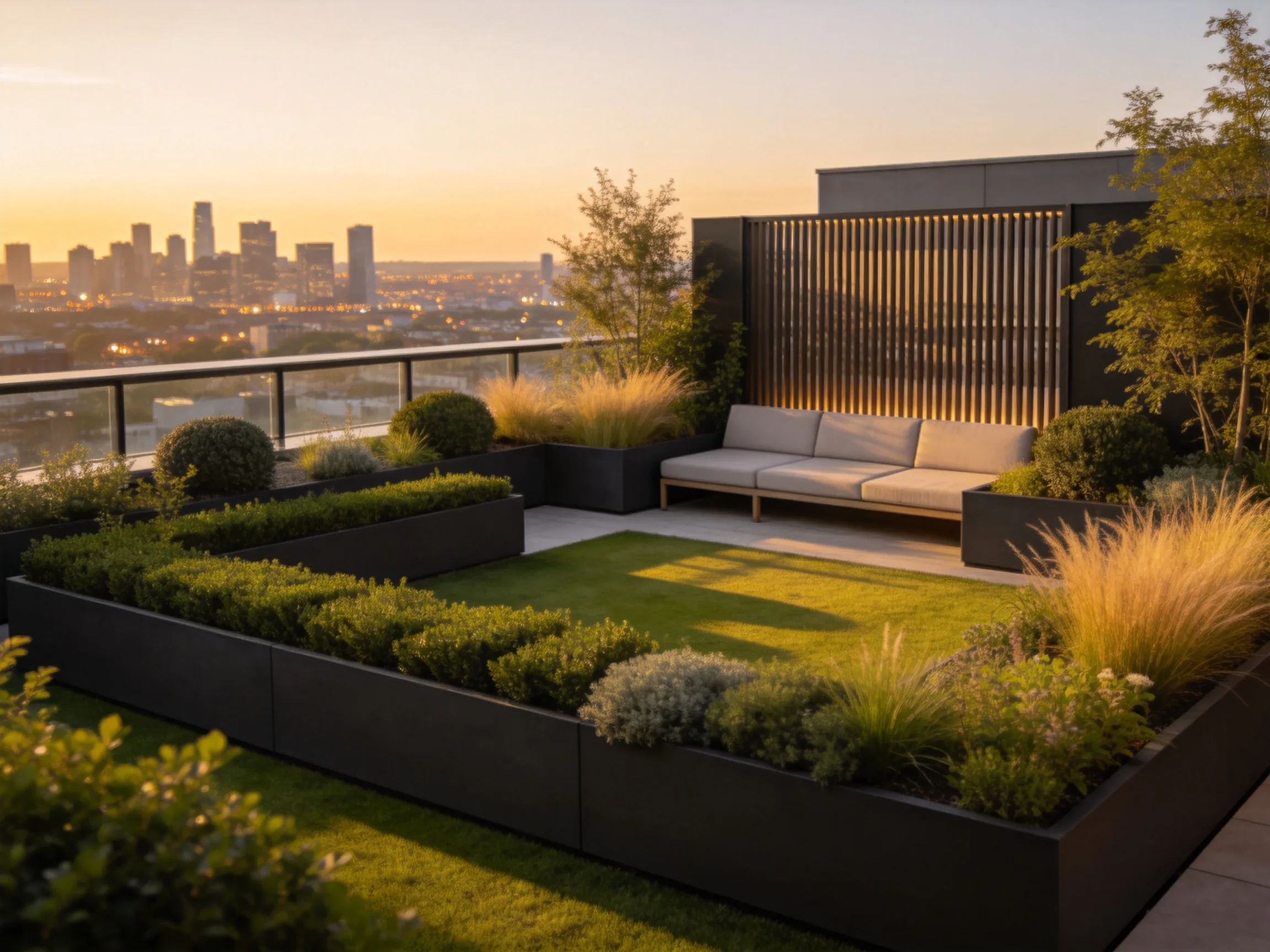
A successful rooftop garden balances clean design with practical concerns such as wind, weight, drainage, sun exposure, and access. Before installing large containers or structures, confirm the roof’s load capacity, waterproofing requirements, and local building rules with qualified professionals. Then use these modern rooftop garden design ideas to arrange planters, screens, seating, and greenery in a layout that feels private without wasting valuable floor space.
1. Build a Perimeter of Slim Rectangular Planters
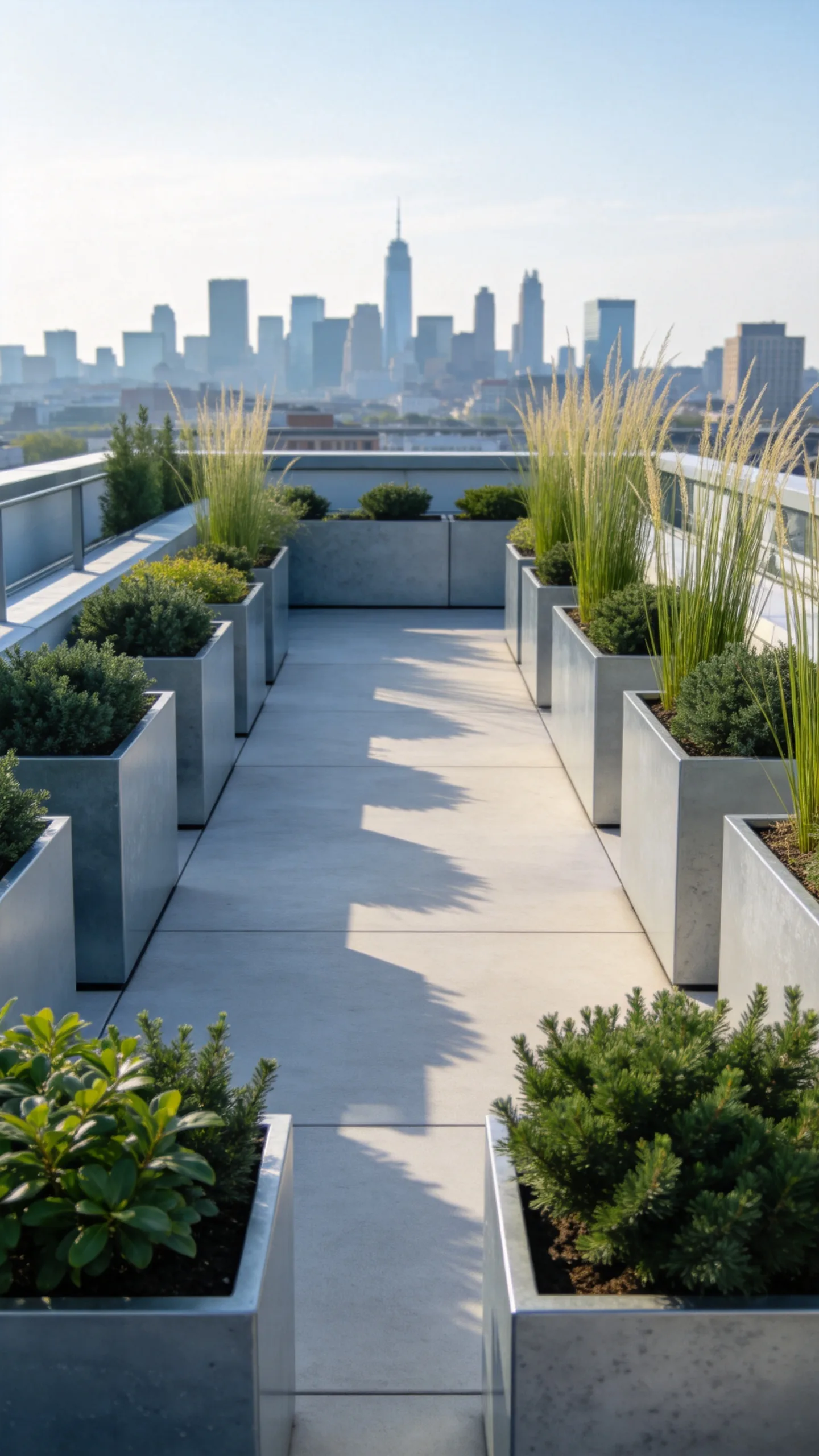
Line exposed roof edges with long, narrow planters to create a green boundary without crowding the center. Powder-coated aluminum, fiberglass, and fiberstone containers provide a crisp modern look while generally weighing less than solid concrete. Select planters with drainage holes and saucers or integrated reservoirs that comply with the roof’s drainage plan.
For year-round structure, fill the containers with compact evergreens, ornamental grasses, or upright shrubs suited to local light and wind conditions. Keep mature plant width in mind so foliage does not block walkways or extend over parapets. Repeating one planter shape and a limited plant palette makes the perimeter feel cohesive.
2. Alternate Privacy Screens With Tall Grasses
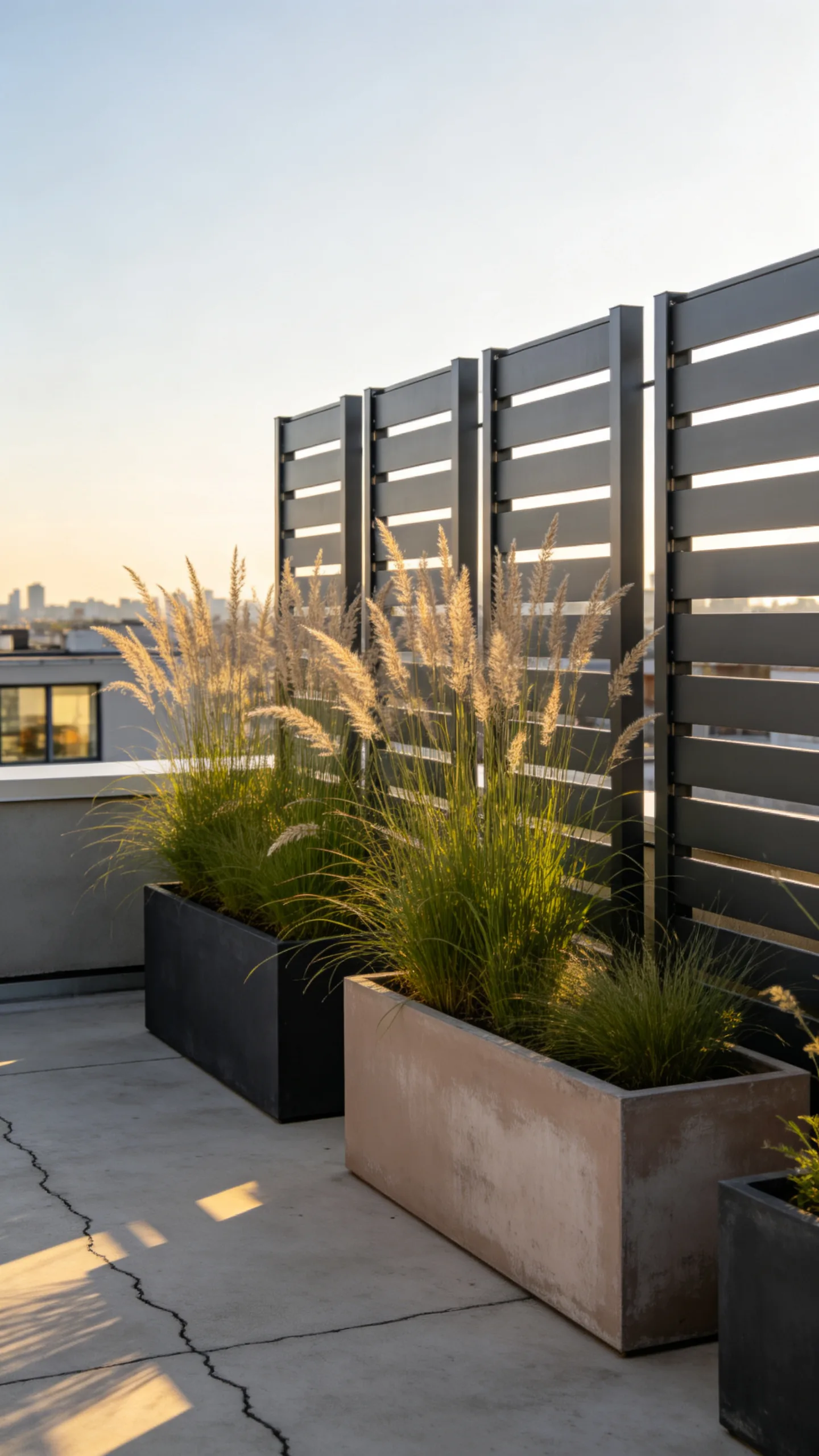
Create a softer privacy barrier by alternating narrow screen panels with clumps of upright ornamental grass. Metal slat screens, weather-resistant composite panels, or securely mounted timber battens can interrupt sightlines, while grasses add movement and prevent the enclosure from feeling solid.
Choose wind-tolerant grasses appropriate to your region, such as switchgrass, feather reed grass, or compact miscanthus where it is not invasive. Large, stable containers help protect tall plants from tipping and provide enough soil volume to reduce rapid drying. Position the arrangement where neighboring windows are visible rather than screening every side unnecessarily.
3. Use Modular Planters to Define an Outdoor Room
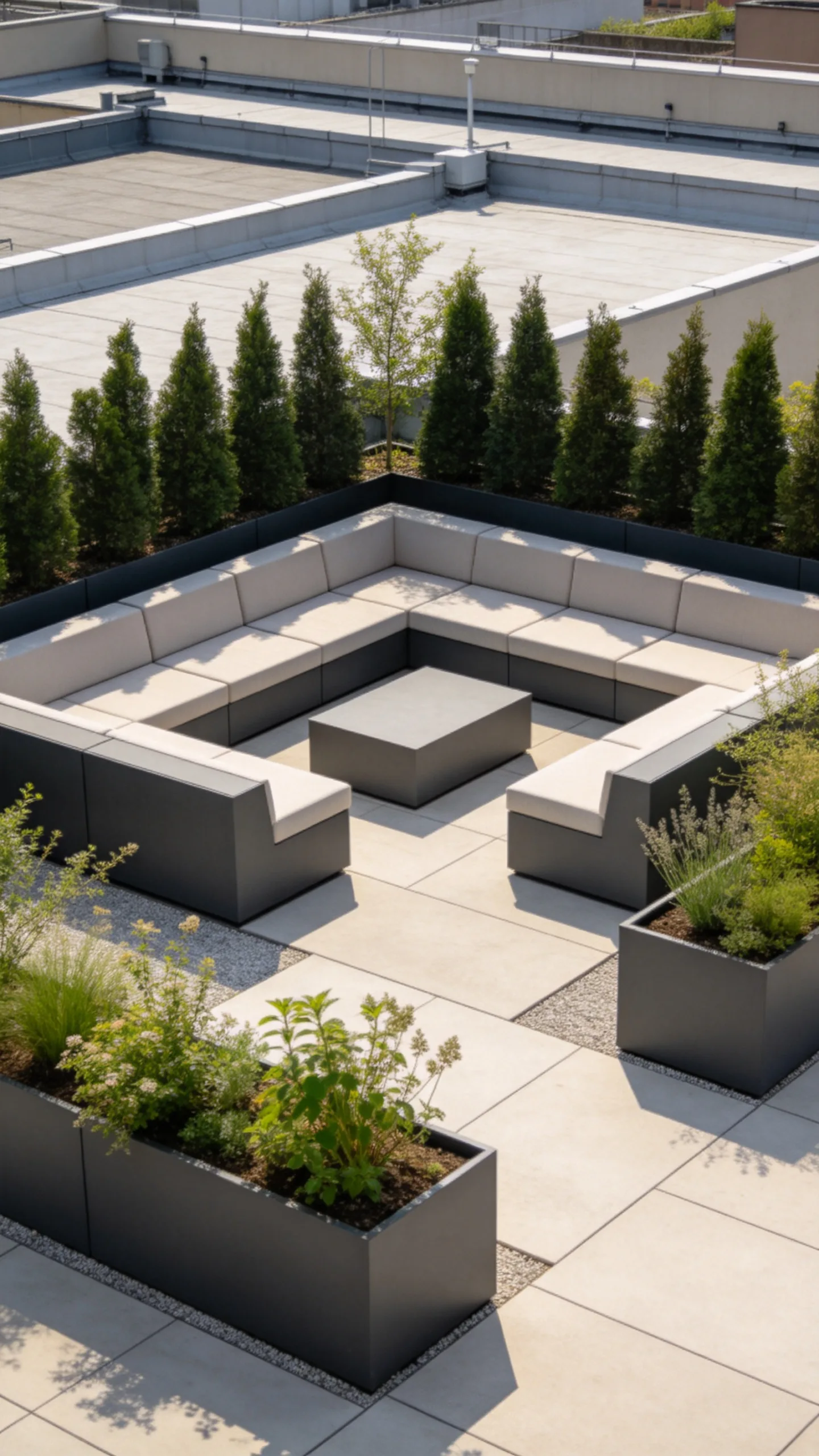
Arrange matching square and rectangular planters around a lounge or dining area to suggest walls without constructing permanent partitions. A U-shaped configuration can separate seating from utility zones, roof access points, and service equipment while preserving an open-air feeling.
Use low plants near entrances and taller shrubs at the back so the layout remains easy to navigate. Modular containers also allow the garden to be adjusted when furniture changes or plants need more shelter. Leave clear paths to drains, hatches, railings, and maintenance areas.
4. Add a Slatted Pergola With Climbing Vines
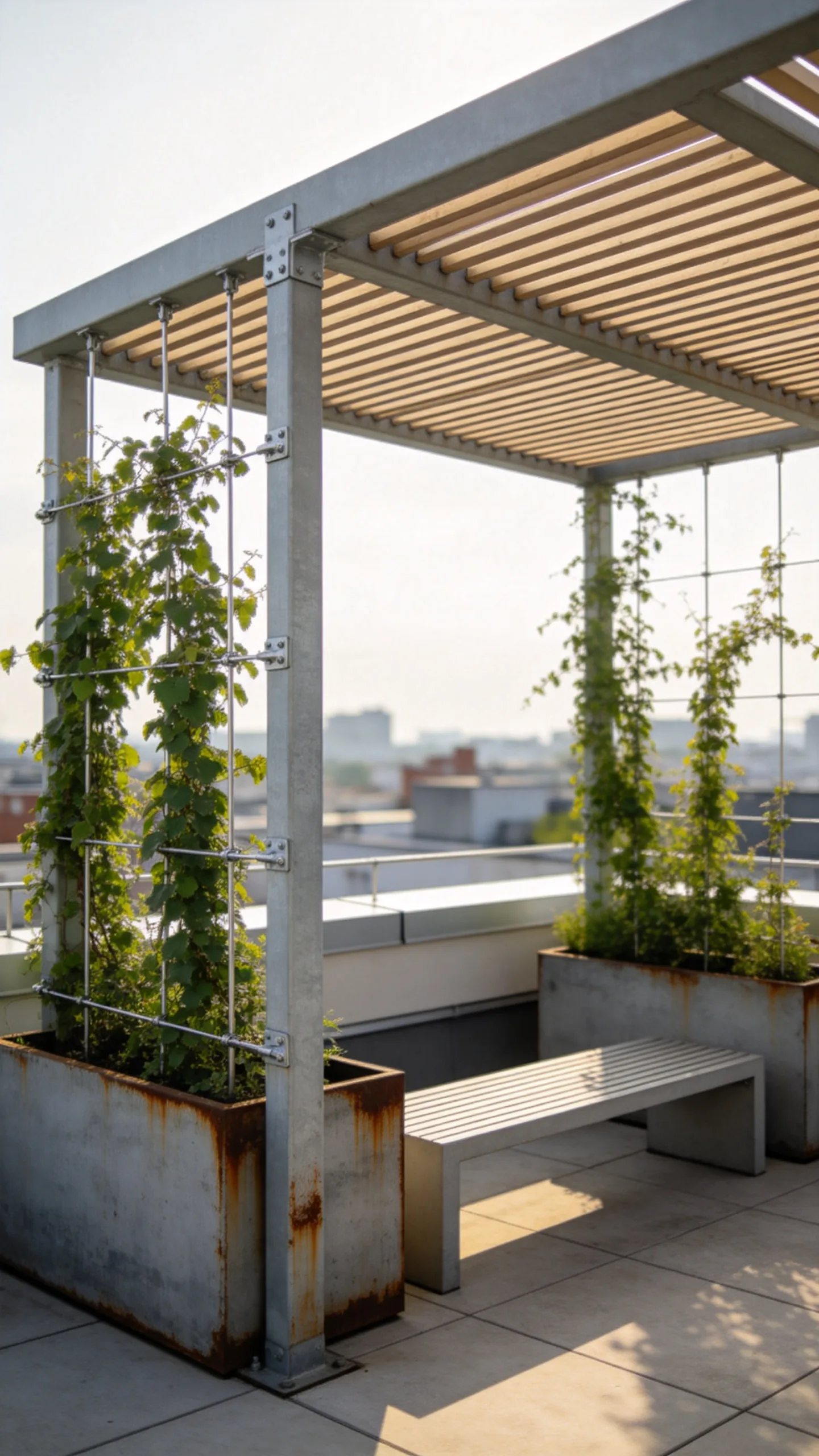
A lightweight slatted pergola can introduce partial shade and overhead definition on a sunny rooftop. Its posts can be integrated with large planters, but the entire structure must be professionally secured for wind exposure rather than relying on soil-filled containers as improvised anchors.
Train vines up stainless-steel cables or narrow trellis panels attached to the pergola. Depending on climate, consider clematis, star jasmine, climbing roses, or a regionally appropriate grapevine. Deciduous vines provide summer shade while admitting more winter light, though they require seasonal pruning and leaf cleanup.
5. Create a Minimalist Evergreen Hedge in Containers
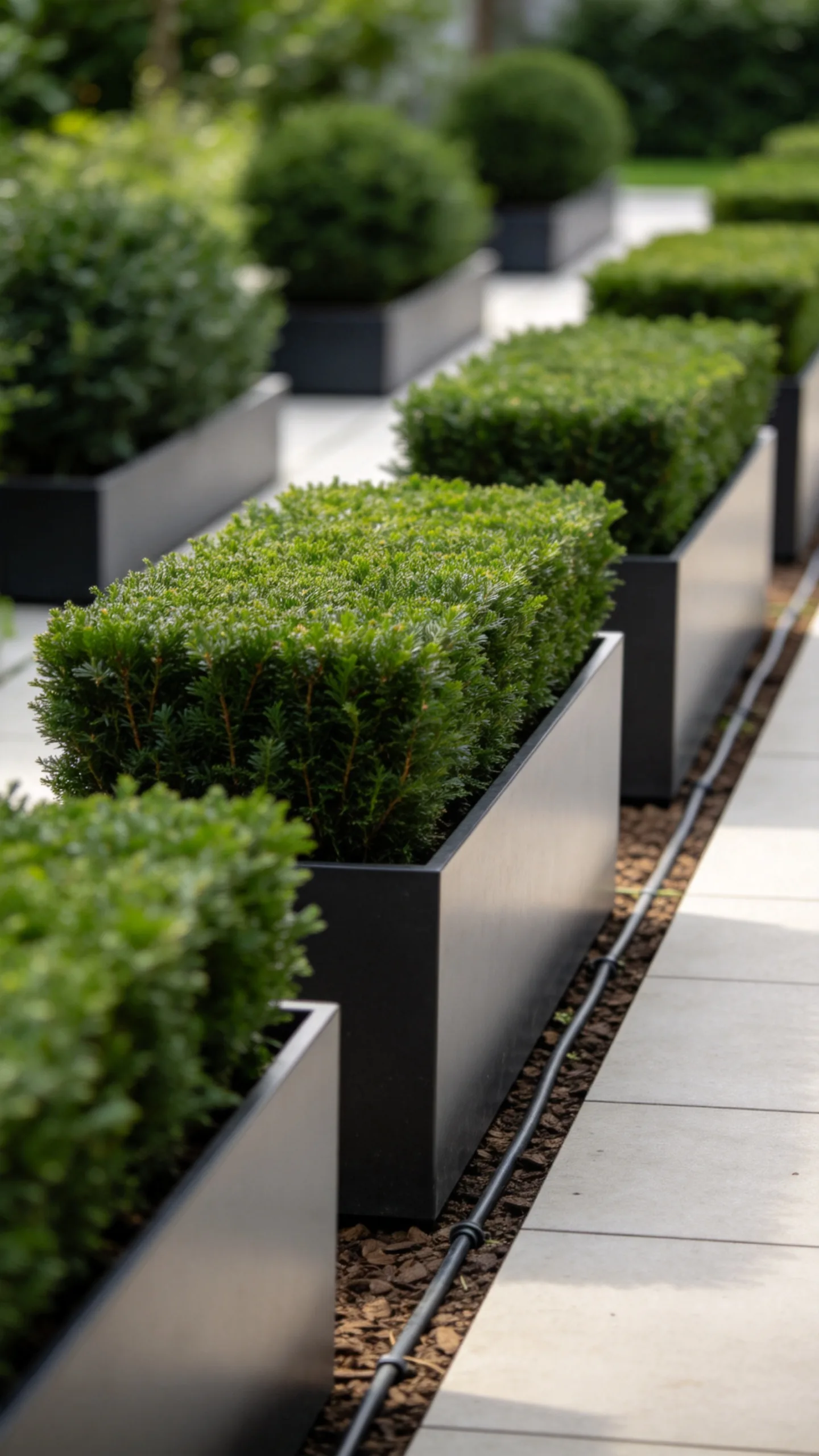
A clipped hedge gives a rooftop a polished, architectural edge. Plant a row of compact evergreens in identical deep planters, spacing them according to mature width instead of packing them tightly for instant coverage. Suitable choices vary by climate but may include dwarf yew, compact holly, privet, or small-leaved box alternatives.
Hedge containers need consistent irrigation because dense foliage and exposed rooftop conditions increase water loss. Install drip lines beneath a mulch layer and use a free-draining potting mix rather than garden soil. Regular light trimming will maintain the form without forcing plants into an unnaturally narrow shape.
6. Screen a Dining Area With Pleached Trees
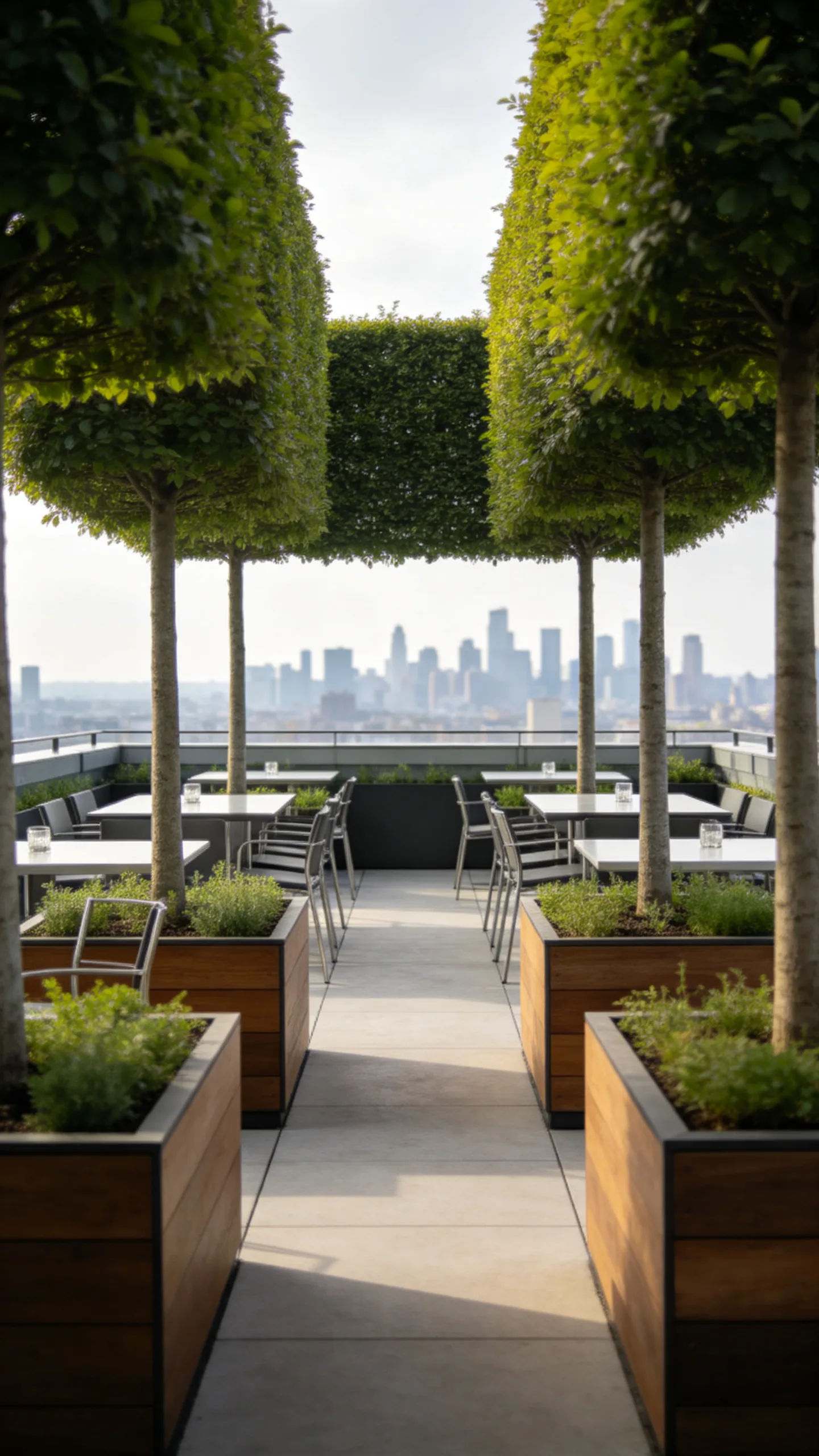
Pleached trees have clear lower trunks and trained upper branches, making them useful where privacy is needed at eye level but floor space is limited. Set several trees in large rectangular planters behind a rooftop dining table to form a raised green screen.
Select smaller cultivars that tolerate container culture and local winter conditions. Hornbeam, crabapple, ornamental pear, and evergreen magnolia may work in suitable climates, but mature weight and root volume must be considered before purchase. Secure each tree with a proper support system and prune the trained framework annually.
7. Design a Sunken-Look Lounge With Raised Planters
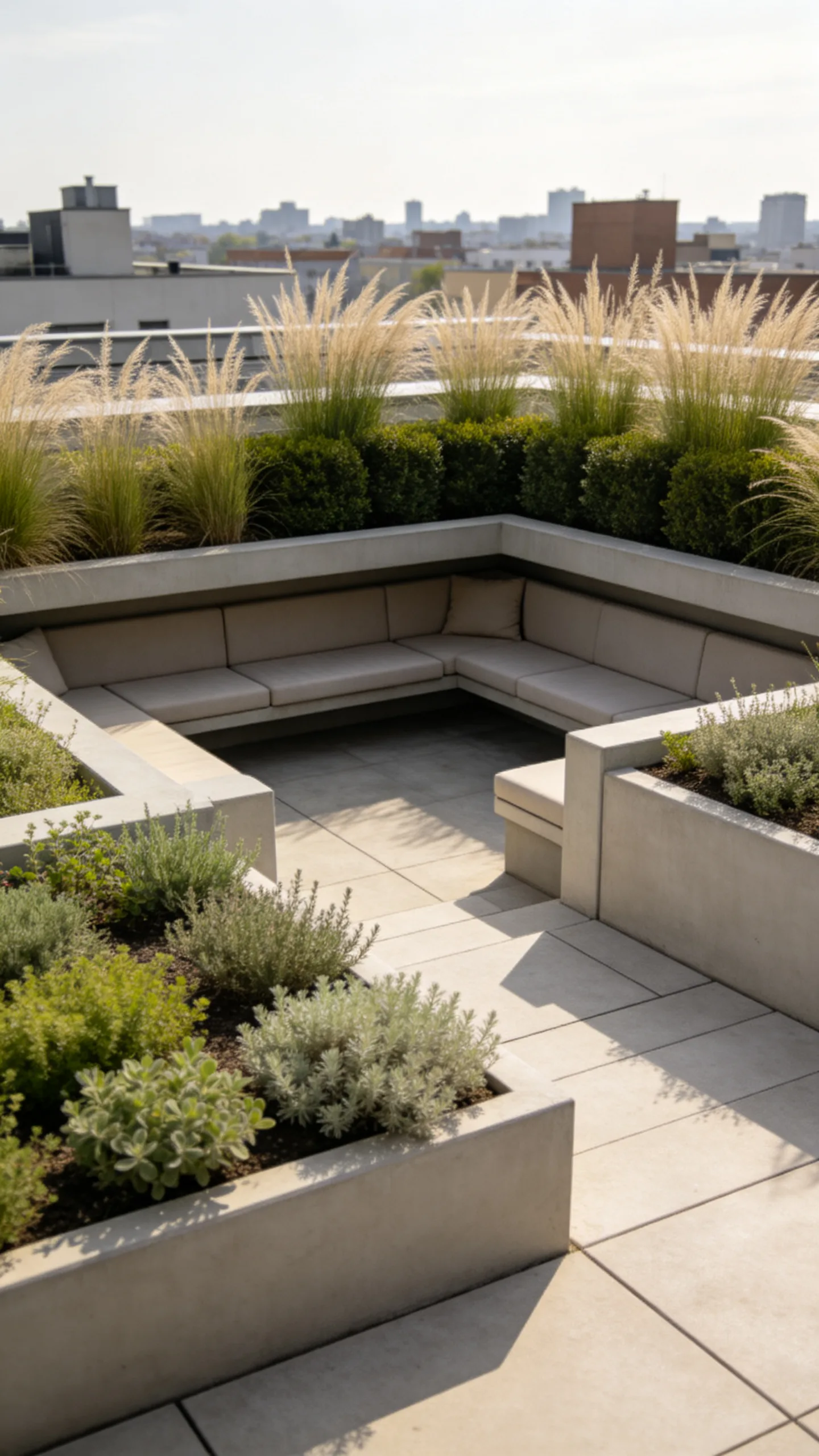
Create the visual effect of a sunken conversation area by surrounding low-profile seating with raised planters. The seating does not need to be physically recessed; placing deep containers behind sofas and benches makes the center feel sheltered while avoiding complex structural alterations.
Fill the planters with layered foliage, placing low groundcovers at the front and taller shrubs or grasses behind. Keep thorny plants, bee-attracting flowers, and branches that shed heavily away from head and shoulder height. Outdoor cushions in neutral tones will reinforce the streamlined design.
8. Install Frosted Panels Behind Greenery
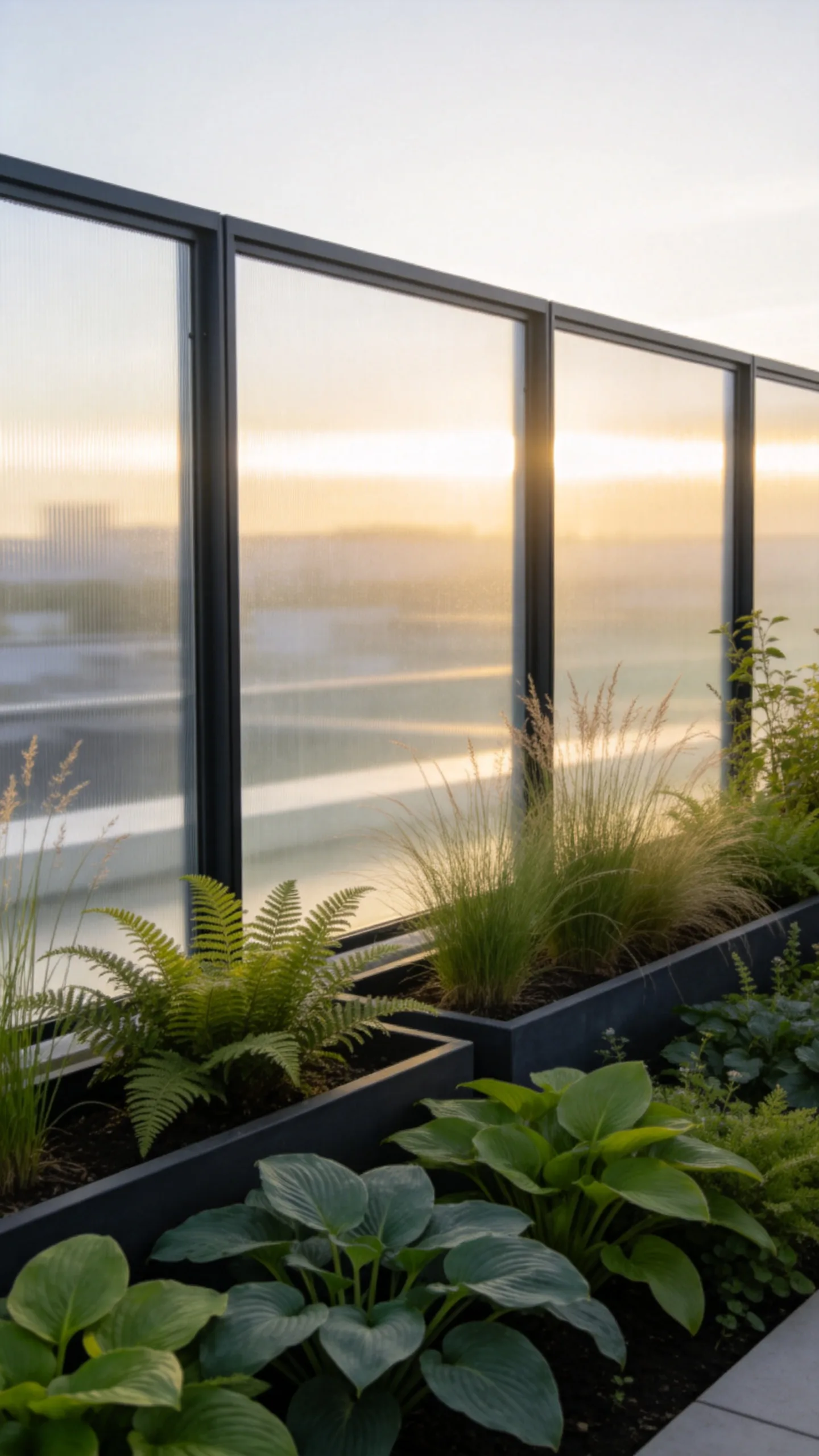
Frosted glass or translucent polycarbonate panels can block direct views while allowing daylight to pass through. They are especially useful on rooftops overlooked by neighboring buildings, where plants alone may not provide consistent coverage through winter.
Place low planters of ferns, shade-tolerant grasses, or broad-leaved perennials in front of the panels to soften their appearance. Confirm that panels, frames, and fixings are rated for rooftop wind conditions and meet local safety requirements. Avoid placing reflective materials where concentrated glare could affect nearby buildings.
9. Plant a Black-and-Green Monochrome Garden
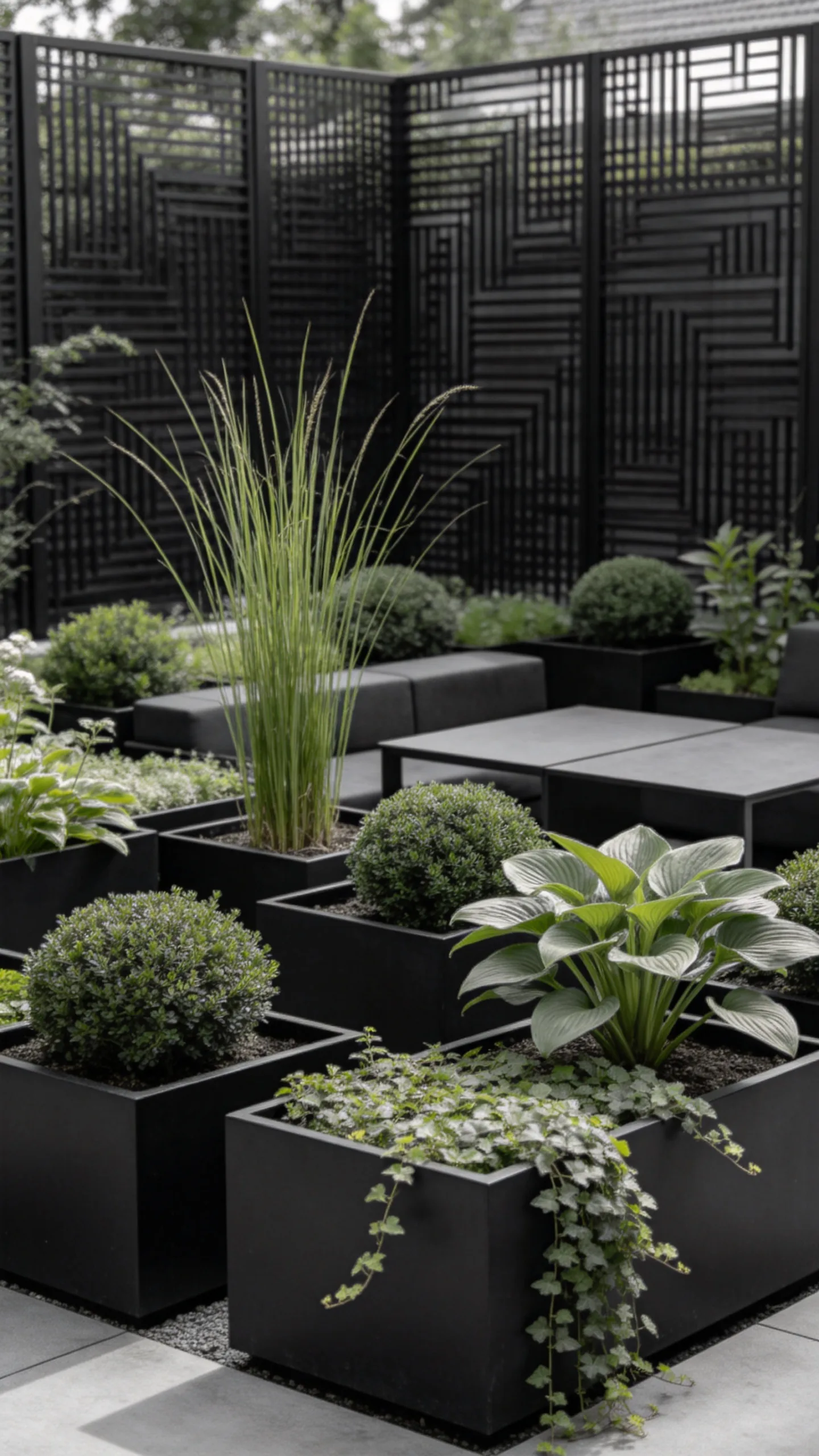
Limit the hardscape palette to matte-black planters, dark metal screens, and charcoal furniture, then contrast these elements with green foliage. This restrained combination gives even a small rooftop a deliberate, modern identity without requiring many decorative objects.
Mix leaf forms to keep the planting interesting: pair upright grasses with rounded shrubs, trailing groundcovers, and one or two bold architectural plants. Select species for actual rooftop conditions rather than appearance alone. Dark containers absorb heat, so insulate inner pots where necessary and monitor soil moisture closely during hot weather.
10. Use Corten Steel Planters as Privacy Dividers
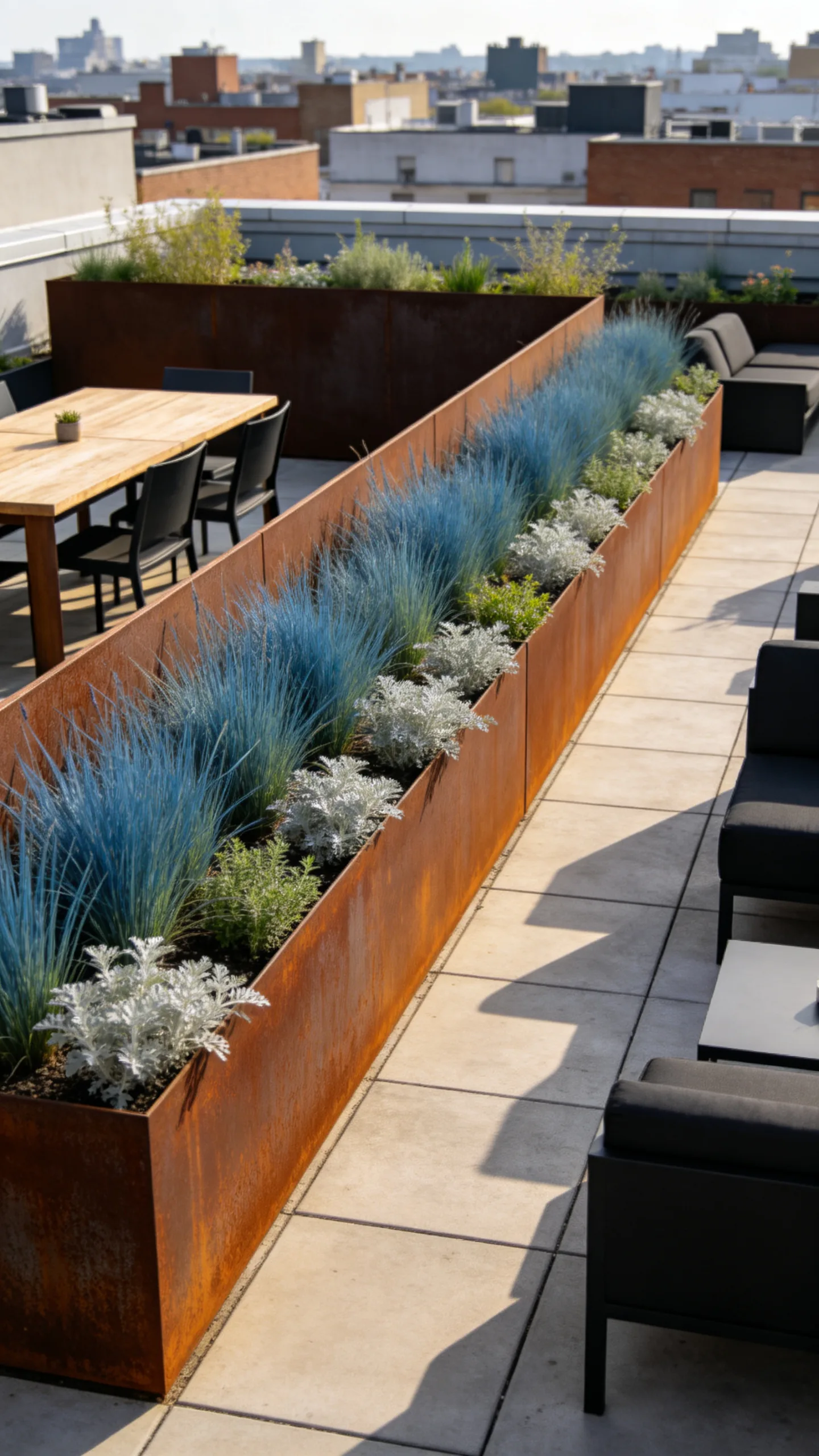
Corten steel planters add warm rust-colored surfaces to a neutral rooftop. Use long troughs between a dining zone and a lounge area, or place taller units along an exposed boundary. Their strong geometry works well with concrete pavers, timber decking, and black metal furniture.
Check product weight before installation because steel containers become substantially heavier once filled and watered. Choose models designed to manage runoff, since weathering steel may produce staining during its initial oxidation period. Plant silver-leaved herbs, blue-green grasses, or dark evergreens for a clear color contrast.
11. Build a Trellis Wall for Edible Climbers
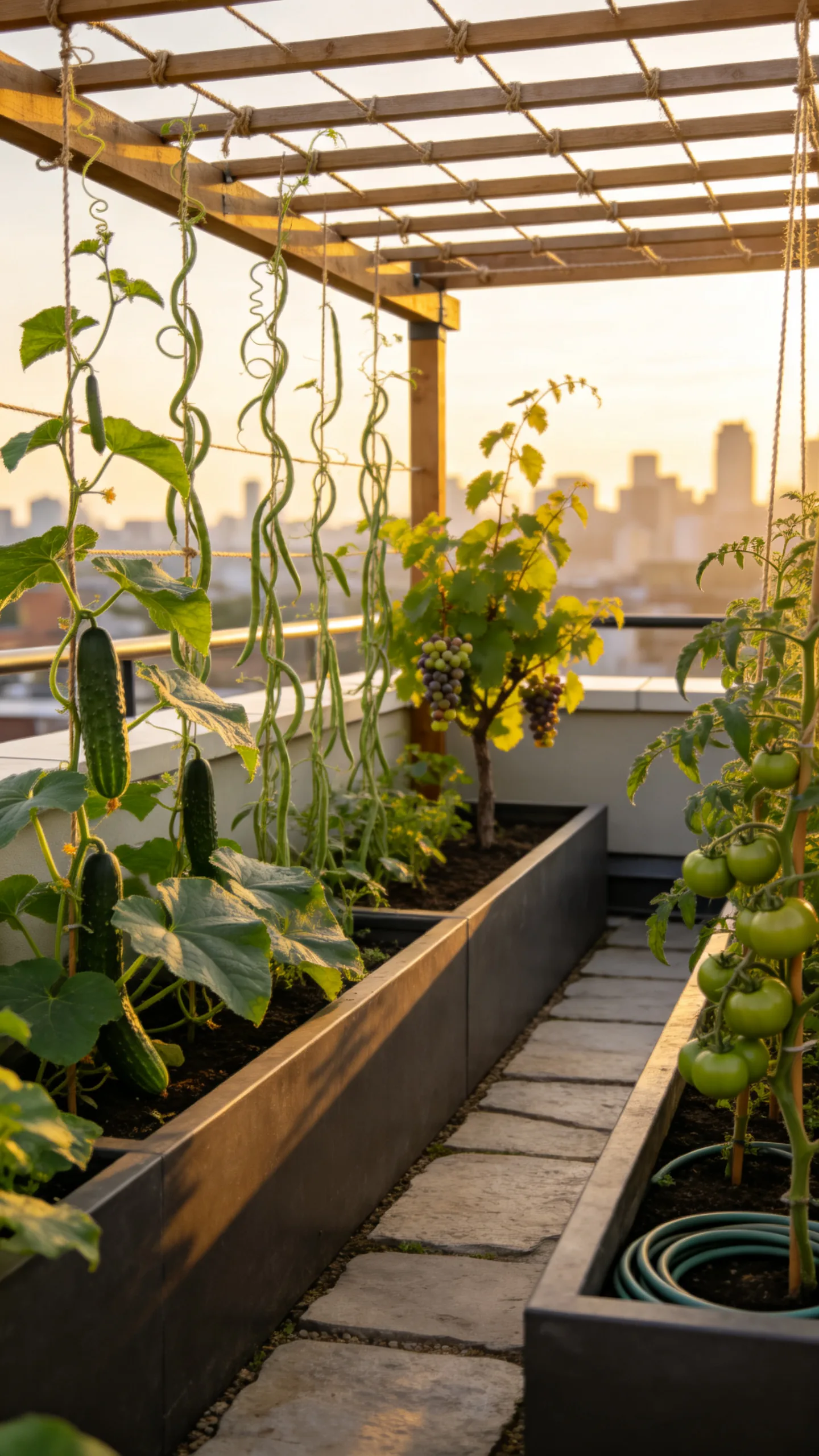
Turn a sunny privacy screen into productive growing space by mounting a trellis above deep planters. Grow pole beans, cucumbers, compact grapevines, or indeterminate tomatoes where the structure receives adequate light and is protected from severe wind.
Use strong ties that will not cut into stems, and guide growth throughout the season so vines do not obstruct paths. Edible plants usually need more frequent watering and feeding than ornamental shrubs, making drip irrigation especially useful. Rotate annual crops and refresh the upper layer of potting mix between seasons.
12. Frame the Skyline With Low Planting
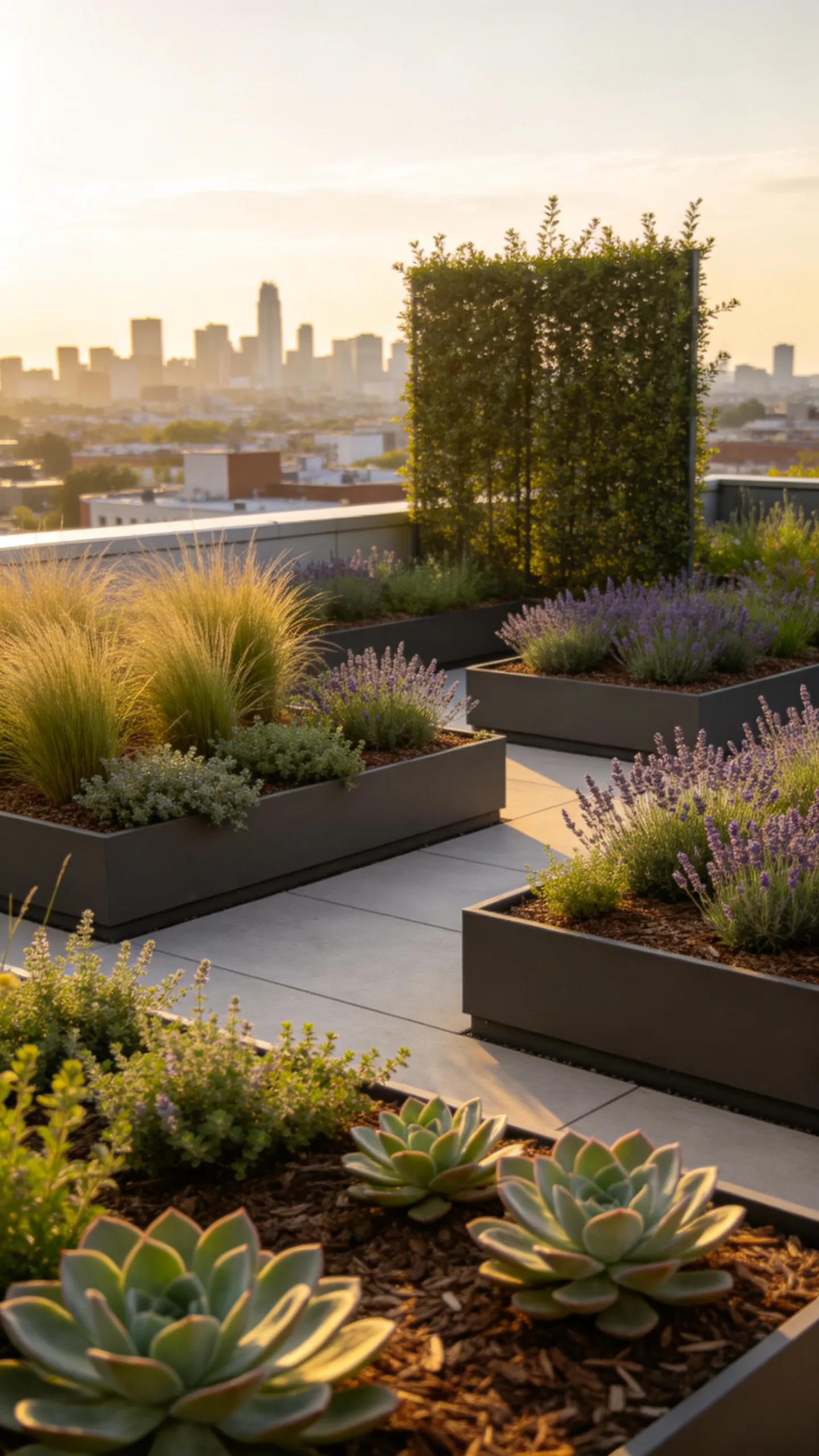
Not every roof edge needs tall screening. Preserve an attractive skyline or city view by using low planters filled with sedges, creeping thyme, compact lavender, or drought-tolerant succulents where climate and sun exposure permit. Place taller privacy planting only where undesirable sightlines occur.
This selective approach makes the rooftop feel larger because the eye can travel beyond the boundary. Keep plants below the line of seated views and repeat the same low species in several containers. Avoid loose gravel mulch in very windy locations; use heavier, securely contained mulch or planted groundcover instead.
13. Divide the Roof With a Double-Sided Planter Bench
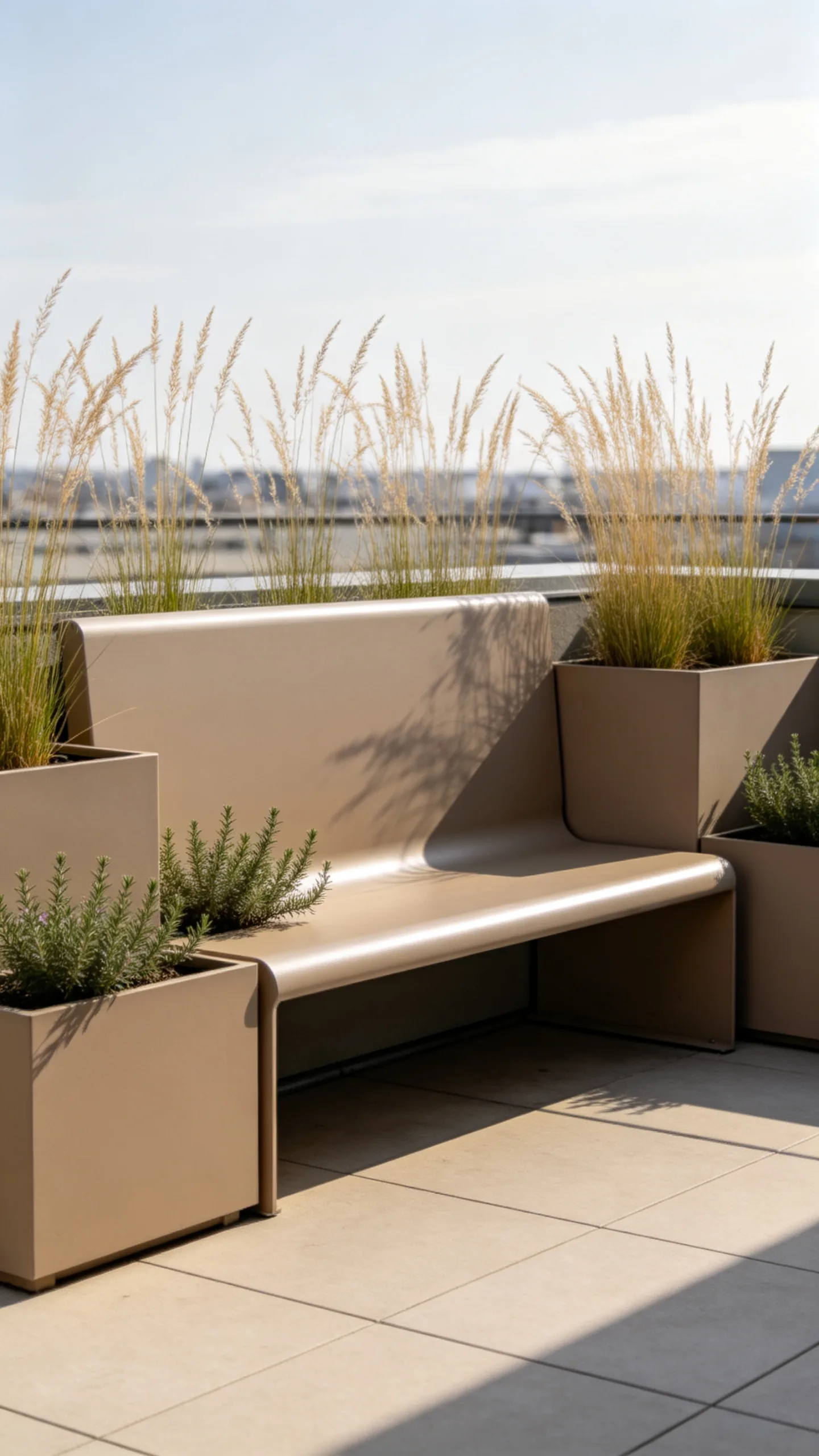
Combine seating and planting in one custom feature by installing a bench between two raised planters. The bench can divide a social space from a quieter reading corner while reducing the need for separate furniture and privacy barriers.
Use smooth, weather-resistant seat boards and keep planter edges away from elbows and shoulders. Compact aromatic plants such as thyme or dwarf rosemary can work near the bench in mild climates, while taller grasses or shrubs belong behind the backrest. Ensure the design allows access to irrigation lines and drainage outlets.
14. Create a Layered Corner Privacy Garden
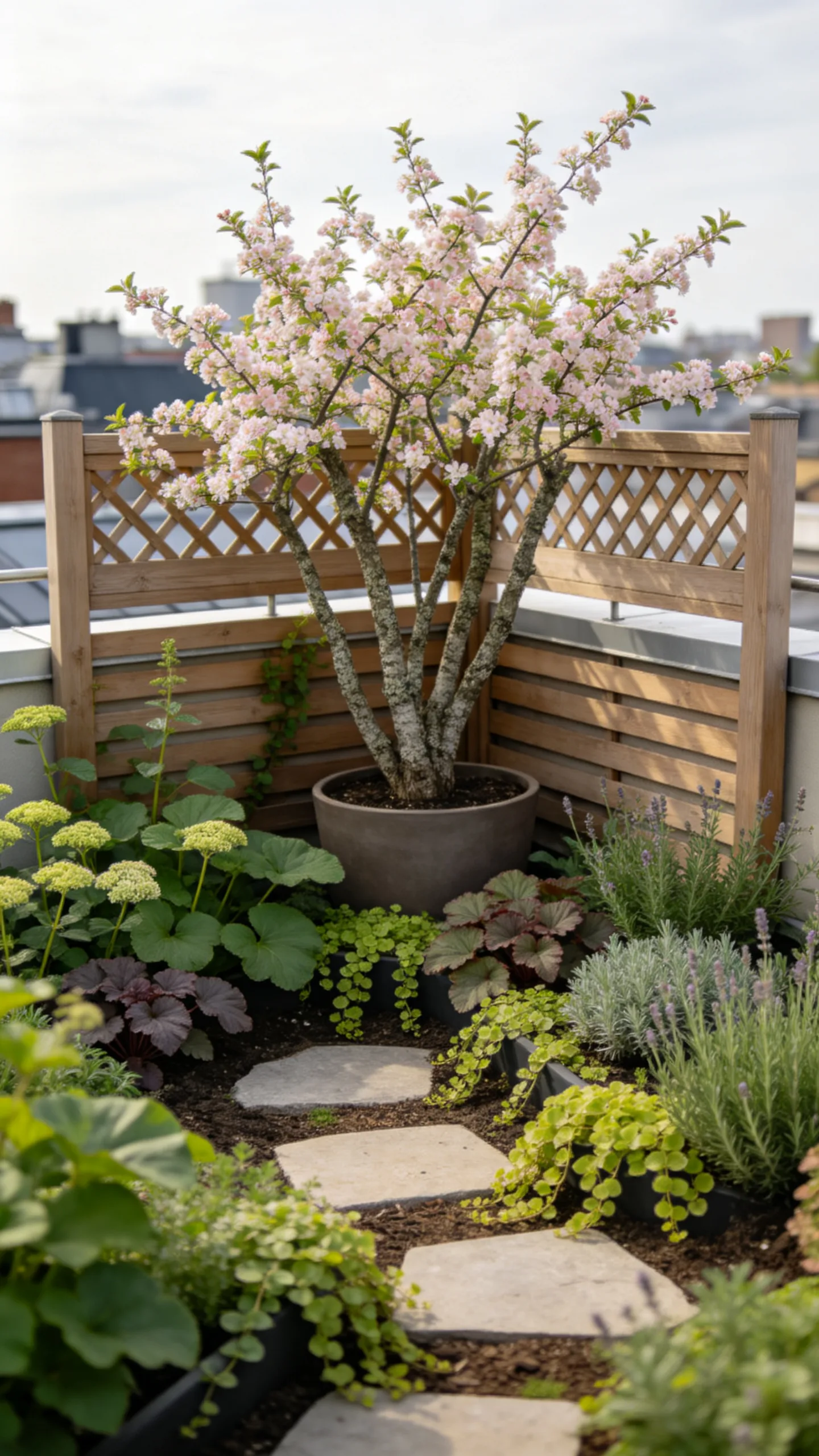
Use an overlooked rooftop corner for the tallest planting rather than spreading height evenly around the roof. Start with a screen or trellis at the back, place a specimen shrub or small tree in front, and finish with lower perennials and trailing plants along the edges.
This layered arrangement creates depth while concentrating soil weight and irrigation in a defined zone, subject to structural approval. A multi-stem serviceberry, dwarf conifer, or compact olive in an appropriate climate can serve as the focal point. Rotate containers periodically if one side receives substantially more sun.
15. Add Mobile Planters on Locking Casters
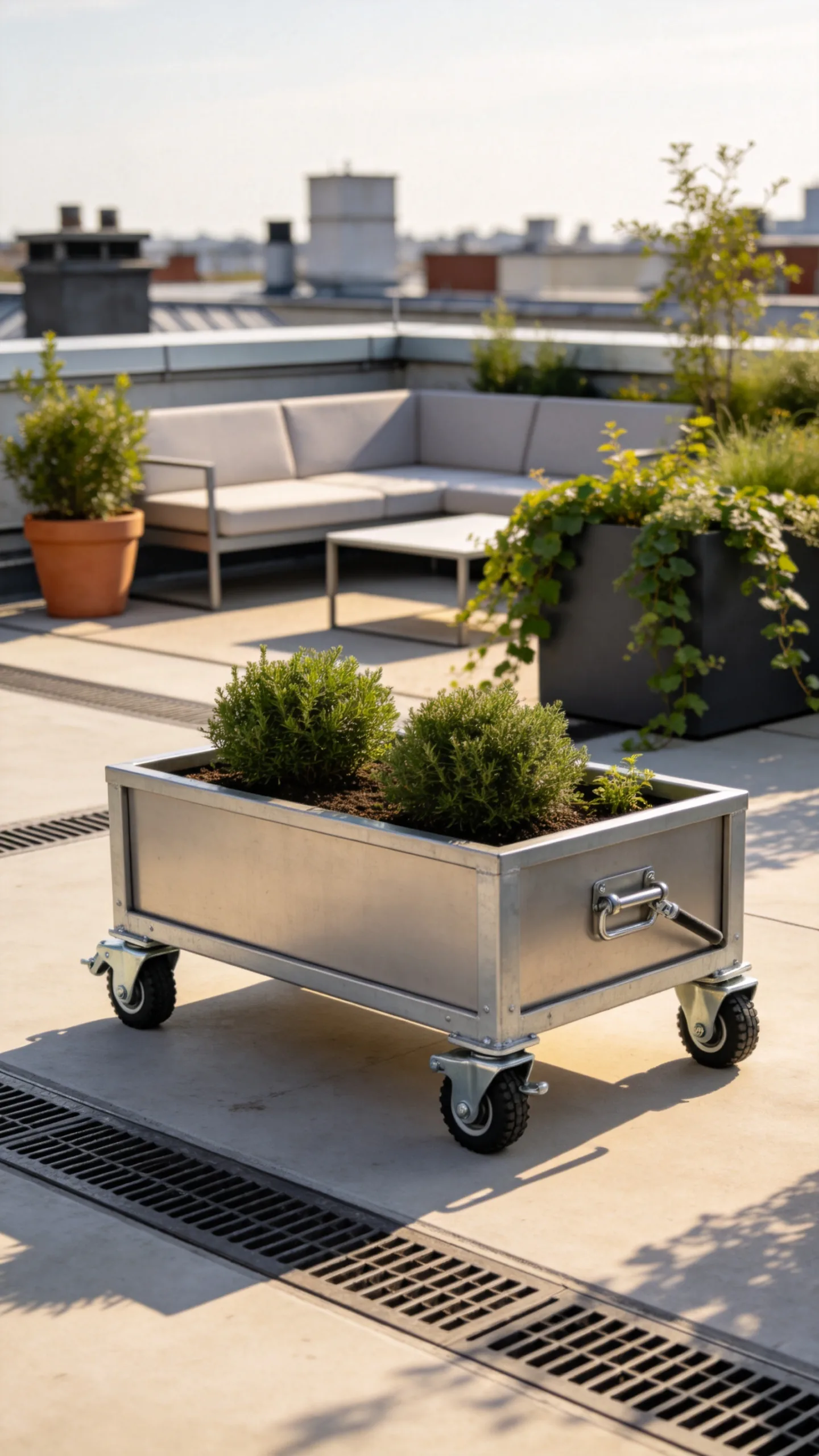
Place medium-size planters on heavy-duty wheeled bases so the rooftop layout can adapt to changing seasons and activities. Mobile greenery can screen a dinner party, open space for exercise, or move delicate plants into a protected position before extreme weather.
Use locking, outdoor-rated casters designed for the full wet weight of each planter. Low, broad containers are safer than top-heavy pots, especially in exposed locations. Mark permanent clear zones around roof drains and emergency routes so movable pieces never block essential access.
16. Grow a Vertical Herb Wall Near the Kitchen Door
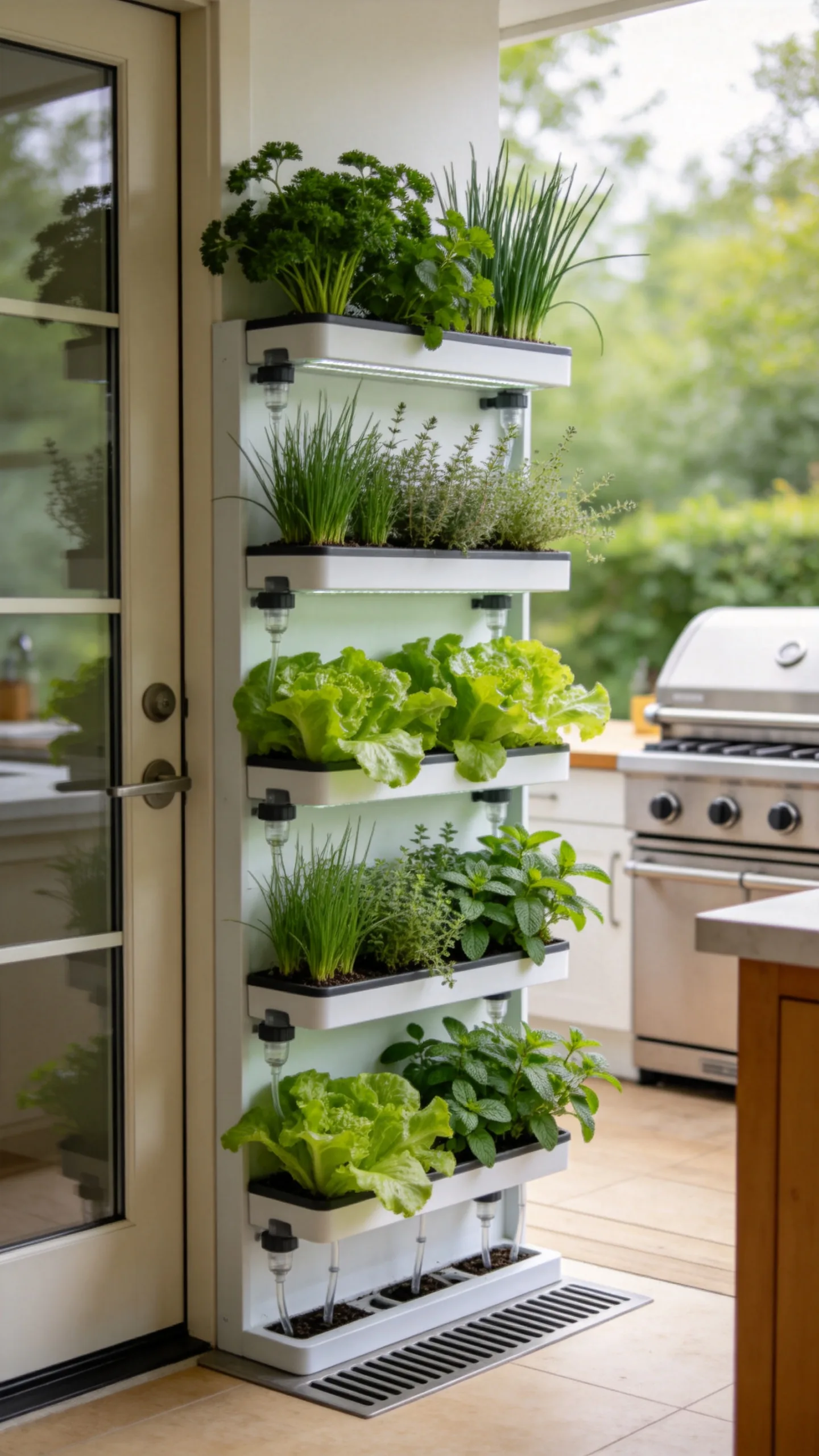
Install a compact vertical herb system close to the indoor kitchen or rooftop cooking area. Tiered pockets, wall-mounted troughs, or a freestanding rack can hold parsley, chives, thyme, oregano, mint, and salad greens without consuming much floor space.
Match herbs to the available light: Mediterranean herbs prefer strong sun and sharp drainage, while parsley and some leafy greens tolerate partial shade. Keep aggressive mint in its own container, and make sure upper tiers do not deprive lower plants of water. A drip line with individual emitters simplifies care during hot periods.
17. Surround a Fire Feature With Heat-Safe Planting
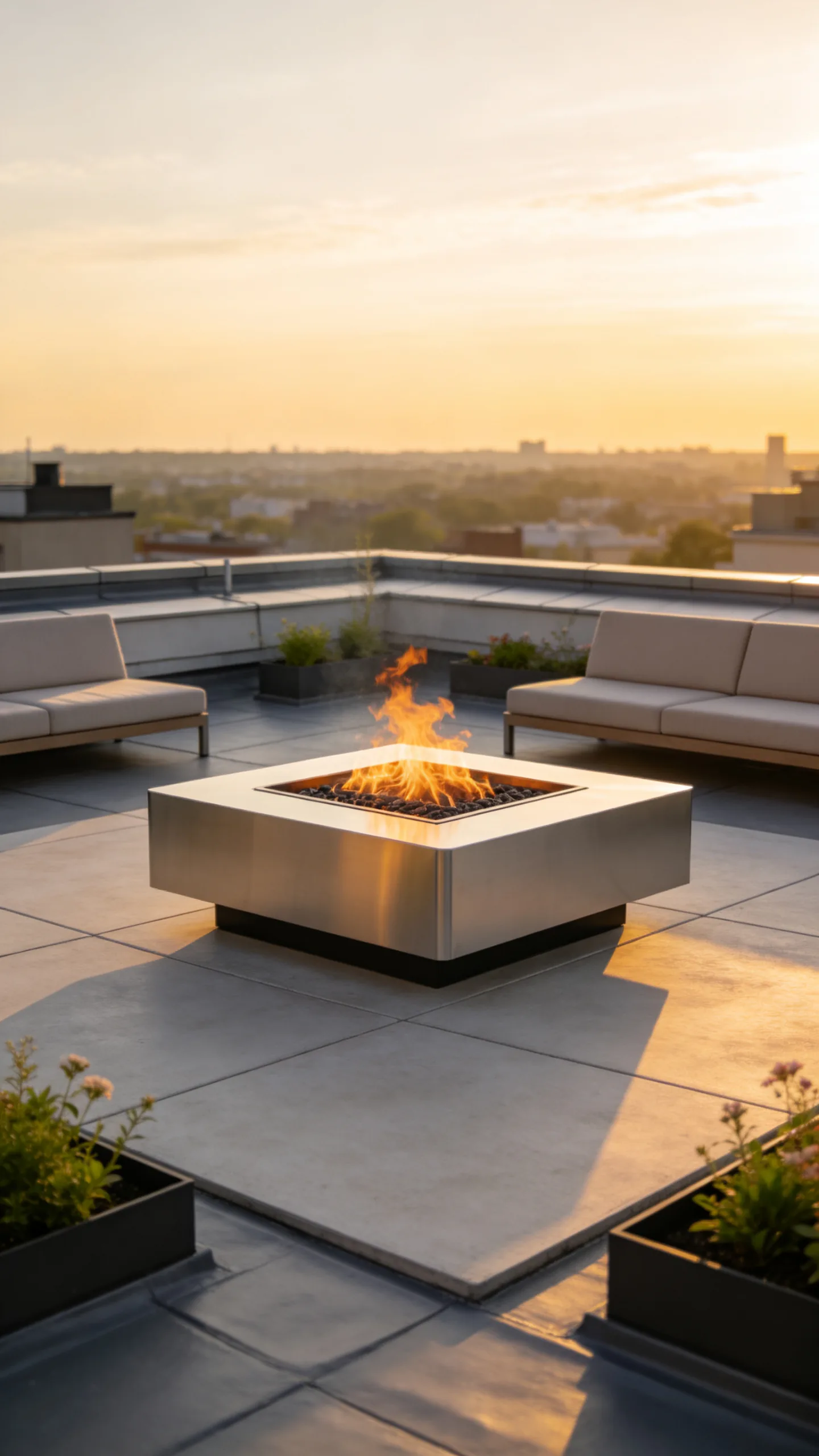
A permitted gas fire table can become a modern rooftop focal point when framed by low seating and restrained planting. Maintain the manufacturer’s required clearances and keep foliage, dry grasses, cushions, and timber screens away from heat and flame.
Use noncombustible paving directly around the feature and choose low plants for more distant containers. Succulents may look appropriate, but they are not a substitute for required fire clearance. Confirm building regulations, fuel restrictions, ventilation needs, and roof-surface protection before installation.
18. Make a Shaded Fern Courtyard
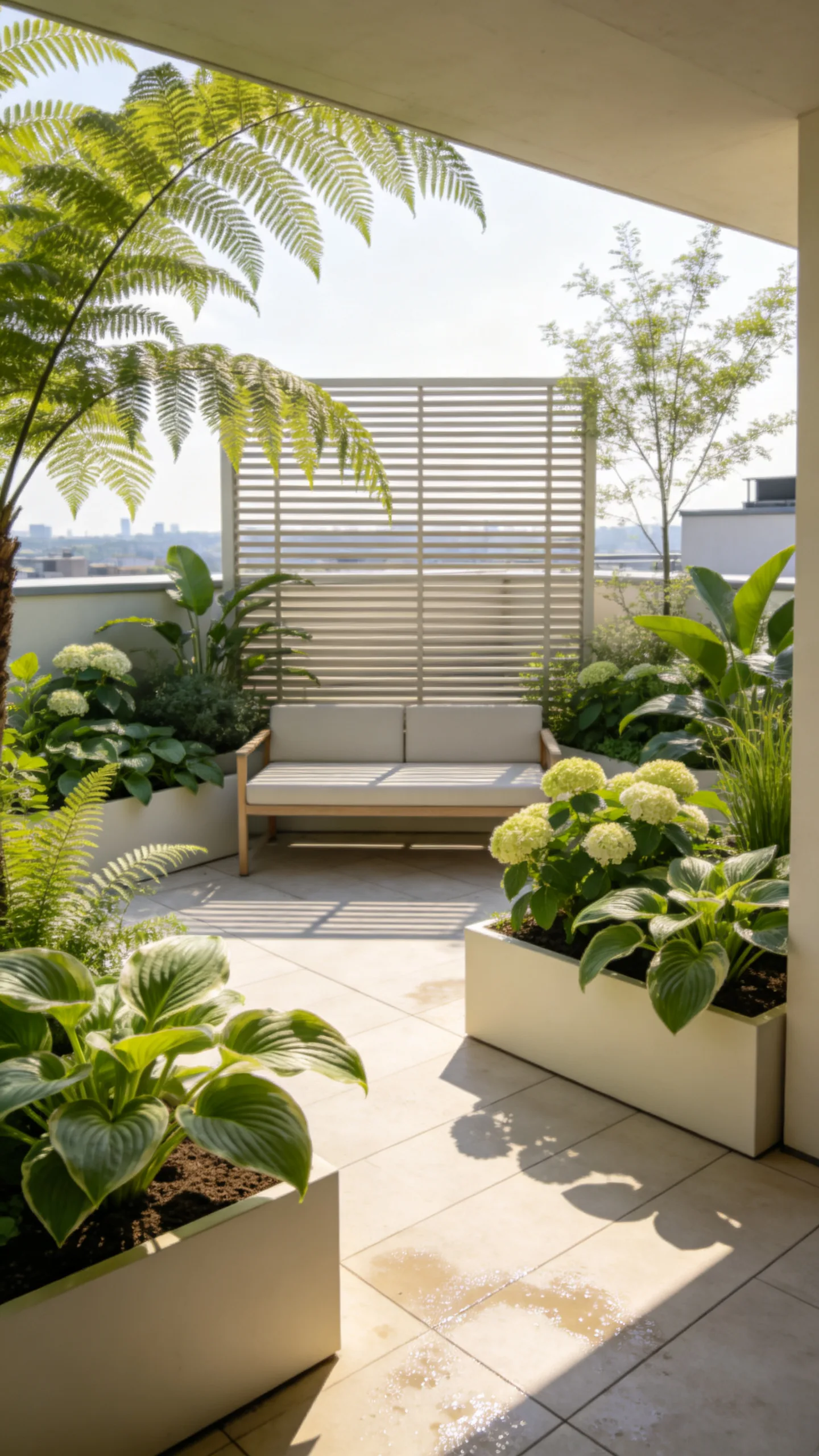
On a rooftop shaded by taller buildings, lean into lower light with a cool green courtyard. Arrange ferns, heuchera, carex, hostas, and compact hydrangeas in containers suited to local winter temperatures and the site’s actual hours of light.
Pale planters and light-colored paving help reflect available daylight, while a slatted screen can provide privacy without making the space feel enclosed. Shaded containers dry more slowly than those in full sun, so check moisture before watering. Ensure air circulation remains adequate to reduce persistent dampness around foliage.
19. Combine Raised Beds With a Narrow Gravel-Style Path
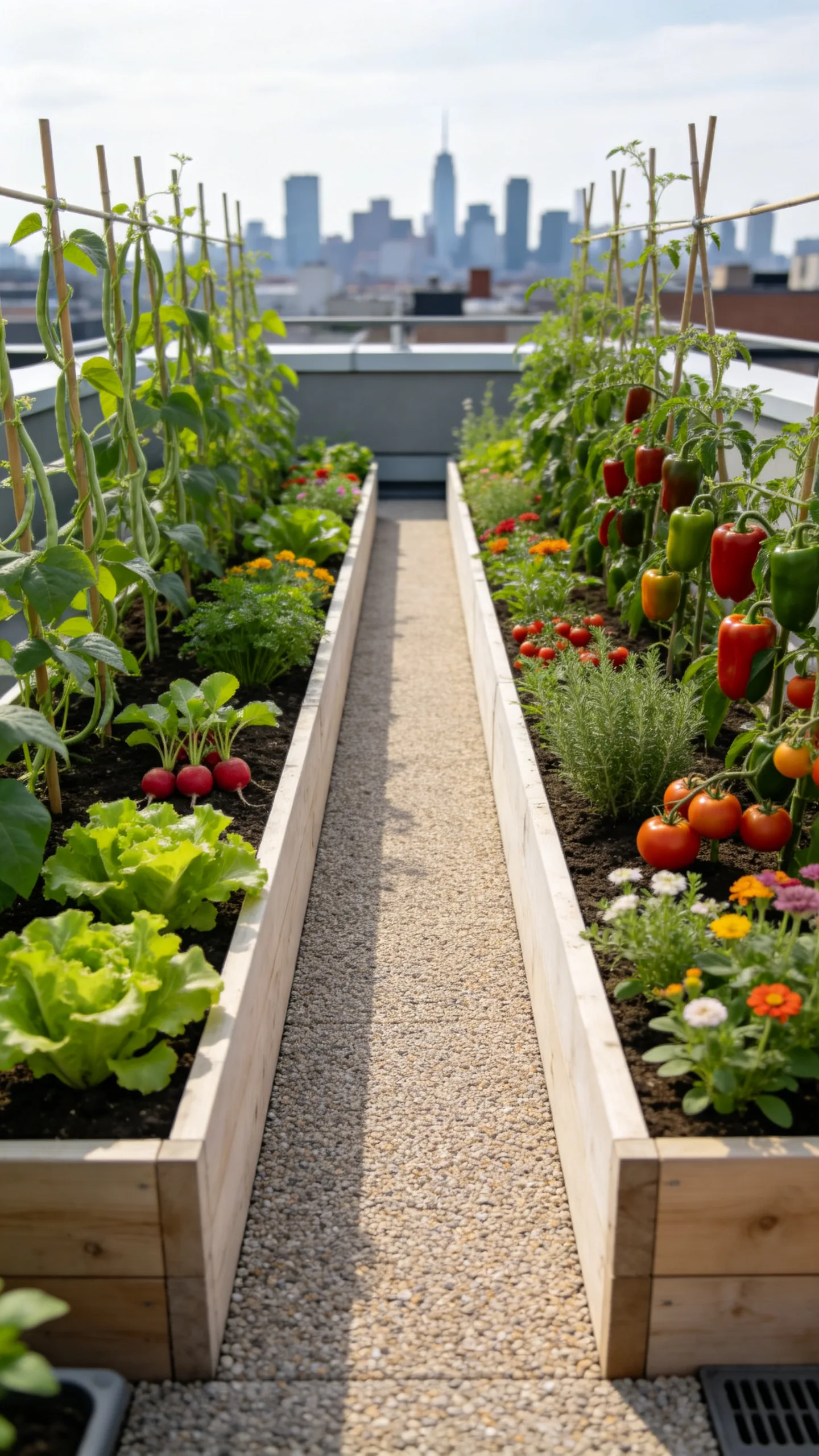
Create a structured rooftop kitchen garden with two parallel raised planters and a central path. Use lightweight paving or securely contained gravel-look materials approved for the roof rather than spreading loose aggregate that could migrate into drains or blow in strong wind.
Divide the beds into sections for compact vegetables, herbs, and edible flowers. Leaf lettuce, radishes, bush beans, peppers, and dwarf tomatoes can be productive when their seasonal light and temperature needs are met. Maintain enough path width for watering, harvesting, and moving supplies safely.
20. Use Ribbed Planters to Add Texture

Choose tall ribbed or fluted planters when the design needs texture but not additional ornament. A row of these containers can screen utility equipment or create a refined backdrop behind a sofa. Keeping all containers in one finish prevents the grooves from making the area look busy.
Plant each pot with the same upright grass or compact shrub for a rhythmic effect. If the containers taper toward the base, verify that they remain stable when plants are fully grown and wet. Concealed reservoir systems can reduce watering frequency, but overflow outlets must still drain correctly.
21. Create a Soft Screen With Multi-Stem Trees
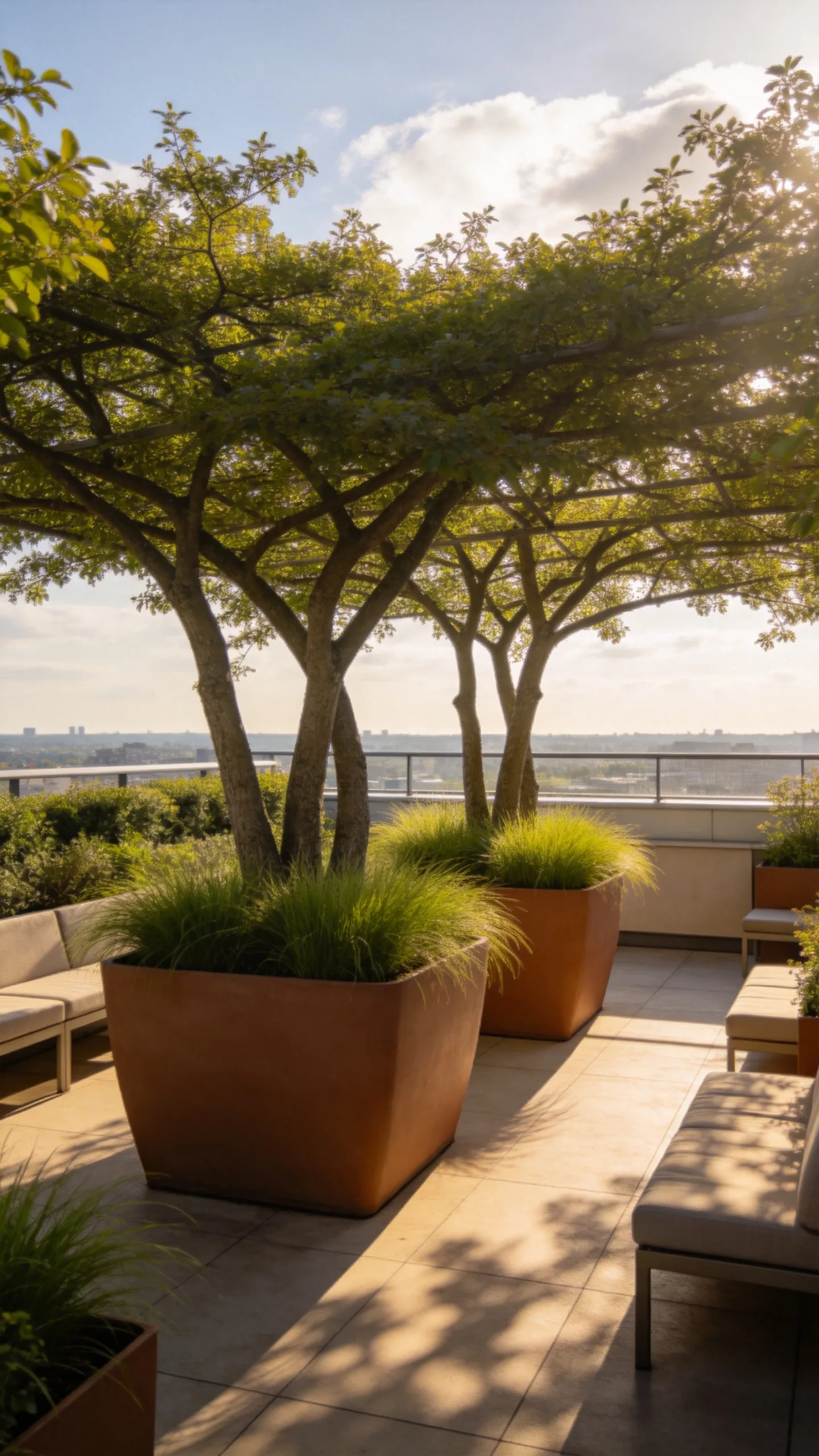
Multi-stem trees filter views more naturally than a solid hedge and cast dappled shade over seating. Place one to three container-suitable specimens along the most exposed side of the rooftop, allowing their branching forms to overlap without creating a dense wall.
Small birches, crepe myrtles, Japanese maples, or serviceberries may be suitable depending on climate, wind, and sun. Trees require substantial root space, careful anchoring, and long-term pruning, so include their mature size in the structural and layout plan. Underplant with low sedges or groundcover to shade the soil surface.
22. Illuminate Planters With Concealed Lighting
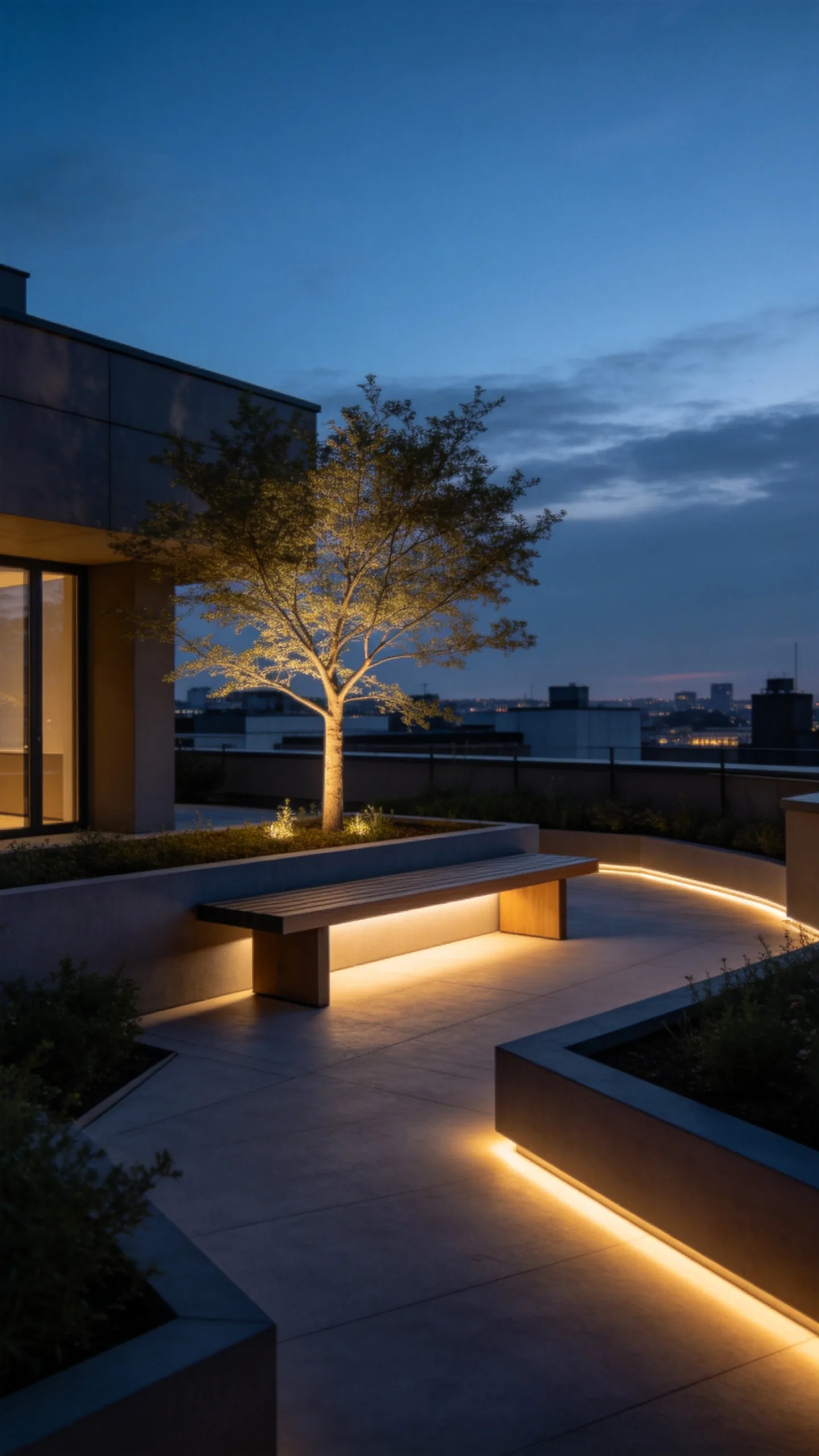
Add low-voltage outdoor lighting beneath benches, within planter recesses, or at the base of selected plants. Soft uplighting can reveal the shape of a small tree, while linear lighting under a planter edge helps define paths without adding freestanding fixtures.
Use exterior-rated equipment and have electrical connections installed according to local requirements. Aim lights away from neighboring windows and avoid excessively bright fixtures that overpower the garden. A timer or smart control can limit energy use and turn lights off during late-night hours.
23. Arrange a Four-Season Container Border
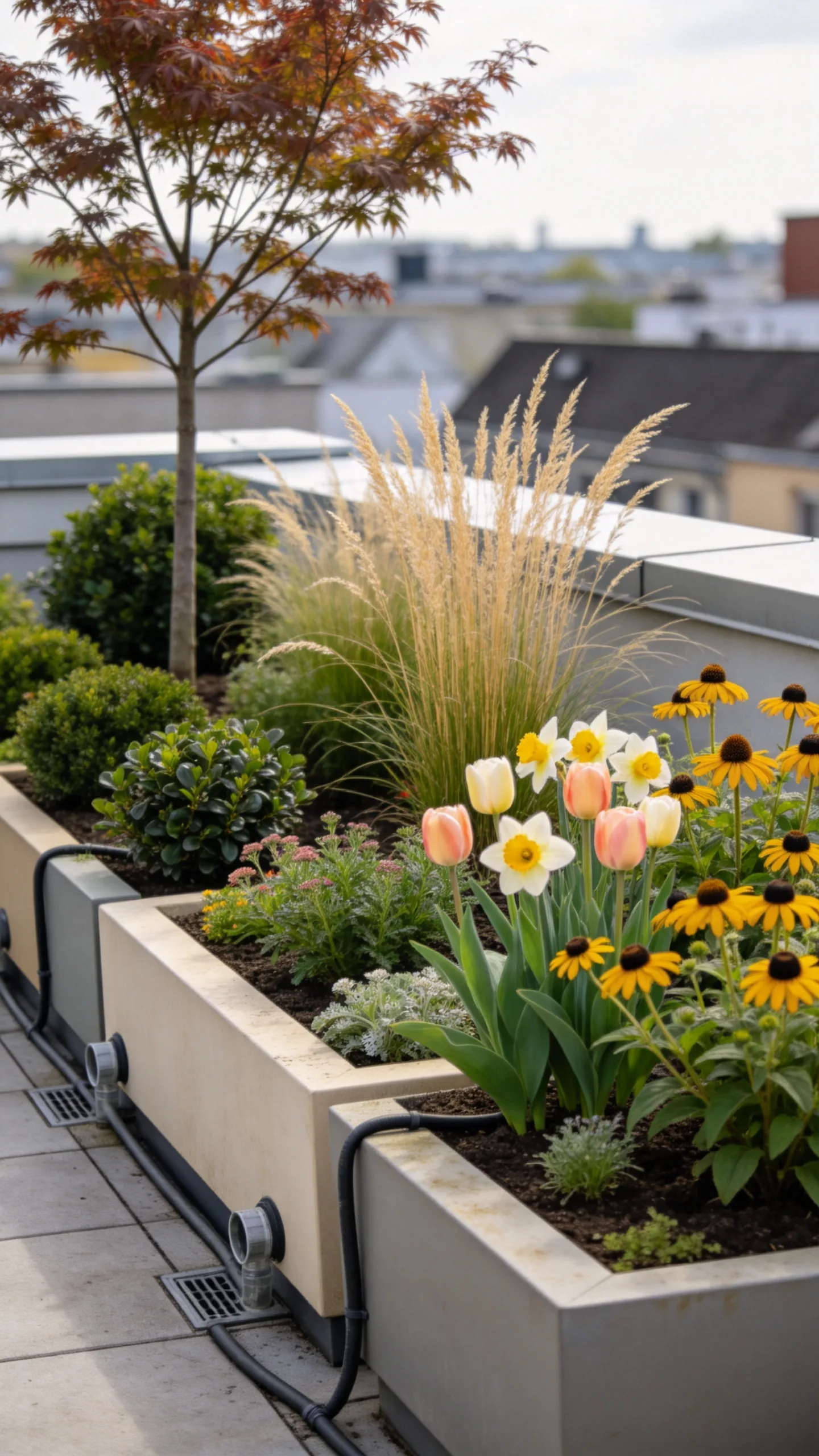
Plan the main privacy border to provide structure throughout the year rather than relying entirely on summer flowers. Start with compact evergreen shrubs, add deciduous grasses or small trees for height, and fill gaps with spring bulbs and long-flowering perennials suited to the rooftop’s exposure.
Choose plants that share similar moisture and soil needs within each container. In cold regions, use frost-resistant pots and species hardy enough for roots to overwinter above ground; in hot climates, prioritize heat-tolerant foliage and afternoon protection where possible. Drip irrigation, seasonal pruning, and an annual check of drainage outlets will keep the border manageable.