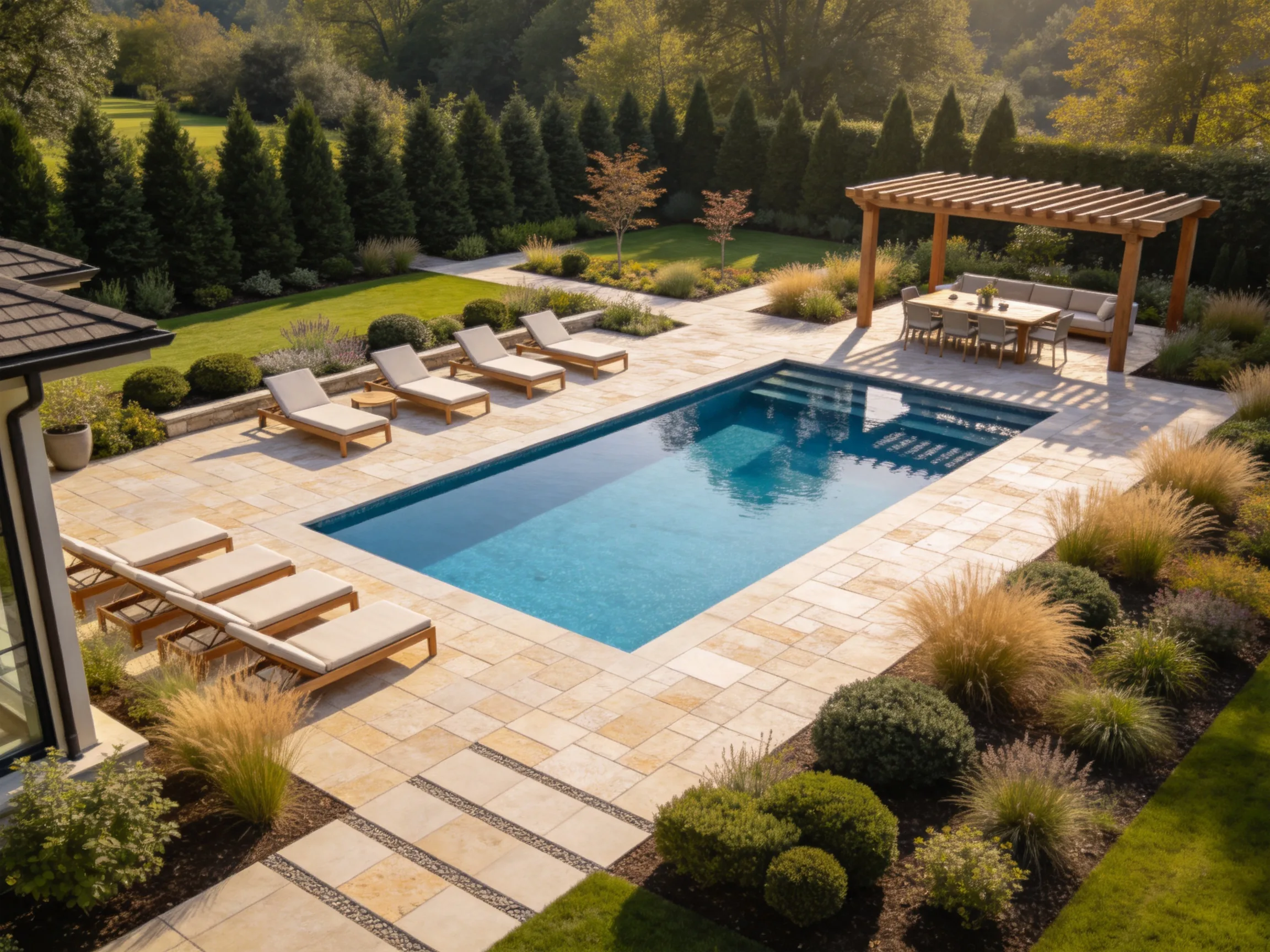
A well-planned pool backyard design connects the water, patio, planting beds, and seating areas so the entire yard feels useful. Whether you have a narrow lot, a compact plunge pool, or room for multiple entertaining zones, these ideas offer practical ways to arrange shade, greenery, paths, and furniture around the pool.
1. Build a Large Paver Patio With Defined Furniture Zones
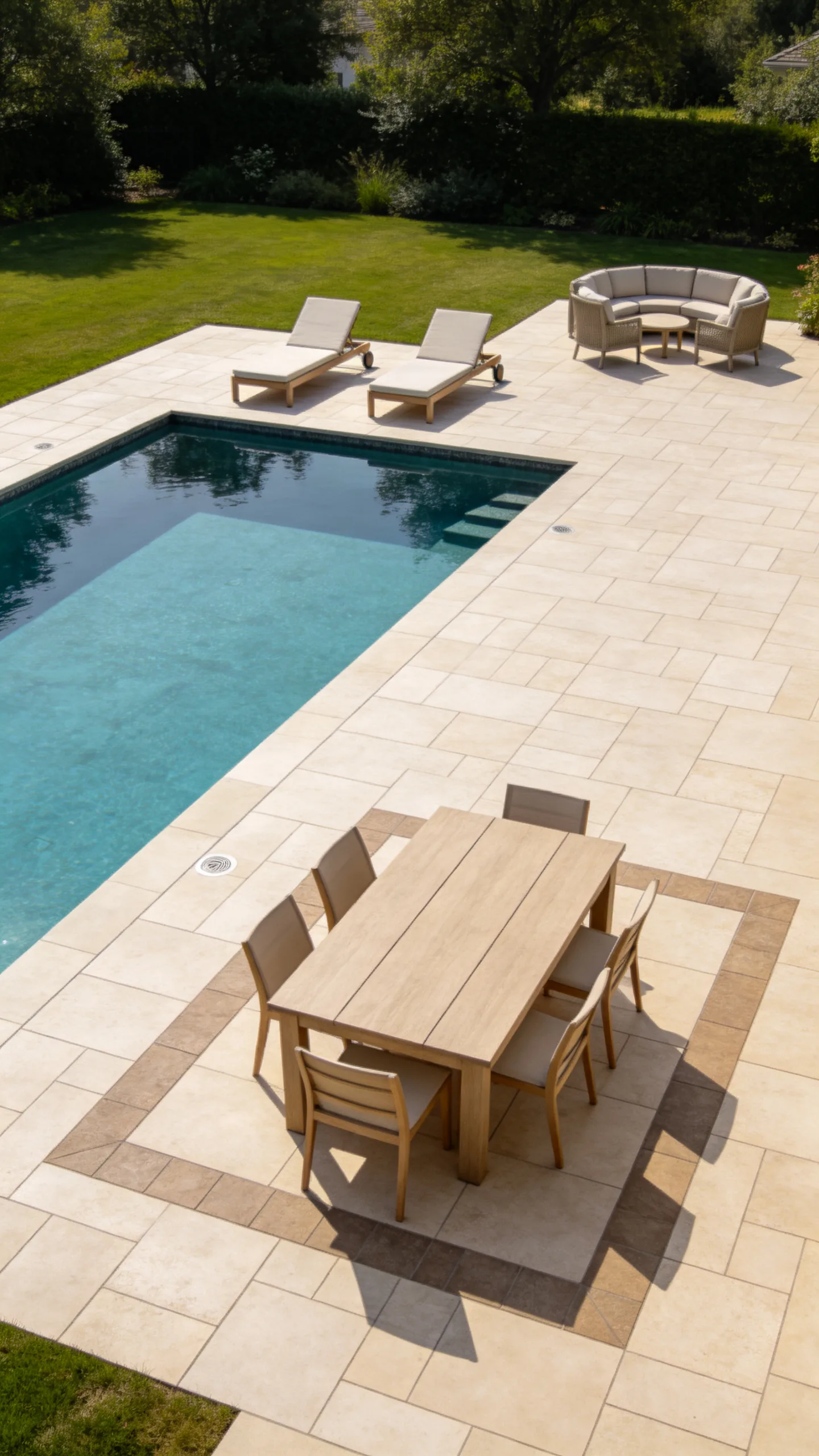
Install concrete, porcelain, or natural-stone pavers around the pool to create a durable surface for several outdoor activities. Use one side for chaise lounges, another for a dining table, and a quieter corner for a small conversation set. Leaving at least three feet of open space around furniture helps maintain clear walking routes.
The paving pattern can define each zone without adding walls. For example, lay large-format pavers beside the pool and switch to a contrasting border beneath the dining area. Choose textured, exterior-rated materials that provide traction when wet, and confirm that the installation has adequate drainage away from the pool.
2. Frame the Pool With Layered Evergreen Planting
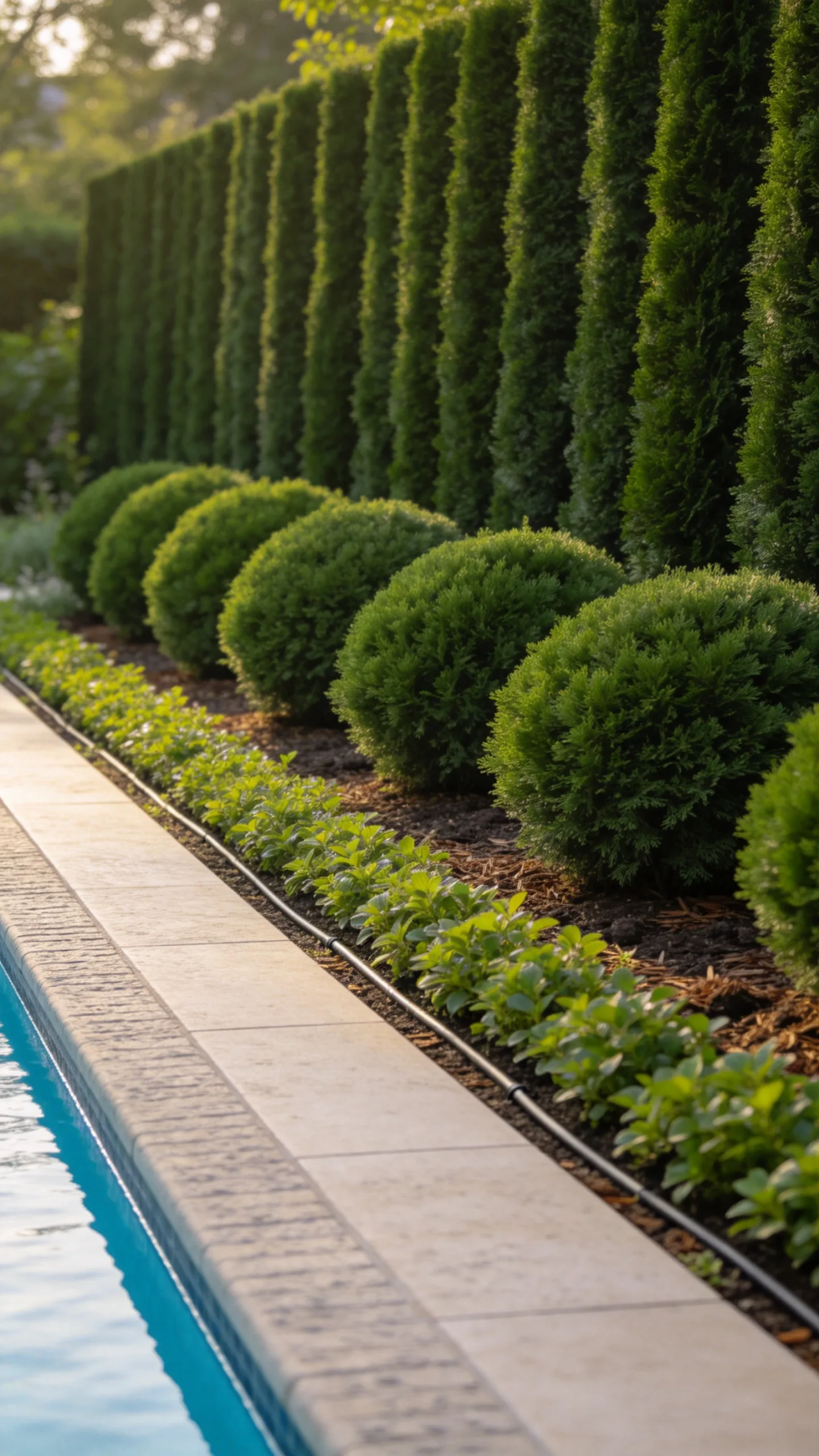
Create a green backdrop by arranging plants in three heights: taller screening shrubs at the rear, rounded mid-height plants in front, and low ground covers along the patio edge. Depending on the climate, suitable options may include podocarpus, clumping bamboo, pittosporum, dwarf yaupon holly, or compact juniper.
Keep plants with aggressive roots far enough from the pool shell and plumbing lines. Select varieties that drop minimal flowers, berries, or small leaves to reduce cleaning. A drip irrigation line under mulch delivers water directly to the planting bed without spraying the pool deck.
3. Add a Pergola-Covered Poolside Lounge
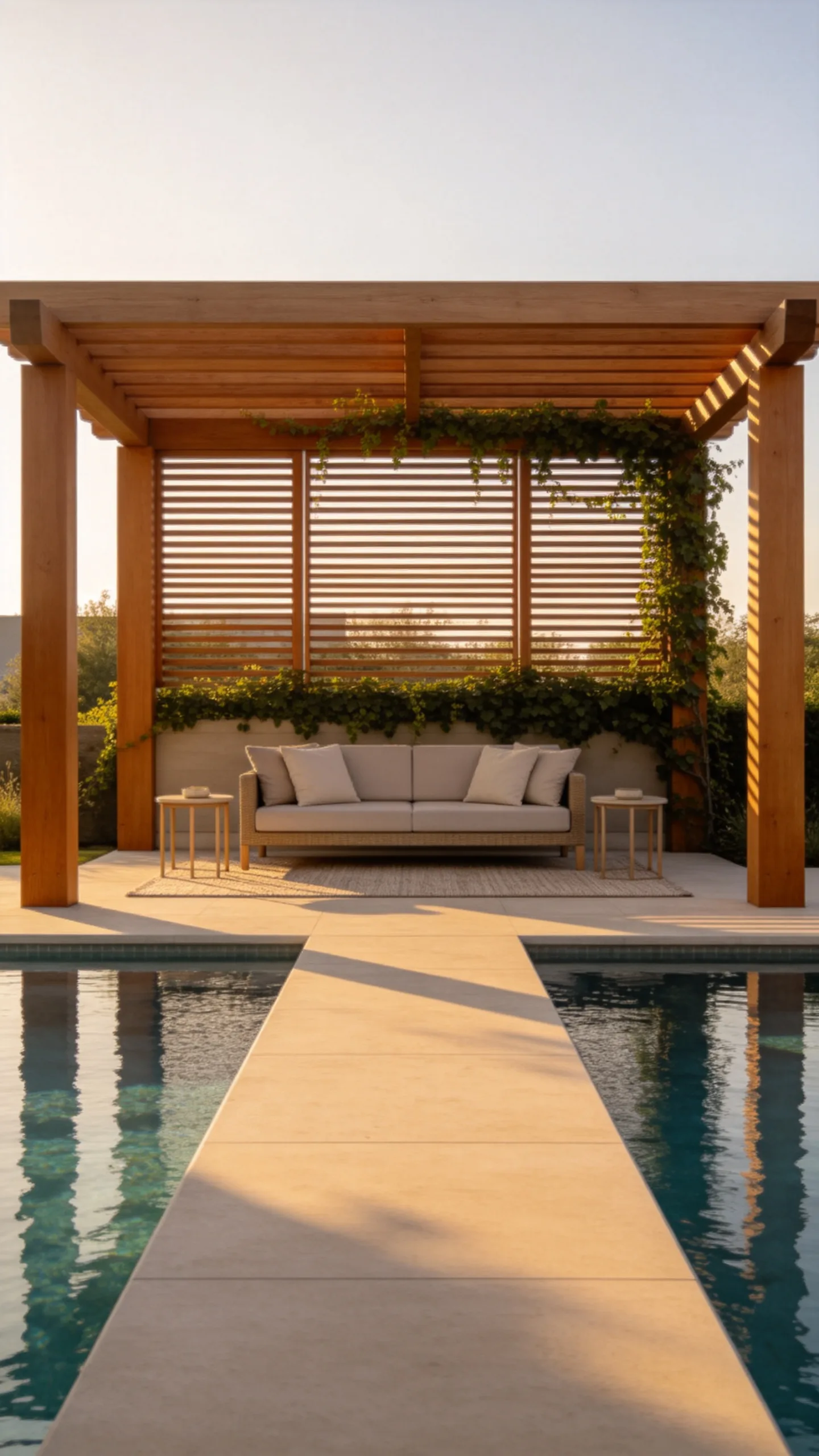
Position a pergola along one end of the pool to establish a shaded lounging zone without enclosing the yard. Furnish it with an outdoor sofa, washable cushions, side tables, and a weather-resistant rug. Adjustable louvers or a retractable canopy can provide more control over afternoon sun.
Allow enough clearance between the pergola posts and the pool edge for safe circulation. If you want plants overhead, train a climate-appropriate vine such as grapevine, star jasmine, or a restrained clematis variety along the structure. Place climbing plants where fallen petals and leaves are less likely to land in the water.
4. Design a Narrow Lap Pool With a Linear Garden Border
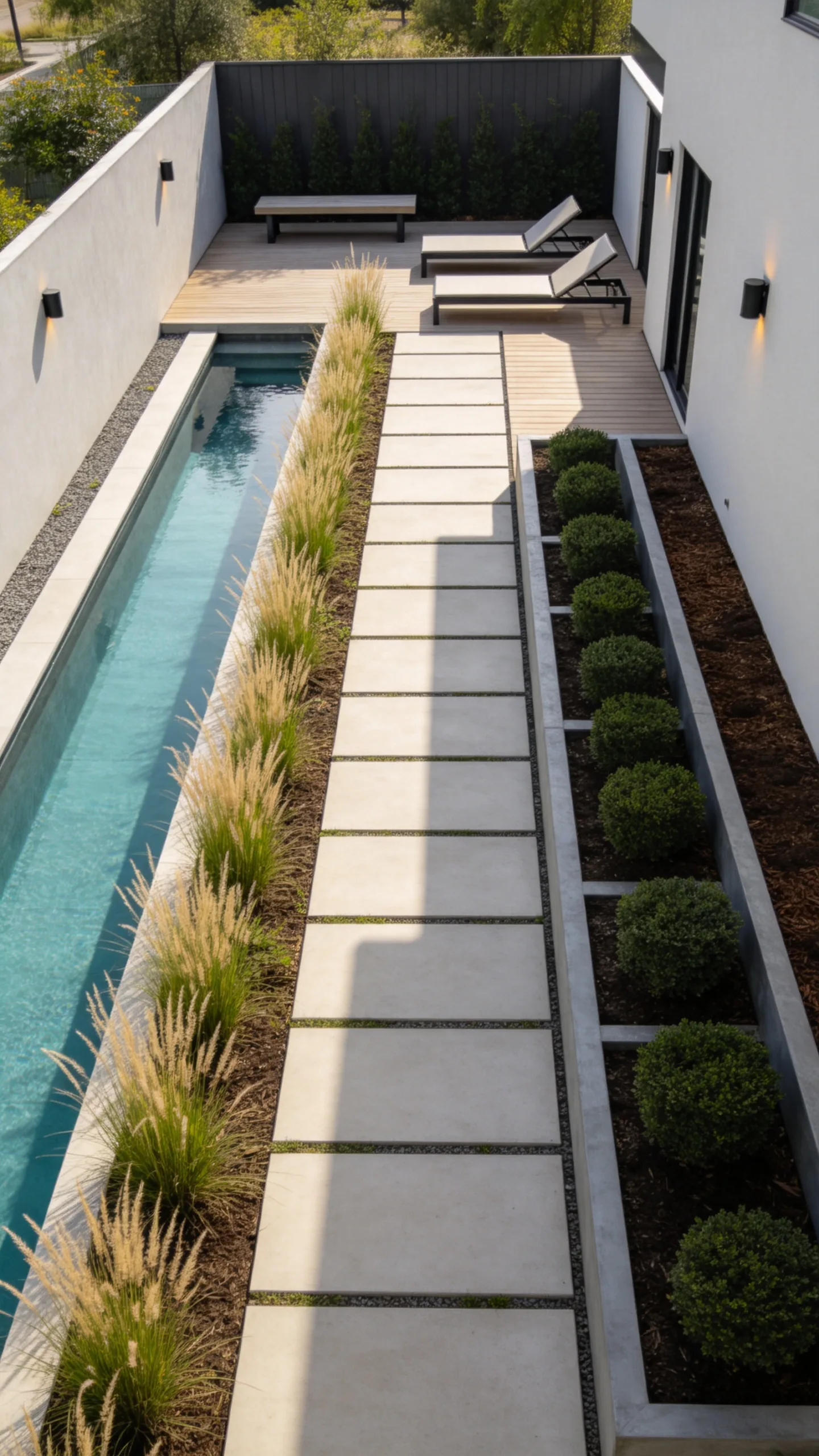
A long, narrow pool can fit against one side of a compact yard while preserving room for a patio on the other. Emphasize the pool’s shape with a straight planting strip containing upright grasses, clipped shrubs, or columnar evergreens.
Use large rectangular pavers laid lengthwise to make the yard appear longer. A slim bench, wall-mounted lights, and narrow chaise lounges can provide function without obstructing the walkway. Keep planting beds contained with metal or masonry edging so soil and mulch do not wash onto the deck.
5. Create a Sunken Fire Pit Lounge Beside the Pool
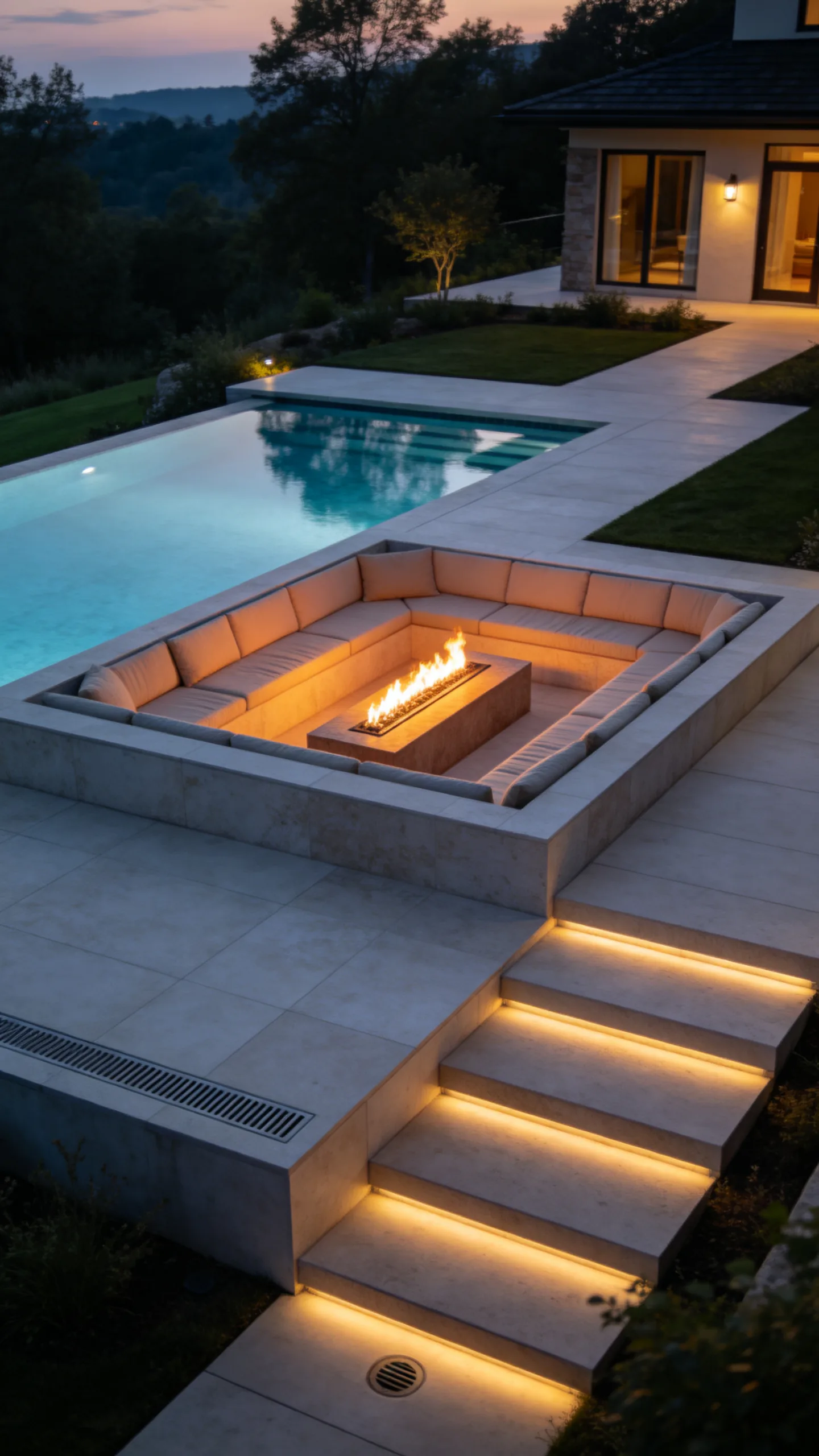
Place a sunken conversation area near—but safely separated from—the pool to give the backyard a distinct evening destination. Built-in benches can follow a square, rectangular, or curved layout around a gas fire feature, reducing the need for bulky freestanding furniture.
Plan drainage carefully so rainwater cannot collect in the recessed area. Use noncombustible materials near the fire, maintain clear routes back to the house, and follow local fire-feature and pool-barrier requirements. Low-voltage step lights make changes in elevation easier to see after dark.
6. Connect the Pool to an Outdoor Dining Patio
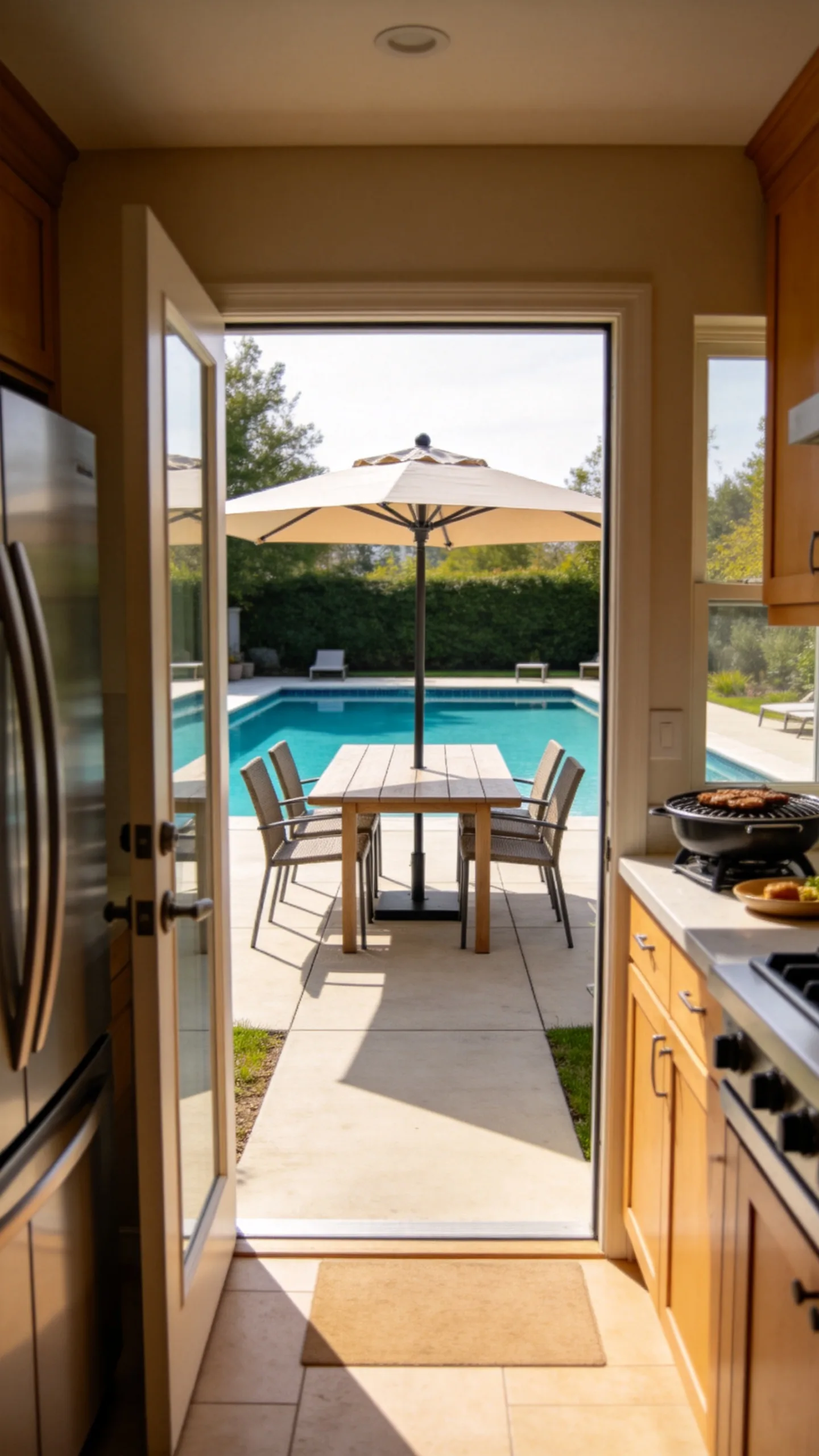
Set the dining area close to the kitchen door or outdoor cooking station rather than placing it at the far end of the yard. This shortens the route for carrying food and keeps the primary pool deck open for swimmers and loungers.
A rectangular table can run parallel to the pool, while a round table may fit better in a compact corner. Add a cantilever umbrella or shade sail that does not require a pole through the center of the table. Plan a hard, level surface beneath the furniture so chairs remain stable and easy to move.
7. Use Raised Planters as Poolside Room Dividers
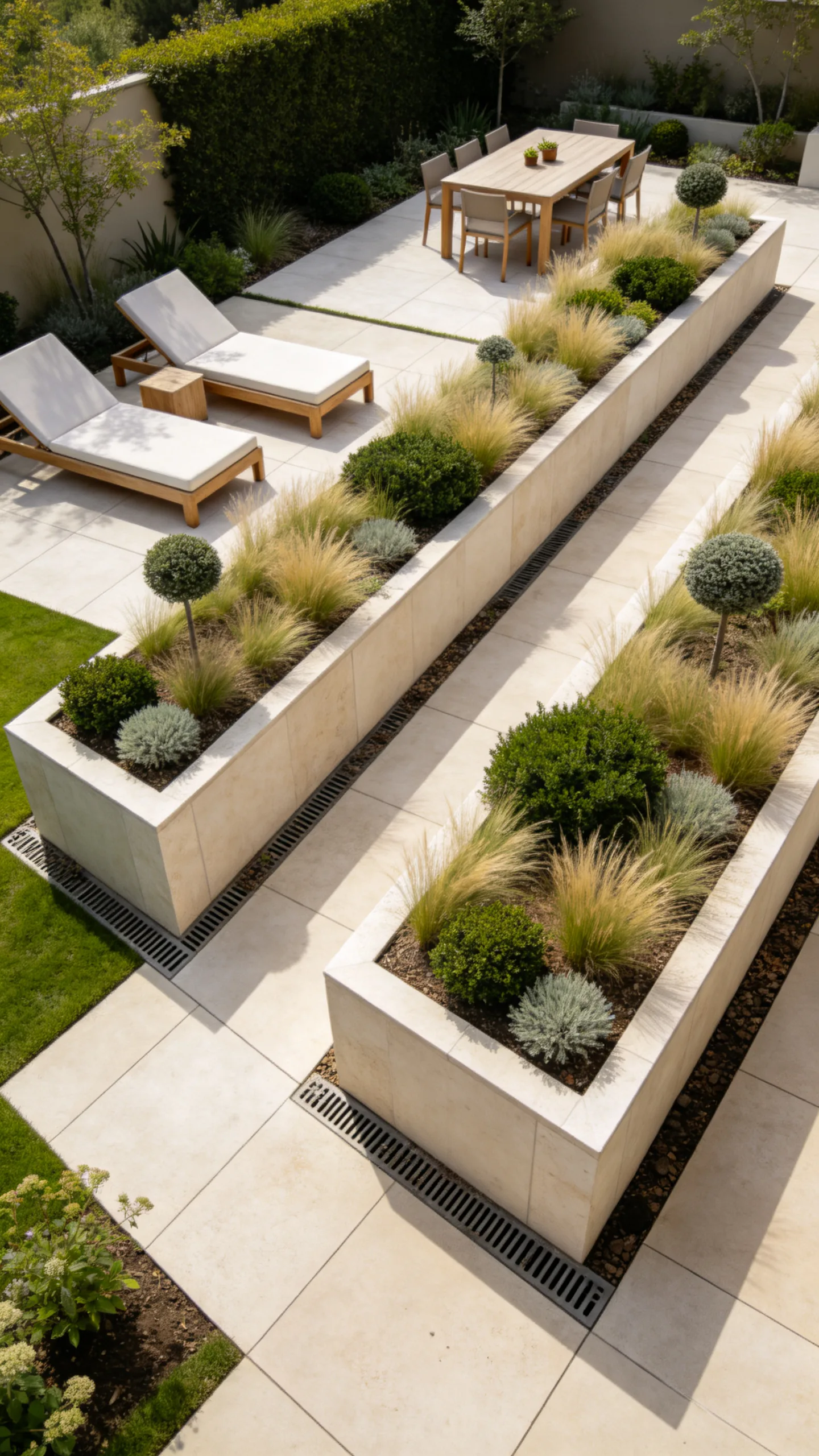
Raised planters can separate lounging, dining, and swimming zones without blocking views across the yard. Build them from sealed masonry, weather-resistant metal, or rot-resistant wood, and position them where they will not narrow essential walkways.
Fill the planters with tidy, low-litter plants such as ornamental grasses, lavender in dry climates, dwarf agave in frost-free areas, or compact evergreen shrubs in cooler regions. Include drainage holes and a drip line. Avoid thorny plants or species that attract large numbers of stinging insects beside heavily used seating.
8. Install a Tanning Ledge With In-Water Loungers
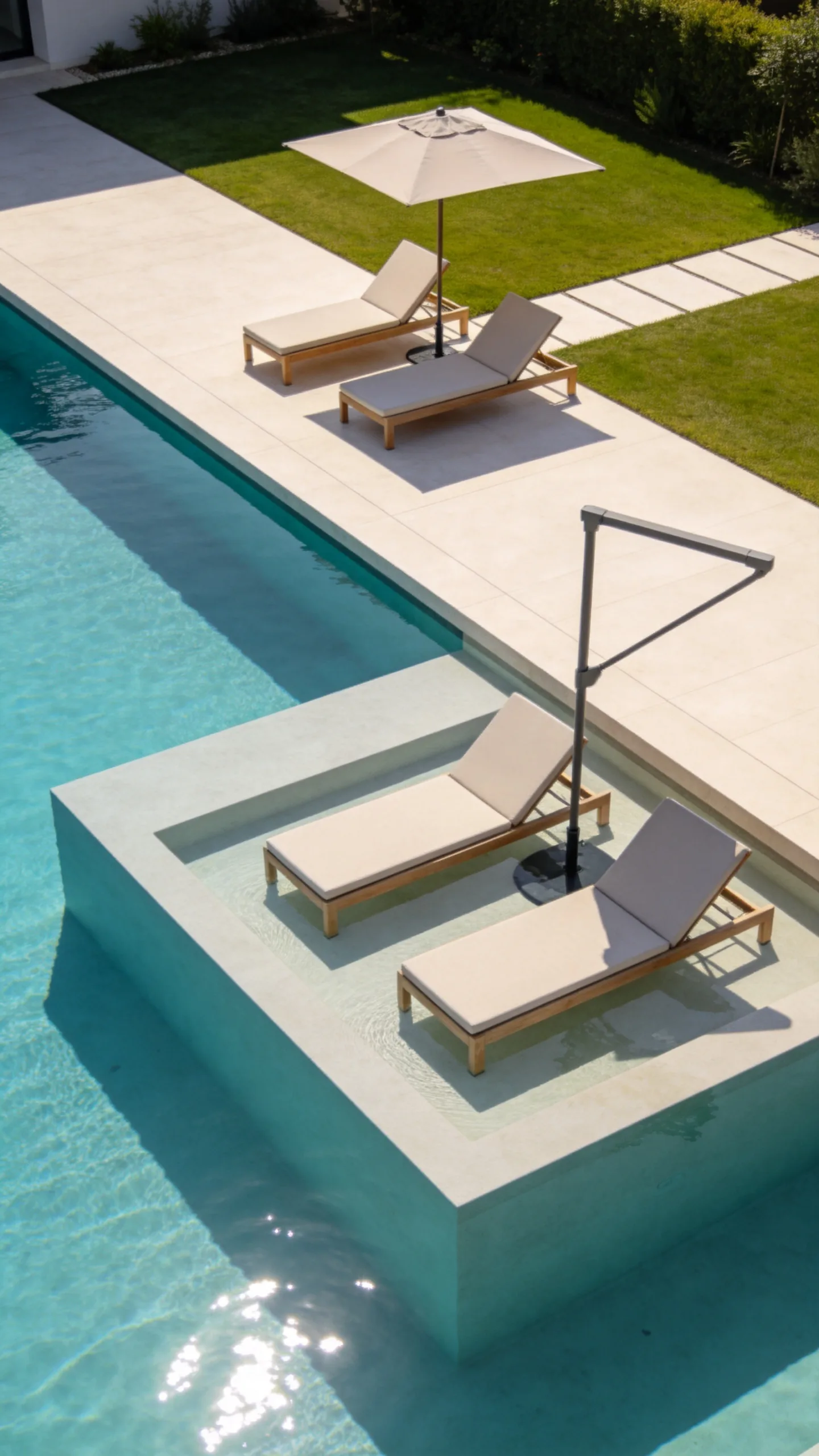
A shallow tanning ledge creates a transition between the patio and deeper water. It can hold submerged loungers, provide a spot for cooling off, or serve as a supervised play area when designed to meet appropriate safety standards.
Coordinate the ledge with a nearby dry lounging zone so people can move easily between both areas. Choose furniture specifically made for submerged use, as ordinary patio pieces may degrade or damage the pool finish. An umbrella sleeve can add shade if it is incorporated during pool construction.
9. Soften a Modern Pool With Ornamental Grasses
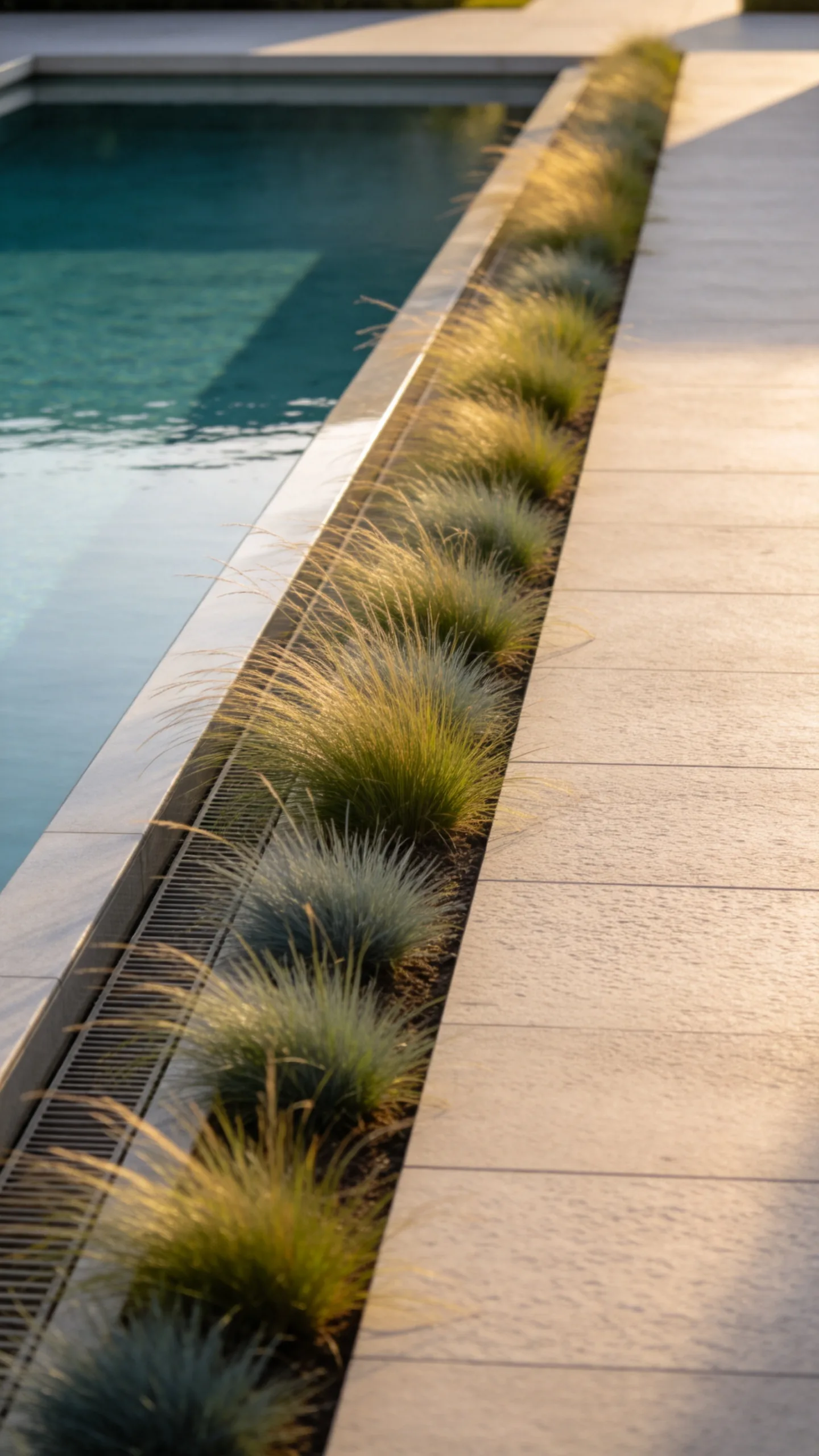
Straight pool edges and pale paving can feel less rigid when paired with loose, moving grasses. Plant compact varieties in long beds along a fence or patio boundary, choosing species suited to local winter temperatures, rainfall, and sunlight.
Good options may include fountain grass where it is noninvasive, switchgrass, little bluestem, or sedges for partially shaded areas. Keep grasses set back from the water to limit blades and seed heads entering the pool. Cut back deciduous types during their recommended dormant season and divide crowded clumps as needed.
10. Add a Privacy Screen With Clumping Bamboo
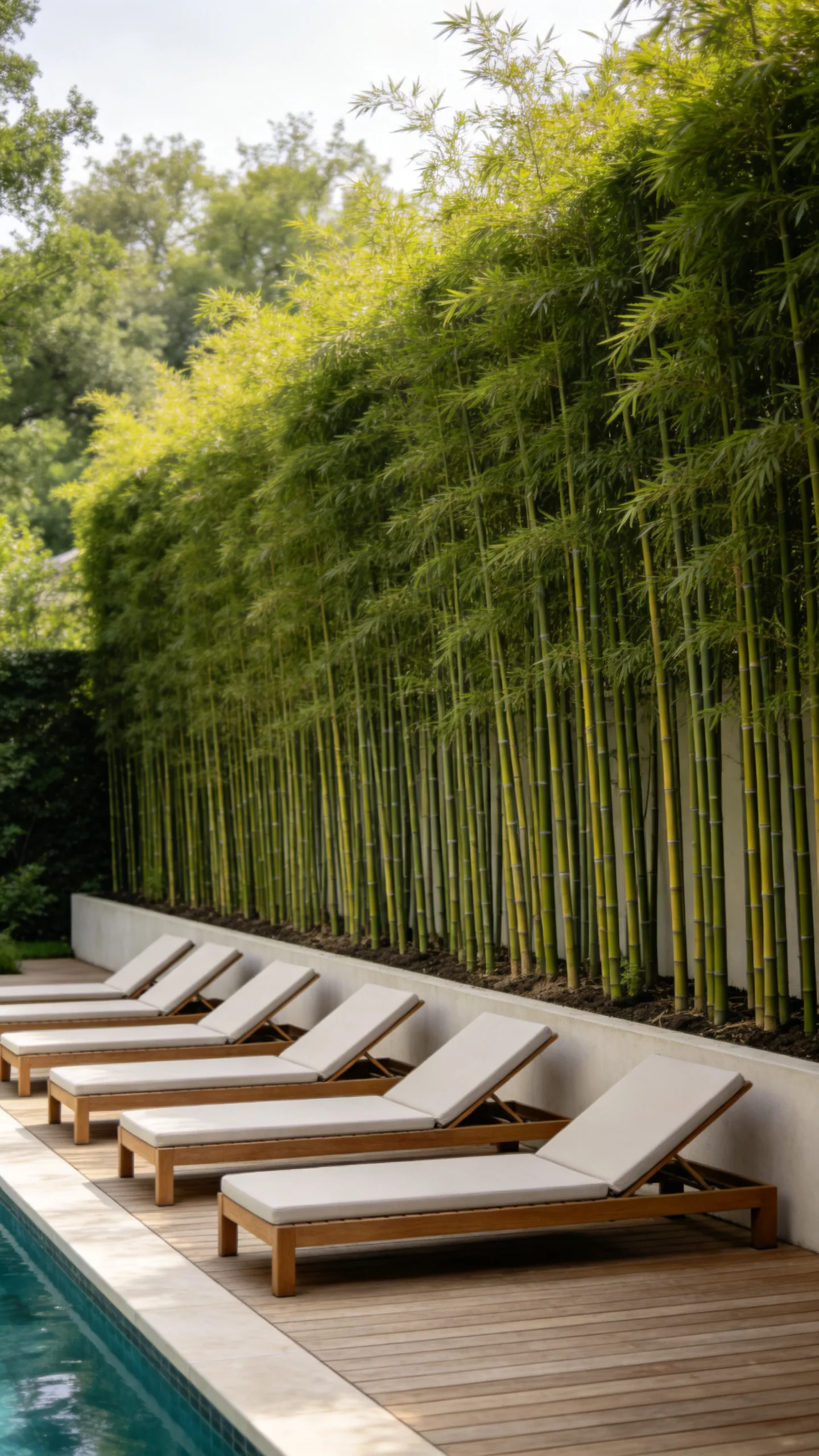
Clumping bamboo can create a tall, narrow screen where there is not enough room for a broad hedge. Install it along an exposed property line or behind the main row of lounge chairs to make the pool area feel more secluded.
Confirm that the selected bamboo is a non-running, climate-appropriate species, and use a contained raised bed if local growing conditions warrant extra control. Bamboo generally needs consistent moisture while establishing, but soil should still drain well. Remove older canes at ground level to maintain an airy, manageable screen.
11. Arrange Chaise Lounges on a Dedicated Sun Deck
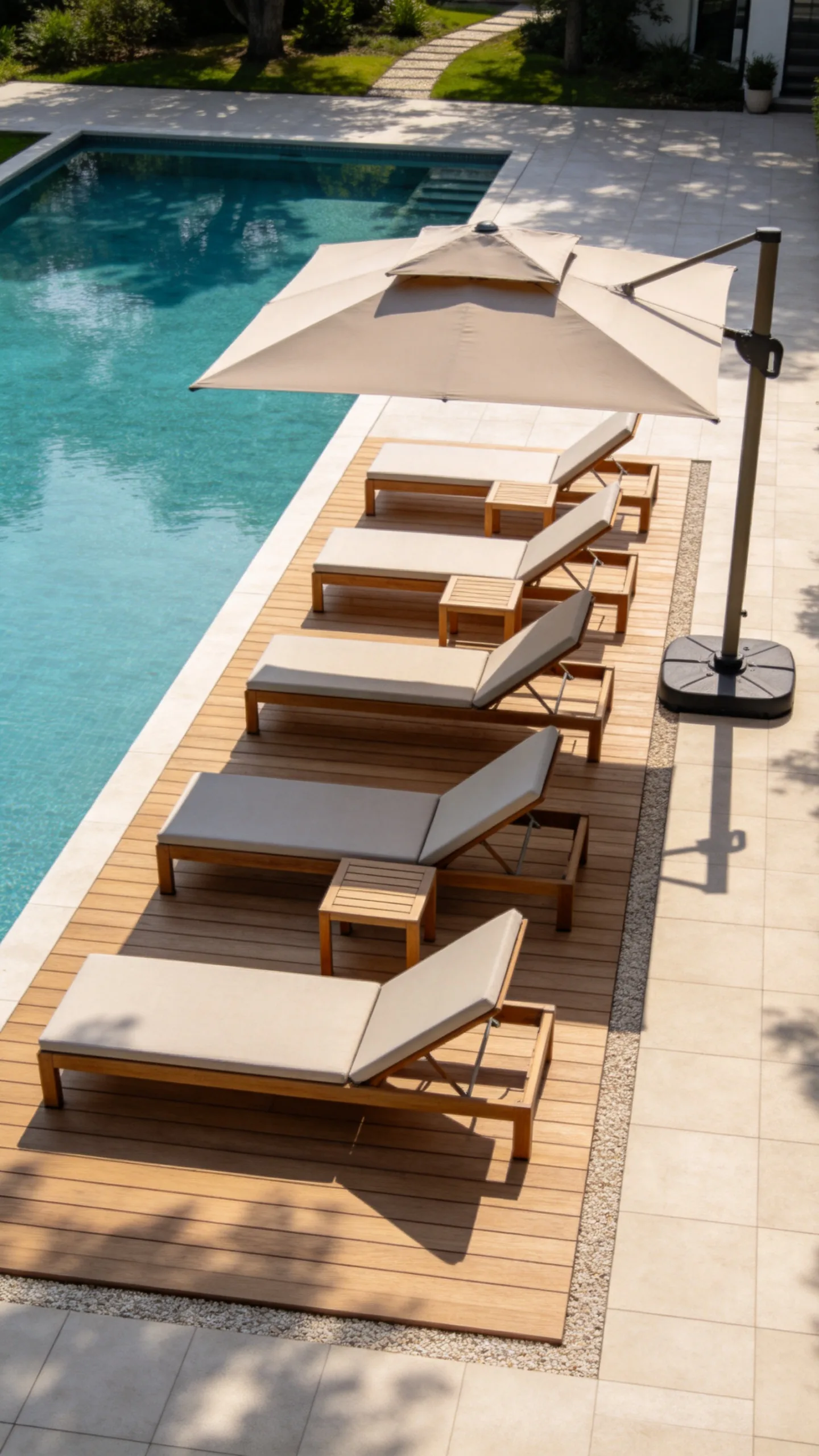
Reserve a rectangular section of paving specifically for chaise lounges instead of scattering them around the entire pool. Arrange the chairs in a neat row with small tables between them, leaving enough space behind each lounger for adjustment and foot traffic.
Track the sun before choosing the deck location. A south- or west-facing area may receive strong afternoon exposure, while a spot near trees or buildings may become shaded earlier. A large cantilever umbrella offers flexible coverage without placing multiple bases in the walking path.
12. Build a Poolside Pavilion With an Outdoor Kitchen
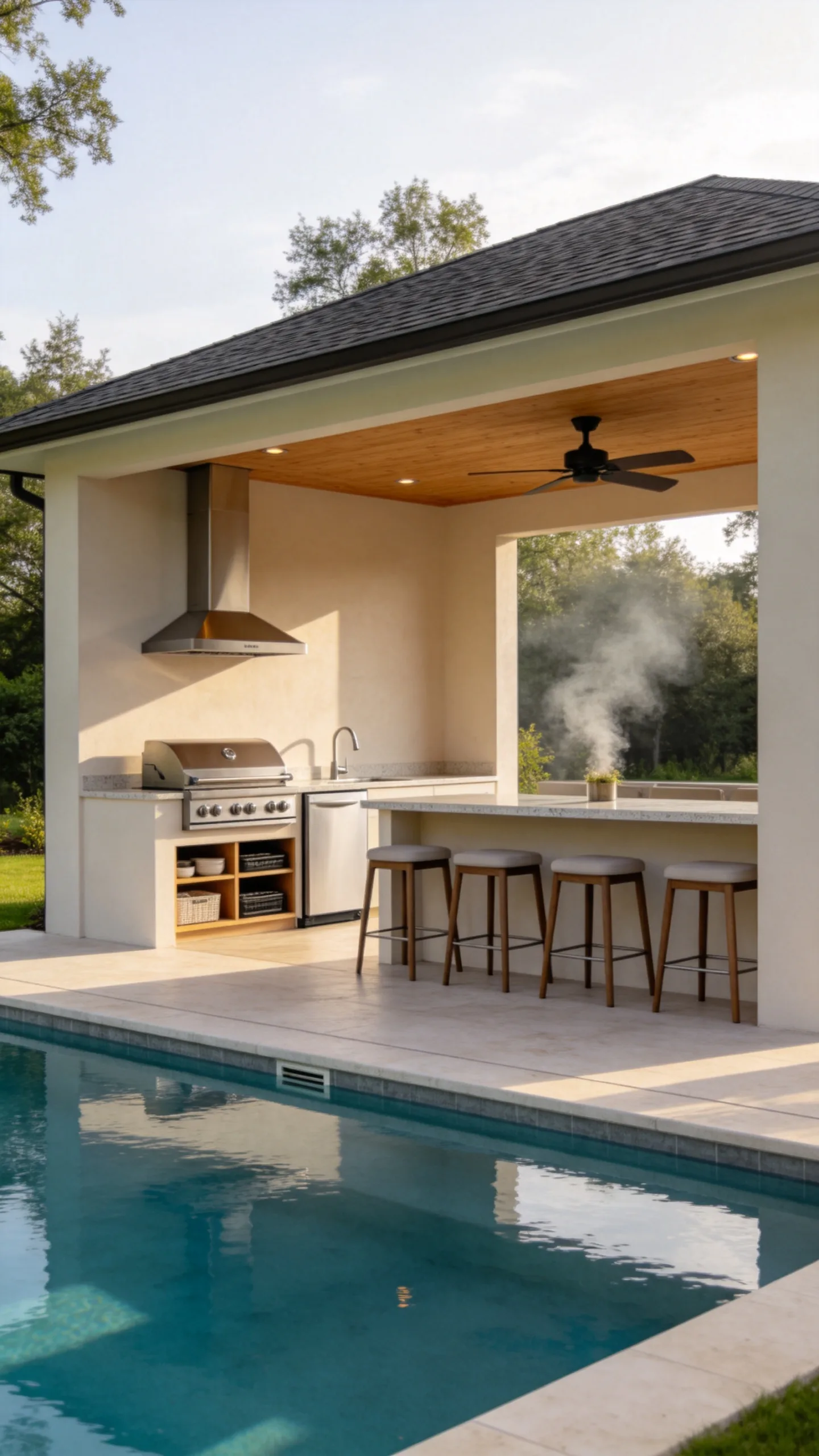
A roofed pavilion can combine cooking, dining, and shade in one organized structure. Place the grill, sink, refrigerator, and storage along the back wall, then position a counter or dining table toward the pool so the cook remains connected to the activity.
Use outdoor-rated appliances and moisture-resistant cabinet materials. Vent grills according to manufacturer instructions, keep cooking equipment away from combustible finishes, and avoid locating it where smoke will drift directly over the water. Ceiling fans and task lighting make the pavilion more practical in warm weather and after sunset.
13. Wrap a Small Pool With Built-In Bench Seating
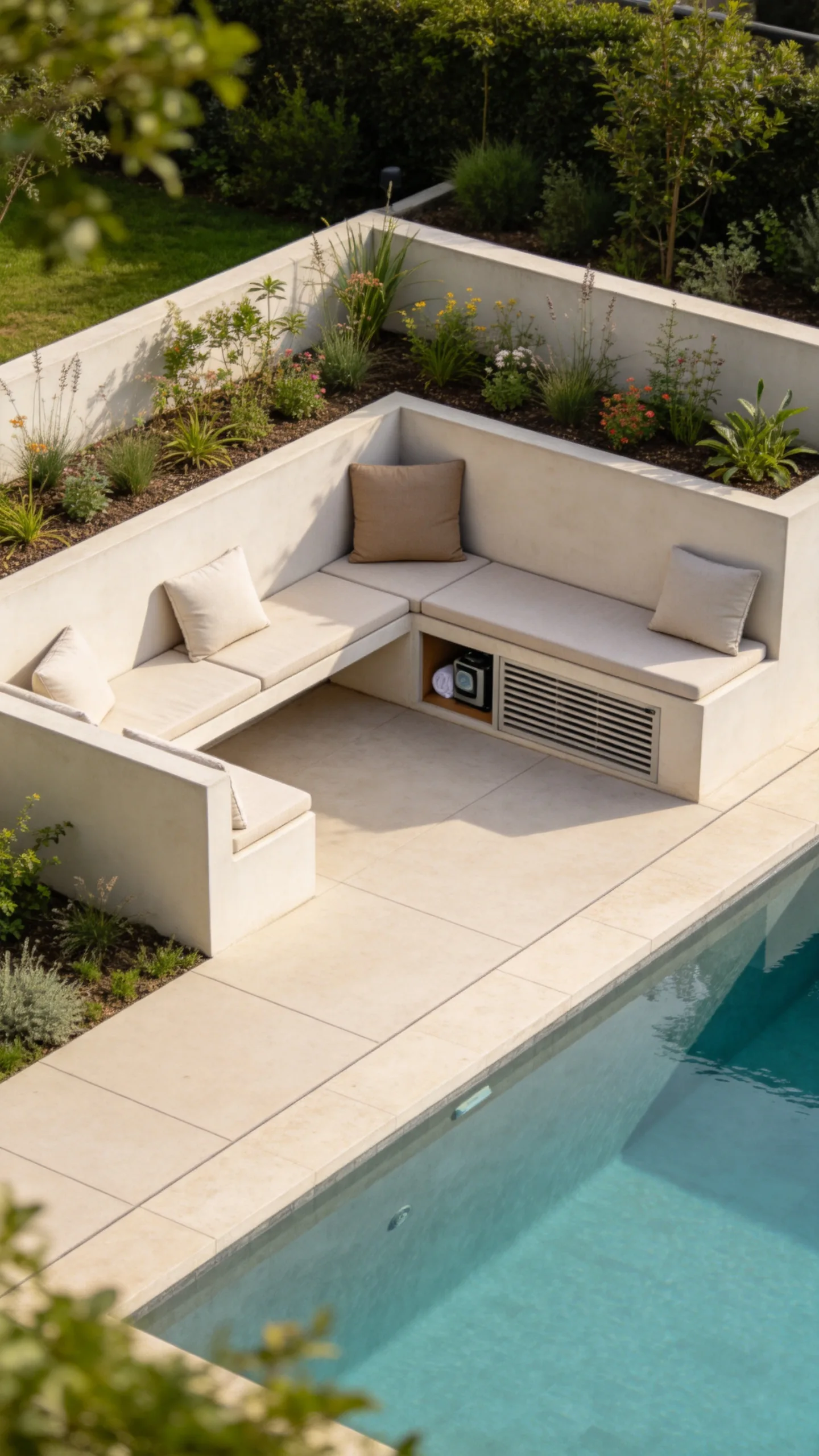
In a compact backyard, built-in benches provide seating without taking up the space required by deep sofas and loose chairs. Run a bench along a retaining wall, fence, or raised planting bed, then add outdoor cushions that can be stored during wet weather.
Include gaps or separate sections so the seating does not interfere with gates, equipment access, or pool circulation. Backless benches preserve open sightlines, while benches with integrated backs are more comfortable for extended lounging. Storage compartments can hold towels if they are ventilated and designed to keep water out.
14. Create a Tropical Corner With Large-Leaf Plants
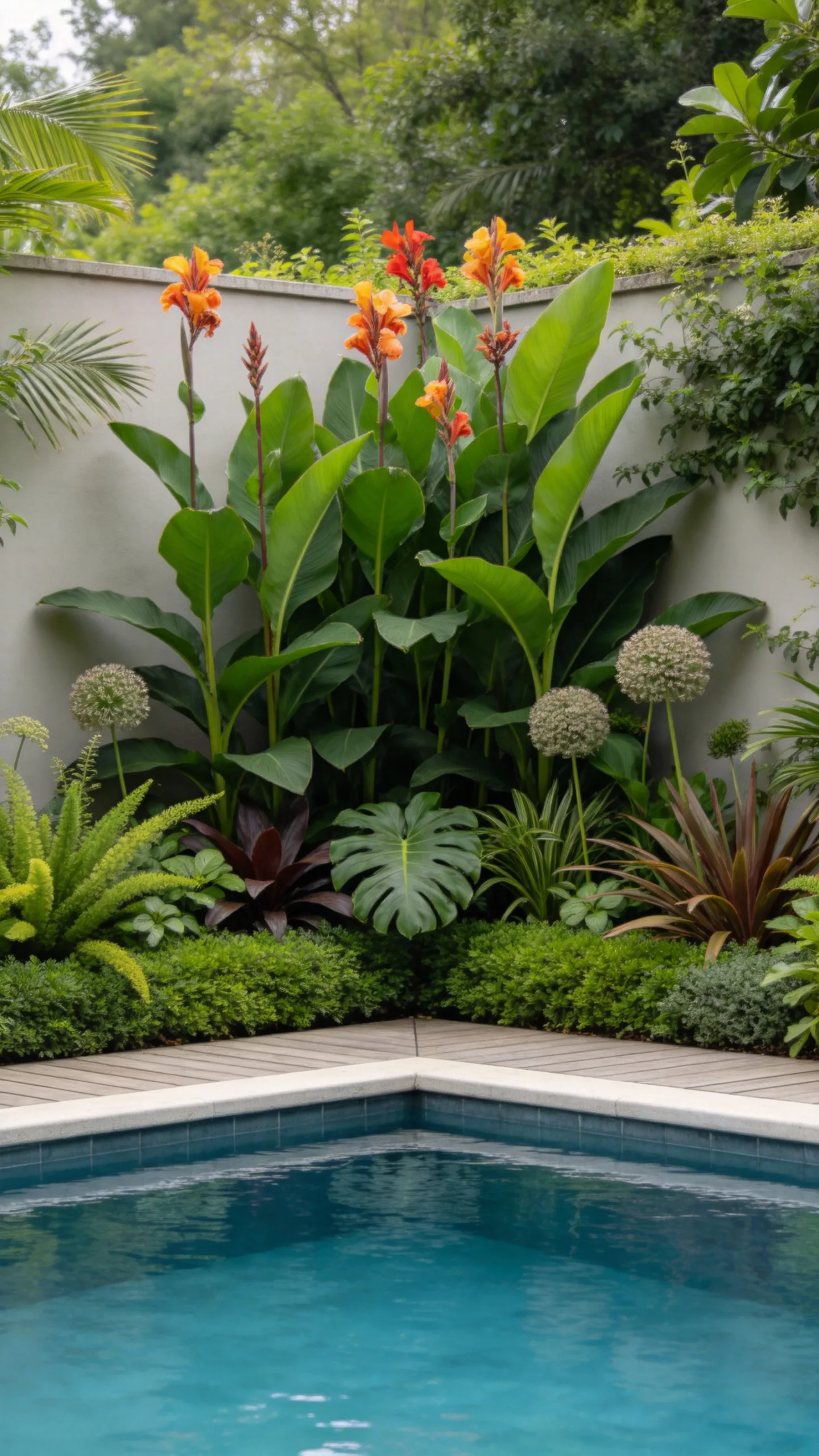
Concentrate tropical-looking plants in one or two generous beds rather than surrounding the entire pool with dense foliage. Depending on the climate, use hardy banana, canna, elephant ear, bird of paradise, fatsia, or broad-leaf philodendron varieties.
Check mature plant dimensions so large leaves do not crowd the deck. In colder regions, grow tender plants in wheeled containers and move them to protected storage before frost. Combine the broad foliage with a simple evergreen ground layer to keep the arrangement structured throughout the season.
15. Use Stepping-Stone Paths to Connect Garden Zones
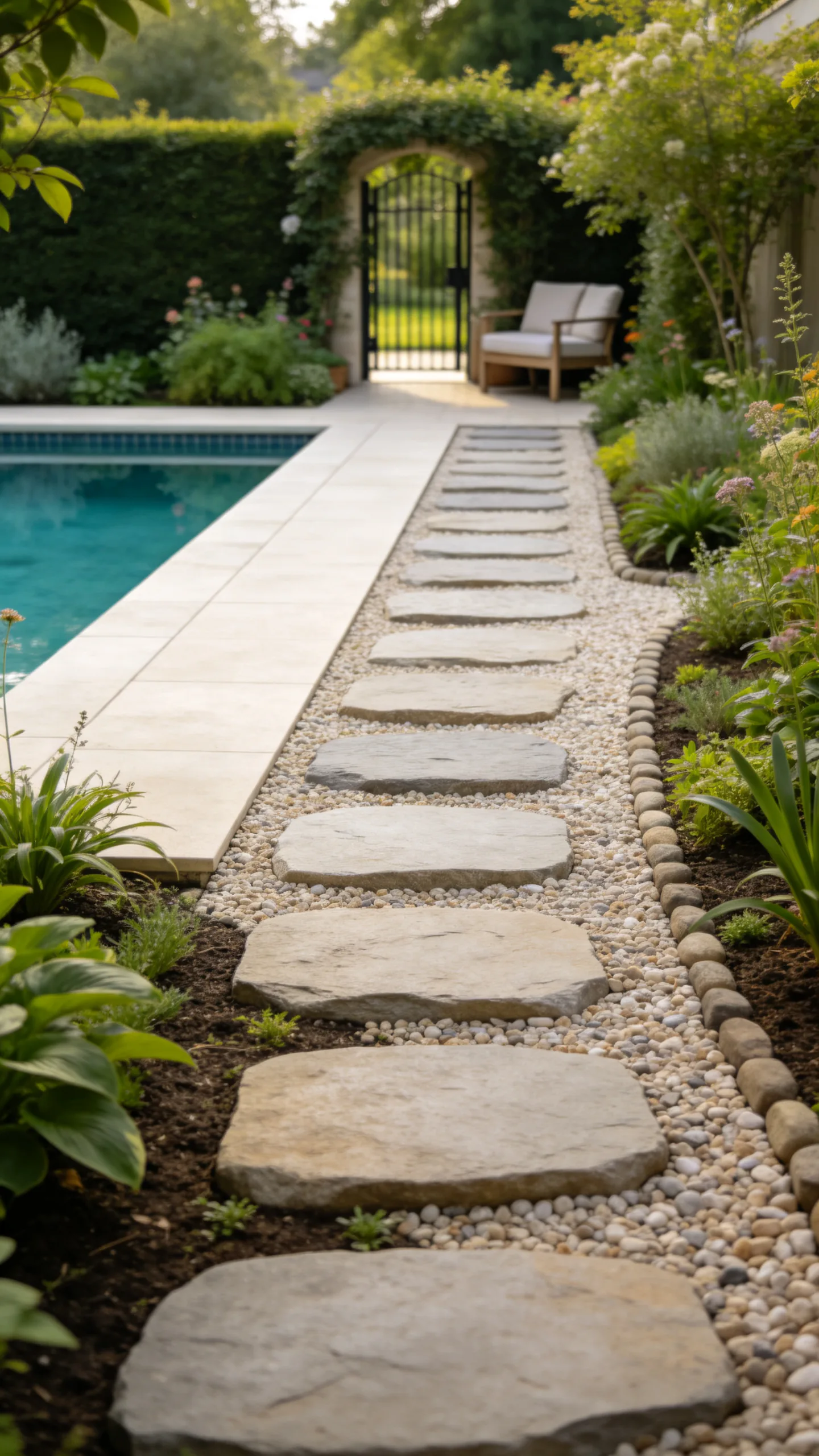
A stepping-stone path can link the pool patio to a lawn, garden gate, outdoor shower, or secondary seating nook. Set large stones into gravel or low ground cover, spacing them for a comfortable walking stride.
Near the pool, use stable, slip-resistant stones with level surfaces rather than loose or irregular pieces. Gravel paths should have firm edging so small stones do not migrate onto the deck or into the water. In frequently used routes, continuous paving may be safer and easier to maintain than widely spaced stones.
16. Add an Outdoor Shower Behind a Planted Screen
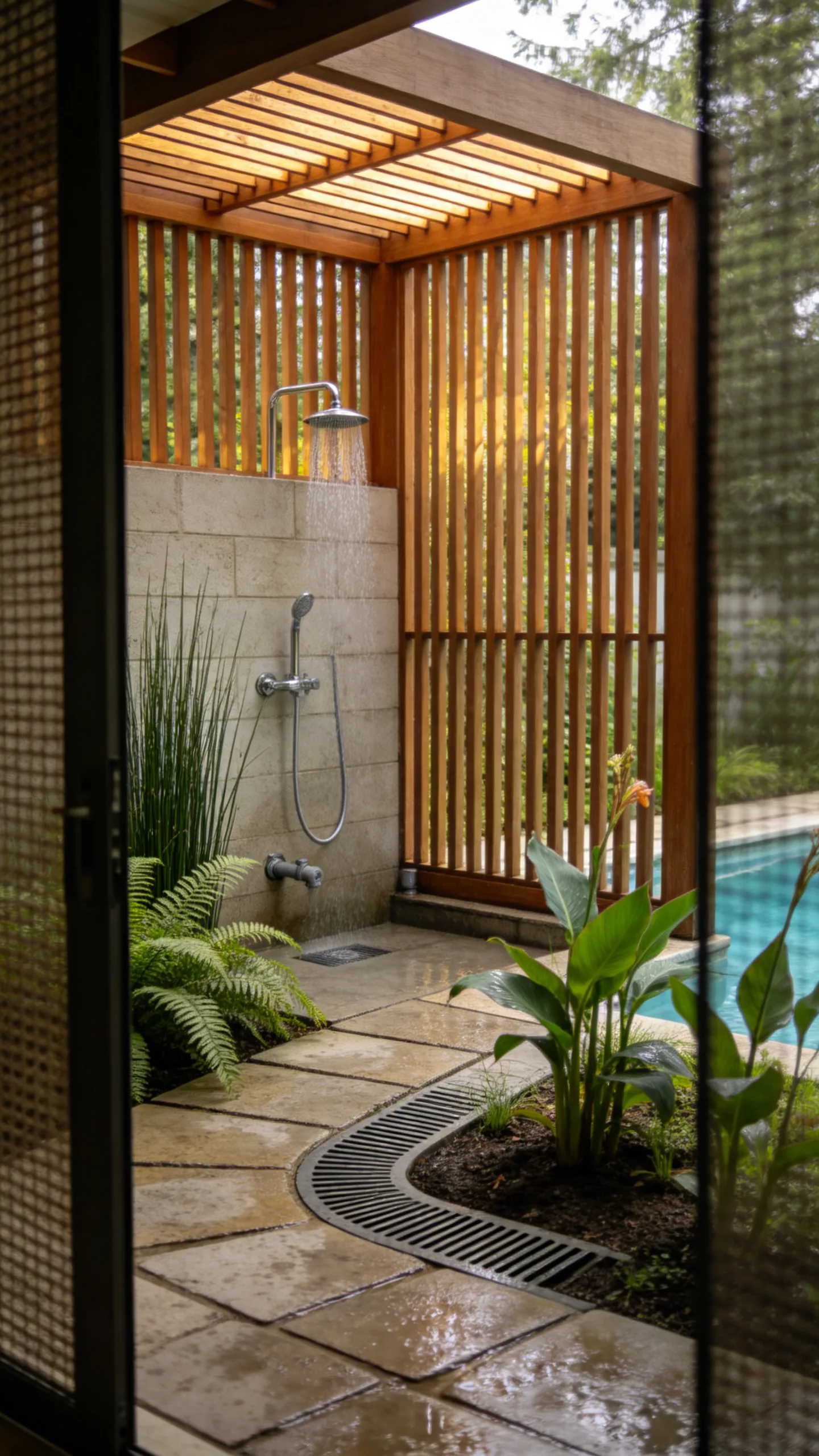
Install an outdoor shower near the pool entrance so swimmers can rinse off before and after using the water. A slatted wood wall, masonry panel, or tall planted screen can provide privacy without making the area feel fully enclosed.
Use permeable paving or a properly connected drain according to local requirements. Moisture-tolerant plants such as ferns, sedges, hostas, or canna can soften the enclosure if light conditions suit them. Keep soap use in mind when directing runoff, since soapy water should not drain into garden soil or the pool.
17. Pair a Curved Pool With Rounded Planting Beds
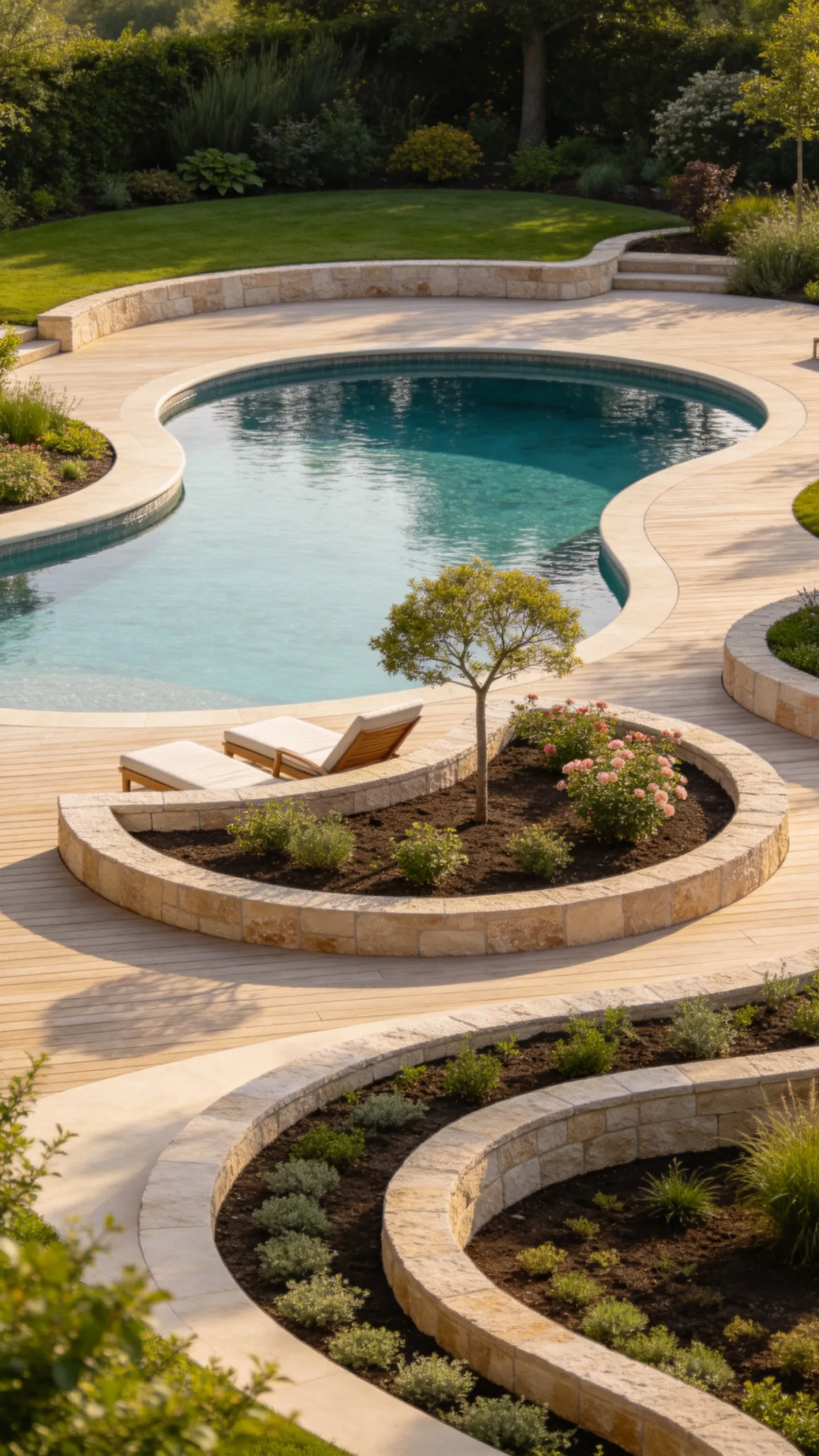
Repeat the curves of a freeform pool in the surrounding patio and garden beds. Rounded borders create natural pockets for lounge chairs, small trees, and flowering shrubs while reducing the visual contrast between the pool and the landscape.
Use flexible steel edging, brick, or a low masonry curb to hold the bed shape. Place taller plants at the widest points and keep narrow sections filled with low ground covers. This arrangement preserves open deck space while allowing greenery to appear integrated with the pool outline.
18. Create a Resort-Style Cabana at the Pool’s Far End
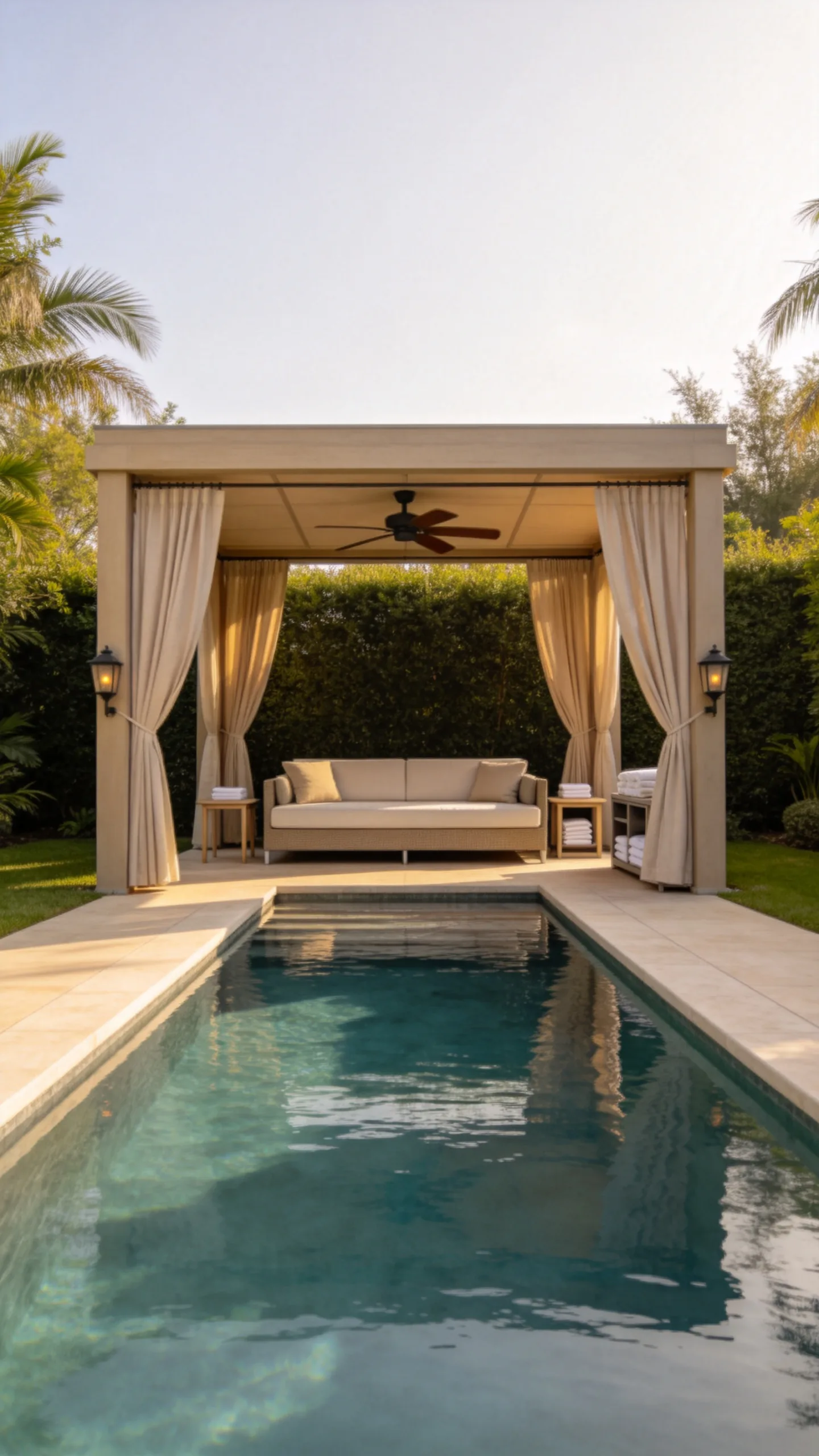
A cabana placed opposite the house gives the pool a strong visual destination and creates a separate retreat for reading, napping, or entertaining. Furnish it with a deep daybed, side curtains, a ceiling fan, and closed storage for cushions and towels.
Keep the structure open toward the pool so adults can maintain clear sightlines across the water. Place dense screening plants behind the cabana rather than in front of it. If electricity is included, use outdoor-rated fixtures and have all wiring installed to applicable pool-area safety requirements.
19. Add a Narrow Lawn Strip for Flexible Recreation
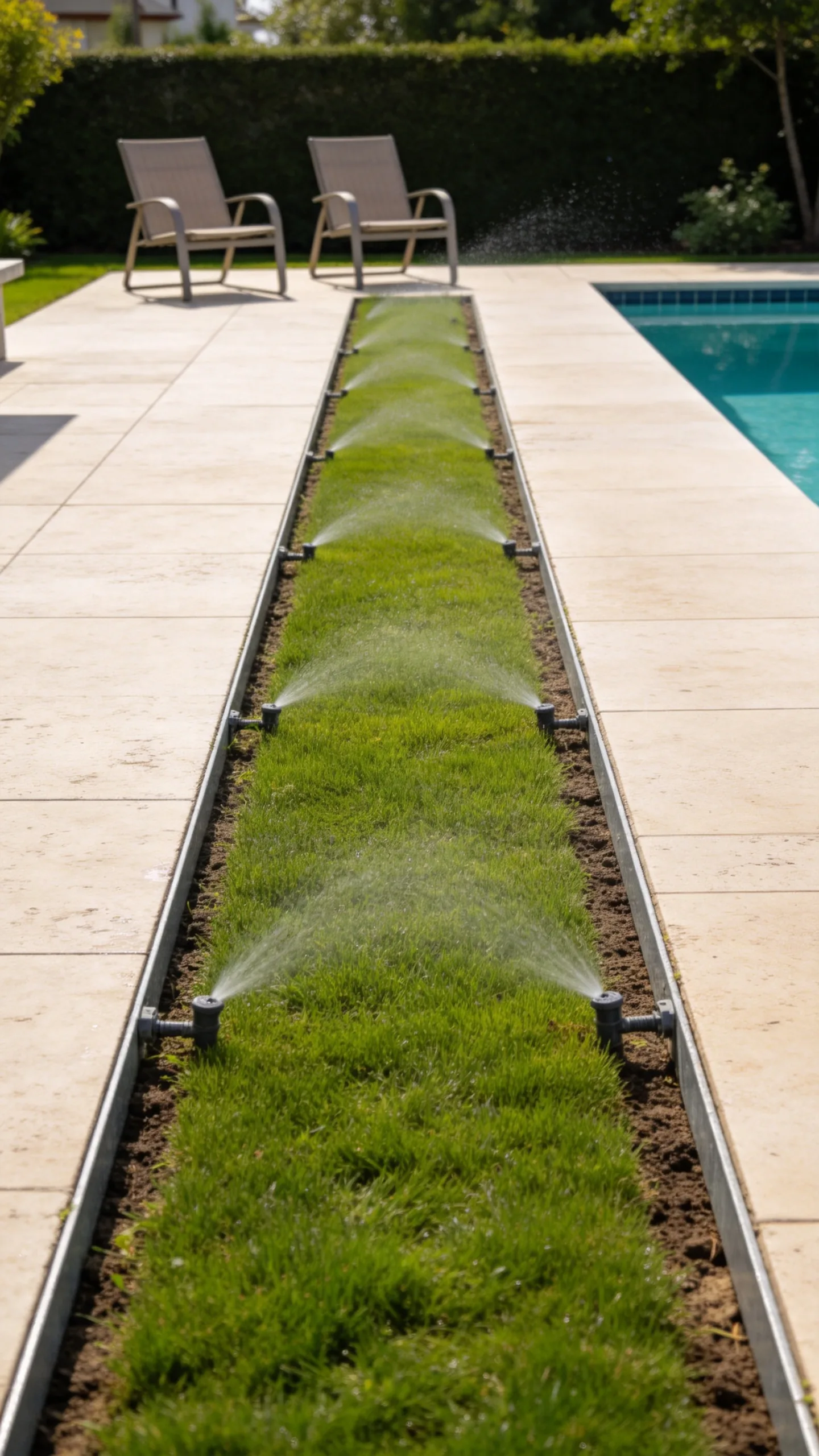
Preserve a simple strip of lawn beside the hardscape for games, pets, or informal seating. A rectangular lawn is easier to mow and irrigate than small, disconnected patches squeezed between planting beds.
Choose turf suited to the site’s sunlight and regional climate, or consider a durable low-growing alternative where appropriate. Separate the lawn from the pool deck with a firm edge to prevent soil and grass clippings from spreading onto the paving. Position irrigation heads so they do not spray chlorinated water back into the landscape or soak lounge furniture.
20. Plant Small Trees for Filtered Poolside Shade
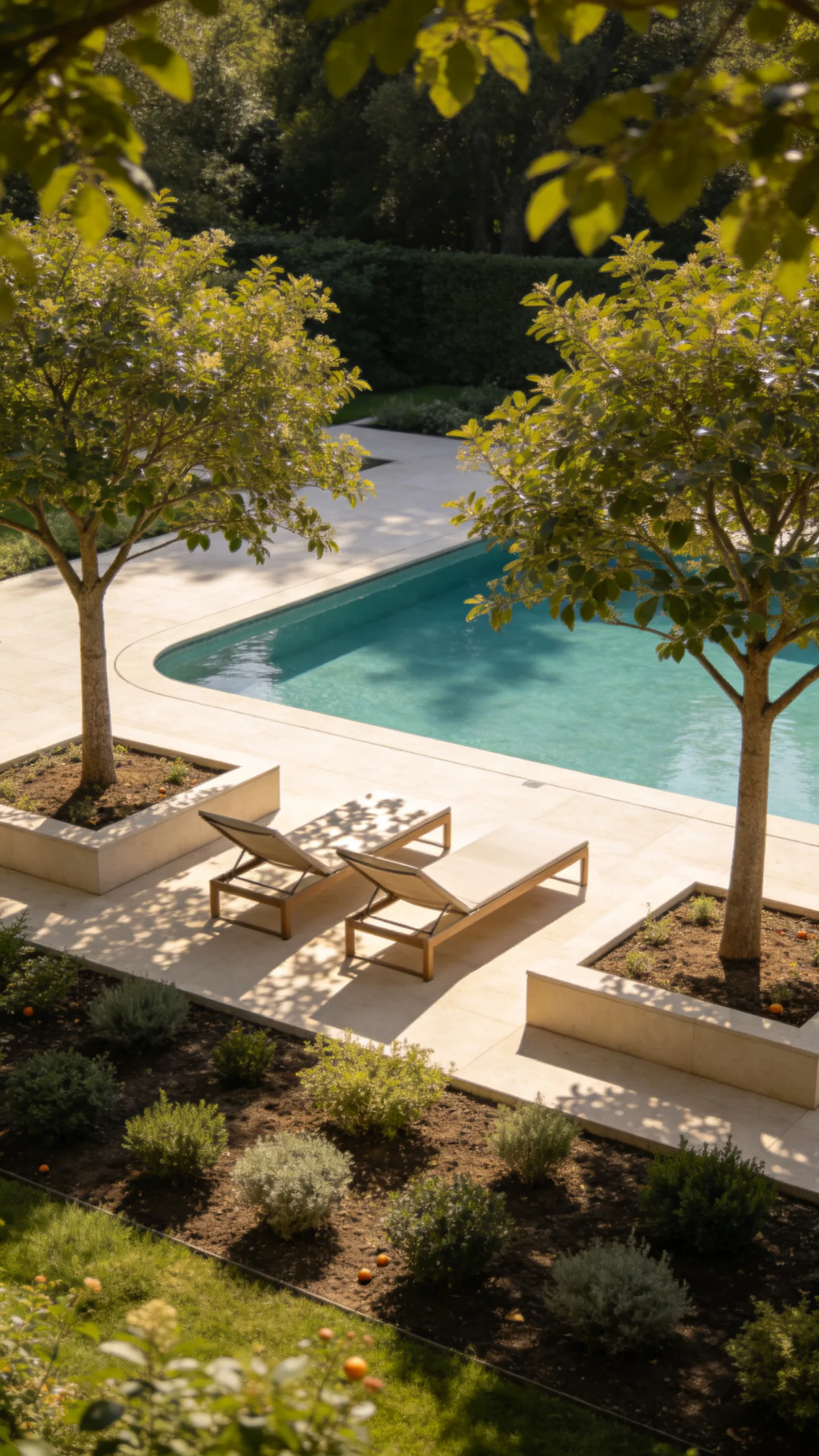
Small-canopy trees can provide seasonal shade without overwhelming the pool area. Possible choices include crape myrtle, Japanese maple, desert willow, serviceberry, or compact magnolia, depending on climate, soil, and available space.
Locate trees far enough from the pool shell, paving, and underground utilities to accommodate mature roots and branches. Avoid species with invasive roots, heavy fruit drop, brittle limbs, or constant leaf litter. Prune for a raised canopy only when appropriate for the species rather than repeatedly removing major branches.
21. Combine Container Gardens With Movable Seating
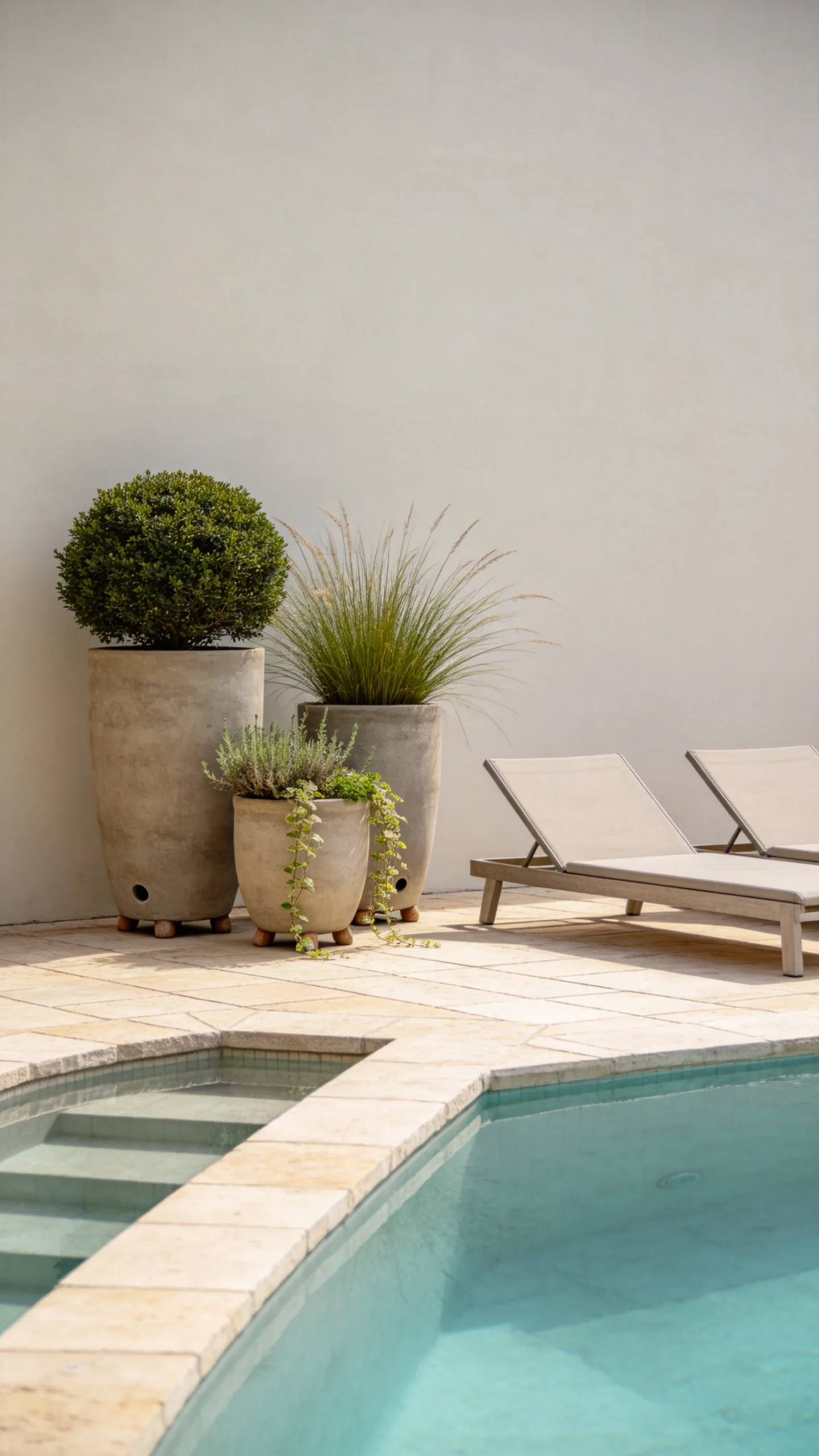
Large containers add planting space to paved pool yards where in-ground beds are limited. Group pots in sets of three near corners, blank walls, or seating areas, using varied heights to create depth without blocking the deck.
Select heavy, stable containers with drainage holes, and place saucers only where standing water will not become a problem. Drought-tolerant herbs, compact grasses, succulents, and small shrubs can reduce maintenance in sunny areas, while ferns and caladiums suit protected shade in compatible climates. Furniture and lighter planters can be rearranged as entertaining needs change.
22. Design a Multi-Level Patio for a Sloped Backyard
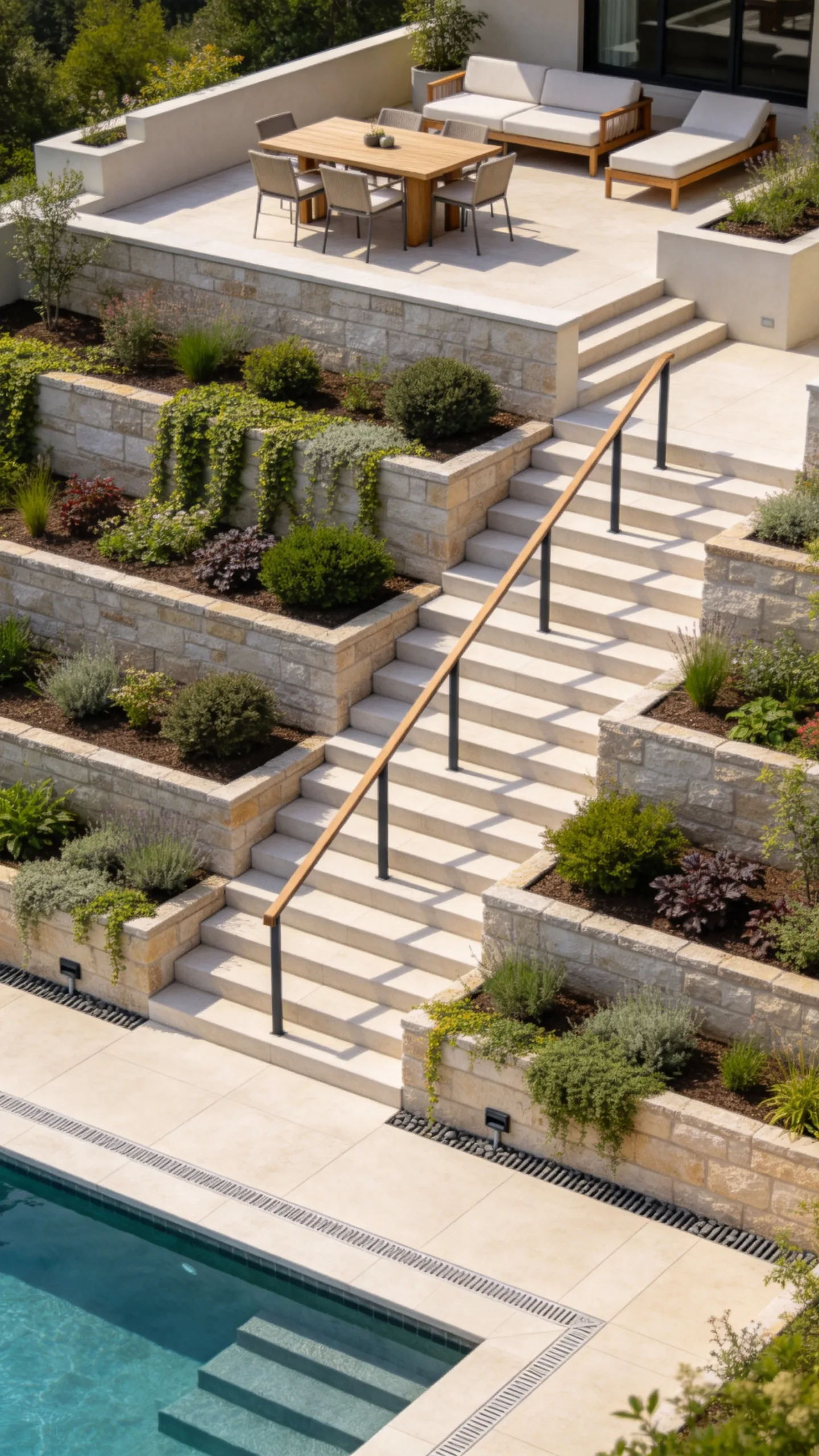
Use the grade of a sloping yard to create separate terraces for the pool, dining area, and lounge. Retaining walls can support raised planting beds while steps connect each functional level.
Provide guards, handrails, and visible step edges wherever required. Surface drainage should direct water away from the pool and structures rather than down the stairs. Plant retaining-wall beds with trailing ground covers, compact shrubs, and deep-rooted perennials suited to the exposure, keeping irrigation lines accessible for maintenance.
23. Illuminate Paths, Plants, and Lounging Areas
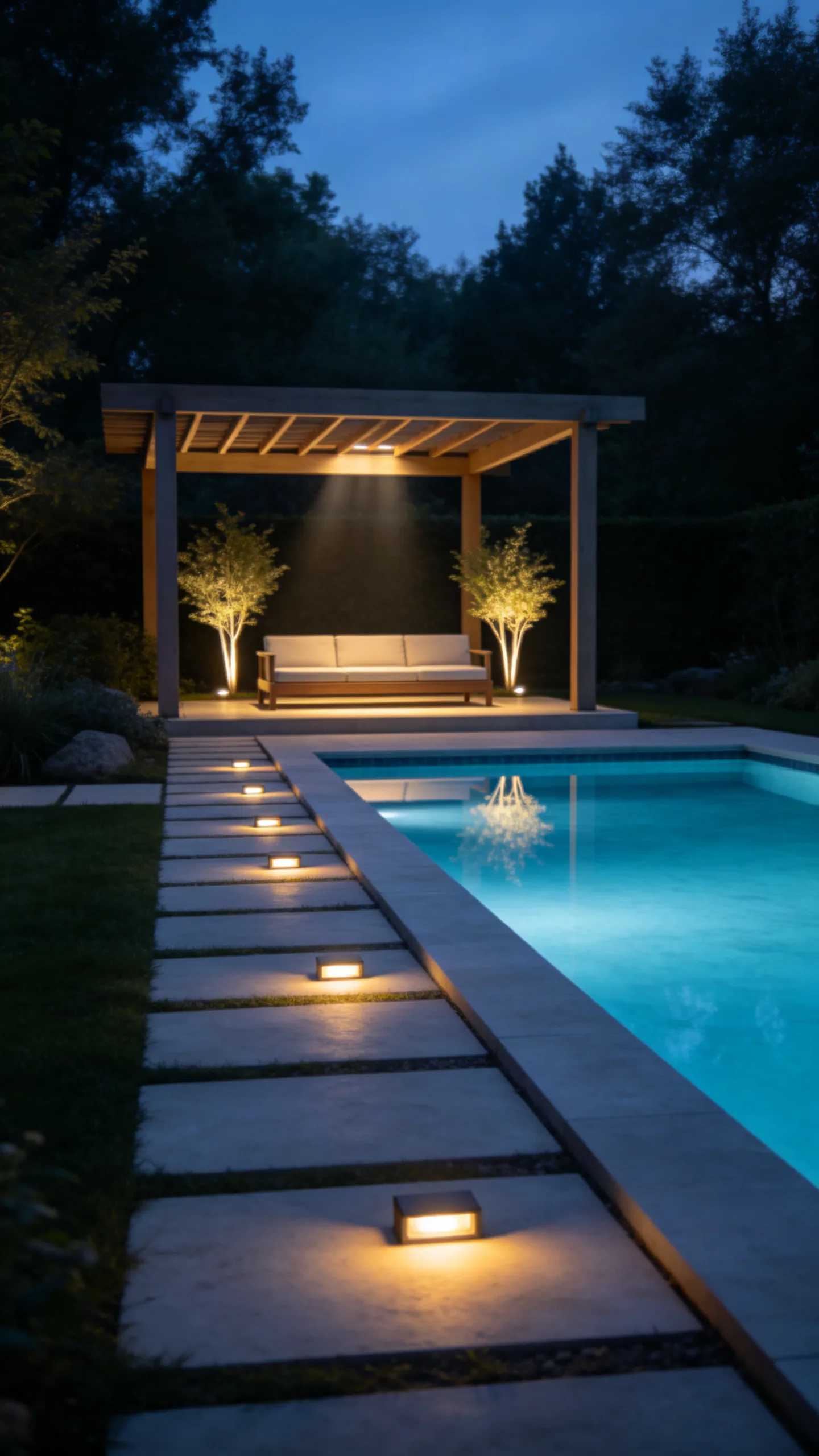
Layered outdoor lighting makes the entire pool backyard easier to navigate after sunset. Use low path lights along routes, recessed fixtures near steps, downlights beneath a pergola, and subtle uplights behind specimen plants.
Avoid aiming bright fixtures directly toward seating or across the water, where glare can reduce visibility. Warm, low-output lighting generally creates a calmer atmosphere than overly bright floodlights. All fixtures and electrical components near the pool should be rated for outdoor use and installed according to local safety codes.
24. Plan a Compact Plunge Pool With a Garden Lounge
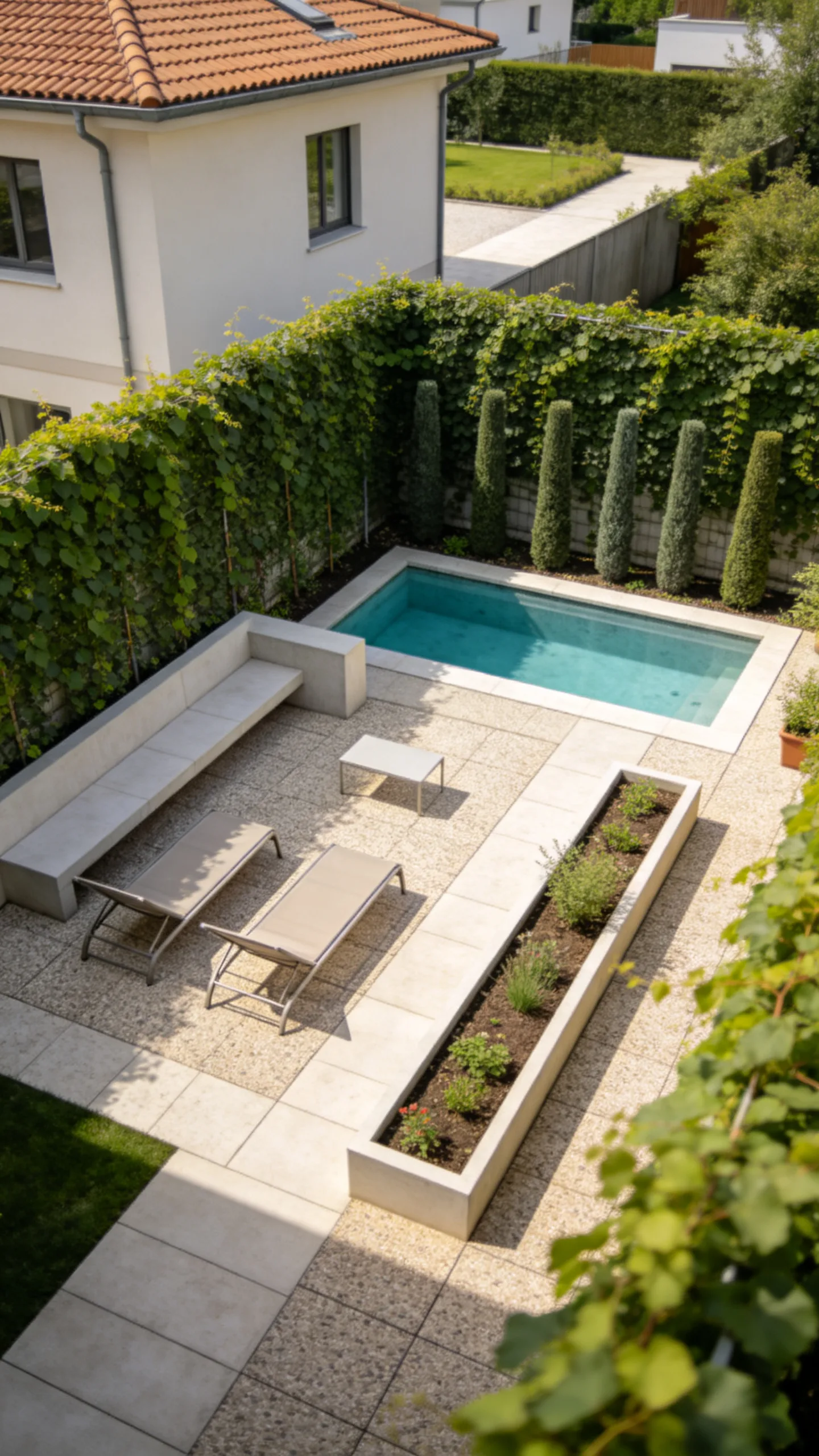
For a small yard, center the layout around a plunge pool rather than trying to fit a full-size swimming pool. Place the pool along a side or rear boundary, then use the remaining space for an L-shaped bench, two lounge chairs, and a narrow planting bed.
A single paving material can make the compact layout feel continuous, while vertical planting adds privacy without using much ground area. Train evergreen vines on a trellis, install slim raised planters, or use columnar shrubs where the climate allows. Keep the furniture scale modest and preserve one unobstructed path between the house, pool, and garden seating.