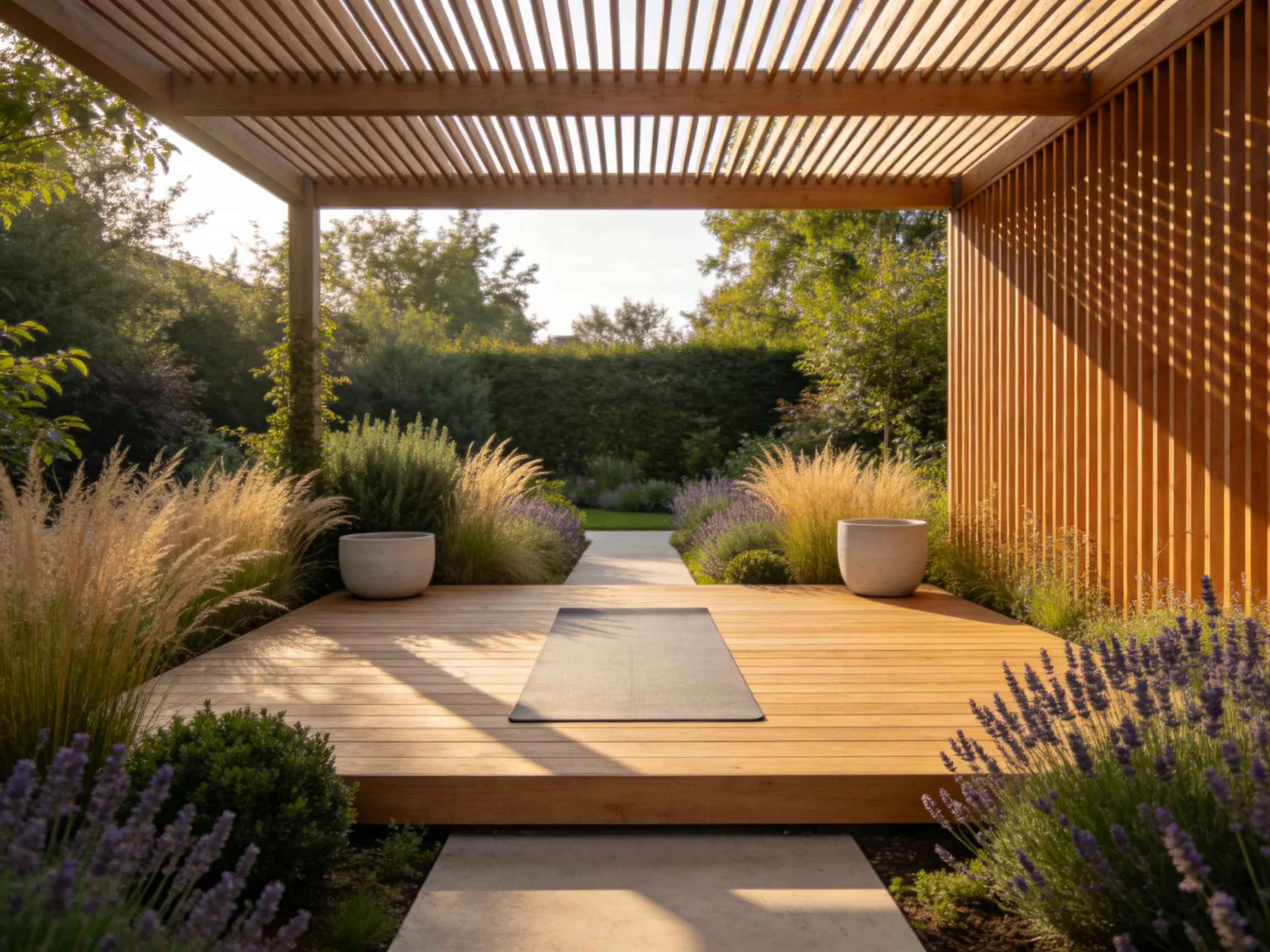
A thoughtful outdoor yoga space design combines a stable practice surface with comfortable shade, calming greenery, and enough privacy to help you focus. Whether you have a narrow balcony, a compact patio, or a quiet backyard corner, these ideas use practical features such as planters, screens, trellises, trees, and pergolas to create a more peaceful place to stretch, breathe, and move.
1. Build a Gravel Yoga Courtyard with Planted Borders
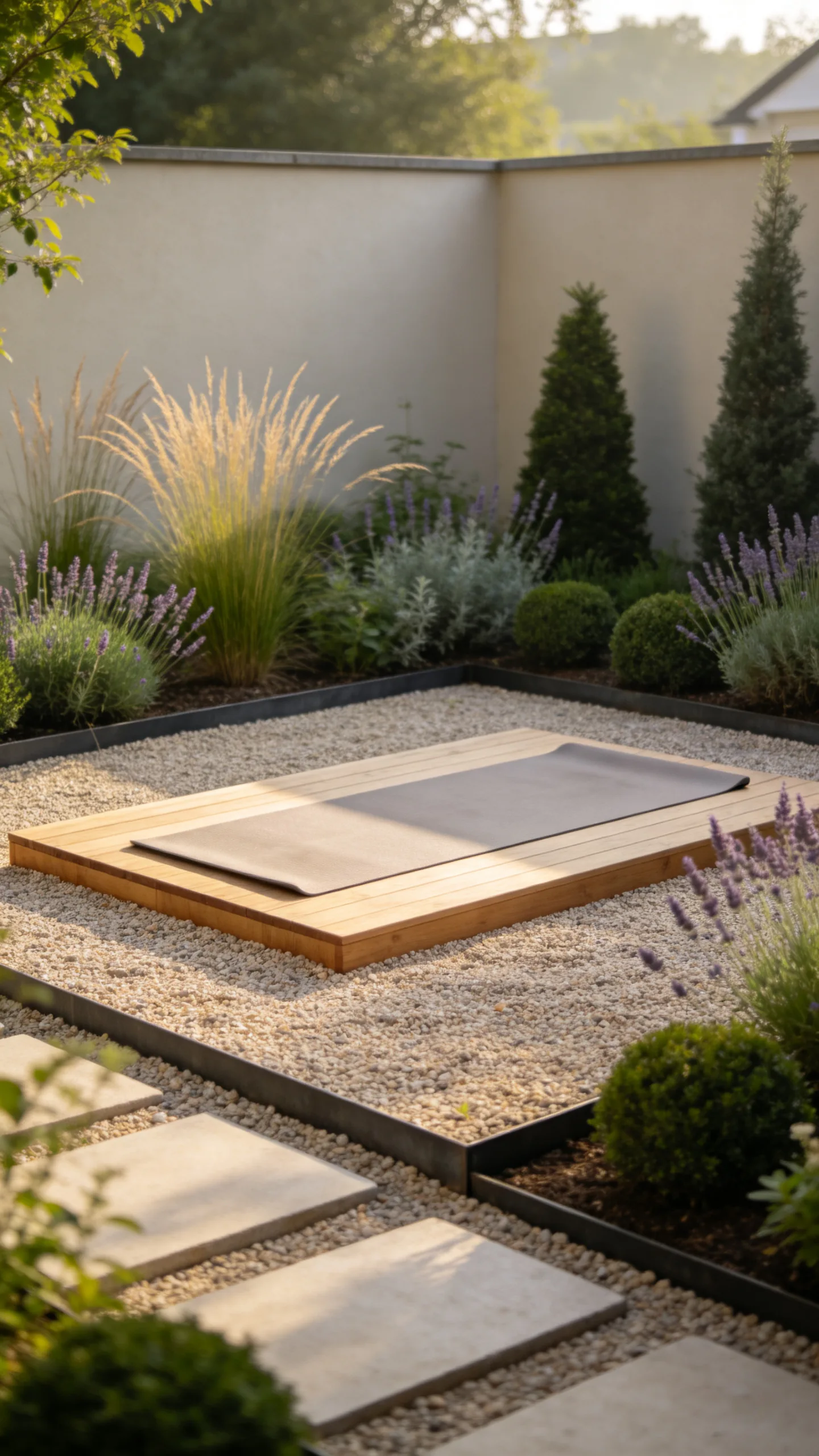
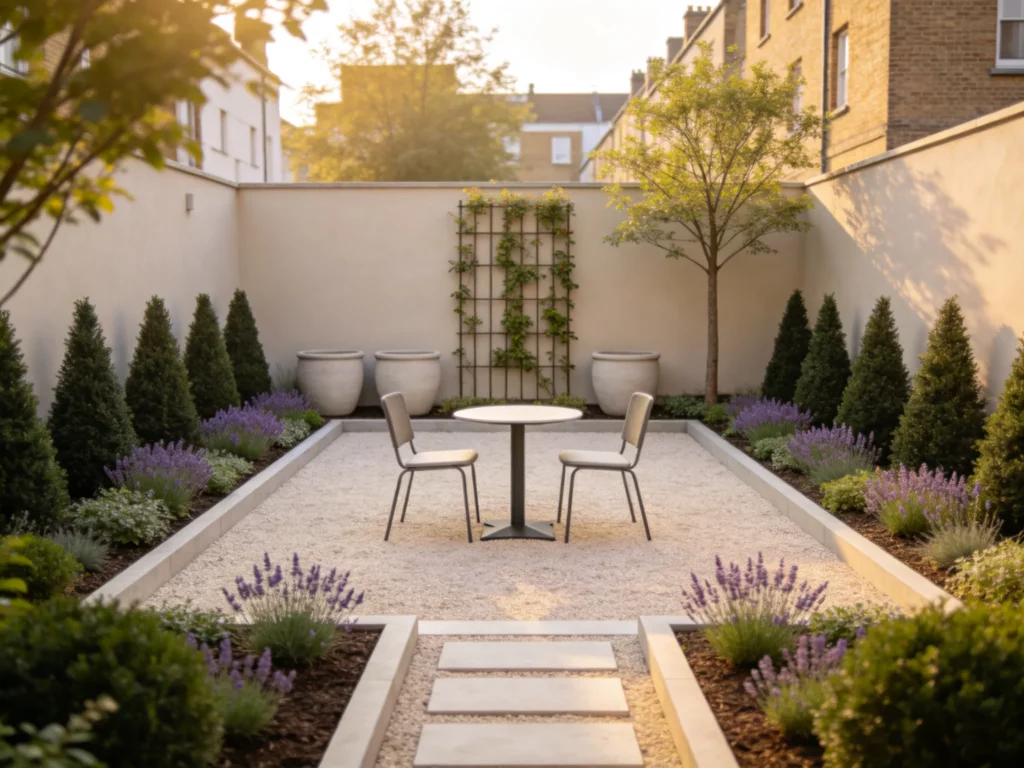
Create a defined practice area with compacted decomposed granite or fine gravel contained by steel, brick, or stone edging. Add large, flat stepping stones where needed, and place a level wooden platform or outdoor mat over the surface during practice so loose material does not interfere with balance poses.
Frame the courtyard with low-maintenance ornamental grasses, lavender, catmint, or dwarf evergreen shrubs. Choose plants suited to your local climate and the site’s light exposure. A planted border softens the hardscape, separates the yoga area from the rest of the yard, and helps a small corner feel like an intentional outdoor room.
2. Add a Slatted Pergola for Filtered Shade
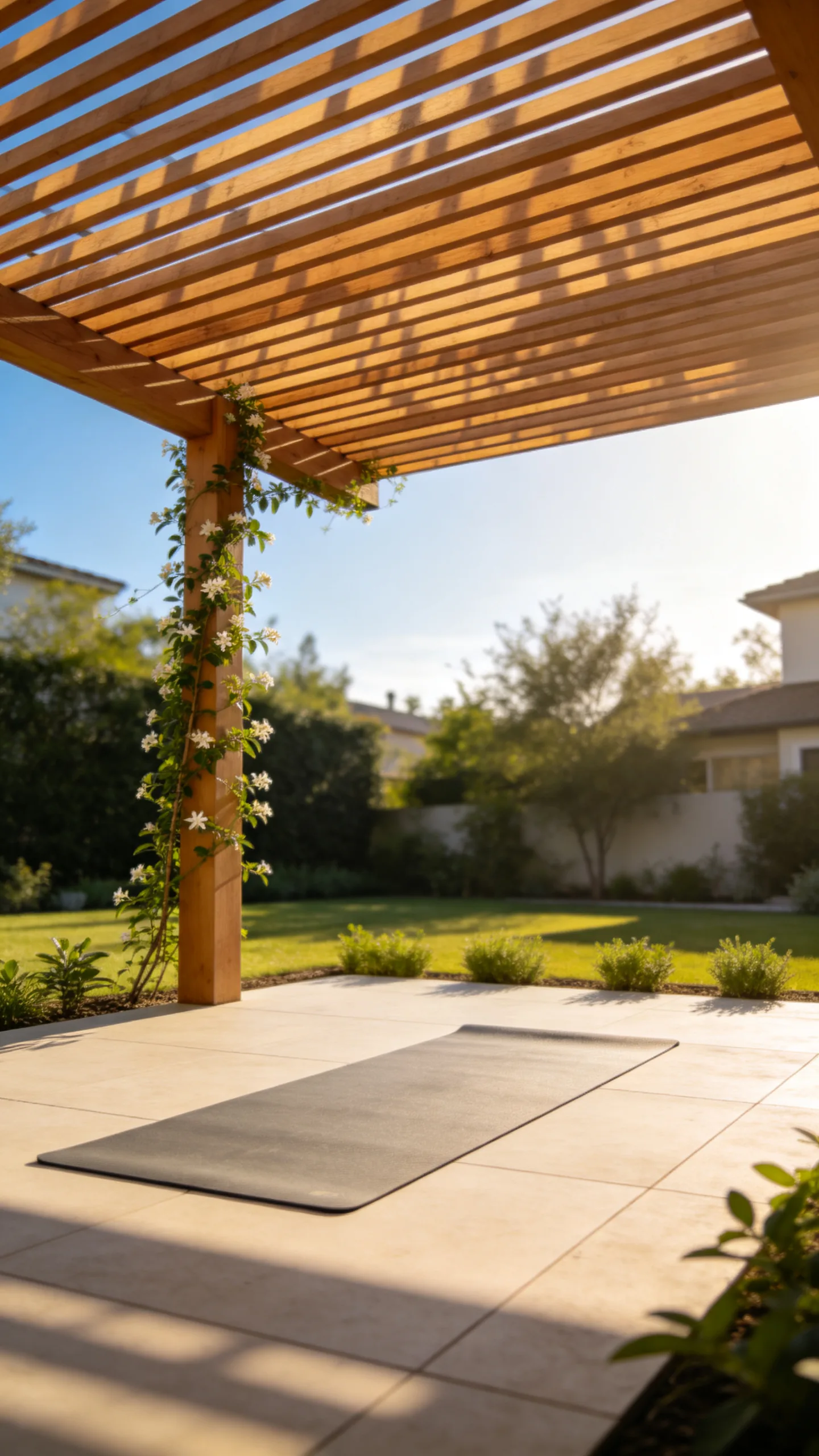
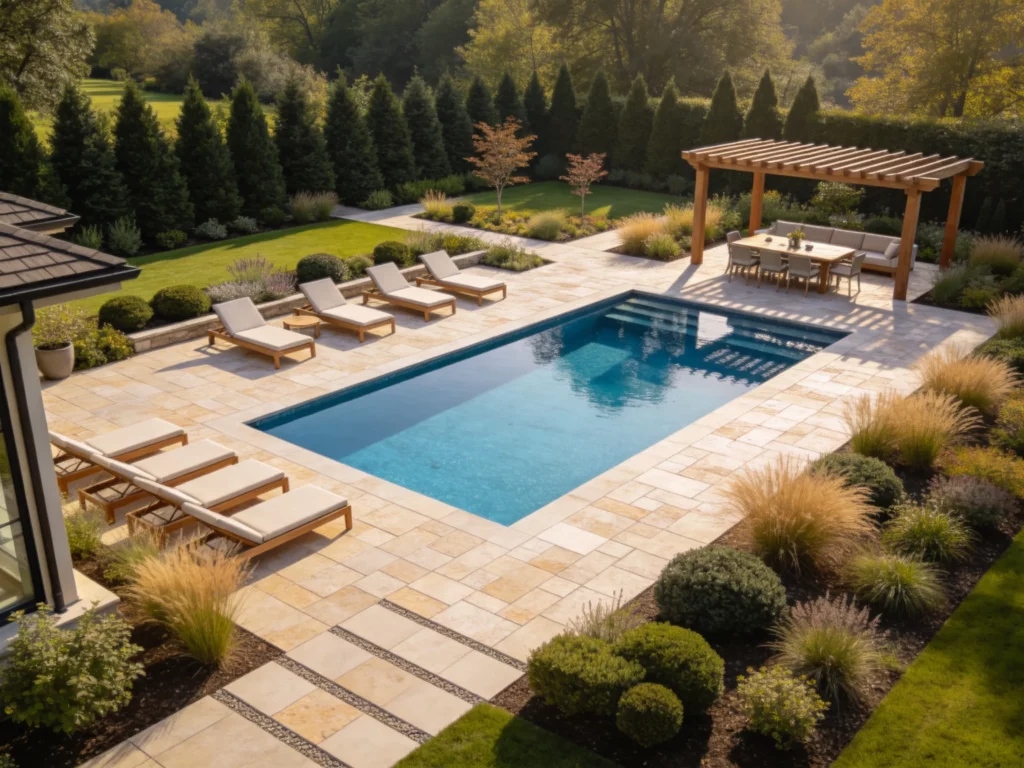
Install a pergola over a deck, patio, or level section of the garden to reduce direct sun without completely enclosing the space. Closely spaced overhead slats provide more shade, while wider spacing preserves an open view of the sky. Orienting the slats according to the path of the sun can improve coverage during your usual practice time.
Train a non-invasive climbing plant along one side rather than covering the entire roof, which can reduce airflow and drop debris onto the mat. Depending on your region, suitable options may include star jasmine, climbing hydrangea, grapevine, or a compact clematis variety. Confirm mature size and support requirements before planting.
3. Use Tall Planters as a Movable Privacy Wall
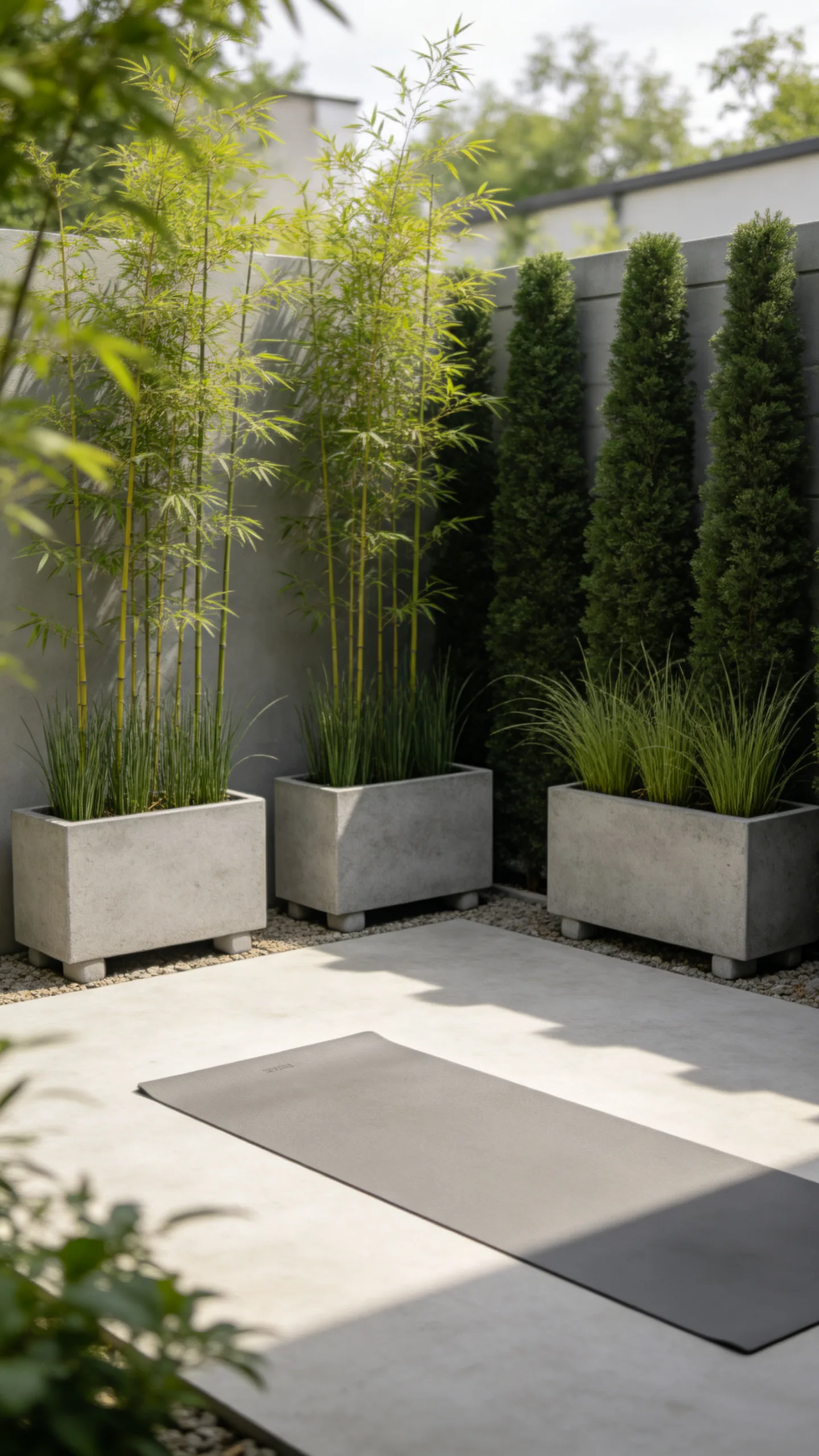
Line one edge of a patio or balcony with rectangular planters tall enough to interrupt nearby sightlines. Fiberglass, resin, and fiberstone containers are lighter than solid concrete and are easier to reposition when your layout changes.
Fill the planters with clumping bamboo, columnar evergreens, tall grasses, or compact shrubs appropriate for container growing. Use non-invasive bamboo varieties and check local recommendations before planting. Containers dry faster than garden beds, so include drainage holes, use a moisture-retentive potting mix, and consider drip irrigation during hot weather.
4. Create a Cedar Screen with Climbing Vines
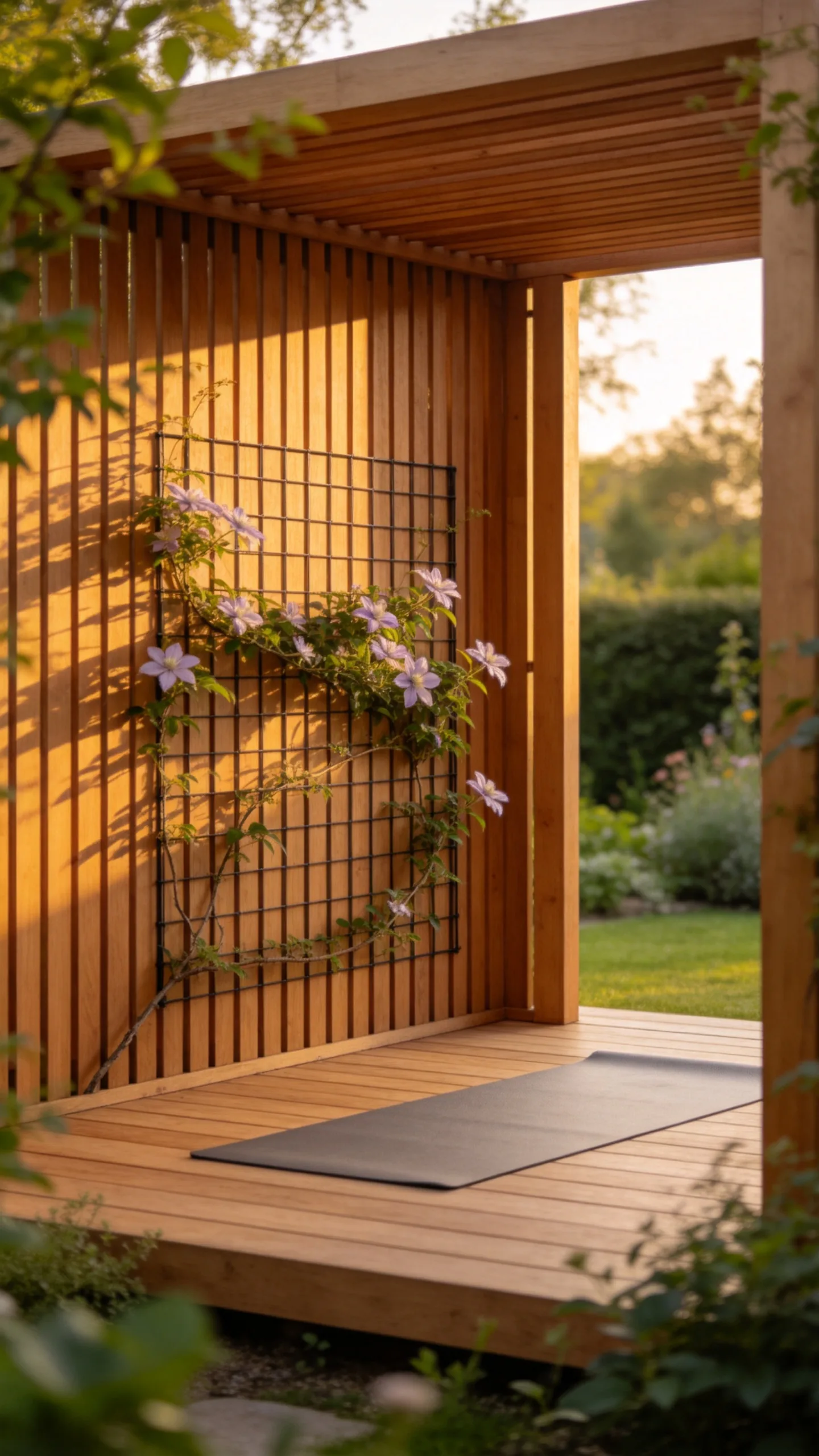
A cedar or composite privacy screen can shield a yoga area without taking up as much ground space as a hedge. Leave narrow gaps between the boards to maintain airflow, especially in humid or hot climates. Position the screen on the side facing neighbors, windows, or a busy path rather than surrounding the entire space.
Attach wire panels or a trellis to the screen for flowering vines. Clematis, honeysuckle, climbing roses, and jasmine can work when matched to the available light and local growing conditions. Keep vigorous vines pruned so they do not overwhelm the structure or encroach on the practice area.
5. Turn a Shady Tree Canopy into a Natural Studio
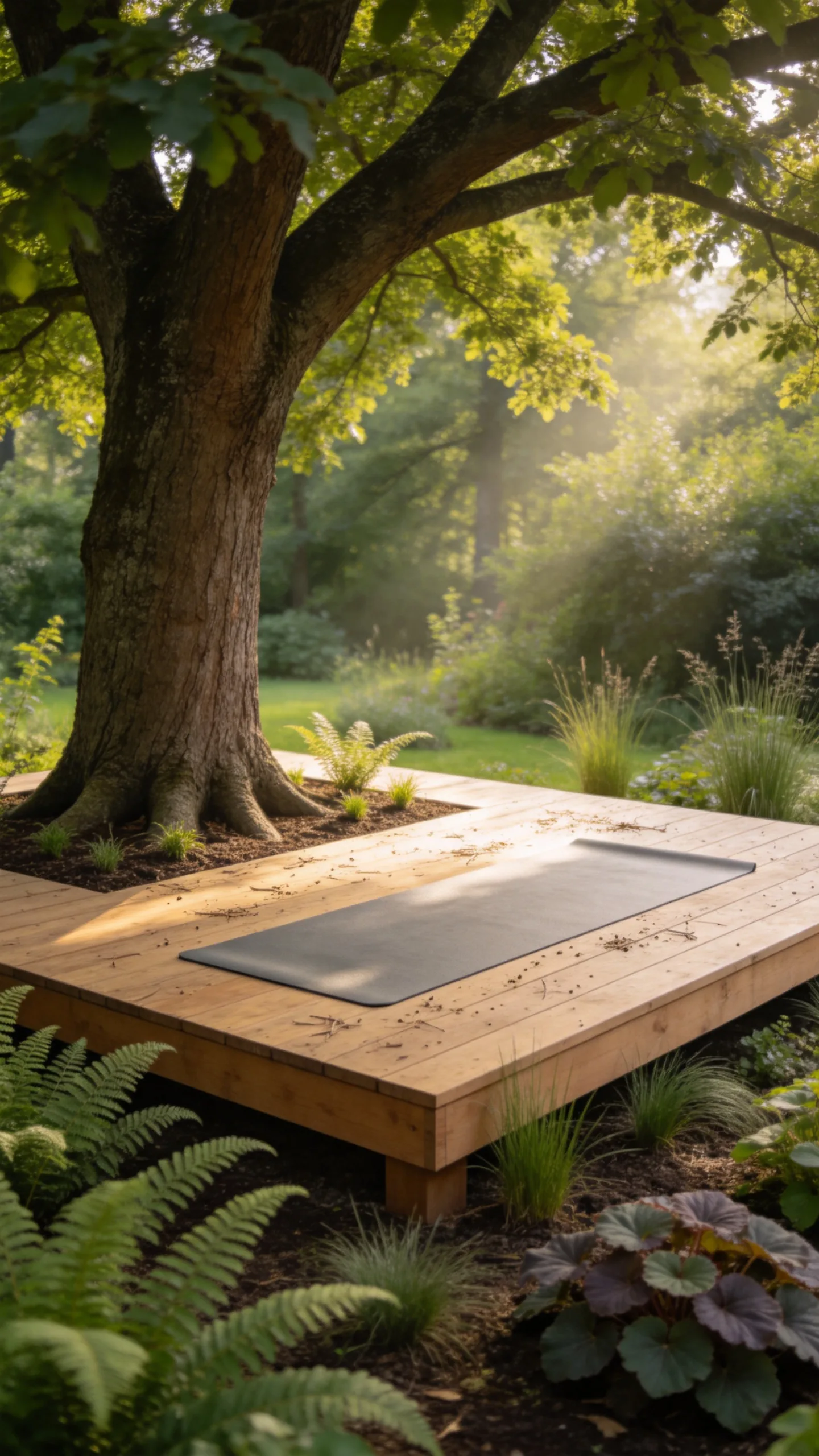
Use the filtered shade beneath a mature tree as the starting point for a simple garden yoga space. Place the practice zone outside the tree’s major surface roots, and avoid excavation or heavy paving that could damage the root system. An elevated, freestanding platform may be more suitable than an in-ground patio near sensitive roots.
Complete the setting with shade-tolerant plants such as ferns, heuchera, hostas, sedges, or hellebores, depending on climate and pest pressure. Sweep away twigs and seeds before each session, and have an arborist assess large trees if you notice dead limbs or structural concerns.
6. Install a Low Deck Surrounded by Soft Grasses
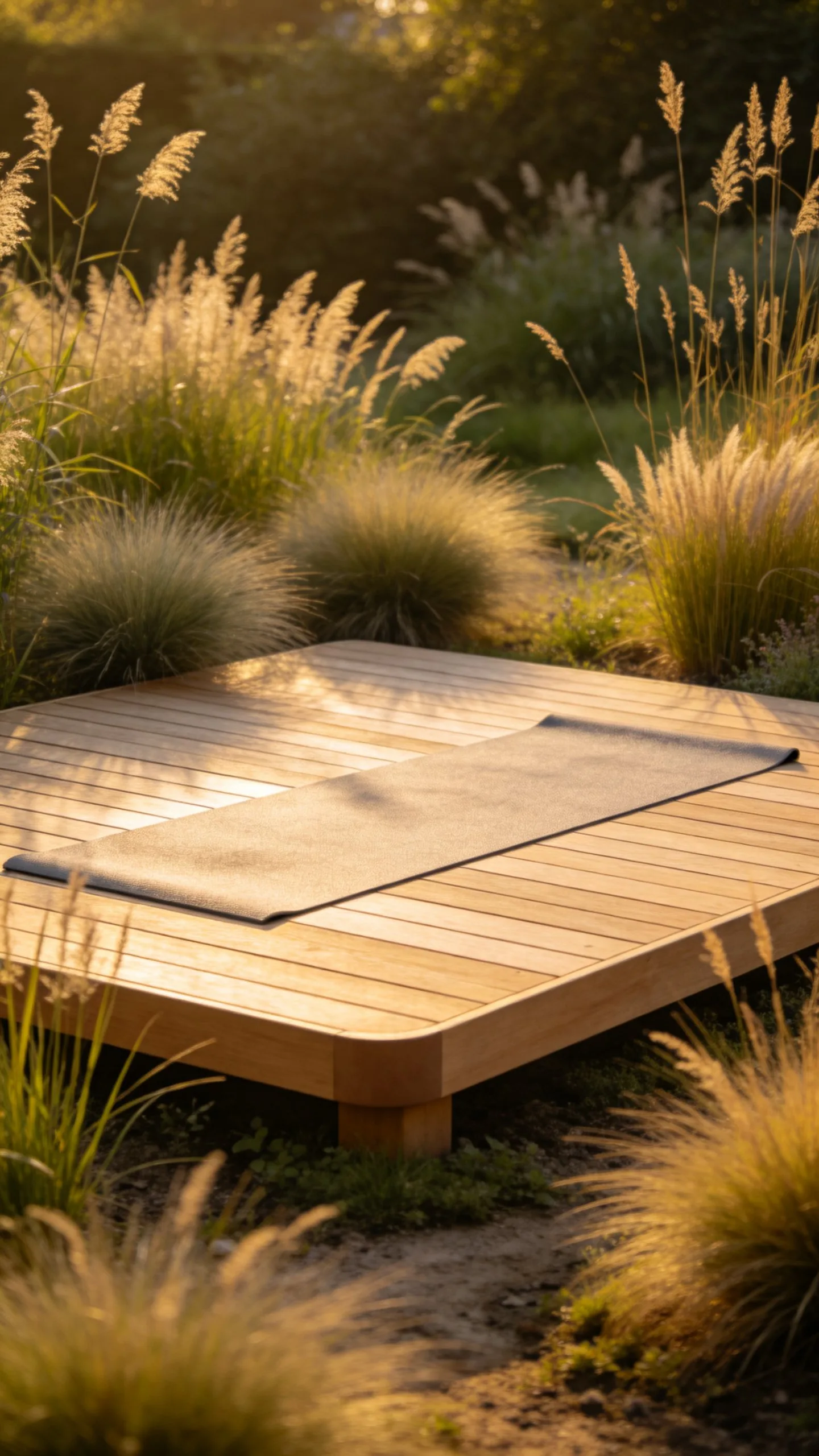
A low platform creates a flat, clean surface on uneven or damp ground. Use exterior-rated, slip-resistant decking and make the deck large enough for a yoga mat plus clear space around the arms and legs. Rounded corners or wide perimeter boards can make the edges more visible.
Plant soft-textured grasses around the deck to create movement and partial screening. Fountain grass, switchgrass, tufted hair grass, and native sedges offer different heights, but plant choice should reflect local climate and invasive-species guidance. Set plants back from the deck so wet foliage and seed heads do not brush against you during practice.
7. Design a Narrow Side-Yard Yoga Retreat
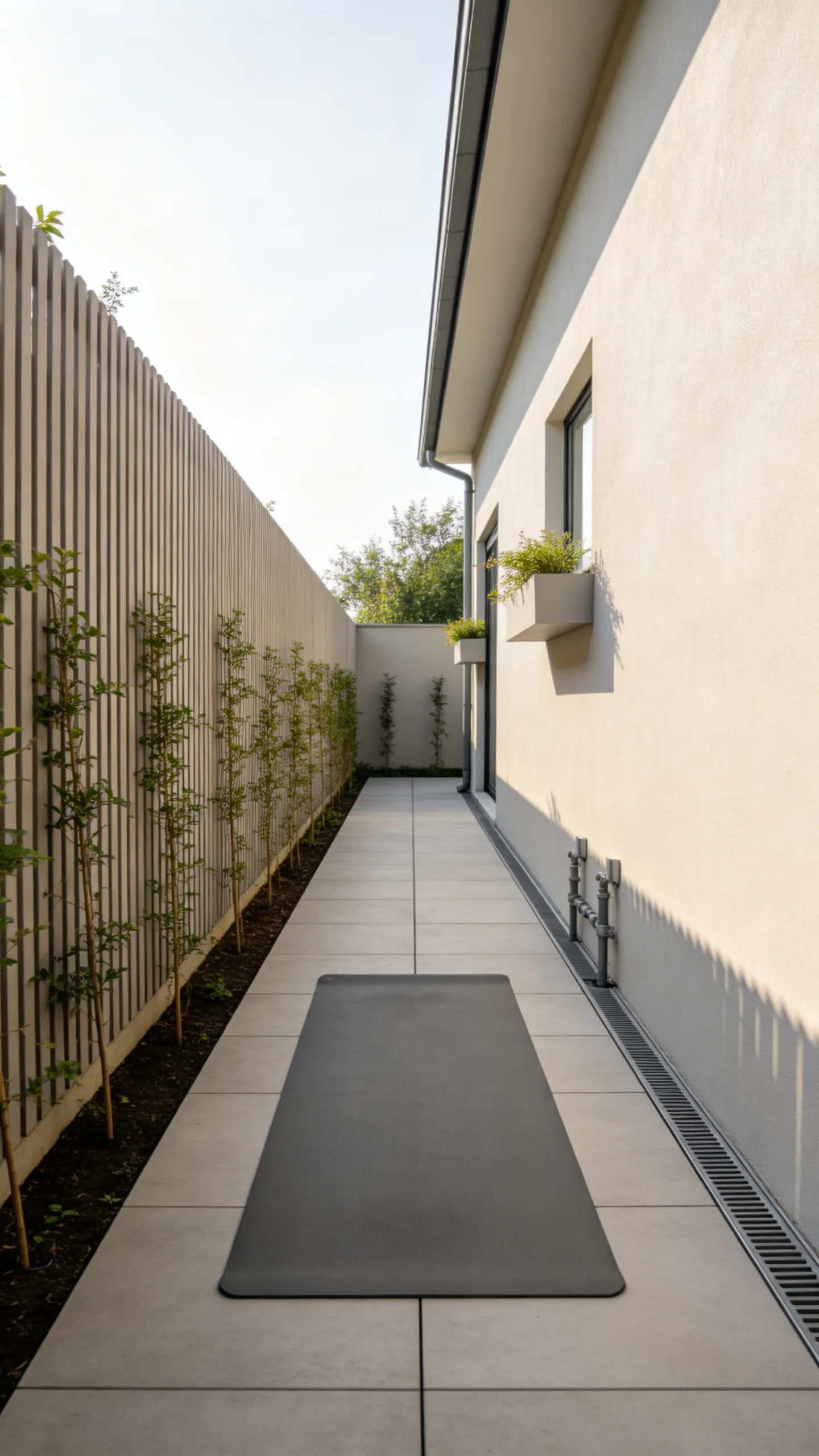
A side yard can accommodate a yoga area when the design emphasizes length rather than width. Lay a slim paver pad or narrow deck parallel to the house, keeping required access routes and utility equipment clear. Use large-format pavers to reduce visual clutter and provide a steadier surface than small, uneven stones.
Add a trellis or slatted panel along the property boundary for privacy, then plant narrow-growing shrubs or climbers at its base. Wall-mounted planters can add greenery without reducing floor space. Check drainage carefully because side yards often receive roof runoff and limited sunlight.
8. Shade a Patio with a Retractable Sail
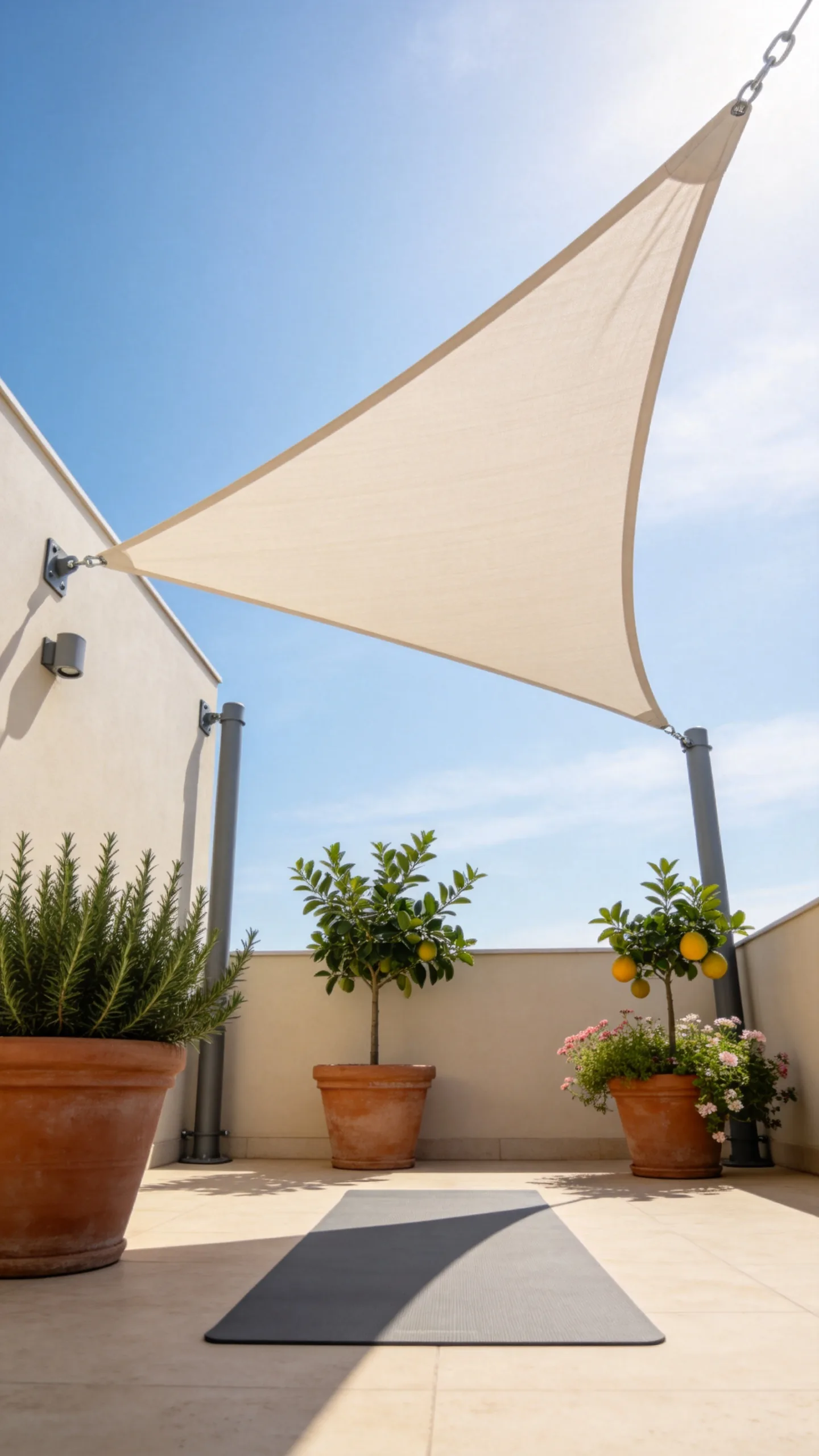
A retractable shade sail provides sun protection when needed and can be removed or folded back during cool weather. Position it high enough for comfortable standing poses, and angle the fabric so rainwater does not collect in the center. Posts and wall attachments should be installed according to structural and local permit requirements.
Soften the anchor points with large containers of rosemary, dwarf citrus, bay laurel, or flowering perennials suited to your climate. Avoid thorny plants and species that attract heavy insect activity immediately beside the mat. In windy conditions, retract the sail according to the manufacturer’s instructions.
9. Form a Living Screen with an Evergreen Hedge
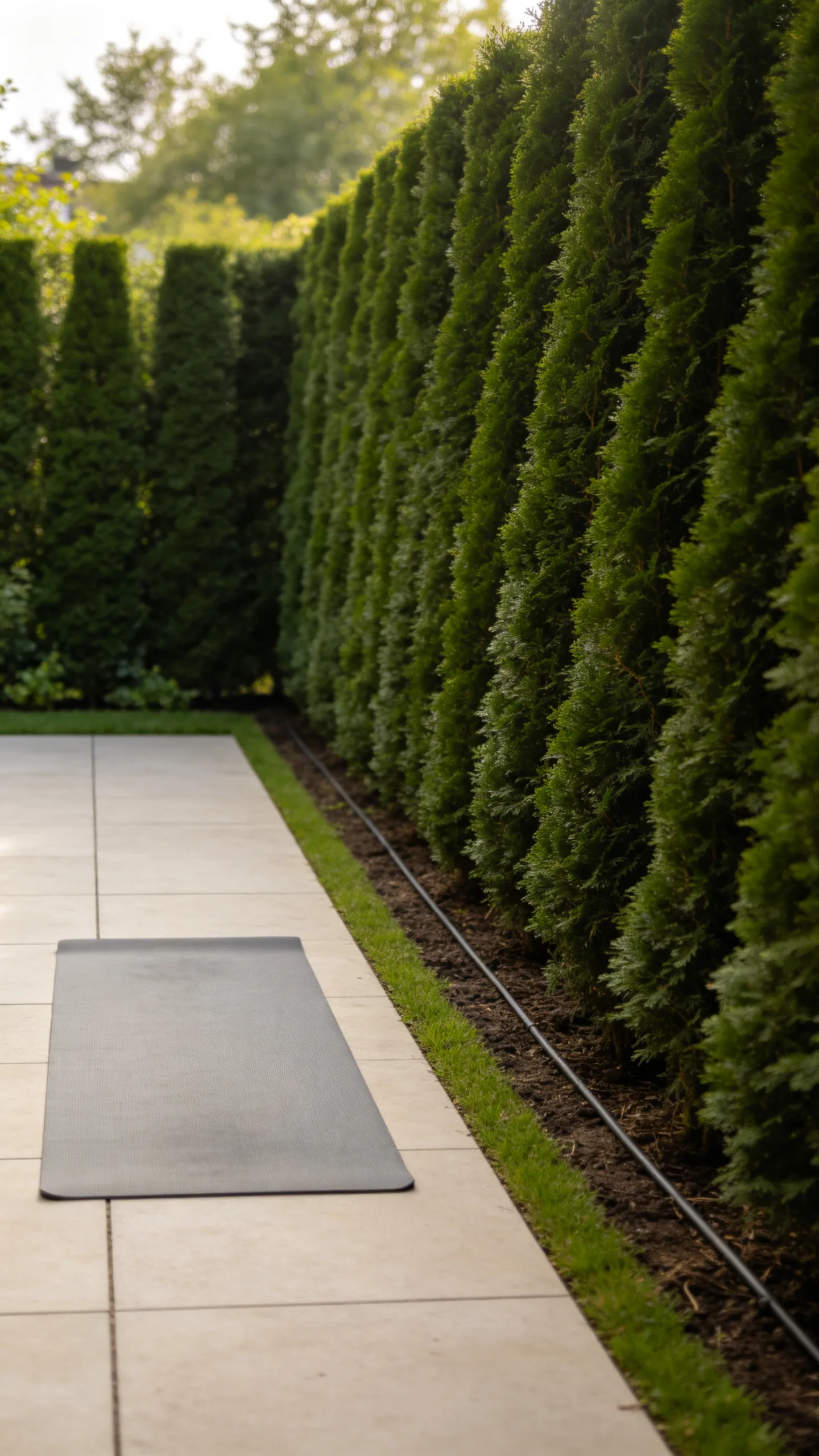
Plant an evergreen hedge along the most exposed side of the yoga area to create year-round privacy. Yew, arborvitae, holly, podocarpus, and wax myrtle are possible options in suitable regions, but mature width, cold tolerance, and water needs vary significantly.
Set the hedge far enough from the practice surface to allow for future growth and pruning access. A drip line beneath mulch can deliver water to the roots without wetting the yoga area. For compact yards, select naturally narrow cultivars rather than repeatedly cutting a large shrub into a tight space.
10. Make a Balcony Yoga Nook with Layered Containers
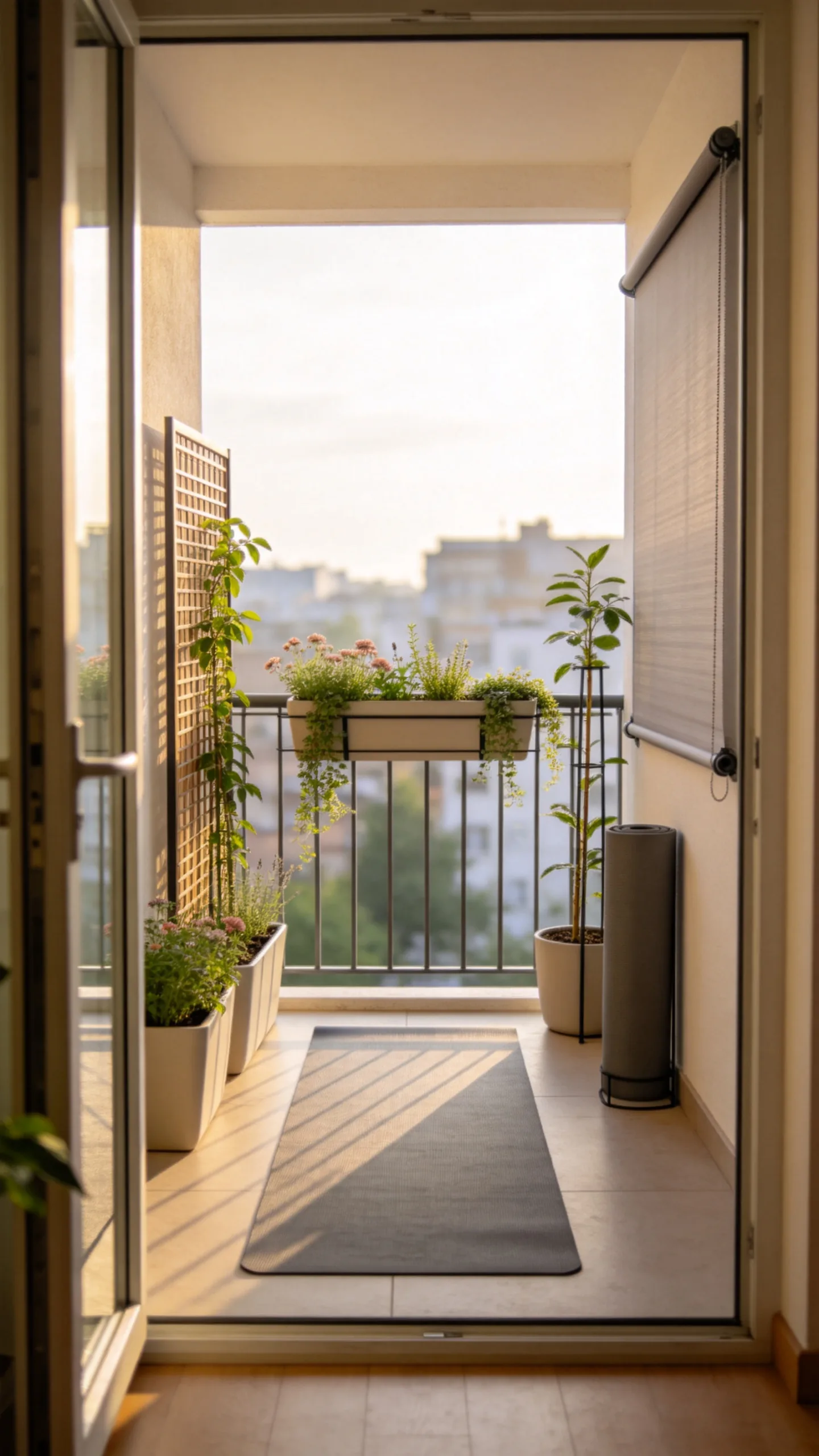
Keep the center of a balcony open for movement and arrange planters around the perimeter. Use railing planters, wall pockets, and narrow vertical stands to add plants without occupying valuable floor area. Confirm the balcony’s weight limits before adding large pots, saturated soil, or heavy stone containers.
Combine an upright plant for screening, a medium-height flowering plant for color, and a trailing plant to soften the railing. Herbs, compact grasses, dwarf shrubs, and seasonal annuals are manageable choices. A small outdoor curtain or roll-up screen can improve privacy, provided building rules and wind exposure allow it.
11. Create a Fragrant Herb Garden beside the Mat
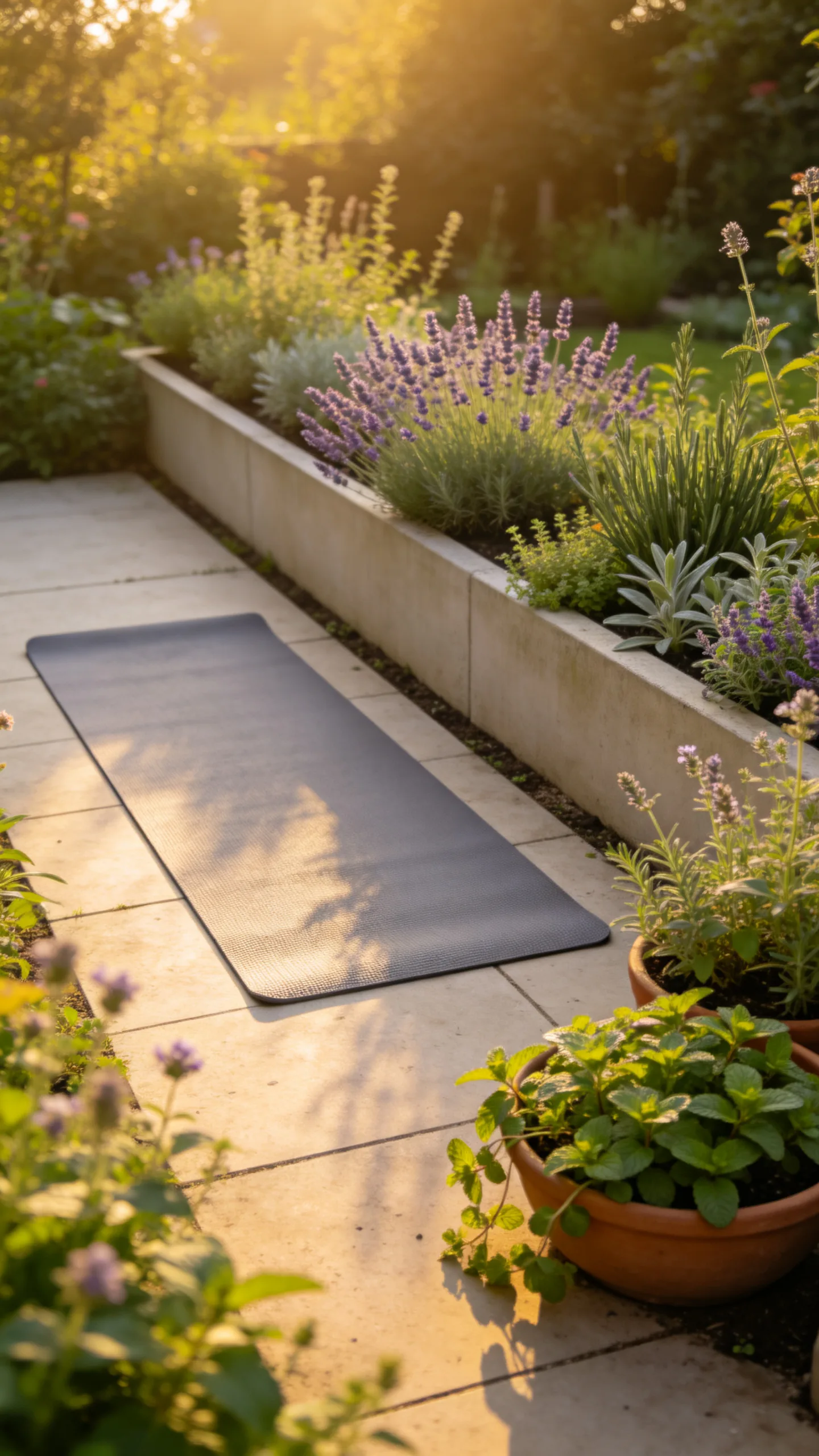
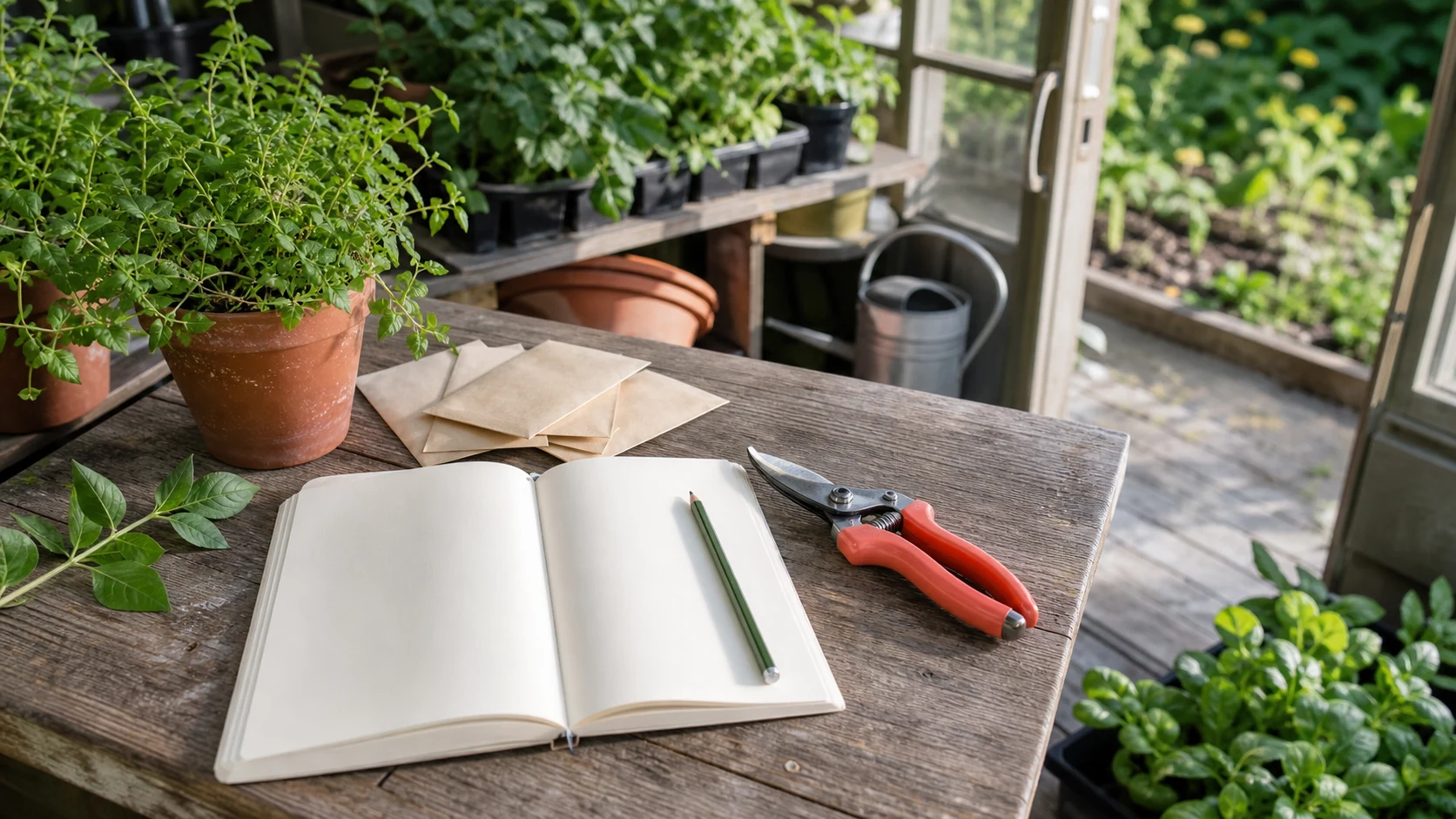
Plant aromatic herbs near the yoga area where their foliage can be brushed lightly or warmed by the sun. Lavender, thyme, sage, mint, lemon balm, and rosemary can add fragrance, though their preferred conditions differ. Keep spreading mint and lemon balm in containers so they do not take over a small bed.
Place herbs along one edge rather than surrounding the mat, especially if bees are frequent visitors when the plants flower. A raised planter makes harvesting and pruning easier while defining the boundary of the practice zone. Choose non-slip paving around the bed to keep soil and irrigation water off the mat.
12. Add a Freestanding Trellis for Compact Privacy
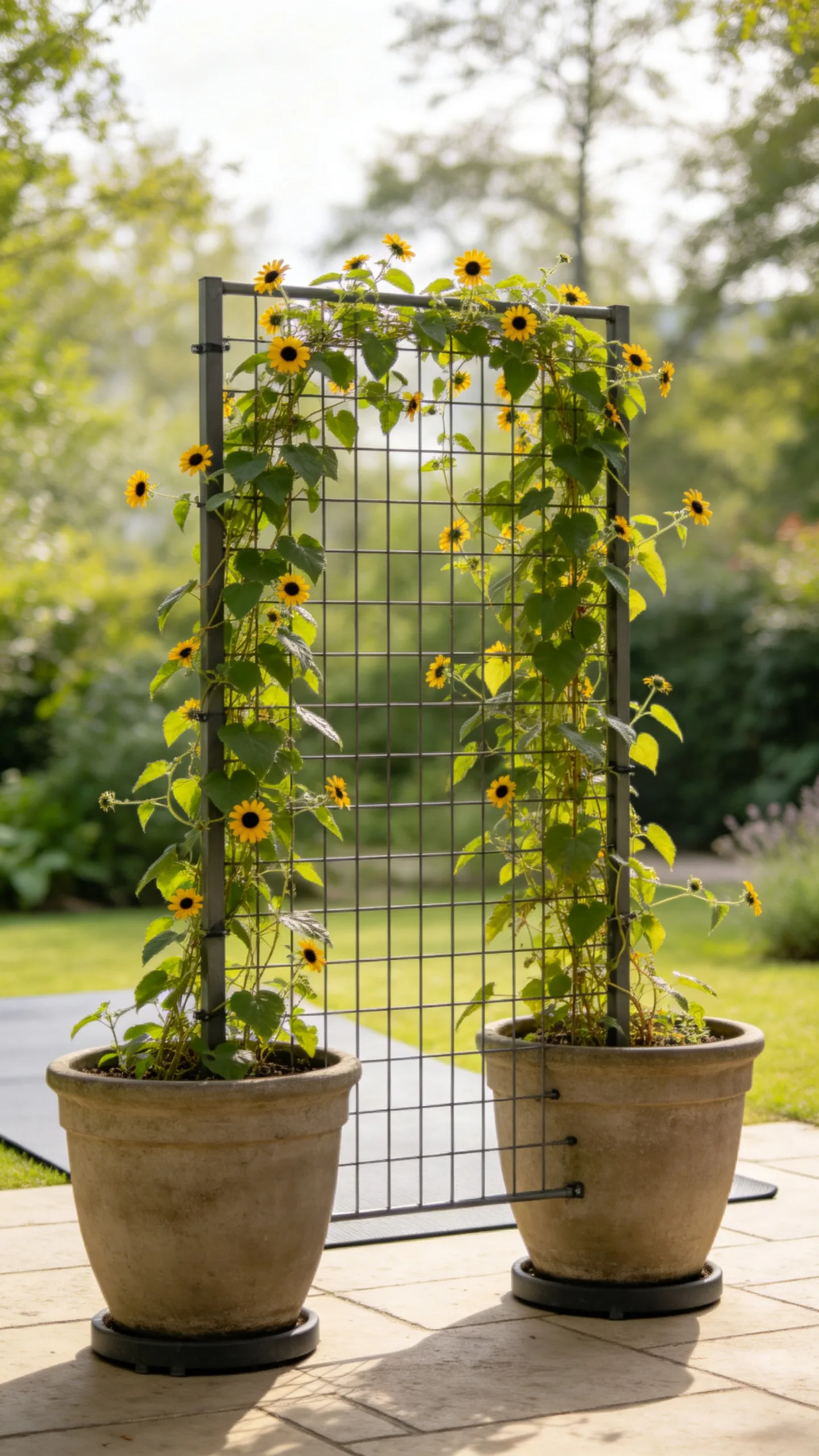
Use a freestanding trellis to screen a specific view without building a full fence. This works well in a rental garden or on a patio where permanent changes are limited. Anchor the structure securely in heavy planters or with approved ground fittings so it remains stable in wind.
Grow annual vines such as black-eyed Susan vine, hyacinth bean, or climbing nasturtium for seasonal coverage, where locally appropriate. Annuals are useful when you want quick summer privacy without committing to a large perennial vine. In colder seasons, attach an outdoor fabric panel or woven screen while the plants are dormant.
13. Place a Yoga Platform beside a Small Water Feature
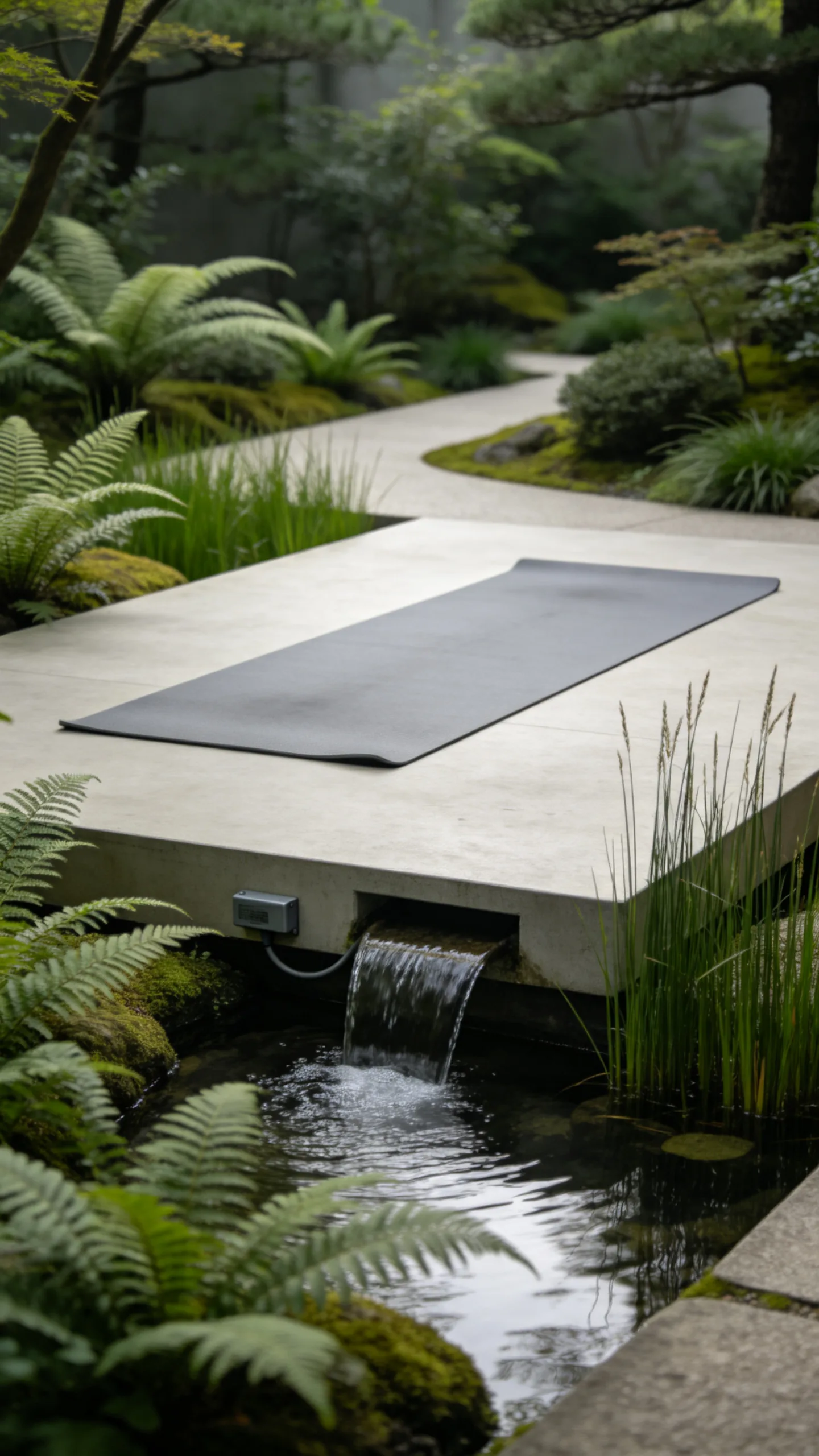
A recirculating fountain can mask some neighborhood noise and create a clear focal point. Select a compact, self-contained model that does not splash onto the practice surface. Place it to the front or side of the mat rather than behind you, where cords, basins, or wet paving could become hazards.
Surround the fountain with moisture-tolerant plants if the area receives occasional spray. Ferns, Japanese forest grass, elephant ears, or compact rushes may be suitable depending on climate and light. Clean the pump regularly, refresh water as needed, and prevent standing water from becoming a mosquito habitat.
14. Enclose a Corner with L-Shaped Raised Beds
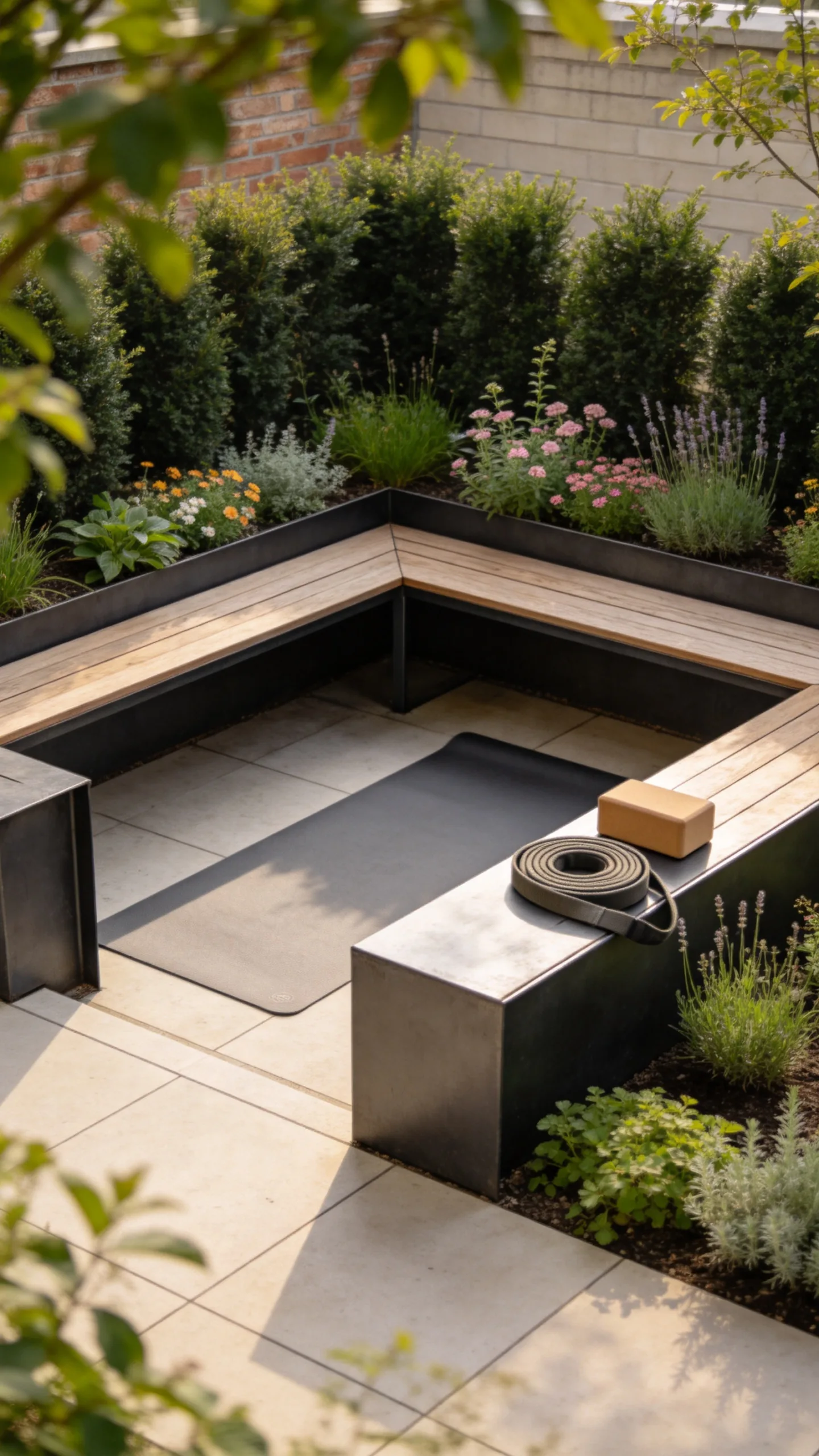
Two raised beds arranged in an L shape can define a yoga corner while providing low-level privacy. Build the beds from rot-resistant wood, masonry, or metal, and leave enough clearance for walking around the mat. A seat-height edge can also provide a convenient place for blocks, straps, or a water bottle.
Fill the beds with layered planting: compact shrubs at the back, perennials in the middle, and ground-covering herbs near the edge. Select plants according to sun exposure and bed depth. This layout is especially useful on a paved yard because it brings greenery into the space without removing existing hardscape.
15. Grow a Green Canopy over an Arbor
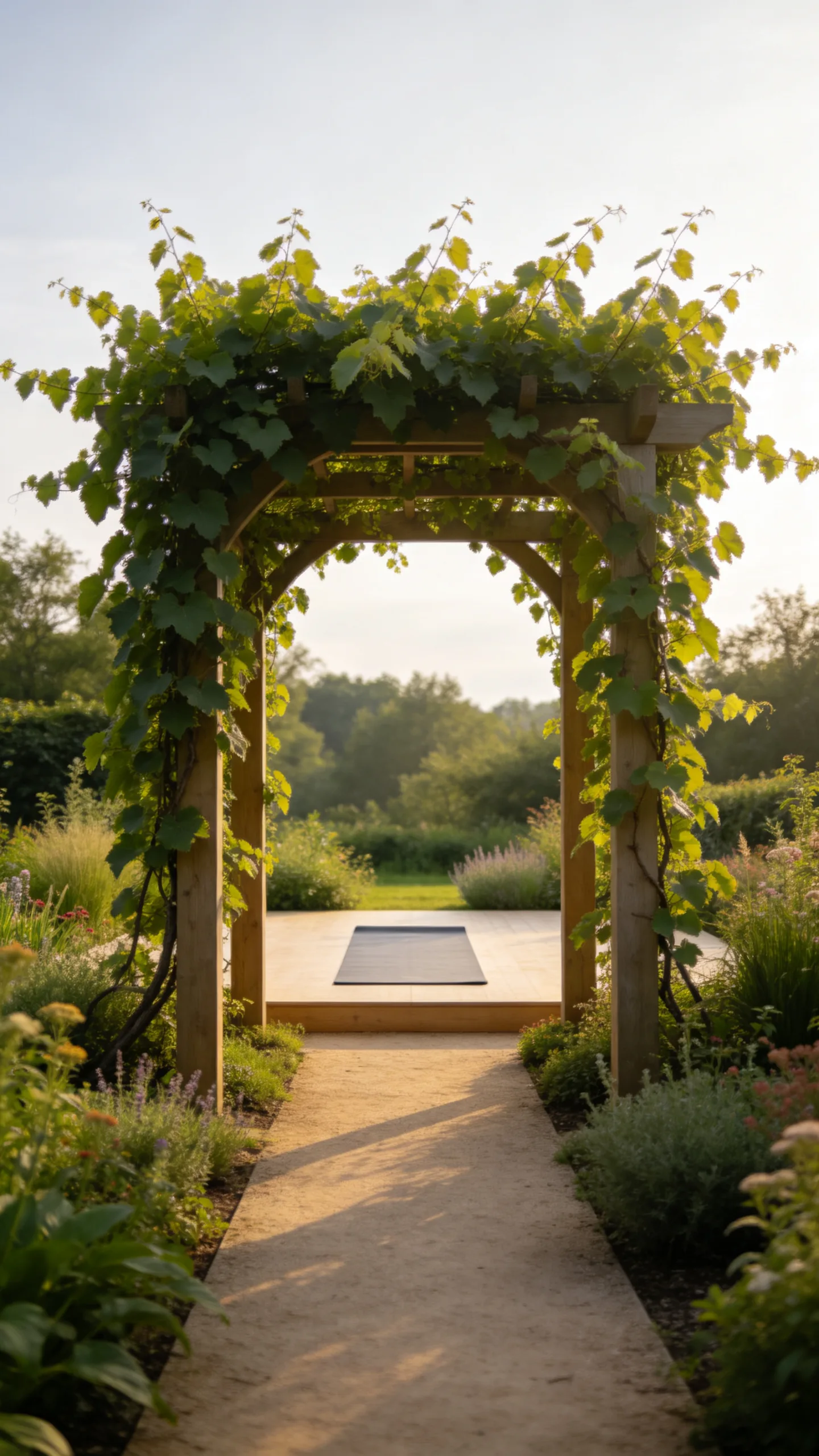
Place an arbor at the entrance to the yoga area to make the transition from the rest of the garden feel more deliberate. For a deeper shaded zone, extend the arbor into a short tunnel or connect it to a pergola. Make sure the structure is tall and wide enough that vines will not interfere with raised arms.
Choose a climber with growth habits suited to the structure. Grapevines create dense seasonal shade but require pruning, while climbing roses need sturdy support and should be positioned away from the practice surface because of thorns. Deciduous vines can provide summer shade and allow more winter light into the space.
16. Combine Outdoor Curtains with Container Plants
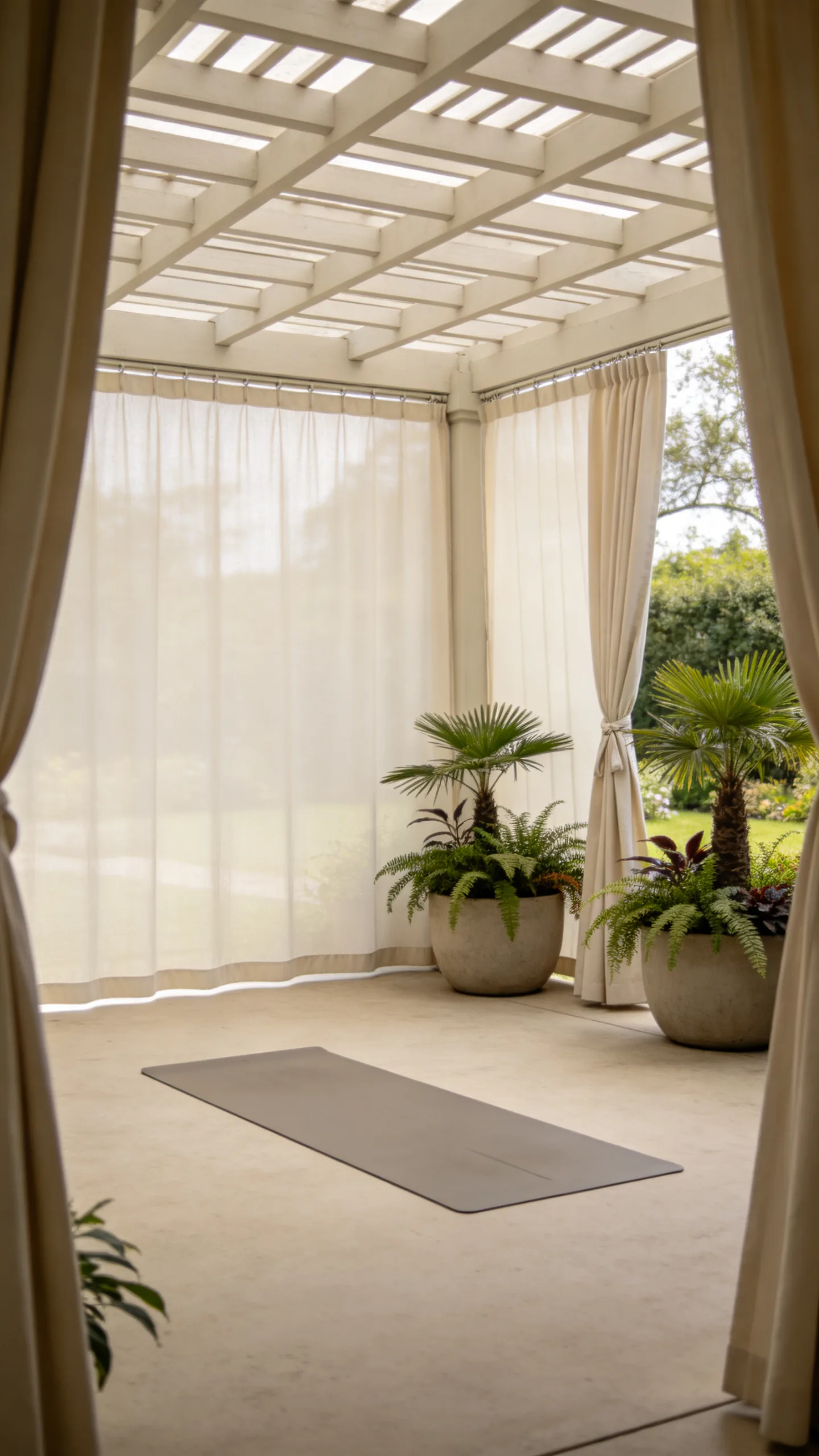
Hang weather-resistant curtains from a pergola, gazebo, or reinforced frame to create adjustable privacy. Use tiebacks to keep the panels open when airflow is needed and close only the exposed side during practice. Choose light-filtering fabric rather than heavy material in windy settings.
Place weighted planters at the base of the posts to visually connect the curtains to the garden. Shade-tolerant foliage plants, compact palms, ferns, or flowering containers can fill the lower gaps beneath the fabric. Bring frost-sensitive plants indoors or replace them seasonally where winter temperatures require it.
17. Plant a Calming White-and-Green Border
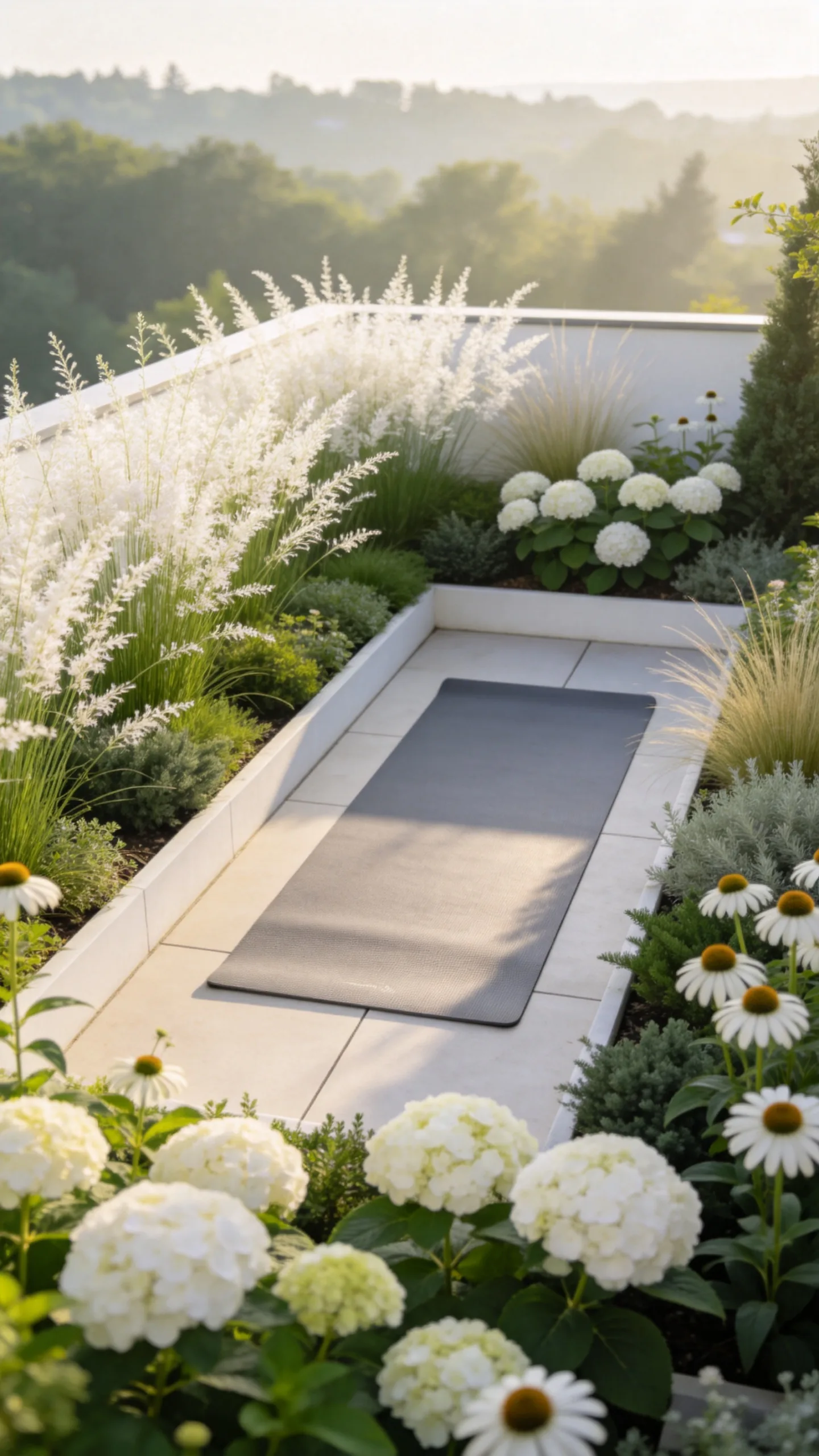
Limit the planting palette around the yoga space to green foliage and white flowers for a visually cohesive border. Depending on climate and light, options may include white coneflower, gaura, hydrangea, garden phlox, alyssum, or white-flowering salvia.
Repeat a few plant varieties instead of using one of everything. Repetition makes a small garden feel less crowded and simplifies care because plants with similar needs can share an irrigation zone. Include evergreen foliage or ornamental grasses so the border still has structure outside the main flowering season.
18. Use a Curved Path to Hide the Practice Area
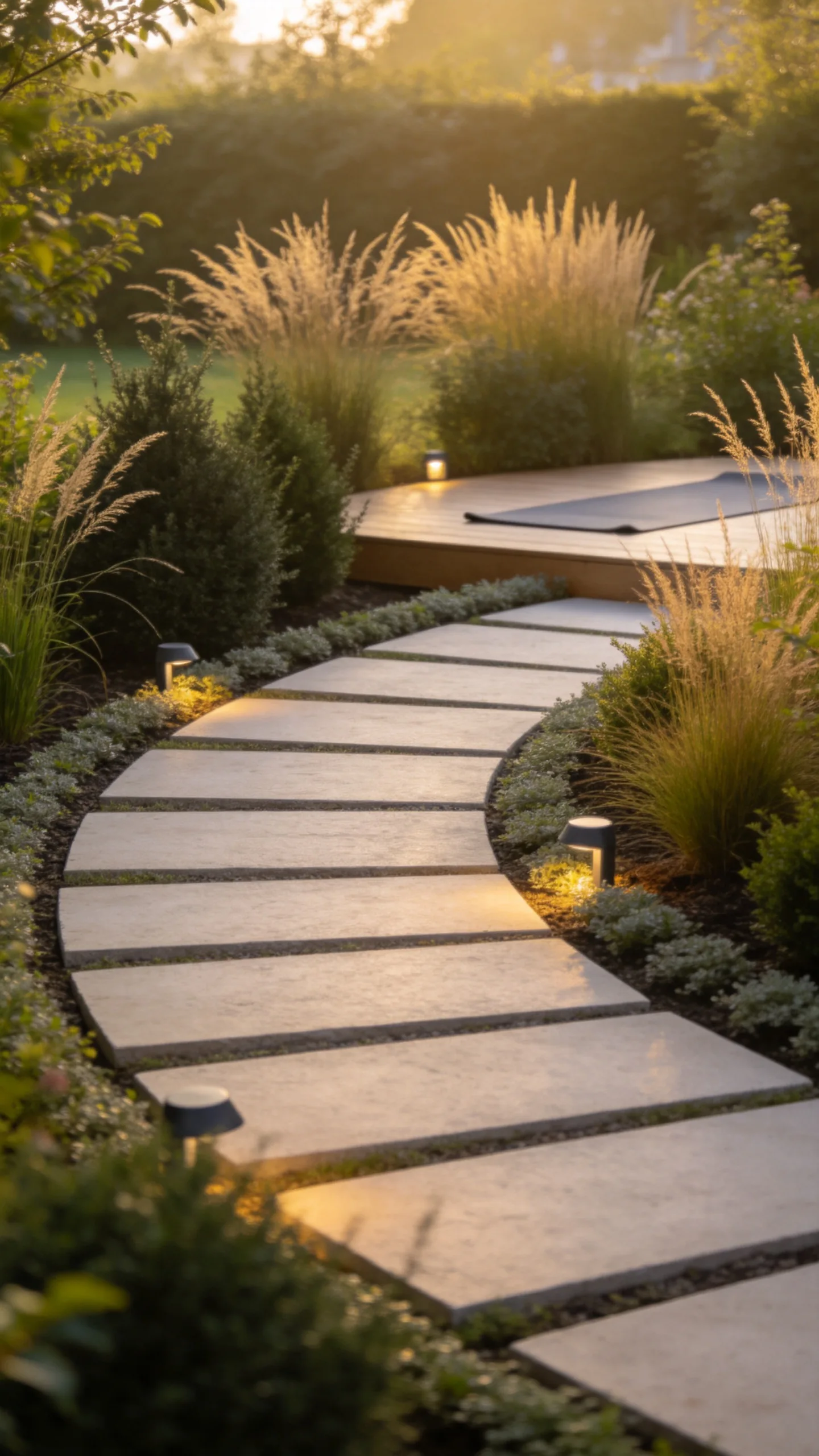
Position the yoga space beyond a curved garden path so it is not visible all at once from the house or gate. Even a short bend created with stepping stones and planting can add visual depth and make a compact backyard feel more secluded.
Plant taller shrubs or grasses on the outside of the curve and lower ground covers along the inside edge. Keep branches and foliage trimmed away from the walking surface, and use stable, evenly spaced stones. Low-voltage path lights can make early-morning or evening access safer without flooding the yoga area with harsh light.
19. Create a Sunken Garden Room with Layered Planting
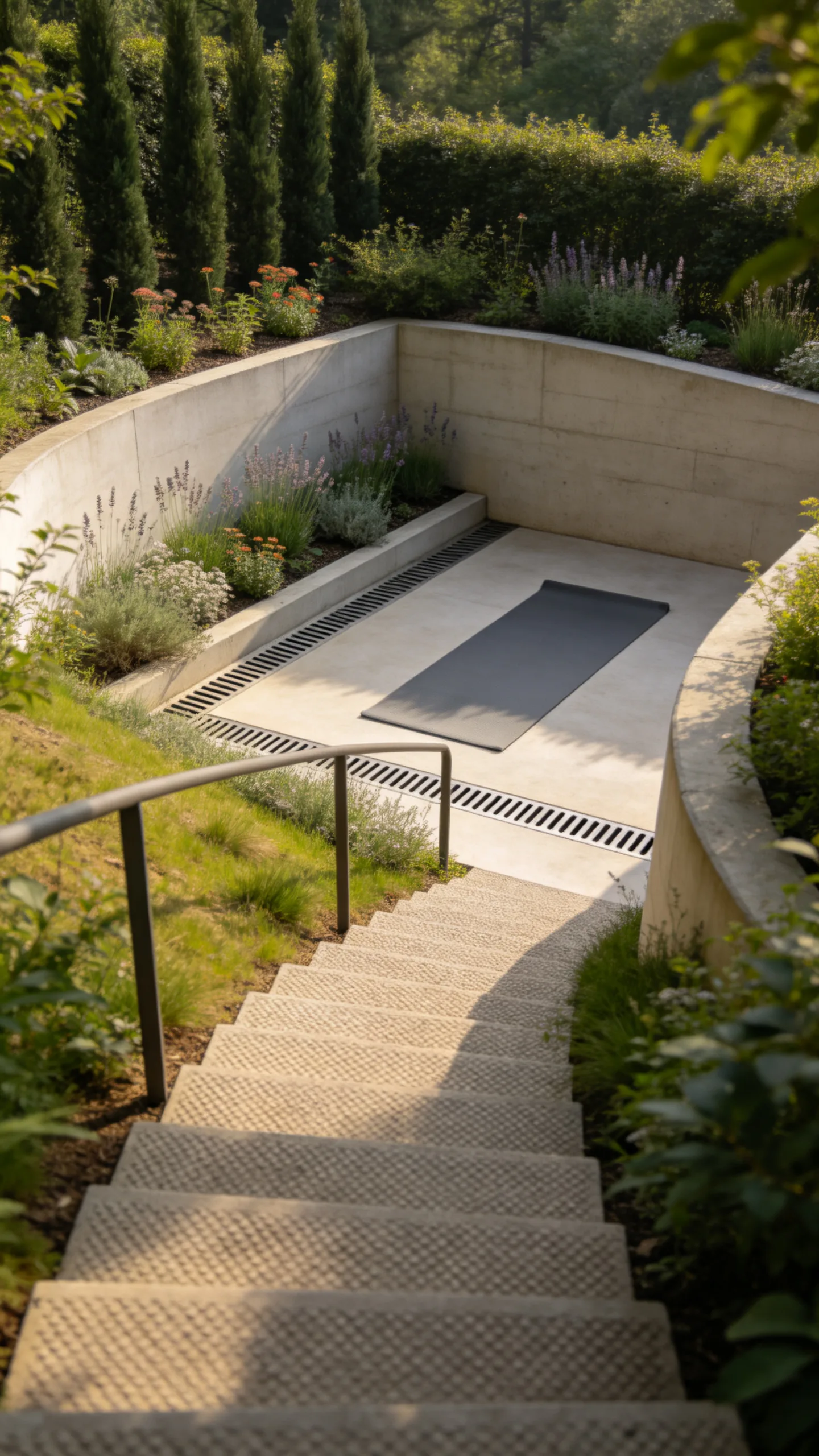
In a naturally sloped yard, a slightly lower terrace can provide privacy by placing the practice surface below surrounding beds. This design requires careful drainage and may need retaining walls, steps, or professional grading. Avoid creating a depression where rainwater will collect.
Use layered planting along the upper edges, with ground covers near the retaining wall and taller shrubs farther back. The change in elevation reduces sightlines while allowing plants to feel more enveloping. Include a handrail where required and choose textured, slip-resistant materials for any steps.
20. Design a Four-Season Yoga Garden
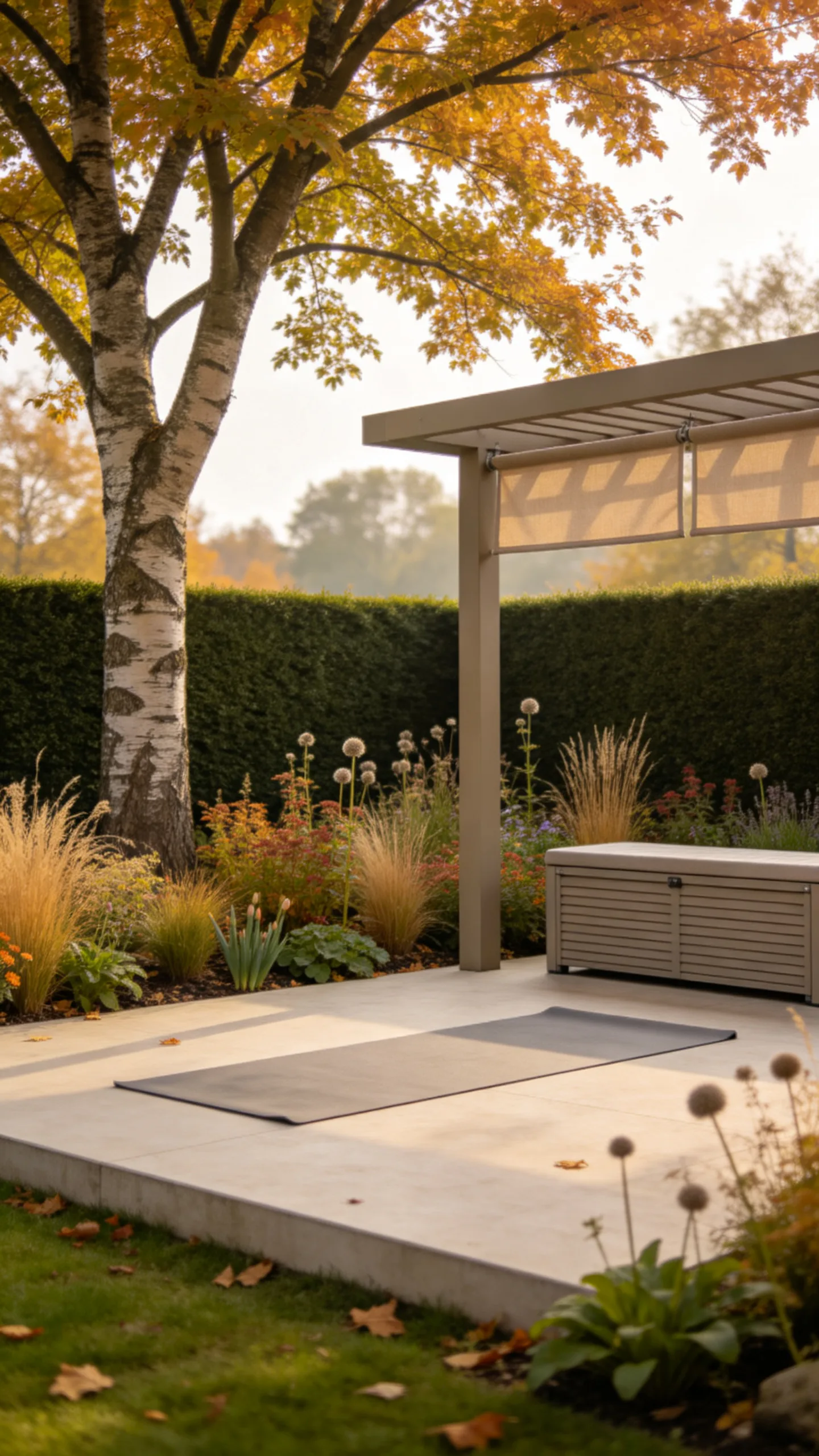
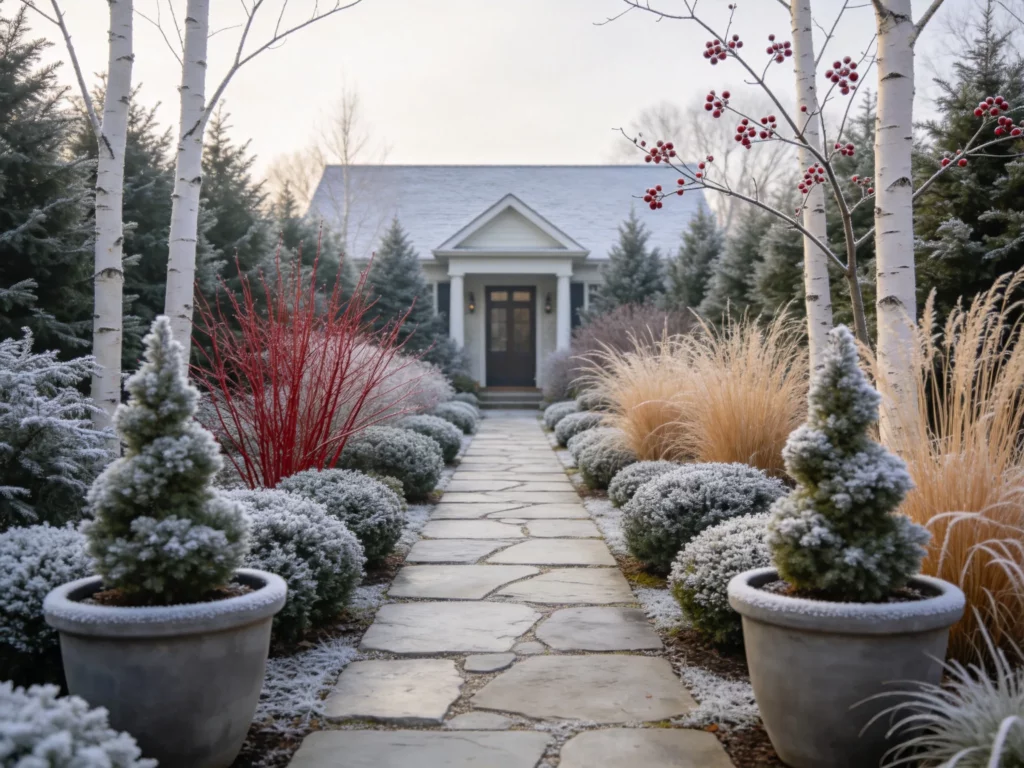
Plan for seasonal change so the space remains usable and attractive beyond summer. Combine evergreen screening, spring bulbs, summer perennials, autumn grasses, and plants with interesting winter bark or seed heads. Select varieties suited to local hardiness, rainfall, and sun exposure rather than relying on a single universal planting list.
Add practical features that extend the area’s usefulness, such as a deciduous shade tree, a pergola with removable fabric, and a storage bench for outdoor cushions and yoga props. Keep the practice surface clear of leaf buildup, prune privacy plants during their recommended season, and adjust container watering as temperatures change.