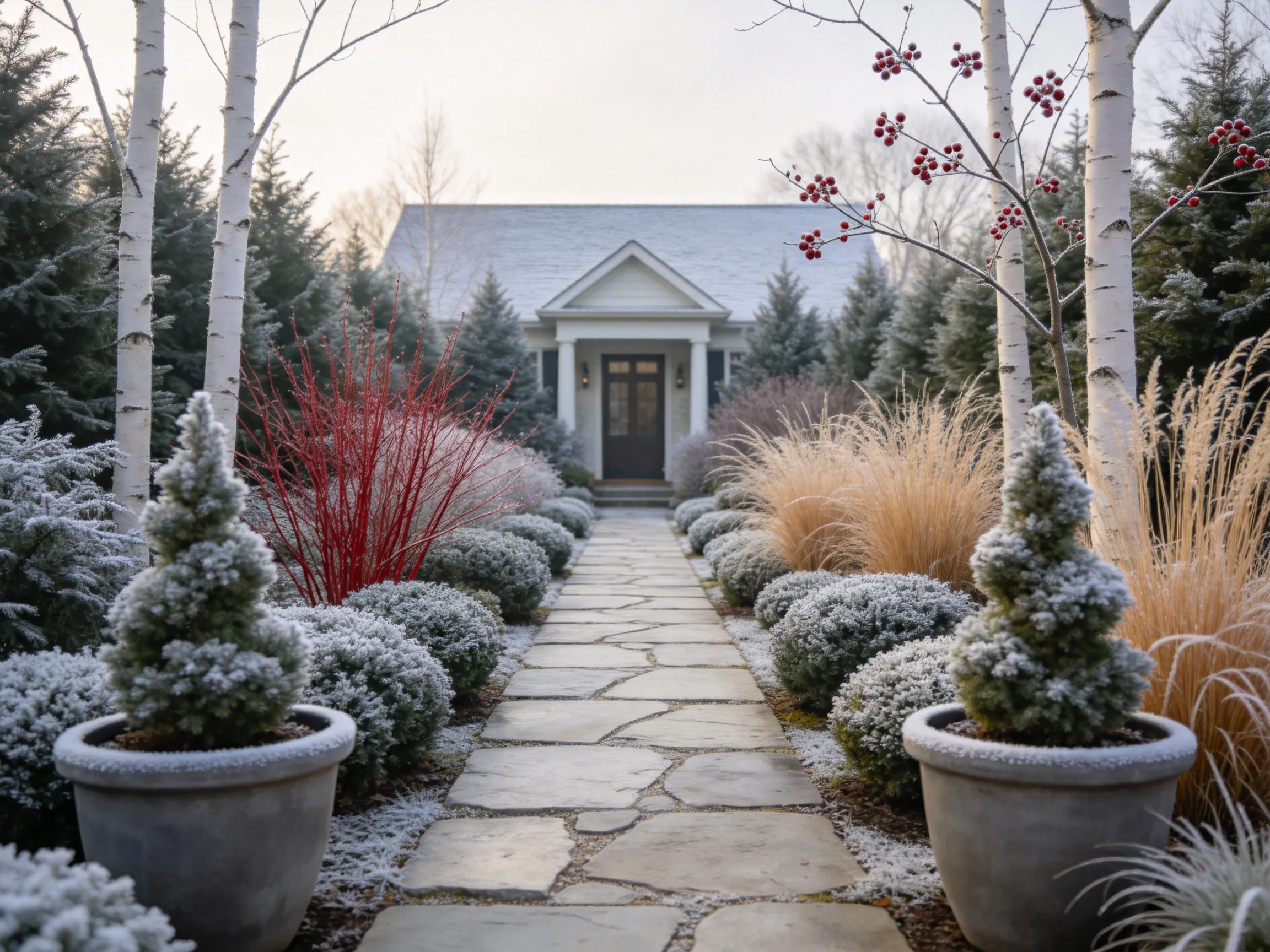
A winter garden can feel structured and inviting even when flowers are scarce. The key is to combine evergreen foliage, weather-resistant containers, colorful stems, berries, bark, and a few seasonal accents. These winter garden ideas work across patios, entryways, borders, and compact yards; choose plants suited to your local hardiness zone, light levels, and container conditions.
1. Frame the Front Door With Potted Dwarf Conifers
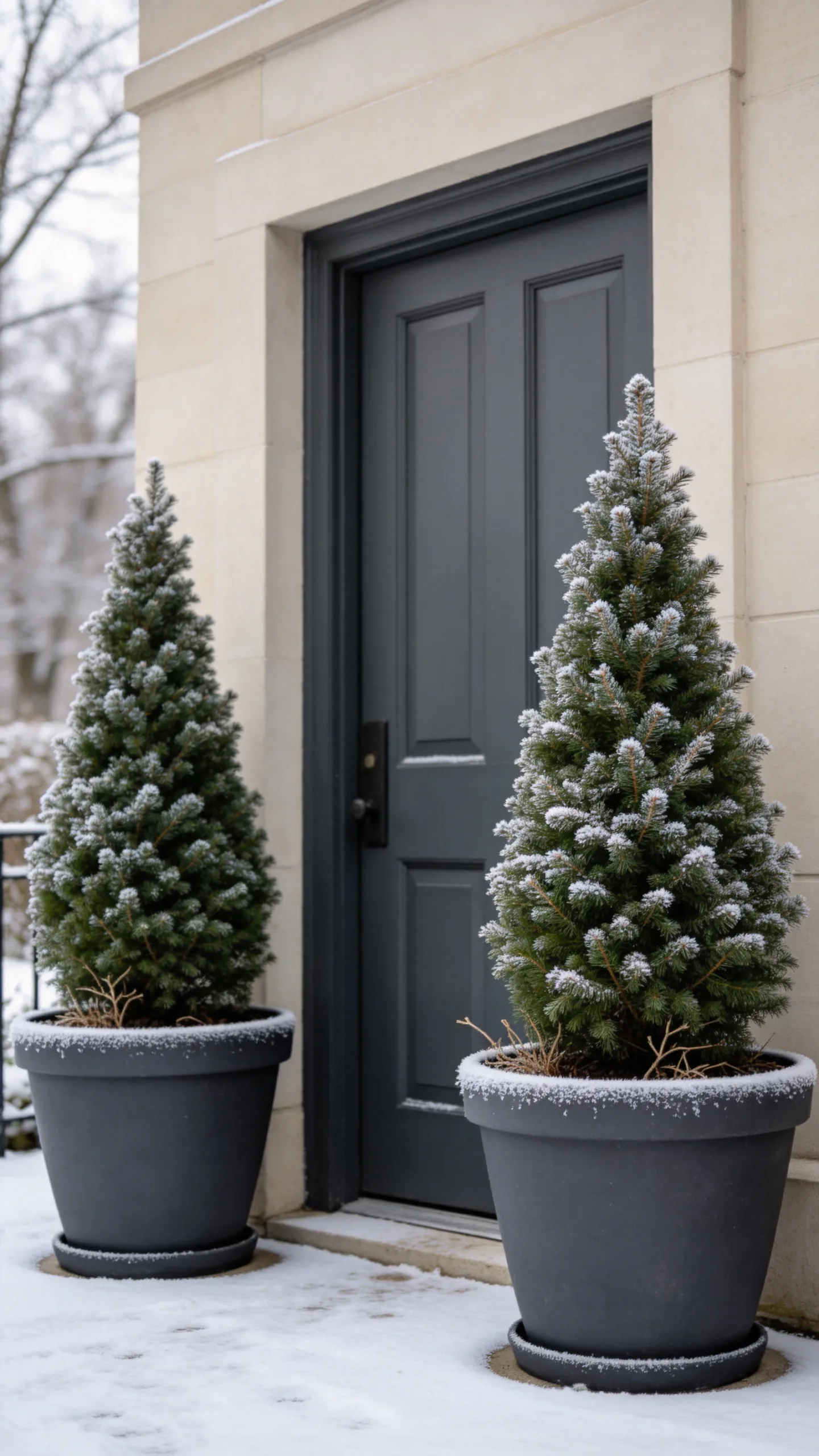
Place matching pots of dwarf conifers on either side of the front door to create a balanced winter entrance. Compact cultivars of spruce, pine, juniper, or false cypress provide reliable shape without quickly overwhelming a porch.
Choose frost-resistant containers with drainage holes, and use pots several inches wider than the root balls. In cold regions, select conifers rated at least one or two hardiness zones colder than your area because container roots are more exposed than plants in the ground.
2. Build a Layered Evergreen Foundation Border
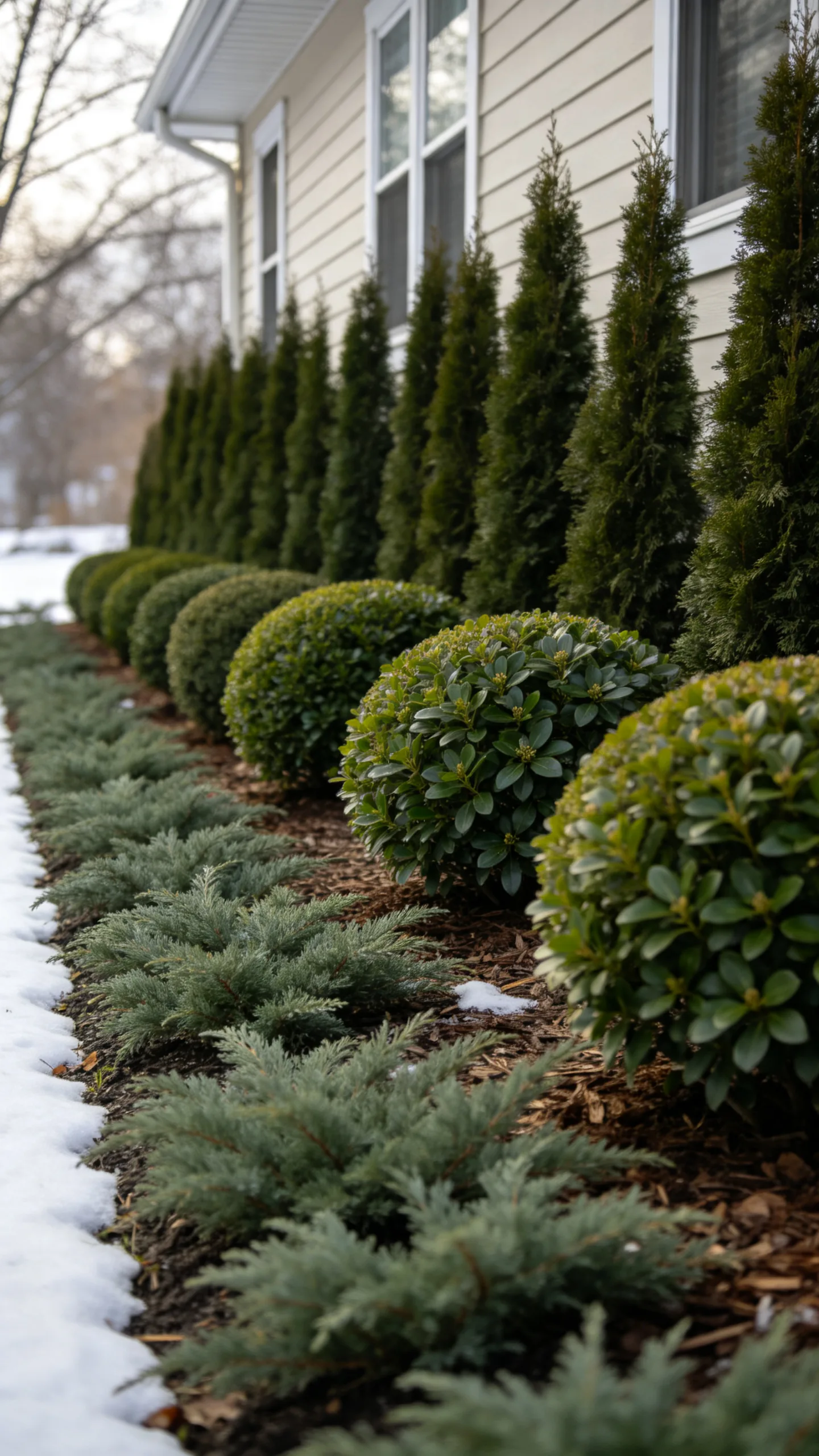
Create a border with evergreen plants at three heights: taller shrubs at the back, rounded forms in the middle, and low ground covers along the edge. Yew, inkberry holly, compact arborvitae, juniper, and wintergreen can produce a layered effect where they are locally hardy.
Vary foliage texture rather than planting a row of identical shrubs. Fine conifer needles, broad holly leaves, and spreading ground covers keep the bed visually interesting while maintaining year-round structure.
3. Fill Window Boxes With Evergreen Cuttings
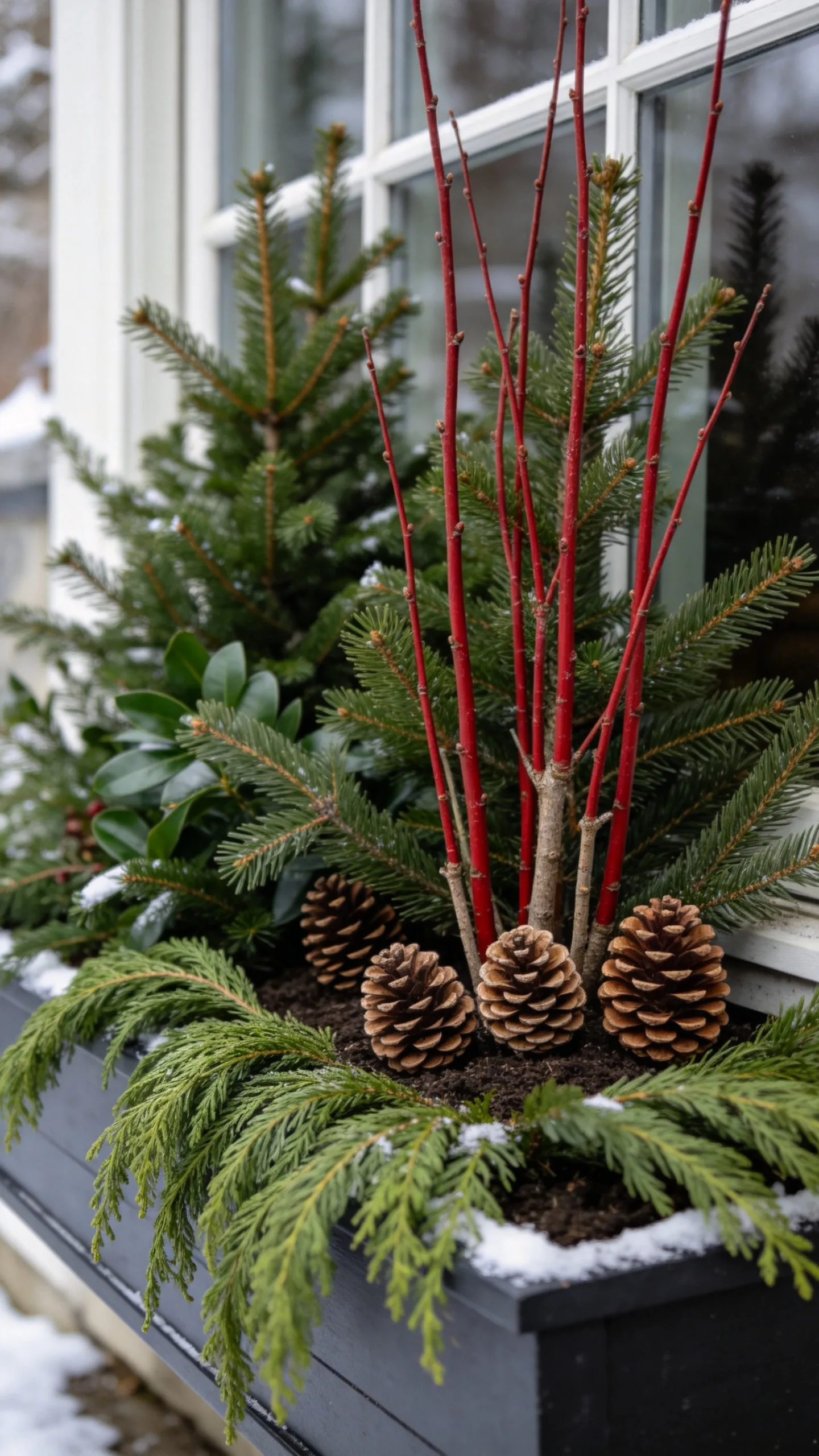
Winter window boxes do not need actively growing plants to look full. Anchor cut branches of cedar, pine, fir, or magnolia foliage in moist potting mix, then add red dogwood stems, pinecones, or weather-resistant ornaments.
Push the stems deep enough to withstand wind and arrange longer branches at the back. In mild weather, occasional watering can help cut greenery stay fresh; in freezing climates, the frozen potting mix often holds the arrangement securely.
4. Add Color With Red-Twig Dogwood Stems
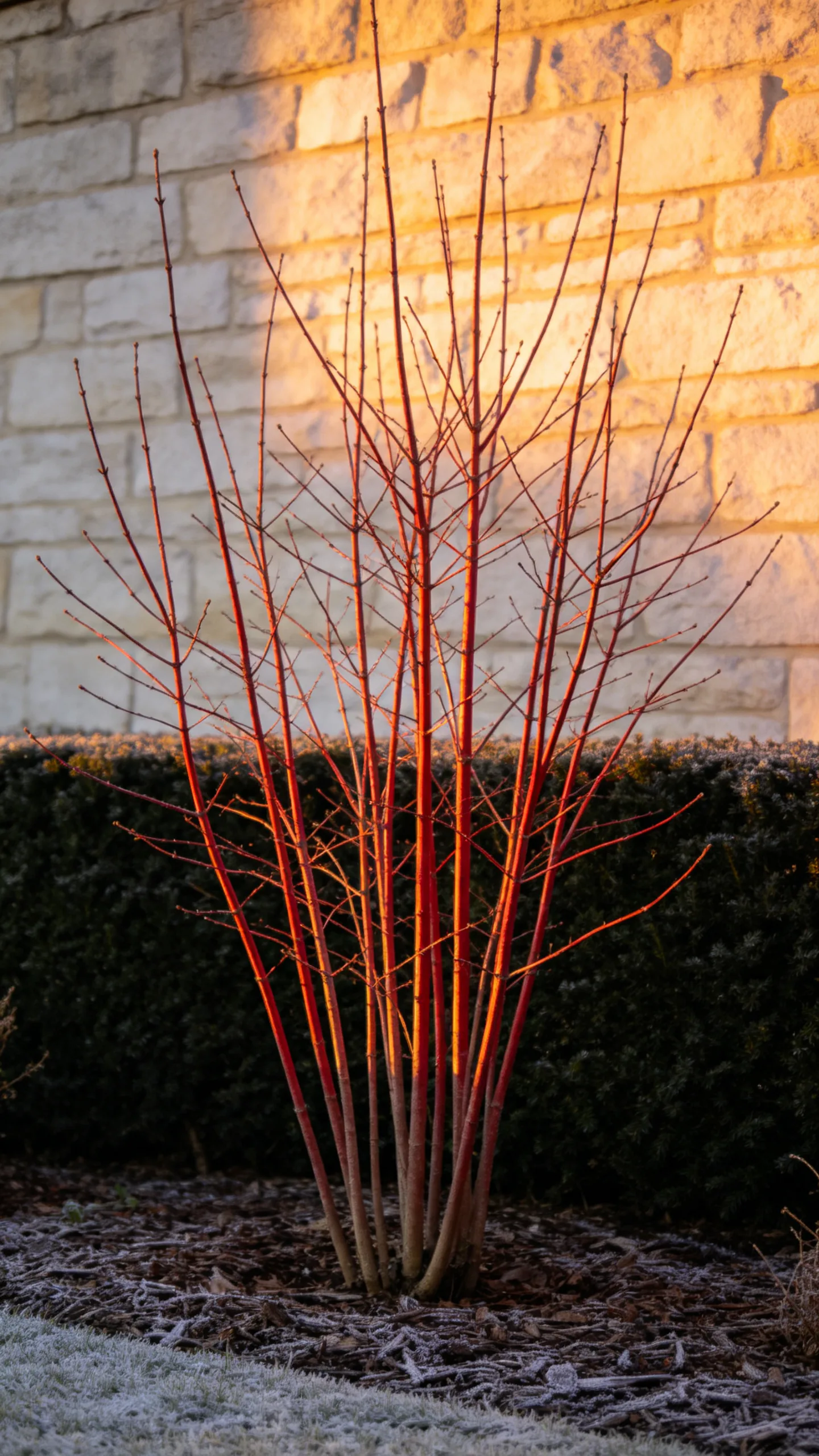
Red-twig dogwood creates vivid winter color after its leaves drop. Plant a small grouping where low winter sunlight can illuminate the red or coral stems, such as beside a pale wall, along a path, or near an evergreen hedge.
Many dogwoods perform best in moist soil and may spread over time, so check the mature size before planting. For brighter stem color, remove a portion of the oldest stems near ground level in late winter or early spring, following guidance for the selected cultivar.
5. Use Black Pots to Highlight Golden Foliage
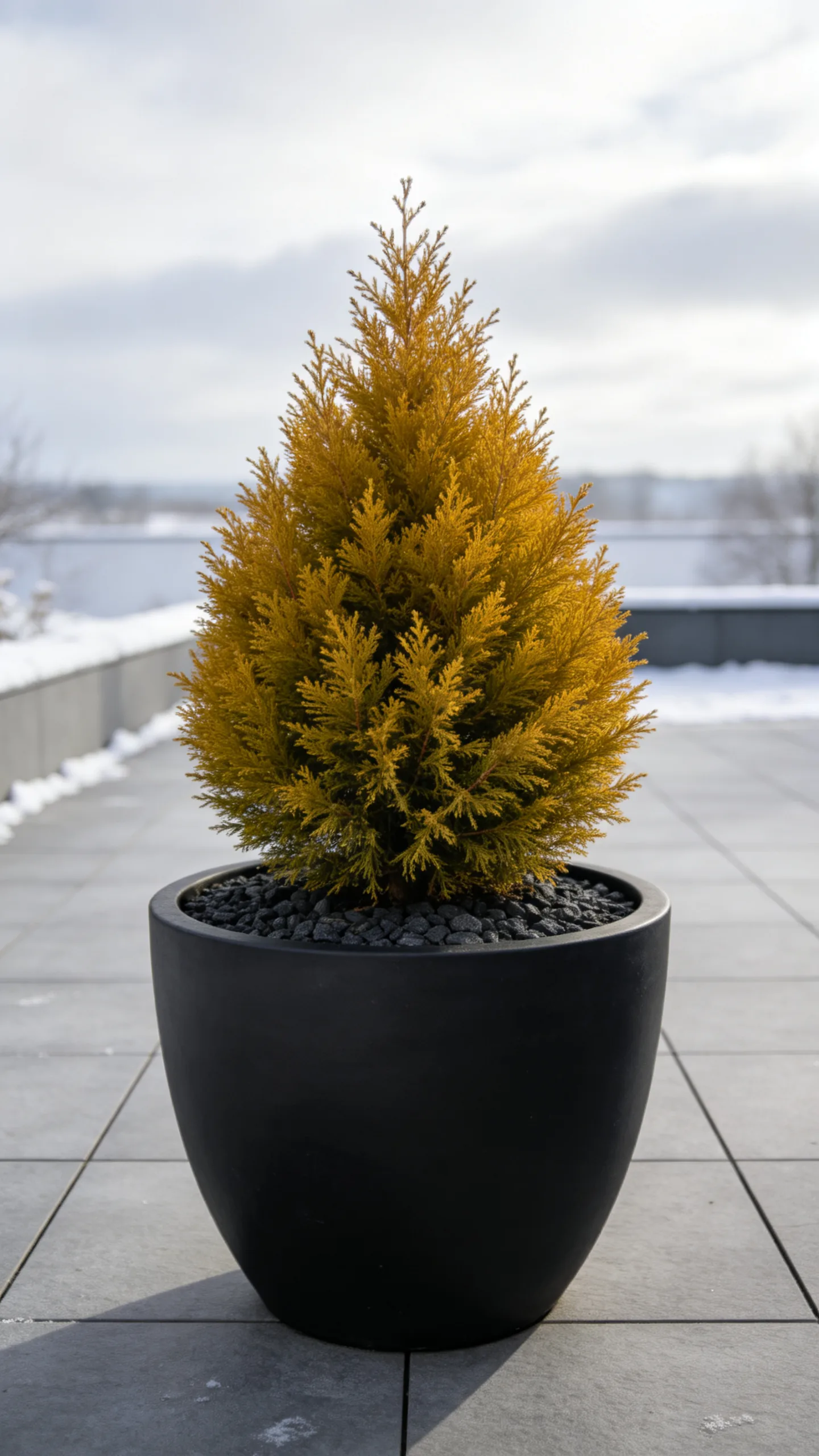
Matte black containers make golden conifers and yellow-green foliage appear brighter on gray winter days. Try a compact golden false cypress, golden juniper, or another cold-tolerant evergreen suited to the container’s sun exposure.
Keep the arrangement simple so the foliage remains the focal point. A top layer of dark gravel or fine bark gives the pot a finished appearance while reducing soil splash during winter rain.
6. Create a Berry-Filled Wildlife Corner
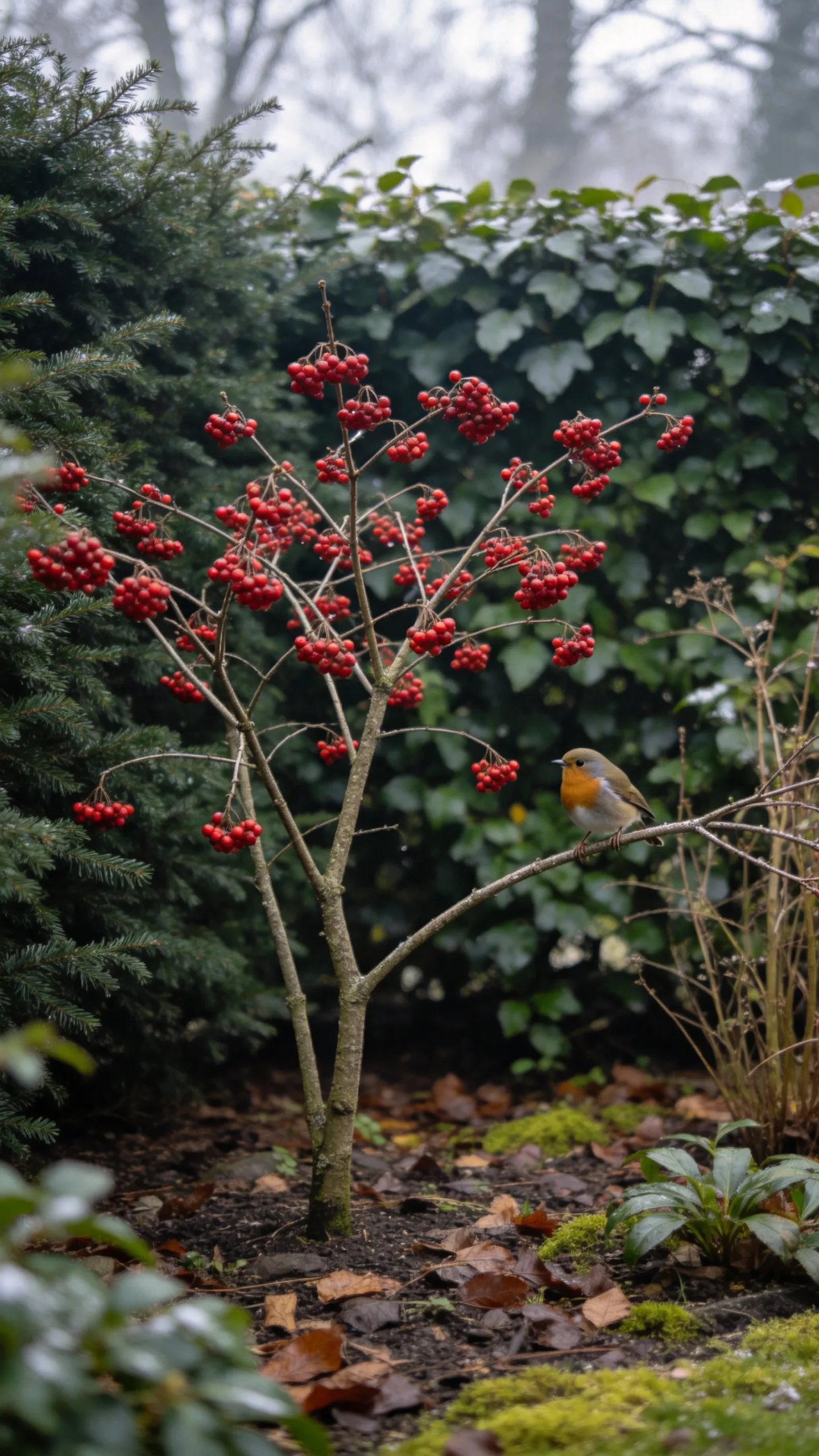
Combine berry-bearing shrubs with dense evergreens to create winter color and shelter for birds. Depending on your region, suitable plants may include winterberry holly, firethorn, cotoneaster, viburnum, or native holly species.
Some hollies require compatible male and female plants for fruit production, so confirm pollination needs before purchasing. Avoid treating berry-bearing plants with broad-spectrum pesticides, and prioritize noninvasive species recommended for your area.
7. Edge a Path With Low Evergreen Mounds
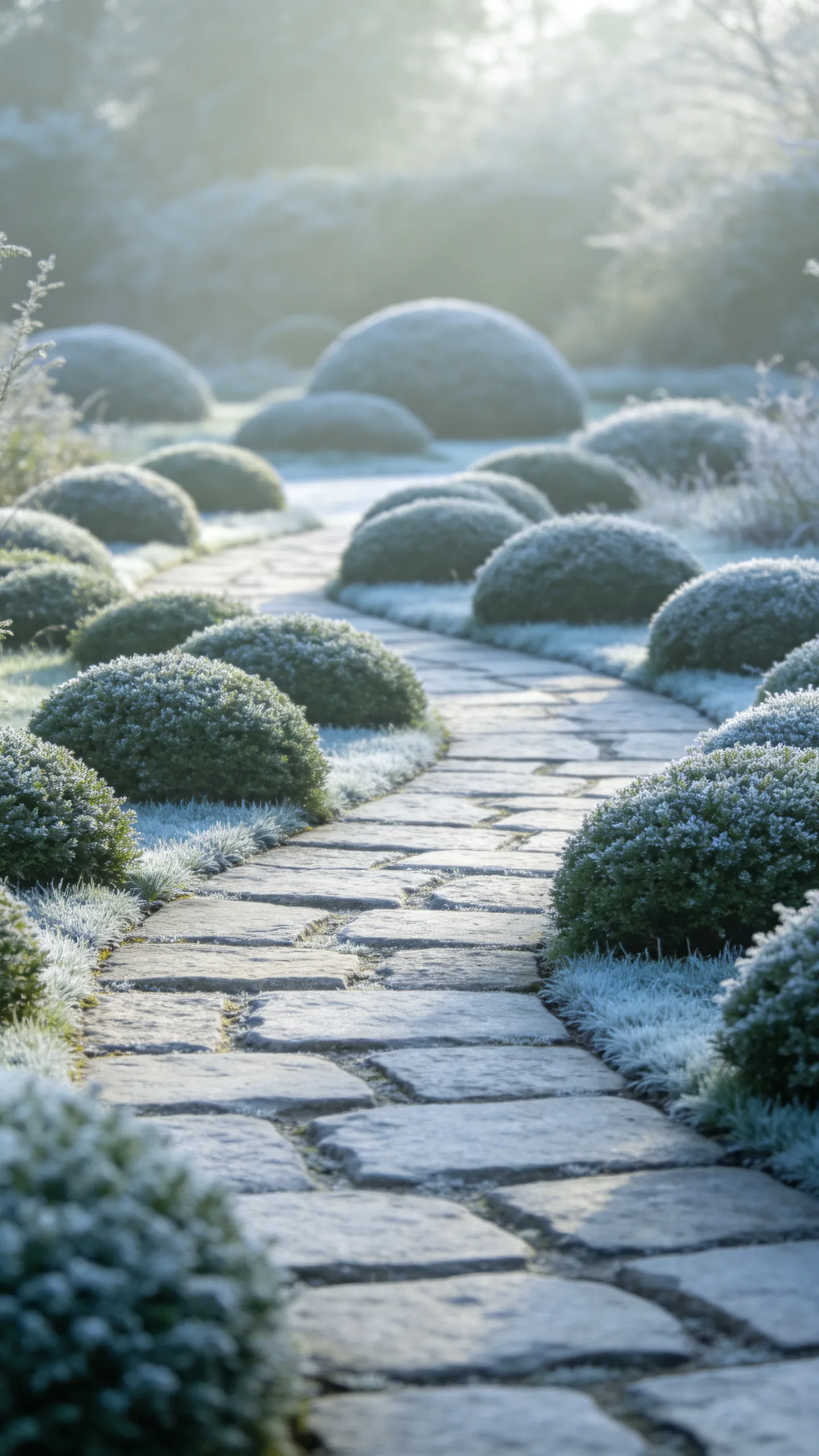
Low evergreen plants can define a walkway without making a small garden feel enclosed. Use compact boxwood alternatives, dwarf junipers, hebe in mild climates, or clipped germander where conditions allow.
Space plants according to their mature width rather than packing them tightly for an instant hedge. Repeating the same rounded form along the path creates rhythm, while gaps allow air circulation and make pruning easier.
8. Plant a Winter Container in Three Tiers
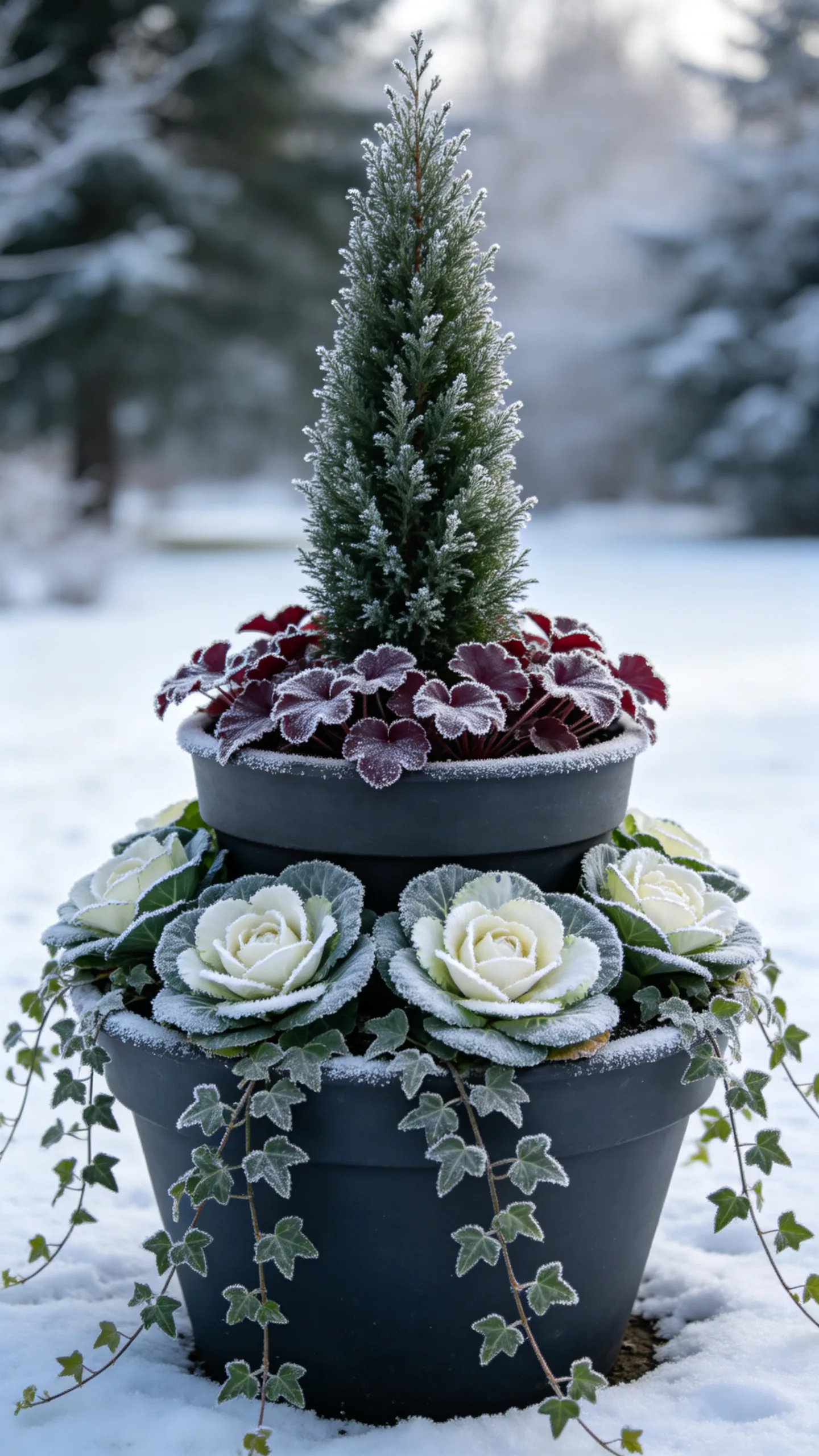
Apply the “thriller, filler, spiller” formula to a cold-season pot. Use a narrow conifer or upright holly as the central feature, surround it with small heucheras or ornamental cabbages, and let ivy or trailing evergreen ground cover soften the rim.
Choose plants with similar light and moisture requirements. If ornamental cabbage is used, expect it to perform best during cool weather rather than deep freezes, and replace it when temperatures or appearance decline.
9. Place White-Barked Trees Against Dark Evergreens
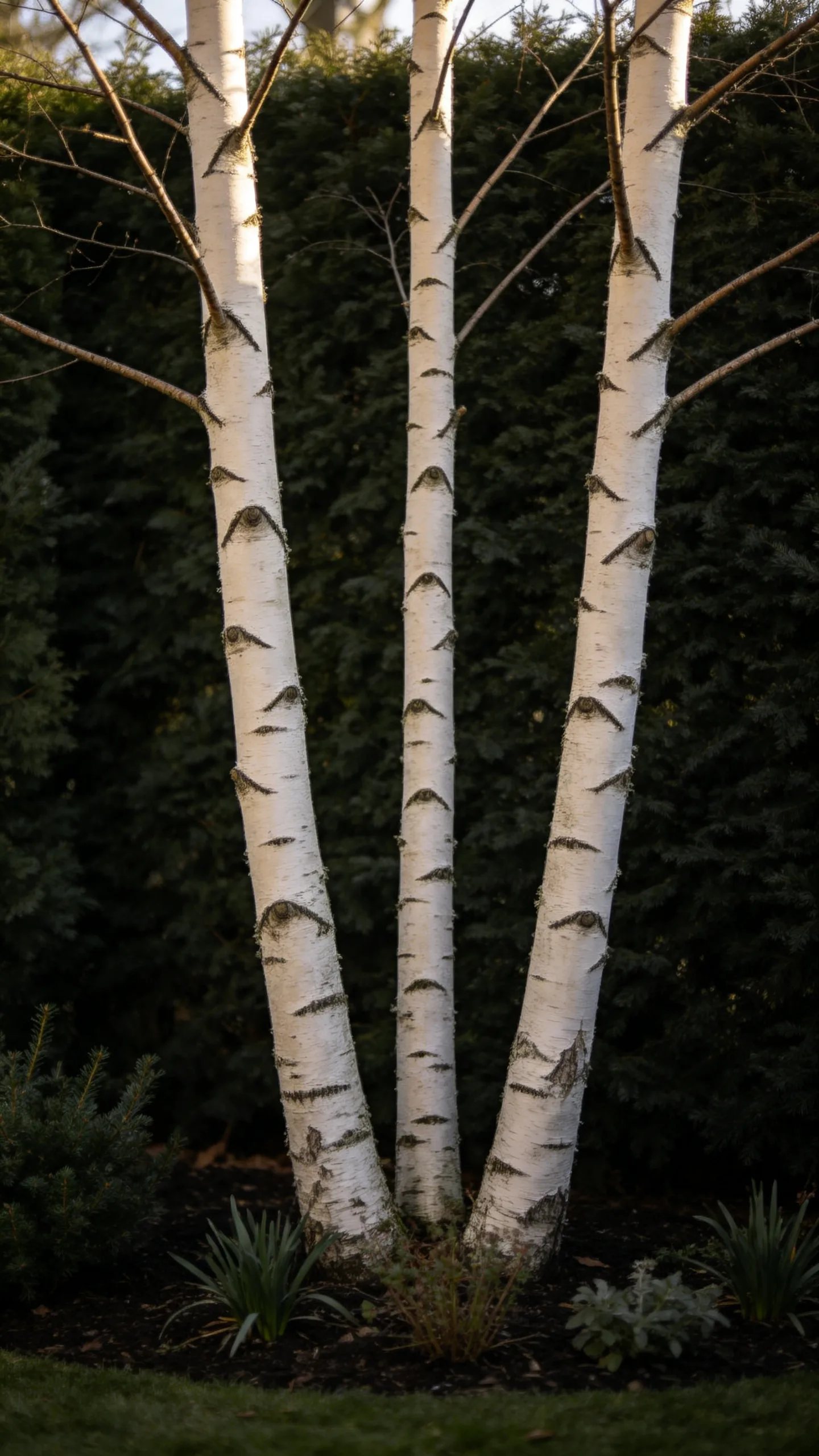
A white-barked birch or pale-barked maple stands out dramatically when viewed against a dark evergreen background. This pairing is especially effective at the far end of a garden, where the contrast draws the eye and creates a sense of depth.
Check whether the selected tree suits your soil, summer temperatures, and available root space. In a compact yard, choose a smaller cultivar or a multi-stem form with a mature canopy that will not crowd buildings or overhead lines.
10. Turn a Bare Fence Into an Evergreen Backdrop
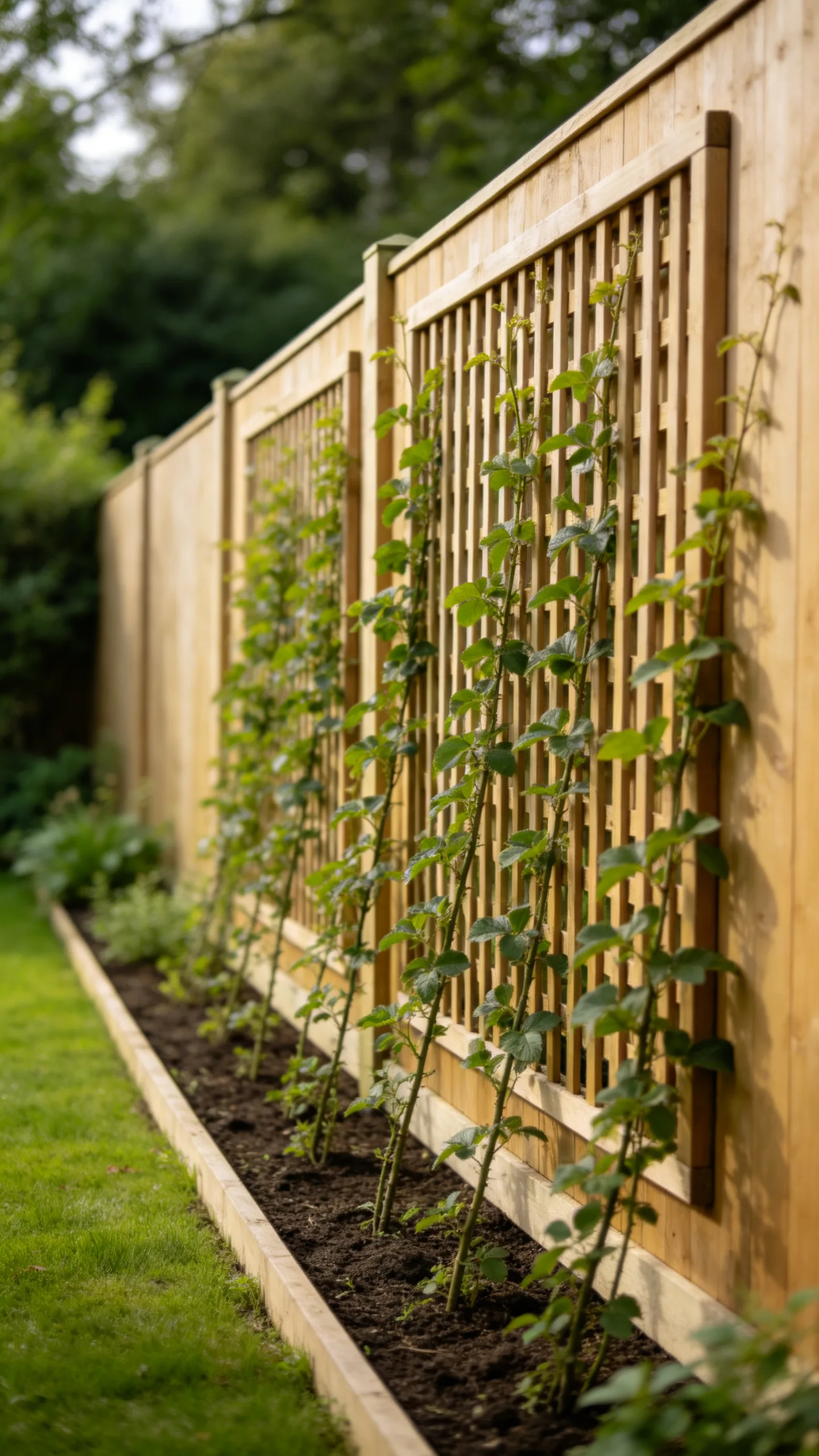
Cover a plain fence with evergreen climbers or a narrow planted screen. Evergreen clematis suits some mild regions, while star jasmine can retain foliage in suitable climates; in colder areas, a row of narrow junipers or arborvitae may be more dependable.
Install trellis panels slightly away from the fence to improve airflow for climbers. Before planting a hedge, measure the bed carefully and choose a cultivar whose mature width fits the space without constant shearing.
11. Arrange a Cluster of Frost-Resistant Pots
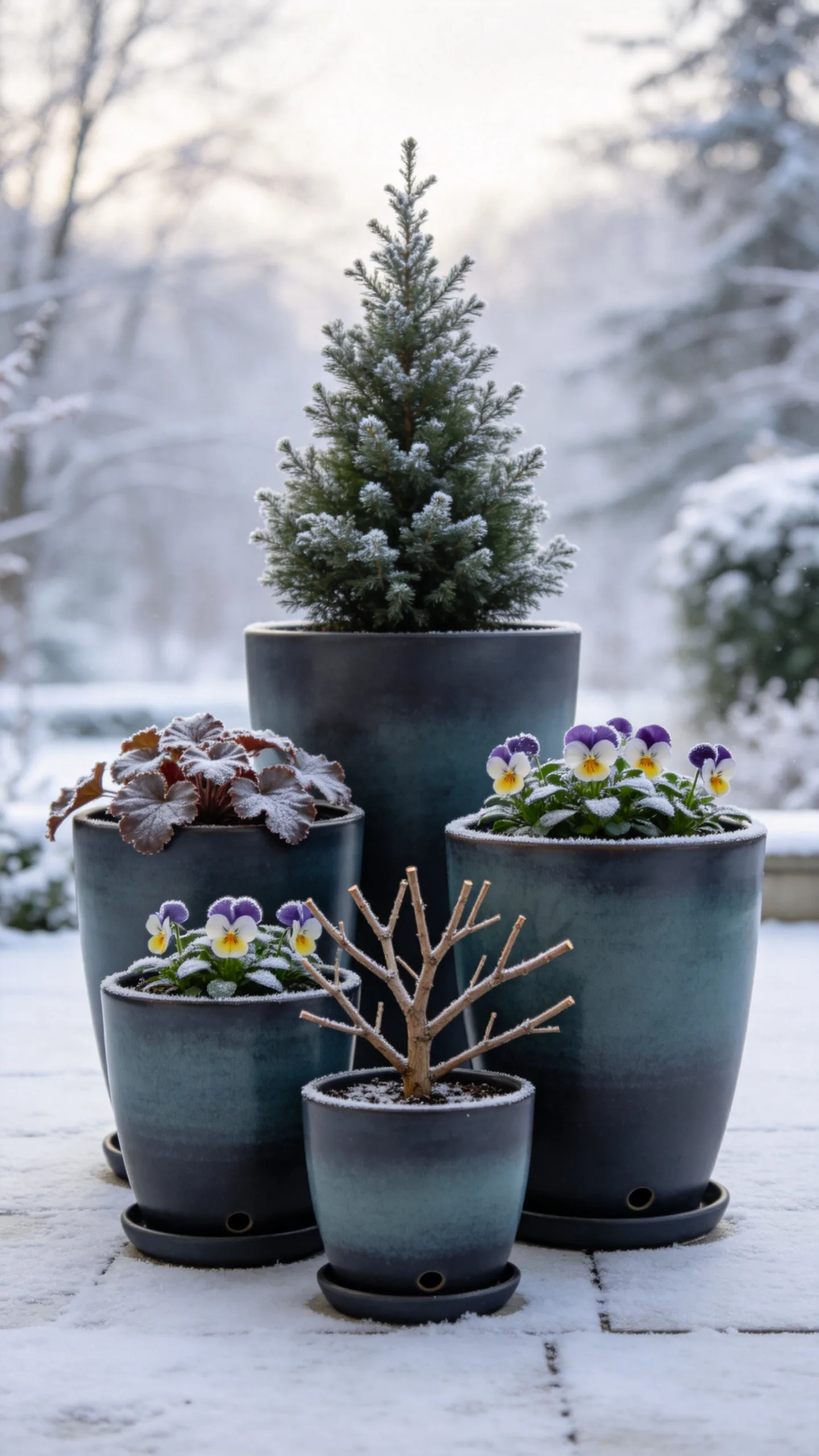
Group three or five outdoor pots in different heights rather than scattering individual containers around the patio. Repeating one material—such as dark glazed ceramic, fiberstone, or weathering steel—keeps the arrangement cohesive.
Plant the tallest pot with an evergreen focal plant and use smaller pots for winter pansies, hardy cyclamen where appropriate, heuchera, or cut-branch displays. Confirm that every container is rated for freezing conditions and raised slightly so drainage holes remain open.
12. Weave Winter Heather Through a Sunny Bed
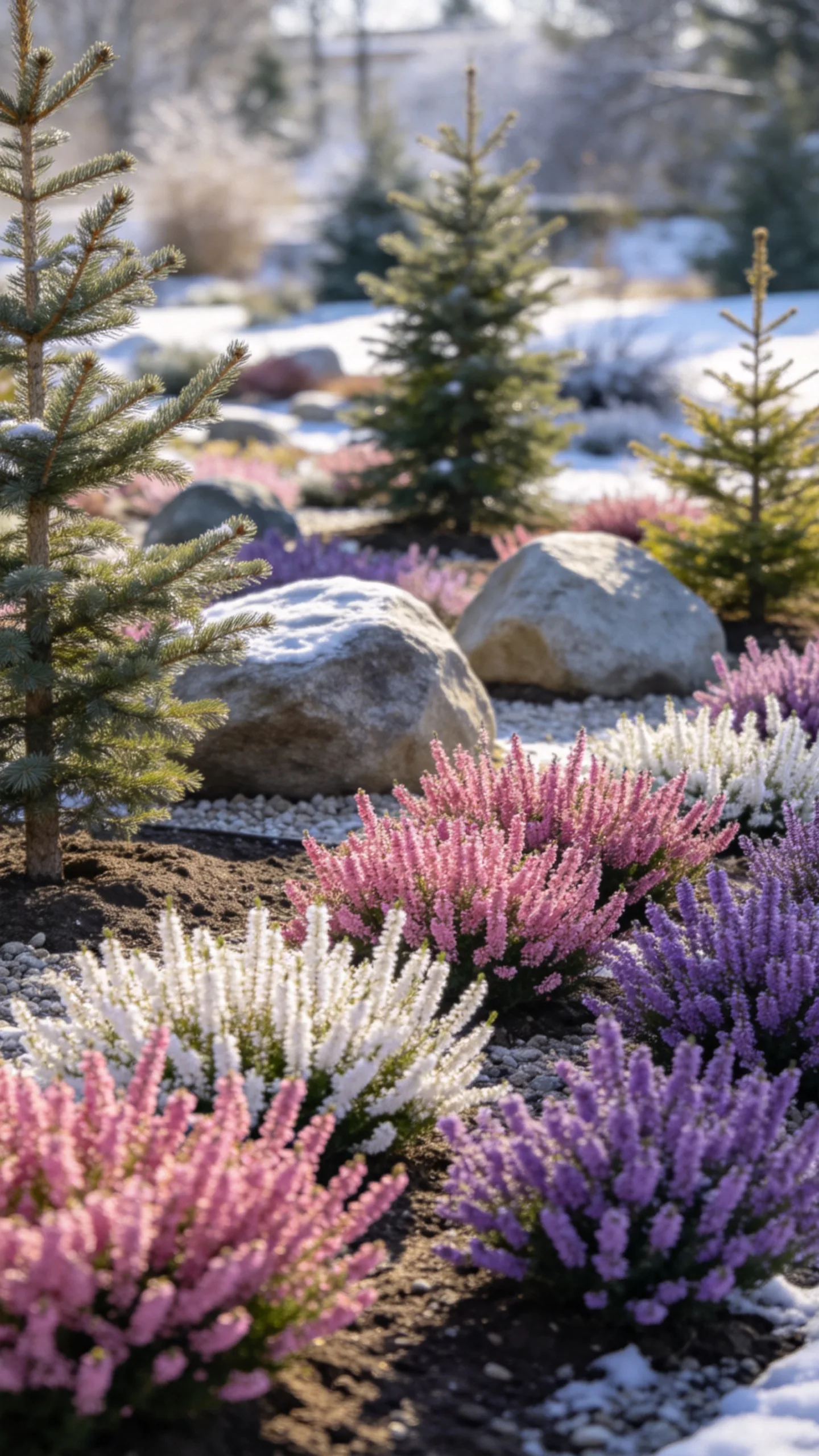
Winter-flowering heathers can form low carpets of pink, white, or purple around small conifers and rocks. They are particularly useful at the front of a border because their fine foliage and compact growth do not block taller plants.
Many heathers prefer full sun and sharply drained soil, though soil requirements vary by species. Match the plant to your soil pH rather than assuming every heather needs identical conditions, and avoid planting where winter water collects.
13. Make Colorful Bark the Main Feature
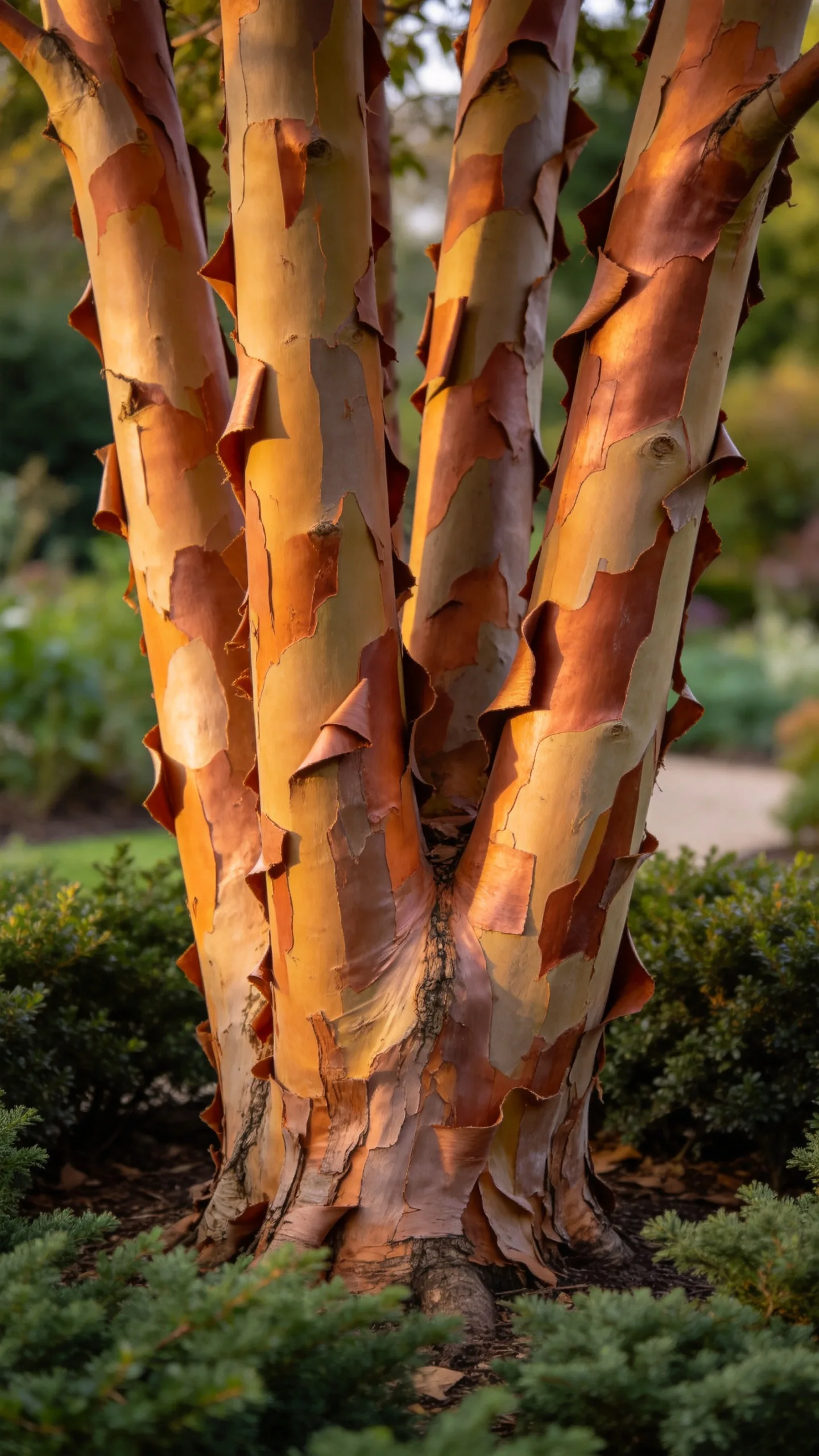
Peeling and patterned bark can replace flower color during the dormant season. Paperbark maple, lacebark pine, river birch, and some crape myrtles offer distinctive trunks, but their climate tolerance and mature size differ considerably.
Position a bark-feature plant where it can be seen from a window, seating area, or frequently used path. Keep dense shrubs away from the lower trunk so the bark remains visible, and use low evergreen ground cover to frame it.
14. Plant a Narrow Evergreen Privacy Screen
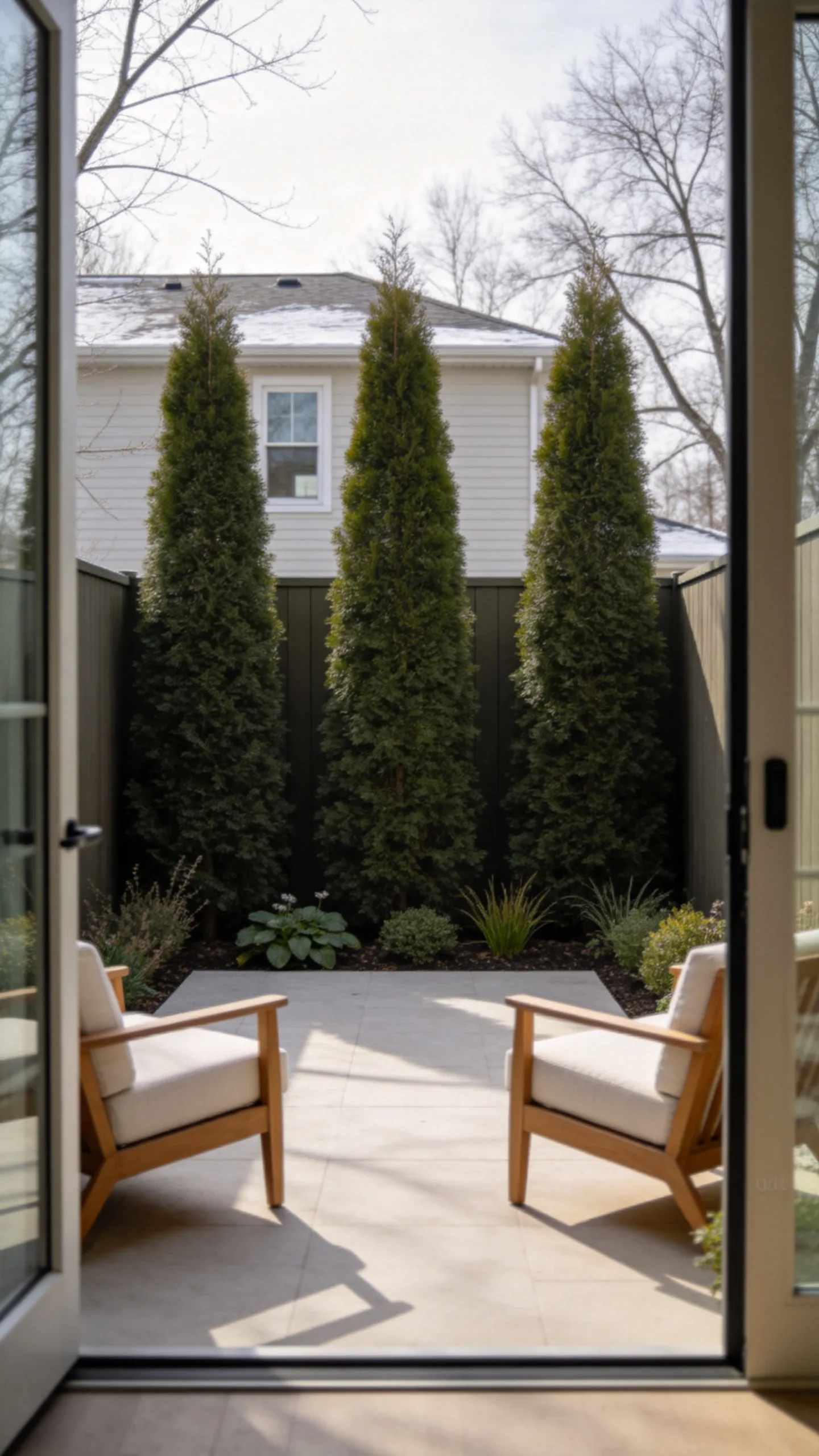
For a small yard, choose upright evergreens that add privacy without consuming the entire border. Narrow cultivars of juniper, yew, holly, or arborvitae can screen a neighboring window, utility area, or exposed seating space.
Instead of automatically planting a full row, place evergreens only where sightlines need blocking. This saves bed space, improves airflow, and leaves room for deciduous shrubs or seasonal flowers between the structural plants.
15. Add Winter Pansies Around Evergreen Shrubs
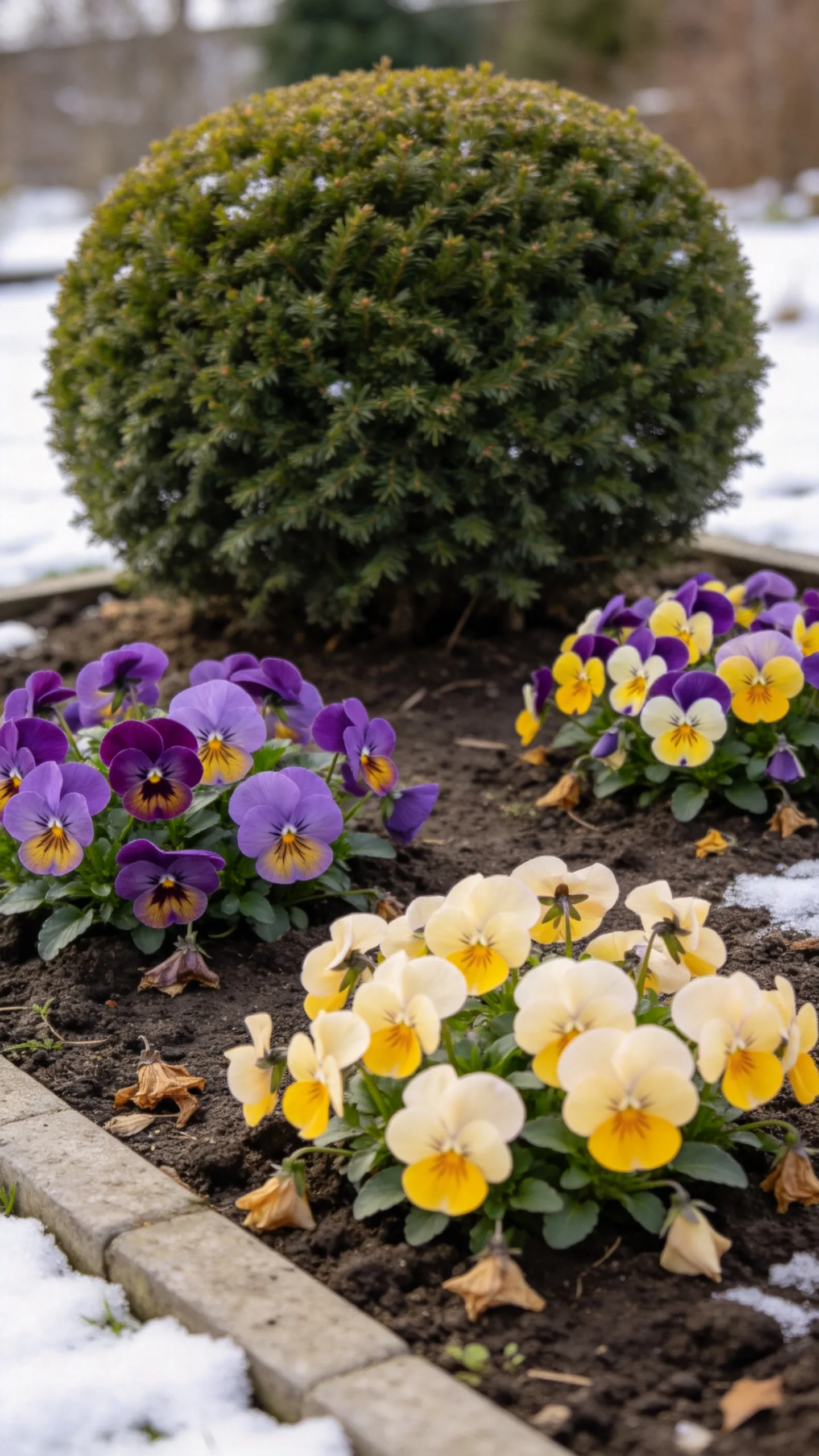
Winter pansies and violas provide low-growing color around clipped evergreens in regions with relatively mild winters. Plant them in small drifts rather than single scattered plants so the color remains visible from indoors.
Use well-drained soil and remove faded flowers during workable weather. In colder climates, treat pansies as a late-autumn display or use removable nursery pots that can be replaced after severe freezes.
16. Create a Blue-and-Silver Winter Palette
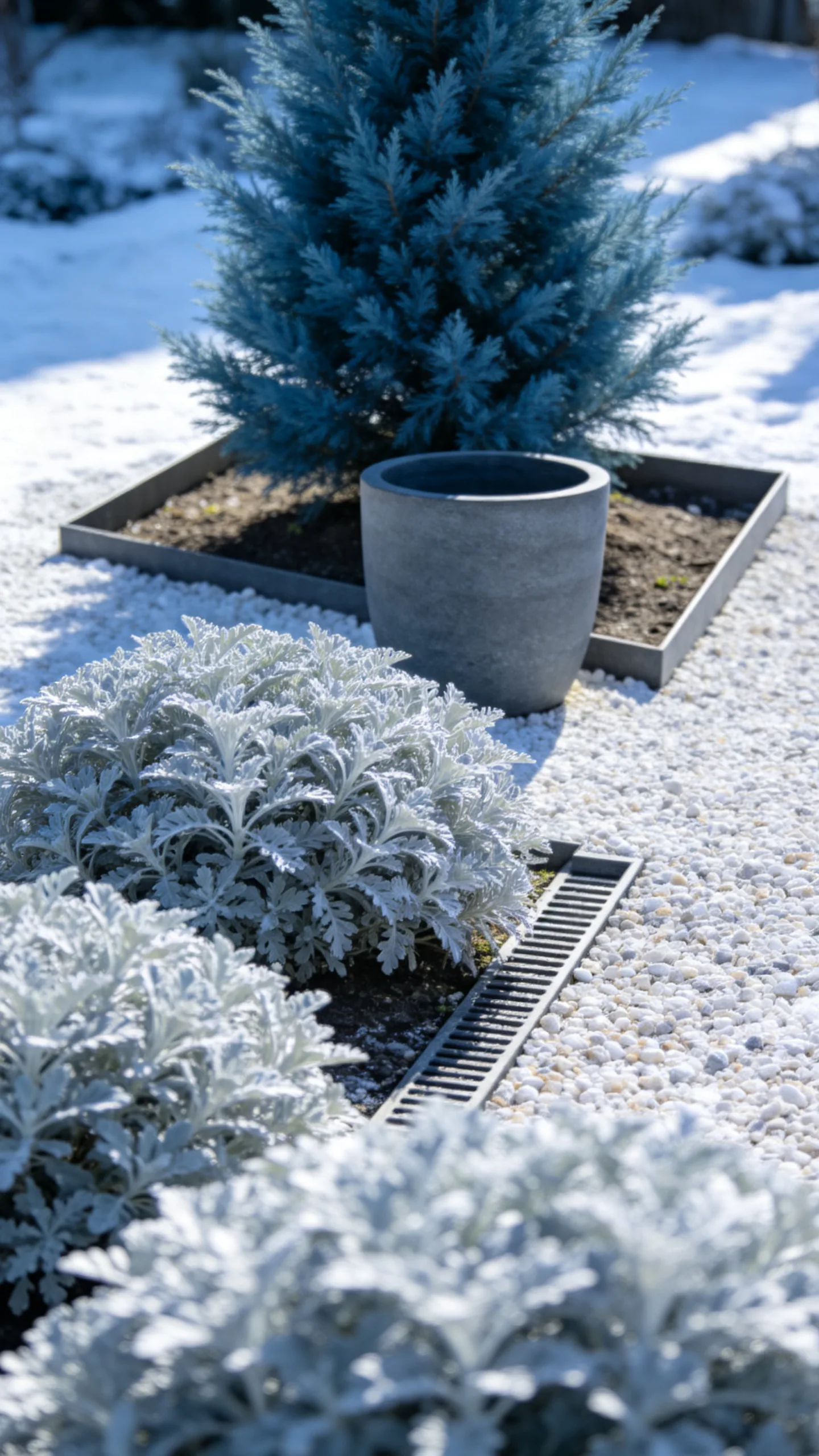
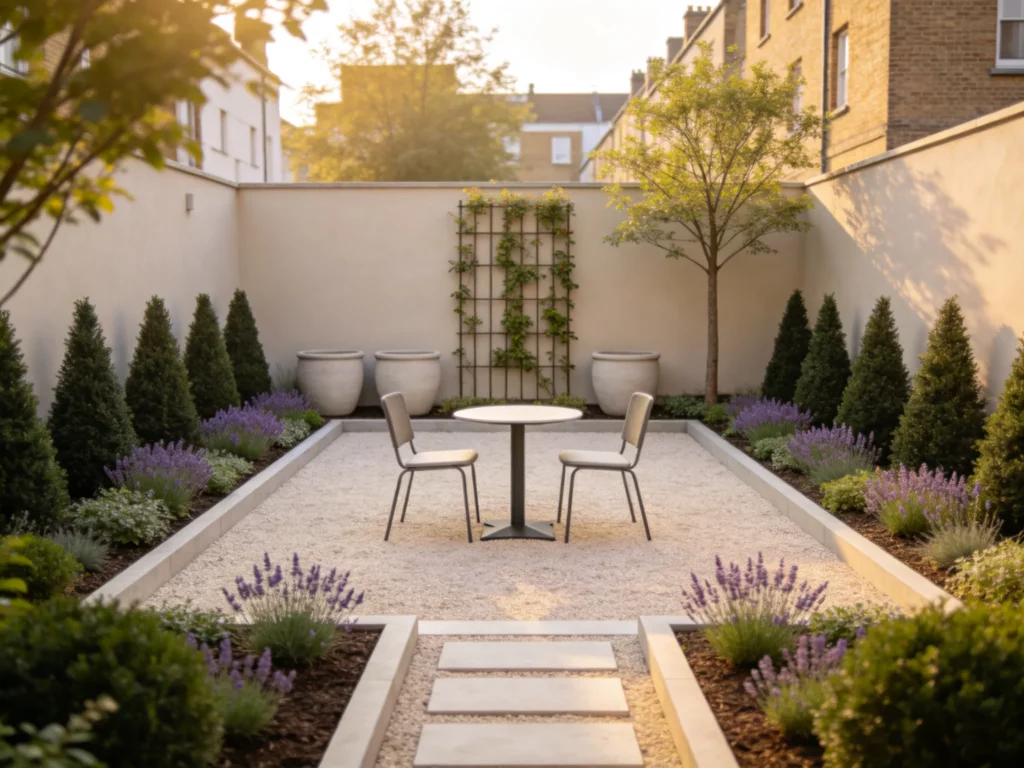
Combine blue-green conifers with silver foliage and cool-toned containers for a restrained winter scheme. Blue spruce cultivars, blue junipers, sage, lavender, santolina, and silver-leaved helichrysum may contribute to the palette, depending on climate and drainage.
Place this combination in a sunny area where silver foliage is less likely to become sparse. Many gray-leaved plants dislike saturated winter soil, so add grit where appropriate or grow them in raised beds and well-drained pots.
17. Top Containers With Moss, Gravel, or Pinecones
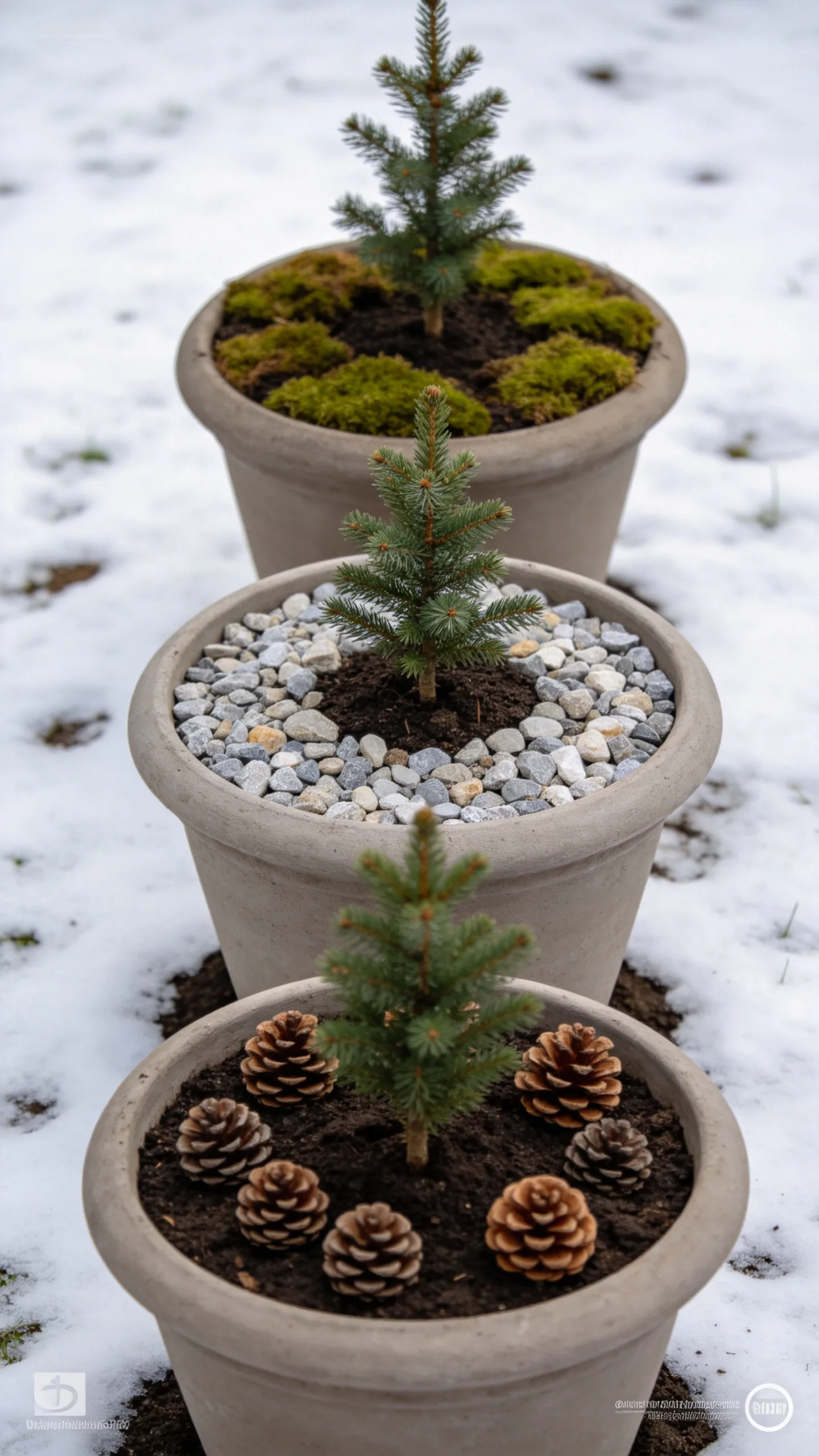
A decorative soil covering makes winter containers look intentional while plants are growing slowly. Use preserved moss for sheltered displays, washed gravel for a modern look, or locally gathered pinecones where collecting is permitted.
Keep mulch slightly away from plant stems and do not seal the soil beneath a thick, water-repellent layer. Check moisture below the surface periodically because evergreen plants continue losing water during sunny or windy winter weather.
18. Wrap a Bench With Evergreen Planting
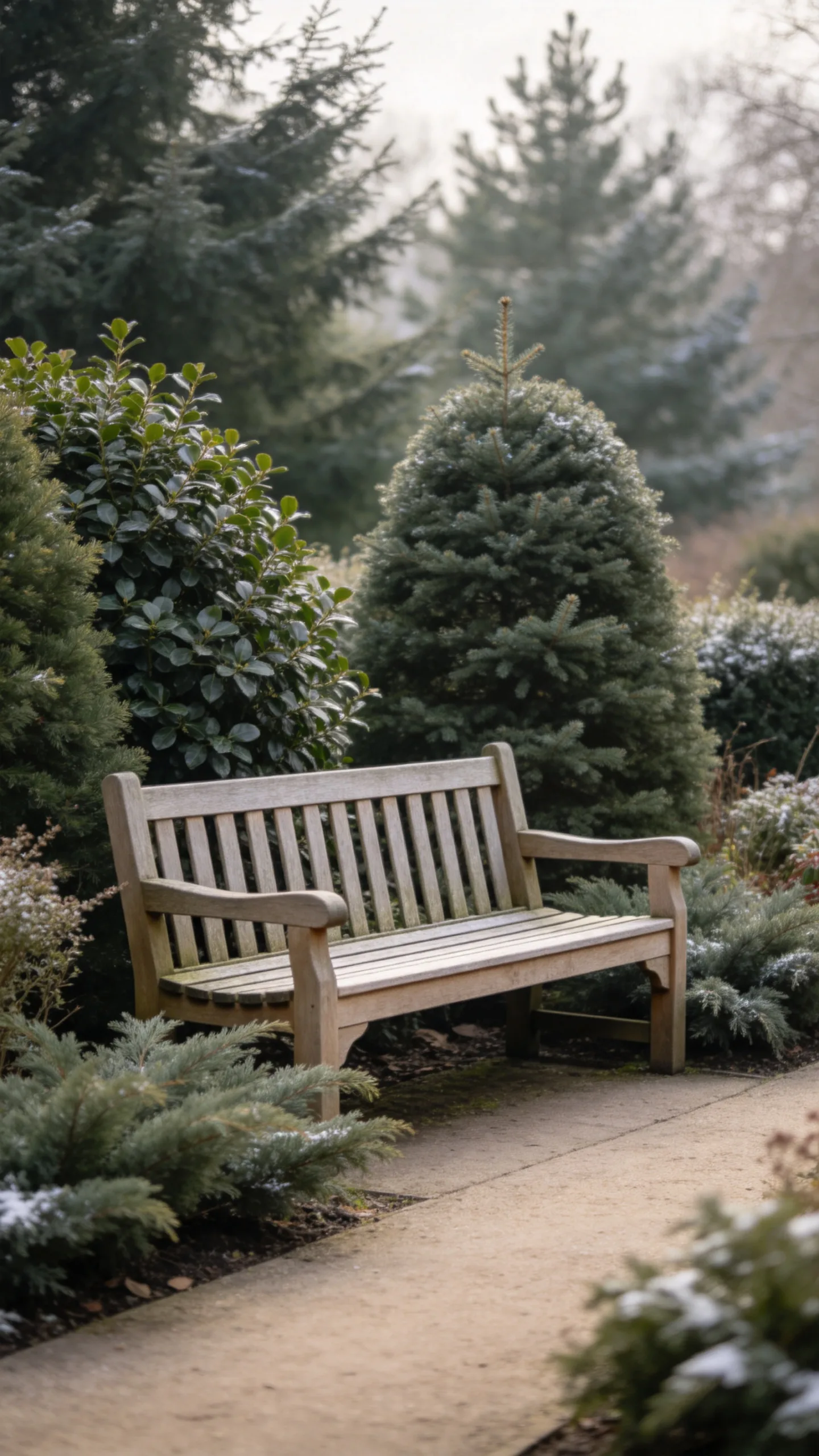
Place a garden bench in front of a mixed evergreen border to create a destination even when the weather is too cold for long outdoor stays. Low plants near the seat preserve legroom, while taller shrubs behind it provide enclosure and shelter from light winds.
Use plants without sharp needles or thorns beside armrests and walking routes. A compact pine, rounded holly, and spreading juniper can create layered structure without crowding the sitting area if their mature dimensions are planned first.
19. Highlight Evergreen Shapes With Outdoor Lighting
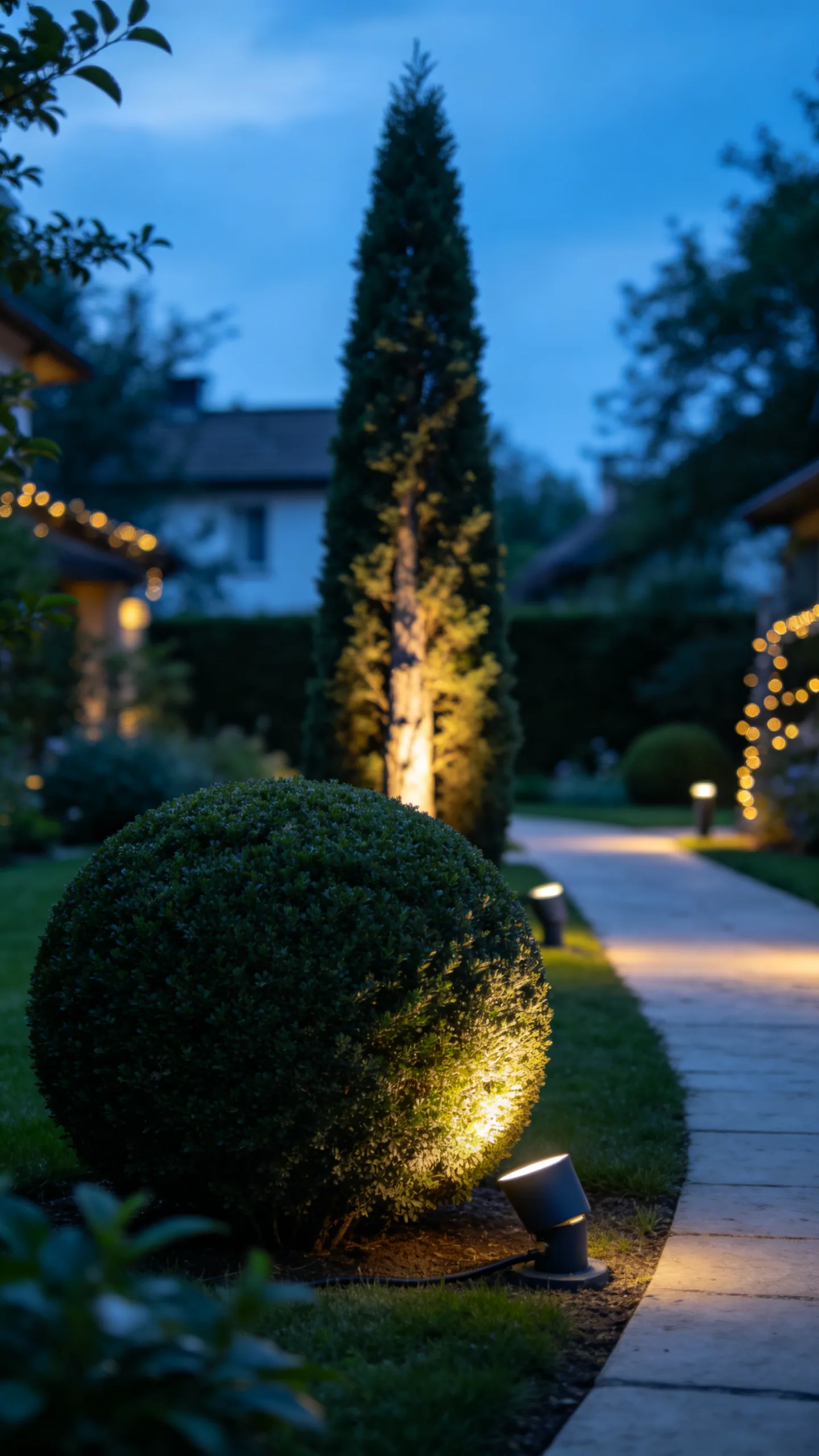
Soft lighting can emphasize clipped spheres, upright conifers, and textured foliage during short winter days. Aim a low-voltage spotlight upward through a multi-stem shrub, or place a shielded fixture in front of a sculptural evergreen.
Use outdoor-rated fixtures and keep cables away from paths, pruning zones, and standing water. Warm, low-intensity light generally reveals foliage texture better than harsh floodlighting and is less disruptive to neighbors and nocturnal wildlife.
20. Build a Miniature Conifer Trough Garden
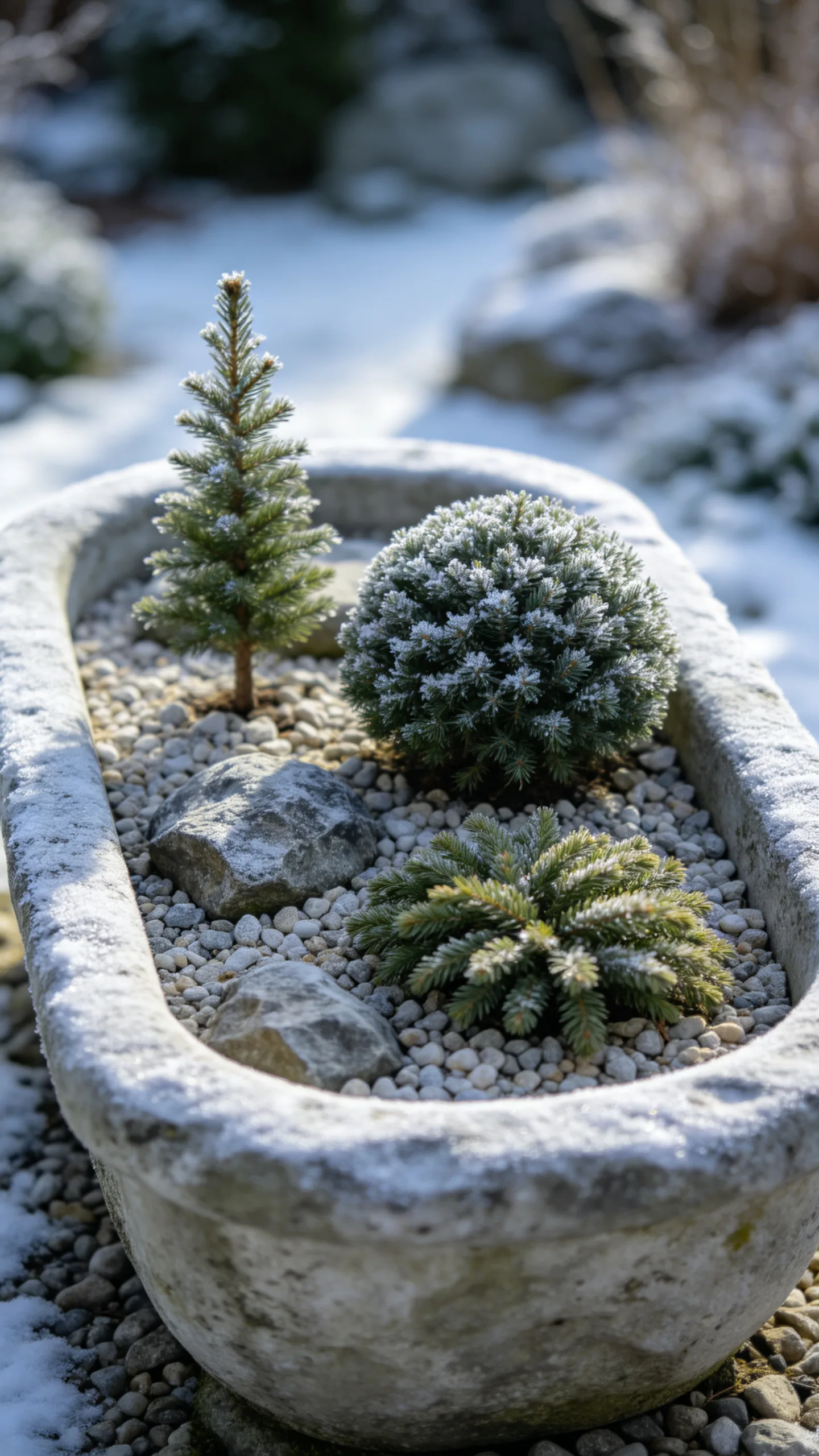
A stone or frost-resistant trough can hold several genuinely miniature conifers in a small footprint. Combine one upright form, one rounded plant, and one low spreader, then add gravel and a few weathered rocks.
Verify growth rates carefully because “dwarf” does not always mean miniature. Use a gritty, free-draining potting mix, provide unobstructed drainage, and plan to move or replace plants if they eventually outgrow the composition.
21. Plant Ornamental Grasses Among Evergreens
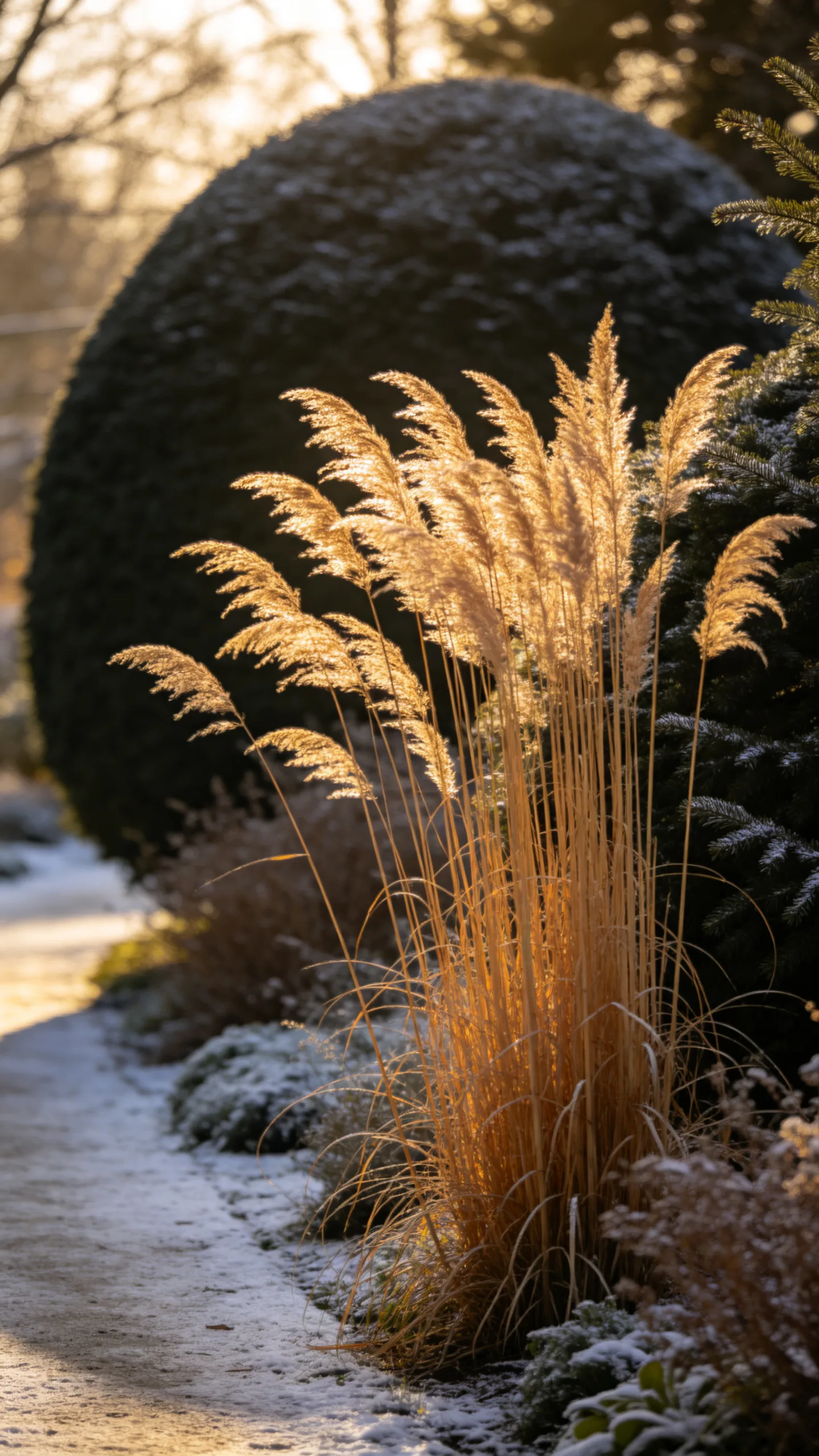
Leave selected ornamental grasses standing through winter so their buff seed heads contrast with dark foliage. Switchgrass, little bluestem, feather reed grass, and sedges can provide movement and vertical texture when chosen for local conditions.
Place grasses where they will not flop across paths under snow or rain. Cut deciduous grasses back before new spring growth begins, while evergreen or semi-evergreen sedges usually need only gentle combing or selective trimming.
22. Use Burgundy Foliage for Deep Winter Color
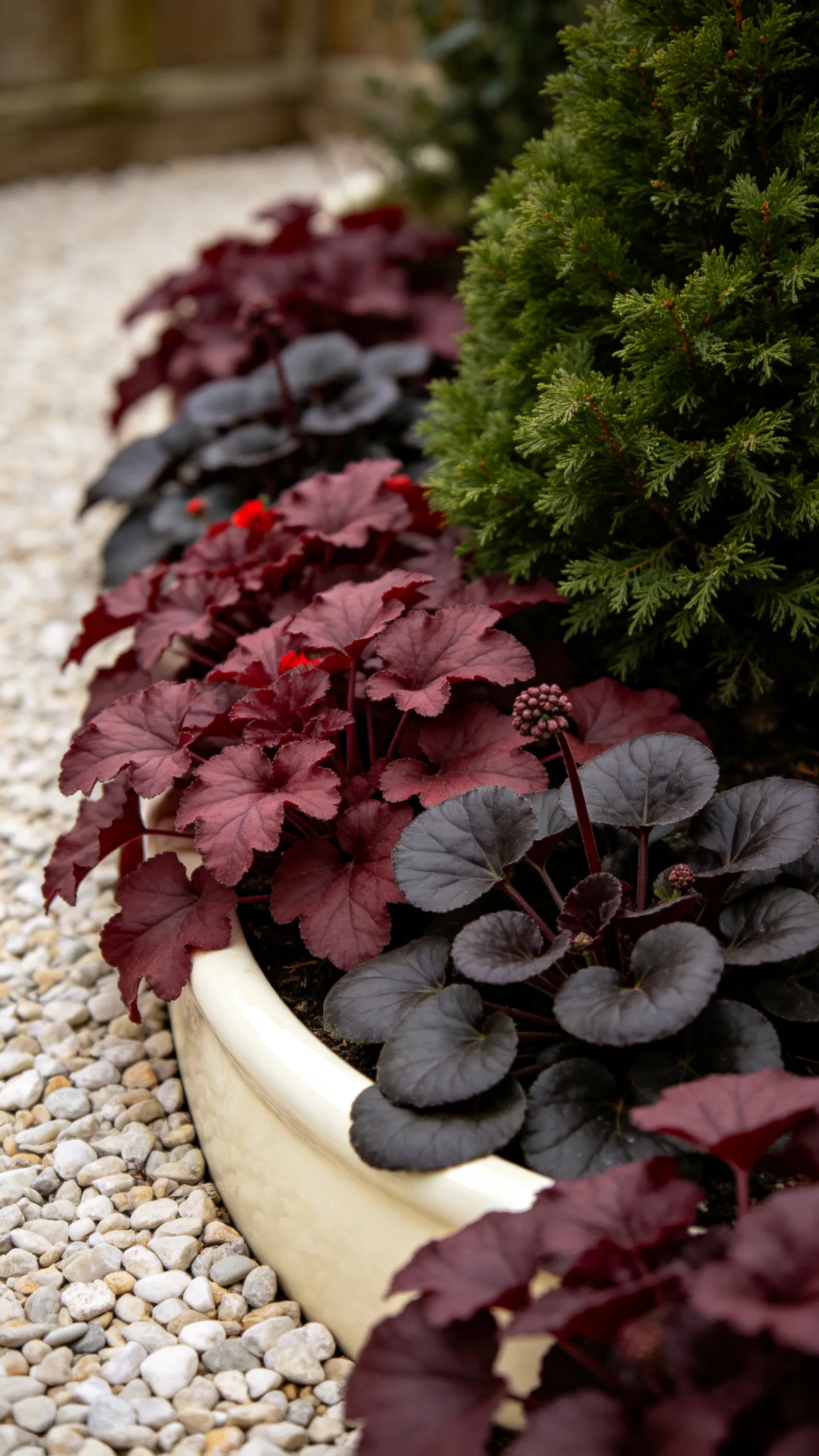
Burgundy foliage adds warmth without relying on flowers. Heuchera, certain nandina cultivars where noninvasive and locally appropriate, dark-leaved bergenia, and bronze winter foliage can work beside green conifers.
Use burgundy plants near pale gravel, light walls, or glazed cream pots so their color does not disappear in shade. Check winter hardiness and exposure requirements, particularly for container-grown heucheras and plants prone to damage from cold wind.
23. Mark Garden Entrances With Evergreen Arches
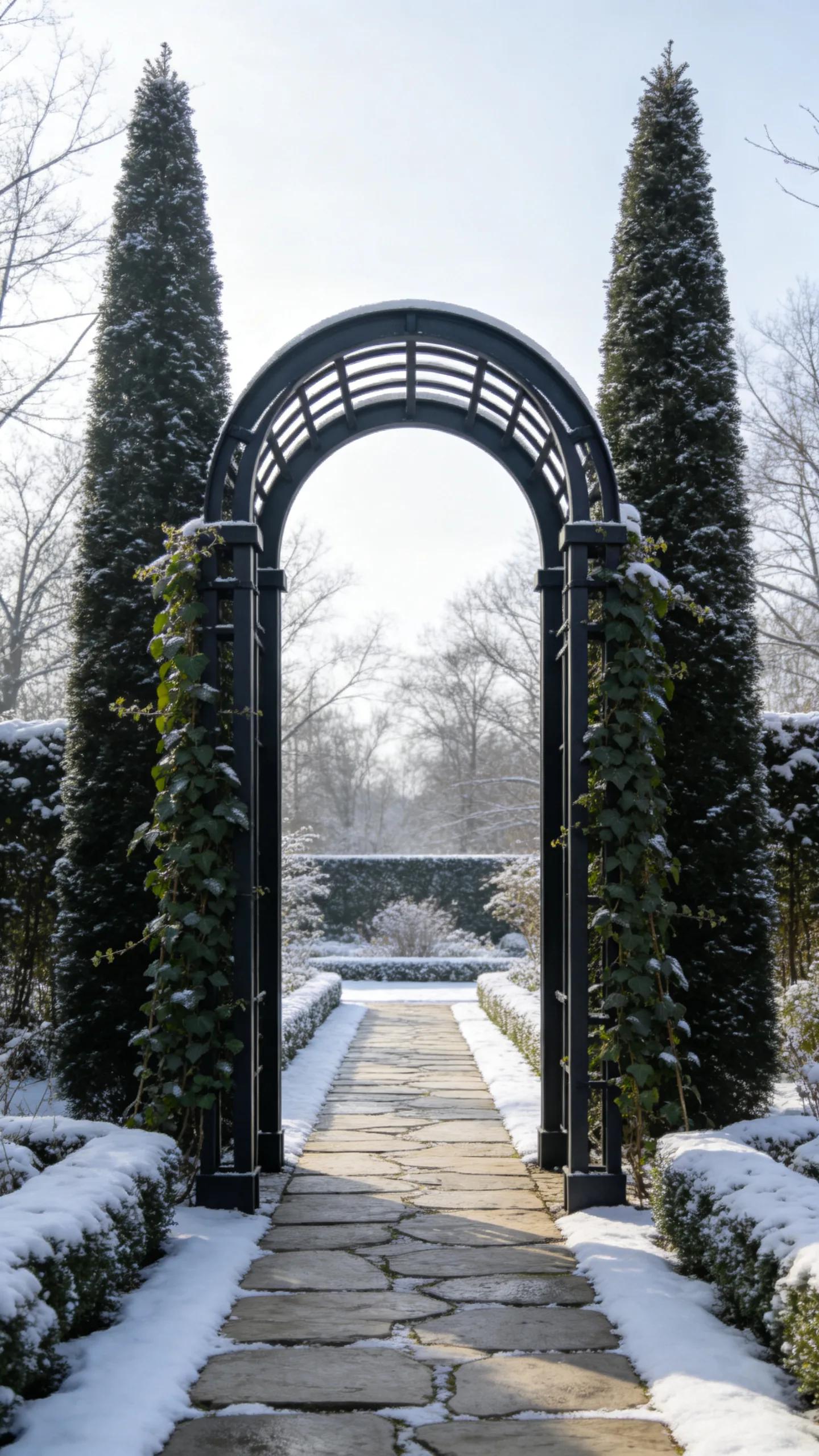
An arbor or simple metal arch can give a winter garden a clear entrance. Train an evergreen climber over it in a suitable climate, or frame the structure with narrow conifers and use a deciduous climber whose stems remain attractive in winter.
Ensure the opening is wide enough for comfortable access after plants mature. Secure climbing stems with soft ties, prune away growth that catches clothing, and select a support strong enough for wet foliage, wind, and possible snow loads.
24. Design a Winter View From an Indoor Window
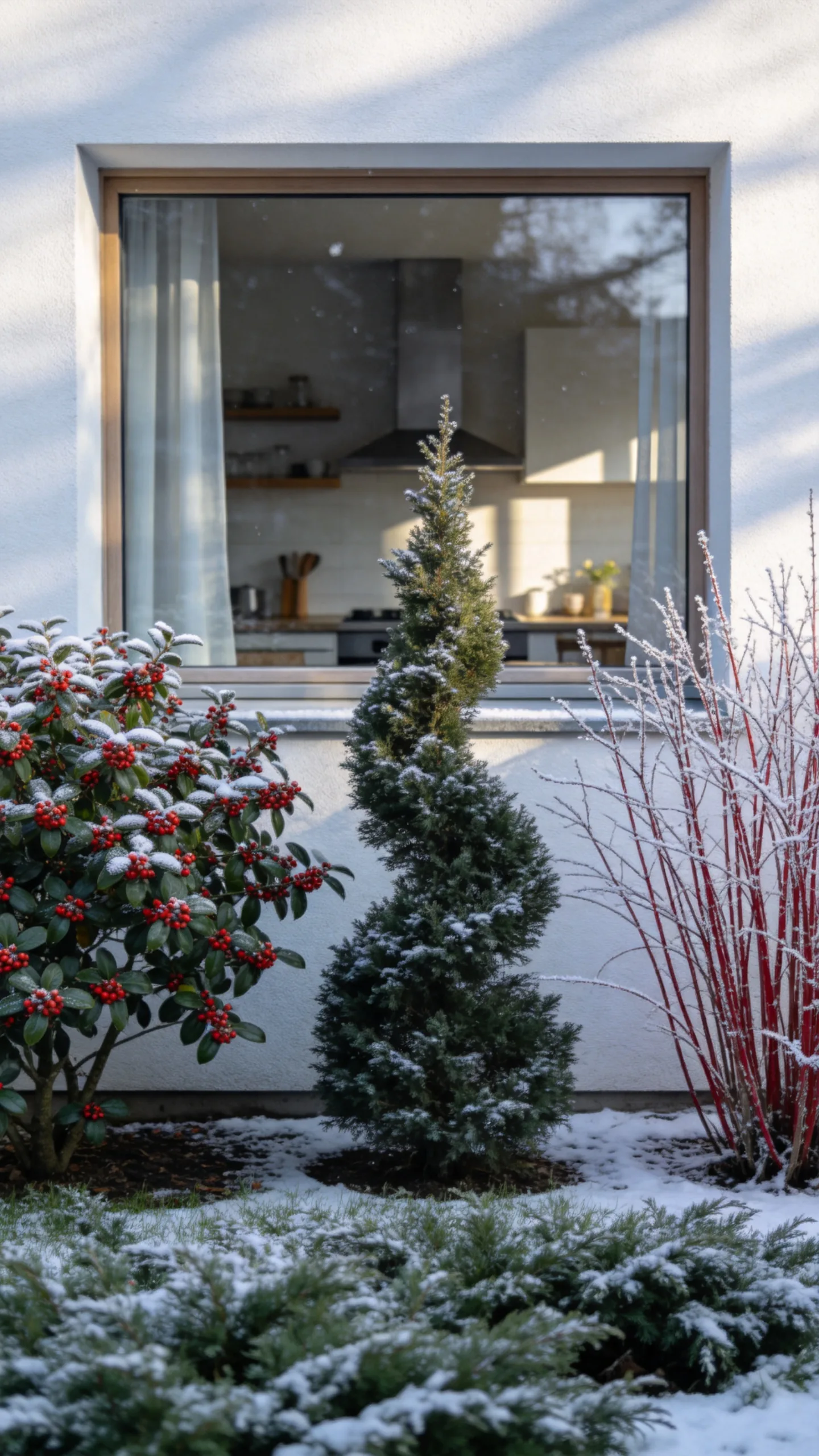
Plan one concentrated composition where it can be seen from a kitchen, dining room, or home office window. Place a sculptural evergreen slightly off-center, add a berry-bearing shrub or colorful stems nearby, and finish the foreground with low ground cover.
Check the view from indoors before digging, since window frames and furniture can change the sightline. This approach focuses the planting budget on a scene that will be seen regularly instead of spreading winter-interest plants too thinly across the yard.
25. Combine Evergreens With Removable Seasonal Accents
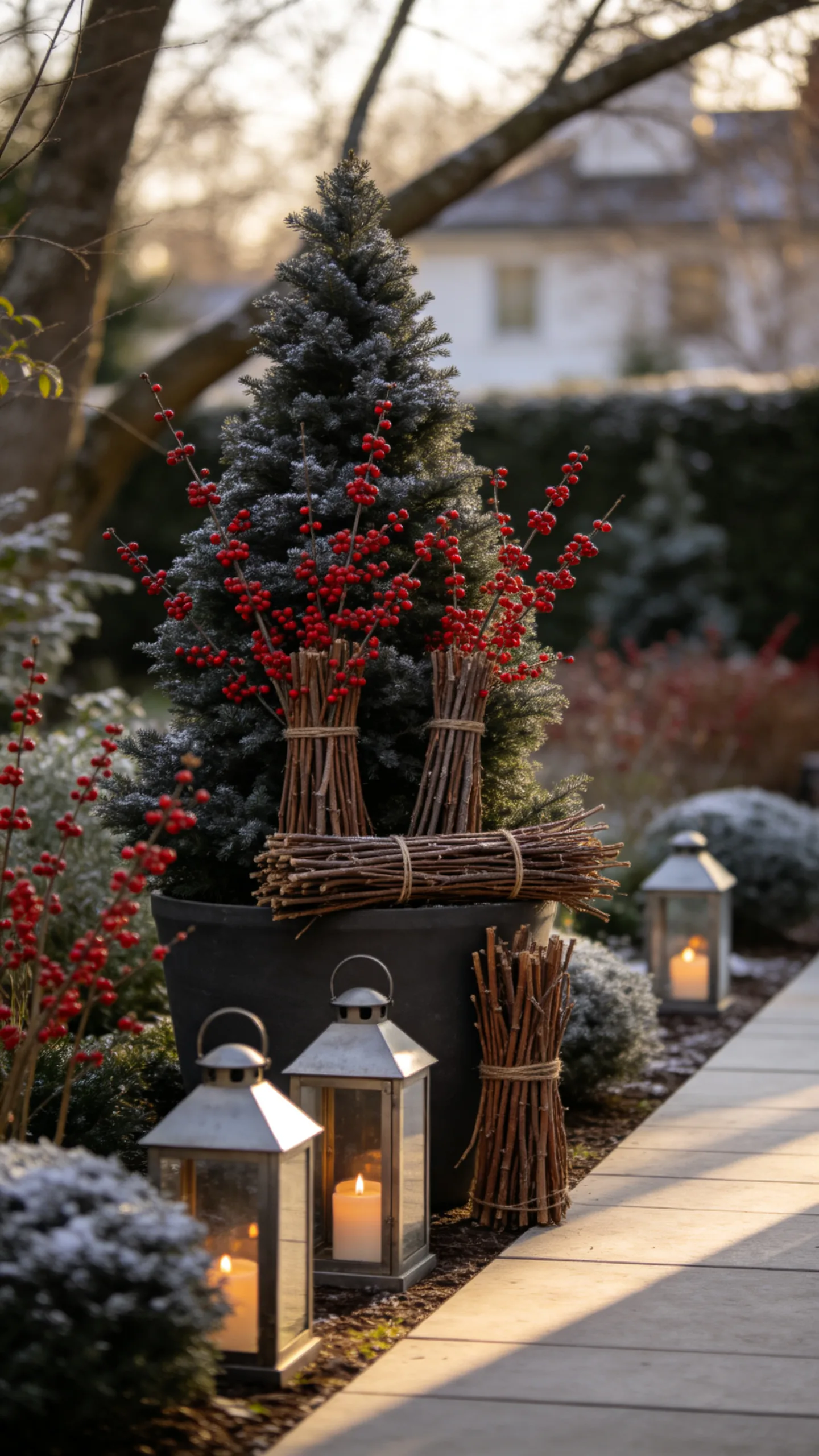
Build the permanent design around dependable evergreen plants, then add accents that can change throughout the season. Insert cut branches, berry stems, lanterns, ribbons, painted twig bundles, or weather-resistant ornaments into containers and bare areas.
Limit the accents to two or three coordinated colors so the garden remains cohesive. Remove natural materials as they deteriorate, secure lightweight decorations against wind, and keep candles or heat sources away from dry foliage and mulch.