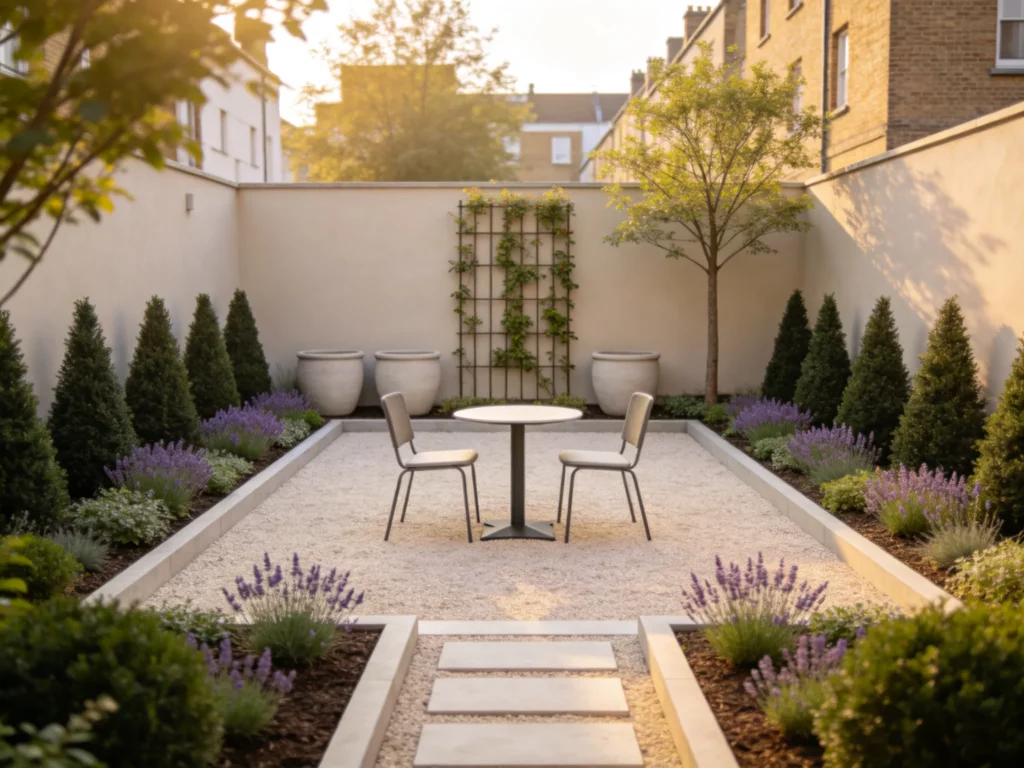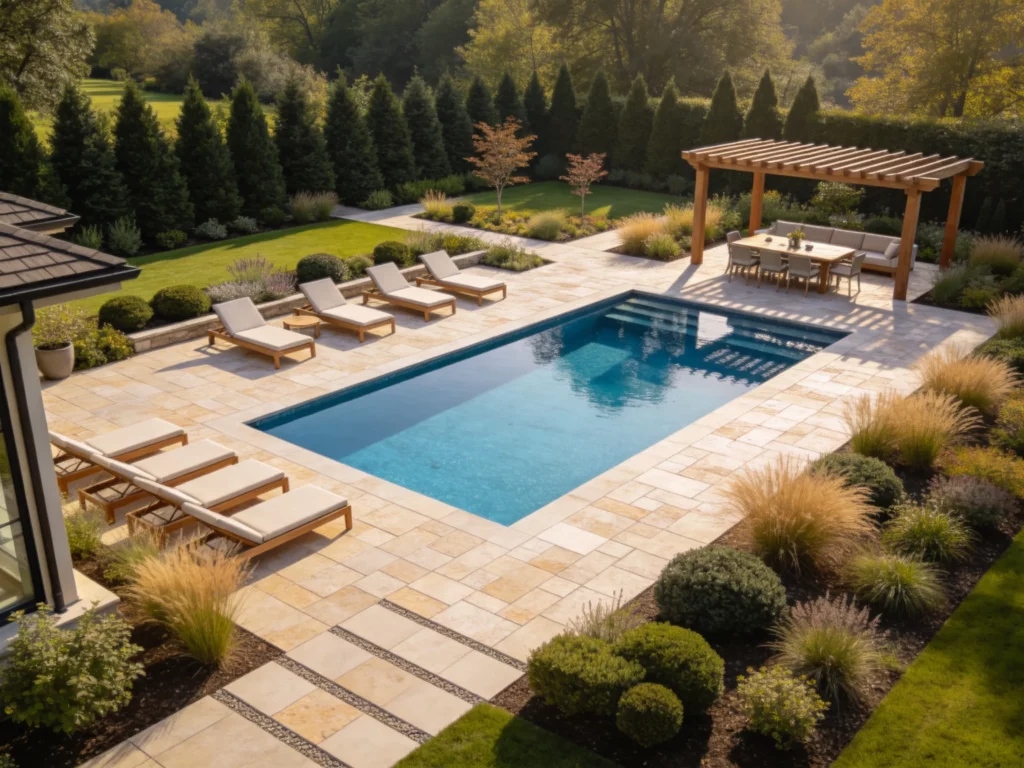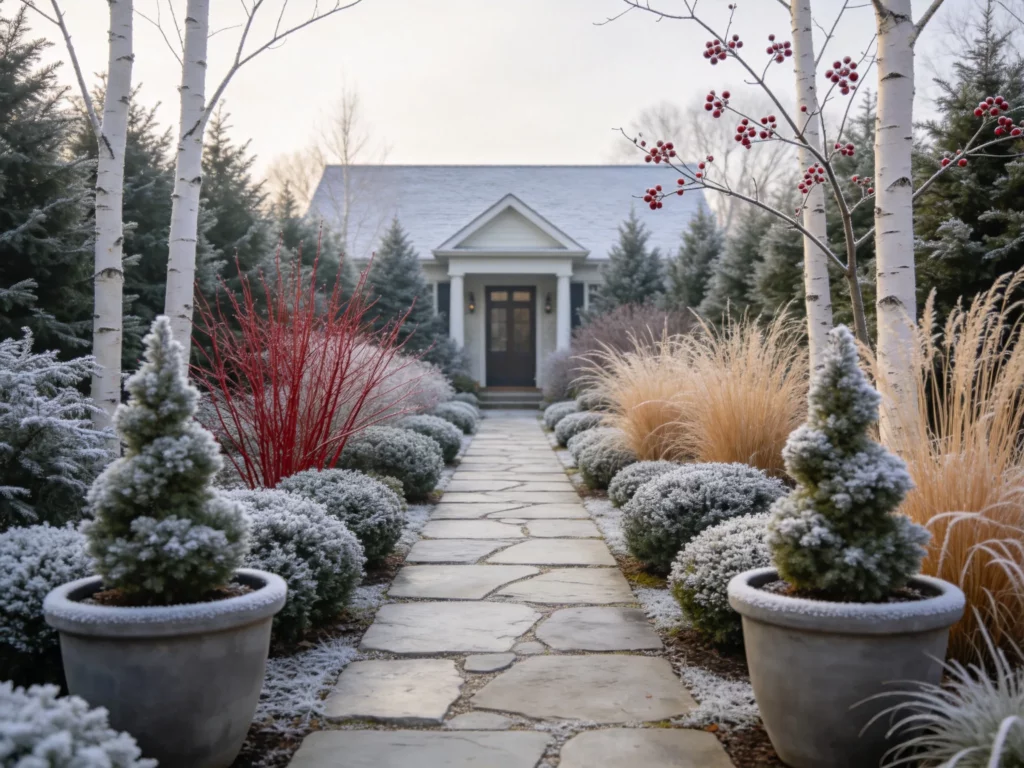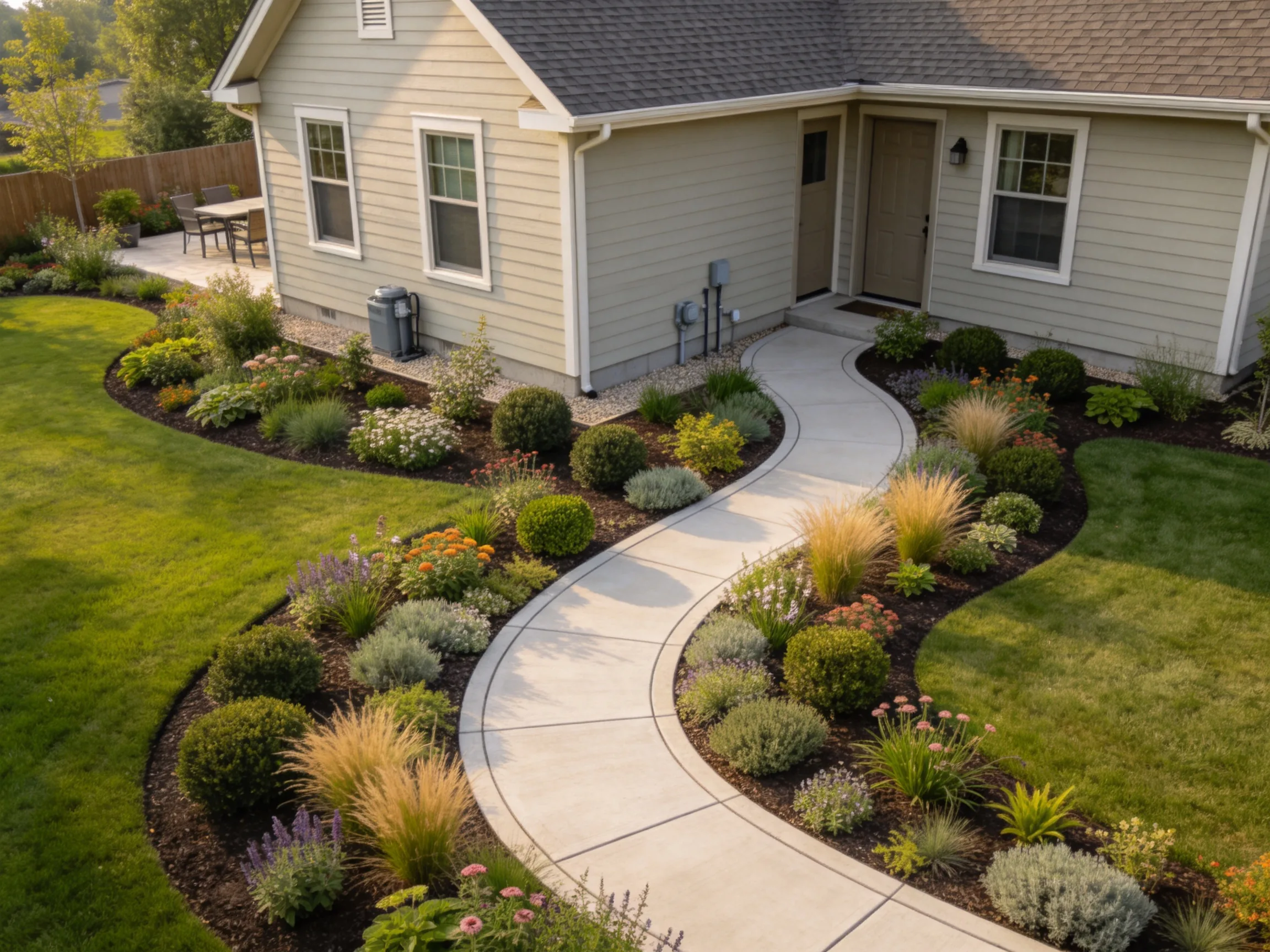
A thoughtful wrap around garden design can connect the front yard, side passages, and backyard into one continuous outdoor experience. The best layouts pair practical pathways with defined planting borders, allowing you to reach gates, utilities, patios, and garden beds without wasting narrow spaces. These ideas combine specific path materials, edging styles, and plant choices that can be adjusted for your home’s light, drainage, and available planting width.
1. Pea Gravel Path With Steel-Edged Borders
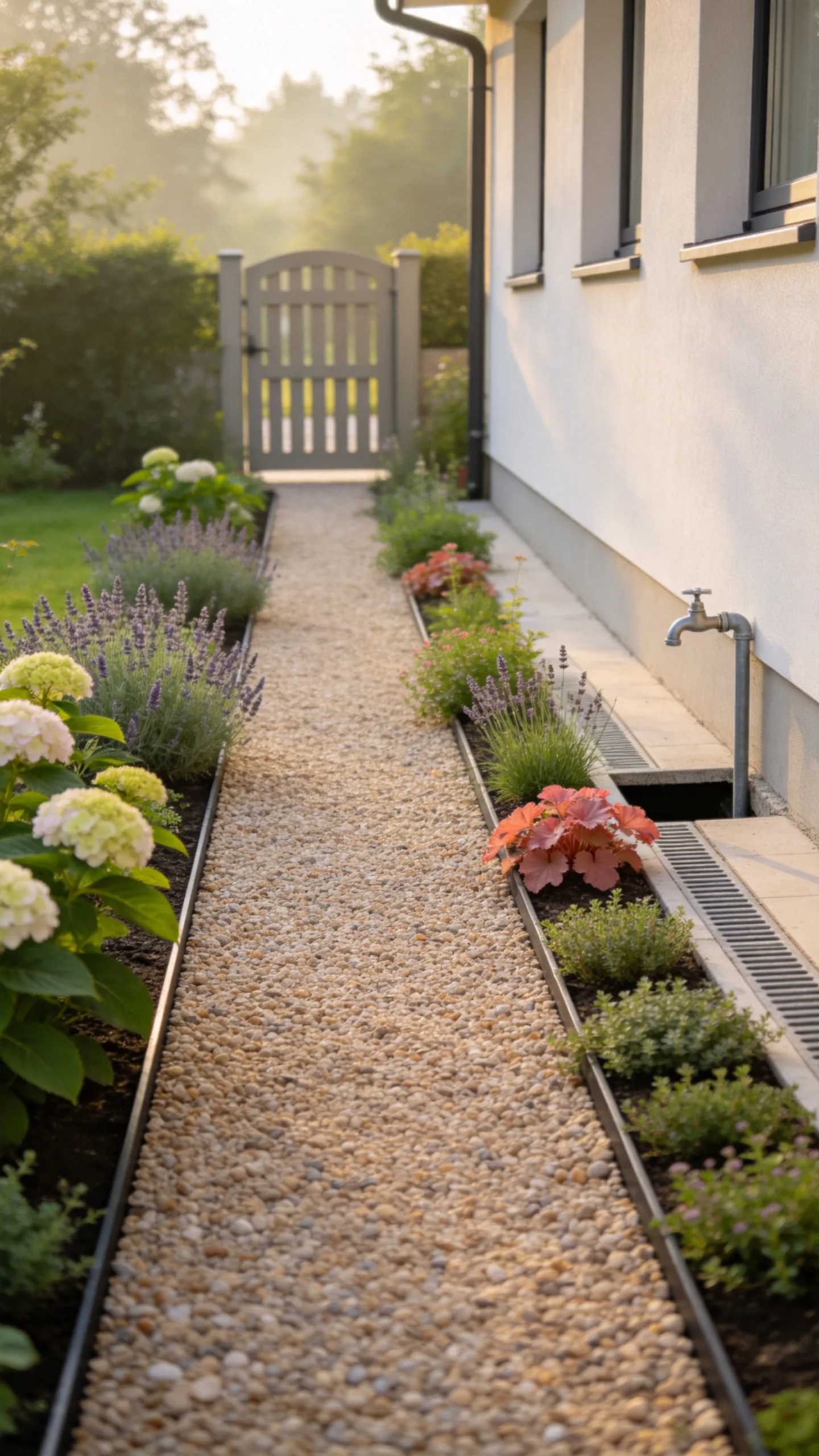
Create a continuous pea gravel path that follows the outline of the house, widening near doors, gates, and seating areas. A finished width of 3 to 4 feet is comfortable for everyday walking, while compacted crushed stone beneath the gravel helps keep the surface stable. Install metal edging along both sides to stop gravel from spreading into beds or lawn.
Use the outer edge for layered planting, with compact shrubs at the back and low perennials near the path. Dwarf hydrangeas, catmint, coral bells, and creeping thyme can create a relaxed border, provided their light and moisture needs match the site. Keep soil and mulch below siding and leave access around vents, meters, and exterior faucets.
2. Shaded Stepping-Stone Side-Yard Walk
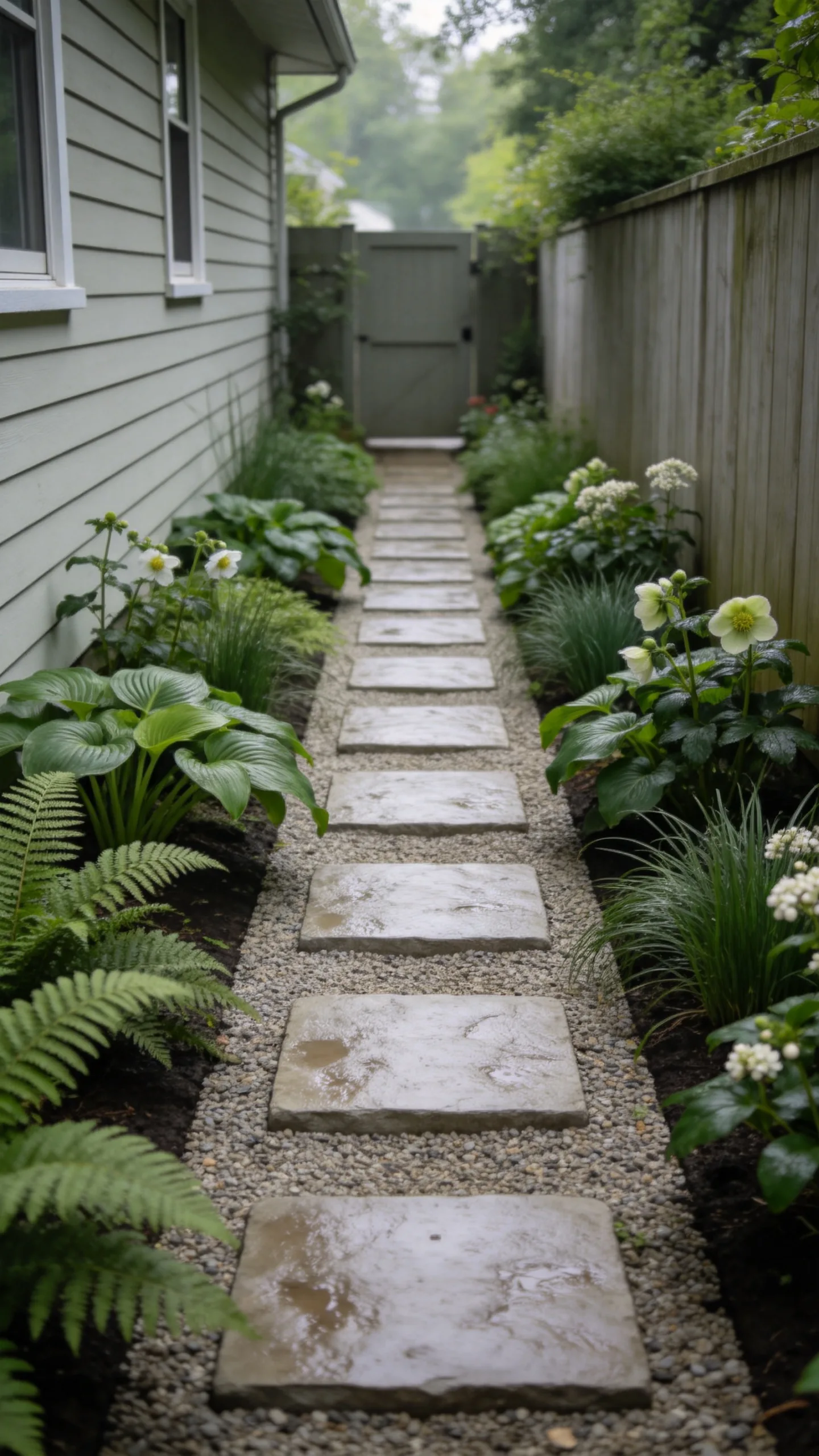
Turn a narrow, shaded side yard into a useful garden link with large stepping stones set into gravel or low ground cover. Space the stones for a natural walking stride and choose textured surfaces that are less slippery during wet weather. This design requires less continuous paving, making it suitable for tight passages.
Plant the bordering strips with shade-tolerant foliage such as ferns, hostas, hellebores, sedges, and foamflower. Repeating the same three or four plants along the route keeps the small space from looking cluttered. Where foot traffic is frequent, use gravel between stones rather than delicate ground cover.
3. Herringbone Brick Path With Cottage Borders
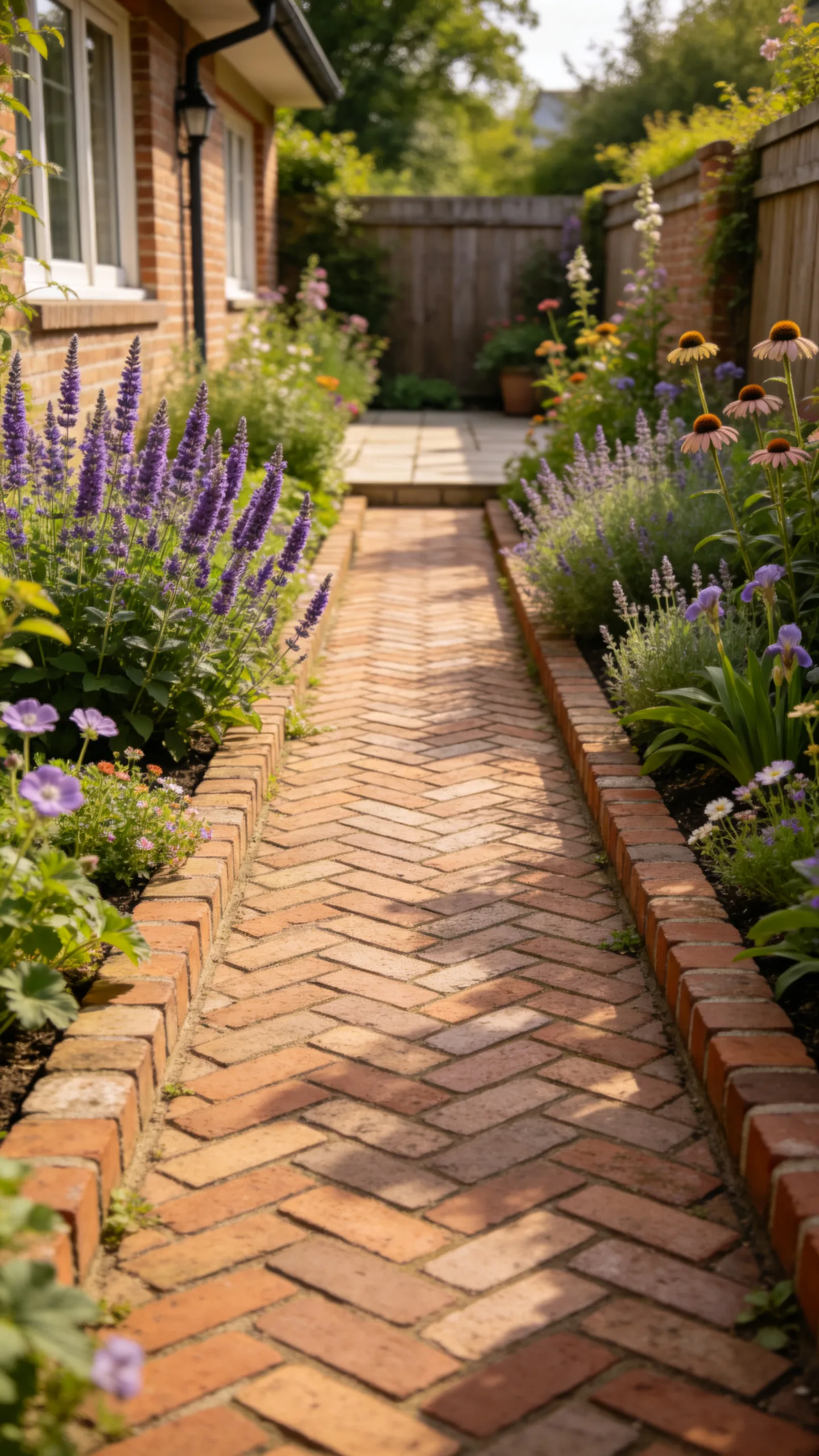
A brick path laid in a herringbone pattern brings structure to an informal wrap around garden. Run it from the front entrance along one side of the house and into the backyard patio, using a soldier-course brick edge to frame the route. A properly compacted base and edge restraints help prevent bricks from shifting.
Soften the formal paving with cottage-style borders containing salvia, hardy geranium, coneflower, nepeta, and spring bulbs. Arrange taller plants toward fences or walls and keep low growers beside the bricks so stems do not obstruct the walkway. Deadhead flowering perennials during summer and divide crowded clumps in spring or fall.
4. Curved Flagstone Path Through Pollinator Beds
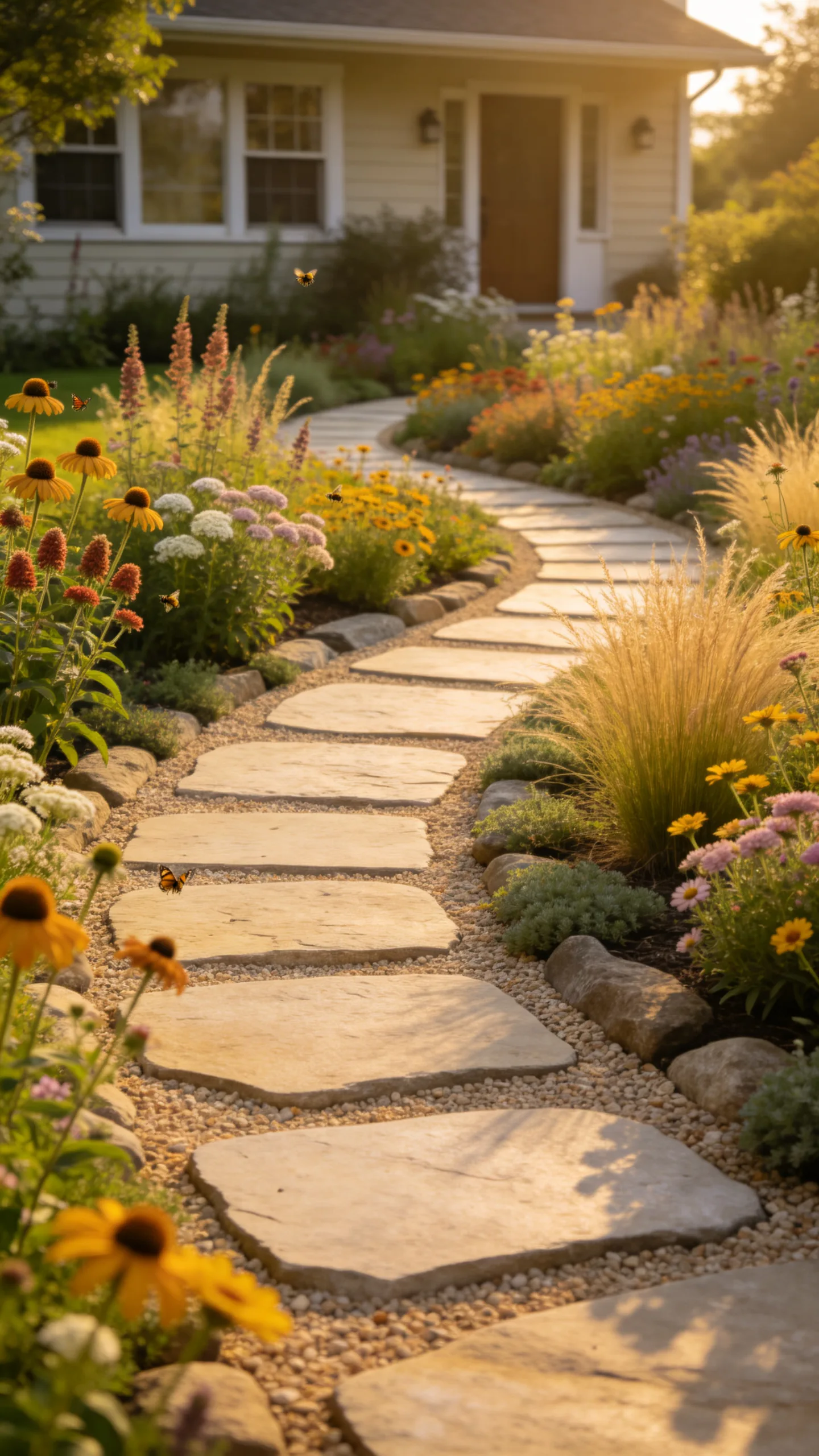
Use an irregular flagstone path to create gentle curves around the home rather than following every wall in a rigid line. Broader curves can make a shallow yard feel deeper because the entire route is not visible from one viewpoint. Fill joints with compacted gravel for a lower-maintenance surface.
Border the path with pollinator plants selected for your local growing conditions. Coneflower, bee balm, yarrow, asters, coreopsis, and native ornamental grasses can provide flowers and seed heads across multiple seasons. Keep the sunniest beds for flowering species and reserve shaded corners for foliage plants or woodland natives.
5. Raised Corten Steel Borders Along a Paved Loop
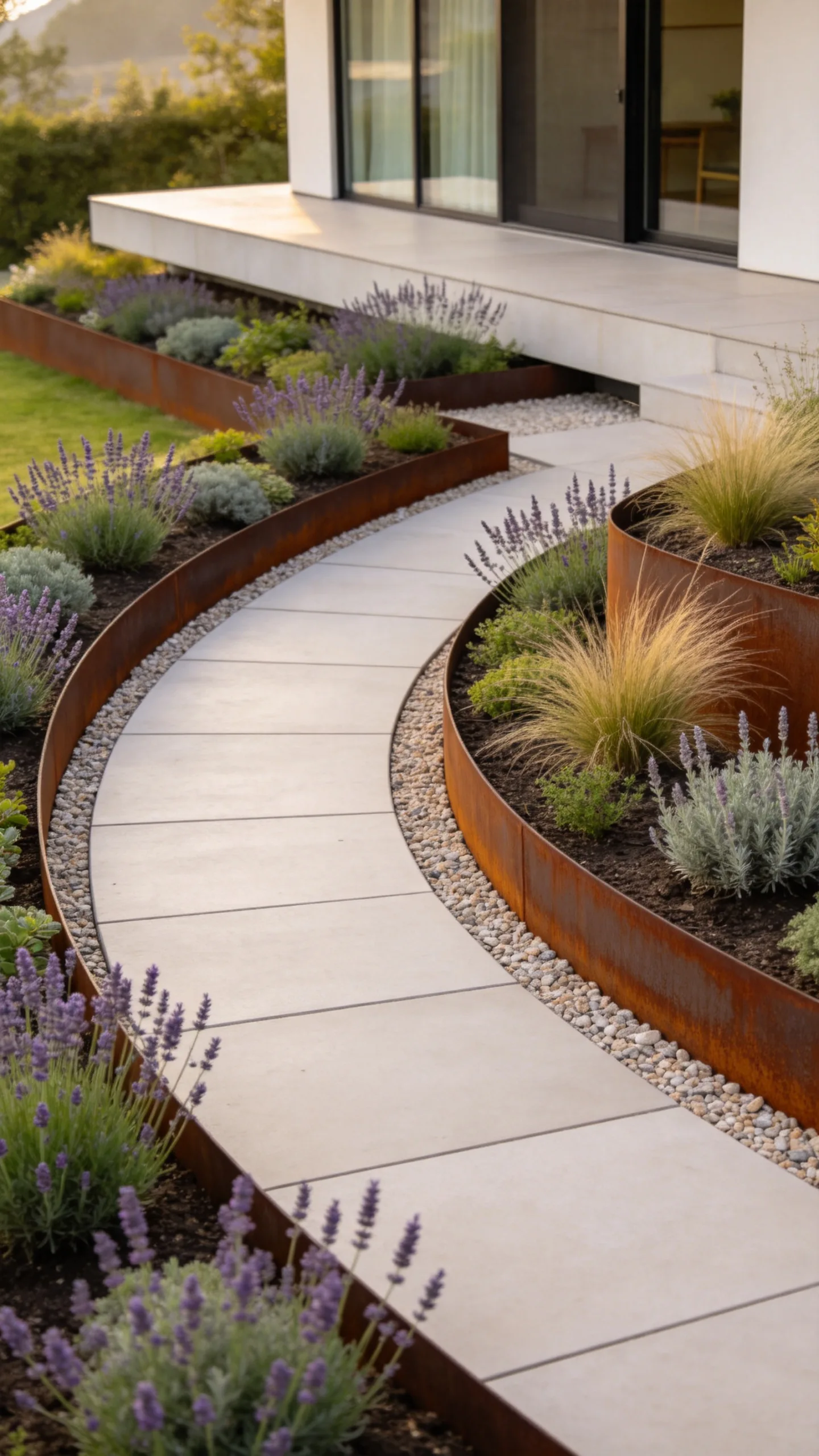
Frame a concrete or porcelain-paver walkway with narrow raised beds made from Corten steel. The crisp lines work especially well around contemporary homes and allow planting soil to be improved without excavating an entire yard. Raised borders can also make weeding easier, although they may dry out faster than in-ground beds.
Choose drought-aware plants such as lavender, compact ornamental grasses, sedum, and dwarf Russian sage for sunny sections. In cooler or wetter locations, substitute plants suited to local winter temperatures and drainage. Position raised beds so they do not trap water against the foundation, and maintain a clear inspection strip beside the house.
6. Evergreen Foundation Border With a Parallel Paver Path
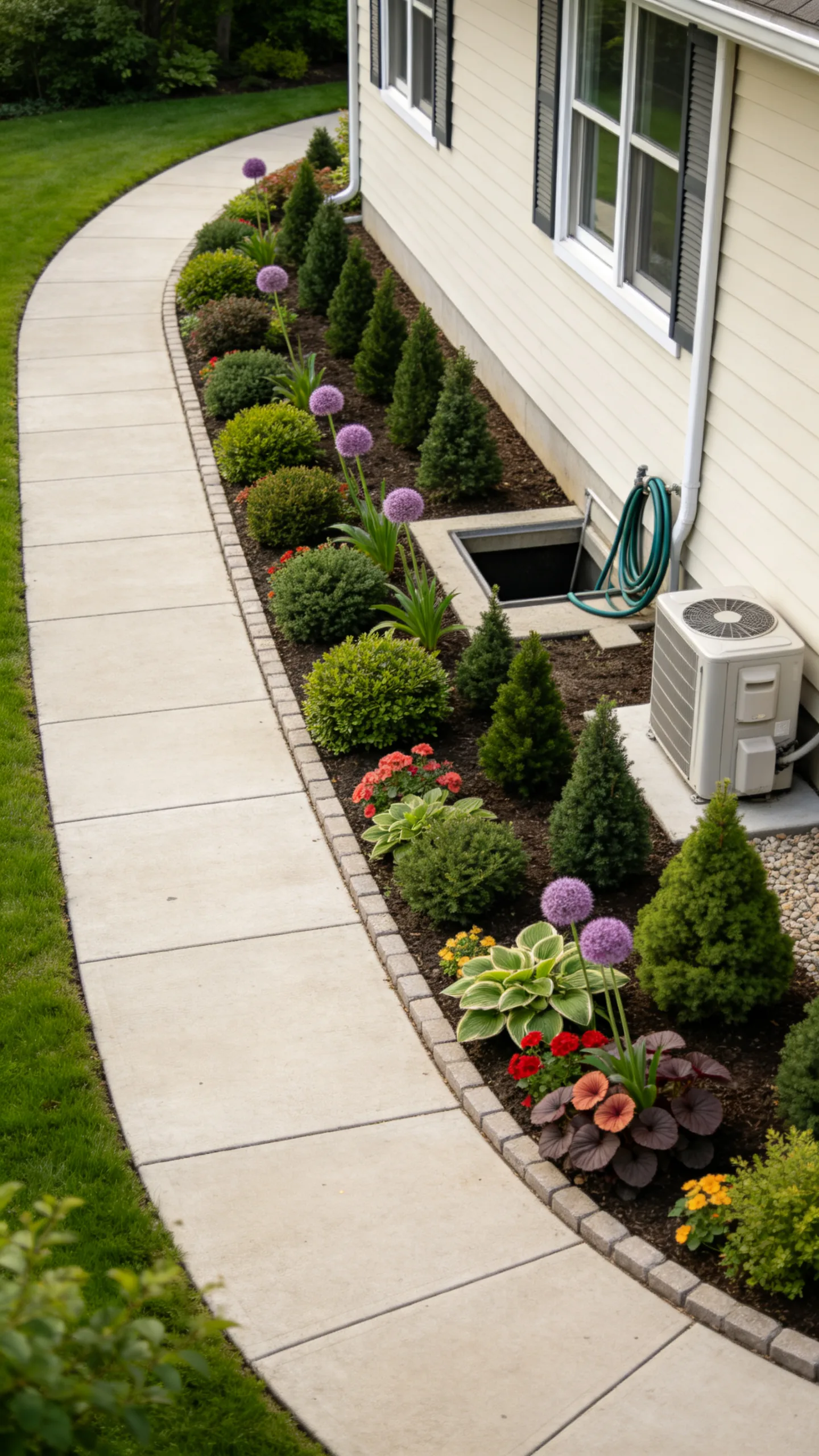
Install a straight or gently curving paver path parallel to the foundation, leaving enough room for a continuous evergreen border. Compact inkberry holly, dwarf yew, boxwood alternatives, and small conifers can provide year-round structure without overwhelming windows. Check mature plant dimensions before deciding the border depth.
Add seasonal color in pockets between shrubs with daffodils, alliums, annual begonias, or compact perennials. Repeating one paver and one edging material around the property unifies the front and back gardens. Leave breaks in the border for hose access, window wells, utility equipment, and maintenance routes.
7. Dry Creek Path Beside a Rain Garden Border
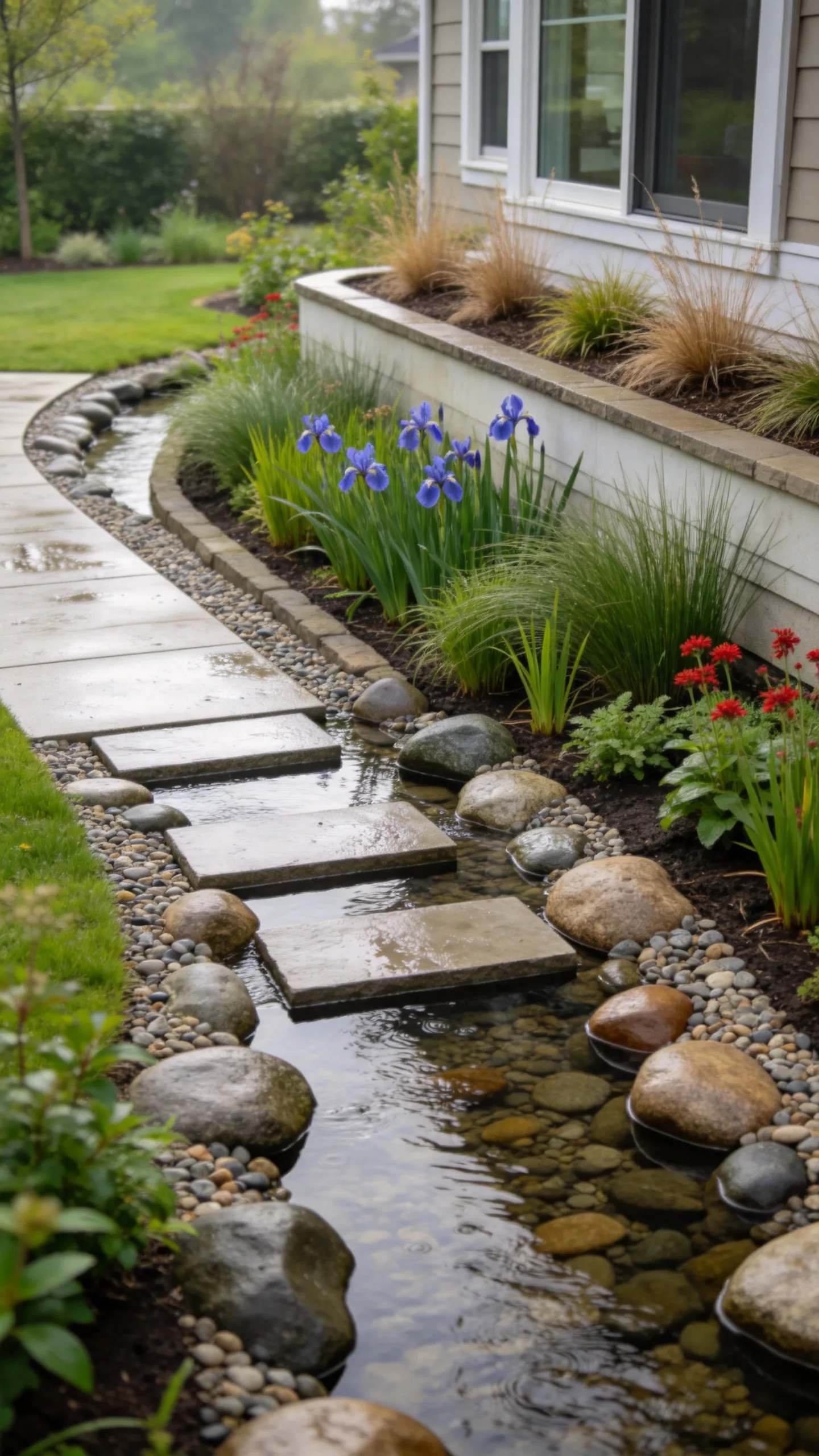
Where runoff naturally crosses the yard, create a shallow dry creek feature beside the main walking path. Rounded stone, gravel, and occasional flat crossing slabs can guide water while adding texture to the garden. The channel should direct runoff toward an appropriate drainage area, not toward the foundation or a neighboring property.
Plant the adjacent low area with moisture-tolerant species such as switchgrass, blue flag iris, cardinal flower, or locally suitable sedges. Place plants that prefer drier soil along the upper edge. Before altering drainage, observe the site during rain and check local rules, buried utilities, and overflow requirements.
8. Narrow Espalier Walk With Low Borders
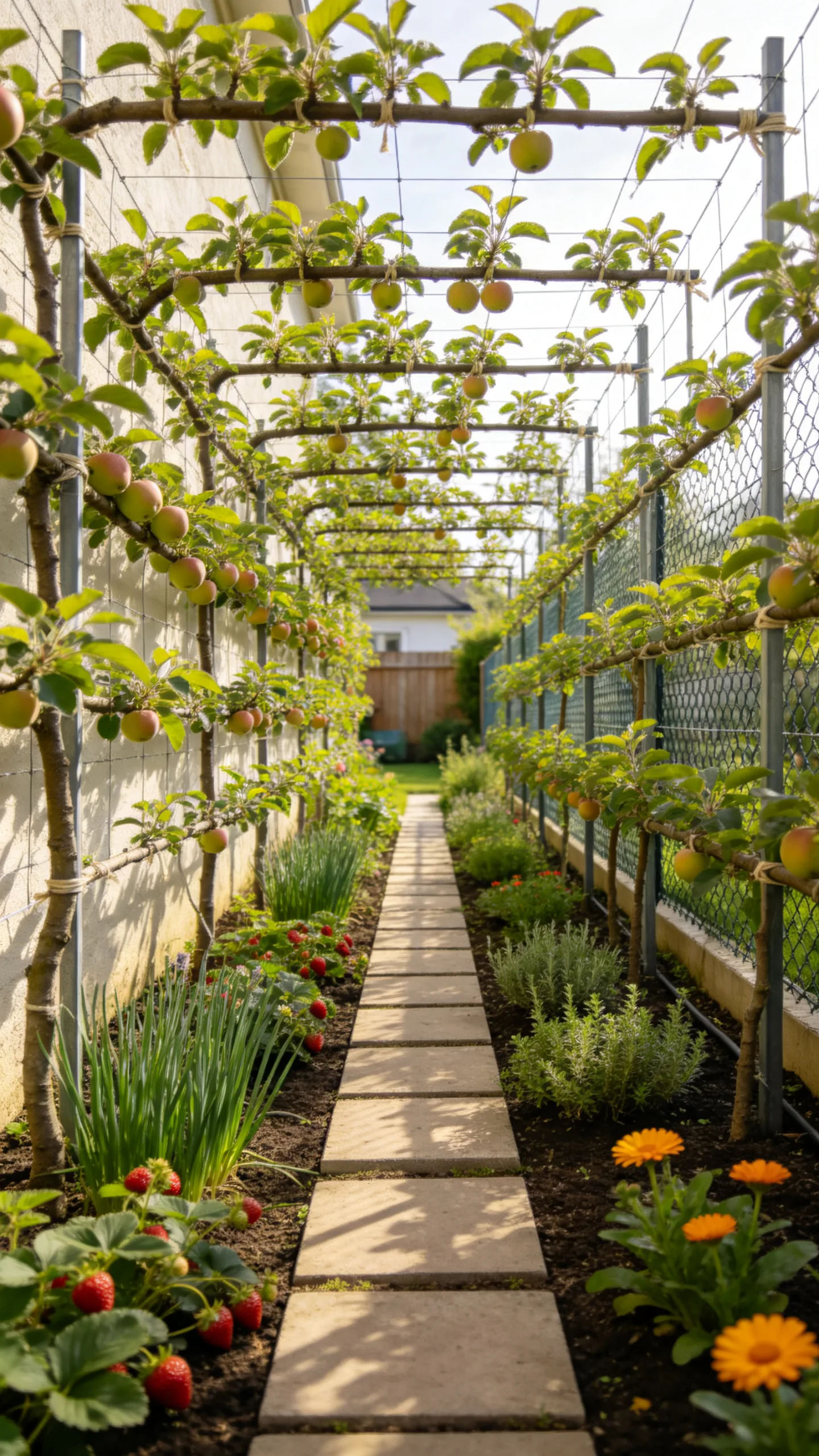
Make use of a sunny side passage by training espaliered fruit trees or ornamental shrubs against a fence or freestanding wire support. A slim path of rectangular pavers can run beside the trellis, creating an attractive transition from front garden to backyard without using much ground area.
Keep the opposite border low with chives, strawberries, thyme, calendula, or compact annuals. Espalier plants require regular tying and pruning, and fruiting varieties need light levels and pollination conditions appropriate to the cultivar. Maintain air space between plants and house walls to reduce moisture and maintenance problems.
9. Kitchen Herb Path From Door to Patio
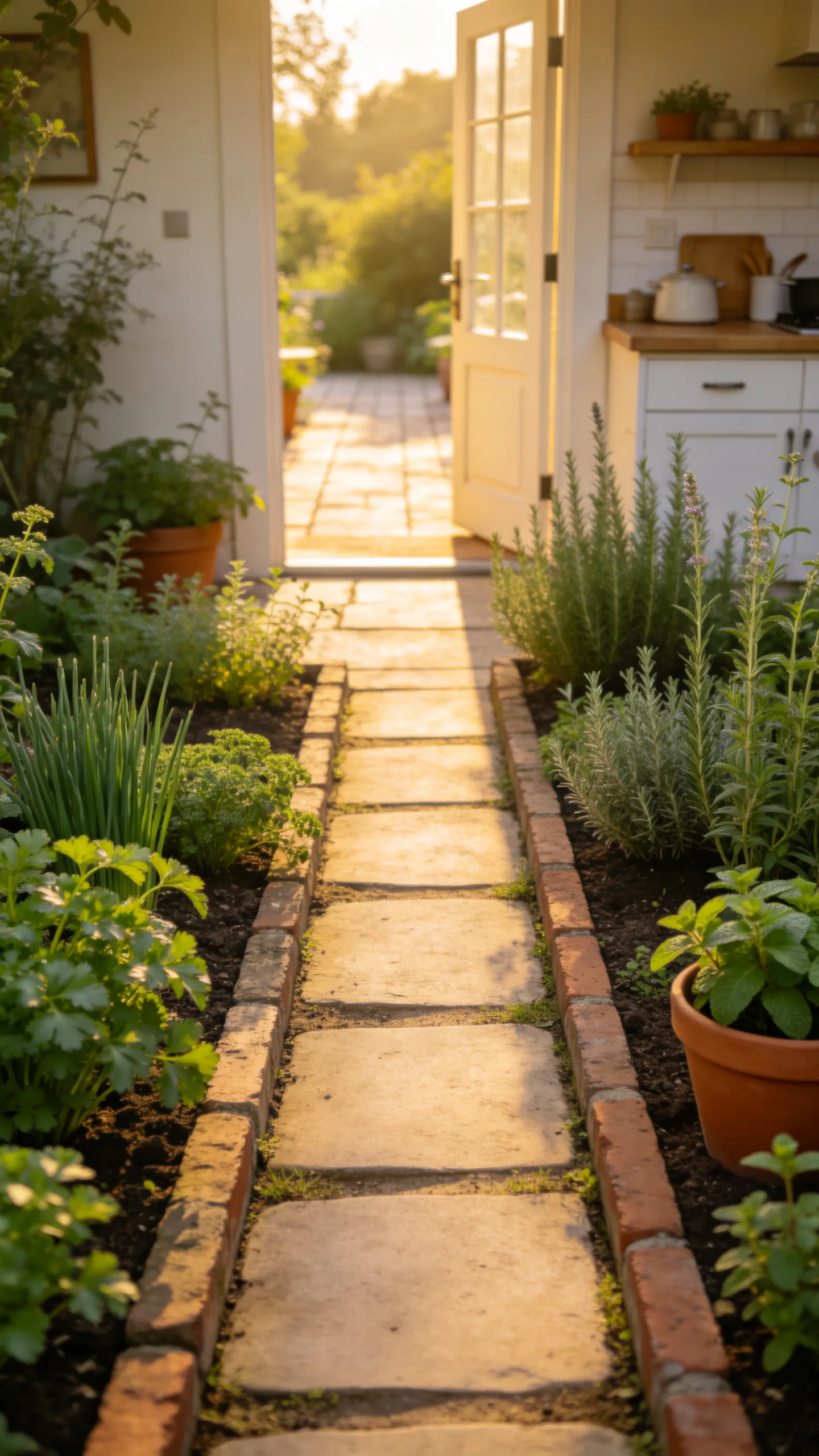
Design the section nearest the kitchen as a productive herb route. Use brick, gravel, or stepping stones to connect the kitchen door with the patio, then line the path with rosemary, sage, parsley, oregano, chives, and thyme according to climate and sun exposure.
Separate vigorous spreaders such as mint into buried pots or freestanding containers. Place frequently harvested herbs closest to the door and tuck taller plants where they will not shade smaller varieties. Good drainage is especially important for Mediterranean herbs, while parsley and chives generally tolerate more consistent moisture.
10. Woodland Mulch Path Around a Shady Corner
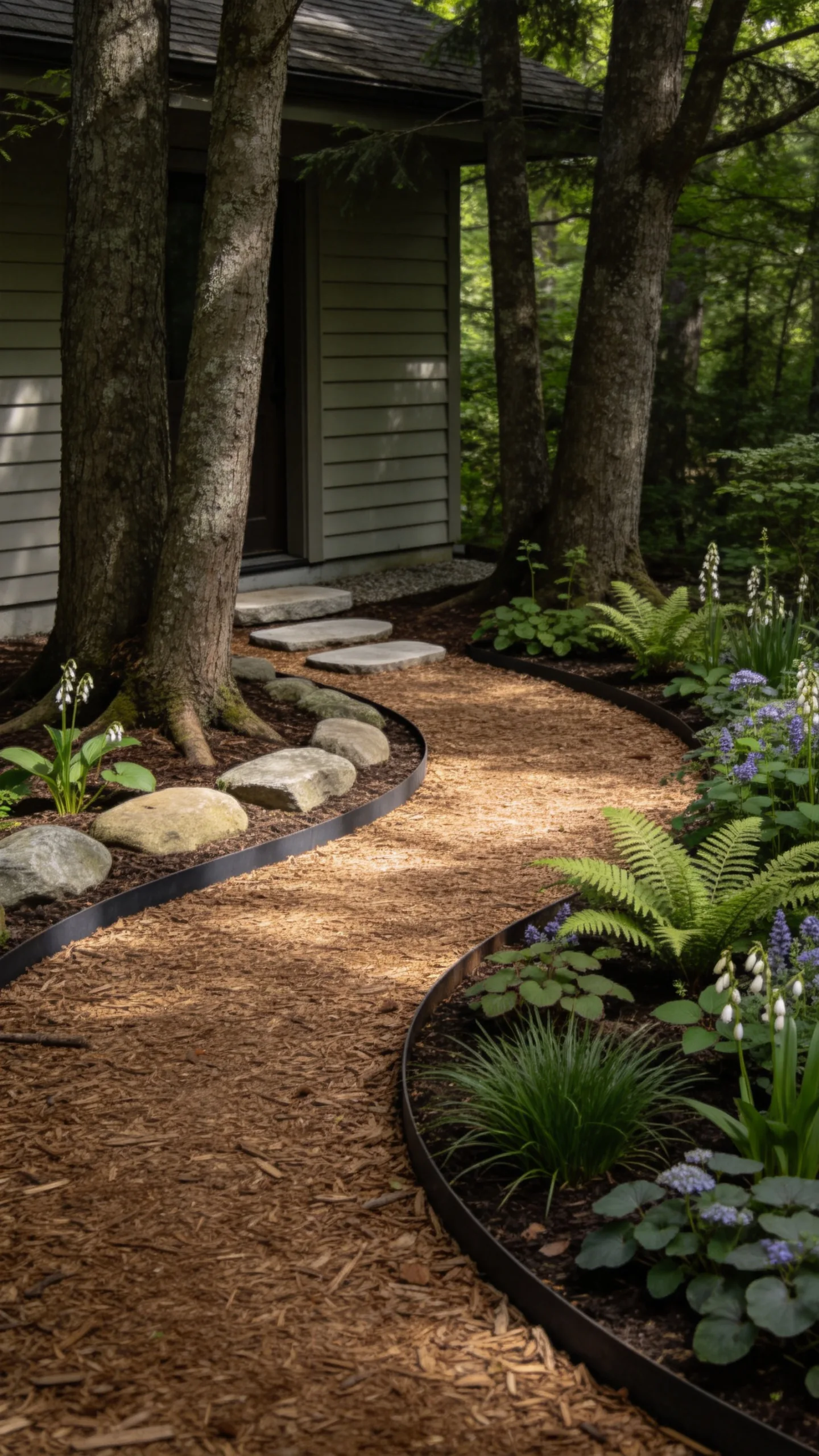
A bark-mulch path is a practical option beneath mature trees or along the shaded side of a house. Shape the route with broad curves and define it using logs, natural stone, or dark metal edging. Replenish mulch as it decomposes, and avoid piling it against trunks or siding.
Create a woodland border with ferns, epimedium, Solomon’s seal, brunnera, and shade-tolerant sedges. Work around major tree roots rather than cutting through them, and use smaller nursery plants where digging is difficult. A few flat stones at entrances can prevent mulch from being tracked onto patios and indoor floors.
11. Formal Geometric Path With Clipped Border Plants
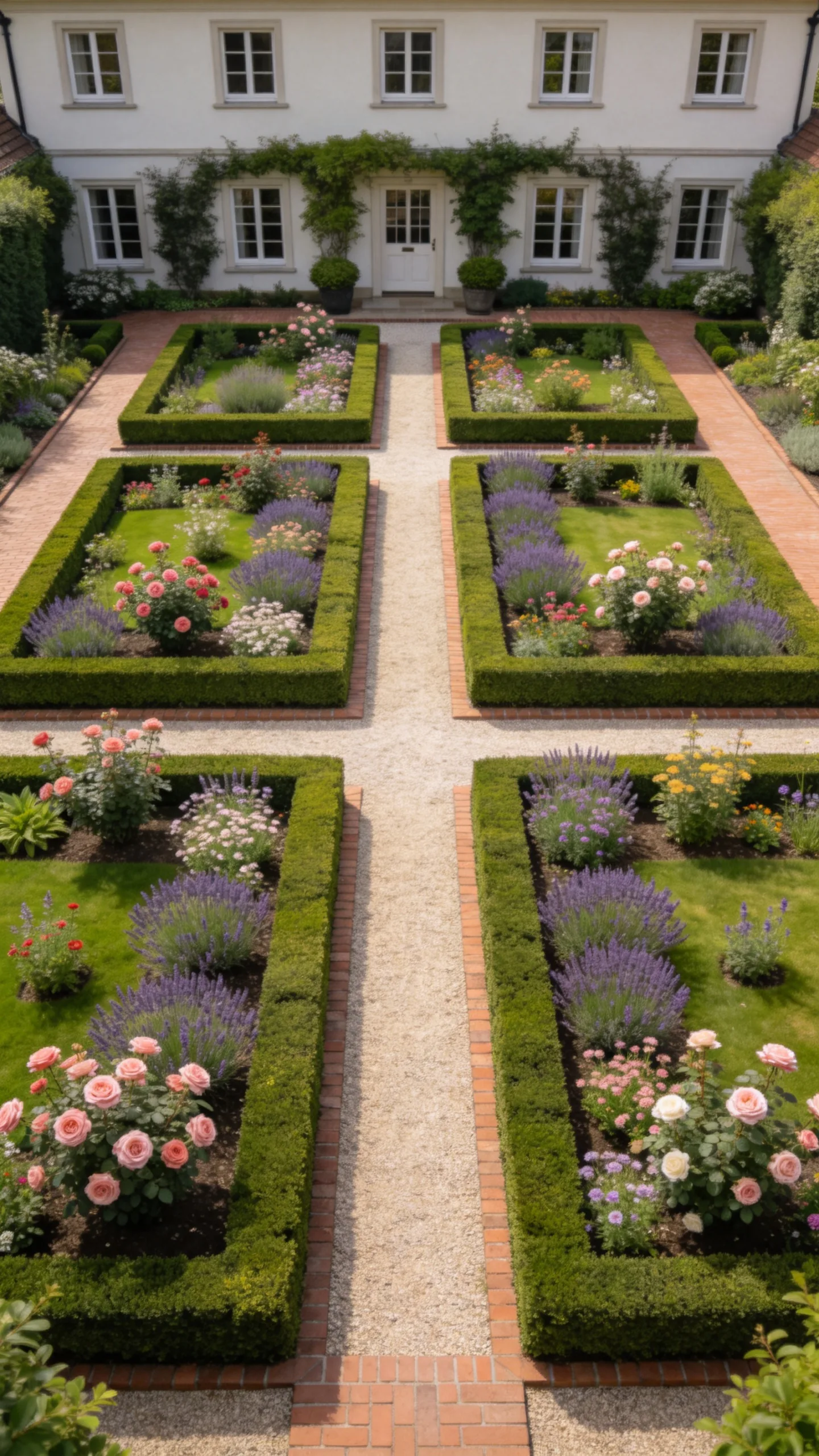
Divide the wrap around garden into rectangular sections using straight paths and symmetrical planting beds. Brick, concrete pavers, or fine gravel can establish the geometry, while low clipped shrubs define the border edges. This layout suits homes with strong architectural lines and regularly spaced windows.
Choose compact shrubs that tolerate repeated pruning in your climate, such as dwarf yew, inkberry holly, or suitable boxwood varieties. Fill the interior beds with roses, lavender, tulips, or seasonal annuals for contrast. Plan for several trimming sessions during the growing season if you want the outlines to remain crisp.
12. Raised Boardwalk Through a Damp Side Yard
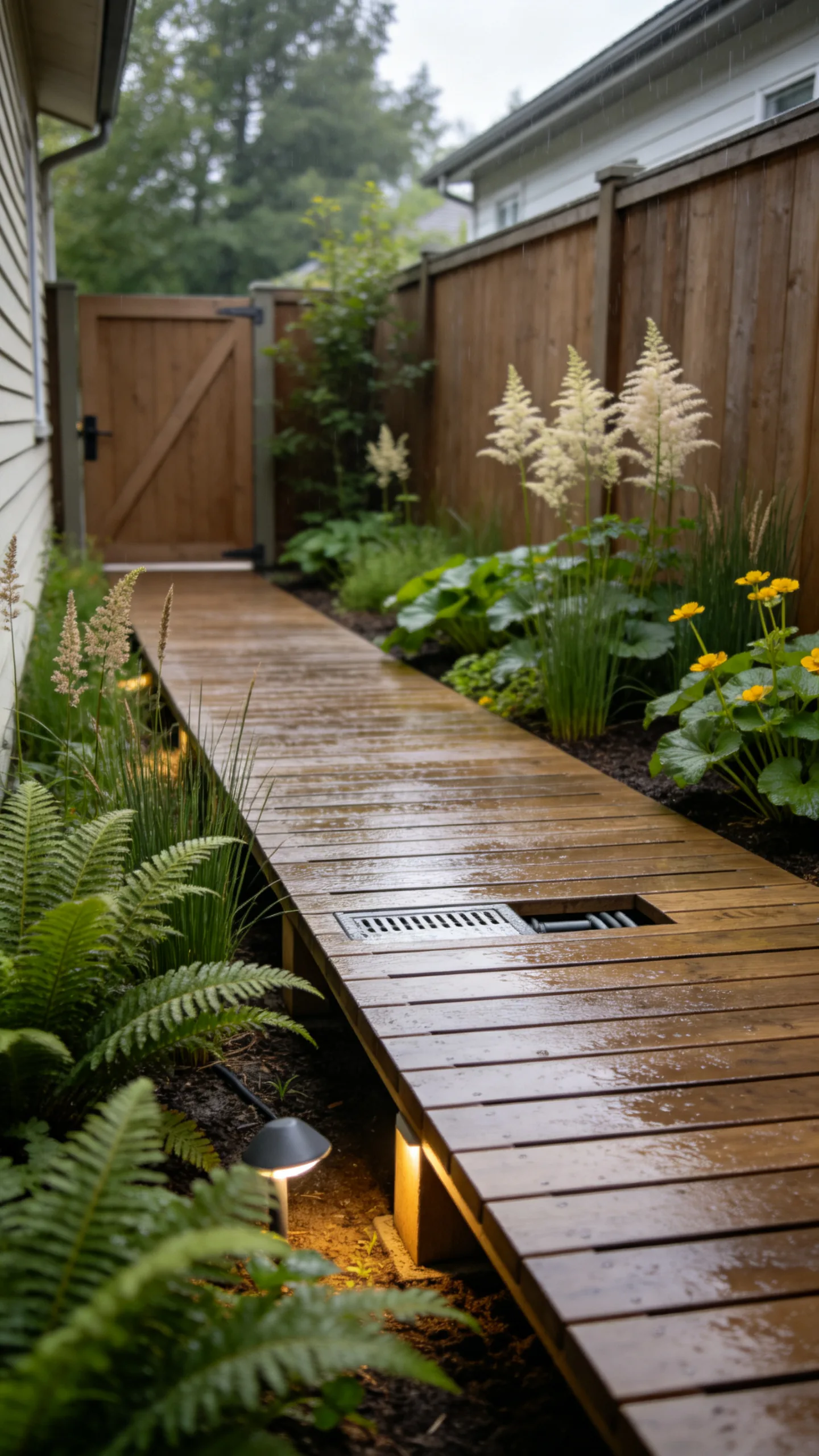
For a side yard that remains damp after rain, consider a slightly raised boardwalk rather than repeatedly replacing muddy gravel. Use exterior-rated, slip-resistant materials and include adequate support, drainage gaps, and access to utilities. The route can continue into a ground-level deck or backyard seating platform.
Plant moisture-friendly borders with ferns, astilbe, ligularia, marsh marigold, or native sedges suited to the site. Do not assume a boardwalk will solve the underlying water issue; downspouts, grading, and drainage should still be assessed. Add low path lighting where the raised edges may be difficult to see at night.
13. Pale Stone Path With a Moon Garden Border
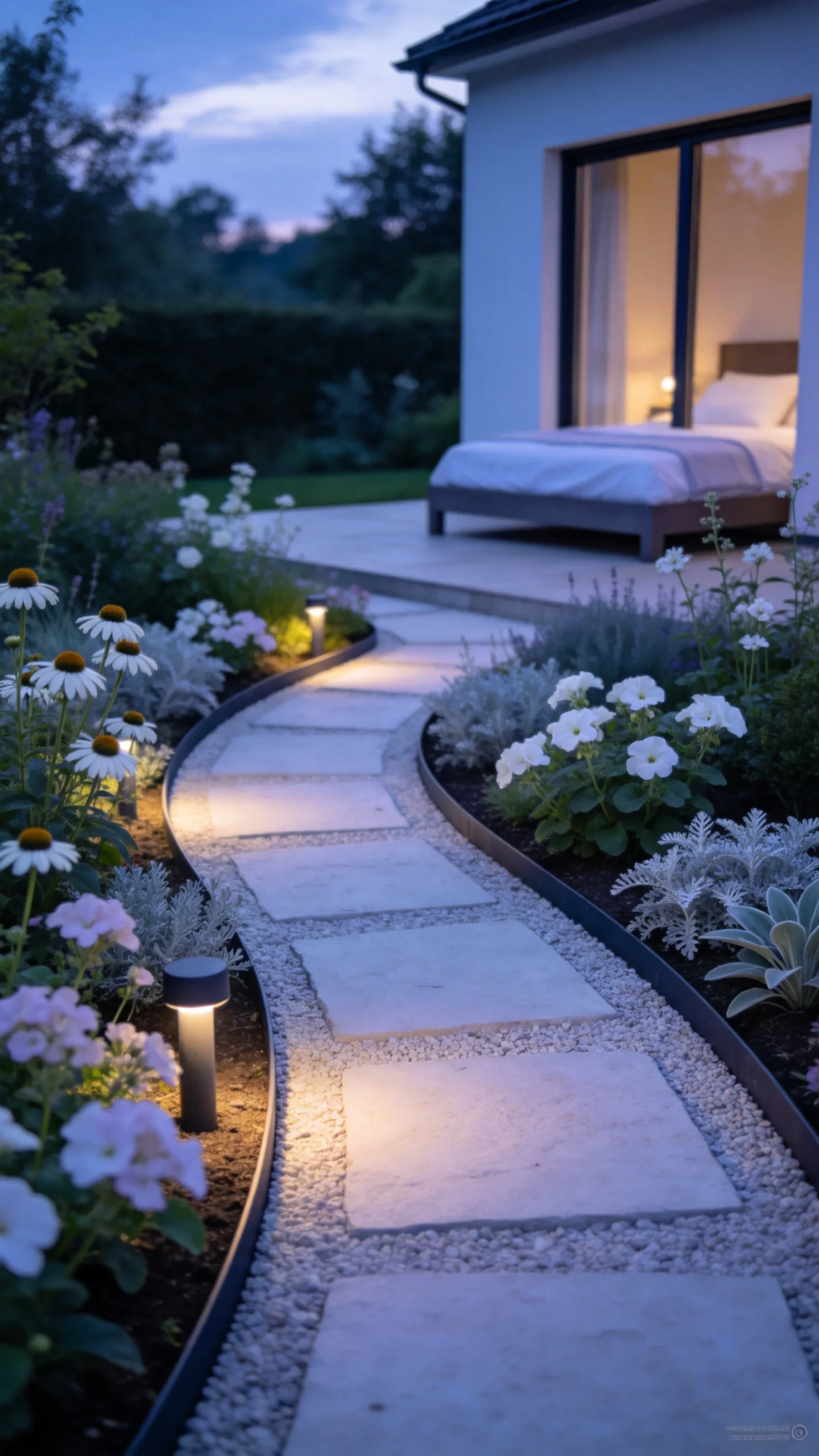
Create an evening garden by pairing light-colored gravel or pale paving with white and silver plants. Run the route around a patio, bedroom window, or frequently used evening entrance. Dark metal or charcoal brick edging can provide a clean contrast and keep the pale aggregate contained.
Plant white coneflower, pale phlox, white nicotiana, lamb’s ear, silver artemisia, and variegated foliage where conditions permit. Select night-fragrant flowers carefully near seating because strong scents may not suit everyone. Low-voltage fixtures directed downward can illuminate the path without washing out the planting.
14. Ornamental Grass Border for Side-Yard Privacy
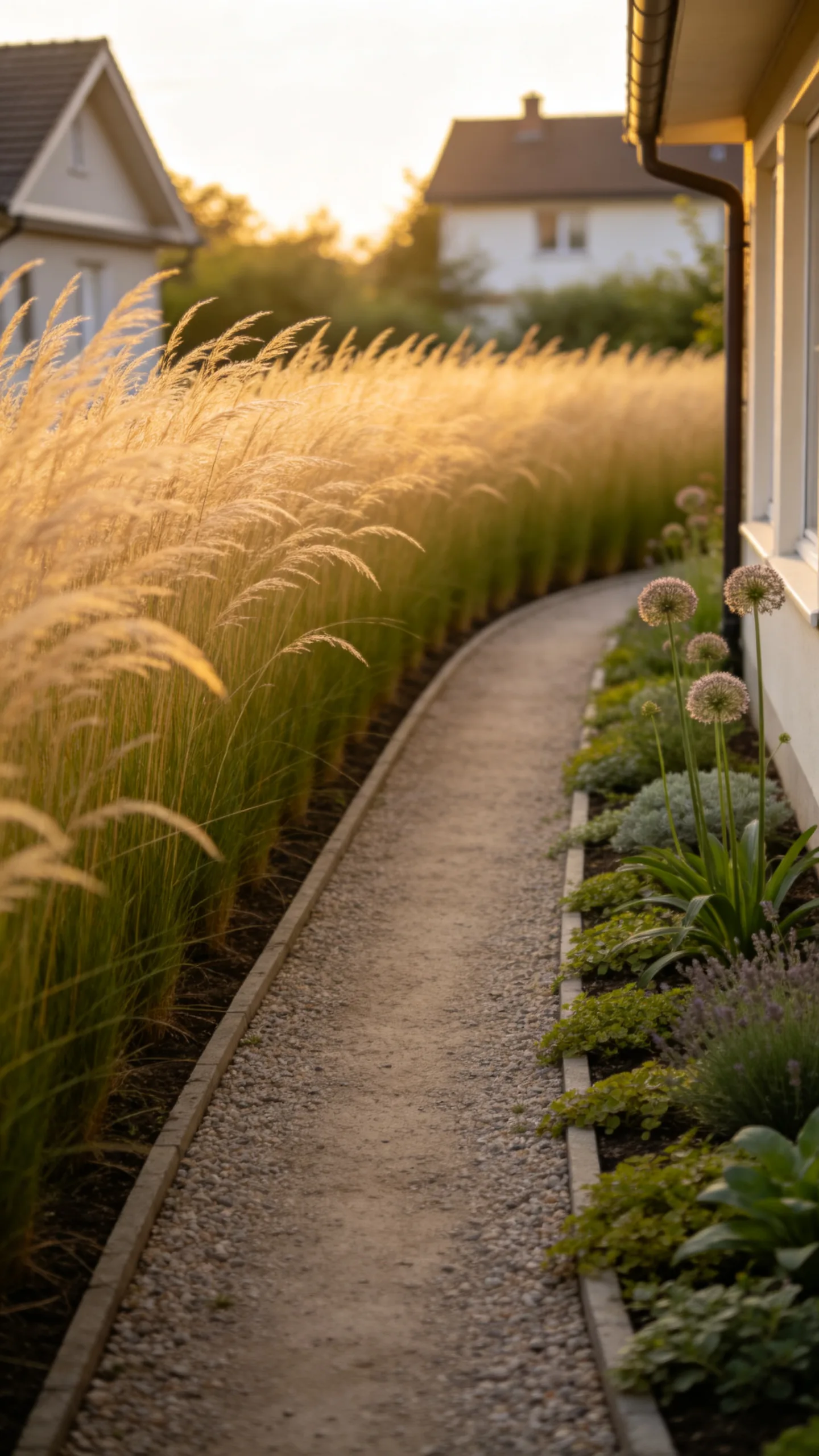
Line the outer side of a wrap around path with upright ornamental grasses to screen neighboring views. Switchgrass, feather reed grass, or compact miscanthus cultivars can form a narrow vertical border, but plant choice should reflect local invasive-species guidance and available width.
Place a simple concrete or gravel path between the grass screen and the house. Add low sedum, alliums, or creeping ground covers along the inner edge to keep the route open. Cut back deciduous grasses in late winter before new growth appears, or use evergreen sedges where year-round foliage is preferred.
15. Wide Accessible Path With Flush Planting Edges
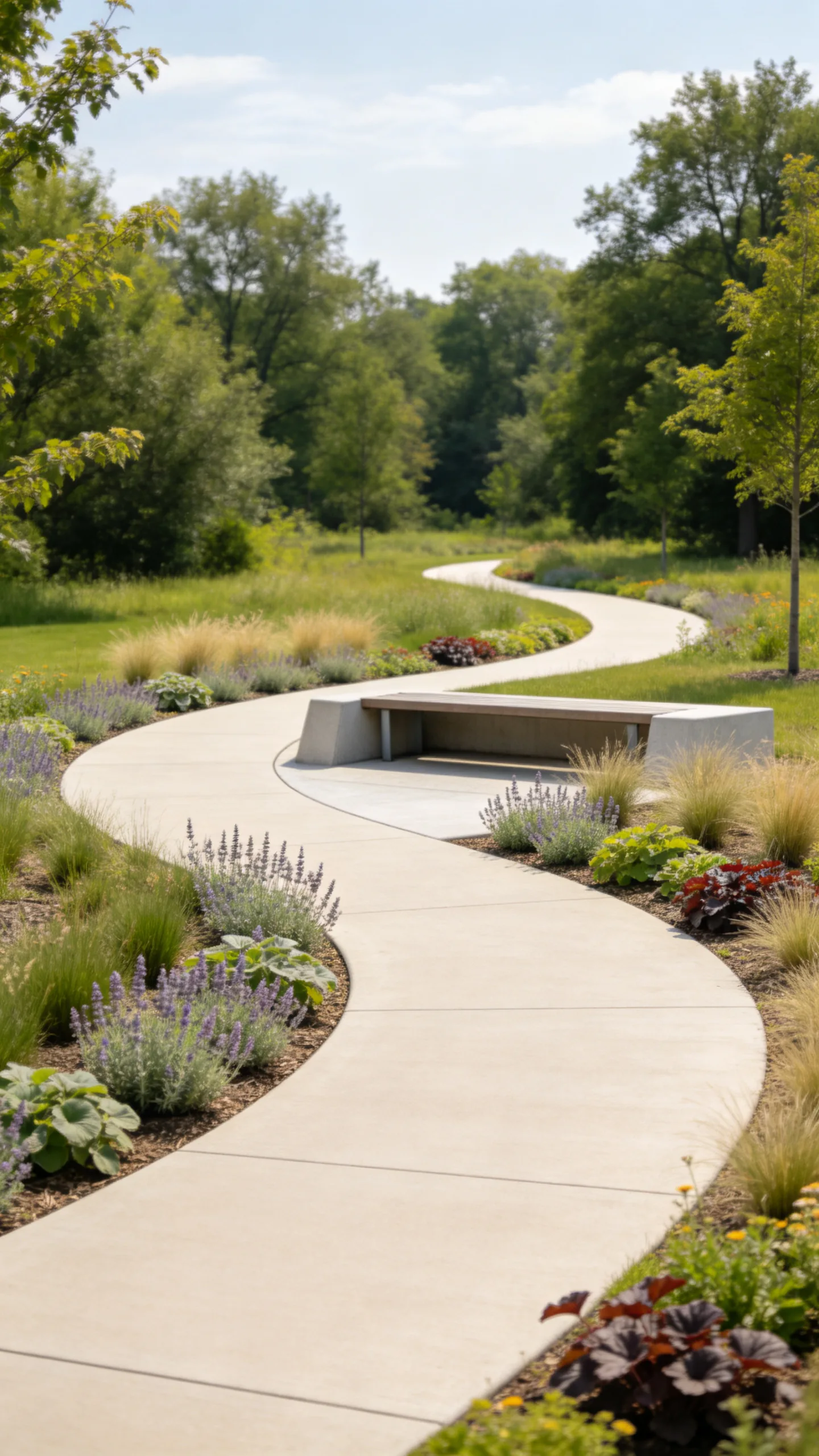
Plan a smooth wrap around route with a firm, stable surface for strollers, carts, wheelchairs, or less-confident walkers. A path around 4 to 5 feet wide allows easier movement and passing, although exact accessibility requirements vary by project. Keep transitions flush and avoid loose gravel where rolling access is a priority.
Use low, soft-edged plants beside the paving so branches do not narrow the usable space. Compact catmint, heuchera, dwarf grasses, and low-growing annuals can provide color without creating obstacles. Include level resting areas and locate seating where it does not project into the travel route.
16. Sensory Garden Loop With Rounded Edging
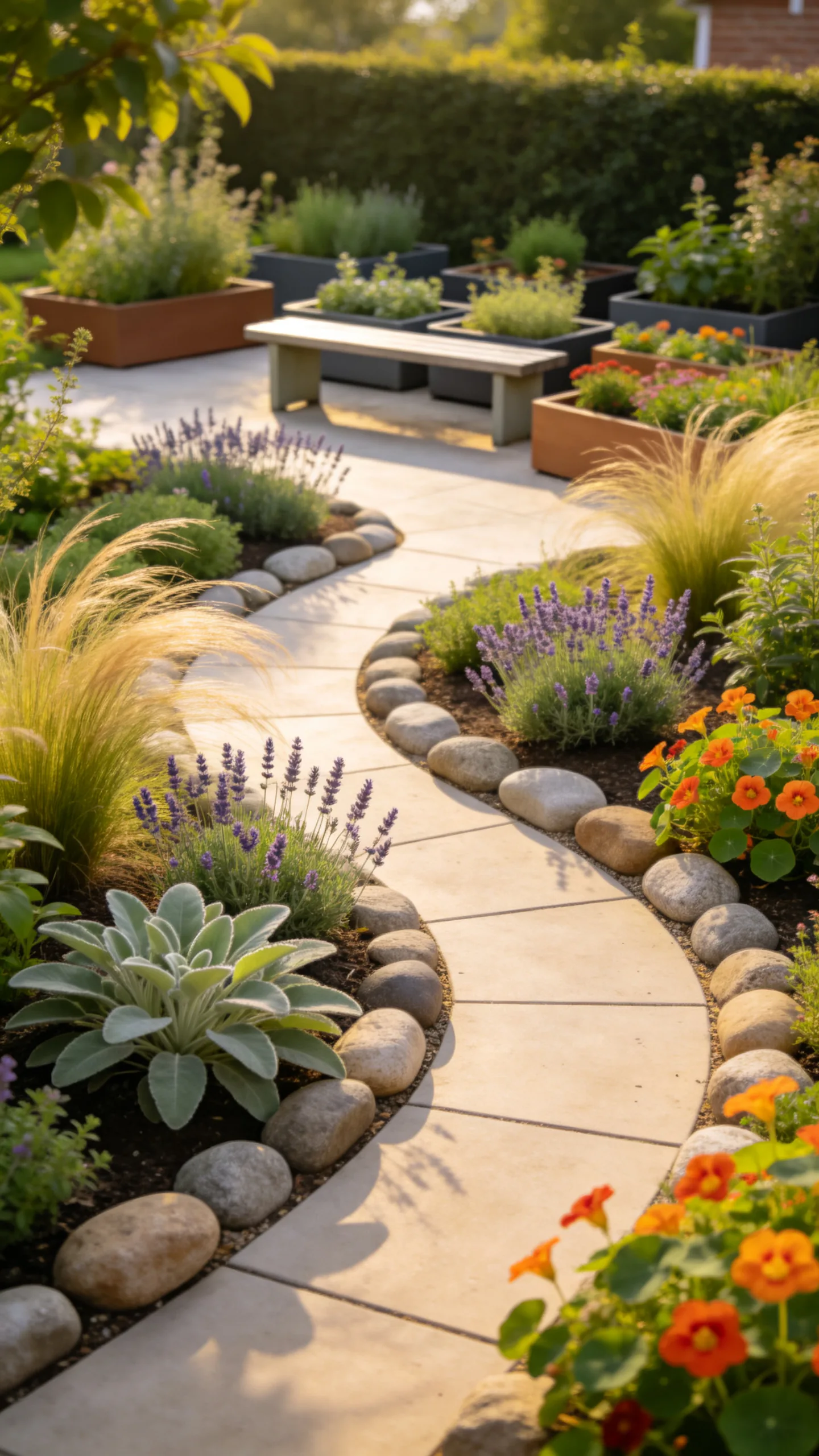
Create a short garden loop featuring plants that can be touched, smelled, or heard in the breeze. Smooth pavers and rounded stone edging make the route visually clear, while a small widened area can hold a bench or outdoor activity table.
Use lamb’s ear for soft leaves, thyme and lavender for fragrance, grasses for movement, and nasturtiums for bright seasonal color. Confirm plant safety before placing species in a space used by young children or pets, and avoid thorny or irritating plants beside the path. Raised containers can bring selected plants within easier reach.
17. Four-Season Corner Beds Along a Continuous Walk
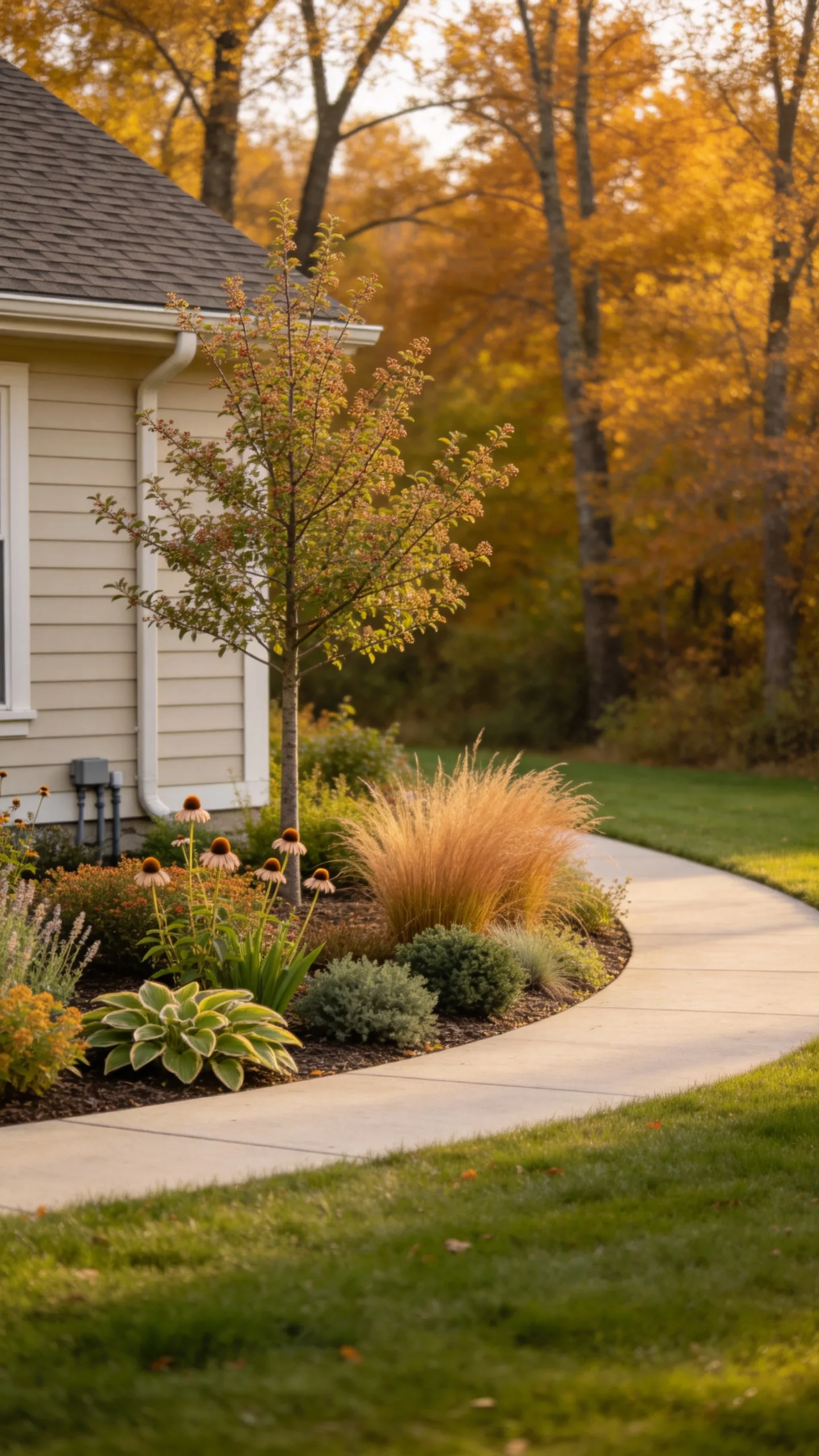
Treat each corner of the house as a distinct planting pocket connected by one continuous path. A small flowering tree or sculptural shrub can anchor each turn, helping the garden reveal itself gradually as visitors move from front to back.
Combine spring bulbs, summer perennials, autumn grasses, and evergreens or plants with decorative bark for winter. For example, pair serviceberry with daffodils, conefflowers, switchgrass, and low evergreen shrubs where those plants suit the local climate. Keep trees far enough from foundations, roofs, and utility lines to accommodate mature growth.
18. Xeric Gravel Garden With Stone-Slab Crossings
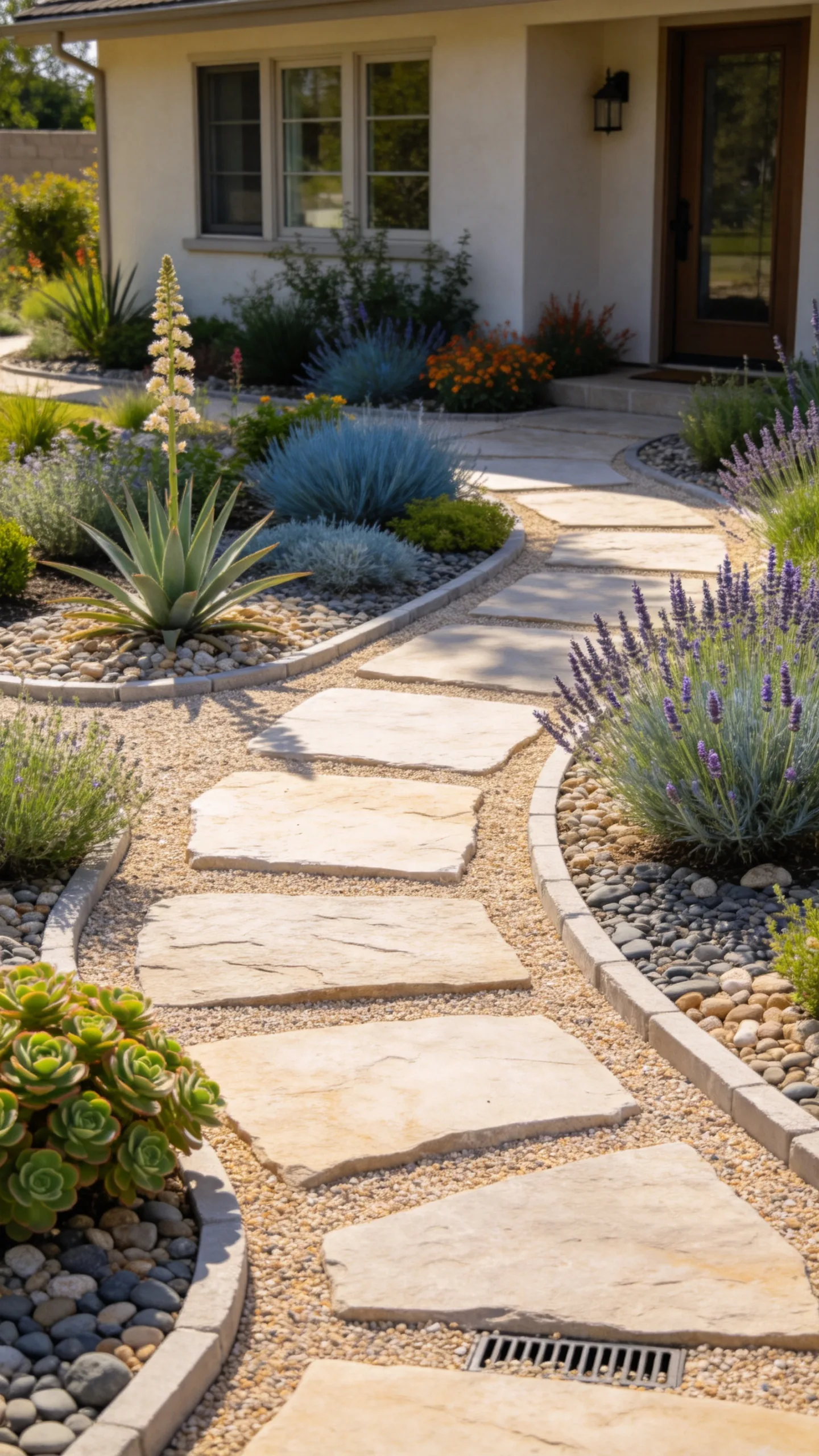
For a sunny, fast-draining site, surround the home with a gravel garden crossed by large stone slabs. Use different aggregate sizes to distinguish the walking route from planted areas, and install sturdy edging to prevent gravel from entering lawns or drains.
Choose water-wise plants based on local rainfall and winter conditions, such as agave in frost-free regions or sedum, yucca, lavender, blue fescue, and penstemon in colder zones. Group plants with similar watering needs and irrigate deeply while they establish. Leave open gravel around plant crowns, but maintain suitable clearances from combustible materials where wildfire-aware landscaping is necessary.