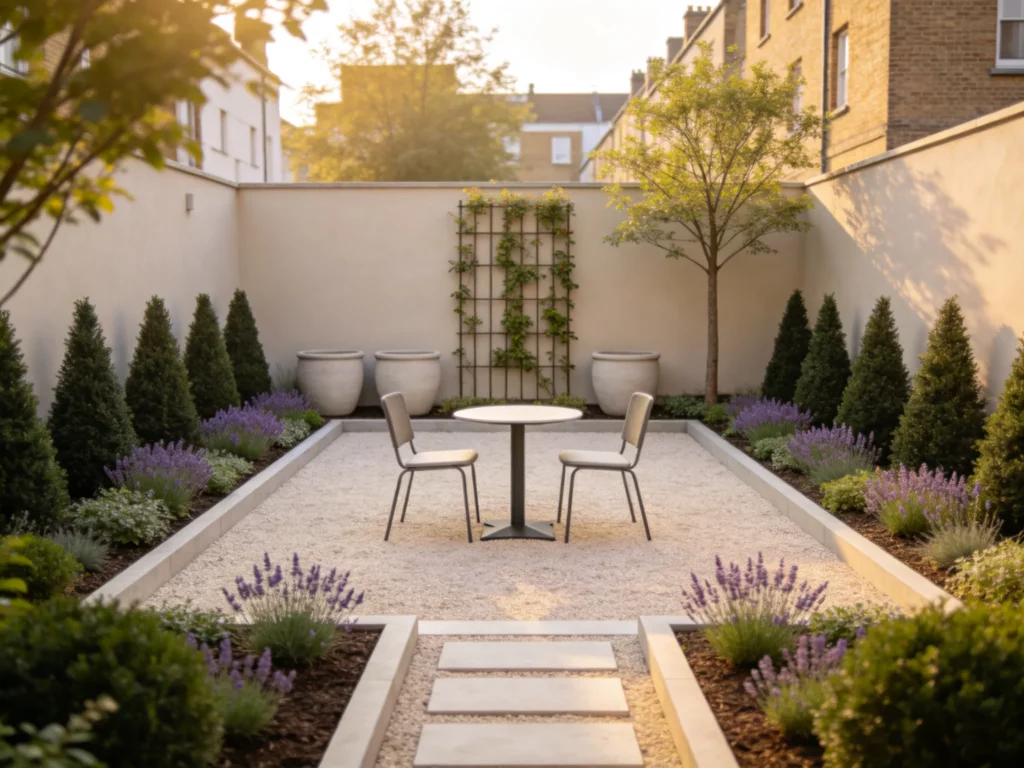
A septic cover does not have to dominate the yard, but it should remain visible enough to locate and clear enough for routine pumping or emergency service. The safest septic tank cover ideas in landscape design rely on lightweight, removable features, shallow-rooted plants, and layouts that do not add heavy soil or direct traffic over the tank. Before making changes, confirm the locations of the lid, tank edges, drain field, and service route with your septic professional.
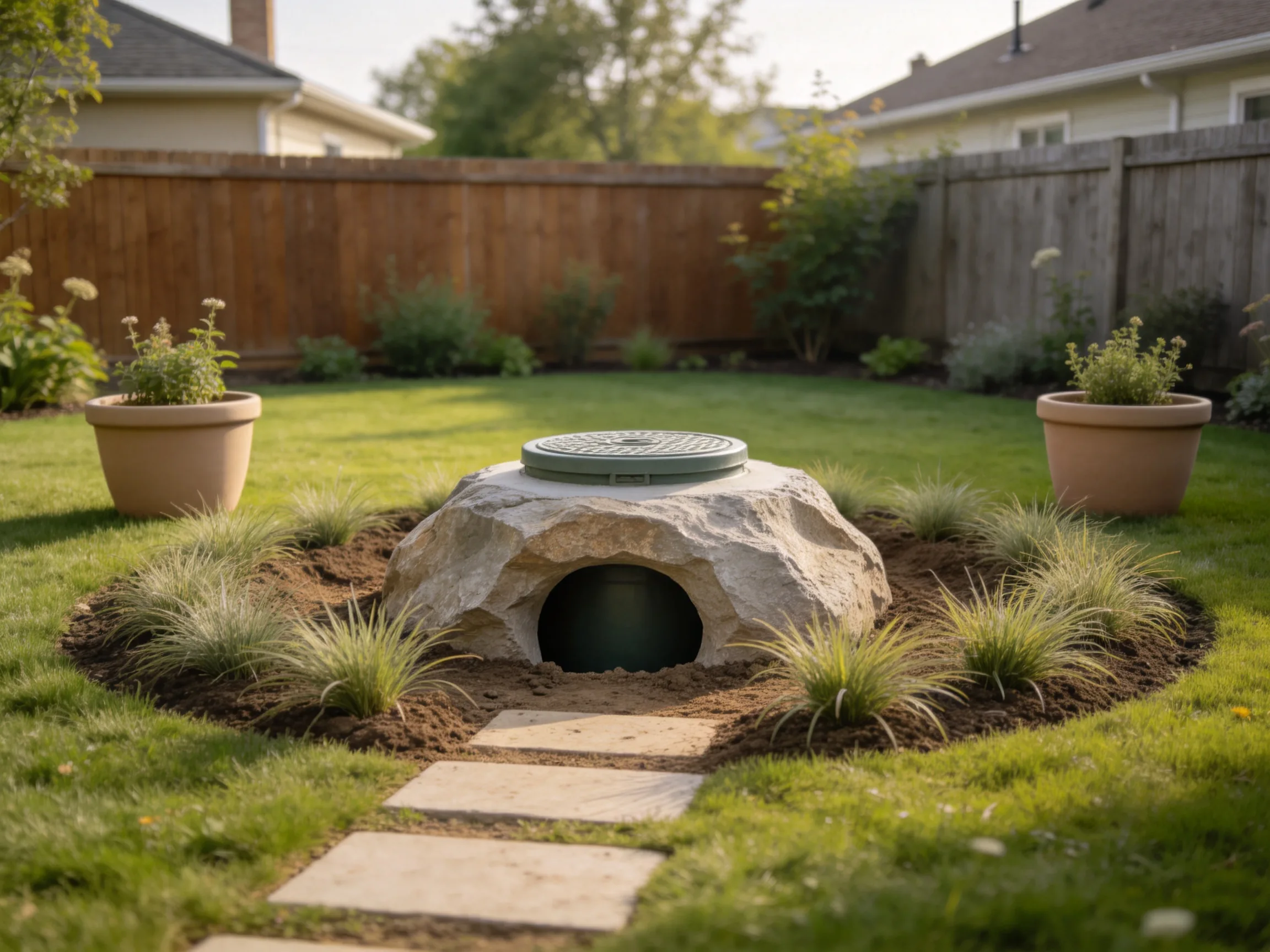
1. Lightweight Faux-Rock Cover

Use a hollow faux landscape rock sized to fit over the septic riser without resting on the lid hardware. Models made from fiberglass, resin, or polyethylene are easier to lift than real stone and are available in several natural-looking colors and textures.
Set the cover on stable ground around the riser rather than attaching it permanently. Leave enough interior clearance for vents and inspection ports, and avoid placing mulch against any opening. A small marker hidden on the back can help service technicians identify the correct cover quickly.
2. Removable Cedar Screen Box
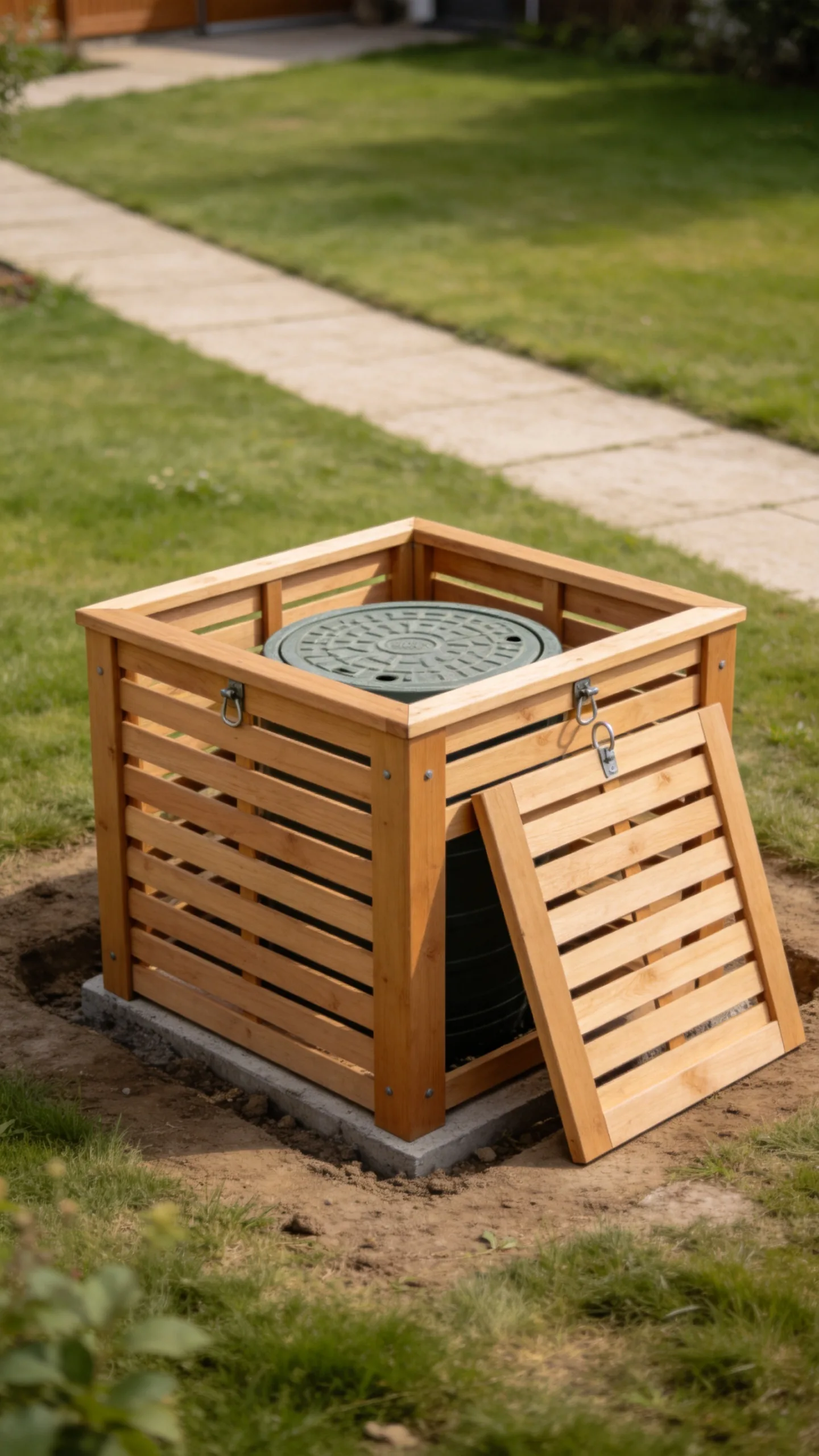
Build a bottomless cedar screen with slatted sides to surround a raised septic lid. Fasten the screen with screws rather than nails so individual panels can be removed, or connect the corners with exterior-rated hooks for faster access.
Keep the structure light enough for one or two adults to move. Leave several inches between the wood and the riser, and do not install concrete footings over the tank. A penetrating exterior wood finish can help the screen blend with fences, decks, or nearby garden structures.
3. Shallow Gravel Circle
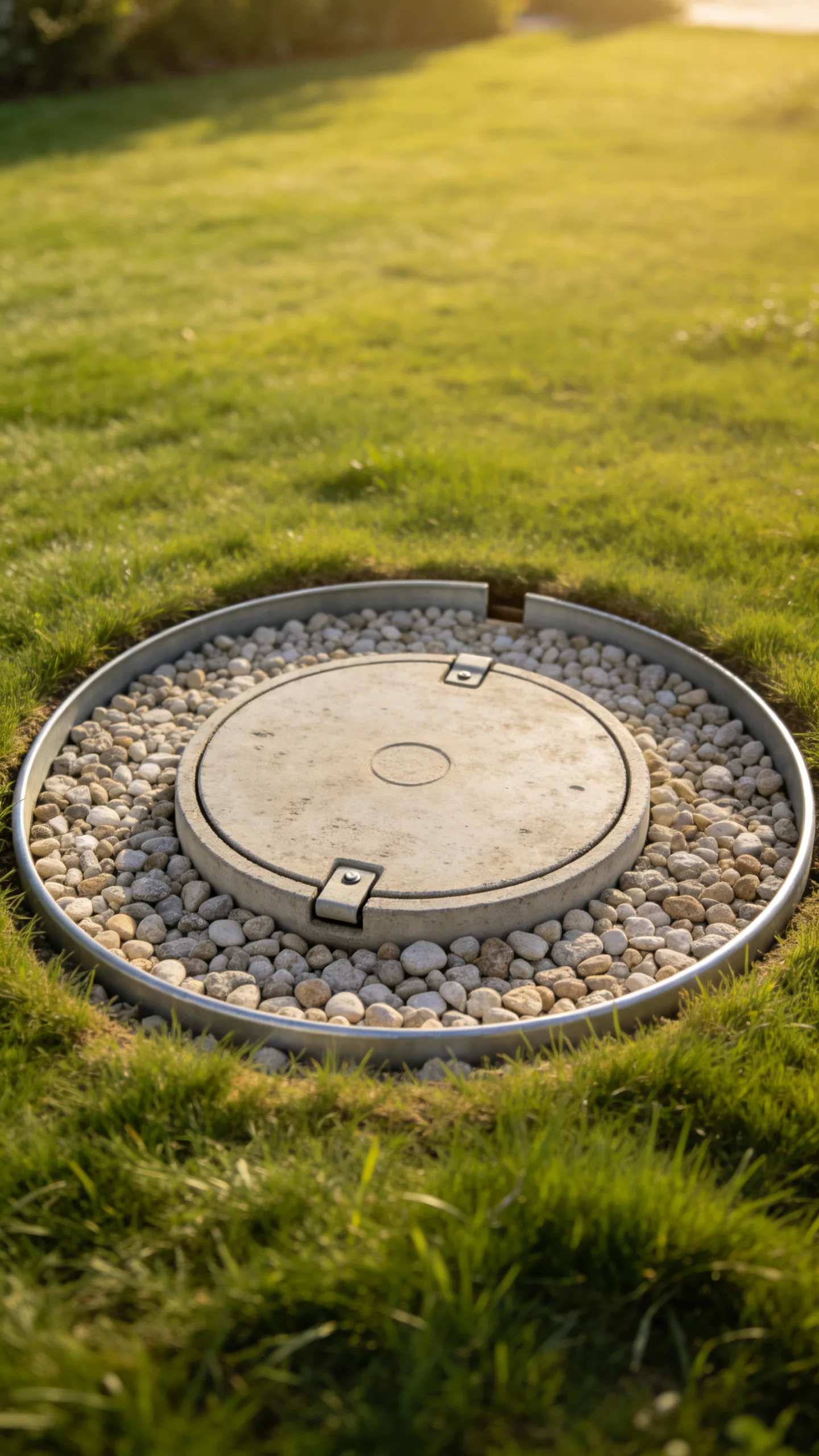
Create a neat circle of pea gravel or small decorative stone around the lid to make the utility area look deliberate. Use only a thin surface layer, since piling heavy material or extra soil over a septic tank can complicate access and alter drainage.
Place permeable landscape fabric beneath the gravel only if it will not cover or obstruct the lid seam. Define the circle with flexible plastic or aluminum edging that can be pulled up when service equipment needs more working room.
4. Ring of Shallow-Rooted Ornamental Grasses
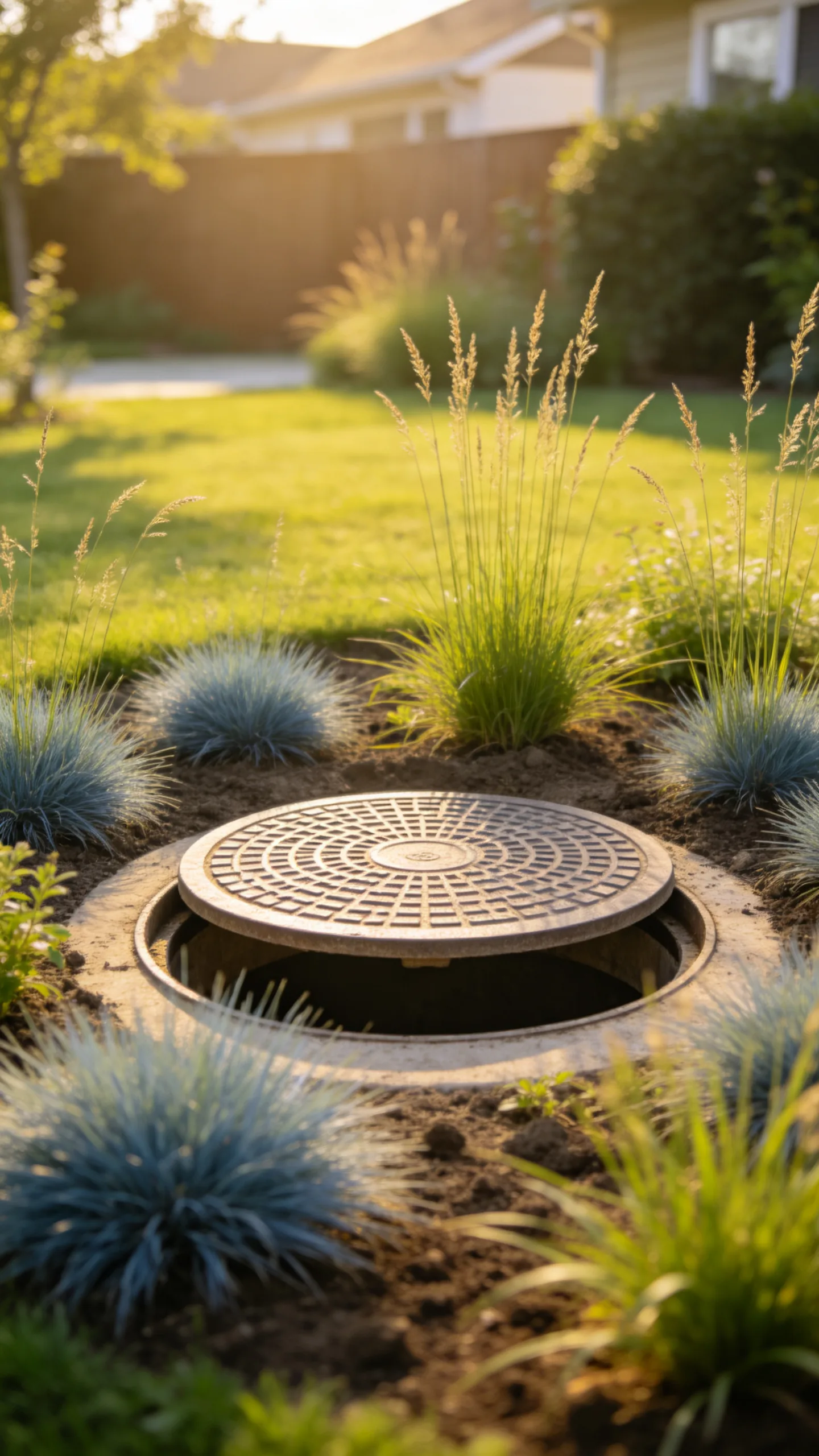
Plant low, clumping ornamental grasses around—not directly on—the septic cover. Blue fescue, prairie dropseed, or other locally suitable shallow-rooted grasses can soften the view while keeping the center accessible.
Choose compact varieties that will not flop across the lid or require heavy irrigation. Maintain a clear ring around the riser, and space the plants according to mature width so technicians do not have to trample them during a pumping visit.
5. Movable Container Garden
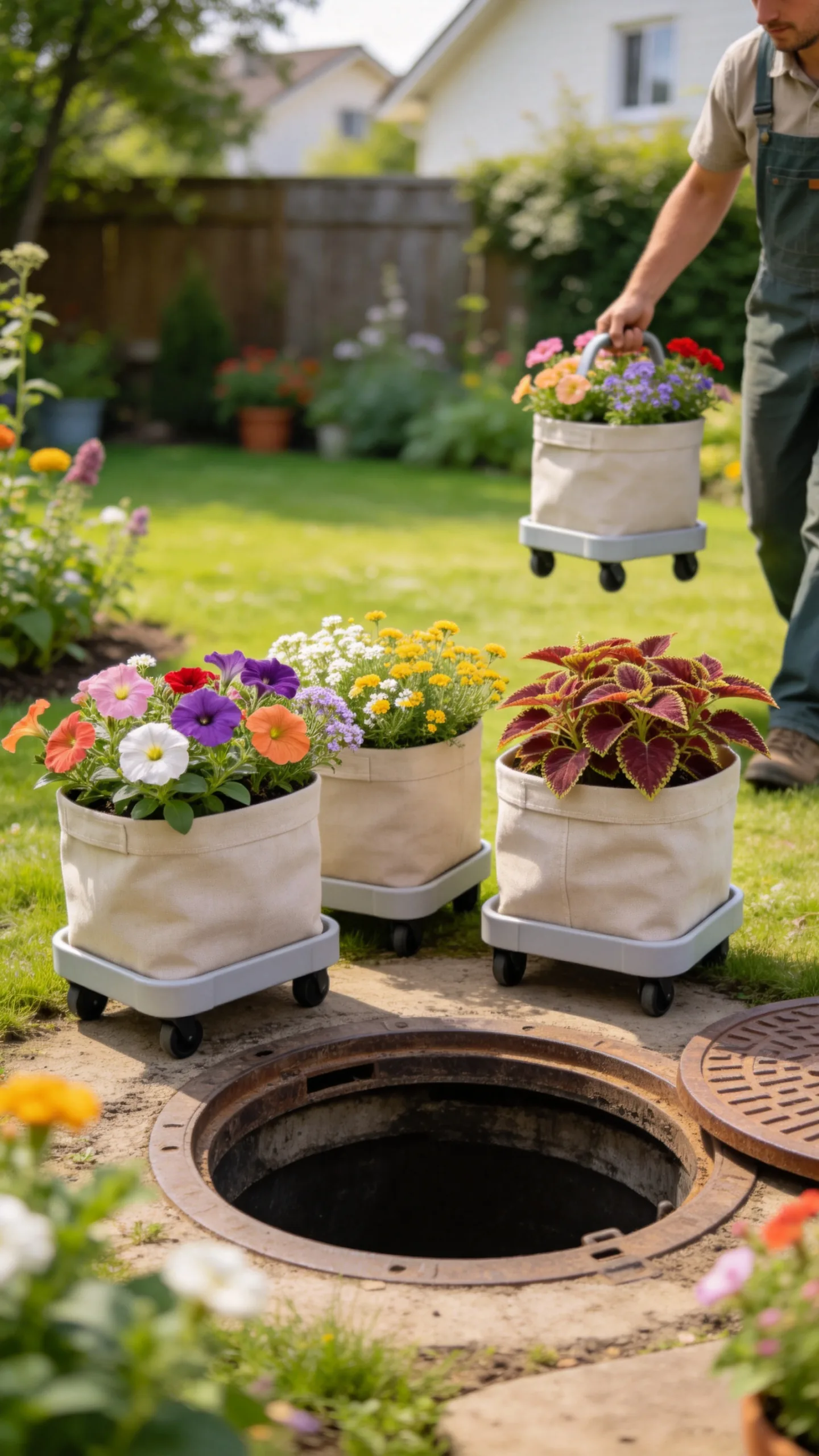
Arrange two or three lightweight pots near the lid to draw attention toward flowers or foliage rather than the septic hardware. Resin, fiberglass, and fabric containers are easier to relocate than concrete, stone, or oversized ceramic planters.
Keep every container off the lid itself and avoid setting heavy pots over the tank. Fill them with seasonal annuals such as petunias, calibrachoa, sweet alyssum, or coleus according to the site’s sun exposure. Place the pots on nearby stable ground so they can be moved before maintenance.
6. Hinged Decorative Planter Shell
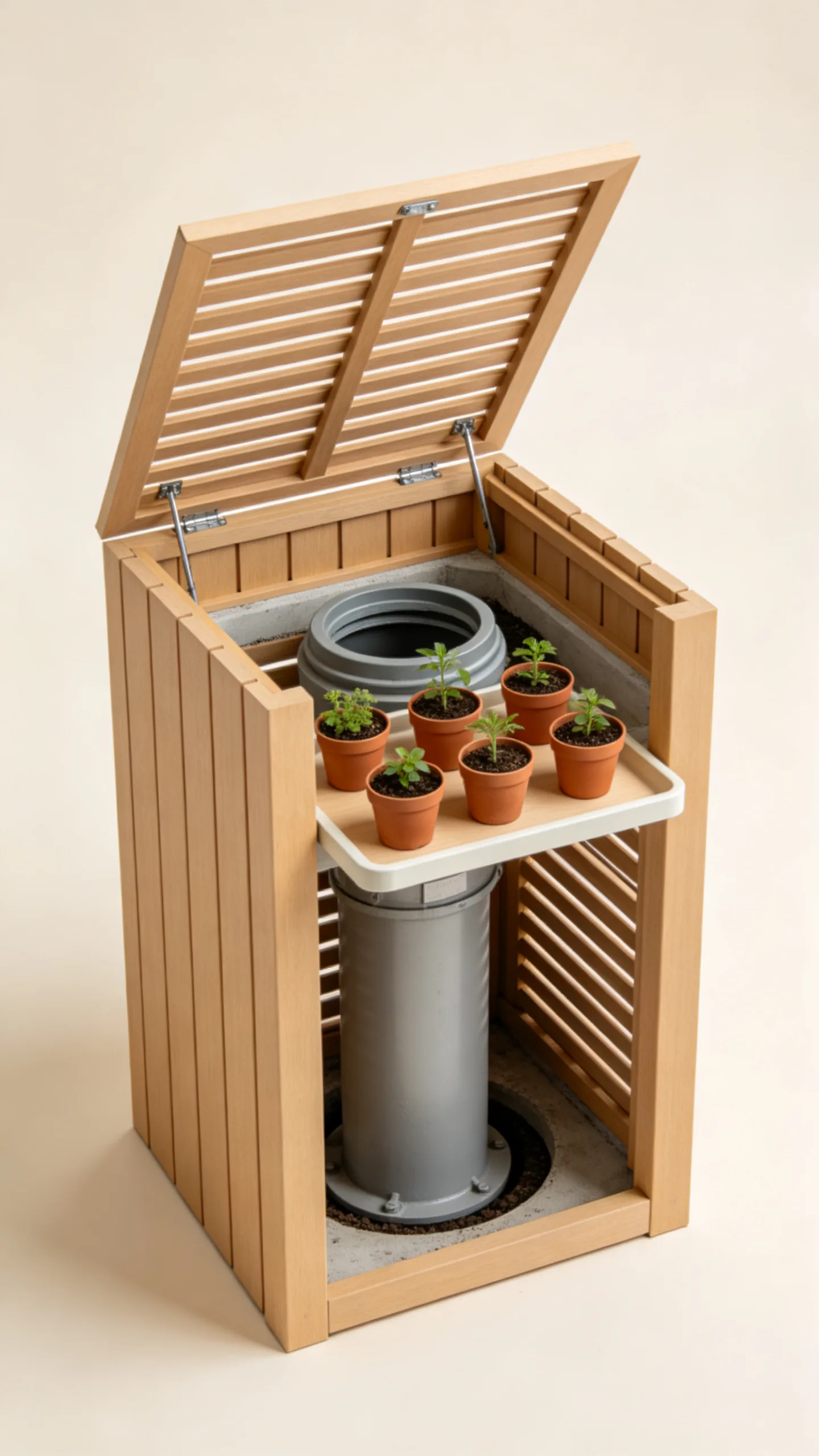
Make a decorative planter shell that looks like a raised container but has no heavy soil-filled base over the cover. A hinged or lift-off top can hold a few small nursery pots while the hollow structure conceals the riser below.
Use rot-resistant lumber or lightweight composite boards and include ventilation gaps. The shell should sit around the riser, not be anchored through the tank area. Remove the potted plants and lift away the structure whenever septic access is required.
7. Low Groundcover Border
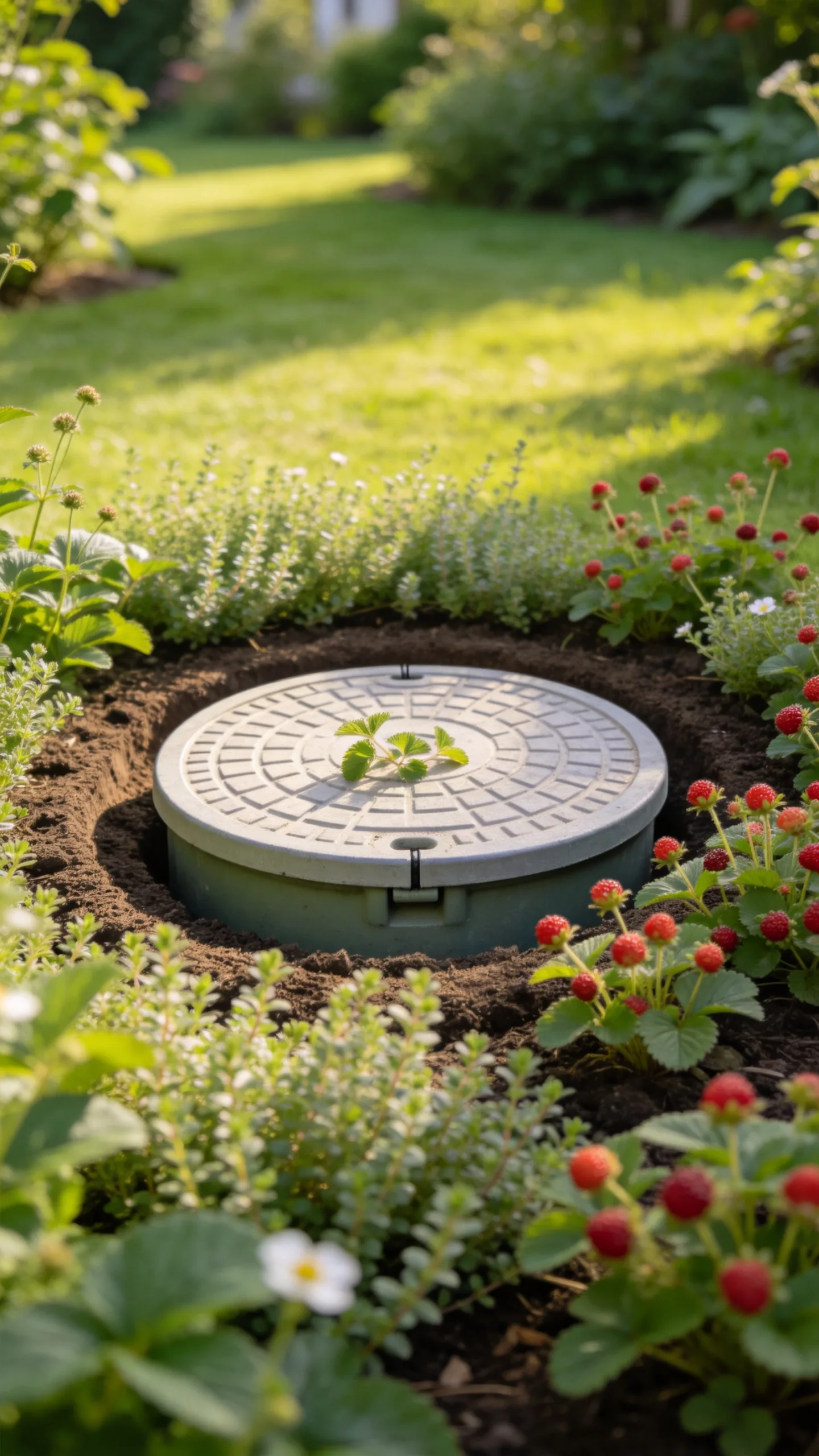
Frame the septic area with shallow-rooted groundcovers planted outside the lid’s working clearance. Creeping thyme may suit sunny, relatively dry sites, while ajuga or wild strawberry can work in compatible regional conditions.
Do not plant directly over lid seams, and avoid aggressive species that could make the cover difficult to locate. A narrow mulch-free gap around the riser provides a visual boundary and gives technicians room to lift the lid without damaging plants.
8. Flat Stepping-Stone Approach
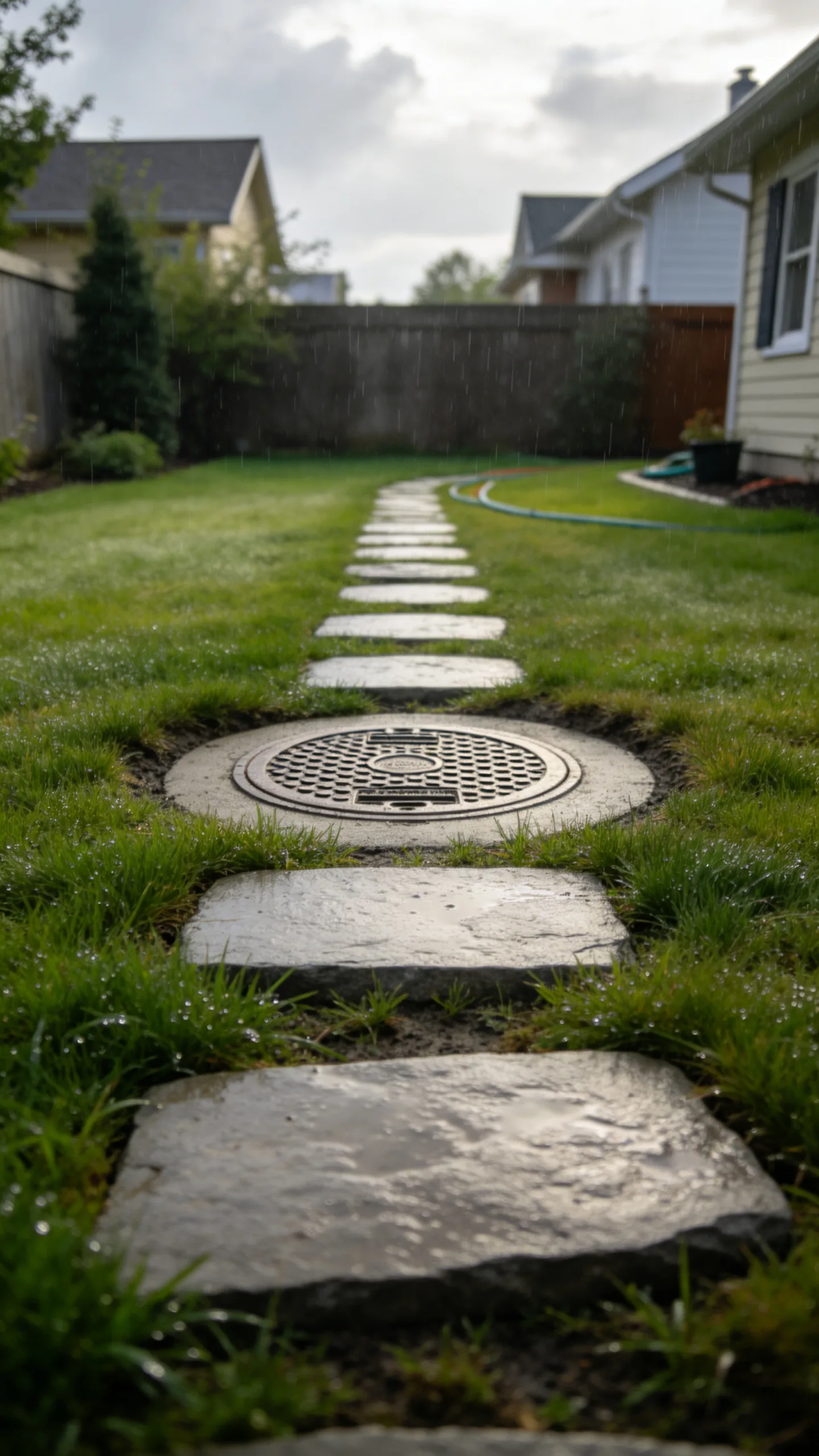
Lay a short line of stepping stones that leads toward the septic cover without crossing directly over the tank unless a professional confirms the placement is suitable. The path creates a planned focal line and gives service workers a predictable approach during wet weather.
Use individual surface-set stones rather than a poured concrete walkway. Keep the route free from thorny plants, low branches, and permanent edging so pumping hoses and equipment can reach the access point easily.
9. Removable Lattice Panel
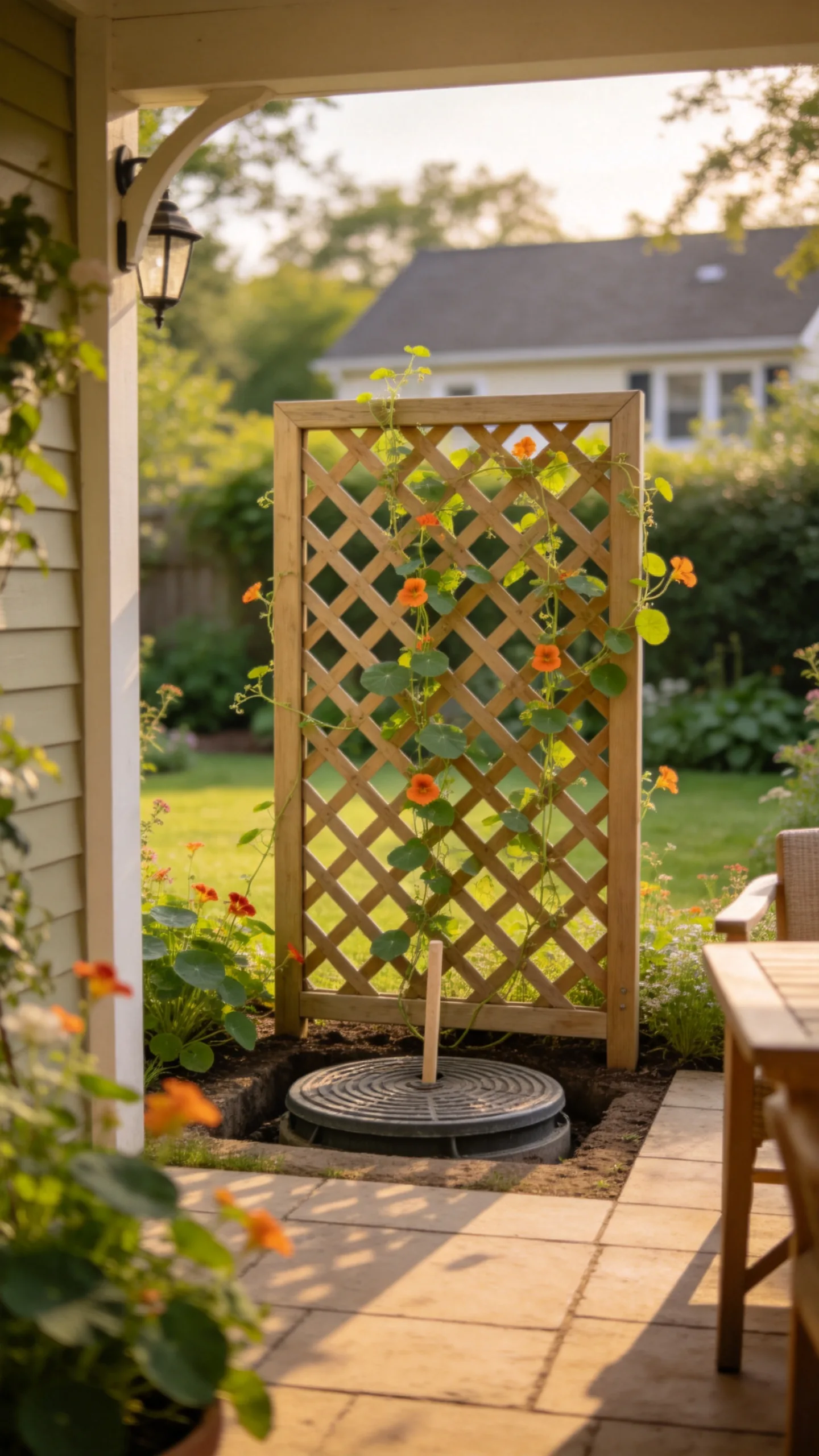
Lean a small framed lattice panel in front of the septic riser to screen it from a patio or window. Attach the panel to removable stakes outside the tank footprint, or use a freestanding base that can be carried away.
For color, train annual vines such as nasturtiums or black-eyed Susan vine in climates where they grow well. Avoid woody vines with persistent root systems, and cut back all growth before service so the panel can be removed without delay.
10. Mulched Island With a Clear Lid Zone
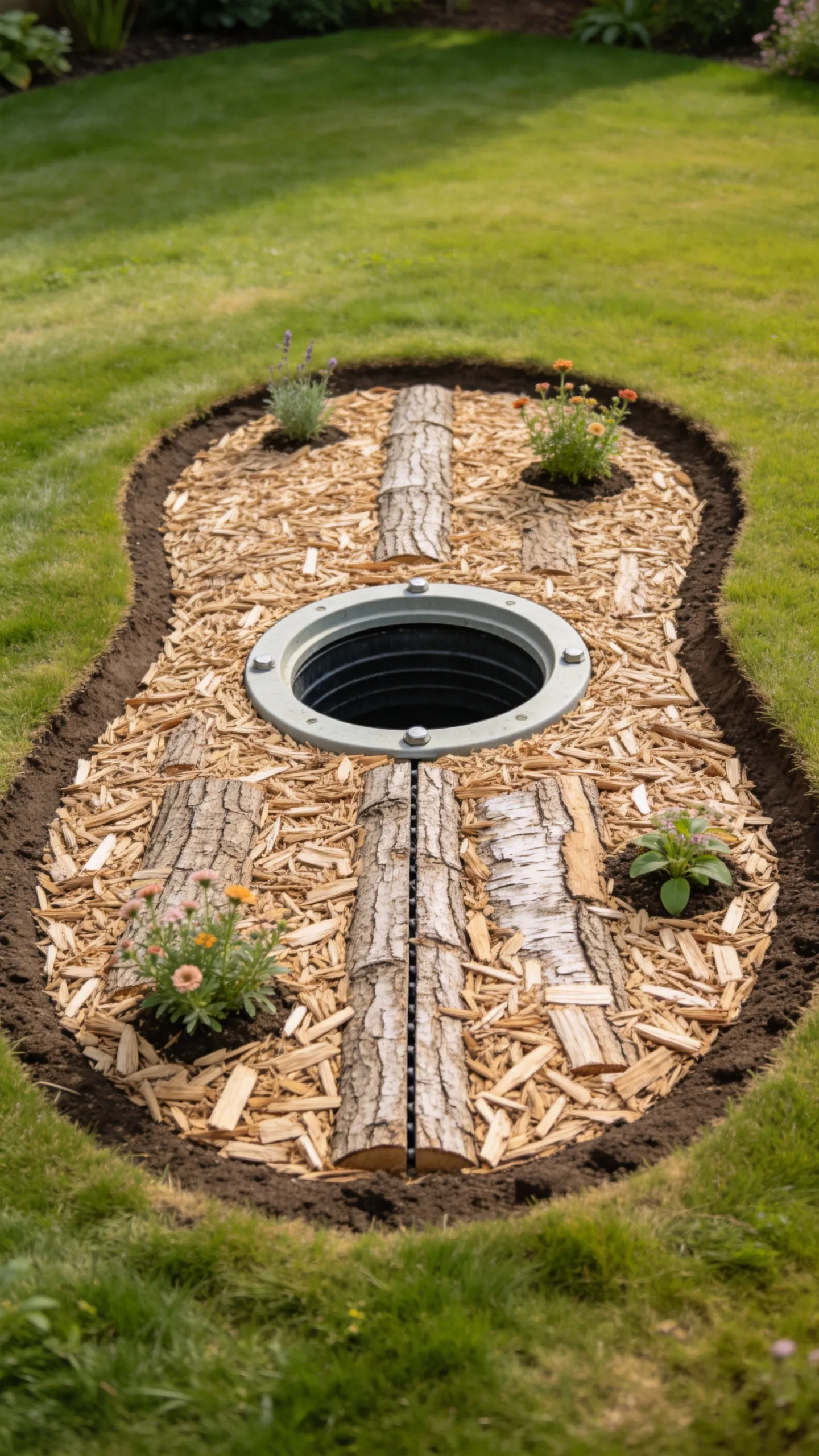
Shape a simple oval or kidney-shaped mulched island around the septic access point. The defined bed makes the lid look like part of the landscape while reducing the need to mow close to it.
Apply a light layer of shredded bark or fine mulch, but keep the lid, seam, and fasteners uncovered. Include only small annuals or shallow-rooted perennials outside the access zone. Do not raise the grade or create a deep mound over the tank.
11. Birdbath on a Separate Lightweight Base
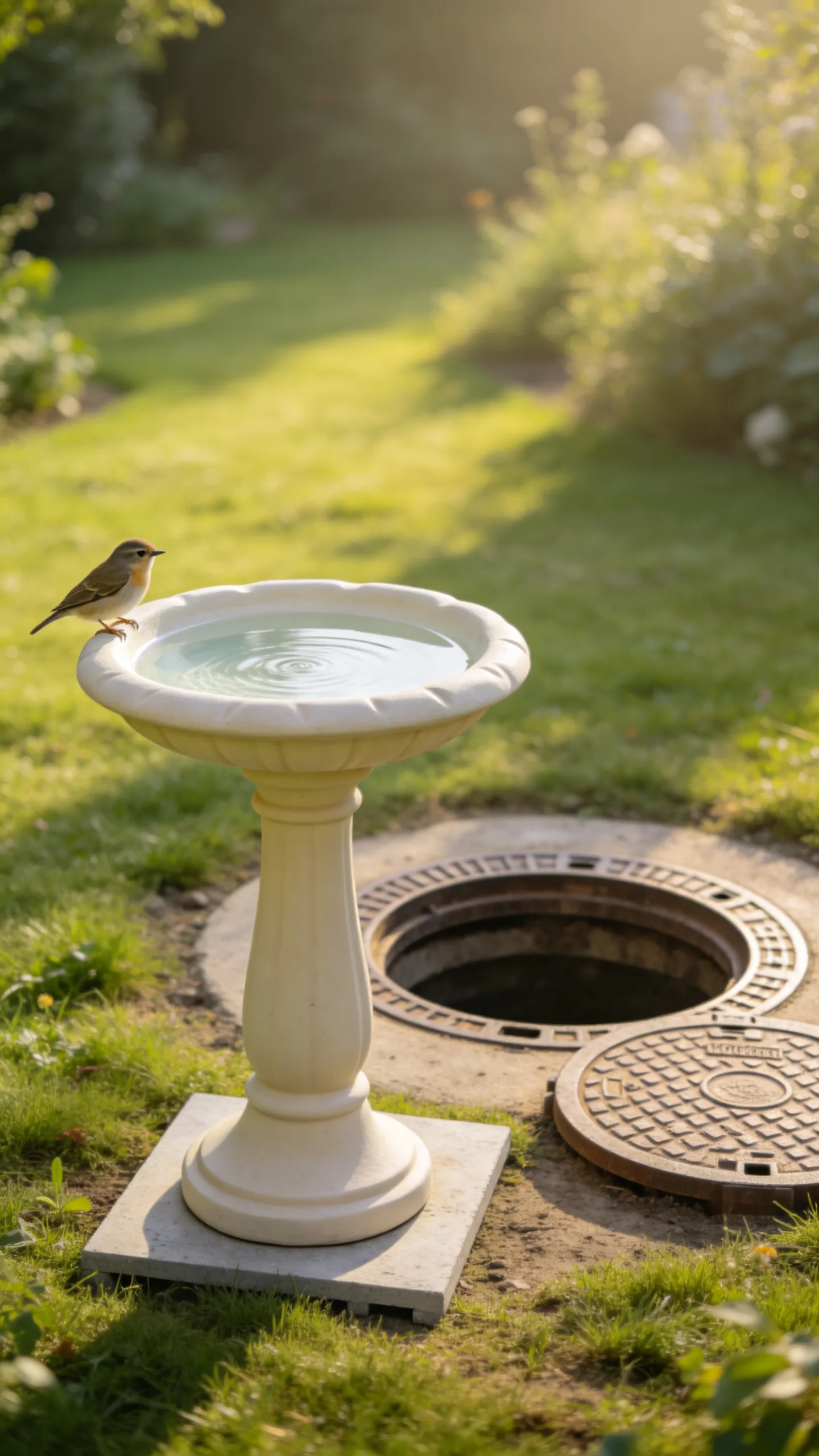
Position a lightweight birdbath near the septic lid as a visual distraction. Choose resin or thin metal instead of cast concrete, and place it beside the cover rather than on top of the tank or riser.
Set the birdbath on a removable leveling pad, not a permanent footing. Leave a direct route to the lid and clean the basin regularly to prevent algae and mosquitoes. In freezing climates, store or empty it according to the manufacturer’s guidance.
12. Decorative Metal Garden Screen
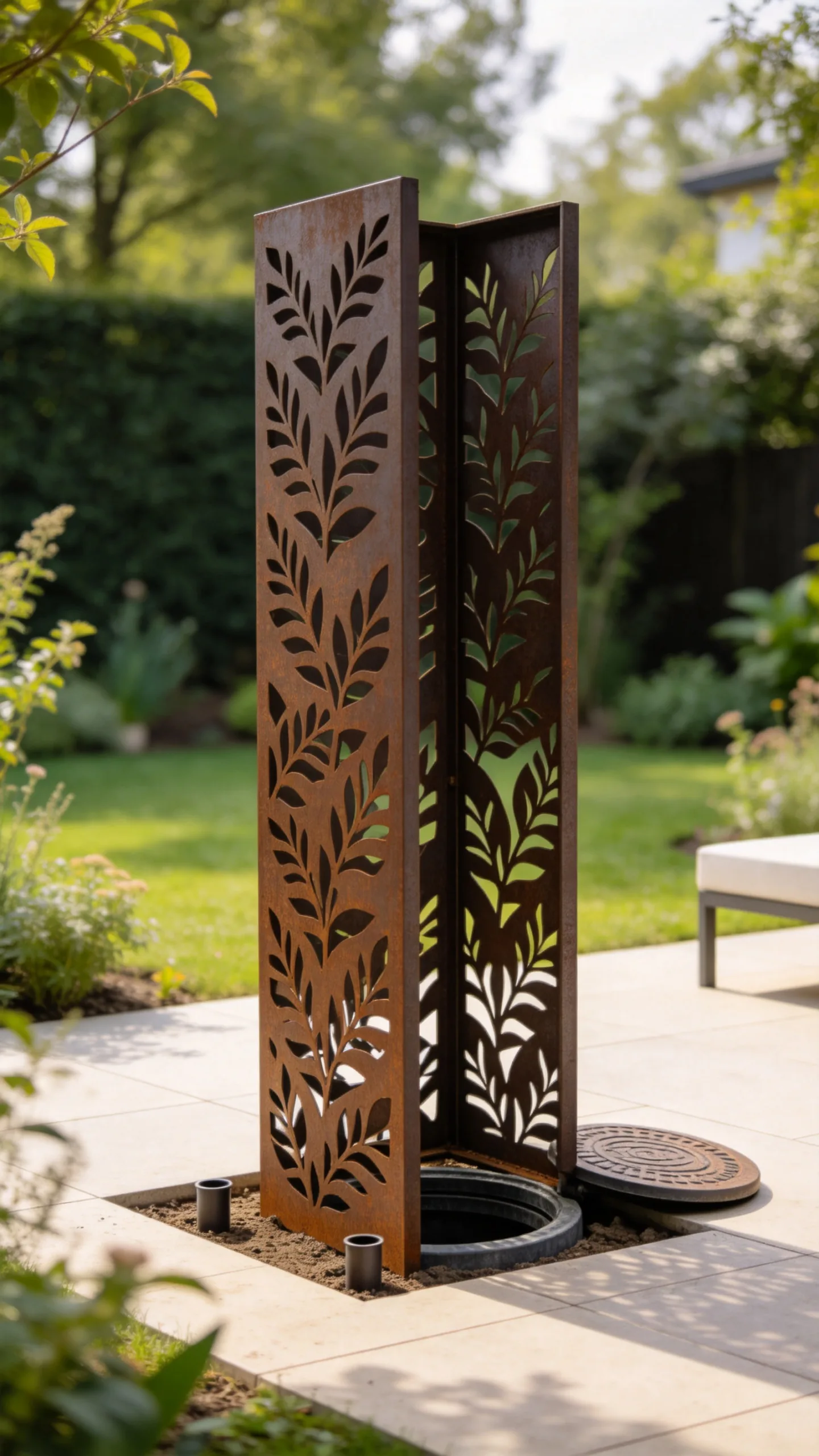
A freestanding metal screen with a leaf, branch, or geometric pattern can hide a raised lid from one main sightline. Narrow screens work particularly well beside patios, side yards, and property lines where the cover is viewed from a consistent direction.
Select a panel that can be lifted from ground sleeves or moved with its base intact. Install supports outside the tank area after confirming utility locations, and avoid deep posts. A rust-resistant finish will reduce maintenance in damp grass.
13. Seasonal Annual Flower Ring

Plant a ring of annual flowers around the lid for color that can be changed each year. Marigolds, dwarf zinnias, alyssum, violas, and wax begonias offer options for different light levels, although local climate and site moisture should guide the final selection.
Keep the plants in a shallow bed and leave the lid exposed. Annuals are practical because their limited root systems are less concerning than trees or large shrubs, and they can be removed quickly when the tank needs servicing.
14. Removable Half-Barrel Facade
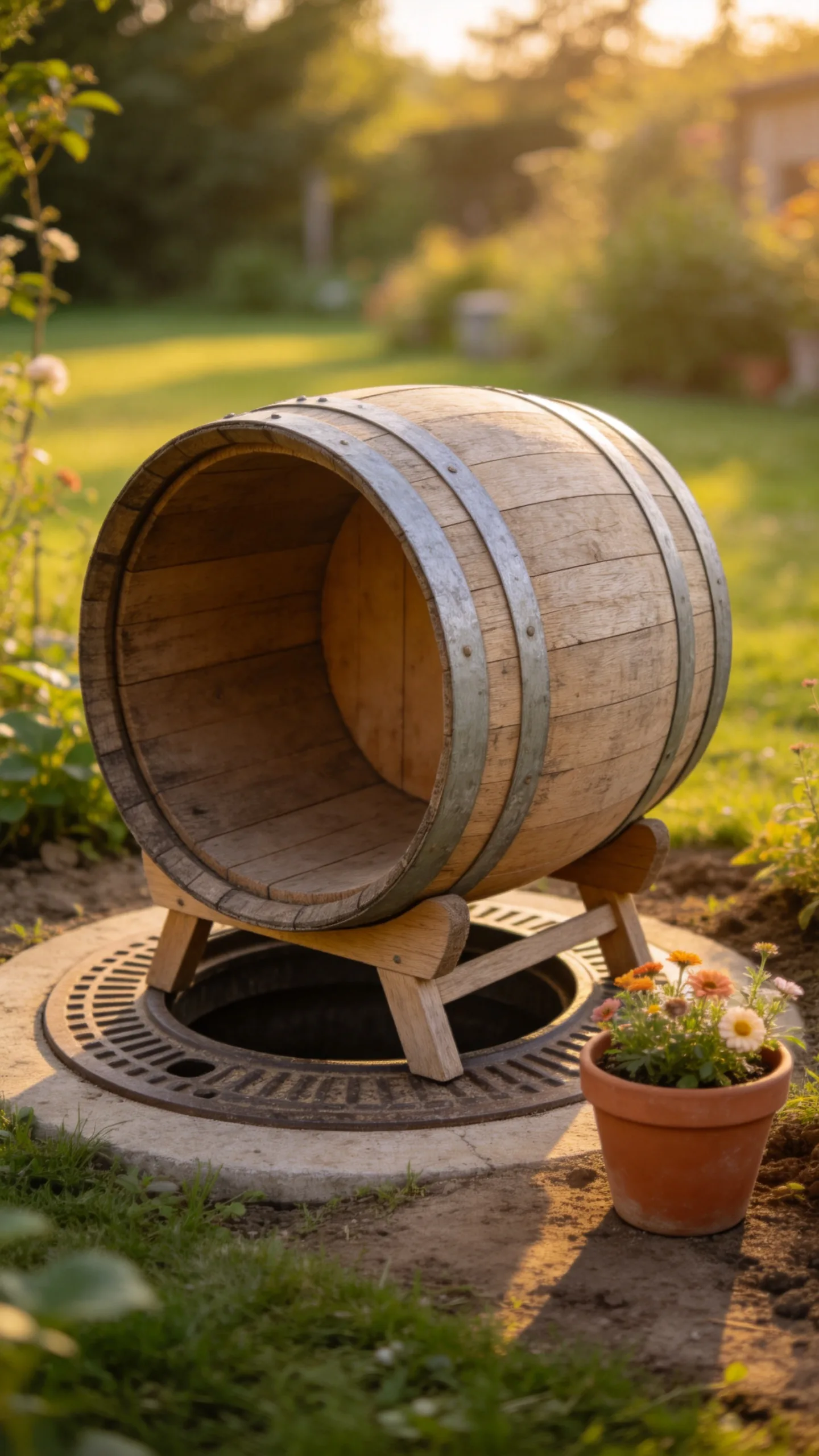
Cut a lightweight barrel-style planter shell in half vertically and use it as a facade in front of a visible riser. The curved form can coordinate with rustic gardens without placing an actual soil-filled barrel over the tank.
Secure the facade to a movable frame or shallow stakes outside the tank footprint. Add a small pot of seasonal flowers on nearby ground if desired, but preserve enough clearance to lift the lid and work around it safely.
15. Dry Creek Accent Beside the Cover

Create a shallow dry-creek effect that curves beside the septic cover and directs the eye through the yard. Use a thin layer of mixed pebbles and a few modest stones that can be moved by hand rather than heavy boulders requiring machinery.
Do not design the creek to collect stormwater over the tank or drain field. Keep rock away from lid seams, and avoid excavation that could damage septic components. The feature should be decorative, permeable, and easy to dismantle.
16. Solar Lantern Cluster on Movable Stakes
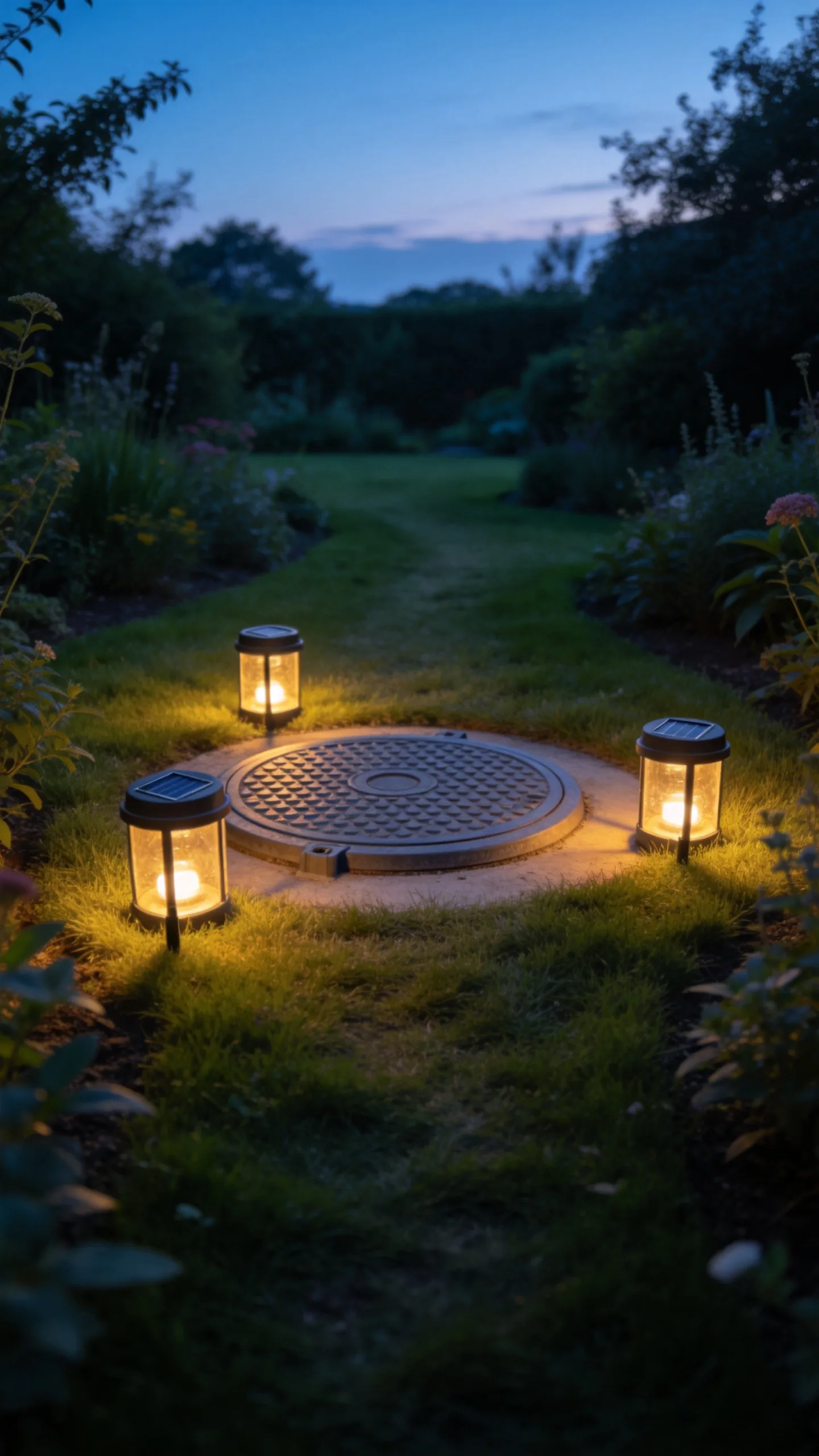
Place several low solar lanterns around the septic area to make it feel like a planned garden feature after dark. Use shallow, easily removed stakes and locate them outside the tank footprint once the system boundaries are confirmed.
Keep wiring out of the area by choosing self-contained solar fixtures. Do not insert stakes near pipes, lids, or other buried components. Arrange the lights asymmetrically with nearby planting beds so they highlight the landscape rather than the cover.
17. Low Split-Rail Accent Fence

Install a short, decorative section of split-rail-style fencing on the viewing side of the septic lid. A single removable panel can interrupt the sightline while preserving an open route from the driveway or street for service technicians.
Use lightweight materials and shallow or freestanding supports positioned beyond the tank. Do not enclose the cover on all sides; septic work requires room for workers, hoses, and lid removal. The fence can also support a small hanging sign or seasonal wreath if it remains easy to move.
18. Raised Rim With Removable Deck Tiles

Surround a lid that sits near a patio with a lightweight rim and removable outdoor deck tiles, provided no load-bearing structure is placed over the tank. Interlocking composite or plastic tiles can visually connect the utility area to nearby hardscaping.
Keep the actual lid uncovered or make the tiles directly above it easy to lift without tools. Do not build a permanent deck, pour concrete, or attach framing to the septic riser. Ask a septic professional to review the concept if the tank is close to an entertainment area.
19. Meadow-Style Planting With a Mown Access Path

Use low meadow plants around the broader septic area while maintaining a clearly mown path to the lid. Regionally appropriate fine grasses and shallow-rooted wildflowers can create a relaxed look with less frequent mowing.
Avoid woody plants, deep-rooted prairie species, and dense growth directly over the cover. Mark the lid location on a property plan and keep a short circle around it trimmed. The path should be wide enough for technicians and pumping hoses to pass without crushing the planting.
20. Camouflaged Riser Lid With Approved Paint
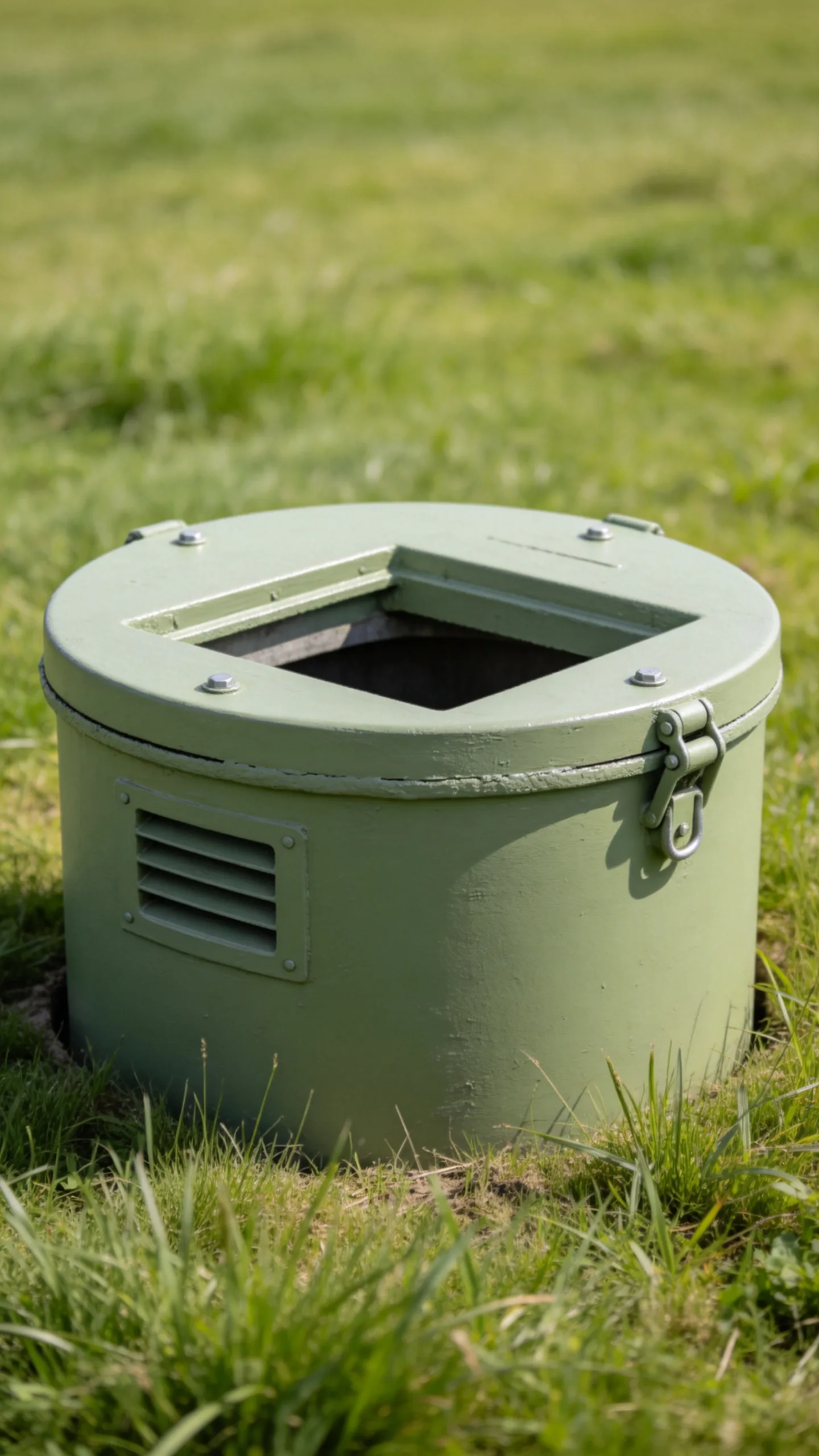
If the riser is structurally sound but visually prominent, ask the lid manufacturer or septic provider whether its exterior can be painted. An approved outdoor coating in muted green, brown, gray, or tan may help the cover blend with grass, mulch, or gravel.
Never paint over warning labels, fasteners, seams, vents, or damaged areas. Avoid dark finishes that may become excessively hot in direct sun, and do not apply coatings that could make the lid slippery or difficult to open.
21. Removable Bench-Style Screen
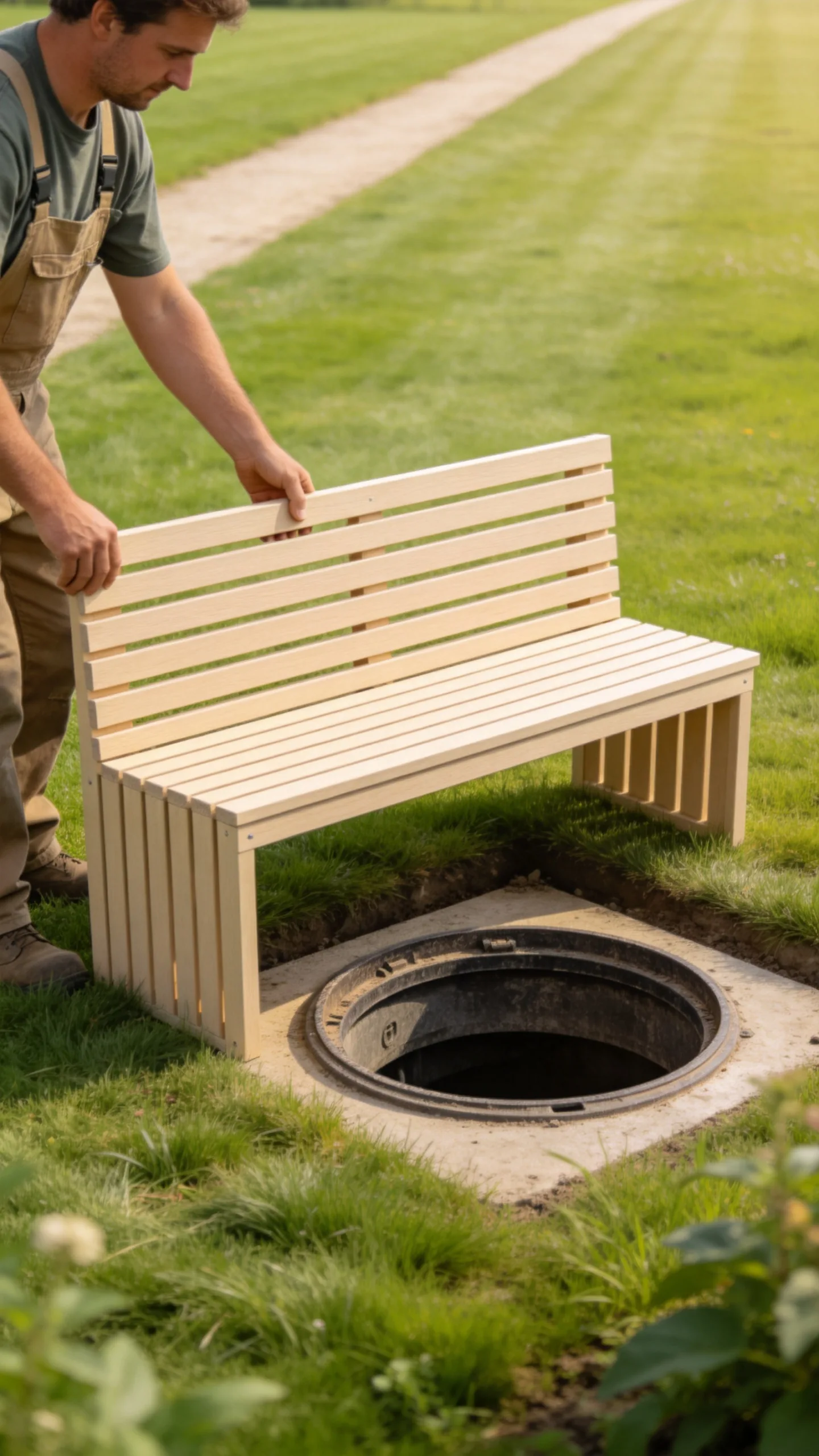
Create a bench-shaped screen that disguises the septic cover without functioning as a heavy permanent seat. A lightweight hollow frame with a slatted back can block the view while remaining simple to lift away before service.
Place the screen beside or around the riser rather than transferring weight to the lid. Skip concrete anchors, masonry bases, and built-in storage filled with heavy materials. Preserve an unobstructed service route and label the underside so future residents understand that the feature conceals septic access.