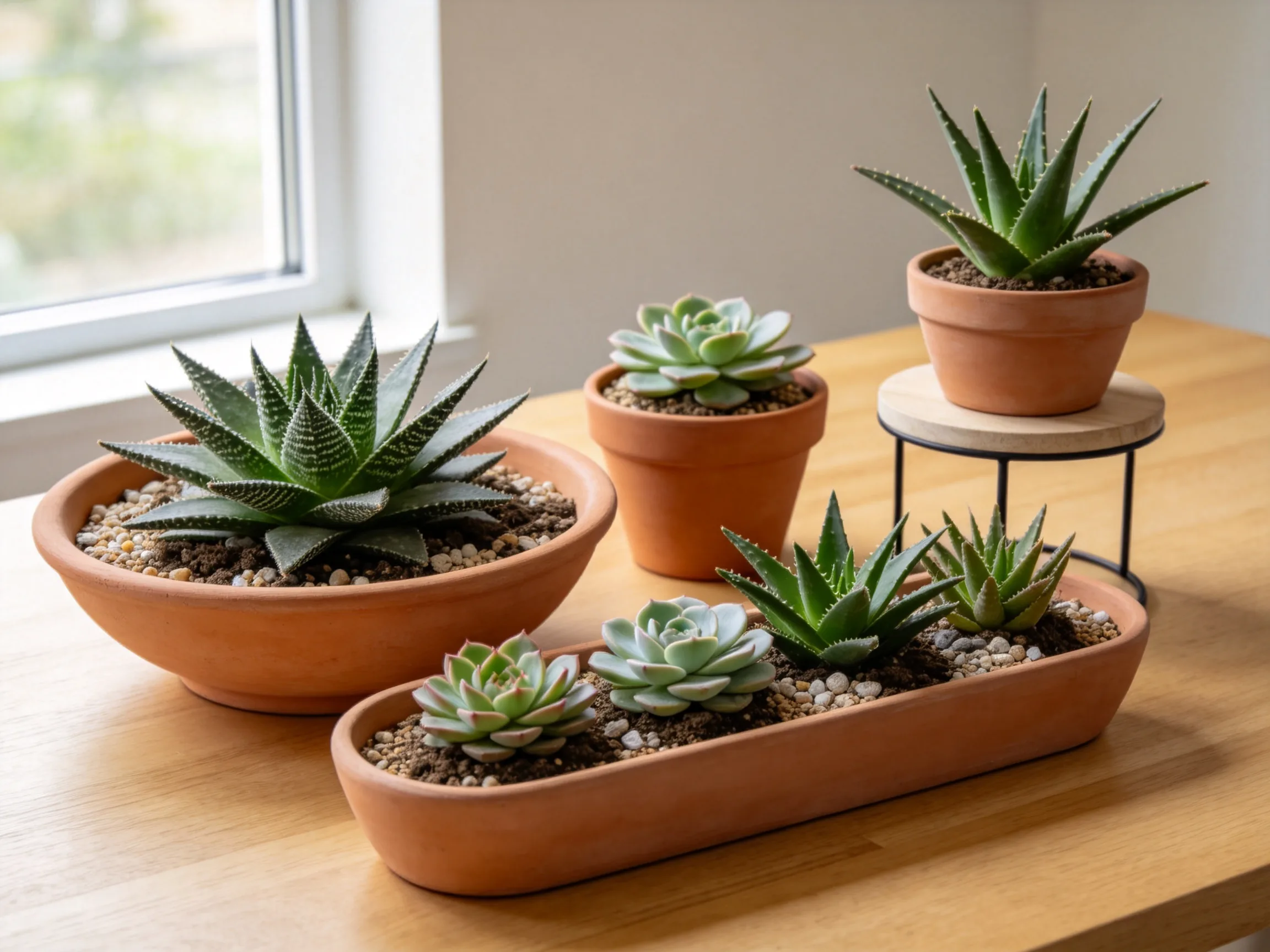
A thoughtful succulent garden design indoors can bring greenery to a dining table, desk, coffee table, or windowsill without demanding constant attention. The easiest arrangements pair plants with similar light and watering needs, use fast-draining soil, and keep containers compact enough to move when they need brighter light. These 17 tabletop ideas are designed to stay tidy while making routine care simple.
1. Shallow Terra-Cotta Bowl Garden
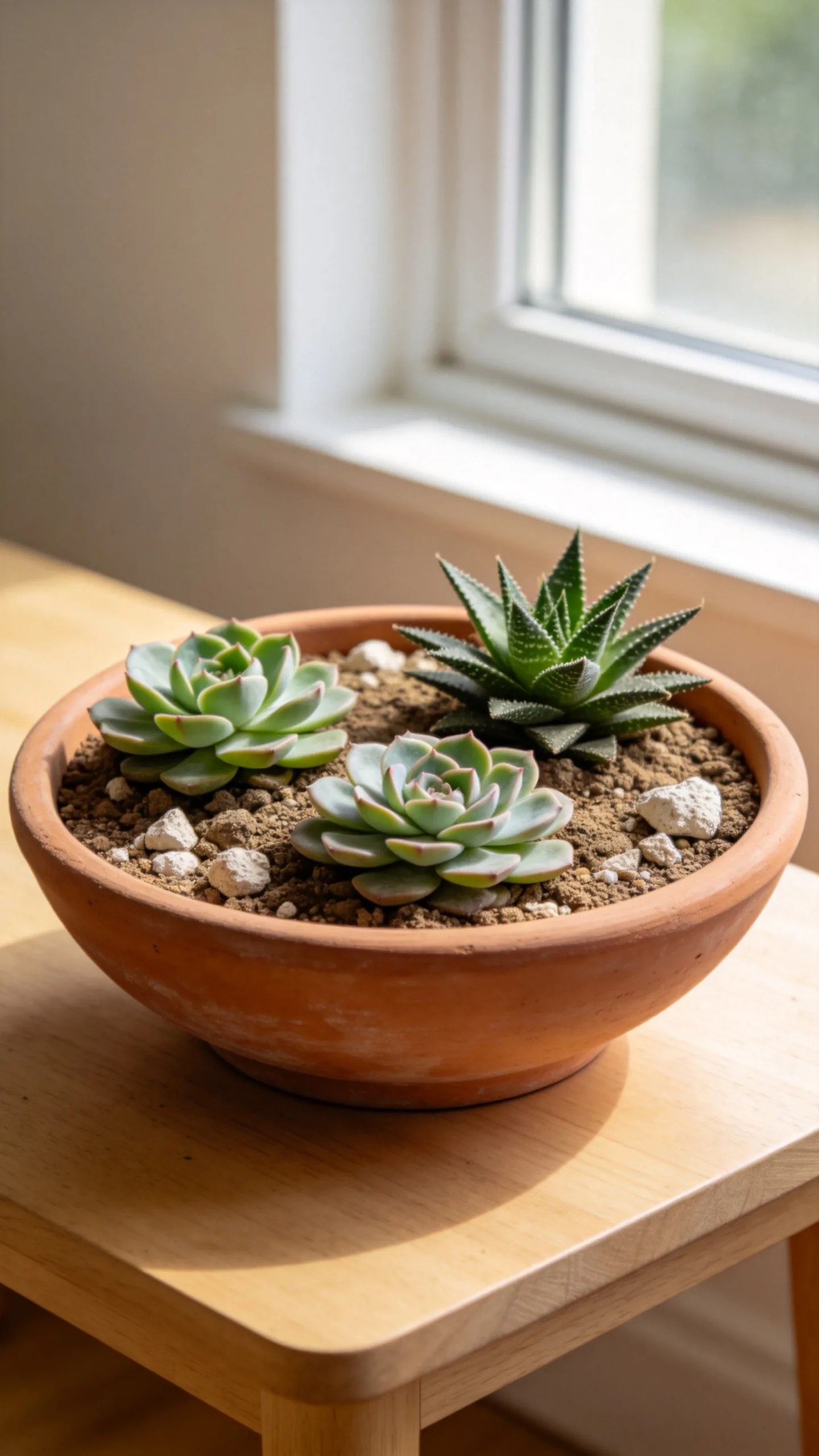
Plant a small group of echeverias, haworthias, or compact aloes in a wide, shallow terra-cotta bowl with a drainage hole. The porous clay allows moisture to evaporate more quickly than glazed ceramic, helping reduce the risk of consistently wet roots.
Use commercial cactus soil amended with extra pumice or perlite, and leave space between each rosette for air circulation and future growth. Place the bowl near a bright window, rotating it every week or two so the plants grow evenly rather than leaning toward the light.
2. Three-Pot Succulent Tray
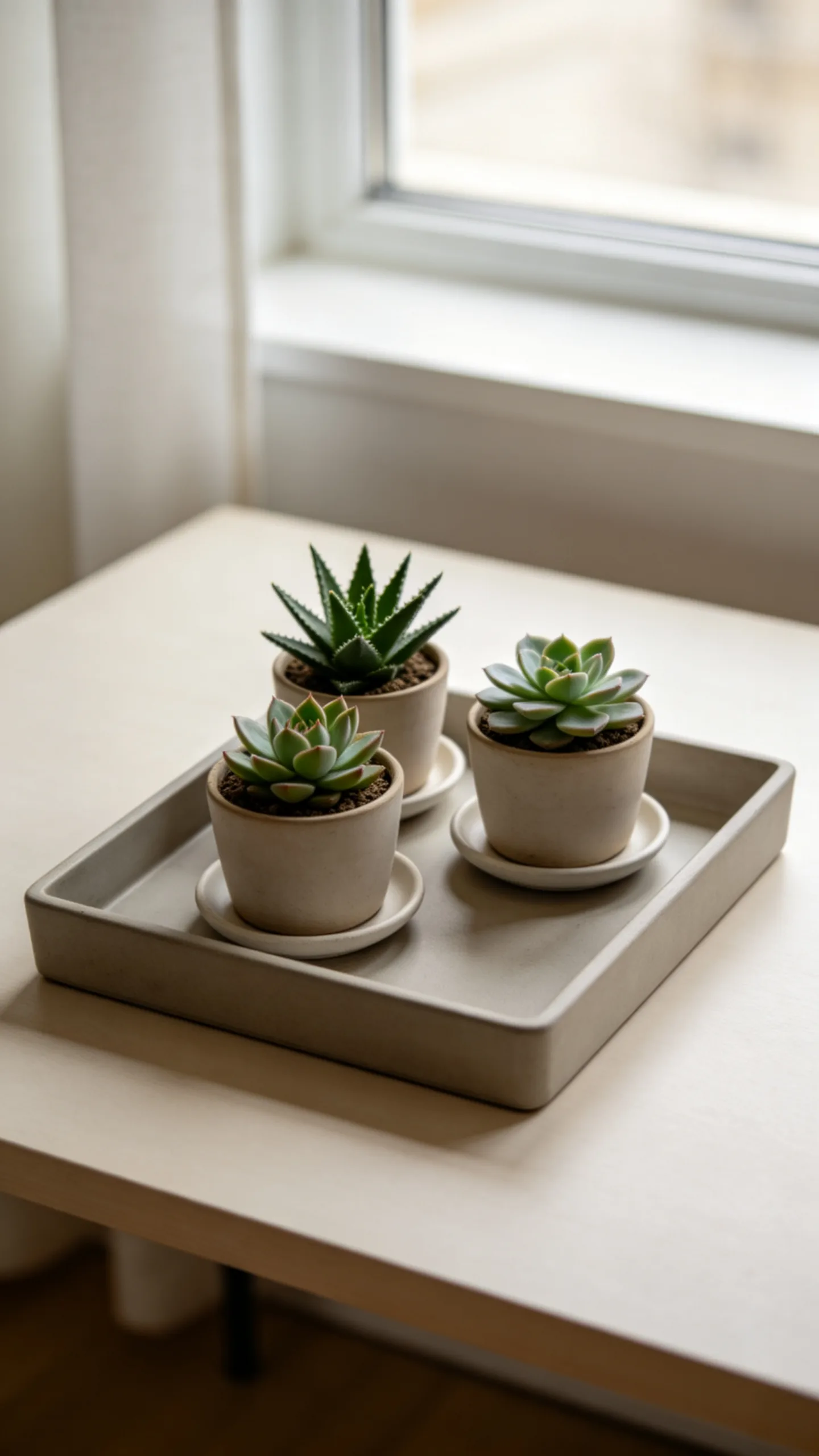
Arrange three individual nursery pots inside a low wooden, metal, or ceramic tray. Using separate pots lets you water each succulent only when its own soil has dried, which is helpful when combining varieties with slightly different needs.
Choose pots in graduated heights to create a layered display without taking up extra table space. Place a waterproof liner or individual saucers beneath them, and cover visible nursery pots with simple cachepots if you want a more polished look.
3. Minimalist Haworthia Desk Garden
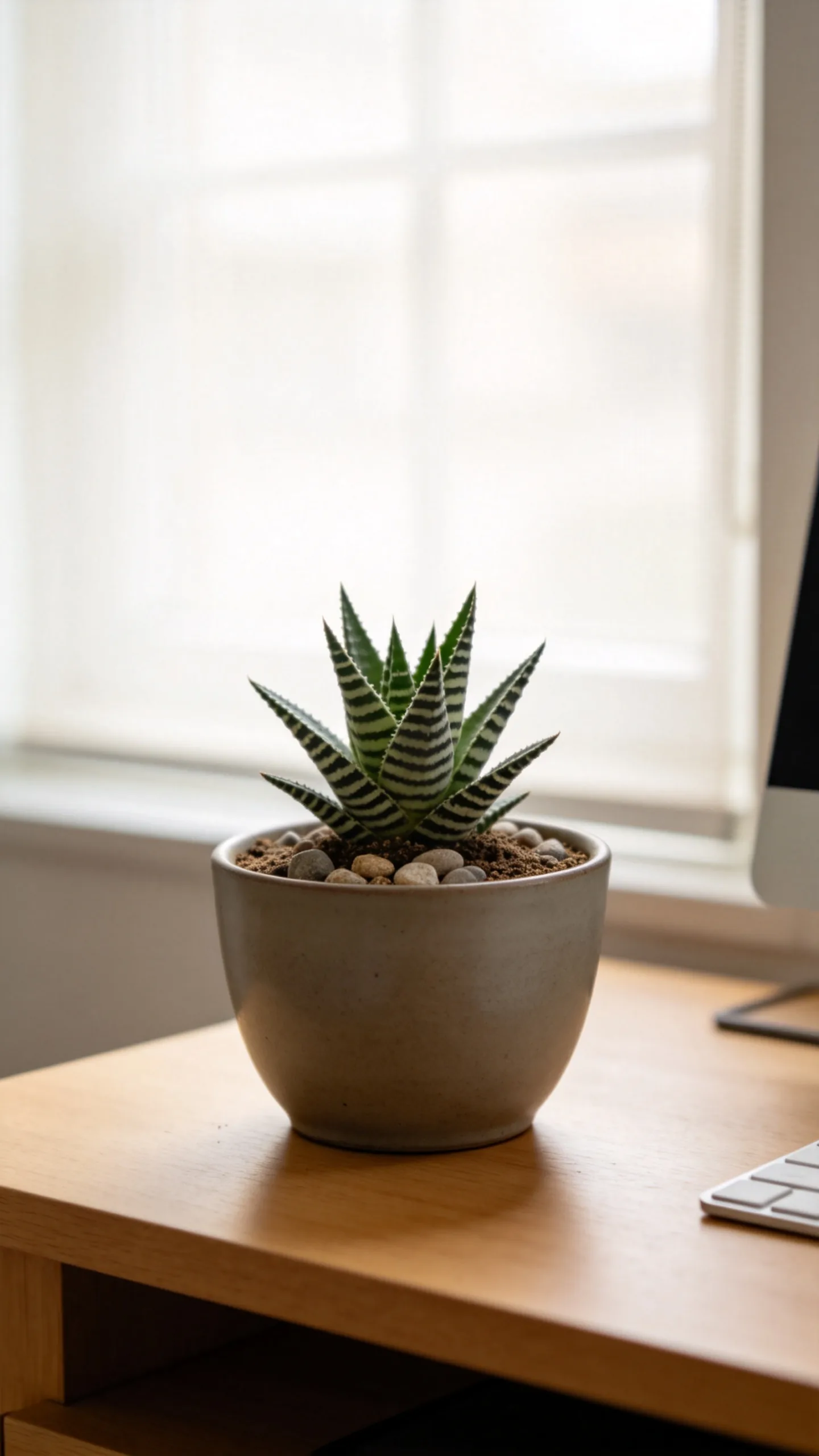
A single haworthia in a compact ceramic pot makes a practical choice for a desk, side table, or shelf near a window. Haworthias generally tolerate indoor conditions better than many sun-hungry rosette succulents, although they still perform best with bright, indirect light.
Select a planter with a drainage hole and keep decorative stones to a thin top layer so the soil can still dry readily. Water only after the potting mix has dried through, then empty any collected water from the saucer.
4. Long Trough Centerpiece
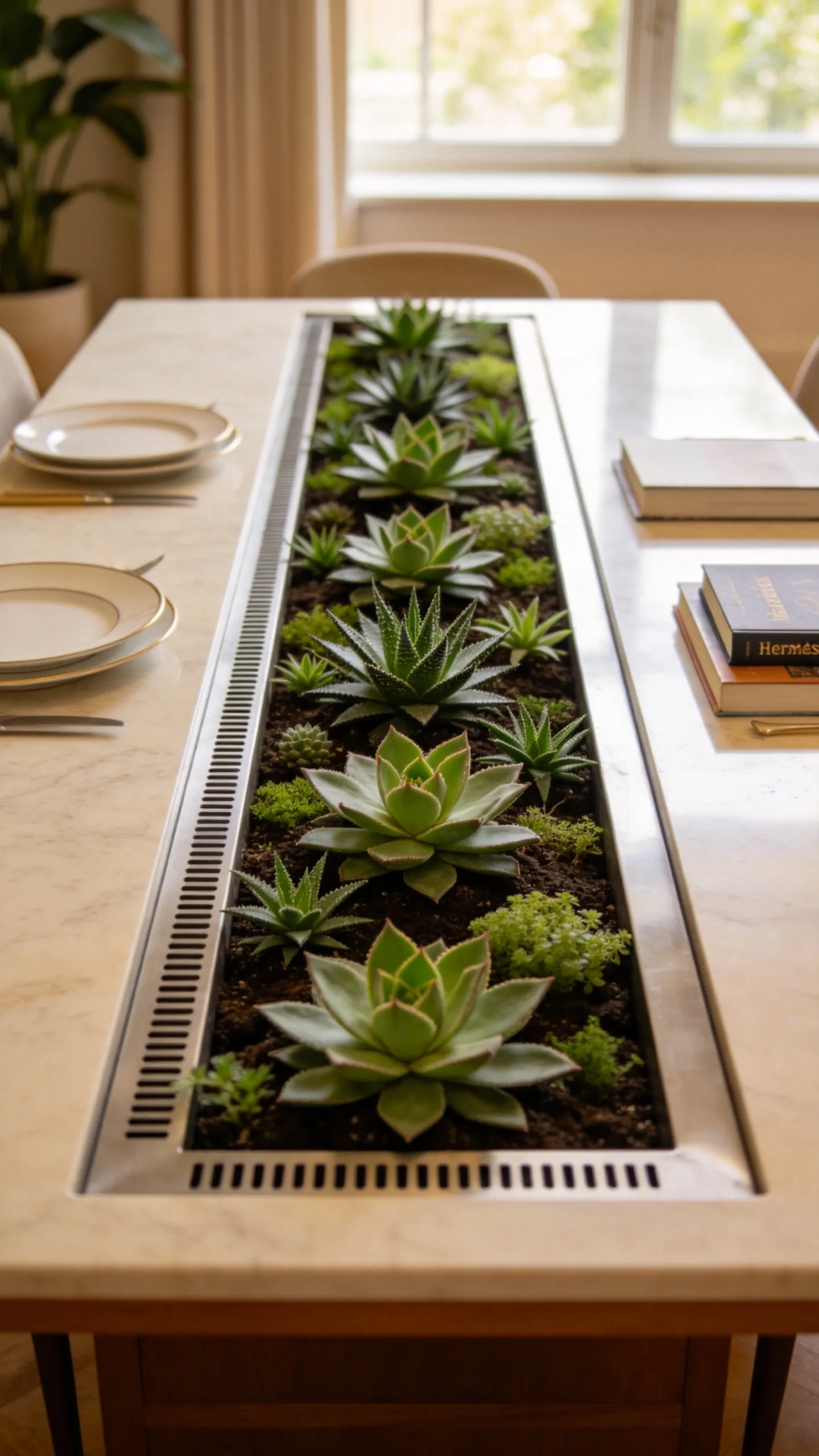
Use a narrow rectangular trough to create a succulent centerpiece that leaves room for plates, books, or other tabletop essentials. A planter approximately 4 to 6 inches wide keeps the arrangement visually substantial without overwhelming a dining or console table.
Plant repeated rows of compact succulents such as gasteria, haworthia, and dwarf aloe. A trough with drainage is preferable; if it lacks holes, keep the plants in removable nursery pots hidden inside the container rather than planting directly into it.
5. Matching Echeveria Rosette Row
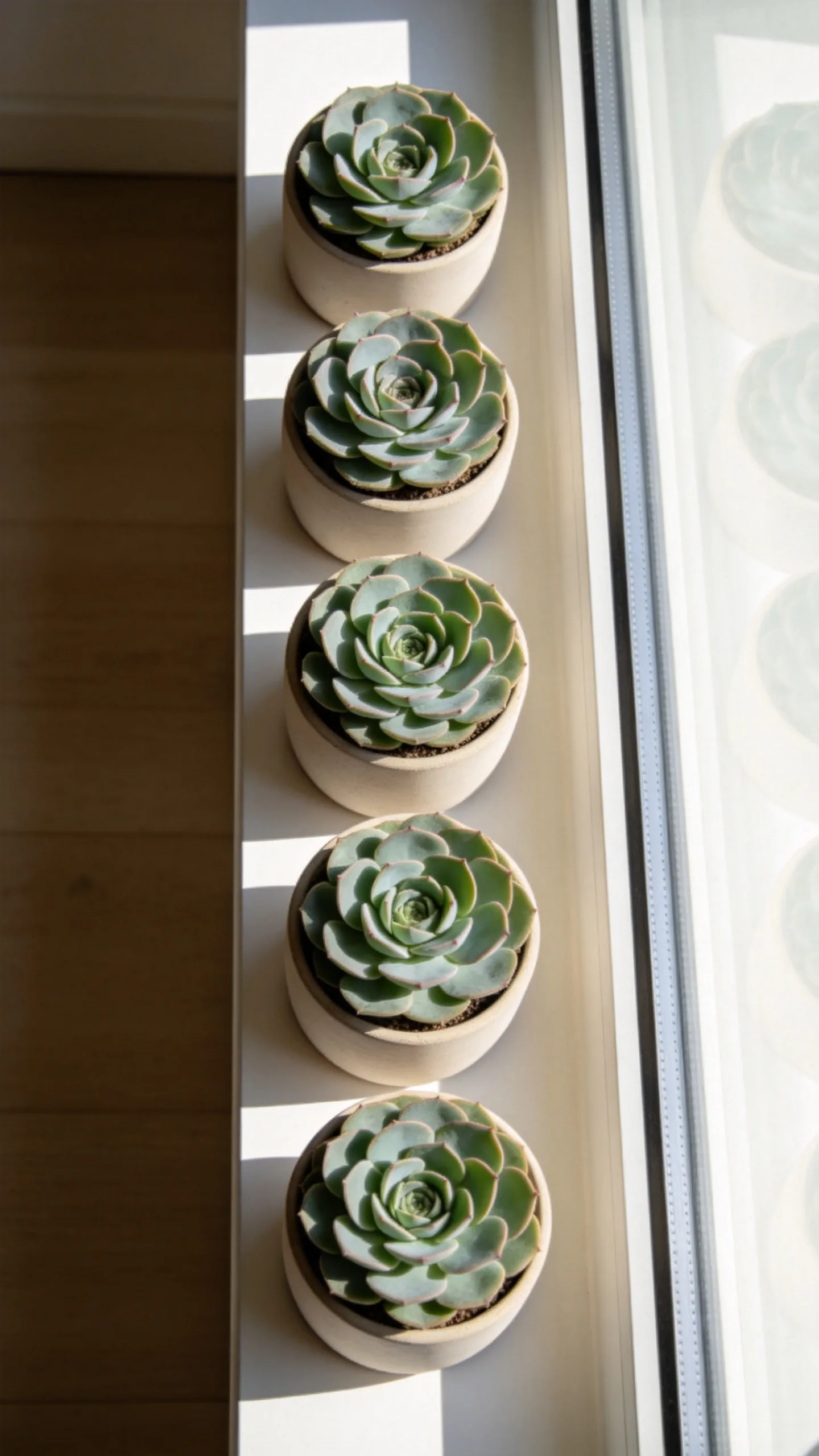
Line up three or five small echeverias in matching pots for a clean, symmetrical display. Repeating one plant type reduces visual clutter and makes the arrangement easy to inspect for stretched growth, dry leaves, or pests.
Echeverias need strong light to maintain compact rosettes, so position the row close to a bright south- or west-facing window where appropriate. If natural light is limited, use a small tabletop grow light and follow the manufacturer’s distance and timing guidance.
6. Tiered Succulent Stand
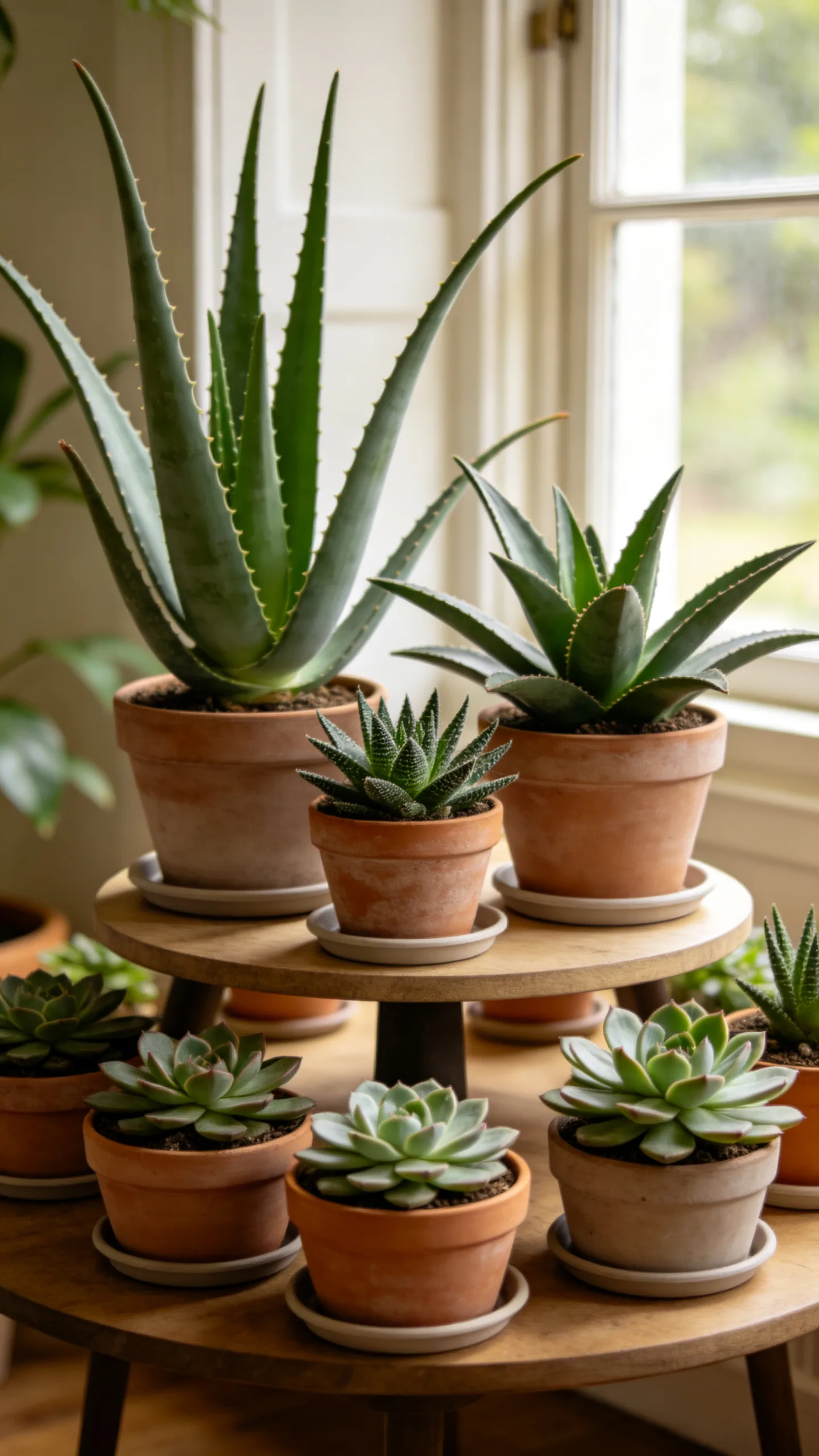
Place individual succulent pots on a two- or three-level tabletop stand to build height without using more surface area. The raised arrangement also improves access when checking soil moisture or removing dry lower leaves.
Keep taller aloes or gasterias on the back tier and low rosette plants on the front. Make sure each level receives adequate light rather than allowing the upper pots to shade the lower ones, and set waterproof saucers beneath every container.
7. Zebra Haworthia Pebble Bowl
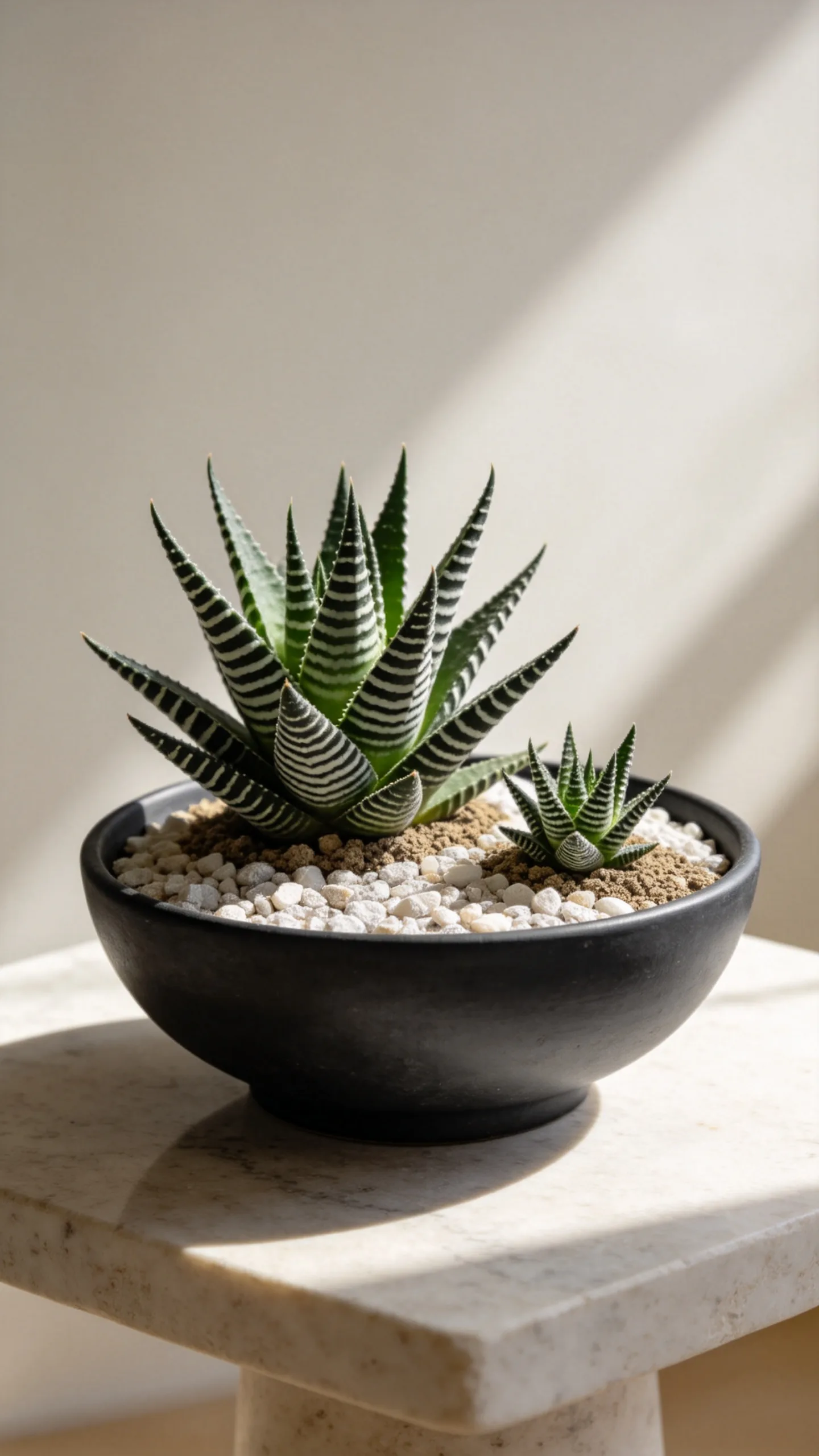
Feature one or two zebra haworthias in a matte bowl topped with pale gravel for a crisp black-and-white contrast. Their upright, textured leaves give the display structure while staying relatively compact.
The gravel should be decorative rather than a substitute for drainage. Plant in gritty cactus mix, use a bowl with a drainage hole, and apply only a thin layer of pebbles so you can move them aside to check whether the soil is dry before watering.
8. Mixed Succulent Window Table Garden
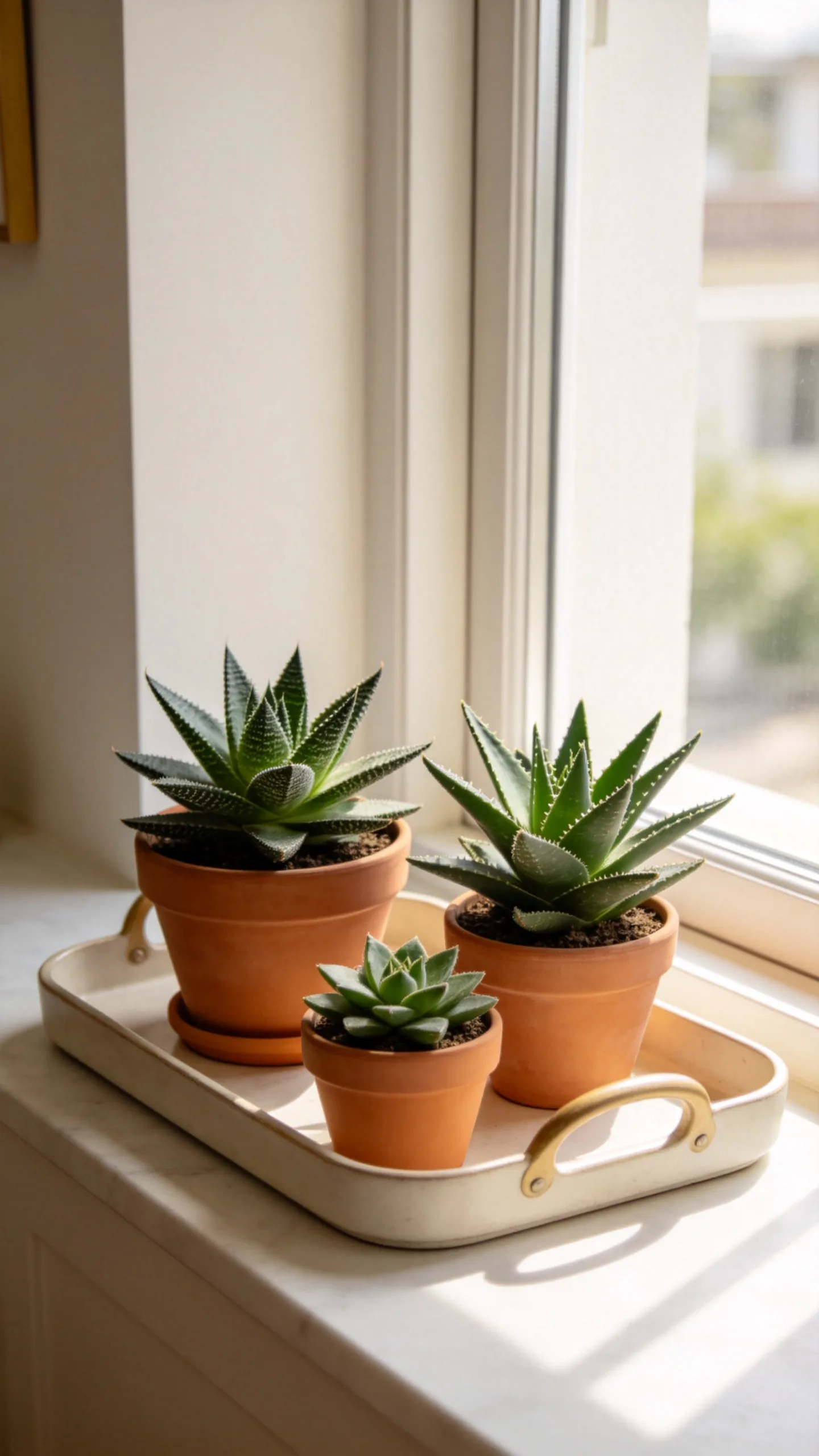
Create a portable garden for a small table positioned beside a bright window. Combine plants with compatible requirements, such as haworthia, gasteria, and compact aloe, rather than mixing succulents with moisture-loving houseplants.
Use a lightweight planter or handled tray so the garden can be turned for balanced growth or moved away from cold glass in winter. Check that strong afternoon sun does not scorch plants that were previously grown under lower light; increase exposure gradually when changing locations.
9. Repurposed Teacup Succulent Collection
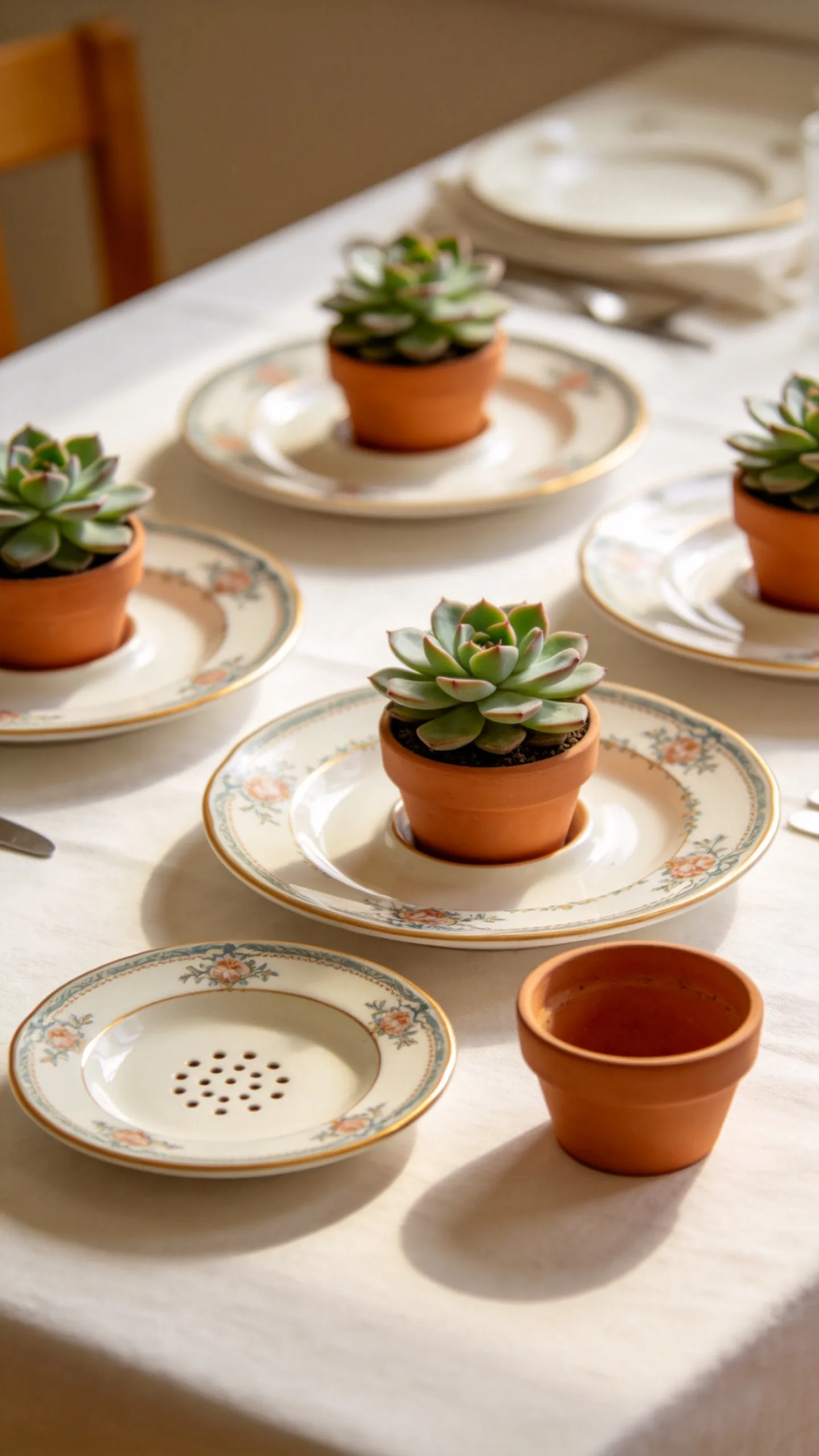
Turn several vintage-style teacups into individual succulent covers for a breakfast nook or side table. For easier care, keep each plant in a small nursery pot that fits inside the cup instead of planting into an undrained vessel.
Remove the inner pot for watering, let excess moisture drain completely, and then return it to the cup. This approach protects furniture, preserves the decorative container, and prevents water from sitting around the roots.
10. Concrete Planter Cluster
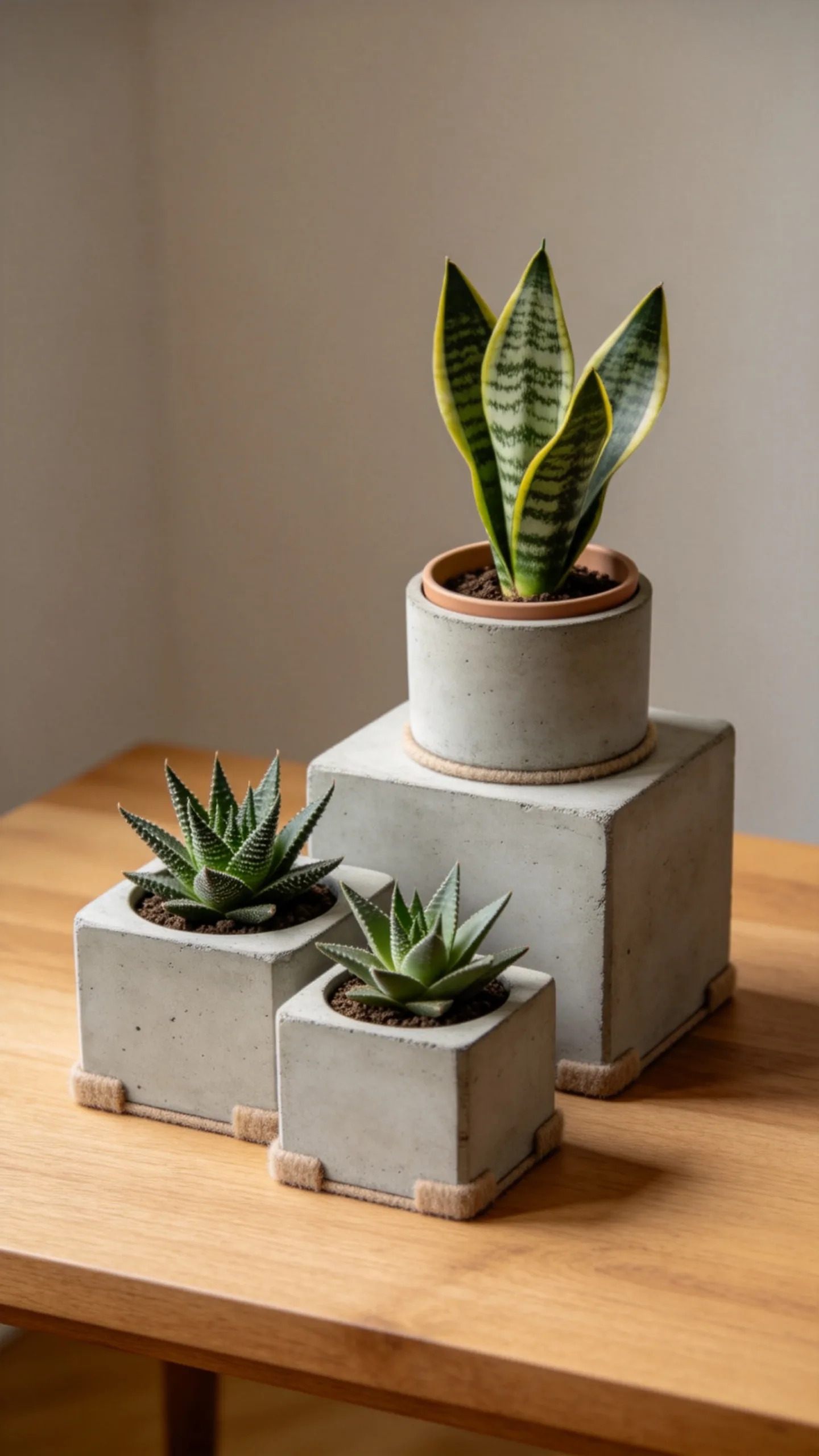
Group two or three small concrete planters in different heights to create an understated modern tabletop garden. Choose compact plants such as haworthia, gasteria, or a dwarf snake plant cultivar so the arrangement remains proportional to the table.
Concrete containers can vary in porosity, and some decorative versions have no drainage holes. Check each planter before use, add a fitted nursery pot when necessary, and place felt pads underneath to protect wood surfaces from scratches or moisture marks.
11. Mini Aloe Tabletop Trio
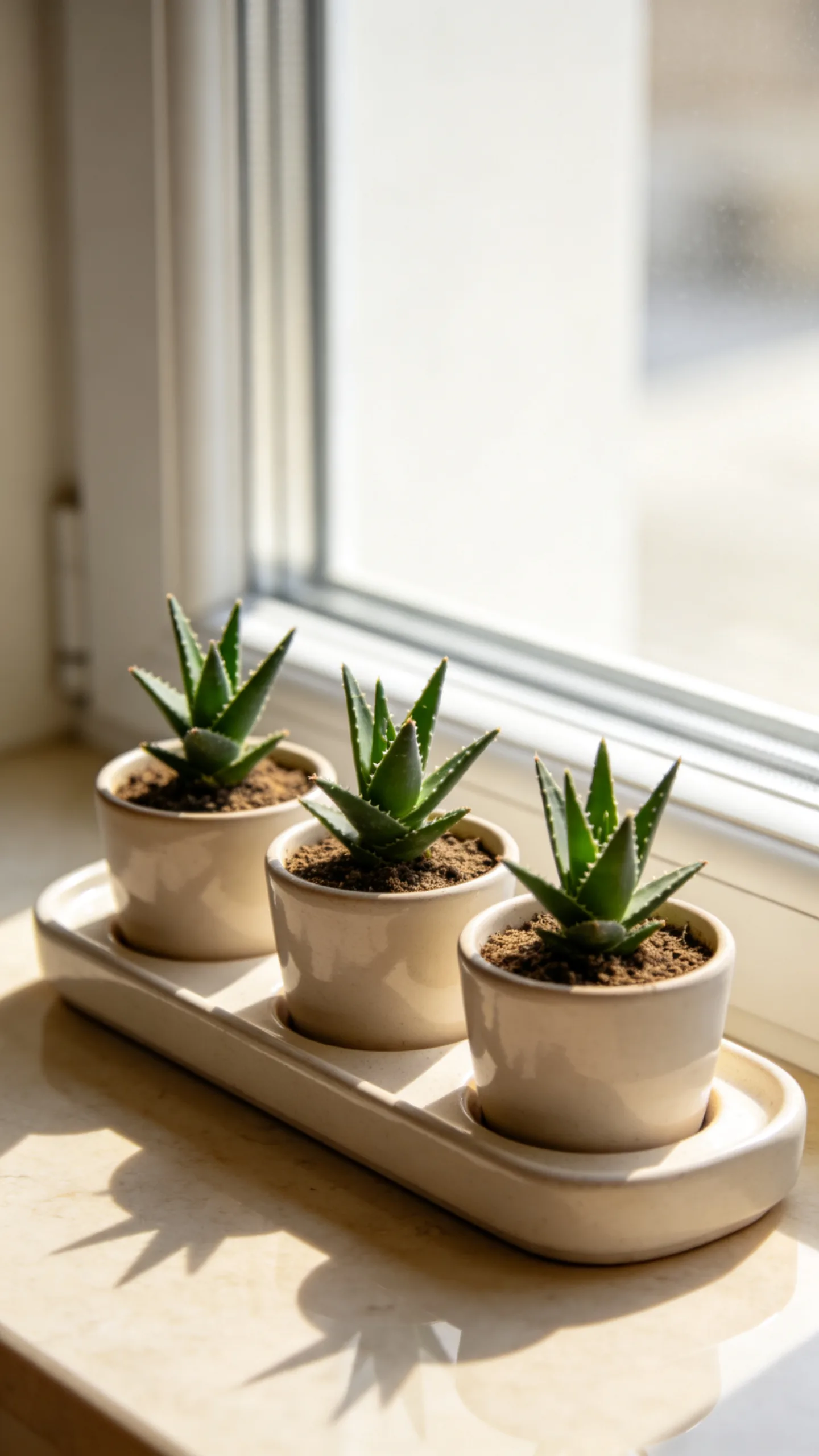
Plant three small aloe varieties in separate pots and arrange them together on a narrow tray. Individual containers prevent vigorous roots from competing in one crowded bowl and make repotting easier as each plant matures.
Give aloes bright light and allow the soil to dry between thorough waterings. Because many types eventually outgrow a tabletop display, select dwarf or slow-growing varieties and move them to larger pots when roots become tightly packed.
12. Succulent Garden Under a Grow Light
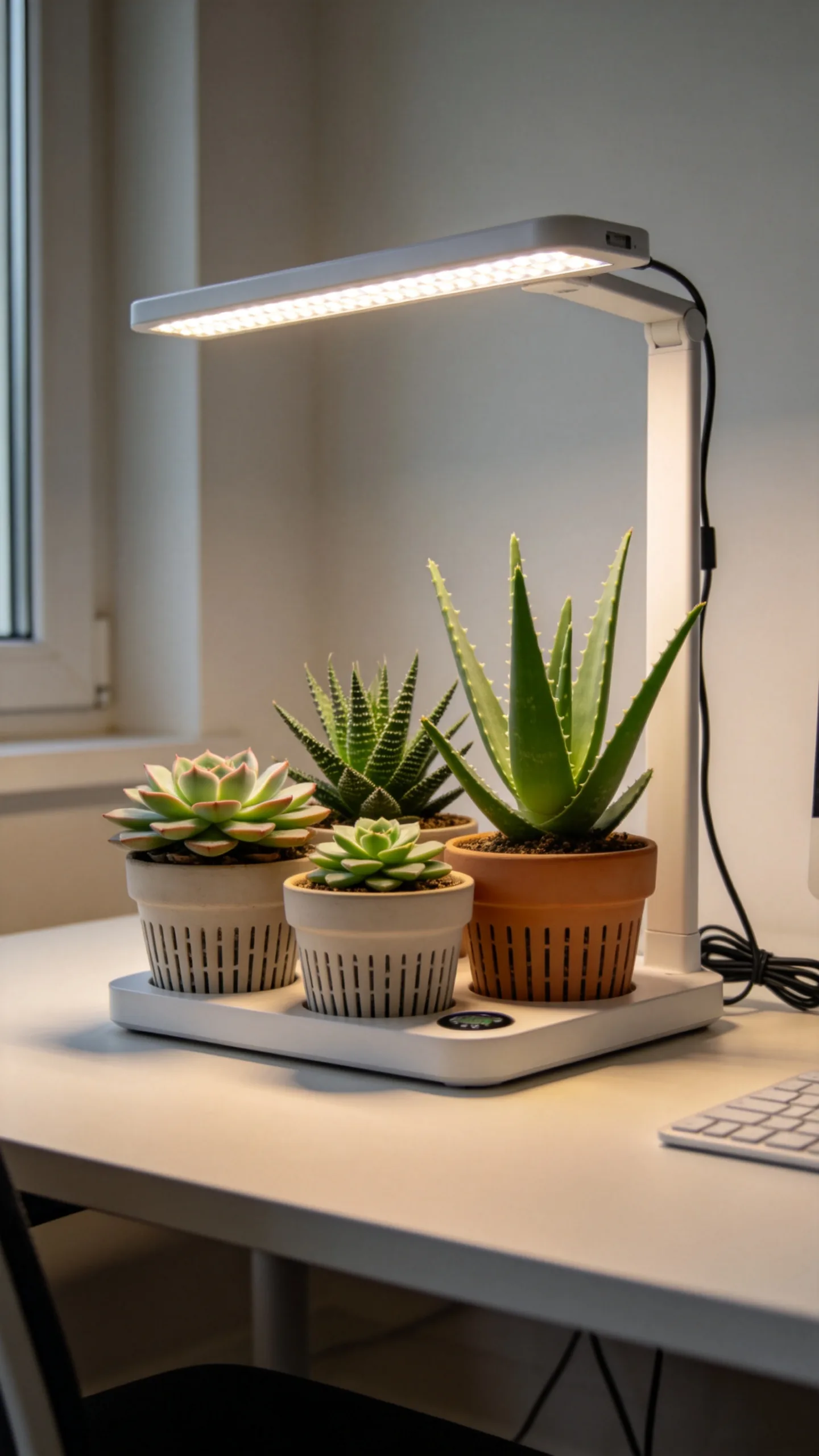
Set a compact succulent garden beneath a slim LED grow light on a desk, console, or plant table. This setup is useful in rooms where windows provide insufficient light to keep sun-loving succulents compact.
Choose an adjustable lamp so you can raise it as plants grow, and plug it into a timer for a consistent schedule. Keep the arrangement in pots with drainage, since a grow light does not compensate for waterlogged soil or overly frequent watering.
13. Black-and-White Pot Grid
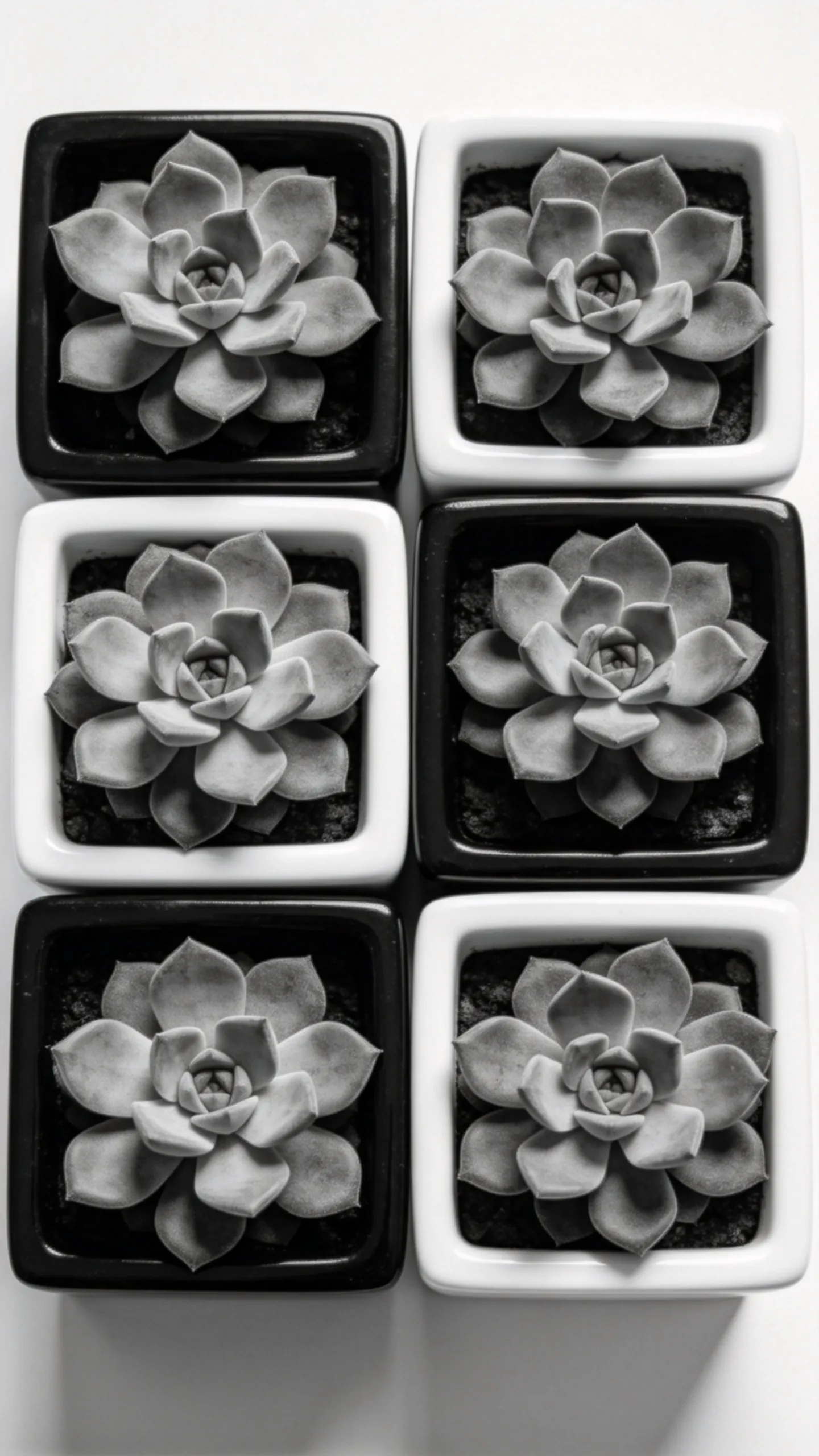
Arrange four or six small succulents in identical square pots to form a tidy tabletop grid. Alternating black and white containers creates a graphic pattern, while the repeated pot size keeps the garden orderly.
Use one plant per pot so crowded roots and uneven watering are less likely. A grid also makes maintenance straightforward: lift each container to judge its weight, water only the pots that are dry, and replace any plant without disturbing the entire display.
14. Driftwood-Style Succulent Planter
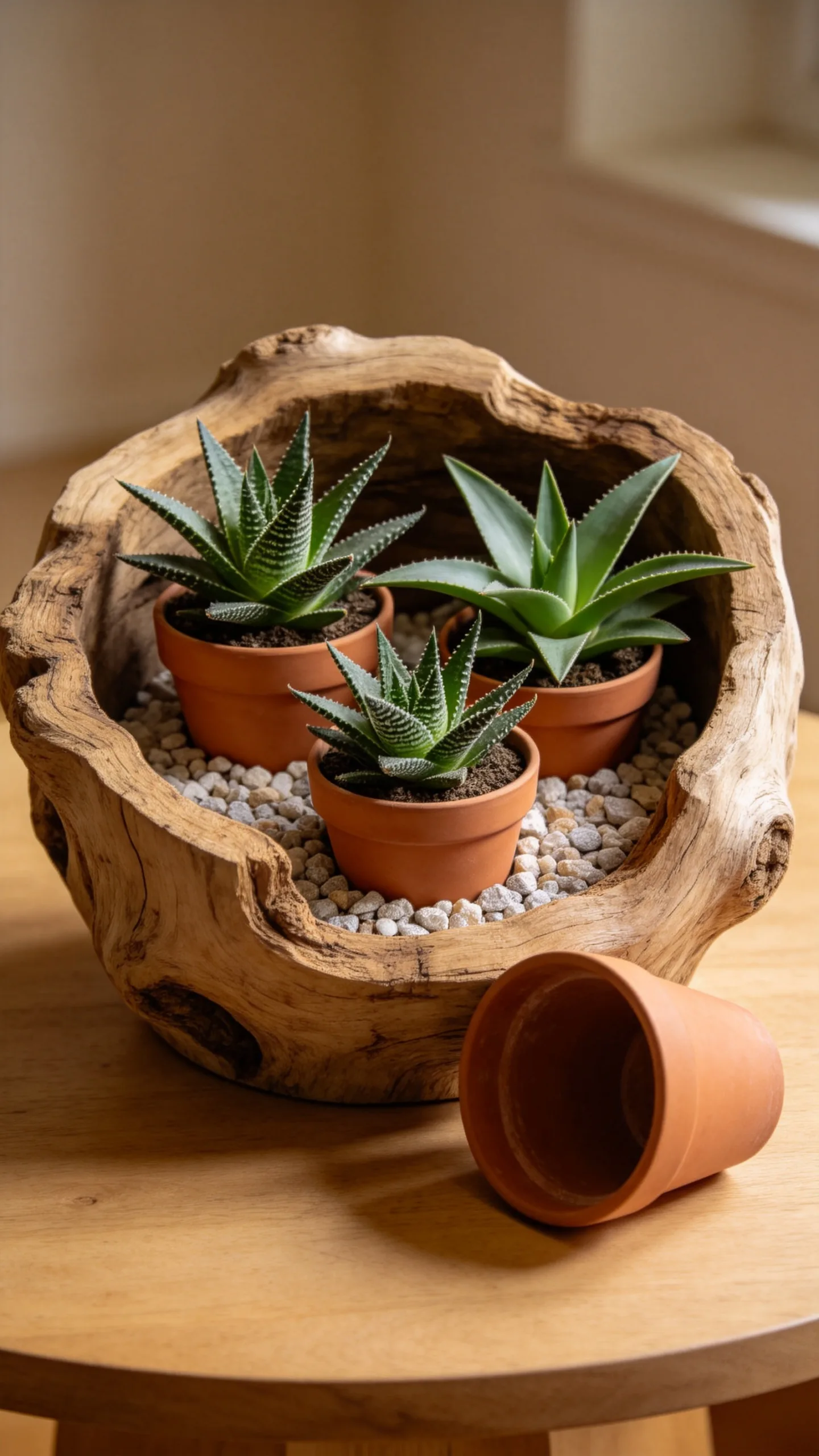
Use a hollow driftwood-style planter as a rustic centerpiece, but line the planting cavity with removable nursery pots rather than filling untreated wood directly with wet soil. This helps protect the wood and makes watering less messy.
Select low-growing haworthias or gasterias that fit securely within the narrow openings. Remove the pots at watering time, allow them to drain over a sink, and brush loose soil or dried leaves from the wood to keep the arrangement neat.
15. Copper Tray Pot Collection
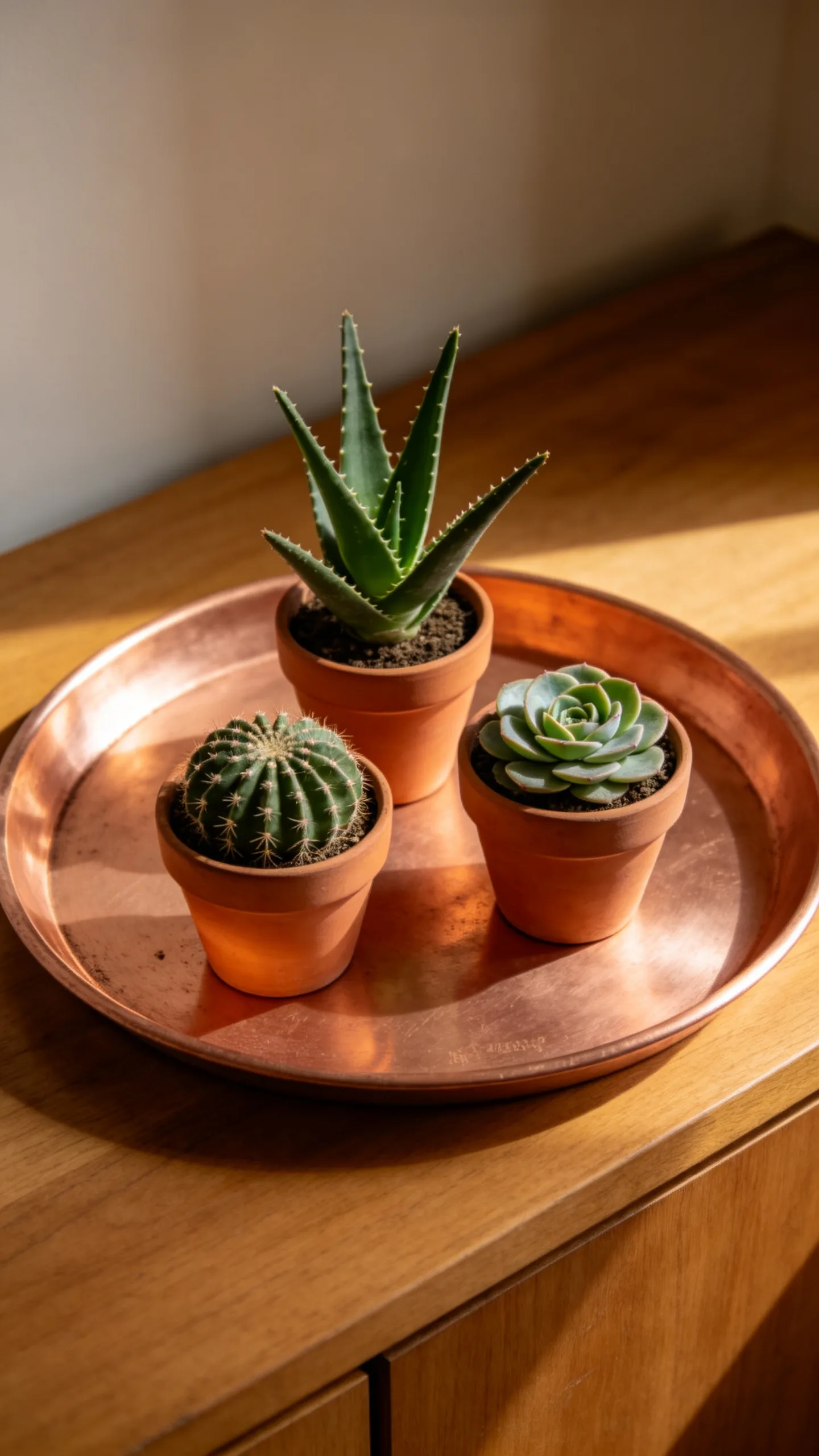
Gather several small terra-cotta pots on a copper-toned tray for a warm, cohesive tabletop display. The tray defines the garden as one decorative unit and catches minor drips, while the separate pots allow precise watering.
Avoid leaving standing water in the tray after irrigation. Pair plants with varied silhouettes—such as one upright aloe, one rounded haworthia, and one compact rosette—while keeping their light requirements similar enough to share the same location.
16. Low Ceramic Dish With Removable Pots
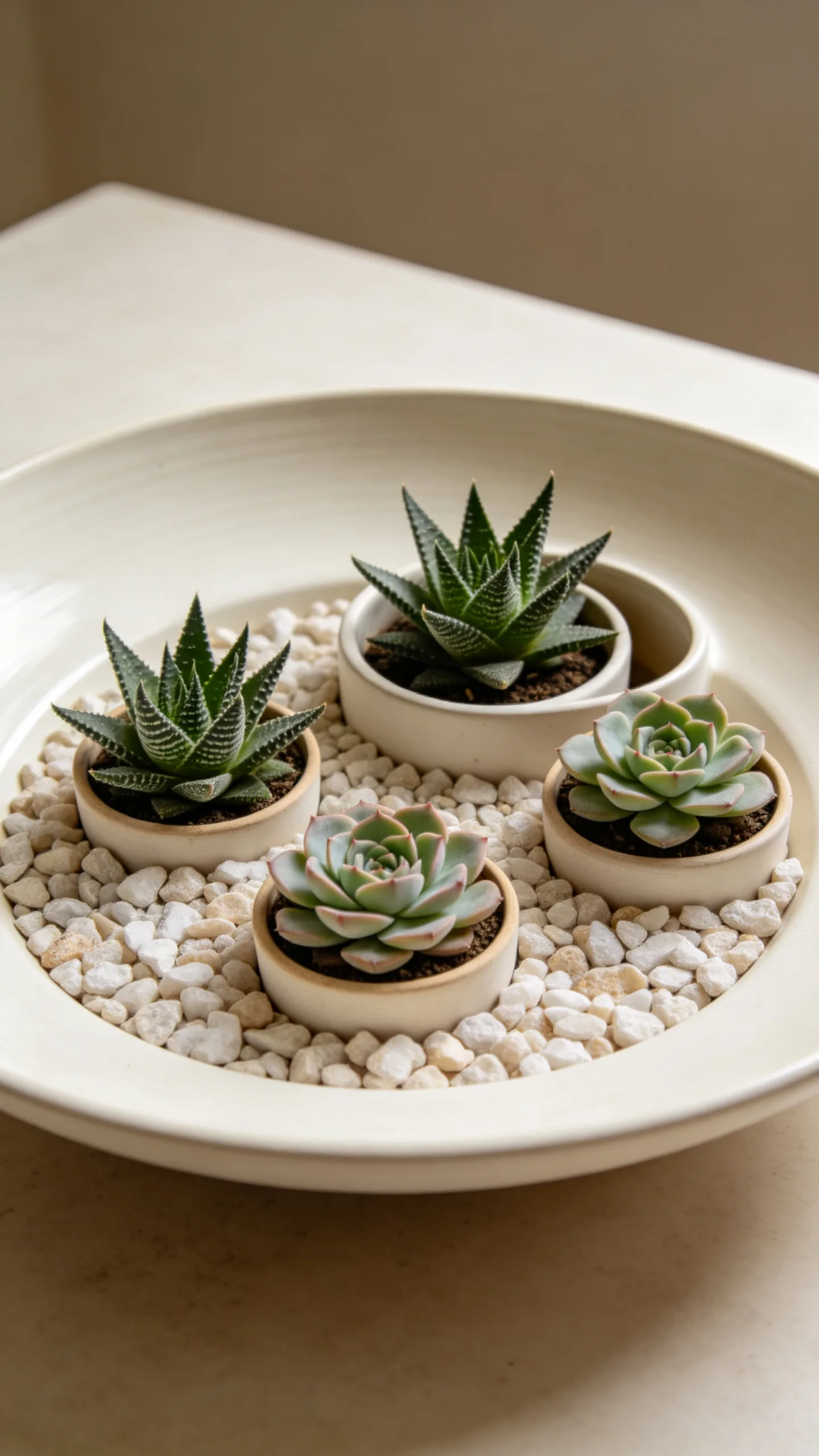
Choose a broad ceramic serving dish and fill it with small potted succulents surrounded by loose decorative gravel. The dish creates the appearance of a planted landscape without the drainage problems associated with filling a shallow, hole-free container directly with soil.
Nestle the pots at slightly different depths and use gravel to conceal their rims. When a plant needs water, lift out its pot, water it thoroughly elsewhere, and return it only after excess moisture has drained.
17. Single-Species Sempervivum Alternative Garden
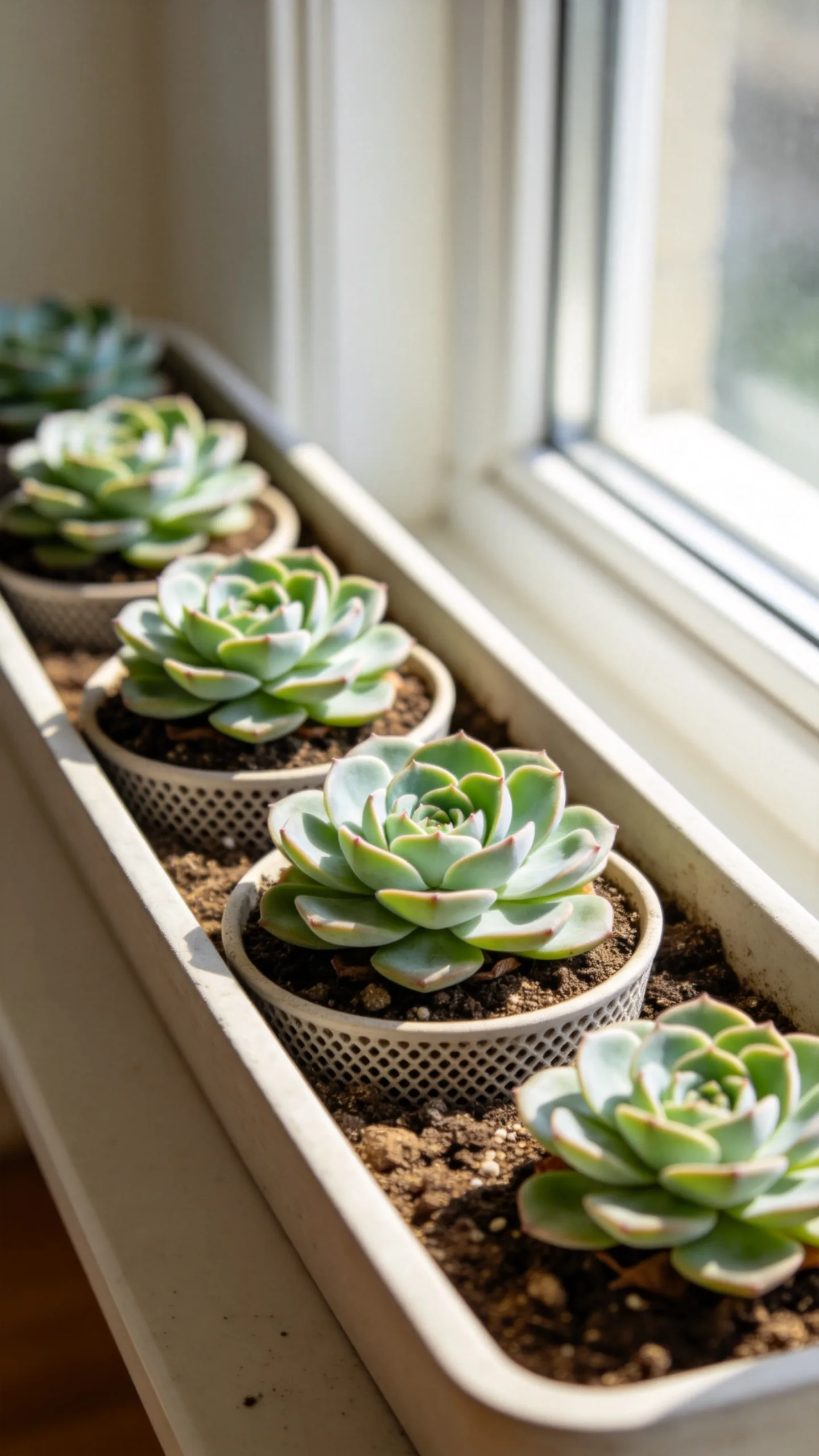
For an indoor display with the rosette look of sempervivum, use echeveria or another succulent suited to the light and temperature available in the room. Sempervivums typically perform best outdoors, where they receive strong sun and seasonal temperature changes, so they may not remain compact on an indoor table.
Plant several matching rosettes in individual draining pots set inside one long tray. Keep them beside the brightest suitable window, acclimate them gradually to direct sun, and remove dried lower leaves to preserve the clean, low-maintenance appearance.