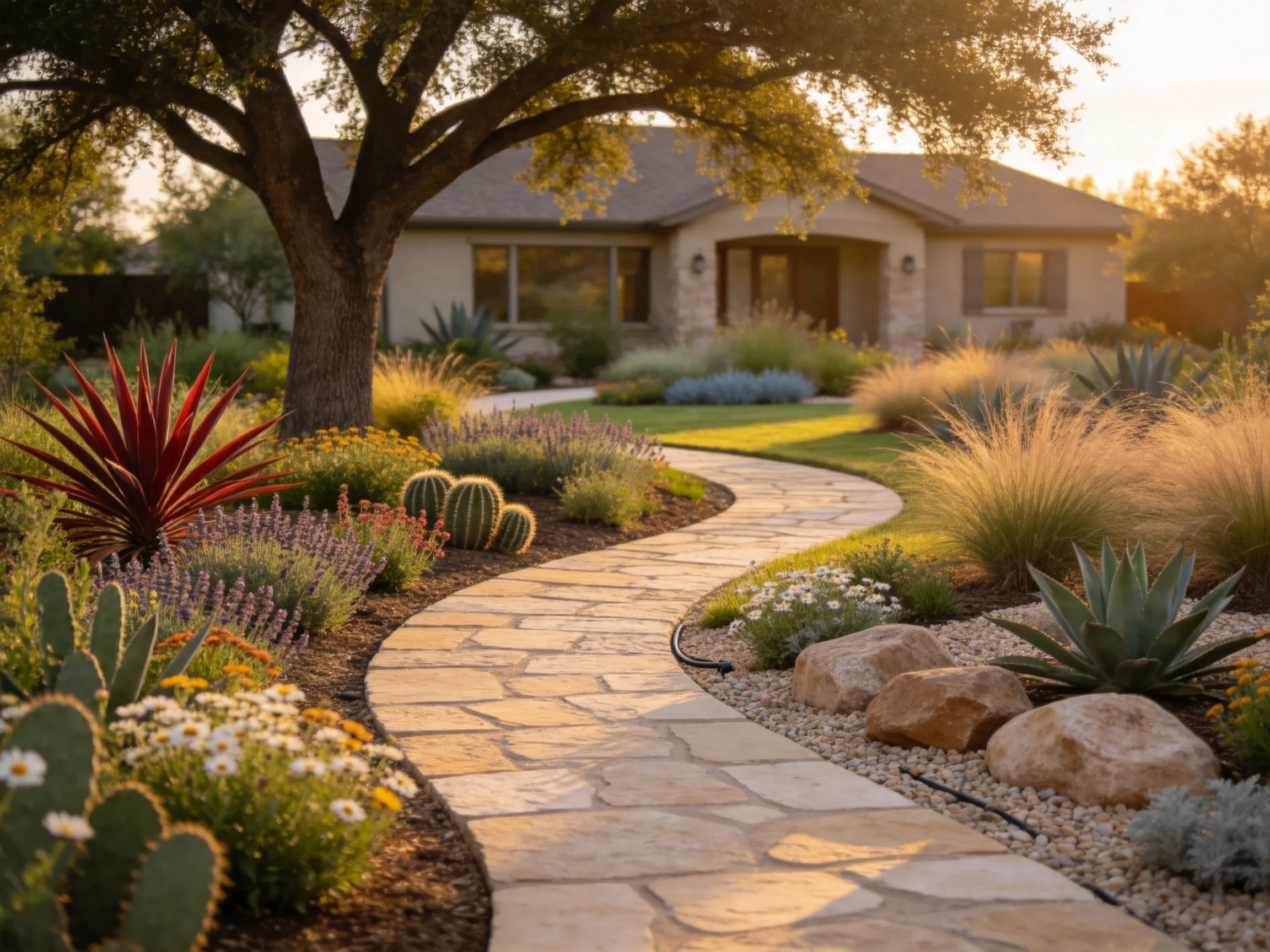
Design a Texas landscape around plants, structures, and maintenance routines that can handle intense sun, heat, and periodic water restrictions. Match every choice to your region—from North Texas clay to Central Texas limestone and the Gulf Coast’s humidity—and give new plants regular establishment watering before reducing irrigation.
1. Layered Texas Native Plant Beds
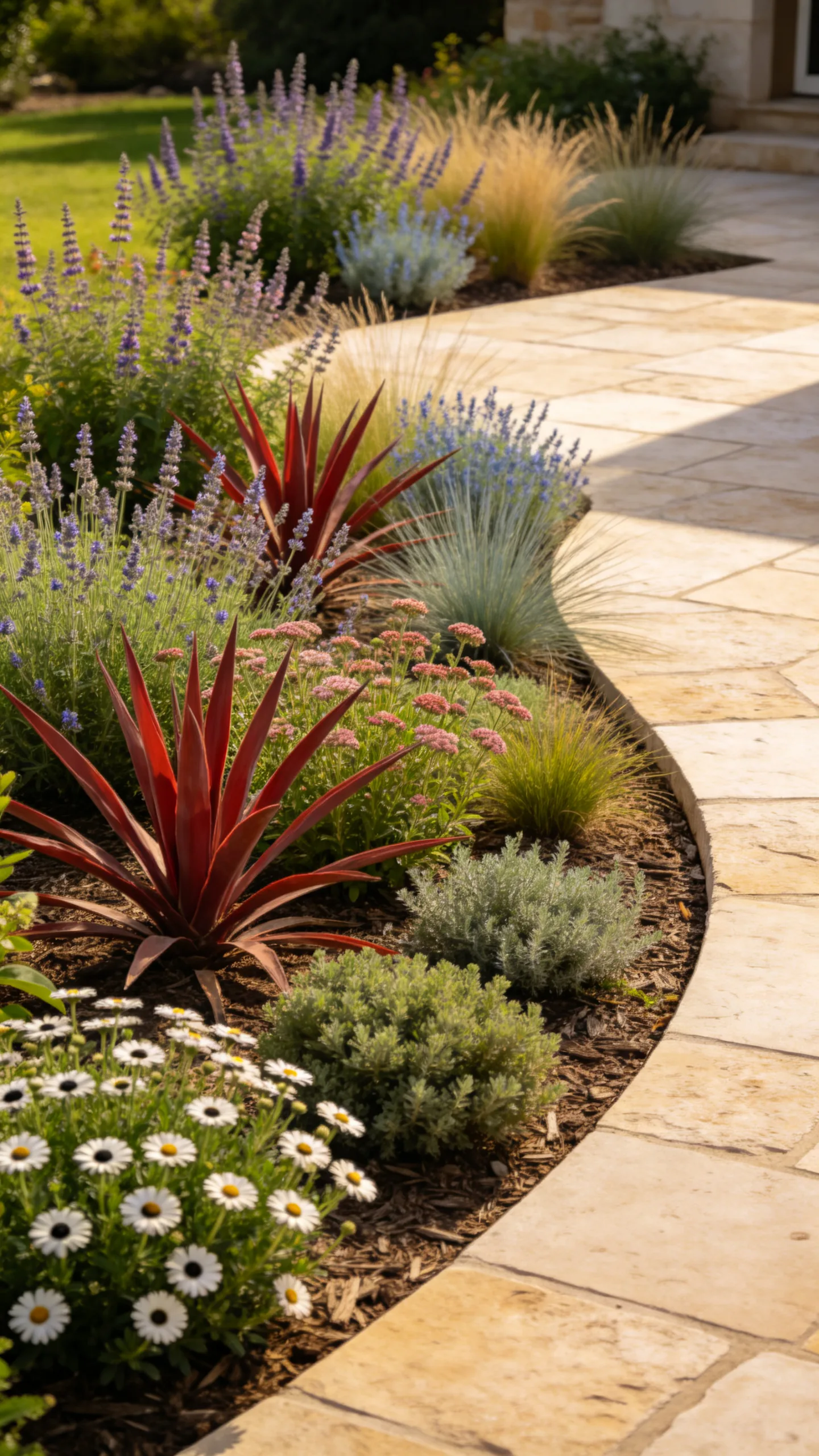
Create a three-level planting bed with low groundcovers, medium flowering perennials, and taller shrubs or ornamental grasses. Texas sage, blackfoot daisy, red yucca, Gulf muhly, and little bluestem can provide varied height and texture, but confirm each plant’s light and soil needs for your area.
Group plants with similar water requirements so one irrigation zone does not overwater drought-tolerant species. A curved bed along a driveway, fence, or patio softens hard edges while using less lawn than a large turf area.
2. Gravel Courtyard With Red Yucca
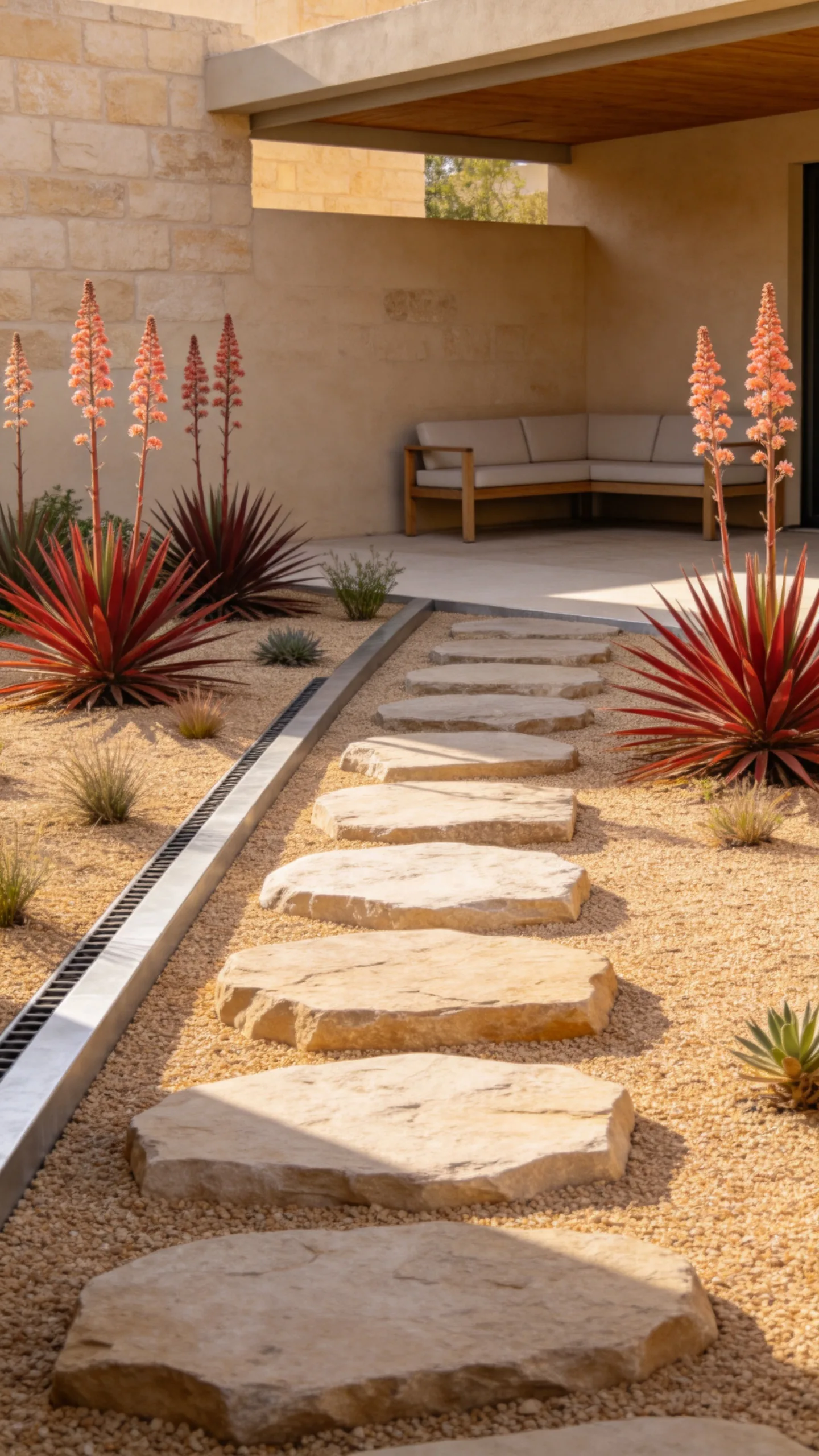
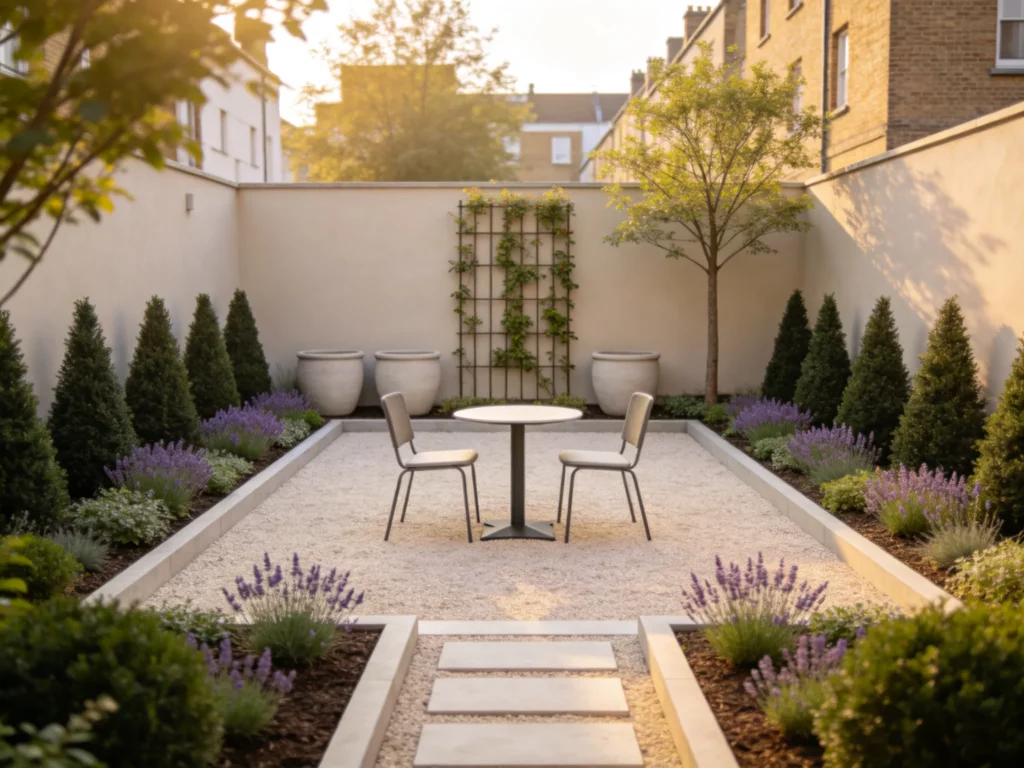
Replace a water-hungry patch of lawn with compacted gravel, large stepping stones, and clumps of red yucca. The plant’s upright leaves and tall flower spikes add structure around a seating area without requiring a deep planting bed.
Use landscape fabric only where appropriate and install a defined metal, stone, or concrete edge to keep gravel from spreading. Choose light-colored gravel carefully because pale surfaces can reflect additional heat toward nearby walls and plants.
3. Dry Creek Bed for Stormwater Control
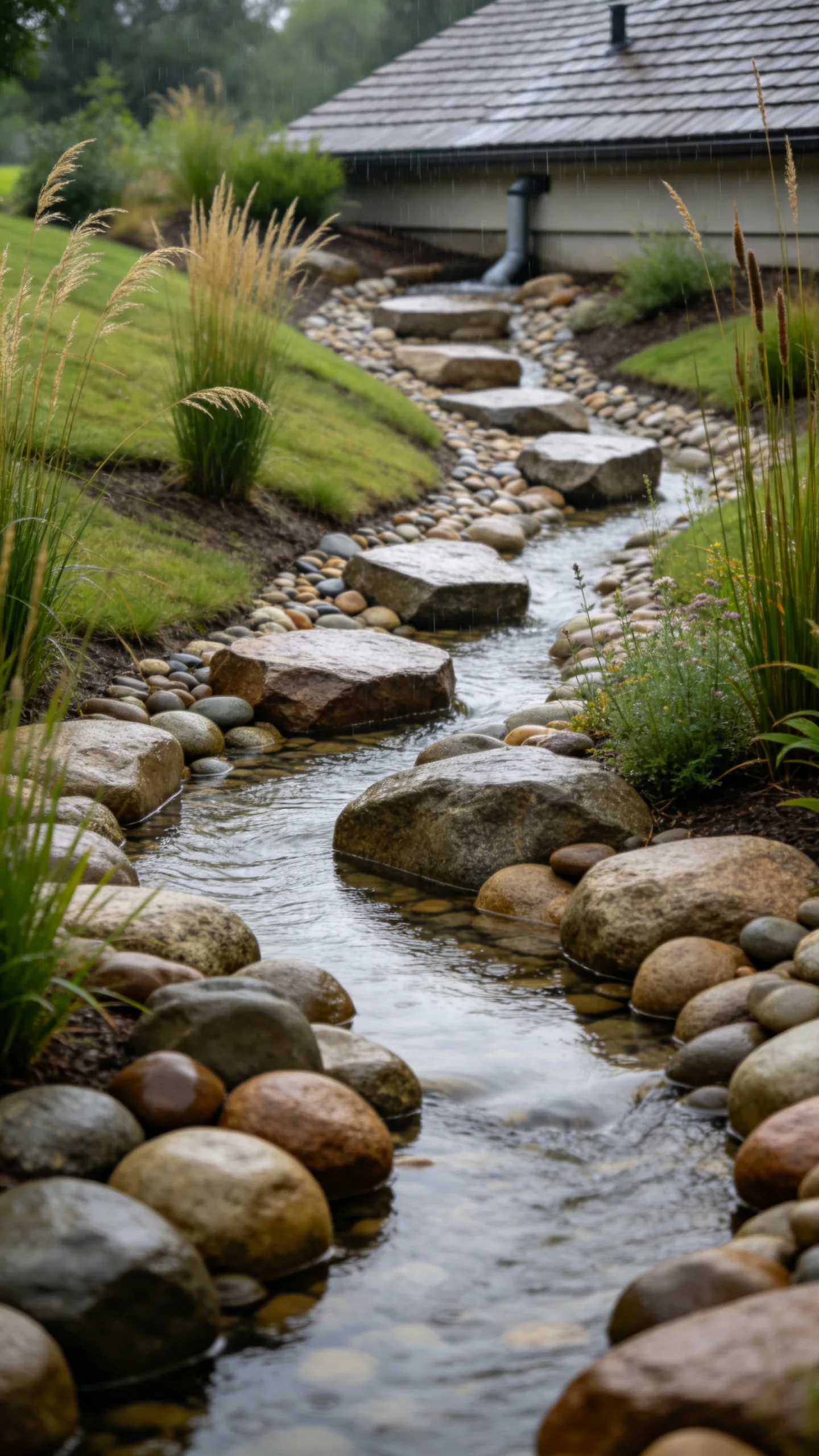
Build a shallow dry creek bed with rounded river rock, angular cobbles, and larger accent stones. Position it where roof runoff or a sloped yard naturally carries water, then plant its edges with switchgrass, inland sea oats, sedges, or other regionally suitable moisture-tolerant plants.
A dry creek bed can slow and spread rainwater without functioning as a permanent pond. Shape the channel with stable side slopes, and avoid directing concentrated runoff toward a neighbor’s property or a building foundation.
4. Shade Tree and Understory Garden
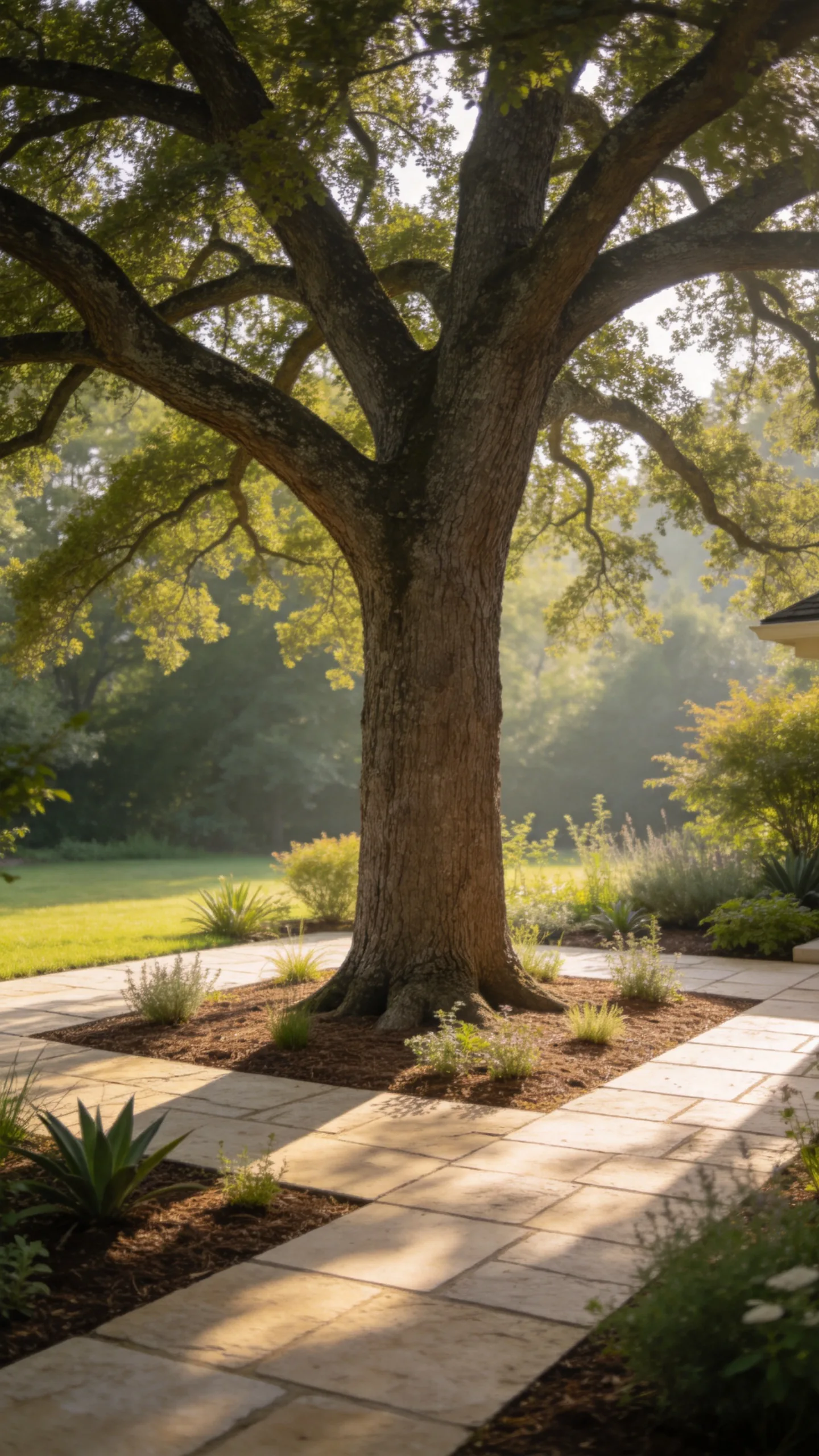
Plant a regionally adapted shade tree to reduce afternoon heat over a patio, garden path, or west-facing wall. Texas red oak, cedar elm, Mexican plum, or another locally suitable tree may work depending on soil, mature size, and regional conditions.
Under the canopy, use a thin layer of mulch and select understory plants that tolerate filtered light. Keep mulch several inches away from the trunk, and do not plant thirsty turf directly beneath a tree where roots and irrigation needs will compete.
5. Texas Sage Privacy Screen
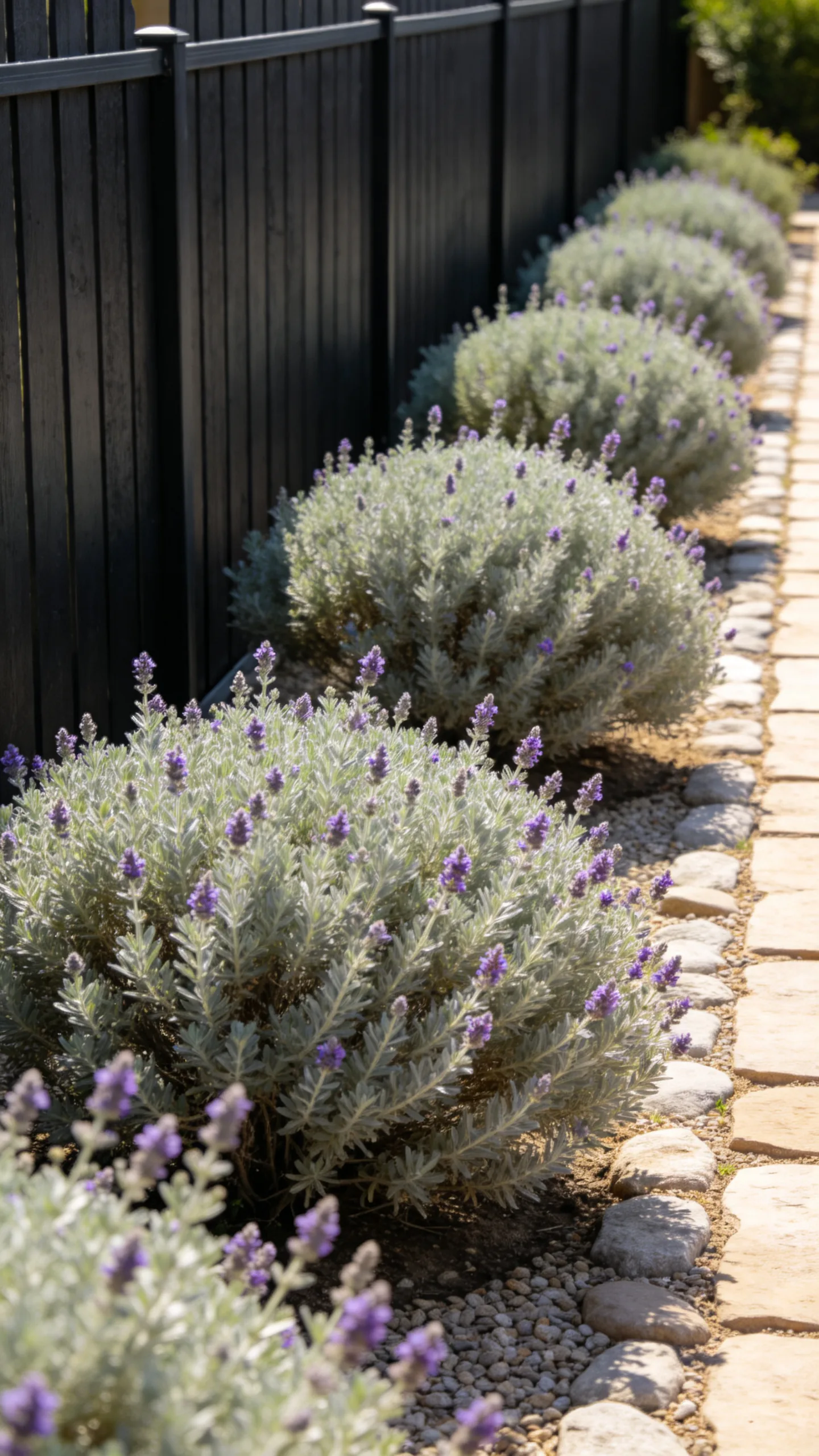
Use Texas sage as a loose, low-water privacy screen along a sunny fence or property boundary. Its silvery foliage contrasts with darker backgrounds, while periodic flowers often appear after humidity or rain.
Give each shrub enough mature spacing for airflow and natural form instead of planting a tight hedge that requires frequent shearing. Texas sage needs sharply drained soil and can struggle in persistently wet sites, so amend the planting approach with drainage and site selection rather than relying on extra fertilizer.
6. Cactus and Succulent Rock Garden
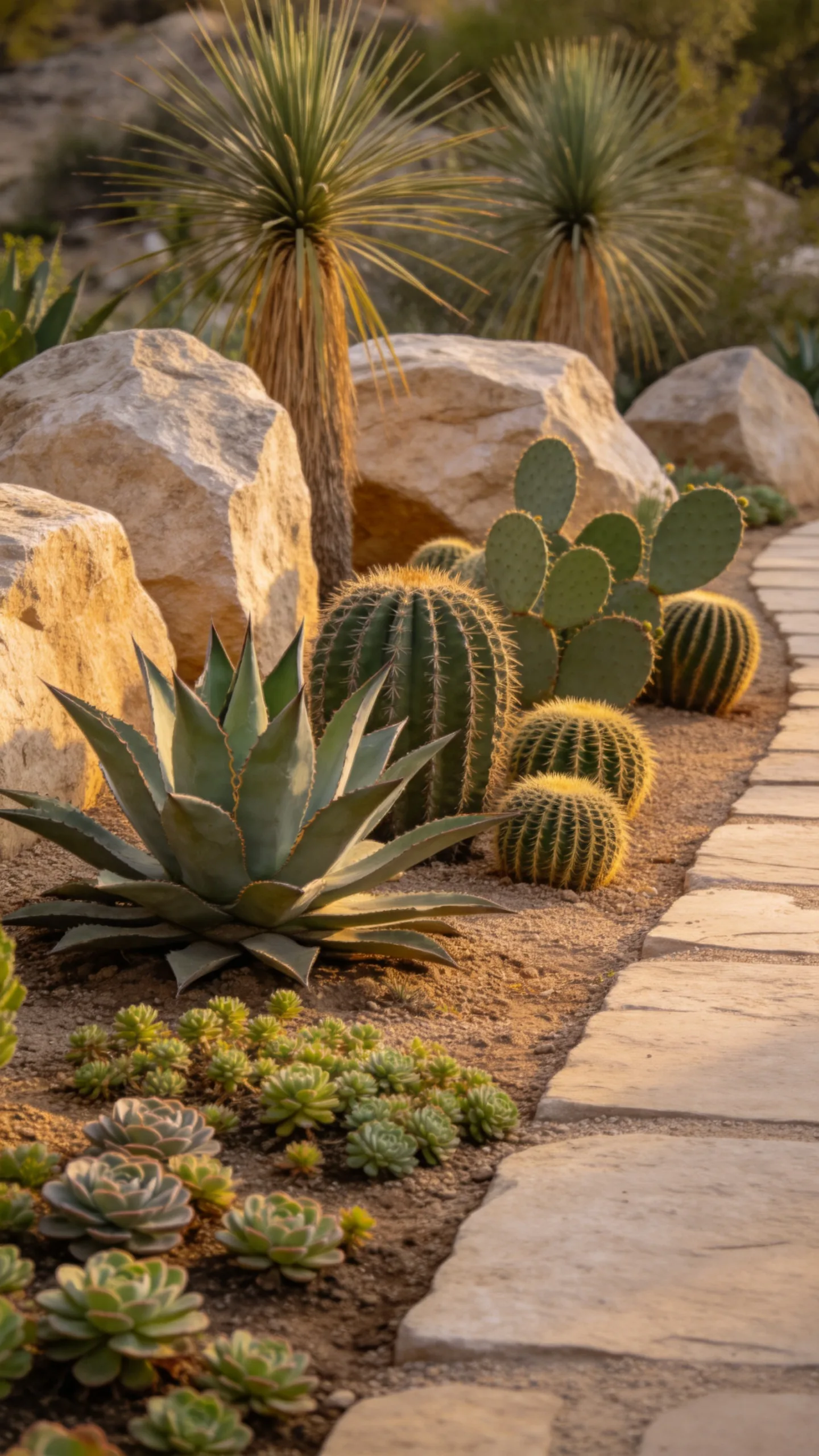
Design a rock garden with prickly pear, agave, sotol, yucca, and hardy sedums suited to the local climate. Place taller species toward the back, low rosette forms near the path, and large stones in uneven groupings to create a natural desert-style composition.
Use gritty, well-draining soil in areas that remain wet after rain. Keep spiny plants away from narrow walkways and children’s play spaces, and mark their mature spread before planting to prevent future crowding.
7. Native Grass Matrix Along a Path
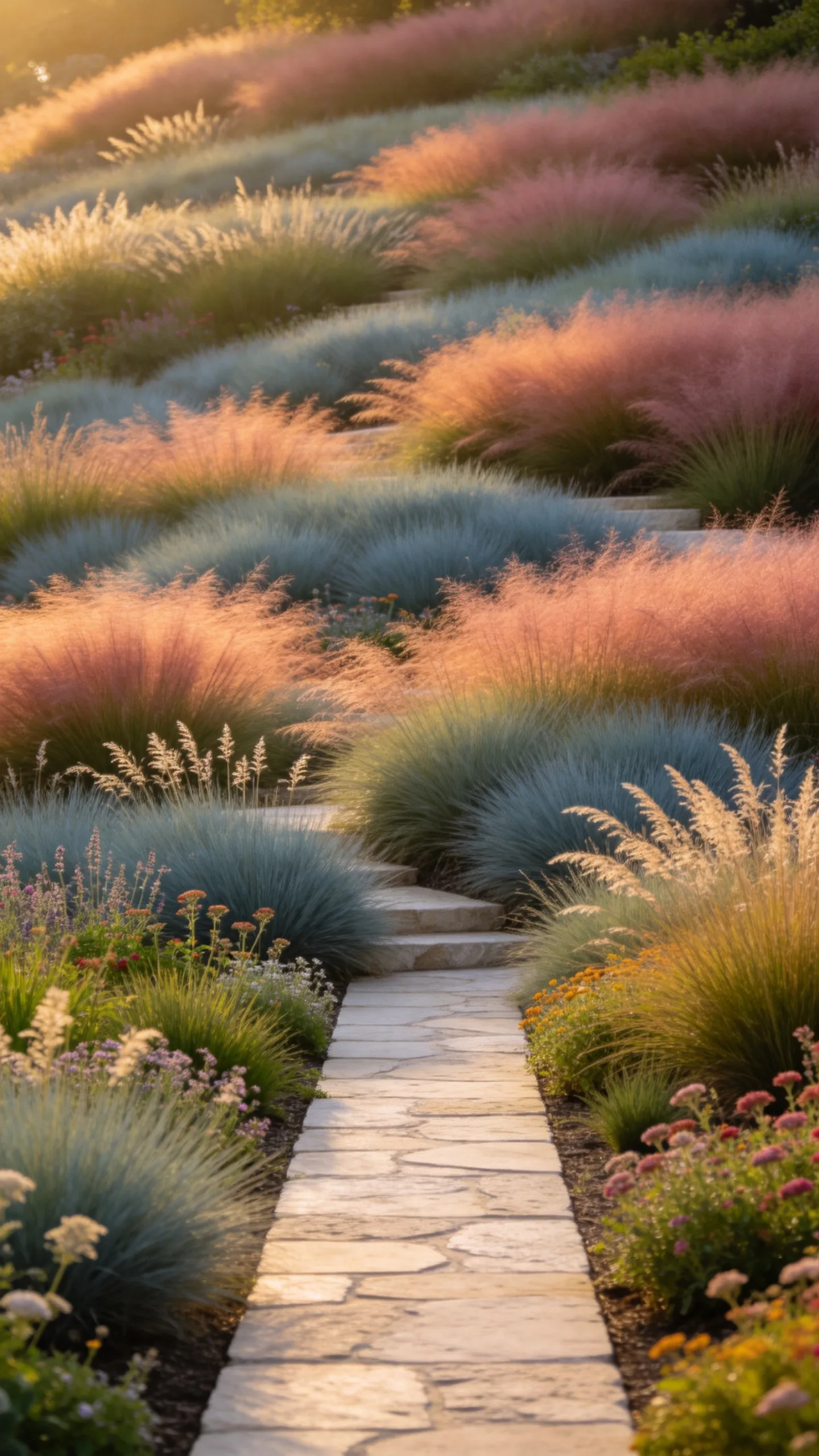
Plant a matrix of drought-tolerant ornamental grasses beside a walkway instead of filling the entire border with thirsty annual flowers. Little bluestem, gulf muhly, Lindheimer’s muhly, and sideoats grama offer movement and seasonal texture when matched to the right Texas region and soil.
Repeat one or two grass species in broad drifts, then add occasional flowering perennials for contrast. Cut back warm-season grasses in late winter when needed, removing old growth before spring development begins.
8. Rain Garden at a Downspout
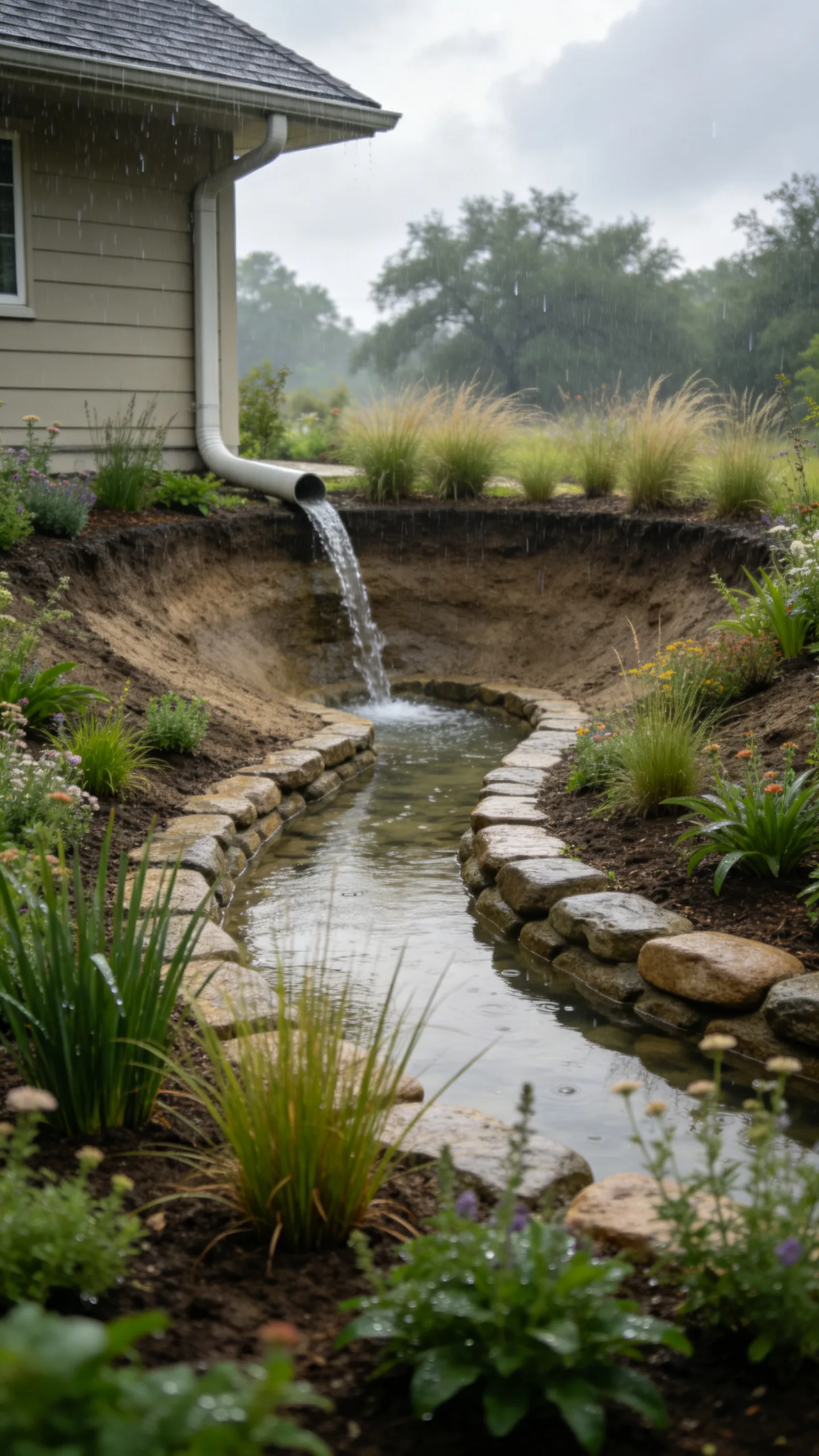
Capture roof runoff in a shallow rain garden positioned below a downspout, while keeping the basin safely away from the foundation. Use amended soil, a broad overflow route, and plants that tolerate temporary wetness followed by dry periods.
Choose species according to the basin’s conditions: moisture-tolerant native plants belong at the lowest point, while drought-adapted plants fit the higher edges. A rain garden still needs watering during establishment, especially through a hot Texas summer.
9. Courtyard Trellis With Drought-Adapted Vines
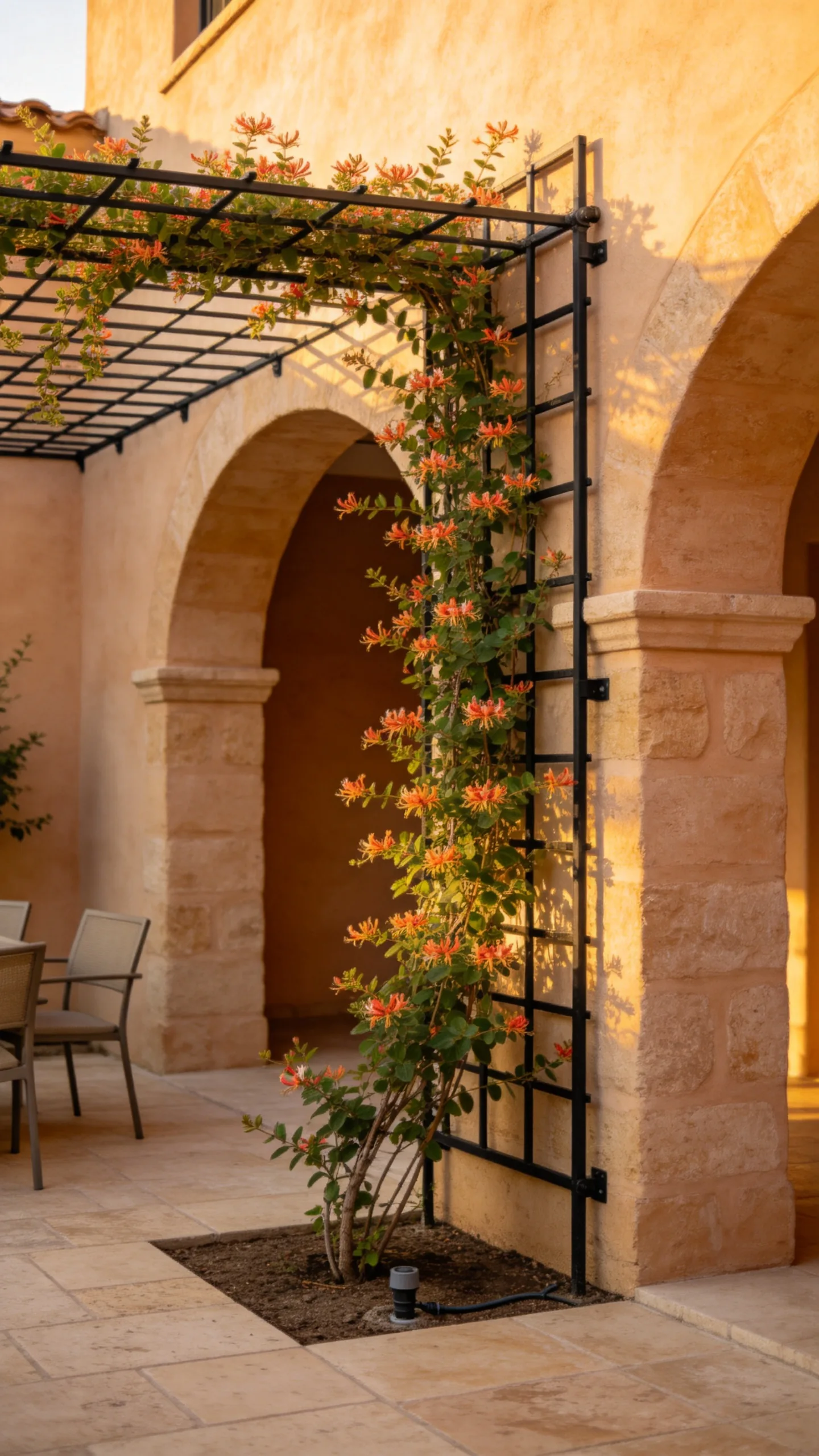
Add vertical interest to a small patio with a freestanding trellis or wall-mounted support for a suitable vine. Coral honeysuckle, crossvine, or another locally adapted option can provide screening and soften masonry, but mature size and sun exposure should guide the selection.
Anchor the trellis securely before planting and leave space for pruning access. Use drip irrigation at the root zone during establishment rather than wetting the wall, patio, or foliage repeatedly.
10. Mulched Front-Yard Island Bed
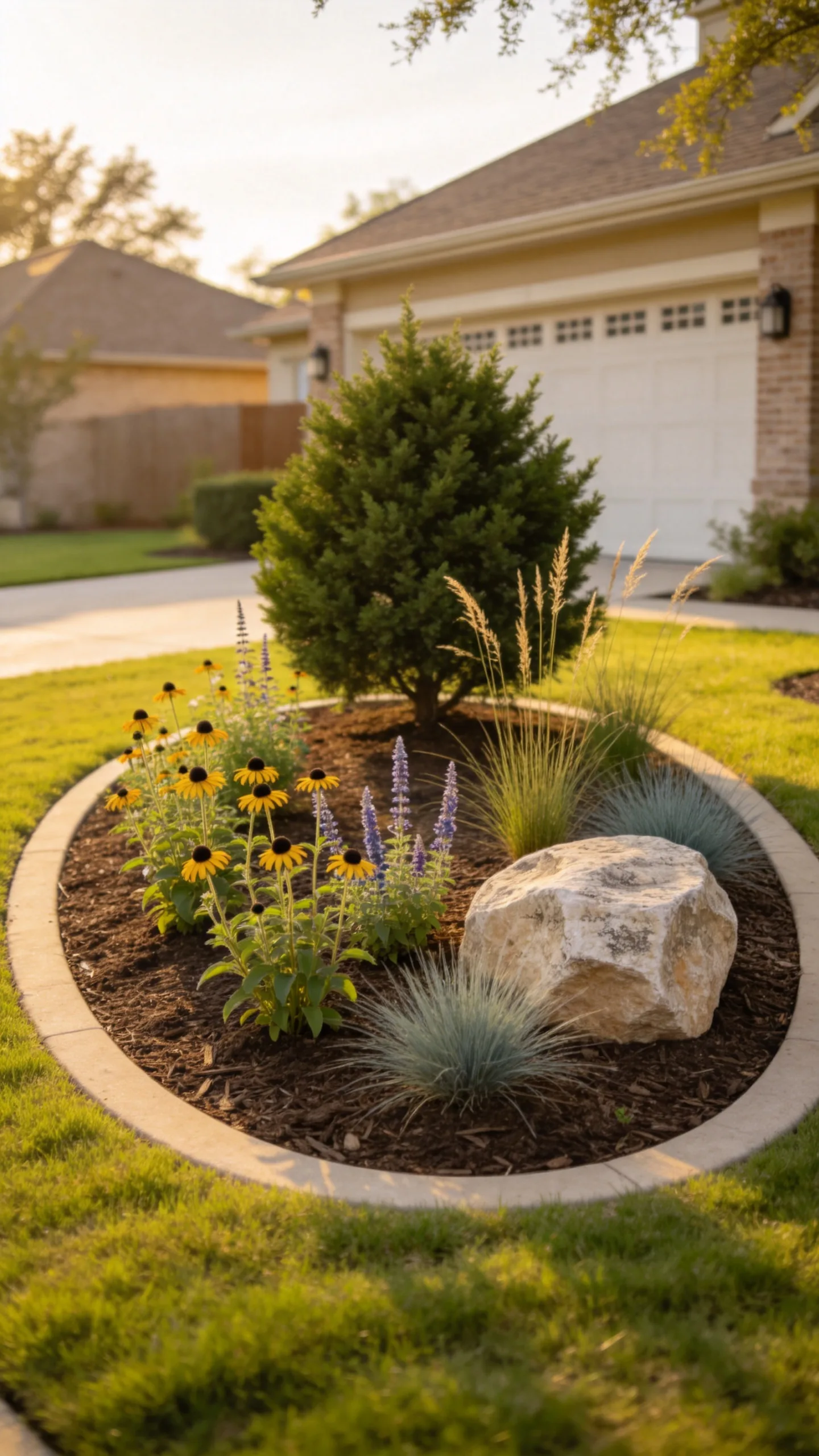
Convert a central lawn island into a low-water bed with a bold evergreen anchor, flowering perennials, and a three-inch layer of organic mulch. A large boulder, birdbath, or simple stone accent can create a focal point without adding irrigation demand.
Keep the bed’s outline broad enough for mowing around it and avoid narrow corners that are difficult to maintain. Refresh mulch as it decomposes, but do not pile it against shrub stems or tree trunks.
11. Native Pollinator Border With Seasonal Bloom
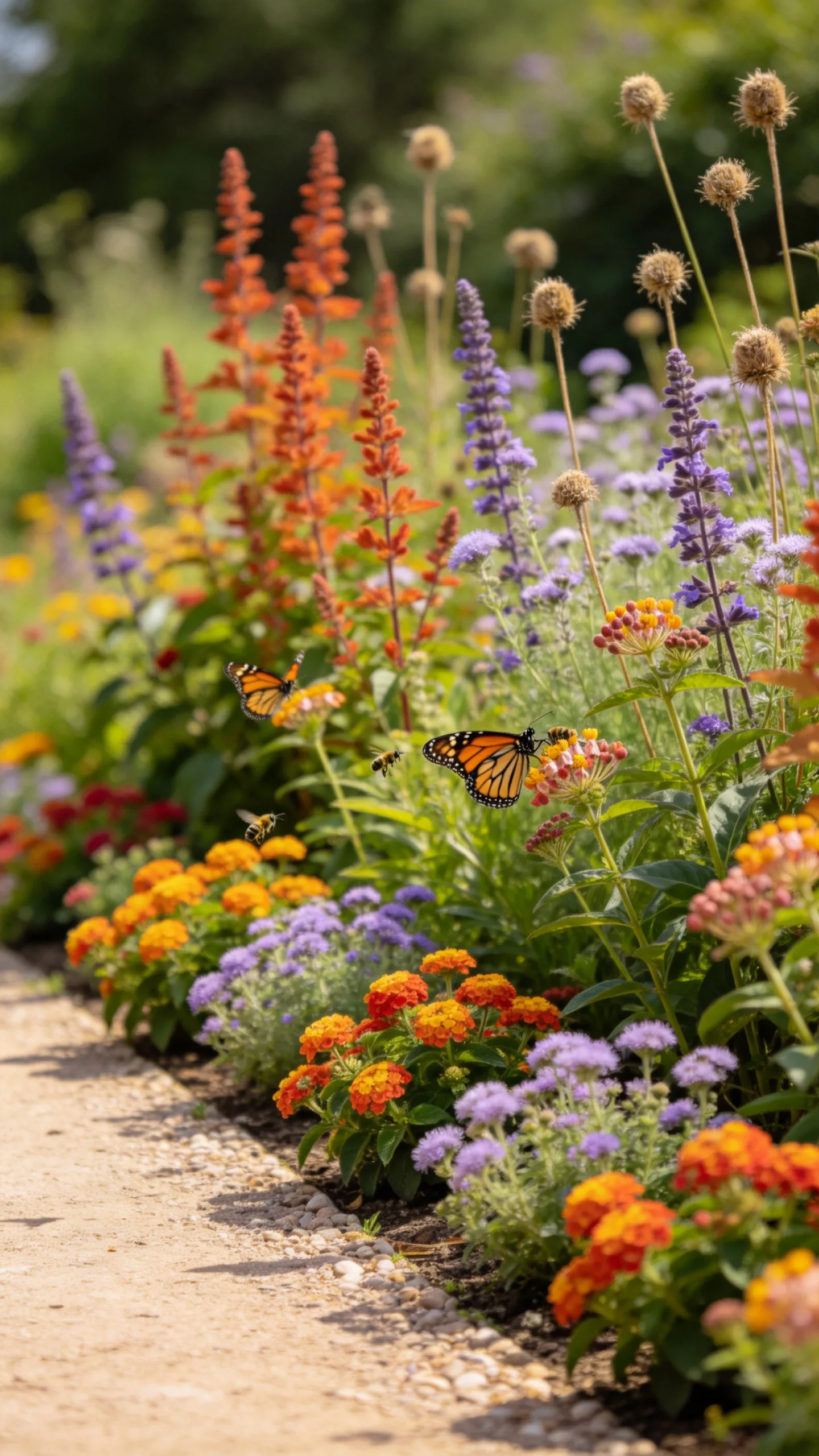
Create a pollinator border using a sequence of bloom times rather than relying on one flowering season. Texas lantana, autumn sage, flame acanthus, Gregg’s mistflower, and native milkweed may offer useful options when selected for the local region and available water conditions.
Group each plant in small drifts so flowers are visible from a window or walkway. Leave some seedheads through winter for wildlife value, then cut back and remove only what interferes with new growth or path access.
12. Permeable Patio With Container Planting
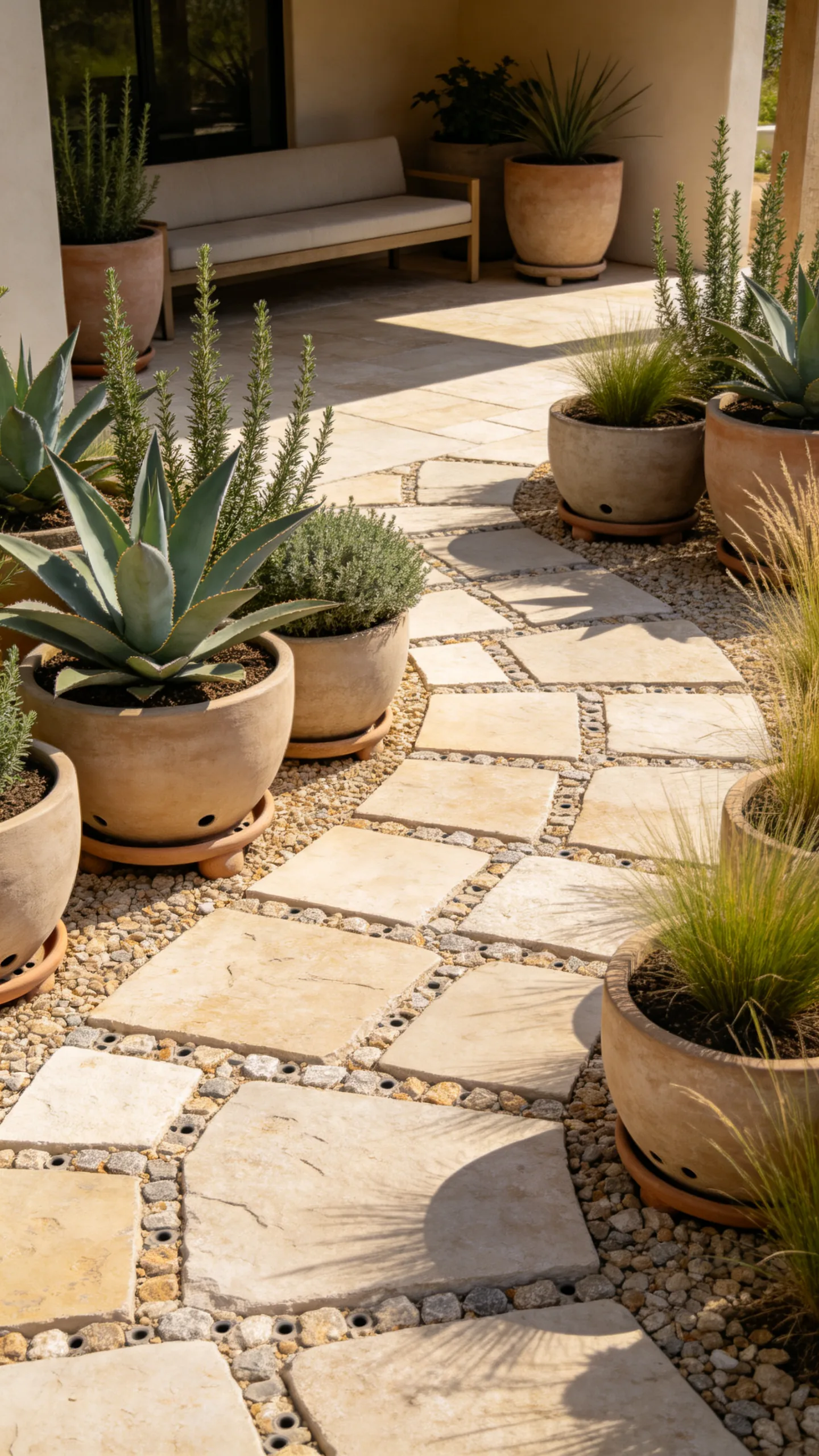
Install a patio of spaced pavers, decomposed granite, or another permeable surface, then place drought-tolerant plants in large containers around the seating area. Agave, aloe in suitable frost-protected regions, rosemary, and compact ornamental grasses can add height without expanding the planting bed.
Choose containers with drainage holes and use a potting mix designed for the plant type. Containers dry faster than in-ground soil, so group pots together, use saucers where appropriate, and check moisture frequently during hot or windy weather.
13. Narrow Side-Yard Gravel Path
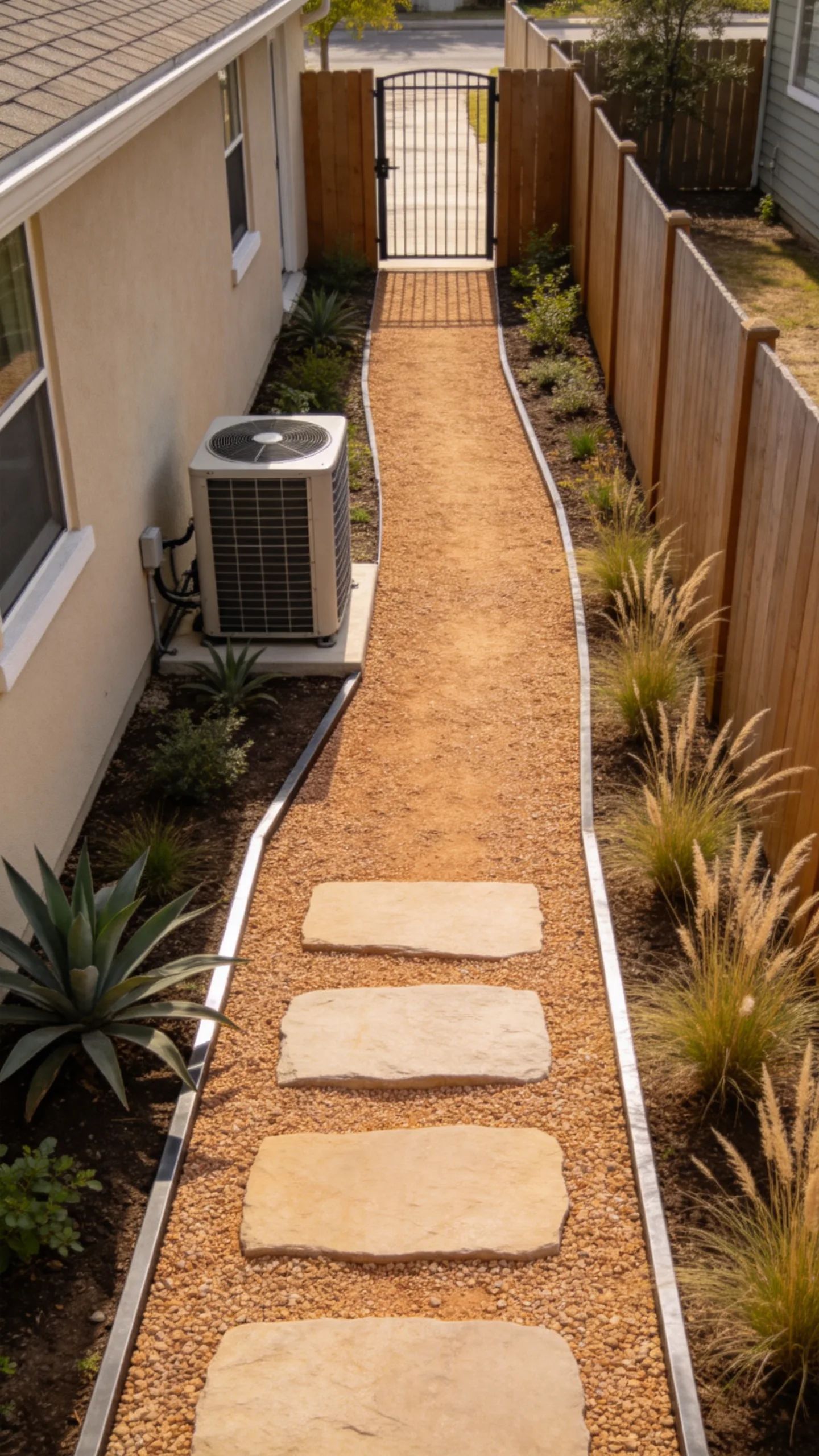
Make a difficult side yard useful with a gravel path bordered by shade-tolerant or part-shade plants. Stepping stones can create a stable walking route, while cast-iron plant, inland sea oats, yaupon holly, or other suitable regional choices fill areas where full sun is limited.
Grade the path so water does not collect against the house. Use edging and a properly compacted base to reduce gravel migration, and keep plants trimmed away from gates, utility equipment, and air-conditioning units.
14. Dry-Stone Retaining Border
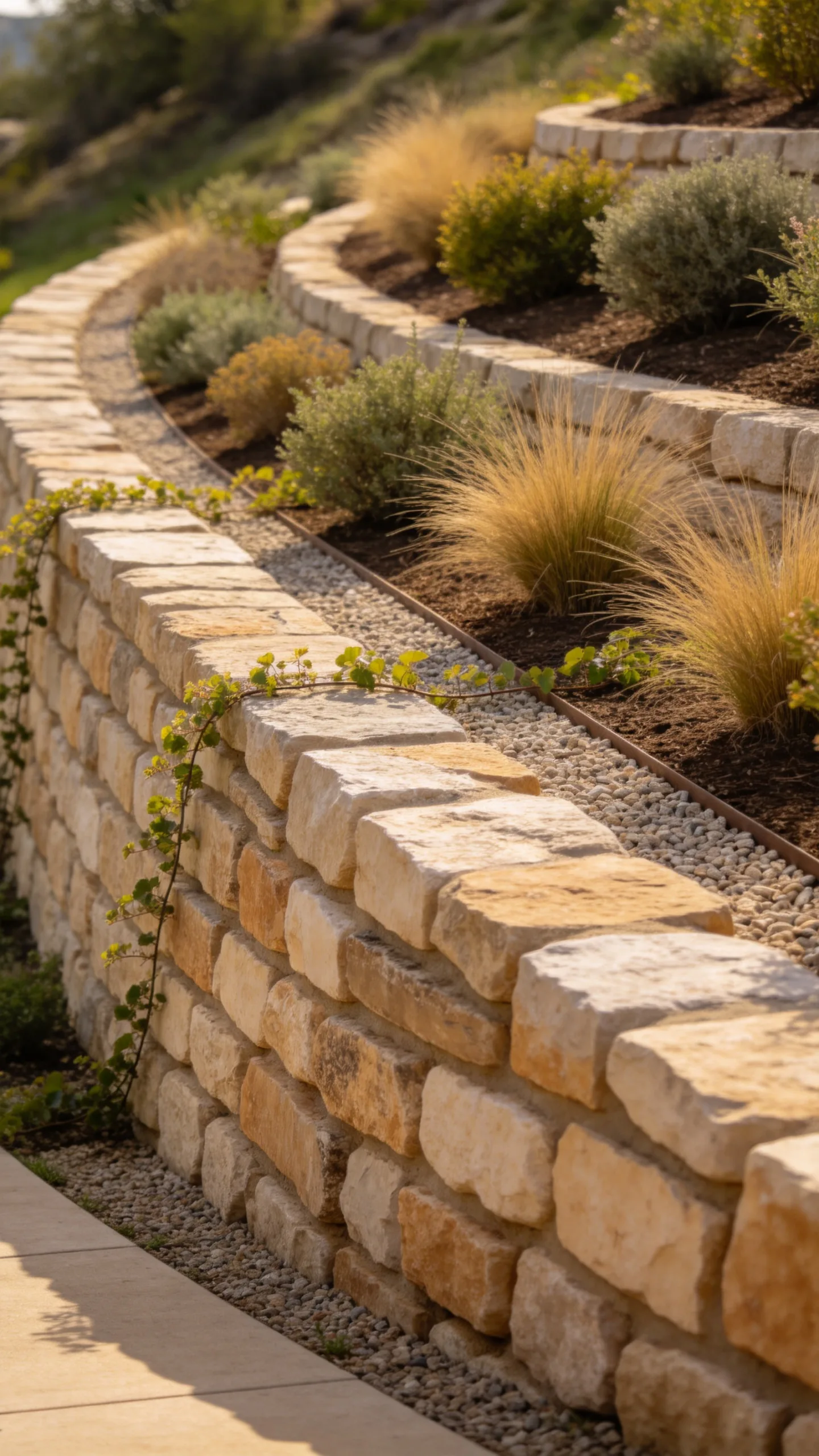
Use a low dry-stone wall or stacked-stone border to hold a sloped planting bed and create visual depth. The upper bed can contain drought-tolerant shrubs and grasses, while trailing plants soften the stone edge without requiring a large lawn.
For walls beyond a small decorative border, follow local construction requirements and use appropriate drainage behind the wall. Terracing also makes irrigation easier by dividing a slope into manageable planting zones rather than allowing water to rush downhill.
15. Drip-Irrigated Front Garden With Smart Zones
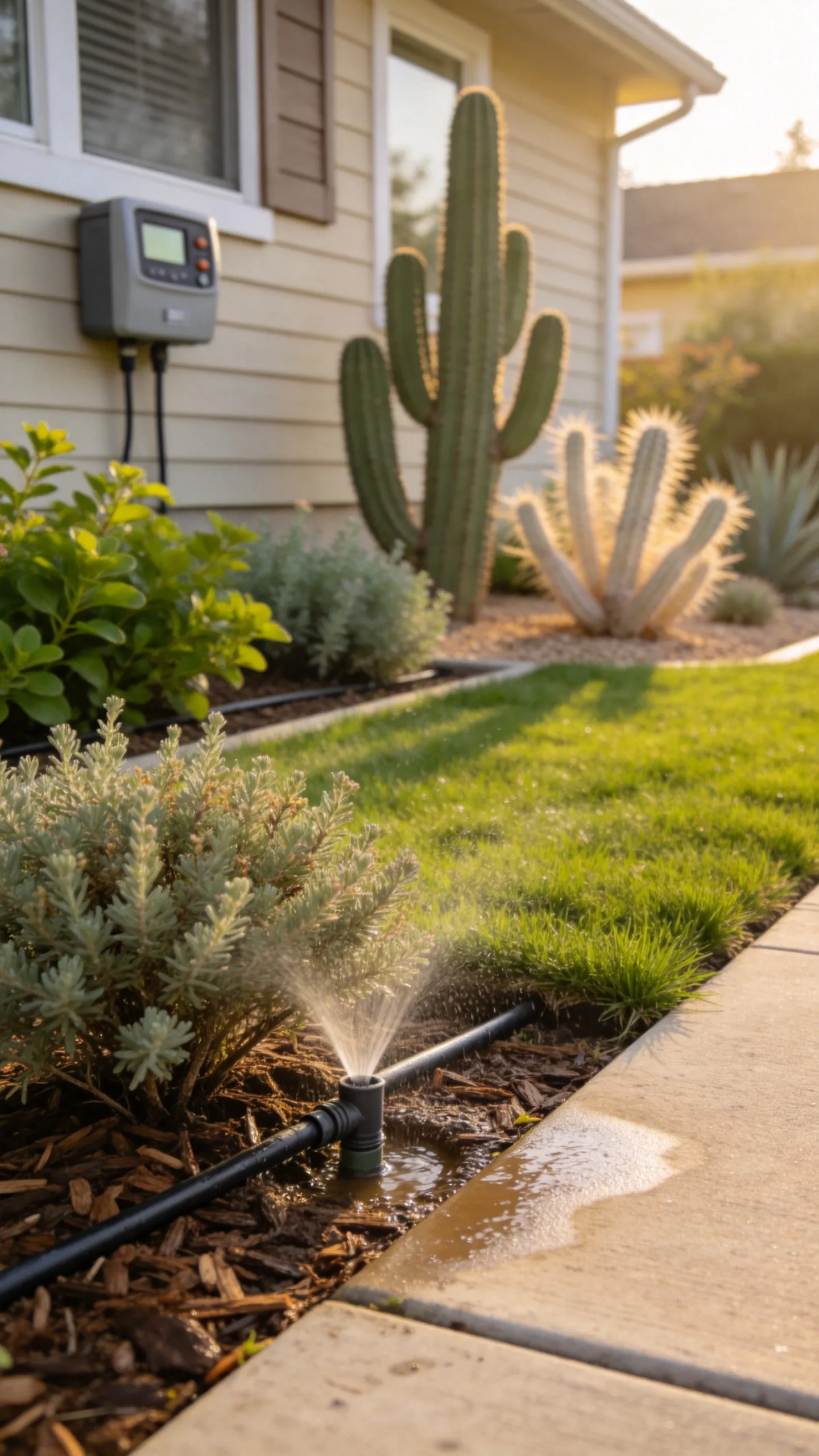
Organize the landscape into irrigation zones based on plant water needs. Place turf or higher-water plants separately from native shrubs, cactus, and dry-climate perennials, then use drip lines or low-volume emitters to deliver water near the roots.
Set irrigation for early morning and adjust the schedule after rainfall, seasonal temperature changes, or local watering restrictions. Inspect emitters regularly for clogged lines, leaks, and overspray onto sidewalks, because efficient equipment still requires occasional maintenance.