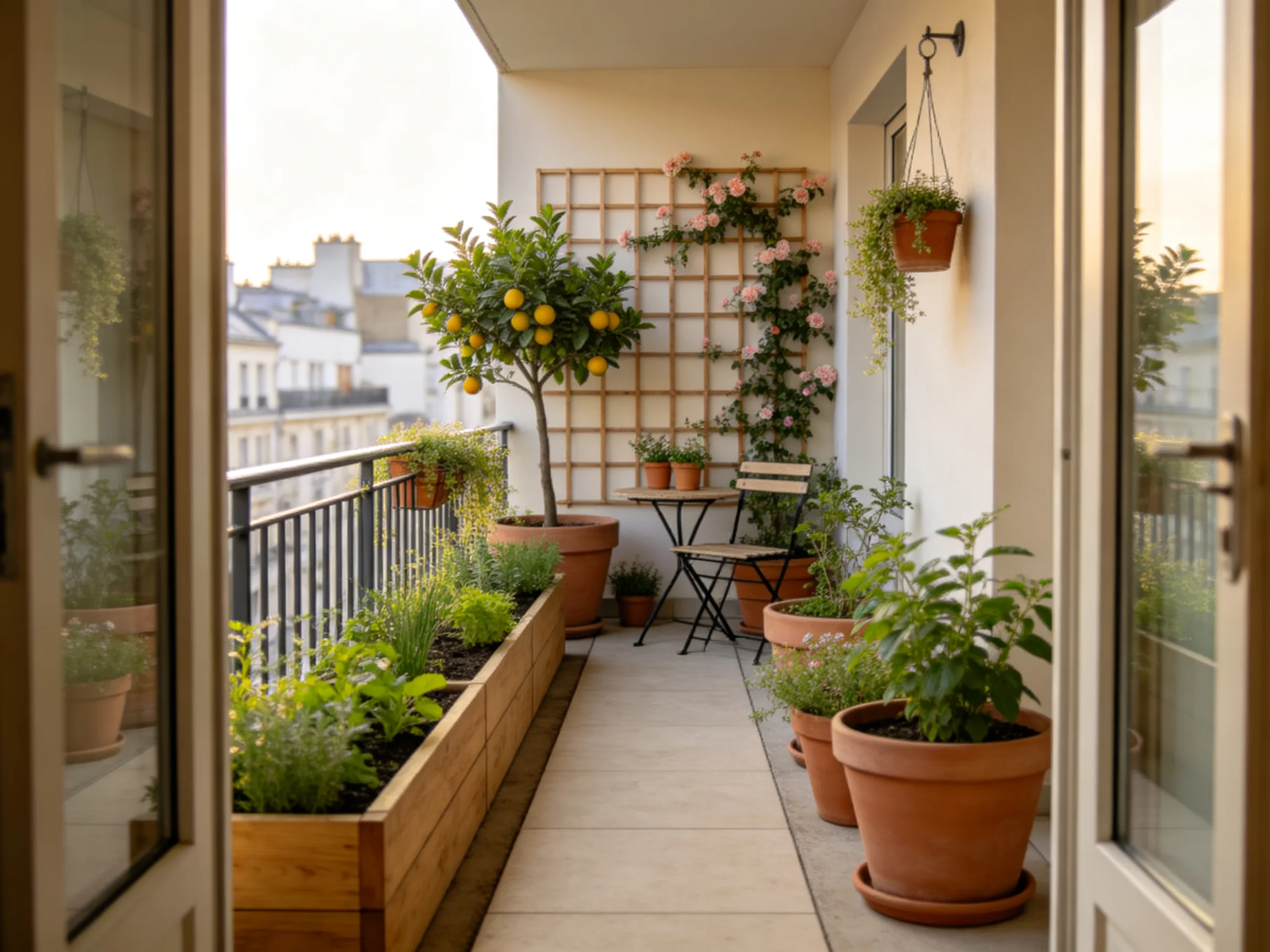
Small balconies and terraces can become productive, comfortable garden rooms with the right containers, plant choices, and layout. These terrace garden ideas balcony design tips use vertical space, movable planters, railings, and layered planting to add greenery without blocking walking areas or making daily care difficult.
1. Use a Tiered Corner Planter for Vertical Layers
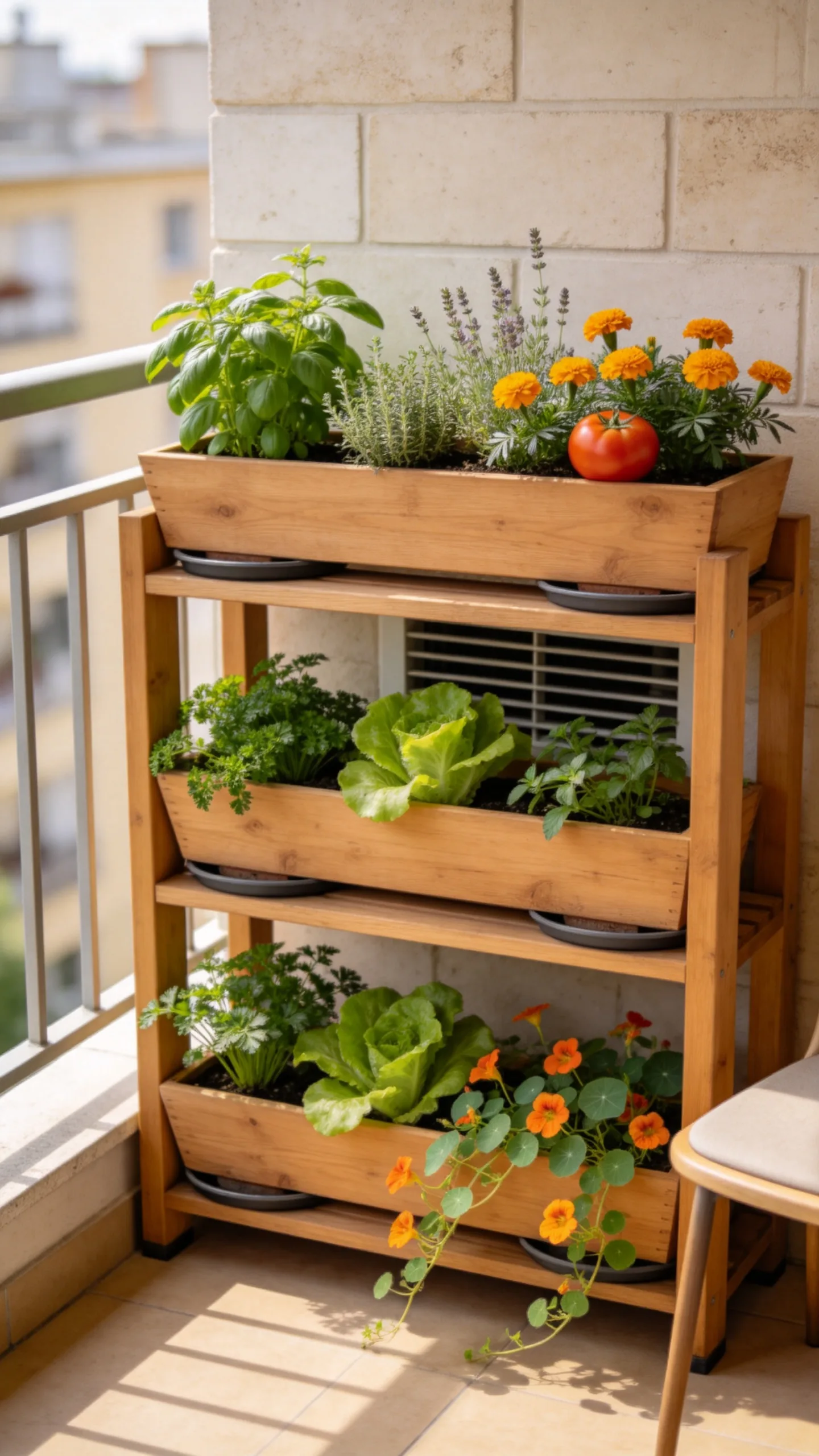
Place a three-tier wooden or metal planter in one corner to grow herbs, flowers, and compact vegetables without spreading containers across the floor. Put sun-loving plants such as basil, thyme, marigolds, or cherry tomatoes on the upper levels, then use lower shelves for parsley, lettuce, or trailing nasturtiums.
Leave enough space behind the unit for airflow and keep the tiers within reach of a watering can. A corner arrangement creates visual height while preserving the central floor area for a chair, small table, or clear walking path.
2. Create a Narrow Herb Garden Along the Railing
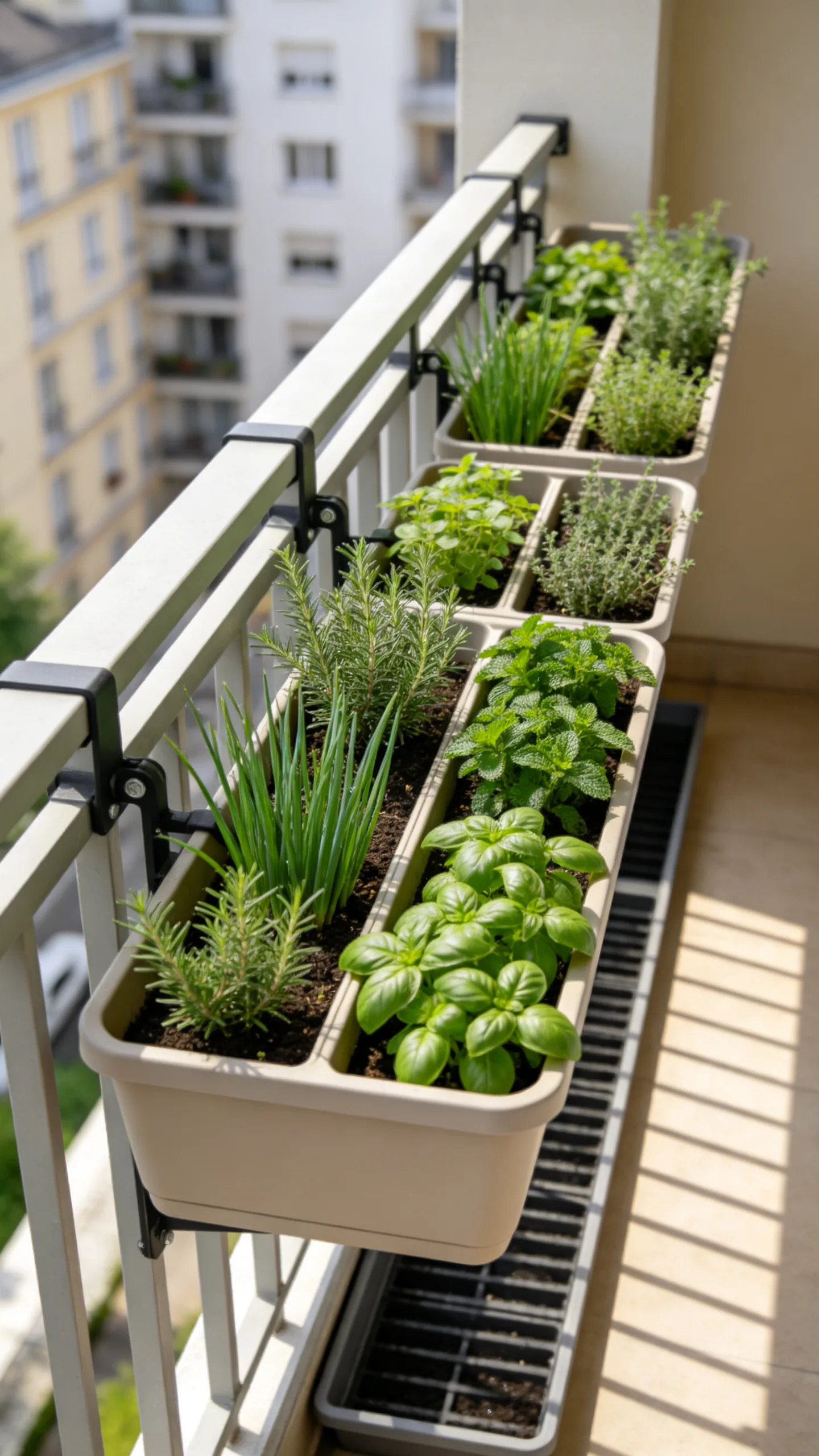
Install long railing planters or slim window boxes along the inside edge of the balcony. This uses an otherwise empty boundary and keeps culinary plants close to the kitchen or outdoor seating area.
Grow rosemary, chives, mint, oregano, thyme, and compact basil in separate containers so plants with different watering needs are easier to manage. Use secure brackets and add drainage trays where permitted, especially on upper-level balconies.
3. Build a Vertical Trellis for Climbers
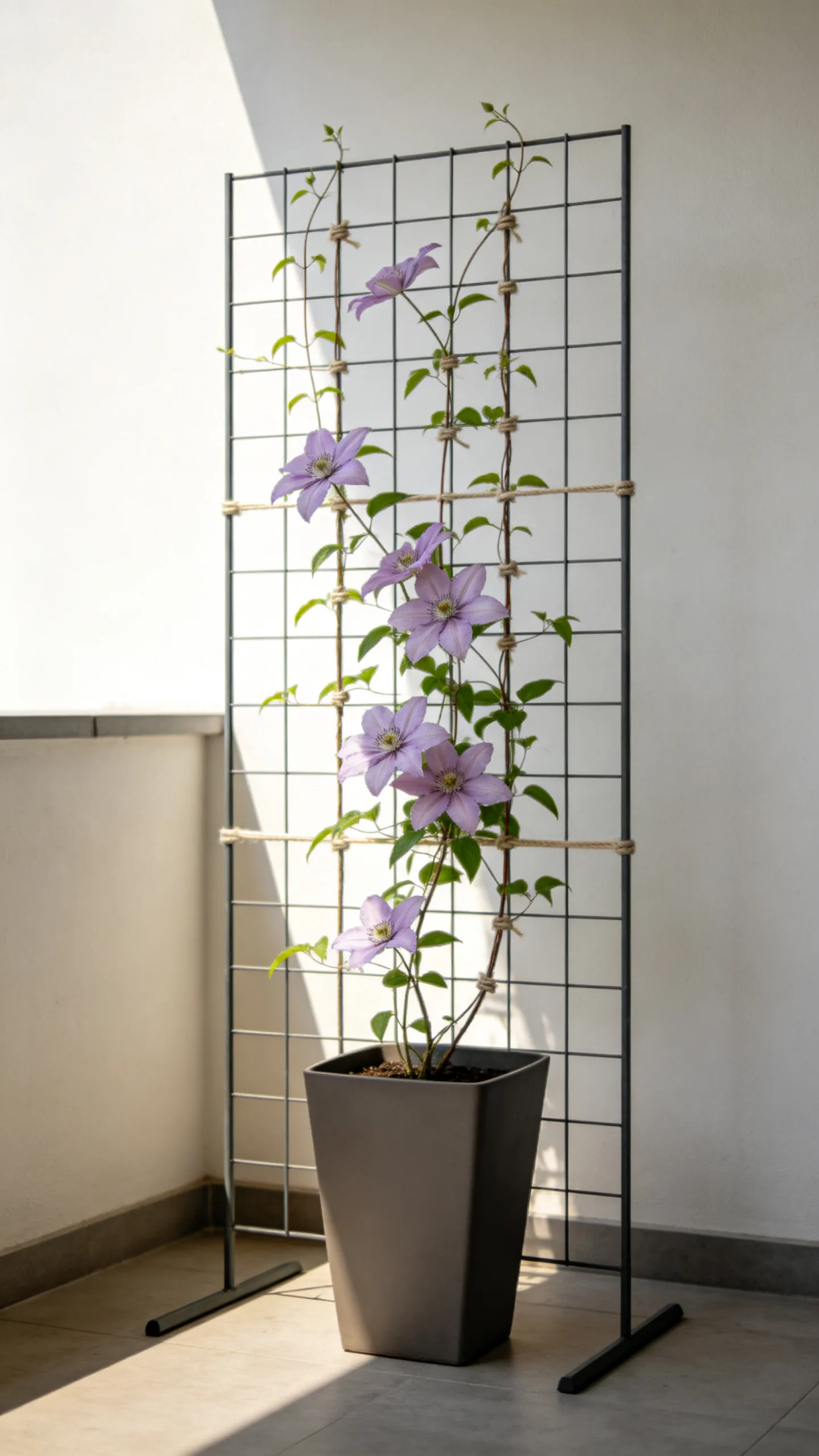
Attach a lightweight trellis to a wall or place a freestanding grid behind a container. Compact climbers such as clematis, jasmine, black-eyed Susan vine, or pole beans can use the vertical surface instead of taking up valuable floor space.
Choose plants according to available light and local winter temperatures. Tie new stems loosely with soft garden ties, and keep the trellis several inches away from the wall when possible to improve air circulation and make pruning easier.
4. Combine Large Pots With Low Groundcover
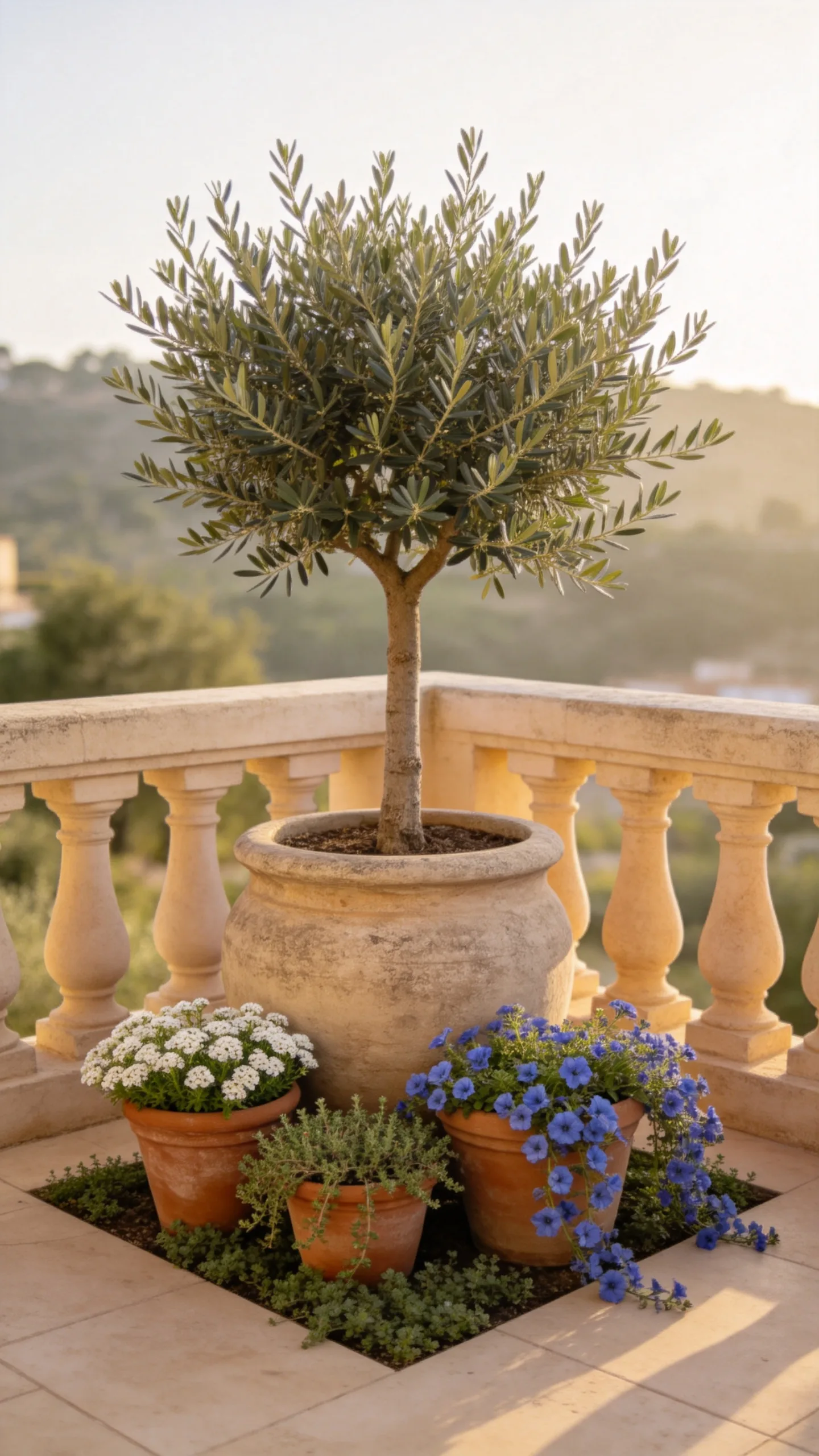
Use one substantial container as an anchor, then surround it with two or three smaller pots of low-growing plants. A dwarf citrus tree, compact olive, or ornamental grass can provide height, while creeping thyme, alyssum, or trailing lobelia soften the base.
This layered arrangement creates depth without needing a large bed. Check the mature size of the main plant before buying it, because a tree or shrub that outgrows its container can become difficult to move and may shade nearby plants.
5. Install a Narrow Raised Bed Along One Wall
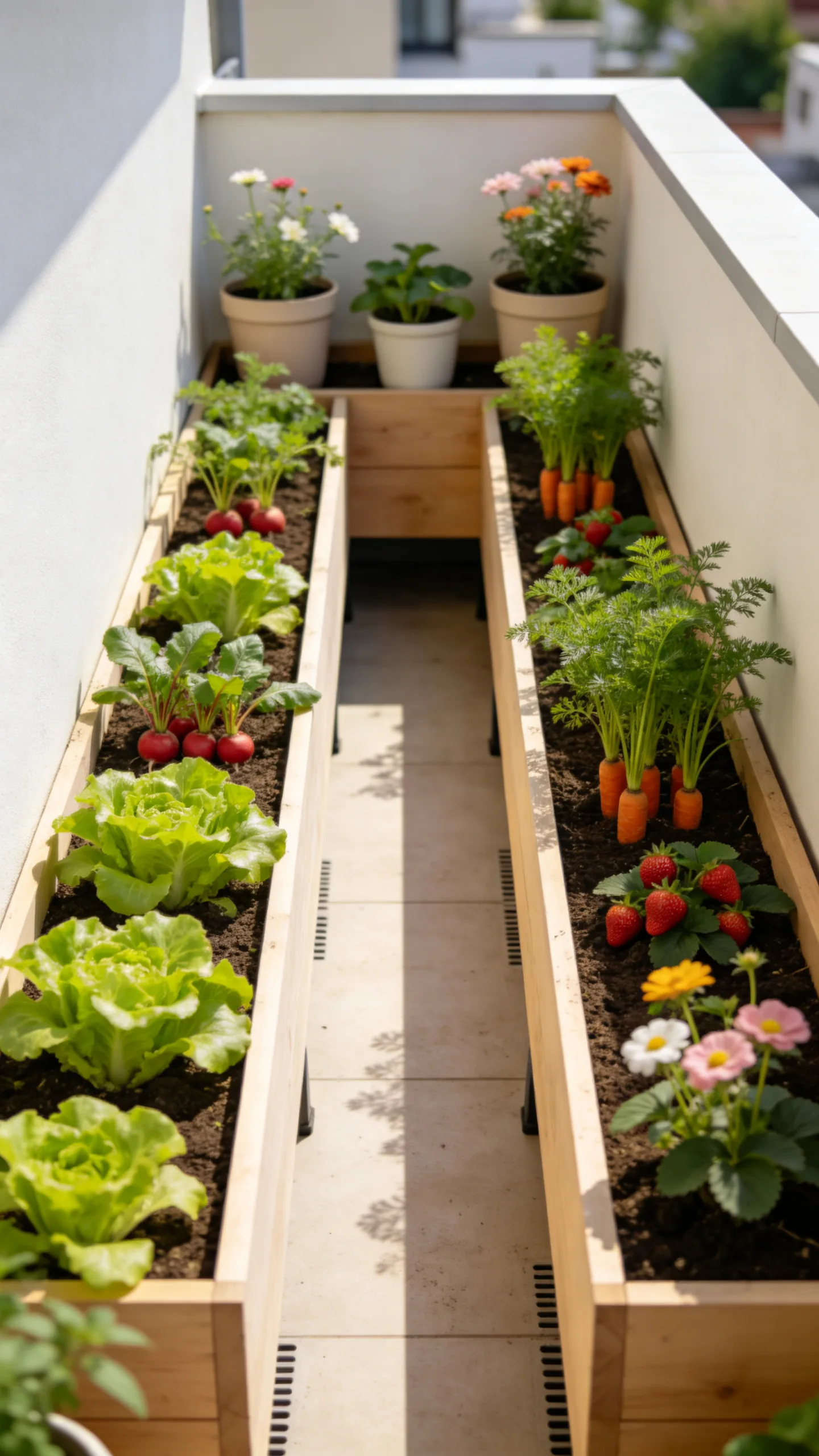
A slim raised bed can turn a bare terrace wall into a productive planting strip. Choose a model no wider than the space allows, and line the bottom only if the manufacturer recommends it; the bed still needs drainage holes to prevent waterlogged soil.
Fill it with lightweight container soil and grow salad greens, radishes, dwarf carrots, strawberries, or seasonal flowers. Keeping the bed against one wall leaves the center open and makes the planting area easier to reach from one side.
6. Add Hanging Baskets Above the Seating Area
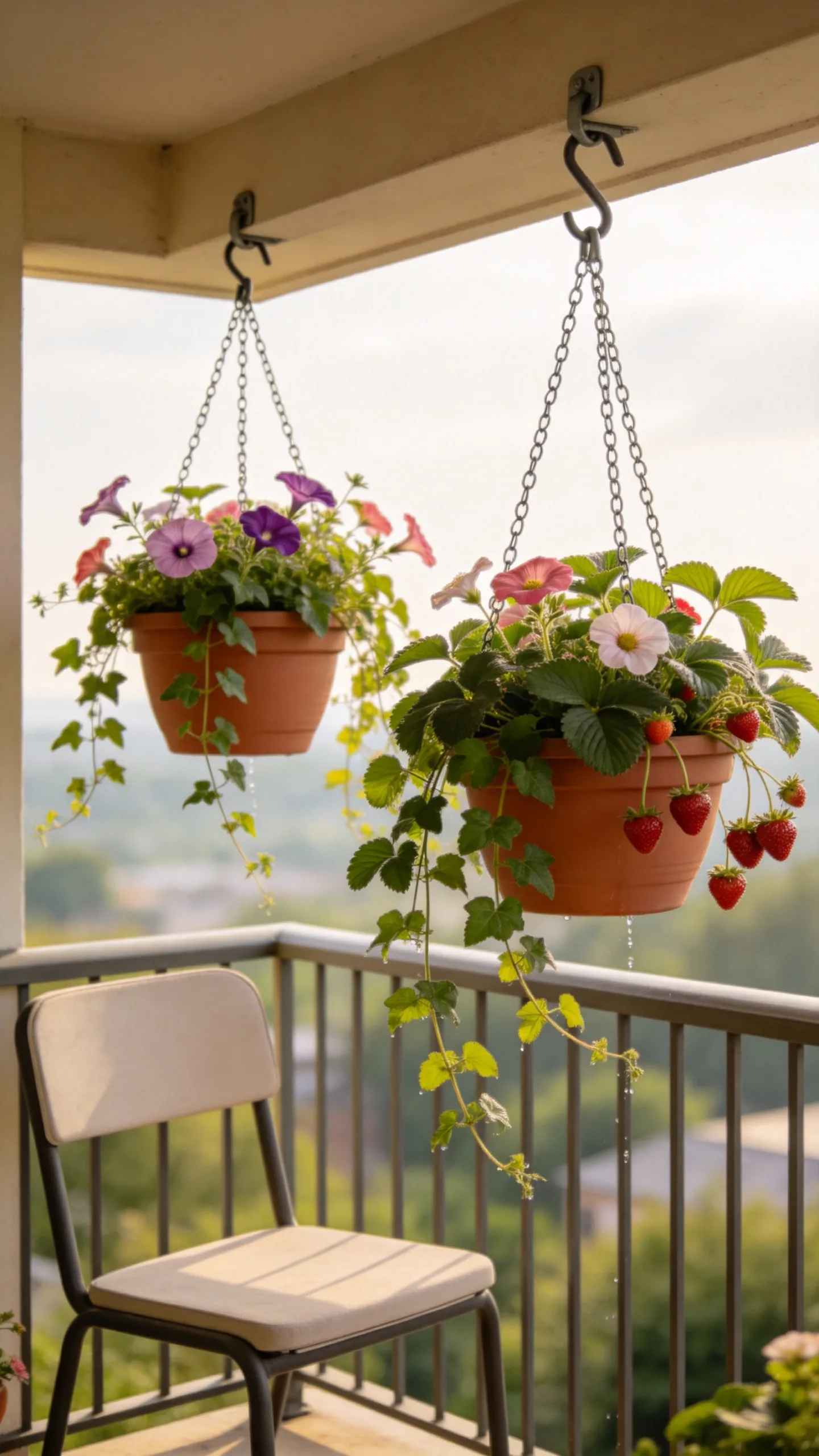
Hang baskets from a sturdy overhead beam, approved ceiling hook, or purpose-built balcony bracket rather than attaching heavy planters to an unsuitable railing. Trailing petunias, fuchsias, ivy, strawberries, and sweet potato vine can add greenery at eye level.
Use lightweight potting mix and avoid placing baskets where dripping water will damage furniture or disturb people below. Hanging containers dry out faster than large floor pots, so check moisture frequently during hot or windy weather.
7. Design a Privacy Screen With Climbing Plants
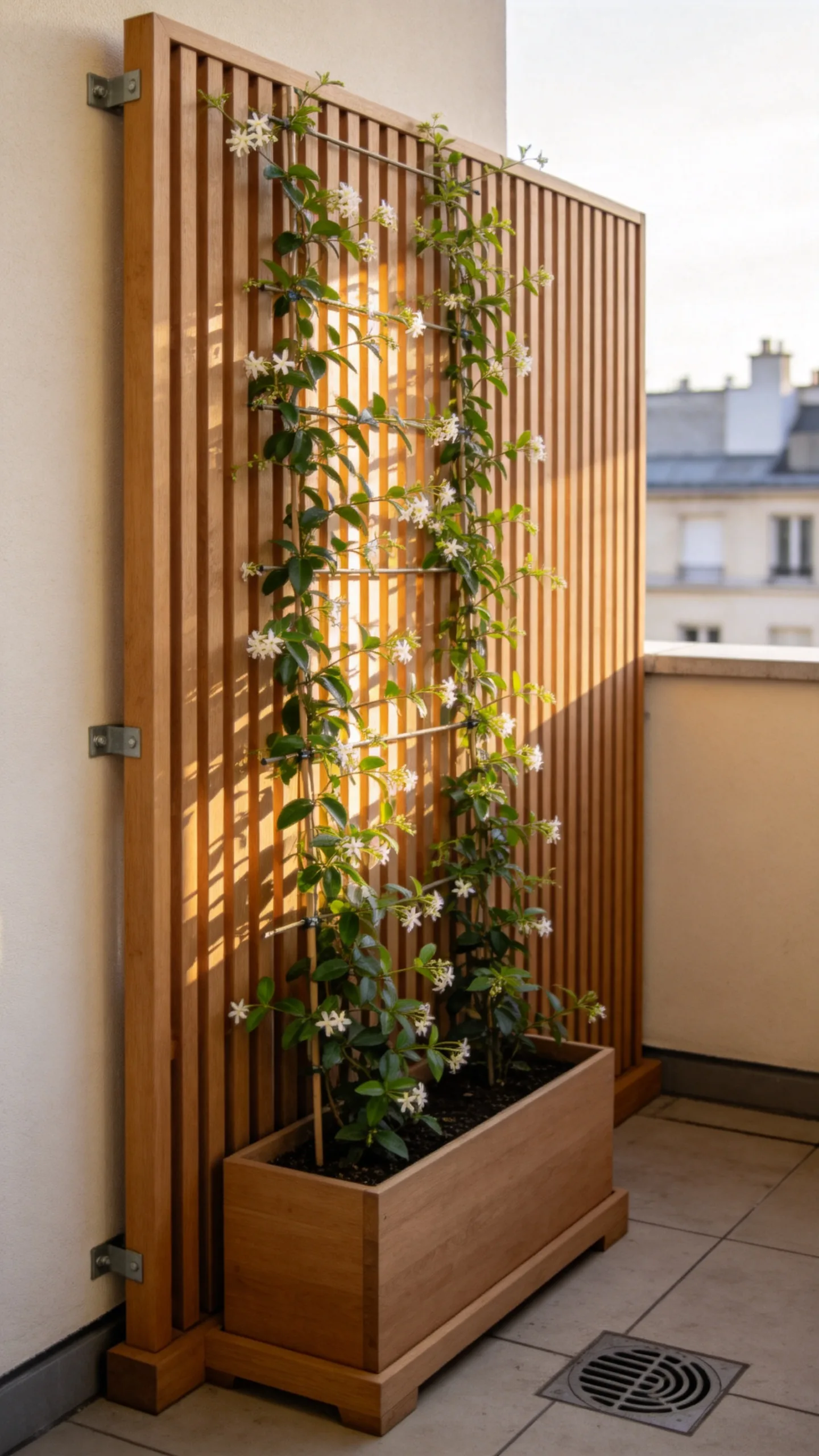
A trellis, bamboo screen, or slatted panel can provide privacy while supporting vines. Place the screen along the side that faces neighboring windows, then grow a suitable climber in a deep container at its base.
For seasonal coverage, consider annual vines such as morning glory where legal and appropriate; for longer-term planting, choose a climate-suitable perennial. Anchor the screen securely, keep it below any building height restrictions, and prune growth so it does not obstruct drainage or neighboring spaces.
8. Use a Rolling Plant Stand for Flexible Layouts
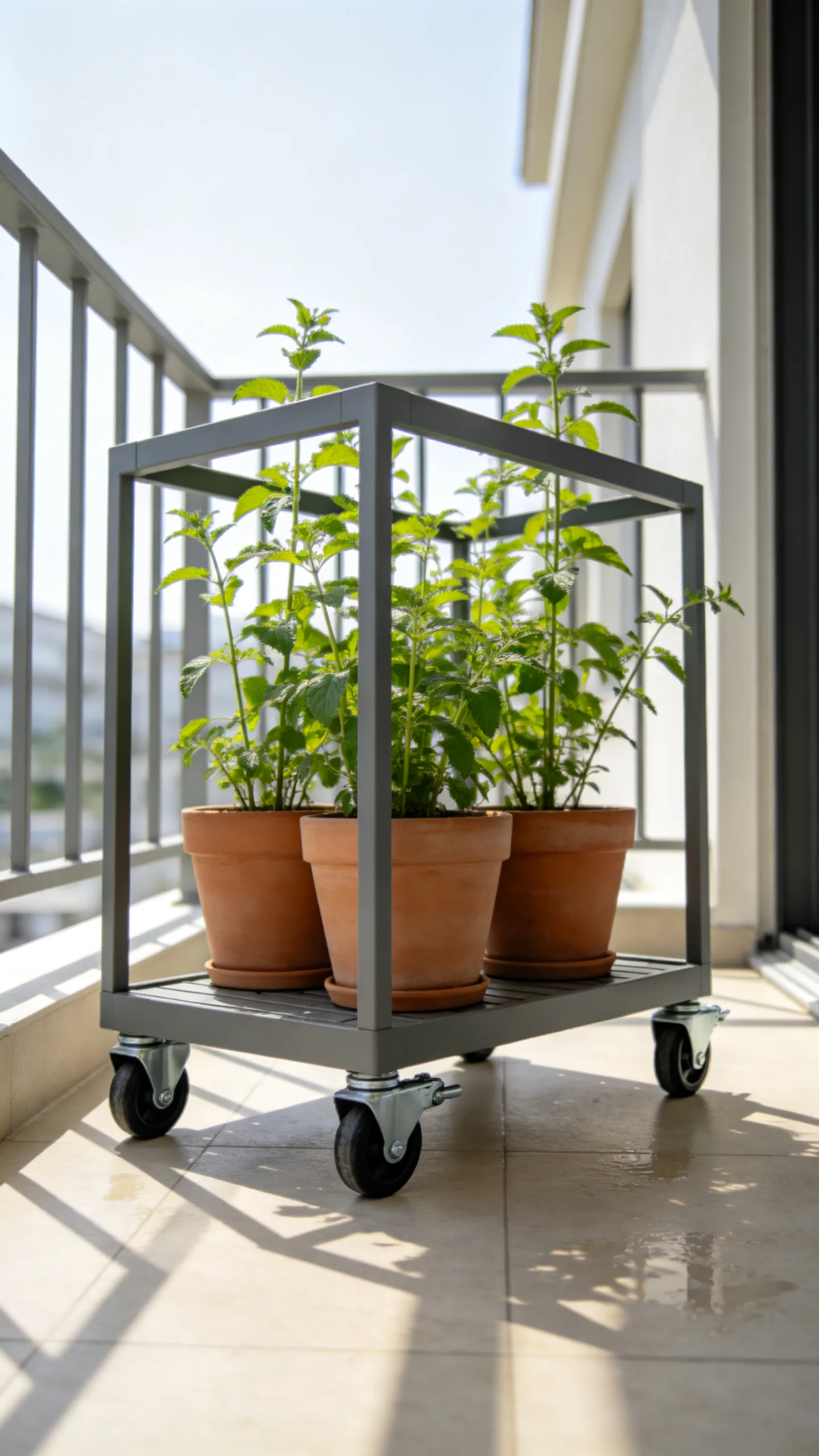
Choose a sturdy plant stand or raised platform with locking casters for large pots. This makes it possible to move plants into brighter areas, clear the floor for cleaning, or protect sensitive containers during storms and cold snaps.
Group plants with similar light and watering requirements on the stand. Use wide wheels and a low center of gravity for stability, and avoid moving heavy pots across wet surfaces unless the stand is designed for outdoor use.
9. Turn the Balcony Rail Into a Succulent Display
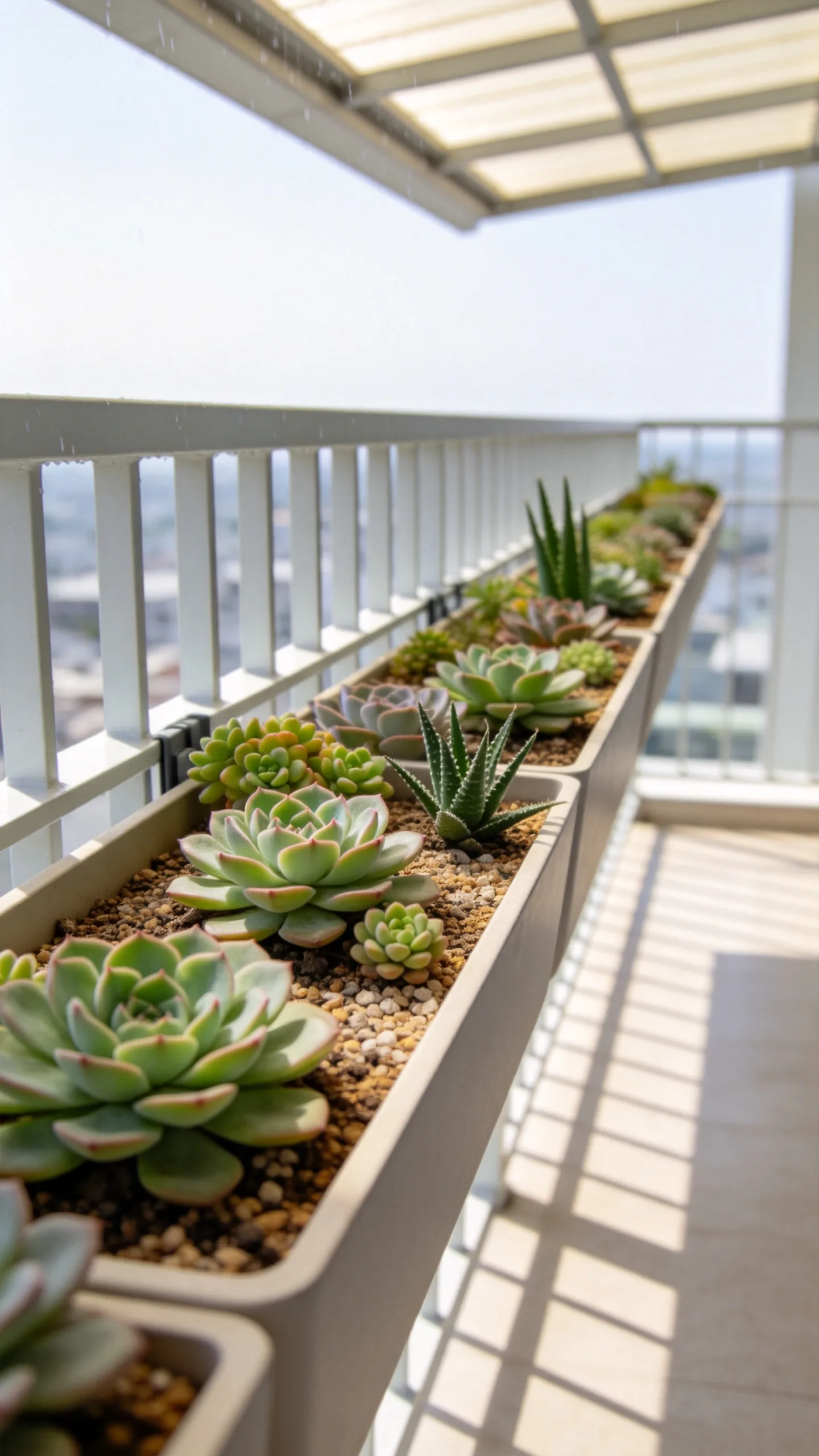
Create a low-maintenance rail garden with shallow containers filled with fast-draining cactus or succulent mix. Sedum, echeveria, sempervivum, and small aloe varieties can work well in bright locations, although winter temperatures and humidity should guide the final plant selection.
Keep succulent containers protected from constant rain if the soil stays wet for long periods. A repeating row of matching pots gives a narrow balcony a tidy design, while varied leaf shapes add interest without requiring tall structures.
10. Grow Salad Greens in Stackable Crates
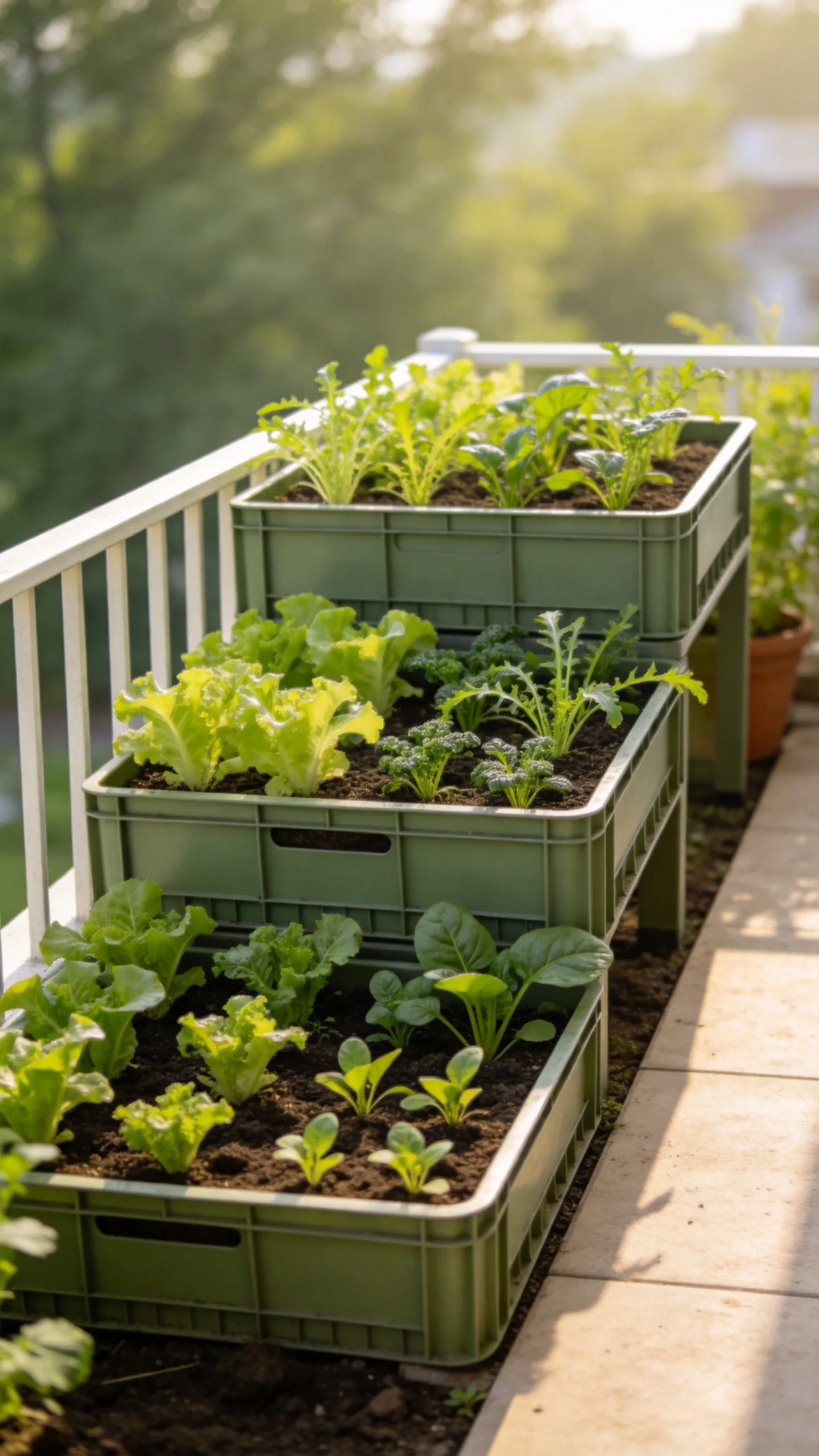
Use food-safe stackable crates or shallow storage planters to grow lettuce, arugula, baby kale, and spinach. Position the tallest crate at the back and stagger the others so each level receives adequate light and remains reachable for harvesting.
Sow small batches every few weeks rather than planting the entire crop at once. This provides a longer harvest window and lets you replace tired plants without disturbing the rest of the terrace garden.
11. Make a Mini Citrus Patio Garden
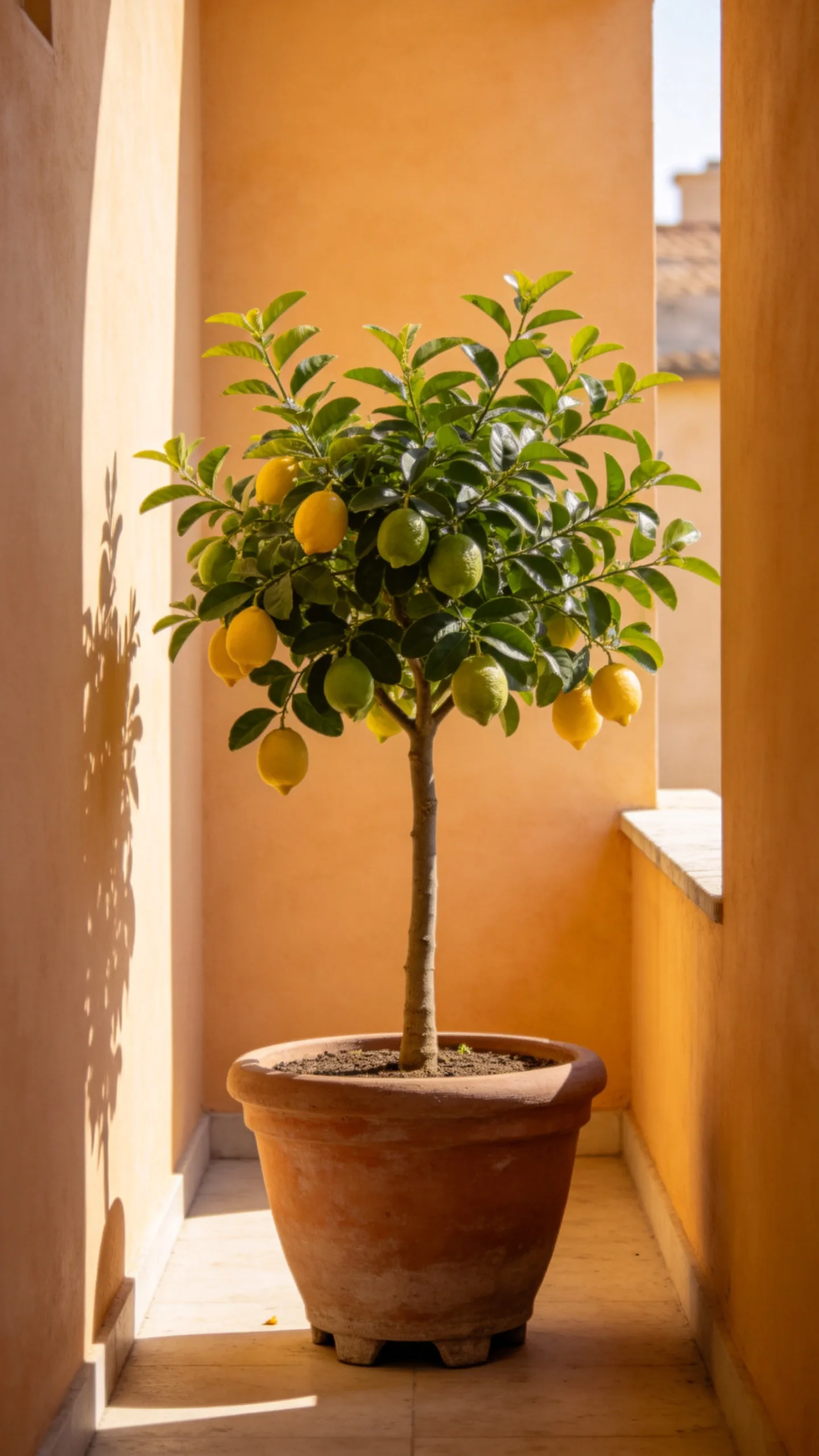
Place a dwarf lemon, lime, or calamondin tree in a large container near the sunniest wall. Choose a pot with drainage holes and enough weight to remain stable in wind, while leaving room around it for air circulation and routine pruning.
Citrus generally needs strong light and regular moisture, but the exact care schedule depends on the variety, season, and climate. Move the container to a protected position during cold weather when necessary, and avoid placing it where falling fruit or watering will stain a walkway.
12. Use a Narrow Pallet-Style Wall Garden
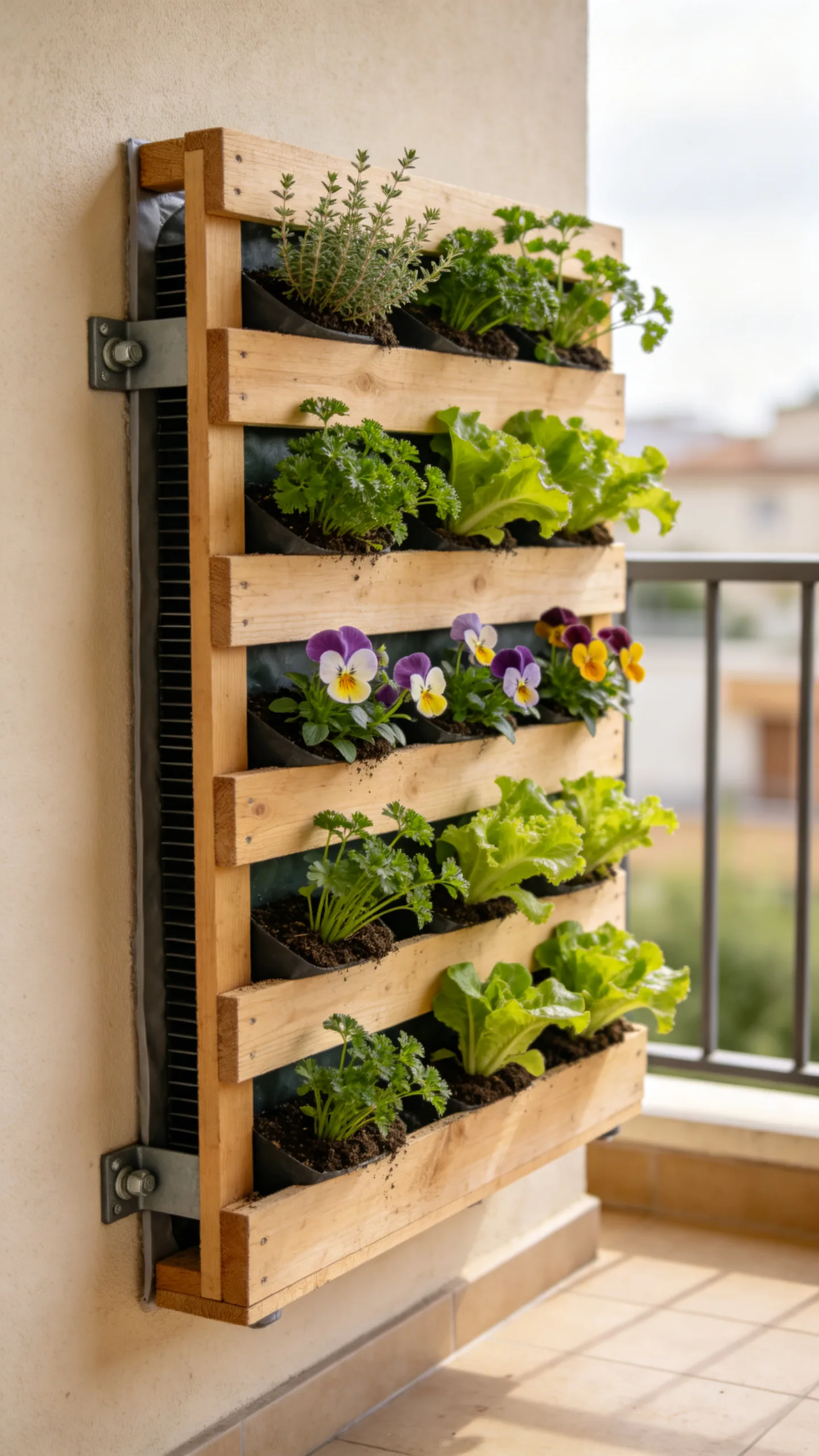
A vertical planter with individual pockets can hold small herbs, annual flowers, or shallow-rooted leafy greens. Mount it securely to a wall or use a freestanding version so the weight of wet soil does not put pressure on balcony railings.
Label each pocket and place plants with similar needs together. Add a waterproof backing where needed to protect the wall, and leave a small gap below the planter so moisture can evaporate instead of collecting behind it.
13. Create a Container Border Around a Seating Zone
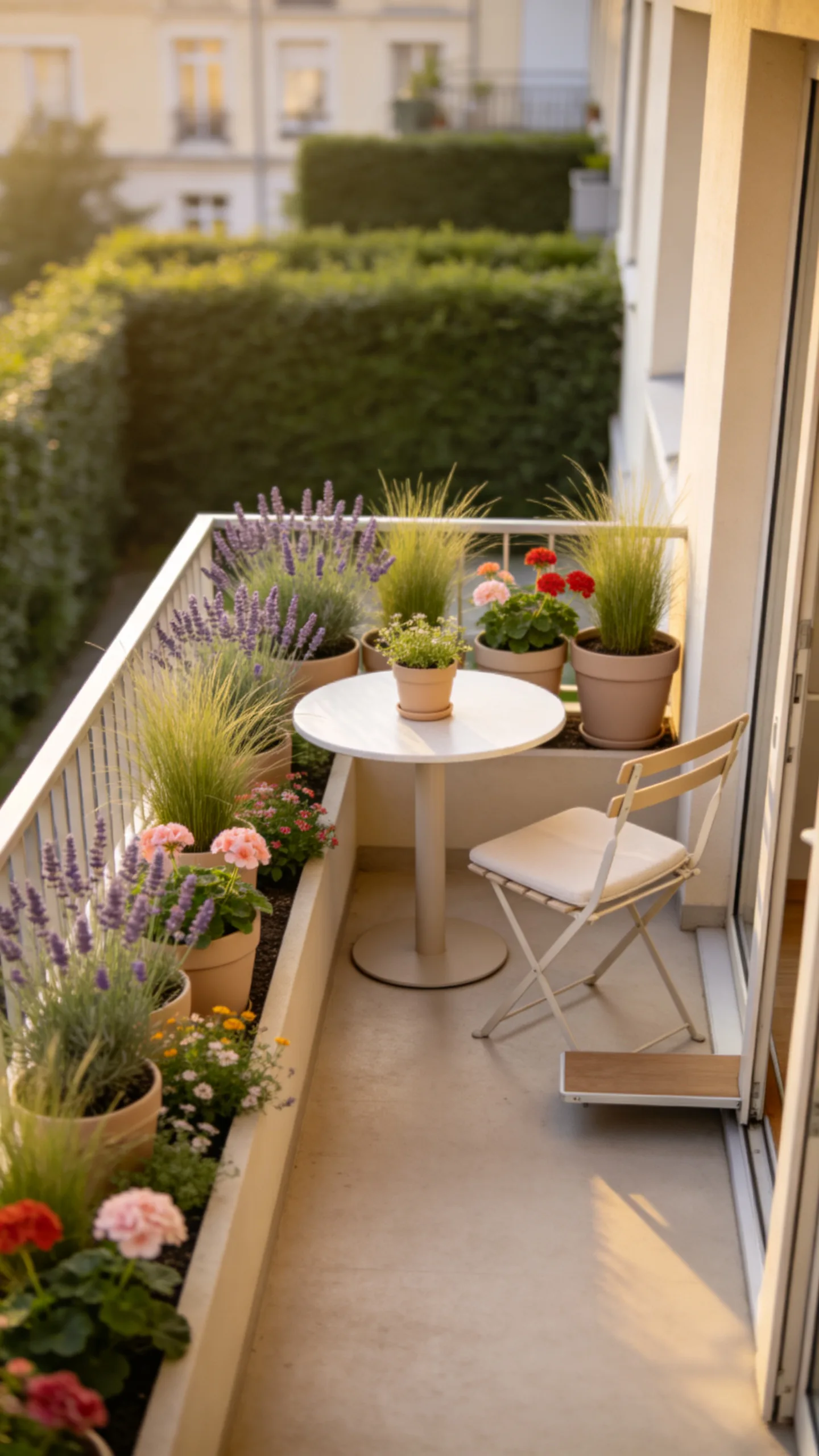
Define a small outdoor seating area with matching pots arranged along two sides rather than surrounding every edge. Compact grasses, lavender, geraniums, or flowering annuals can form a soft border while keeping the chair and table accessible.
Choose containers that match the available light and wind exposure. Leave enough clearance to pull out chairs, sweep the floor, and reach each pot for watering, since an attractive layout quickly becomes impractical when plants block basic movement.
14. Add a Shade Corner With Ferns and Leafy Plants
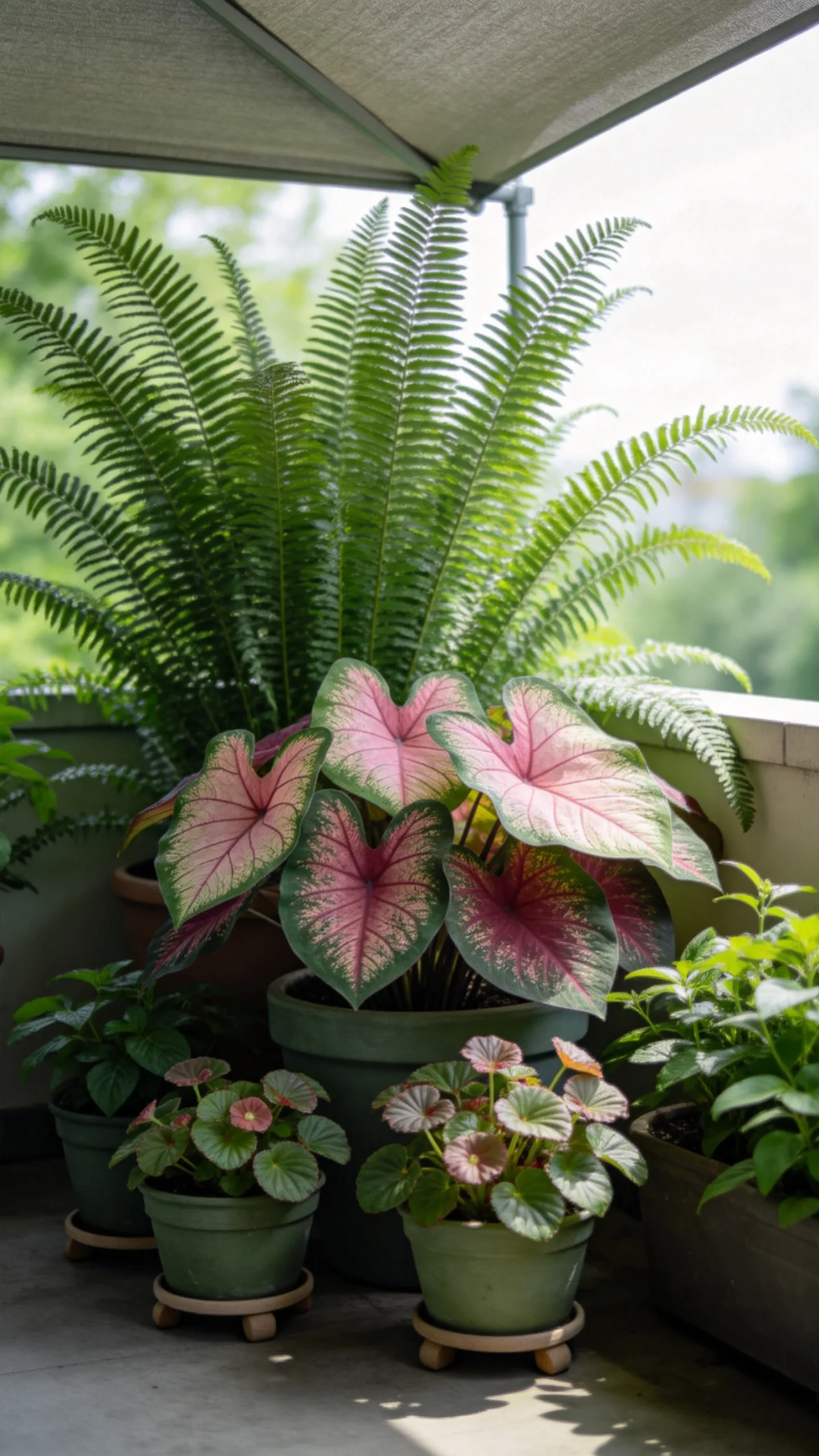
Use a wall, umbrella, or overhead shade sail to create a cooler planting zone for ferns, caladiums, begonias, and other foliage plants suited to lower light. Group them in containers with similar moisture requirements and protect them from strong afternoon sun when needed.
Shade does not mean no light, so observe the area throughout the day before choosing plants. Keep containers elevated slightly or use pot feet to improve drainage, especially in a shaded corner where soil may dry slowly.
15. Organize the Terrace With a Compact Care Station
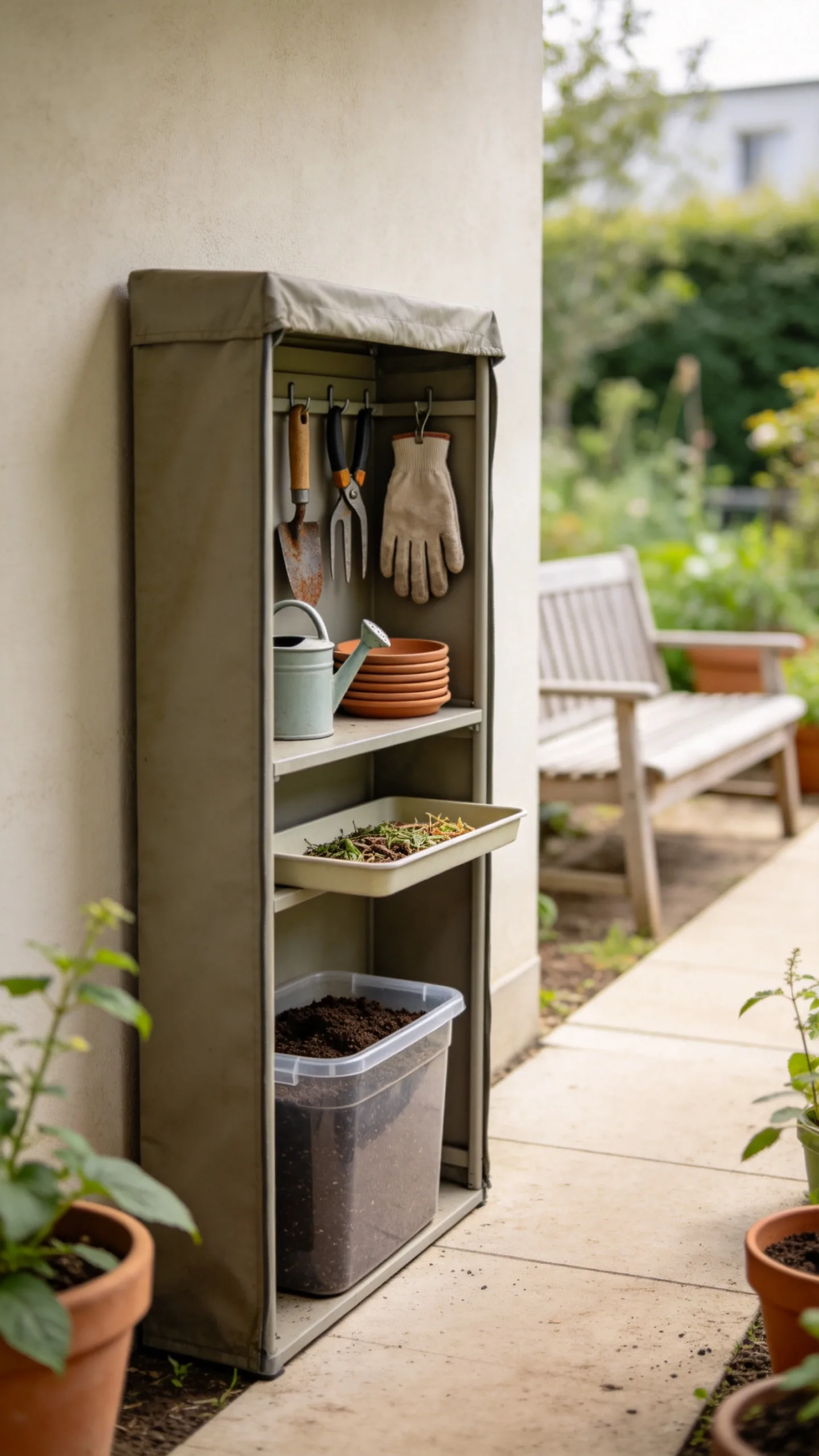
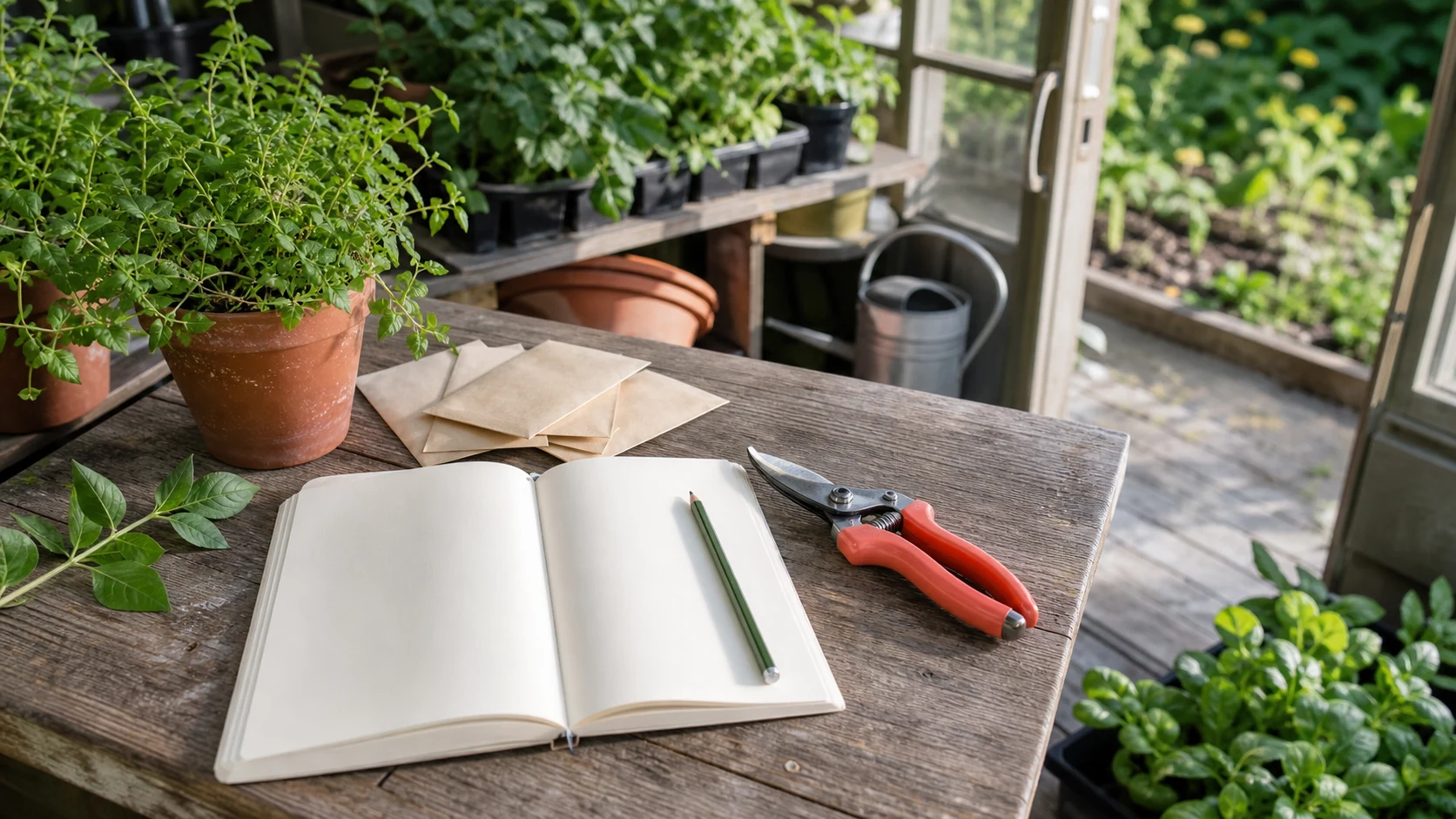
Set aside one narrow shelf or storage bench for potting soil, hand tools, saucers, plant labels, and a small watering can. Keeping supplies near the garden makes routine tasks faster and prevents bags of soil or equipment from taking over the main living area.
Place the station under cover if possible and store soil in a sealed container to protect it from rain. Add a shallow tray for pruning scraps and a hook for gloves so watering, harvesting, and seasonal planting remain simple in a small space.