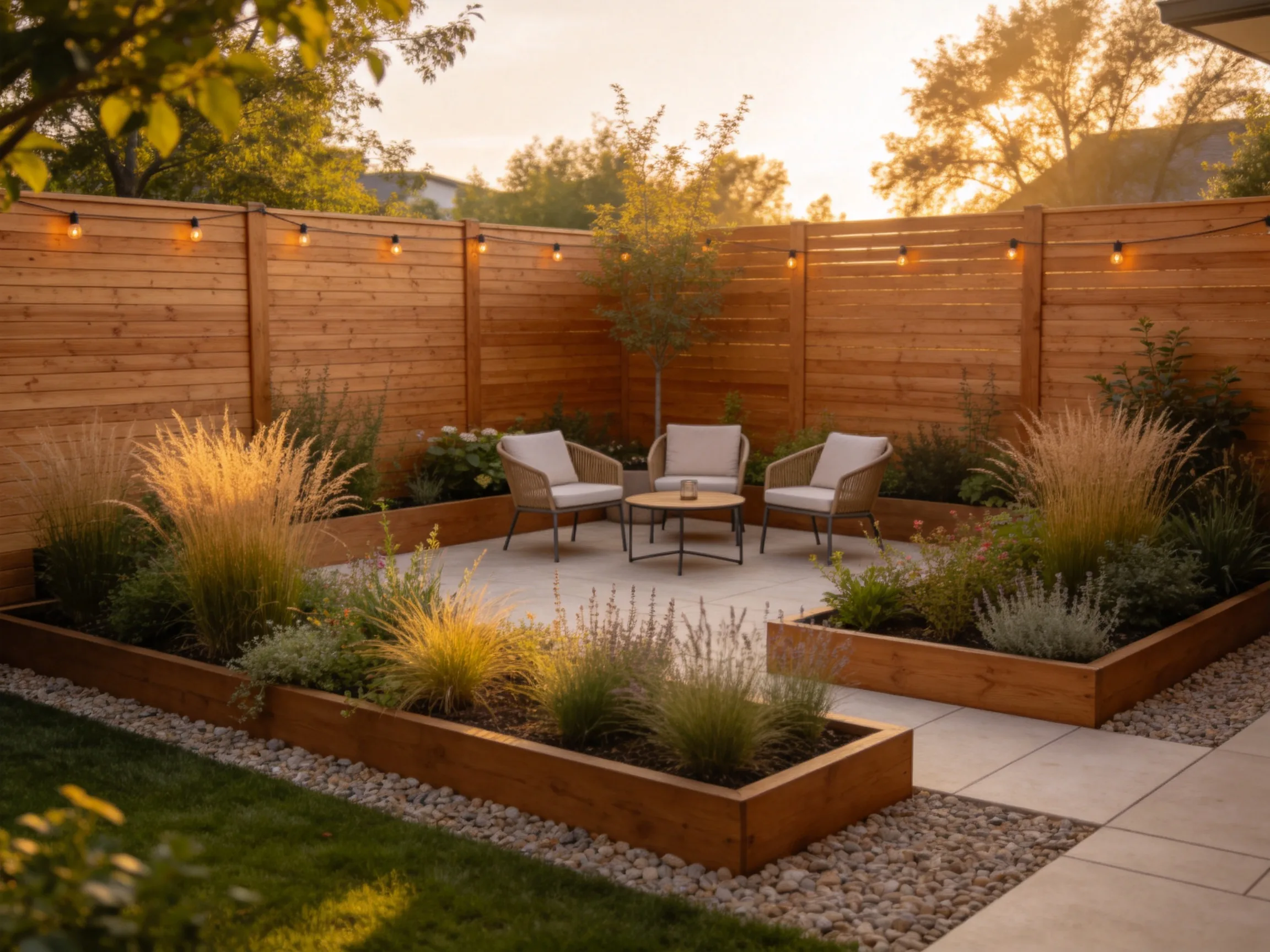
A wooden privacy fence can do more than block a view. With the right height, board pattern, stain color, planting pockets, or built-in features, it can turn a backyard into a quieter, more comfortable outdoor room. These wooden privacy fence ideas focus on designs that feel cozy, practical, and usable for real patios, gardens, side yards, and small backyard spaces.
1. Horizontal Cedar Slat Fence
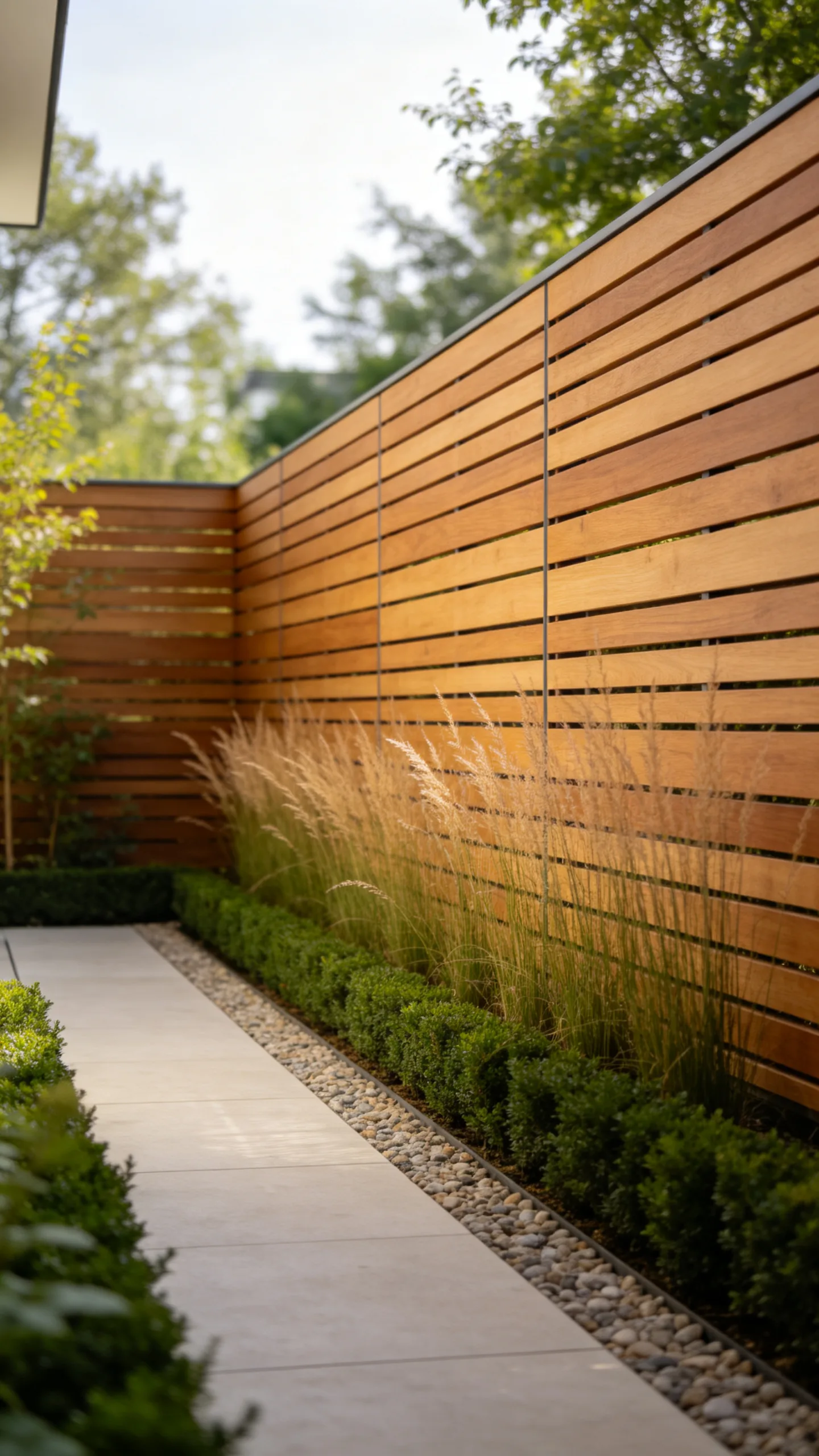
A horizontal cedar slat fence gives a backyard a clean, modern look while creating strong visual privacy. The long lines make narrow yards feel wider, which is especially helpful along a small patio, townhouse garden, or compact side yard.
For maximum privacy, keep the gaps between boards very narrow or use a shadow backing board behind the slats. Cedar naturally handles outdoor exposure well, but sealing or staining it helps maintain the color and reduces weathering. Pair this fence with gravel beds, ornamental grasses, or low boxwood edging to keep the base tidy and easy to maintain.
2. Board-on-Board Privacy Fence
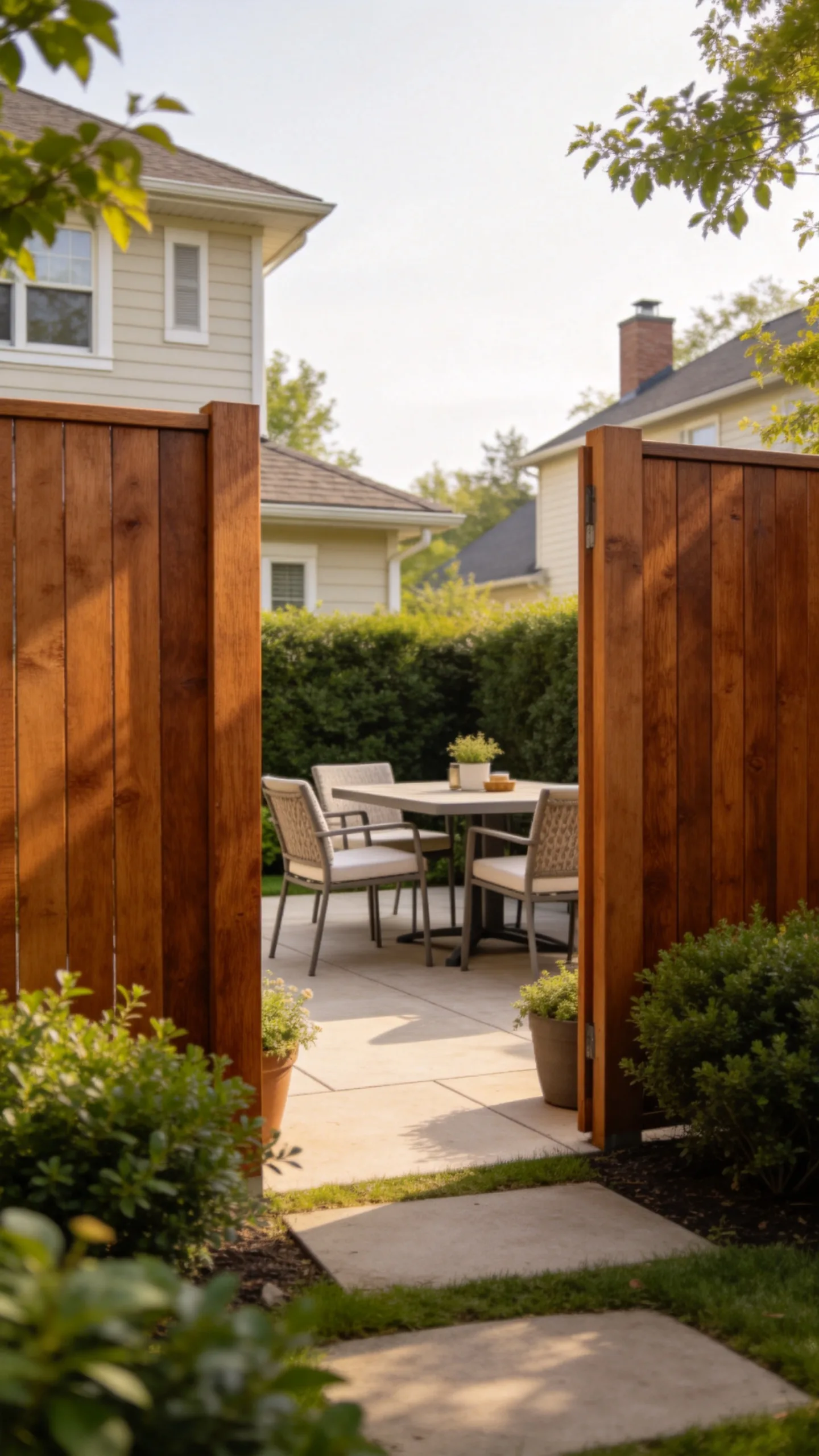
A board-on-board fence uses overlapping vertical boards to block sightlines from both sides. This is a smart choice for backyards near neighbors, alleyways, or busy streets because there are no straight gaps through the fence.
The layered construction also adds depth, so the fence looks more finished than a basic flat panel. Choose warm brown stain for a traditional backyard feel, or use a dark charcoal stain to make green shrubs and patio furniture stand out. This design works well behind seating areas, hot tubs, fire pits, and outdoor dining spaces where consistent privacy matters.
3. Tall Shadowbox Fence
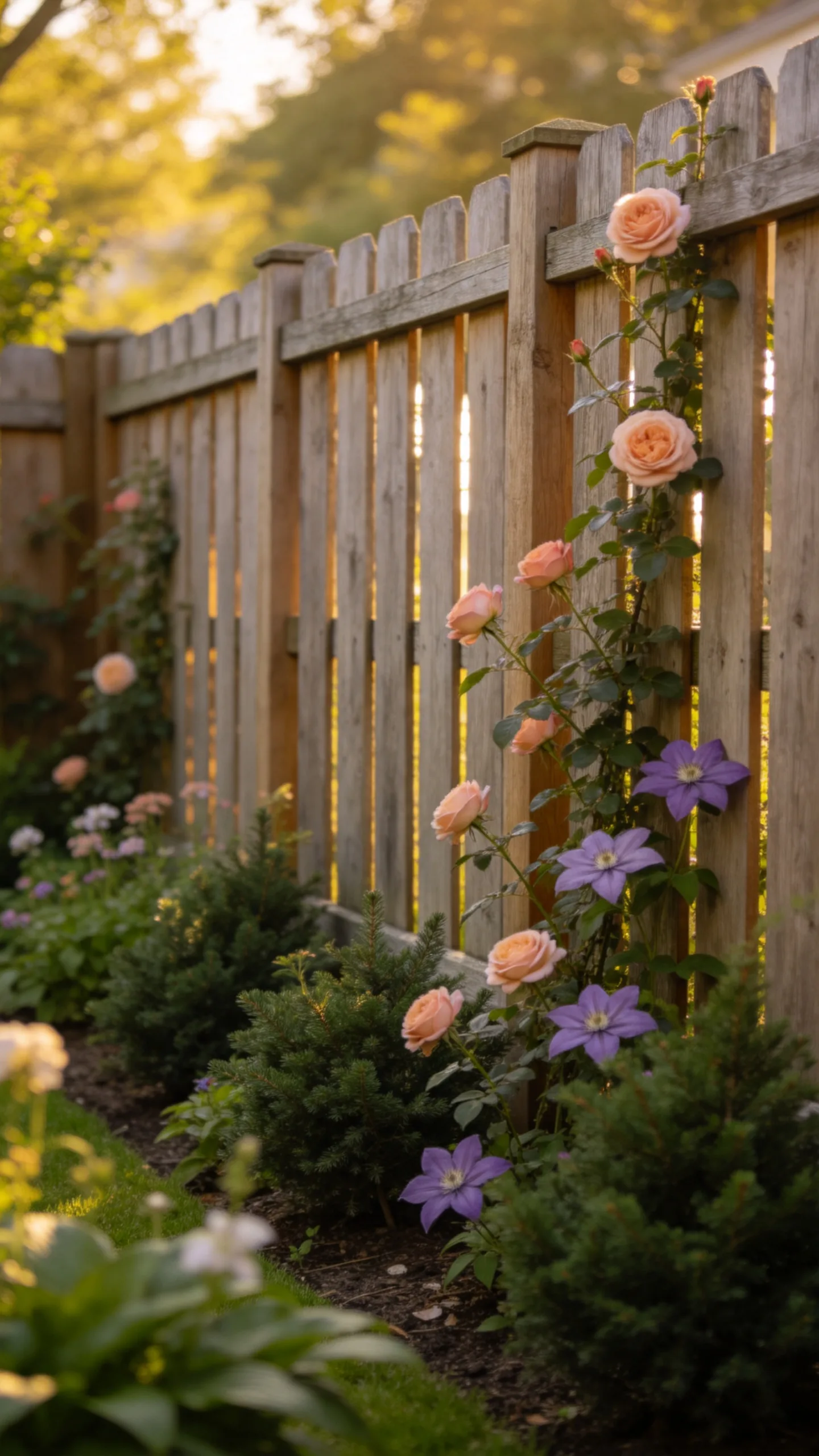
A shadowbox fence alternates boards on each side of the rail, creating a semi-private fence with airflow. It is useful when you want screening without making the yard feel completely closed in.
This style works especially well around gardens where air movement helps reduce damp, stagnant areas near plants. For a cozier look, use six-foot panels and plant climbing roses, clematis, or evergreen shrubs along the inside. The small glimpses through the boards soften the barrier while still making the backyard feel more secluded.
4. Lattice-Topped Wood Fence
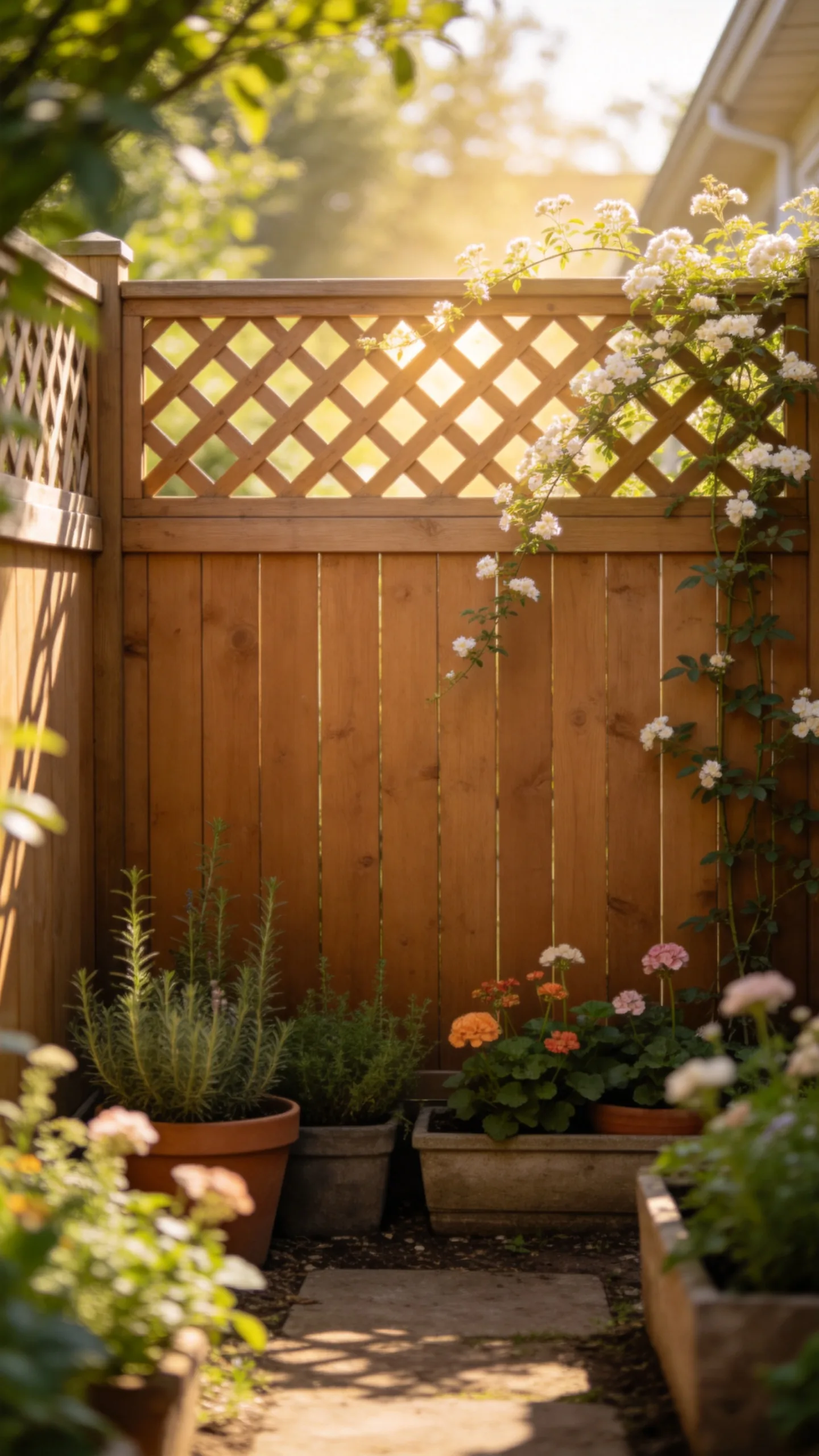
A lattice-topped wooden fence adds privacy at eye level while letting light pass through the upper section. This is a good option for gardens that need screening but still depend on sun for flower beds, herbs, or vegetable planters.
The lattice can support lightweight climbing plants such as jasmine, honeysuckle, or annual vines in containers. Keep the solid lower section tall enough to block seated views from neighboring patios. A lattice top also makes the fence feel less heavy, which is helpful in small backyards where a fully solid wall may feel cramped.
5. Dark Stained Wood Fence
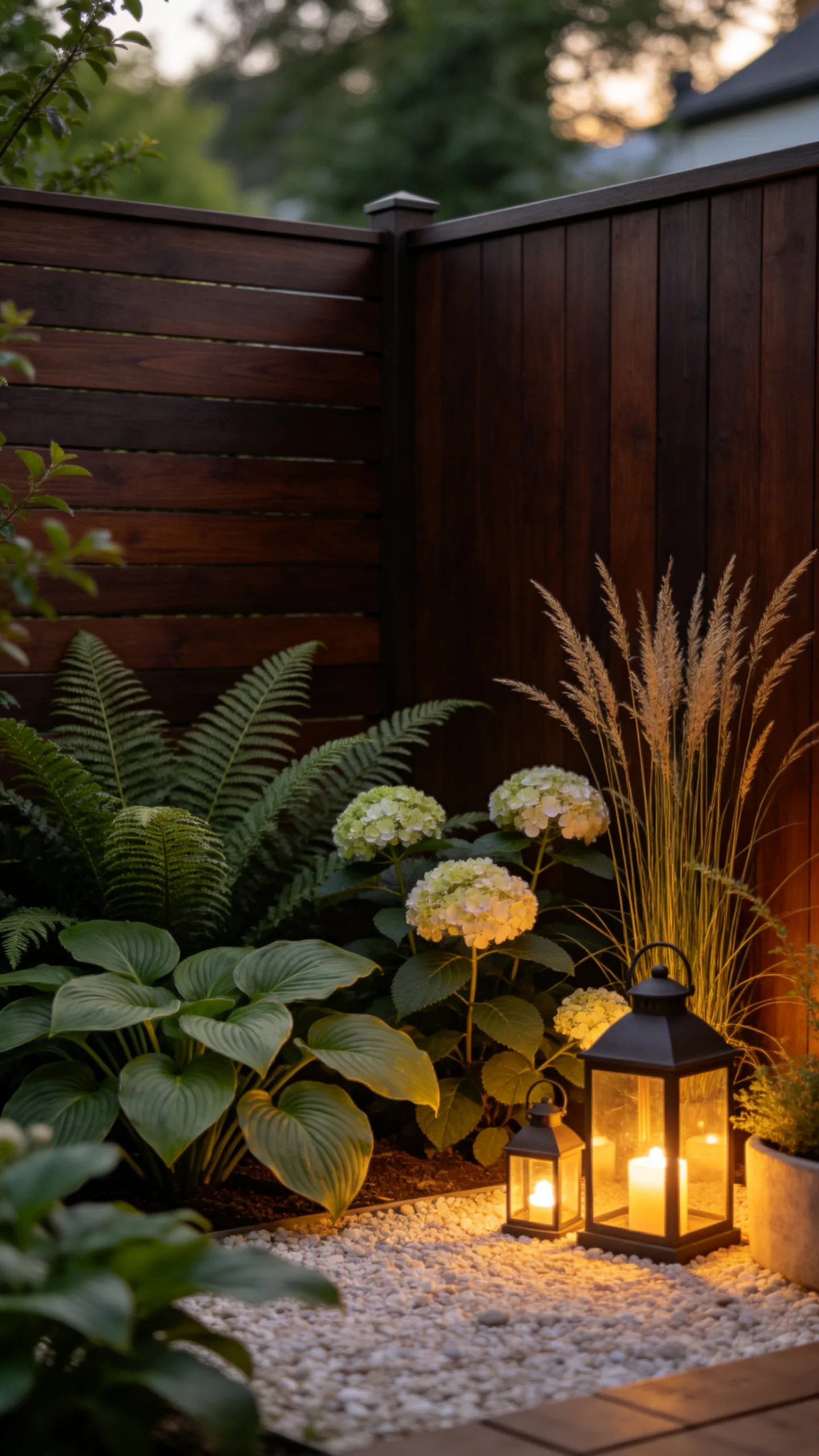
A dark stained wood fence can make a backyard feel calm, enclosed, and sophisticated. Deep brown, espresso, or black stains visually recede, allowing plants, string lights, and pale gravel paths to stand out.
This idea works beautifully behind lush planting beds with ferns, hostas, hydrangeas, or ornamental grasses. Dark fencing can absorb heat in sunny climates, so consider plant spacing and watering needs near the fence line. It is especially effective for cozy evening spaces because lanterns, fire bowls, and warm patio lights glow against the dark backdrop.
6. Natural Wood Fence with Built-In Planter Boxes
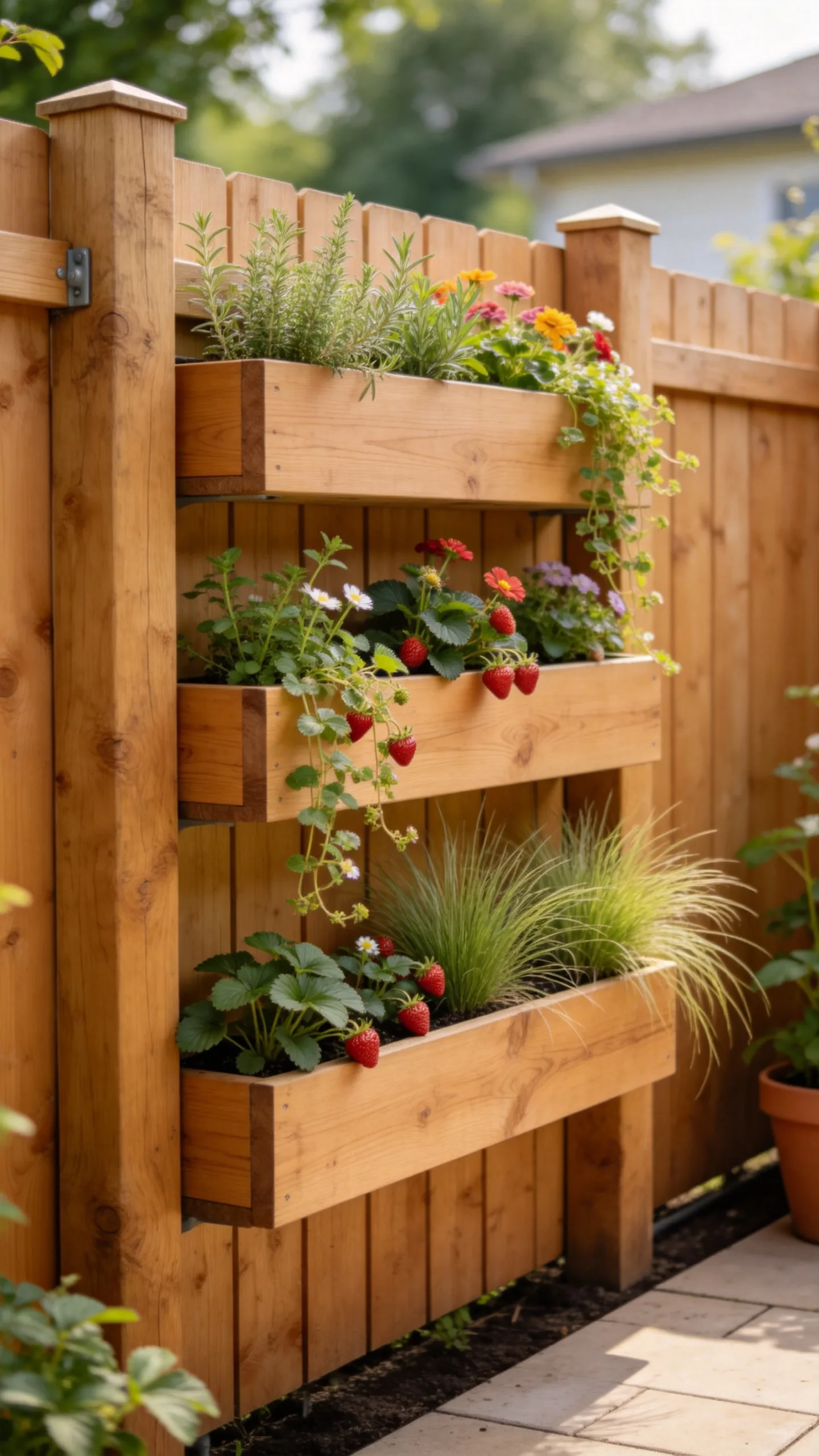
Built-in planter boxes turn a wooden privacy fence into a vertical garden feature. This is ideal for small yards because it adds planting space without taking up much ground area.
Use sturdy fence posts and attach planter boxes securely, especially if they will hold moist soil. Shallow boxes work well for herbs, trailing annuals, strawberries, or compact flowers, while deeper boxes can hold small grasses or dwarf shrubs. Place planters where they receive the correct light, and line them properly so water does not constantly soak the fence boards.
7. Mixed-Height Wooden Fence
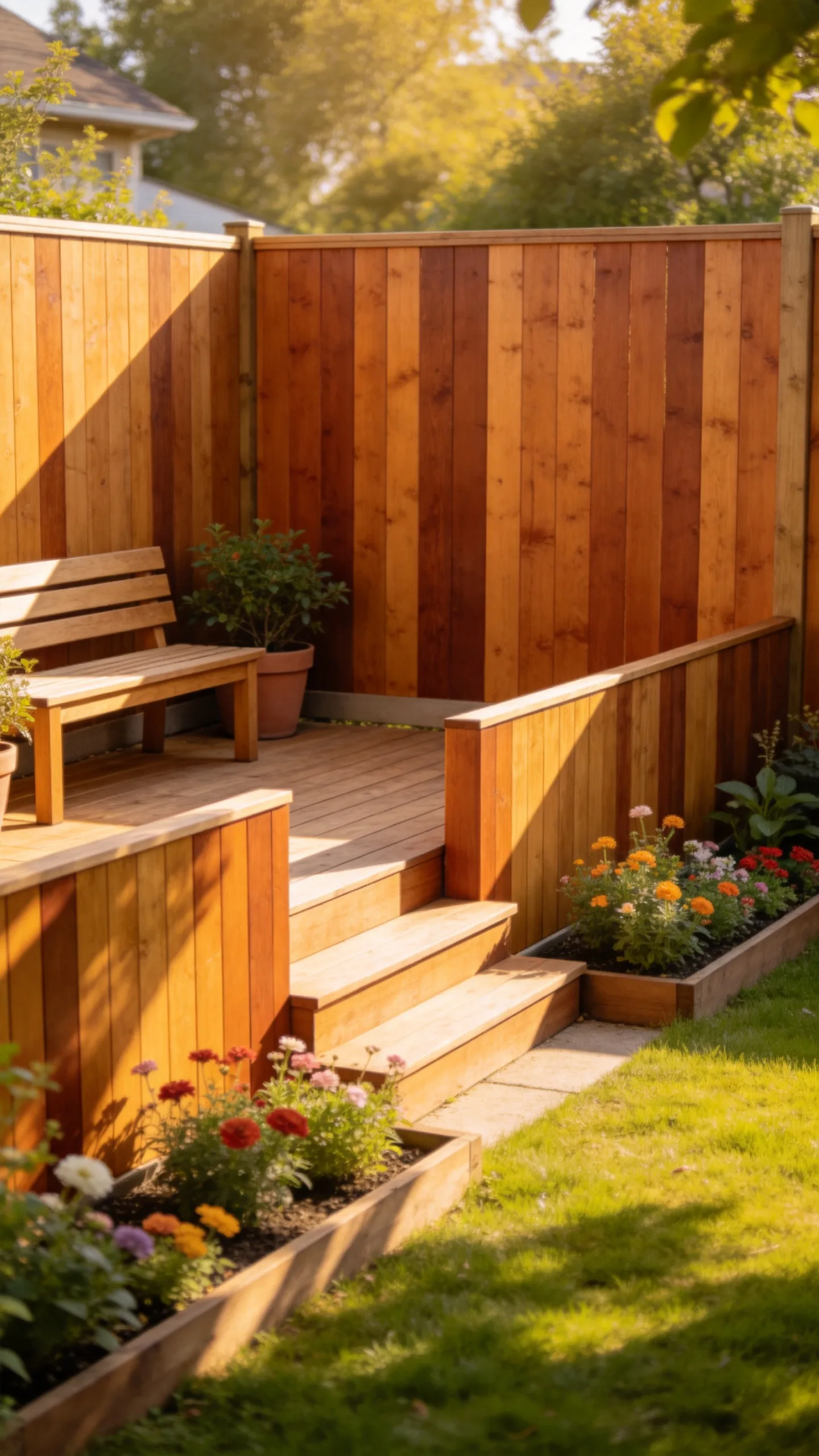
A mixed-height wooden fence creates privacy where you need it most while keeping other areas open and airy. For example, use taller panels near a seating area, grill station, or neighbor-facing side, then step down the height near garden beds or open lawn.
This approach is helpful when local fence rules limit height in certain areas or when you want to avoid shading sun-loving plants. A stepped design can follow a slope naturally, making the yard feel planned rather than boxed in. Use matching wood and stain across all sections so the different heights feel intentional.
8. Vertical Plank Fence with Narrow Gaps
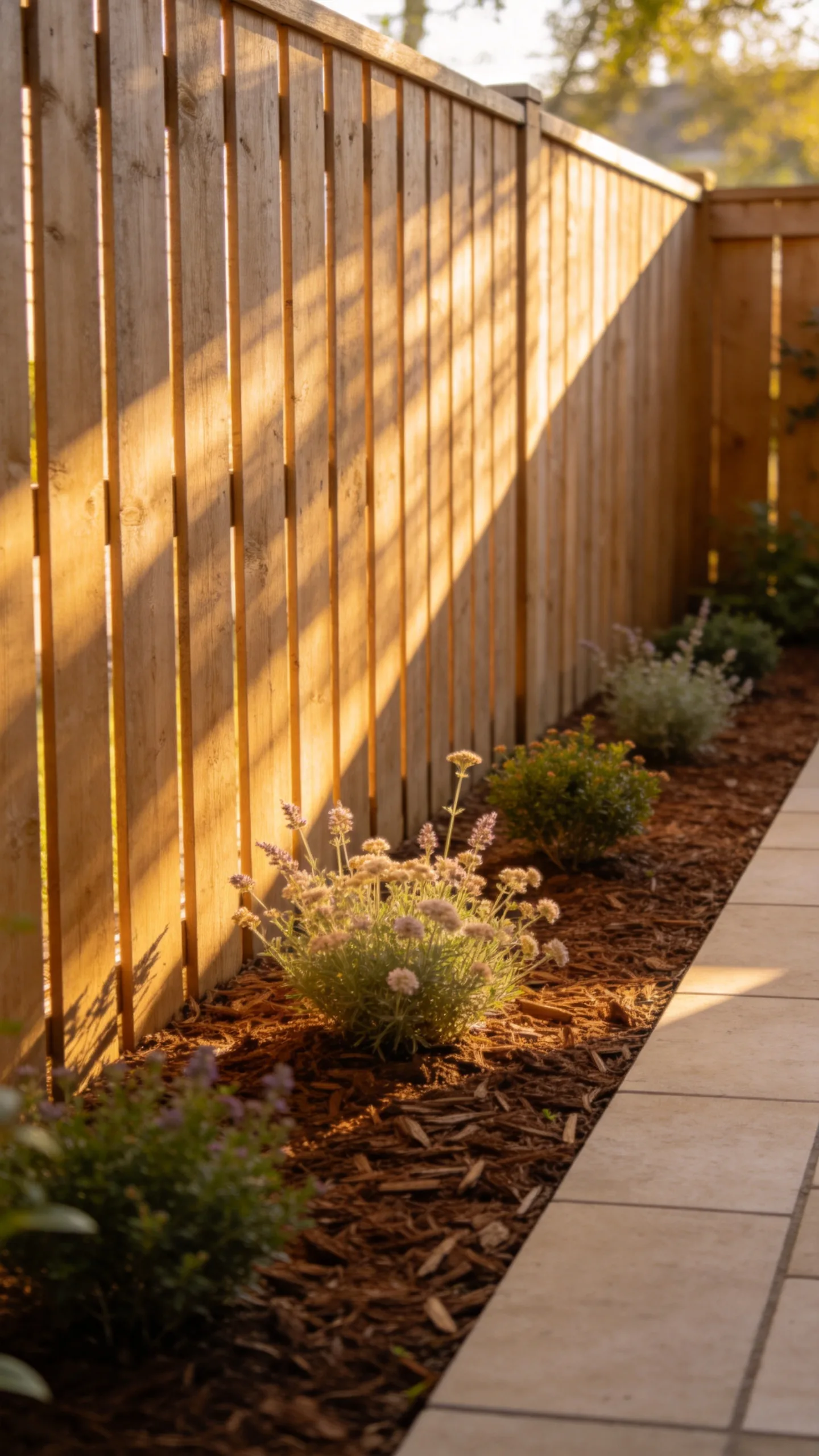
A vertical plank fence with narrow, even gaps offers a balanced mix of privacy, airflow, and light. It feels cleaner than a rustic stockade fence but warmer than metal or vinyl.
This design suits patios, cottage gardens, and transitional backyards. If privacy is the main goal, position the boards close enough to prevent clear views from common angles. Plant soft perennials, mulch beds, or a row of small shrubs along the base to reduce the hard line where the fence meets the ground.
9. Wood Fence with a Pergola Gate
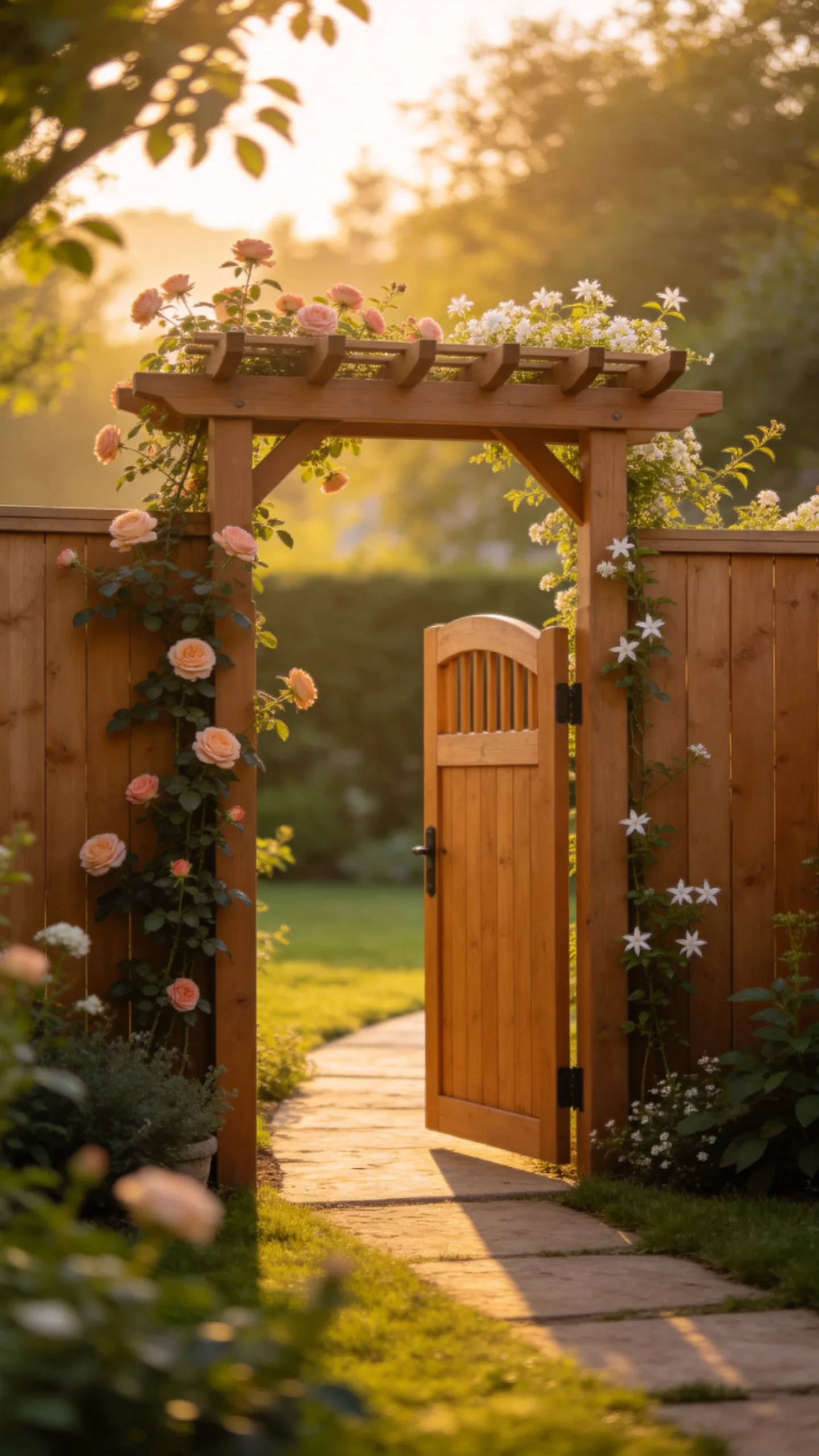
A wooden privacy fence becomes more inviting when the gate includes a small pergola or overhead arbor. This creates a defined entrance into the backyard and gives the space a tucked-away garden feel.
Use the pergola section to support climbing plants such as wisteria where suitable, climbing roses, or star jasmine in mild climates. In smaller yards, even a simple overhead beam can make the gate feel like a transition into a private retreat. Match the gate boards to the fence style for a cohesive look.
10. Rustic Split-Rail Fence with Privacy Planting
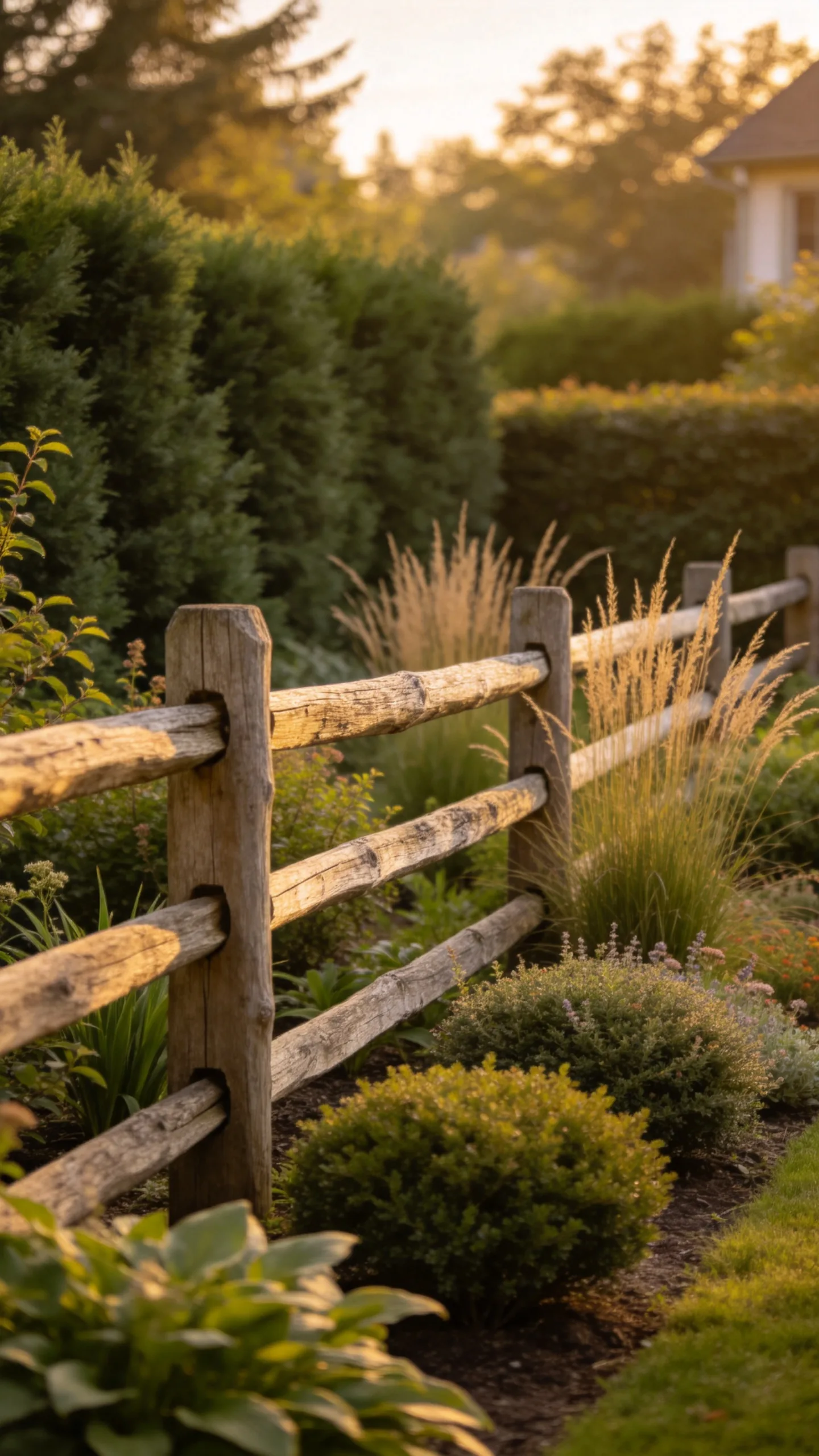
A split-rail fence alone does not provide full privacy, but paired with dense planting, it can create a soft, layered screen. This works well for larger backyards, cottage-style gardens, or properties where a full solid fence would feel too heavy.
Plant evergreen shrubs, native grasses, or mixed hedging along the rail line to block views over time. Use the wooden rails as a visual structure while the plants provide the privacy. This is a good option if you prefer a natural look and have enough bed depth for mature plant spacing.
11. Modern Wood Fence with Black Posts
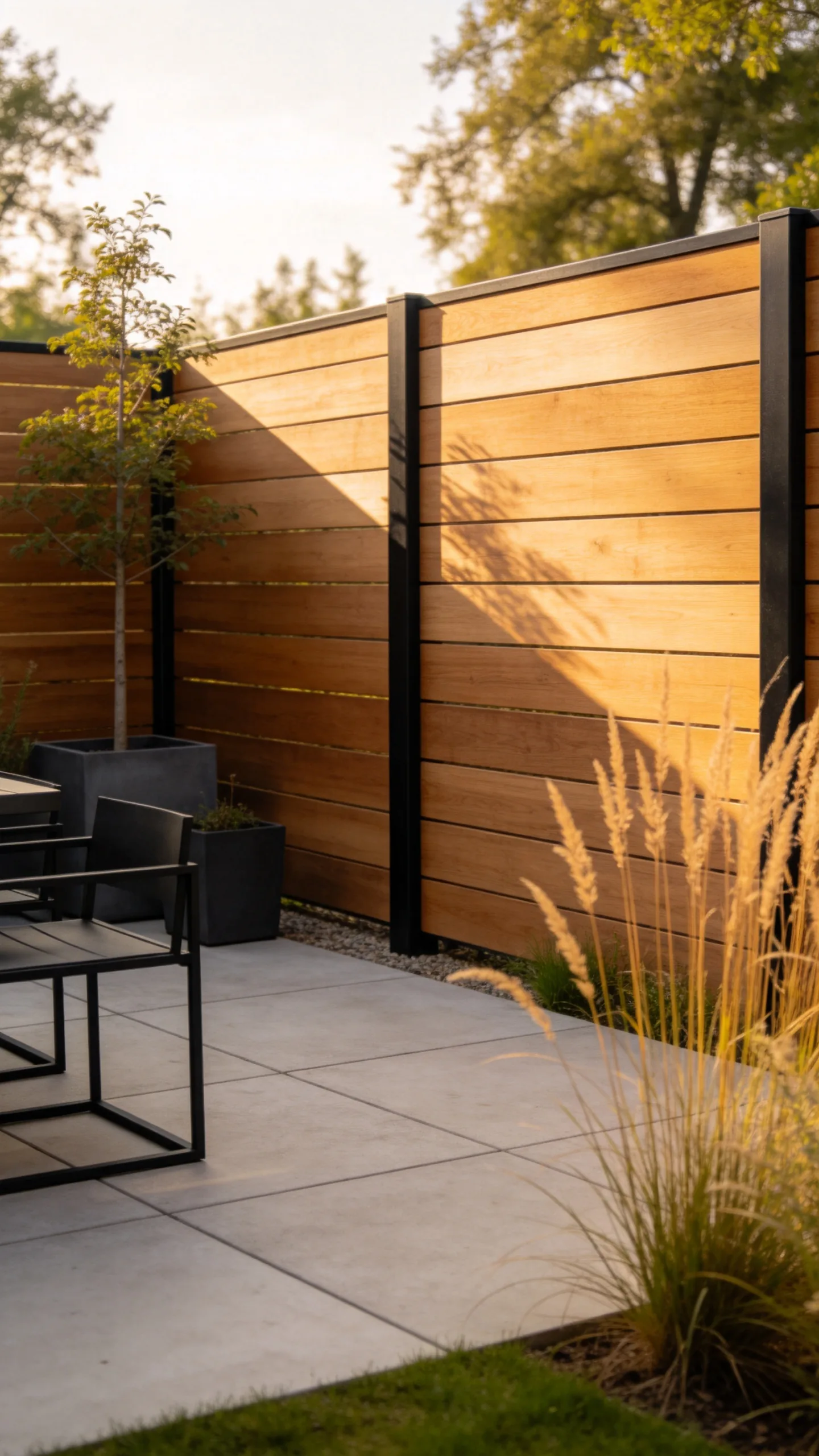
Combining wood boards with black metal or painted wood posts gives a privacy fence a crisp, modern edge. The black posts frame each panel and make the wood grain stand out.
This idea works well with horizontal boards, smooth cedar, or pressure-treated pine stained in a warm tone. It suits patios with black-framed furniture, concrete pavers, raised beds, or minimalist planters. For a cozy backyard feel, soften the modern lines with container trees, tall grasses, or trailing plants near the fence corners.
12. Wood Fence with String Light Supports
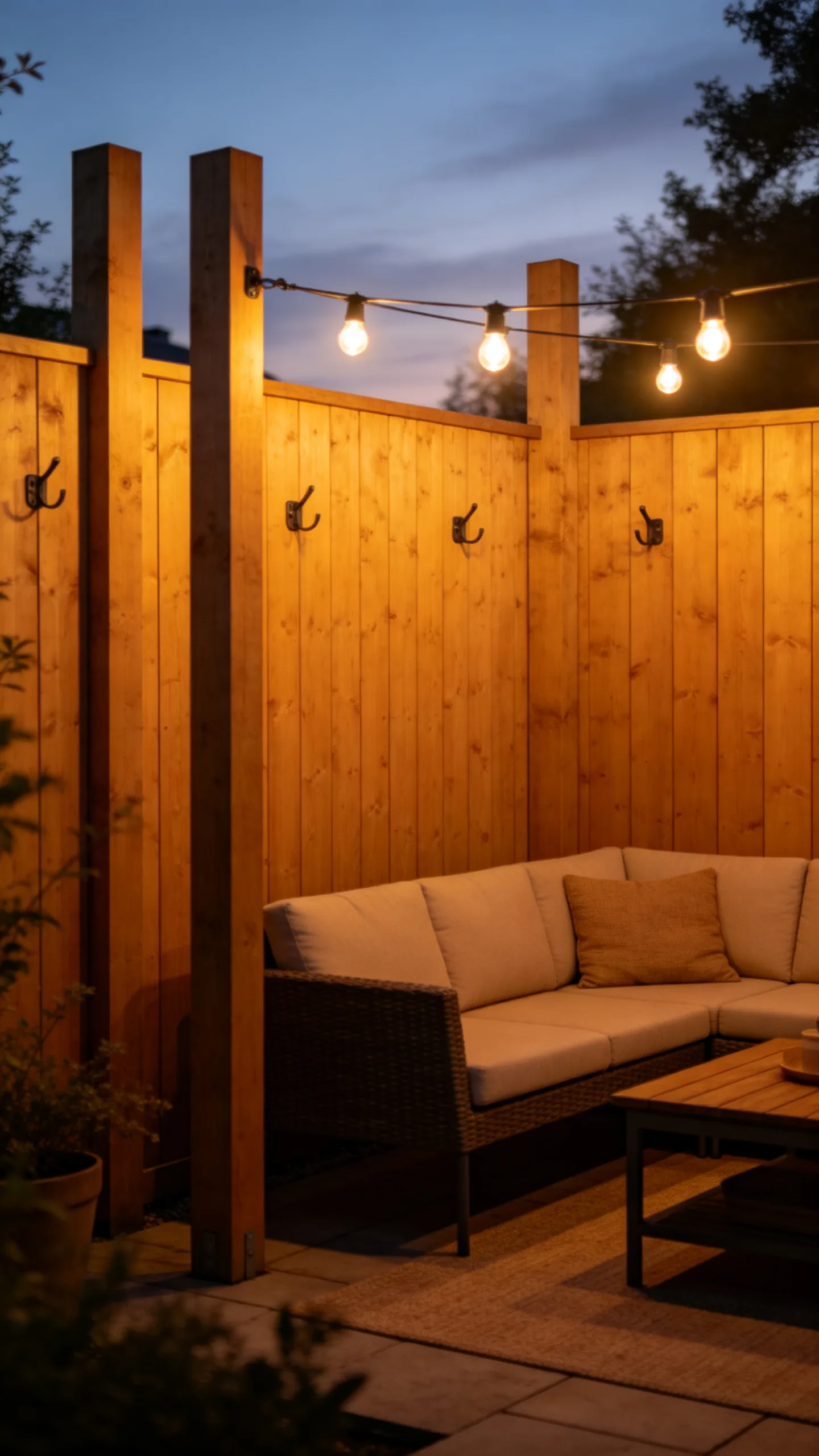
A wooden privacy fence can double as a support structure for outdoor lighting. Adding taller posts, corner brackets, or discreet hooks allows string lights to stretch across a patio or seating area.
This design is especially useful in backyards without mature trees or pergolas. Keep lights high enough for safe movement and use outdoor-rated hardware. The fence provides privacy during the day, while the lights make the space feel warm and enclosed at night. It is a simple way to turn a plain fence line into part of an outdoor room.
13. Staggered Wood Panel Fence
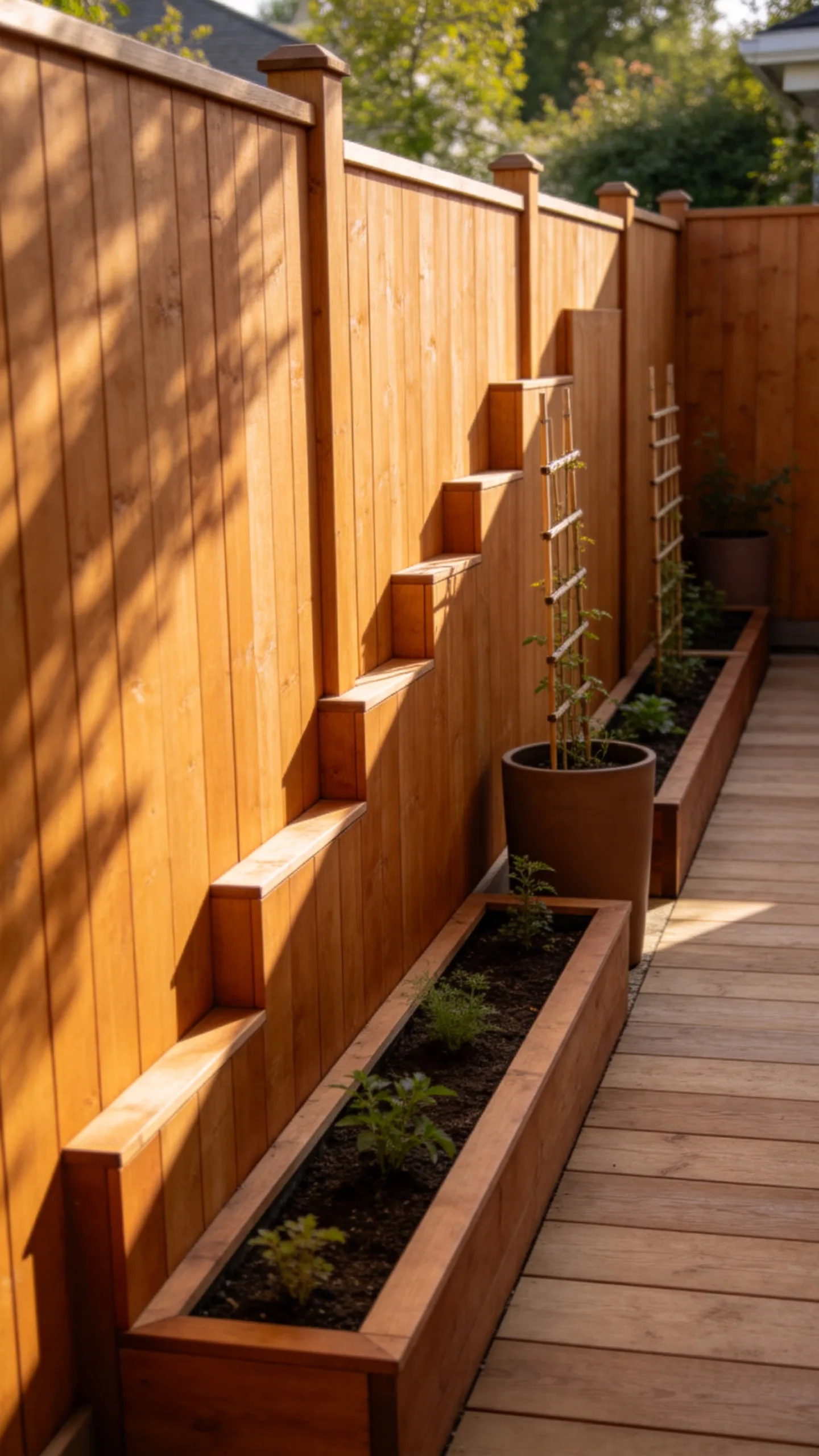
A staggered panel fence uses sections that step in and out slightly instead of forming one flat wall. This adds shadow, movement, and depth to a backyard boundary.
The recessed areas can hold narrow planting beds, trellises, or tall containers. This is helpful in long, narrow yards where a straight fence might feel tunnel-like. Use repeated panel sizes and consistent stain to keep the design orderly. The extra depth also makes the fence feel more custom without needing elaborate decoration.
14. Wood Fence with Trellis Inserts
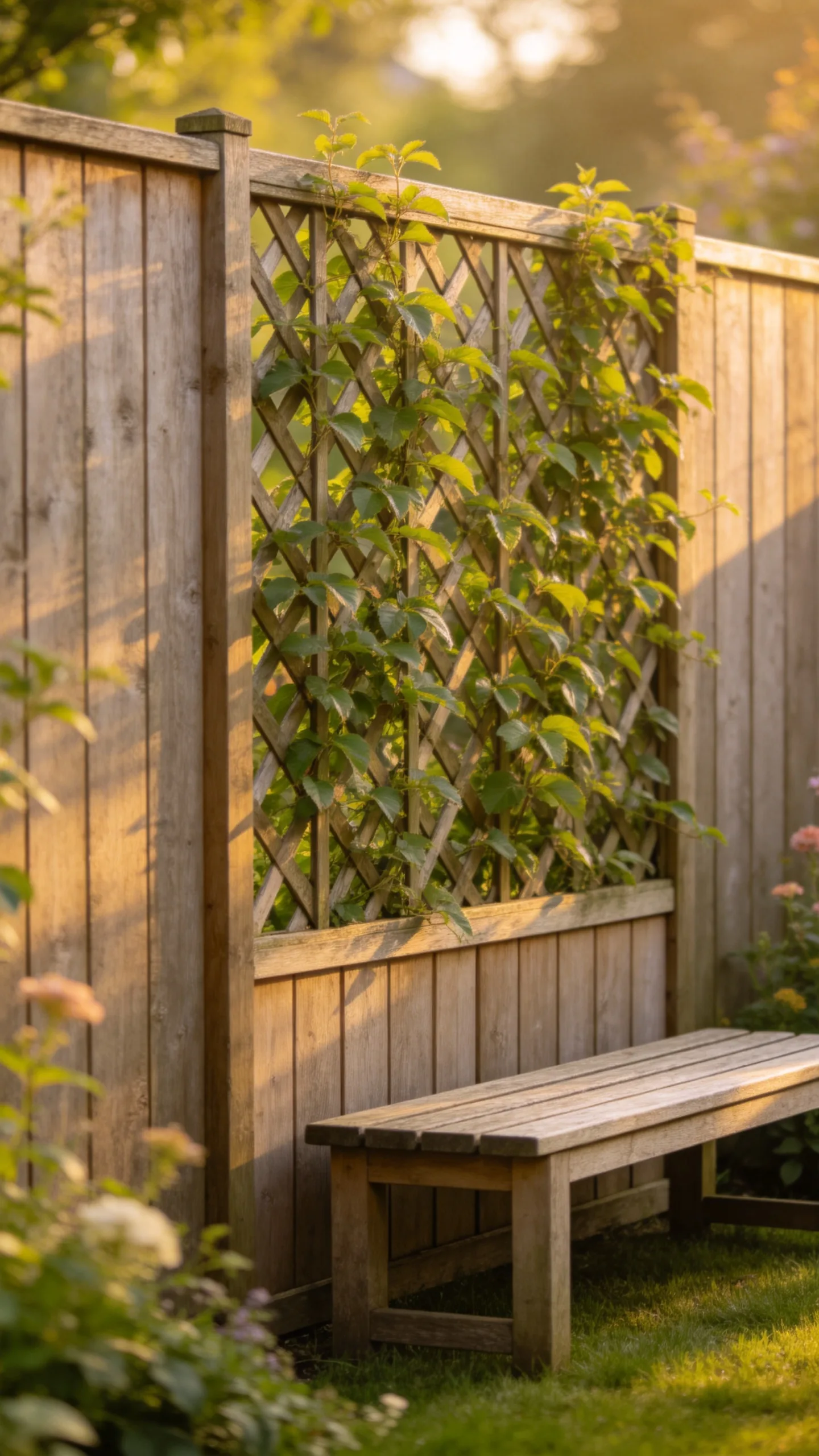
Trellis inserts break up solid fence panels and create places for climbing plants. They can be added between solid sections, above raised beds, or behind a garden bench.
This is a practical privacy idea because you can place trellis where screening is needed at specific heights. Use it behind a patio chair to block a neighbor’s window or near a dining table for a leafy backdrop. Choose climbing plants based on your light conditions, and remember that deciduous vines may not provide year-round screening in colder regions.
15. Whitewashed Wooden Privacy Fence
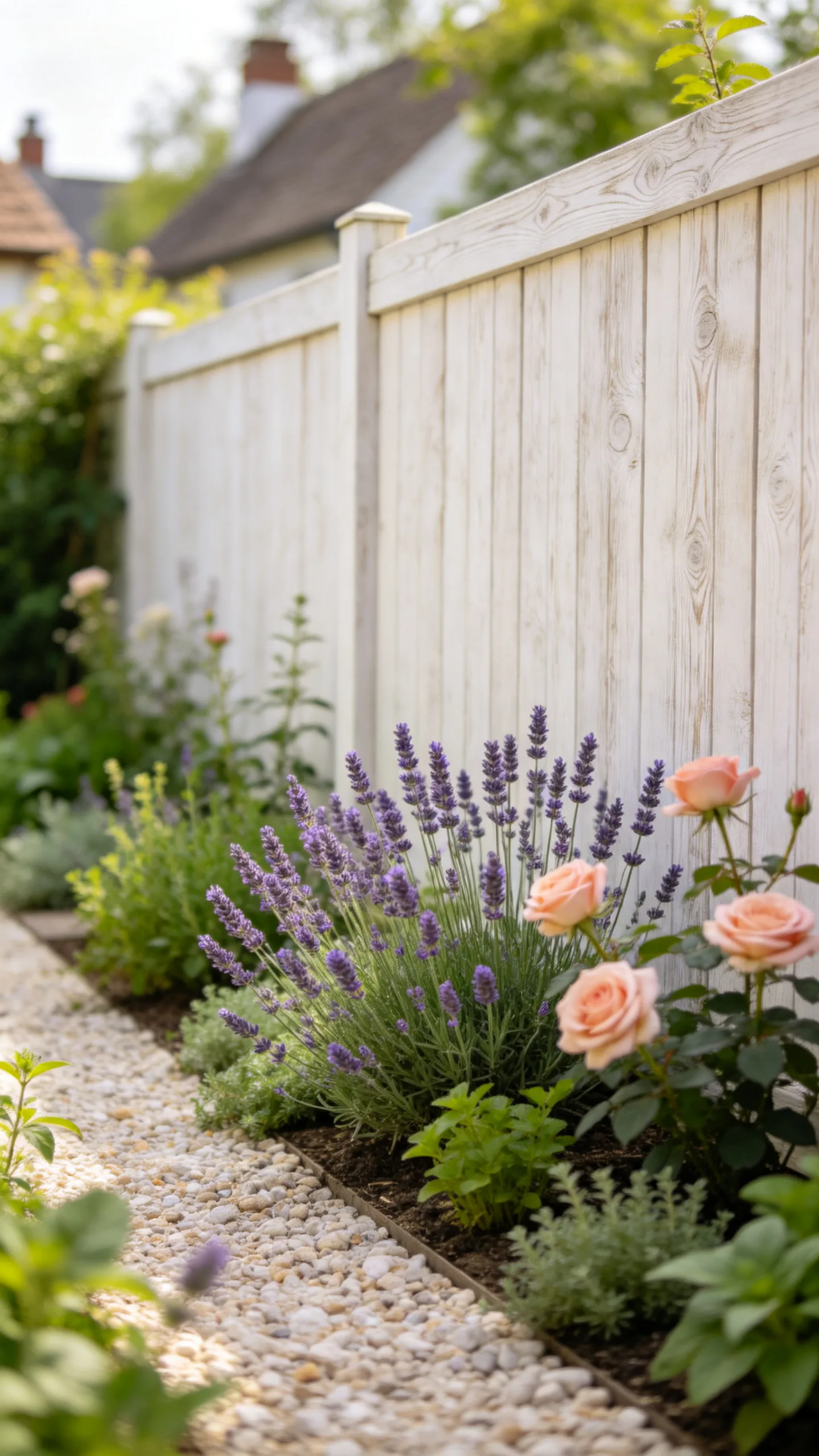
A whitewashed wooden fence gives a backyard a light, relaxed look while still offering privacy. It works especially well in cottage gardens, coastal-inspired patios, and small spaces where dark fencing might feel too enclosed.
Whitewash allows some wood grain to show through, so the fence feels softer than solid paint. Pair it with lavender, roses, herbs, or pale gravel for a fresh garden style. In wet climates, use exterior-grade products and keep plants slightly away from the boards to improve airflow and reduce moisture buildup.
16. Tall Wood Fence Around a Fire Pit Nook
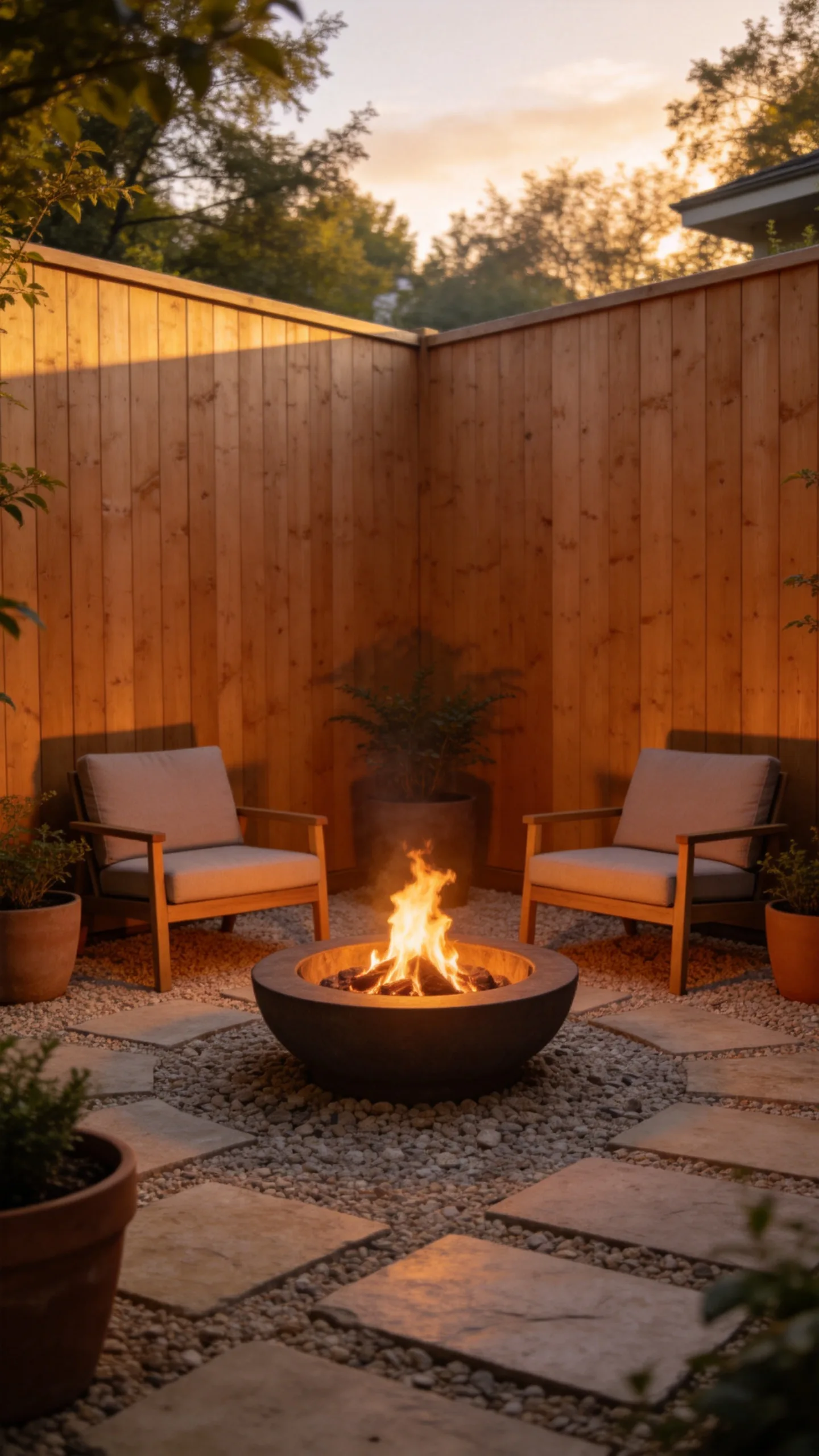
A tall wooden fence can create a sheltered fire pit nook that feels separate from the rest of the yard. Place the fence behind or around the seating zone to block views and reduce the sense of exposure.
Use noncombustible spacing and follow local safety rules for fire pits, especially near wood structures. Gravel, stone pavers, or concrete pads help define the area and reduce maintenance. Add low chairs, weather-resistant cushions, and container plants to soften the fence line without crowding the fire area.
17. Slatted Wood Fence with Climbing Vines
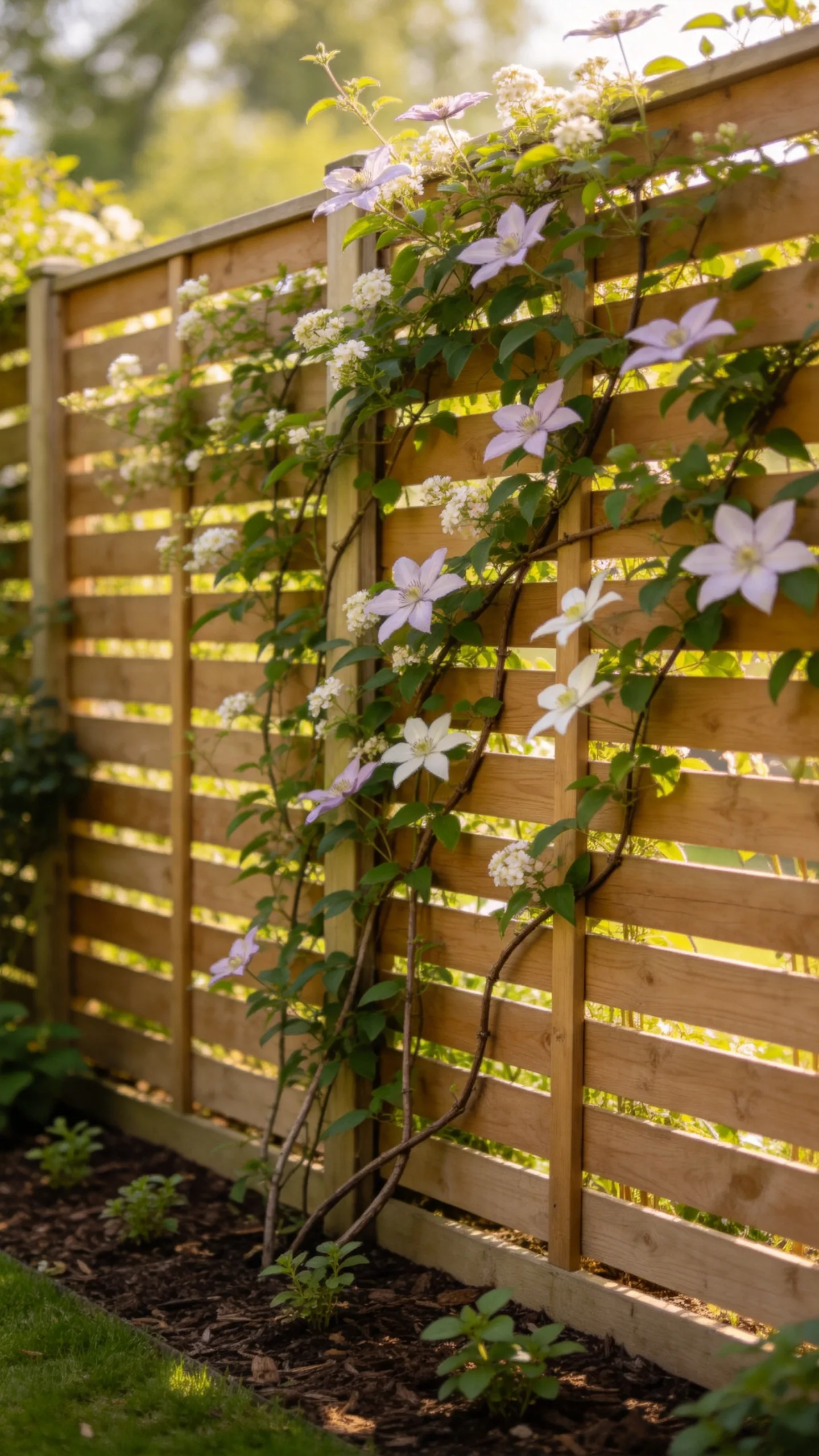
A slatted wooden fence can become a living screen when paired with climbing vines. The wood provides structure, while the plants add softness, shade, and seasonal interest.
Choose vines that match the fence exposure. Clematis often prefers sun on top with cooler roots, jasmine likes warm conditions, and climbing hydrangea can handle more shade but needs patience and support. Keep vines pruned so they do not trap too much moisture against the boards. This idea is useful for turning a plain fence into a garden feature.
18. Wood Fence with Raised Garden Beds Along the Base
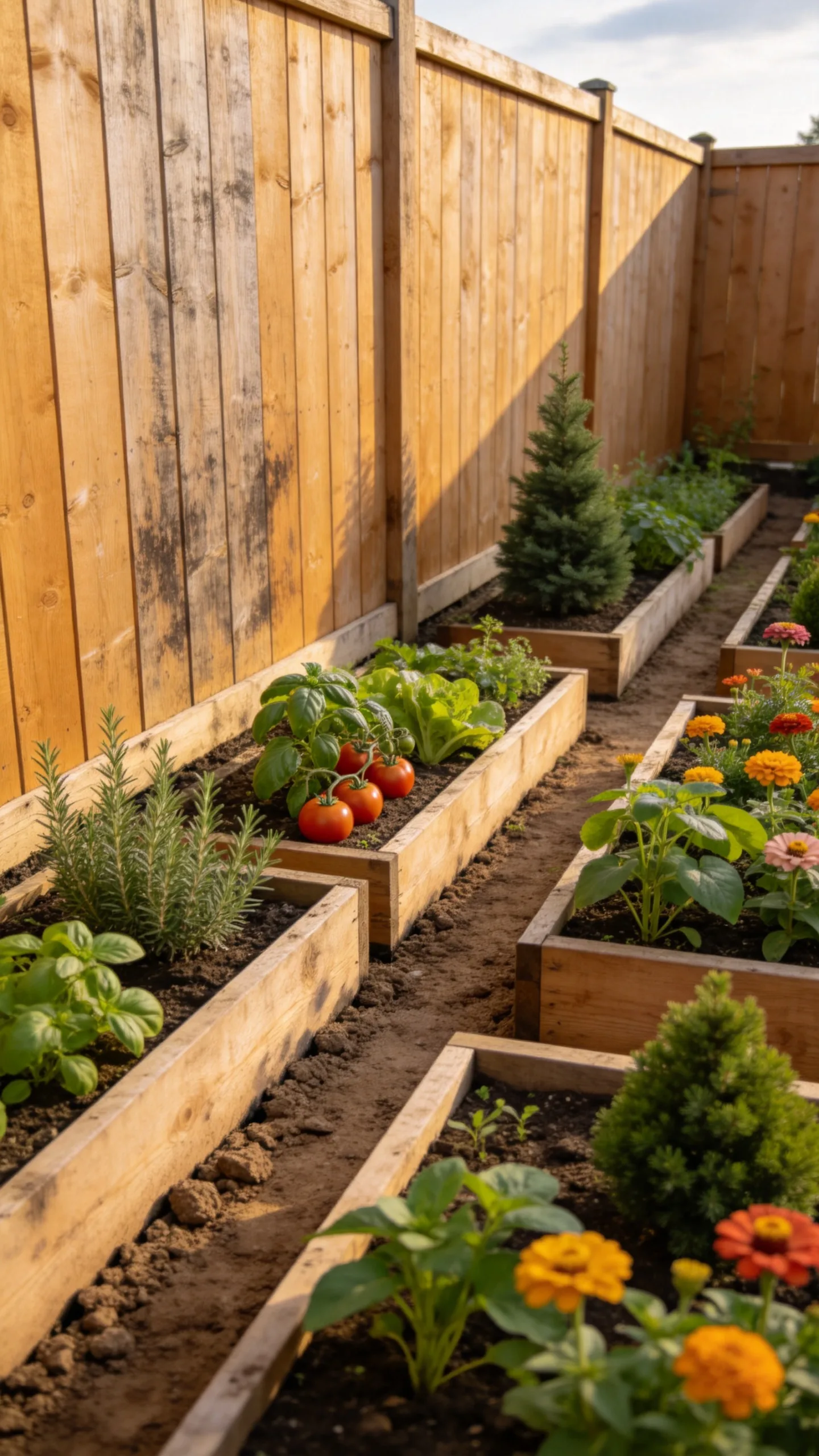
Placing raised garden beds along a wooden privacy fence makes the boundary more useful and attractive. It is a space-saving idea for small backyards because the planting area stays organized along the edge instead of spreading into the center.
Leave enough space between the soil and fence boards to prevent constant moisture contact. Use beds for herbs, compact vegetables, pollinator flowers, or dwarf shrubs depending on sunlight. A fence can also provide a warmer microclimate for some plants, but check the shade pattern before planting sun-loving crops.
19. Picket-Top Privacy Fence
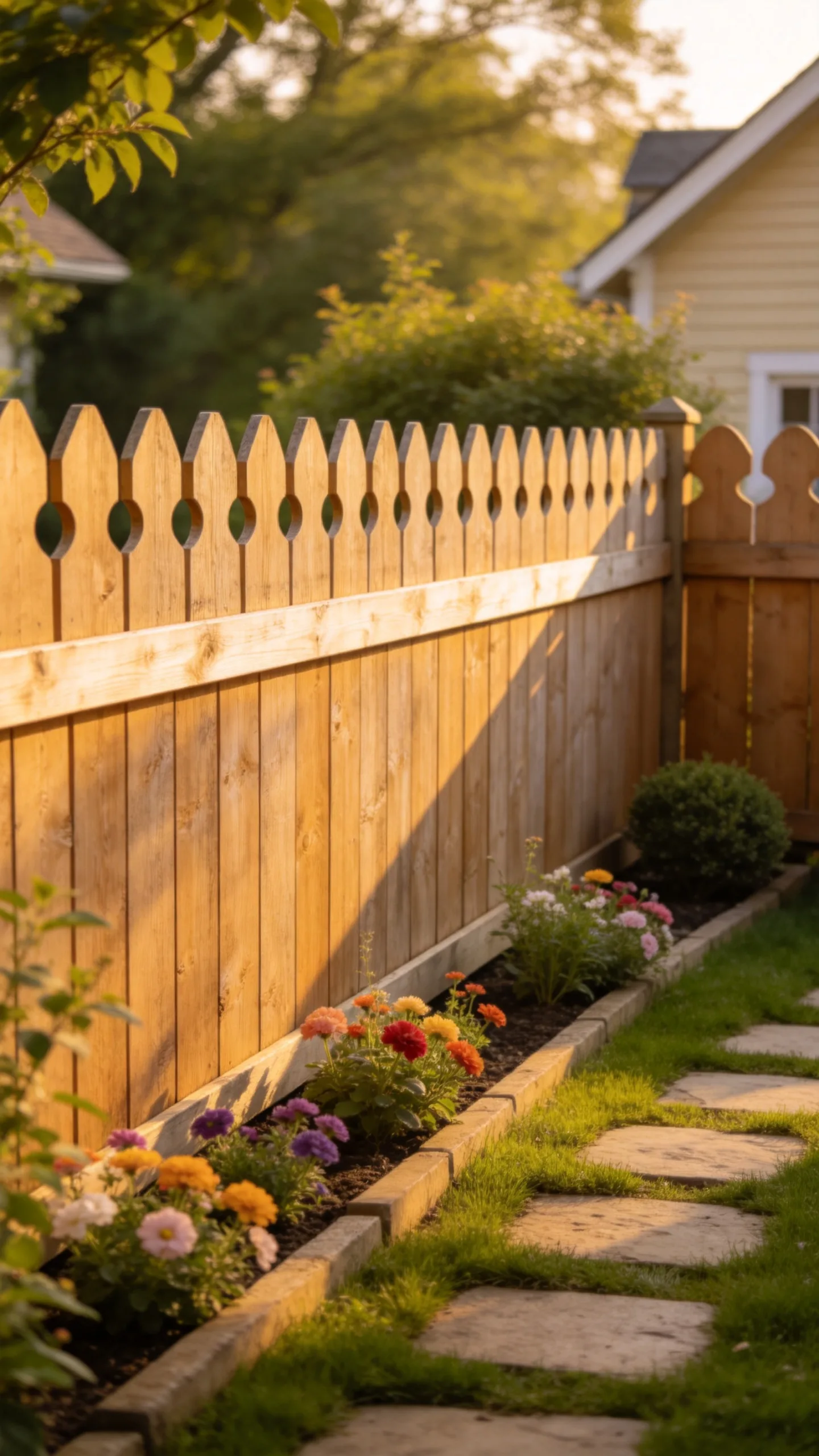
A picket-top privacy fence combines a solid lower section with decorative pointed or shaped boards at the top. It offers more privacy than a traditional picket fence while keeping a friendly garden character.
This design suits cottage-style backyards, side gardens, and front-to-back transitions where a fully solid wall might feel too severe. Paint it white for a classic look or use a natural stain for a warmer backyard retreat. Add flowering borders along the base to make the fence feel integrated into the garden rather than simply placed around it.
20. Reclaimed Wood Privacy Fence
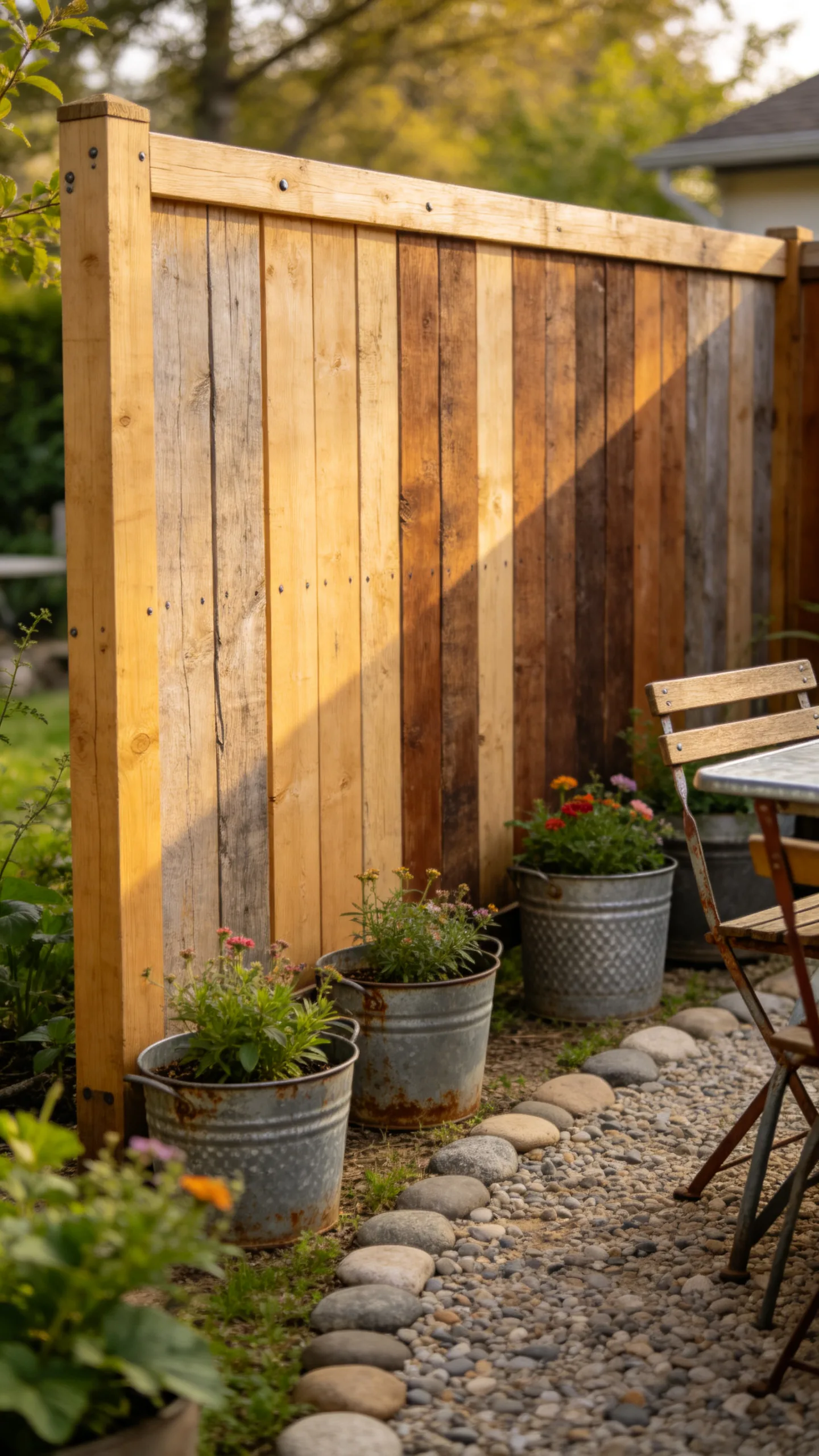
A reclaimed wood fence can add texture and character to a backyard escape. Different board tones, nail marks, and weathered surfaces create a relaxed, rustic backdrop.
For a practical build, inspect reclaimed boards carefully and avoid wood that is rotting, chemically treated in unsafe ways, or too warped to install securely. Use a strong frame and seal the wood if needed for outdoor durability. This idea works best in casual gardens with gravel paths, native plants, galvanized planters, or vintage-style patio furniture.
21. Wood Fence with Privacy Screens for a Patio Corner
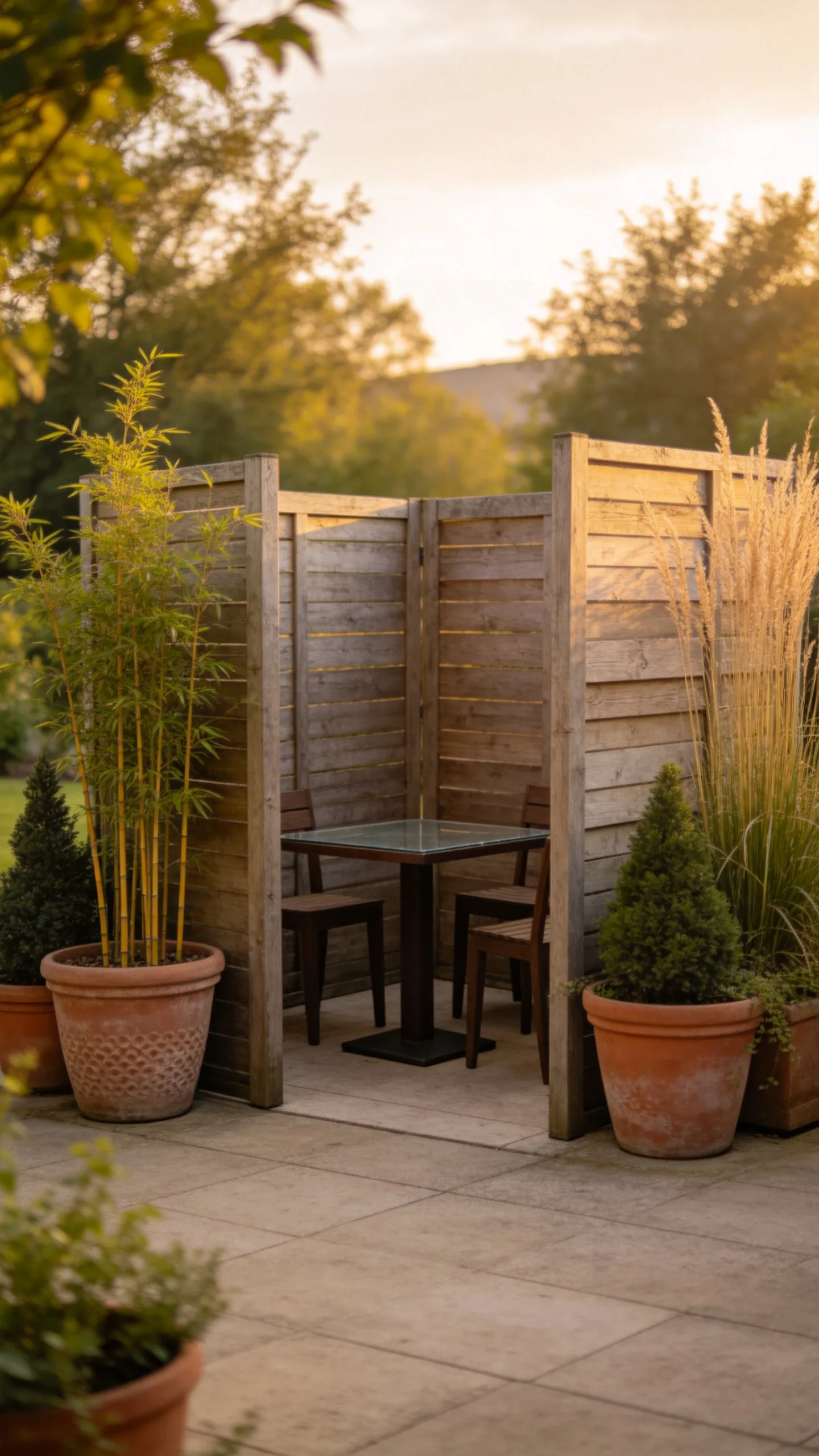
Instead of fencing the entire yard, use wooden privacy screens around a patio corner. This creates a cozy seating pocket while keeping the rest of the backyard open.
This is a strong option for renters, small gardens, or yards where full fencing is not practical. Freestanding wood screens can block views from one side, hide bins or utility areas, or frame a bistro table. Add heavy planters at the base for stability and greenery, using plants such as bamboo in containers, dwarf evergreens, or tall ornamental grasses.
22. Basket-Weave Wood Fence
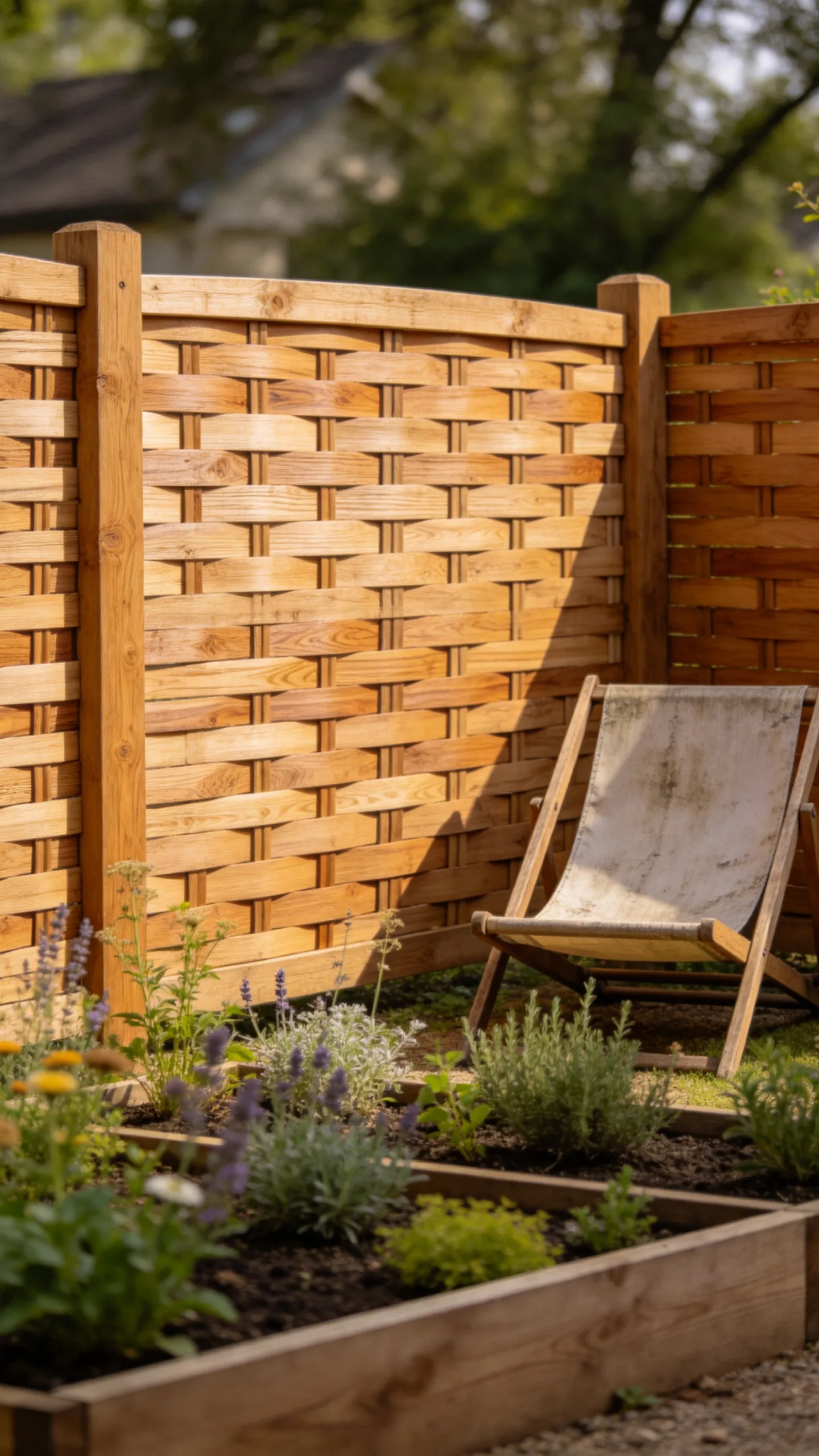
A basket-weave wood fence uses flexible or thin boards woven horizontally between posts. The result is textured, warm, and more decorative than standard privacy panels.
This style can soften a backyard boundary and works well behind informal planting beds or relaxed lounge areas. Because the design has curves and overlaps, it creates a handcrafted feel. Use durable wood and proper spacing so the boards can handle outdoor expansion and contraction. A clear or semi-transparent stain helps highlight the woven pattern.
23. Wood Fence with a Built-In Bench
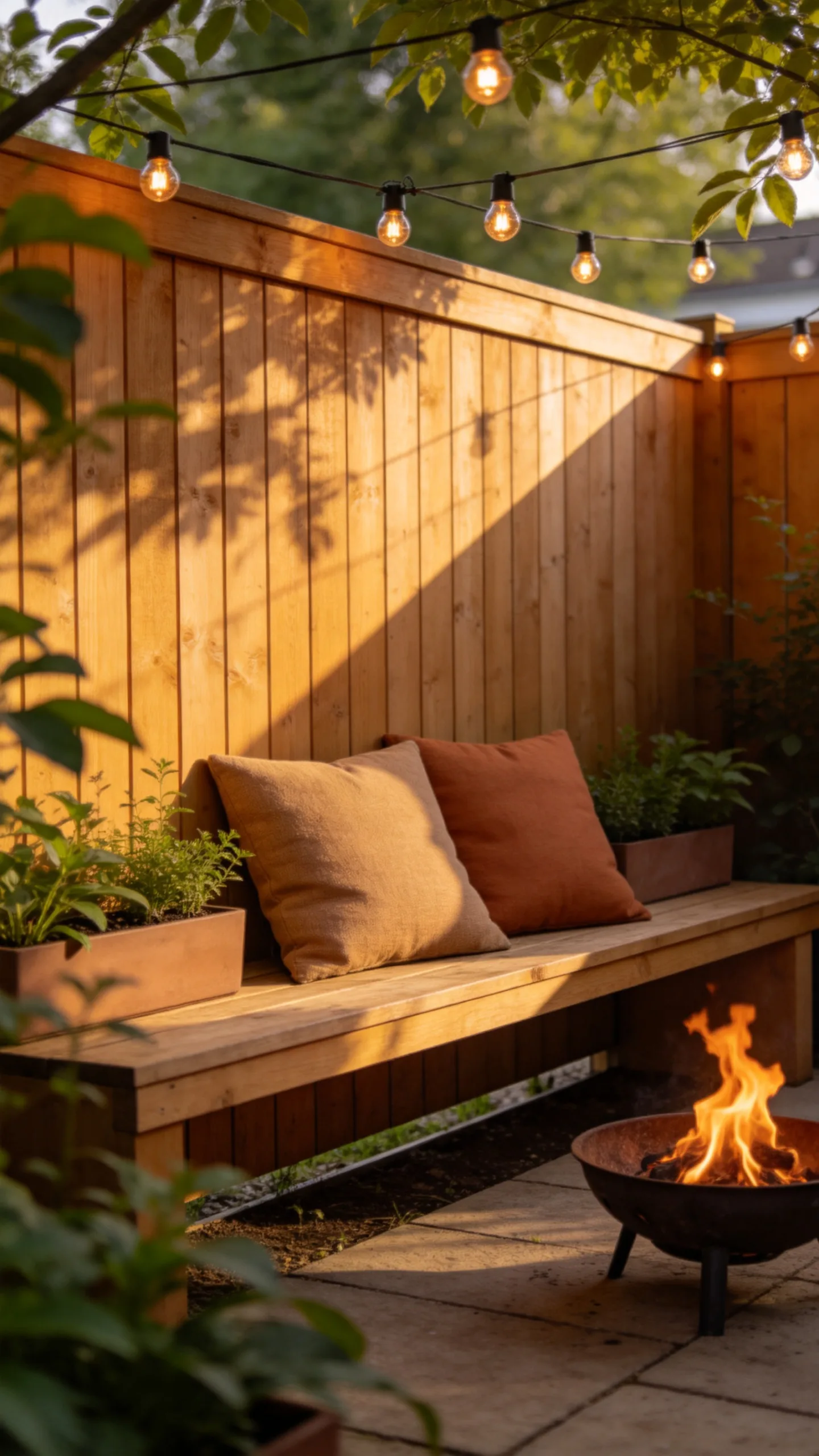
A built-in bench along a wooden privacy fence turns the boundary into usable seating. This is especially helpful in small backyards where freestanding furniture can crowd the patio.
Build the bench with outdoor-rated lumber and leave enough airflow behind it so moisture does not collect against the fence. Add a narrow planting bed or containers beside the bench for softness. This idea works well under string lights, beside a fire bowl, or near a small dining area where extra seating is always useful.
24. Warm Wood Fence with Layered Evergreen Screening
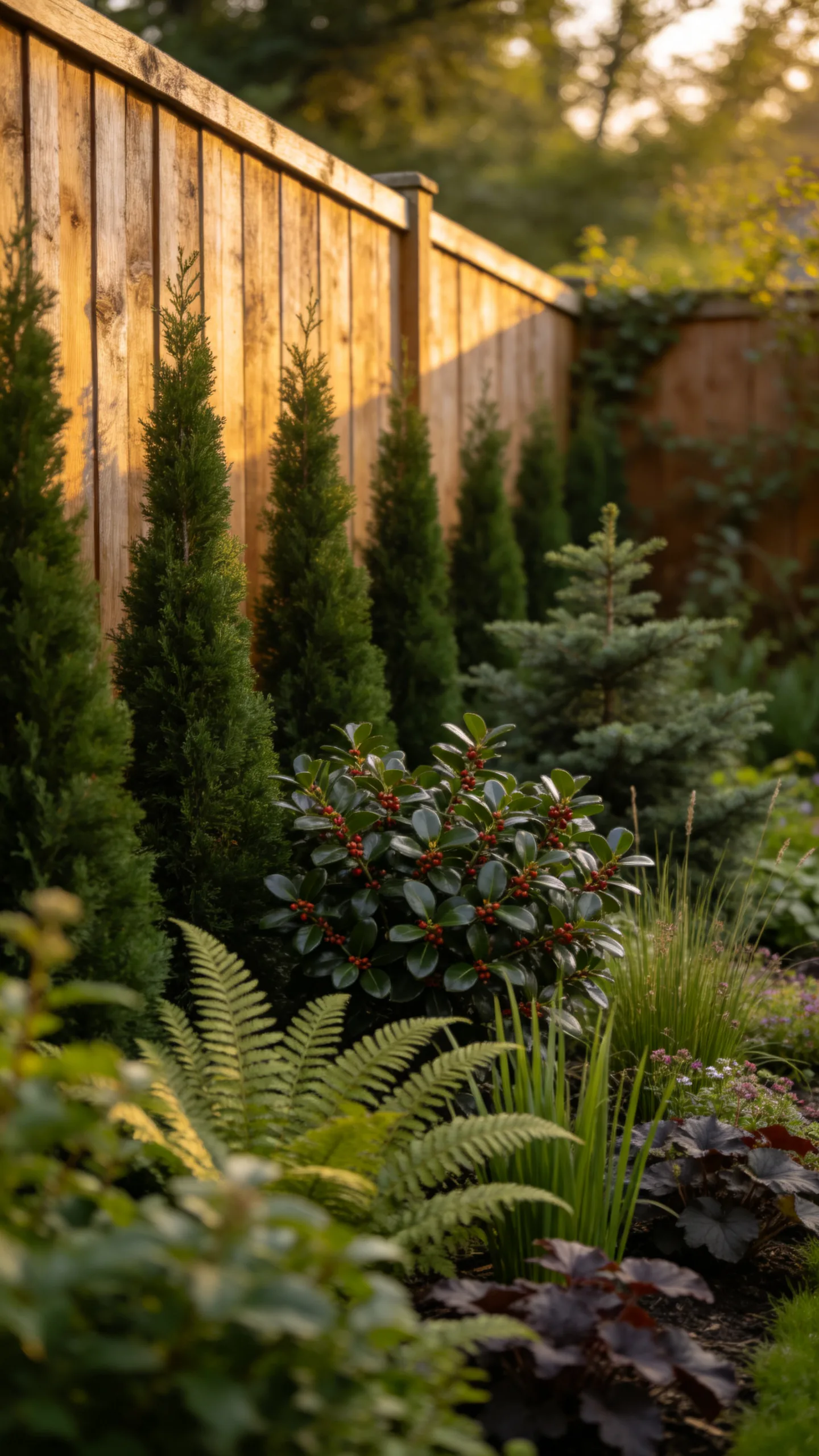
A warm wood privacy fence becomes even more secluded when paired with layered evergreen planting. The fence gives immediate screening, while shrubs and small trees add depth, texture, and year-round greenery.
Use narrow evergreens for tight spaces, such as arborvitae varieties suited to your region, upright juniper, dwarf conifers, or compact holly where climate allows. Layer lower plants in front, such as ferns, sedges, or shade-tolerant perennials if the fence casts shadow. This approach makes the backyard feel less like it is bordered by walls and more like a private garden retreat.