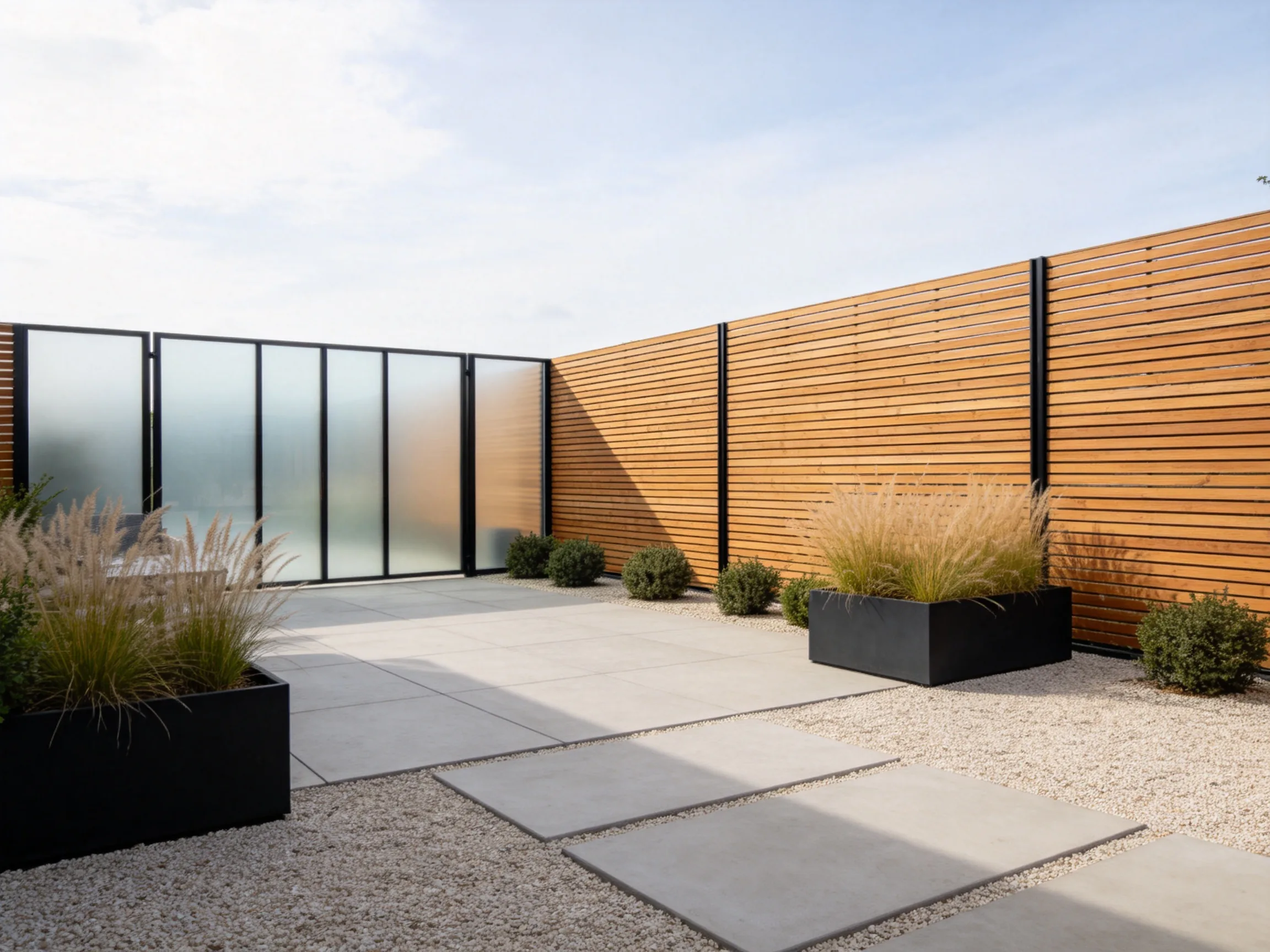
A privacy fence does not have to feel like a wall closing in your garden. The best modern fence ideas use clean lines, slim materials, layered planting, and smart spacing to screen views while still letting a yard feel open, bright, and designed. Whether you have a narrow side yard, a compact patio, or a full backyard border, these sleek fence options can create privacy without adding a heavy, bulky look.
1. Horizontal Slat Wood Fence With Narrow Gaps
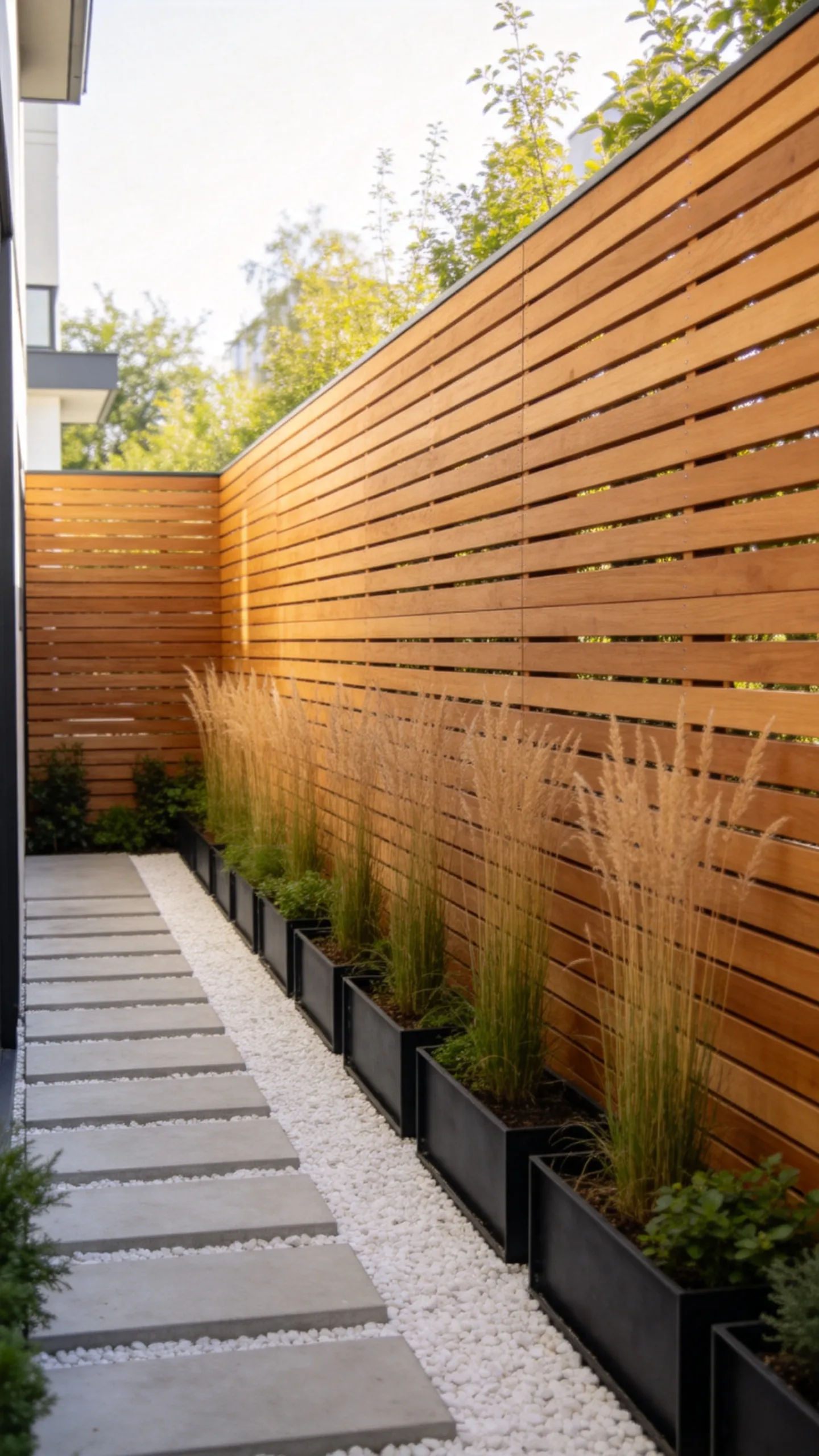
A horizontal slat fence is one of the most reliable modern fence ideas for creating privacy with a lighter visual feel. Instead of solid boards from top to bottom, slim wood slats are installed with small, even gaps between them. The horizontal lines make a small yard feel wider, which is especially useful along a patio, side garden, or narrow urban boundary.
For more privacy, keep the gaps tight at eye level and slightly wider near the top where screening matters less. Cedar, redwood, or pressure-treated pine can work depending on budget and local availability, but all wood should be sealed or stained to slow weathering. A warm natural stain pairs well with ornamental grasses, white gravel, concrete pavers, and black metal planters.
This style works best where you want filtered light and airflow rather than a completely sealed barrier. Add a row of upright plants such as clumping bamboo in containers, Italian cypress in mild climates, or tall switchgrass along the inside edge to soften the boards and increase privacy during the growing season.
2. Black Metal Frame Fence With Wood Infill
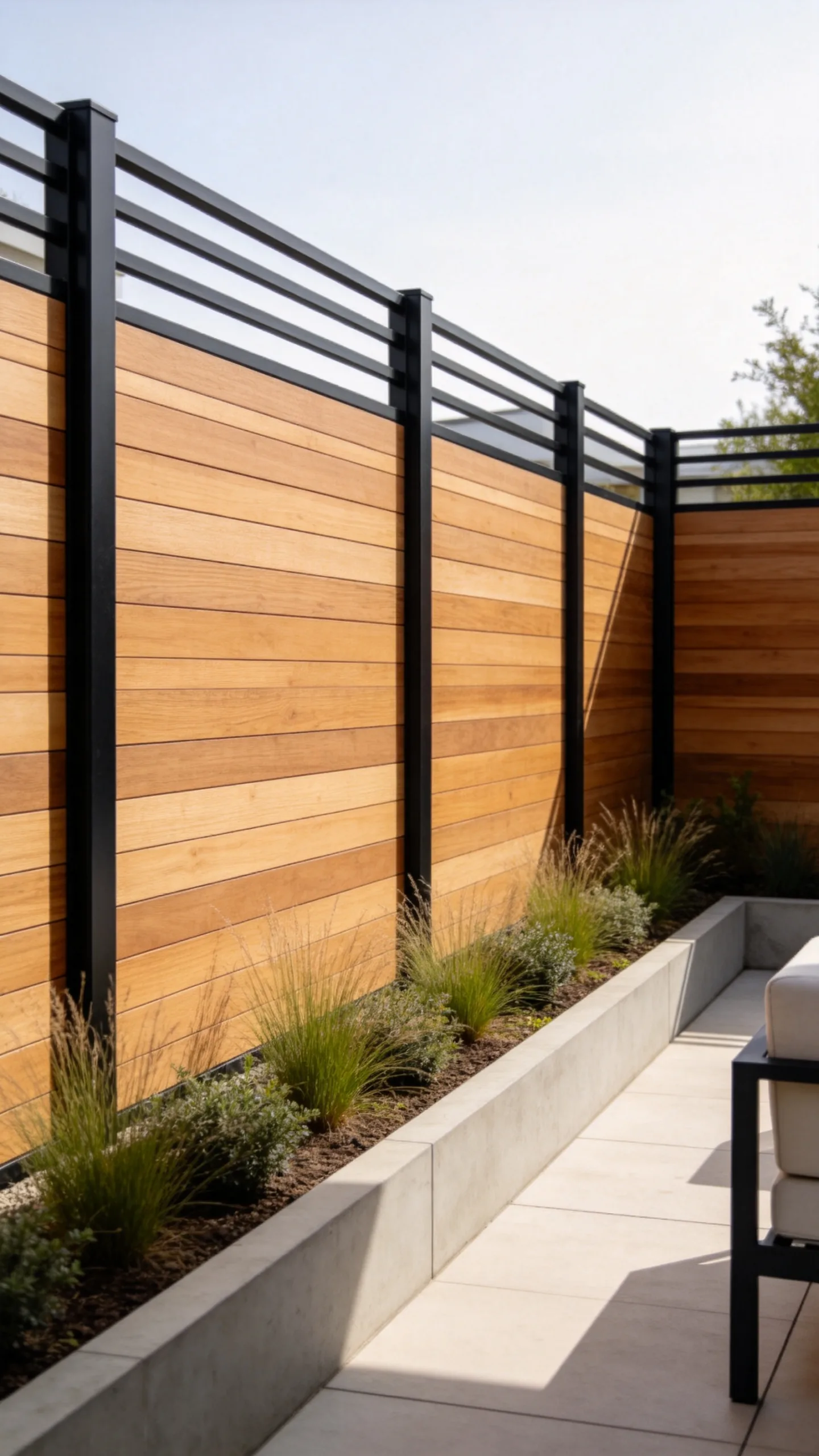
A black metal frame gives a fence a crisp, architectural outline while wood infill keeps it warm and garden-friendly. The metal posts and rails create a slim structure, so the fence looks intentional rather than bulky. This is a good choice for modern patios, poolside planting beds, and backyards with dark window frames or black outdoor furniture.
Use horizontal cedar, composite boards, or stained pine inside the frame. Keeping the wood flush and evenly spaced makes the design look clean. If the yard is small, choose a medium wood tone rather than a very dark stain so the fence does not visually shrink the space.
Planting can make this fence feel more integrated with the garden. Low boxwood alternatives, dwarf yaupon holly, lavender, or compact grasses can line the base without hiding the modern frame. In shady areas, use ferns, heuchera, or liriope instead of sun-loving plants.
3. Vertical Board Fence With Shadow Gaps
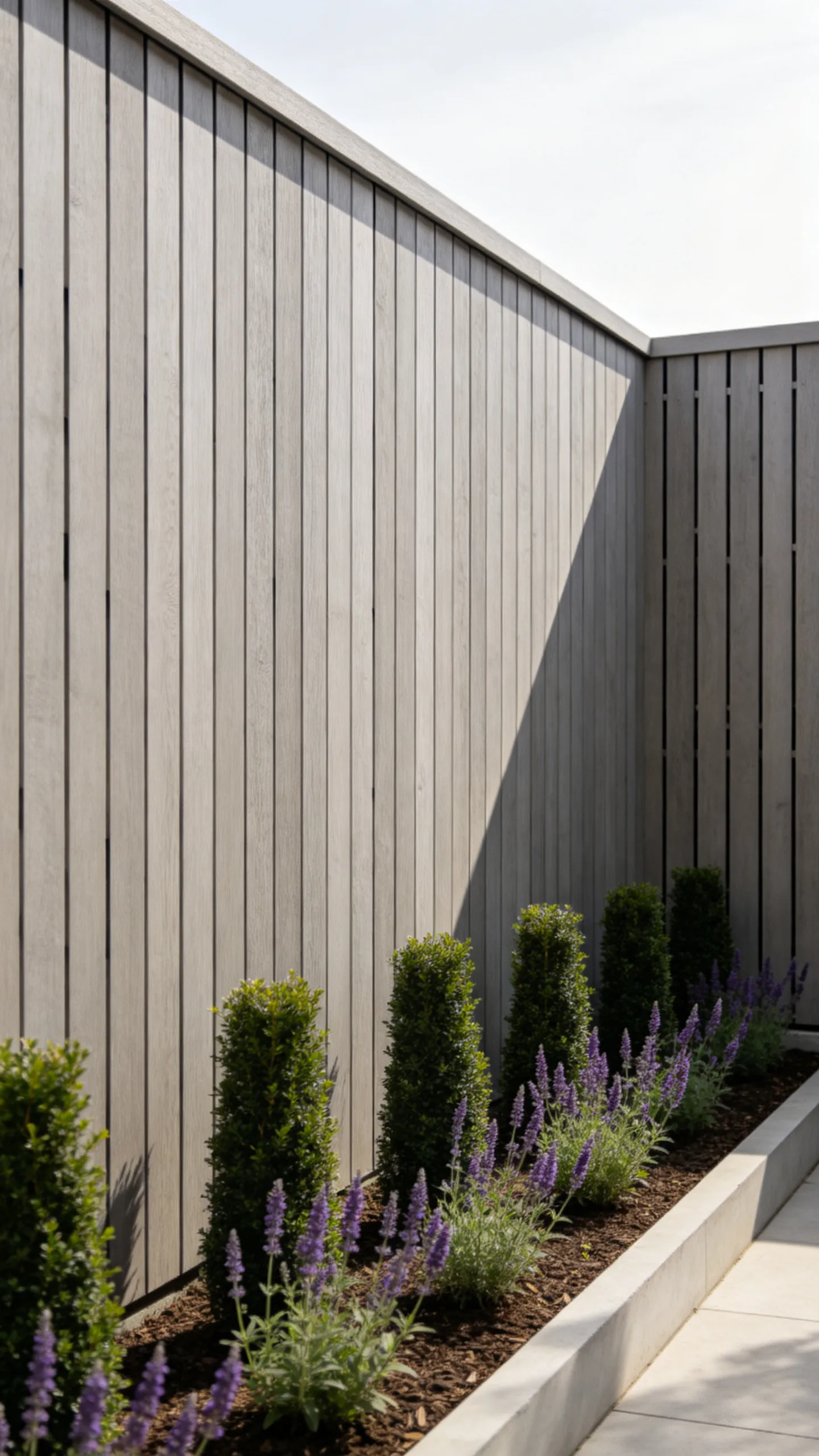
A vertical board fence can still look modern when the boards are slim, evenly spaced, and separated by narrow shadow gaps. The upright lines draw the eye upward, which helps a small yard feel taller and more private. This design is especially useful where you want a stronger screen than open slats but do not want a flat, plain wall.
Shadow gaps create depth because the fence surface has subtle lines instead of one uninterrupted plane. A dark stain, soft gray wash, or natural cedar finish can all work, depending on the style of the house and patio. For a sleeker look, keep the top edge level rather than using decorative caps or scalloped shapes.
This fence pairs well with narrow planting beds. Use columnar shrubs, climbing vines on separate trellis panels, or tall perennials such as salvia, Russian sage, or Joe-Pye weed where climate allows. Leave enough airflow around plants so damp foliage does not sit directly against the boards.
4. Frosted Glass Privacy Panels
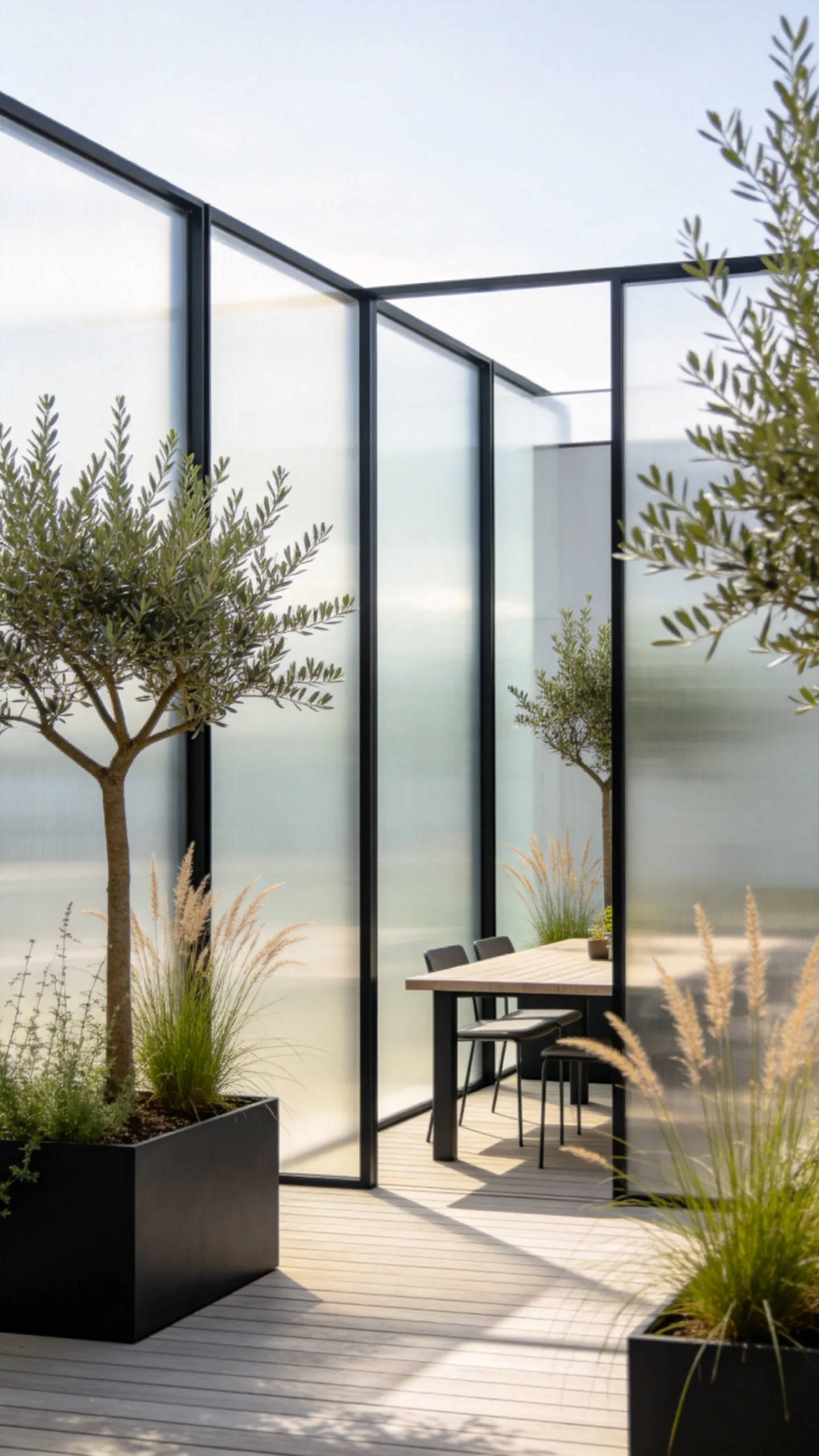
Frosted glass panels offer privacy while allowing light to pass through, which makes them ideal for small patios, rooftop gardens, and courtyards that would feel dark with a solid fence. The translucent surface blocks direct views but keeps the space bright and airy.
For a modern look, install frosted glass within slim aluminum or powder-coated steel frames. Panels can be used for an entire fence line or just where privacy is needed most, such as beside a dining area, hot tub, balcony edge, or seating nook. This approach is especially useful when only one side of the yard faces a neighbor or street.
Because glass can look hard on its own, balance it with planting. Use tall containers with olive trees in suitable climates, dwarf evergreens, ornamental grasses, or large-leaf shade plants like fatsia where conditions allow. Keep maintenance in mind: glass will need occasional cleaning, especially near sprinklers, dusty roads, or coastal areas.
5. Composite Slat Fence In A Soft Neutral Color
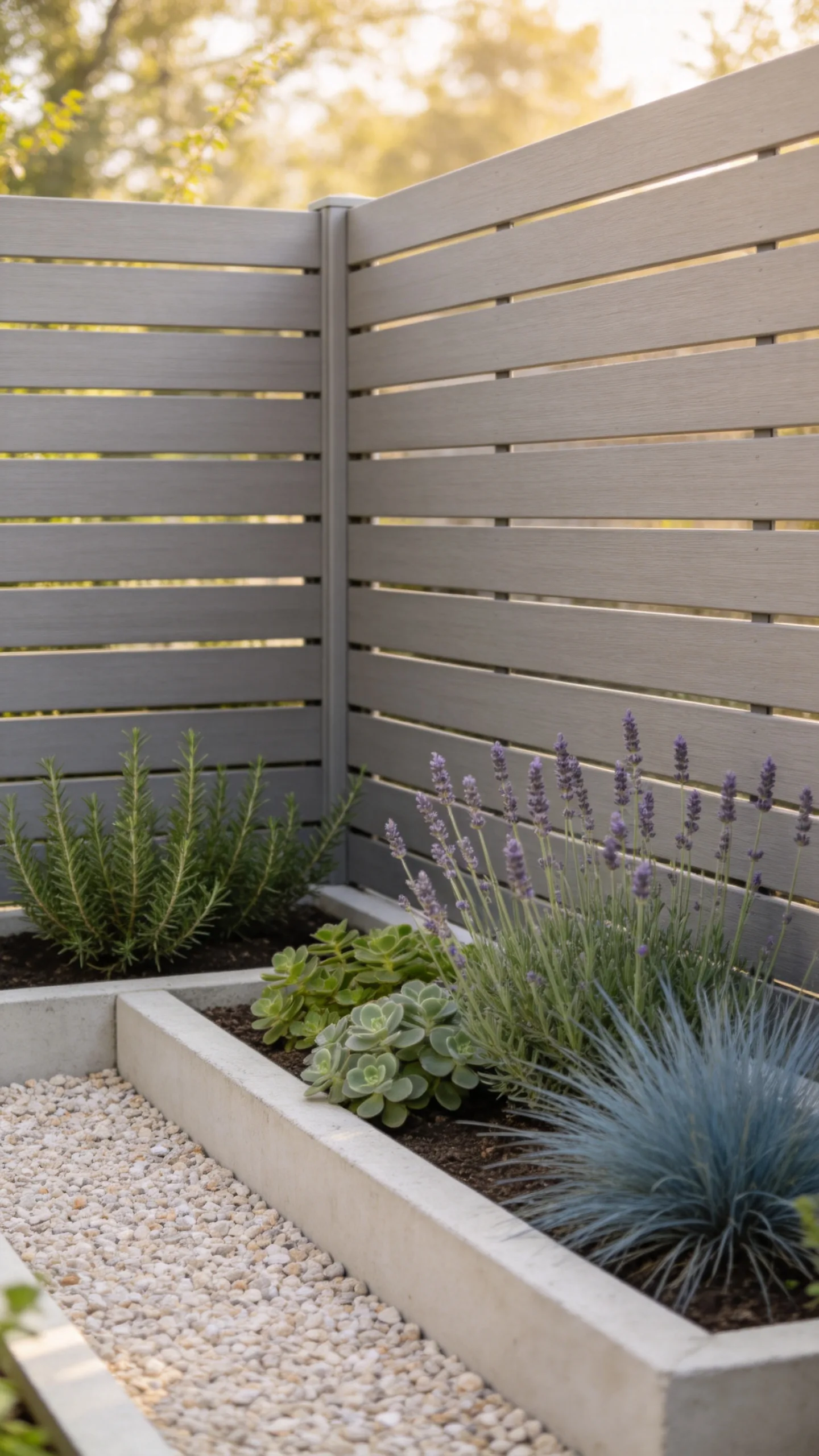
Composite fencing is a practical option for a sleek privacy screen with lower maintenance than natural wood. Slatted composite boards in taupe, charcoal, warm gray, or muted brown can create a clean modern backdrop without the regular staining schedule that wood requires.
A soft neutral color is useful in compact gardens because it recedes visually and lets plants stand out. Avoid overly glossy finishes if you want the fence to look more natural and less commercial. Horizontal boards can make a yard feel wider, while vertical boards can create a taller, more structured effect.
Composite fences work well behind raised beds, gravel borders, and container gardens because they resist moisture better than many untreated wood options. Add drought-tolerant planting such as rosemary, sedum, lavender, or blue fescue in sunny spots. In partial shade, use carex, hosta, or compact hydrangea varieties with enough room for mature spread.
6. Mixed Wood And Metal Privacy Screen
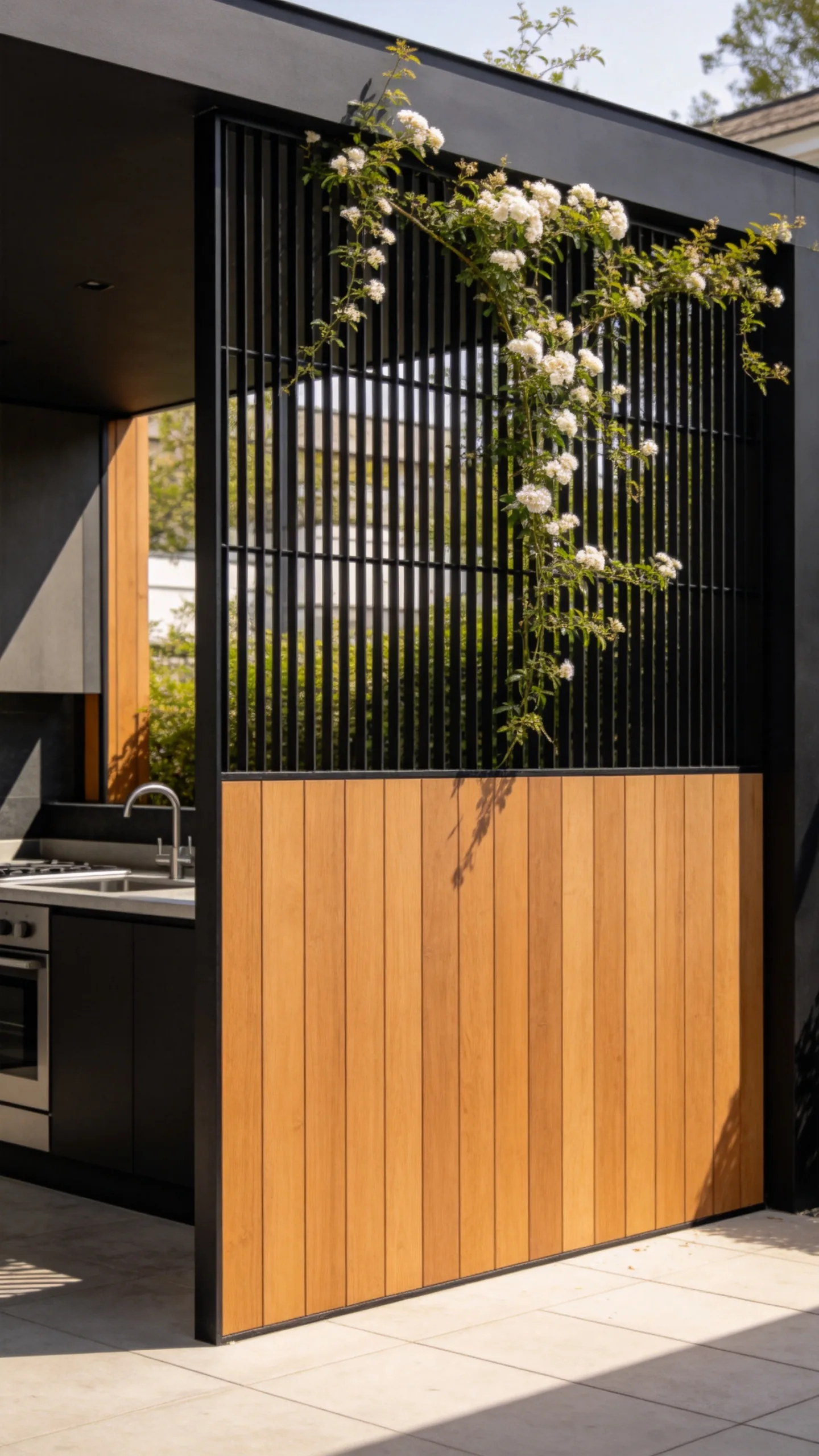
Combining wood and metal creates a modern fence that feels layered rather than heavy. For example, use wood boards for the lower privacy zone and slim black metal pickets or mesh above. This blocks views where people sit but keeps the top of the fence visually lighter.
This design works well along patios, outdoor kitchens, and small backyards where a full-height solid fence might feel too enclosing. The lower wood section can hide chair backs, storage boxes, or garden tools, while the upper metal section lets in light and air. It also provides a place for climbing plants if the spacing and structure are suitable.
Choose vines carefully based on your climate and maintenance preferences. Star jasmine, clematis, climbing rose, or native honeysuckle may work in some areas, but each has different pruning and support needs. Avoid aggressive vines where they could damage nearby structures or become difficult to control.
7. Slim Batten Fence With A Matching Gate
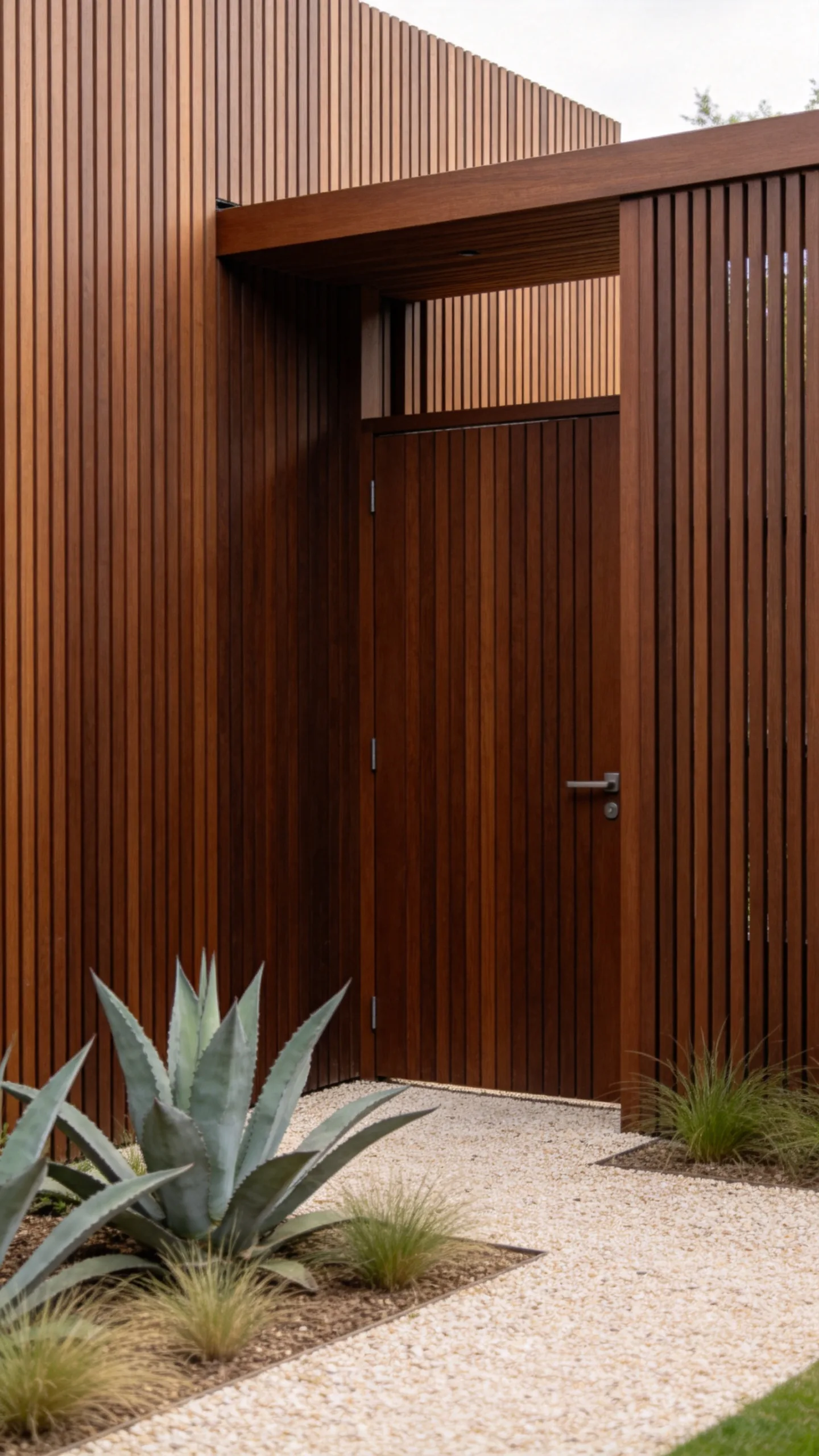
A slim batten fence uses narrow vertical strips placed close together for privacy and texture. When the gate is built in the same pattern, the entire boundary looks seamless and modern. This is a strong option for front garden entries, side yard passages, and small courtyards where the gate is highly visible.
The key is consistency. Keep the battens the same width, align the spacing, and use concealed or simple hardware where possible. A flat top rail and squared posts maintain the sleek look. Black, deep brown, natural cedar, and warm gray all work well with modern planting schemes.
Because batten fences have a strong rhythm, soften the base with simple planting rather than busy mixed borders. Try a row of dwarf ornamental grasses, clipped shrubs, or a narrow bed of groundcover. For low-maintenance areas, use gravel mulch and a few sculptural plants such as agave, yucca, or compact conifers suited to your climate.
8. Corten Steel Privacy Panels
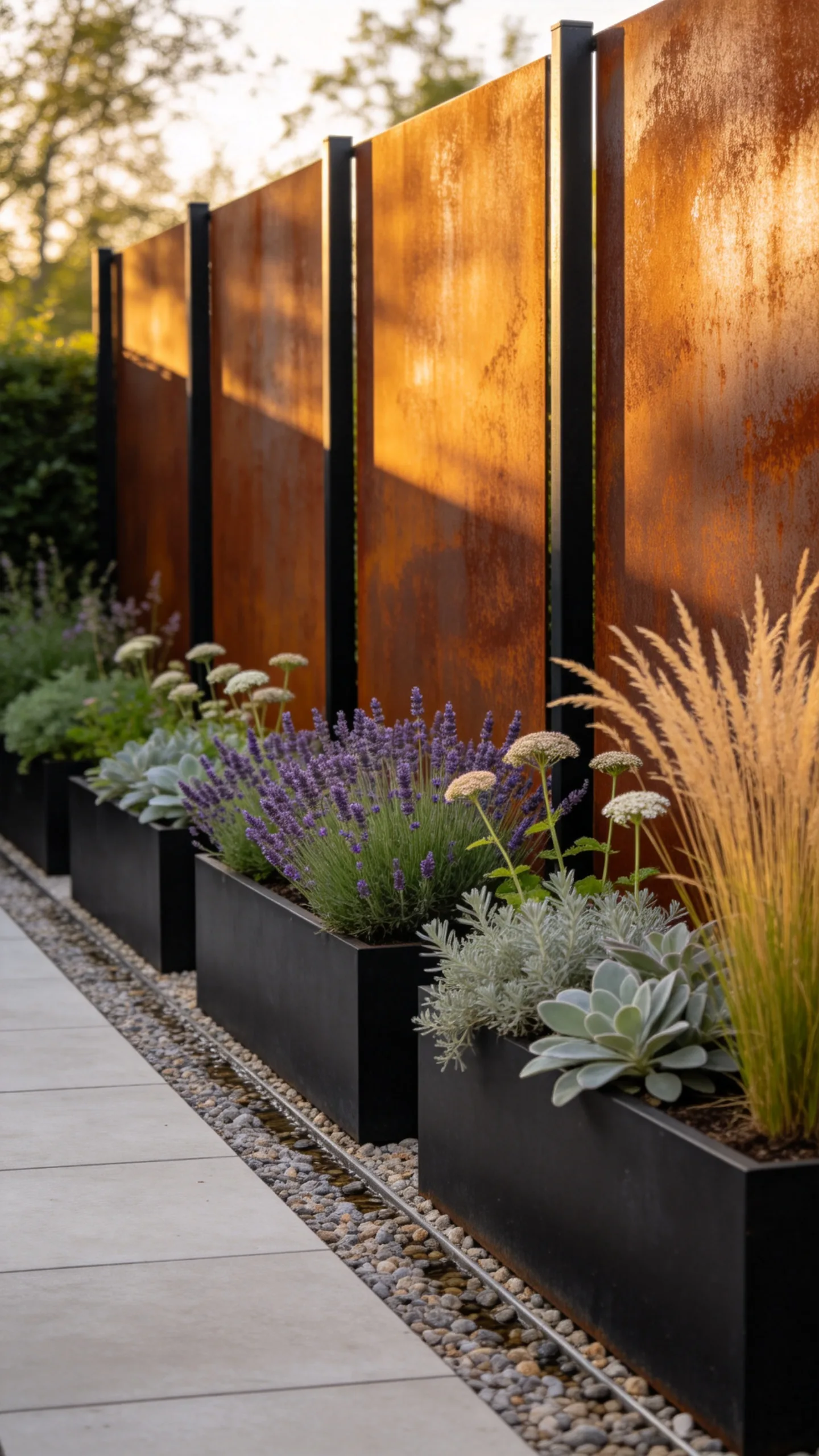
Corten steel panels bring a sculptural, modern look to garden privacy. Their rust-colored patina adds warmth without needing a bulky structure. Used as panels between simple posts, Corten can screen a seating area, hide bins, or create a focal boundary in a minimalist yard.
This material works especially well with gravel, concrete pavers, black planters, and drought-tolerant planting. Ornamental grasses, lavender, yarrow, sedum, and sage-toned foliage look striking against the warm metal. In small spaces, use Corten as an accent section rather than around the entire yard to avoid overwhelming the design.
Placement matters because runoff from weathering steel may stain pale paving or walls. Leave a gravel strip at the base or install panels where rust-colored marks will not be a problem. If you live in a wet climate, check local material recommendations and installation details before committing to large sections.
9. Living Fence With A Slim Trellis Backbone
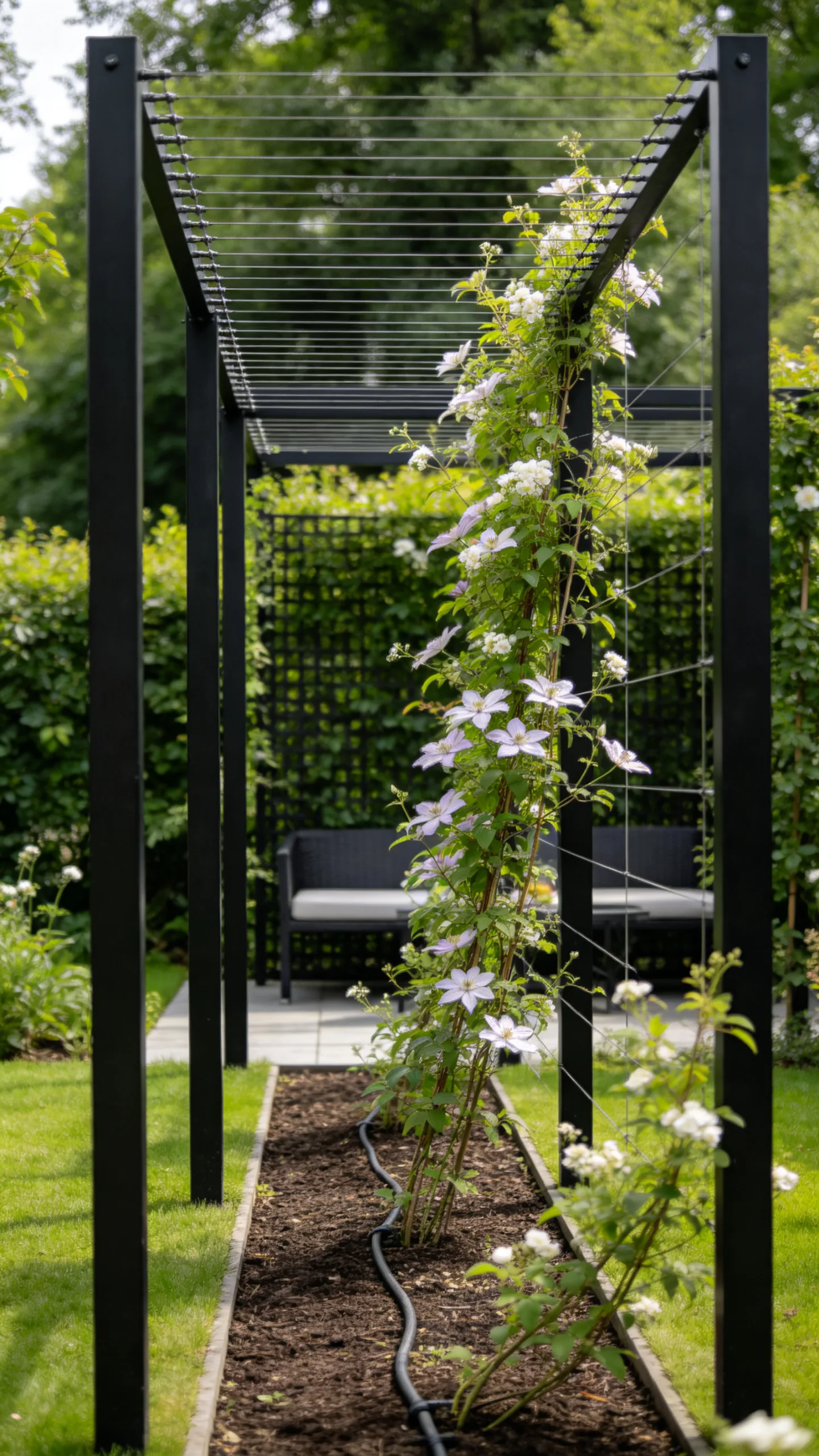
A living fence can provide privacy without the solid look of boards, especially when paired with a slim trellis or wire support system. The trellis creates structure while climbing plants fill in the screen over time. This is a good approach for gardeners who want privacy and greenery in the same footprint.
Use a simple black metal trellis, tensioned wire grid, or wood frame attached to secure posts. Choose plants according to sun exposure and climate. Clematis, climbing hydrangea, jasmine, passionflower, or native vines may be suitable, but growth rate and winter coverage vary widely. For year-round privacy, choose evergreen climbers where they are appropriate for your zone.
A living fence needs planning because plants require watering, pruning, and training. Install drip irrigation or a soaker hose at the base if the area is dry. In narrow spaces, keep the planting bed at least wide enough for roots and mulch, and prune regularly so vines do not spill too far into paths or seating areas.
10. Modern Louvered Fence For Adjustable Screening
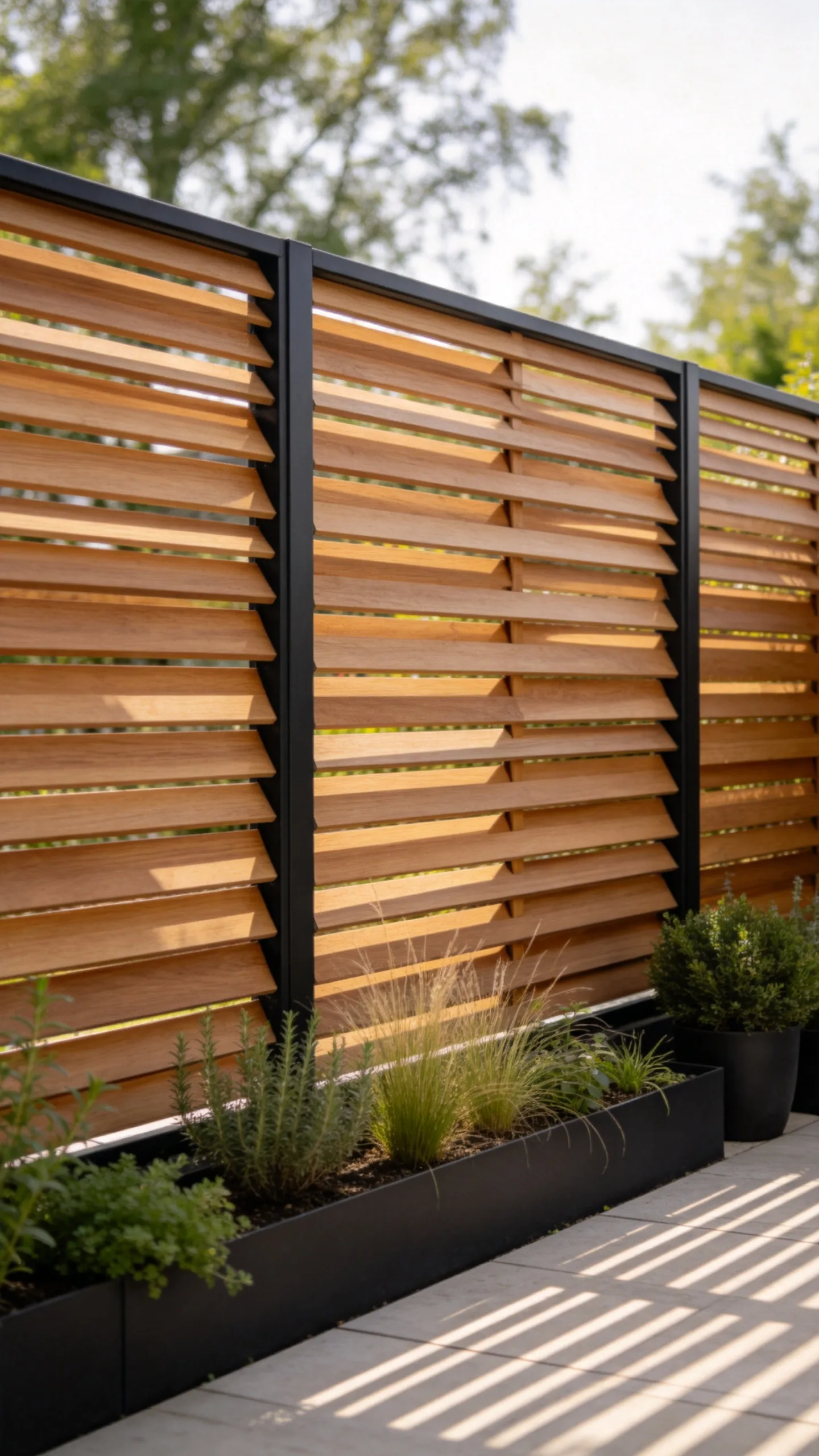
A louvered fence uses angled boards or panels to block direct views while allowing air and light through. The angled design feels sleek and architectural, making it a strong choice for patios, balconies, outdoor showers, or garden rooms where privacy matters but ventilation is important.
Fixed louvers are simpler and often more affordable, while adjustable louvers offer more control. The angle can be positioned to screen a neighbor’s window, street view, or side passage without creating a fully closed wall. This makes the design useful in tight yards where every bit of daylight matters.
Plant around a louvered fence with species that will not block the airflow completely. Low grasses, compact shrubs, herbs, or container plants can soften the base. If the fence faces strong afternoon sun, the angled boards may also create partial shade for heat-sensitive seating areas or potted plants.
11. Painted Fence In A Deep Charcoal Finish
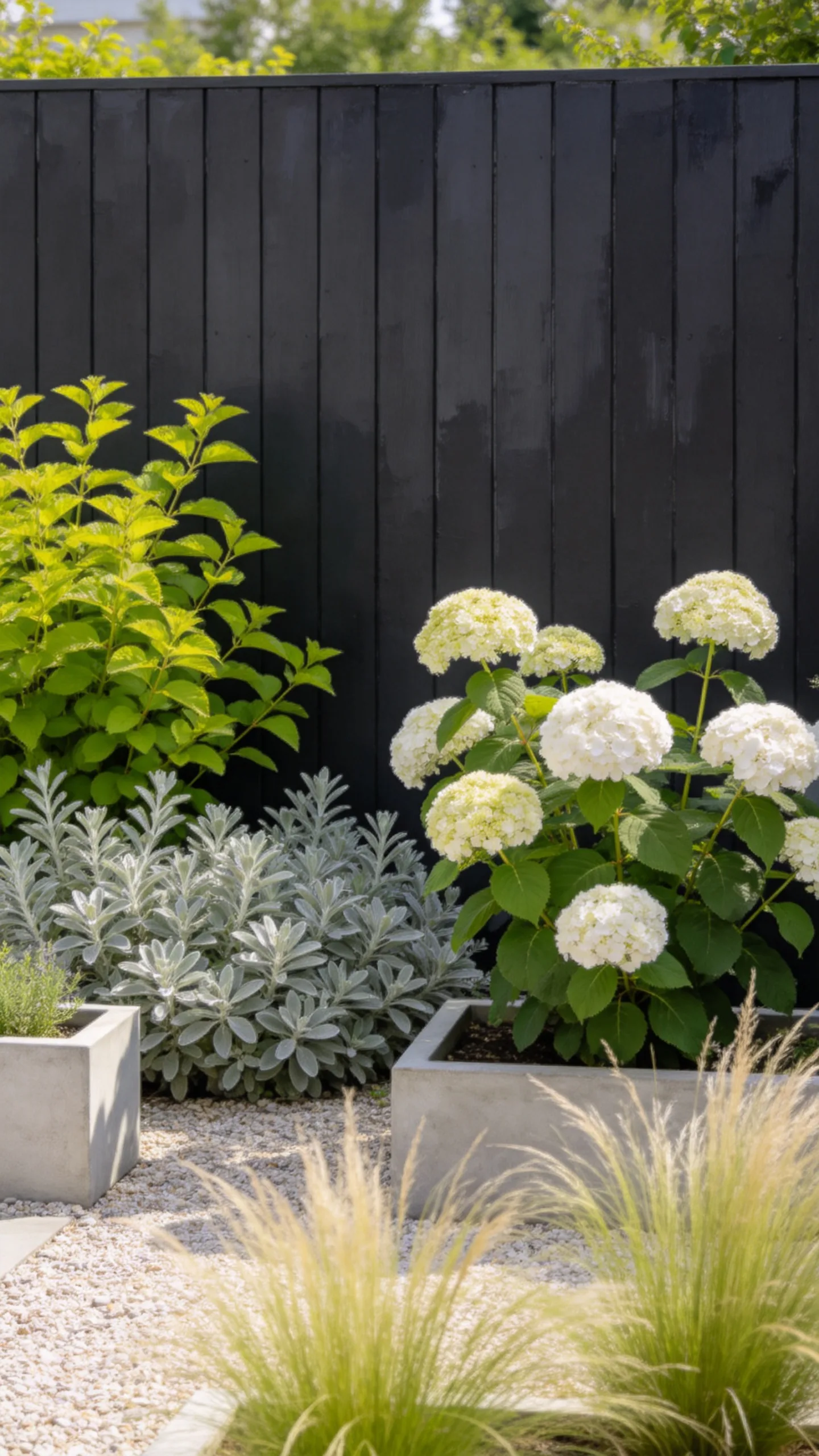
A deep charcoal fence can look surprisingly light when paired with greenery because dark colors visually recede. Instead of drawing attention to the boundary, the fence becomes a backdrop for leaves, flowers, and outdoor furniture. This is a useful trick for small gardens where a pale solid fence might feel too prominent.
Use charcoal paint or stain on smooth vertical boards, horizontal slats, or simple panel fencing. Keep the finish matte or satin rather than glossy for a more refined look. Black or charcoal also pairs well with modern elements such as concrete planters, white cushions, steel edging, and pale gravel.
Plant contrast is important. Lime-green foliage, silver herbs, white flowers, and ornamental grasses stand out beautifully against a dark fence. Try plants such as nepeta, lamb’s ear, hydrangea, ferns, or Japanese forest grass depending on sun and shade conditions. Check that the fence material is compatible with paint or stain before applying a dark finish.
12. Half-Height Fence With Tall Layered Planting
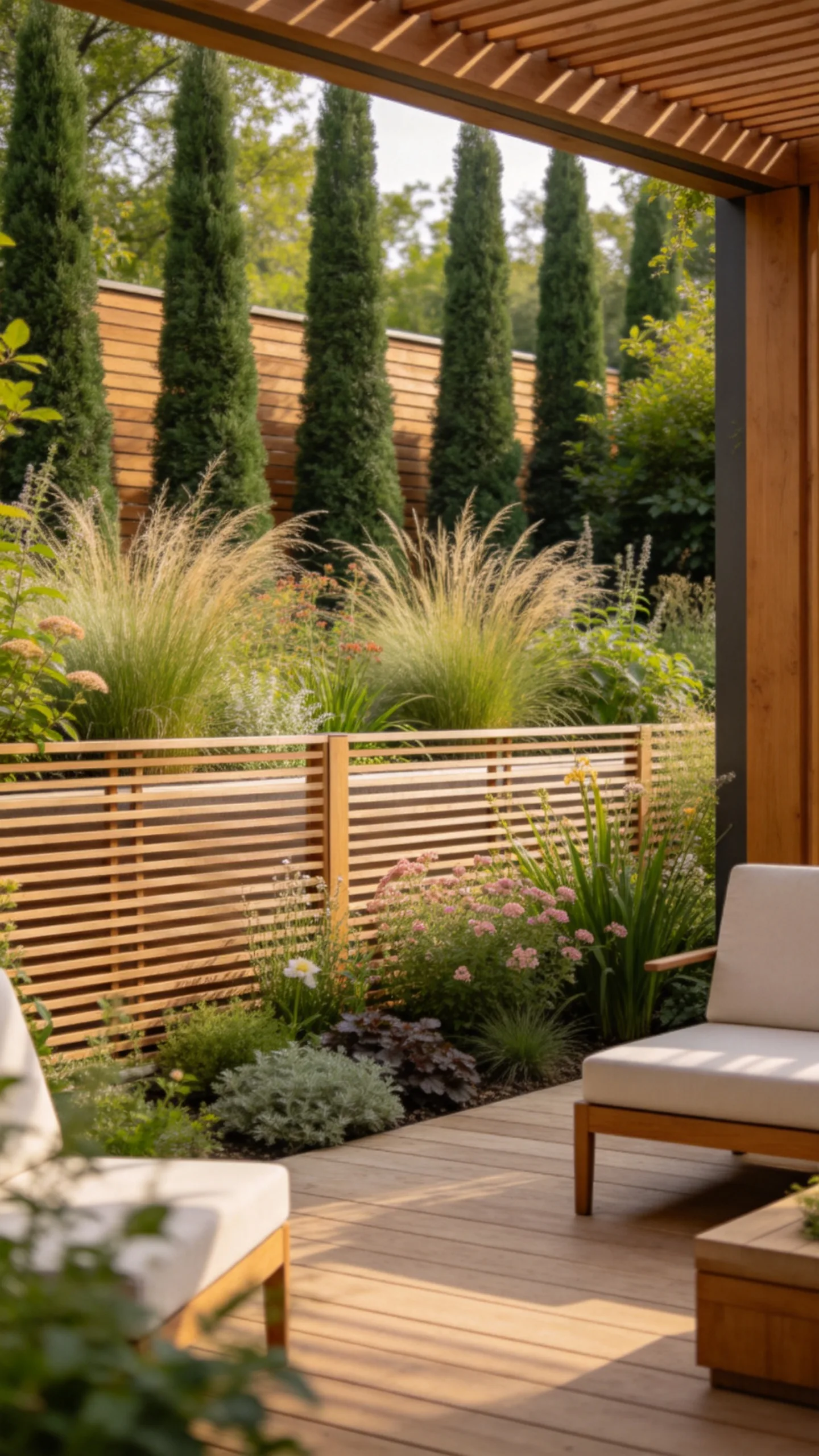
If full-height fencing feels too heavy, a half-height modern fence combined with planting can create a softer privacy screen. The fence defines the boundary and blocks low views, while shrubs, grasses, or small trees provide height. This layered approach works well in back gardens where privacy is needed mainly around seating rather than along every inch of the property line.
Choose a simple fence style such as horizontal slats, smooth vertical boards, or black metal rail panels. Then plant in staggered layers: taller shrubs or columnar trees at the back, medium perennials in the middle, and low groundcovers near the front. This creates depth and makes the garden feel larger than a single flat fence line would.
Good plant choices depend on climate, but the concept is flexible. Use clumping bamboo in contained beds where appropriate, upright evergreens, ornamental grasses, or multi-stem small trees. Leave enough space for mature plant width so the border does not become crowded against the fence.
13. Privacy Fence With Built-In Planter Boxes
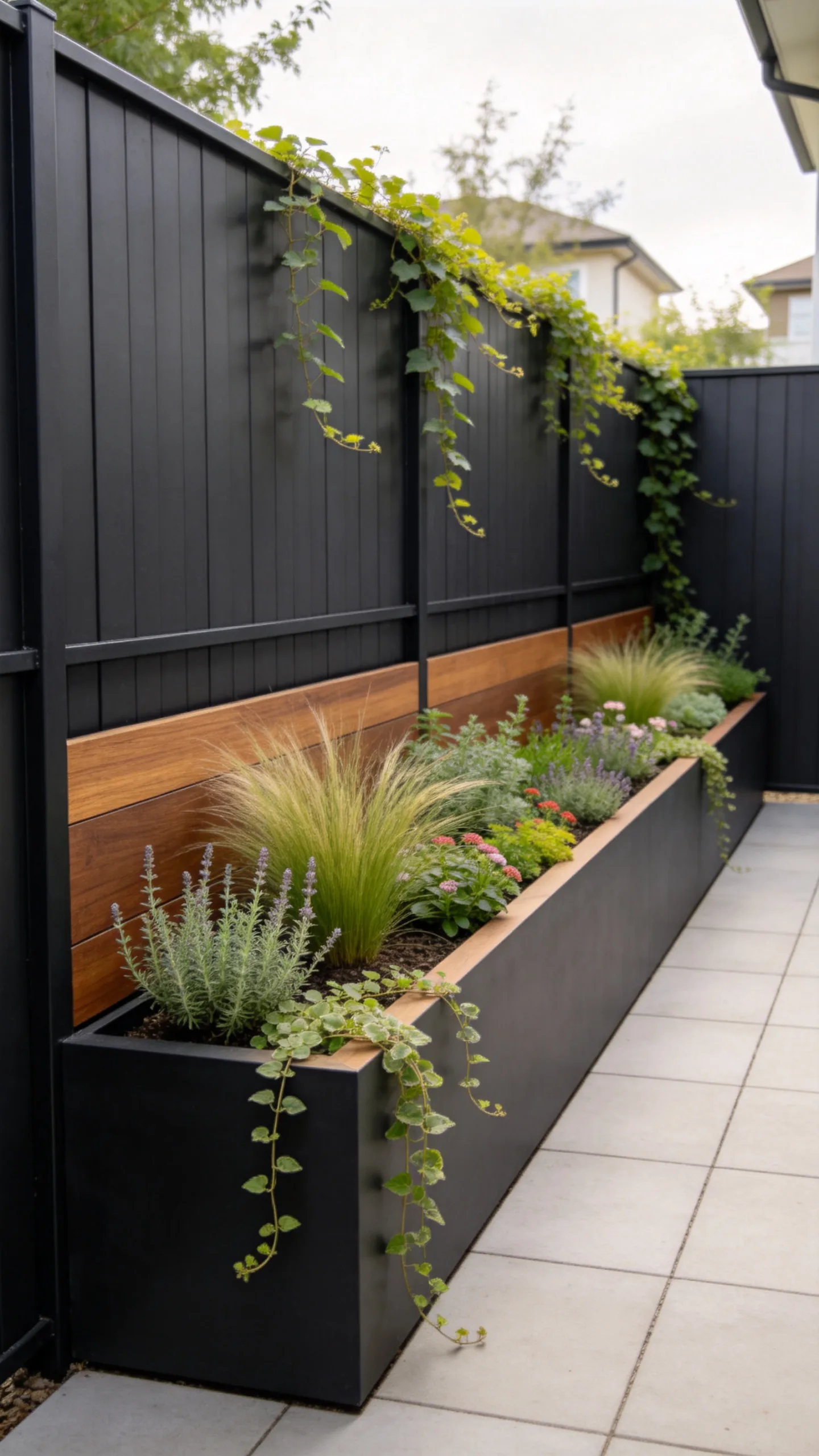
A fence with built-in planter boxes saves space by combining screening and planting in one structure. This is especially helpful for patios, townhome yards, and narrow side gardens where there is limited room for separate beds. The planters add greenery at eye level, making the fence feel less flat and more like a designed garden wall.
Use long rectangular planters attached securely to fence posts or integrated at the base. Choose materials that match the fence, such as stained wood boxes with wood slats or black metal planters against a charcoal fence. Make sure the planters have drainage holes and are lined appropriately so water does not damage the fence structure.
Select plants based on the planter depth and sun exposure. Herbs, trailing thyme, strawberries, compact grasses, sedum, and annual flowers can work in shallower boxes. For deeper planters, try dwarf shrubs, small evergreens, or cascading vines. Drip irrigation is useful because elevated planters dry out faster than ground beds.
14. Perforated Metal Fence Panels
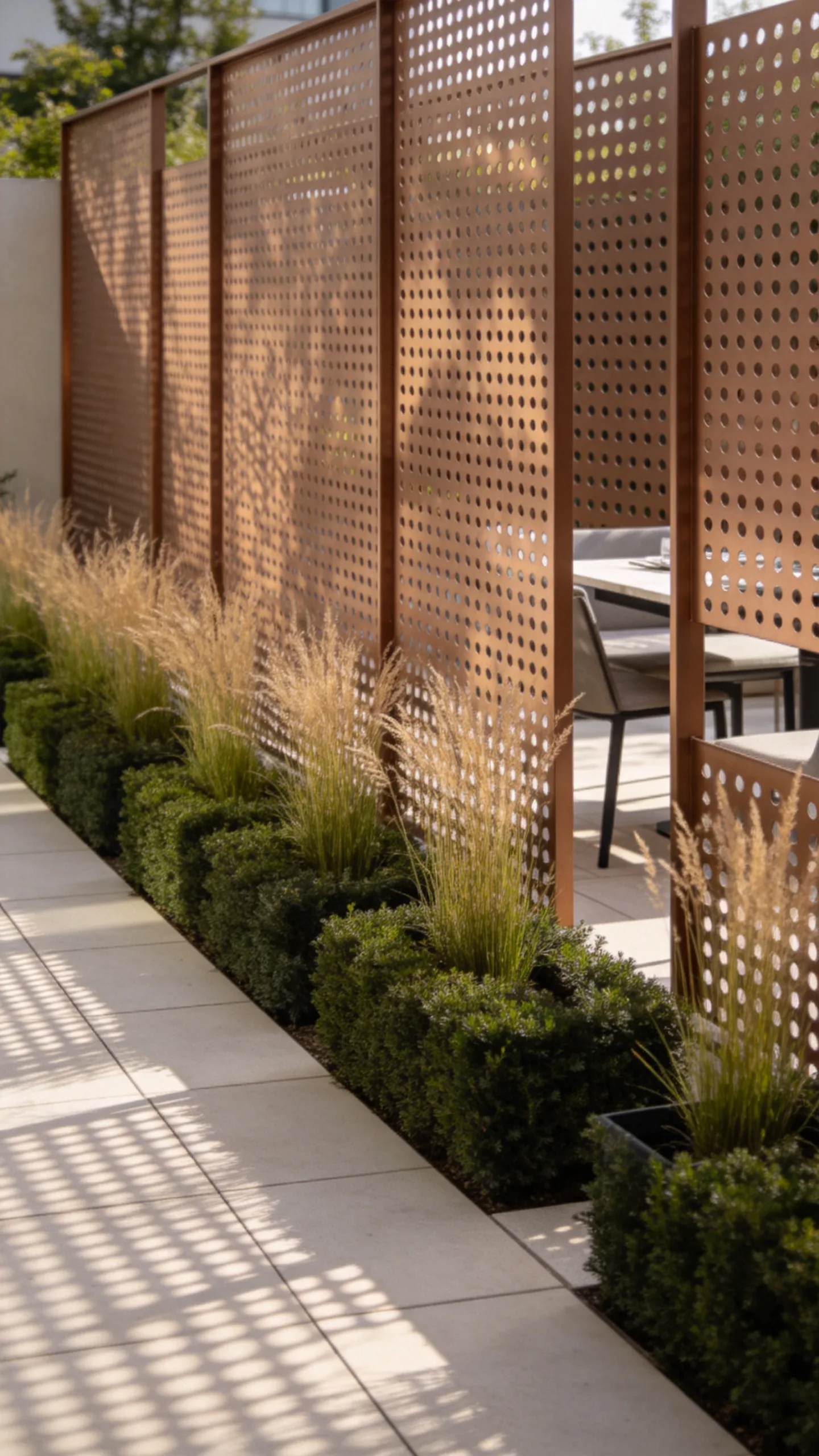
Perforated metal panels create a semi-private screen with a modern, graphic pattern. The small openings break up views while keeping the fence from feeling solid. This design works well for contemporary courtyards, side yards, rooftop gardens, and privacy screens around outdoor dining areas.
Panel patterns can be subtle or bold, but smaller perforations usually provide better privacy. Powder-coated finishes in black, bronze, white, or warm gray keep the look polished and weather-resistant. Because the panels are thin, they are useful where space is limited and a bulky wood structure would take up too much room.
Pair perforated metal with simple planting to avoid visual clutter. A row of grasses, clipped evergreens, or potted shrubs can soften the base. If the panels cast patterned shadows, place them where the effect will enhance a patio or gravel garden rather than distract from a busy planting bed.
15. Modern Fence With A Floating Top Gap
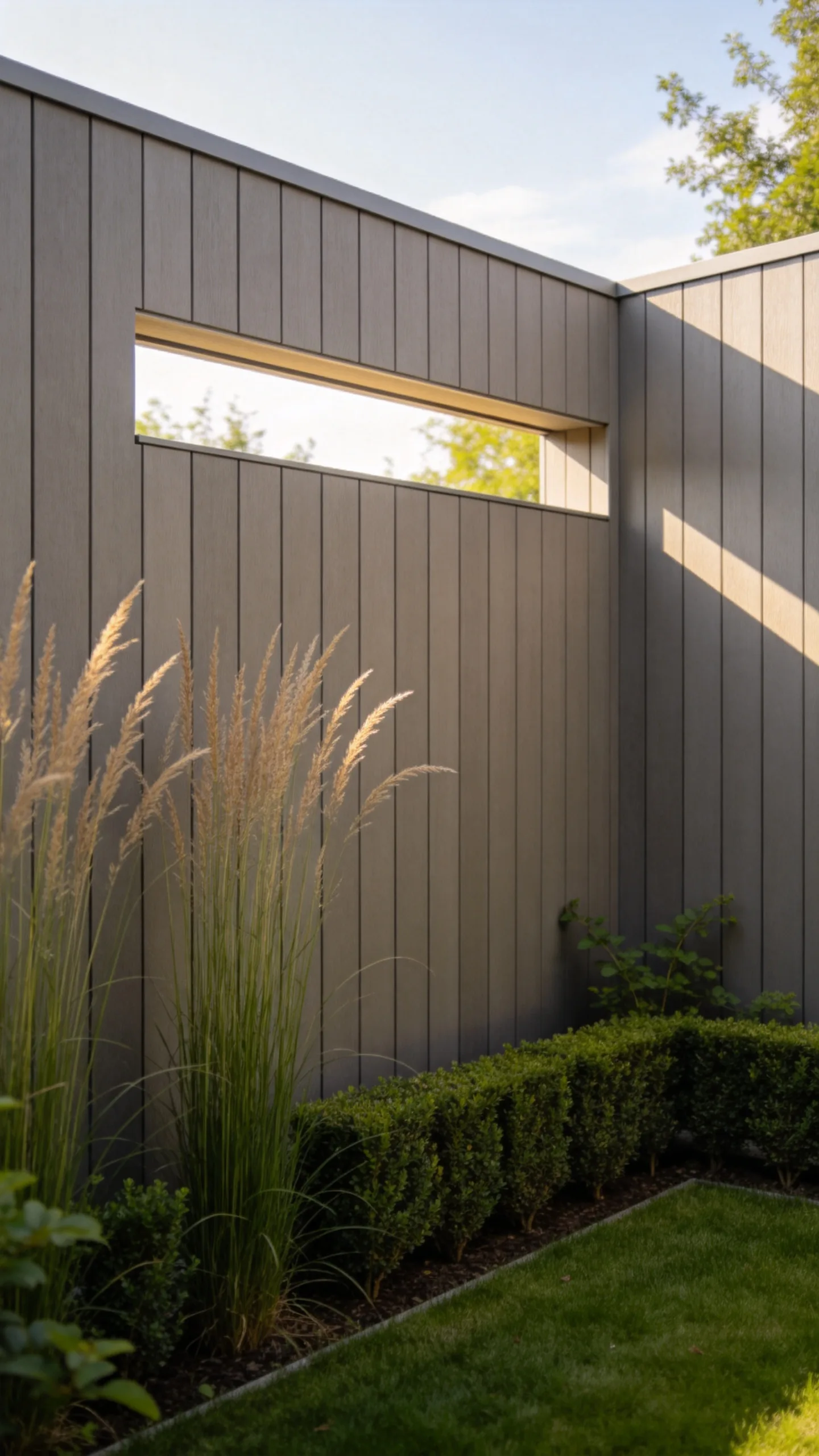
Leaving a narrow open gap near the top of a privacy fence can make the whole structure feel lighter. The lower section blocks views into seating areas, while the top gap allows light, air, and a glimpse of sky. This small design detail can reduce the boxed-in feeling that often comes with tall fencing.
The gap can be created under a slim cap rail or between the main fence boards and an upper frame. It works well with horizontal slat fences, vertical board fences, and composite panels. Keep the gap high enough that it does not compromise privacy at eye level.
This idea is useful in small yards with tall fences required by nearby windows or busy streets. Add planting inside the fence line to soften the solid lower portion. Upright grasses, narrow shrubs, or espaliered fruit trees can add texture without taking up too much floor space.
16. Alternating Solid And Open Fence Sections
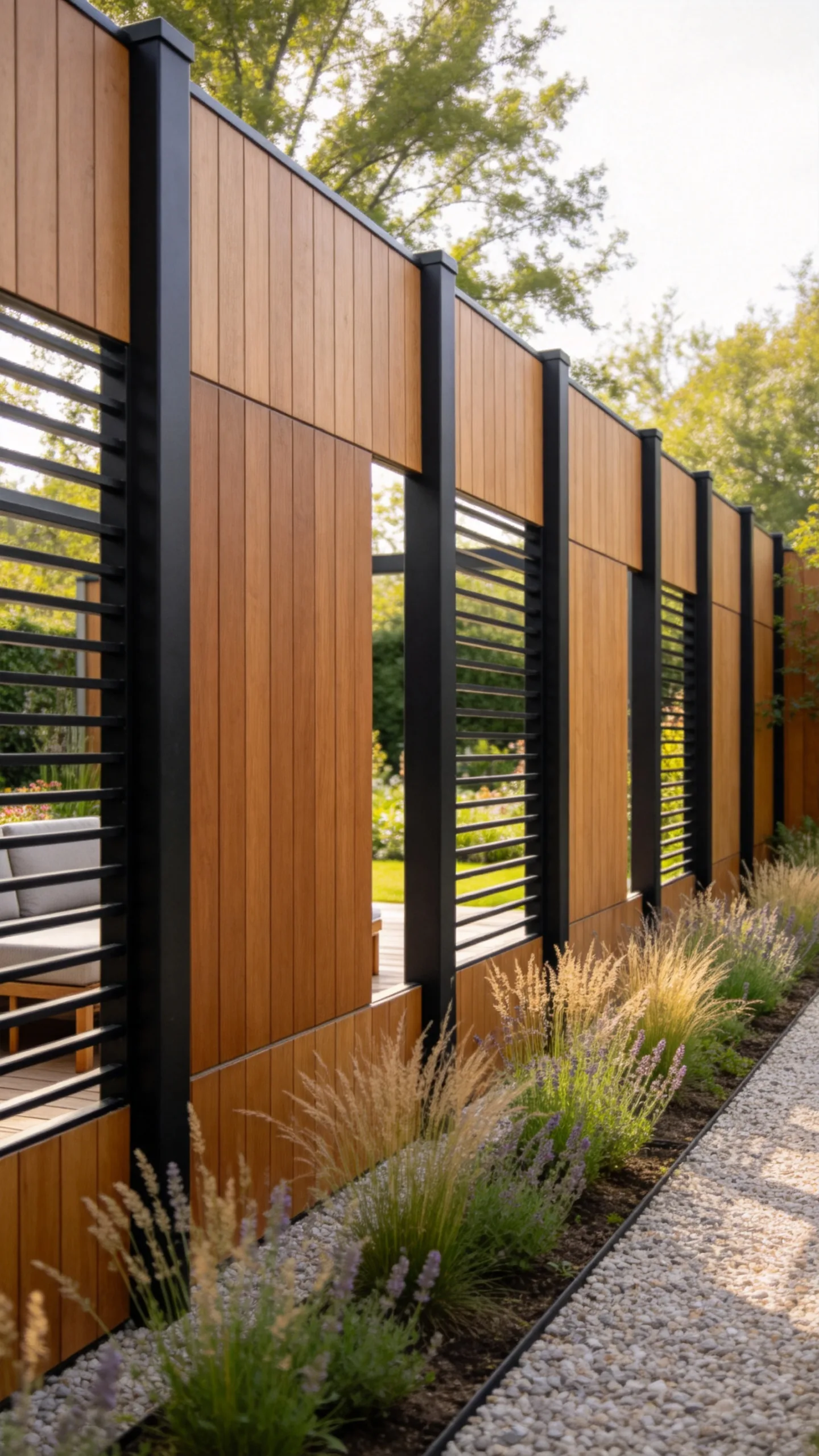
Instead of installing one continuous solid fence, alternate privacy panels with more open sections. Solid panels can be placed behind seating, dining, or a hot tub, while open slats, metal screens, or trellis sections can be used where full privacy is not necessary. This gives the yard a lighter rhythm and reduces the feeling of being enclosed.
This approach is practical for long fence runs because it breaks up visual weight. It also helps control budget if more expensive materials, such as metal panels or composite boards, are used only where they matter most. Repeat the same post style or color throughout so the design still feels cohesive.
Use planting to connect the different sections. A continuous gravel strip, hedge, or row of perennials can make the fence line look intentional. Taller plants can be positioned in front of open sections for seasonal screening, while lower plants can sit in front of solid panels to keep them visible and clean.
17. Minimal Fence With Espaliered Trees
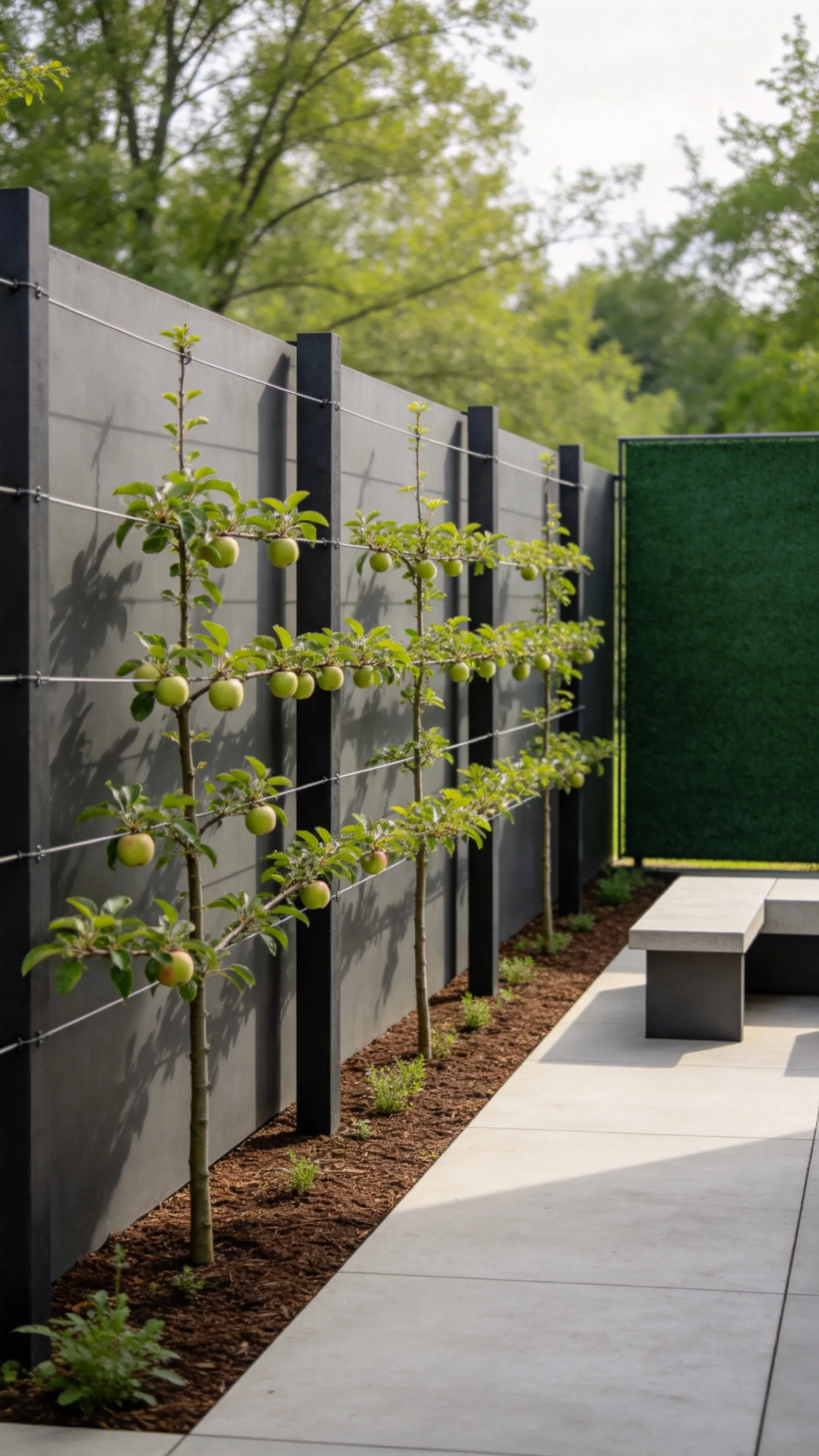
Espaliered trees provide privacy in a narrow footprint by training branches flat against a fence or wire support. This method is ideal for small gardens where a full hedge would take up too much depth. It also adds a structured, elegant look that suits modern patios and courtyard gardens.
Start with a simple fence or frame, such as horizontal wires fixed between sturdy posts. Fruit trees like apple or pear are often used in suitable climates, but ornamental trees can also be trained depending on local growing conditions. The key is regular pruning and tying branches while they are young and flexible.
Espalier works best where the plants receive the light they need and have enough root space. Use mulch at the base, water consistently during establishment, and avoid planting too close to hard paving that reflects intense heat. Over time, the trained branches create a green screen that feels much softer than a solid fence while still defining the garden boundary.