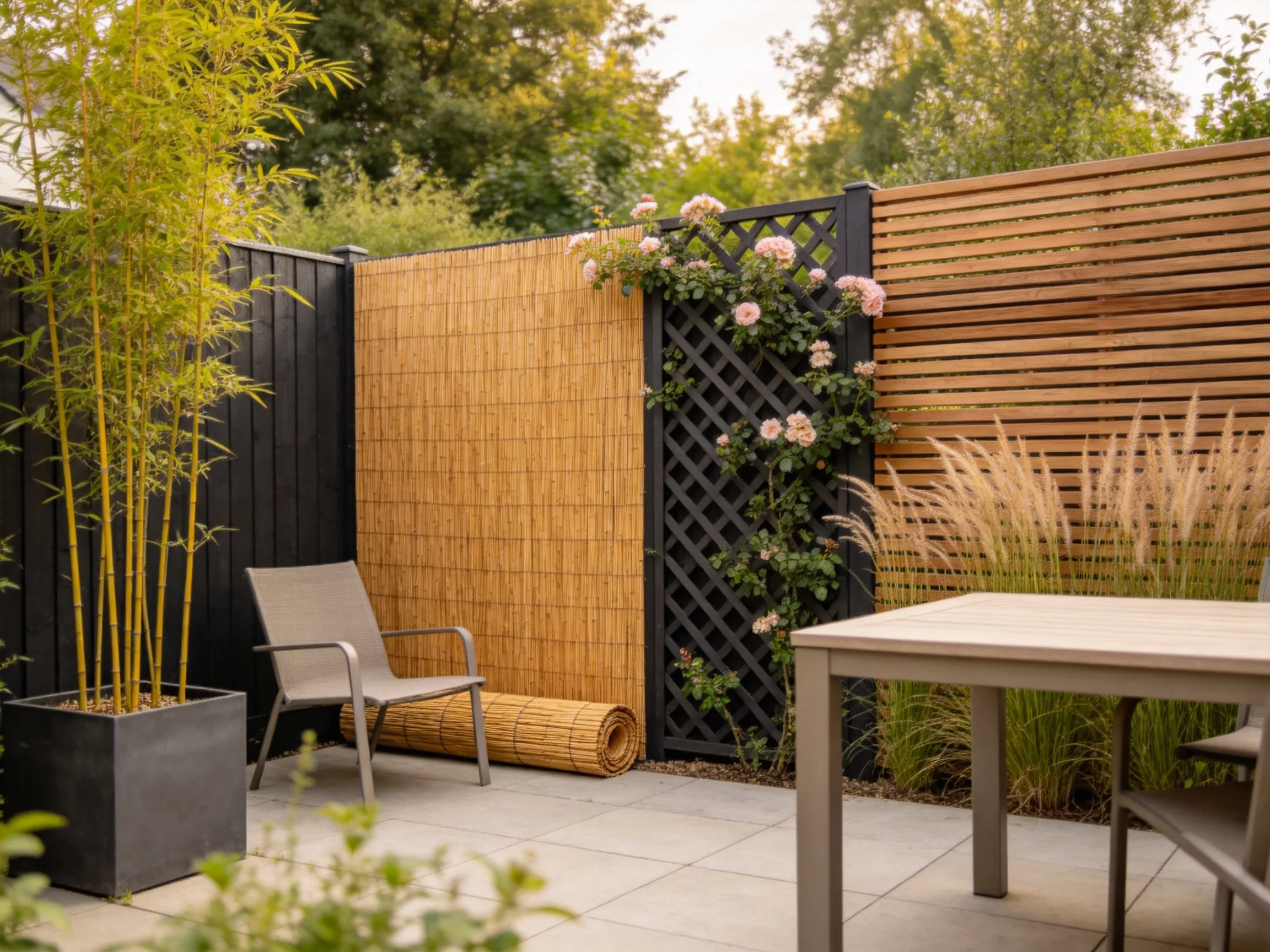
Fence screening can make a garden feel more private, softer, and more finished without replacing the entire fence. The best choice depends on whether you want instant coverage, seasonal flowers, evergreen structure, or a lightweight material that works in a narrow side yard, patio, balcony edge, or backyard boundary. These fence screening ideas compare bamboo, trellis panels, climbing plants, woven screens, containers, and layered planting so you can choose a practical option for your space.
1. Rolled Bamboo Screening for Instant Warmth
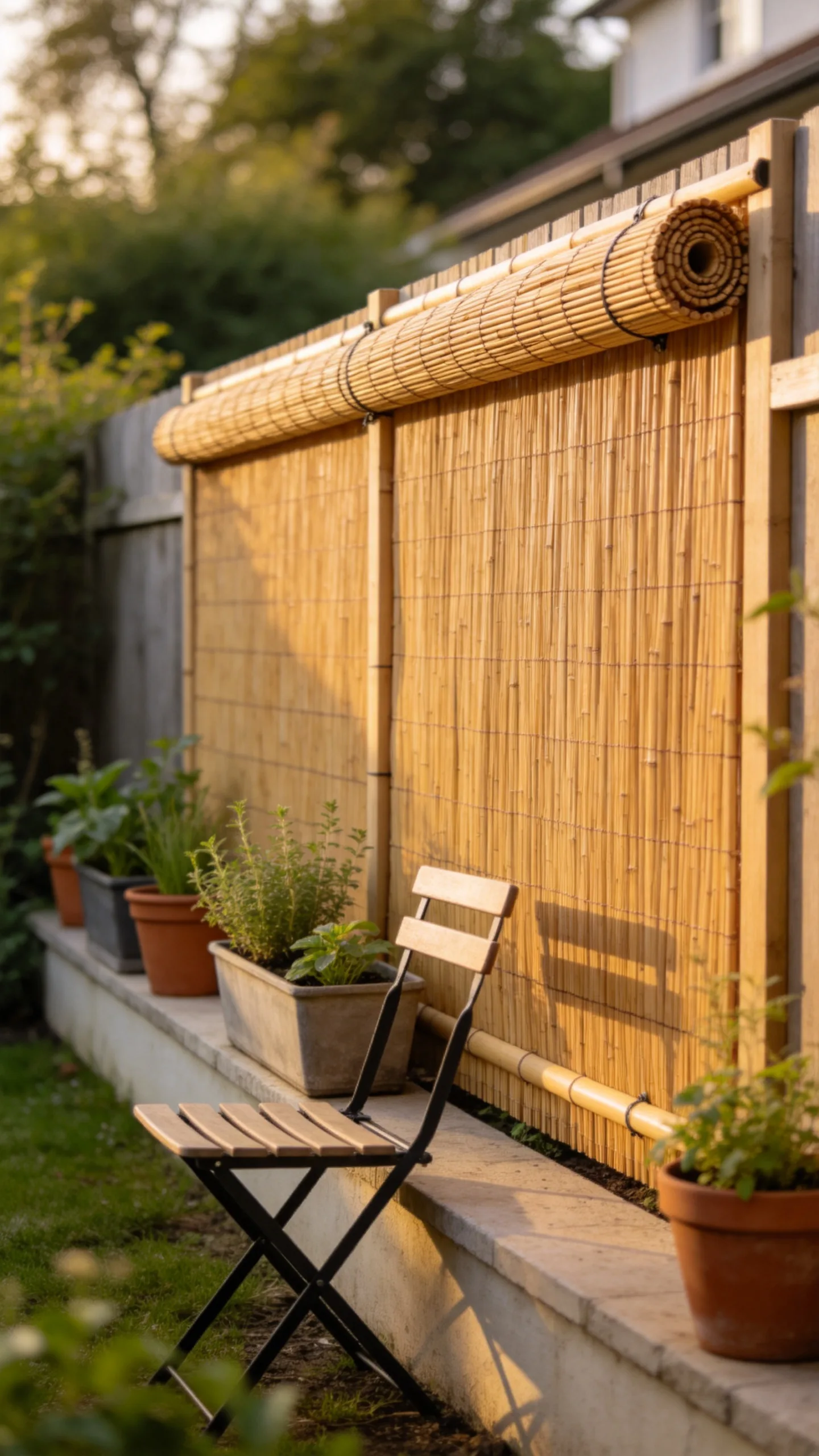
Rolled bamboo screening is one of the fastest ways to cover a plain timber, chain-link, or metal fence. It usually comes in flexible rolls that can be tied or screwed to an existing fence, making it useful for renters or homeowners who want a quick visual change without rebuilding the boundary.
Choose thicker bamboo canes if the fence faces a seating area, because wider canes block more sightlines than thin reed-style rolls. For a cleaner look, attach the roll to horizontal battens rather than letting it sag between fence posts. Bamboo works especially well behind outdoor dining sets, small patios, and container gardens where its warm tan color makes foliage stand out.
In exposed gardens, secure the screening at several points with galvanized wire, cable ties, or screws and washers. Leave a small gap at the base if the fence sits above damp soil, as constant moisture can shorten the life of natural bamboo.
2. Split Bamboo Panels for a Neater Fence Face
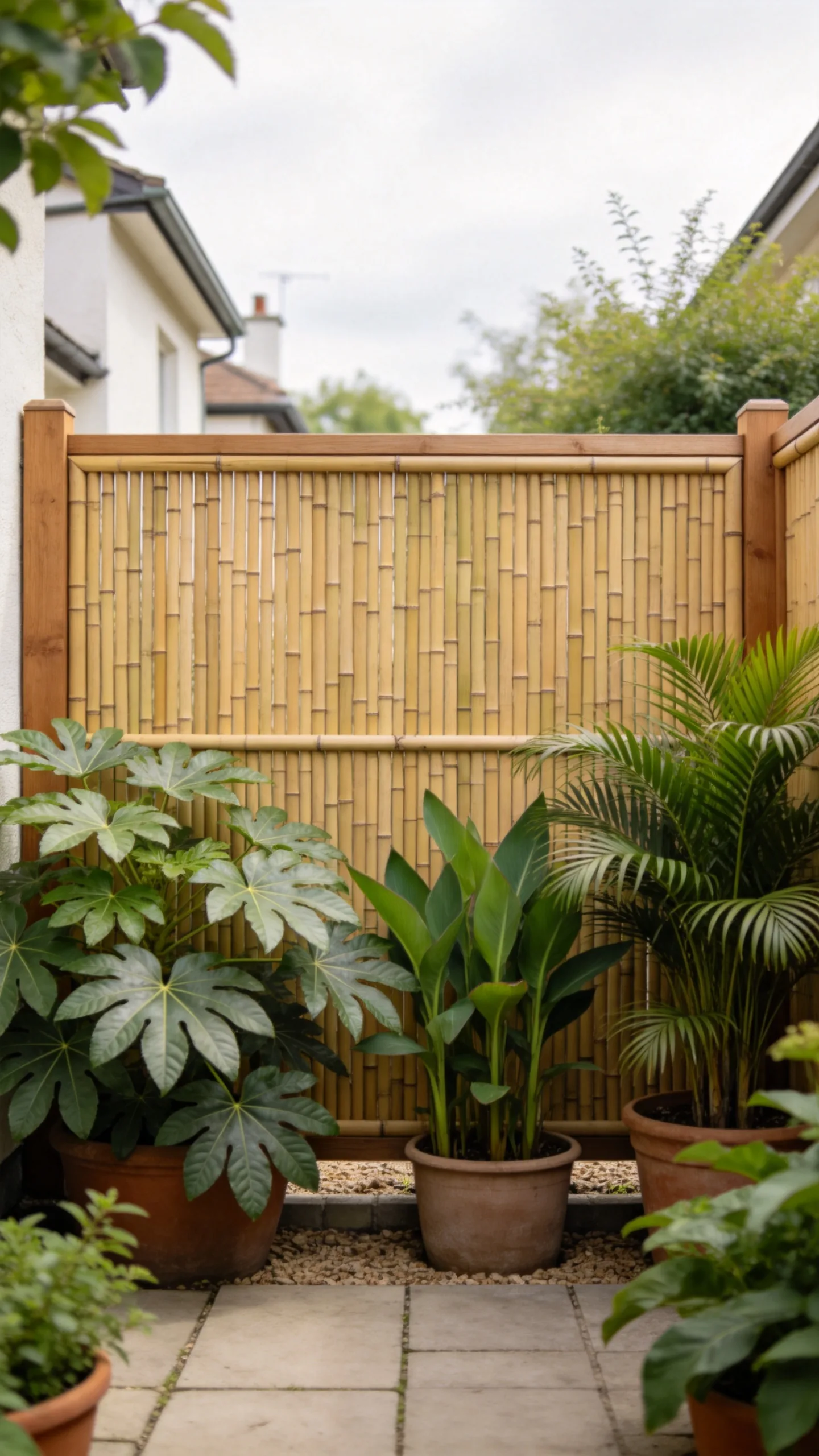
Split bamboo panels give a more structured finish than loose bamboo rolls. The flattened bamboo pieces create a tidy, repeated pattern that suits courtyard gardens, tropical planting schemes, and compact backyards where every surface is visible.
These panels can be fixed to a solid fence, mounted inside a timber frame, or used to disguise mismatched fence boards. Pair them with broad-leaved plants such as fatsia, canna, banana plants in containers, or hardy palms where the climate allows. The combination creates a lush backdrop without needing a deep border.
Because split bamboo is still a natural material, it performs best when slightly lifted above wet ground and not buried in soil. If your garden is windy, add vertical battens at intervals so the panels do not bow outward over time.
3. Reed Screening for a Budget-Friendly Soft Barrier
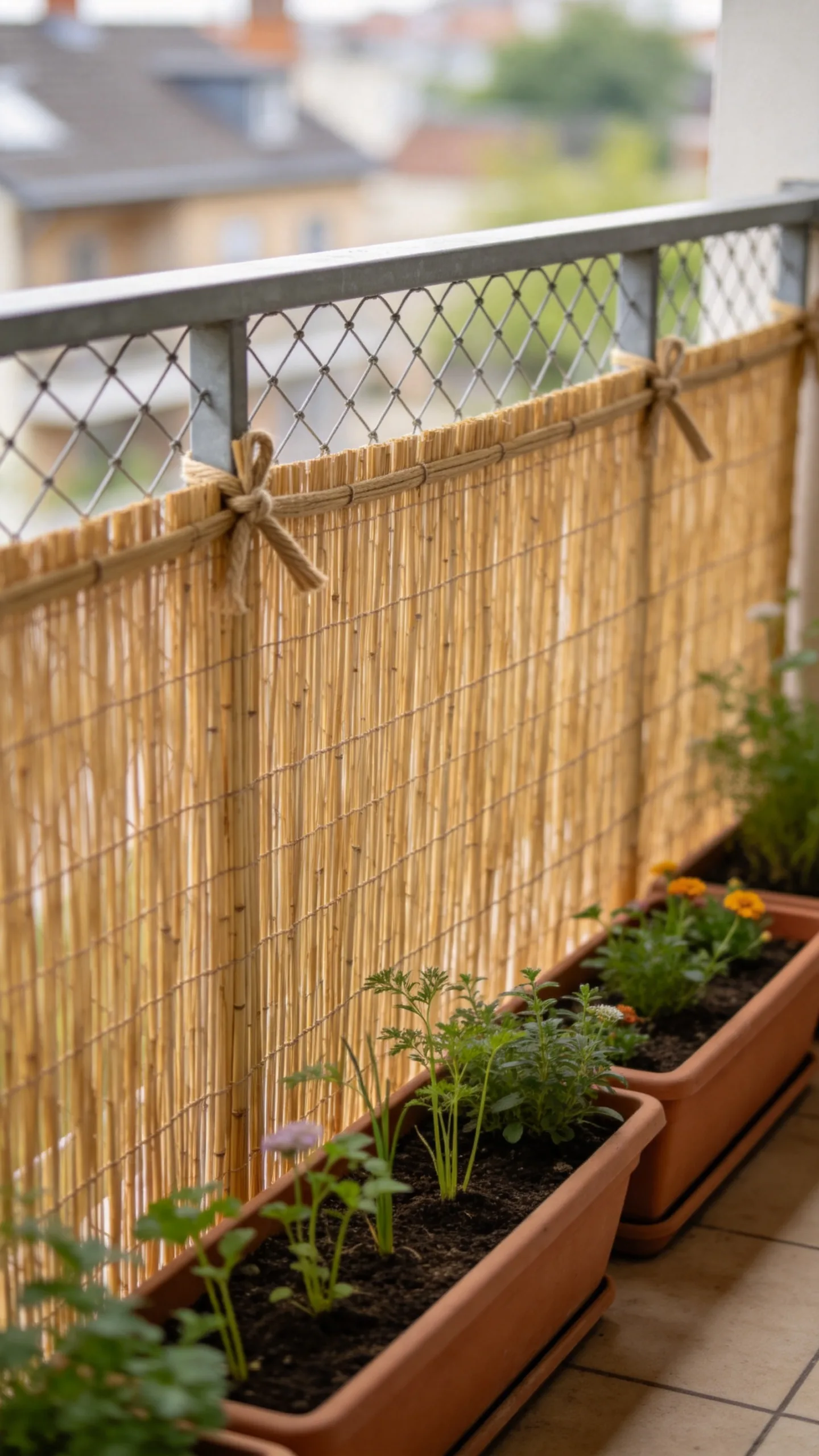
Reed screening is lighter and usually less expensive than bamboo, making it useful for short-term privacy or seasonal garden updates. It can soften chain-link fencing, balcony railings, or wire mesh around a vegetable plot without creating a heavy visual wall.
This material is best for areas where partial screening is enough. Reed rolls tend to be thinner, so they blur the view rather than fully block it. Use them behind potted herbs, trough planters, or a narrow flower border to add texture while young plants grow in.
For longer life, attach reed screening to a stronger fence rather than using it as a freestanding structure. It can fray in rough weather, so keep it for sheltered patios, small urban gardens, or spaces where you can replace sections easily.
4. Willow Hurdle Panels for Rustic Garden Privacy
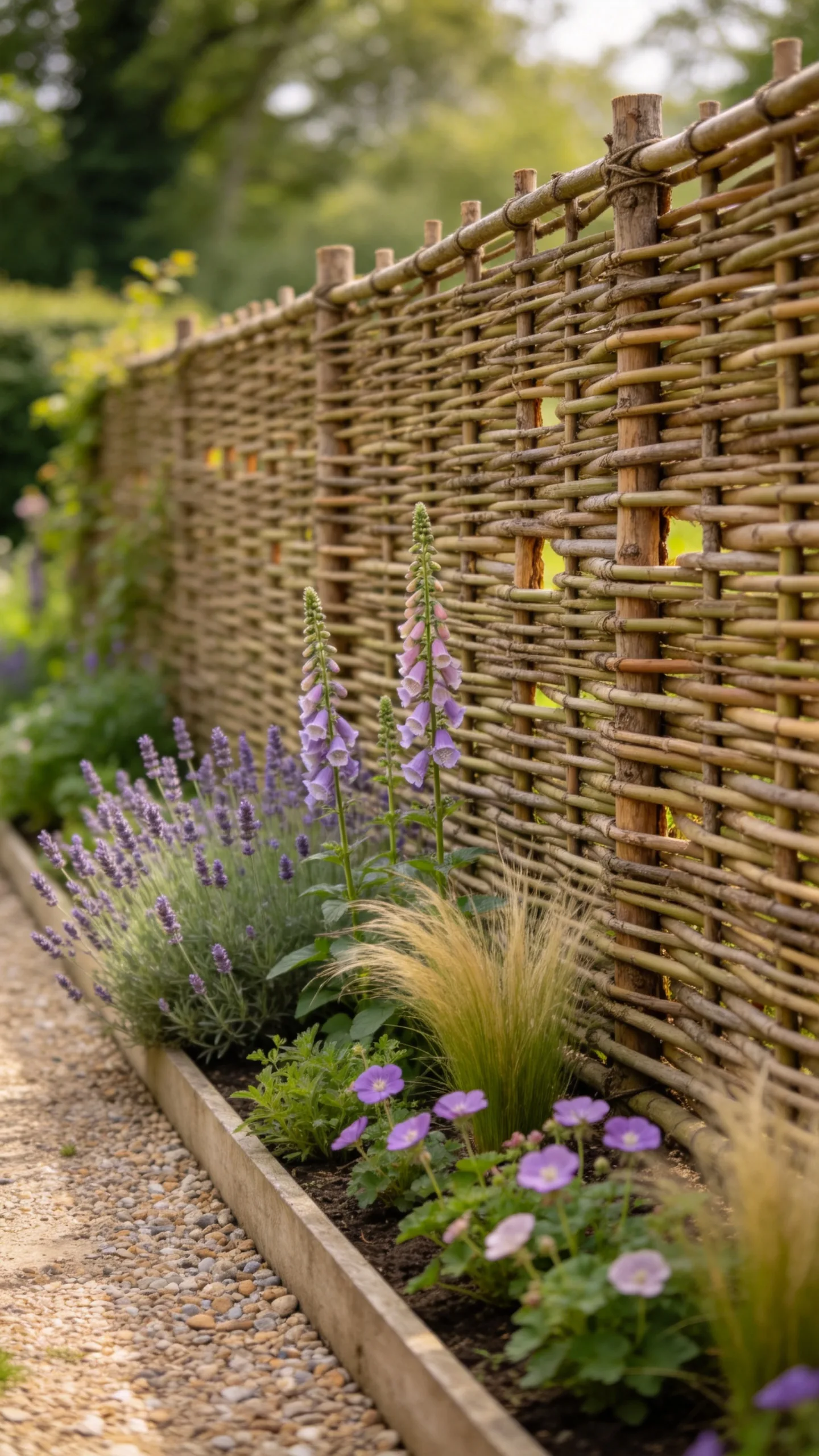
Willow hurdle panels bring a cottage-garden look to fence screening. The woven stems create a textured surface that looks natural beside raised beds, gravel paths, herb gardens, and informal planting schemes.
Unlike thin reed rolls, willow panels are usually more rigid, so they can be fixed between posts or attached in front of an existing fence. They are useful where you want a screen that feels handcrafted rather than modern. Place them behind lavender, catmint, foxgloves, hardy geraniums, or ornamental grasses for a soft layered effect.
Willow suits partial privacy rather than a completely sealed boundary because small gaps are part of its woven texture. In damp climates, keep panels clear of wet soil and inspect the base each year for wear.
5. Hazel Hurdles for a Stronger Natural Screen
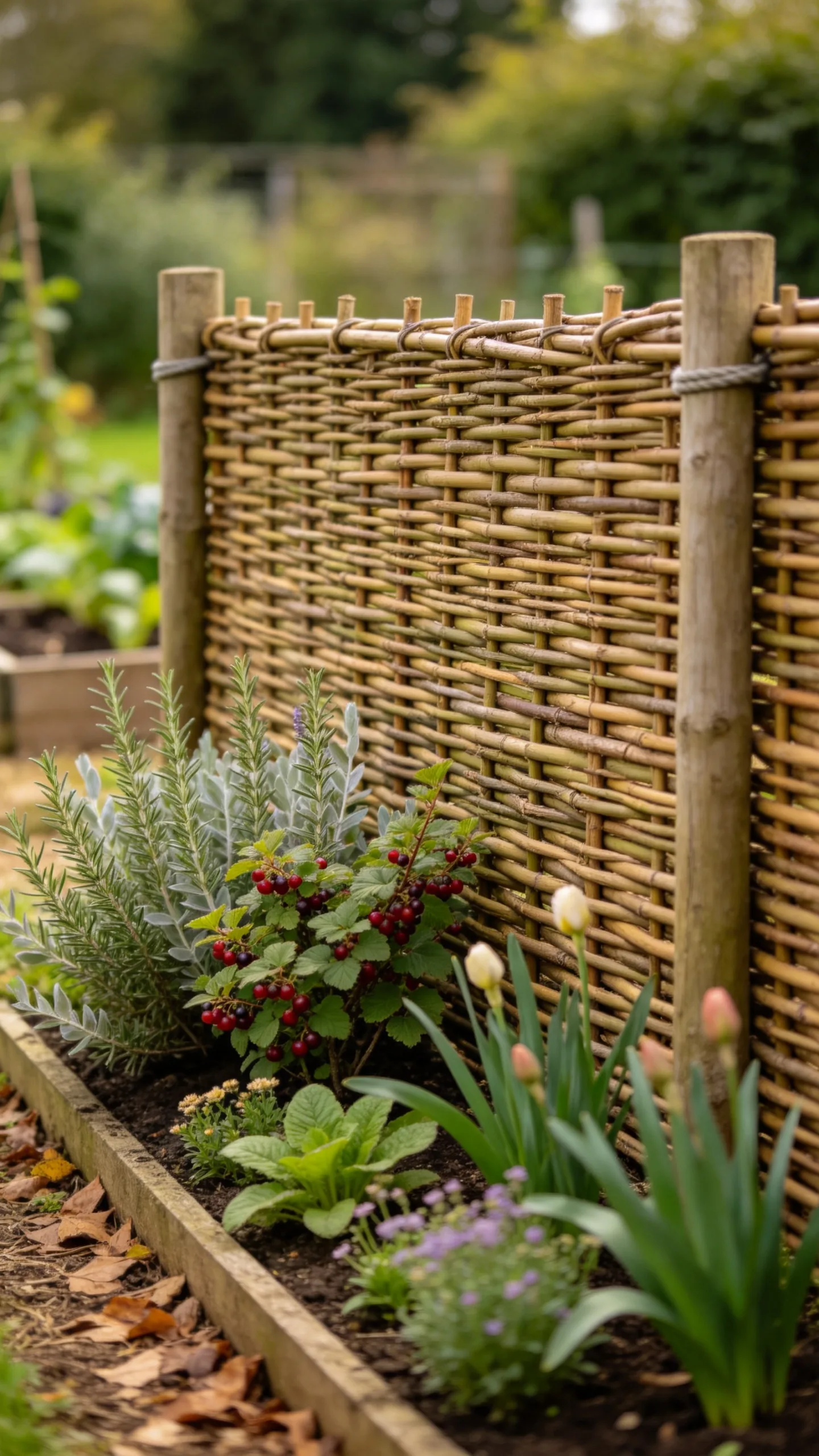
Hazel hurdles offer a thicker, sturdier version of woven fence screening. Their rustic texture works well in country gardens, wildlife-friendly spaces, and vegetable gardens where natural materials look more appropriate than plastic or metal.
Use hazel panels to divide a compost area, screen a tool storage corner, or create privacy around a bench. They pair well with edible planting such as currants, gooseberries, rosemary, sage, and espalier fruit trees. The woven pattern also creates a good backdrop for spring bulbs and low perennials.
Because hazel panels are heavier than reed or bamboo rolls, they need secure posts or a strong existing fence. In narrow gardens, set the panels slightly behind a slim planting strip so climbers or tall perennials can soften the surface without stealing too much walkway space.
6. Lattice Trellis Panels for Light-Filtering Screening
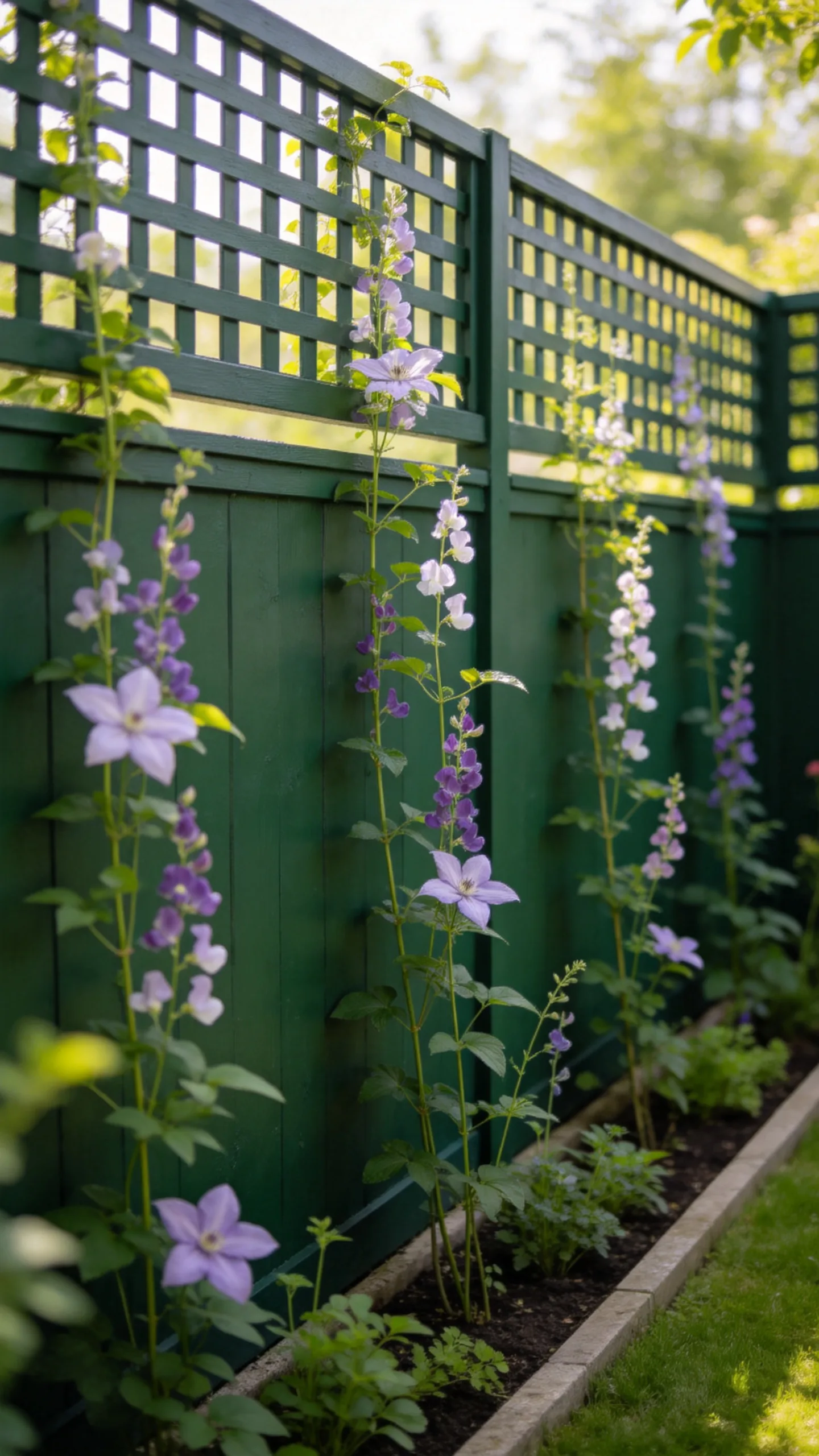
Lattice trellis panels are a practical choice when you want privacy without blocking all light. The open grid reduces the exposed feeling of a fence while still allowing air and sunlight through, which is helpful in small gardens where a solid screen might feel too dark.
Install lattice panels on top of an existing fence to raise the screening height, or mount them in front of plain boards to add pattern. They work well with lightweight climbers such as clematis, sweet peas, jasmine in mild areas, or annual black-eyed Susan vine in containers.
For a neat finish, match the trellis color to the fence or paint it in a dark green, charcoal, or soft black so foliage becomes the focus. Use sturdy posts if the trellis will carry mature climbers, because wet leaves and stems can add more weight than expected.
7. Horizontal Slatted Screens for a Modern Fence Upgrade
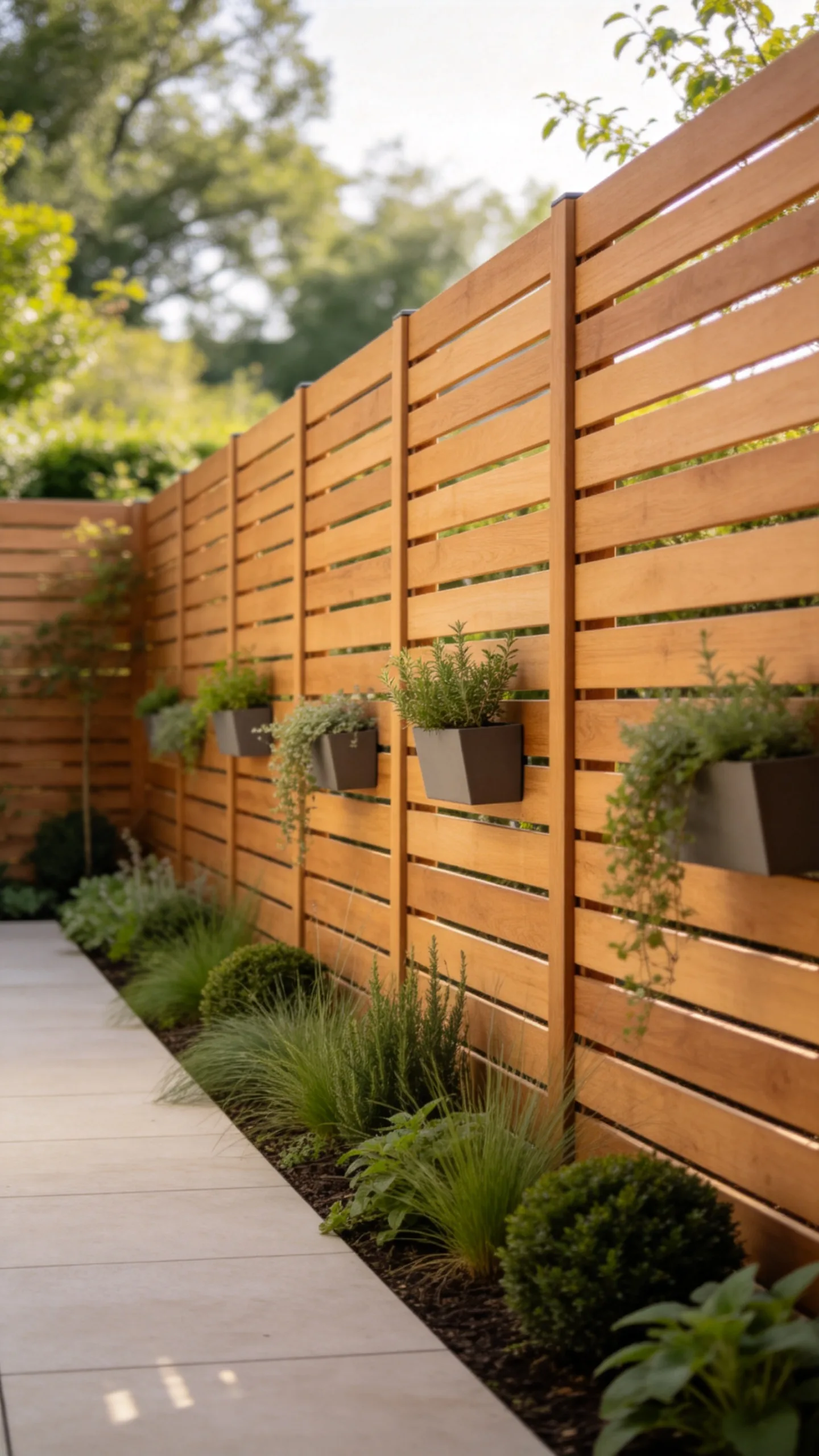
Horizontal slatted screening gives a clean, contemporary look and can make a narrow garden feel wider. The long lines draw the eye across the space, which is useful along patios, side returns, and small rectangular backyards.
The spacing between slats controls how private the screen feels. Narrow gaps provide stronger screening, while wider gaps allow more airflow and light. Cedar, larch, pressure-treated timber, and composite boards are common choices, each with different maintenance needs.
To soften a modern slatted fence, add a slim border with evergreen grasses, dwarf shrubs, or clipped herbs. In a small space, wall-mounted planters or narrow troughs can bring greenery to the base without reducing the usable patio area.
8. Vertical Timber Battens for Height and Rhythm
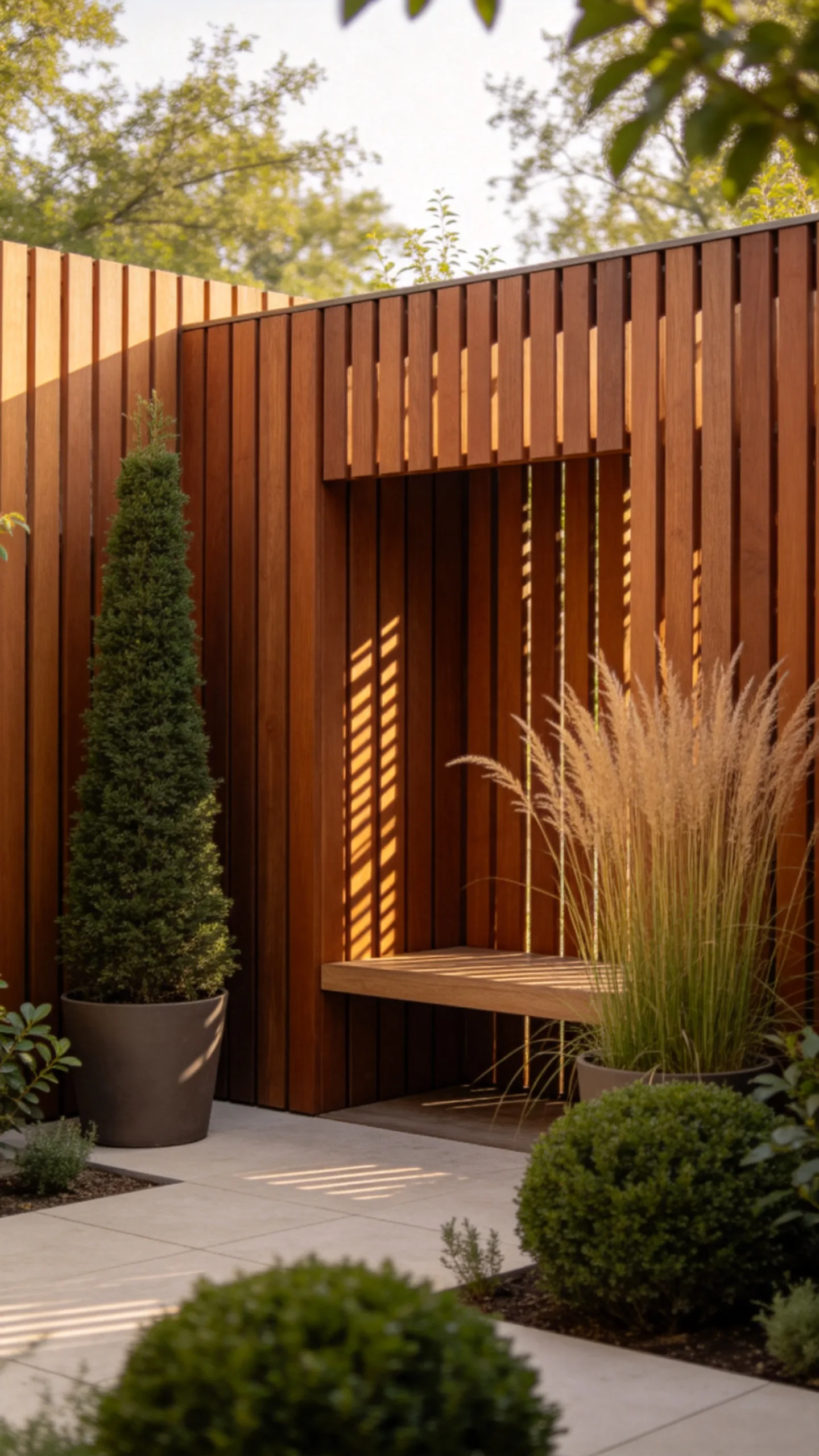
Vertical timber battens are useful when you want screening that feels taller and more architectural. The upright lines can make a low fence appear higher, especially when the battens are stained in a consistent color and repeated along the boundary.
This idea works well for screening bins, hot tubs, outdoor showers, or seating areas where you need targeted privacy. Battens can be installed with small gaps for filtered light or set closer together where the view from neighboring windows is more direct.
Plant upright shapes nearby to echo the screen. Columnar evergreens in containers, tall ornamental grasses, rosemary standards, or clipped bay trees can reinforce the vertical rhythm while adding seasonal texture.
9. Metal Trellis Panels for Durable Climbing Plant Support
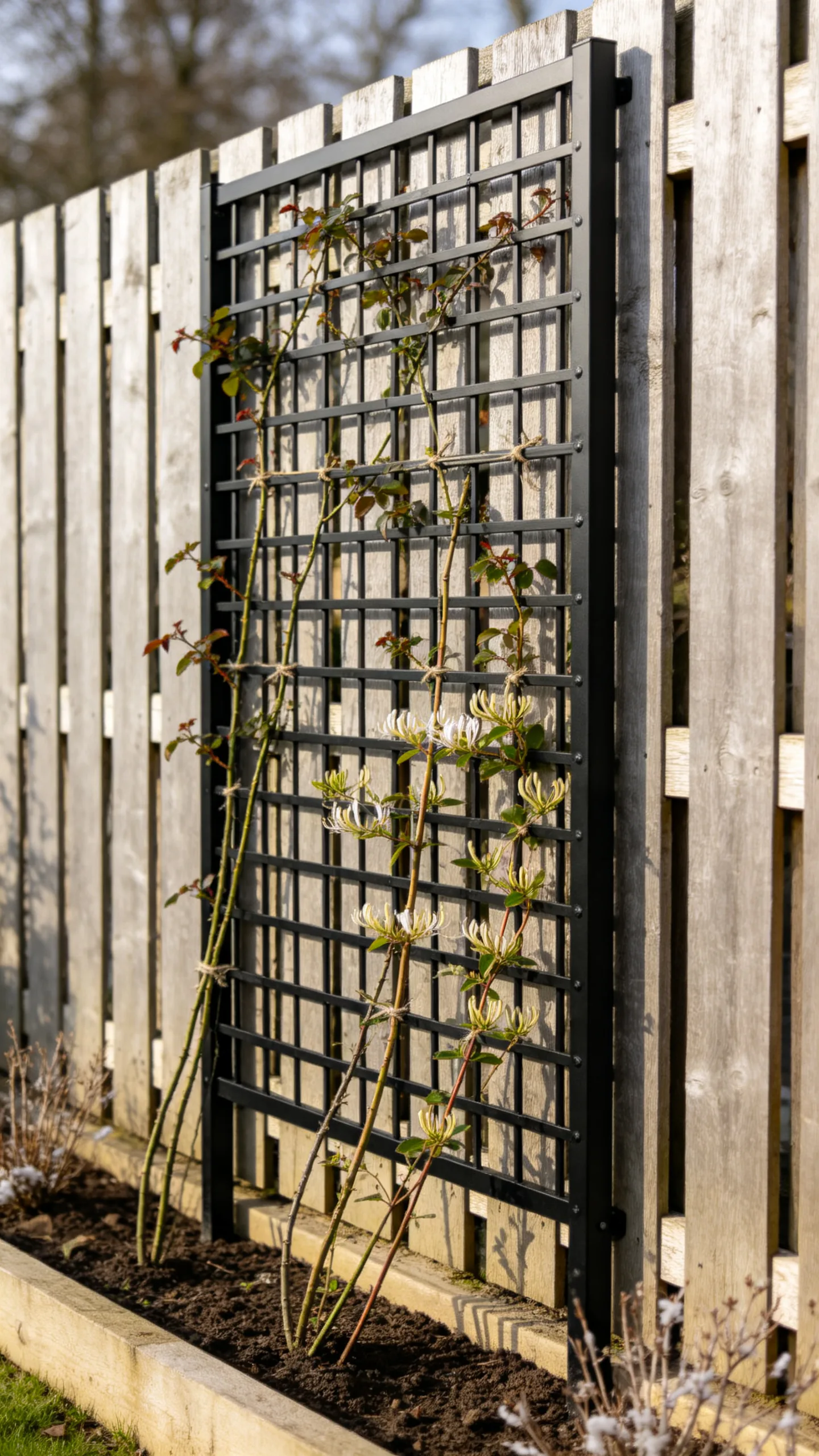
Metal trellis panels are strong, slim, and long-lasting, making them suitable for climbers that become heavy over time. They are especially useful on narrow fences because they take up very little depth compared with bulky timber frames.
Use powder-coated steel or galvanized mesh panels for roses, clematis, honeysuckle, or grapevines, depending on your climate and sunlight. Fix the panels slightly away from the fence with spacers so air can move behind the plants and stems have room to twine or be tied in.
Metal trellis works well in contemporary gardens when painted black or dark bronze. The frame almost disappears behind foliage, and in winter the clean lines still provide structure after deciduous climbers lose their leaves.
10. Wire Mesh Panels for Low-Cost Green Screening
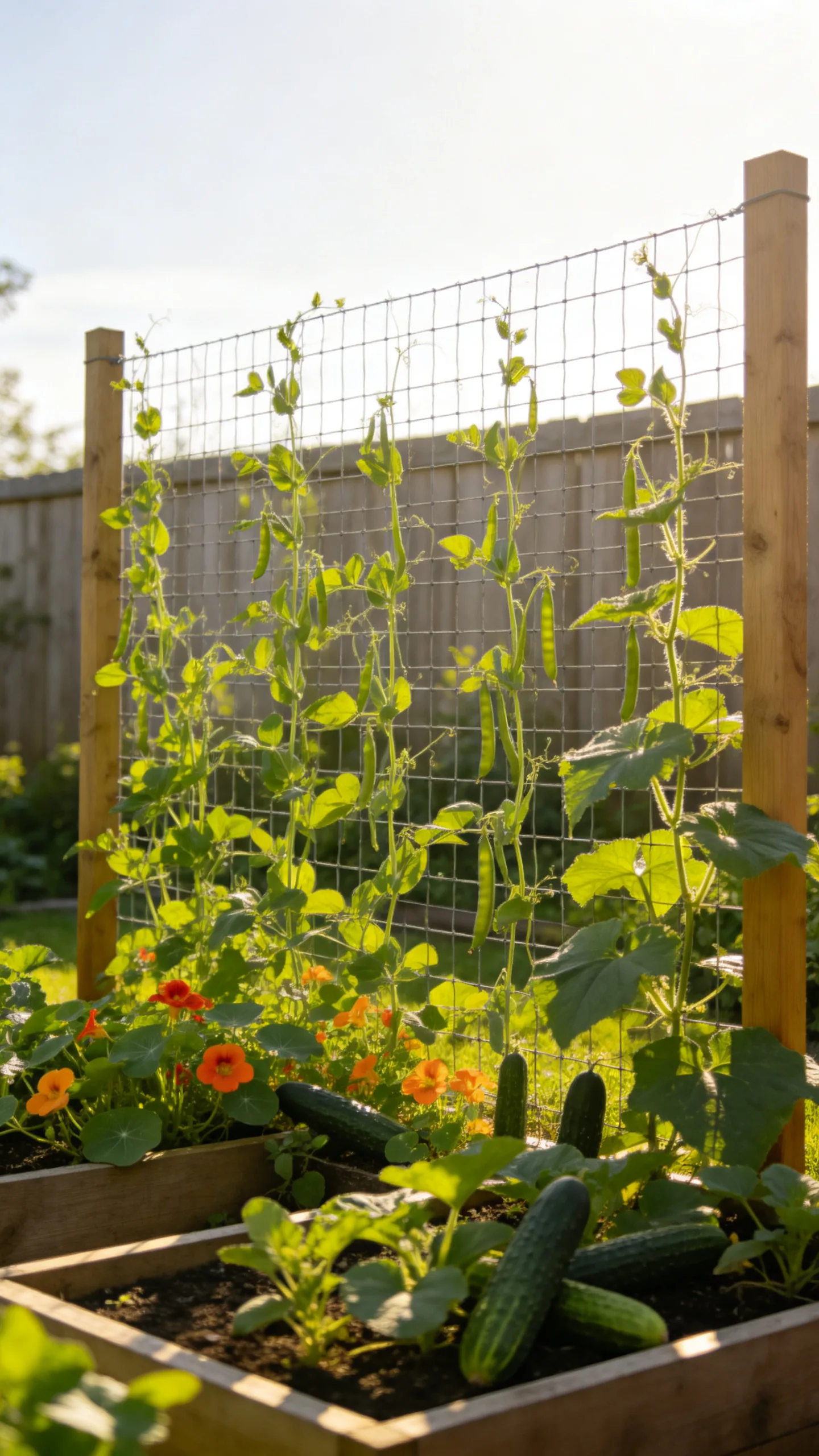
Wire mesh is a simple, affordable way to turn a fence into a living screen. It can be stretched between posts, fixed to a timber fence, or framed inside panels to support climbing plants without adding bulky materials.
This option is especially useful for edible gardens. Train peas, beans, cucumbers, nasturtiums, or espalier fruit against mesh in sunny spots. For ornamental screening, try annual climbers such as morning glory or cup-and-saucer vine where the growing season is warm enough.
Choose mesh size based on the plant. Fine mesh suits tendrils, while larger grid panels are easier for tying in rose canes or grape stems. Keep the mesh taut so it does not pull forward as plants grow heavier during the season.
11. Evergreen Climbing Star Jasmine for Year-Round Coverage
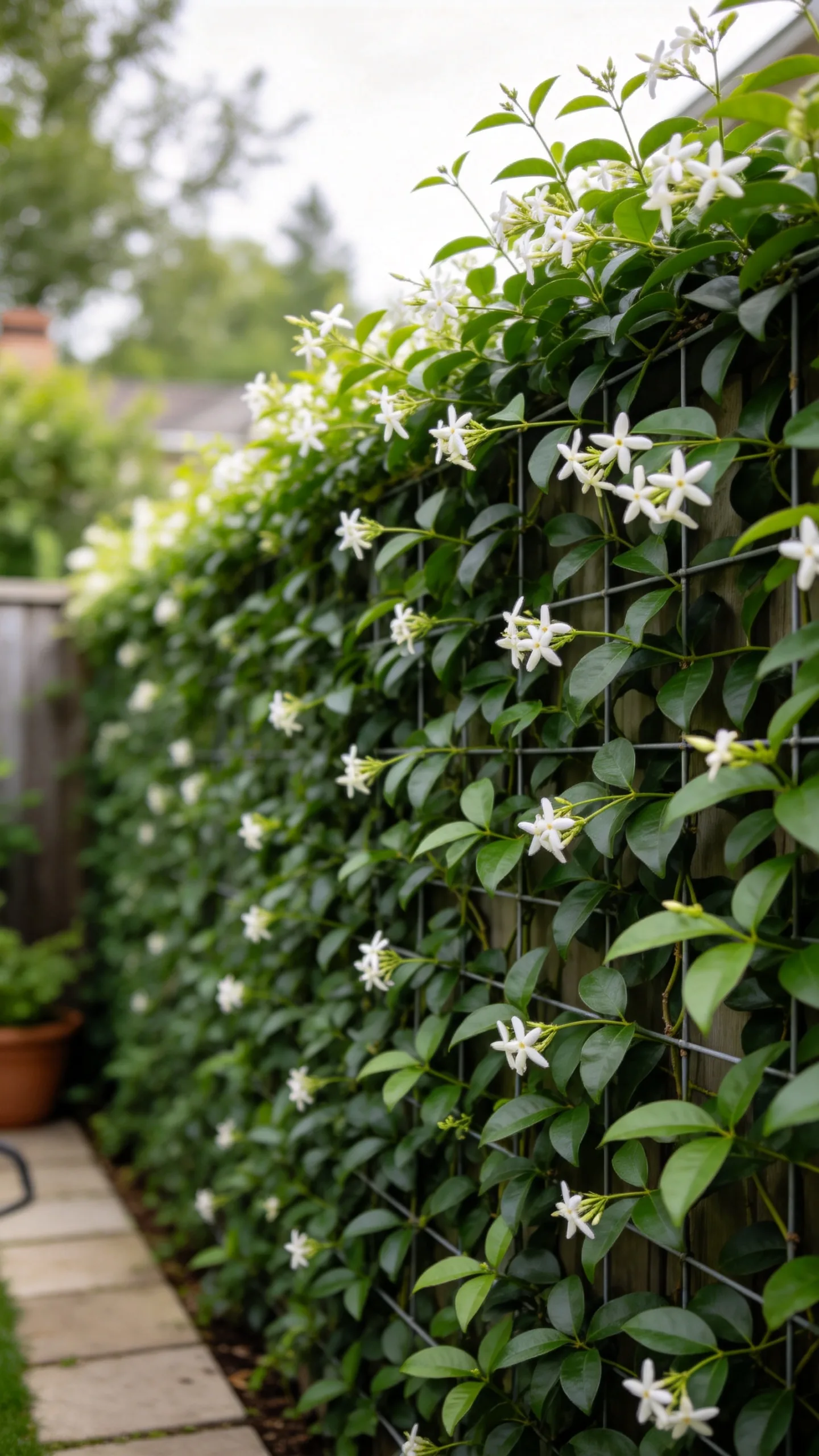
Star jasmine is a popular evergreen climber for fence screening in suitable mild climates. It offers glossy leaves, fragrant white flowers, and dense growth when planted in a sunny or lightly shaded position with well-drained soil.
Train young stems across wires or trellis panels rather than letting them bunch at the top of the fence. This creates more even coverage and helps screen eye-level views from patios, windows, or neighboring paths. Regular light trimming after flowering keeps the plant from becoming too bulky.
In colder regions, star jasmine may need a sheltered wall or may not remain reliably evergreen. If winter hardiness is uncertain, grow it in a large container near a protected fence and be prepared to use a hardier climber instead.
12. Clematis on Trellis for Seasonal Flower Screening
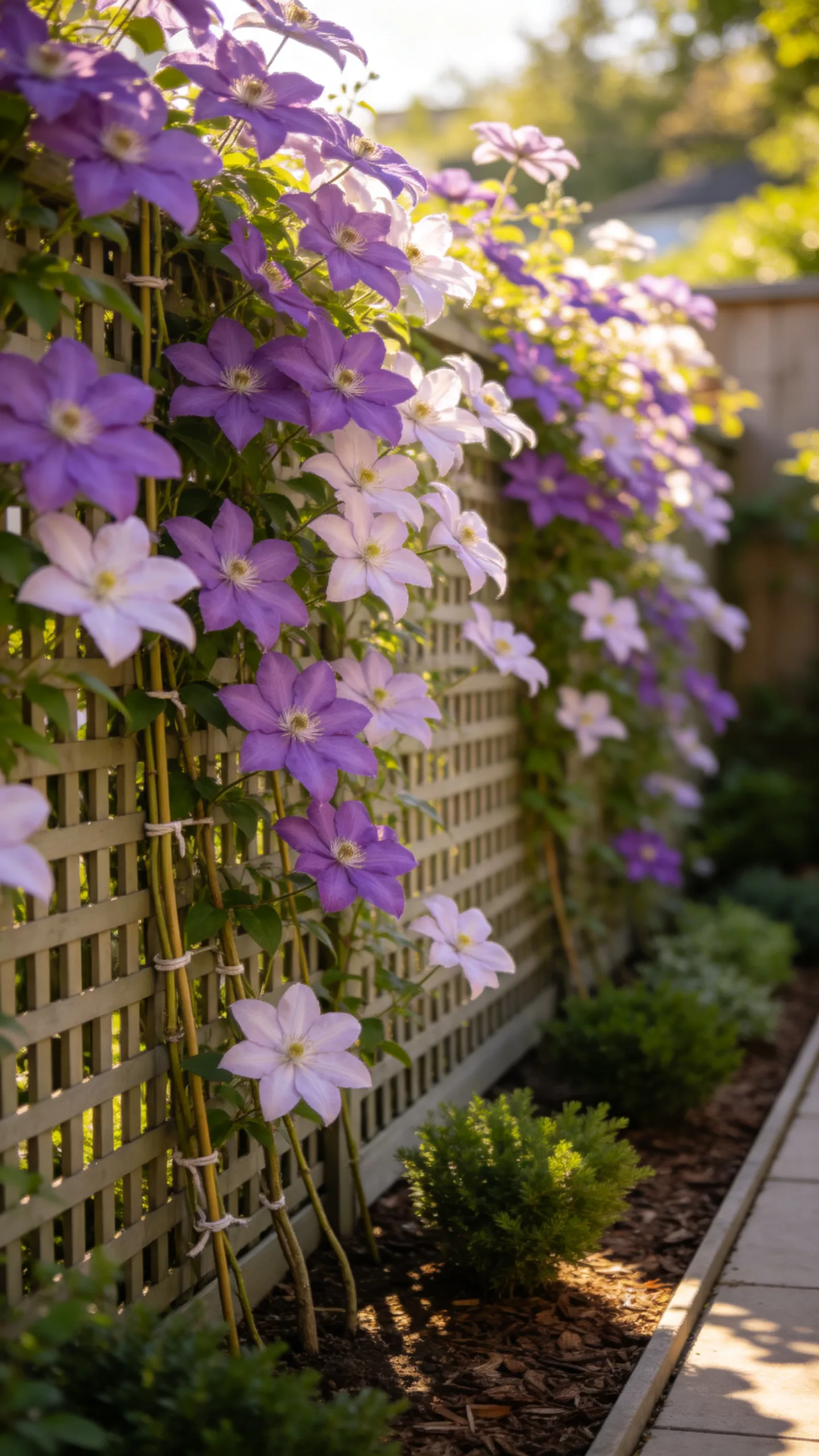
Clematis is ideal when you want a fence screen that adds flowers without taking up much ground space. Many varieties grow vertically on trellis, wires, or mesh, making them useful for small gardens, courtyard fences, and narrow borders.
Choose the clematis type based on your space and maintenance preference. Compact varieties suit containers and small trellis panels, while vigorous types need stronger support and more room. Plant the roots in cool, moist soil and guide the stems upward with soft ties as they establish.
For a longer season of interest, combine clematis with an evergreen shrub at the base or pair two pruning groups only if you are comfortable managing their different trimming needs. This prevents the fence from looking bare outside the flowering period.
13. Climbing Roses for Romantic Fence Screening
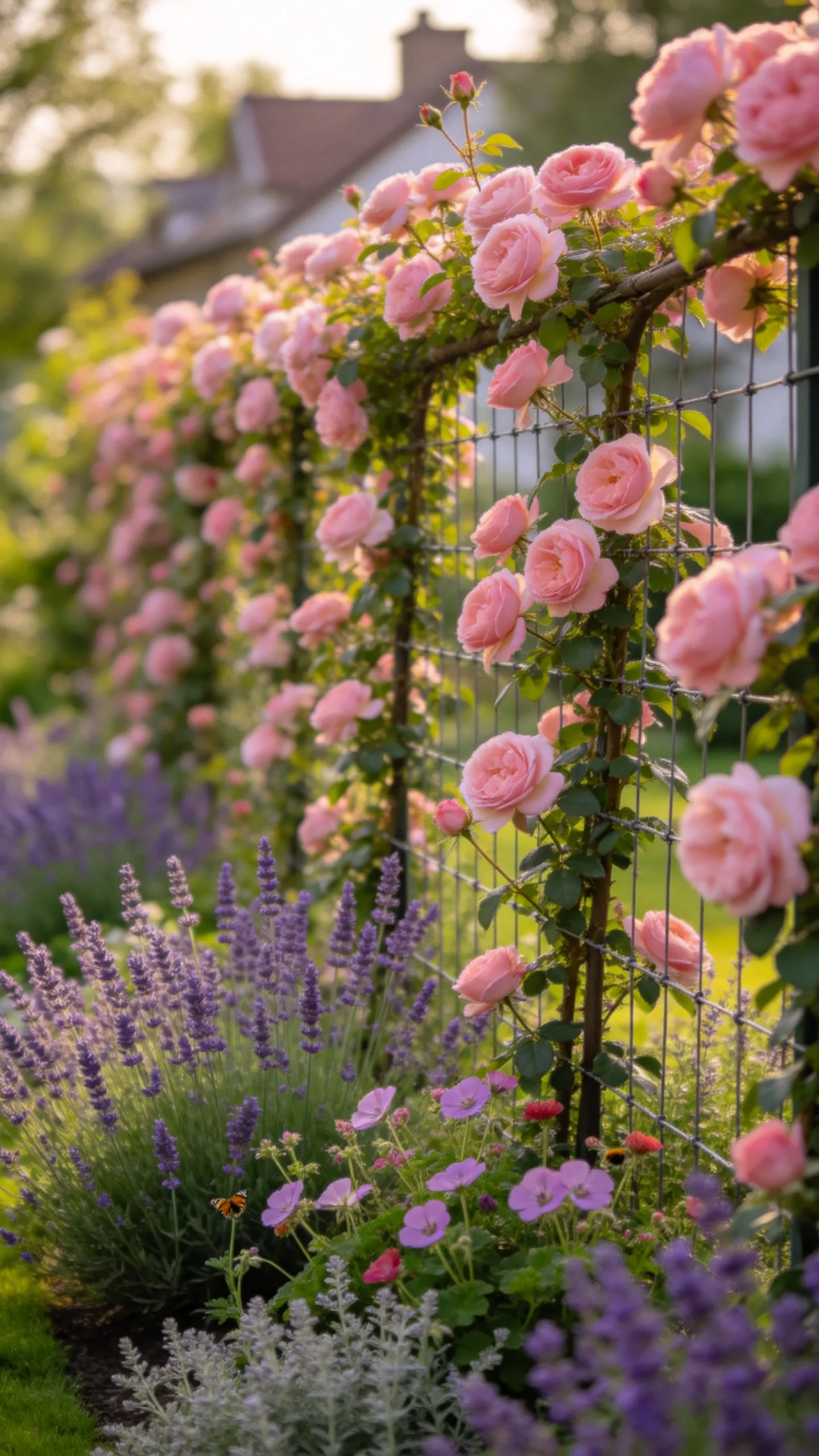
Climbing roses can turn a plain fence into a flowering screen with strong structure and seasonal color. They work best on sturdy trellis, horizontal wires, or metal supports fixed securely to fence posts.
To encourage more blooms along the fence, train the main canes as horizontally as possible rather than letting them shoot straight upward. This method covers more surface area and helps reduce bare lower sections. Choose disease-resistant varieties suited to your climate and sun exposure, as roses generally need good light and air movement.
Underplant with lavender, hardy geraniums, salvia, or nepeta to hide the rose base and attract pollinators. Keep enough space between the rose and seating areas if the variety has thorns, especially along narrow paths.
14. Honeysuckle for Fragrant Boundary Screening
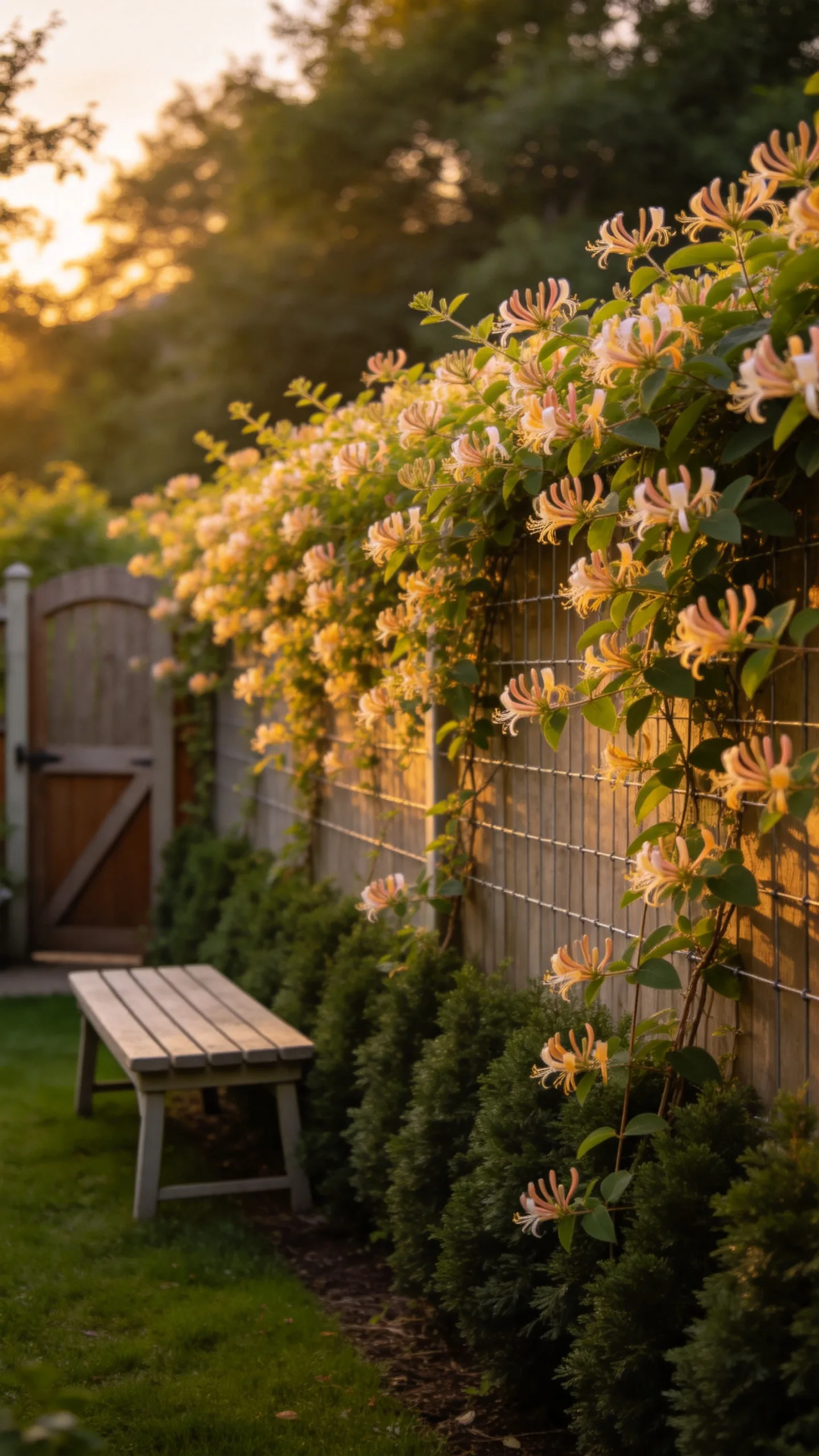
Honeysuckle is a useful climber for softening fences and adding fragrance near seating areas, gates, and evening patios. Many varieties grow quickly once established and can be trained over trellis, wires, or pergola-style fence extensions.
It prefers support from the start, so install a trellis or tensioned wire system before planting. Guide the stems outward to cover the fence evenly, then prune after flowering or according to the variety to keep it from tangling into a heavy mass.
Honeysuckle can be semi-evergreen or deciduous depending on the type and climate, so check the label if winter screening matters. For stronger year-round privacy, combine it with evergreen shrubs or a woven screen behind the plant.
15. Espalier Fruit Trees Along a Sunny Fence
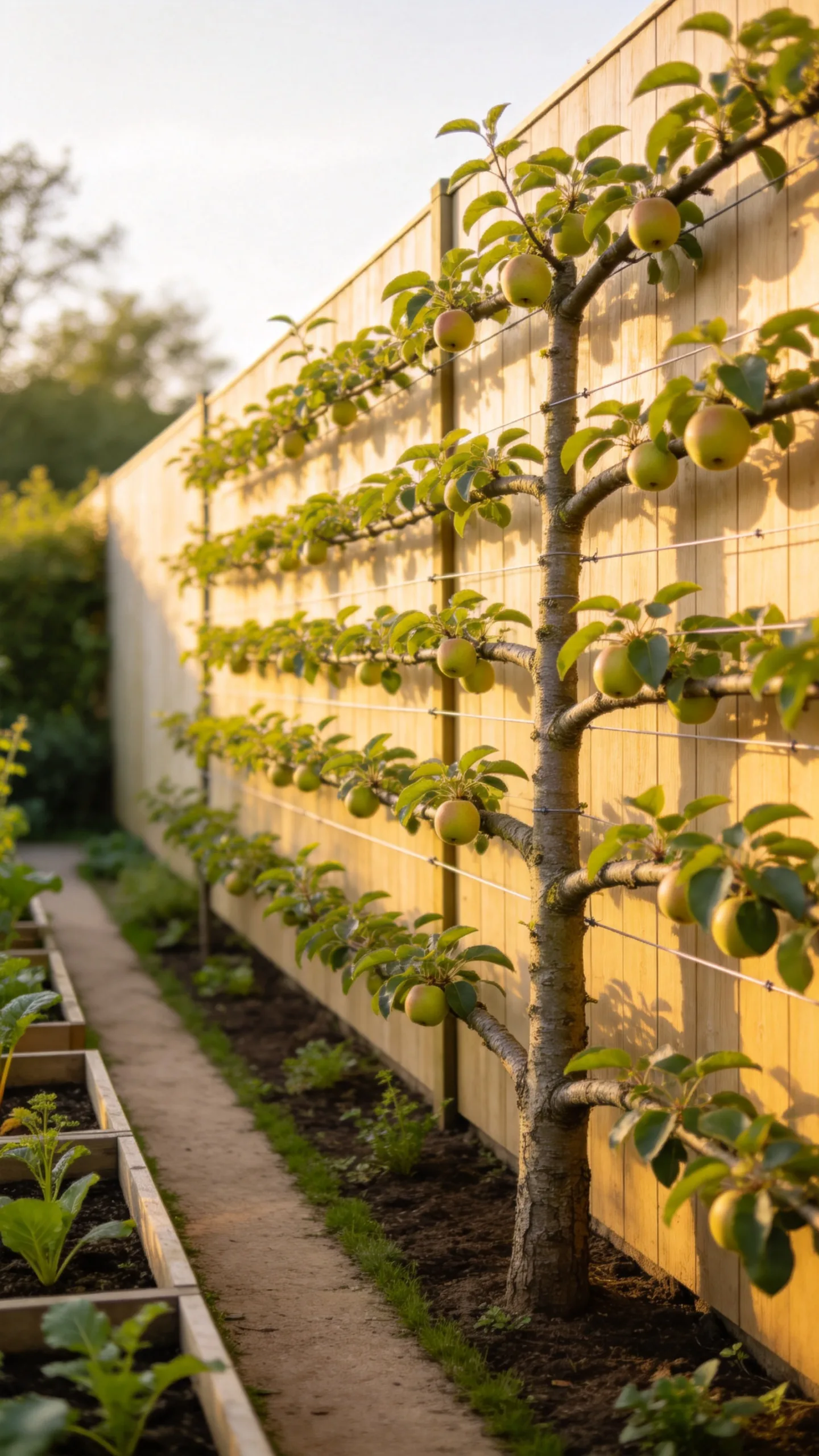
Espalier fruit trees provide screening, structure, and edible harvests in a very shallow footprint. Apples, pears, figs, peaches, and citrus in warm regions can be trained flat against wires fixed to a fence or wall.
This is a strong choice for small gardens because the tree grows sideways instead of taking up lawn or patio space. A sunny, sheltered fence is usually best, especially for fruit that needs warmth to ripen. Install horizontal wires before planting and tie young branches gently as they develop.
Espalier requires regular pruning to maintain the flat shape, so it suits gardeners who enjoy seasonal maintenance. Use it where you want a formal look, such as along a path, beside raised vegetable beds, or behind a narrow dining terrace.
16. Tall Grasses in a Narrow Border for Moving Privacy
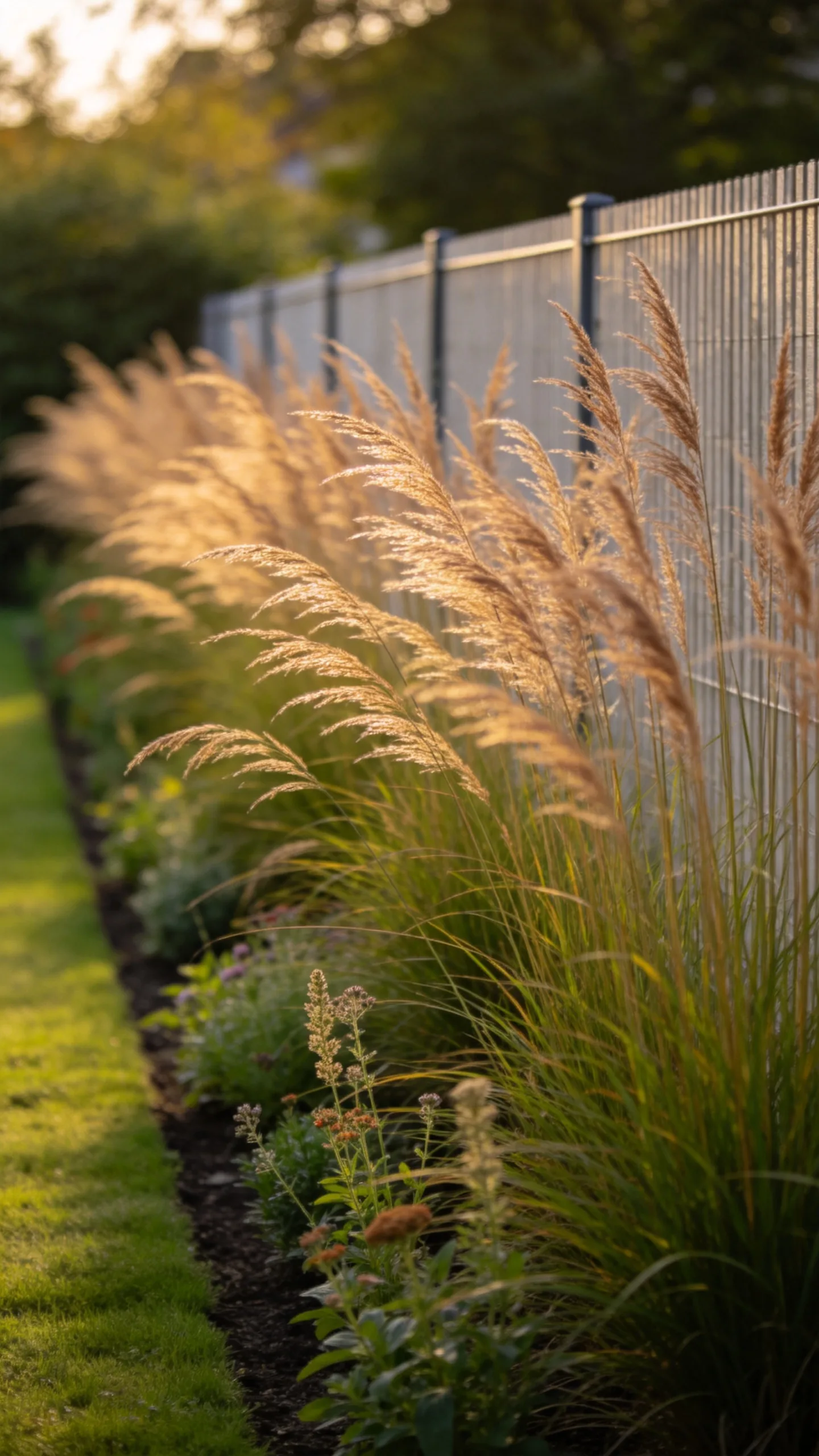
Tall ornamental grasses can create a soft, moving screen in front of a fence. They are especially useful when you want to break up a hard boundary without installing panels or heavy structures.
Choose clump-forming grasses rather than invasive spreaders. Miscanthus, calamagrostis, panicum, and pennisetum varieties can work depending on your climate and available space. Plant them in a narrow repeated row for a simple modern look, or mix them with perennials for a looser meadow effect.
Grasses are best for seasonal screening because many are cut back in late winter or early spring. If you need year-round privacy, place them in front of an evergreen hedge, slatted screen, or trellis with evergreen climbers.
17. Container Bamboo for Flexible Patio Screening
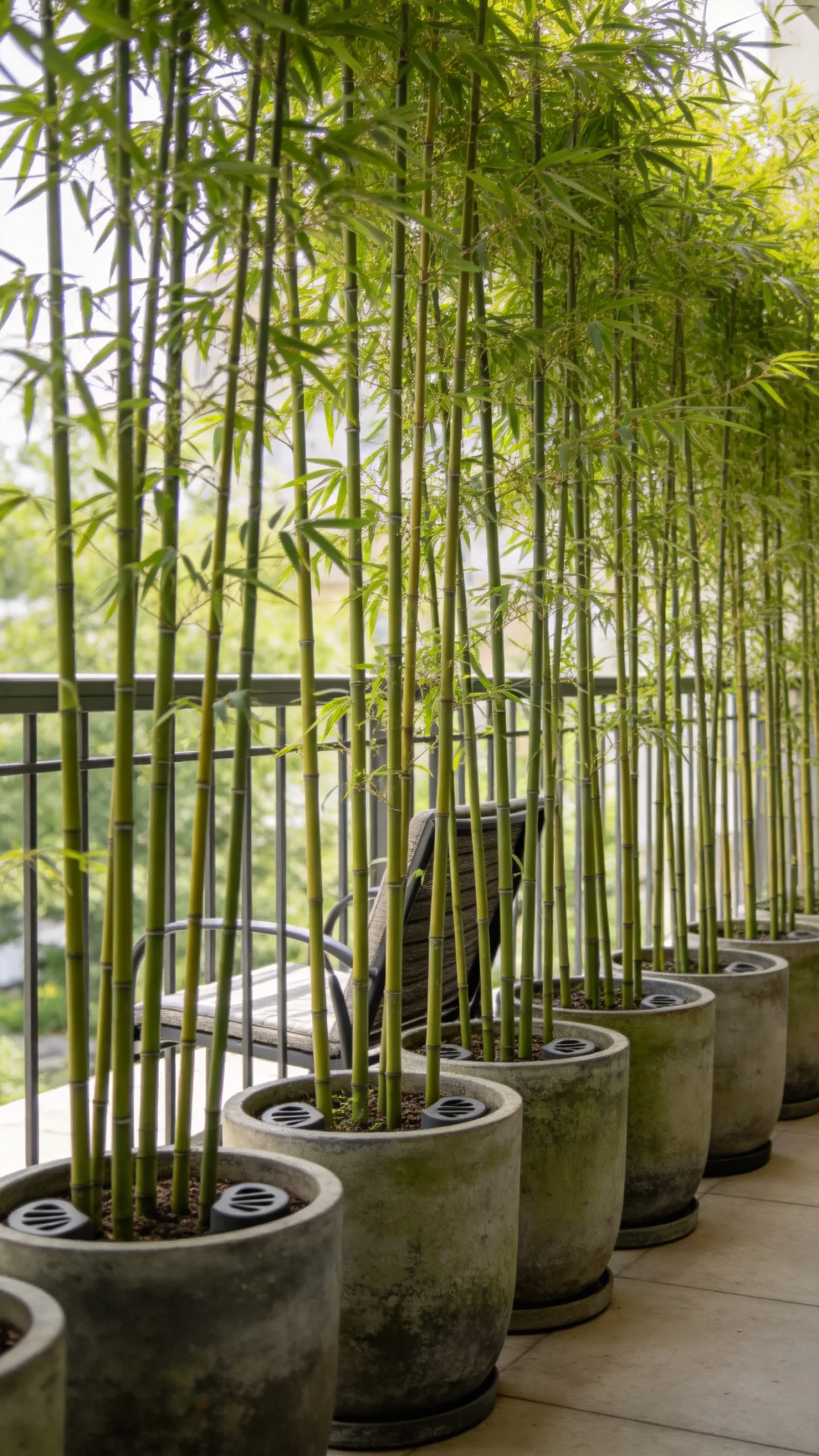
Container bamboo offers height and movement without planting directly into the ground. It works well on patios, decks, balconies, and rented gardens where you need movable screening along a fence or railing.
Use large, heavy containers with drainage holes because bamboo needs room for roots and can become top-heavy in wind. Clumping bamboo is usually easier to manage than running bamboo, especially in small spaces. Place pots in a row to screen a seating area, dining table, or overlooked window.
Container bamboo needs regular watering in warm weather because pots dry out faster than garden soil. Feed during the growing season and thin older canes when needed to keep the screen fresh and upright.
18. Layered Fence Screening With Shrubs, Trellis, and Climbers
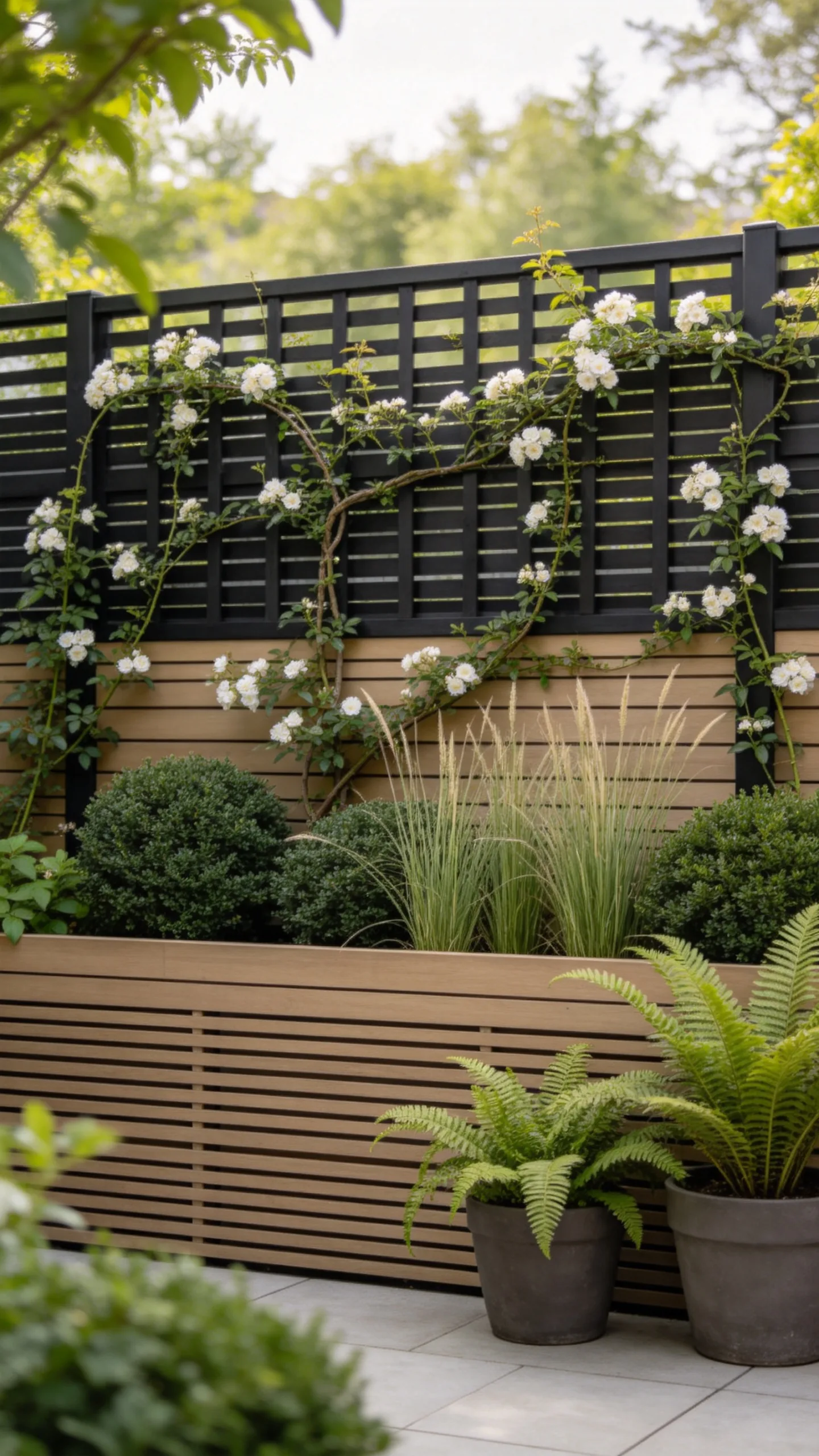
Layered screening combines several materials so the fence looks deeper and more natural. This approach works well when one single screen would feel too flat or when you need privacy at different heights.
Start with a base layer such as a timber fence, bamboo roll, or slatted screen. Add trellis or wires for climbing plants, then plant shrubs or containers in front to cover the lower section. Good combinations include evergreen shrubs with clematis, bamboo screening with potted ferns, or horizontal slats with jasmine and ornamental grasses.
Layering is especially useful in small gardens because it creates visual depth without requiring a wide border. Keep the planting simple and repeat a few materials along the fence so the finished screen feels intentional rather than crowded.