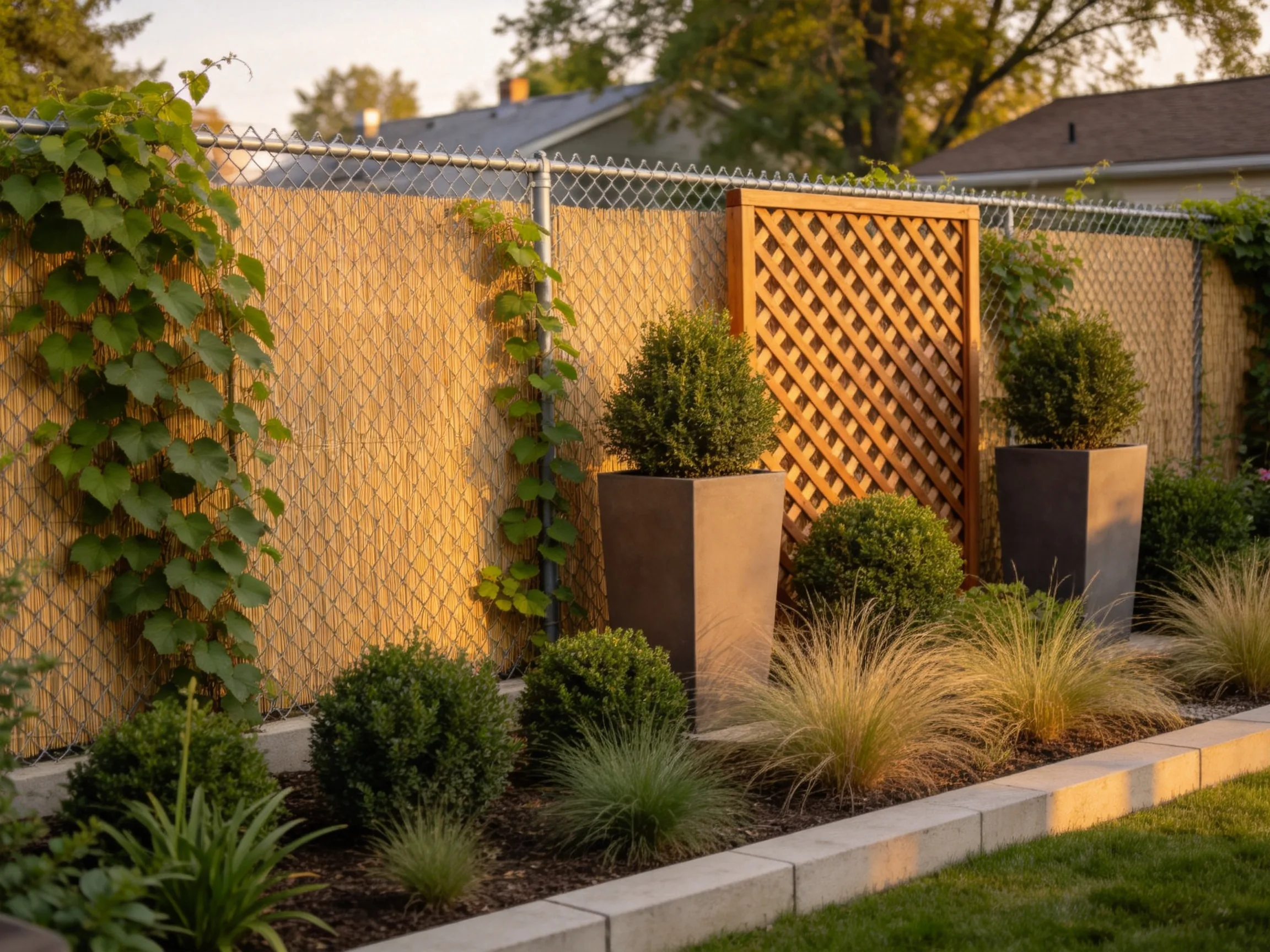
A chain link fence is practical, affordable, and durable, but it rarely gives a yard the finished, private look many homeowners want. The good news is that you do not have to tear it out to make it blend into the garden. With the right mix of climbing plants, screens, panels, containers, and border planting, a chain link fence can become a softer backdrop for patios, side yards, vegetable beds, and small outdoor spaces.
1. Fasten Reed Screening to the Fence
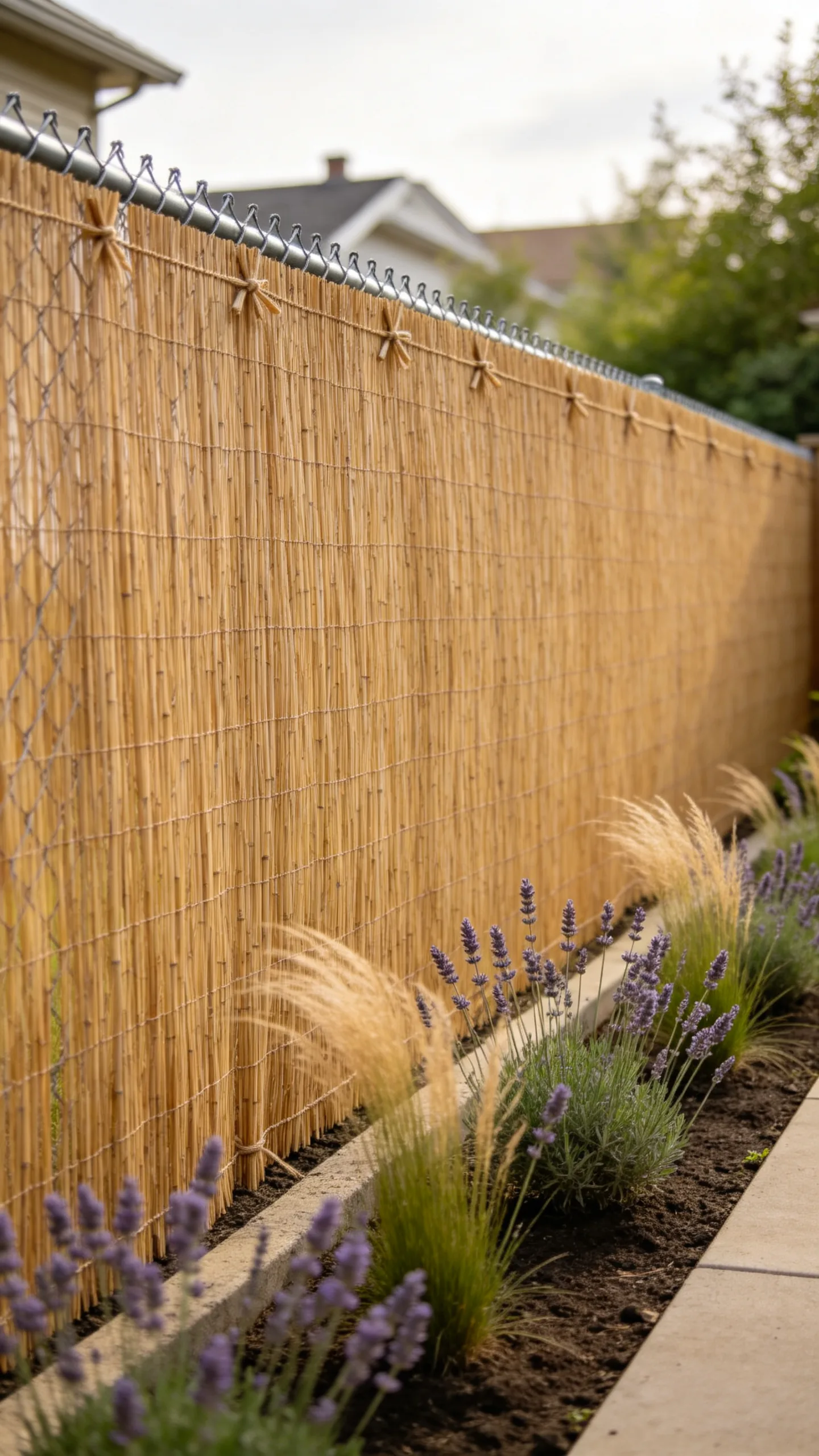
Reed screening is one of the simplest ways to cover chain link fencing without major construction. It usually comes in rolls that can be unrolled along the fence and attached with zip ties, wire, or outdoor-rated cable ties. The thin natural reeds immediately soften the metal grid and create a warmer backdrop for a patio or narrow side yard.
This option works best where you want quick visual coverage rather than a permanent wall. Reed can weather over time, especially in wet or windy climates, so it may need replacing after a few seasons. To make it look more intentional, trim the bottom edge evenly, keep it slightly above damp soil, and pair it with a low border of ornamental grasses, lavender, or compact shrubs in front.
2. Add Bamboo Panels for a Tropical Screen
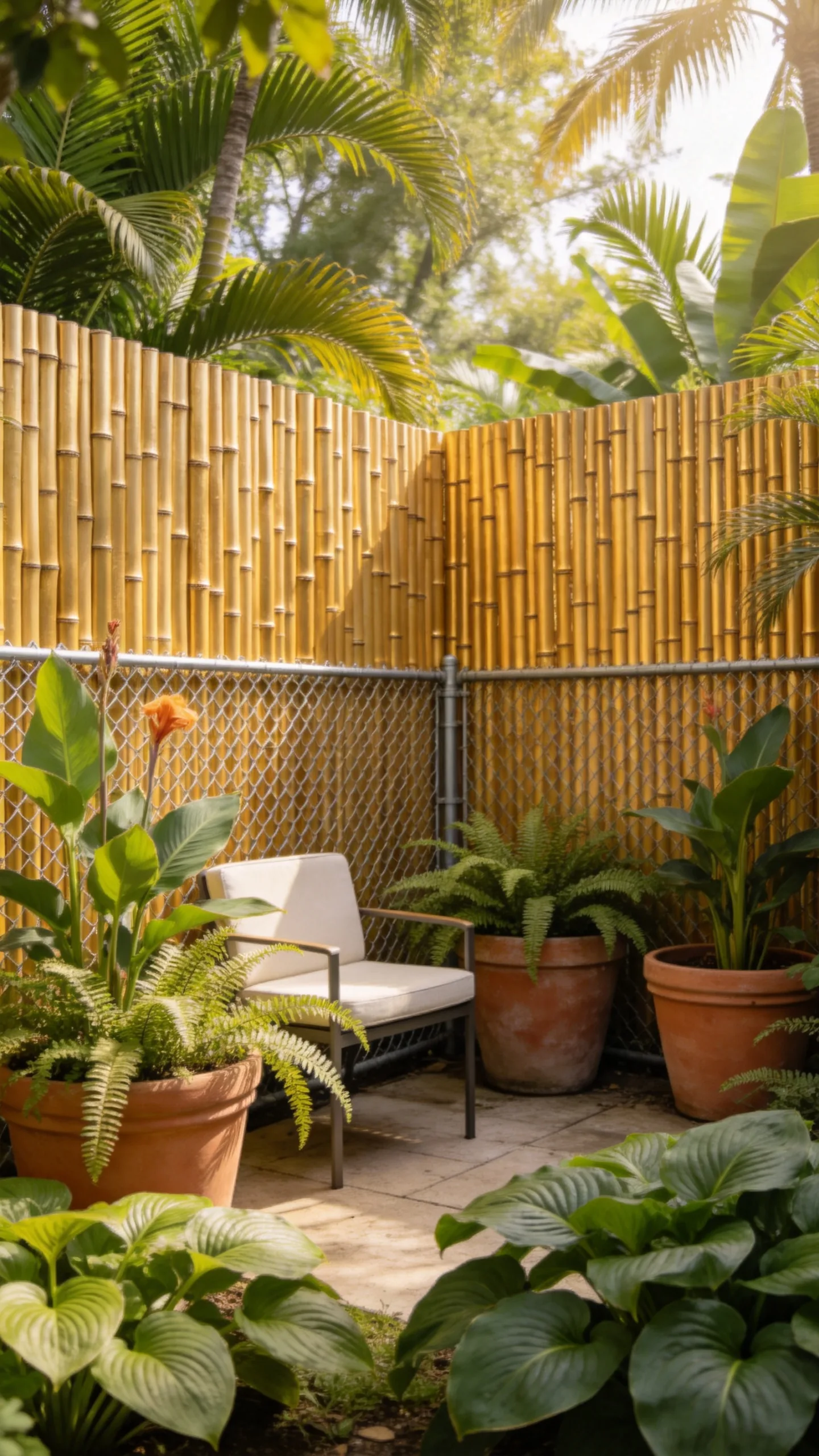
Bamboo panels create a thicker, more structured look than lightweight reed rolls. They can be attached directly to the chain link fence using galvanized wire or heavy-duty zip ties. Full bamboo poles give the fence a resort-style feel, especially around pools, outdoor showers, and seating areas.
For a cleaner installation, measure the fence height before buying panels so the bamboo does not sit awkwardly above the top rail. If your yard gets strong wind, secure the panels at the top, middle, and bottom rather than only at the corners. A row of large planters with elephant ears, canna lilies, ferns, or hostas can complete the lush effect in warm or partially shaded spots.
3. Train Evergreen Vines on the Fence
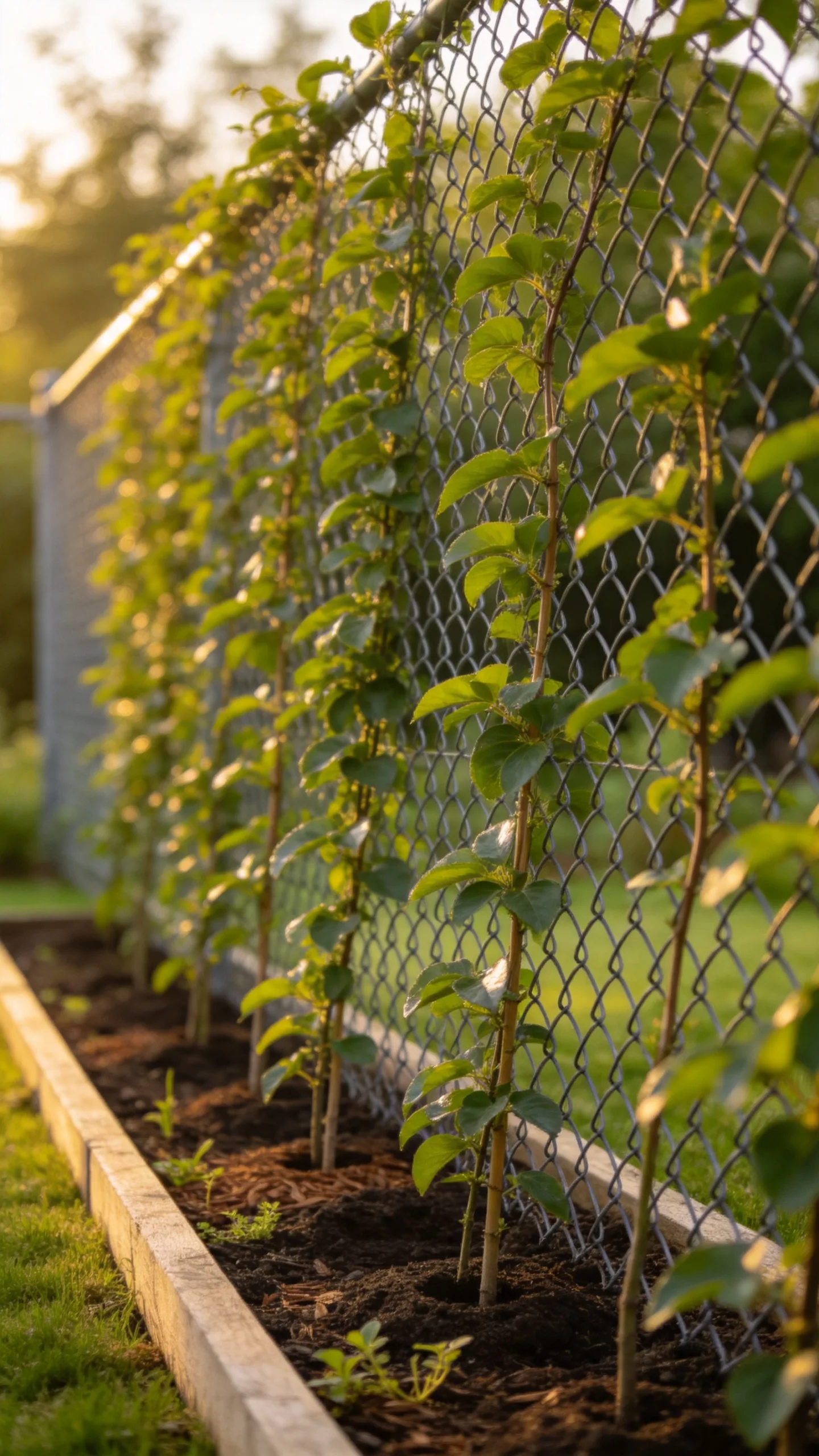
Evergreen vines can turn a chain link fence into a living privacy screen that stays attractive through more than one season. Options vary by climate, but star jasmine, evergreen clematis, Carolina jessamine, and some types of honeysuckle can provide foliage and seasonal flowers where they are hardy.
Before planting, check whether the vine is suitable for your region and whether it is known to spread aggressively. Plant vines about 12 to 18 inches away from the fence so the roots have room, then guide young stems through the chain link as they grow. Add mulch around the base to conserve moisture, and prune regularly so the vine does not become too heavy or tangled.
4. Use Privacy Slats Through the Chain Link
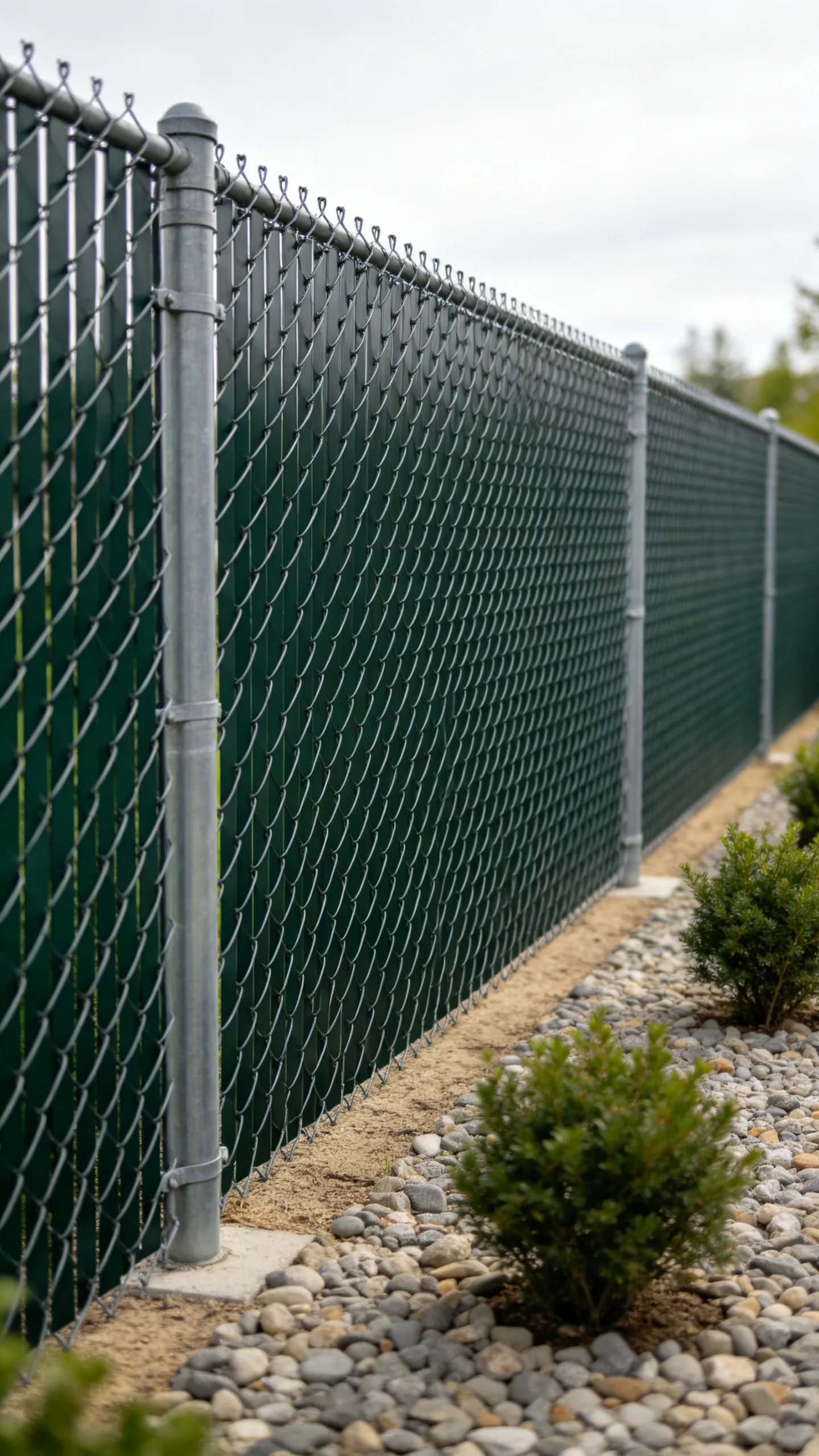
Privacy slats are made specifically for chain link fencing and slide vertically, diagonally, or horizontally through the mesh. They are a practical choice if you want a tidier look but still want to keep the existing fence structure. Slats come in many colors, including green, black, brown, gray, and white, so you can match them to your house trim, gate hardware, or garden style.
This is a low-maintenance option for areas where plants struggle, such as dry side yards, gravel strips, or spots with poor soil. For the most polished result, choose slats that match the fence height and keep the color consistent across the full run. Dark green or black often recedes into the background better than bright colors, especially when paired with shrubs or climbing plants nearby.
5. Plant a Narrow Hedge in Front
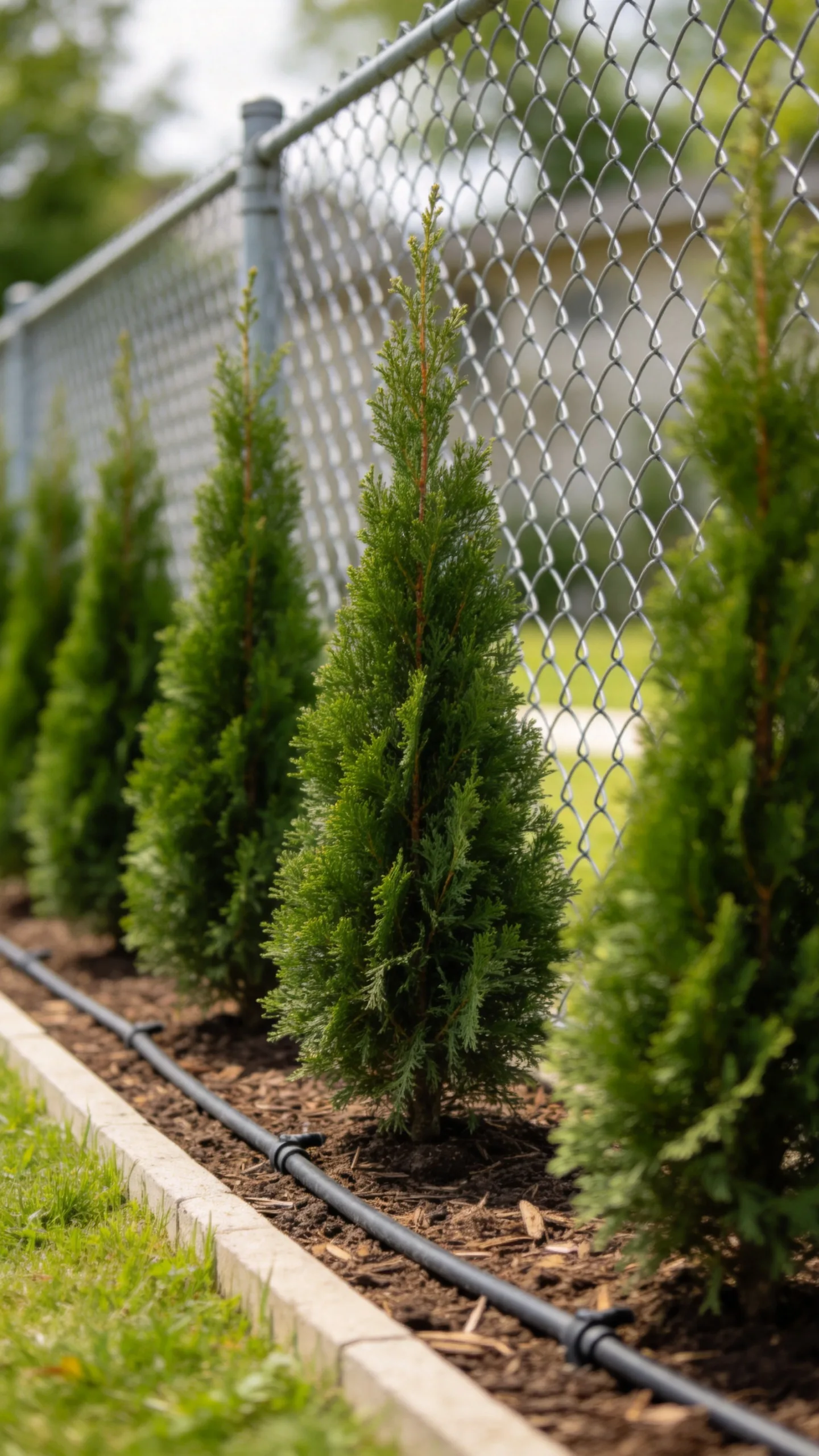
A narrow hedge can hide a chain link fence while keeping the boundary line usable. Instead of planting wide shrubs that take over the yard, choose upright or compact varieties suited to your climate and light exposure. Boxwood, Japanese holly, privet, arborvitae, yew, pittosporum, or podocarpus may work depending on your region.
Space the plants according to their mature width, not their nursery-pot size. This prevents overcrowding and reduces pruning later. In a small yard, plant the hedge in a straight line for a formal screen, or stagger the shrubs slightly for a softer, fuller look. Add drip irrigation or a soaker hose at planting time because young hedges need steady moisture while establishing.
6. Hang Outdoor Fabric Panels
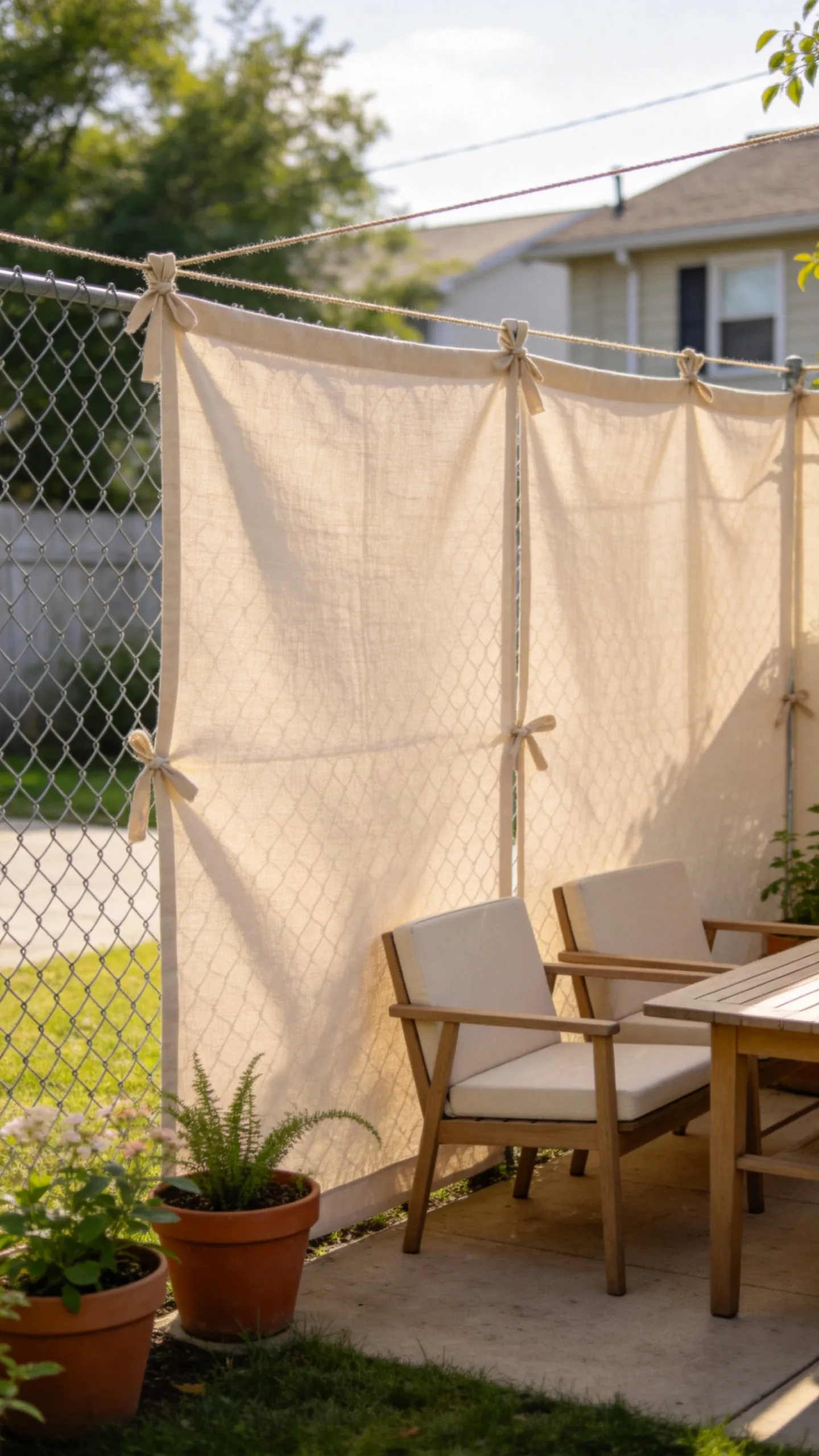
Outdoor fabric panels can disguise chain link fencing around patios, balconies, rental yards, or temporary seating areas. Look for weather-resistant fabric, shade cloth, or outdoor curtain panels that can be tied to the fence or hung from a simple top cable. This approach is especially useful when you need privacy only during warm months.
Choose a fabric that allows some airflow so the fence does not act like a sail during wind. Neutral canvas, charcoal shade cloth, or striped outdoor curtains can make the space feel more decorated without a large budget. Remove or tie back the panels during storms, and avoid letting fabric rest directly on wet soil where mildew can develop.
7. Install Wood Lattice Over the Fence
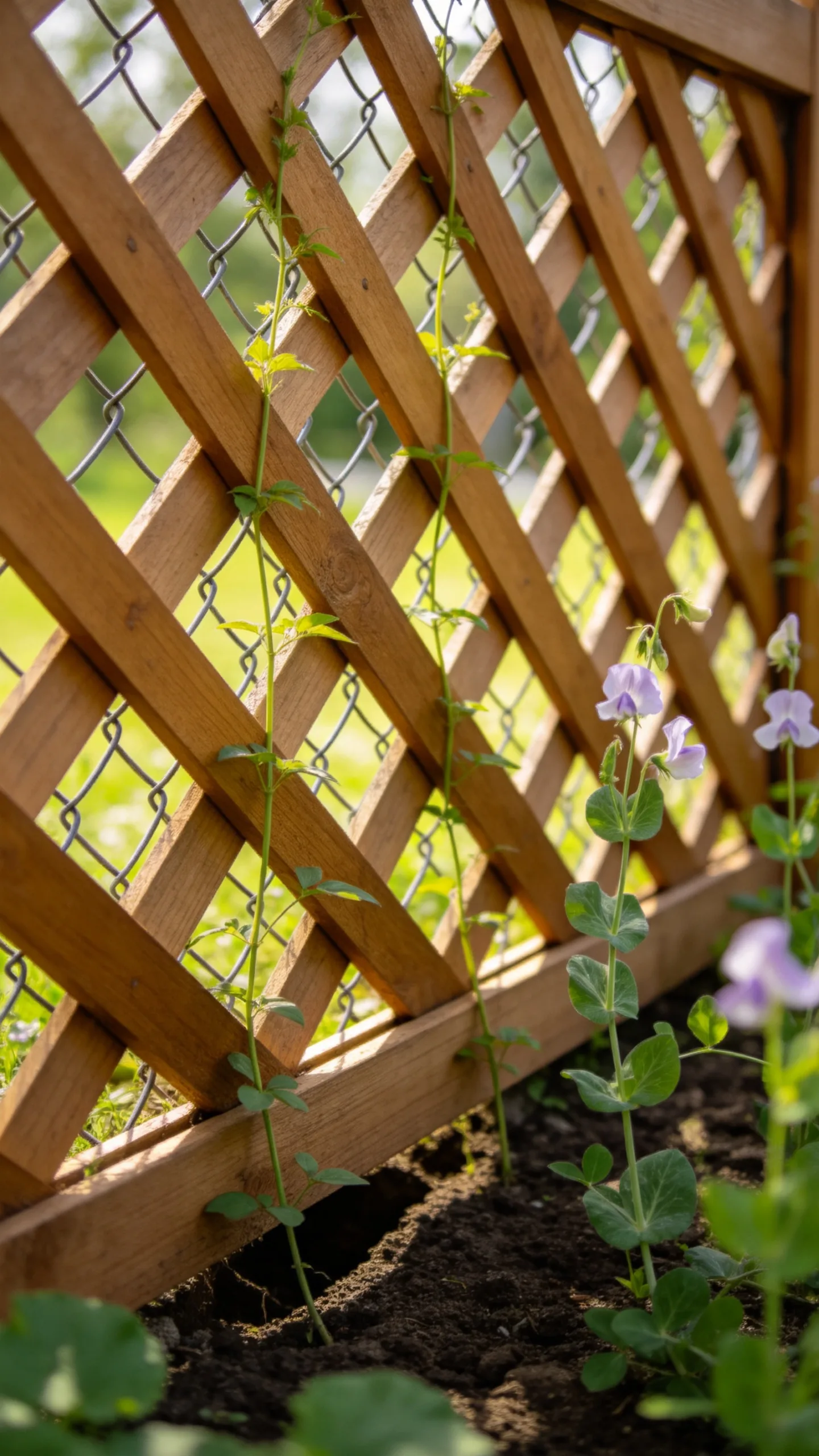
Wood lattice gives a chain link fence a garden structure that works well with climbing plants. It can be mounted in sections against the fence using U-brackets, wood framing, or wire ties, depending on the fence condition and local rules. The crisscross pattern hides the metal mesh while still allowing light and air through.
Lattice is a good choice for cottage gardens, vegetable plots, and small patios because it can support lightweight vines like sweet peas, clematis, black-eyed Susan vine, or annual morning glories. Use rot-resistant wood, cedar, or exterior-painted panels for better durability. Leave a few inches between the lattice and soil to reduce moisture damage.
8. Grow Climbing Roses Along the Fence
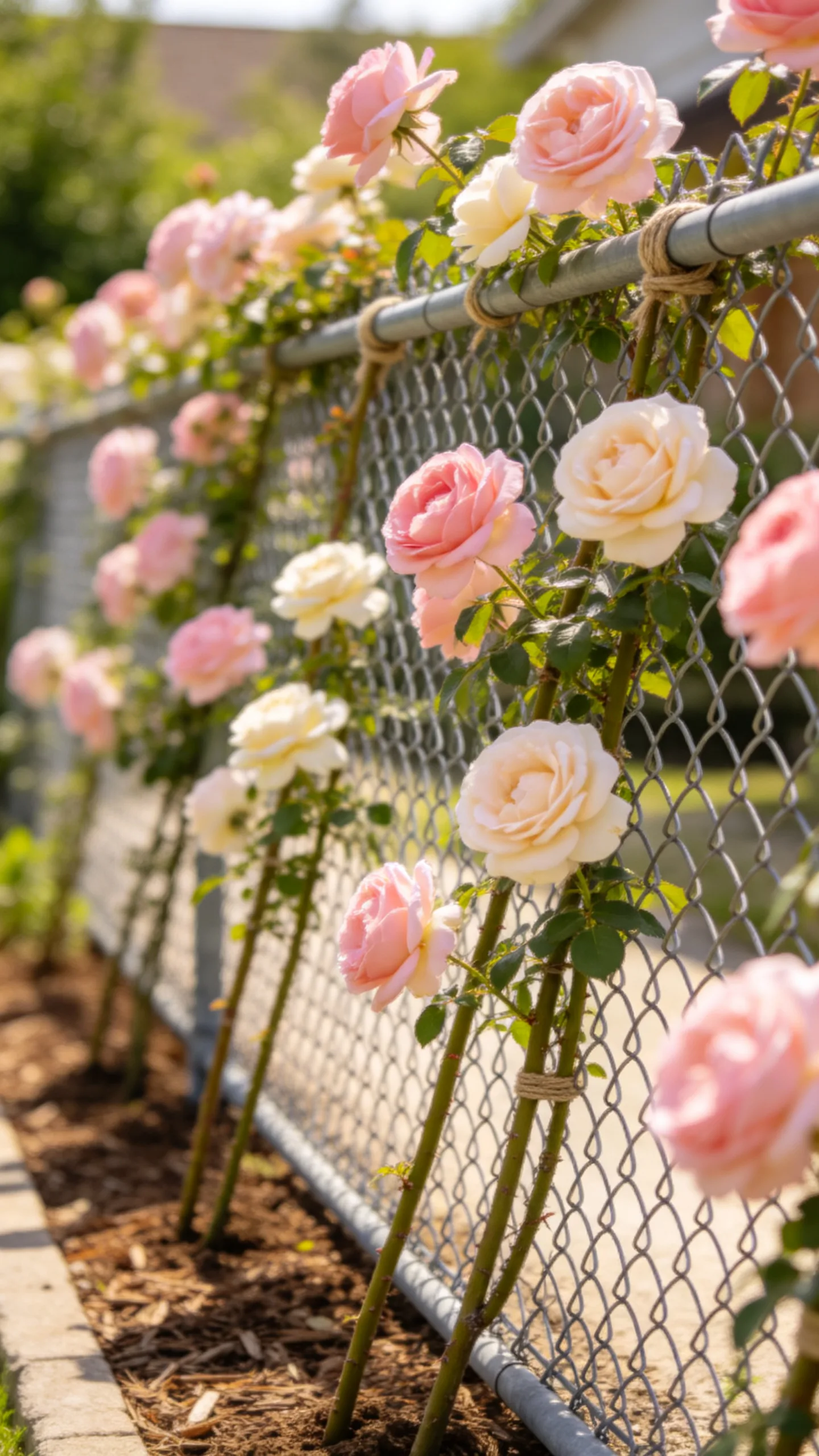
Climbing roses can make a chain link fence look romantic and intentional instead of purely functional. The fence provides a ready-made support system, and the canes can be tied horizontally along the mesh to encourage more flowering shoots. This works especially well along sunny fence lines that receive at least six hours of direct light.
Choose a rose variety suited to your climate, disease pressure, and available space. Some climbing roses grow large and need regular pruning, while smaller climbers are better for short fence runs or narrow side yards. Wear gloves when training canes through the fence, and leave access to both sides if possible so pruning and deadheading are easier.
9. Create a Mixed Border in Front of the Fence
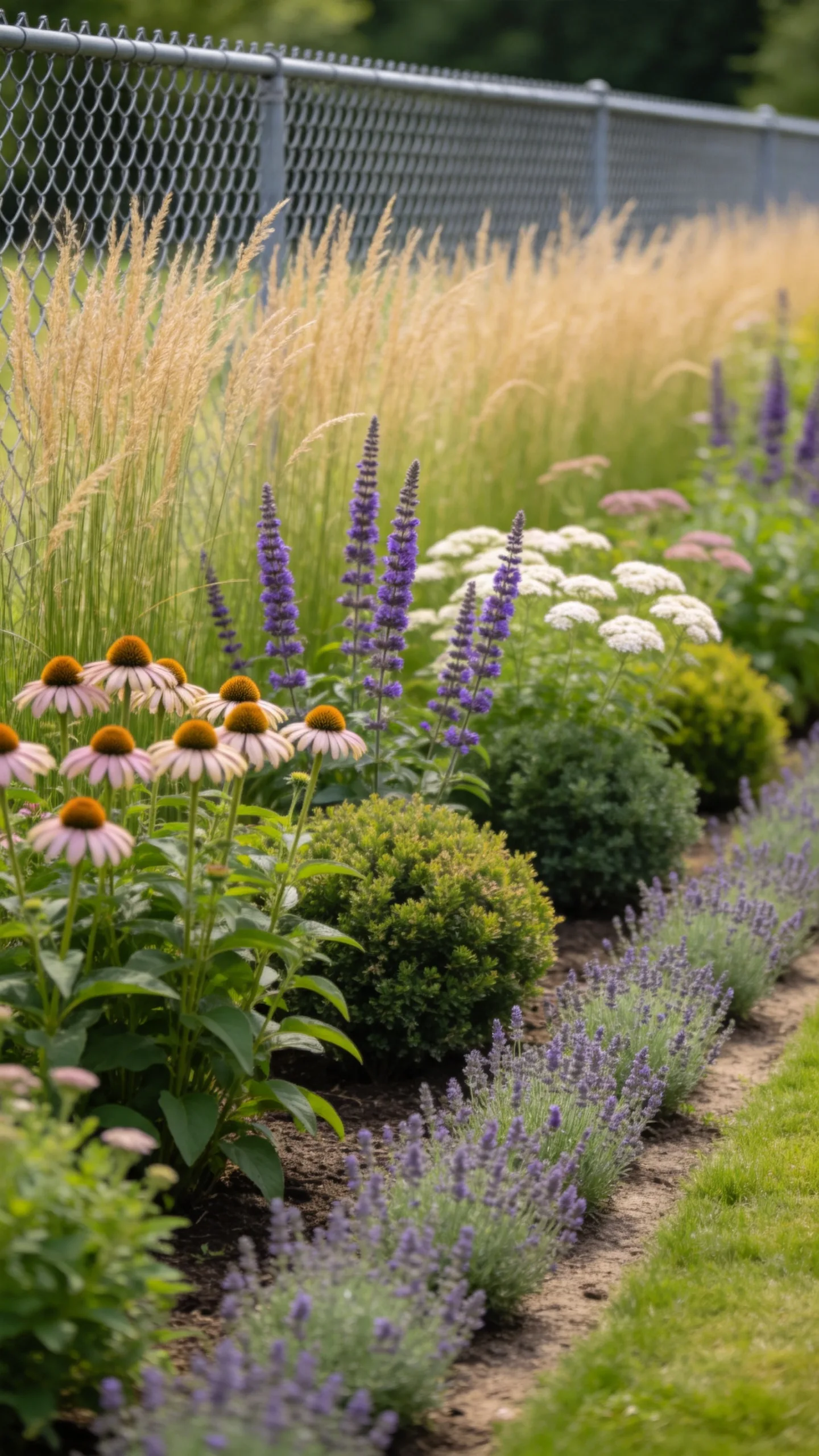
A layered planting border can distract from chain link fencing even if it does not cover every inch. Place taller plants near the fence, medium plants in the middle, and low edging plants near the path or lawn. This creates visual depth and makes the fence feel like a background rather than the main feature.
For a sunny border, combine ornamental grasses, coneflowers, salvia, yarrow, catmint, and compact shrubs. For partial shade, consider hydrangeas, ferns, hostas, astilbe, and shade-tolerant evergreens. Keep the bed deep enough for mature plant sizes, and add mulch to reduce weeds along the fence line where mowing can be awkward.
10. Attach Artificial Greenery Panels
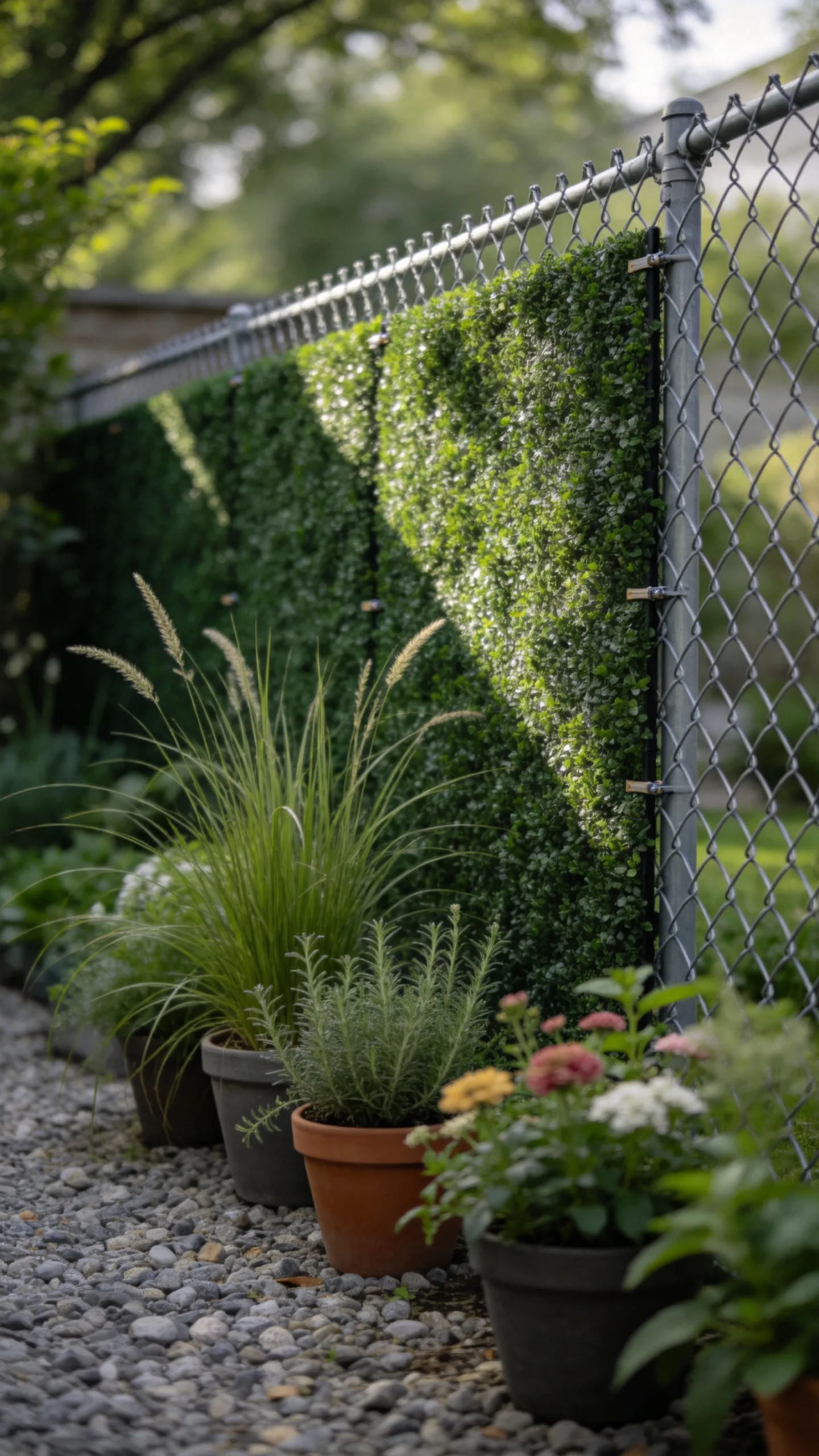
Artificial greenery panels can hide a chain link fence where real plants are difficult to grow. They are useful in deep shade, dry gravel areas, rental spaces, or narrow strips where roots have little room. Boxwood-style panels, faux ivy mats, and mixed-leaf screens can be attached directly to the mesh with zip ties.
To make artificial panels look less flat, combine them with real potted plants in front. Large containers with grasses, herbs, small shrubs, or seasonal flowers help soften the edges and make the screen blend into the yard. Choose UV-resistant panels if the fence gets direct sun, because cheaper plastic greenery can fade or become brittle.
11. Use Tall Planters as a Moveable Screen
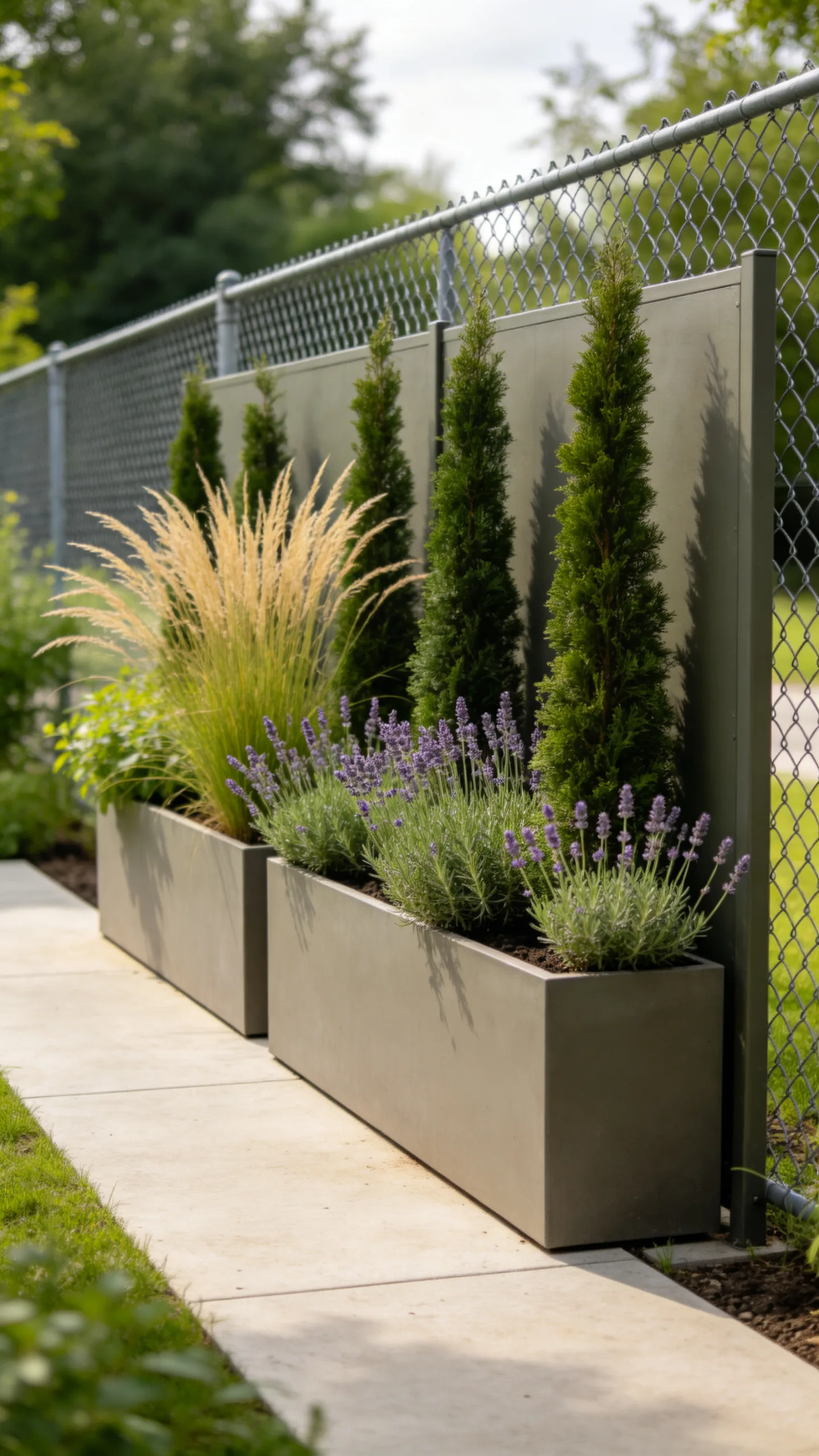
Tall planters are a flexible way to hide sections of chain link fence without planting directly in the ground. This is ideal for patios, rental gardens, concrete strips, or areas with poor soil. Use rectangular trough planters, galvanized tubs, cedar boxes, or large resin containers placed in a row along the fence.
Choose plants that match the light conditions and container size. Ornamental grasses, dwarf bamboo, columnar evergreens, rosemary, lavender, cannas, and compact shrubs can all work in the right climate. Containers dry out faster than garden beds, so add drainage holes, use quality potting mix, and plan for regular watering during hot weather.
12. Paint the Chain Link Fence Dark Green or Black
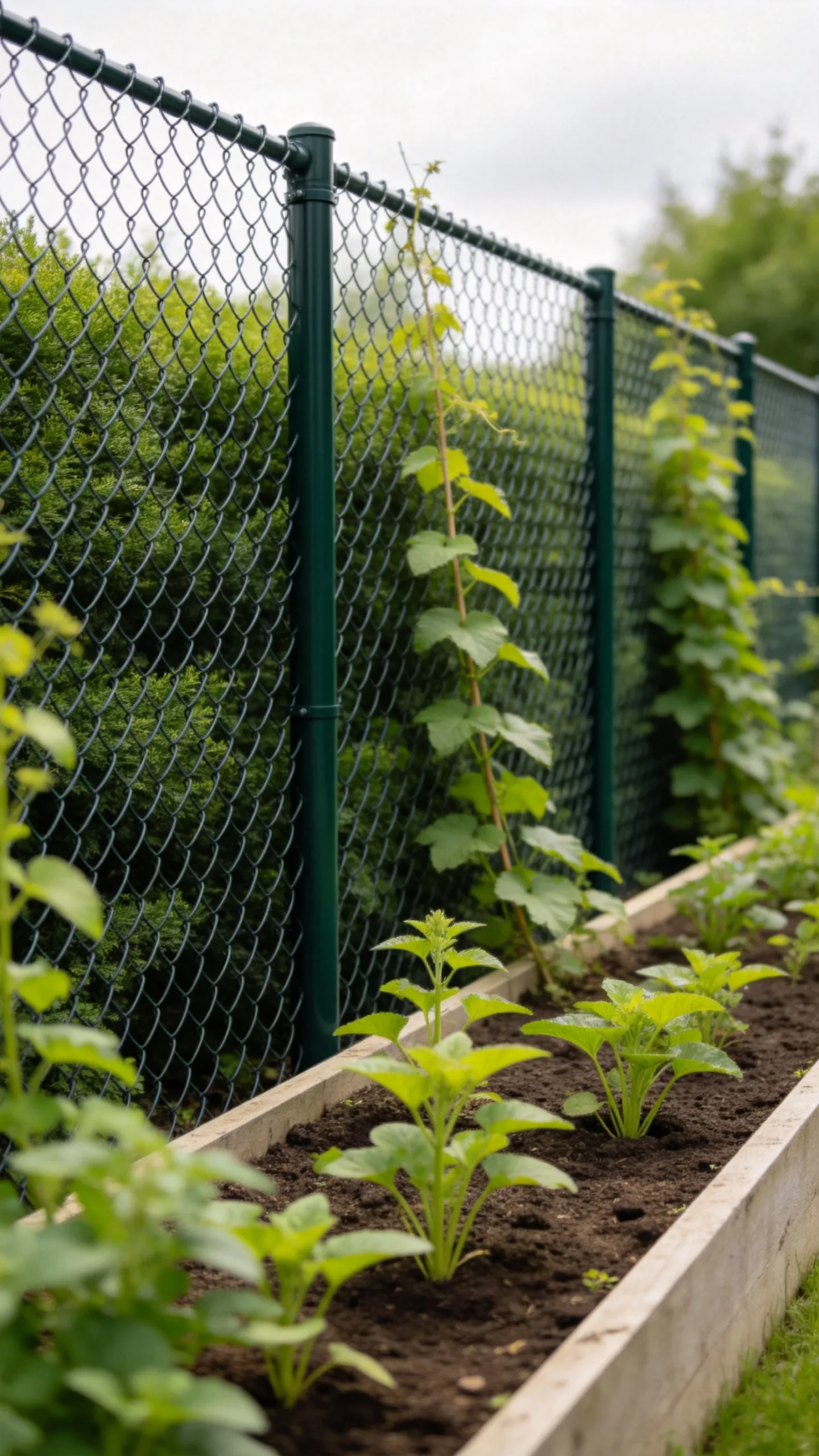
Painting the fence will not physically cover it, but it can make the metal much less noticeable. Dark green, charcoal, or black paint tends to visually recede, especially when surrounded by plants. This is a strong option when the fence is structurally sound but looks shiny, patchy, or too industrial.
Use paint made for exterior metal and prepare the surface carefully. Remove loose rust, clean dirt and grease, and let the fence dry before painting. A small roller, brush, or sprayer can help cover the mesh and posts. Once painted, add shrubs, vines, or a garden bed in front so the dark fence becomes a shadowed backdrop instead of a focal point.
13. Build a Freestanding Slatted Wood Screen
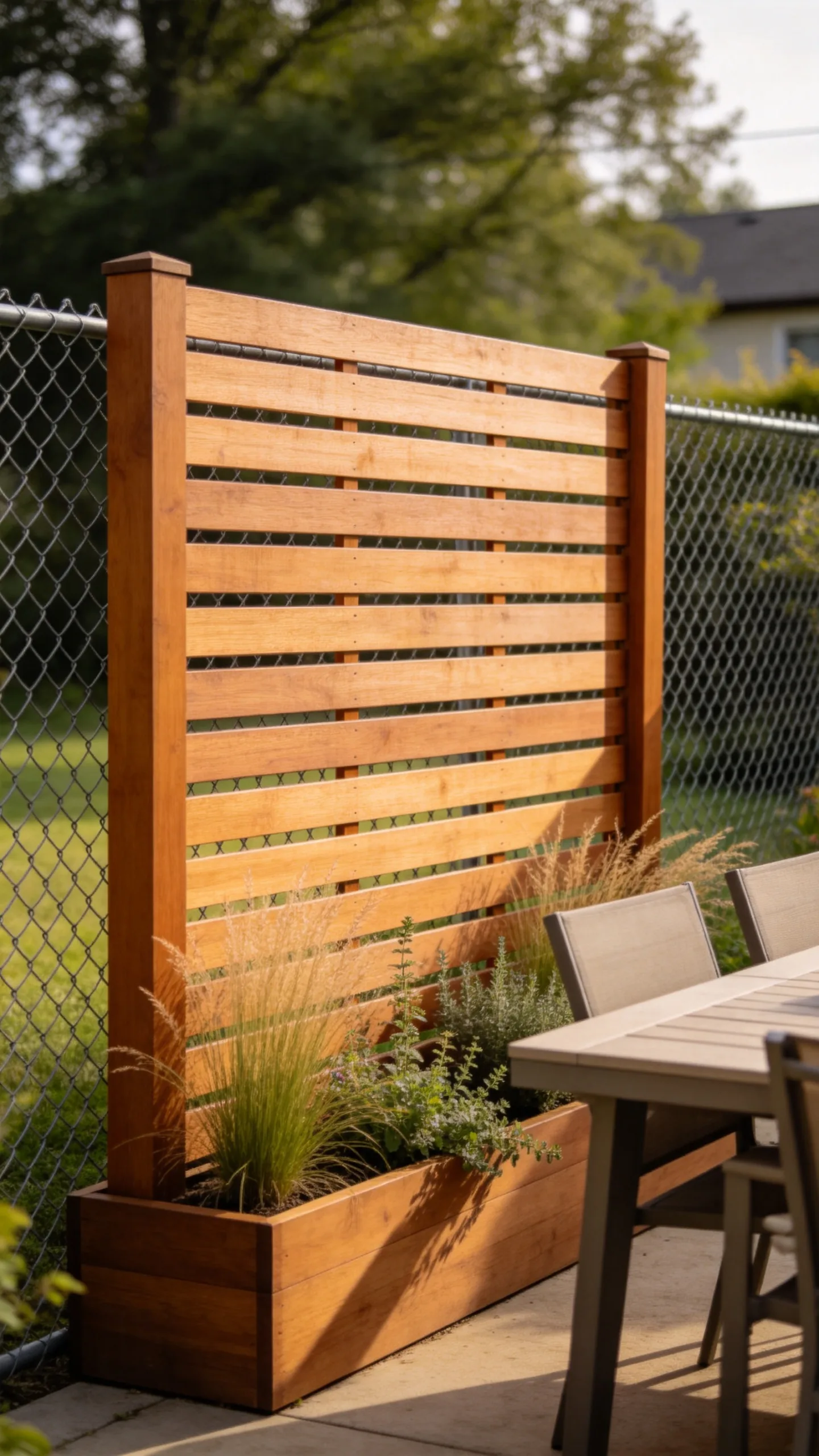
A freestanding slatted screen can hide a chain link fence without attaching anything heavy to it. This is useful if the fence belongs to a neighbor, if local rules limit changes, or if you only need privacy around a patio or dining area. Set posts in the ground or use sturdy planter-box bases, then attach horizontal or vertical wood slats.
Leave small gaps between slats for airflow and light. Narrow gaps provide more privacy, while wider gaps feel lighter in a small yard. Stain the wood to match deck boards, raised beds, or outdoor furniture. Plant ornamental grasses, climbing vines, or herbs at the base to soften the structure and connect it to the garden.
14. Add Corrugated Metal Panels in Sections
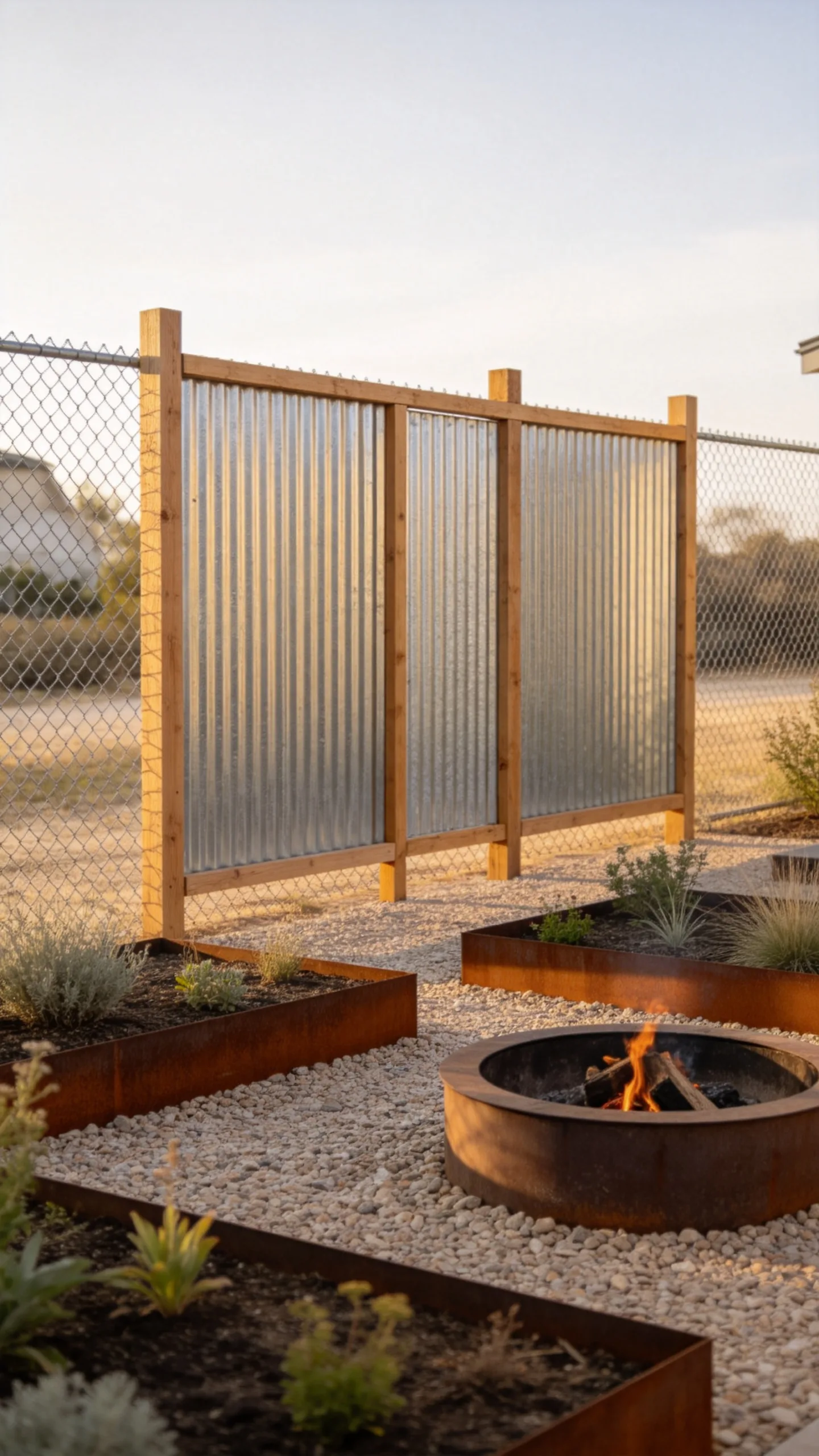
Corrugated metal panels can create a modern or farmhouse-style screen in front of a chain link fence. Instead of covering the entire fence, use panels in selected areas where privacy matters most, such as behind a fire pit, outdoor sofa, hot tub, or trash-bin storage area. This keeps the look intentional and reduces the amount of material needed.
Use wood posts or a simple frame to hold the panels rather than relying only on the chain link for support. Galvanized metal pairs well with gravel paths, raised beds, corten edging, and drought-tolerant plants. In hot climates, consider whether reflected heat could affect nearby seating or plants, and leave space for airflow behind the panels.
15. Grow Annual Vines for Seasonal Coverage
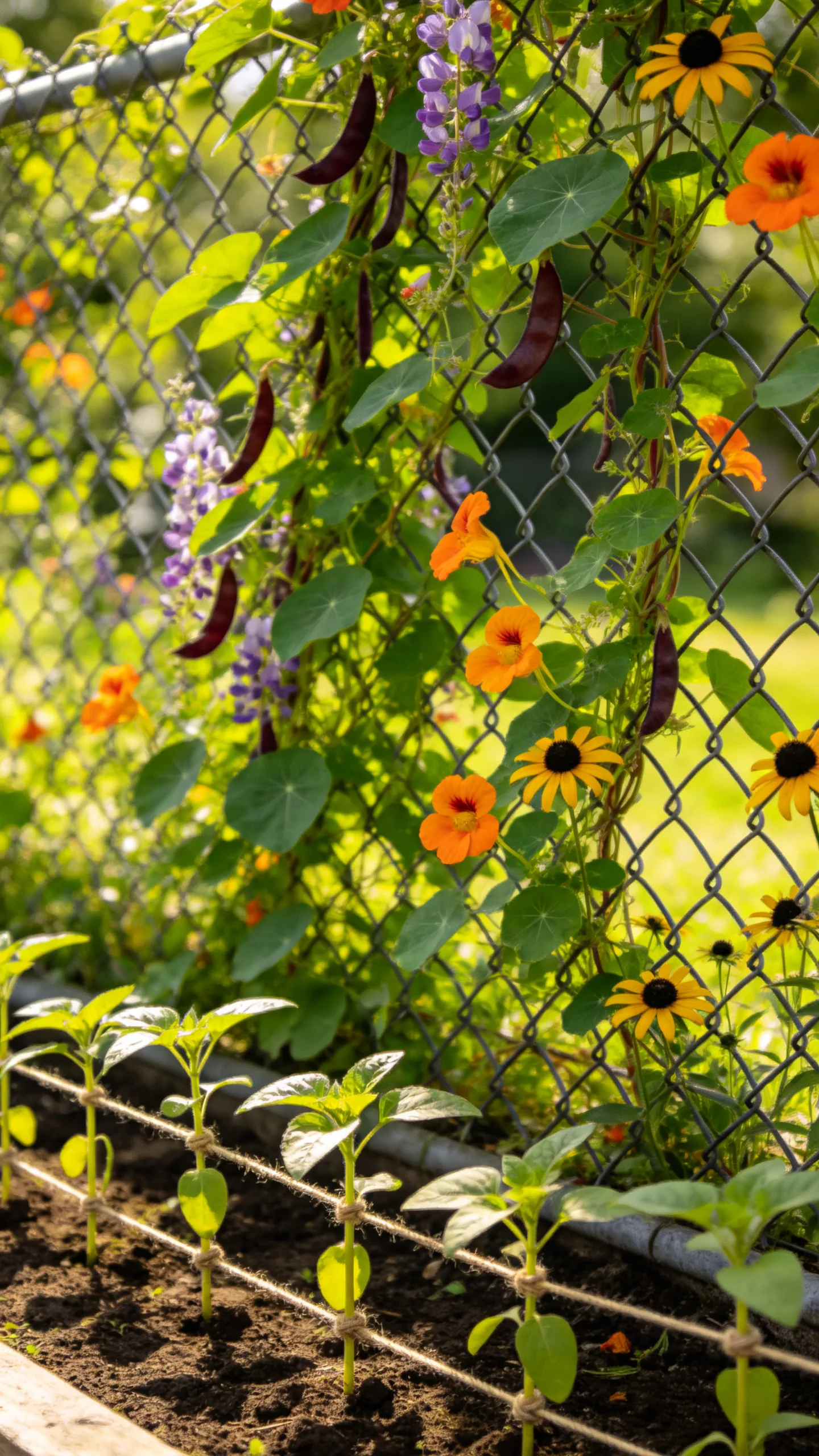
Annual vines are a smart choice if you want quick coverage for one growing season. They are especially useful while slower shrubs or perennial vines are getting established. Depending on your climate and sun exposure, options may include sweet peas, hyacinth bean vine, nasturtium, cypress vine, scarlet runner bean, or black-eyed Susan vine.
Plant annual vines after the danger of frost has passed, or start seeds indoors if your season is short. Guide seedlings toward the fence with twine until they grab the mesh. Many annual vines grow quickly in warm weather, but they still need consistent watering and suitable soil. At the end of the season, remove dead vines so they do not trap moisture against the fence.
16. Place a Row of Raised Garden Beds Along the Fence
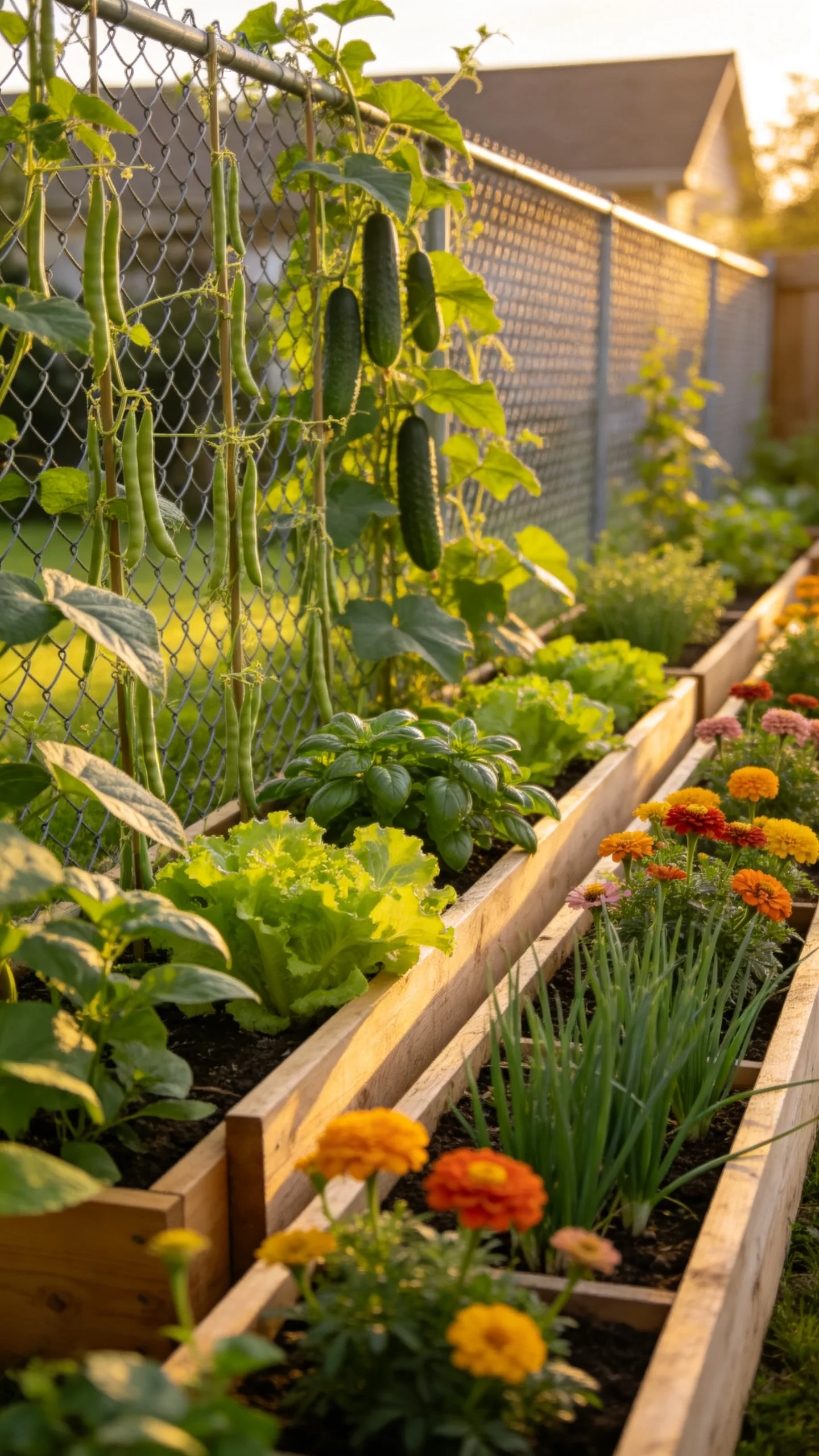
Raised beds can make a chain link fence look like part of a productive garden instead of a boundary you want to hide. Build narrow beds along the fence for vegetables, herbs, cut flowers, or pollinator plants. The bed edge creates a clean line, while the plants add height and seasonal interest.
This works well in sunny yards where the fence can support climbing crops. Grow peas, pole beans, cucumbers, small melons, or flowering vines on the chain link, and plant basil, lettuce, marigolds, zinnias, or chives in front. Keep beds narrow enough that you can reach the back without stepping into the soil, and avoid piling soil directly against metal posts if drainage is poor.
17. Hang Planter Boxes and Pocket Planters
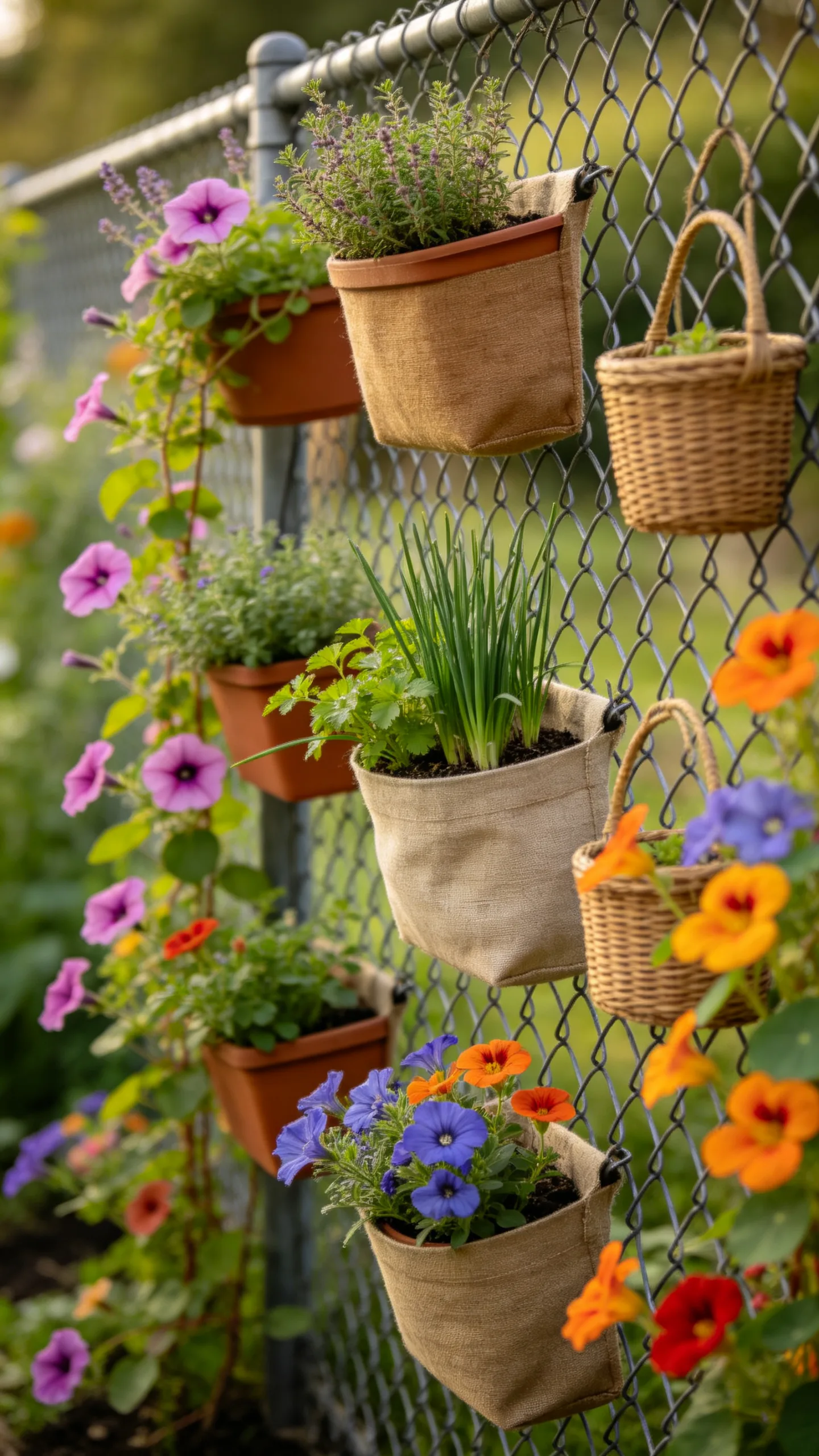
Hanging planters add color and texture directly to the chain link fence without taking up ground space. Use metal hook planters, railing boxes, fabric pocket planters, or small hanging baskets secured to the mesh. This is especially helpful for tiny patios, side yards, or urban gardens where every square foot matters.
Fill planters with shallow-rooted plants that suit the exposure. Herbs like thyme, parsley, oregano, and chives work well in sunny spots, while trailing annuals such as petunias, calibrachoa, lobelia, and nasturtium can spill over the fence surface. Because hanging containers dry quickly, use moisture-retentive potting mix and check them often in summer.
18. Combine Screens, Plants, and Lighting
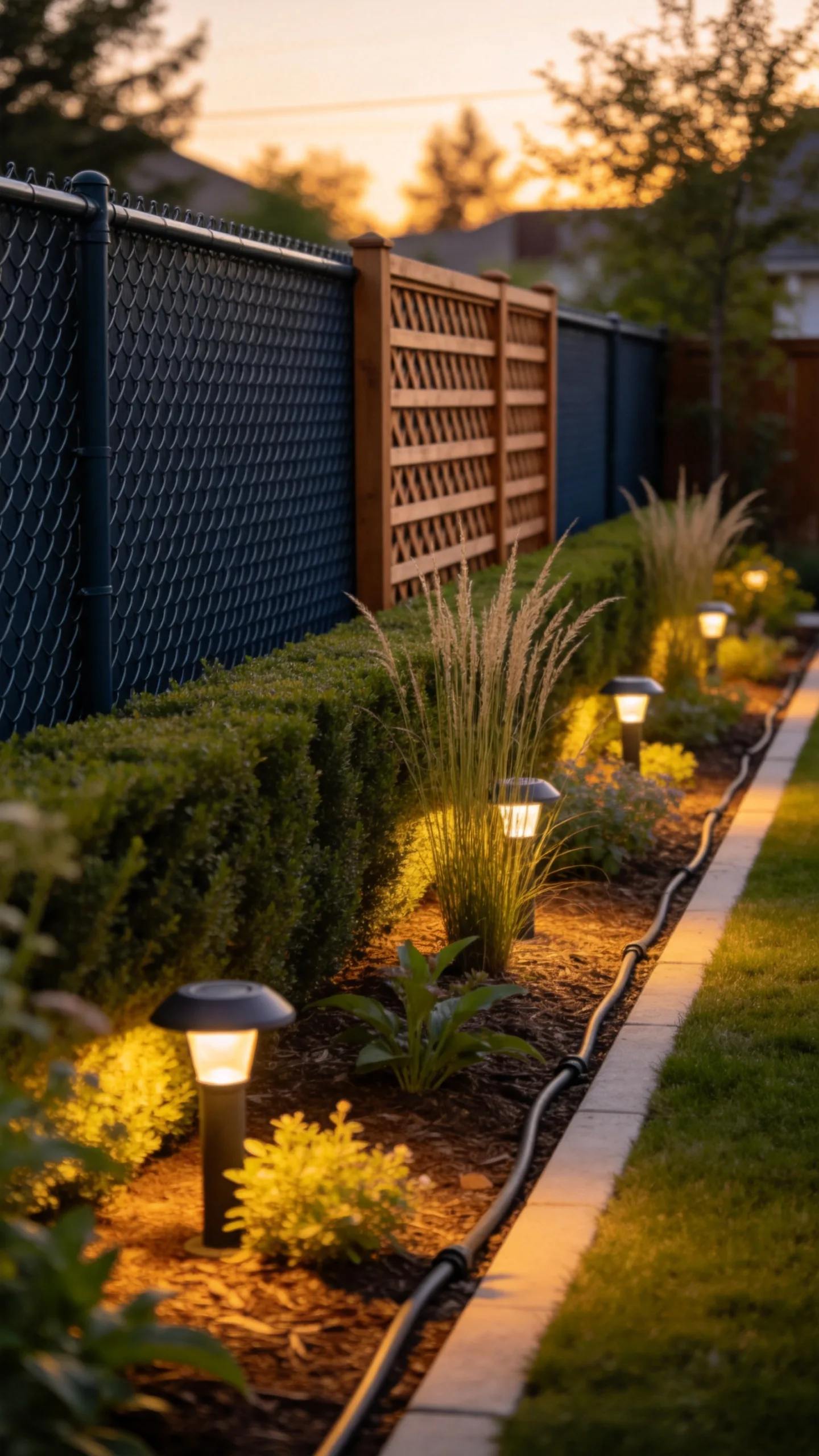
The most polished chain link fence ideas often use more than one solution. A painted dark fence with a narrow hedge, a few lattice panels, and low solar path lights will look more designed than a single material stretched across the whole yard. Combining elements also lets you focus privacy where you need it most while keeping other areas open for airflow and light.
Start with the biggest problem area, such as the view from a patio table or kitchen window. Add a screen or panel there first, then layer plants in front to soften the edges. Finish with practical details like mulch, edging, drip irrigation, or warm outdoor lighting. This turns the fence line into a planted feature instead of a plain metal boundary.