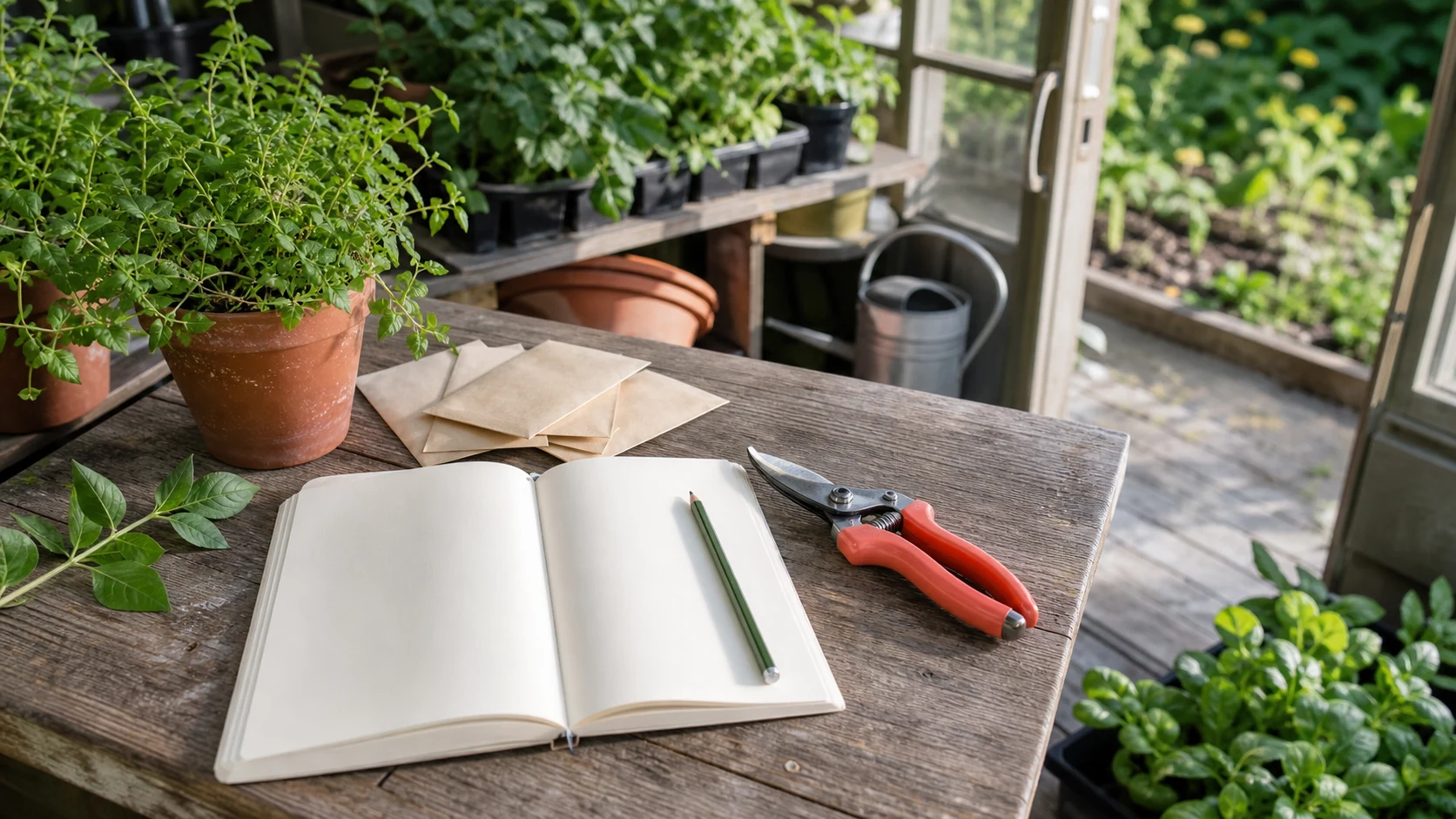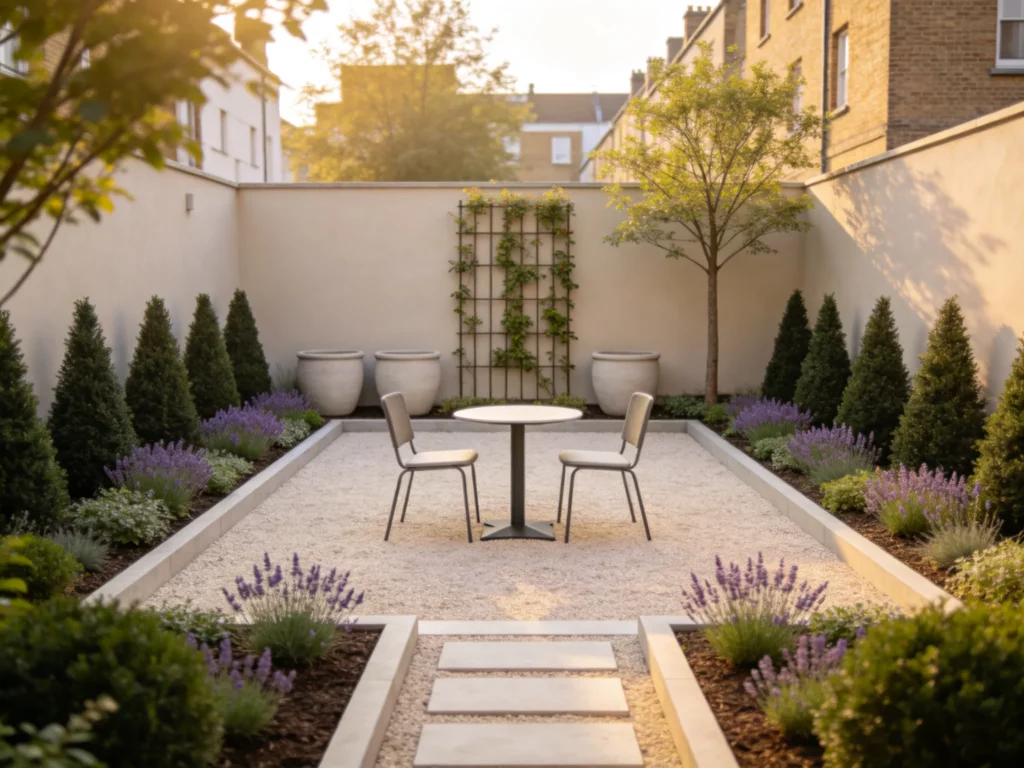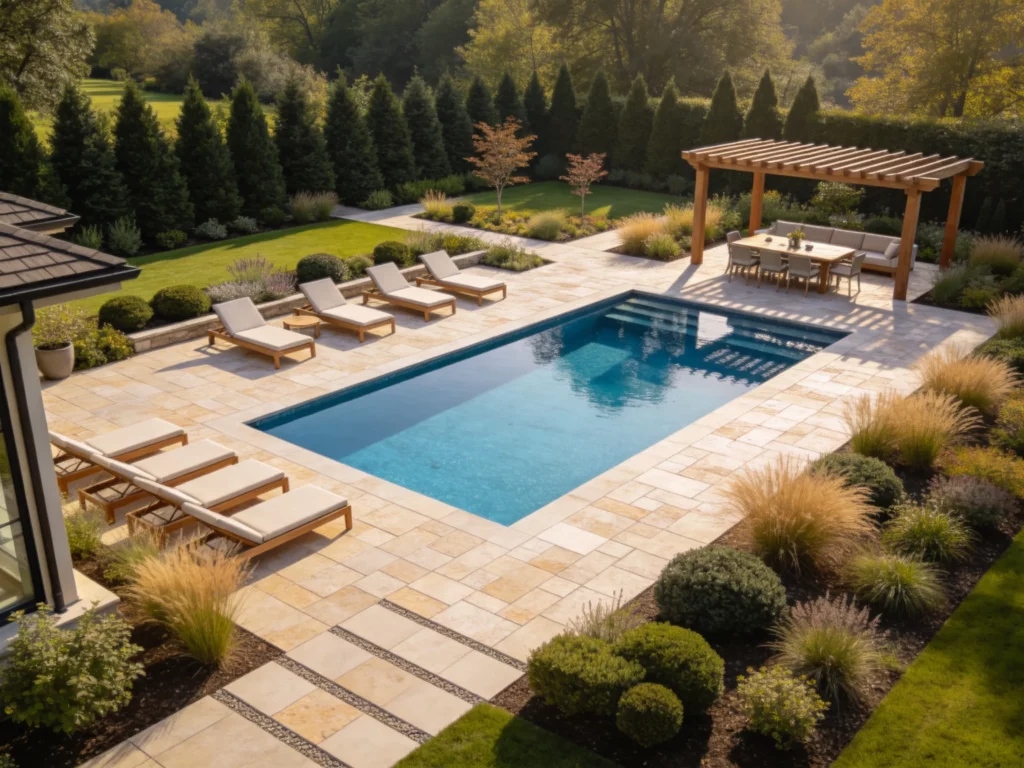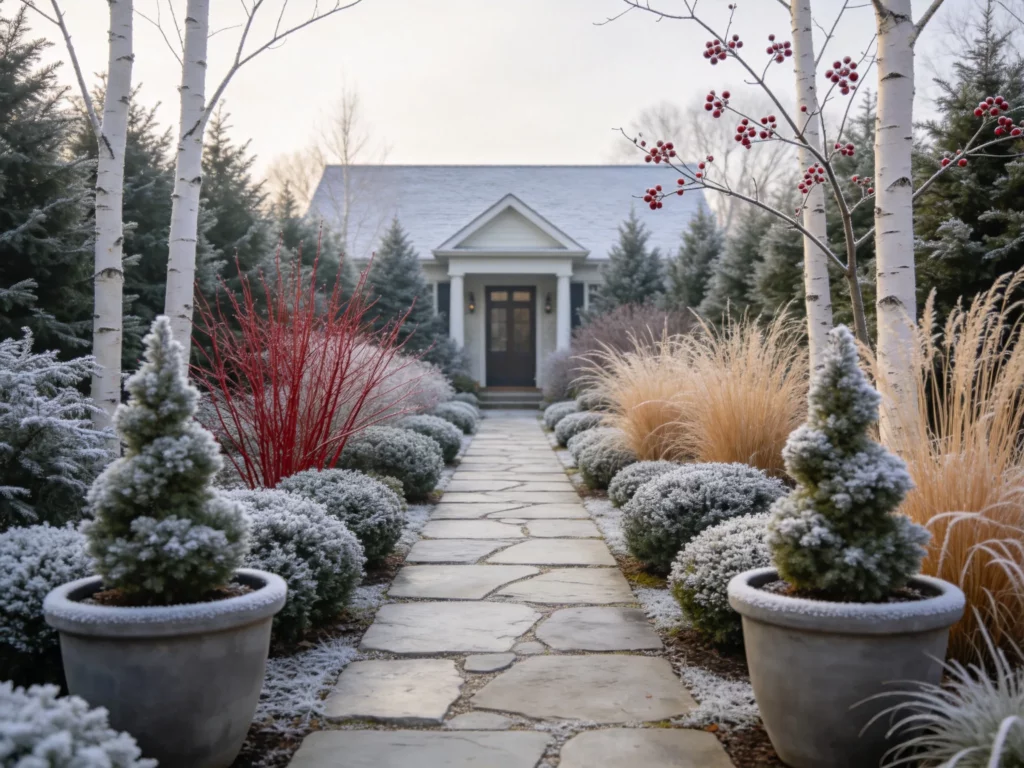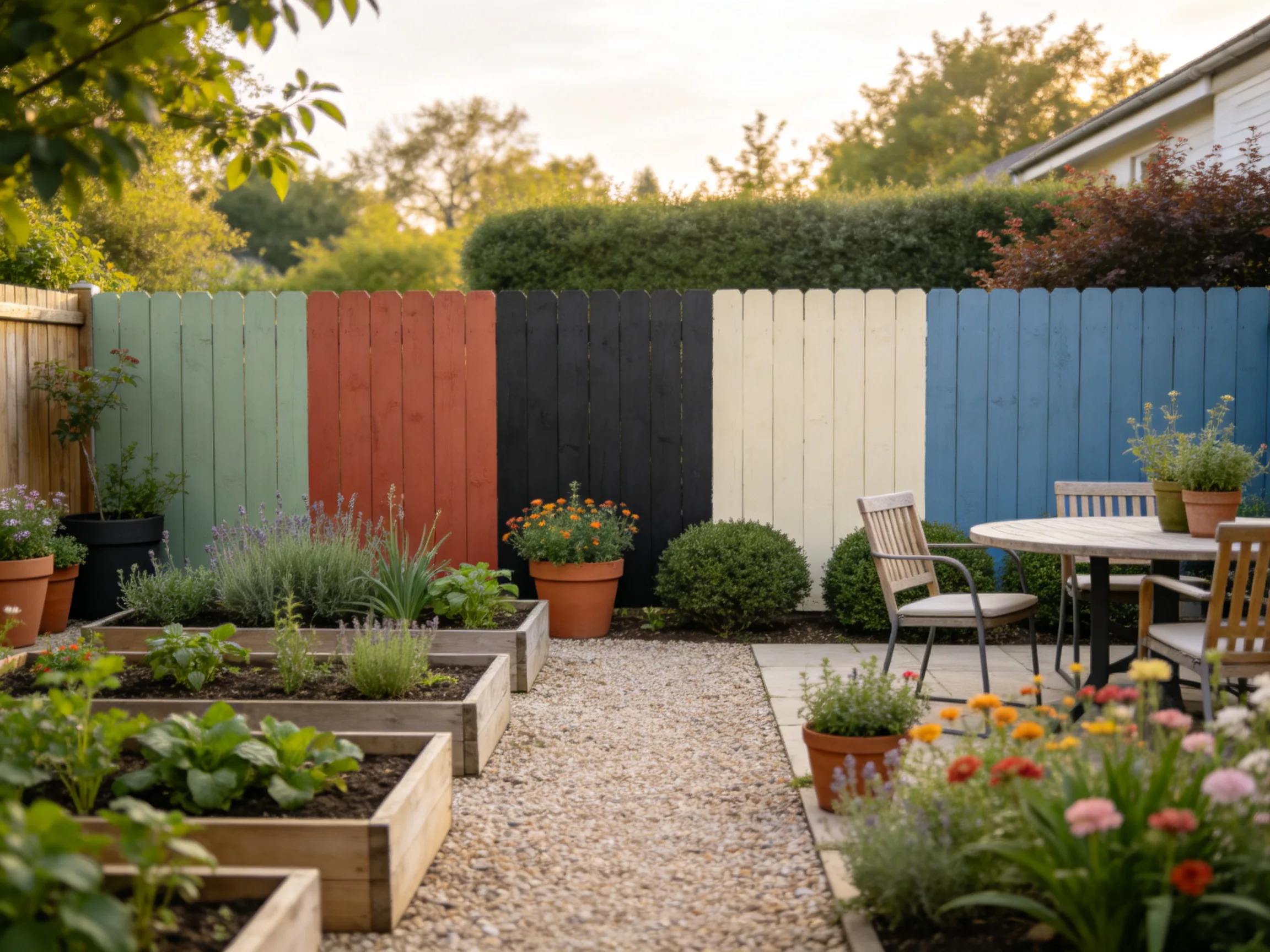
A fresh fence color can change how an entire backyard feels, especially when the boards are weathered, mismatched, or fading into the background. The right paint can make plants look brighter, define an outdoor seating area, create privacy, or help a small garden feel deeper and more intentional. These fence painting ideas focus on practical color choices you can pair with beds, containers, paths, patios, and planting styles.
1. Soft Sage Green Fence for a Calm Garden Backdrop
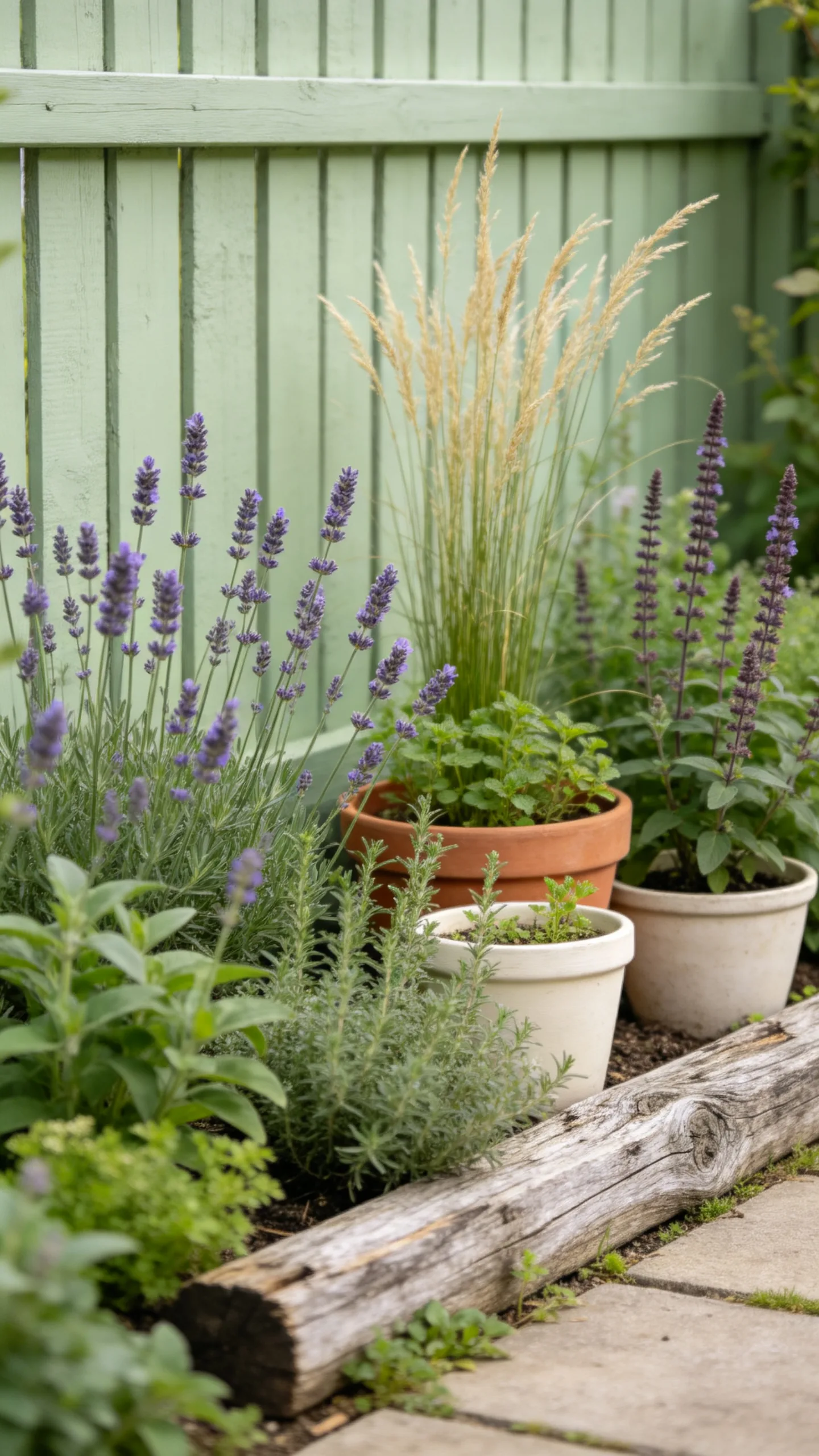
A soft sage green fence works beautifully behind cottage-style borders, raised beds, and container gardens because it blends with foliage without disappearing completely. It is especially useful if your backyard already has herbs, ornamental grasses, lavender, salvia, or silvery plants, since the muted green helps tie those textures together.
This color is a good option for small gardens where a bright fence might feel too busy. Paint the full fence in sage, then keep nearby planters in terracotta, cream, or weathered wood so the space feels layered rather than flat. If your fence gets strong afternoon sun, test a sample first because pale greens can look much brighter outdoors than they do on a paint card.
2. Matte Black Fence for Dramatic Plant Contrast
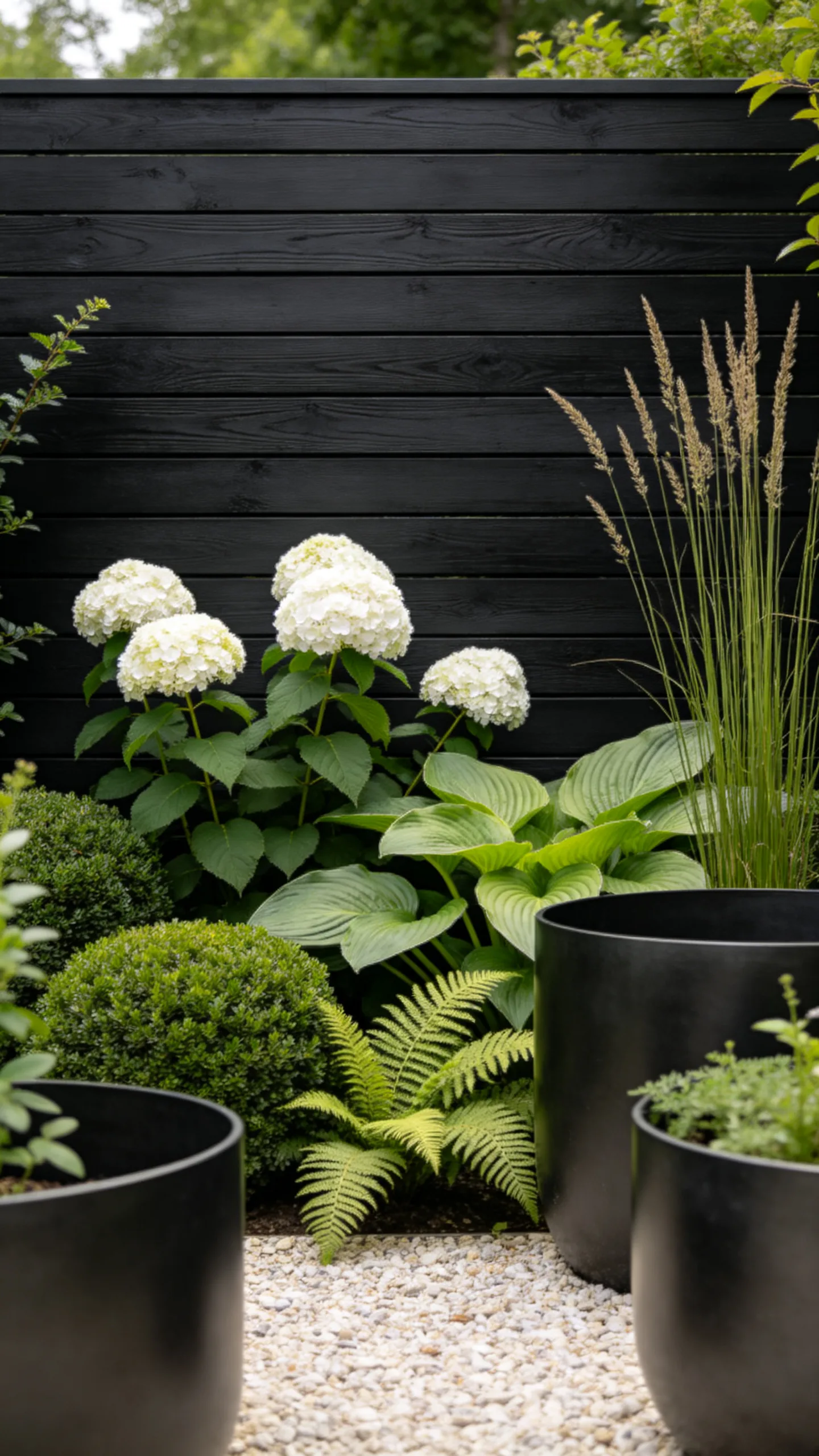
A matte black fence can make green leaves, white flowers, and pale gravel stand out sharply. It works well behind structured planting such as boxwood, clipped yew, hydrangeas, hostas, ferns, or tall ornamental grasses. In a backyard with modern furniture or dark metal planters, black paint can make an old fence feel more deliberate and architectural.
Use exterior paint or stain designed for fences, and choose a matte or low-sheen finish to reduce glare. Black can absorb heat, so it is best used where plants are not pressed directly against the fence in hot, exposed spots. Leave a little airflow between climbing plants and the boards to help reduce trapped moisture.
3. Warm Terracotta Fence for Mediterranean Color
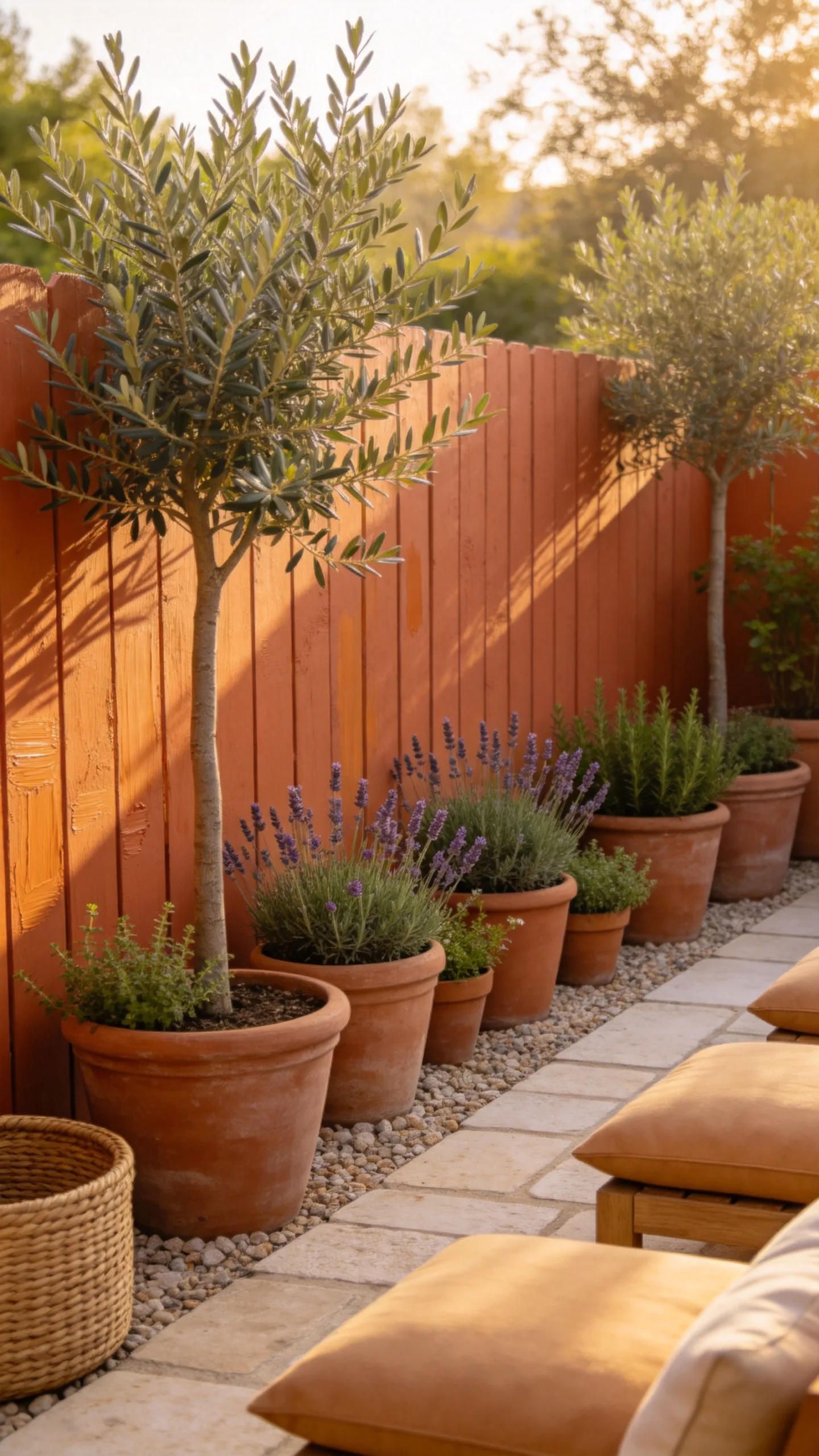
Terracotta paint brings warmth to a backyard and pairs naturally with olive trees in containers, rosemary, lavender, thyme, gravel paths, and clay pots. It is a strong choice for a sunny patio fence or a seating area where you want the color to feel cozy rather than plain brown.
To keep terracotta from overwhelming a small yard, use it on one feature fence or the section behind a dining set. Balance it with pale stone, tan cushions, woven baskets, and drought-tolerant plants in raised planters. This color can also make faded timber feel fresh while still looking connected to natural materials.
4. Charcoal Gray Fence for a Modern Outdoor Room
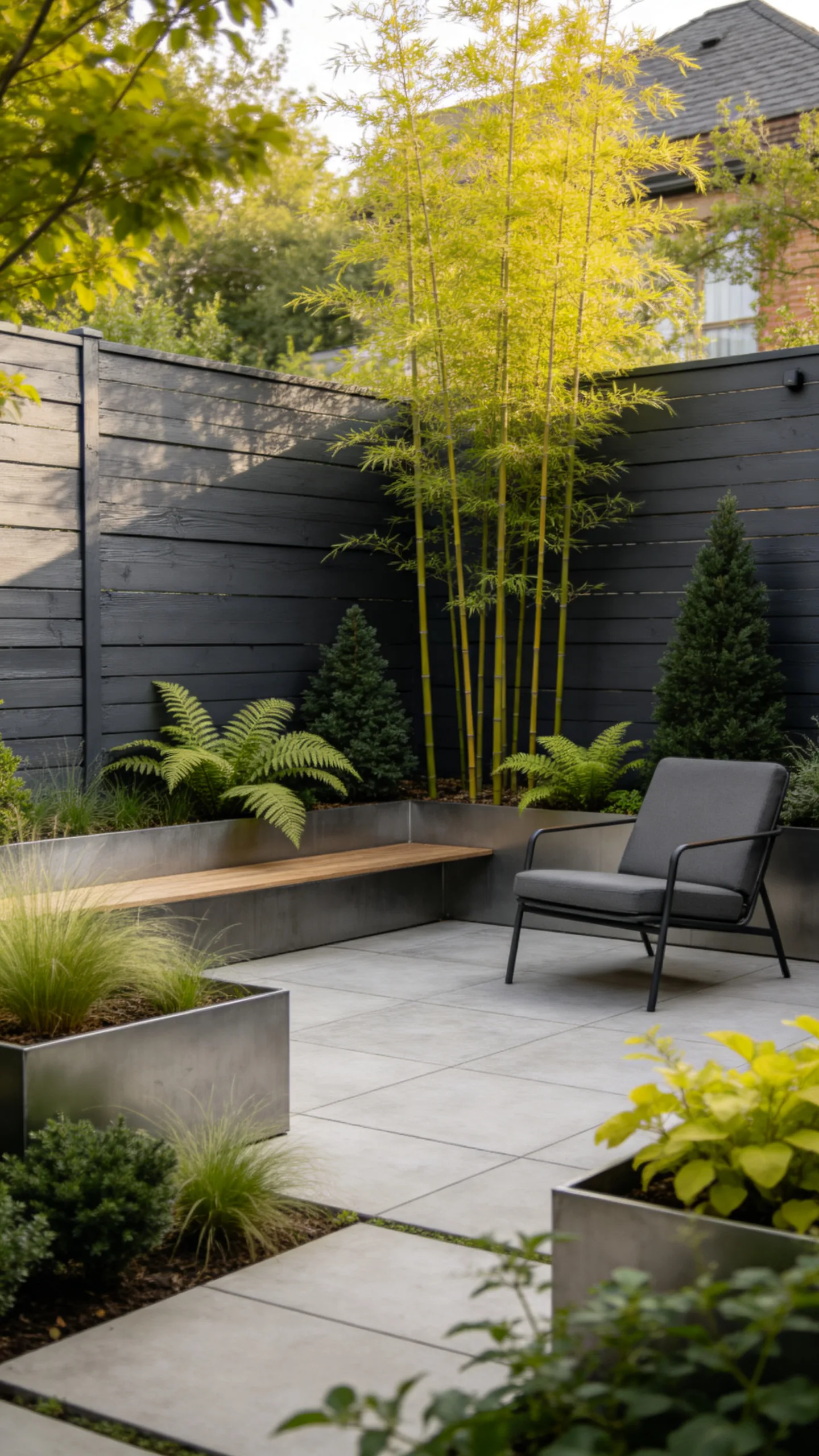
Charcoal gray is a practical fence painting idea when you want a clean, modern look without going as bold as black. It suits concrete pavers, metal edging, raised steel planters, and sleek outdoor furniture. Against charcoal, plants with lime, silver, or variegated foliage become much more noticeable.
This shade is also forgiving on older fences because it helps disguise uneven boards and minor staining. Use it around a patio to create the feeling of an outdoor room, then soften the edges with planters of bamboo, Japanese forest grass, ferns, or evergreen shrubs. For a softer finish, choose a gray with warm undertones rather than a cold blue-gray.
5. Creamy White Fence for a Bright Cottage Garden
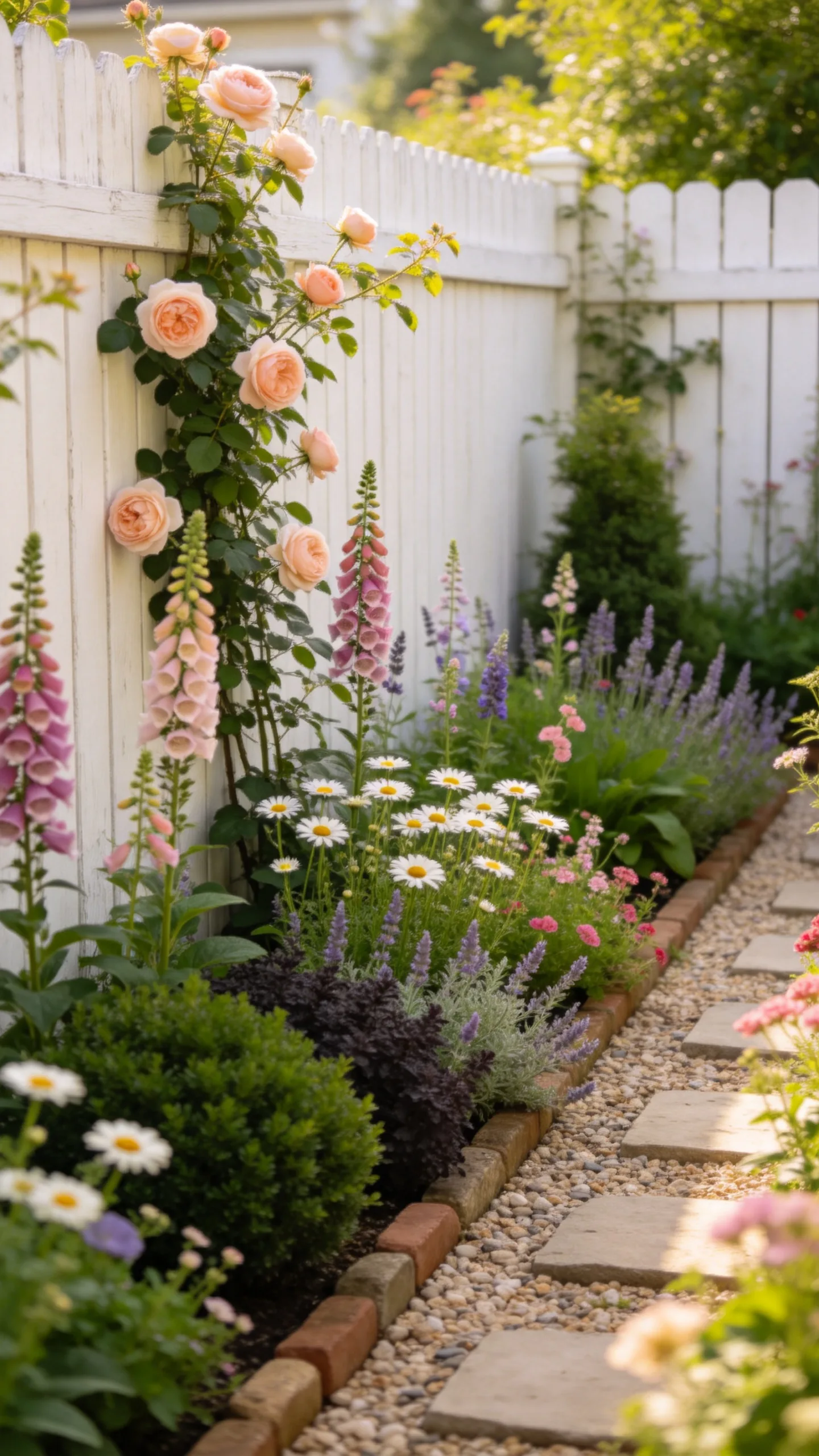
A creamy white fence can make a backyard feel lighter and more open, especially in shaded or narrow spaces. It works well with climbing roses, foxgloves, daisies, sweet peas, catmint, and other cottage garden plants. Unlike stark white, a cream tone feels softer beside soil, mulch, timber, and old brick.
This color does need more upkeep than darker shades because dirt, irrigation splash, and algae are easier to see. Use it where you can clean the lower boards occasionally, such as behind a flower border with a gravel edge or stepping stones. Add dark green plants in front of it to avoid a washed-out look.
6. Deep Forest Green Fence for a Woodland Feel
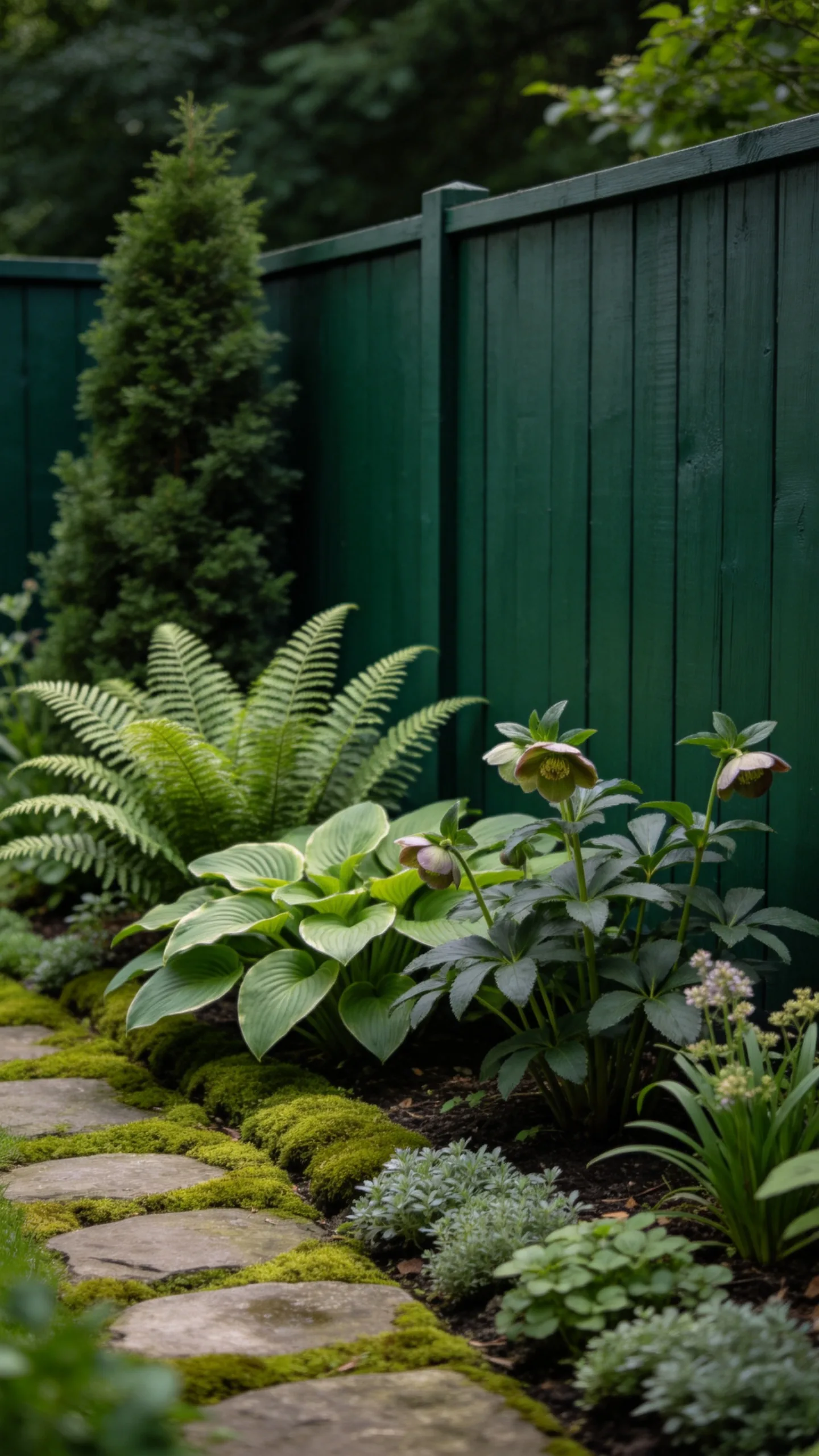
Deep forest green is ideal for yards with shade trees, ferns, hostas, hellebores, and mossy stone paths. It makes the fence recede visually, which can help a compact garden feel larger and more enclosed by planting rather than hard boundaries.
This color works especially well along a back fence where you want to draw attention to layered planting. Place taller shrubs near the fence, medium perennials in front, and low groundcovers along the edge. The dark green backdrop gives the planting depth without the high contrast of black.
7. Dusty Blue Fence for a Relaxed Coastal Look
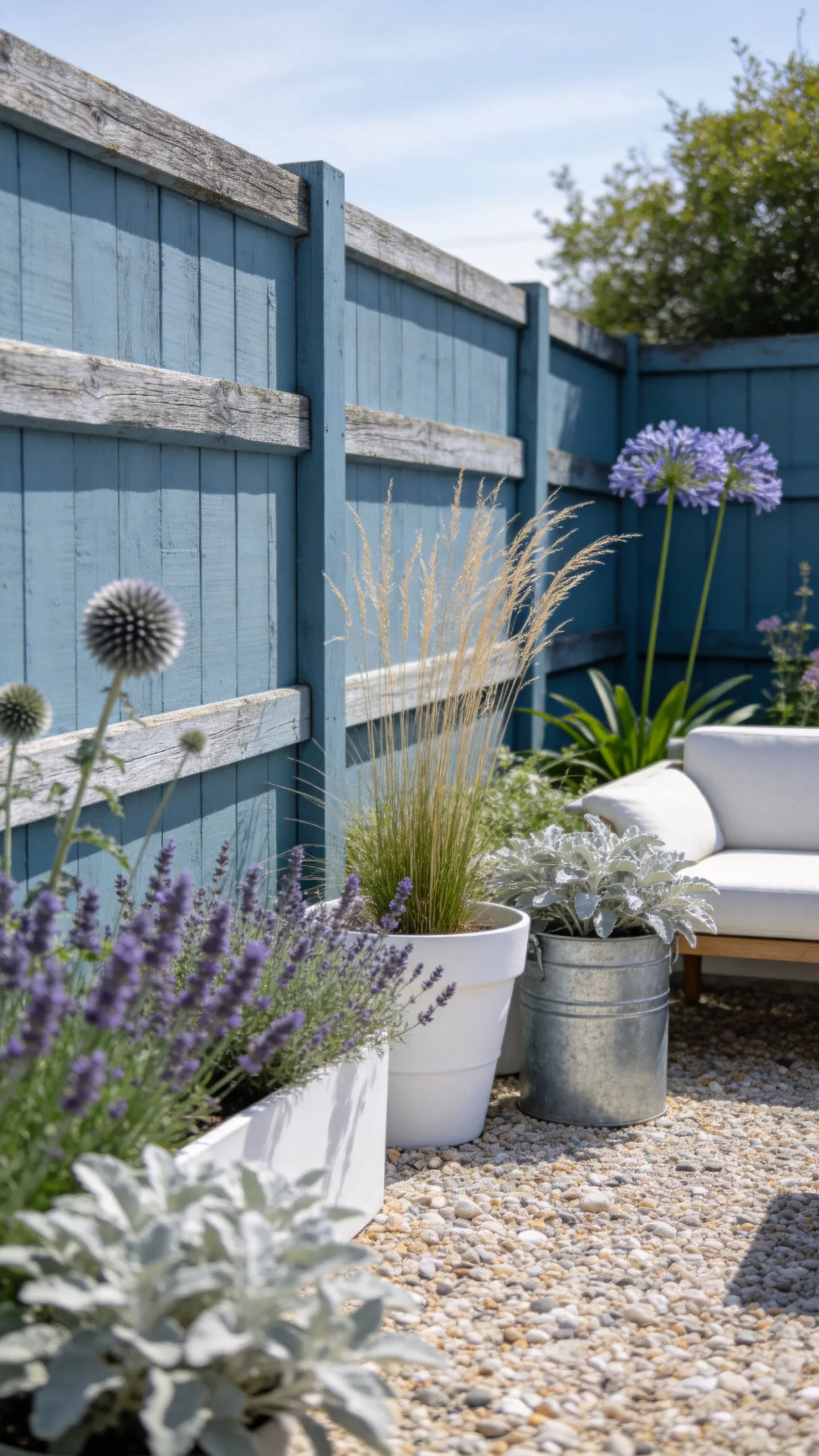
Dusty blue paint gives a fence a relaxed, coastal feel without needing a full beach-themed garden. It pairs nicely with white planters, pale gravel, weathered timber, ornamental grasses, sea holly, lavender, agapanthus, and silver-leaf plants. The muted tone is easier to live with than bright turquoise or navy in a full backyard.
Use dusty blue on a fence near a deck, pergola, or gravel seating area to make the space feel cooler and calmer. It can be particularly useful in sunny gardens where warm colors already dominate. Add containers in white, zinc, or natural clay for a balanced palette.
8. Two-Tone Fence With Dark Posts and Light Panels
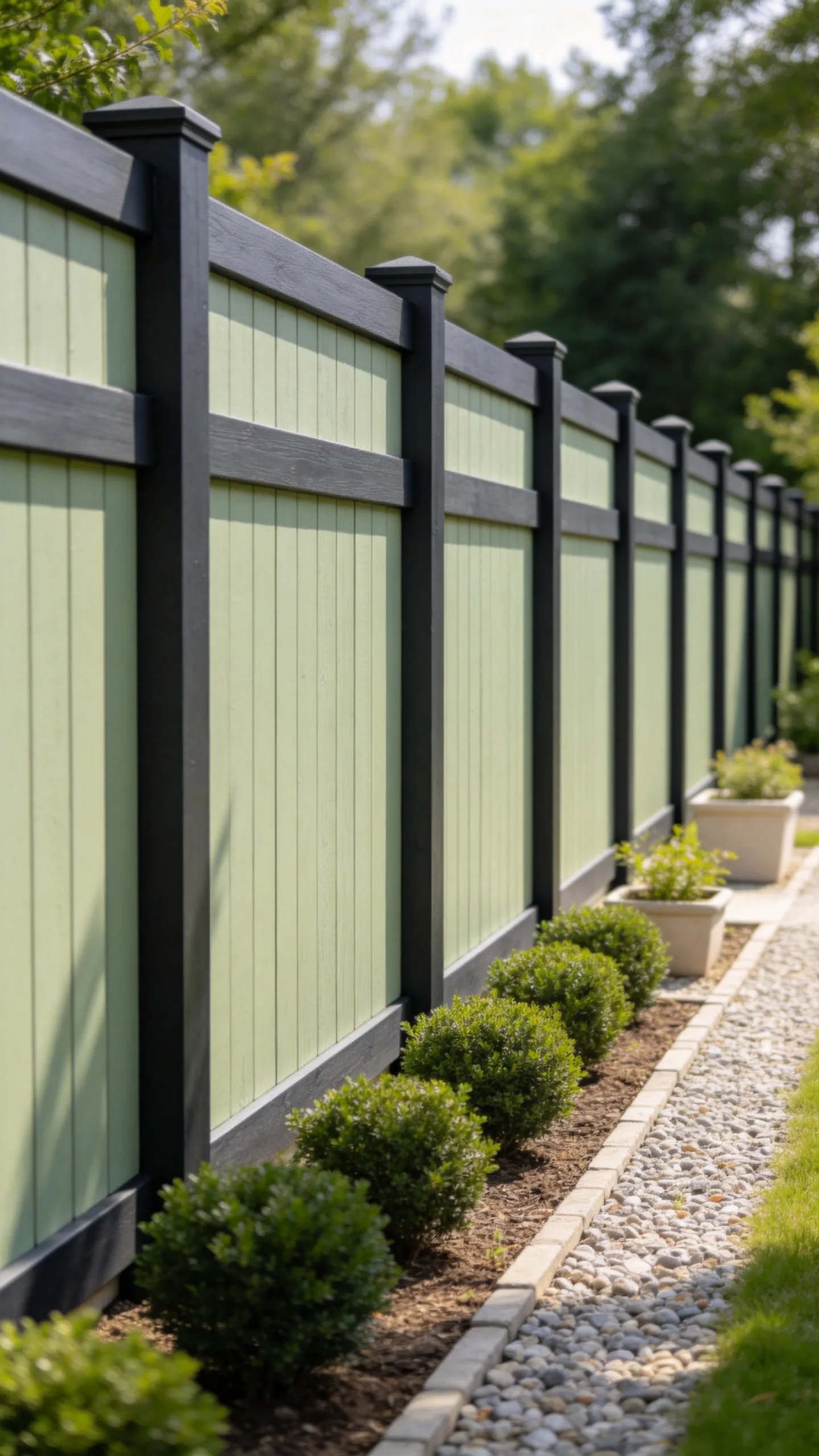
A two-tone fence can make a basic boundary look more designed. Paint the posts, rails, or frame in charcoal, black, or deep brown, then use a lighter shade such as sage, cream, beige, or soft gray on the panels. This creates structure without needing new fencing.
This idea is helpful if your backyard has long, flat fence runs that feel monotonous. The darker posts break up the length visually, while the lighter panels keep the area from feeling closed in. Use masking tape carefully along board edges, and paint the darker trim first so touch-ups are easier.
9. Navy Blue Fence for a Polished Garden Border
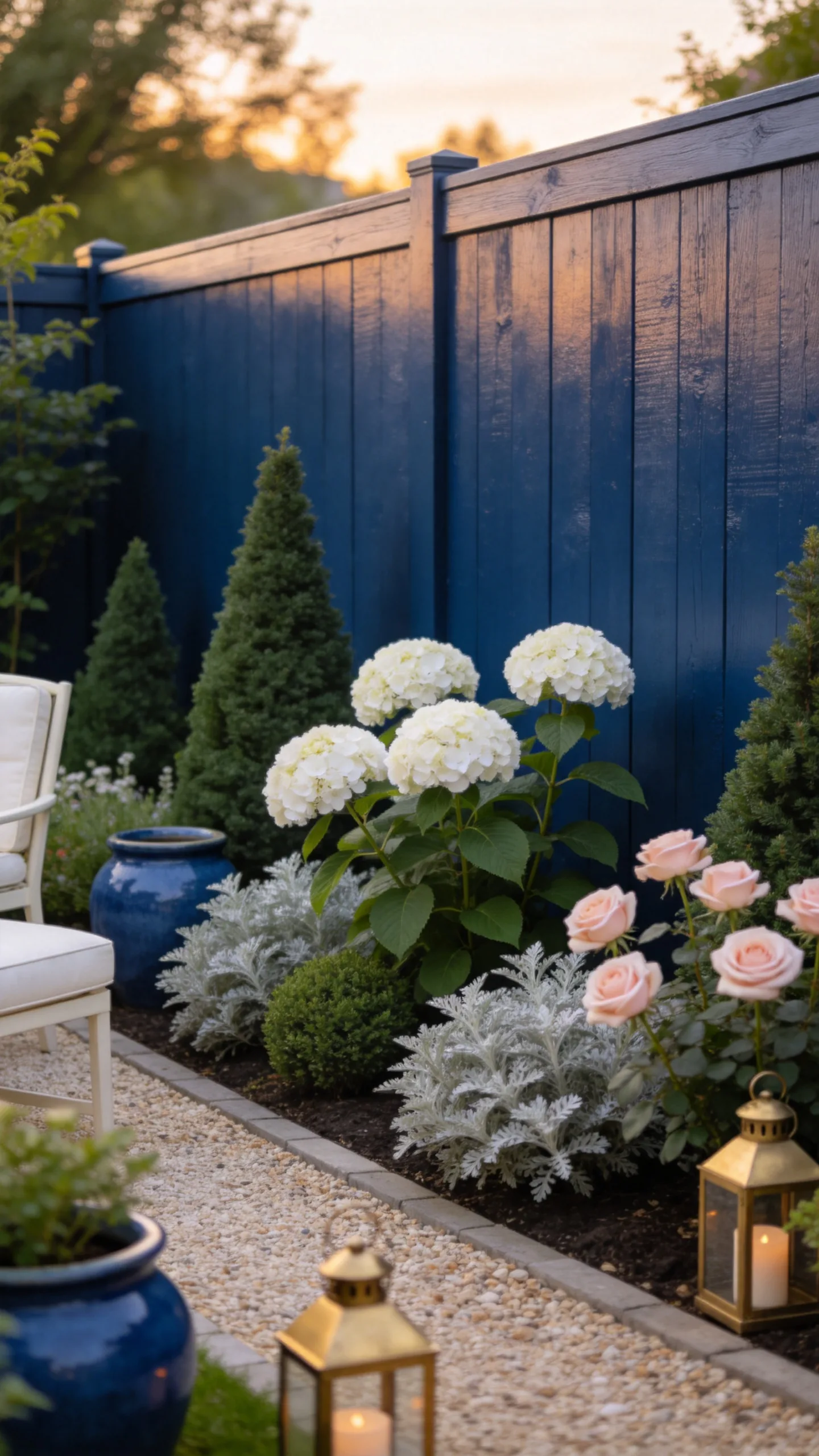
Navy blue adds color while still feeling classic and controlled. It looks polished behind white hydrangeas, clipped evergreens, silver foliage, pale pink roses, and cream outdoor furniture. In the evening, navy can feel softer than black but still provides strong contrast.
This is a good fence painting idea for a backyard dining area or a formal planting bed. Pair navy with gravel paths, blue ceramic pots, or brass-toned lanterns for a cohesive look. If your yard is very shaded, test the shade first because deep navy can read almost black in low light.
10. Soft Blush Fence for a Flower-Filled Corner
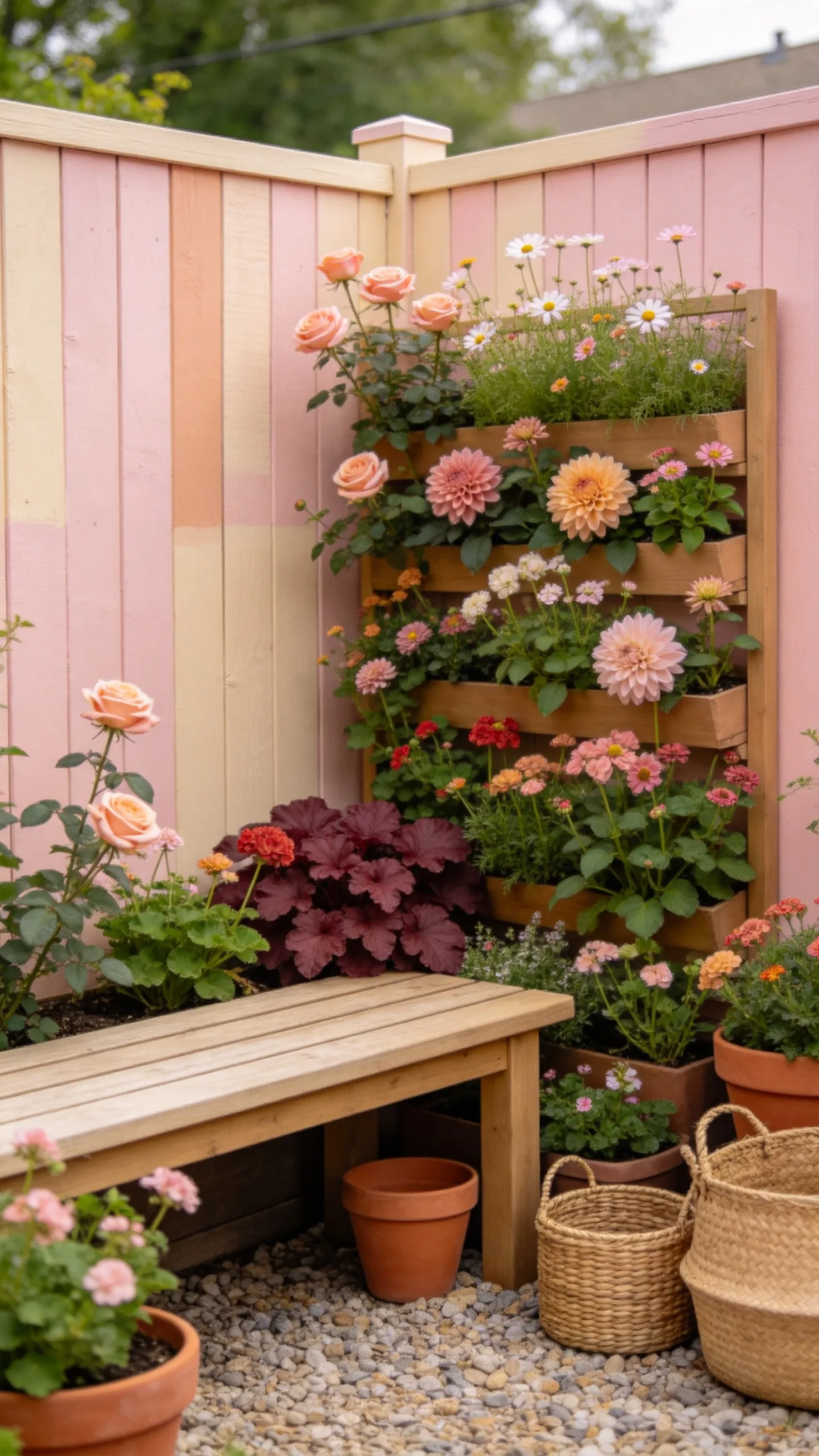
A soft blush fence can add warmth behind floral planting without becoming too bright. It works well with roses, cosmos, dahlias, peonies, geraniums, and burgundy foliage. Choose a muted blush with beige or clay undertones rather than a candy pink for a more garden-friendly finish.
This color is especially effective on a small section of fence behind a bench, potting table, or container display. Keep the surrounding materials natural with wood, terracotta, gravel, and woven baskets. A blush backdrop can make a neglected corner feel intentional and photo-ready without painting the entire yard.
11. Olive Green Fence for Edible Garden Beds
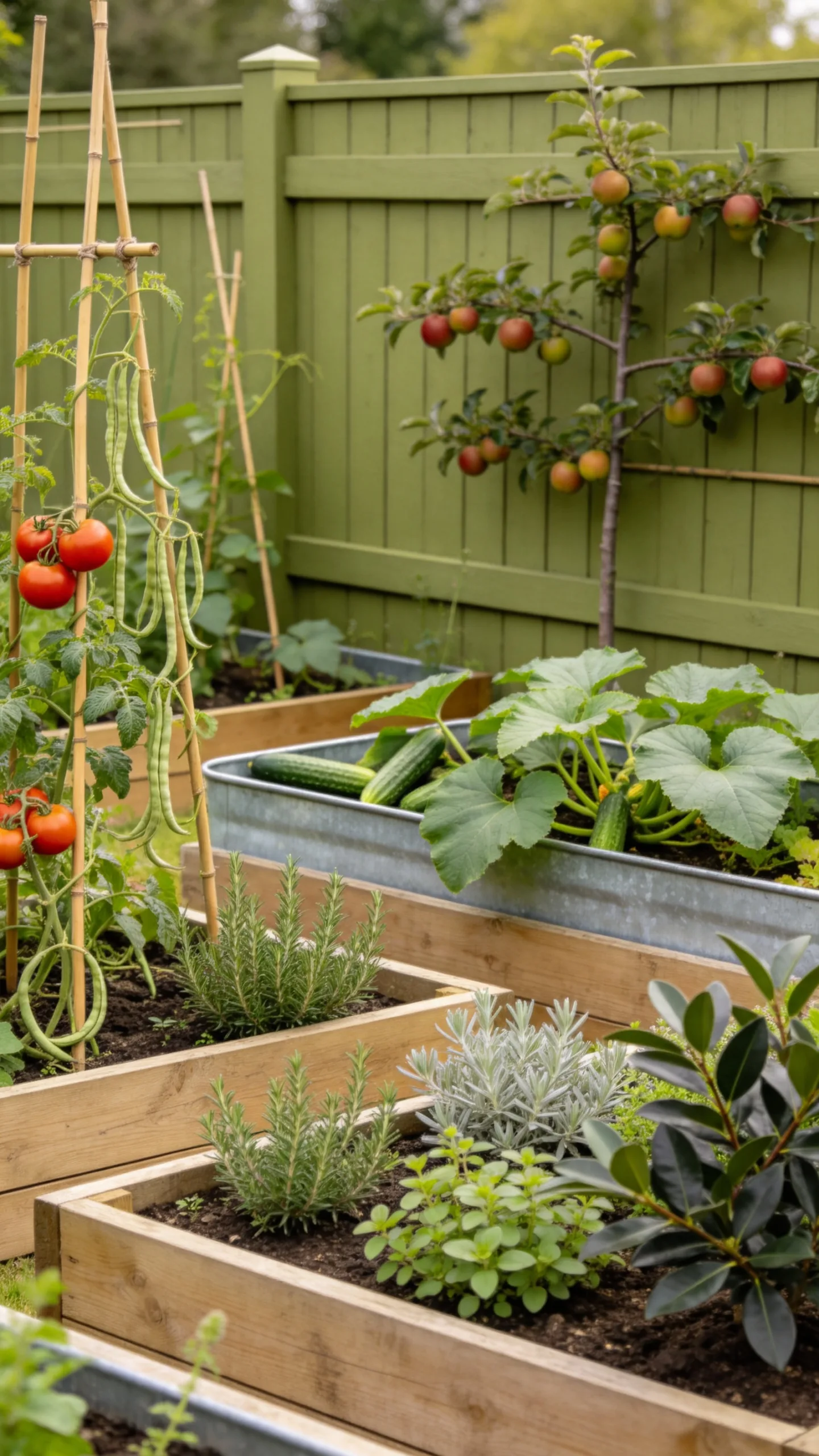
Olive green is a strong choice for vegetable gardens, herb beds, and productive backyard spaces. It pairs well with raised timber beds, galvanized troughs, cane supports, espalier fruit trees, and herbs such as rosemary, sage, oregano, and bay.
Because olive has a warm, earthy undertone, it does not compete with edible planting or bright produce. Use it behind tomatoes, beans, cucumbers, or vertical trellises to create a tidy backdrop. It also helps a working garden feel more styled while still practical and easy to maintain.
12. Pale Gray Fence for a Light Neutral Update
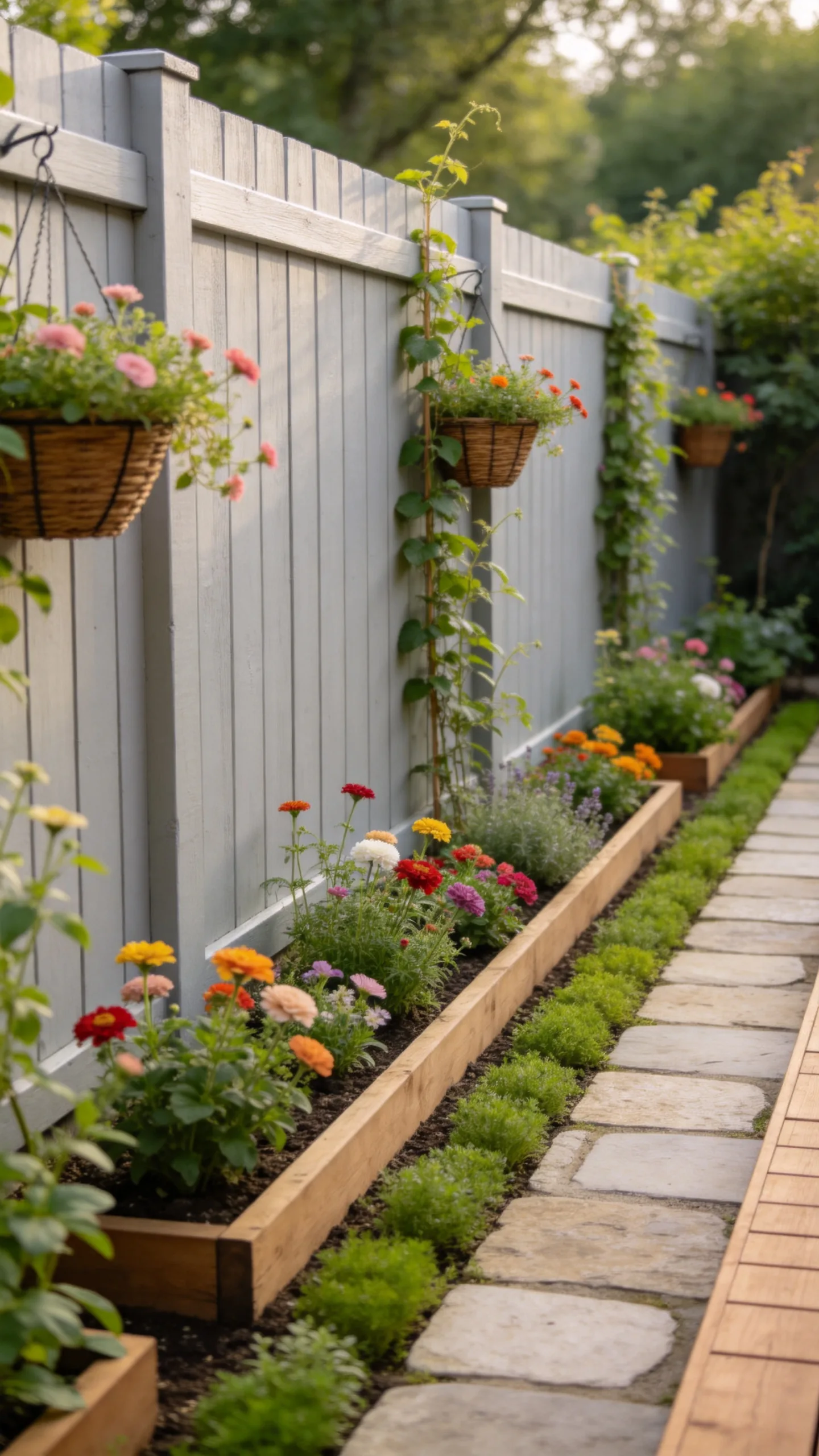
Pale gray is a versatile fence color if you want a cleaner look but do not want bright white. It suits both traditional and modern gardens and works with stone paving, concrete patios, timber decks, and mixed planting beds. Pale gray can also make colorful flowers appear more saturated.
For small backyards, choose a warm pale gray to avoid a cold, flat look. Add climbing plants, hanging baskets, or narrow border planting to soften the surface. This shade is useful when you want the fence to look fresh without becoming the main feature.
13. Chocolate Brown Fence for a Natural Timber Look
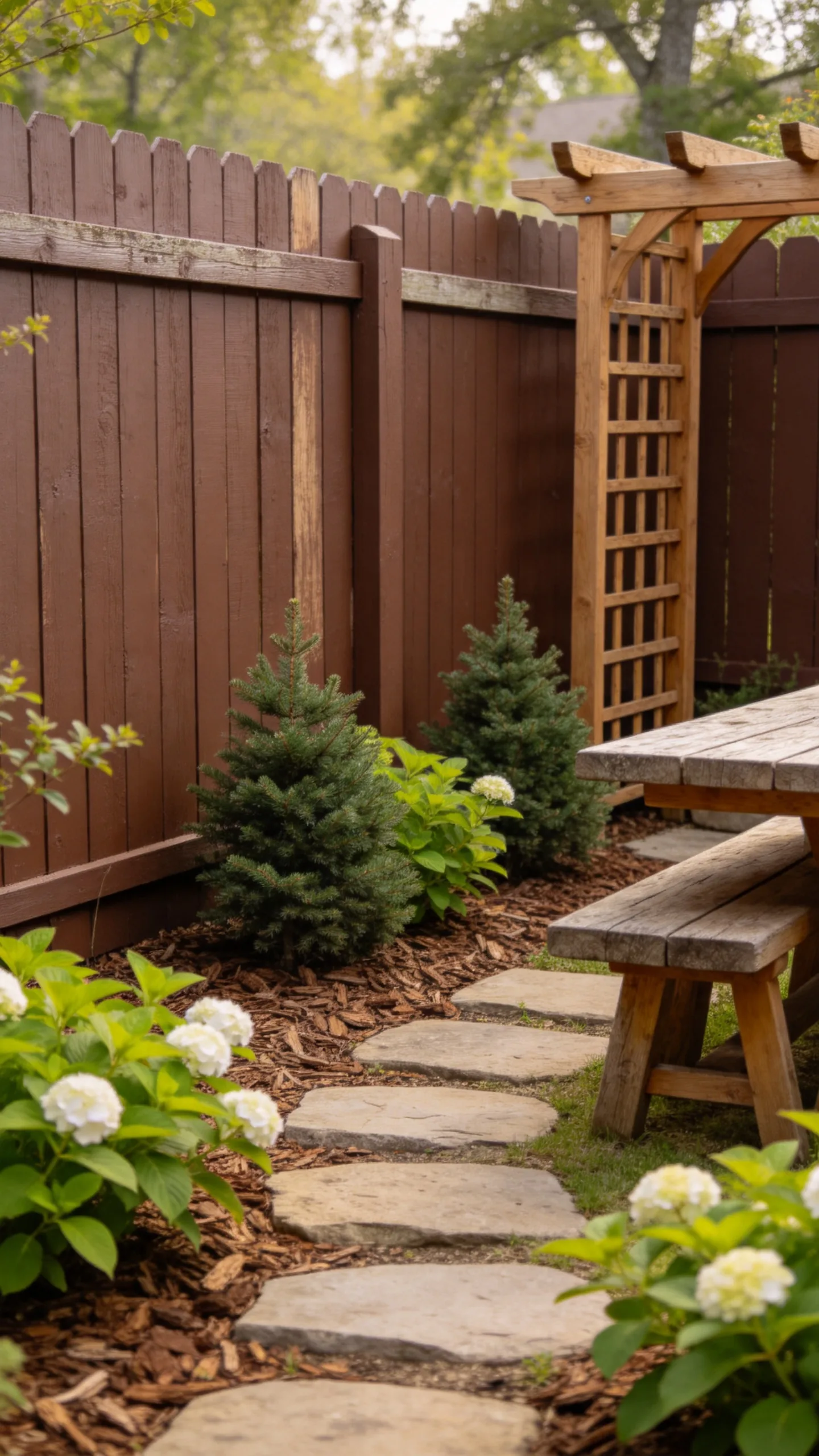
Chocolate brown paint or opaque stain can refresh an old fence while keeping a natural, earthy appearance. It works well with woodland planting, bark mulch, stepping stones, evergreen shrubs, and rustic garden furniture. This shade is also forgiving on fences that have weathered unevenly.
Use chocolate brown if you want the fence to support the garden rather than dominate it. It makes a good backdrop for bright green leaves, white flowers, and coppery autumn foliage. For a cohesive finish, repeat the color on a shed door, raised bed exterior, or wooden trellis.
14. Mustard Yellow Fence Accent for a Sunny Feature Wall
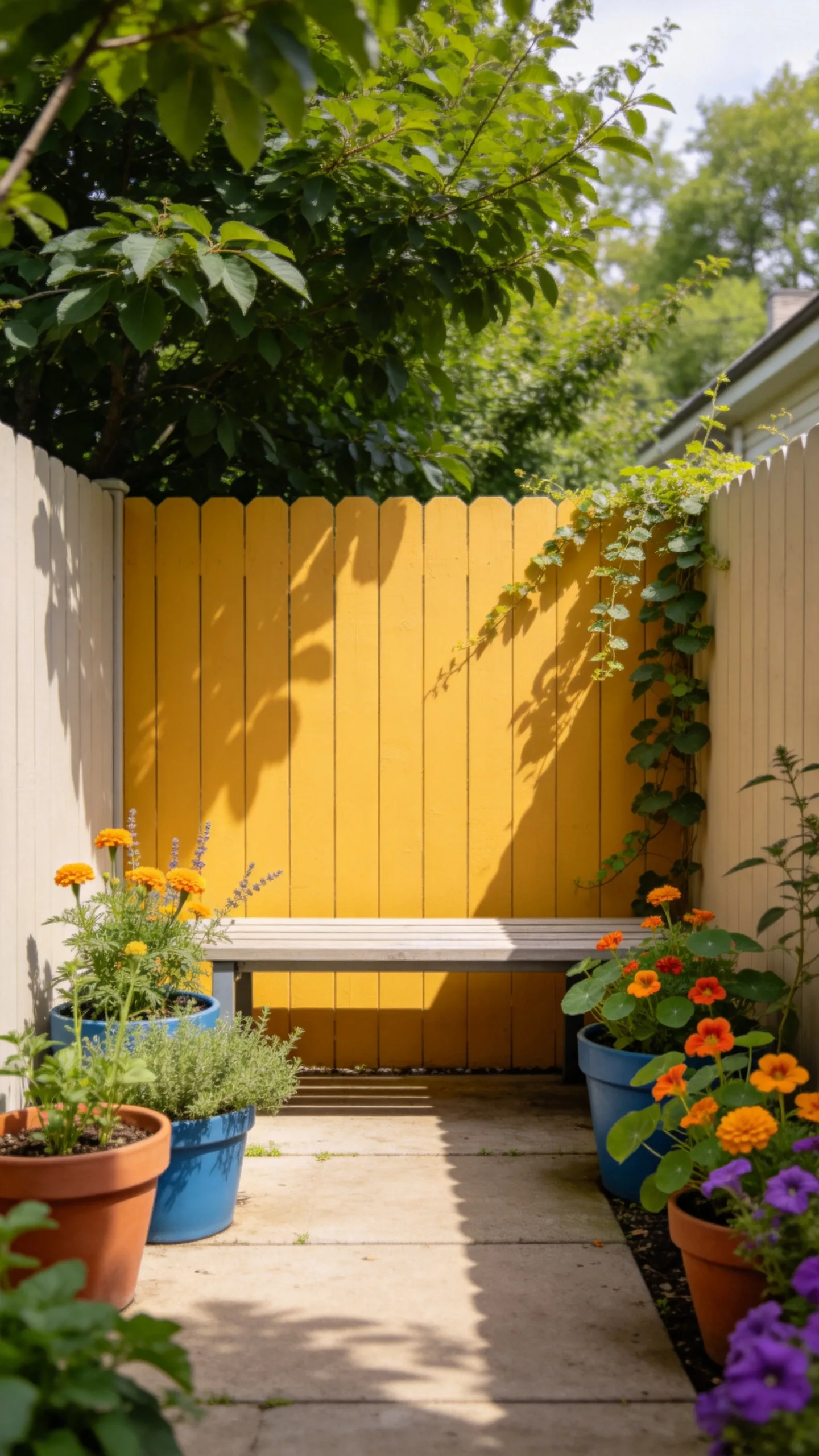
Mustard yellow can turn one fence section into a cheerful focal point, especially around a seating nook, play area, or container garden. It pairs well with deep green foliage, terracotta pots, blue planters, and flowers in purple, burgundy, or white.
Because yellow is visually strong, use it as an accent rather than across every boundary unless your space can handle bold color. Paint the fence behind a bench or outdoor shelf, then add potted herbs, marigolds, nasturtiums, or trailing plants nearby. A muted mustard is easier to coordinate than a bright lemon shade.
15. Whitewashed Fence for a Weathered Garden Style
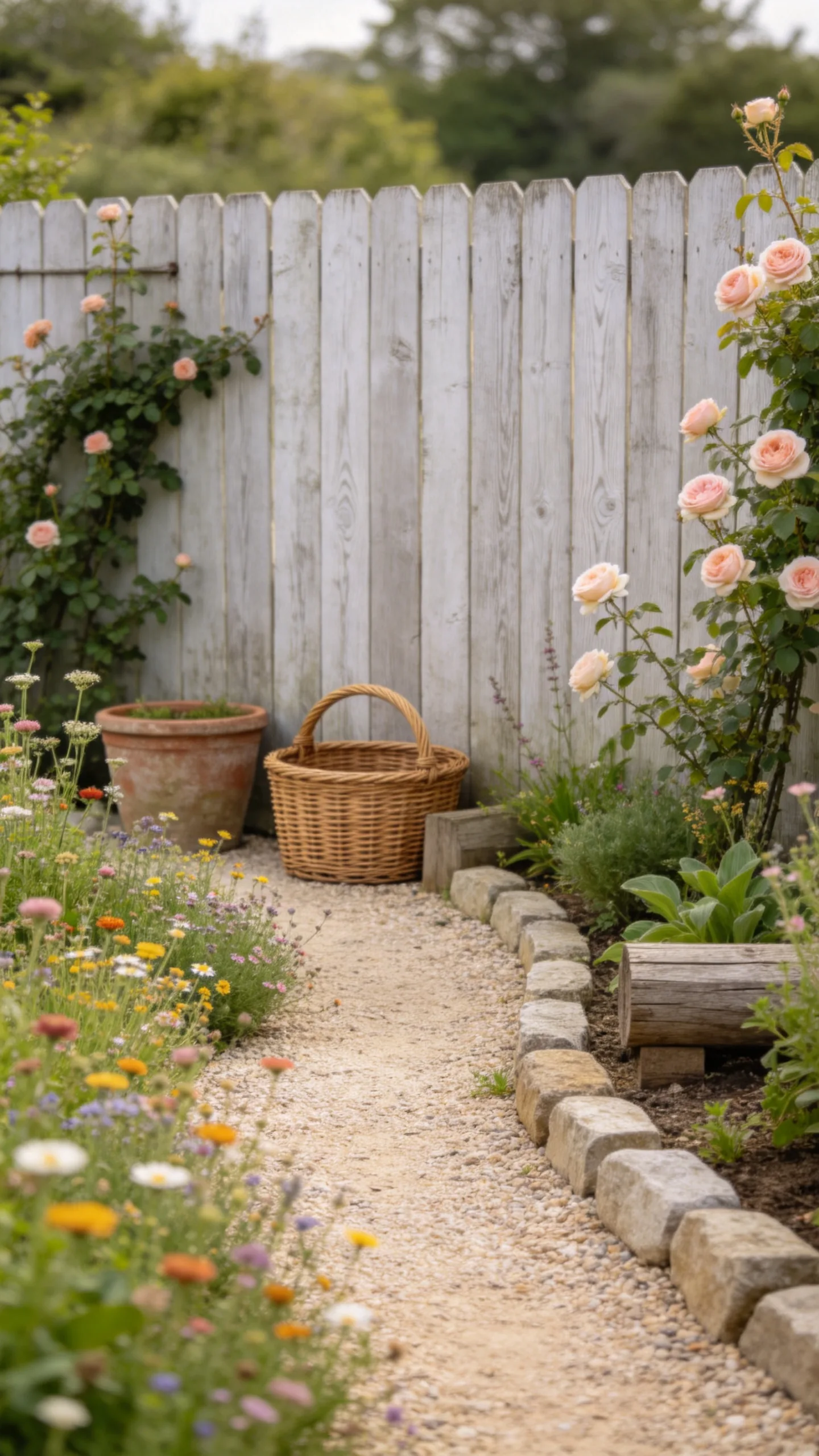
A whitewashed fence gives a softer, aged look than solid white paint. It is useful for cottage gardens, coastal yards, and informal spaces with gravel paths, wildflower borders, climbing roses, or rustic planters. The finish allows some wood grain to show, which helps the fence feel less stark.
This idea works best on timber that is in decent condition and properly cleaned before painting. Use an exterior whitewash stain or diluted exterior paint if the product allows it, and test on a hidden board first. Pair the finish with natural textures such as wicker, stone, and untreated wood.
16. Deep Burgundy Fence for Rich Garden Color
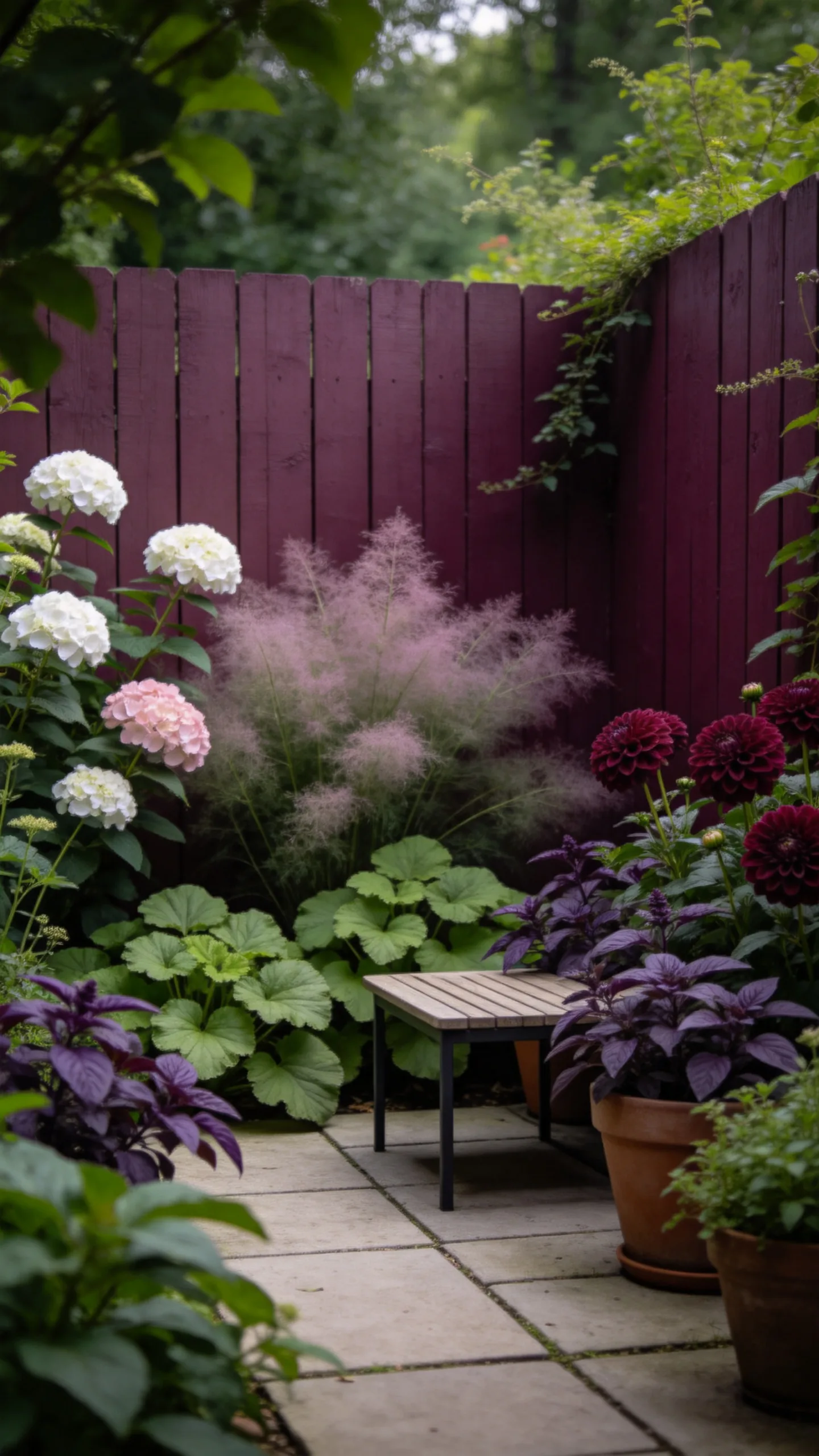
Deep burgundy creates a dramatic backdrop for green foliage and pale flowers. It pairs especially well with dark-leaved plants such as heuchera, smoke bush, purple basil, and burgundy dahlias, while also making white or blush blooms stand out.
Use burgundy in a defined garden area where you want a moody, enclosed feel, such as behind a small seating set or along a flower border. Since it is a strong color, balance it with neutral paving, simple pots, and plenty of greenery. A brown-based burgundy will usually feel more natural outdoors than a bright red-purple.
17. Sky Blue Fence for a Playful Backyard Border
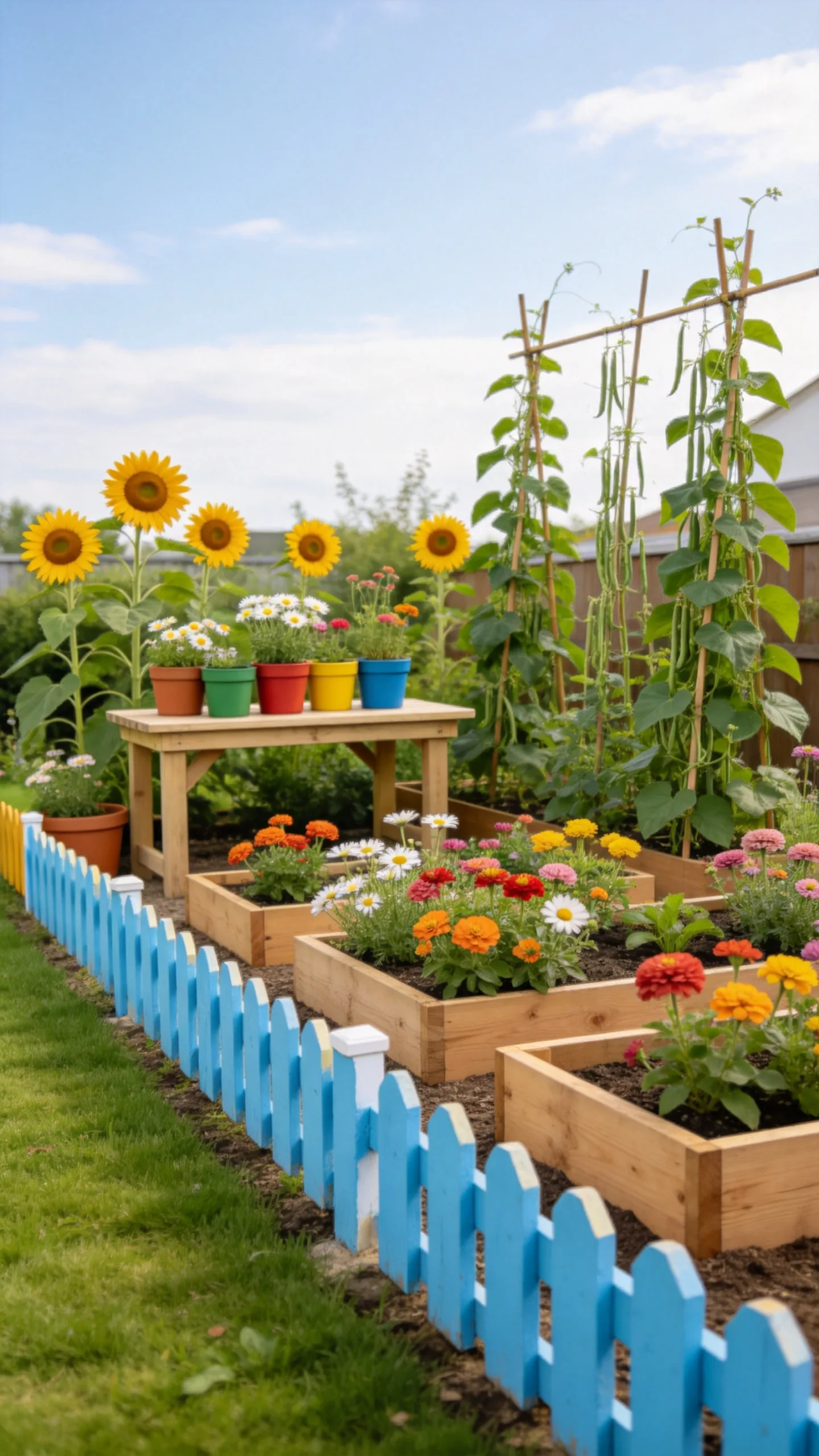
Sky blue paint can make a backyard feel bright and cheerful, especially when used with white trim, colorful containers, or a family garden space. It works nicely behind sunflowers, daisies, zinnias, geraniums, and edible beds with climbing beans or peas.
For a grown-up version, choose a softened sky blue rather than a very saturated shade. Use it on a fence near a lawn, potting bench, or children’s garden area. Add natural wood raised beds or neutral planters so the blue feels fresh instead of overly themed.
18. Greige Fence for a Subtle Designer Neutral
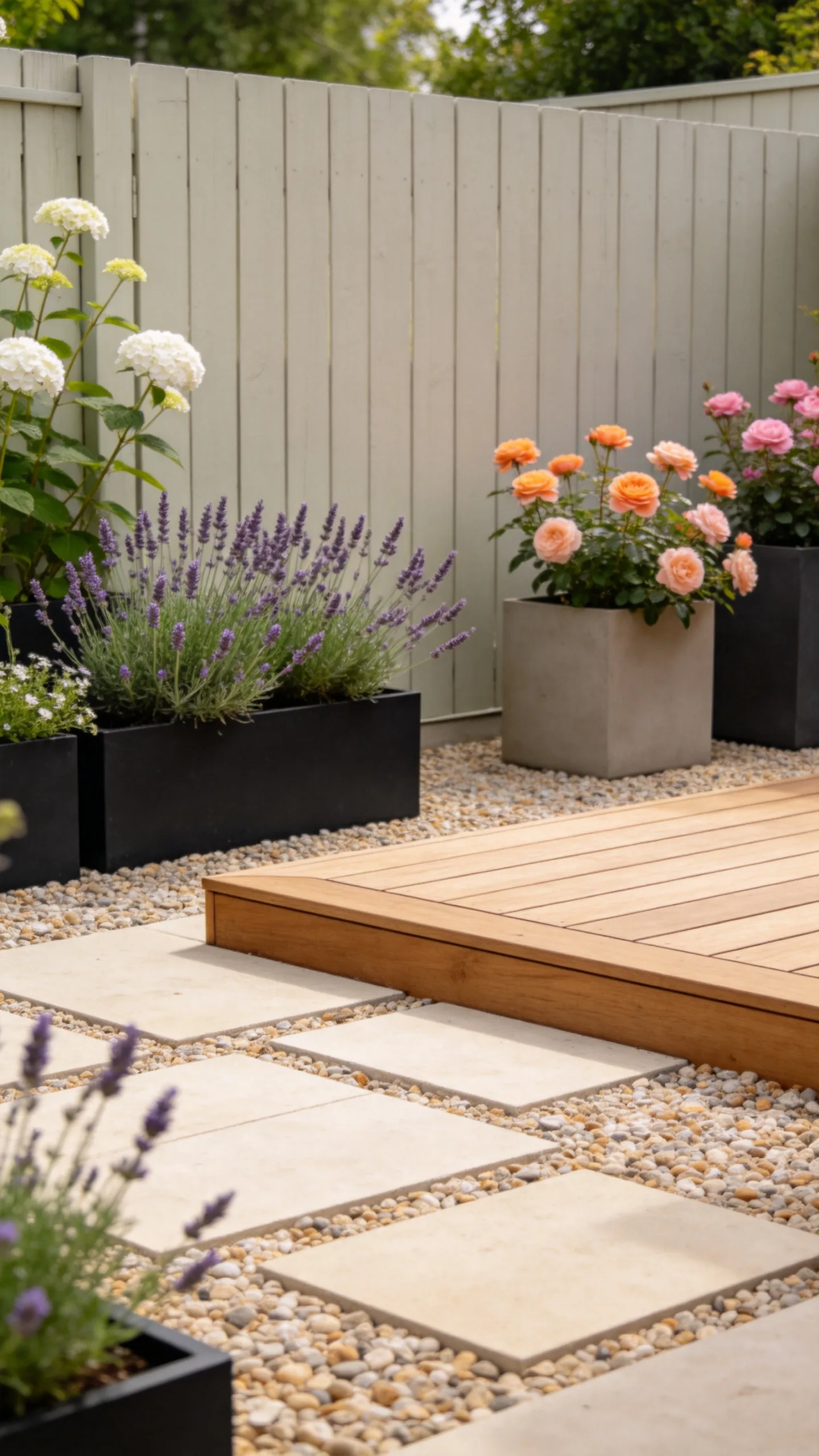
Greige, a mix of gray and beige, is a practical fence color for almost any backyard style. It looks good with limestone paving, pea gravel, timber decking, black planters, and soft planting schemes. It is less harsh than gray and less yellow than beige.
This shade is useful if you want to refresh a fence before deciding on larger garden changes. It supports many planting colors, from lavender and white to orange and pink. For added depth, use darker greige on posts or nearby planters while keeping the main fence panels lighter.
19. Emerald Green Fence for a Jewel-Tone Statement
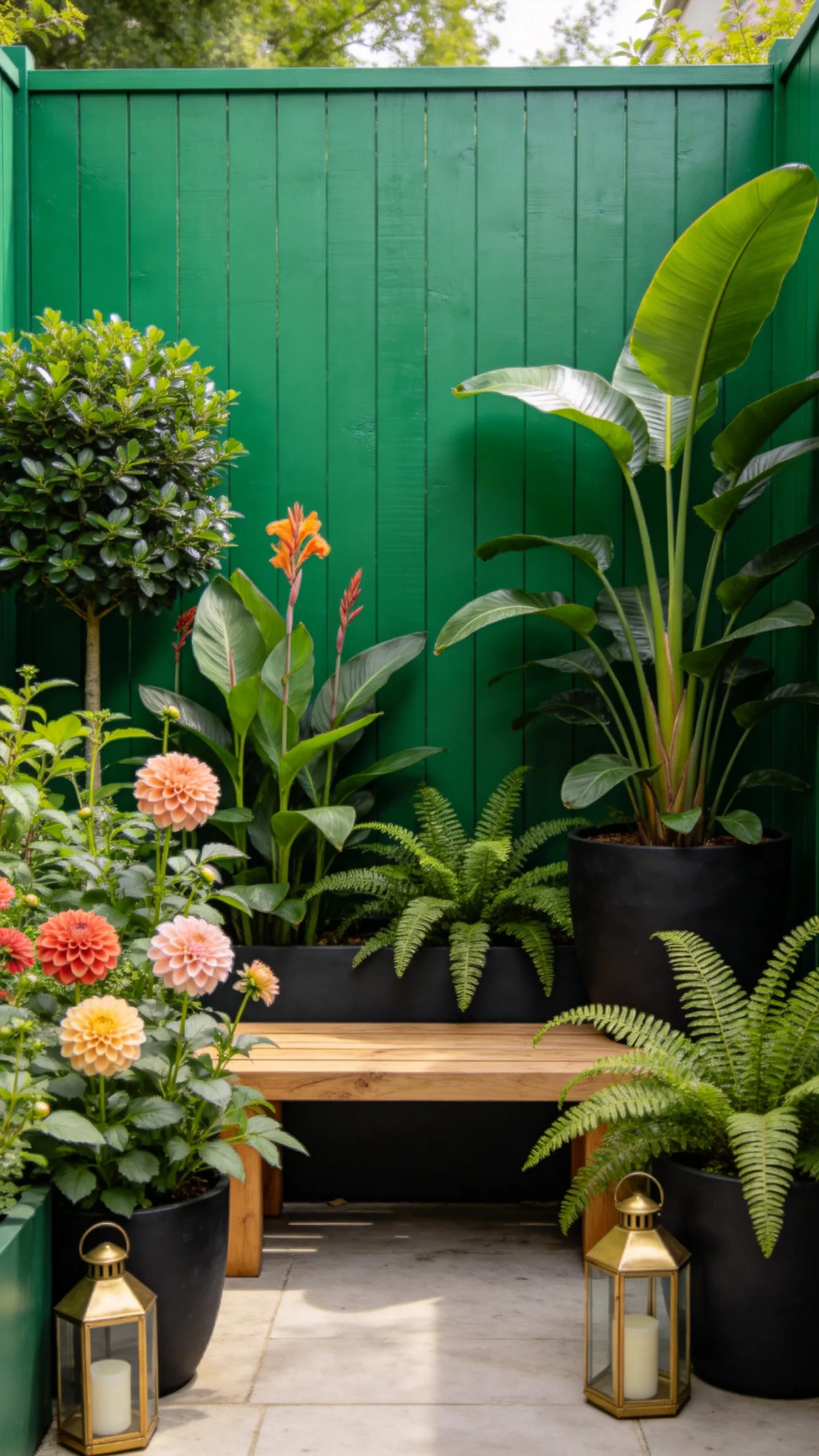
Emerald green is a bold fence painting idea for gardeners who want strong color without moving away from a plant-inspired palette. It looks striking behind tropical-style planting, glossy-leaved shrubs, cannas, dahlias, ferns, and large potted plants.
Use emerald on a feature fence, courtyard wall, or the section behind an outdoor sofa. It can make a small seating area feel lush and enclosed, especially when paired with black, brass, or natural wood accents. Keep flower colors limited nearby so the space does not become visually crowded.
20. Soft Lavender Fence for a Romantic Garden Edge
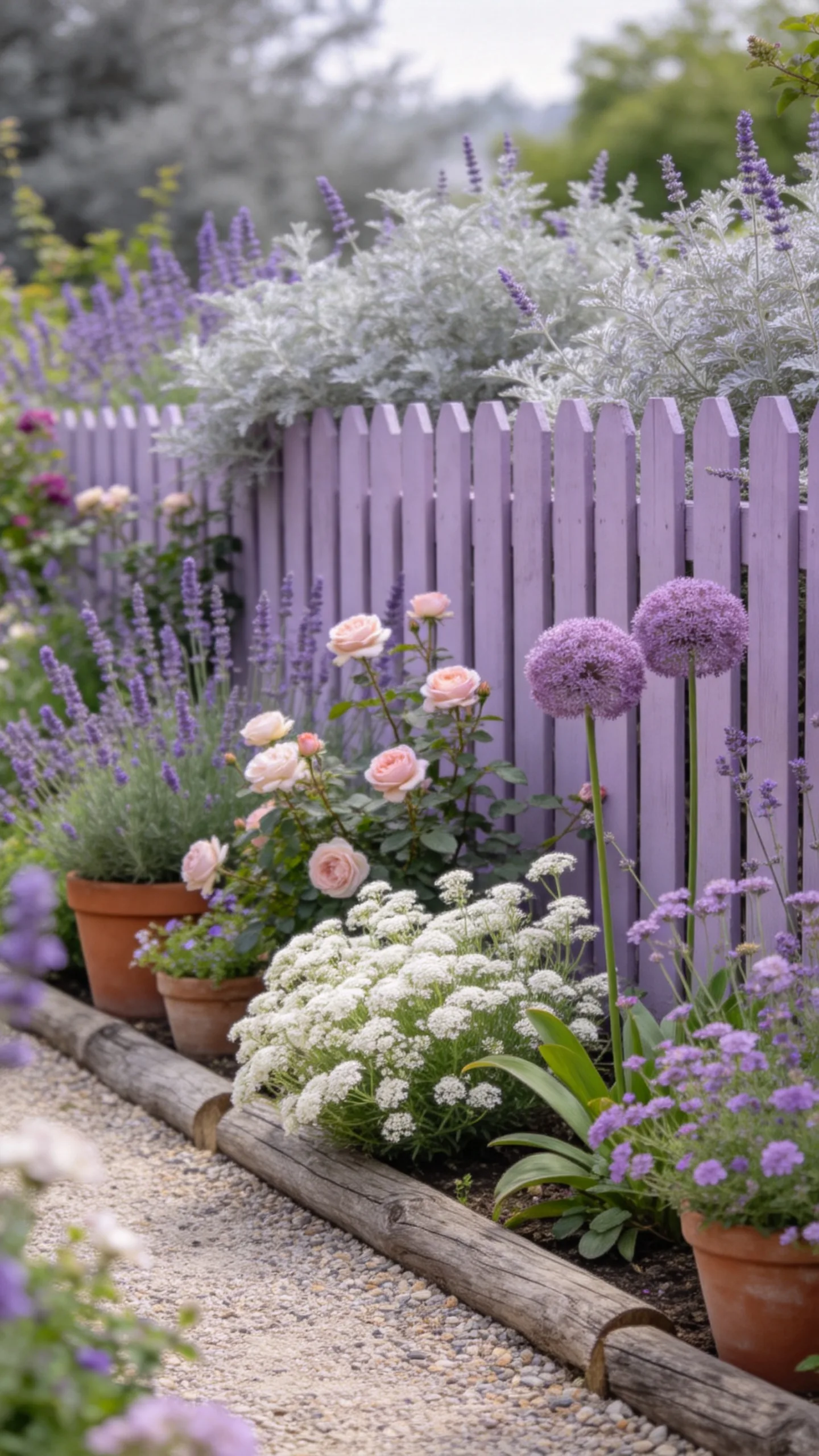
Soft lavender paint can add a gentle romantic touch to a backyard fence. It works well with silver foliage, catmint, roses, verbena, alliums, and white flowering plants. The color feels especially suited to a small flower garden, side yard, or fence behind a potting bench.
Choose a dusty lavender with gray undertones so it blends with outdoor materials. Use terracotta pots, gravel paths, and natural timber to ground the pastel color. This is a good way to bring personality to a garden without using a very bright or high-contrast shade.
21. Striped Fence Panels for a Custom Painted Look
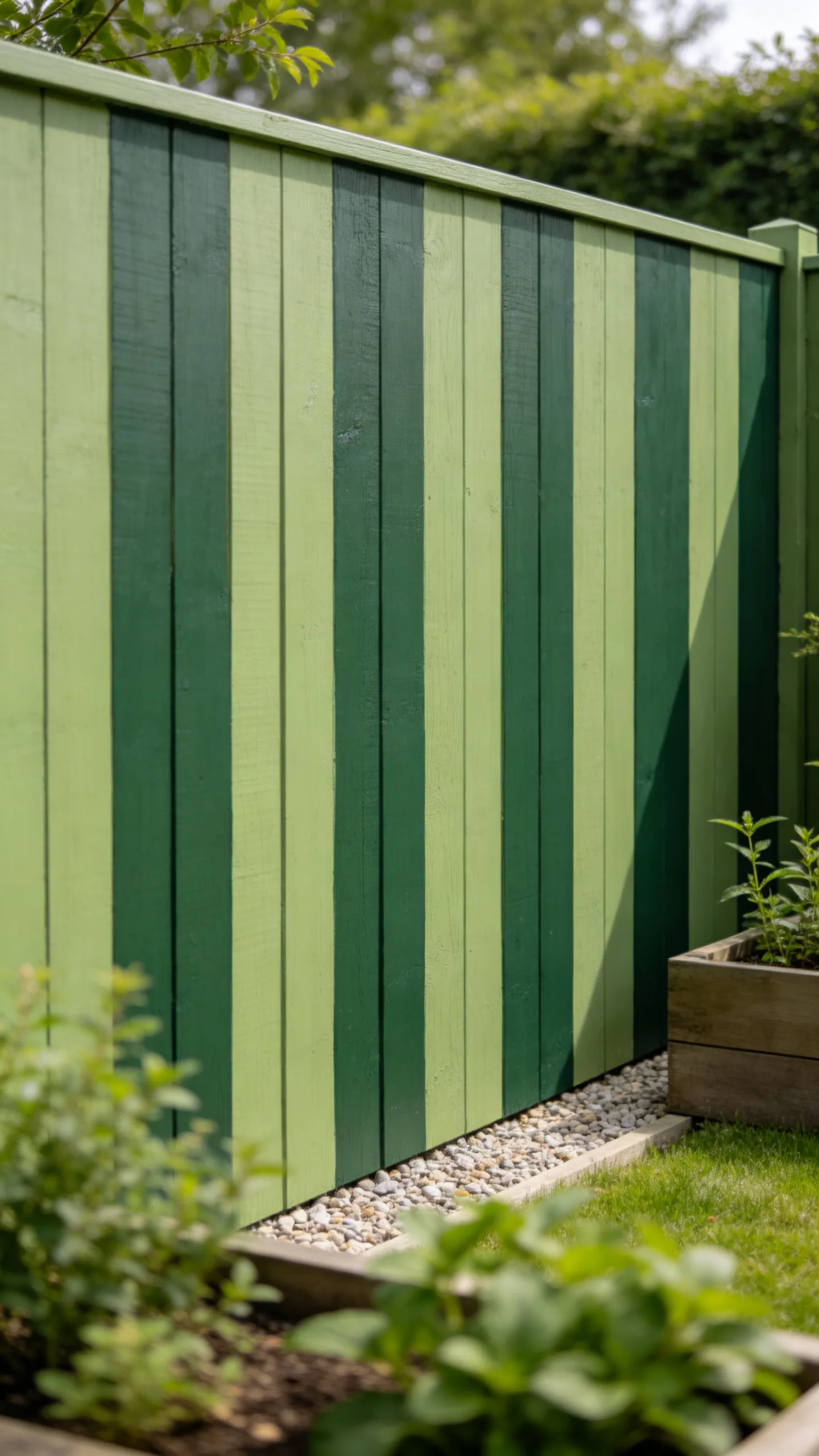
Painted stripes can make a plain fence feel custom, especially when you use two related colors such as sage and forest green, pale gray and charcoal, or cream and beige. Vertical stripes can make a short fence feel taller, while horizontal stripes can visually widen a narrow garden.
Keep the stripe widths simple and repeatable so the design looks intentional. This idea works best on smooth fence panels or boards with clean edges. Use painter’s tape, a level, and exterior paint, then limit nearby decor so the striped fence remains the main feature.
22. Black Fence With Natural Wood Gate Contrast
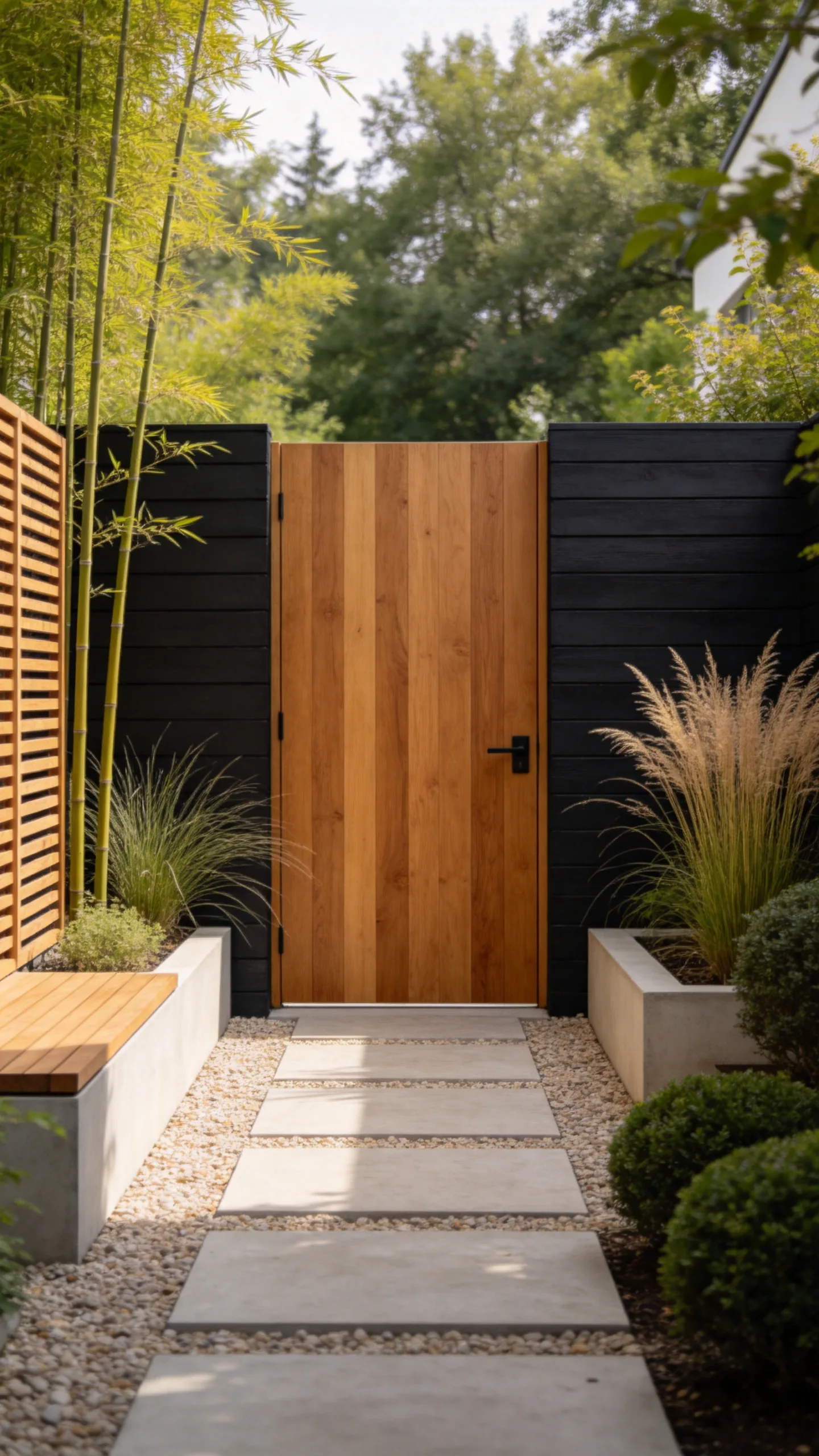
Painting the main fence black while leaving the gate or a framed section in natural wood creates a strong contrast. This works well in modern gardens with gravel, concrete pavers, slatted screens, raised planters, or architectural plants such as bamboo, grasses, and clipped shrubs.
The natural wood section helps warm up the dark paint and creates a clear focal point. Use an exterior wood oil or stain on the gate so it feels finished rather than unfinished. This idea is especially useful when you want to update the fence without losing all of the timber character.
23. Color-Blocked Fence Behind a Container Garden
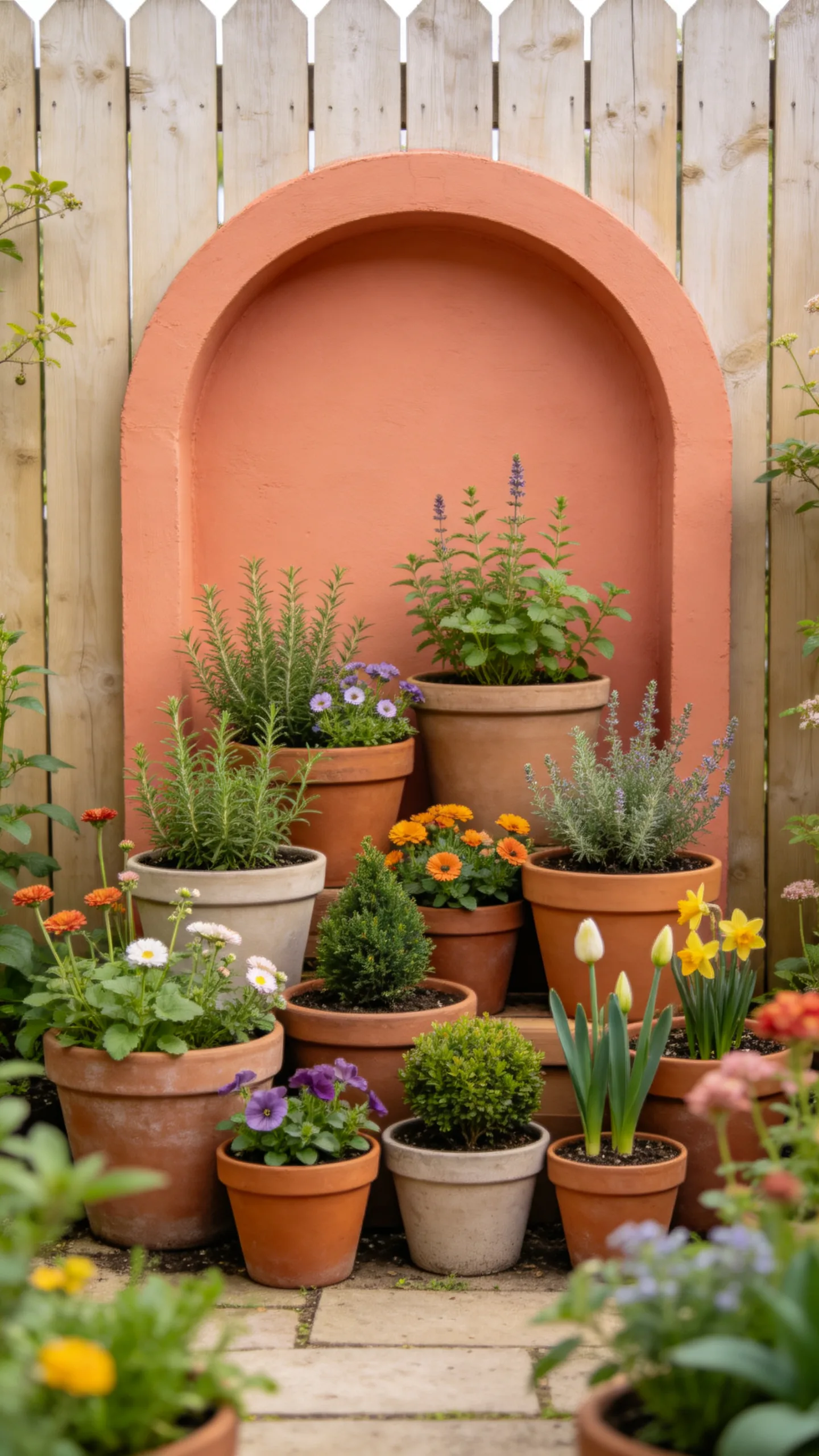
Color blocking lets you use a bold fence color in a controlled way. Paint a rectangular or arched section behind a group of containers in a shade such as terracotta, teal, mustard, blush, or navy. Leave the rest of the fence neutral so the colorful area frames the plants like an outdoor display.
This is a smart option for renters or small-space gardeners who want impact without painting every panel. Place pots of different heights in front of the painted block, using herbs, annual flowers, dwarf shrubs, or seasonal bulbs. The painted shape gives the container grouping structure and makes even a small patio corner feel planned.