Metal fencing can make a garden feel cleaner, more structured, and more private without relying on bulky walls or high-maintenance materials. Steel panels, slim posts, welded frames, and modern horizontal lines work especially well around patios, side yards, front gardens, raised beds, and compact backyards where every boundary needs to look intentional.
These metal fence ideas focus on practical layouts, visible design details, and outdoor use cases so you can plan a fence that supports planting areas, walkways, privacy, shade, and curb appeal.
1. Horizontal Steel Slat Fence for a Clean Backyard Boundary
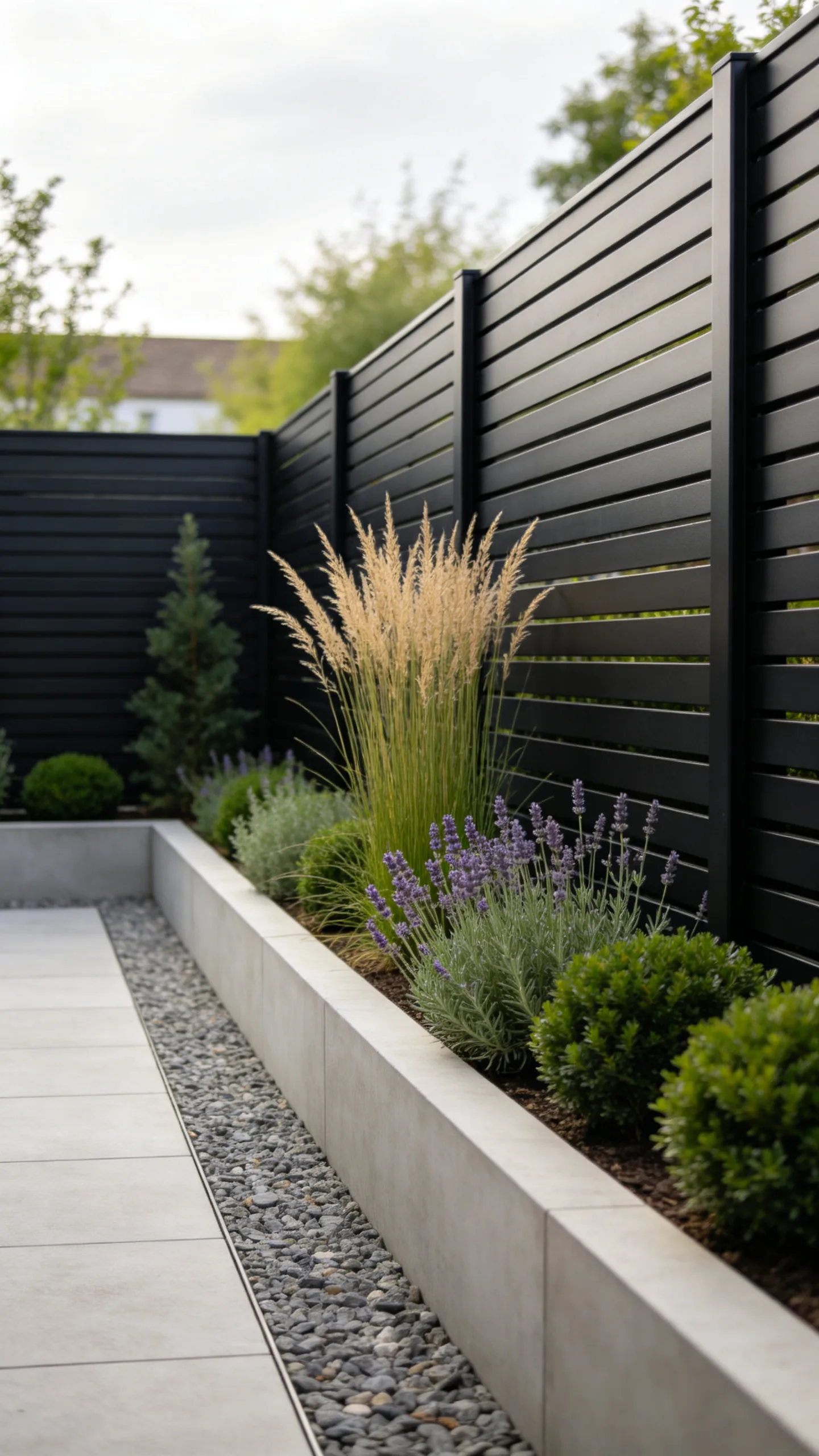
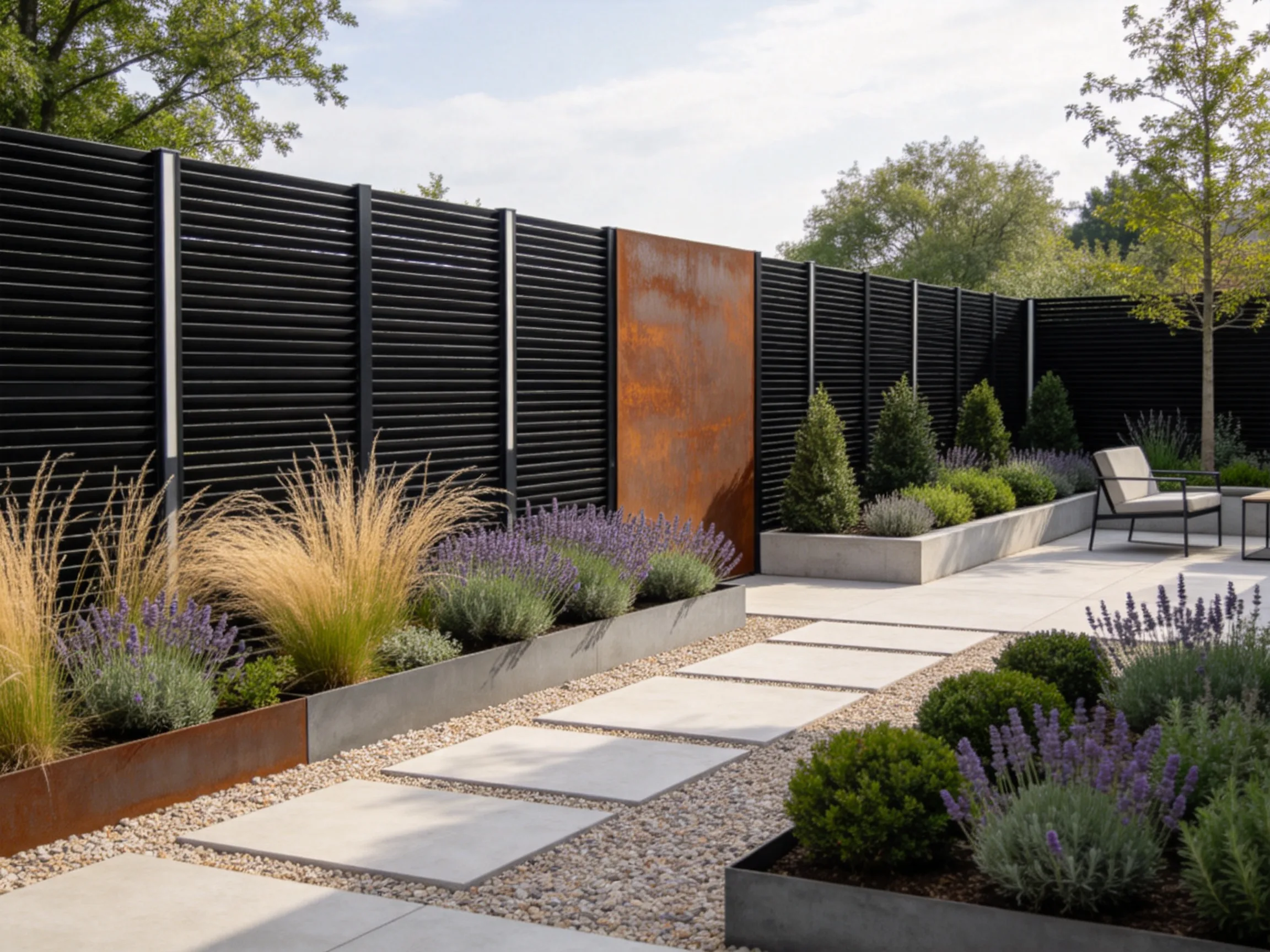
A horizontal steel slat fence is one of the most direct ways to create a modern garden edge. The long lines visually widen a narrow yard, which makes this style useful for compact patios, townhouse gardens, and side yards where vertical fencing can feel boxed in.
Choose powder-coated steel slats in black, charcoal, bronze, or warm gray for a finished look that pairs well with gravel paths, concrete pavers, raised planters, and simple lawn panels. Wider gaps allow air and light to pass through, while tighter spacing creates more privacy around seating areas or dining zones.
For planting, soften the strong lines with ornamental grasses, rosemary, lavender, dwarf pittosporum, or compact evergreens along the base. Leave enough space between the fence and planting bed for trimming, watering, and checking drainage after heavy rain.
2. Corrugated Steel Panel Fence with Dark Posts
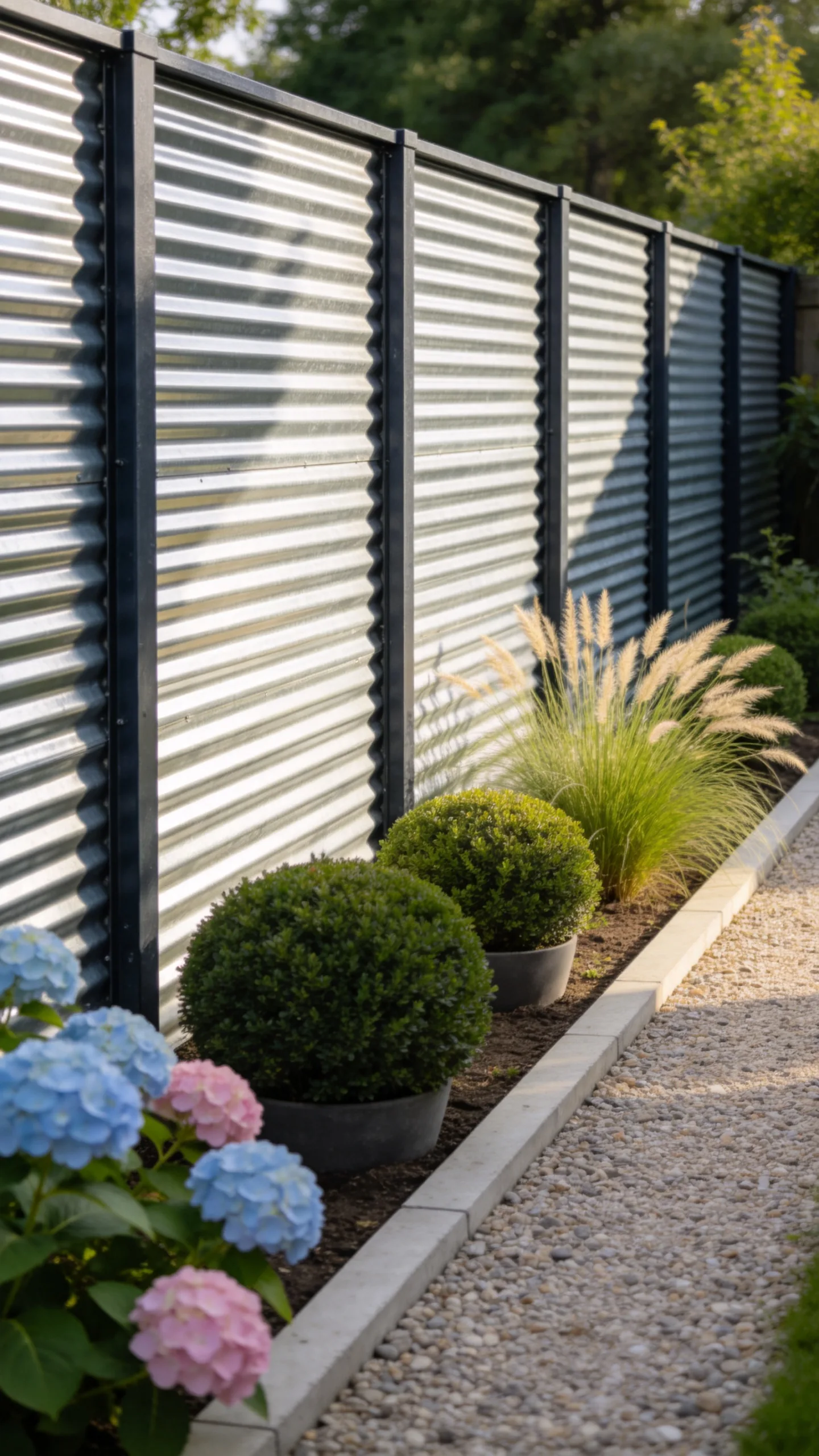
Corrugated steel panels add texture without needing decorative trim. The ridged surface catches light throughout the day, which can make a simple fence feel more architectural around a backyard, utility area, or garden storage zone.
Use dark steel posts to frame the panels and keep the design from looking industrial in the wrong way. Black or charcoal posts create a crisp outline, while galvanized panels give a brighter, more utilitarian finish. If the yard already has concrete, gravel, or metal edging, this fence can tie those hardscape elements together.
Because corrugated steel can feel visually strong, balance it with plants that have soft leaves or rounded forms. Try hydrangeas in partial shade, boxwood balls in containers, or clumping grasses in full sun, depending on your climate and exposure.
3. Black Steel Picket Fence for a Modern Front Garden
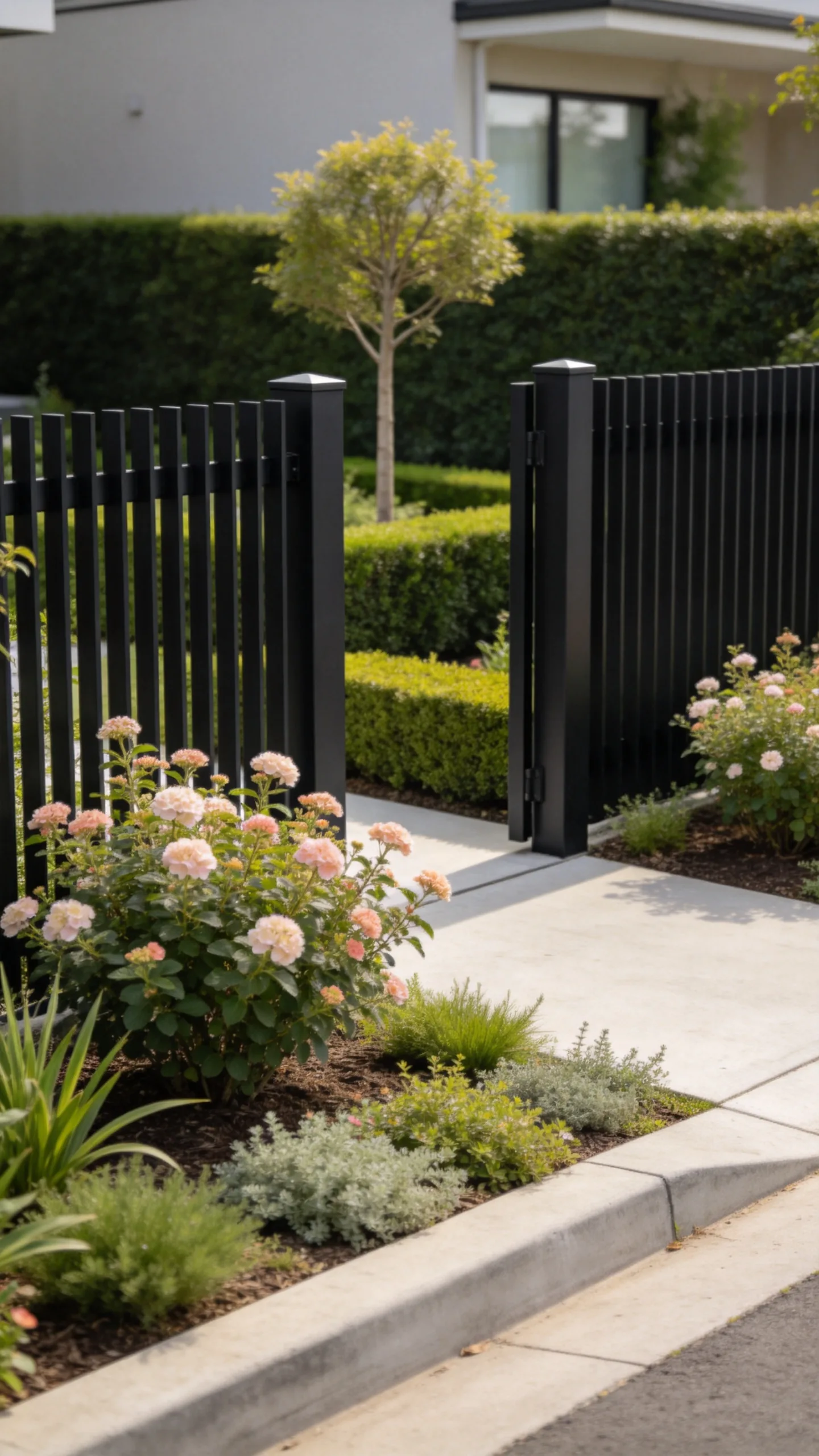
A black steel picket fence gives a front yard structure without hiding the garden. This is a strong choice when you want to define the property line, protect low planting beds, or guide visitors toward the front path while still keeping the landscape visible from the street.
For a modern look, choose simple square or flat-top pickets instead of ornate spear points. Slim steel posts and evenly spaced vertical bars work well with concrete walkways, brick paths, clipped hedges, and low flowering borders.
Plant in layers behind the fence so the design feels intentional. Use low groundcovers near the sidewalk, medium shrubs behind them, and one or two small ornamental trees where space allows. The open picket design keeps sunlight and airflow moving through the bed, which can make maintenance easier than with a solid privacy fence.
4. Steel Frame Fence with Horizontal Wood Inserts
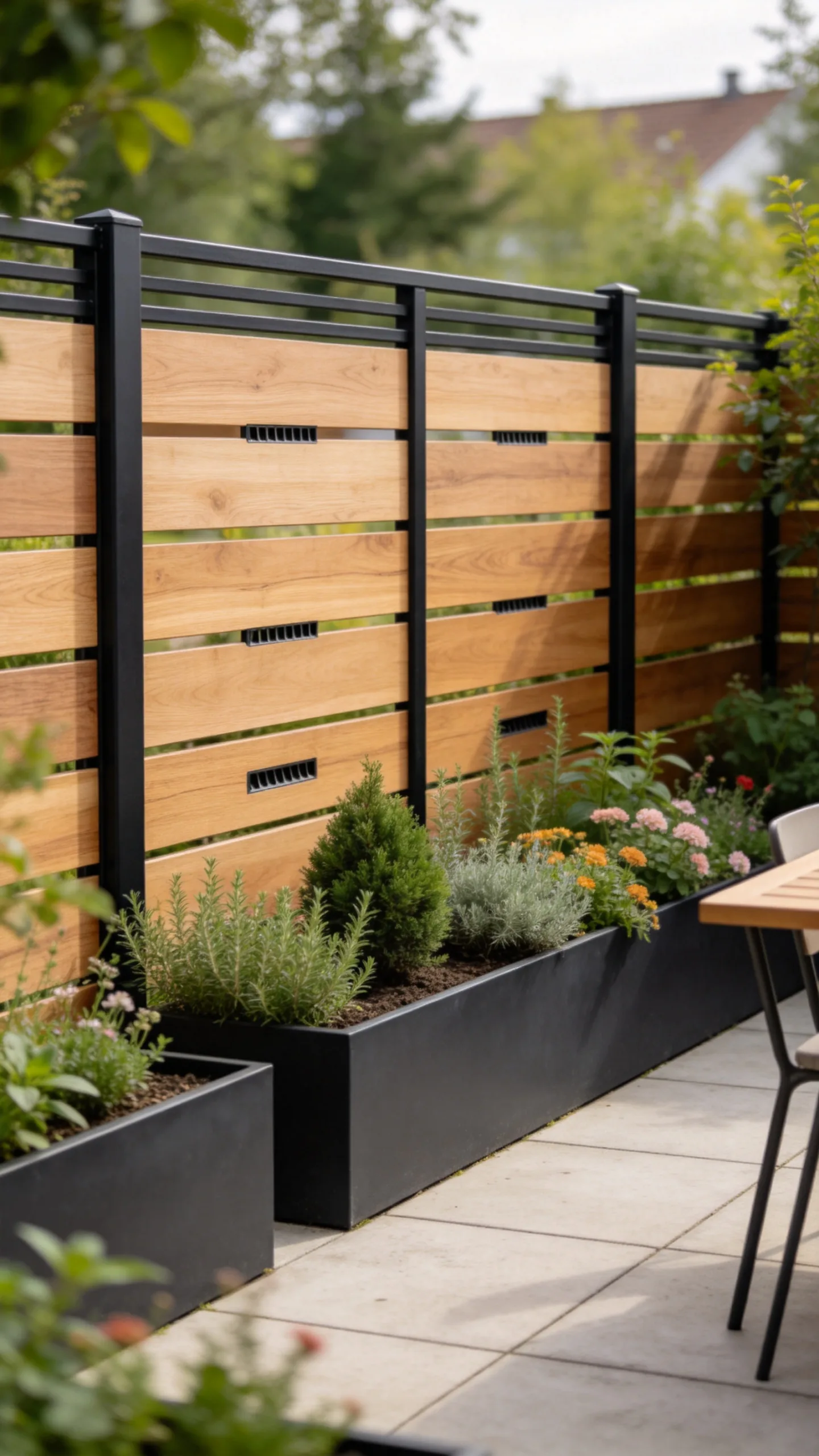
A steel frame with horizontal wood inserts combines the strength of metal with the warmth of timber. The steel posts and rails keep the fence looking clean and aligned, while the wood boards soften the overall effect for patios, decks, and garden seating areas.
This design is especially useful when you want a fence that matches both modern architecture and natural planting. Choose cedar, redwood, thermally modified wood, or another outdoor-rated lumber based on local availability and maintenance needs. The steel frame can be powder-coated black for contrast or a softer bronze tone for a warmer garden palette.
Use the fence as a backdrop for raised planters filled with herbs, dwarf shrubs, or seasonal flowers. Keep irrigation spray off the wood when possible, and leave small gaps between boards for drainage and ventilation.
5. Perforated Steel Privacy Screen Fence
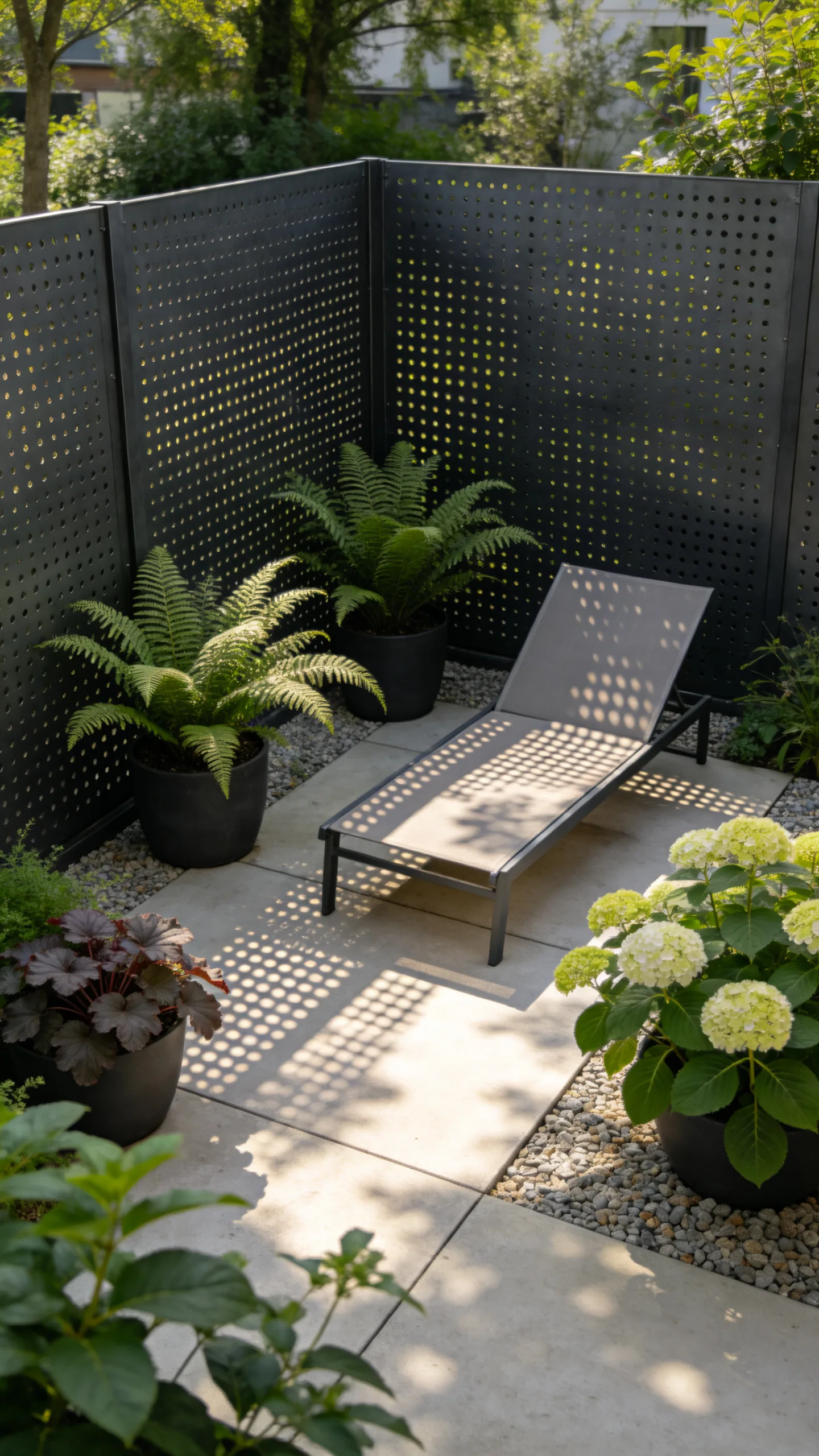
Perforated steel panels offer privacy while still allowing filtered light and airflow. This makes them useful around small patios, hot tubs, outdoor showers, balcony gardens, or side yards where a fully solid barrier would feel too heavy.
The perforation pattern can change the mood of the space. Small round holes look minimal and neat, while geometric cutouts can create decorative shadows on paving or planting beds. For the most flexible look, choose a simple pattern that will not compete with foliage or outdoor furniture.
Place shade-tolerant plants such as ferns, hostas, heuchera, or compact hydrangeas near perforated screens in partially shaded spots. In sunnier areas, pair the metal with gravel mulch, agave, yucca, lavender, or drought-tolerant grasses, depending on what grows well in your region.
6. Corten Steel Fence Panels for a Warm Rust Finish
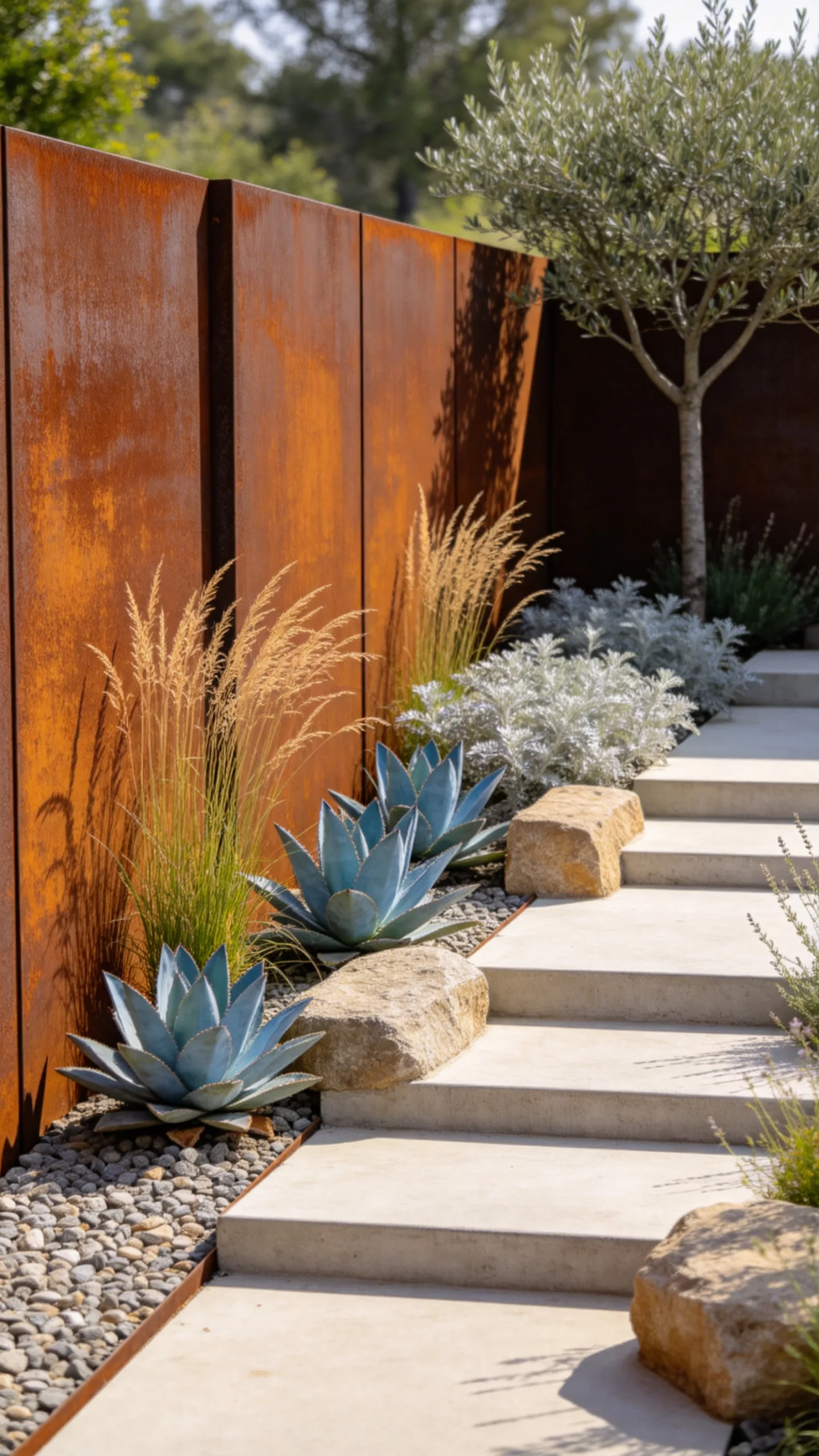
Corten steel panels develop a weathered rust-colored surface that looks especially striking with natural stone, gravel, desert planting, and modern garden beds. The warm color can make a metal fence feel less stark than black or gray steel.
This type of fence works well as a feature boundary behind ornamental grasses, olive trees in mild climates, sculptural succulents, or simple green hedges. The earthy finish creates strong contrast with silver foliage, blue-green leaves, and pale concrete pavers.
Before choosing Corten, consider placement carefully. Runoff can stain nearby paving or light-colored walls, especially while the patina is developing. Use gravel strips, planting beds, or dark stone at the base to make maintenance and drainage more forgiving.
7. Steel Mesh Fence with Climbing Plants
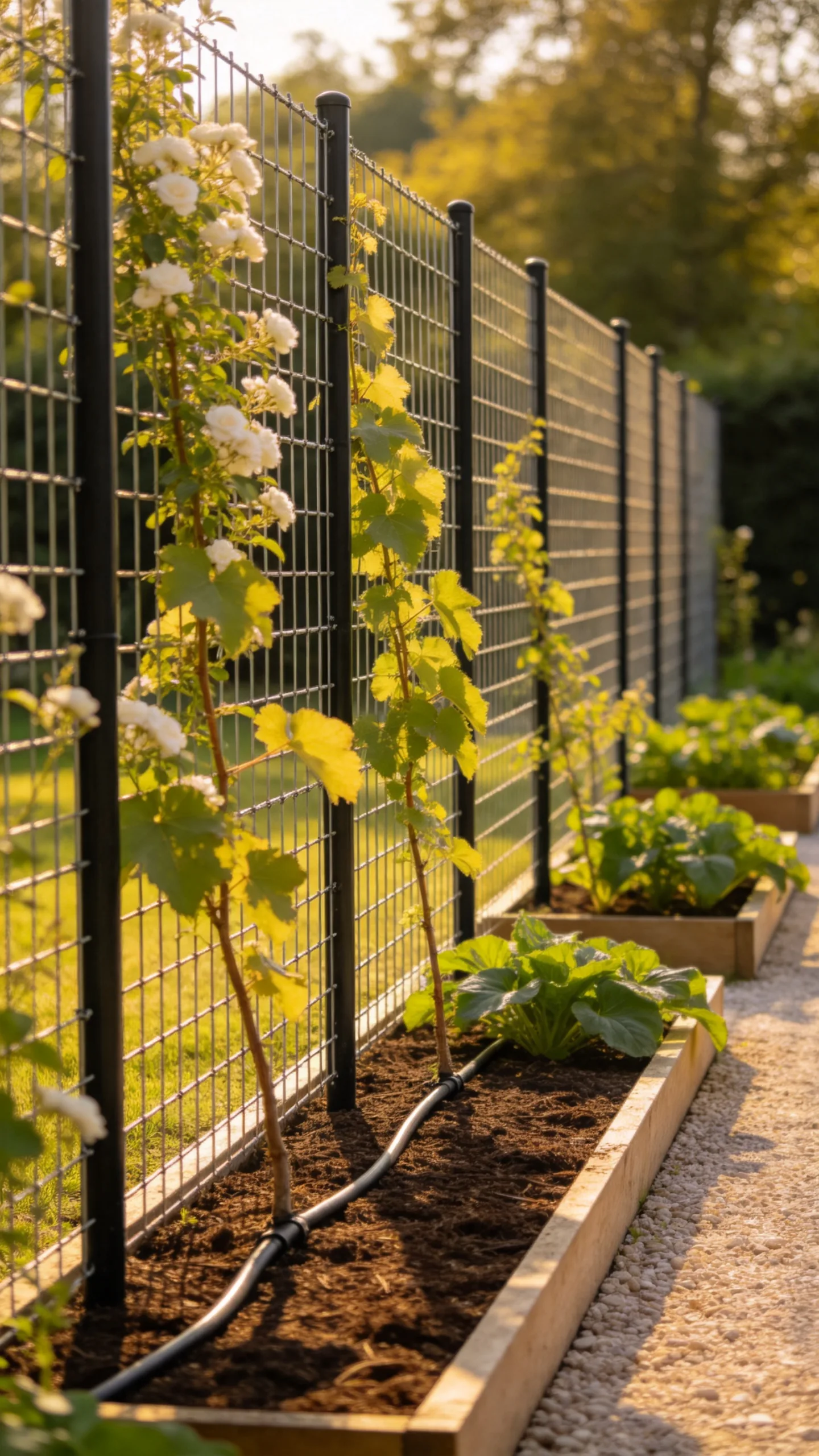
A steel mesh fence gives climbing plants a sturdy support while keeping the boundary visually light. It is useful for vegetable gardens, narrow side yards, and informal backyard zones where you want enclosure without a heavy solid wall.
Choose welded wire mesh panels set inside steel posts for a cleaner look than loose wire fencing. Large grid openings suit vigorous climbers such as grapevines, climbing roses, jasmine, or passionflower in suitable climates. Smaller grids work well for annual vines like sweet peas, black-eyed Susan vine, or climbing nasturtiums.
Leave a planting strip at the base of the fence and improve the soil before planting. Add mulch to reduce weeds and install a simple drip line if the fence runs along a sunny, dry boundary. Regular pruning is important so vines do not overwhelm gates, latches, or neighboring plants.
8. Steel Post and Cable Fence for an Open View
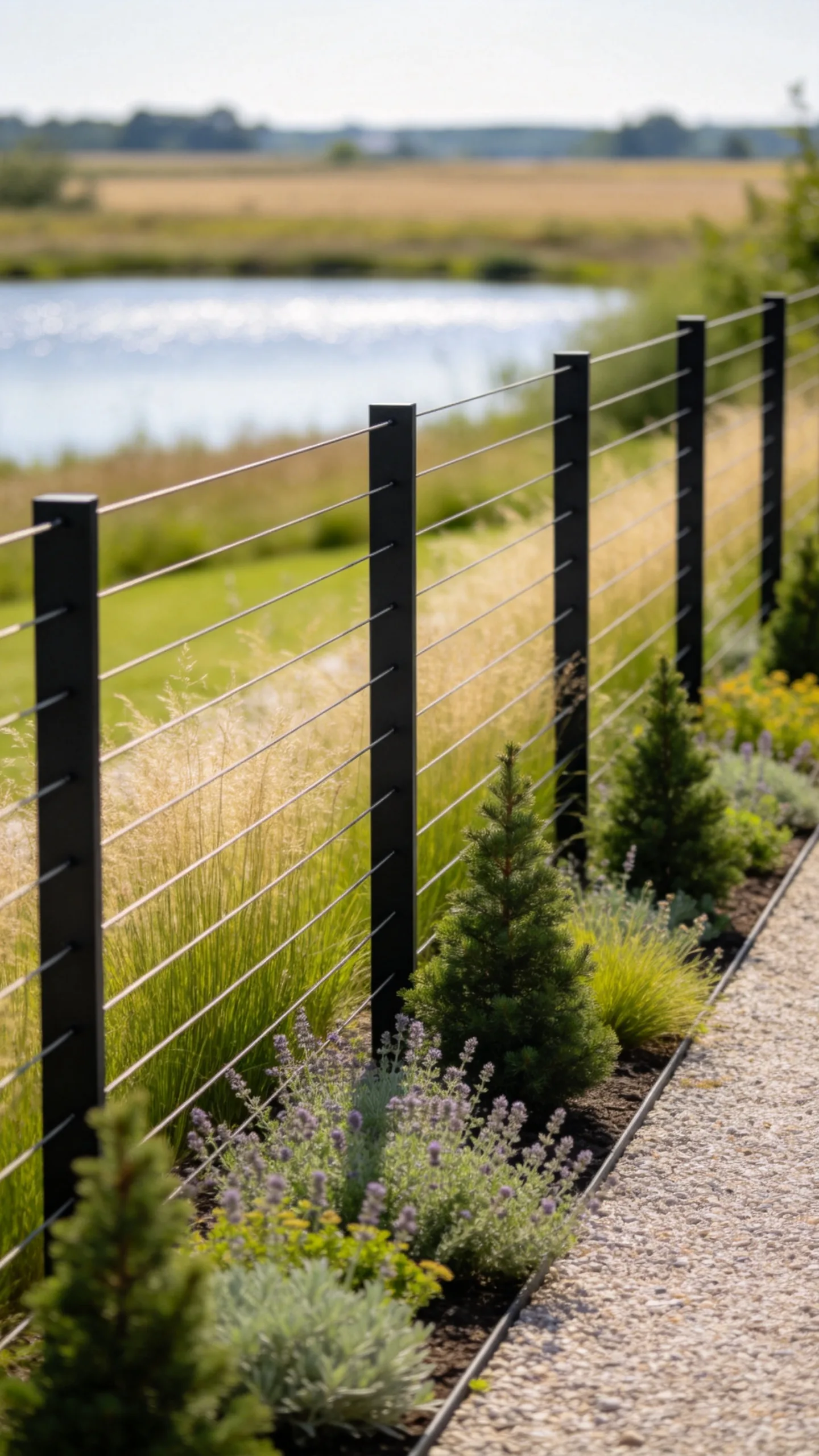
A steel post and cable fence is ideal when you need a boundary but do not want to block a garden view, slope, pond, field, or distant landscape. The thin horizontal cables create subtle lines while the steel posts provide structure.
This style works best in contemporary yards, decks, pool-adjacent landscapes where codes allow, and open garden edges. Use black or galvanized steel posts depending on whether you want the fence to stand out or disappear into the background.
Because the fence is visually open, use planting to define the space at ground level. Low ornamental grasses, creeping thyme, sedum, dwarf conifers, or compact flowering perennials can create a finished border without blocking the view. Check local requirements for spacing, tension, and safety if the fence is near a drop-off or pool.
9. Laser-Cut Steel Panel Fence with Garden Shadows
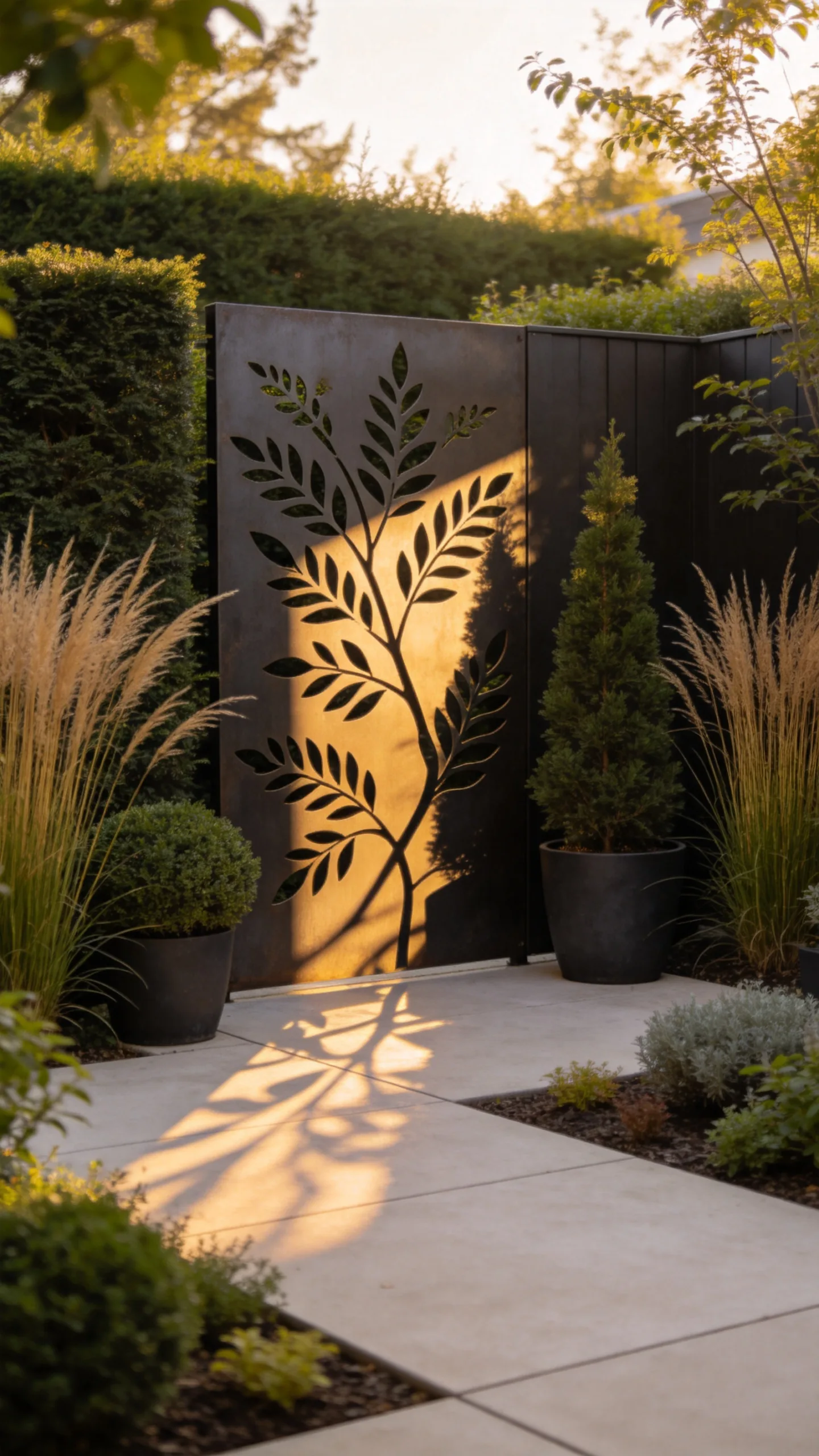
Laser-cut steel panels can turn a fence into a decorative garden feature. Patterns such as leaves, branches, geometric screens, or abstract lines create shadows that move across paving, walls, and planting beds during the day.
Use this idea for a short accent fence, patio backdrop, gate insert, or privacy panel rather than surrounding an entire yard with a busy pattern. A few well-placed panels often feel more polished and are easier to pair with plants and furniture.
For planting, keep the nearby foliage simple so the pattern remains visible. Use clipped shrubs, ornamental grasses, potted evergreens, or a restrained groundcover. If the panel is backlit at night, low landscape lighting can highlight the design without overwhelming the garden.
10. Tall Steel Privacy Fence Around a Small Patio
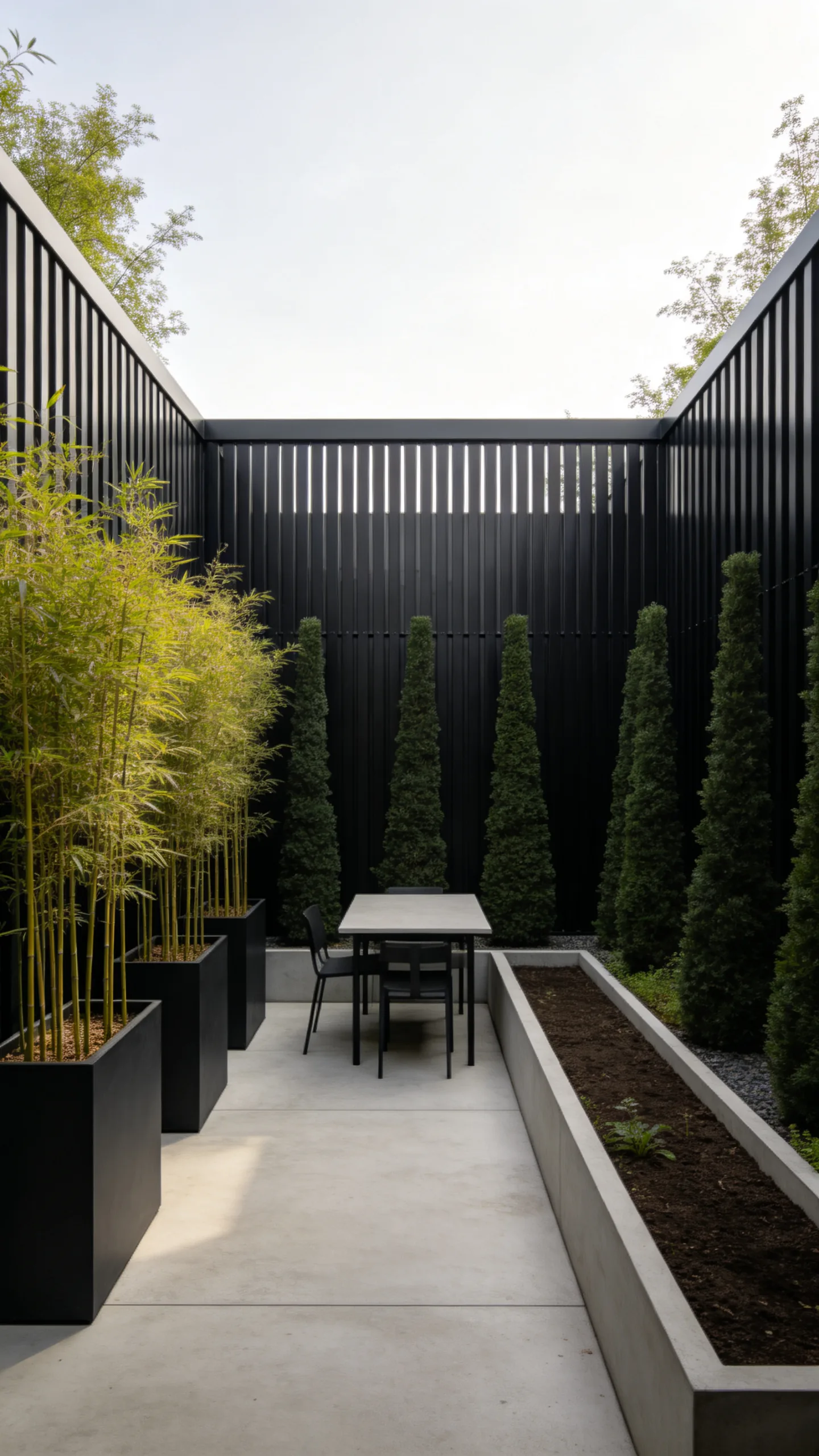
A tall steel privacy fence can make a small patio feel like an outdoor room. This is especially helpful in urban gardens, duplex yards, and narrow backyards where neighboring windows or close property lines reduce privacy.
Use solid steel panels, tightly spaced slats, or a mix of both depending on how much enclosure you need. Dark colors tend to recede visually, while lighter metal finishes can feel brighter but more noticeable. Keep the top line level and simple for a modern effect.
To prevent the patio from feeling closed in, add vertical planting near the fence. Tall planters with bamboo suitable for containers, columnar evergreens, climbing vines on a separate trellis, or narrow raised beds can soften the metal. Choose plants based on available sunlight and make sure containers have drainage holes.
11. Steel Fence with Integrated Planter Boxes
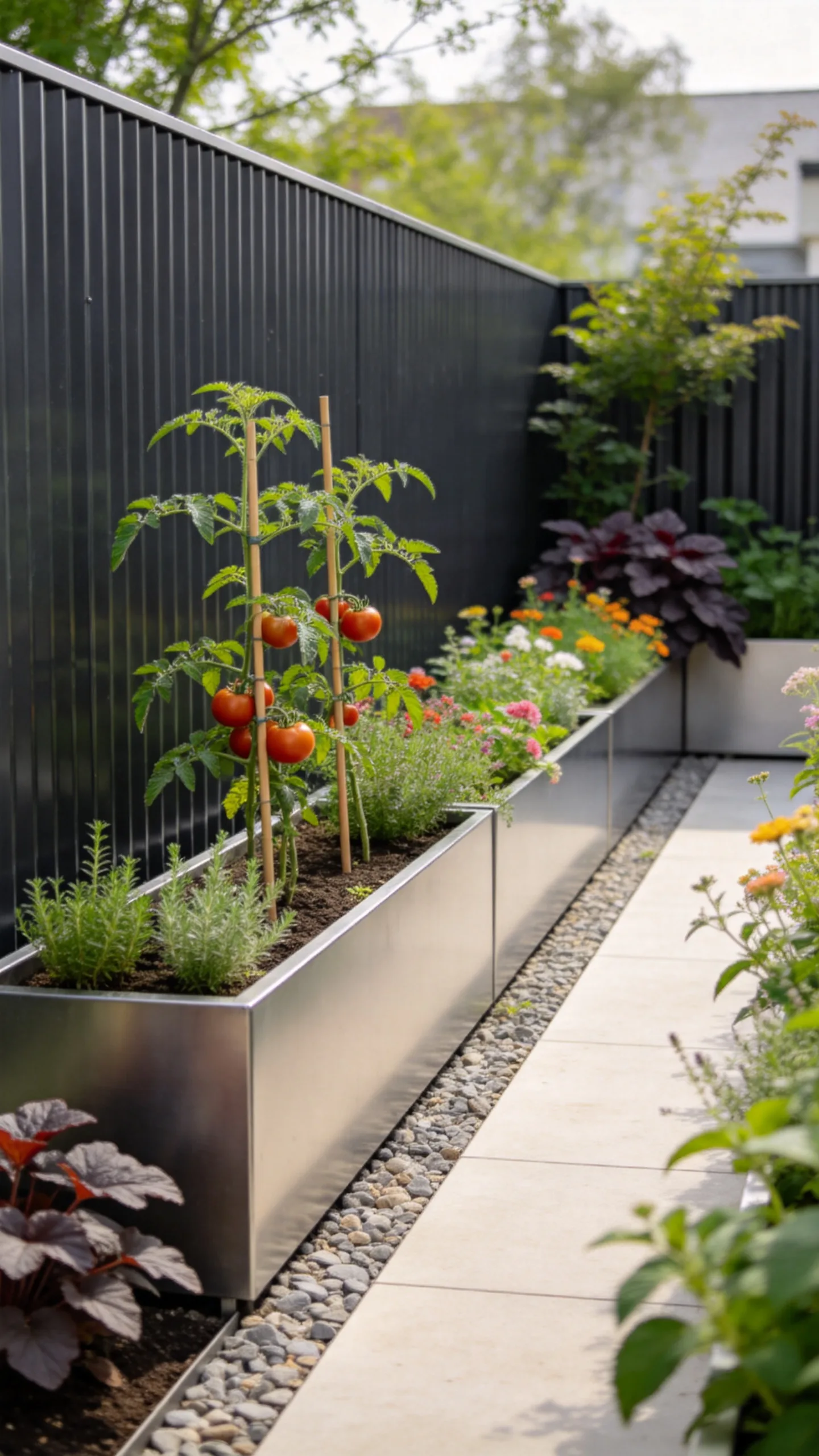
A steel fence with planter boxes built along the base makes good use of a narrow boundary. This idea works well for patios, rooftop gardens, balconies where allowed, and compact side yards where there is not enough room for wide beds.
Use long rectangular steel planters that match or contrast with the fence posts. Fill them with plants that suit the exposure: herbs and compact tomatoes in sunny spots, shade-tolerant foliage in dimmer corners, or seasonal annuals for color near a seating area.
Plan for drainage before filling the boxes. Raised planters need drain holes, a way for water to escape, and a soil mix suited to containers rather than heavy garden soil. If the fence is metal, avoid constant wet soil pressing against untreated surfaces by using liners or spacing details appropriate to the planter design.
12. Mixed Steel and Stone Fence for a Structured Garden Edge
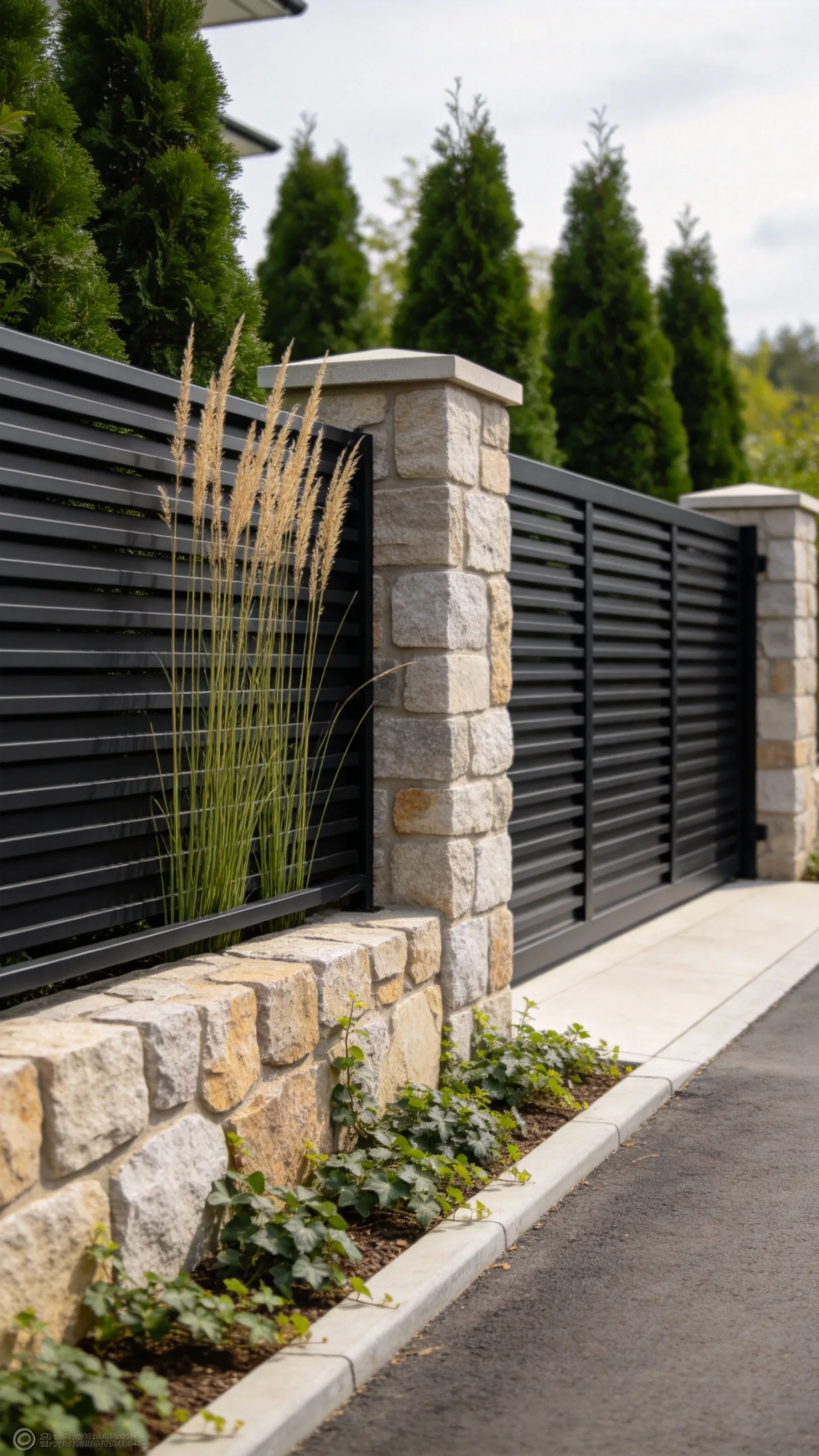
Combining steel panels with stone columns or a low stone base creates a fence that feels grounded and permanent. The stone adds texture and weight, while the steel keeps the overall design sharp and modern.
This approach is useful for front yards, driveway borders, and garden entrances where curb appeal matters. A low stone wall with steel slats above it can define the property without making the garden feel sealed off. Taller stone piers with steel infill panels can frame gates or create rhythm along a long boundary.
Planting should bridge the two materials. Use creeping plants near the stone, upright grasses against the steel, and evergreen shrubs to keep the fence looking finished through quieter seasons. Choose stone that matches nearby paths, retaining walls, or house details for a more cohesive landscape.
13. Steel Garden Gate with Matching Fence Panels
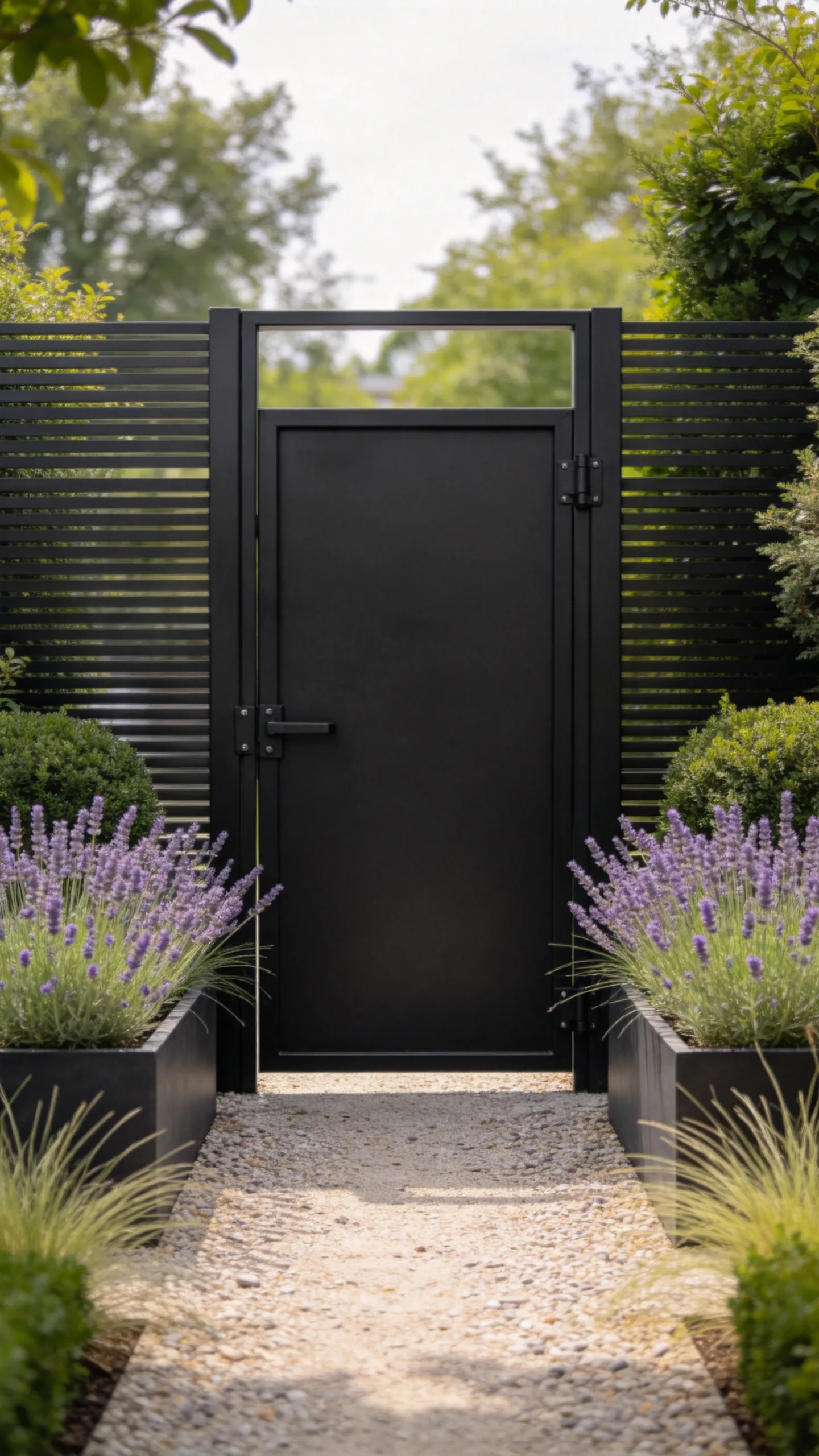
A steel gate can make the entire fence design feel intentional, especially when it repeats the same lines, color, and panel style. Instead of treating the gate as an afterthought, use it as a focal point for a side yard, vegetable garden, courtyard, or front walkway.
A simple steel frame with horizontal slats, welded mesh, or a perforated insert can match the surrounding fence while still being easy to open and maintain. Add sturdy hinges, a weather-resistant latch, and enough clearance above the path to avoid scraping gravel, mulch, or shifting pavers.
Use planting to draw attention toward the entrance. A pair of containers, low grasses, lavender borders, or clipped shrubs can frame the gate without blocking movement. If the gate leads to a vegetable garden, leave enough width for a wheelbarrow or garden cart.
14. Slim Steel Fence Around Raised Garden Beds
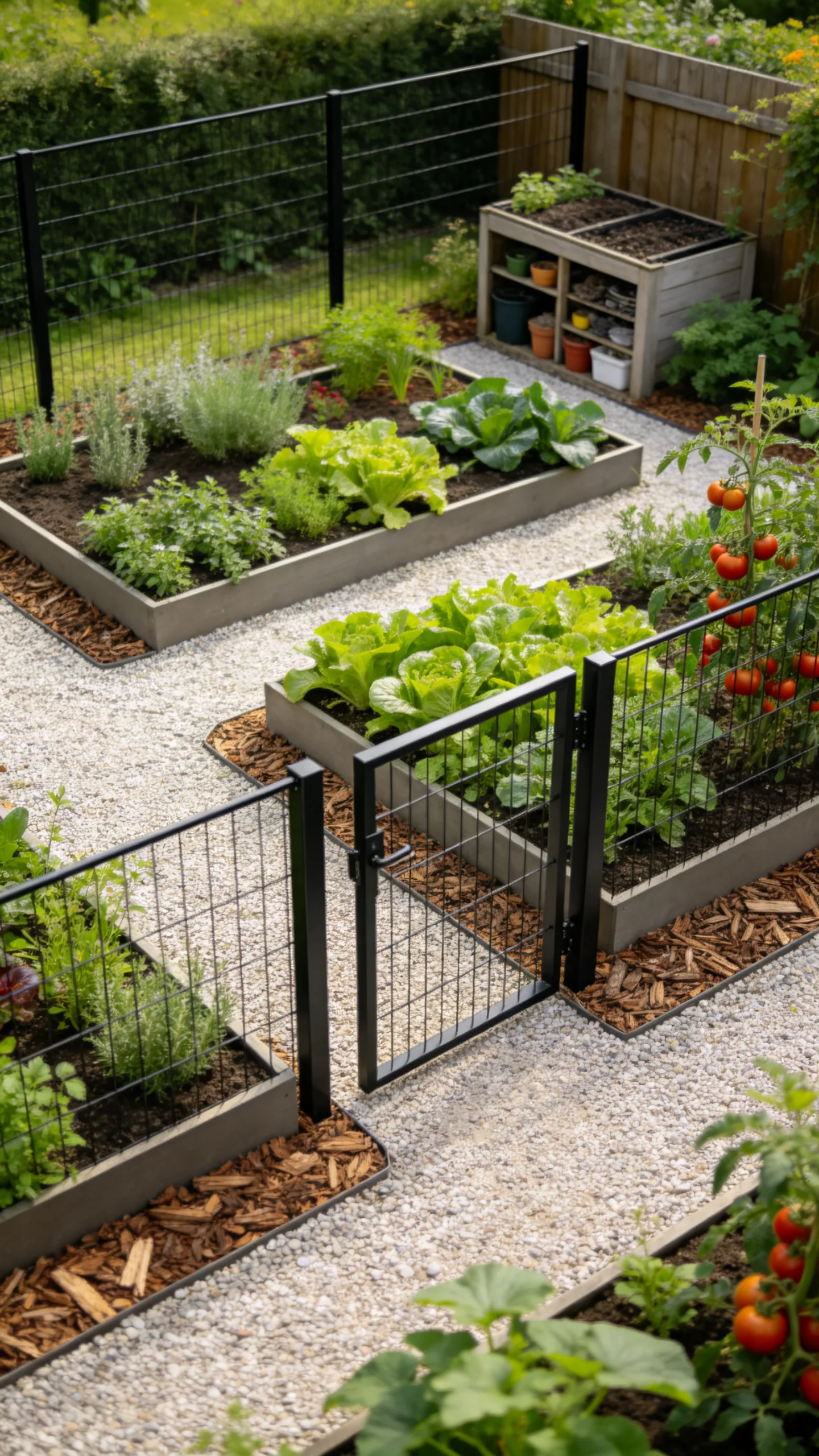
A slim steel fence around raised beds can protect a growing area while keeping the garden neat and modern. This works especially well for vegetable plots, herb gardens, and small backyard production areas where you want a clear boundary without bulky fencing.
Use narrow steel posts with welded wire, mesh panels, or simple vertical bars. The fence can help deter casual foot traffic, pets, or lightweight garden clutter from entering the beds, though wildlife control needs depend on local animals and fence height.
Keep the layout practical by allowing wide enough paths for kneeling, harvesting, and carrying soil or compost. Gravel, bark mulch, or stepping stones between the beds and fence make the area easier to maintain. Add a matching steel gate so the garden feels organized rather than temporarily enclosed.