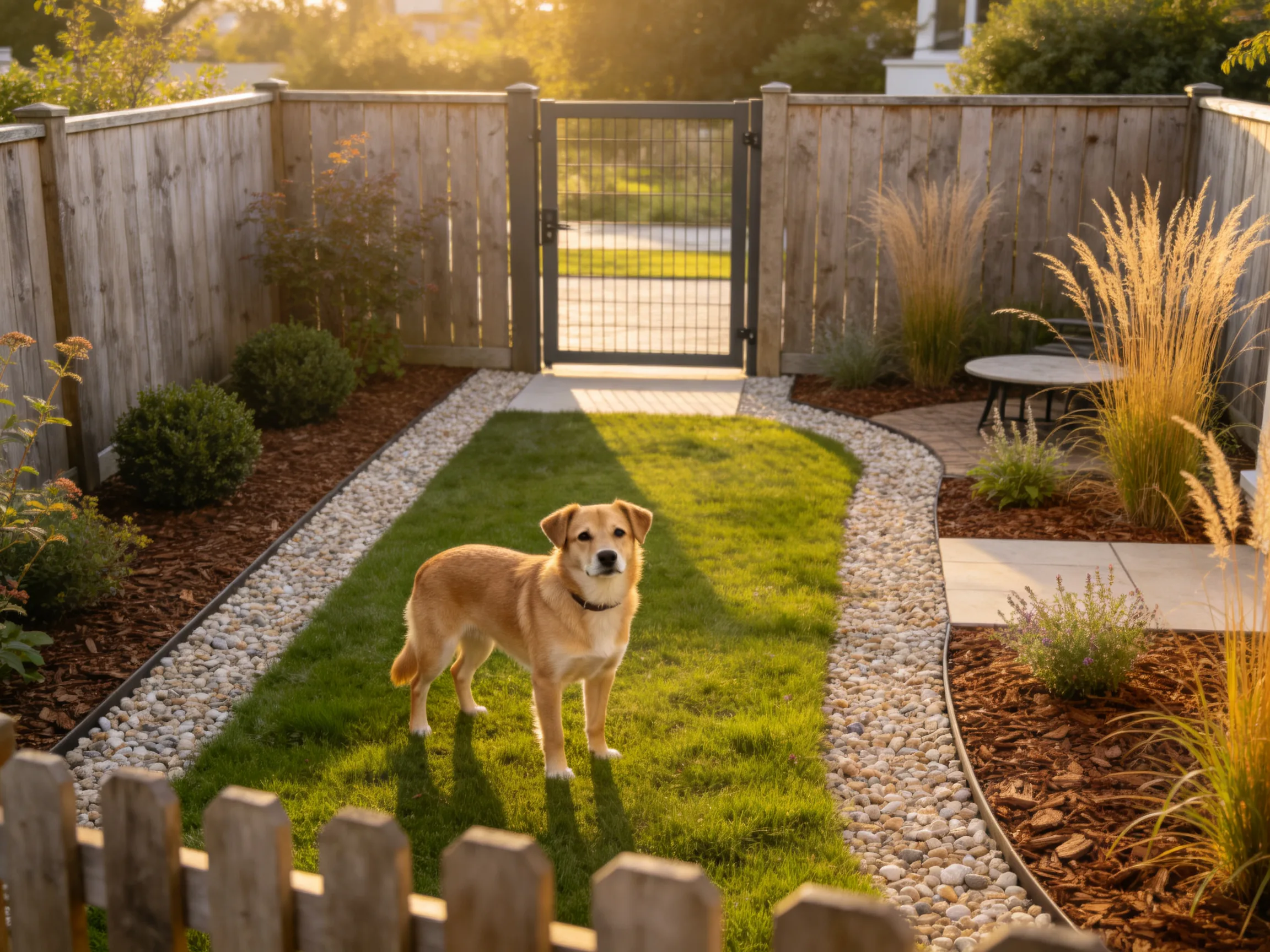
A good dog fence should do more than mark the edge of the yard. It needs to help keep your dog safely contained, reduce tempting escape routes, and still look intentional with the rest of your landscape. The best choice depends on your dog’s size, digging habits, jumping ability, sight triggers, and how your backyard is used day to day.
These dog fence ideas combine practical safety features with backyard design details like planting beds, gates, trellises, gravel borders, and decorative panels. Use them to plan a secure outdoor space that feels polished instead of purely functional.
1. Classic Wood Privacy Fence With a Gravel Dig Barrier
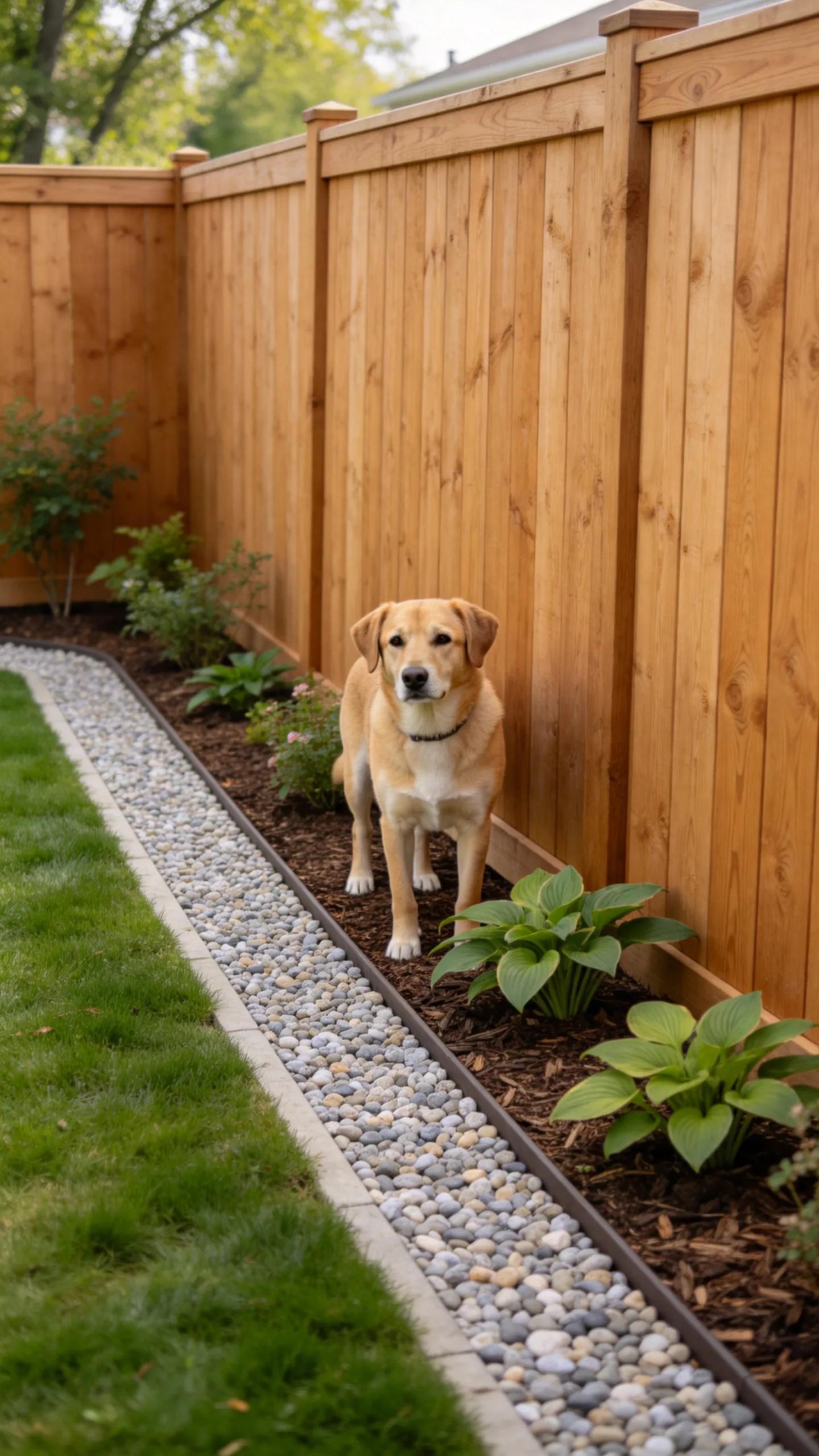
A tall wood privacy fence is one of the most useful dog fence ideas for yards where dogs bark at passing people, cars, or other pets. Solid boards block sightlines, which can help reduce visual triggers along alleys, sidewalks, and neighboring yards. For many medium and large dogs, a 6-foot fence is a practical height to consider, though local codes and HOA rules should always be checked first.
To make the fence more dog-friendly, add a gravel strip along the inside base. Dig a shallow trench, line it with landscape fabric, and fill it with pea gravel or crushed stone. This creates a clean maintenance edge for mowing and makes digging less inviting than bare soil. For determined diggers, the gravel can be paired with buried wire mesh or a horizontal footer under the soil.
Wood fences look best when they are integrated into the garden rather than left as a plain wall. Plant tough, non-toxic border plants in front of the fence, leaving enough space so your dog cannot use shrubs as a launch pad. Ornamental grasses, rosemary in mild climates, and dwarf conifers can soften the fence line while keeping the yard structured.
2. Black Metal Picket Fence for an Open View
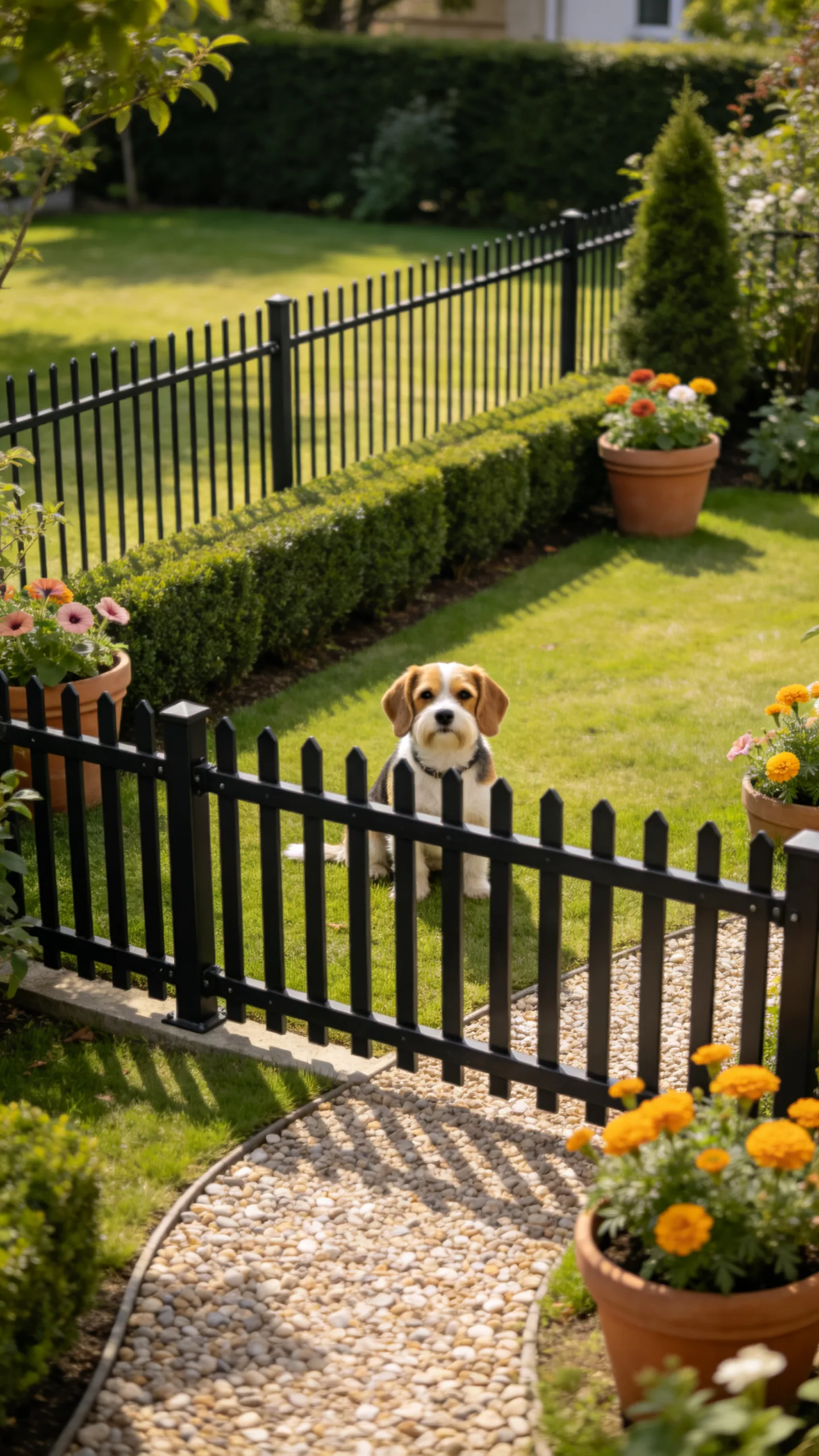
A black metal picket fence works well when you want to contain a dog without closing off the view of the garden. Powder-coated aluminum or steel panels have a clean look that pairs nicely with lawns, gravel paths, patio beds, and modern landscaping. This style is especially attractive around front yards, side yards, or open backyards where a solid privacy fence would feel too heavy.
Spacing between pickets matters for dog safety. Choose narrow gaps if you have a small dog, puppy, or slim breed that may try to squeeze through. Also check the bottom clearance; a decorative metal fence that floats several inches above the ground may need a bottom rail, landscape stones, or a low border to close the gap.
Because dogs can see through this fence, it may not be the best option for reactive dogs along busy sidewalks. In quieter areas, it gives the yard an airy look and keeps flower beds, trees, and hardscaping visible. Pair it with a clipped hedge or a row of planters on the inside if you want partial screening without losing the elegant fence shape.
3. Horizontal Slat Fence With Narrow Dog-Safe Gaps
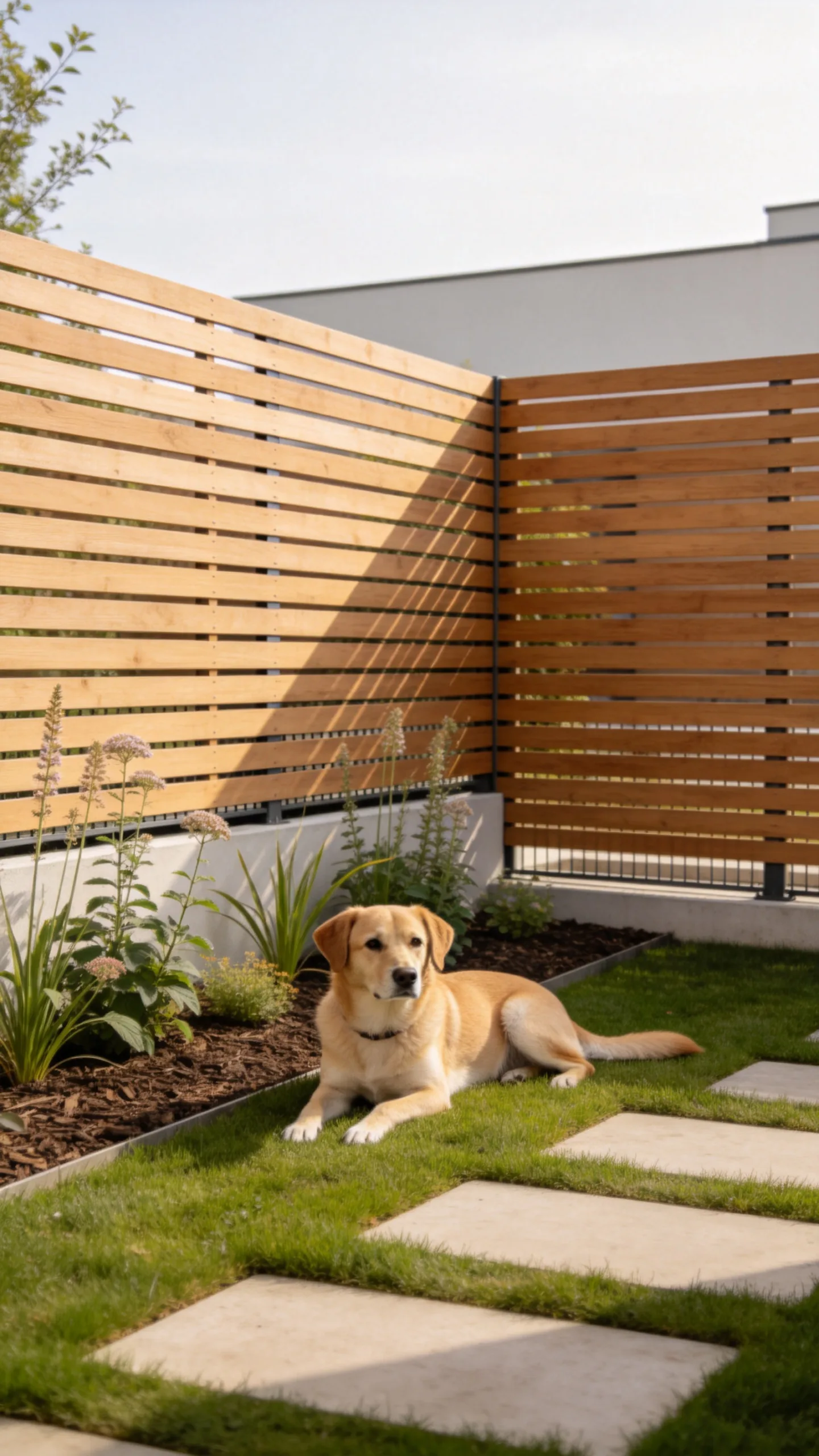
A horizontal slat fence gives a backyard a modern, finished look while still functioning as a strong dog barrier. The key is to keep the gaps narrow enough that your dog cannot push a nose, paw, or head through. Wider gaps may look stylish, but they are less practical for small dogs and can encourage chewing or fence-line fixation.
Cedar, redwood, pressure-treated lumber, or composite boards can all work for this type of fence. For a dog-friendly design, install the boards tightly near the bottom and allow slightly more openness higher up if privacy is not a major concern. This keeps the lowest part of the fence more secure, where digging, squeezing, and sniffing usually happen.
Horizontal lines can visually widen a small backyard, making the space feel broader and more designed. Add simple planting beds at the base with mulch, stepping stones, and sturdy perennials to keep paws away from the fence line. Avoid placing benches, raised beds, or storage boxes directly against the fence if your dog might climb them.
4. Split-Rail Fence With Welded Wire Backing
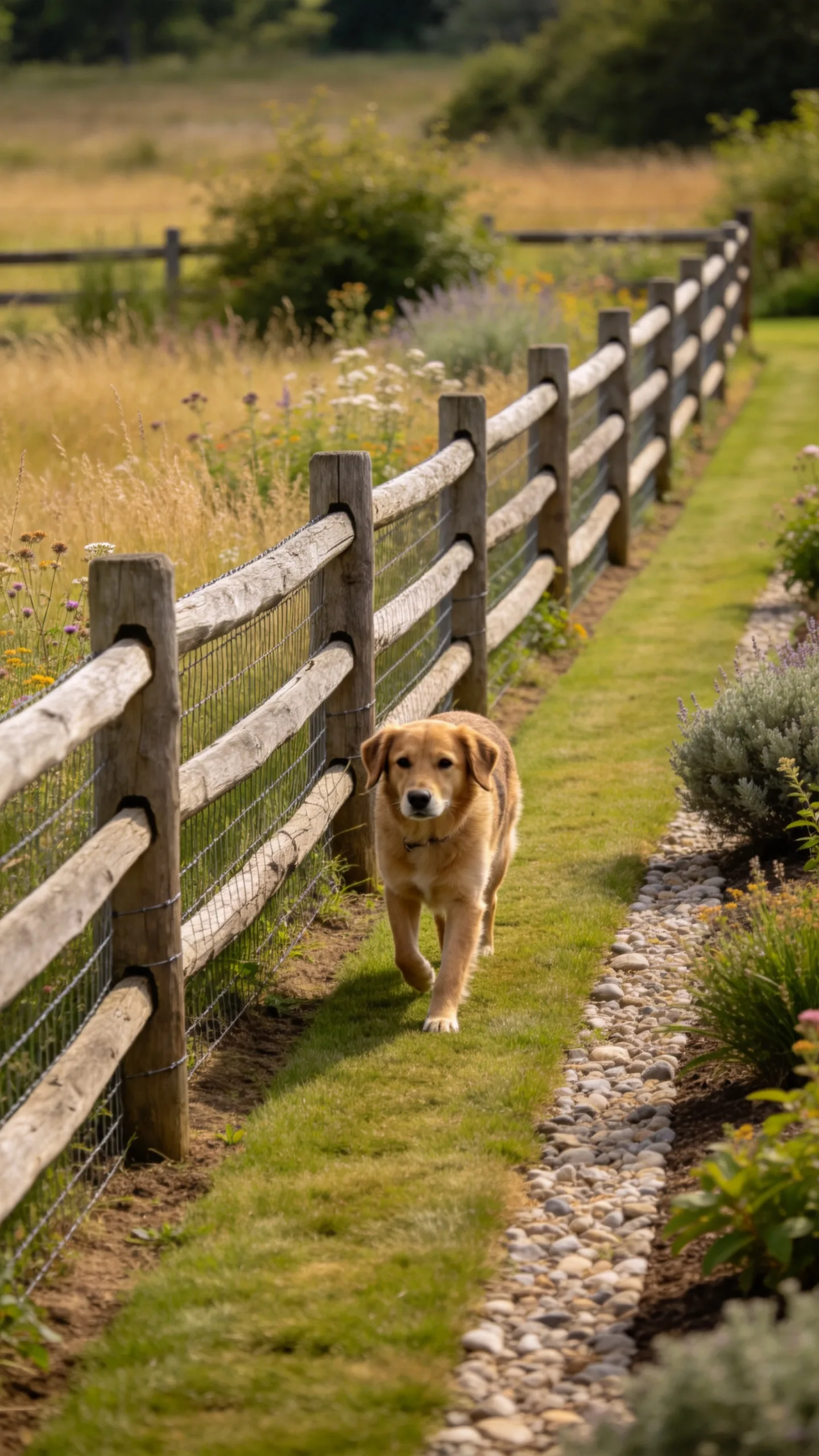
A split-rail fence has a relaxed, country-garden look, but on its own it is not secure enough for most dogs. Adding welded wire backing turns it into a more practical containment fence while keeping the rustic style. This is a strong option for larger yards, cottage gardens, orchard edges, and properties where a full privacy fence would block too much scenery.
Use welded wire with openings sized for your dog. Smaller mesh is better for small breeds and puppies, while larger grid panels may be acceptable for big dogs that do not try to squeeze through. The wire should be fastened firmly to the inside of the rails and run close to the ground to reduce escape gaps.
This fence pairs well with meadow-style planting, native shrubs, gravel paths, and informal flower beds. If your dog likes to patrol the perimeter, create a mowed or mulched path just inside the fence. That gives them a clear route without trampling planted borders and makes fence checks easier after storms or heavy use.
5. Vinyl Privacy Fence for Low-Maintenance Containment
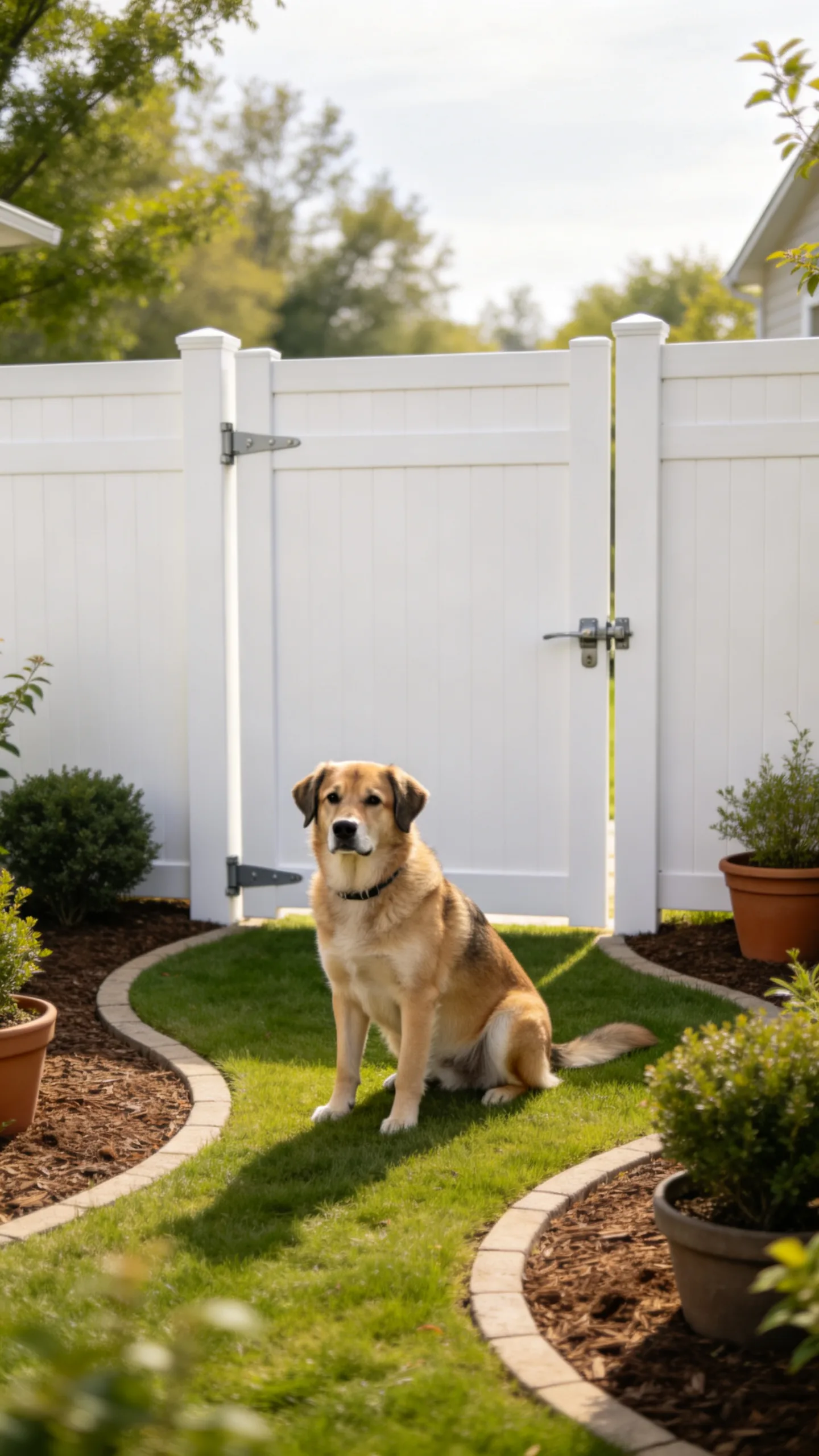
Vinyl privacy fencing is a good choice for homeowners who want a clean, bright fence that does not need staining or sealing. Solid vinyl panels create a visual barrier for dogs that react to movement outside the yard. They also work well around patios, suburban lawns, and pool-adjacent spaces where a tidy, uniform look is important.
For dog safety, choose a vinyl fence with reinforced posts and secure rails, especially if you have a large dog that may lean or jump against it. Check that the bottom edge sits close enough to the ground and that gate latches are strong. Vinyl can crack under heavy impact in some conditions, so durability should match your dog’s size and behavior.
A white or tan vinyl fence can look stark without landscaping. Soften it with curved planting beds, mulch, container gardens, or climbing plants on separate trellises placed in front of the fence. Avoid attaching heavy vines directly unless the fence manufacturer allows it, since extra weight can stress panels over time.
6. Chain-Link Fence With Privacy Slats and Shrub Borders
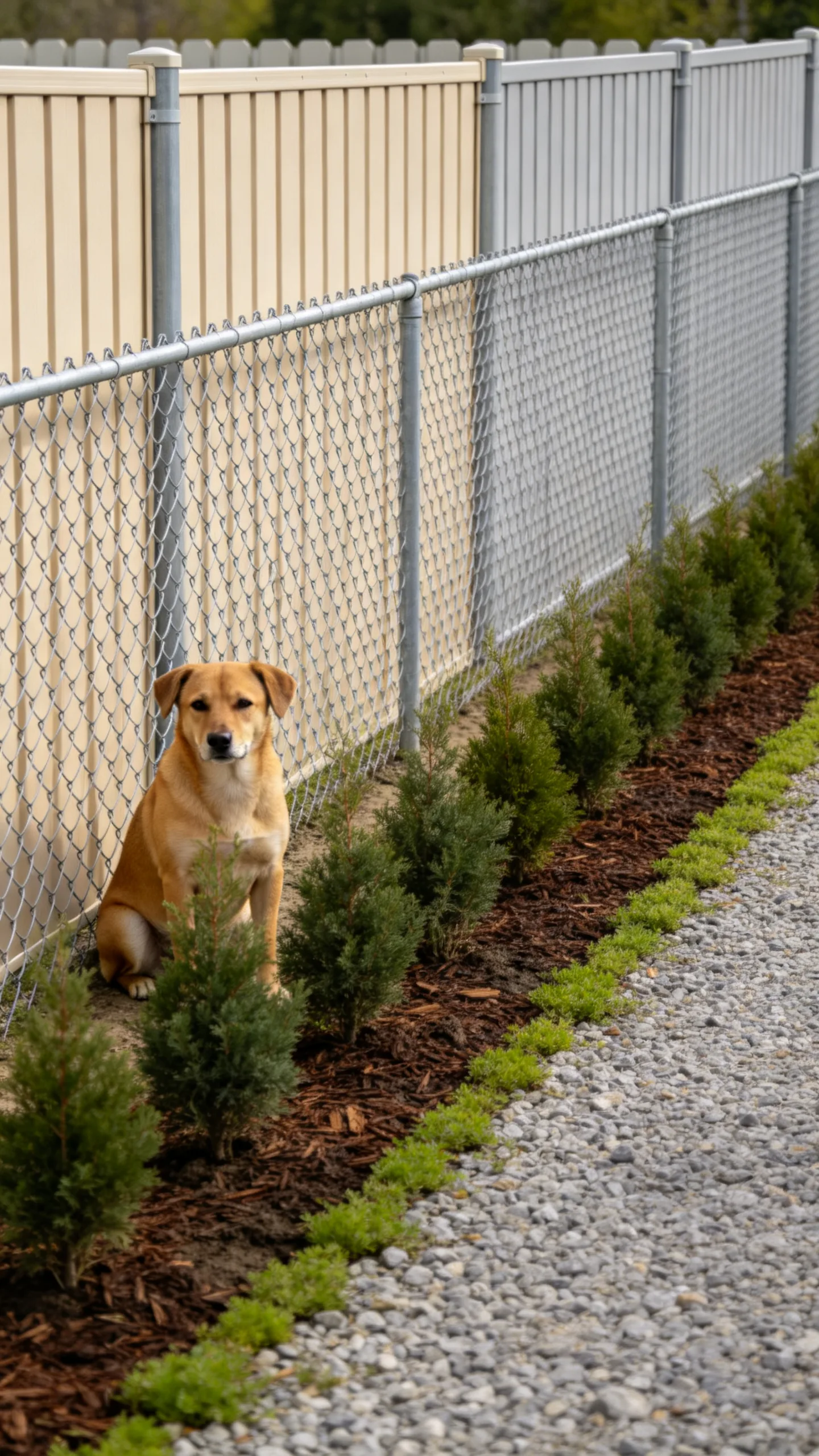
Chain-link fencing is practical, widely available, and often more budget-friendly than solid wood or metal options. For dog owners, it provides a clear boundary and can be adapted with privacy slats, shade cloth, or windscreen fabric. This makes it useful for side yards, dog runs, and large backyards where full decorative fencing may be too expensive.
Privacy slats reduce visibility and can make the fence feel more intentional. Choose neutral colors like black, brown, green, or gray so the fence blends with the landscape. If your dog climbs chain-link, consider adding a smooth top extension, coyote roller, or switching to a style that does not provide footholds.
Planting can make chain-link much more attractive. Add a shrub border outside or inside the fence, depending on space and access. Use tough shrubs suited to your climate, and leave a maintenance gap so you can repair the fence and trim plants. Mulch along the base also helps prevent muddy tracks where dogs pace after rain.
7. Decorative Lattice Fence for a Small Dog Patio
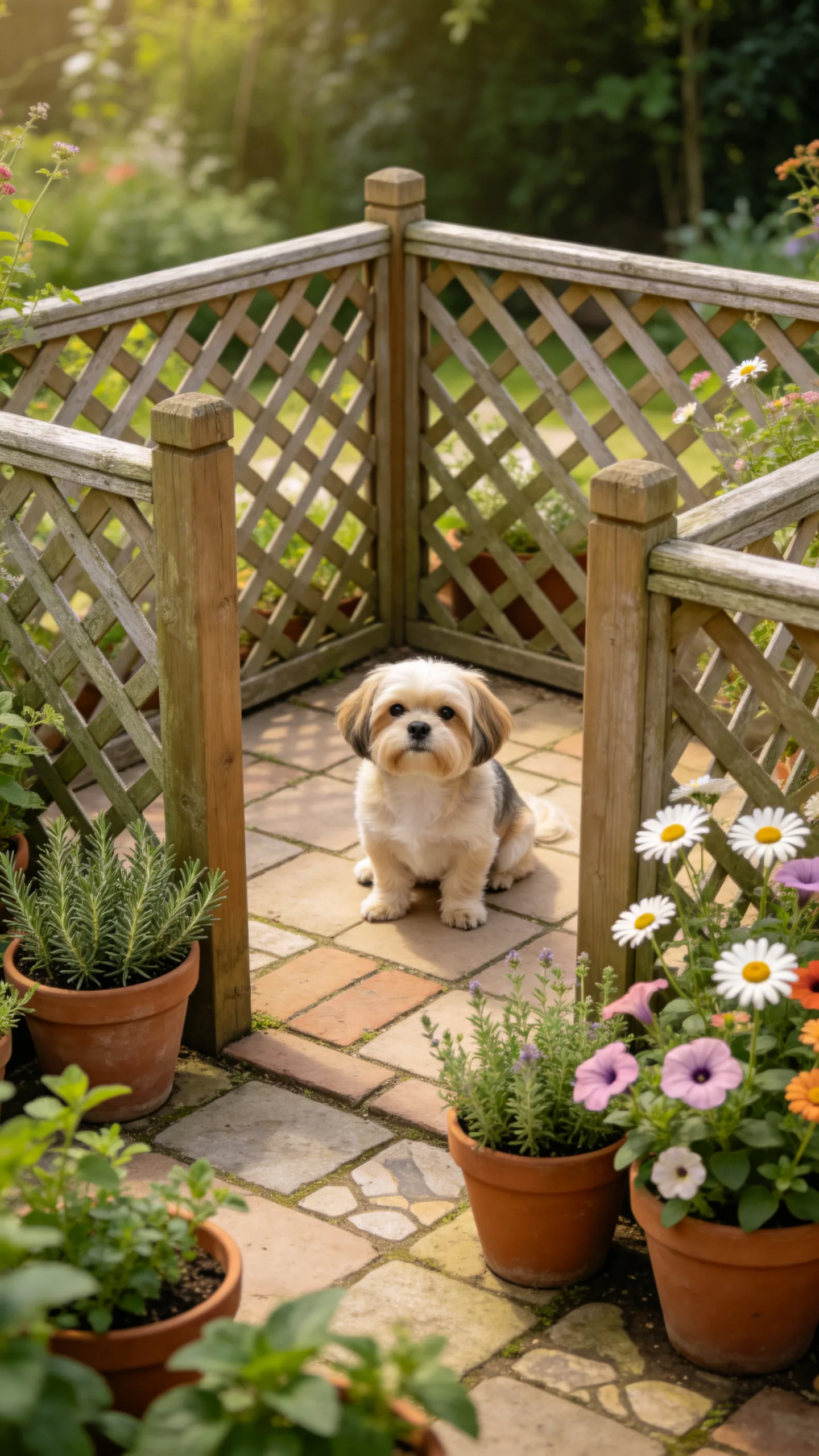
A decorative lattice fence can define a small dog-safe patio, townhouse yard, or garden corner without making the space feel boxed in. It works best for small dogs that are not strong jumpers or chewers. The patterned panels add texture and can double as a light screen around seating areas, container gardens, or a compact lawn patch.
Choose lattice with openings small enough that your dog cannot get a head or paw stuck. Framed panels are sturdier than thin unframed sheets and look more polished when attached to proper posts. If the fence is used on a patio, secure it well so it cannot tip if a dog leans against it.
Lattice is useful for vertical gardening, but pet safety should guide plant choices. Grow herbs, flowering vines, or annual climbers in containers positioned on the outside of the dog area if your dog chews plants. This gives you the cottage-garden look while keeping the enclosed space easier to supervise.
8. Raised Garden Bed Fence Along the Yard Edge
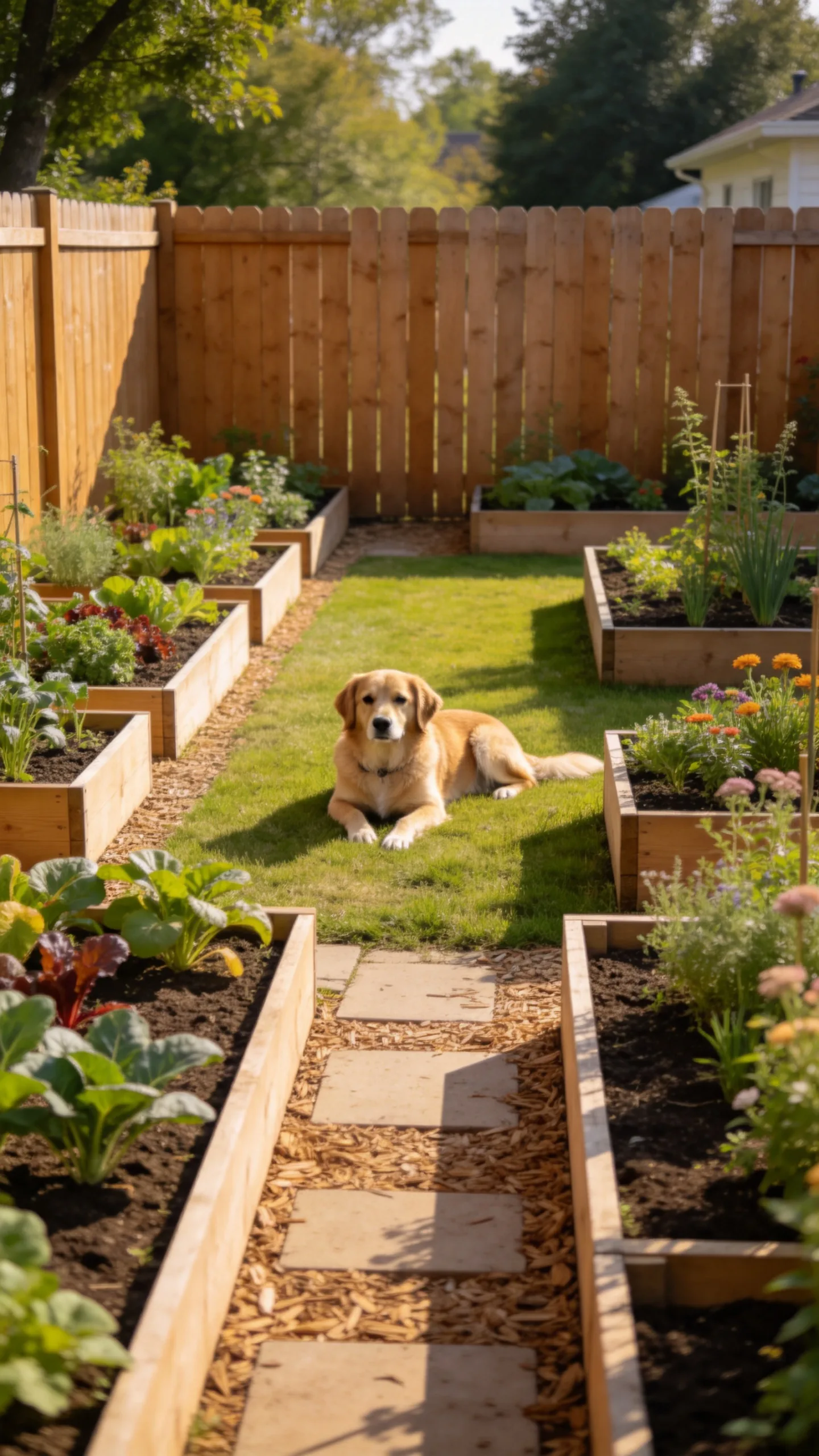
A fence built behind or between raised garden beds can make a small backyard feel organized while keeping dogs away from vegetables, herbs, and flowers. The raised beds act as a visual buffer, and the fence provides the actual security. This design is especially helpful when you want both a productive garden and a dog-friendly play area.
Use sturdy raised beds made from wood, metal, or stone, leaving enough walkway space for maintenance. The fence should not be so close to the beds that your dog can jump onto the bed and then over the fence. For energetic dogs, keep beds set back or use lower plantings near the fence line.
This idea saves space because the boundary becomes multifunctional. You can grow herbs, pollinator flowers, compact vegetables, or espalier fruit trees along the perimeter while the center of the yard remains open. Add mulch or pavers between the beds and fence to prevent weeds and make cleanup easier.
9. Dog Run Fence With Shade and Easy-Clean Ground Cover
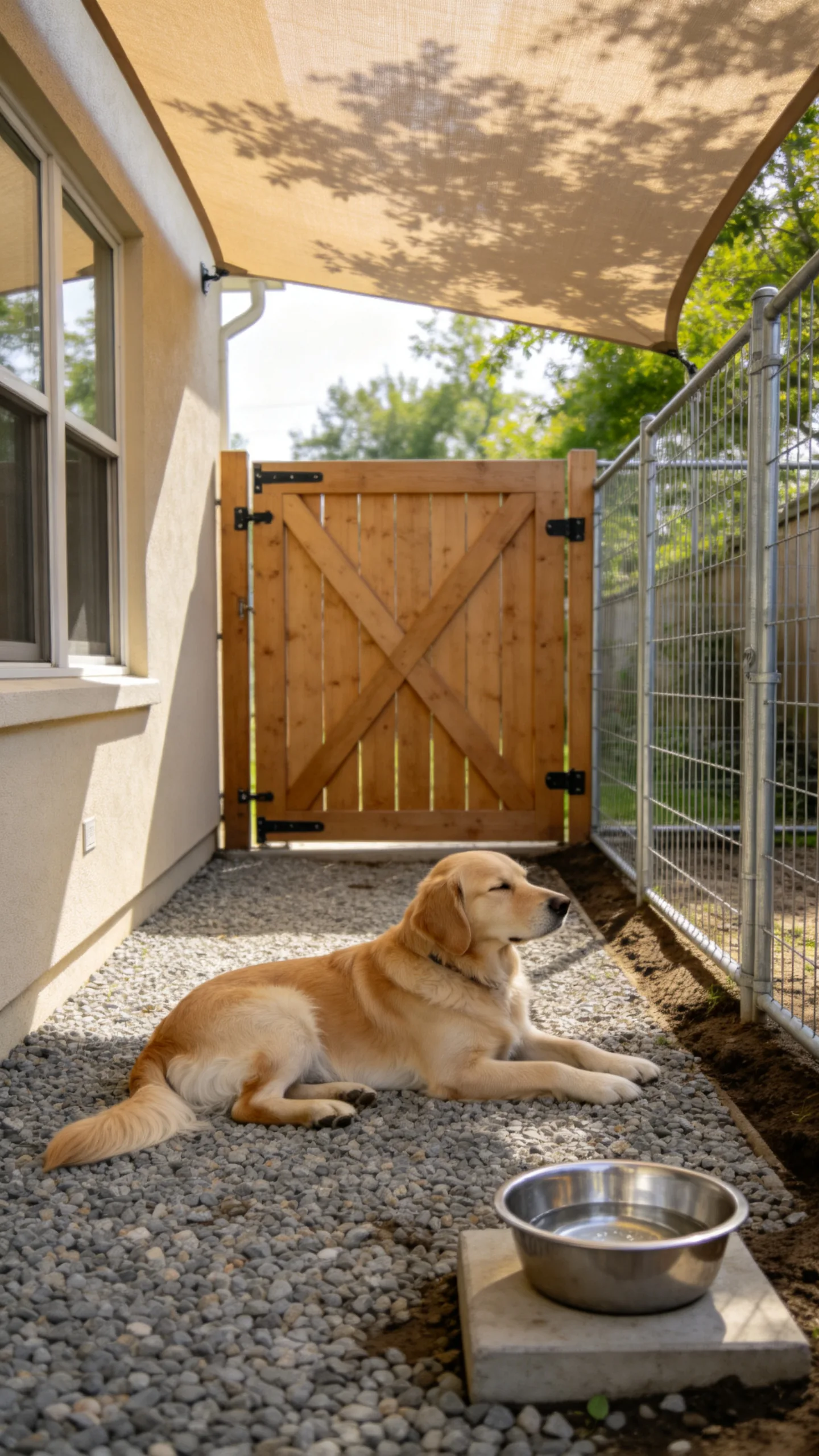
A dedicated dog run is a practical solution when you want to protect the main lawn, garden beds, or entertaining area. It can be placed along a side yard, behind a garage, or in a narrow strip that would otherwise be underused. The fence should be tall and sturdy enough for your dog, with a secure gate and no sharp edges.
Ground cover is just as important as the fence. Pea gravel, decomposed granite, artificial turf designed for pets, or concrete with proper drainage can be easier to clean than bare soil. Avoid muddy corners by grading the area slightly and keeping water from pooling near the fence posts.
Shade makes a dog run more usable in warm weather. Add a shade sail, pergola roof, small tree outside the run, or covered section where your dog can rest. Include a water station and keep the run visible from the house if possible, so it supports safe outdoor time rather than becoming an isolated enclosure.
10. Living Hedge Fence Paired With Hidden Wire Mesh

A living hedge can create a beautiful green boundary, but plants alone are rarely reliable dog containment. Pairing a hedge with hidden wire mesh or a simple inner fence gives you both security and softness. This works well for garden-focused yards where a hard fence would feel too harsh or formal.
Choose hedge plants suited to your region, sunlight, and maintenance level. Boxwood, privet, yew, holly, pittosporum, and native shrubs may be options depending on climate, but always check plant toxicity if your dog chews leaves or berries. The wire mesh should be installed before the hedge fills in, with posts placed where they will be hidden by growth.
Hedges need time to mature, so this idea is best when you can use temporary fencing during establishment. Keep the base pruned enough to inspect for gaps, digging, or damaged mesh. A mulch strip along the hedge reduces weeds and gives the planting a clean, designed edge.
11. Picket Fence With a Secure Puppy-Proof Bottom Rail
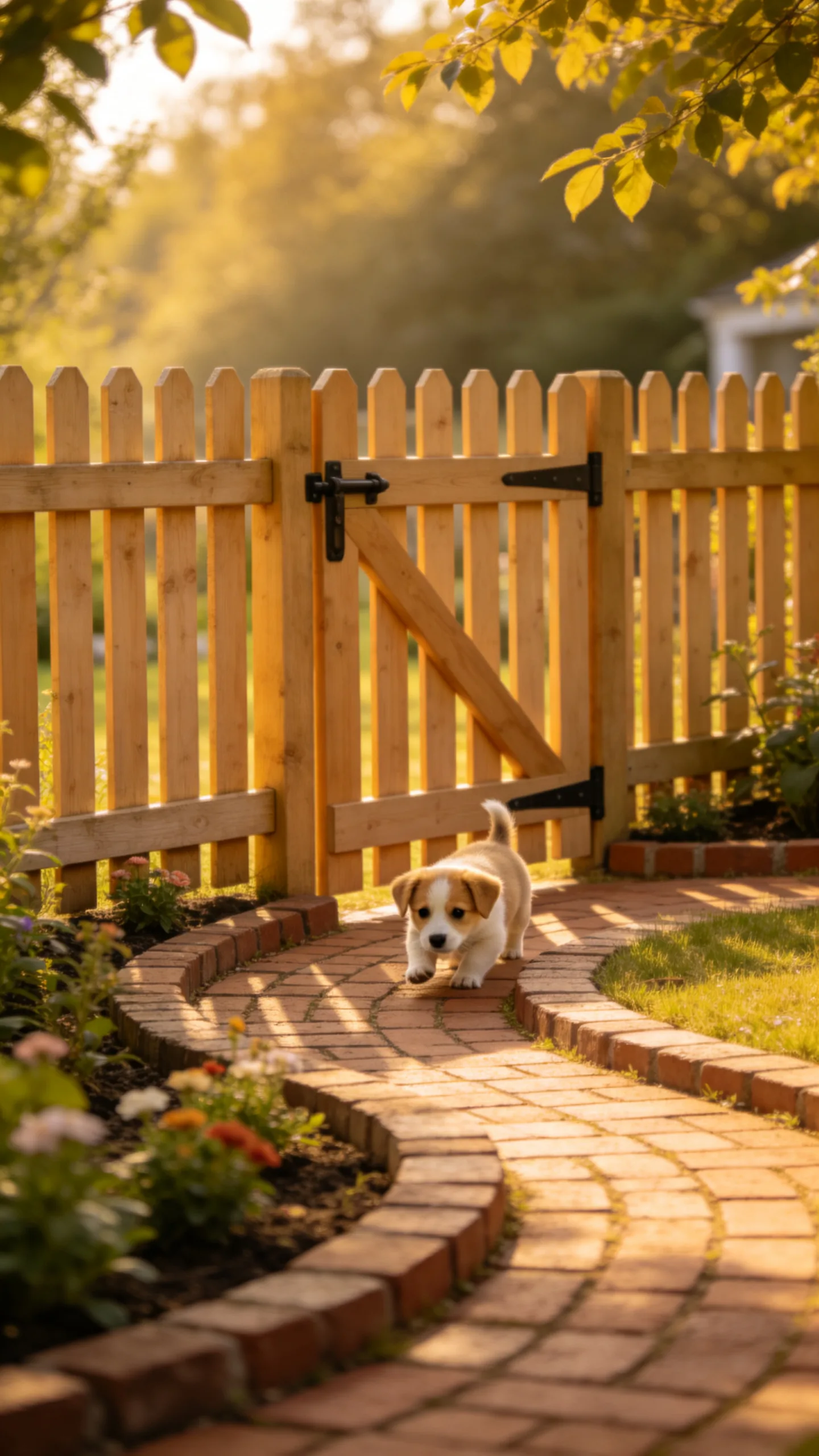
A picket fence can look charming around a cottage garden, front yard, or small backyard, but standard picket spacing may not be safe for puppies or small dogs. A puppy-proof version uses closer pickets, a low bottom rail, or an added wire panel along the lower section. This keeps the look classic while closing the gaps that invite escapes.
The height should match your dog’s jumping ability and the location of the fence. A low picket fence may be fine for a calm small dog in a supervised garden, but larger or athletic dogs usually need a taller barrier. Gate hardware should be upgraded with a latch that cannot be nudged open by a nose or paw.
This style pairs beautifully with curved flower borders, brick paths, lavender edging, and container planters. Keep dense plantings slightly away from the fence so you can see the bottom edge and notice digging early. If the fence is near a sidewalk, consider a planting strip outside the fence to discourage people from reaching over to pet your dog.
12. Composite Fence Panels for a Modern Pet-Friendly Yard
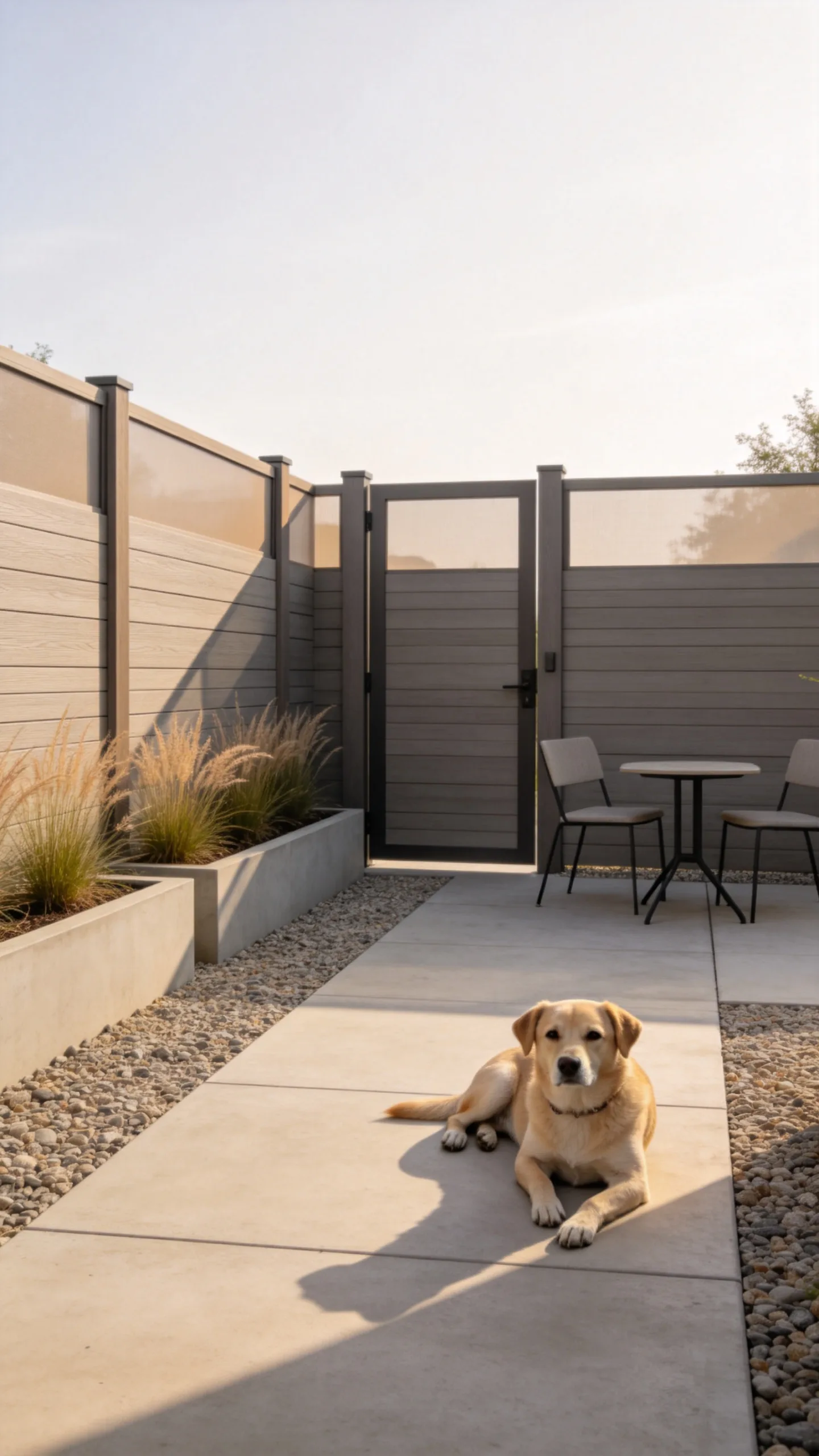
Composite fencing offers the look of wood with lower maintenance needs, making it a strong option for a polished backyard. Many composite panels are solid or semi-solid, which helps reduce distractions for dogs that react to nearby movement. The material often comes in modern colors like charcoal, taupe, brown, and warm gray.
Because composite panels can be heavy, proper post installation is important. Make sure the fence is anchored well and that gates are framed securely. For dogs that push, jump, or lean, choose a system designed for durability rather than lightweight decorative screening.
Composite fencing works well with contemporary landscaping. Pair it with concrete pavers, raised planters, gravel beds, ornamental grasses, and simple outdoor furniture. In a small yard, the consistent panel color can make the space feel calmer and less cluttered than a mix of mismatched fencing materials.
13. Fence With an Interior Planting Buffer
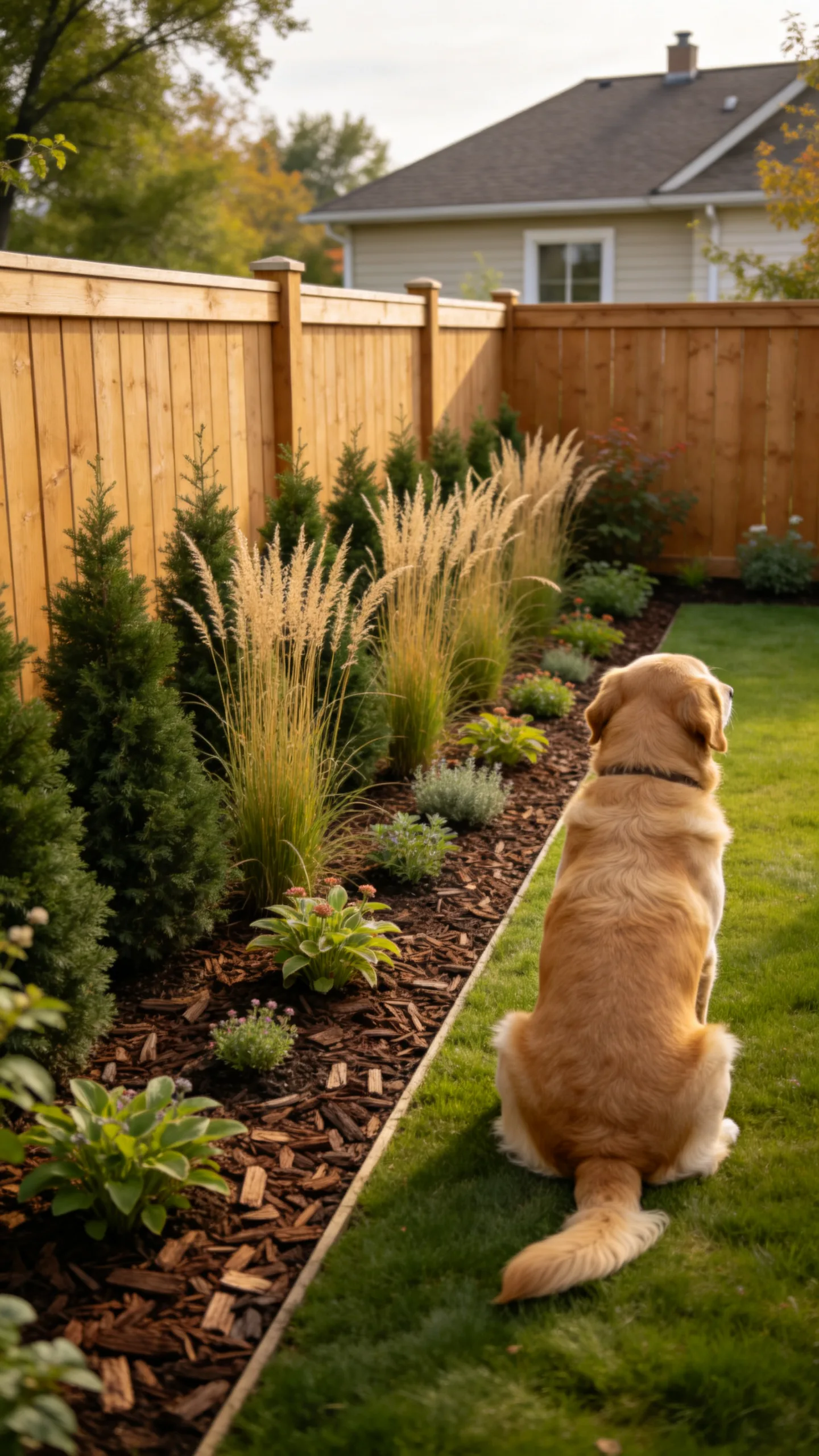
An interior planting buffer adds a garden bed just inside the dog fence, creating distance between your dog and the boundary. This can reduce fence pacing, protect the fence from direct wear, and make the yard look softer from the house. It is especially useful along shared property lines or street-facing sides of the yard.
Use a bed depth of at least a couple of feet if space allows. Fill it with tough shrubs, ornamental grasses, low perennials, or mulch, depending on your dog’s habits. For dogs that chew plants, choose non-toxic options and use temporary low edging while plants establish.
This idea also improves visual depth in small yards. Instead of seeing a fence as the final flat surface, the eye moves through layers of plants, mulch, and vertical structure. Add drip irrigation or soaker hoses under mulch to make watering easier and avoid dragging hoses through the dog area.
14. Double-Gate Entry Fence for Safer Backyard Access
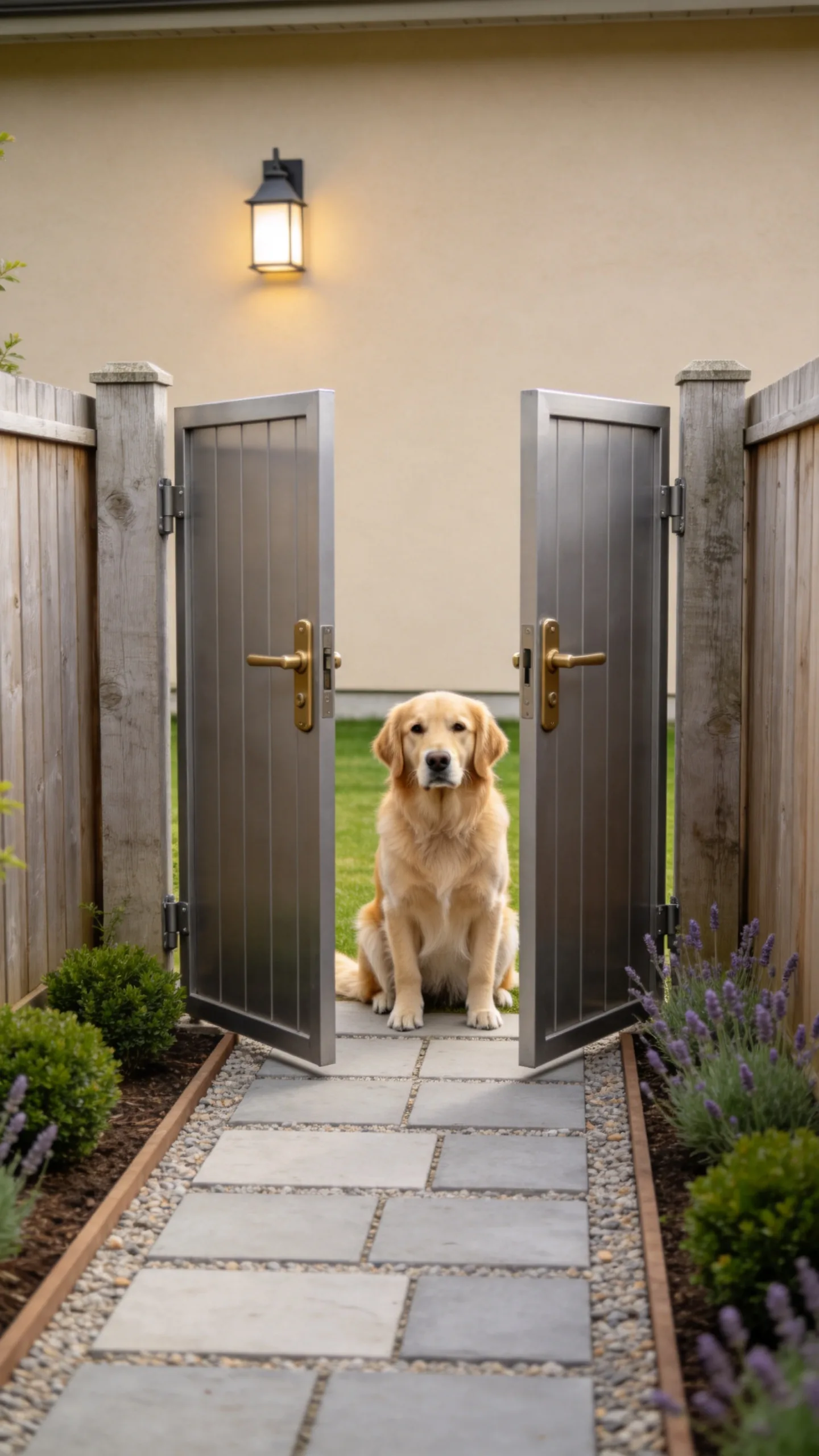
A double-gate entry creates a small transition zone between the open yard and the outside world. This is useful for dogs that rush gates, households with children, or yards where visitors, gardeners, or delivery workers need access. The first gate opens into a small enclosed area, and the second gate leads into the main yard.
This setup can be built with wood, metal, vinyl, or chain-link fencing to match the rest of the yard. The space does not need to be large; even a short gated vestibule near the side yard can reduce the chance of an accidental escape. Use self-closing hinges and latches placed high enough that dogs cannot bump them open.
Make the entry attractive with pavers, gravel, a narrow planting bed, or a wall-mounted hose holder. Good lighting near the gate helps at night, and a clear path keeps muddy paw traffic under control. This is one of the most practical dog fence ideas for busy backyards where gates are opened often.
15. Trellis-Topped Fence for Privacy and Garden Style
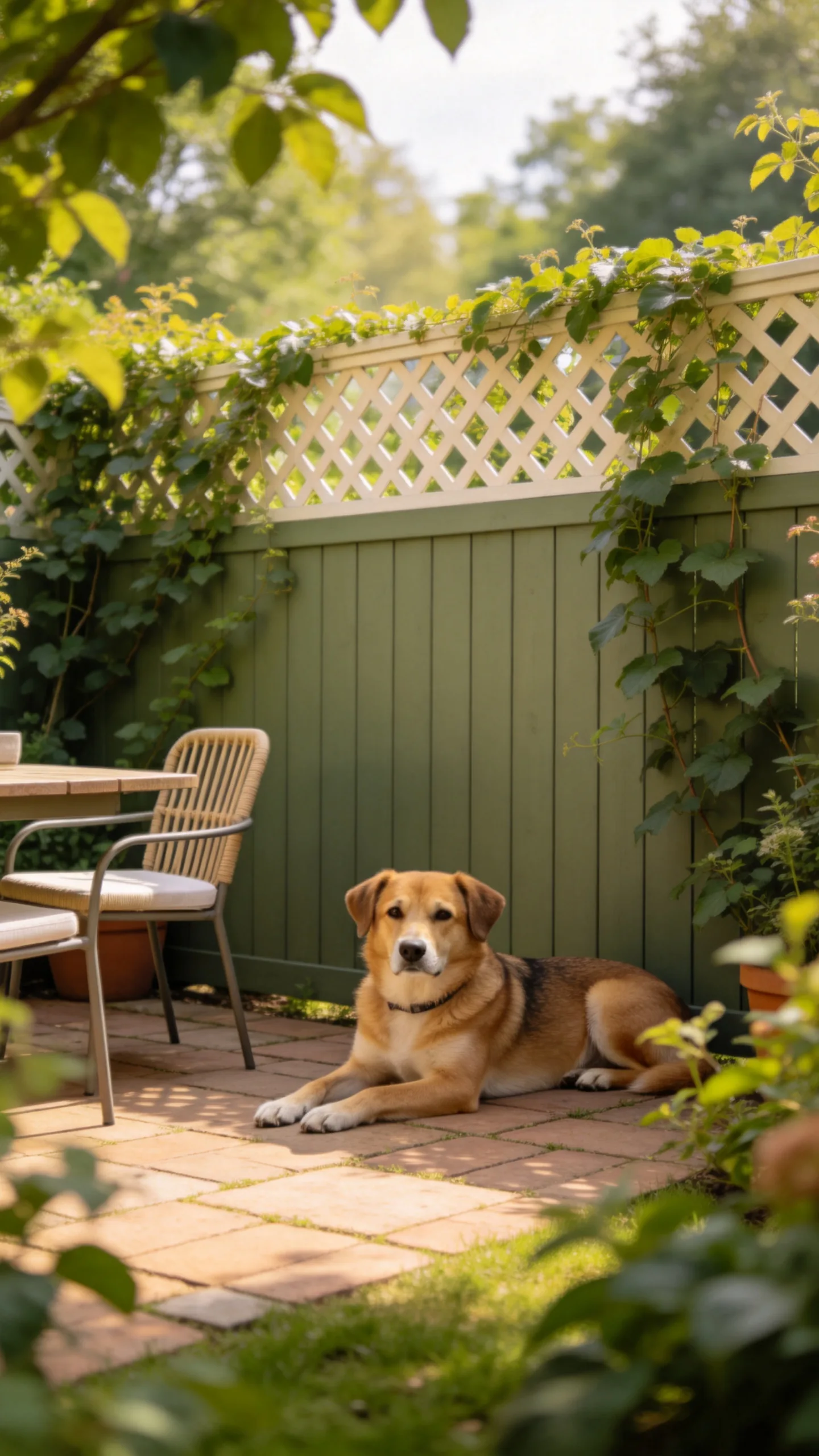
A trellis-topped fence combines secure lower panels with a lighter decorative top. The solid bottom section blocks sightlines at dog height, while the trellis adds height, airflow, and garden detail. This can be a smart choice when you want privacy without making a small backyard feel completely closed in.
Keep the lower section strong and gap-free for containment. The trellis portion should not create footholds for dogs that climb, so this style is better for dogs that do not scale fences. If climbing is a concern, use the trellis mainly for visual height above a smooth solid fence.
Grow vines carefully, choosing plants that suit your climate and are safe for your household. You can also place climbing plants in exterior beds so leaves and stems stay mostly outside the dog area. Over time, the trellis can frame a patio, screen a neighbor’s window, or turn a plain boundary into a garden feature while still supporting a secure backyard layout.