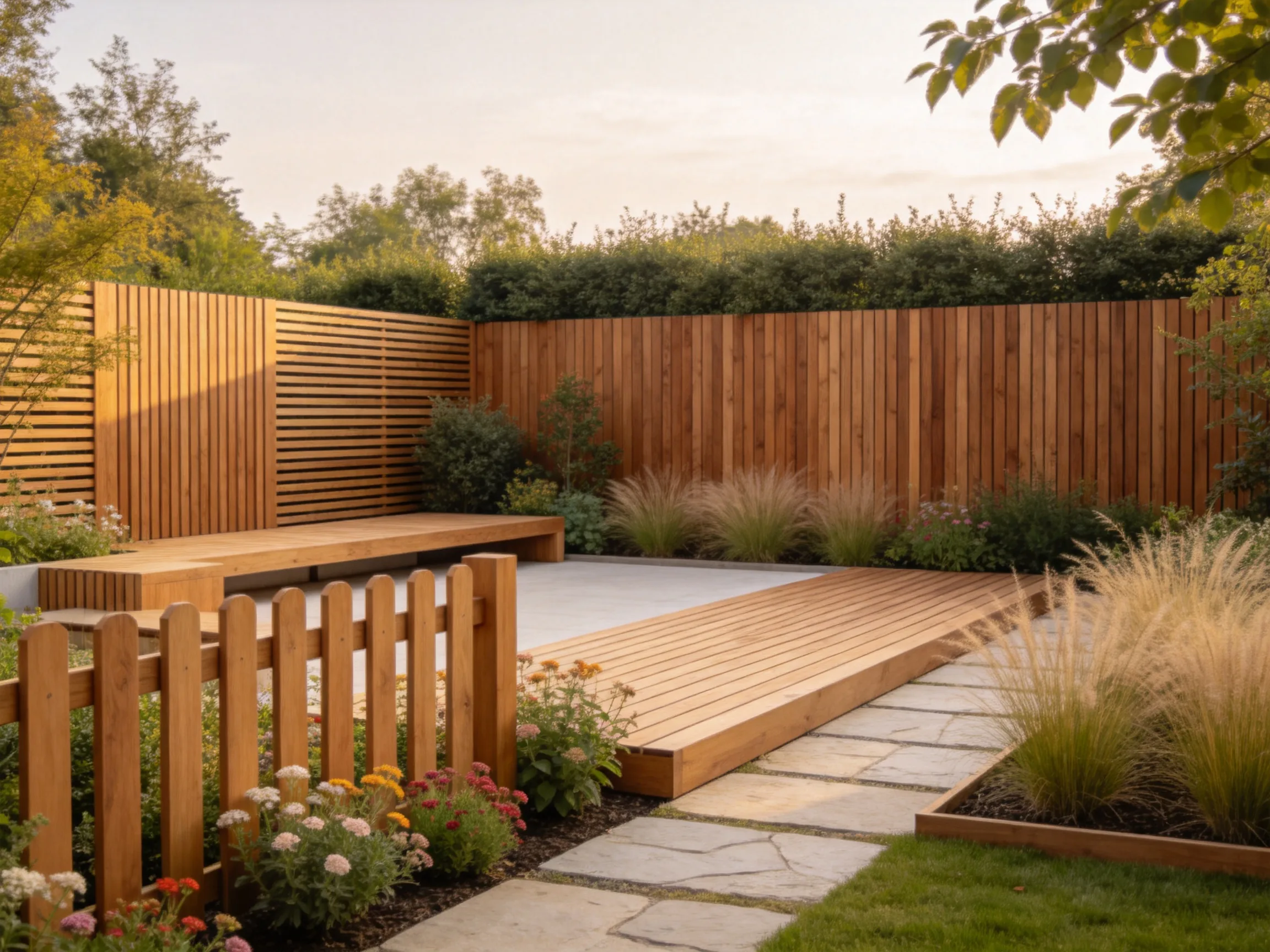
A wood fence can do much more than mark a property line. The right style can add privacy, frame planting beds, soften a patio, protect a vegetable garden, or create a polished backdrop for climbing plants. These wood fence ideas cover classic, modern, rustic, cottage, and compact-yard looks so you can choose a fence that fits your home style, outdoor space, and maintenance preferences.
1. Classic Vertical Picket Fence
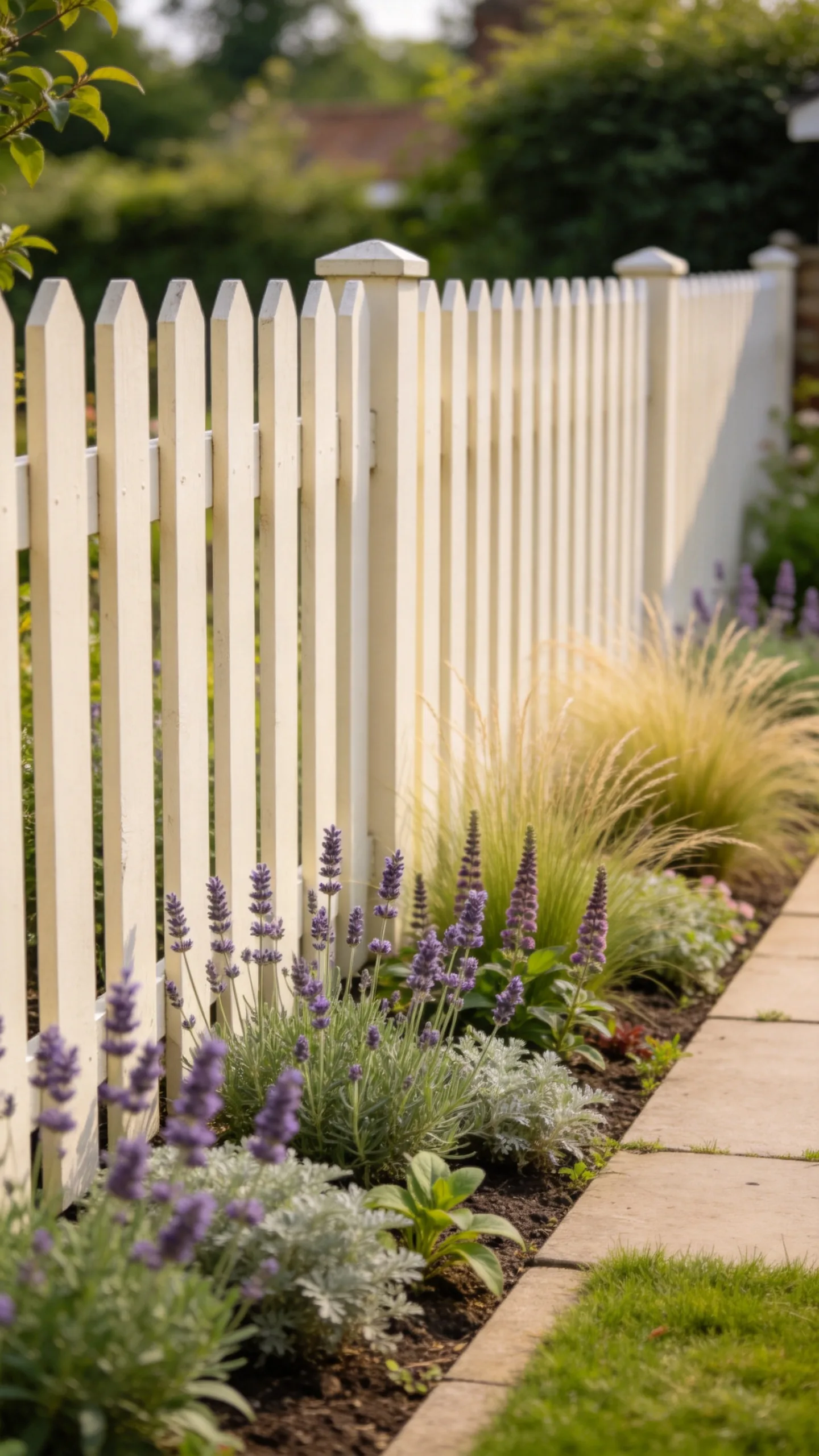
A vertical picket fence is one of the most recognizable wood fence ideas for cottage gardens, Cape Cod homes, and traditional front yards. The evenly spaced boards create a friendly boundary without completely blocking the view, which makes it a good choice along sidewalks, flower borders, and small front lawns.
For a garden-focused look, keep the fence around 3 to 4 feet tall and plant low perennials such as lavender, catmint, salvia, or dwarf ornamental grasses along the inside edge. The open gaps allow light and airflow, so plants are less likely to sit in damp shade. White paint feels crisp and classic, while a soft sage, cream, or natural stain can blend more gently into a planted landscape.
2. Horizontal Slat Privacy Fence
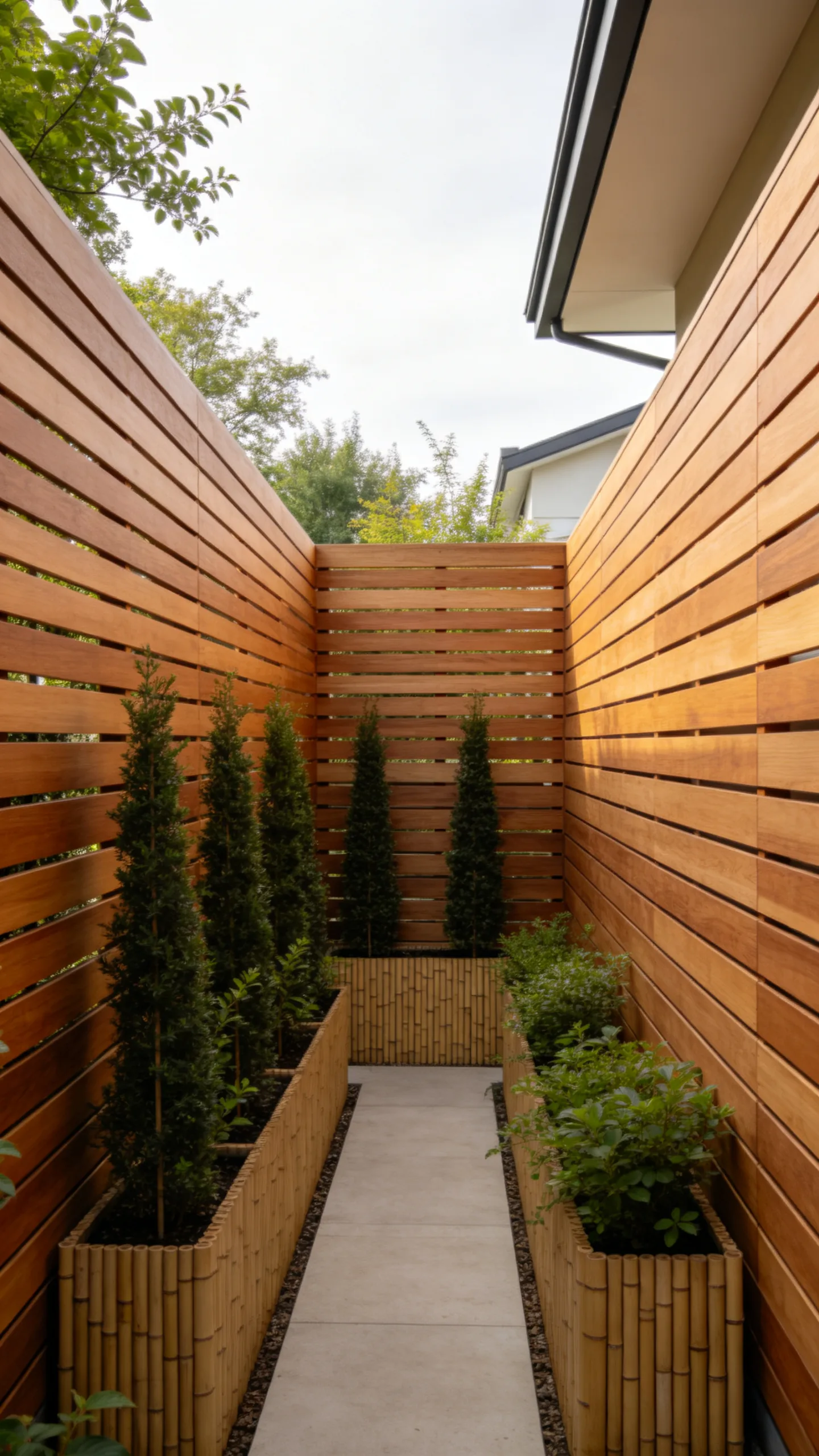
A horizontal slat fence works well with modern homes, midcentury exteriors, and clean-lined patios. The long boards visually widen a narrow yard, making this style especially useful for small urban spaces or side yards that need privacy without feeling boxed in.
For more privacy, install the slats close together with narrow, consistent gaps. For a lighter look, leave slightly wider spacing and plant upright shrubs, bamboo in contained planters, or espaliered fruit trees in front. Cedar, redwood, or pressure-treated pine can all be used, but the final appearance depends heavily on the stain color. A warm natural stain feels relaxed, while dark brown or black stain creates a dramatic backdrop for green foliage.
3. Board-on-Board Wood Fence
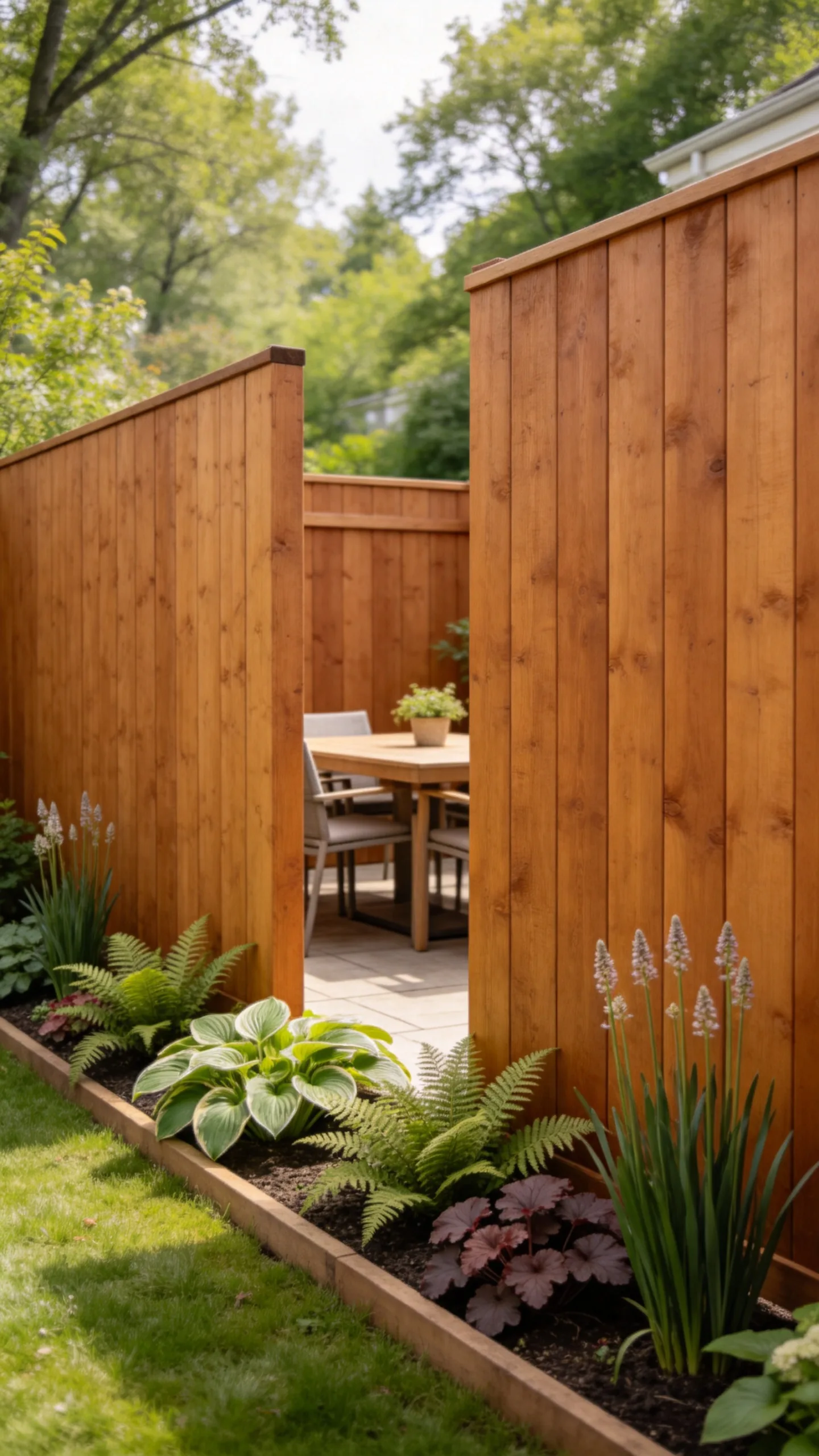
A board-on-board fence uses overlapping vertical boards to block sightlines from both sides. This makes it one of the most practical wood fence ideas for backyards, pool areas, and patios where privacy matters throughout the day.
Because there are no straight-through gaps, this fence style works well behind seating areas, outdoor dining tables, and hot tubs. To soften the solid surface, add a narrow planting bed at the base with shade-tolerant plants if the fence casts afternoon shade. Hostas, ferns, heuchera, or liriope can help the fence feel integrated into the garden instead of standing as a plain wall.
4. Shadowbox Fence for Shared Property Lines
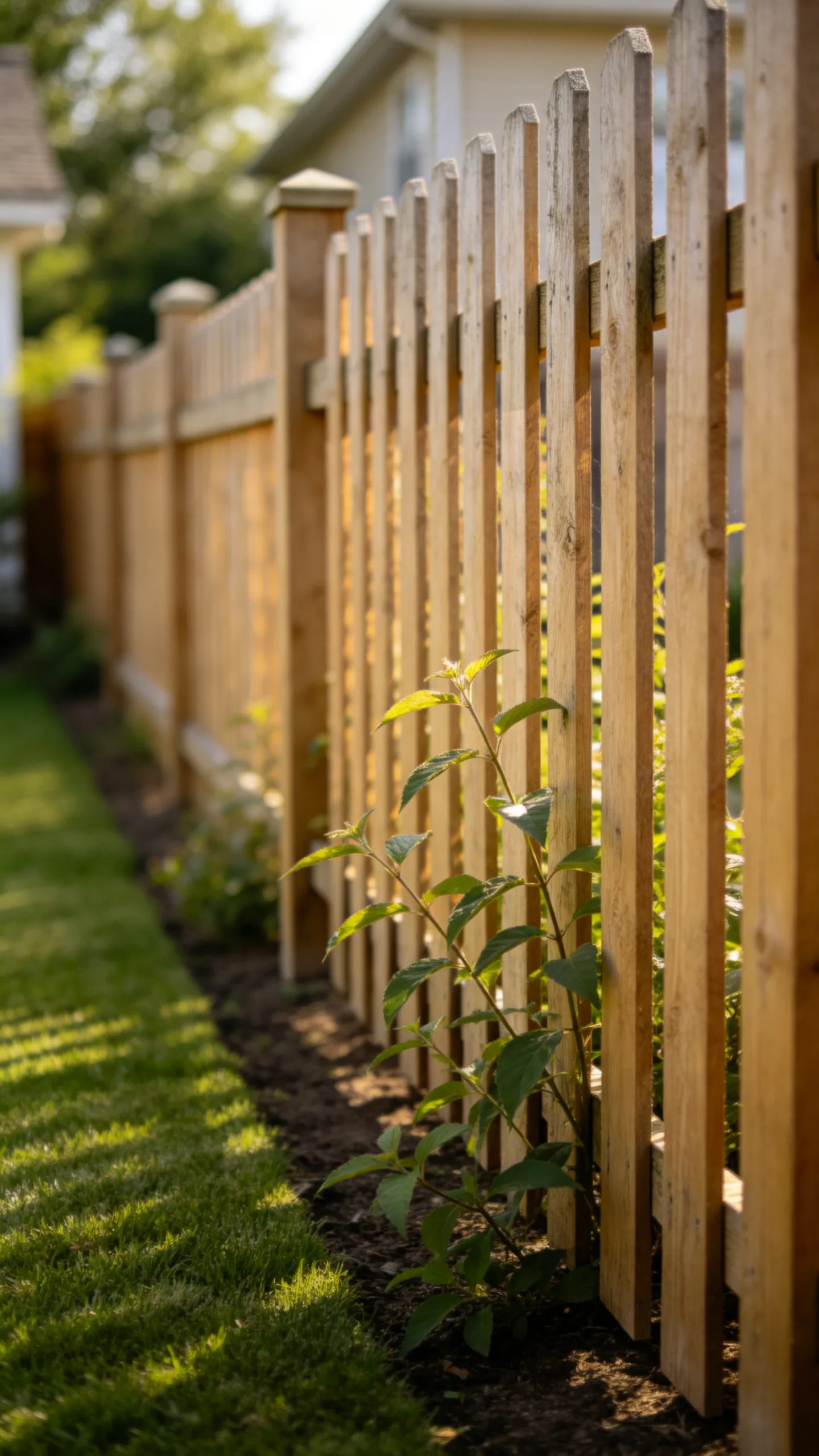
A shadowbox fence alternates boards on each side of the rails, creating a semi-private design that looks finished from both neighboring yards. It is a smart option for shared property lines because neither side gets the “back” of the fence.
This style allows more airflow than a fully solid privacy fence, which can be helpful in windy locations or around planting beds that need ventilation. The slight spacing also lets filtered light pass through, making it easier to grow border plants close to the fence. Use it around suburban backyards, dog runs, or long side boundaries where appearance from both sides is important.
5. Rustic Split Rail Fence
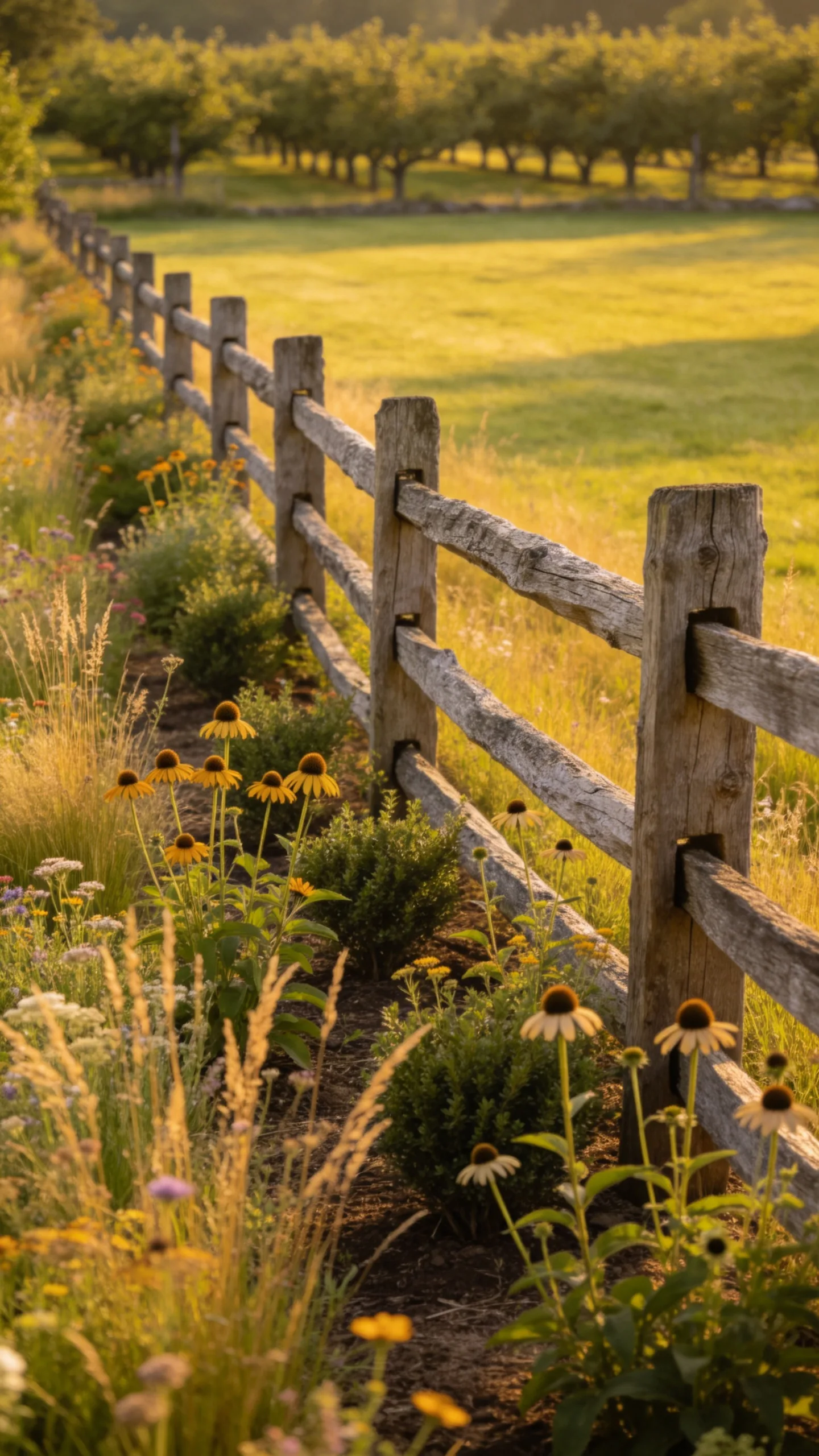
A split rail fence suits farmhouse yards, rural properties, meadow gardens, and natural landscapes. Its low, open shape defines an area without blocking views, making it ideal for large lawns, wildflower patches, orchard edges, or informal vegetable garden borders.
Because this fence is not designed for full privacy or pet containment unless wire mesh is added, it works best as a visual boundary. Pair it with native grasses, coneflowers, black-eyed Susans, or low shrubs to create a relaxed country-style edge. If you need to keep animals out of a garden bed, attach dark-coated welded wire to the inside so the wood remains the main visual feature.
6. Lattice-Top Privacy Fence
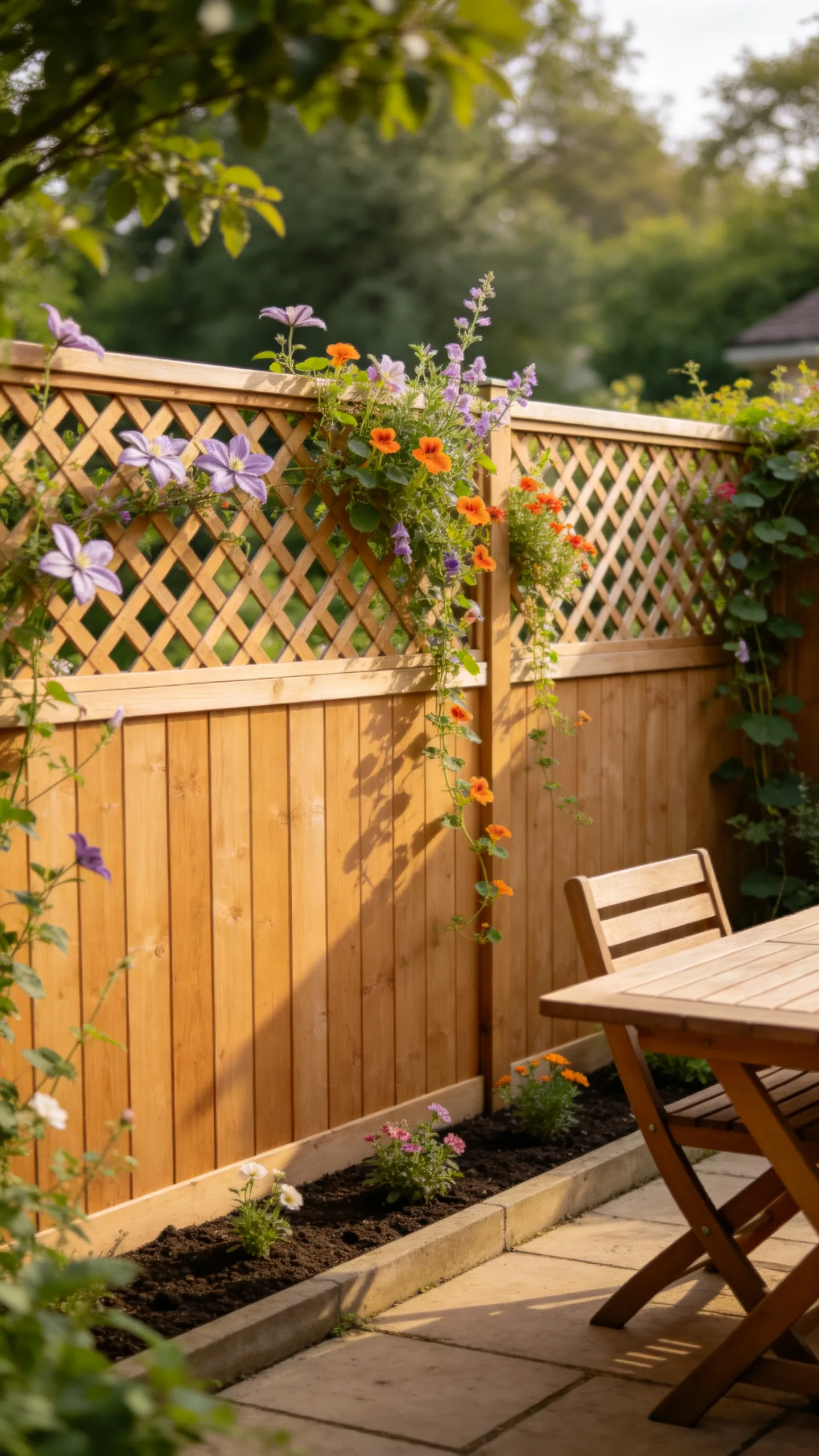
A lattice-top fence combines a solid lower section with an open decorative top. It offers privacy at eye level while still allowing light, air, and climbing plants to move through the upper portion. This style fits traditional homes, cottage gardens, and patios that need screening without feeling too enclosed.
The lattice section can support lightweight climbers such as clematis, annual sweet peas, or climbing nasturtiums, depending on your climate and sunlight. Avoid planting heavy vines on delicate lattice unless the frame is reinforced. For a polished garden look, repeat the lattice detail on a gate or arbor so the fence feels intentional rather than added as an afterthought.
7. Modern Black-Stained Wood Fence
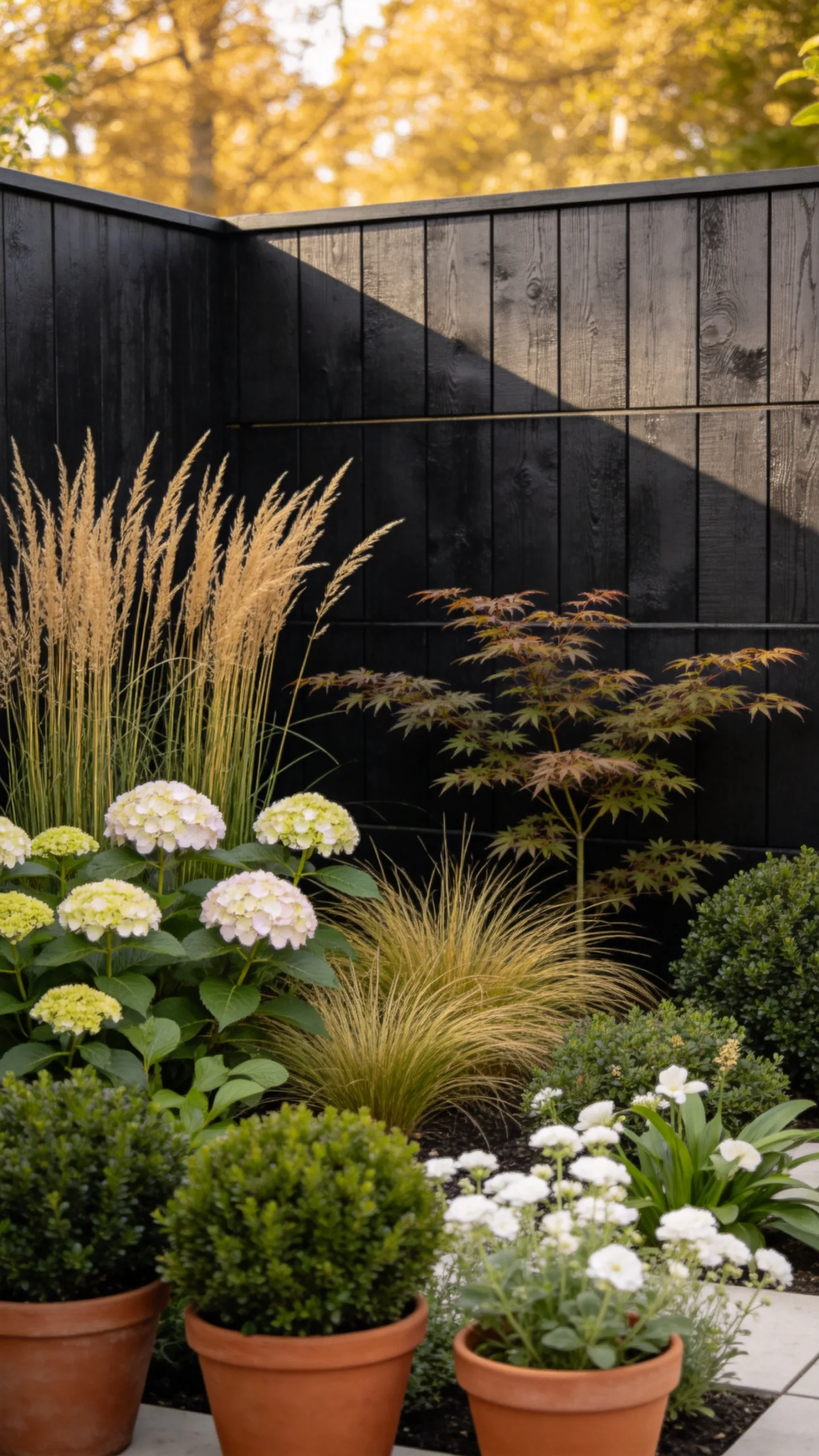
A black-stained wood fence creates a bold backdrop that makes green leaves, pale flowers, and terracotta pots stand out. It works especially well with modern homes, minimalist patios, and small gardens where a strong background can make planting look more layered.
Use vertical or horizontal boards depending on the shape of the yard. Horizontal boards can make a narrow space feel longer, while vertical boards can add height around a patio or deck. Pair the dark fence with plants like ornamental grasses, hydrangeas, Japanese forest grass, boxwood, or white-flowering perennials for contrast. Choose an exterior wood stain rather than interior paint so the finish can handle weather exposure.
8. Natural Cedar Fence
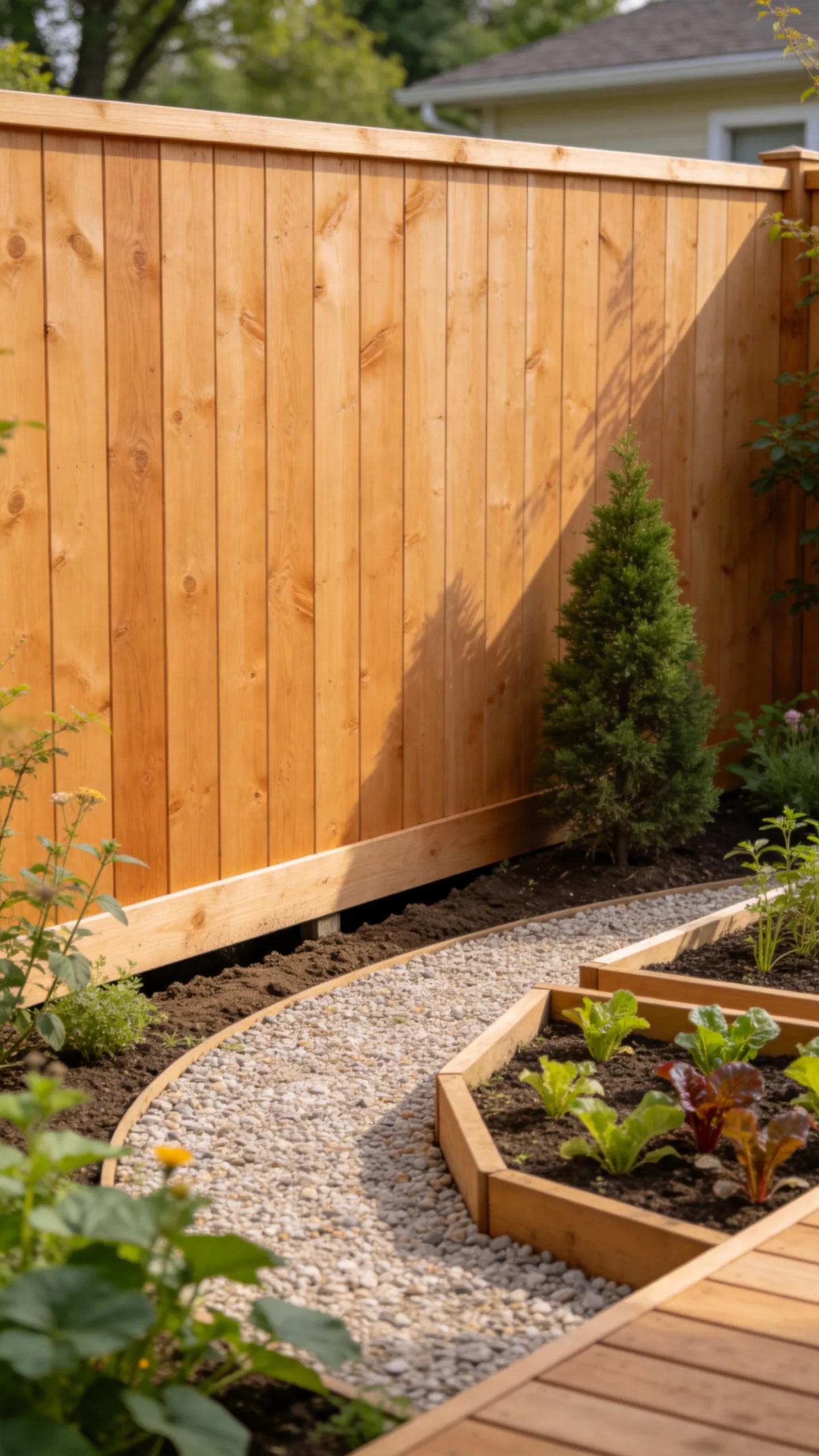
A natural cedar fence is a versatile choice for homes that need warmth without heavy color. Cedar has a clean grain and a warm tone that fits modern, rustic, coastal, and craftsman-style landscapes. Over time, untreated cedar weathers to a silvery gray, while clear sealers or semi-transparent stains help maintain a warmer appearance.
This fence style pairs beautifully with mixed planting beds, gravel paths, raised vegetable beds, and wood decks. If you want a low-maintenance garden edge, plant drought-tolerant perennials or small evergreen shrubs in front so the fence does not need frequent touch-ups around delicate plants. Leave a small gap between soil and the bottom boards to reduce moisture contact.
9. Basket Weave Wood Fence
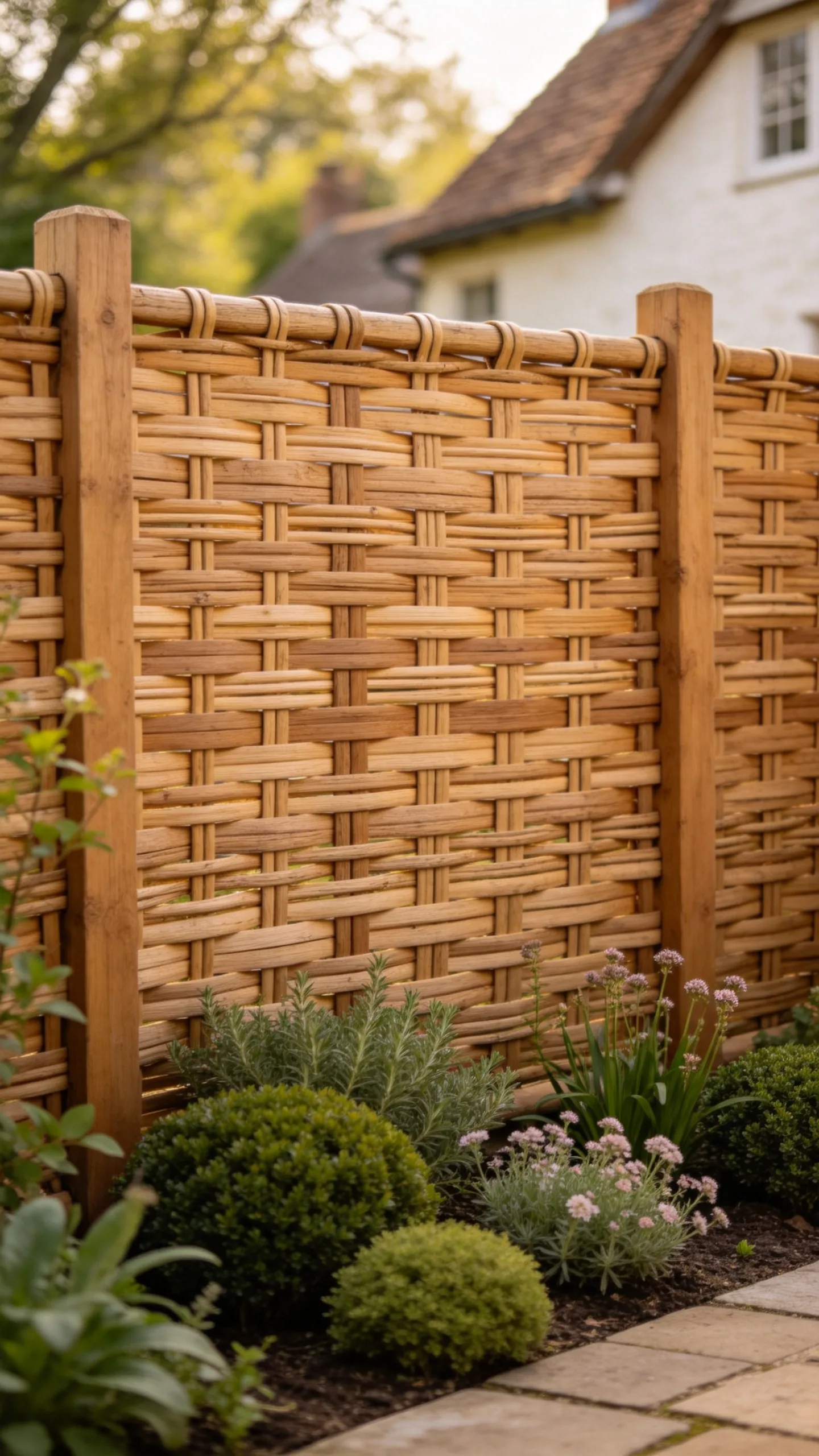
A basket weave fence uses flexible or thin boards woven between posts for a textured, handcrafted look. It is a good match for cottage gardens, rustic courtyards, and relaxed backyard seating areas where you want privacy with more visual interest than a flat panel.
The woven pattern creates movement across a long fence run, which can help break up a plain rectangular yard. Because the design has depth, it looks best when there is enough space to view it from a few feet away. Keep plantings simple in front of it, such as mounded herbs, low boxwood, or compact flowering perennials, so the weave remains visible.
10. Stockade Fence for Maximum Privacy
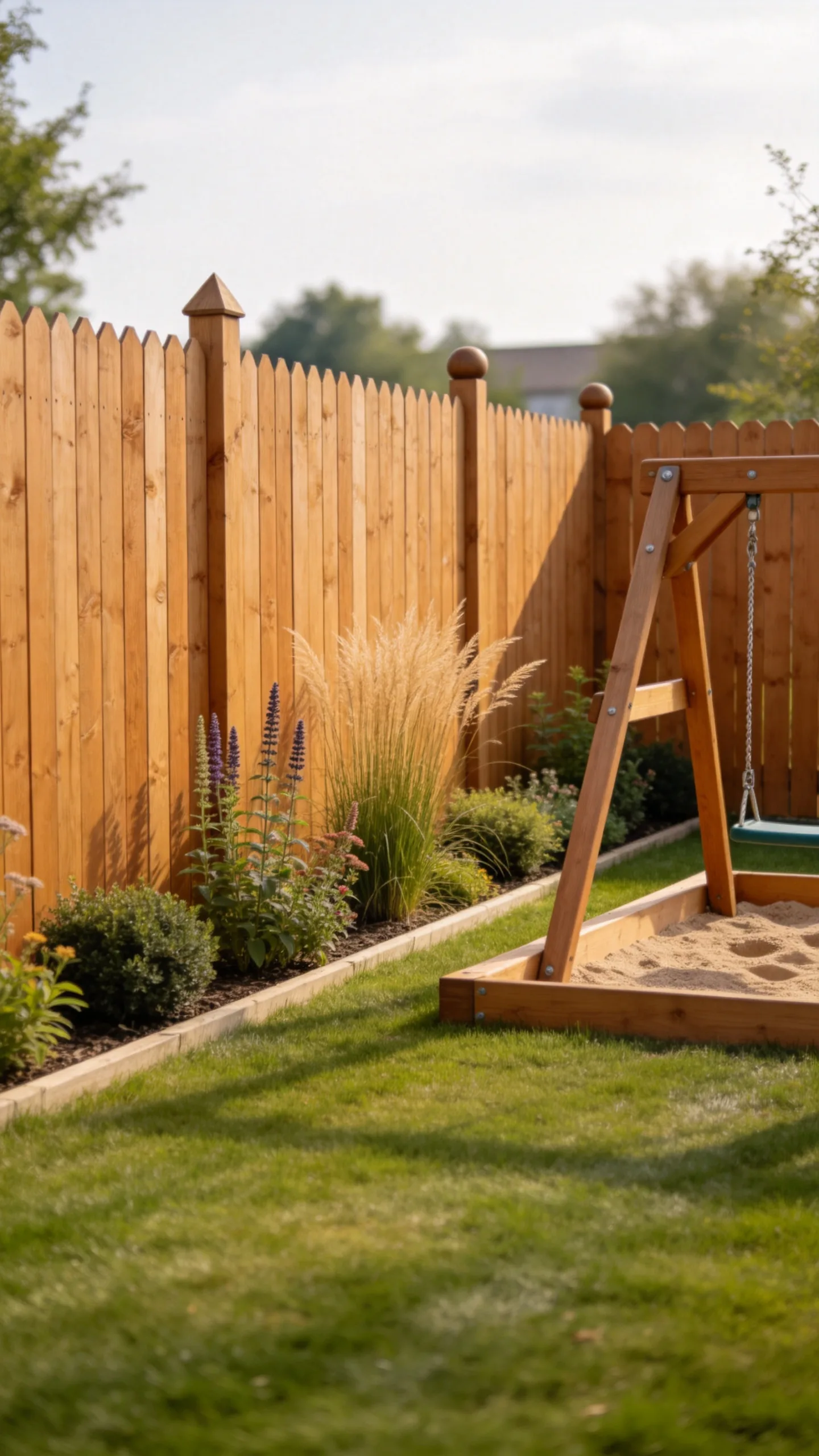
A stockade fence uses tightly fitted vertical boards with pointed or rounded tops. It is one of the most straightforward wood fence ideas for creating a private backyard, blocking street views, or enclosing a family play area.
This style can feel heavy if left completely bare, so use planting to soften the base. A narrow border of shrubs, tall perennials, or ornamental grasses can break up the wall-like effect. For a small yard, choose a stain color that coordinates with the house trim or deck so the fence becomes part of the overall design instead of visually shrinking the space.
11. Scalloped Picket Fence
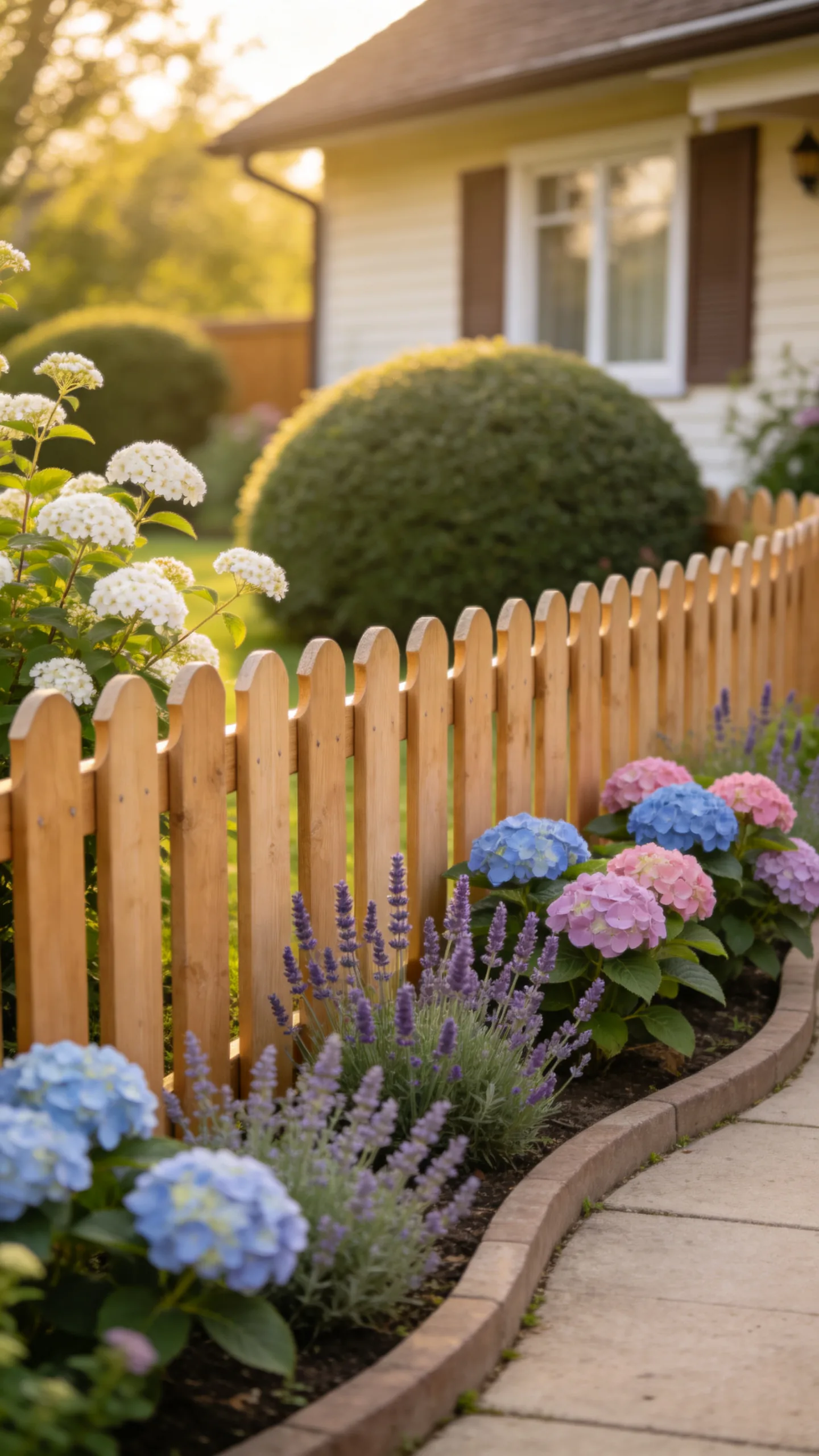
A scalloped picket fence has a gentle curved top line, giving it a softer look than a straight picket fence. It works nicely with cottage homes, bungalows, front gardens, and curved planting beds.
The curved profile is useful when you want the fence to feel decorative rather than purely functional. Plant rounded shrubs or flowering mounds nearby to echo the shape, such as spirea, dwarf hydrangea, lavender, or catmint. Keep the height modest for front yards so the fence frames the garden without hiding the home’s entry path and porch.
12. Horizontal Fence with Metal Posts
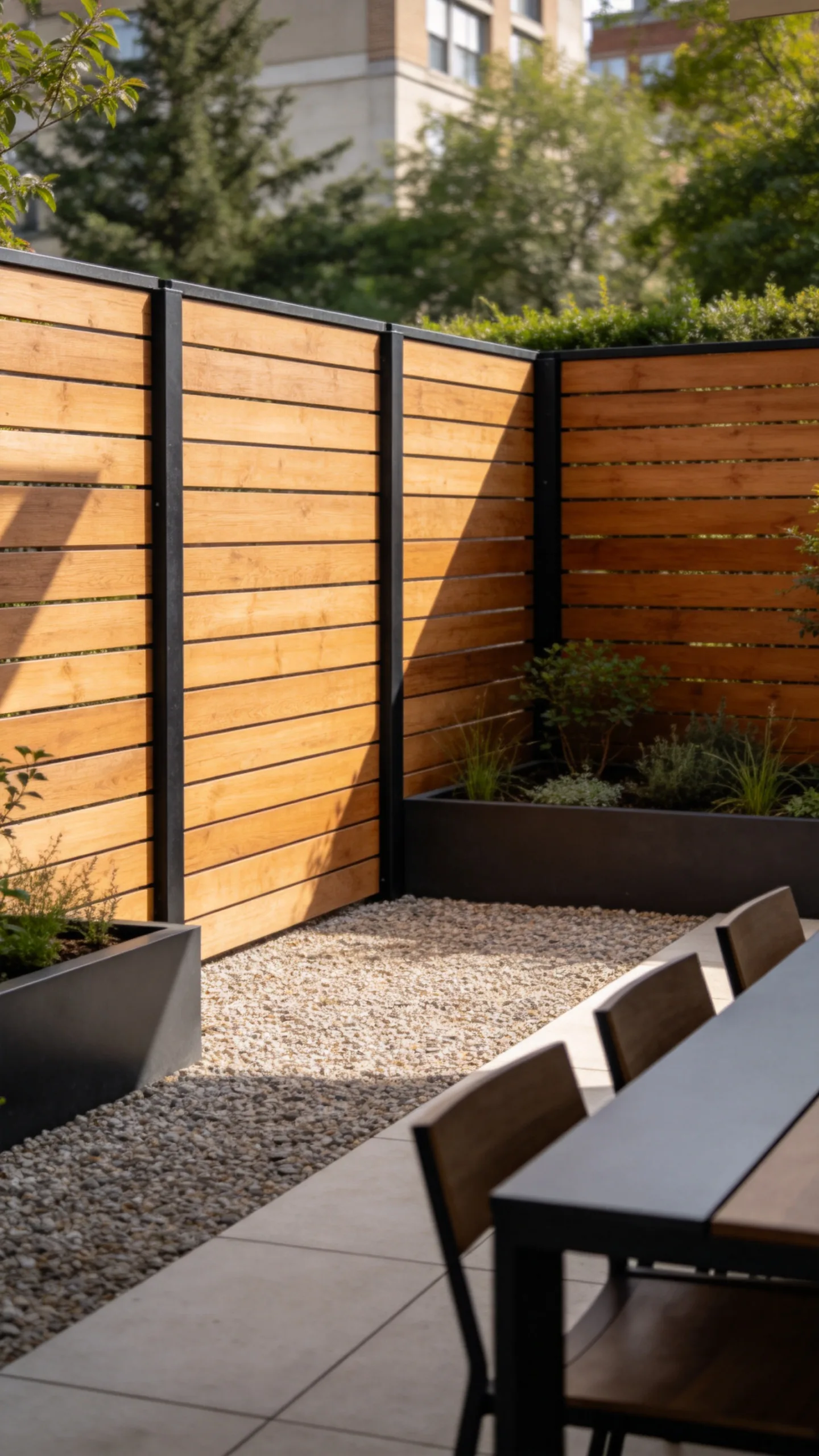
A horizontal wood fence with metal posts offers a clean, updated look and strong structure. The contrast between warm wood boards and dark metal posts suits contemporary homes, industrial-style gardens, and renovated urban backyards.
Metal posts can also help reduce the bulky look of large wood posts, which is useful in compact spaces. Use the fence behind a gravel patio, raised planters, or a narrow dining area to create a neat backdrop. If privacy is the goal, keep board gaps tight. If the fence is mainly decorative, slightly wider gaps can let more light reach plants along the base.
13. Wood Fence with Built-In Planter Boxes
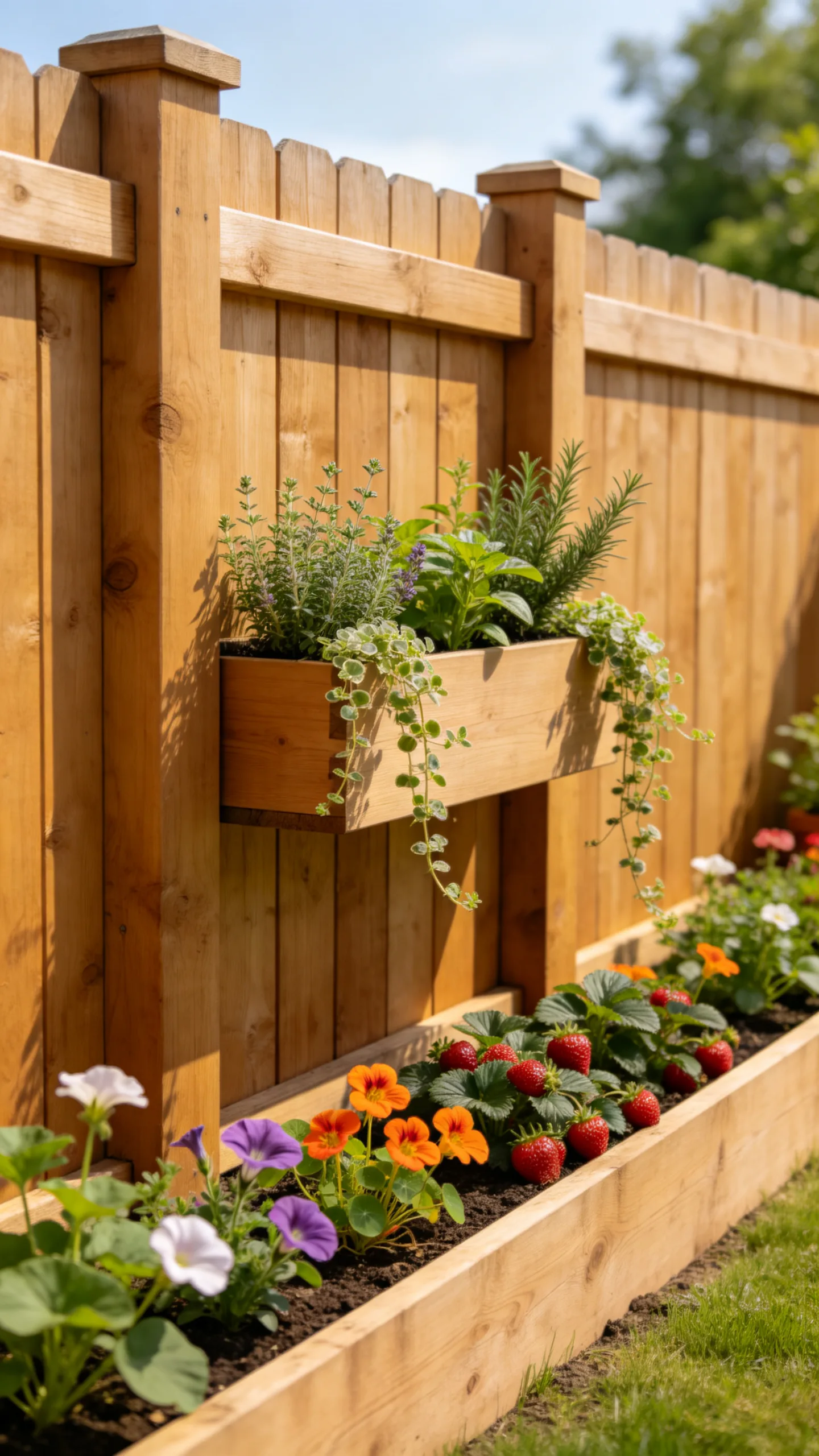
A wood fence with built-in planter boxes is practical for small yards, patios, and balconies where ground space is limited. Planter boxes can be attached to sturdy posts or integrated into the lower fence line to hold herbs, annual flowers, strawberries, or compact trailing plants.
This idea saves space by using the fence as a vertical gardening surface. Make sure boxes include drainage holes and are lined or built from rot-resistant wood. For sunny fences, plant thyme, oregano, trailing rosemary, petunias, or nasturtiums. For part-shade fences, try parsley, violas, impatiens, or small ferns. Keep heavier planters near posts rather than hanging them from thin fence boards.
14. Privacy Fence with a Decorative Gate
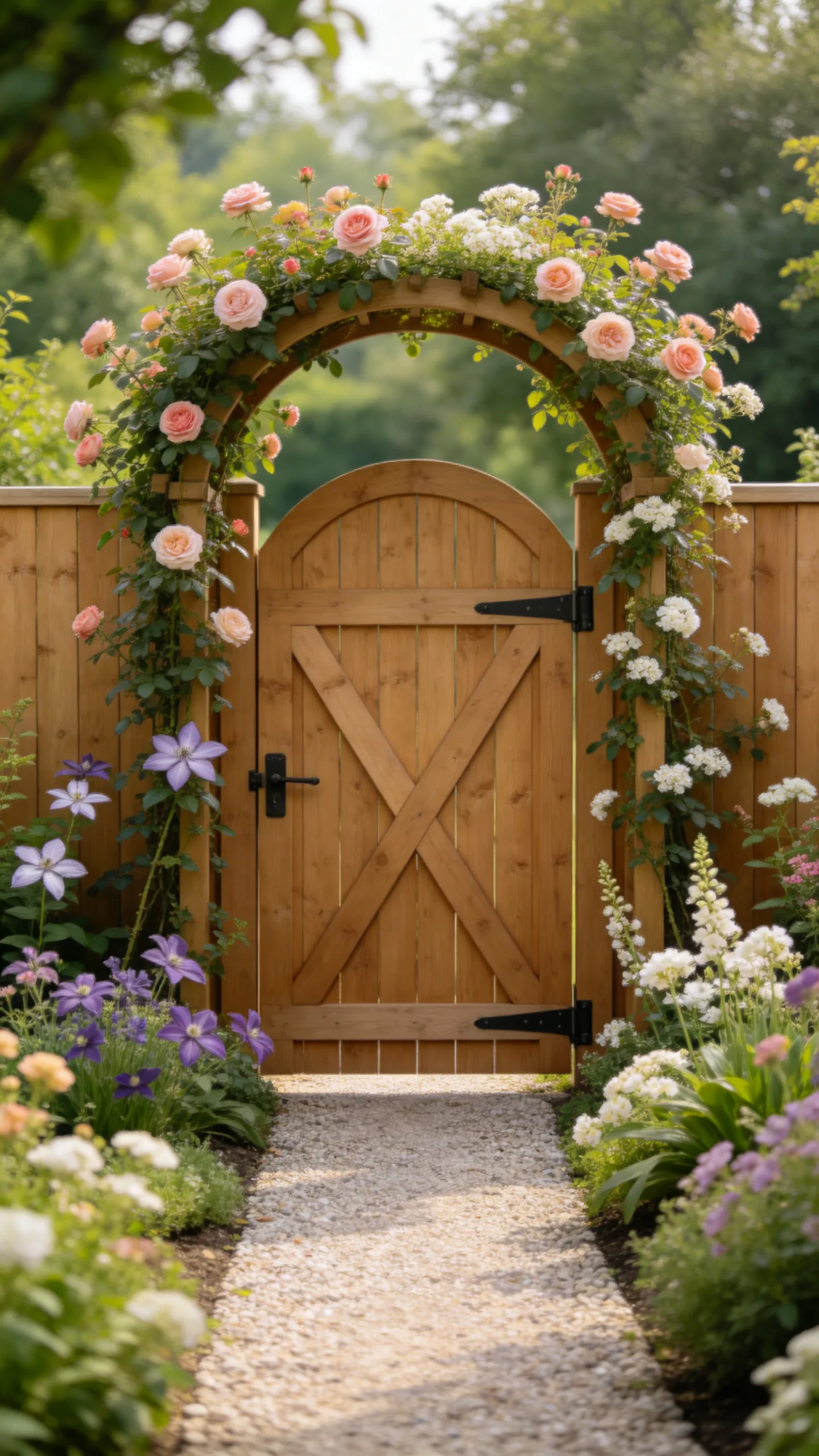
A wood privacy fence feels more intentional when paired with a well-designed gate. A gate can echo the fence boards, add an arched top, include diagonal bracing, or feature a small window with lattice or metal mesh. This idea works for side yards, garden entries, vegetable gardens, and backyard transitions.
Use the gate as a focal point by framing it with climbing roses, clematis, jasmine, or an arbor if your climate and sunlight are suitable. A clear path leading to the gate, such as gravel, stepping stones, or brick pavers, helps the fence feel connected to the garden layout. Choose durable hinges and a latch designed for outdoor use, especially for frequently used side entrances.
15. Wood Fence with an Arbor Opening
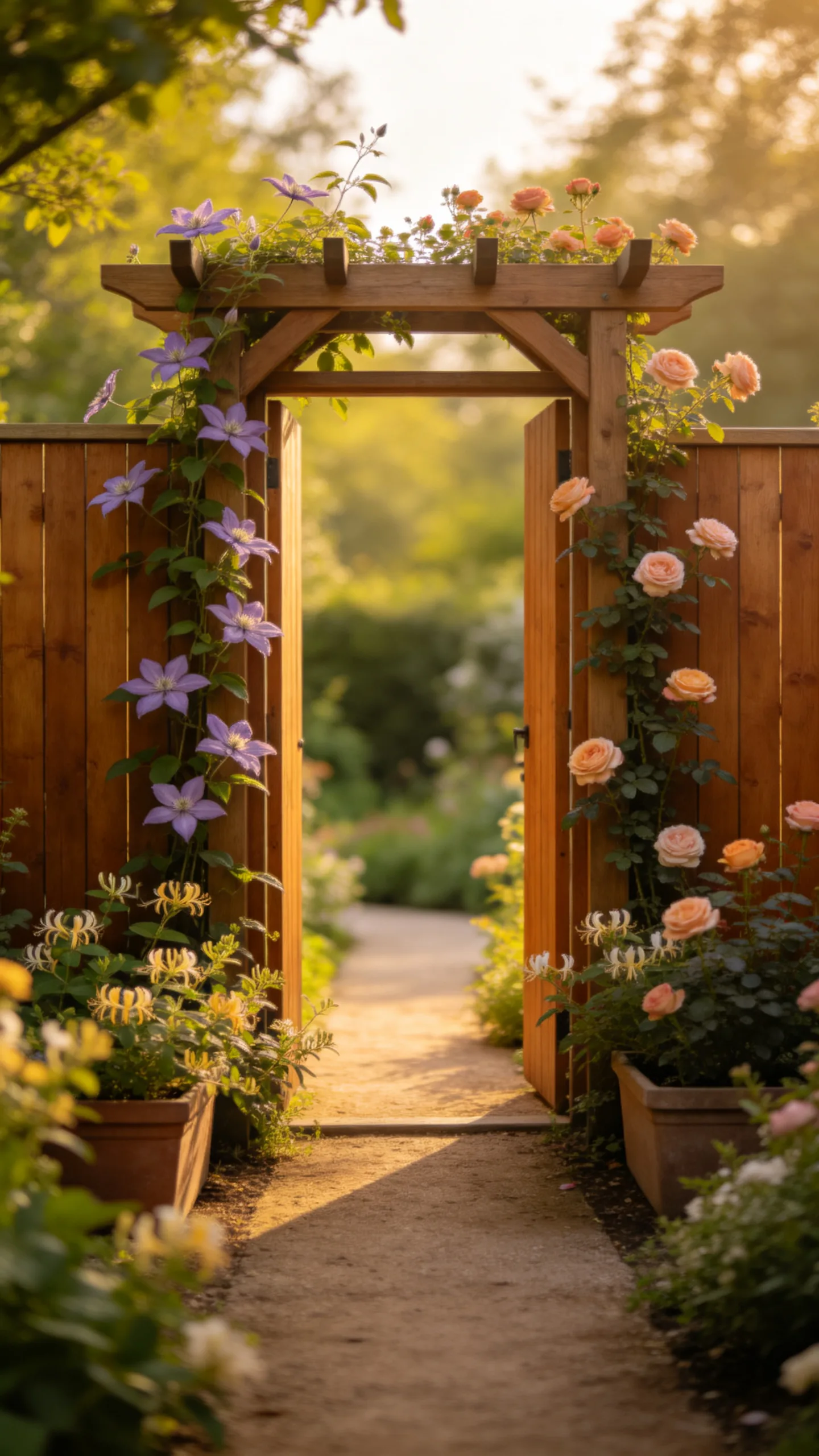
Adding an arbor opening to a wood fence turns a simple boundary into a garden entrance. This works especially well between a front yard and backyard, around a vegetable garden, or at the start of a side-yard path.
The arbor can be stained to match the fence or painted in a contrasting color for emphasis. Plant climbers at the base only if the structure is strong enough and receives the right light. Clematis, climbing roses, honeysuckle, or annual vines can soften the transition, while containers on both sides of the opening create a similar effect with less long-term maintenance.
16. Low Wood Fence for Garden Beds
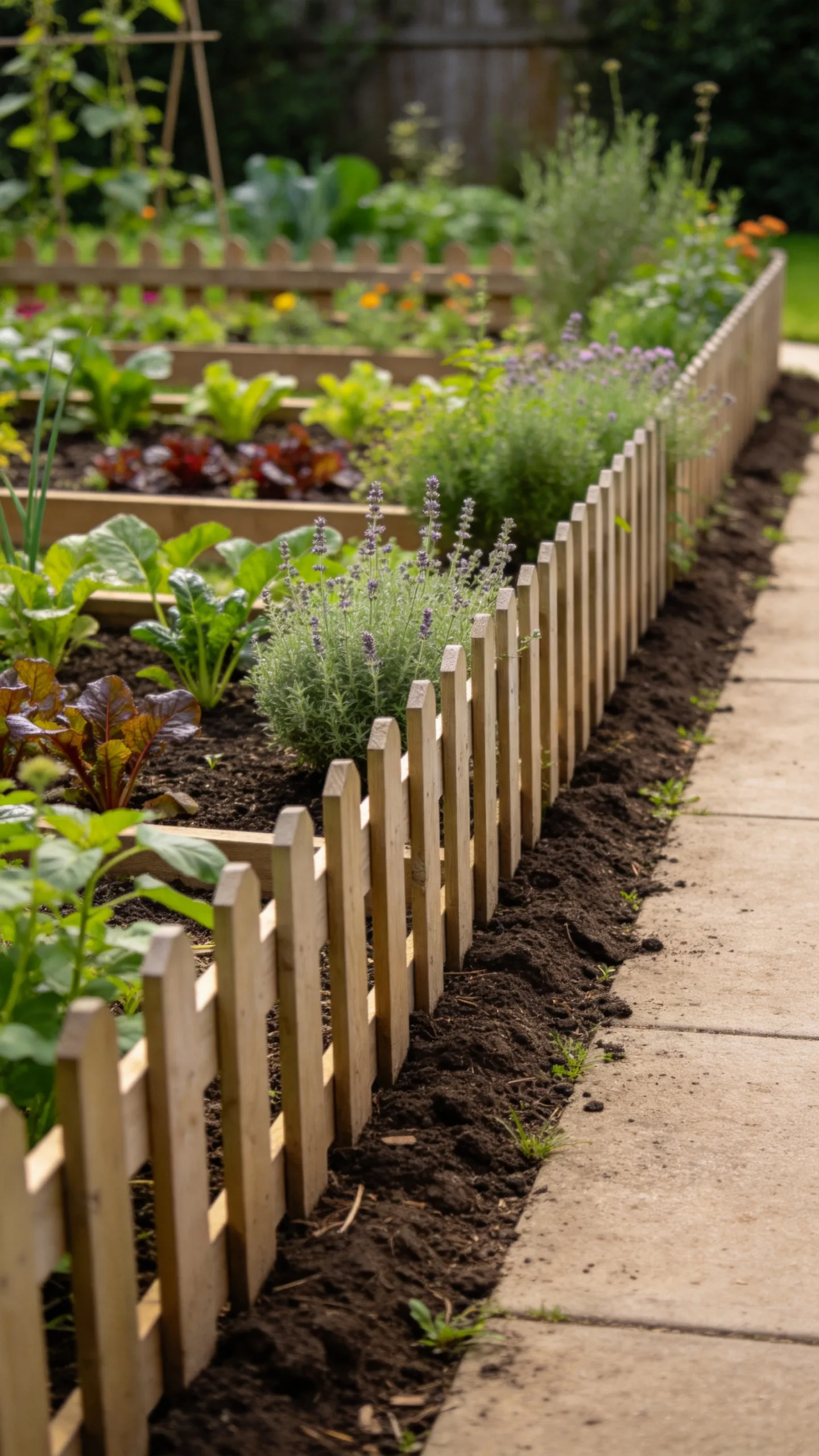
A low wood fence is useful for defining flower beds, vegetable plots, herb gardens, or paths without creating a full enclosure. It can be made from short pickets, simple rails, or small vertical boards installed along the edge of a bed.
This style is especially helpful in front yards where a tall fence may feel too closed off. It keeps mulch contained, discourages foot traffic through planting areas, and gives the garden a tidy outline. Use rot-resistant wood or keep boards slightly above damp soil. Pair the fence with edible plants, seasonal annuals, or compact perennials so the low height still lets the planting remain the main feature.
17. Slatted Screen Fence for Patios
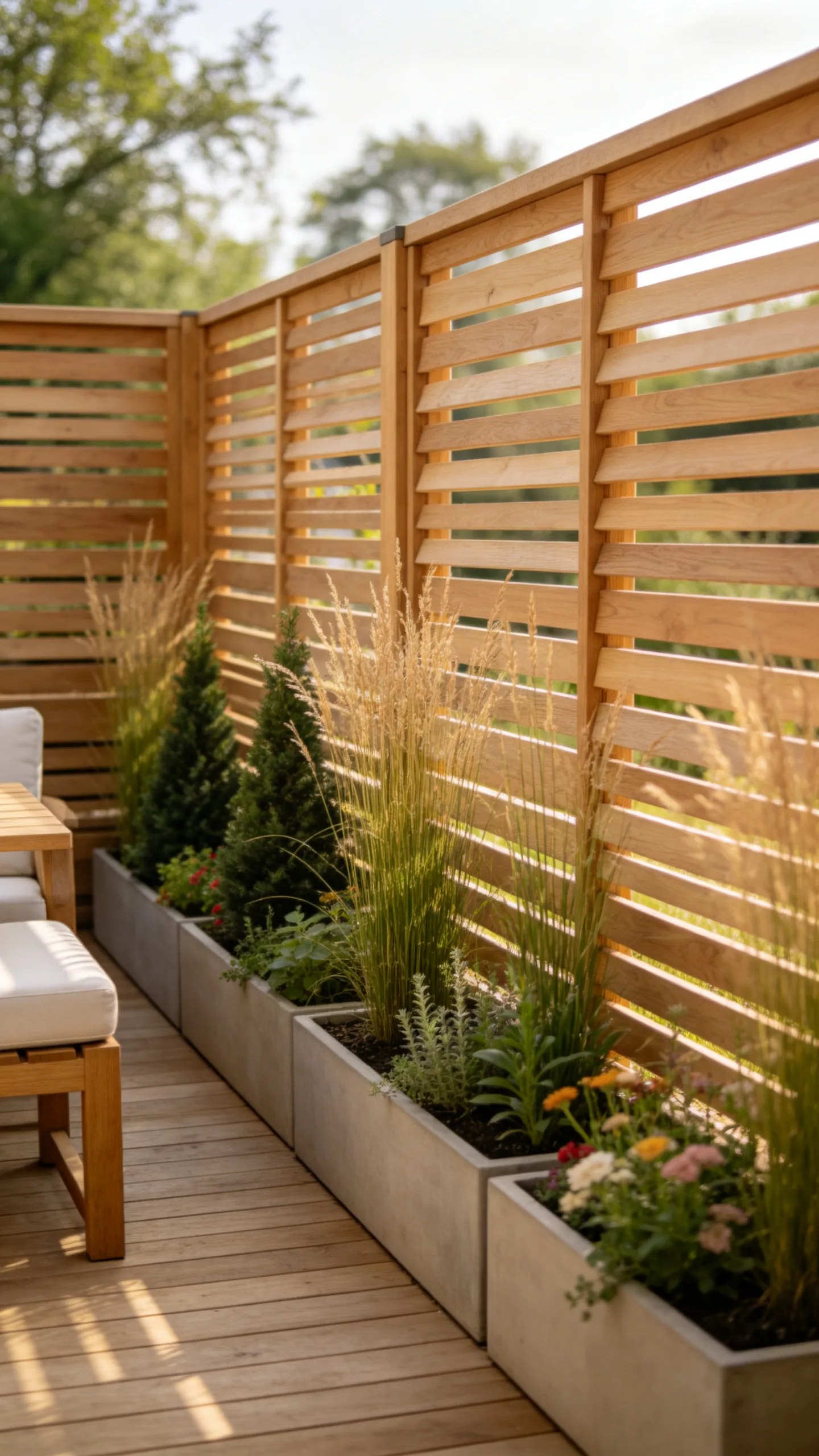
A slatted screen fence is ideal for patios, decks, and outdoor dining spaces that need partial privacy. Unlike a full perimeter fence, a screen can be installed only where needed, such as beside a seating area, near a neighbor-facing window, or around an air-conditioning unit.
Use evenly spaced wood slats to filter views while still allowing airflow. This makes the patio feel sheltered without becoming dark or closed in. Add container plants at the base, such as tall grasses, dwarf evergreens, herbs, or seasonal flowers. In small patios, choose narrow rectangular planters to keep walking space open.
18. Craftsman-Style Wood Fence
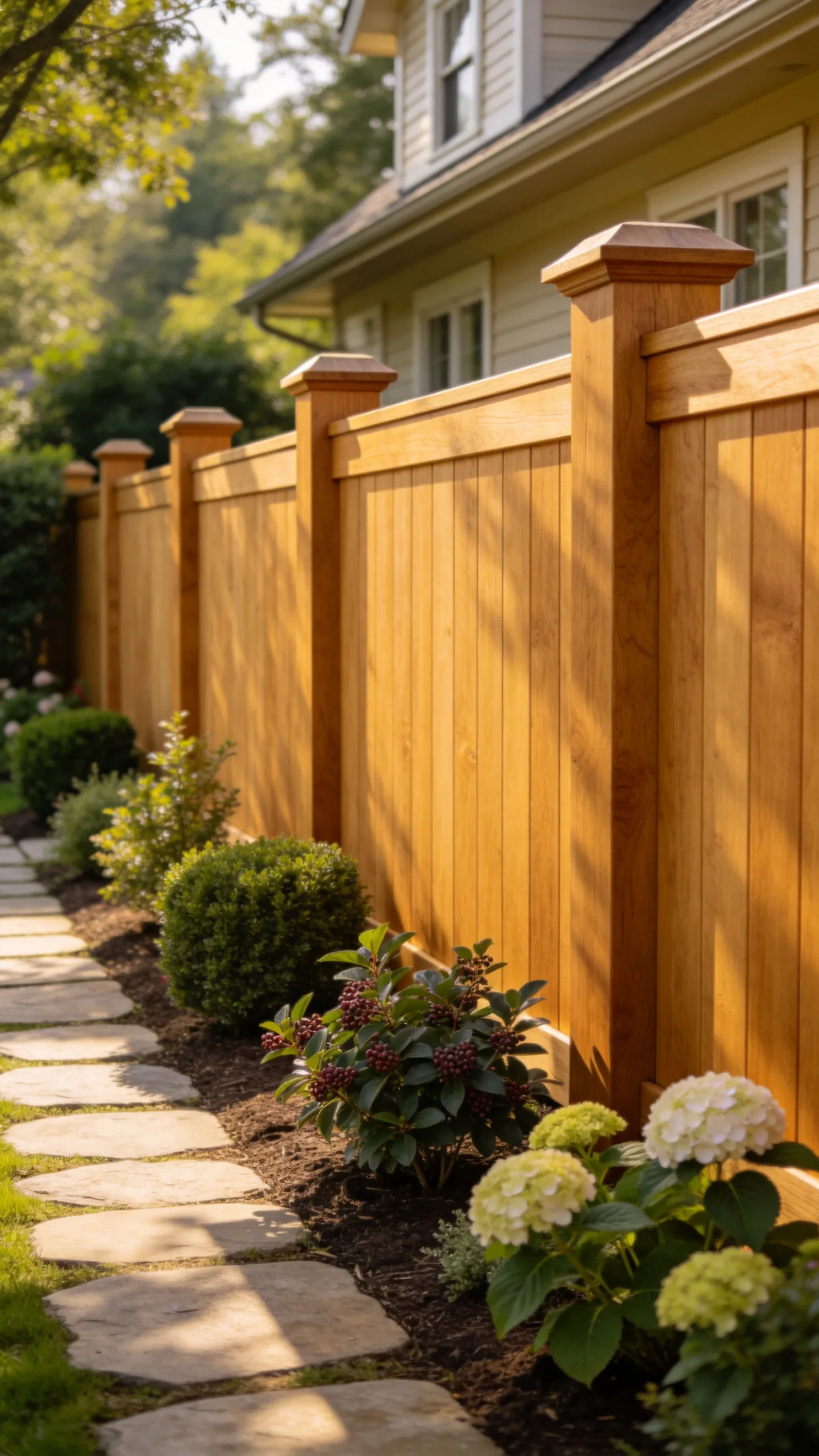
A craftsman-style wood fence often features substantial posts, simple vertical boards, and a slightly heavier top cap. It pairs well with bungalows, craftsman homes, and landscapes with stone paths, broad porches, and layered foundation plantings.
Choose warm stains that coordinate with porch columns, window trim, or deck boards. A top cap helps shed water and gives the fence a finished architectural line. Plant structured shrubs such as boxwood, inkberry holly, dwarf viburnum, or hydrangea along the fence to match the solid, grounded feel of the style. Keep the layout orderly rather than overly wild for the best fit.
19. Coastal Weathered Wood Fence
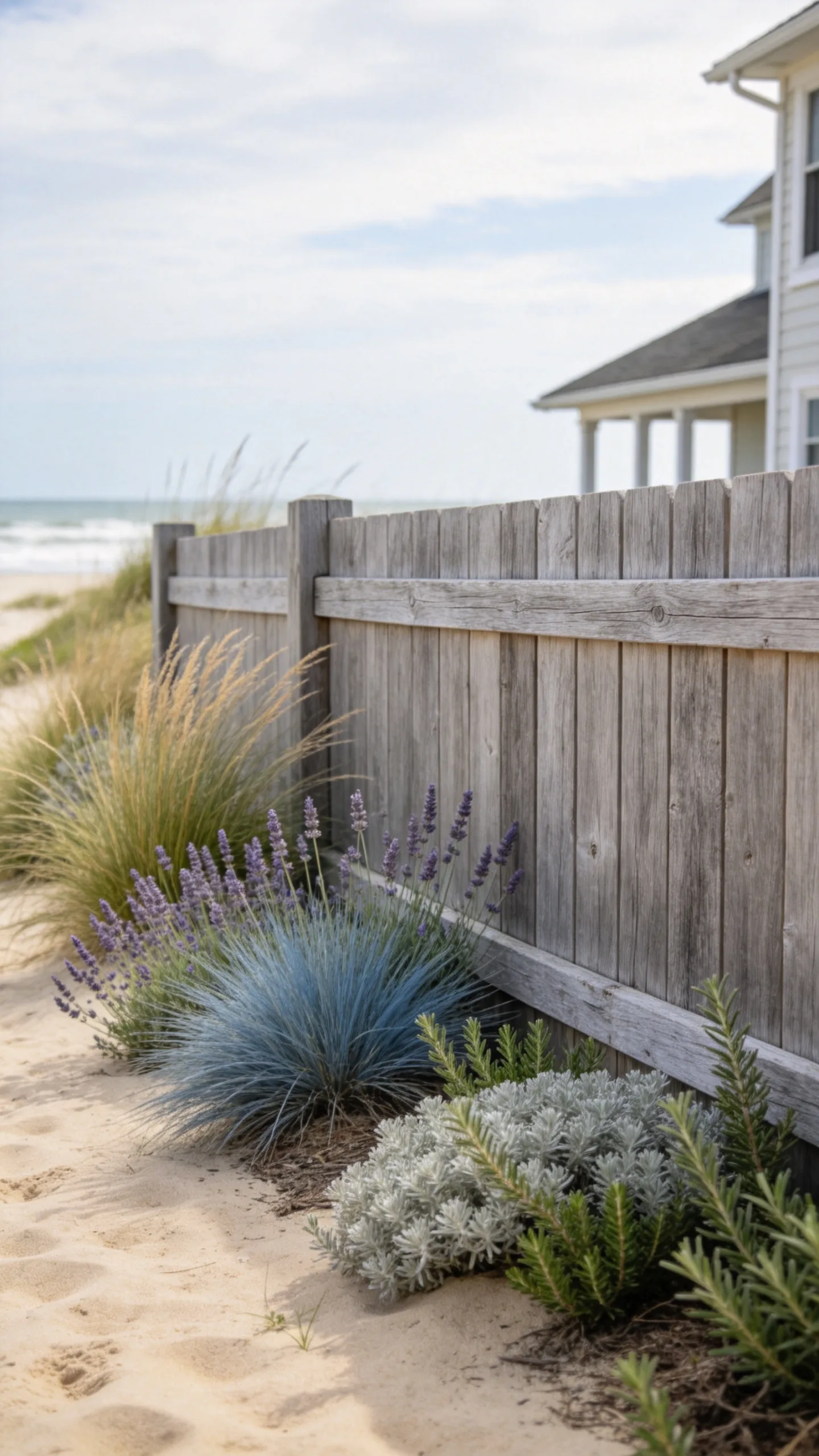
A weathered wood fence suits coastal homes, beach cottages, and casual gardens with sandy paths, ornamental grasses, and relaxed planting. The gray-toned finish can come from naturally weathered cedar or from a stain designed to mimic driftwood.
This fence style works well with plants that have silver, blue-green, or airy textures, such as lavender, blue fescue, rosemary, sea thrift, or ornamental grasses suited to your region. Use stainless or exterior-grade fasteners if the fence is in a salty or damp environment. Keep the design simple, with horizontal rails or clean vertical boards, so the weathered texture remains the main feature.
20. Wood Fence with Mixed Materials
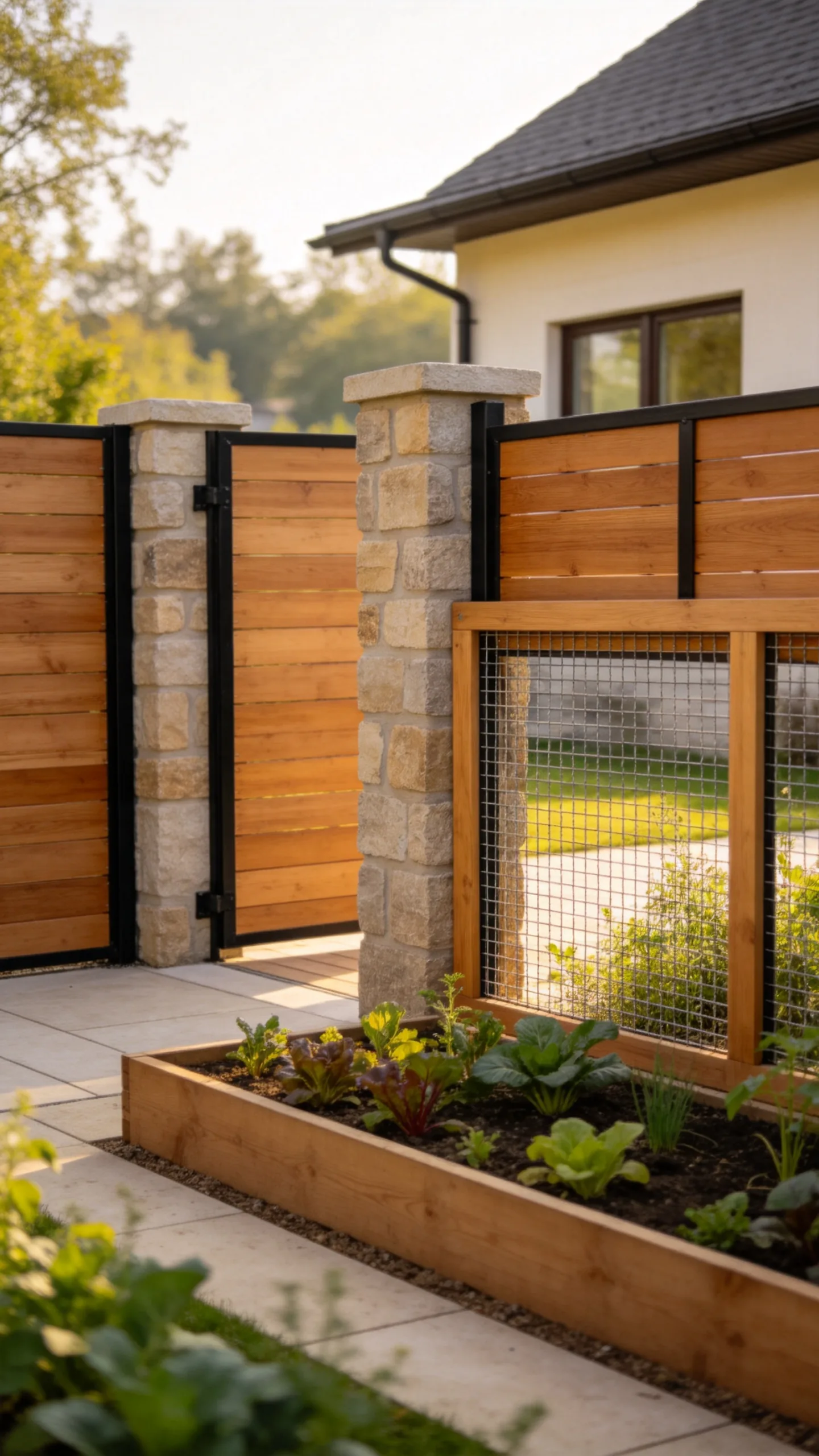
A mixed-material fence combines wood with elements such as stone columns, metal panels, wire mesh, brick bases, or concrete posts. This is a flexible option for homes that need a fence to match existing hardscaping, modern architecture, or a garden with several outdoor zones.
Wood brings warmth, while the other materials can add durability or visual contrast. For example, wood boards between masonry pillars can suit a traditional front yard, while wood slats with black metal framing can suit a modern patio. In garden areas, welded wire panels framed in wood can protect vegetables while keeping the view open. Match the material mix to the home’s exterior so the fence feels connected rather than pieced together.