Wood and wire fencing is a practical choice for rustic gardens because it blends sturdy boundaries with an open, farmhouse-style look. The wood adds warmth and structure, while the wire keeps the fence useful for marking beds, supporting vines, containing pets, or protecting vegetable plots without making the garden feel closed in. These wood and wire fence ideas work especially well around cottage borders, kitchen gardens, small backyards, and informal landscapes where natural texture matters as much as function.
1. Split-Rail Fence with Welded Wire Infill
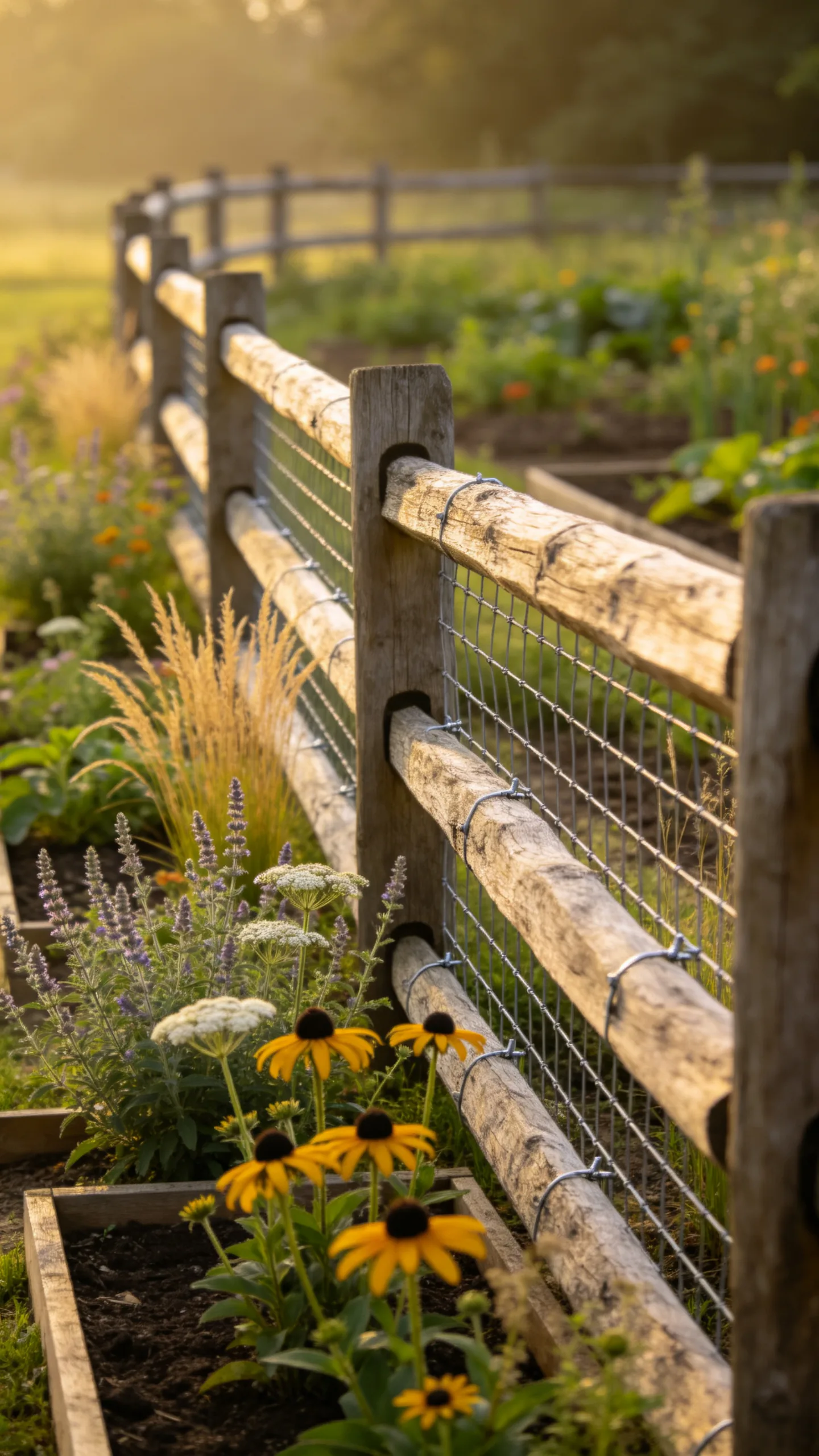
A split-rail fence instantly gives a rustic garden a relaxed country feel, and adding welded wire between the rails makes it more functional. The wire helps keep small pets out of flower beds and can discourage rabbits from entering vegetable areas, while the open rail design still lets you see through to planting beds, paths, and meadow-style borders.
Use rough cedar, locust, or pressure-treated pine posts for durability, then staple galvanized welded wire to the inside of the fence so the wood remains the main visual feature from the garden side. This style works well along the edge of a front cottage garden, around a herb plot, or as a soft boundary between lawn and planting areas.
For a more planted look, grow low-maintenance perennials like catmint, yarrow, black-eyed Susan, or ornamental grasses along the base. These soften the wire and make the fence feel like part of the garden rather than a separate barrier.
2. Weathered Post Fence with Black Wire Panels
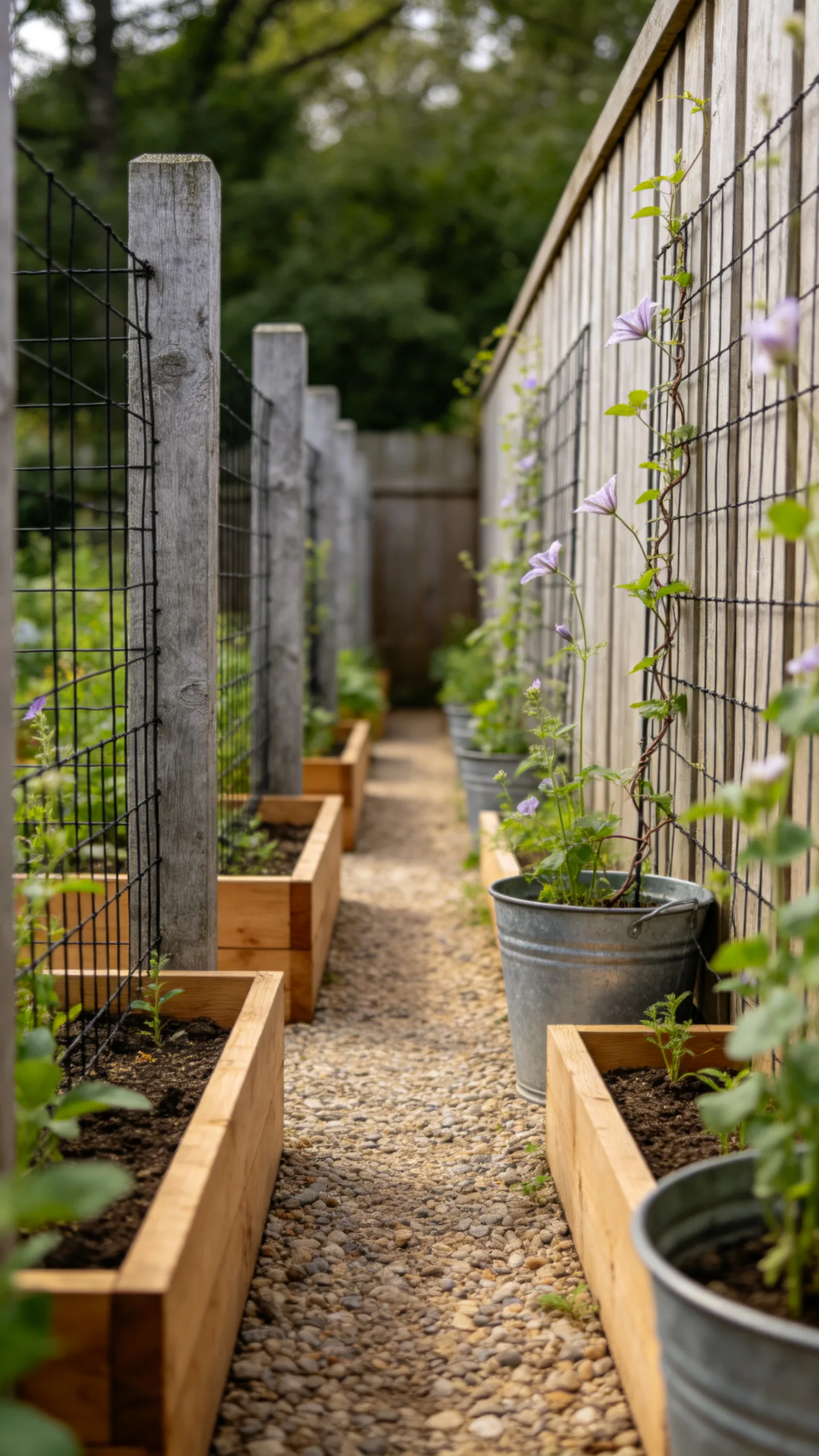
Weathered wood posts paired with black wire panels create a simple rustic fence with a slightly modern farmhouse edge. The black wire tends to visually recede, which helps small gardens feel more open while still giving the space structure. This is useful around compact backyards where a solid fence would feel too heavy.
Choose square wood posts with a natural gray finish, reclaimed barn wood, or stained pine for the frame. Attach rigid black wire livestock panels between the posts for a clean, durable look. The panels can be cut to fit shorter garden borders, raised bed enclosures, or side-yard paths.
This design pairs beautifully with gravel paths, galvanized planters, and raised beds made from cedar. Add climbing plants like clematis, sweet peas, or climbing nasturtiums where sunlight allows, using the wire as a built-in trellis.
3. Cedar Frame Fence with Chicken Wire
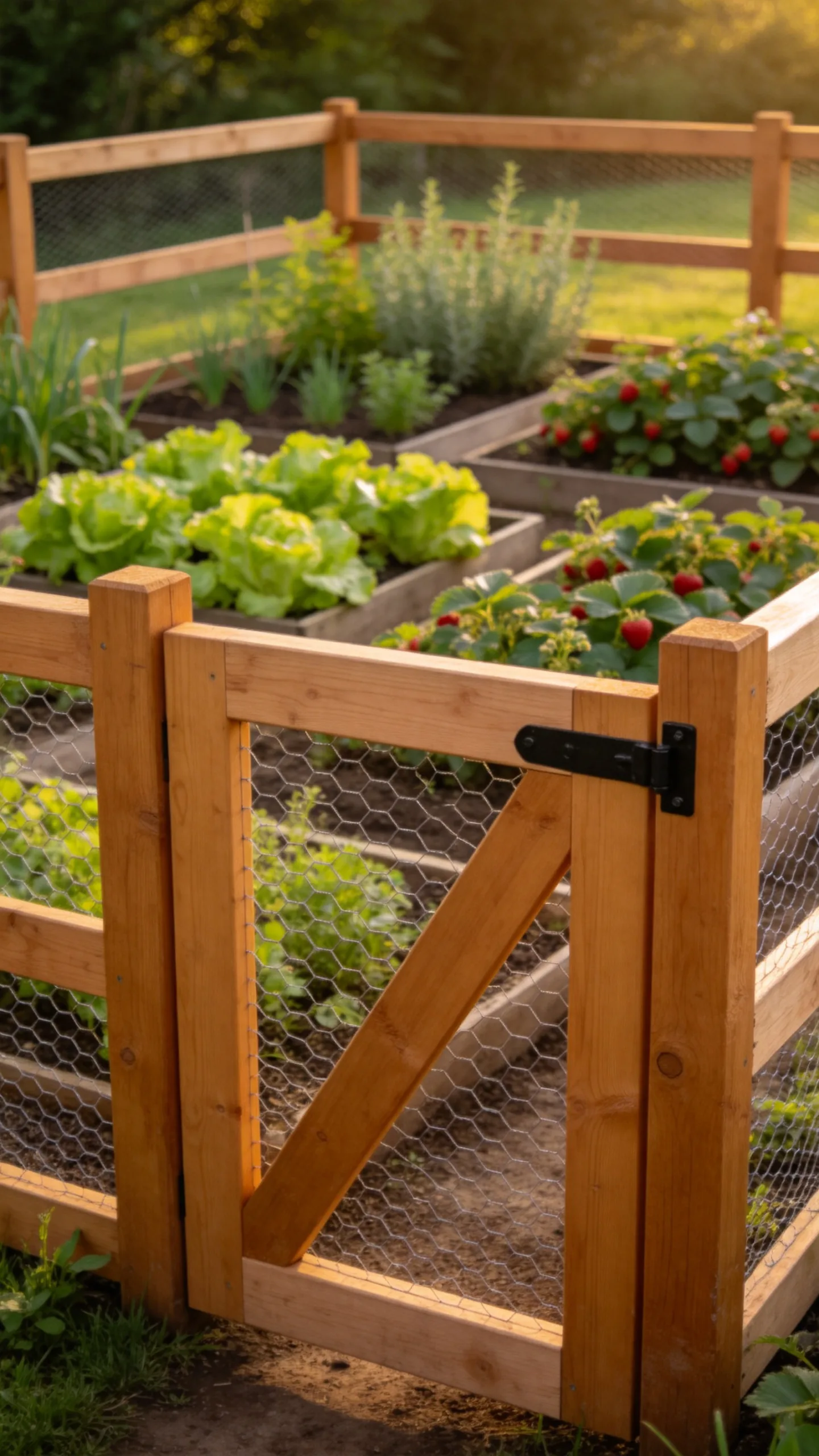
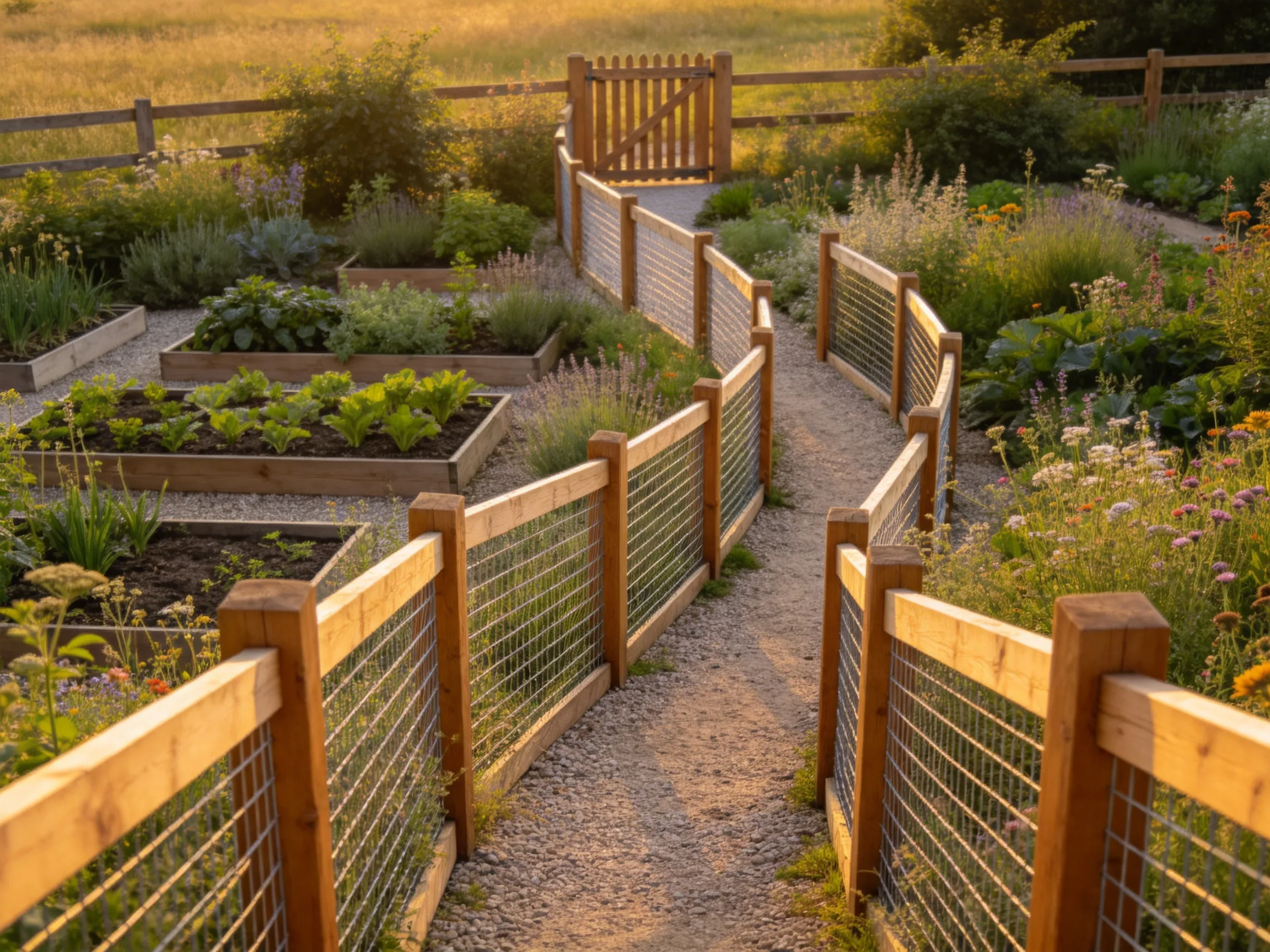
A cedar frame with chicken wire is one of the most classic wood and wire fence ideas for a rustic kitchen garden. Cedar naturally has a warm tone that suits farmhouse-style spaces, while chicken wire keeps the fence lightweight and affordable-looking in the best way. It is ideal for enclosing lettuce beds, herb gardens, strawberry patches, or small vegetable plots.
Build simple rectangular wood frames between posts, then stretch chicken wire tightly across each opening. Keeping the wire taut prevents sagging and gives the fence a neater finish. For extra charm, add a matching gate with diagonal bracing and a black metal latch.
Because chicken wire has smaller openings than many livestock panels, it works well where you want a finer texture. If rabbits are an issue, bury the bottom edge a few inches into the soil or bend it outward at the base before covering it with mulch.
4. Rustic Garden Gate with Wire Mesh Center
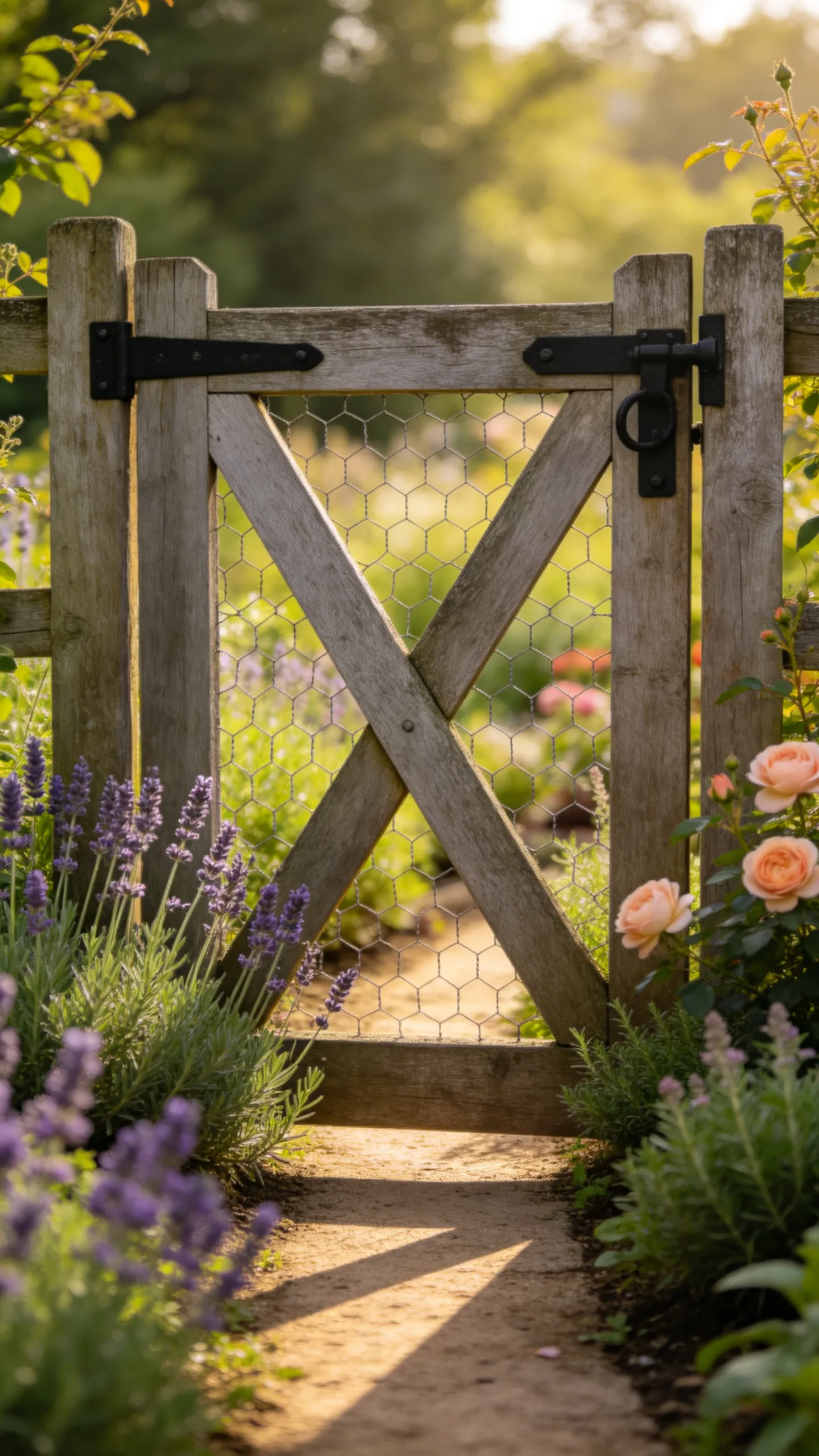
A wood gate with a wire mesh center makes a garden entrance feel charming without blocking the view into the space. This is especially helpful for vegetable gardens, cutting gardens, or narrow side yards where you want the gate to feel welcoming rather than solid and closed off.
Use simple wood boards for the gate frame and add diagonal bracing to prevent sagging. Fill the center with welded wire, hardware cloth, or chicken wire depending on how much visibility and protection you need. A weathered stain, matte black hinges, and a latch with a hand-forged look can make the gate feel more rustic.
Plant lavender, rosemary, salvia, or dwarf roses near the gate so visitors brush past fragrance as they enter. If the gate receives enough sun, a small arbor over the top can support climbing roses, honeysuckle, or annual vines.
5. Reclaimed Wood Fence with Galvanized Wire
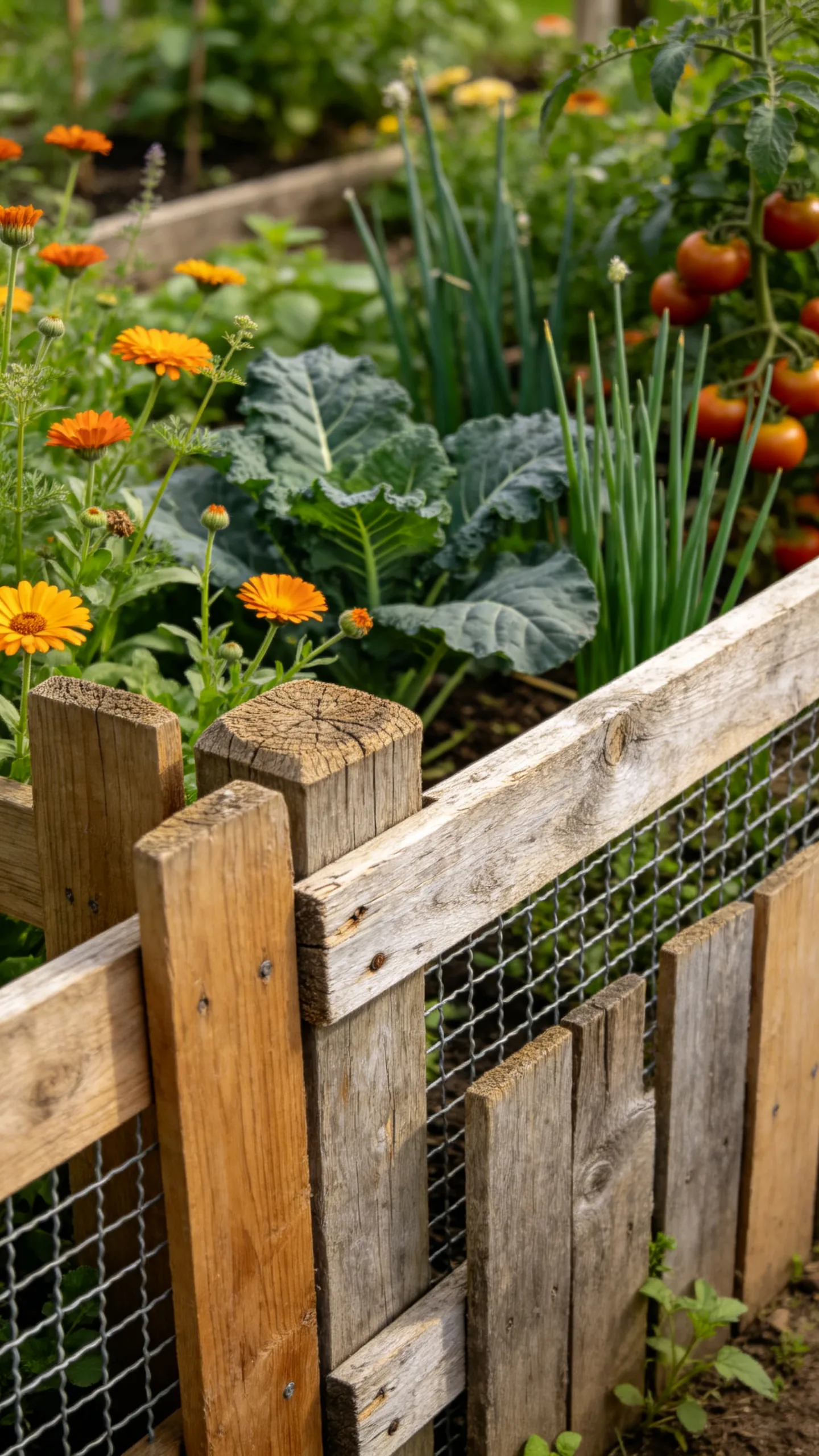
Reclaimed wood gives a fence instant age and character, especially when paired with simple galvanized wire. This idea works well in rustic gardens where you want the fence to look collected over time rather than newly installed. It is a strong match for farmhouse beds, cottage borders, potager gardens, and informal backyard paths.
Use reclaimed boards as posts, rails, or top caps, making sure any structural pieces are still sound and safe for outdoor use. Galvanized welded wire can be attached between the wood sections to keep the fence practical while maintaining an open feel. If the reclaimed boards vary in tone, lean into the mix instead of trying to make everything match.
This type of fence looks especially good with edible and ornamental planting combined. Try herbs, calendula, kale, marigolds, chives, and compact tomatoes inside the enclosure for a working garden with rustic charm.
6. Low Wire Fence Around Raised Beds
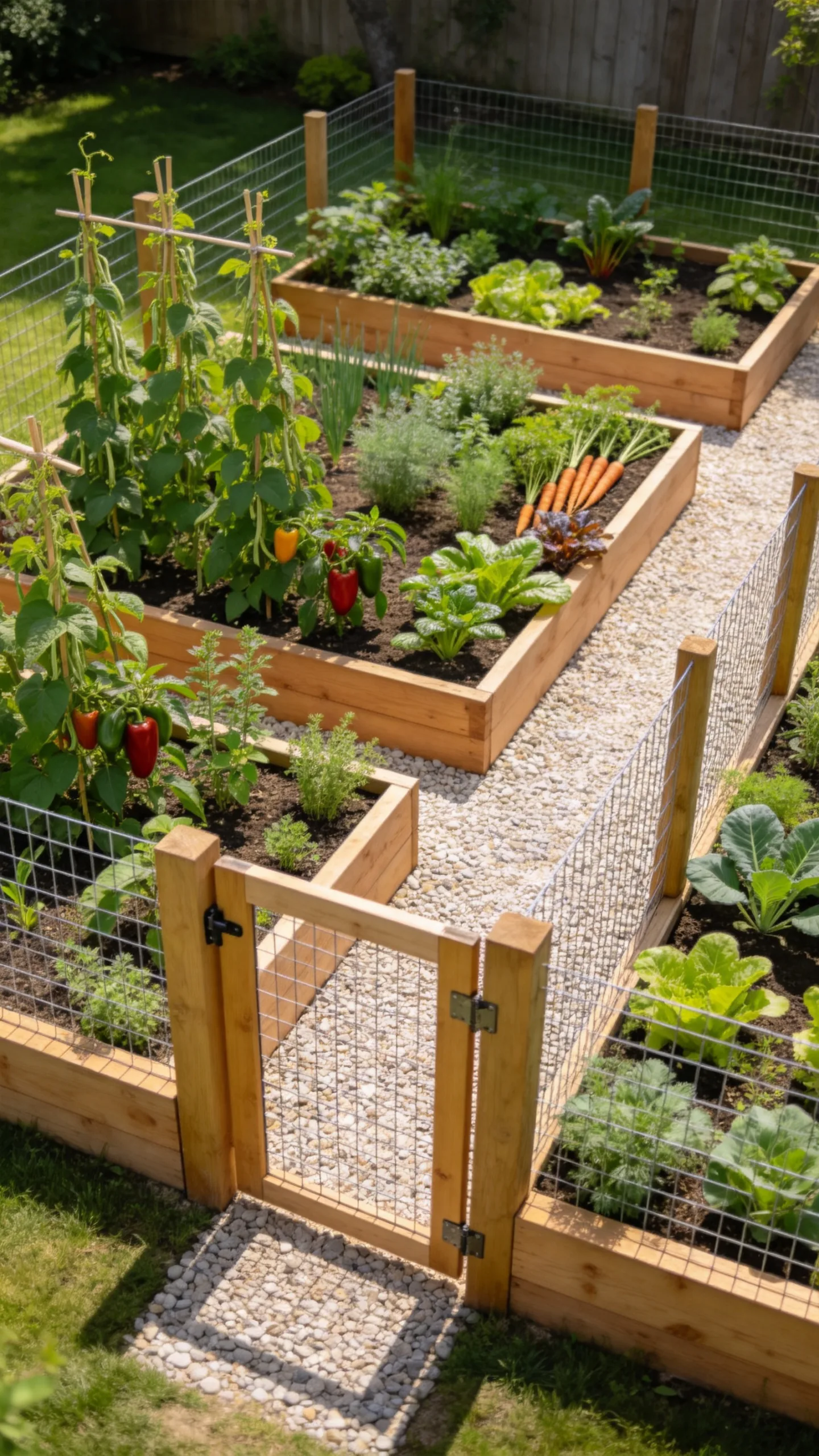
A low wood and wire fence around raised beds can protect crops without overpowering a small garden. This style is useful for keeping dogs out of fresh soil, marking vegetable zones, or creating a neat border around a backyard growing area. Because the fence is short, it preserves sight lines and keeps the garden feeling open.
Use wood posts or stakes at the corners of each bed area, then attach welded wire or hardware cloth between them. A height of about two to three feet is often enough for visual separation and basic protection, though taller fencing may be needed for deer-prone areas. Match the wood tone to the raised beds for a cohesive look.
This idea works especially well with cedar raised beds, pea gravel paths, and compact crops like bush beans, peppers, herbs, carrots, and greens. Add a small hinged gate if you need access for a wheelbarrow or watering can.
7. Log Post Fence with Hog Wire Panels
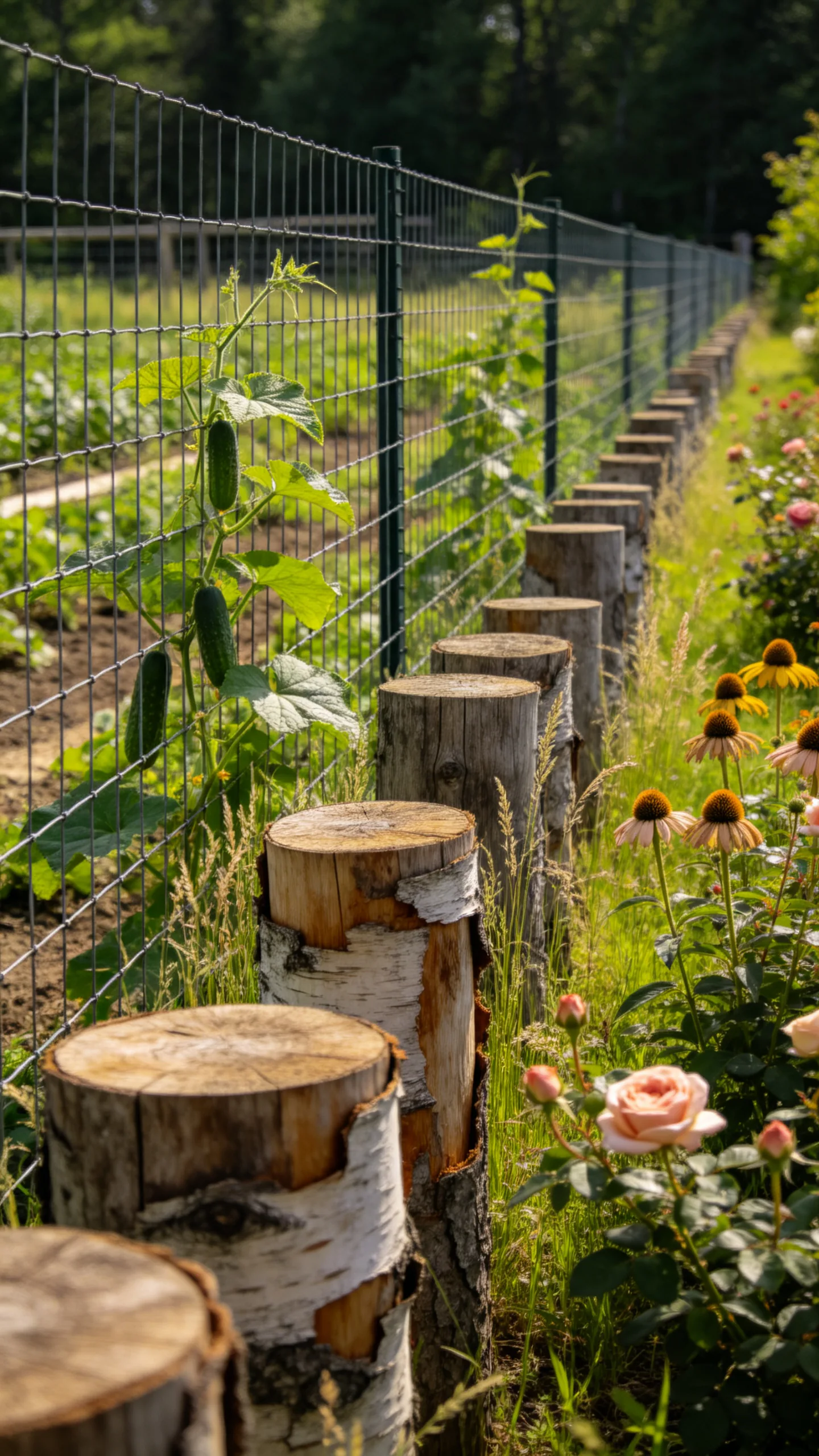
Log posts and hog wire panels create a sturdy rustic fence with strong garden structure. The thick wood posts bring a woodland or ranch-style feel, while the hog wire keeps the design open enough for views, sunlight, and airflow. This is a good option for larger rustic gardens, orchard edges, or backyard vegetable enclosures.
Set peeled logs or round timber posts at regular intervals and secure rigid hog wire panels between them. The large grid of the wire gives the fence a bold, practical appearance and can double as support for climbing vegetables. Cucumbers, pole beans, peas, and small gourds can be trained along the panels if the fence receives enough sun.
For a softer look, plant native grasses, coneflowers, bee balm, or shrub roses along the outside. The contrast between rugged posts and loose planting helps the fence feel natural rather than strictly utilitarian.
8. Wood-Framed Wire Trellis Fence
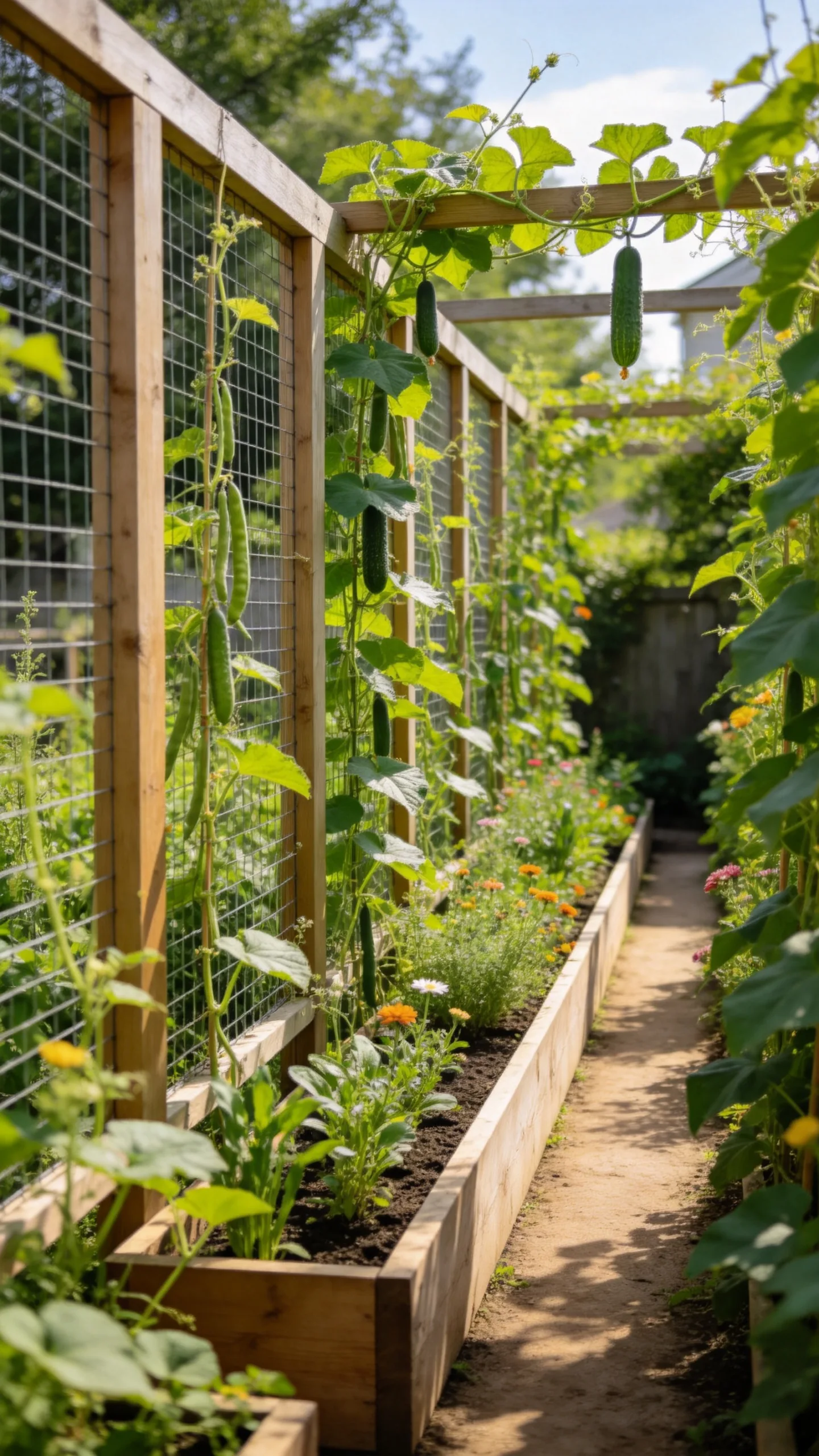
A wood-framed wire fence can become a productive trellis when placed along a sunny garden edge. This is a smart idea for small spaces because the fence does double duty as both a boundary and a vertical growing surface. It is especially useful for kitchen gardens, narrow side yards, or patio beds.
Build rectangular wood panels and fill them with welded wire, cattle panel sections, or heavy-gauge mesh. Place the fence where it receives at least several hours of sun if you plan to grow edible climbers. Beans, cucumbers, peas, and vining flowers like morning glories or sweet peas can be tied or guided onto the wire.
Keep the base of the fence accessible for watering and harvesting. A narrow planting strip with compost-rich soil works well, or you can use long wooden trough planters if you are working on a patio or along a paved edge.
9. Picket-Top Fence with Wire Lower Panels
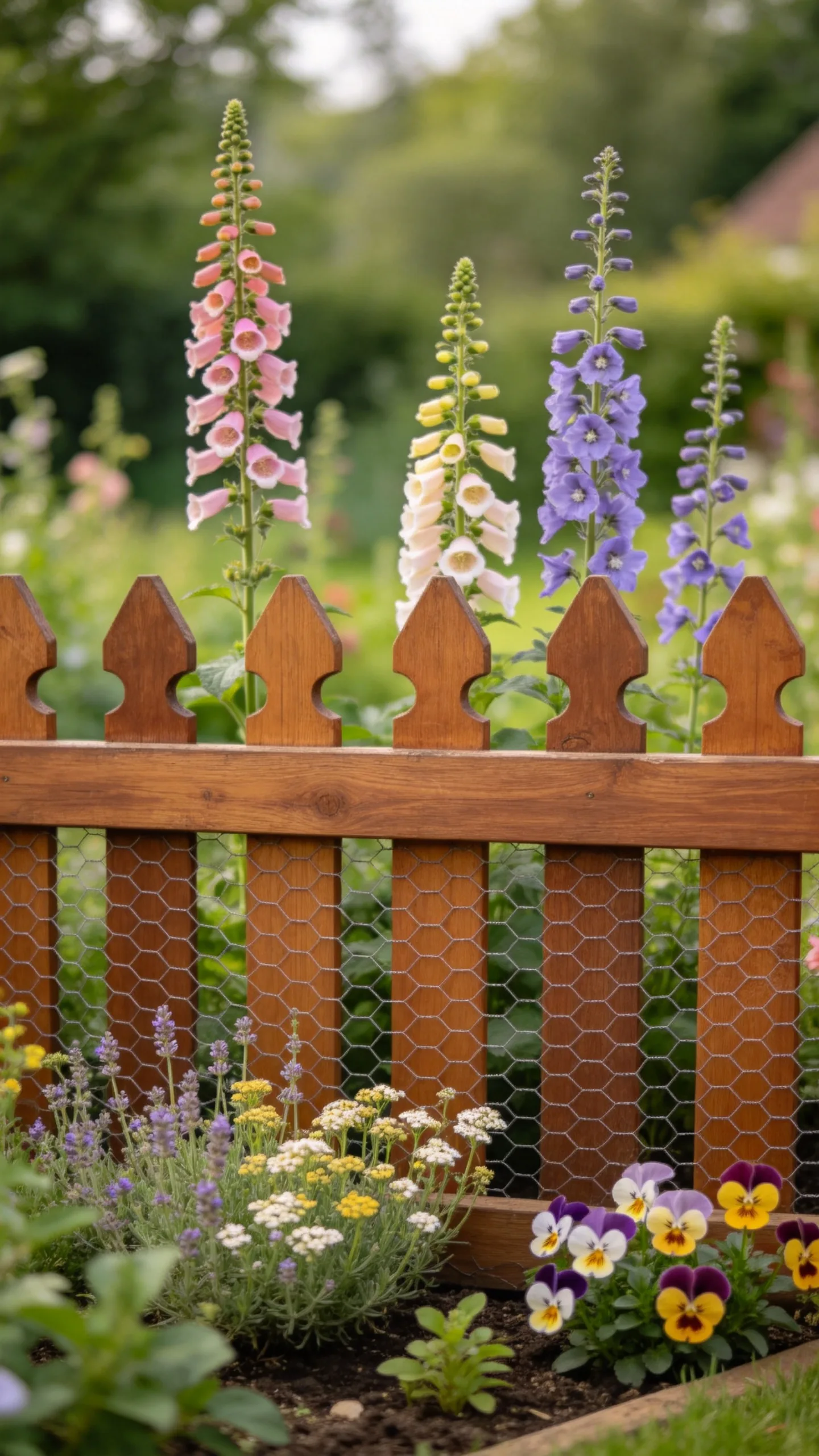
A picket-top wood fence with wire lower panels gives you the charm of a cottage fence with the usefulness of a garden barrier. The pickets add decorative farmhouse style, while the wire below helps protect planting beds without creating a solid wall. This is a good choice for front gardens or visible backyard areas where appearance matters.
Use wood pickets along the top rail and attach chicken wire or welded wire to the lower half. The wire can be placed on the garden side so the picket detail stays prominent from the outside. Paint the wood white for a classic cottage look, or use warm brown stain for a more natural rustic effect.
This fence pairs well with flowering borders planted in layers. Place taller plants like foxglove, hollyhock, or delphinium behind the fence, then use shorter plants like thyme, alyssum, or violas near the base.
10. Rustic Fence with Wide Wood Top Rail
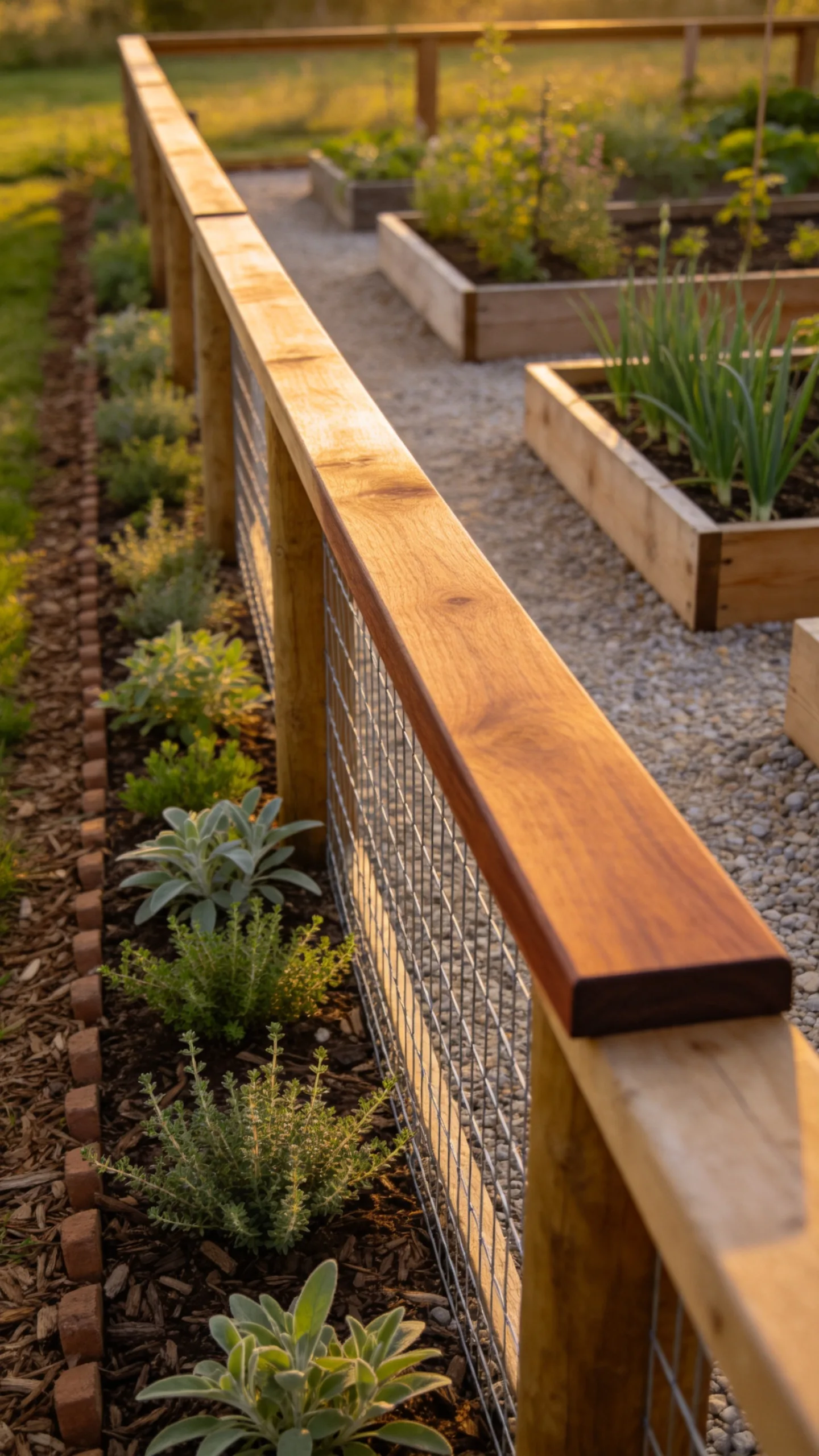
Adding a wide wood top rail to a wire fence makes the whole structure feel more finished and farmhouse-inspired. The top rail visually anchors the wire panels and creates a strong horizontal line that works well along garden paths, patios, or raised bed areas. It can also provide a convenient spot to rest small tools briefly while working.
Use sturdy posts, a wide cedar or pine top rail, and welded wire panels between the supports. Staining the top rail in a warm walnut or weathered oak tone helps it blend with rustic garden furniture, wooden planters, or pergolas. The wire keeps the fence from feeling bulky, which is helpful in smaller yards.
For a polished but natural look, edge the fence with mulch or gravel and plant low herbs such as thyme, oregano, sage, or chives nearby. These plants keep the base tidy and make the fence feel connected to the garden.
11. Corner Fence Panels for a Cottage Flower Bed
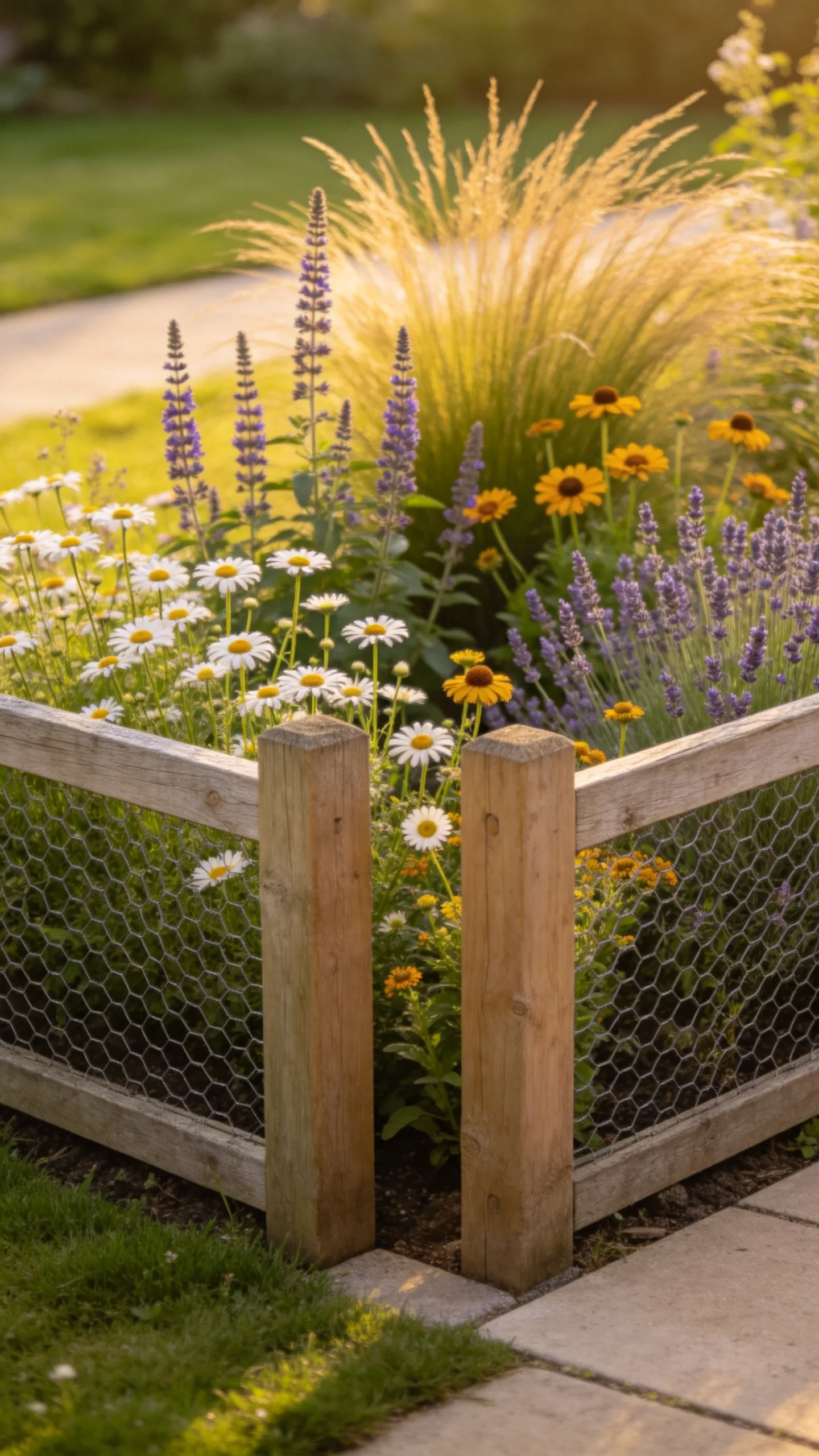
You do not always need a full perimeter fence to get the rustic look. A pair of wood and wire corner fence panels can frame a cottage flower bed, define a garden entrance, or add structure to an open lawn. This is a space-saving idea for small gardens because it creates a focal point without enclosing the whole area.
Install two short fence sections at a corner using wood posts and wire mesh infill. Keep the panels low to medium height so they support the planting design rather than dominate it. This works well at the corner of a front walkway, around a mailbox garden, or beside a small seating area.
Plant the inside of the corner with layered flowers such as daisies, salvia, coreopsis, lavender, and compact ornamental grasses. The wire provides a subtle backdrop while the wood posts give the bed a rustic frame.
12. Arched Wire Fence Between Wood Posts
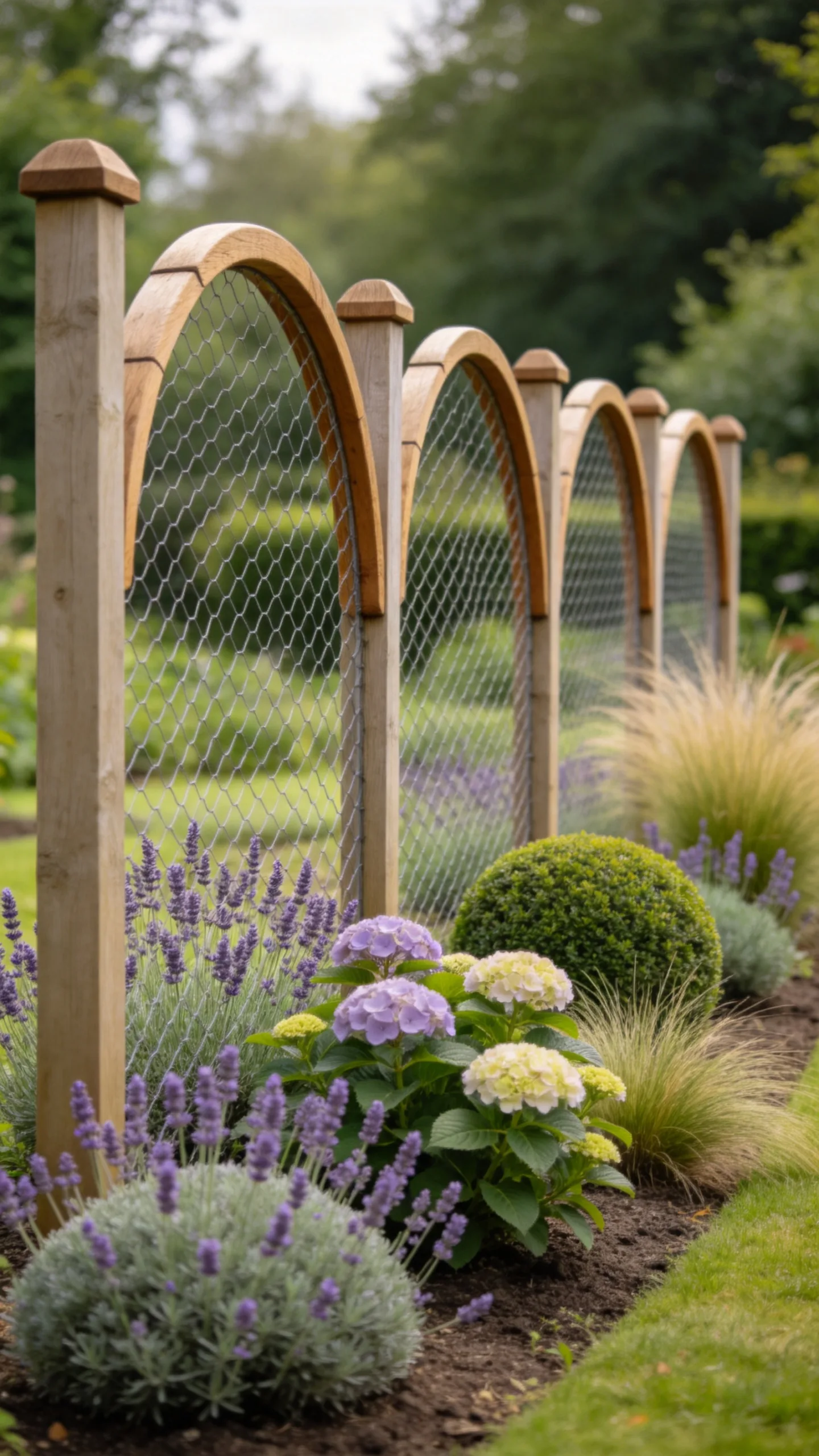
An arched wire fence panel between wood posts adds softness to a rustic garden boundary. Instead of straight rectangular sections, the curved top creates a handmade, cottage-style look that works beautifully around flower gardens, herb beds, or decorative vegetable plots.
Use flexible wire mesh or pre-shaped arched panels mounted inside simple wood posts. A wood cap or curved top rail can make the arch look intentional and sturdy. This idea is best for decorative boundaries or light garden protection rather than heavy-duty animal fencing.
Echo the arched shape with rounded planting forms nearby. Lavender mounds, boxwood balls, catmint, dwarf hydrangeas, or clumps of ornamental grass can repeat the curve and make the fence feel integrated into the design.
13. Farmhouse Vegetable Garden Enclosure
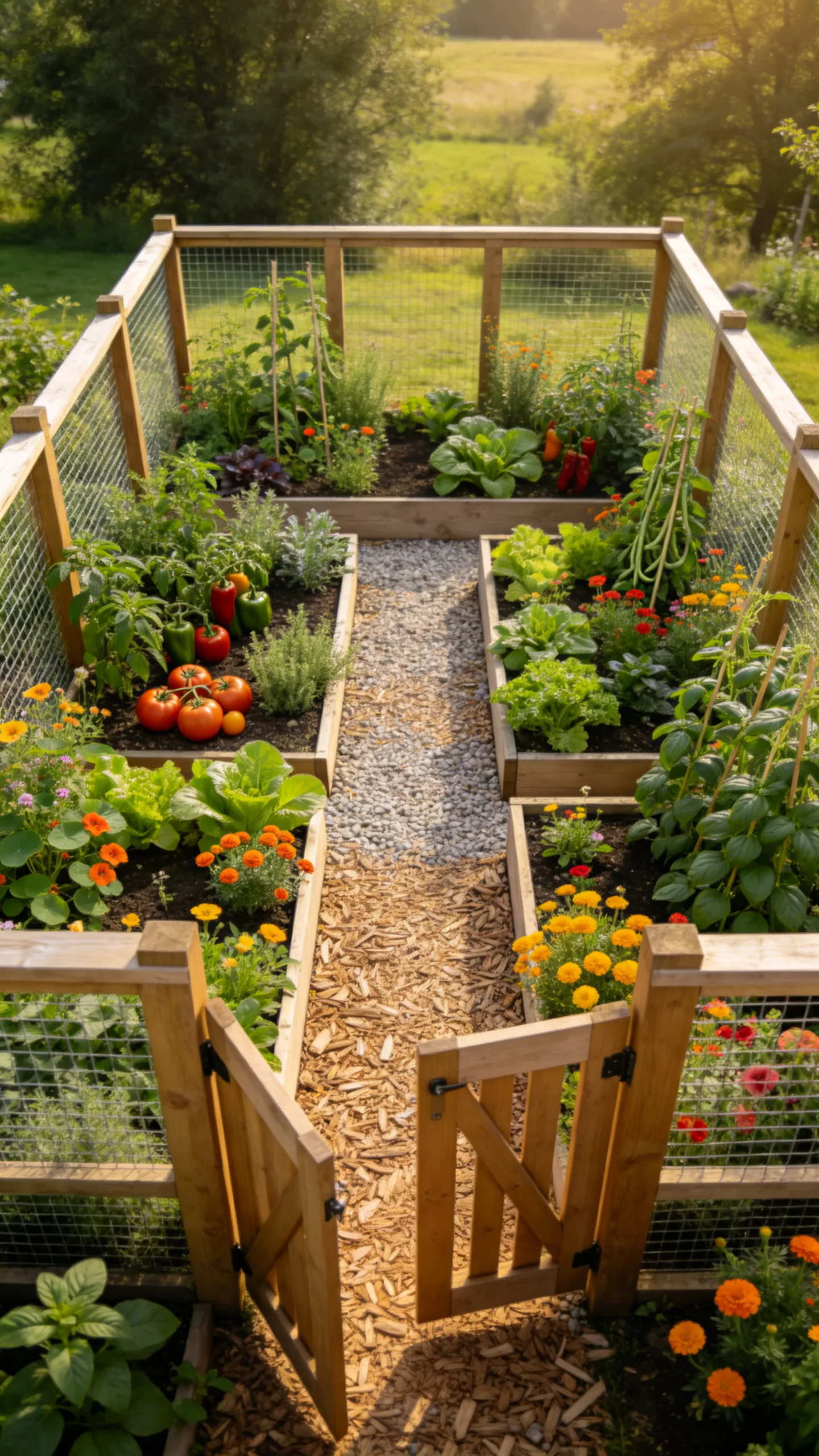
A full wood and wire enclosure around a vegetable garden is both attractive and practical. It keeps the growing area visually organized and can help protect crops from pets or some wildlife, depending on the height and wire size used. The open wire design still allows sun and air to reach vegetables, which is important for healthy growth.
Use wood posts, top rails, and wire mesh panels to create a rectangular or square enclosure around raised beds or in-ground rows. Add a matching gate wide enough for a wheelbarrow, especially if you bring in compost, mulch, or soil amendments during the season. Gravel or wood-chip paths inside the enclosure make maintenance easier after rain.
This setup works well for tomatoes, peppers, herbs, leafy greens, beans, and flowers used for pollinators or cutting. Marigolds, calendula, nasturtiums, and basil can be planted near the fence edges to make the enclosure feel abundant and useful.
14. Stained Wood Fence with Cattle Panel Infill
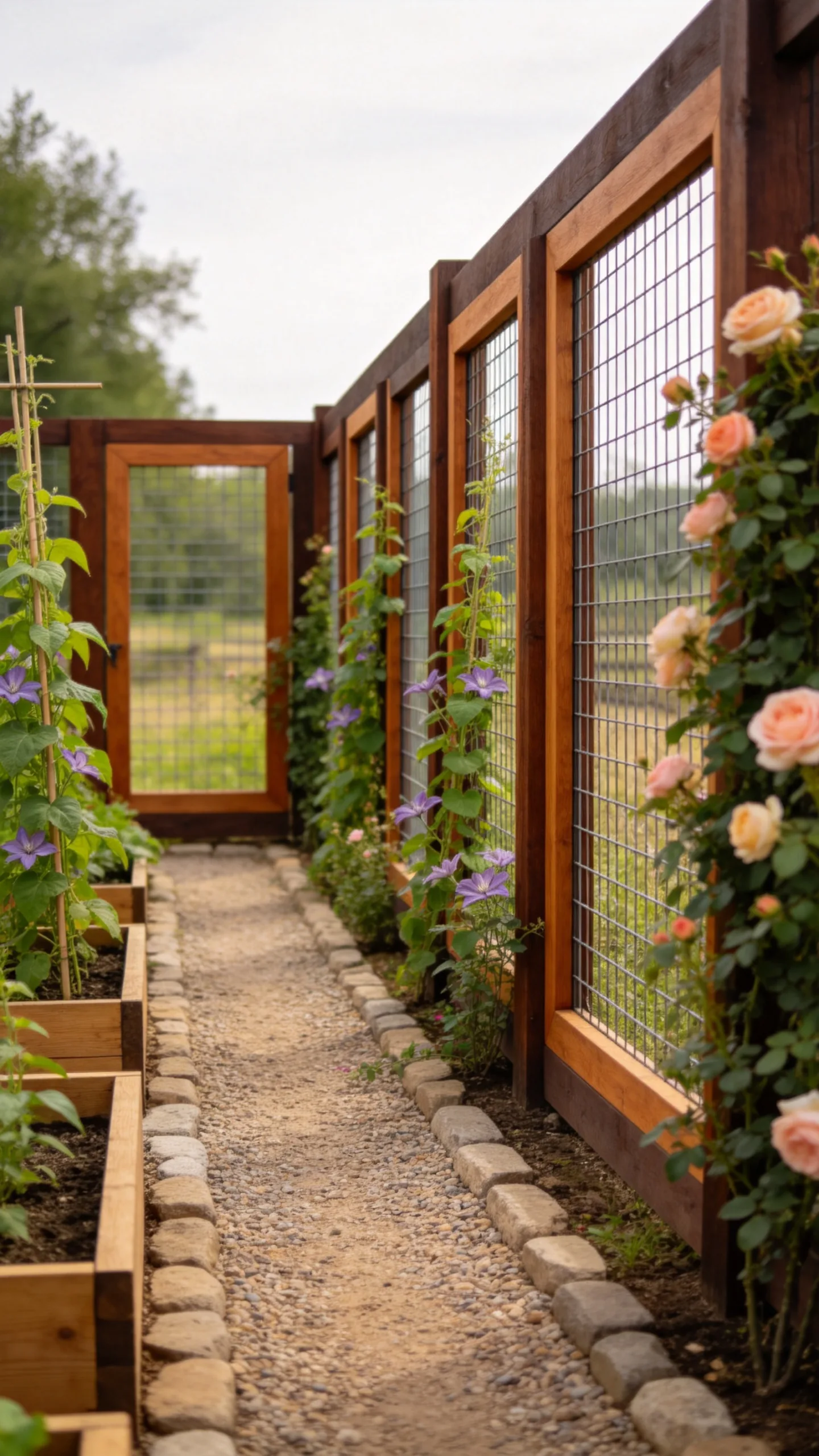
Cattle panels are strong, long-lasting wire panels that look excellent when framed with stained wood. Their large grid pattern gives the fence a rustic ranch style, while the wood frame keeps it from looking too industrial. This combination is useful for garden boundaries, trellises, and backyard zones where durability matters.
Frame each cattle panel with wood posts and rails, then stain the wood in a warm brown, cedar, or dark walnut tone. The contrast between the wire and stained wood works well with gravel paths, stone edging, and raised timber beds. Since cattle panels are rigid, they usually look neater than loose rolls of wire over longer spans.
Use the panels as support for climbing plants where appropriate. Pole beans, clematis, climbing roses, and flowering vines can soften the grid, but leave some sections open if you want to preserve views across the garden.
15. Short Border Fence for Herb Gardens
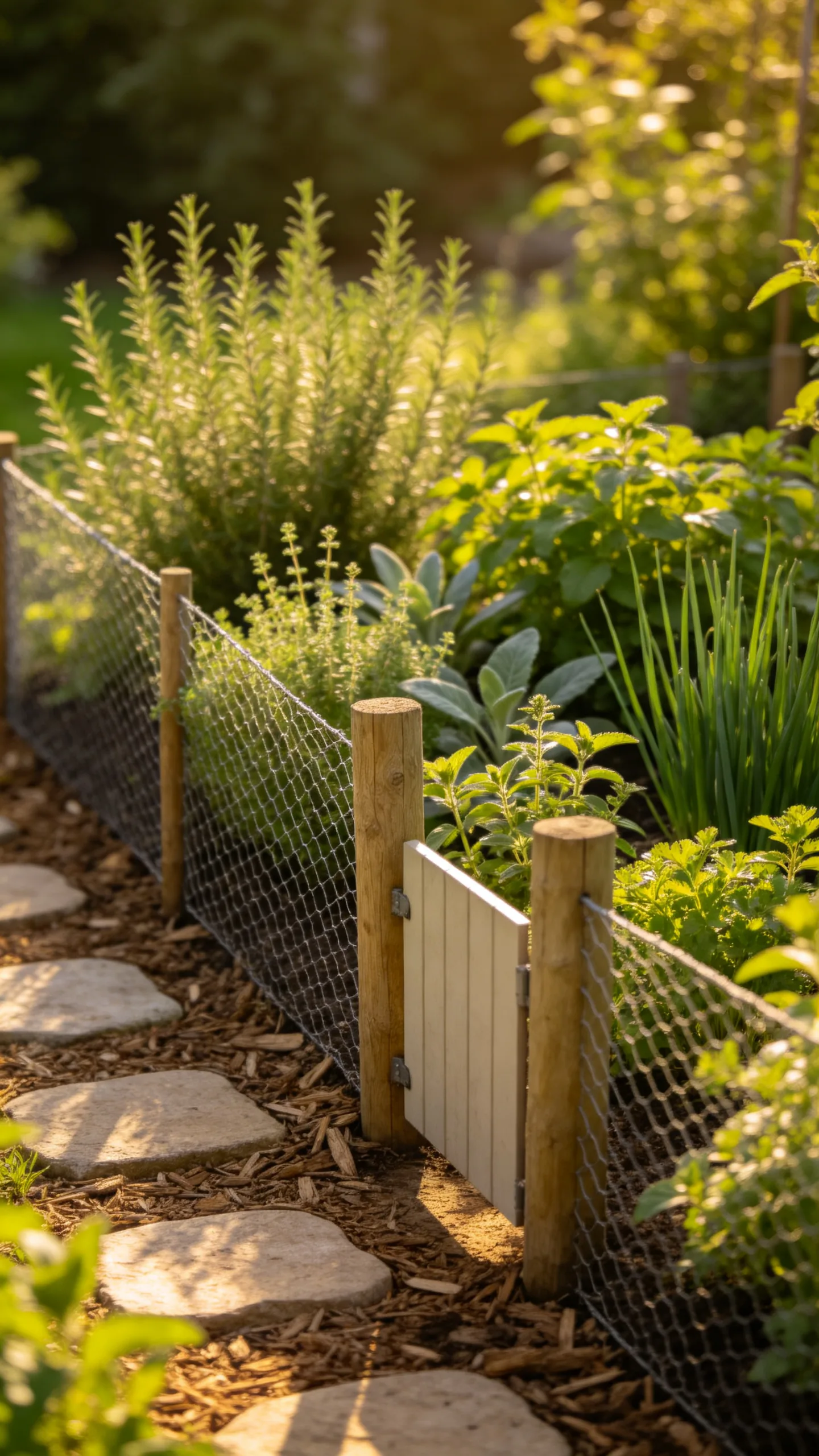
A short wood and wire border fence is a practical way to define an herb garden without shading the plants. Many herbs need strong sun and good airflow, so an open wire fence is better than a solid barrier in tight spaces. It also helps separate herbs from lawn, gravel, or vegetable beds.
Use low wood stakes or small posts with chicken wire or welded wire stretched between them. Keep the fence height modest so it frames the herbs rather than hiding them. A small gate or removable panel can make harvesting, pruning, and replanting easier.
This fence looks especially rustic around herbs like rosemary, thyme, oregano, sage, parsley, and chives. Add a narrow mulch path or stepping stones nearby so you can harvest after watering or rain without compacting the soil.
16. Wire Fence with Rough-Sawn Wood Posts and Rails
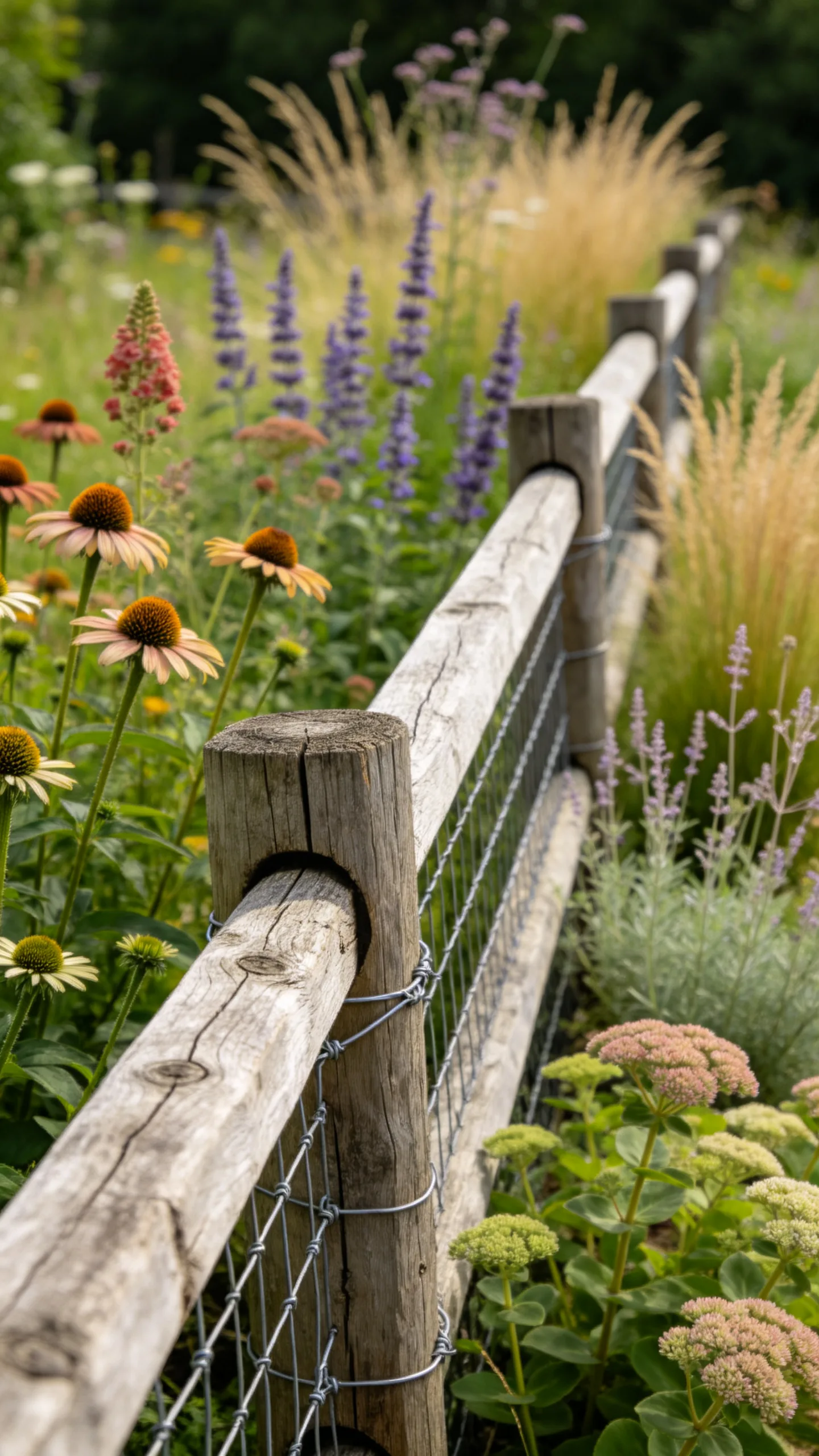
Rough-sawn wood gives a fence texture that feels naturally suited to rustic gardens. Unlike smooth finished lumber, rough-sawn boards show grain, saw marks, and imperfections that pair well with wildflowers, meadow plantings, and informal paths. When combined with wire mesh, the result is simple but full of character.
Use rough-sawn posts and horizontal rails to create a sturdy frame, then attach galvanized or black welded wire to the inside. The fence can be used along a property edge, around a cutting garden, or beside a gravel path. Leaving the wood unstained allows it to weather, while a clear outdoor sealant can help preserve the original tone longer.
Plant loose, textural borders nearby to match the rugged finish. Good options include coneflower, bee balm, Russian sage, ornamental grasses, gaura, and sedum, depending on your climate and light conditions.
17. Wood and Wire Fence with Climbing Roses
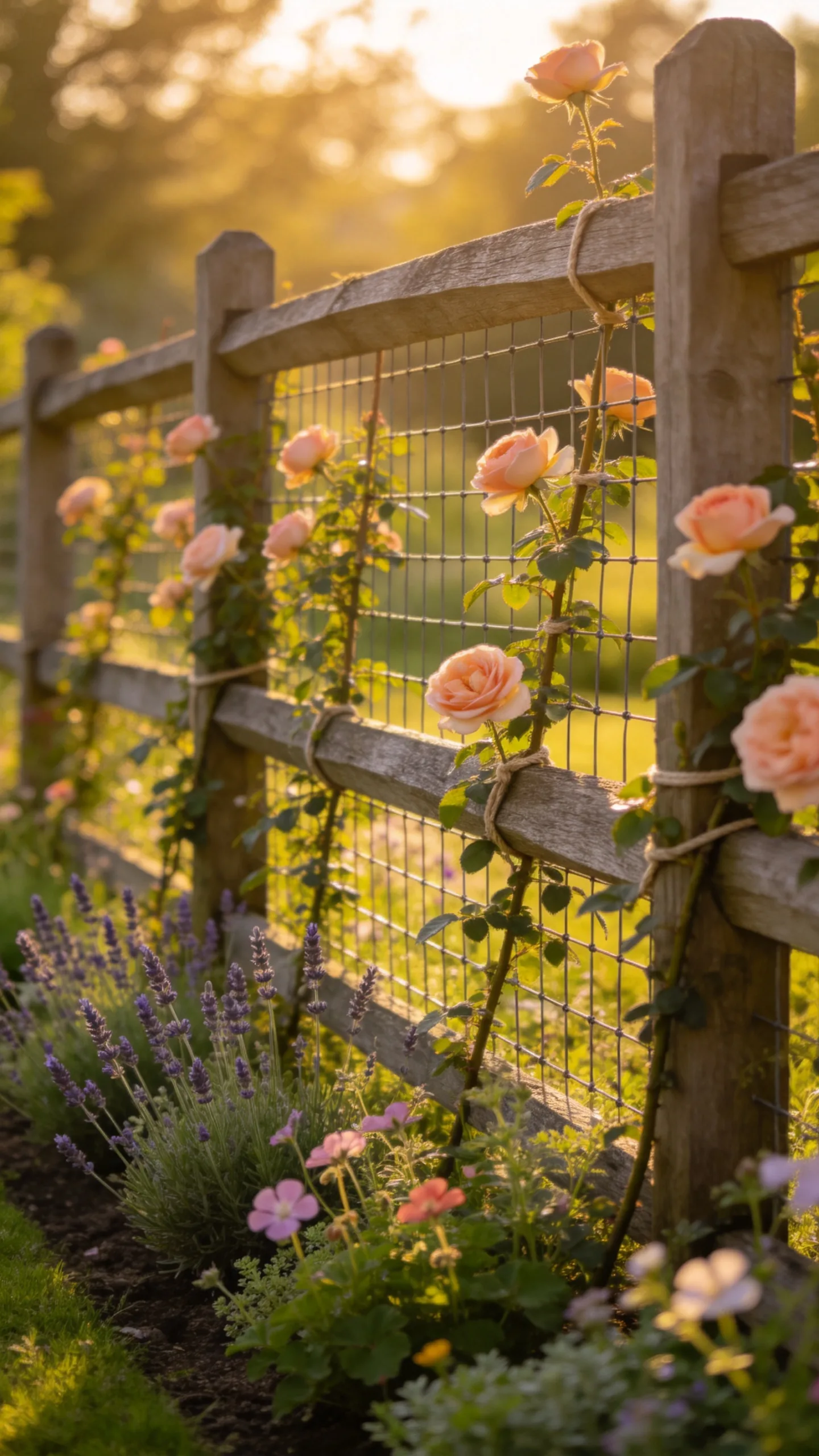
A wood and wire fence can become a romantic rustic feature when used to support climbing roses. The wire provides attachment points for tying canes, while the wood posts and rails give the planting a strong visual frame. This idea works best in sunny areas with enough room for air circulation and pruning access.
Choose a sturdy wire panel or welded mesh that can handle the weight of mature growth. Install the fence slightly away from a wall or dense hedge so air can move around the foliage, which may help reduce disease pressure in humid areas. Tie rose canes loosely with soft garden ties rather than forcing them through the wire.
Underplant the fence with lavender, catmint, hardy geraniums, or low herbs to cover the base and extend the season of interest. If roses are not suited to your site, try clematis, honeysuckle, or annual flowering vines instead.
18. Rustic Privacy Screen with Wood Slats and Wire Accents
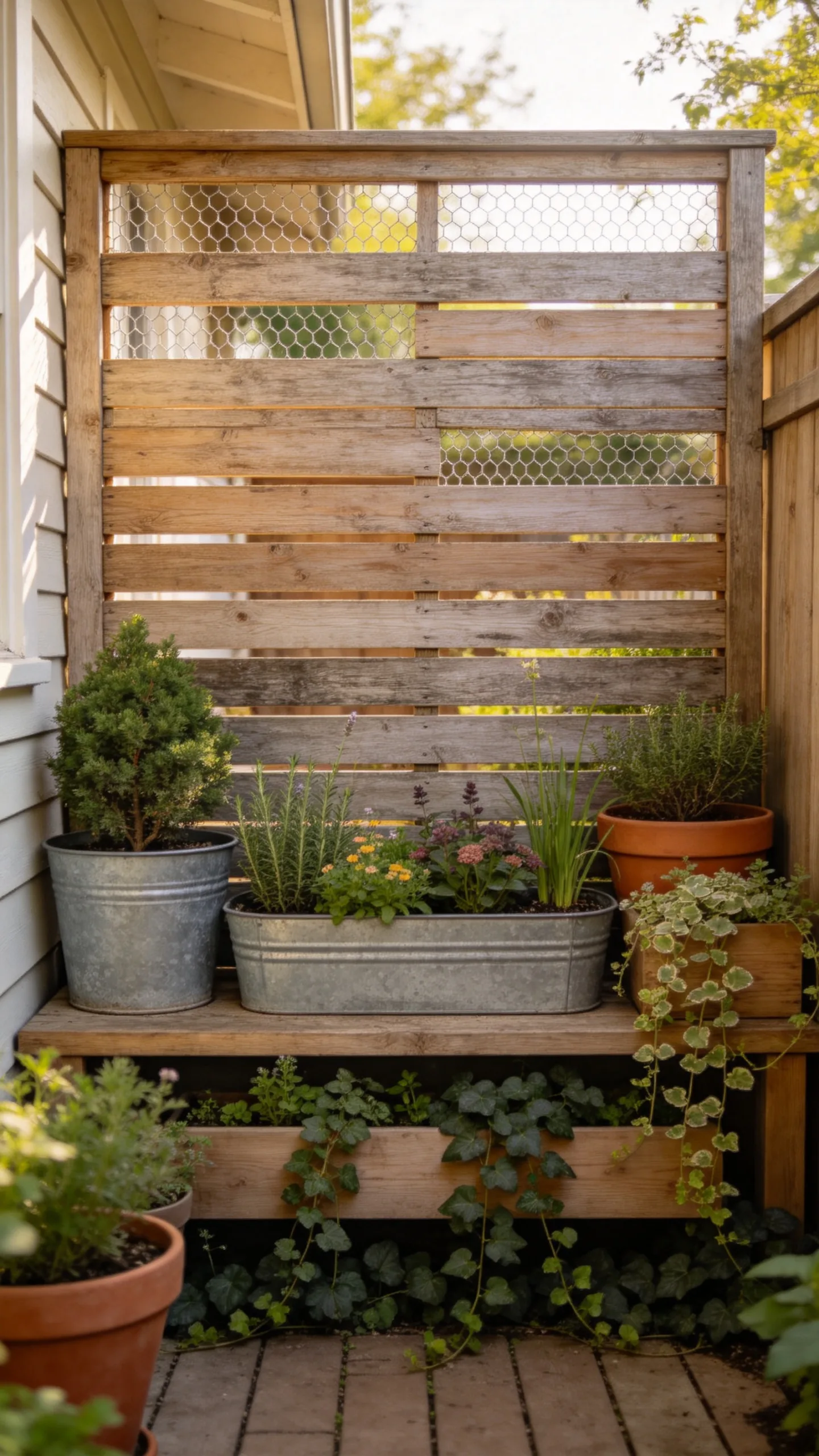
A wood and wire privacy screen is a good compromise when you want partial screening without a heavy solid fence. Use vertical or horizontal wood slats for privacy in key areas, then add wire sections above, below, or between the slats to keep the design open and garden-friendly. This works well near patios, potting benches, outdoor dining spots, or small backyard seating areas.
Place the tighter wood slats where you need screening from a neighbor, driveway, or service area. Use wire mesh sections where you want airflow, light, or climbing plant support. This layered approach saves space compared with a deep hedge and can be tailored to specific sight lines.
Add planters at the base with compact shrubs, trailing annuals, herbs, or climbing vines. In a rustic garden, wooden boxes, galvanized tubs, and terracotta pots all pair well with the mixed wood-and-wire texture.