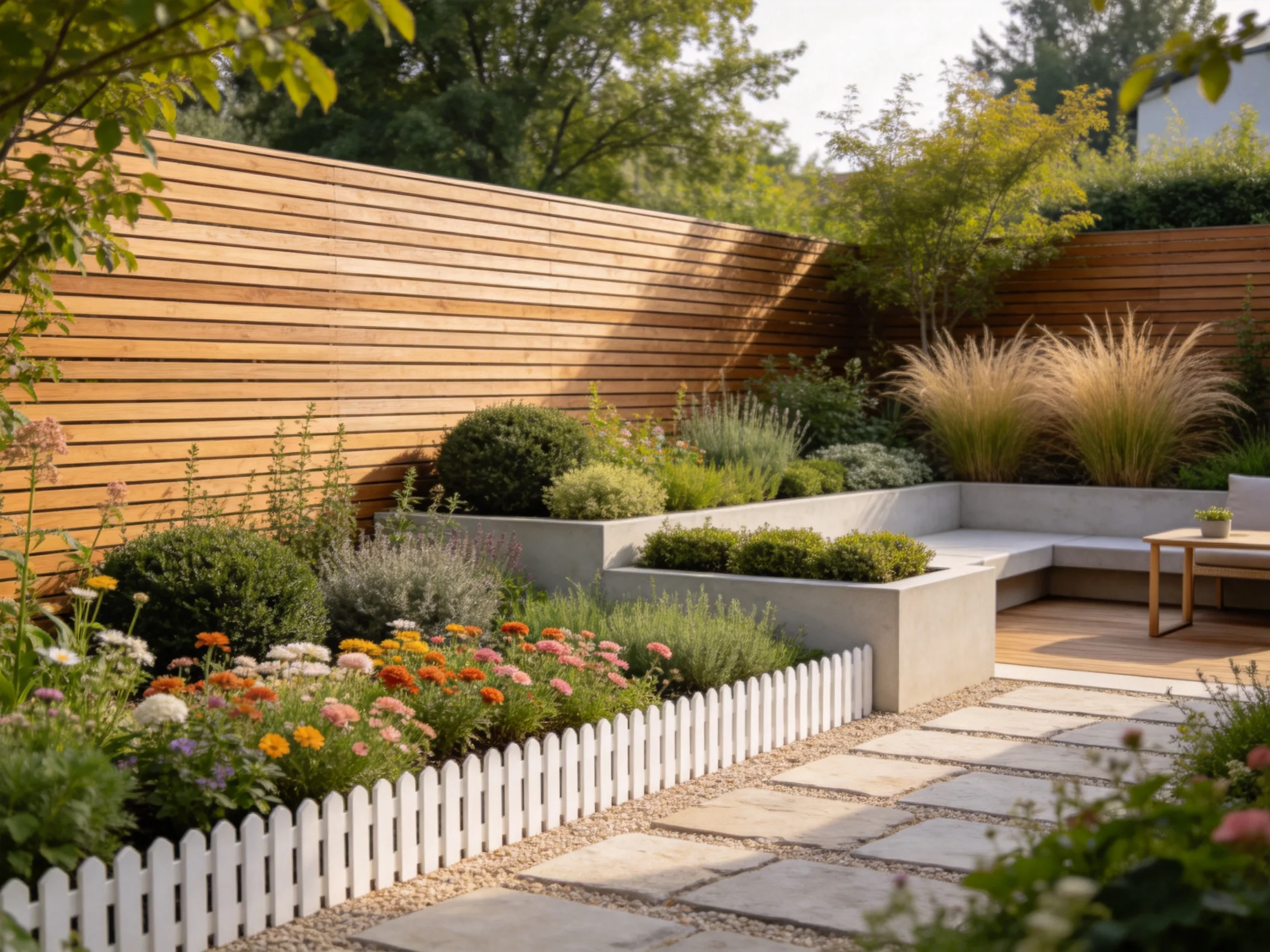
A garden fence can do much more than mark a property line. The right design can frame flower beds, add privacy around a patio, support climbing plants, protect vegetables, or make a small yard feel more finished. These fence ideas mix practical structure with decorative details so you can choose an option that suits your space, sunlight, planting style, and maintenance needs.
1. Horizontal Slat Fence With Narrow Gaps
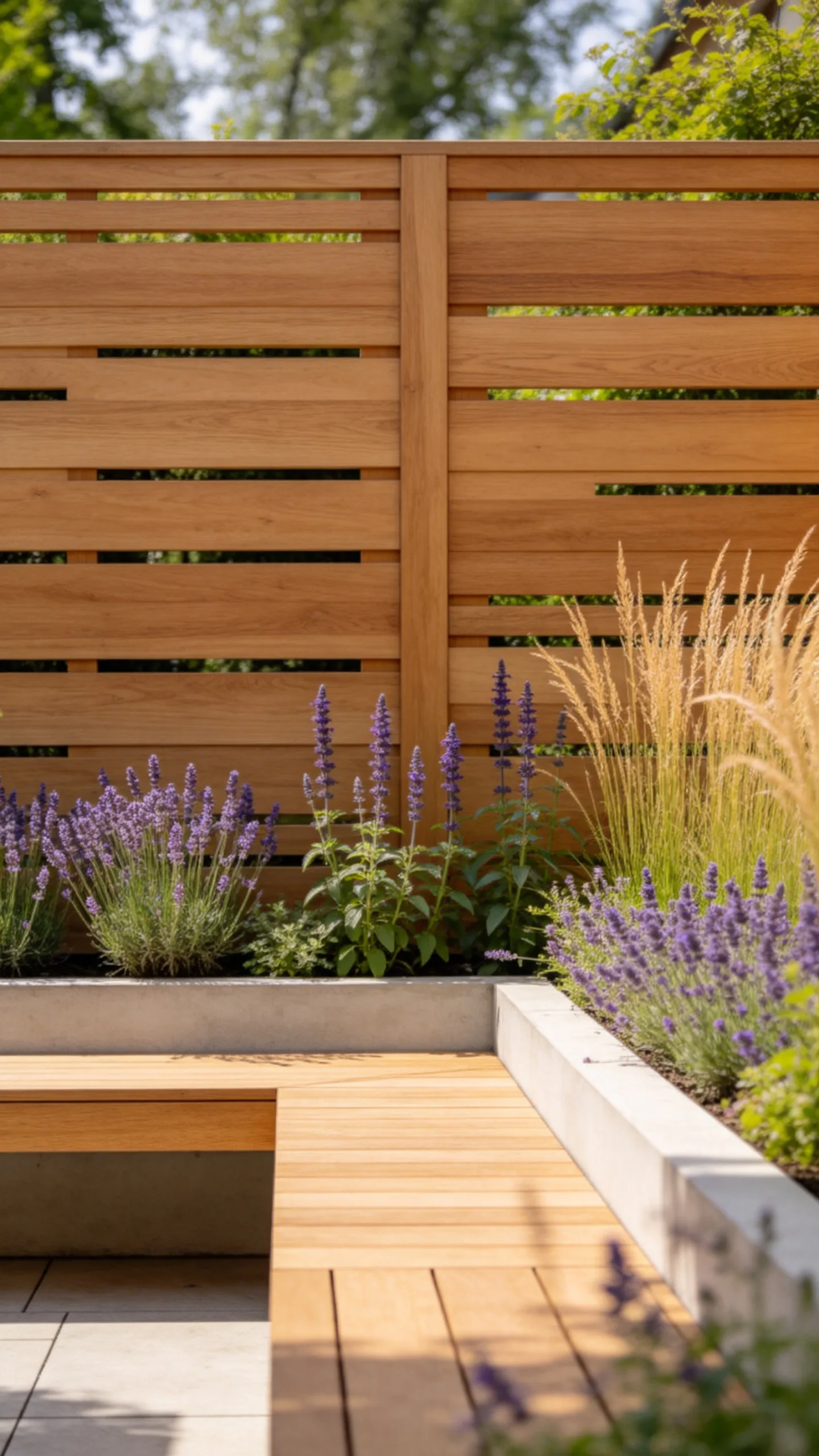
A horizontal slat fence gives a backyard a clean, modern look while still feeling warm if you use cedar, redwood, or pressure-treated pine. Narrow gaps between the boards let air and light pass through, which is helpful around planting beds where you do not want the space to feel boxed in.
This style works well behind a patio seating area, along a side yard, or as a backdrop for ornamental grasses and raised planters. For more privacy, keep the gaps small and use taller posts; for a lighter garden screen, leave wider spacing and plant lavender, salvia, or compact shrubs in front to soften the lines.
2. Classic White Picket Fence Around Flower Beds
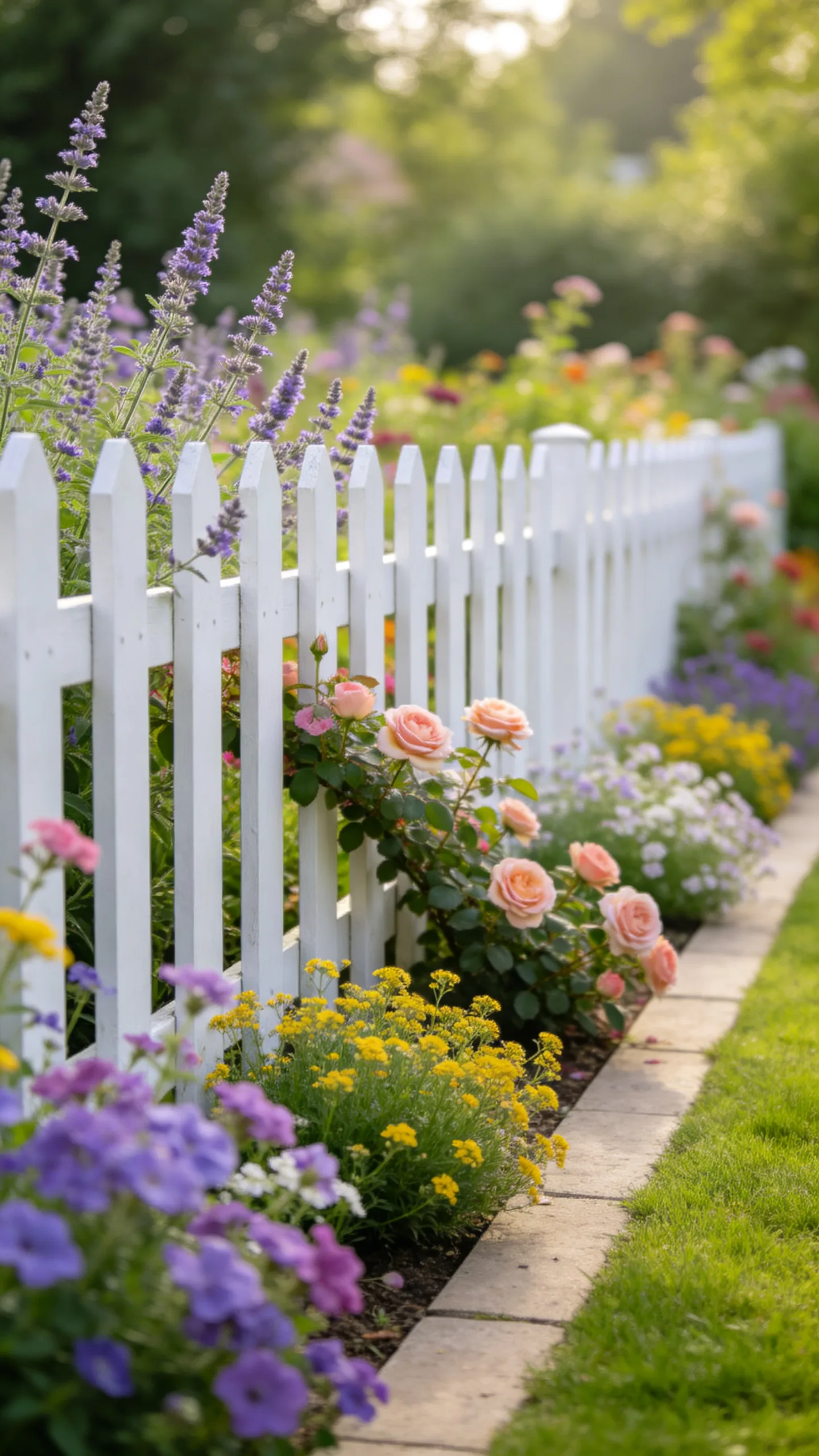
A white picket fence is a timeless choice for cottage-style gardens, front yards, and borders filled with flowering perennials. The open picket spacing keeps the garden visible from the street while still creating a neat boundary around beds, walkways, or a lawn edge.
Pair this fence with plants that spill and soften the base, such as catmint, creeping phlox, alyssum, or low-growing roses. If you want less maintenance, choose vinyl pickets instead of painted wood, especially in areas with frequent rain or intense sun where paint may need regular touch-ups.
3. Black Metal Fence With Layered Planting
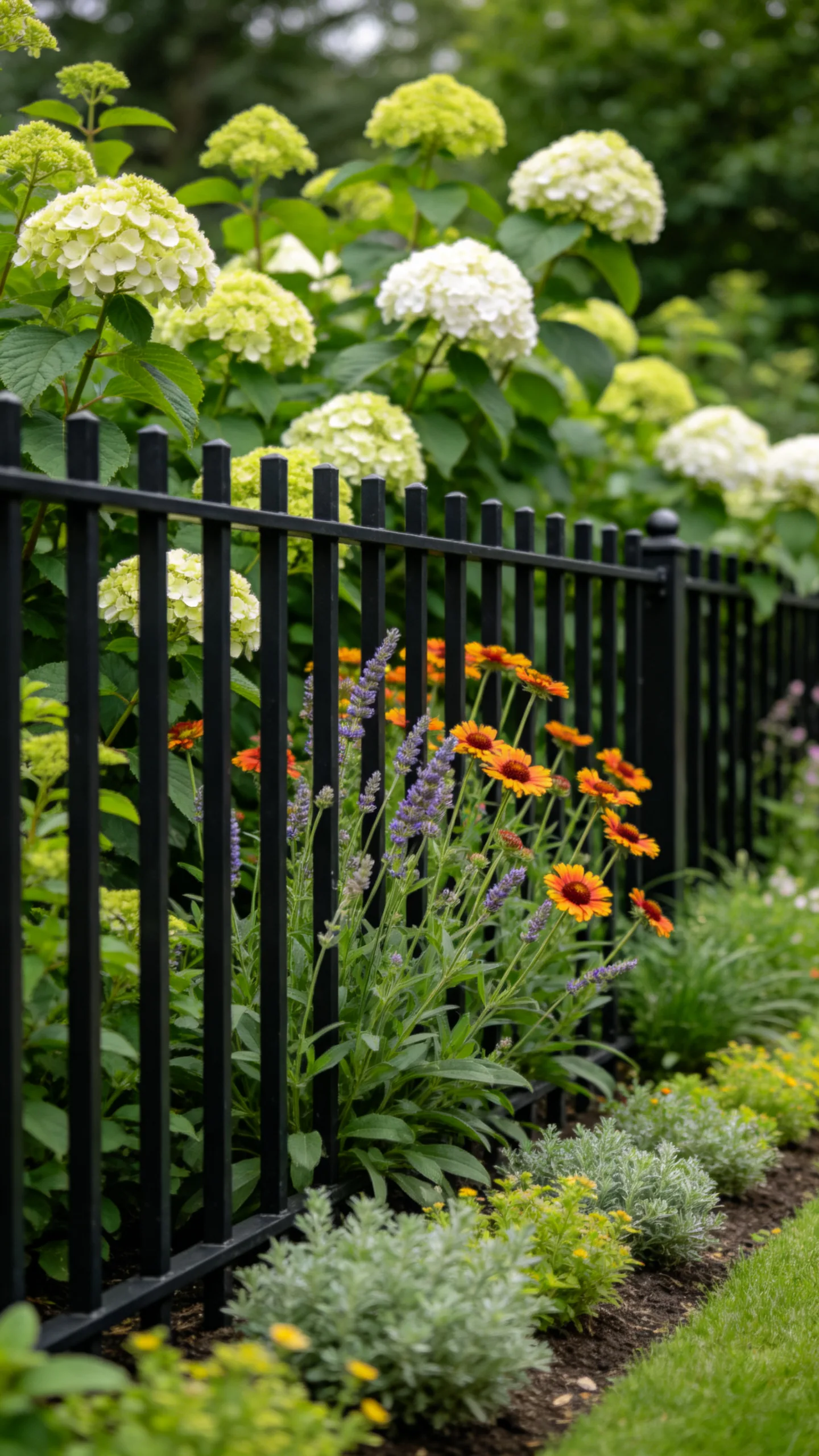
A black metal fence adds structure without visually closing off the garden. Slim iron, aluminum, or steel-style panels work especially well for front yards, pool areas, or gardens where you want security but still want to see through to shrubs, trees, and flower borders.
Use layered planting to make the fence feel integrated rather than stark. Place taller shrubs like hydrangea, viburnum, or dwarf lilac behind or near the fence, then add mid-height perennials and low edging plants in front. The dark color creates a strong outline that makes green foliage and bright flowers stand out.
4. Lattice Fence for Climbing Vines
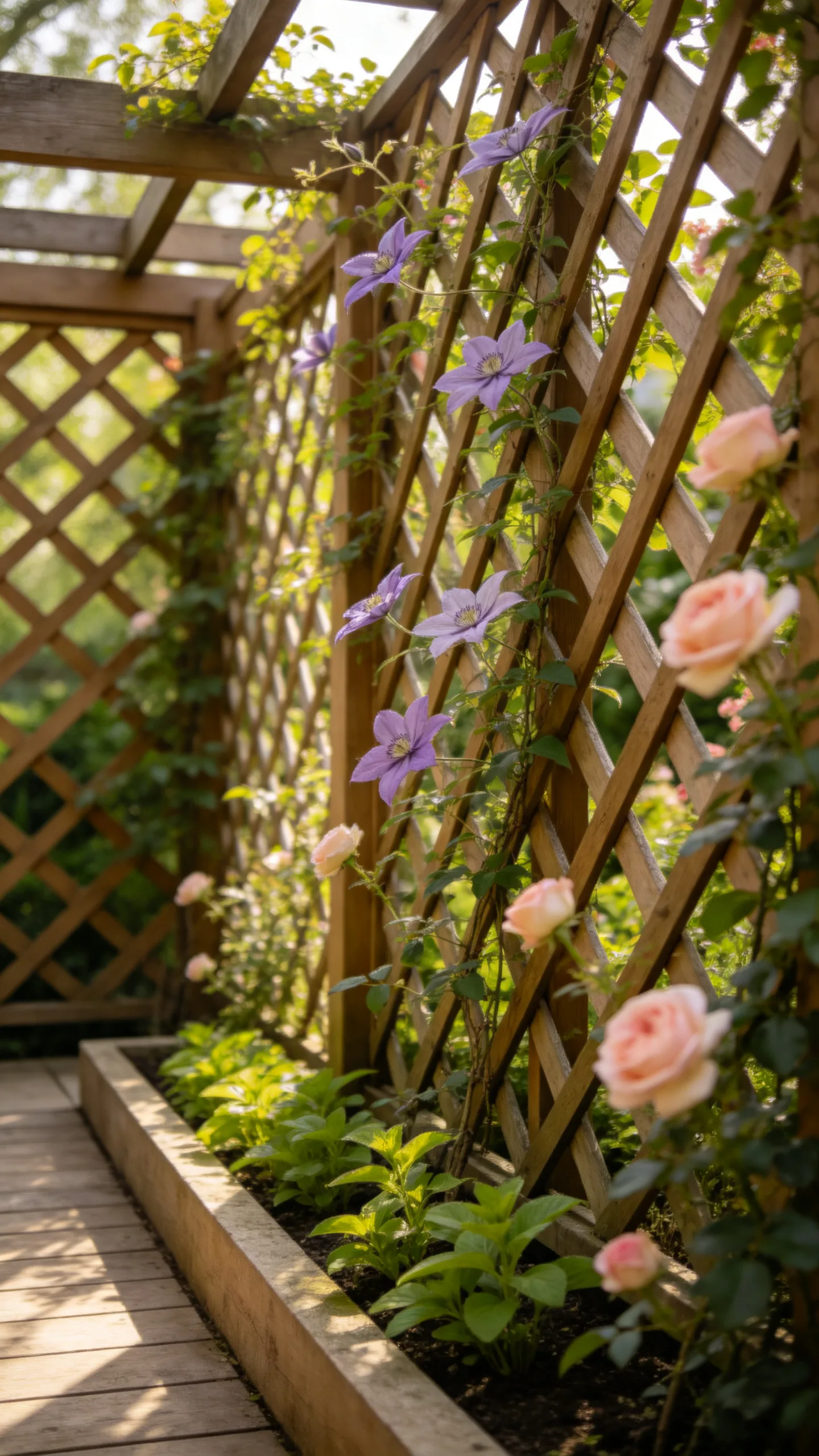
A lattice fence is ideal when you want a garden boundary that doubles as a plant support. The crisscross pattern gives climbing plants something to grip, making it useful for clematis, climbing roses, star jasmine, sweet peas, or annual vines like morning glory where appropriate.
Install lattice panels along a patio, beside a deck, or behind a narrow flower bed to create vertical interest without taking up much ground space. If privacy is the goal, remember that the screen will be more open in winter if you choose deciduous vines, so evergreen climbers may be better in mild climates.
5. Woven Willow Fence for a Natural Garden Edge
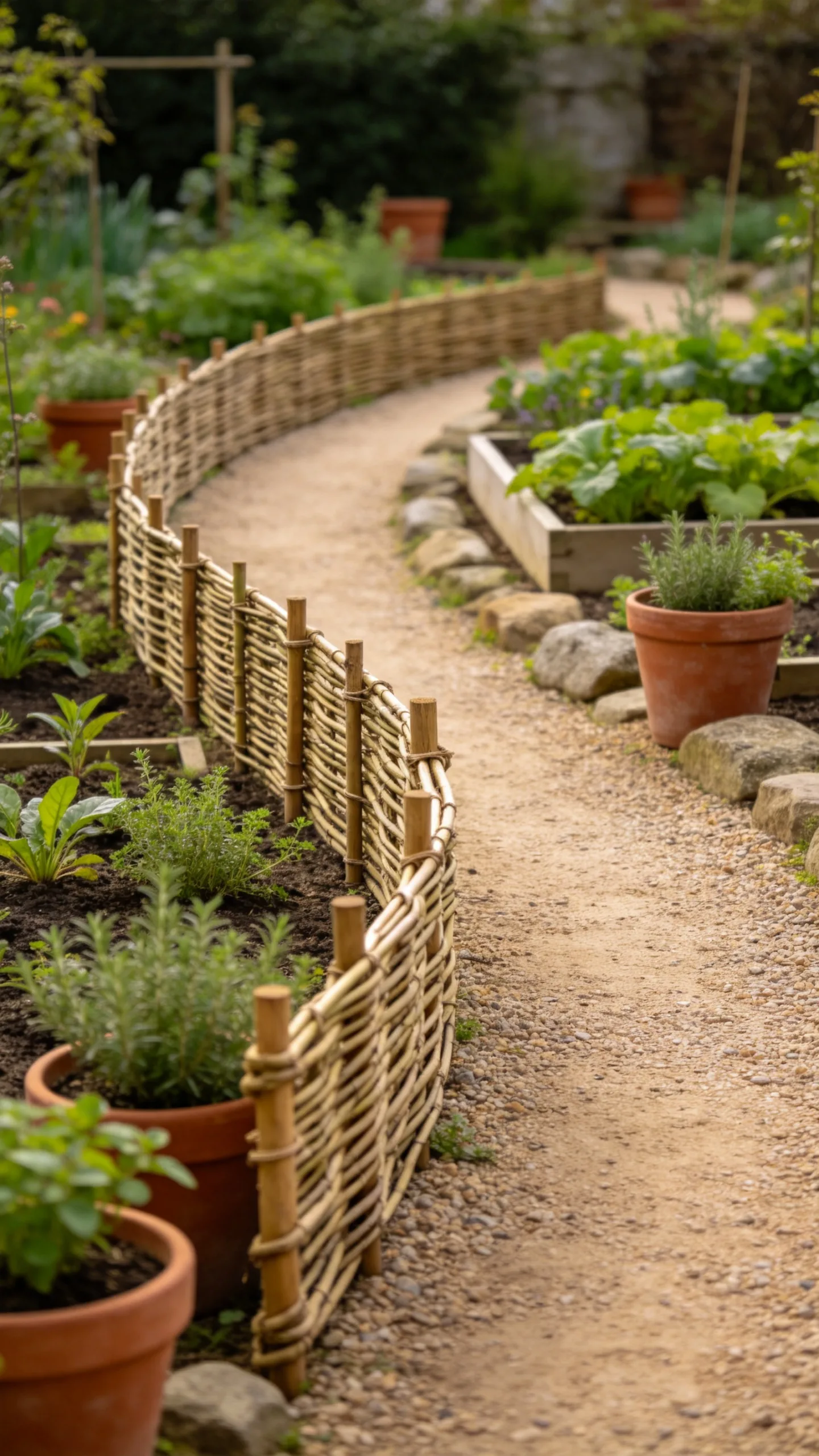
A woven willow fence brings a handmade, organic look to vegetable gardens, herb beds, and informal cottage borders. Its low height makes it best for defining spaces rather than providing full privacy, but it can help keep loose mulch in place and create a tidy edge around planting areas.
This fence style suits gardens with curved beds, gravel paths, and natural materials like stone, terracotta, and untreated wood. Use it around raised beds or along a kitchen garden path, and replace sections as needed over time since natural woven materials weather outdoors.
6. Tall Privacy Fence With Planting Pockets
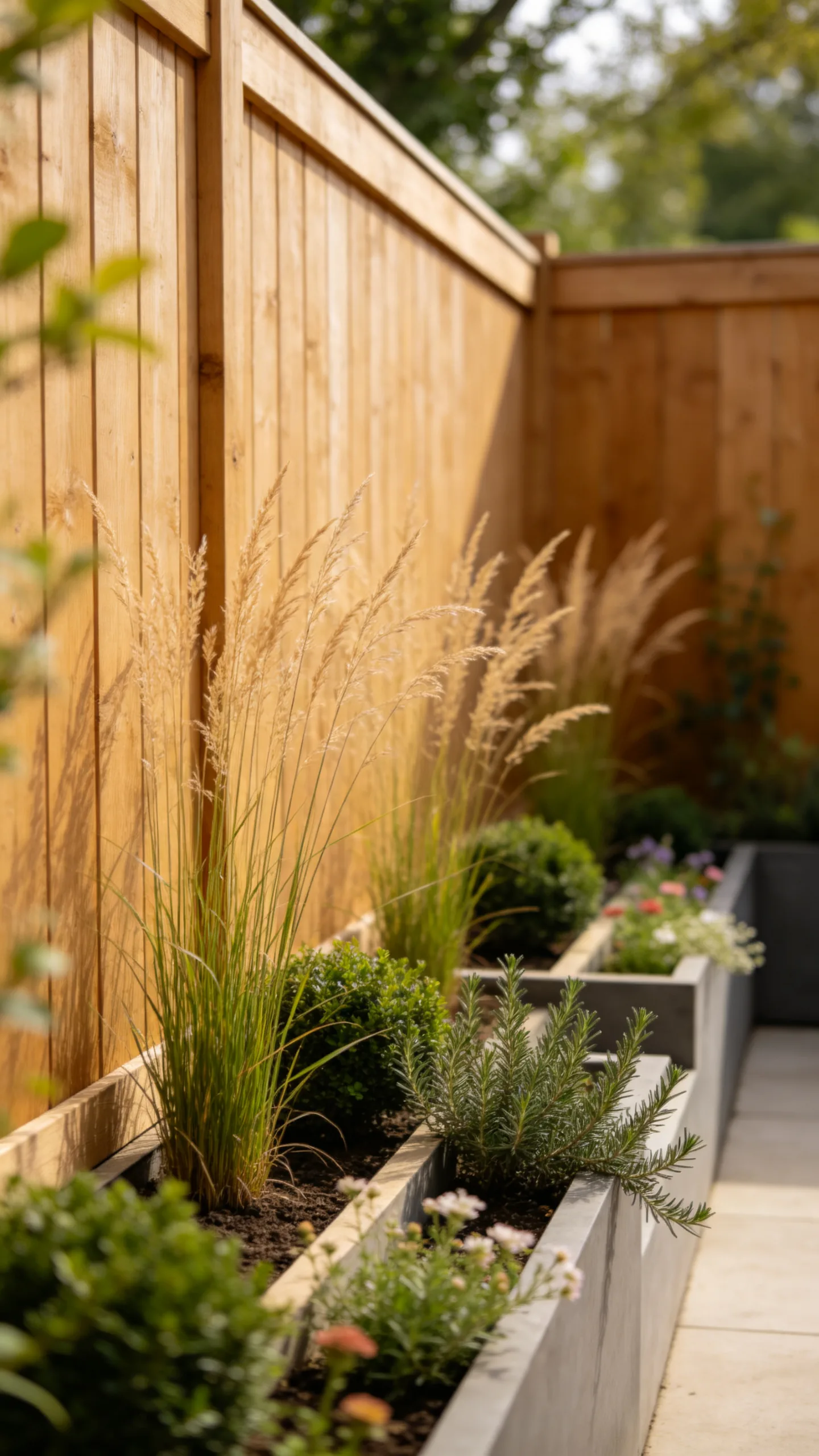
A tall privacy fence is practical for backyards overlooked by neighboring windows, busy roads, or shared property lines. To keep a solid fence from feeling plain, add narrow planting pockets at the base using raised troughs, built-in planters, or deep containers.
Choose plants based on available light. In sunny spots, use ornamental grasses, dwarf conifers, rosemary, or compact flowering shrubs. In shade, try ferns, hostas, heuchera, or shade-tolerant hydrangeas. The planting softens the fence face and helps the yard feel more like a garden room.
7. Split Rail Fence With Wildflower Borders
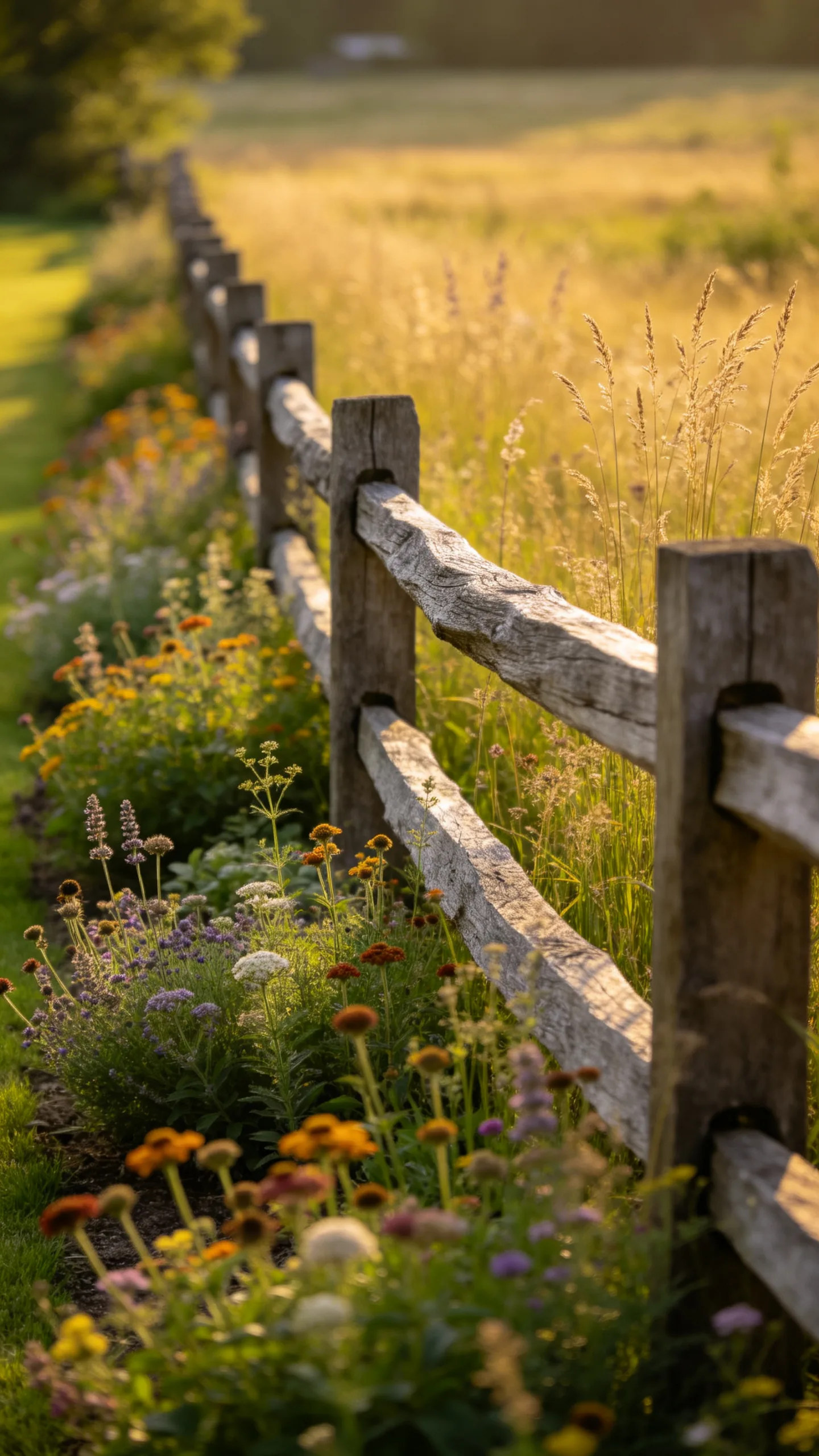
A split rail fence is a good match for rustic gardens, large yards, meadow-style planting, and properties with a relaxed country look. Because it is low and open, it does not create much privacy, but it gives structure to wide spaces without blocking views.
Plant native wildflowers, grasses, or pollinator-friendly perennials along the rails to make the fence feel settled into the landscape. Choose species suited to your region and sun exposure, and leave enough room for maintenance access so plants do not completely swallow the fence.
8. Bamboo Screen Fence for a Tropical Feel
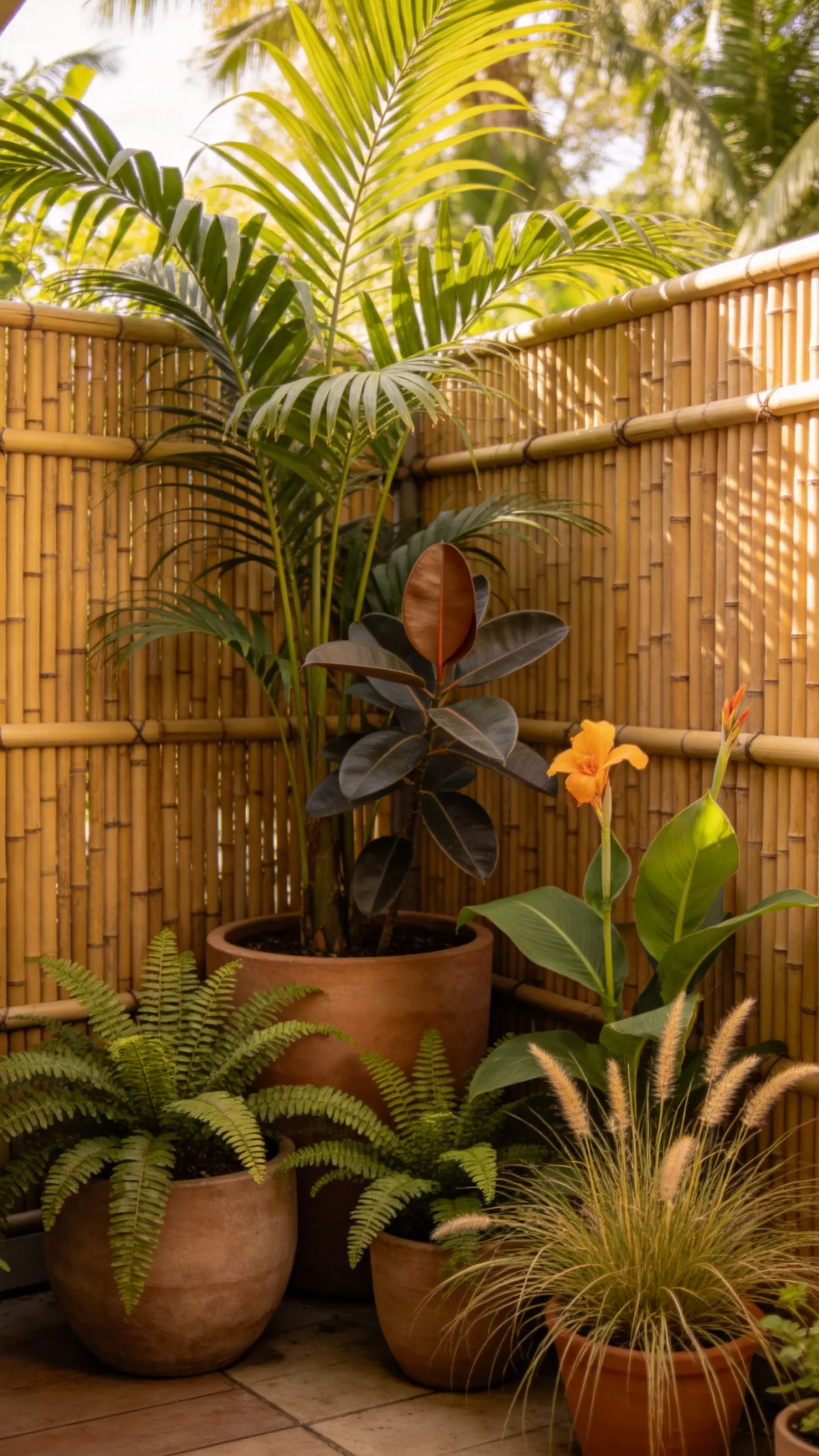
A bamboo screen fence can quickly warm up a plain patio, balcony garden, or small backyard corner. Rolled bamboo screening can be attached to an existing chain-link or wire fence, while framed bamboo panels create a more finished look.
This idea is useful for renters or budget-conscious gardeners who want more privacy without rebuilding the entire fence. Pair bamboo with large containers of palms, canna lilies, elephant ears, ferns, or ornamental grasses, choosing plants that match your climate and winter conditions.
9. Gabion Fence With Stone Texture
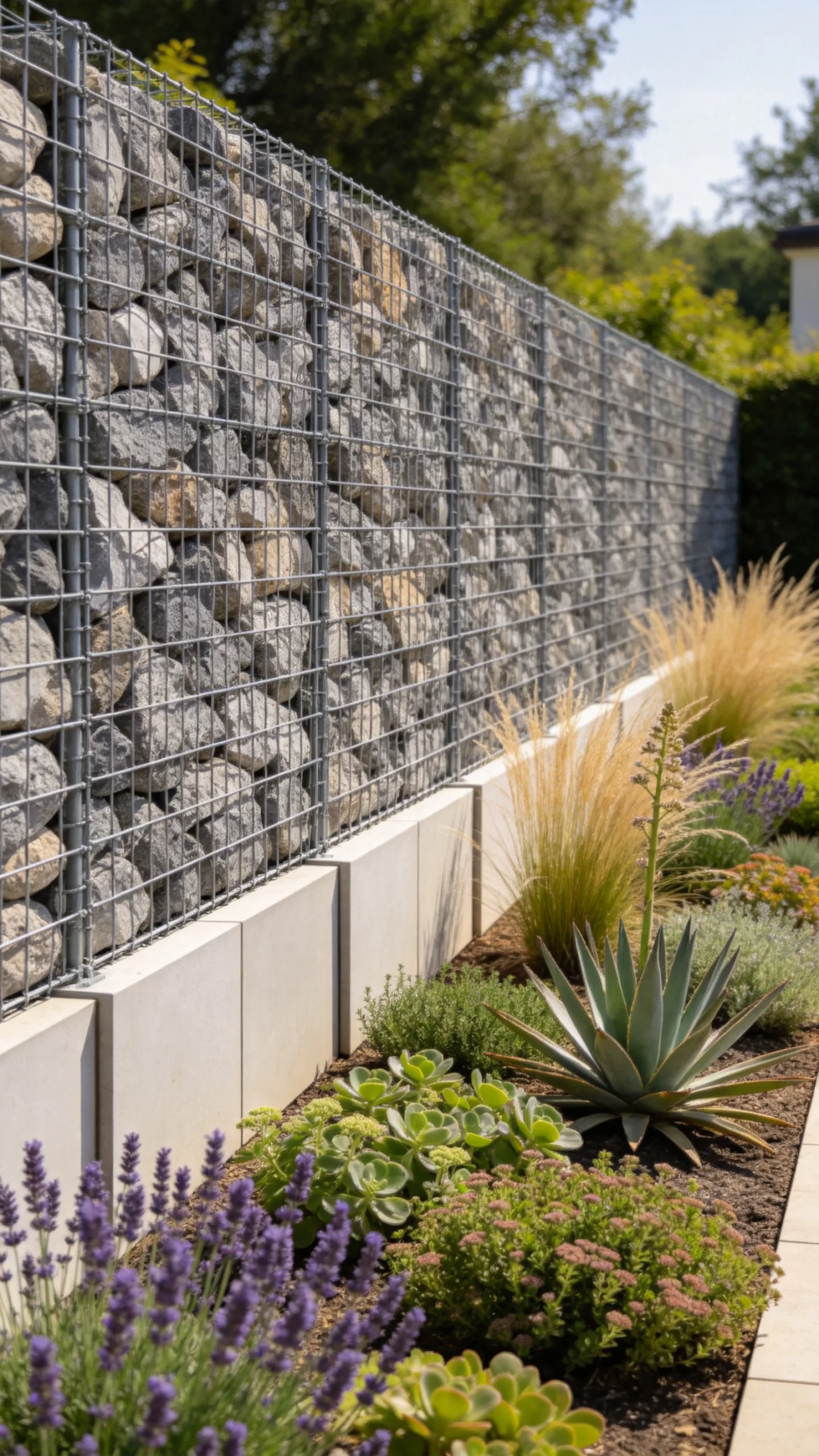
A gabion fence uses wire cages filled with stone, giving the garden a strong architectural element. It works well in modern landscapes, sloped yards, or areas where you want a sturdy screen with lots of texture. The stone also pairs beautifully with drought-tolerant planting.
Use gabion sections as full fence panels or as low garden walls combined with wood or metal fencing above. Around the base, plant sedum, lavender, thyme, yucca, or ornamental grasses in sunny, well-drained spots. Because gabions are heavy, they need proper installation and a stable base.
10. Arched Gate Fence Entrance
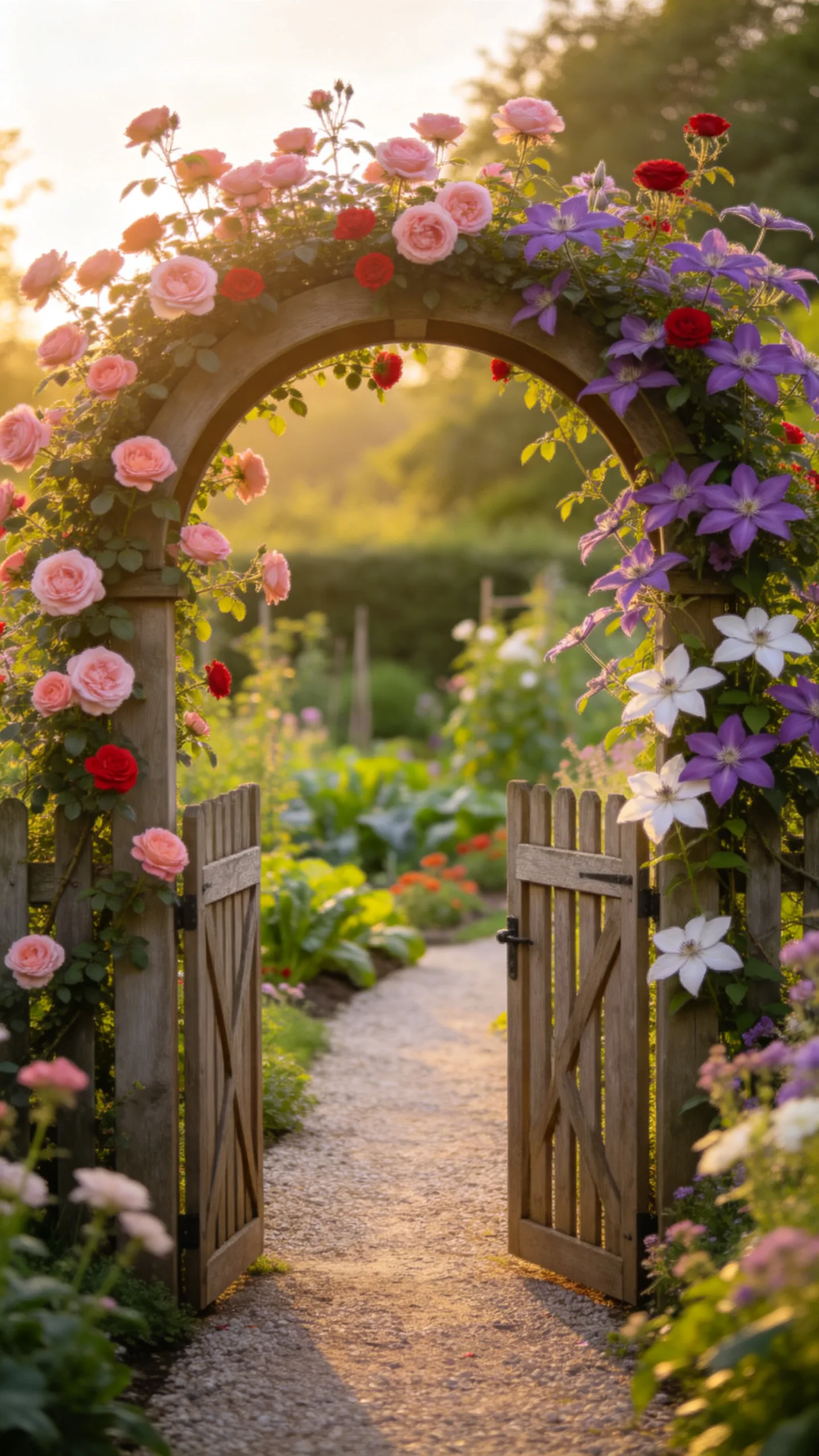
An arched gate turns a simple fence line into a garden focal point. It works especially well at the entrance to a vegetable garden, side yard, rose garden, or backyard seating area. The arch creates height and makes the space beyond feel intentional.
Train climbing roses, clematis, honeysuckle, or jasmine over the arch if the site gets enough sun and the structure is strong enough. For smaller gardens, keep the fence on either side low or semi-open so the entrance feels welcoming rather than heavy.
11. Low Garden Fence Around Raised Beds
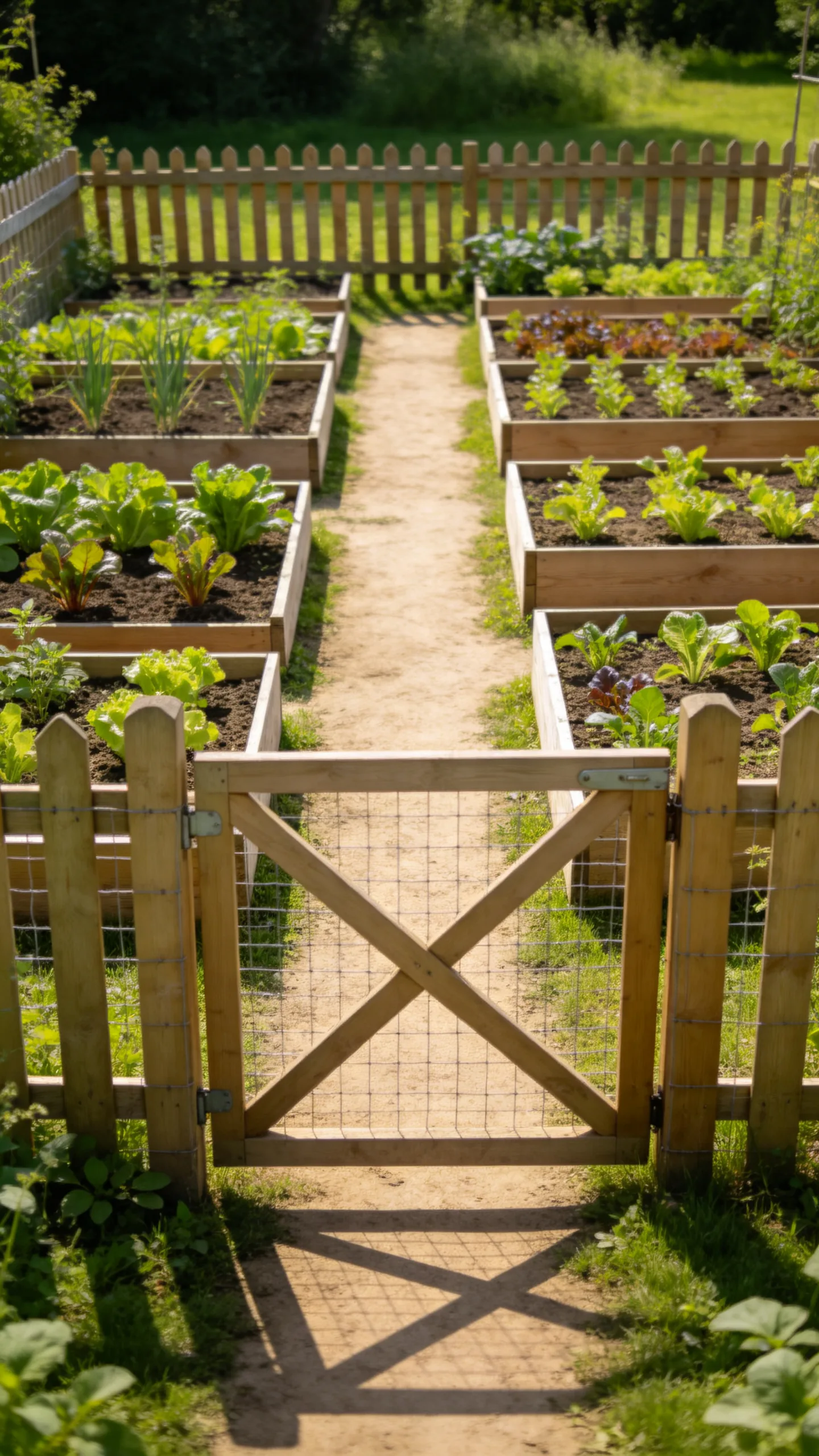
A low fence around raised beds can help define a vegetable garden and protect young plants from foot traffic, pets, or light disturbance. This type of fence can be made from wood rails, wire mesh, metal edging, or short pickets, depending on the look you want.
Keep the fence low enough that you can still reach into the beds for planting, watering, harvesting, and weeding. Add a simple gate if the raised bed area is enclosed, and leave paths wide enough for a wheelbarrow or watering can. This idea is especially helpful for making a productive garden feel organized.
12. Dark Stained Wood Fence With Green Foliage
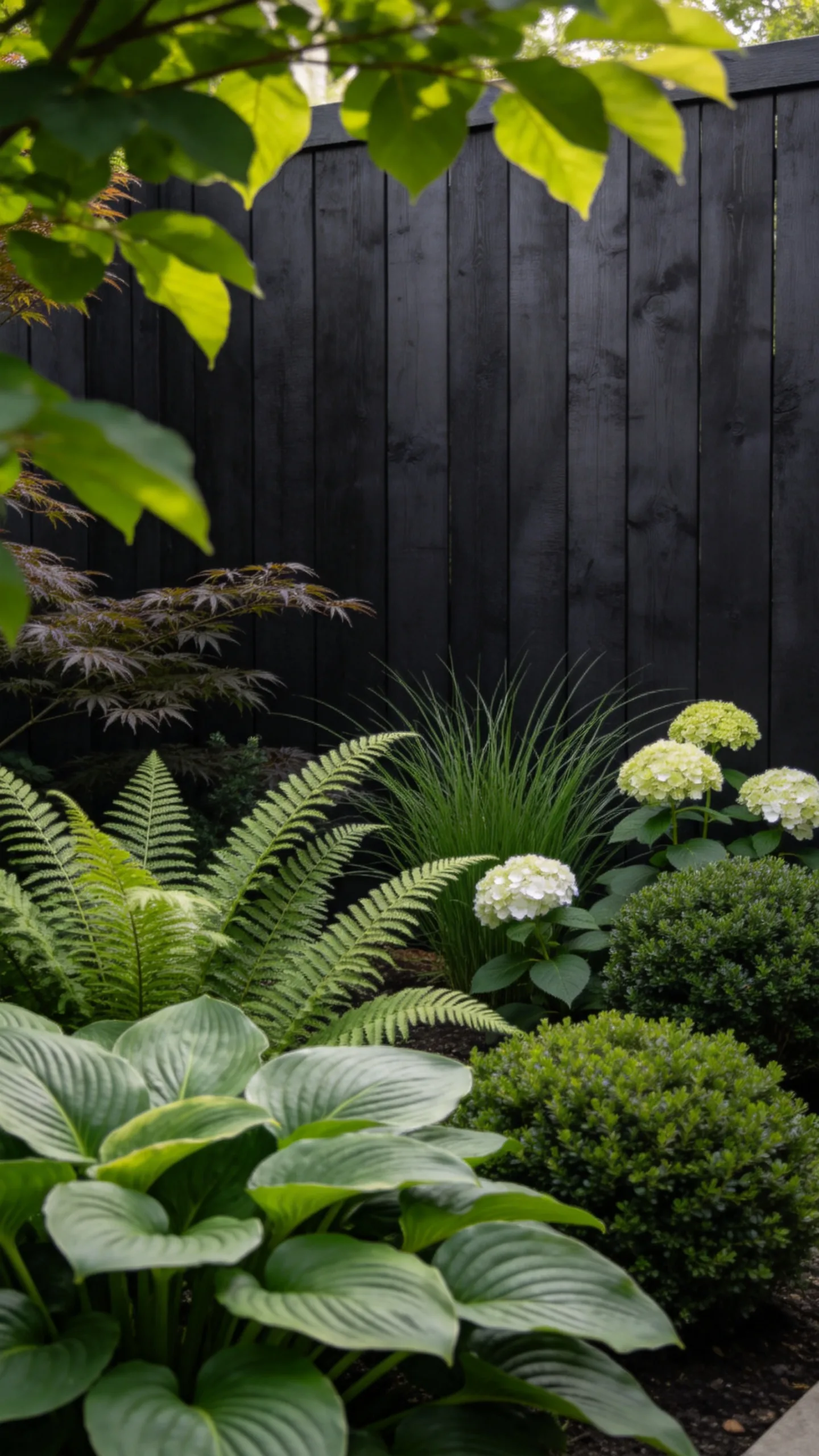
A dark stained fence creates a dramatic backdrop for leaves and flowers. Deep brown, charcoal, or black stain can make a small garden feel more designed, especially when paired with lush planting in front of it.
Use this fence behind plants with strong foliage color, such as hostas, ferns, Japanese forest grass, boxwood, hydrangeas, or silver-leaved herbs. In sunny gardens, the dark surface may absorb heat, so leave space between the fence and delicate plants and pay attention to watering during hot weather.
13. Decorative Metal Panel Fence
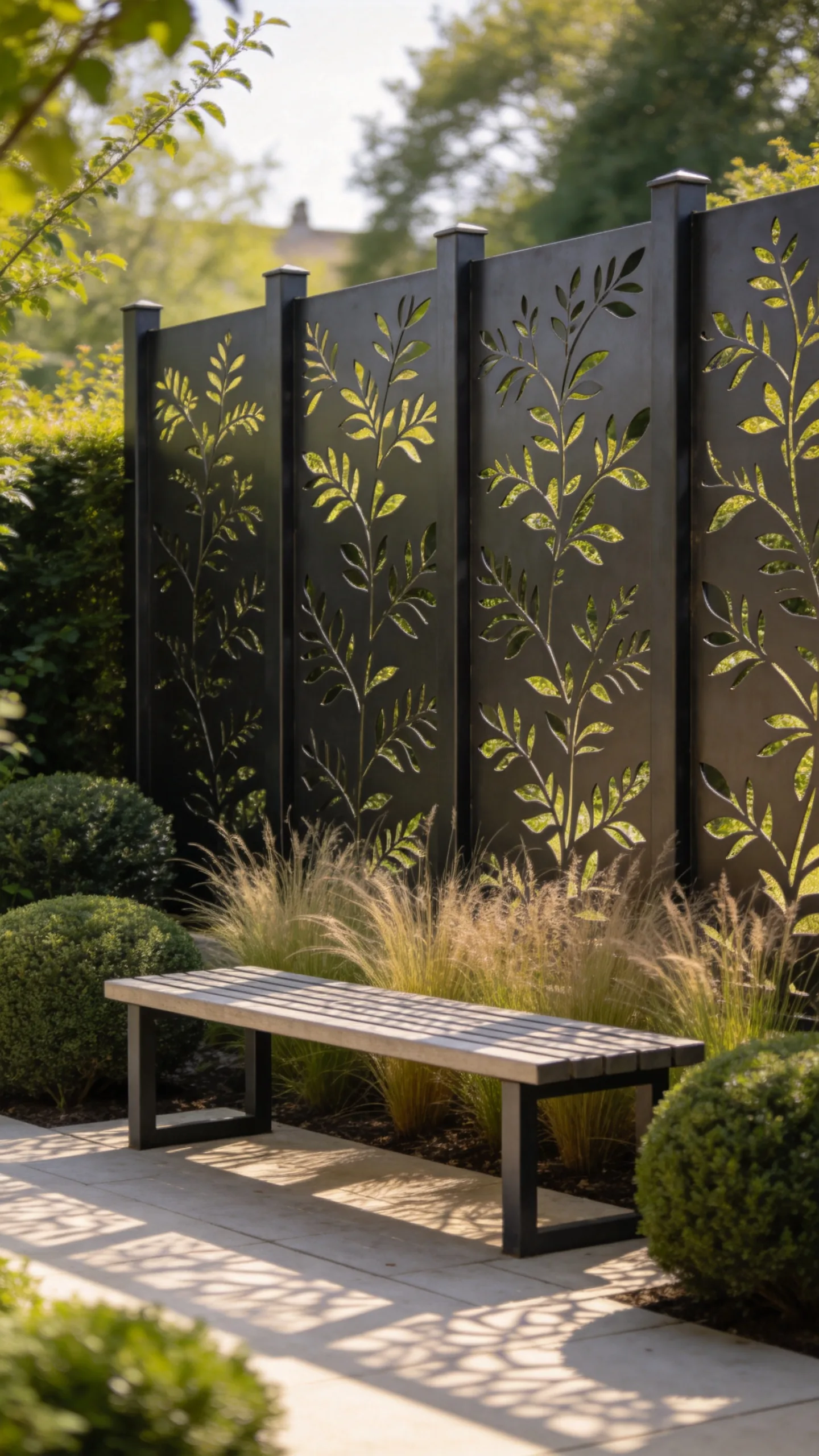
Decorative metal panels add pattern and privacy without the heaviness of a solid wall. Laser-cut panels with leaf, geometric, or botanical designs can be used as fence inserts, patio screens, or feature panels between posts.
This idea works especially well in small gardens because the cutout pattern creates depth and shadow. Place panels behind a bench, beside a dining area, or at the end of a path. For planting, keep the base simple with grasses, clipped shrubs, or container plants so the pattern remains visible.
14. Living Fence With Evergreen Shrubs
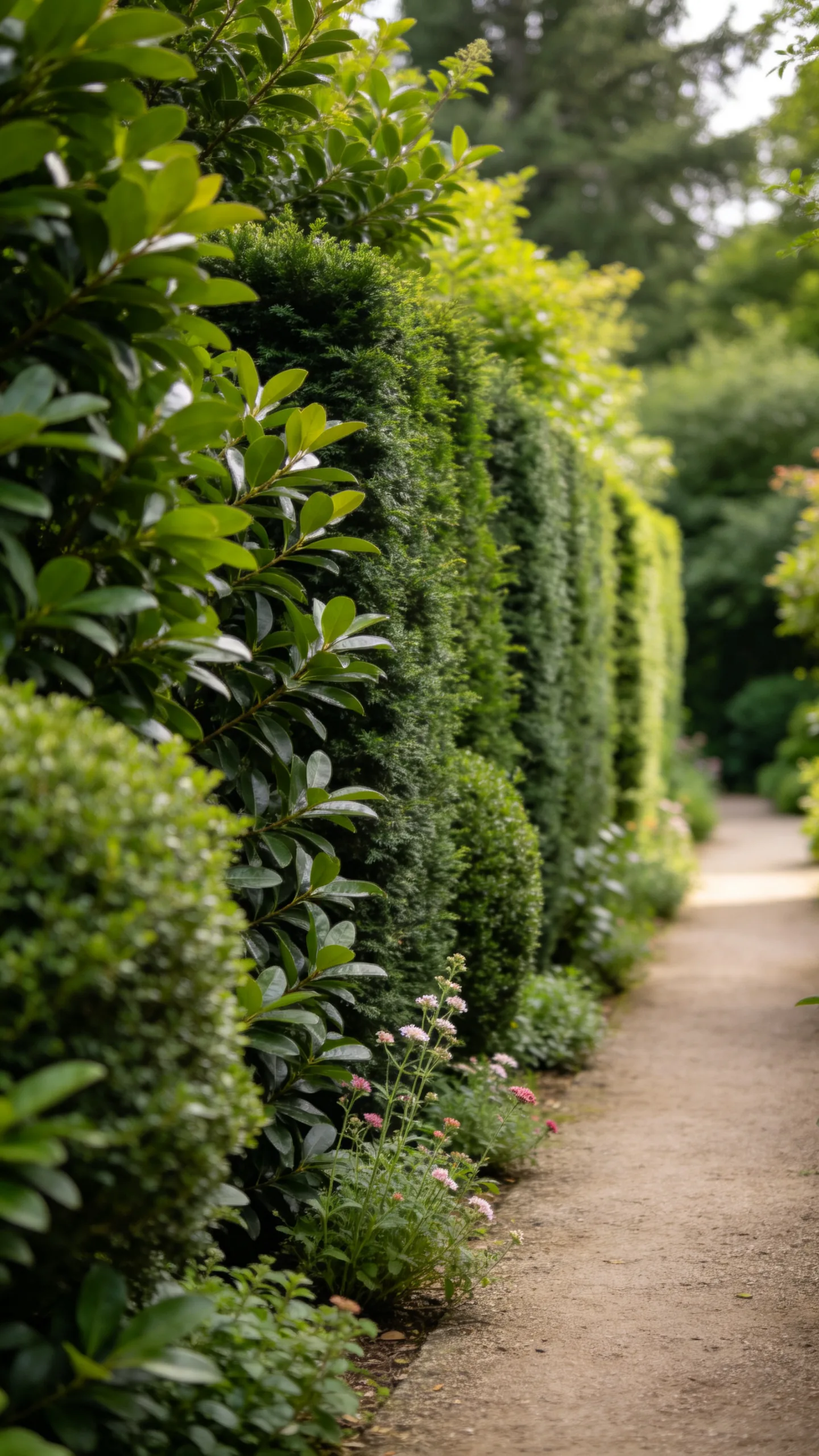
A living fence uses plants instead of hard materials to create screening, wind protection, or garden structure. Evergreen shrubs such as boxwood, yew, arborvitae, holly, privet, or laurel can form a year-round boundary when matched to the local climate and available space.
Plan the mature width before planting so the hedge does not crowd paths, patios, or neighboring beds. A living fence needs regular watering while establishing and trimming to maintain shape, but it can provide a softer, greener alternative to a standard fence.
15. Fence With Built-In Planter Boxes
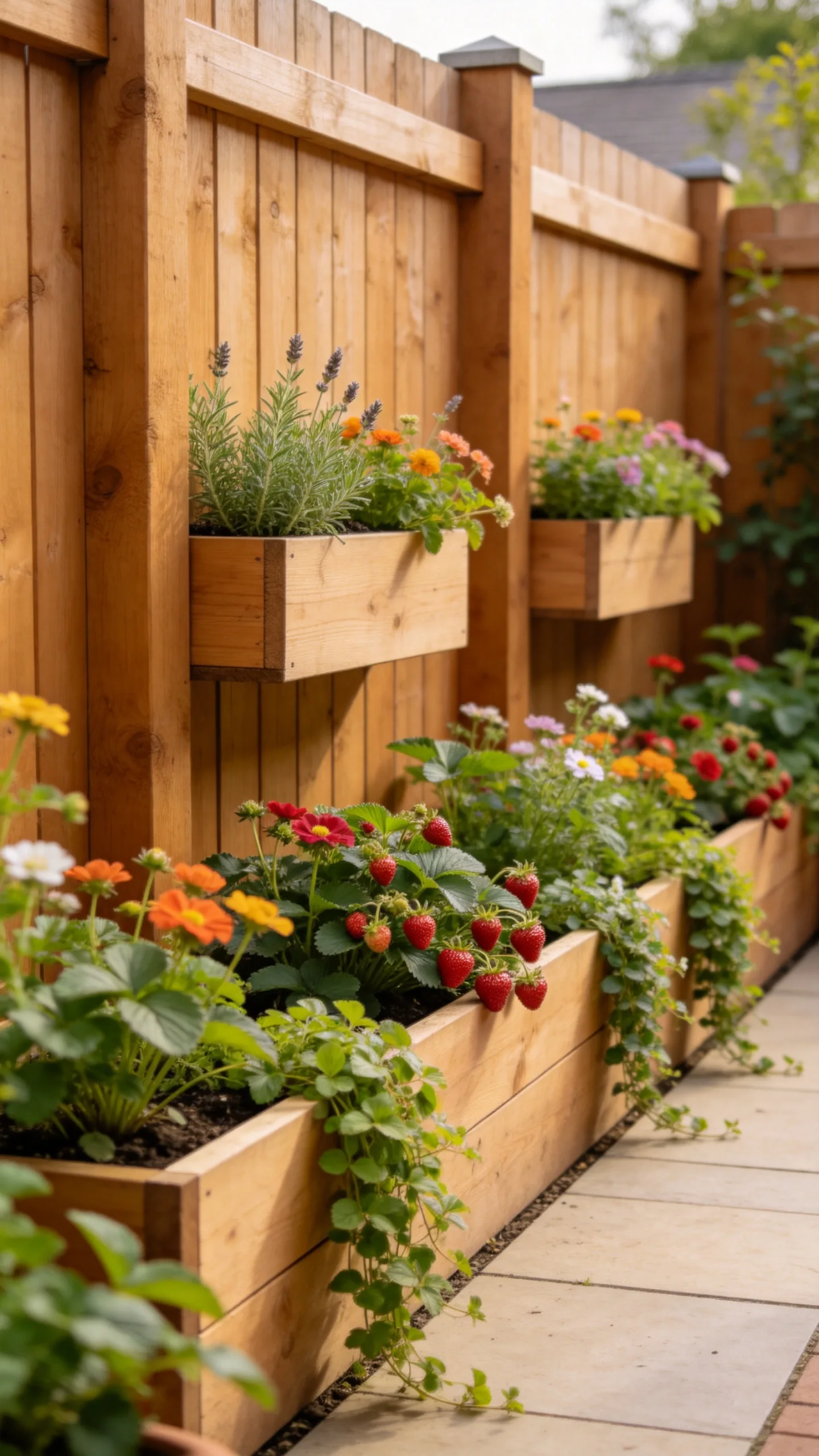
Built-in planter boxes make a fence more useful, especially in small yards, patios, and side gardens where ground space is limited. Long wooden boxes can be mounted between posts or placed along the base of the fence for herbs, annual flowers, strawberries, or trailing plants.
Make sure the boxes have drainage holes and a durable liner if they are attached to wood. Choose lightweight potting mix instead of heavy garden soil, and group plants with similar watering needs together. This design adds color at eye level and helps a plain fence feel like part of the garden.
16. Chain-Link Fence Covered With Climbing Plants
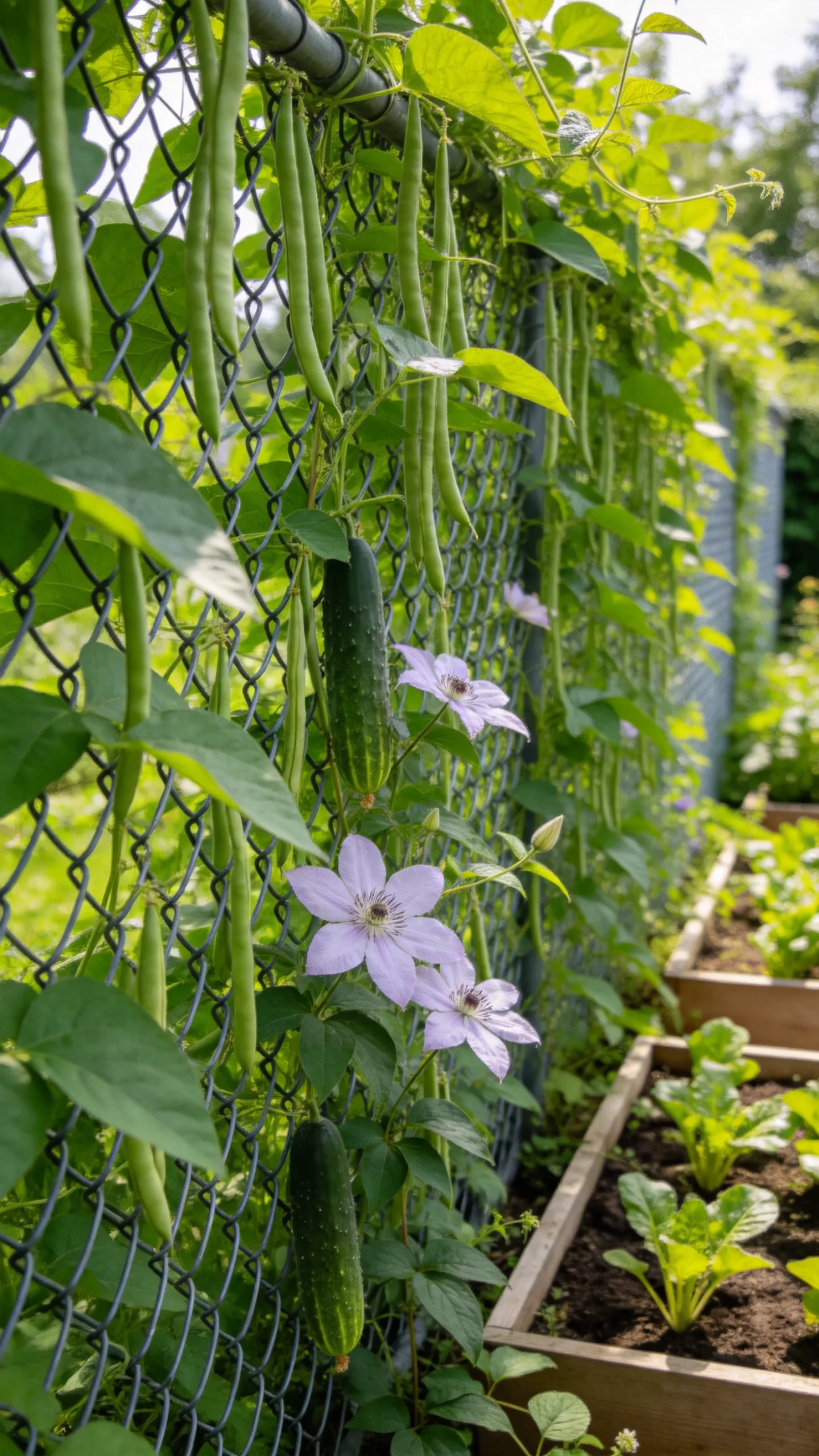
A chain-link fence can become a green garden screen with the right climbing plants. Instead of removing it, use the existing structure as support for vines, espaliered shrubs, or privacy planting. This is a practical option for side yards, vegetable gardens, and older backyard boundaries.
For edible gardens, consider pole beans, cucumbers, peas, or grapevines if the fence gets enough sun and the structure is sturdy. For ornamental coverage, use clematis, climbing hydrangea, or annual vines suited to your region. Avoid aggressive plants that may spread beyond the fence or become difficult to manage.
17. Mixed Material Fence With Wood and Metal
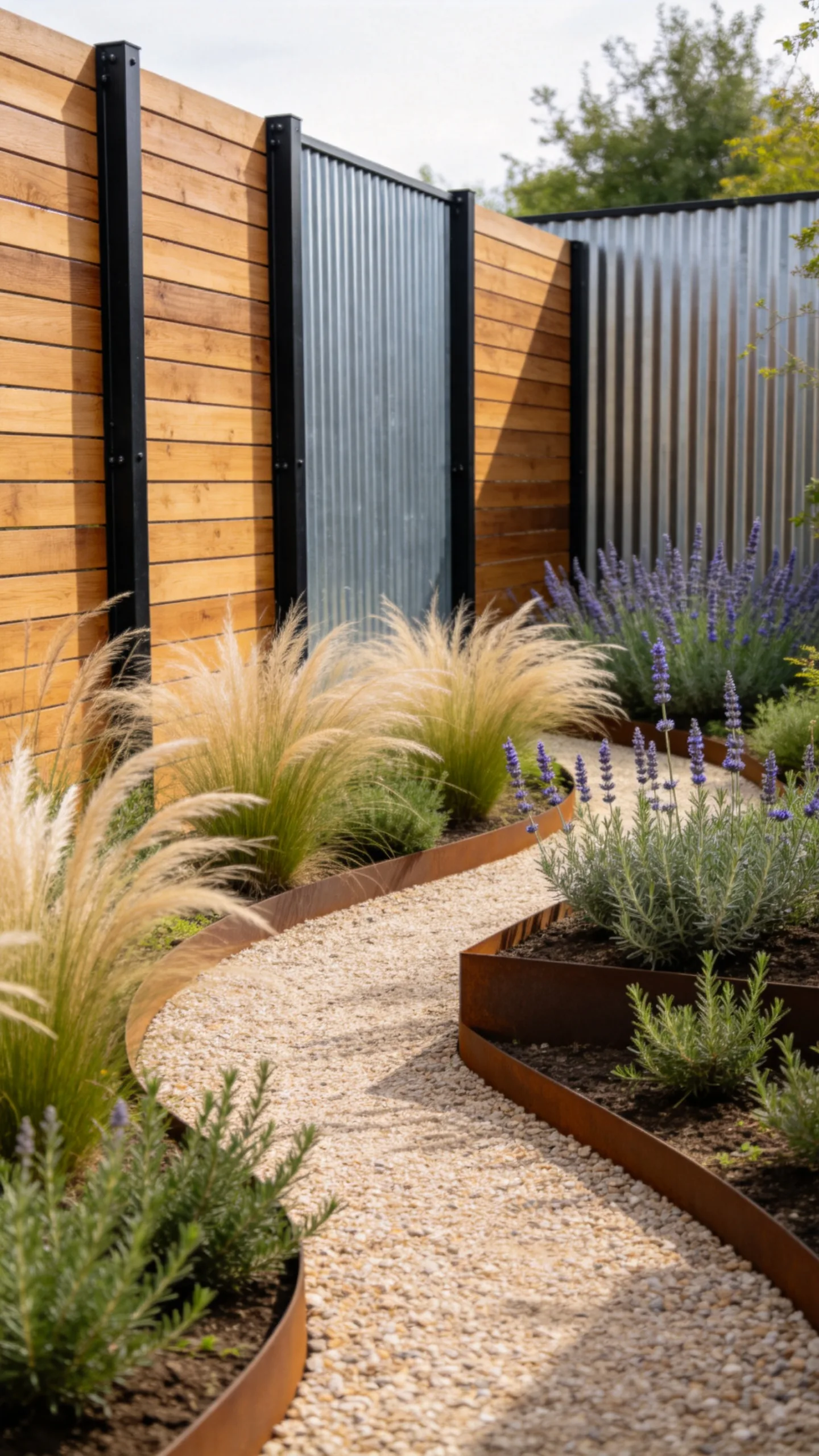
A mixed material fence combines the warmth of wood with the strength or contrast of metal. Wood boards with metal posts, corrugated metal panels framed in timber, or black metal rails with cedar accents can make a backyard feel updated without being overly formal.
This style is useful for modern garden designs, outdoor kitchens, and patios with raised beds or gravel paths. To balance the hard materials, plant soft textures nearby, such as feather reed grass, Russian sage, rosemary, or low mounds of nepeta in sunny locations.
18. Curved Fence Line Around a Garden Path
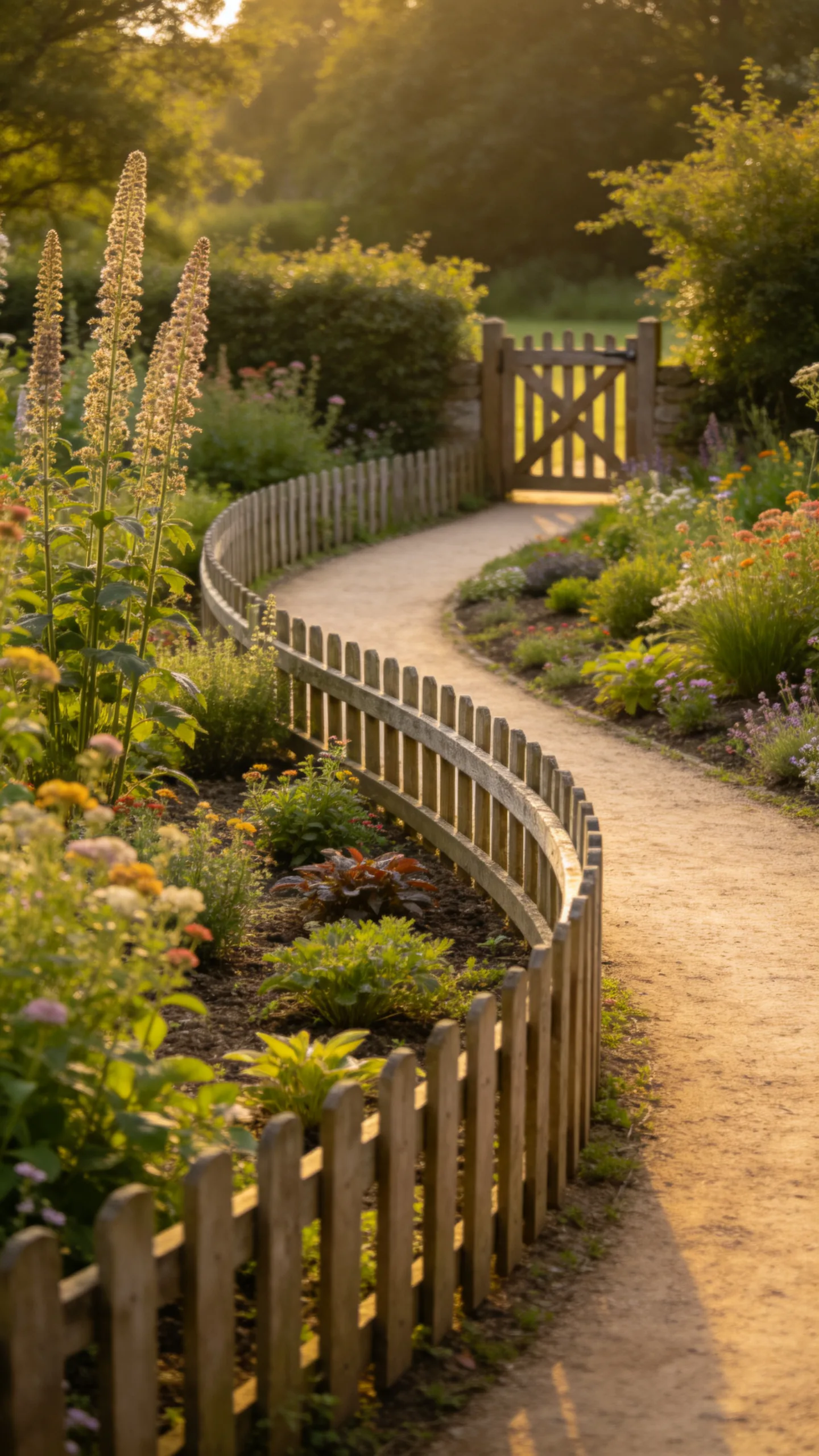
A curved fence line can make a garden feel larger and more inviting than a straight boundary. Even a simple low fence or edging rail can guide the eye along a winding path, creating a sense of movement through flower beds or around a lawn.
Use this idea in cottage gardens, front yards, or backyard paths leading to a shed, bench, or gate. Plant taller perennials and shrubs along the outside of the curve, then use lower plants on the inside so the path remains open and easy to walk.
19. Painted Accent Fence in a Garden Corner
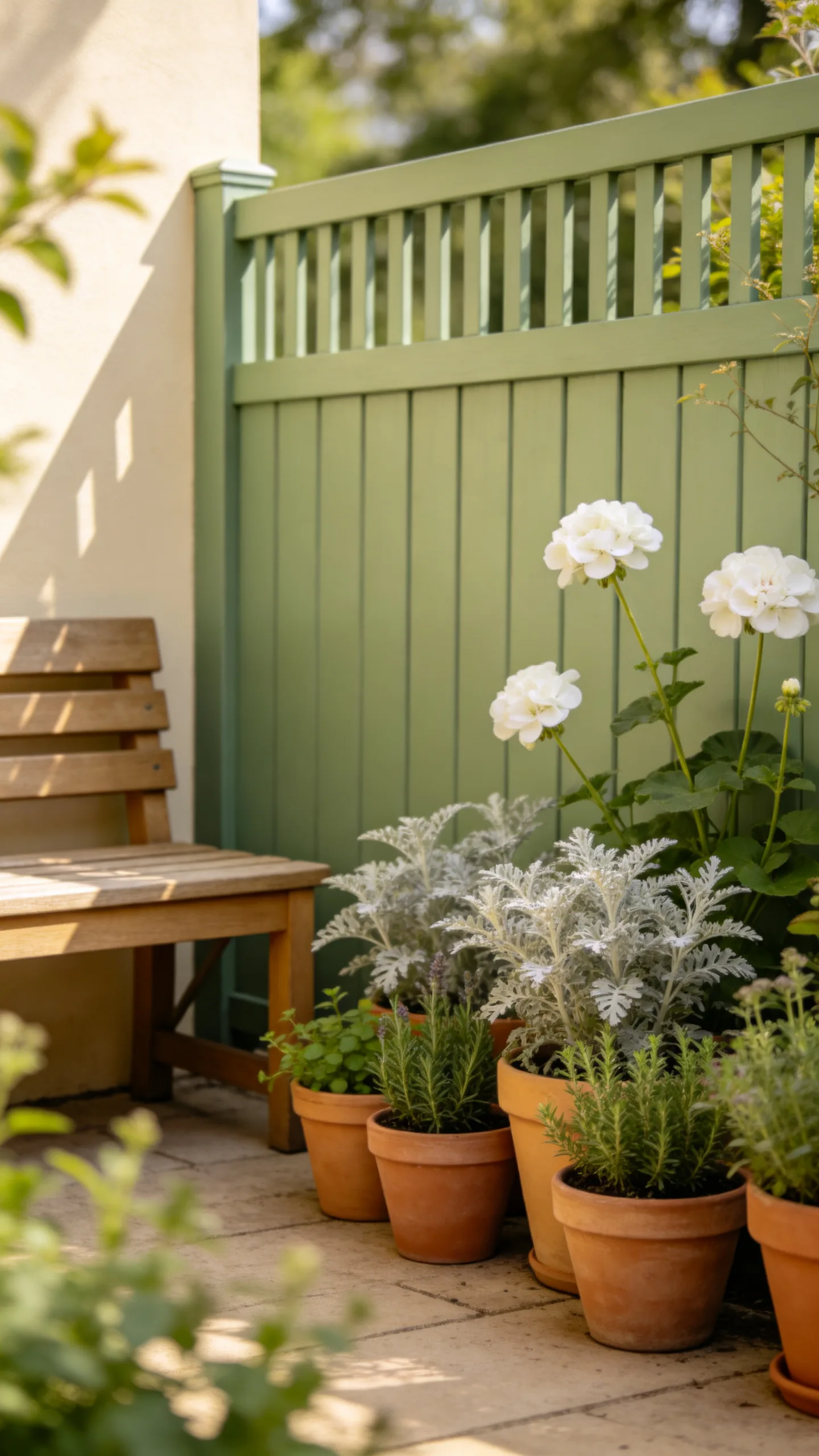
A painted accent fence can turn an overlooked corner into a focal point. Instead of painting every fence panel, choose one section behind a bench, container display, water feature, or small dining set. Colors like sage green, soft blue, terracotta, charcoal, or warm white can set the mood for the space.
Match the planting to the color for a more finished look. A blue fence pairs well with white flowers and silver foliage, while a terracotta fence looks good with herbs, olive trees in pots, and warm-toned blooms. Use exterior paint or stain suited to the fence material for better durability.
20. Slatted Fence Topper for Extra Privacy
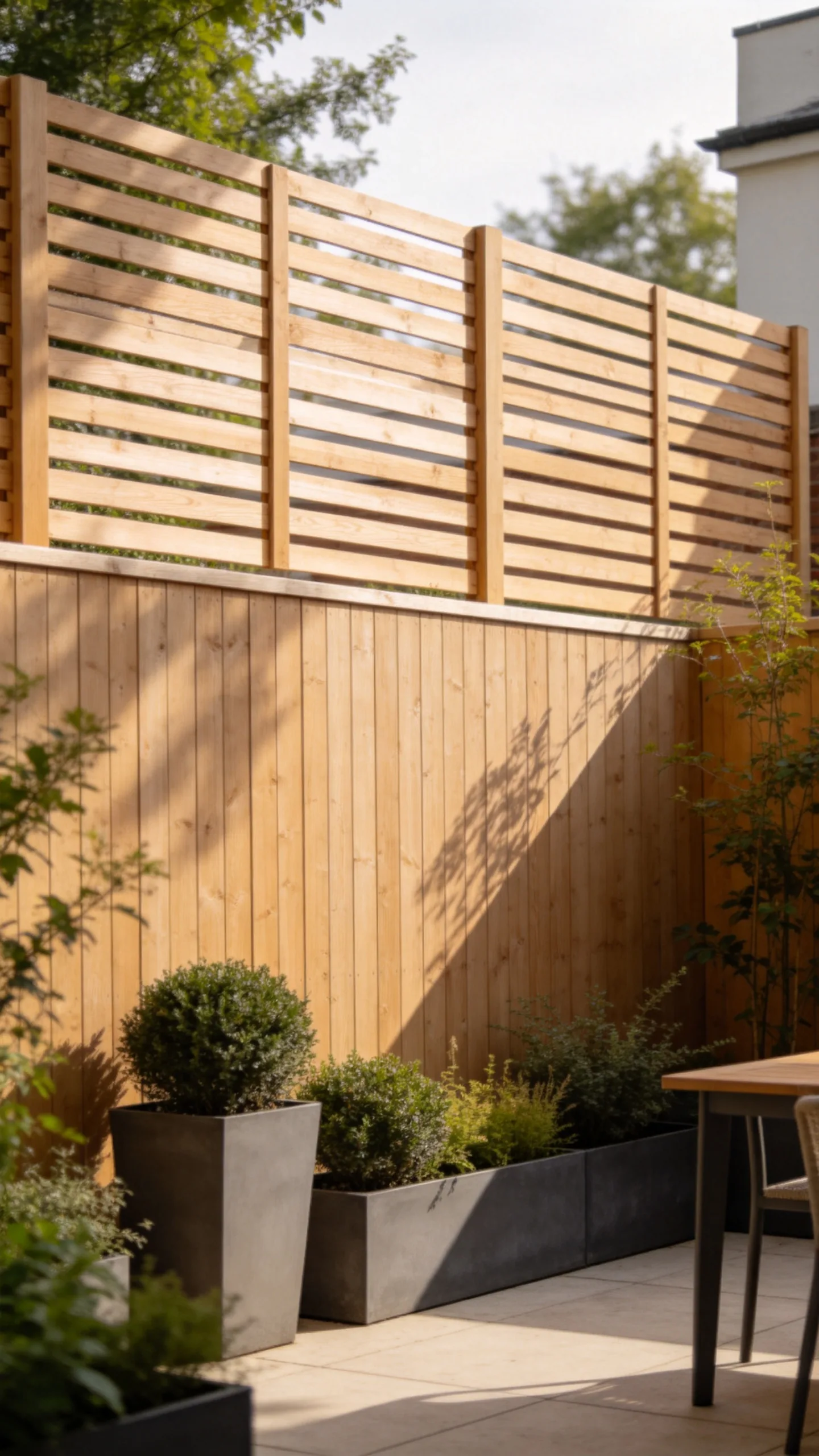
A fence topper is a smart way to add height or privacy without replacing the entire fence. Slatted wood, lattice, or decorative panels can be installed above an existing fence to screen upper views from neighboring decks or windows.
This idea works well around patios, hot tub areas, and narrow urban gardens. Before adding height, check local fence regulations and make sure the existing posts can support the extra structure. Plant tall containers or shrubs below the topper to blend the old and new sections together.
21. Rustic Post and Wire Fence for Vegetable Gardens
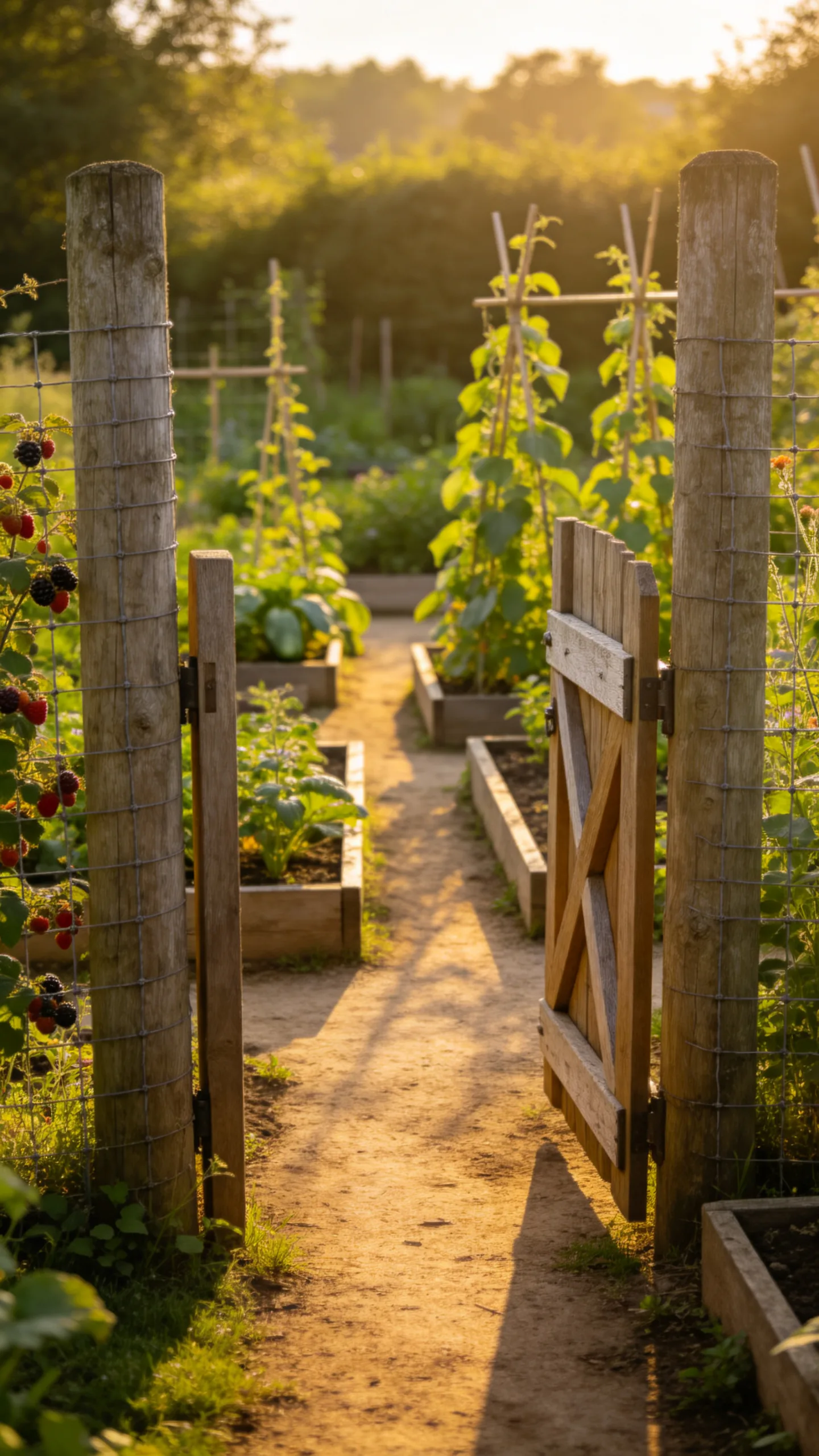
A post and wire fence is practical for vegetable gardens, berry patches, and backyard growing areas. Wooden posts paired with welded wire or hardware cloth create an open barrier that keeps the garden visible while helping protect crops from larger pets or casual foot traffic.
Use tighter wire mesh near the bottom if small animals are a concern, and bury or secure the lower edge where needed. Add a simple wooden gate, wide paths, and climbing supports for peas, beans, or cucumbers inside the fence. This style keeps the garden organized without blocking sun from the beds.