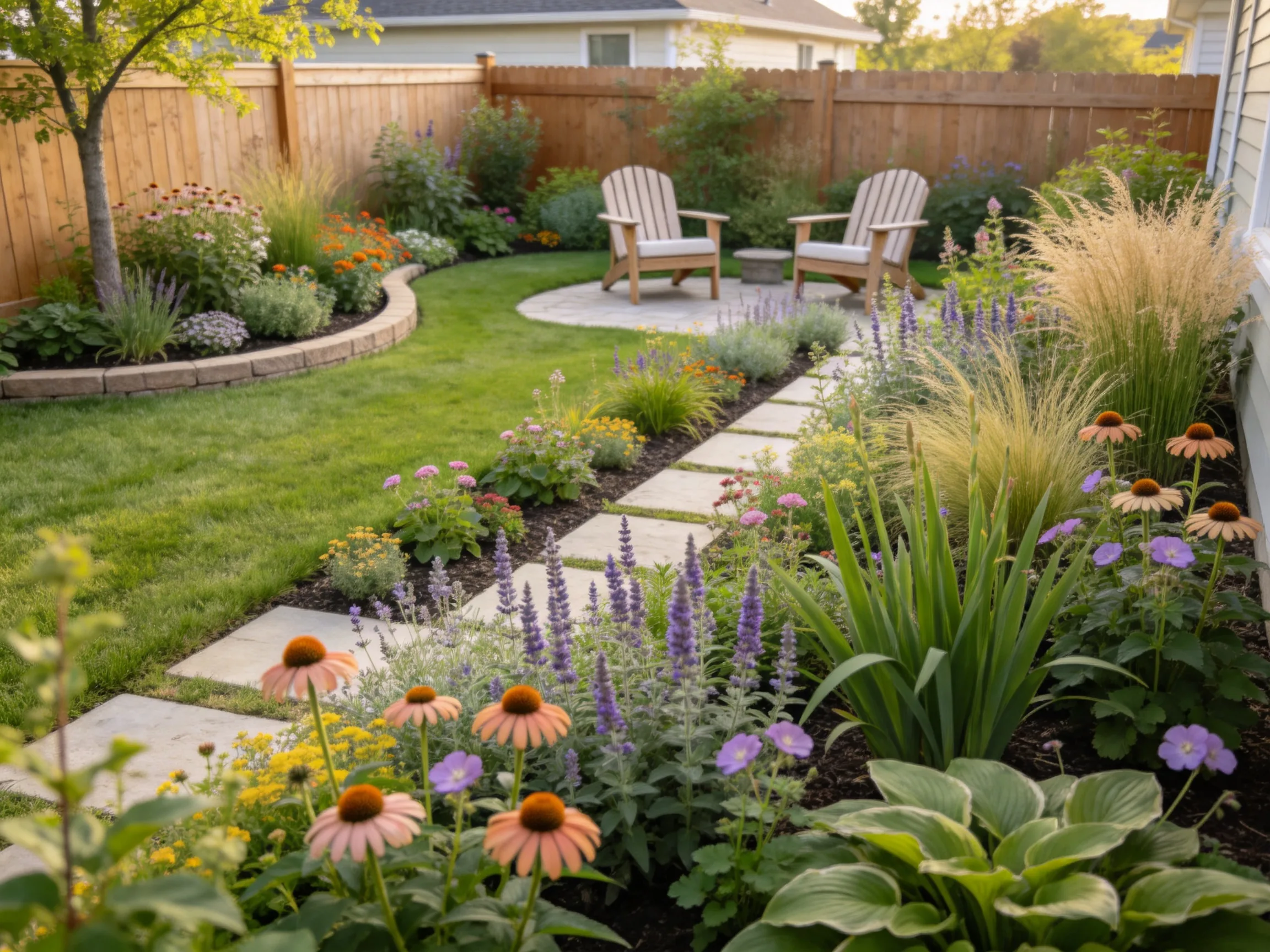
A compact backyard perennial garden can provide flowers, foliage, privacy, and seasonal interest without taking over the yard. The key is to match each planting area with its light, soil, and moisture conditions while choosing perennials that stay within a manageable size. Use these ideas to transform narrow borders, overlooked corners, patio edges, and other small spaces into practical garden features.
1. Layer a Curved Corner Flower Bed
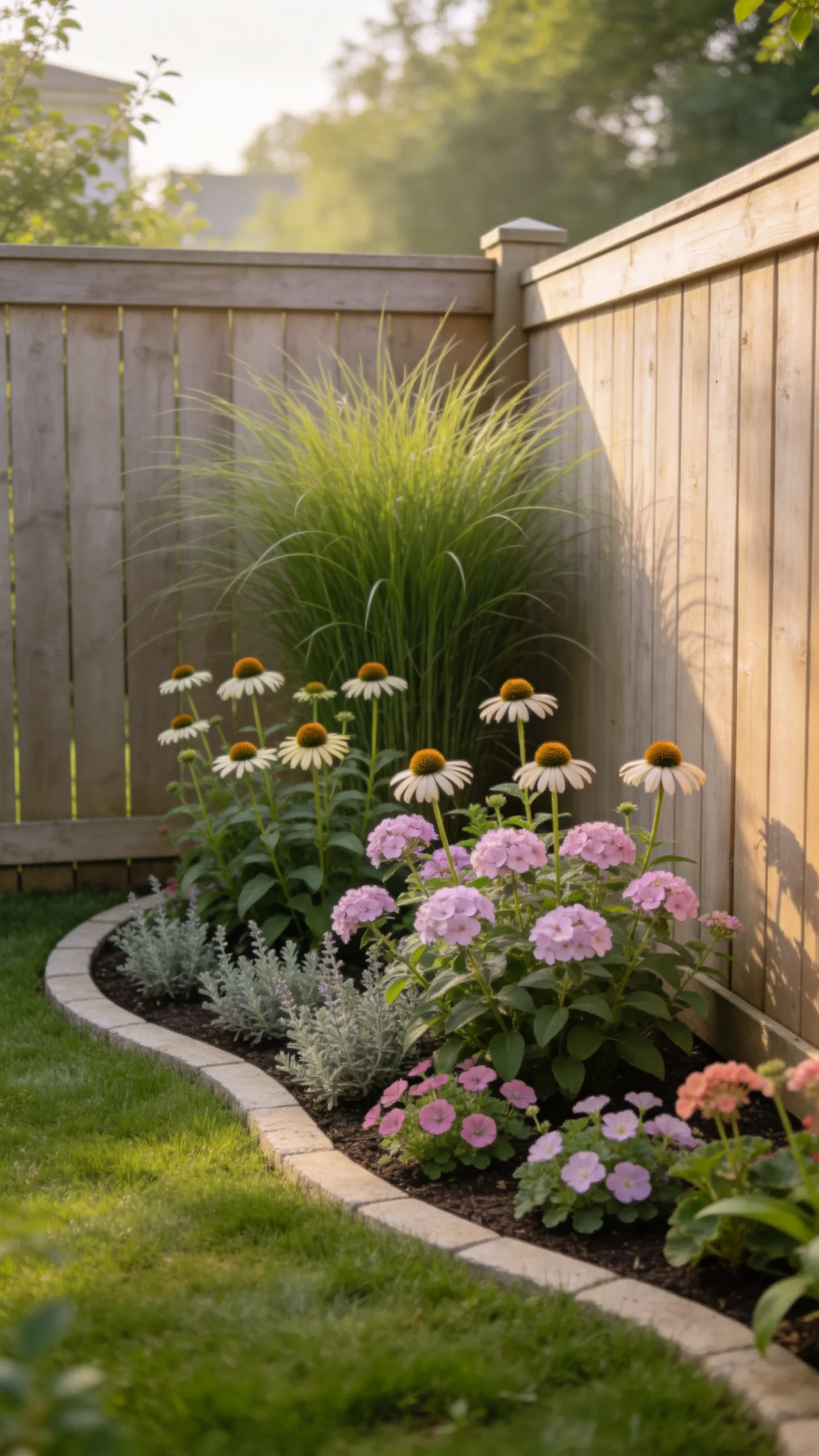
Turn an empty fence corner into a curved perennial bed with three simple planting layers. Place a tall anchor plant, such as a compact panicle hydrangea, hardy hibiscus, or clump-forming ornamental grass, at the back. Add medium-height coneflowers, garden phlox, or yarrow in front, followed by low-growing catmint, hardy geranium, or creeping phlox along the edge.
A curved outline softens the hard angle of a fence and makes the yard appear deeper. Keep the widest part of the bed near the corner and taper it toward both sides. Check mature plant widths before planting so the bed remains easy to maintain rather than becoming overcrowded after a few seasons.
2. Create a Narrow Perennial Border Along the Fence
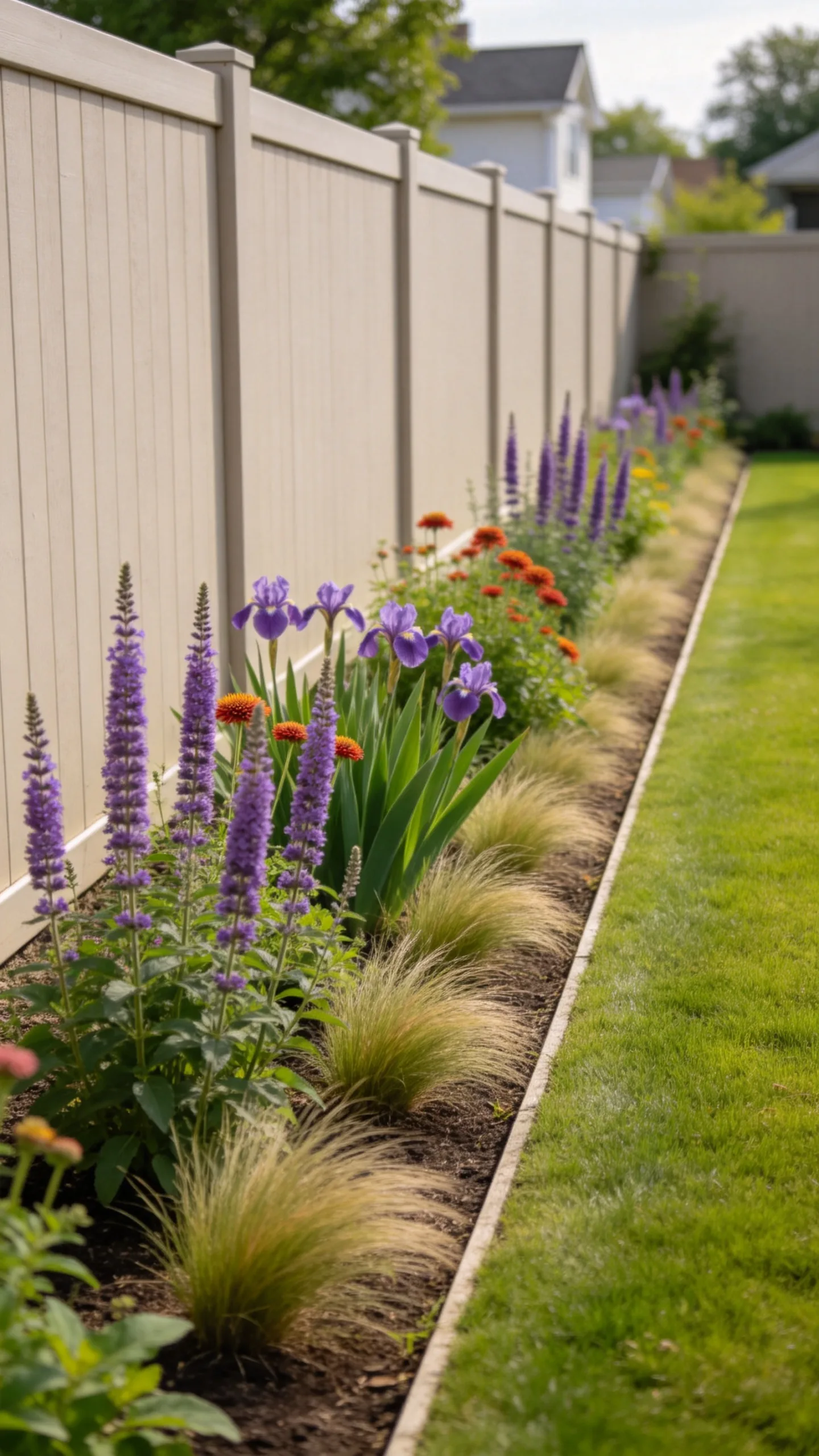
A border only 18 to 30 inches deep can bring color to a plain fence without using much lawn space. Choose upright plants that do not flop into walkways, such as blazing star, Siberian iris, compact bee balm, salvia, or narrow clumps of switchgrass.
Repeat two or three plant varieties along the length of the fence instead of filling the strip with many unrelated plants. Repetition creates a calmer design and simplifies maintenance. If the fence casts shade, replace sun-loving flowers with heuchera, Japanese forest grass, brunnera, or compact hostas.
3. Frame a Patio with Low-Growing Perennials
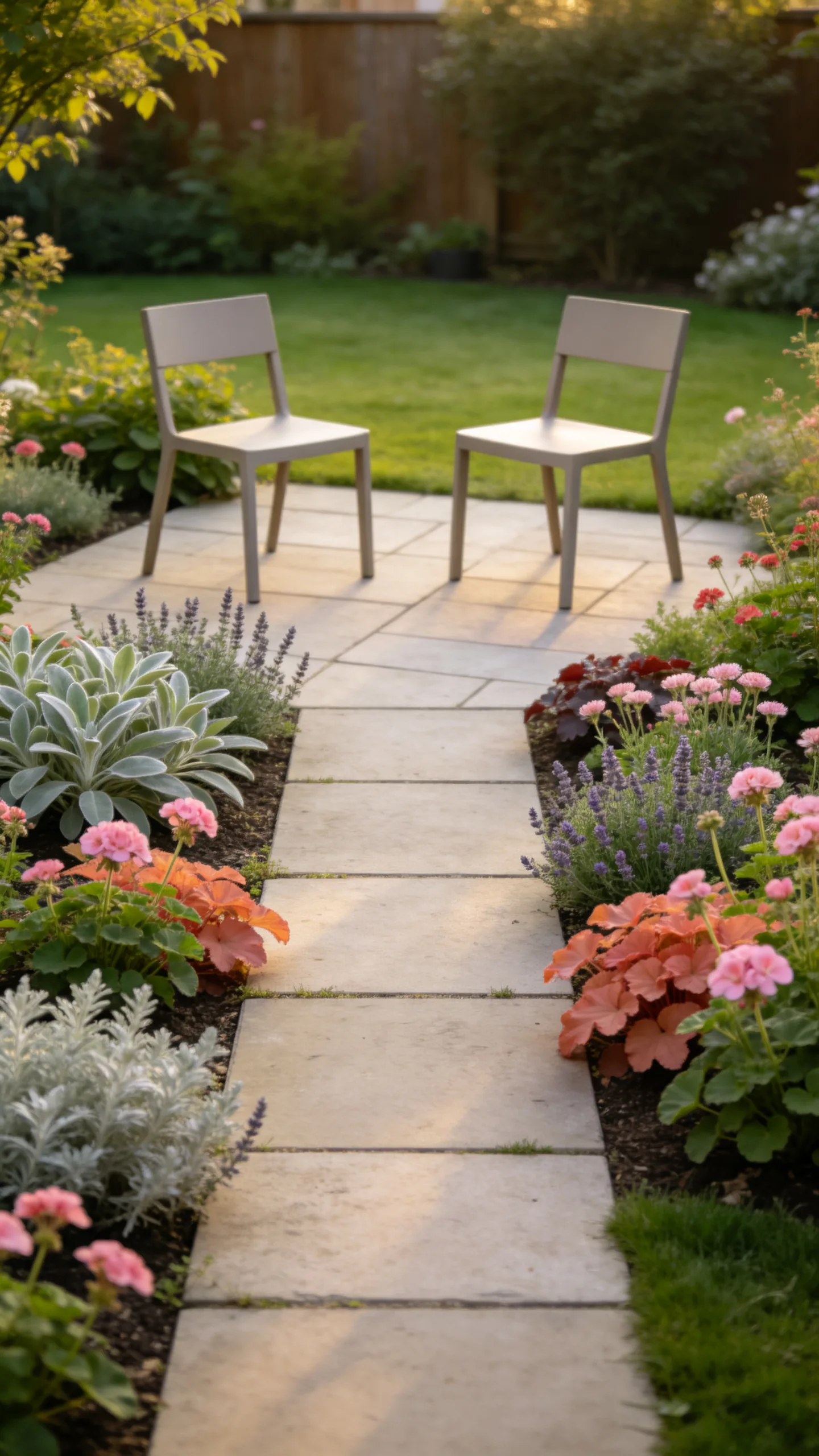
Plant a shallow bed around one or two sides of a patio to soften the transition between paving and lawn. Low-growing perennials such as lamb’s ear, dwarf catmint, dianthus, coral bells, and hardy geranium provide texture without blocking views or spilling excessively into seating areas.
Leave enough clearance around chair legs and high-traffic edges. Plants with a mature height below about 18 inches generally work well beside a small patio. Avoid thorny plants or flowers that attract large numbers of bees immediately beside dining chairs; place pollinator favorites a little farther back in the bed.
4. Train Perennial Vines Up a Slim Trellis
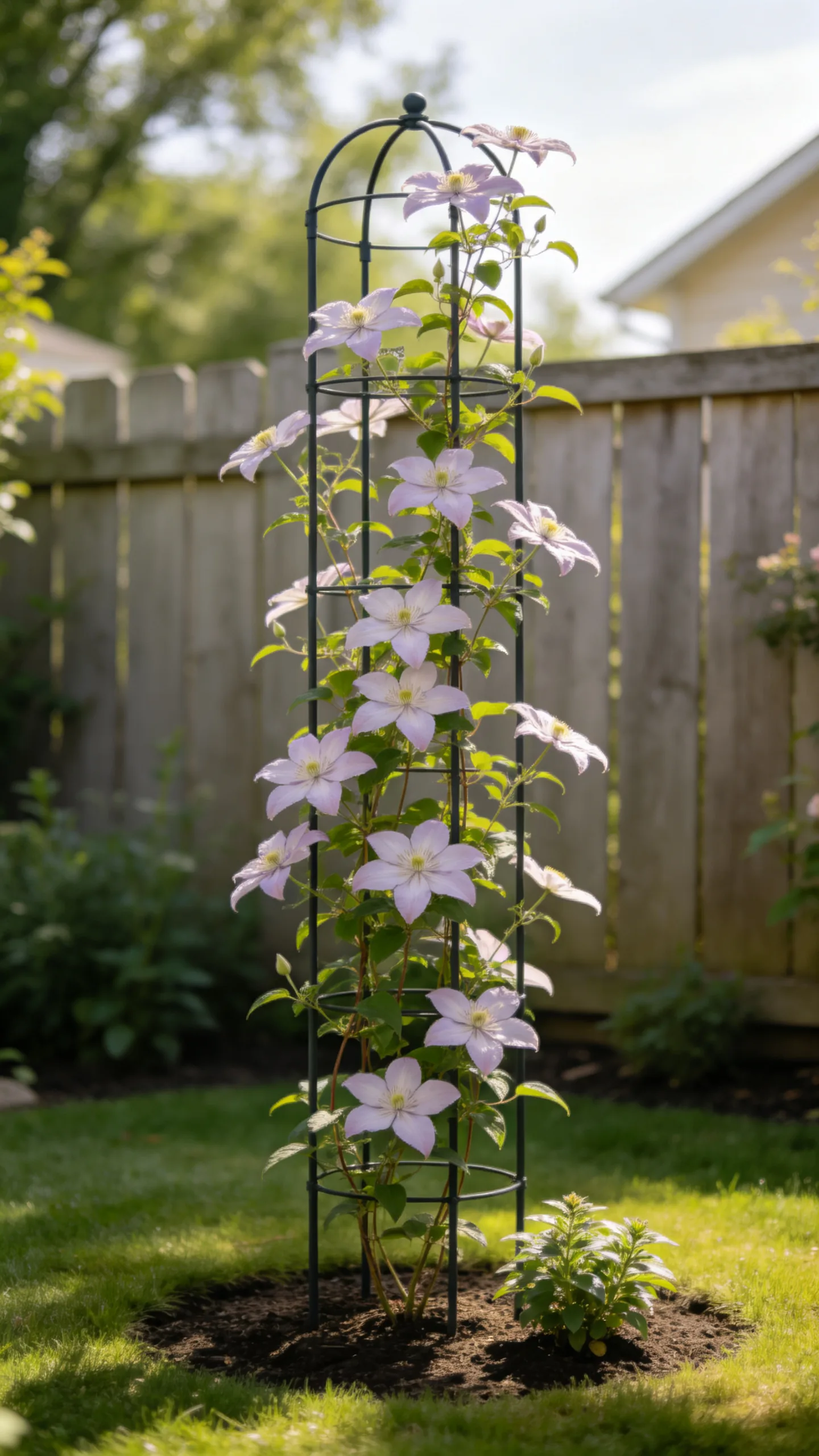
A vertical trellis creates flowers and screening while using very little ground space. Install a narrow wood or metal panel against a fence, beside a shed, or at the end of a patio. Depending on local climate, suitable perennial vines may include clematis, climbing honeysuckle, passionflower, or chocolate vine.
Confirm that the chosen vine is perennial and noninvasive in your region before planting. Clematis usually performs best when its roots are shaded by mulch or a low companion plant while its stems receive sun. Position the trellis a few inches away from a wall or fence to improve airflow and make tying stems easier.
5. Fill a Shady Corner with Foliage Layers
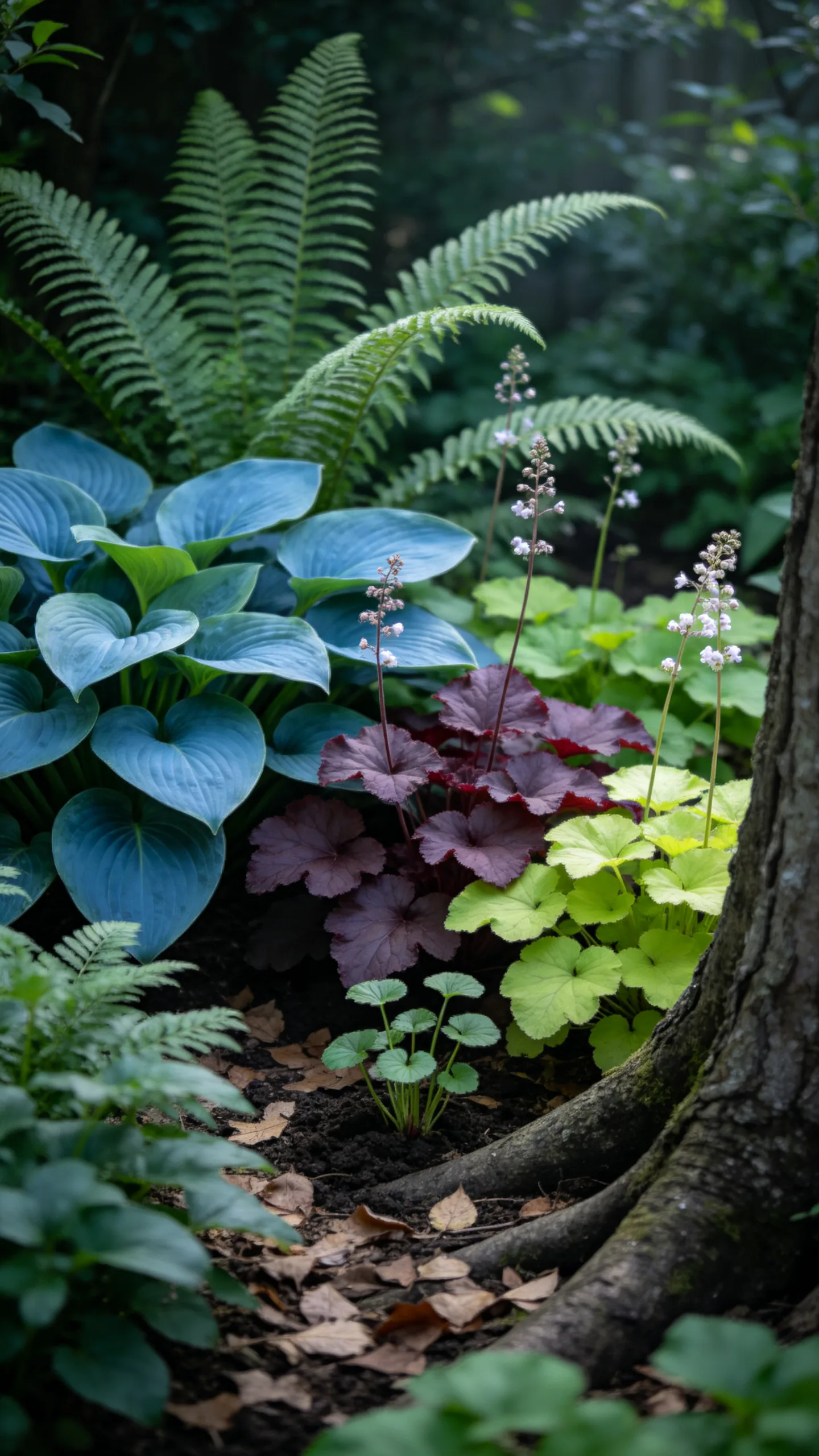
A low-light backyard corner can become a lush foliage garden rather than a struggling flower bed. Combine bold hosta leaves with feathery ferns, colorful heuchera, and ground-level foamflower or wild ginger. Varying leaf shapes creates visual interest even when few plants are blooming.
For dry shade under mature trees, choose durable plants suited to root competition and water deeply during establishment. Avoid adding large amounts of soil over existing tree roots. Instead, tuck small plants into natural gaps and apply a thin layer of leaf mold or compost to conserve moisture.
6. Build a Compact Pollinator Pocket
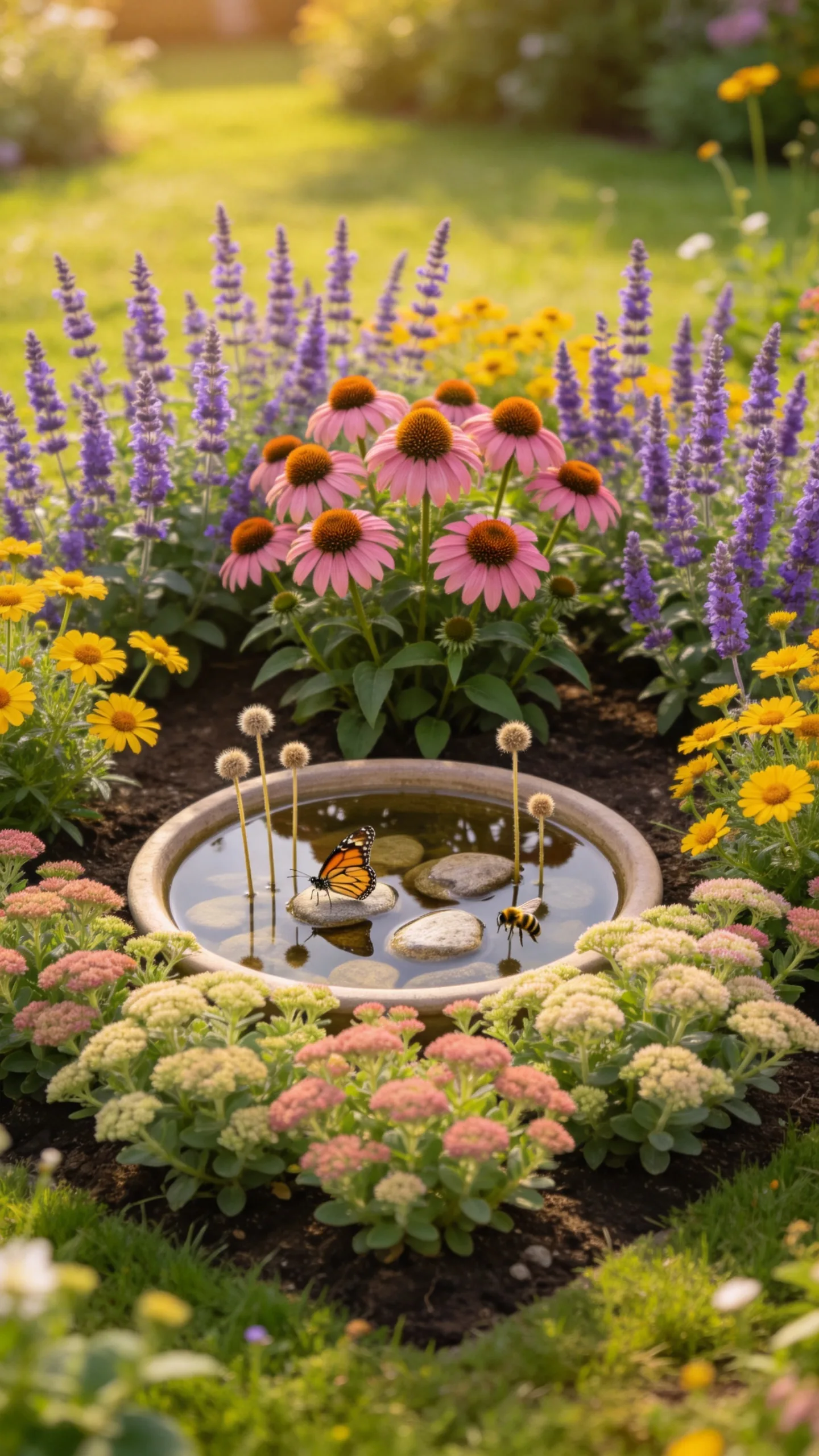
Reserve a sunny patch measuring roughly 4 by 4 feet for nectar-rich perennials. Plant a small group of coneflowers or compact bee balm in the center, surround them with salvia and coreopsis, and add low asters or sedum near the front for late-season flowers.
Choose species appropriate for your region and include blooms from spring through fall when space allows. A shallow water dish with stones can provide a landing place for insects, but refresh the water regularly. Leave some seed heads standing through winter to add texture and provide food or shelter for wildlife.
7. Plant a Four-Season Mailbox-Style Island Bed
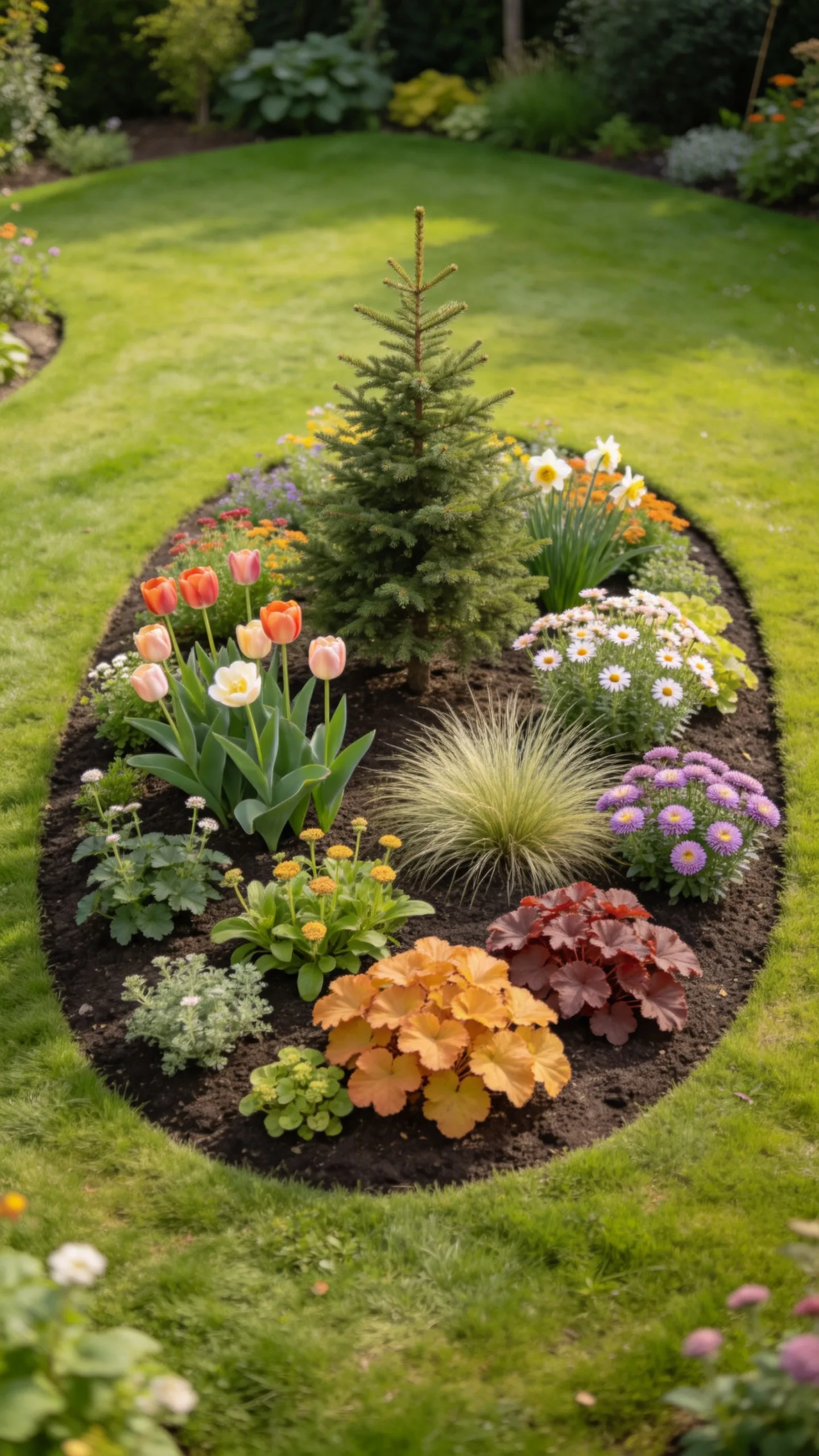
The island-bed concept works just as well in a backyard lawn as it does around a mailbox. Create a small oval or kidney-shaped bed and anchor it with a compact evergreen or ornamental grass. Add spring bulbs, summer-blooming perennials, and late-season sedum or asters around the anchor.
Because the bed can be viewed from several sides, place the tallest plant slightly off-center rather than directly at the back. Keep edging plants low so mowing remains easy. A crisp metal, brick, or spade-cut border prevents grass from creeping into the planting area.
8. Edge a Garden Path with Fragrant Perennials
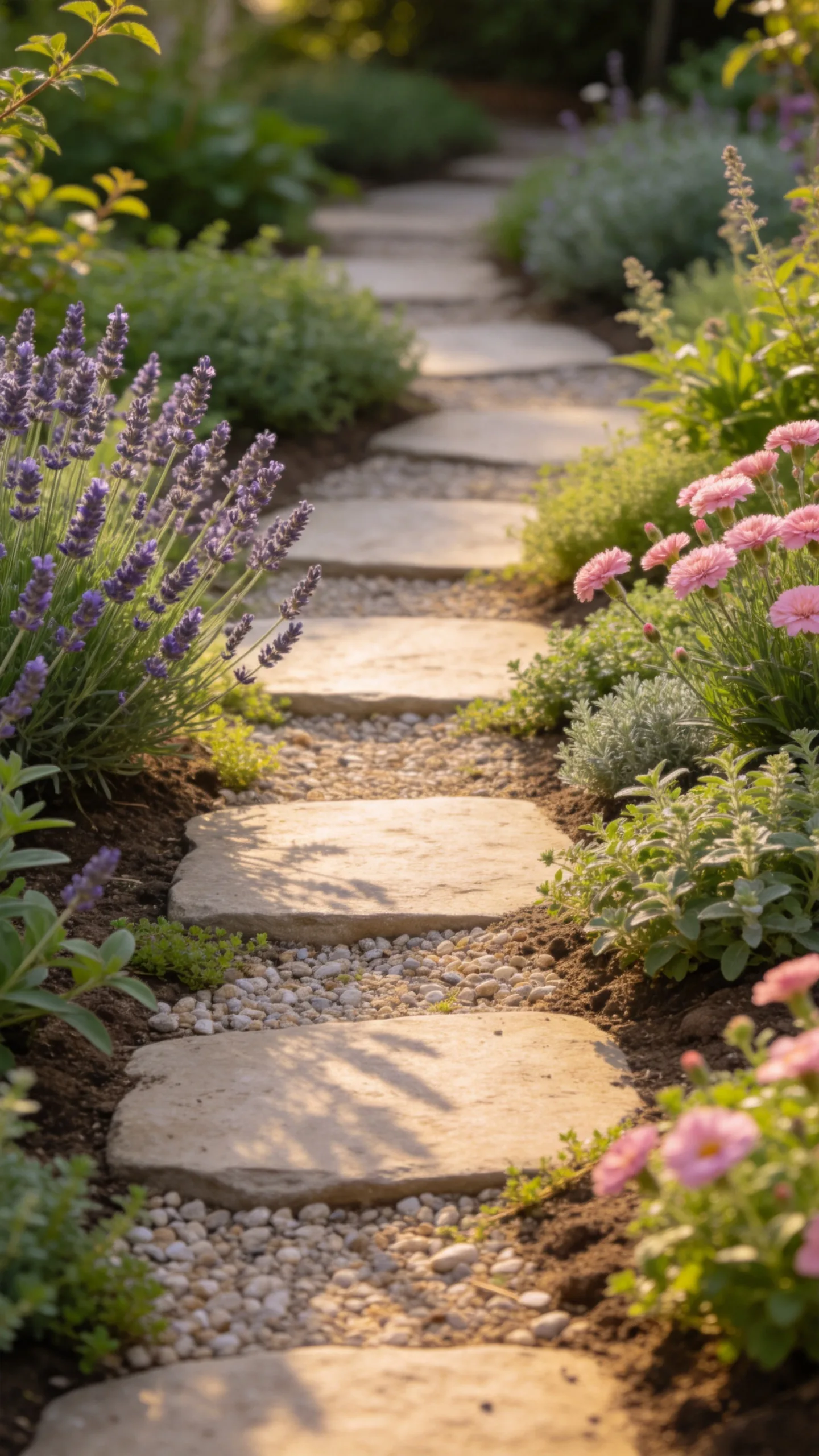
Line a short stepping-stone or gravel path with fragrant plants that release scent when brushed. Lavender, thyme, dianthus, dwarf calamint, and catmint can work in sunny, well-drained locations, while sweet woodruff suits shaded areas where it is not considered invasive.
Allow for each plant’s mature spread so foliage softens the path without covering it completely. Place vigorous spreaders between pavers only if they tolerate foot traffic and can be trimmed easily. Good drainage is especially important for lavender and thyme, which often decline in wet winter soil.
9. Use a Raised Bed for Better Soil Control
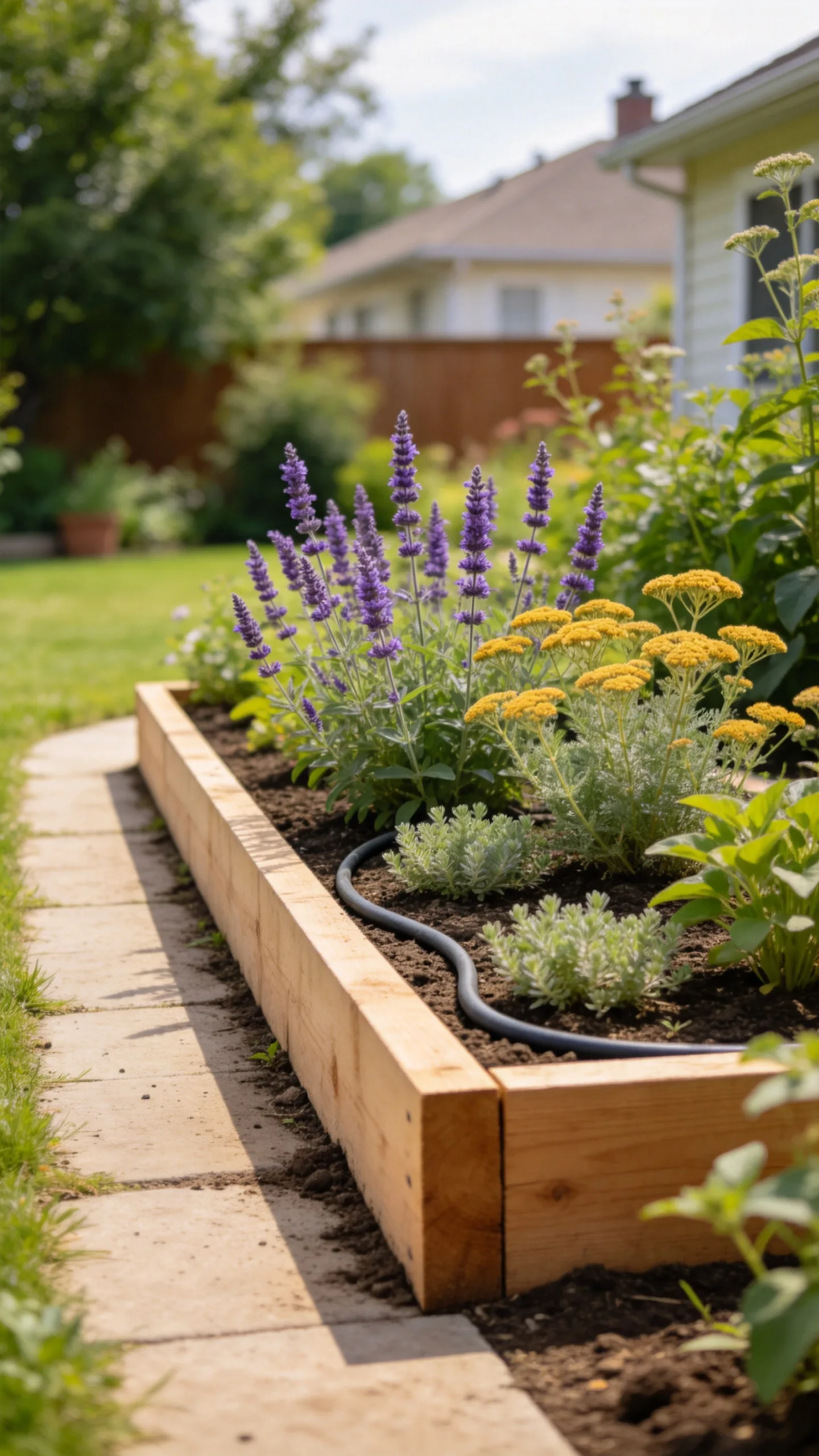
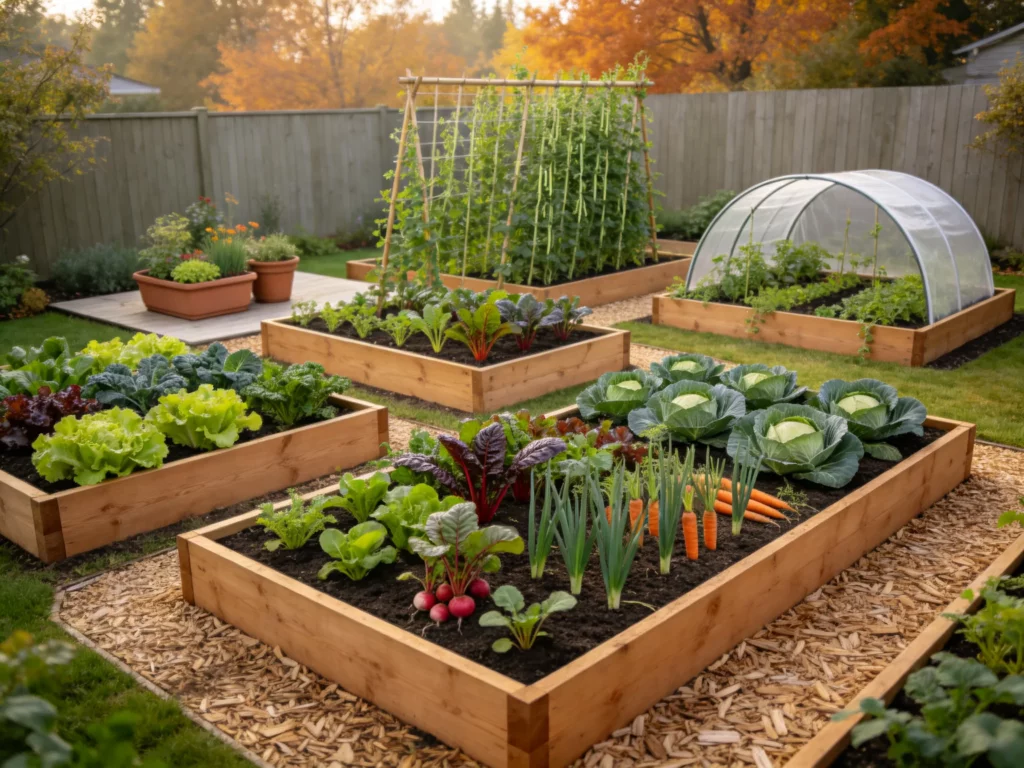
A raised perennial bed is useful where the native ground is compacted, poorly drained, or difficult to reach. Build a bed 12 to 18 inches high and narrow enough to access from at least one side without stepping into the soil. Fill it with a planting mix suited to the selected perennials rather than relying on garden soil alone.
Combine plants with similar moisture needs, such as drought-tolerant salvia, yarrow, and sedum or moisture-loving astilbe, turtlehead, and Siberian iris. Raised beds may dry out faster than in-ground gardens, so include drip irrigation or a soaker hose if summer watering is difficult.
10. Screen a Seating Nook with Tall Perennials
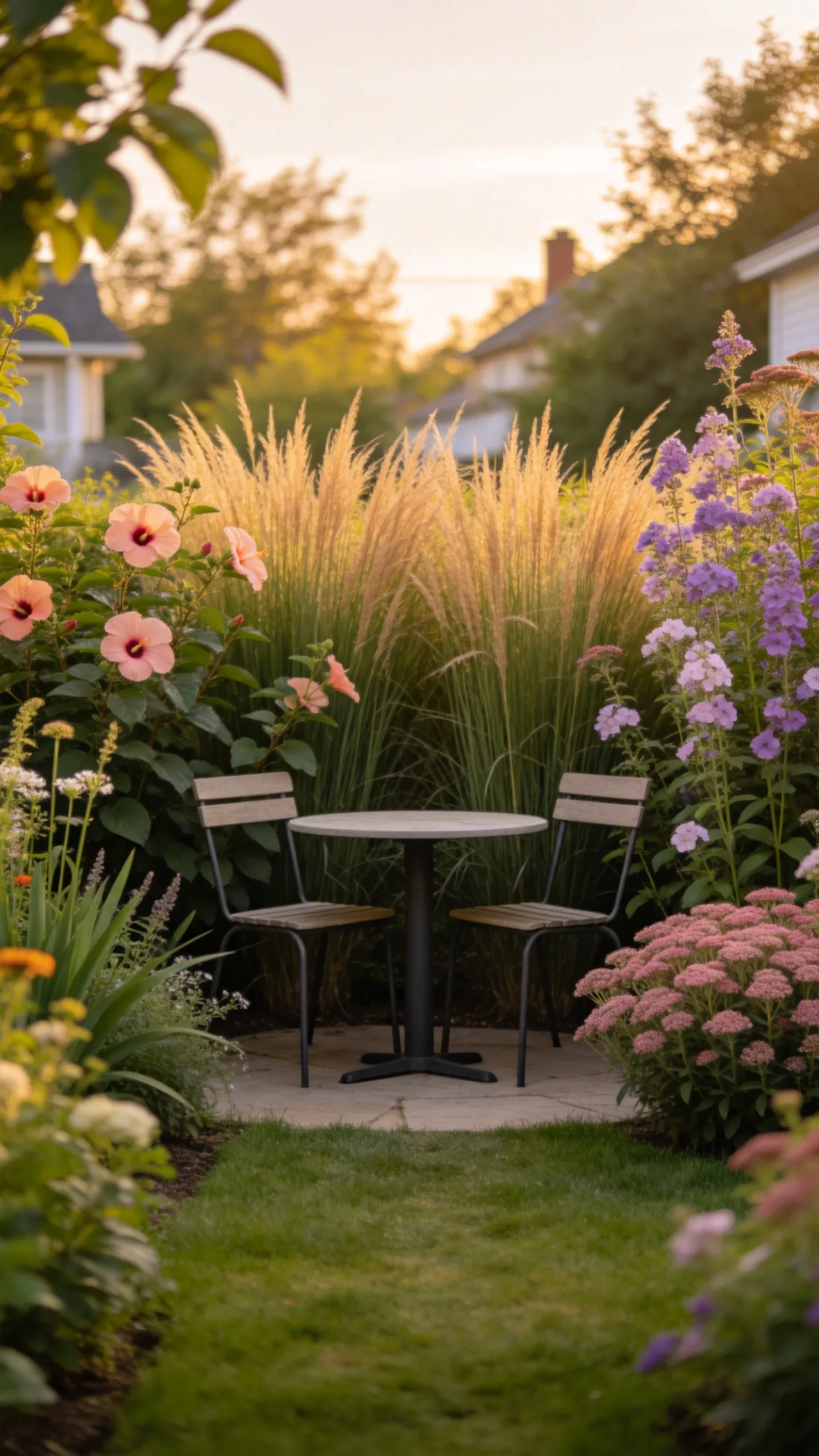
Create seasonal privacy around a bench or bistro set using upright perennials instead of a bulky hedge. Compact ornamental grasses, hardy hibiscus, tall garden phlox, Joe Pye weed cultivars, and sneezeweed can form a living screen during the growing season.
Select clump-forming varieties with mature heights appropriate to the space. Position them behind the seating area rather than on every side so the nook still feels open. Since most herbaceous perennials die back in winter, combine them with a trellis or narrow evergreen if year-round screening is necessary.
11. Arrange a Moon Garden for Evening Use
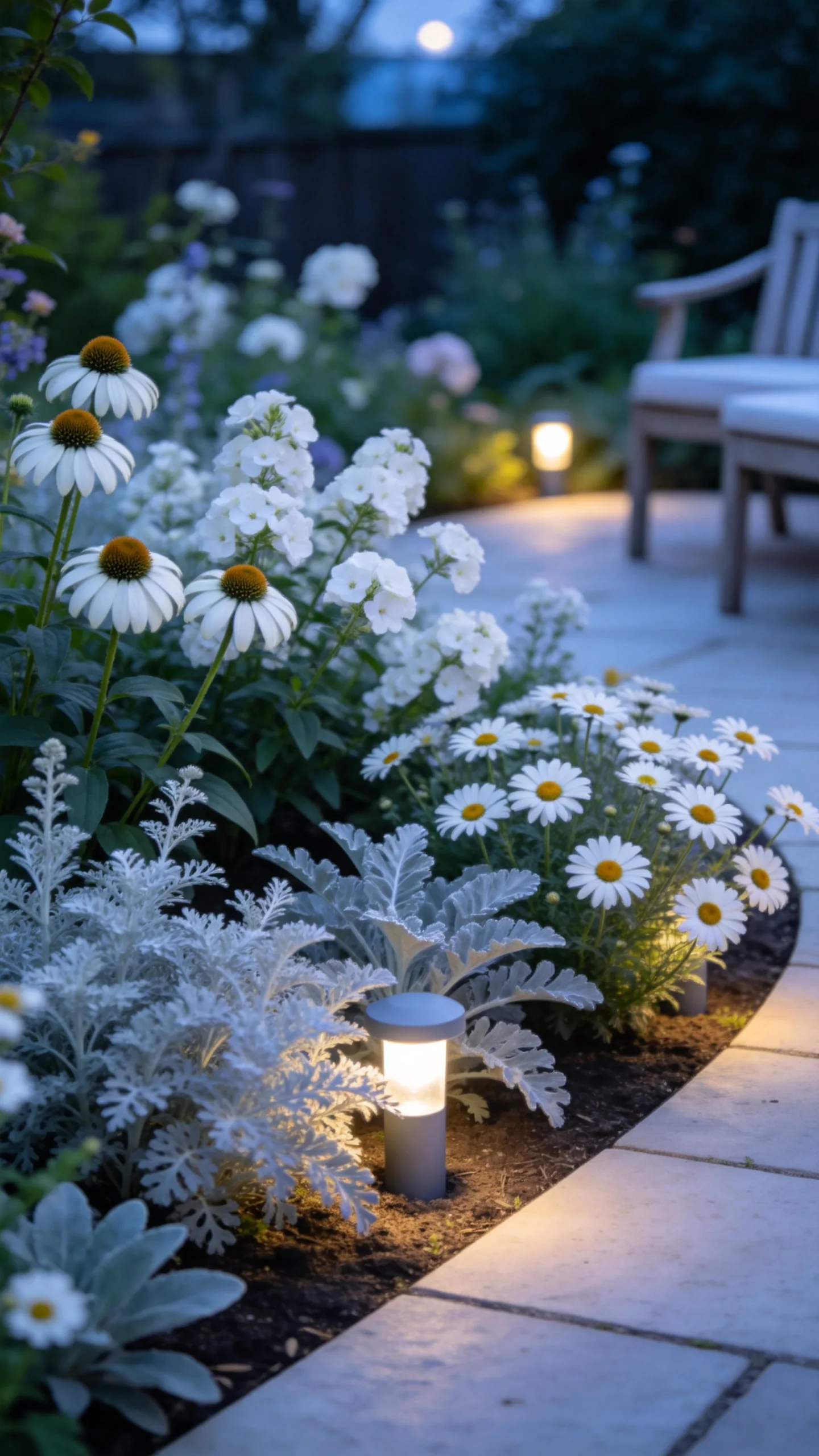
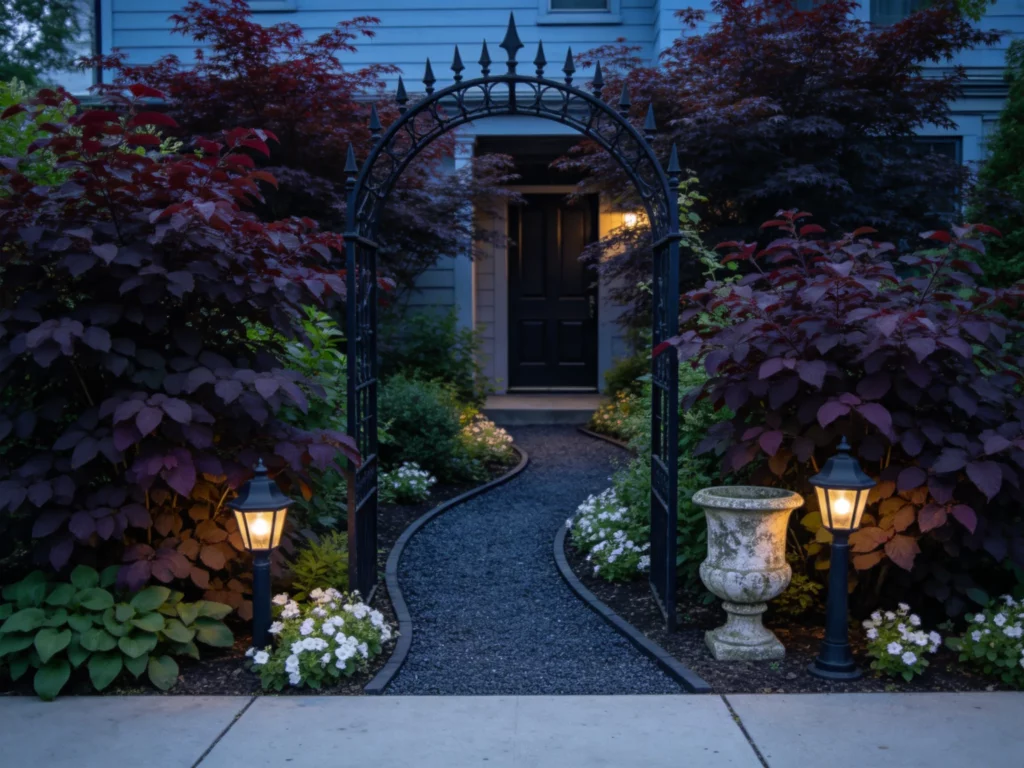
A moon garden features pale flowers and silvery foliage that remain visible at dusk. In a small sunny bed near a patio, combine white coneflowers, white garden phlox, Shasta daisies, lamb’s ear, and silver-leaved artemisia. For partial shade, consider white astilbe, pale hostas, and foamflower.
Limit the palette to white, cream, soft blue, and silver for a cohesive look. Place fragrant evening plants near seating, but confirm their hardiness and growing requirements for your climate. Low-voltage path lighting can illuminate the bed without overpowering the soft effect.
12. Tuck a Rain Garden into a Low Spot
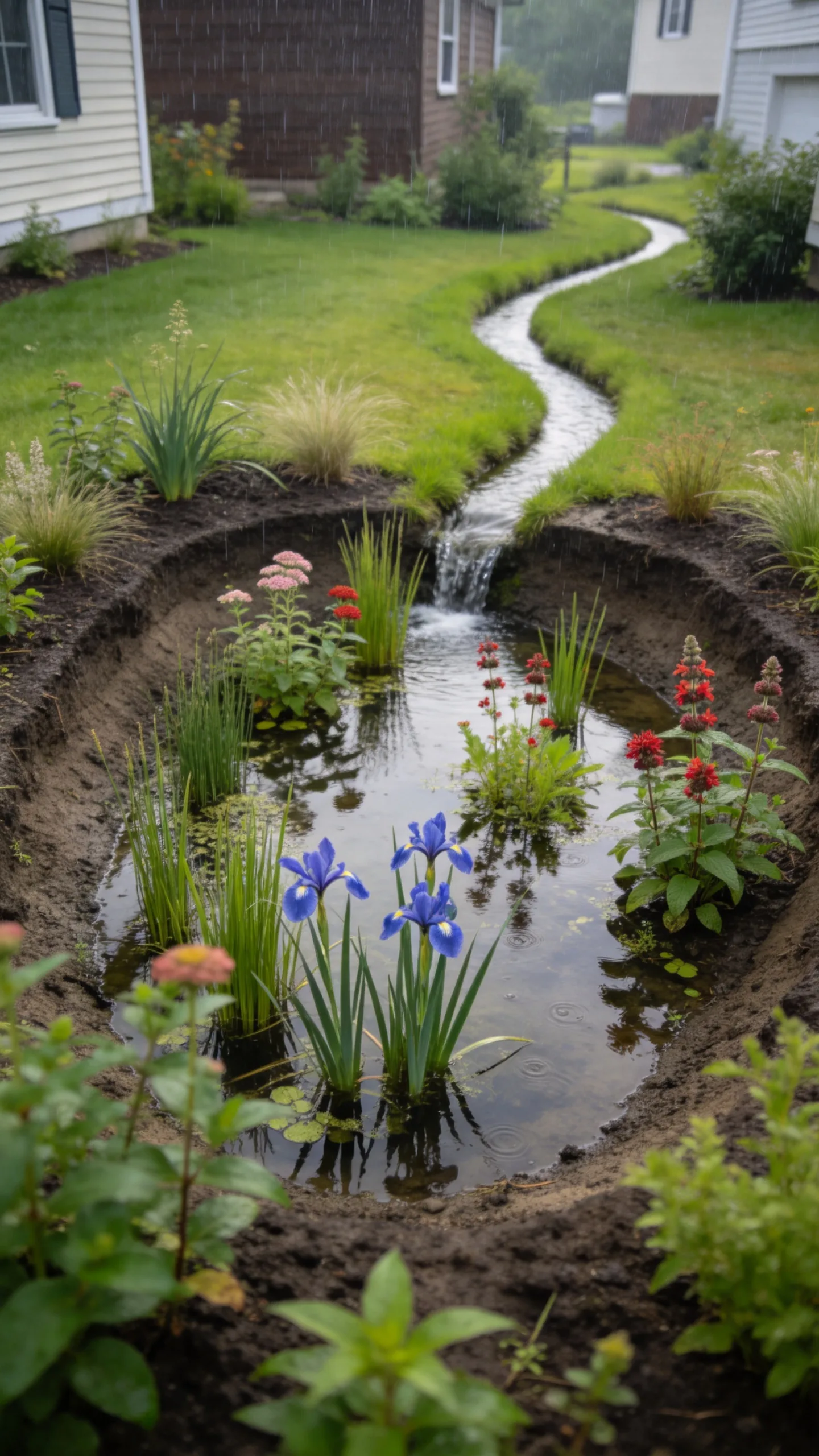
If water naturally gathers in one small section of the yard after storms, turn that area into a shallow rain garden. Suitable moisture-tolerant perennials may include blue flag iris, swamp milkweed, cardinal flower, turtlehead, and sedges native to the region.
A rain garden should collect runoff temporarily rather than remain permanently flooded. Locate it away from foundations, septic systems, and buried utilities, and provide an overflow route for heavy rain. Plant the center with species that tolerate periodic saturation and use plants suited to drier soil around the upper edge.
13. Soften a Shed with an L-Shaped Bed
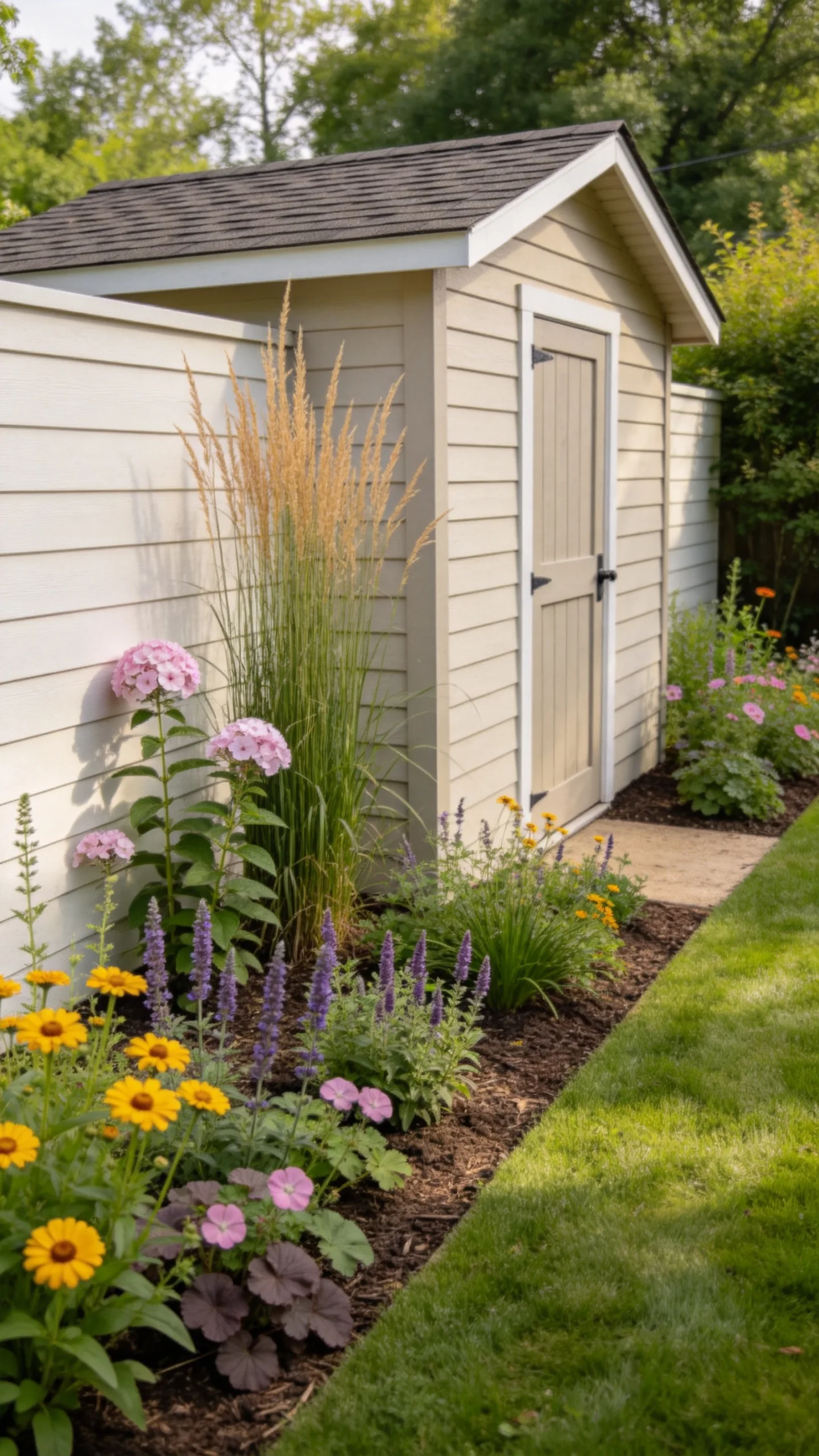
Wrap a narrow L-shaped perennial bed around two visible sides of a backyard shed. Use taller plants, such as ornamental grass or upright phlox, near blank walls and shorter plants, such as coreopsis, salvia, and hardy geranium, toward the lawn.
Leave a gap between the plants and siding so air can circulate and maintenance remains possible. Keep soil and mulch below wood siding to reduce moisture problems. If the shed creates different light conditions on each side, use sun-loving plants on the exposed face and shade-tolerant foliage plants on the darker side.
14. Grow a Sunny Rock Garden
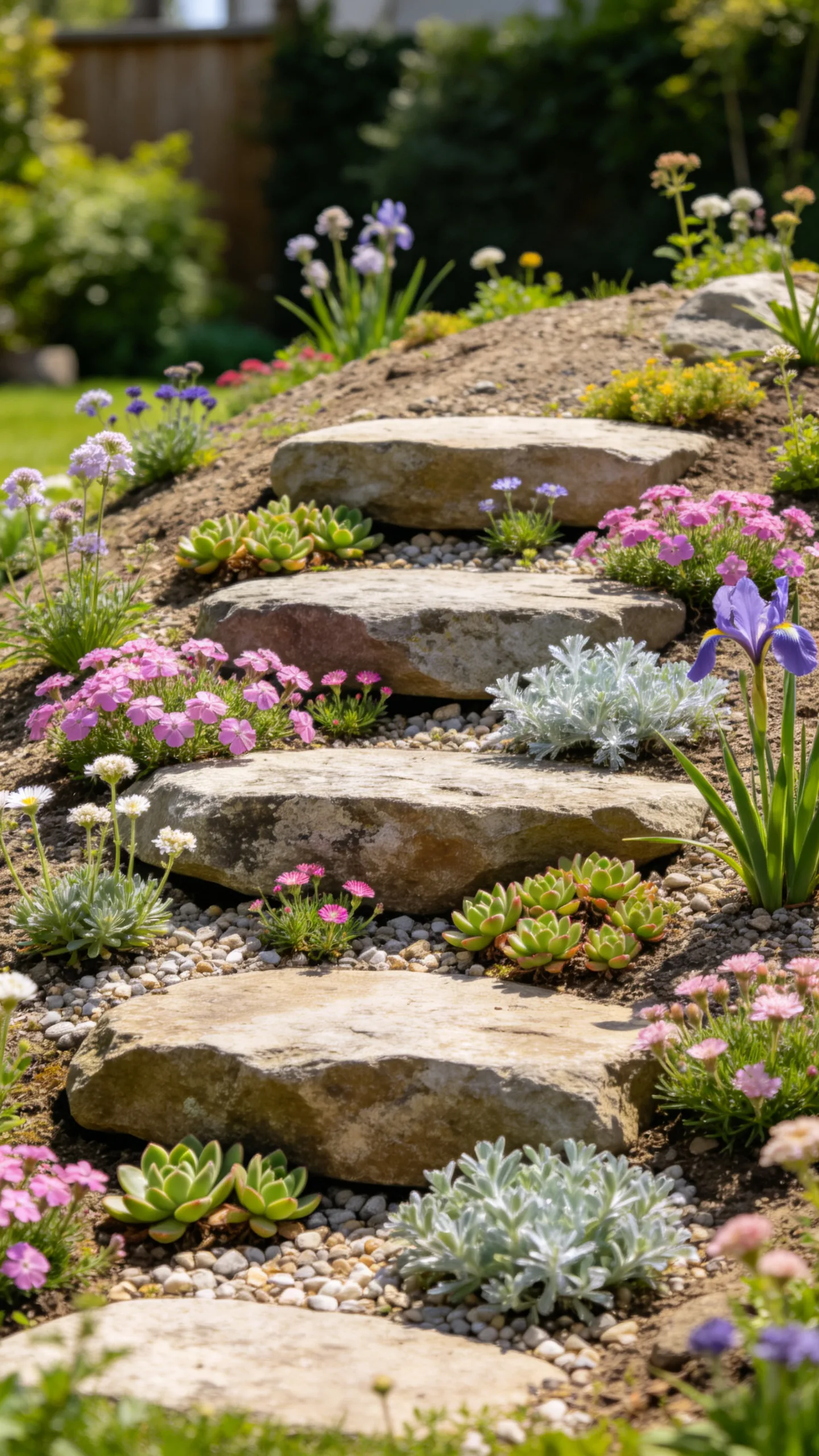
A small mound or sloped corner with fast-draining soil can support a compact rock garden. Arrange several weathered stones at different heights, burying part of each rock so the layout looks settled. Fill the gaps with creeping phlox, hens and chicks, ice plant, thrift, dwarf iris, or low-growing sedum.
Rock gardens work best with plants that tolerate lean soil and dry conditions once established. Avoid enriching the bed heavily with compost, which can encourage floppy growth. Add gravel mulch around plant crowns to improve drainage and make small flowers easier to see.
15. Plant a Cottage-Style Gate Border
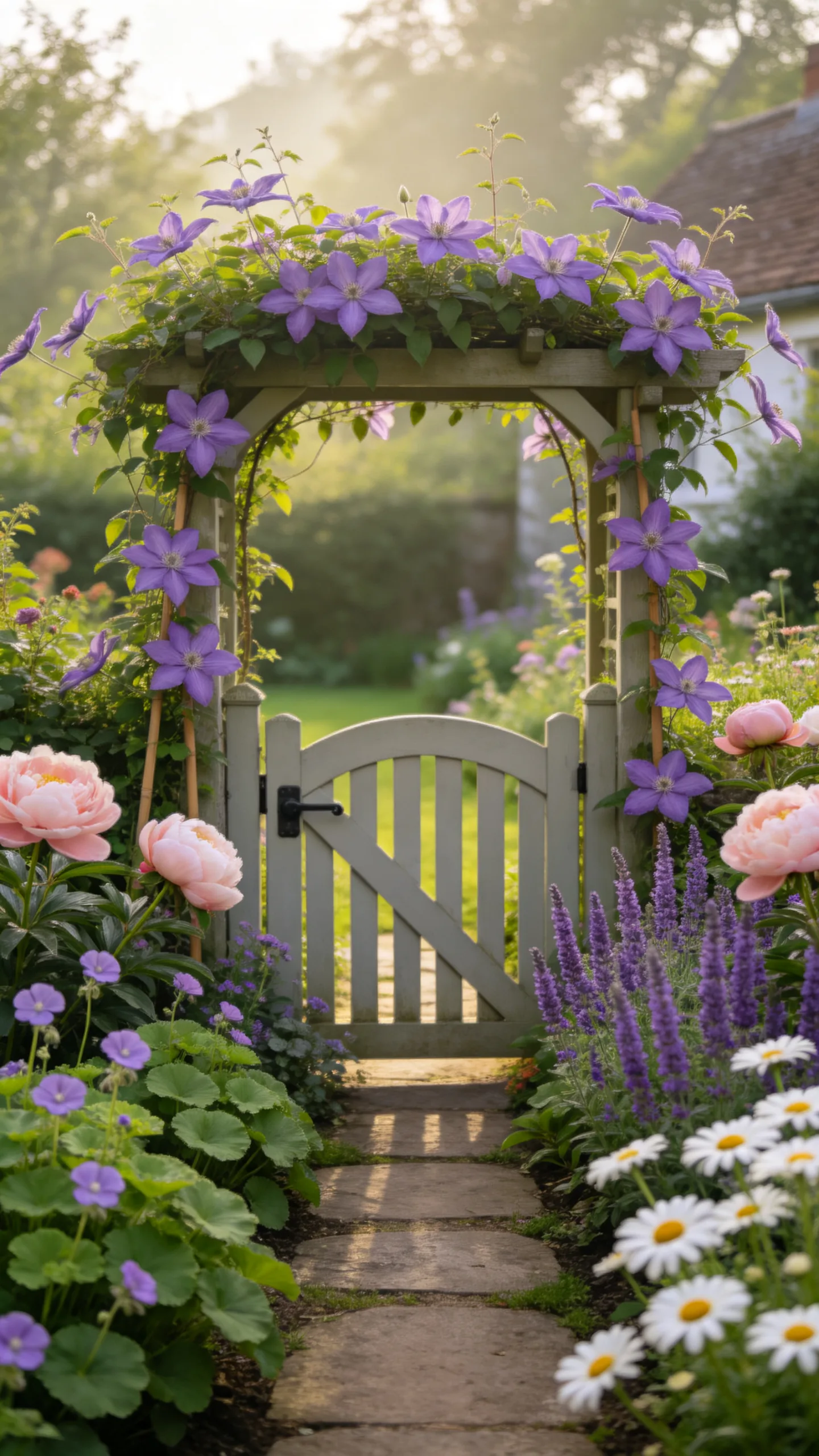
Frame a backyard gate with a loose mix of romantic, long-blooming perennials. Use compact delphiniums or foxgloves where suitable, then add peonies, cranesbill geraniums, lady’s mantle, salvia, and daisies. A small clematis can climb the gate arbor without requiring a wide planting bed.
Keep the latch area and swing path clear by placing spreading plants at least a foot away from moving parts. Repeat one flower color on both sides of the gate to connect the planting visually. Use discreet plant supports early in the season to prevent taller stems from leaning into the entrance.
16. Make a Drought-Tolerant Gravel Border
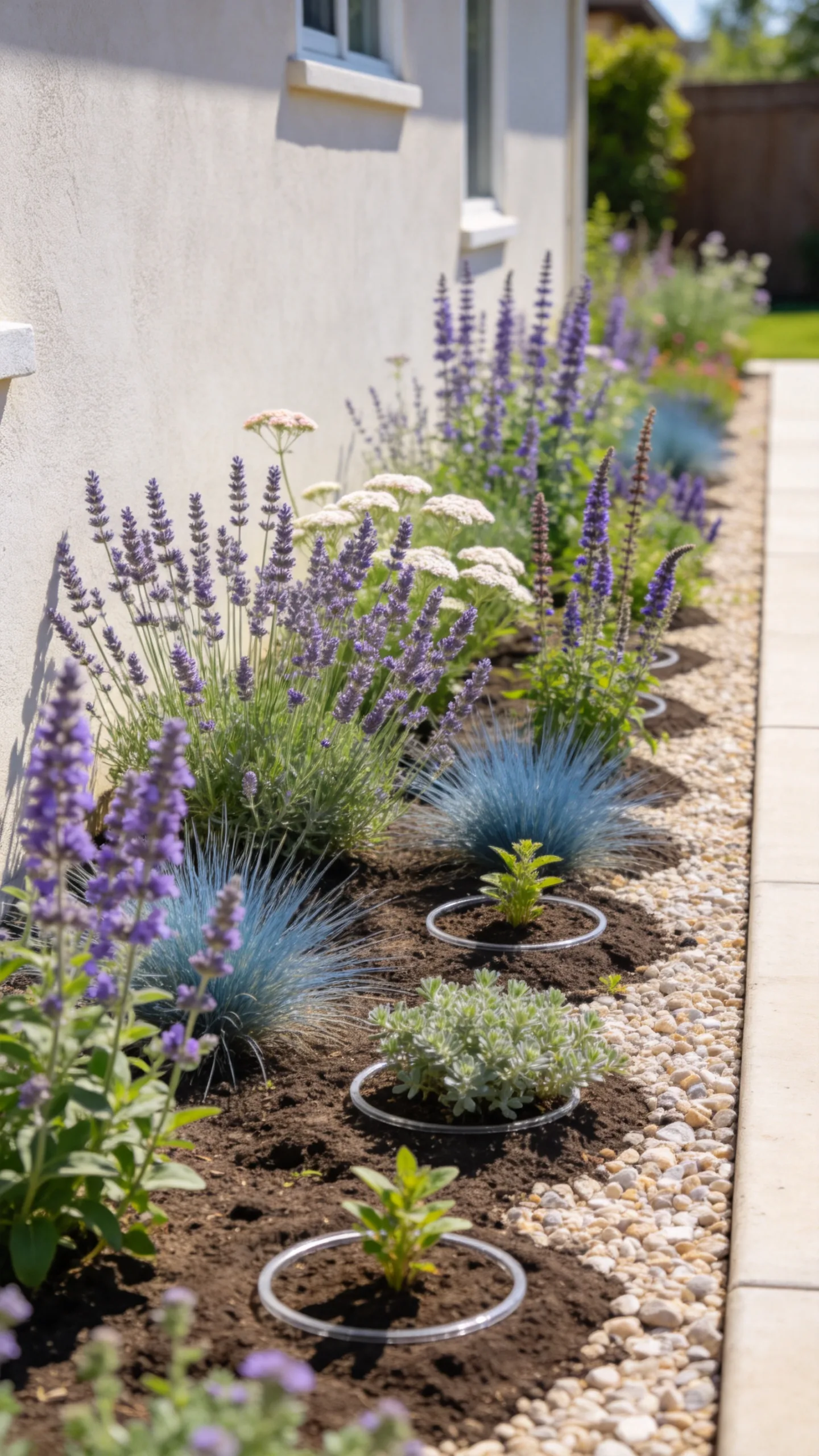
For a hot strip beside a south- or west-facing wall, combine drought-tolerant perennials with gravel mulch. Good candidates include lavender, Russian sage, yarrow, penstemon, blue fescue, agastache, and sedum, provided they are hardy in the local climate.
Improve drainage before planting, especially in heavy clay soil. Space plants according to mature width and keep gravel away from tender crowns. Although these perennials can become drought tolerant, they still need regular deep watering during their first growing season while roots become established.
17. Add a Small Cutting Garden
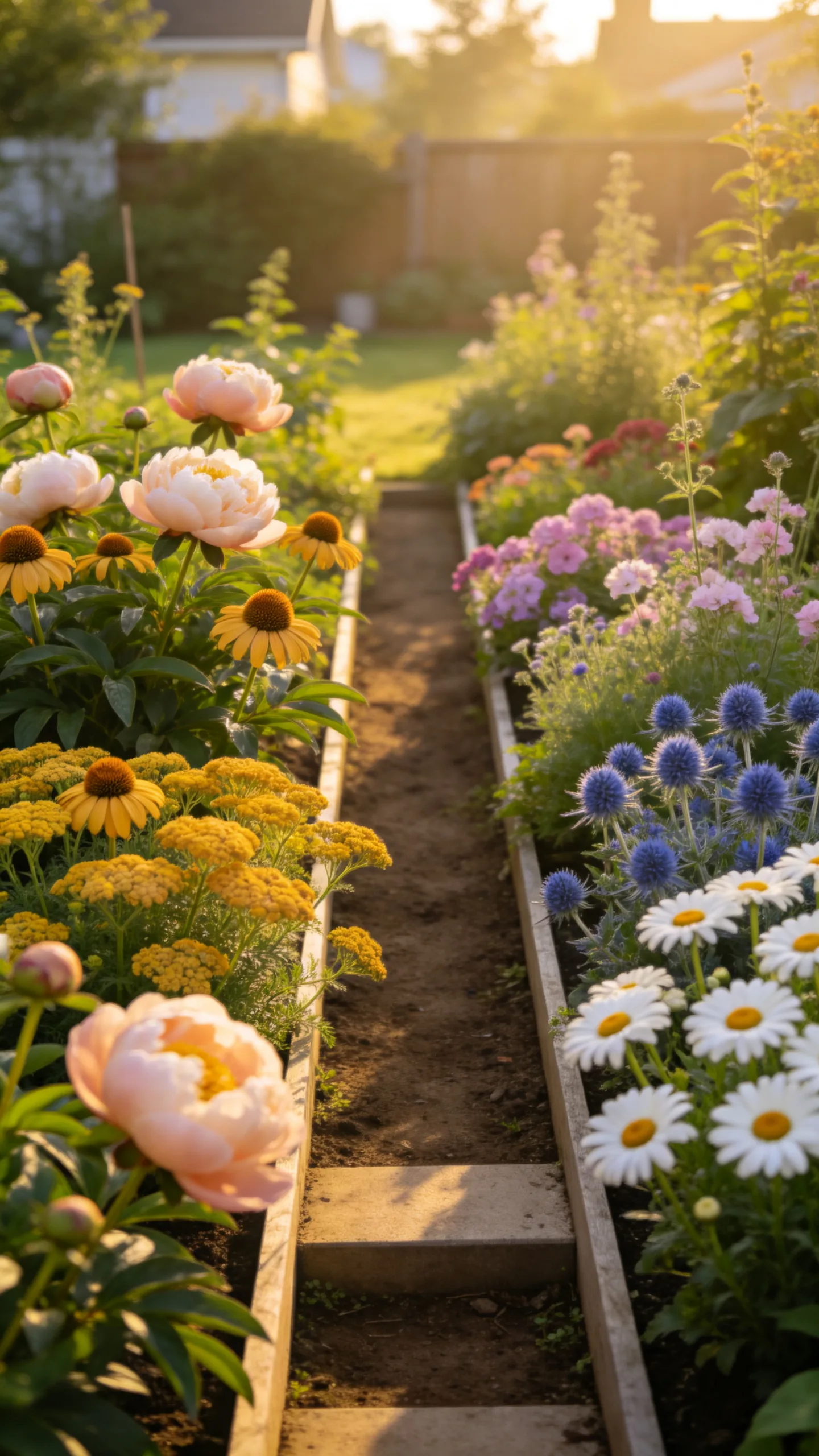
Dedicate a sunny rectangular bed to perennial flowers that can be cut for indoor arrangements. Peonies, coneflowers, yarrow, garden phlox, sea holly, and Shasta daisies offer varied shapes and bloom times. Plant each type in a small group so harvesting a few stems does not leave obvious holes.
Position the cutting bed in a practical area rather than the main focal point of the yard. Include stepping access or keep the bed narrow enough to reach from both sides. Cut flowers early in the morning with clean pruners, and leave enough foliage to support the plant’s continued growth.
18. Surround a Birdbath with Compact Blooms
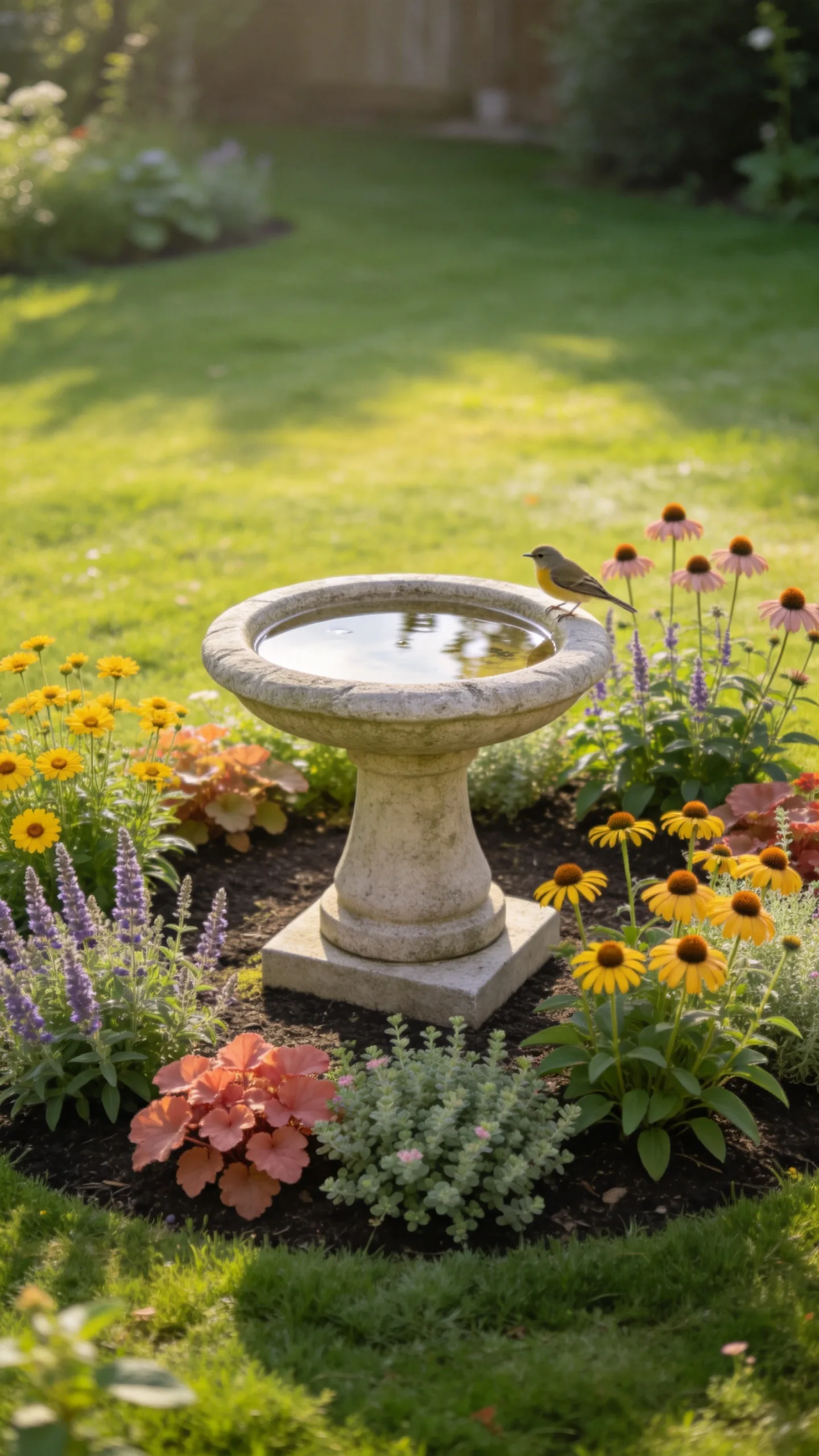
Make a birdbath feel integrated into the garden by placing it at the center of a small circular bed. Surround it with low perennials such as dwarf coneflowers, coreopsis, salvia, coral bells, and creeping thyme so birds retain a clear view of the area.
Set the birdbath on a stable, level base before planting. Keep taller, dense foliage several feet away if neighborhood cats are a concern, since birds benefit from being able to spot approaching predators. Empty and scrub the basin regularly to maintain clean water.
19. Terrace a Short Backyard Slope
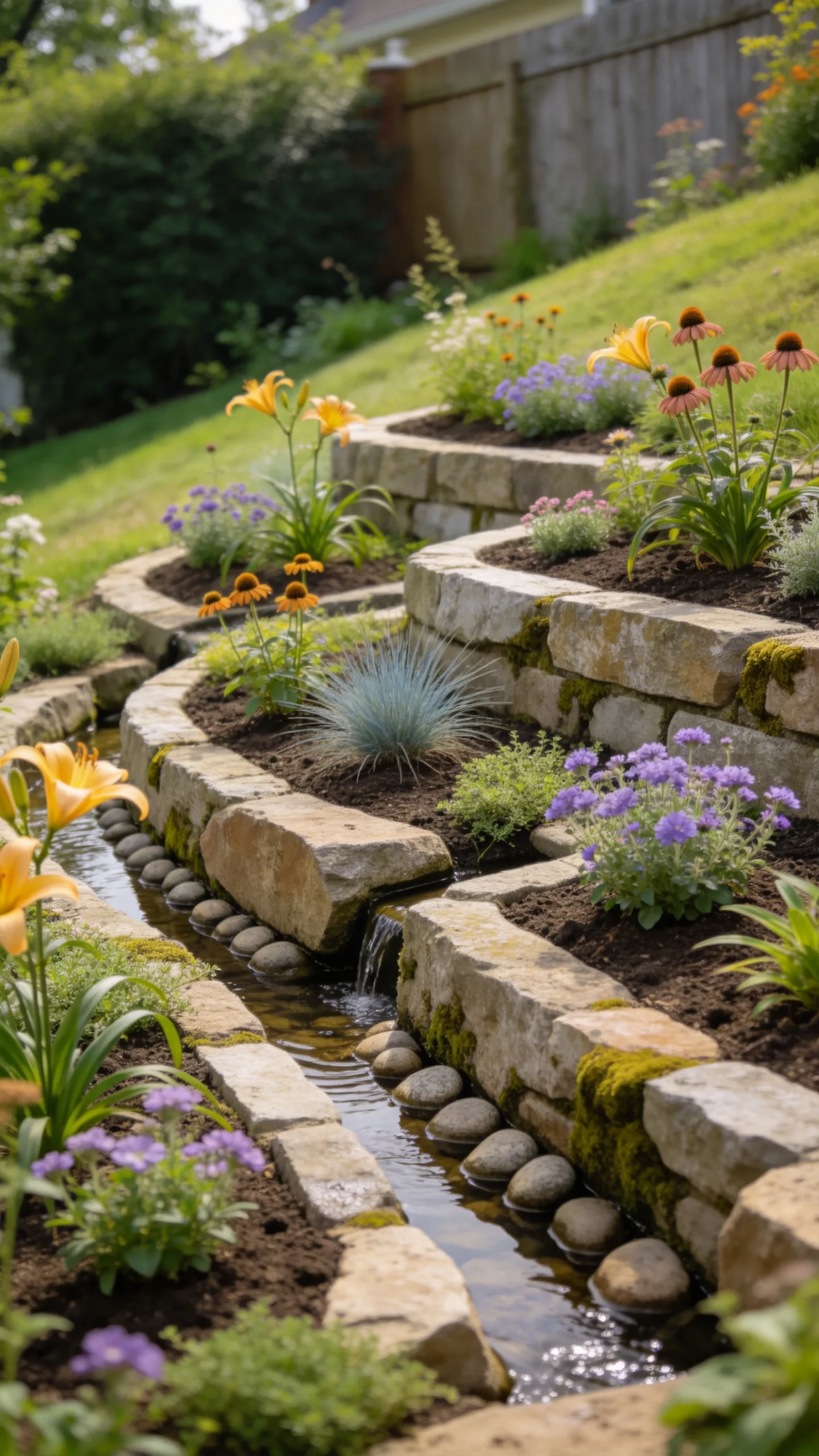
Divide a small slope into two or three shallow planting tiers using stone, untreated rot-resistant timber, or landscape blocks rated for retaining use. Terracing slows runoff, creates level planting pockets, and makes perennial care easier than working on a steep bank.
Use deep-rooted or spreading plants such as daylilies, coneflowers, little bluestem, creeping phlox, or native groundcovers suited to the site. Avoid aggressive plants that could escape into neighboring beds. Direct overflow safely between tiers and seek professional guidance if the slope requires a substantial retaining wall.
20. Plant Around a Tree Without Smothering Its Roots
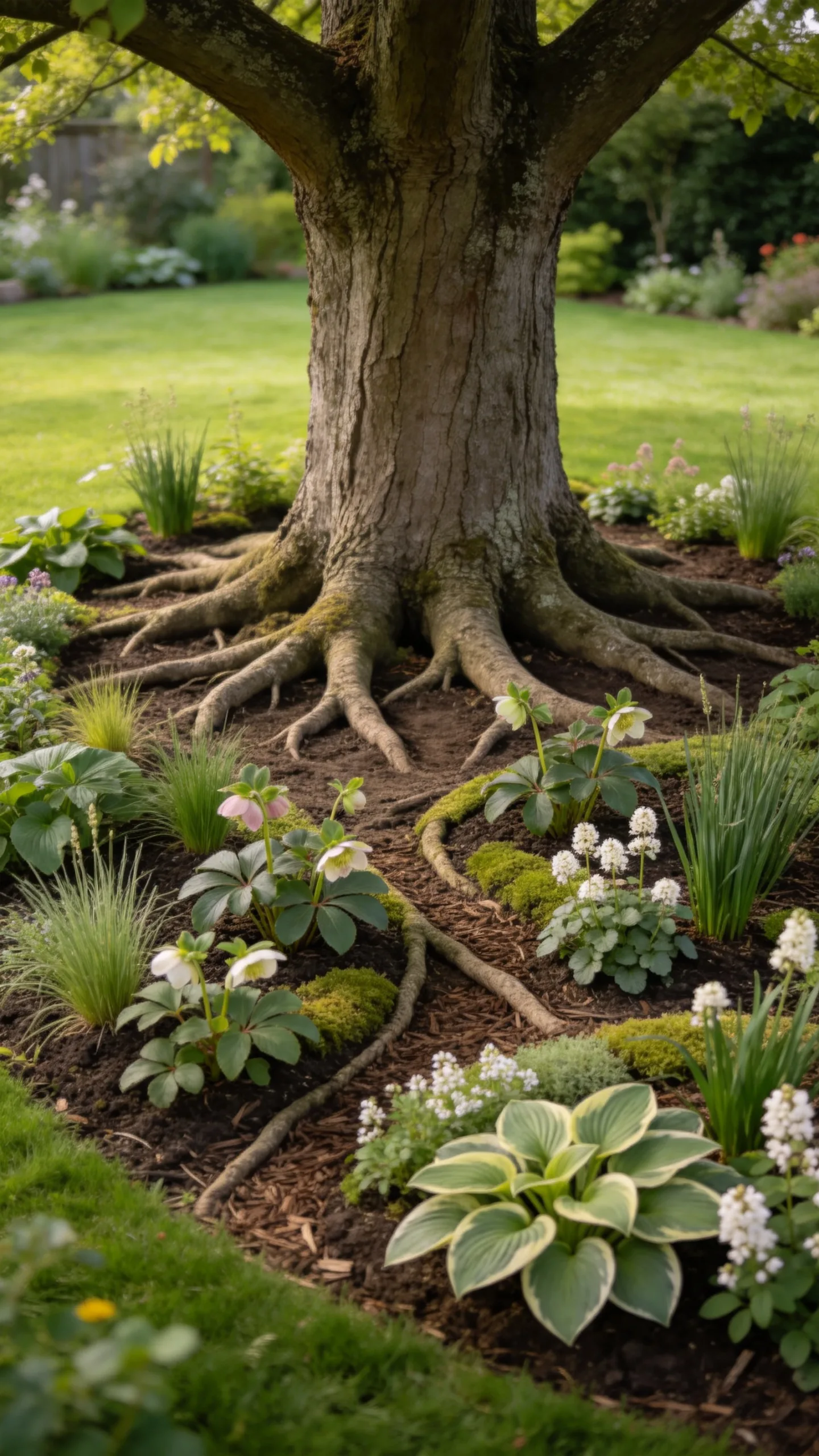
Create a light-touch perennial ring beneath a mature tree using shade-tolerant plants such as epimedium, hellebores, sedges, foamflower, and small hostas. Arrange plants in irregular drifts rather than digging a continuous trench through the tree’s root zone.
Do not pile soil or mulch against the trunk. Start the bed several inches away from the root flare and use a two- to three-inch mulch layer at most. Small nursery plants are easier to install between roots and generally cause less disturbance than large specimens.
21. Use Containers for Flexible Perennial Color
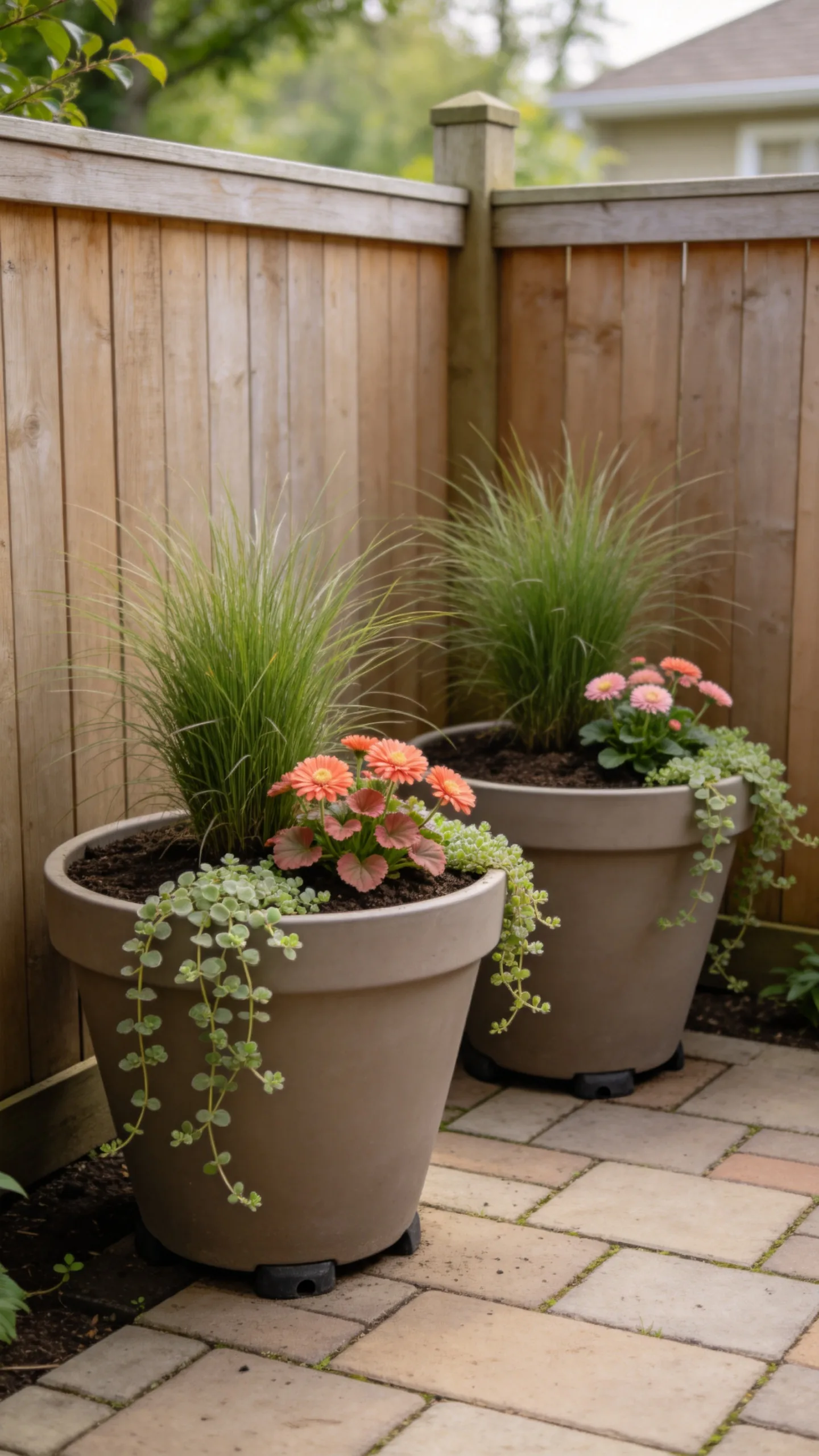
Large frost-resistant containers can hold perennials where there is no room for another in-ground bed. Combine one structural plant, such as compact ornamental grass, with a flowering perennial and a trailing plant. Coral bells, dwarf hostas, sedum, dianthus, and small daylilies are practical container options.
Choose pots with drainage holes and enough volume to protect roots from rapid temperature and moisture changes. Container-grown perennials need more frequent watering than plants in the ground. In cold climates, move pots to a protected location or insulate them because roots are more exposed to freezing temperatures.
22. Design a Long-Blooming Foundation Strip
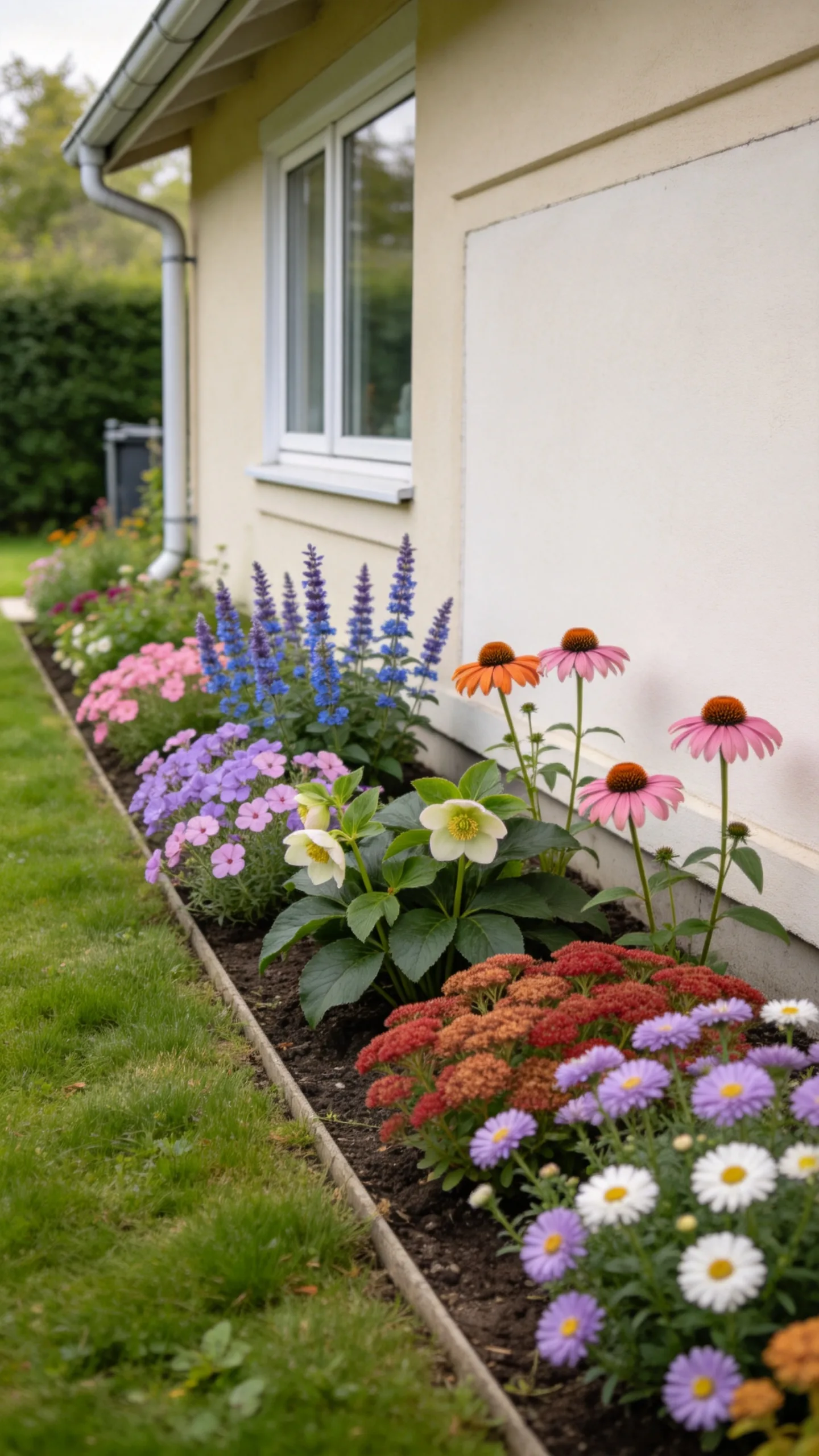
A narrow bed along the back of the house can provide flowers from spring through fall without blocking windows. Begin with spring-blooming hellebores, bleeding heart, or creeping phlox. Follow with summer salvia, coreopsis, or coneflowers, then finish the season with asters, goldenrod cultivars, or autumn sedum.
Check window height, utility access, roof runoff, and foundation clearance before planting. Use compact varieties beneath windows and place taller plants beside blank wall sections. Extend downspouts beyond the bed if concentrated runoff would leave perennial crowns waterlogged.
23. Create a Mini Meadow in an Unused Corner
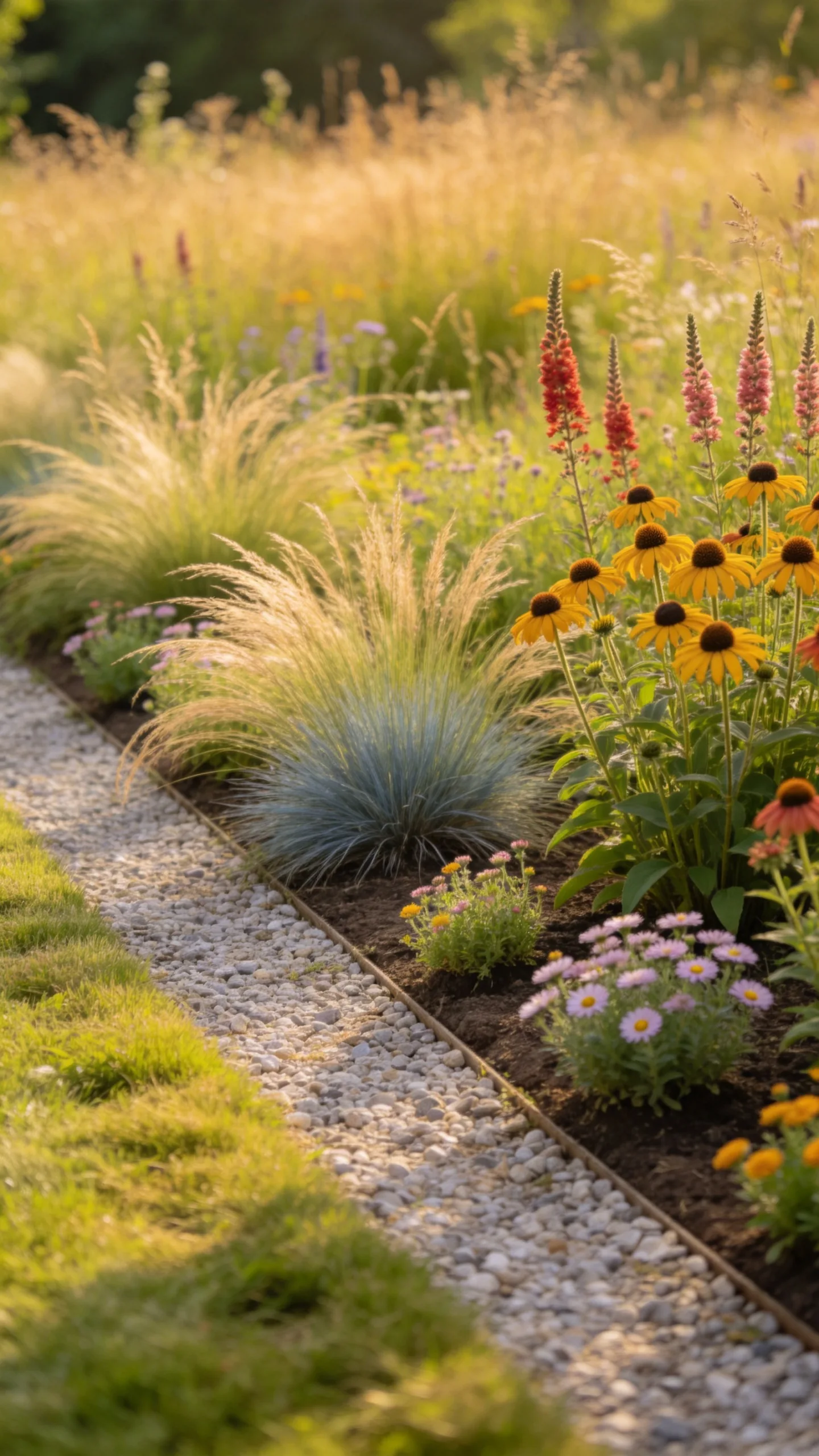
Convert a small sunny corner into a controlled meadow using clump-forming grasses and regionally appropriate flowering perennials. Little bluestem, prairie dropseed, coneflowers, black-eyed Susans, blazing star, and asters can create movement and support seasonal interest without requiring a large plot.
Define the meadow with a mown edge, gravel path, or low metal border so it looks intentional. Use plugs rather than scattering an unspecified seed mix when precise plant selection matters. Remove weeds during establishment, water as needed through the first season, and cut back the dried growth once a year in late winter or early spring.