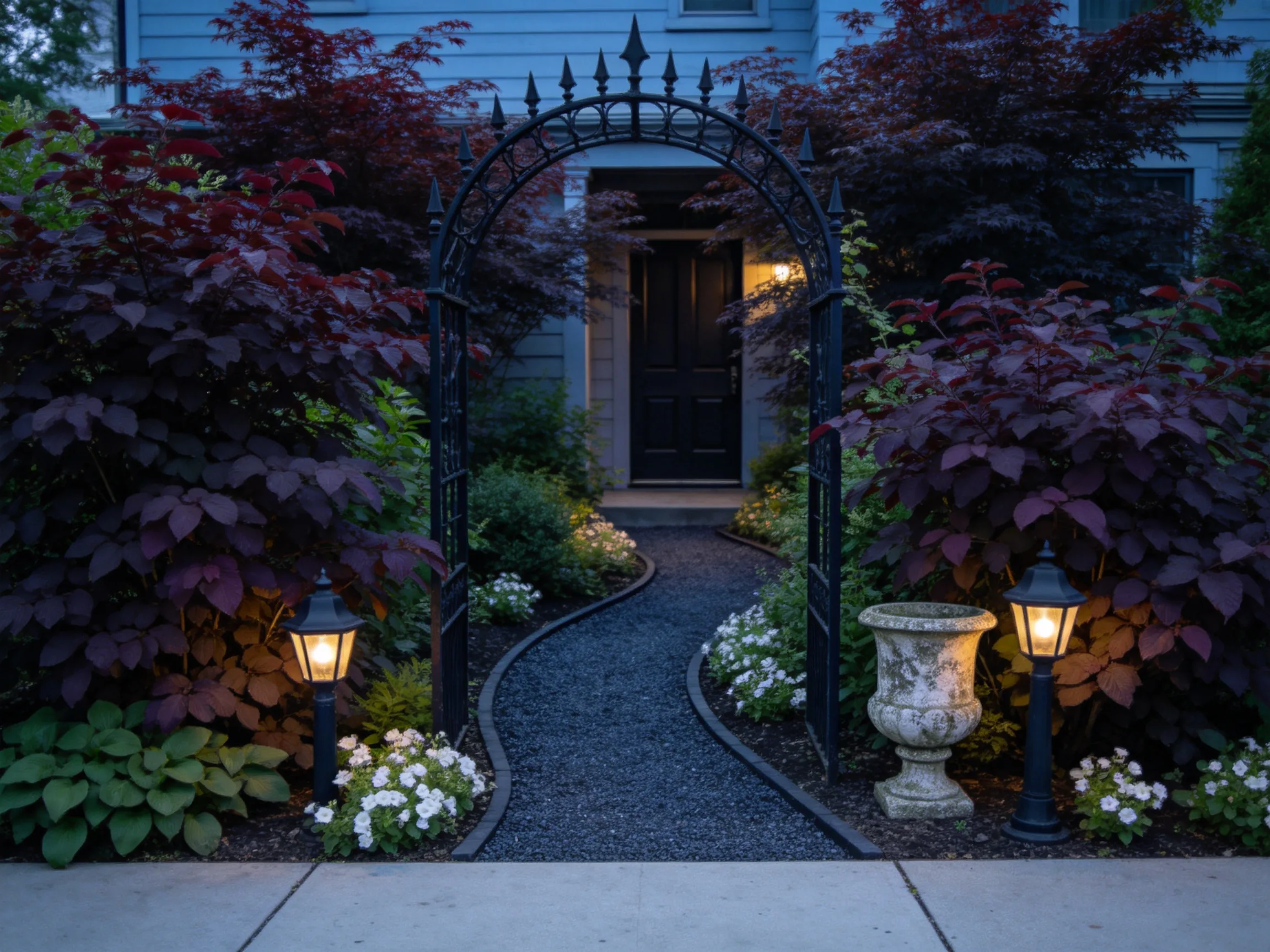
A gothic front garden combines shadowy planting, aged materials, and dramatic architectural details without sacrificing a practical route to the door. Whether you renovate the entire yard or add a few atmospheric accents, these ideas use defined paths, wrought iron, dark foliage, and restrained color to create an entrance that feels mysterious yet welcoming. Choose plants suited to your local climate and the light, soil, and moisture conditions around your home.
1. Curved Black Gravel Path
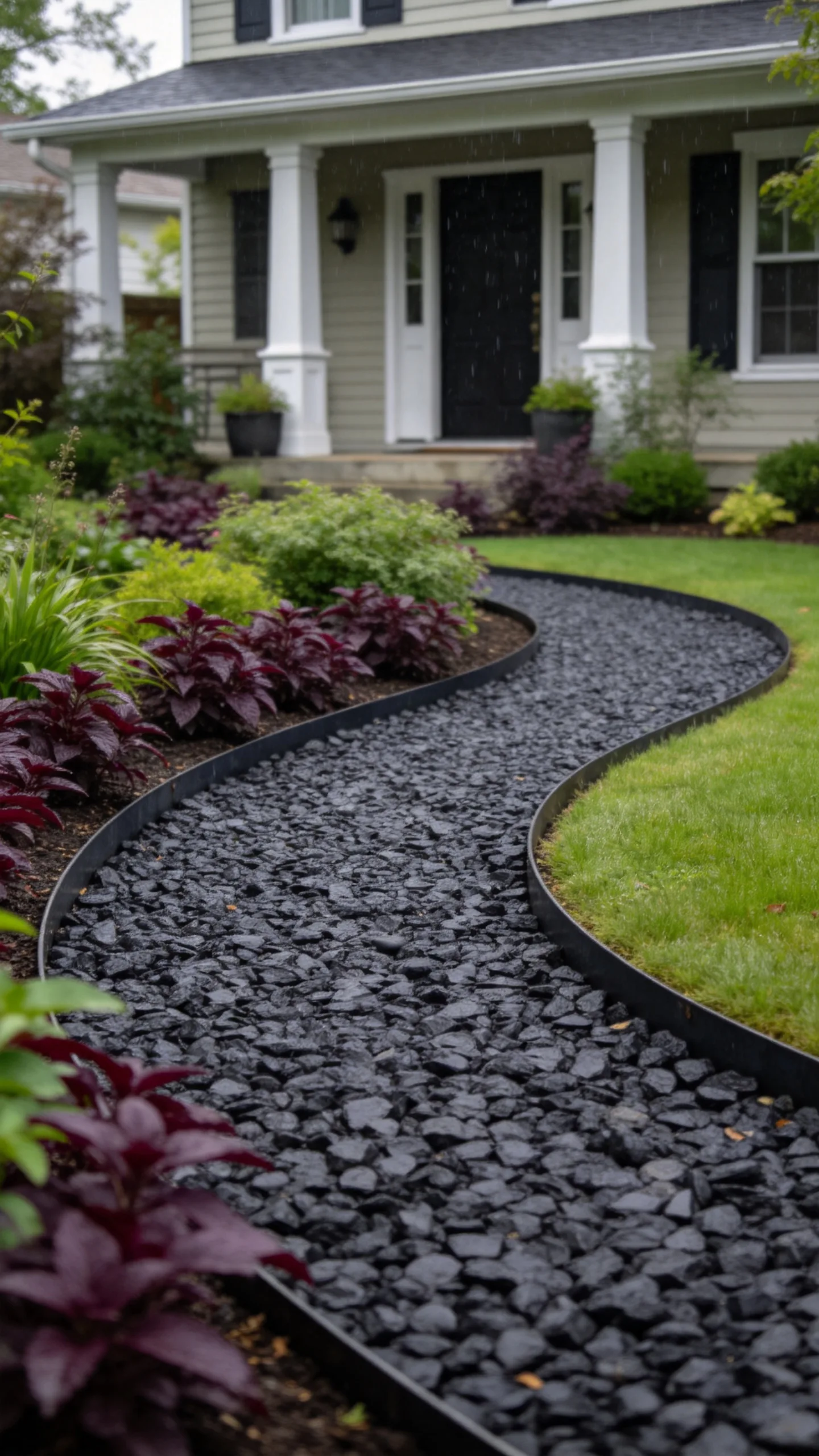
Replace a straight concrete walkway with a gently curved path surfaced in charcoal gravel, black basalt chips, or locally available dark stone. The curve partially conceals the front door as visitors approach, adding a sense of discovery while making a shallow front yard appear deeper.
Install compacted base material beneath the gravel and contain it with steel, brick, or stone edging. A finished width of about 3 to 4 feet generally allows comfortable daily access. For easier maintenance, select angular gravel that locks together rather than rounded pebbles that shift underfoot.
2. Wrought-Iron Entry Arch
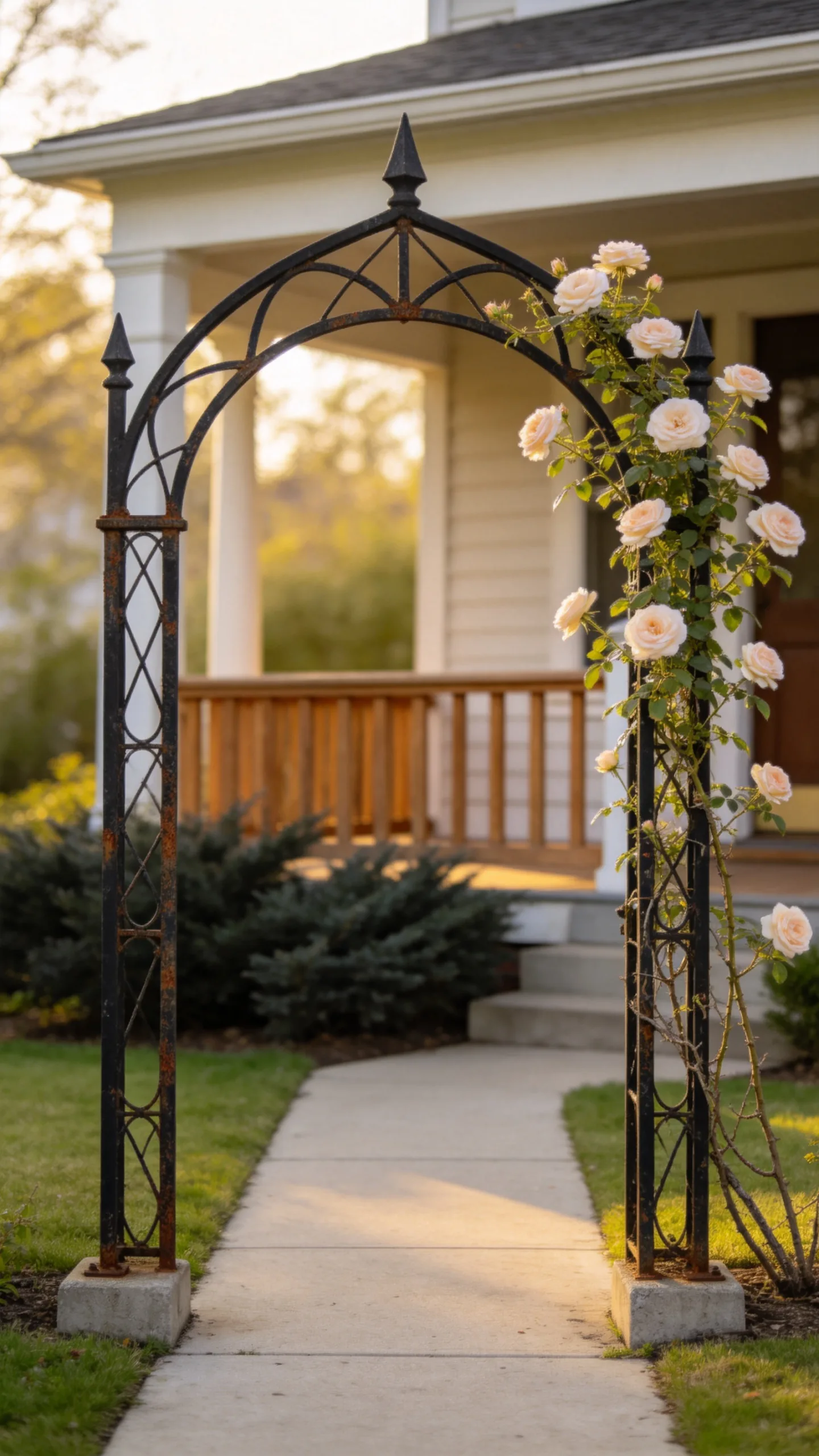
Place a narrow wrought-iron arch where the front path begins or where it passes from an open lawn into a planted area. Look for pointed finials, quatrefoil shapes, or simple intersecting curves rather than highly decorative motifs that may overwhelm a compact yard.
Train a climber over one side while leaving enough open framework visible to preserve the iron silhouette. Climbing roses, clematis, honeysuckle, or evergreen jasmine may work depending on local conditions. Keep growth pruned above head height and away from sidewalk sightlines.
3. Deep Burgundy Foliage Border
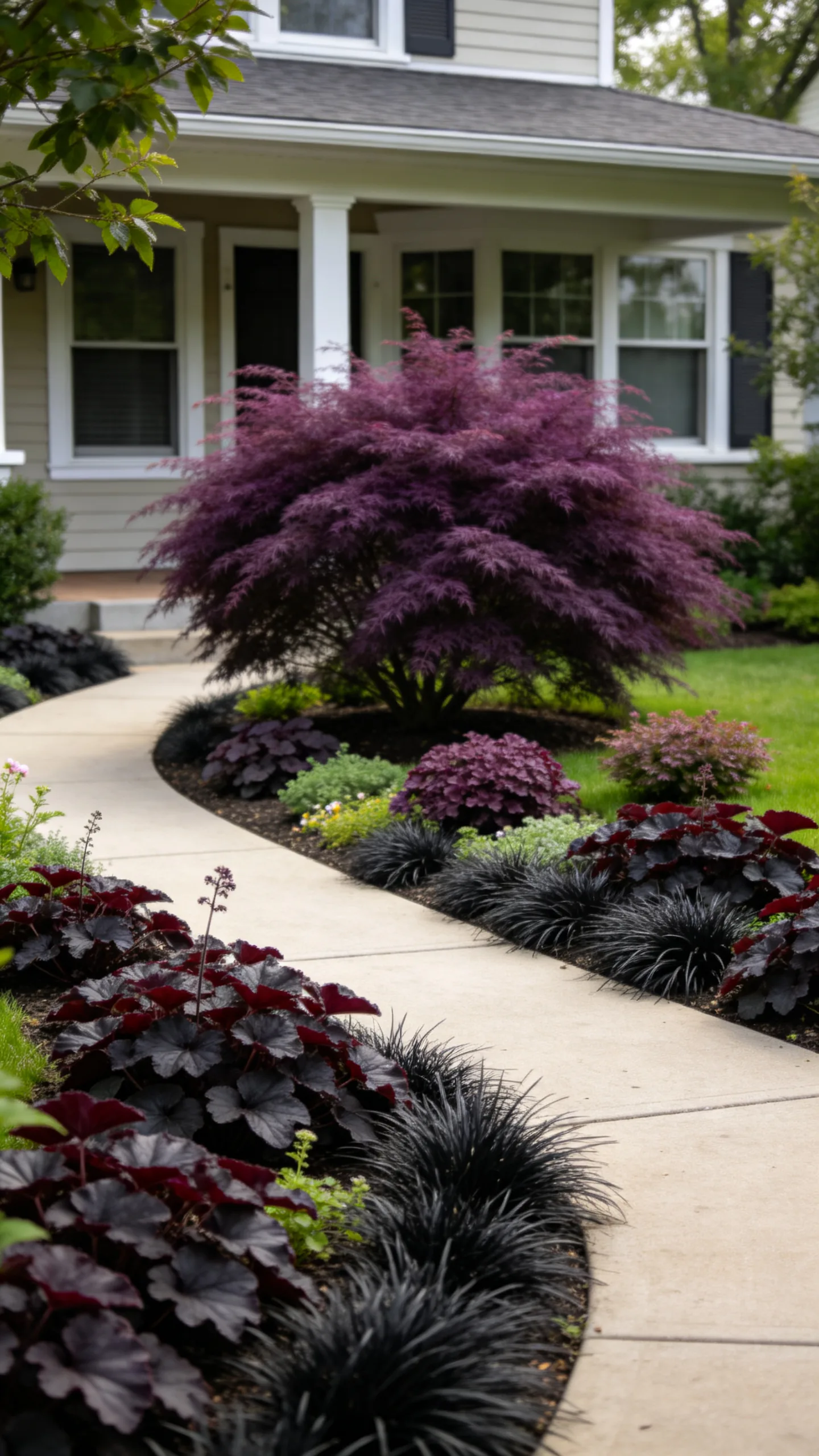
Create a dark border using plants with burgundy, plum, or near-black foliage instead of relying only on flowers. Heuchera, dark-leaved sedum, purple smoke bush, black mondo grass, and burgundy barberry are possible options, although suitability varies by climate and local invasive-plant guidance.
Repeat one or two foliage colors along the path to make the design feel intentional. Place low plants near the walkway and taller shrubs closer to the house, ensuring mature growth will not obstruct windows, steps, or the view from the driveway.
4. Aged Brick Walkway in a Herringbone Pattern
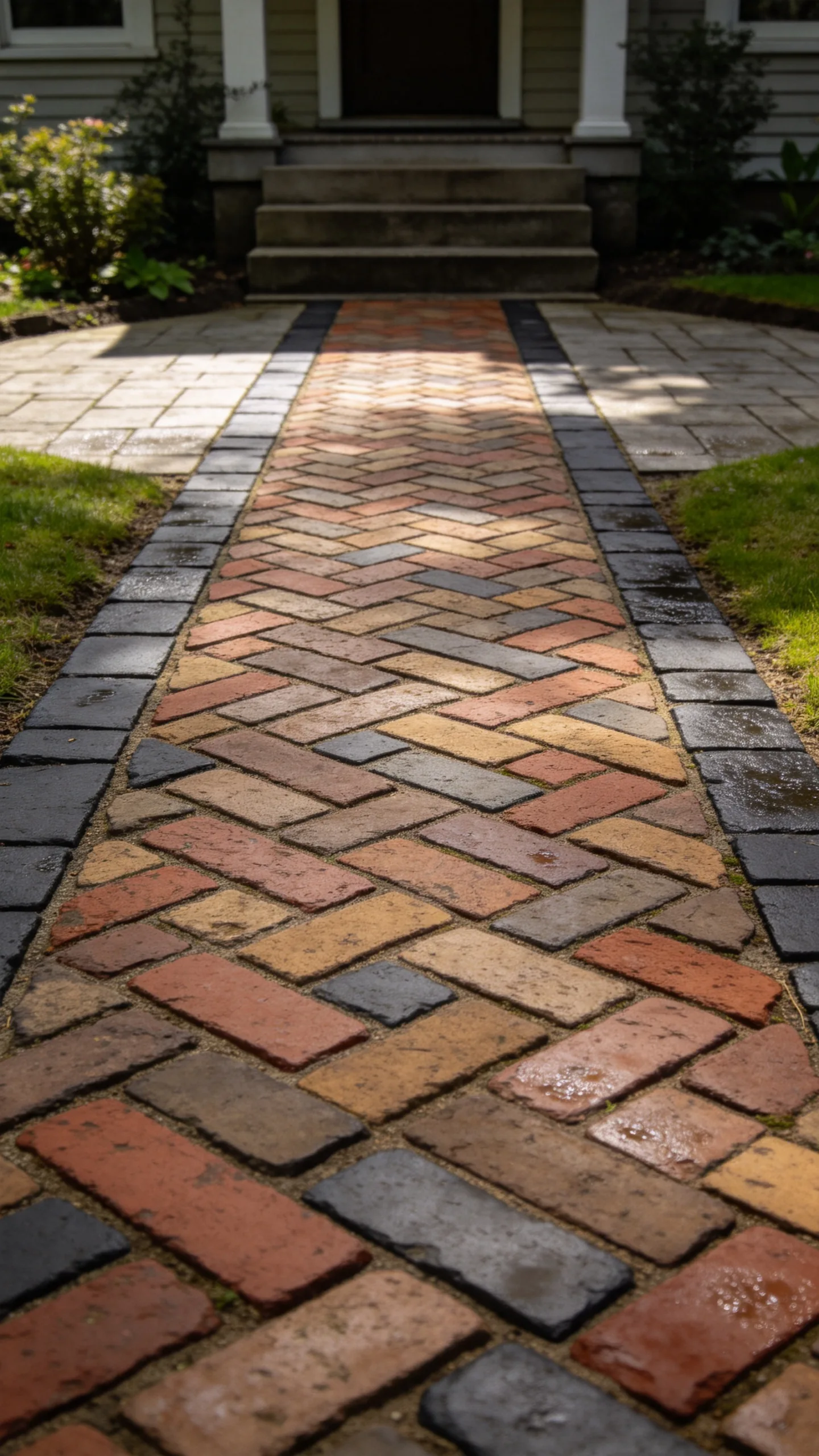
Weathered red, brown, and charcoal bricks bring the look of an old courtyard to a front entrance. Lay them in a herringbone pattern for visual movement, then use darker bricks as a narrow border to sharpen the path’s outline.
Set the bricks over a properly graded, compacted base so water drains away from the foundation. In damp or shaded yards, brush the surface periodically to control slippery algae or moss. Reclaimed bricks can add character, but check that they are durable enough for outdoor paving and local freeze-thaw conditions.
5. Pointed Iron Fence with Layered Planting
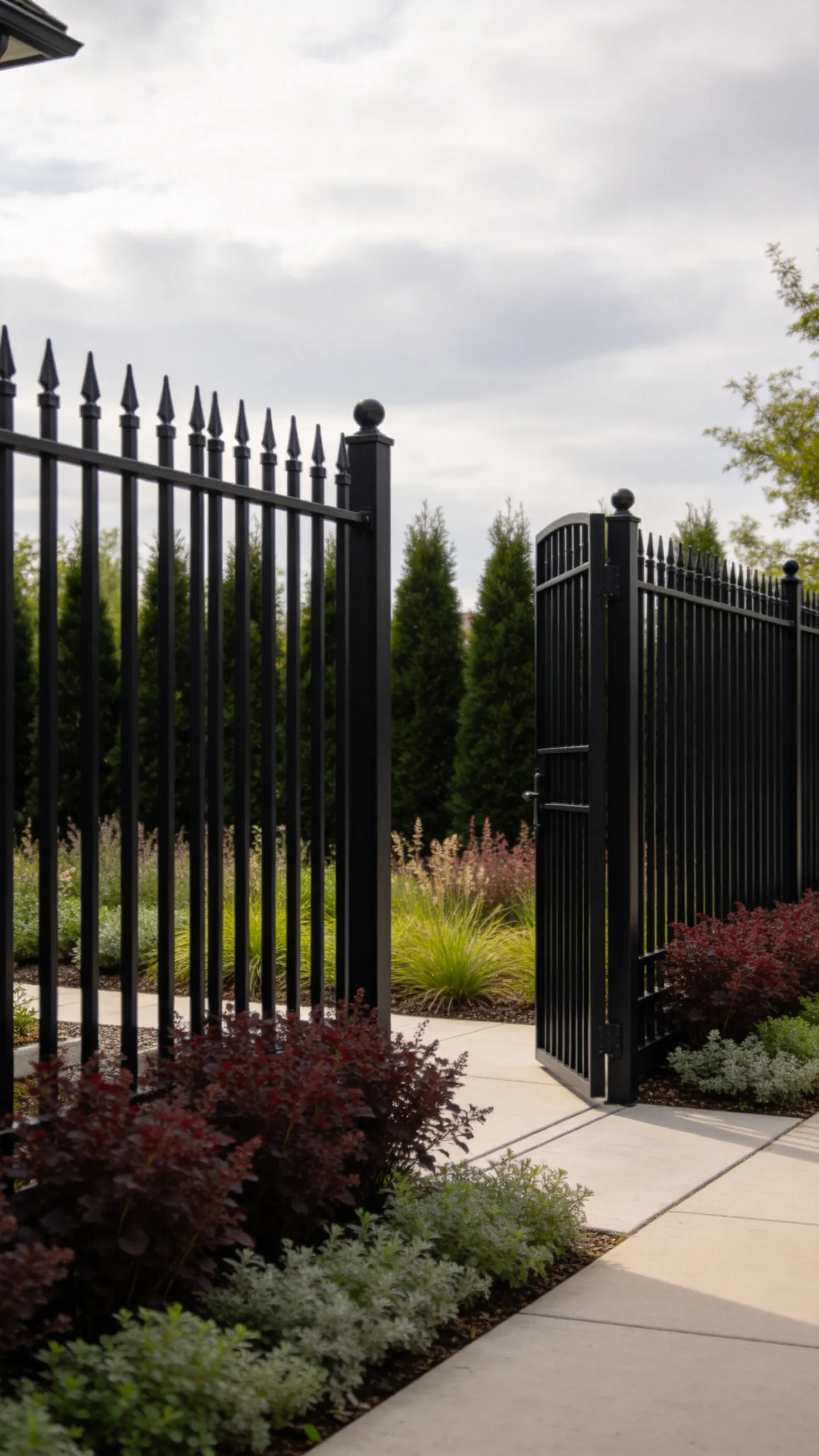
A low black iron fence defines the front boundary without creating the visual weight of a solid wall. Vertical pickets with spear-shaped finials introduce a clear gothic detail, while the open structure keeps a small yard connected to the street.
Soften the fence with layered planting: low ground cover at the base, compact perennials in the middle, and a few narrow shrubs behind. Avoid thorny or spreading plants beside public sidewalks, and maintain enough clearance around gates, utility meters, and municipal access points.
6. Moon Garden with White Flowers and Dark Leaves
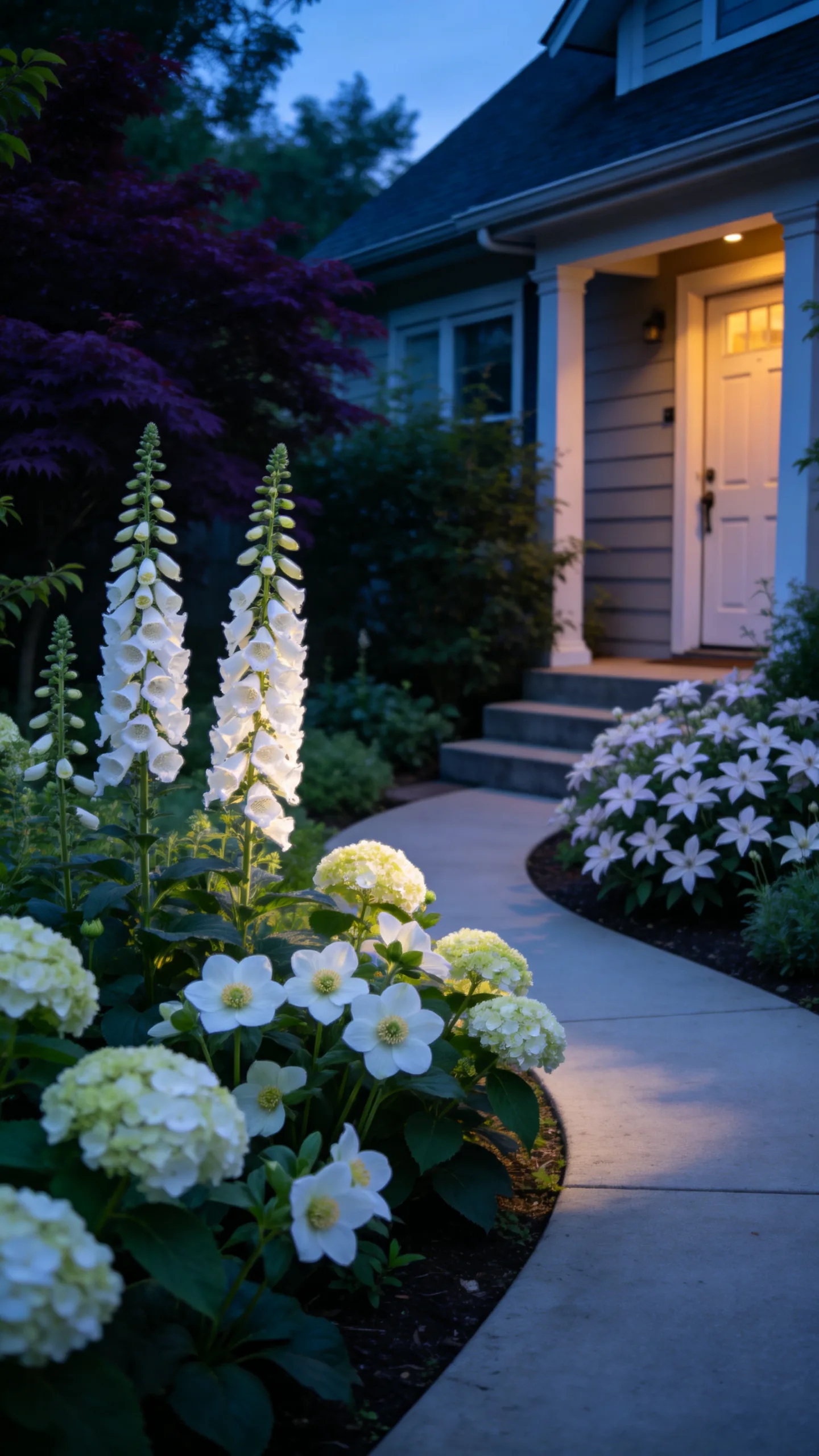
Pair white flowers with purple or deep green foliage to create contrast in evening light. White foxgloves, nicotiana, woodland phlox, hellebores, hydrangeas, or pale clematis can support the look when matched to the site’s climate and sun exposure.
Concentrate the pale blooms near the entrance, porch steps, or path bends rather than scattering them throughout the yard. This focused placement creates luminous highlights against the darker planting and helps visitors follow the route after dusk.
7. Gothic Lanterns Along the Path
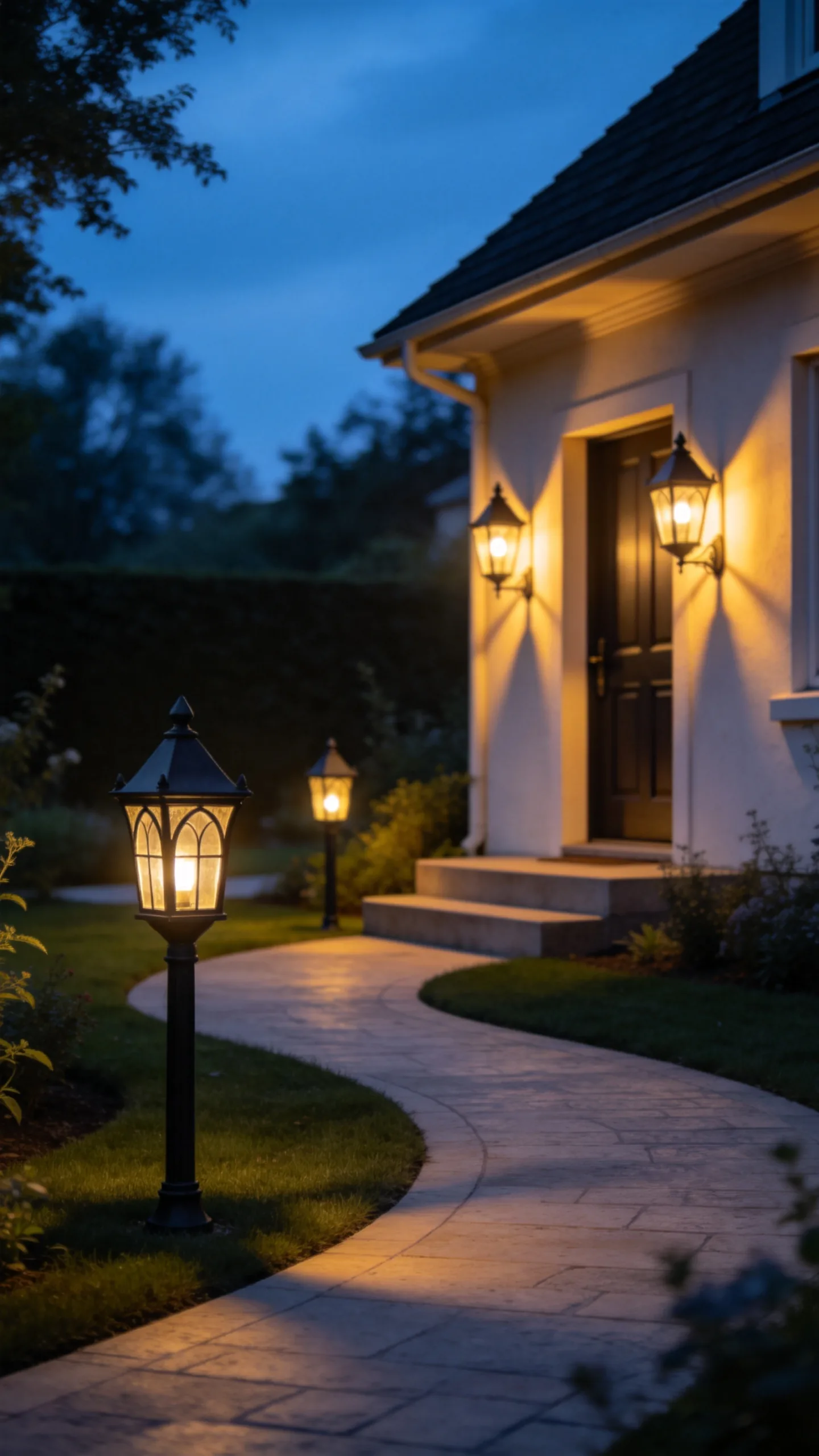
Use black metal lanterns with peaked tops, arched panes, or slender finials to illuminate changes in level and key path intersections. A matching wall lantern beside the front door can connect the path lighting to the architecture of the house.
Choose exterior-rated fixtures and use warm, low-level light instead of harsh blue-white bulbs. Shield the light downward to reduce glare and avoid placing fixtures where foliage will quickly cover them. Solar lanterns are easy to add, but wired fixtures may provide more dependable illumination in heavily shaded yards.
8. Narrow Yew or Holly Sentinels
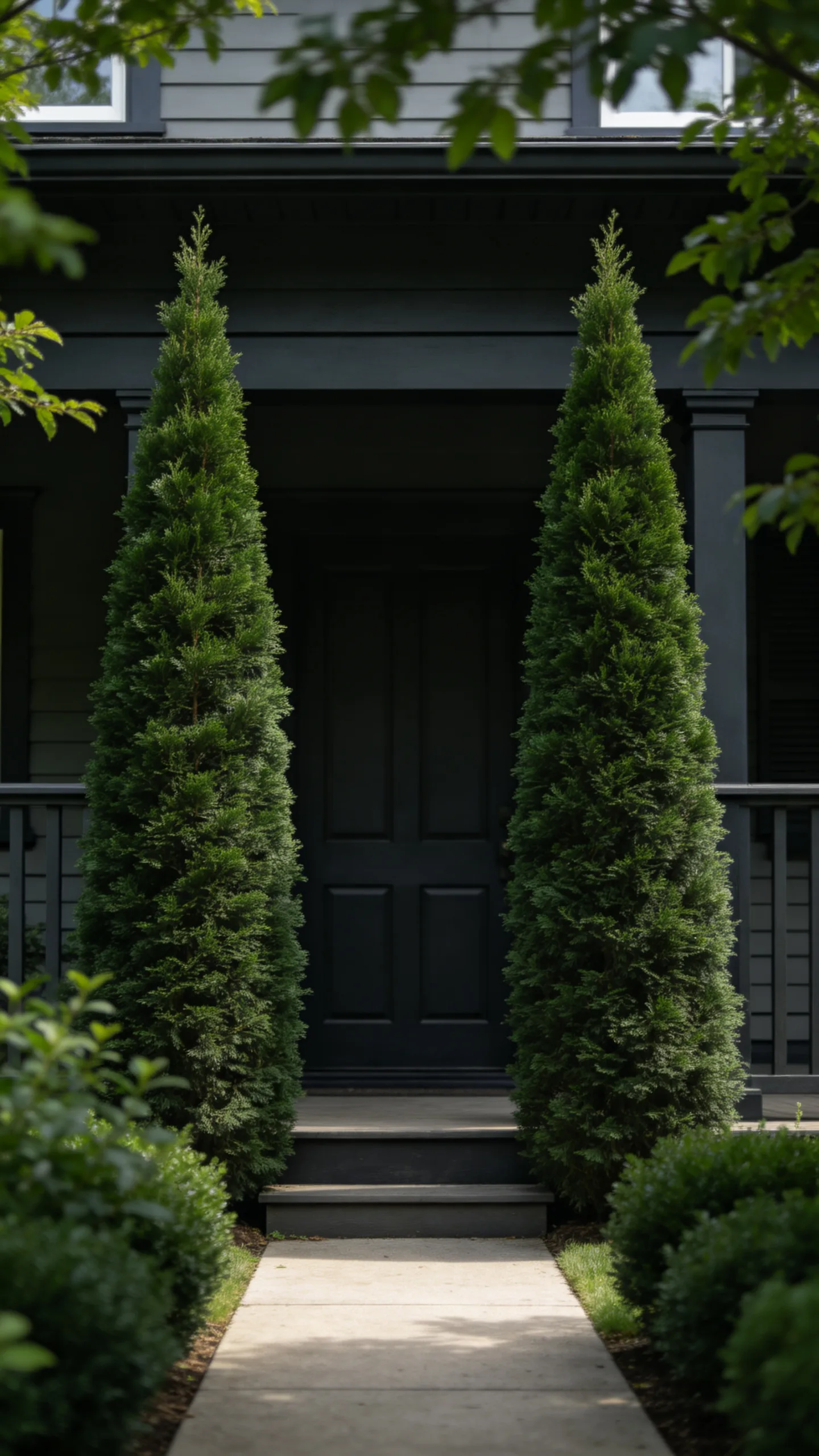
Flank a gate, porch, or path entrance with two upright evergreen shrubs to create a formal, guarded appearance. Narrow yew cultivars, compact hollies, and columnar junipers can provide this effect, but select a species that fits the local climate and the site’s available sunlight.
Check the plant’s mature width before planting beside a walkway. Allow air circulation around the house and keep shrubs clear of railings and address numbers. Light annual pruning can preserve a tall, tapered form without forcing the plants into rigid topiary.
9. Black Urns Filled with Moody Containers
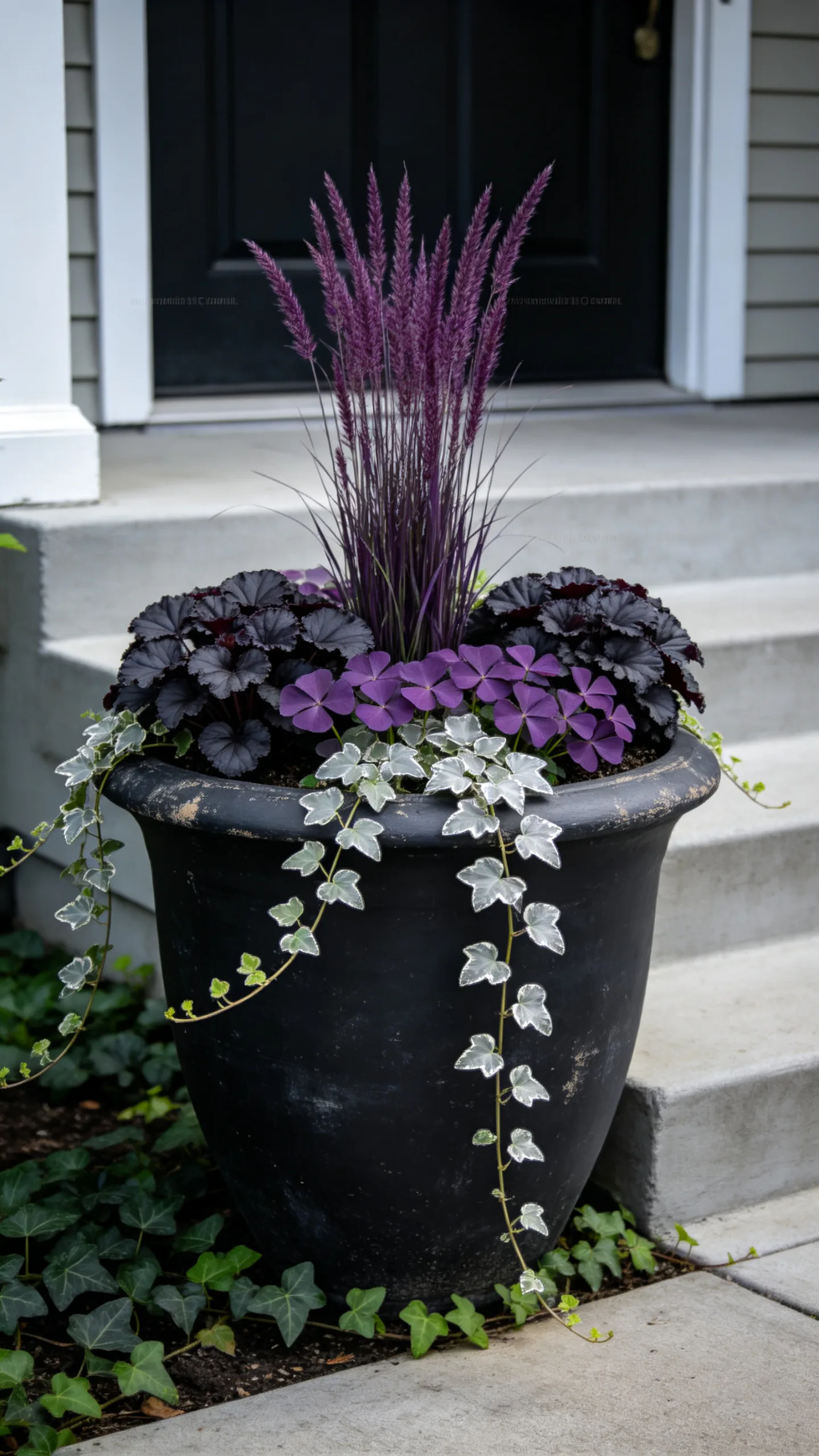
Place matte black or weathered stone urns on porch steps, beside a gate, or at the end of a path. To prevent a cramped appearance, use one substantial container as a focal point or a balanced pair rather than lining the entire walkway with pots.
Fill each urn with a vertical centerpiece, a rounded filler, and a trailing edge plant. Purple fountain grass, dark coleus, ornamental millet, oxalis, ivy, and silver dichondra offer useful color and texture, though some are seasonal or tender in colder regions. Make sure every container has drainage holes and use a potting mix rather than garden soil.
10. Iron Obelisk with a Dark-Flowering Climber
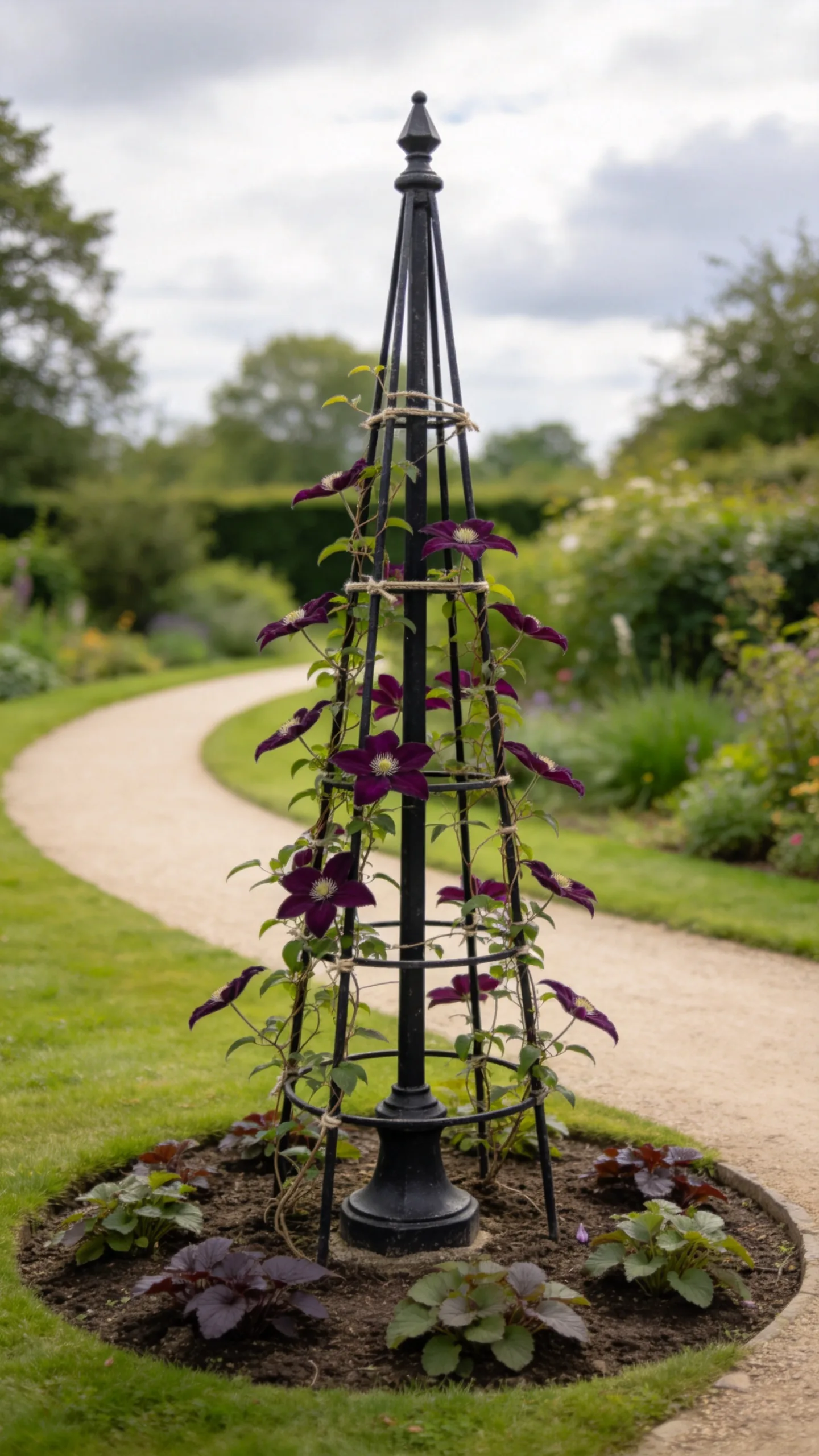
An iron obelisk brings vertical structure to a small planting bed without taking up much ground space. Position it near a path curve or within a circular bed so it acts as a focal point from the sidewalk and the front door.
Grow a compact clematis, climbing rose, annual black-eyed Susan vine, or another locally suitable climber on the framework. Tie new stems loosely with soft plant ties and prune according to the plant’s flowering habit. If a vigorous climber is used, choose a sturdy obelisk anchored well below the soil line.
11. Slate Stepping Stones Through Ground Cover
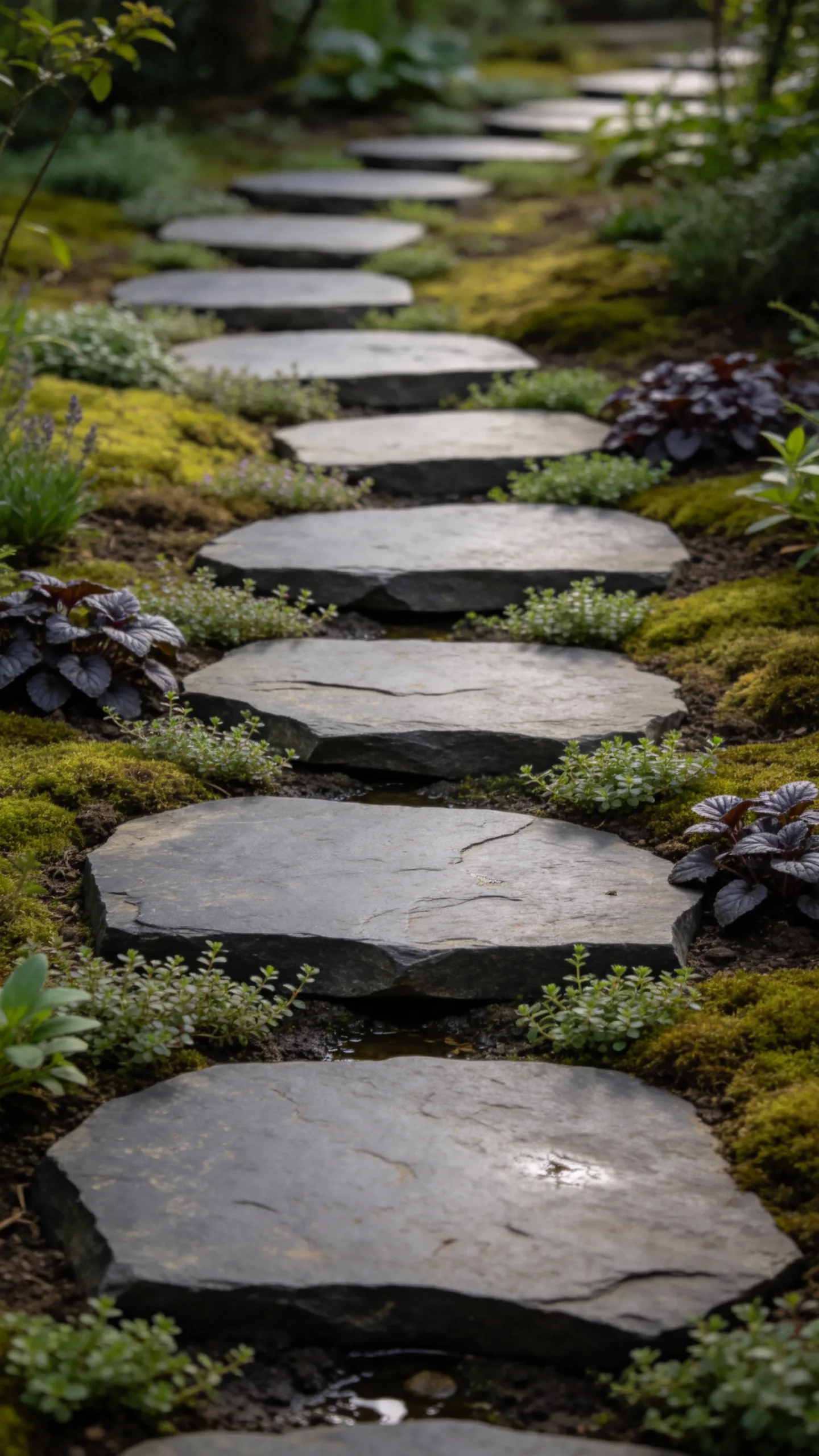
Large slate or dark concrete stepping stones can form a secondary route to a side gate, mailbox, or seating spot. Their irregular edges create an old, slightly overgrown character while preserving a dry surface for foot traffic.
Set each stone on a stable base so it does not rock or create a trip hazard. Fill the gaps with low ground covers such as creeping thyme in sun, ajuga in partial shade, or moss where moisture and shade naturally support it. Verify that the selected ground cover is noninvasive in your area.
12. Black Lace Elderberry Focal Shrub
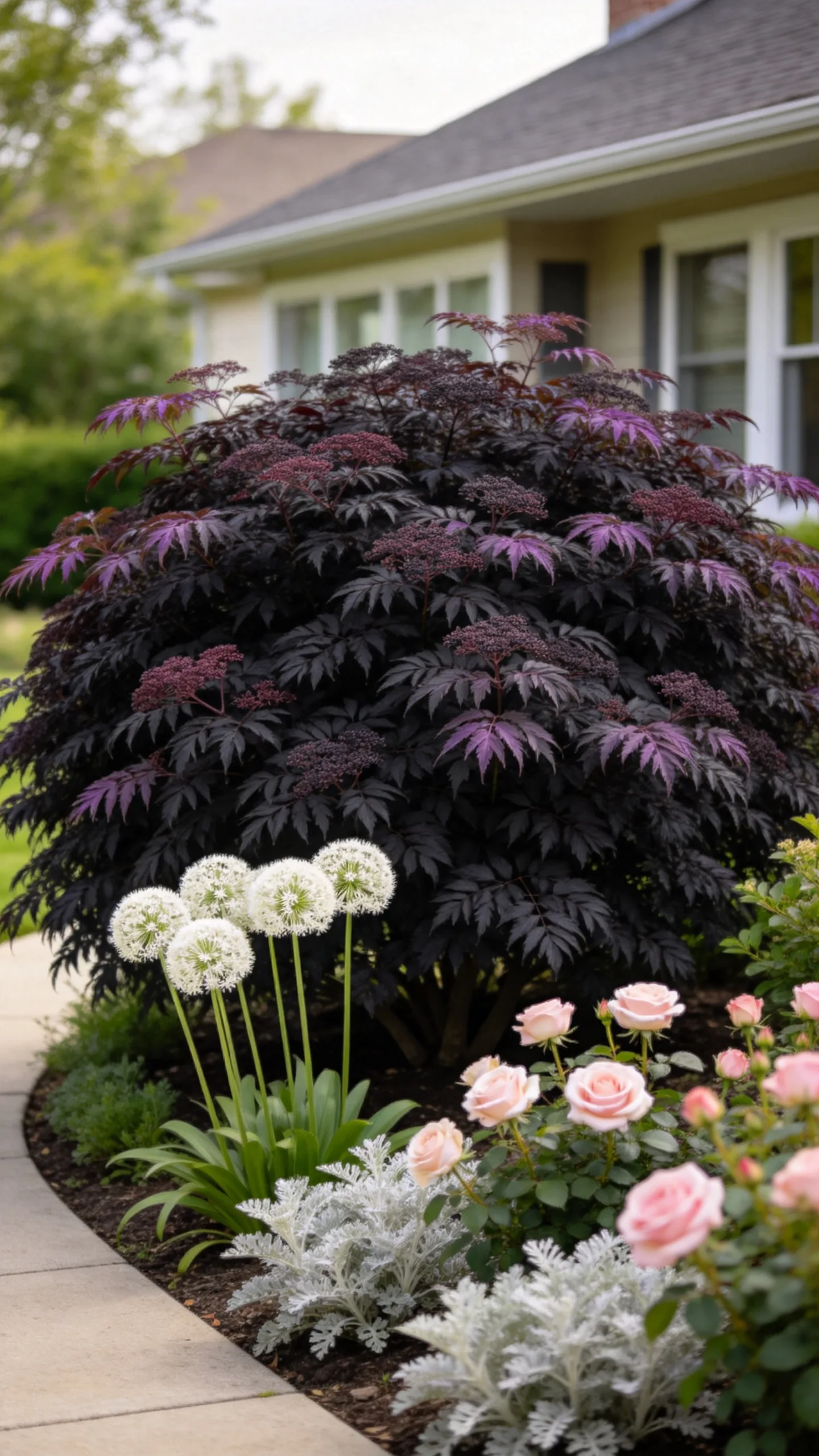
A dark-leaved elderberry can provide feathery texture and the visual presence of a small Japanese maple in climates where an appropriate cultivar grows well. Its foliage makes a dramatic backdrop for pale perennials and aged stone ornaments.
Give the shrub enough room for its mature spread, and place it where pruning will not be required to keep the path open. Pair it with white alliums, pale pink roses, or silver-leaved plants for contrast. Confirm local growing requirements and pollination needs before choosing a fruit-producing elderberry.
13. Weathered Stone Pedestal and Garden Relic
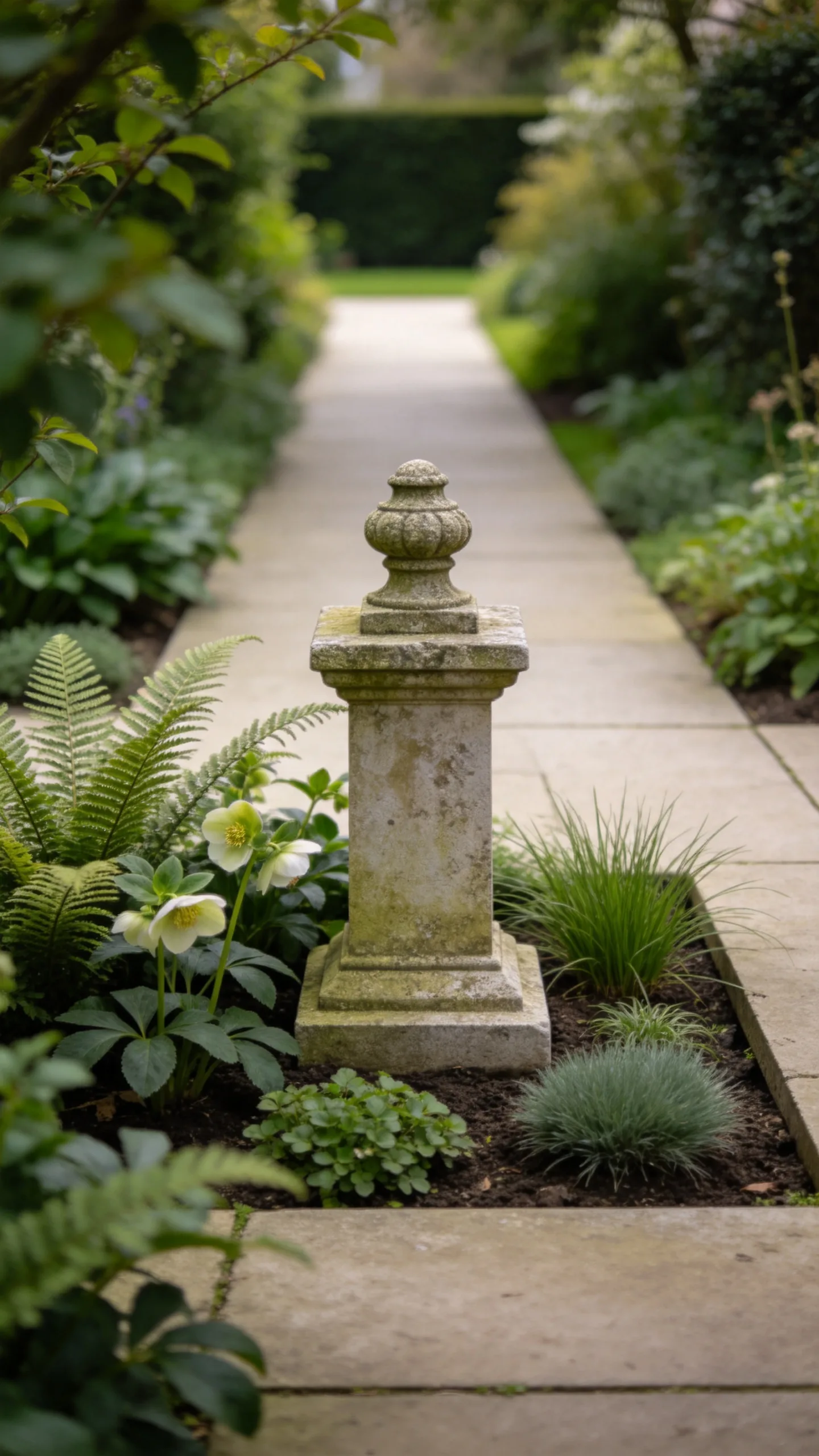
Add one sculptural element, such as a weathered pedestal, stone finial, sundial, or carved urn. Set it at the end of a sightline from the front gate or position it within a recessed planting pocket where foliage partially frames the object.
Use restraint to prevent the yard from looking themed or cluttered. Ferns, hellebores, creeping ground cover, and compact ornamental grasses can soften the base. Place heavy ornaments on level, stable footing so they remain secure during storms and seasonal soil movement.
14. Fern-Lined Shaded Walk
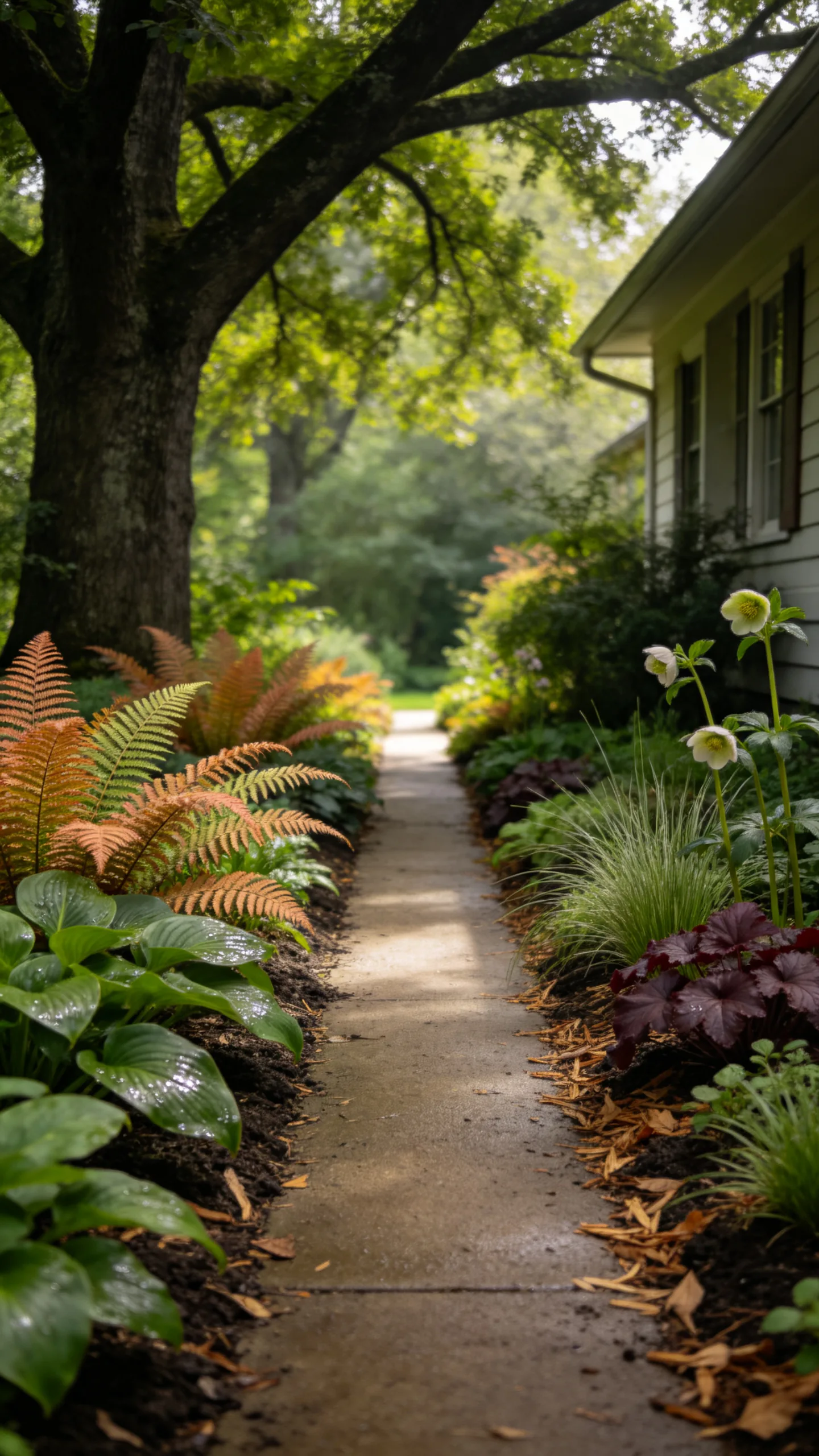
Turn a shaded path beside the house or beneath a mature tree into a layered fern walk. Select ferns suited to the soil moisture in that location, such as autumn fern, lady fern, Japanese painted fern, or another regionally appropriate species.
Combine arching fronds with hostas, heucheras, sedges, and hellebores to cover soil at several heights. A mulch of shredded bark or leaf mold supports the woodland atmosphere and helps retain moisture. Keep plants trimmed back from the walking surface so wet fronds do not brush against visitors.
15. Low Boxwood Knot Border
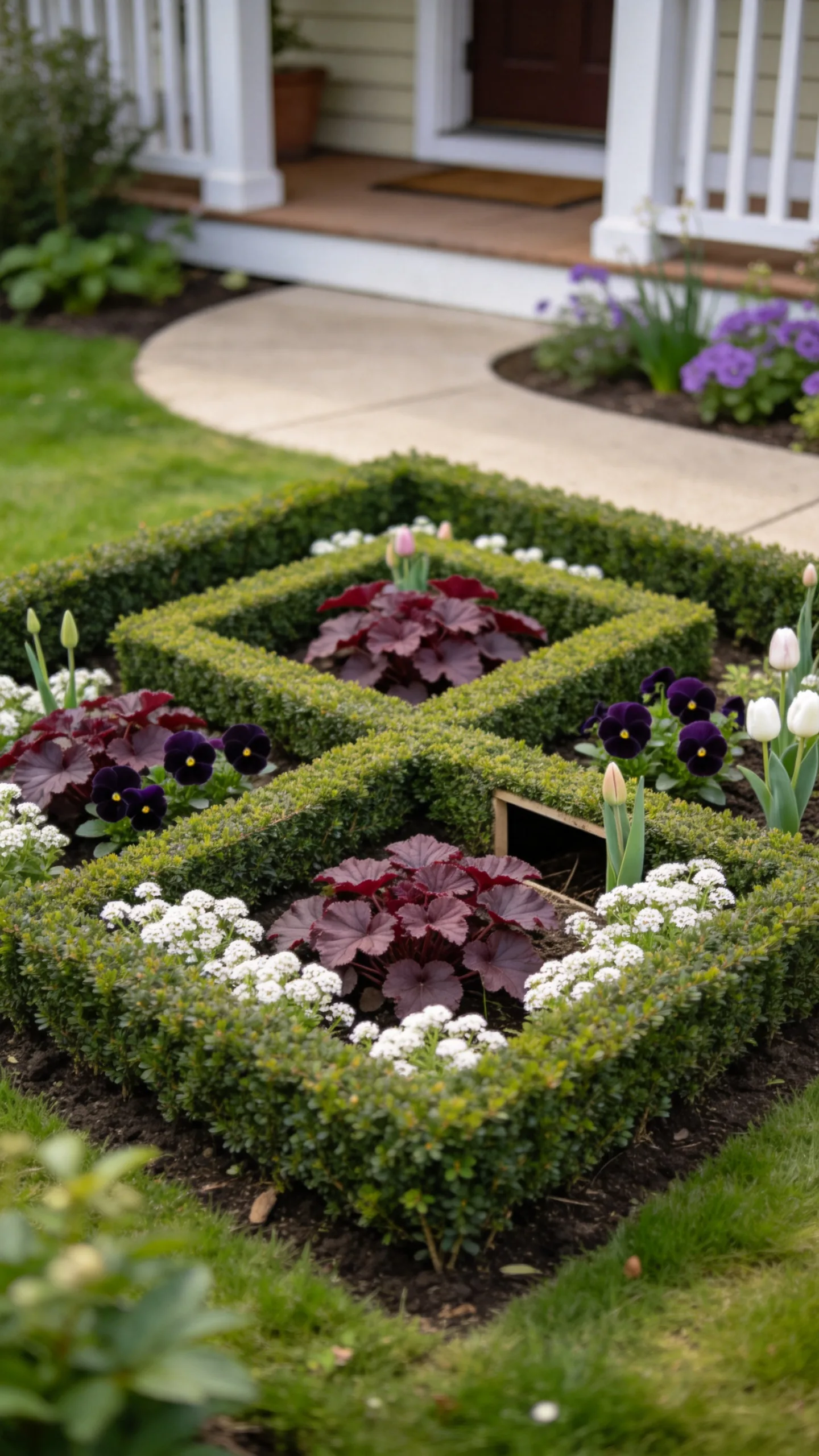
Outline a small diamond, cross, or interlocking pattern with compact evergreen edging. Boxwood is traditional, but inkberry holly, dwarf euonymus, or other small-leaved shrubs may be better where boxwood pests and diseases are common.
Fill the interior spaces with dark violas, burgundy heuchera, white sweet alyssum, or seasonal bulbs. This formal geometry works especially well in a square bed near the porch. Maintain the pattern with light trimming and leave access points for weeding and watering.
16. Rusted Steel Edging Around Black Mulch Beds
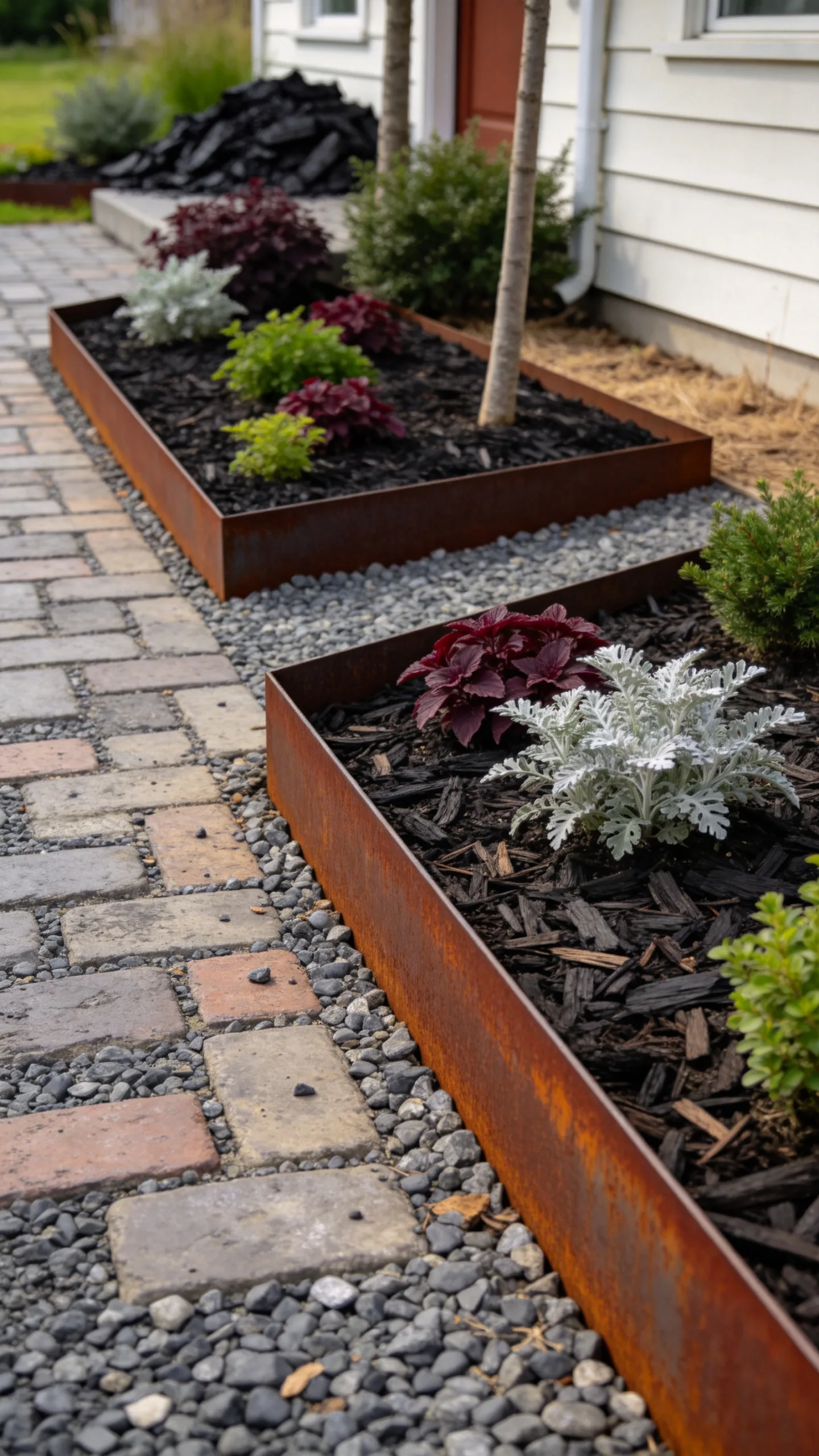
Use rusted steel edging to create crisp, angular beds along a gravel or brick path. The reddish-brown patina complements dark leaves and aged masonry while preventing soil and mulch from spilling onto the walkway.
Fill the beds with shredded bark, dark natural mulch, or fine gravel appropriate to the plants. Avoid piling mulch against trunks, shrub stems, or the house foundation. Strong bed lines are particularly valuable in small front yards because they keep atmospheric planting from appearing untidy.
17. Purple and Black Seasonal Flower Display
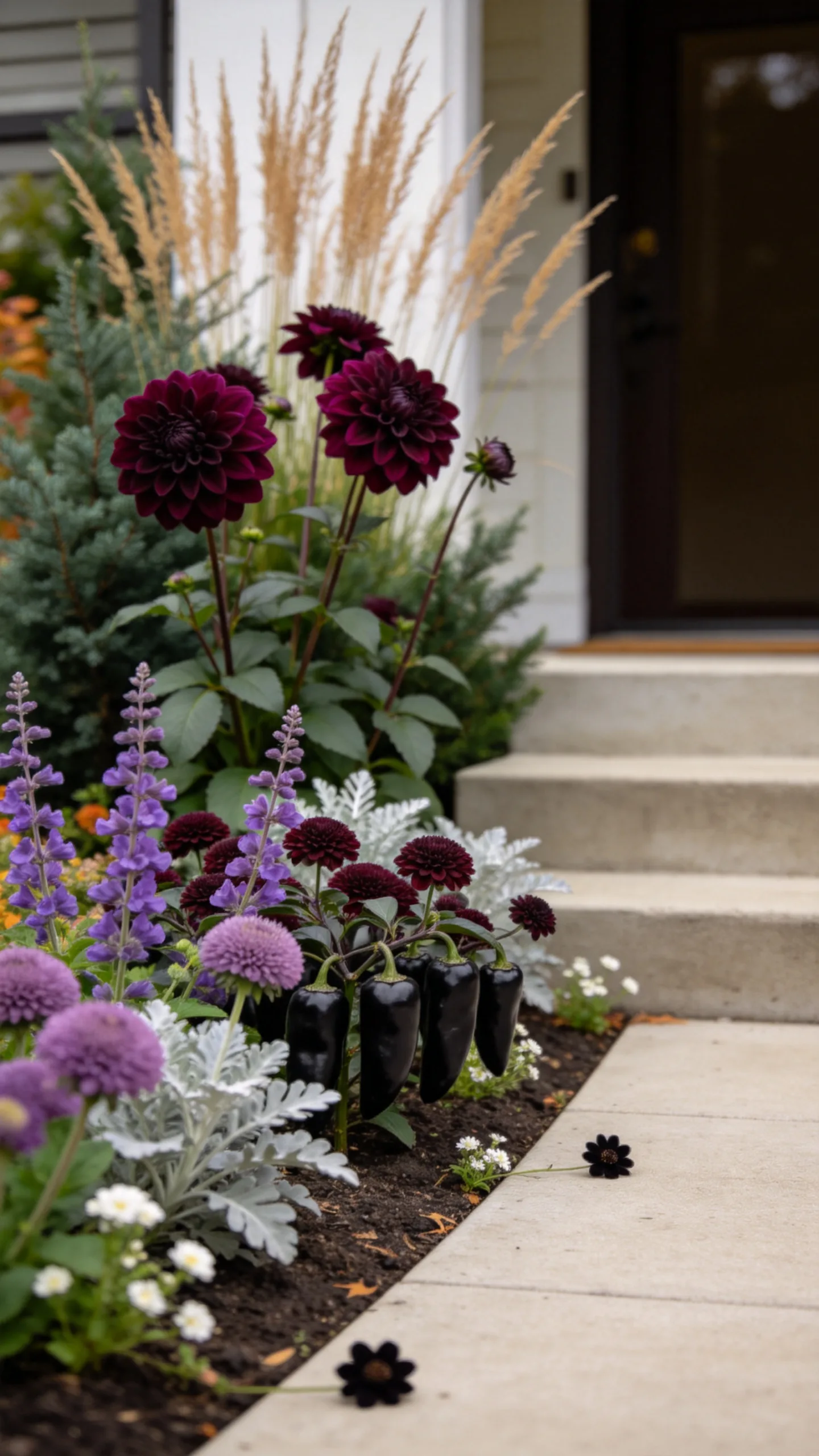
Build a concentrated flower palette around plum, wine, violet, and near-black shades. Dark tulips and purple alliums can provide spring color, while deep dahlias, salvias, scabiosa, and ornamental peppers can continue the theme later where growing conditions permit.
Mix these dark blooms with small amounts of silver or white so individual flowers remain visible. Plant seasonal color near steps, gates, and containers where it has the greatest impact, then use evergreen foliage or structural grasses to keep the beds defined when flowers are absent.
18. Recessed Gothic Bench Nook
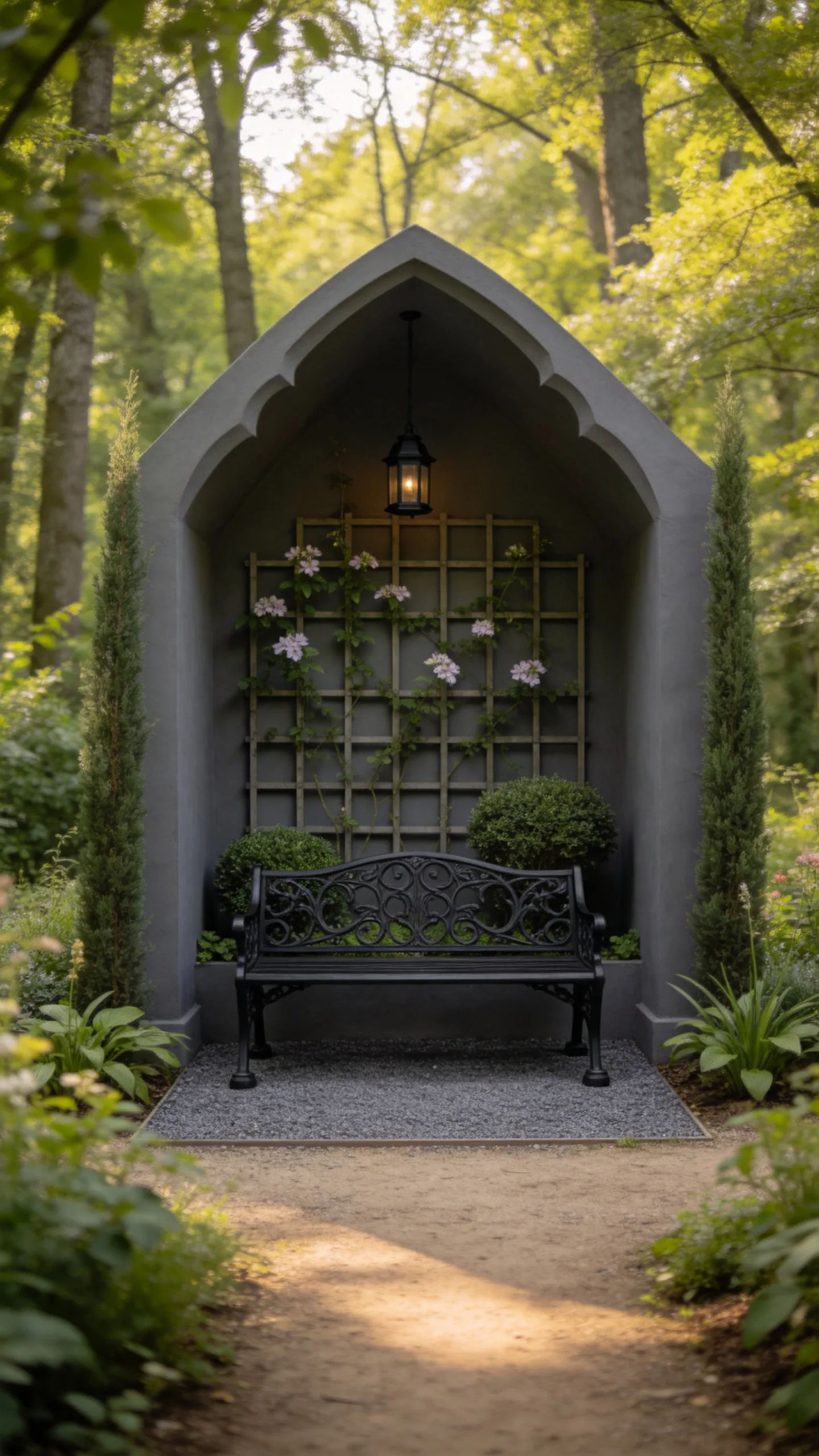
Create a small resting nook off the main path using a black iron bench backed by shrubs or a trellis. A shallow gravel pad is often sufficient, allowing the seating area to fit into a corner without consuming the center of the yard.
Frame the bench with tall, narrow plants and keep lower planting near the approach so the nook remains visible from the house. Add a clematis-covered trellis, two dark containers, or a single lantern for atmosphere. Confirm that the space has stable footing, comfortable shade at the intended time of day, and enough clearance for routine pruning and watering.