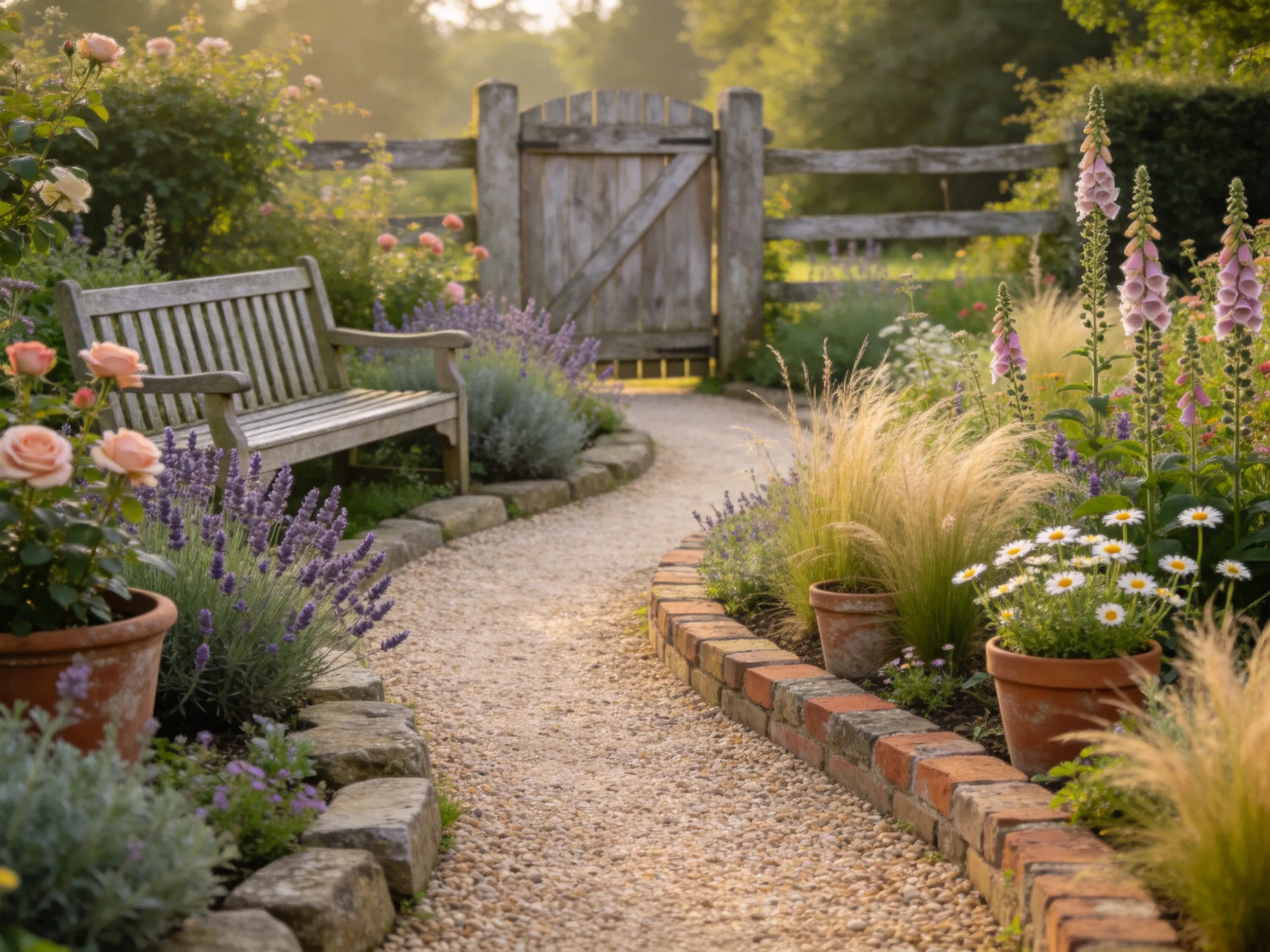
A rustic garden design blends weathered materials, informal planting, and practical country details to create an outdoor space that feels welcoming rather than overly polished. From gravel paths and split-rail fences to overflowing flowers and vintage containers, these ideas can be adapted to cottage gardens, suburban yards, patios, and compact courtyards.
1. Lay a Winding Pea Gravel Garden Path
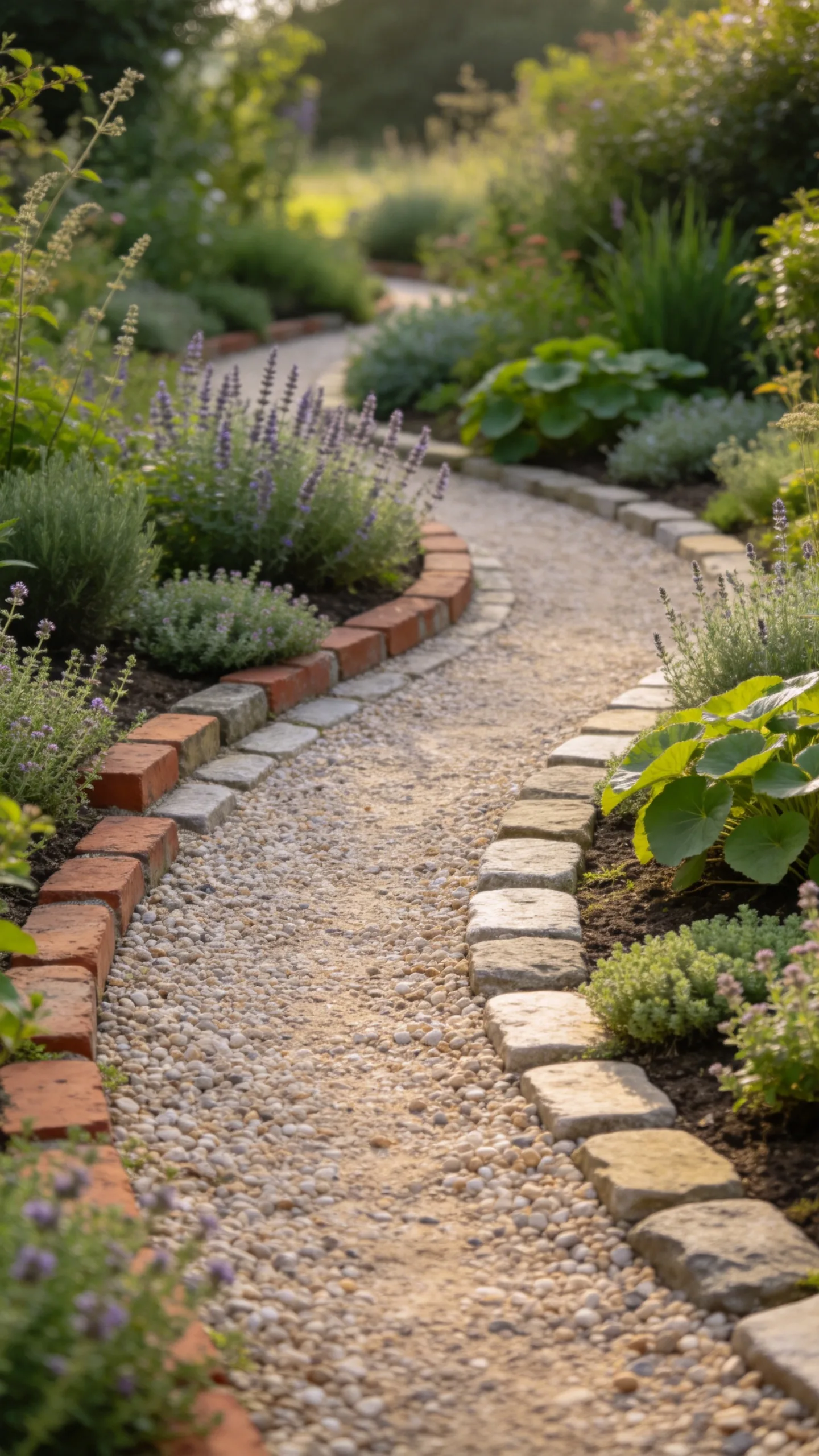
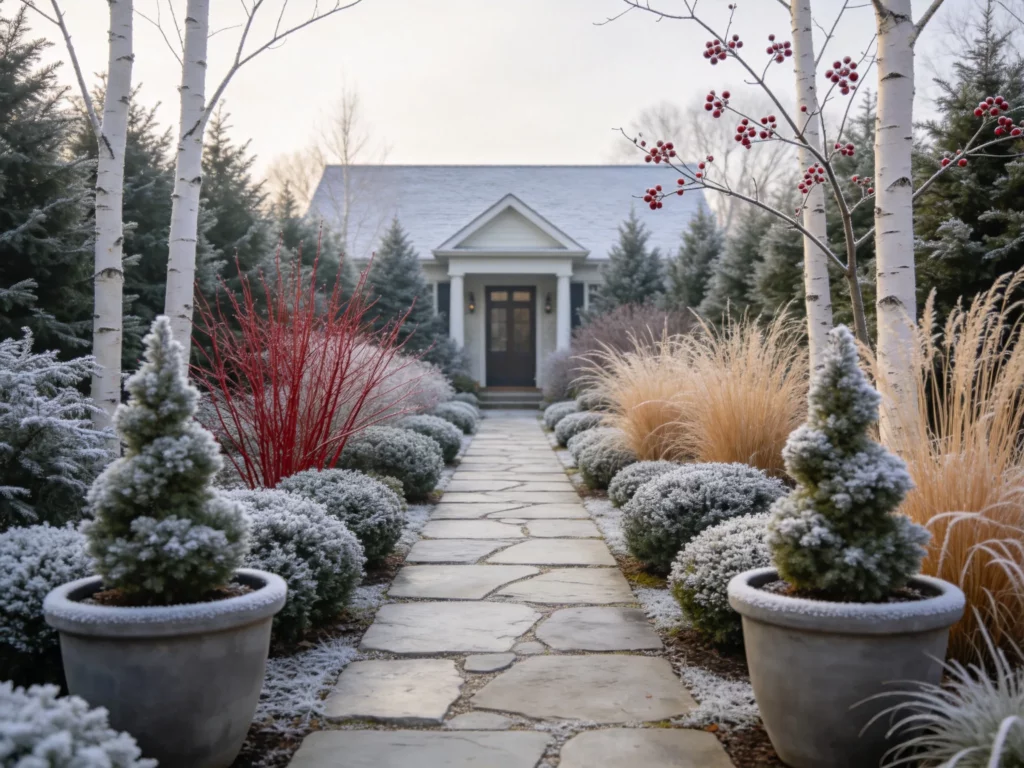
Create an informal walkway with compacted pea gravel edged by reclaimed bricks, fieldstones, or untreated timber. A gently curving route feels more natural than a perfectly straight path and can make a small garden appear deeper by revealing the space gradually.
Lay landscape fabric beneath the gravel where weeds are persistent, and use a solid compacted base in frequently traveled areas. Soften the edges with creeping thyme, catmint, lady’s mantle, or low-growing sedum suited to the available sunlight.
2. Frame the Garden With a Split-Rail Fence
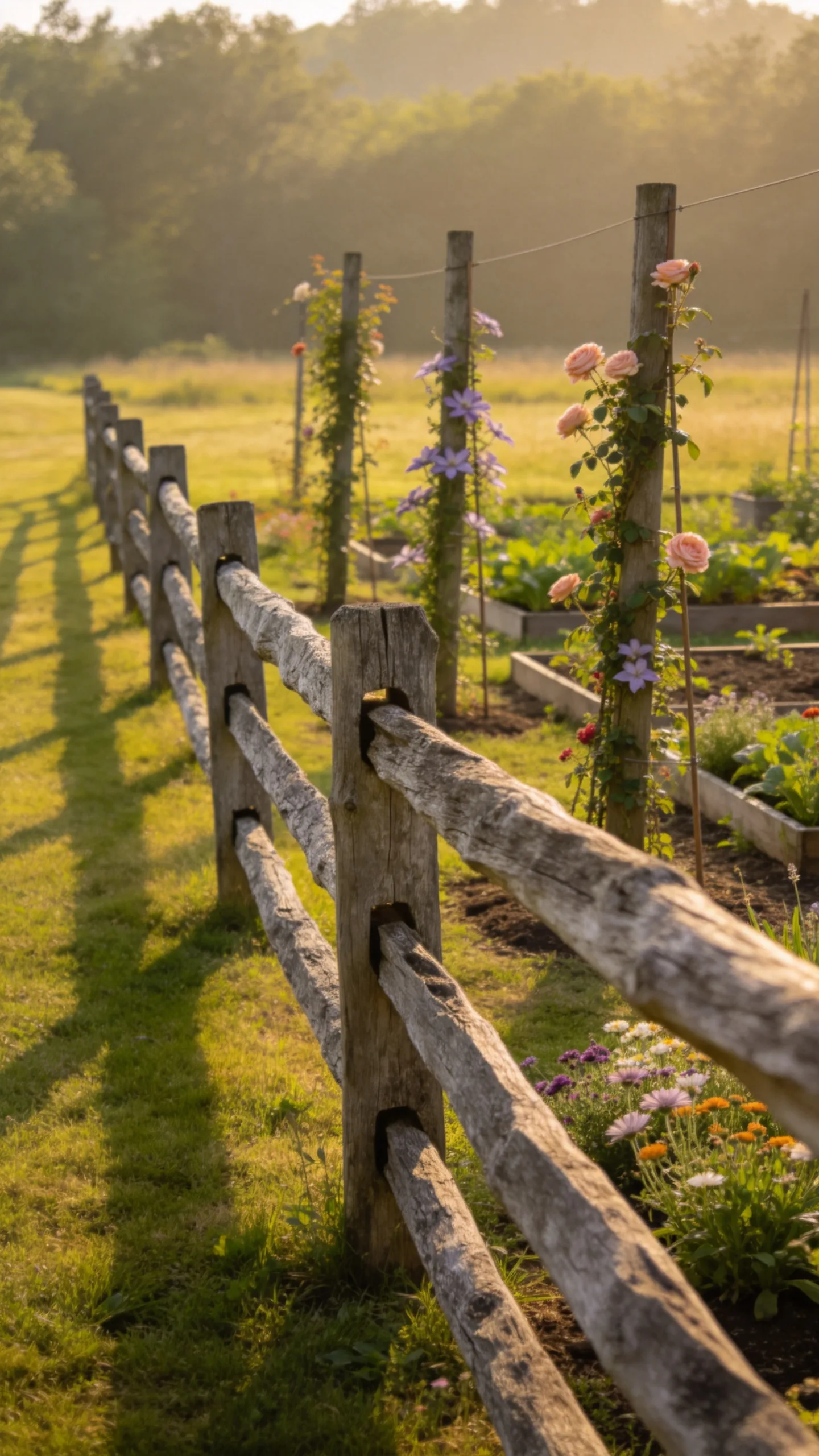
A split-rail fence provides a simple country boundary without making the garden feel closed in. Use it to define a vegetable plot, separate a lawn from planting beds, or create a rustic backdrop along the edge of the yard.
Plant rambling roses, clematis, sweet peas, or native flowering vines near selected posts rather than covering every rail. Check whether the chosen vine needs tying or a finer wire support, and leave enough open fence visible to preserve its weathered character.
3. Turn a Galvanized Stock Tank Into a Planter
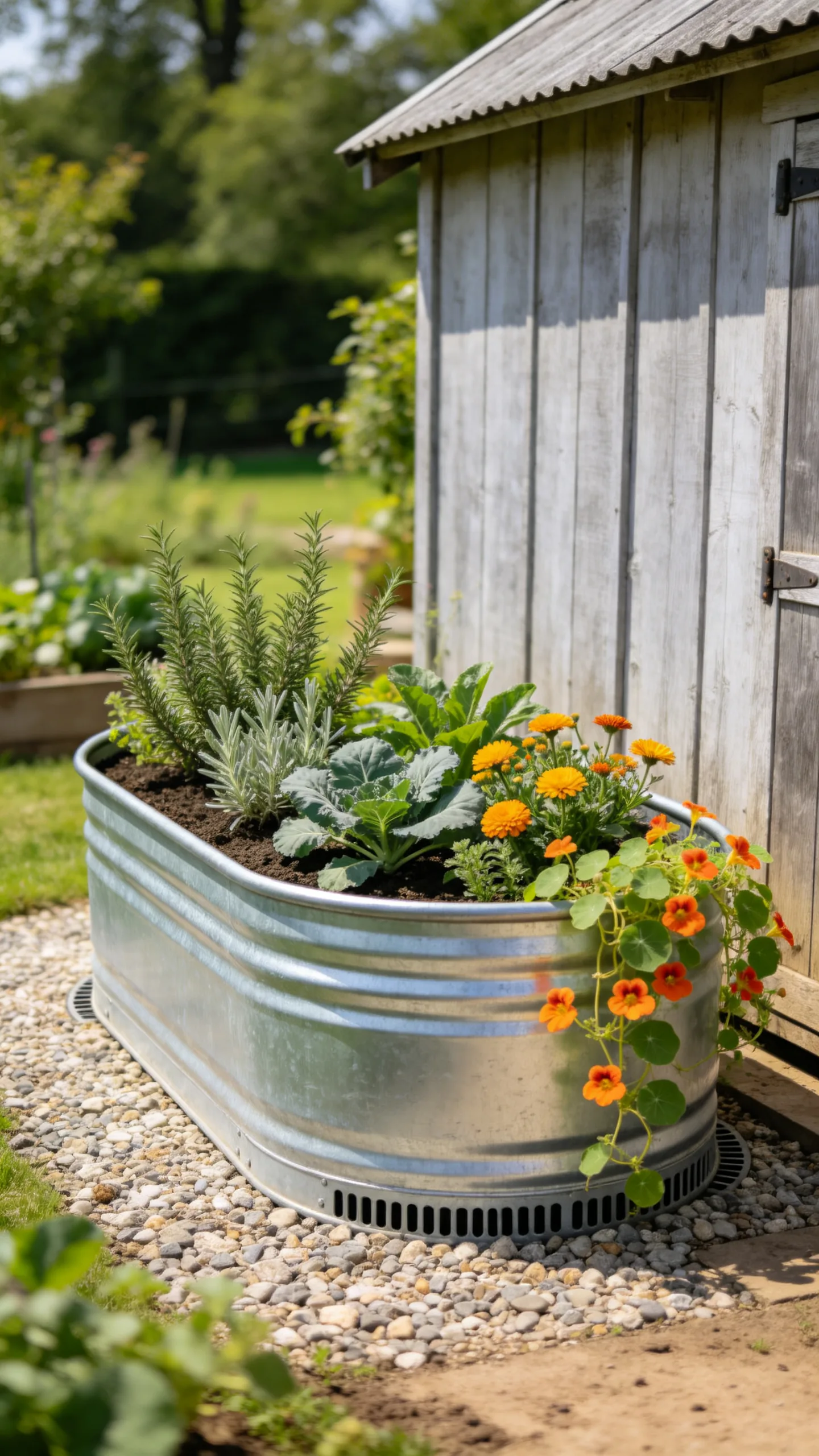
A galvanized stock tank makes a bold raised planter for herbs, flowers, or compact vegetables. Its elevated height reduces bending, while the metal surface introduces the practical farmhouse texture associated with rustic garden design.
Drill adequate drainage holes and place the tank on gravel or pavers before filling it. For a deep tank, use a lightweight filler layer only if it will not impede drainage, then add quality planting mix and choose plants with similar moisture and sun requirements.
4. Build Raised Beds From Reclaimed Timber
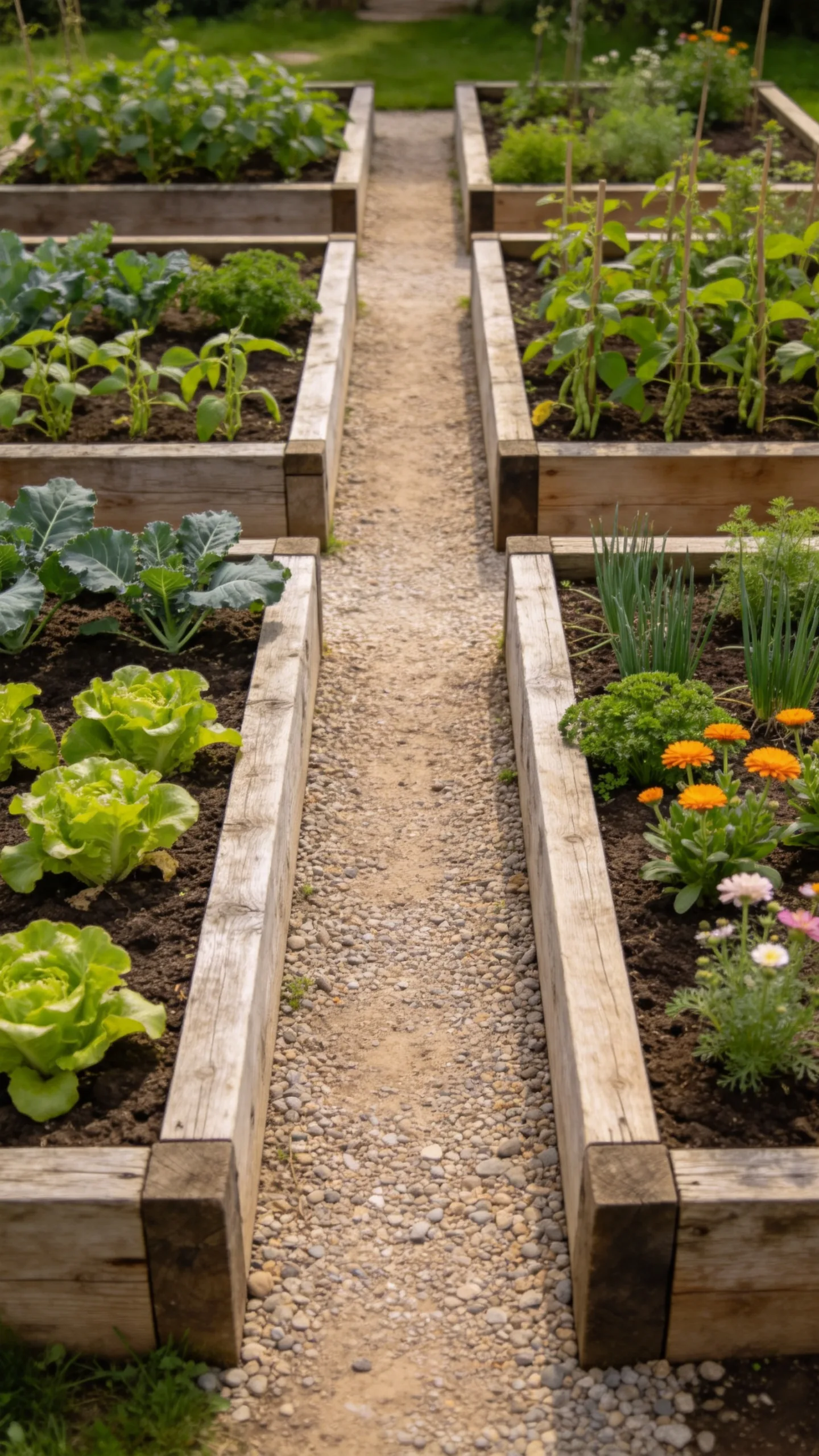
Use thick reclaimed boards or naturally rot-resistant lumber to construct rectangular beds for vegetables, cutting flowers, or culinary herbs. Raised beds organize an informal garden and make soil improvement easier, particularly where the native ground is compacted or poorly drained.
Avoid wood treated with questionable chemicals when growing edible plants. Keep beds narrow enough to reach the center from either side, and leave gravel, bark, or stepping-stone paths between them for convenient watering and harvesting.
5. Plant an Overflowing Cottage-Style Border
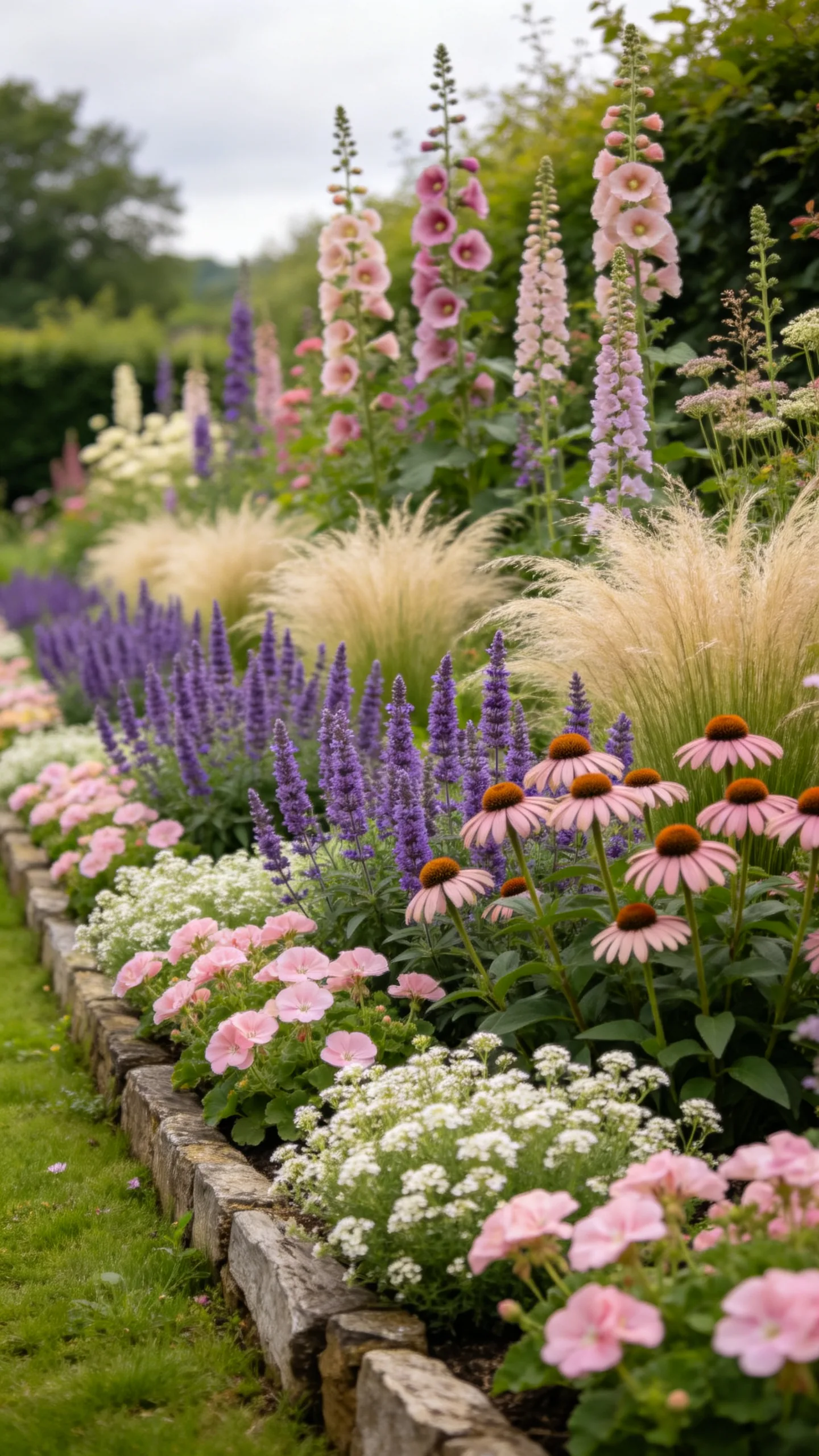
Combine plants of different heights to create a full border that looks spontaneous but remains manageable. Place taller hollyhocks, foxgloves, delphiniums, or ornamental grasses at the back, medium-height coneflowers and salvias in the middle, and hardy geraniums or alyssum near the edge.
Choose varieties suited to your local climate, light, and soil rather than relying on appearance alone. Repeating three or four key plants through the border gives the arrangement rhythm, while a few self-seeding annuals can supply the relaxed country look.
6. Install a Weathered Wooden Garden Gate
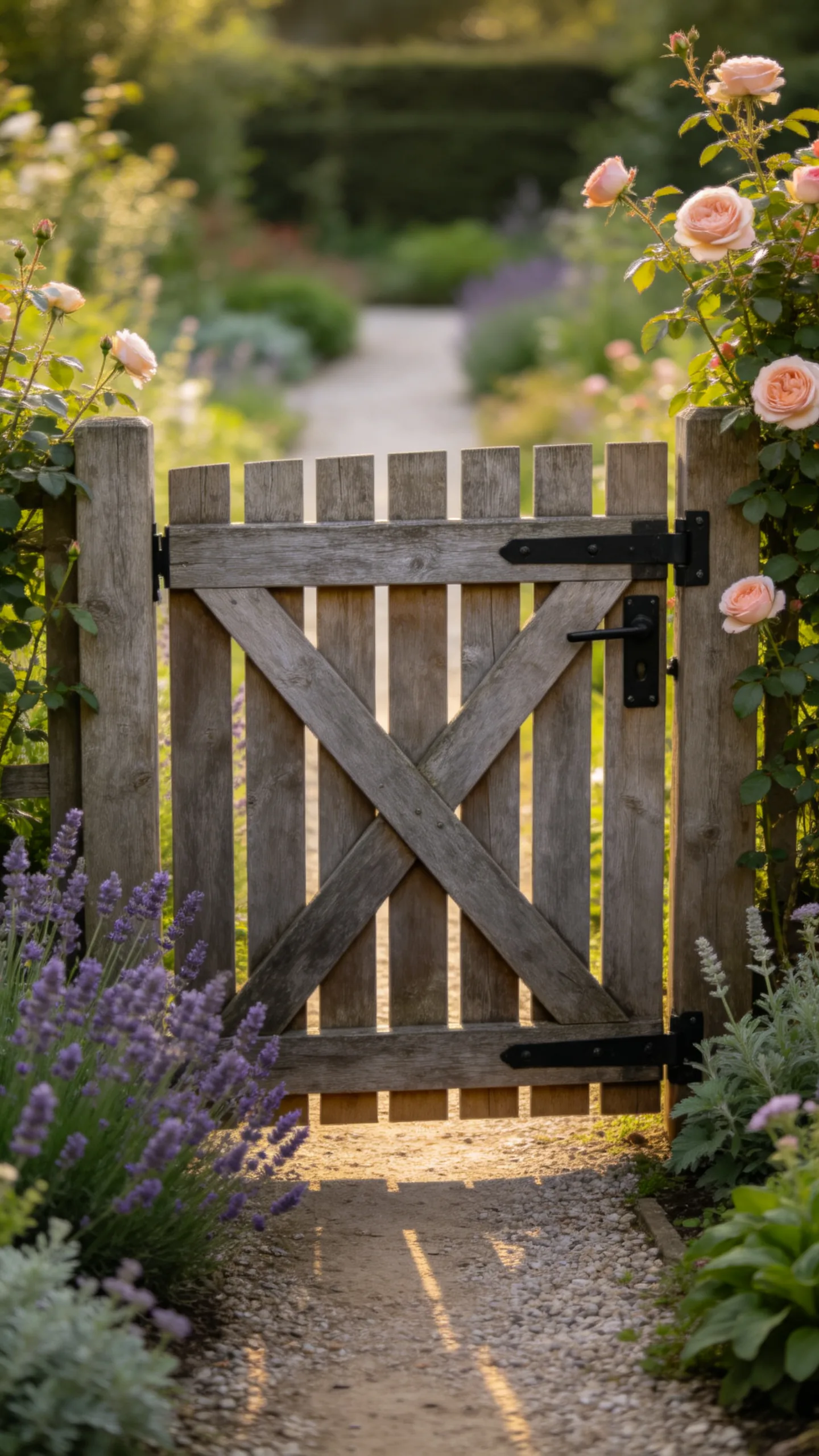
A simple wooden gate can turn an ordinary entrance into a charming focal point. Choose vertical planks, cross-bracing, black iron hinges, and a latch that can be operated easily from both sides.
Allow the wood to weather naturally, or apply an exterior stain in muted brown, gray, or faded green. Flank the entrance with lavender, roses, nepeta, or clipped herbs, leaving enough clearance so wet foliage does not obstruct the gate.
7. Train Roses Over a Timber Arch
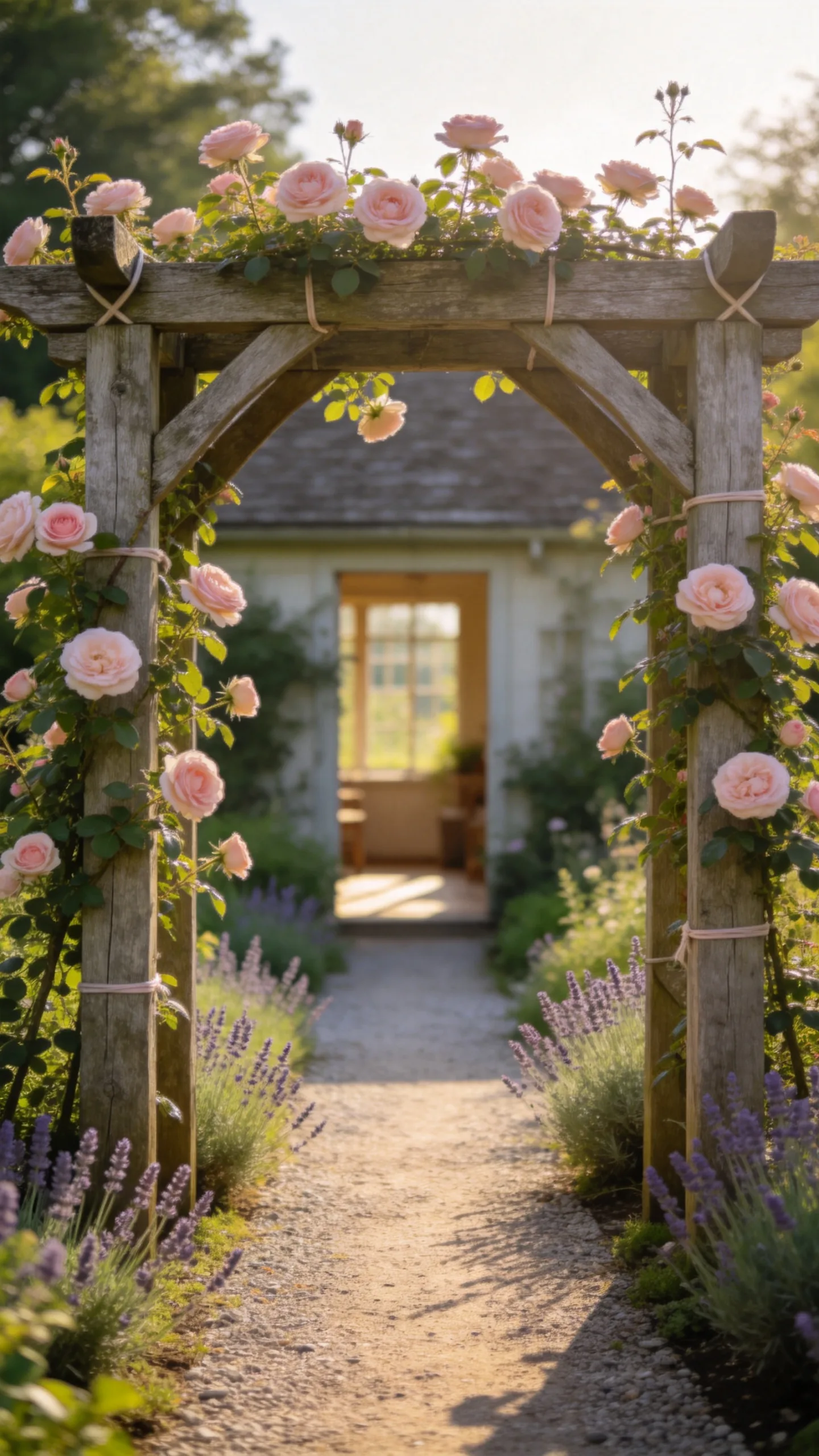
Position a timber arch over a path, gate, or transition between garden areas, then train climbing roses along its sides. The structure adds height without occupying much ground space, making it especially useful in a narrow yard.
Choose a rose with a mature size appropriate for the arch and a growth habit suited to your climate. Secure the main canes horizontally or diagonally with soft ties, provide at least six hours of sun where possible, and maintain airflow by pruning congested growth.
8. Create a Vintage Watering Can Display
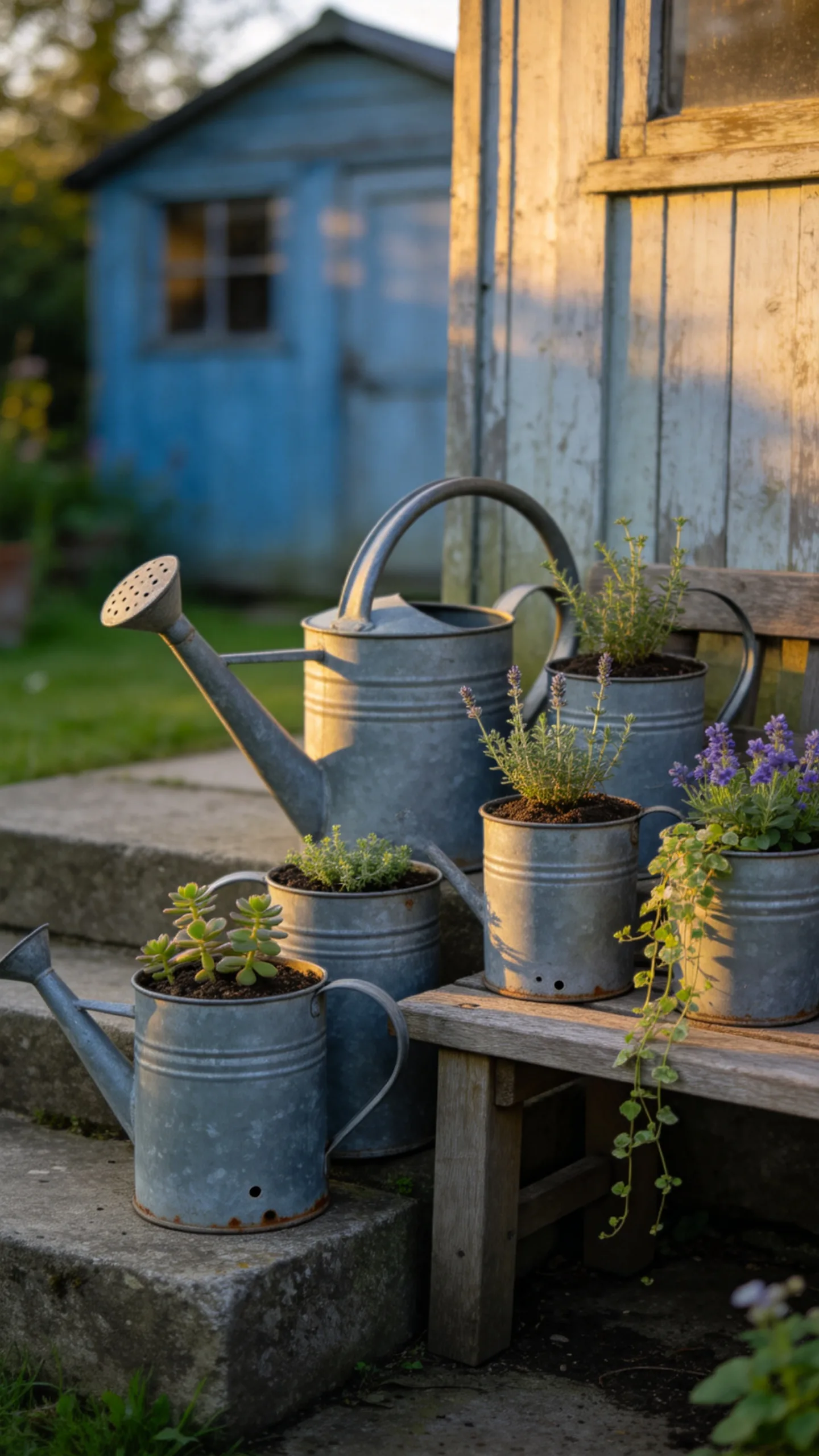
Collect galvanized watering cans in varied sizes and group them on stone steps, a wooden bench, or beside a shed. Keep some as decorative objects and convert others into planters by drilling drainage holes in their bases.
Use shallow-rooted plants such as sedum, trailing lobelia, thyme, or compact annuals. Metal containers heat and dry quickly in full sun, so check their moisture frequently or place them where they receive morning light and afternoon shade.
9. Edge Flower Beds With Fieldstones
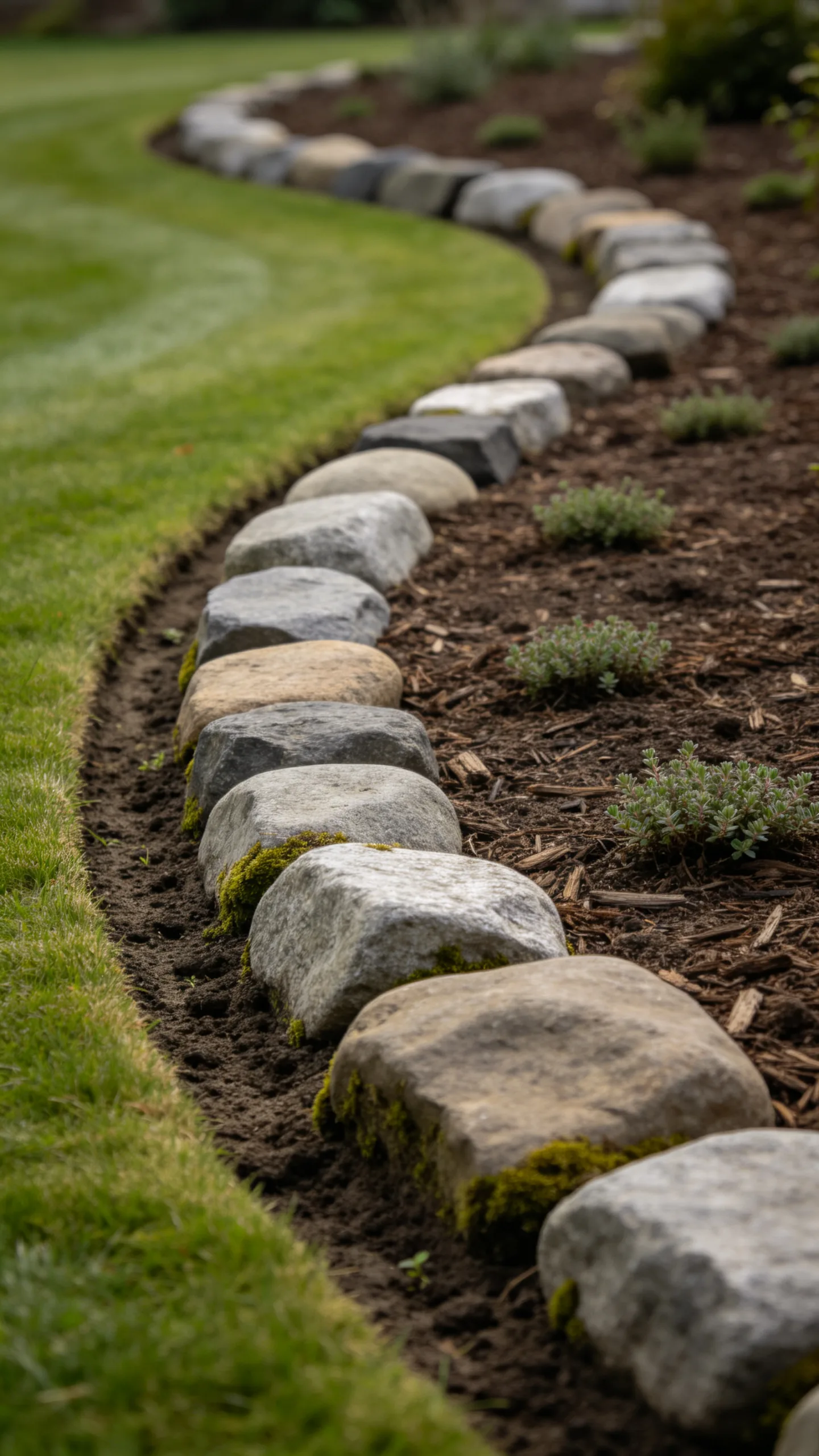
Define informal beds with locally available fieldstones in mixed shapes and muted colors. A low stone edge keeps soil and mulch off paths while creating a natural transition between planting areas and lawn.
Set larger stones partly into the ground so they remain stable during mowing and seasonal frost movement. Tuck small ground covers into wider gaps, but avoid aggressive spreaders that could overwhelm nearby perennials.
10. Add a Rustic Potting Bench
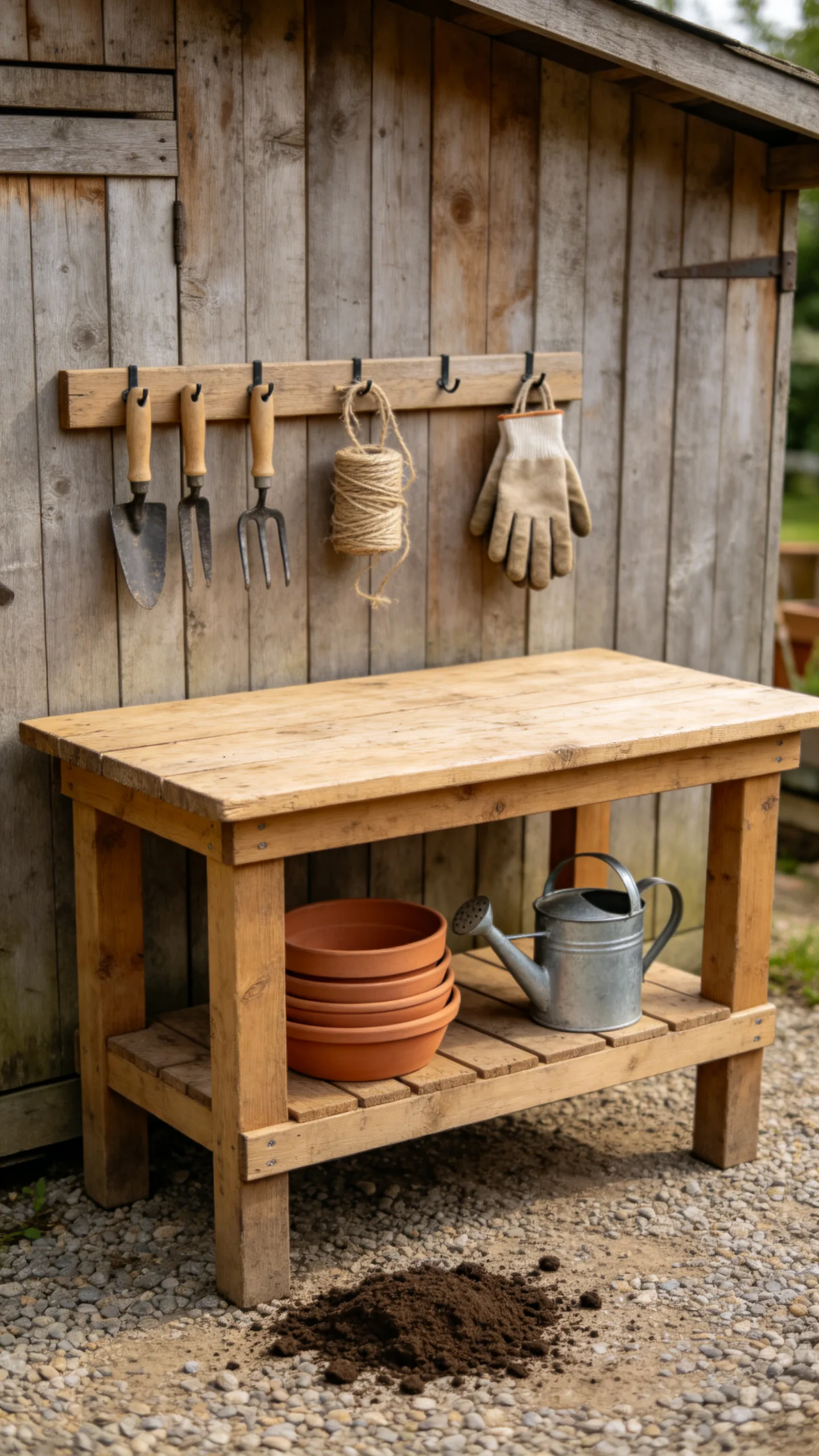
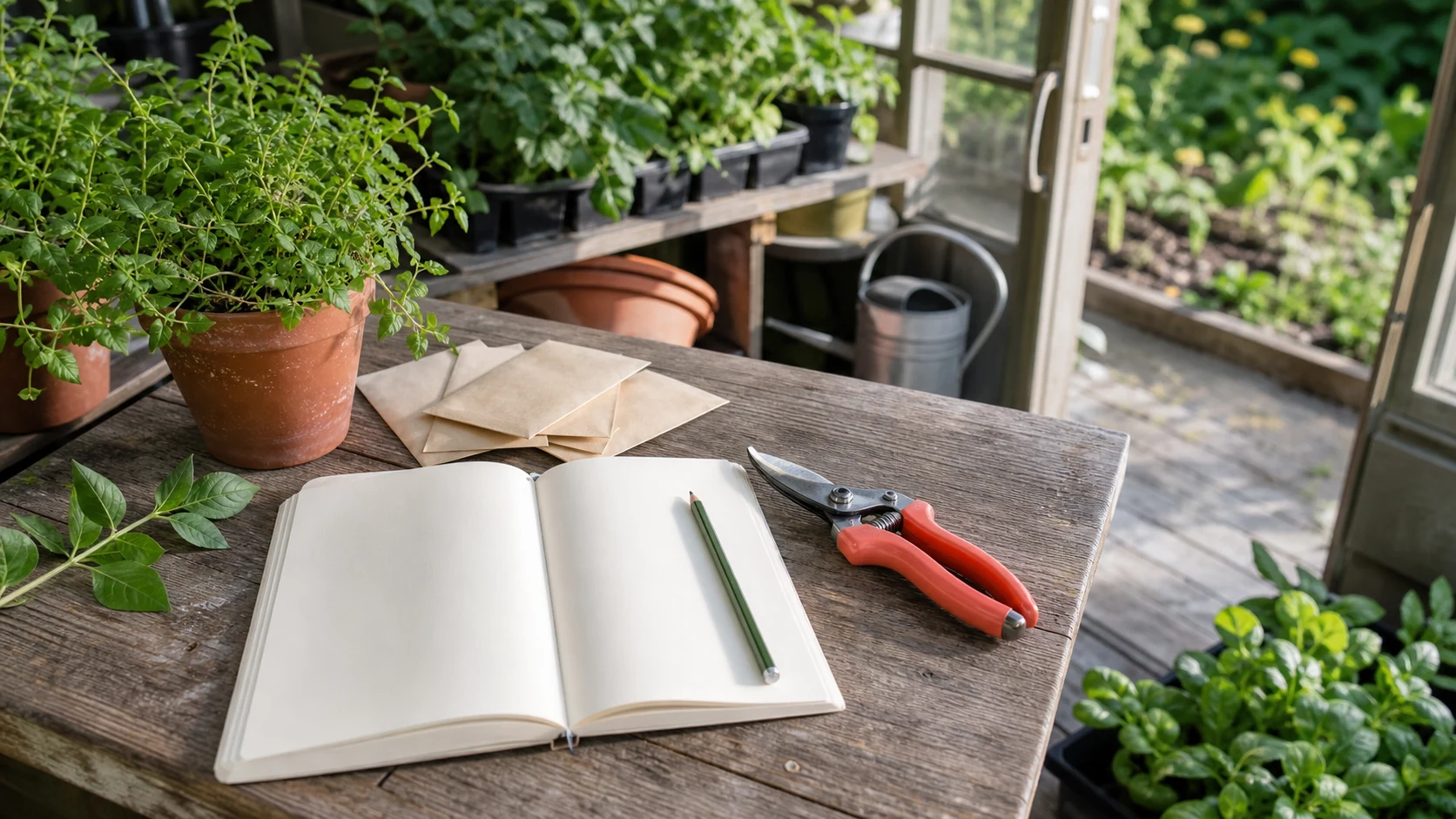
Place a wooden potting bench against a shed, fence, or sheltered wall to create a dedicated work area. Include a durable top, a lower shelf for pots, and hooks for hand tools, twine, gloves, and a small watering can.
Use exterior-grade wood or protect reclaimed boards with a low-sheen outdoor finish. A stone or gravel surface under the bench makes spilled soil easier to sweep up and prevents the legs from sitting in damp ground.
11. Plant Herbs in Aged Terracotta Pots
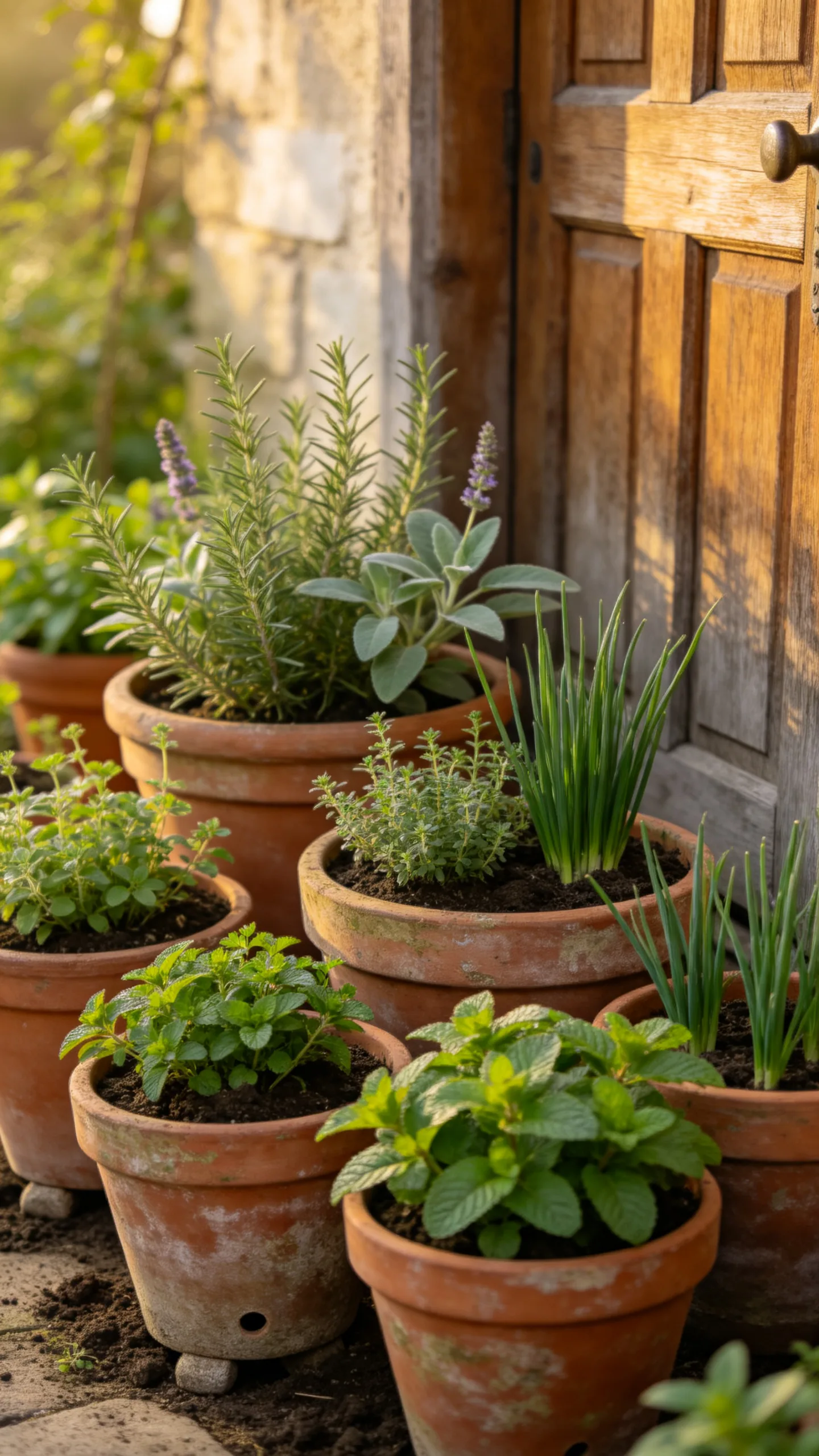
Group aged terracotta pots near the kitchen door for an attractive and useful herb garden. Rosemary, sage, thyme, oregano, parsley, chives, and mint offer varied foliage while keeping fresh ingredients within easy reach.
Match each herb to an appropriate container and watering routine. Keep moisture-loving mint in its own pot, provide excellent drainage for Mediterranean herbs, and use frost-resistant containers or move vulnerable pots under cover during cold weather.
12. Design a Reclaimed Brick Patio
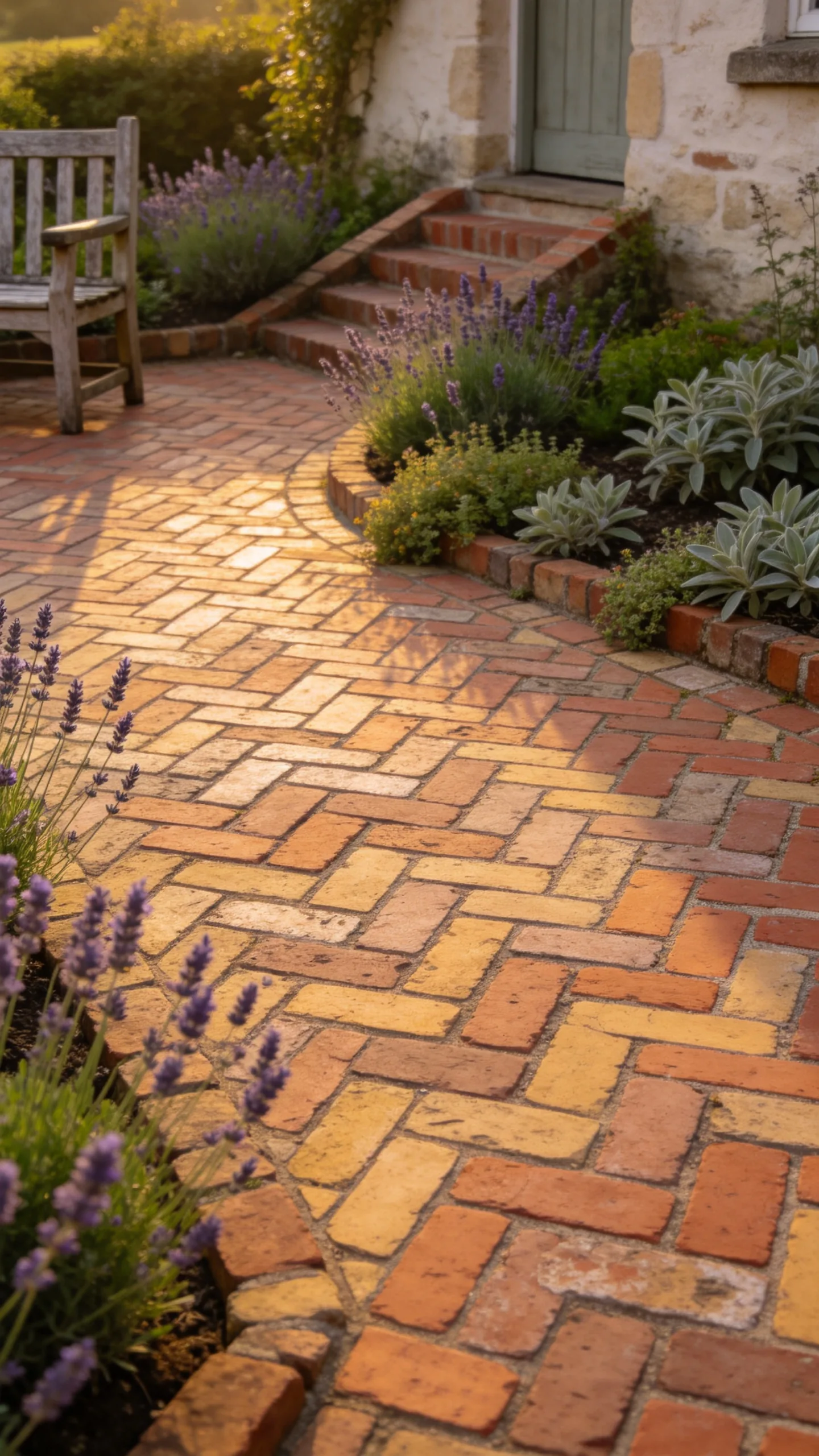
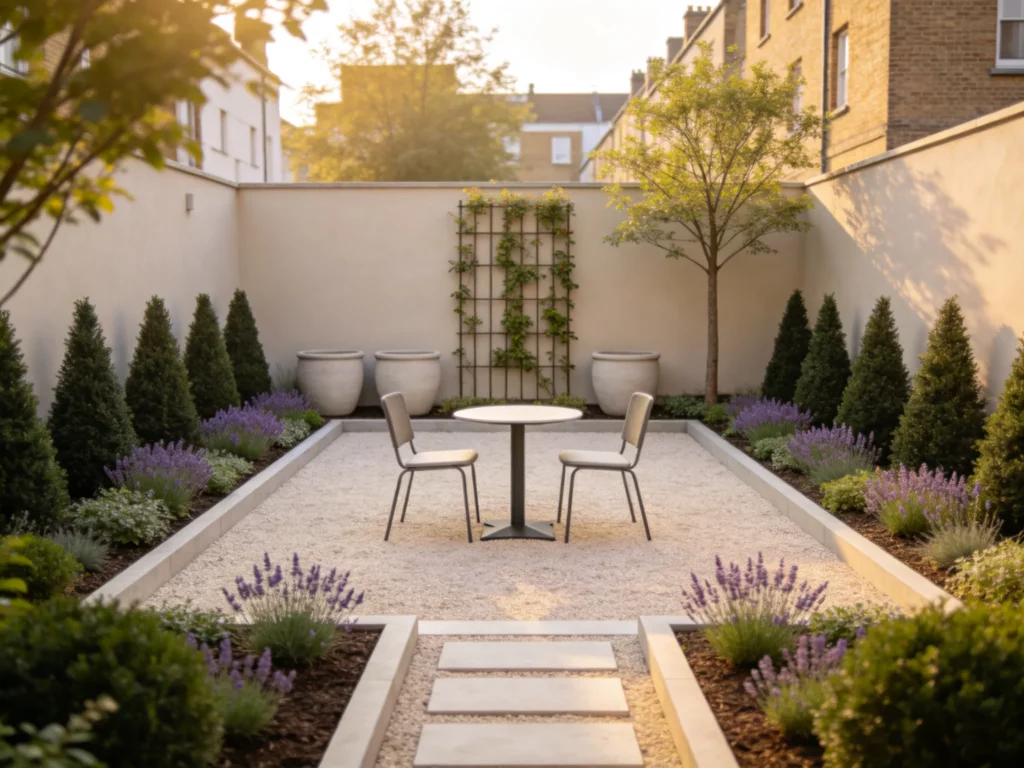
Lay reclaimed bricks in a basket-weave, herringbone, or simple running-bond pattern to create a patio with instant age and texture. An irregular edge can help the paved area blend into surrounding beds rather than looking like a formal platform.
Prepare a compacted base and slope the surface gently away from buildings for drainage. Fill perimeter beds with aromatic plants such as lavender, thyme, and sage, choosing species that tolerate reflected heat if the patio receives strong afternoon sun.
13. Build a Twig Trellis for Climbing Plants
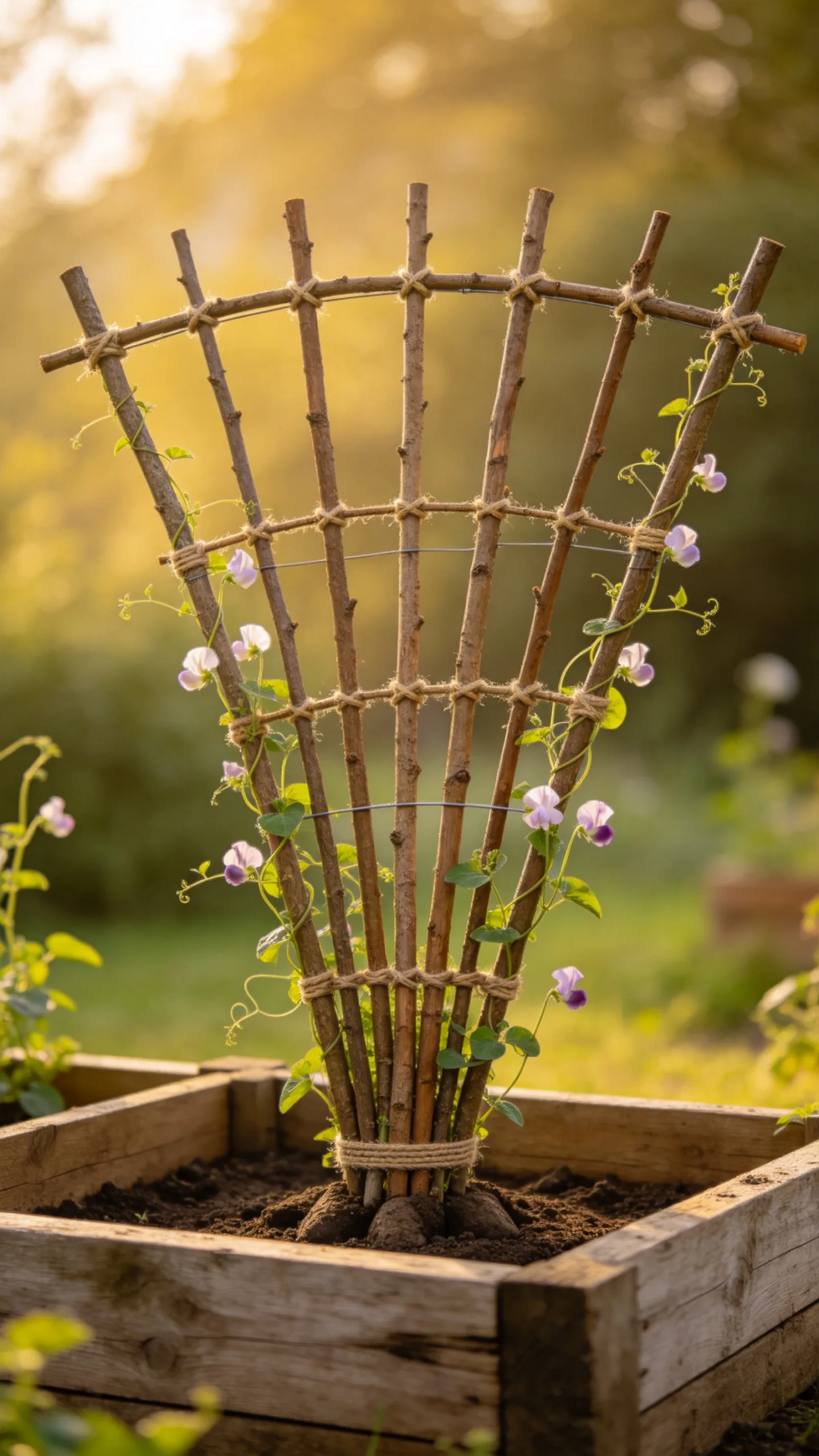
Make a lightweight trellis from straight pruned branches tied with natural jute or secured with discreet wire. Lean it against a wall or anchor it inside a raised bed to support peas, beans, sweet peas, or light annual vines.
Use sturdy hardwood branches and replace them when they begin to weaken. For heavier perennial climbers, build a stronger frame with thicker poles and metal fixings so the support can handle mature growth and windy conditions.
14. Create a Wildflower Meadow Corner
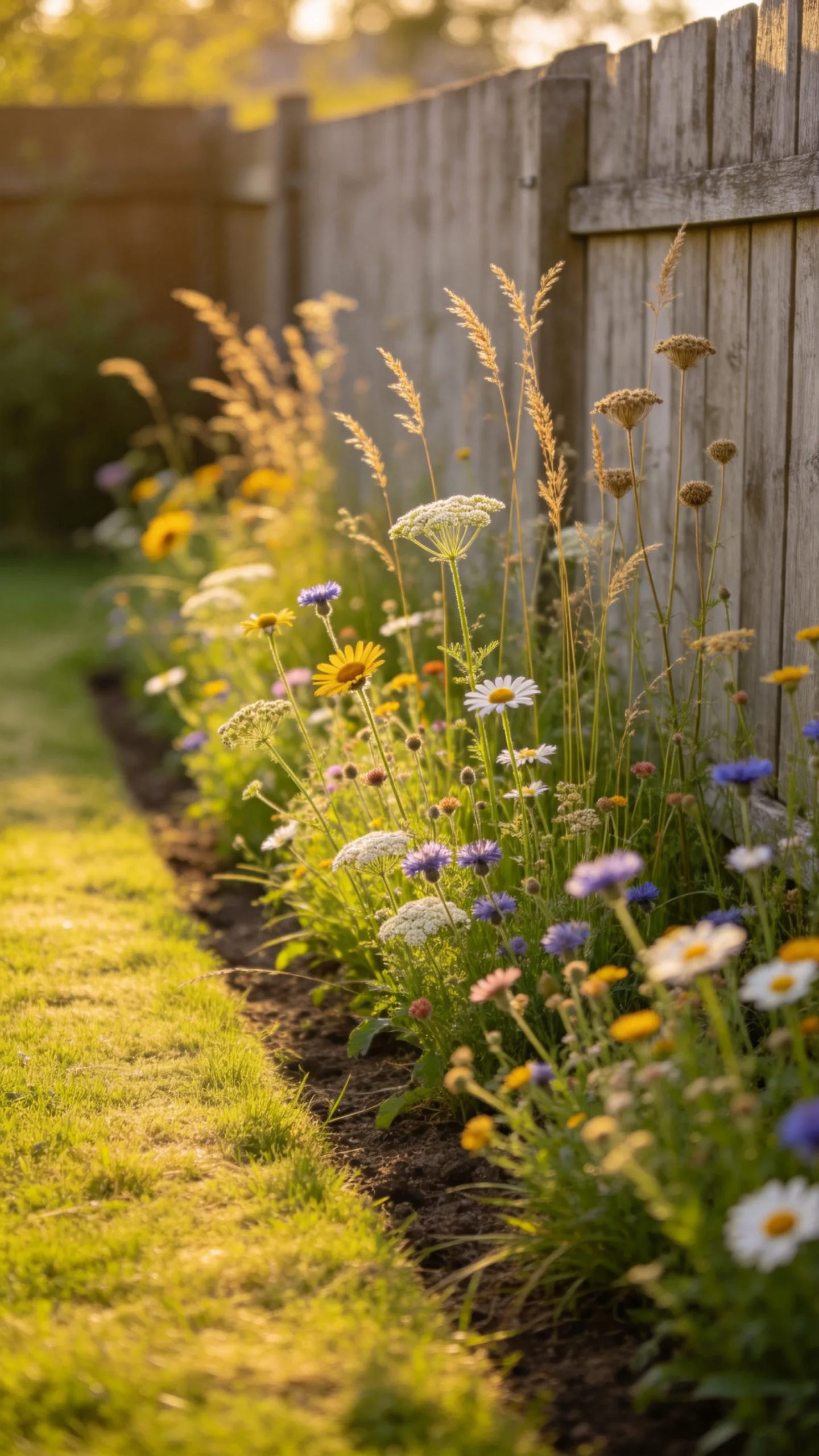
Convert a sunny, low-traffic section of lawn into a small meadow using wildflowers and grasses appropriate to your region. Even a narrow strip along a fence can provide seasonal color and reduce the amount of routine mowing.
Prepare the area by removing vigorous turf and reducing overly rich soil if recommended for the selected seed mix. Mow or cut the meadow at the correct seasonal time for its species, remove the clippings, and maintain a crisp path or edge so the planting looks intentional.
15. Use an Old Wheelbarrow as a Flower Planter
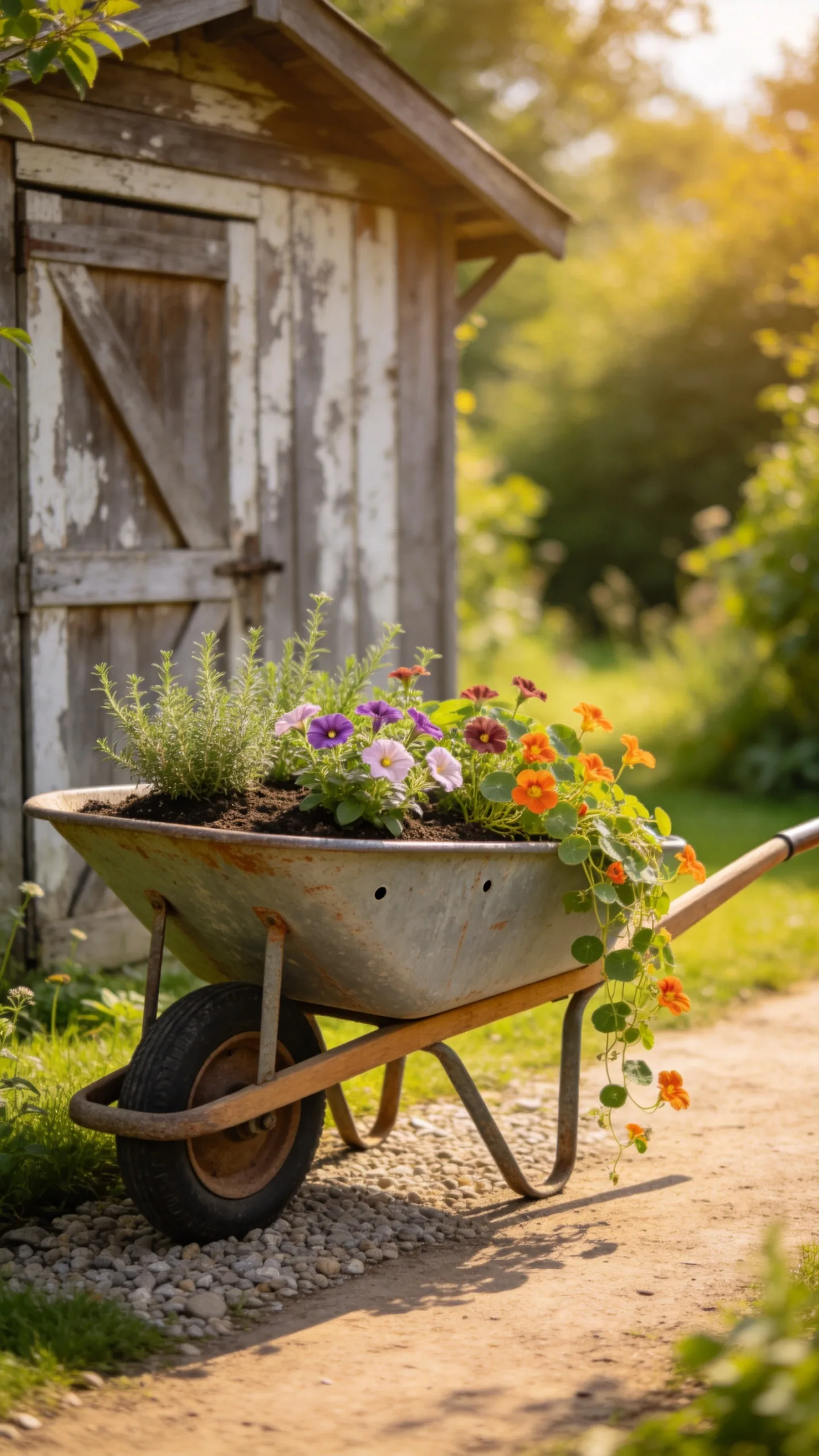
Repurpose a weathered wooden or metal wheelbarrow as a raised flower display. Position it near a gate, patio, or shed where its shape can be appreciated without blocking a working path.
Drill drainage holes, add a free-draining potting mix, and plant with trailing petunias, nasturtiums, calibrachoa, or compact herbs. Because the container is elevated and exposed, monitor it closely during hot or windy weather.
16. Make a Log-Edged Woodland Bed
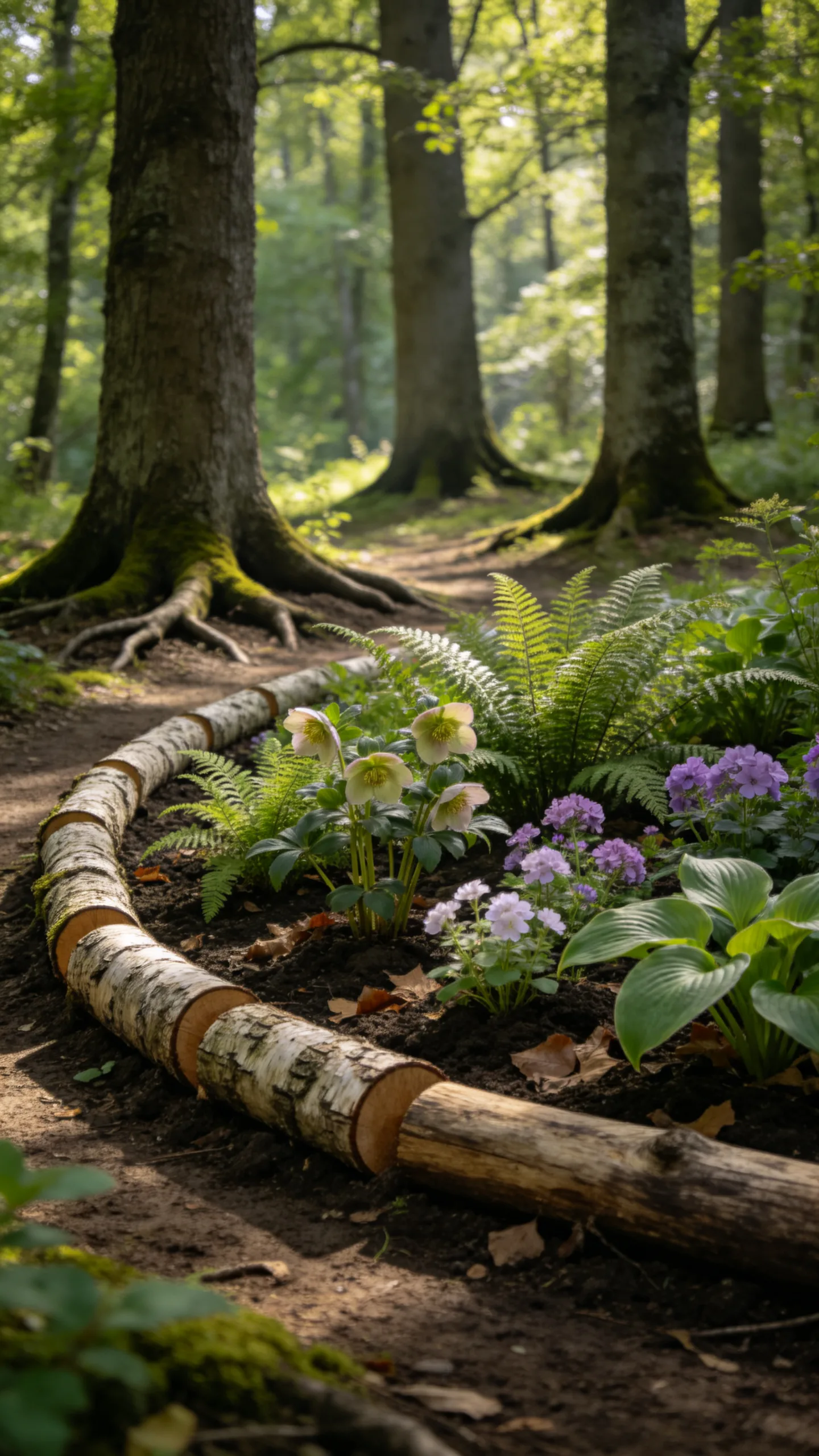
Use short logs or thick branches to edge a shaded bed beneath deciduous trees. The rough bark complements ferns, hellebores, hostas, woodland phlox, and other plants that tolerate lower light.
Avoid piling extra soil against tree trunks or cutting through major roots when preparing the bed. Select plants that can cope with dry shade if mature trees take most of the available moisture, and replenish the area with leaf mold rather than deep cultivation.
17. Add a Country Garden Bench Beneath a Tree
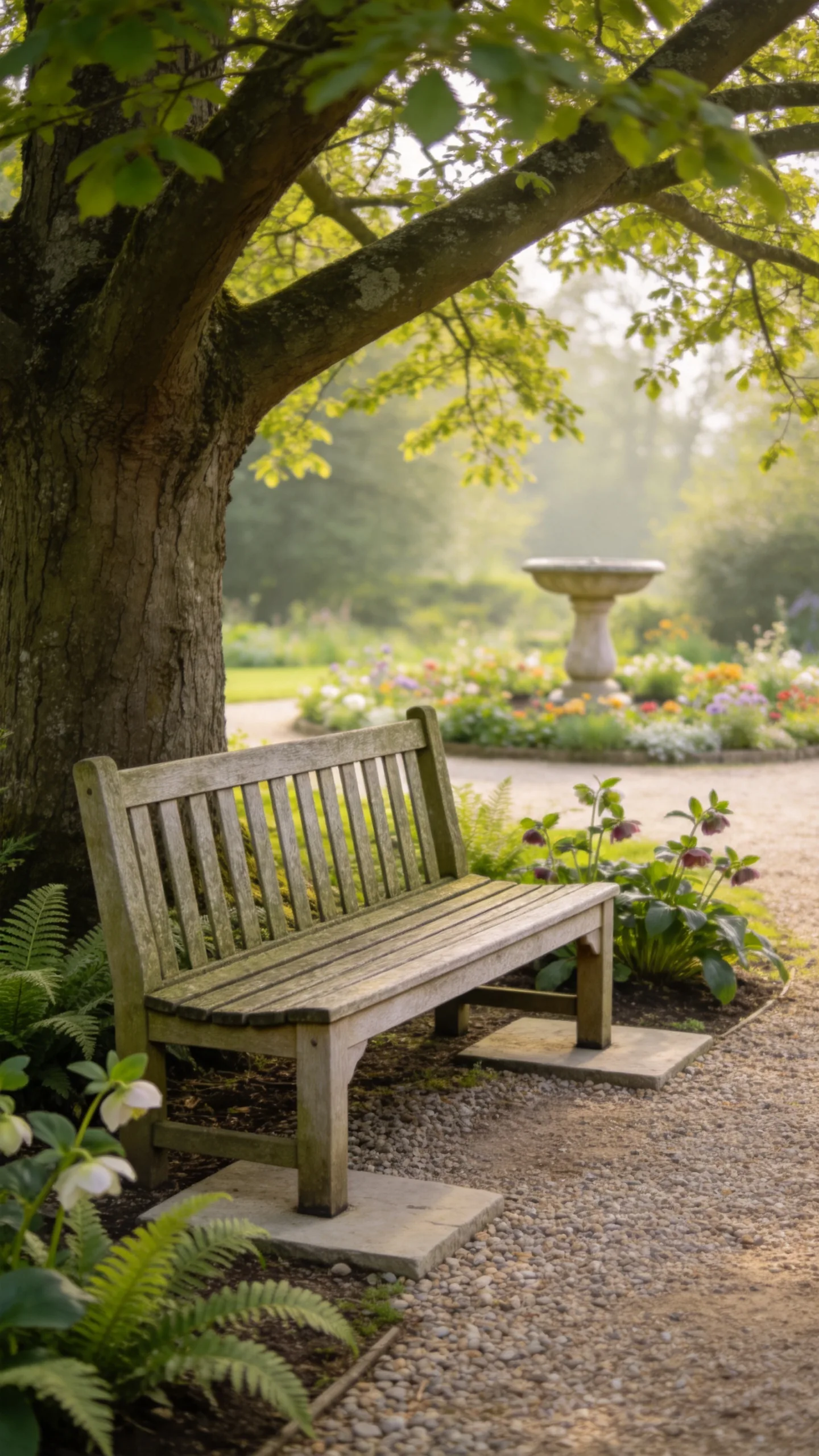
Place a simple slatted bench under a mature tree or beside a tall shrub to create a quiet resting point. Angle it toward a flower border, birdbath, vegetable garden, or another attractive view rather than positioning it without a visual purpose.
Set the legs on stone pads, bricks, or compacted gravel to reduce rot and wobbling. If the canopy creates dense shade, surround the seat with shade-tolerant plants and keep thorny or bee-heavy flowers away from the immediate sitting area.
18. Grow Flowers Along a Picket Fence
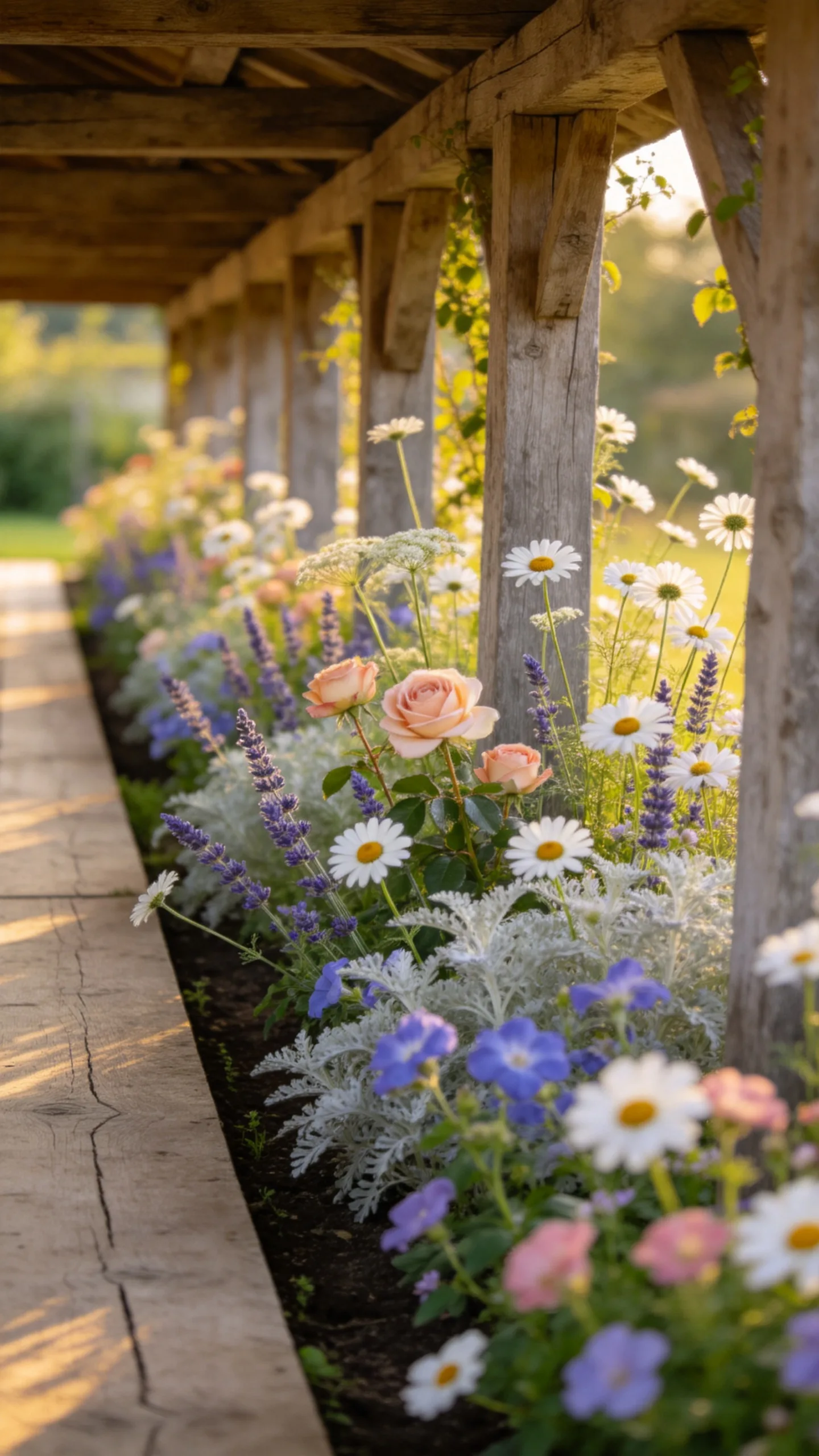
A low wooden picket fence offers structure while allowing flowers to spill through and soften its straight lines. Plant roses, daisies, phlox, salvia, cosmos, or compact hydrangeas along the inside, depending on climate and sun exposure.
Leave a narrow maintenance gap where needed so the fence can be repaired or painted without crushing plants. Repeat one flower color or foliage type along the run to keep the abundant planting visually connected.
19. Create a Barrel Planter Focal Point
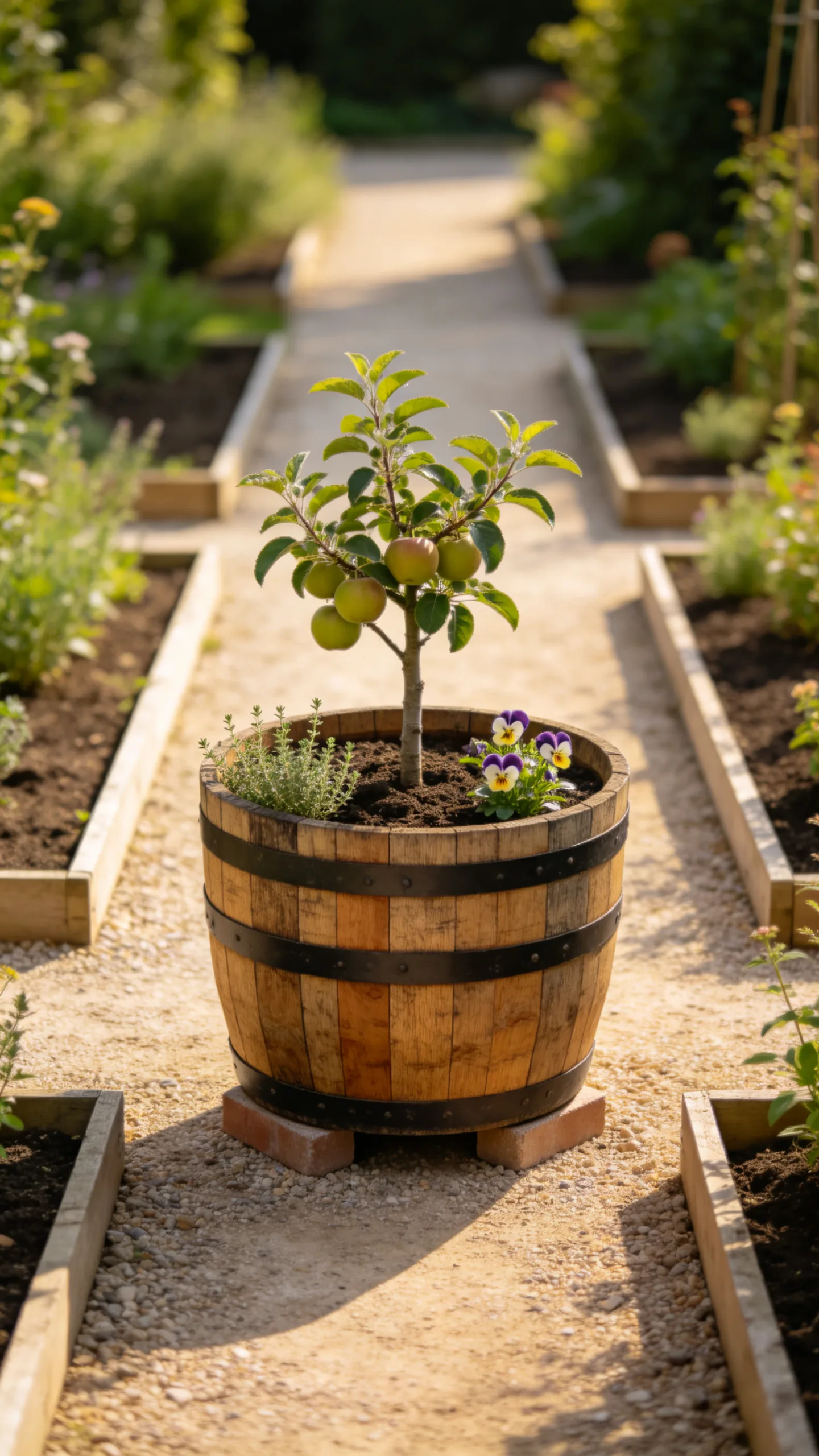
Use a half whiskey barrel as a deep container for a small shrub, dwarf fruit tree, mixed flowers, or ornamental grasses. Its scale works well at the end of a path, beside steps, or at the corner of a patio.
Add several drainage holes and elevate the barrel slightly on pot feet or bricks. Select a compact plant that can remain healthy in a container, refresh the upper layer of potting mix annually, and check whether the roots require winter protection in your climate.
20. Install a Simple Wooden Pergola
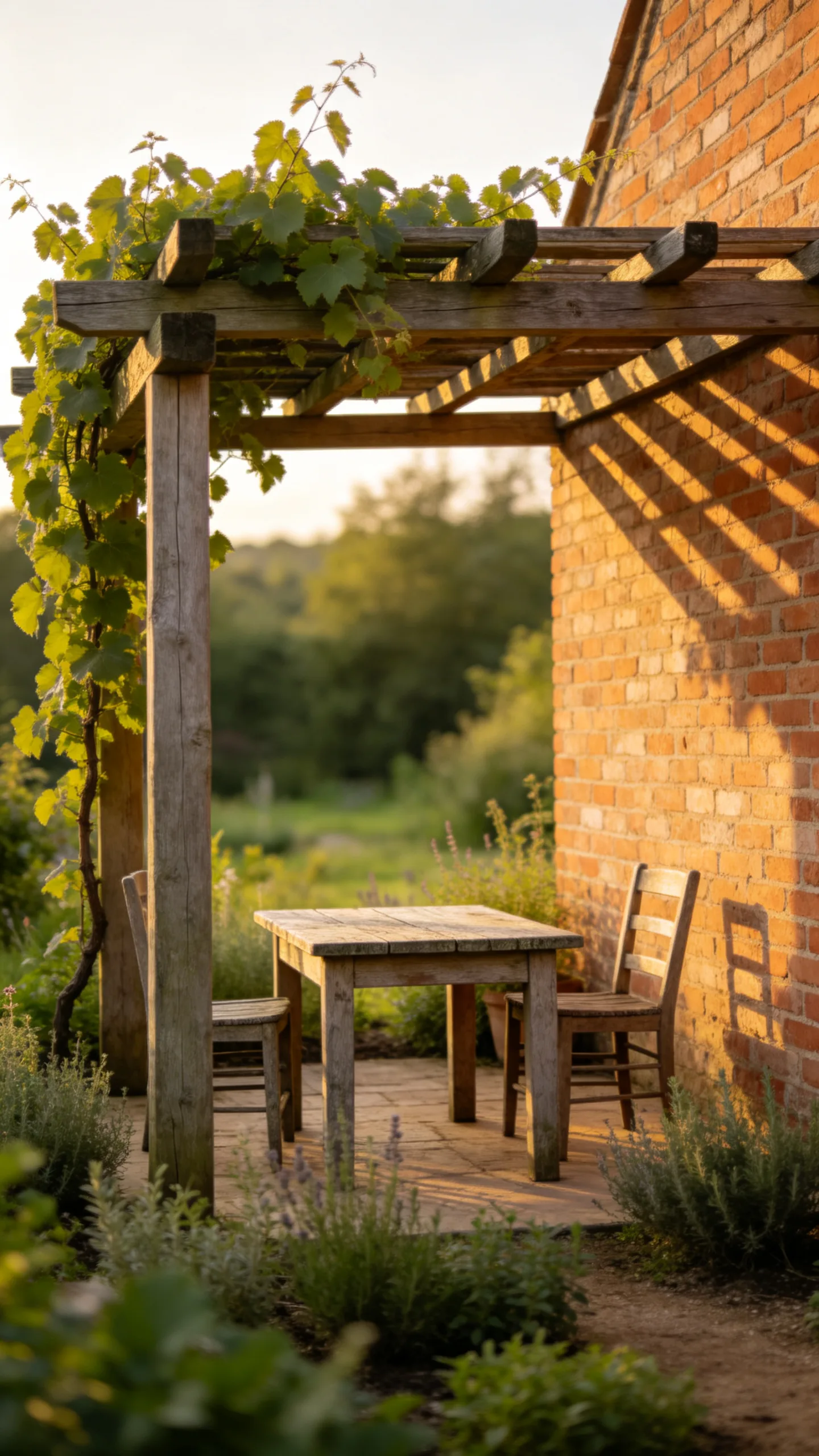
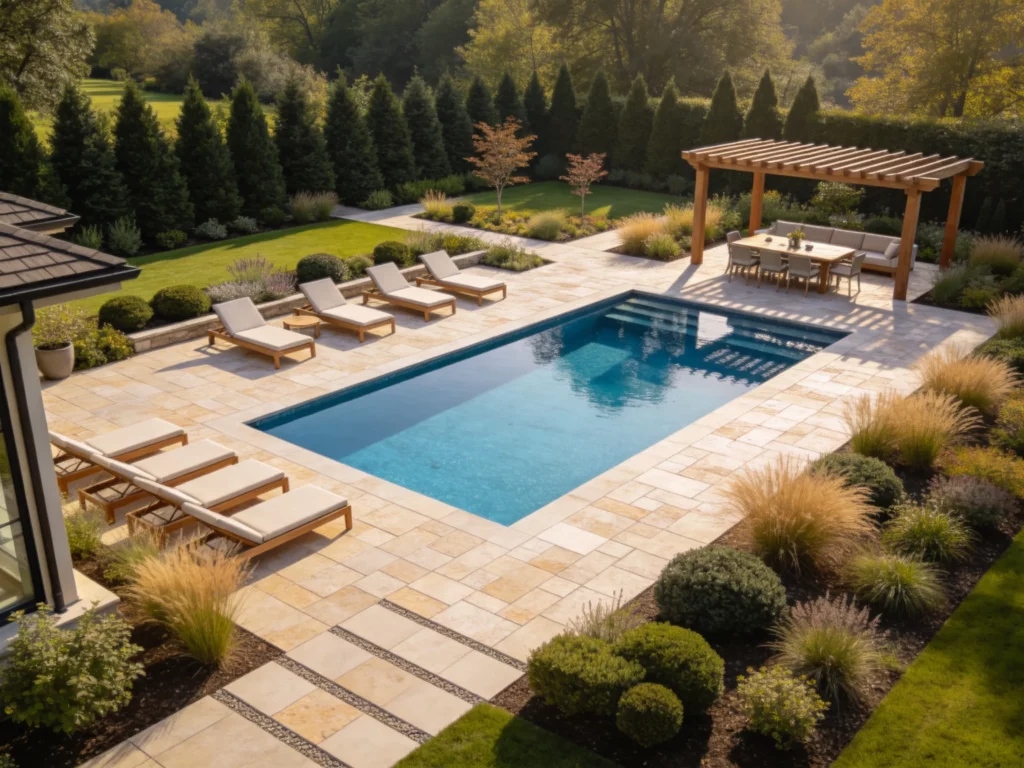
A wooden pergola can define an outdoor dining space, frame a walkway, or provide partial shade over a small patio. Leave the timber natural or stain it in a muted tone that coordinates with fences, sheds, and raised beds.
Train grapevines, climbing roses, honeysuckle, or wisteria only after considering mature weight and maintenance needs. Fast-growing vines may require frequent pruning, while a fabric shade panel can provide quicker seasonal cover without overwhelming the structure.
21. Arrange a Cluster of Rustic Birdhouses
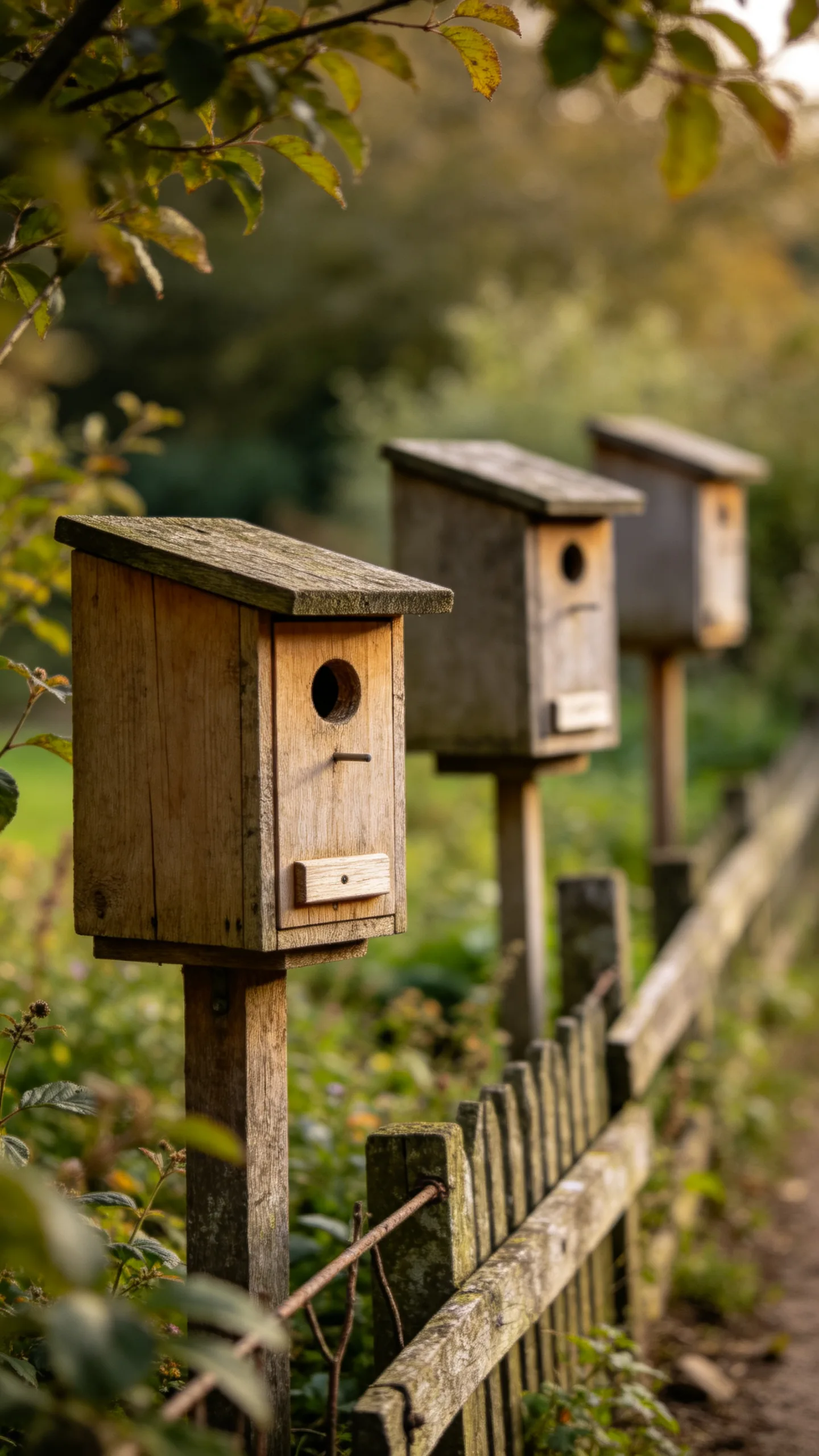
Mount several wooden birdhouses at appropriate heights around a quiet garden boundary rather than crowding them into one purely decorative display. Use unpainted wood or subdued exterior colors to complement the country setting.
Choose entrance-hole sizes and box designs suited to local cavity-nesting birds, and position houses away from heavy foot traffic and predator access. Make sure each box can be opened for cleaning at the recommended time of year.
22. Add a Stone Birdbath Among the Flowers
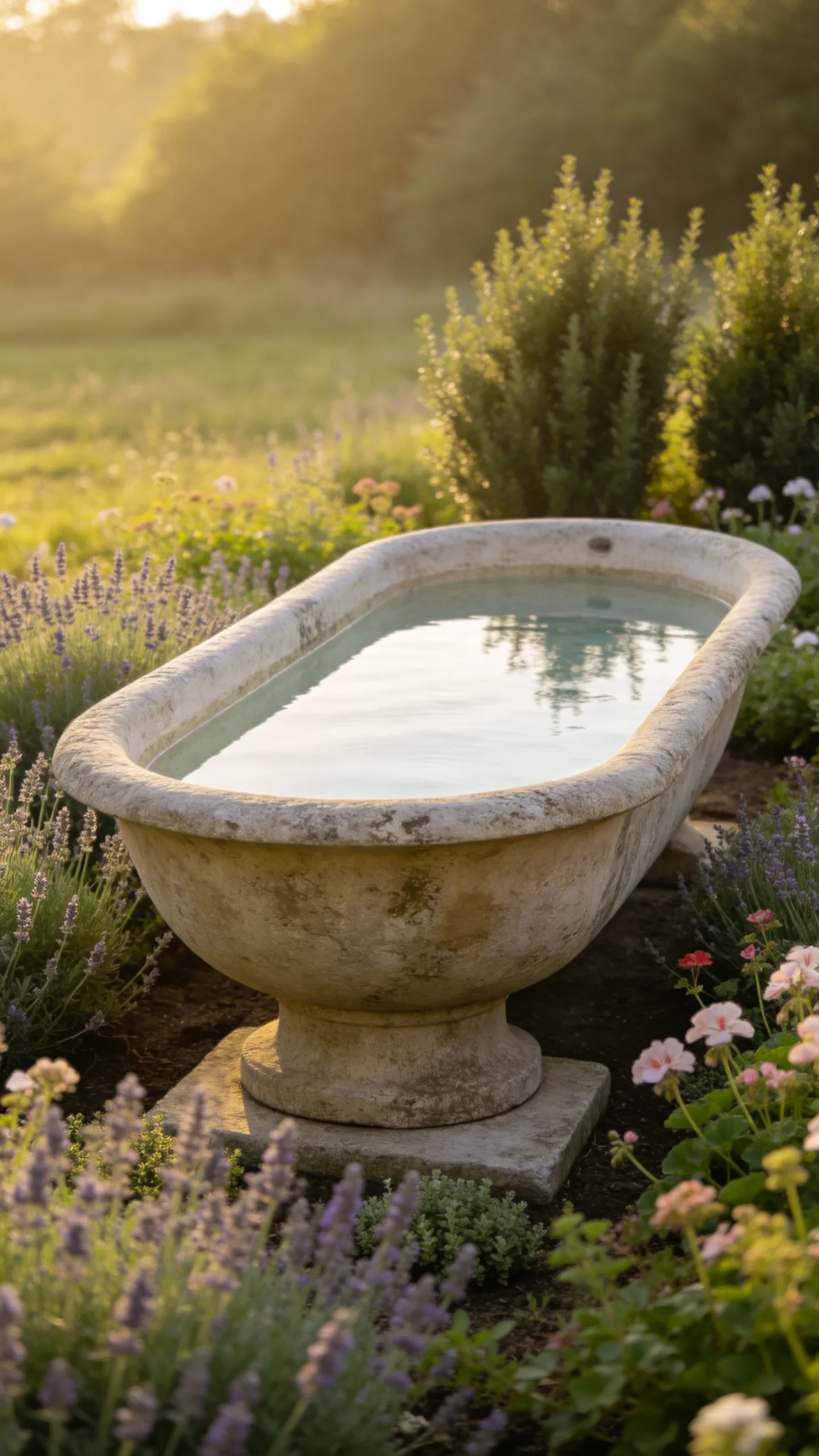
Place a shallow stone or concrete birdbath inside a planted bed where it can be seen from a window or garden seat. Surround it with low flowers and foliage so birds have nearby cover while keeping the basin visible.
Set the birdbath on a level base and choose a basin with gently sloping sides. Replace the water regularly, scrub away algae without harsh residues, and avoid placing dense shrubs so close that predators can hide beside the basin.
23. Plant a Kitchen Garden in Informal Rows
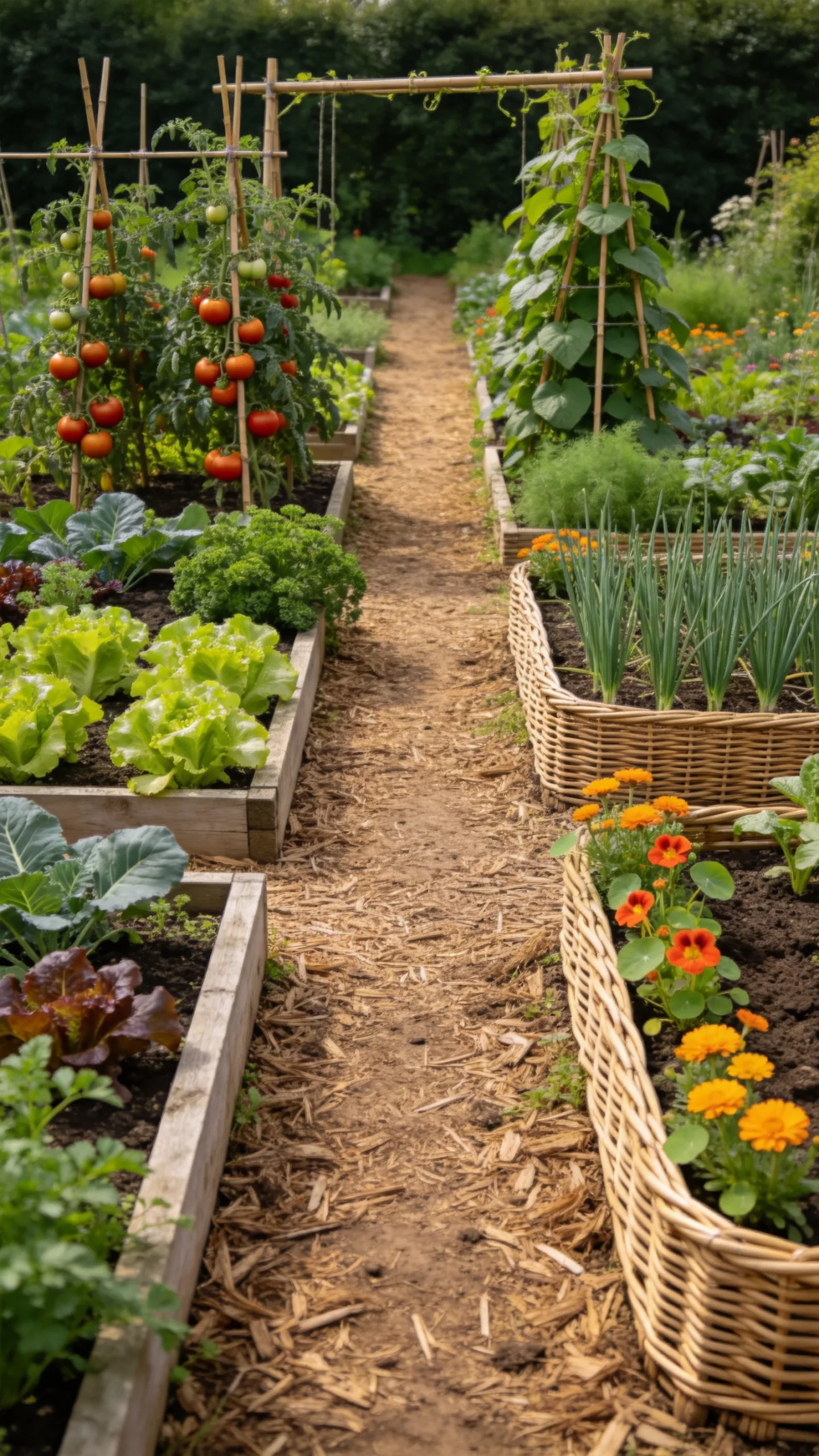
Combine vegetables, herbs, and edible flowers in practical rows or blocks edged with timber, brick, or woven willow. Tomatoes, bush beans, lettuce, kale, parsley, chives, calendula, and nasturtiums can create a productive garden with country character.
Place taller crops where they will not shade shorter plants, rotate crop families when possible, and provide trellises before climbing plants become established. Keep paths wide enough for harvesting and cover exposed soil with a suitable organic mulch to conserve moisture.
24. Screen a Corner With Woven Willow Panels
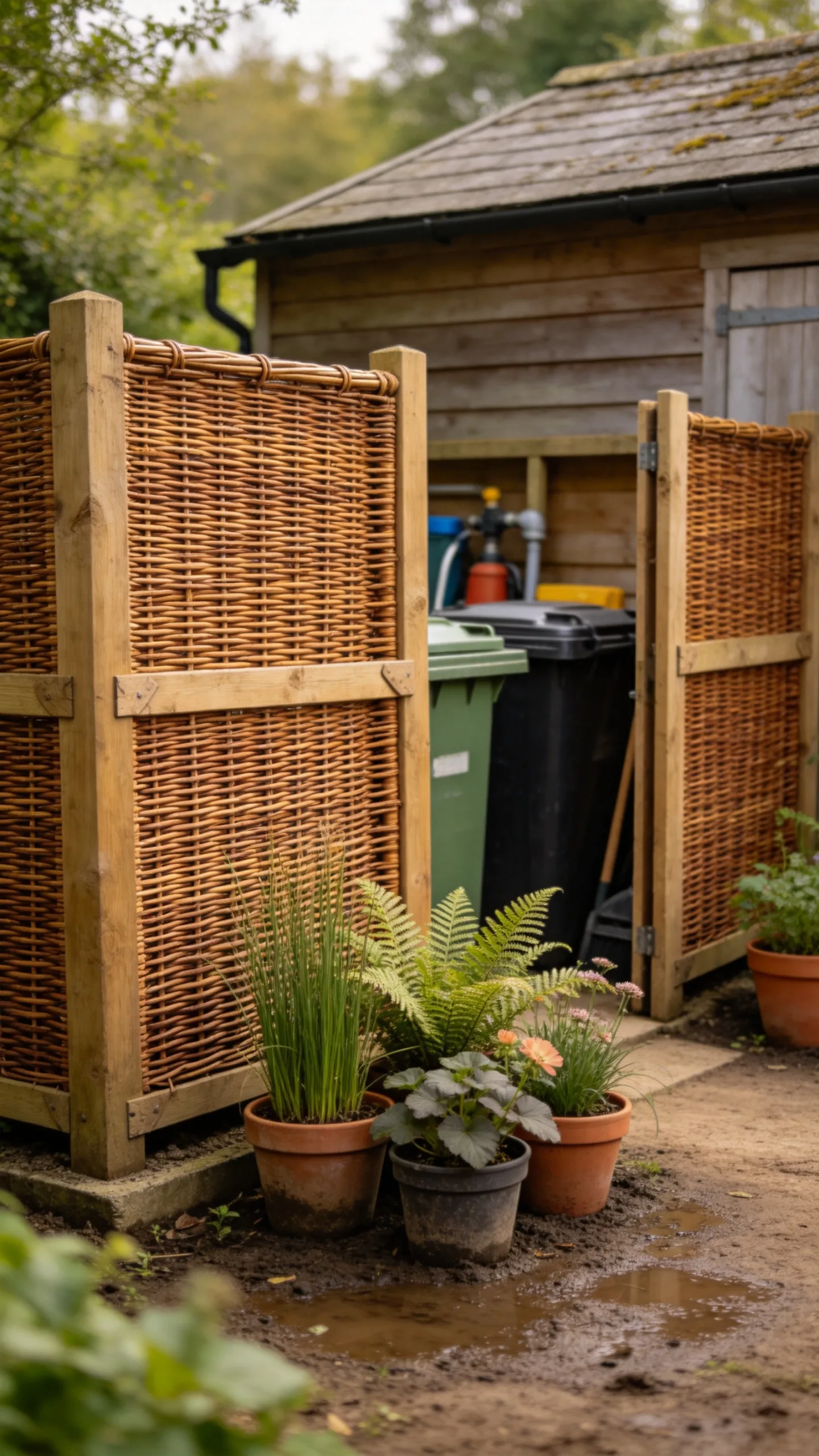
Use woven willow or hazel panels to conceal bins, utility equipment, or a compact composting area. The natural texture is softer than solid fencing, and a narrow screen can improve privacy without using much planting space.
Anchor the panels to sturdy posts so they withstand wind and keep them slightly above wet soil to slow decay. Add pots of ferns, grasses, or shade-tolerant flowers in front, ensuring utility areas remain accessible.
25. Finish With Lanterns and Warm Outdoor Lighting
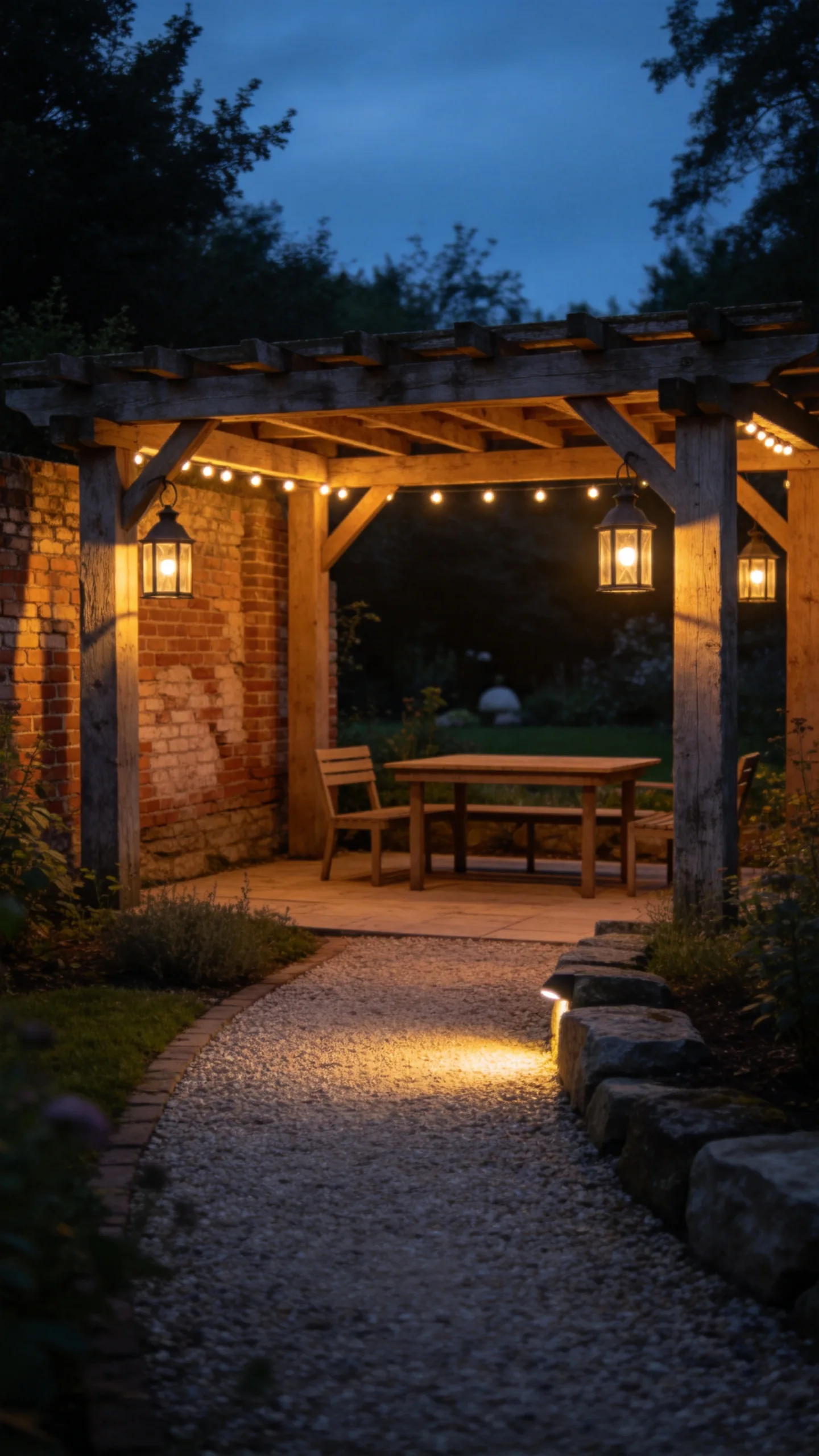
Hang weather-rated lanterns from pergola posts, place low-voltage lights beside paths, or weave outdoor string lights around a seating area. Warm-toned illumination highlights brick, stone, timber, and foliage without undermining the rustic atmosphere.
Use lighting only where it supports safety or evening use, and direct fixtures downward to reduce glare. Choose outdoor-rated electrical components, keep solar panels in adequate sunlight, and leave darker areas where nocturnal wildlife can remain undisturbed.