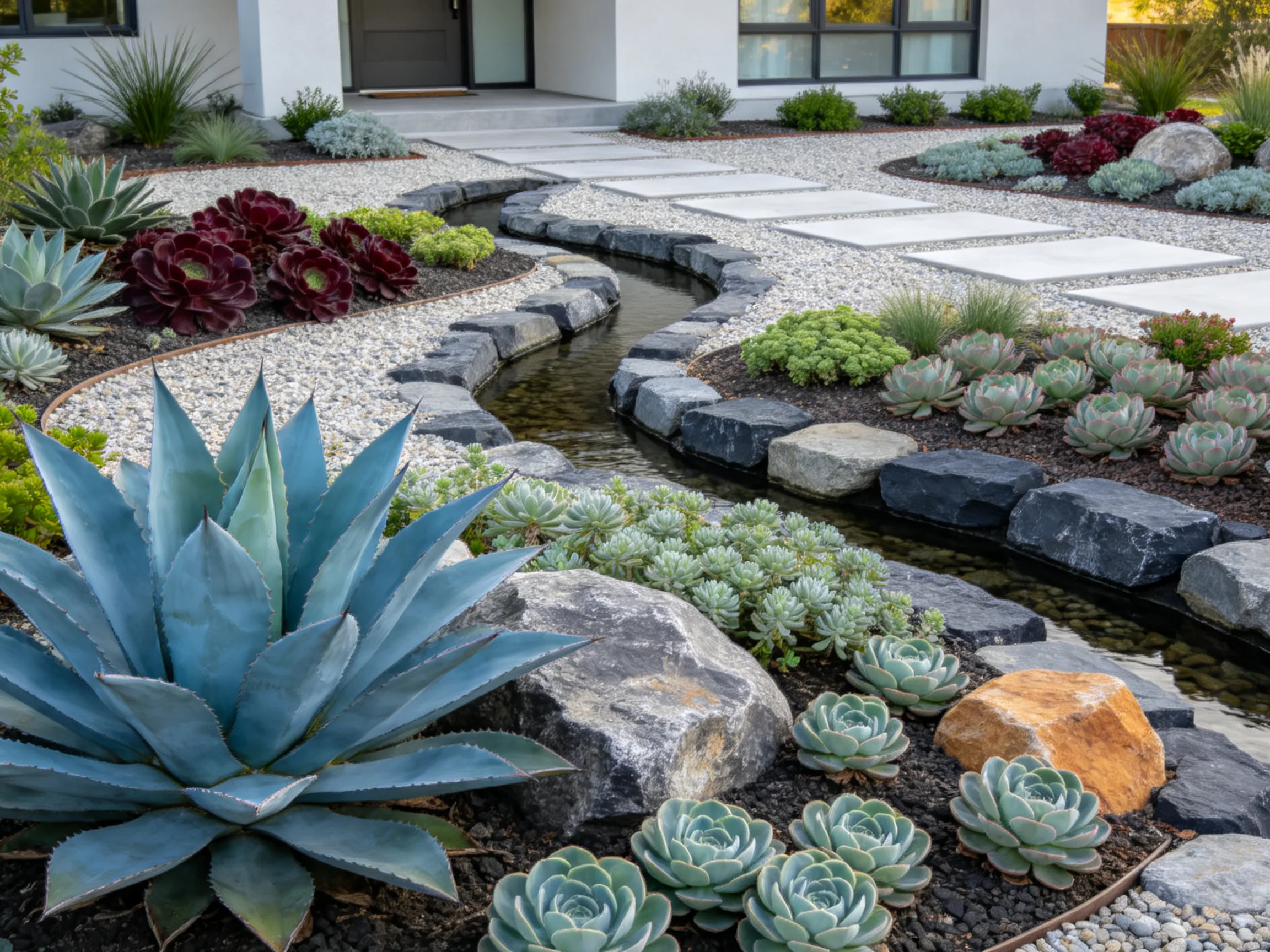
A well-planned outdoor succulent garden combines sculptural plants, sharp drainage, and durable hardscaping to create a yard that needs less water and routine care. Choose varieties suited to your winter lows, rainfall, and sun exposure—cold-hardy sedums and sempervivums work well in cooler regions, while tender aloes, aeoniums, and many agaves suit frost-free climates or movable containers. These design ideas offer practical layouts for beds, borders, patios, slopes, and other outdoor spaces.
1. Layered Succulent Rock Garden
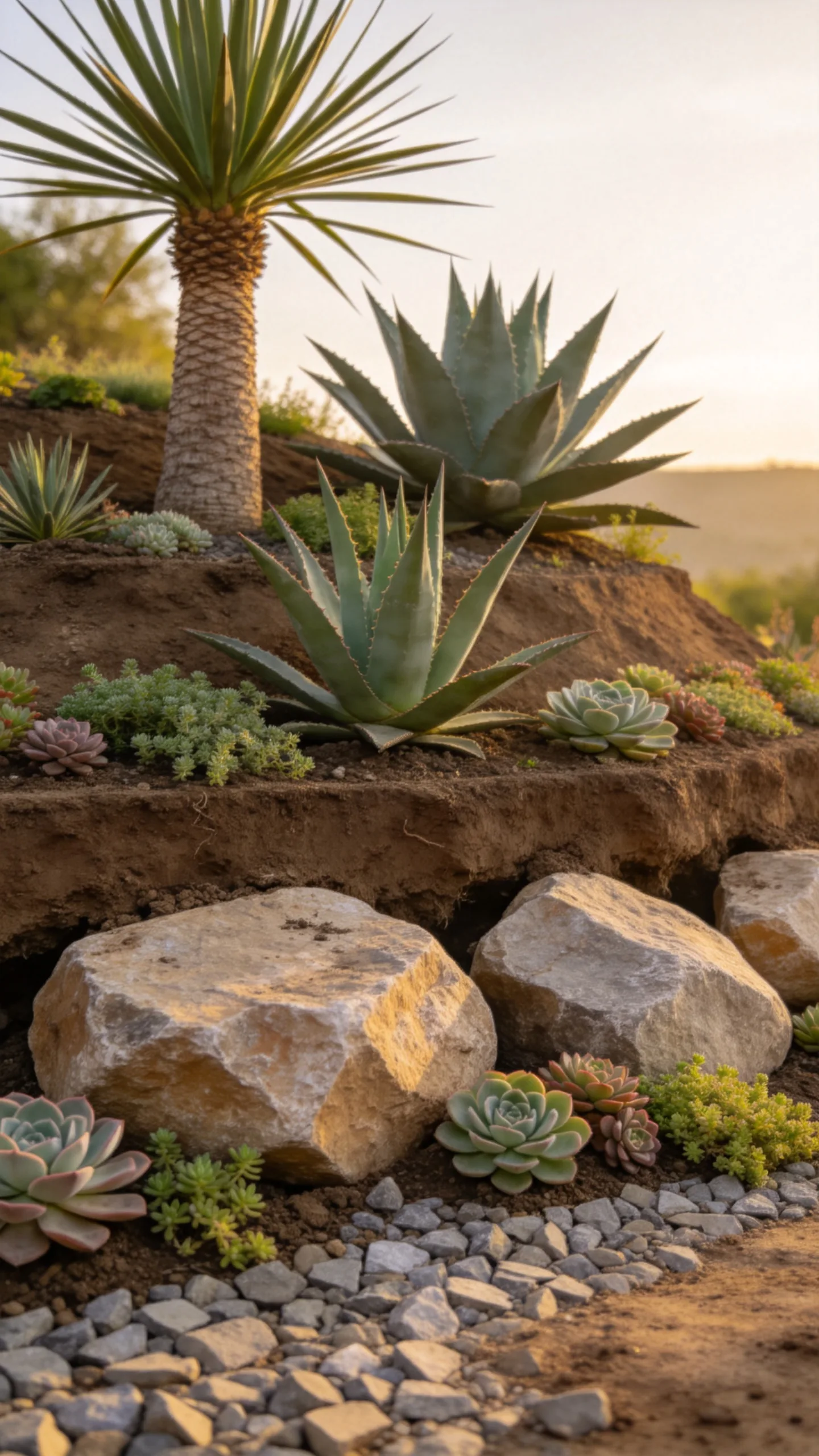
Build a raised mound from free-draining soil, then place several large rocks partially below the soil line so they look settled into the landscape. Arrange taller agaves, aloes, or yuccas near the back and tuck low-growing sedums, echeverias, and sempervivums around the stones.
Use gravel mulch between plants to reduce soil splash and make weeds easier to spot. The raised shape helps excess water drain away from succulent roots, which is especially useful in yards with heavy soil. In cold climates, replace tender focal plants with hardy yucca, prickly pear, and stonecrop.
2. Gravel Courtyard with Sculptural Agaves
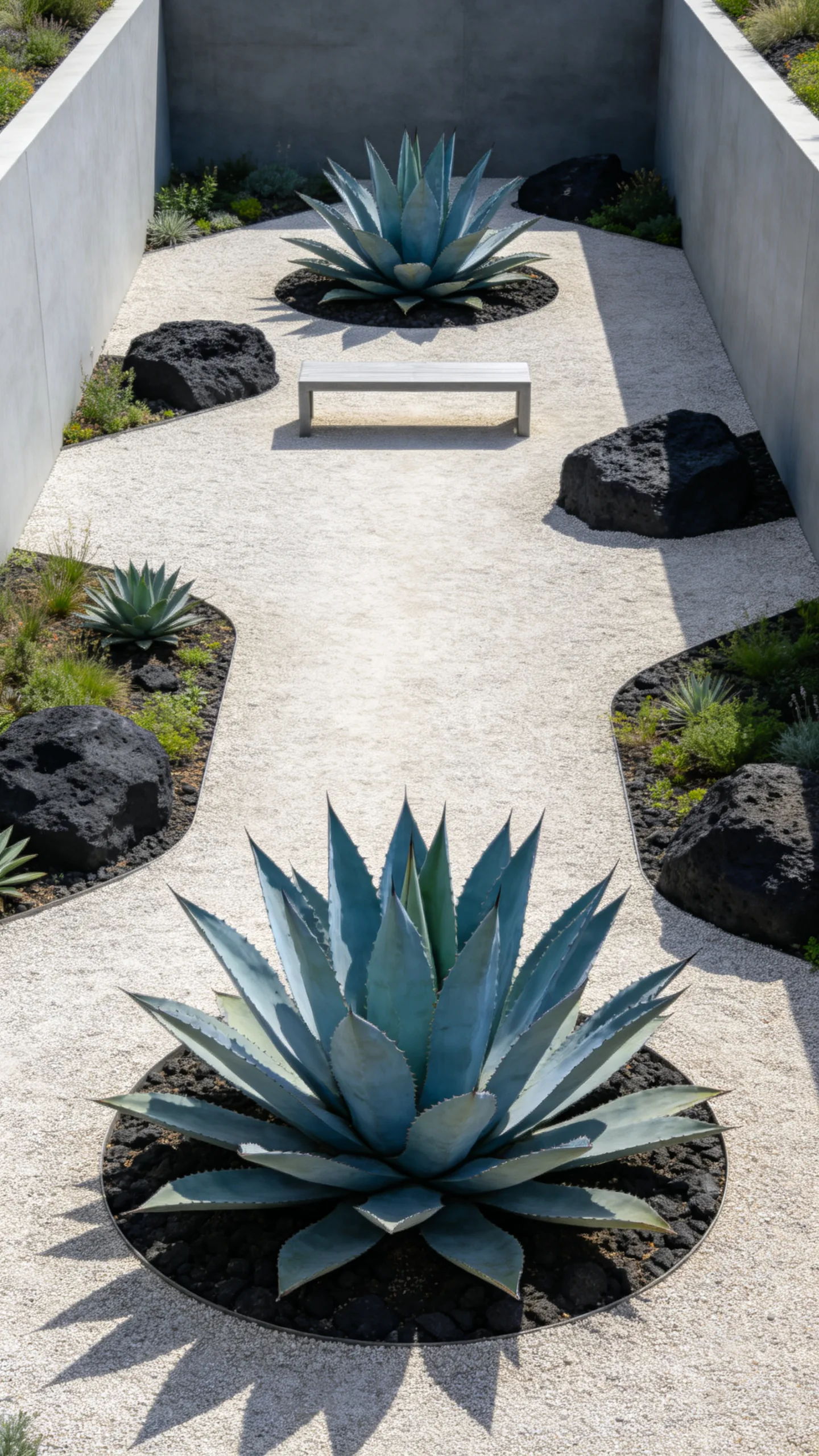
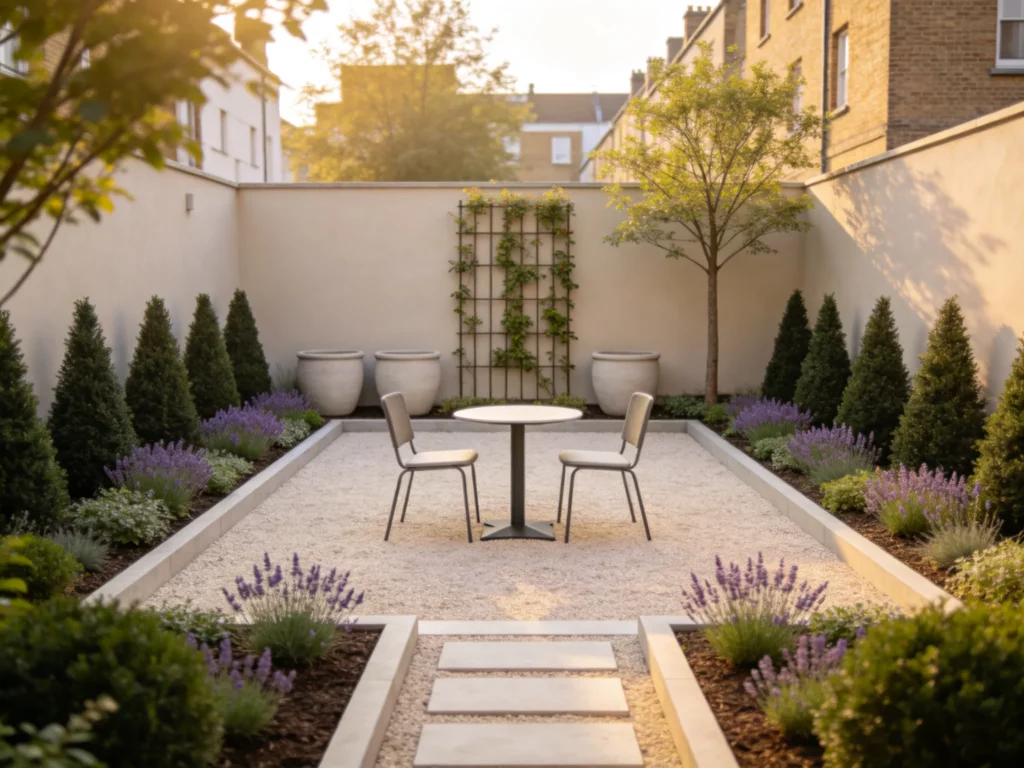
Transform a sunny courtyard into a simple gravel garden with one or two architectural agaves as focal points. Spread compacted decomposed granite or angular gravel over a prepared base, leaving generous planting pockets around each specimen.
Keep agaves away from walkways, play areas, and doorways because their leaf tips can be sharp. Spineless or softer-leaved alternatives, such as foxtail agave in suitable climates, are easier to use near seating. A restrained palette of gray gravel, blue-green foliage, and dark boulders gives the courtyard a clean, cohesive appearance.
3. Color-Blocked Echeveria Bed
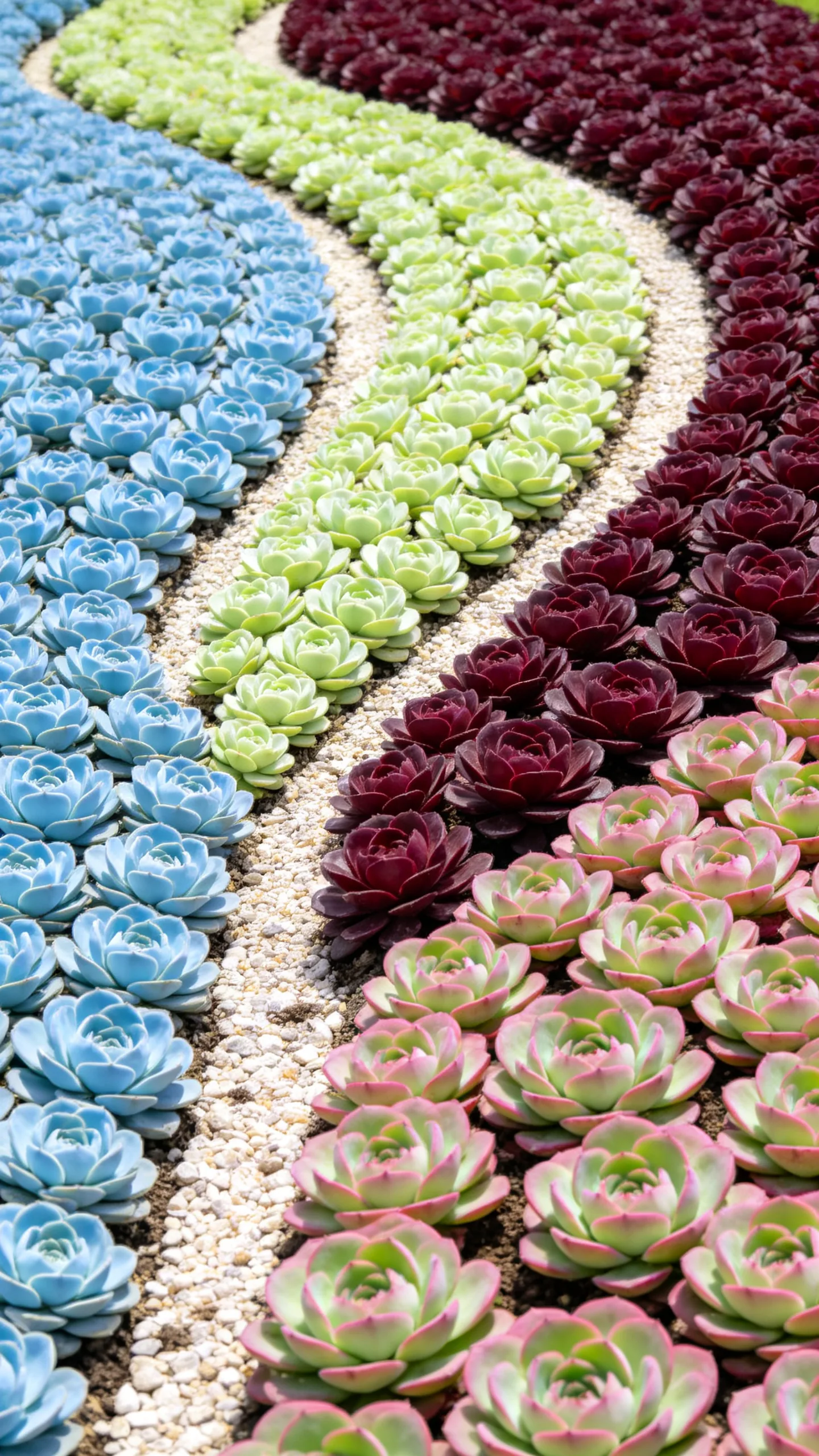
Create broad ribbons or rounded patches of echeverias in contrasting foliage colors, such as powder blue, pale green, burgundy, and pink-edged varieties. Repeating each variety in a group makes the planting look more intentional than scattering individual rosettes throughout the bed.
Place the display in bright light with protection from intense afternoon sun where summers are extremely hot. Echeverias need fast drainage and are generally frost-tender, so gardeners in colder regions can recreate the design in shallow containers that move under cover for winter. Remove spent flower stalks and damaged lower leaves to keep the color blocks crisp.
4. Dry Creek Bed with Succulent Banks
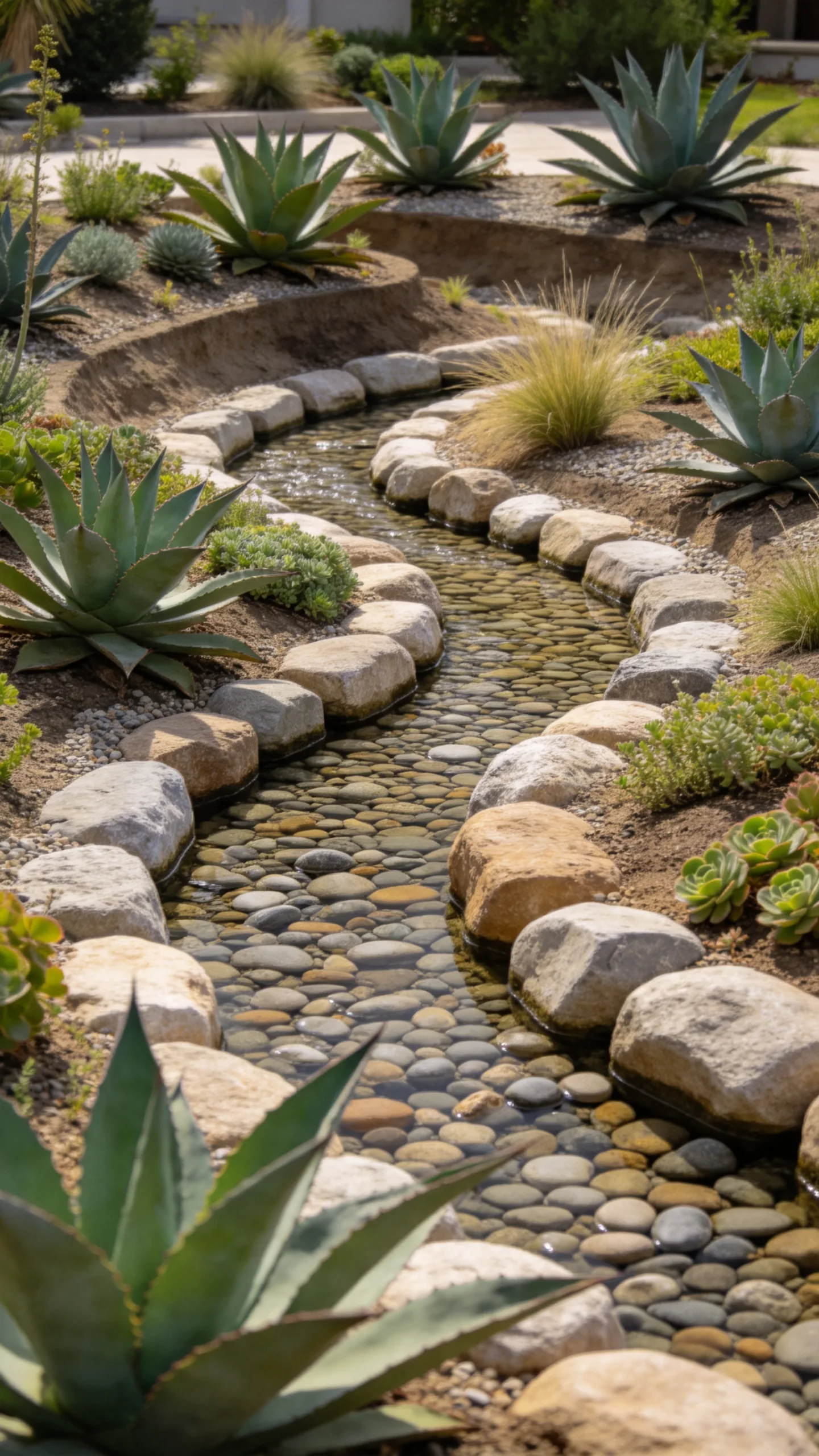
Lay a winding channel of river stones through a dry part of the yard, using larger rocks along the edges and smaller pebbles through the center. Plant aloes, agaves, sedums, or clumping grasses on the raised banks rather than in the lowest point where runoff may collect.
The curving line creates visual depth and can guide occasional stormwater toward a safe drainage area. Confirm that the channel does not direct water toward foundations or neighboring property. Succulents should sit above prolonged moisture, while moisture-tolerant plants can be used at the outlet if the site periodically stays wet.
5. Tiered Succulent Garden on a Slope
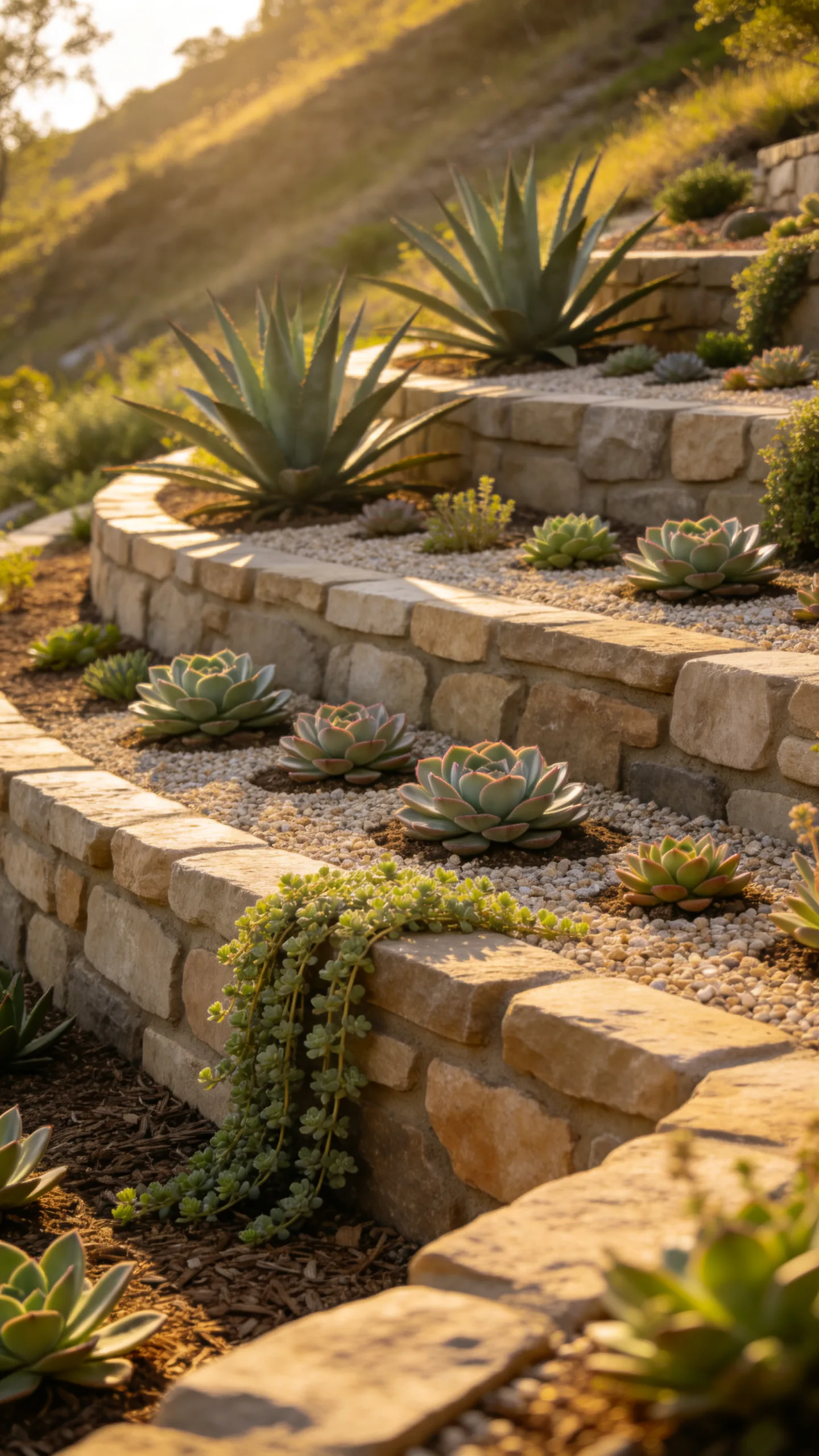
Divide a sunny slope into shallow terraces using stone, weather-resistant steel edging, or low retaining walls. Plant each level with spreading succulents, placing larger forms at the top and cascading sedums or trailing ice plants near the terrace edges.
Terracing slows runoff and creates level planting pockets that are easier to weed and inspect. Amend only the planting zones with mineral grit when drainage needs improvement rather than burying the entire slope under rich compost. Choose ground-cover species appropriate for local conditions, since some ice plants can spread aggressively in mild climates.
6. Sempervivum Garden for Cold Climates
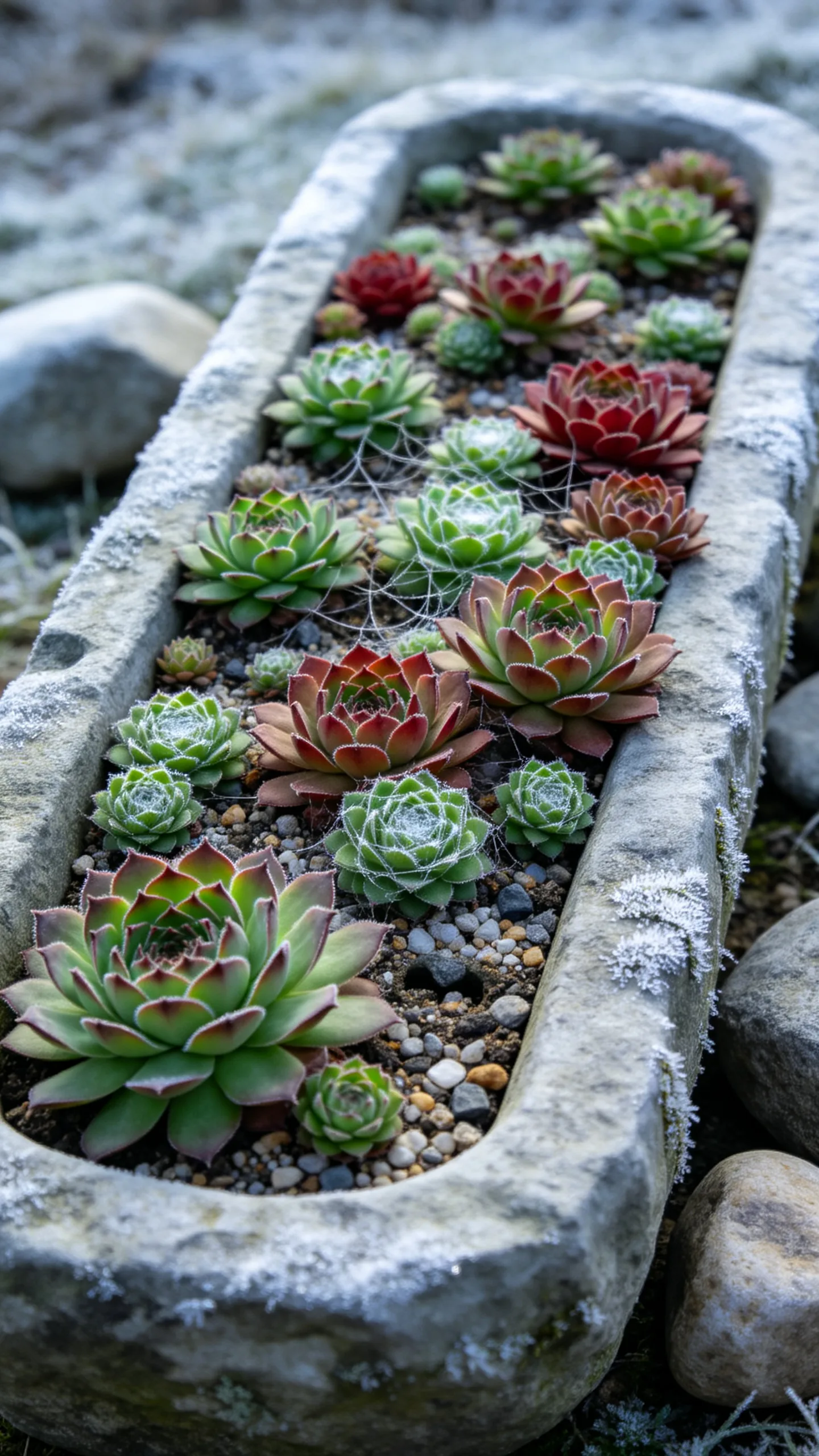
Fill a raised bed, stone trough, or rocky border with cold-hardy sempervivums, commonly called hens and chicks. Combine varieties with green, red, bronze, and cobwebbed rosettes, leaving room for offsets to form expanding colonies.
Sempervivums tolerate freezing temperatures better than many popular rosette succulents, but they still need excellent drainage, particularly during wet winters. Plant them in gritty soil and avoid placing them beneath roof runoff. Individual rosettes die after flowering, so remove the spent rosette and allow its surrounding offsets to fill the gap.
7. Succulent Border Along a Sunny Walkway
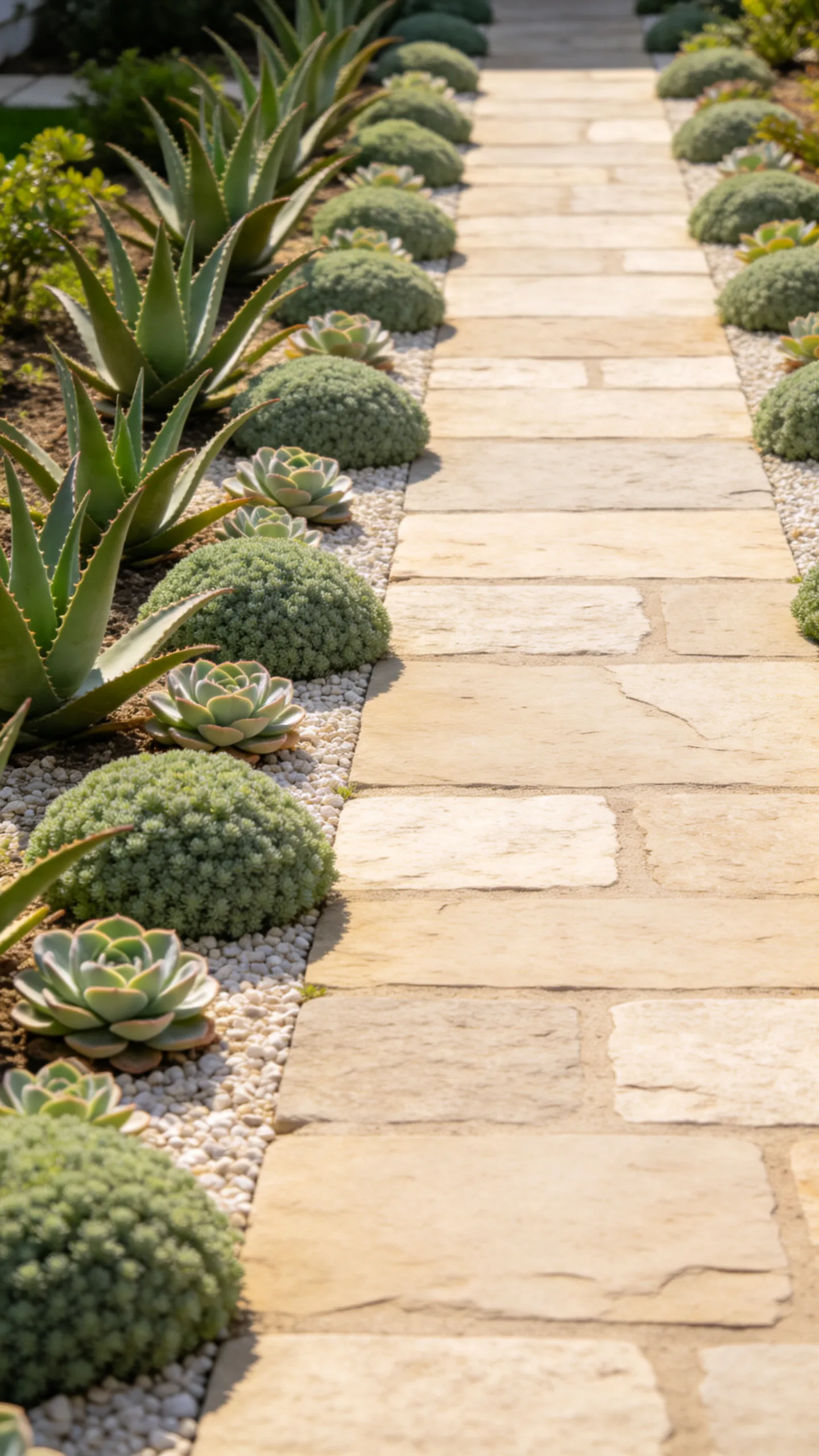
Edge a wide path with compact aloes, dwarf agaves, echeverias, or mounding sedums. Repeat the same two or three plants in a simple sequence to create rhythm and keep the border from looking cluttered.
Set plants far enough back that mature leaves will not obstruct the walkway. Avoid thorny cacti and sharply tipped agaves beside narrow paths; use softer options such as sedum, aeonium, or spineless selections instead. Gravel mulch keeps foliage away from damp soil and creates a clear transition between the planting bed and paving.
8. Raised Corten Steel Succulent Bed
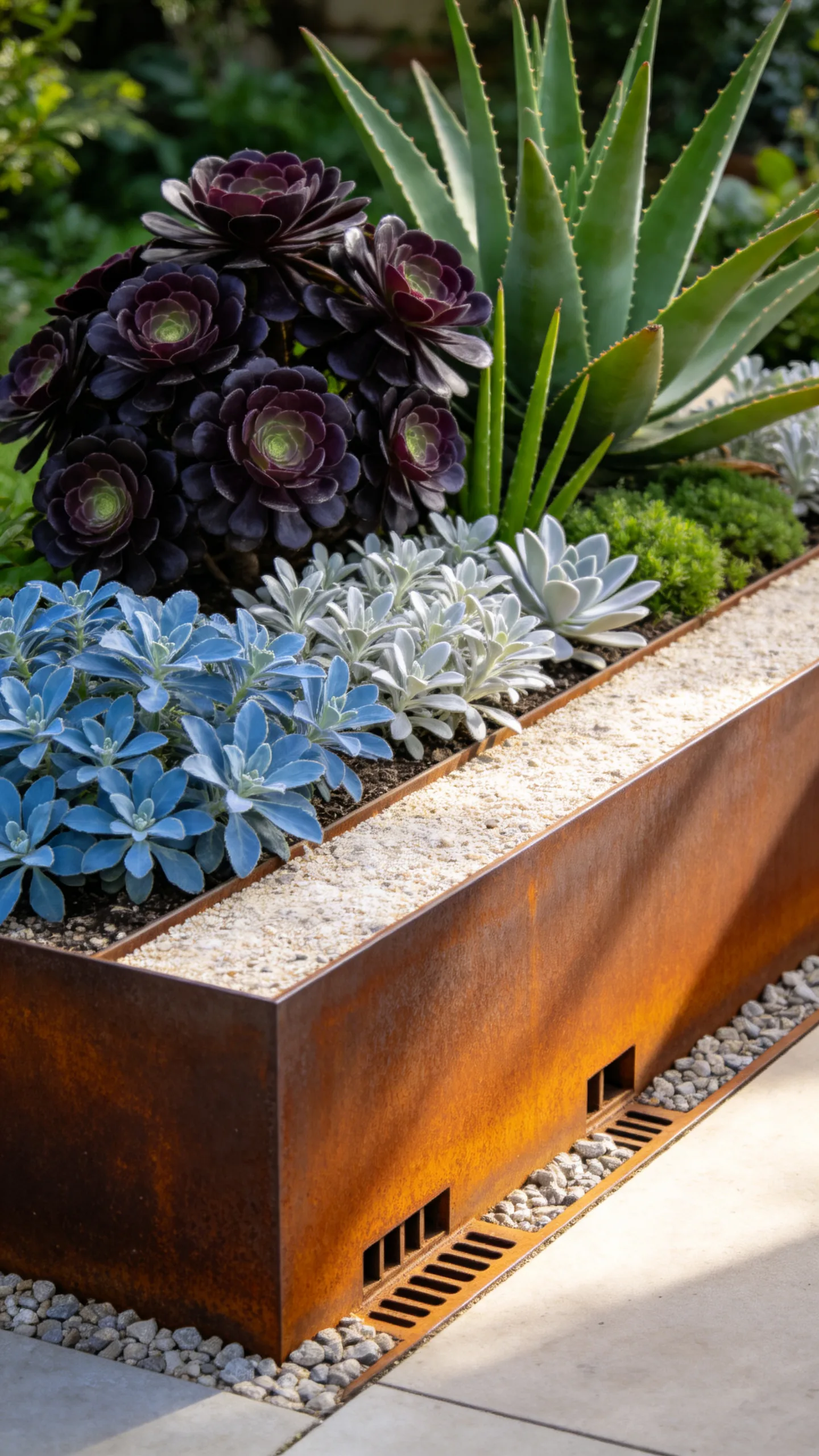
Use a low Corten steel planter to frame a modern succulent composition. The warm rust-colored surface contrasts well with blue senecio, silver cotyledon, green aloe, and purple aeonium foliage.
A raised bed provides control over the soil mix and prevents foot traffic from compacting the root zone. Include drainage openings and fill the planter with a lean, fast-draining blend rather than moisture-retentive garden soil. Corten steel can become hot in strong sun, so leave space between tender foliage and the metal edge or place heat-tolerant ground covers along the perimeter.
9. Boulder Focal Point with Succulent Clusters
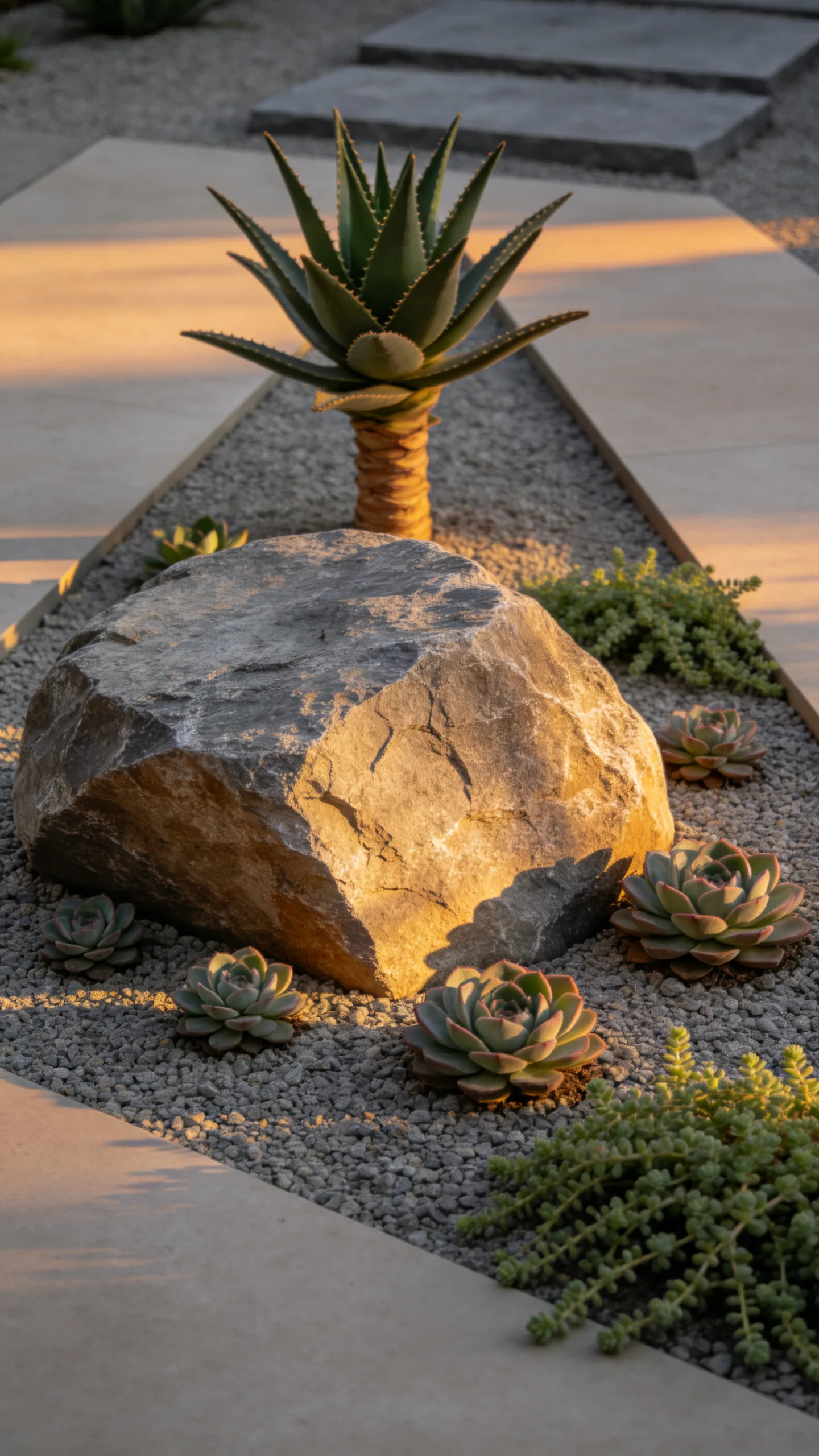
Anchor an open gravel area with one large boulder and arrange succulents around its base in uneven clusters. Use a tall aloe, yucca, or agave on one side, then balance it with smaller rosettes and trailing ground covers on the other.
Partially bury the boulder so it appears naturally embedded instead of placed on top of the soil. Repeat its color in the surrounding gravel or stepping stones to connect the feature with the rest of the yard. The rock also creates small pockets of shade that may protect compact plants from harsh afternoon sun.
10. Vertical Succulent Wall for a Small Patio
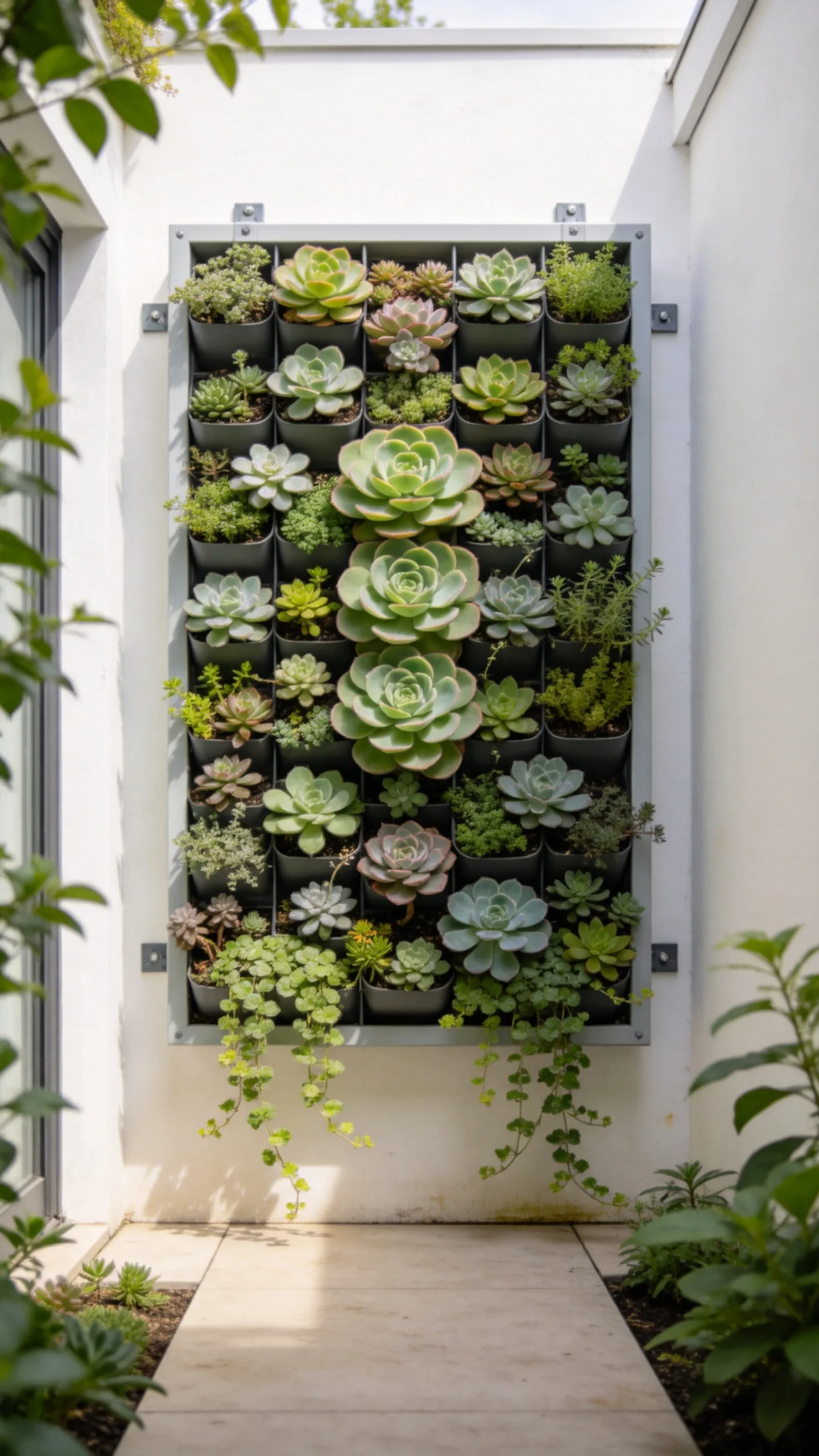
Install a modular wall planter or sturdy framed pocket system on a bright patio wall. Fill it with small-rooted succulents such as sedum, crassula, sempervivum, and compact echeveria, arranging trailing varieties near the lower and outer edges.
A vertical garden adds greenery without occupying valuable floor space, but it dries faster than an in-ground bed. Use a lightweight, free-draining medium and water thoroughly enough to reach the lower pockets. Mount the structure securely, protect the wall from moisture, and choose a position that does not receive relentless reflected heat.
11. Oversized Succulent Bowl as a Yard Centerpiece
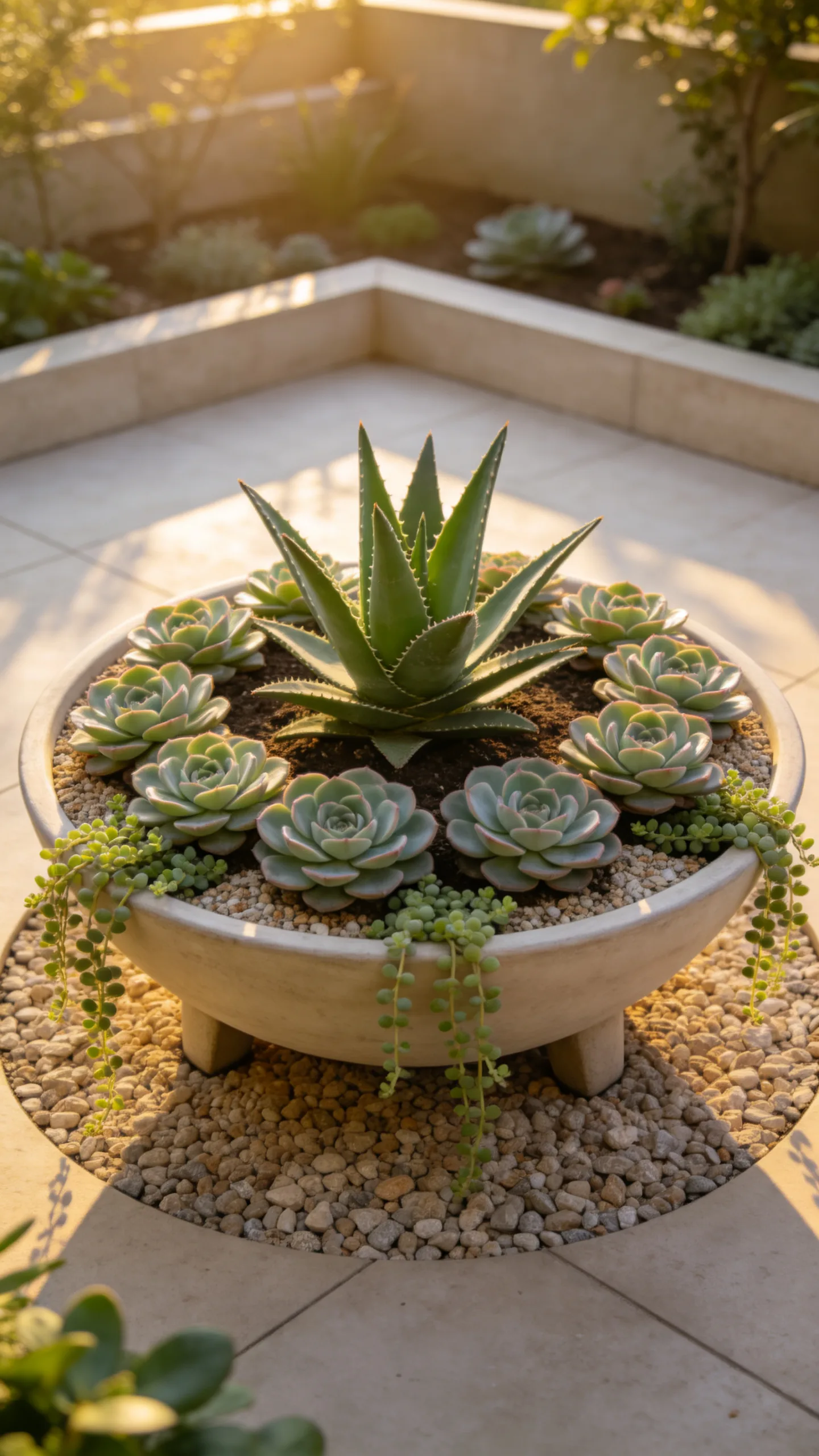
Place a broad, shallow planter at the center of a patio, gravel circle, or small lawn replacement. Start with one upright focal plant, surround it with medium rosettes, and finish the rim with trailing sedum or string-form succulents suited to outdoor conditions.
Choose a frost-resistant container with a large drainage hole, and raise it slightly on pot feet so water can escape. A container centerpiece makes it easier to grow tender plants in a cool climate because the entire composition can be moved to a protected, bright location before freezing weather.
12. Succulent Mosaic Between Stepping Stones
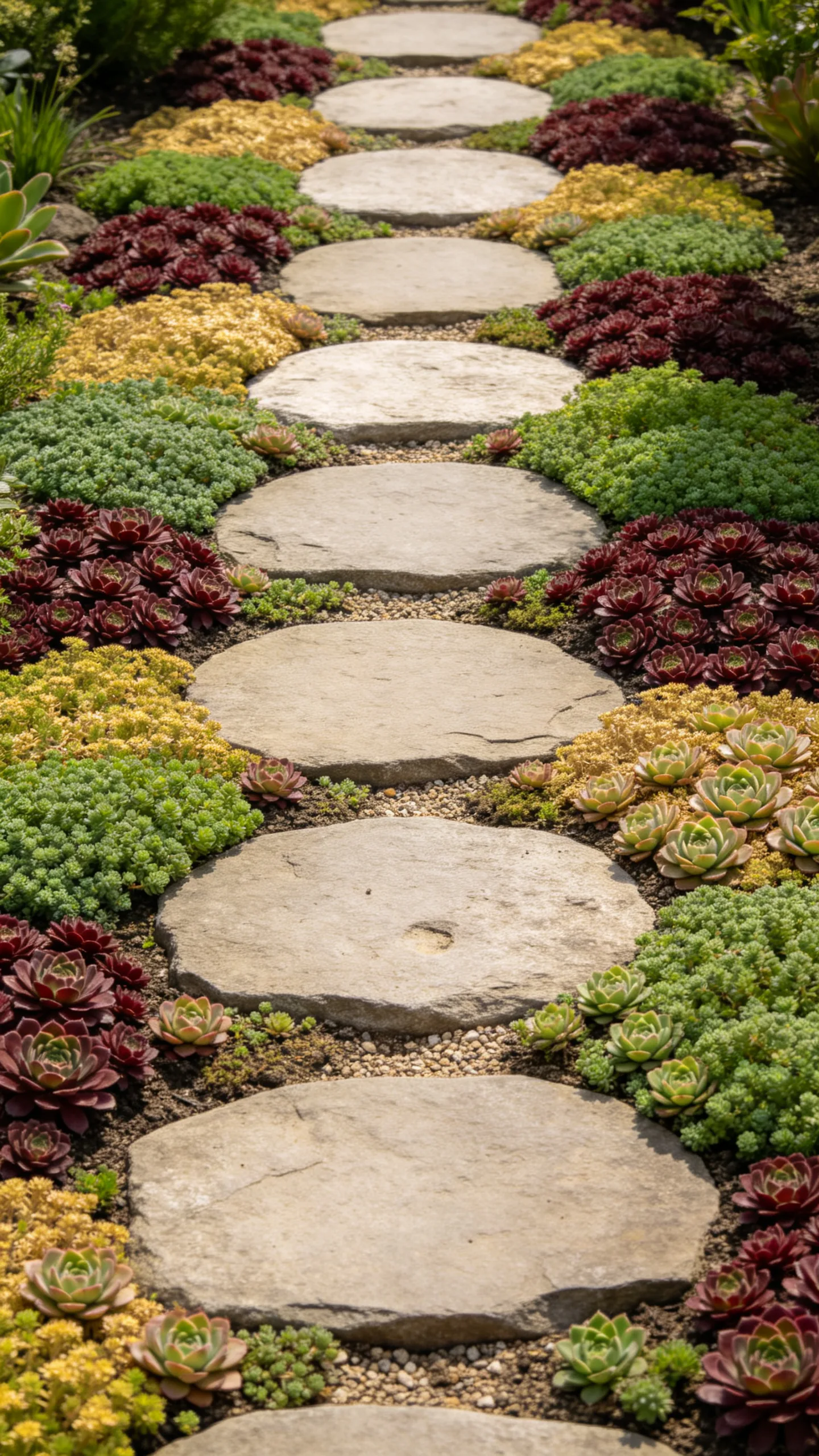
Fill wide joints between stepping stones with low, spreading succulents such as creeping sedum, hardy stonecrop, or small sempervivums. Alternate foliage colors to create a subtle mosaic while leaving the center of each stone clear for safe footing.
Select plants that tolerate occasional light contact, but do not place fragile rosettes where they will be stepped on regularly. Set the stones on a stable base and fill planting joints with gritty soil. This design softens hard paving, reduces bare soil, and uses narrow gaps that would otherwise require hand weeding.
13. Desert-Inspired Cactus and Agave Island
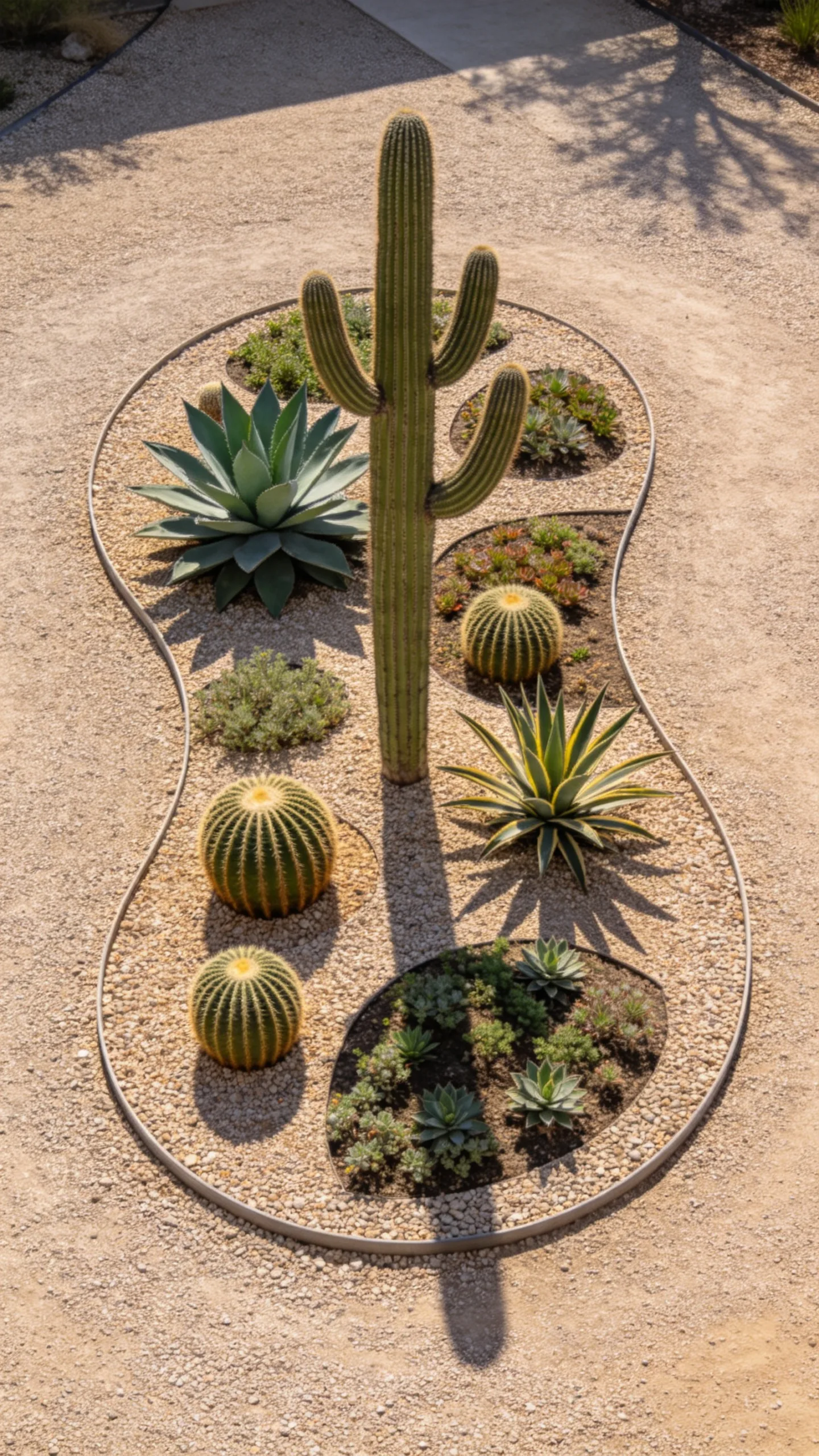
Create an oval or kidney-shaped planting island surrounded by gravel. Position a branching cactus or bold agave off-center, then add smaller barrel cacti, aloes, and low ground-cover succulents around it.
This design works best in arid or frost-free regions, though cold-climate gardeners can substitute hardy prickly pear, yucca, and sedum. Leave enough open gravel to display each plant’s form and accommodate mature size. Keep spined plants away from paths, utility areas, and places where children or pets regularly move through the yard.
14. Blue and Silver Succulent Palette
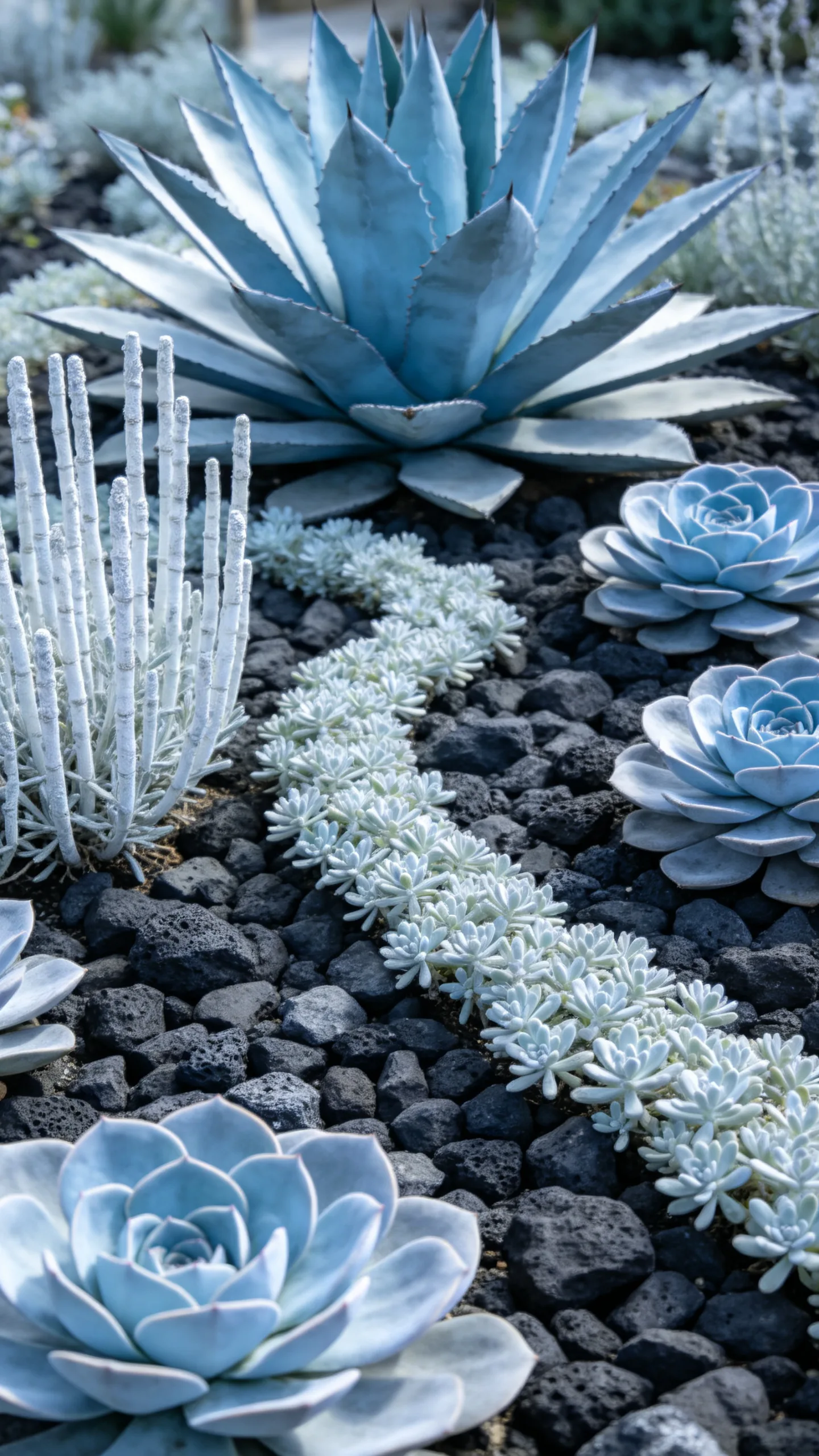
Design a calming bed around cool-toned foliage, using blue agave, chalk sticks, silver cotyledon, blue-gray echeveria, and pale sedum. Add charcoal gravel or dark volcanic rock to emphasize the leaf colors.
Check local hardiness before combining these plants, since many blue and silver succulents are sensitive to frost. In cooler climates, use a hardy blue-green yucca as the permanent anchor and place tender plants in matching pots around it during summer. Limit bright flower colors nearby so the foliage remains the primary feature.
15. Succulent Garden Around a Mailbox
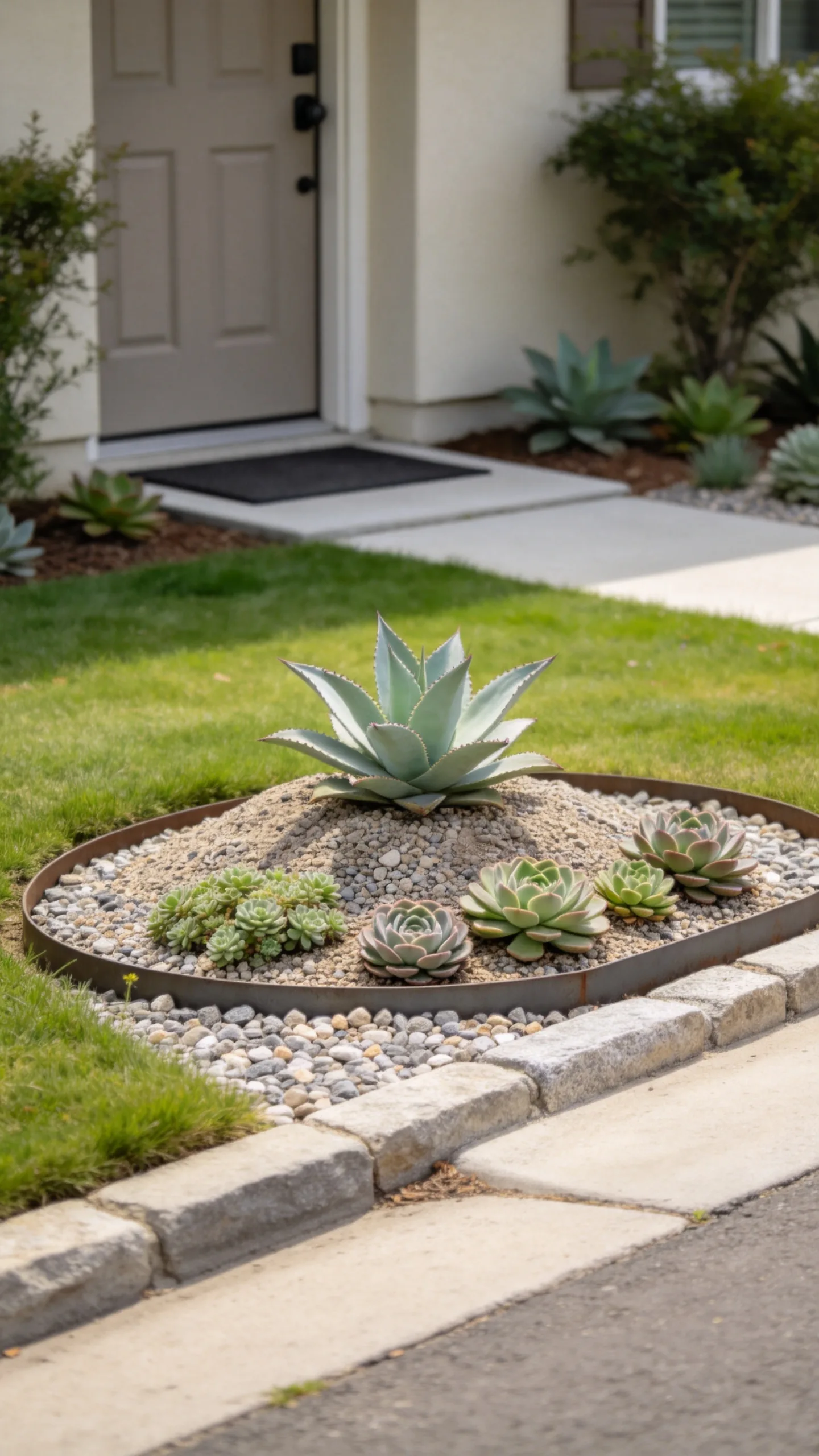
Replace thirsty turf around a sunny mailbox with a compact gravel bed. Use a low mound of soil, one modest focal plant, and several spreading sedums or sempervivums that will not block the address or interfere with mail access.
Keep thorny and sharp-leaved plants away from the door of the mailbox and the street edge. A stone or metal border prevents gravel from spilling onto the pavement, while a stepping pad gives easy access after rain. Choose salt-tolerant plants if winter road salt or coastal spray affects the location.
16. Terracotta Pot Cluster with Mixed Heights
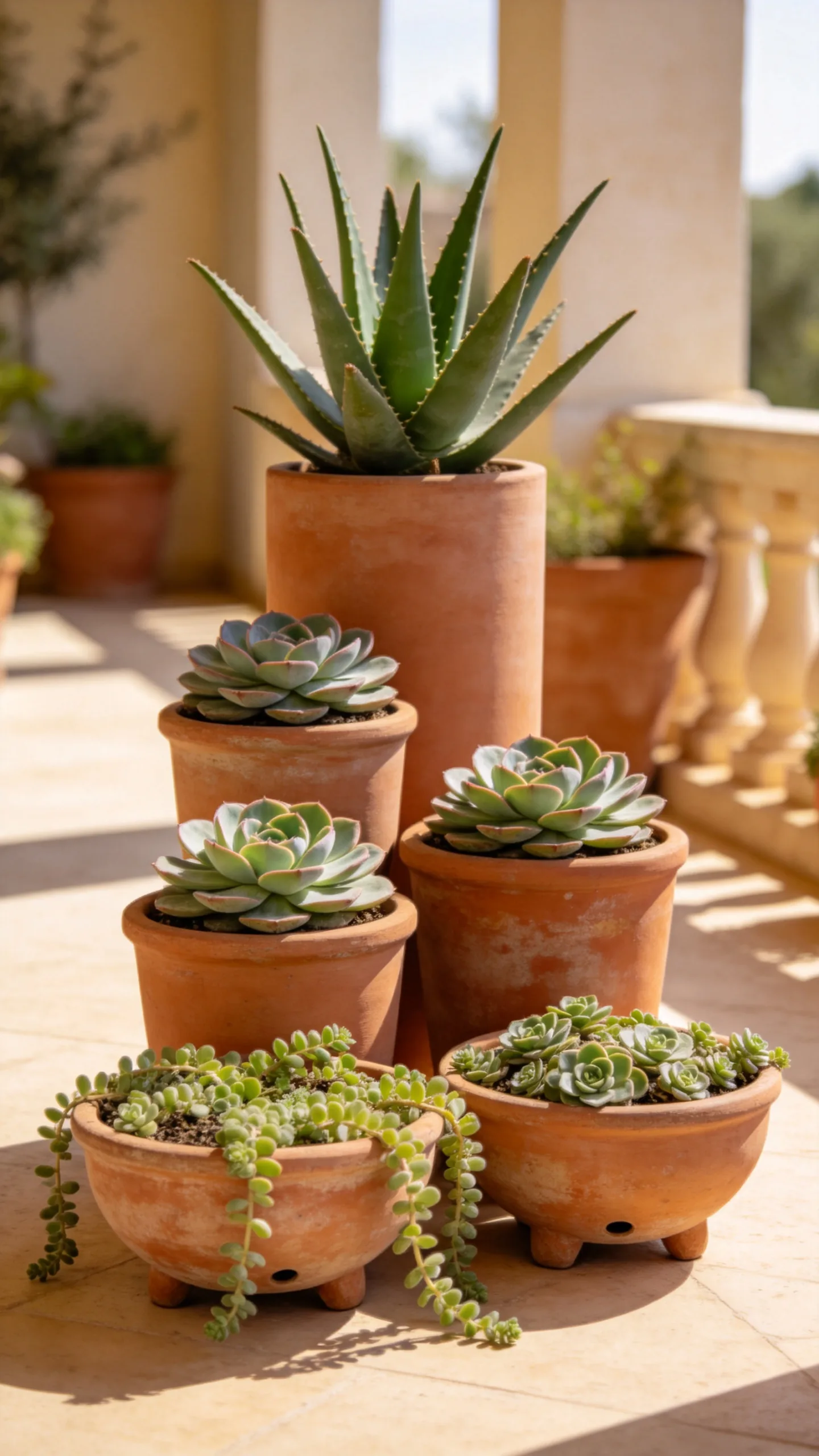
Group terracotta containers in sets of three, five, or seven, combining tall pots, low bowls, and medium cylinders. Plant upright aloe or kalanchoe forms in the tallest pots, rosette succulents in the middle sizes, and trailing sedums in bowls.
Clustering pots creates the impact of a planted bed while preserving flexibility on a patio or rental property. Terracotta allows moisture to evaporate quickly, so check containers more often during hot, windy weather. Use pots with drainage holes, and simplify upkeep by grouping plants with similar light and watering requirements.
17. Succulent Strip Beside a Driveway
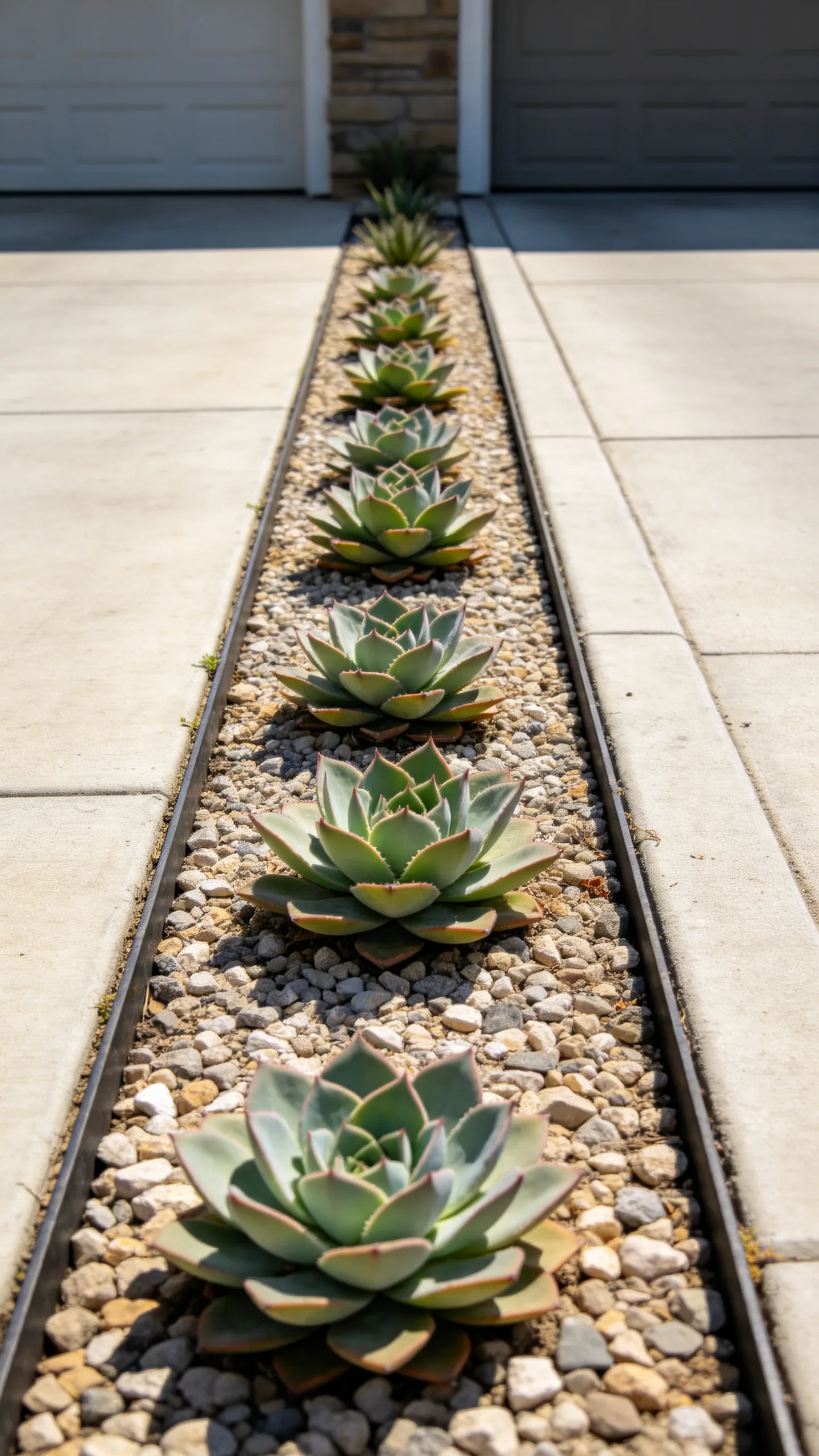
Turn a narrow strip beside a driveway into a linear succulent bed with repeated clumps of hardy sedum, compact aloe, or dwarf agave. A consistent gravel mulch and simple steel edging keep the space tidy and reduce trimming along the pavement.
Driveways reflect heat and can expose plants to runoff, vehicle doors, and foot traffic. Set larger plants back from the edge and avoid brittle or spiny species near parking areas. Where deicing salt is used, select salt-tolerant plants or create a raised strip that limits salty runoff into the root zone.
18. Shaded Succulent Corner with Aloes and Haworthias
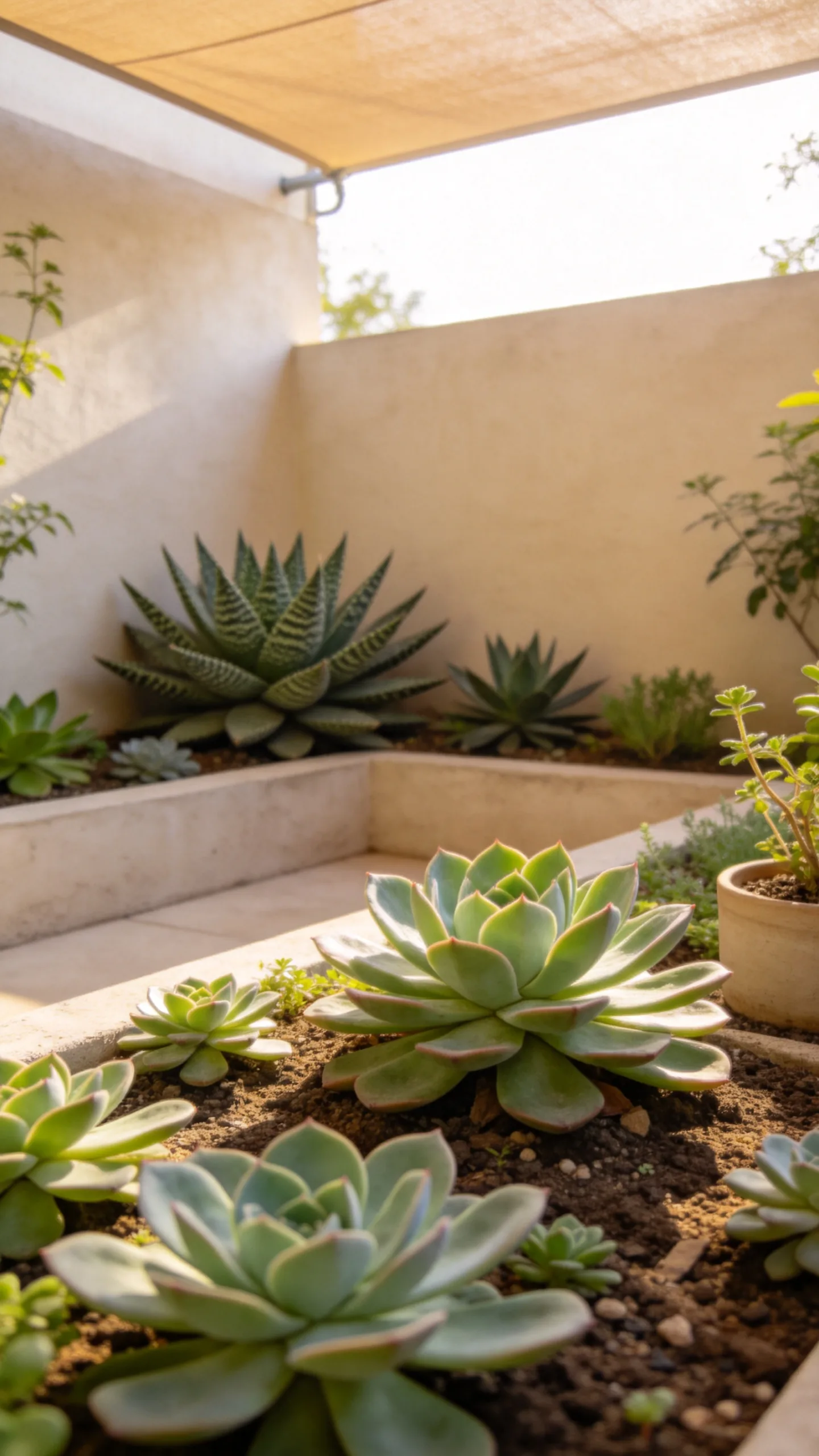
Use aloes, haworthias, gasterias, and selected crassulas to brighten a courtyard or porch corner with filtered light. Arrange them beneath open tree cover or beside a wall that receives gentle morning sun rather than deep, all-day shade.
These plants often tolerate less direct sun than desert cacti, but they still need bright conditions and free-draining soil. Protect the bed from constant roof runoff and reduce watering when temperatures are cool. In frost-prone regions, grow the smaller plants in containers so they can be moved indoors or into a protected greenhouse.
19. Succulent Ground Cover for a Dry Bank
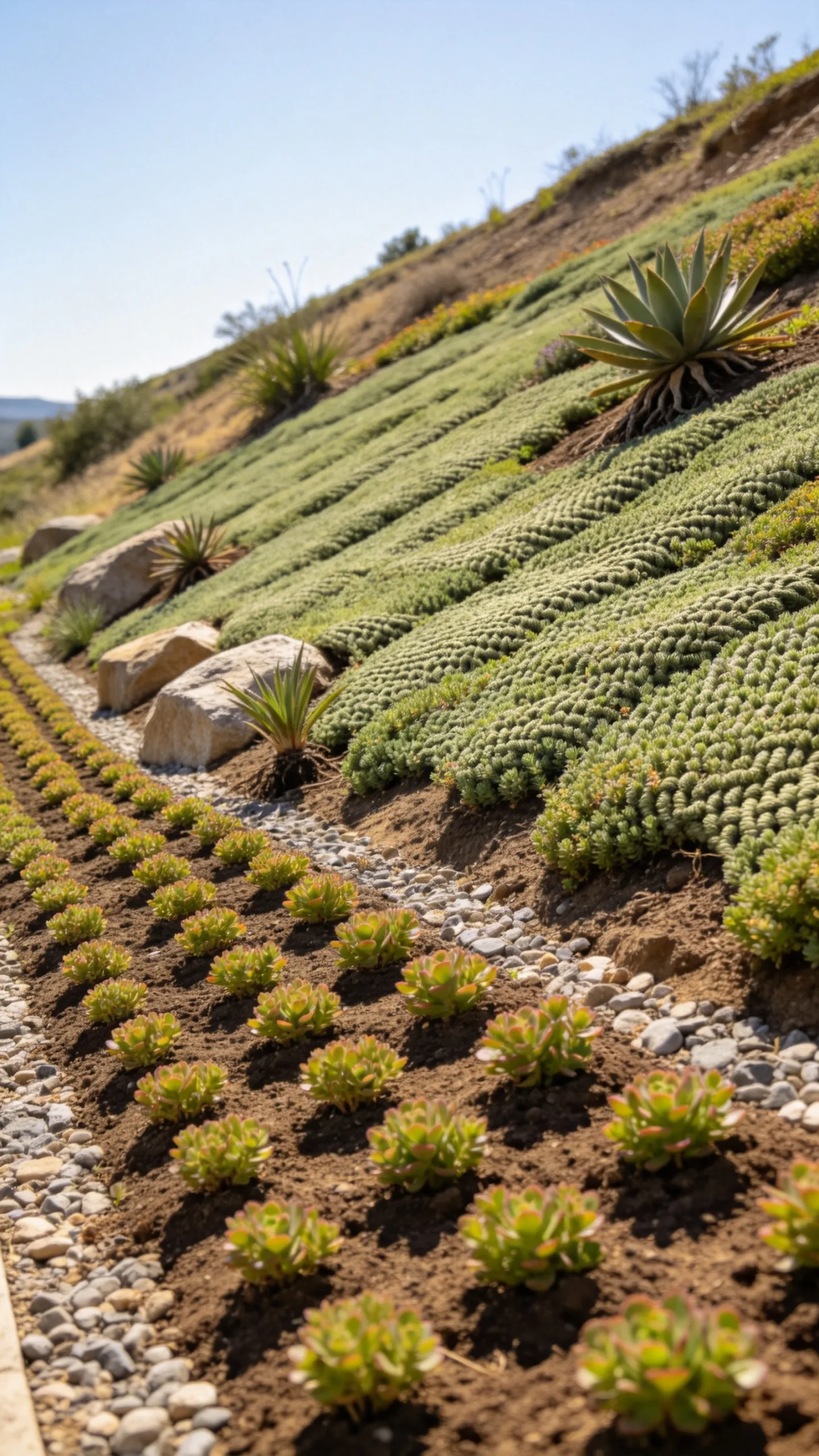
Cover a sunny, well-drained bank with mats of creeping sedum, stonecrop, or climate-appropriate ice plant. Plant small plugs in staggered rows so they can spread together without leaving straight, visible lines.
Ground-cover succulents reduce exposed soil and make a slope look cohesive, but they are not a universal erosion solution. Steep or unstable banks may need structural stabilization before planting. Confirm that the chosen species is noninvasive in the region, and combine it with rocks or deep-rooted drought-tolerant plants where additional soil support is needed.
20. Circular Succulent Bed Around a Tree
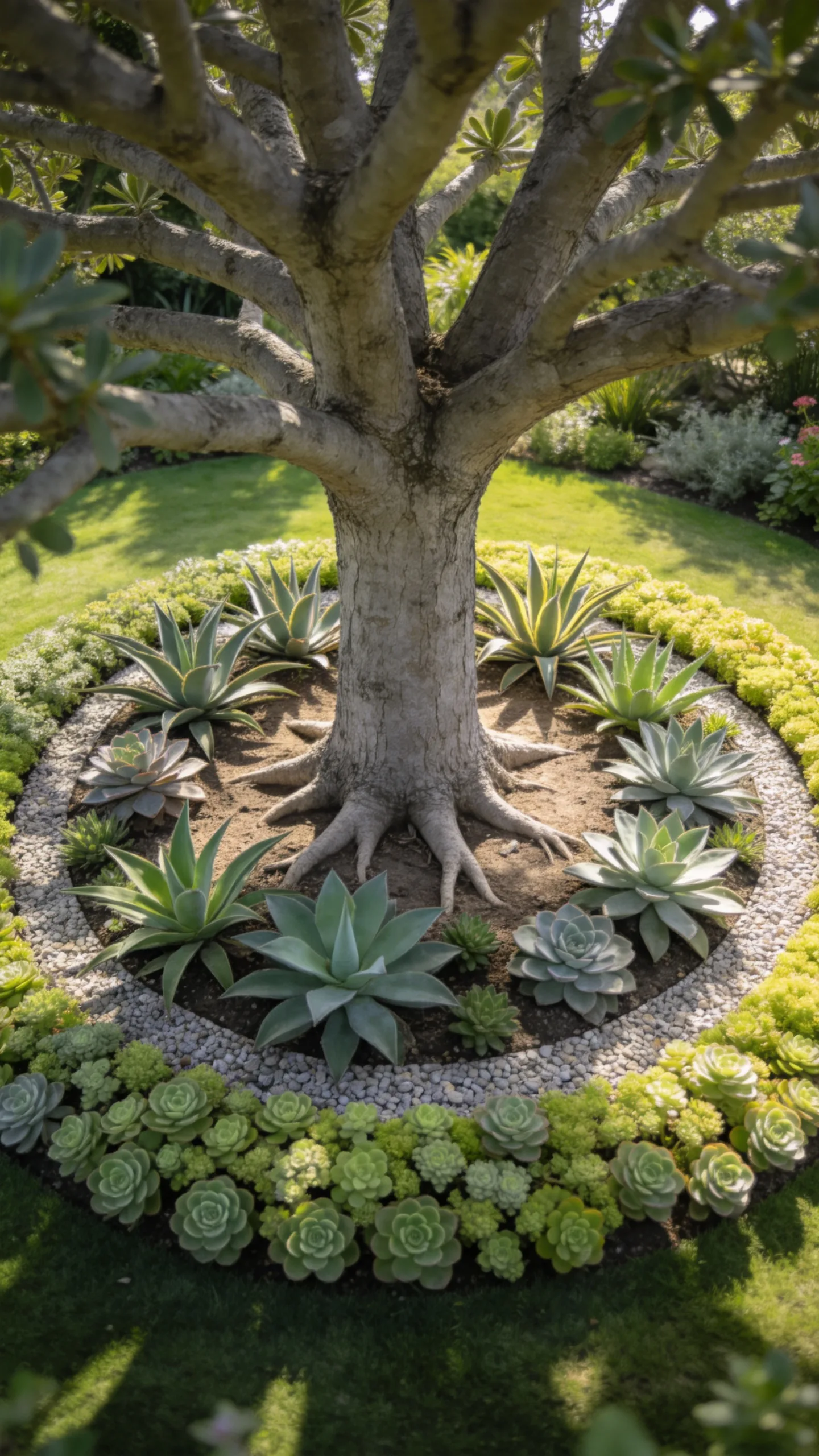
Create a broad ring beyond the trunk flare of a drought-tolerant tree, using shallow-rooted succulents that can handle the available light. Plant sun-tolerant sedums near the outer edge and more shade-tolerant aloes or gasterias closer to filtered canopy cover.
Do not pile soil, gravel, or mulch against the trunk, and avoid cutting major tree roots while preparing the bed. Match watering to the needs of the established tree; a moisture-loving tree is usually a poor partner for drought-adapted succulents. This layout turns otherwise bare ground into a defined garden without crowding the trunk.
21. Gabion Planter with Cascading Sedum
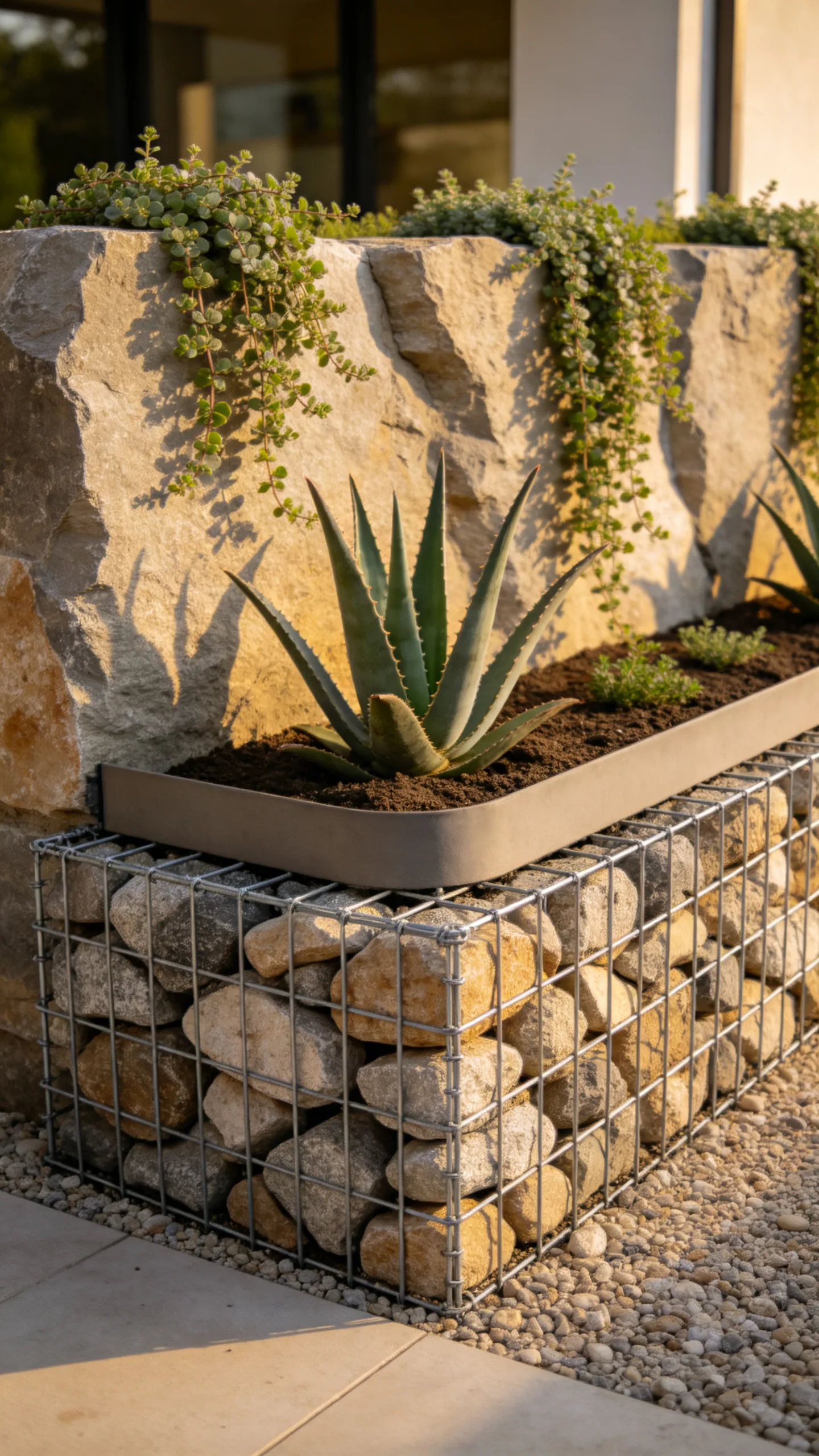
Build a low gabion planter from wire cages filled with stone, then add a lined planting pocket across the top. Use upright succulents in the center and allow trailing sedum, donkey’s tail, or other locally suitable spillers to soften the rugged edges.
The stone structure provides texture and can define a patio boundary or level change. Ensure the internal planter has drainage and that its liner keeps soil from washing into the rock cage. Because exposed gabions can heat up in full sun, choose heat-tolerant plants and monitor moisture during the first growing season.
22. Succulent and Ornamental Grass Combination
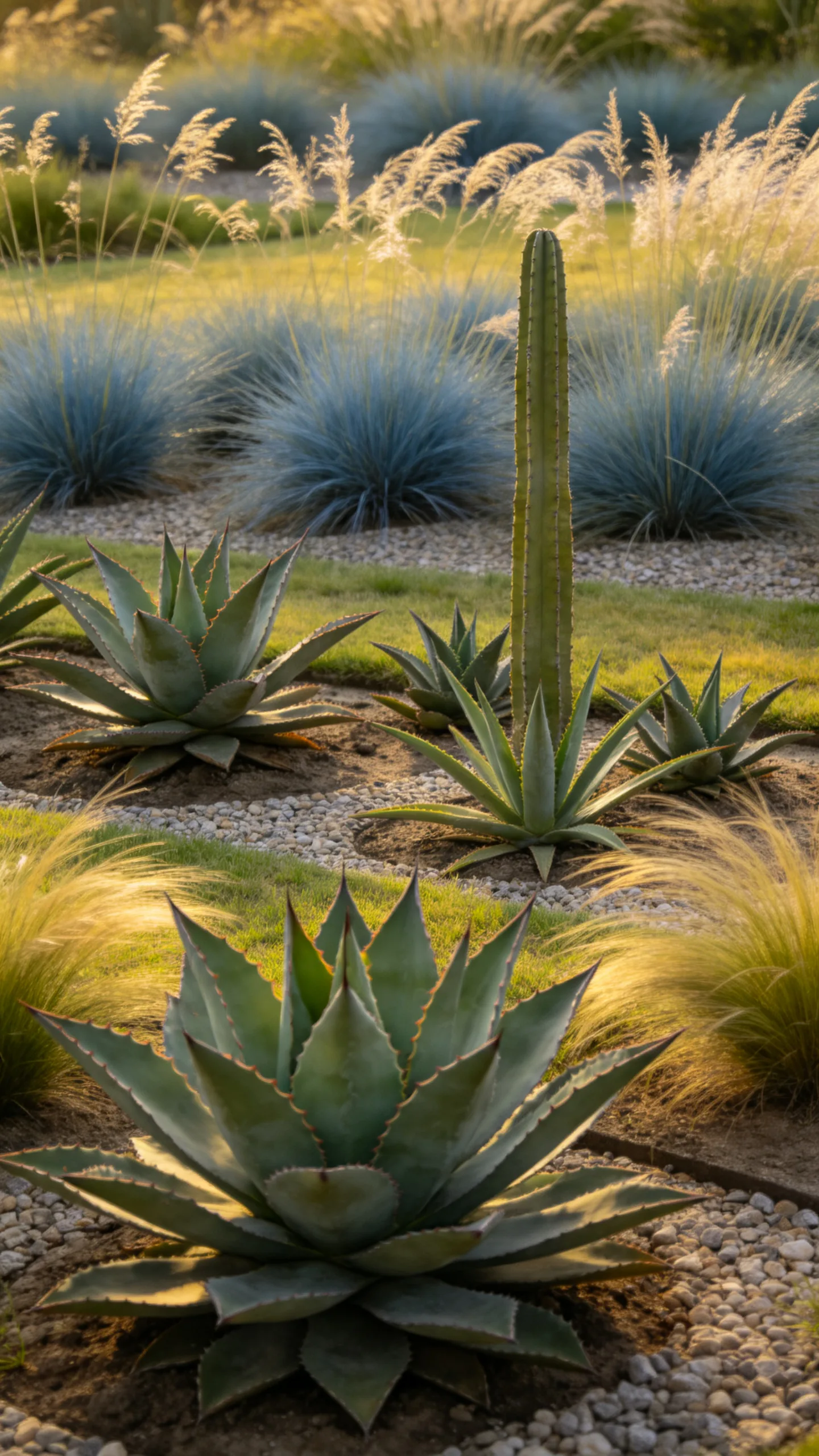
Pair bold succulent forms with restrained clumps of drought-tolerant ornamental grass. Blue fescue, muhly grass, or compact feather grasses can add fine texture around agaves, aloes, yuccas, and broad rosette succulents.
Select noninvasive grasses suited to local conditions and leave enough room for their mature width. Concentrate succulents in the driest zones and place grasses where they can receive slightly more moisture if needed. Cutting back the grasses at the recommended local season is the main annual task, while gravel mulch helps keep the mixed bed neat.
23. Fire-Smart Succulent Buffer Near a Patio
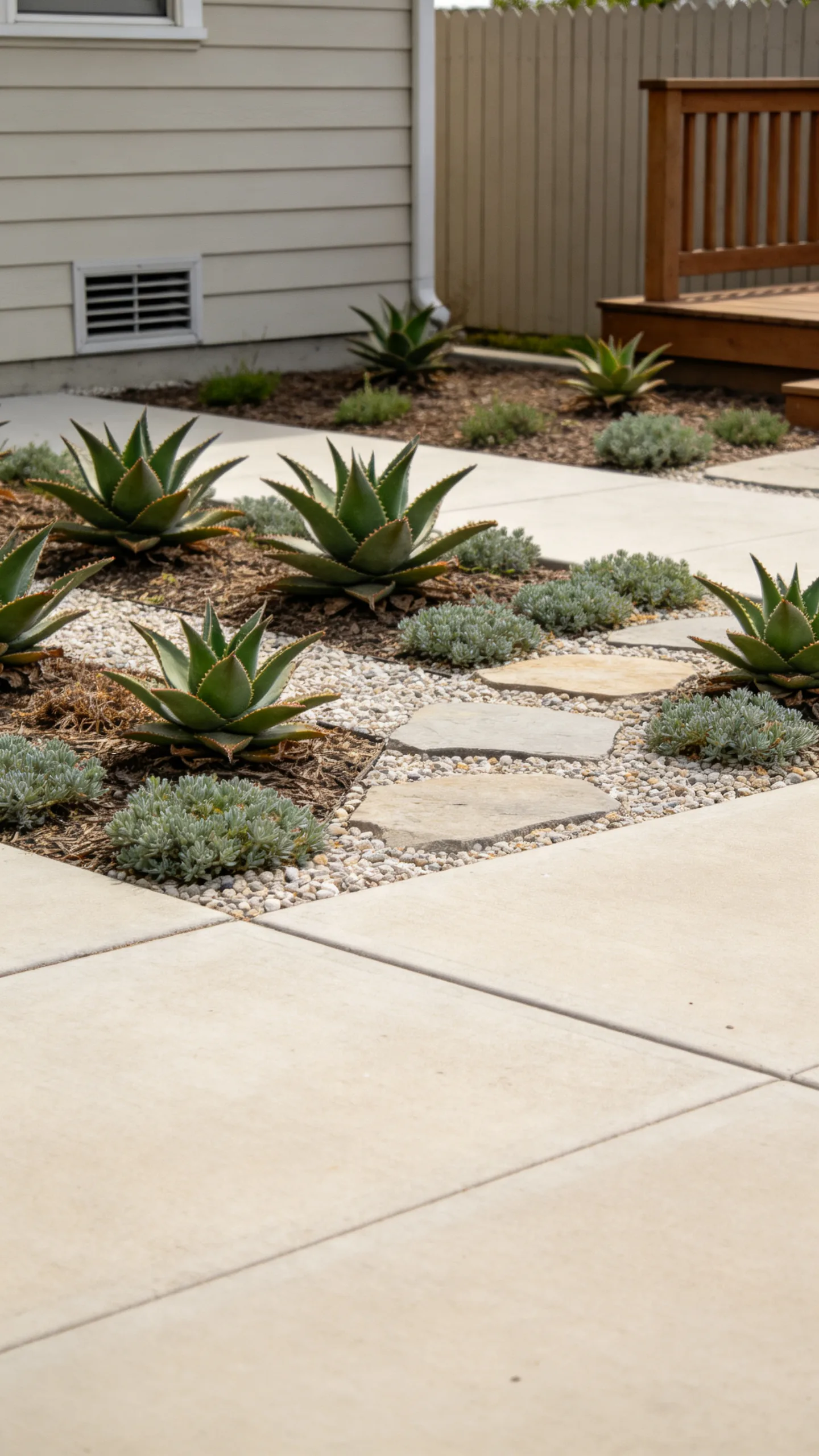
Use low-growing, well-spaced succulents in a maintained bed beside a paved patio or other hardscape. Choose compact aloes, sedums, or other plants recommended by local fire authorities, and separate groups with gravel or stone rather than continuous woody mulch.
Succulents are not fireproof, and dry leaves, weeds, and dead flower stalks can still burn. Remove debris regularly, maintain clear access, and follow regional defensible-space guidance for plant spacing and distance from structures. Avoid placing large, dense specimens directly against siding, vents, fences, or wooden decks.
24. Rain-Sheltered Succulent Bed Under Wide Eaves
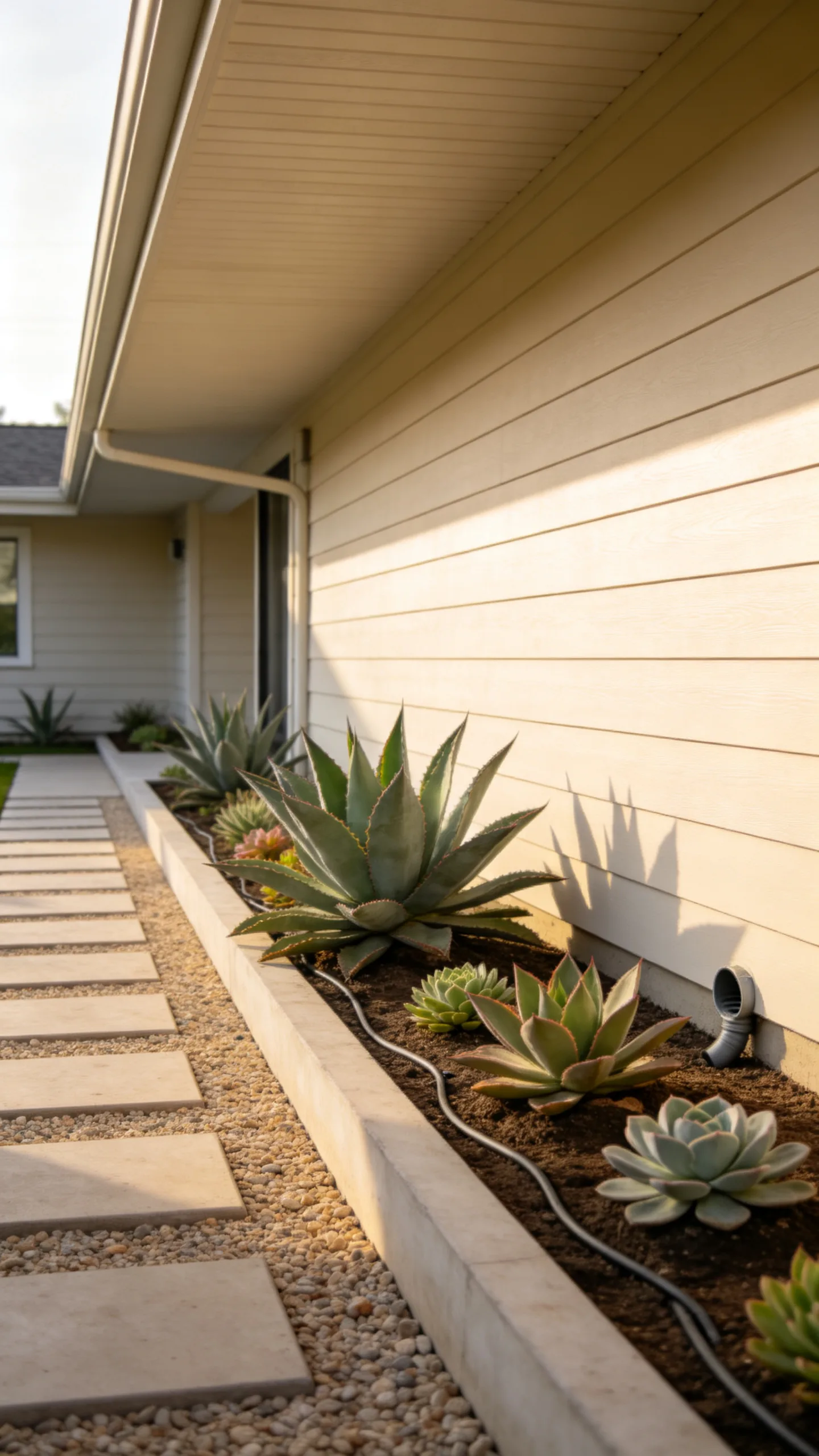
Use the dry strip beneath wide eaves for a narrow succulent garden, provided the area receives sufficient light. Plant compact agaves, aloes, crassulas, or hardy sedums in a raised gravelly bed and add flat stepping stones for maintenance access.
Eaves reduce natural rainfall, so install a simple drip line or water deeply by hand when the soil has dried. Keep plants away from downspout outlets, where sudden heavy flow can cause rot or wash away soil. Light levels can vary sharply along the wall, making it useful to place sun-loving plants near the open edge and shade-tolerant choices closer to the building.
25. Repeating Succulent Rosettes in a Minimalist Front Yard
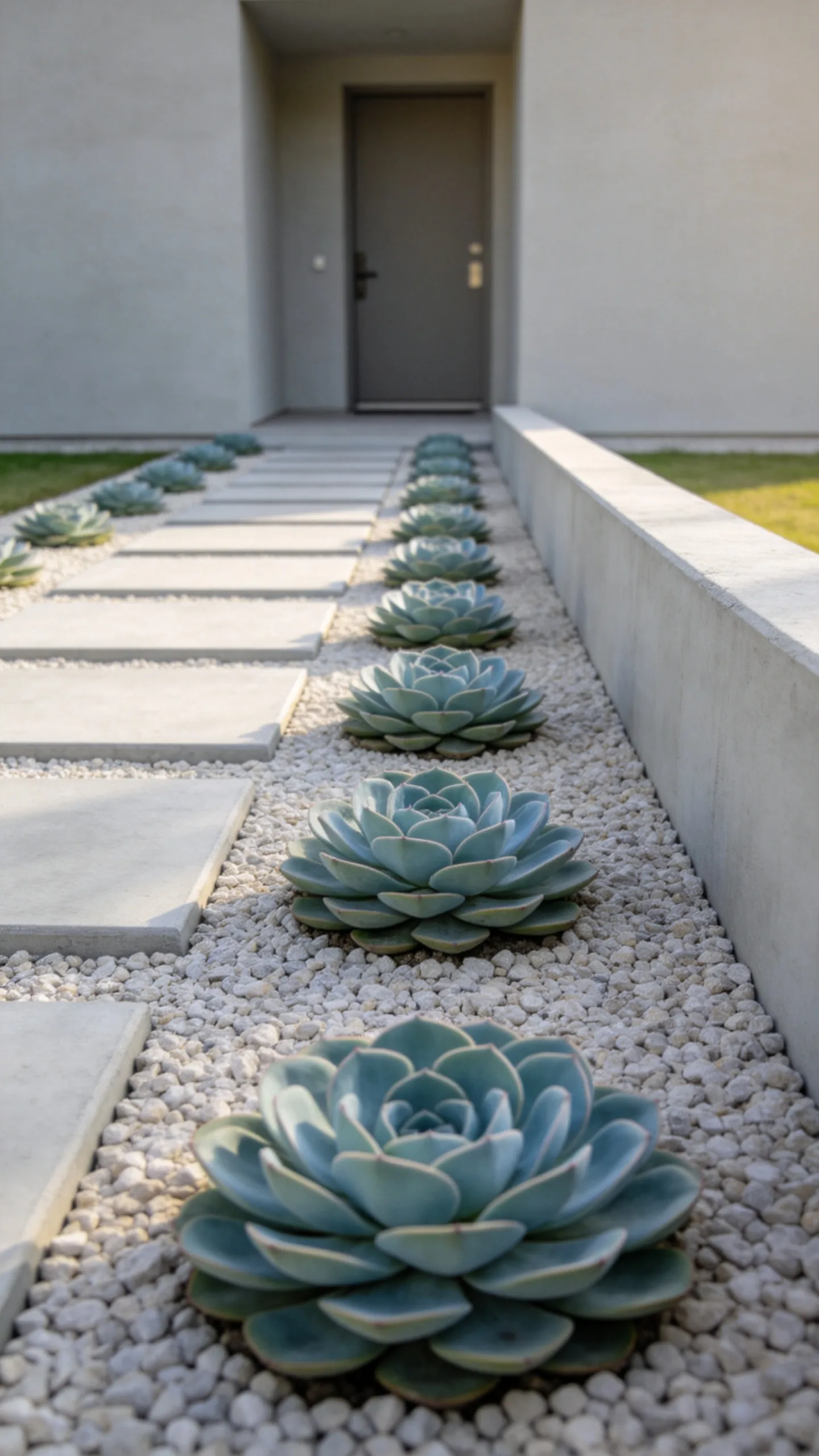
Design a minimalist front yard with repeated rows or staggered groups of one rosette-form succulent. Surround the plants with uniform gravel and add a few rectangular pavers or one low wall to reinforce the clean geometry.
Repetition makes a small plant palette feel deliberate and simplifies watering and seasonal care. Select a species that can remain outdoors year-round in the local climate, or use matching containers for tender echeverias and aeoniums. Space each plant according to its mature diameter so the design retains visible gravel rather than becoming an overcrowded mass.