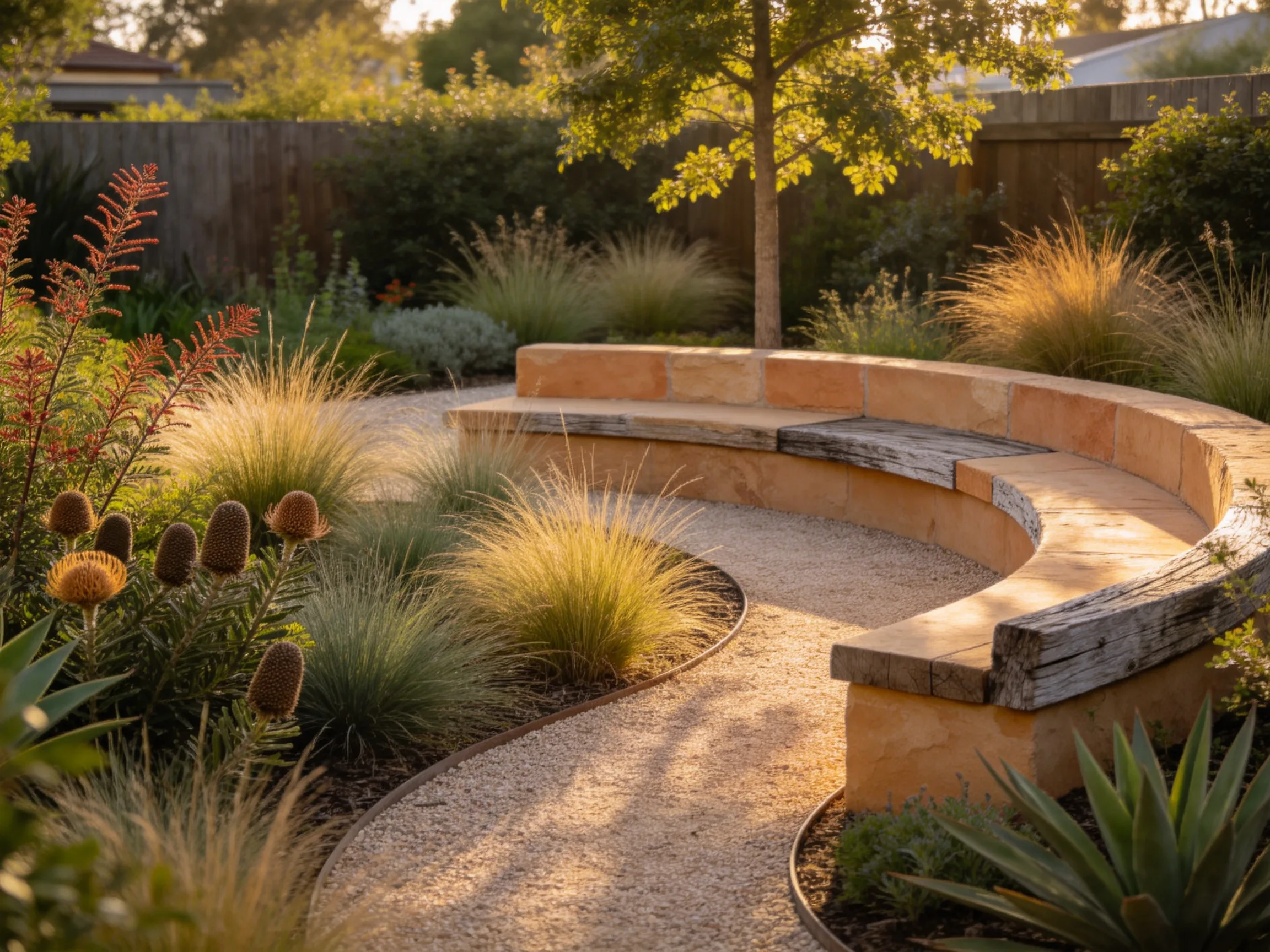
Australian landscape design combines climate-suited plants, earthy materials, practical shade, and relaxed outdoor spaces. Whether you are planning a compact courtyard or a large backyard, these ideas use native planting, natural textures, and water-conscious layouts that can be adapted to local soil, rainfall, and light conditions.
1. Layer Lomandra Along a Curved Gravel Path
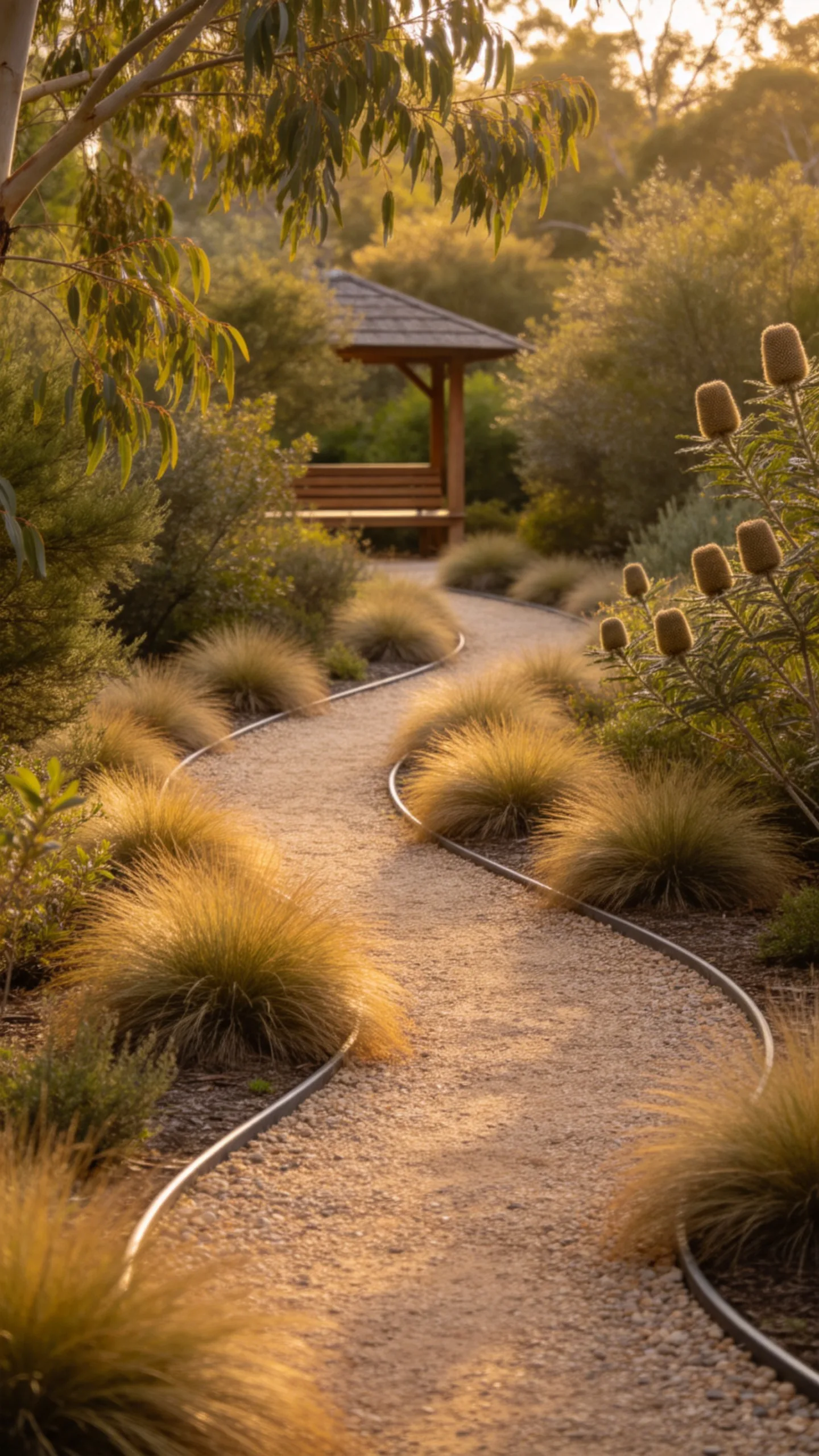
Define a gently curving path with repeated clumps of *Lomandra longifolia* or a compact cultivar suited to the available space. Its narrow, arching leaves soften the edges of gravel while remaining neater than many spreading grasses. Allow enough room for each plant to reach its mature width so the path does not become crowded.
Use compacted crushed granite, local gravel, or fine screenings for a surface that complements the foliage. A curved route creates visual depth in a short garden because the destination is not visible all at once. Install steel or timber edging to keep loose material out of nearby beds.
2. Build a Sandstone Seating Area Among Native Shrubs
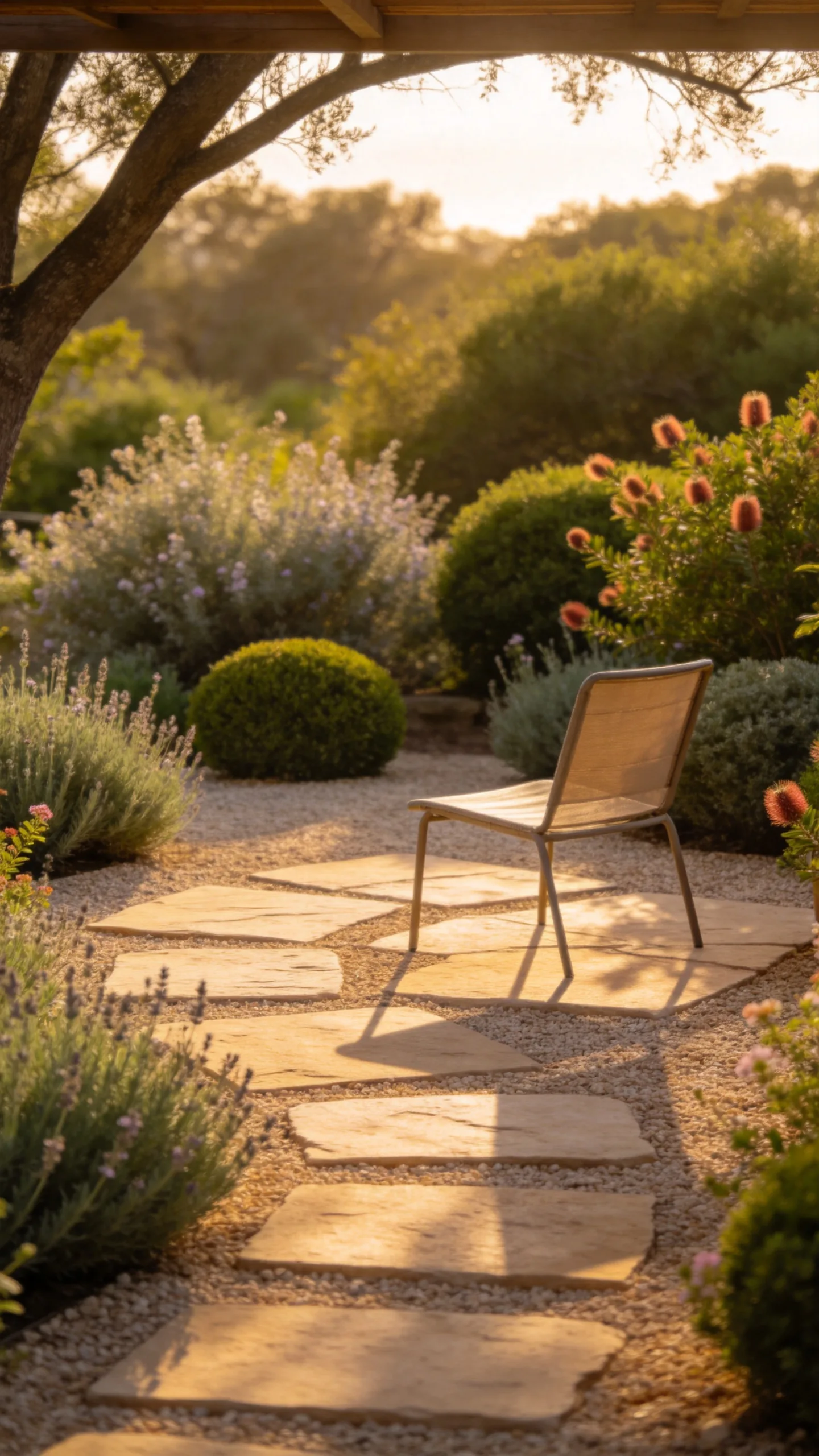
Create an informal seating zone with sandstone pavers laid in gravel or surrounded by low groundcovers. Sandstone introduces warm, natural colour and works particularly well with silver, grey-green, and deep green foliage.
Frame the area with compact native shrubs such as coastal rosemary (*Westringia fruticosa*), correas, or dwarf bottlebrush cultivars. Check mature plant dimensions before planting so branches do not encroach on chairs. In hot inland locations, position the seating area where a tree, pergola, or shade sail can provide afternoon protection.
3. Plant a Mixed Grevillea Privacy Screen
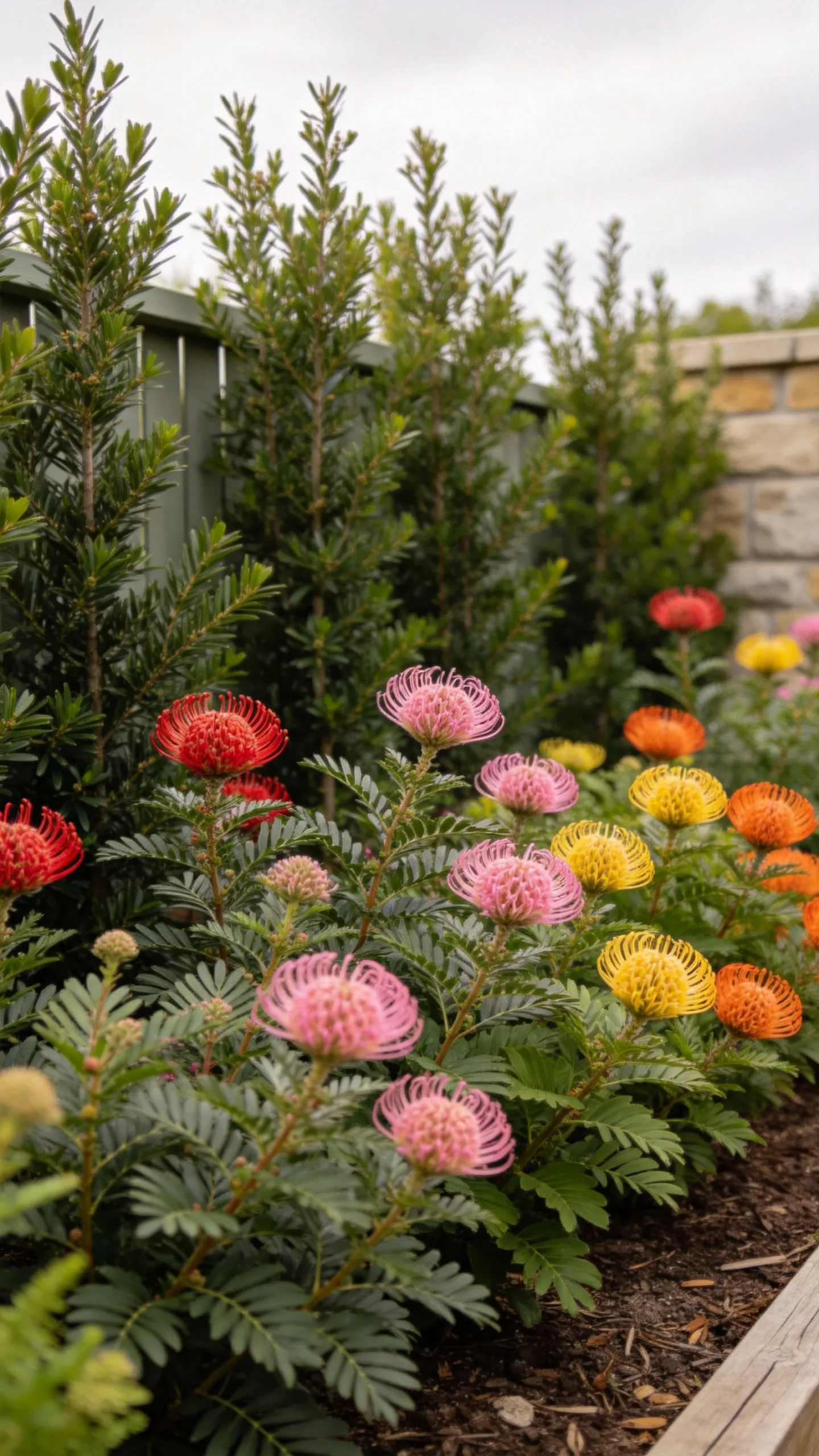
Use several compatible grevillea varieties rather than a single formal hedge to create a more natural privacy screen. Combine taller shrubs at the back with compact forms along the front, selecting plants that suit your region’s frost levels, humidity, and soil drainage.
Space shrubs according to their mature width and prune lightly after flowering to maintain density. Grevilleas generally prefer free-draining soil and native-specific, low-phosphorus fertiliser. Keep taller plants clear of windows and paths so the screen provides privacy without making the garden feel enclosed.
4. Add a Feature Banksia to a Minimal Front Garden
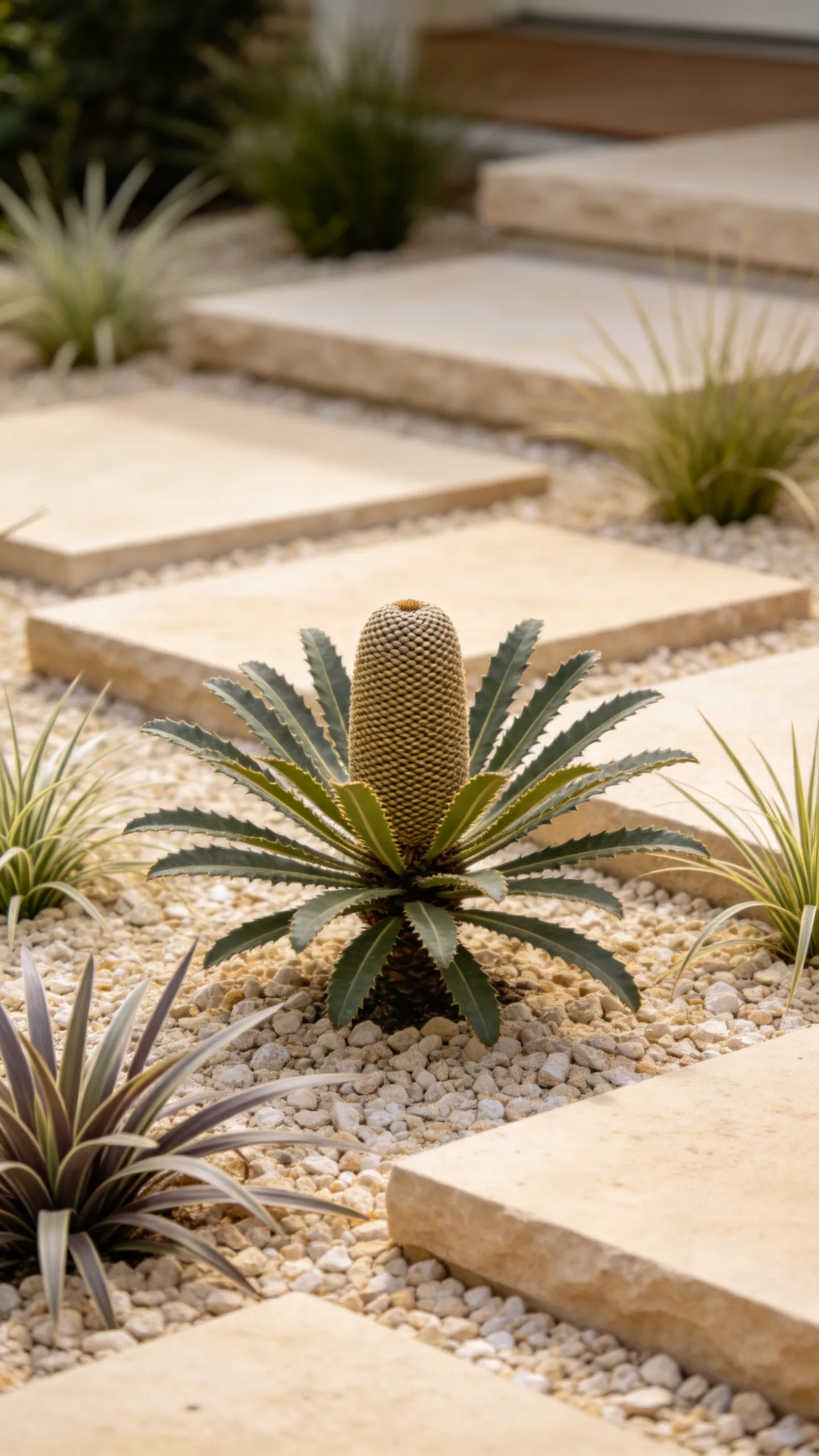
Make a banksia the focal point of a simple front-yard scheme. Depending on the garden size and local conditions, this could be a compact shrub cultivar or a small tree such as *Banksia integrifolia*. Confirm eventual height, root space, and tolerance of local soil before choosing a variety.
Surround the feature plant with gravel mulch, sandstone steppers, and low clumps of dianella or lomandra. Limiting the material and plant palette keeps the entrance uncluttered while highlighting the banksia’s architectural leaves and flower spikes.
5. Create a Kangaroo Paw Colour Border
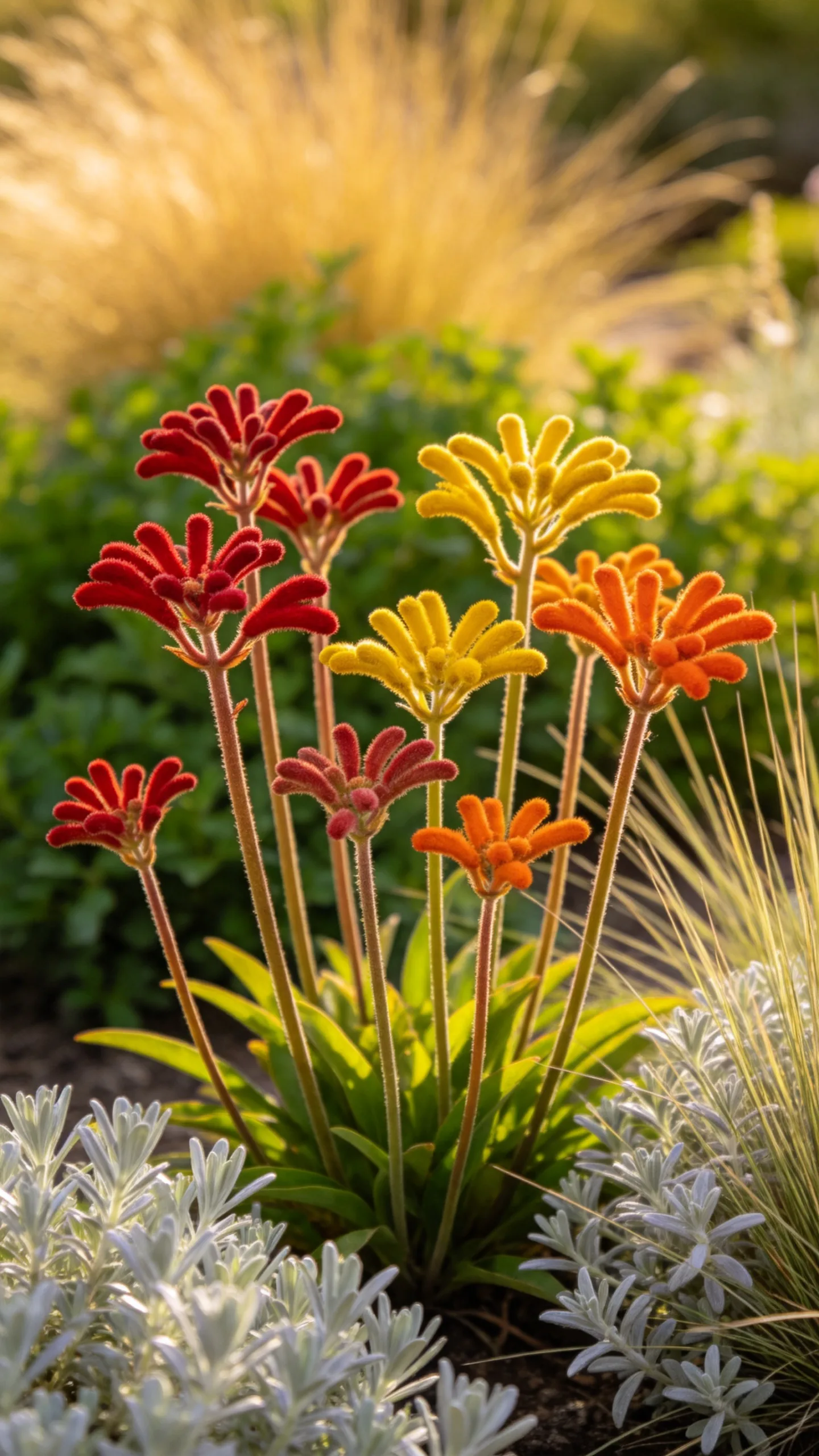
Plant kangaroo paws in a sunny, free-draining border where their upright flower stems can stand out against simpler foliage. Group several plants of the same colour for stronger visual impact, or combine red, yellow, and orange cultivars for a warm Australian palette.
Place low lomandra, blue flax lily (*Dianella* species), or silver-leaved saltbush nearby to conceal the base of the plants. Remove spent flower stems and damaged foliage at the base to maintain airflow. Kangaroo paws vary in disease resistance and longevity, so select cultivars recommended for your climate.
6. Design a Dry Creek Bed for Drainage
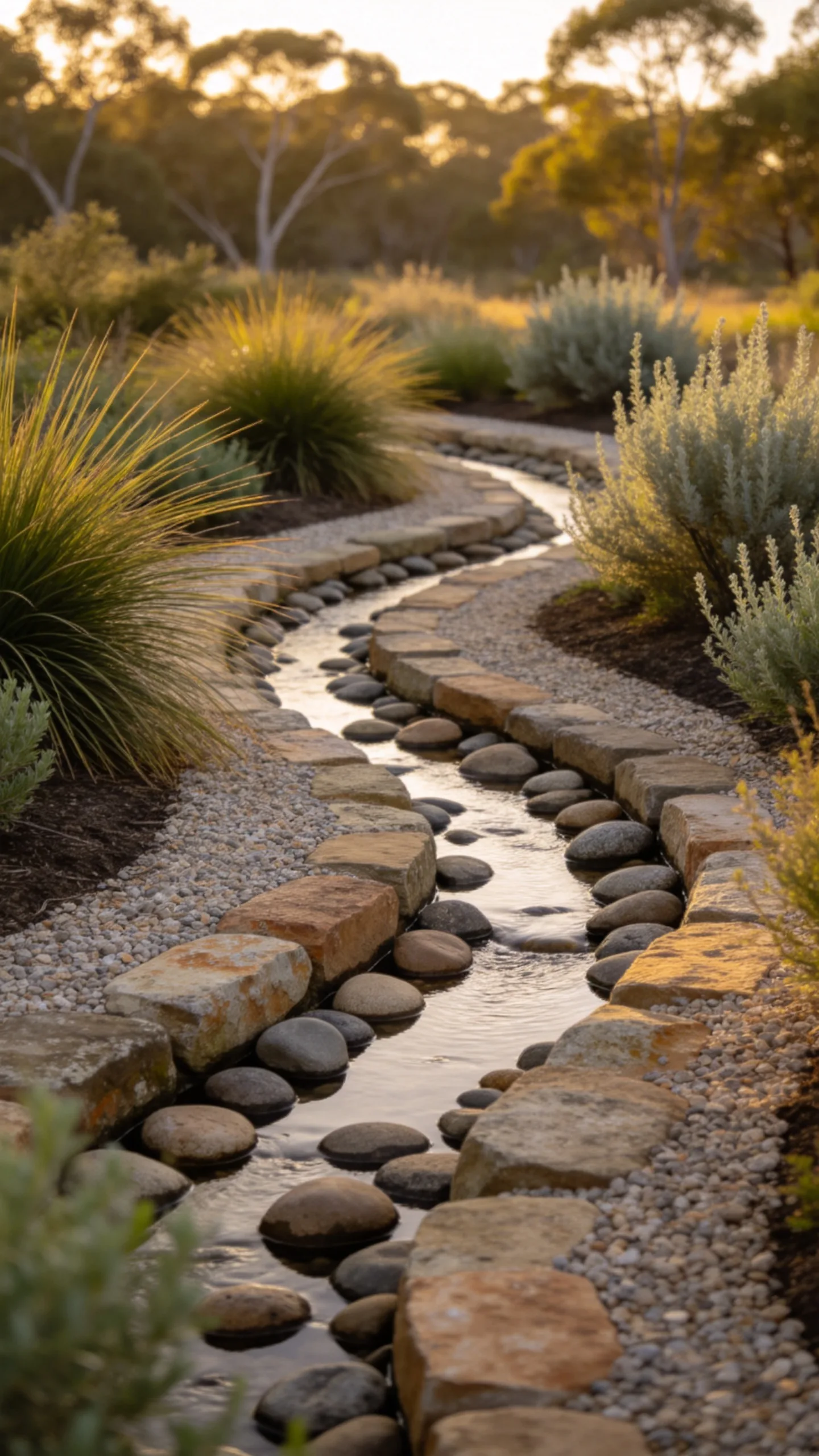
Turn a low point or occasional runoff route into a dry creek bed using river pebbles, larger stones, and gravel in several sizes. Shape it as a shallow, irregular channel rather than a straight strip so it resembles a natural watercourse.
Plant moisture-tolerant species near areas that receive periodic runoff and tougher, drought-tolerant plants along the higher edges. Lomandra, native sedges, and some melaleucas may be suitable, depending on the site. A dry creek should direct water to an appropriate drainage point rather than toward buildings or neighbouring properties.
7. Use Weathered Timber for Raised Native Beds
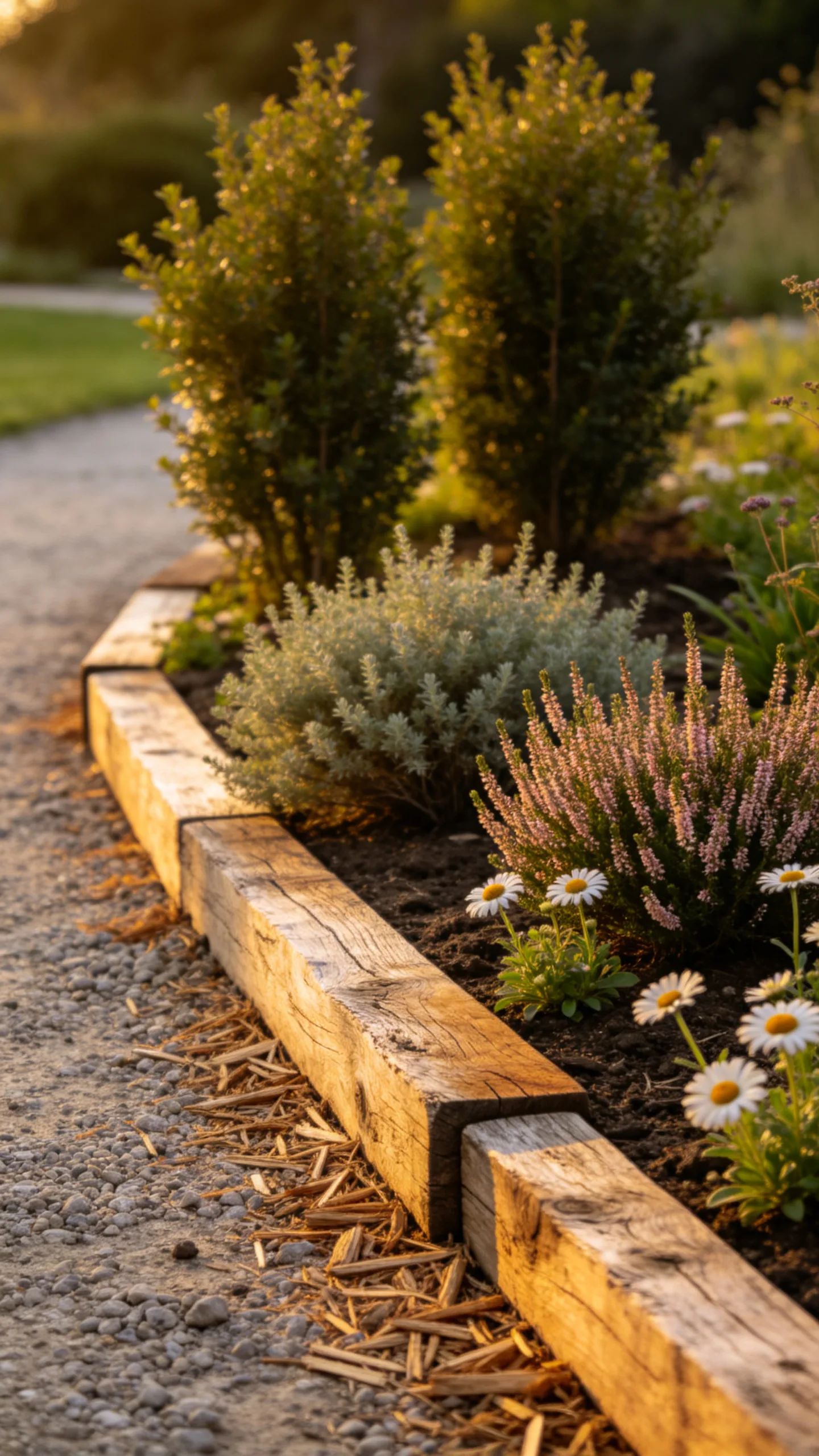
Construct low raised beds from weathered hardwood, recycled timber rated for outdoor use, or another durable material appropriate for contact with soil. The warm timber tones pair naturally with gravel paths and native foliage.
Raised beds help define planting areas and can improve drainage where existing ground is heavy or compacted. Fill them with a soil blend suited to the selected plants rather than assuming every native requires poor soil. Reserve taller species for the back and use spreading correas, native daisies, or compact westringias along the edge.
8. Grow Hardenbergia on a Slim Trellis
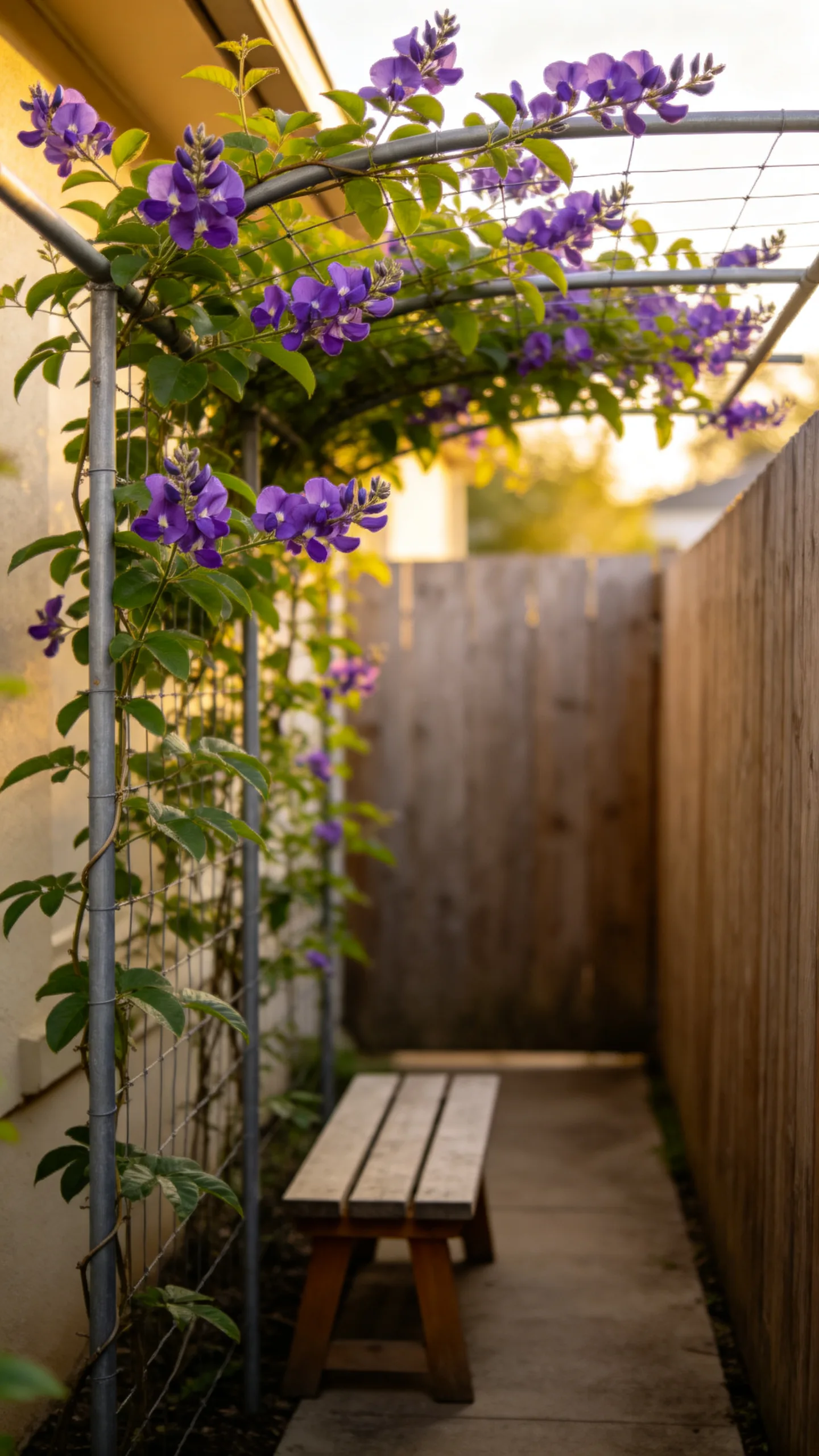
Train native sarsaparilla (*Hardenbergia violacea*) over a narrow wire trellis to add flowers and greenery without occupying much ground space. It can be used beside a fence, along a side passage, or behind a small courtyard bench.
Provide sturdy supports and guide new stems before they become tangled. Pruning after flowering helps control growth and encourages a tidier framework. Hardenbergia performs best with suitable drainage and access to sun, though light requirements can vary with climate.
9. Soften Paving With Native Violet
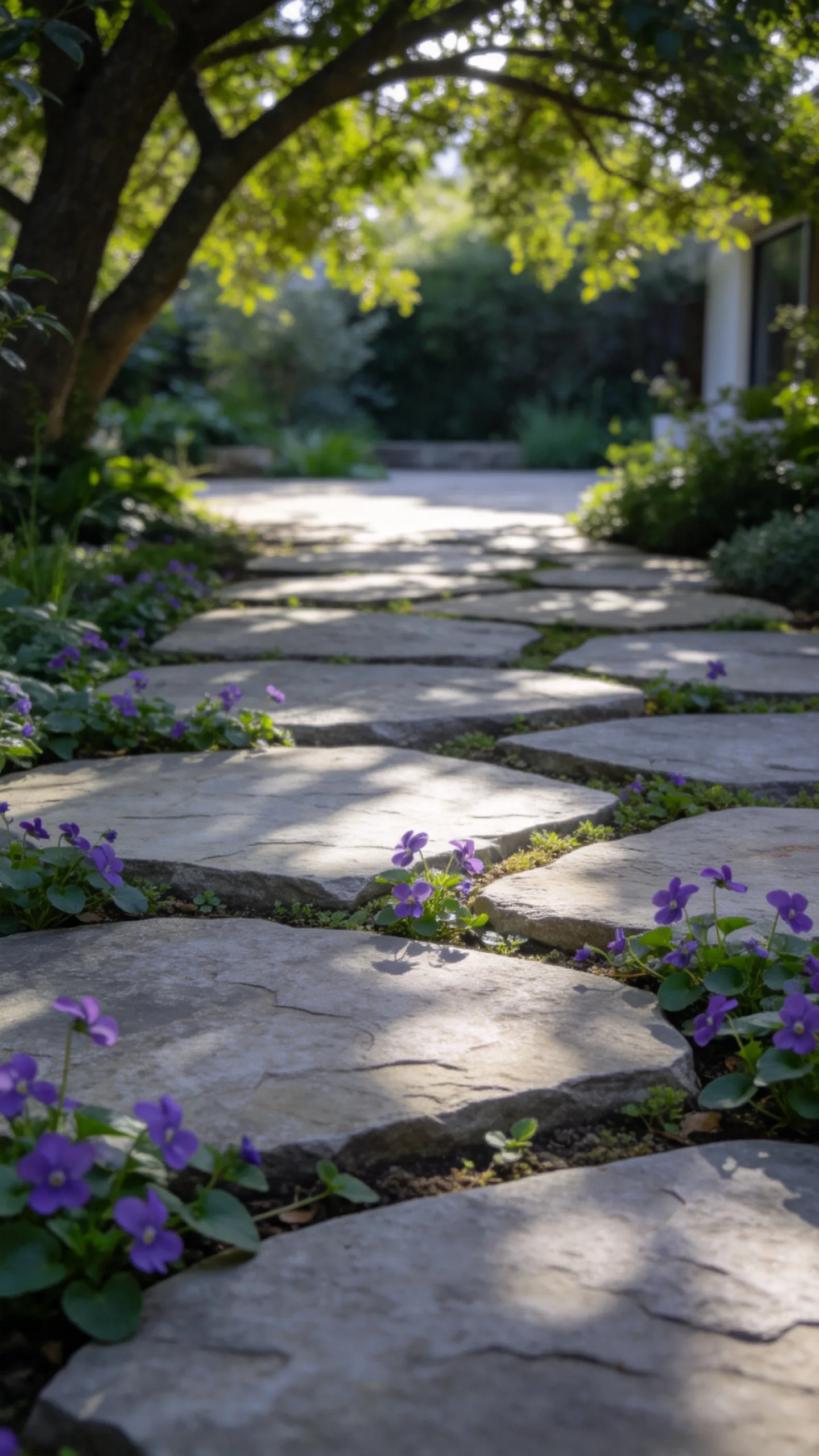
Plant native violet (*Viola hederacea* or locally appropriate related forms) between widely spaced pavers in a cool, lightly shaded part of the garden. Its low growth and small flowers soften hard surfaces without creating a tall tripping hazard.
Use it where the soil retains some moisture, such as beneath open-canopied trees or beside a sheltered courtyard. It is less suitable for hot, exposed paving that dries rapidly. Leave practical stepping room and periodically trim growth away from drainage grates and path edges.
10. Shape a Coastal Garden With Westringia Mounds
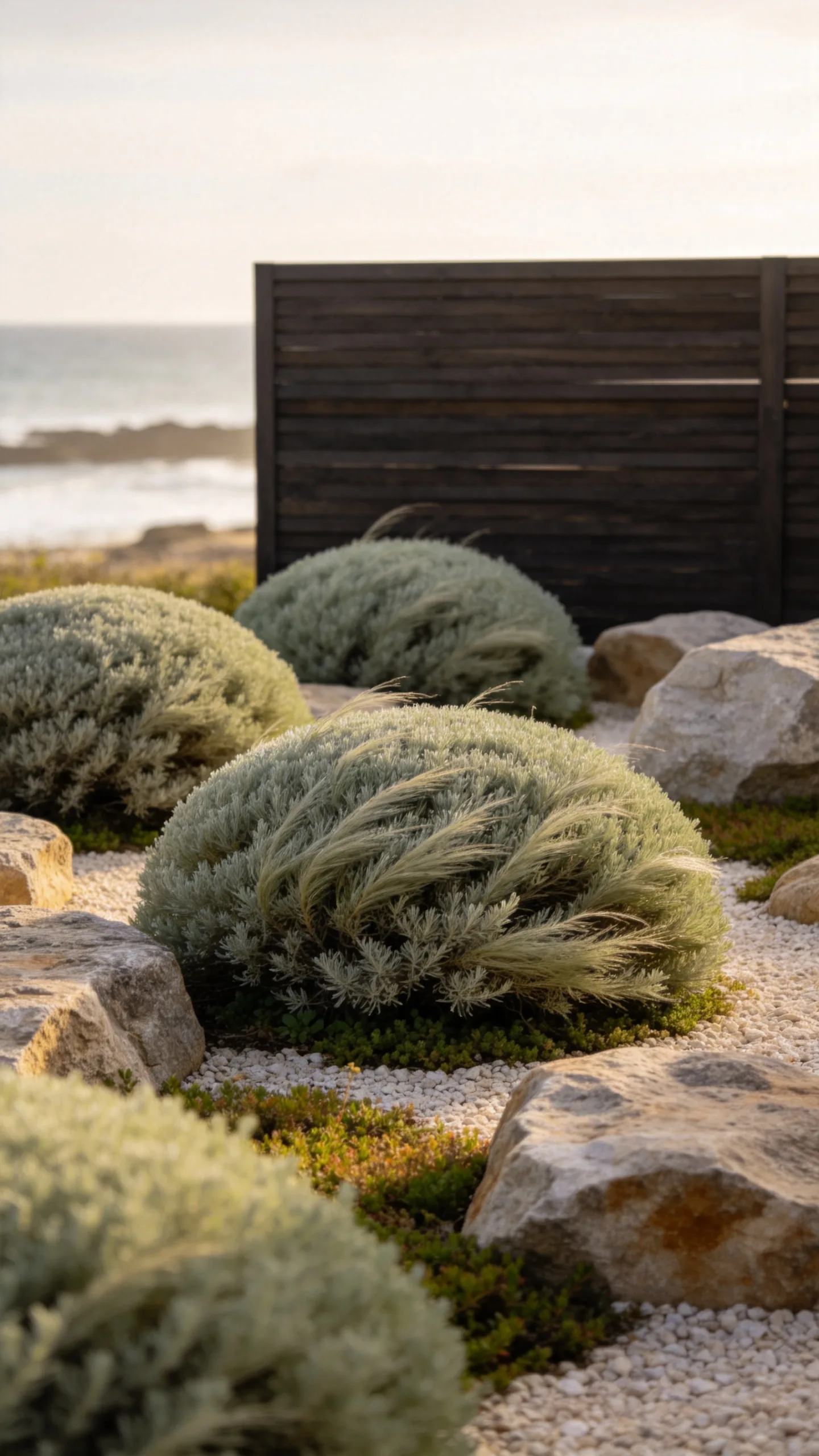
Arrange coastal rosemary in loose, rounded mounds instead of clipping it into a rigid hedge. Alternate compact westringia cultivars with rocks, gravel, and low groundcovers to create a coastal-style composition.
Westringia tolerates wind and salt exposure in many coastal settings, but plant performance still depends on cultivar and site conditions. Give each shrub enough width to develop naturally, then use occasional selective pruning to prevent bare interiors. Silver foliage also provides contrast against dark fences and timber screens.
11. Create a Native Grass Meadow Strip
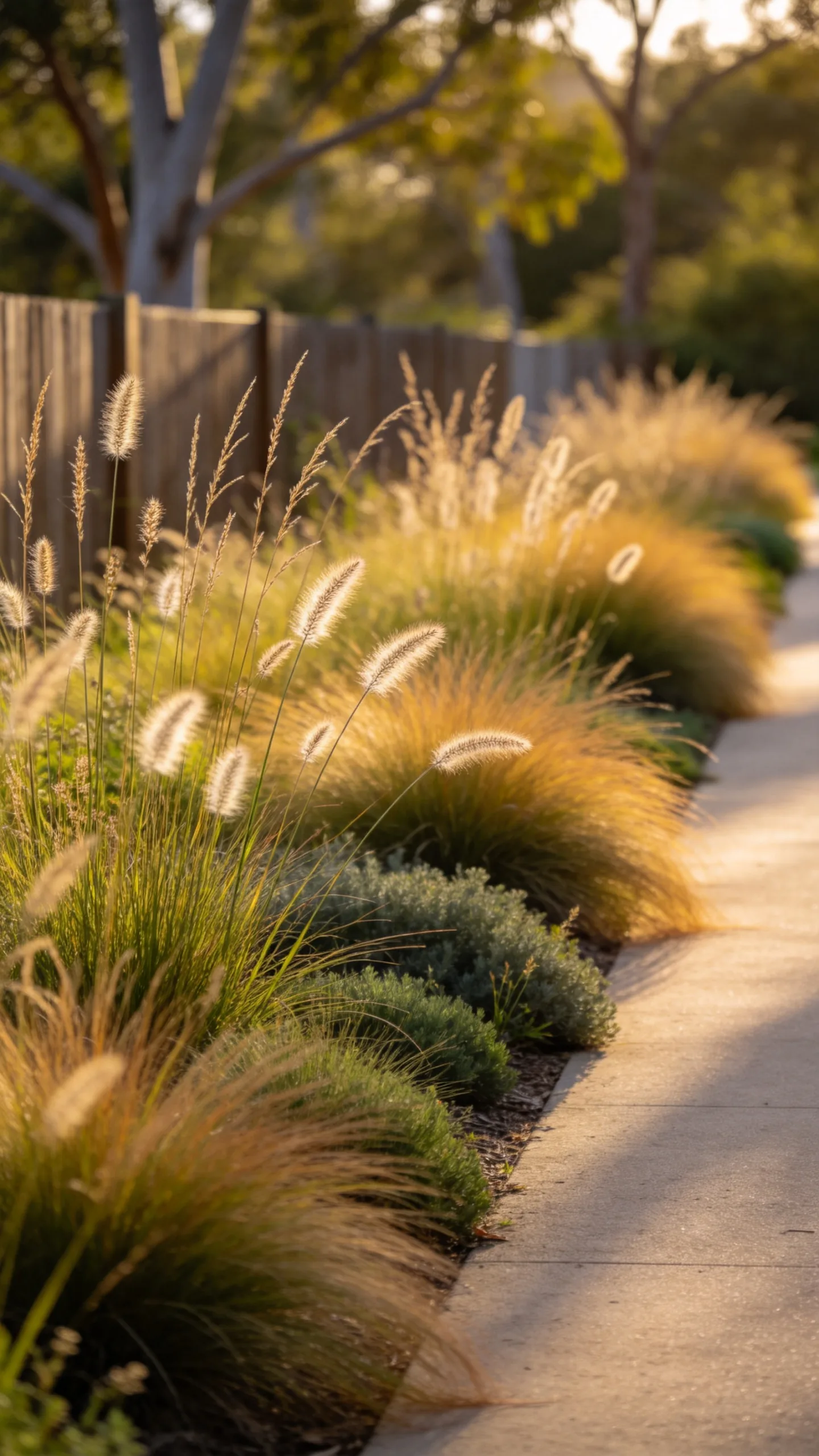
Replace a difficult strip of lawn with repeated drifts of native grasses. Kangaroo grass (*Themeda triandra*), tussock grass (*Poa labillardierei*), and wallaby grasses (*Rytidosperma* species) offer different heights, textures, and climate tolerances.
Choose one or two locally appropriate species rather than mixing too many varieties. Cut back or selectively thin plants at the recommended time for the species to remove old growth. Place the meadow away from narrow paths if seed heads or arching foliage would obstruct movement.
12. Frame a Deck With Silver and Blue Foliage
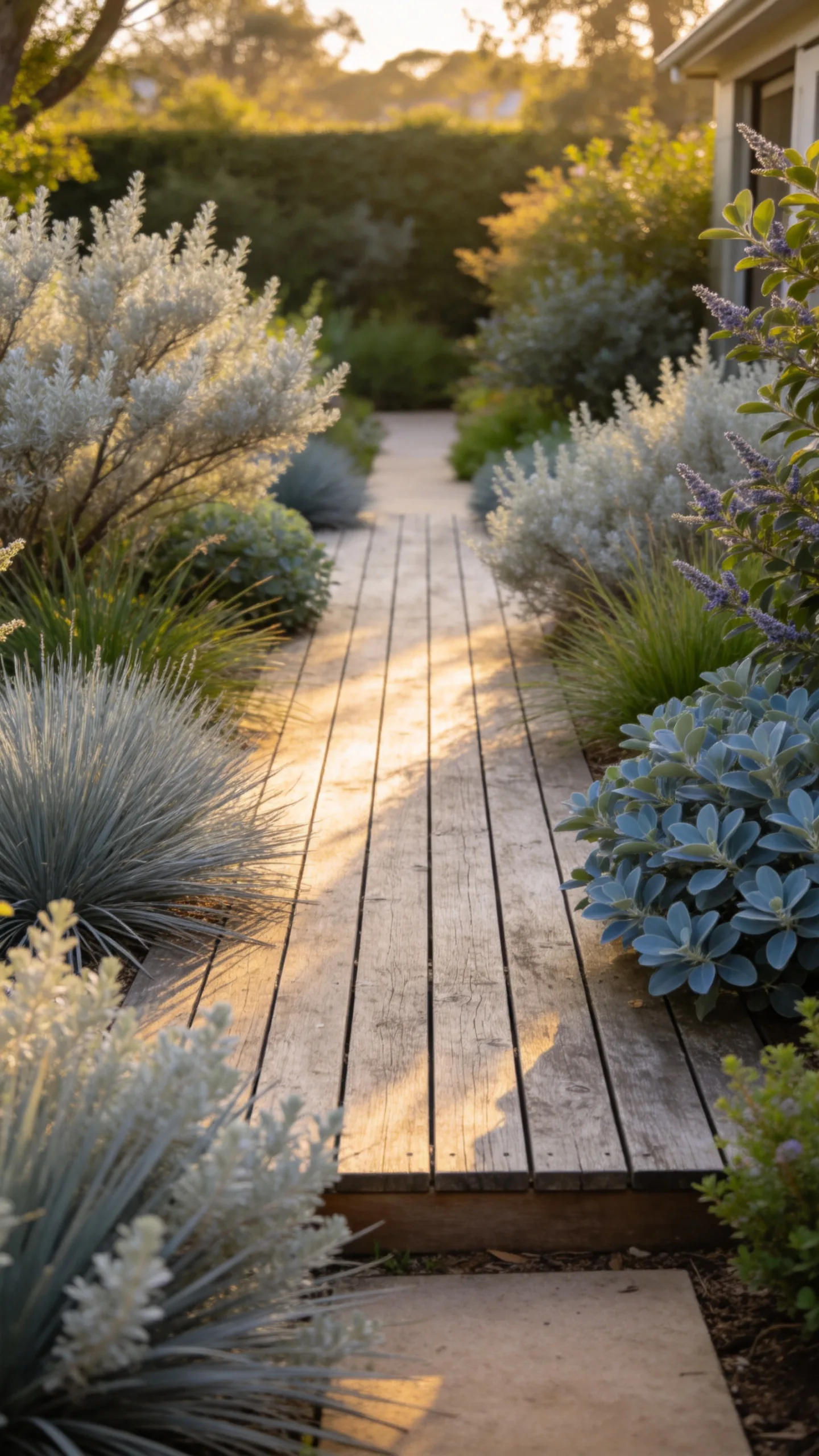
Surround a timber deck with plants that carry grey, silver, or blue-green leaves. Options may include saltbush, blue-leaved dianella, compact eucalyptus forms, and silver-foliaged westringia cultivars.
Repeat the same plants in several locations to connect the deck with the wider garden. Select low shrubs beside open views and position taller plants where screening is needed. Keep plants far enough from the deck to allow airflow, maintenance access, and safe clearance from heaters or cooking equipment.
13. Plant a Small Flowering Gum as a Canopy Tree
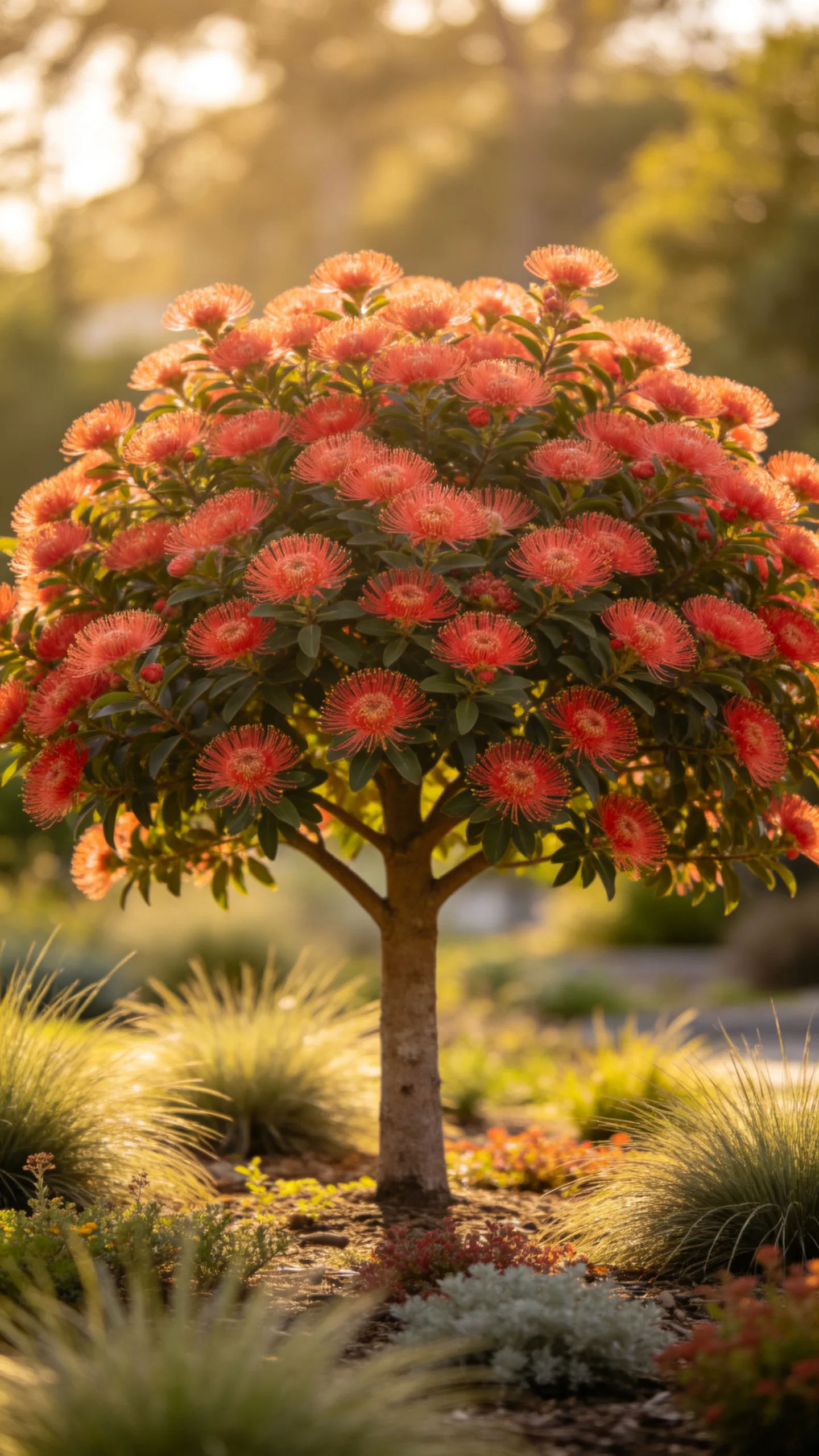
Use a compact flowering gum cultivar as a feature tree where there is sufficient root and canopy space. Dwarf selections of *Corymbia ficifolia* can bring strong seasonal colour without the scale of a large forest tree, although eventual dimensions vary by cultivar and growing conditions.
Position the tree away from roofs, drains, paving, and overhead services. Underplant it with low grasses or groundcovers that can tolerate increasing shade as the canopy develops. Ask a local nursery whether the chosen gum is reliable in your climate, particularly in humid or frost-prone areas.
14. Build a Stepping-Stone Path Through Groundcovers
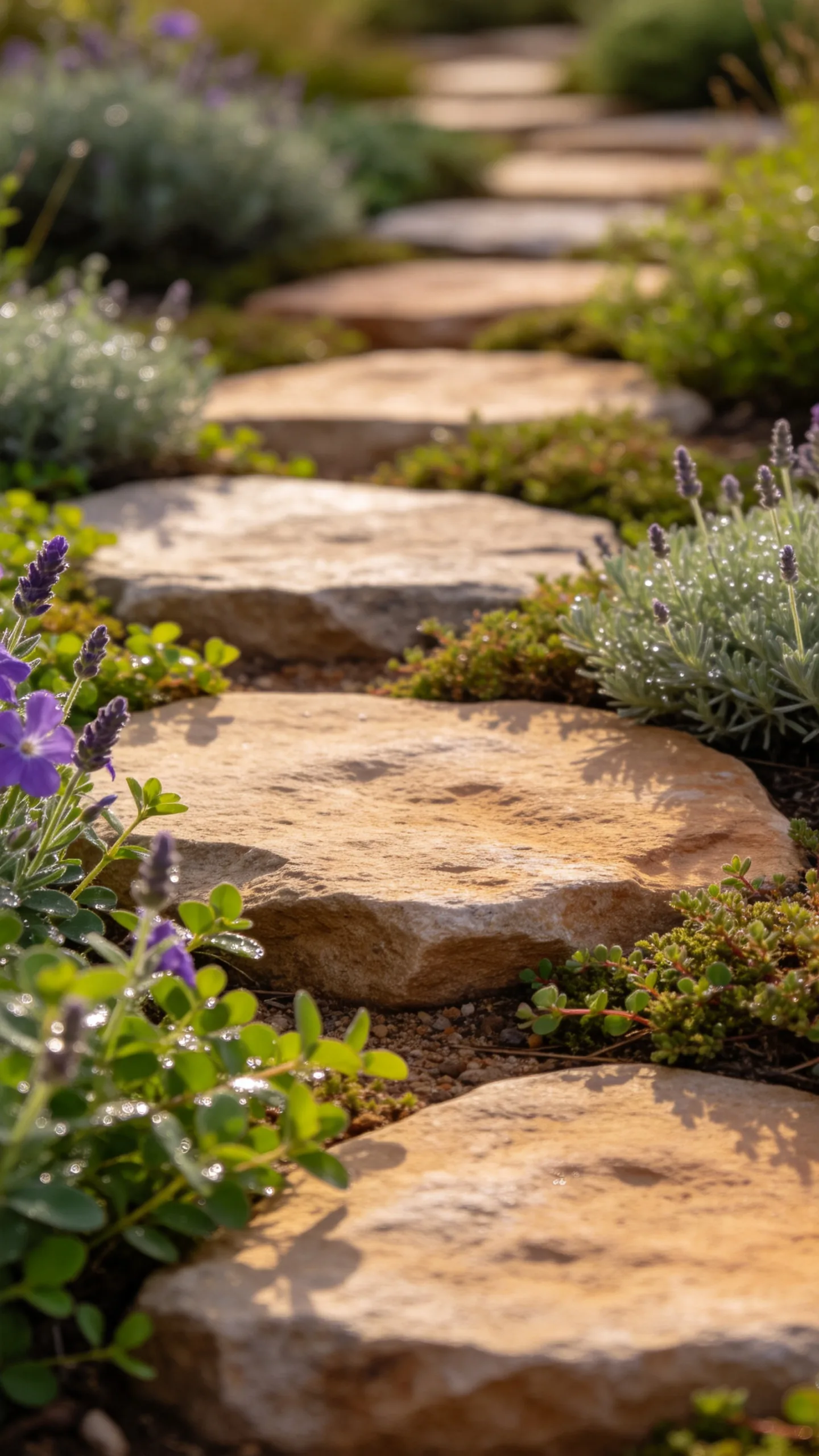
Lay irregular sandstone, bluestone, or bush-rock steppers through a low native planting bed. Keep the stones close enough for comfortable walking and set them level so the route remains practical as well as decorative.
Use low groundcovers such as kidney weed (*Dichondra repens*), creeping boobialla (*Myoporum parvifolium*), or native violet according to the site’s sun and moisture. Confirm the growth habit before planting because some groundcovers spread vigorously in favourable conditions. Trim foliage back from the walking surface as needed.
15. Combine Correas and Boulders in a Shady Corner
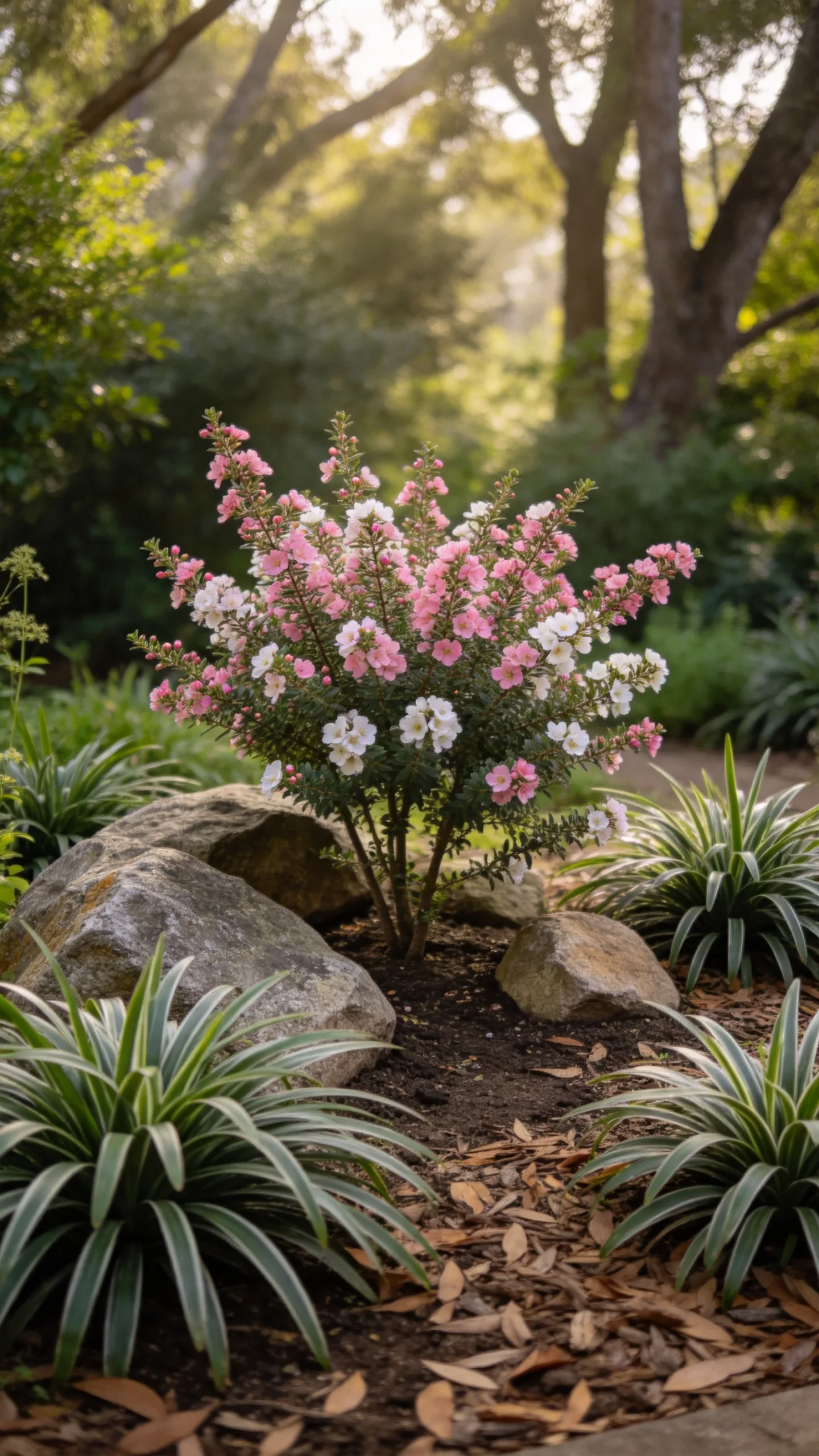
Transform a partly shaded corner with natural boulders and a collection of correas. Many correas cope with filtered light and bring flowers to areas where sun-loving native plants may struggle, but the exact tolerance depends on the species or cultivar.
Partially bury the boulders so they look integrated with the ground rather than placed on top of it. Add leaf mulch and a few clumps of dianella for layered foliage. Maintain open space around each shrub to reduce crowding and make pruning easier.
16. Install a Rain Garden With Native Sedges
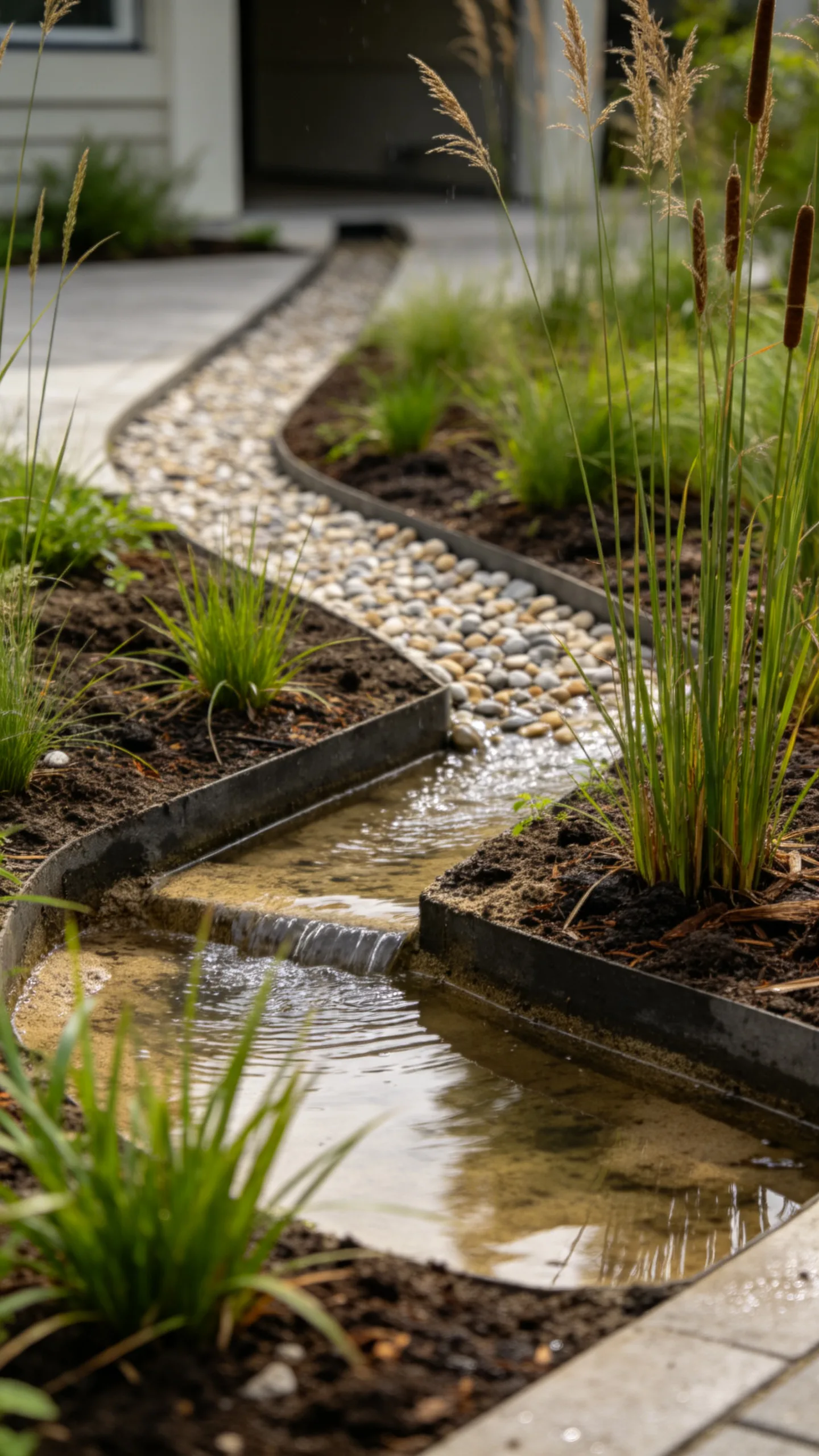
Create a shallow planted basin that temporarily receives water from a downpipe or paved area. Use native sedges, rushes, and moisture-tolerant grasses that can handle both wet periods and intervals of drier soil.
A rain garden needs a safe overflow route, free-draining layers, and adequate distance from building foundations. Species selection should be based on local rainfall and the length of time water remains in the basin. Consult local drainage guidance before redirecting roof runoff, especially on sloping or clay-heavy sites.
17. Screen a Fence With Bottlebrush and Tea Tree
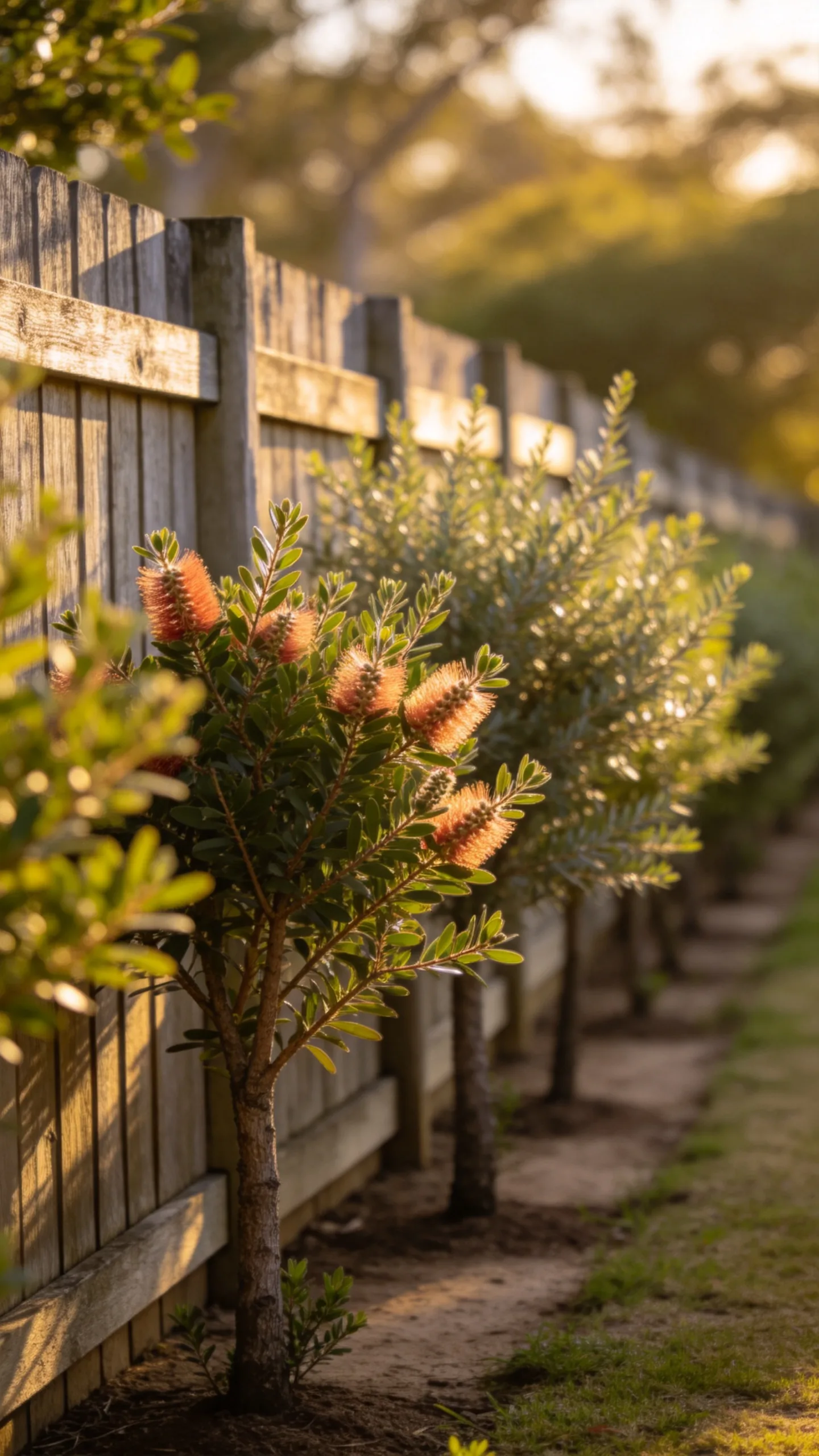
Break up a long boundary fence with alternating bottlebrush and tea tree shrubs. Choose compact or narrow forms where bed depth is limited, and avoid planting large-growing species in a restricted side yard.
Set plants forward from the fence so air can circulate and branches can be accessed for pruning. Repeating the same two or three varieties creates rhythm without looking overly formal. In small gardens, keep the lower branches lightly thinned to preserve usable space beneath the canopy.
18. Add a Naturalistic Birdbath Planting Zone
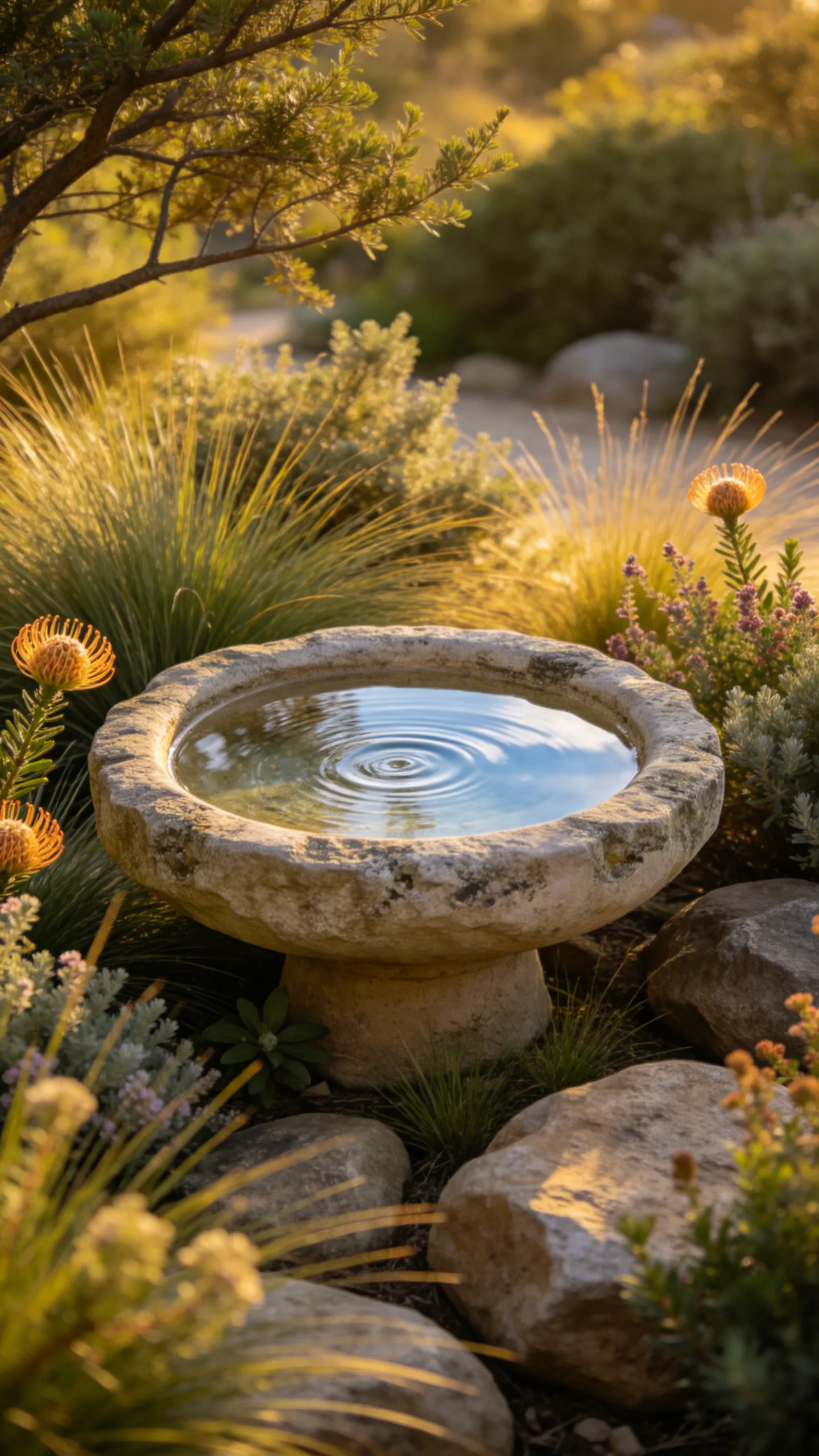
Place a shallow birdbath among low shrubs, grasses, and rocks rather than in an exposed patch of lawn. Nearby plants can provide perching points and cover, while an open approach allows birds to see the surrounding area.
Correas, grevilleas, native grasses, and dense lomandra clumps can create a layered setting. Position the birdbath where it is visible from a window but reasonably protected from pets. Refresh the water regularly and scrub the basin to prevent algae and debris from accumulating.
19. Use Gabion Walls Filled With Local Stone
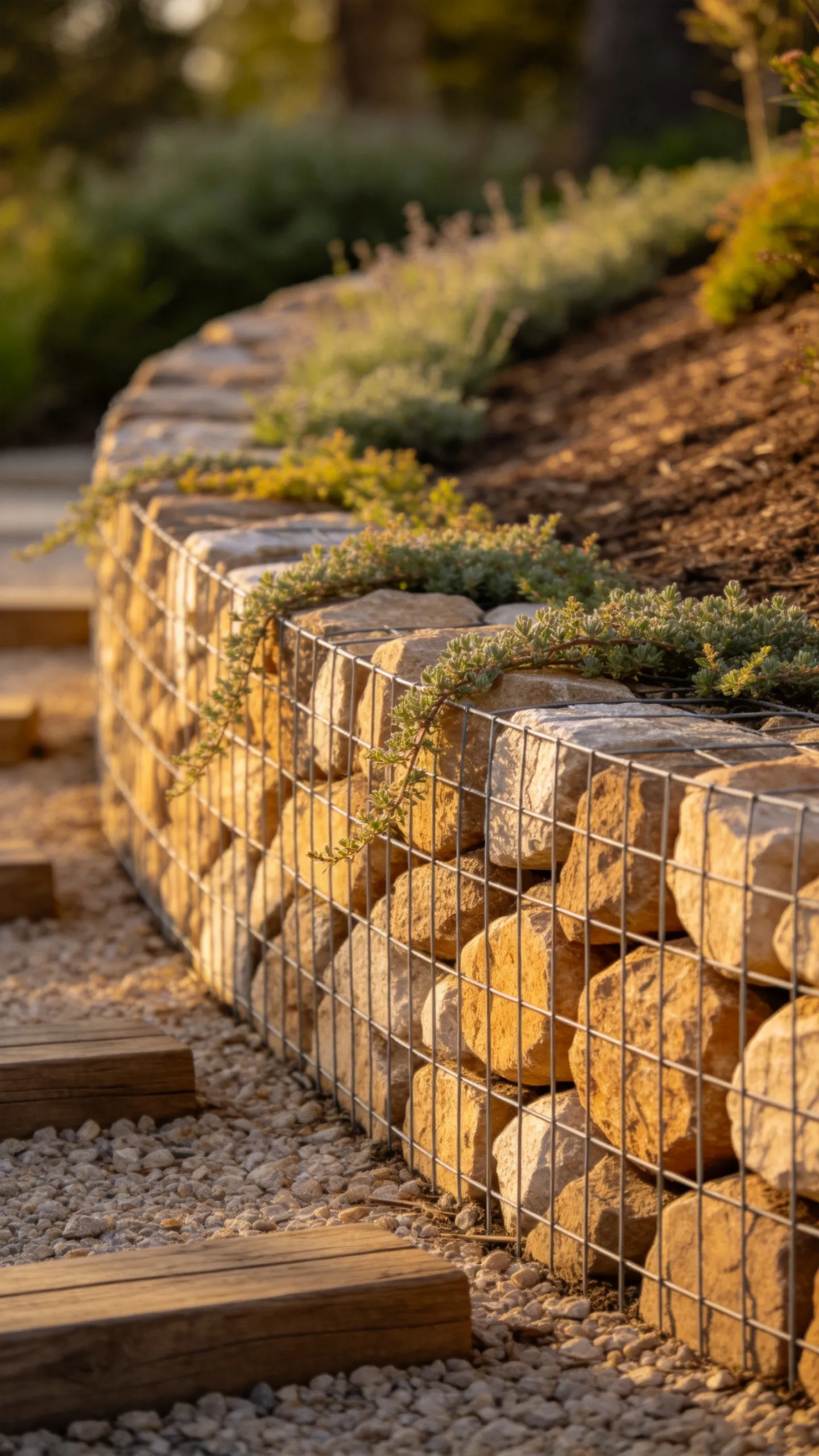
Define a slope, seating area, or raised bed with gabion baskets filled with locally sourced stone. The wire cages add structure while the irregular rock texture maintains a rugged, natural look.
Keep the wall height appropriate to the project and seek professional advice for retaining structures or steep sites. Plant trailing groundcovers above low gabions, leaving room for stems to soften the top edge. Pair the stone with simple gravel and timber rather than introducing several competing hardscape materials.
20. Design a Fire-Conscious Garden Buffer
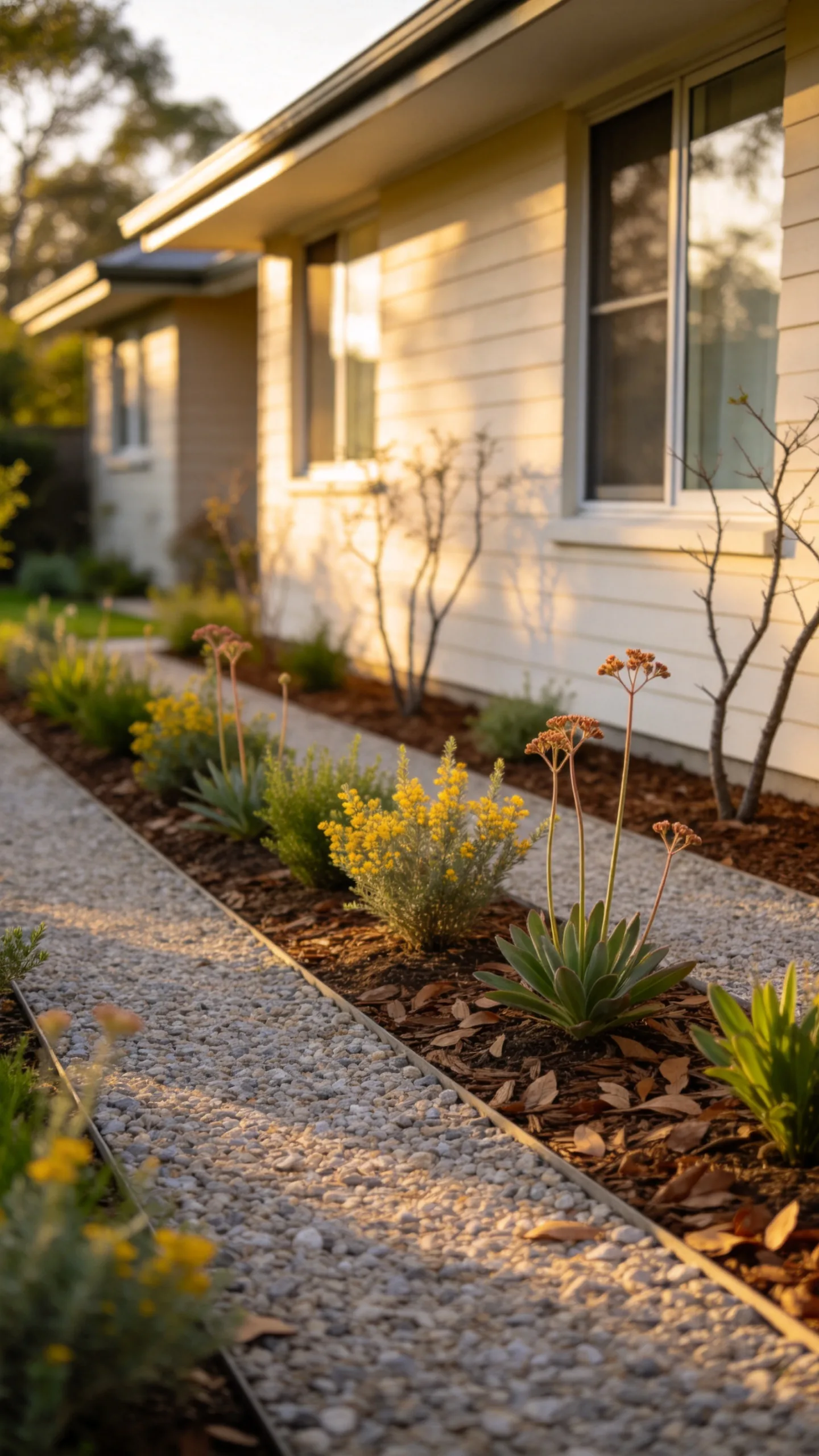
In bushfire-prone locations, organise planting with defendable space, accessible paths, and separation between plant groups. Avoid placing continuous bands of dense vegetation directly against the house, beneath windows, or beside combustible structures.
Use well-maintained, lower-growing plants where appropriate, remove accumulated dry leaves, and keep branches clear of buildings. Plant flammability varies with moisture, maintenance, arrangement, and weather, so no species should be treated as fireproof. Follow current local fire authority guidance when choosing plants and planning setbacks.
21. Create a Courtyard With Native Plants in Pots
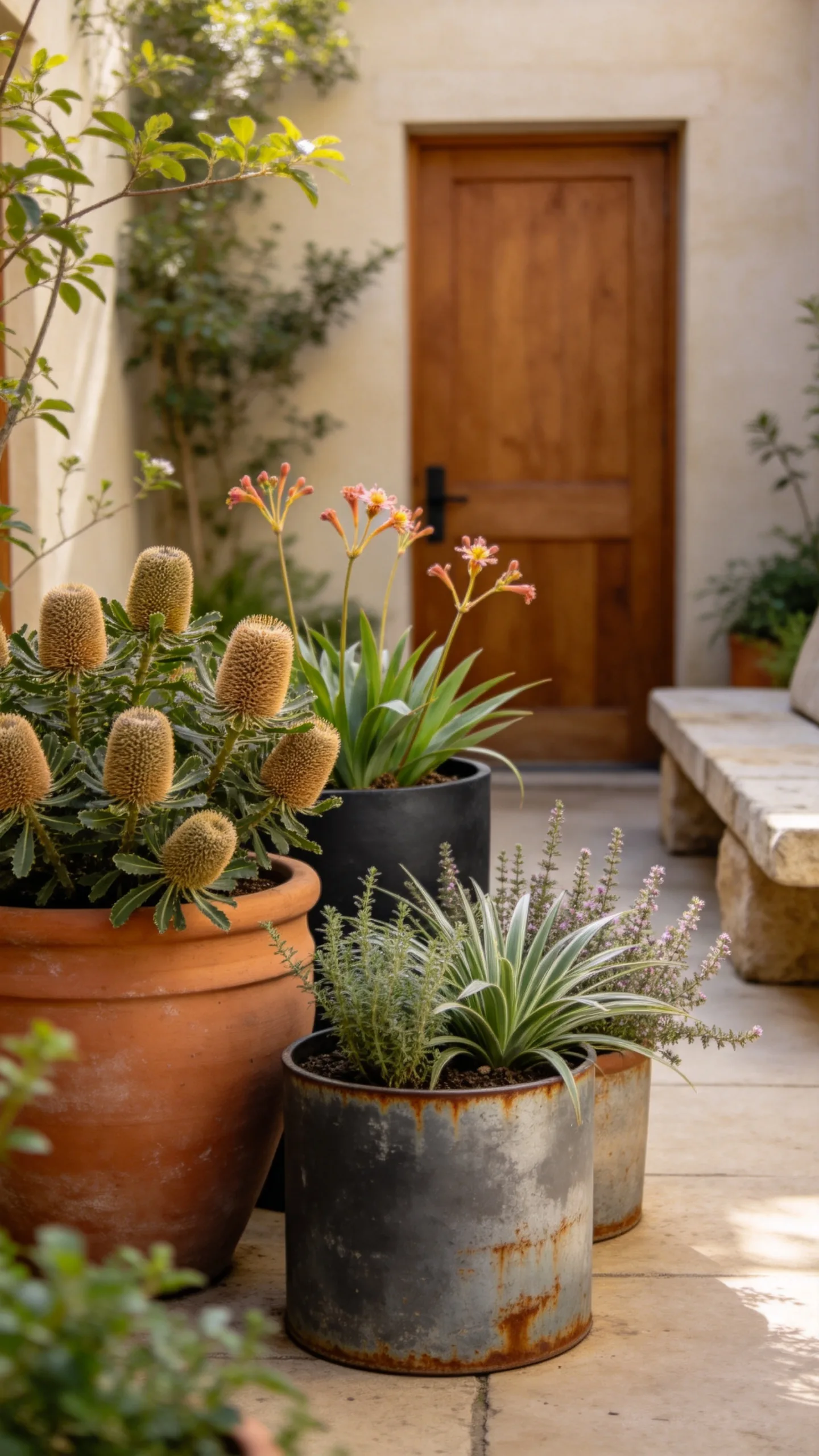
Use large terracotta, charcoal, or weathered steel containers to bring native planting into a paved courtyard. Suitable choices may include compact banksias, dwarf citrus-scented gums, kangaroo paws, dianella, or small westringia cultivars.
Select containers with generous drainage holes and use a potting mix recommended for native plants. Group pots in odd-numbered clusters while leaving enough circulation space around doors and seating. Large containers dry more slowly than tiny pots, but they still require regular moisture checks during hot or windy weather.
22. Grow Pandorea Over a Timber Pergola
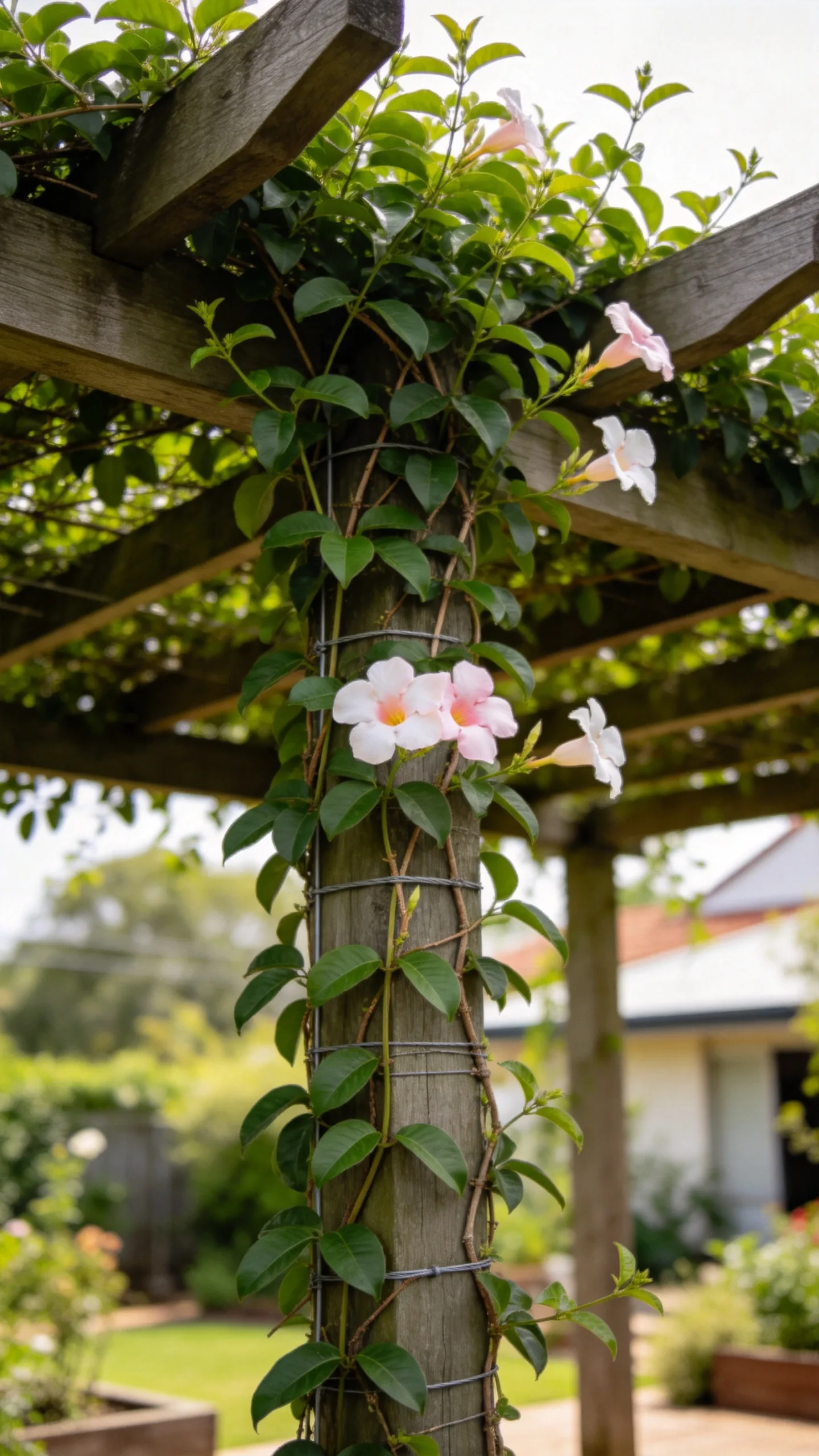
Train bower vine (*Pandorea jasminoides*) over a timber pergola to introduce leafy shade and seasonal flowers. It is a useful vertical solution for patios and narrow gardens because the main planting footprint can remain relatively small.
Install strong wires or battens and tie young stems loosely as they grow. Prune to keep the vine away from gutters, roofing, and neighbouring structures. In cooler regions, confirm local hardiness before planting and consider a position protected from severe frost.
23. Plant an Edible Native Garden Bed
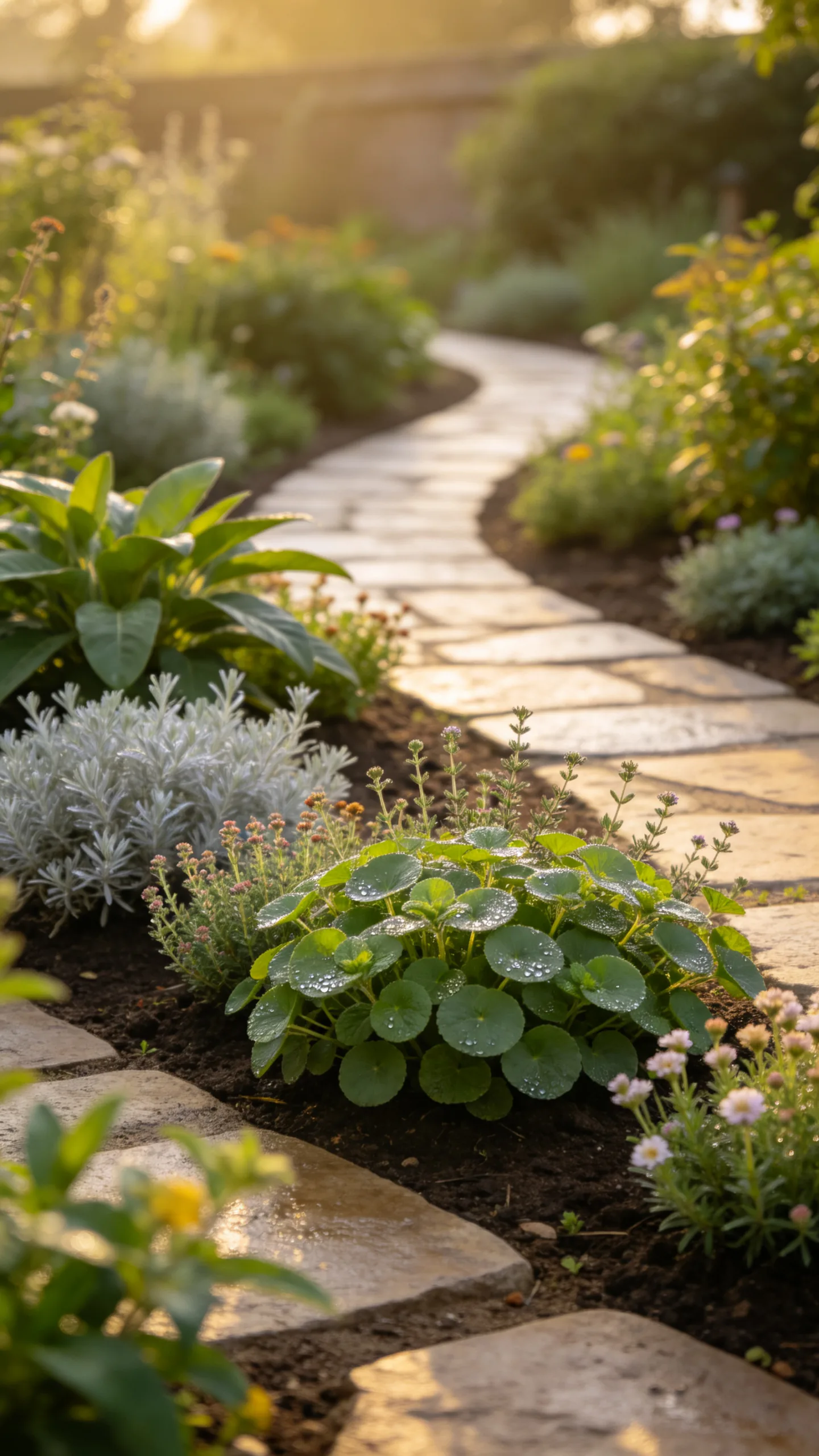
Combine ornamental structure with edible Australian plants such as native thyme, river mint, saltbush, and locally suitable bush-food shrubs. Place frequently harvested herbs near a path or outdoor kitchen so they are easy to reach.
Check botanical identification and safe culinary use before eating any plant, and source stock from a reputable nursery. Different bush foods have distinct soil and moisture needs, so group plants by growing requirements rather than placing them together solely because they are edible.
24. Use Recycled Brick With Native Daisy Borders
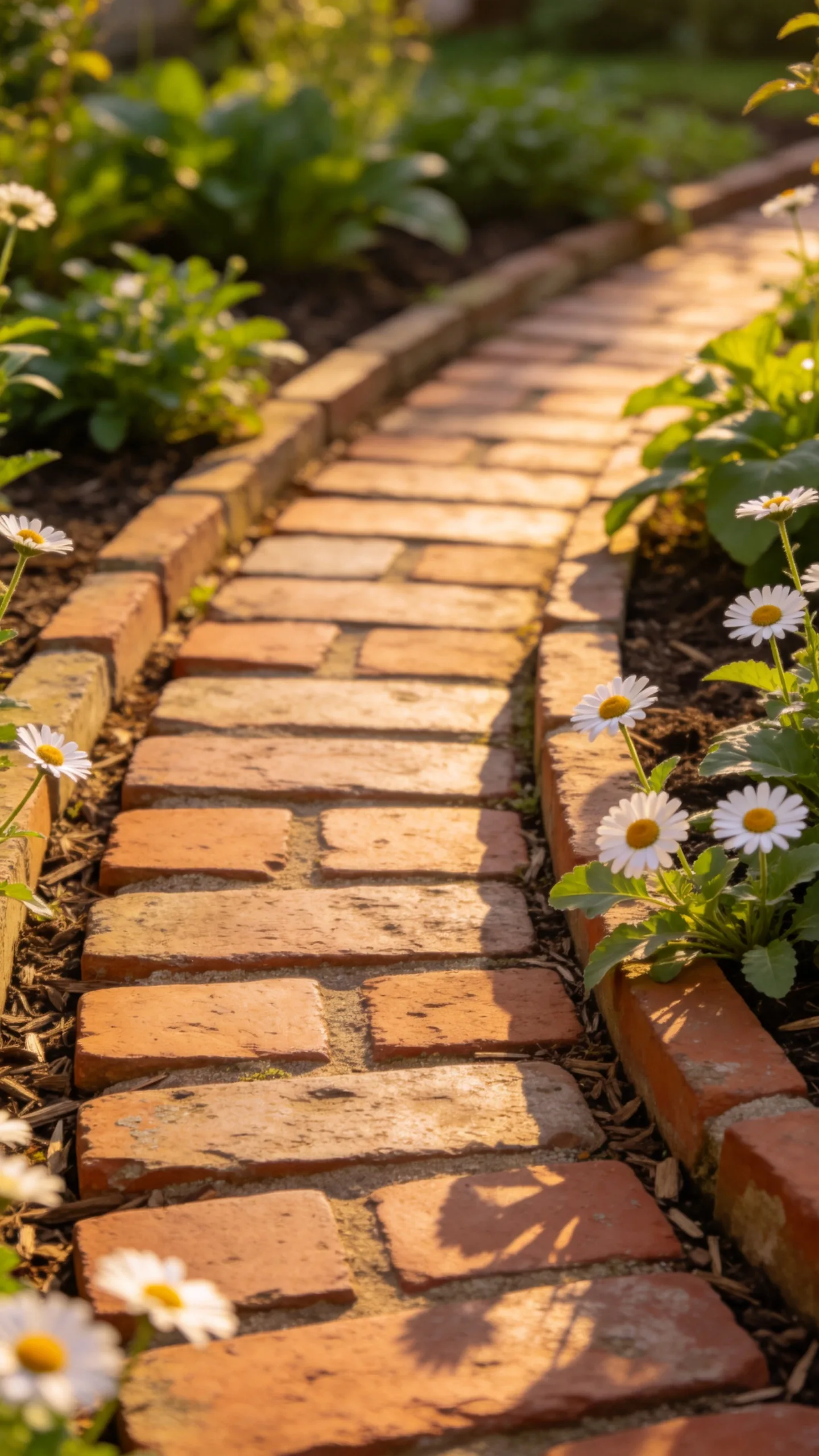
Lay recycled brick in a simple herringbone or running-bond pattern for a warm, weathered path. The earthy reds and browns provide a strong backdrop for paper daisies, cut-leaf daisies, and other small flowering natives.
Reserve annual or short-lived daisies for sunny, well-drained pockets where they can be replanted or allowed to self-seed if appropriate. Edge the path with steel or timber to prevent bricks from shifting. Keep loose mulch below the brick surface so it does not wash onto the walking area.
25. Arrange a Layered Bushland Garden
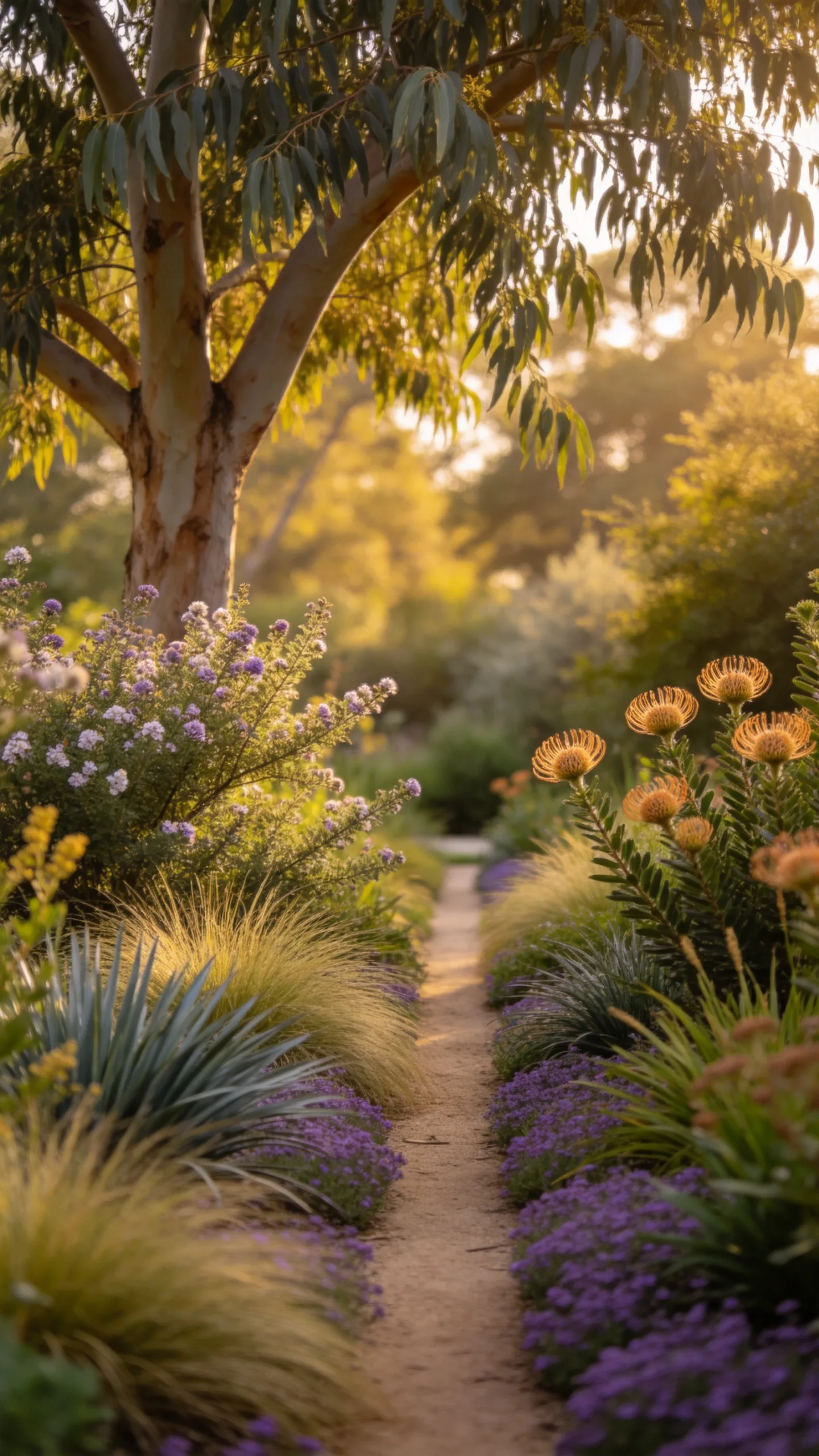
Re-create the structure of a natural bushland edge by combining a small canopy tree, medium shrubs, low grasses, and groundcovers. For example, a compact eucalyptus or banksia can rise above correas and grevilleas, with lomandra, dianella, and native violet forming the lower layers.
Choose plants from the same broad climate and soil conditions, ideally including species indigenous to the local area. Repeat key plants rather than filling the bed with one of everything. Include narrow access paths for pruning, watering, and leaf-litter management so the garden remains practical as it matures.