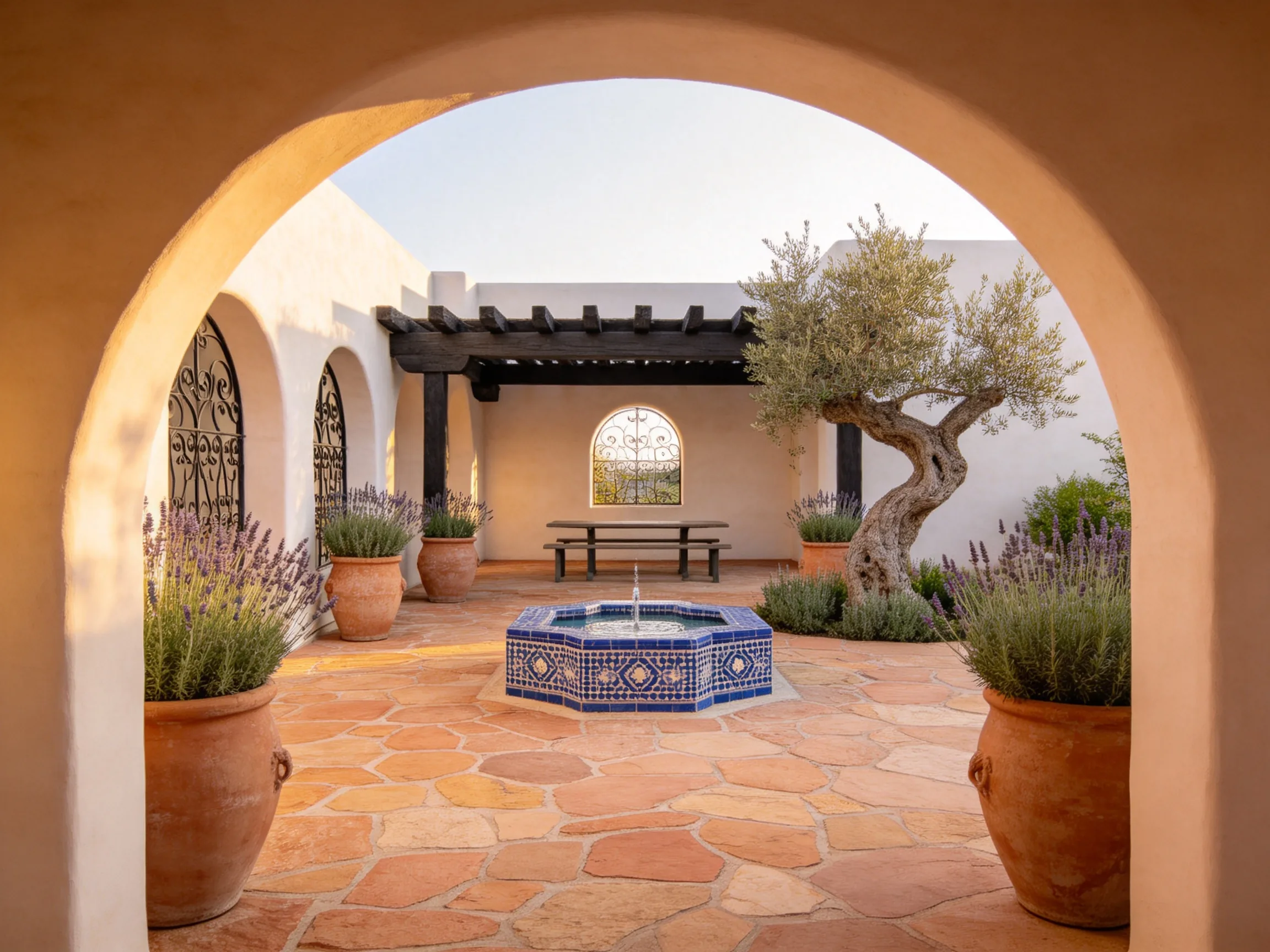
Spanish landscape design combines warm masonry, patterned tile, shaded gathering places, and drought-aware planting. Whether you are renovating a courtyard or adding character to a compact backyard, these ideas use practical hardscape details to create an inviting, Old World-inspired garden.
1. Build a Warm Flagstone Courtyard
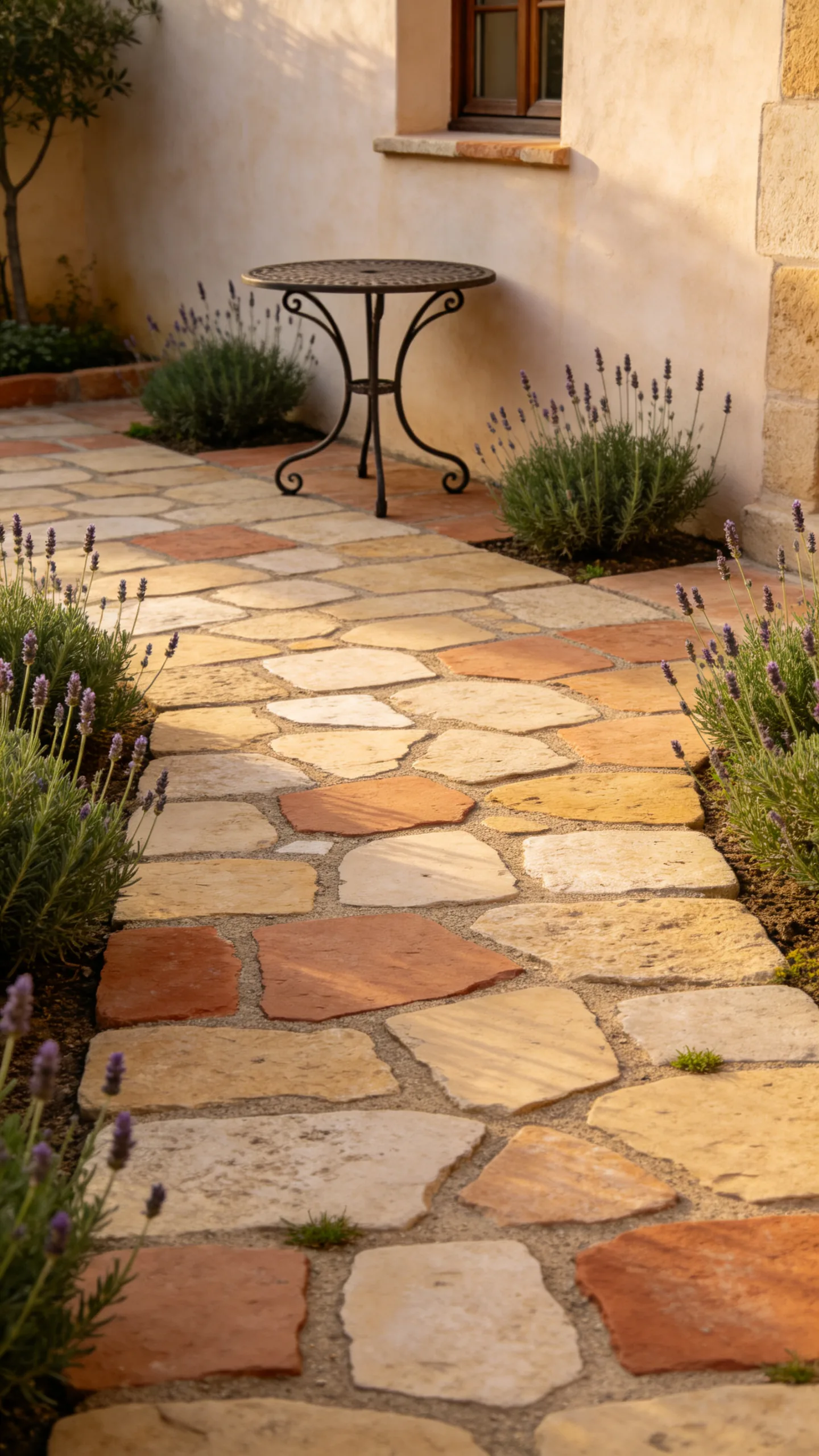
Lay irregular sandstone, limestone, or locally sourced flagstone to create a courtyard with a timeworn appearance. Choose buff, rust, or muted terracotta tones, and use narrow joints for a refined surface or wider planted joints for a relaxed garden look.
Flagstone works especially well in small yards because one continuous surface can serve as both a path and a seating area. Install it over a properly compacted base, account for drainage away from the house, and select a frost-tolerant stone if winter freezing is common in your area.
2. Frame a Garden Entrance with a Stucco Arch
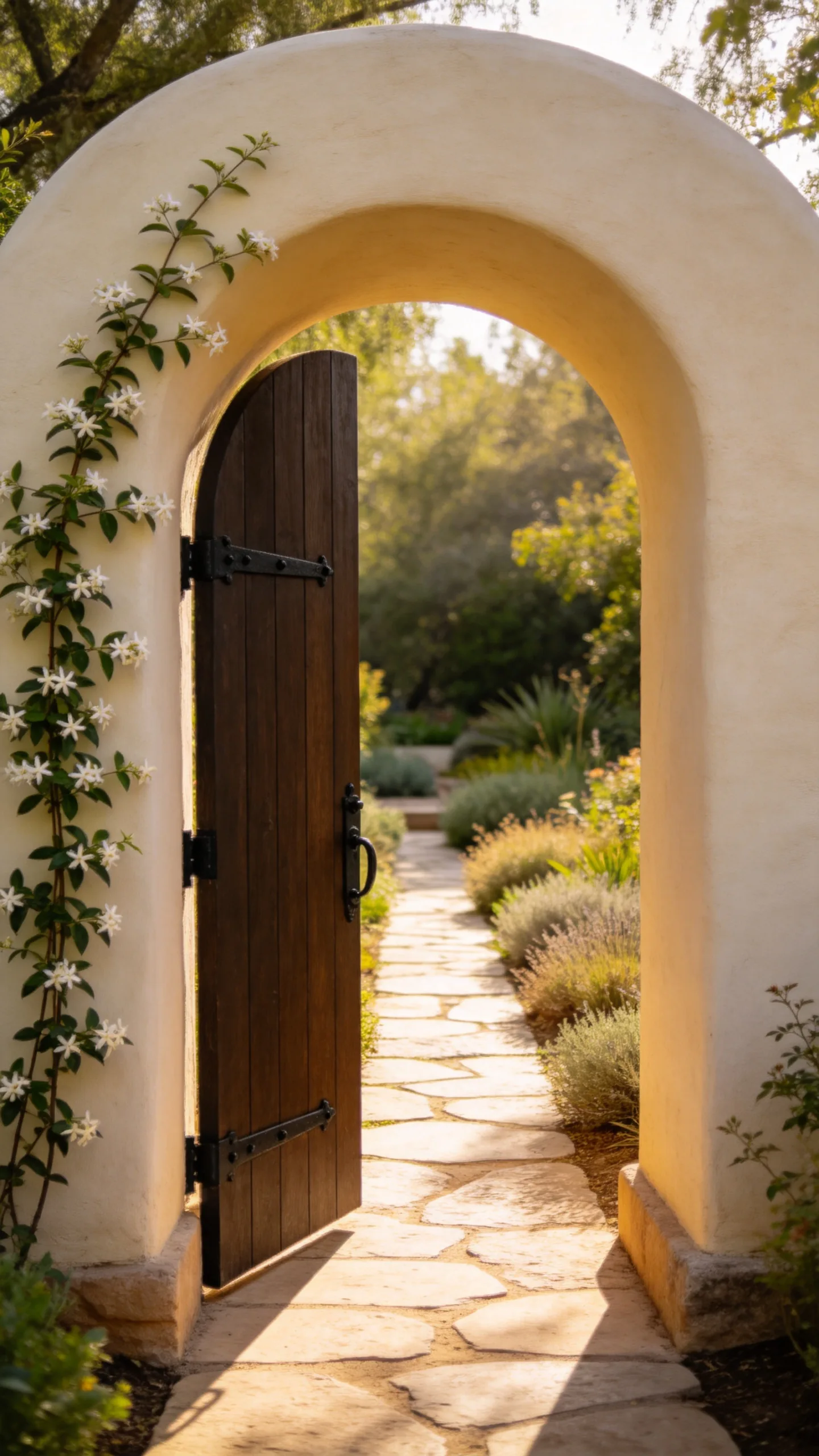
Use a rounded stucco arch to mark the transition from a driveway, side yard, or patio into the garden. Cream, sand, pale ochre, and soft white finishes pair naturally with dark wood gates and black iron hardware.
A freestanding arch requires appropriate footings and reinforcement, but an existing rectangular opening can sometimes be given an arched profile with a nonstructural facade. Train a climbing rose, grapevine, or star jasmine nearby, choosing a plant suited to your light levels and winter temperatures.
3. Add Talavera Tile to Stair Risers
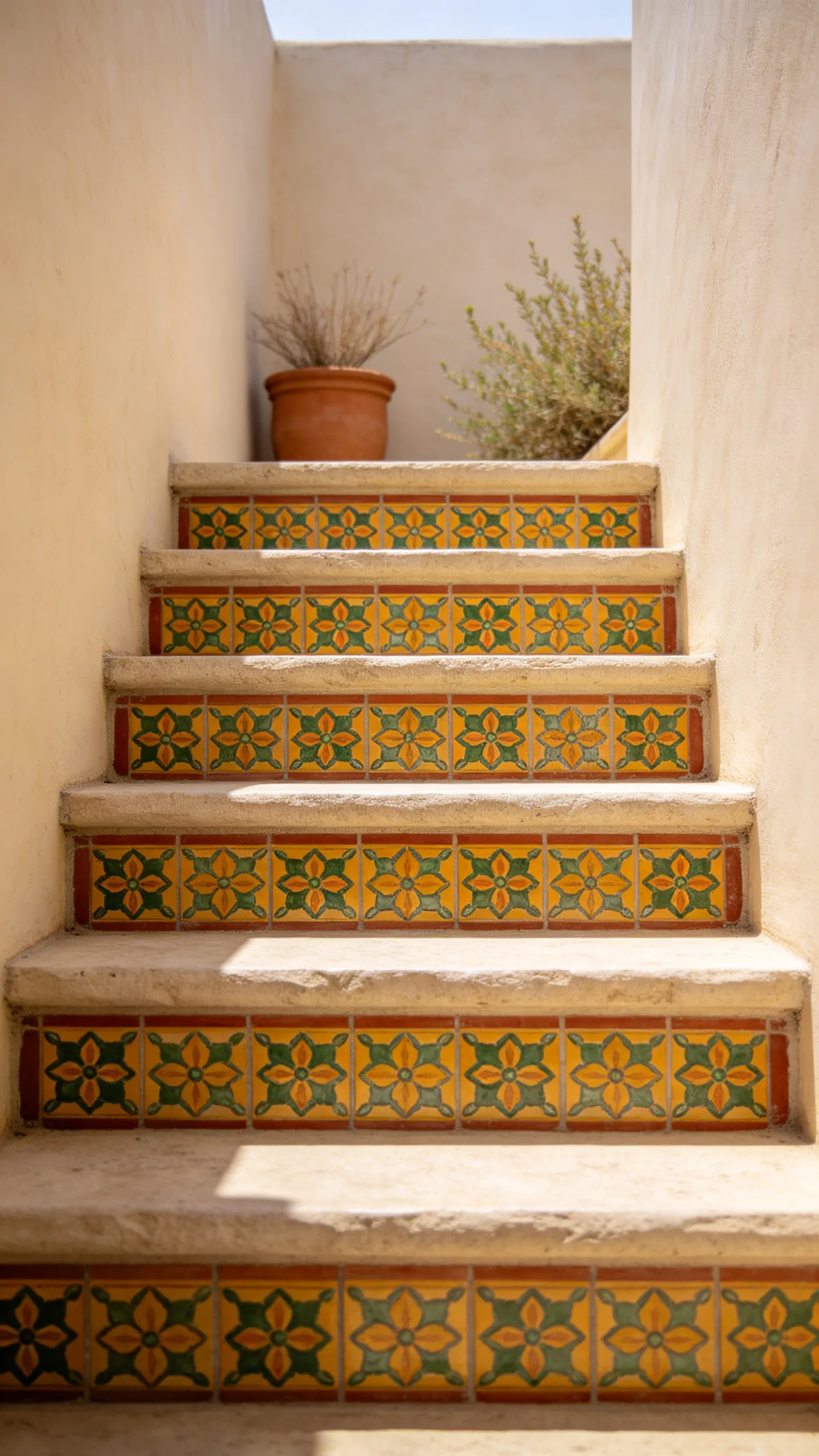
Decorative tile risers bring color to garden steps without making the walking surface overly busy. Alternate cobalt, yellow, green, and terracotta patterns, or repeat one motif for a more cohesive result.
Use exterior-rated, slip-resistant, and frost-resistant tile where required by the climate. Keep the stair treads in textured stone or plain pavers, and seal grout lines periodically to reduce staining and moisture damage.
4. Create a Gravel Path with Stone Edging
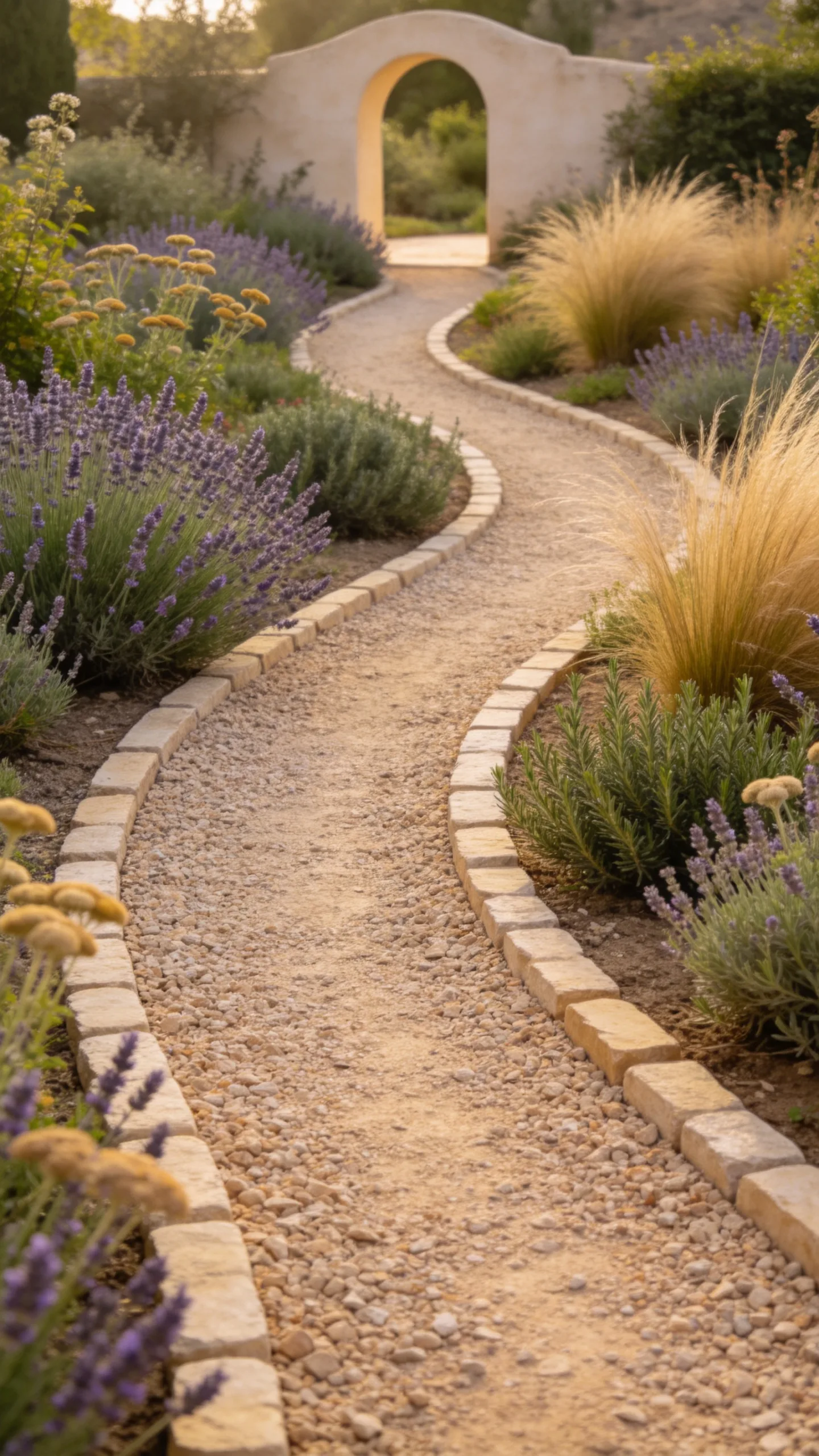
Form a gently curving path from compacted gravel, decomposed granite, or small crushed stone. Edge it with brick, cobbles, or narrow limestone blocks to keep loose material out of planting beds.
This path style is useful in narrow gardens because it needs less visual and physical space than a broad paved walk. Install landscape fabric only where appropriate, build a stable compacted base, and use gravel with angular particles so the surface shifts less underfoot.
5. Center the Patio Around a Tiled Fountain
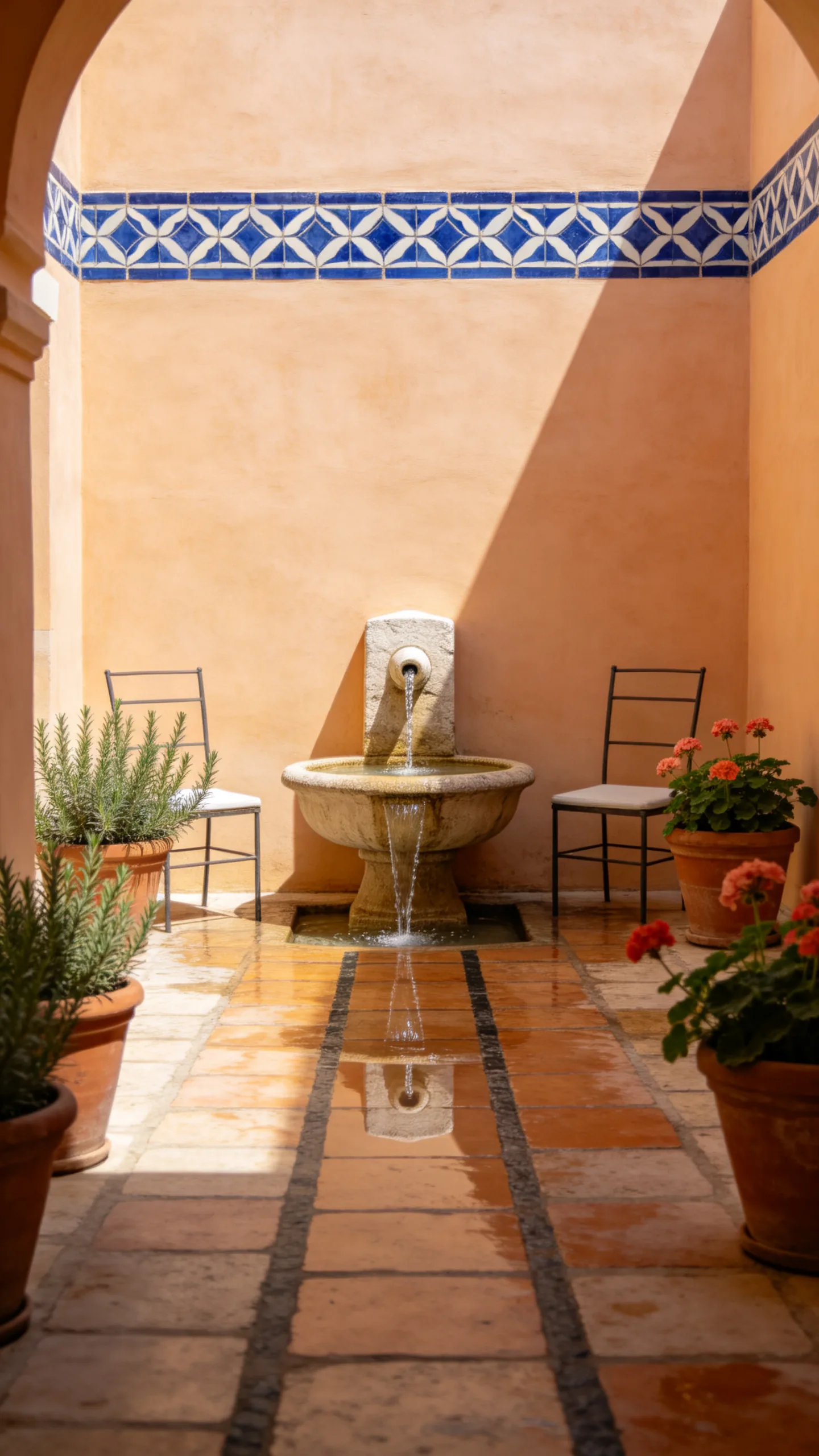
Place a compact wall fountain or pedestal basin at the end of a main sightline. A border of blue-and-white tile can make even a simple recirculating fountain feel like a deliberate Spanish courtyard feature.
Select a basin proportionate to the space so it does not overwhelm nearby seating. Provide outdoor-rated electrical service for the pump, clean the filter regularly, and follow local winterizing practices in areas where standing water can freeze.
6. Install a Saltillo-Style Tile Terrace
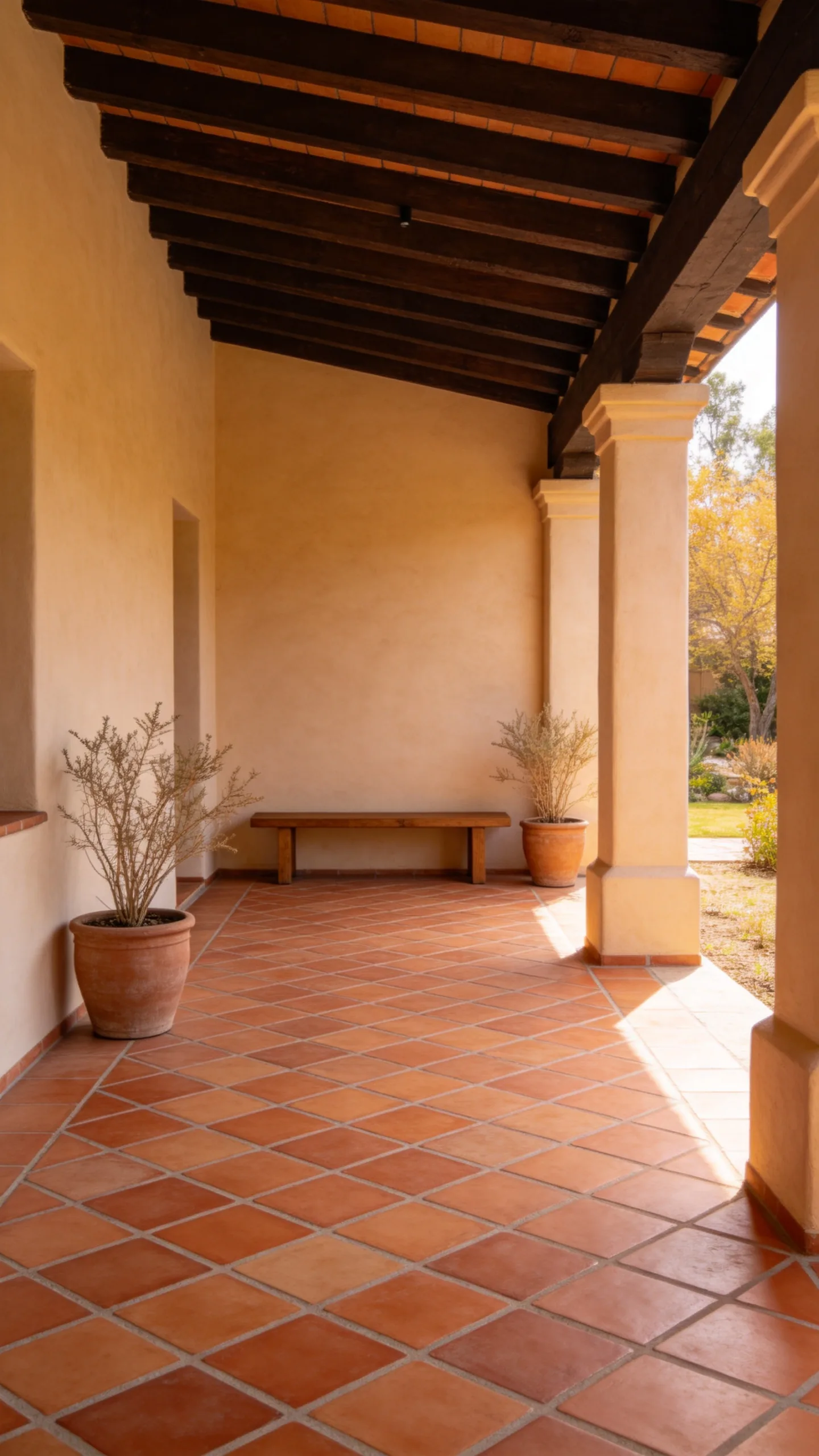
Terracotta-colored tile gives a covered terrace the warmth associated with traditional Spanish patios. Square tiles laid in a straight grid feel orderly, while a diagonal layout can make a compact space appear wider.
Authentic Saltillo tile is porous and may need sealing, so confirm that the material is suitable for outdoor use in your climate. Under open skies, prioritize slip resistance, correct mortar installation, drainage, and frost-rated alternatives where freeze-thaw cycles are severe.
7. Use an Arched Trellis for Climbing Vines
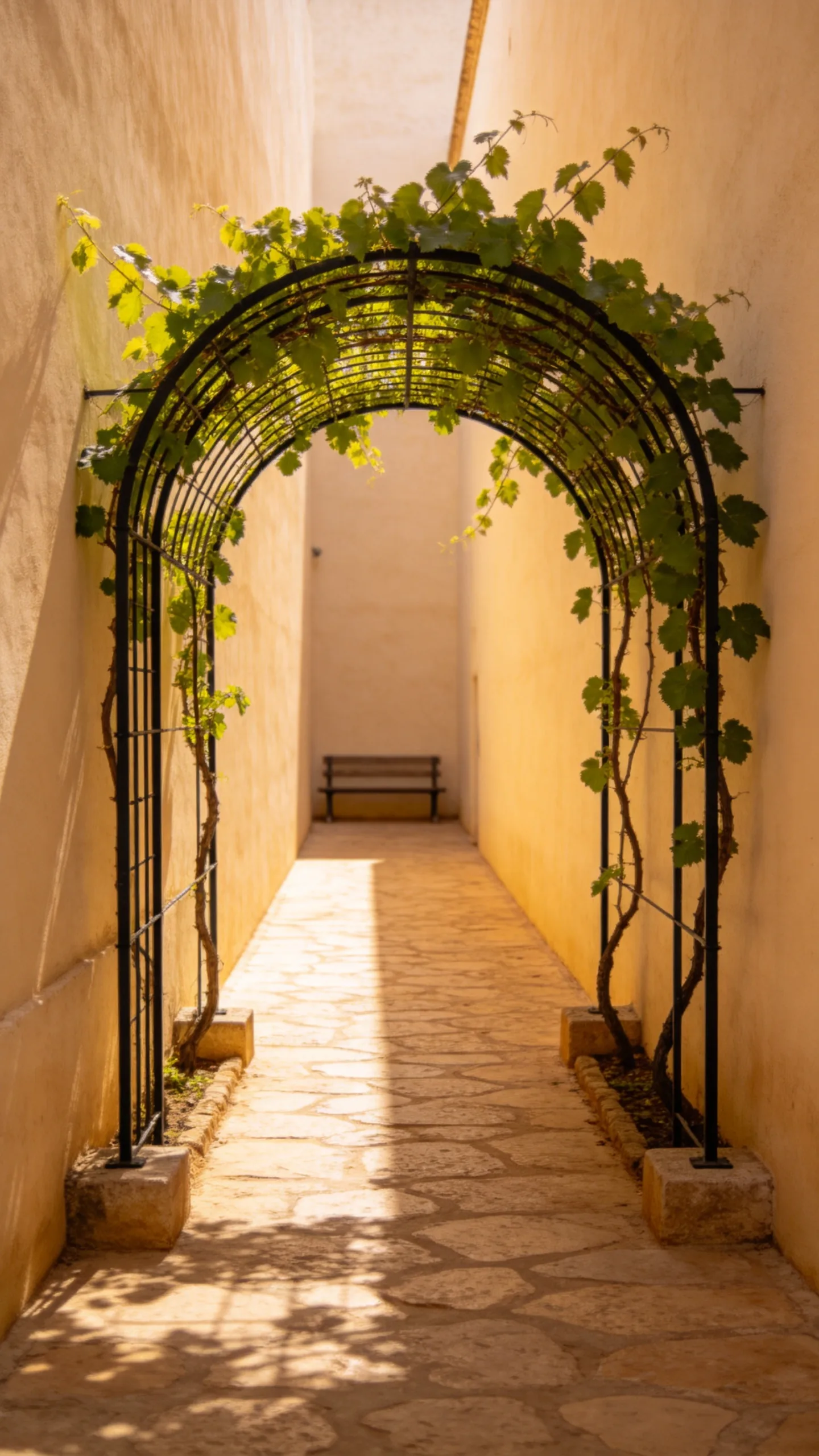
Place a metal or timber arched trellis over a path, gate, or narrow seating nook. It draws the eye upward, creates depth, and adds planting space without consuming much ground area.
Grapevines suit sunny sites and need regular pruning, while star jasmine, clematis, or climbing roses offer alternatives for different climates and light conditions. Secure the trellis before planting and leave enough clearance for mature stems, airflow, and comfortable passage.
8. Edge Raised Beds with Stucco Walls
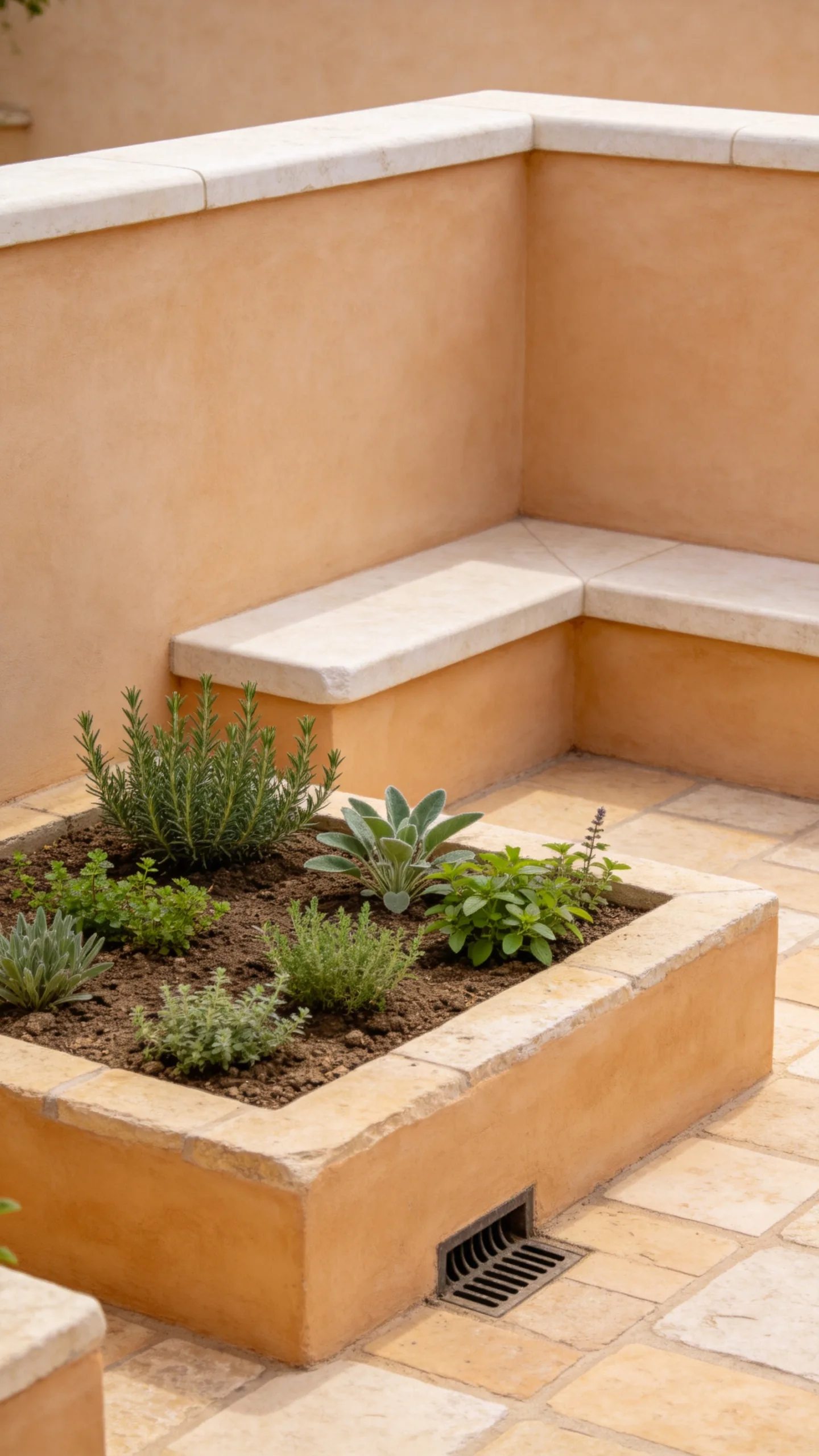
Build low masonry beds and finish the exterior with warm white or sand-colored stucco. The broad top edge can double as casual seating if it is constructed at a comfortable height and capped with smooth stone.
Raised beds define planting zones and can make soil care easier in compact courtyards. Fill them with a well-draining soil blend, include drainage outlets, and plant Mediterranean herbs such as rosemary, thyme, sage, and oregano where full sun and local winter conditions allow.
9. Pair Stone Pavers with Creeping Groundcovers
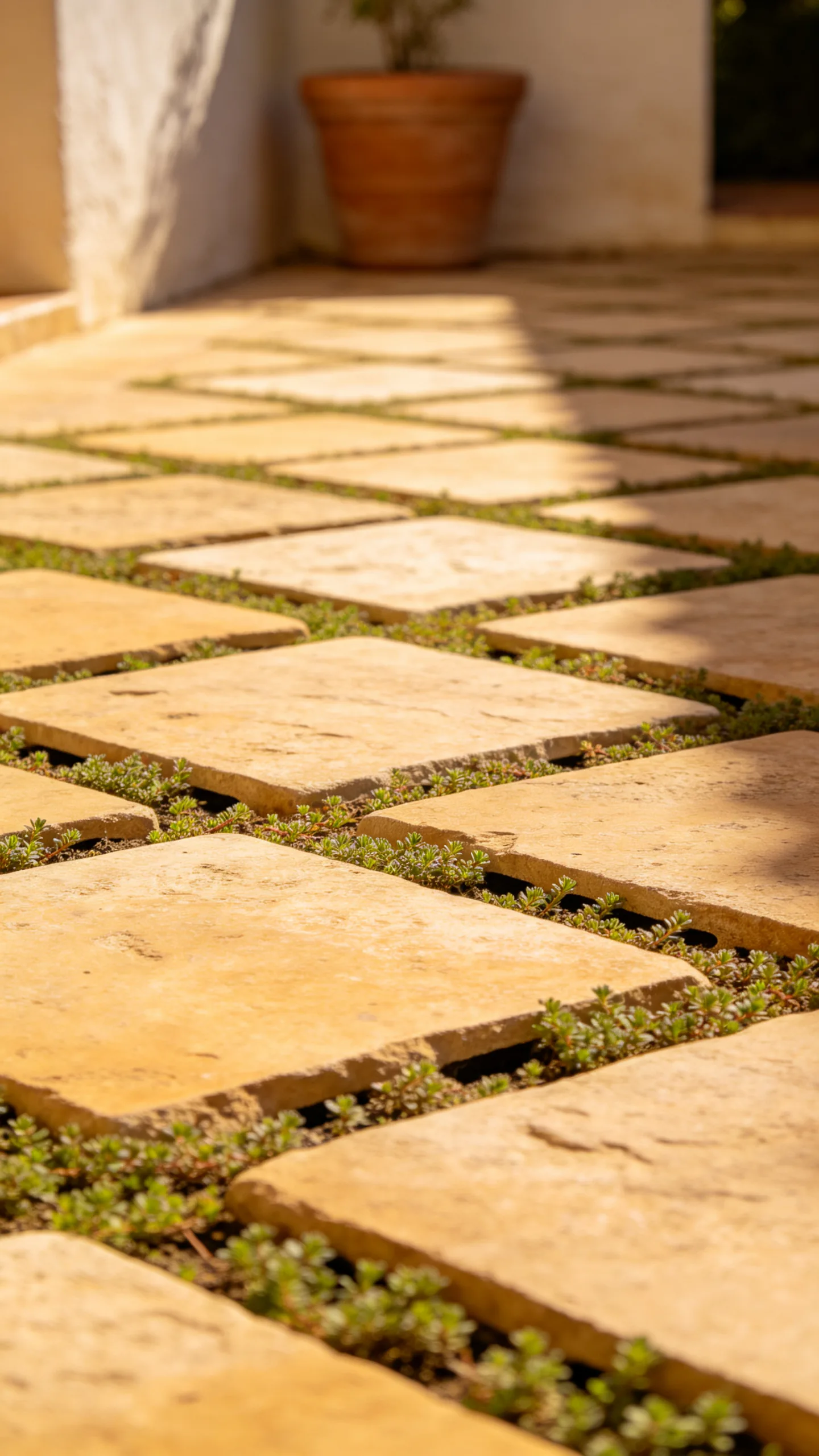
Space large stone pavers a few inches apart and soften the joints with low-growing plants. Creeping thyme can work in sunny, well-drained sites, while dwarf mondo grass is better suited to partial shade in climates where it is hardy.
This approach reduces the amount of solid paving and gives a patio or path a settled garden character. Keep plants below the walking surface, avoid species that become slippery when wet, and provide stepping stones wide enough for a stable stride.
10. Add a Dark Wood Gate Beneath an Arch
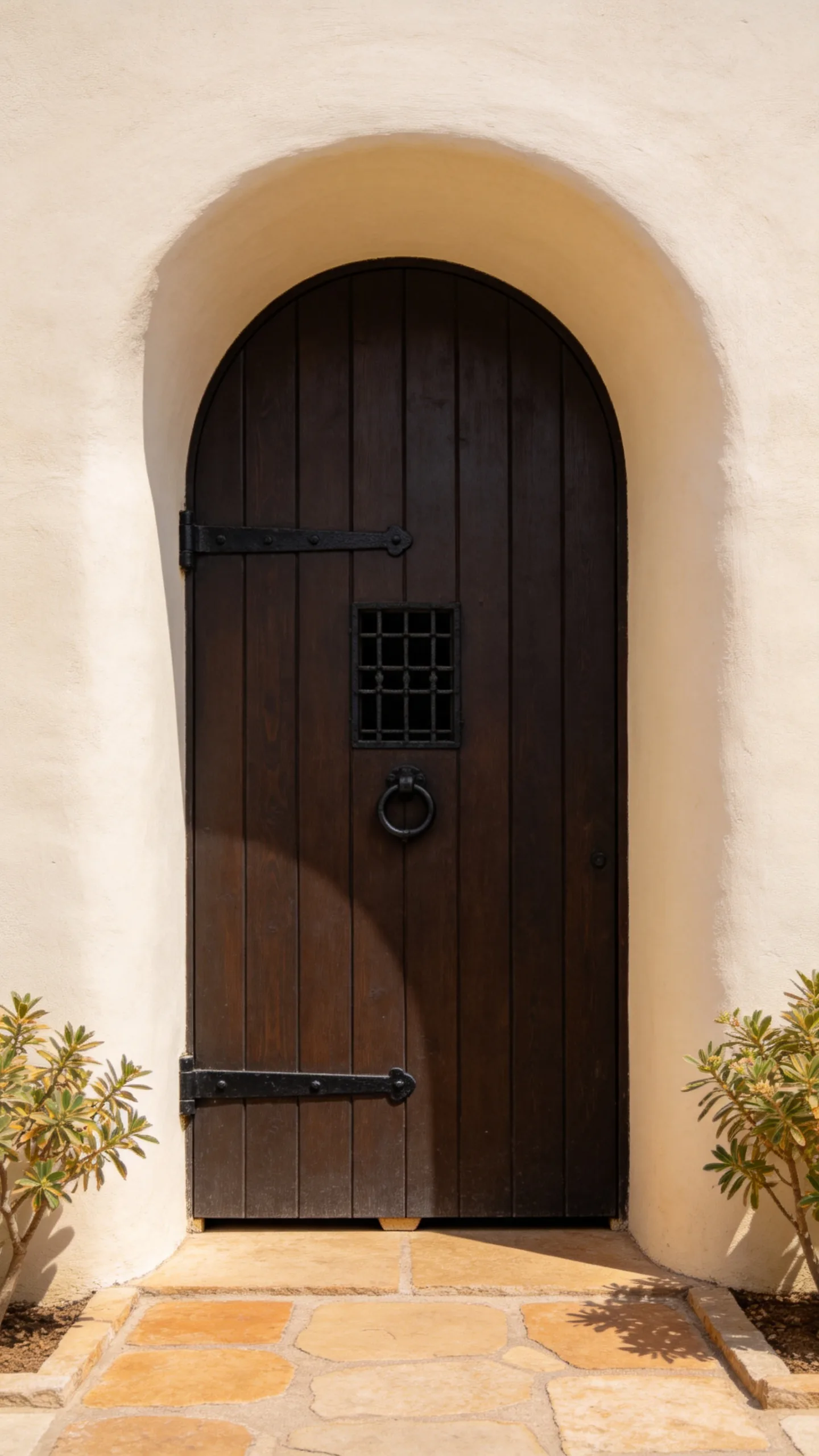
Combine a thick, rounded arch with a paneled or vertical-board wood gate. Iron strap hinges, a ring latch, and a small viewing grille reinforce the Spanish-inspired appearance without requiring extensive ornament.
Use rot-resistant wood or a durable exterior finish, and leave adequate ground clearance for seasonal swelling. In a side yard, this gate can screen bins or utilities while turning a practical access point into a strong landscape focal feature.
11. Design a Blue-Tile Water Rill
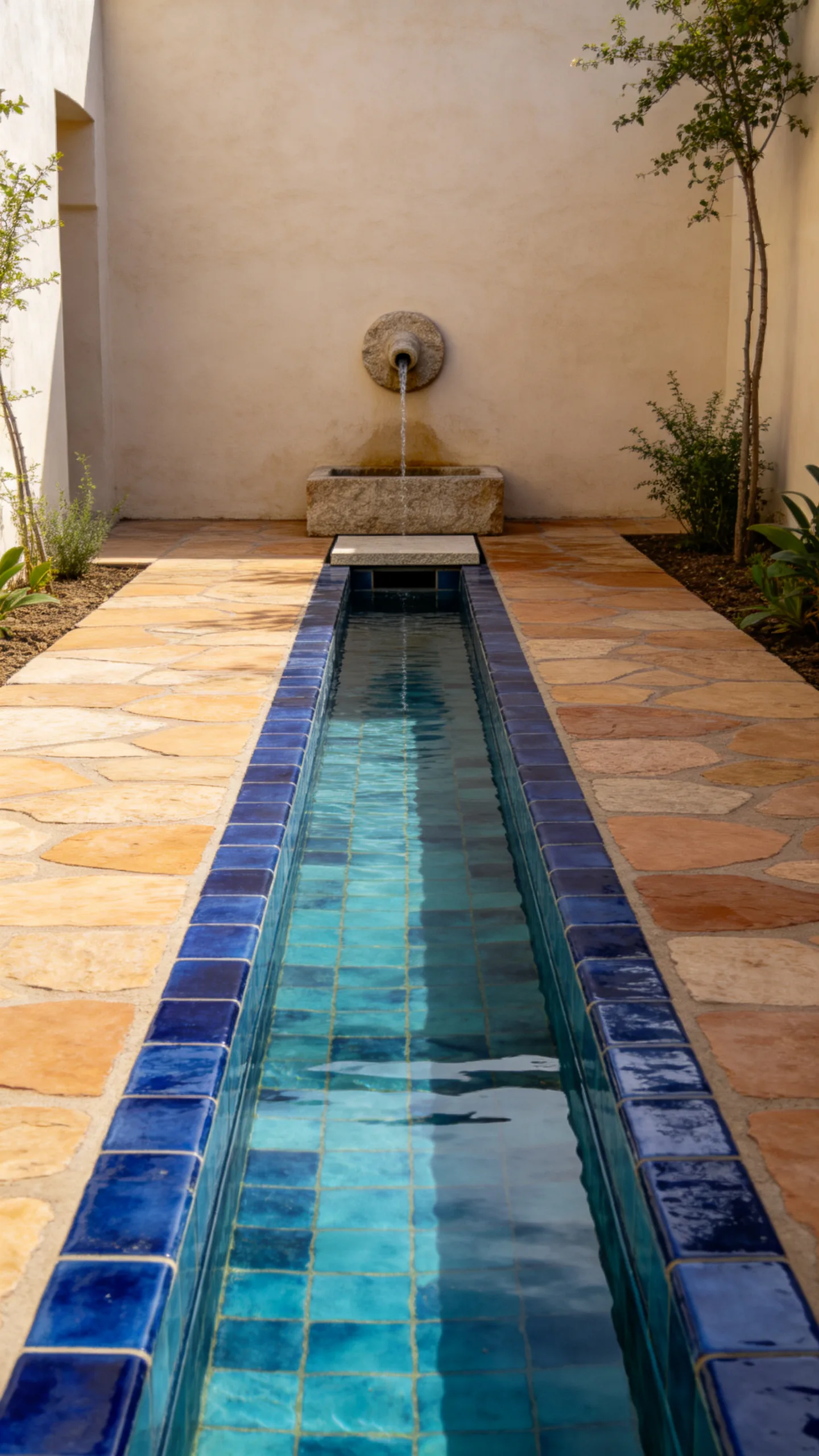
Run a narrow tiled channel beside a patio or through a courtyard to introduce reflective color. Deep blue, turquoise, or patterned ceramic tile stands out against pale stucco and warm stone.
A water rill needs a level, waterproof structure, a recirculating pump, and an accessible reservoir. For a simpler low-water version, create a dry rill with blue tile fragments or smooth dark pebbles and use it to direct rainwater toward a planted drainage area.
12. Build a Stone Seat into a Garden Wall
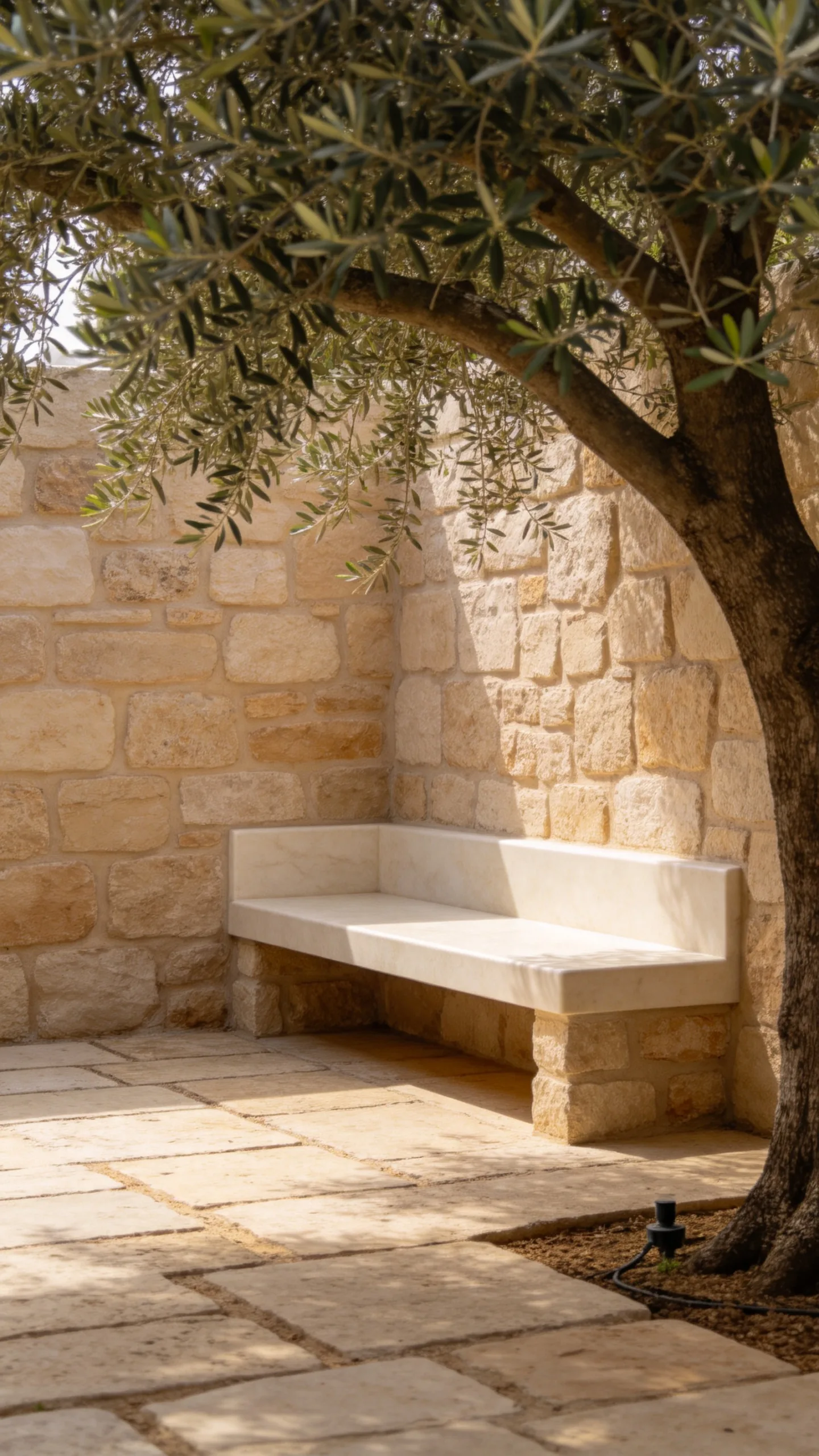
Incorporate a bench into a retaining wall or courtyard boundary using the same stone as nearby paths. Add a smooth limestone cap or weather-resistant seat cushion so the surface is comfortable for longer visits.
A built-in bench saves space because it eliminates the rear clearance required by freestanding furniture. Position it where a wall, tree, or pergola provides afternoon shade, and avoid placing it where irrigation spray will keep the seating damp.
13. Lay a Pebble Mosaic Medallion
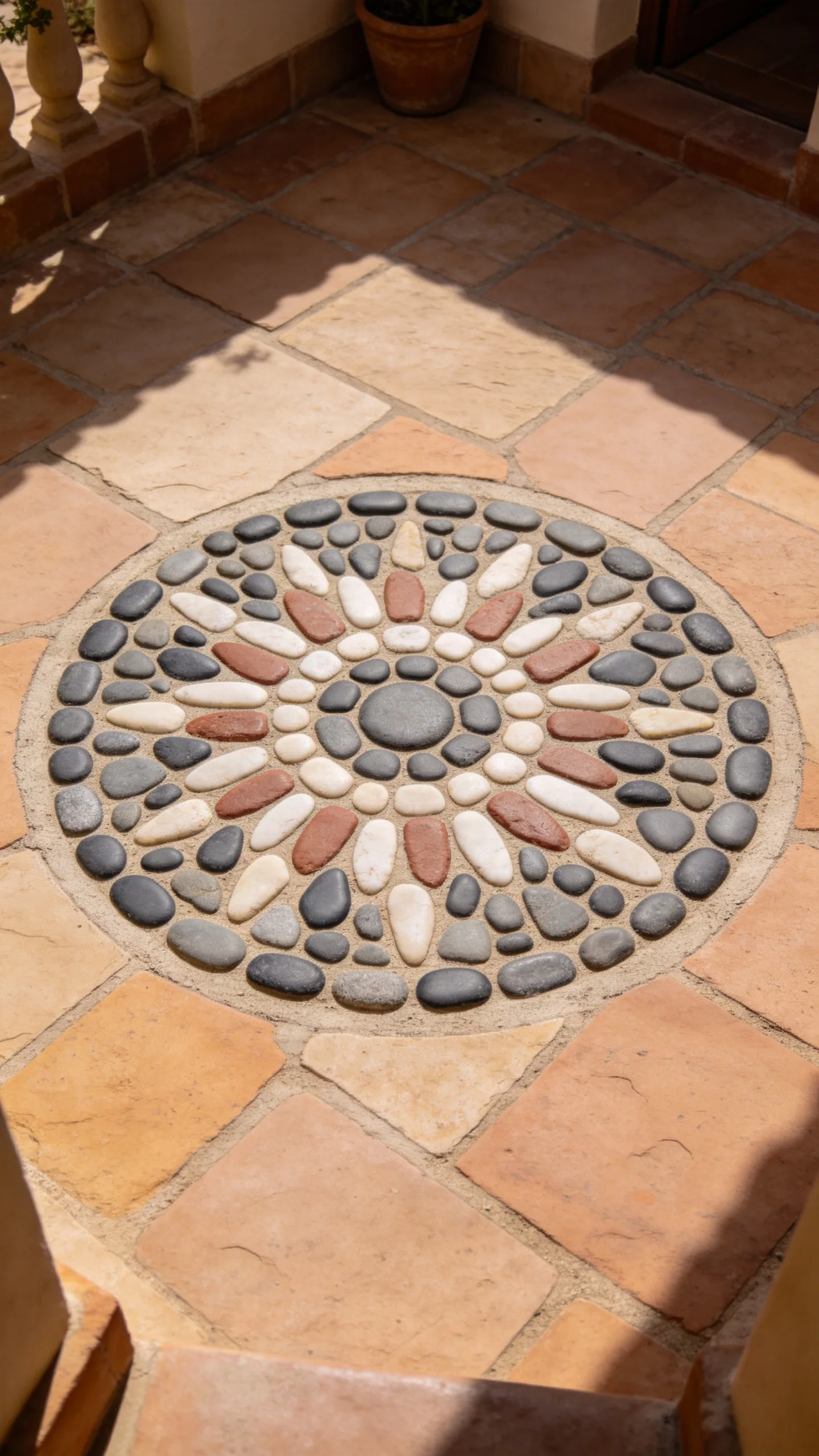
Create a circular or rectangular mosaic using river pebbles in contrasting shades. A simple sunburst, compass, floral motif, or geometric border can mark the center of a courtyard or the intersection of two paths.
Pebble mosaics must be set firmly into mortar with an even, walkable surface. Use smooth but not highly polished stones, test the area for slip resistance, and reserve intricate patterns for low-traffic zones if maintenance is a concern.
14. Cover a Pergola with Terracotta Roof Tiles
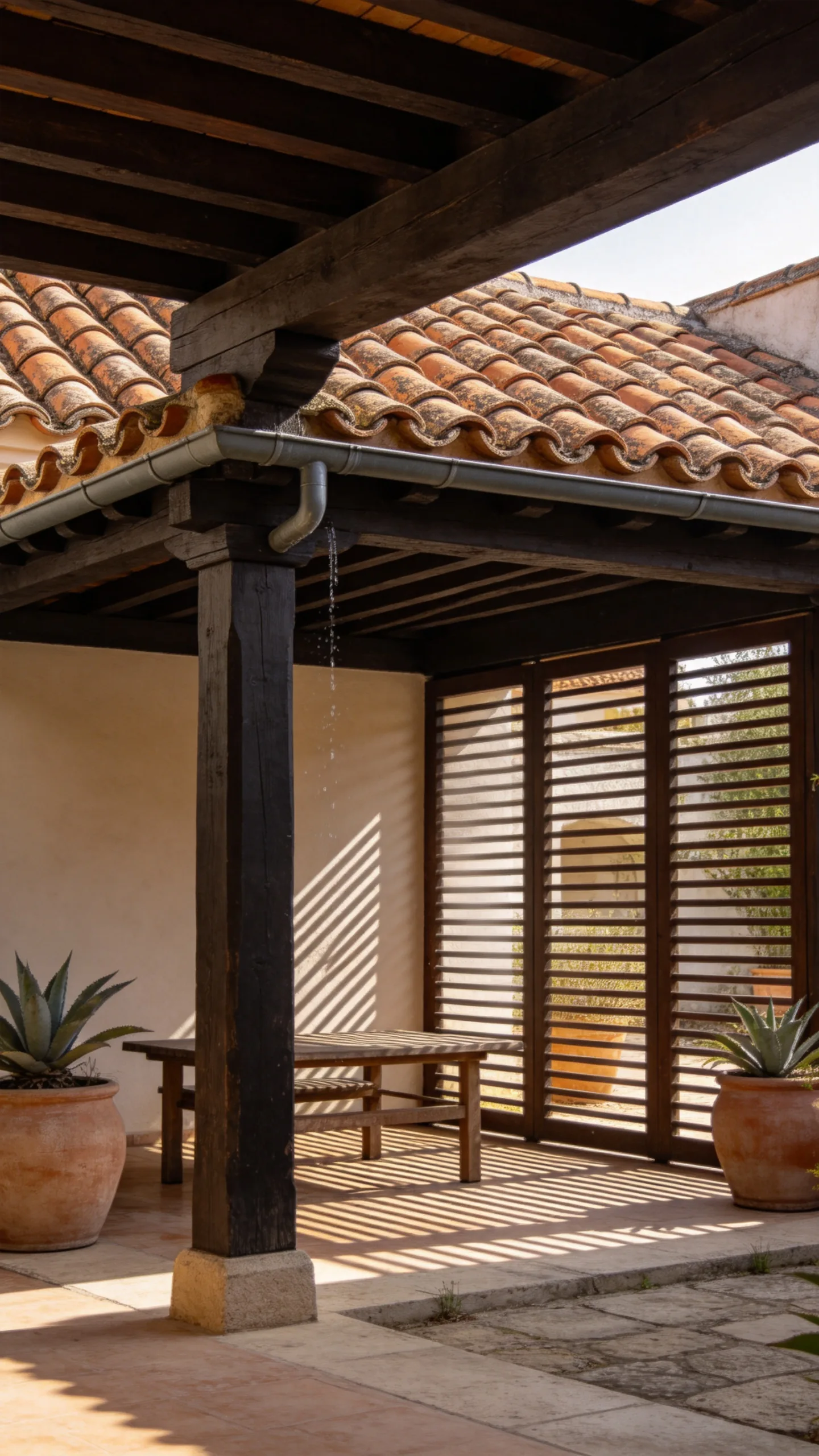
Top part of a timber pergola with traditional curved roof tiles to create dependable shade while leaving another section open for filtered light. Dark-stained beams beneath red or weathered terracotta tiles give the structure a strong Spanish character.
Because clay tile is heavy, the pergola must be engineered for the roof load, wind, and local weather conditions. Add a gutter or drip edge where runoff could fall onto seating, then plant drought-tolerant containers around the posts rather than allowing aggressive vines to damage the roof.
15. Accent a Stucco Wall with Tile Niches
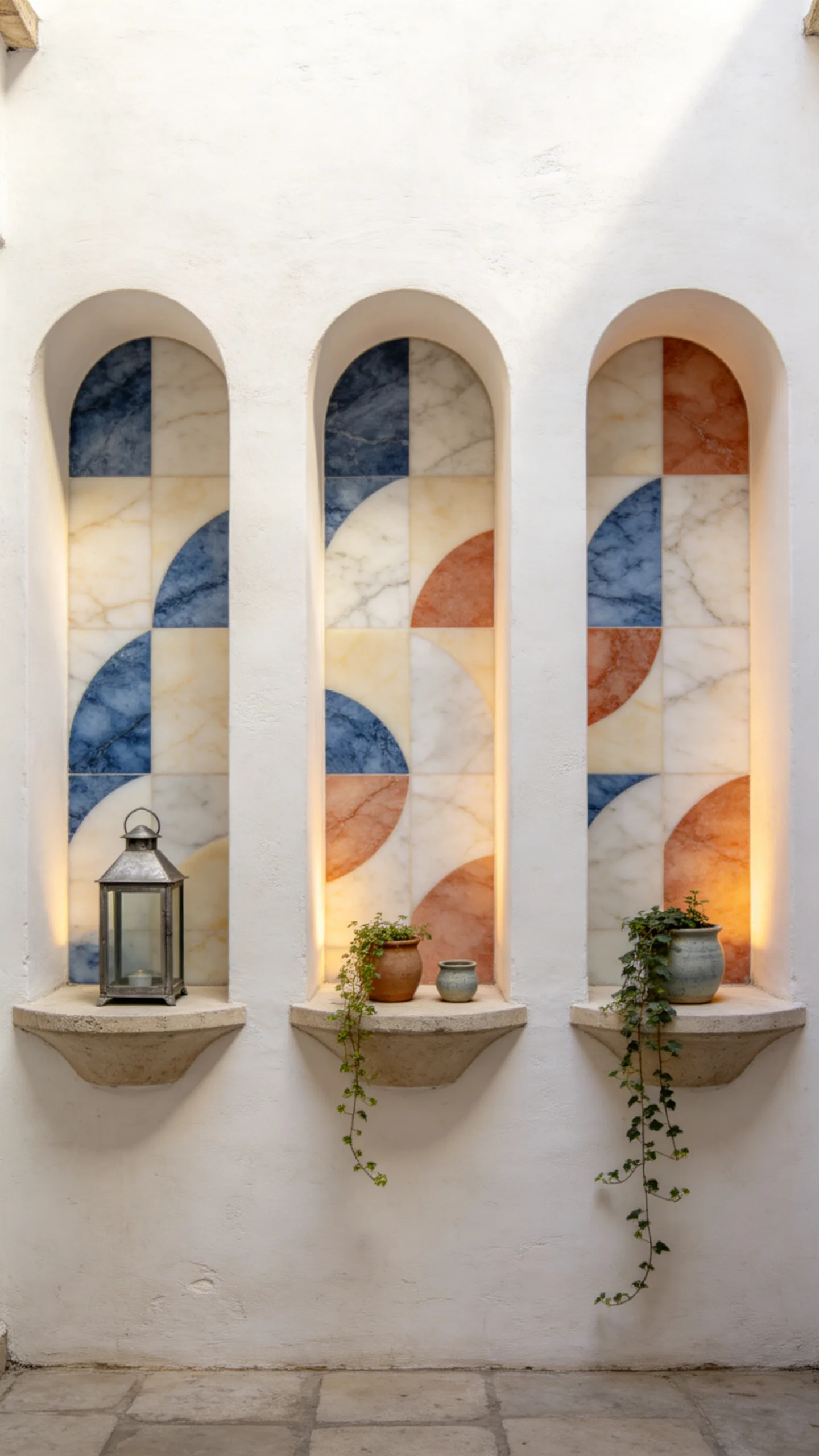
Recess one or more shallow arched niches into a courtyard wall and line the backs with patterned tile. Use them to display a lantern, a glazed pot, or a small trailing plant rather than filling the wall with unrelated decorations.
Tile niches add detail without occupying floor space, making them particularly useful on narrow patios. If the niches are exposed to rain, slope the base slightly outward and use exterior-rated materials so water does not collect behind objects.
16. Plant Olive Trees in Oversized Terracotta Pots
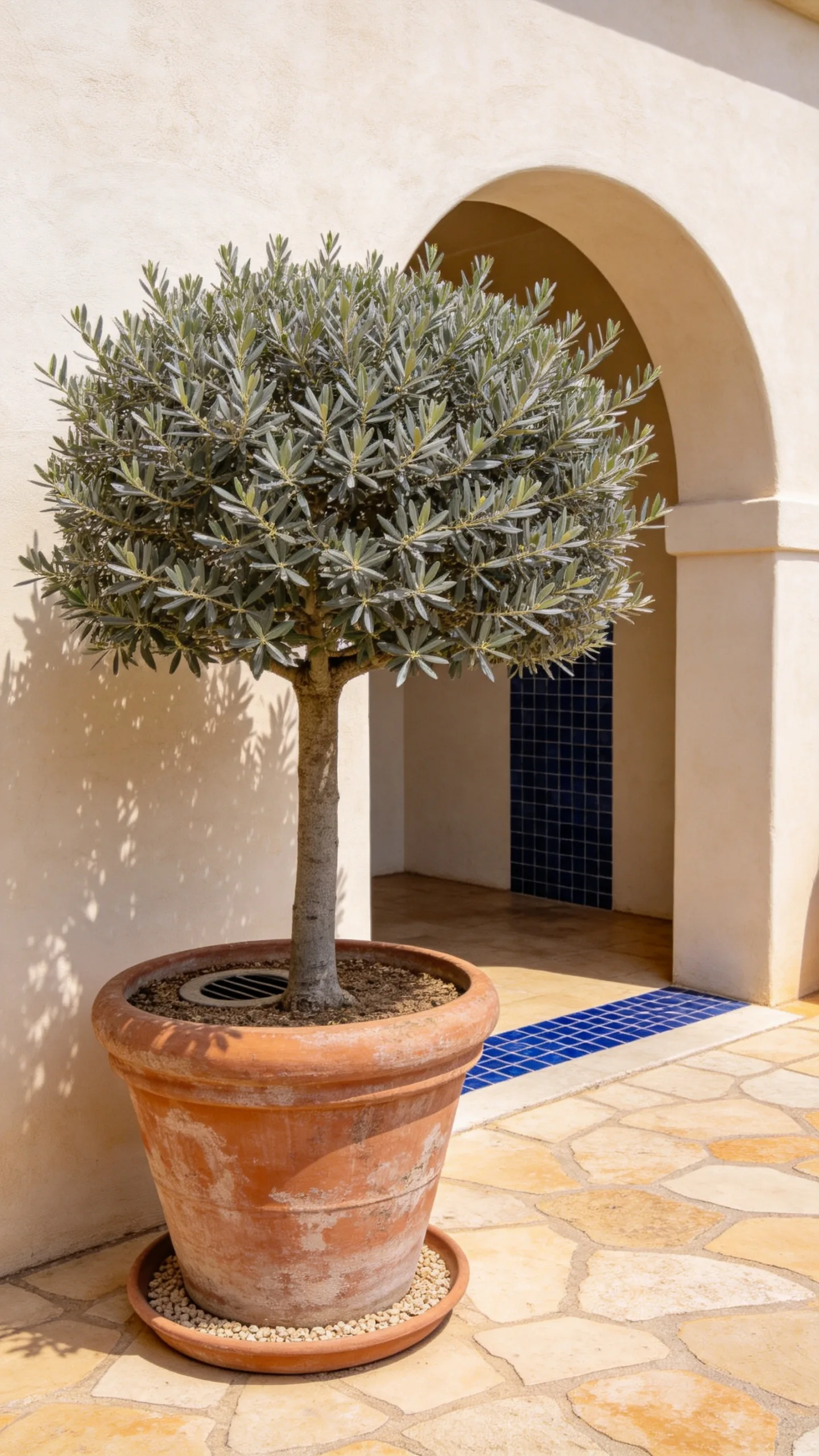
Place one clipped olive tree in a large terracotta or terracotta-look container near an entrance or seating area. Its gray-green foliage complements pale walls, blue tile, and warm stone without creating a dense visual barrier.
Olives need strong light and excellent drainage, and their cold tolerance varies by cultivar. Where winters are too severe, choose a container-sized bay laurel or another locally suitable evergreen, and use a pot with drainage holes large enough to prevent waterlogged roots.
17. Create a Checkerboard Tile Patio
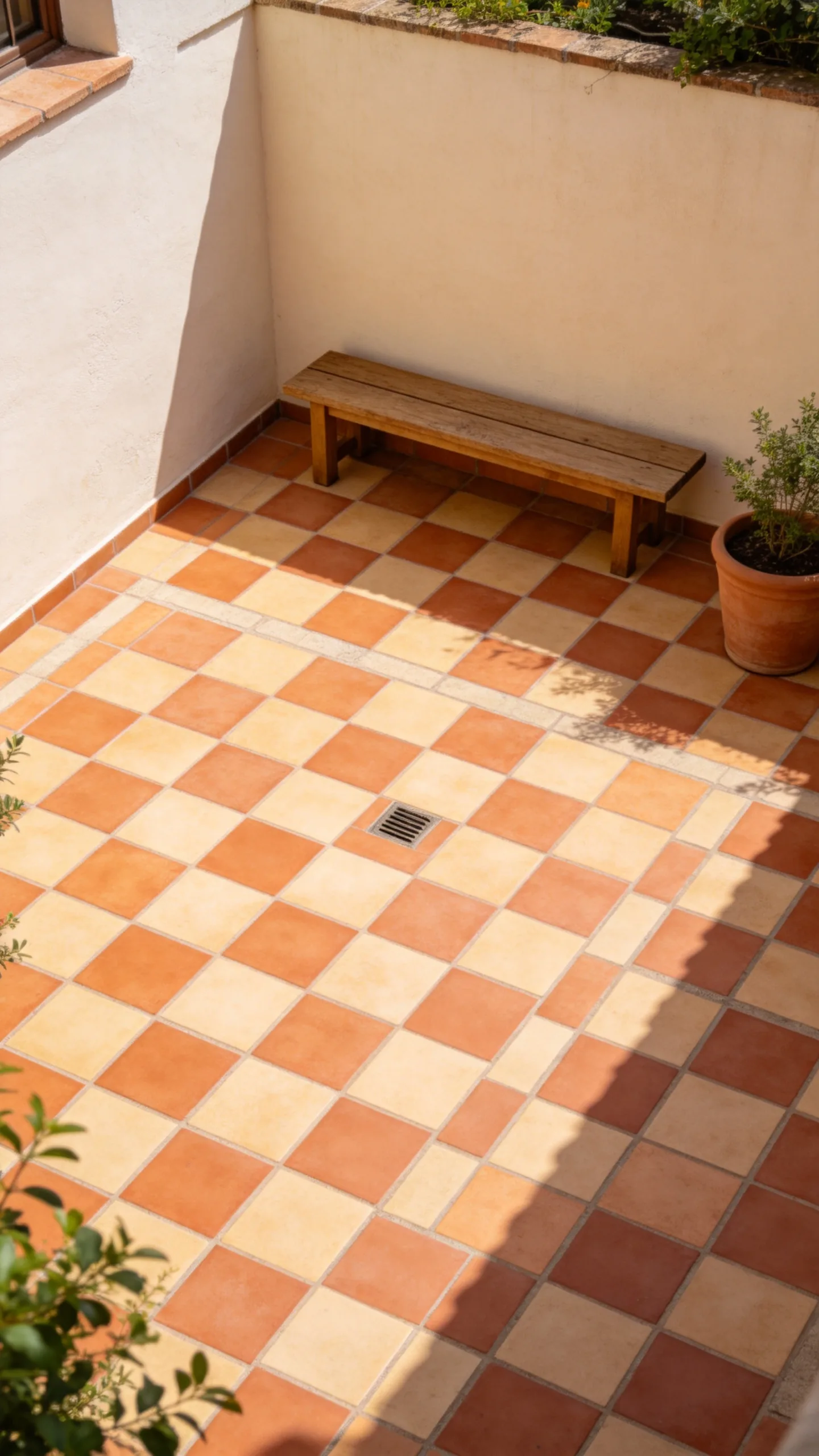
Alternate plain terracotta-toned and cream outdoor tiles in a checkerboard pattern. The geometric layout can make a small courtyard feel structured while providing enough visual interest to reduce the need for extra accessories.
Keep surrounding walls and furniture simple so the floor remains the focal point. Confirm that the tile is rated for exterior floors, and use a textured finish around fountains, pools, or uncovered areas that receive frequent rain.
18. Form a Dry Creek with Rounded Stone
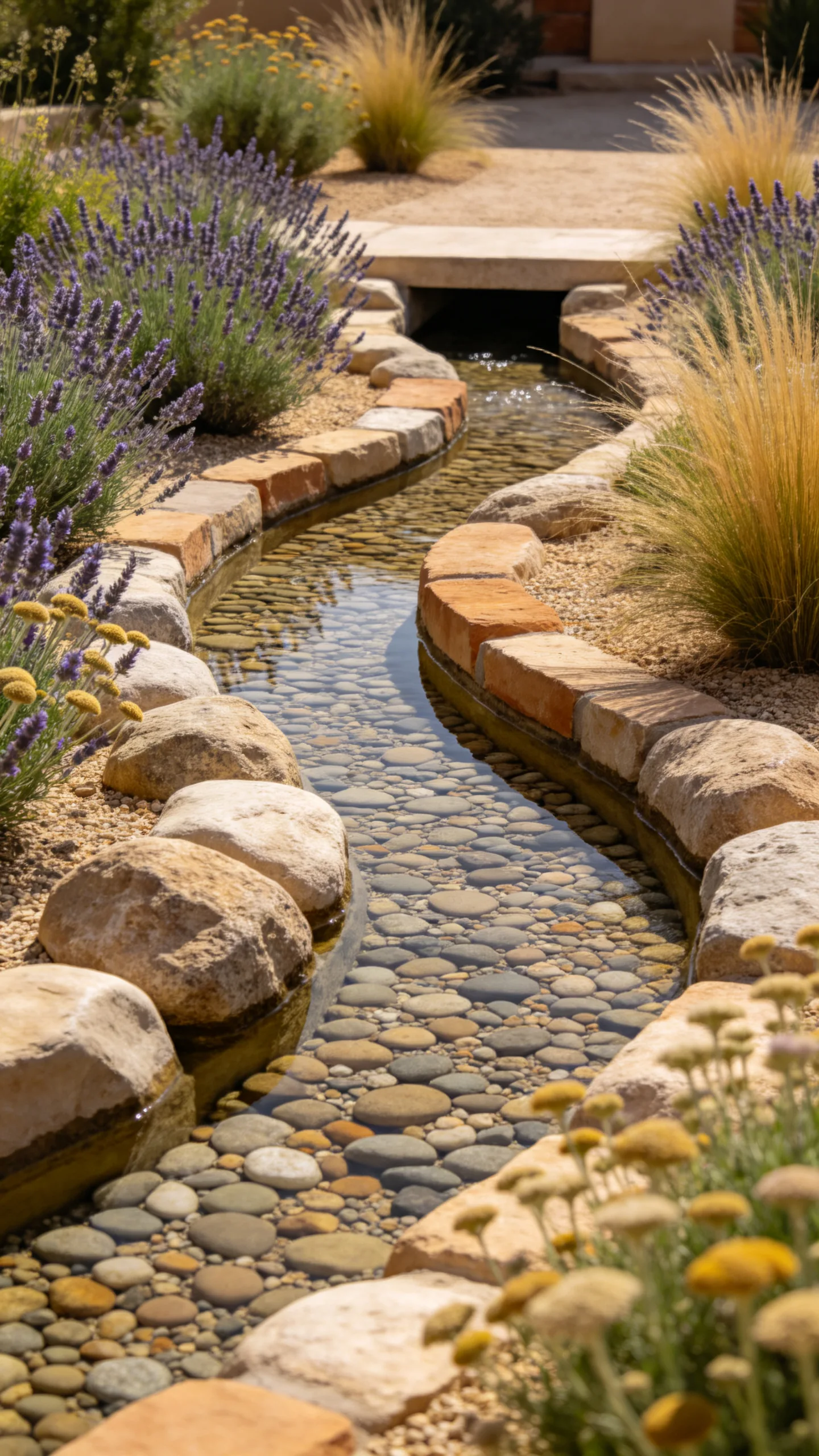
Shape a shallow, winding channel with cobbles, gravel, and a few larger boulders. Position the stones as though water has naturally sorted them, with larger pieces along bends and smaller gravel through the center.
A dry creek can visually divide planting beds while helping manage runoff when it is connected to a suitable drainage plan. Plant drought-tolerant ornamental grasses, lavender, santolina, or native equivalents along the edges, matching each choice to soil moisture and local climate.
19. Screen a Patio with an Arched Colonnade
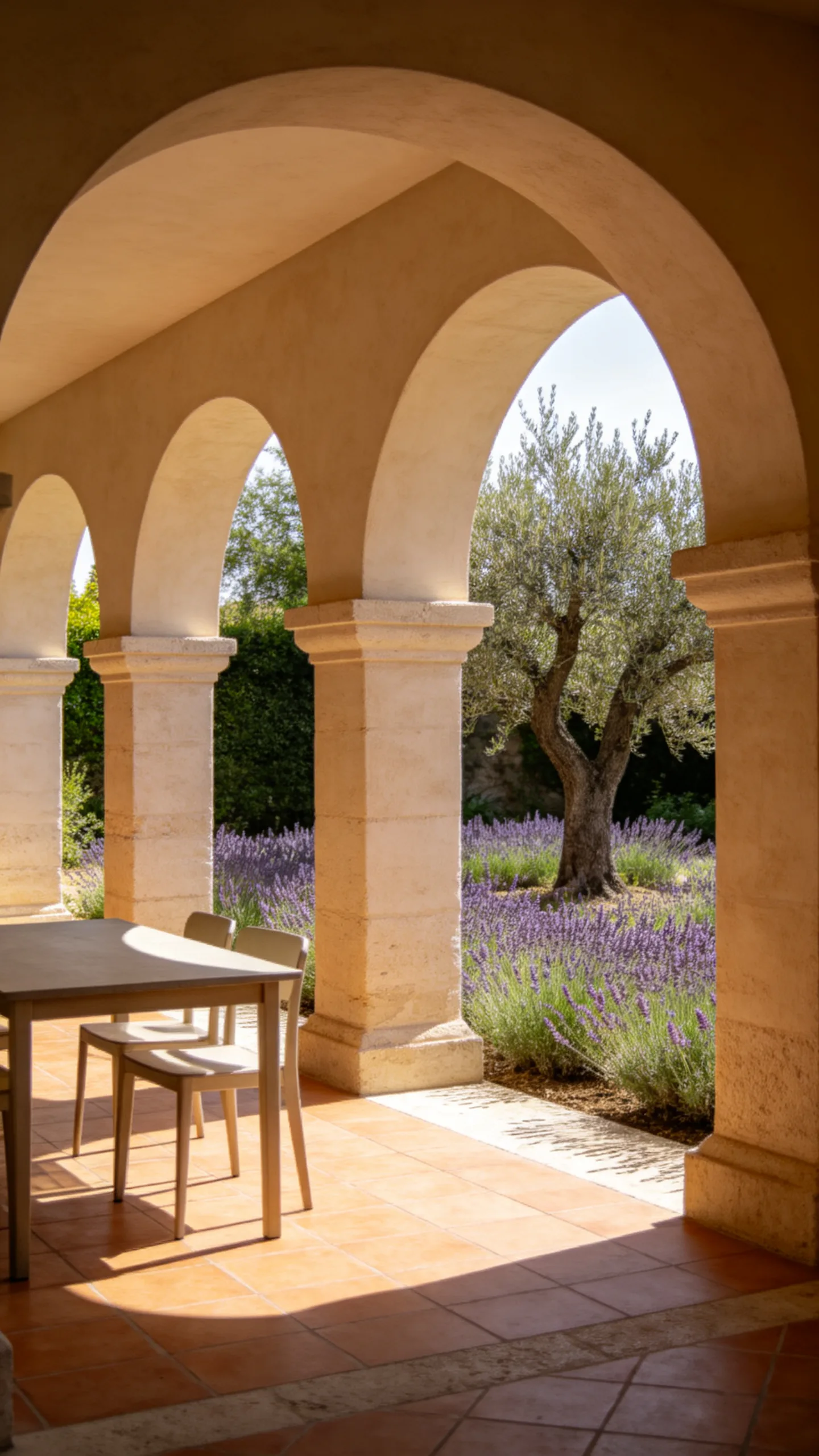
Use a short row of masonry arches to separate a dining terrace from a pool, lawn, or neighboring property. The openings preserve sightlines while creating shade, rhythm, and a stronger sense of enclosure.
In a small yard, two or three arches can suggest a colonnade without consuming an entire boundary. Treat masonry construction as a structural project requiring proper foundations, permits where applicable, and dimensions that leave enough room for paths and furniture.
20. Border a Herb Garden with Decorative Tile
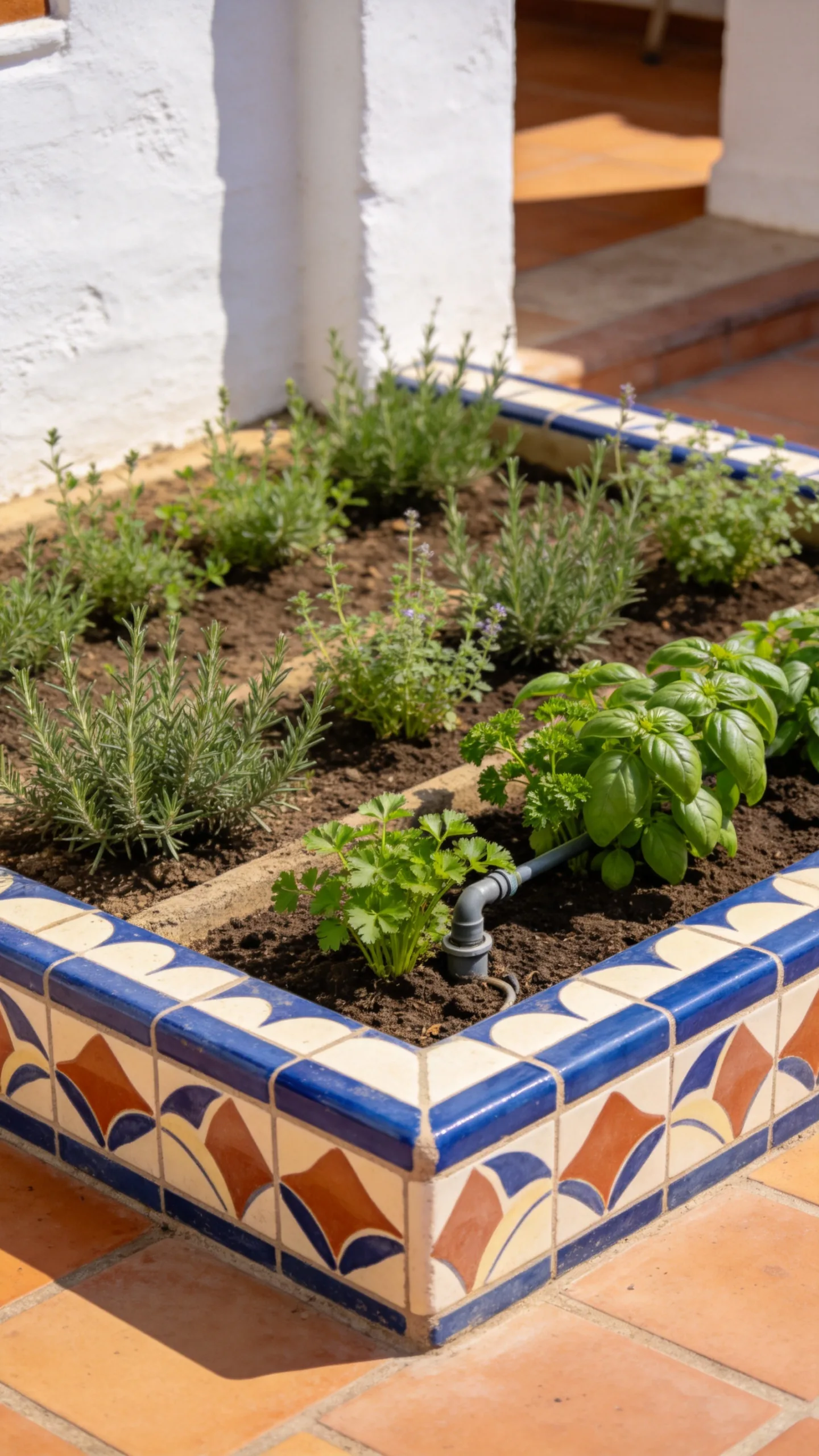
Cap a low herb bed with solid-color or patterned ceramic tile. A narrow tiled edge introduces Spanish color while creating a wipeable surface around rosemary, thyme, chives, parsley, or seasonal basil.
Group herbs by watering needs rather than by appearance alone. Keep drought-tolerant Mediterranean herbs in fast-draining soil, place thirstier herbs closer to an irrigation point, and check that decorative tile will tolerate local frost and direct sun.
21. Combine Brick, Stone, and Tile in One Path
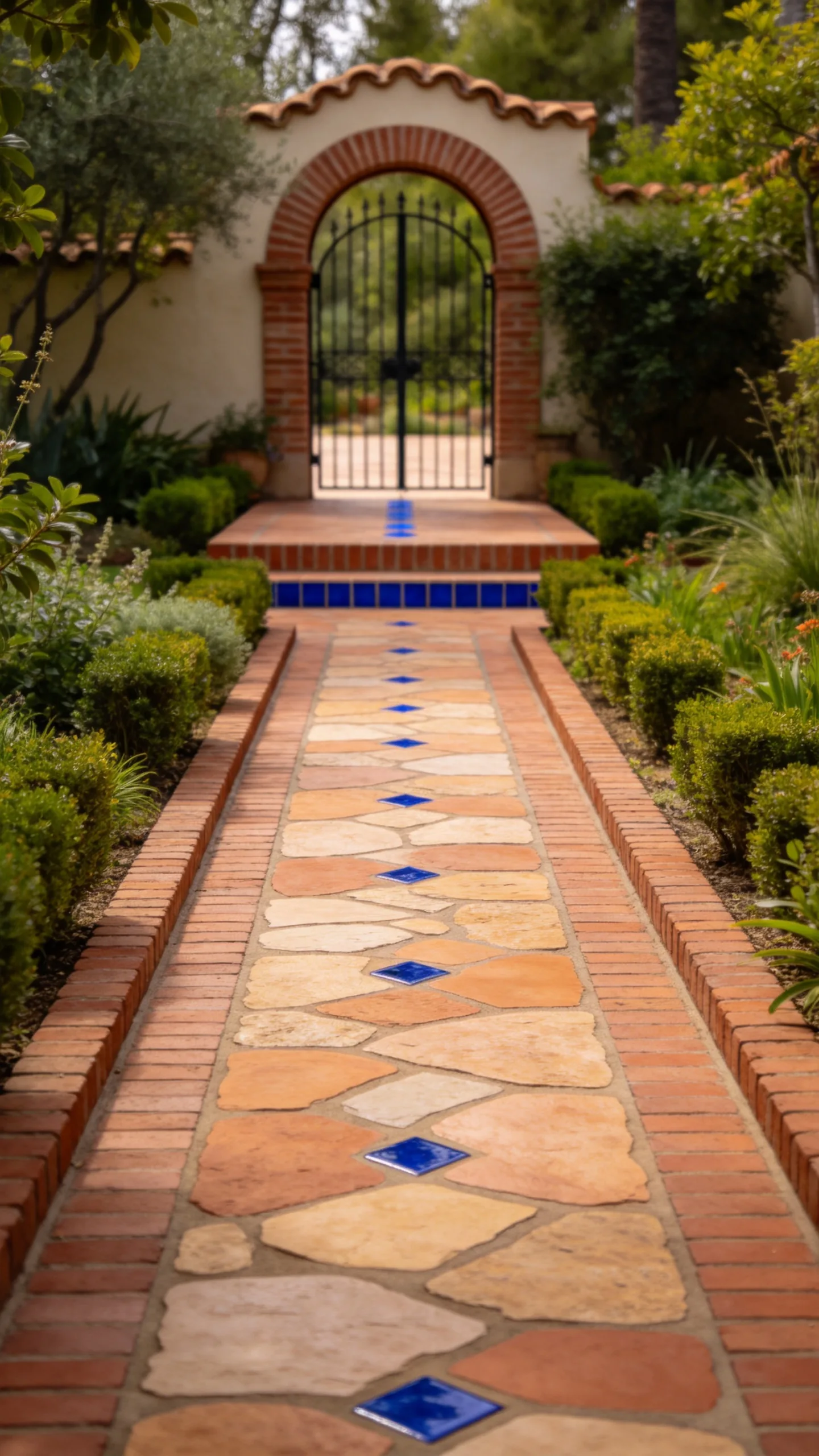
Divide a walkway into simple material zones, such as a brick border, a central strip of flagstone, and small tile accents at landings. Repeating the same tile color near the gate, steps, and patio helps the mixed materials feel connected.
Limit the palette to two primary hardscape materials plus one decorative accent. Keep every surface close to the same height, provide a stable base, and avoid placing smooth glazed tile in the main walking line where it could become slippery.
22. Finish the Garden with an Arched Outdoor Fireplace
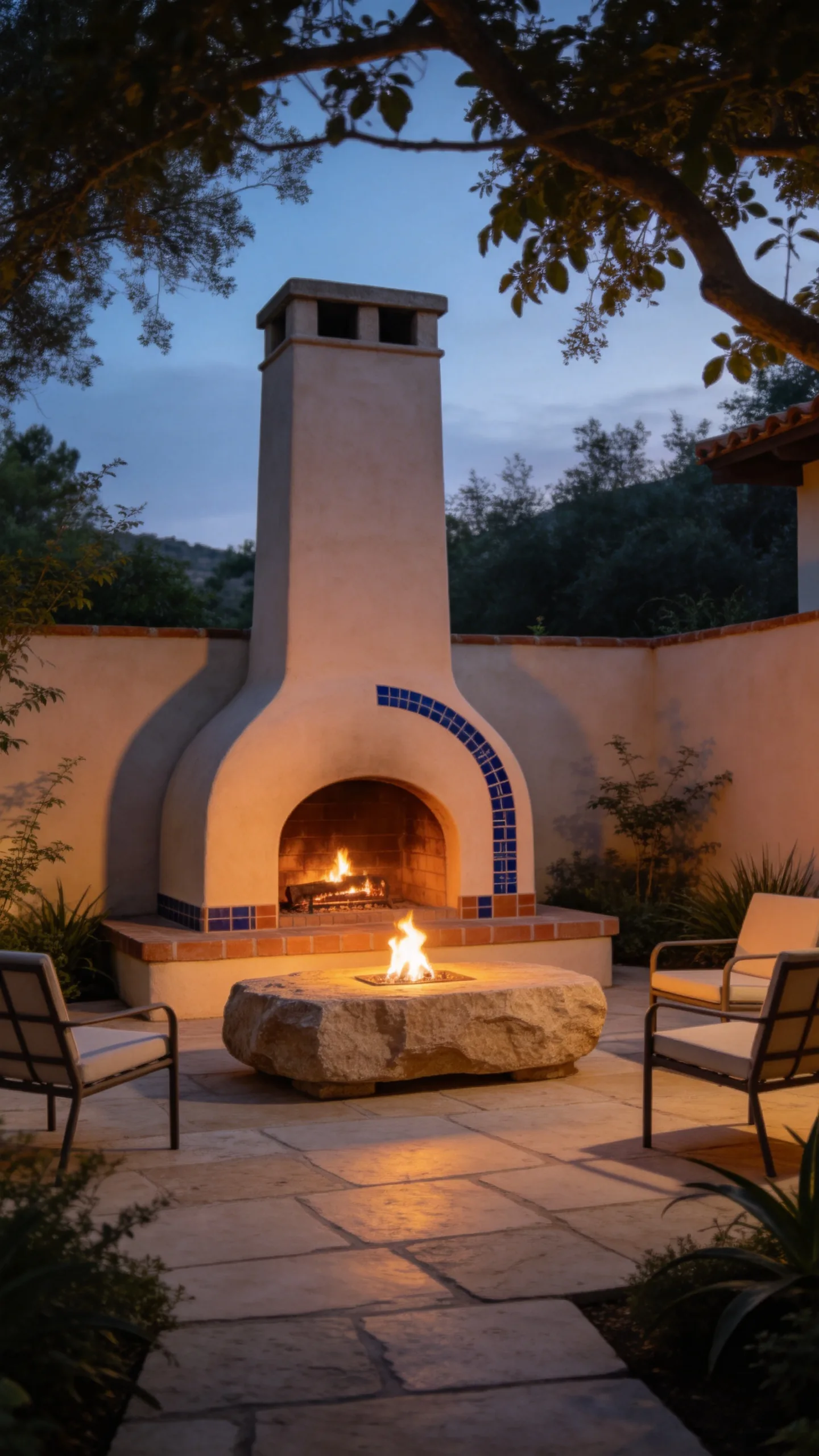
Make an outdoor fireplace or chimney-style fire feature the focal point of a protected seating area. A rounded firebox, pale stucco exterior, stone hearth, and small tile border create a recognizable Spanish-inspired composition.
Locate the feature according to fire codes, property setbacks, overhead clearance, and local burn restrictions. Use noncombustible paving around it, keep plants a safe distance away, and consider a gas unit where wood smoke, storage space, or seasonal fire risk makes a traditional fireplace impractical.