A well-planned rock river bed can guide rainwater, define planting areas, and give a front yard a polished focal point. The most convincing designs follow the natural slope of the property, use varied stone sizes, and connect visually with paths, beds, or downspouts. Before digging, locate underground utilities and confirm that redirected runoff will remain on your property rather than affecting sidewalks, foundations, or neighboring lots.
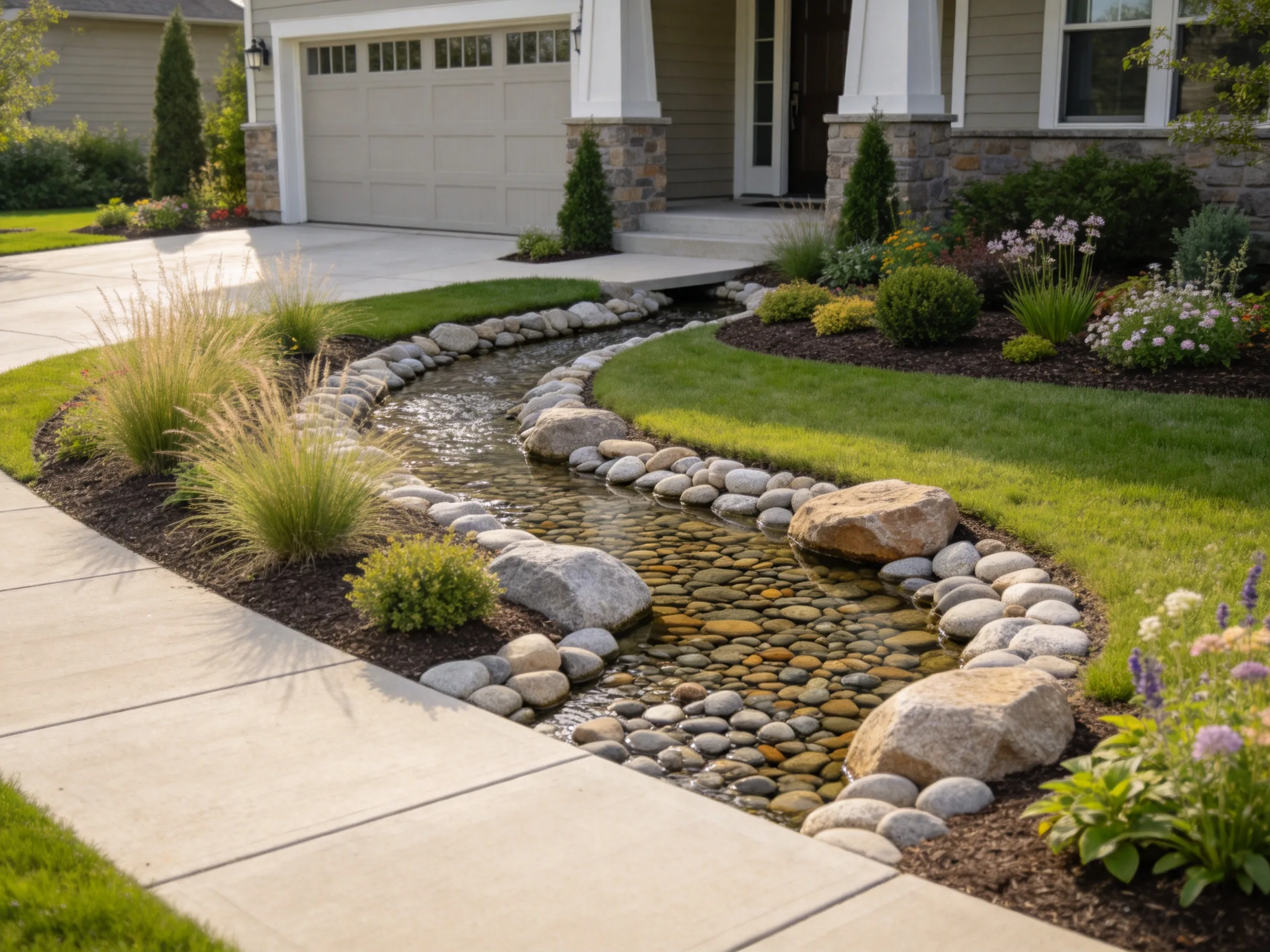
1. Curving Dry Creek Bed Along the Driveway
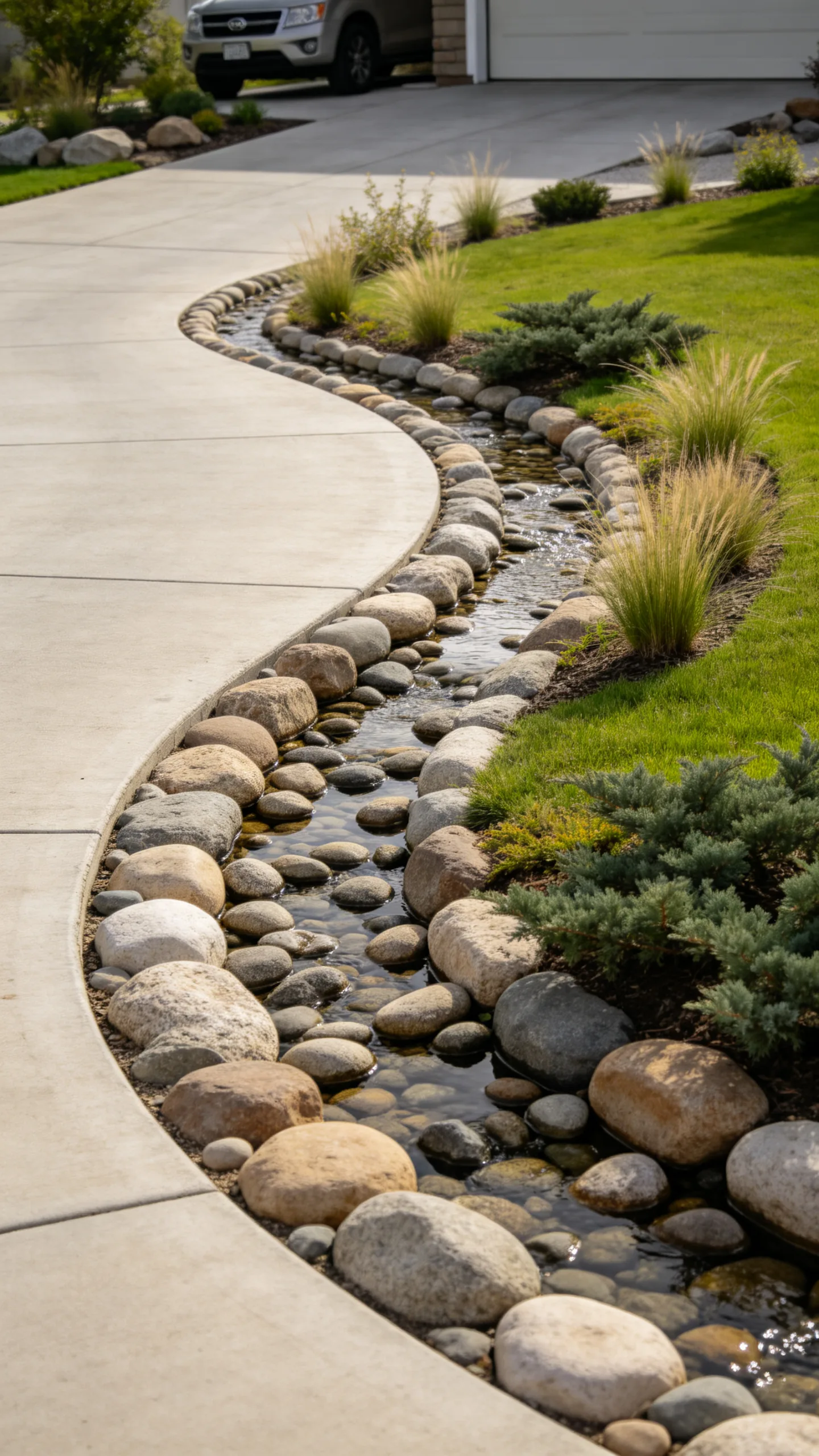
Create a gently curving river bed between the driveway and lawn to soften the long, straight edge of the pavement. A channel about 2 to 4 feet wide usually provides enough room for visible curves without taking over a modest front yard. Excavate a shallow depression, compact the base, and install permeable geotextile fabric before adding stone.
Place larger cobbles along the outside of each bend and fill the center with smaller river rock to imitate the way water sorts stones in nature. Add low ornamental grasses, creeping juniper, or compact sedges on the lawn-facing bank, selecting plants suited to the yard’s sunlight and local climate.
2. Downspout-Fed Rock River Channel
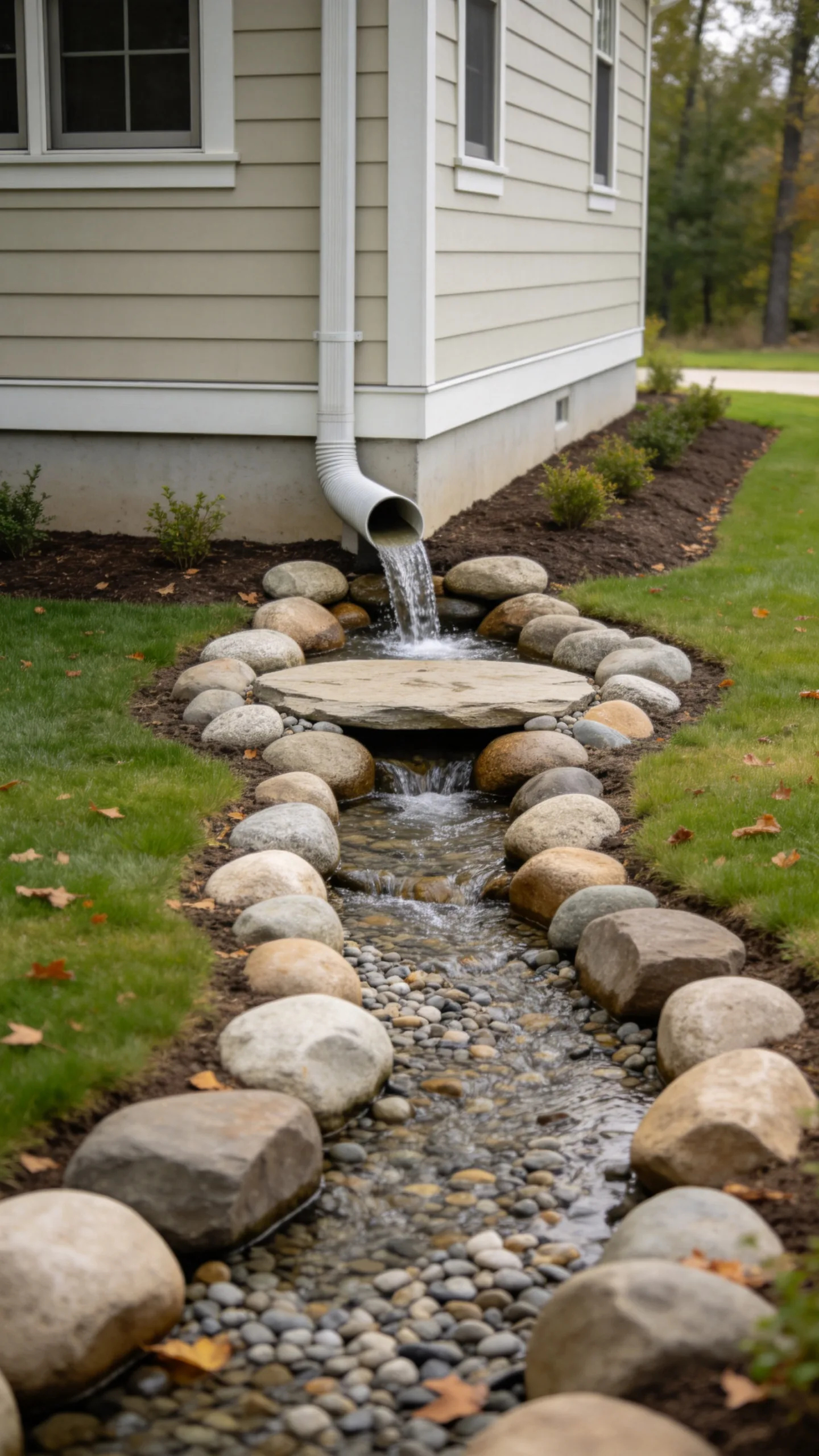
Turn a visible downspout into the starting point for a practical rock river bed landscape design. Connect the downspout to a solid extension or a stone-lined splash area, then direct the channel away from the foundation toward an approved drainage point or rain garden.
Use flat stones beneath the outlet to reduce erosion, followed by fist-sized cobbles and smaller gravel farther downstream. Keep the channel accessible so leaves can be removed, and confirm that the finished grade continues to carry water away from the house.
3. Front Walkway Bridge Over a Dry Creek
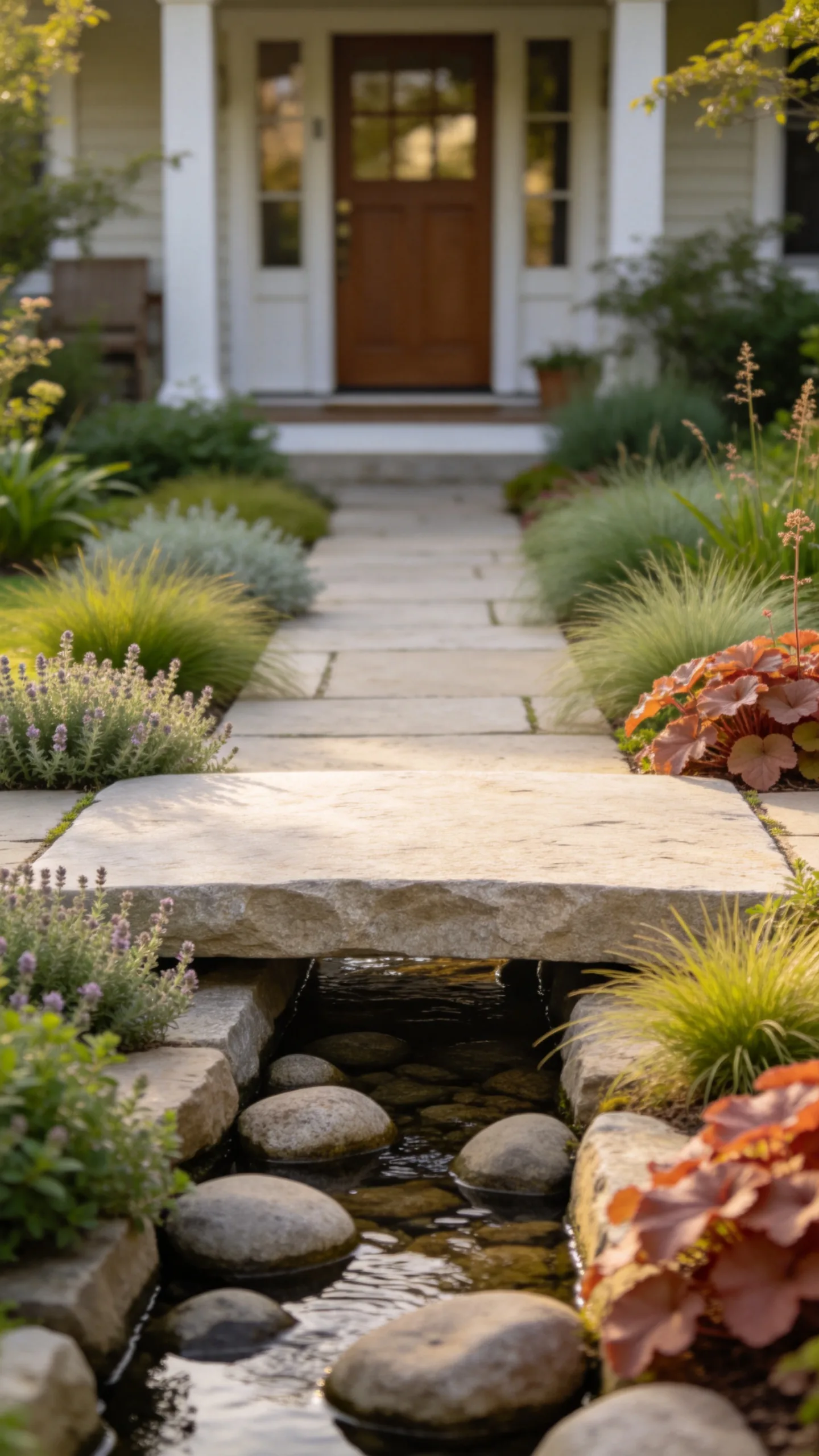
Run a narrow dry creek across the route to the front door and span it with a simple bridge. A flat stone slab, short timber bridge, or reinforced concrete stepping platform can create a memorable entrance while preserving a safe walking surface.
Keep the bridge level, stable, and wide enough for everyday foot traffic. Frame both sides with low plants such as thyme, dwarf mondo grass, sedges, or compact coral bells so foliage softens the rocks without spilling across the walkway.
4. Boulder-Lined River Bed at the Property Corner
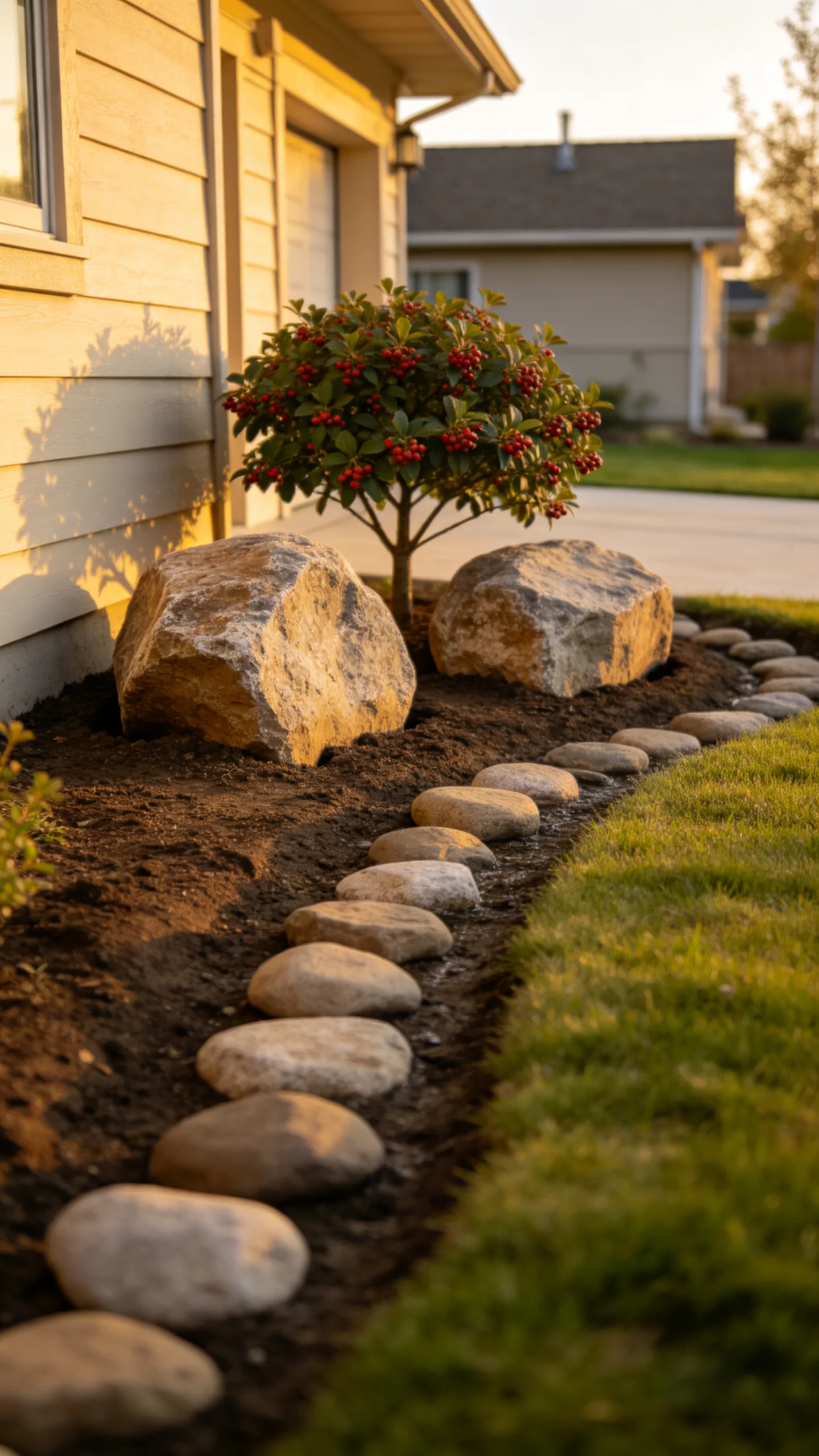
Use an empty front-yard corner as the source of a diagonal river bed that flows visually toward the center of the landscape. Anchor the upper section with two or three boulders partially buried in the soil rather than resting visibly on top.
Arrange smaller stones downstream in an irregular path, gradually narrowing the channel as it approaches the lawn. A small ornamental tree, such as a serviceberry or compact Japanese maple where climate and light permit, can provide height behind the boulders without hiding the rockwork.
5. S-Shaped Creek Through a Wide Lawn
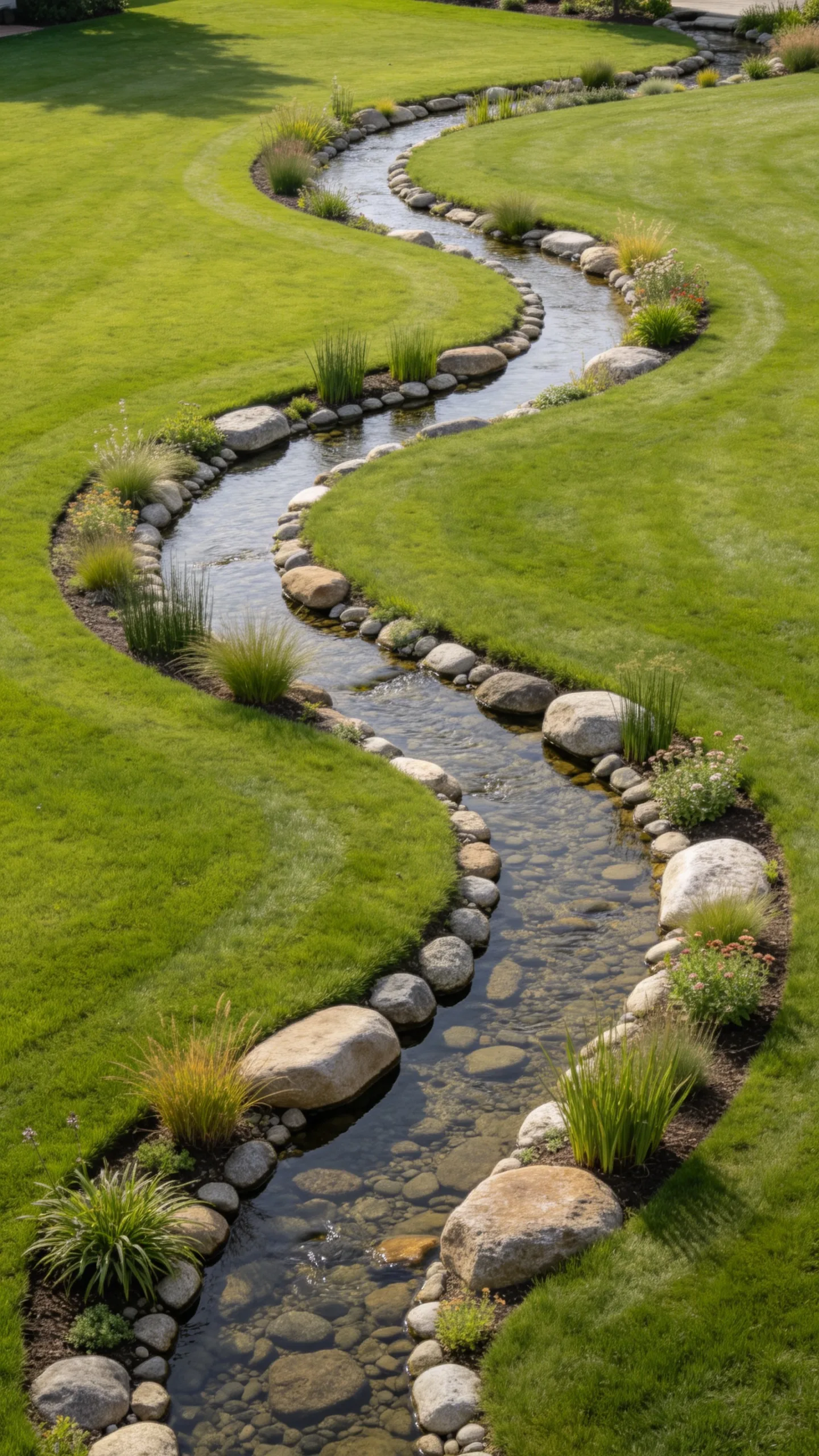
An S-shaped dry creek can divide a broad lawn into more interesting planting zones. Mark the curves with a garden hose before excavating, making one bend wider than the others so the layout looks natural instead of perfectly symmetrical.
Maintain enough lawn on both sides for mowing and avoid tight strips that are difficult to reach. Plant the inner bends with moisture-tolerant perennials if the channel occasionally carries water, or drought-tolerant ground covers if it is primarily decorative.
6. Narrow Side-Yard River Bed Visible from the Street
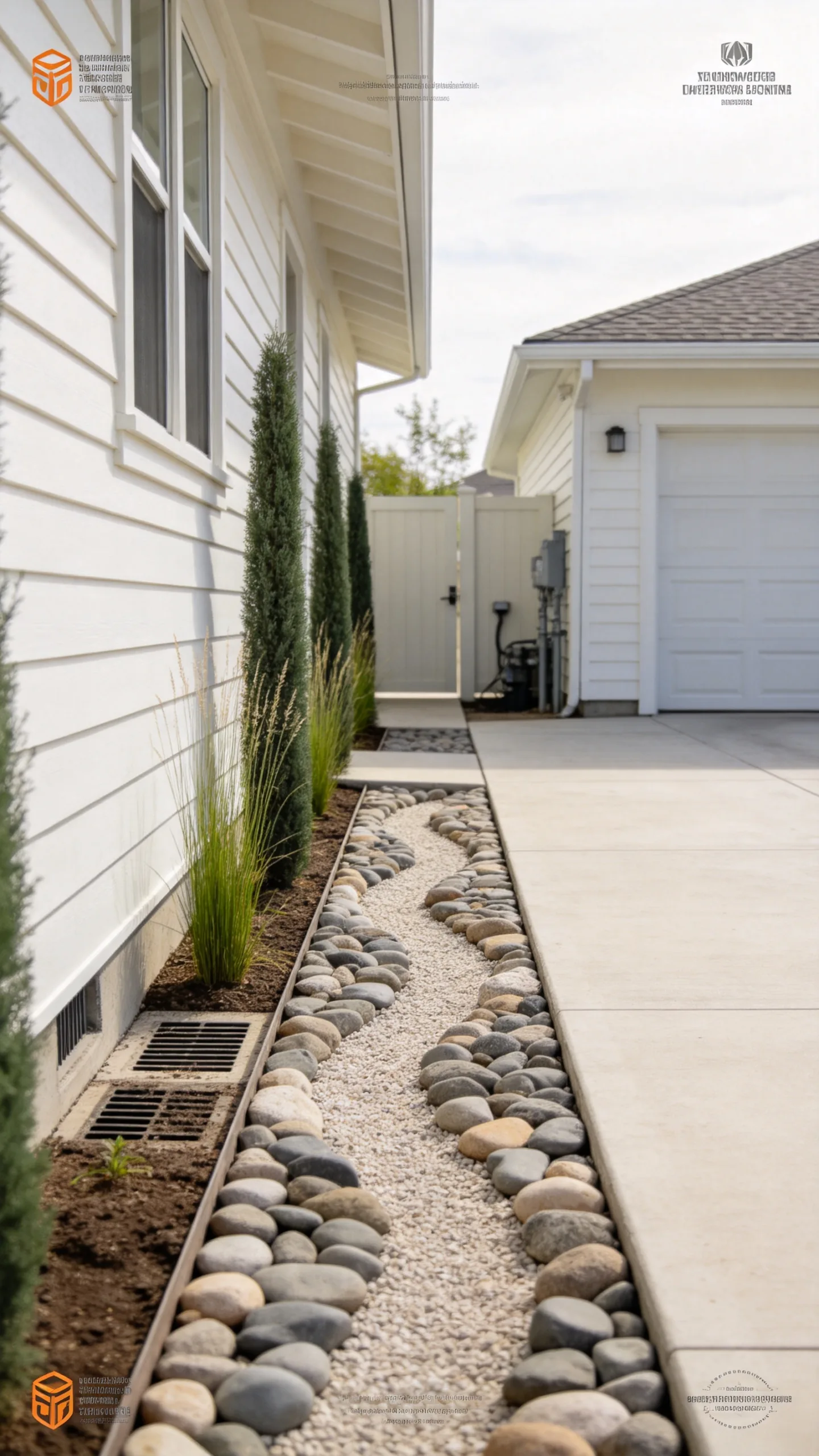
A slim strip between the house and driveway can become a tidy rock channel instead of an awkward patch of turf. Keep the river bed narrow enough to preserve access to utility meters, gates, and exterior maintenance areas.
Choose smaller cobbles that match the scale of the space, then place a few vertical accents such as columnar evergreens or clumping grasses along the house side. Avoid piling stone against siding; maintain the recommended foundation clearance and leave drainage openings unobstructed.
7. Rain Garden Basin at the End of the River Bed
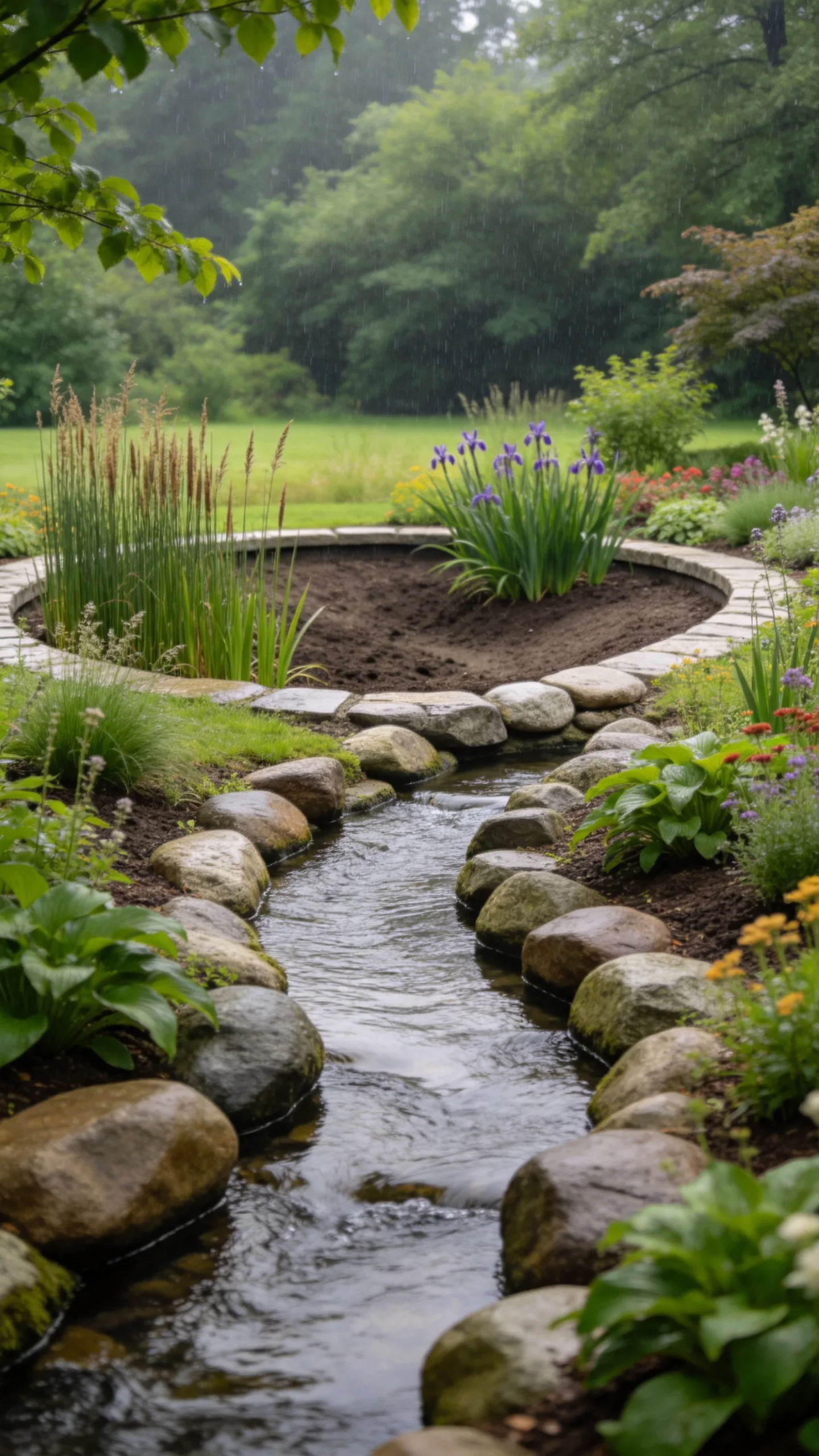
Finish a runoff-carrying rock channel with a shallow planted basin that temporarily holds water while it soaks into suitable soil. Locate the rain garden away from the foundation, septic components, and underground utilities, and check local drainage guidance before installation.
Edge the basin with river rock, but leave much of the interior as amended planting soil rather than filling it entirely with stone. Select locally appropriate plants that tolerate both brief wet periods and drier conditions, such as certain sedges, rushes, irises, or native flowering perennials.
8. Stepped Rock Channel for a Sloped Front Yard
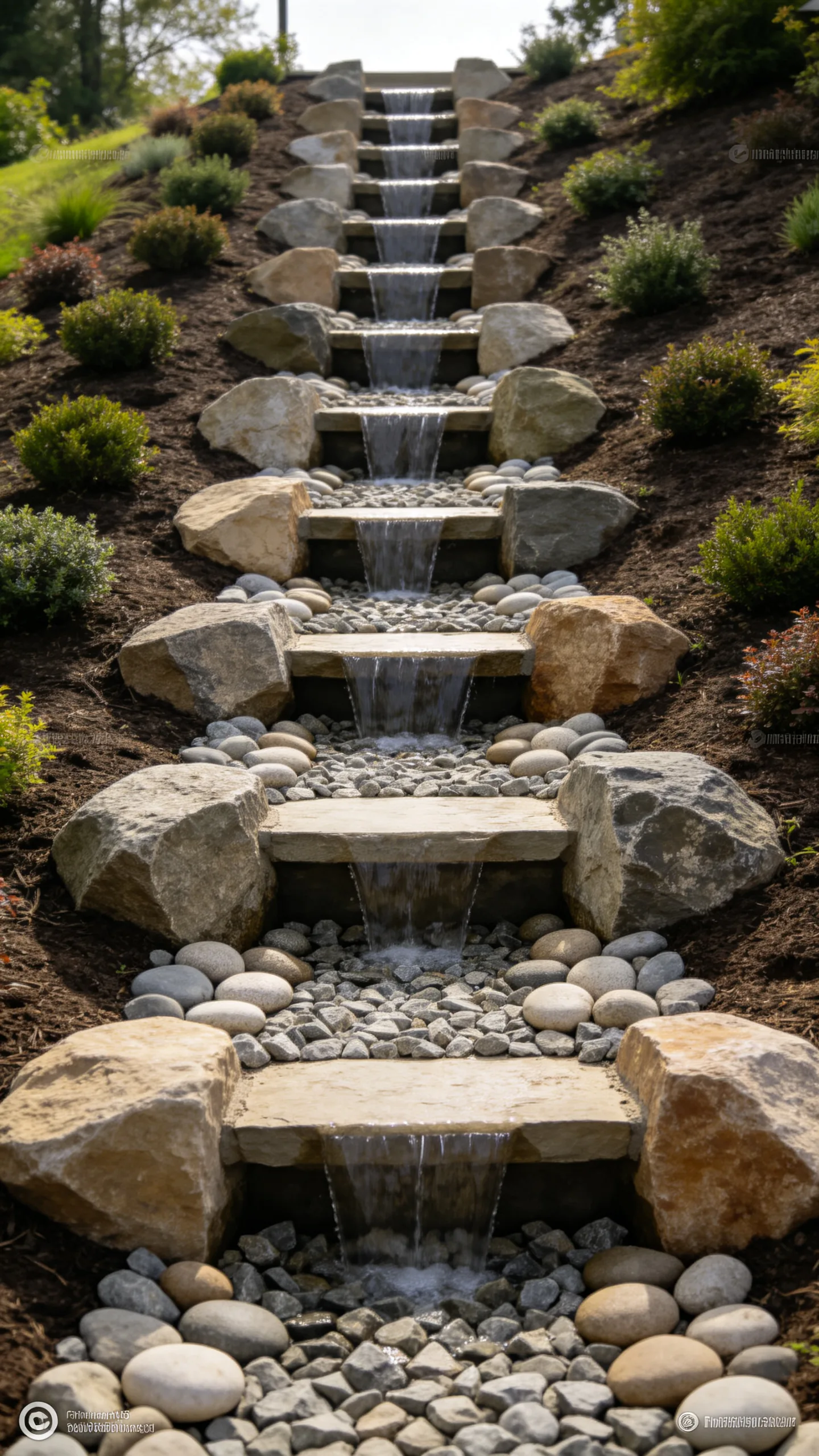
Control the appearance of a steep river bed by dividing it into short, shallow drops. Flat ledge stones or partially buried boulders can form small check steps that slow runoff and reduce the chance of smaller gravel washing downhill.
Place larger stone at each drop and use angular gravel beneath rounded decorative rock for added stability. On the banks, choose deep-rooted ground covers or low shrubs suited to the slope’s light exposure to help hold soil in place.
9. Mailbox River Bed Planting Island
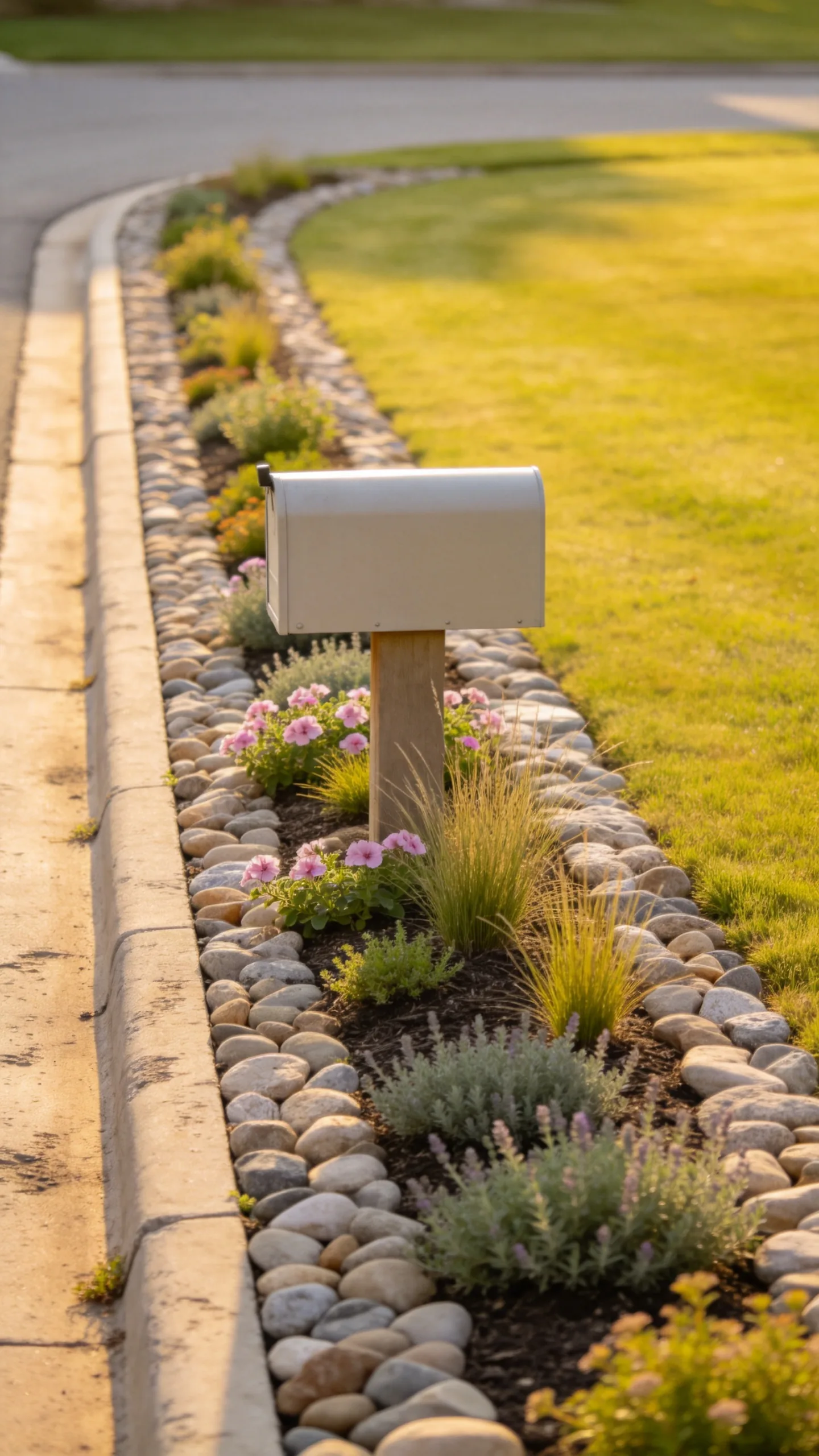
Build a compact dry creek around the mailbox to make the street edge feel connected to the rest of the landscape. Shape the bed as an elongated oval or tapered stream rather than a small circular ring, which can look isolated.
Keep plants low enough to preserve driver visibility and easy access to the mailbox. Tough choices may include creeping phlox, compact catmint, dwarf grasses, or low native perennials, depending on climate, while a stone mulch helps reduce trimming around the post.
10. Porch-to-Sidewalk Welcome Stream
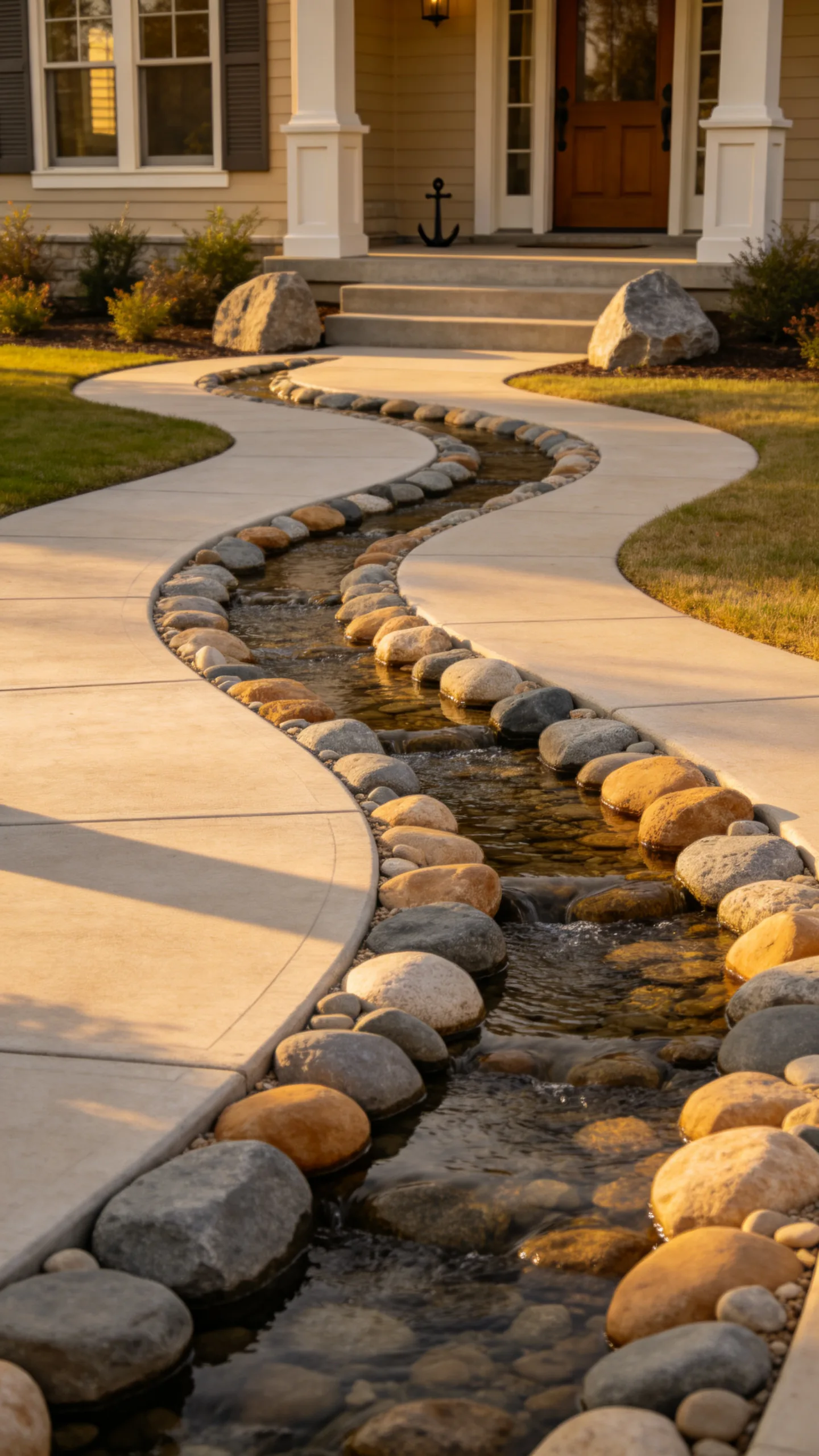
Position a decorative rock stream beside the front path so it appears to flow from the porch toward the sidewalk. Echo the walkway’s curves, but vary the distance between the two features to avoid a rigid, parallel-strip effect.
Use warm-toned gravel near brick, tan stone near stucco, or gray river rock beside concrete for a coordinated palette. Place a few larger stones near porch steps and path junctions to create visual anchors without narrowing the walking route.
11. Tree-Centered Rock River Bend
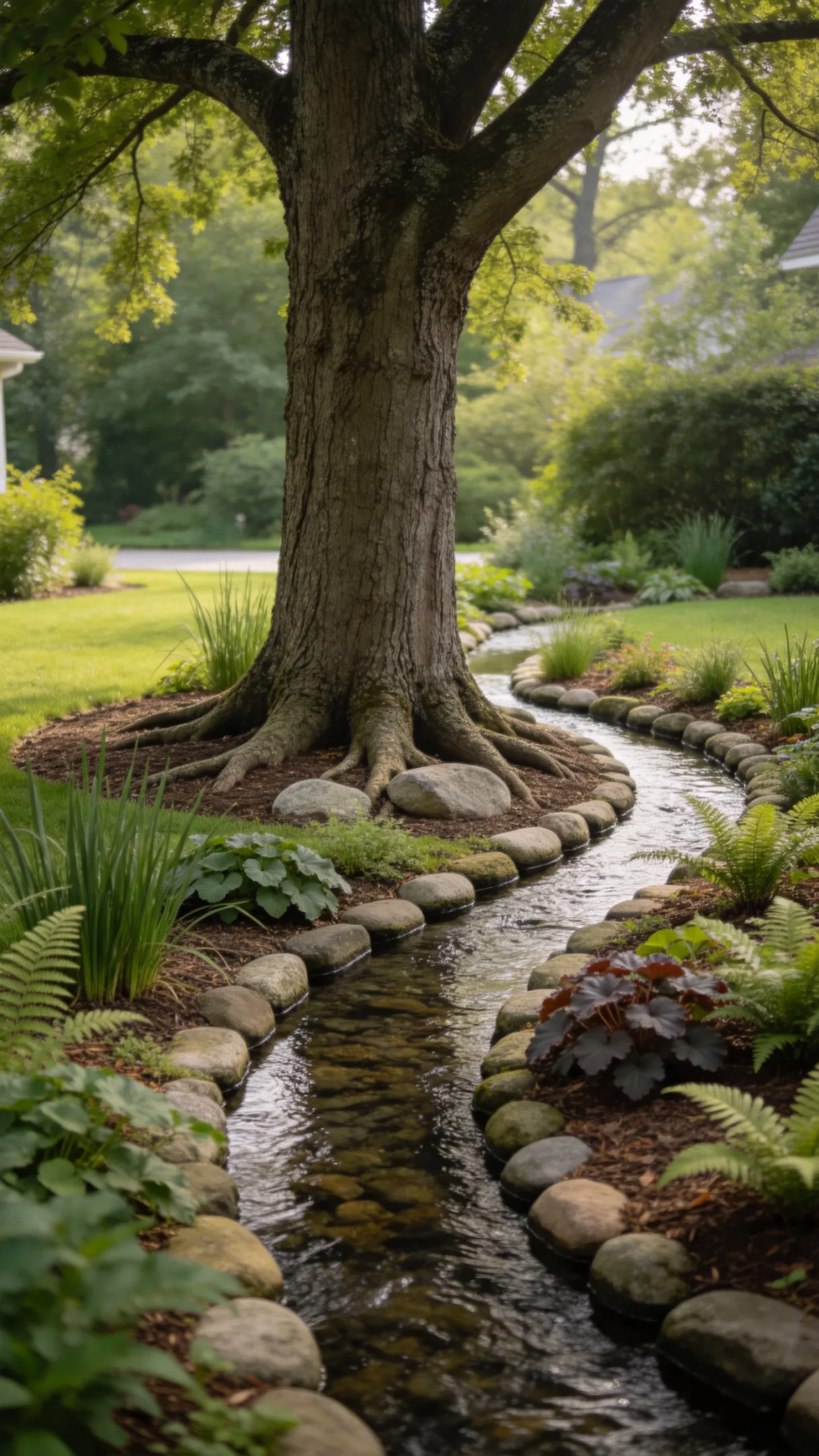
Curve a dry creek around an established front-yard tree to make it part of the overall composition. Keep excavation and heavy boulders outside the tree’s critical root zone whenever possible, and do not raise the soil or stone level against the trunk flare.
Widen the channel visually as it approaches the tree, then split or bend it around the planting area. Shade-tolerant sedges, ferns, heucheras, or woodland ground covers can connect the tree bed to the stones where local conditions support them.
12. Two-Tone Stone River Pattern
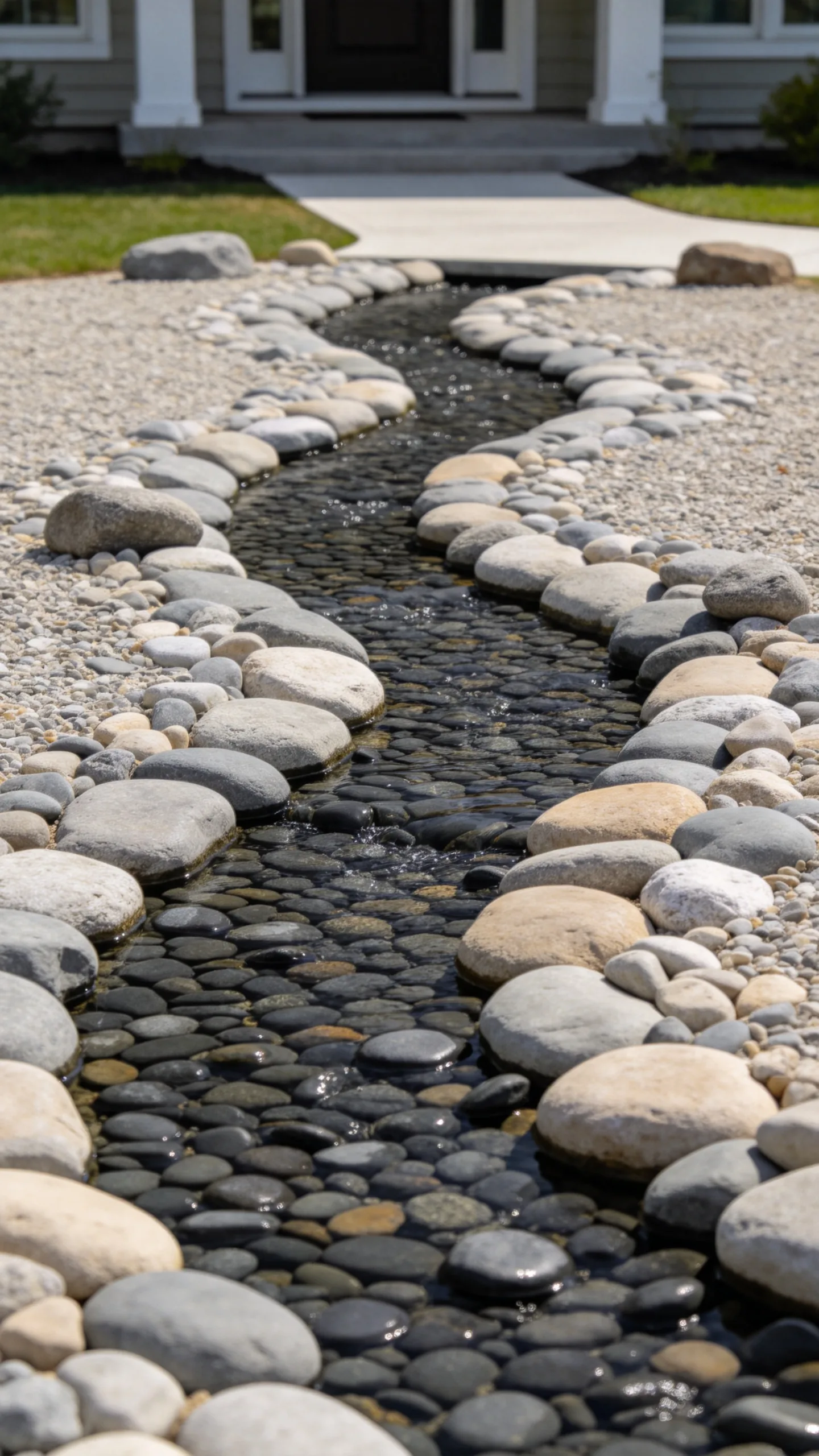
Use two related stone colors to make the water path easy to read from the street. Place darker or smaller pebbles through the center to represent the active channel, then transition to lighter, larger cobbles along the banks.
Limit the palette to materials that complement the home’s exterior, retaining walls, and walkway. Mix the boundary between colors slightly rather than creating sharp stripes; scattered crossover stones will make the arrangement feel more natural.
13. Modern Linear Rock Runoff Channel
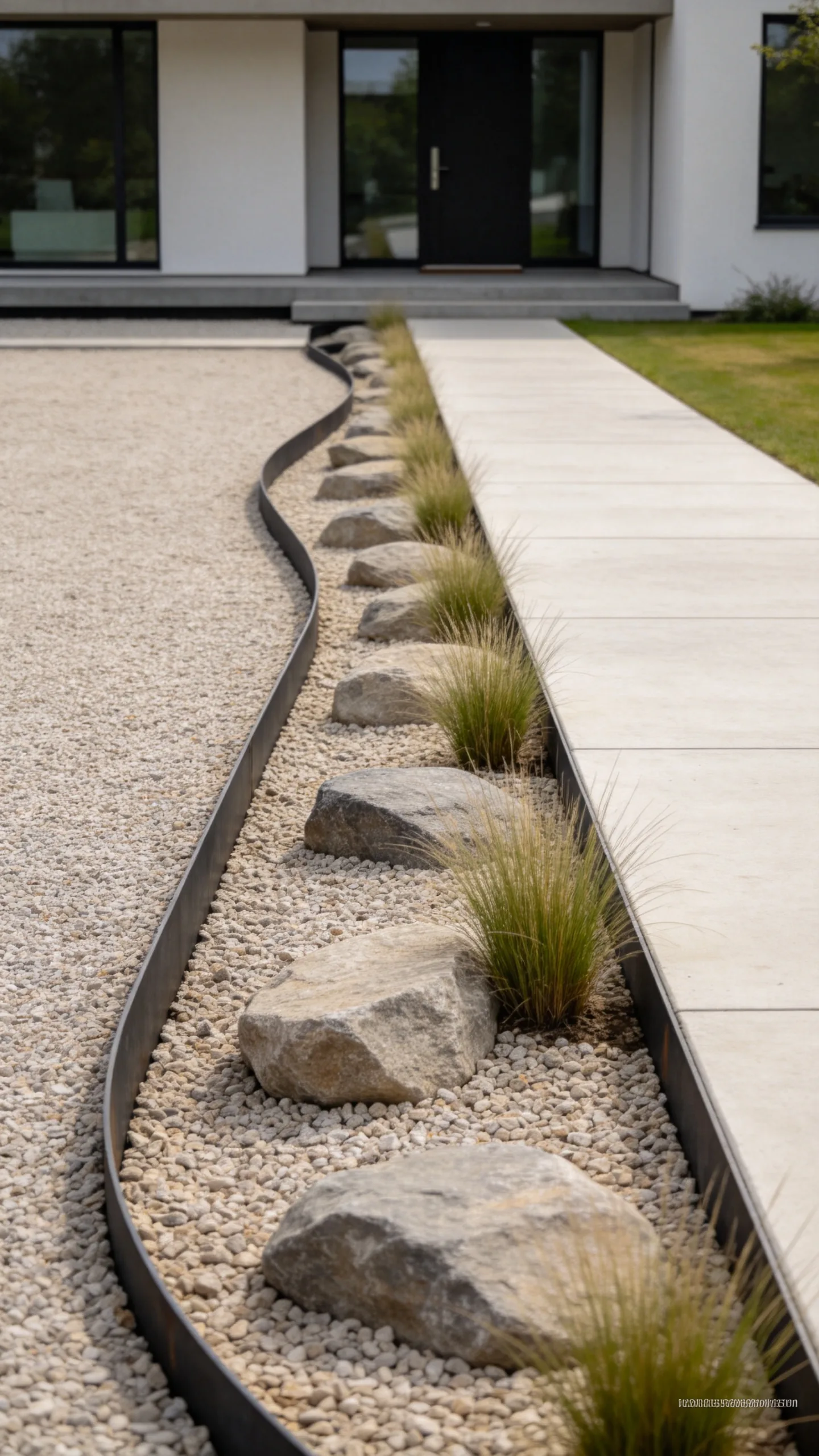
For a contemporary house, build a straight or gently angled channel with crisp steel, stone, or concrete edging. Uniform gravel and a restrained row of boulders create a cleaner appearance than a highly winding woodland-style creek.
Pair the channel with architectural plants such as upright grasses, compact yucca where appropriate, clipped evergreen forms, or repeating sedge clumps. Keep plant spacing consistent and conceal the fabric edges so the finished design retains its structured look.
14. Cottage Garden Creek with Flowering Banks
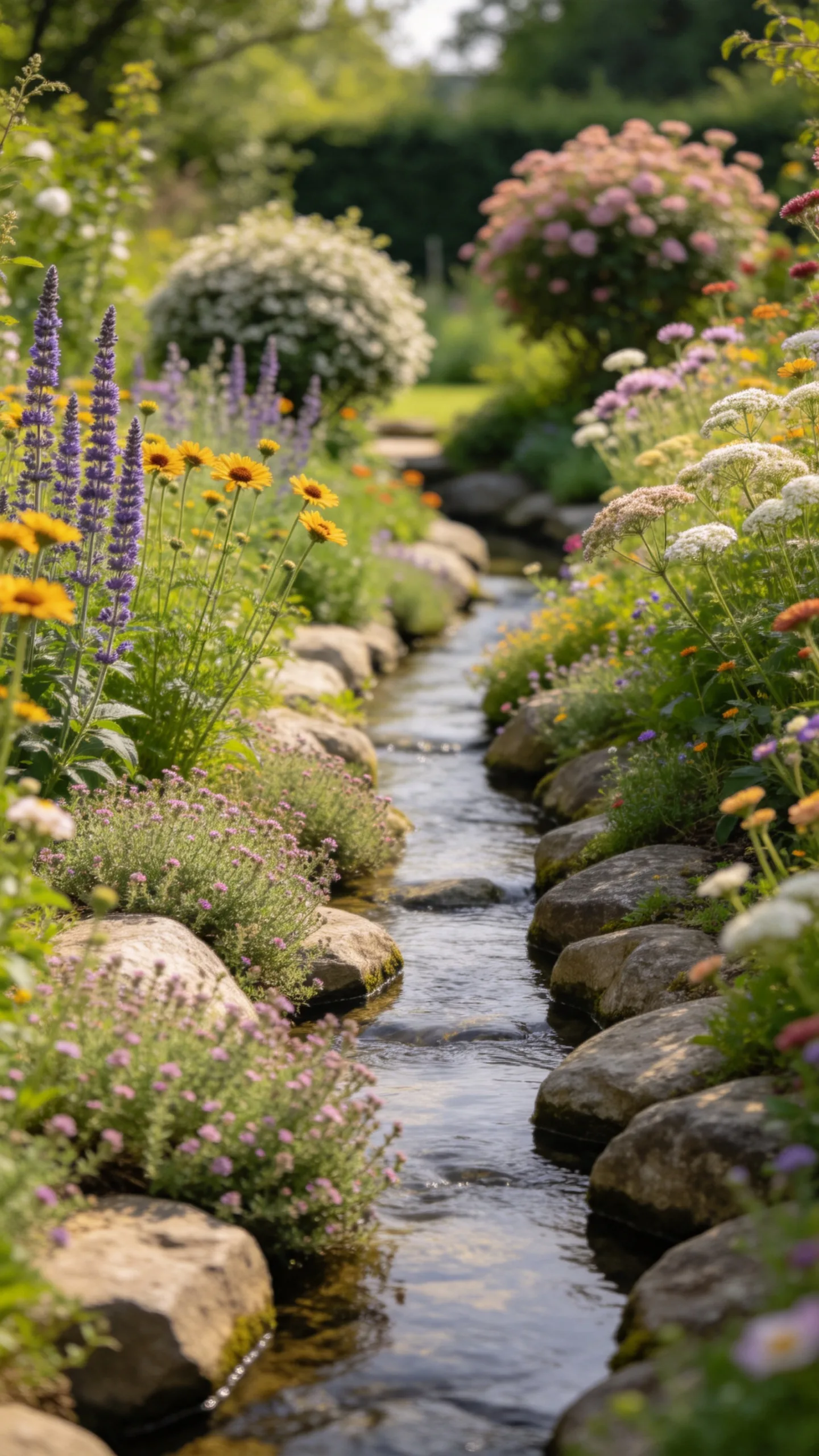
Soften a stone river bed with layered flowering plants on both sides. Place low ground covers near the rocks, medium perennials behind them, and compact shrubs at selected bends to create depth without burying the channel.
Choose a sequence of bloom times rather than relying on one short flowering season. Plants such as creeping thyme, coreopsis, salvia, yarrow, asters, and small shrub roses can work in sunny sites, but selections should match local hardiness, rainfall, and soil drainage.
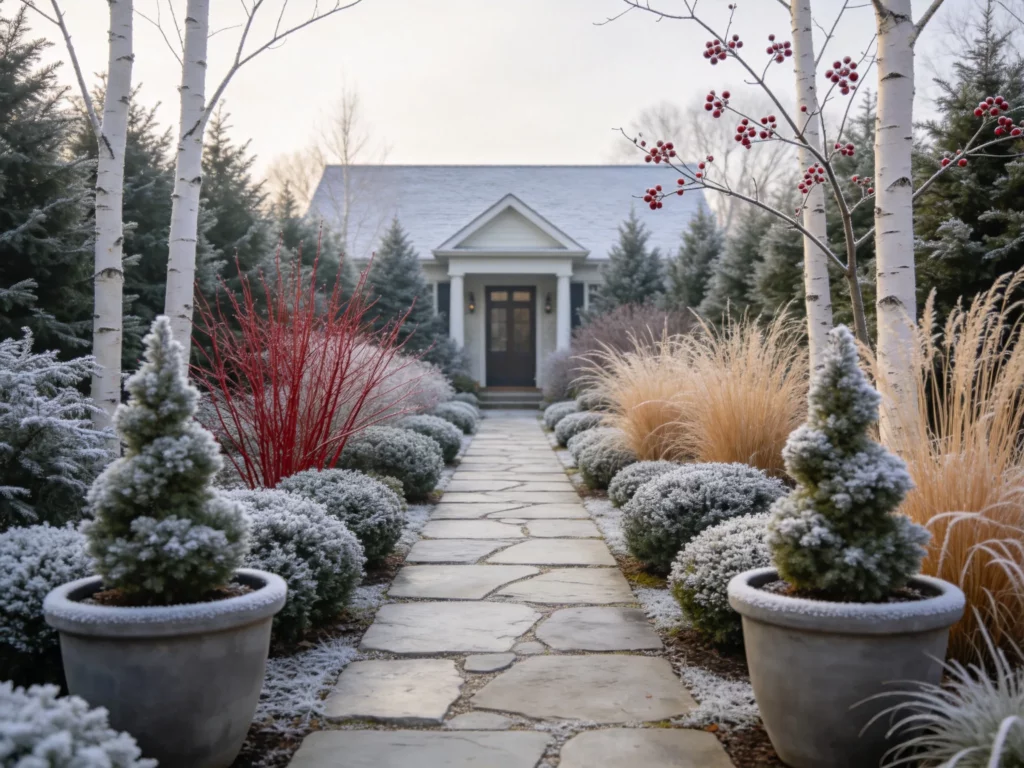
15. Evergreen-Framed Rock River Bed
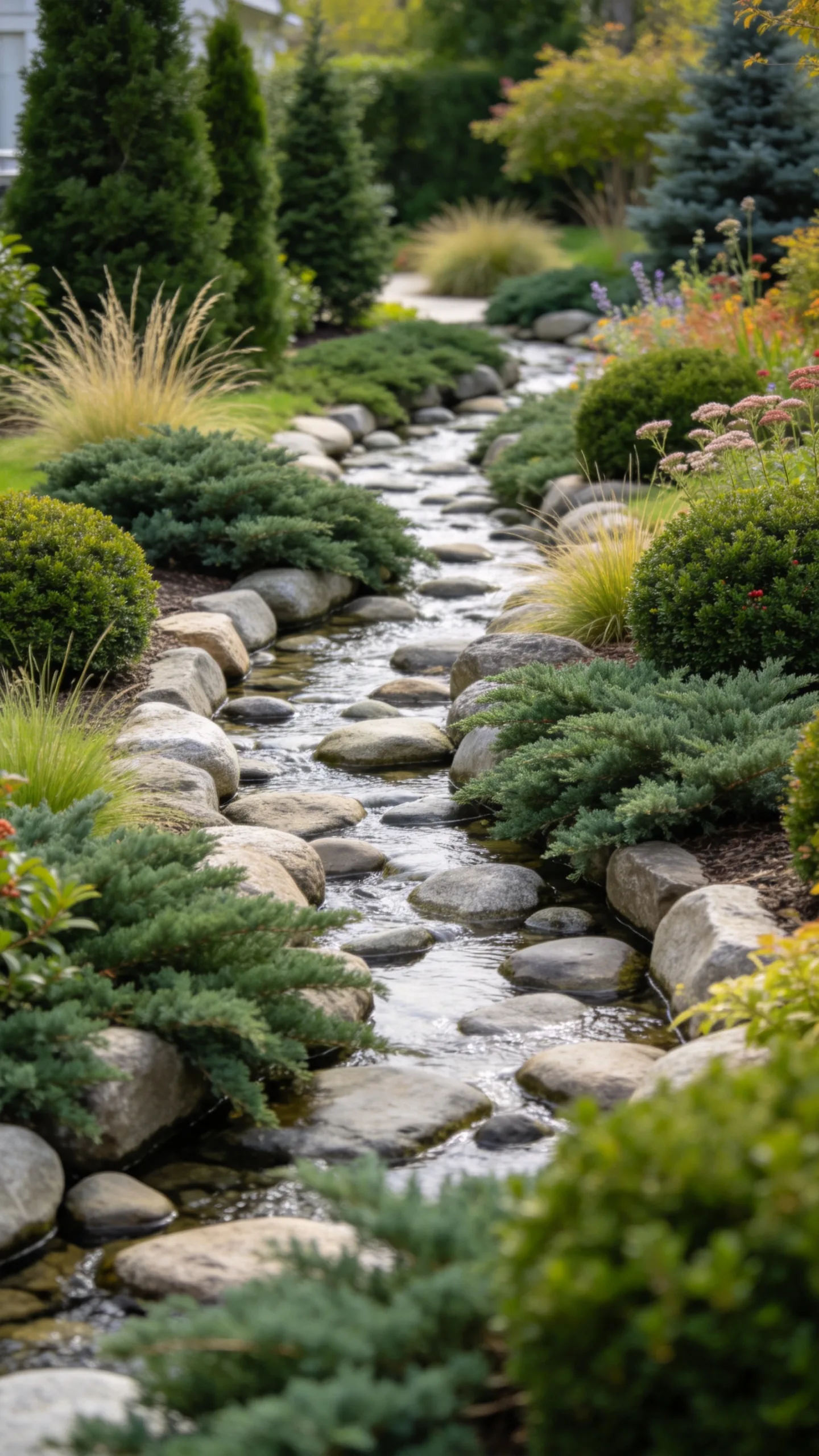
Use evergreen plants to keep the river bed defined after deciduous plants go dormant. Arrange dwarf conifers, compact inkberry, creeping juniper, or another regionally suitable evergreen at bends and endpoints rather than spacing them in a rigid row.
Leave enough room for each shrub’s mature width so branches do not cover the stones within a few years. Add a limited number of grasses or flowering perennials between the evergreens for seasonal movement and color.
16. Rock River Bed with Large Crossing Stones
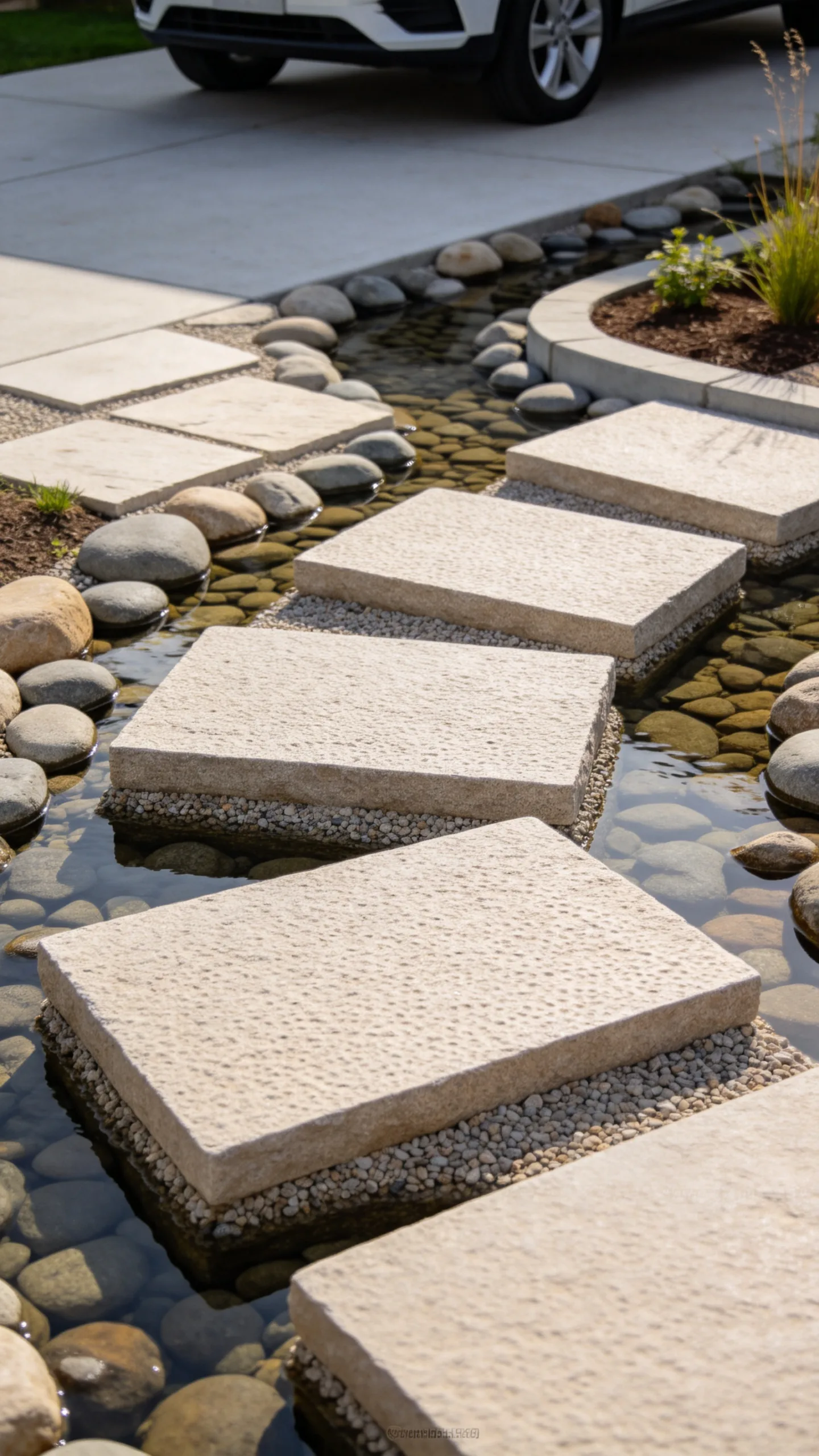
Install broad, flat stepping stones across a shallow decorative creek where a secondary route is useful. The stones can connect a driveway to a front walk or provide access to a planting bed without requiring a full bridge.
Set each slab on a compacted base so it does not wobble, and keep the top surfaces nearly level. Use textured, slip-resistant stone and comfortable spacing, especially if the crossing will be used while carrying bins, tools, or groceries.
17. Split-Channel River Bed Around a Planting Island
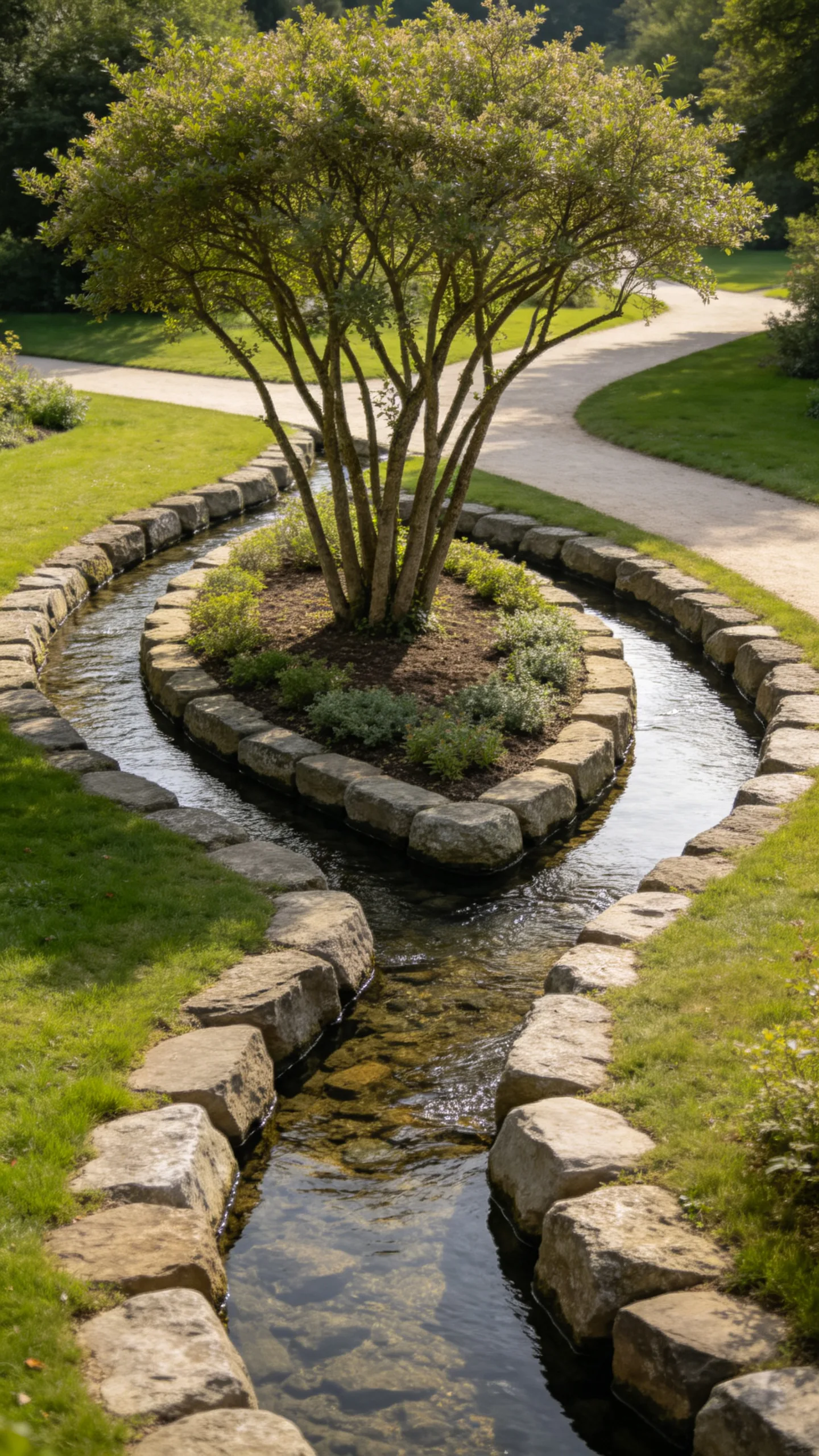
Divide one rock stream into two narrow branches that wrap around a raised planting island. This layout creates a layered focal point and can make a medium-size front yard appear deeper when viewed from the sidewalk.
Anchor the island with a multi-stem shrub, ornamental grass, or compact tree, then underplant it with low ground covers. Make one branch wider than the other and reconnect them gradually so the design avoids an overly symmetrical, artificial shape.
18. Foundation Bed Creek with Protective Setback
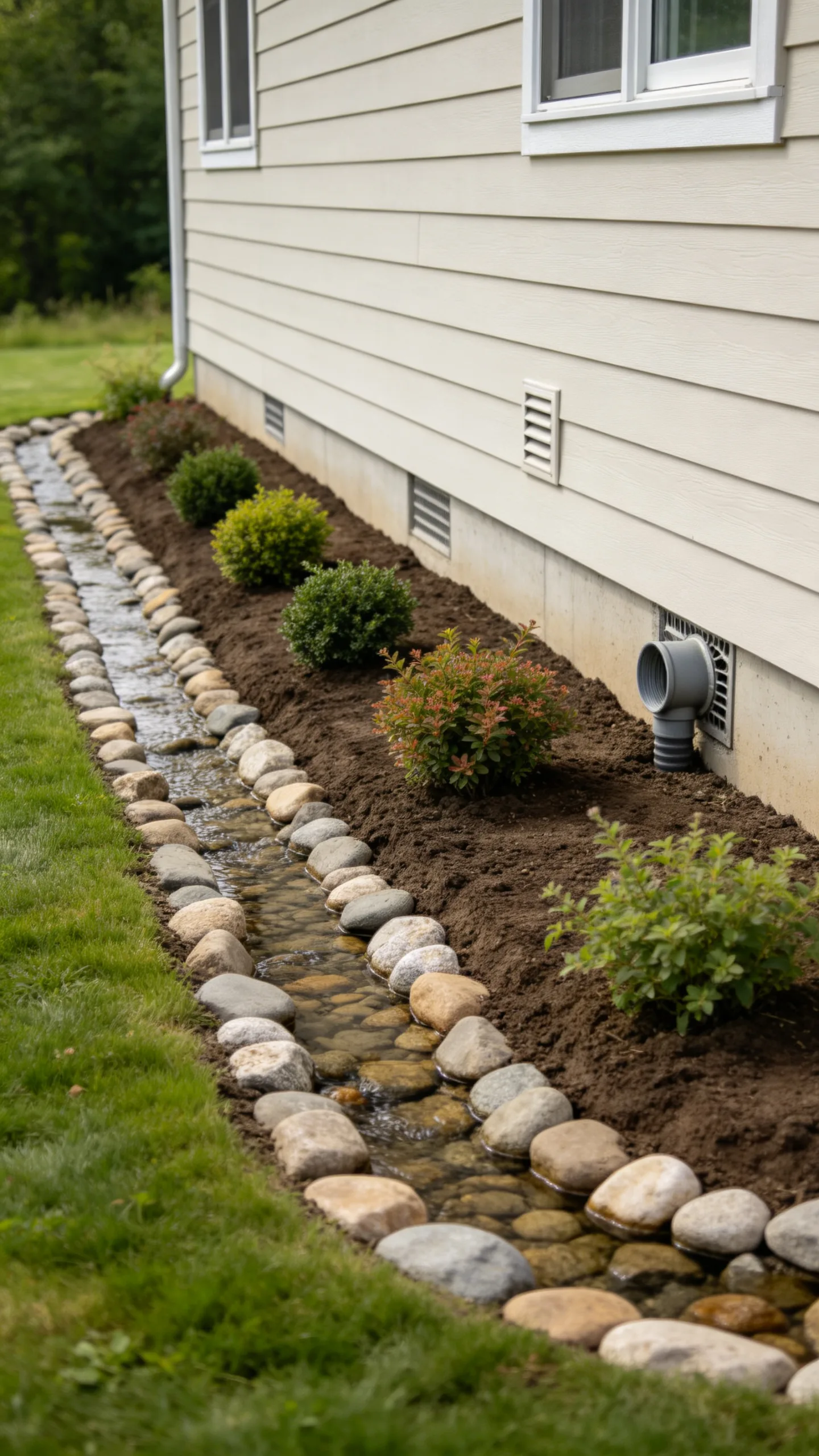
Add a shallow decorative river bed along the outer edge of a foundation planting area, leaving the required clearance between stone, siding, vents, and drainage outlets. The creek can define the transition from shrubs to lawn while helping the bed look broader and more intentional.
Maintain soil that slopes away from the house, and do not rely on loose river rock alone to solve foundation drainage problems. Repeat two or three plants from the existing foundation bed along the channel to visually tie the features together.
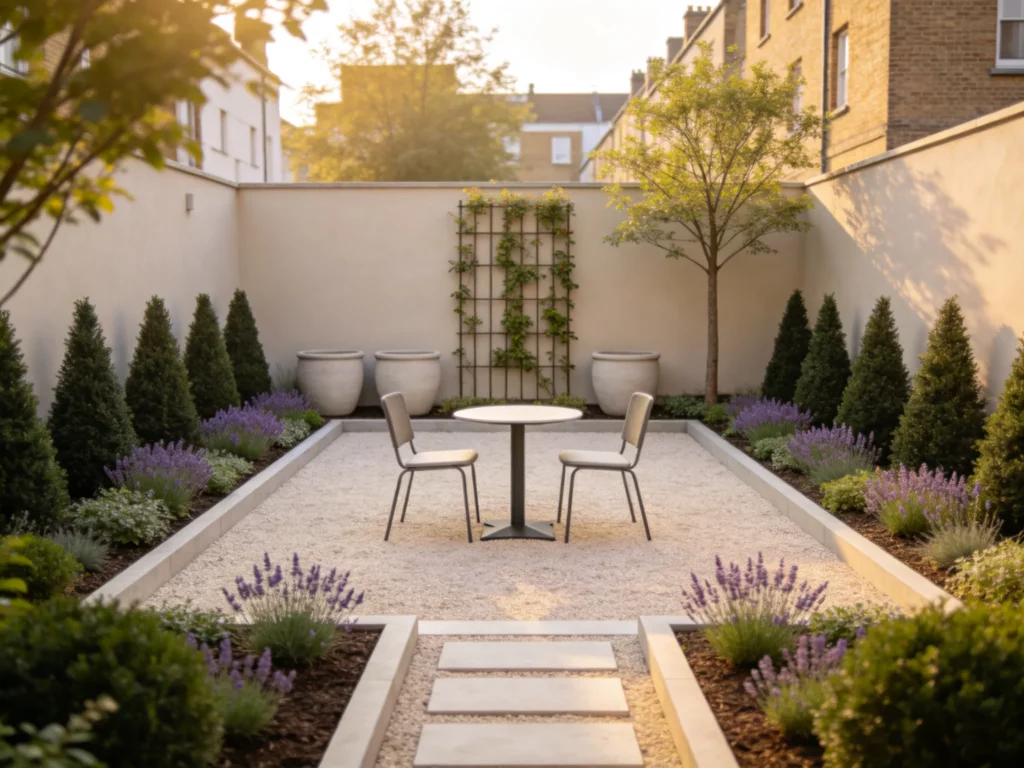
19. Mediterranean-Style Gravel River Bed
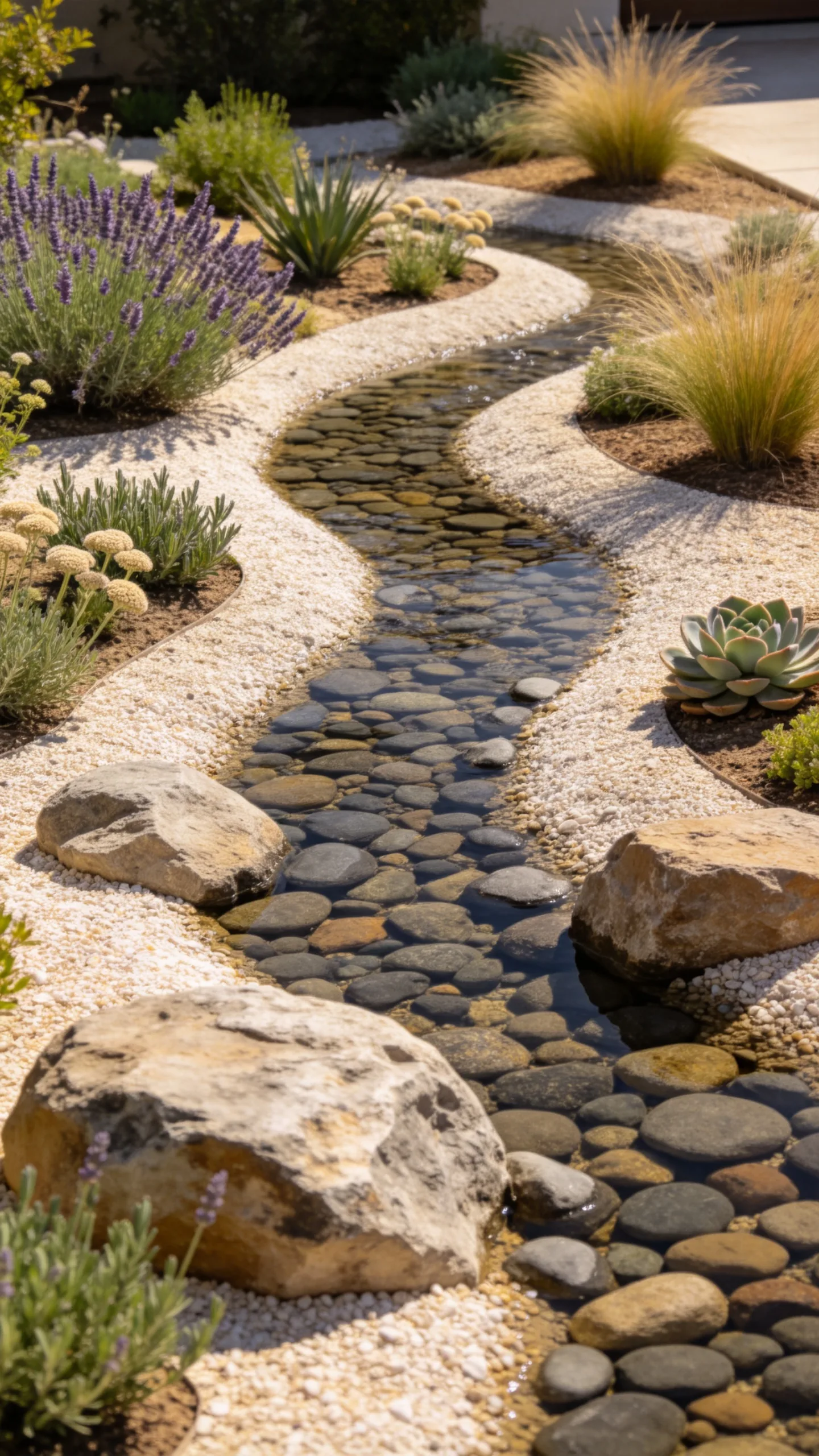
Combine pale gravel, weathered boulders, and drought-tolerant plants for a sun-loving, low-water look. Lavender, rosemary, santolina, ornamental grasses, or compact succulents may suit mild or dry climates, while cold-climate gardeners can substitute hardy plants with similar forms.
Use a mineral mulch around the plantings, but keep the central river path distinct with larger or darker cobbles. This design works best in well-drained sites; plants that dislike winter moisture may need raised planting pockets or different local alternatives.
20. Woodland-Inspired Mossy Stone Creek
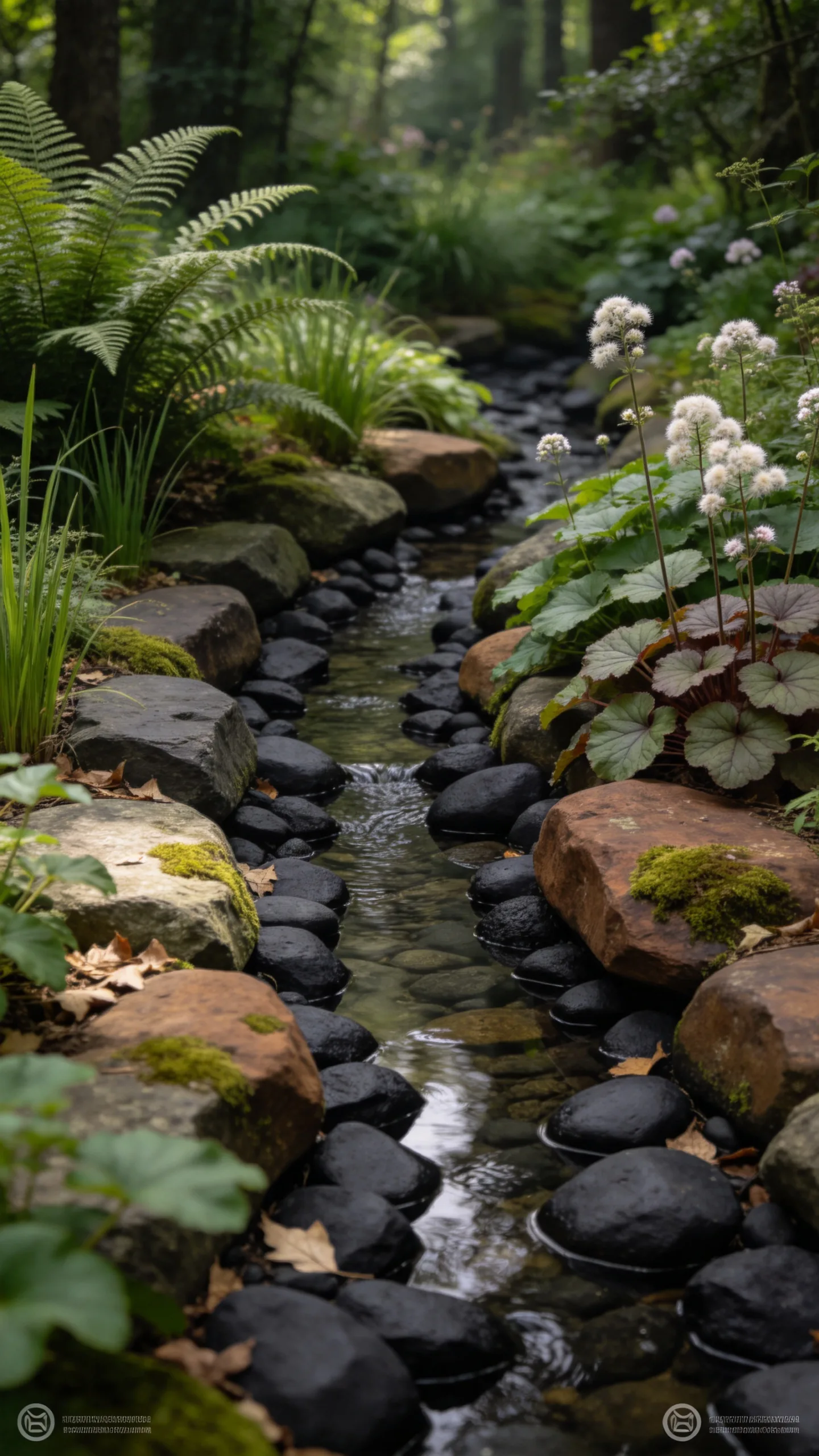
Create a shaded creek effect with darker stone, irregular boulders, and foliage plants. Ferns, hostas where pest pressure allows, woodland sedges, foamflower, and heucheras can form soft banks in soil that retains some moisture without remaining waterlogged.
Allow fallen leaves to settle lightly among the outer stones for a natural look, but clear debris from any channel that carries runoff. Moss may establish in humid shade, although it should be treated as a site-dependent bonus rather than a guaranteed feature.
21. Low-Maintenance Rock Bed with Planted Pockets
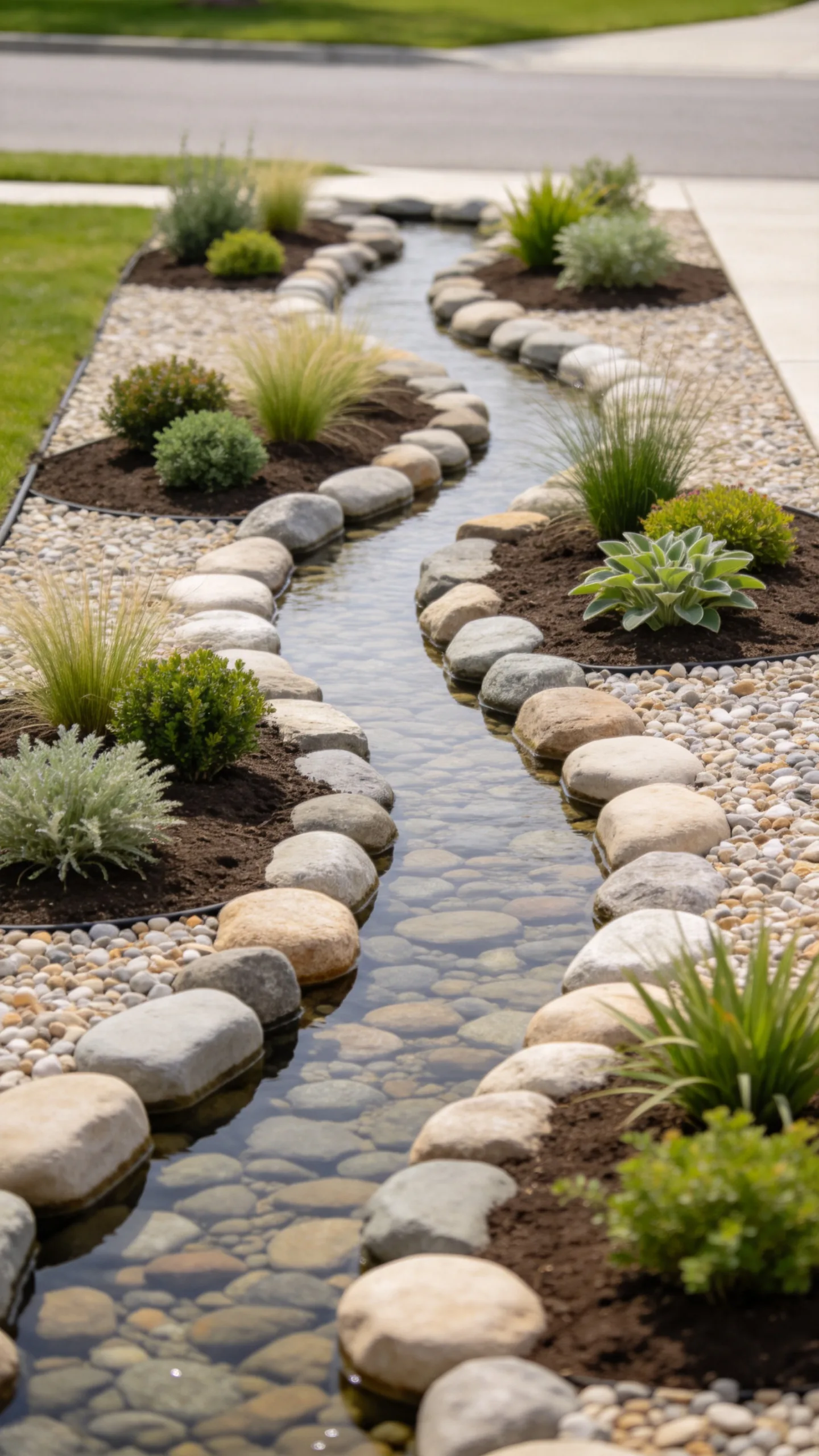
Reduce weeding without creating a completely plantless stone strip by cutting several generous planting pockets into the river banks. Group three to five compatible plants in each pocket rather than scattering single specimens through the rocks.
Use permeable geotextile beneath stone-only areas, but avoid wrapping fabric tightly around perennial roots. Install drip irrigation under the rock mulch if supplemental watering is needed, and choose slow-growing shrubs or clumping plants that will not constantly shed into the channel.
22. Front-Yard River Bed Ending in a Boulder Pool
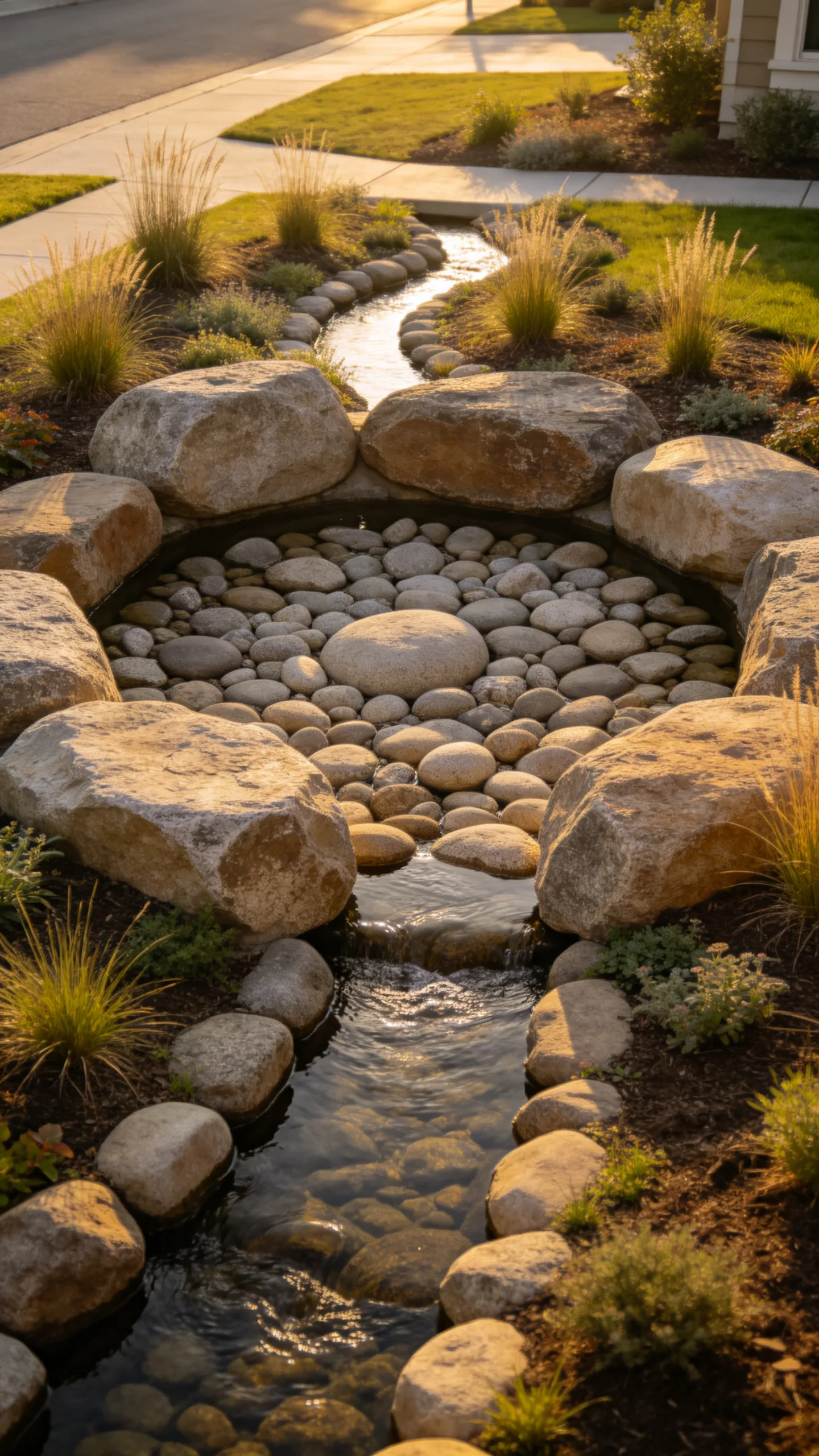
Give the rock stream a clear destination by widening it into a dry “pool” near the lower end of the yard. Form an irregular basin with broad cobbles in the center and several larger boulders around the edge, partially burying each one for stability.
Plant the perimeter with low grasses, rush-like plants, or spreading ground covers to reinforce the illusion of a waterside setting. If the basin receives real runoff, include a safe overflow route and verify that water will not collect on the public sidewalk or flow onto adjacent property.