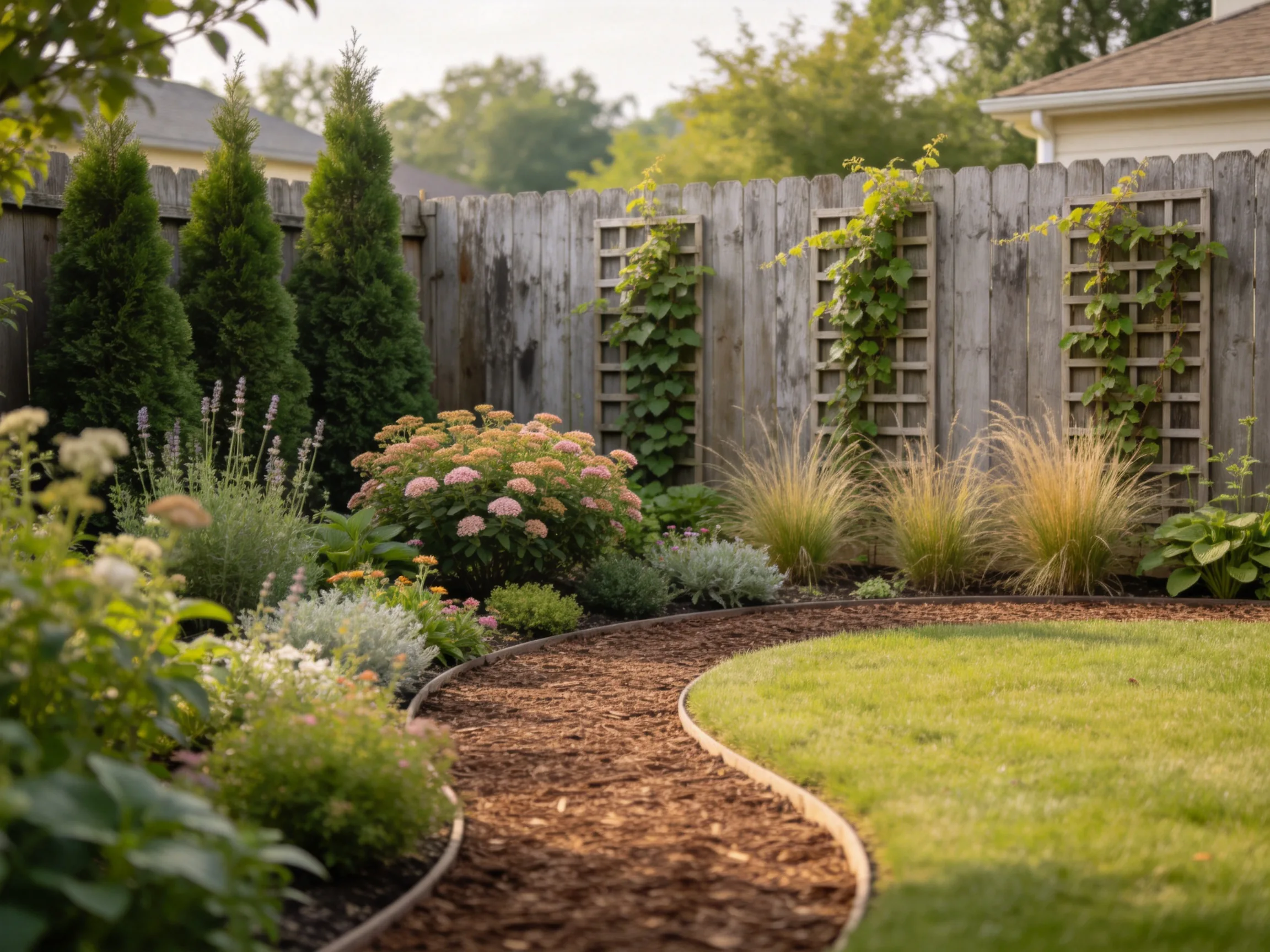
An unattractive fence can make the whole yard feel unfinished, even when the lawn, patio, or garden beds look well cared for. The right fence line landscaping ideas can soften harsh boards, cover weathered panels, add privacy, and pull attention toward plants, texture, and seasonal color instead of the fence itself.
1. Layered Shrub Border With Tall, Medium, And Low Plants
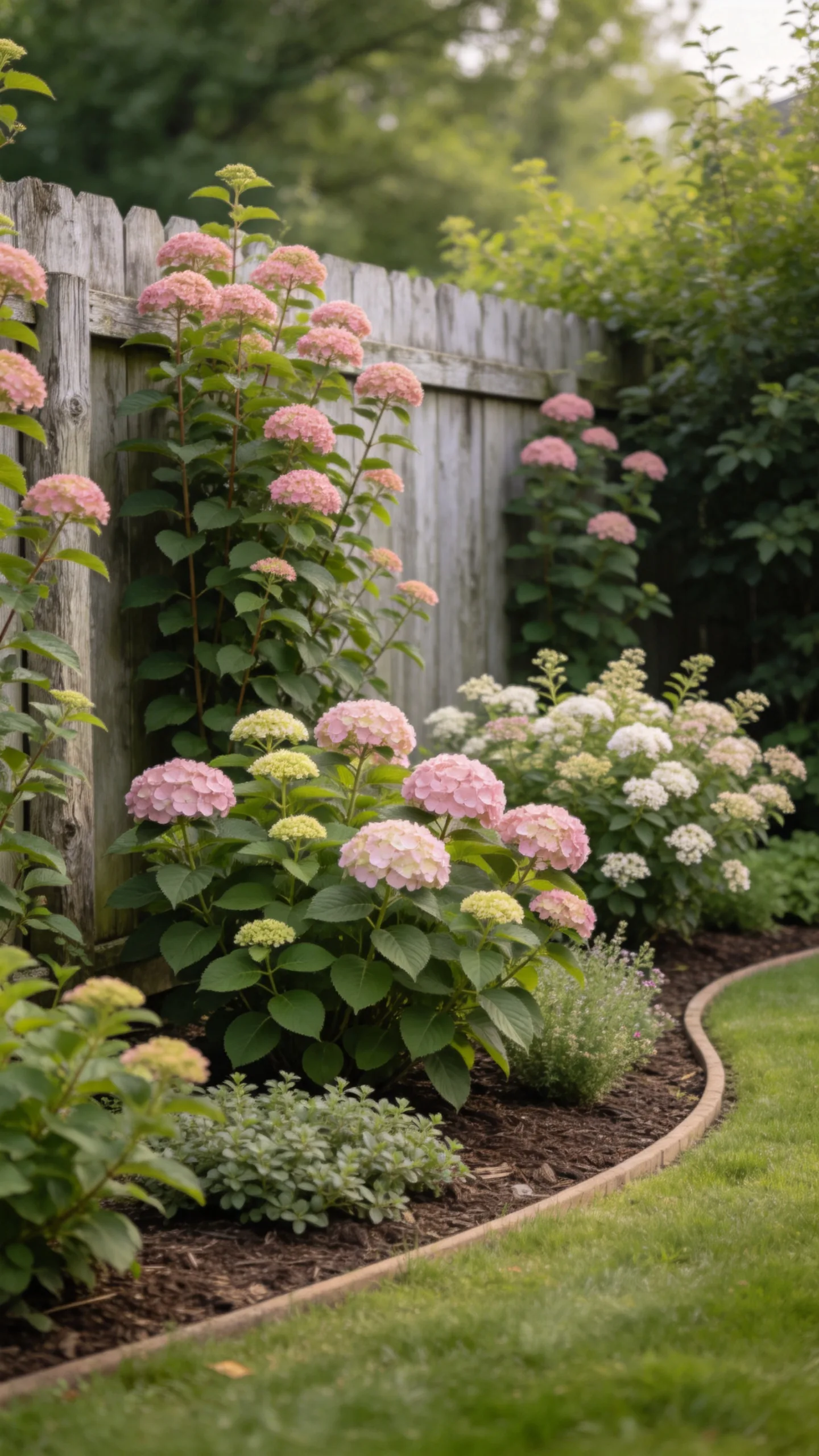
A layered shrub border is one of the most reliable ways to hide an ugly fence because it creates depth instead of placing one flat row of plants against another flat surface. Start with taller shrubs near the fence, add medium-height flowering shrubs in front, and finish with low perennials or groundcovers along the edge of the bed.
For a sunny fence line, consider a mix such as viburnum, hydrangea, spirea, and creeping thyme, adjusting choices to your climate and soil. In shadier areas, try plants like oakleaf hydrangea, fothergilla, hostas, or carex. A curved bed line also helps the planting feel intentional and draws the eye away from the straight fence behind it.
2. Climbing Roses On A Fence-Mounted Trellis
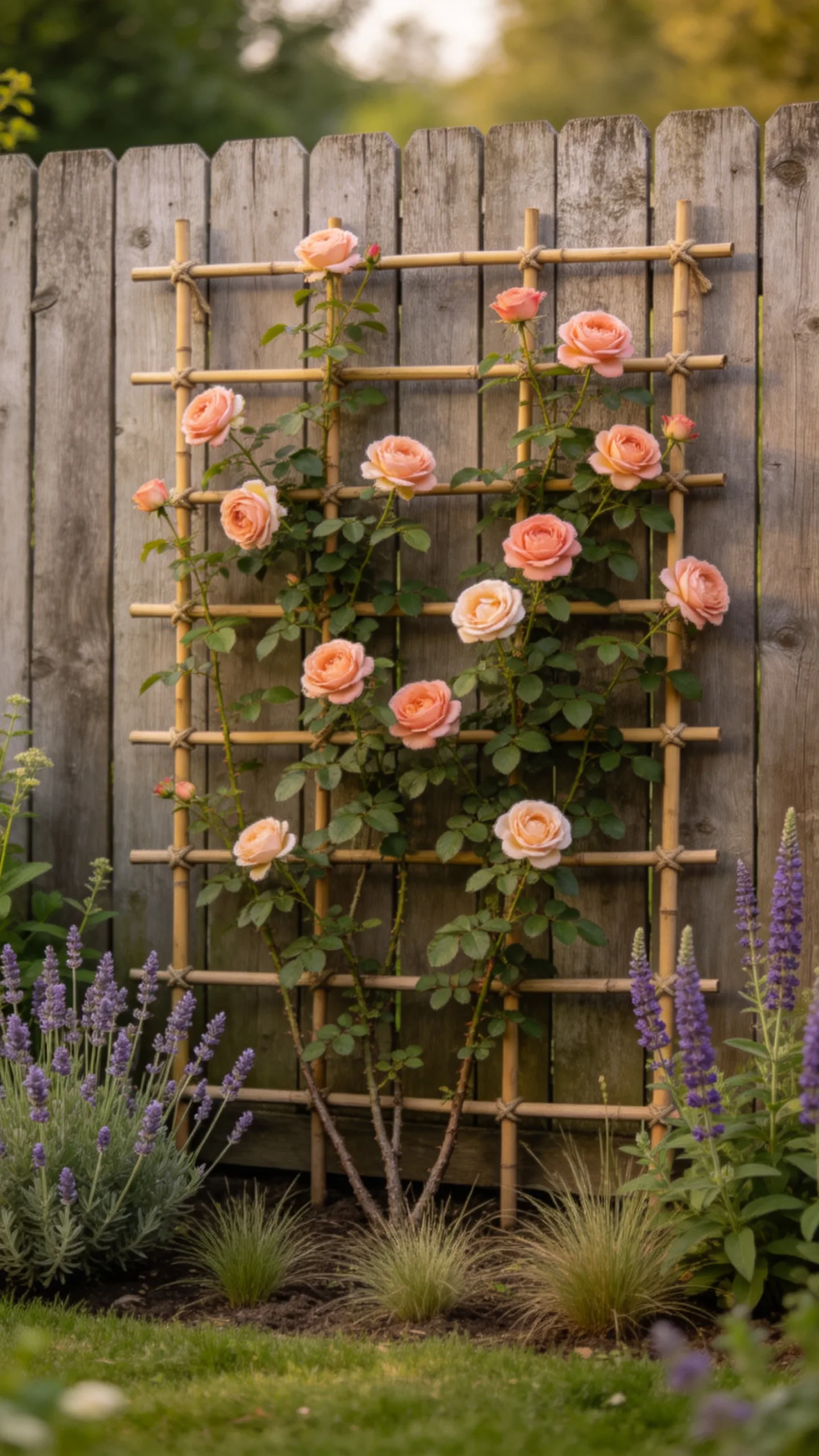
Climbing roses can turn a rough fence into a romantic garden feature when they are trained onto a sturdy trellis or wire support. Instead of attaching rose canes directly to weak or damaged fencing, install a separate trellis panel, cattle panel, or horizontal wire system a few inches in front of the fence to allow airflow and easier pruning.
Choose a rose variety suited to your zone and sun exposure, since most roses flower best with at least six hours of sun. Underplant the base with catmint, lavender, salvia, or low ornamental grasses to disguise bare stems and make the fence line look full from spring through fall.
3. Evergreen Hedge For Year-Round Coverage
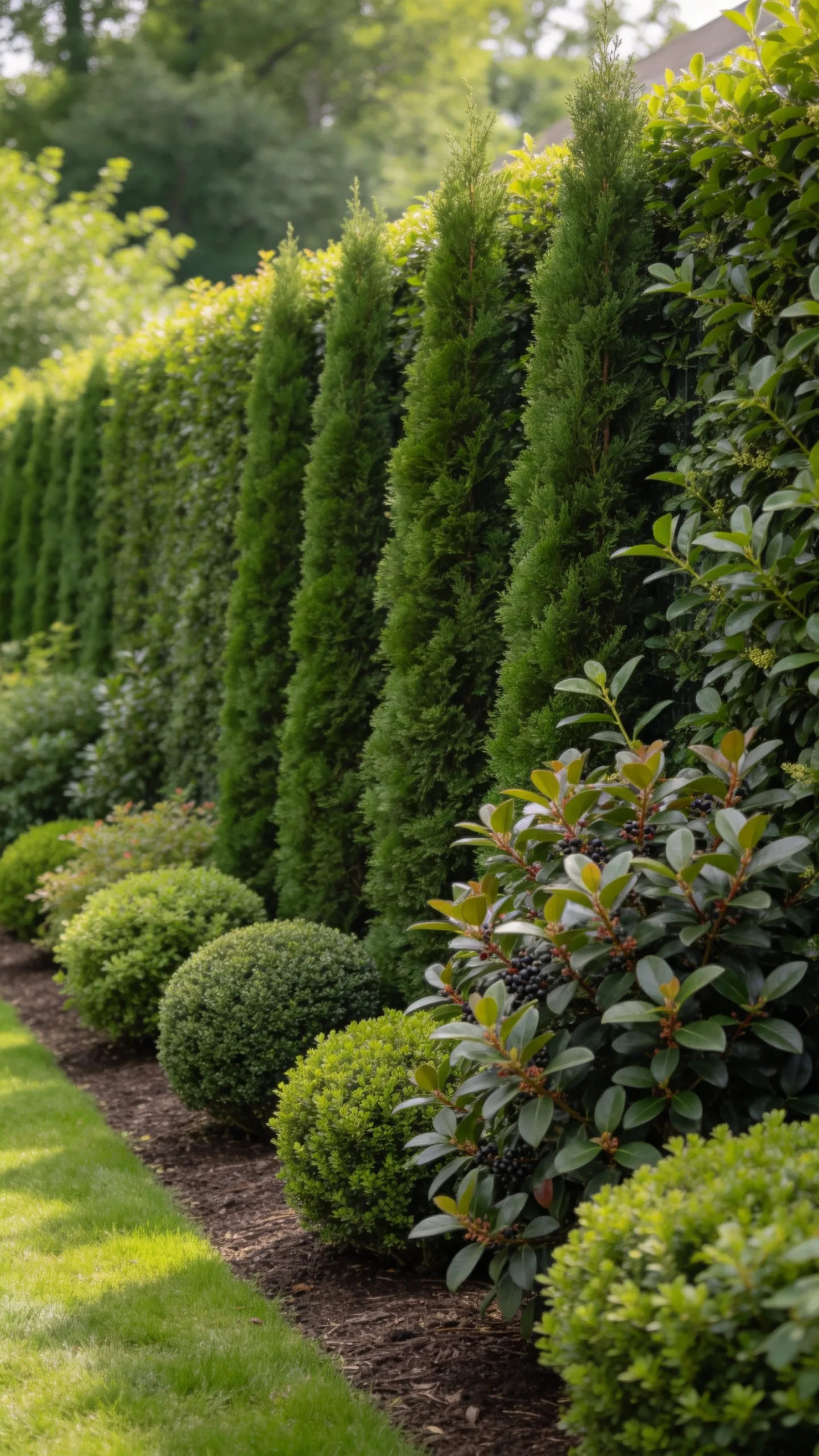
An evergreen hedge is useful when the fence looks bad in every season, not just during summer. Plants such as arborvitae, yew, boxwood, holly, wax myrtle, or podocarpus can create a green wall that blocks worn boards, mismatched panels, or chain-link fencing.
Before planting, check mature height and width so the hedge does not crowd the fence or spill too far into the yard. Leave enough room behind the plants for airflow and occasional maintenance. A staggered planting pattern usually looks more natural than a perfectly straight line and can fill visual gaps faster as the shrubs mature.
4. Tall Ornamental Grasses For Fast Softening
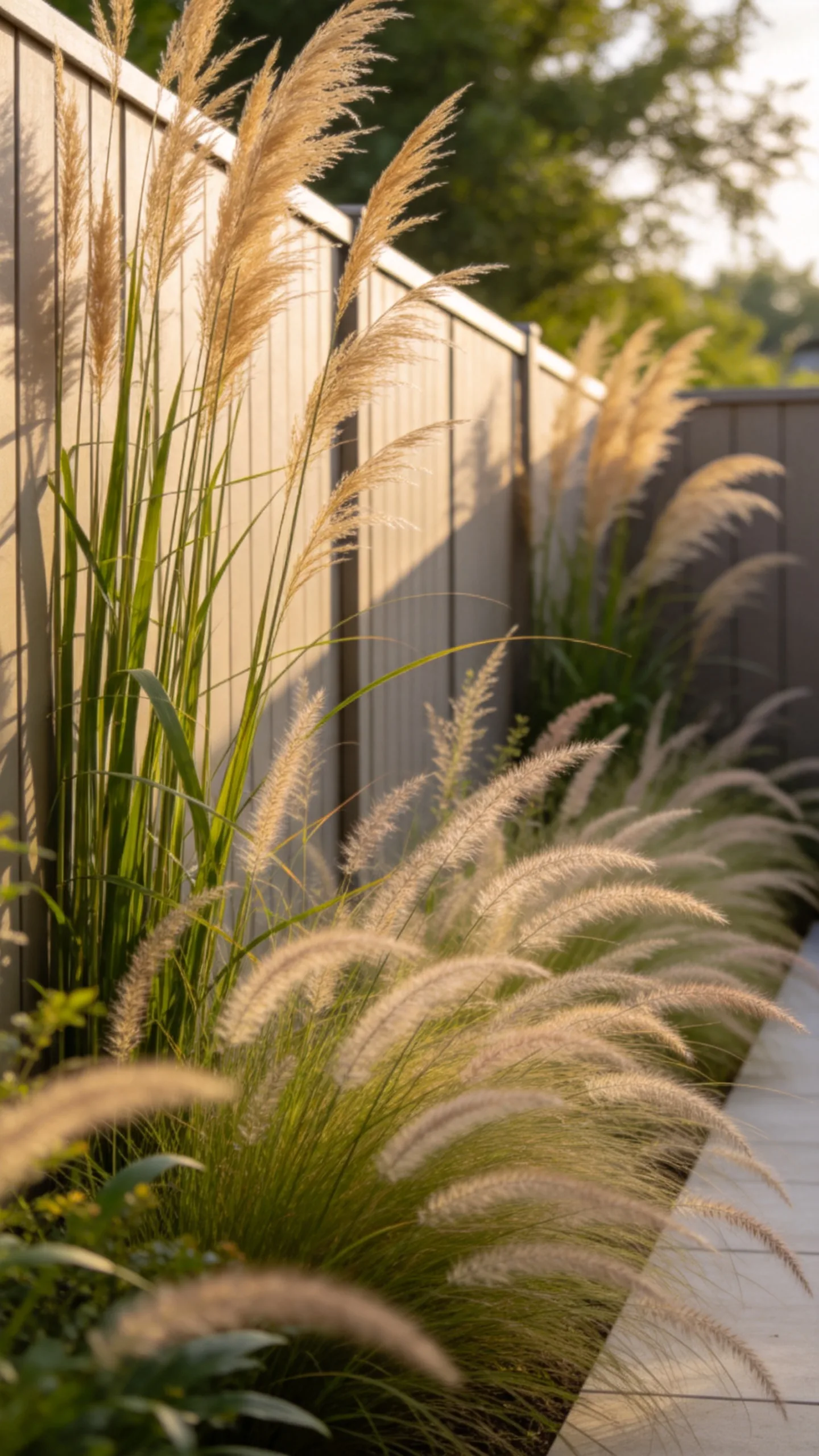
Tall ornamental grasses are a good choice when you want movement, texture, and a softer look along a fence line. Varieties such as switchgrass, feather reed grass, miscanthus, or muhly grass can partially screen the fence while adding height without the bulk of large shrubs.
Grasses work especially well along modern wood fences, metal fencing, or plain privacy panels because their upright shape breaks up the hard vertical lines. Cut back deciduous grasses in late winter or early spring before new growth appears, and choose non-invasive varieties appropriate for your region.
5. Mixed Hydrangea Border For A Cottage Garden Look
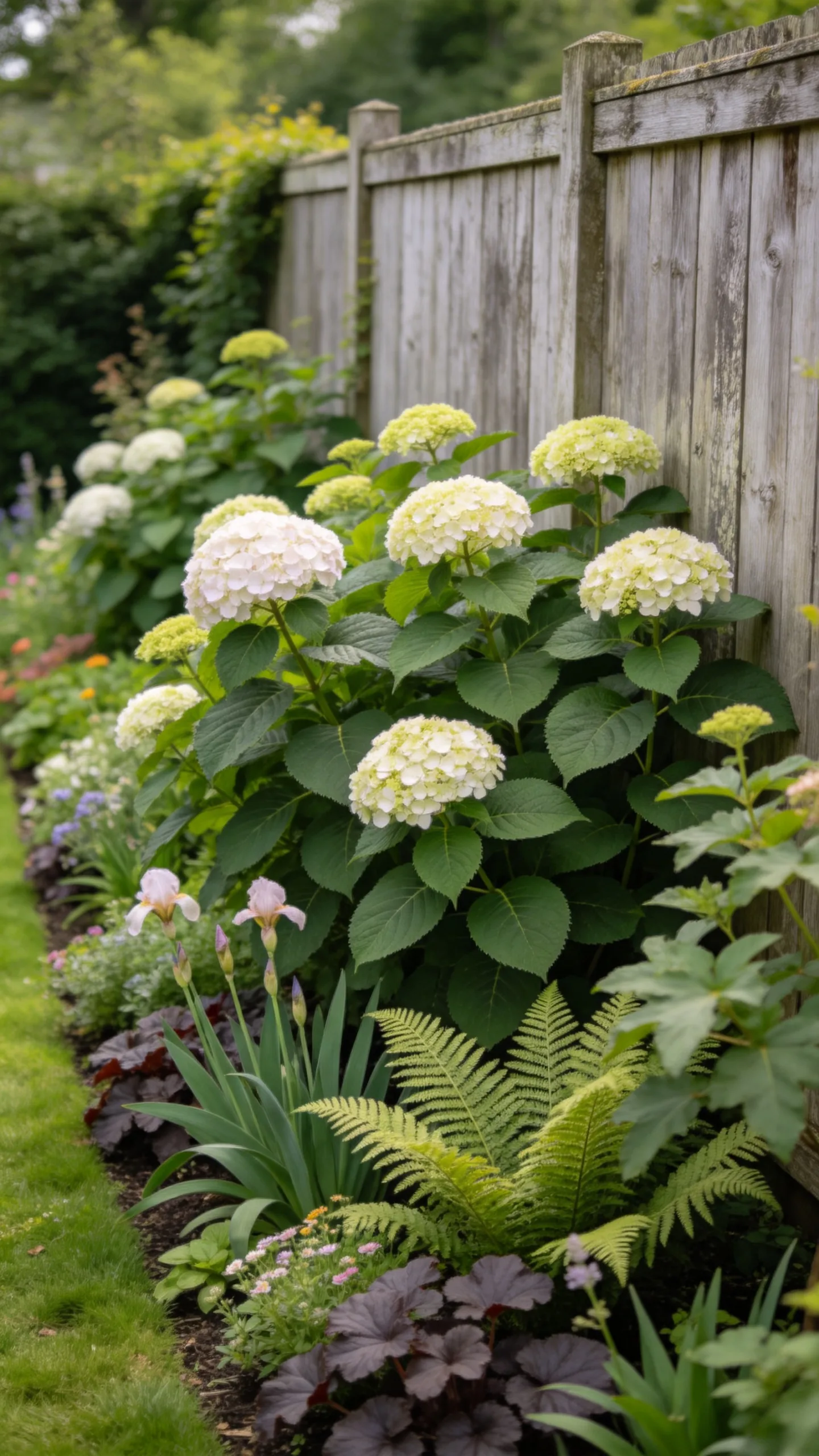
Hydrangeas are a strong option for hiding a fence because their large leaves and flower heads create visual mass. Planting several hydrangeas along the fence line can make a weathered backdrop feel like part of a lush cottage-style garden.
Panicle hydrangeas are often better for sunnier spots, while smooth or oakleaf hydrangeas may suit part-shade areas depending on your climate. Add spring bulbs, low ferns, or shade-tolerant perennials around the base so the bed does not look empty before the hydrangeas reach full size each year.
6. Narrow Raised Bed Along The Fence
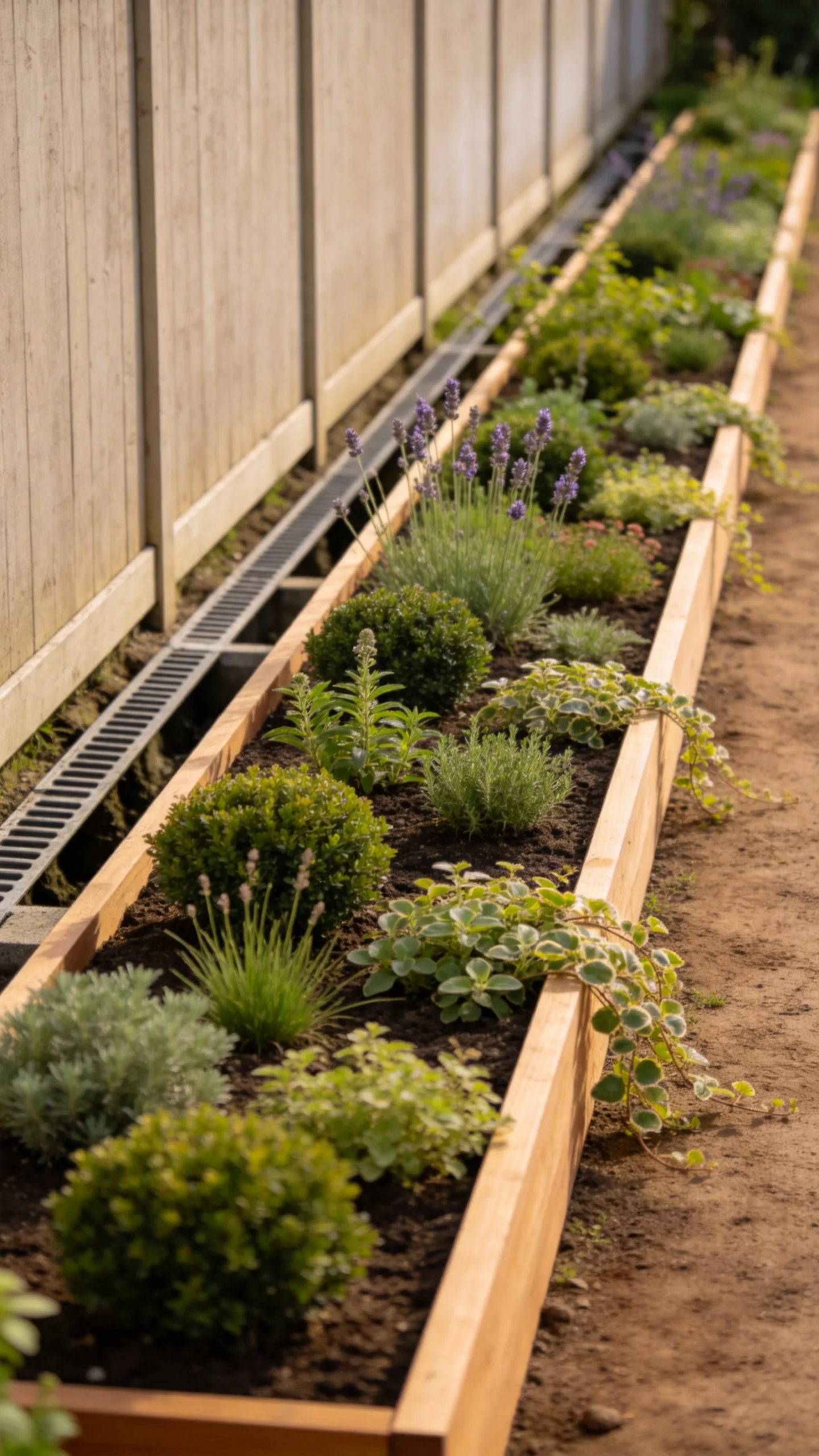
A narrow raised bed can make a plain fence line look structured and easier to plant, especially where soil is compacted, rocky, or full of roots. Build a long wood, metal, stone, or composite raised bed parallel to the fence, leaving a small gap for drainage and maintenance access.
Fill it with a soil blend suited to your plants, then use vertical growers, herbs, compact shrubs, or flowering perennials. In small yards, a raised bed also creates a clear boundary and keeps mulch and soil from spilling onto a patio, walkway, or lawn.
7. Vine-Covered Lattice Panels
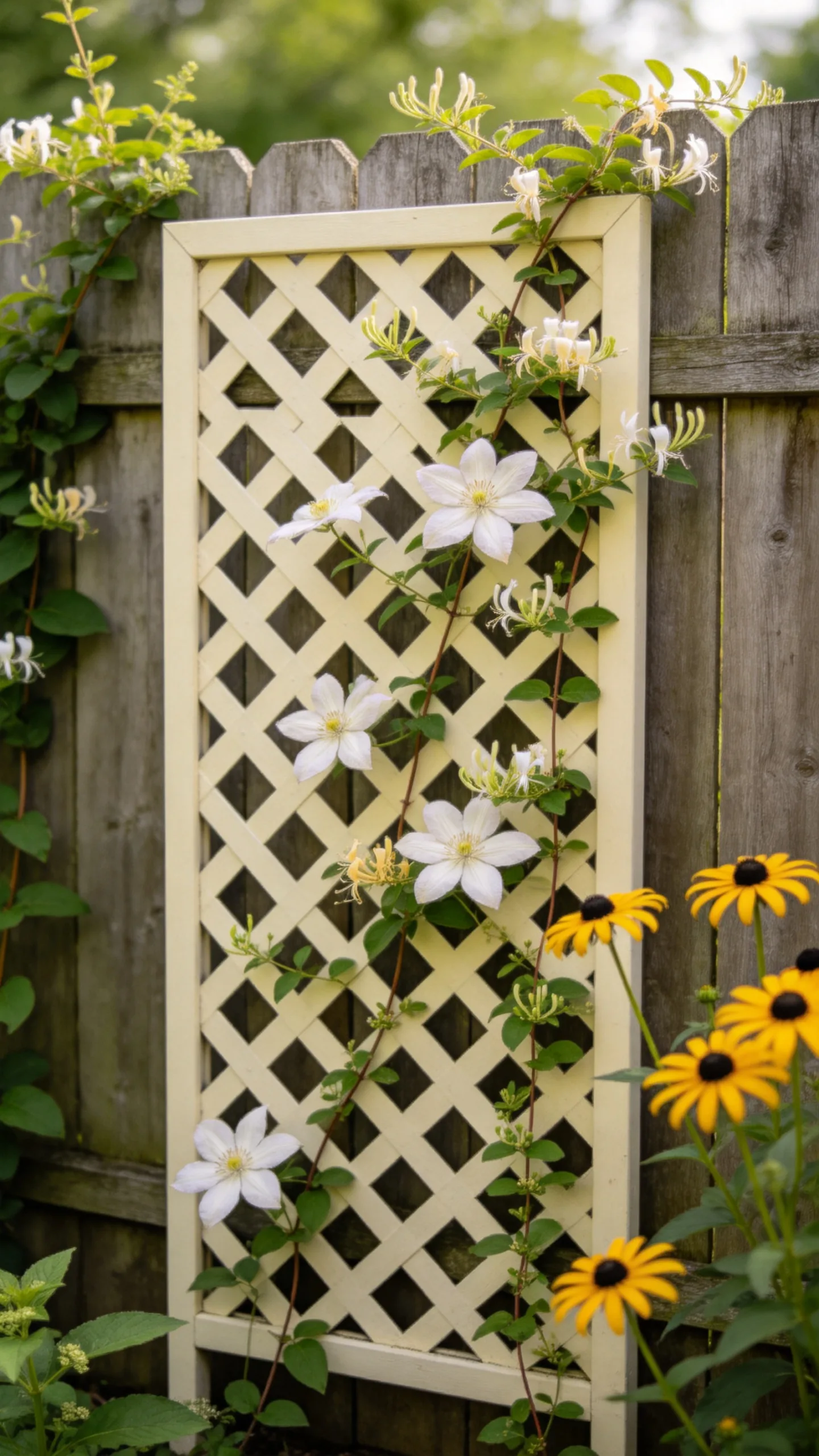
Lattice panels are a practical way to hide a fence without replacing it. Install lattice in front of the unattractive section, then grow lightweight vines such as clematis, star jasmine, honeysuckle, or annual black-eyed Susan vine, depending on your zone and sun conditions.
This idea works well when the fence is structurally sound but visually unappealing. The lattice adds a decorative pattern right away, while the vines gradually soften the surface. Keep vines pruned so they do not trap moisture against wood fencing or spread into neighboring spaces.
8. Espalier Fruit Trees Against The Fence
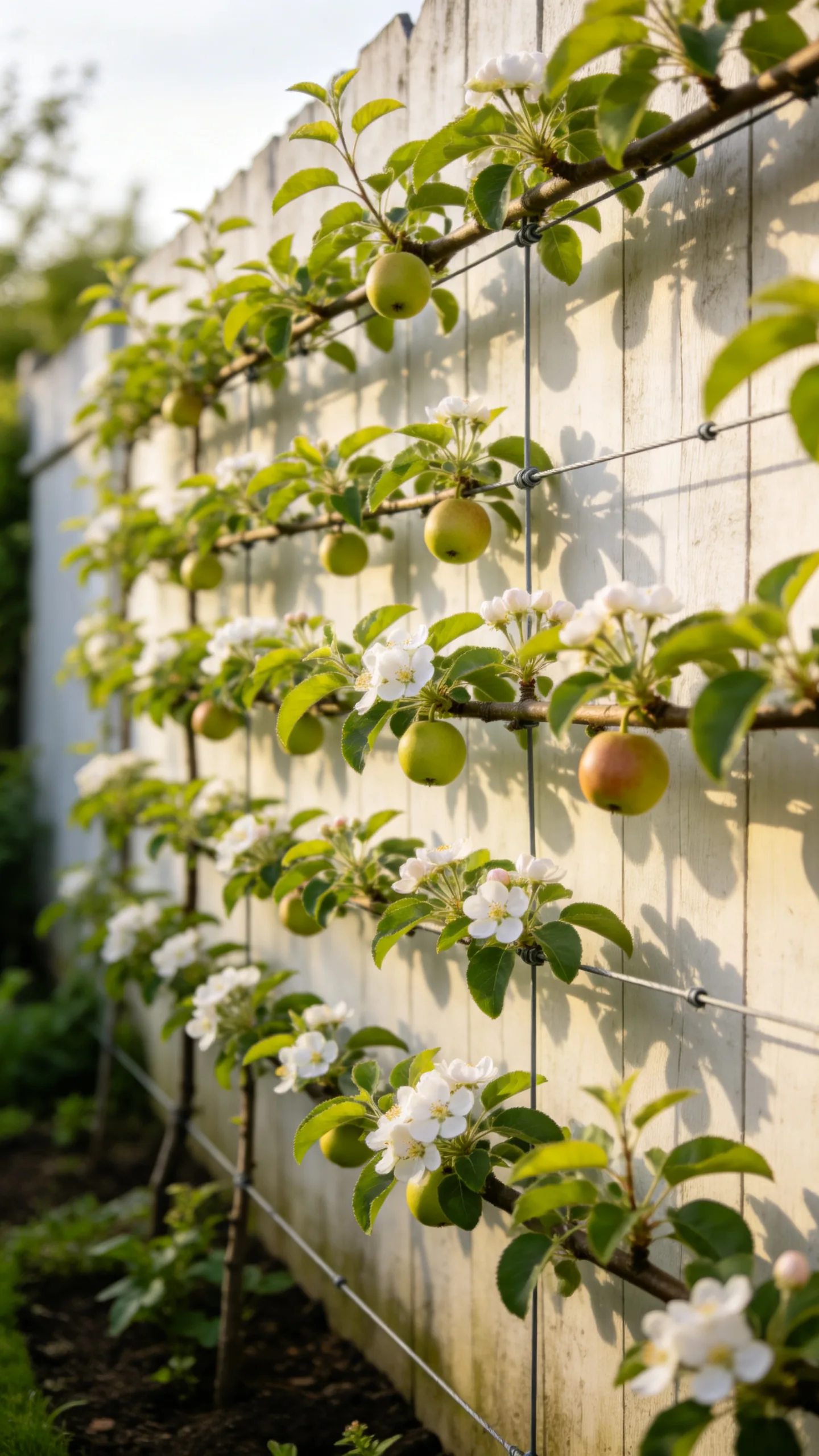
Espalier fruit trees can turn a bare fence line into a productive and decorative feature. Apples, pears, figs, or citrus may be trained horizontally or in fan shapes, depending on the climate and the type of tree. This is especially useful in narrow side yards where a full-size fruit tree would take up too much space.
Install strong horizontal wires or a trellis system several inches away from the fence. Pruning is important with espalier, so this idea works best for gardeners who enjoy regular maintenance. The result is a living screen that adds blossoms, foliage, and potential fruit while disguising the fence behind it.
9. Privacy Screen Planters With Bamboo Or Tall Grasses
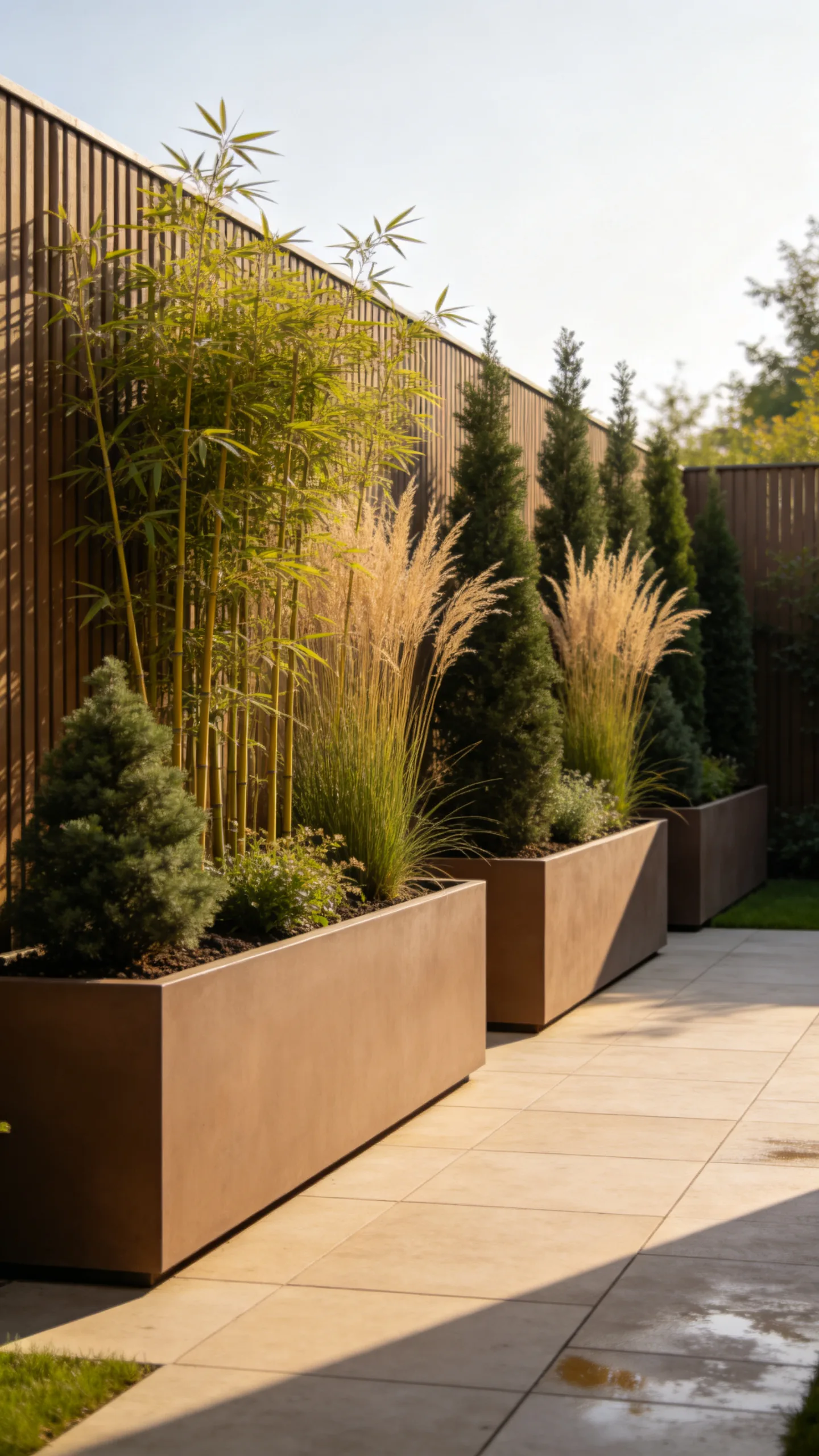
Large planters lined up along the fence can cover ugly sections without digging into the ground. This is helpful for renters, patios, paved yards, or areas where underground utilities make planting difficult. Use deep rectangular planters with drainage holes and fill them with clumping bamboo, tall grasses, dwarf evergreens, or upright shrubs.
Choose clumping bamboo rather than running bamboo unless it is fully contained and allowed in your area. For a lower-maintenance option, use columnar evergreens or grasses suited to containers. Group planters close enough to create coverage but leave room for watering and airflow.
10. Flowering Perennial Drift Along The Fence
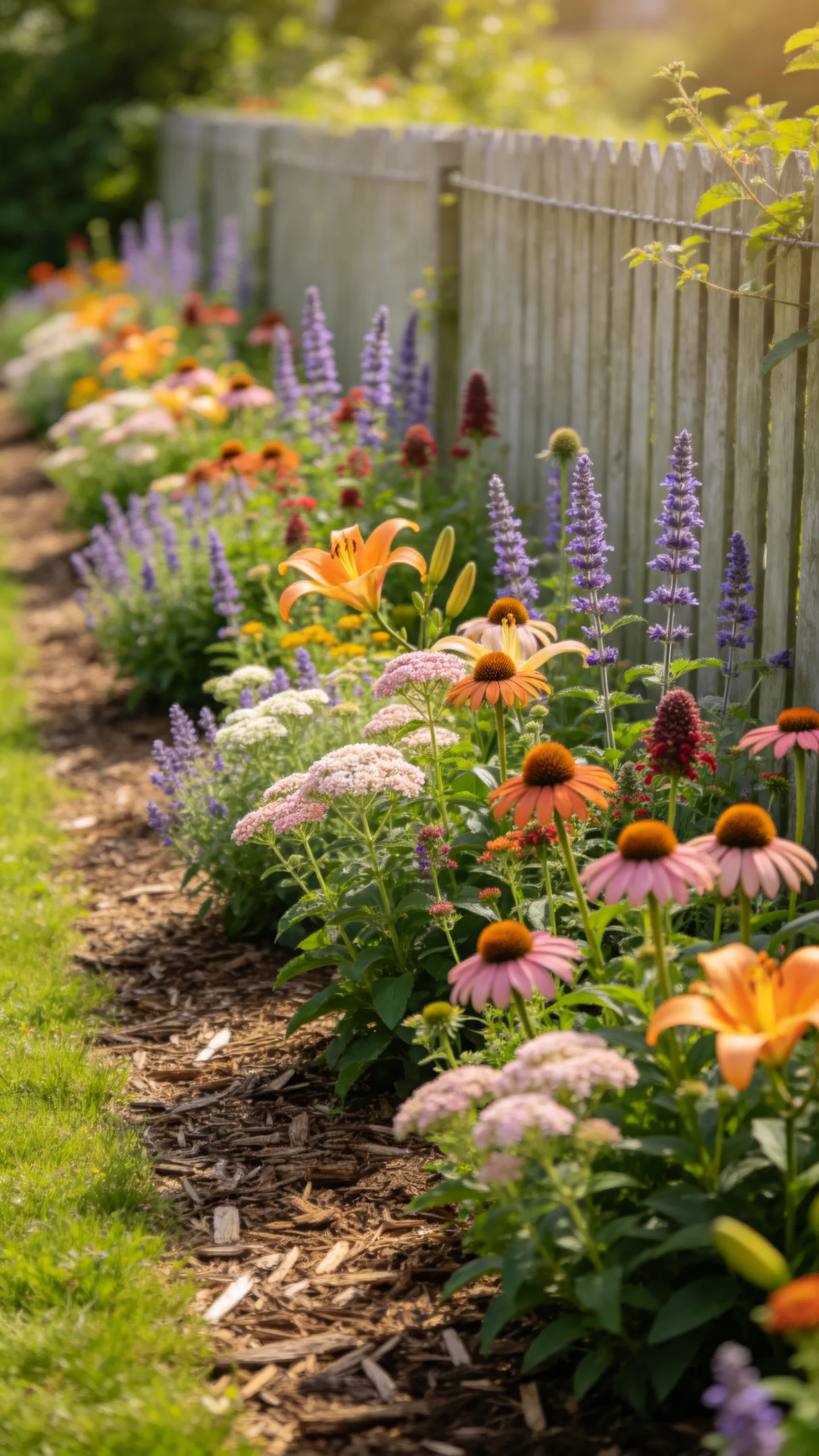
A drift of flowering perennials can distract from an unattractive fence by pulling the eye toward seasonal color. Instead of planting one of everything, repeat groups of three to five plants along the fence for a more cohesive look.
Sunny fence lines can support plants such as coneflower, salvia, daylily, yarrow, bee balm, or Russian sage. Shadier fence lines may work better with astilbe, hellebore, hosta, brunnera, or Japanese forest grass. Add mulch between plants while they fill in to reduce weeds and make the border look finished.
11. Slatted Wood Screen In Front Of The Fence
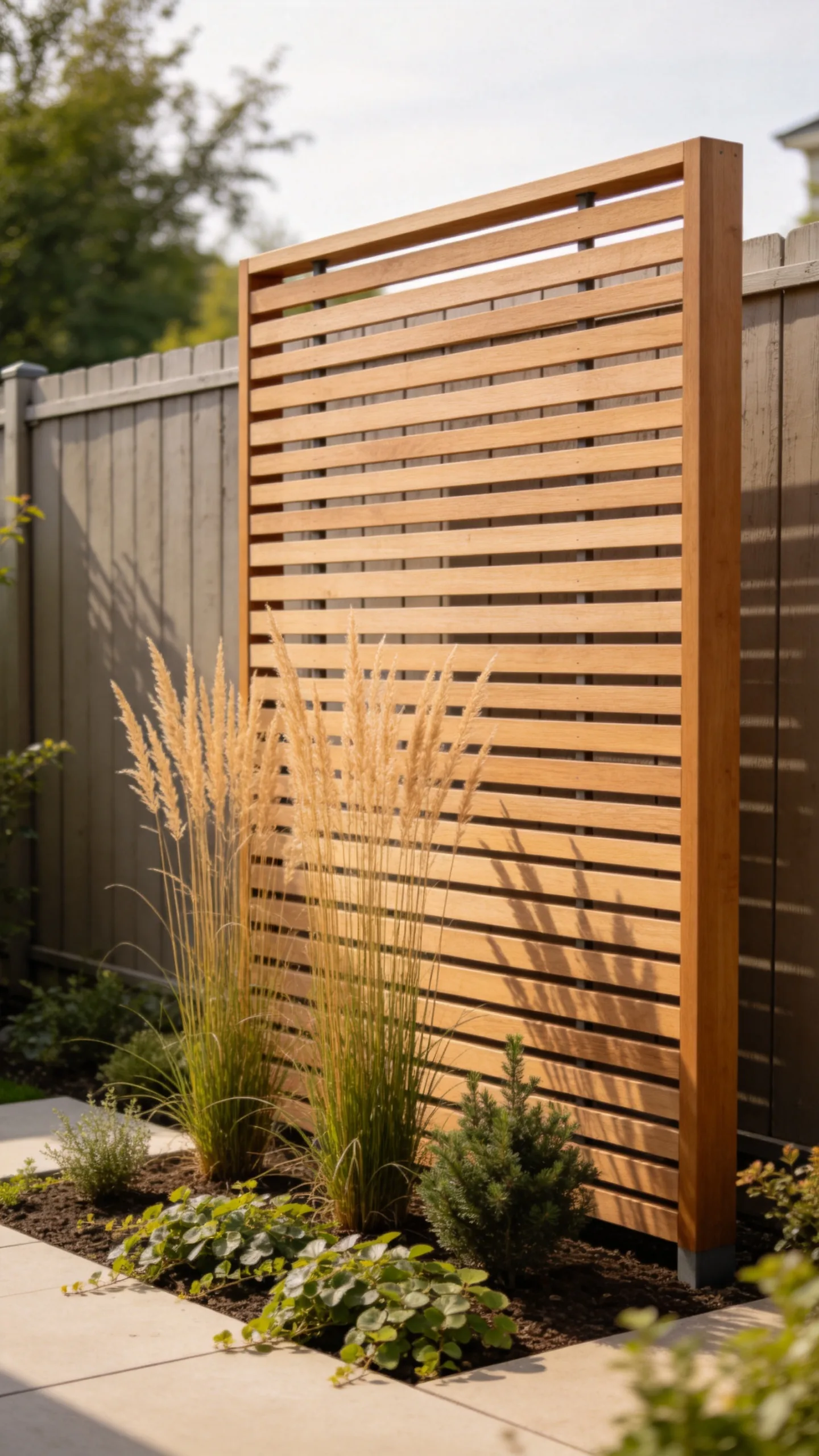
If the existing fence is ugly but still functional, a slatted wood screen can provide an attractive new face without removing the old structure. Place freestanding posts or panels a short distance in front of the fence, then run horizontal or vertical slats for a cleaner look.
Landscaping makes the screen feel less like a cover-up. Plant upright grasses, small shrubs, or trailing groundcovers at the base. This works well in modern, minimalist, or small backyard designs where a full hedge would take up too much room.
12. Trellis Arch Moments Along A Long Fence
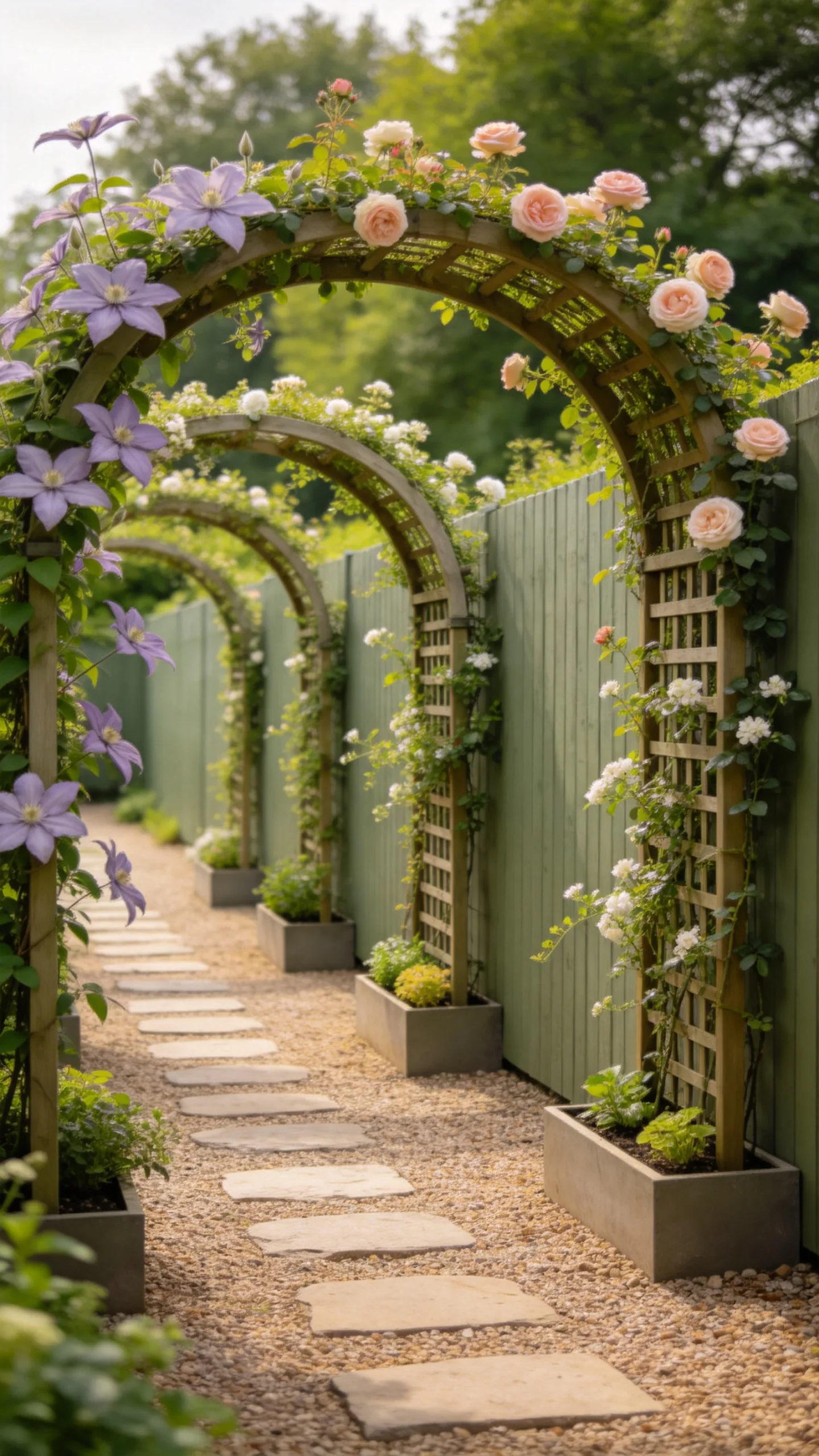
A long ugly fence can feel even more noticeable when it runs in one uninterrupted line. Adding trellis arches at intervals creates focal points that break up the length and give climbing plants somewhere to grow. Place an arch over a gate, path, bench, or garden transition so it feels purposeful.
Grow clematis, climbing roses, jasmine, or annual vines over the arches, depending on the light and climate. Underneath, add gravel, stepping stones, or a small planting pocket to make each arch feel like a garden destination rather than just a fence disguise.
13. Shade Garden With Ferns, Hostas, And Mulch
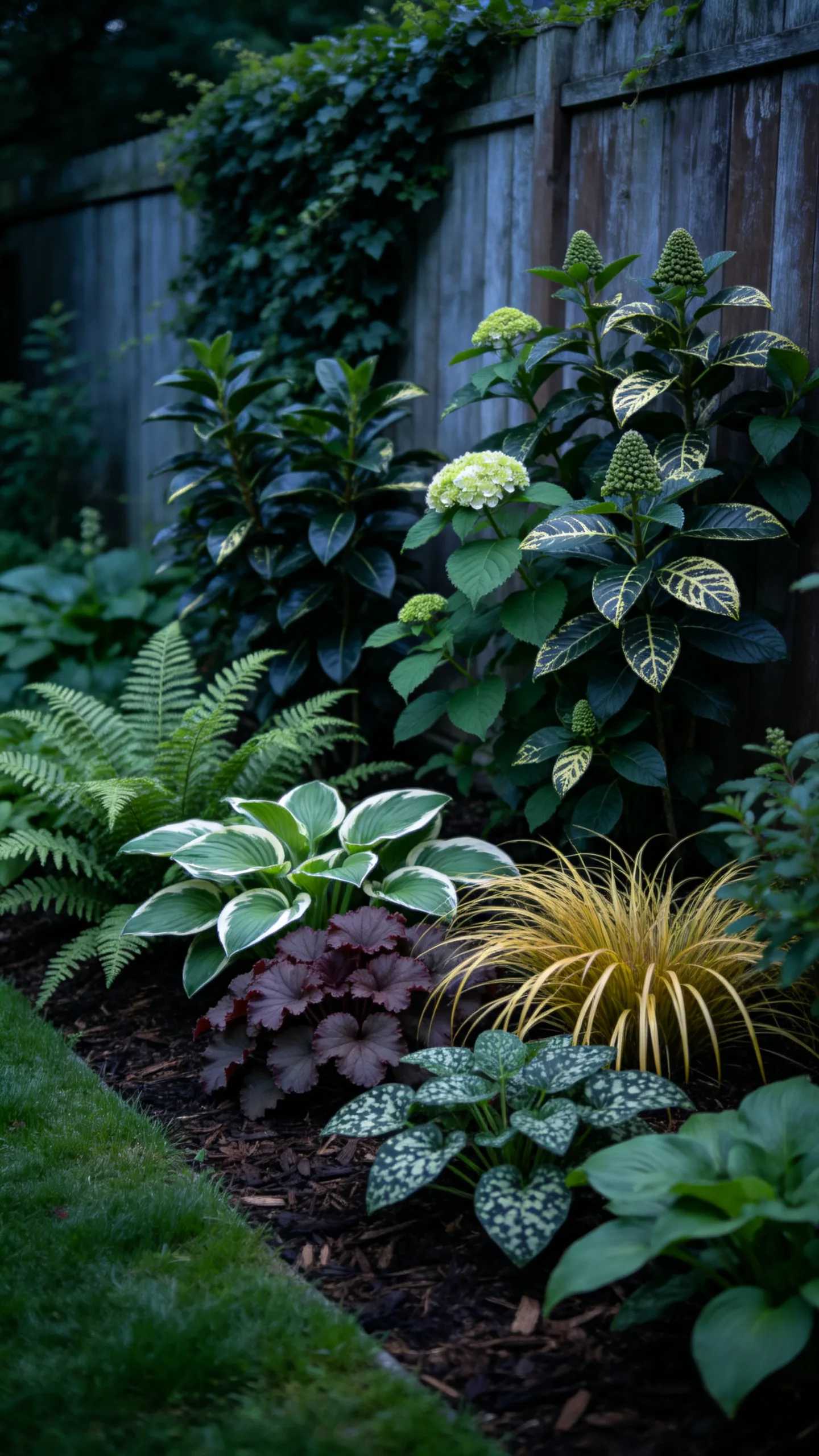
If the fence line receives limited sun, a shade garden can hide the lower portion of the fence while making the area look calm and intentional. Use foliage plants with different leaf shapes, such as ferns, hostas, heuchera, lungwort, and Japanese forest grass.
A deep mulch layer helps define the bed and reduces competition from weeds. Add a few taller shade-tolerant shrubs, such as aucuba, camellia, or oakleaf hydrangea where appropriate, to cover more height. This is a good solution for north-facing fences or areas shaded by trees and buildings.
14. Curved Island Bed That Pulls Attention Forward
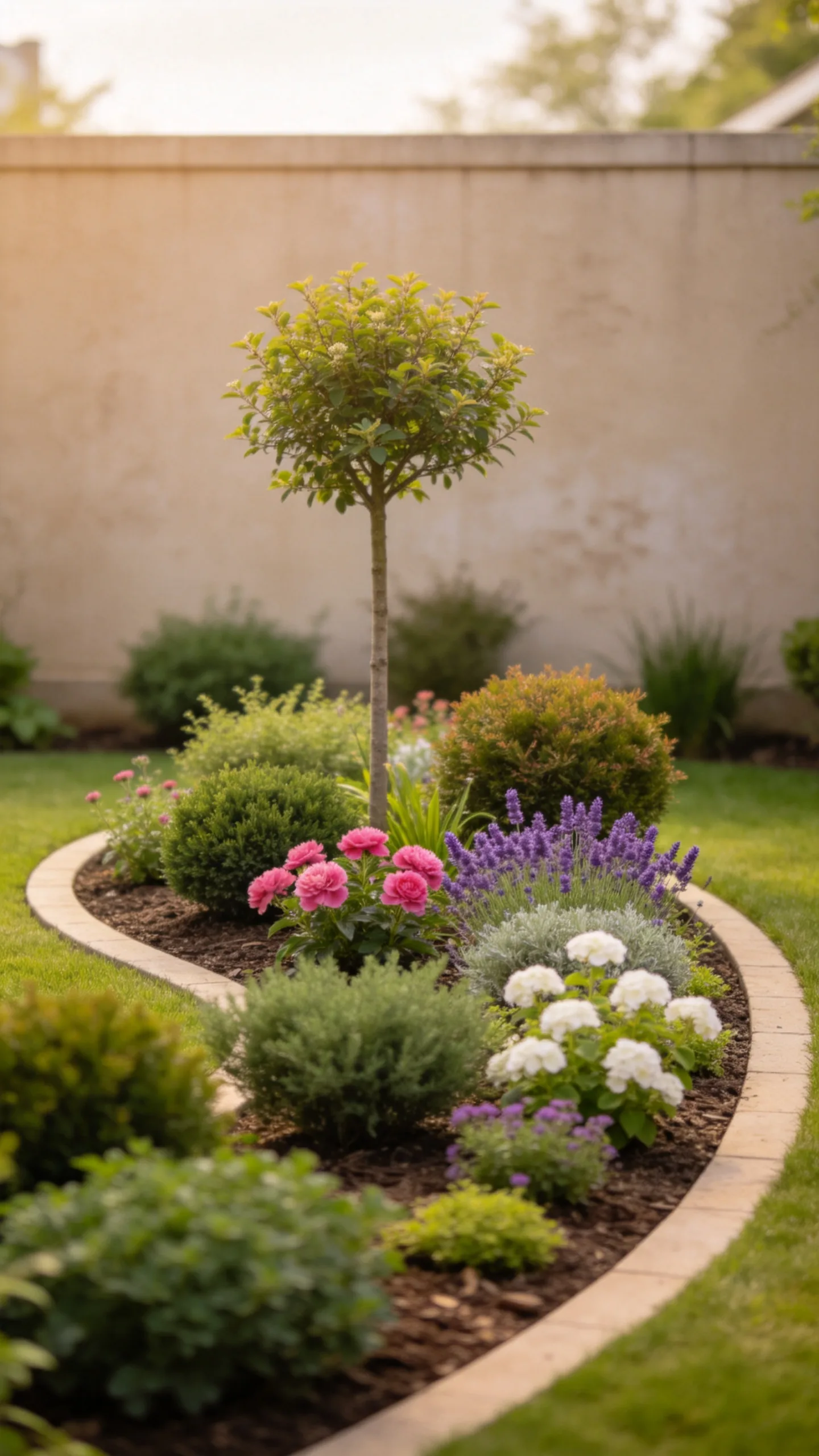
You do not always have to cover the entire fence to make it less noticeable. A curved island bed placed a few feet in front of the fence can pull attention into the yard and create a layered view. Use a small ornamental tree, shrubs, perennials, and groundcovers to build height away from the fence.
This idea works well when the fence is too close to a property line for deep planting. The space between the bed and the fence can stay mulched or planted with low groundcover, while the main feature sits forward where plants have more room to grow.
15. Narrow Columnar Trees For Vertical Screening
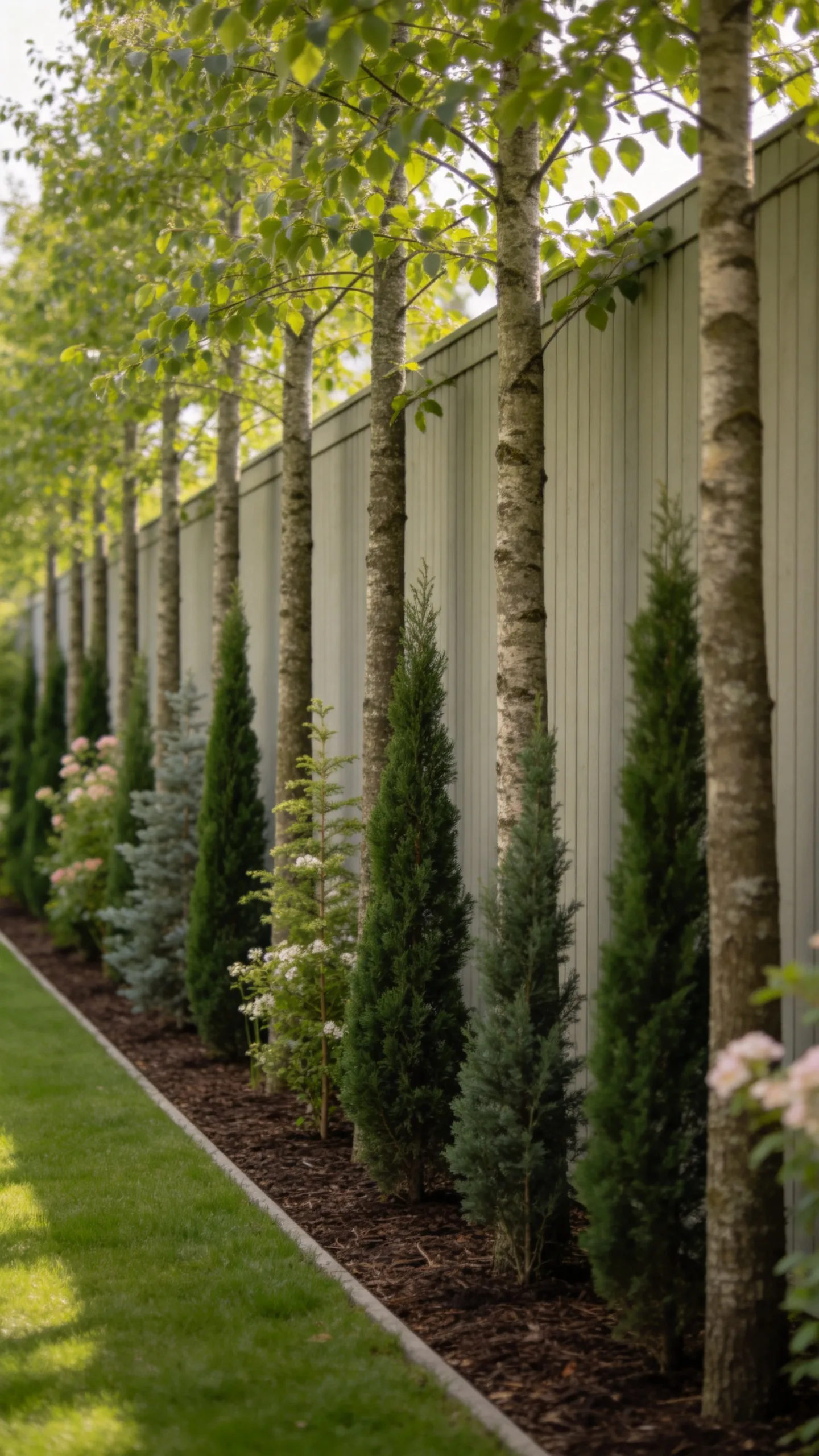
Columnar trees are useful when you need height but do not have space for wide-spreading branches. Options may include columnar hornbeam, Italian cypress, arborvitae, juniper, or columnar flowering trees, depending on your growing zone and soil conditions.
Plant them in a rhythm along the fence to create vertical breaks and partial screening. They can hide tall fence panels, neighboring structures, or awkward views without taking over the yard. Check mature width before planting so the trees do not press against the fence as they grow.
16. Mixed Native Plant Border For A Natural Look
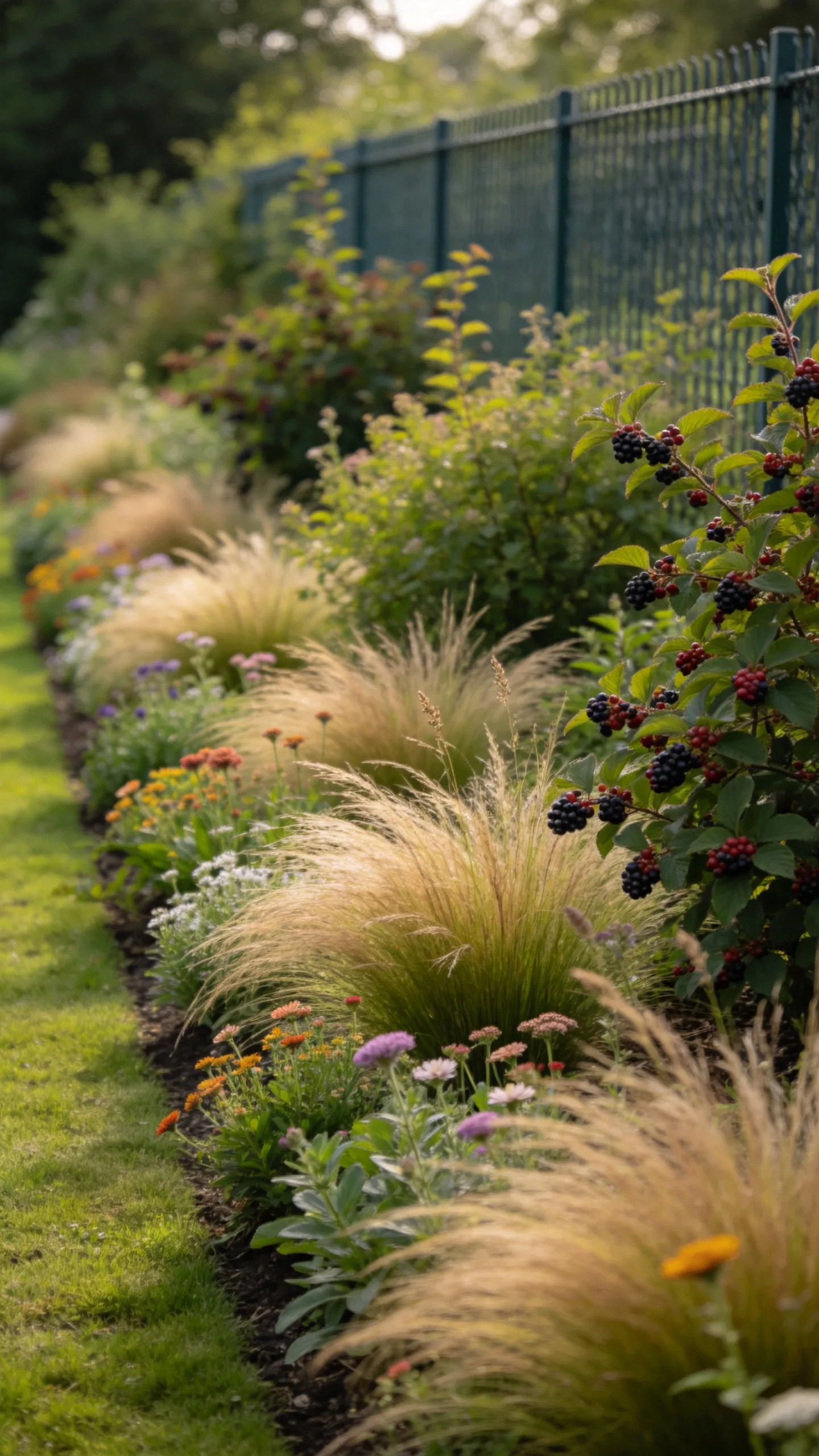
A native plant border can help an ugly fence blend into the landscape rather than stand out as a hard boundary. Choose native shrubs, grasses, and perennials that suit your region’s rainfall, winter temperatures, and soil type.
For a sunny border, combine native grasses with flowering perennials and berry-producing shrubs where suitable. In part shade, use woodland plants with layered foliage and seasonal blooms. Native plantings often look best when repeated in informal groups rather than planted in a rigid row.
17. Garden Bench With Planting On Both Sides
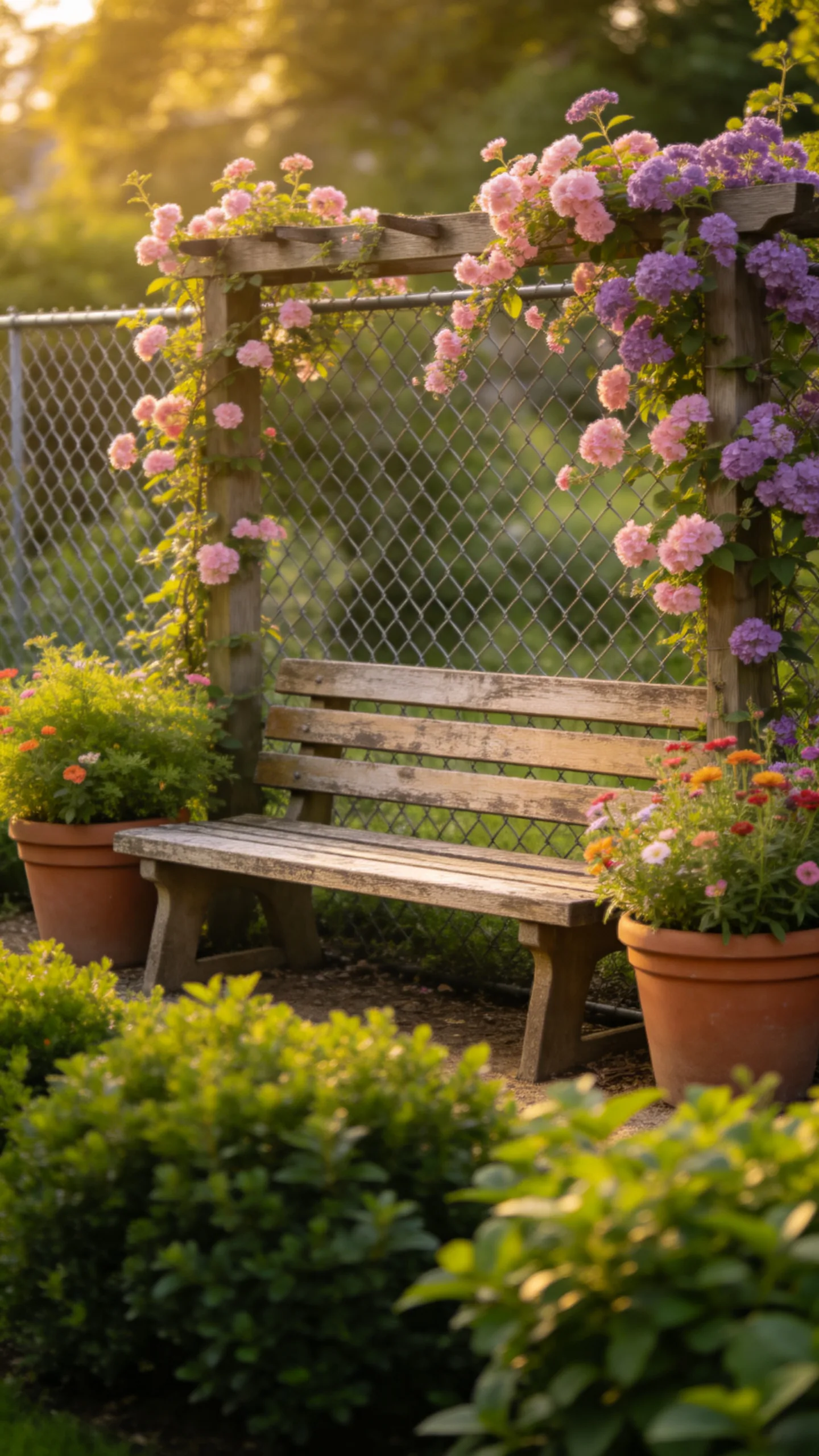
A bench can turn a problem fence line into a usable sitting area. Place a weather-resistant bench in front of the unattractive fence, then surround it with container plants, shrubs, or climbing vines to frame the spot.
This works especially well if the fence sits near a patio, side yard, or quiet corner. Add a trellis behind or beside the bench to support vines and increase coverage. The seating area becomes the focal point, making the fence feel like a backdrop instead of an eyesore.
18. Container Garden Cluster Along The Fence
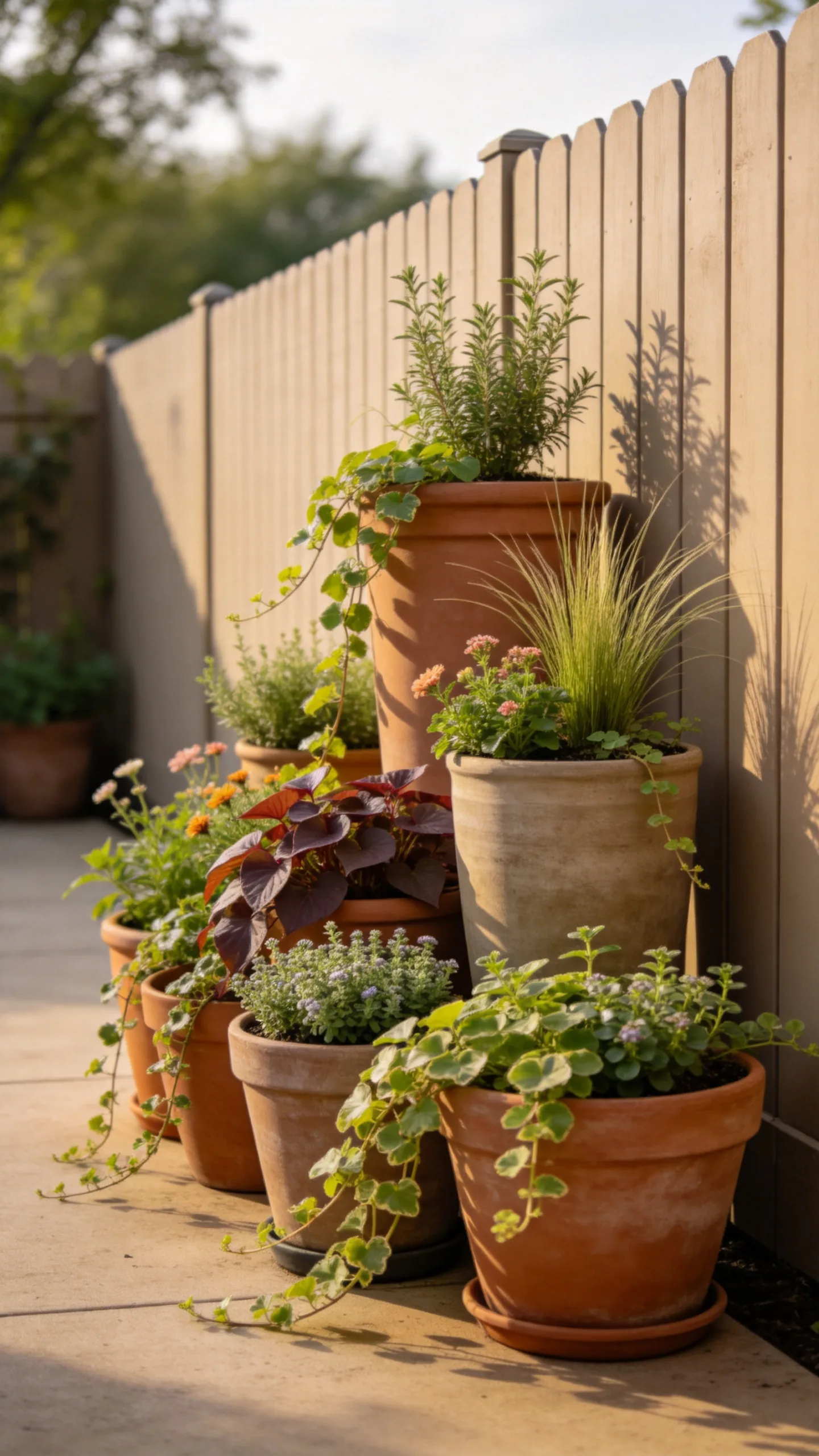
A cluster of containers can quickly disguise an ugly fence, especially on patios, decks, rental yards, or paved side spaces. Use pots in several heights and sizes, with the tallest containers closest to the fence and trailing plants near the front.
Combine small shrubs, herbs, annual flowers, ornamental grasses, and trailing plants such as sweet potato vine, creeping Jenny, or bacopa. This approach is easy to adjust seasonally and allows you to experiment before committing to permanent beds.
19. Raised Vine Planter With Built-In Trellis
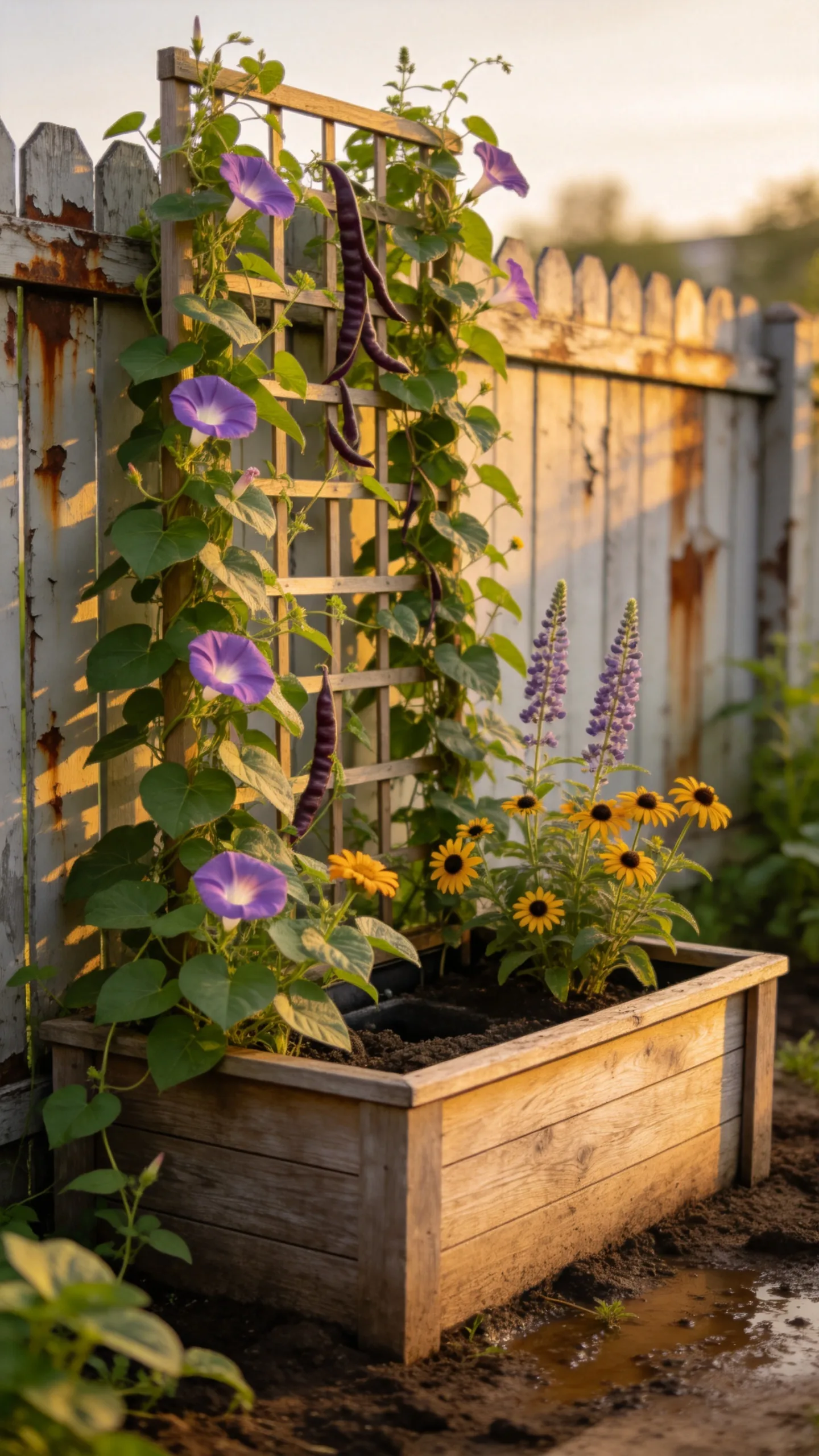
A raised vine planter with an attached trellis gives you both soil depth and vertical coverage in one compact structure. This is helpful when the ground along the fence is poor, narrow, or difficult to dig.
Use it for annual vines such as morning glory, black-eyed Susan vine, or hyacinth bean in warm seasons, or for perennial climbers suited to your area. Position the trellis so plants cover the ugliest part of the fence, and keep the planter accessible for watering because containers dry out faster than in-ground beds.
20. Gravel Border With Sculptural Plants
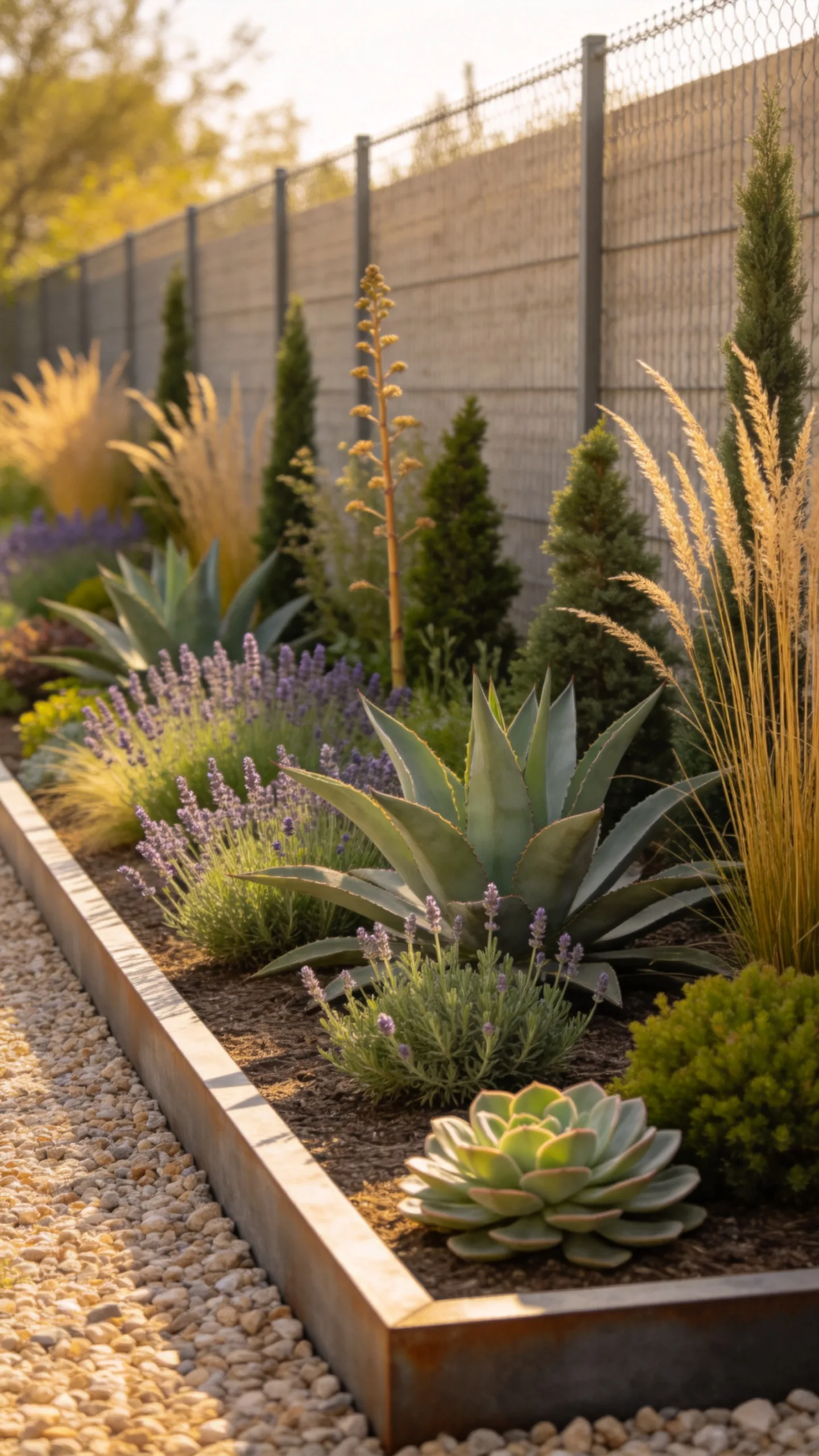
A gravel border can make a fence line look clean and designed, especially in dry, sunny yards. Pair gravel with sculptural plants such as agave, yucca, lavender, rosemary, sedum, ornamental grasses, or dwarf conifers, depending on your climate.
This idea does not fully hide the fence, but it distracts from it by creating a strong foreground. Use metal edging or stone borders to keep gravel contained. It is best for areas where drought-tolerant plants are appropriate and where water will not constantly wash gravel into the lawn.
21. Small Trees With Underplanting For Layered Privacy
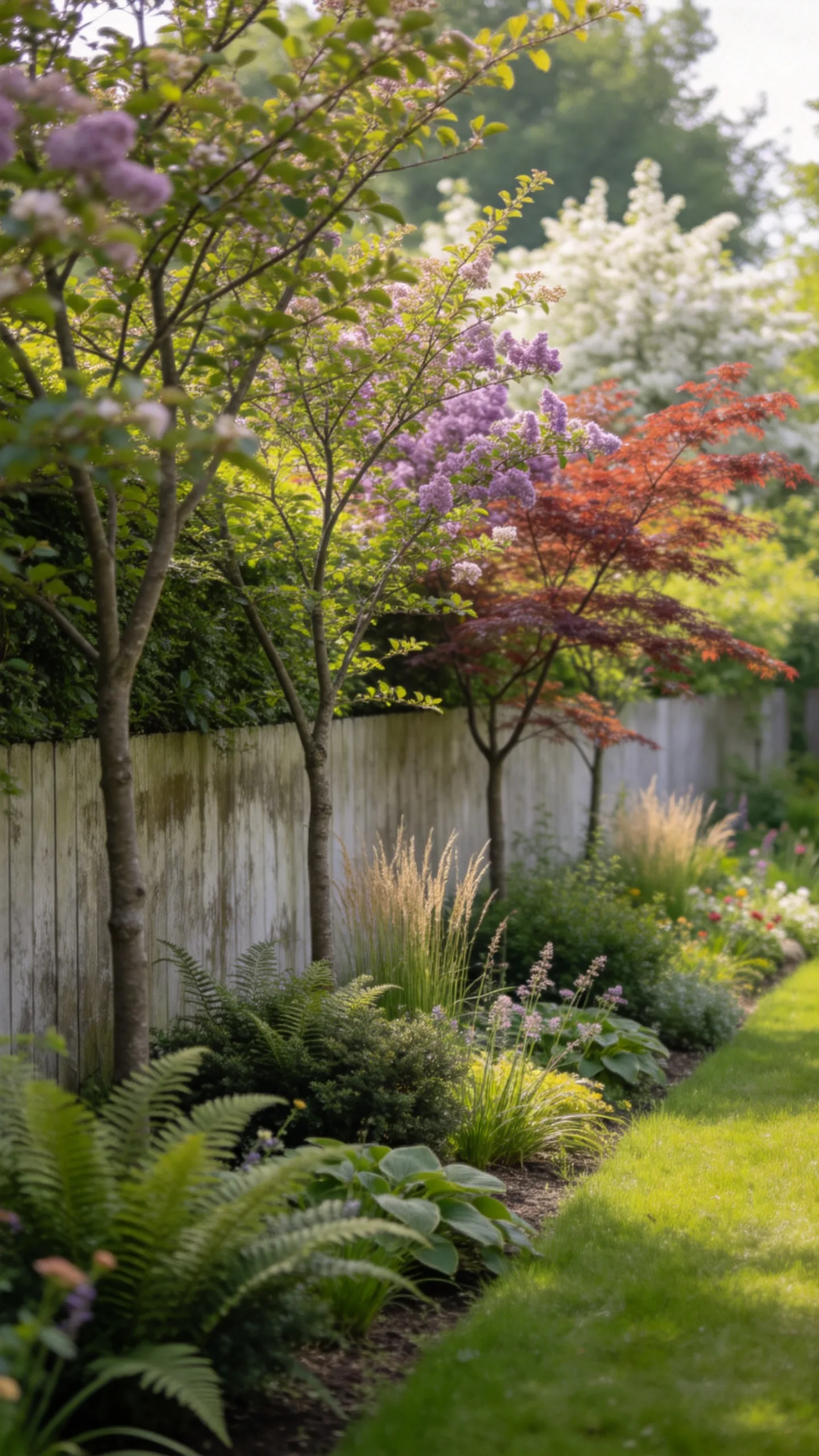
Small ornamental trees can soften a fence line while adding shade, flowers, fall color, or interesting bark. Consider trees such as serviceberry, dogwood, redbud, Japanese maple, crape myrtle, or magnolia varieties suited to your region and available space.
Underplant the trees with shrubs, ferns, grasses, or perennials to cover the lower fence area. This layered approach is especially helpful when you want to hide both the fence and views beyond it without creating a solid wall of evergreens.
22. Seasonal Flower Border With Spring Bulbs And Summer Annuals
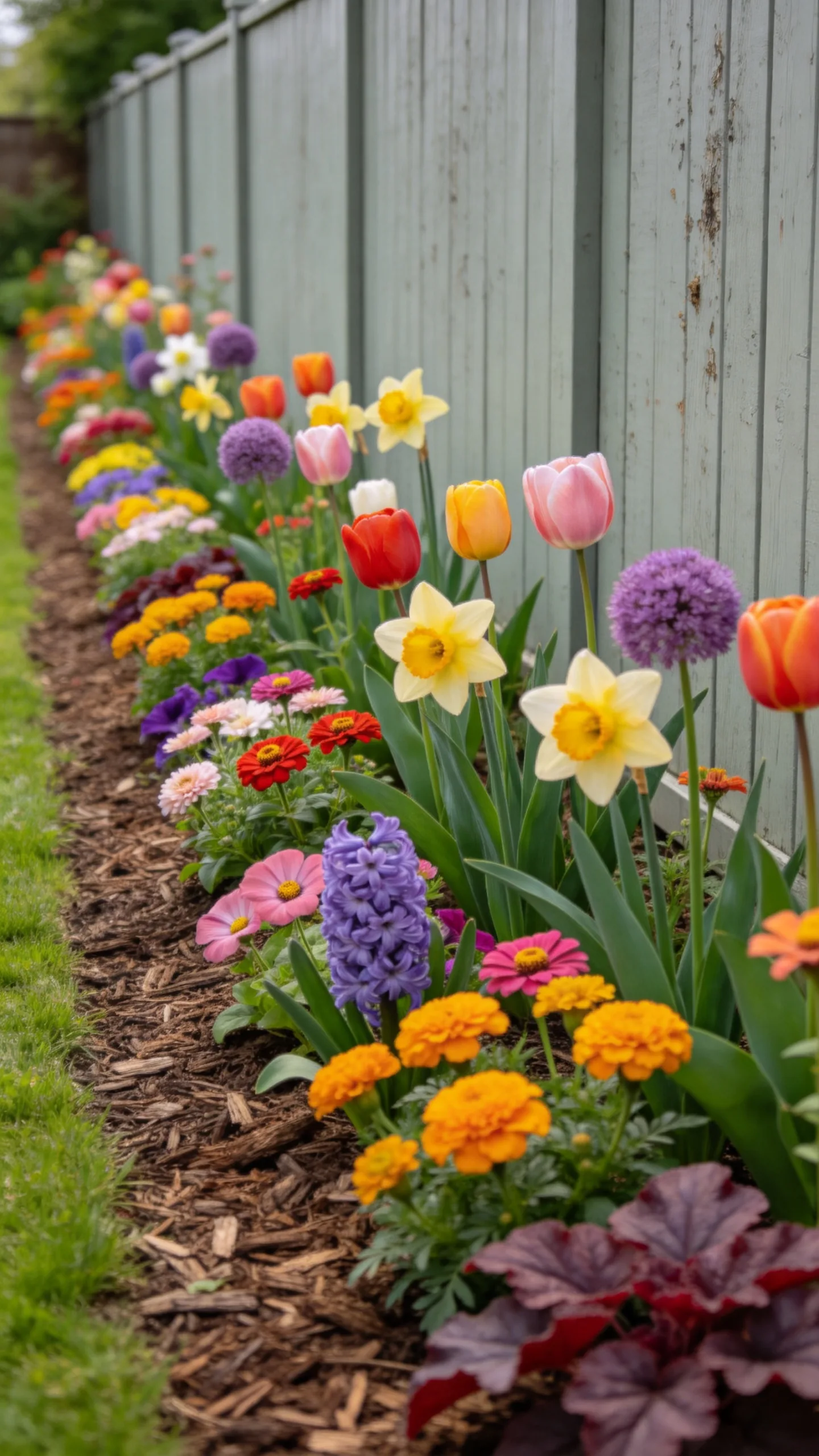
A seasonal flower border is a flexible way to distract from a fence while changing the look throughout the year. Plant spring bulbs such as tulips, daffodils, alliums, or hyacinths along the fence line, then fill gaps with summer annuals like zinnias, cosmos, marigolds, petunias, or coleus.
This idea is useful for homeowners who want color quickly while shrubs or vines are still growing. Keep the bed mulched, water during dry spells, and choose flowers based on the fence line’s sun exposure. Repeating the same flower colors along the length of the fence will make the border feel more polished and less random.