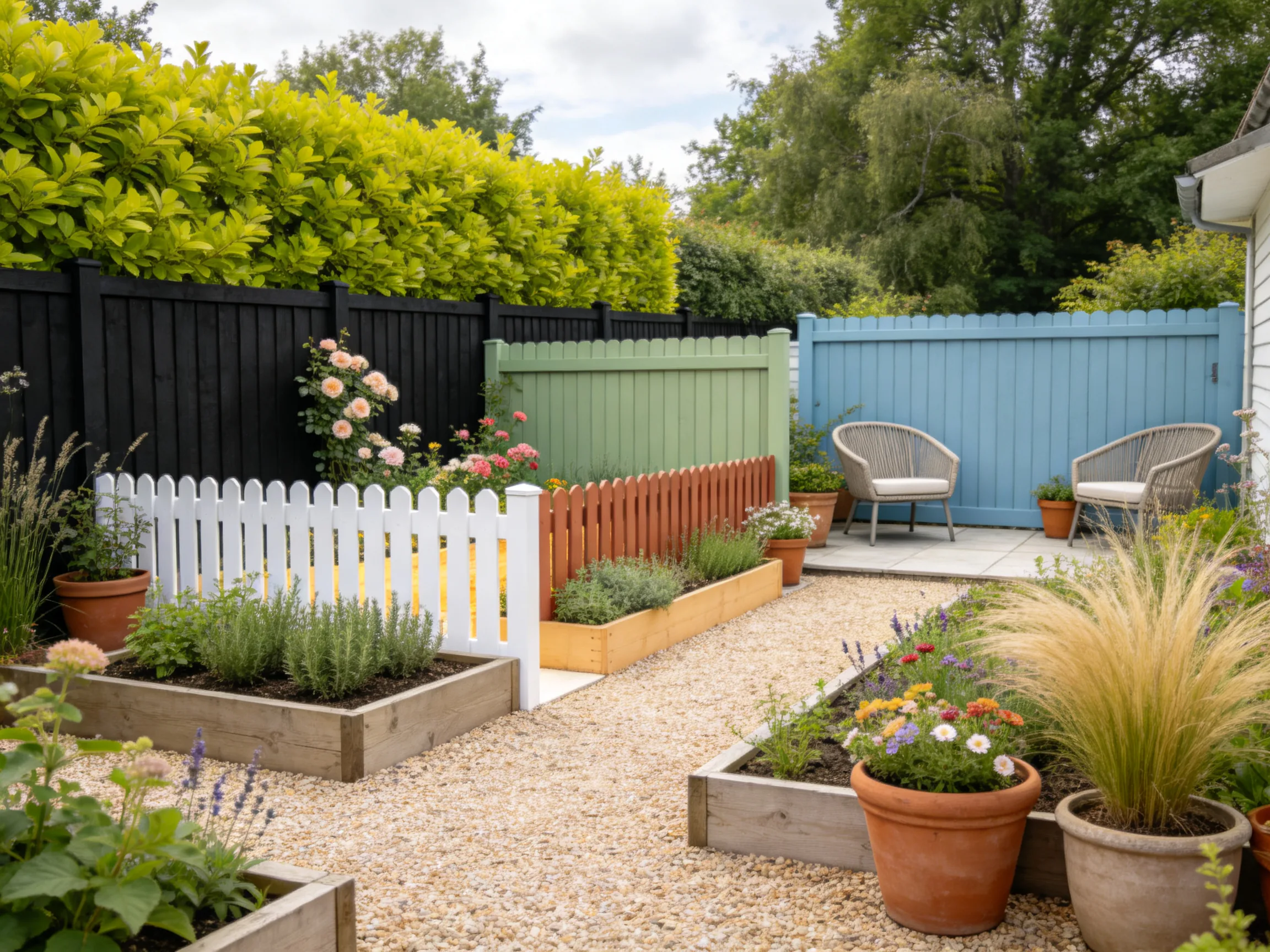
A painted wood fence can change the whole mood of a backyard, especially when the color works with your plants, patio furniture, paths, and garden beds. The right finish can make a small yard feel deeper, frame flower borders more clearly, or turn a plain boundary into a polished backdrop for outdoor living.
These wood fence painting ideas focus on practical backyard transformations, from soft garden neutrals to bold modern colors and creative painted details. Use them to plan a weekend refresh, coordinate a new planting bed, or give an older fence a cleaner, more intentional look.
1. Matte Black Fence for a Modern Garden Backdrop
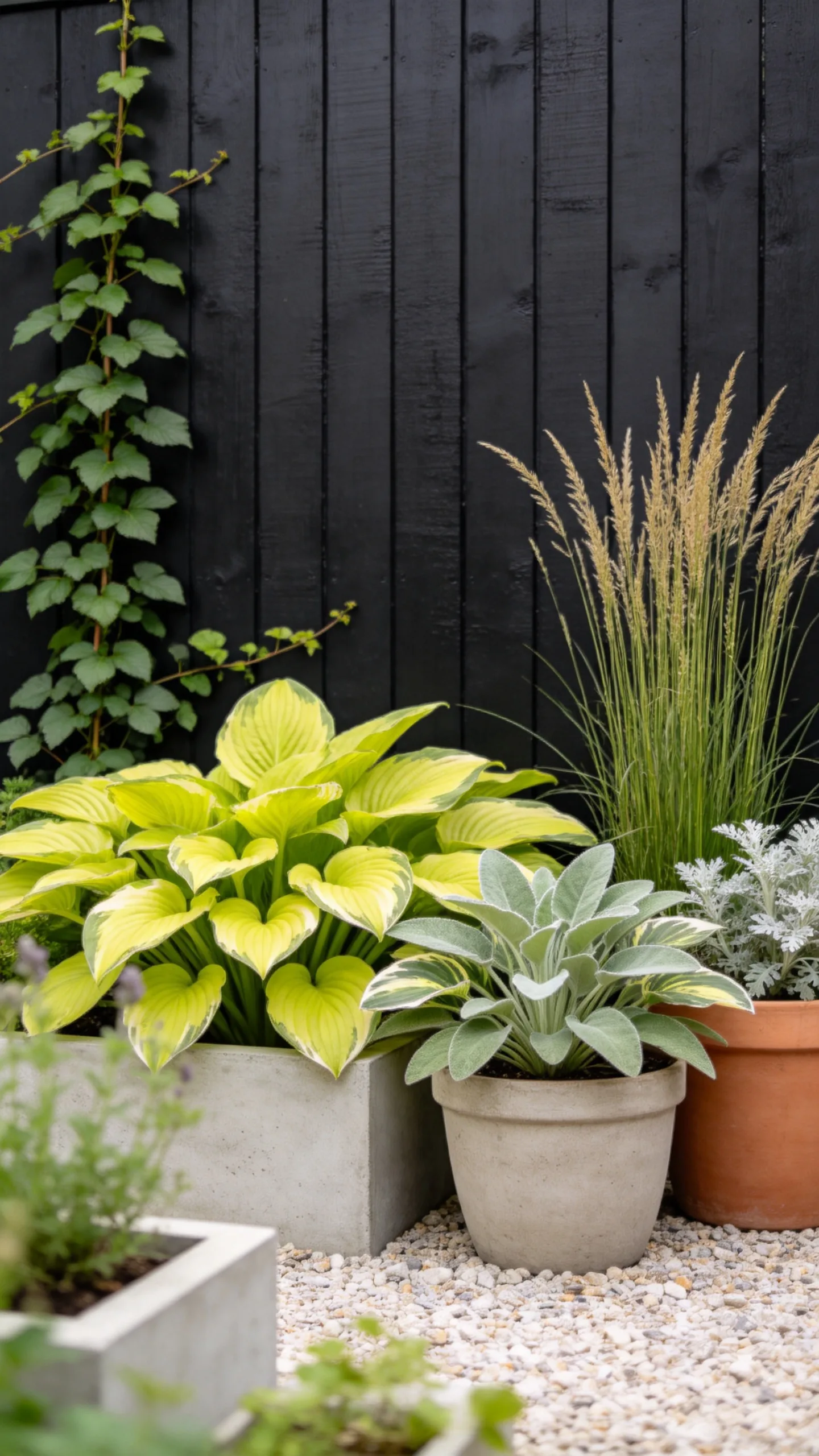
A matte black wood fence creates strong contrast behind greenery, making shrubs, ornamental grasses, climbing vines, and potted plants stand out clearly. It works especially well in small backyards because the dark color can visually recede, helping the planted areas feel more layered and deeper.
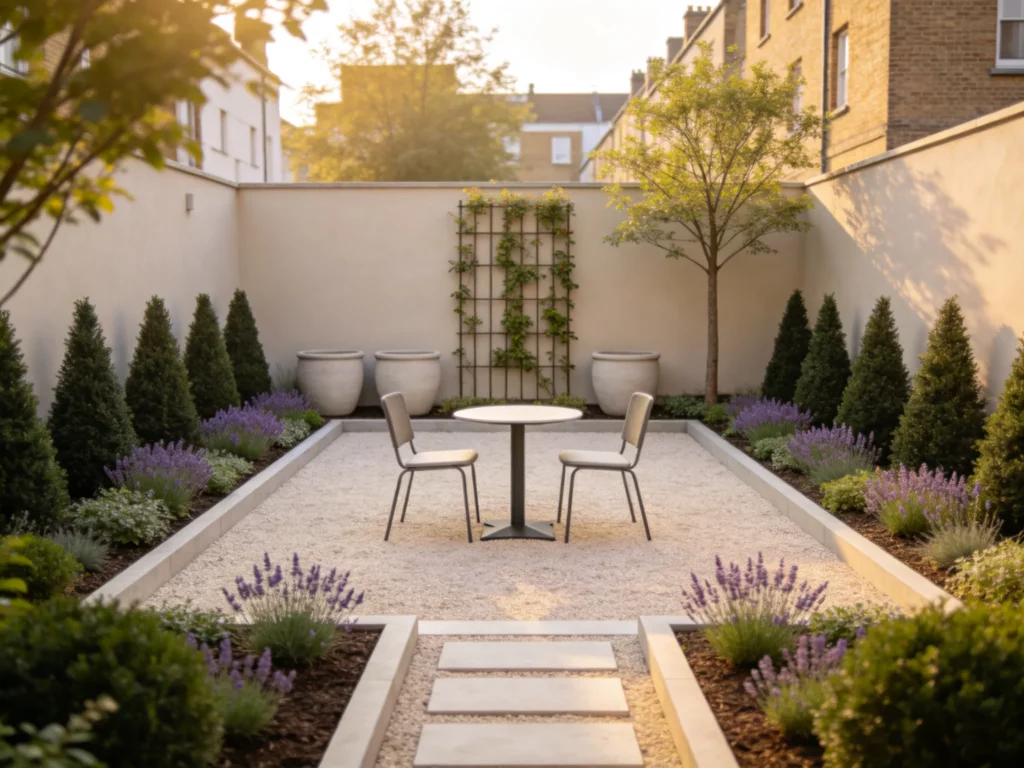
Pair a black fence with pale gravel paths, raised cedar beds, terracotta pots, or concrete planters for a clean modern look. Plants with silver, lime, or variegated foliage, such as lamb’s ear, hosta, dusty miller, or variegated ivy, show up beautifully against the dark surface.
For maintenance, use an exterior wood paint or solid stain made for fencing, and choose a flat or low-sheen finish to avoid glare. This idea is best for yards where you want the fence to feel like a quiet backdrop rather than the main decorative feature.
2. Soft Sage Green Fence for a Calm Cottage Yard
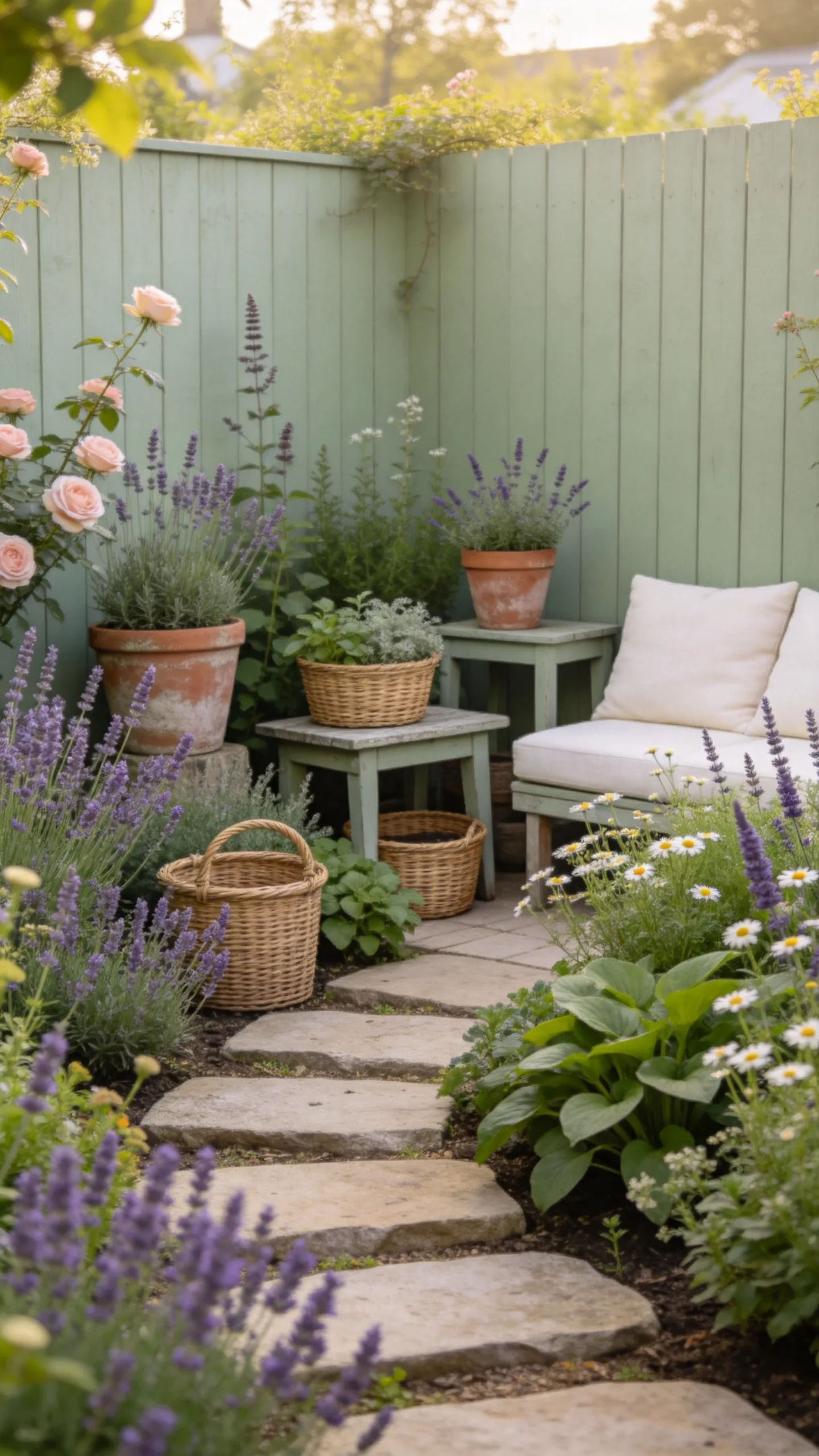
Sage green is one of the easiest wood fence painting ideas for a garden that already has flowers, herbs, and leafy borders. It blends naturally with planting beds while still giving the fence a fresh, finished look.
This color works well around cottage-style gardens with lavender, roses, catmint, salvia, foxgloves, or chamomile. It also softens practical features like compost corners, potting benches, and vegetable beds without making the yard feel too formal.
Use sage green when you want color but do not want the fence to compete with seasonal blooms. It pairs nicely with cream outdoor cushions, aged clay pots, woven baskets, and natural stone stepping paths.
3. Warm White Fence for a Bright Garden Refresh
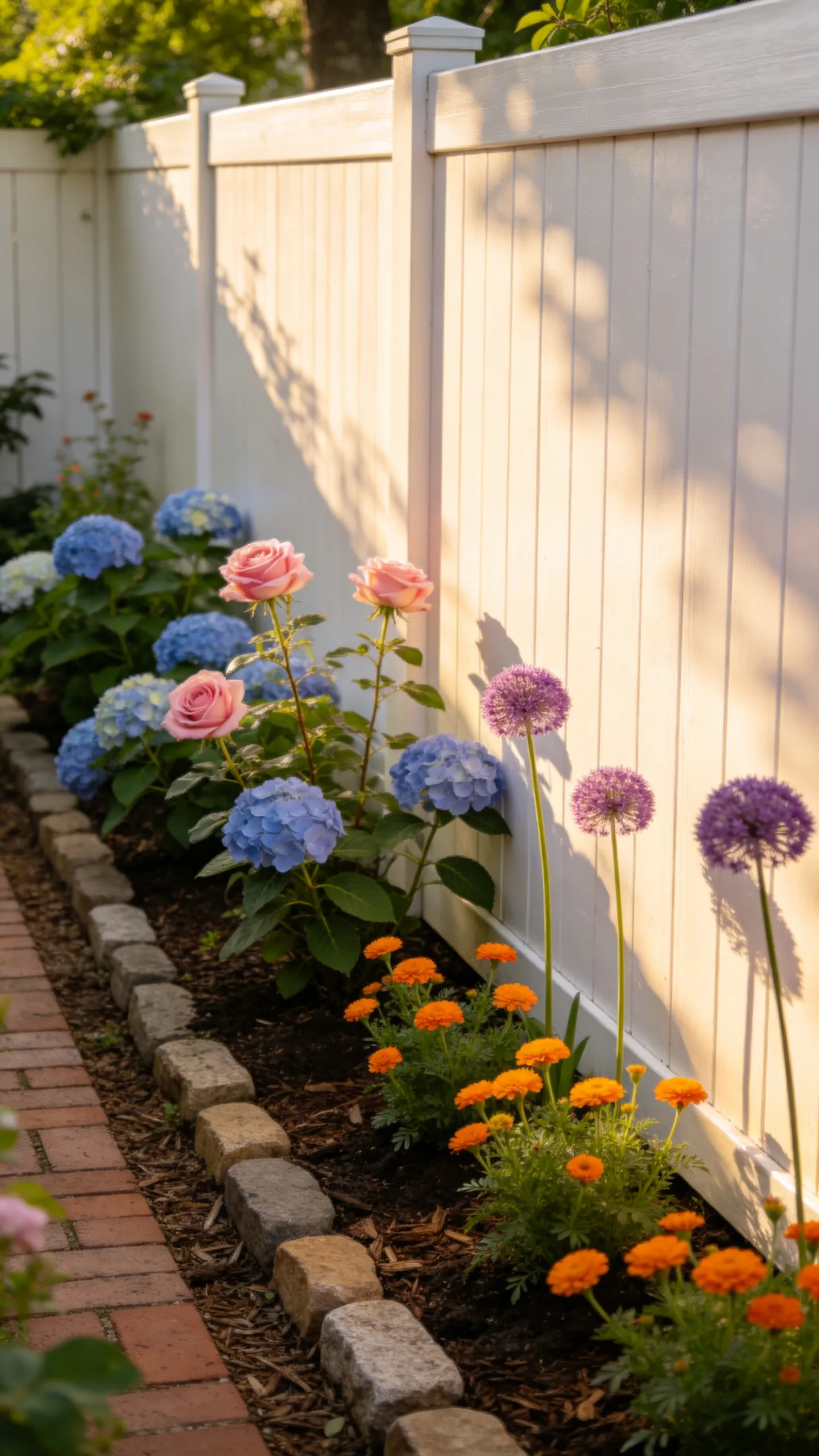
A warm white painted fence can instantly brighten a shaded or narrow backyard. Unlike stark white, a creamy or soft white tone feels more garden-friendly and works well with wood, brick, gravel, and mixed flower borders.
This look is especially useful behind colorful planting beds because it reflects light and gives flowers a clean background. Pink roses, blue hydrangeas, purple alliums, and orange calendula all pop against a warm white fence.
Keep in mind that white fences show soil splashes, mildew, and marks more easily than darker colors. For garden areas near mulch or irrigation, choose washable exterior paint and consider adding a low planting strip or edging stones to reduce dirt hitting the boards.
4. Charcoal Gray Fence for a Sleek Backyard Border
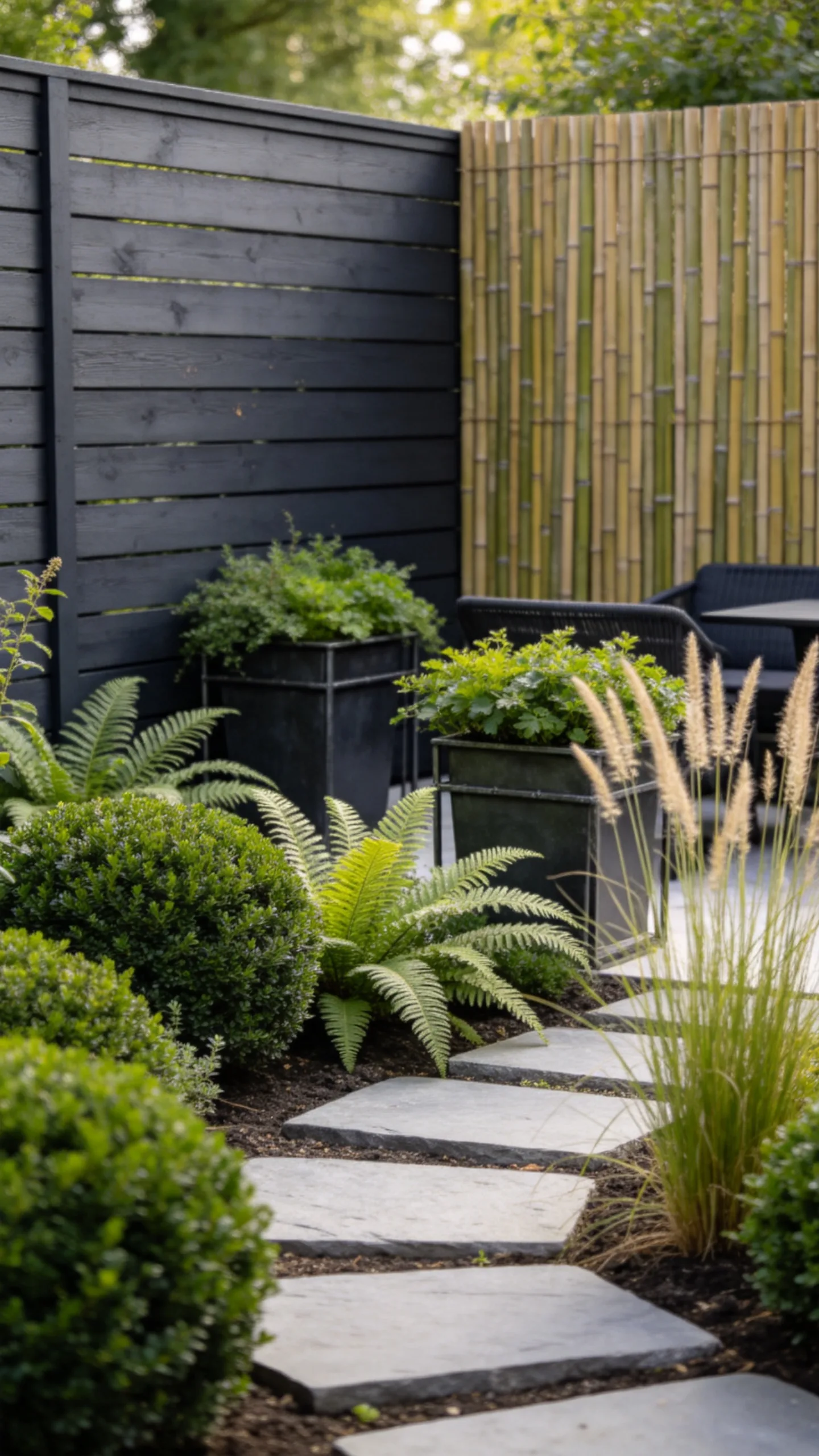
Charcoal gray gives a wood fence a polished look without feeling as bold as black. It works with both modern and traditional yards, especially when paired with metal planters, slate stepping stones, raised beds, or dark outdoor furniture.
This color is practical for busy garden spaces because it hides minor marks better than pale colors. It also makes green foliage look richer, so it is a strong choice behind boxwood, ferns, bamboo screens, or evergreen shrubs.
For a layered design, place tall plants such as ornamental grasses or espaliered fruit trees in front of the charcoal fence. The darker backdrop helps define their shapes and gives the yard a more designed appearance.
5. Coastal Blue Fence for a Relaxed Outdoor Space
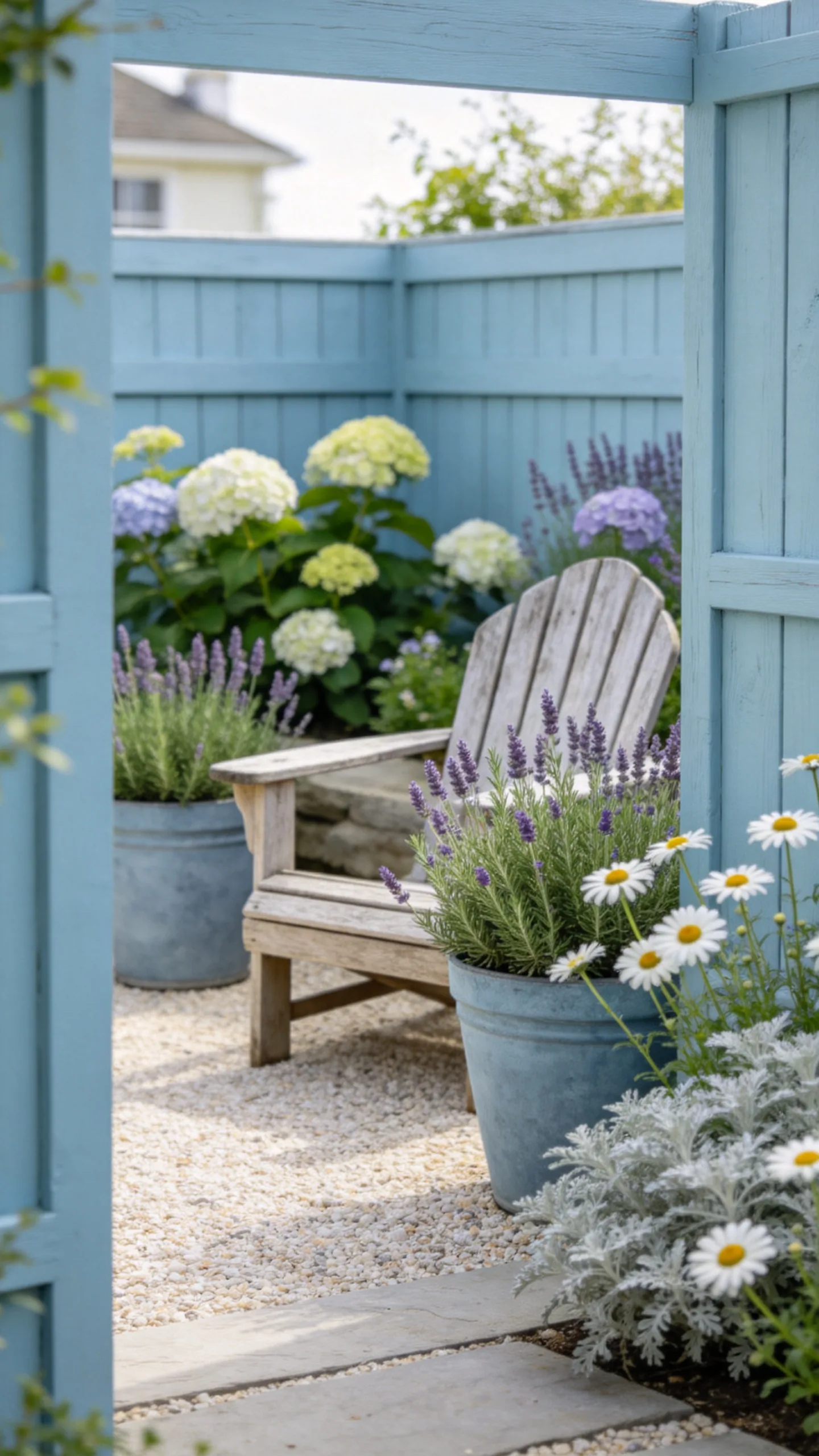
A coastal blue fence brings a breezy, casual feel to a backyard, especially when used with white trim, light gravel, weathered wood furniture, or blue-gray planters. Soft denim, misty blue, and muted sea-glass tones are usually easier to use outdoors than bright primary blue.
This paint idea works nicely around seating areas, small patios, and container gardens. Pair it with rosemary, lavender, hydrangeas, white daisies, and silvery foliage for a relaxed garden palette.
If your yard gets strong sun, test a sample first because blue can look much brighter outside than it does on a paint card. A muted or gray-based blue is often more forgiving and easier to coordinate with plants.
6. Deep Forest Green Fence for a Lush Privacy Effect
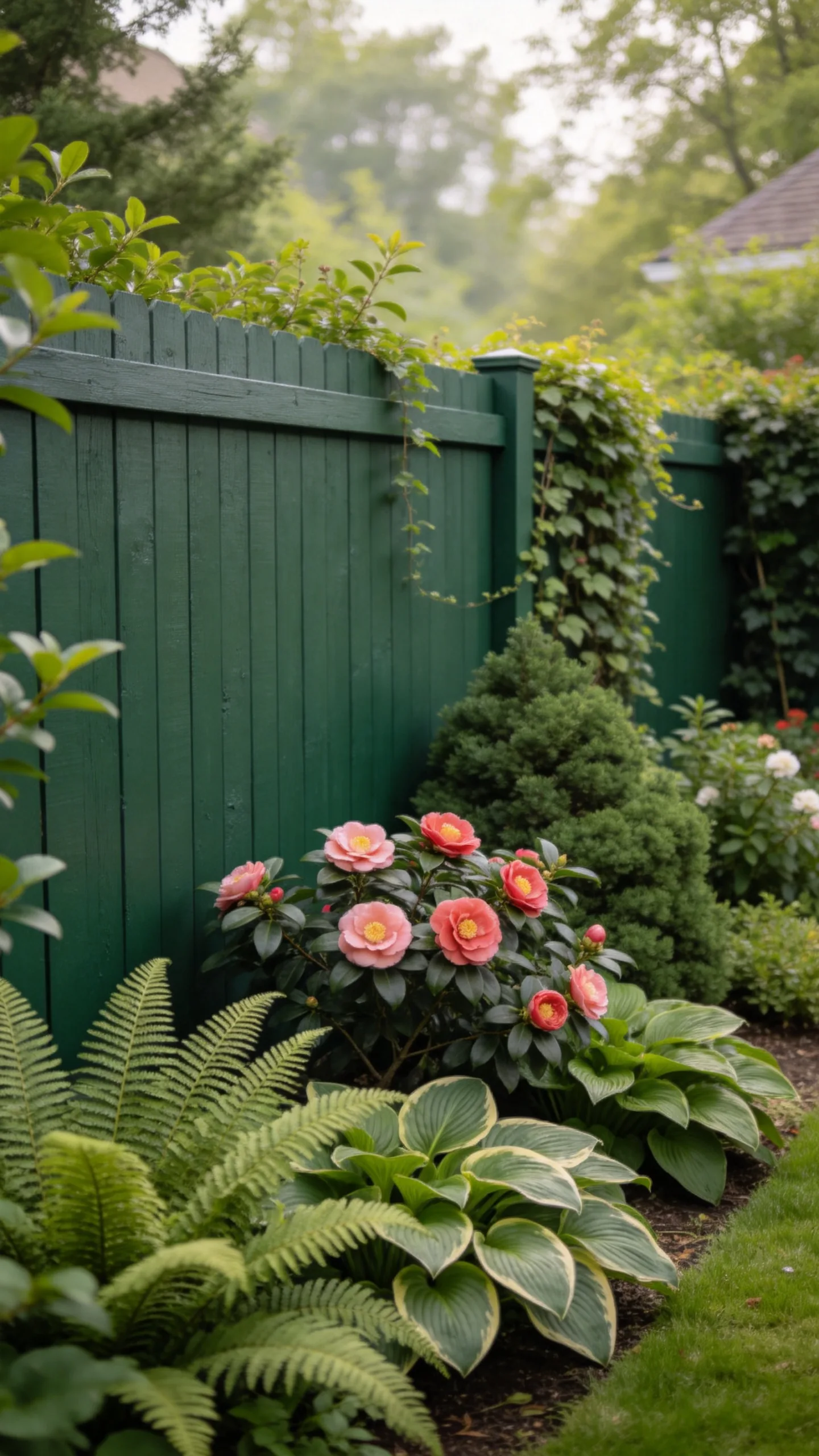
Deep forest green is ideal when you want a wood fence to blend into planted borders and make the yard feel more enclosed. It creates a natural-looking privacy backdrop for shrubs, hedges, climbing plants, and shade gardens.
This color works particularly well behind ferns, hostas, camellias, rhododendrons, and evergreen screens. In sunny spots, it also pairs well with raised vegetable beds and fruit bushes because it feels earthy without looking unfinished.
Use forest green for side yards, back boundaries, or areas where you want the fence to disappear visually. It is a strong option if you prefer the garden itself to be the main focus.
7. Terracotta Fence for a Warm Mediterranean Look
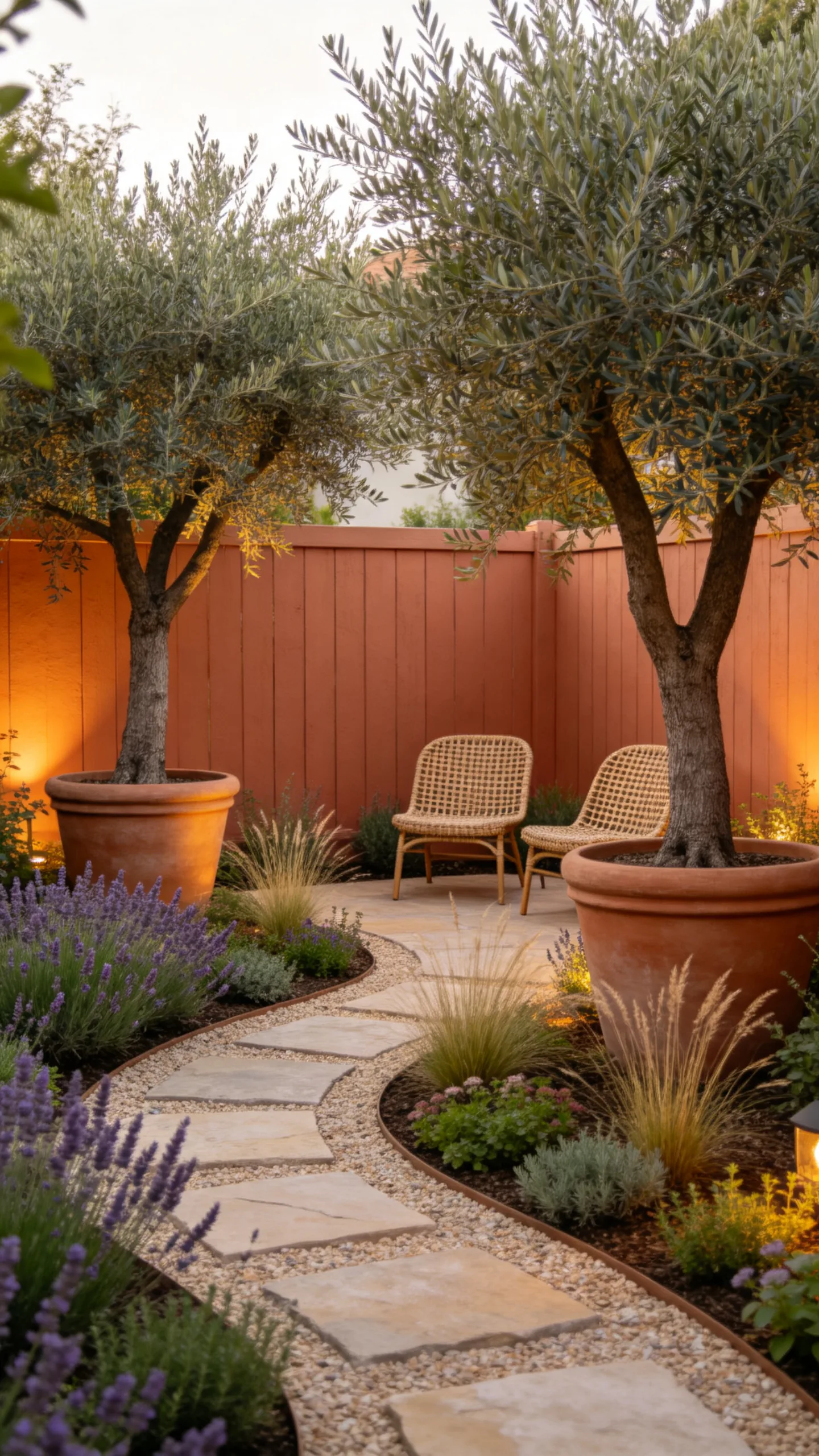
A terracotta-painted wood fence adds warmth and works beautifully with drought-tolerant planting schemes. It pairs well with olive trees in containers, lavender, rosemary, thyme, ornamental grasses, and gravel garden beds.
This color can make a plain backyard feel more like a courtyard, especially when combined with clay pots, stone pavers, woven chairs, and warm outdoor lighting. It is also useful for adding color to a space that has mostly green foliage and neutral hardscaping.
Choose a muted terracotta or clay tone rather than a bright orange for a more natural garden finish. The goal is to echo sunbaked pottery and brick, not overpower the planting design.
8. Two-Tone Fence With Dark Posts and Light Panels
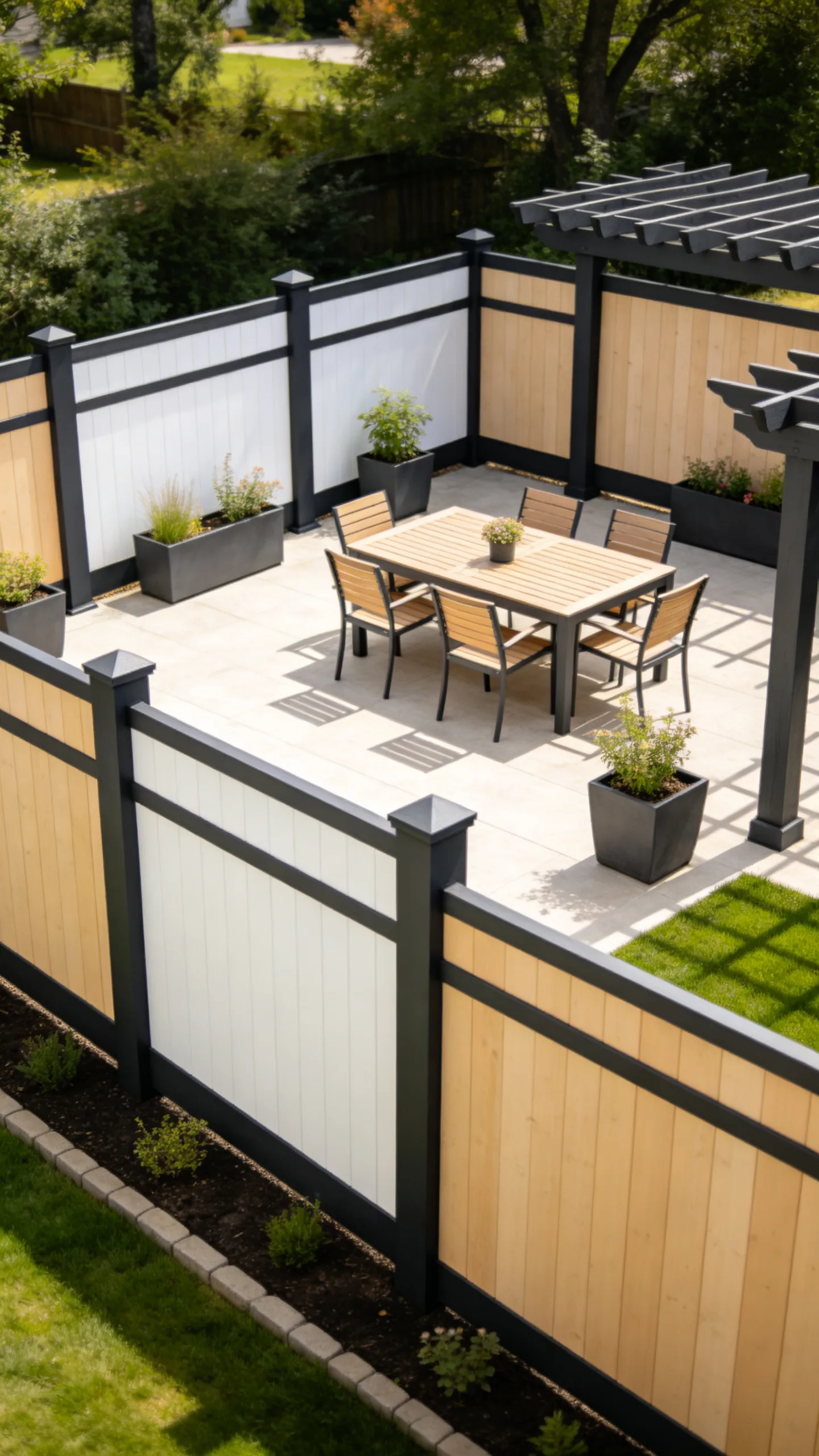
A two-tone fence gives structure to a backyard without needing major construction changes. Paint the posts, rails, or cap boards in a darker color, then use a lighter tone on the main panels to create contrast.
For example, charcoal posts with warm white panels can look crisp and classic, while black framing with natural beige panels feels modern. This approach works well for long fence runs because the darker lines break up the length and make the boundary feel more intentional.
Use this idea around patios, dining areas, or rectangular lawns where the fence is highly visible. It can also help coordinate the fence with deck railings, pergolas, gates, or outdoor furniture.
9. Natural Brown Stain for a Fresh Wood Look
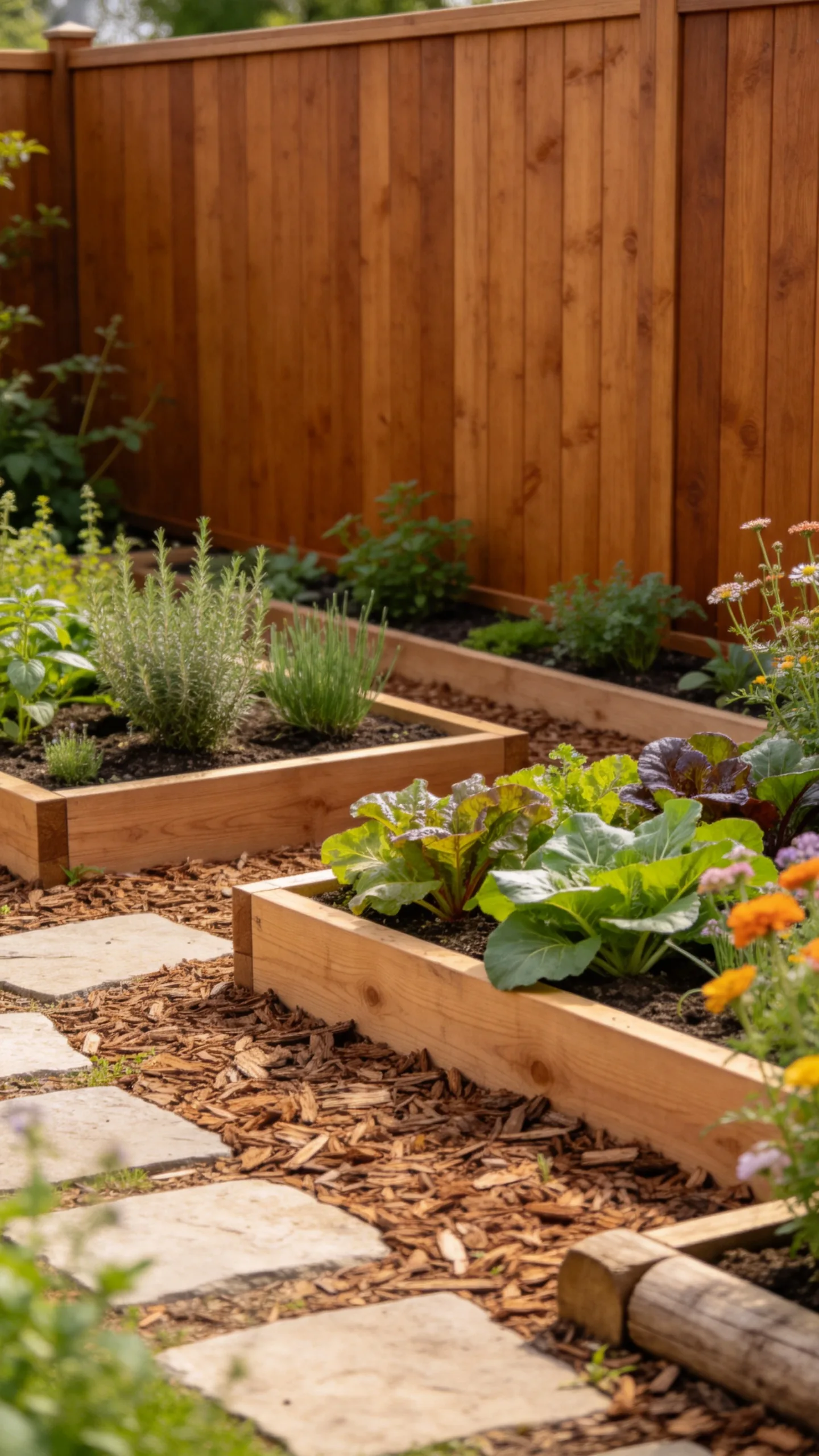
If you want the fence to look renewed without covering the wood grain completely, a natural brown stain is a practical choice. Semi-transparent or solid exterior stain can refresh weathered boards while keeping the yard warm and organic.
Brown stain works with almost any garden style, from vegetable plots to woodland borders. It pairs well with cedar raised beds, bark mulch, stone paths, and timber edging.
Choose a stain tone based on nearby features. A golden cedar shade feels bright and casual, while a deeper walnut or espresso stain looks more formal and grounded. Always clean and prep older fence boards first so the finish absorbs evenly.
10. Soft Greige Fence for a Neutral Backyard Makeover
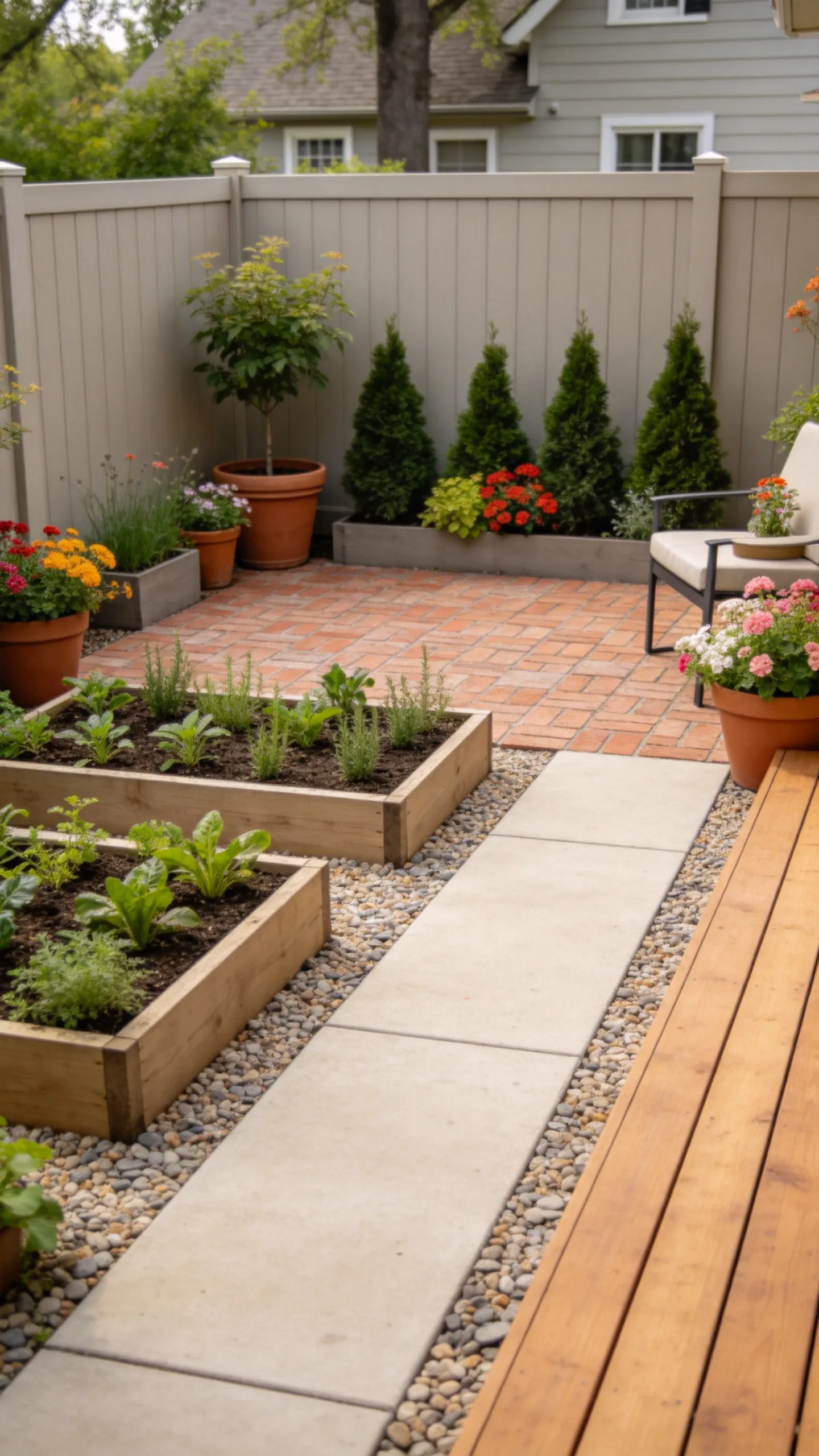
Greige, a mix of gray and beige, is a versatile fence color for yards with mixed materials. It works with brick patios, concrete paths, wood decking, gravel, and both warm and cool plant palettes.
This neutral shade is useful when you want a finished look but do not want the fence to dominate the garden. It supports colorful blooms, evergreen shrubs, and outdoor decor without locking the yard into one strong color scheme.
A soft greige fence also suits small spaces because it feels lighter than charcoal but less high-maintenance than white. Use it behind container groupings, raised herb beds, or a compact seating area for a calm, tidy backdrop.
11. White Picket Fence With Painted Garden Gate
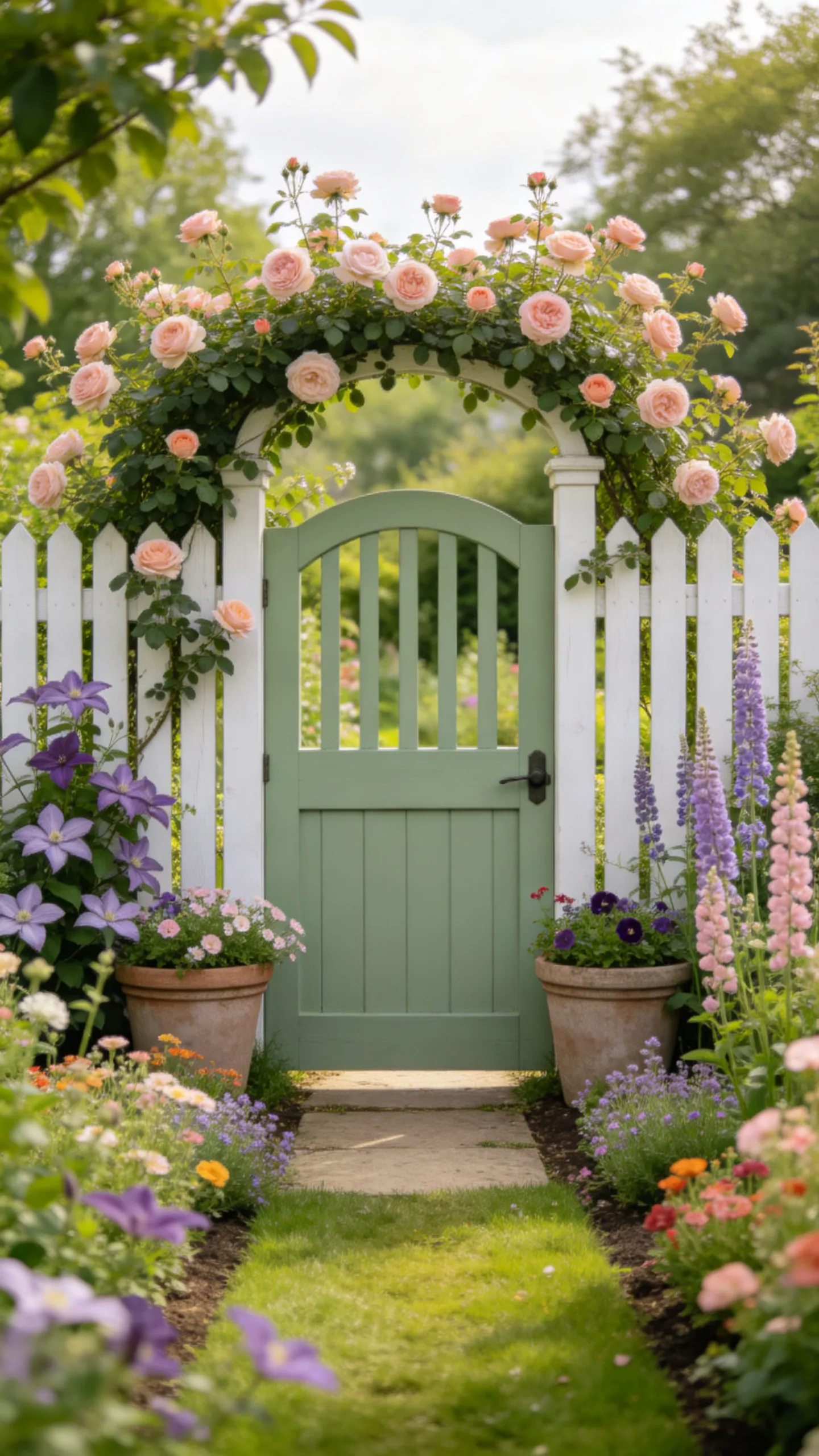
A white picket fence is a classic choice, but adding a painted gate gives it more personality. Keep the fence white and paint the gate in a garden-friendly color such as sage green, powder blue, deep red, or soft black.
This idea works especially well for front gardens, cottage borders, and backyard entries where the gate acts as a focal point. Frame it with climbing roses, clematis, sweet peas, or a pair of planters to make the entrance feel more inviting.
Use exterior paint that can handle frequent touching and weather exposure, since gates often get more wear than fixed fence panels. Matching the gate color to nearby pots, shutters, or patio cushions can help the whole yard feel coordinated.
12. Black Fence With Climbing Vine Trellis Panels
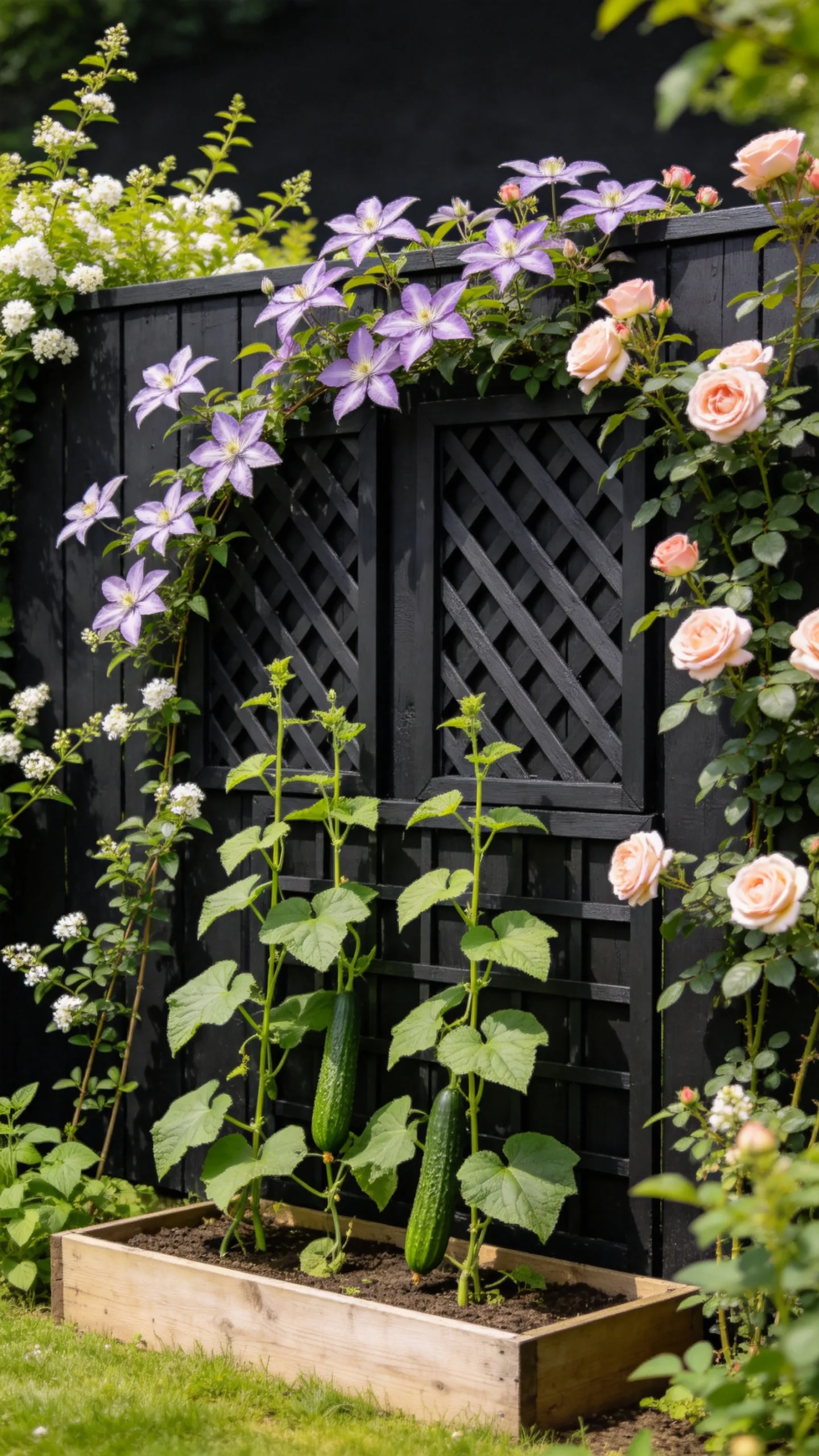
Painting a wood fence black and adding trellis panels creates a strong vertical garden feature. The dark background makes climbing plants look fuller and gives vines a defined structure to grow against.
This works well with clematis, climbing roses, star jasmine in suitable climates, or annual vines like morning glory and sweet pea. For vegetable gardens, you can also use painted trellis sections for climbing beans, cucumbers, or small squash varieties.
Leave space between the fence and the trellis if possible so air can circulate and the wood can dry after rain. This helps protect both the painted boards and the plants.
13. Pale Blue Fence for a Small Courtyard Garden
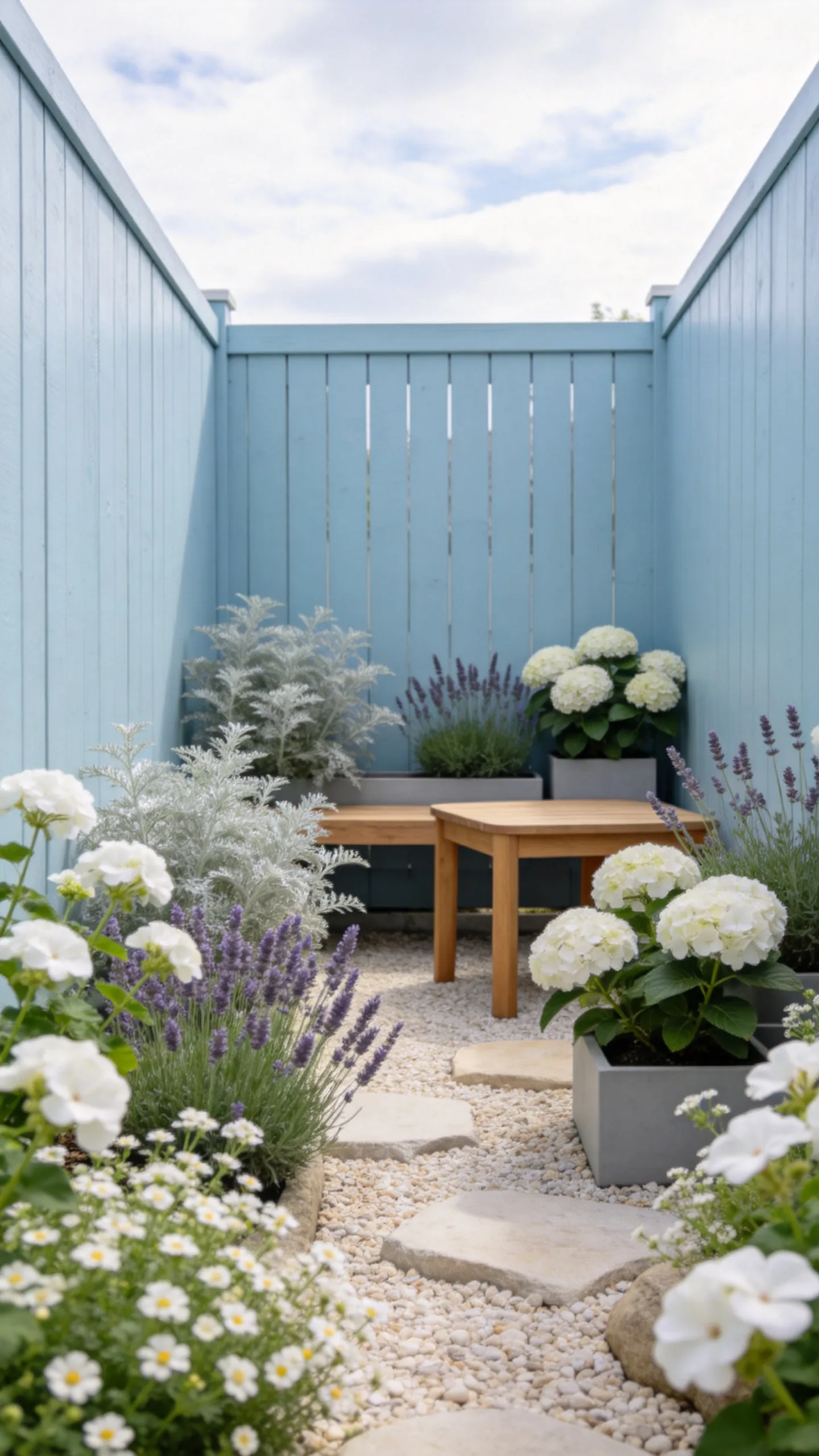
A pale blue fence can make a compact courtyard or enclosed backyard feel lighter and more open. It reflects a soft sky-like tone, which is helpful when tall neighboring walls or fences make the space feel boxed in.
Pair pale blue with white flowers, silver foliage, and compact planters for a bright, airy look. Good plant choices include alyssum, white geraniums, lavender, artemisia, and dwarf hydrangeas, depending on your light conditions.
This color works best when the surrounding materials are simple. Use light gravel, pale stone, or natural wood furniture so the painted fence feels intentional rather than overly colorful.
14. Olive Green Fence for an Earthy Outdoor Room
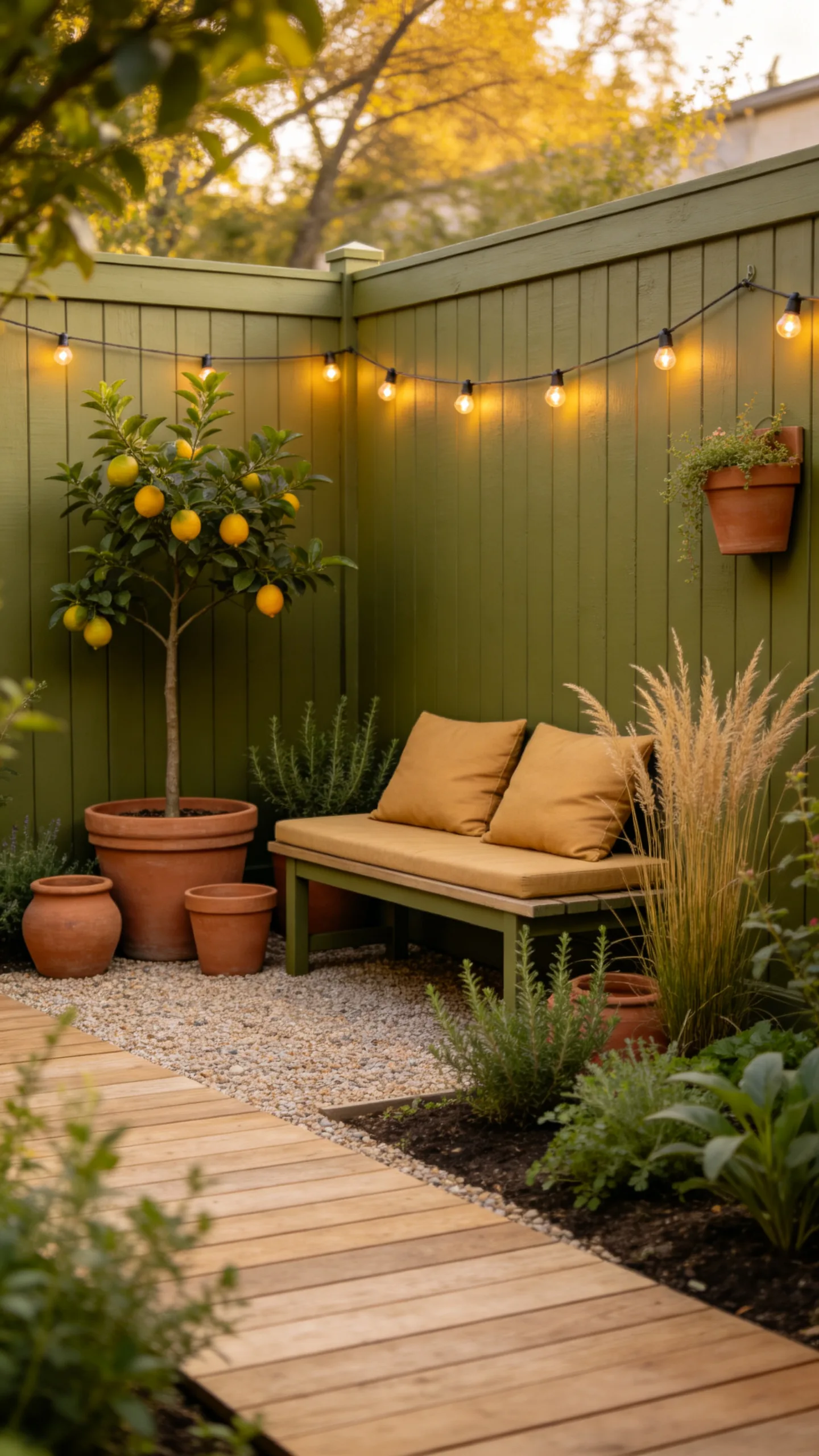
Olive green is warmer than sage and softer than forest green, making it a strong choice for creating an outdoor room effect. It feels grounded beside wood decks, tan cushions, gravel paths, and terracotta containers.
This fence color looks especially good with herbs, ornamental grasses, citrus trees in pots, and Mediterranean-style planting. It also blends well with edible gardens because it feels practical and natural rather than decorative only.
Use olive green around seating zones where you want the fence to support the overall atmosphere. Add wall-mounted planters, a simple bench, or string lights to turn the painted boundary into part of the living space.
15. Barn Red Fence for a Bold Garden Accent
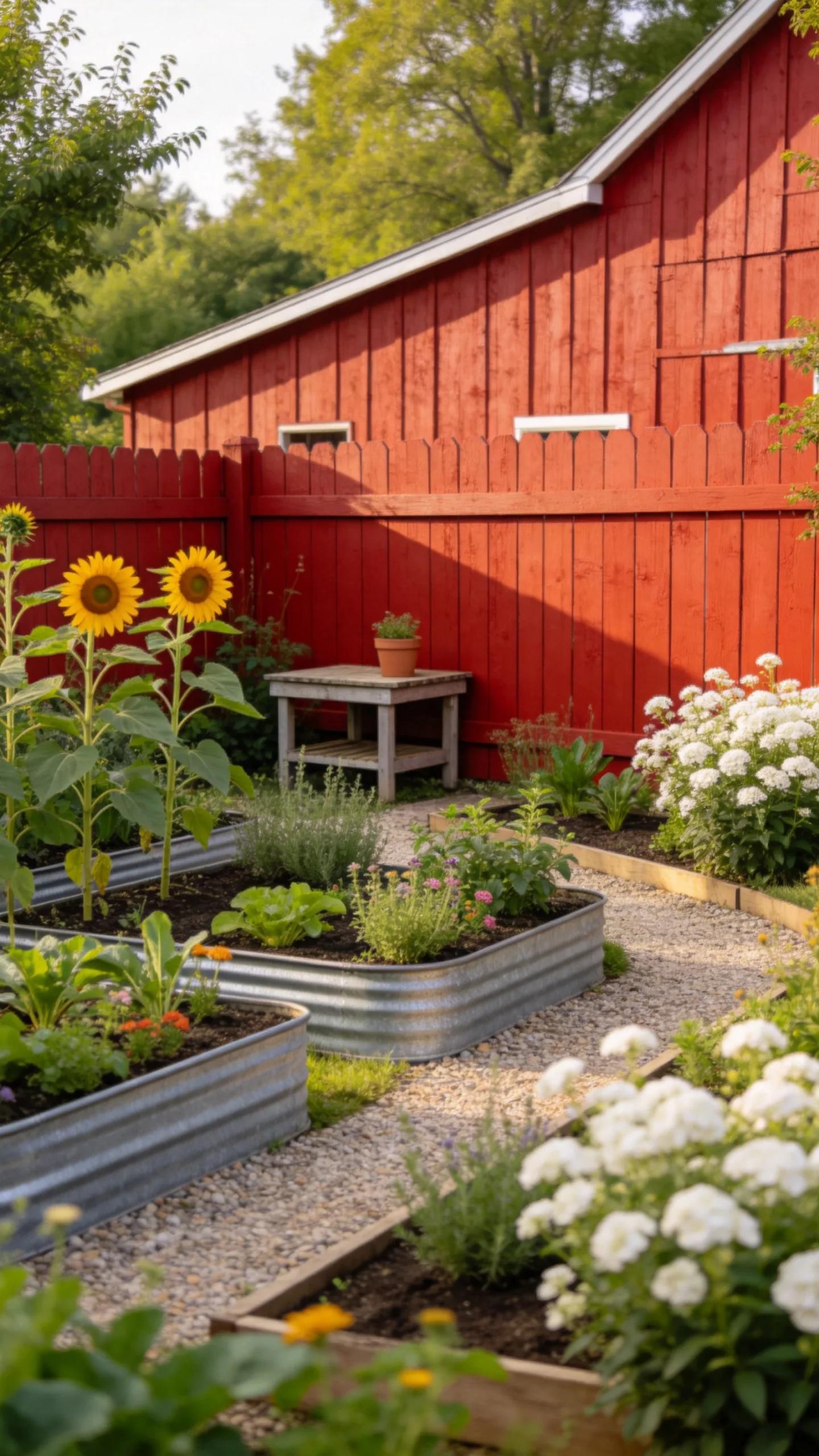
Barn red adds strong character to a wood fence and works well in rustic, farmhouse, or cottage-inspired yards. It is especially effective behind vegetable gardens, sunflower patches, herb beds, or informal flower borders.
This color pairs naturally with galvanized planters, wooden raised beds, gravel paths, and white flowering plants. It can also make a garden shed, chicken coop, or potting bench feel more connected if you use the same red on trim or nearby accents.
Because red is visually strong, consider using it on one fence section, a gate, or the rear boundary rather than every side of a small yard. This keeps the color from overwhelming the planting areas.
16. Dark Navy Fence for a Sophisticated Patio Garden
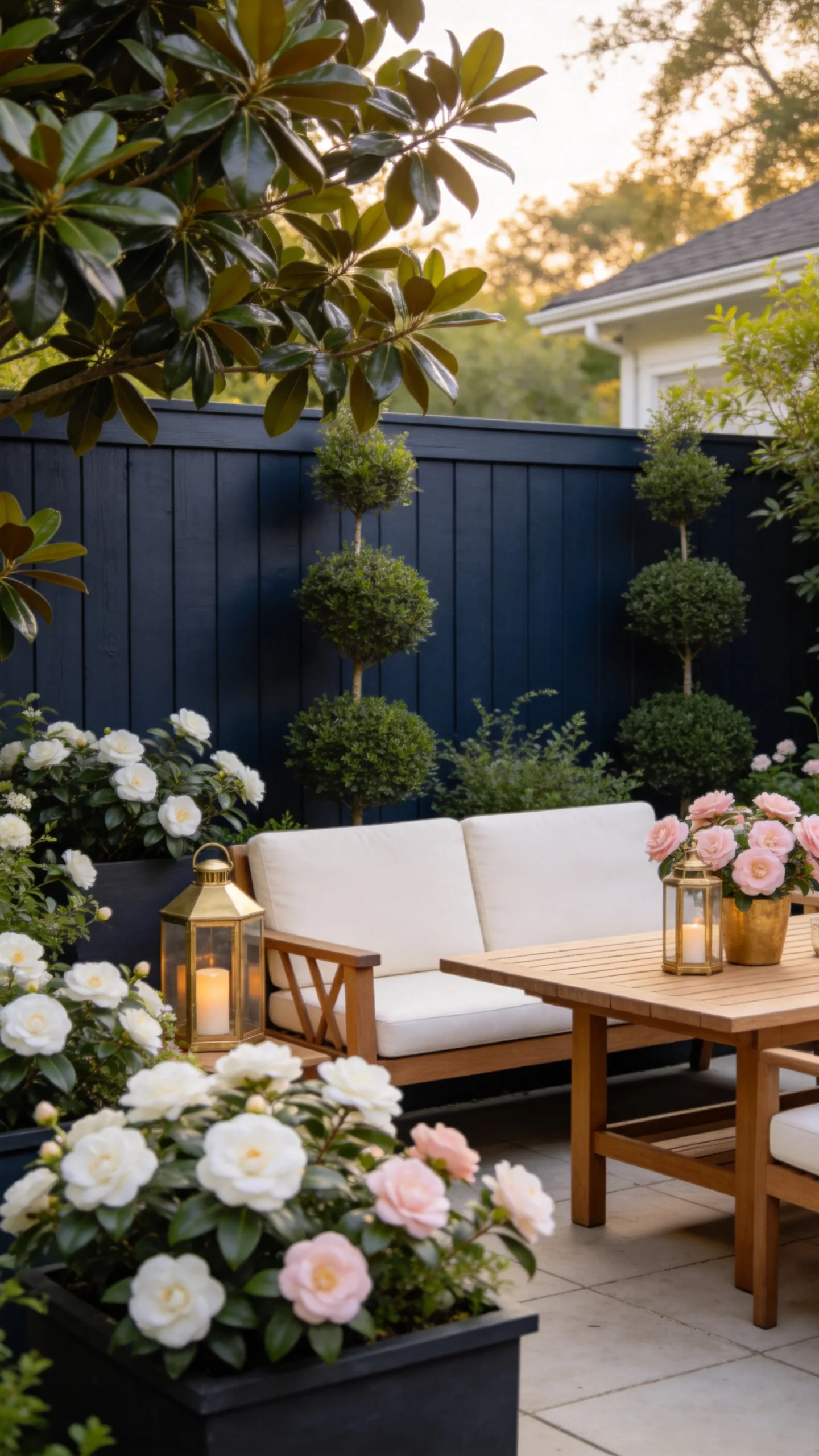
Dark navy is a refined alternative to black or charcoal. It gives a backyard fence depth while adding a subtle color note that works beautifully around patios and outdoor dining areas.
Navy pairs well with brass lanterns, teak furniture, cream cushions, and planters filled with white or pale pink flowers. It also makes foliage look crisp, especially plants with glossy leaves like camellia, magnolia, or bay laurel in containers.
Use this idea where the fence is part of a styled seating space rather than a hidden boundary. A dark navy backdrop can make wall planters, outdoor mirrors, or espaliered plants look more intentional.
17. Painted Fence Mural With Simple Botanical Shapes
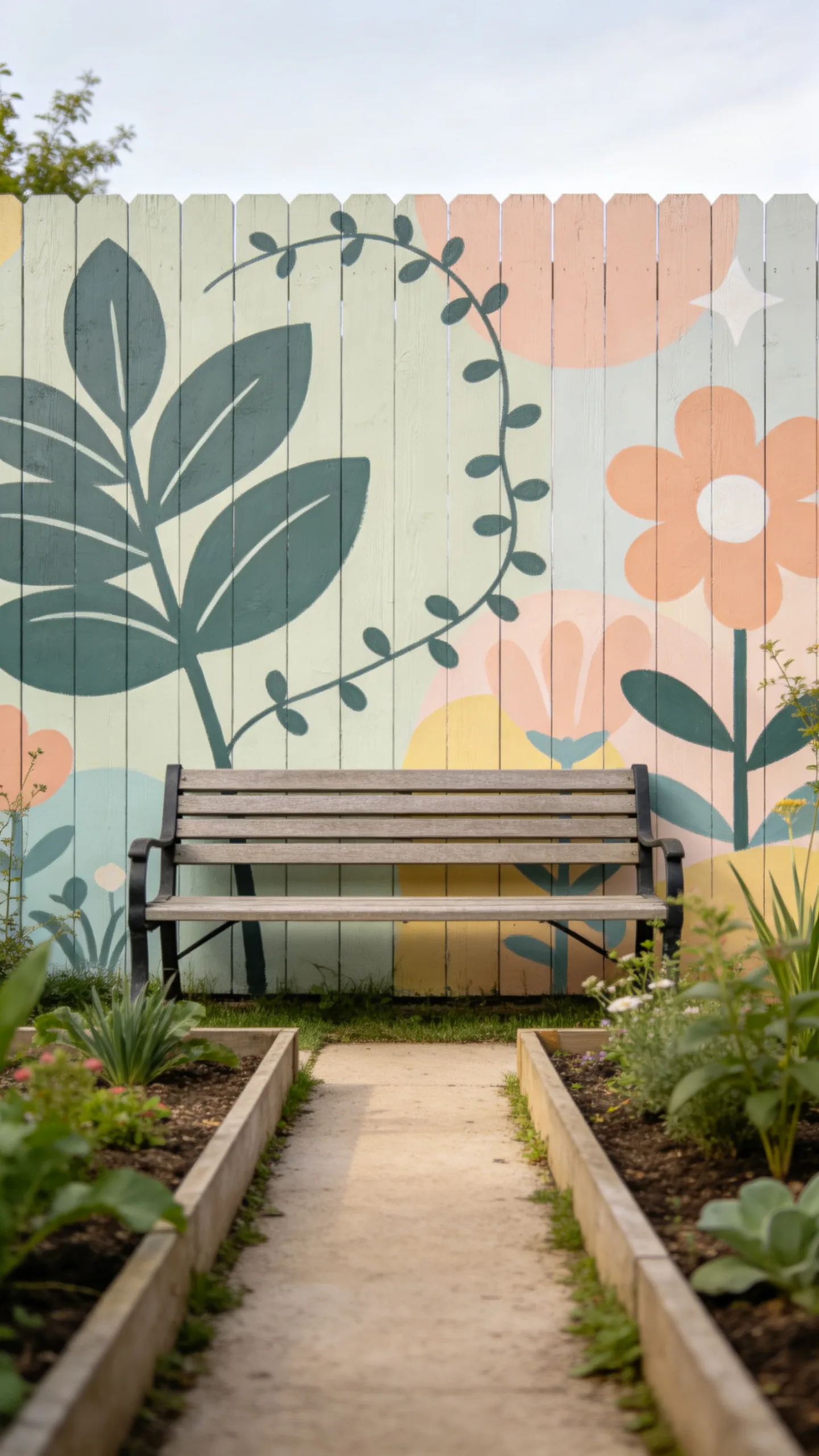
A botanical mural can turn a plain wood fence into a garden feature without needing expensive materials. Keep the design simple with large leaf silhouettes, vine shapes, abstract flowers, or soft color blocks inspired by the plants already in the yard.
This works best on one focal section, such as behind a bench, along a children’s garden area, or at the end of a narrow path. Using a limited palette helps the mural feel stylish rather than busy.
For a practical approach, paint the fence in a base color first, then add botanical details with exterior paint. Choose shapes large enough to see from across the yard, and avoid tiny details that will disappear behind plants or weather unevenly.
18. Striped Fence Panels for a Playful Garden Wall
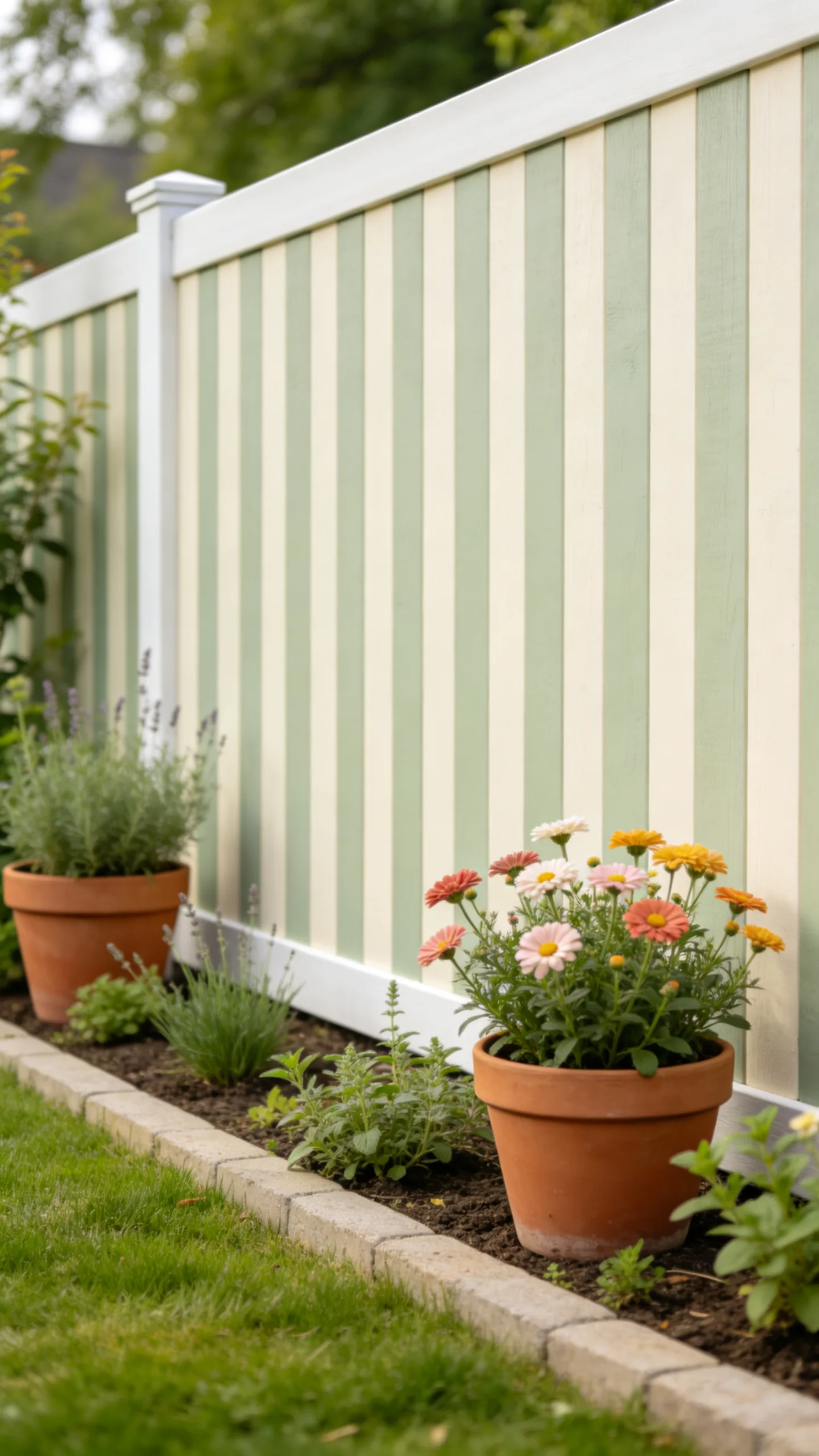
Painted stripes can make a fence feel taller, wider, or more decorative depending on the direction you choose. Vertical stripes draw the eye upward, while horizontal stripes can make a narrow yard feel longer.
Use subtle combinations for a polished result, such as sage and cream, charcoal and gray, or pale blue and white. Bolder colors can work well in children’s play gardens, pool areas, or casual patios.
Stripes are easiest on flat fence panels with clear edges. Measure carefully, use painter’s tape rated for exterior surfaces, and seal the edges before adding the stripe color to reduce bleeding on rough wood.
19. Color-Blocked Fence Behind Raised Garden Beds
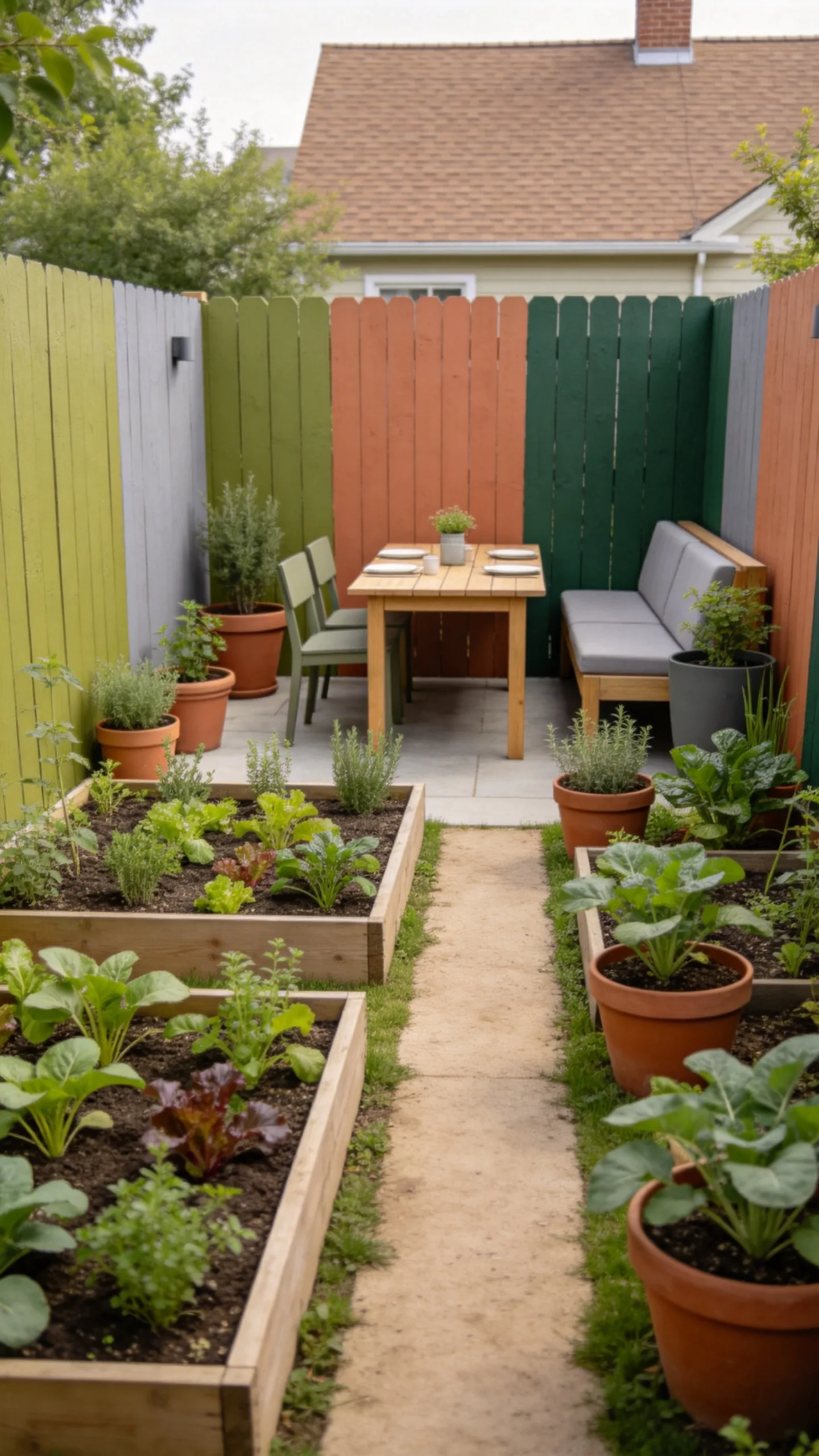
Color blocking is a practical way to define different backyard zones. Paint one section behind the dining area, another behind raised vegetable beds, and another near a seating nook to create visual separation without adding walls.
For raised beds, earthy colors such as olive, clay, warm gray, or deep green make vegetables and herbs look tidy. Behind a patio, darker tones like charcoal or navy can make furniture and container plants feel more styled.
This idea is helpful in small yards because it creates the feeling of separate garden rooms. Keep the palette limited to two or three related colors so the space still feels connected.
20. Soft Yellow Fence for a Cheerful Flower Garden
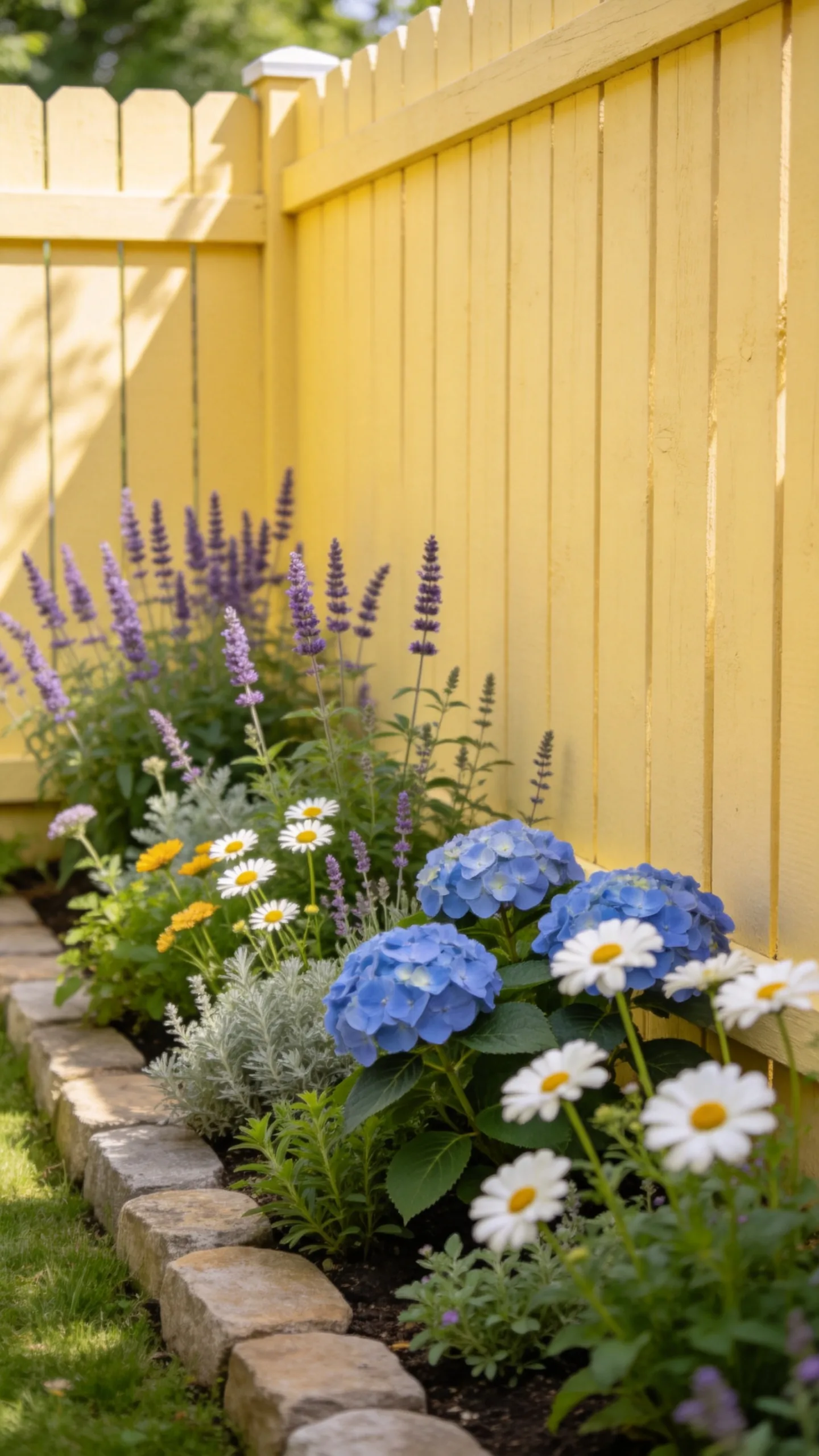
A soft yellow fence brings warmth to a backyard and can brighten areas that feel dull or shaded. Choose buttery, muted, or ochre-based yellows rather than neon shades for a garden-friendly finish.
This color looks especially pretty behind blue, purple, and white flowers. Try it with lavender, salvia, catmint, daisies, hydrangeas, or white cosmos. It also works with herb gardens and cottage borders where a sunny backdrop feels natural.
If the fence gets intense afternoon sun, test a sample first because yellow can appear much stronger outdoors. A muted yellow is easier to live with and usually pairs better with wood, stone, and greenery.
21. Painted Fence With Matching Planter Boxes
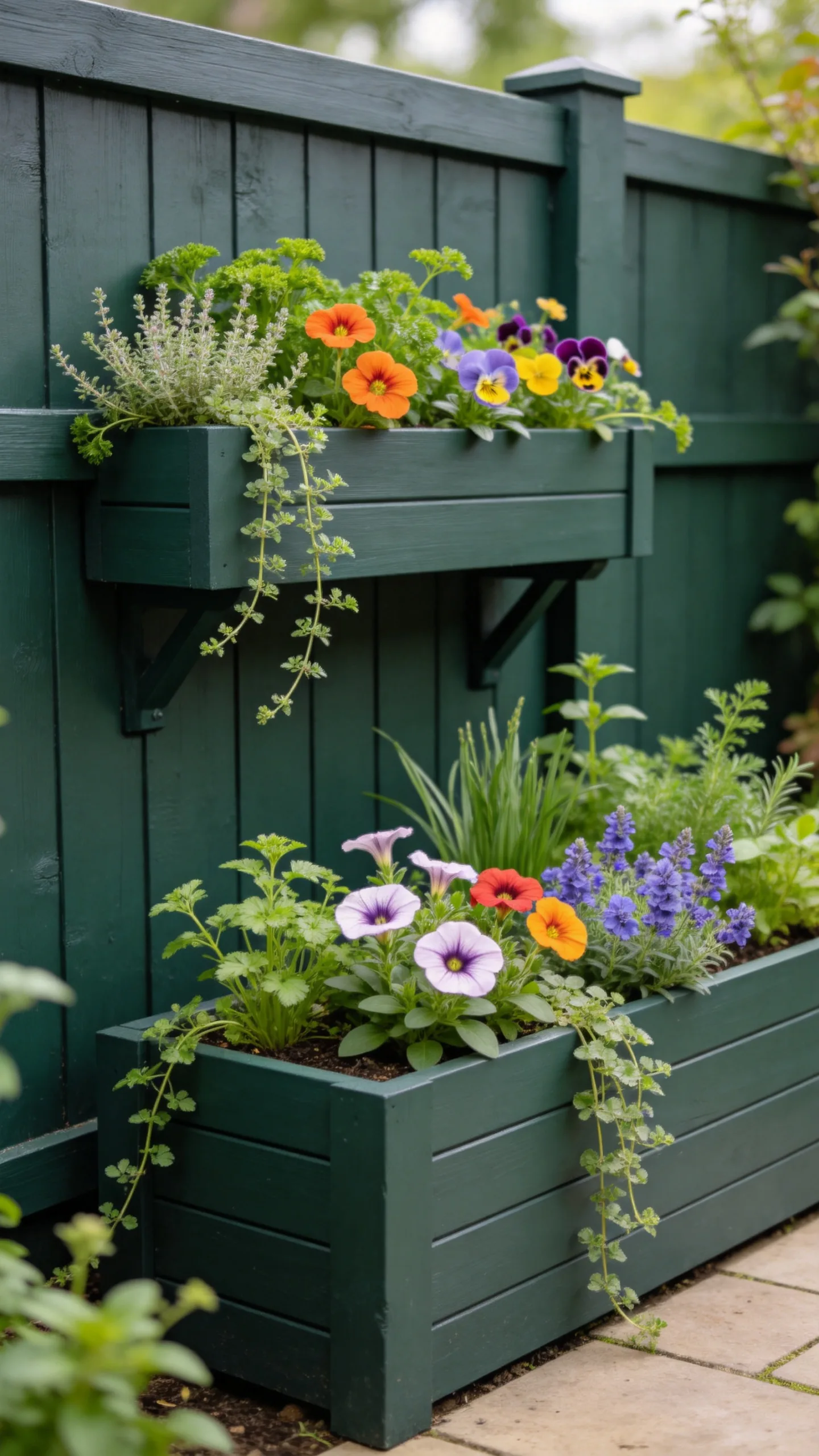
Painting a wood fence and matching planter boxes in the same color creates a finished, built-in look. This is especially useful in small backyards, patios, and side yards where every surface needs to feel purposeful.
Attach sturdy planter boxes to fence rails or place freestanding boxes directly in front of the painted panels. Fill them with trailing plants, herbs, compact flowers, or seasonal annuals. Good options include thyme, parsley, nasturtiums, pansies, calibrachoa, and trailing lobelia, depending on sun exposure.
For a clean design, paint the fence and planters one color, then let the plants provide contrast. A dark fence with matching boxes can make greenery look lush, while a pale fence with matching planters keeps the space bright and tidy.