Split rail fences are a natural fit for farmhouse yards because they feel relaxed, open, and practical without hiding the landscape. Whether you want to edge a gravel drive, frame a cottage garden, protect a vegetable patch, or add country charm to a front yard, these split rail fence ideas can help you choose a design that looks rustic while still serving a real garden purpose.
1. Weathered Cedar Split Rail Fence Along a Gravel Drive
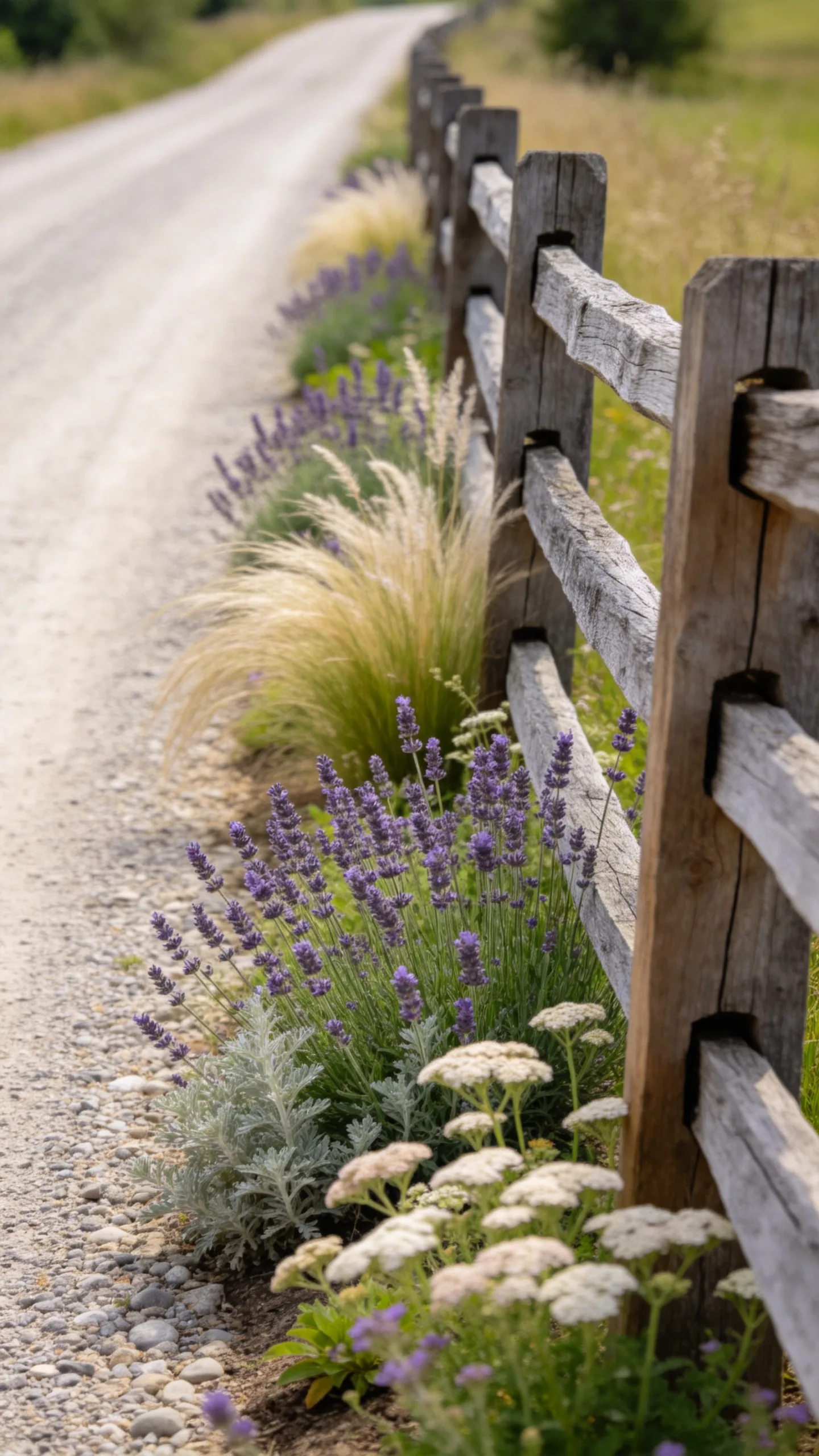
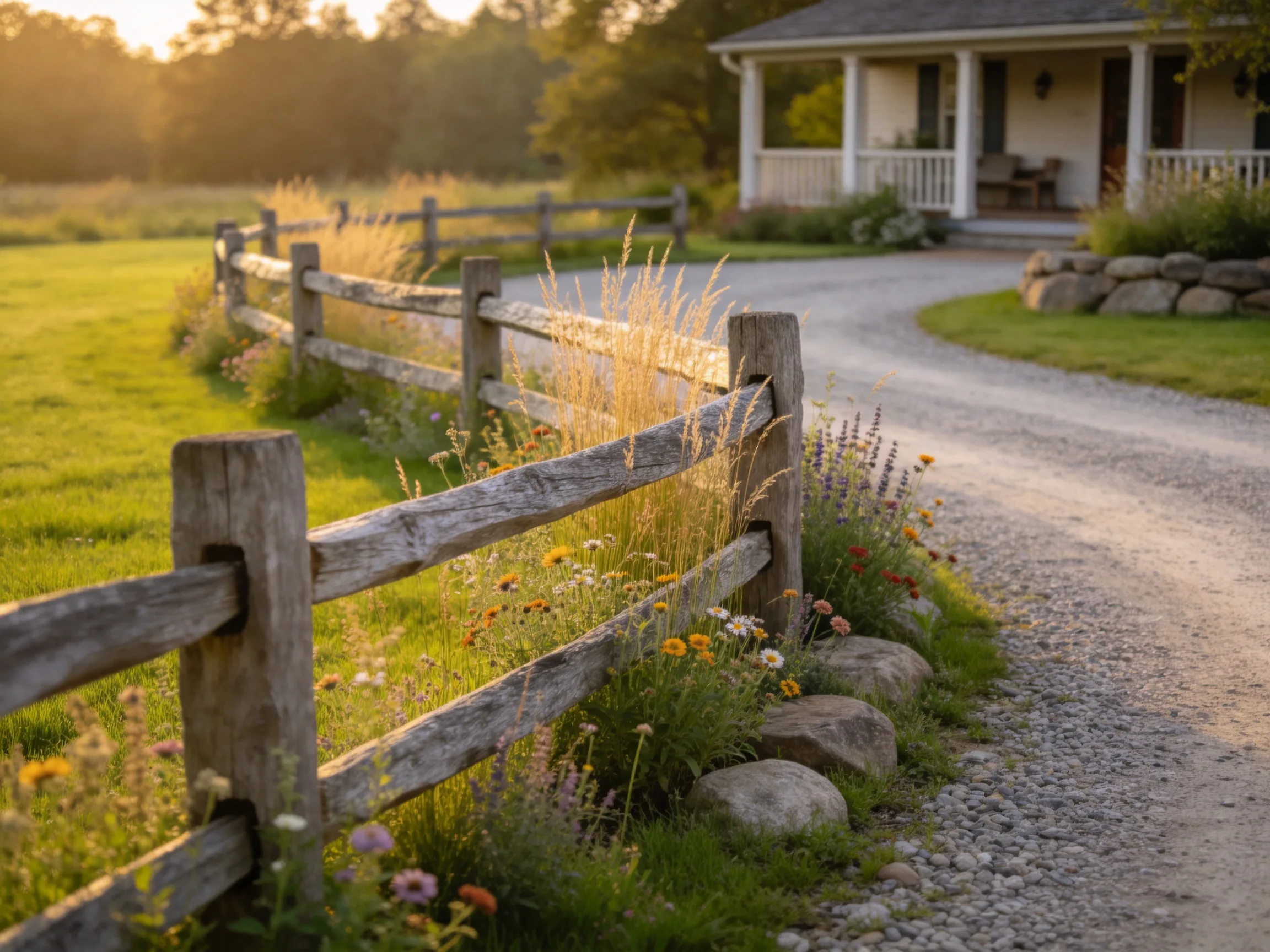
A weathered cedar split rail fence works beautifully beside a gravel driveway because both materials have a soft, rural look. The gray-brown rails echo the tones of stone, bark mulch, and aged barn wood, making the driveway feel intentional instead of unfinished.
Plant low-maintenance perennials along the fence line to soften the edge without blocking the rails. Lavender, catmint, yarrow, and ornamental grasses are good choices for sunny areas with well-drained soil. Keep plants set back slightly from the posts so the fence remains visible and mowing or trimming stays manageable.
2. Split Rail Fence With Wildflower Border
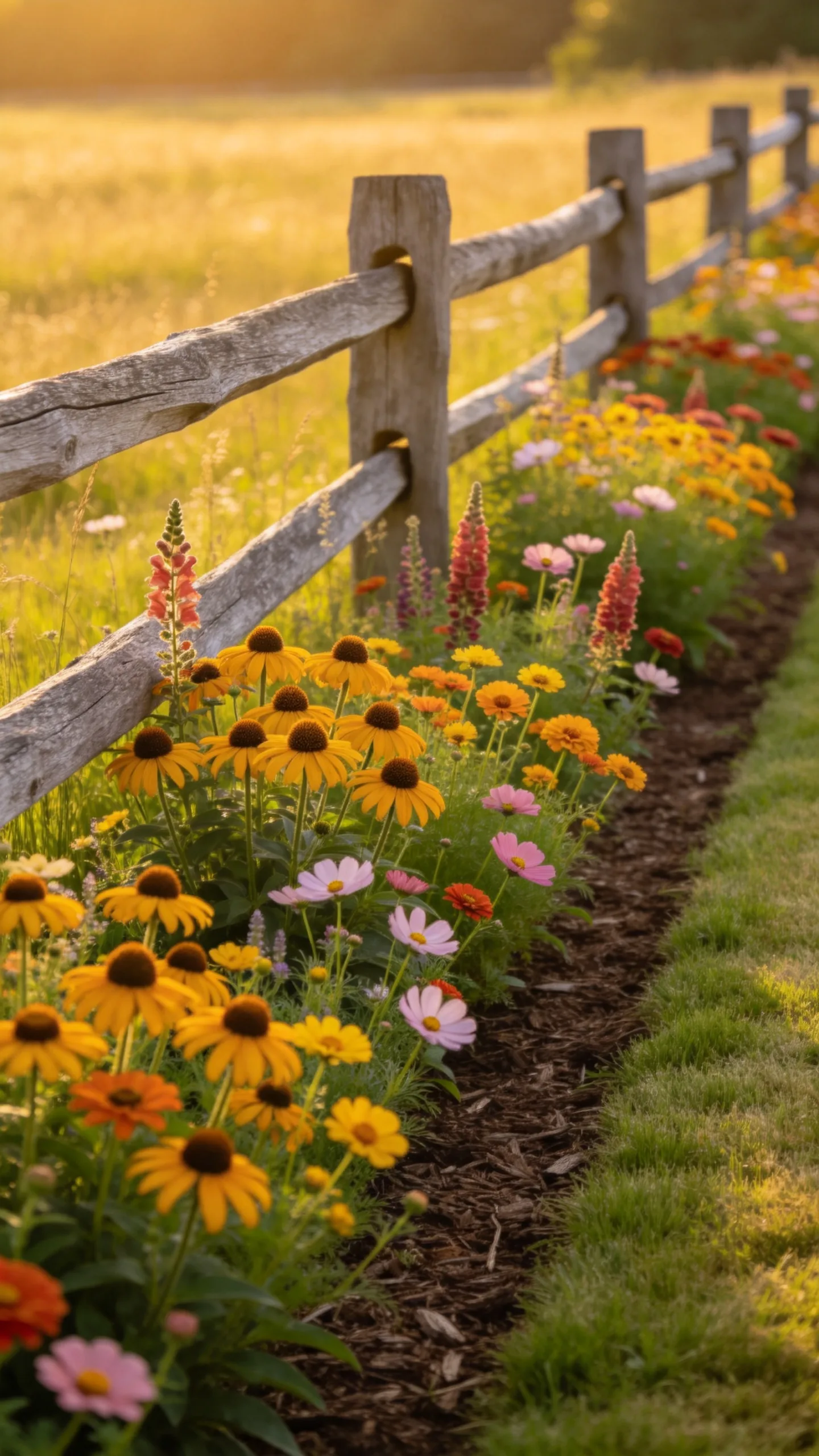
A split rail fence becomes more picturesque when paired with a wildflower border. The open rails allow flowers to spill visually through the fence, creating a loose farmhouse meadow effect without needing a fully wild yard.
For a plantable border, choose flowers suited to your light and soil. In full sun, try black-eyed Susans, coneflowers, coreopsis, bee balm, and cosmos. For a neater look, keep the bed narrow and repeat the same plants in drifts rather than scattering too many varieties. Add mulch or a mown grass strip in front to keep the wildflower edge from looking messy.
3. Black Split Rail Fence for Modern Farmhouse Contrast
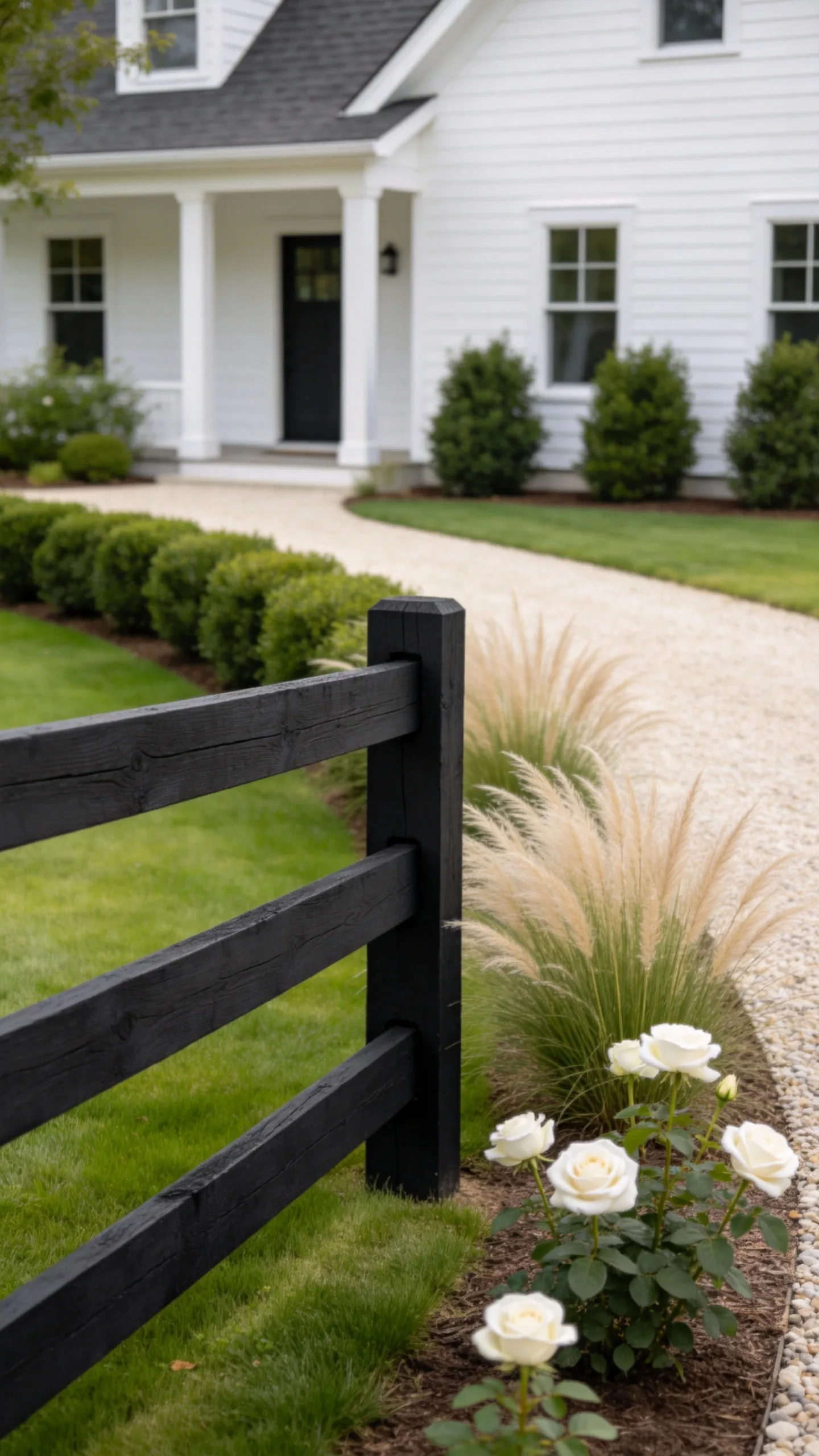
Painting or staining a split rail fence black gives it a modern farmhouse look while keeping the rustic shape. The dark rails create strong lines against green grass, white siding, hydrangeas, or pale gravel paths.
This idea works especially well around front yards, entry gardens, and long side boundaries where you want structure without full privacy. Use matte black exterior stain for a softer look than glossy paint, and pair it with simple plantings such as boxwood, feather reed grass, white roses, or limelight hydrangeas.
4. Split Rail Fence Around a Vegetable Garden
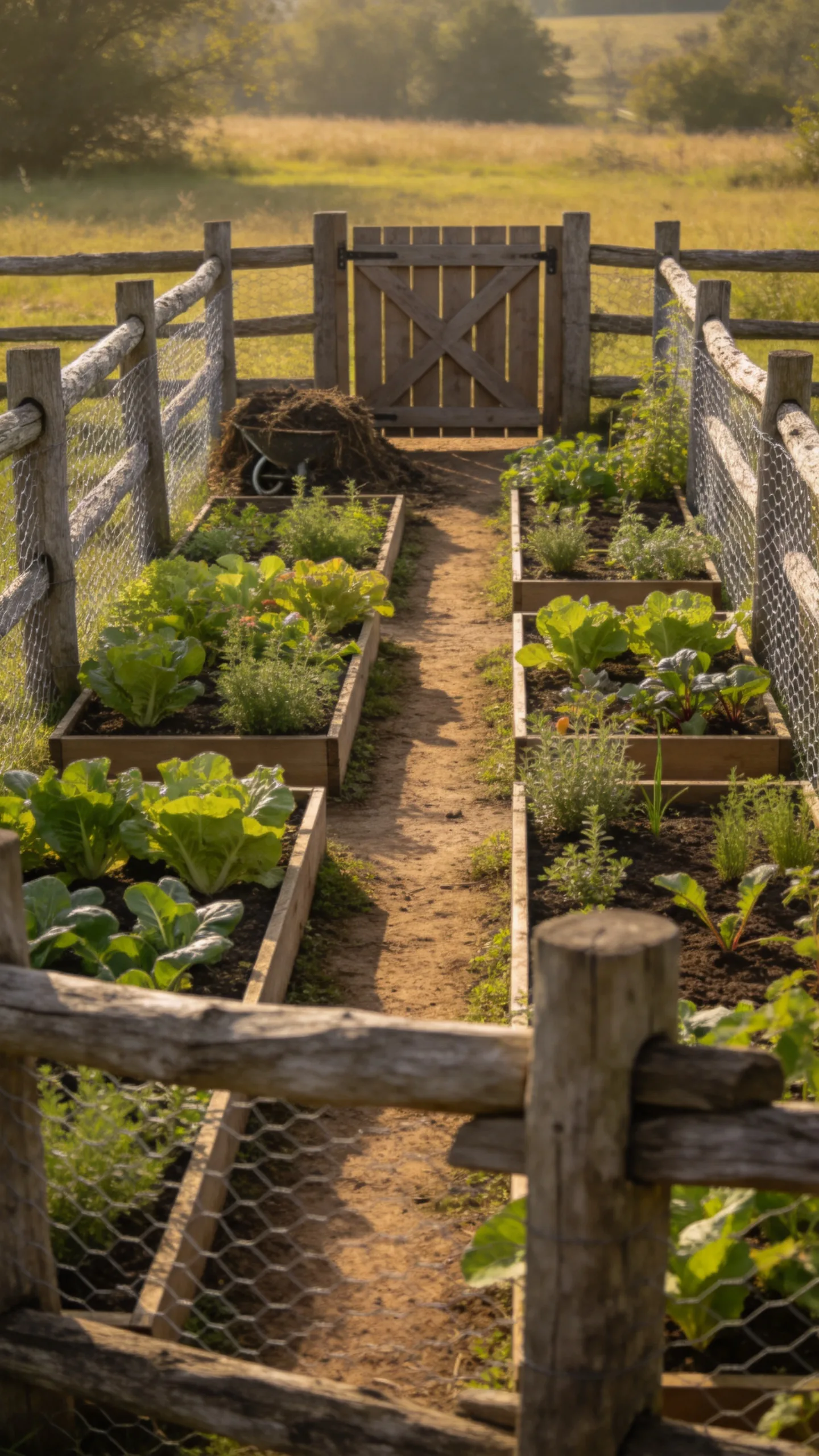
A split rail fence around a vegetable garden gives the space a charming homestead feel while creating a clear boundary between food beds and lawn. It is especially useful for organizing raised beds, compost areas, and narrow walking paths.
For better pest control, attach galvanized wire mesh or hardware cloth to the inside of the rails. This helps discourage rabbits and small animals while keeping the rustic fence visible from the outside. Add a simple gate wide enough for a wheelbarrow, and leave enough clearance around beds for watering, harvesting, and seasonal soil amendments.
5. Split Rail Fence With Climbing Roses
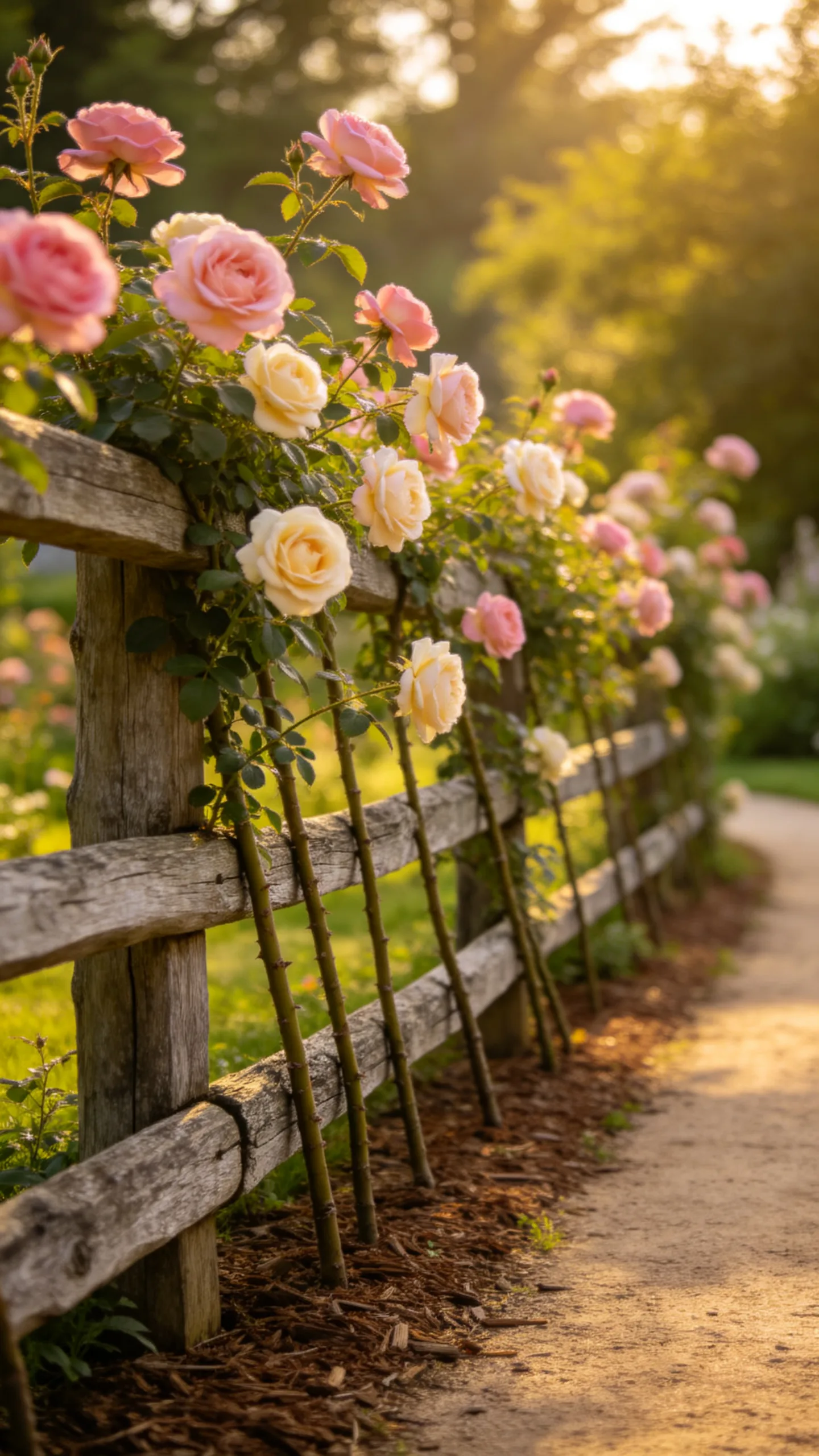
Climbing roses can make a split rail fence look romantic and established, especially along a sunny front yard or garden path. The rails provide a horizontal structure, while the roses add flowers, fragrance, and seasonal softness.
Choose rose varieties suited to your climate and train long canes along the rails with soft garden ties. Because roses need airflow, avoid packing the fence line with dense shrubs. Mulch the base, water deeply during dry spells, and prune according to the rose type to keep the fence from becoming tangled.
6. Split Rail Fence With Wire Mesh for Pets
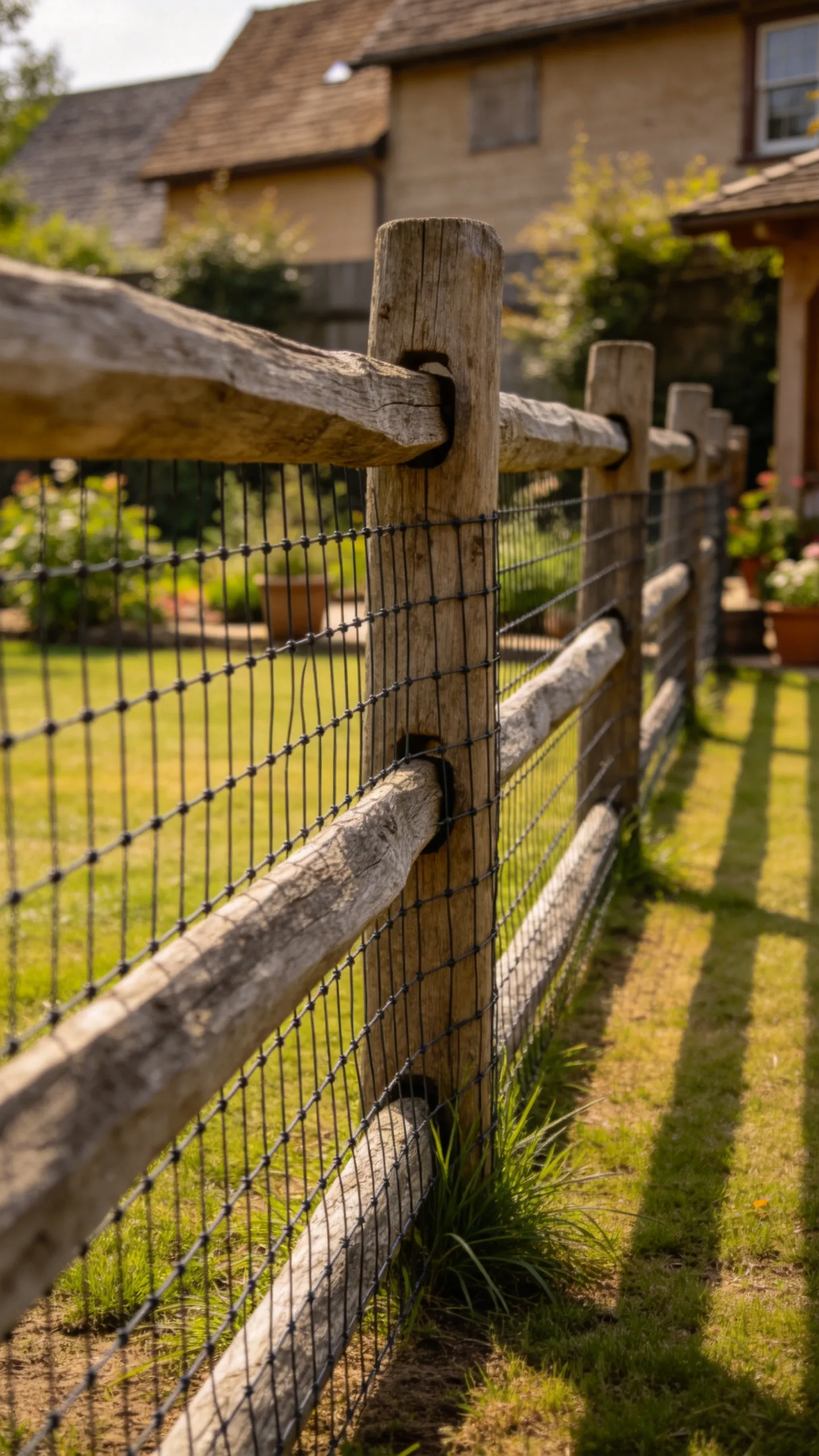
If you love the open look of split rail fencing but need more containment, add wire mesh to the yard-facing side. This keeps the farmhouse character while making the fence more practical for small dogs or areas where pets need a defined boundary.
Use dark-coated welded wire for a less noticeable finish, or galvanized wire for a classic farm look. Make sure the mesh is securely stapled to the posts and rails, with the bottom edge close to the ground. This design is helpful around backyards, garden courtyards, and side yards where you want visibility instead of a solid privacy fence.
7. Split Rail Fence Framing a Cottage Garden
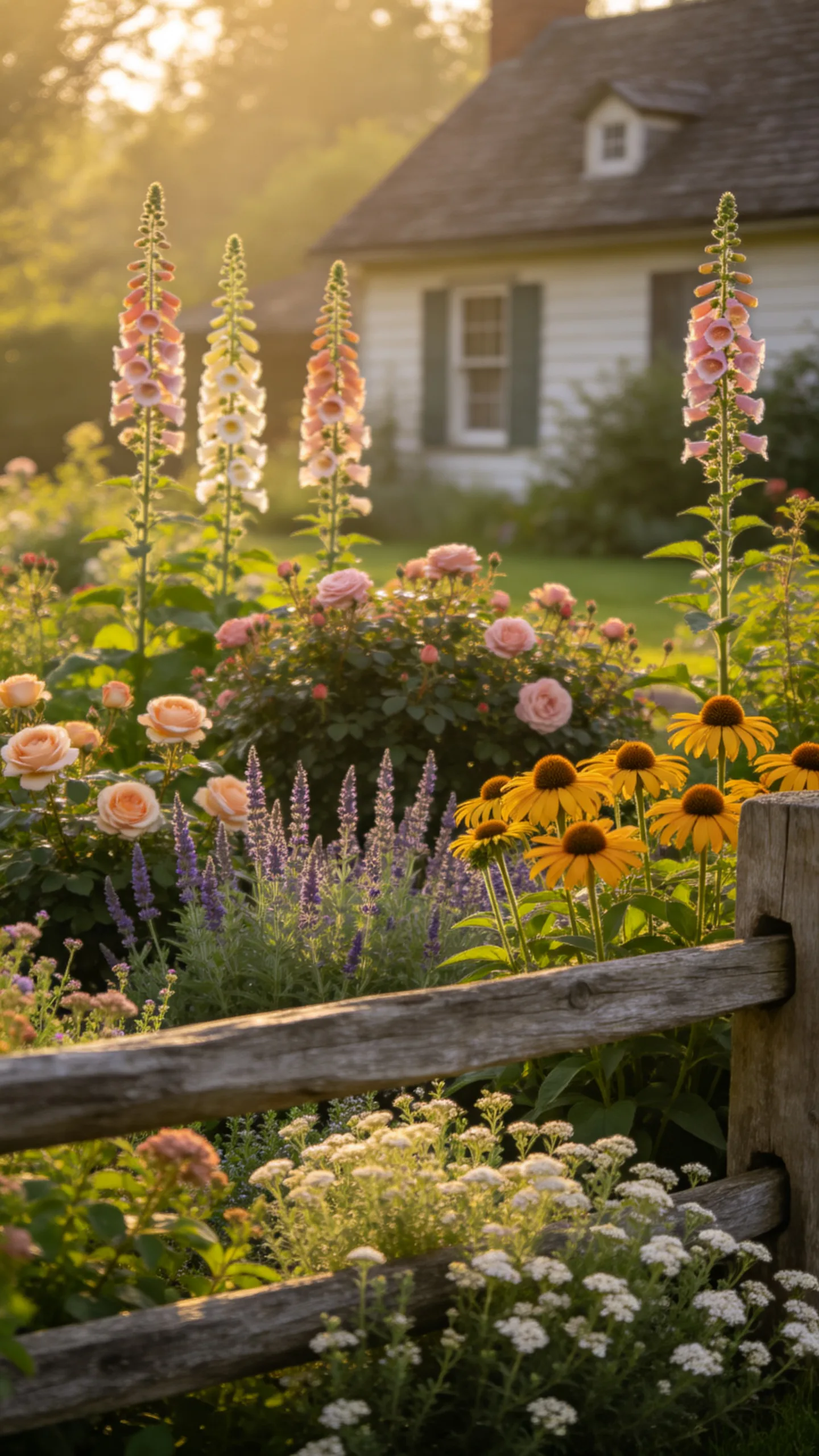
A cottage garden looks especially inviting when framed with a low split rail fence. The simple wood rails keep the planting area defined while allowing flowers, herbs, and shrubs to remain the main feature.
Use layered planting to create depth: taller plants like hollyhocks, foxgloves, or shrub roses near the back, medium plants like salvia and coneflowers in the middle, and low edging plants like thyme or alyssum near the front. The fence can sit behind the garden bed or run through it, depending on whether you want it to act as a backdrop or a visible design element.
8. Split Rail Fence With Stone Pillar Accents
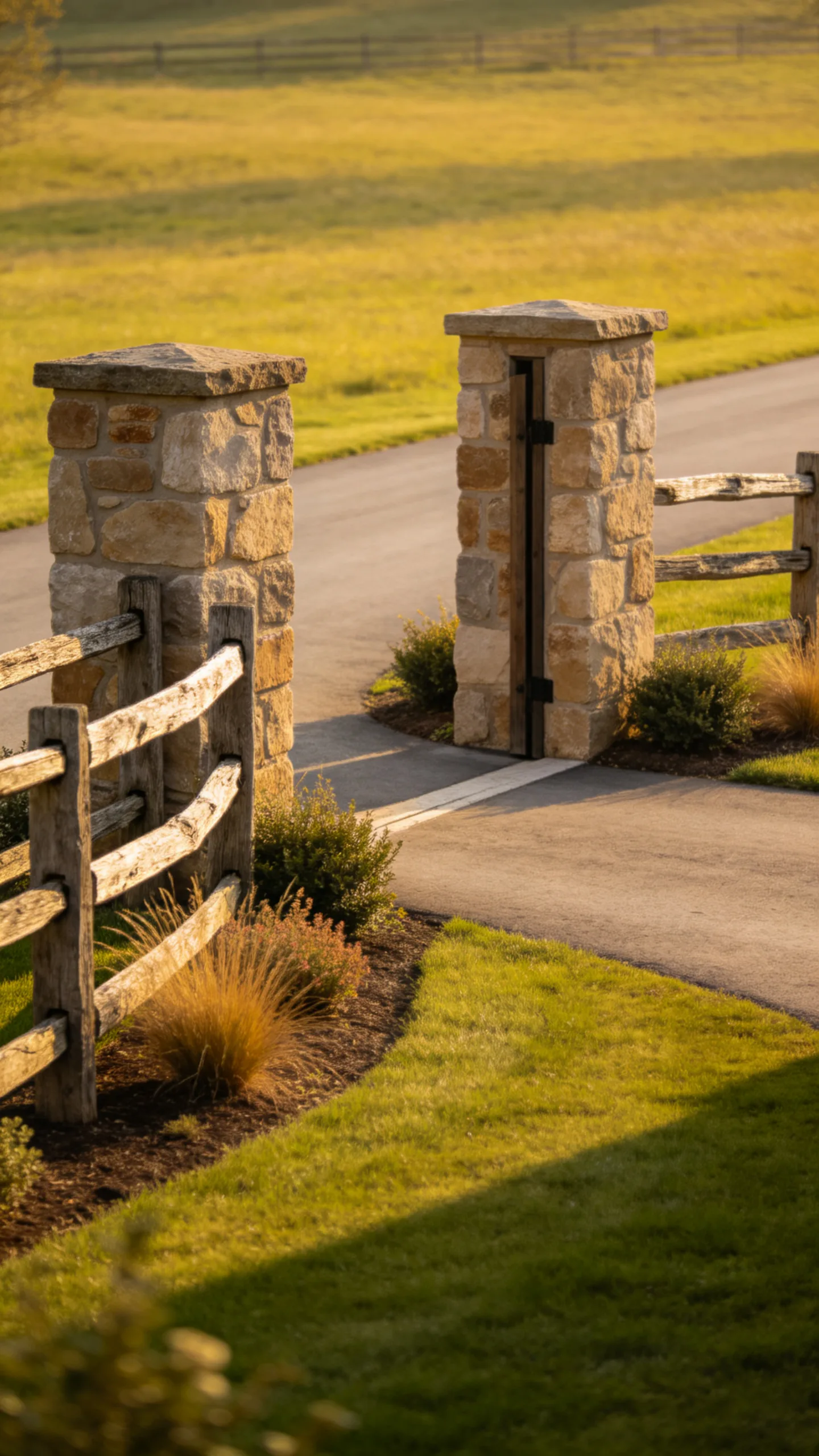
Adding stone pillars at corners or gate openings gives a split rail fence a more substantial farmhouse entrance. The contrast between rough wood and natural stone feels rustic but polished enough for a front yard.
Use stone pillars sparingly so the fence does not lose its relaxed character. They work best at driveway entries, walkway openings, or the beginning of a long fence run. Plant low shrubs or ornamental grasses around the base to soften the transition between hardscape and lawn.
9. Curved Split Rail Fence Around a Front Lawn
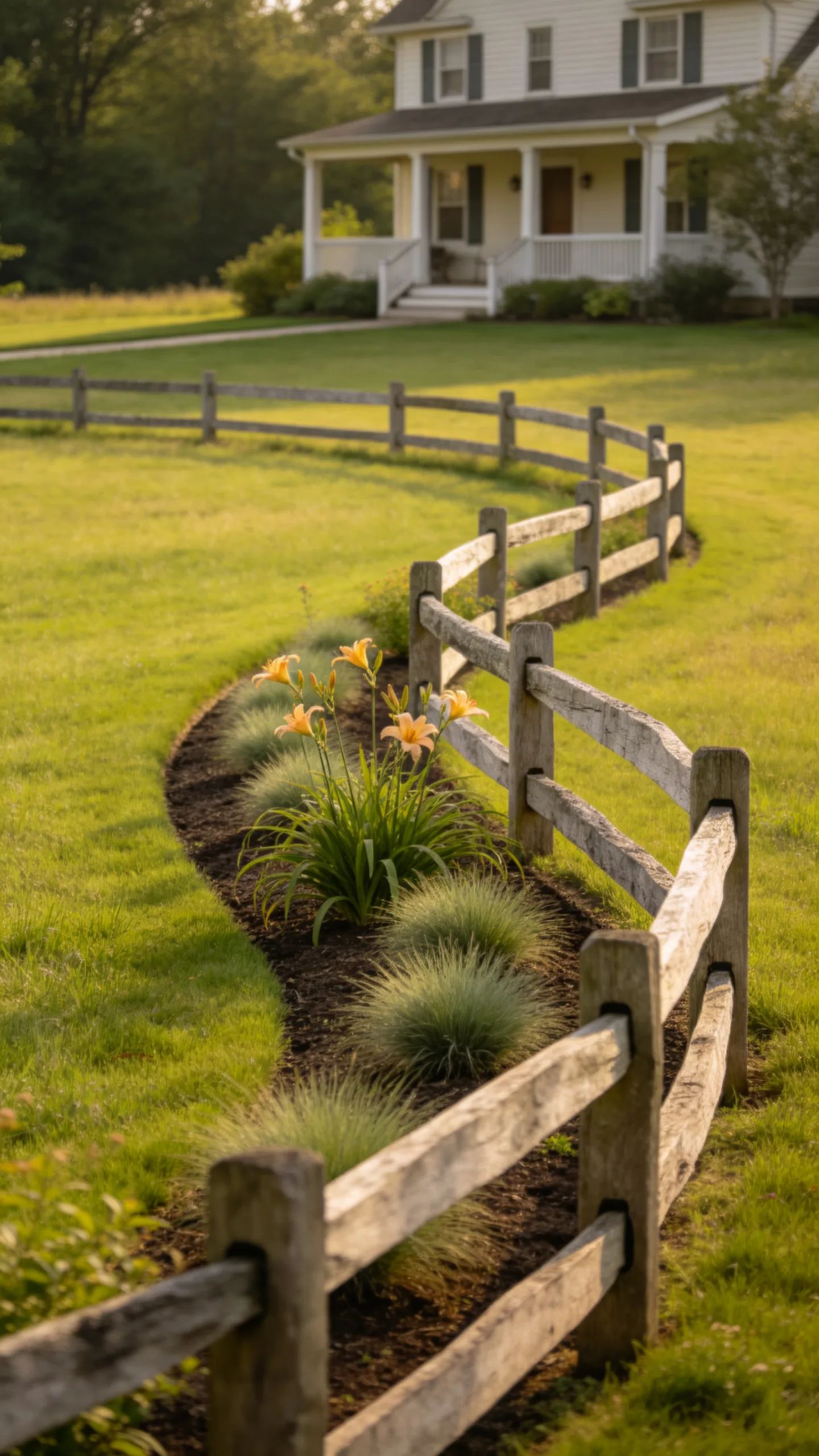
A curved split rail fence can make a front yard feel softer than a straight boundary. Instead of cutting across the lawn in a rigid line, the fence follows a gentle arc that draws the eye toward the house, porch, or garden gate.
This idea works well on larger farmhouse lots or wide suburban lawns. Keep the curve simple so installation remains practical and mowing stays easy. Add a shallow planting bed along the inside of the curve with repeat plants such as hostas for shade, daylilies for sun, or compact ornamental grasses for low maintenance.
10. Split Rail Fence With Hydrangea Planting
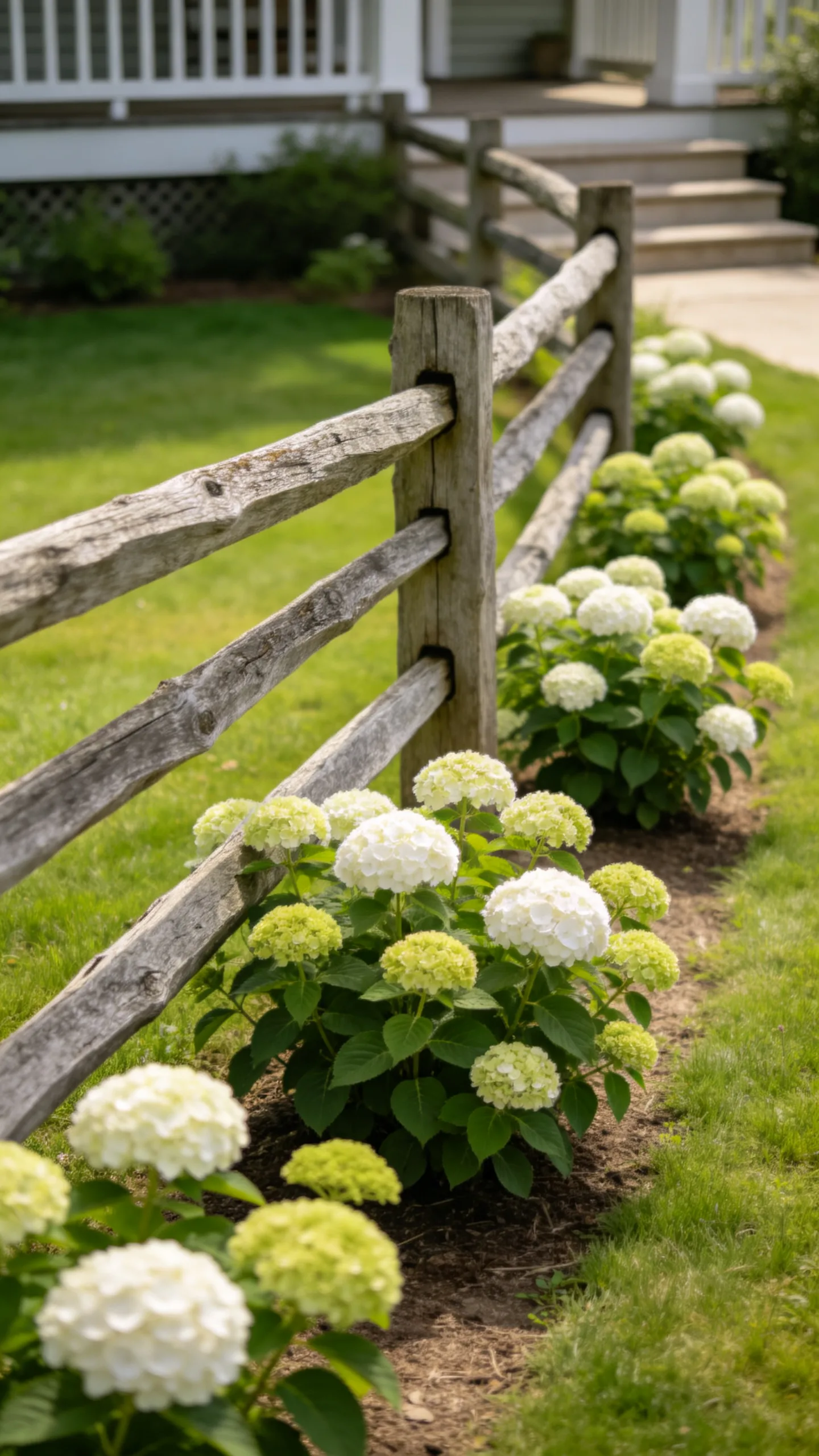
Hydrangeas pair beautifully with split rail fences because their rounded blooms contrast with the rough horizontal rails. This combination works well near porches, along side yards, or at the edge of a lawn where you want a soft farmhouse border.
Choose hydrangeas based on your light conditions. Panicle hydrangeas usually handle more sun, while many bigleaf hydrangeas prefer morning sun and afternoon shade. Leave room between the shrubs and the fence so air can circulate and mature plants do not swallow the rails completely.
11. Low Split Rail Fence for a Small Yard
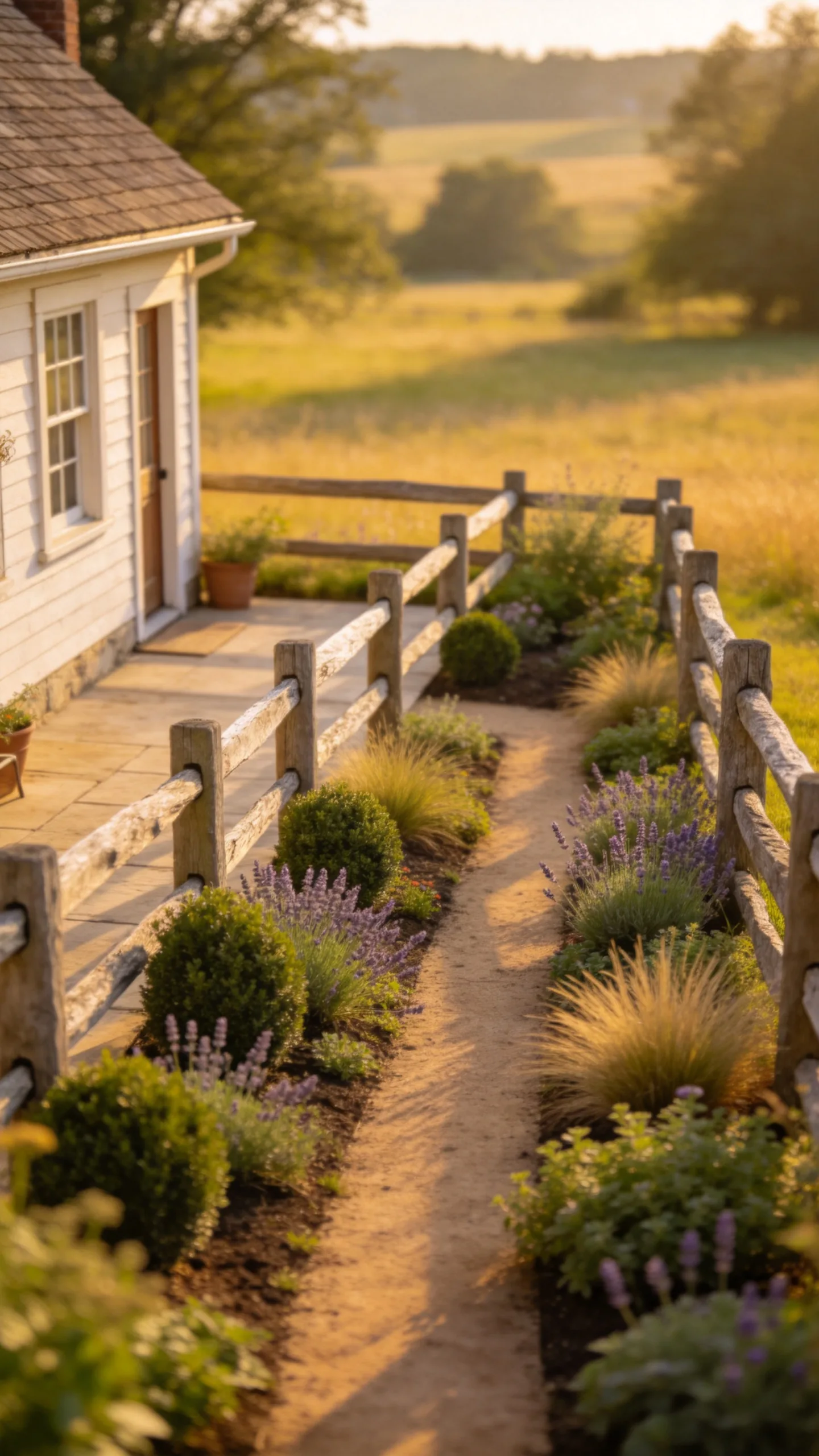
A low split rail fence can add rustic character to a small yard without making the space feel boxed in. Because the rails are open, they define the garden edge while preserving views across the lawn, patio, or neighboring landscape.
Use this idea to separate a compact patio from a planting bed, outline a tiny front garden, or frame a narrow side yard path. Keep the fence height modest, and pair it with small-scale plants like dwarf boxwood, lavender, creeping thyme, or compact grasses so the design stays proportional.
12. Split Rail Fence Along a Mulched Woodland Edge
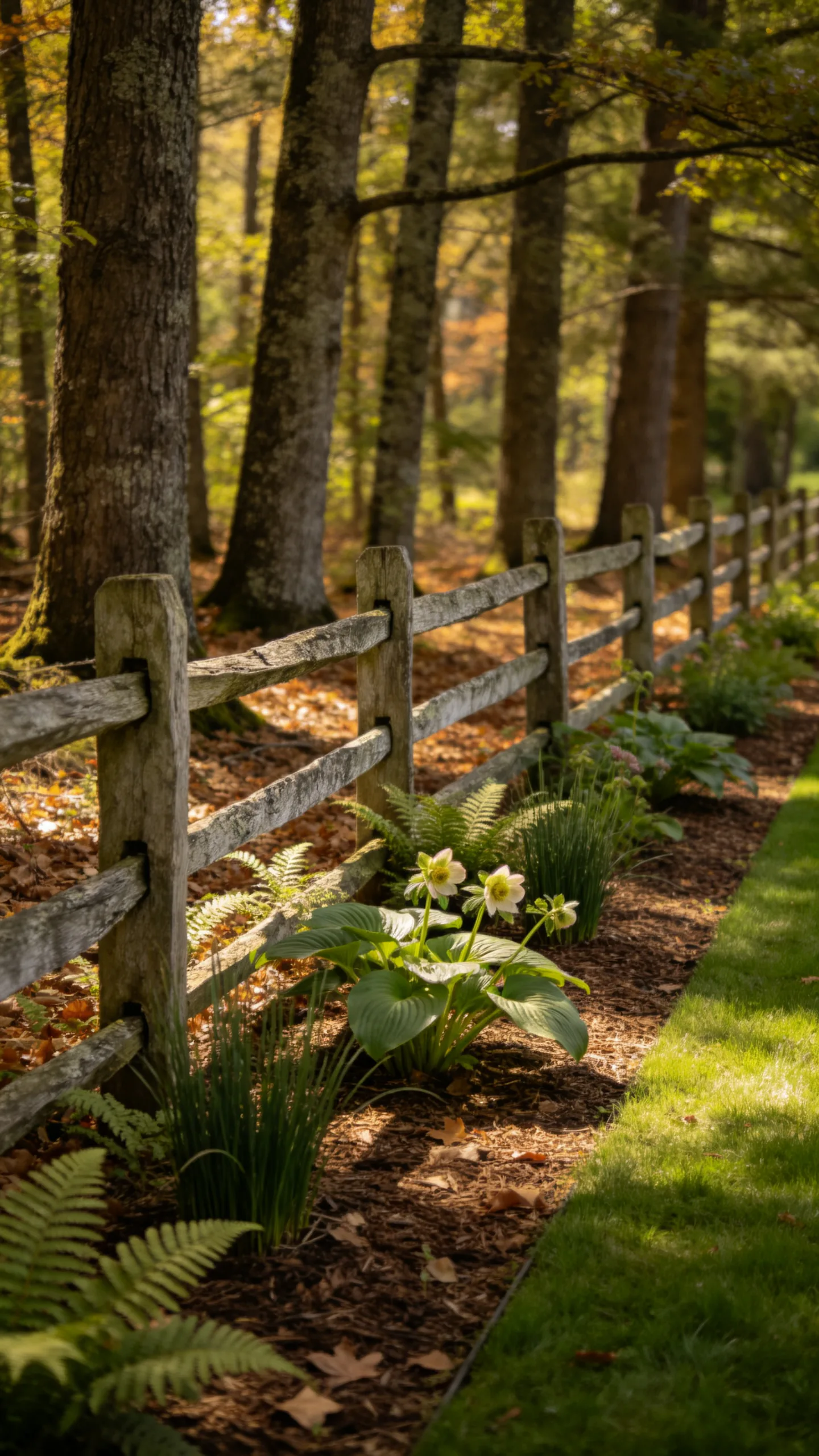
If your yard meets a wooded area, a split rail fence can create a clean transition between maintained garden space and natural trees. The rough wood blends with trunks and leaf litter, making it feel less formal than vinyl or metal fencing.
Add a mulched strip along the fence to reduce trimming and protect tree roots from mower damage. For shade or part-shade, plant ferns, hostas, native sedges, hellebores, or woodland phlox where they suit your region. This design helps organize a rustic yard without fighting the natural setting.
13. Split Rail Fence With a Farm Gate Entrance
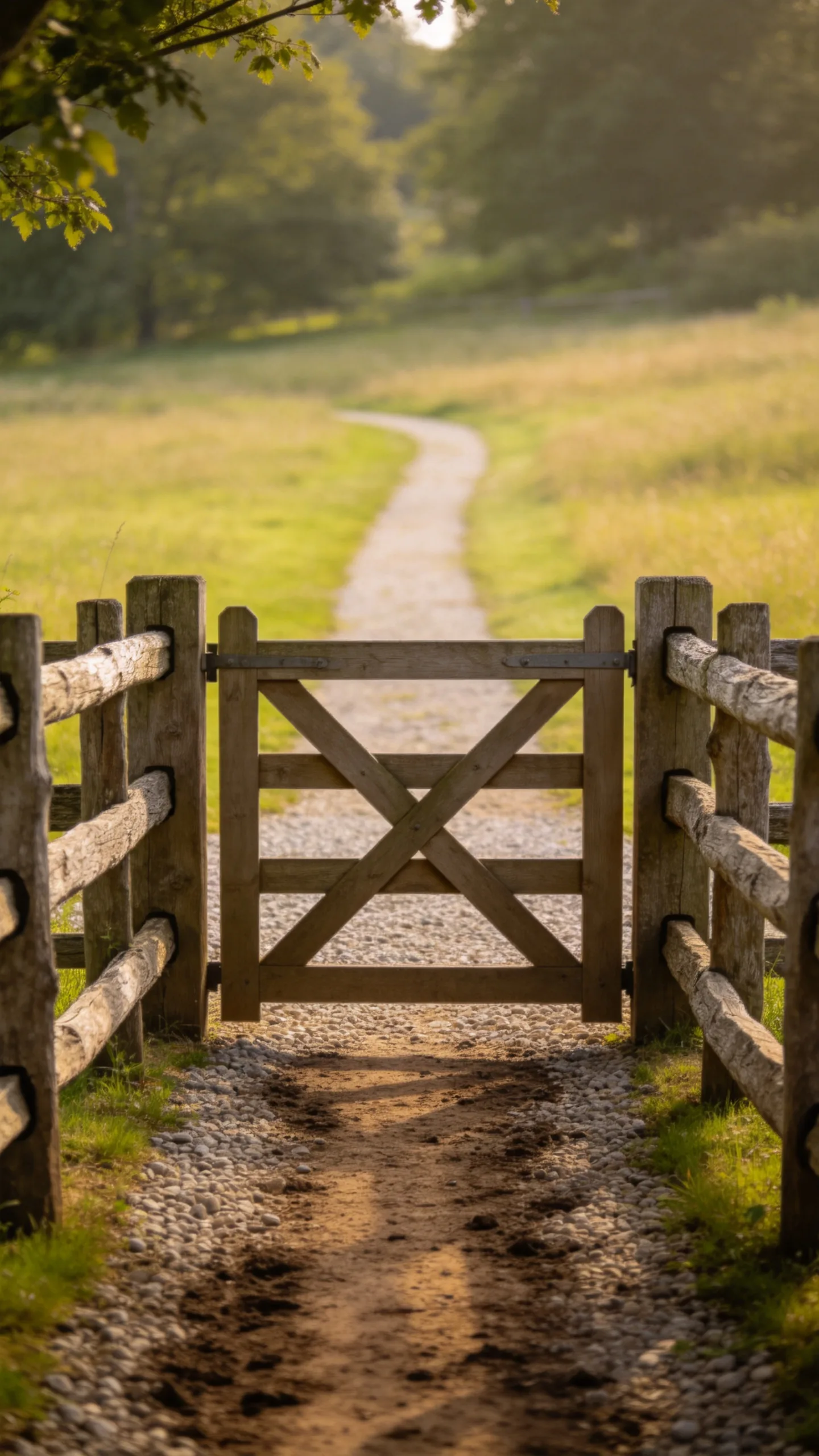
A simple farm gate makes a split rail fence feel complete and useful. It gives structure to a driveway, garden entrance, pasture-style yard, or side path while reinforcing the country farmhouse look.
Choose a wooden gate for a fully rustic design or a black metal farm gate for contrast. Make sure the opening is wide enough for your needs, whether that means a mower, wheelbarrow, garden cart, or vehicle access. Add gravel beneath the gate area to reduce mud and keep the entrance usable after rain.
14. Split Rail Fence Bordering a Gravel Garden Path
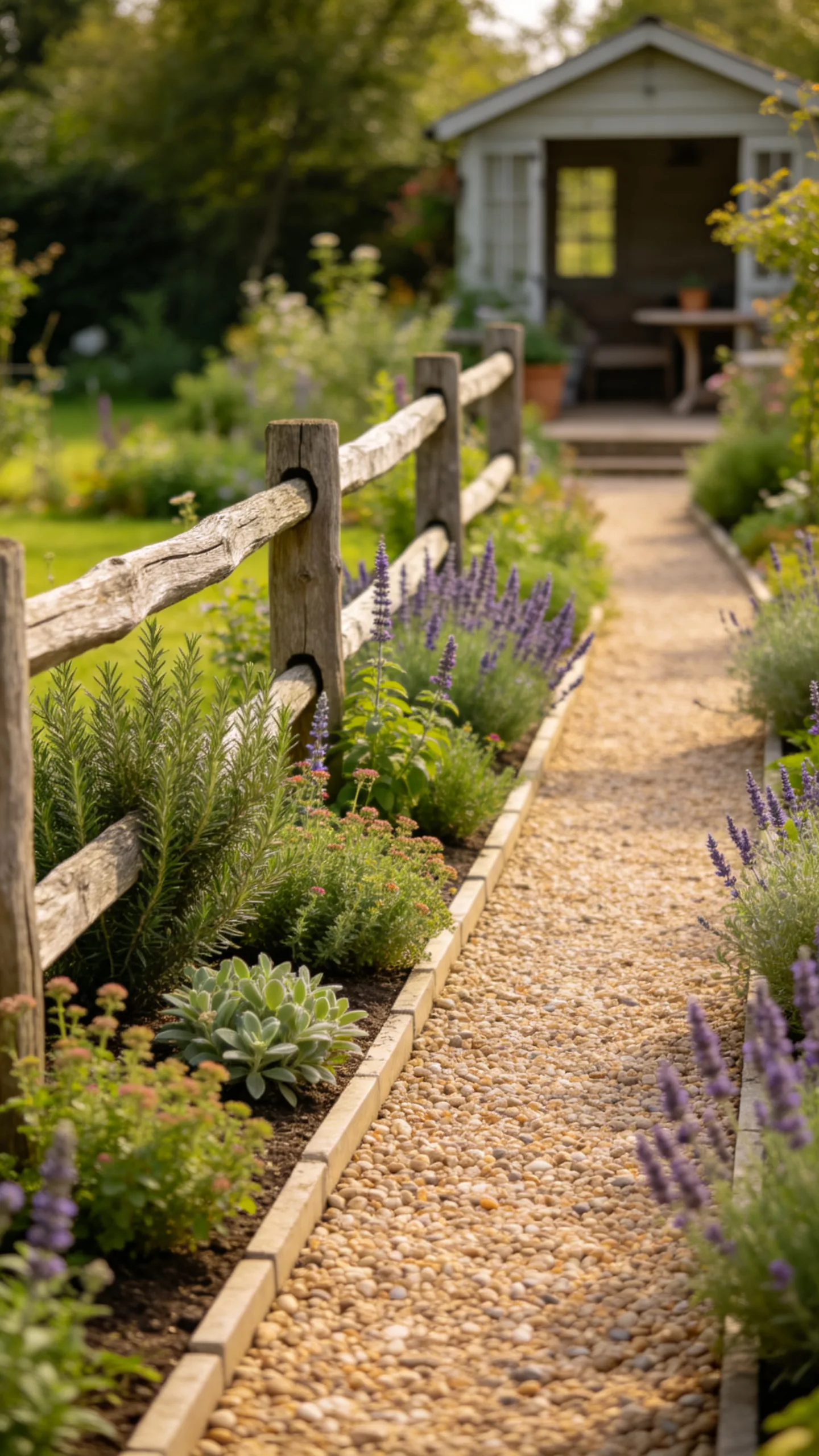
A split rail fence beside a gravel path gives the yard a relaxed walking route, especially between a driveway, garden shed, patio, or vegetable garden. The fence acts as a visual guide without feeling too formal.
Use crushed stone or pea gravel with a sturdy edging material to keep the path contained. Along the fence, plant drought-tolerant herbs and perennials such as rosemary, thyme, salvia, sedum, or Russian sage in sunny locations. The combination of gravel, wood, and textured plants creates a practical farmhouse path with strong Pinterest appeal.
15. Split Rail Fence With Seasonal Pumpkin Display
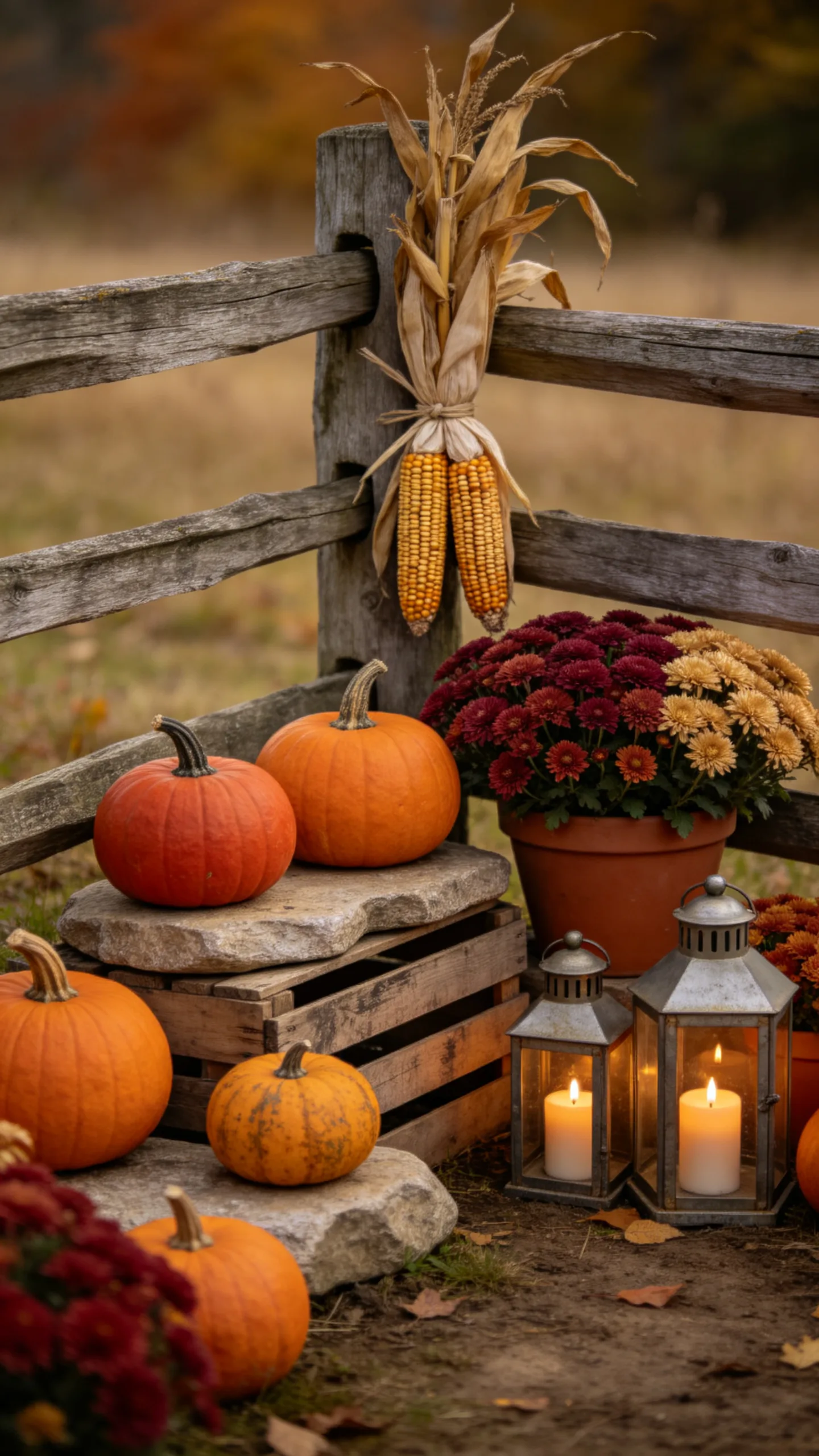
A split rail fence is an easy backdrop for seasonal decorating, especially in fall. Pumpkins, corn stalks, mums, and lanterns look natural against rustic rails and can dress up a front yard without permanent changes.
Keep decorations clustered near gates, corners, or porch-facing sections so the fence still feels clean. Place pumpkins on flat stones, crates, or mulch instead of directly on damp soil to help them last longer. In spring or summer, the same fence can hold hanging baskets, small wreaths, or simple garden signs.
16. Split Rail Fence Around a Chicken-Friendly Yard
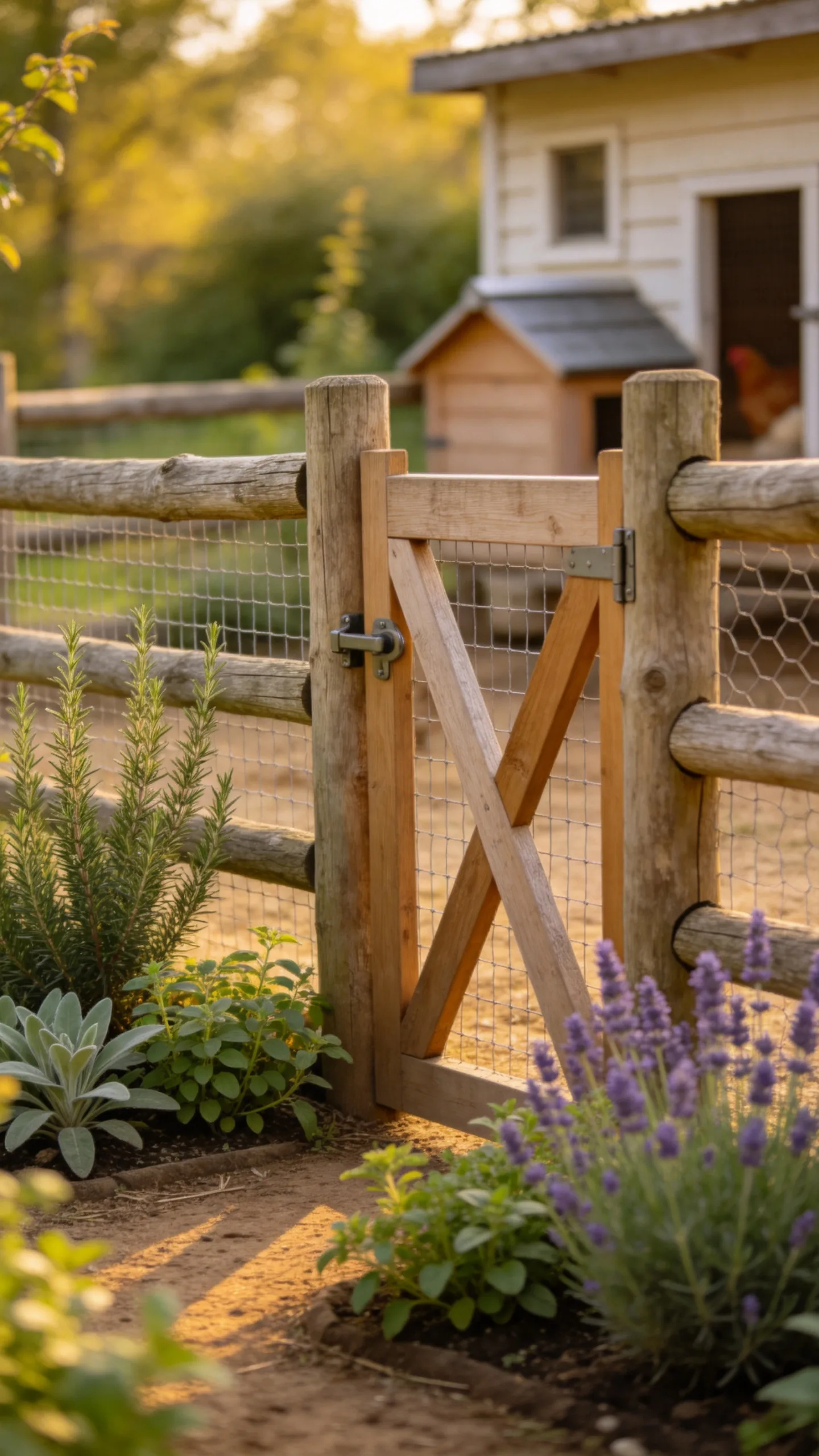
For a farmhouse property with chickens, a split rail fence can define a run or supervised ranging area while still looking attractive. The rails provide the rustic outline, but practical containment usually requires wire mesh attached to the inside.
Use sturdy welded wire or poultry netting depending on your needs, and bury or secure the lower edge if digging is a concern. Include a gate that latches securely and allows easy access for feeding, cleaning, and collecting supplies. Plant tough herbs like rosemary, oregano, sage, or lavender outside the fence where chickens cannot scratch up the roots.
17. Whitewashed Split Rail Fence for a Soft Farmhouse Look
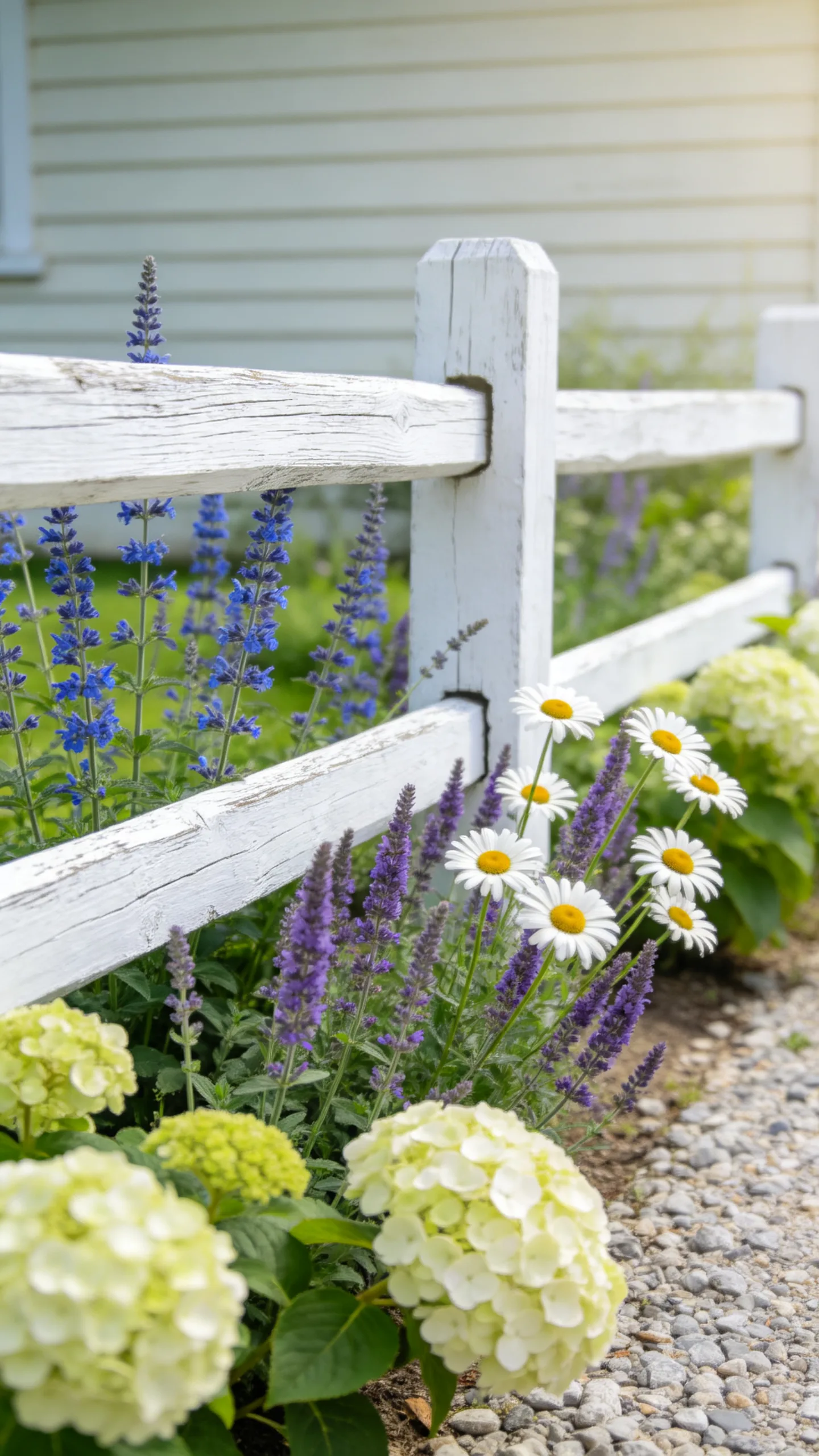
A whitewashed split rail fence gives a lighter, softer version of rustic style. It is less crisp than a bright white picket fence but still brightens the yard and pairs well with farmhouse siding, gravel, and cottage flowers.
This finish works especially well in front yards or garden areas where you want the fence to feel decorative. Use exterior-grade whitewash, limewash, or a semi-transparent stain depending on the material and climate. Pair it with blue, purple, and white flowers such as salvia, catmint, Shasta daisies, or hydrangeas for a fresh country palette.
18. Split Rail Fence With Native Grass Planting
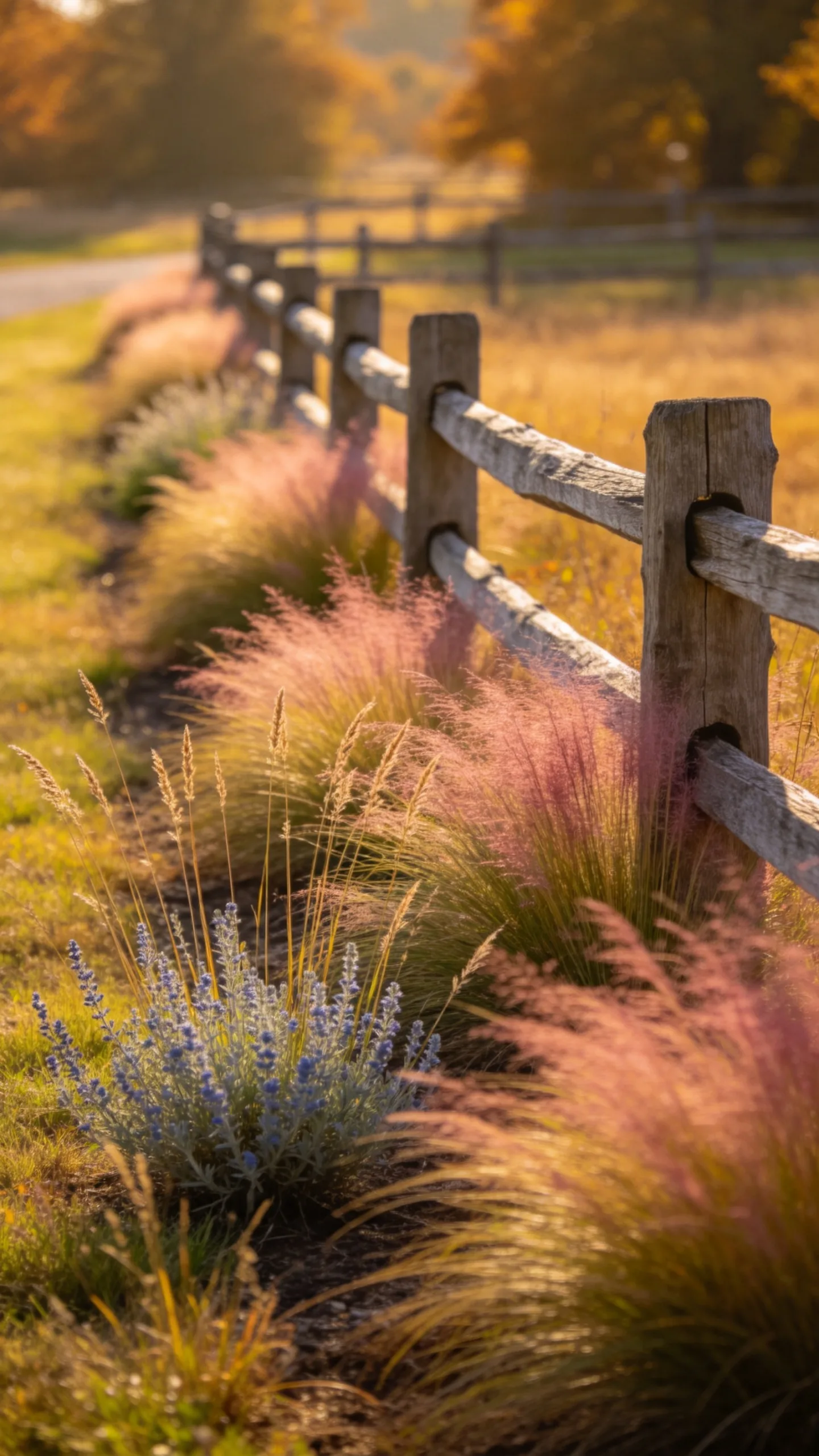
Native grasses can make a split rail fence feel settled into the landscape. Their movement and texture soften the rigid rails while keeping maintenance lower than a flower-heavy border once established.
Choose grasses appropriate for your region and yard size. Little bluestem, switchgrass, prairie dropseed, and muhly grass are common options in many sunny landscapes, but mature height varies. Plant in repeated clumps rather than a solid wall so the fence remains visible and the bed still feels airy.
19. Split Rail Fence Defining a Backyard Fire Pit Area
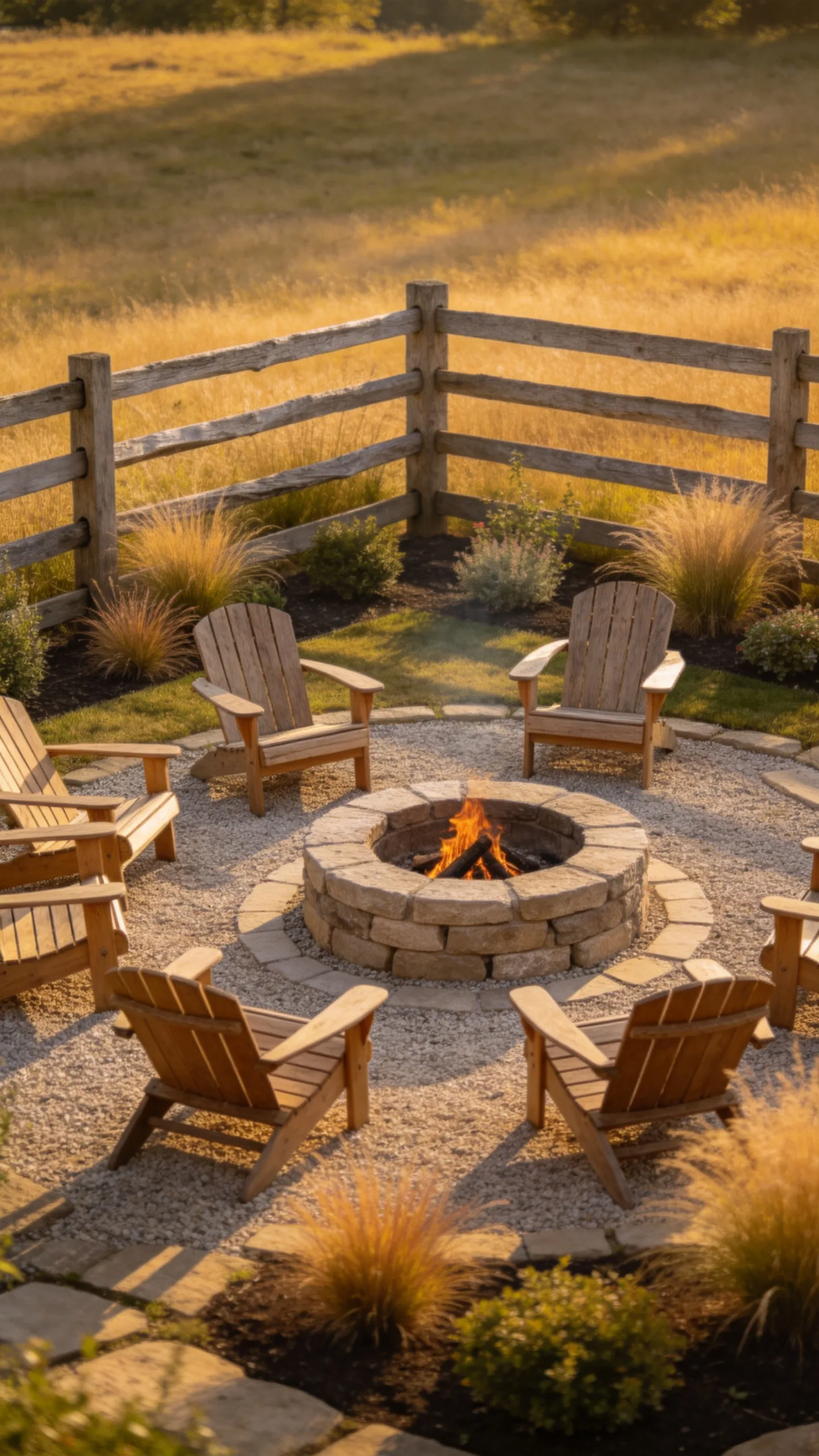
A split rail fence can help define a backyard fire pit zone without enclosing it completely. This works well when the fire pit sits at the edge of a lawn, near a gravel pad, or beside a casual seating area.
Keep the fence far enough from the fire pit to allow safe circulation and reduce heat exposure. Use gravel, stone, or pavers under seating instead of mulch close to flames. Add simple plantings outside the fence, such as ornamental grasses or low shrubs, to frame the area while preserving the open country feel.
20. Split Rail Fence With Lantern Posts
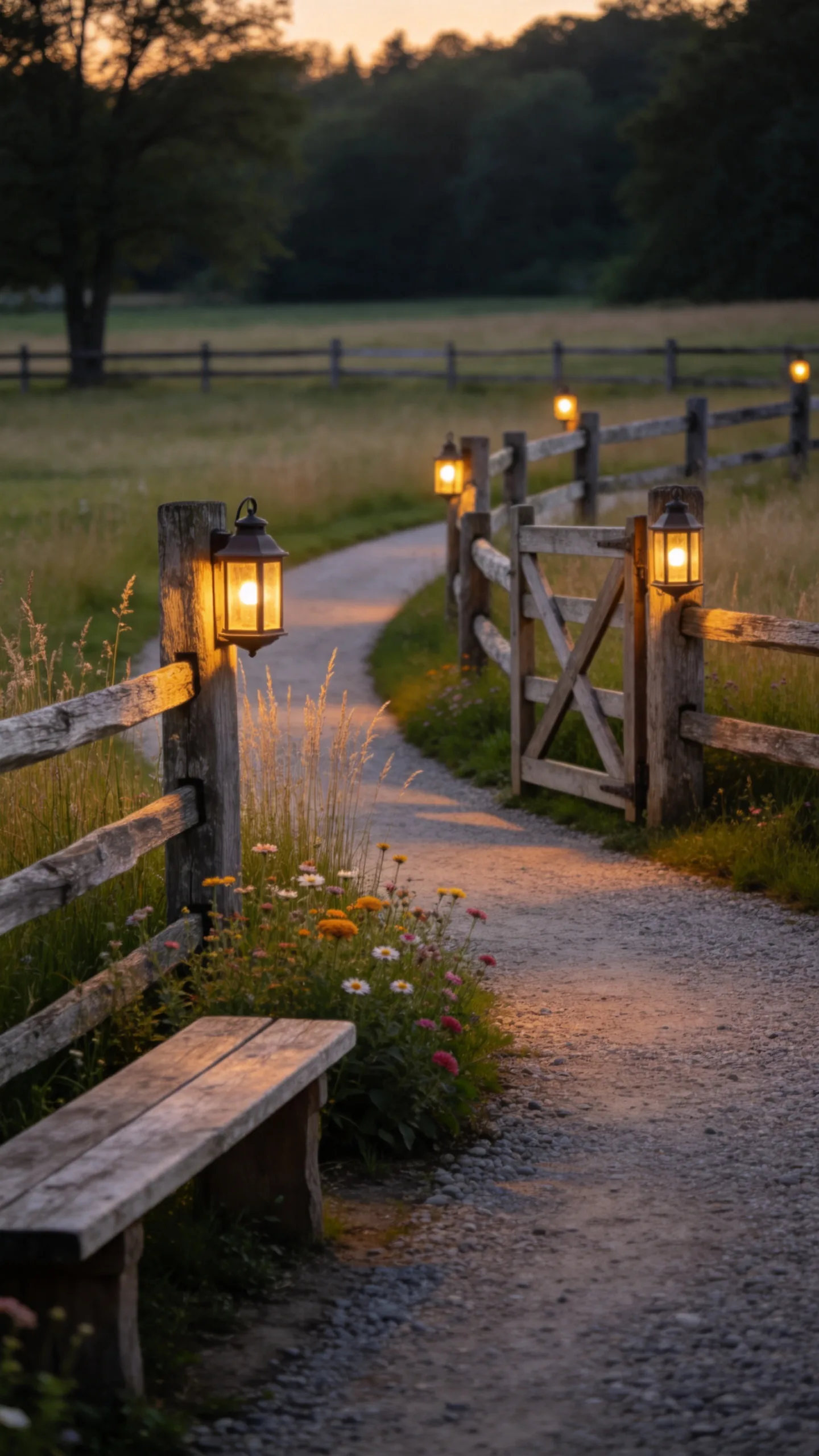
Lanterns mounted on or near split rail fence posts add evening charm to a farmhouse yard. They work especially well along driveways, garden paths, patio edges, or gate entries where a little light improves both atmosphere and navigation.
Use solar lanterns for simple installation, or choose low-voltage fixtures for a more consistent glow. Space lights at key points rather than every post to avoid a cluttered look. Pair the lighting with gravel paths, meadow-style plantings, or a rustic bench to make the fence part of an inviting outdoor route.
21. Split Rail Fence Around a Small Orchard
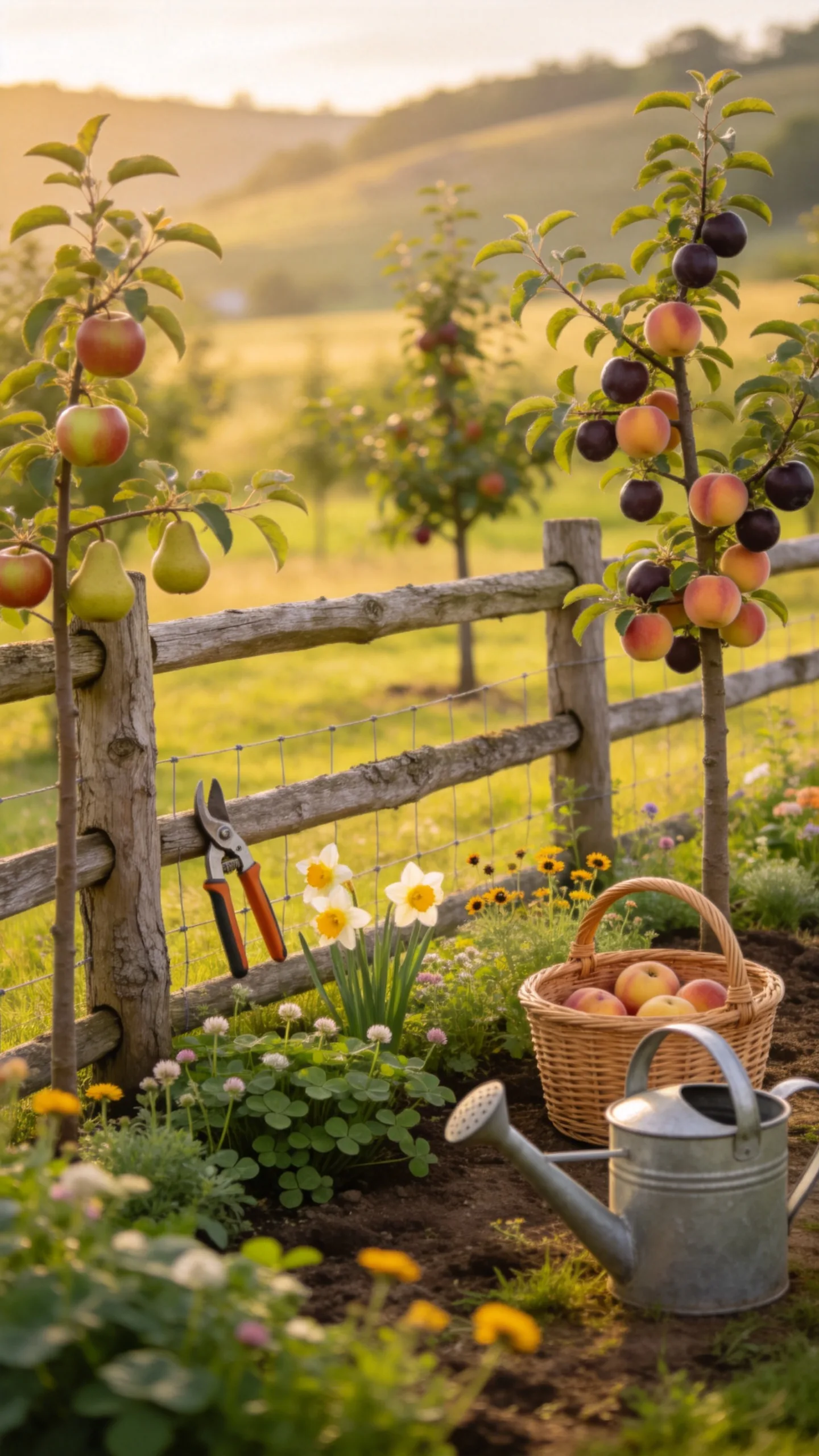
A split rail fence is a natural border for a small orchard or fruit tree area. It gives young apple, pear, peach, or plum trees a defined garden room while keeping the view open and pastoral.
Leave enough space inside the fence for mature tree spread, pruning, watering, and harvesting. If deer or rabbits are common, add appropriate wire protection or individual tree guards because open rails alone will not protect fruit trees. Underplant with clover, herbs, daffodils, or low-growing pollinator flowers where suitable to create a useful, farmhouse-style orchard edge.