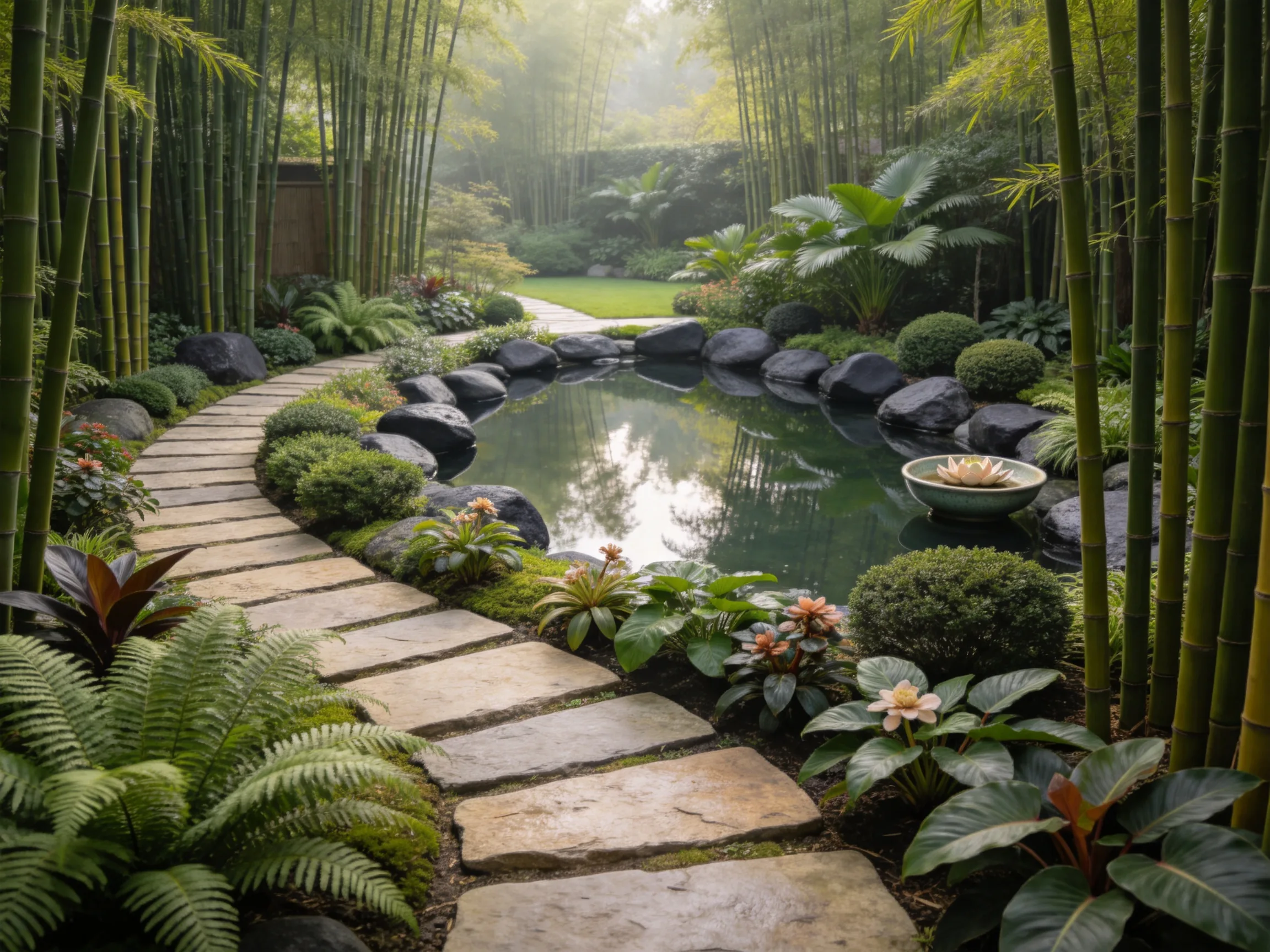
Thai garden design brings together lush foliage, natural stone, warm bamboo, and reflective water to create a peaceful outdoor retreat. Whether you are planning a compact courtyard or a larger backyard, these ideas show how to layer practical paths, screens, ponds, containers, and tropical-looking plants while accounting for local light levels, climate, and maintenance needs.
1. Stepping-Stone Path Through Tropical Foliage
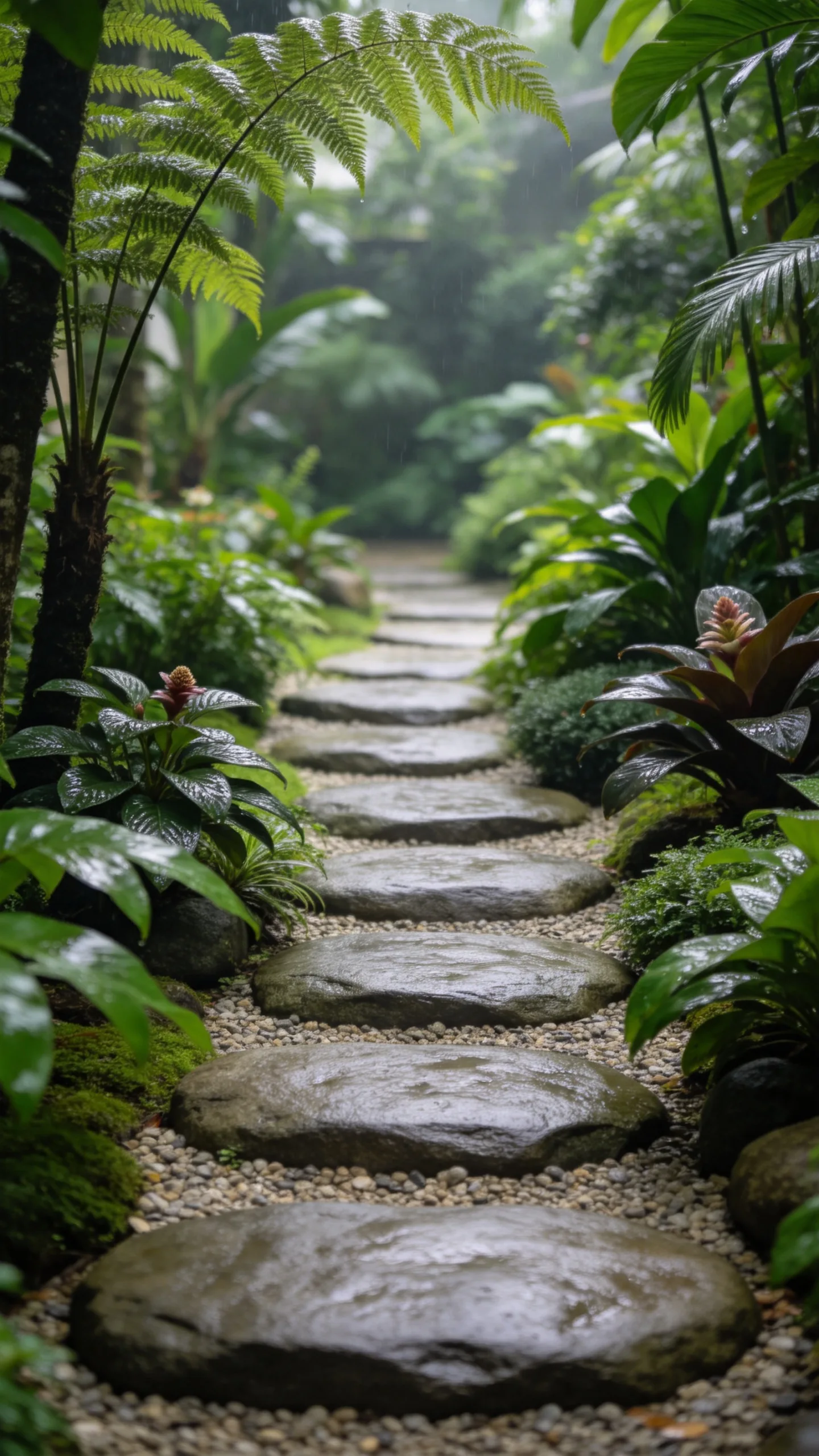
Create an informal path with broad, flat stepping stones surrounded by dense greenery. Space each stone at a comfortable walking stride, then set it on a compacted gravel and sand base so it remains stable during wet weather.
Plant shade-tolerant foliage such as ferns, cast-iron plant, elephant ear, or dwarf ginger along the edges. In colder regions, use hardy plants with a similar leafy appearance, including hostas and ligularia. Low ground covers between the stones soften the path, but leave enough clearance to prevent slippery leaves from covering the walking surface.
2. Bamboo Privacy Screen With a Stone Border
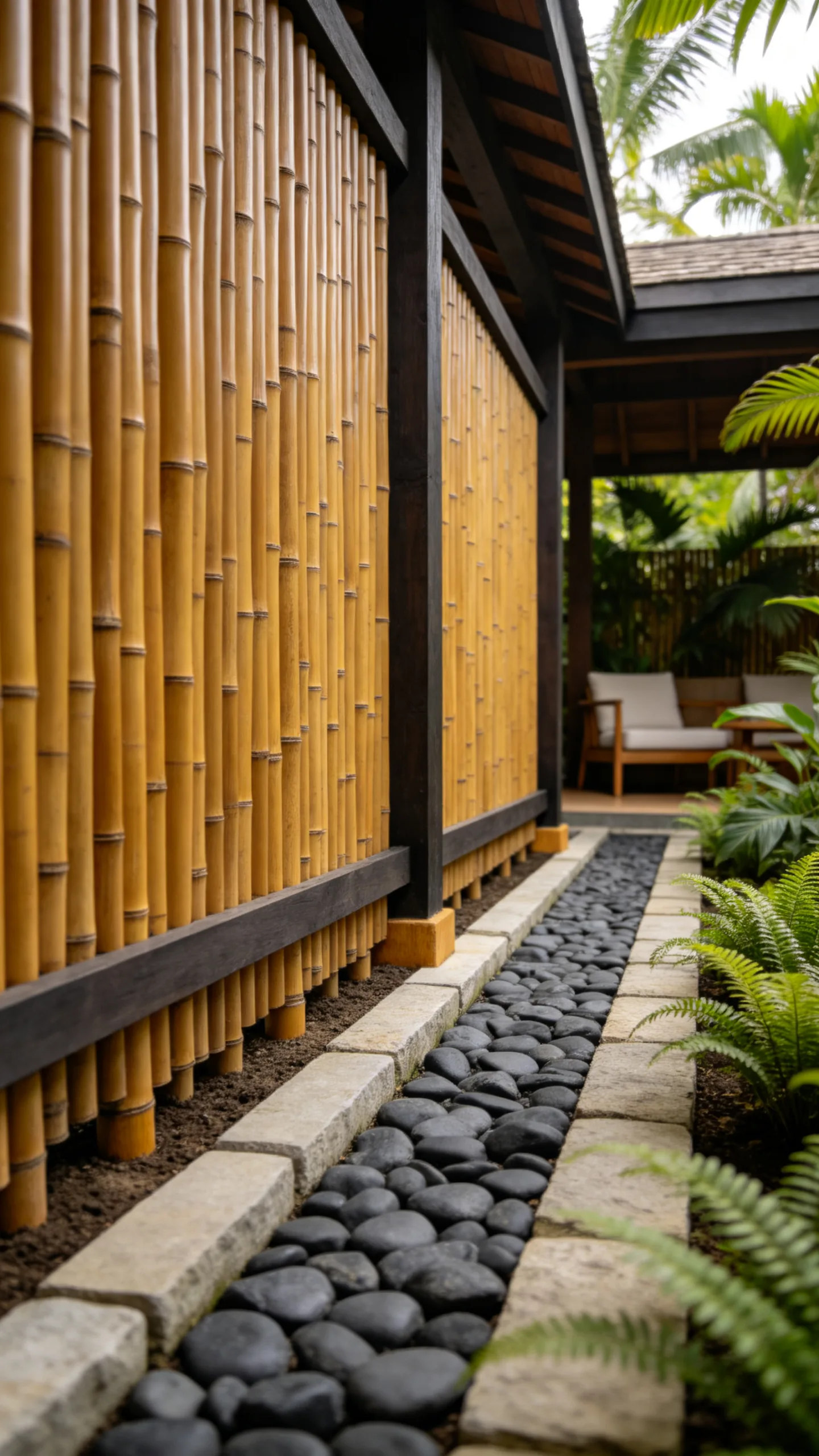
Install a bamboo screen along a patio, property line, or exposed seating area to create privacy without taking up as much room as a wide hedge. Use sealed bamboo poles attached to a sturdy timber or metal frame, keeping the bottom slightly above the soil to reduce moisture damage.
Add a narrow strip of dark river rock at the base for a crisp finish and easier drainage. If you prefer living bamboo, select a clumping variety suitable for your climate and place it behind a root barrier. Avoid running bamboo unless it can be contained reliably.
3. Raised Lotus Bowl as a Small Water Feature
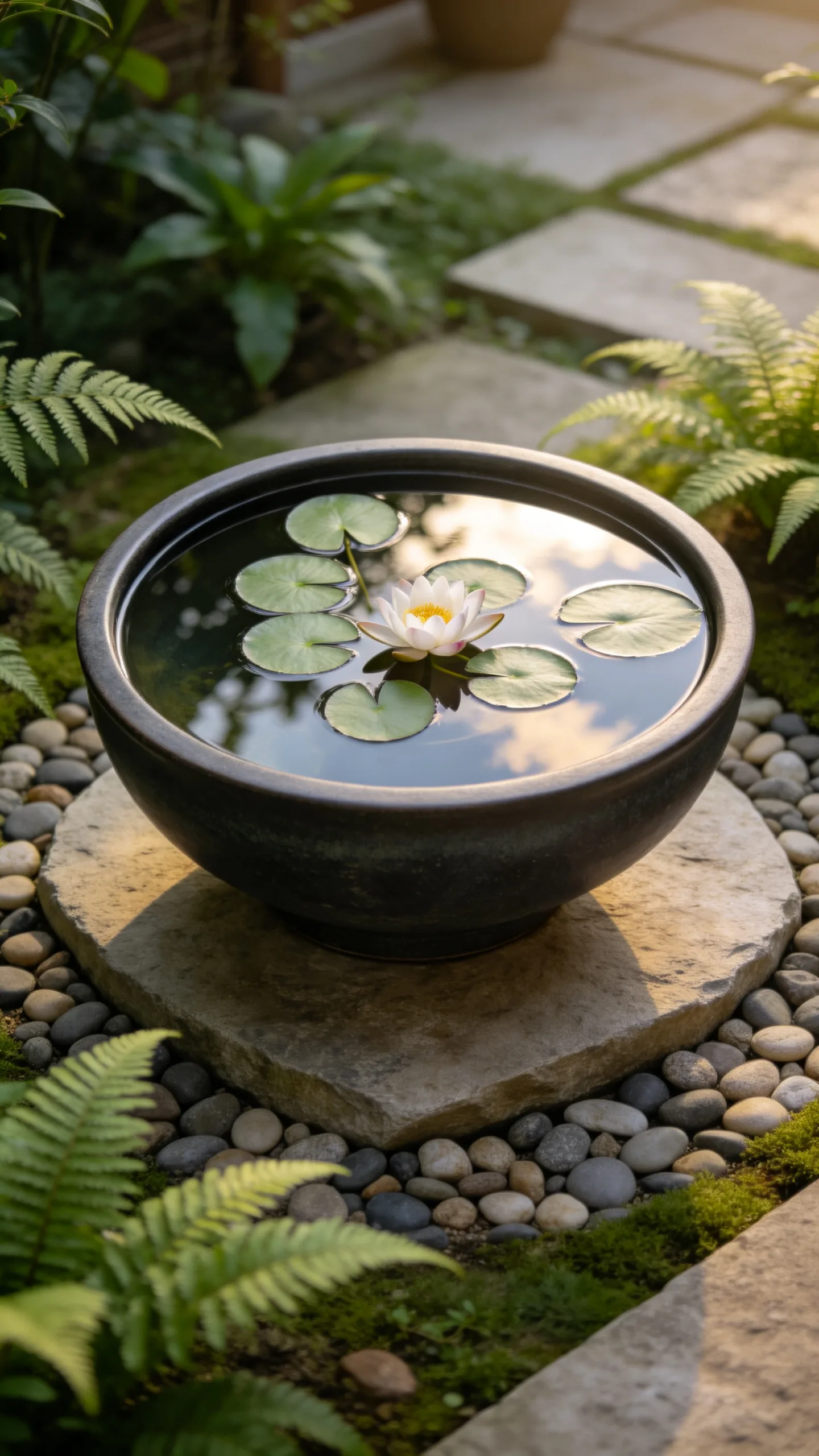
A wide ceramic or stone bowl can introduce water into a small Thai-inspired garden without requiring space for a full pond. Place it on a level stone pad where it receives the amount of sun recommended for your chosen aquatic plants.
Dwarf lotus and compact water lilies work best in containers designed for their mature spread. Add aquatic planting baskets and use mosquito-control methods that are safe for wildlife, such as regular water movement or approved biological treatments. In freezing climates, move tender plants and breakable containers indoors for winter.
4. Gravel Courtyard With Bamboo Planters
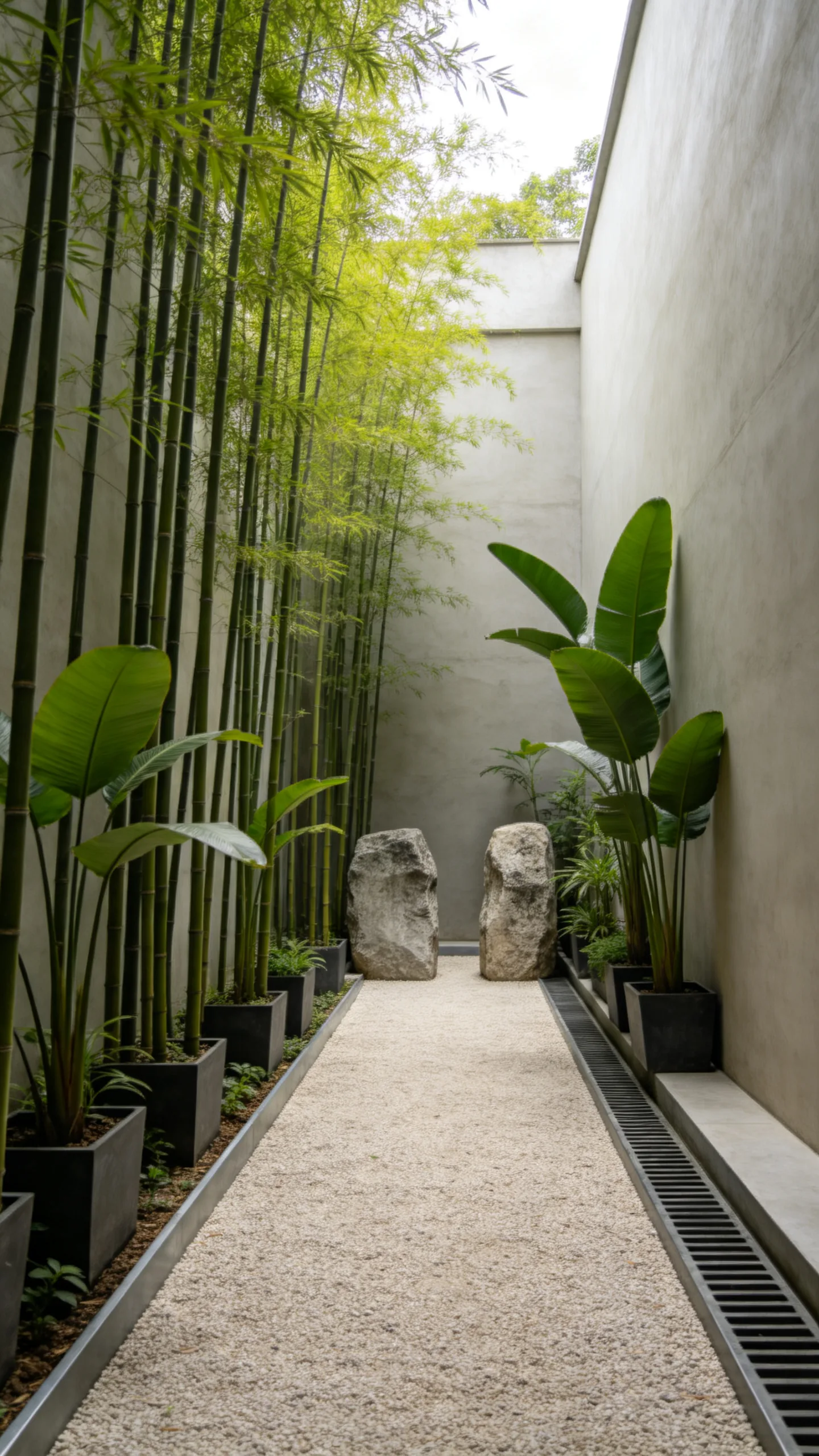
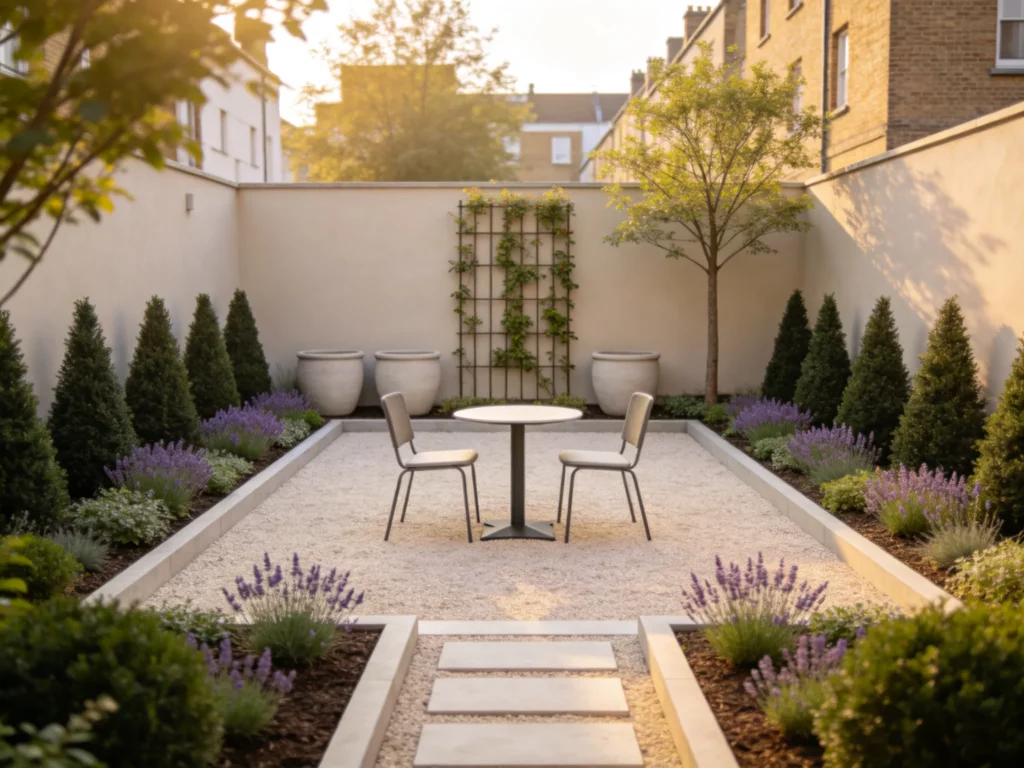
Turn a narrow side yard or enclosed courtyard into a low-maintenance retreat by covering the ground with compacted gravel. Install landscape edging first, and use a permeable base so rainwater can drain rather than collect around walls or foundations.
Arrange bamboo planters around the perimeter to preserve open floor space. Clumping bamboo, palms, cordylines, or upright ornamental grasses provide height without crowding the center. Include one or two large stones as visual anchors instead of filling the courtyard with many small decorations.
5. Stone Buddha Focal Point Framed by Greenery
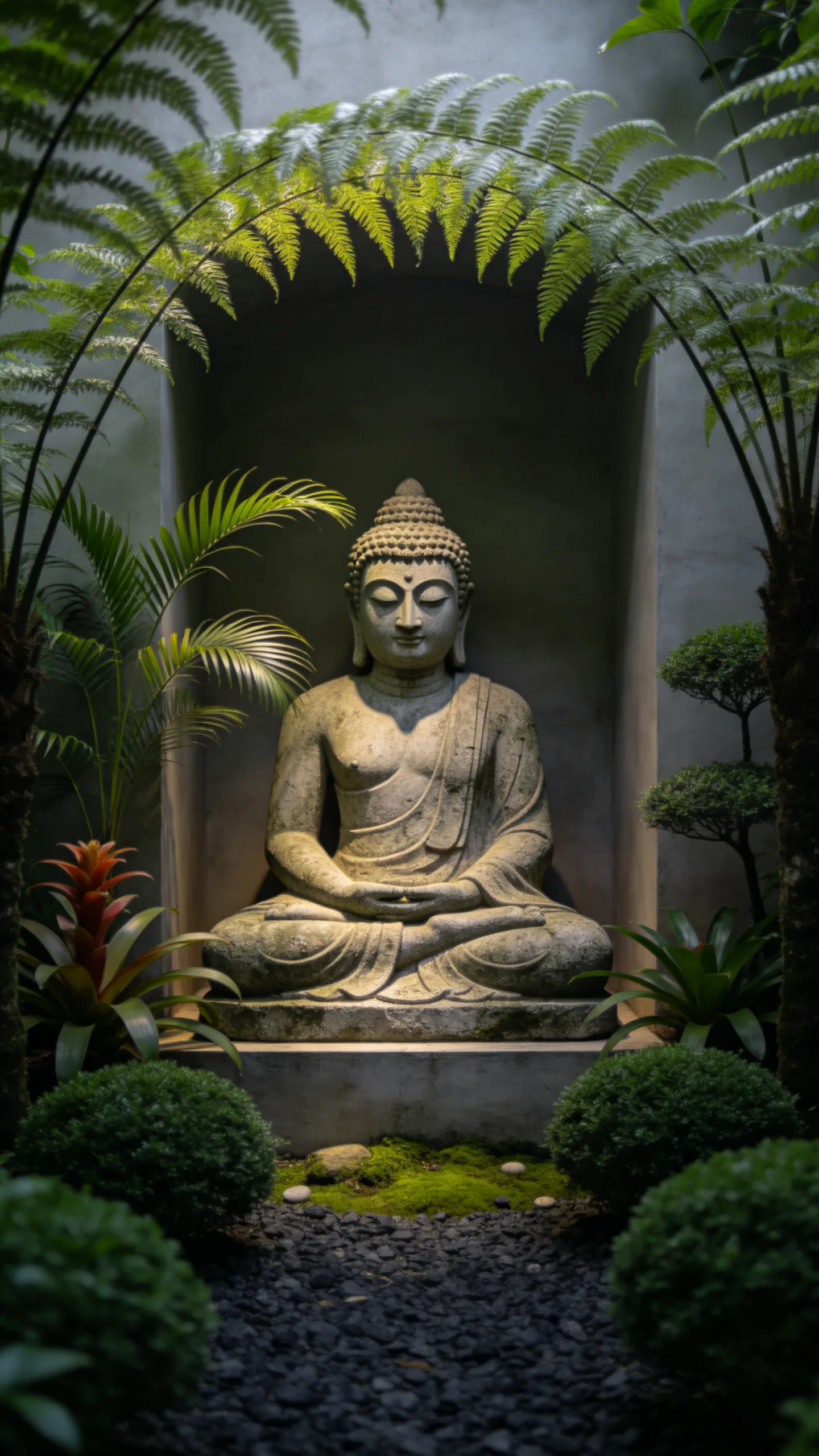
Place a respectfully chosen Buddha statue or Thai-inspired stone figure in a quiet, intentional location rather than treating it as casual ornament. A recessed planting bed, wall niche, or shaded corner creates a calm focal point.
Frame the piece with ferns, dwarf palms, bromeliads, or clipped evergreen shrubs suited to your growing zone. Keep the area immediately around the statue simple with gravel, moss, or one low ground cover. Soft, downward-facing lighting can make the feature visible at night without producing harsh glare.
6. Narrow Rill Beside a Garden Walkway
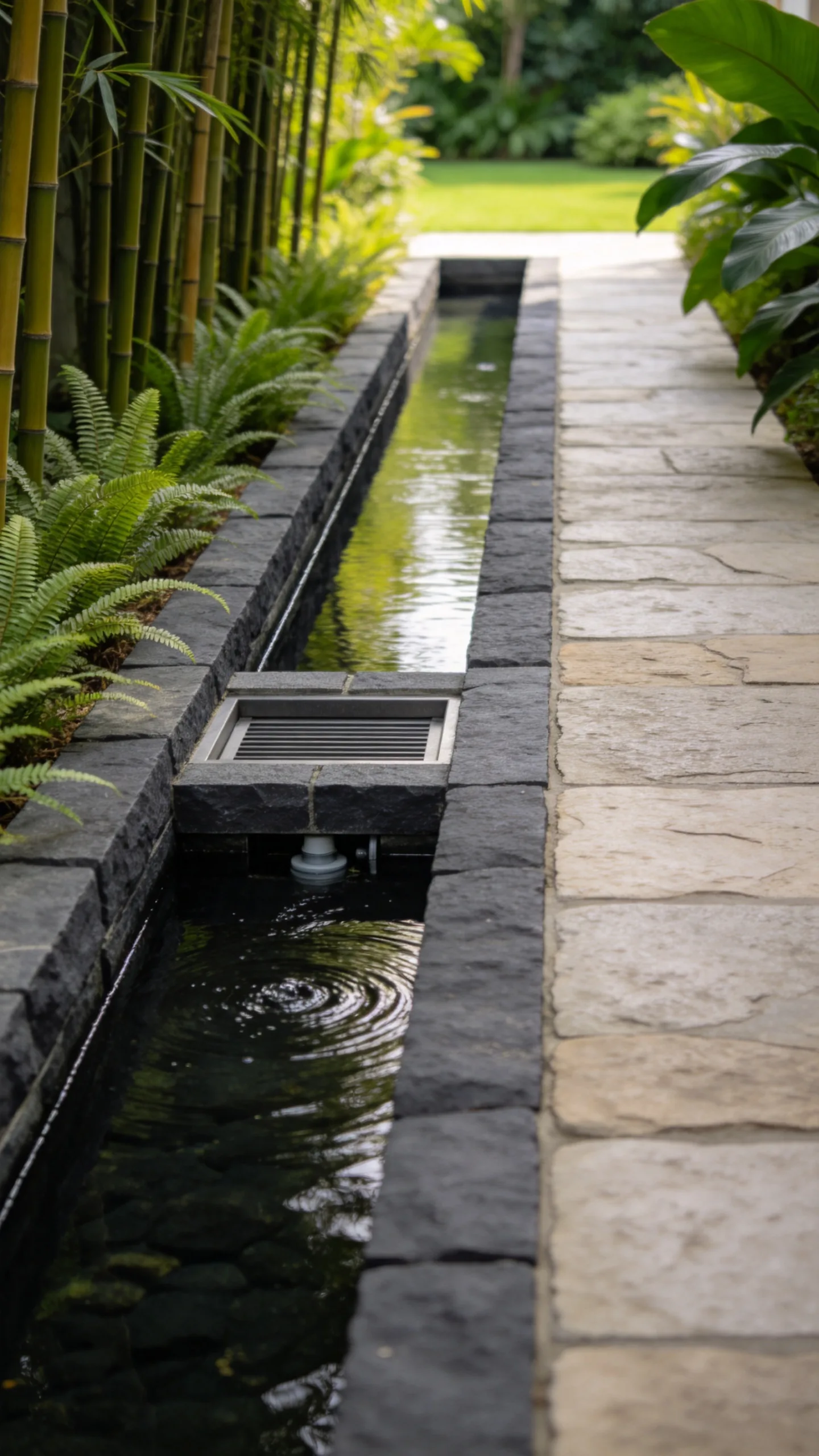
A shallow rill—a straight, narrow water channel—adds movement and sound without occupying the footprint of a large pond. Run it beside a stone path or patio edge, using a recirculating pump and a concealed reservoir to reduce water use.
Line the channel with dark stone to make the water more reflective. Keep electrical components rated for outdoor water features, and include an accessible filter compartment for cleaning. Where children or pets use the garden, choose a very shallow design with securely fixed covers over the reservoir.
7. Bamboo Pergola Over a Shaded Seating Nook
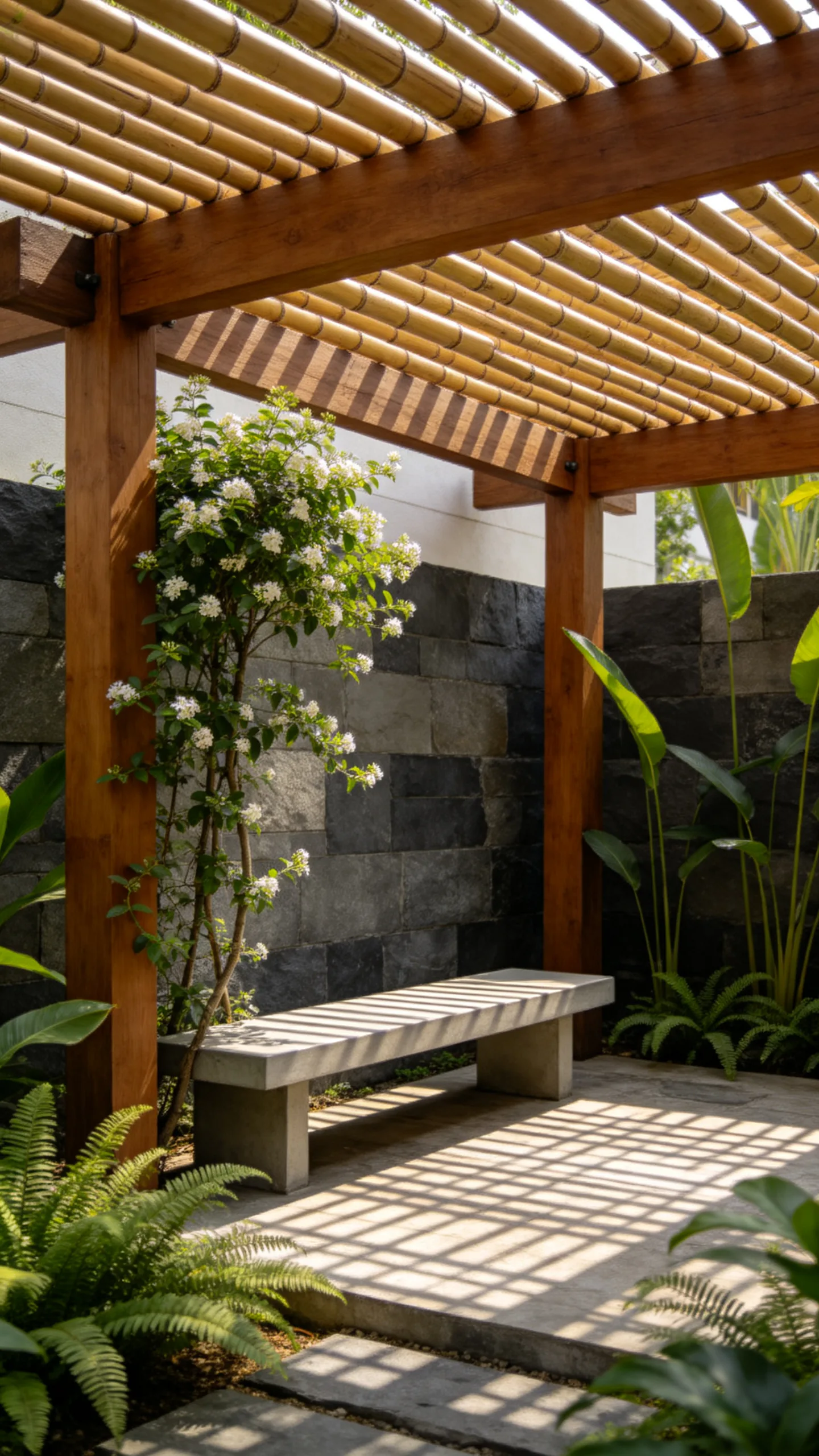
Build a simple pergola over a bench or compact outdoor dining area, then add bamboo poles across the roof to filter strong sunlight. Structural posts should be made from durable, properly anchored material; decorative bamboo can then be attached over the frame.
Train a locally suitable vine up one side for extra shade. Star jasmine works in warm climates, while climbing hydrangea or clematis may be better in cooler regions. Prune vines regularly so they do not overwhelm the structure or trap excessive moisture against the bamboo.
8. Curved Stone Path Around a Reflecting Pond
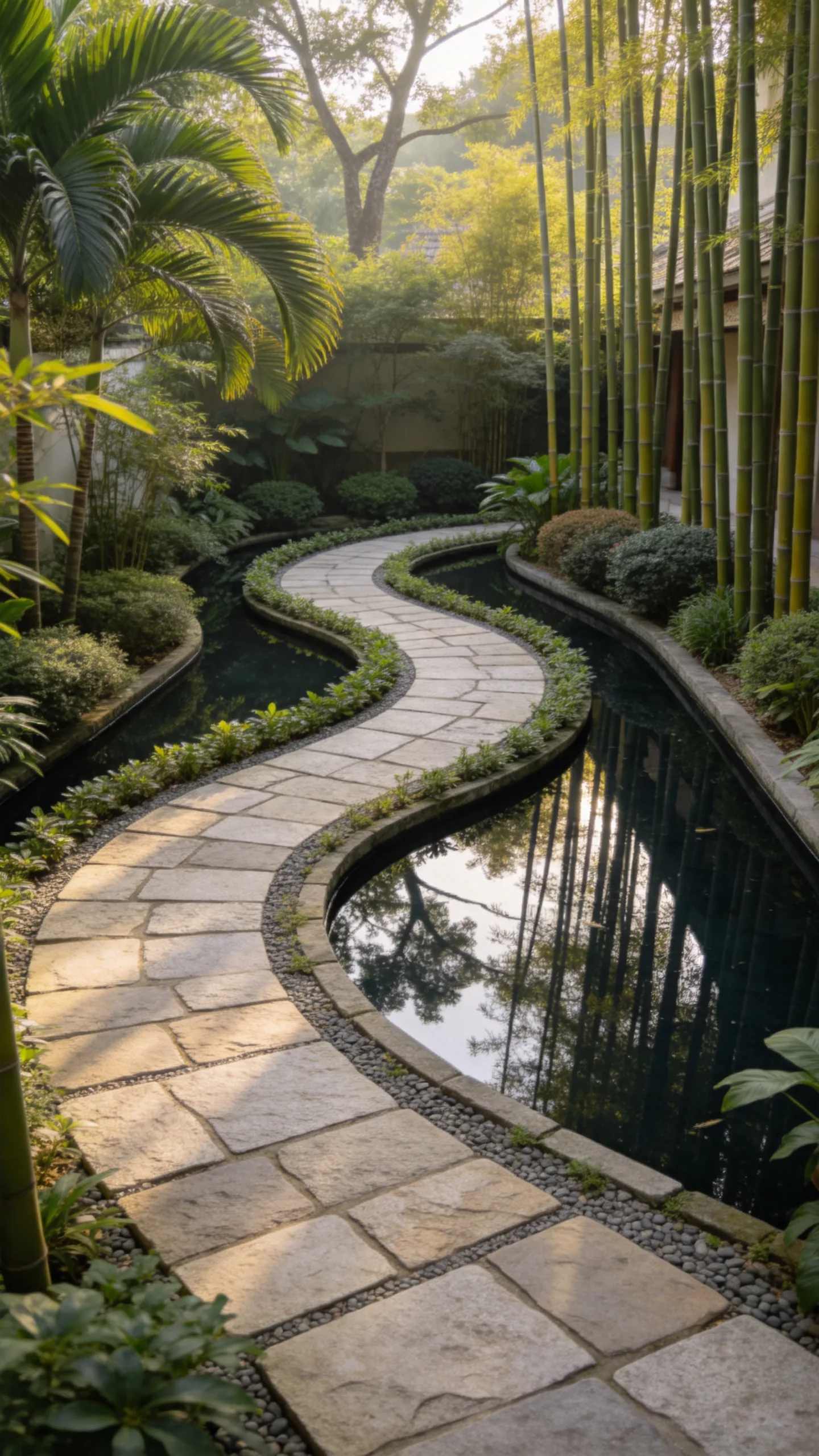
Use a gently curving path to guide visitors past a small reflecting pond. The bend creates visual depth because the entire garden is not revealed at once, making this layout especially effective in short or narrow yards.
Choose textured paving rather than polished stone near the water. Plant lower foliage along the inside curve and taller plants toward the outer boundary to keep the pond visible. A simple dark pond liner and still surface will reflect bamboo, tree canopies, and surrounding leaves.
9. Rain Chain Feeding a Pebble Basin
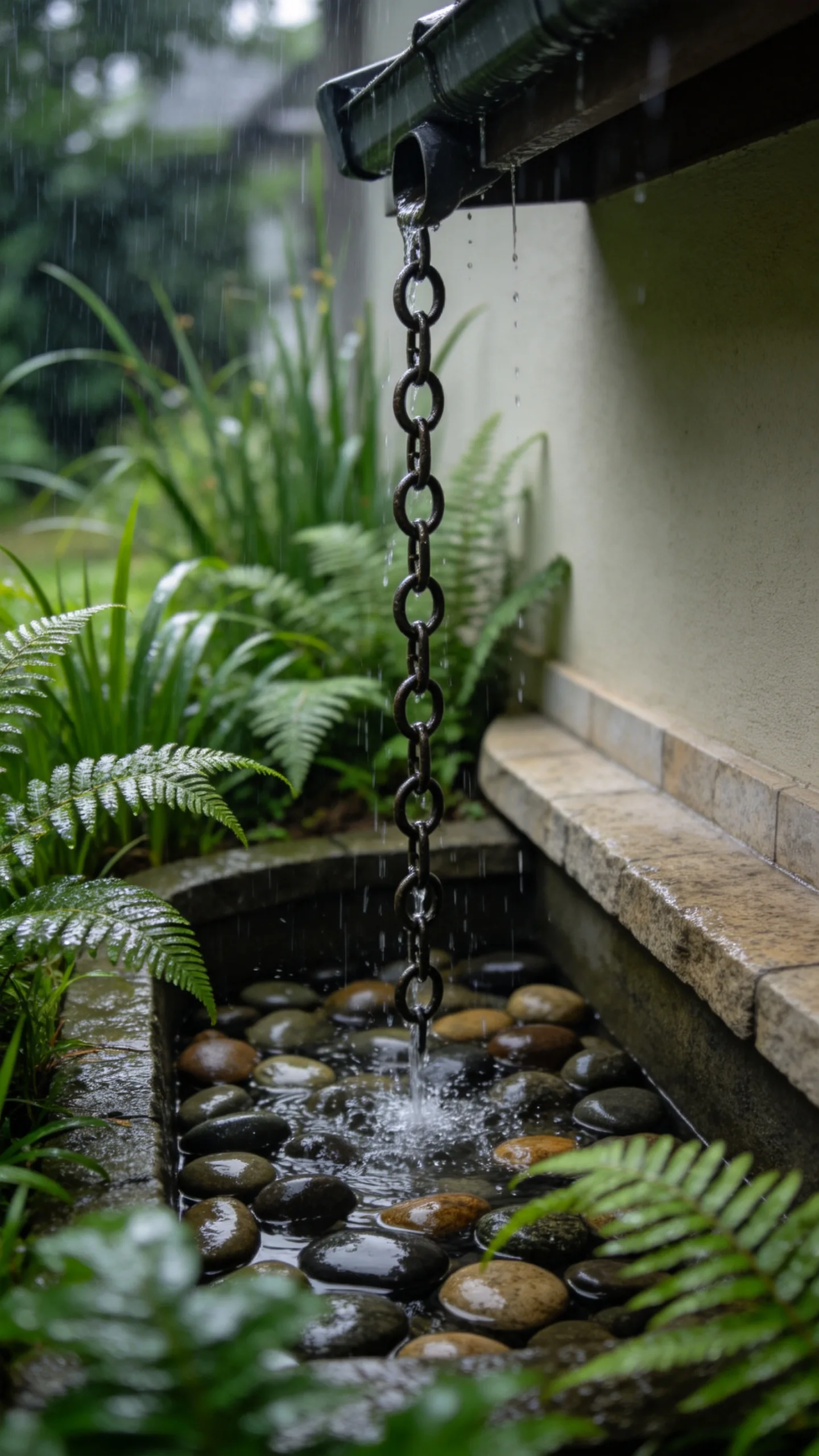
Connect a rain chain to a gutter and direct it into a pebble-filled catch basin. This turns roof runoff into a decorative water moment during storms while reinforcing the garden’s combination of metal, stone, and water.
The basin must drain safely away from the house. Depending on the site, it can connect to a French drain, rain garden, or underground storage container. Surround the chain with moisture-tolerant plants such as ferns, sedges, or elephant ears, provided they suit the local climate and light exposure.
10. Layered Tropical Border Against a Wall
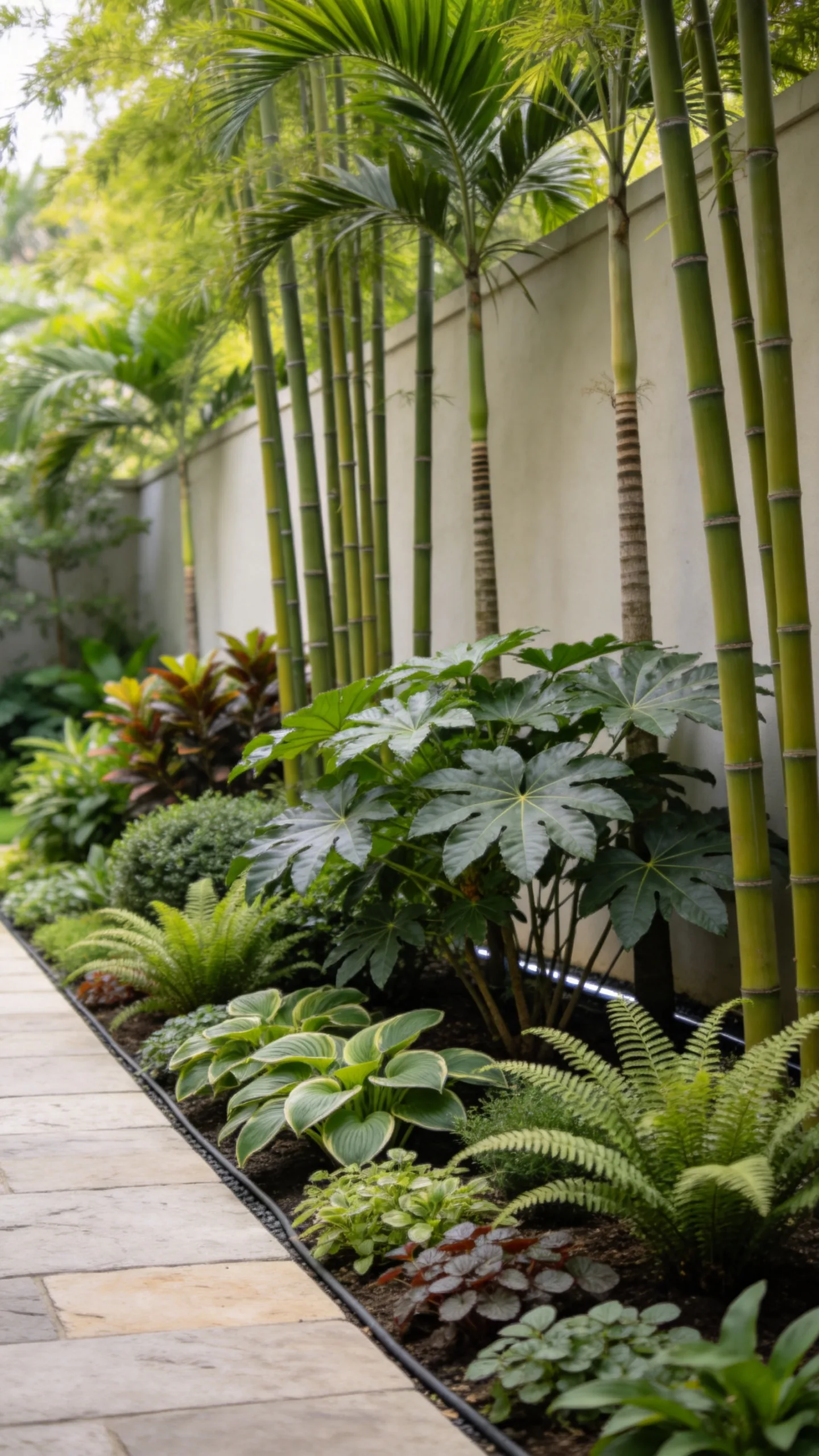
Build a lush border by arranging plants in tiers: tall bamboo or palms at the back, broad-leaved shrubs in the middle, and ferns or ground covers at the front. This layered approach hides a plain wall while using vertical space efficiently.
Check mature plant widths before planting so the border does not block a walkway. Where tropical species are not winter-hardy, combine hardy alternatives such as clumping grasses, fatsia, hostas, and evergreen ferns. Drip irrigation beneath the foliage delivers water to roots without constantly wetting leaves.
11. Stone Lantern Beside a Bamboo Gate
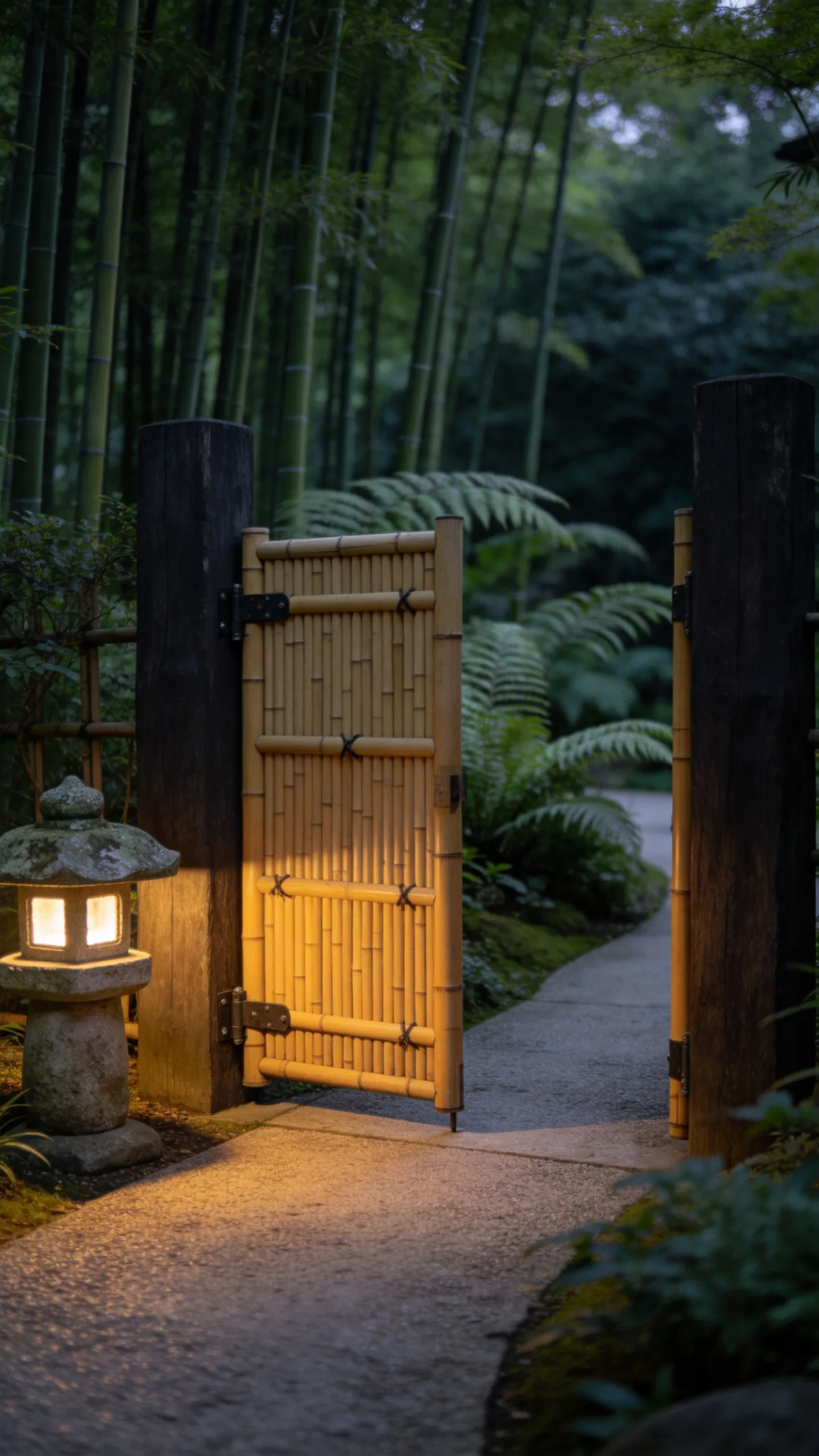
Mark the transition into the garden with a simple bamboo gate and a low stone lantern. This pairing works well between a driveway and backyard, at the entrance to a courtyard, or where a path turns into a secluded planting area.
Keep the gate wide enough for garden equipment and make sure its hinges are mounted to strong posts rather than decorative bamboo alone. Use a low-voltage fixture or LED candle inside the lantern if illumination is needed. Position the light downward to define the path without overpowering the surrounding plants.
12. Raised Pond With a Stone Sitting Edge
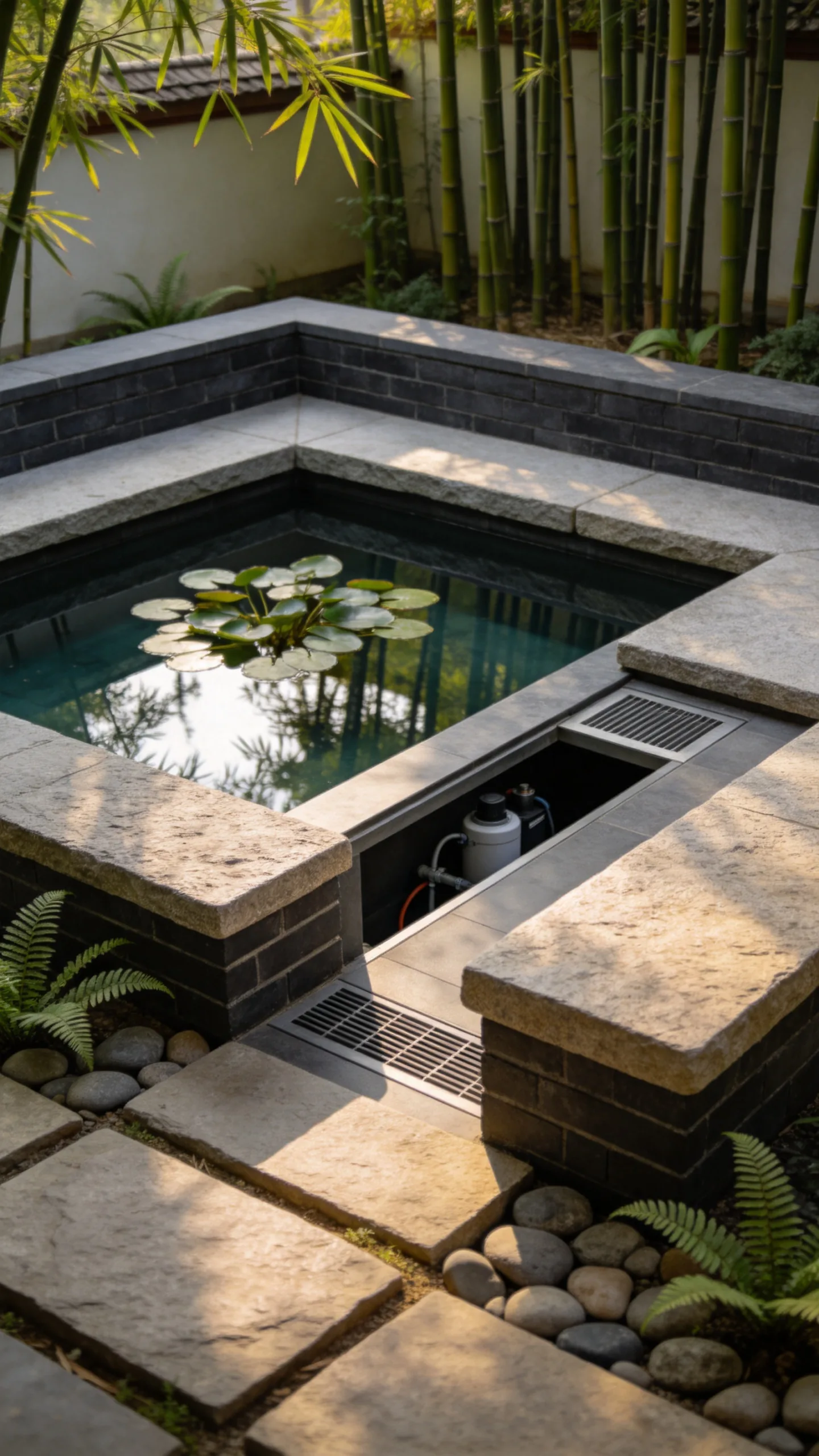
A raised pond can be easier to install than an excavated one, especially where digging is difficult or space is limited. Build the pond with masonry blocks or a reinforced frame, add a liner, and cap the top with broad stone slabs that double as informal seating.
Include a pump and biological filter matched to the pond volume. If adding fish, account for adequate depth, water quality, shade, and local winter conditions before choosing a species. Keep planting restrained so the edge remains accessible for cleaning and safe observation.
13. Outdoor Shower Screened With Bamboo
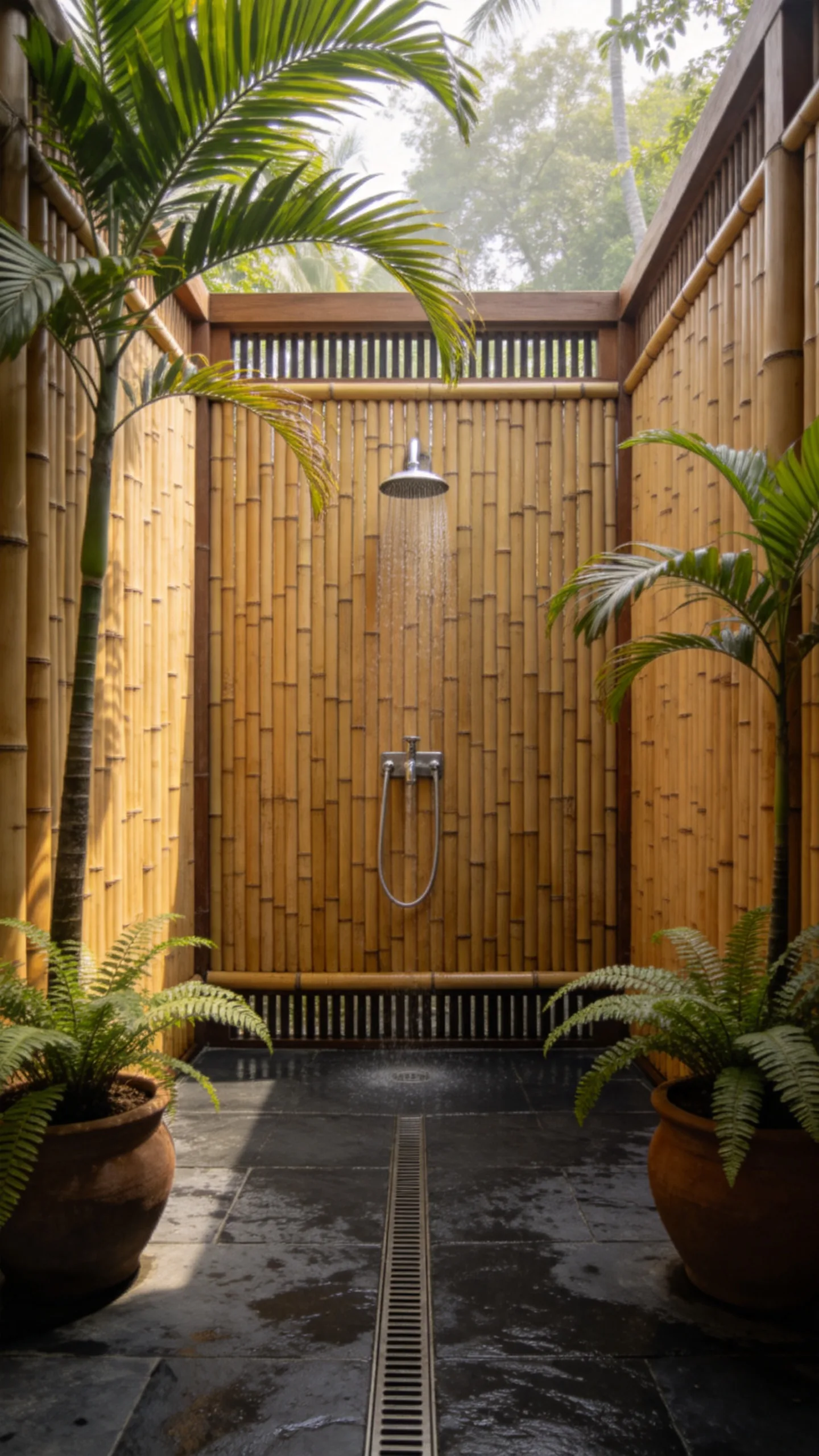
Create a garden shower enclosure using closely spaced bamboo panels, a stone floor, and moisture-loving foliage. It can serve a pool area, hot tub, or beach-style garden while adding a strong resort-inspired element.
Install the floor with a non-slip finish and direct wastewater according to local plumbing rules. Use rot-resistant framing behind the bamboo screen, and leave ventilation gaps so surfaces can dry. Potted palms, bird’s nest ferns, or hardy shade plants can soften the enclosure without interfering with drainage.
14. Floating Stepping Stones Across a Shallow Pond
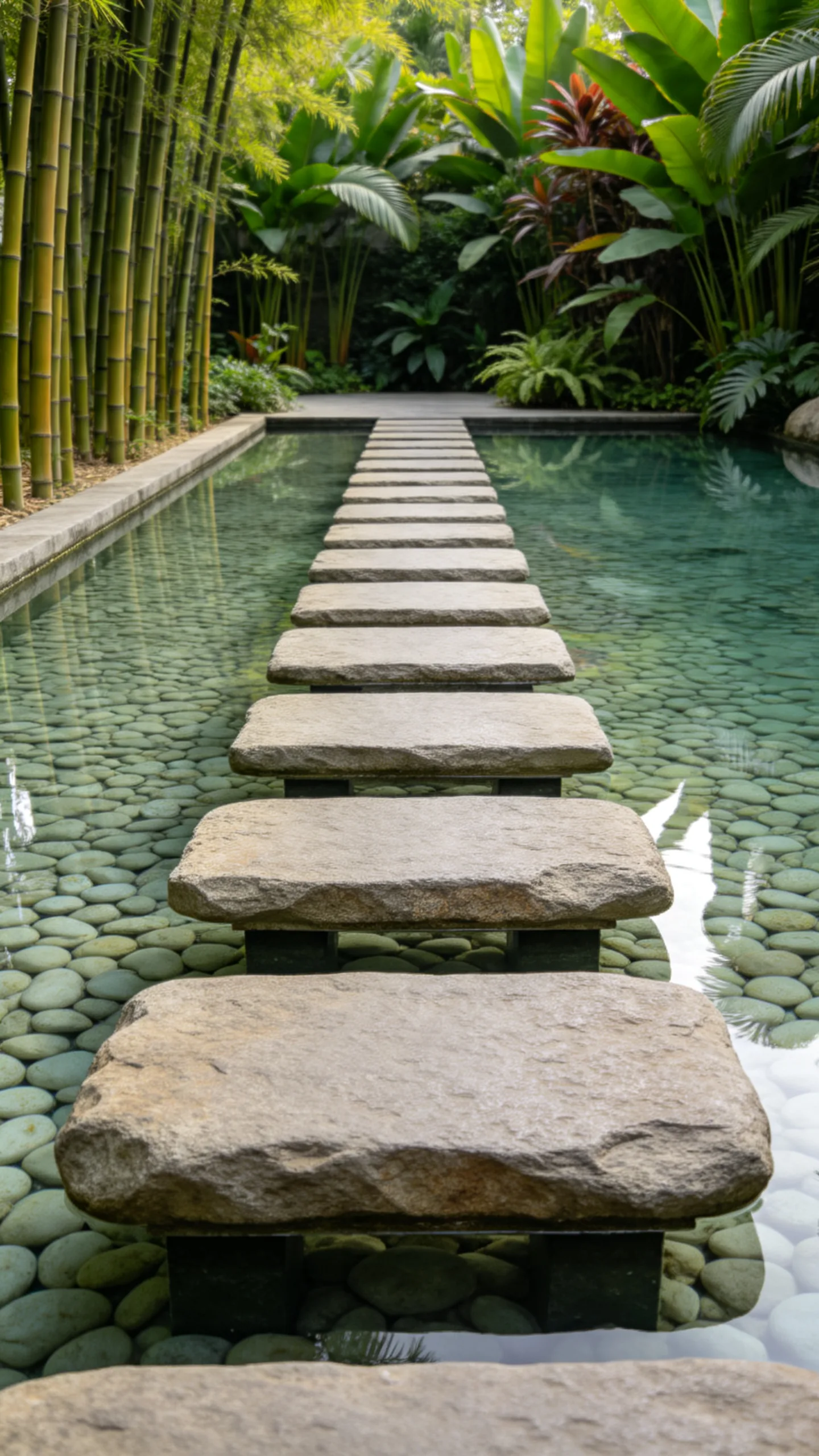
Set large square or rectangular slabs across a shallow pond to create a dramatic garden crossing. The slabs should be professionally supported on stable piers and sit high enough above the usual water level to keep the walking surface dry.
Keep the route straight and the gaps narrow enough for comfortable use. A shallow pebble bed beneath the water makes the feature easier to see and visually connects it to surrounding stone paths. Add subtle underwater lighting only where wiring and fixtures meet outdoor safety standards.
15. Terracotta Water Jars Among River Rocks
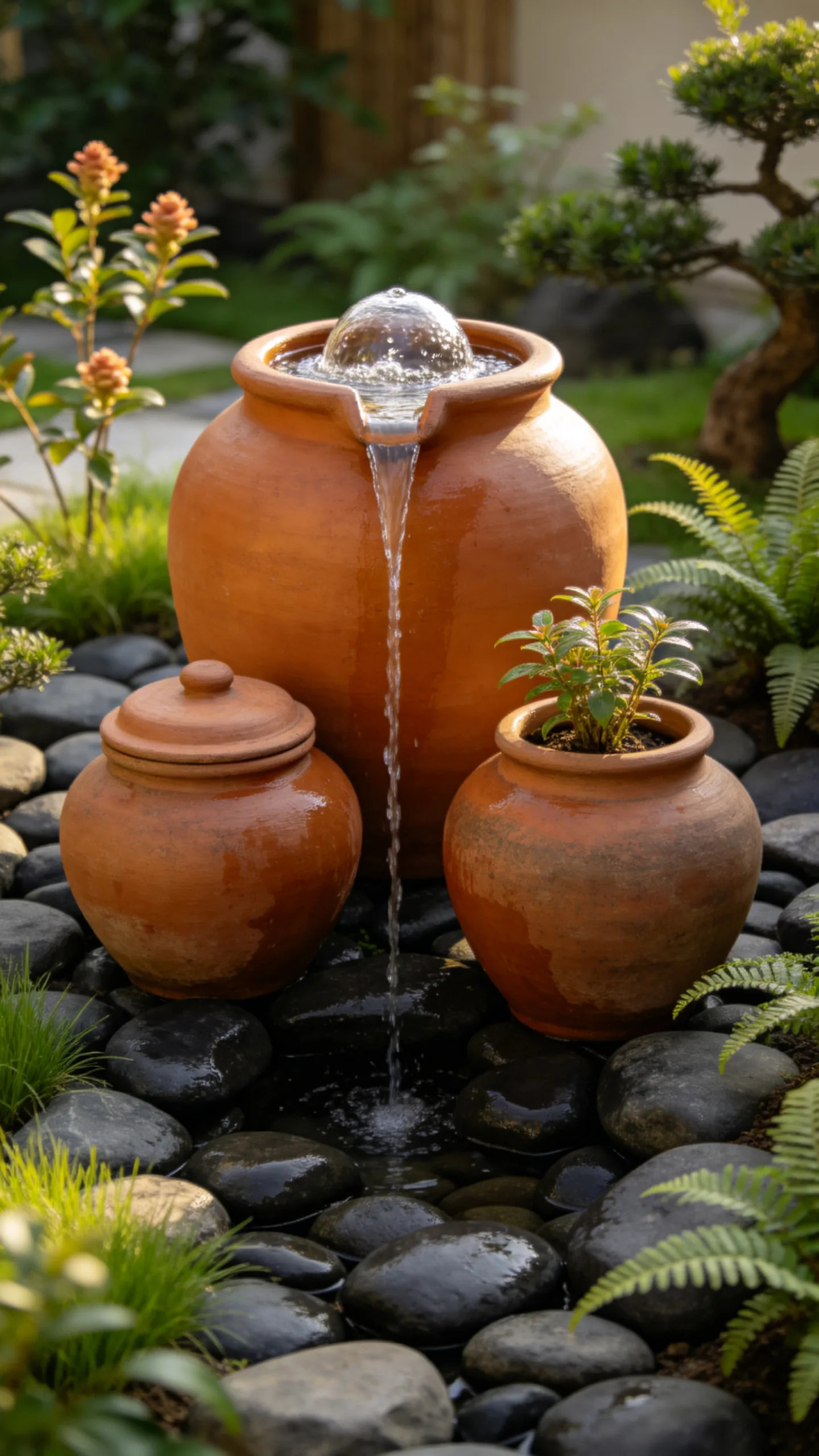
Group two or three large terracotta jars in a bed of smooth river rock. One jar can function as a bubbling fountain while the others remain planted or decorative, creating variation without cluttering the space.
Fit the fountain jar over a concealed reservoir and recirculating pump. Choose a glazed or properly sealed vessel if it will hold water continuously. Surround the arrangement with low foliage such as mondo grass, dwarf ginger, or compact ferns so the warm pottery remains visible.
16. Bamboo Bridge Over a Dry Creek Bed
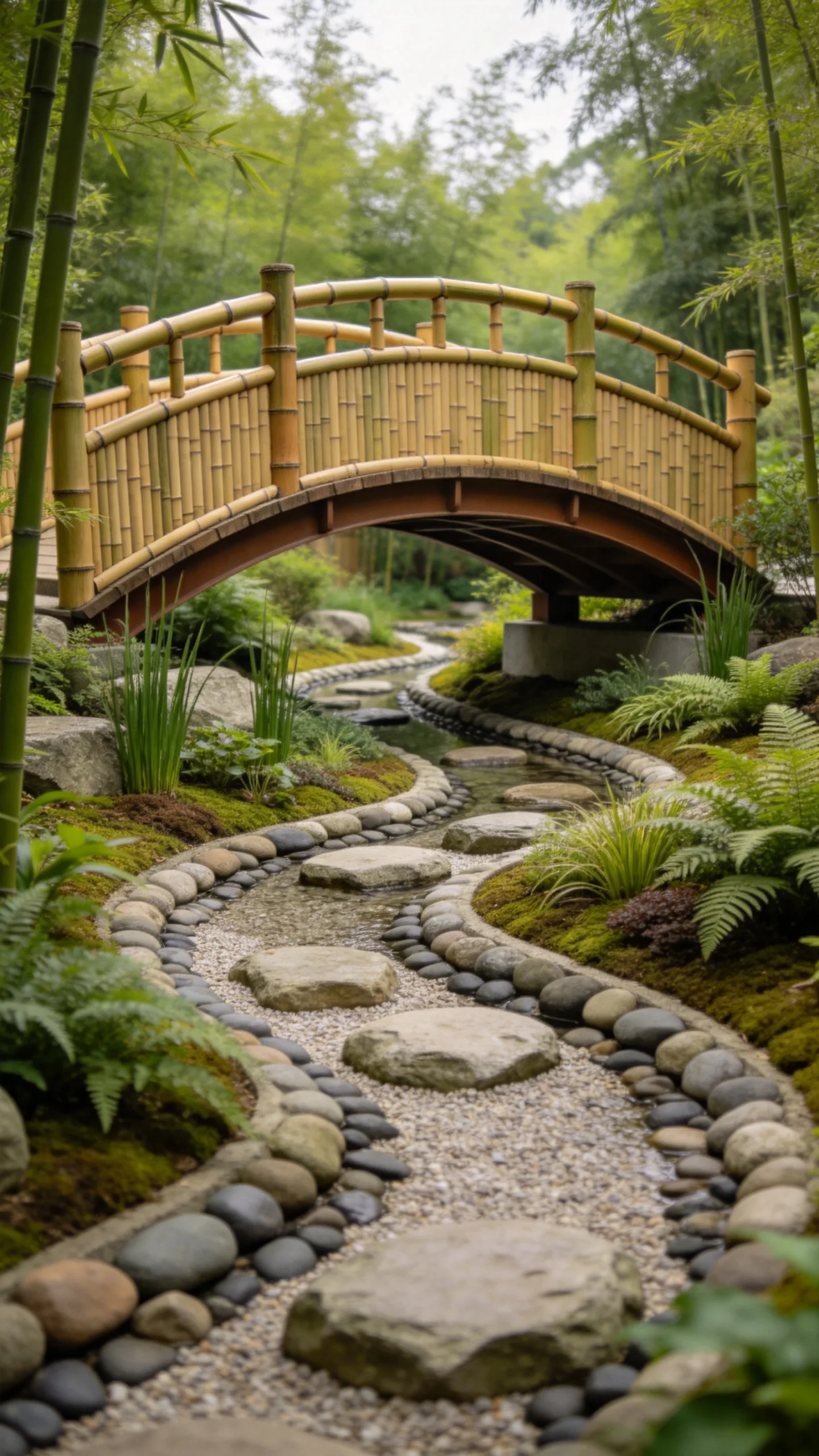
A small bamboo-style bridge can provide a focal point even when a permanent water feature is impractical. Place it over a dry creek bed made from rounded cobbles, gravel, and several larger stones that suggest a naturally formed stream.
Shape the creek bed in a gentle curve and direct real stormwater only if the channel has been graded for safe drainage. Use structural lumber or metal beneath decorative bamboo rails to ensure the bridge is secure. Plant sedges and moisture-tolerant ground covers along the edges to blend the feature into the garden.
17. Shaded Meditation Deck by the Water
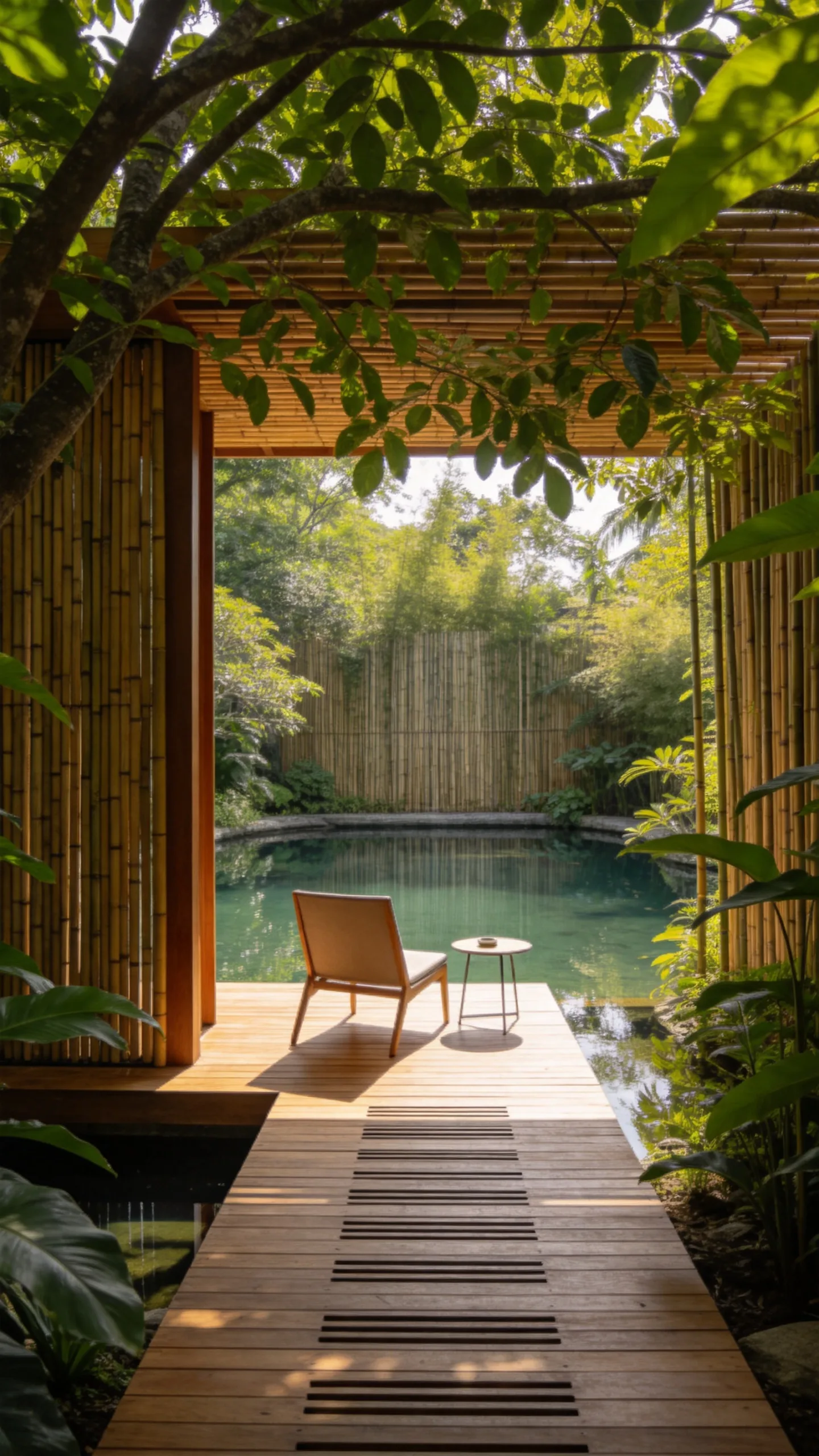
Install a compact timber or composite deck beside a pond, fountain, or water bowl to create a defined place for quiet seating. Even a platform large enough for one chair and a small table can make an overlooked corner feel purposeful.
Frame the deck with bamboo screens or upright foliage while preserving a clear view of the water. Use materials rated for exterior exposure and leave space between boards for drainage. A nearby canopy tree, pergola, or shade sail can make the area comfortable during the hottest part of the day.
18. Pebble Mosaic Patio With Leaf Patterns
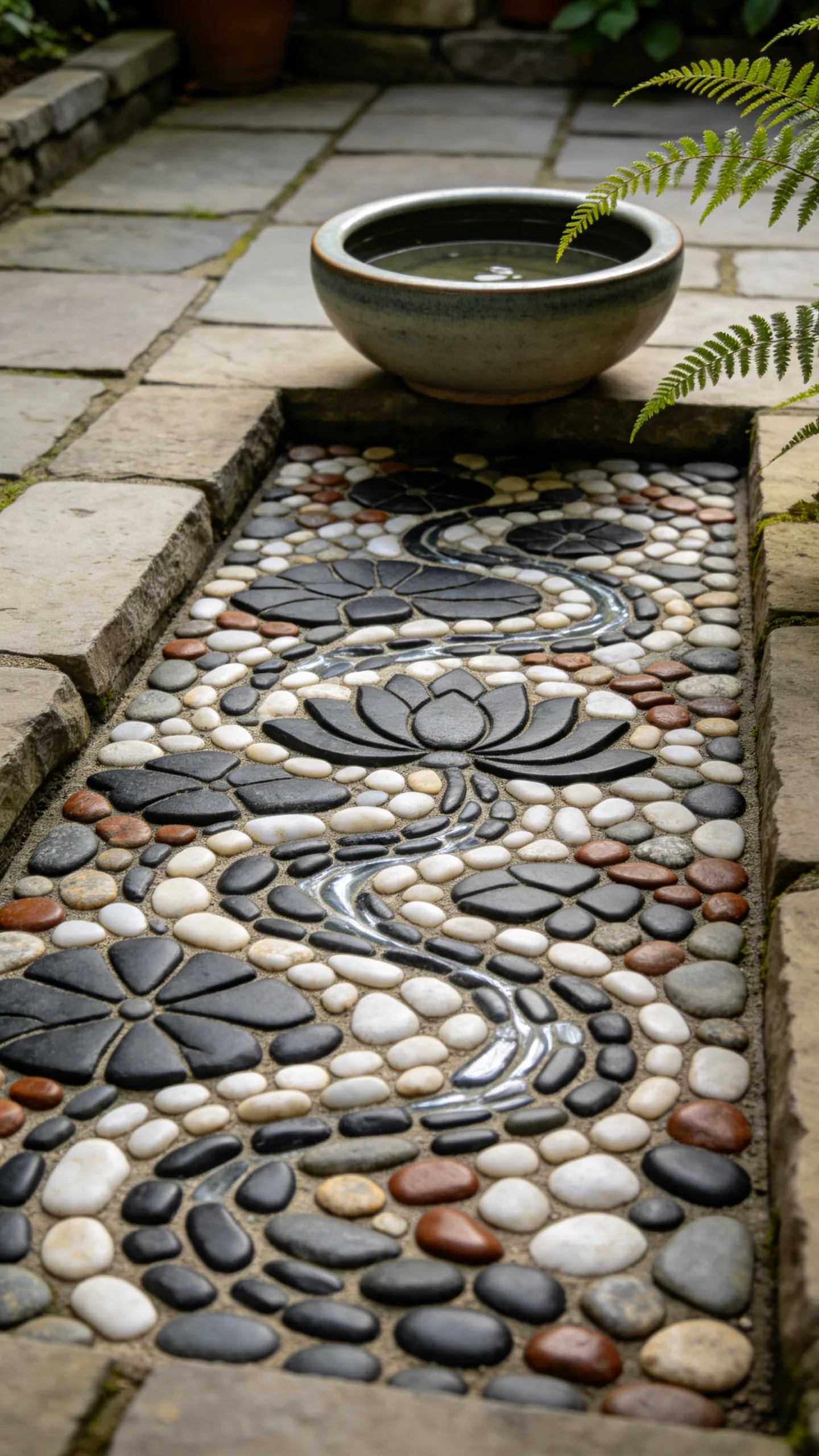
Lay a pebble mosaic as a decorative inset within a stone or concrete patio. Lotus leaves, flowing water lines, or simple botanical shapes can support a Thai garden theme without requiring additional planting space.
Set the pebbles into mortar with their smooth surfaces facing upward, then seal the installation if recommended for the chosen stone. Keep heavily textured mosaics away from primary barefoot walking routes. A small mosaic works especially well beneath a water bowl, bench, or container grouping.
19. Vertical Bamboo Trellis for Flowering Vines
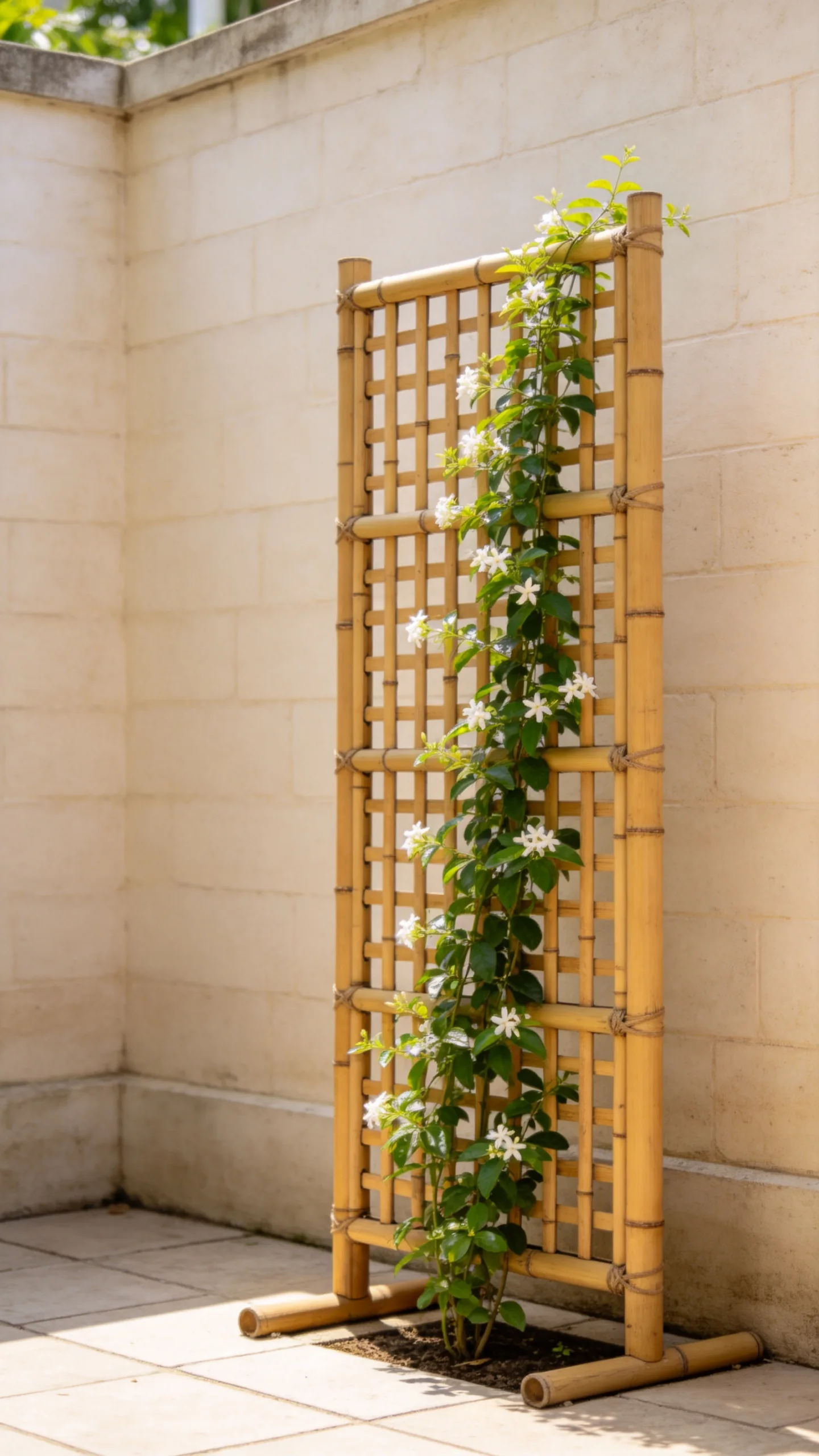
Attach a narrow bamboo trellis to a blank wall or freestanding frame to bring greenery into a compact courtyard. Vertical planting preserves floor space and can shade a hot wall, improve privacy, or disguise utility areas.
Select vines according to climate and available light. Star jasmine, mandevilla, and passionflower suit many warm settings, while clematis and honeysuckle offer options for cooler regions. Leave airflow between the trellis and wall, and provide access for pruning before stems become dense.
20. Cascading Stone Waterfall in a Planted Corner
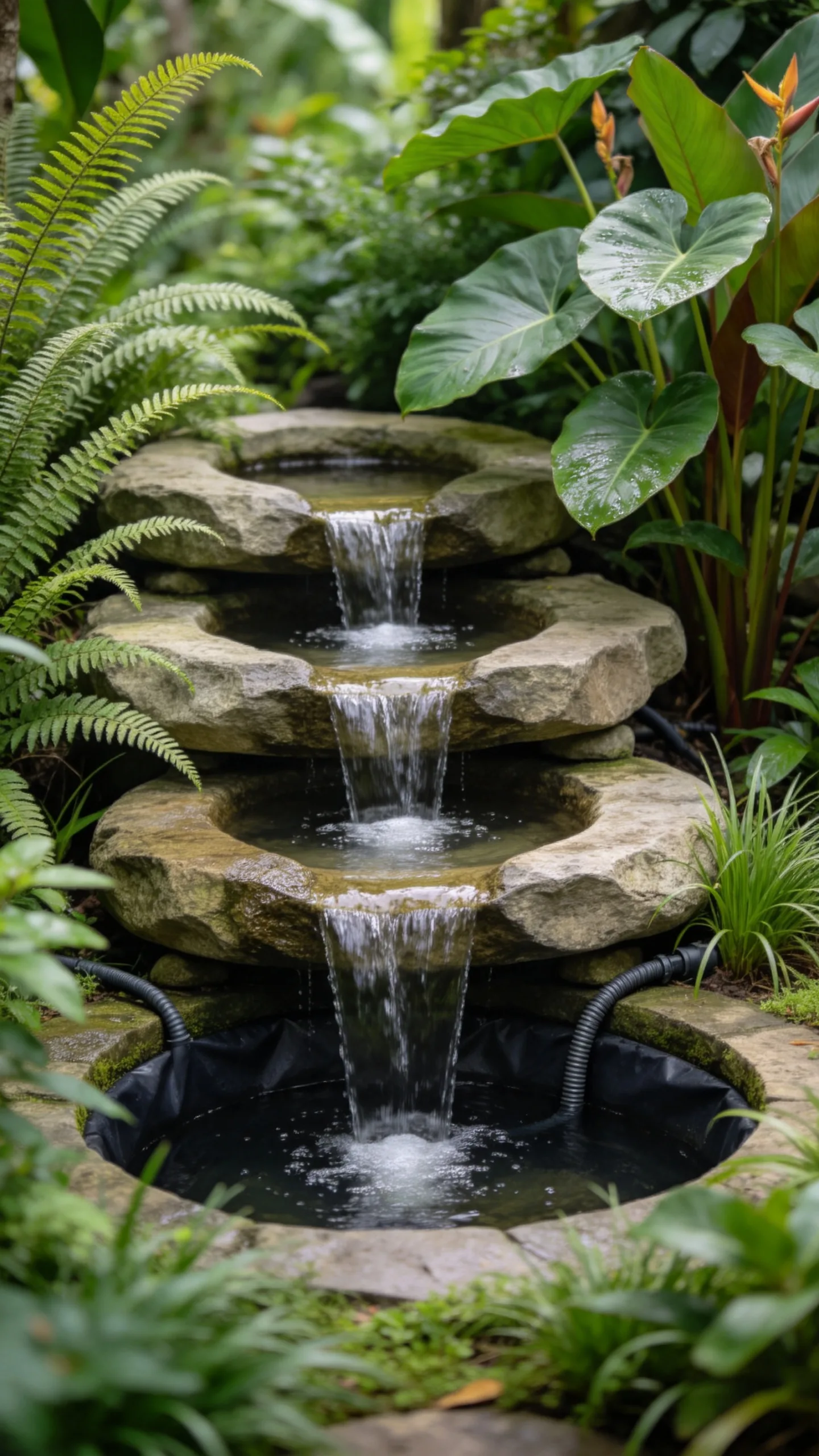
Build a short waterfall from flat, irregular stones arranged so water moves over several shallow drops. Place it in a planted corner where foliage can conceal the pump tubing and soften the edges of the stonework.
Use a flexible liner beneath the entire cascade to return splashing water to the lower basin. Test the flow before permanently setting the rocks, and choose a pump that can lift water to the top of the feature. Ferns, taro, canna, or moisture-tolerant grasses can create a lush backdrop, depending on local hardiness.
21. Moonlit Garden With Bamboo and Underwater Lighting
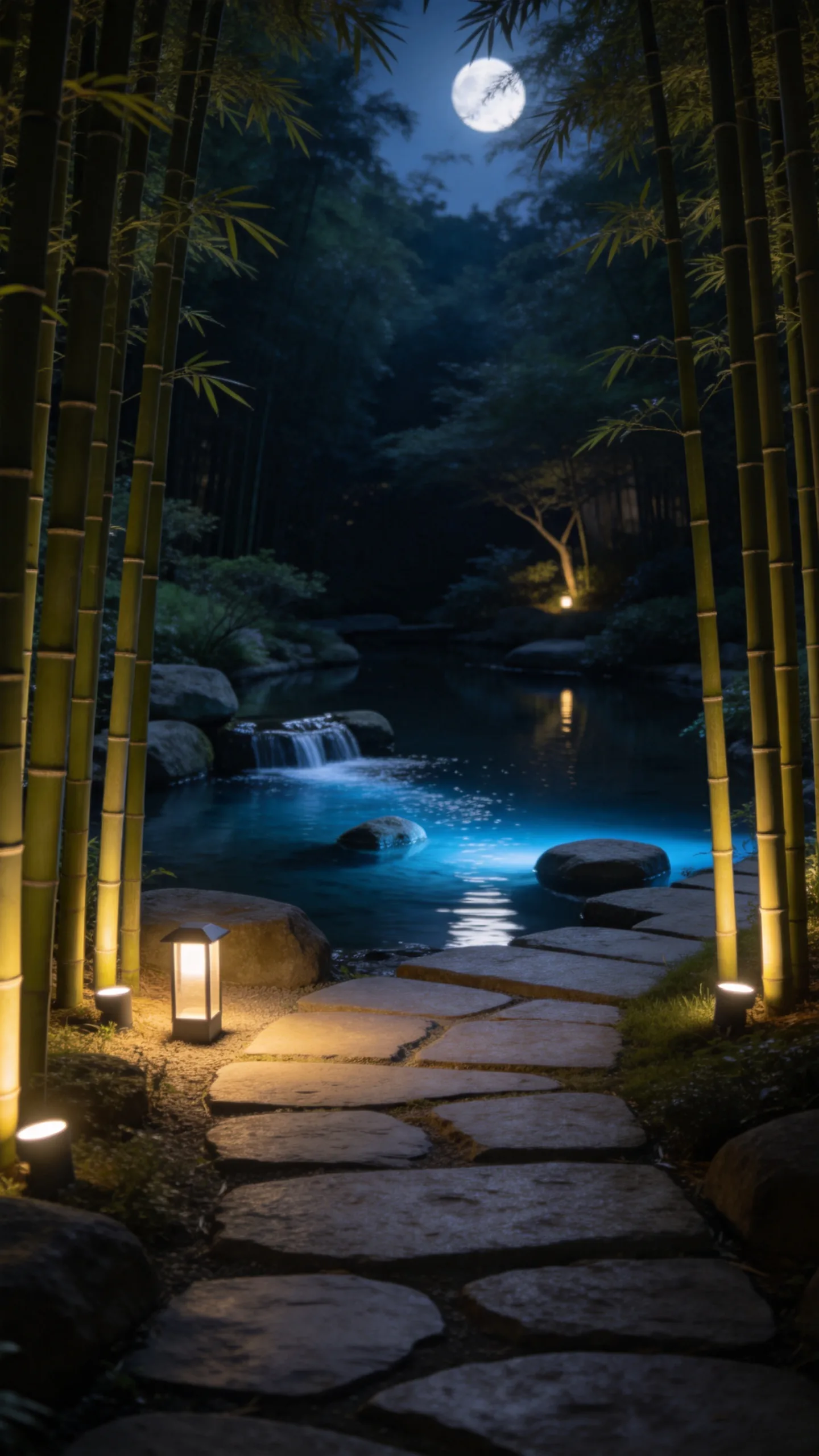
Finish a Thai-inspired garden with layered, low-level lighting rather than bright overhead fixtures. Place shielded uplights at the base of bamboo to emphasize the vertical canes, and use warm path lights to reveal changes in level.
Add submersible lights to a pond or fountain where they can highlight moving water without shining directly toward seating areas. Choose outdoor-rated, low-voltage equipment and keep transformers and connections accessible. A restrained lighting plan preserves the garden’s calm atmosphere while making stone paths and water edges safer after dark.