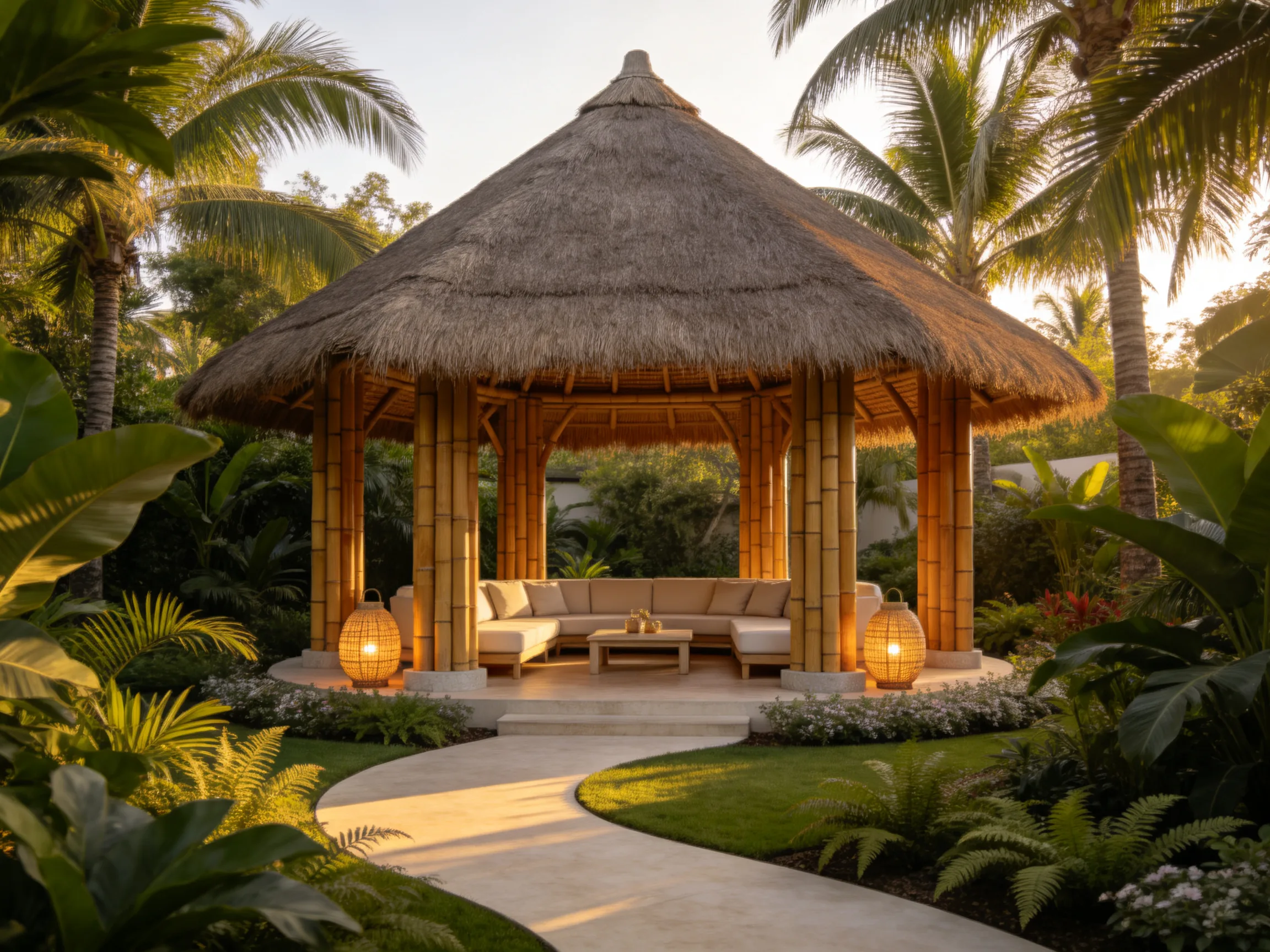
A well-planned bamboo gazebo can turn a patio, poolside corner, or compact garden into a relaxed tropical escape. The best designs combine durable construction with practical shade, comfortable seating, and planting that suits the site’s light and climate. Use these ideas as starting points, then adapt the gazebo’s size, roofing, footings, and plant palette to local weather conditions and available space.
1. Open-Sided Gazebo With a Thatched Hip Roof
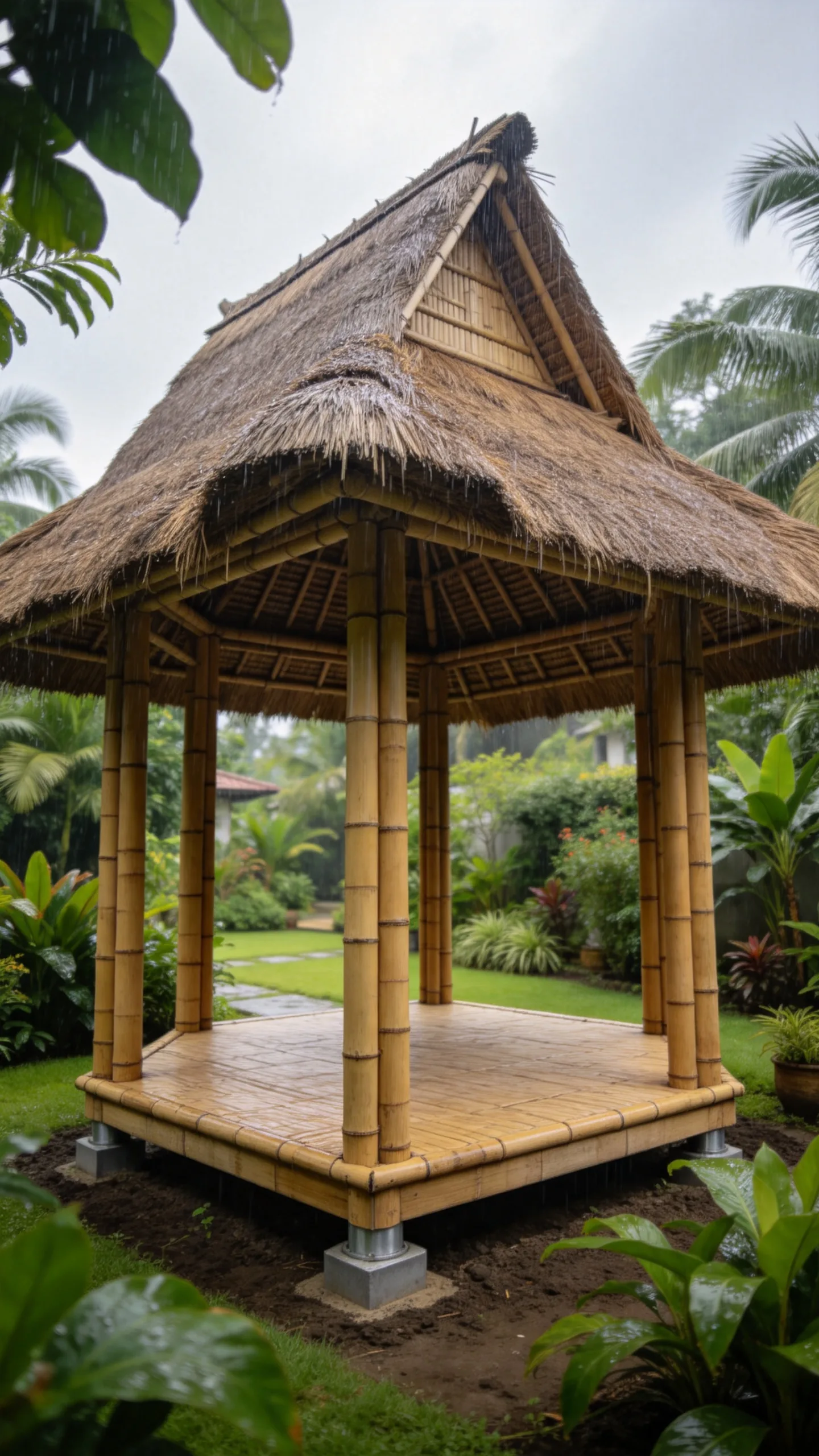
Create a classic tropical silhouette with four open sides, sturdy bamboo posts, and a steep hip roof finished with natural thatch or a synthetic thatch alternative. The pitched roof sheds rain more efficiently than a flat canopy, while the open layout allows cross-ventilation on hot days.
Set the posts on raised concrete or metal footings rather than burying bamboo directly in soil. This reduces moisture contact and helps prevent premature rot. In wet or fire-prone regions, check local codes before choosing natural thatch; synthetic panels or textured metal roofing can provide a similar appearance with easier maintenance.
2. Compact Corner Gazebo With Built-In Benches
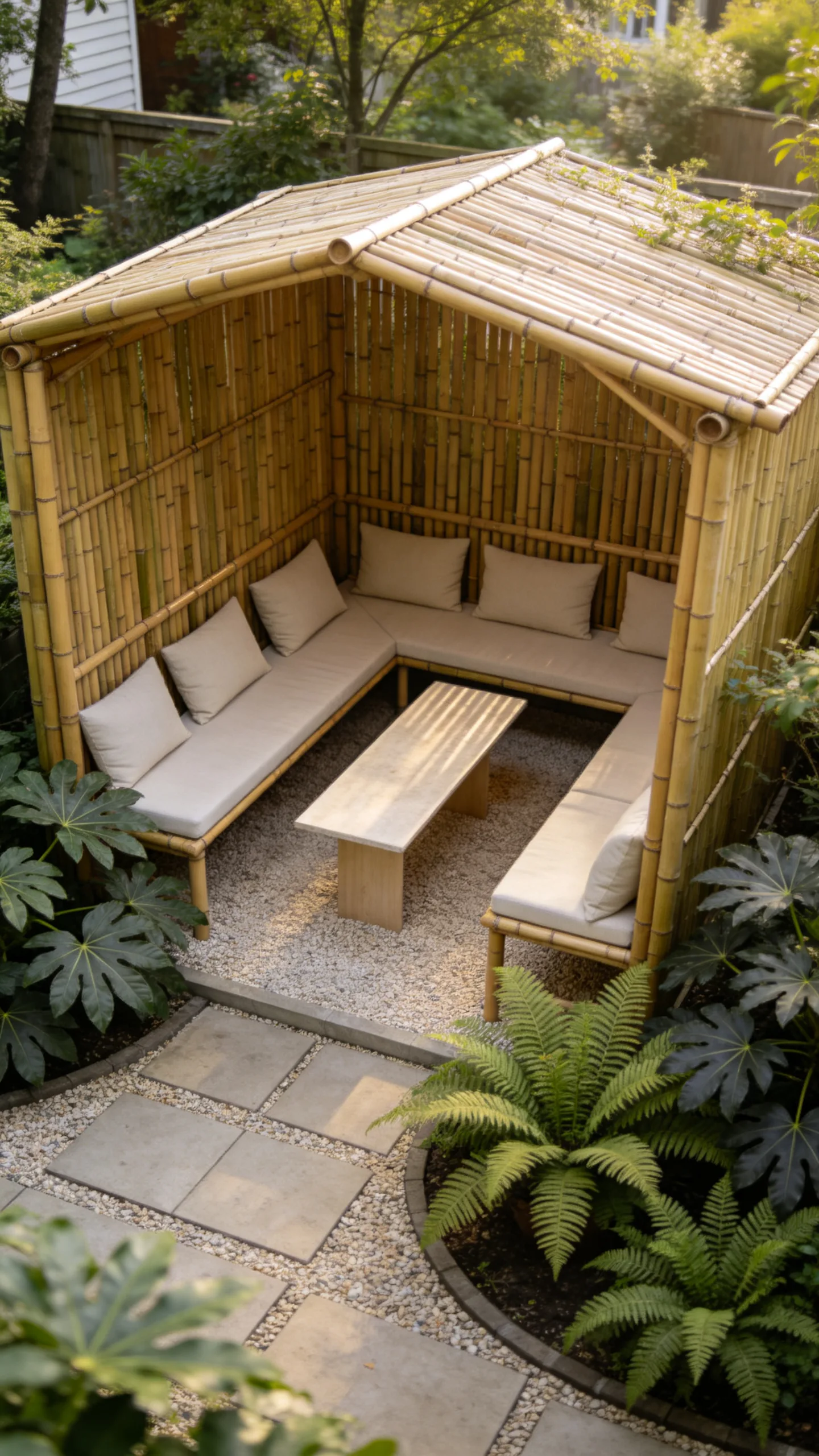
Fit a small bamboo gazebo into an unused backyard corner by placing built-in benches along two adjoining sides. An L-shaped seating plan leaves the center open for a narrow table and eliminates the clearance required for freestanding chairs.
Use a gravel or permeable-paver base to keep the area from becoming muddy after rain. Behind the benches, add shade-tolerant tropical-looking plants such as fatsia, cast-iron plant, or hardy ferns where climate and light permit. Keeping the planting close to the perimeter creates depth without taking over the seating area.
3. Poolside Bamboo Cabana With White Curtains
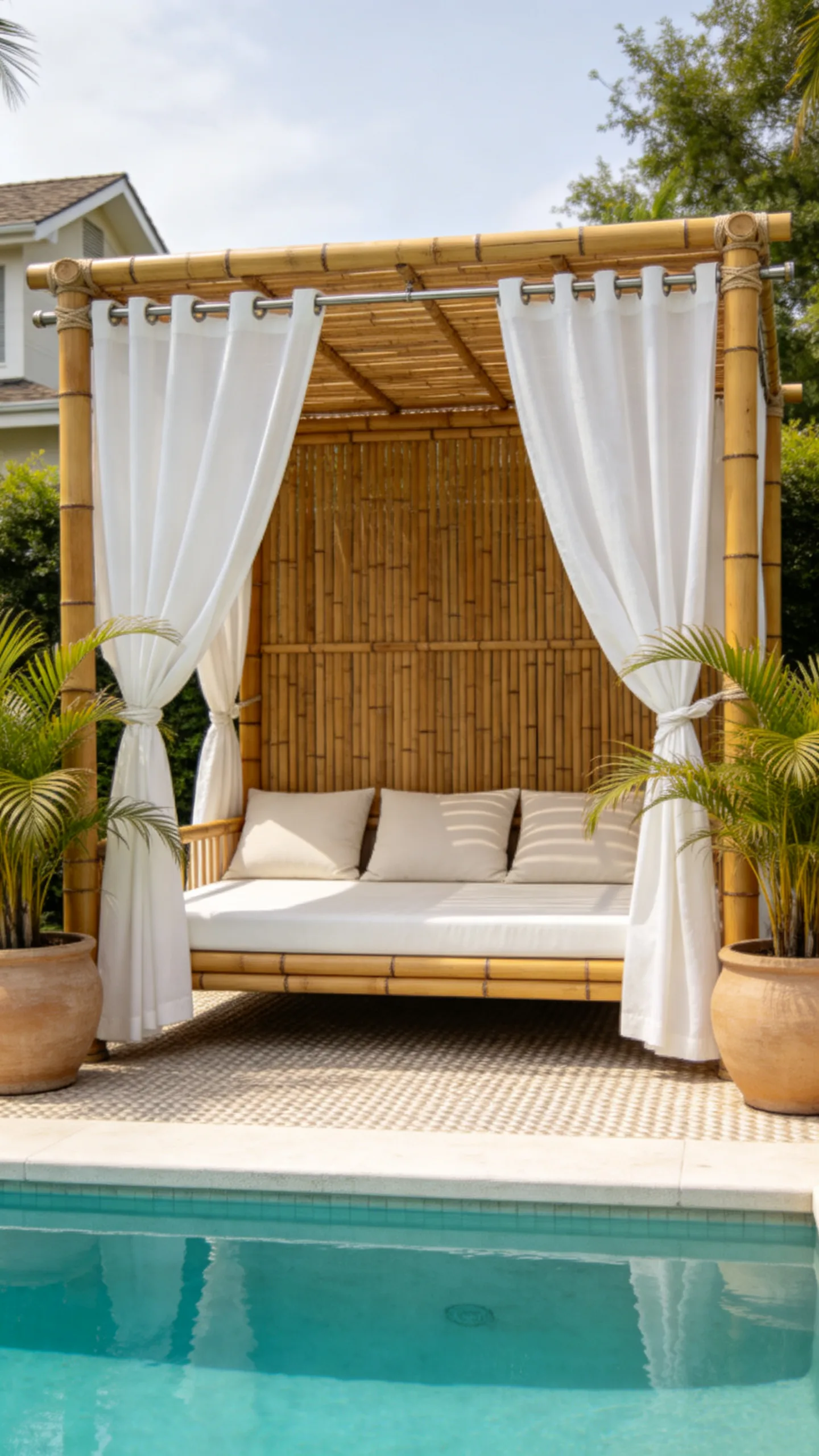
Give a swimming pool or plunge pool a resort-style focal point with a rectangular bamboo cabana. Install outdoor curtains on weather-resistant rods so the sides can remain open for airflow or close partially for shade and privacy.
Choose quick-drying cushions, marine-grade fabric, and flooring with a slip-resistant surface. Position curtains so they cannot blow into the water or touch nearby flames, and use tiebacks during windy weather. Large containers planted with palms or palm-like plants can frame the cabana without dropping excessive debris into the pool.
4. Raised Deck Gazebo for a Damp Garden
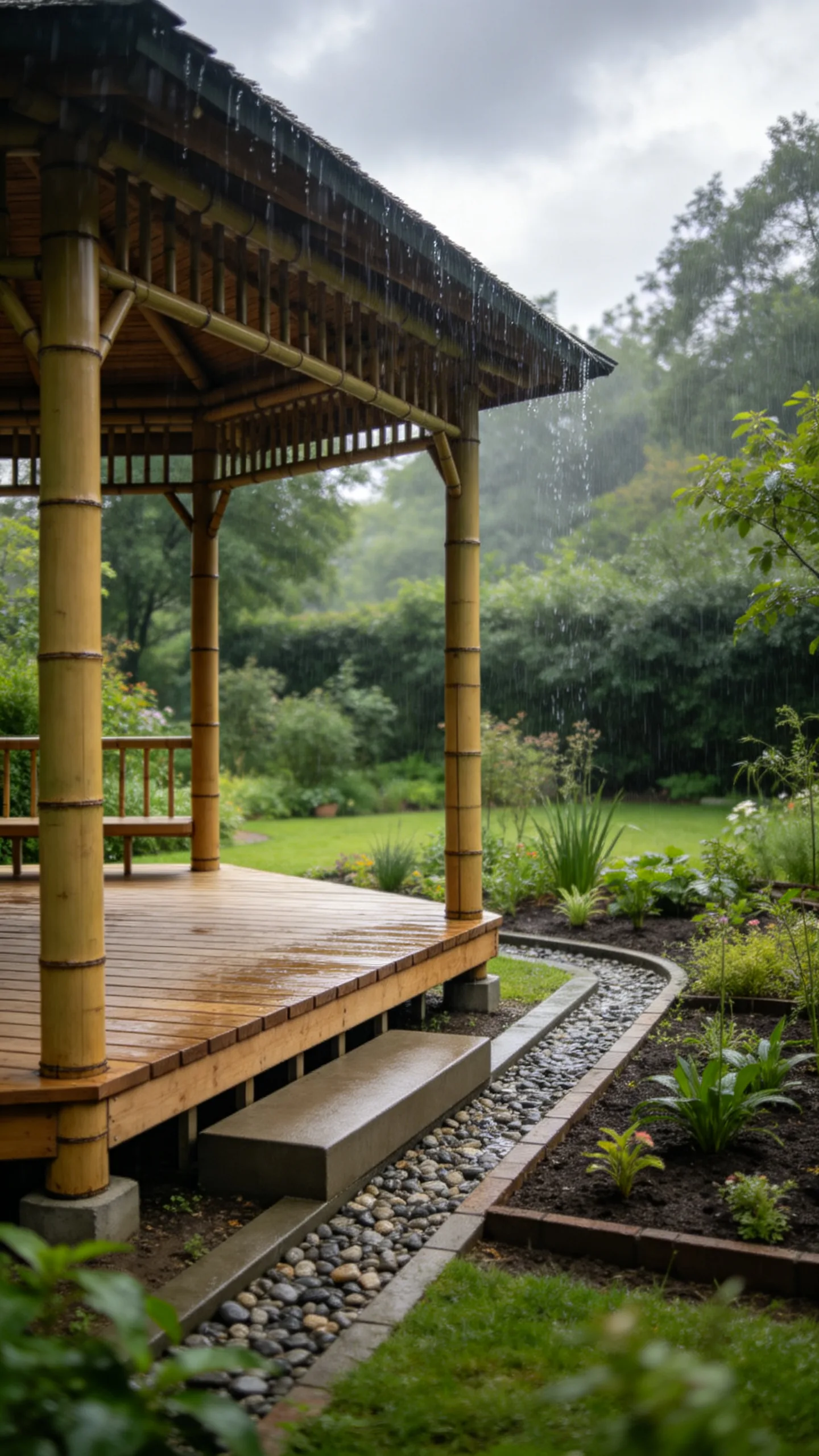
Build the gazebo on a low, ventilated deck when the yard stays damp or receives frequent rain. Raising the floor improves drainage, keeps furniture away from wet soil, and defines the retreat without requiring a large paved patio.
Use rot-resistant decking, composite boards, or properly treated exterior lumber beneath the visible bamboo structure. Include a broad step or short ramp for comfortable access, and direct roof runoff toward a rain garden or gravel infiltration strip rather than allowing water to collect around the footings.
5. Bamboo Dining Pavilion With a Long Table
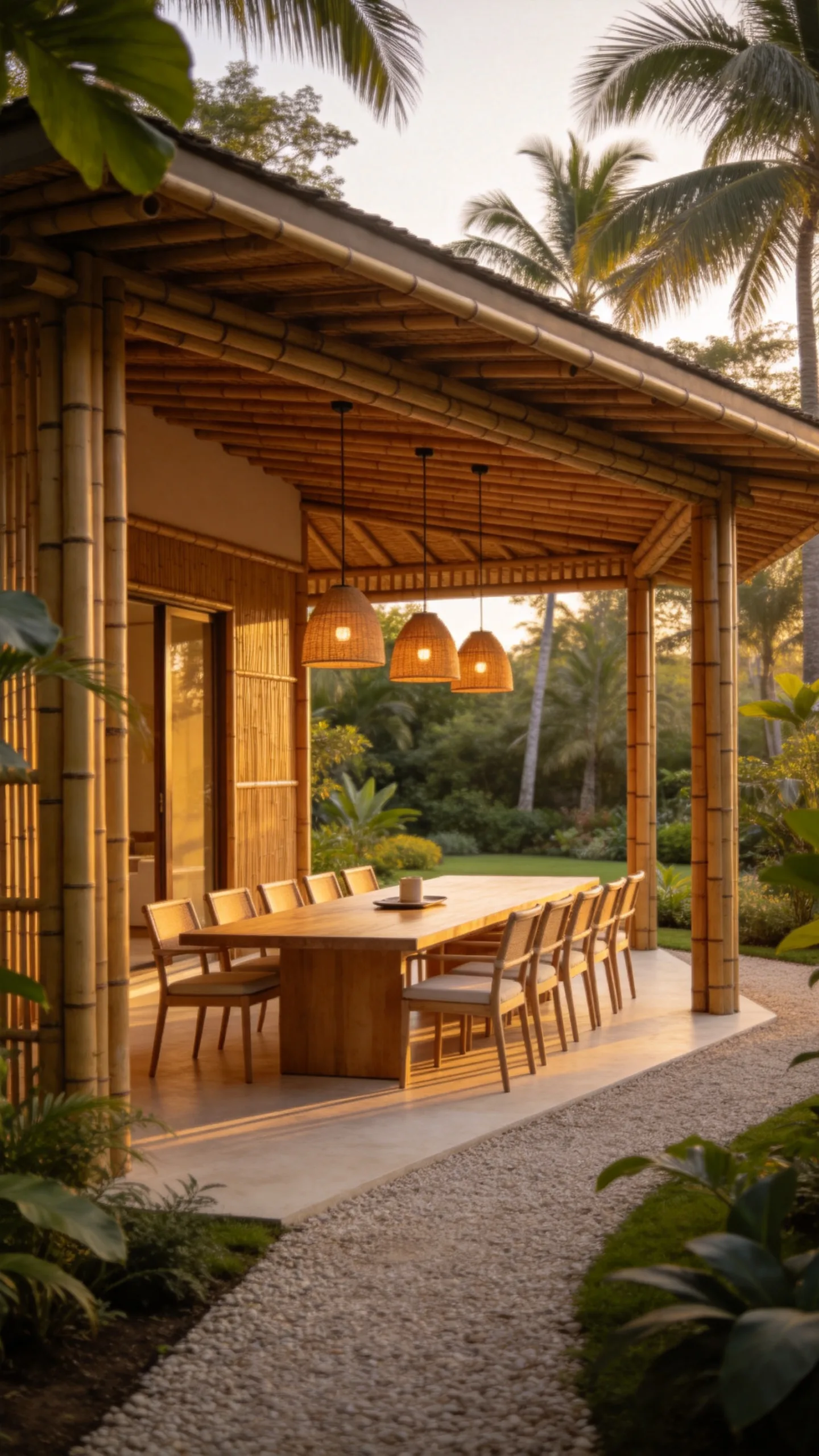
Design a rectangular gazebo around a six- or eight-seat dining table for outdoor meals. A longer roofline provides useful coverage over both the table and chairs, while open sides prevent cooking heat and humidity from becoming trapped.
Allow enough room for chairs to pull back without meeting posts or planting beds. A nearby gravel path can connect the pavilion to the kitchen door, and warm pendant lighting can make evening dining practical. If electricity is installed, use outdoor-rated fixtures and have wiring completed according to local requirements.
6. Circular Gazebo With a Conical Roof
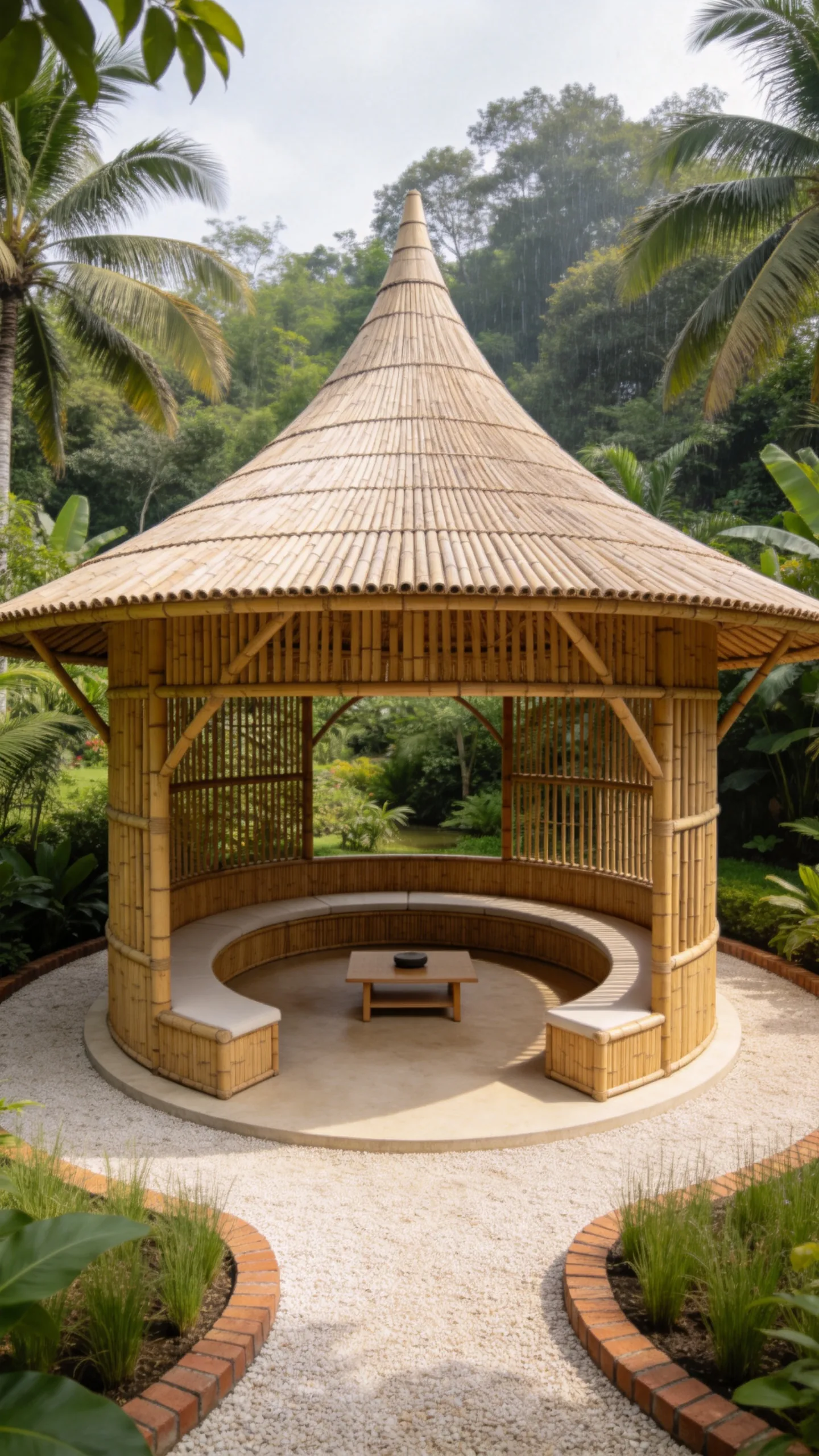
A round or multi-sided bamboo gazebo creates an intimate gathering area and stands out among rectangular beds and fences. Arrange curved bench seating around the perimeter, leaving the center available for a coffee table, planter, or removable serving surface.
The conical roof should include generous eaves to keep rain away from the bamboo frame. Echo the circular shape at ground level with a ring of gravel, brick edging, or low planting. Compact grasses, bromeliads in frost-free areas, or seasonal foliage containers can soften the edge without blocking access.
7. Slatted Bamboo Gazebo for Filtered Shade
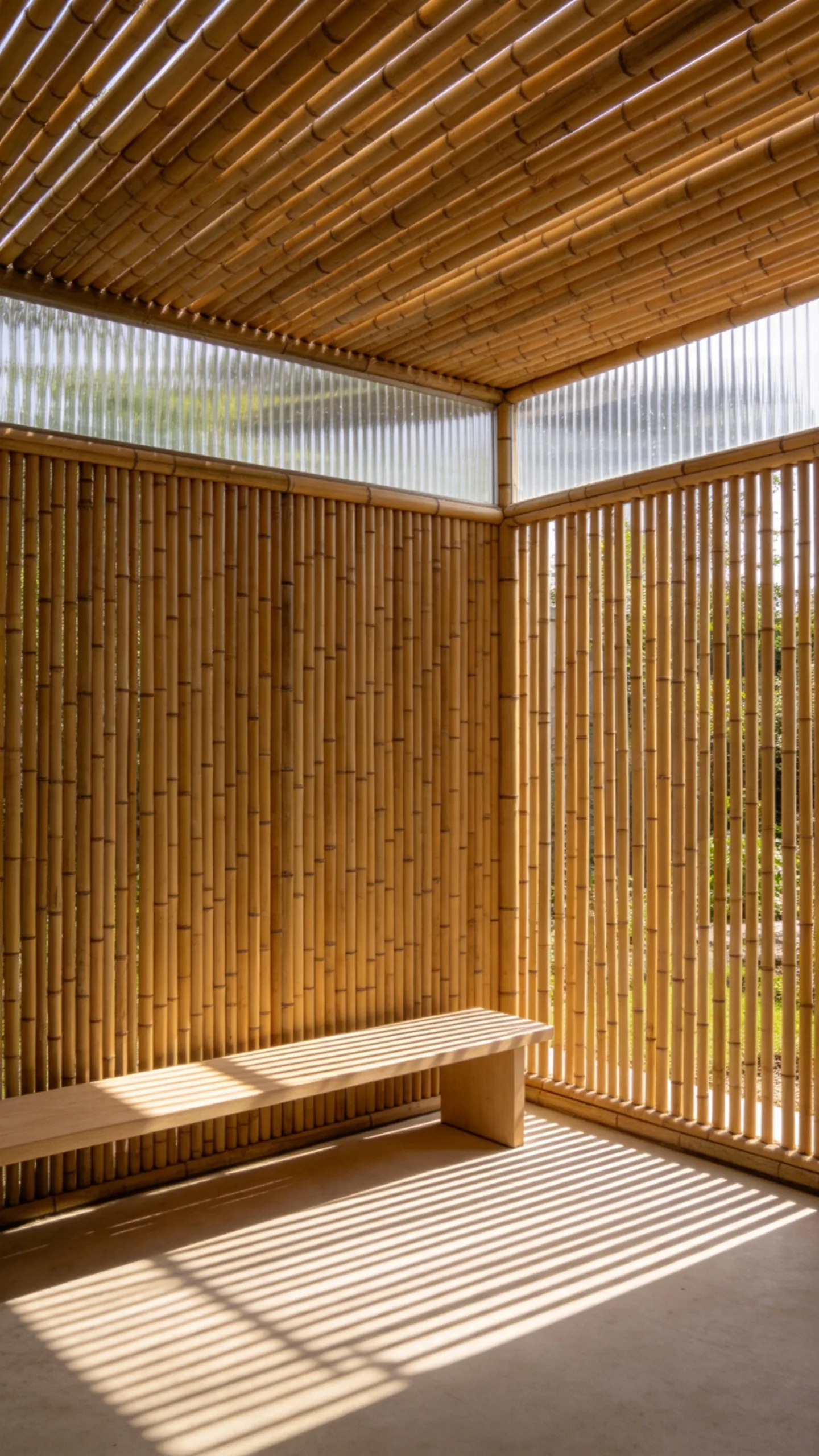
Use closely spaced bamboo slats across the roof and one or two walls to cast shifting patterns of light. This design works well in a courtyard or mild, relatively dry climate where filtered shade is more important than complete rain protection.
Adjust slat spacing according to sun exposure: tighter spacing is useful on the west side, while wider gaps preserve morning light. A clear corrugated roof panel can be installed above the slats if rain protection is needed, allowing the bamboo pattern to remain visible from below.
8. Gazebo With a Living Vine Canopy
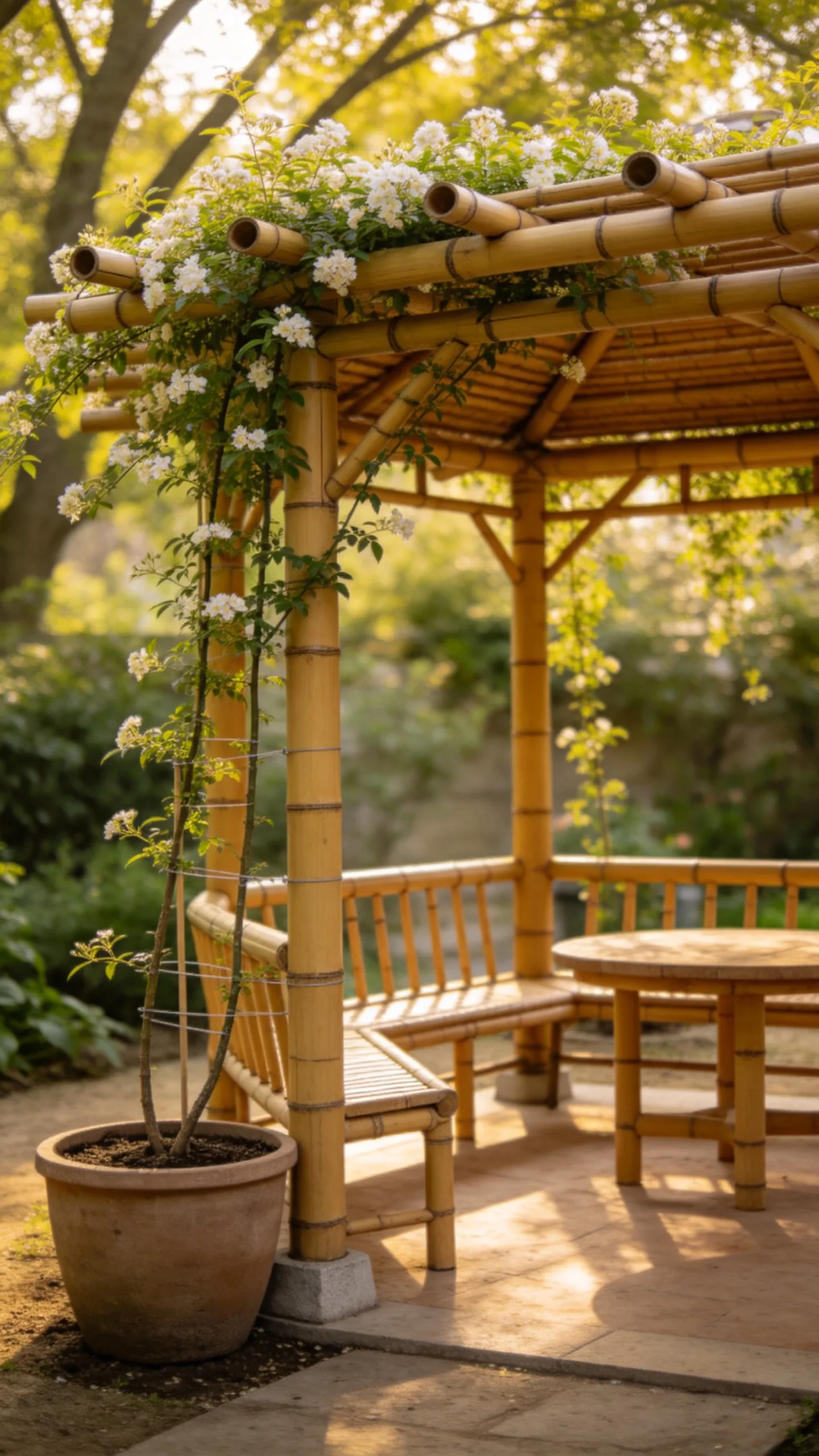
Combine a structural bamboo frame with a pergola-style roof that supports climbing plants. Star jasmine, grapevine, passionflower, or climbing roses can create seasonal shade, but plant choice should match the local climate, available sun, and the strength of the frame.
Plant vines in the ground just outside the footings or in large containers with drainage holes. Train new stems along tensioned wire rather than tying them tightly around structural poles. Regular pruning keeps growth away from roof joints and prevents mature vines from placing too much weight on the gazebo.
9. Privacy Gazebo With Woven Bamboo Screens
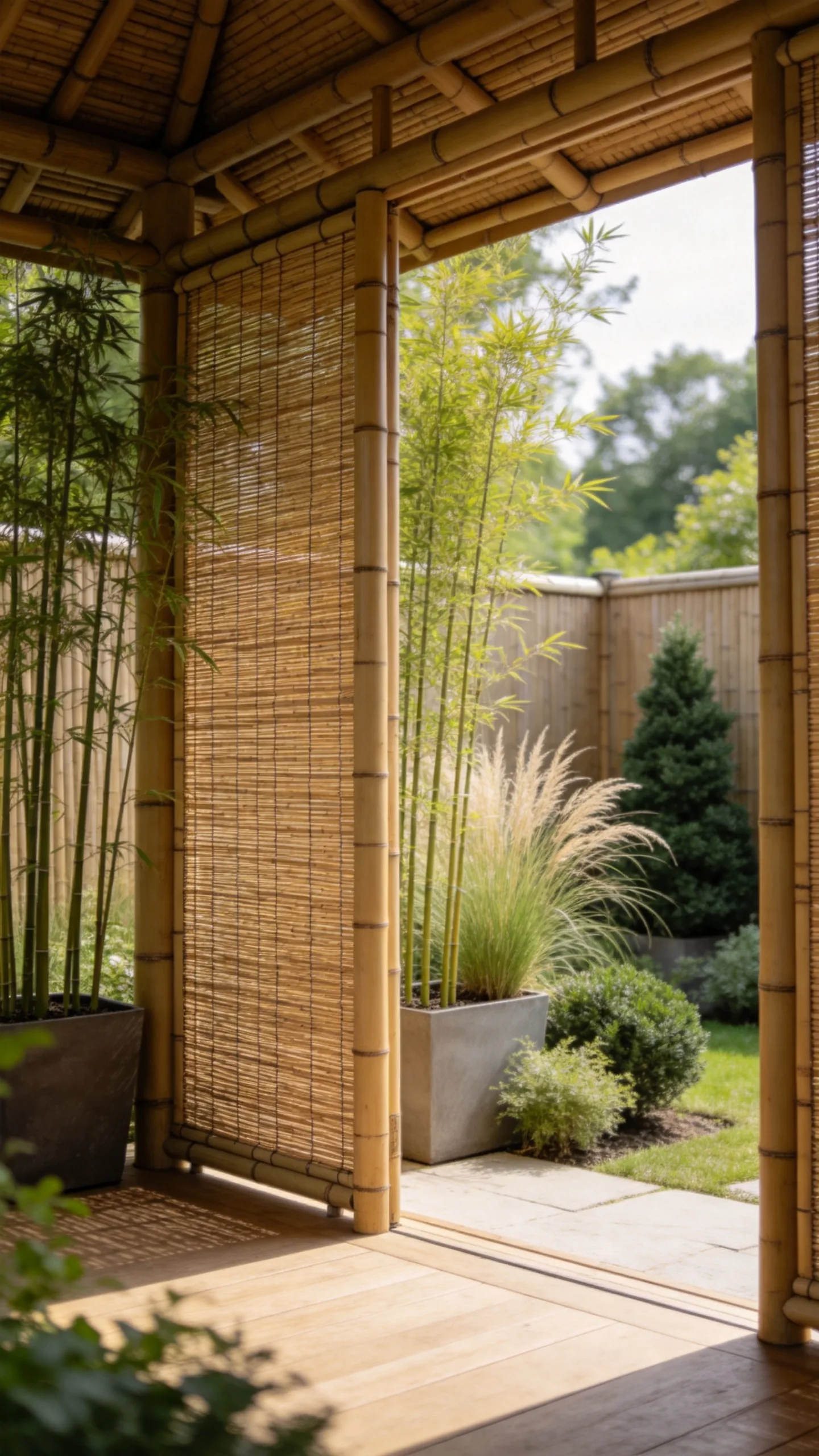
Add woven bamboo panels to the side facing neighbors, a road, or a utility area while leaving the garden-facing sides open. Partial screening creates seclusion without turning the gazebo into a dark, enclosed room.
Raise the panels slightly above the floor so rainwater and debris do not collect along their bottom edges. For a layered privacy border, place tall containers behind the screens and fill them with clumping bamboo, ornamental grasses, or evergreen shrubs appropriate to the region. Use root-contained clumping bamboo rather than invasive running types where escape is a concern.
10. Sunken Conversation Gazebo
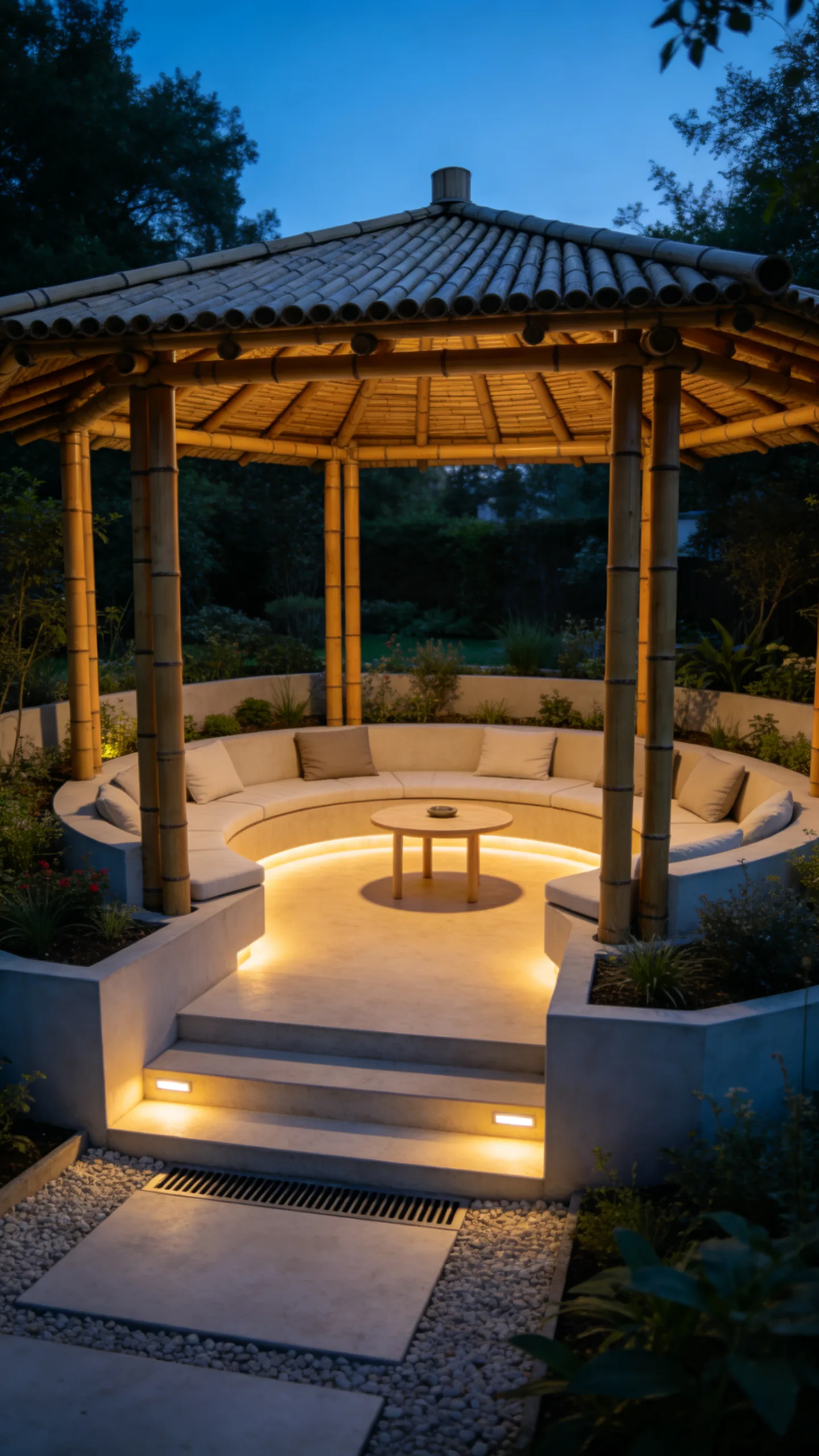
Place a bamboo roof over a shallow sunken seating area to create a secluded lounge within a larger yard. Built-in benches around the lower level make efficient use of space, and the change in elevation gives the retreat a distinct sense of enclosure.
This idea requires careful drainage. Include a suitable base, perimeter drain, and safe steps with low-level lighting so water does not pool in the recessed floor. In sites with a high water table or frequent flooding, achieve the same visual effect by raising surrounding beds instead of excavating the seating area.
11. Garden-Path Gazebo as a Destination
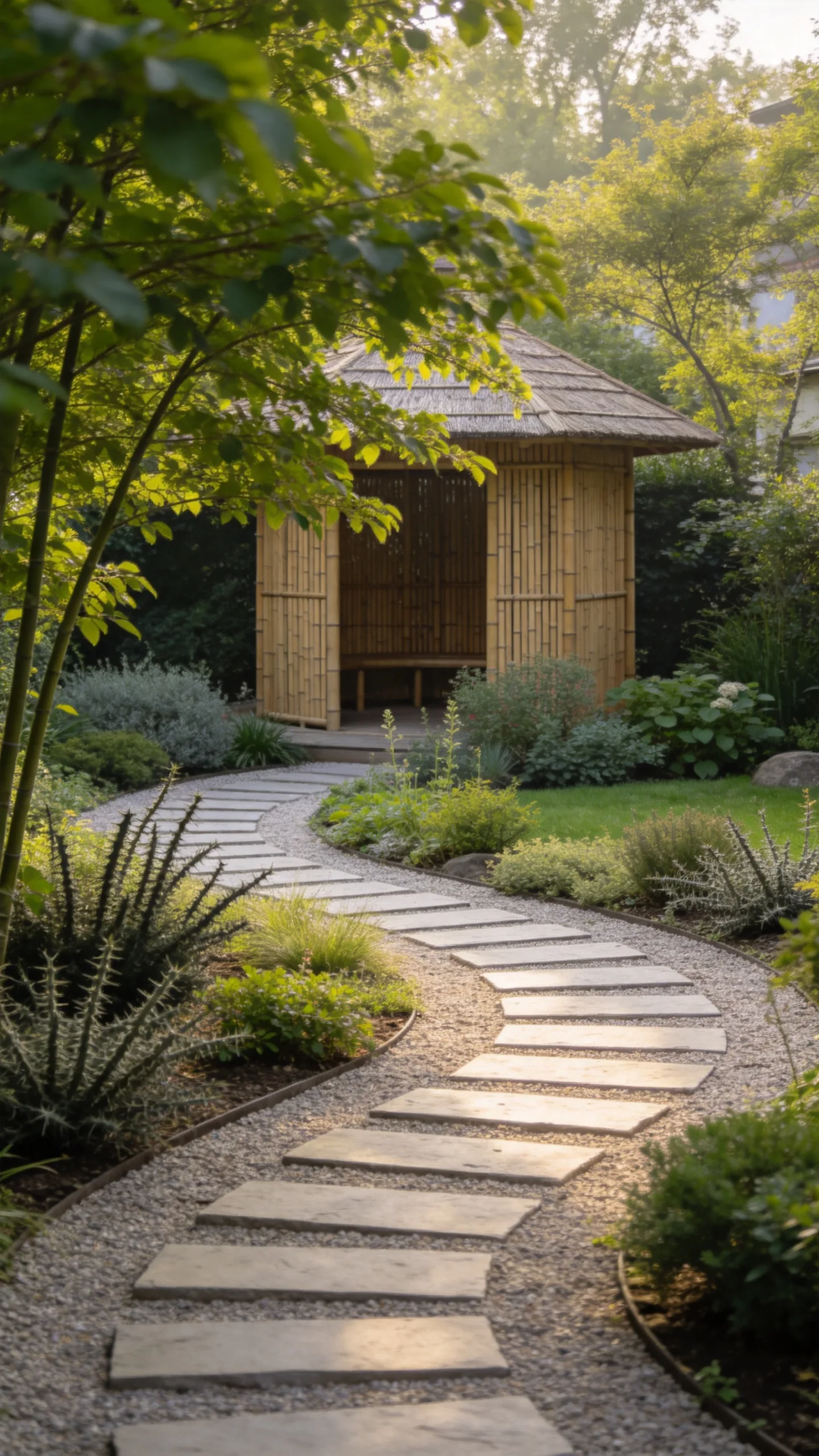
Position a small gazebo at the end of a curving path so it becomes a visual destination from the house or patio. A partially hidden structure encourages movement through the garden and can make a modest yard feel deeper.
Use stepping stones, compacted gravel, or brick for a stable approach. Place taller foliage near the beginning of the path and lower plants near the gazebo to reveal the destination gradually. Keep thorny plants and vigorous vines away from the walkway, especially where the path narrows.
12. Bamboo Tea Gazebo Beside a Pond
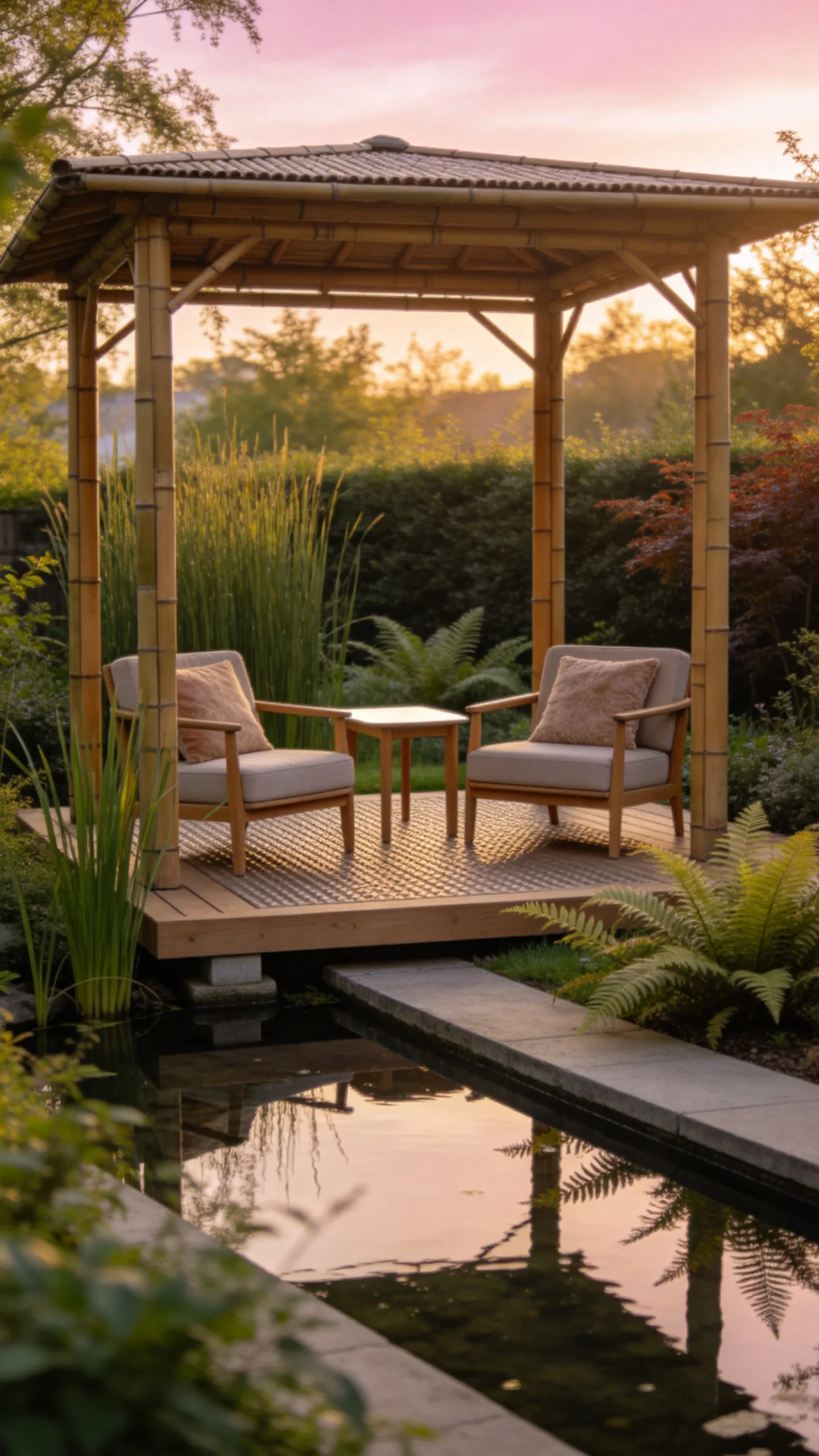
Create a quiet tea or reading pavilion beside a pond, fountain, or recirculating water bowl. A small square gazebo needs only enough room for two chairs, a side table, and a clear route to the entrance.
Place the structure back from the water’s edge on secure footings, and choose a non-slip floor. Moisture-loving plants such as iris, sedges, ferns, or elephant ears can reinforce the lush effect where conditions suit them. Avoid overcrowding the pond edge so maintenance access remains available.
13. Beach-Inspired Gazebo With a Sand-Tone Palette
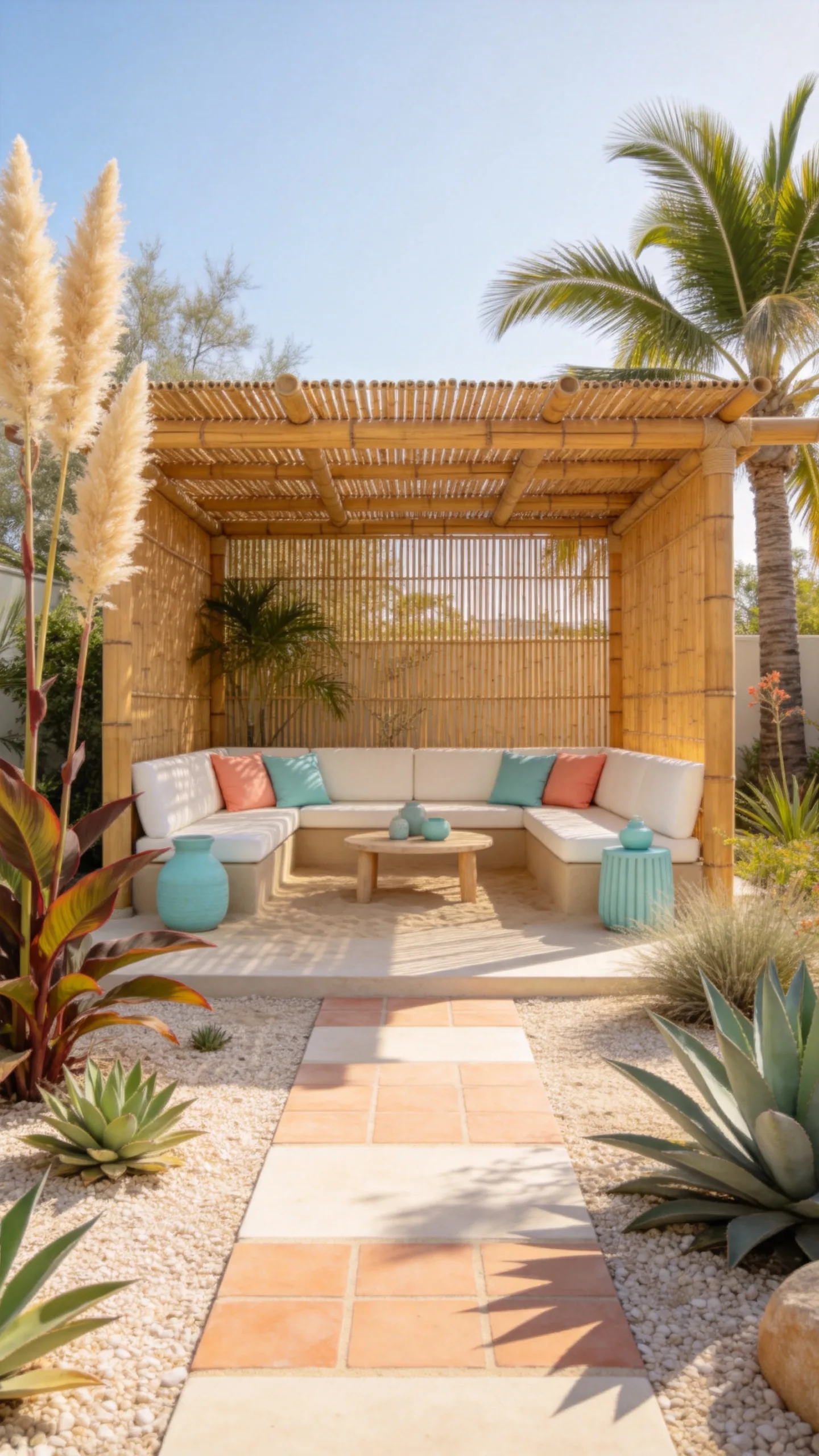
Pair honey-colored bamboo with sand, cream, faded turquoise, and soft coral accents for a breezy coastal-tropical look. Use the brighter colors on replaceable items such as cushions, lanterns, and tableware rather than permanent structural components.
Surround the gazebo with pale gravel or warm-toned pavers instead of loose sand, which can migrate into lawns and drains. Drought-tolerant plants with bold forms—such as yucca, phormium, hardy palms, or agave substitutes—can support the theme in drier climates without requiring a moisture-heavy tropical garden.
14. Minimalist Bamboo Gazebo With a Flat Profile
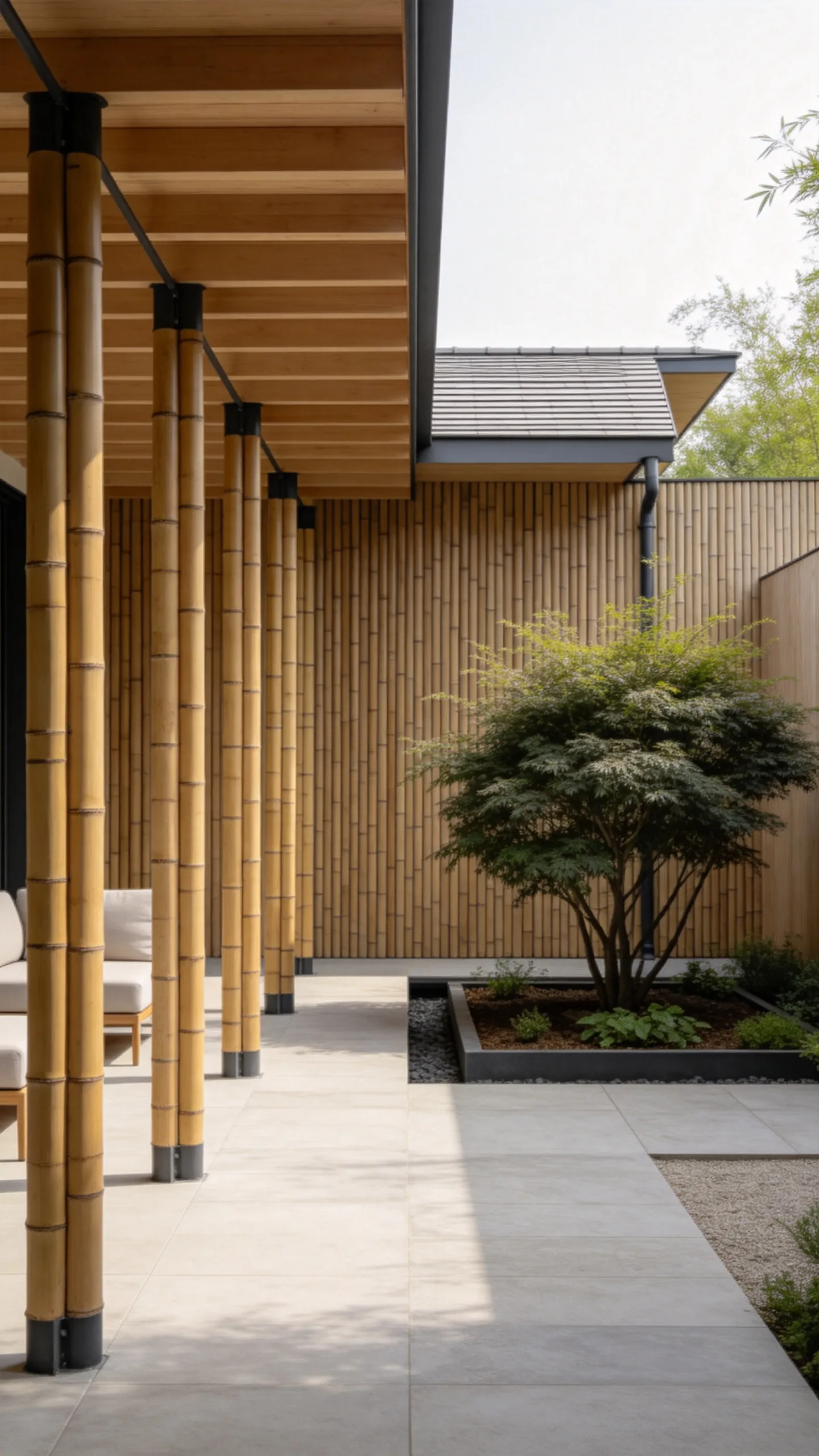
For a contemporary backyard, use straight bamboo posts, clean horizontal lines, and a shallow roof profile. Limit the palette to bamboo, charcoal hardware, neutral upholstery, and one or two large foliage plants.
A nearly flat roof still needs enough slope and drainage capacity for local rainfall or snow loads. Conceal gutters along the rear edge and route water to a planted bed or storage barrel where permitted. Keep decorative items sparse so the bamboo joinery and structural rhythm remain the focus.
15. Two-Zone Gazebo for Lounging and Dining
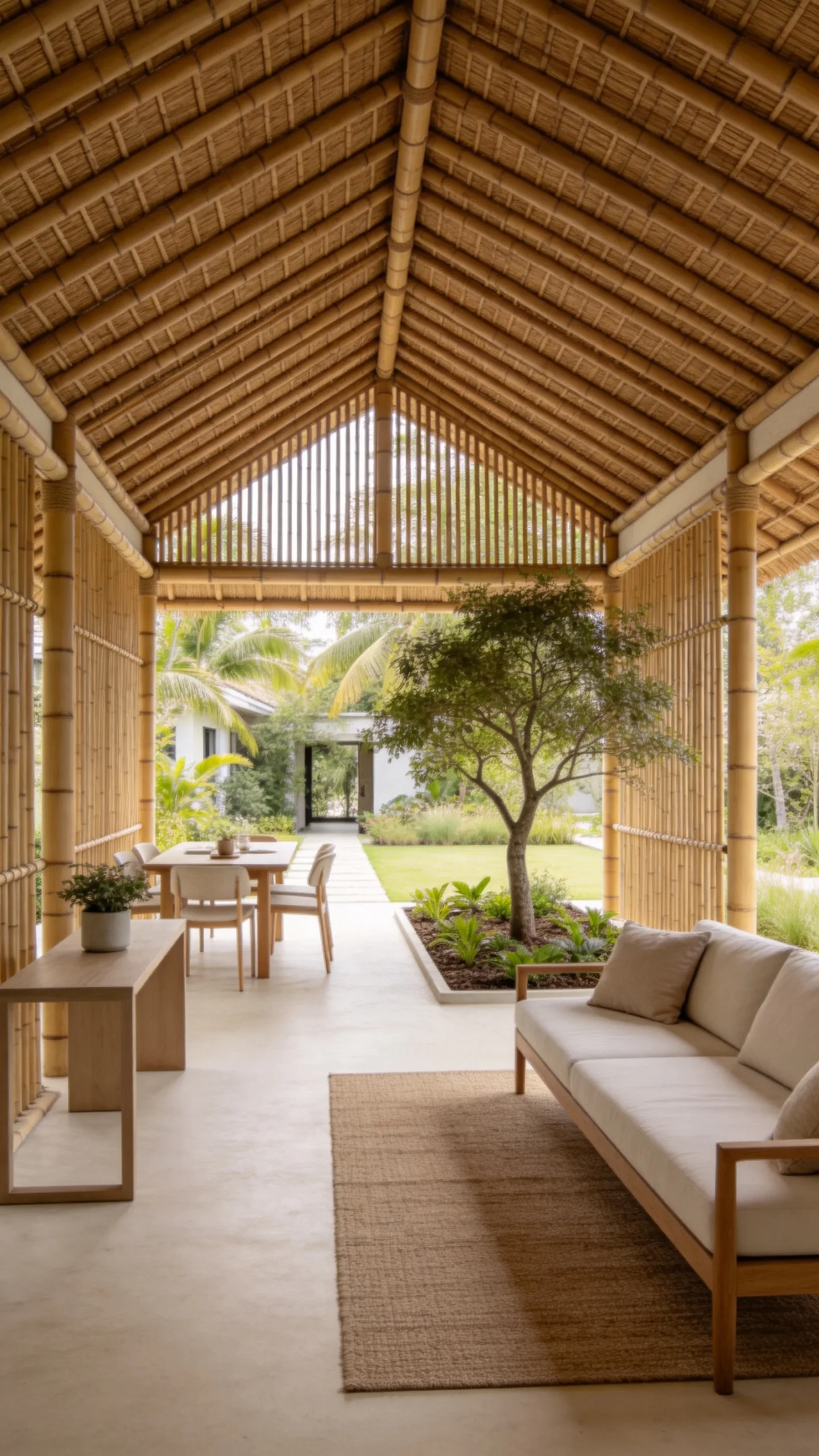
Divide a larger bamboo gazebo into two practical zones: a small dining area at one end and cushioned lounge seating at the other. A console table, narrow planter, or change in rug pattern can define the spaces without adding a solid wall.
Plan the footprint around circulation before selecting furniture. Leave a direct route between the garden entrance and both zones, and place the dining side closer to the house or outdoor kitchen. The lounge end can face a planting bed, pool, or focal tree for a calmer view.
16. Hammock Gazebo With Reinforced Supports
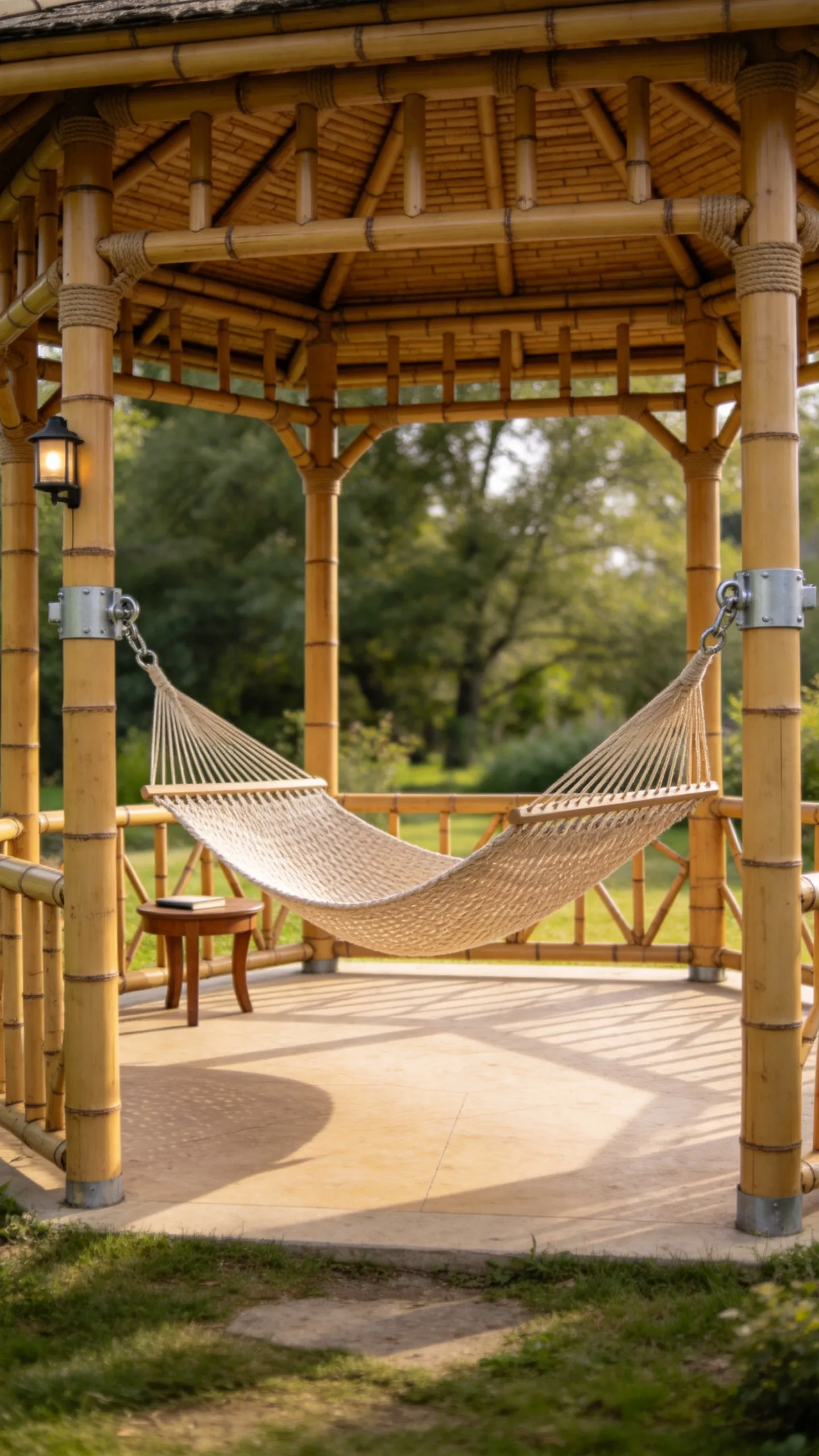
Create a restful retreat by suspending a hammock beneath a bamboo pavilion. Position it diagonally across a square structure or lengthwise inside a narrow rectangular gazebo so there is room for the hammock to move without hitting posts.
Do not attach a hammock to decorative bamboo poles that have not been engineered for dynamic loads. Use reinforced structural supports, rated hardware, and appropriate anchor points. Add a small table and a wall-mounted reading light, but keep the floor clear around the hammock for safe entry and exit.
17. Outdoor Kitchen Gazebo With a Bamboo Facade
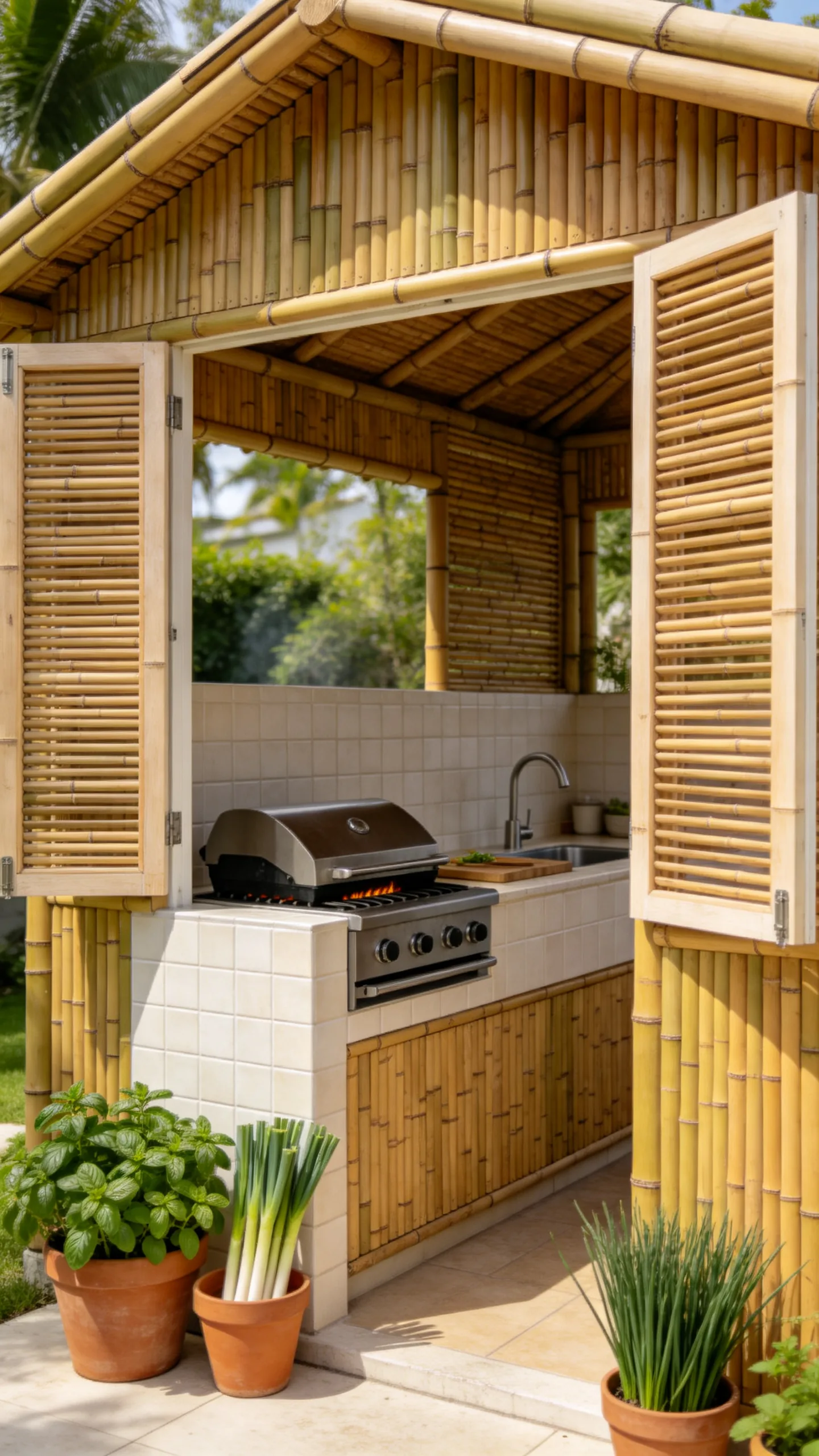
Build a weather-resistant cooking pavilion and use bamboo as cladding, screening, or decorative trim rather than placing untreated bamboo close to heat. A tiled or masonry counter can hold a grill, sink, and preparation area while retaining the tropical visual theme.
Follow required clearances around grills, burners, and chimneys, and use noncombustible materials in heat-exposed areas. Keep at least two sides open for ventilation. Containers of culinary herbs can sit near the entrance, where basil, mint, lemongrass, or chives are easy to harvest and water.
18. Tropical Container Garden Gazebo
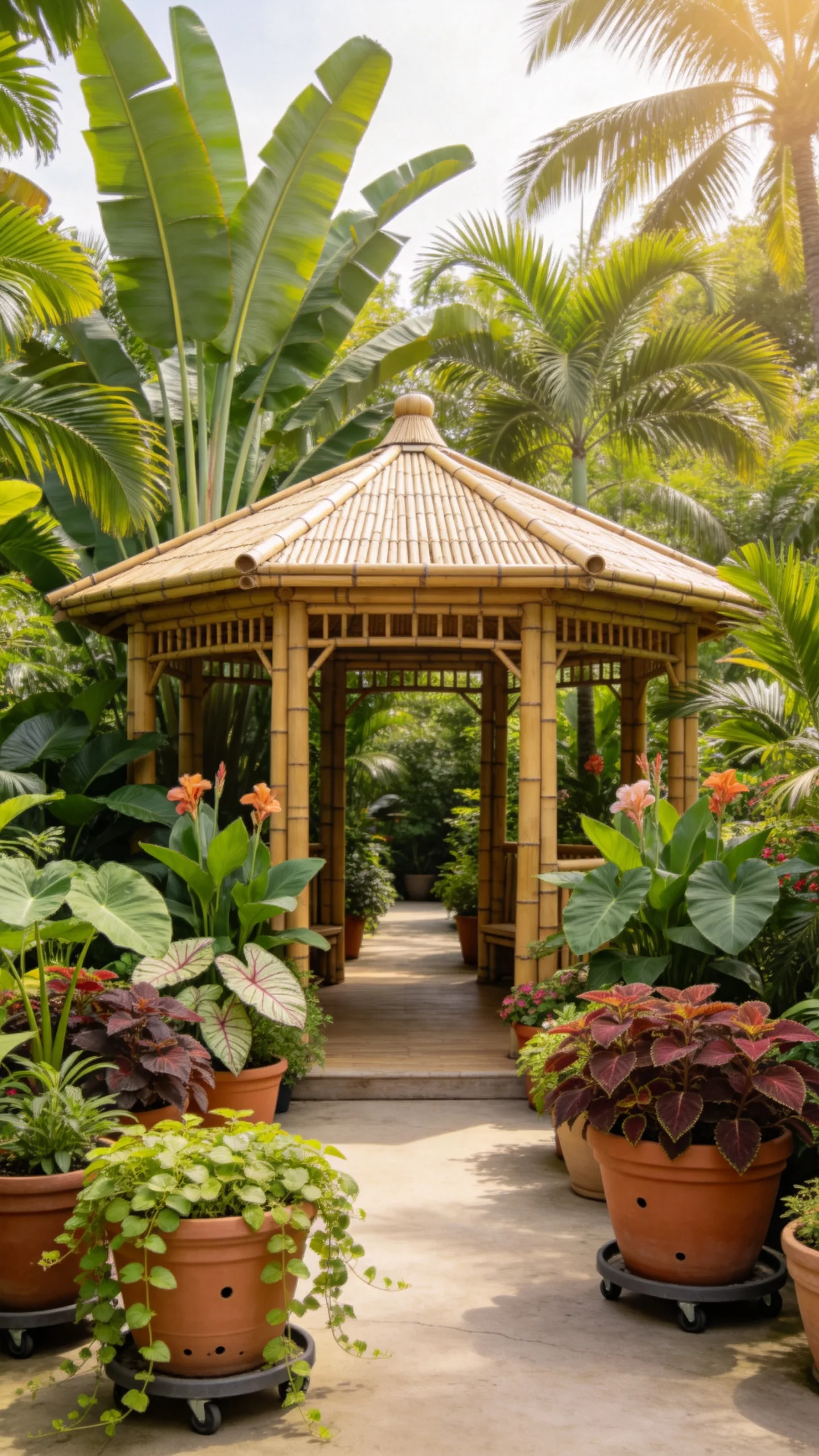
Surround the gazebo with grouped containers instead of permanent beds, an especially useful approach for patios, rentals, or cold climates. Mix tall foliage plants, medium flowering plants, and trailing ground-cover forms to build layers without consuming much floor space.
Use pots with drainage holes and place saucers only where standing water can be emptied regularly. Bananas, cannas, coleus, caladiums, and palms can create a lush summer display, but some may need indoor winter storage. Wheeled plant caddies make heavy specimens easier to move and allow the arrangement to change with the seasons.
19. Narrow Side-Yard Bamboo Retreat
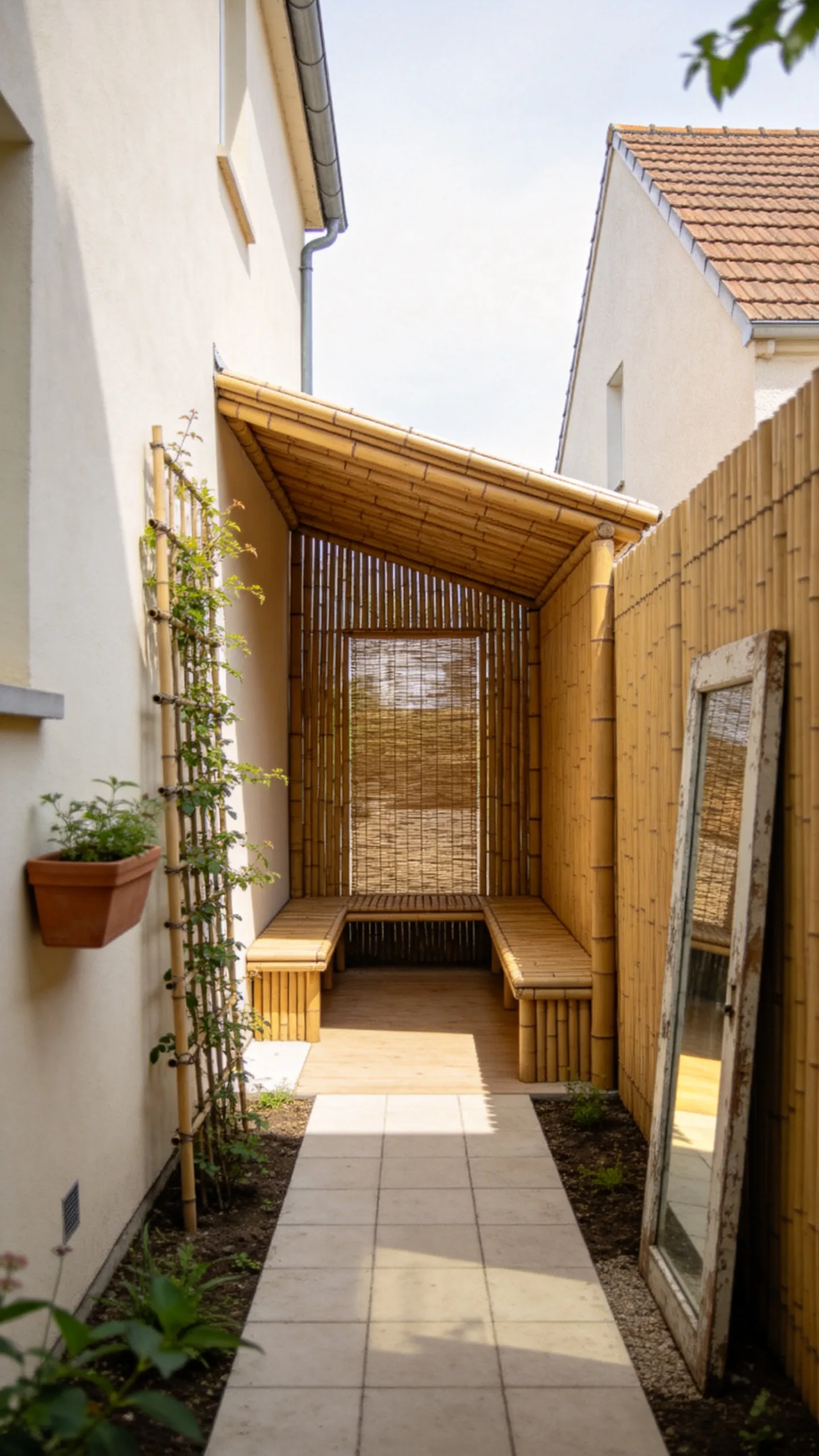
Fit a slim bamboo gazebo into a side yard by using a long, shallow footprint with a bench against the back wall. A slanted roof can direct water away from the house, while a screened end provides privacy from the street.
Measure door, gate, and utility access before building so the structure does not block essential routes. Train a compact climber on a narrow trellis and use wall-mounted planters instead of broad beds. Light-colored paving and a mirror designed for outdoor use can help the confined area feel more open.
20. Lantern-Lit Gazebo for Evening Entertaining
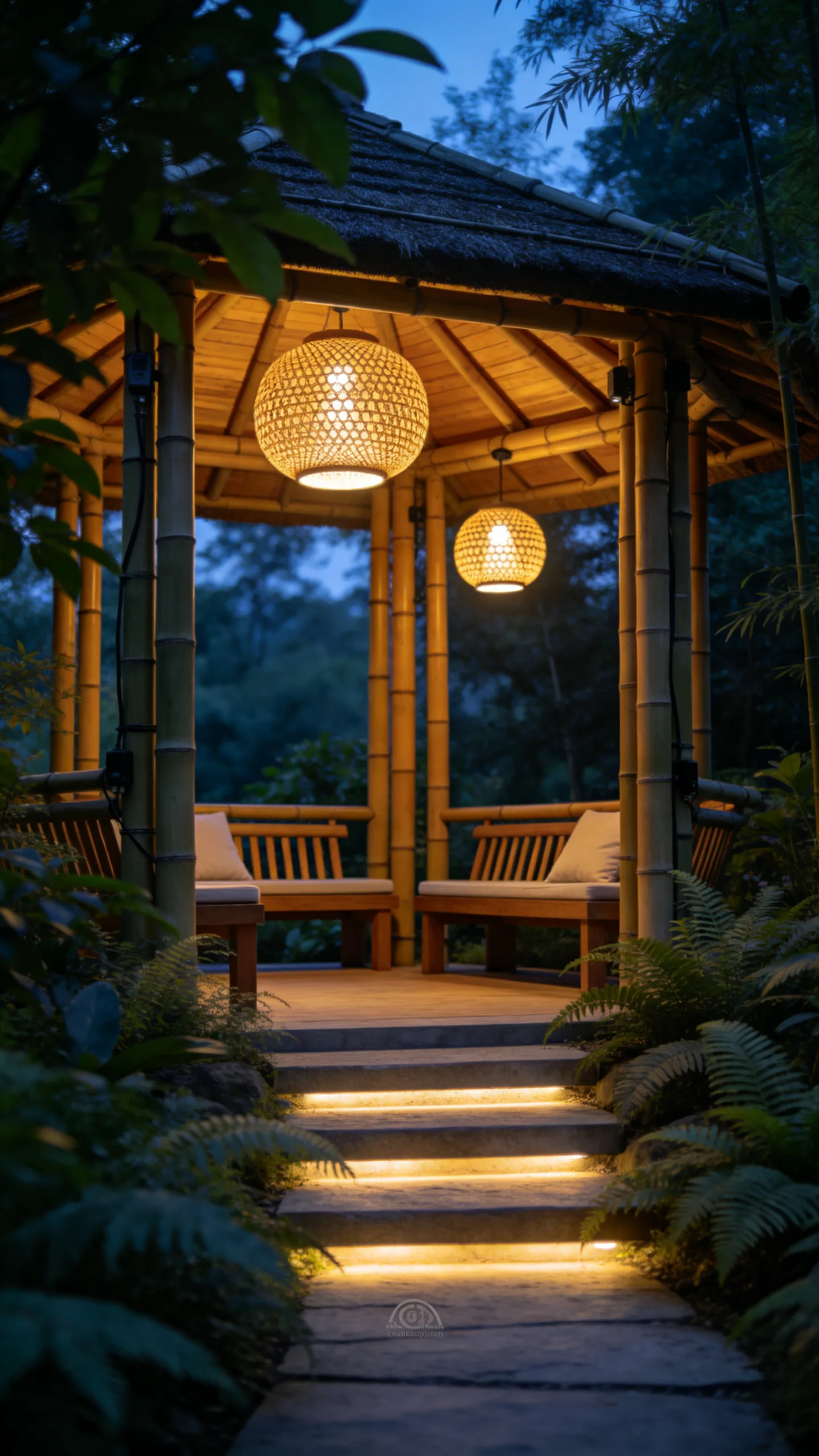
Suspend woven lantern shades at different heights beneath the gazebo roof to create a warm evening atmosphere. Combine one main overhead fixture with low path lights and subtle illumination near steps so the space remains both inviting and safe.
Use outdoor-rated LED fixtures, weatherproof connections, and bulbs with a warm color temperature. Solar lanterns can work where the panels receive enough direct sunlight, but wired lighting is generally more consistent in deep shade. Keep open flames away from bamboo, thatch, curtains, and dry foliage.
21. Bamboo Gazebo Framed by Layered Tropical Planting
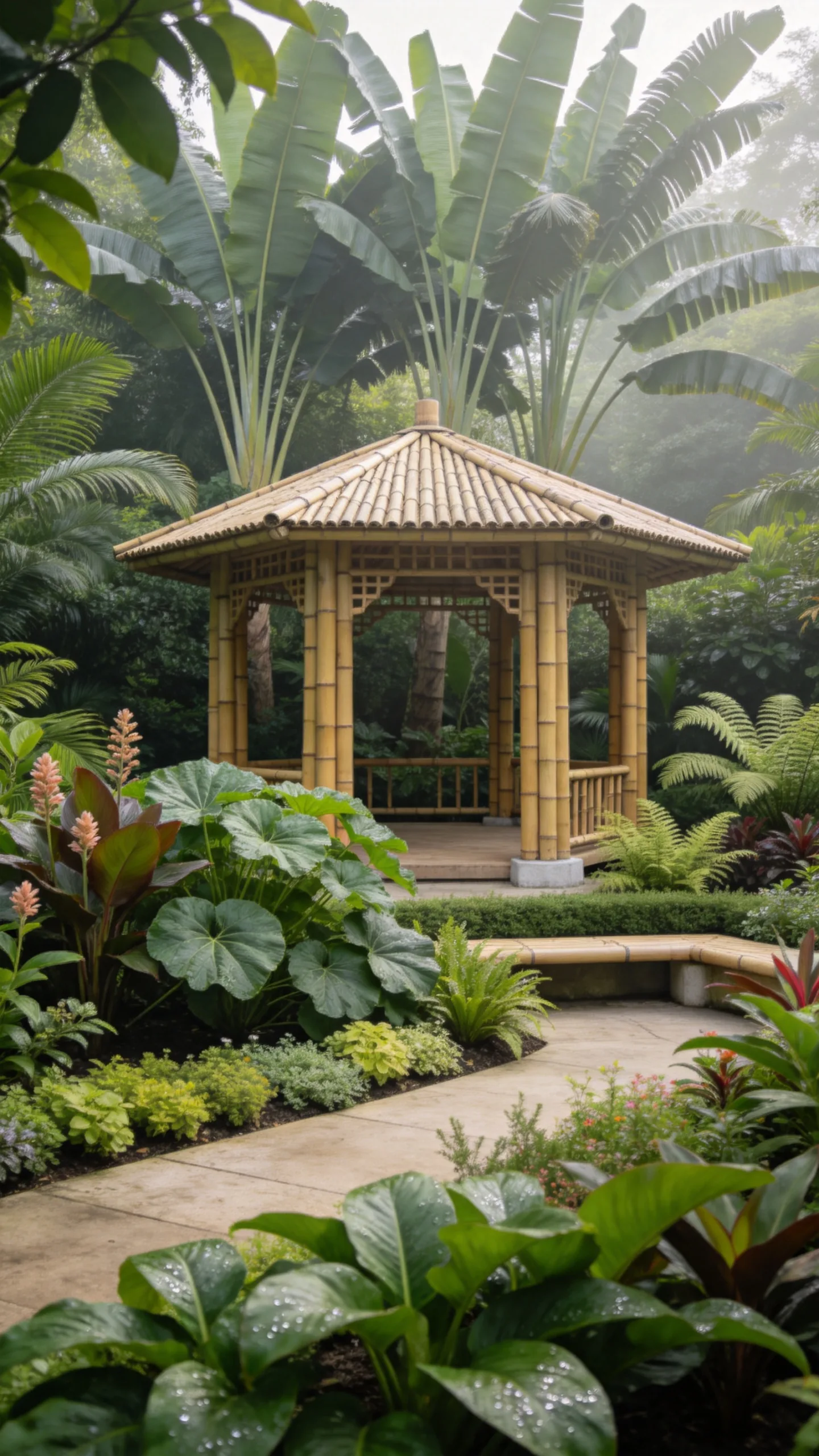
Make the gazebo feel embedded in the landscape by planting in three levels around it. Start with tall structural plants behind the gazebo, add broad-leaved shrubs or perennials at mid-height, and finish with low ground covers along paths and seating edges.
Choose plants according to climate and exposure rather than appearance alone. In warm regions, palms, gingers, heliconias, and elephant ears may be suitable; in cooler gardens, hardy banana, fatsia, canna, hosta, and ferns can create a similar effect. Leave airflow around bamboo posts, maintain access to footings, and keep foliage from resting against the roof so inspections and seasonal maintenance remain straightforward.