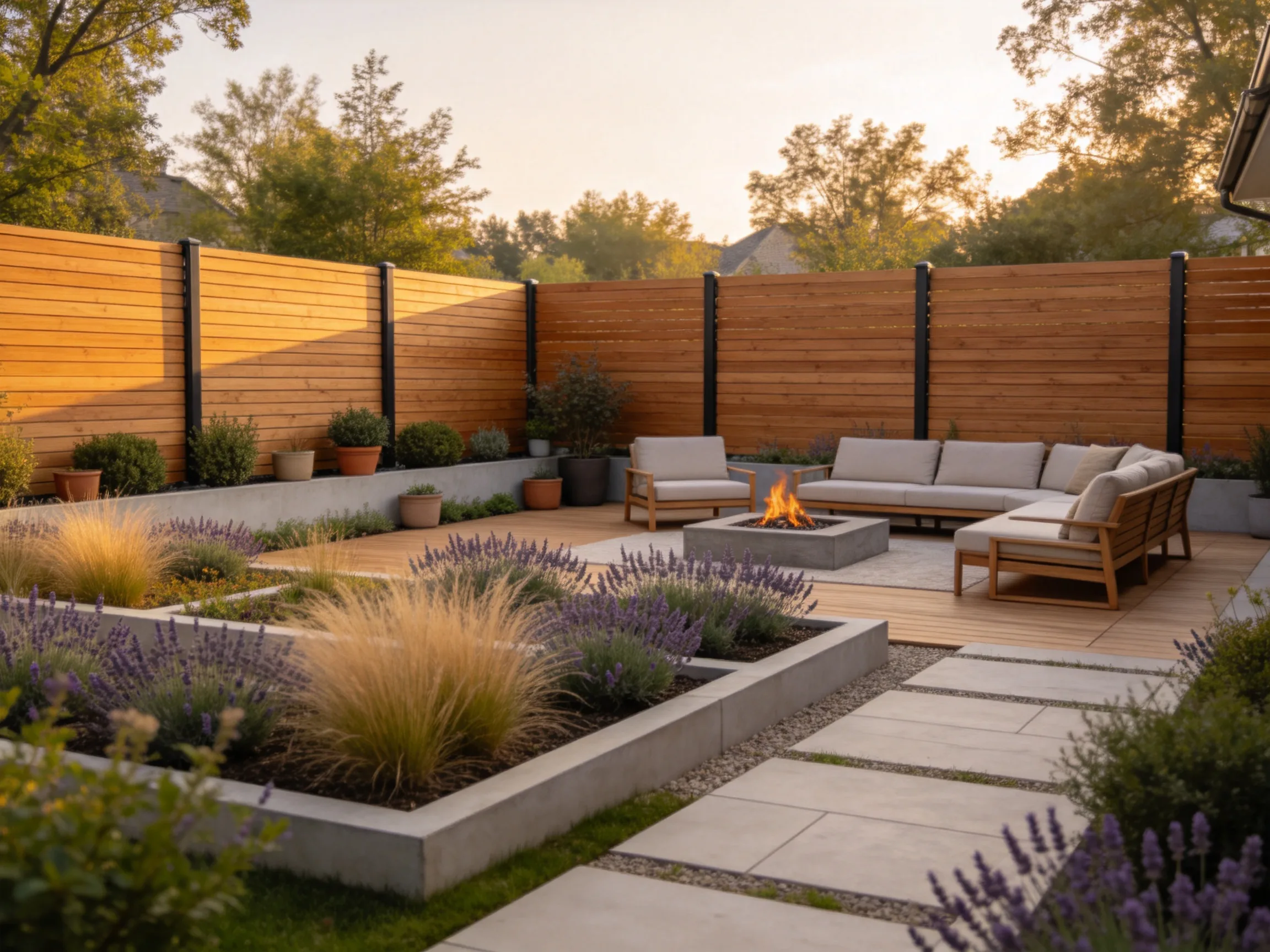
A privacy fence can do more than block a view. The right design can shape outdoor rooms, soften a bare yard, support climbing plants, reduce visual clutter, and make a patio, deck, or garden feel more intentional. These privacy fence ideas focus on practical backyard upgrades using materials, planting combinations, fence layouts, and space-saving details that can work for small yards, side gardens, patios, and larger outdoor spaces.
1. Horizontal Cedar Slat Fence
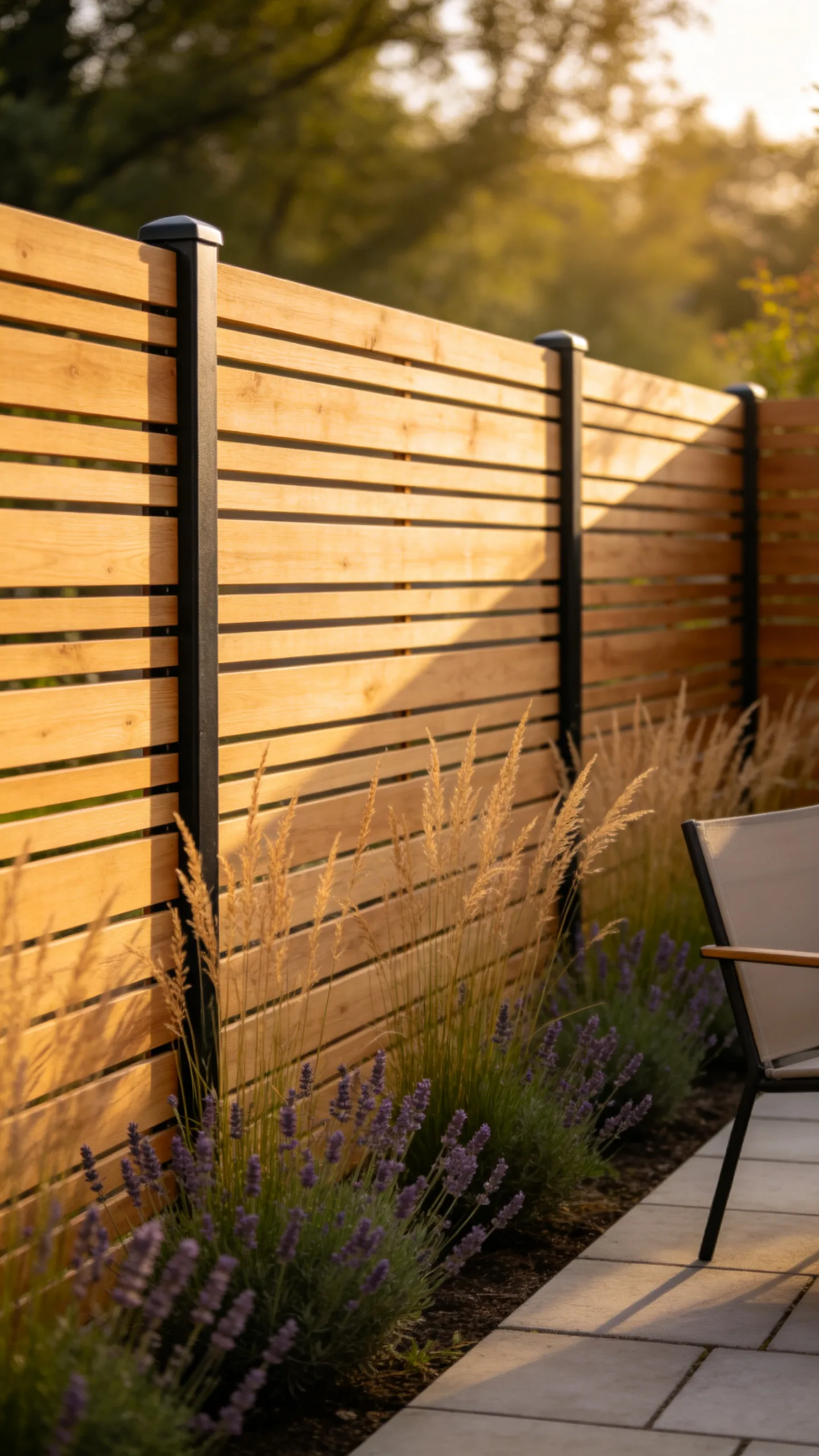
A horizontal cedar slat fence gives a backyard a clean, modern look while still feeling warm and natural. Cedar boards can be installed with tight spacing for maximum privacy or with narrow gaps to allow light and airflow through the fence line.
This style works especially well behind a patio, outdoor dining area, or fire pit because the horizontal lines make the yard feel wider. For a more finished look, use dark metal posts, cap the top edge with a smooth board, and stain the cedar in a warm honey, walnut, or weathered gray tone.
Plant ornamental grasses, lavender, catmint, or dwarf shrubs along the base to soften the straight lines. In sunny yards, drought-tolerant plants can reduce watering needs, while shaded fence lines may work better with hostas, ferns, or heuchera.
2. Board-on-Board Privacy Fence
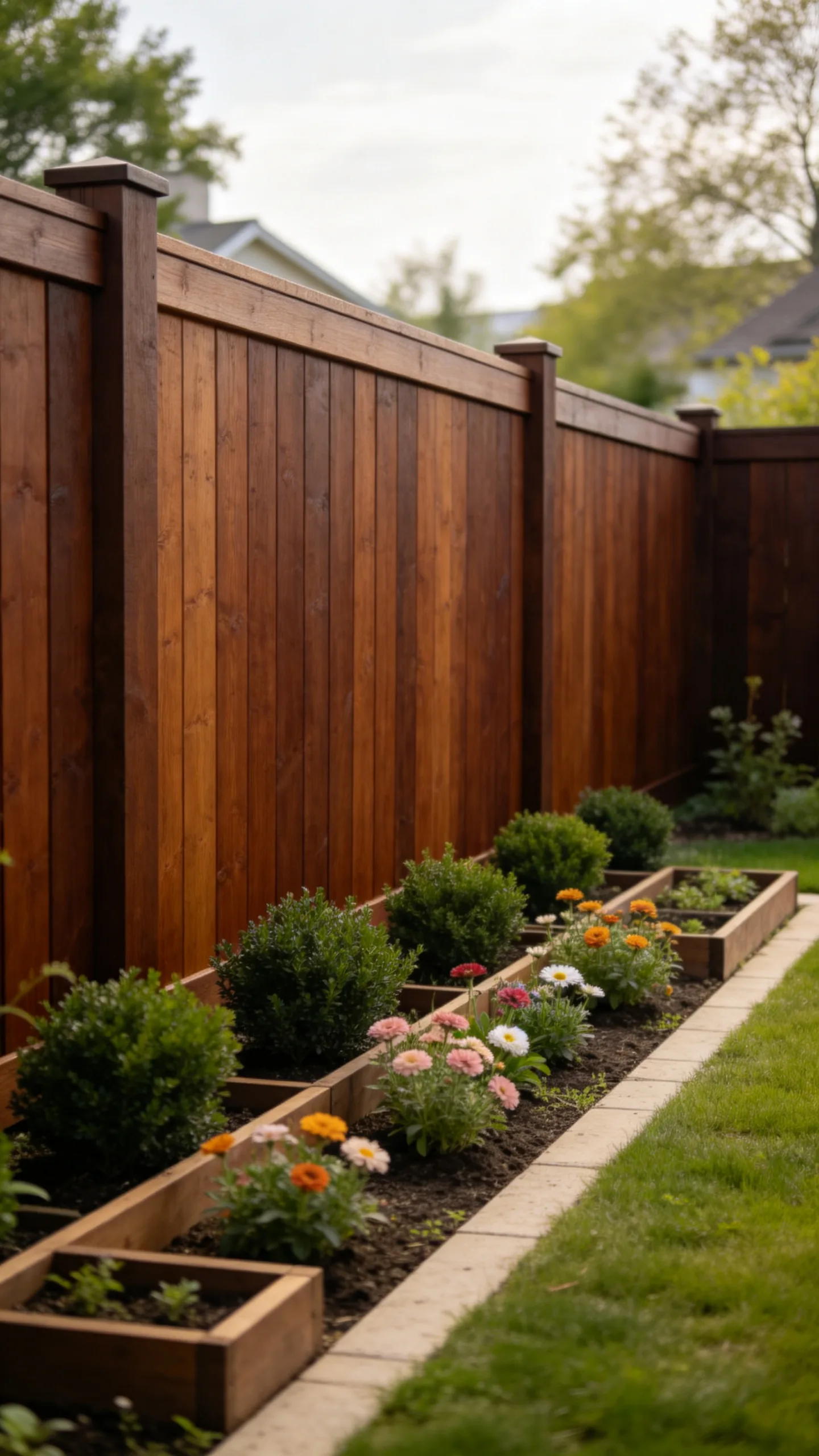
A board-on-board fence is one of the most practical privacy fence ideas because the overlapping boards block sightlines from both sides. Unlike standard vertical fencing with small gaps, this design keeps the backyard more private even as wood naturally expands and contracts through seasonal changes.
This fence is a strong choice for property lines near neighbors, alleys, or visible side yards. It has a traditional look but can be updated with black hardware, square posts, or a stained finish instead of basic unfinished wood.
For a backyard garden, pair this fence with raised beds or a narrow planting border. The solid background makes flowers, shrubs, and climbing plants stand out, especially if you choose a darker stain that contrasts with green foliage.
3. Lattice-Top Fence With Climbing Vines
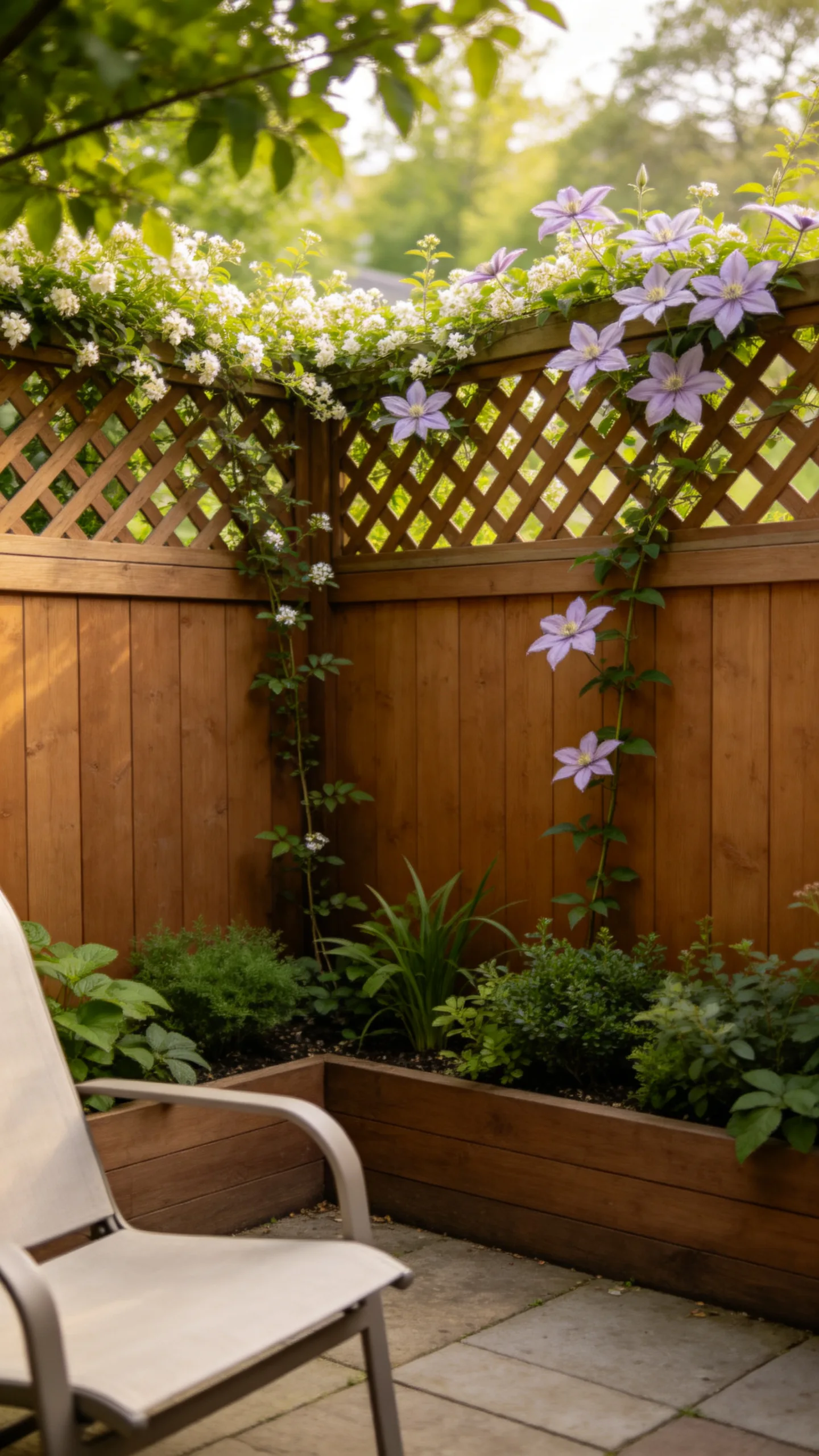
A lattice-top fence combines privacy at eye level with a lighter, decorative upper section. The solid lower panels shield patios and seating areas, while the lattice adds height without making the yard feel closed in.
The lattice section is ideal for climbing plants such as clematis, star jasmine, climbing roses, or annual morning glories, depending on your climate and sunlight. Use sturdy lattice panels and check that the fence can support mature vine growth, especially in windy areas.
This idea is useful for small backyards because the vertical planting adds greenery without taking up much ground space. Keep vines pruned so they do not become too heavy or block airflow around the fence.
4. Black Painted Wood Fence
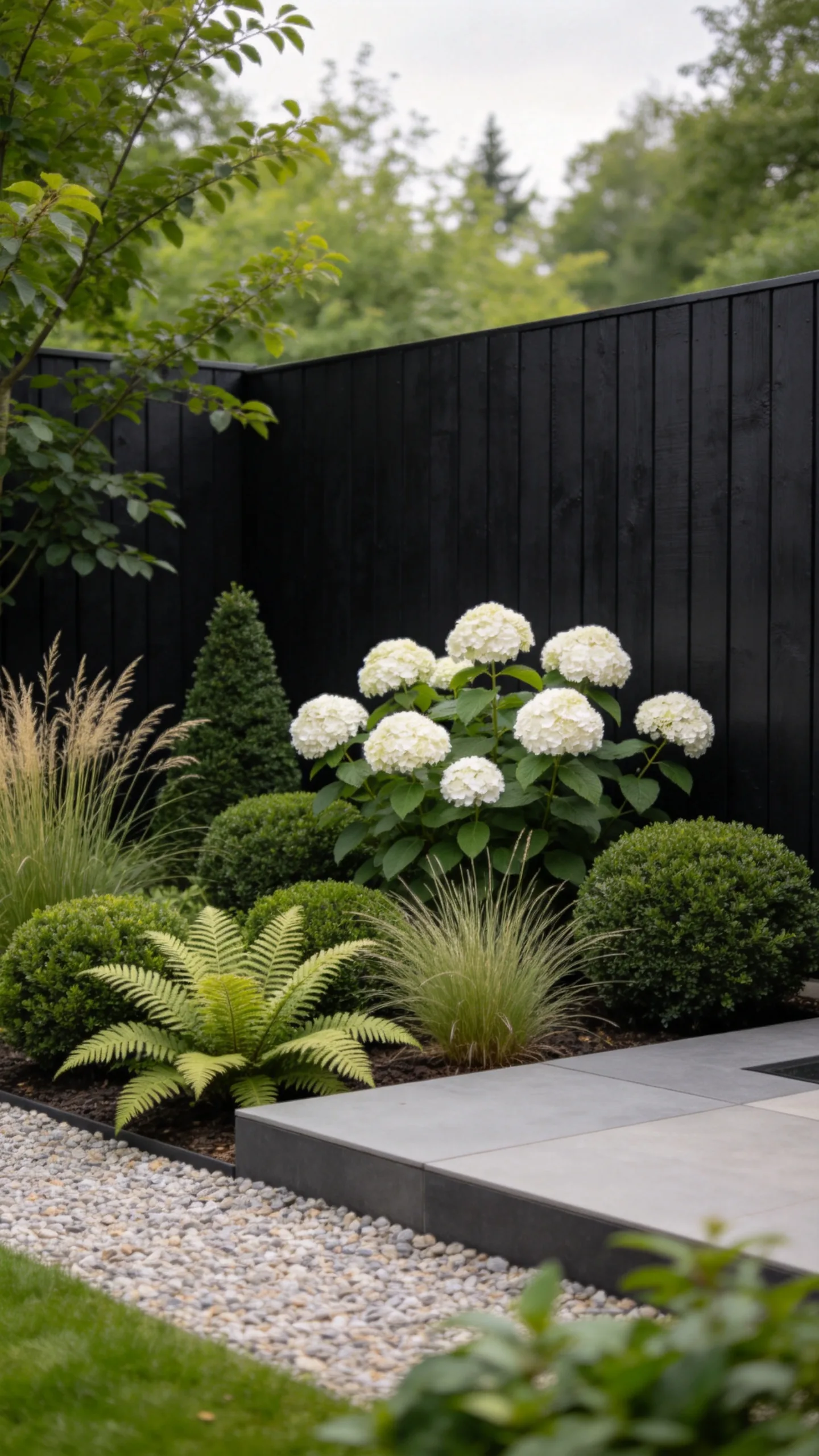
Painting a privacy fence black can make a backyard feel more designed and dramatic. Dark fencing visually recedes, which can make a small yard feel deeper, while green plants and pale flowers stand out strongly against the background.
A black wood fence works well with modern patios, gravel paths, raised planters, and simple outdoor furniture. It also helps disguise utilitarian features like hose reels, storage benches, or garden tools when they are placed along the perimeter.
For planting, try white hydrangeas, boxwood, ferns, ornamental grasses, or silver-leaf plants such as lamb’s ear. Choose exterior-grade paint or stain made for fences, and expect touch-ups over time in areas with intense sun or heavy rain.
5. Bamboo Roll Fence Screen
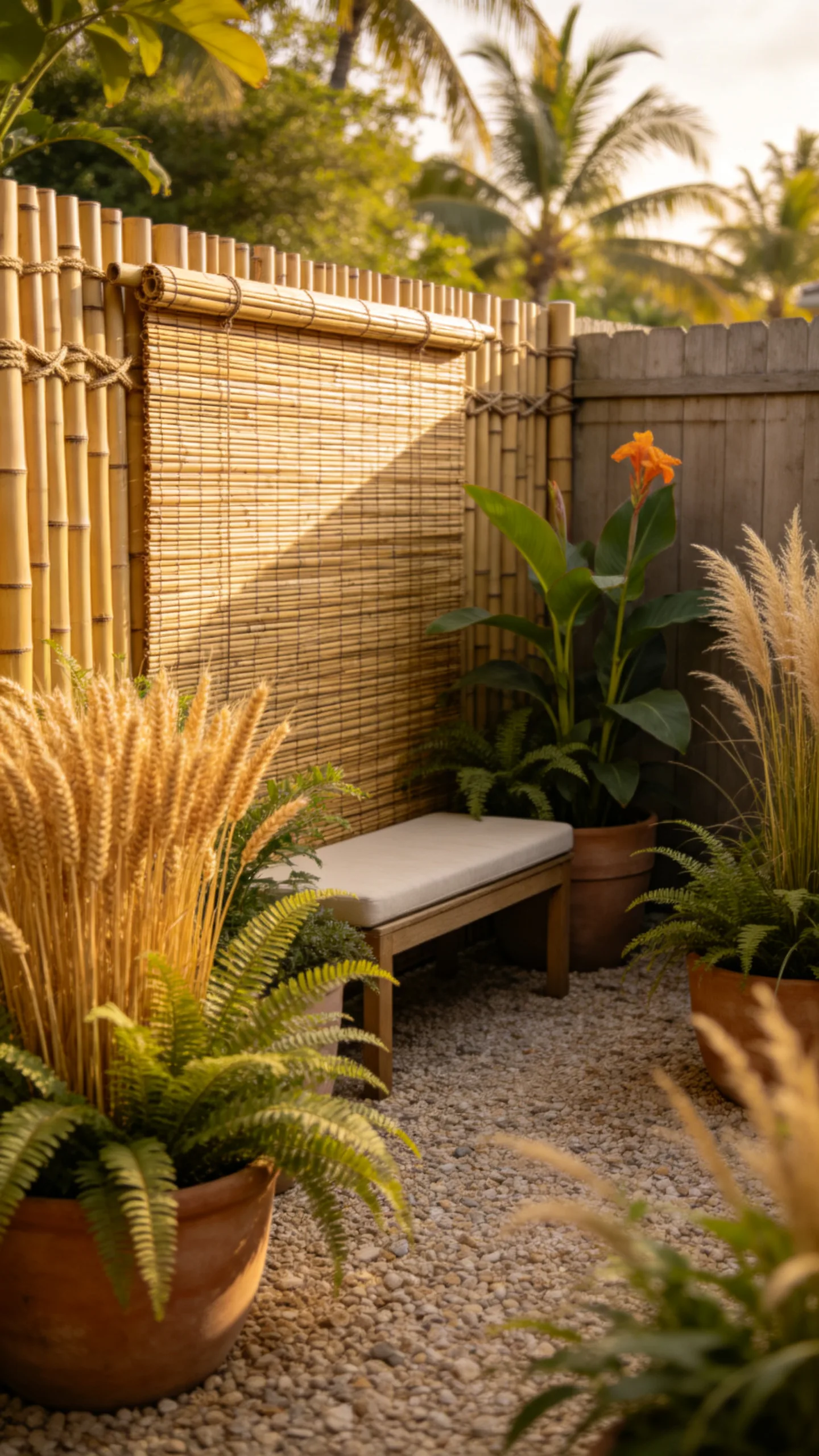
A bamboo roll screen is a fast way to improve privacy on an existing chain-link fence, wire fence, or plain wooden panel. It can be attached with zip ties, wire, or screws, making it useful for renters or homeowners who want an affordable visual upgrade.
Bamboo adds a relaxed, tropical feel and pairs well with container plants, gravel patios, and small water features. It is especially helpful around a compact seating nook or along one exposed side of a yard where a full fence replacement is not practical.
Because natural bamboo weathers over time, it performs best when sealed or used in a sheltered location. Pair it with large planters filled with canna lilies, elephant ears, ferns, or ornamental grasses to make the screen look intentional rather than temporary.
6. Living Hedge Privacy Fence
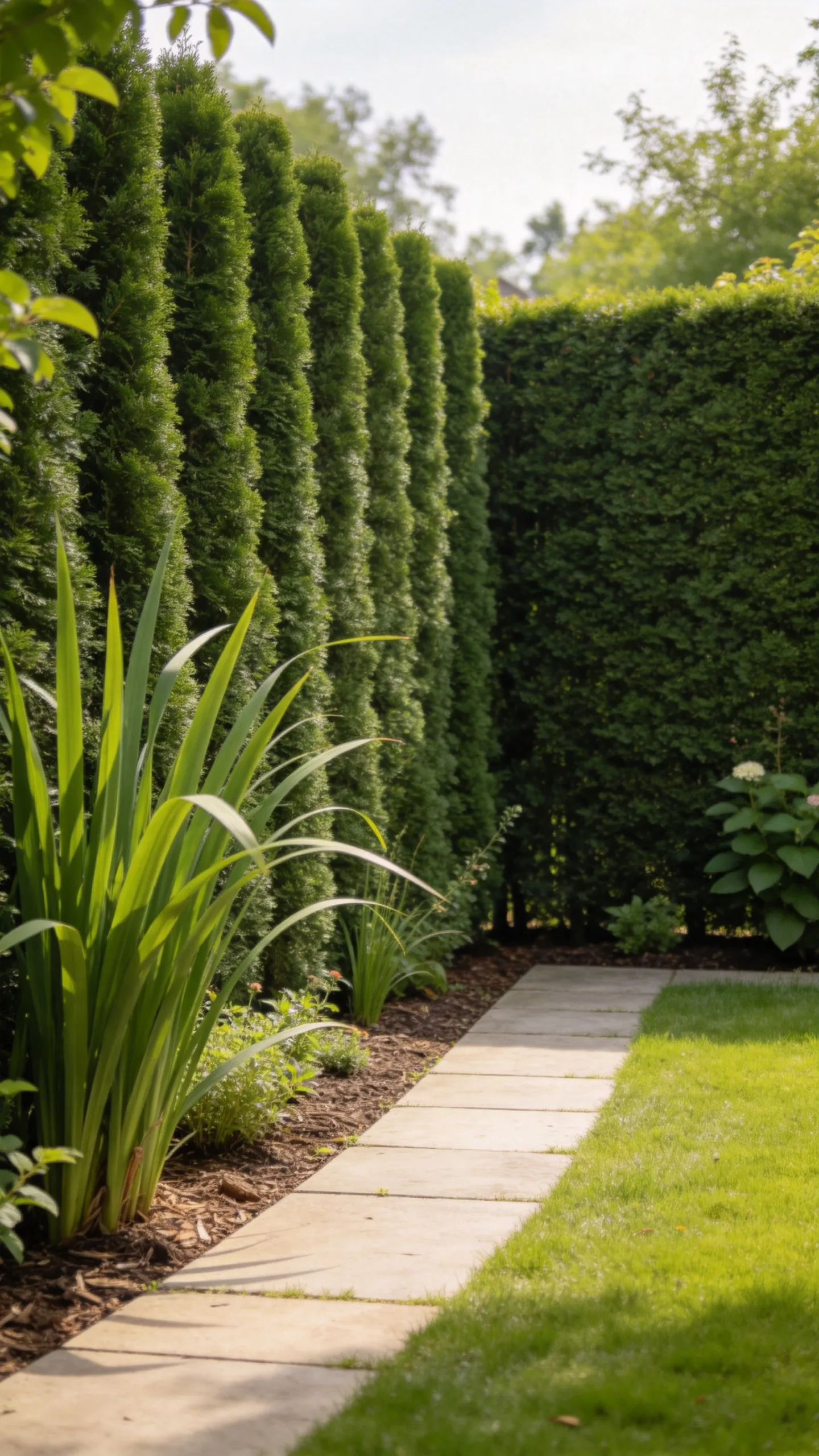
A living hedge can create privacy while adding seasonal color, wildlife habitat, and a softer garden boundary. Instead of a hard fence line, shrubs form a green wall that changes throughout the year.
Good hedge options depend on your climate, but common choices include arborvitae, privet, boxwood, yew, holly, viburnum, and laurel. For small backyards, choose compact or columnar varieties so the hedge does not take over valuable lawn or patio space.
Plan for mature width before planting, and leave enough room for pruning access. A hedge usually takes longer to establish than a built fence, but it can be combined with temporary screening, trellis panels, or low fencing while the plants fill in.
7. Mixed Wood and Metal Fence
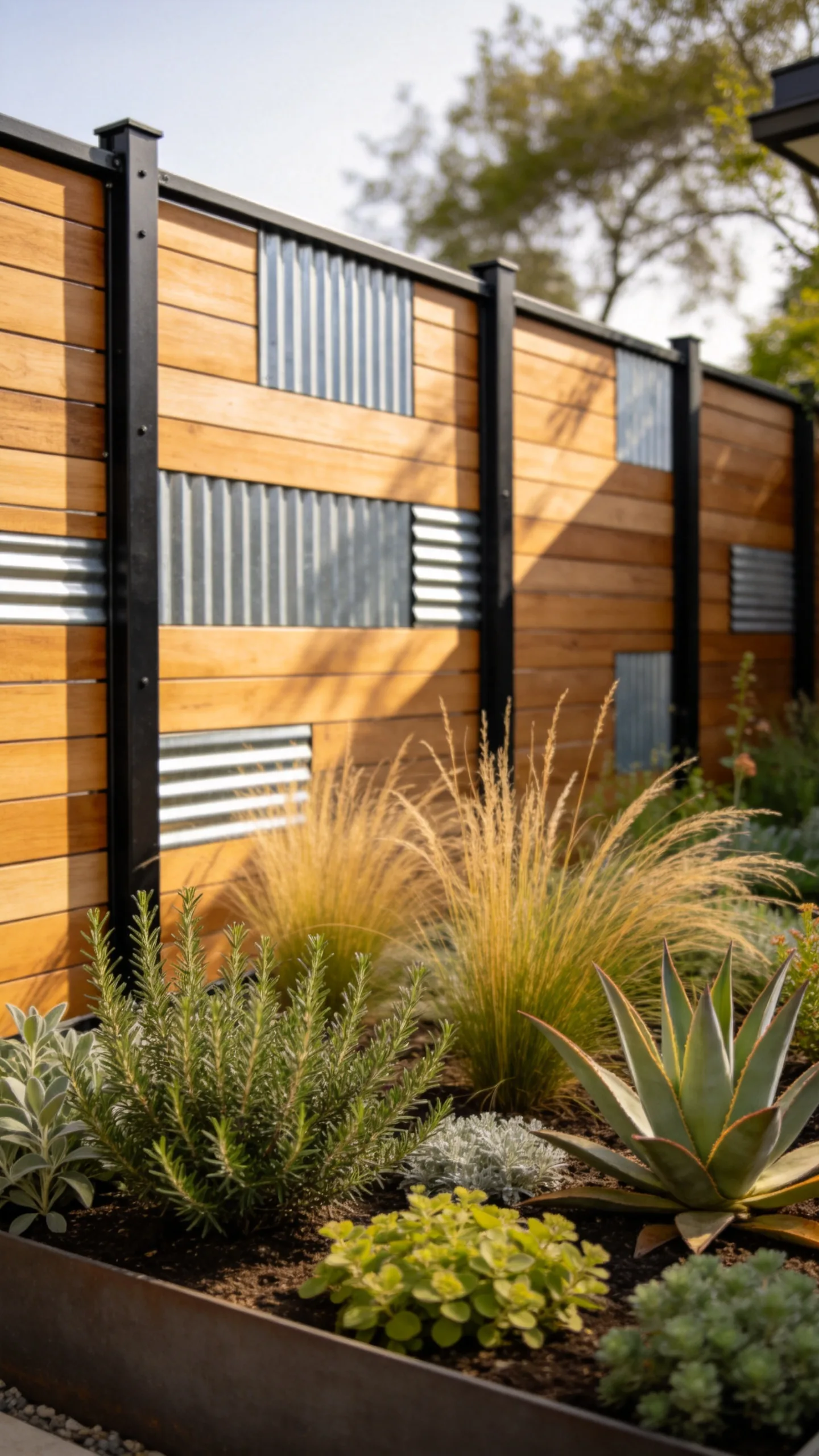
A mixed wood and metal fence offers privacy with a more custom backyard look. Wood panels provide warmth and screening, while black steel posts, corrugated metal inserts, or metal frames add structure and durability.
This combination works well in modern, industrial, farmhouse, or desert-inspired gardens. Corrugated metal can be used as full panels or as accent sections between wood posts, creating a strong visual rhythm along the property line.
To keep the design from feeling too hard, add planting beds with rosemary, sage, ornamental grasses, yucca, sedum, or other plants suited to the sun exposure. In hot climates, be mindful that metal can reflect heat, so avoid placing delicate shade-loving plants directly against it in full sun.
8. Privacy Fence With Built-In Planter Boxes
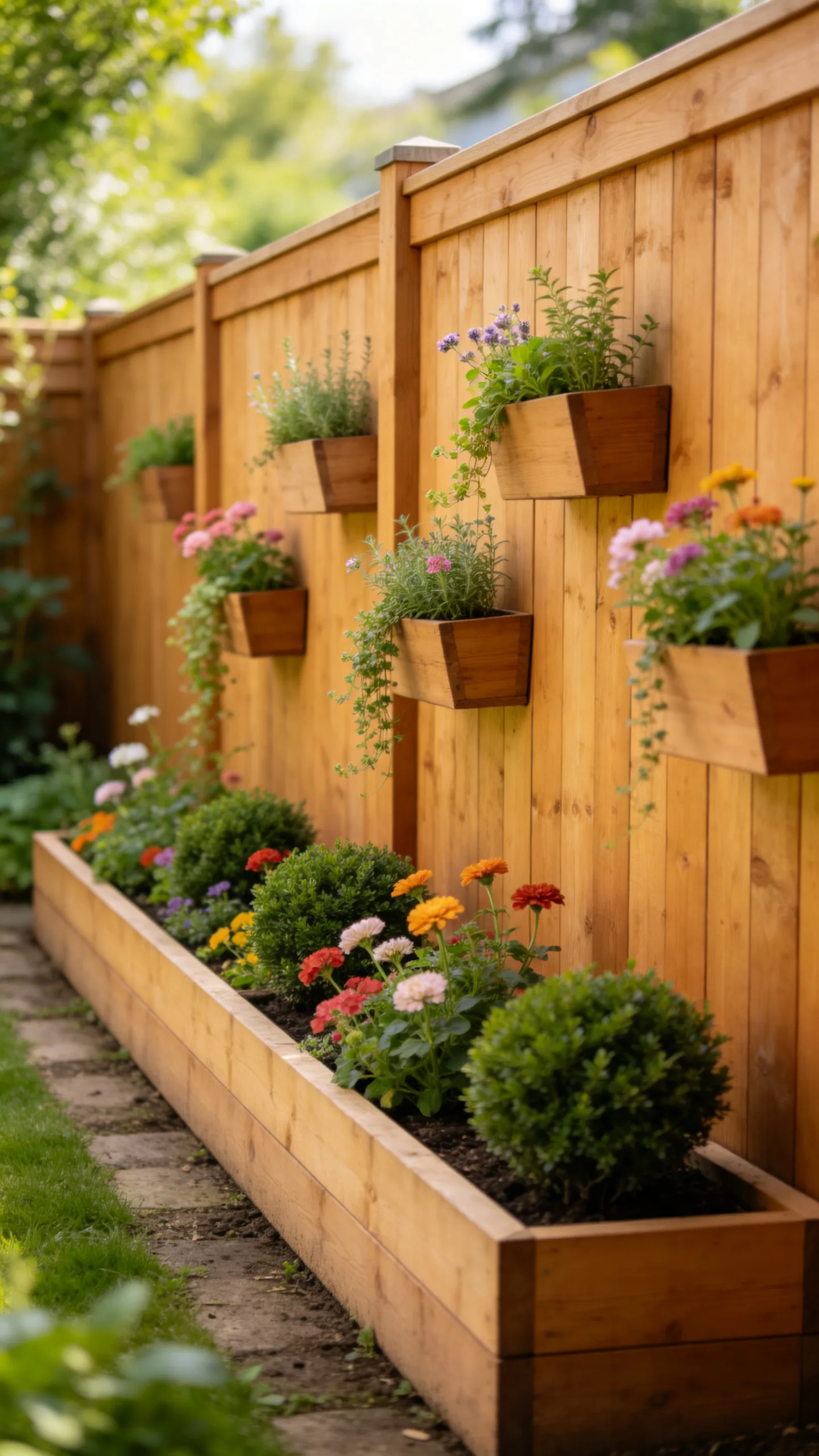
A fence with built-in planter boxes turns a plain boundary into a vertical garden feature. Planters can be mounted directly onto sturdy fence posts or built as long narrow boxes along the base of the fence.
This idea is especially helpful for small backyards because it adds growing space without taking up the center of the yard. Use the planters for herbs near an outdoor kitchen, trailing flowers near a patio, or compact vegetables in sunny spots.
Choose rot-resistant wood, metal liners, or composite planter boxes, and make sure each box has drainage holes. Lightweight soil mixes are best for wall-mounted planters, while deeper base planters can hold small shrubs, perennials, or seasonal annuals.
9. Tall Trellis Panels Between Fence Posts
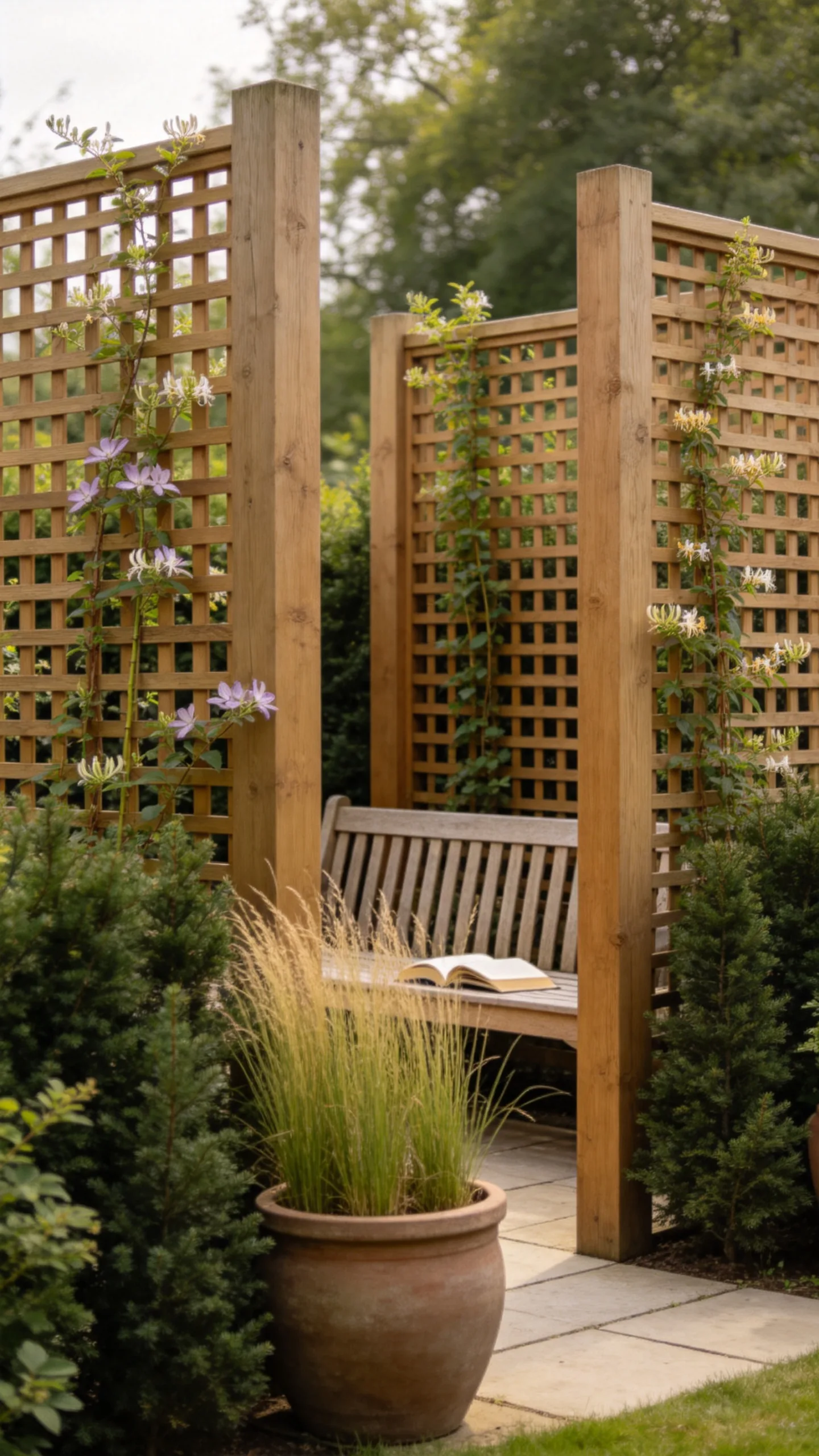
Tall trellis panels can create privacy without making the backyard feel boxed in. They are useful where you want partial screening, such as around a hot tub, reading chair, garden bench, or outdoor dining space.
Install trellis panels between strong posts, then grow vines or espaliered plants across them. Clematis, honeysuckle, jasmine, passionflower, climbing hydrangea, or grapevines may work depending on your region and light conditions.
For immediate privacy, combine trellis panels with tall containers placed in front. Large pots with bamboo, dwarf evergreens, or upright grasses can fill gaps while climbing plants mature.
10. Frosted Glass Privacy Fence Panels
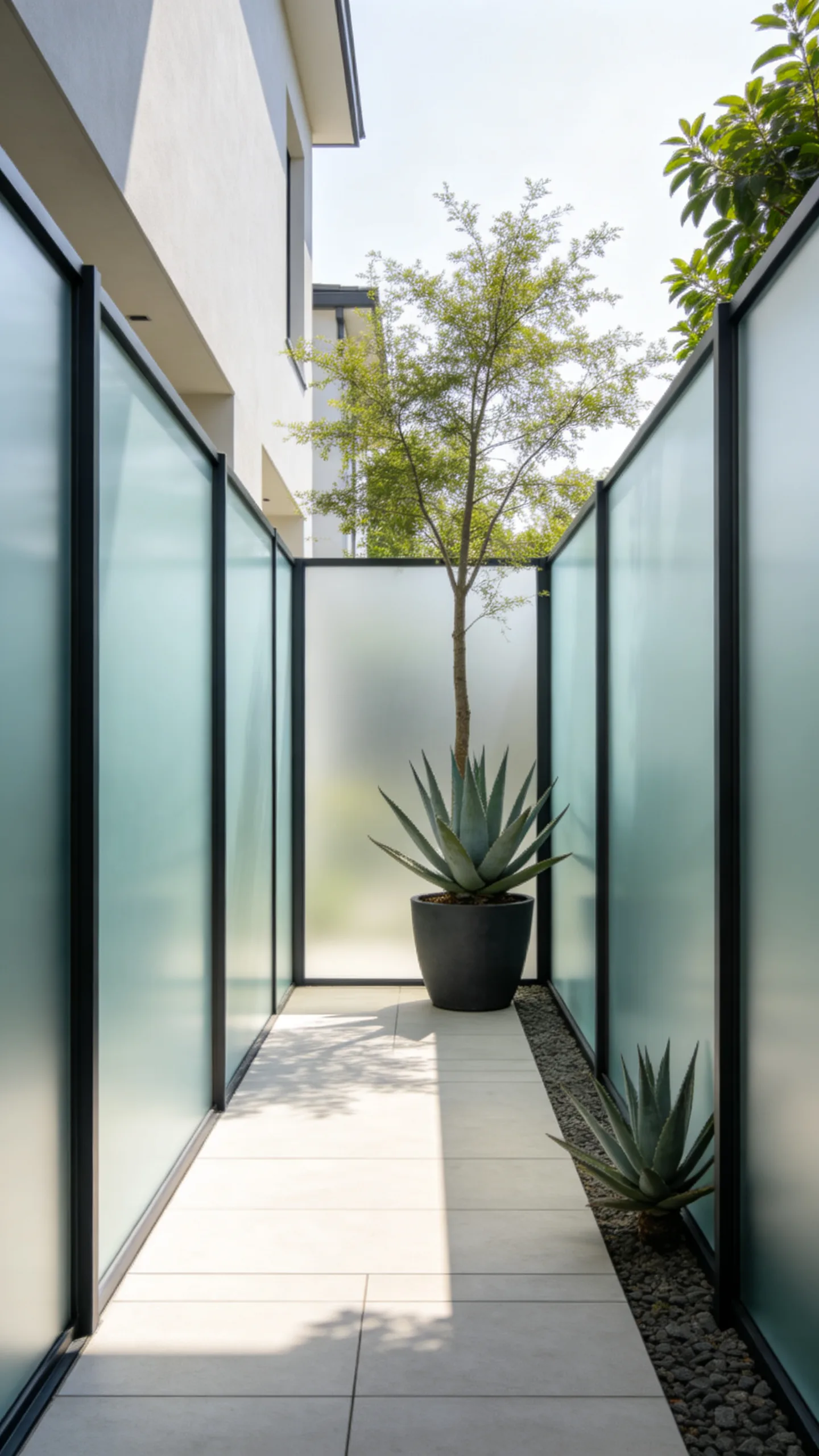
Frosted glass panels provide privacy while still allowing light into the backyard. This is a useful option for small patios, townhouse gardens, pool areas, or narrow side yards where a solid wood fence might feel too heavy.
Glass panels look best with metal or wood frames and can be used as full fence sections or accent panels between solid materials. They create a clean backdrop for modern landscaping, potted trees, and sculptural plants.
Because glass shows water spots and dust, place it where it can be cleaned easily. For safety and durability, use outdoor-rated tempered or laminated glass designed for fencing or screening applications.
11. Gabion Privacy Wall
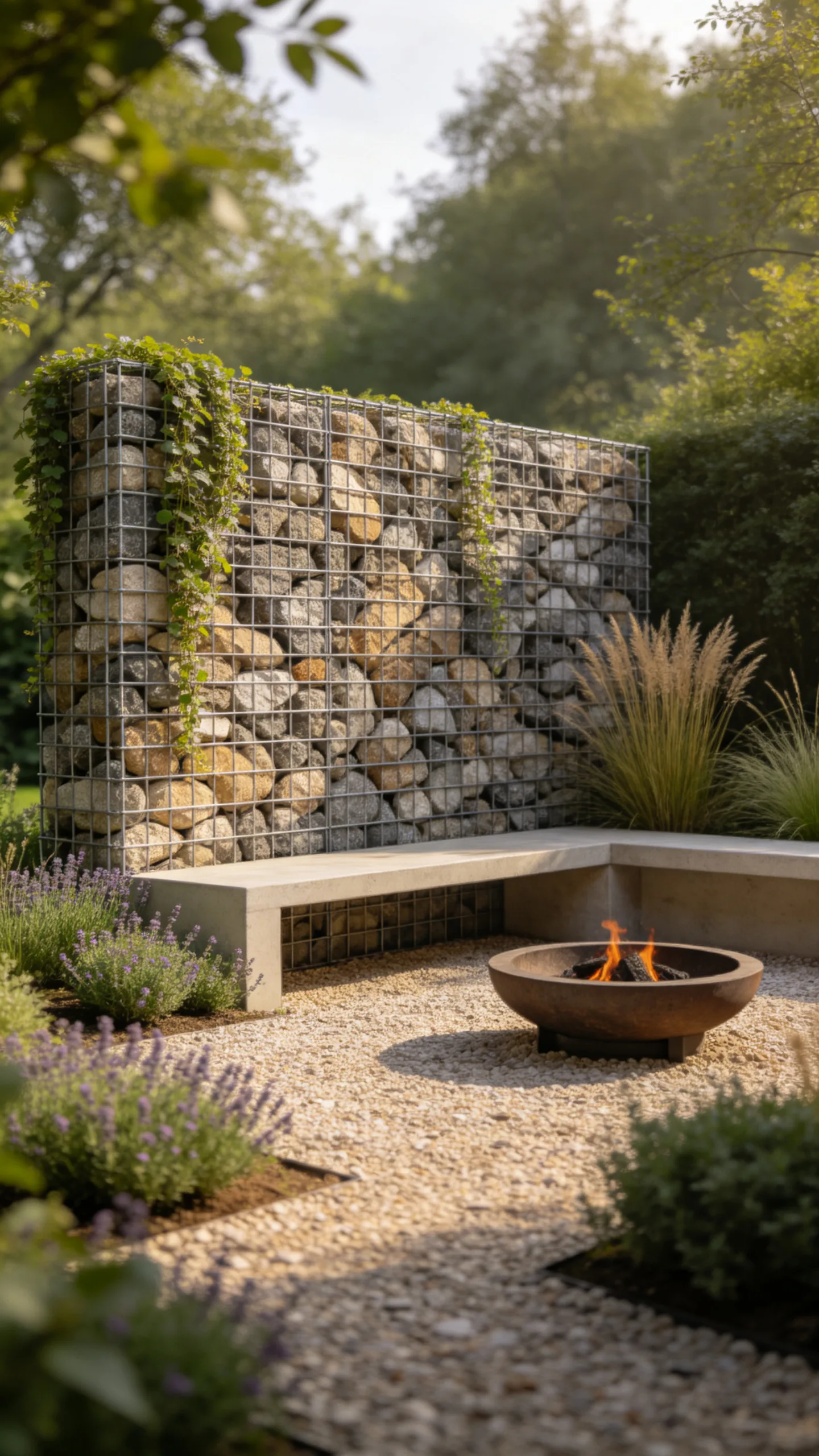
A gabion privacy wall is made from metal cages filled with stone, rock, or recycled materials. It creates a strong, textured barrier that works well in contemporary, rustic, or naturalistic backyard designs.
Gabion walls can block views, reduce some wind exposure, and add visual weight to a garden boundary. They are especially effective behind built-in benches, gravel patios, fire pits, or drought-tolerant planting beds.
Because gabions are heavy, they need a stable base and proper installation. Use them strategically as a privacy feature rather than around the entire yard if space or budget is limited. Soften the stone with trailing plants, ornamental grasses, creeping thyme, or low shrubs.
12. Shadowbox Fence for Shared Boundaries
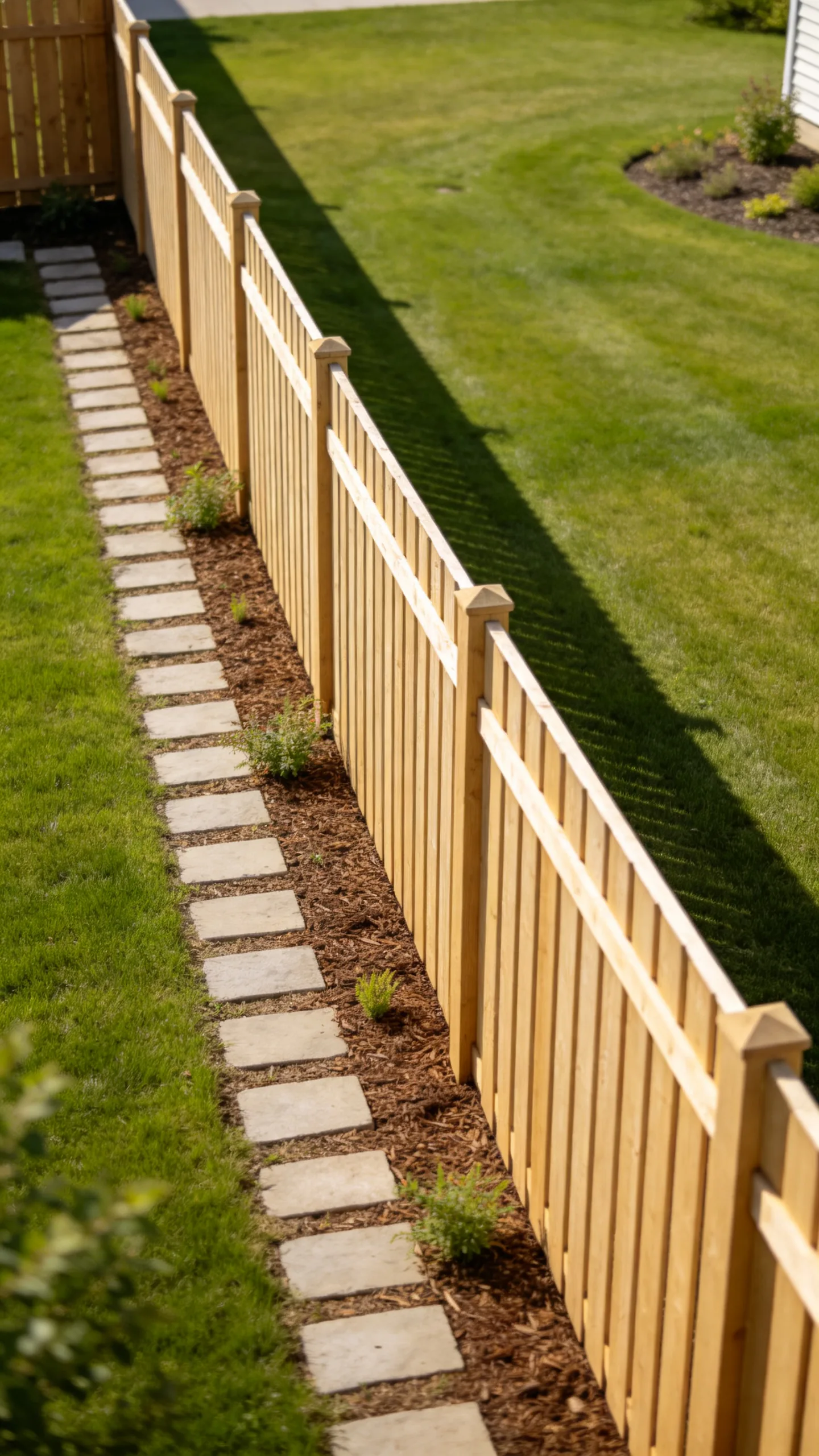
A shadowbox fence uses alternating boards on each side of the rails, creating a semi-private design that looks finished from both properties. It is a good option for shared boundaries where both neighbors will see the fence regularly.
This style allows more airflow than a fully solid fence, which can be helpful in gardens where trapped humidity is an issue. The angled sightlines still provide privacy when viewed straight on, though it is less private than board-on-board fencing.
Use shadowbox fencing along side yards, rear property lines, or near vegetable garden areas where air circulation matters. Add a narrow mulch border or stepping-stone path along the fence to make maintenance and trimming easier.
13. Privacy Fence With an Arbor Gate
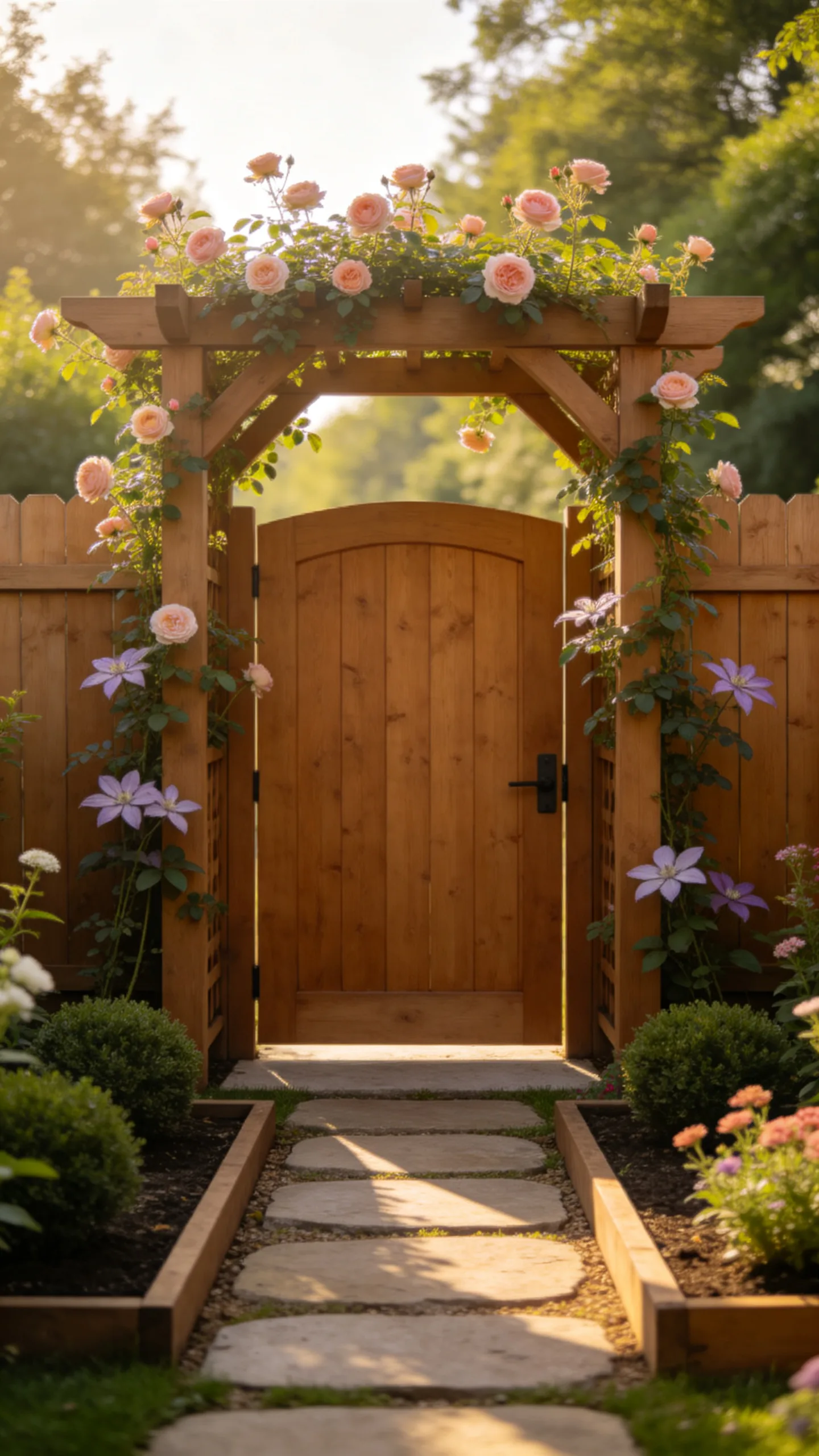
Adding an arbor gate turns a simple privacy fence into a defined garden entrance. The arbor creates height, frames the view, and makes the transition from driveway, side yard, or front garden into the backyard feel more intentional.
This idea works well with wood, vinyl, or metal fencing. Use the arbor to support climbing roses, clematis, wisteria, jasmine, or grapevines, choosing plants based on local growing conditions and available sunlight.
Keep the gate wide enough for wheelbarrows, lawn equipment, and patio furniture. A latch, stepping-stone threshold, and small planting beds on both sides can make the entrance feel polished while still being practical.
14. Layered Fence and Shrub Border
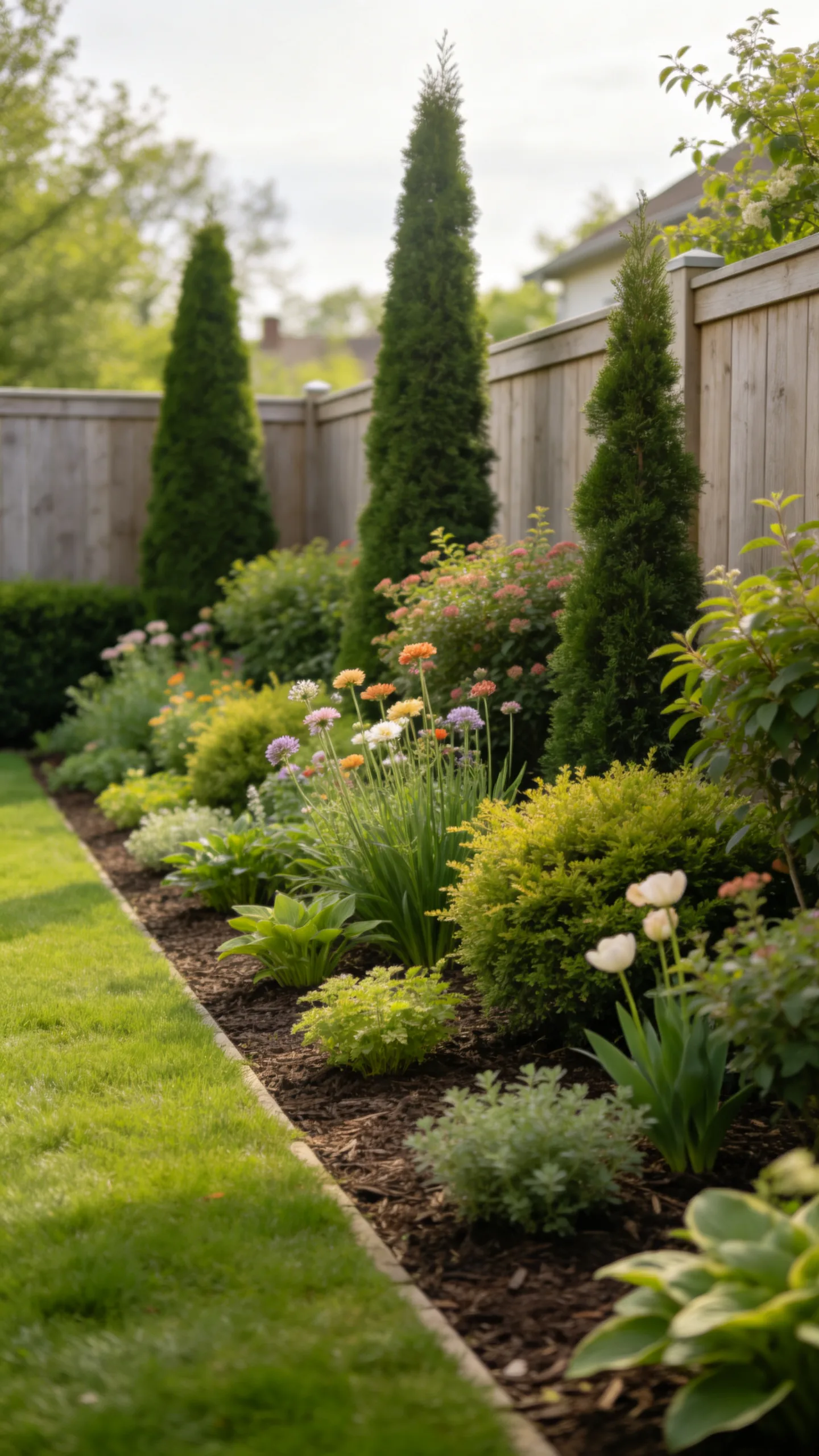
A layered fence and shrub border improves privacy by combining a built barrier with planting depth. Instead of relying on one flat fence line, shrubs, perennials, and small trees create a softer screen that feels more like a garden wall.
Place taller shrubs or columnar evergreens near the fence, then add medium perennials and lower edging plants toward the lawn or patio. This staggered approach helps hide the fence base and makes the yard feel larger because the eye moves through layers.
For a low-maintenance border, choose plants suited to the light and soil conditions. Mulch between plants to reduce weeds, and leave enough room between shrubs so they can reach mature size without constant pruning.
15. White Vinyl Privacy Fence With Garden Beds
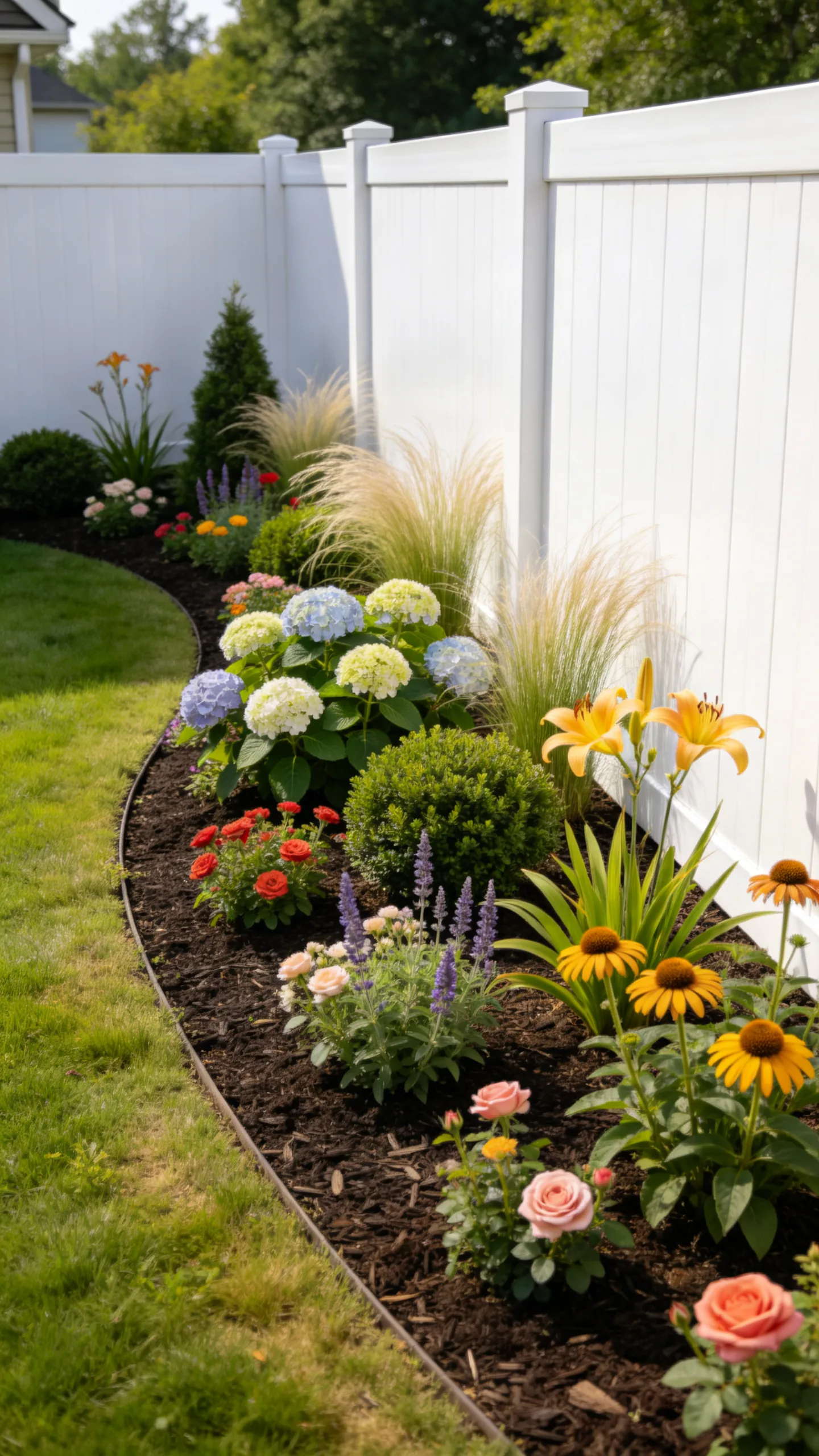
A white vinyl privacy fence gives a backyard a bright, clean boundary and requires less routine staining or painting than wood. It works well for family yards, pool areas, cottage gardens, and traditional landscapes.
The crisp white background pairs nicely with colorful garden beds. Plant hydrangeas, coneflowers, salvia, daylilies, roses, or ornamental grasses along the fence, choosing varieties based on sun exposure and local climate.
Because white fencing can look stark on its own, soften it with curved bed edges, mulch, and repeated plant groupings. In small yards, keep the planting border narrow and use compact shrubs so the fence does not crowd the space.
16. Slatted Fence With Privacy Screens
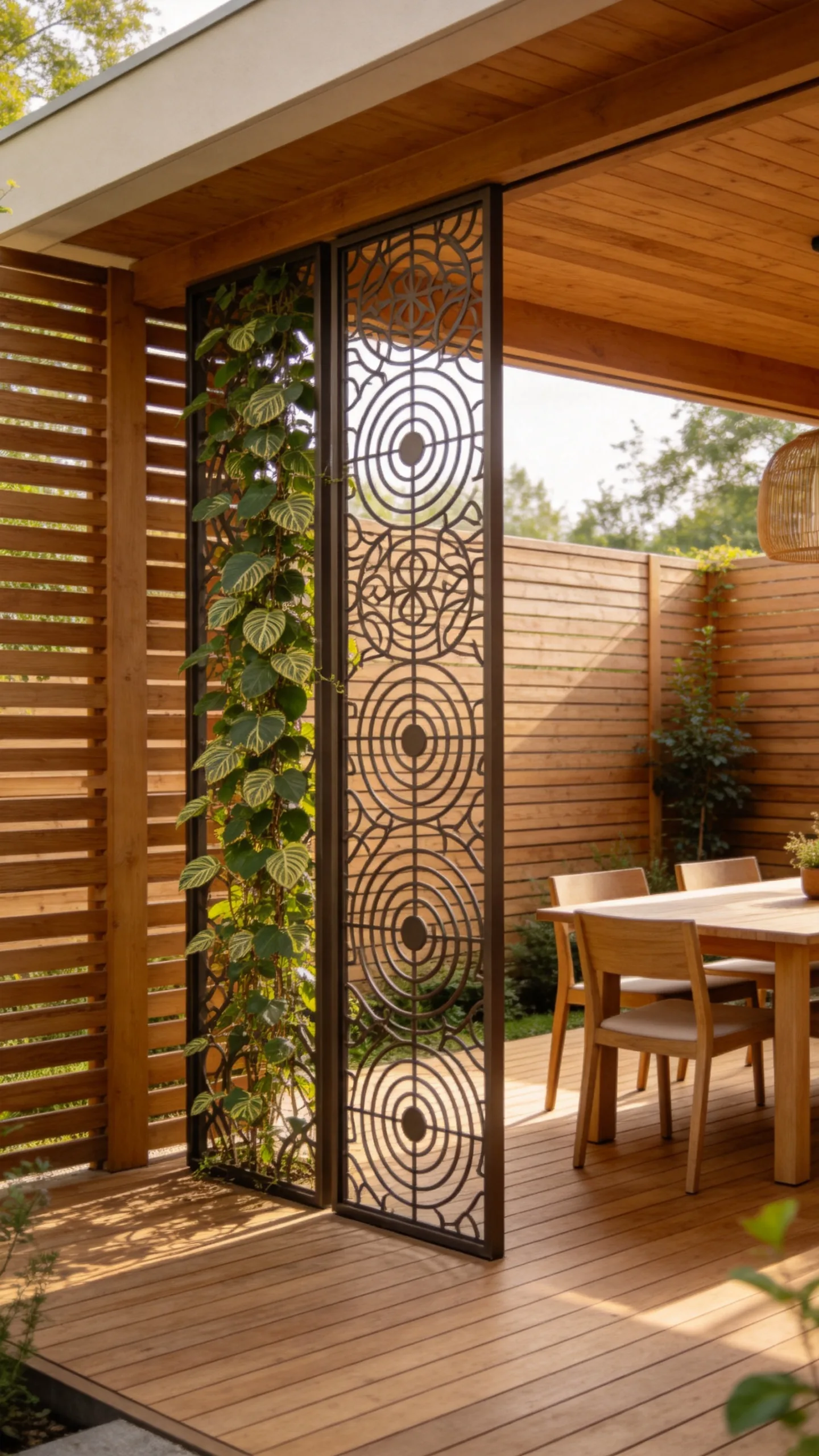
A slatted fence with added privacy screens allows you to control which areas feel enclosed. Use open slats for airflow and light, then add reed screens, fabric panels, metal screens, or climbing plants where more coverage is needed.
This is useful for yards with mixed needs, such as an open lawn area, a private dining corner, and an exposed deck. You can keep the overall design light while blocking specific sightlines from neighboring windows or streets.
For a cohesive look, repeat the same screen material in two or three places. Match the tone of the slats to deck boards, raised beds, or outdoor furniture so the fence feels connected to the rest of the backyard.
17. Tall Container Garden Fence Line
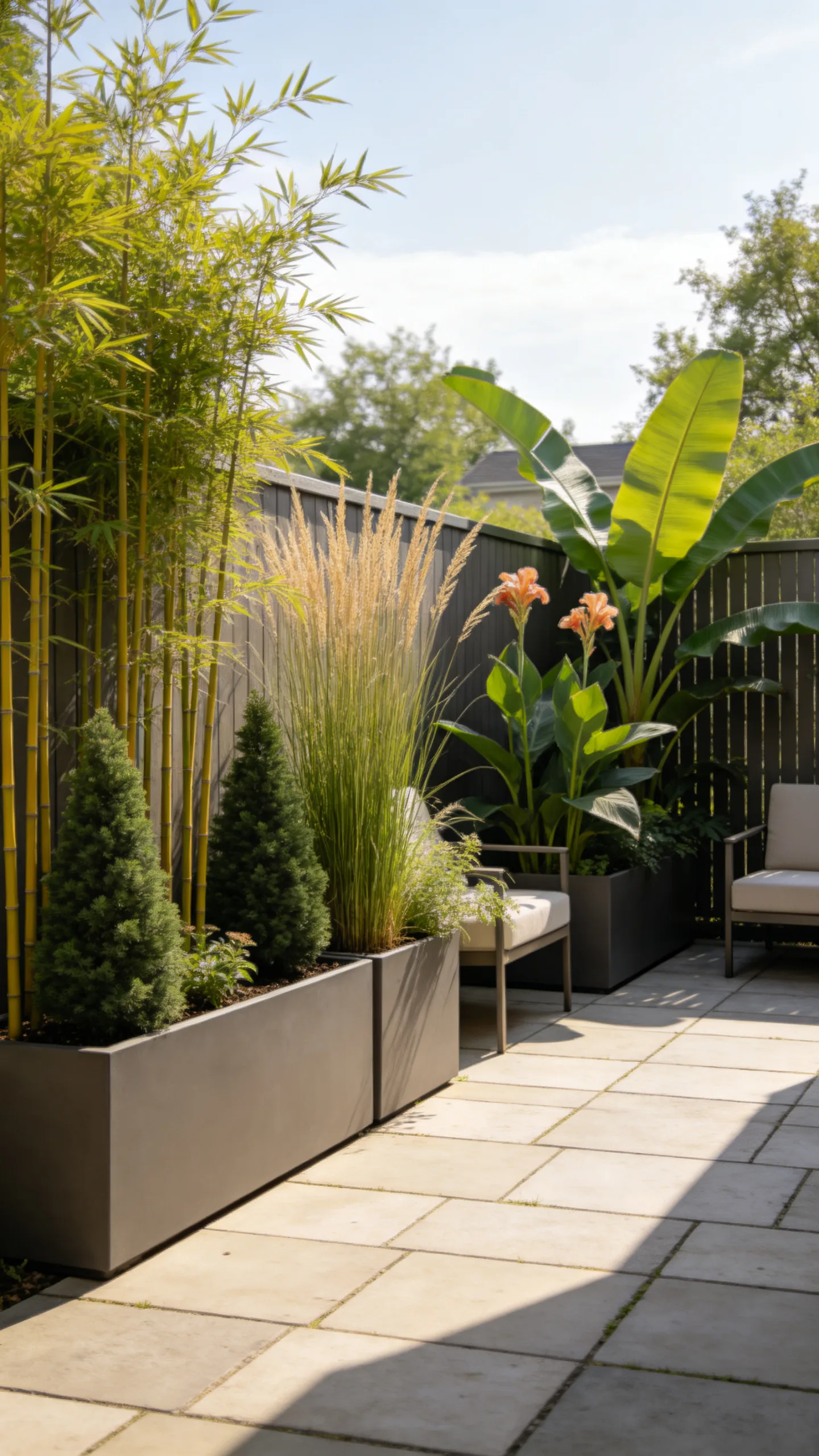
A tall container garden along a fence can boost privacy without building a new structure. Large pots, trough planters, or raised containers can hold upright plants that screen patios, decks, and small seating areas.
Good container privacy plants include clumping bamboo, dwarf arborvitae, Italian cypress in suitable climates, tall grasses, cannas, banana plants, or espaliered fruit trees. Choose containers with enough soil volume so plants do not dry out too quickly.
This approach is especially useful for renters, paved yards, balconies, or small backyards where digging is not possible. Use matching containers for a clean look, and place them on wheeled plant caddies if seasonal movement is needed.
18. Rustic Wattle Fence
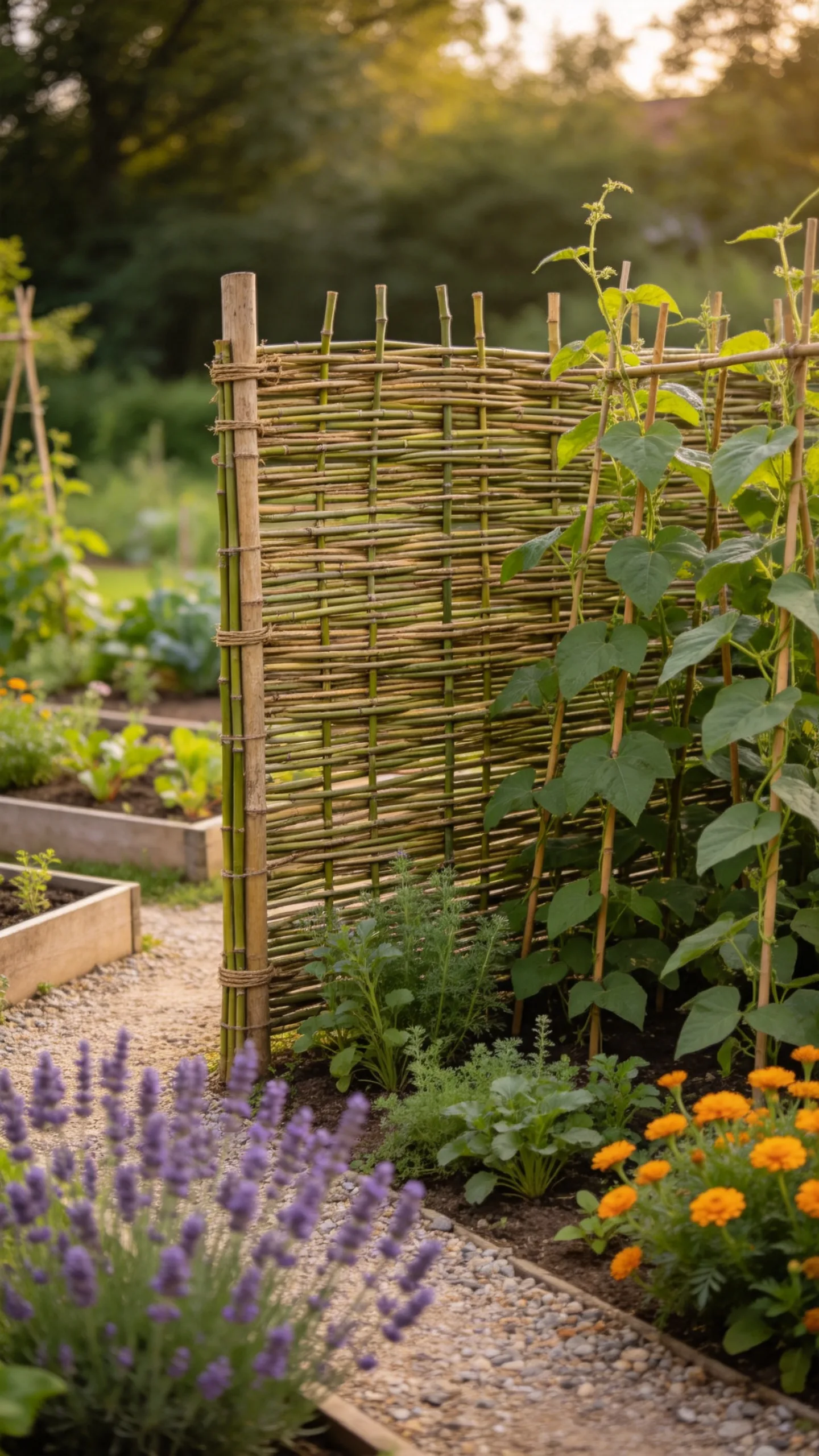
A wattle fence is made by weaving flexible branches through upright stakes. It creates a rustic, handmade privacy screen that works beautifully in cottage gardens, vegetable gardens, herb beds, and natural backyard spaces.
Willow, hazel, dogwood, or other flexible prunings can be used depending on what is available locally. Wattle fencing is often best for shorter privacy screens, garden rooms, compost areas, or decorative borders rather than tall perimeter fencing.
Pair it with raised beds, gravel paths, calendula, lavender, herbs, or climbing beans for a productive garden look. Since natural branches break down over time, plan for repairs or replacement as part of seasonal garden maintenance.
19. Privacy Fence With Outdoor Lighting
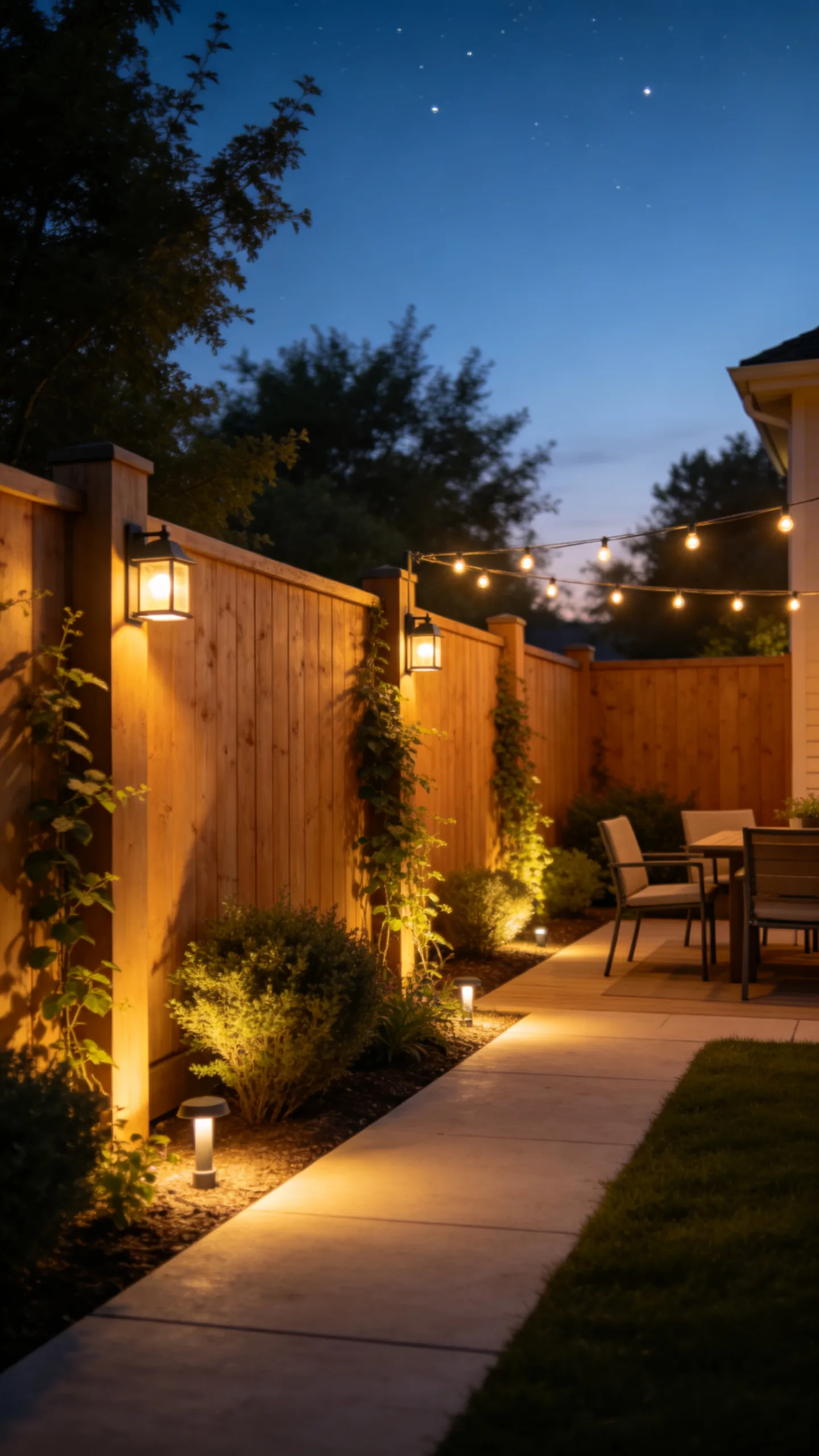
Adding outdoor lighting to a privacy fence can transform the backyard after sunset. Fence-mounted sconces, low-voltage uplights, solar caps, or string lights can define the perimeter and make patios, paths, and seating areas easier to use at night.
For a polished design, space lights evenly along the fence or highlight specific features such as a gate, trellis, planter wall, or garden bench. Warm white lighting usually feels softer than cool white lighting in outdoor living spaces.
Be mindful of neighbors by directing lights downward or toward planting beds instead of over the fence. Combine lighting with shrubs or climbing plants to create shadows and texture, making the fence feel like part of the landscape rather than a flat wall.
20. Two-Tone Privacy Fence
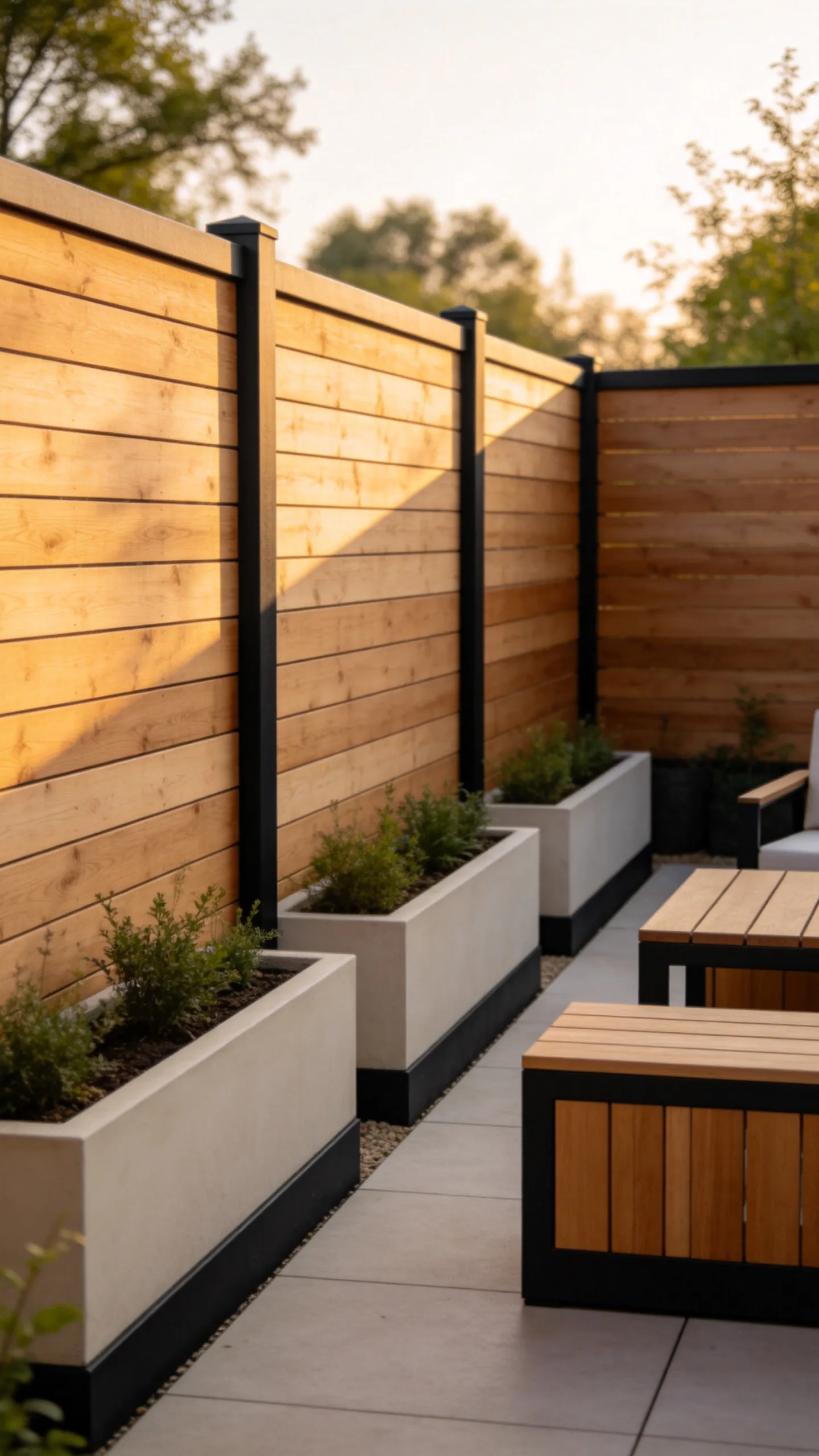
A two-tone privacy fence uses contrasting colors or materials to add depth to the backyard. For example, pair natural wood boards with black posts, white panels with cedar trim, or dark-stained fencing with pale planter boxes.
This idea is helpful when you want a fence to feel custom without adding complicated construction details. The contrast can define fence sections, highlight gates, or tie the boundary to deck railings, pergolas, or outdoor furniture.
Keep the color palette simple so the yard does not feel busy. Repeat one of the fence colors in planters, edging, cushions, or garden structures to make the whole backyard design feel connected.