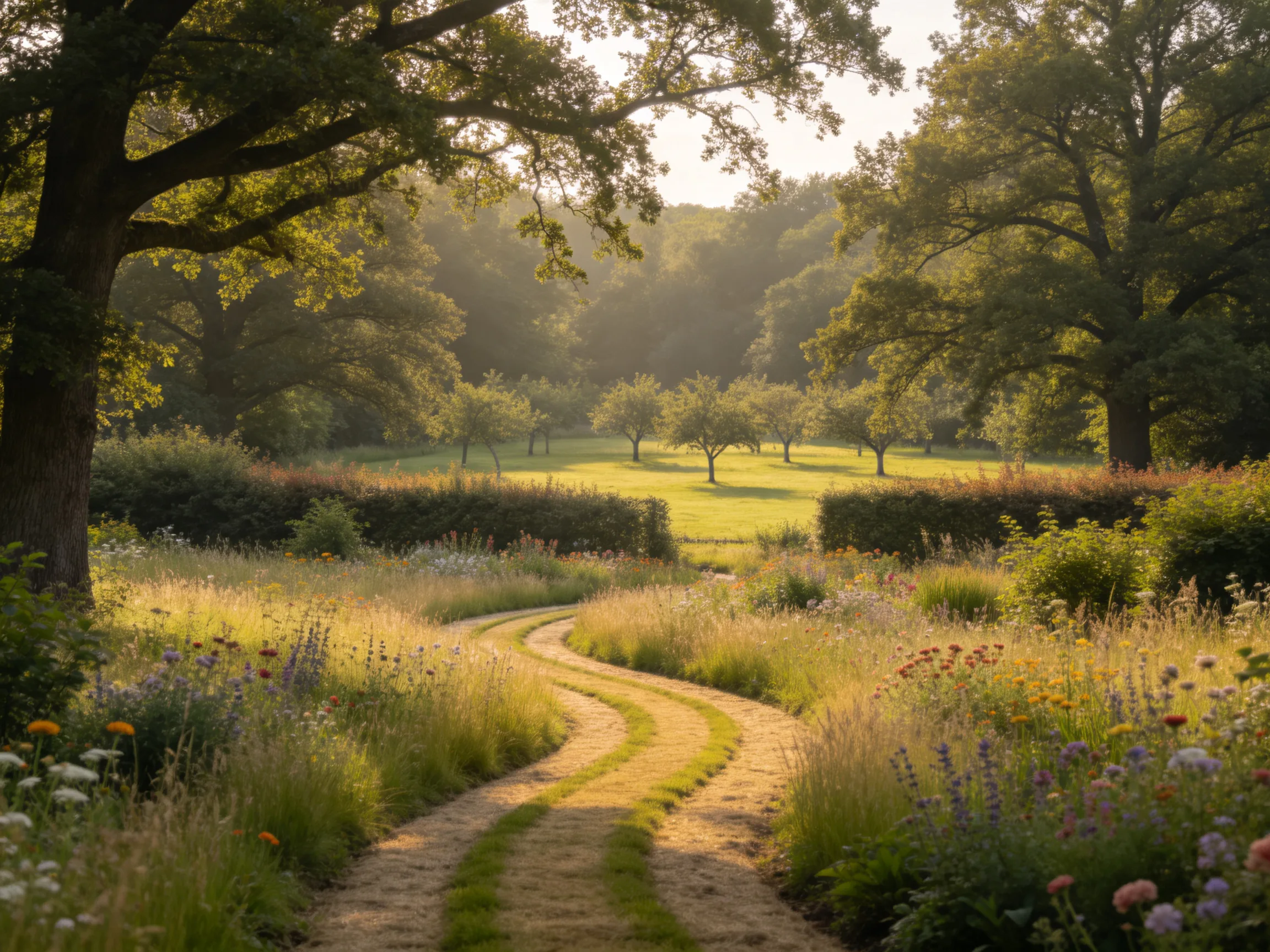
A thoughtful rural garden design connects cultivated spaces with the surrounding landscape rather than separating them with rigid boundaries. Meadow grasses, informal paths, native trees, hedgerows, and open lawns can create a garden that feels established while still being practical to maintain. These ideas offer plantable ways to shape large plots, country yards, and smaller gardens with rural character, with room to adapt each plan to local soil, rainfall, and growing conditions.
1. Frame an Open Meadow With Native Shade Trees
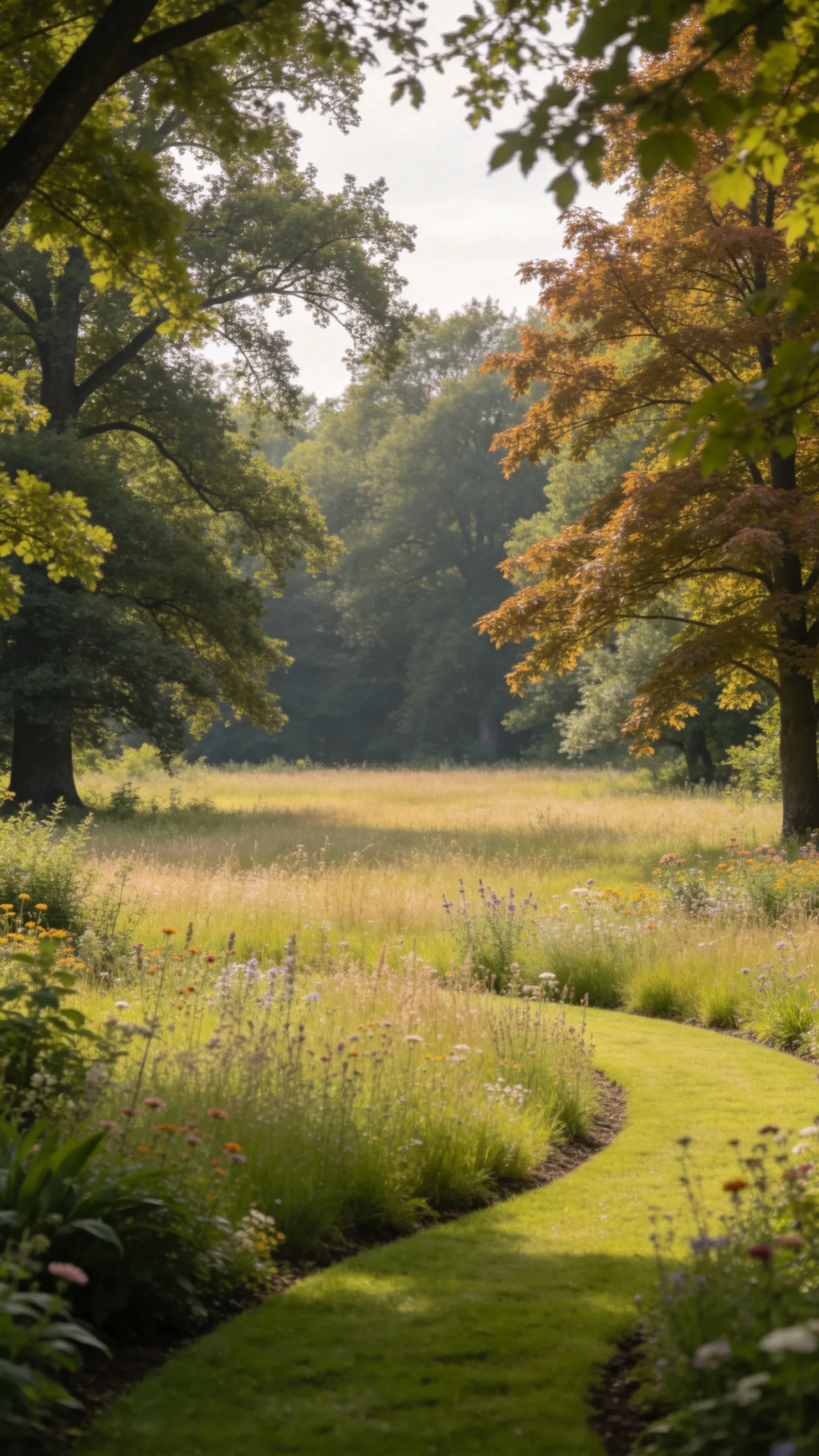
Create a meadow in the center of the garden and plant native deciduous trees around its outer edge. The open ground preserves long views, while the trees provide height, seasonal color, and pockets of shade without making the space feel enclosed. Choose species suited to the mature scale of the property, keeping large trees well away from buildings, septic systems, and overhead lines.
Prepare the meadow by removing aggressive weeds before sowing a locally appropriate mix of fine grasses and perennial wildflowers. Mow a neat strip around the perimeter several times during the growing season. This short edge makes the meadow look intentional and creates an accessible route for maintenance.
2. Cut a Curving Mown Path Through Tall Grass
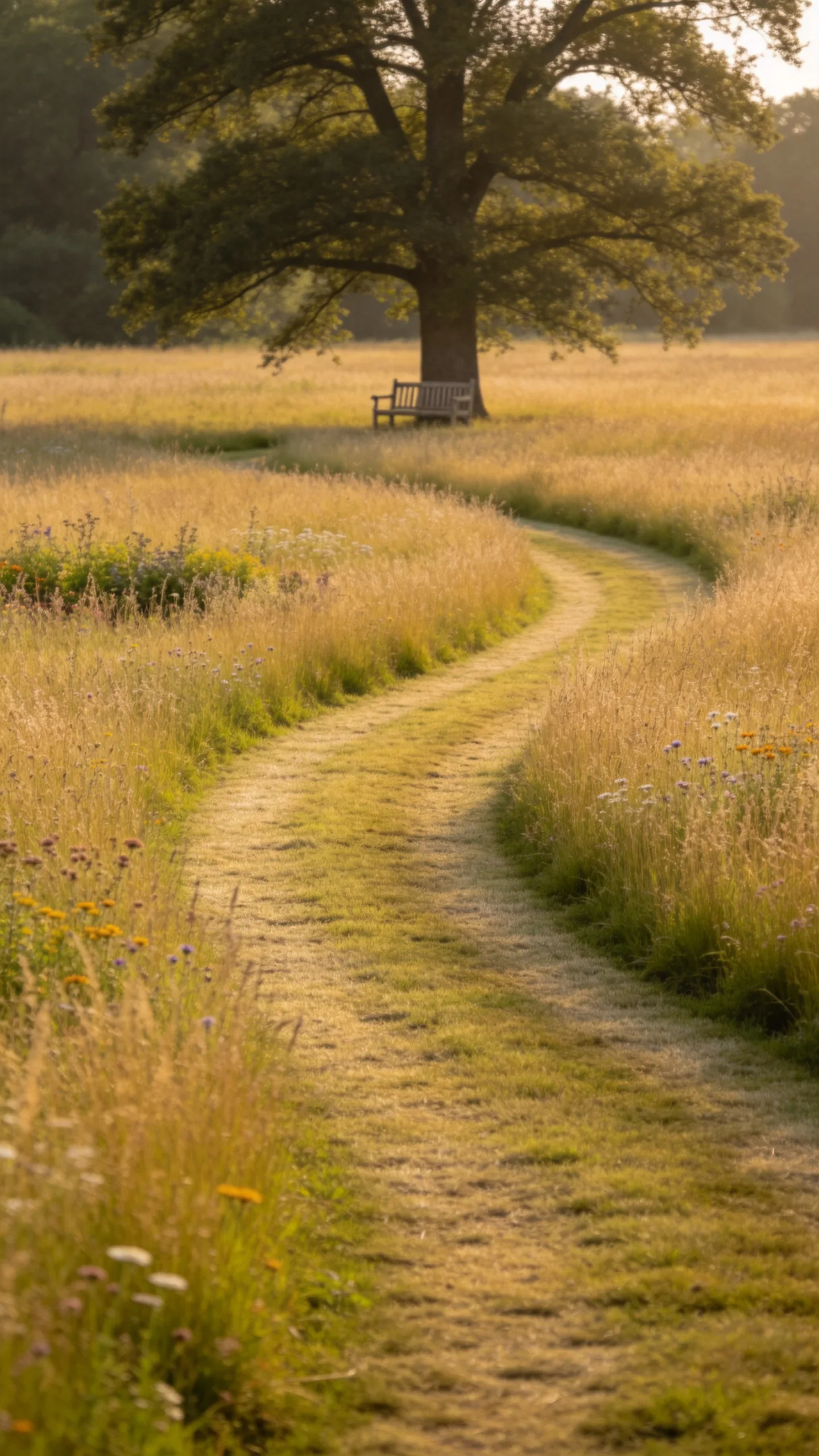
A simple mown path is one of the most affordable ways to guide movement through a meadow. Make the route wide enough for comfortable walking and curve it around trees, views, or small seating areas rather than taking the shortest line across the space. A width of roughly 3 to 5 feet usually feels generous without consuming too much meadow.
Mow the path regularly while allowing the surrounding grass to grow longer. Where the soil becomes muddy, reinforce high-traffic sections with compacted gravel, bark chips, or flat stepping stones. Keep vegetation trimmed back from the path so wet grasses do not brush against walkers.
3. Plant a Mixed Hedgerow Along the Boundary
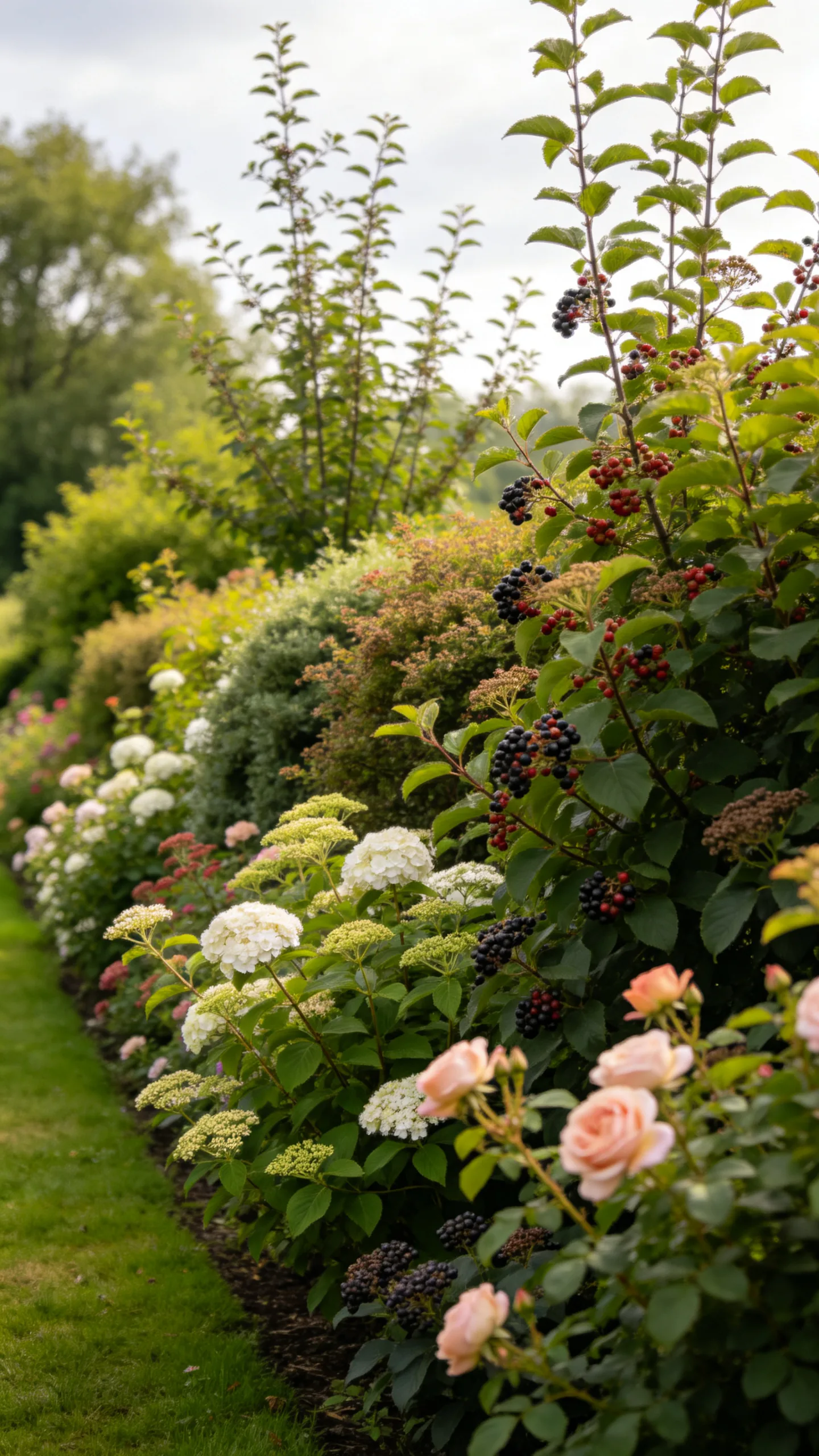
Replace a formal fence line with a mixed hedgerow made from locally suitable shrubs and small trees. Hawthorn, hazel, dogwood, viburnum, serviceberry, elderberry, and native roses are possible choices, depending on climate and availability. Combining several species gives the boundary varied foliage, flowers, berries, and winter structure.
Plant shrubs in a staggered double row if space allows, leaving enough room for their mature spread. Prune selectively instead of shearing the hedge into a solid rectangle. This maintains a loose rural appearance while still improving privacy, filtering wind, and defining the garden edge.
4. Build a Gravel Walk Beneath an Orchard
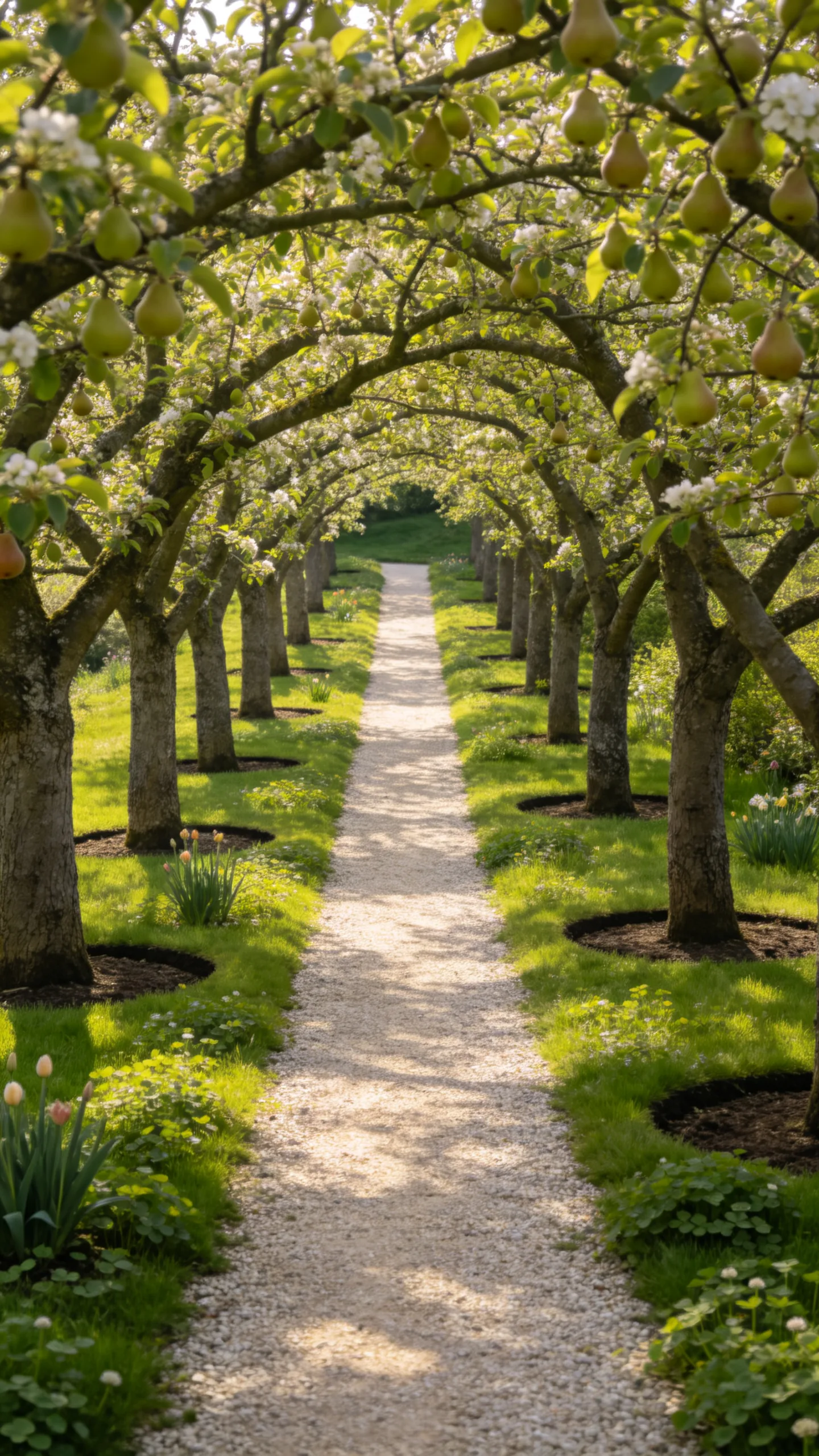
An orchard can serve as both a productive planting area and a shaded garden destination. Arrange apples, pears, plums, cherries, or other climate-appropriate fruit trees in relaxed rows, then run a gravel path between them. Confirm that selected varieties meet local winter-chill requirements and include compatible pollinating partners where necessary.
Use compacted crushed stone for the path base and a finer gravel layer on top. Keep a clear circle around each trunk rather than piling gravel or mulch against the bark. Spring bulbs, low clover, or a short grass-and-wildflower mix can cover the ground between trees while leaving room for harvest and pruning.
5. Create a Woodland Edge With Layered Planting
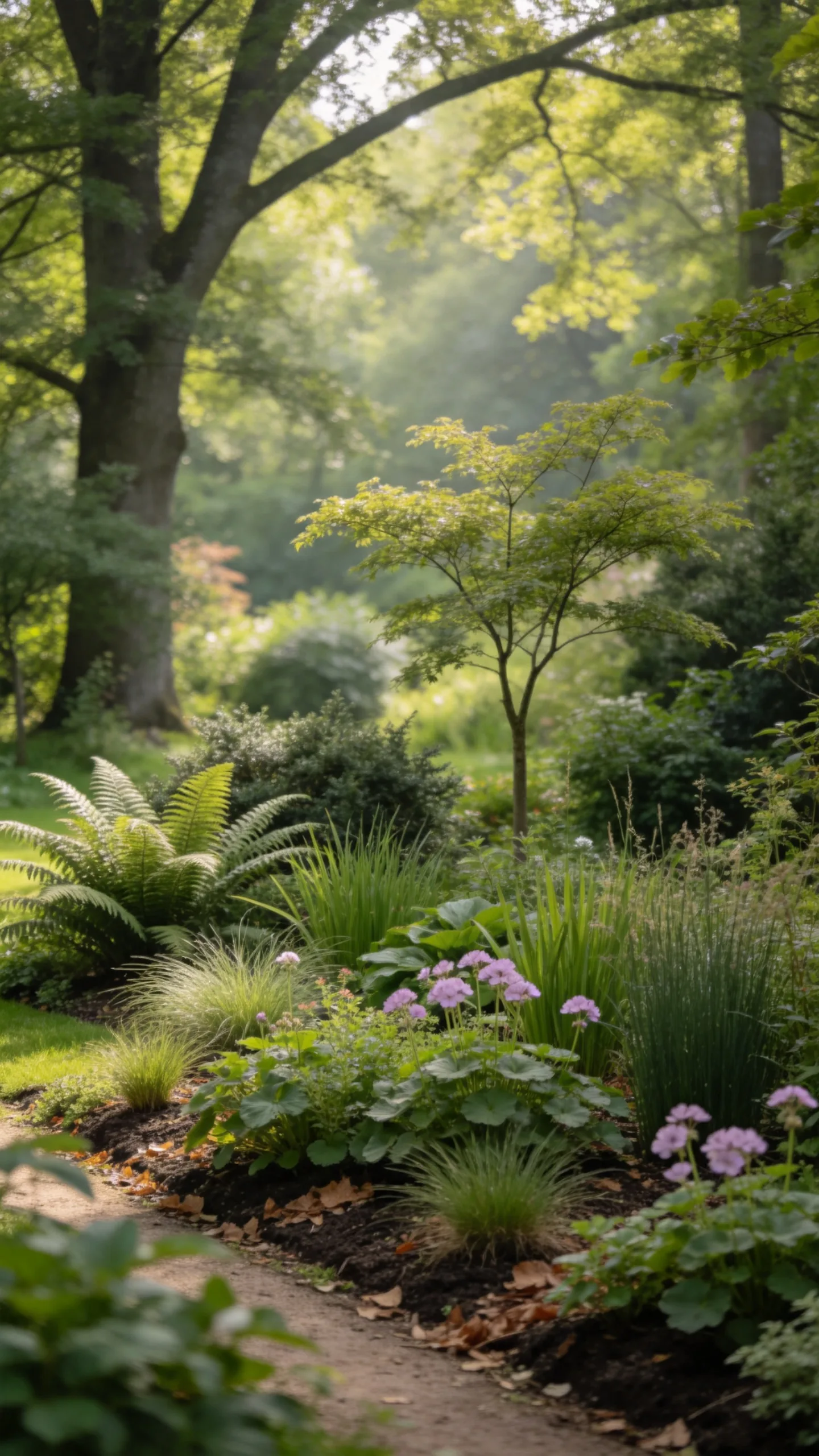
Where the garden meets existing trees, soften the transition with layers of smaller trees, shrubs, ferns, grasses, and ground covers. This avoids an abrupt line between lawn and woodland while creating visual depth. Place taller shrubs near the tree line and lower plants toward the path or open garden.
Select plants according to actual light and moisture levels beneath the canopy. Dry shade may suit sedges, epimedium, hardy geraniums, or locally native woodland ground covers, while damp shade can support ferns and moisture-tolerant shrubs. Add leaf mold or composted bark to improve the soil surface without disturbing established tree roots.
6. Lead a Stepping-Stone Trail to a Mature Tree
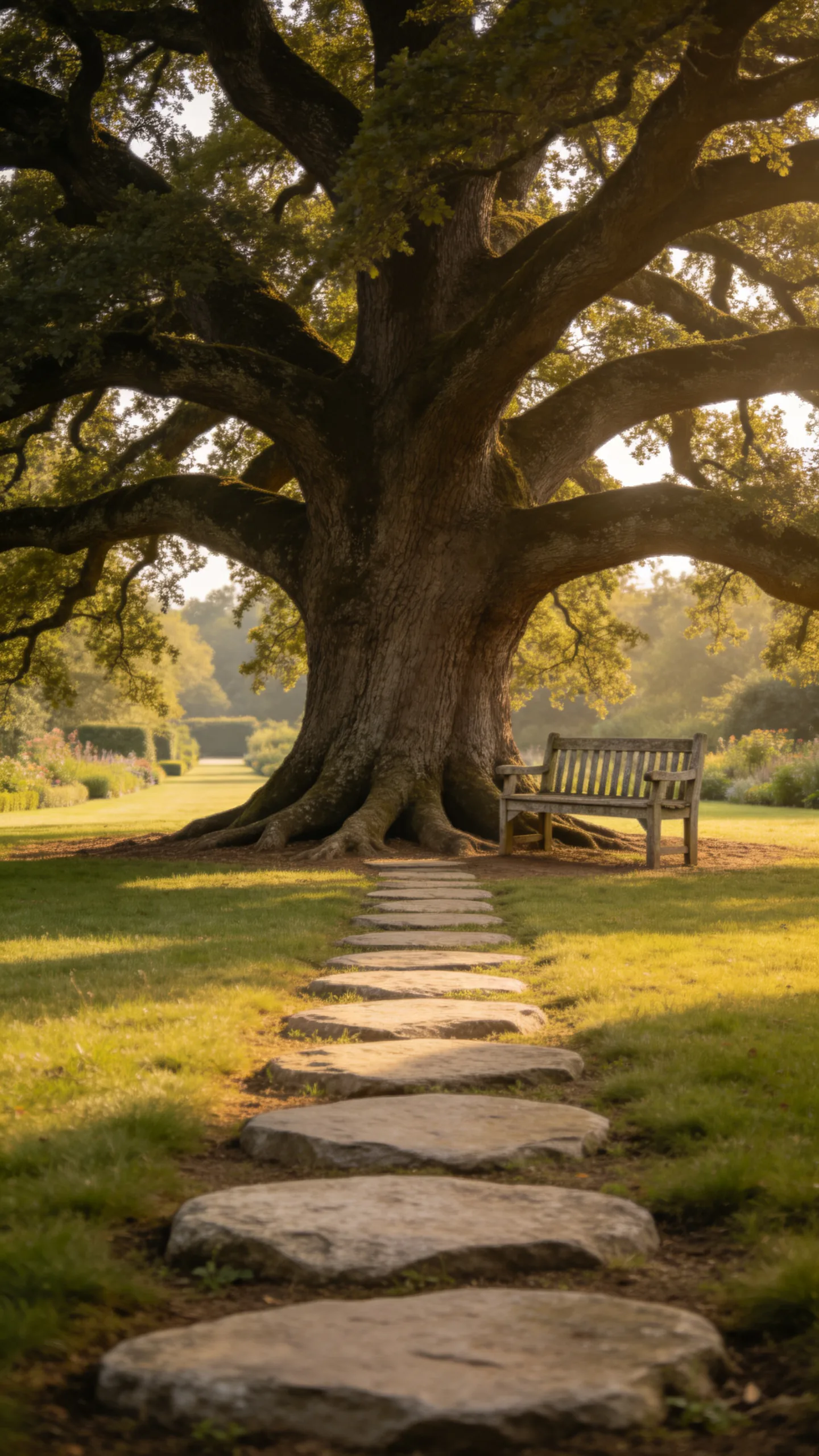
Use a mature oak, maple, beech, or other established tree as the destination for an informal trail. Set large, flat stones into grass or low ground cover, varying their alignment slightly to create a natural route. The path draws attention to the tree and makes the shaded area beneath it feel like a deliberate garden room.
Avoid excavating deeply around major roots. Place stones on a shallow layer of compacted grit, and leave the root flare visible at the base of the trunk. A simple bench positioned outside the densest root zone can turn the spot into a comfortable place to enjoy shade and long garden views.
7. Border a Country Lane With Flowering Perennials
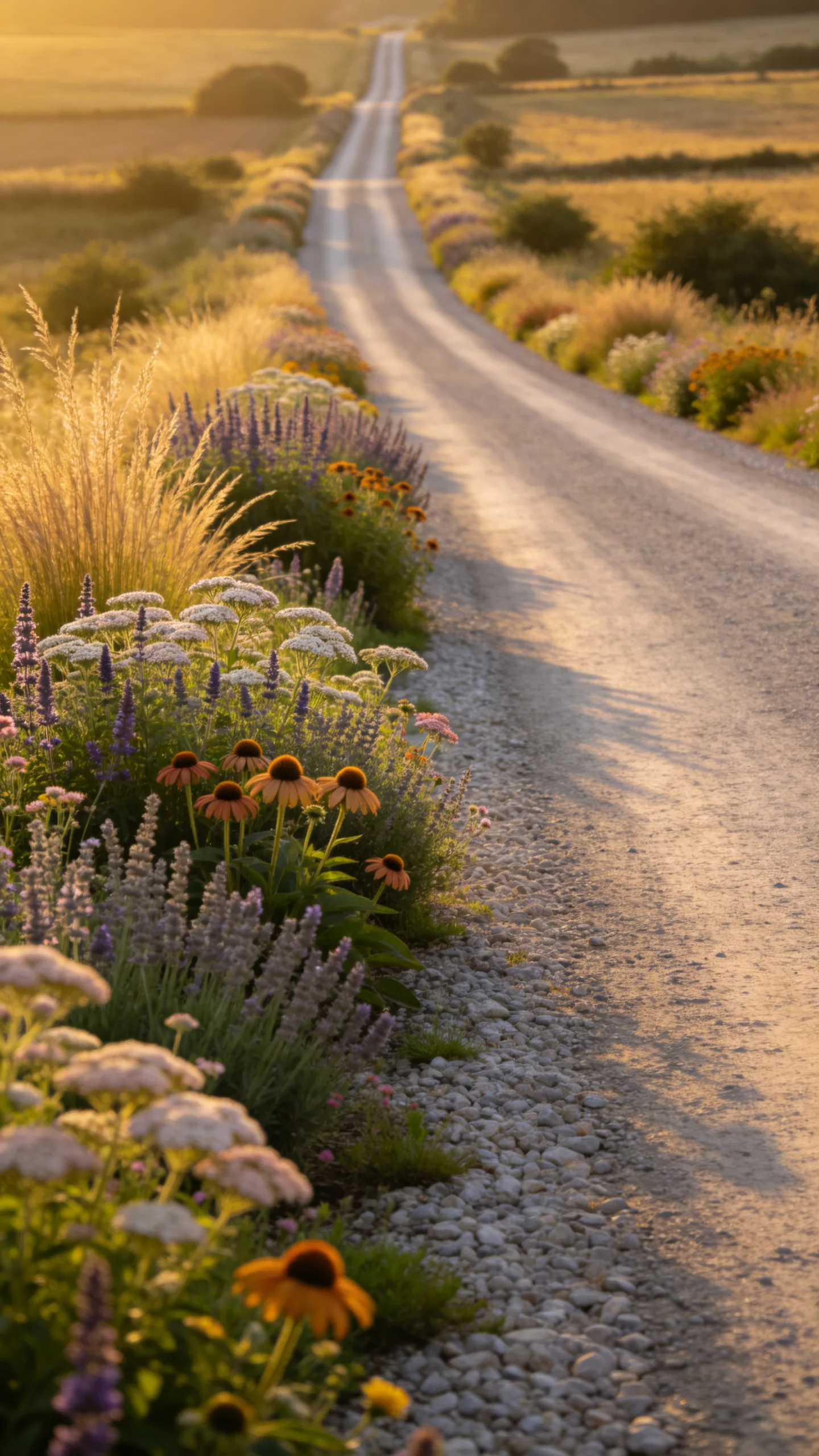
Transform a driveway or long entrance path with broad, informal borders instead of narrow rows of identical plants. Repeat sturdy perennials such as yarrow, salvia, catmint, coneflower, achillea, asters, or ornamental grasses, choosing species that suit the site’s sun, soil, and winter temperatures.
Set plants back from the driving surface so stems do not obstruct vehicles or sight lines. Use groups of three to seven plants for visible drifts, then repeat those groups along the lane. Spring bulbs and late-flowering perennials can extend seasonal interest, while a gravel or mown edge keeps the border manageable.
8. Shape a Meadow Around a Small Pond
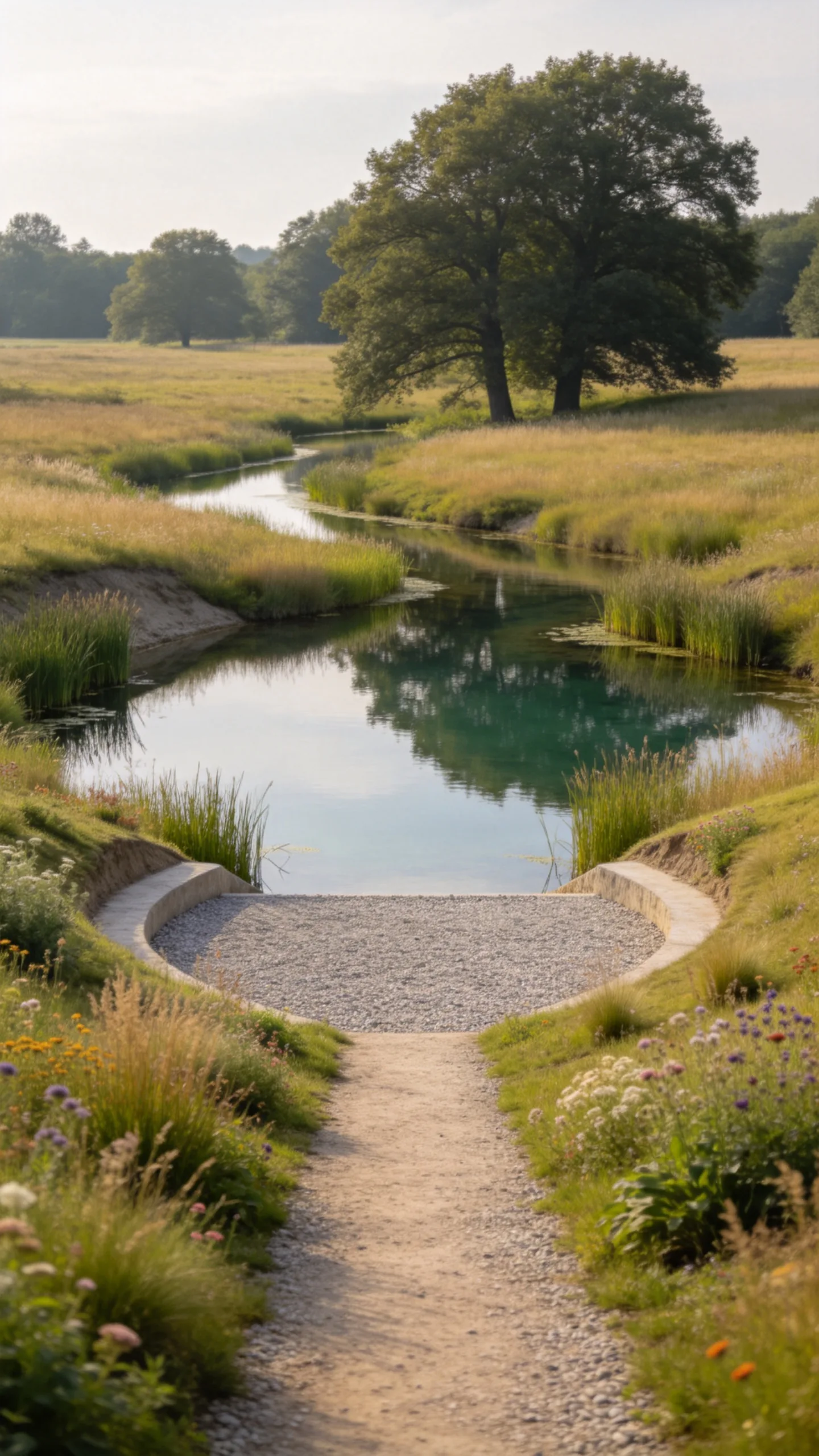
A pond can become a natural focal point when meadow planting flows toward the water. Keep a few open sections along the bank for viewing and maintenance, while allowing moisture-tolerant grasses, sedges, and flowering plants to occupy other areas. Avoid planting large trees directly beside the pond, where roots and heavy leaf fall may cause problems.
Create a gently sloping edge rather than a uniformly steep bank where conditions permit. Add a path that approaches the pond from one side and stops at a gravel pad, timber platform, or flat stone. Plant selection should reflect whether the pond edge remains wet year-round or dries seasonally.
9. Use Coppiced Trees to Form a Rustic Grove
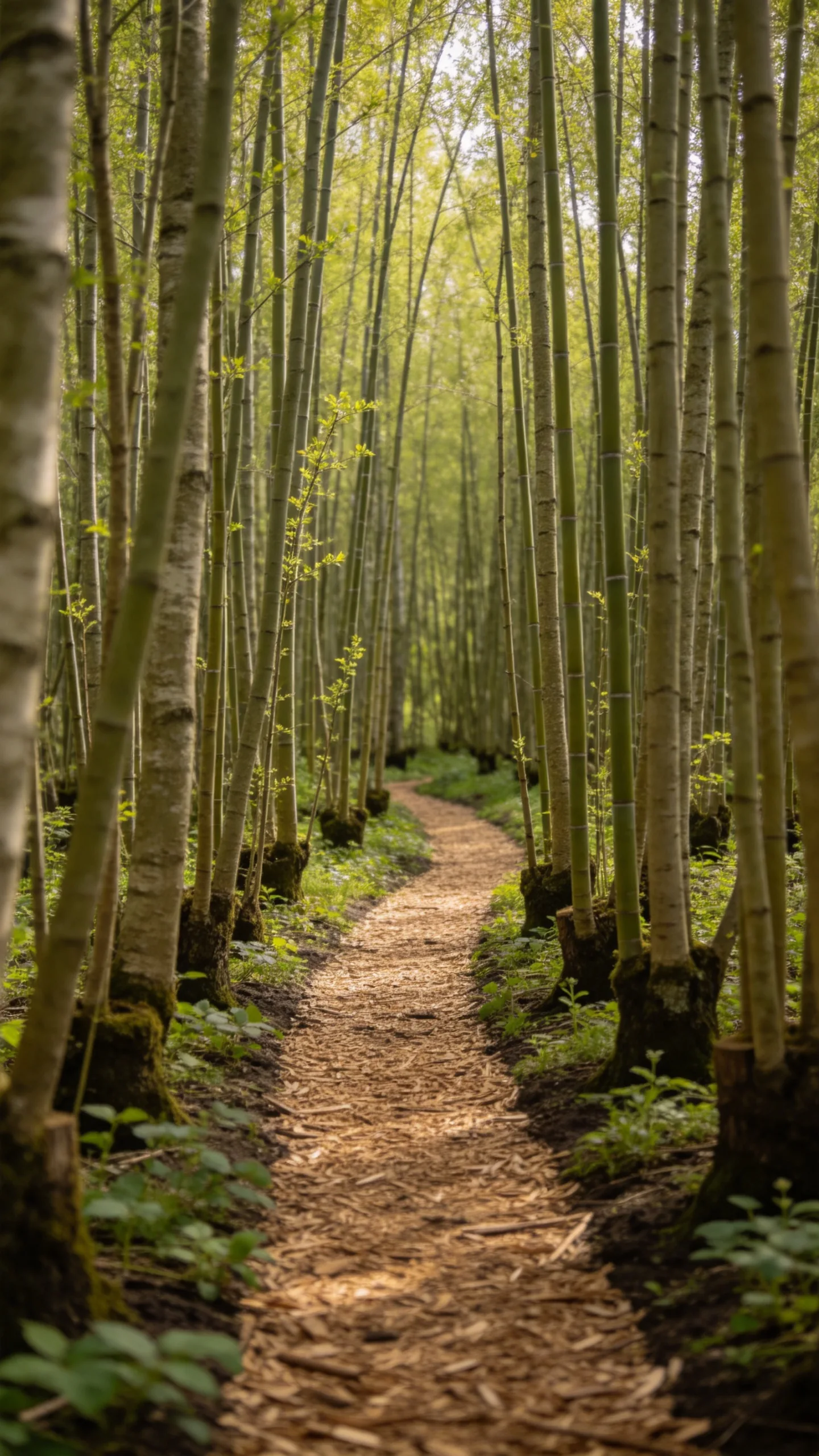
A small grove of hazel, willow, alder, or other trees traditionally suited to coppicing can add vertical structure without producing a dense canopy of large trunks. Coppicing involves cutting established stems near the base on a rotation, encouraging multiple new shoots. Check that the chosen species responds well to this treatment and suits local moisture conditions.
Place the grove along a boundary, near a meadow, or behind a seating area where its upright stems create a textured backdrop. A wood-chip path through the planting reduces mud and complements the rustic setting. Regular cutting also supplies poles that may be used for plant supports, woven edging, or simple garden structures.
10. Plant a Wildflower Strip Beside a Farm-Style Fence
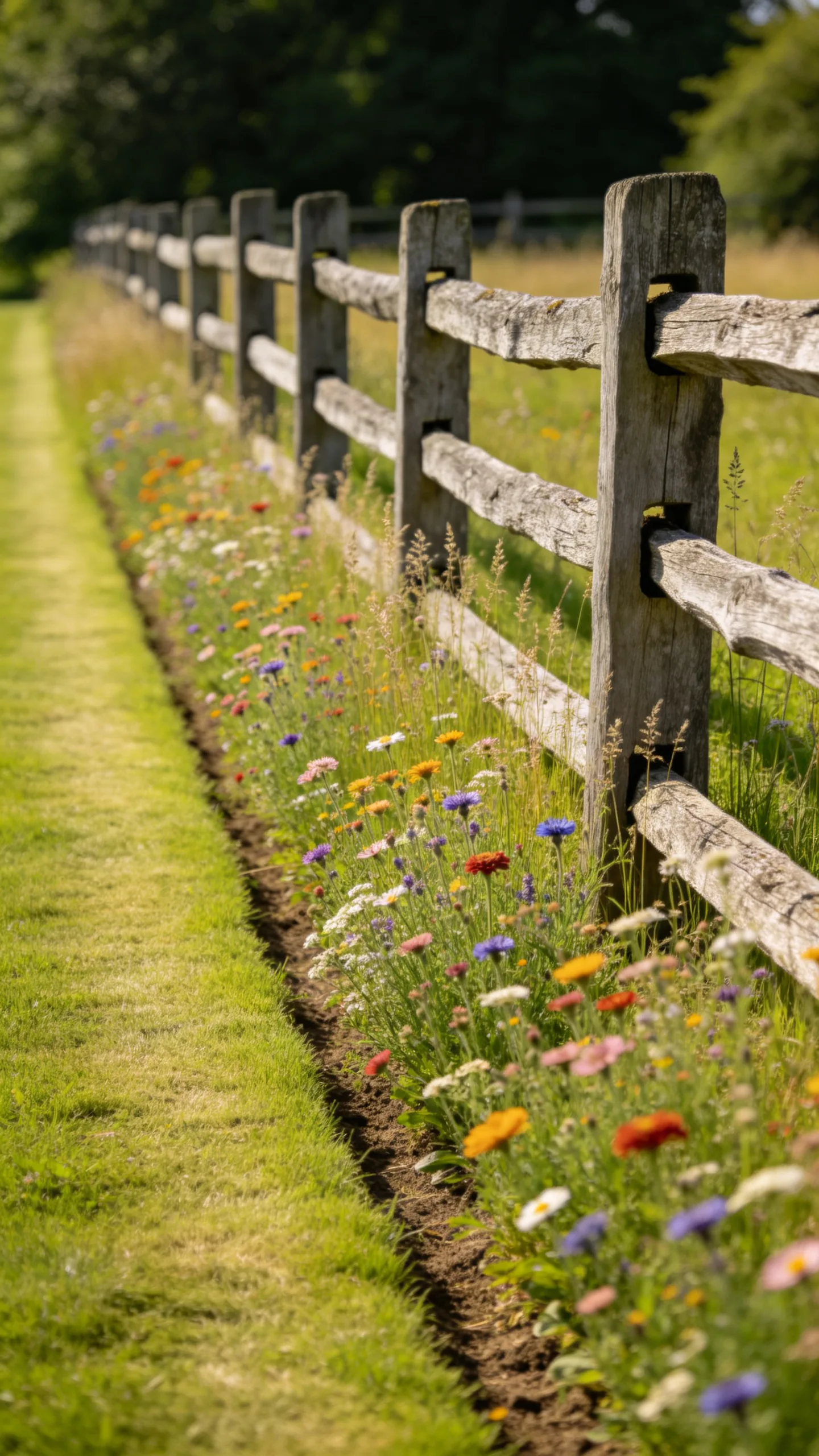
A post-and-rail, split-rail, or simple timber fence becomes more integrated with the landscape when paired with a narrow wildflower strip. Clear a band along the sunny side and sow a regional seed mix designed for the soil type. In rich soil, grasses can overwhelm flowers, so removing excess fertility or using plug plants may produce a more balanced result.
Keep a short grass margin between the flowers and nearby lawn or paths. This crisp strip provides access for fence repairs and signals that the taller growth is intentional. Cut and remove the meadow vegetation after seeds have matured, following the seasonal needs of the chosen mix.
11. Design a Tree-Lined Allée With Informal Underplanting
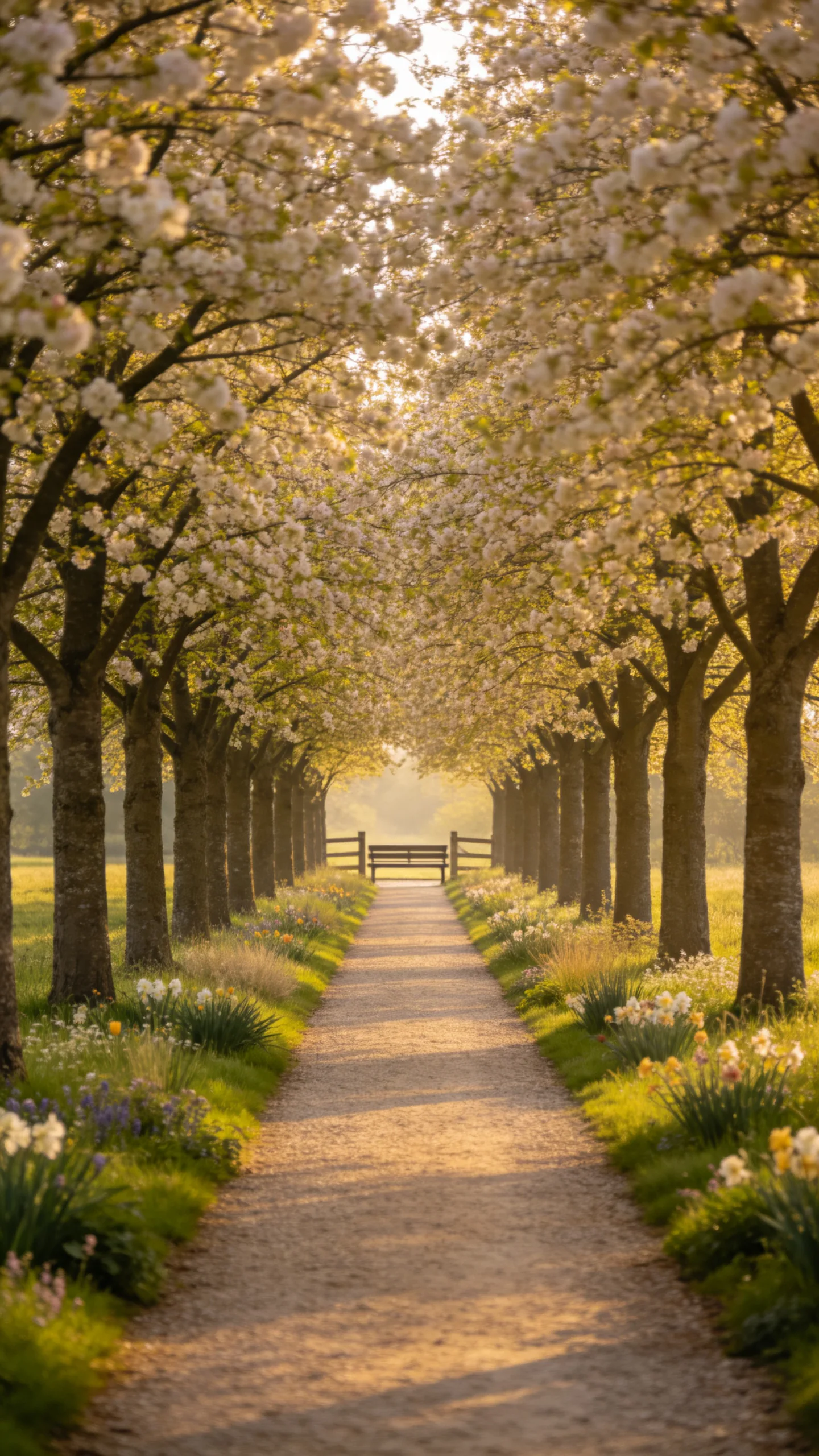
A straight allée can give a rural garden a strong visual axis without requiring formal flower beds. Plant evenly spaced trees along both sides of a gravel or grass path, using species whose mature width fits the available space. Hornbeam, field maple, crabapple, birch, or upright fruit trees may work, depending on climate and soil.
Soften the geometry with loose underplanting of spring bulbs, shade-tolerant grasses, or low perennials. Allow enough clearance for mowing and tree care, and avoid planting trunks too close to the path. The long view can terminate at a gate, bench, specimen tree, or distant landscape feature.
12. Turn a Sloping Field Into Meadow Terraces
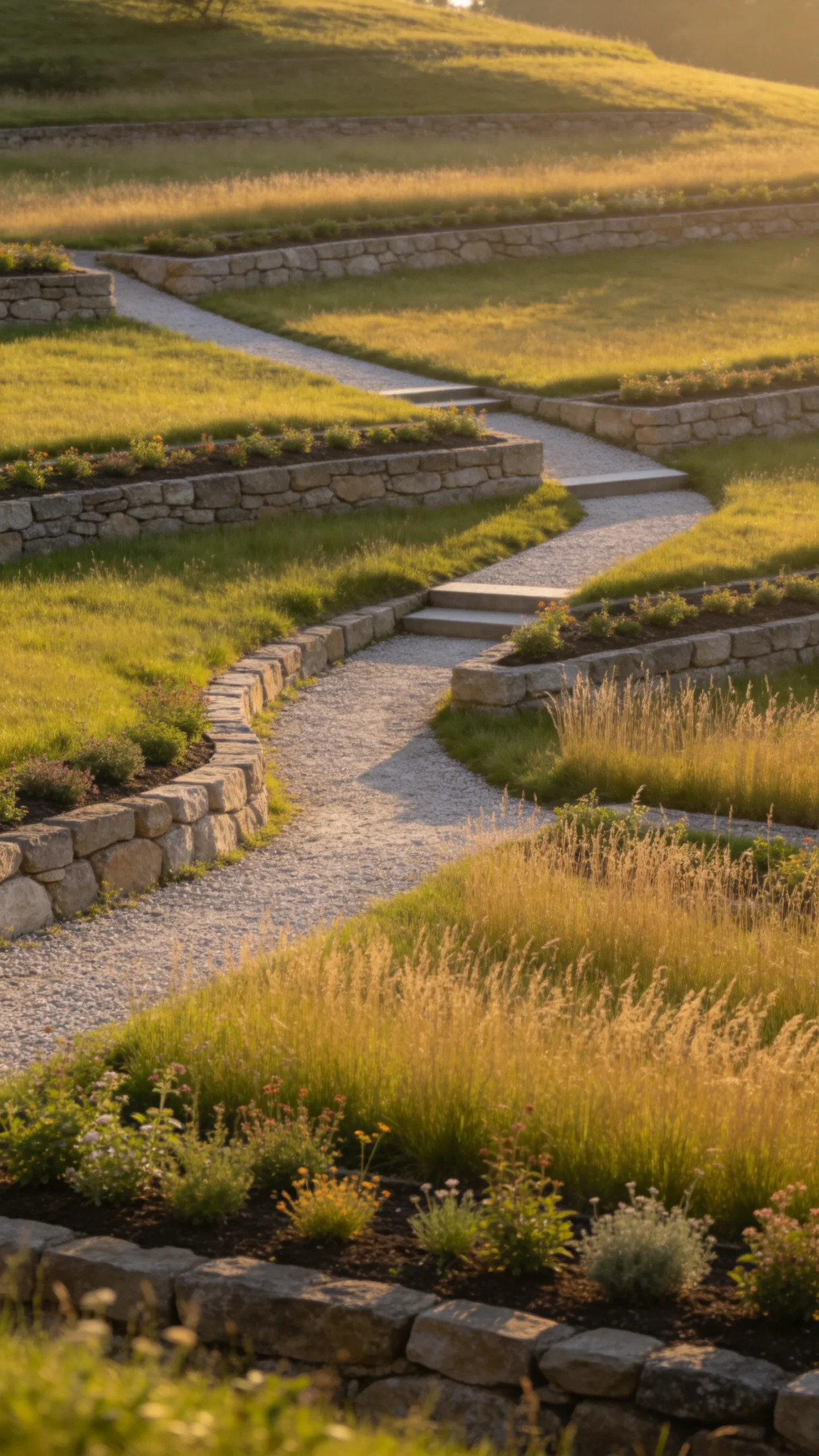
On a gentle slope, divide the ground into broad meadow terraces connected by steps or diagonal paths. The terraces can slow surface runoff, create flatter places for seating, and make steep ground easier to explore. Any substantial earthwork should be planned with drainage and slope stability in mind.
Retain shallow level changes with stone, timber, or planted banks rather than tall walls where possible. Sow low-growing meadow species on the most accessible terraces and taller grasses on less frequently used sections. A zigzag gravel path reduces the walking gradient and creates changing views across the property.
13. Make a Rustic Tree Circle for Outdoor Seating
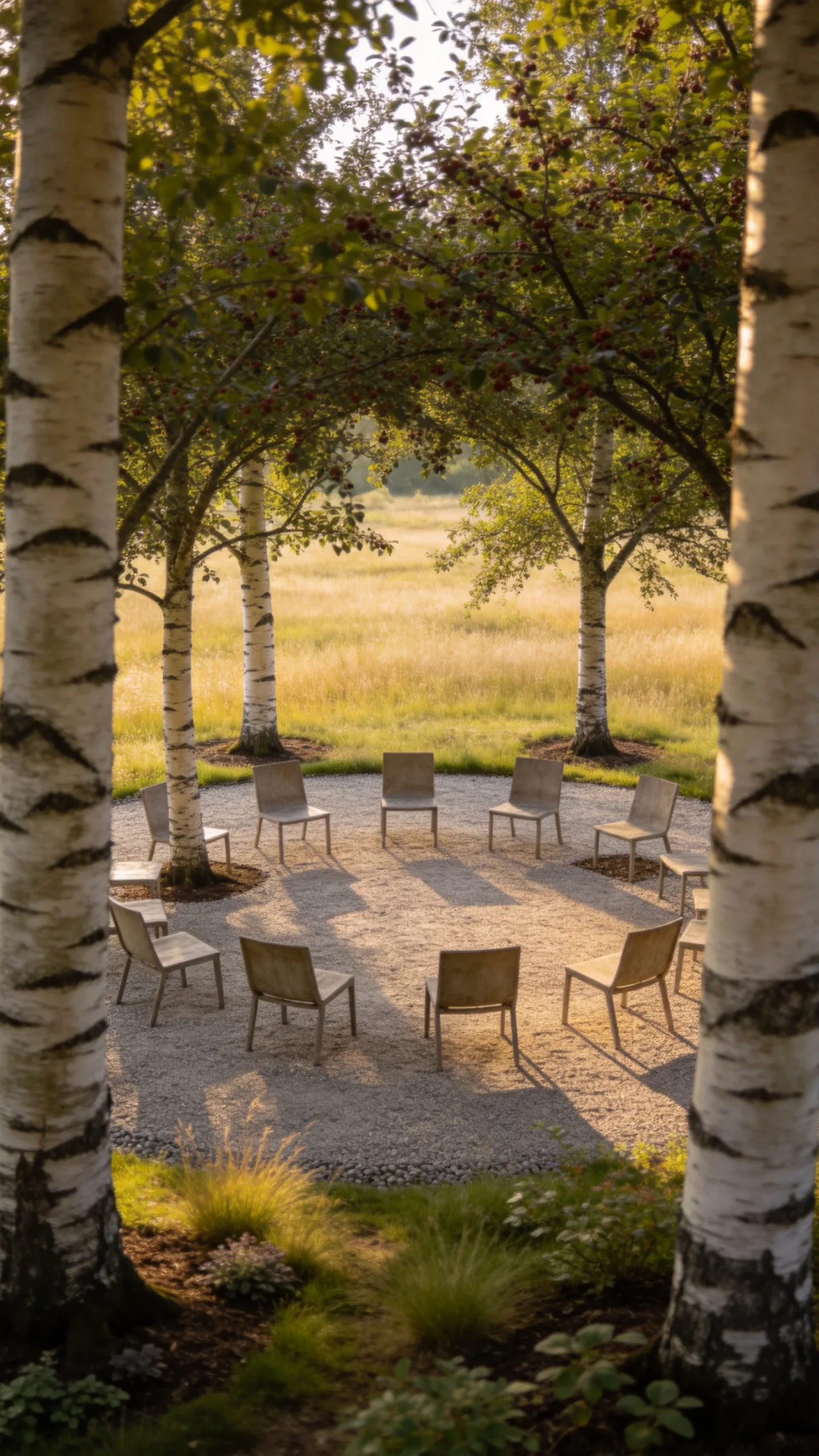
Arrange weather-resistant chairs, a circular bench, or several large stones beneath a loose ring of trees. Multi-stem birch, amelanchier, crabapple, or other small-canopy trees can create filtered shade while preserving views into the surrounding meadow. Space them according to mature canopy width rather than their size at planting.
Use compacted gravel, permeable paving, or bark chips for the seating surface. Keep the material away from trunks and ensure water can still reach the root zones. Plant low grasses or shade-tolerant ground covers around the outer edge to blend the circle into the wider garden.
14. Connect Garden Areas With a Bark-Chip Path
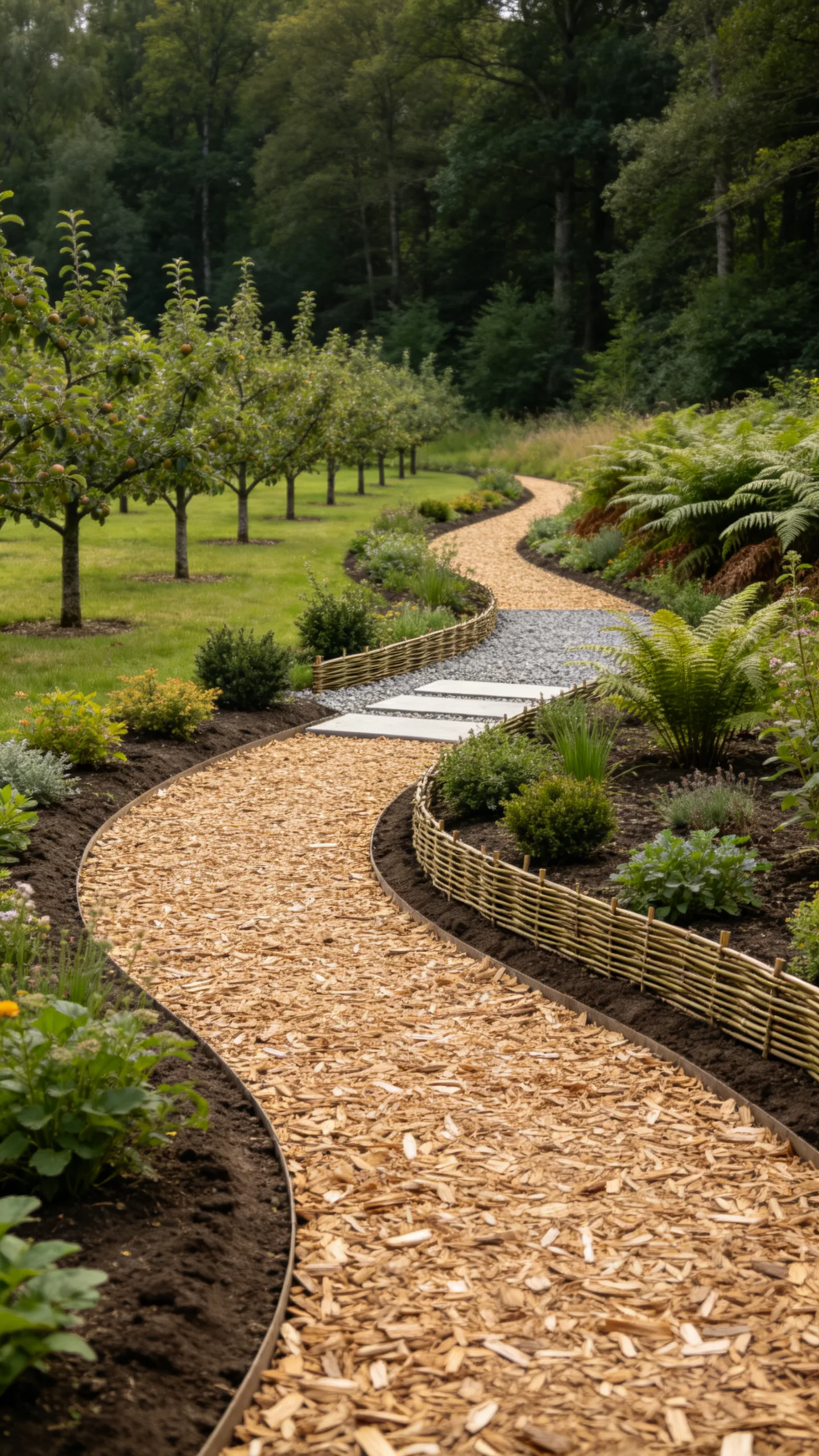
A bark-chip path works well through orchards, woodland edges, and informal shrub borders. It is softer underfoot than stone and can be refreshed as it decomposes. Define the route with shallow steel edging, untreated logs, woven hazel, or simply a cleanly cut soil edge.
Lay coarse wood chips several inches deep over cleared, compacted ground. Cardboard can temporarily suppress weeds beneath a new path, but avoid placing impermeable plastic under the surface. Top up thin areas periodically, and use gravel or stepping stones where gates and slopes receive heavier traffic.
15. Combine Pollarded Trees With a Long Grass Border
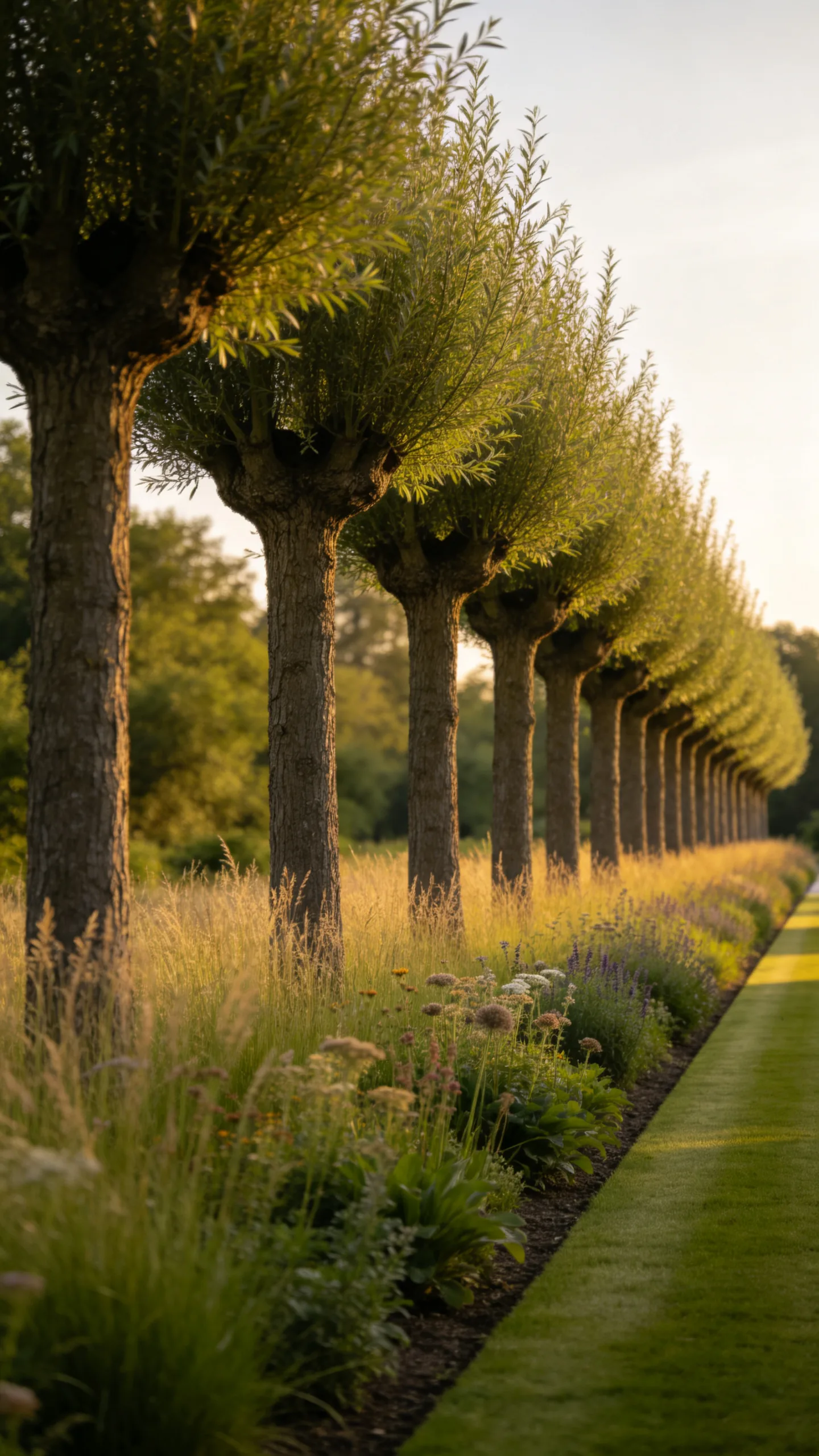
Pollarded trees create a strong repeating silhouette while keeping canopies above head height. Willow, lime, plane, and certain other species tolerate pollarding, but the method must be started and maintained correctly. Choose a species appropriate to the local climate and establish a regular pruning cycle.
Plant a ribbon of long grass and sturdy perennials beneath the trees to contrast with their architectural trunks. Leave a mown strip between the border and any walkway so the area remains easy to navigate. This combination works especially well along large lawns, drives, or the edge of an open meadow.
16. Add a Boardwalk Across a Damp Meadow
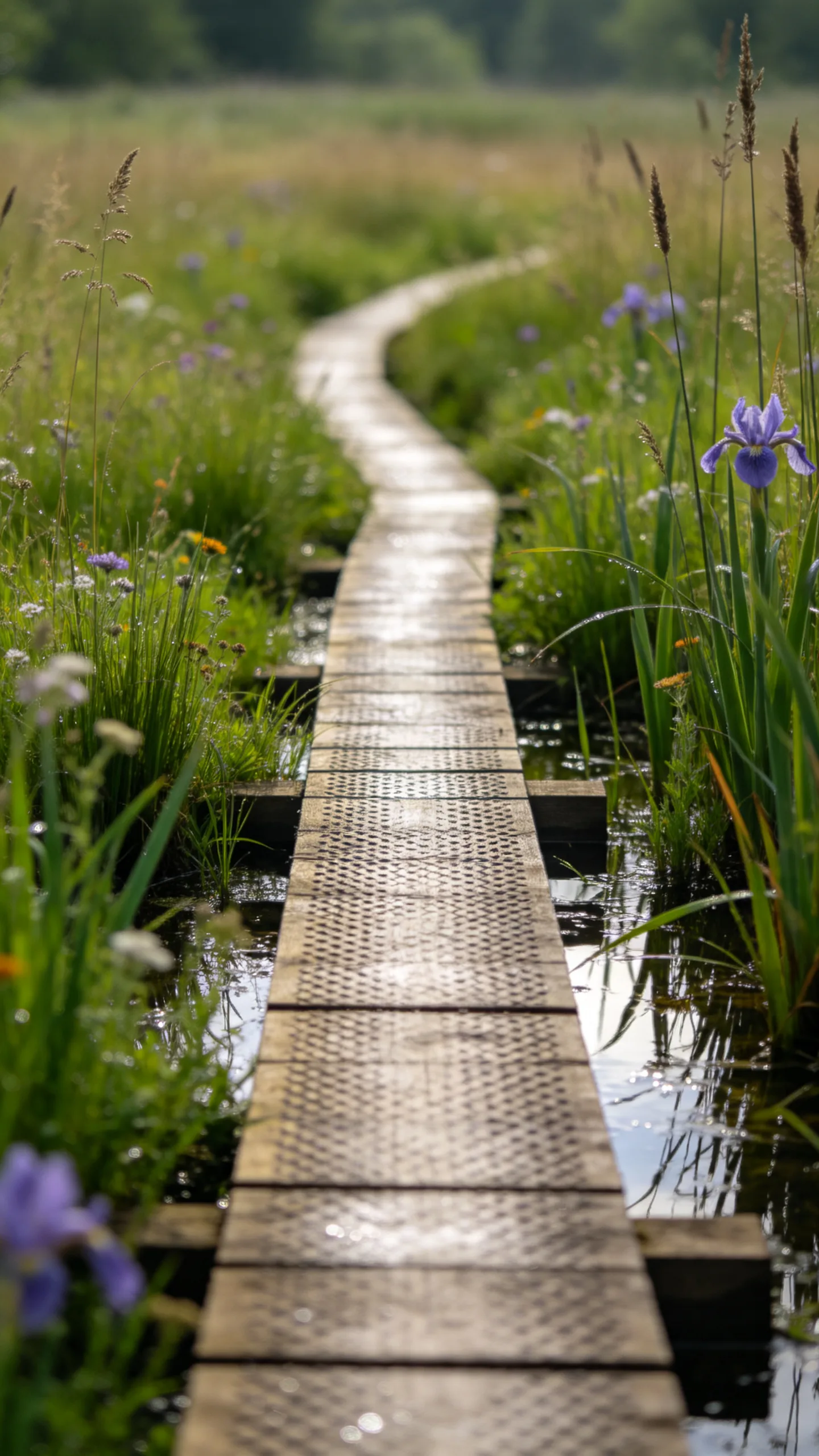
A narrow timber boardwalk makes seasonally wet ground accessible without repeatedly compacting the soil. Use it to cross a damp meadow, rain garden, or low area that holds water after storms. The route can be straight for a strong visual line or gently angled to reveal different planting groups.
Choose rot-resistant timber or another outdoor-rated material, and use a textured surface to reduce slipping. Construction should not block natural water movement. Surround the boardwalk with moisture-tolerant sedges, rushes, irises, and locally suitable flowering plants rather than trying to force lawn grass into persistently wet soil.
17. Place a Small Copse at the End of the View
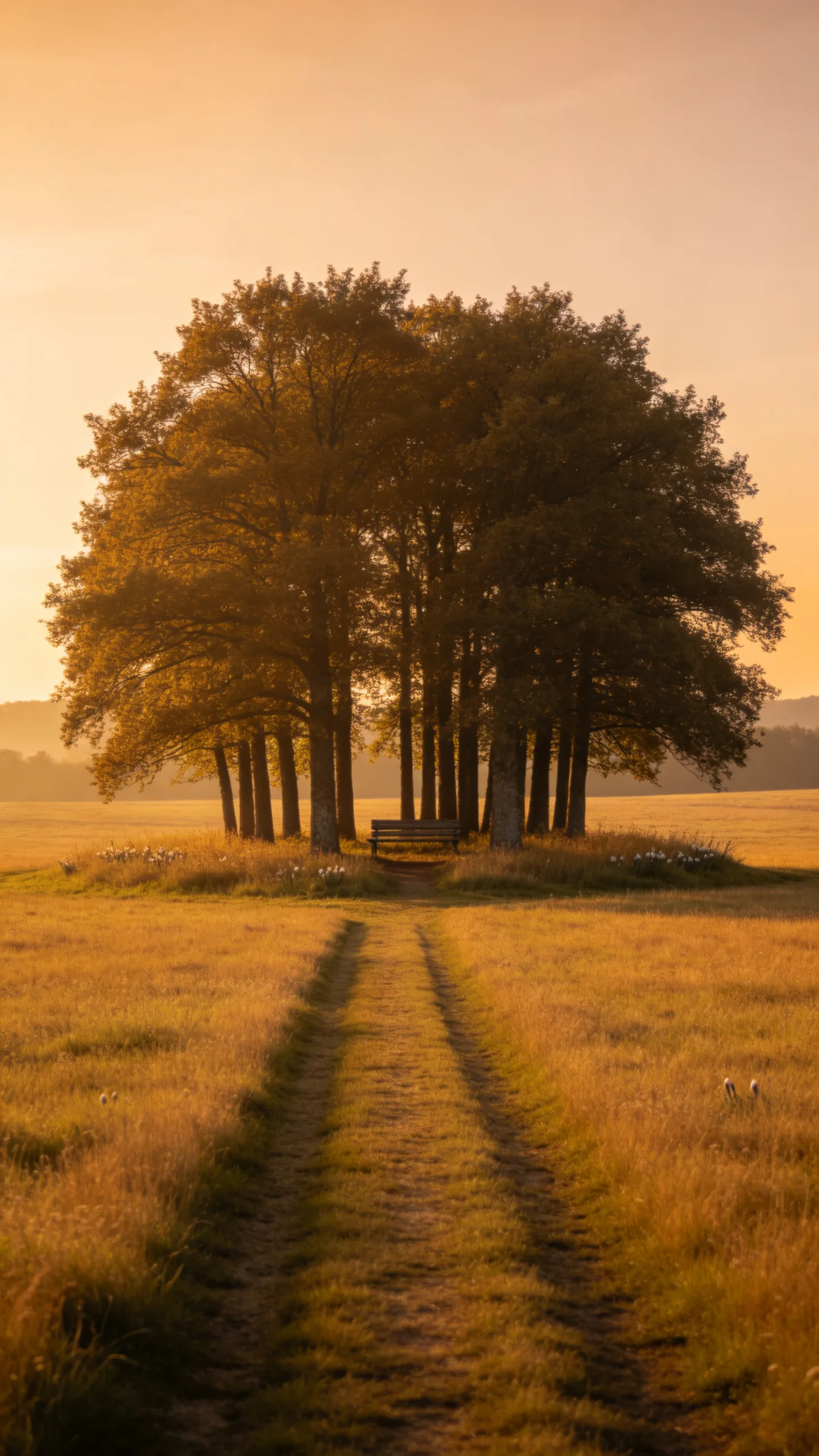
A copse—a compact group of trees—can anchor an open field or large lawn. Position it where it will be seen from a terrace, kitchen window, gate, or main path. Mix a few compatible tree species or repeat one locally characteristic species for a simpler silhouette.
Allow generous spacing for mature crowns and include an irregular outer edge rather than a perfect circle. Beneath the trees, use rough grass, woodland bulbs, or leaf-tolerant ground covers. A narrow path leading into the copse can end at a bench, giving the distant feature a practical purpose.
18. Edge a Kitchen Garden With Espaliered Trees
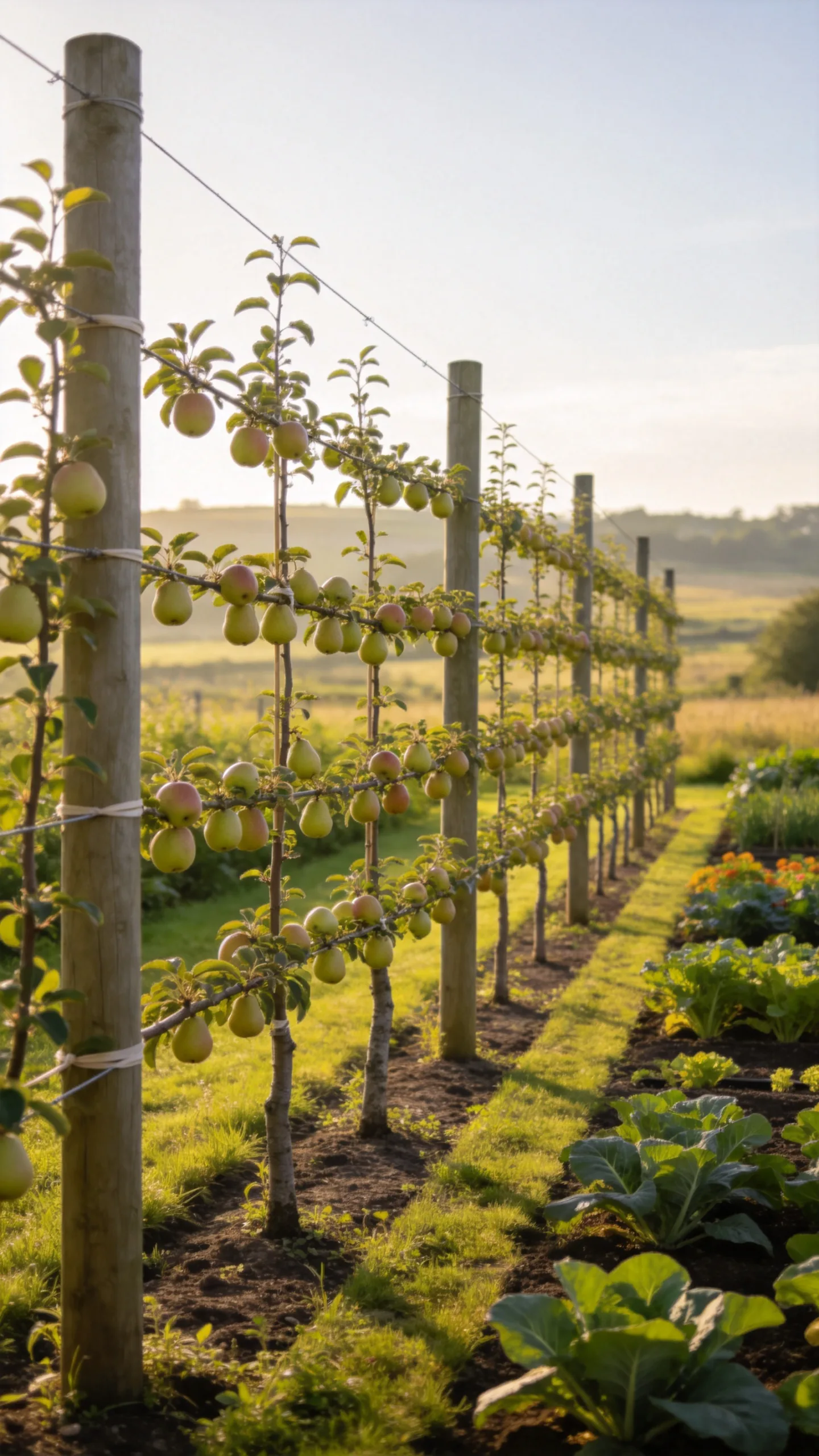
Espaliered apples, pears, or other trainable fruit trees can form a productive boundary between a kitchen garden and the surrounding landscape. Their flat growth saves space, preserves sunlight for vegetable beds, and introduces tree structure without creating a broad canopy.
Install sturdy posts and horizontal wires before planting. Position trees in suitable sun and select rootstocks that match the available space and soil. Tie in new shoots with soft ties, prune at the correct seasonal time for the fruit type, and maintain a weed-free strip around the roots to reduce competition.
19. Create a Hidden Path Through Tall Perennial Grasses
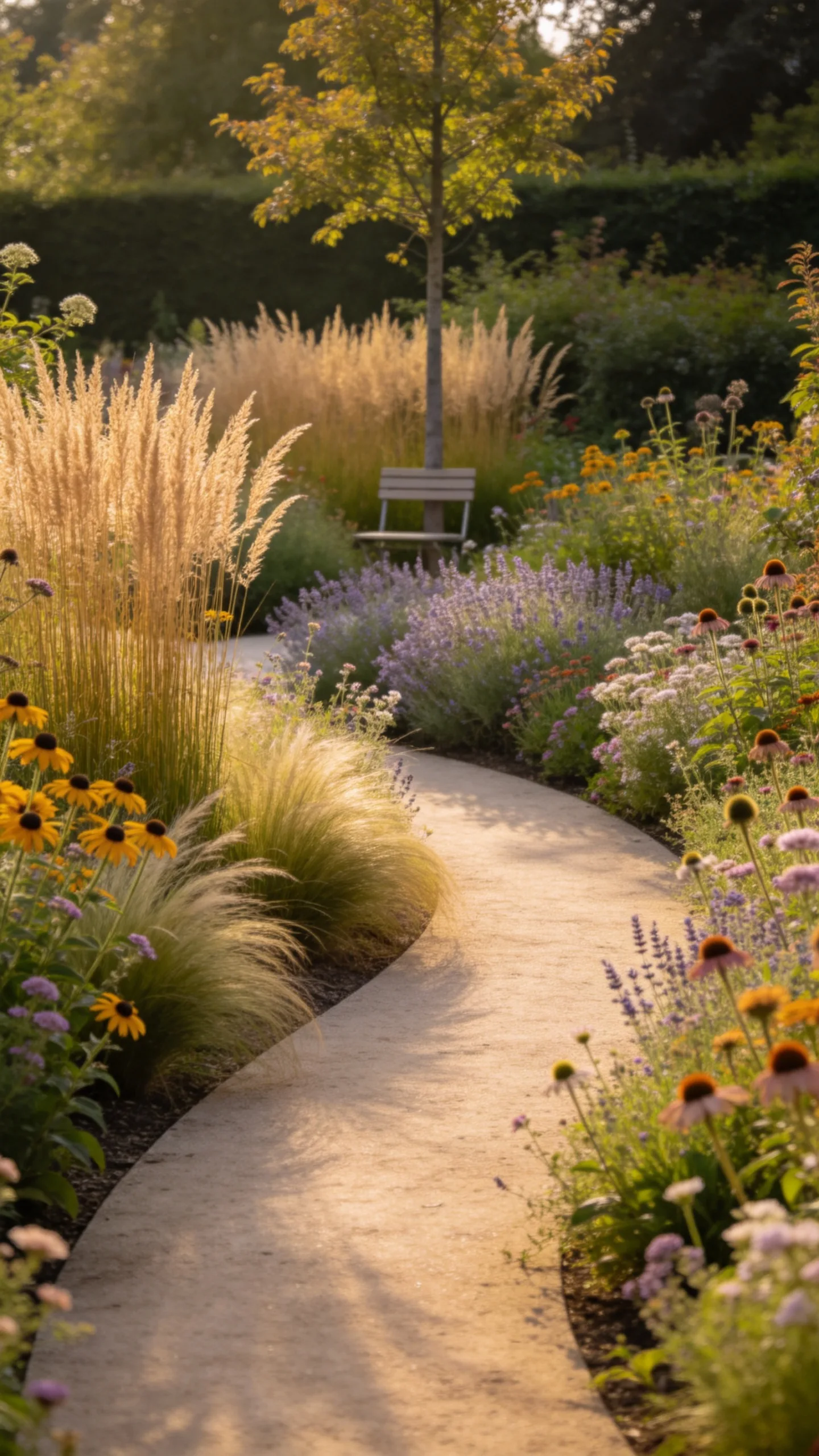
A narrow route through tall ornamental grasses can make even a modest rural garden feel deeper. Use clump-forming grasses rather than invasive spreaders, and combine them with long-blooming perennials such as rudbeckia, verbena, echinacea, or asters. Select varieties that remain stable in local wind and rainfall conditions.
Curve the path so its destination is not immediately visible, then place a seat, birdbath, or small tree at the end. Keep plants far enough from the walking surface that mature stems do not close the route. Cut grasses back at the season recommended for the species, often in late winter before new growth begins.
20. Preserve an Open Lawn as a Quiet Visual Clearing
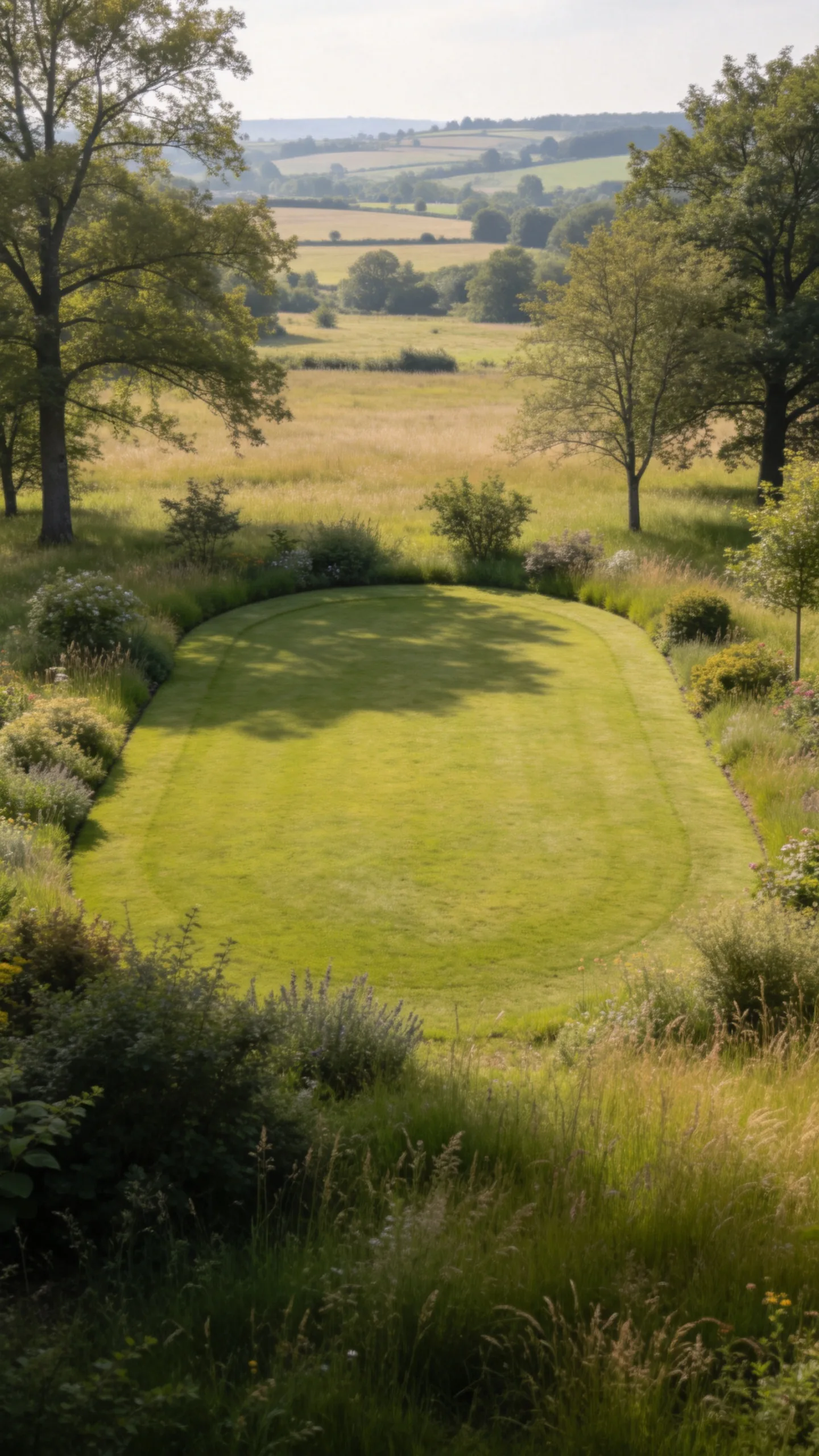
Not every part of a rural garden needs dense planting. A simple open lawn or short-grass clearing provides breathing space between meadows, trees, and borders. It can also accommodate games, gatherings, or temporary seating while preserving a broad view toward the countryside.
Give the clearing an irregular oval or gently curved shape and frame it with scattered trees, meadow edges, or mixed shrubs. Keep the center open and place shade trees mainly around the perimeter. Where conventional lawn is difficult to maintain, consider a low-growing grass mix or regularly mown meadow turf suited to the site’s light, rainfall, and level of foot traffic.