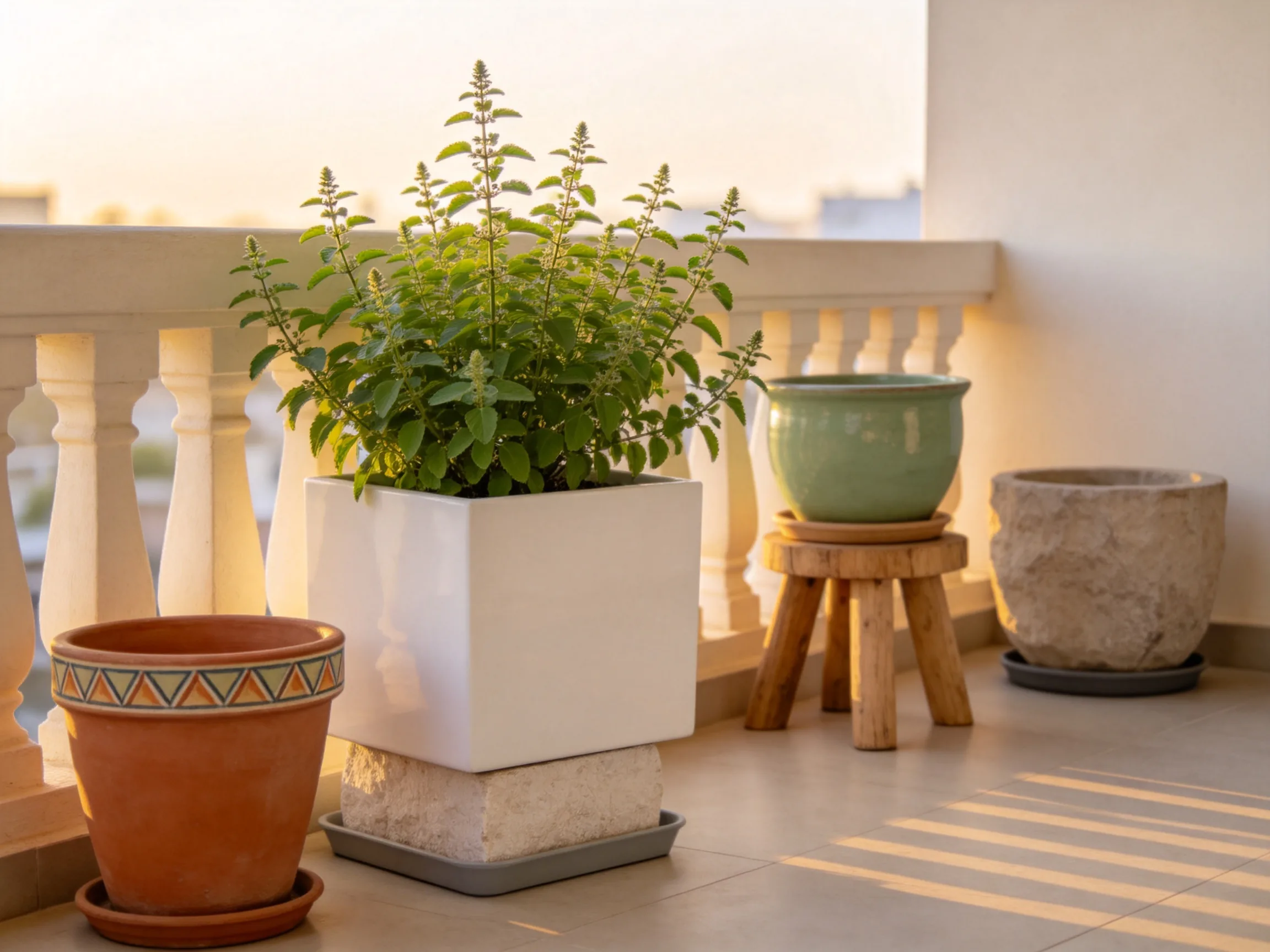
A Tulsi pot can become a purposeful focal point instead of an afterthought on a balcony, patio, windowsill, or entrance area. These modern Tulsi pot design ideas combine clean materials, practical drainage, suitable sunlight, and commonly followed Vastu placement preferences so the plant remains attractive and easy to care for.
1. White Square Tulsi Planter for the Northeast Corner
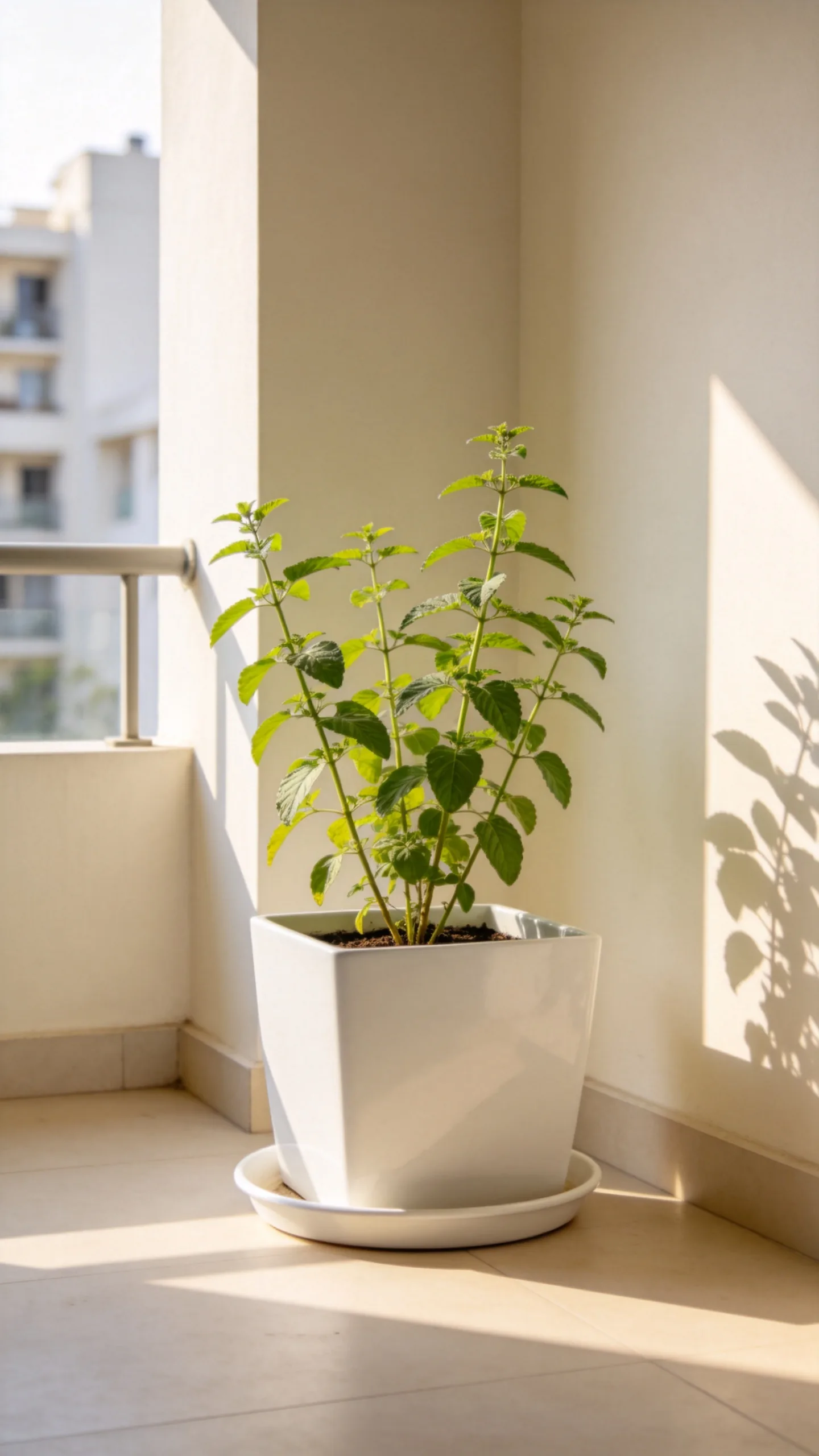
Use a crisp white or cream square planter to create a simple Tulsi display in a bright northeast-facing area. Many Vastu traditions favor the northeast for a prayerful plant, while the pale finish keeps the arrangement visually light and compatible with modern interiors.
Choose a container with drainage holes and place it on a shallow saucer to protect the floor. Keep the Tulsi plant near morning light, but check that the location receives enough direct or filtered sunlight for healthy growth.
2. Raised Tulsi Chowki with a Minimal Cement Pot
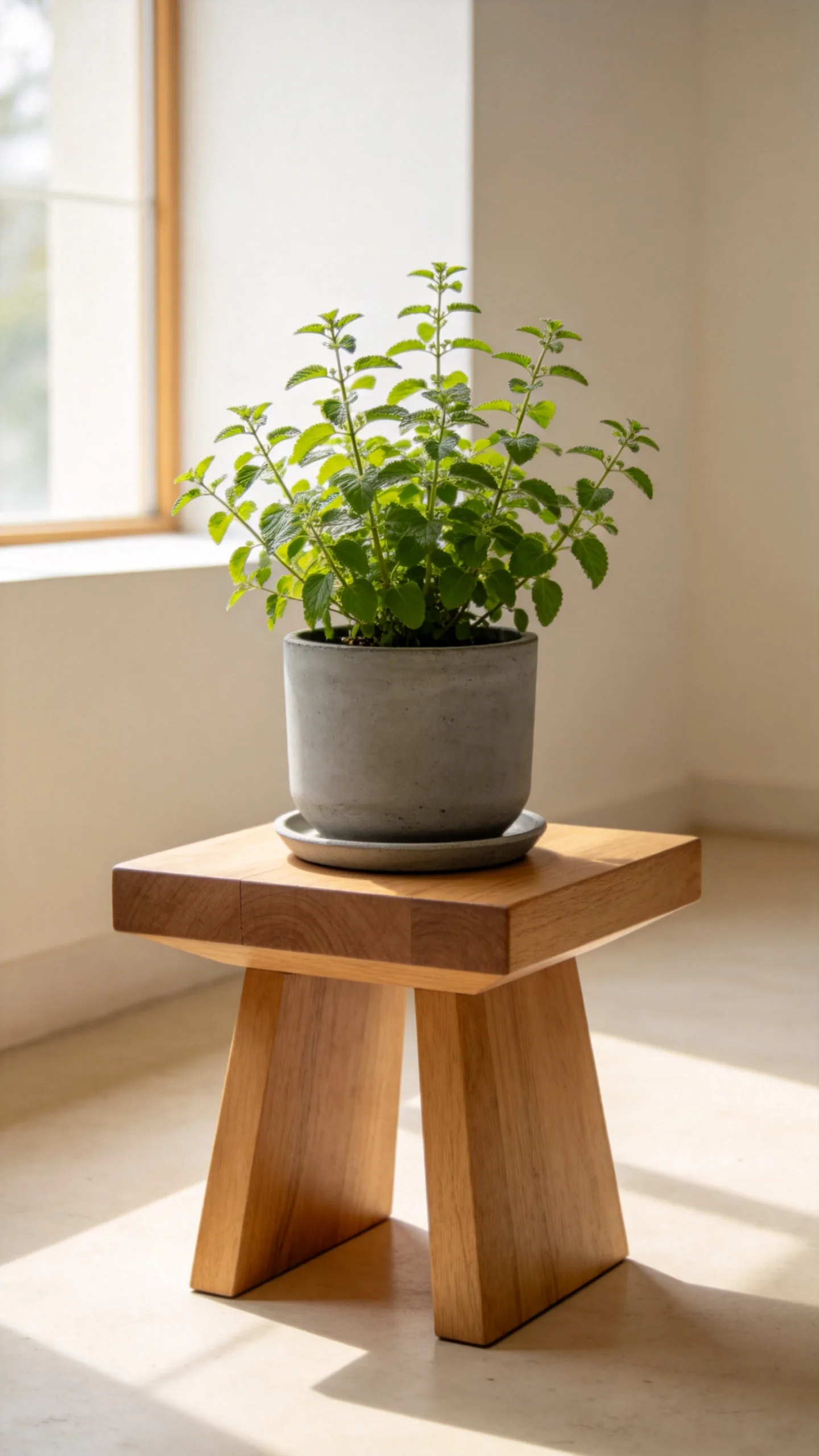
Place a plain cement or stone-finish Tulsi pot on a waist-high chowki to give the plant a defined sacred zone. The raised arrangement works well on a compact balcony because it improves visibility without using a large footprint.
Select a stable stand with a broad base and leave enough room around the pot for watering and cleaning. A matte gray planter paired with a natural wood or white-painted chowki creates a contemporary look without excessive decoration.
3. Terracotta Tulsi Pot with a Geometric Border
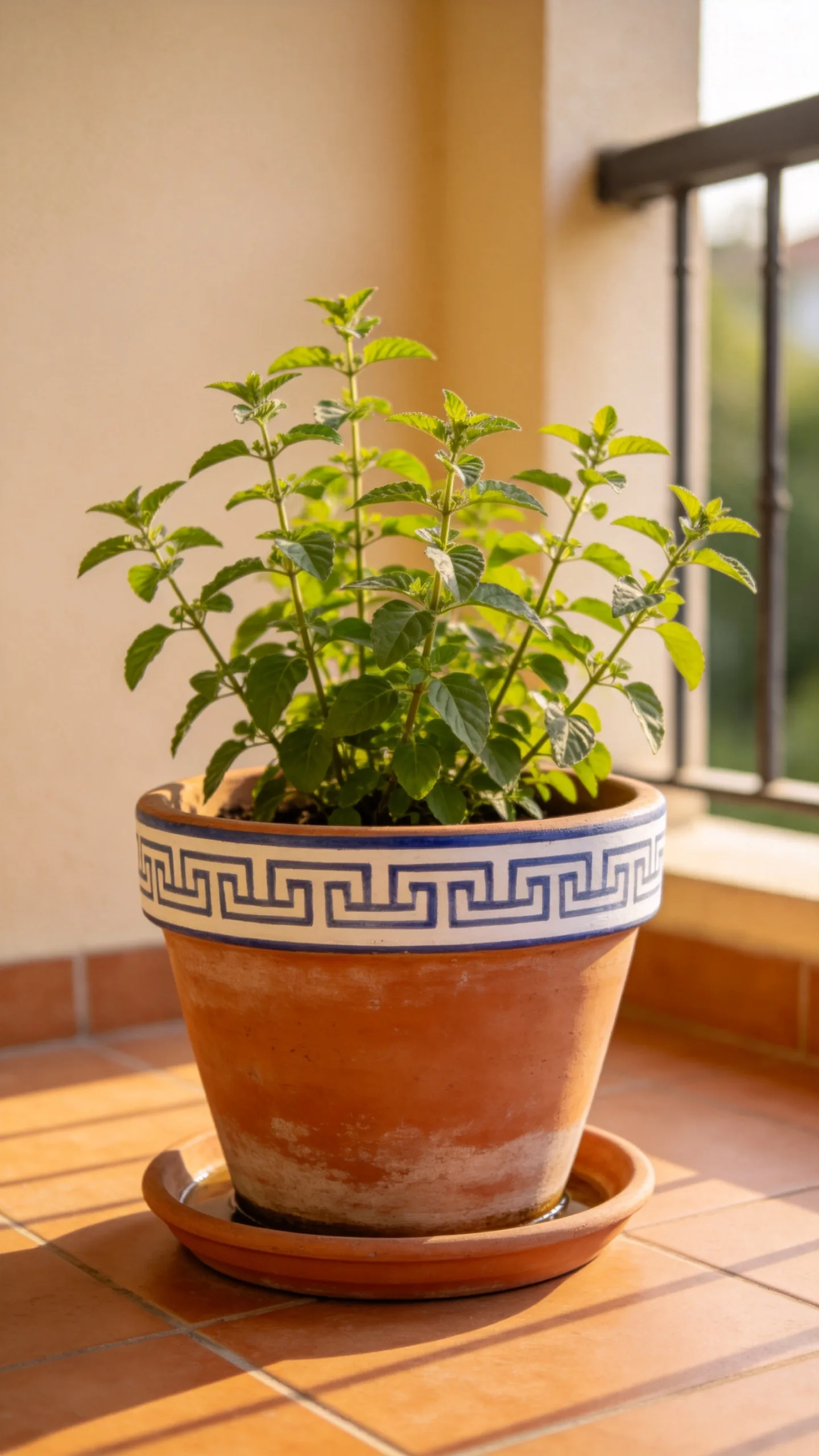
A traditional terracotta pot can look modern when paired with a sharp geometric border in white, indigo, or muted green. Paint only the upper rim or add a repeating block pattern so the porous clay remains the main feature.
Terracotta dries faster than glazed ceramic, which can benefit Tulsi in warm, well-ventilated spaces. Check the soil with your finger before watering and place a tray underneath to catch runoff on a balcony or tiled verandah.
4. Vertical Tulsi Niche for a Small Balcony
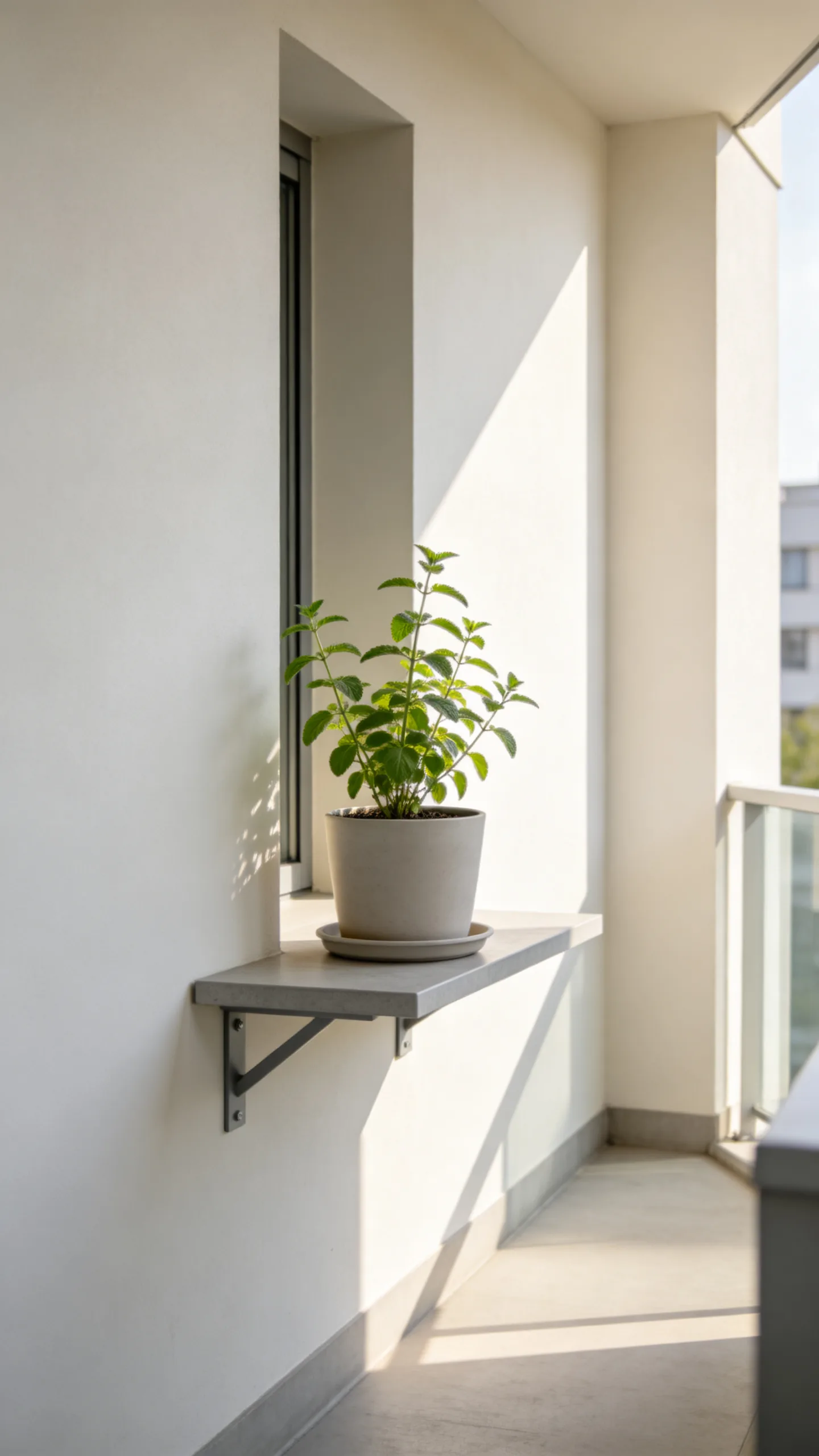
Create a narrow vertical niche with one main Tulsi pot on a wall-mounted shelf or slim plant stand. This design saves floor space and draws the eye upward, making a small balcony feel more layered without crowding the walking area.
Keep the shelf securely anchored and use a lightweight planter with a drainage tray. A light-facing wall or balcony corner with several hours of gentle sunlight is more useful than a purely decorative position with little natural light.
5. White Marble-Effect Tulsi Pot for a Prayer Area
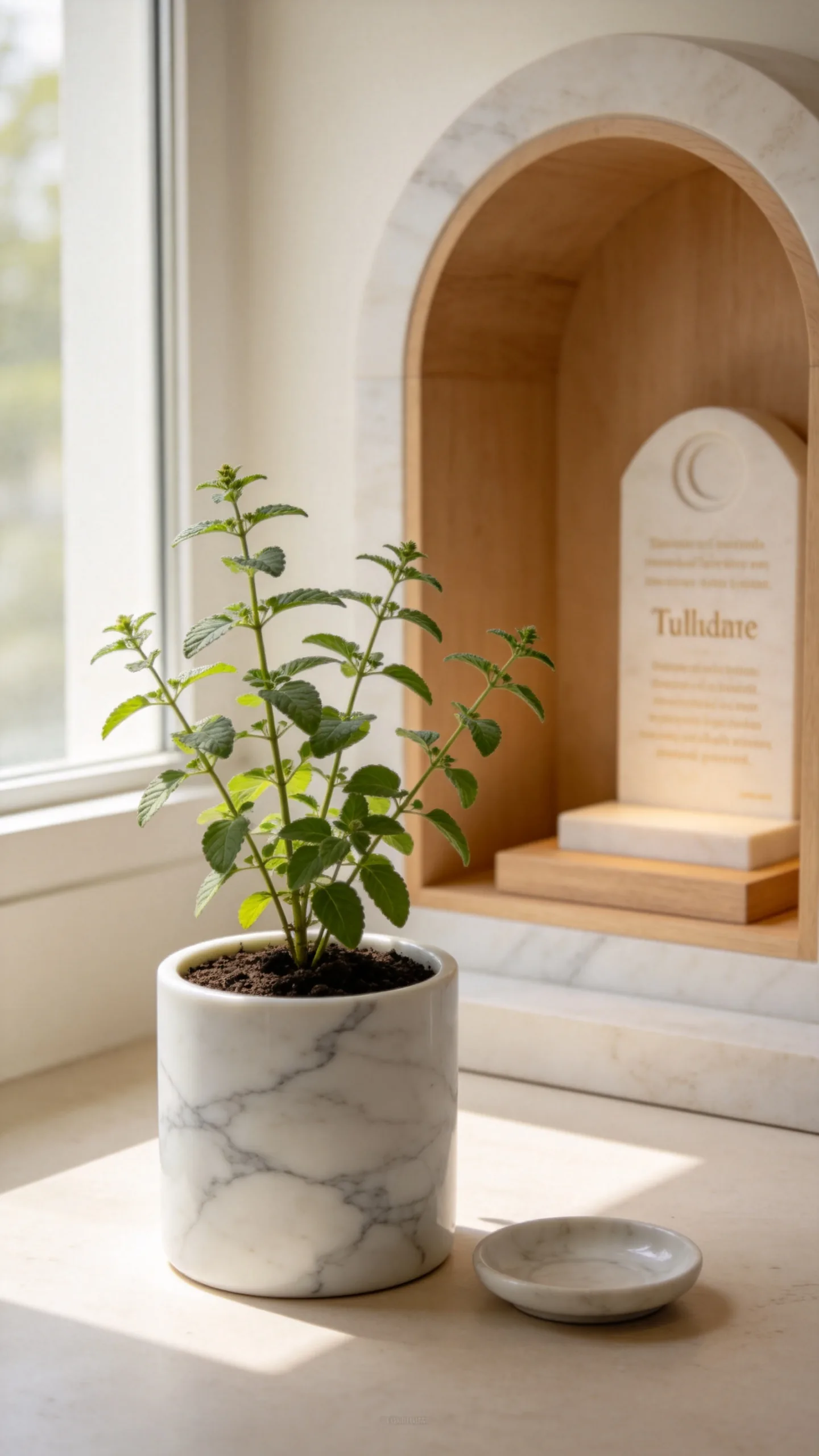
A marble-effect ceramic planter gives the Tulsi plant a polished appearance near a home prayer corner. Use a simple cylindrical or square shape rather than an oversized ornamental pedestal to maintain a clean modern profile.
Place the pot where it receives natural light and can be approached without blocking the prayer area. Since glazed ceramic holds moisture longer than terracotta, use a loose potting mix and avoid watering on a fixed schedule when the soil is still damp.
6. Tulsi Pot with a Built-In Drainage Plinth
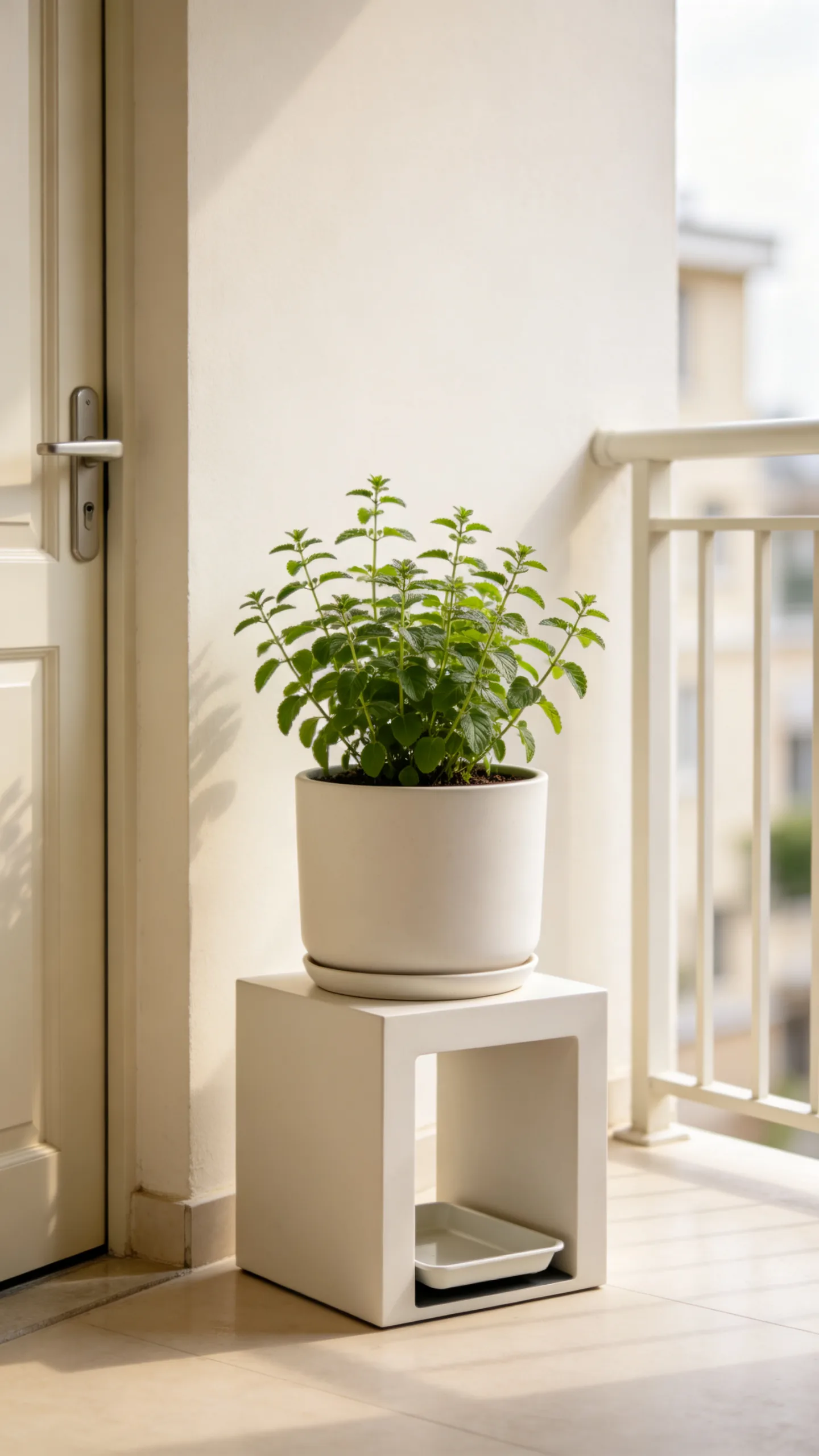
Choose a planter designed with a raised inner base or matching drainage plinth. The structure keeps the pot elevated above standing water, which helps protect roots and prevents messy puddles on the floor.
This style is especially useful for entrance balconies and apartments where drainage needs to be controlled. Empty collected water regularly, and avoid placing the pot directly against a wall where dampness could leave marks.
7. Wooden Stand with a Round Green Ceramic Pot
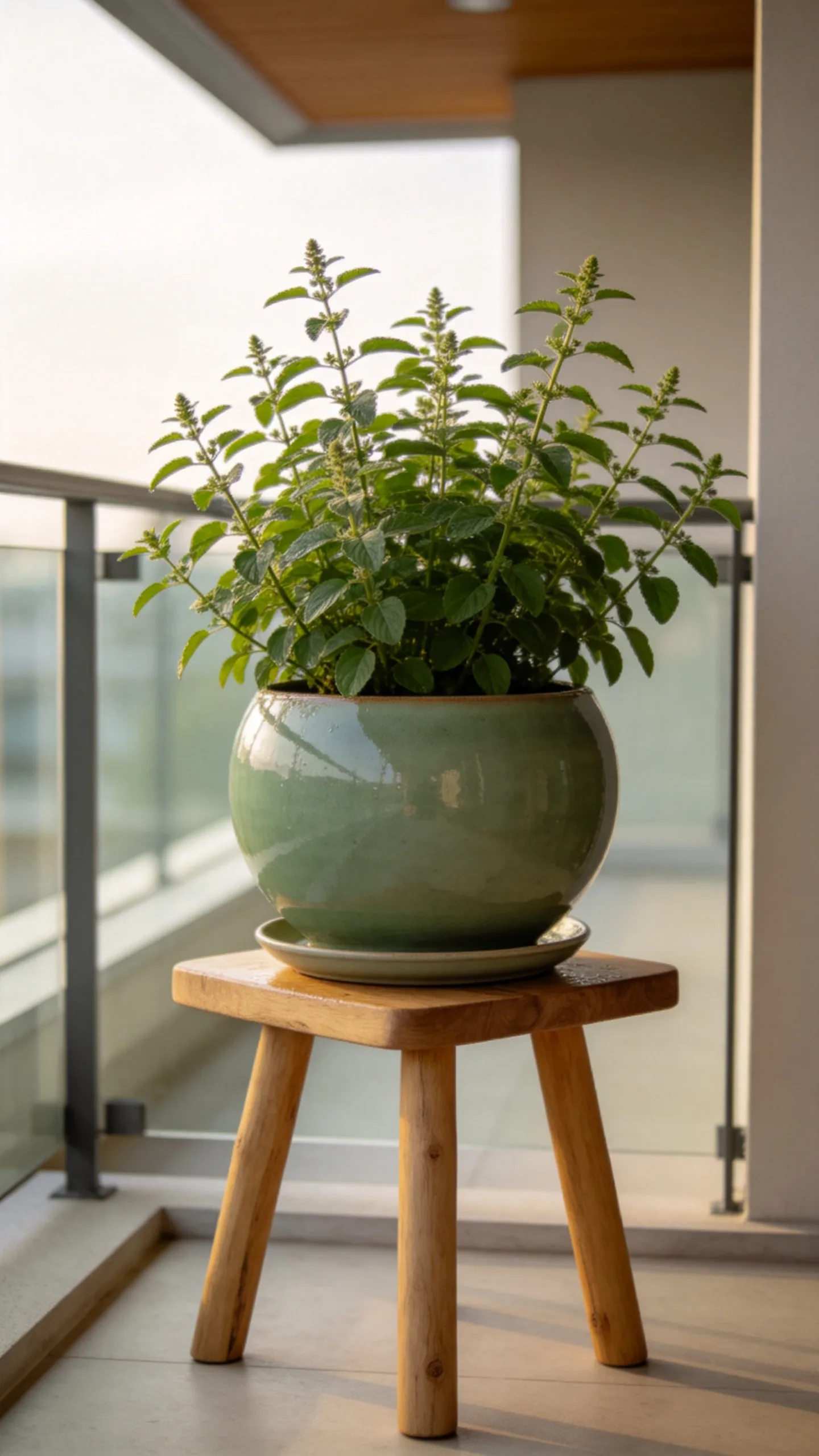
Pair a round green ceramic Tulsi pot with a simple natural-wood stand for a soft, modern display. The color connects the plant with its surroundings while the stand gives the pot enough height to serve as a visible focal point.
Use treated or sealed wood if the stand will remain outdoors. Keep the arrangement away from heavy rain runoff and choose a position with morning or bright indirect light, depending on the heat and exposure of the balcony.
8. Tulsi Pot Framed by a Slim Metal Trellis
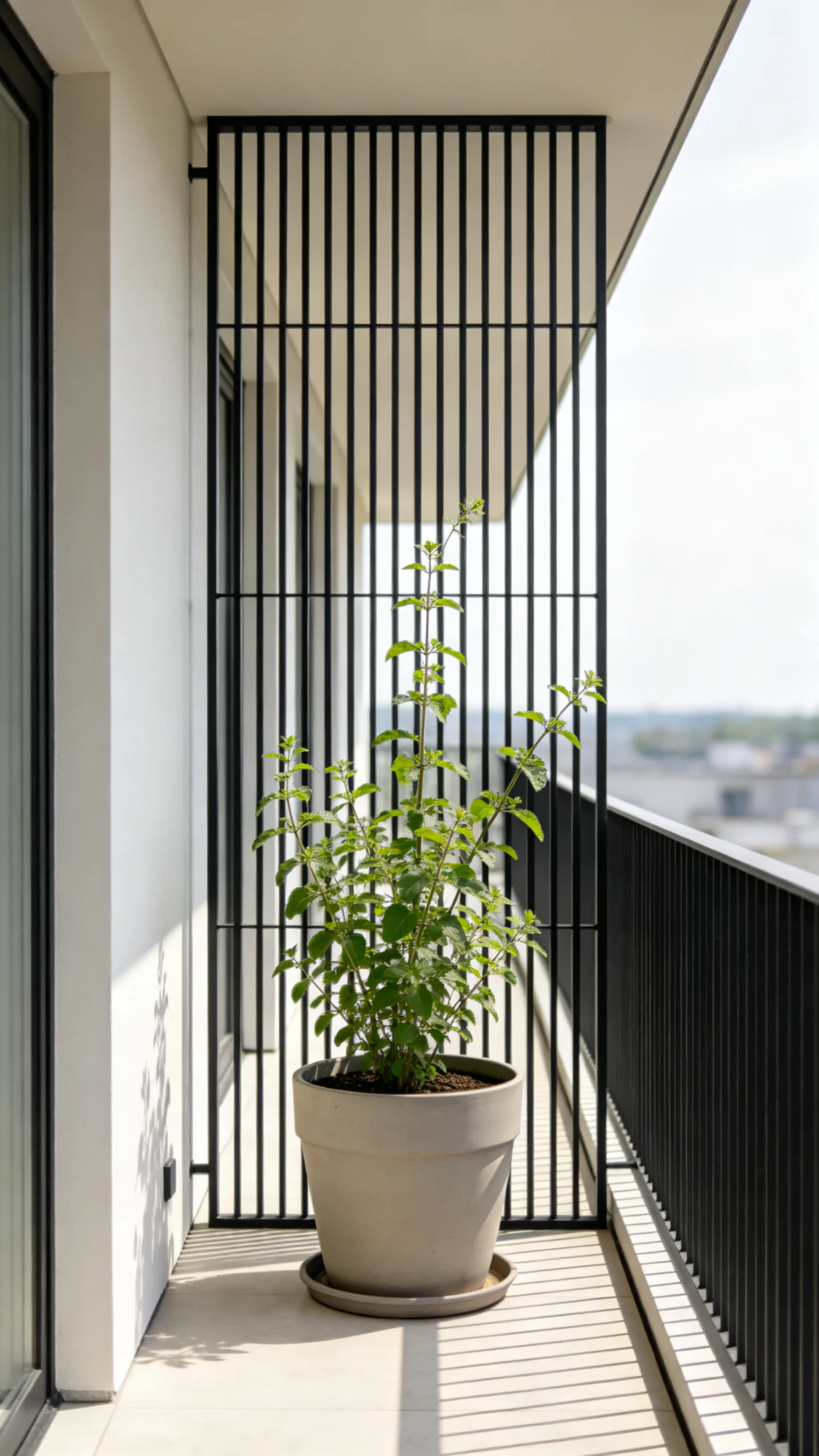
Set a compact Tulsi planter in front of a slim black or bronze metal trellis. The trellis adds height and architectural structure without requiring the Tulsi plant itself to climb, making the arrangement suitable for narrow patios and apartment balconies.
Do not tie the stems tightly to the frame. Keep the trellis open enough for airflow, and use it as a background for the pot rather than allowing nearby vines to shade or overwhelm the Tulsi.
9. Symmetrical Twin-Pot Entrance Arrangement
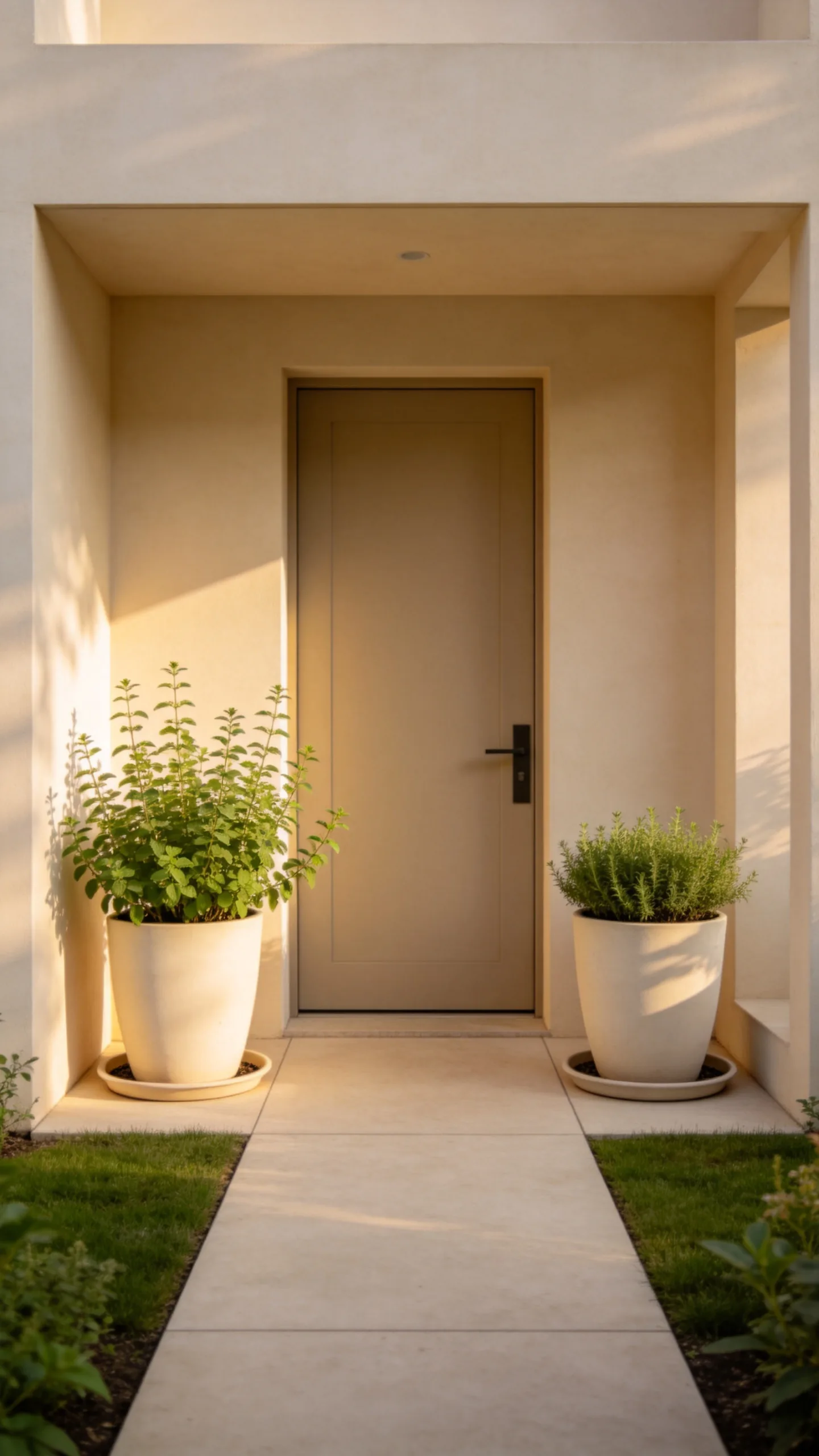
Use two matching Tulsi-style planters to create a balanced entrance display, while keeping the healthy Tulsi plant in the brighter position if both sides do not receive equal light. Symmetry gives a modern doorway a finished appearance and leaves a clear central path.
If only one pot contains Tulsi, use the second container for a compatible non-invasive plant or a simple decorative element. Make sure neither planter obstructs the threshold, and provide drainage trays if the entrance has a covered floor.
10. Compact Tulsi Pot on a White Floating Shelf
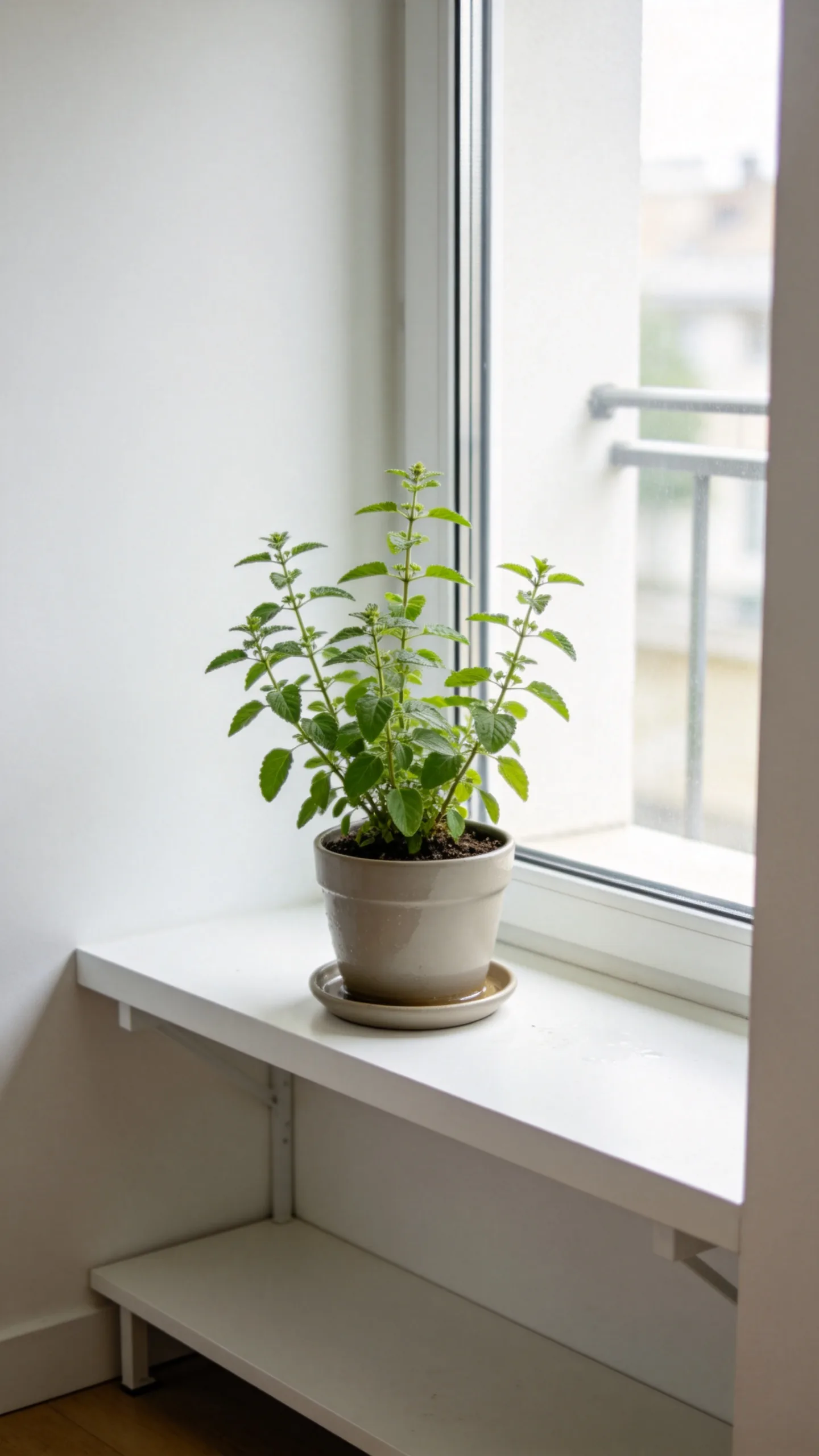
Install a strong floating shelf near a sunlit kitchen, utility, or enclosed balcony window and place a small Tulsi pot on it. This approach uses vertical space and keeps the plant away from busy floor areas in a compact home.
Confirm that the shelf can support the wet weight of the planter, soil, and water. Leave a few centimeters between the foliage and the glass so heat buildup and restricted airflow do not stress the leaves.
11. Painted Earthen Pot with a Vastu-Inspired Border
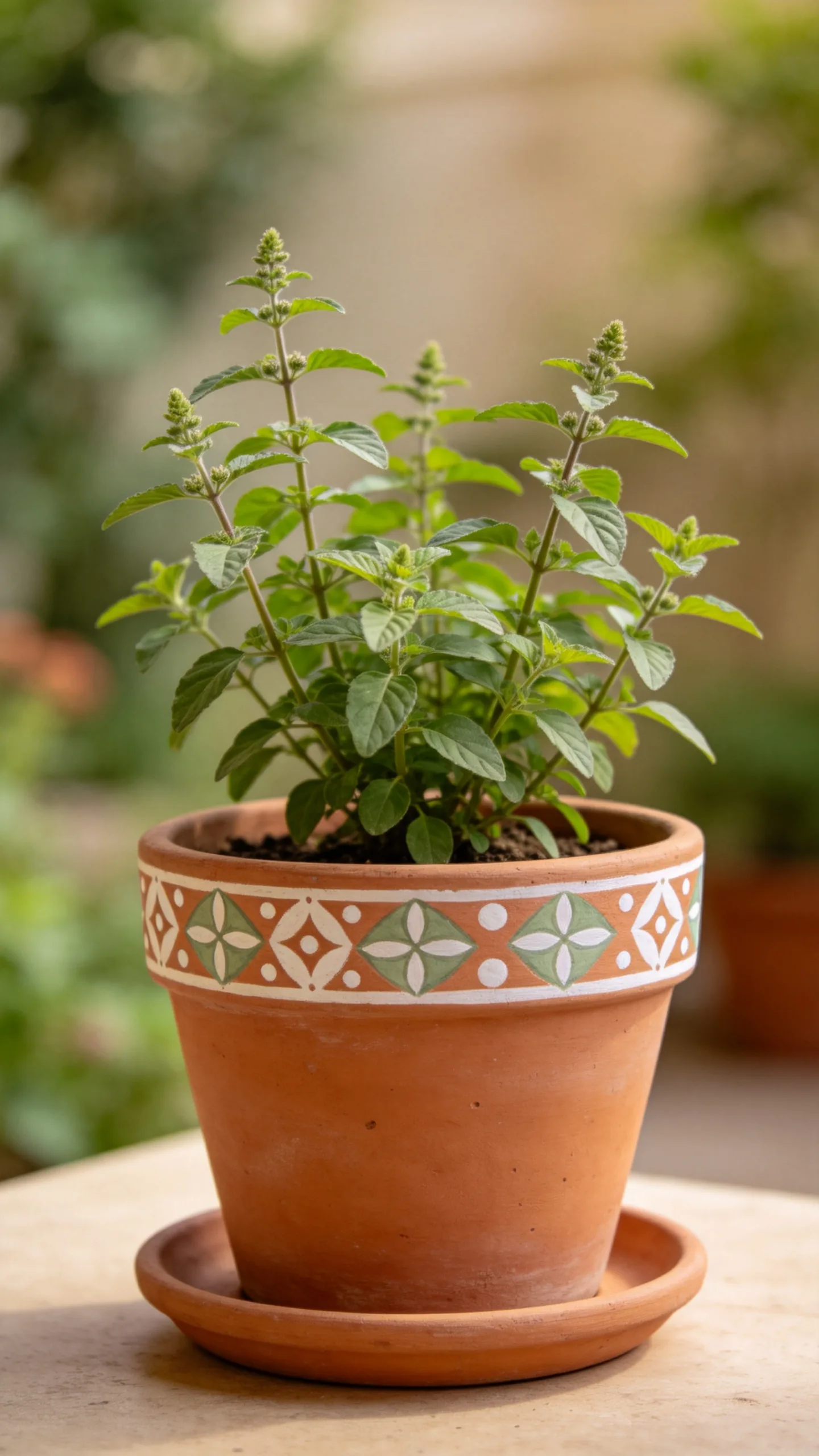
Decorate an earthen pot with a restrained border using motifs such as small leaves, dots, or a simple four-direction pattern. Keep the palette to two or three colors—such as white, terracotta, and muted green—for a modern interpretation of a traditional container.
Use exterior-grade paint only on the dry outer surface and keep the drainage hole clear. The pot should remain easy to inspect, since decorative layers should not hide cracked clay, soggy soil, or pest problems.
12. Round Tulsi Pot on a Low Stone Platform
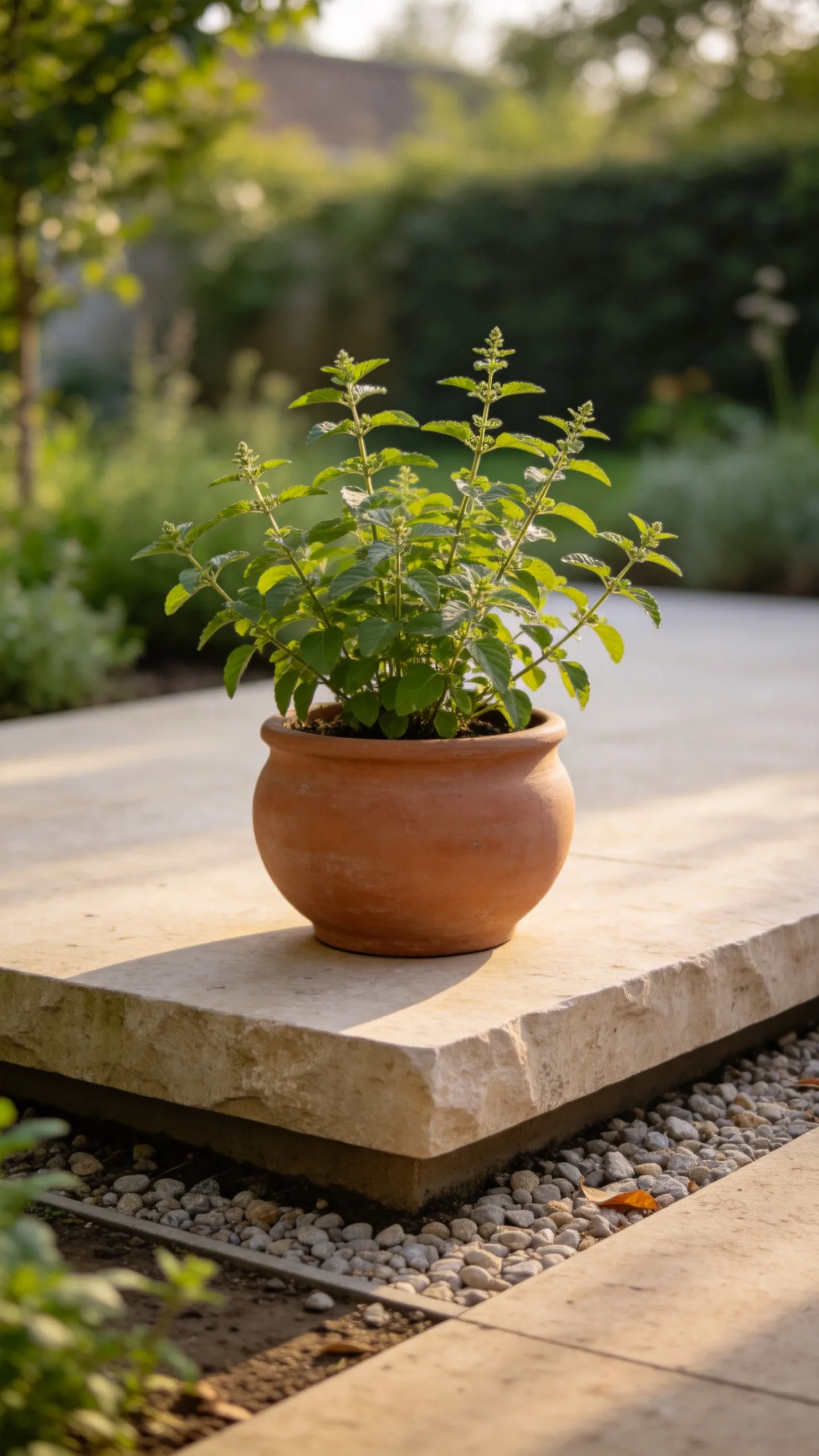
Place a rounded ceramic or terracotta pot on a low stone platform to define a neat garden focal point. The platform separates the container from damp ground and gives the arrangement a grounded appearance on a patio or small courtyard.
Use a platform that is level and wide enough to prevent tipping. Surround it with gravel or a narrow paved border rather than dense groundcover, leaving room to clean fallen leaves and check the pot’s drainage.
13. Modern Tulsi Pot with a Brass Accent
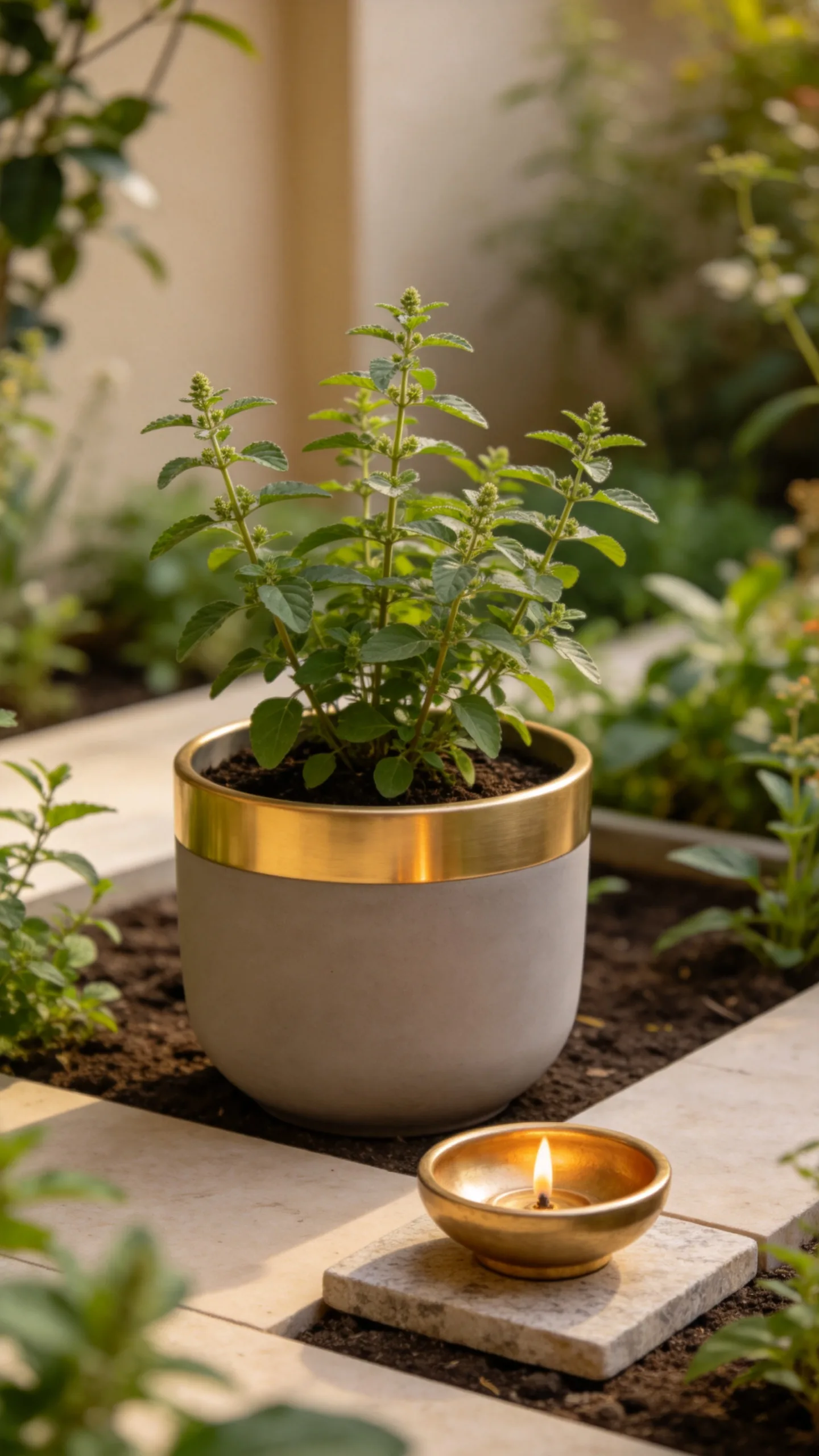
Choose a neutral planter with a small brass nameplate, rim, or diya-style accent for a refined Vastu-friendly display. The metallic detail adds warmth without filling the space with multiple decorative objects.
Keep brass accessories slightly away from constant moisture so they do not stain the pot or develop residue. Place any diya on a separate heat-safe surface and never leave an open flame unattended near leaves, curtains, or dry foliage.
14. Pebble-Tray Tulsi Display for a Covered Verandah
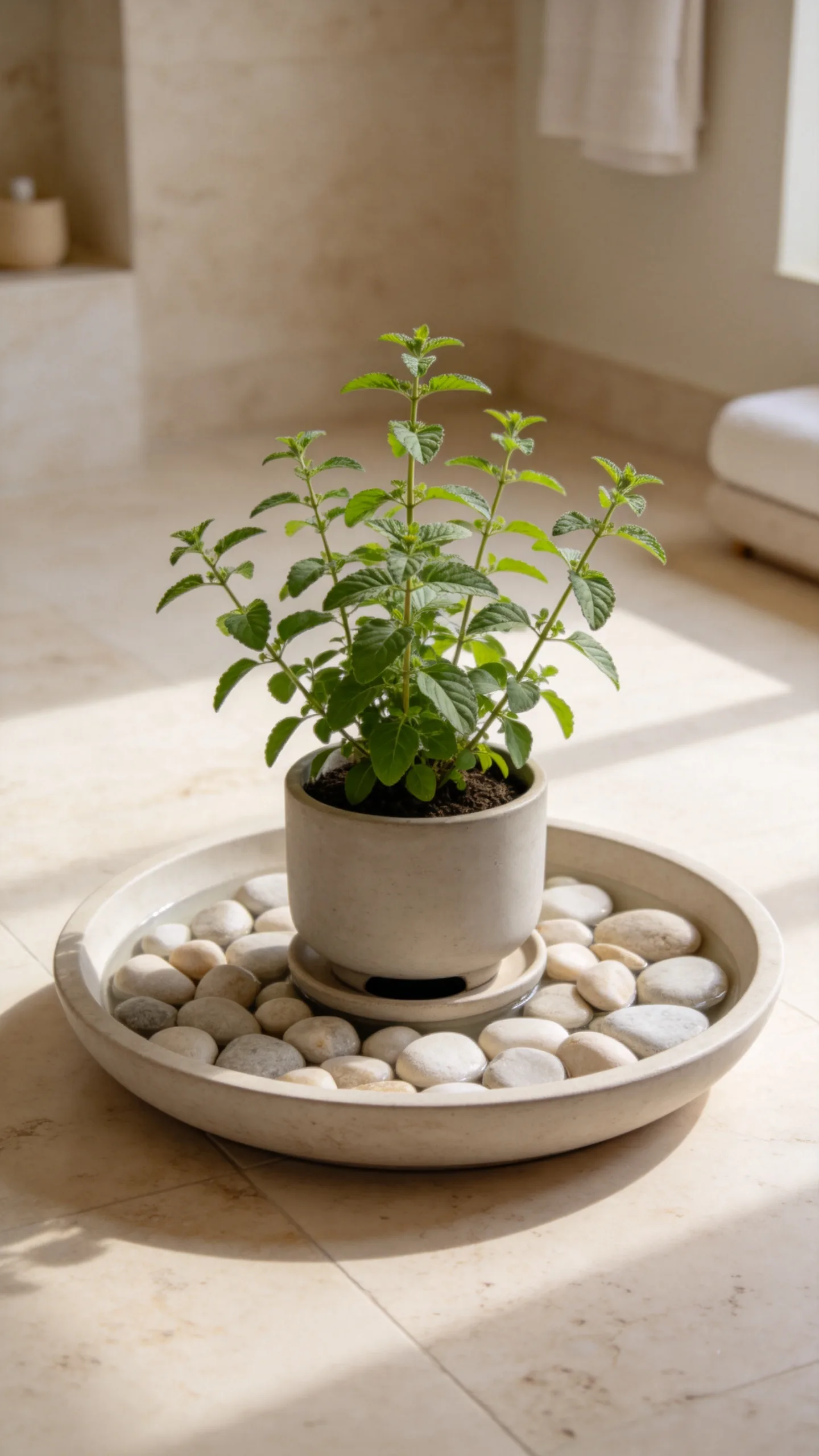
Set the Tulsi planter on a tray filled with decorative pebbles to create a tidy, spa-like arrangement. The tray catches minor drips and visually separates the pot from the floor, which is helpful in a covered verandah or apartment balcony.
Do not let the pot sit permanently in pooled water. Use the pebbles as a decorative layer around the pot rather than sealing the drainage hole, and empty the tray after heavy watering or rain.
15. Slim Rectangular Planter Along a Balcony Wall
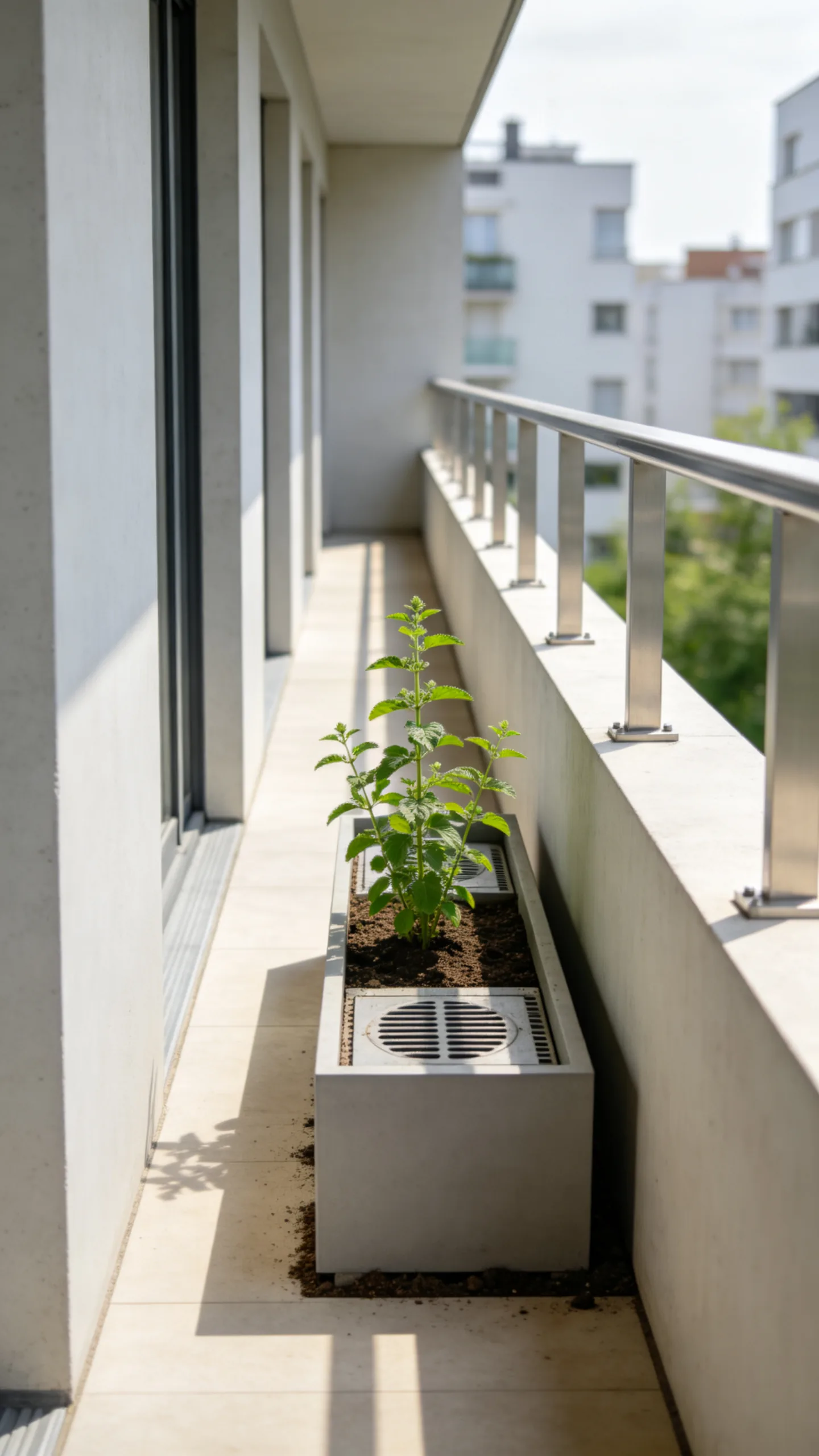
Use a narrow rectangular planter positioned parallel to a balcony wall when floor space is limited. Plant one Tulsi specimen in the center and leave open soil around it, or combine it with low, non-invasive companion plants that tolerate similar light and watering conditions.
This layout preserves a walking lane while creating a defined green edge. Make sure the planter has strong drainage and cannot be pushed toward the railing, especially in homes with children, pets, or high winds.
16. Natural Stone Tulsi Pot for an Earthy Modern Look
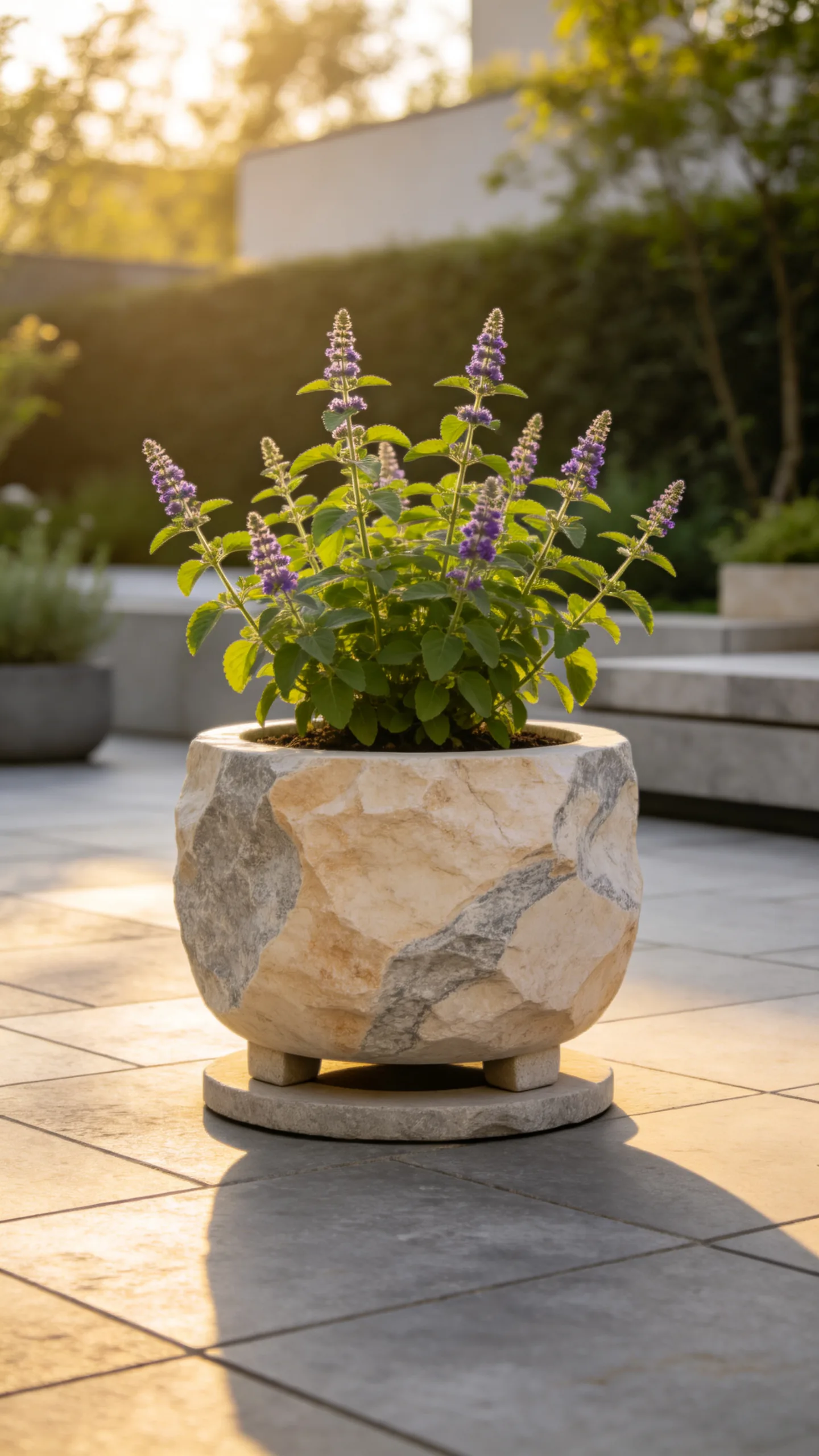
A natural stone or stone-textured pot can bring an earthy quality to a contemporary garden while fitting commonly preferred neutral Vastu palettes. Select a manageable size because solid stone containers become very heavy once filled with wet soil.
Place the planter on a stable paved surface with morning or filtered sunlight. If the stone absorbs water, allow the outer surface to dry between waterings and use a raised base to reduce moisture transfer to the flooring.
17. Soft-Pastel Tulsi Pot for a Window Ledge
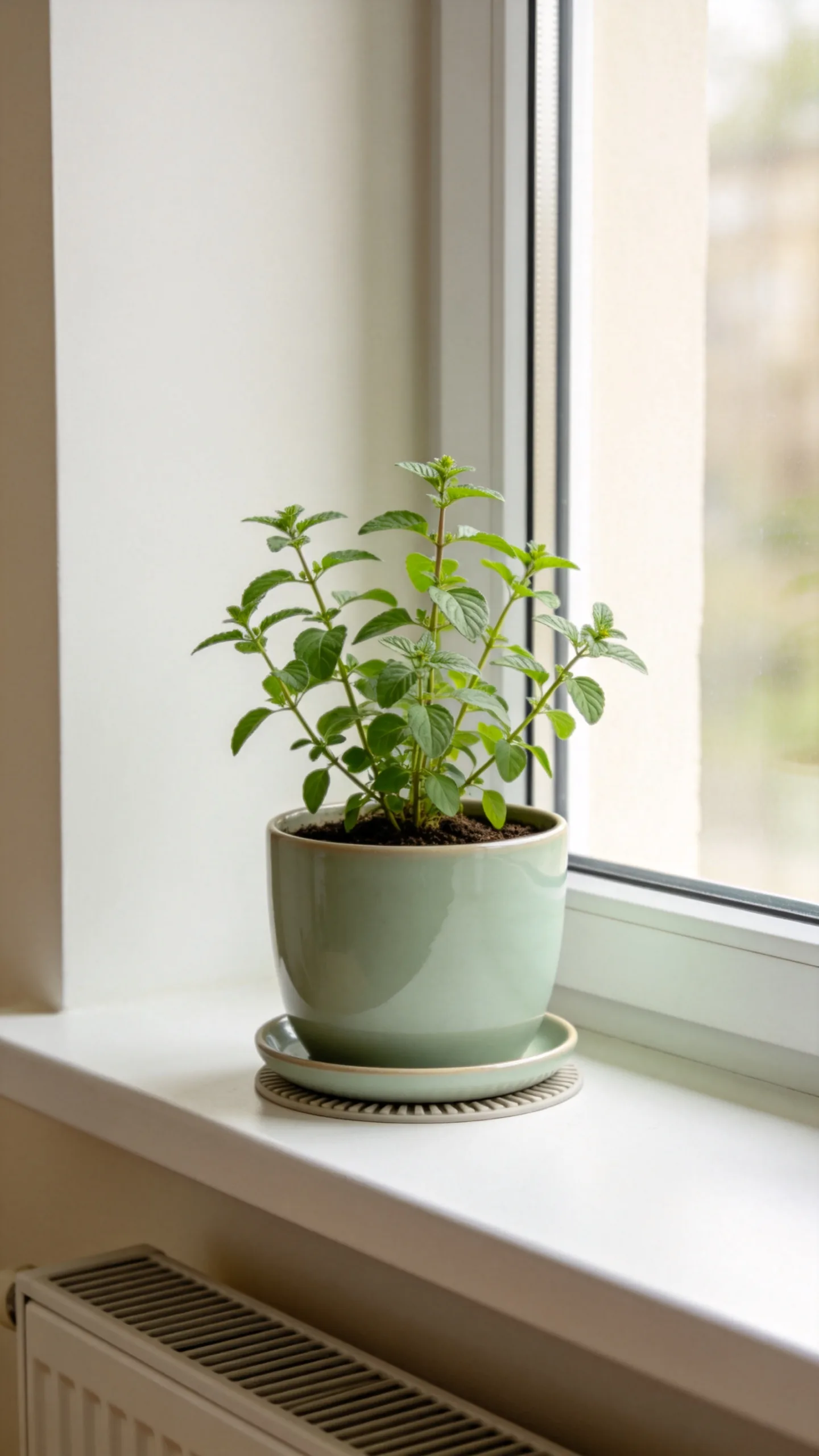
Choose a pale sage, powder blue, cream, or blush planter for a bright window ledge. The restrained color adds personality without overpowering the room and works well for readers who want a small Tulsi display rather than a full balcony setup.
Measure the ledge before buying the pot and use a non-slip mat beneath the saucer. Turn the container occasionally for even growth, but avoid placing it where hot afternoon glass or an air-conditioning draft can dry the foliage quickly.
18. Tiered Tulsi Corner with a Single Elevated Pot
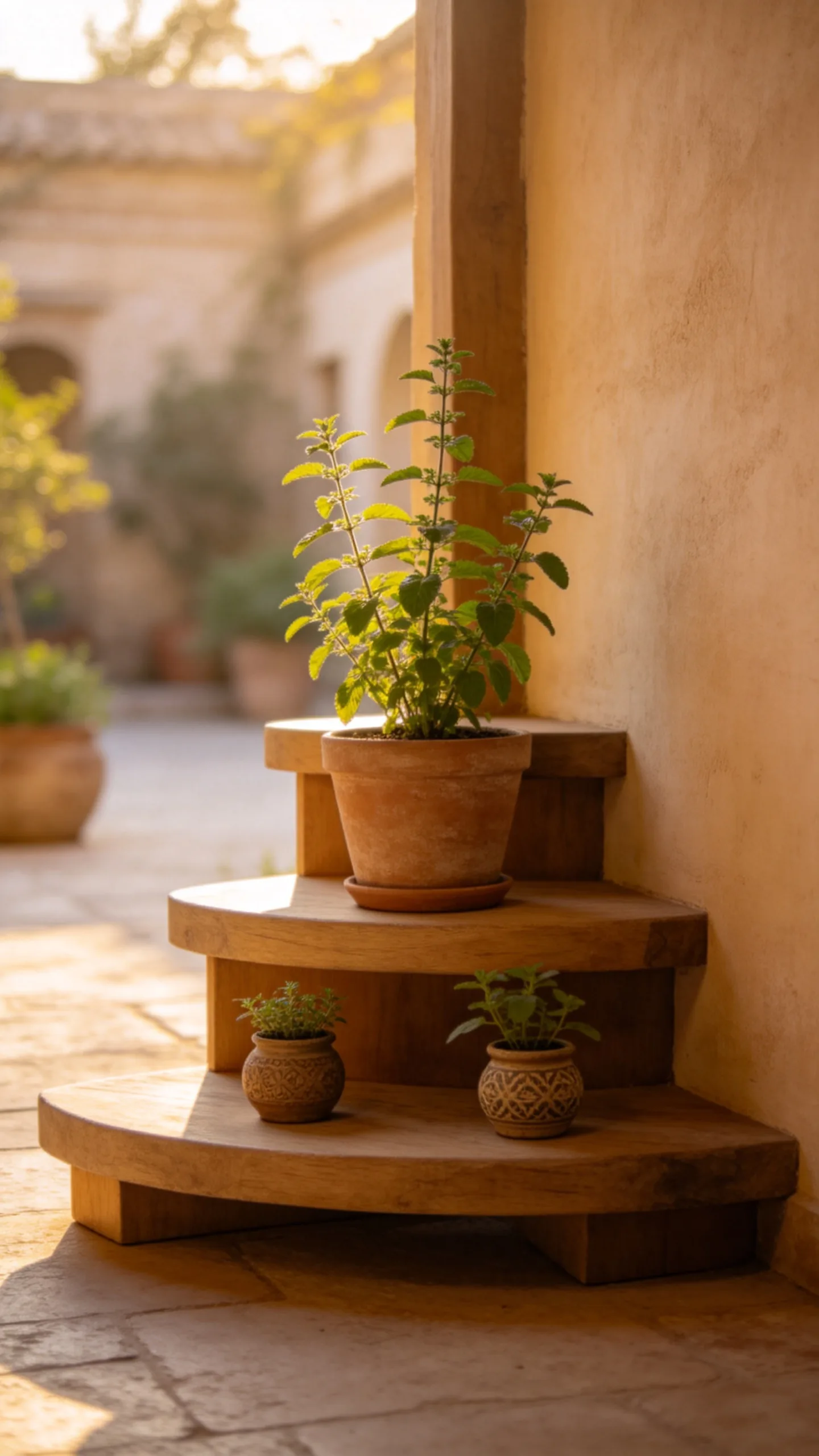
Build a small tiered corner using two or three levels, keeping the Tulsi pot on the highest stable surface and smaller decorative containers below. The arrangement creates visual depth in a compact courtyard while giving each plant a defined position.
Do not overcrowd the tiers around the Tulsi. Leave space for pruning, watering, and airflow, and choose companion plants according to the same light conditions so the display remains practical rather than purely ornamental.
19. Minimal Black-and-White Tulsi Pot with a Clear Path
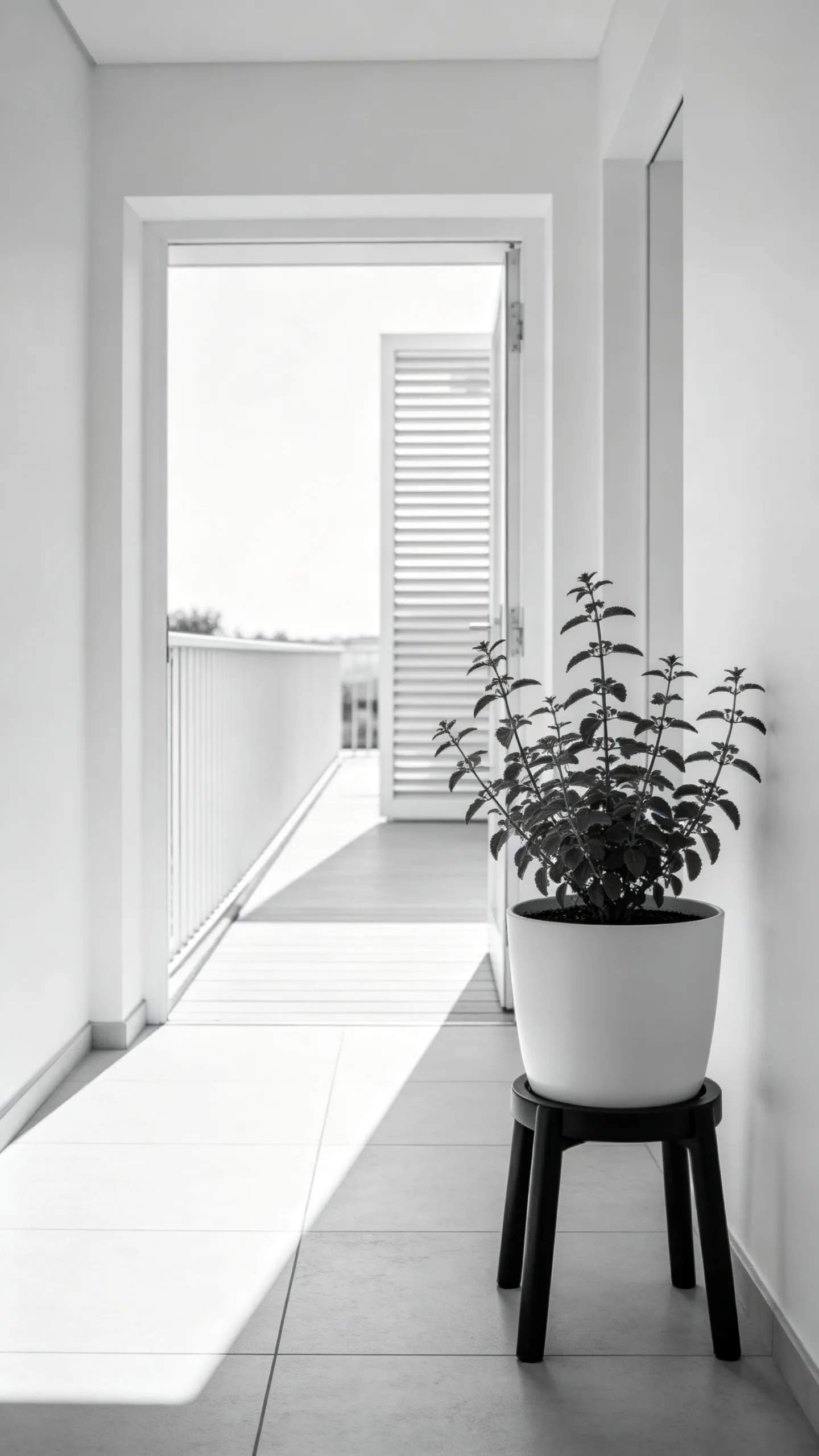
Finish a modern entrance or balcony with a black-and-white Tulsi planter placed beside, rather than directly in, the main circulation path. The contrast makes the plant stand out while the open floor area keeps the display respectful, accessible, and easy to maintain.
Use a matte black stand with a white pot, or reverse the colors for a lighter setting. Keep the location bright and well ventilated, water only when the top layer of soil begins to dry, and adjust the placement if the leaves show heat, cold, or low-light stress.