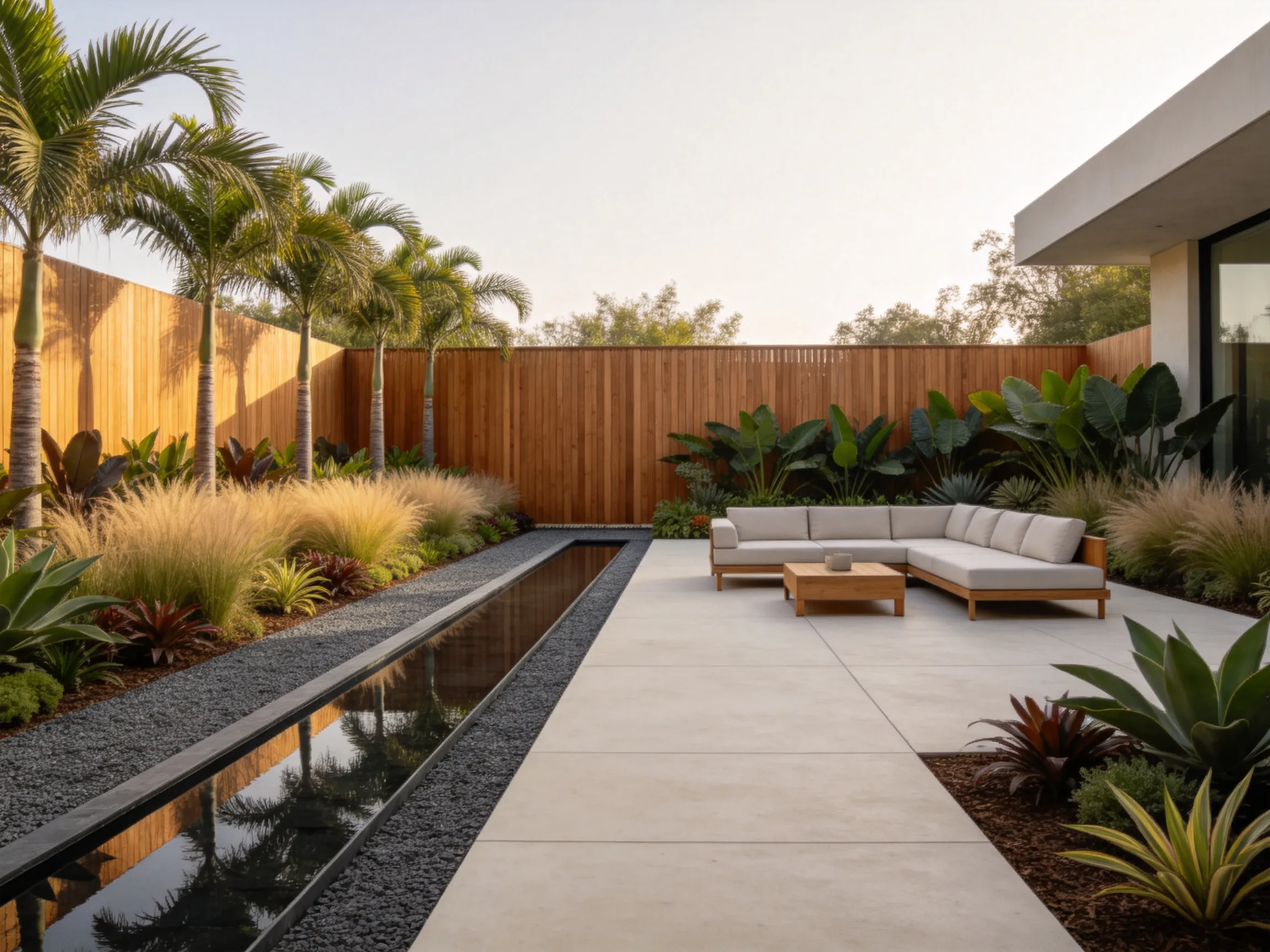
A modern tropical garden design can feel like a private resort without requiring daily pruning or constant watering. Use bold foliage, restrained materials, repeat planting, efficient irrigation, and clearly defined outdoor zones to create a polished garden that suits your climate, available sunlight, and maintenance routine.
1. Frame the Entry With Clumping Bamboo
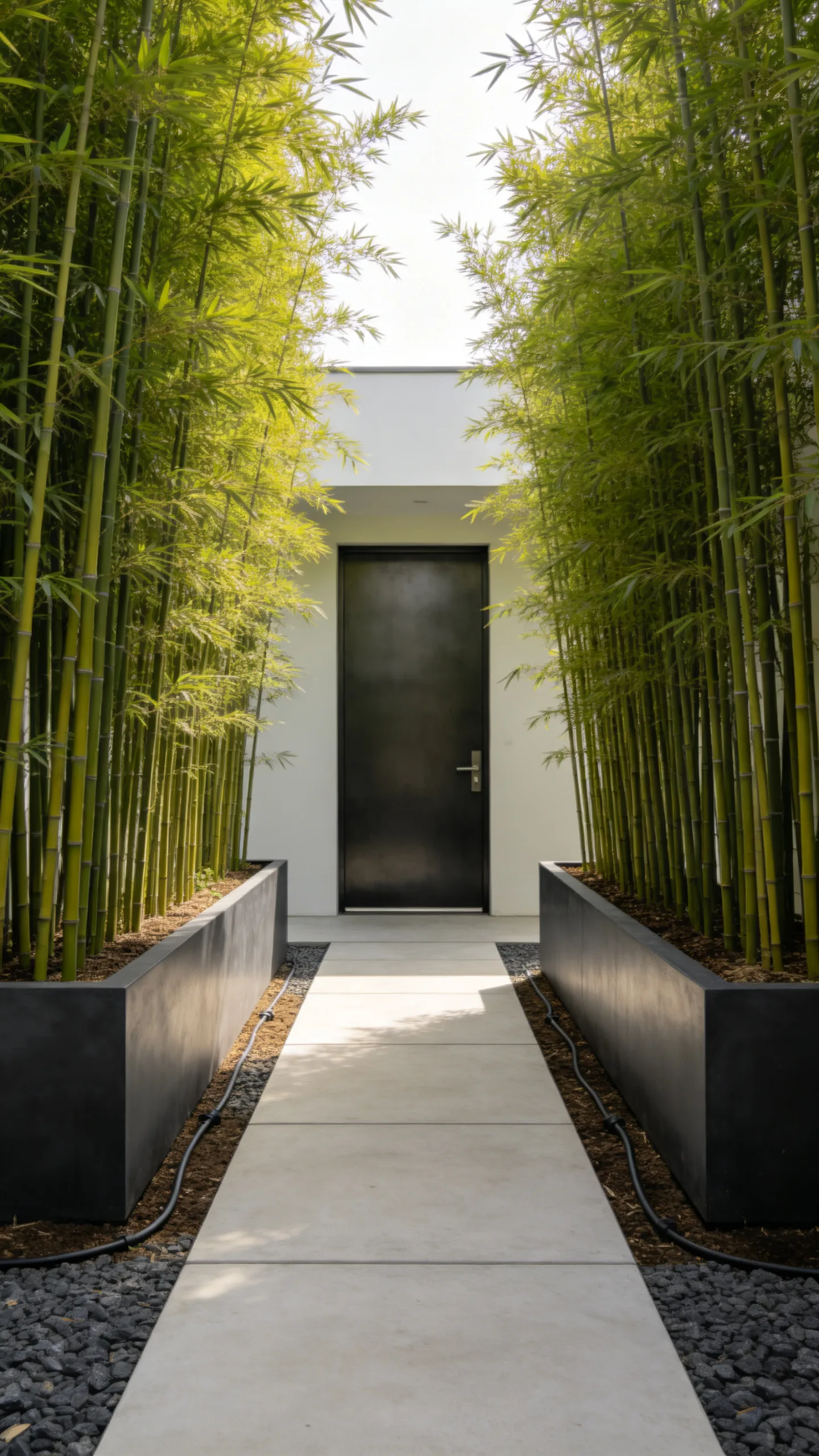
Plant clumping bamboo in large rectangular planters beside the front door or along a walkway to create height and privacy without the spreading habit of running bamboo. Choose a species suited to your local hardiness zone, and install root barriers if recommended by the nursery.
Pair the bamboo with dark gravel, concrete pavers, and a simple metal door for a contemporary resort entrance. Drip irrigation and a thick layer of mulch will reduce watering and help keep the planting area tidy.
2. Build a Palm-and-Grass Foundation Bed
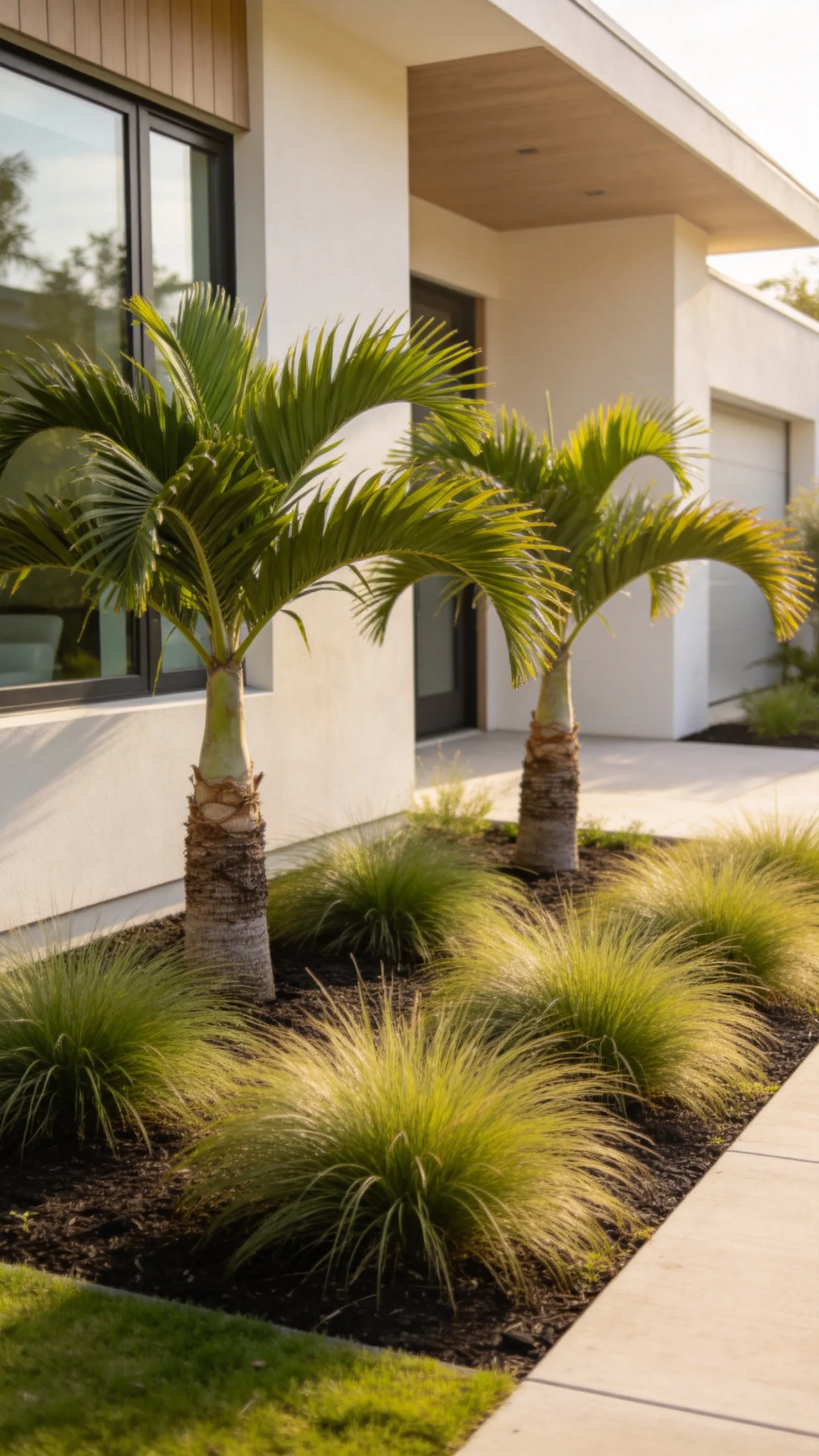
Create a simple foundation bed with one or two palms surrounded by clumping ornamental grasses. Palms such as lady palm, windmill palm, or a locally hardy dwarf variety can provide the tropical structure, while grasses fill the lower layer with movement and texture.
Use three repeated plant groups instead of many individual species. This reduces pruning and makes the bed easier to water, weed, and refresh when one plant fails.
3. Use Large-Leaved Plants in Oversized Containers
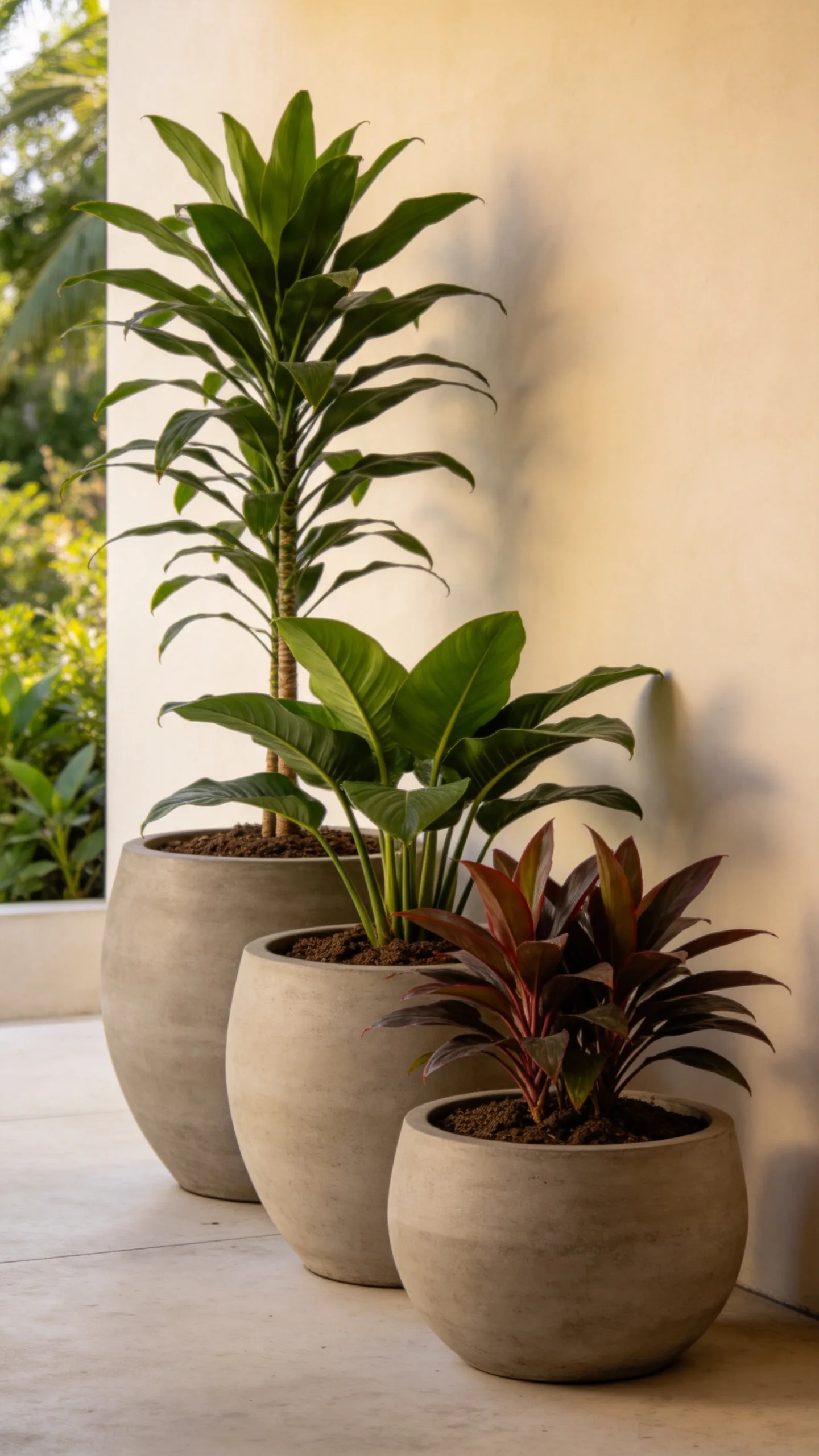
Place bold foliage plants in substantial pots near a patio, pool, or outdoor seating area. Depending on your climate and light, options may include bird of paradise, elephant ear, banana, cast-iron plant, or cordyline.
Oversized containers dry out more slowly than small pots and create a stronger visual statement with fewer plants. Select frost-tolerant plants for year-round outdoor use, or choose containers that can be moved indoors during cold weather.
4. Install a Narrow Linear Water Feature
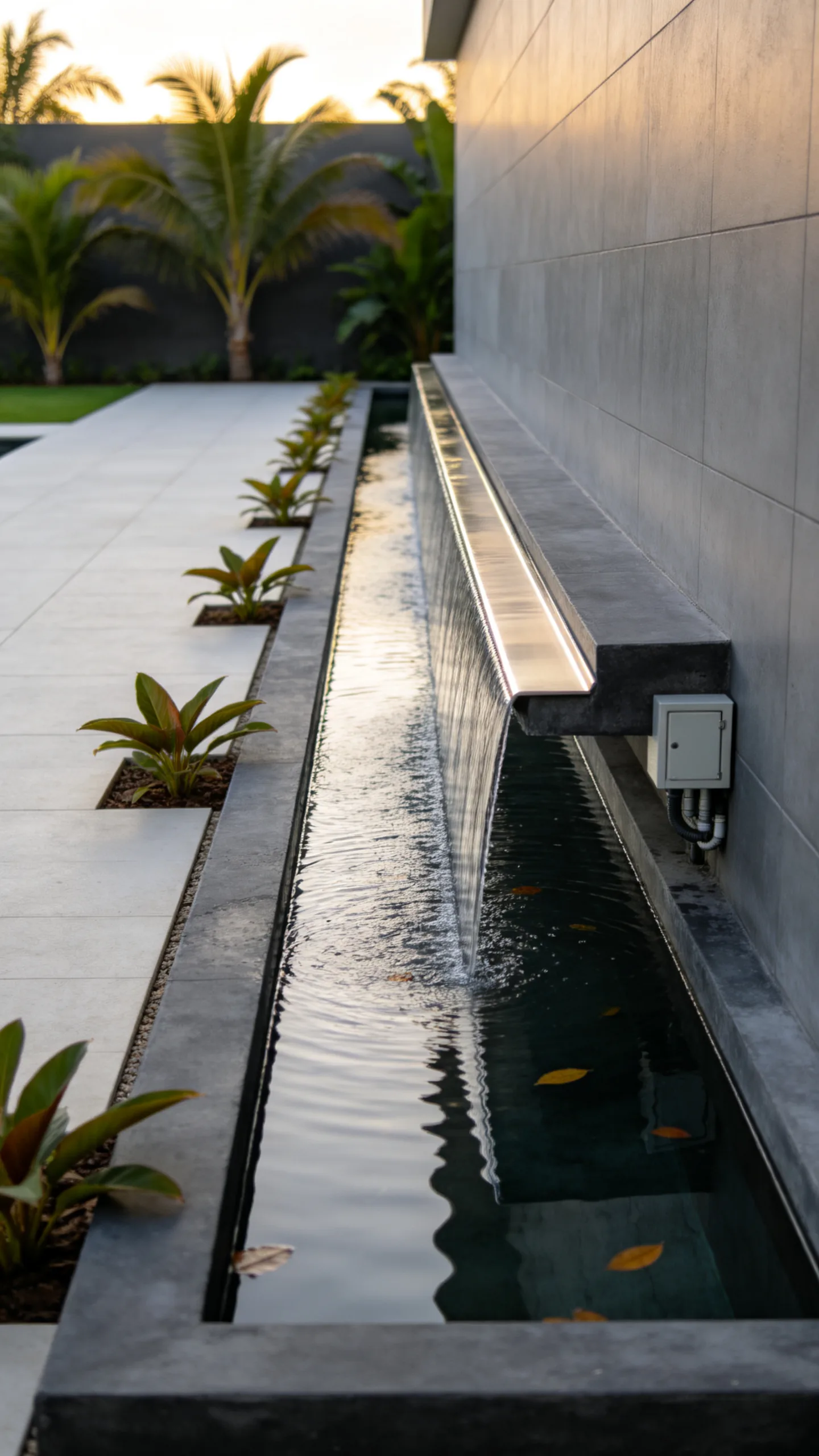
A slim trough fountain or wall-mounted water blade can supply the sound and reflective quality associated with a resort garden without the maintenance of a large pond. Position it beside a patio wall, entry path, or outdoor dining area where the moving water becomes a focal point.
Choose a recirculating pump with an accessible filter and include an automatic water-level shutoff. A simple stone, tile, or dark concrete surround will keep the design modern and make leaves easier to remove.
5. Repeat One Hardy Tropical Foliage Plant
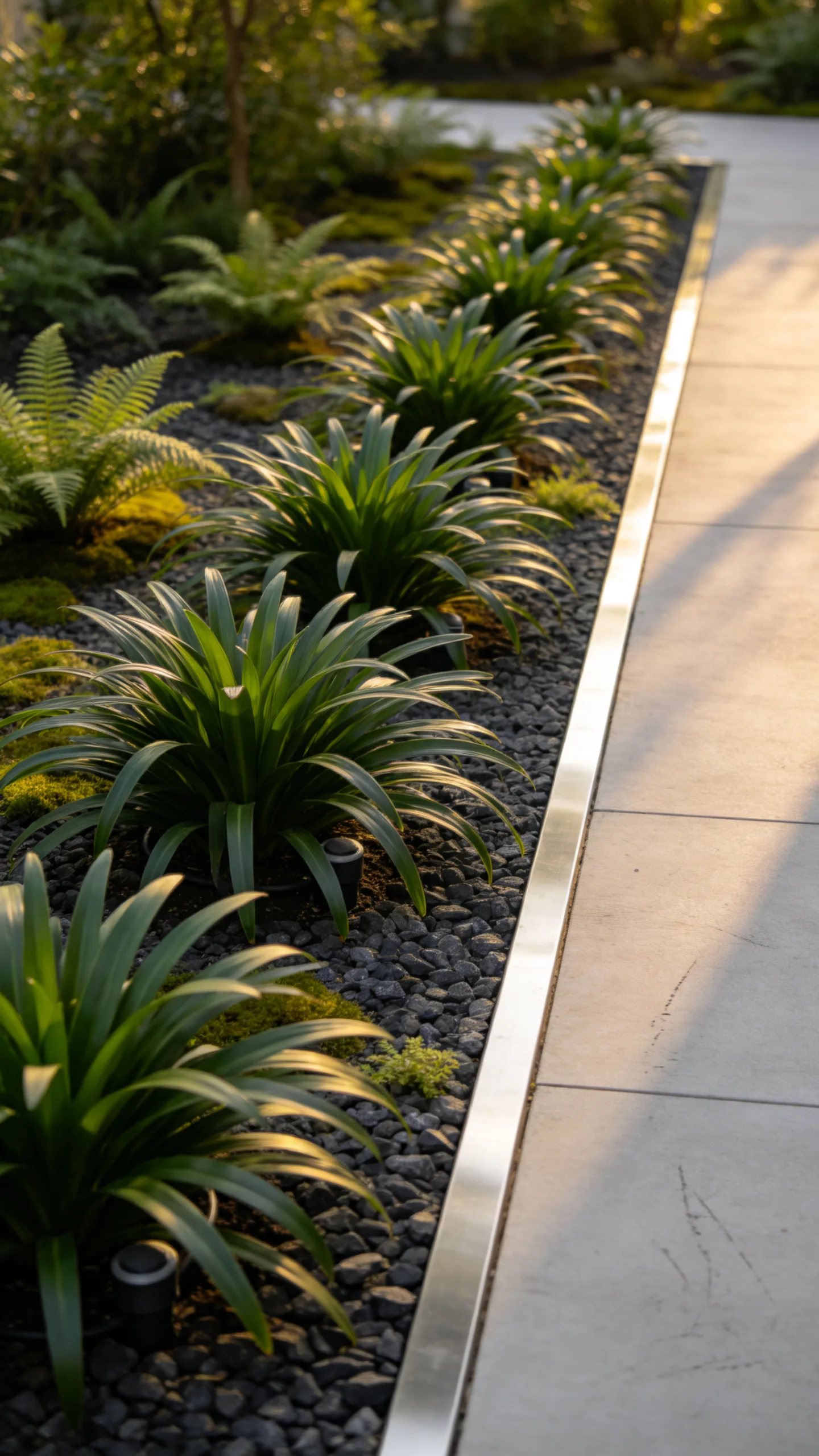
Choose one dependable foliage plant and repeat it along a border, path, or retaining wall. Depending on regional conditions, suitable choices may include flax lily, shell ginger, agave, bromeliad, clivia, or cast-iron plant.
Repetition gives the garden a planned, hotel-like appearance while simplifying care. Confirm the plant's mature size, sun tolerance, and water requirements before planting so the entire row can share one irrigation zone.
6. Create a Gravel Lounge Courtyard
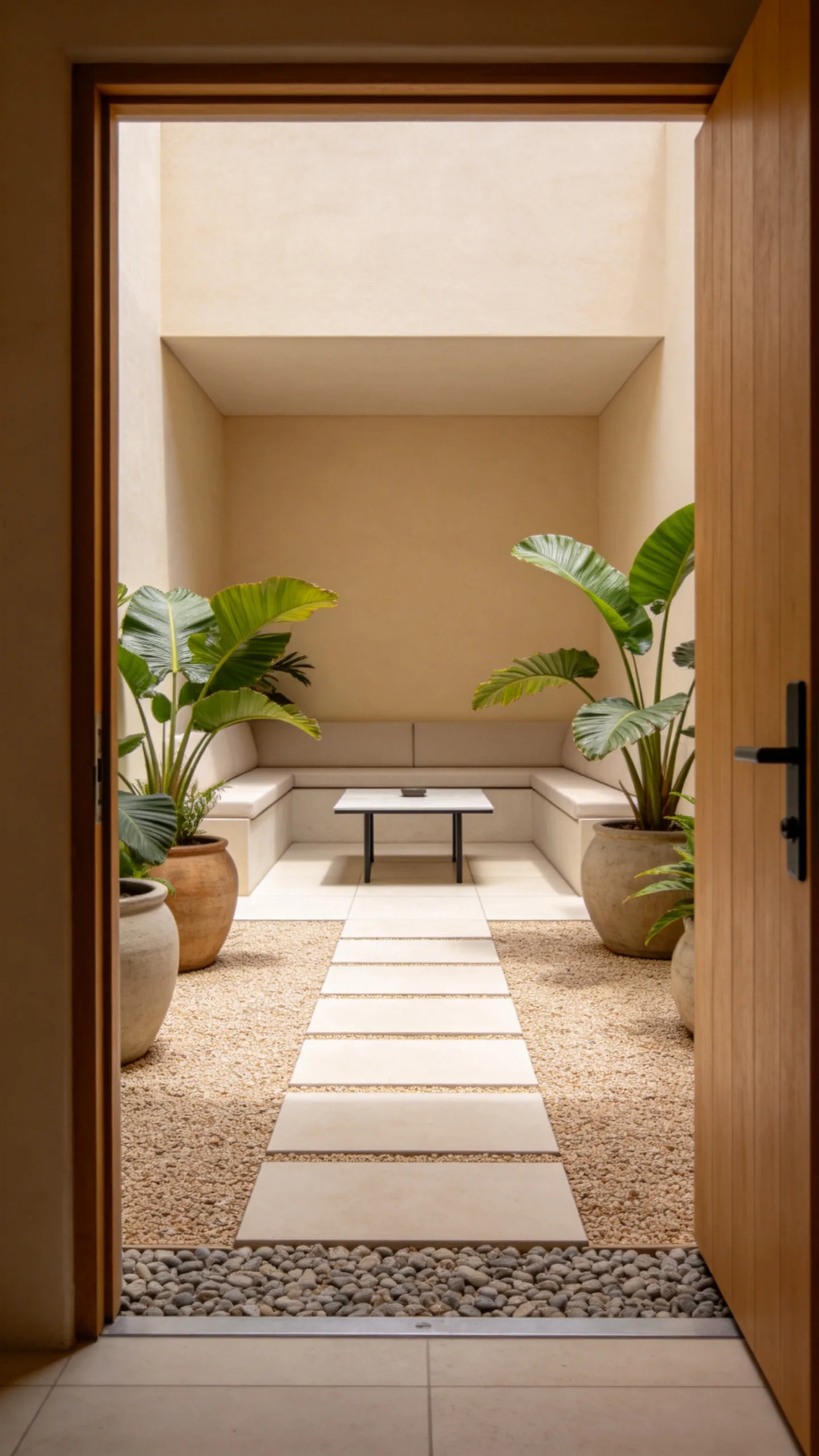
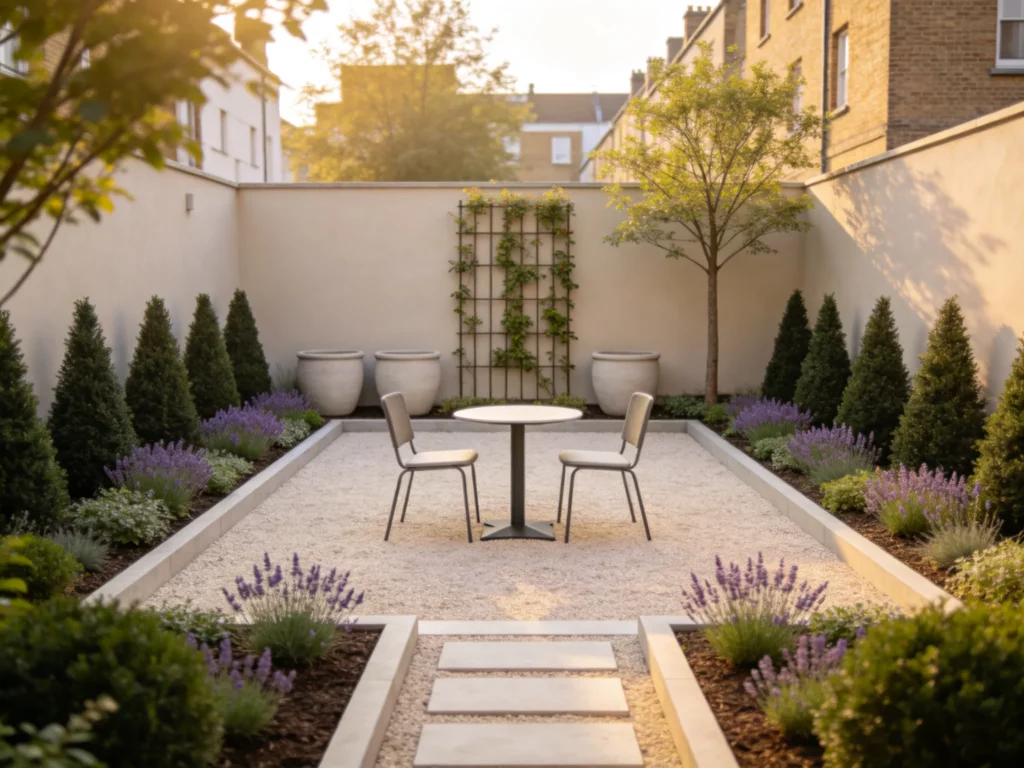
Replace a high-maintenance lawn with a compact courtyard covered in gravel, decomposed granite, or large-format porcelain pavers. Add a low table, built-in bench, and a few tropical container plants to create a resort-style outdoor room.
Use landscape fabric only where appropriate and install a stable compacted base beneath seating areas. Keep gravel away from door thresholds and choose a locally suitable stone that will not become excessively hot in full sun.
7. Add a Slatted Privacy Screen With Climbers
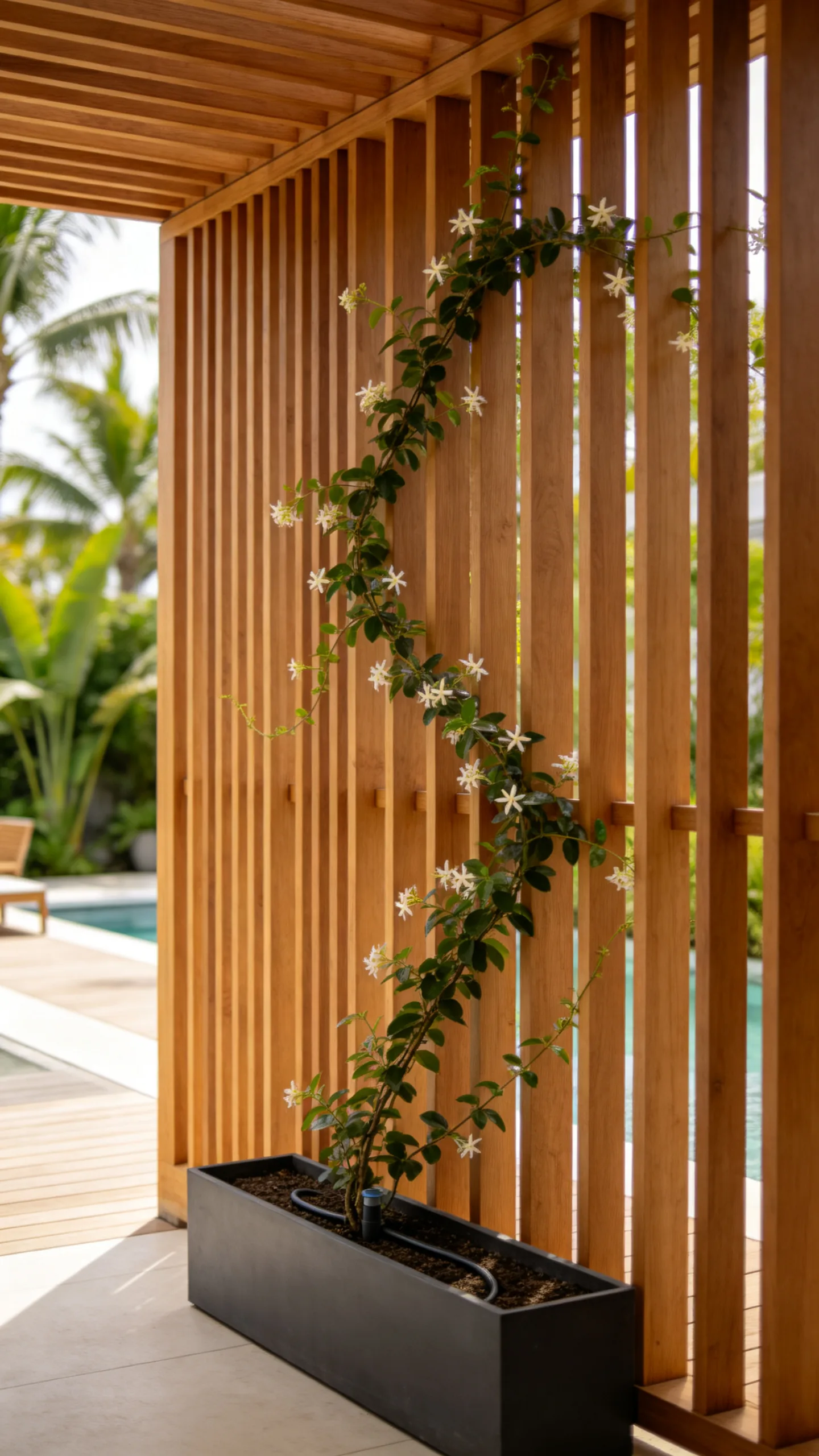
Build a vertical screen from cedar, powder-coated metal, or composite slats and train a manageable climber across part of it. Star jasmine, mandevilla, coral vine, or a similar plant may work in suitable climates and exposures.
Leave open gaps in the screen so air can circulate and the structure does not feel heavy. Install a narrow planting strip or a large trough planter below it, with drip irrigation directed to the root zone rather than the wall.
8. Plant a Sculptural Succulent Border
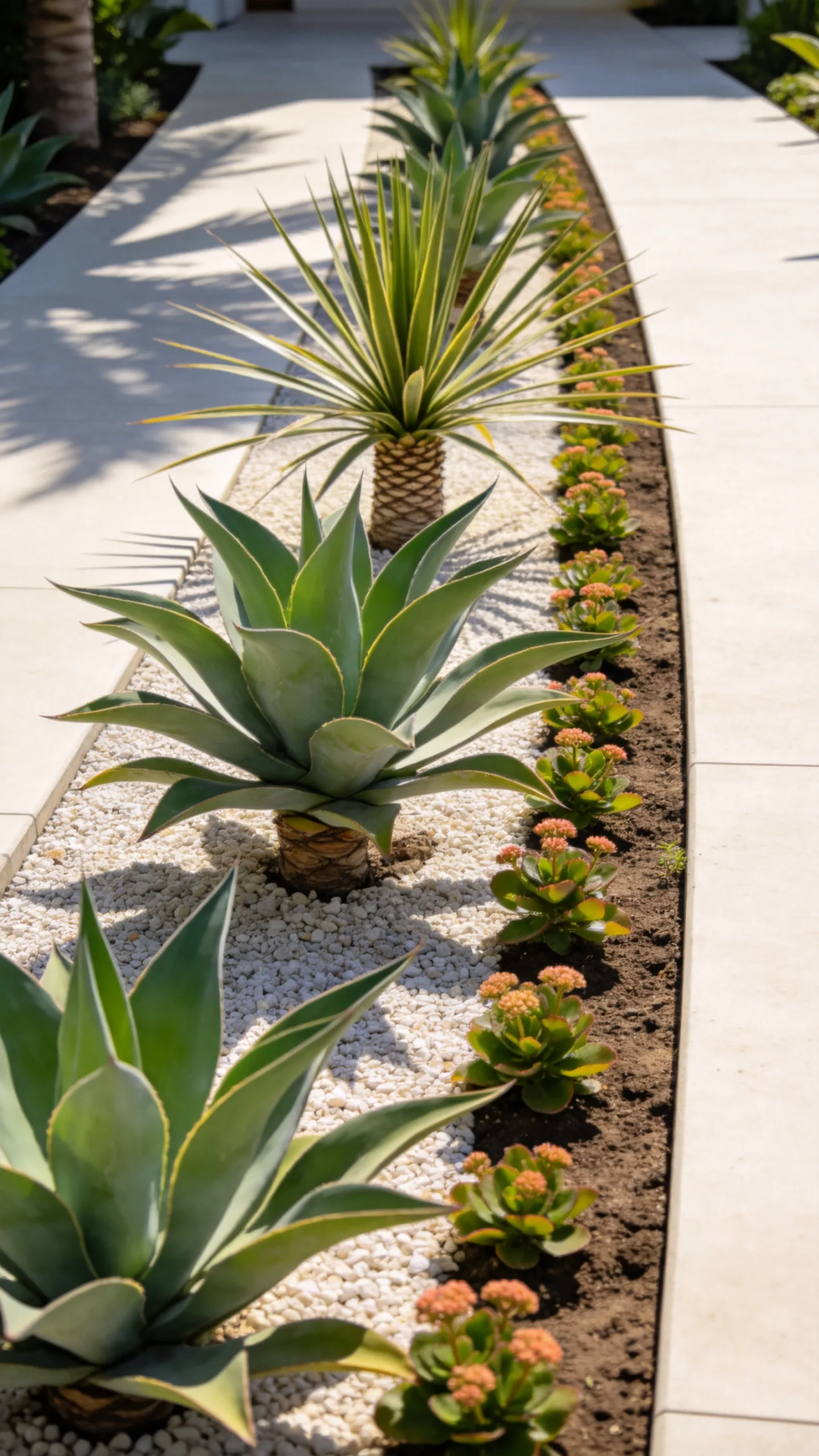
Combine tropical-looking succulents with architectural foliage plants along a sunny path or patio edge. Agave, aloe, kalanchoe, yucca, and other drought-tolerant choices can provide strong shapes while reducing irrigation once established.
Use gravel mulch and sharply draining soil to prevent root problems. In regions with heavy rain or freezing temperatures, select species proven for those conditions and place tender plants in containers that can be sheltered.
9. Use a Raised Tropical Planting Bed
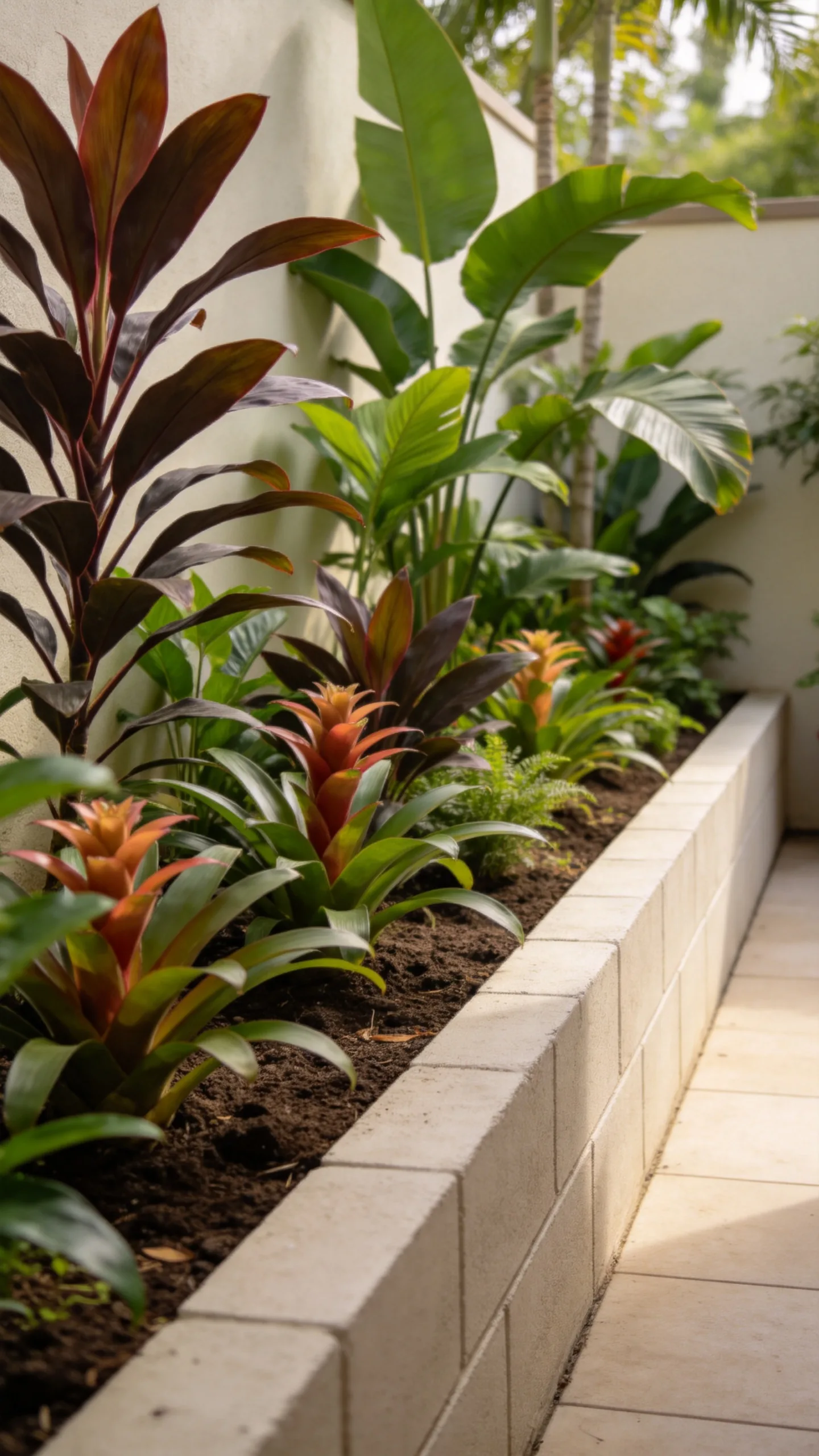
Construct a raised bed from rendered block, stone, or composite boards to lift tropical foliage closer to eye level. The extra height improves drainage, defines the garden edge, and makes routine weeding easier.
Fill the bed with quality soil amended for the plants you select, then group plants according to sunlight and water needs. A narrow raised bed can hold ginger, bromeliads, cordyline, or shade-tolerant foliage without taking up the full width of a small yard.
10. Design a Stepping-Stone Path Through Groundcovers
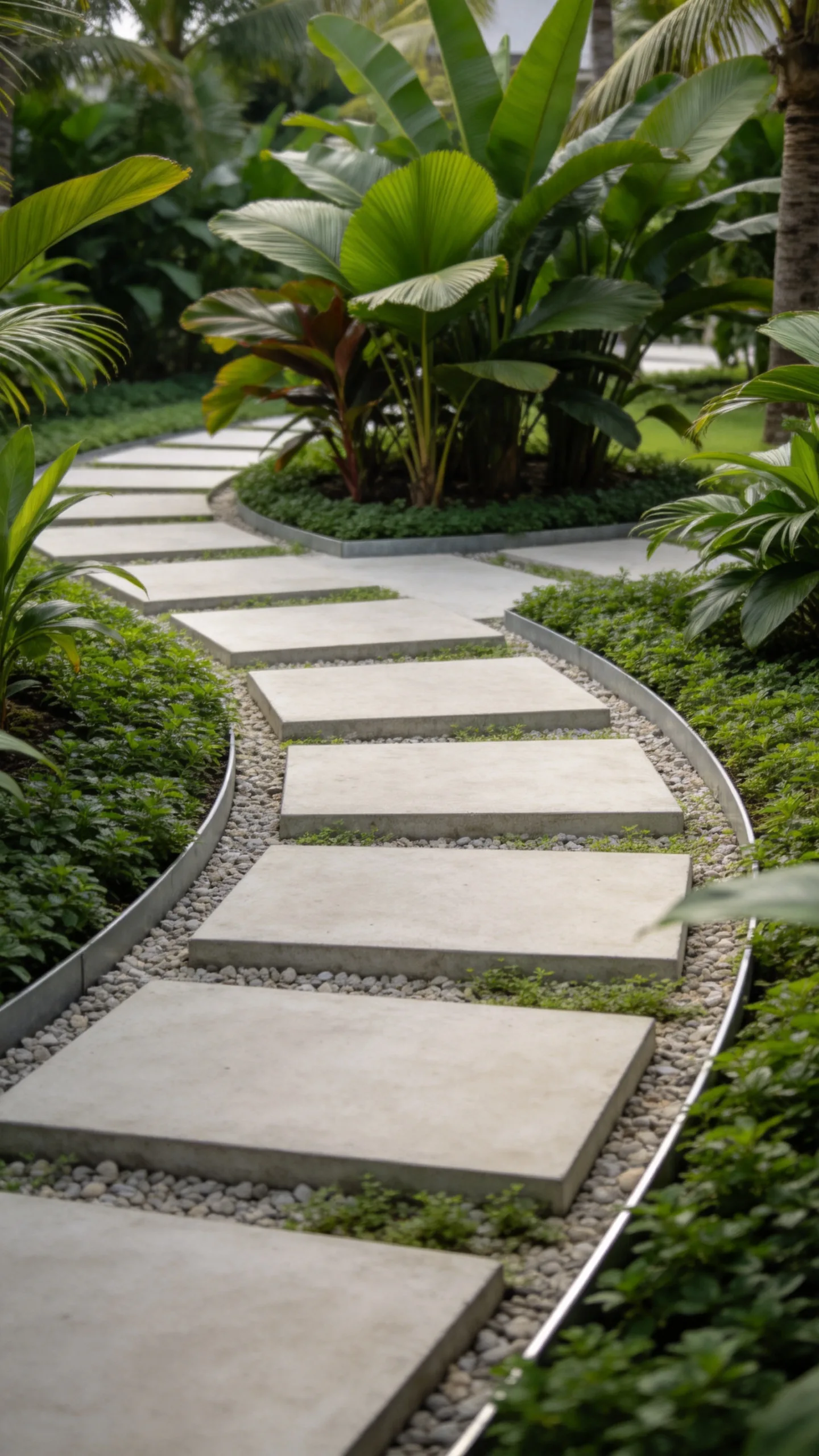
Lay large concrete or natural-stone slabs through a bed of low-growing groundcovers instead of installing a broad paved walkway. The spaced stones create a resort-inspired route while leaving more room for planting.
Select groundcovers that tolerate the site's foot traffic, light, and rainfall. Use gravel or a defined metal edge along the path so the planting does not spill onto the walking surface and become difficult to maintain.
11. Group Plants in Three Height Layers
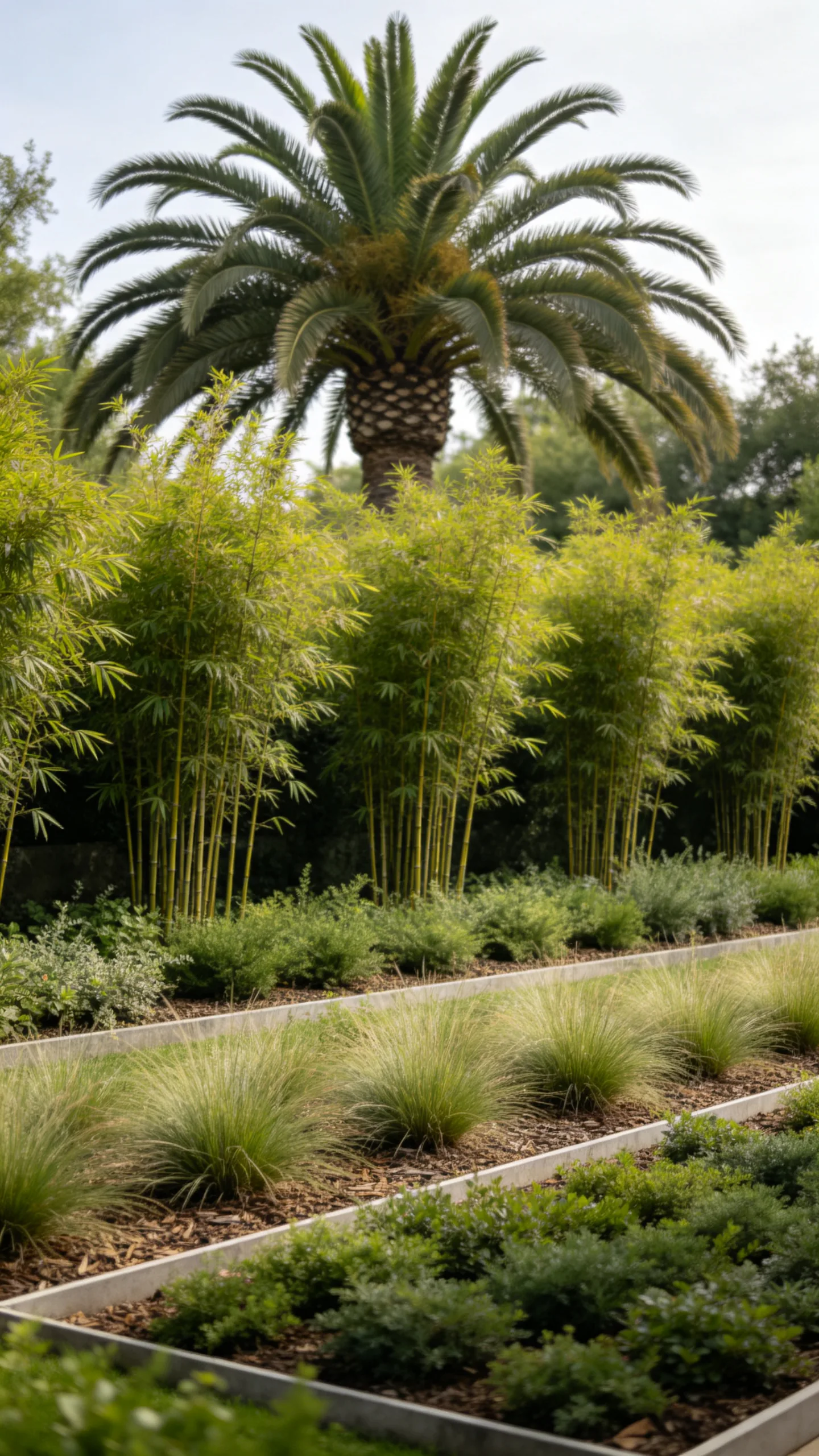
Arrange the garden in a simple structure: a tall palm or architectural plant at the back, medium foliage such as ginger or bird of paradise in the middle, and low grasses or groundcovers at the front. This creates depth without requiring a large number of species.
Keep each layer in broad, repeatable drifts rather than mixing single plants throughout the bed. Fewer plant types make pruning, irrigation, and replacement more straightforward.
12. Replace Turf With a Palm-Shaded Seating Zone
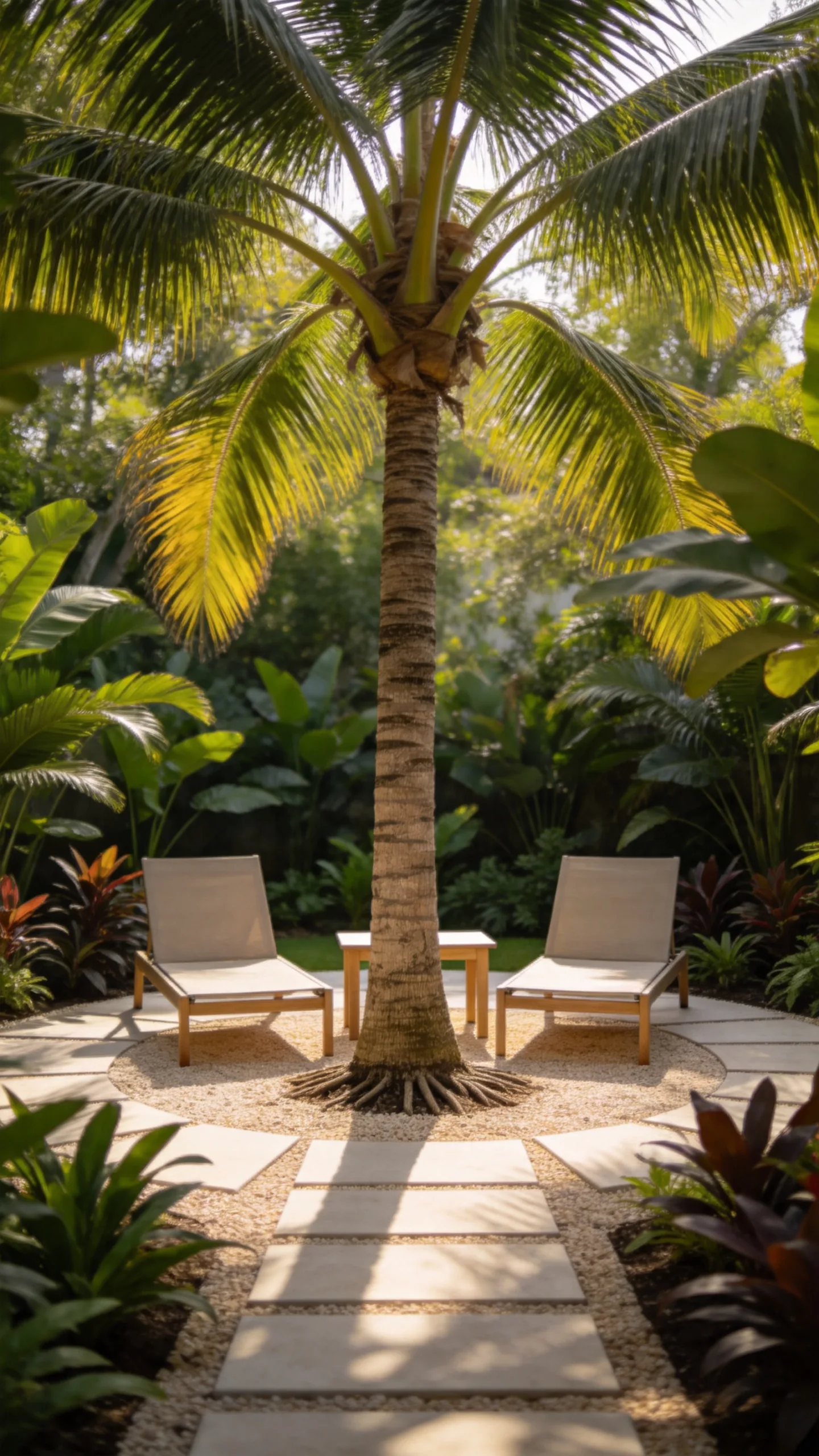
Remove a section of thirsty lawn and install a small seating area beneath a suitable palm or existing shade tree. Use permeable pavers, gravel, or a compacted natural surface around a pair of lounge chairs and a small side table.
Before planting, check the mature canopy size and root behavior of the tree. Choose shade-tolerant understory plants for the surrounding bed so they do not compete with sun-loving species or require frequent relocation.
13. Add a Dark Mulch Contrast to Bright Foliage
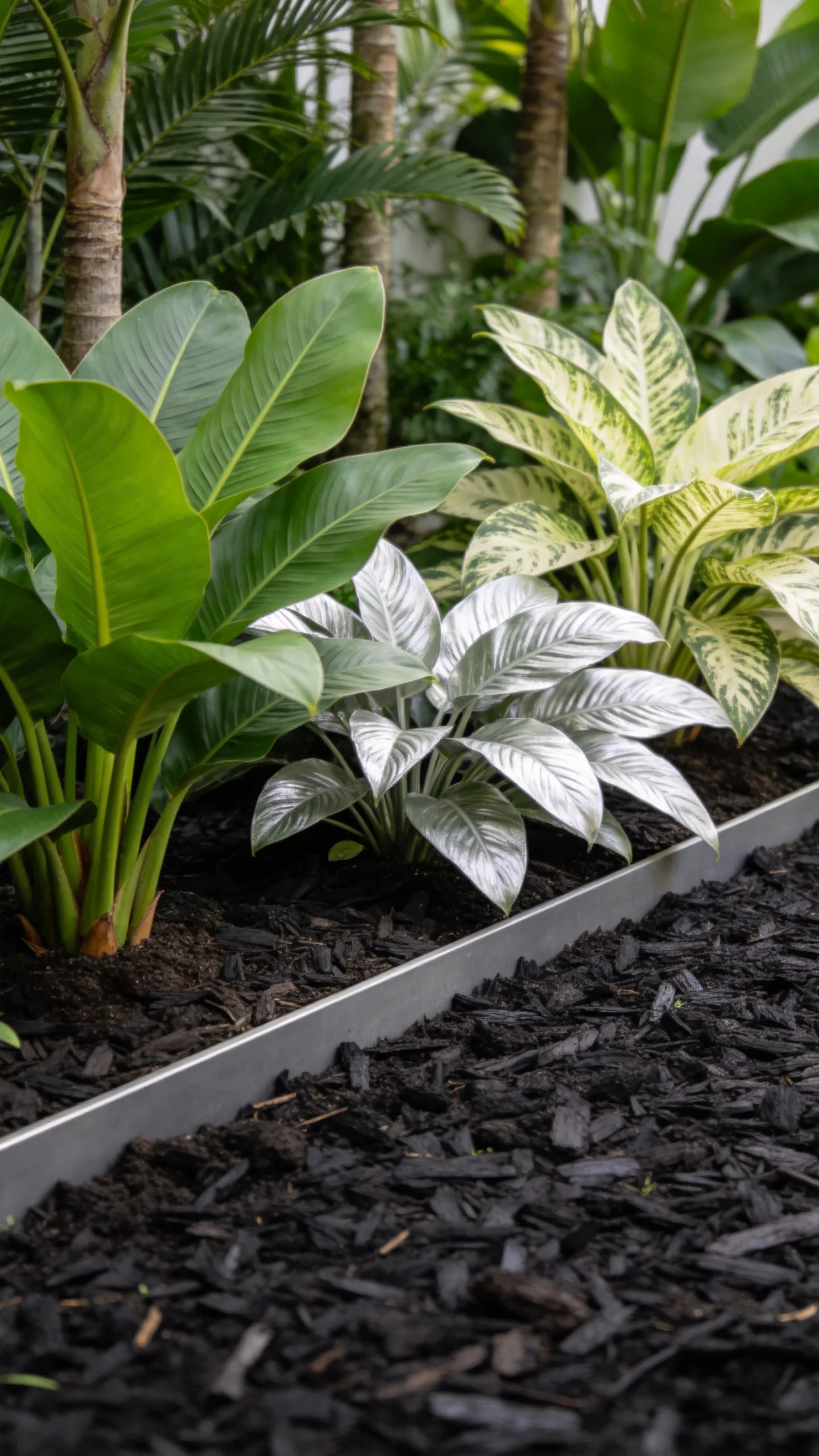
Use dark organic mulch or a compatible dark gravel to make green, silver, and variegated leaves stand out against a modern garden palette. A clean mulch surface also suppresses weeds, moderates soil temperature, and reduces evaporation.
Keep mulch a few inches away from trunks and crowns to reduce rot problems. Refresh organic mulch periodically, while gravel mulch may need only occasional raking and leaf removal.
14. Install Drip Irrigation by Planting Zone
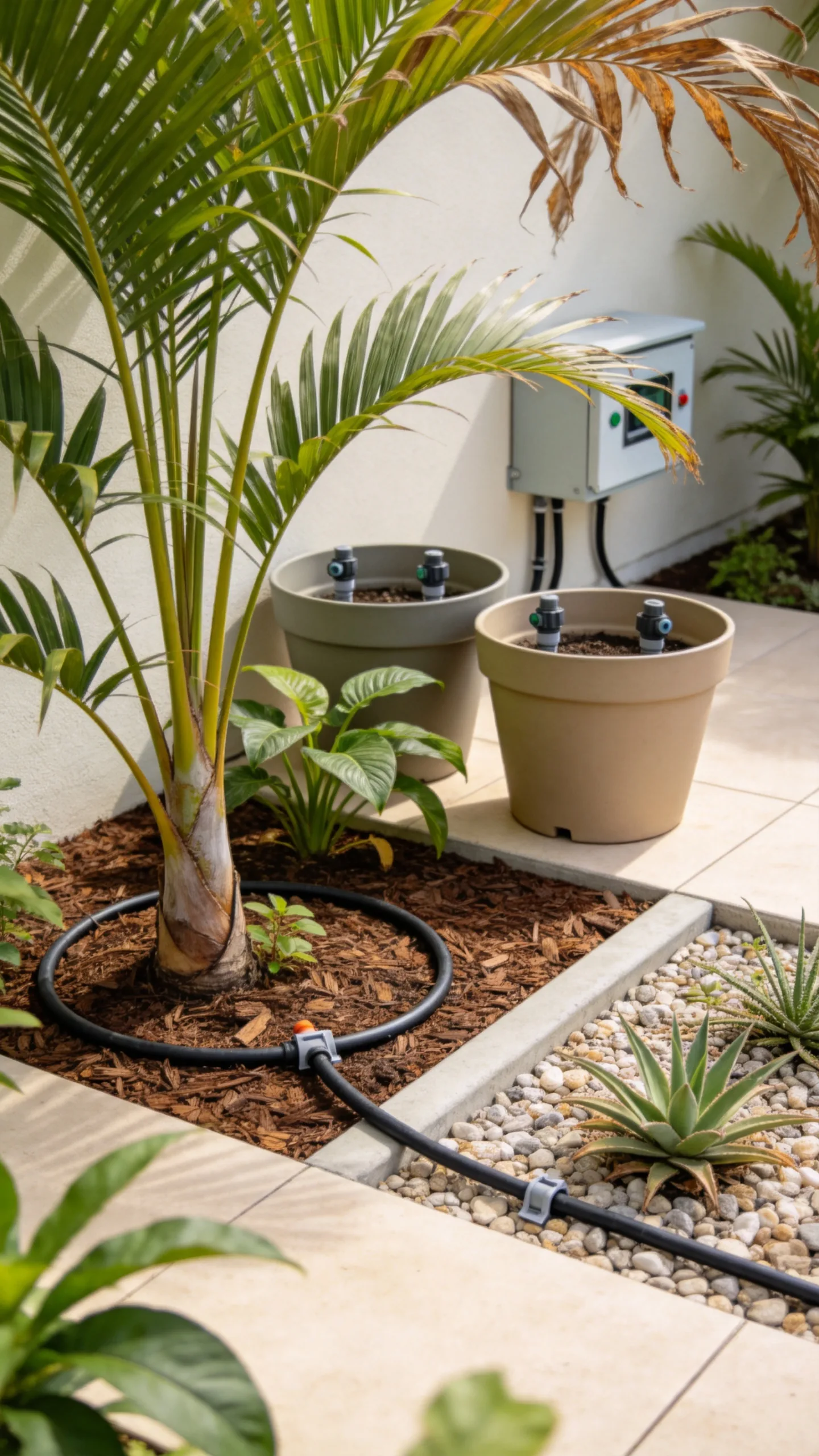
Divide the garden into separate irrigation zones for palms, containers, drought-tolerant plants, and moisture-loving foliage. Drip lines deliver water near the roots and avoid wetting paths, walls, and leaves.
Add a timer with seasonal adjustment and inspect emitters several times each growing season. New plants may need more frequent watering during establishment, while mature plants often require a different schedule based on soil, rainfall, and local heat.
15. Use a Limited Palette of Modern Materials
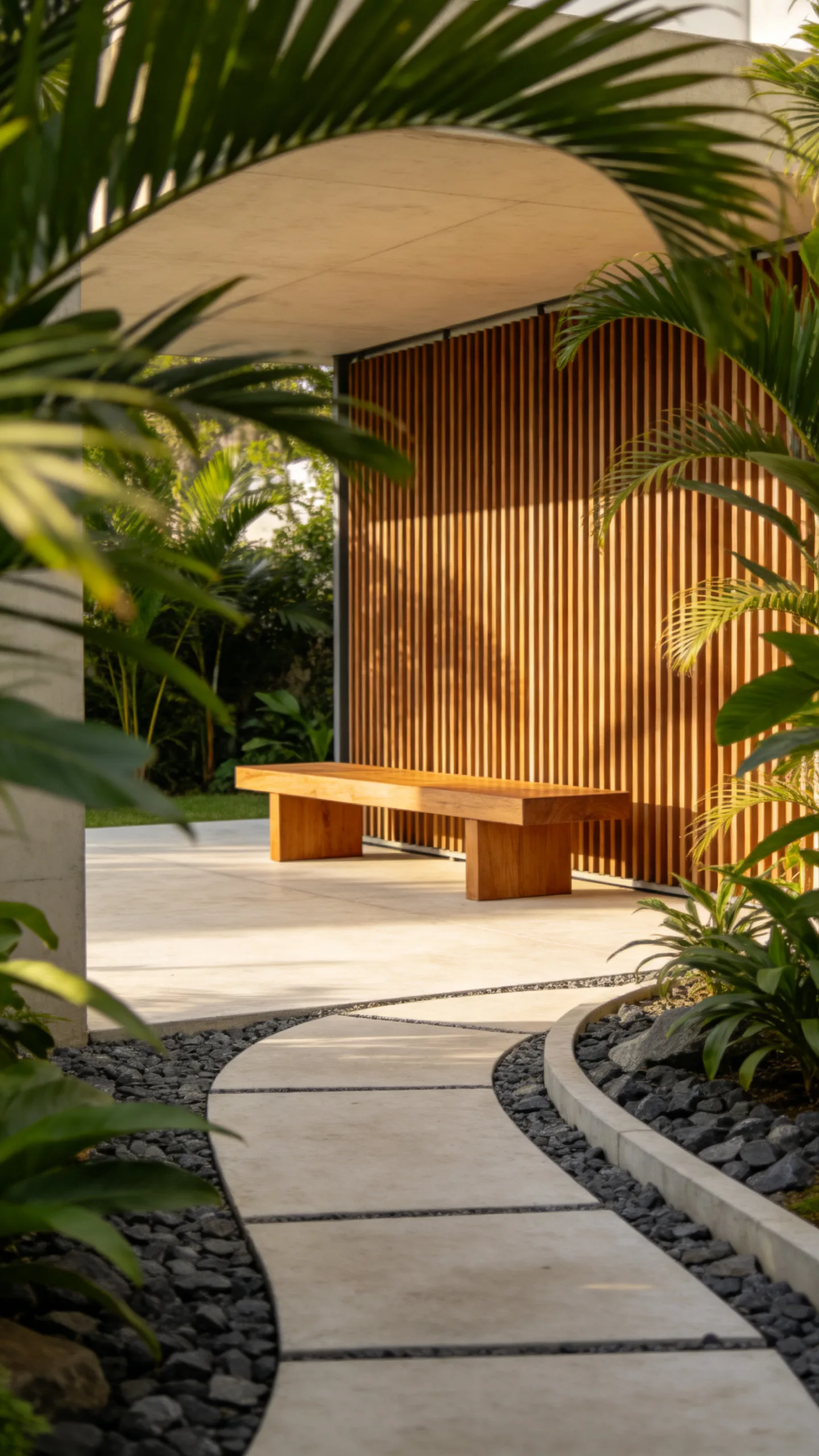
Choose two or three hardscape materials, such as pale concrete, charcoal stone, and warm timber, then repeat them throughout the garden. Consistent materials can make a modest space feel intentional and resort-like.
Use the same paver color around the patio and path, or repeat the same timber finish on a privacy screen and bench. Limiting material changes also simplifies cleaning, repairs, and future additions.
16. Plant a Low-Pruning Screening Hedge
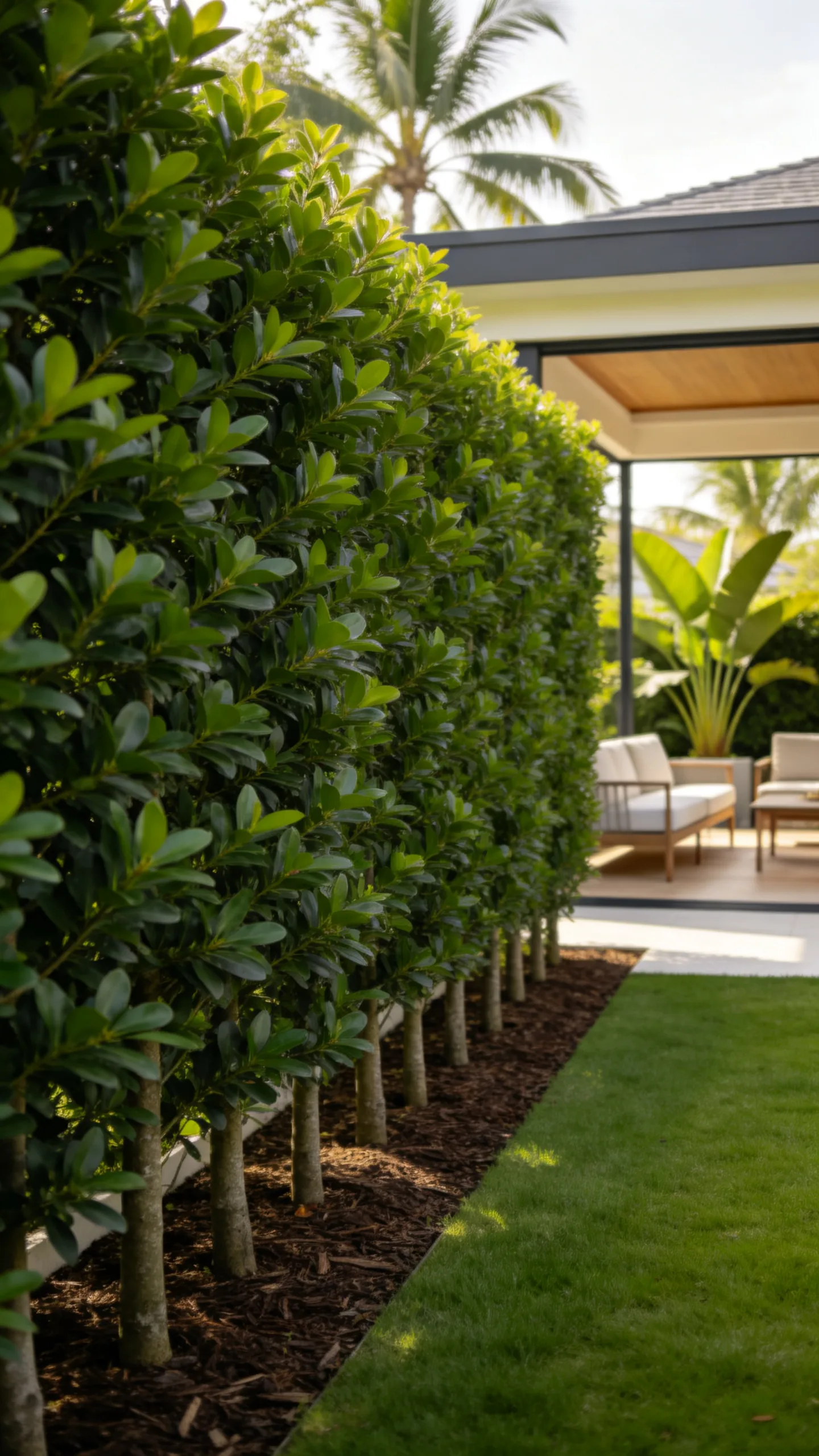
Create privacy with a naturally tidy hedge rather than a fast-growing plant that needs frequent shaping. Depending on local climate, choices may include clumping bamboo, podocarpus, wax myrtle, clusia, or another evergreen proven for the site.
Space plants according to their mature width instead of planting them too close together for instant coverage. Proper spacing improves airflow, reduces disease pressure, and prevents a constant cycle of hard pruning.
17. Add a Shade Sail Over the Patio
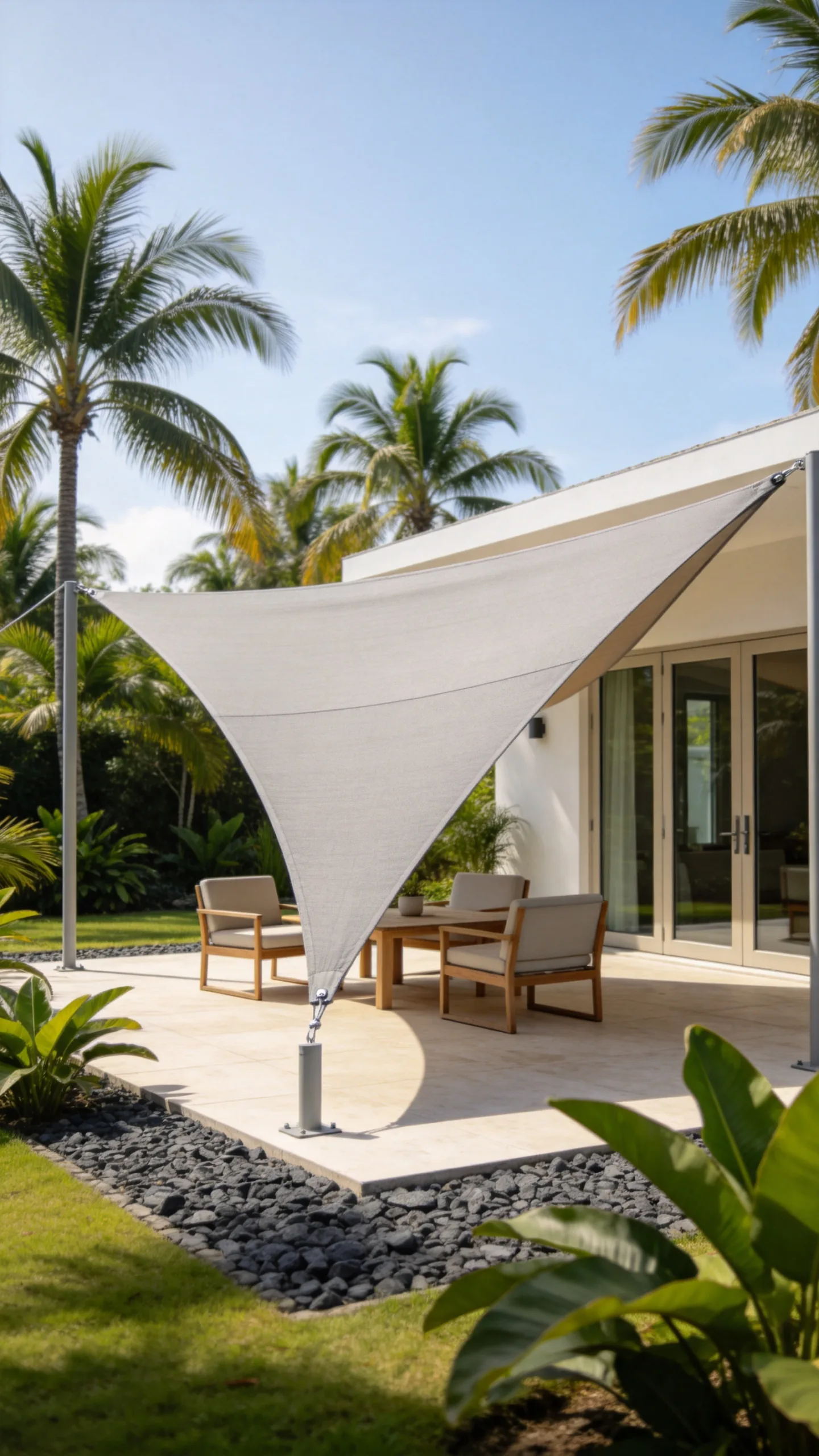
Install a tensioned shade sail above a paved sitting area to provide a clean architectural canopy without adding a large tree immediately beside the house. Choose a neutral fabric color that complements the garden's stone and container finishes.
Angle the sail so rain can drain away from doors and seating, and use secure posts or professionally assessed attachment points. Surround the patio with palms, broad-leaved plants, and gravel to reinforce the tropical atmosphere without expanding the planting footprint.
18. Create a Dry Tropical Rock Garden
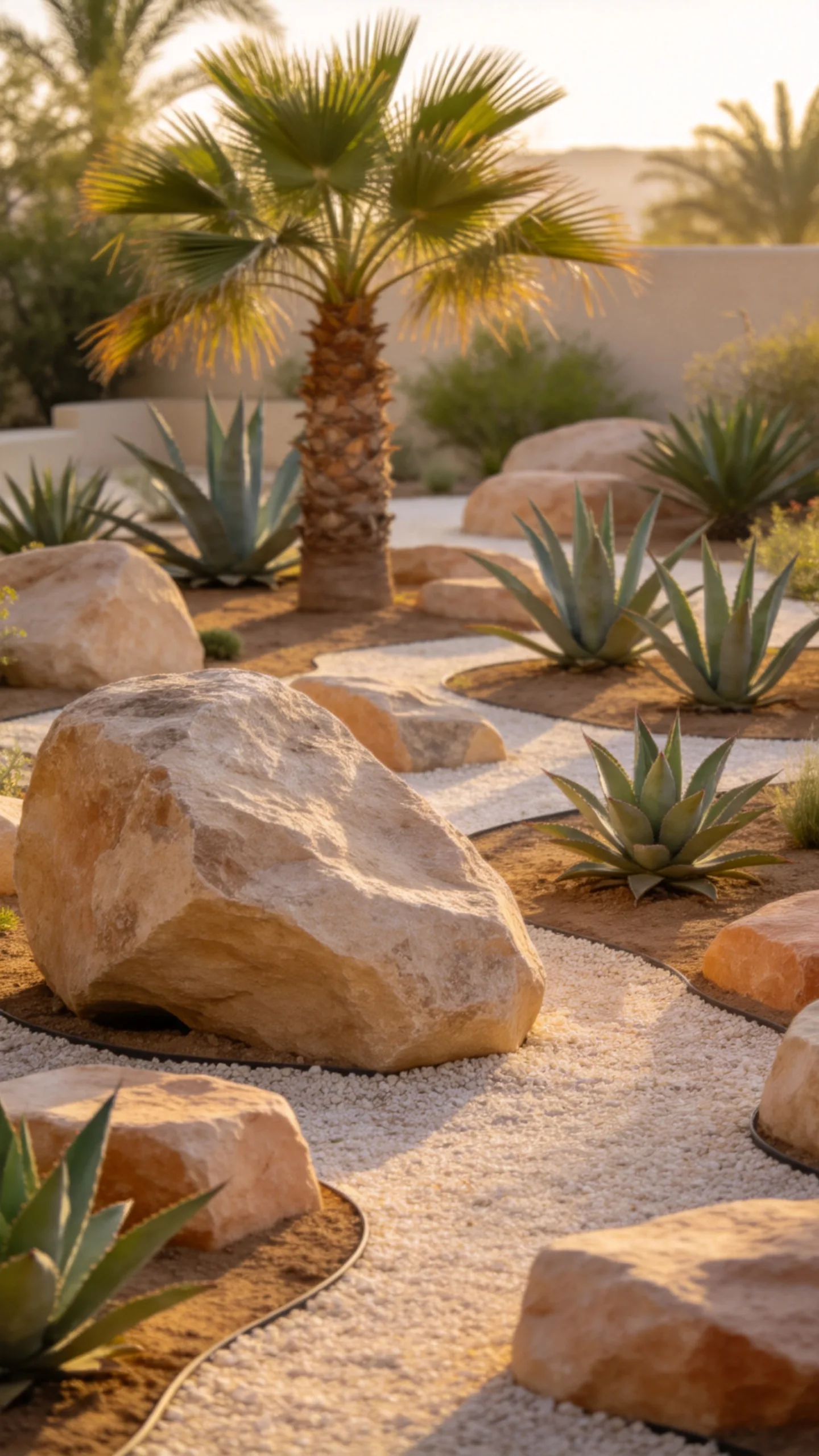
Combine boulders, pale gravel, sculptural succulents, and drought-tolerant palms in a sharply drained bed. The composition delivers tropical structure through plant form rather than dense planting, making it useful for hot, dry, or water-conscious gardens.
Place the largest rocks first and vary their height to create a natural arrangement. Select plants that share similar watering needs, and avoid combining moisture-loving tropicals with drought plants in the same irrigation zone.
19. Finish With a Simple Outdoor Shower Nook
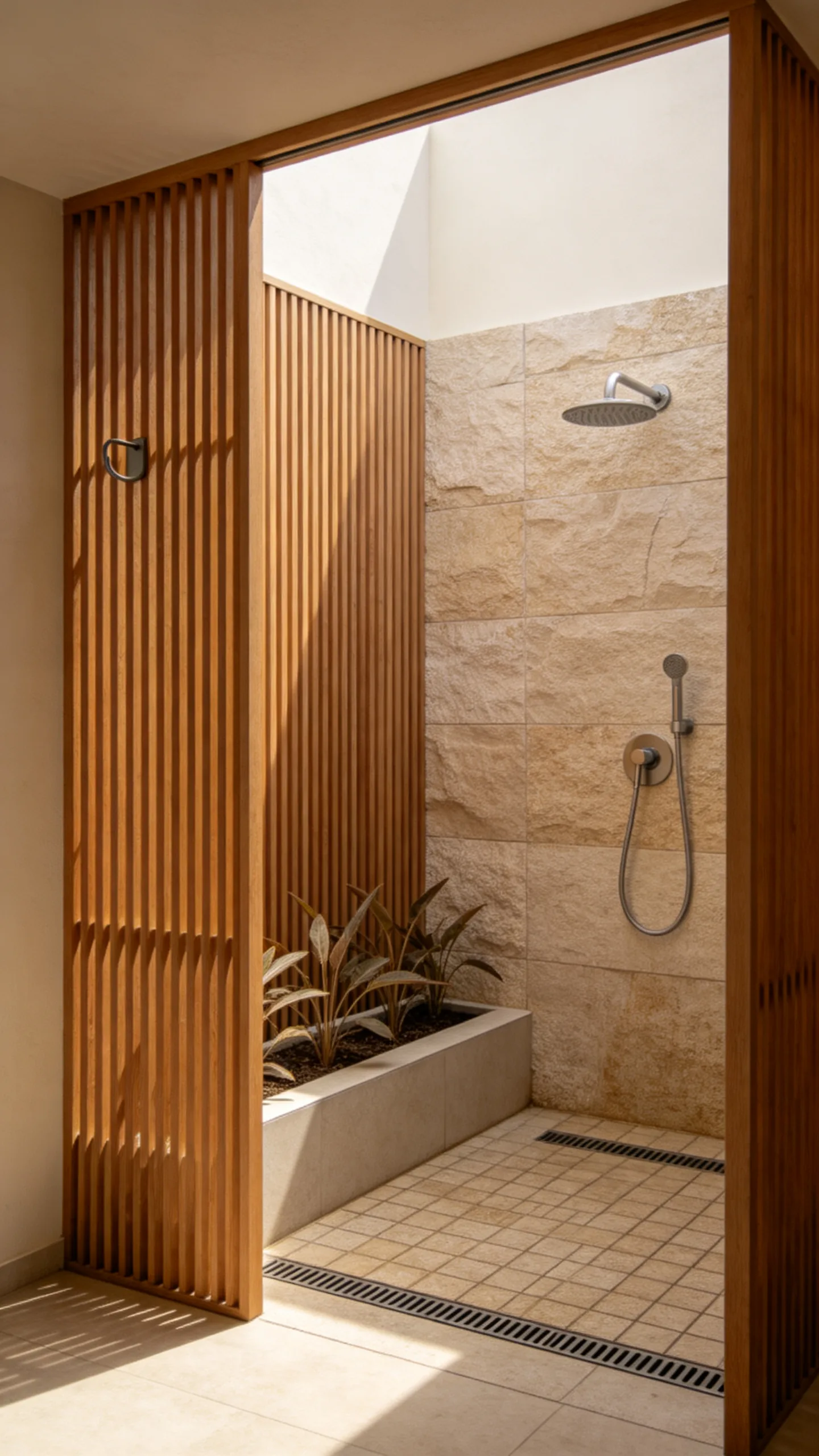
Turn a small unused corner into a resort-style shower area using a privacy screen, textured wall tile, slip-resistant pavers, and a drain connected according to local plumbing requirements. Add a narrow planter with hardy foliage to soften the enclosure.
Choose plants that can handle reflected heat, splashing, and the available light. Keep the planting sparse enough for easy cleaning, and use a wall-mounted hook or shelf instead of extra furniture that can clutter the compact space.