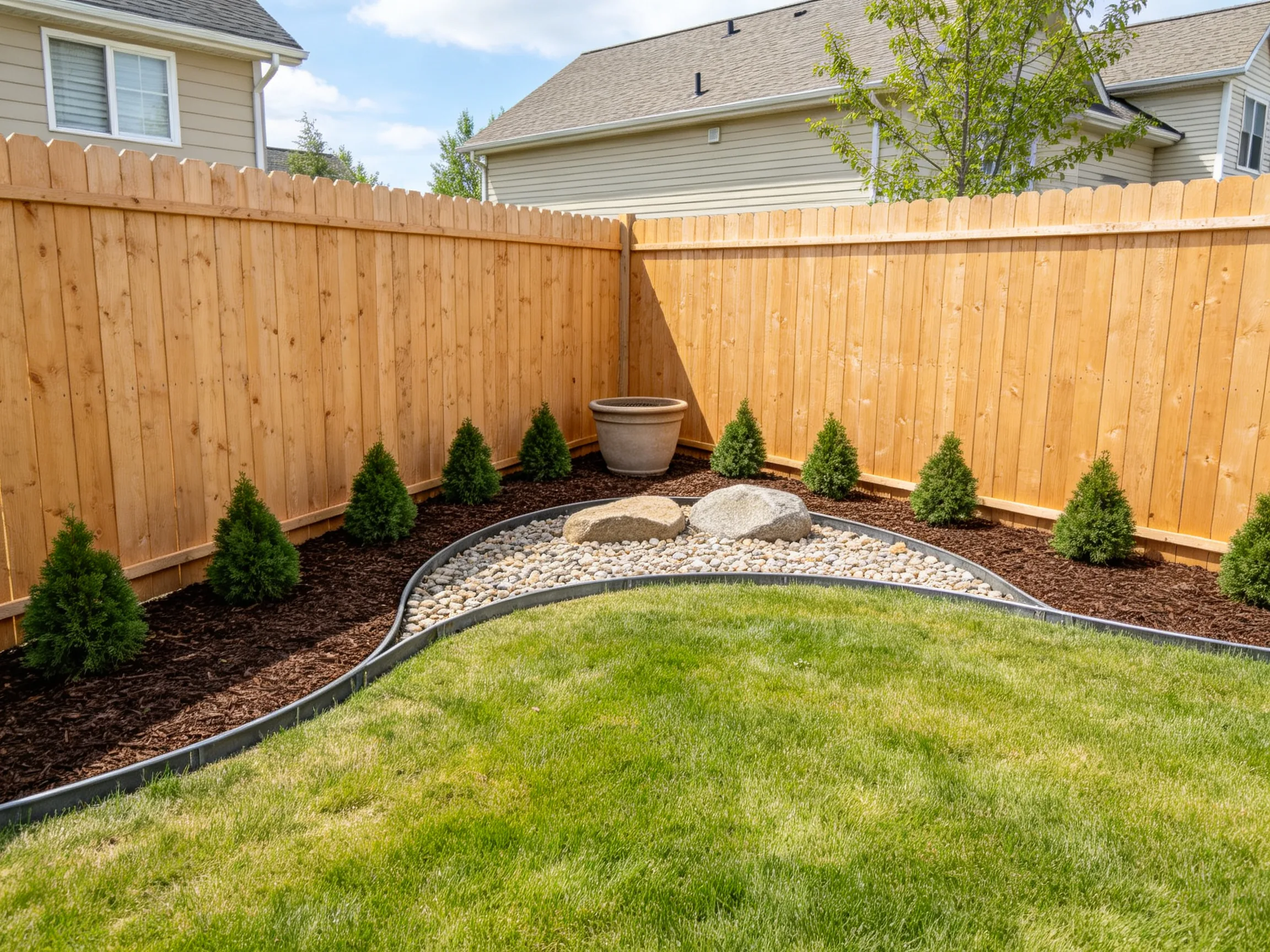
A backyard corner by the fence can easily become a forgotten spot where weeds, hoses, and random pots collect. With the right layout, that same corner can become a tidy planting area, a privacy feature, or a simple focal point that does not demand constant pruning and replanting. These backyard corner landscaping ideas fence busy areas with practical plant choices, mulch, gravel, containers, and hardscape details that help keep maintenance manageable.
1. Mulched Shrub Corner With Evergreen Structure
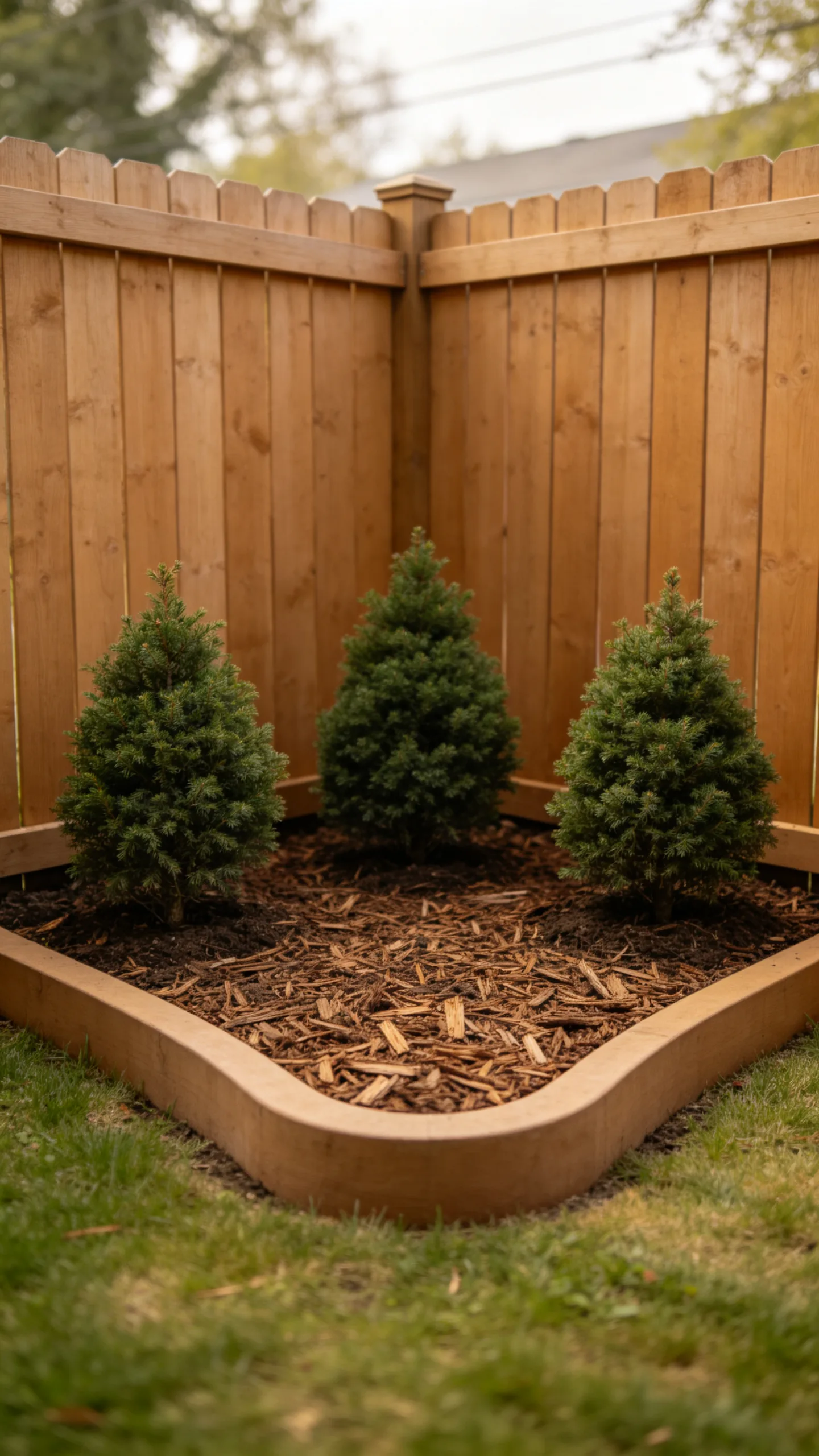
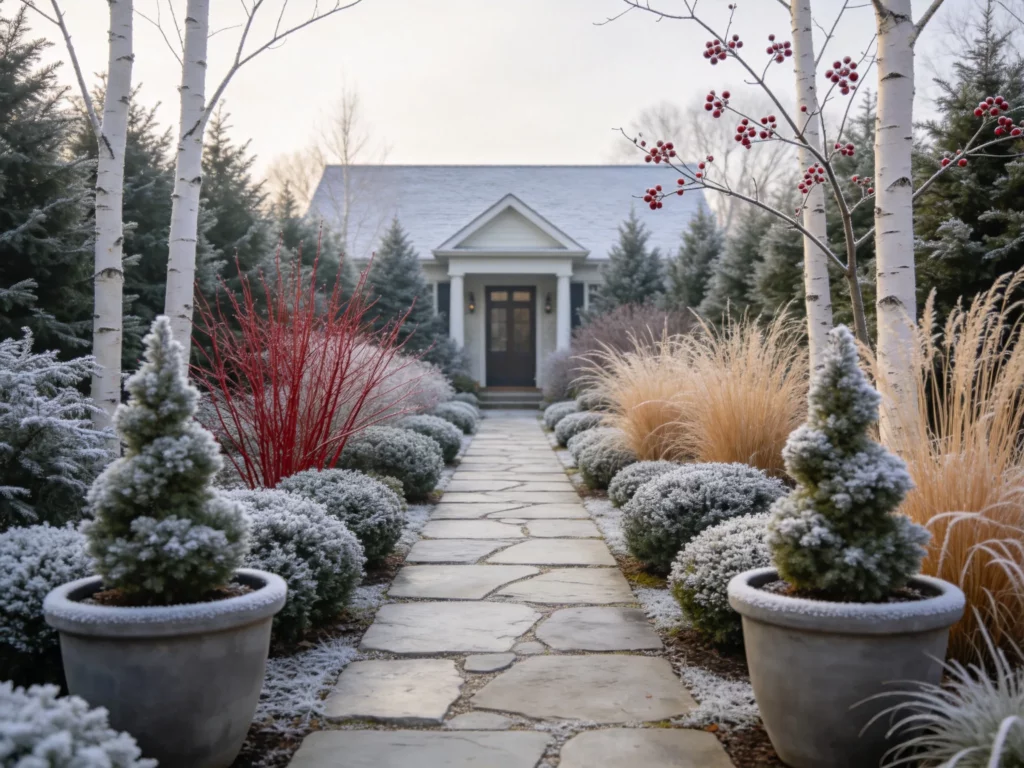
A mulched shrub bed is one of the easiest ways to make a fence corner look intentional without turning it into a high-maintenance flower garden. Start with a curved or triangular bed that follows the fence lines, then plant one or two compact evergreen shrubs as the main structure. Boxwood, dwarf yaupon holly, inkberry holly, dwarf arborvitae, or compact pittosporum can work well depending on your climate and sunlight.
Keep the planting simple by using the same shrub variety in a small grouping rather than mixing too many plants. Add a 2- to 3-inch layer of shredded bark mulch or pine straw to reduce weeds and help the soil hold moisture. Leave a little space between the shrubs and the fence so air can move through and you can access the area for occasional trimming.
2. Gravel Corner With Oversized Planters
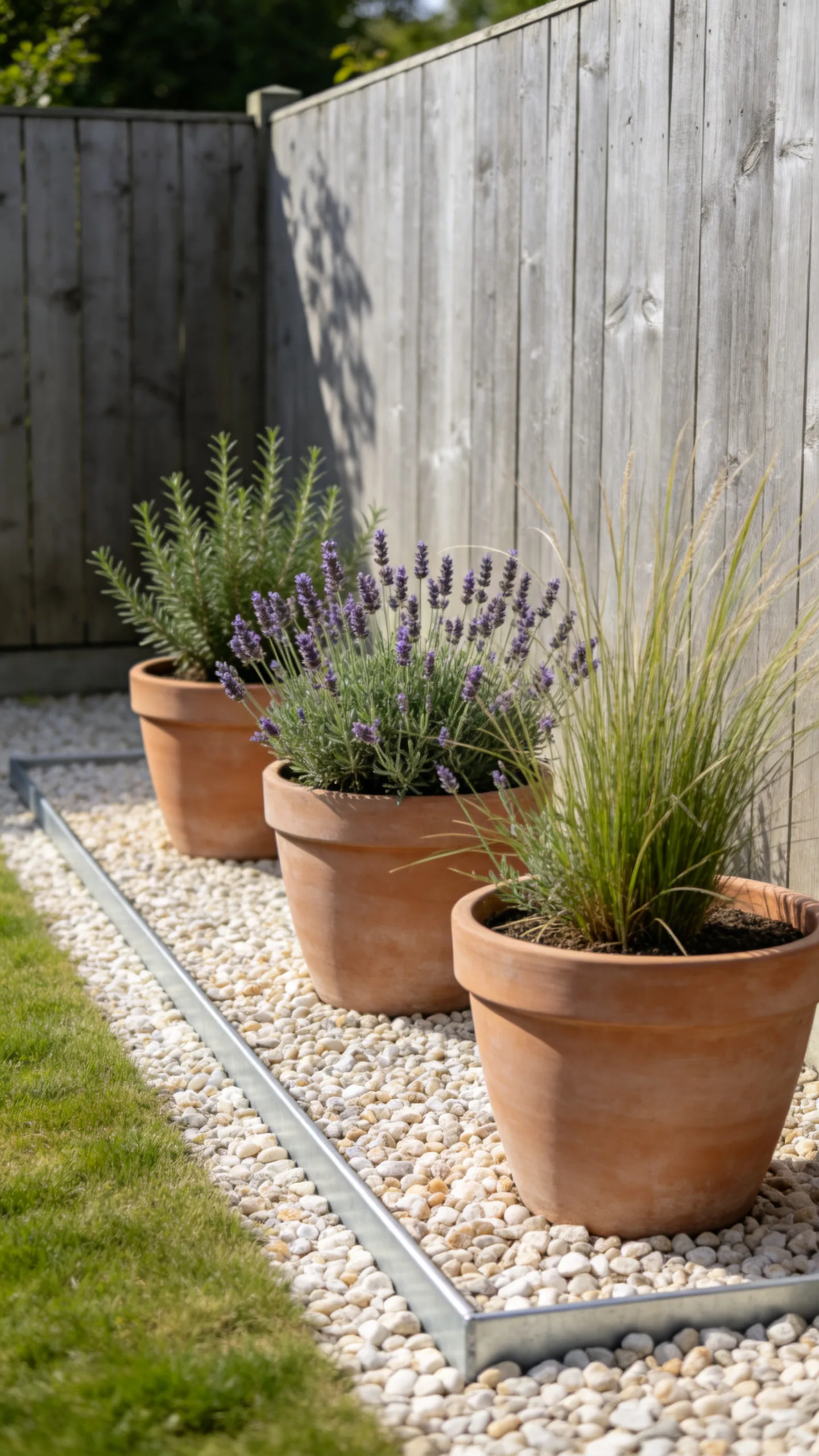
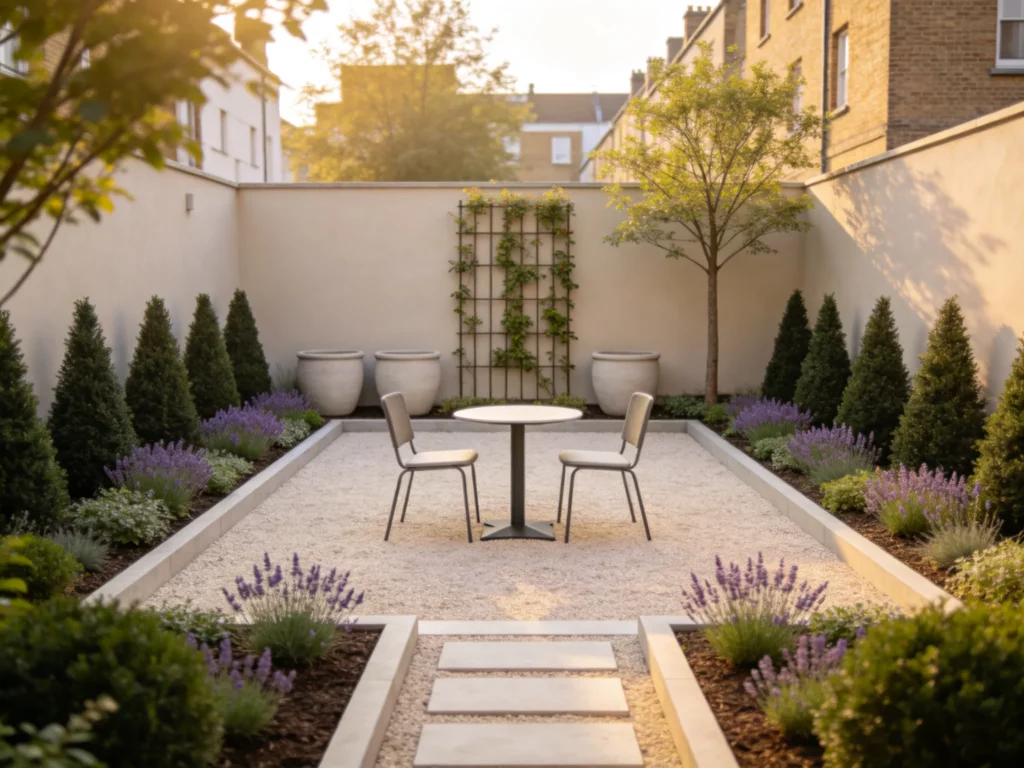
A gravel corner is ideal for homeowners who want a clean look without mowing, edging, or frequent watering. Define the corner with metal edging, brick, or stone, lay landscape fabric only where appropriate for your drainage needs, and top the area with pea gravel, crushed granite, or river rock. This creates a dry, tidy base that works especially well beside wood or vinyl fencing.
Place two or three oversized planters in the gravel instead of planting directly in the ground. Use drought-tolerant plants such as rosemary, lavender, ornamental grasses, dwarf conifers, or sedum in sunny spots. For shaded fence corners, try cast iron plant, ferns, heuchera, or hostas in containers. Large pots dry out more slowly than small pots, which helps lower watering frequency.
3. Corner Trellis With Climbing Star Jasmine
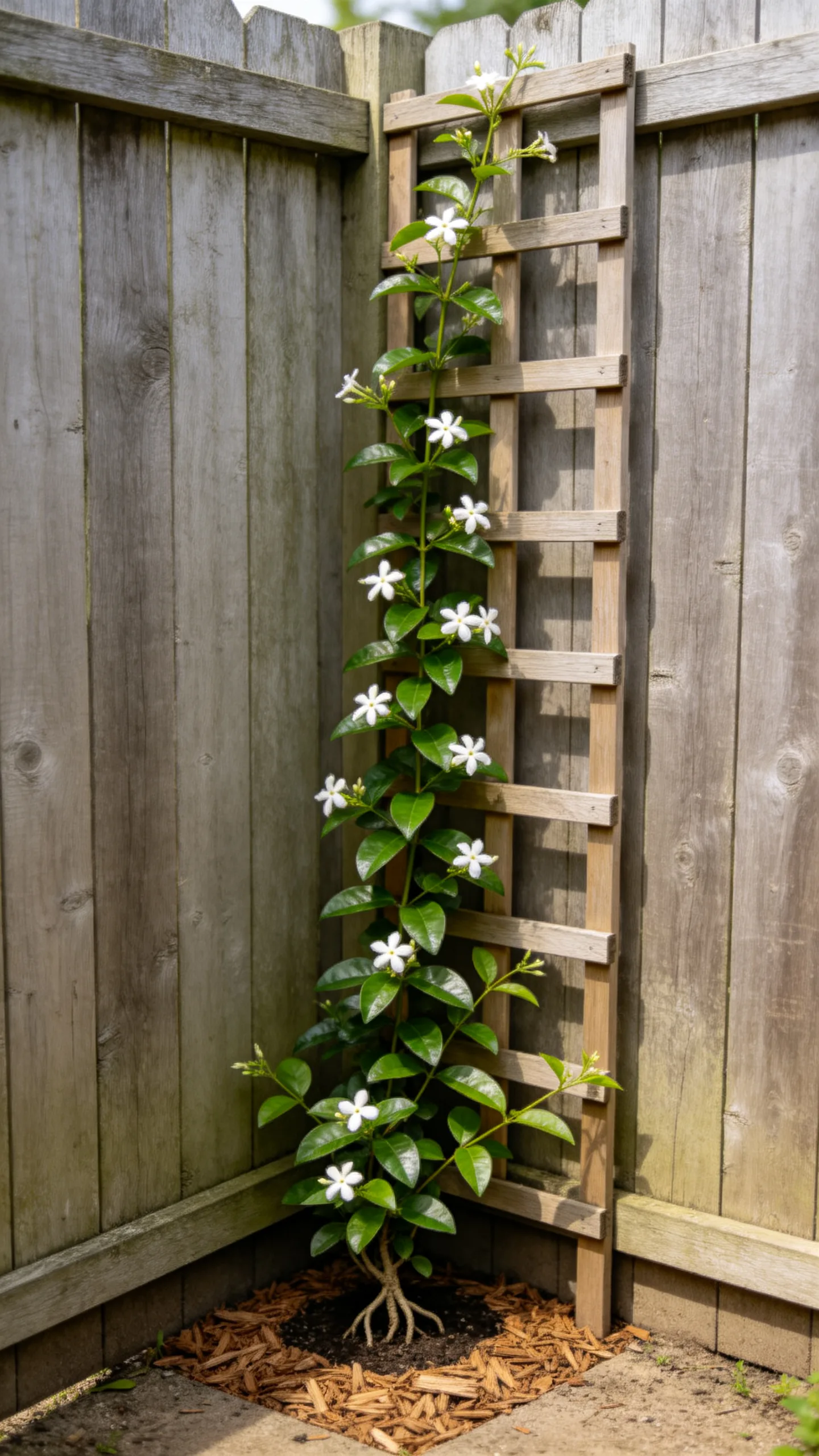
A corner trellis can soften a plain fence without filling the ground with complicated plantings. Install a simple wood or metal trellis on one fence panel or angle two trellis panels into the corner. Star jasmine is a popular low-maintenance climbing option in suitable warm climates because it has glossy leaves, fragrant white flowers, and can be guided vertically.
To keep the area manageable, plant only one vine and train it onto the trellis while young. Mulch around the base and water regularly during establishment. Once the vine fills in, prune lightly after flowering or when it starts growing beyond the trellis. This idea saves ground space while adding height, which is especially helpful in small backyards.
4. L-Shaped Raised Bed With Herbs
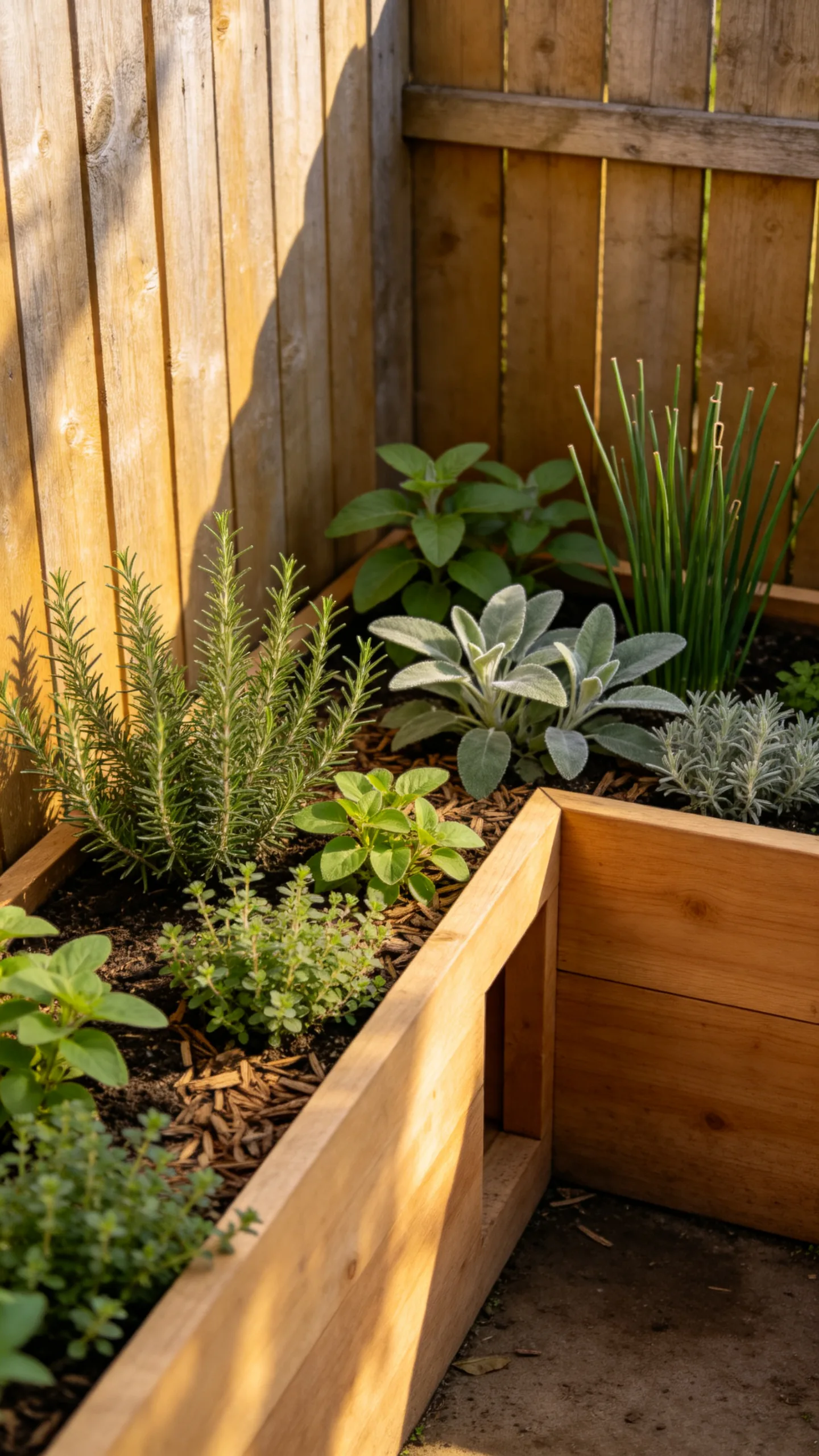
An L-shaped raised bed fits naturally into a fence corner and keeps plants contained. Use cedar boards, composite lumber, galvanized metal, or concrete blocks to build a low raised bed along both fence sides. This shape makes the corner feel finished while giving you easy access from the open side.
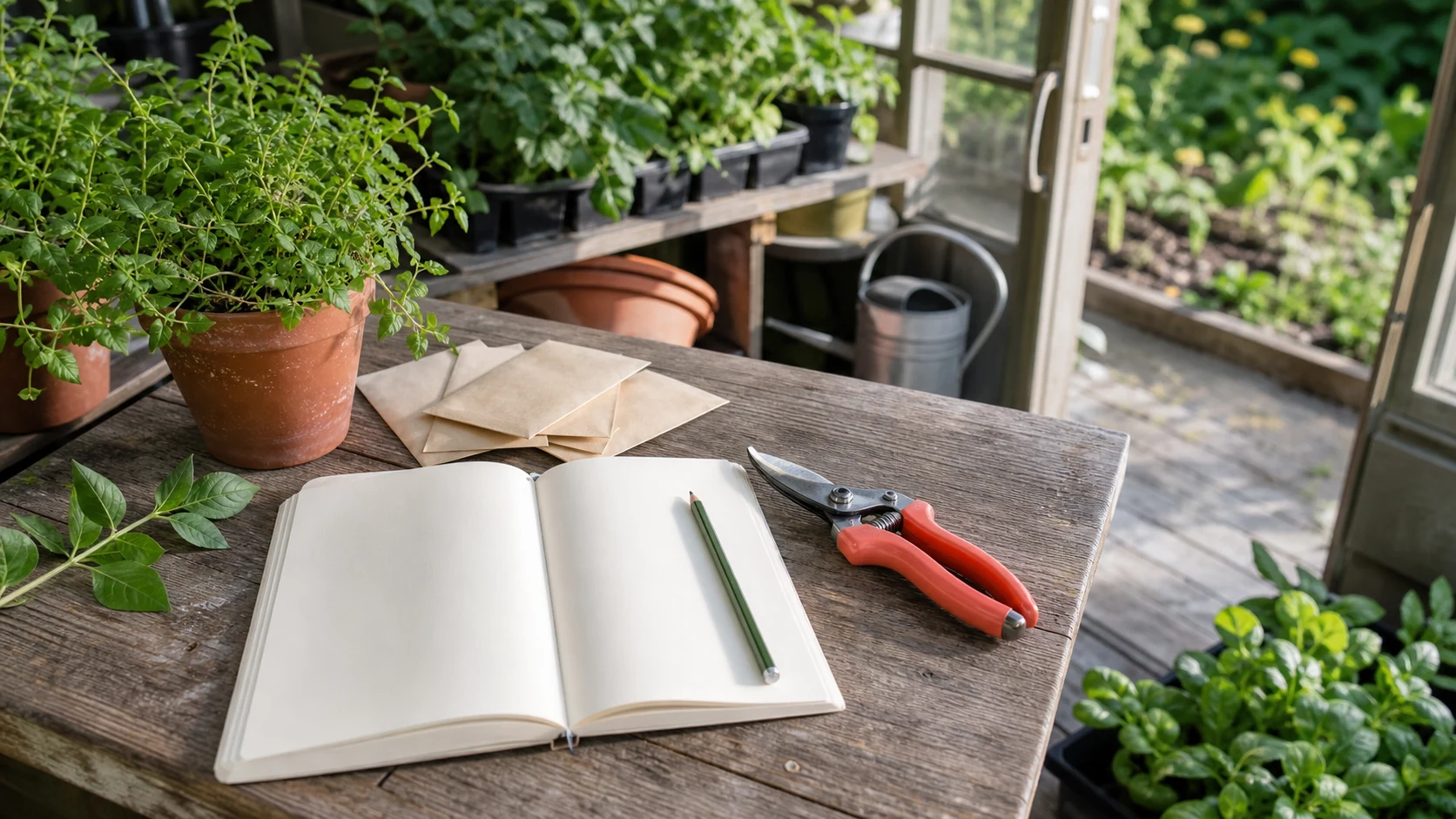
Fill the bed with low-maintenance herbs that match your light conditions. In sunny areas, rosemary, thyme, oregano, sage, and chives are practical choices that do not need rich soil or constant attention once established. In part shade, parsley, mint in a buried pot, and lemon balm can work, though mint should always be contained. Add mulch between plants to reduce weeds and keep the bed tidy.
5. Decorative Boulder Corner With Native Grasses
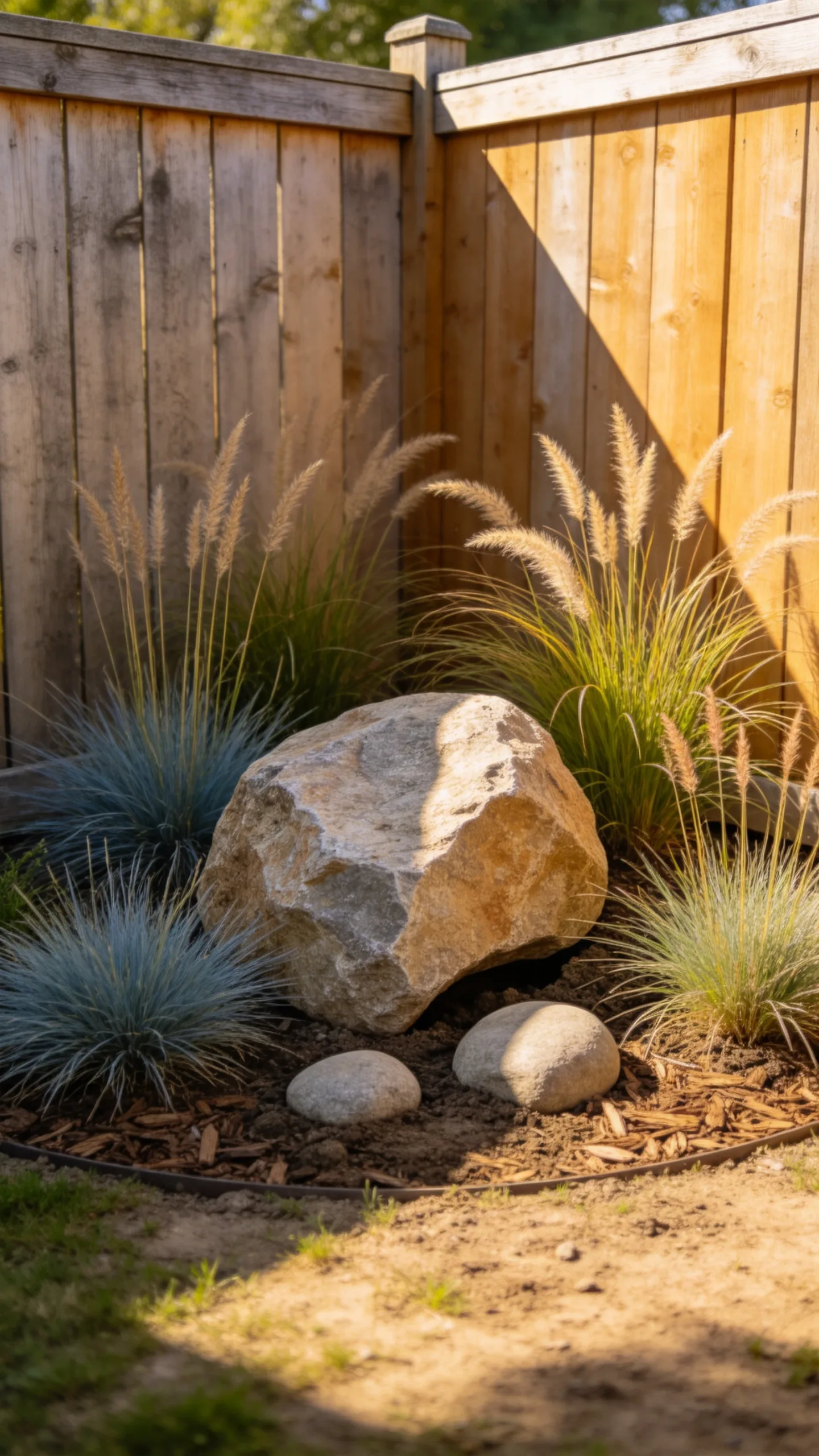
A few well-placed boulders can turn a bare fence corner into a natural-looking landscape feature. Choose one larger boulder and two smaller stones rather than scattering many small rocks. Set them partly into the soil so they look grounded, then plant around them with native or climate-adapted ornamental grasses.
Grasses such as little bluestem, switchgrass, blue fescue, muhly grass, or fountain grass can bring movement and texture with limited care, depending on your region. Most need a sunny location and a once-a-year cutback before new growth begins. The boulders reduce planting space, the grasses cover the base of the fence, and the overall design stays attractive without constant deadheading.
6. Shade Corner With Hostas and Leaf Mulch
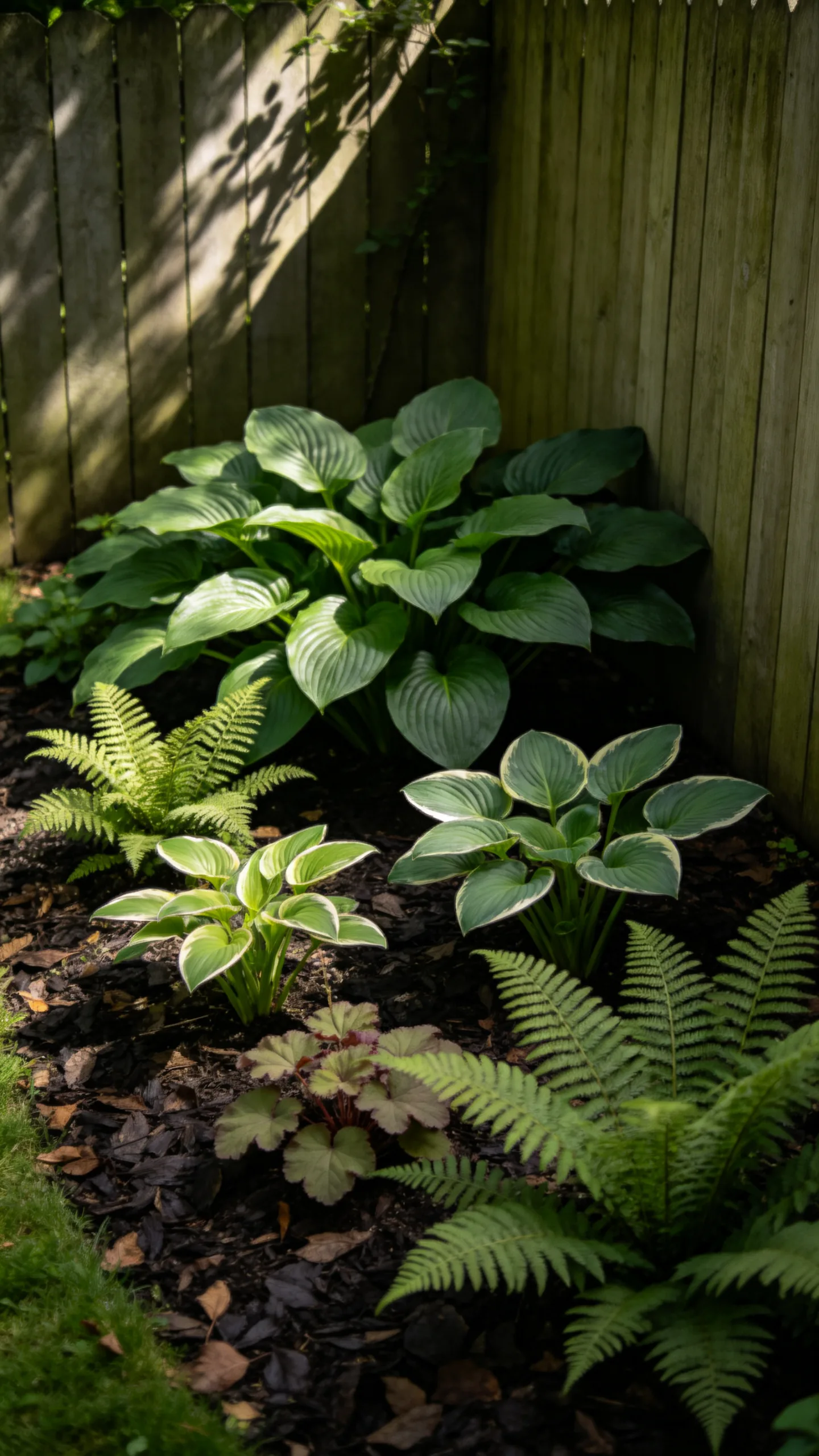
If the fence corner sits under a tree or against a north-facing fence, build the design around shade-tolerant foliage instead of forcing sun-loving flowers to struggle. Hostas are useful in many shaded gardens because their leaves provide color and texture even when they are not blooming. Pair them with ferns, heuchera, liriope, or hellebores for a layered look.
Use leaf mulch, shredded bark, or composted mulch to keep the soil cool and reduce watering needs. Arrange larger hostas toward the back of the corner and smaller varieties near the front edge. This creates depth without needing frequent pruning. If deer or slugs are common in your area, choose more resistant options such as ferns, hellebores, or carex instead of relying only on hostas.
7. Corner Bench With Simple Planting Behind It
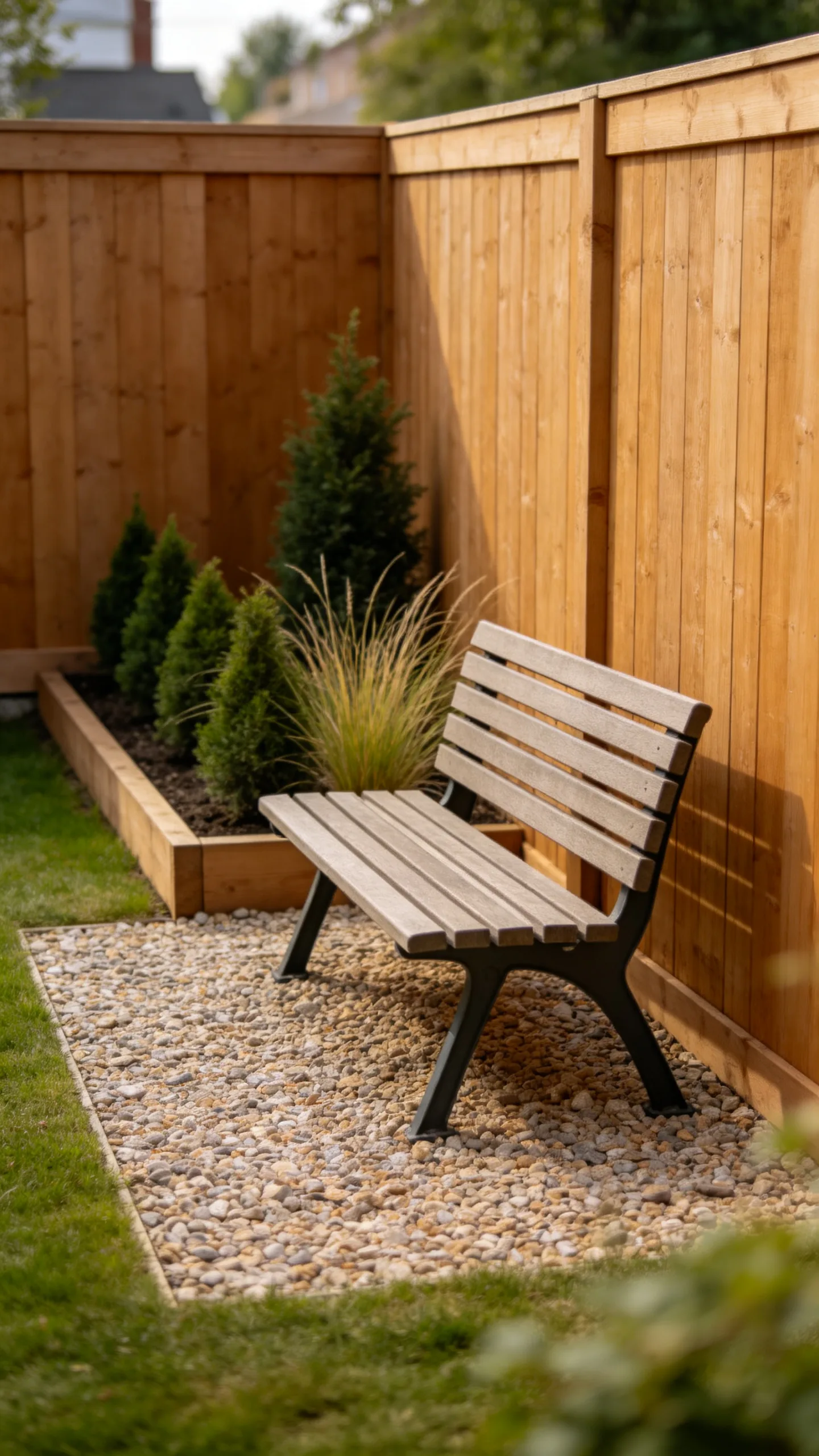
A fence corner can become a quiet seating spot with very little planting. Place a weather-resistant bench diagonally across the corner to soften the hard angle of the fence. Behind it, add a narrow bed with evergreen shrubs, ornamental grasses, or a pair of tall planters to frame the seat.
Keep the plants away from the back of the bench so you do not have to trim them constantly. A gravel or paver pad under the bench prevents grass from turning muddy and reduces mowing around furniture legs. This is a practical option for small yards because it combines seating, structure, and landscaping in one compact corner.
8. River Rock Drainage Corner With Moisture-Tolerant Plants
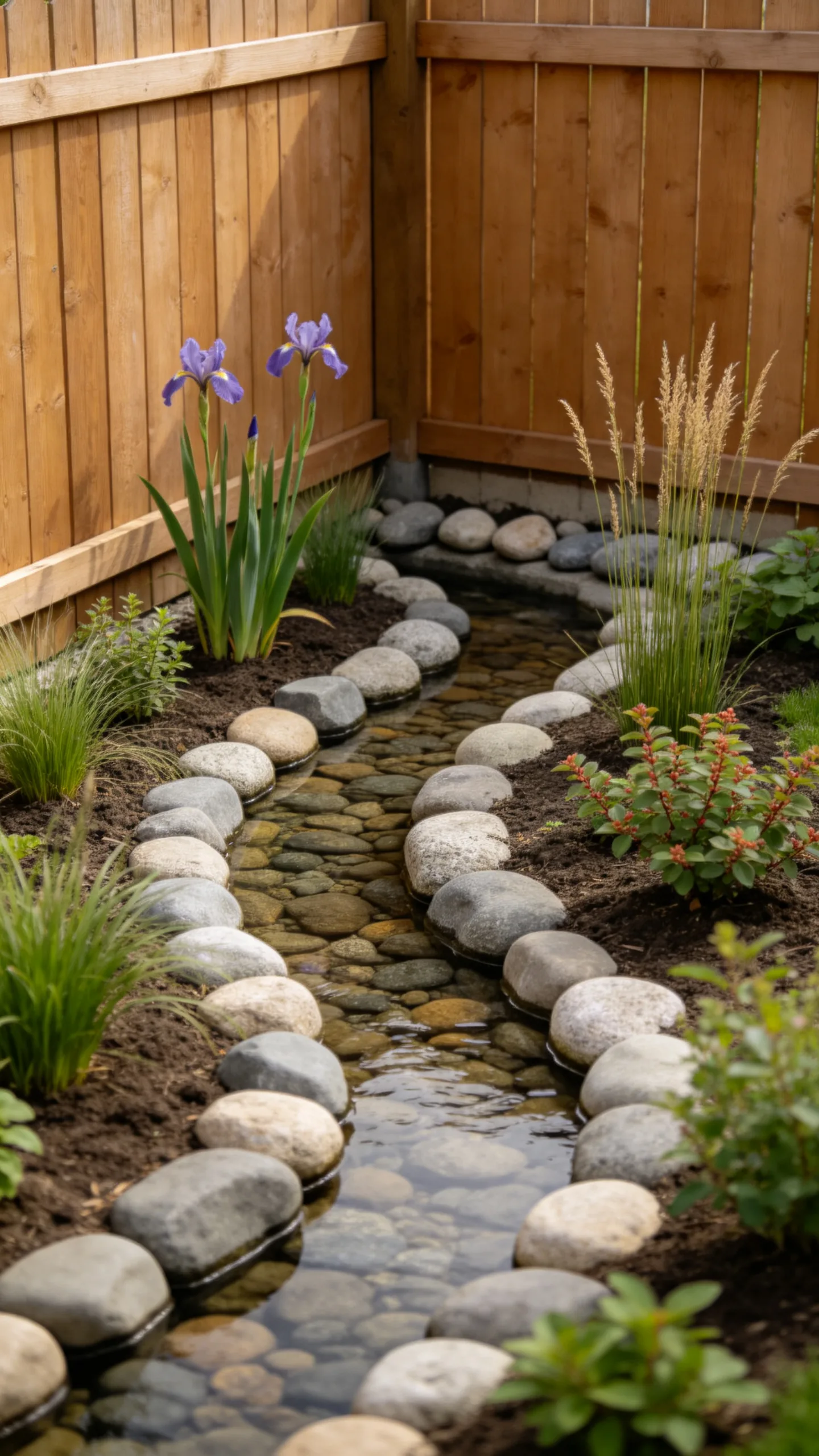
Some fence corners collect runoff after rain, especially where two fence lines meet or where a downspout drains nearby. Instead of fighting wet soil, create a river rock drainage corner. Shape a shallow swale or basin, line it with rounded river rock, and direct water away from the fence if needed.
Plant moisture-tolerant species along the edge rather than in the deepest part of the drainage path. Depending on your climate, options may include iris, rush, sedge, swamp milkweed, cardinal flower, or dwarf sweetspire. This setup helps the corner look designed while reducing muddy patches and weed growth. Always keep soil and mulch from piling directly against a wood fence to prevent moisture problems.
9. Minimalist Corner With One Small Tree
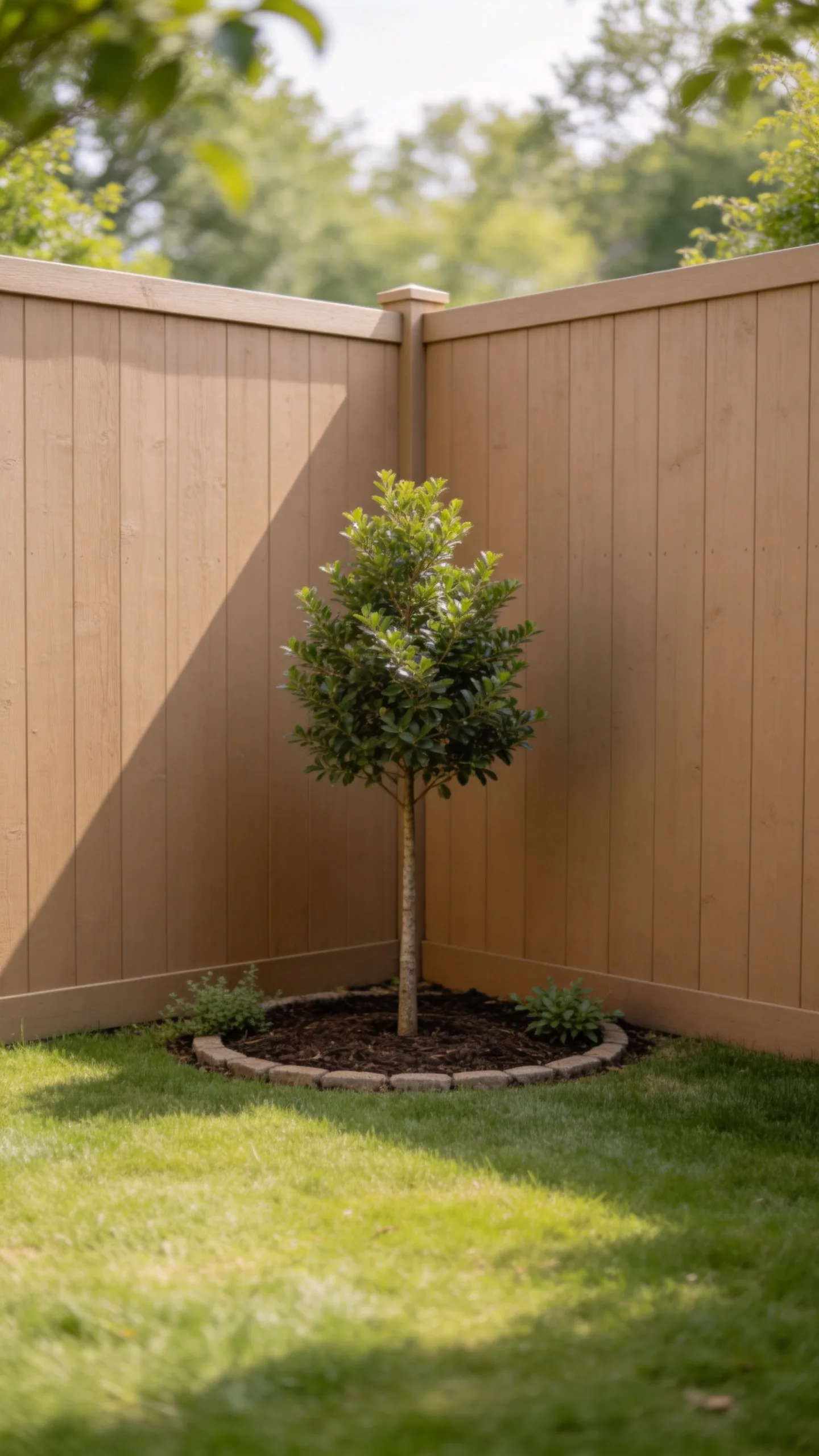
A single small tree can make a fence corner feel polished without requiring a crowded planting bed. Choose a compact ornamental tree suited to your climate, such as Japanese maple for part shade, serviceberry for seasonal interest, crape myrtle for warm sunny areas, or dwarf olive where conditions are dry and mild.
Plant the tree far enough from the fence to allow mature growth and access for maintenance. Underplant with mulch or a simple ring of low groundcover rather than filling the area with many small plants. This approach gives the corner height, shade, and a focal point while keeping the design easy to care for.
10. Corner Privacy Screen With Clumping Bamboo in Containers
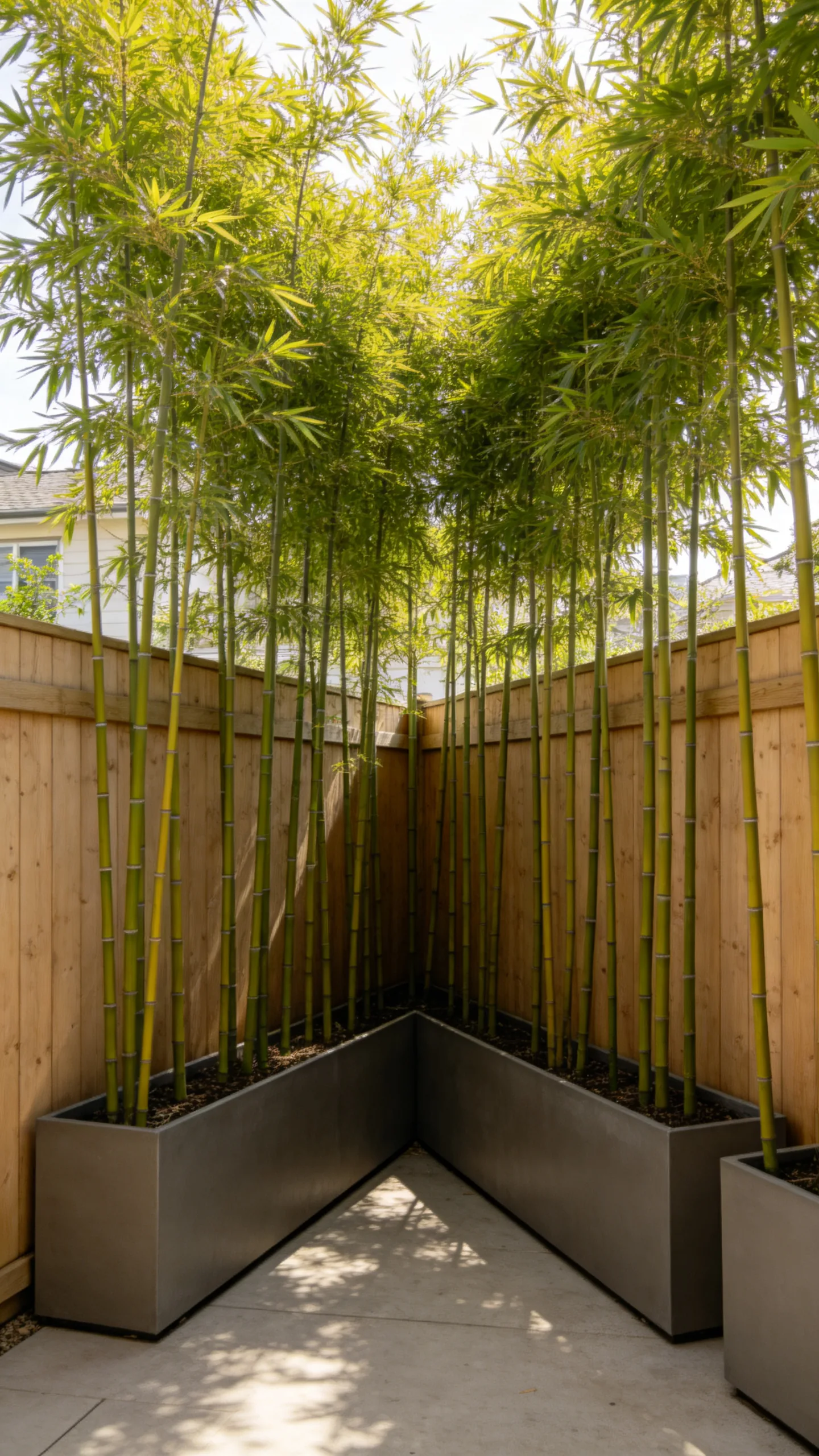
For a fence corner that needs extra privacy, clumping bamboo in large containers can create a tall green screen without letting roots spread through the yard. Use true clumping bamboo varieties suited to your region, and avoid running bamboo unless it is professionally contained. Large rectangular planters work well because they can sit neatly along each fence line.
Choose containers with drainage holes and use a quality potting mix rather than garden soil. Bamboo in pots will need watering, especially in hot weather, but the contained root zone makes it easier to manage than an open-ground planting. This idea works best where you want height without building another structure above the fence.
11. Low-Growing Groundcover Corner
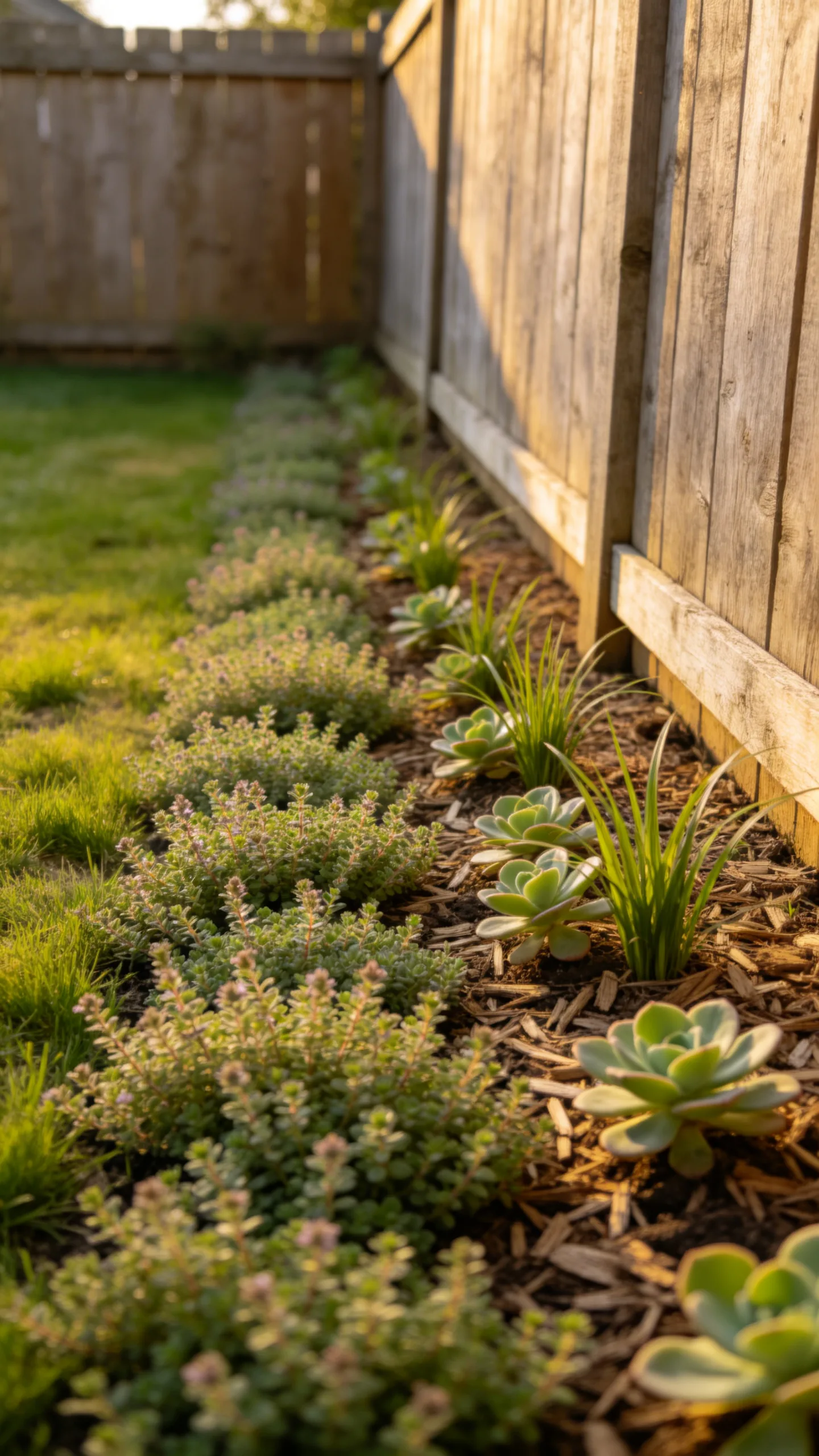
A groundcover corner can replace patchy grass and reduce mowing in an awkward fence angle. Select a groundcover based on sun exposure and foot traffic. Creeping thyme, sedum, woolly thyme, and ice plant can suit sunny, well-drained areas. For shade, consider ajuga, mondo grass, liriope, wild ginger, or sweet woodruff where appropriate.
Prepare the soil carefully before planting because groundcovers are easiest to maintain when weeds are removed at the beginning. Space plants according to their mature spread and mulch lightly between them until they fill in. This design keeps the corner low, softens the fence base, and avoids the constant trimming that taller plants may need.
12. Paver Patio Nook With Two Container Trees
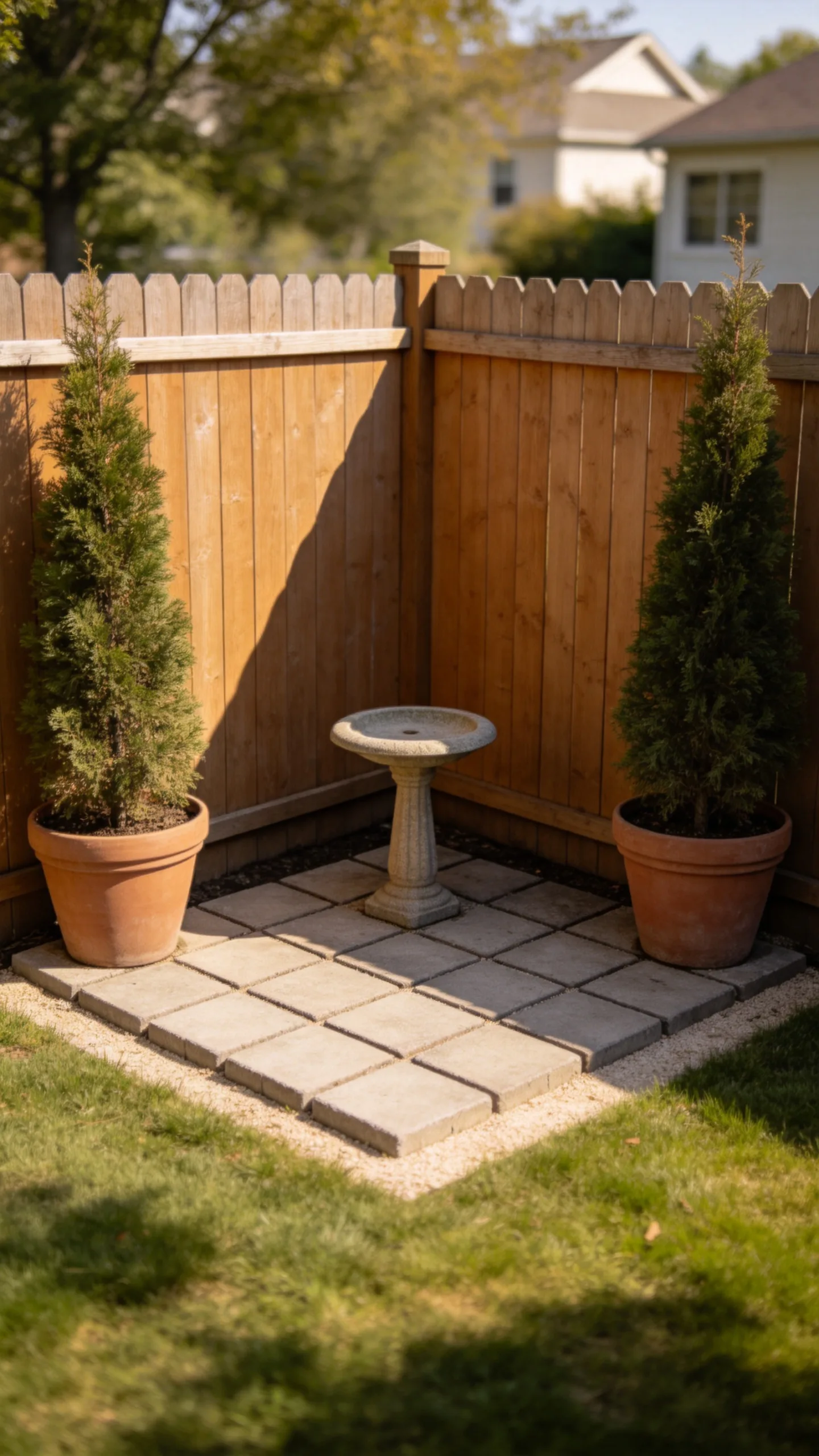
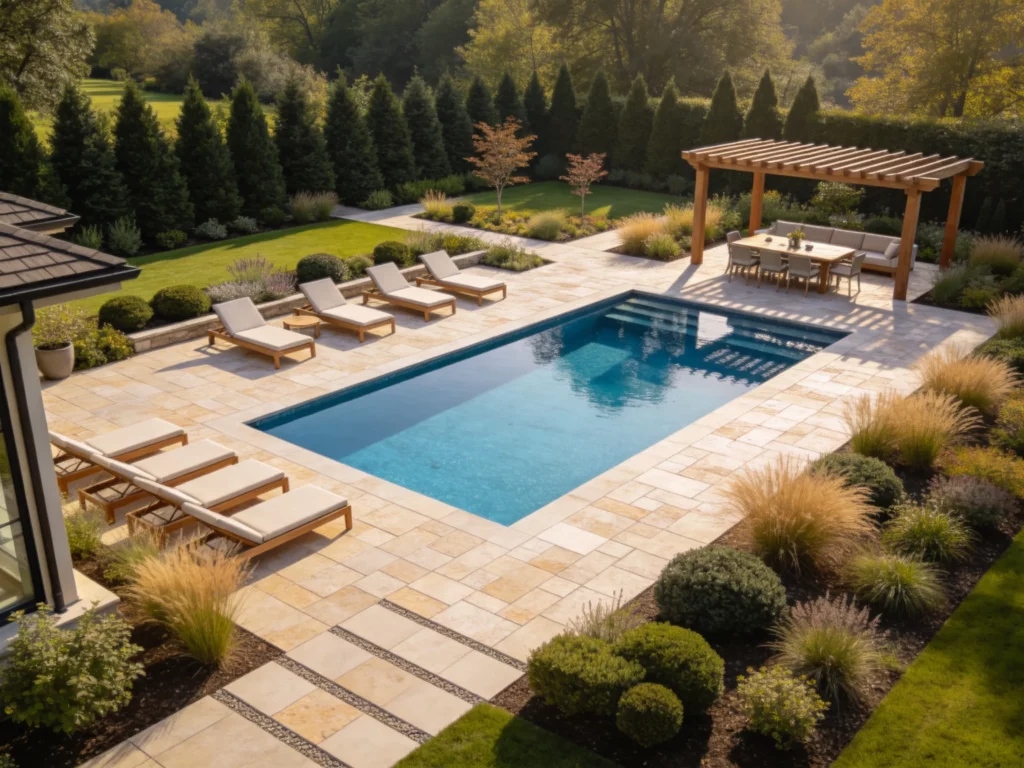
A small paver nook can turn a fence corner into a usable landing spot for morning coffee, a bistro table, or a birdbath. Use square concrete pavers, brick, flagstone, or stepping stones set on a compacted gravel base. The hard surface reduces weeds and eliminates the need to mow into a tight corner.
Add two container trees or tall shrubs to frame the space. Dwarf citrus, bay laurel, olive, arborvitae, or compact holly can work depending on your climate and light. Containers make it easier to control size and soil conditions, but they do require consistent watering during warm months. Choose large pots so the plants have enough root room and do not dry out too quickly.
13. Fence Corner With Dwarf Hydrangeas
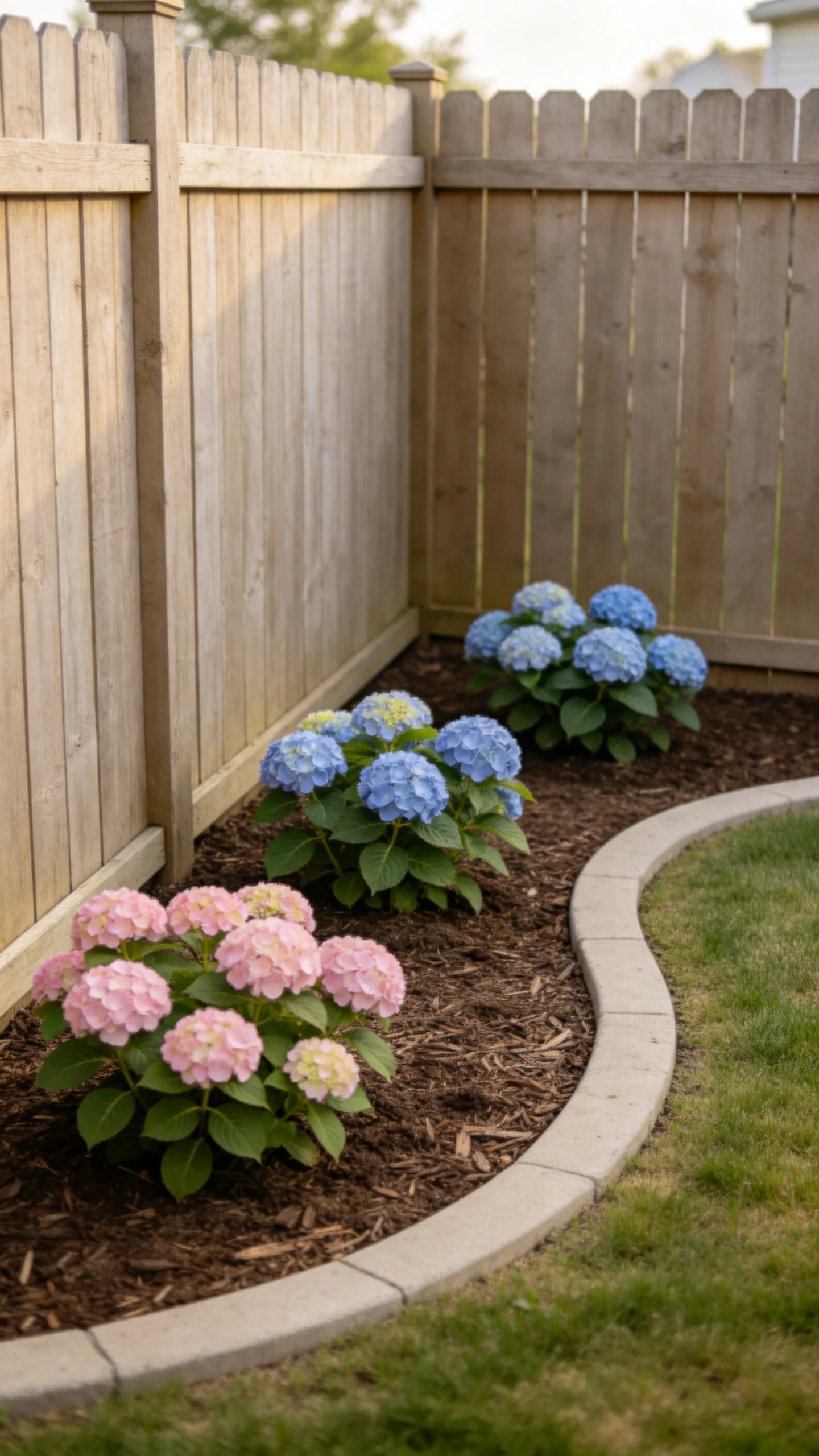
Dwarf hydrangeas can fill a fence corner with seasonal blooms while staying more manageable than full-size varieties. Look for compact panicle hydrangeas for sunny to part-sun locations or smooth hydrangeas for areas with some shade, depending on your region. Plant them in a group of three for a fuller look or use one as a focal shrub in a small bed.
Hydrangeas prefer consistent moisture, so mulch is important. Keep the bed simple with a clean edge and avoid crowding them with many companion plants. Pruning needs vary by hydrangea type, so choose a variety with a mature size that fits the space instead of relying on heavy trimming every year.
14. Corner Rock Garden With Succulents
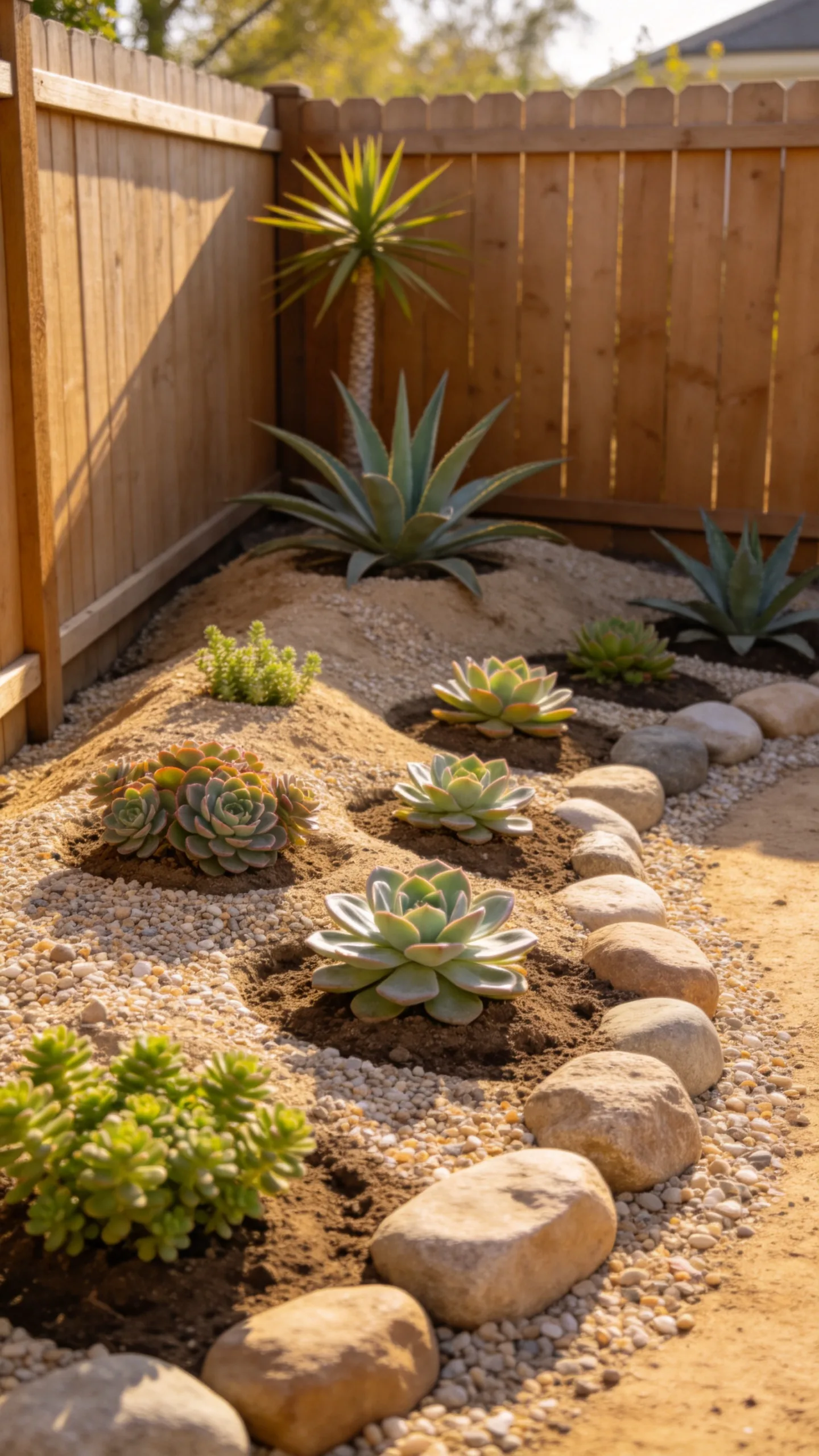
A sunny, dry fence corner can become a low-water rock garden with succulents and gravel. Build a slightly raised mound with gritty, well-draining soil, then place stones of different sizes to hold the slope and create planting pockets. This works especially well in hot, dry climates or in areas where irrigation is limited.
Use hardy succulents such as sedum, sempervivum, agave, yucca, or echeveria depending on your winter temperatures. Keep plants spaced so each one has room to show its shape. A gravel topdressing helps reduce weeds and prevents soil from splashing onto the leaves. Avoid this idea in low, soggy corners unless you can improve drainage first.
15. Narrow Corner Border With Liriope
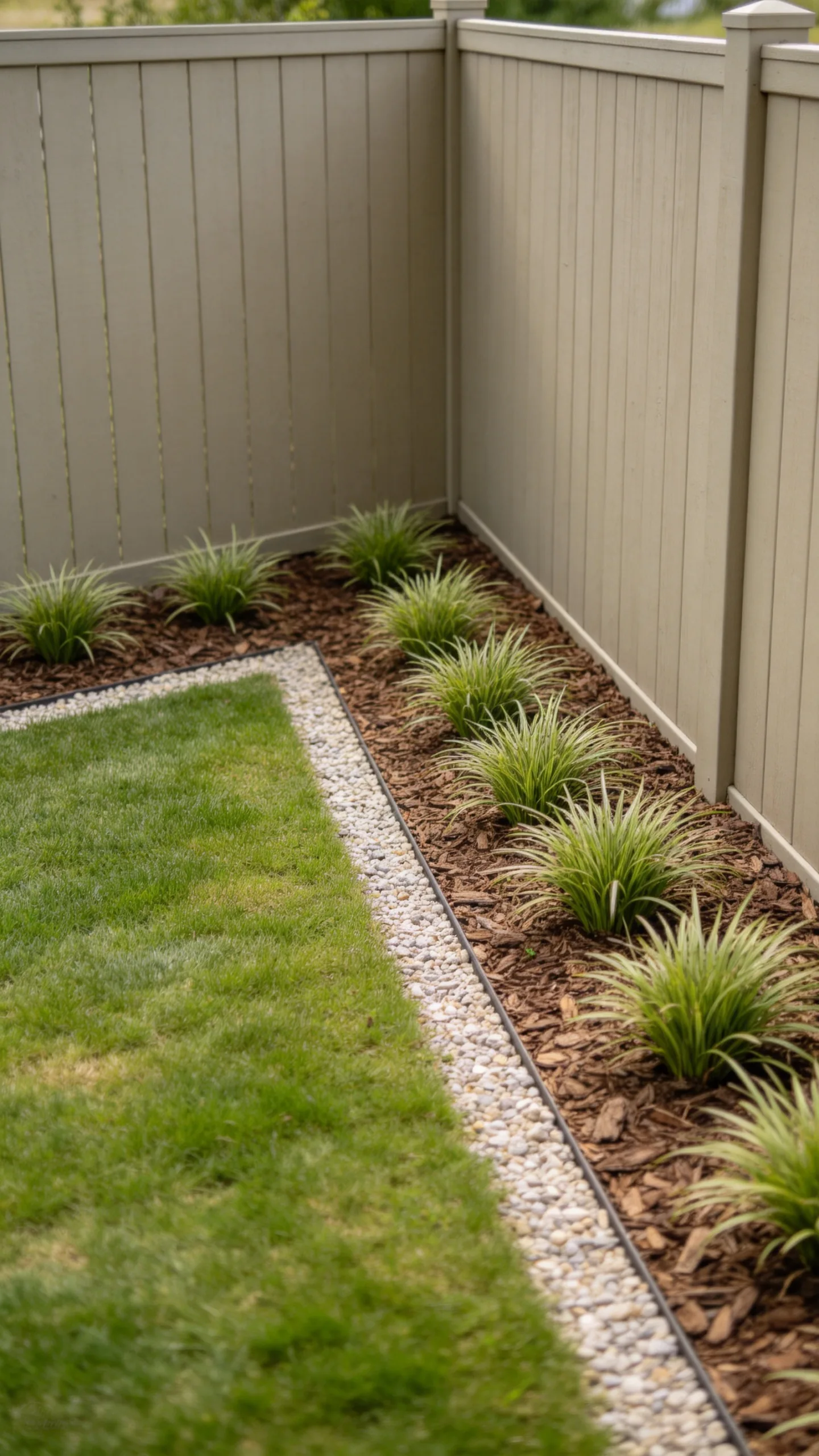
Liriope is useful along a fence because it creates a neat, grass-like border without the mowing needs of turf. Plant it in a narrow L-shaped strip at the base of the fence corner to define the area and cover bare soil. It can handle part sun to shade in many regions and forms tidy clumps that work well in small spaces.
Use one variety for the whole corner to keep the look clean. Add mulch between plants while they establish, then divide clumps every few years if they become too dense. Liriope is especially helpful where you want a low border that can hide the bottom of the fence without blocking access.
16. Corner Birdbath Garden With Easy Perennials
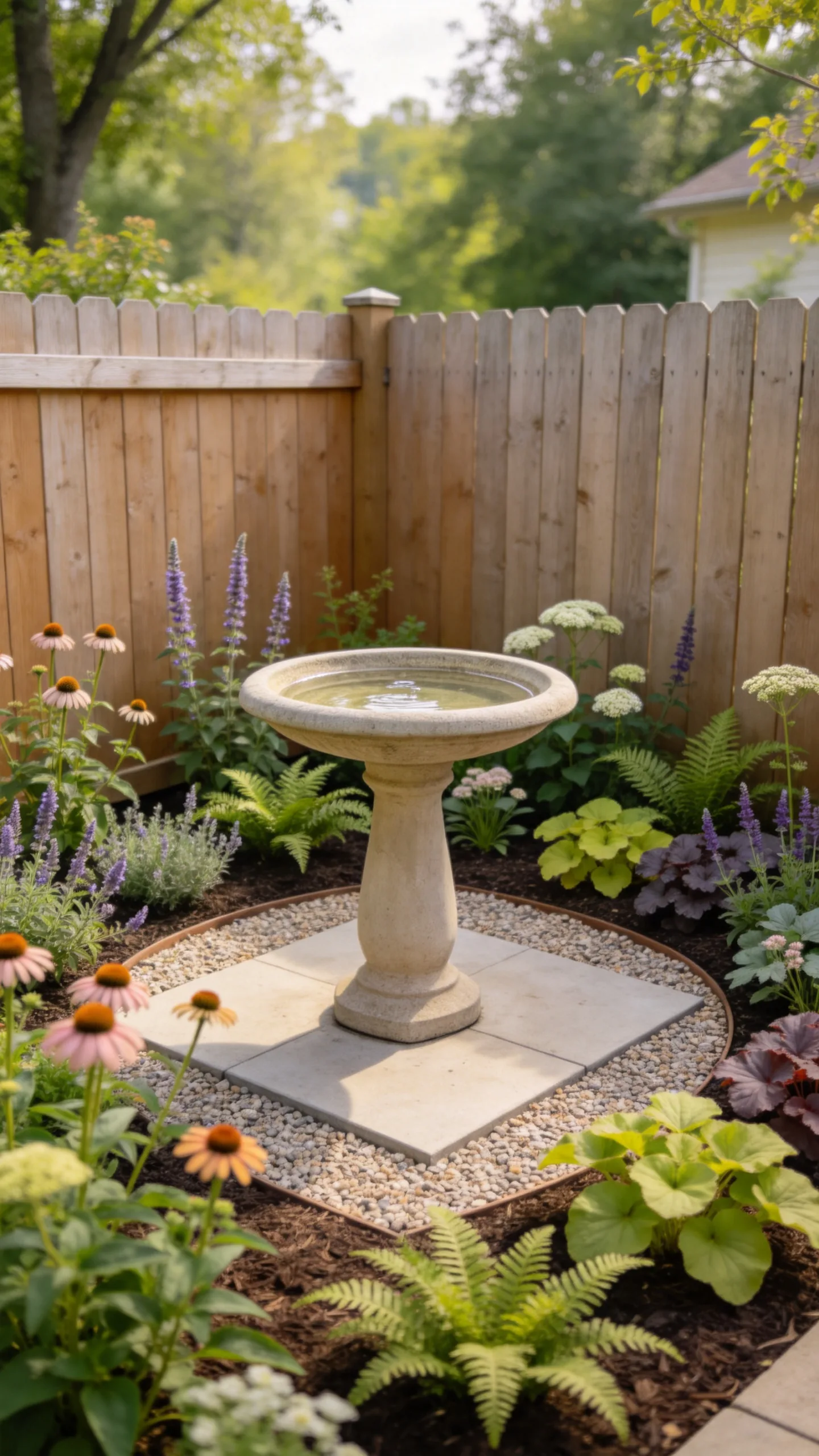
A birdbath can give a plain fence corner a focal point without requiring a large planting scheme. Set the birdbath on a flat paver or gravel pad so it stays level and is easy to clean. Around it, plant a simple ring of hardy perennials that match the light exposure.
For sunny corners, try coneflower, black-eyed Susan, salvia, yarrow, or catmint. For part shade, consider heuchera, ferns, columbine, or hardy geranium. Choose a few repeat plants rather than many different varieties. This keeps the corner attractive while making watering, cutting back, and seasonal cleanup easier.
17. Fence Corner With Vertical Planter Pockets
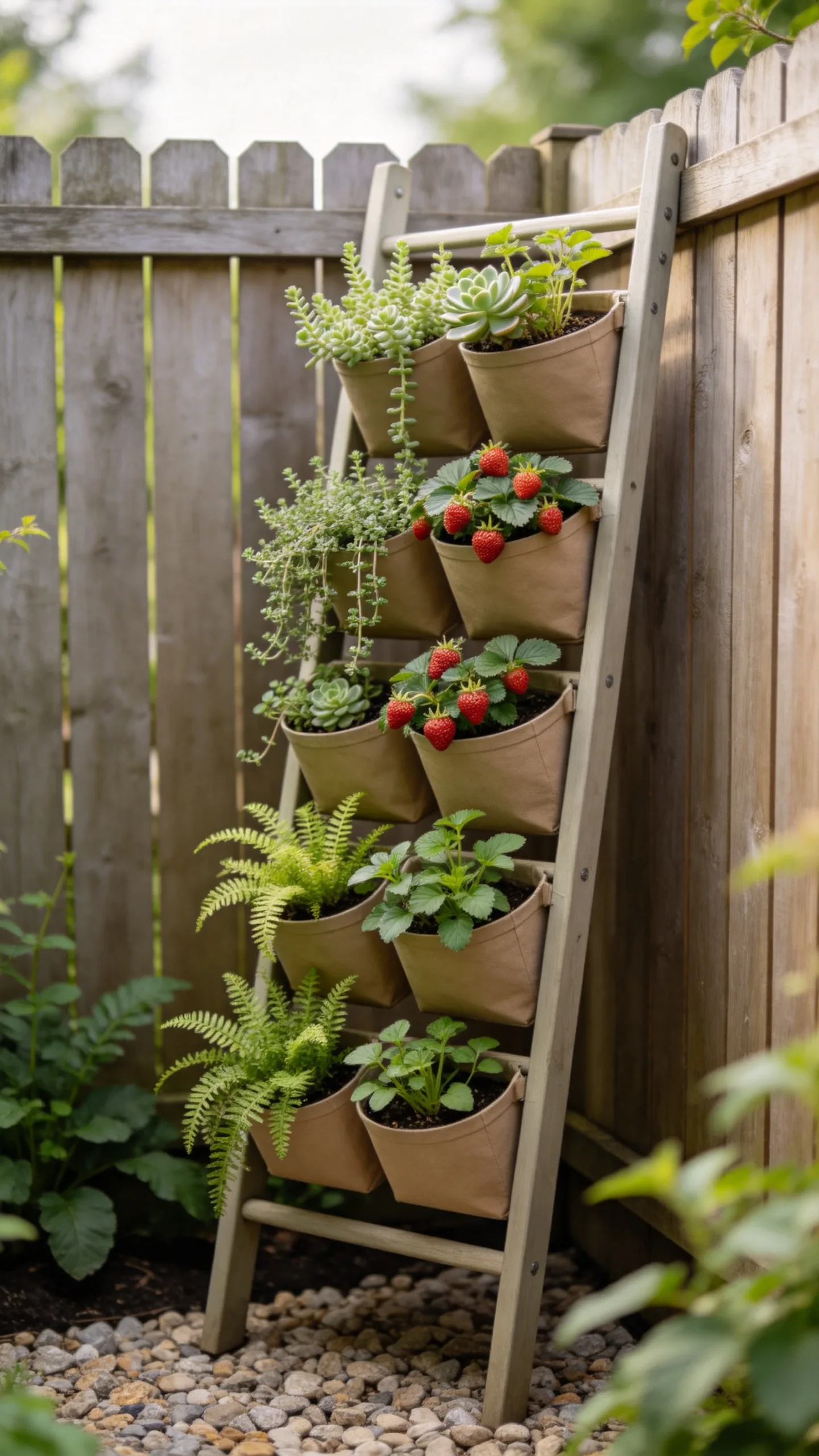
A vertical planter is a smart solution when the ground space by the fence is too small for a full bed. Use a freestanding vertical garden frame, a ladder-style planter, or fence-safe hanging pockets mounted according to the fence material. This keeps plants off the ground and turns a narrow corner into a living display.
Choose compact, easy-care plants such as trailing sedum, thyme, strawberries, small ferns, pothos in frost-free shade, or annual herbs. Vertical planters dry out faster than ground beds, so they are lowest maintenance when placed where you can water them easily. A drip line or self-watering pocket system can make this idea more practical in hot weather.
18. Clean Corner With Mulch, Edging, and Solar Lights
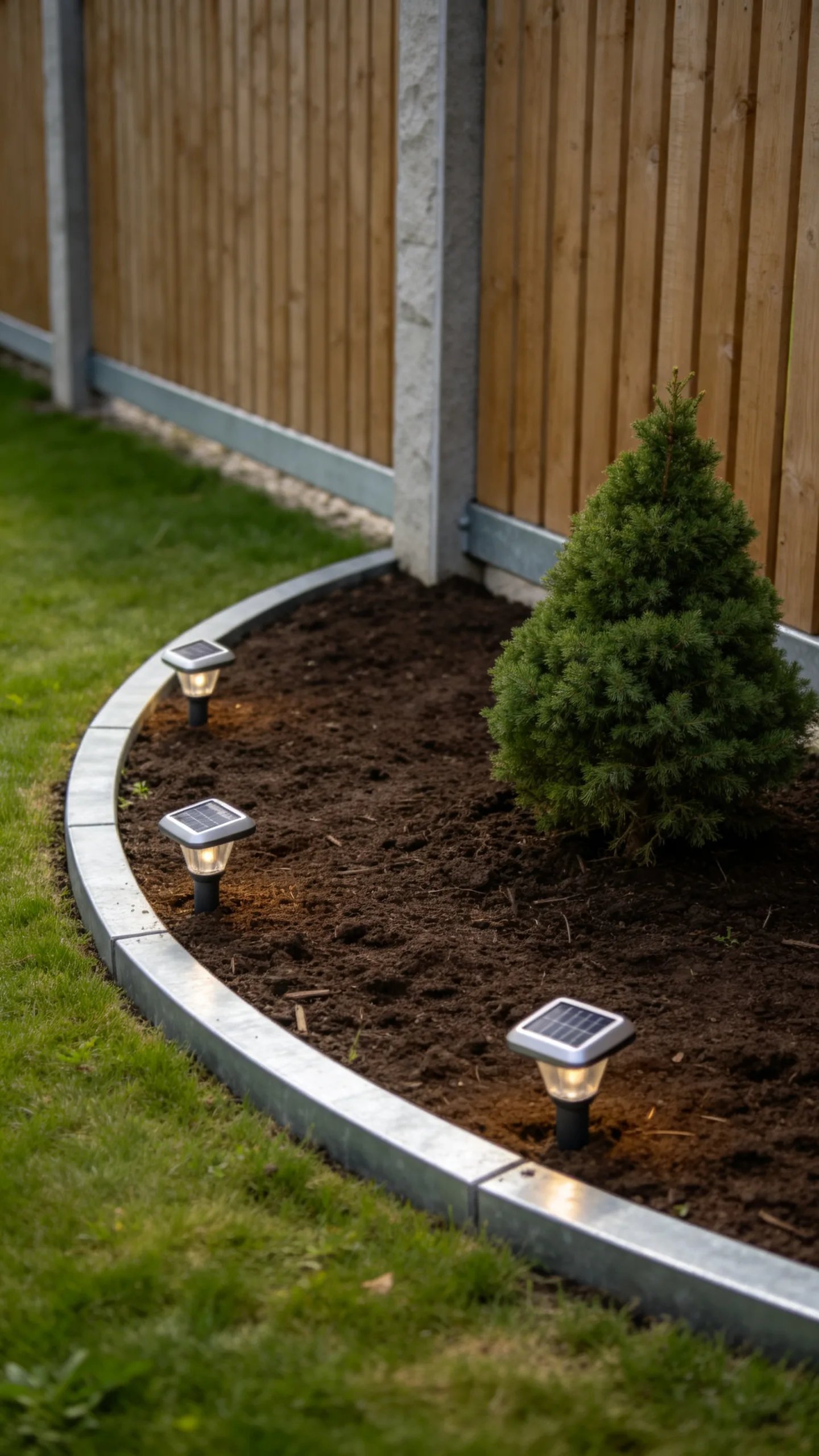
If you want the lowest-effort upgrade, focus on a clean bed shape, mulch, edging, and lighting instead of adding many plants. Cut a simple quarter-circle or triangular bed into the fence corner, install metal, stone, or composite edging, and cover the soil with mulch. Add just one shrub or leave the bed mostly open if the goal is weed control and visual neatness.
Place two or three solar path lights along the curve of the edging or near the fence posts. The lights make the corner feel finished at night without wiring. This idea is especially useful for rental-friendly yards or homeowners who want a polished look before committing to more planting.
19. Mixed Evergreen and Perennial Corner Bed
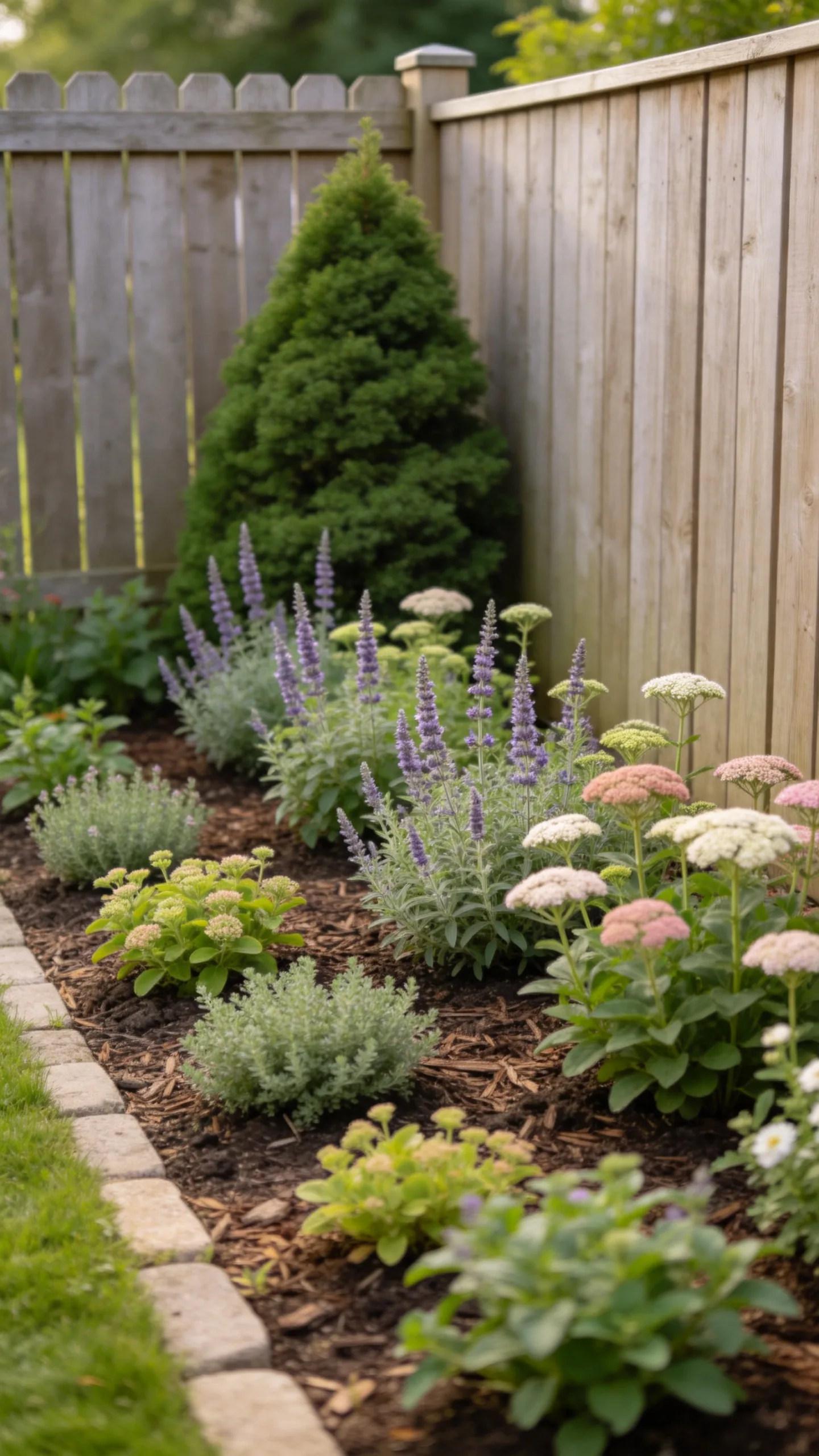
A mixed corner bed can still be low-maintenance if the plant list is short and the mature sizes are planned carefully. Start with one evergreen anchor shrub near the back of the corner, then add three to five repeat perennials in front. Good combinations might include dwarf holly with catmint, boxwood with salvia, or compact juniper with sedum in sunny areas.
Use repetition instead of variety to make the bed look intentional. Keep taller plants near the fence and lower plants along the front edge so the corner has layers without feeling crowded. Mulch the whole bed, water deeply during establishment, and choose plants suited to your sunlight and soil so the design does not depend on constant intervention.