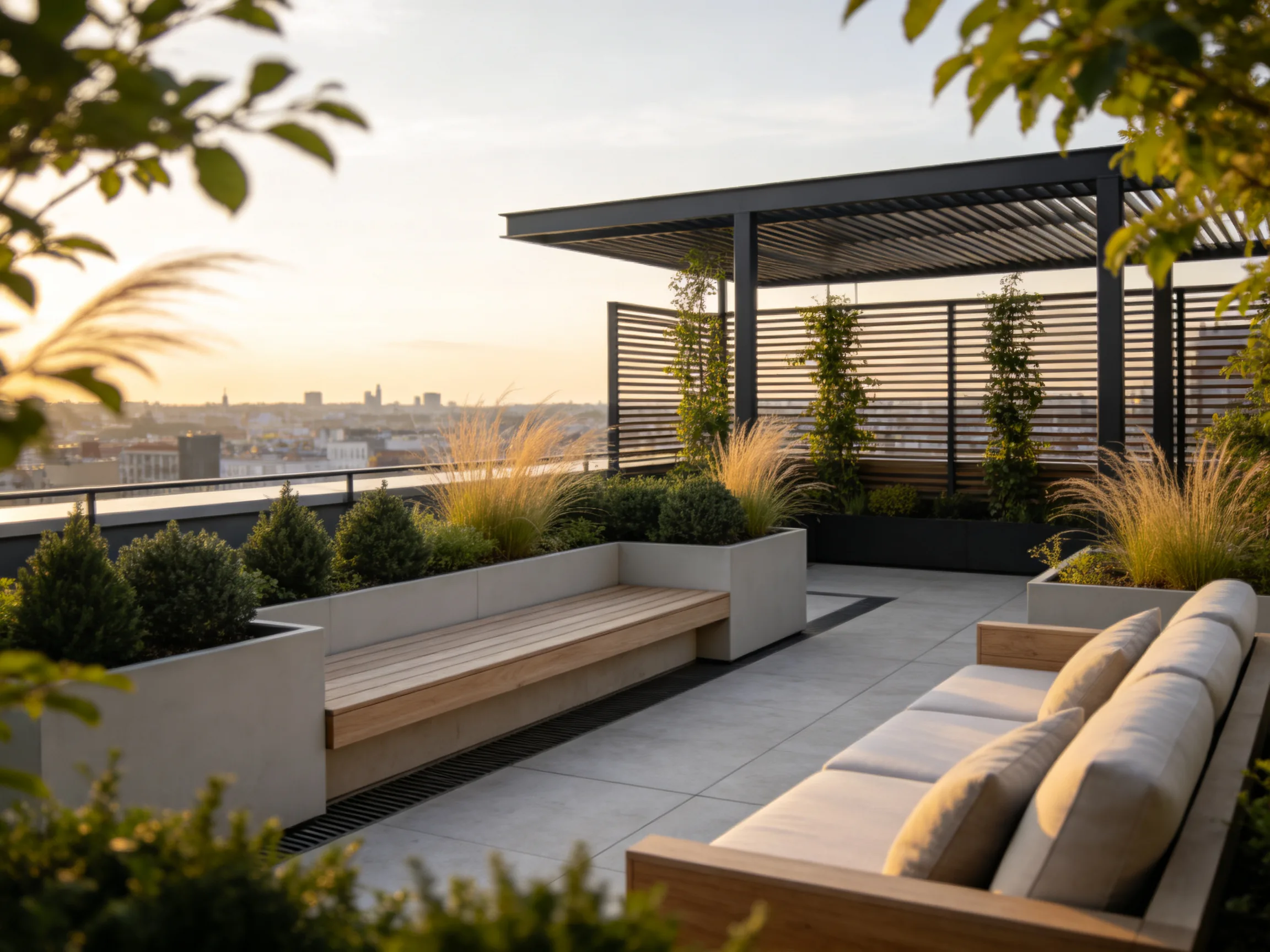
A successful roof garden design balances comfort, greenery, screening, and the practical limits of an elevated space. Before adding heavy containers, decking, pergolas, or water features, confirm the roof’s load capacity, drainage requirements, waterproofing, wind exposure, and local safety rules with qualified professionals. Then use the ideas below to create a rooftop that feels polished, relaxing, and genuinely useful.
1. Built-In Perimeter Bench With Integrated Planters
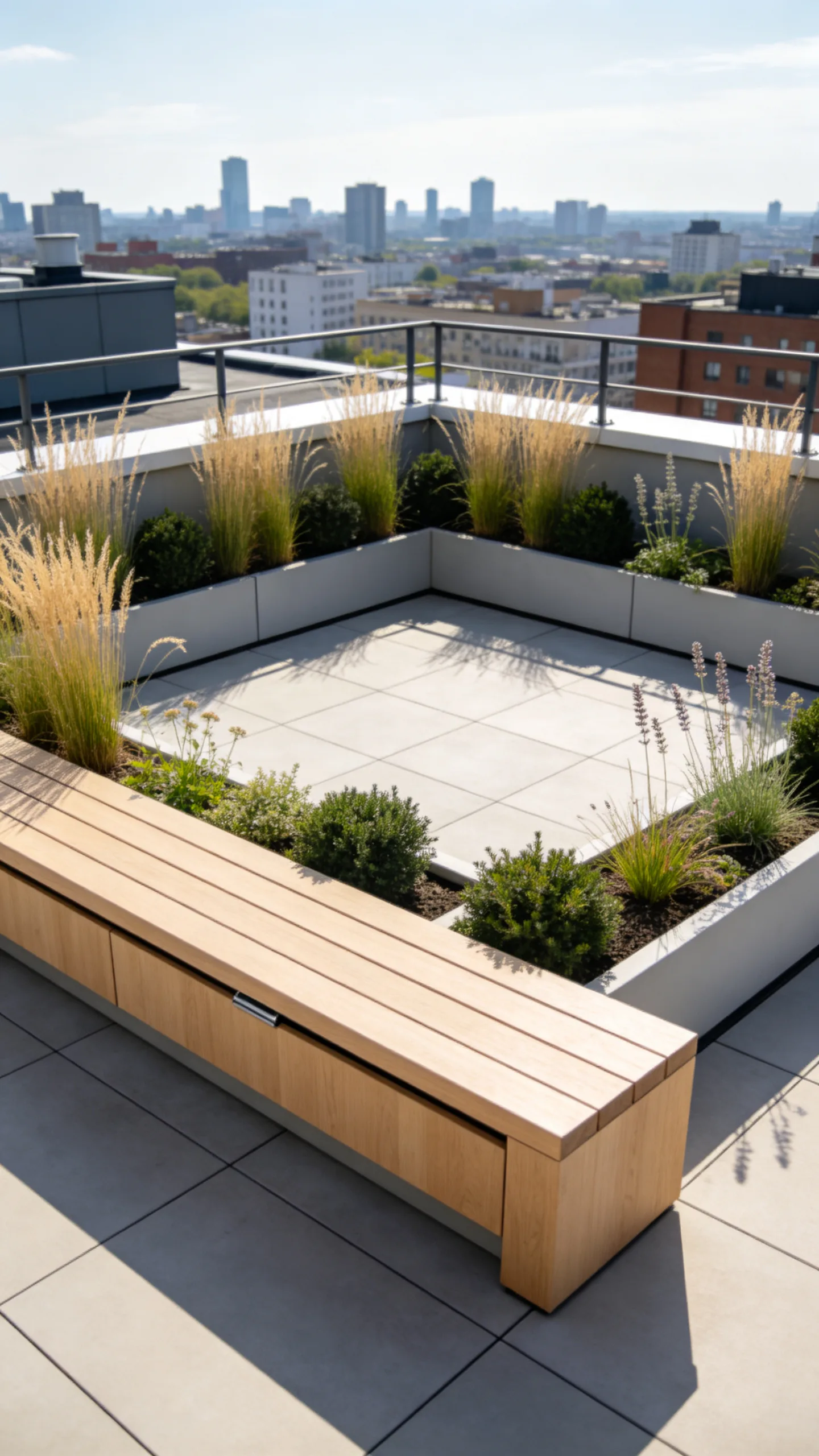
Run a built-in bench along one or two roof edges to create generous seating without filling the center of the terrace with chairs. A slim, backless design keeps sightlines open, while a high-backed version can provide extra privacy where neighboring buildings overlook the space. Include hinged or lift-up seats for storing cushions, small tools, and watering supplies.
Place integrated planters behind the bench to soften railings and create a green backdrop. Upright ornamental grasses, compact evergreen shrubs, and long-flowering perennials work well, provided they suit the local climate and rooftop light. Use lightweight containers with drainage holes, root-resistant liners, and a potting mix formulated for containers.
2. Slatted Privacy Wall With Climbing Plants
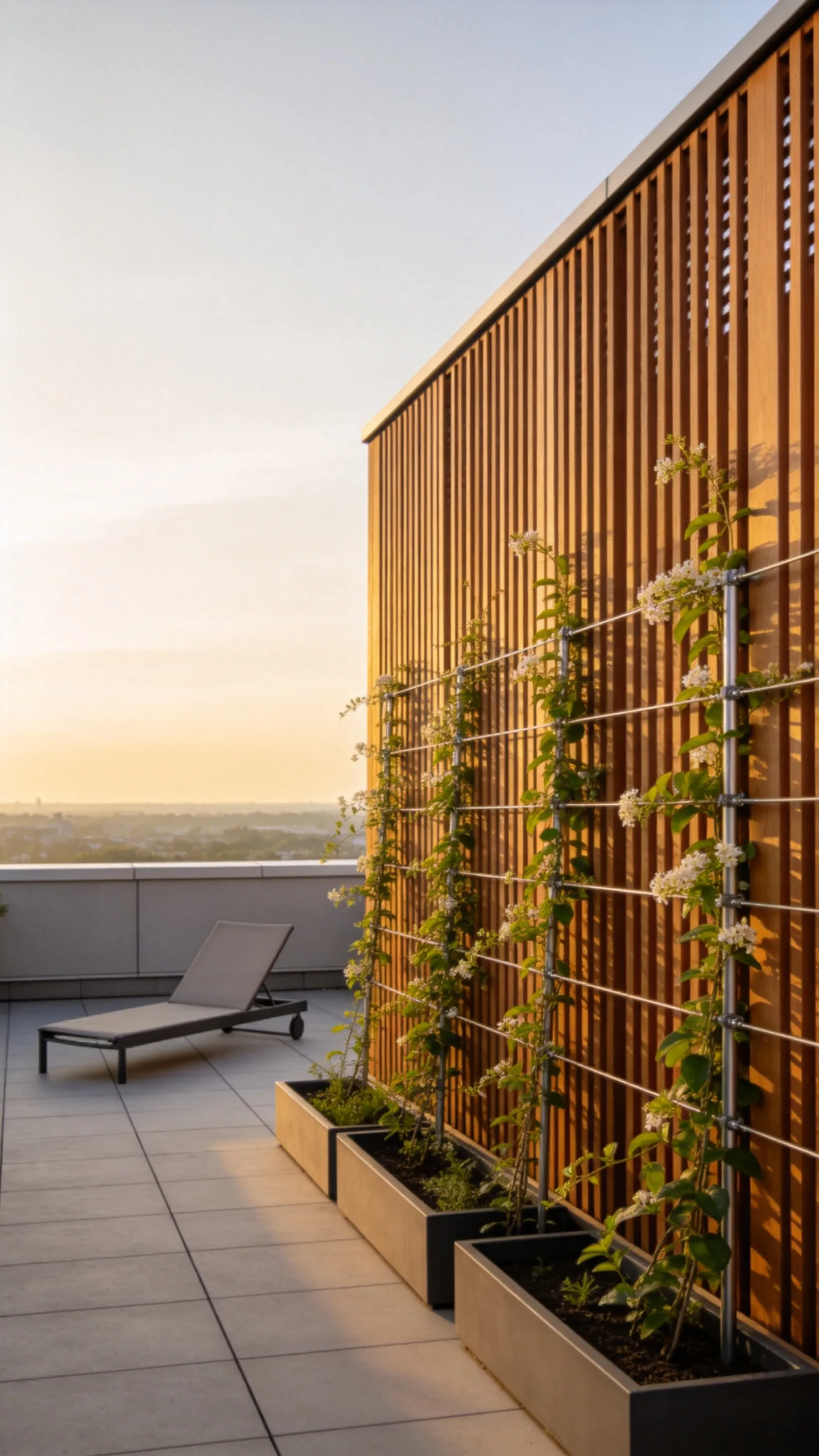
Install a vertical screen made from narrow timber battens, powder-coated aluminum, or composite slats. Small gaps allow air to pass through, which is important on windy rooftops, while the repeated lines give the garden a clean, contemporary look. Position the screen only where privacy is needed so the terrace does not feel enclosed.
Add narrow trough planters at the base and train climbers onto stainless-steel wire or a separate trellis. Star jasmine, clematis, honeysuckle, or climbing hydrangea may be suitable depending on climate and sun exposure. Keep vines off vulnerable building surfaces, and choose containers large enough to prevent roots from drying out rapidly.
3. Pergola Lounge With Retractable Shade
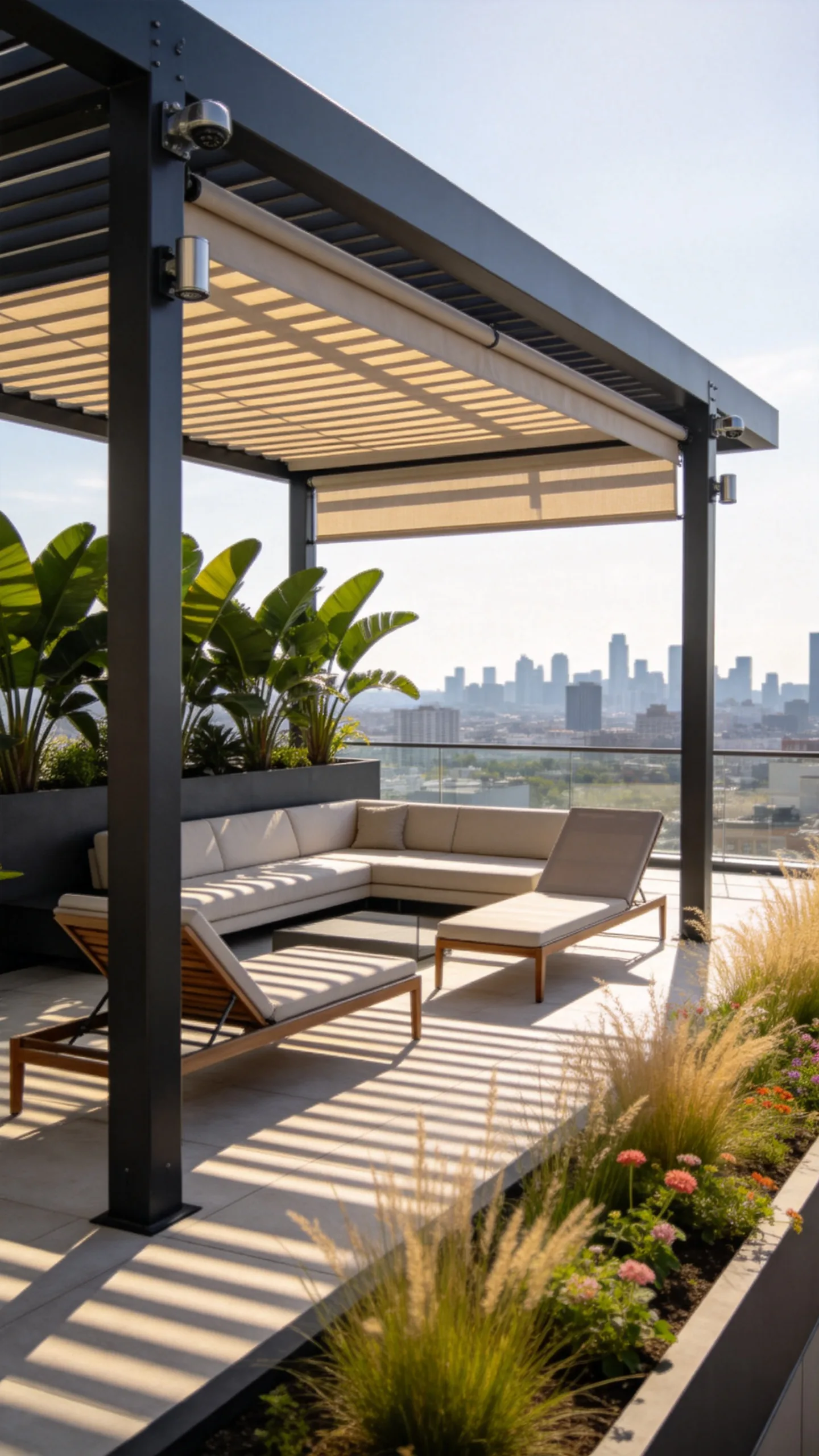
Define a rooftop living room with a slim metal or timber pergola placed over a weather-resistant sofa and two lounge chairs. A retractable canopy or adjustable louvers can provide midday shade without permanently blocking light. Select furniture with a low profile so the structure feels spacious rather than top-heavy.
Anchor any pergola according to structural and local code requirements; freestanding structures can be dangerous in strong wind if they are not professionally secured. Around the lounge, use large planters filled with shade-tolerant foliage beneath the canopy and sun-loving plants along the exposed edges.
4. Modular Seating Around Movable Planters
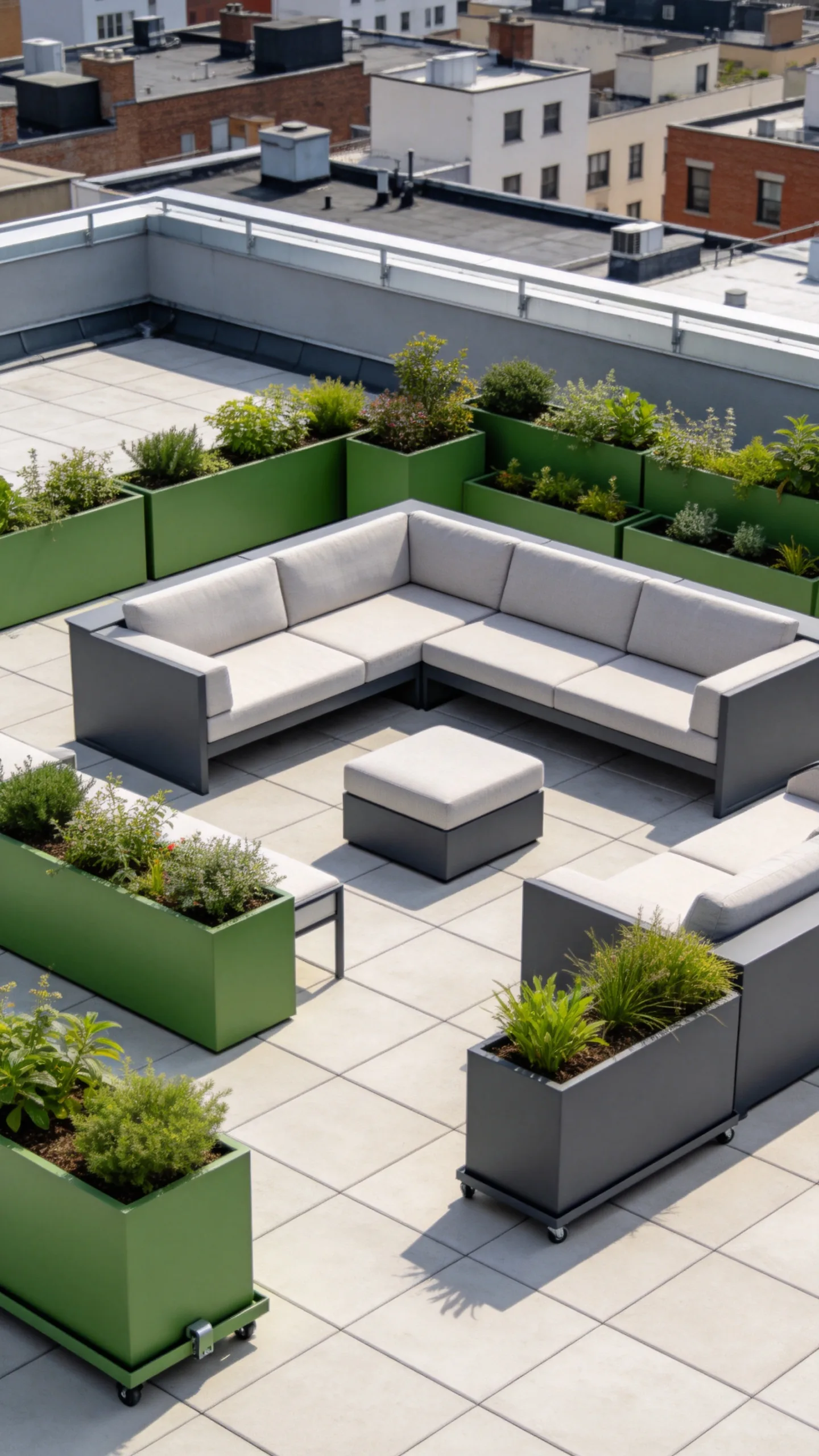
Use modular outdoor seating that can be rearranged for quiet mornings, family meals, or larger gatherings. Armless chairs, ottomans, and compact corner units offer more flexibility than one oversized sectional. Choose pieces with weighted frames and secure cushions so they remain stable during windy weather.
Place lightweight fiberglass or resin planters between seating modules to act as green dividers. Containers on lockable plant caddies can be moved when the layout changes, although they should be secured during storms. Repeat one container color and two or three plant types to maintain a modern, coordinated appearance.
5. Raised Deck Platform With a Conversation Area
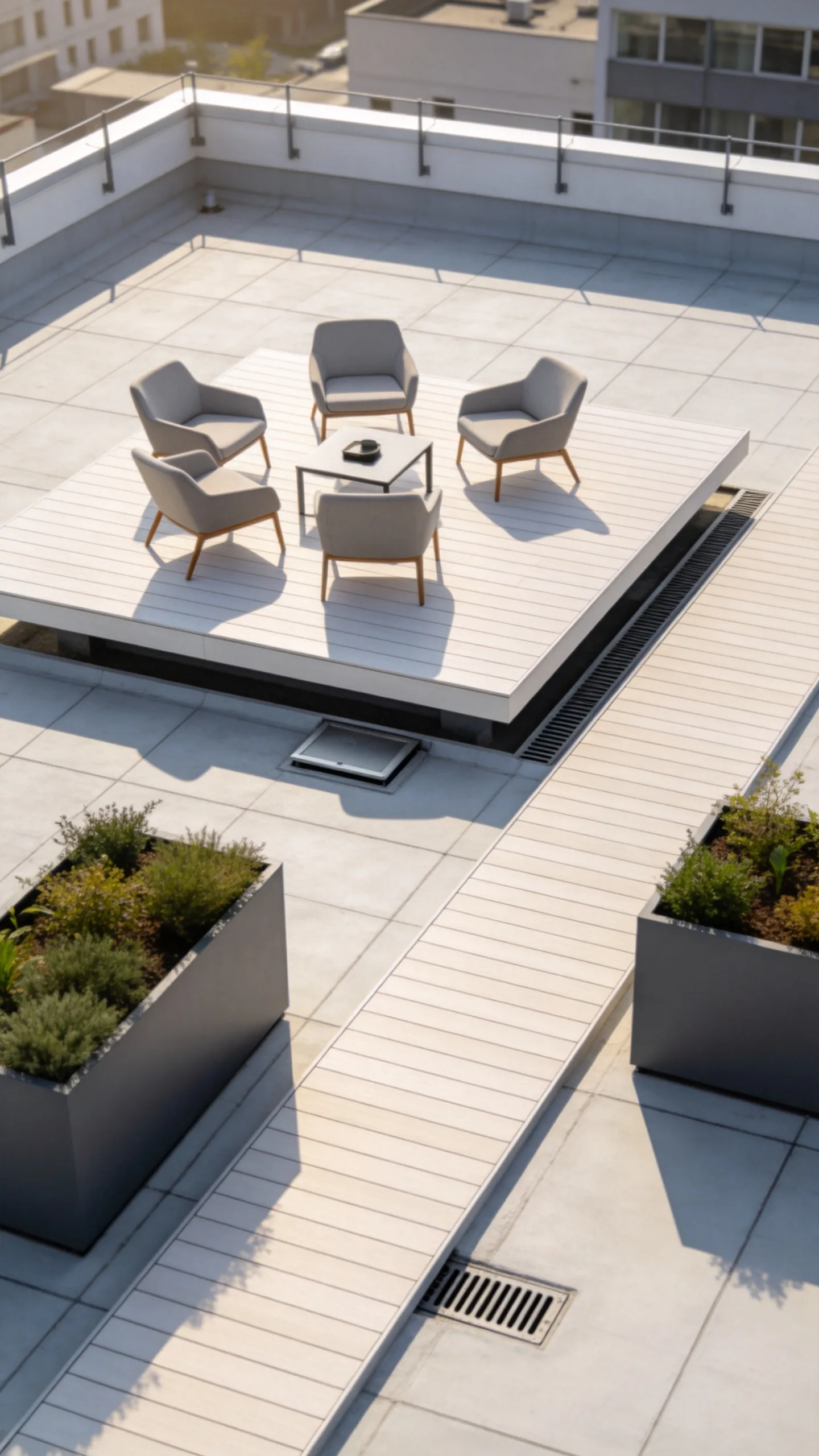
Create a distinct seating zone with a floating deck platform made from porcelain pavers, composite boards, or removable deck tiles. A subtle change in flooring makes the lounge feel like an outdoor room without requiring solid walls. Arrange four chairs around a compact coffee table to encourage conversation while preserving clear walking routes.
The platform must not block roof drains or trap moisture against the waterproof membrane. Use an approved pedestal or support system that allows water to flow beneath the surface, and retain access panels for inspections. Large planters placed beside the deck can provide privacy without adding permanent partitions.
6. Space-Saving Dining Banquette
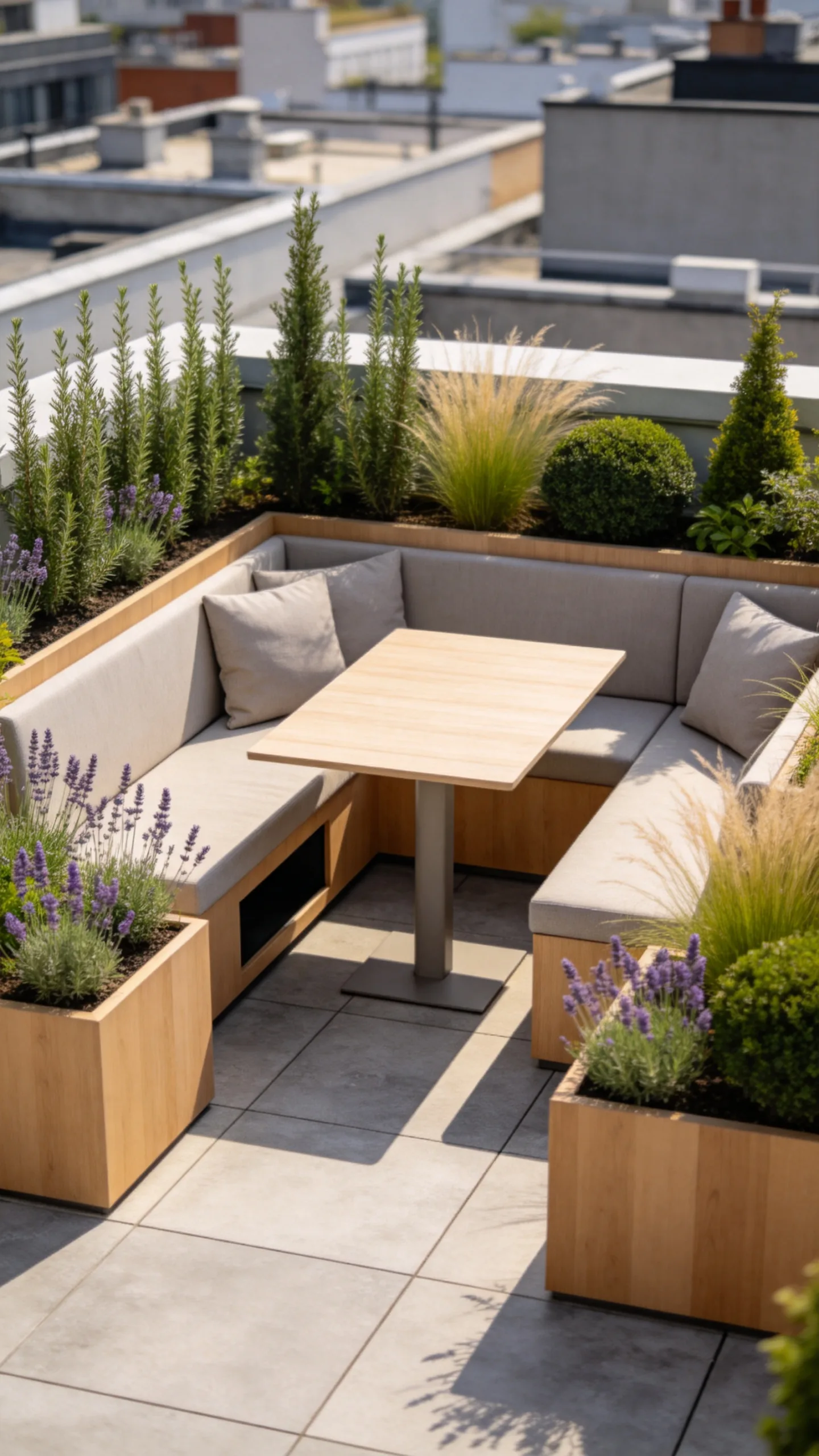
Fit an L-shaped banquette into an underused corner to create a rooftop dining area with a smaller footprint than separate chairs. Pair it with a narrow rectangular table or a pedestal table that is easy to move around. Upholstered outdoor cushions add comfort, while storage beneath the seats keeps serving pieces and garden accessories out of sight.
Frame the banquette with slim planters containing upright rosemary, dwarf lavender, compact grasses, or clipped evergreens. Choose plants according to sun and winter temperatures, and avoid thorny or strongly bee-attracting flowers immediately beside shoulder-level seating if diners need a calmer setting.
7. Ornamental Grass Troughs for Soft Privacy
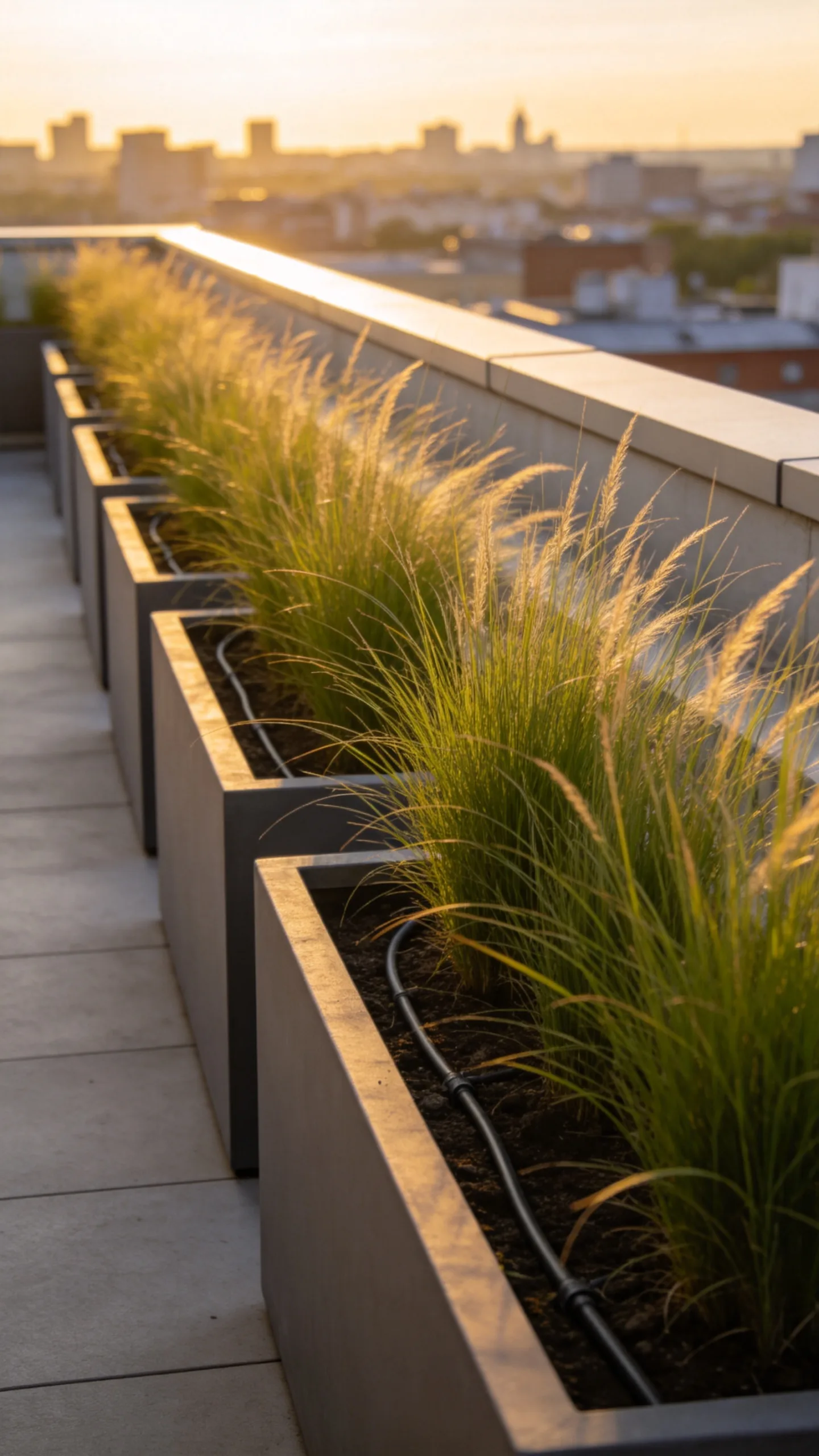
Line an exposed roof edge with long rectangular troughs planted with ornamental grasses. Their vertical foliage filters views, moves gently in the breeze, and creates privacy without forming a solid wall that catches excessive wind. Repeating identical containers gives the boundary a crisp architectural rhythm.
Select clumping, noninvasive grasses with a mature size appropriate for the space. Feather reed grass, switchgrass, fountain grass, or smaller sedges may be options depending on local conditions. Grasses in containers need consistent moisture during hot weather, so a drip line can make care easier and reduce water waste.
8. Layered Evergreen Screen for Year-Round Cover
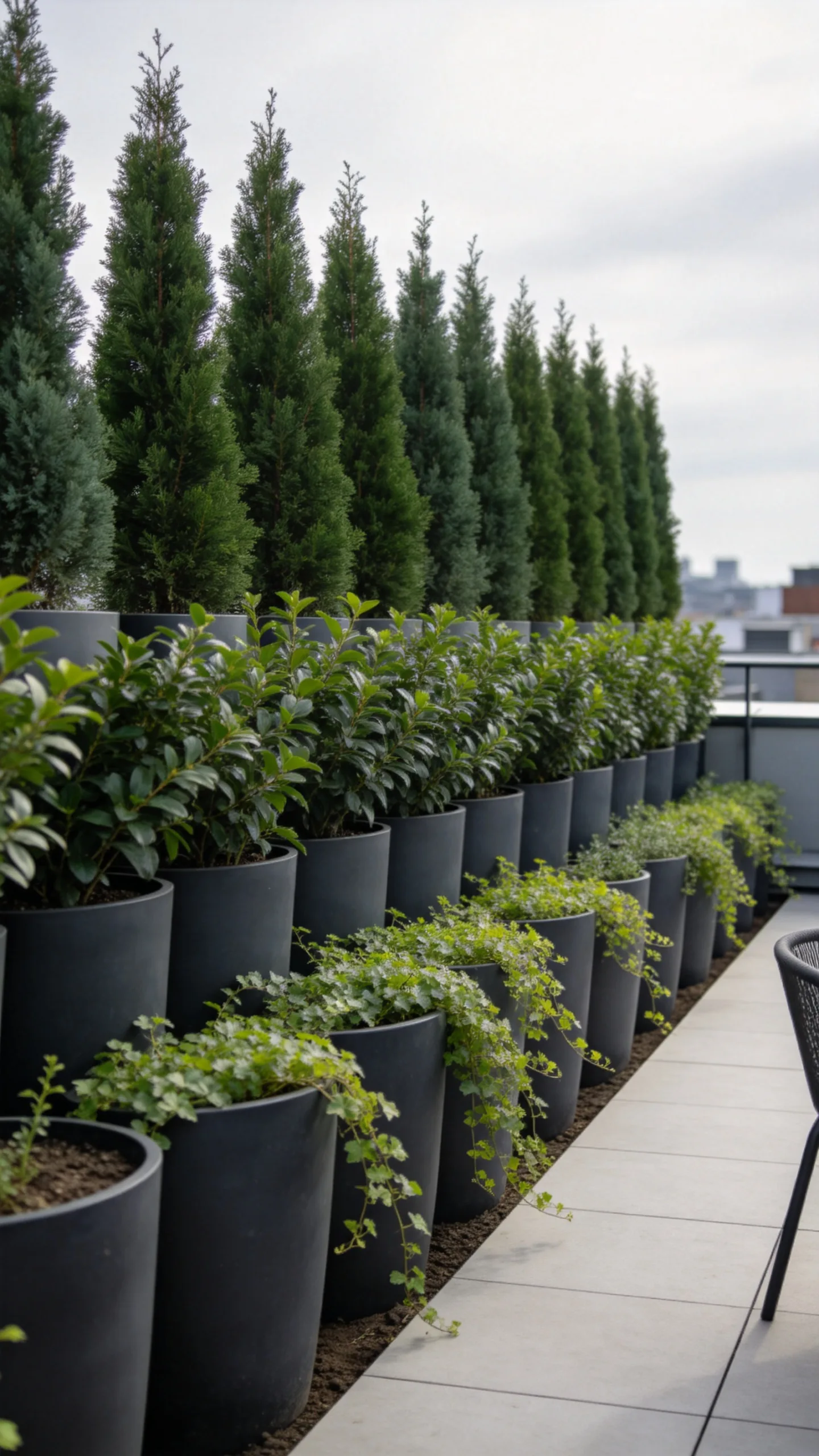
Combine evergreens of different heights to create a privacy screen that remains useful outside the main growing season. Place taller, narrow shrubs at the back, medium foliage plants in the center, and trailing plants near the planter edges. This layered arrangement provides depth while hiding the bare soil surface.
Compact junipers, upright yews, dwarf pines, pittosporum, or other locally hardy shrubs can work in sufficiently large containers. Check whether the chosen plants tolerate rooftop wind and winter root exposure. Grouping pots helps shelter roots, but containers may still require insulation or seasonal protection in cold climates.
9. Rooftop Herb Bar With Counter Seating
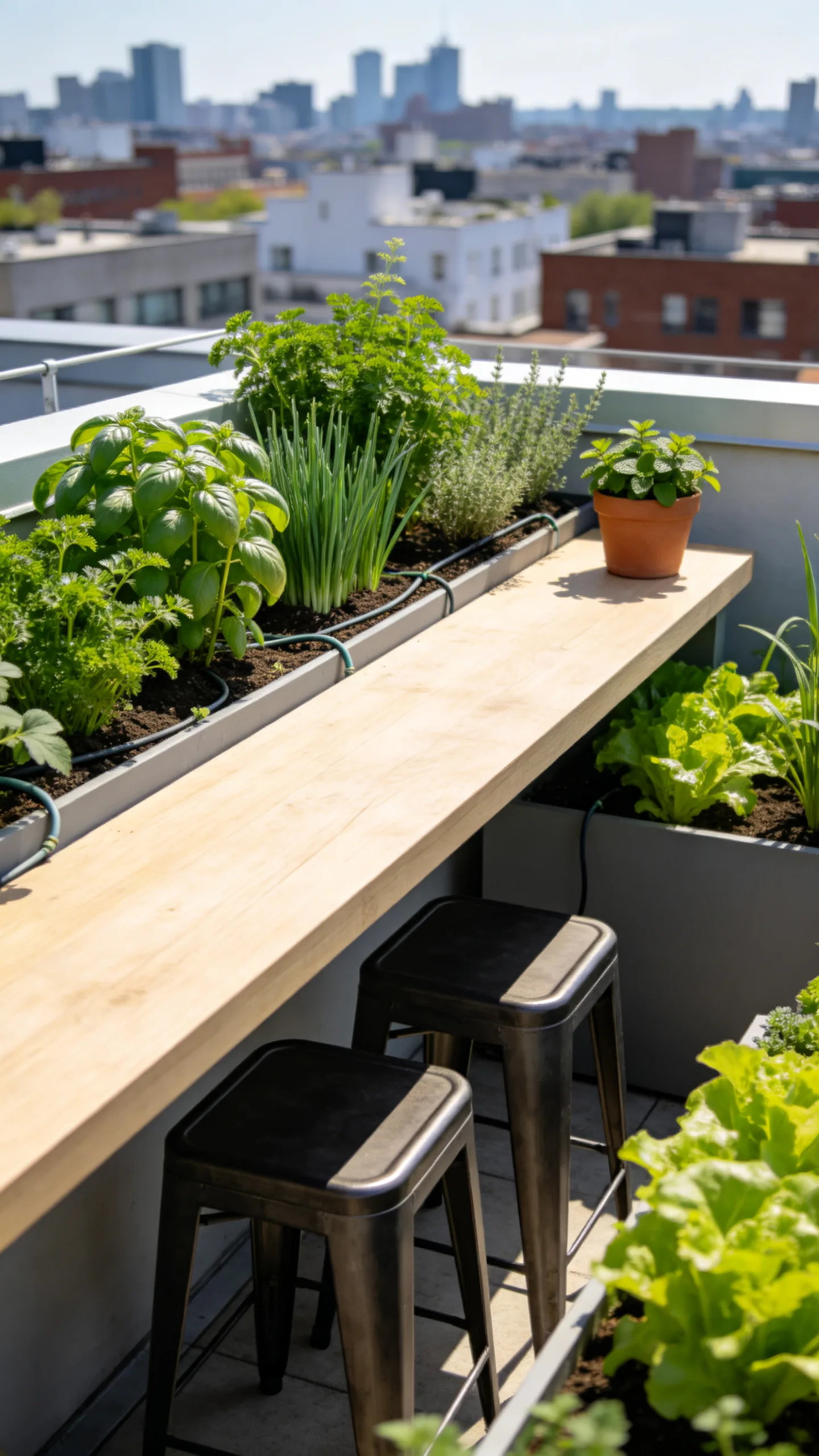
Turn a sunny section into a compact kitchen garden with a narrow counter and two or three stools. Position waist-high planters behind the counter so basil, parsley, chives, thyme, mint, and salad greens are easy to harvest. Keep mint in its own pot to prevent it from crowding other herbs.
A counter facing the view can serve as a breakfast bar, drinks station, or small work surface. Most culinary herbs need good drainage, and many require at least several hours of direct sun. Install drip irrigation or choose self-watering planters if daily watering is unrealistic during summer.
10. Corner Sectional Surrounded by Layered Pots
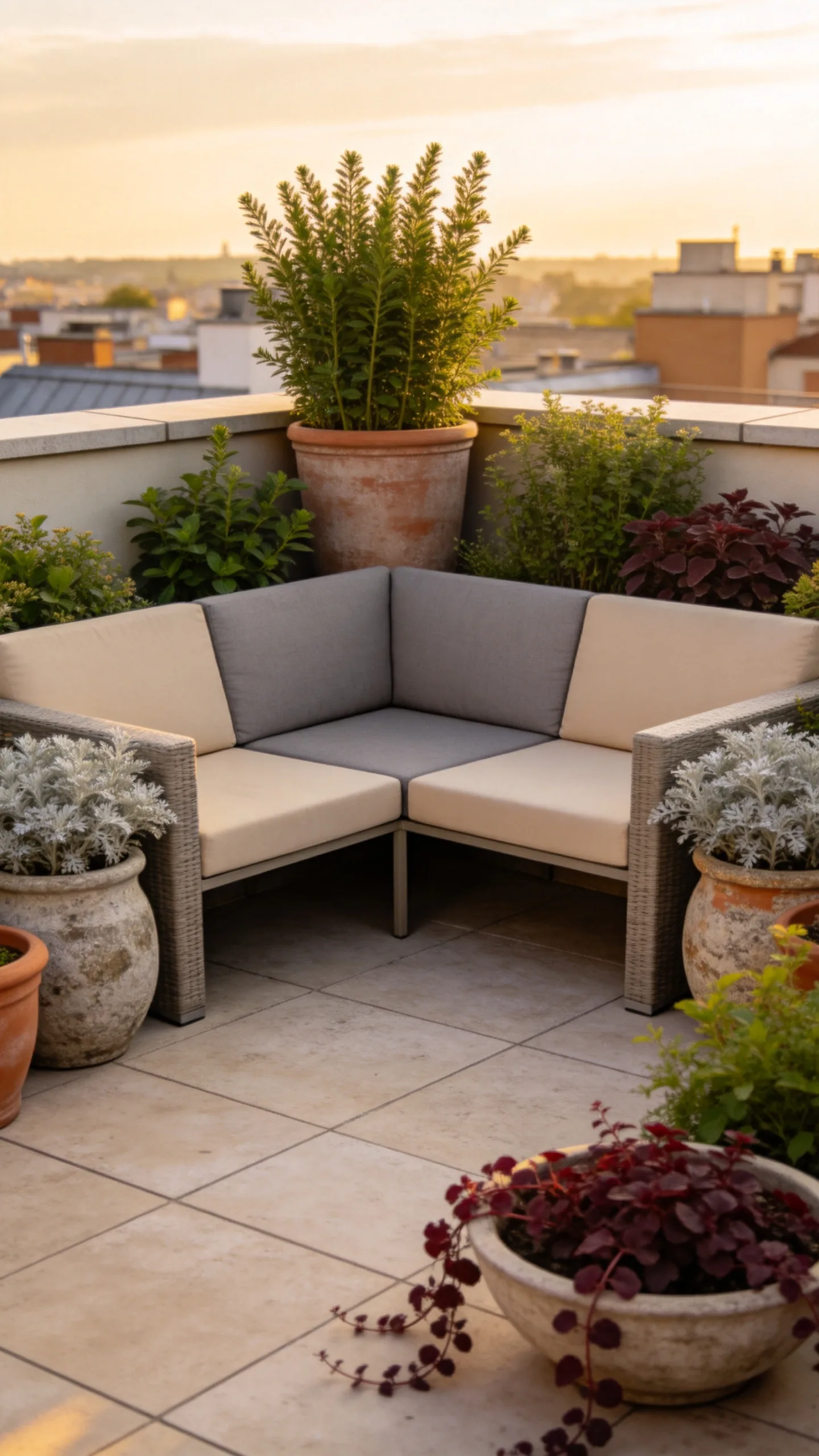
Use a compact corner sectional to anchor the roof’s most sheltered area, then arrange containers in staggered heights around it. Tall pots at the back, medium containers beside the arms, and low bowls near the front create a lush setting without reducing legroom. Leave one side open for an easy route into the seating area.
Limit the planting palette to a few repeated foliage colors, such as deep green, silver, and burgundy. Combine structural plants with softer spillers for contrast, but keep mature sizes in mind. Place heavier containers in their final positions before filling them, and verify that the concentrated load is safe for the roof.
11. Cable Trellis Green Wall Behind a Bench
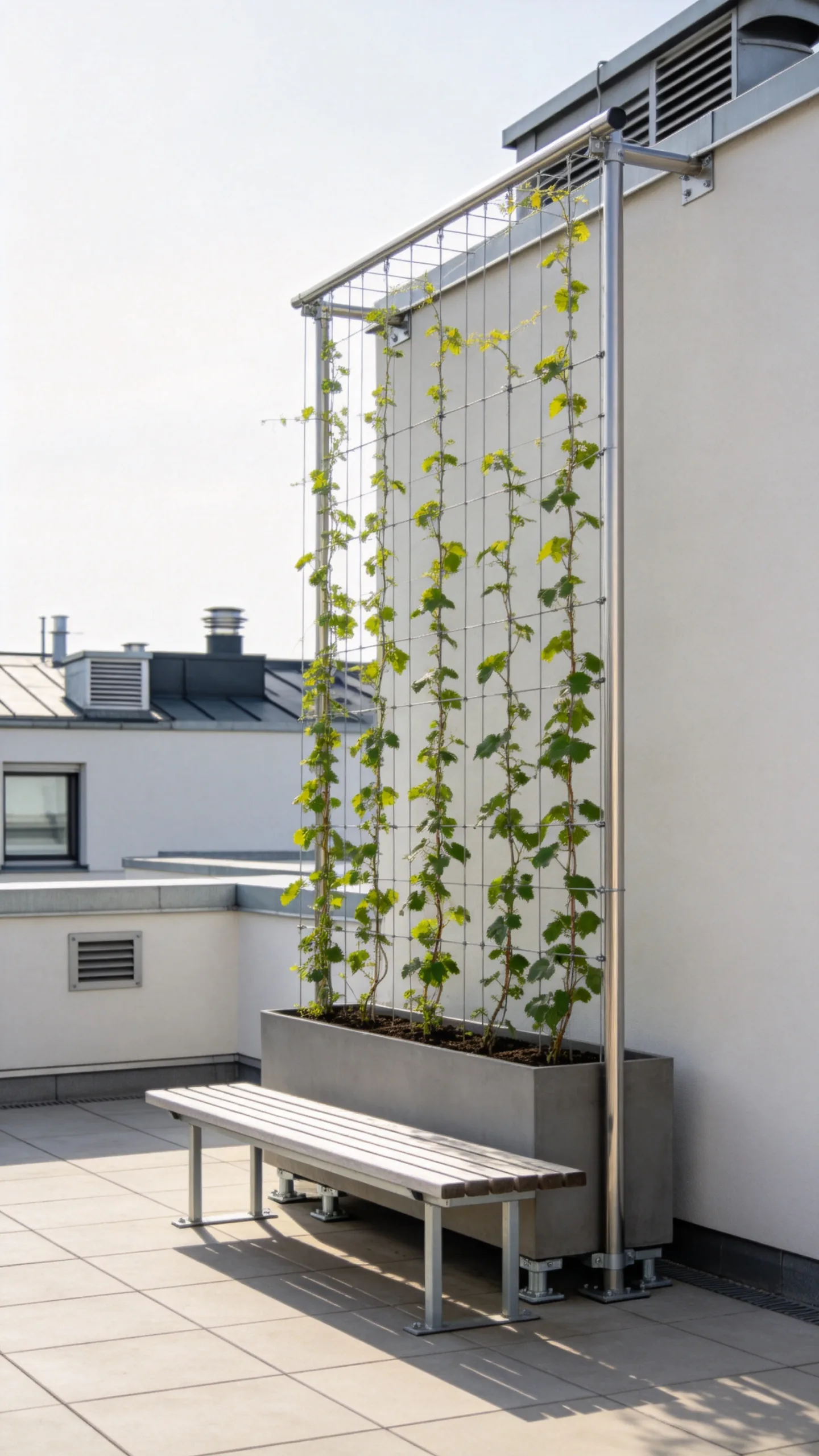
Mount a stainless-steel cable trellis in front of a suitable wall and place a simple bench beneath it. The cables take up very little space, making this approach practical for a narrow rooftop. As climbing plants establish, they create a living backdrop while keeping the floor open.
Plant each climber in a deep container with secure support at the base. Deciduous vines can provide summer shade and allow more winter light, while evergreen climbers offer longer-lasting privacy in mild climates. Regular pruning prevents growth from reaching gutters, vents, windows, or neighboring property.
12. Shade Sail Retreat With Low Planting
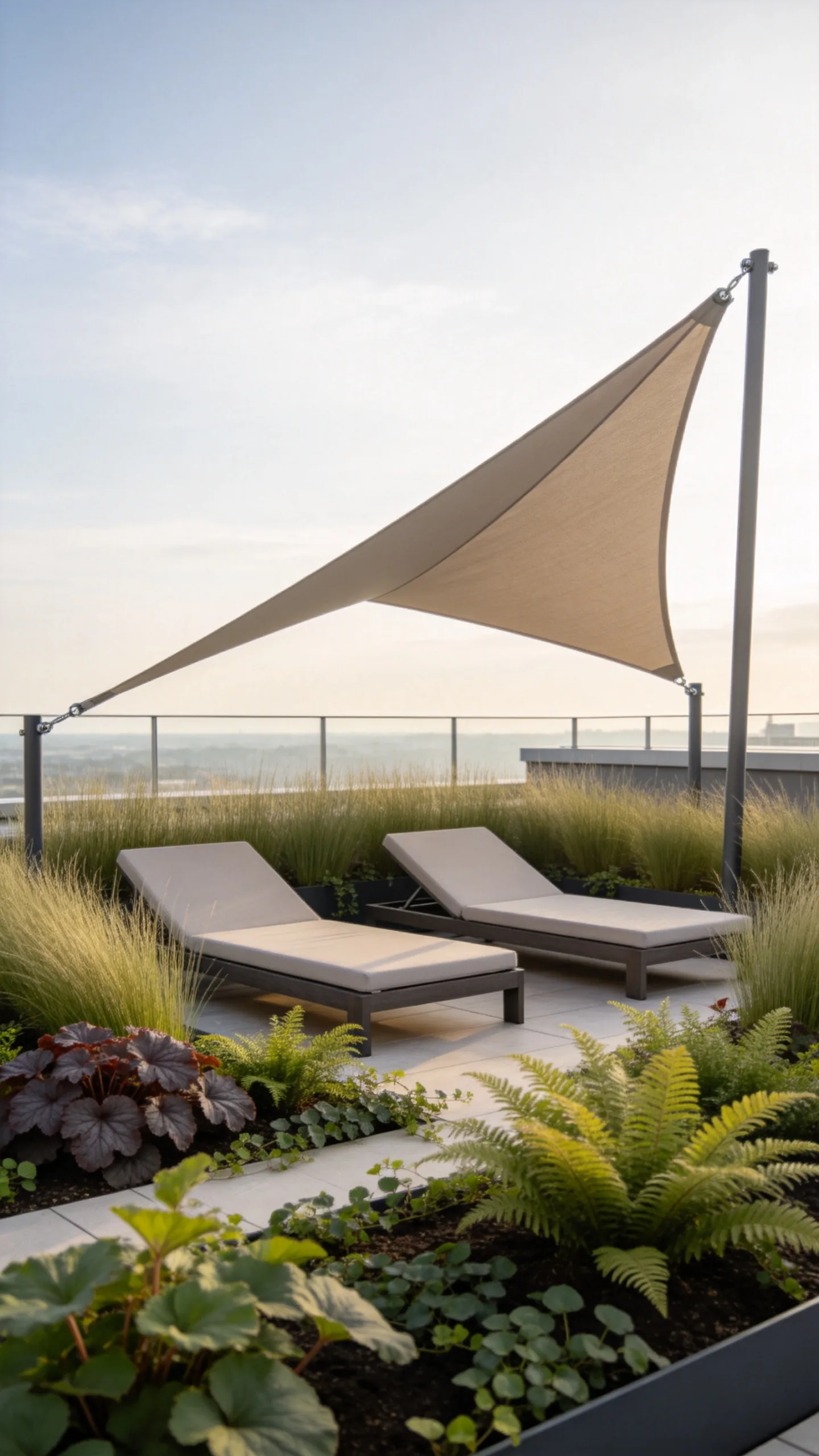
Stretch a UV-resistant shade sail above a pair of loungers or a small daybed to form a relaxed retreat. A triangular or offset rectangular sail looks modern and usually occupies less visual space than a solid roof. Angle it so rainwater drains rather than collecting in the fabric.
Because rooftop wind loads can be substantial, attachment points should be specified and installed by professionals. Use low-growing plants beneath and around the shaded zone, such as sedges, heucheras, ferns, or trailing ground covers suited to the available light. Keeping the planting low preserves airflow and makes the lounging area feel open.
13. Green Roof Mats With Stepping-Paver Seating
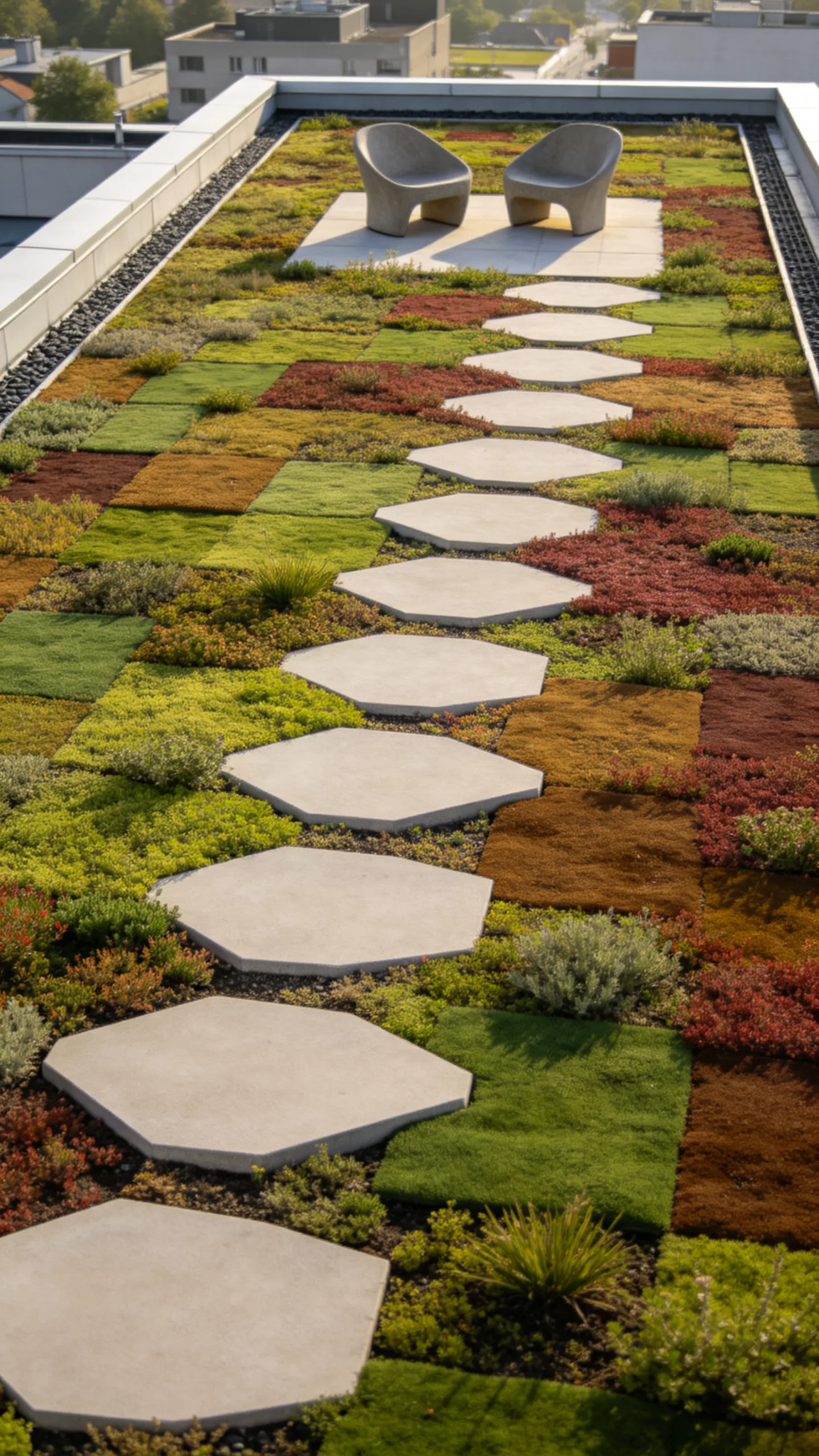
Where the structure and waterproofing system permit, install an extensive green roof section using shallow growing media and pre-grown sedum or drought-tolerant planting mats. Add large stepping pavers leading to a small bench or two sculptural chairs. The contrast between geometric paving and low vegetation creates a clean, contemporary effect.
A green roof requires a compatible waterproof membrane, root barrier, drainage layer, filter fabric, and safe maintenance access. Plant selection must match local rainfall, heat, and winter conditions. Even drought-tolerant roof plants may need supplemental irrigation while establishing and during prolonged dry periods.
14. Fire Table Lounge Framed by Nonflammable Planters
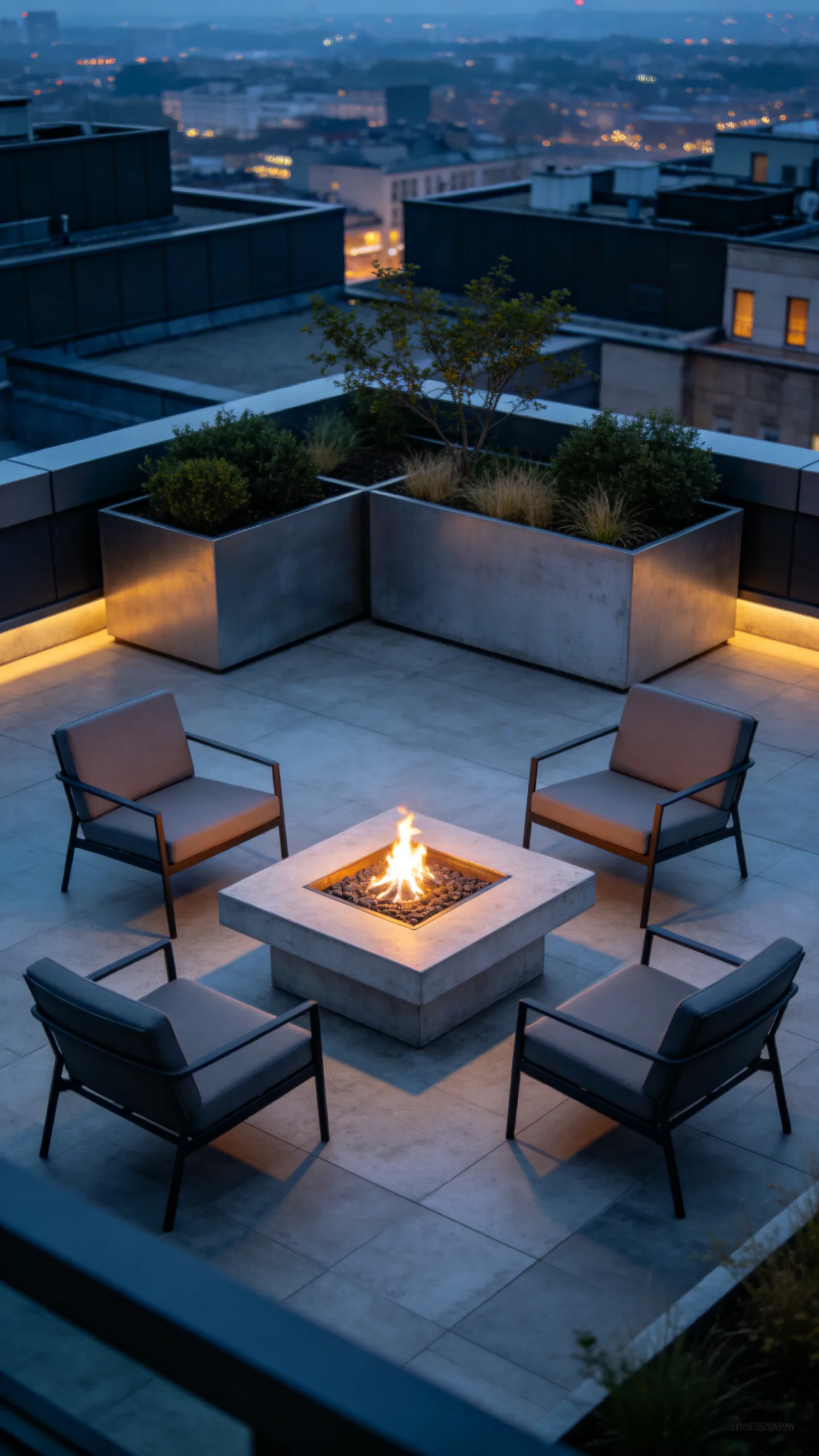
Center a seating group around a low gas fire table to extend rooftop use into cooler evenings. Arrange chairs with enough space for safe circulation, and select outdoor upholstery designed for the local weather. Concrete-look porcelain or metal surfaces reinforce a modern design while being easier to clean than unfinished materials.
Check building rules, fire codes, fuel-storage restrictions, and required clearances before installing any flame feature. Surround the area with nonflammable planters and avoid placing dry grasses or overhanging foliage close to heat. If open flames are not permitted, use a lantern grouping or an electric outdoor heater approved for the location.
15. Compact Water Feature Beside a Quiet Bench
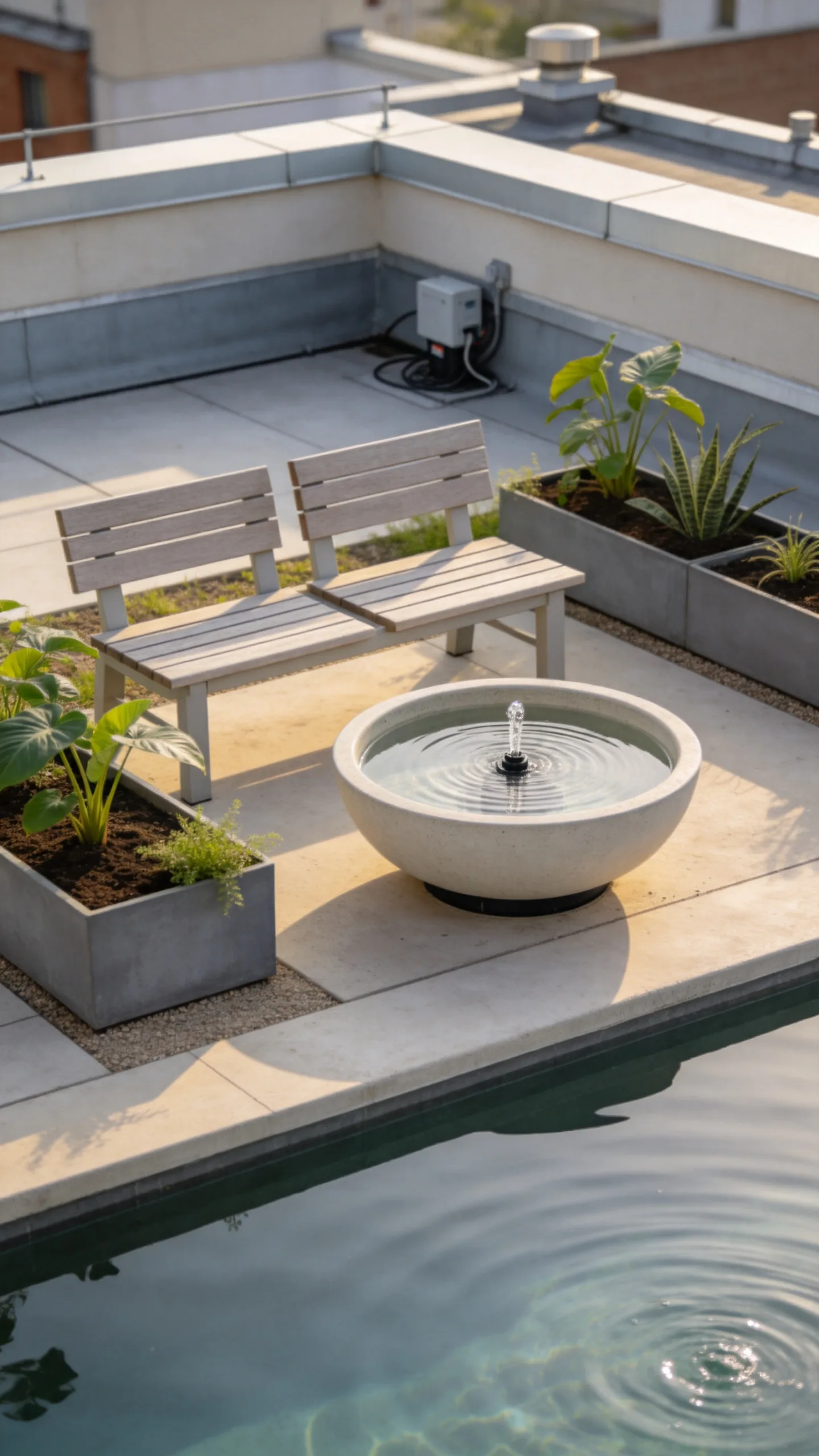
Place a self-contained recirculating water bowl or narrow wall fountain beside a two-person bench. Gentle water sound can soften city noise and make a small corner feel more secluded. Choose a simple basin with a concealed pump rather than a large pond that demands substantial weight and maintenance.
Confirm that the filled feature is within the roof’s load allowance and position it away from drains and electrical hazards. Use a cover or drain the system where freezing is likely. Moisture-loving plants can sit nearby, but their containers should remain separate so soil does not enter the pump.
16. Illuminated Night Garden With Discreet Seating
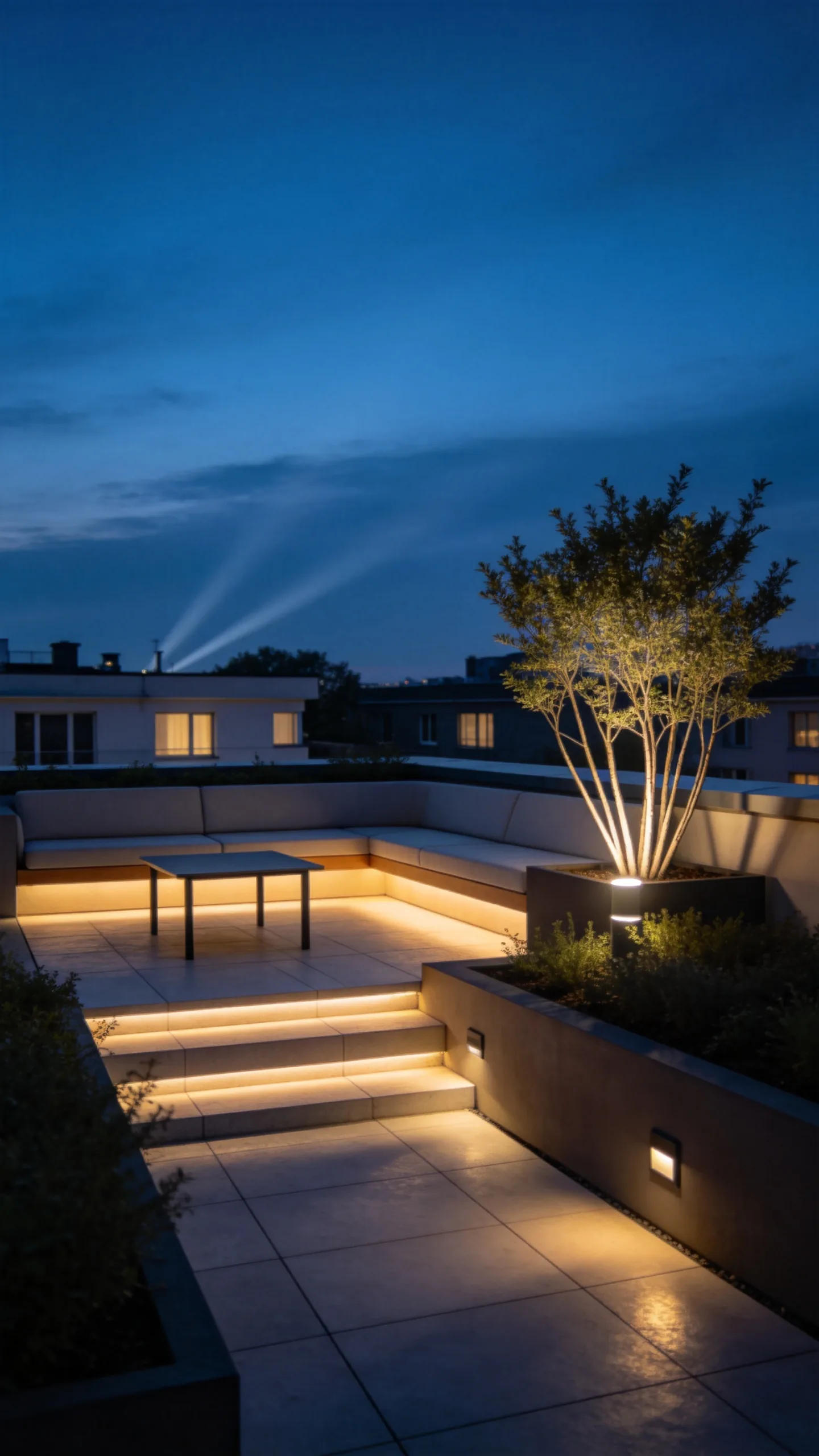
Design the roof for evening use by combining a slim sofa or dining set with layered low-voltage lighting. Install warm lights beneath benches, along steps, and at the base of planters rather than relying on one bright overhead fixture. This improves navigation while preserving a calm atmosphere.
Use uplights selectively on architectural plants such as multi-stem shrubs, compact trees, or sculptural grasses. All electrical equipment should be rated for outdoor exposure and installed safely. Shield fixtures to reduce glare for neighbors, and add timers or smart controls so lights do not remain on unnecessarily.
17. Wind-Tolerant Container Grove With Sheltered Chairs
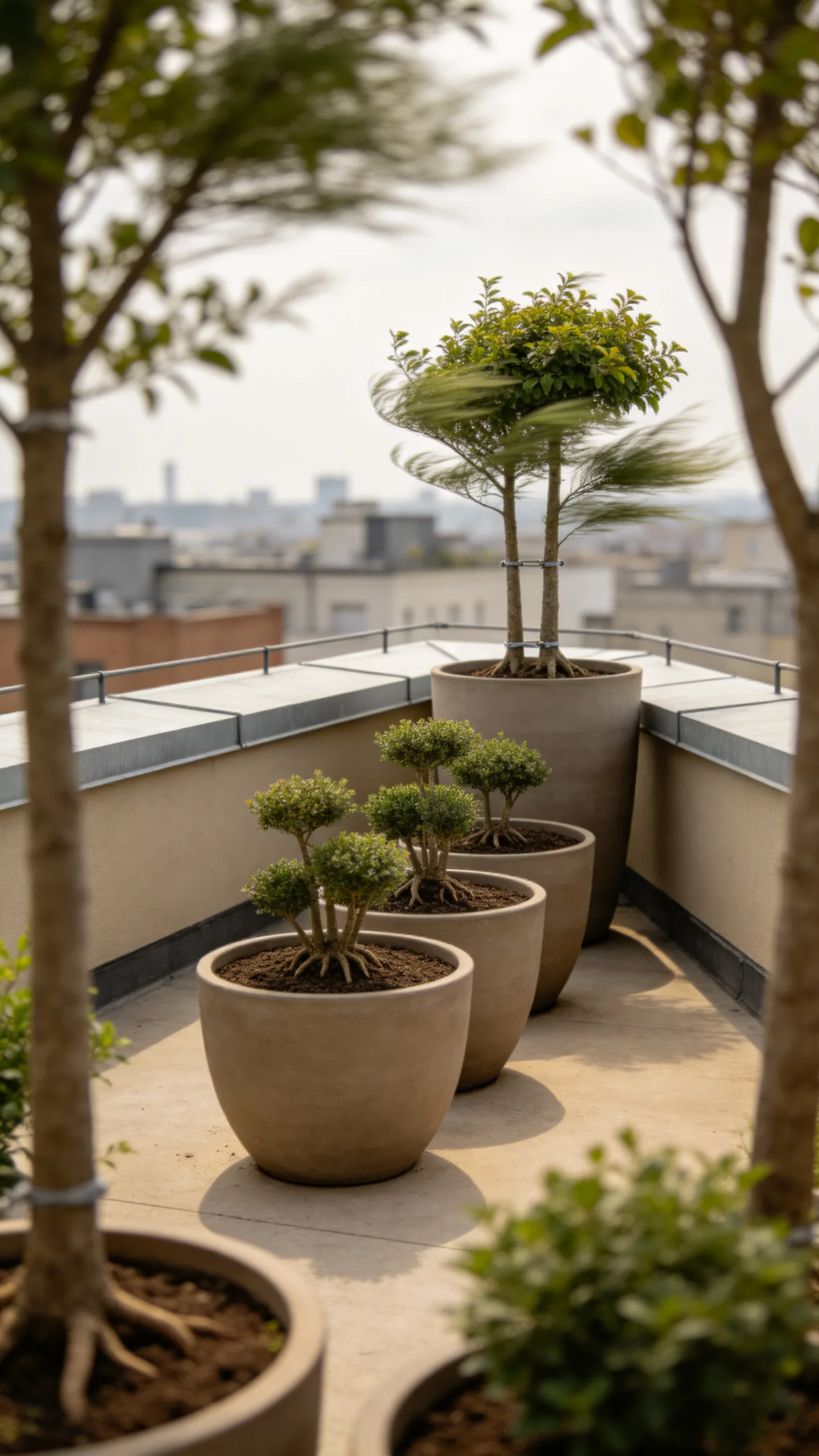
Create the feeling of a miniature grove by clustering several multi-stem shrubs or small trees around a pair of chairs. Place the tallest containers on the prevailing-wind side, but avoid forming a completely solid barrier that could increase turbulence. A staggered arrangement filters wind and gives the seating area a sense of enclosure.
Choose compact, wind-tolerant plants with root systems suitable for containers; options vary considerably by climate. Large pots resist tipping and retain moisture longer, but their filled weight must be approved. Secure top-heavy plants where necessary and prune damaged or excessively dense growth before storm season.
18. Four-Season Rooftop Retreat With Storage Seating
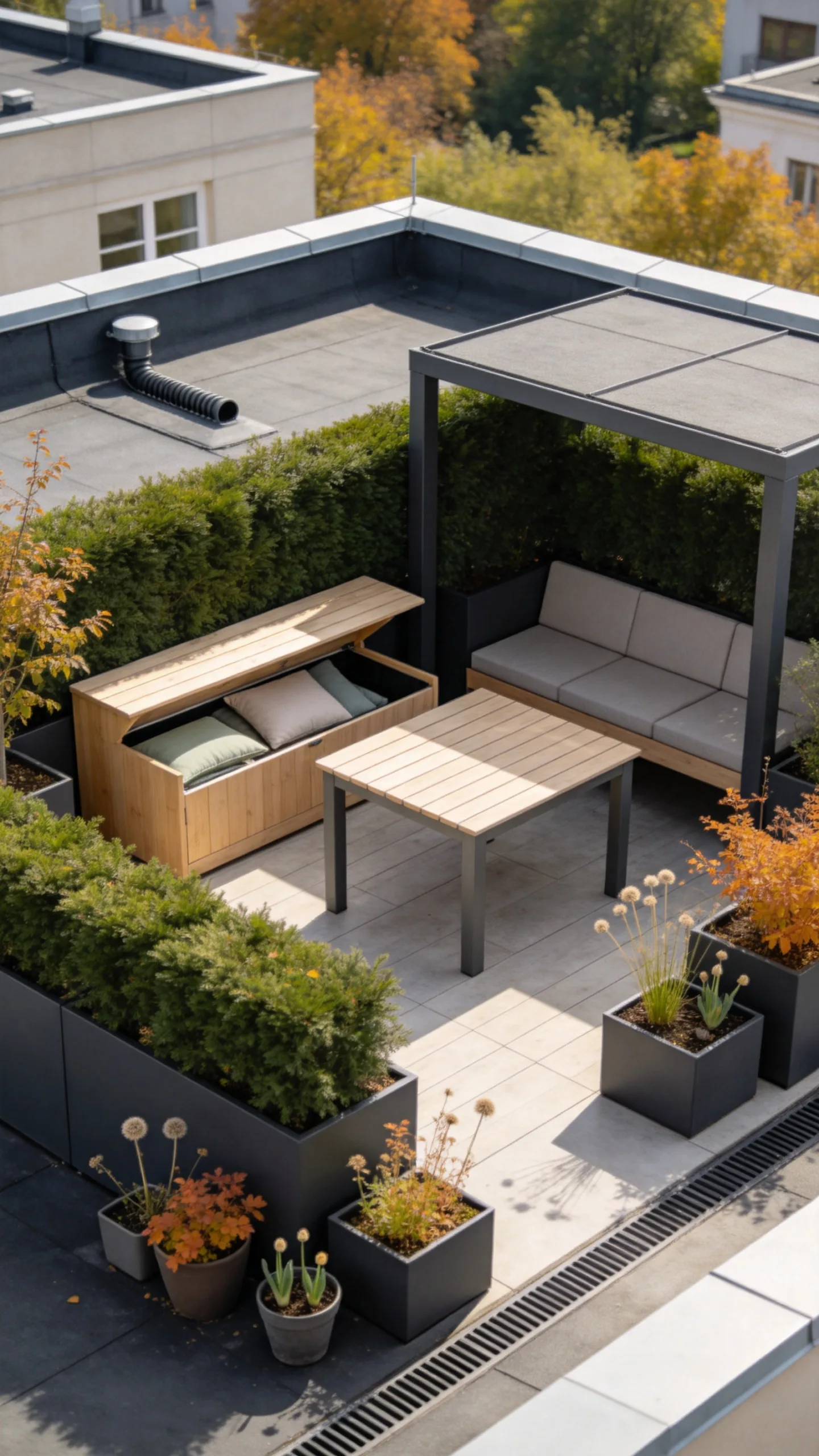
Build a year-round layout around storage benches, an all-weather table, evergreen planters, and one sheltered seating nook. Add removable cushions in warm months, then store them inside the benches when rain, snow, or high winds are expected. A restrained palette of charcoal, pale wood, and green keeps the design cohesive through seasonal changes.
Combine permanent structural plants with pots that can be refreshed throughout the year. Spring bulbs, summer annuals, autumn foliage, and winter stems can rotate through smaller containers without disturbing the main layout. Maintain clear access to drains, inspect irrigation regularly, and leave enough space to move plants when roof repairs or severe weather require it.