Choosing a front fence in Australia often comes down to balancing street appeal, privacy, airflow, council rules, and materials that suit local conditions. Brick, timber, Colorbond, steel, aluminium, stone, and planting can all work well, but each one creates a different look and maintenance routine. These front fence ideas compare practical styles that suit Australian homes, from coastal cottages and brick bungalows to new builds and suburban family homes.
1. Low Brick Fence With Piers and Garden Beds
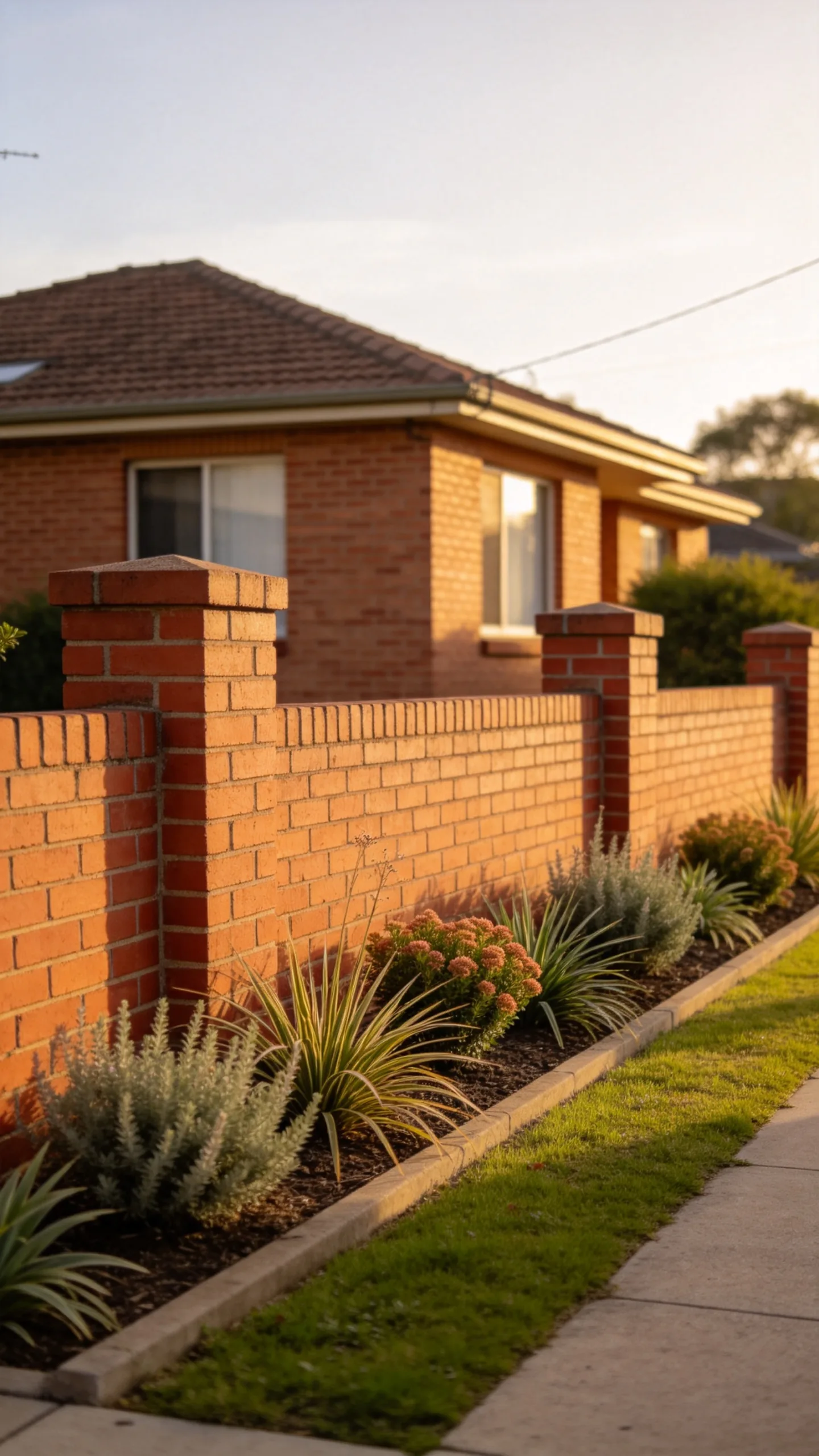
A low brick front fence is a strong choice for classic Australian homes, especially brick veneer houses, Federation-style cottages, and older suburban properties. Keeping the wall low maintains a friendly street presence while still defining the boundary clearly. Brick piers add structure and can support letterboxes, lighting, or a simple gate.
Planting in front of or behind the fence softens the heavy look of brick. Use compact, sun-tolerant plants such as westringia, dwarf bottlebrush, lomandra, dianella, or low-growing grevillea varieties where suitable for your climate. A narrow garden bed along the fence line also helps connect the front yard to the house rather than making the fence feel separate.
This style works well when privacy is not the main concern. It is better for marking the property edge, protecting lawn edges, and creating a neat street-facing border. Choose a brick colour that either matches the home or contrasts intentionally, such as cream brick with charcoal trims or red brick with black metal accents.
2. Brick Piers With Horizontal Timber Slats
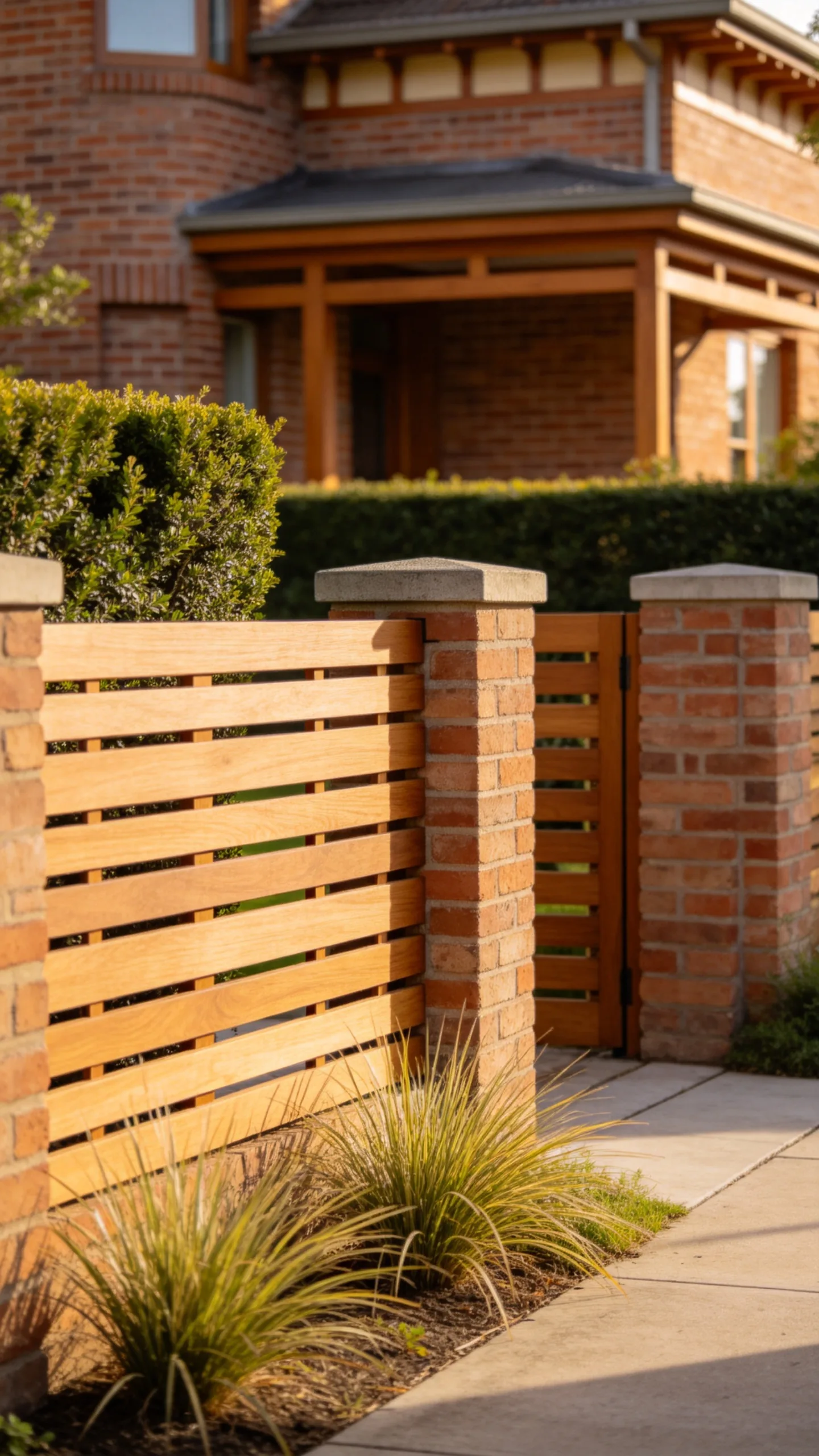
Combining brick piers with horizontal timber slats gives a front fence warmth and structure. The brick provides durability and a visual link to many Australian homes, while the timber panels stop the design from feeling too solid. This is a good option for homeowners who want partial privacy without building a full masonry wall.
The spacing between the timber slats changes how the fence performs. Narrow gaps create more screening for windows, porches, and front sitting areas. Wider gaps allow better airflow and keep the garden visible from the street. Hardwood, treated pine, or composite timber can be used, but each has different maintenance needs, especially in areas with strong sun or coastal air.
For a polished look, repeat the timber colour in the front door, garage door, deck, or porch posts. Underplant the fence with clipped hedges, native grasses, or small shrubs to reduce the hard line between paving and fence. This idea suits both older brick homes and newer builds that need a warmer front boundary.
3. Colorbond Front Fence With Feature Planting
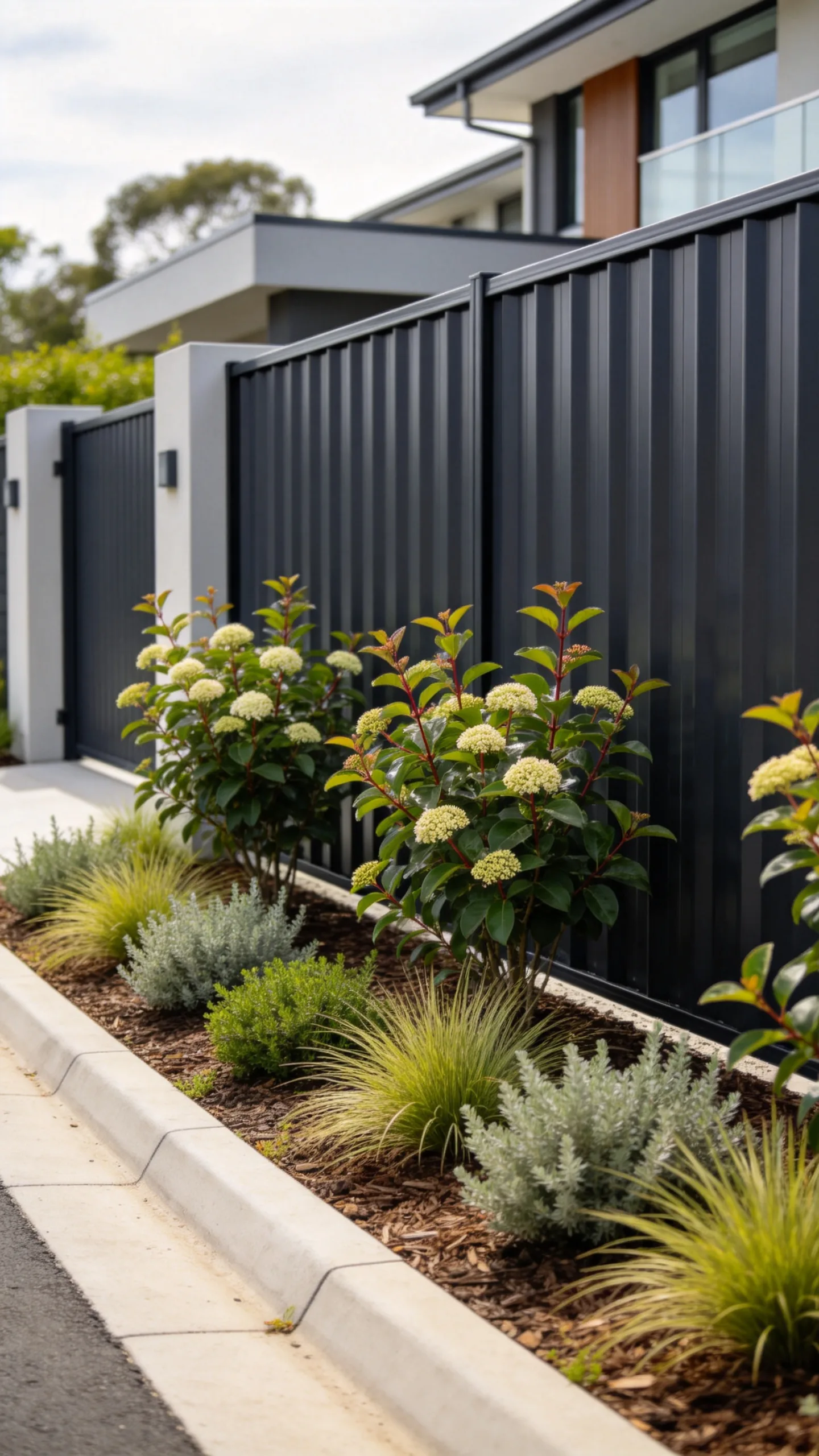
Colorbond is a practical Australian fencing material because it provides privacy, comes in many colours, and needs less upkeep than painted timber. For a front fence, it works best when it is softened with planting, varied heights, or feature panels so it does not look like a plain side boundary fence.
Choose colours that suit the home exterior and roof. Charcoal, Monument-style tones, Surfmist-style light colours, and muted greens are common choices, but the best option depends on the house, driveway, and surrounding landscape. Dark Colorbond can make foliage stand out, while lighter shades can suit coastal or contemporary homes.
Planting is especially important with a solid Colorbond front fence. Narrow garden beds with lilly pilly, viburnum, westringia, lomandra, or climbers on a separate trellis can add texture. Leave enough space for airflow and maintenance access, and avoid planting large trees too close to the fence line where roots or branches may cause future problems.
4. Colorbond Fence With Brick Entry Columns
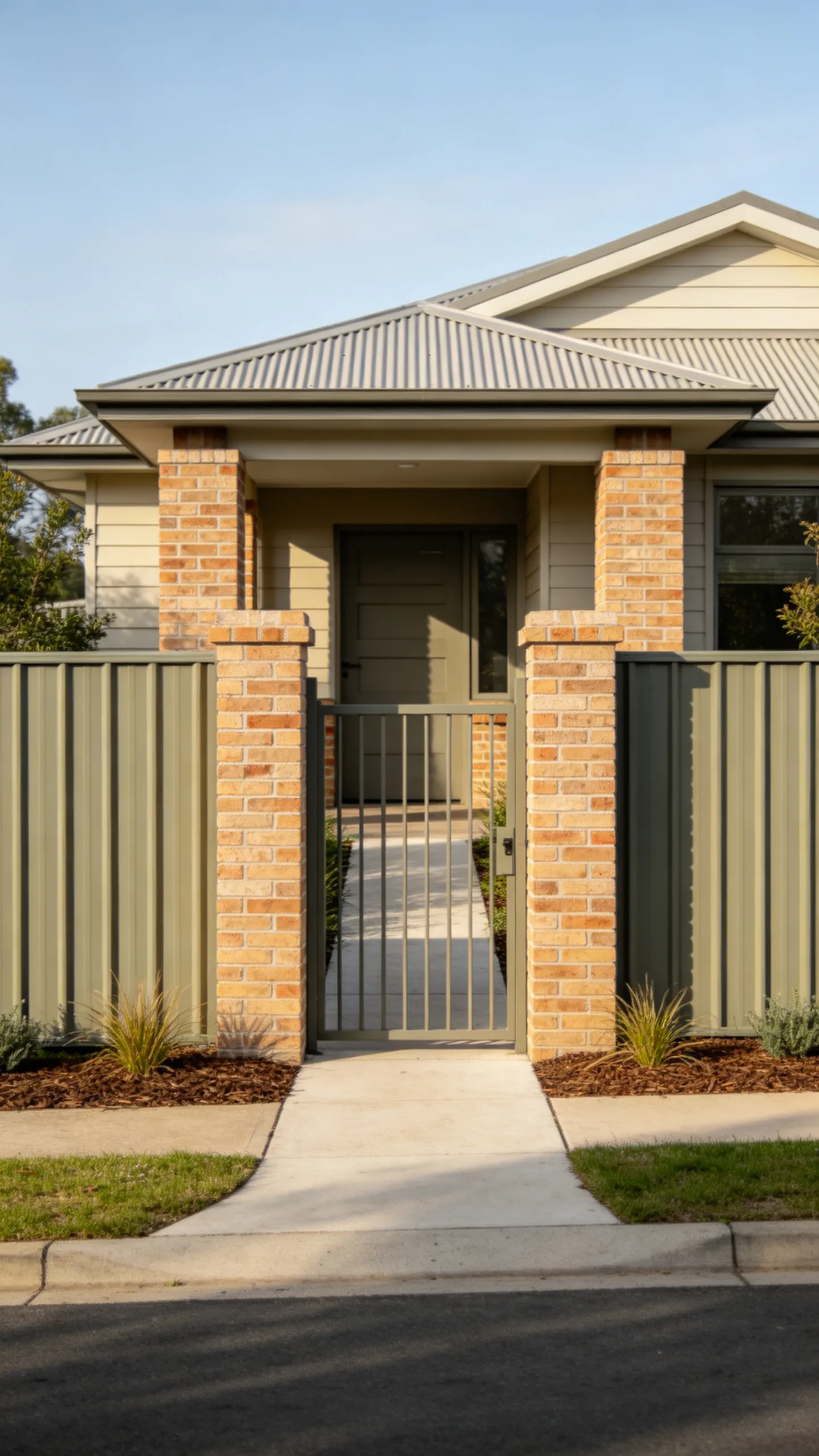
A Colorbond fence can look more substantial when paired with brick entry columns. The brick gives the entrance a permanent, built-in feel, while the Colorbond panels provide privacy across the wider frontage. This combination is useful for homes where a full brick fence would be too expensive or too heavy visually.
Brick columns can frame a pedestrian gate, driveway gate, or letterbox area. Matching the brick to the home creates continuity, while a contrasting brick can create a clear feature entrance. The Colorbond panels between columns should be carefully measured so the proportions feel intentional rather than patched together.
This style suits front yards that need screening from traffic, footpaths, or neighbouring driveways. Add low planting at the base of the panels to reduce heat reflection and soften the solid surface. In hot, exposed positions, choose hardy plants and mulch the bed well so the fence line remains tidy through dry periods.
5. White Picket Fence for Cottage Gardens
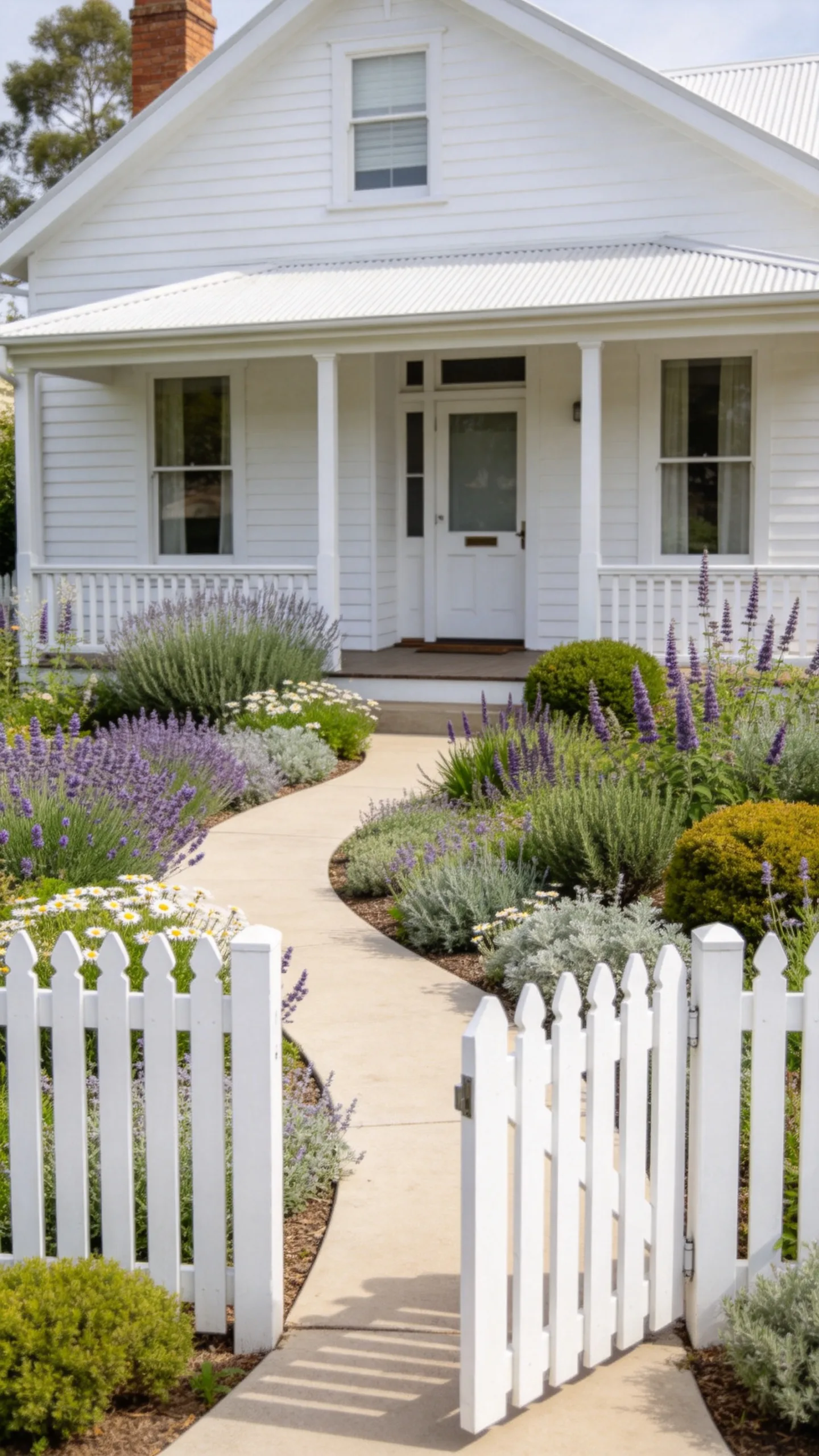
A white picket fence remains a popular front fence idea for Australian cottages, weatherboard homes, and gardens with a softer planting style. It works best where the front yard is meant to feel open and welcoming rather than private. The gaps between pickets allow flowers, hedges, and paths to remain visible from the street.
Pair a picket fence with cottage-style planting such as lavender, rosemary, salvia, seaside daisy, catmint, dwarf roses, or native alternatives suited to your area. A curved path from the gate to the porch adds charm and gives the small front garden a sense of depth. If the yard is narrow, keep the fence low and the planting layered rather than bulky.
Timber pickets need painting or staining over time, particularly in areas with harsh sun, rain, or salty air. Aluminium or PVC-look alternatives may reduce maintenance, although they create a slightly different finish. For a traditional look, use a simple gate with matching pickets and a clearly visible letterbox.
6. Charcoal Aluminium Slat Fence
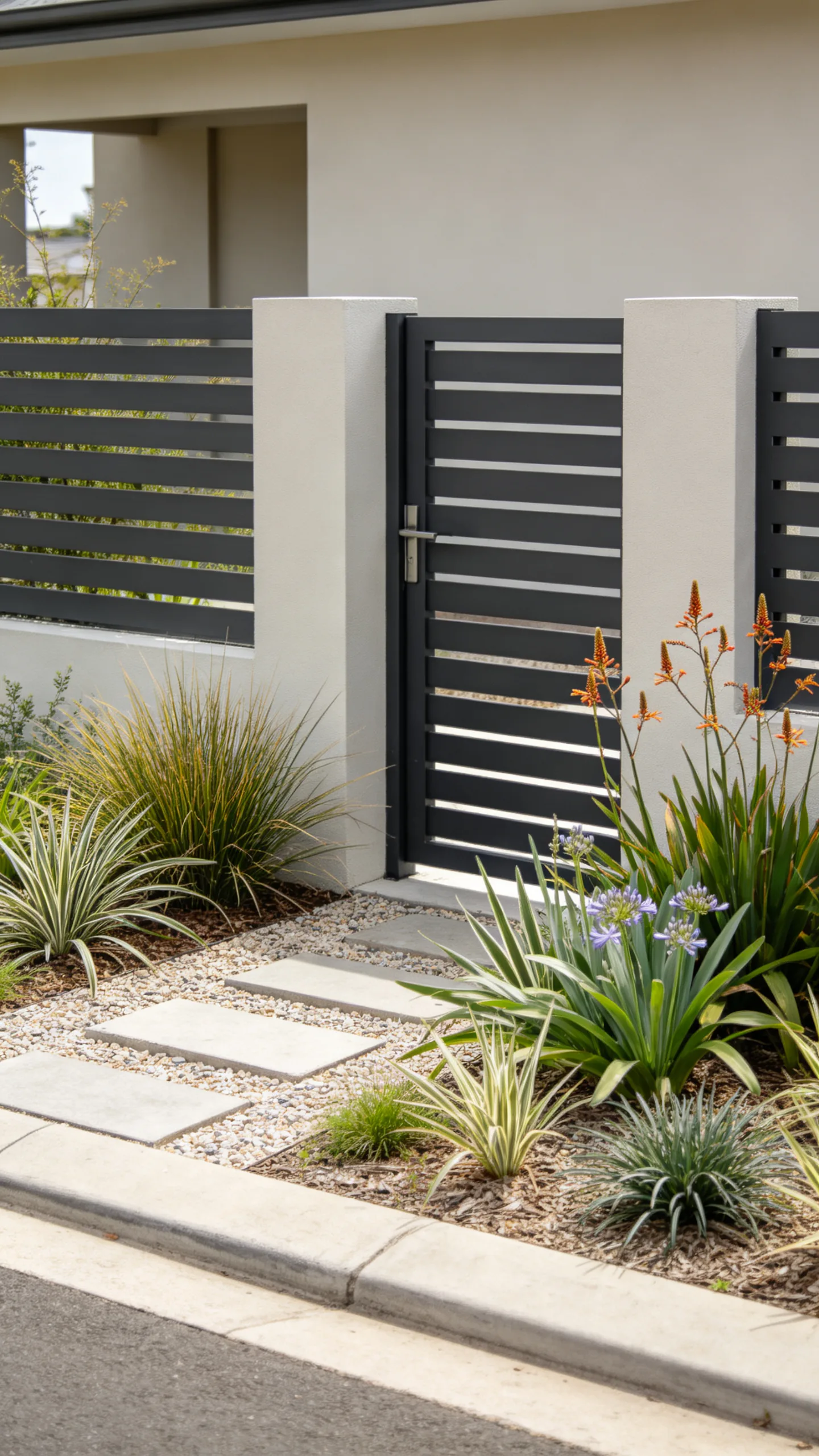
A charcoal aluminium slat fence is a clean, modern option for Australian front yards. Aluminium is lightweight, rust-resistant, and suitable for many contemporary homes. The dark colour creates a sharp outline against rendered walls, pale paving, green lawns, and native planting.
Horizontal slats are especially useful when you want partial screening without making the front yard feel boxed in. The slat spacing can be adjusted for more privacy near windows or more openness near driveways. Aluminium also works well for matching pedestrian gates and automated driveway gates.
To prevent the fence from looking too stark, combine it with textured planting. Use strappy plants such as lomandra, dianella, flax lily, or kangaroo paw where climate and exposure allow. Gravel mulch, stepping stones, and simple garden lighting can make the fence line feel designed rather than purely functional.
7. Timber Batten Fence With Vertical Screening
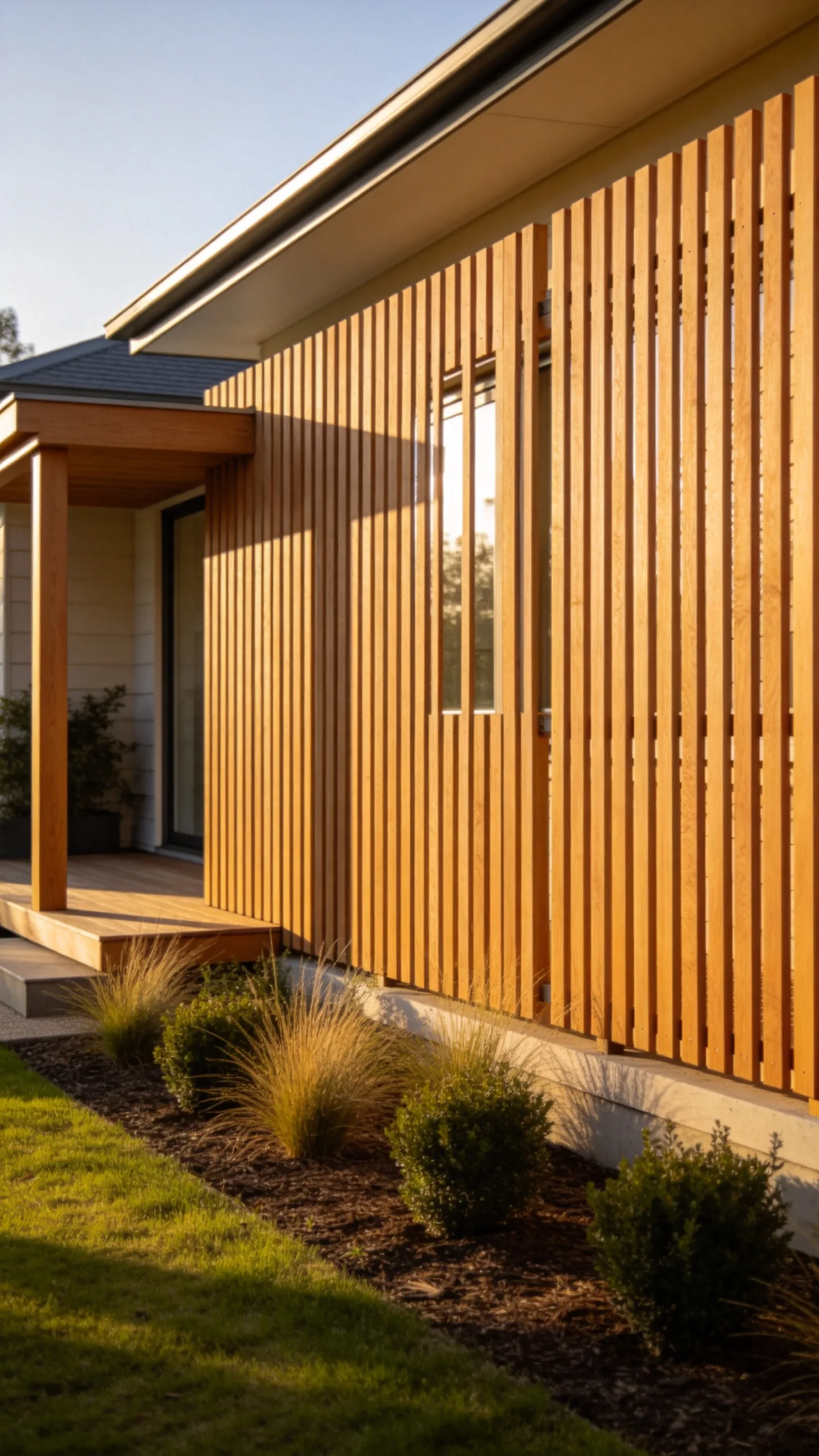
A vertical timber batten fence creates height and rhythm without the heavy look of a solid wall. The slim battens draw the eye upward, which can make a small front yard feel taller and more considered. This style is especially useful for screening front windows, verandahs, or bins while still allowing some light and airflow.
The battens can be spaced tightly for privacy or more openly for a lighter appearance. Vertical timber works well with rendered homes, brick homes, coastal houses, and mid-century styles depending on the timber finish. Natural timber gives warmth, while black-stained timber creates a bold architectural look.
Because timber is exposed to sun and rain, choose a suitable outdoor timber and plan for oiling, staining, or sealing as needed. Planting at the base helps protect the fence visually from dust and splashback. Use narrow shrubs, low grasses, or clipped hedges so the vertical lines remain visible.
8. Rendered Masonry Fence With a Timber Gate
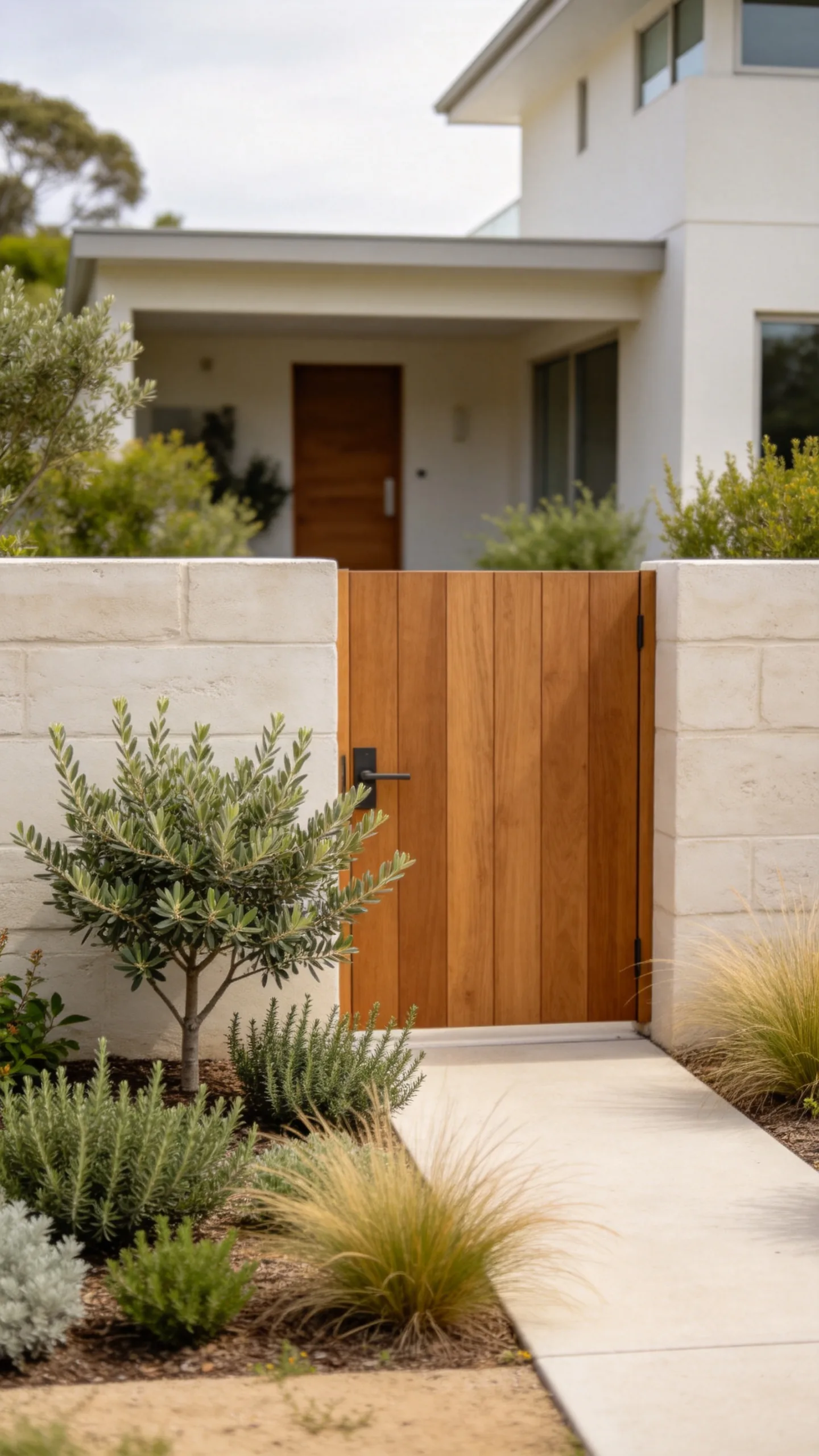
A rendered masonry fence gives the front boundary a smooth, modern finish. It suits rendered homes, contemporary builds, Mediterranean-inspired gardens, and houses where a clean street frontage is preferred. Adding a timber gate introduces warmth and prevents the design from feeling too plain.
This type of fence can be built low for a decorative boundary or higher for privacy, depending on local regulations and site conditions. A rendered finish can be painted to match the house exterior, garage, or retaining walls. Light colours can feel bright and coastal, while darker shades create a more dramatic entrance.
The timber gate should be chosen carefully because it becomes the focal point. Horizontal boards, vertical battens, or a solid panel can all work, depending on how much privacy is needed. Add planting beside the gate, such as clipped westringia, dwarf olive, rosemary, or native grasses, to frame the entry without blocking access.
9. Stone Front Fence With Native Planting
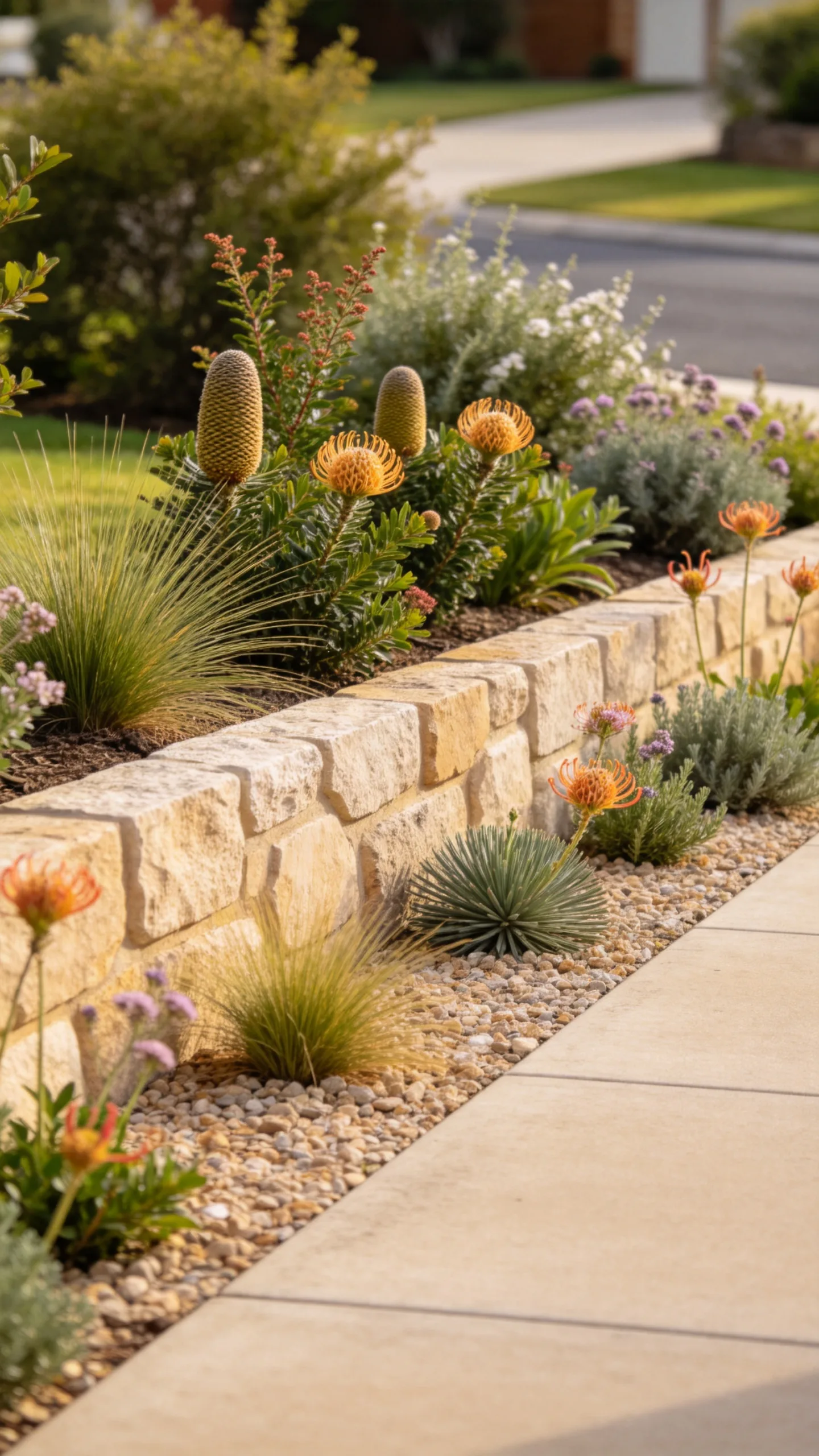
A stone front fence can give an Australian home a grounded, natural look. It works particularly well with bushland settings, rural properties, coastal homes, and gardens that use native planting. Stone can be used as a low wall, feature pier, or gabion-style boundary depending on the property style.
Native planting pairs naturally with stone because it softens the edges while keeping the design resilient. Consider lomandra, banksia, grevillea, correas, native rosemary, or kangaroo paw varieties suited to your region and soil. Gravel mulch can reinforce the natural look and reduce the amount of lawn maintenance along the fence.
This style is useful where the front yard needs texture rather than full privacy. A low stone wall can mark the boundary while allowing views into the garden. If the fence is near a driveway, keep planting low near sightlines so vehicles and pedestrians remain visible.
10. Brick Fence With Black Steel Infill Panels
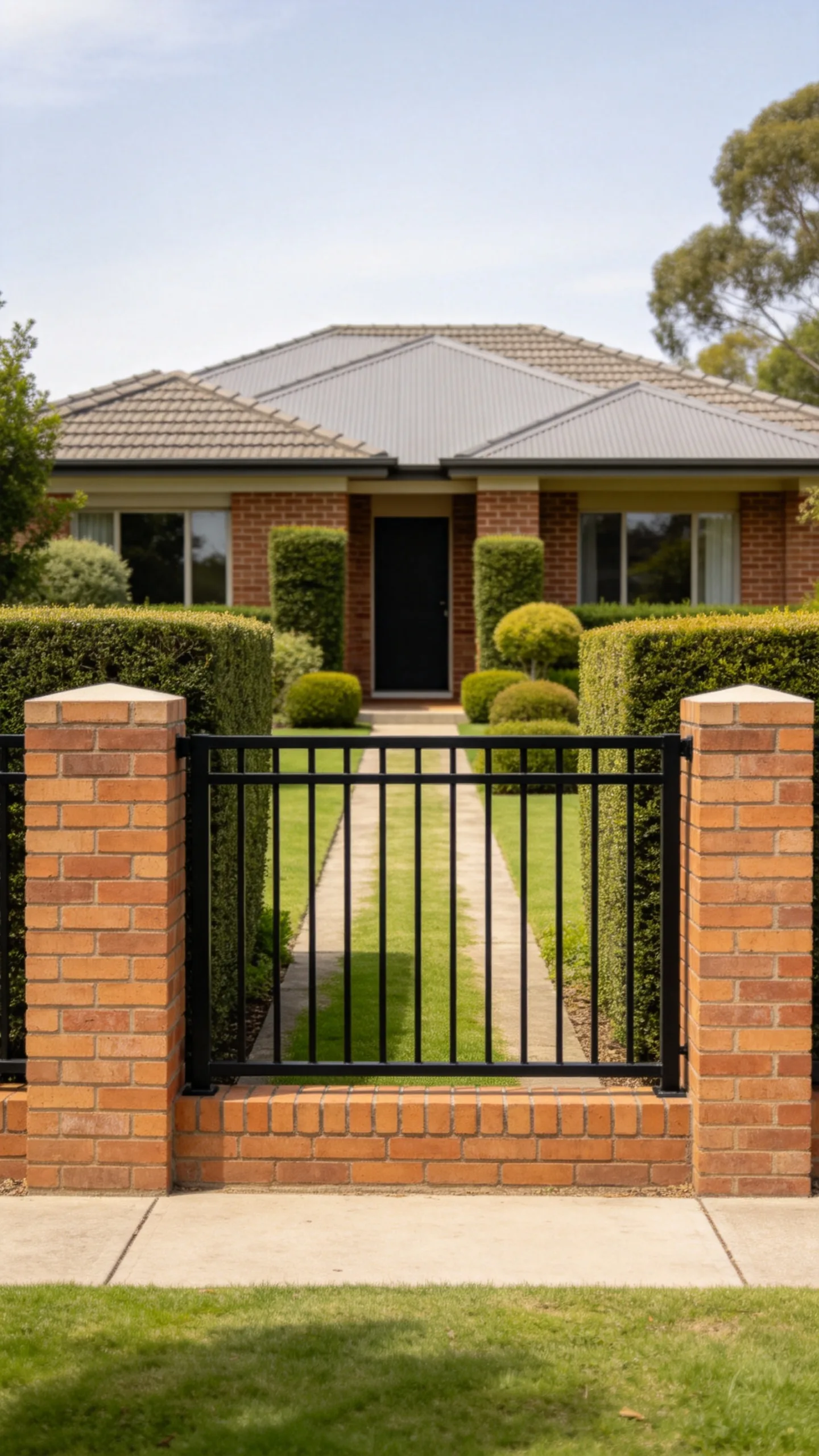
Brick piers and black steel infill panels create a strong, formal front fence that suits many Australian suburban homes. The brick gives weight and permanence, while the black steel panels keep the design open enough for visibility and airflow. This is a good option for homes with established lawns, formal paths, or symmetrical façades.
Steel panels can be simple vertical bars, decorative spear-top styles, or more modern flat-bar designs. The level of ornament should match the house. A heritage-style home may suit more detail, while a modern brick home often looks better with simple straight lines.
The garden behind the fence should be kept tidy because it remains visible from the street. Use clipped hedges, standard roses, structured native shrubs, or neat groundcovers to support the formal appearance. Black steel also pairs well with matching gate hardware, wall lights, and a dark letterbox.
11. Coastal Timber Fence With Open Slats
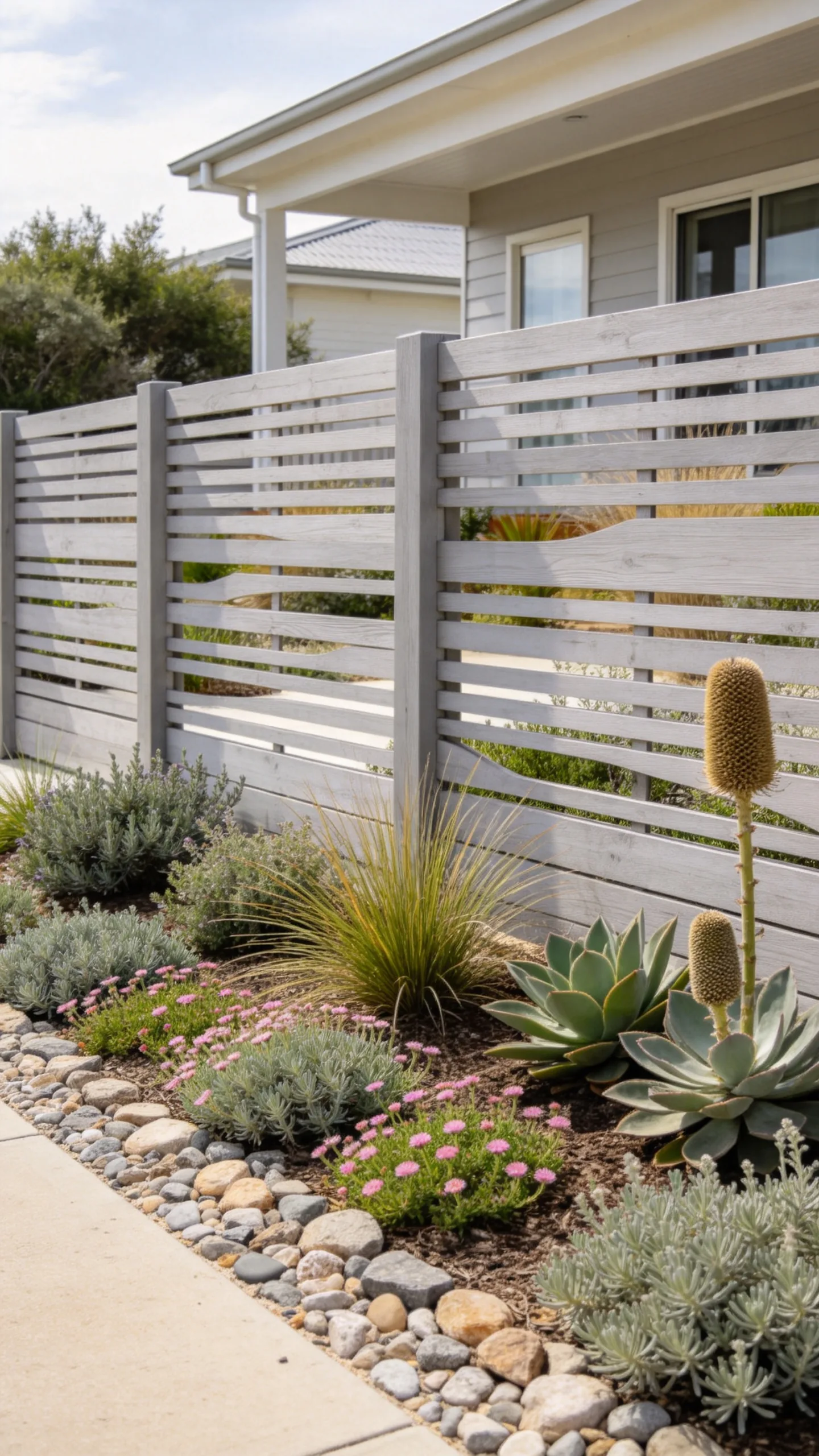
A coastal timber front fence works well for beach houses, weatherboard homes, and relaxed Australian gardens. Open slats allow airflow, which is useful in breezy coastal locations, and they keep the boundary from feeling too solid. Pale timber, whitewashed finishes, or soft grey stains suit this style.
The fence can be low and casual or taller with wider gaps for partial screening. In coastal areas, hardware choice matters because salt air can affect metal fittings. Use outdoor-rated screws, hinges, and gate hardware suitable for the local exposure.
Planting should handle wind, sun, and sandy conditions where relevant. Consider coastal rosemary, pigface, lomandra, westringia, banksia, or hardy succulents suited to the site. A gravel or crushed rock strip along the fence can reduce sand movement and make maintenance easier.
12. Colorbond and Timber Mixed-Material Fence
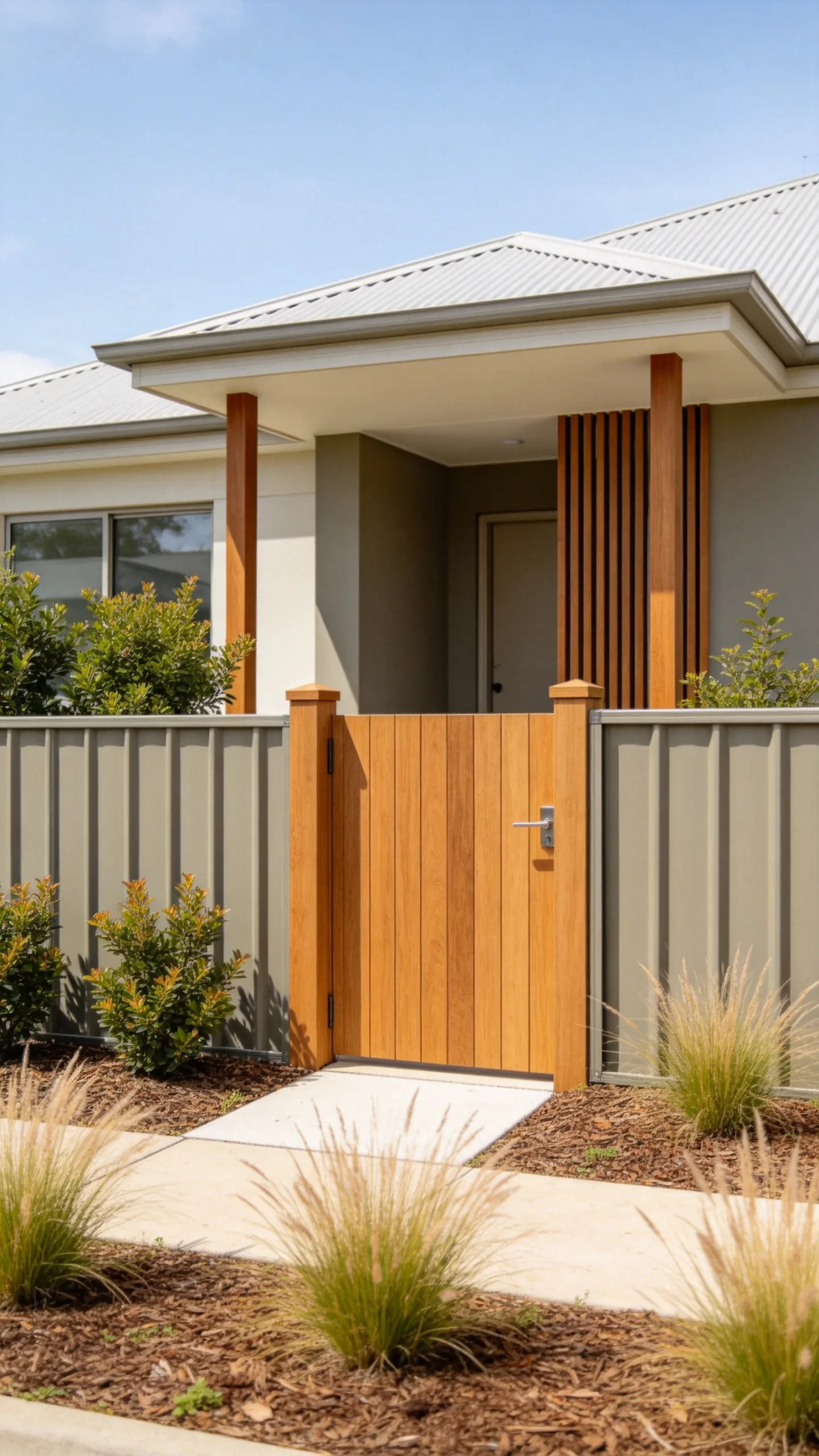
A mixed Colorbond and timber fence is useful when you want privacy but do not want a fully metal look. Colorbond panels can form the main screen, while timber battens, posts, caps, or an entry gate add warmth. This approach suits modern homes, renovated brick houses, and practical family front yards.
The key is to make the timber look intentional. Use it at the gate, along the top edge, or in feature sections near the entrance rather than scattering small pieces randomly. Matching timber tones to decking, porch beams, or the front door helps the fence connect with the rest of the home.
This style is practical for blocking views into front windows, outdoor seating areas, or children’s play spaces. Leave space for planting in front of the solid panels to soften the boundary. Hardy shrubs, ornamental grasses, and climbers on separate supports can reduce the flatness of the Colorbond surface.
13. Low Front Fence With Hedge Behind It
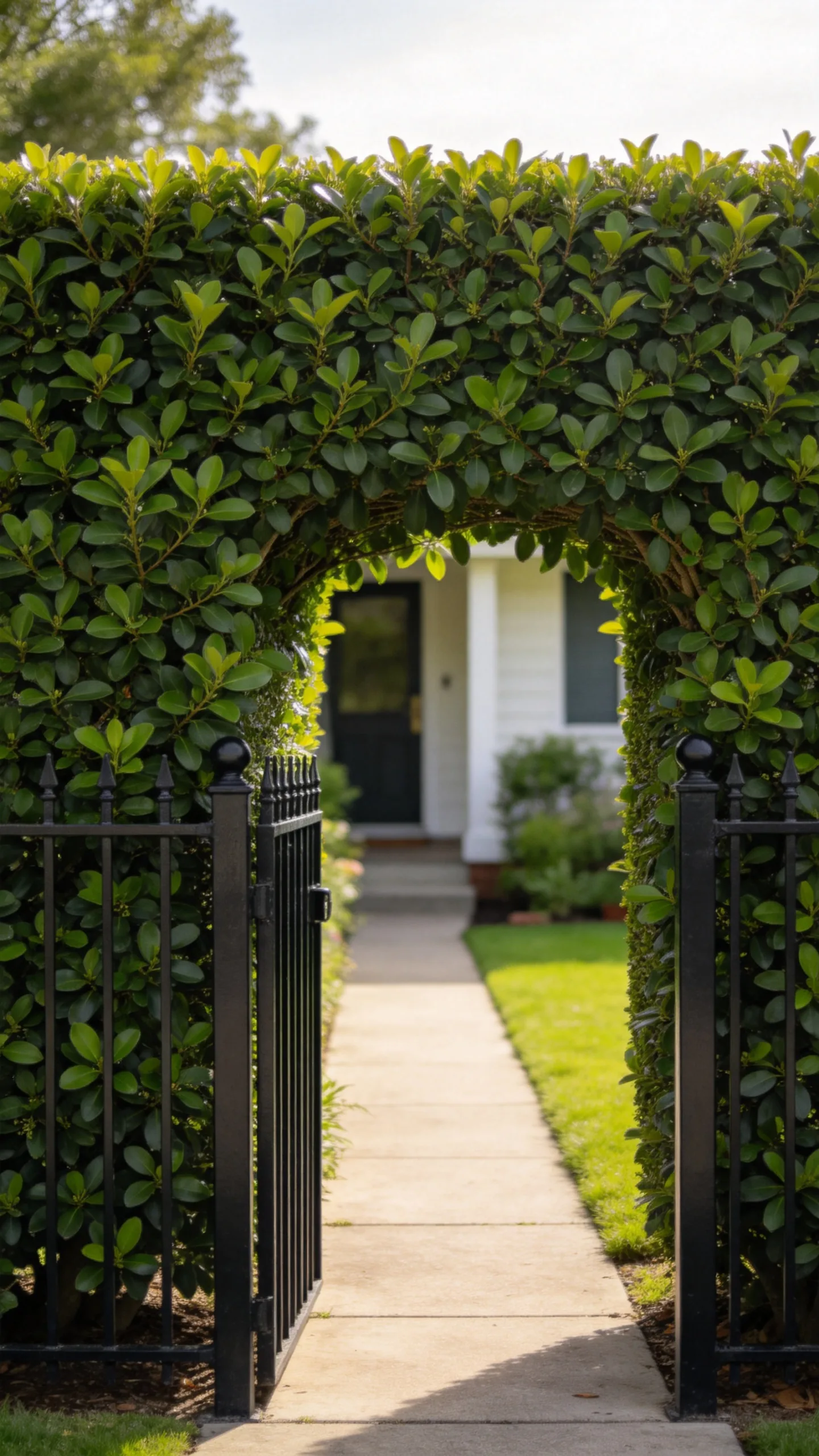
A low fence with a hedge behind it gives you a layered front boundary. The fence marks the property line, while the hedge provides softness, privacy, and greenery. This works well when a tall hard fence would feel too closed in or may not suit the street.
The fence can be brick, timber, aluminium, or steel. Behind it, choose a hedge plant suited to your climate, soil, and desired maintenance level. Lilly pilly, murraya, westringia, viburnum, or dwarf native shrubs may suit different Australian regions, but spacing and watering needs vary.
This idea is especially helpful for small front yards because the hedge creates depth. Instead of one flat fence line, the eye sees layers: boundary, foliage, path, and house. Keep the hedge trimmed so it does not overhang the footpath or block driveway visibility.
14. Slatted Front Fence With a Matching Pedestrian Gate
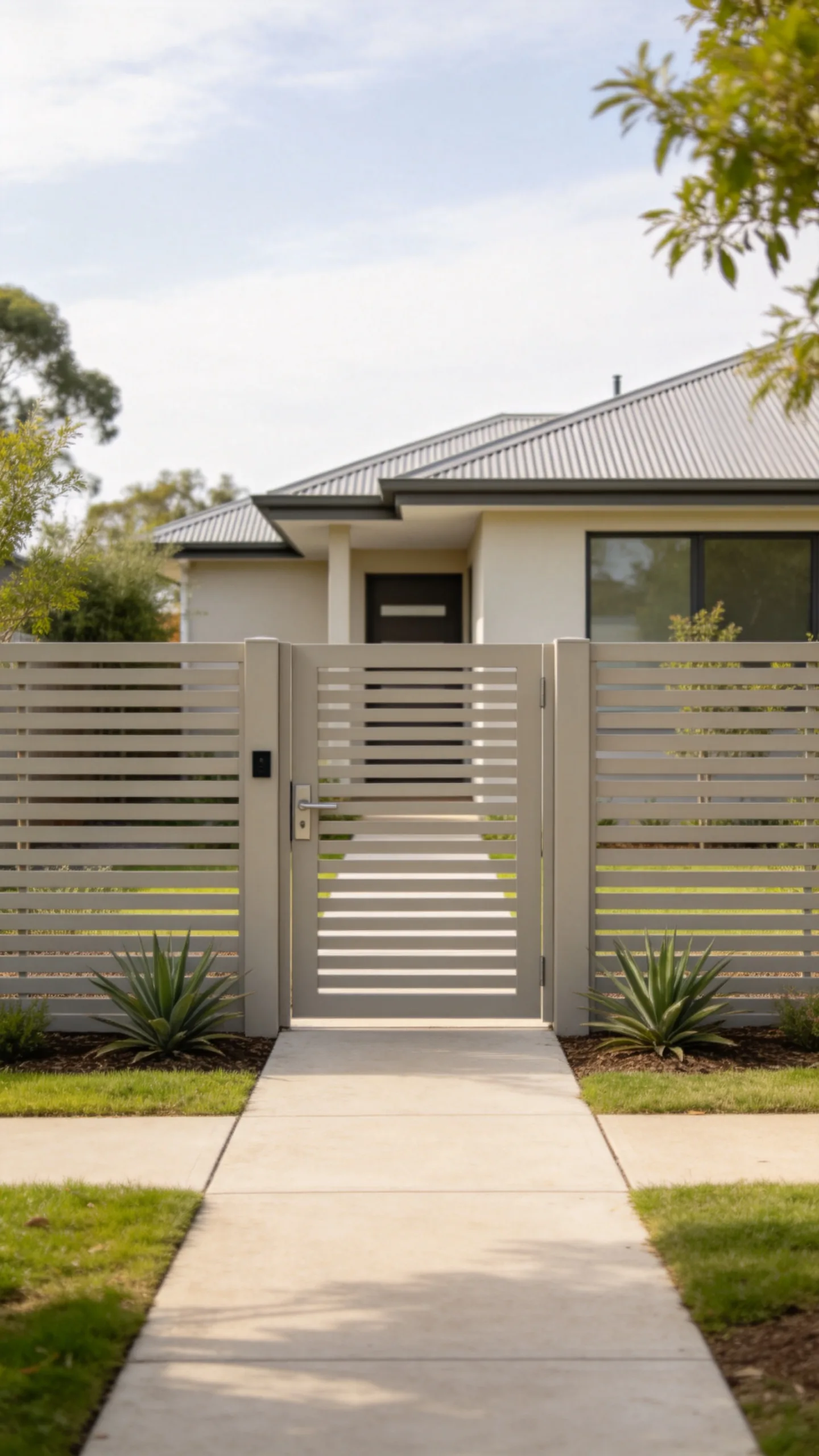
A slatted front fence with a matching pedestrian gate creates a neat, continuous street frontage. It works in timber, aluminium, composite, or steel, depending on the style of the home and the level of maintenance preferred. Matching the gate to the fence avoids visual clutter and makes the entry feel planned.
For practical use, the gate should open easily, align with the main path, and have a clear latch position. A letterbox can be built into a post or placed beside the gate so visitors and delivery drivers know where to enter. If the fence is tall, consider adding a house number, lighting, or a small planting bed to make the entrance easy to identify.
Slatted designs are useful because they provide adjustable privacy. Tight slats can screen a porch or front room, while wider gaps keep the garden visible. This style is suitable for urban homes where the front yard is close to the footpath but still needs airflow and light.
15. Front Fence With Built-In Letterbox Pier
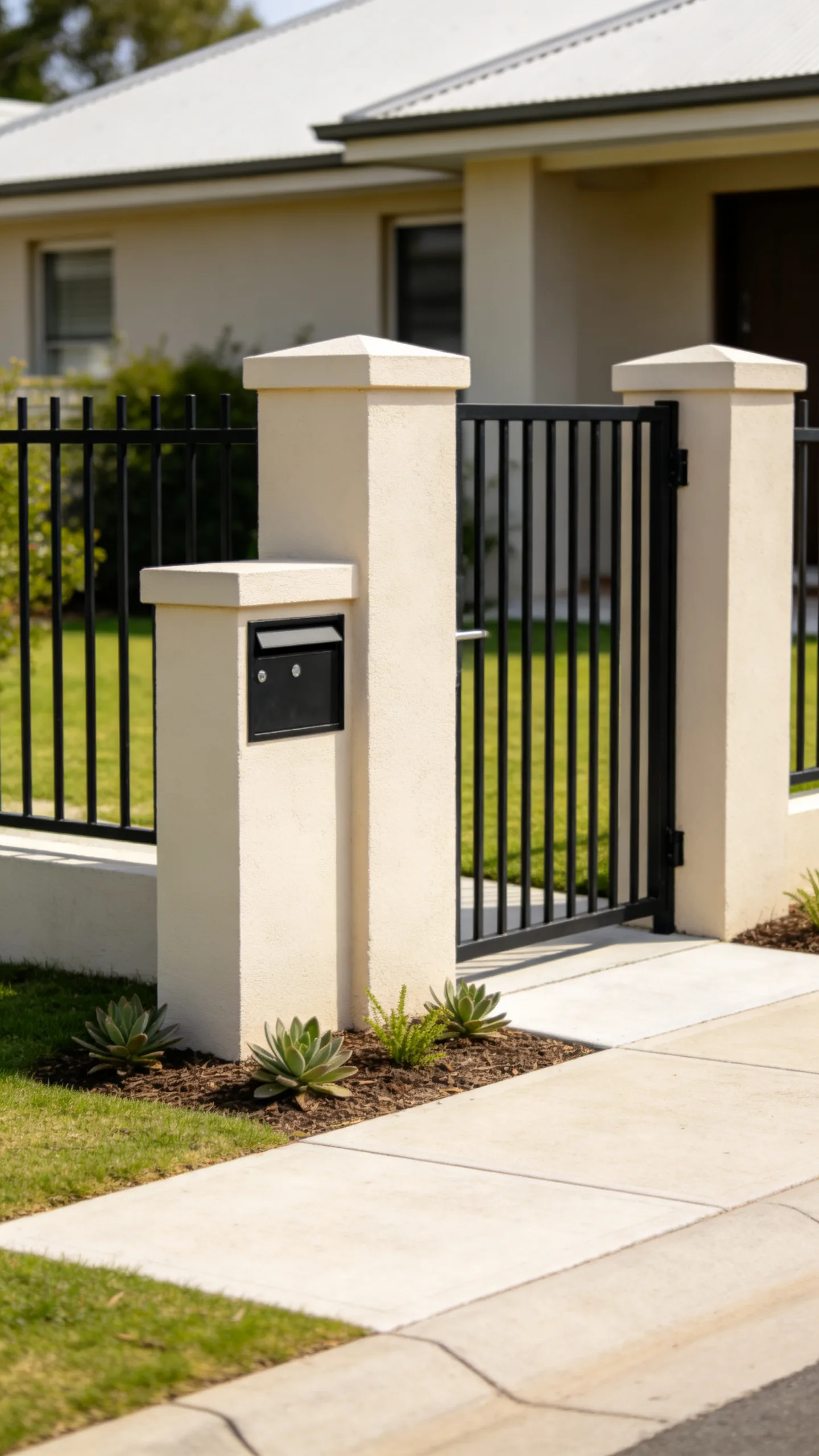
A built-in letterbox pier gives a front fence a more finished look. It works particularly well with brick, rendered masonry, stone, and mixed-material fences. Instead of adding a freestanding letterbox later, the pier becomes part of the overall design.
The pier can sit beside a pedestrian gate, at the driveway edge, or between two fence sections. It should be positioned where mail can be delivered easily without blocking paths or gate swings. Matching the pier finish to the fence posts or house exterior creates a coordinated appearance.
This idea is practical for Australian front yards where the entrance needs to be obvious from the street. Add a house number, small light, or low planting around the base. Keep plants compact so they do not cover the letterbox slot or make access difficult.
16. Fence and Garden Bed Combination for Narrow Front Yards
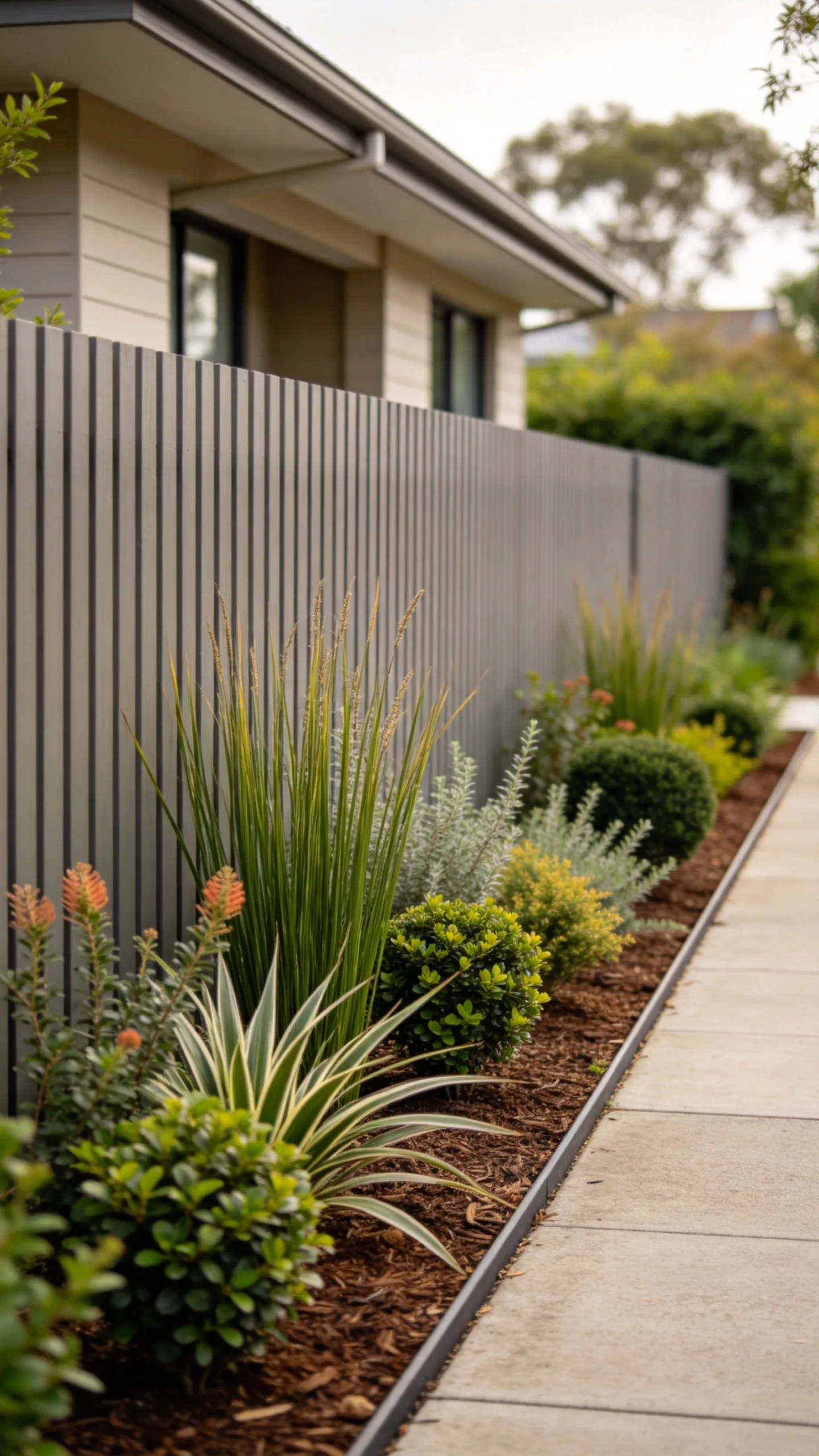
In a narrow front yard, the fence should do more than mark the boundary. A fence and garden bed combination can create privacy, soften hard surfaces, and make the space feel deeper. This works well where the house sits close to the street or the front lawn has been replaced with paving.
Use a slim fence style such as vertical battens, aluminium slats, low brickwork, or a compact Colorbond screen. Then add a narrow planting strip inside the boundary. Choose upright or compact plants rather than wide-spreading shrubs. Lomandra, dianella, westringia, dwarf pittosporum, compact grevillea, or clipped murraya may suit different locations.
Mulch the bed and include a simple edging strip to keep soil away from paving. If the fence is solid, planting helps reduce the boxy feeling. If the fence is open, planting provides extra screening without using more built structure.
17. Front Fence With Climbing Plants on a Trellis
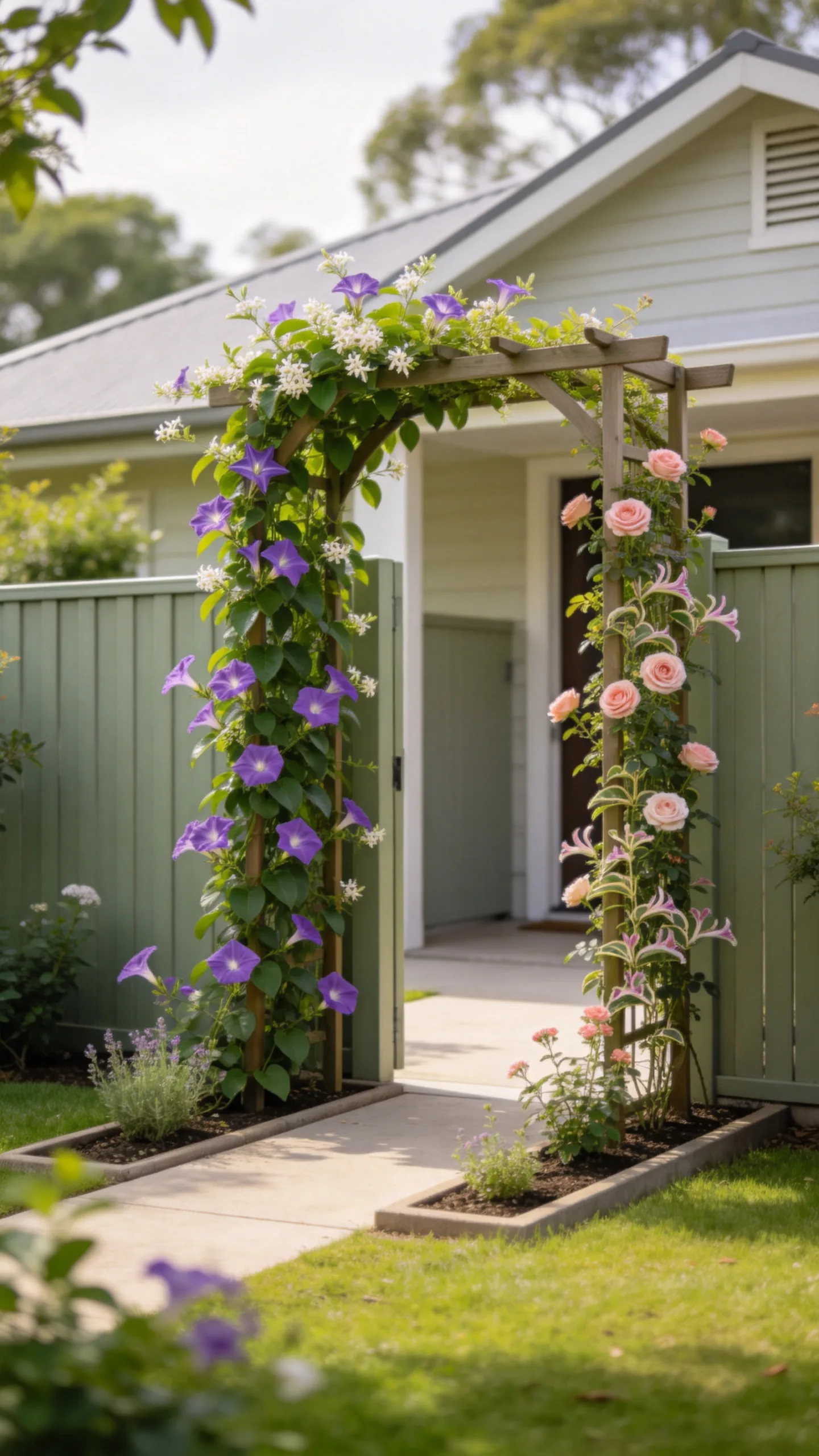
A front fence with climbing plants can add greenery and privacy without taking up much ground space. This is especially useful for small Australian front yards where there is no room for wide hedges. The trellis can be attached to a separate frame near the fence or integrated into the fence design, depending on the material.
Climbers need to be chosen carefully. Star jasmine, hardenbergia, climbing roses, pandorea, or native climbers may suit different climates and light conditions. Check whether the plant prefers sun or part shade, and avoid vigorous climbers that may become difficult to manage on a front boundary.
This idea works well with timber, steel, brick, and rendered fences. For Colorbond, use a separate trellis frame so the plant is not relying directly on the metal surface. Regular pruning keeps the entrance clear, prevents plants from blocking house numbers, and maintains airflow around the fence.
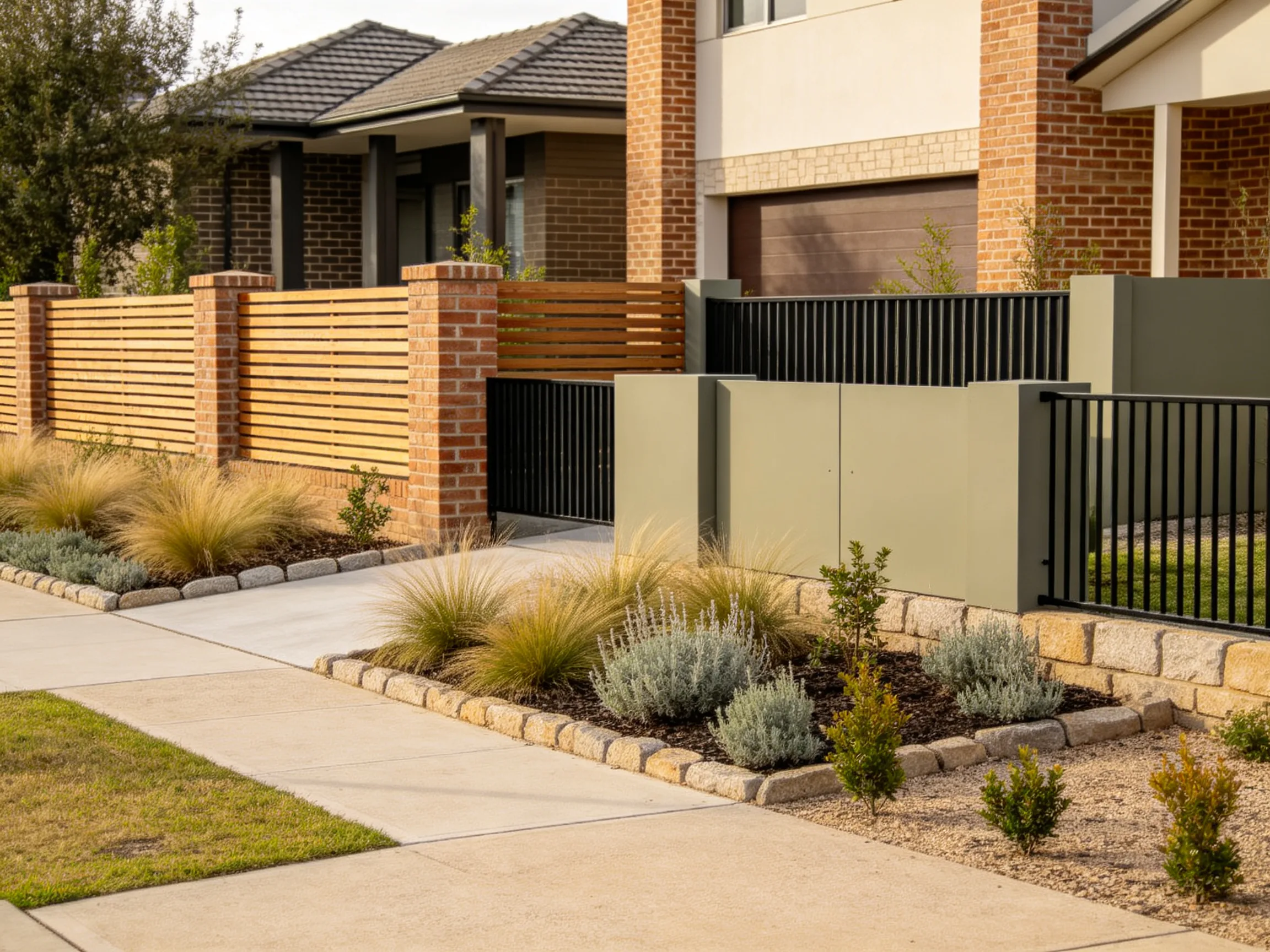
18. Modern Front Fence With Mixed Brick, Metal, and Planting
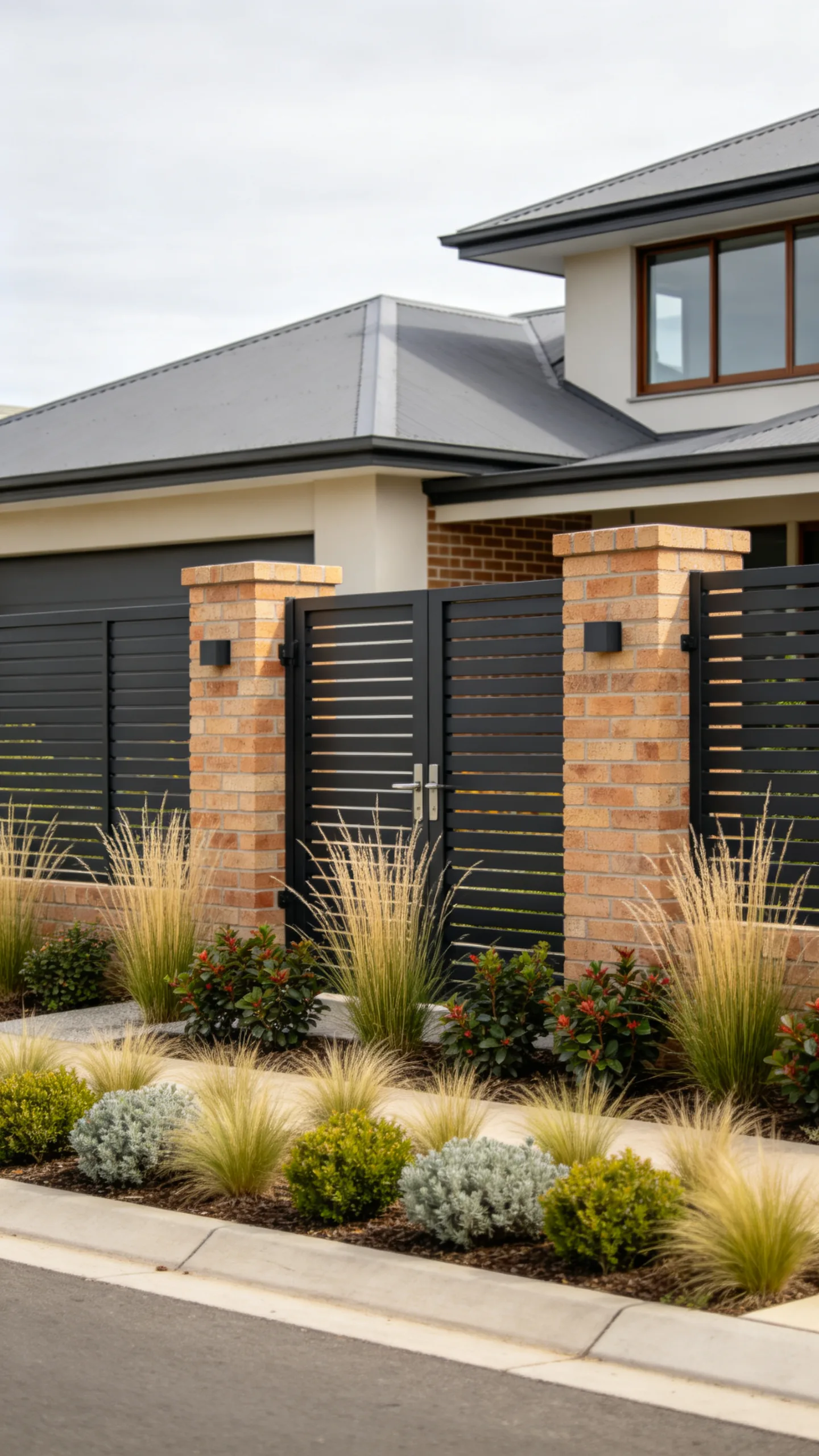
A modern mixed-material front fence uses brick, metal, and planting together for a balanced Australian street frontage. Brick or masonry provides solid anchor points, metal slats or panels add clean lines, and planting softens the hard materials. This combination suits new builds, renovated brick homes, and contemporary suburban blocks.
Use brick or rendered piers at key points such as the gate, driveway, and corners. Then install metal infill panels between them for visibility and structure. Choose aluminium or powder-coated steel in a colour that matches the roof, window frames, or garage door. This helps the fence feel connected to the whole exterior.
Planting should be simple and repeated rather than random. A row of lomandra, clipped westringia, dwarf lilly pilly, or ornamental grasses can tie the fence together. This style is practical because each material has a clear role: brick for structure, metal for screening, and plants for softness and seasonal interest.