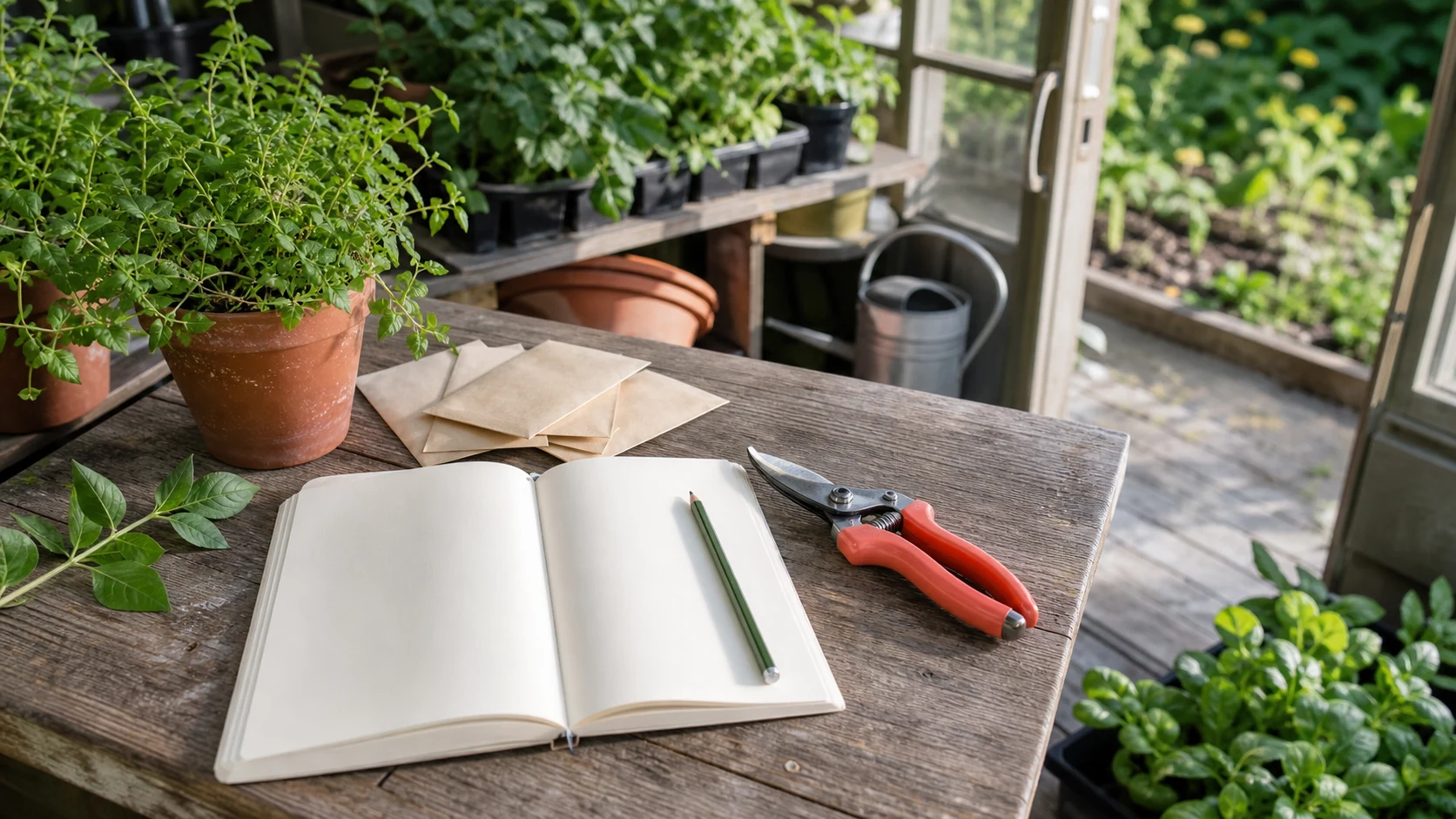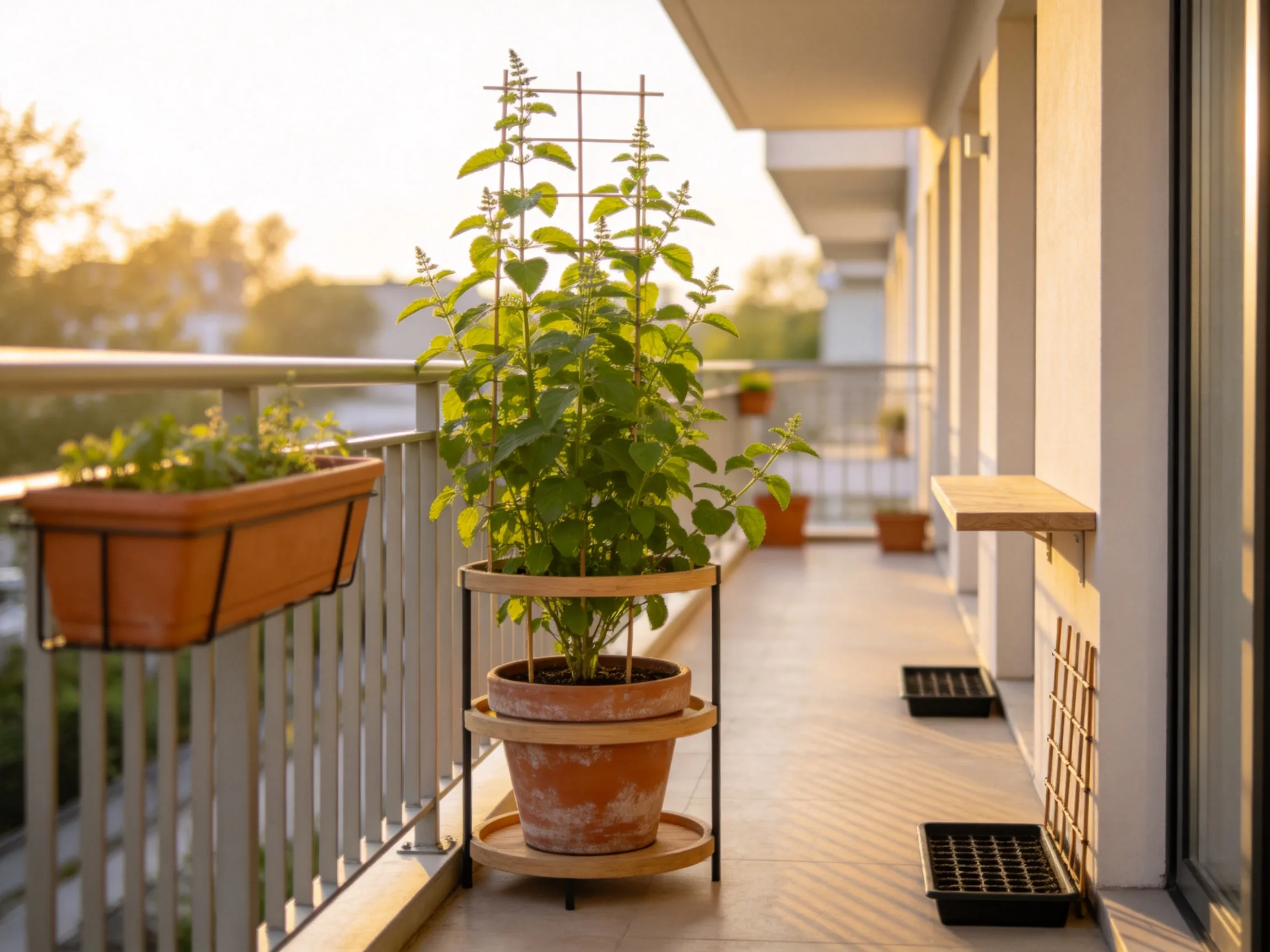
A well-planned tulsi pot design in balcony spaces can turn unused corners, railings, and narrow ledges into a practical herb garden. These ideas use containers, stands, trellises, and placement zones to give holy basil enough sunlight, airflow, and easy access without blocking movement.
1. Tiered Corner Stand for Multiple Tulsi Pots
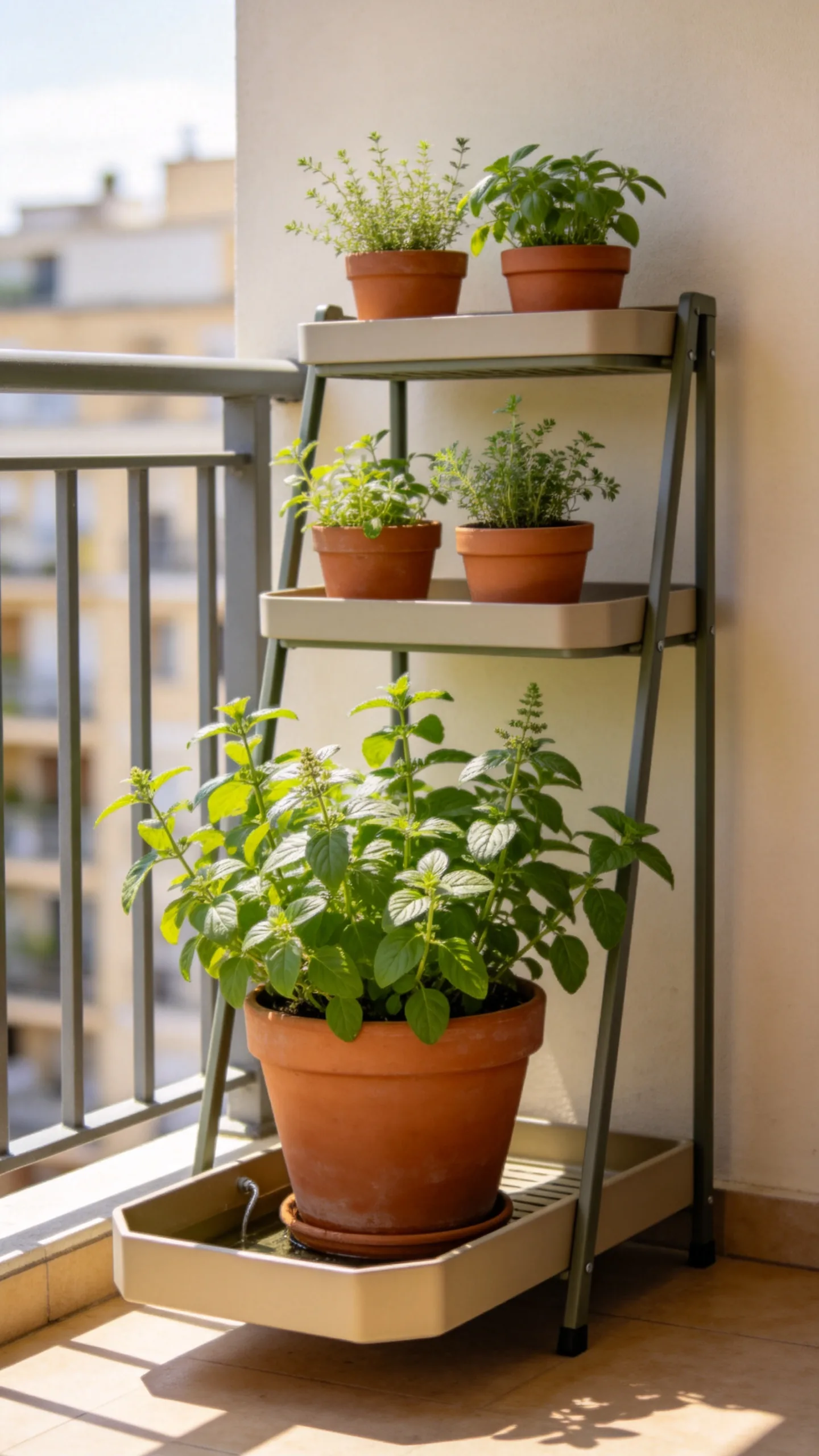
Place a three-level metal or wooden plant stand in an empty balcony corner and keep the largest tulsi pot on the bottom tier. Smaller companion pots can sit above it, leaving the front edge open for watering and pruning.
Choose a location with several hours of bright sunlight, and rotate the pots every few days if one side receives stronger light. A tiered stand uses vertical space while keeping each plant visible and easier to reach than pots crowded across the floor.
2. Triangular Corner Shelf Beside the Railing
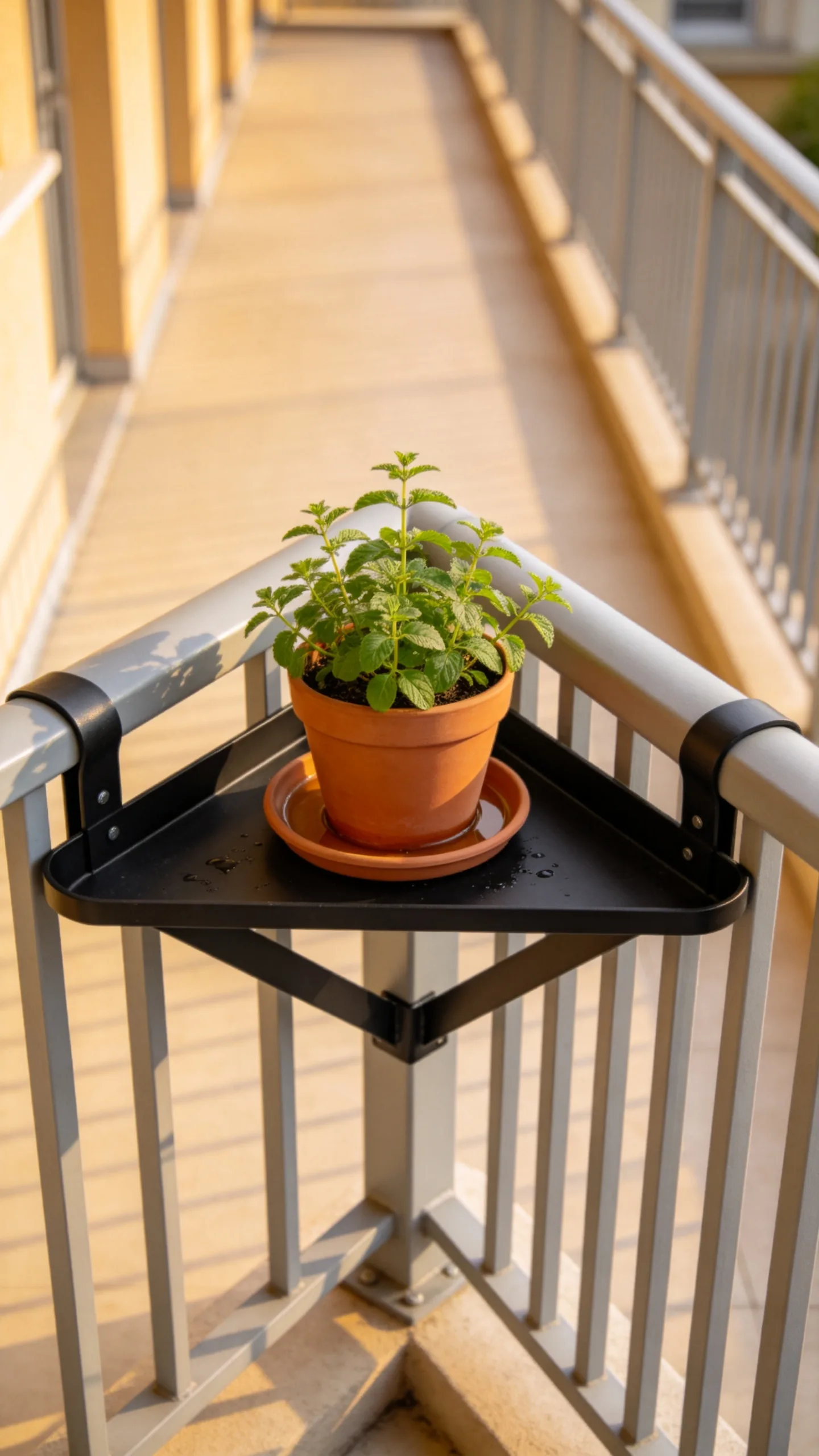
Fit a triangular wall shelf or freestanding corner rack into the junction where two balcony railings meet. A round or square tulsi container can sit securely on the widest shelf, with a shallow tray underneath to catch excess water.
This shape avoids wasting the pointed corner and keeps the pot away from the main walking path. Use a shelf made for outdoor conditions, and check that the railing or wall can support the combined weight of the pot, wet soil, and container.
3. Railing Planter With an Inner Tulsi Pot
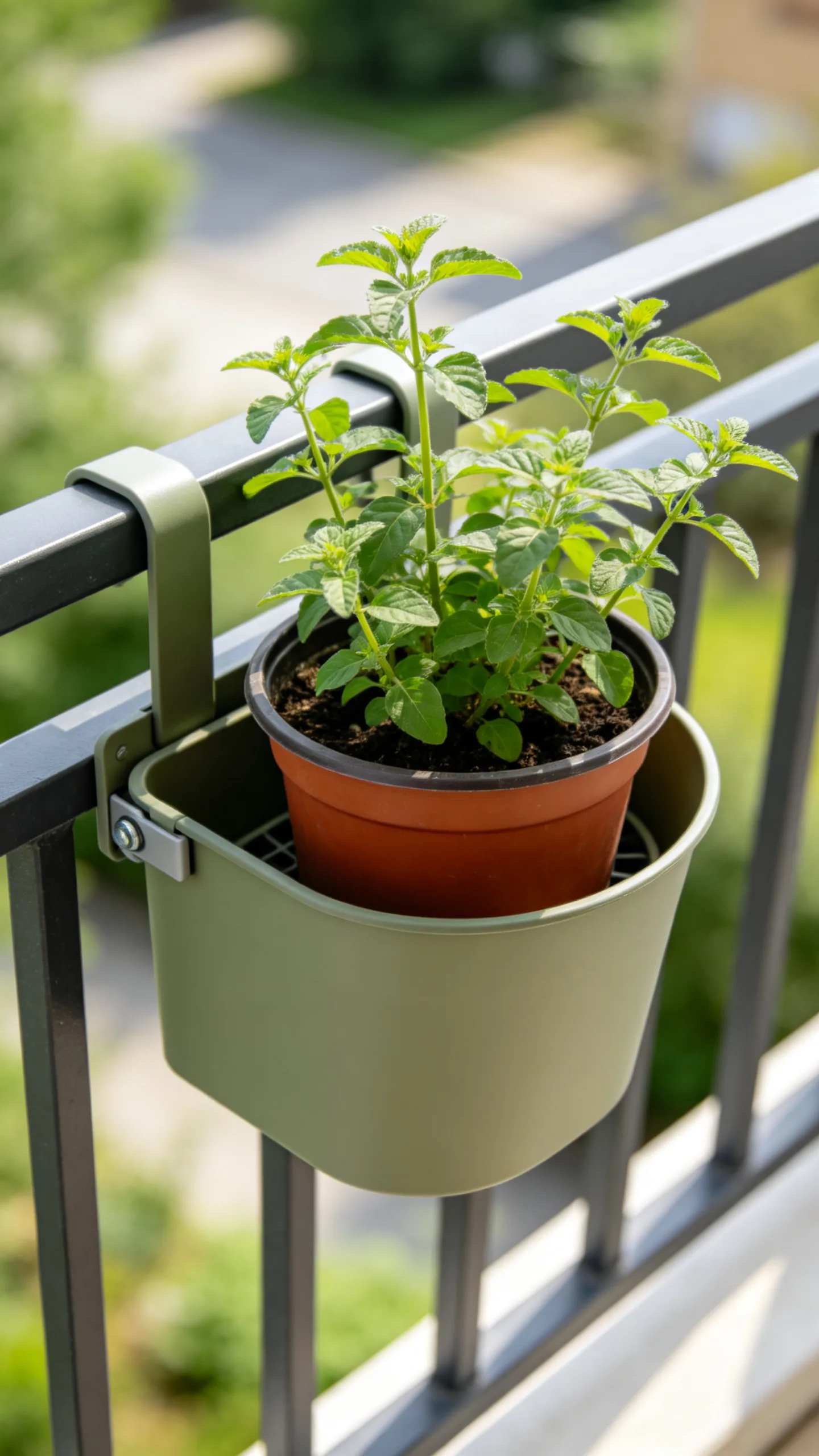
Use a railing planter box with a built-in holder, then place a removable nursery pot inside it rather than planting directly into the outer container. The inner pot makes it easier to inspect roots, refresh soil, or move tulsi during heavy rain or extreme heat.
Select a railing planter with a locking bracket and drainage design that does not spill water onto the balcony below. Keep the leaves inside the railing line so they are protected from accidental contact and strong wind.
4. Tall Narrow Planter for a Slim Balcony Corner
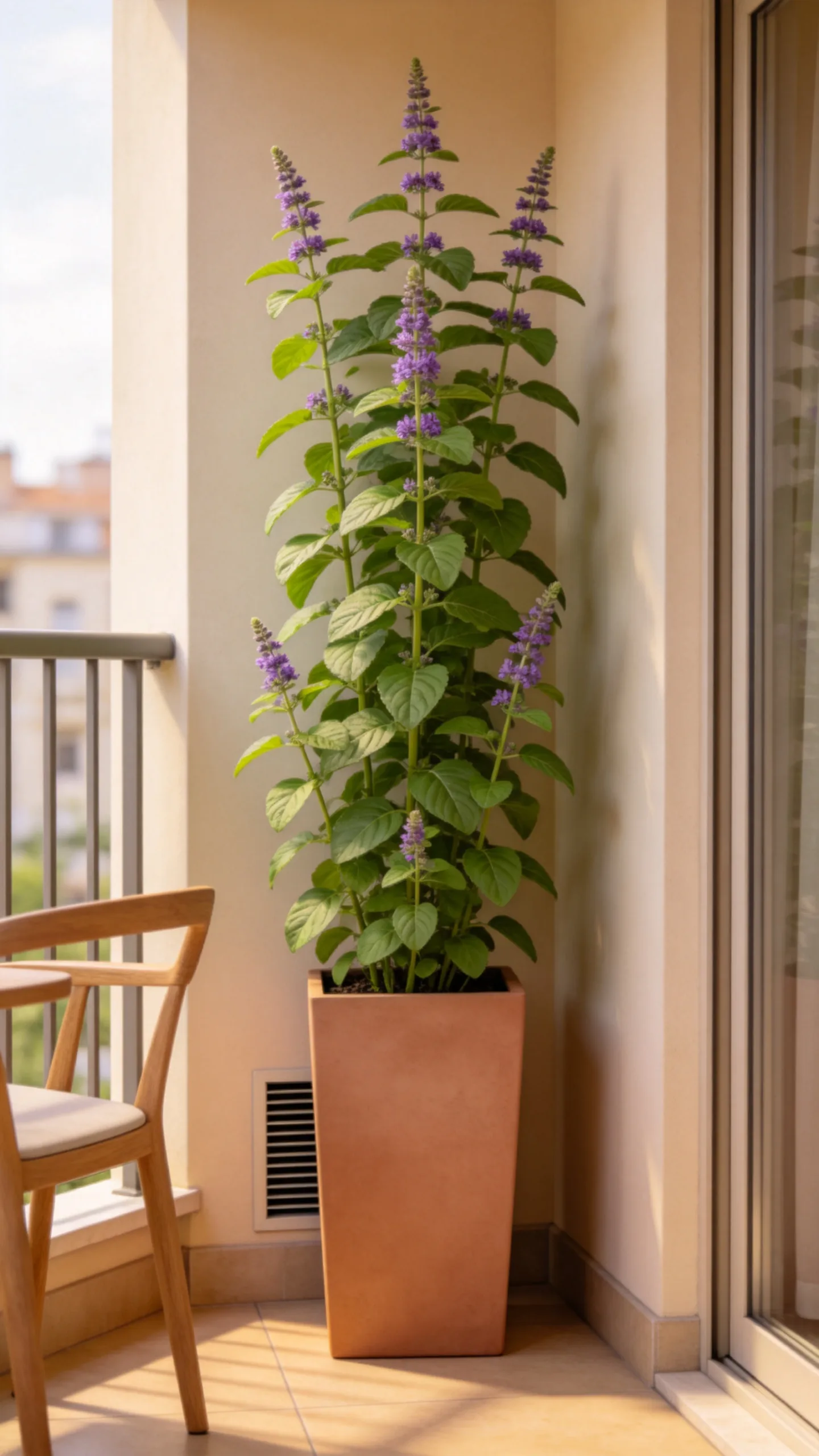
A tall, rectangular planter works well in a corner where there is little floor width but enough vertical clearance. Choose a container that is broad enough to remain stable and deep enough for healthy root growth, rather than using an unusually narrow decorative pot.
Leave a small gap between the planter and the wall to improve airflow. This arrangement creates a green vertical accent without taking up the floor area needed for chairs, drying racks, or regular balcony cleaning.
5. Wall-Mounted Corner Bracket at Waist Height
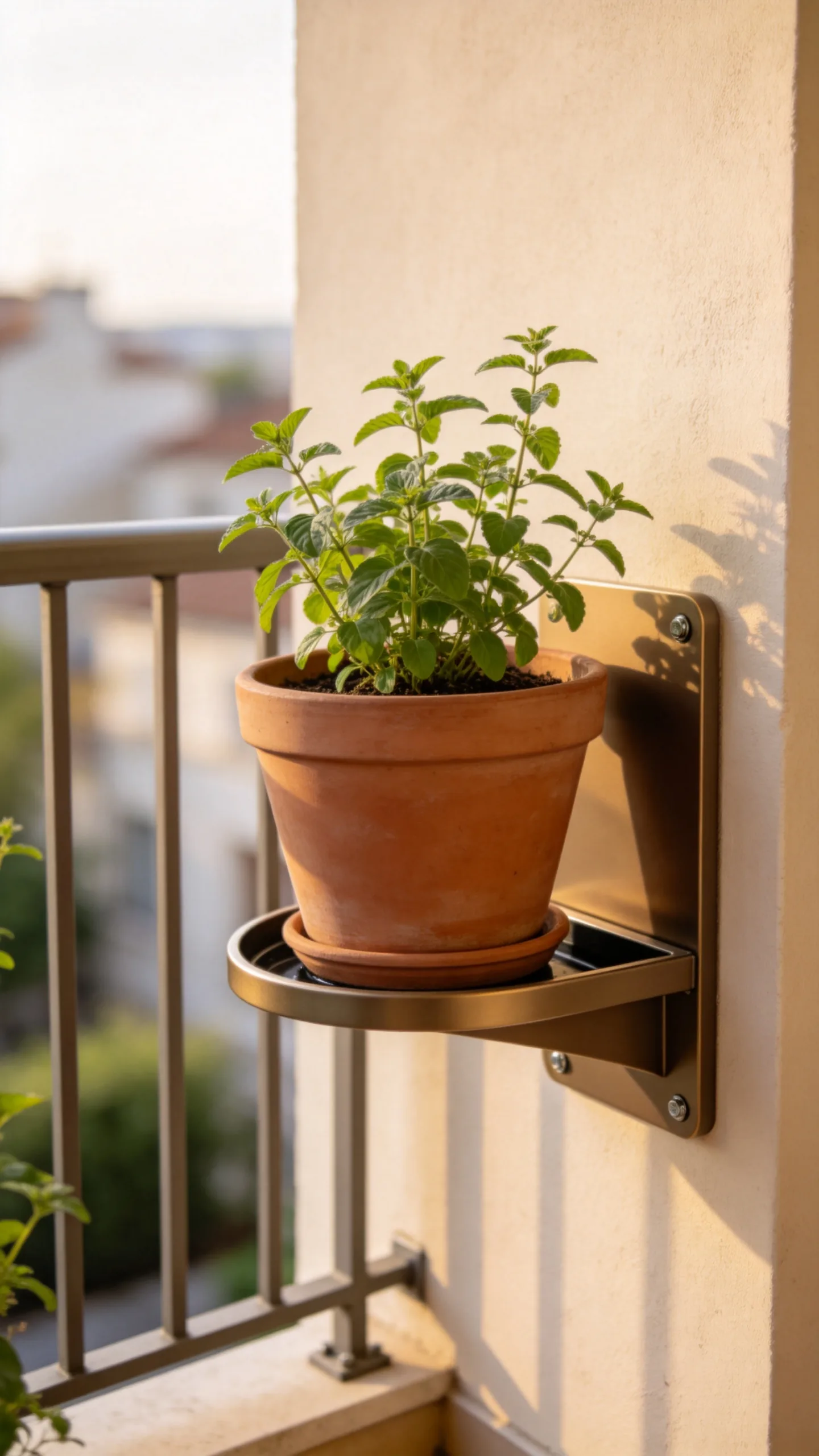
Install a strong wall bracket on the side wall next to the railing and place a medium tulsi pot at waist height. This position makes it convenient to pinch flower spikes, remove dry leaves, and harvest leaves without bending down.
Use masonry anchors for concrete walls and avoid drilling into surfaces where the building rules prohibit alterations. A saucer or concealed drip tray will help protect the wall from damp soil and repeated watering.
6. Raised Square Pot in a Recessed Corner
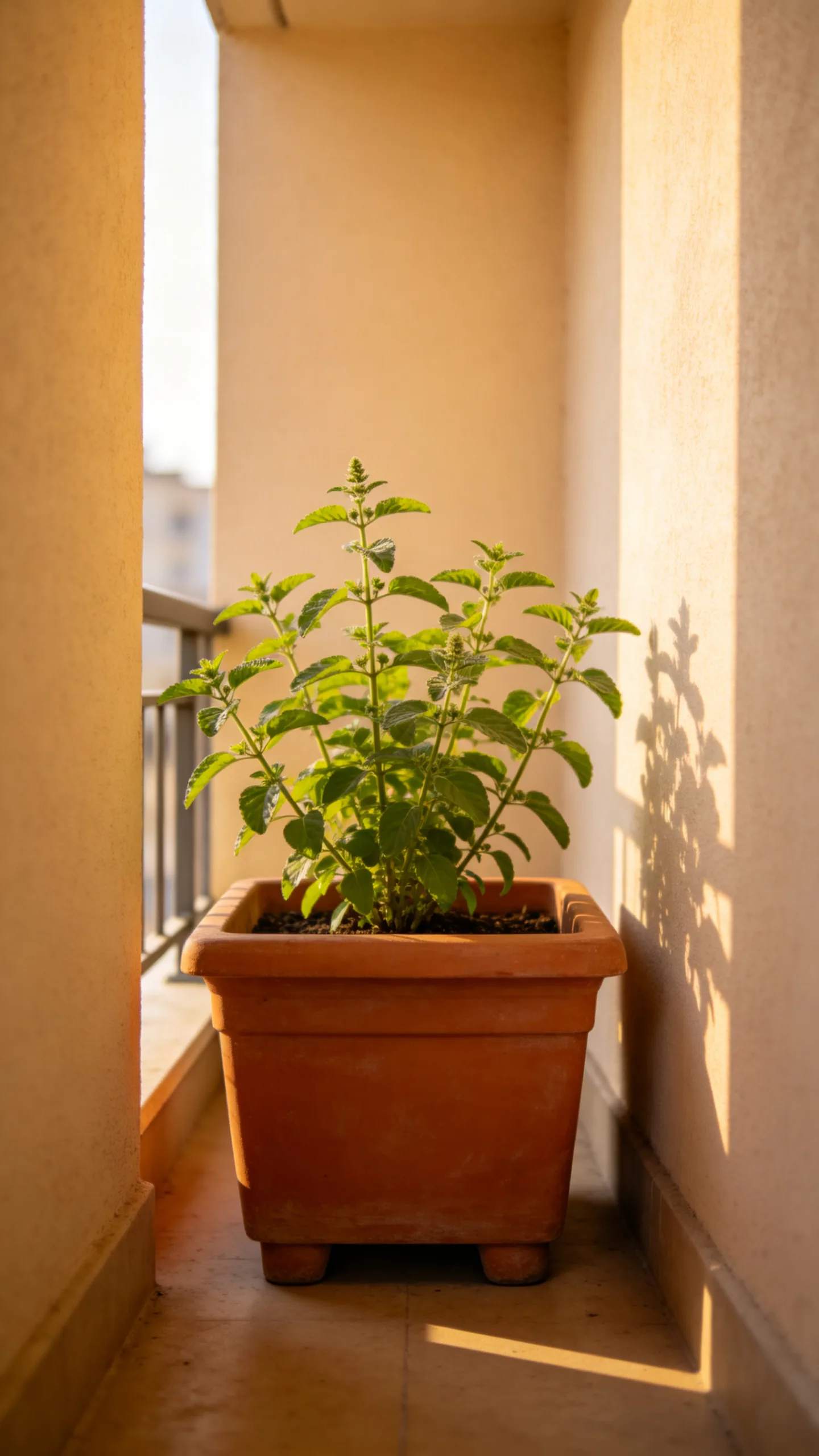
Set a square fiber, terracotta, or cement planter in a recessed corner that receives morning or filtered sunlight. Raising the pot slightly on short feet keeps the drainage hole clear and prevents water from collecting underneath the container.
A square planter fits tightly against two walls, using the corner more efficiently than a round pot. Keep enough clearance around the leaves for airflow, especially if the corner is sheltered and stays damp after watering.
7. Corner Bench With a Built-In Planter Box
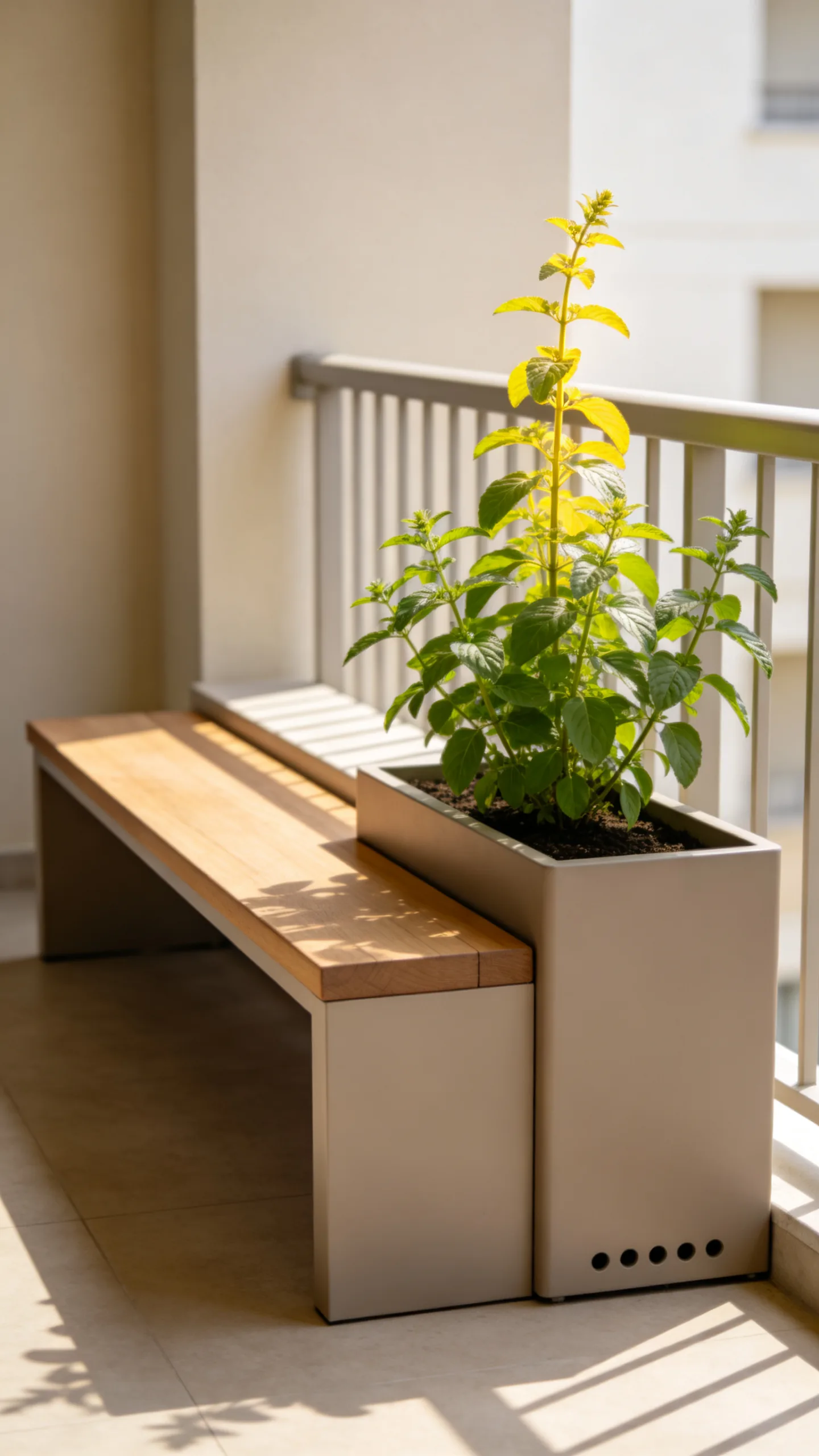
Choose a balcony bench that includes a planter compartment at one end and use that compartment for tulsi. The seating remains useful while the plant occupies the otherwise unused space beside the bench.
Line the planter area with a waterproof insert and provide drainage that does not run onto the seating structure. Position the tulsi on the brighter side of the bench so the backrest does not cast shade over it for most of the day.
8. Hanging Railing Basket for a Lightweight Tulsi Pot
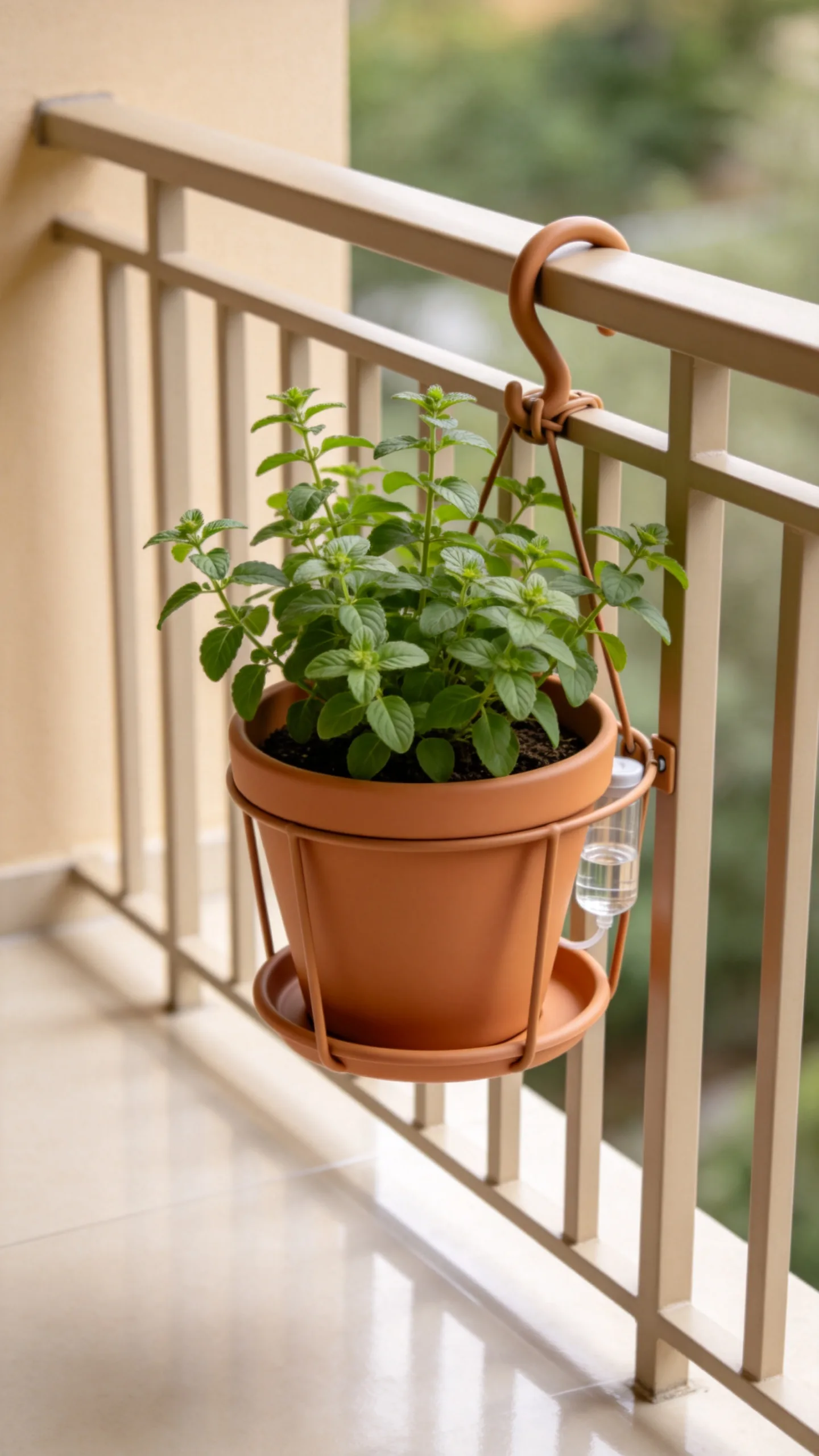
Hang a lightweight plastic or fiberglass pot from the inner side of the railing using a secure, adjustable bracket. This keeps the pot off the floor and gives the plant a clear position near the balcony edge.
Avoid heavy terracotta or cement containers when the railing load is uncertain. The basket should remain on the inside of the railing, with a stable hook and a drip tray to reduce the chance of water or soil falling below.
9. Corner Ladder Rack With a Single Feature Pot
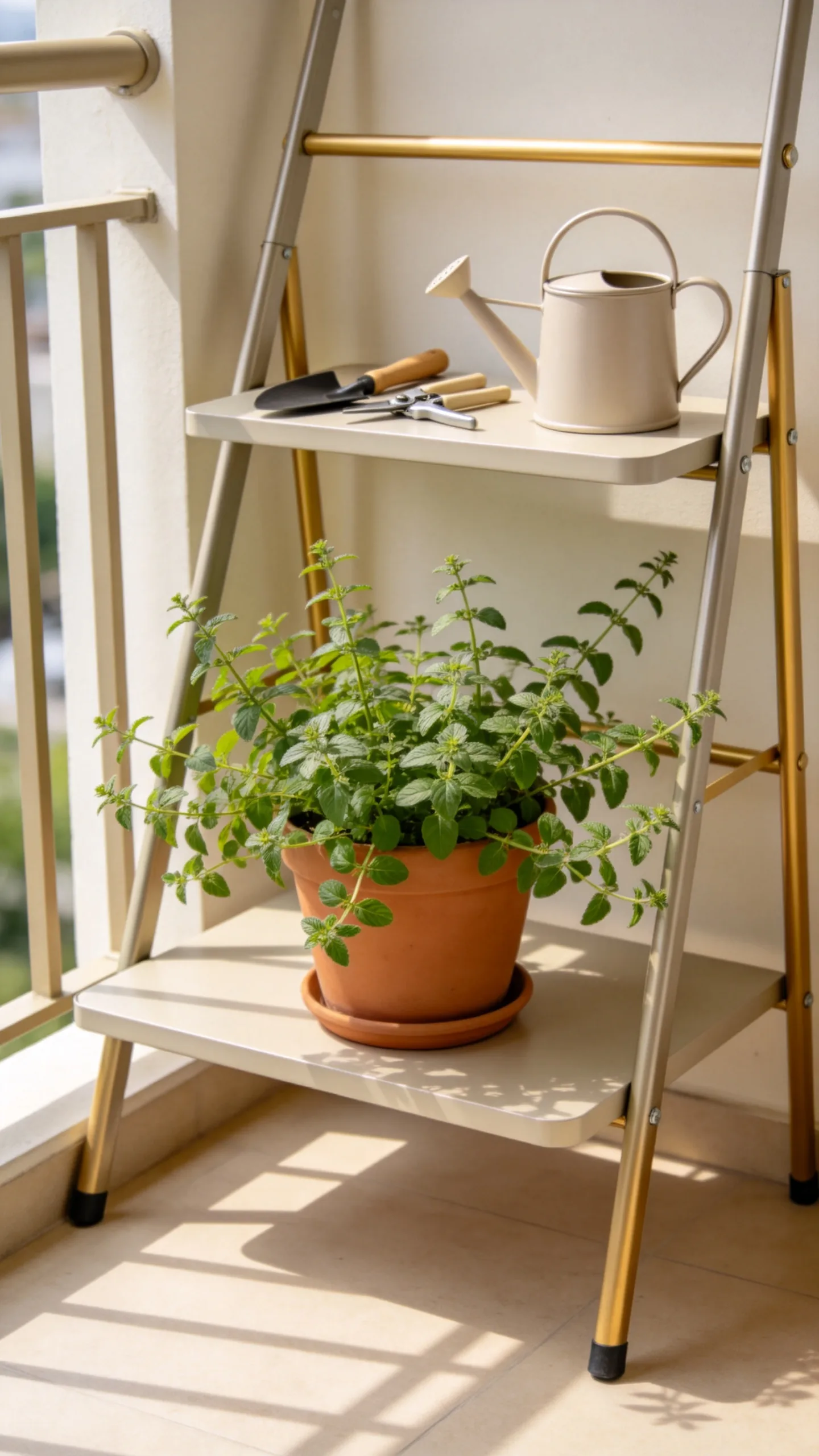
Lean a weather-resistant ladder rack into a protected balcony corner and reserve the lowest or widest shelf for one prominent tulsi pot. Other shelves can hold gardening tools, a watering can, or lightweight herb containers.
Anchor the ladder if the balcony is exposed to wind. Keeping only one larger tulsi pot on the rack prevents overcrowding and gives the plant enough room for branches to spread without brushing against the wall.
10. Double-Railing Arrangement With a Centered Tulsi Pot
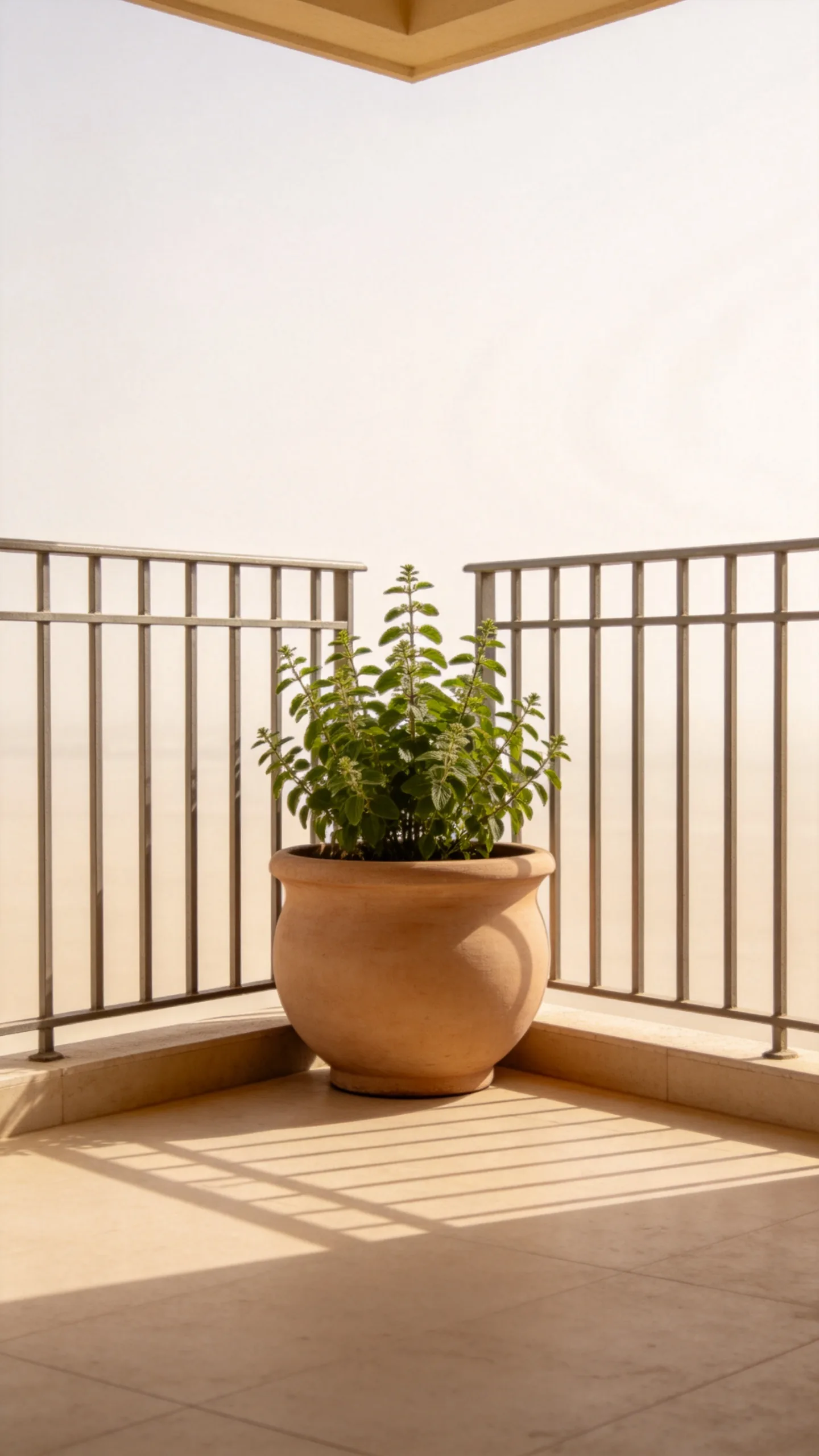
For a balcony corner where two railing sections meet, place the tulsi pot just inside the angle and center it between both sides. The railing frames the plant while leaving the corner visually balanced.
Use a wide, low container with a heavy base if the location is windy. Keep the pot far enough from the metal railing that leaves do not rub continuously, since repeated contact can damage soft stems.
11. Movable Caster Stand for Seasonal Sunlight
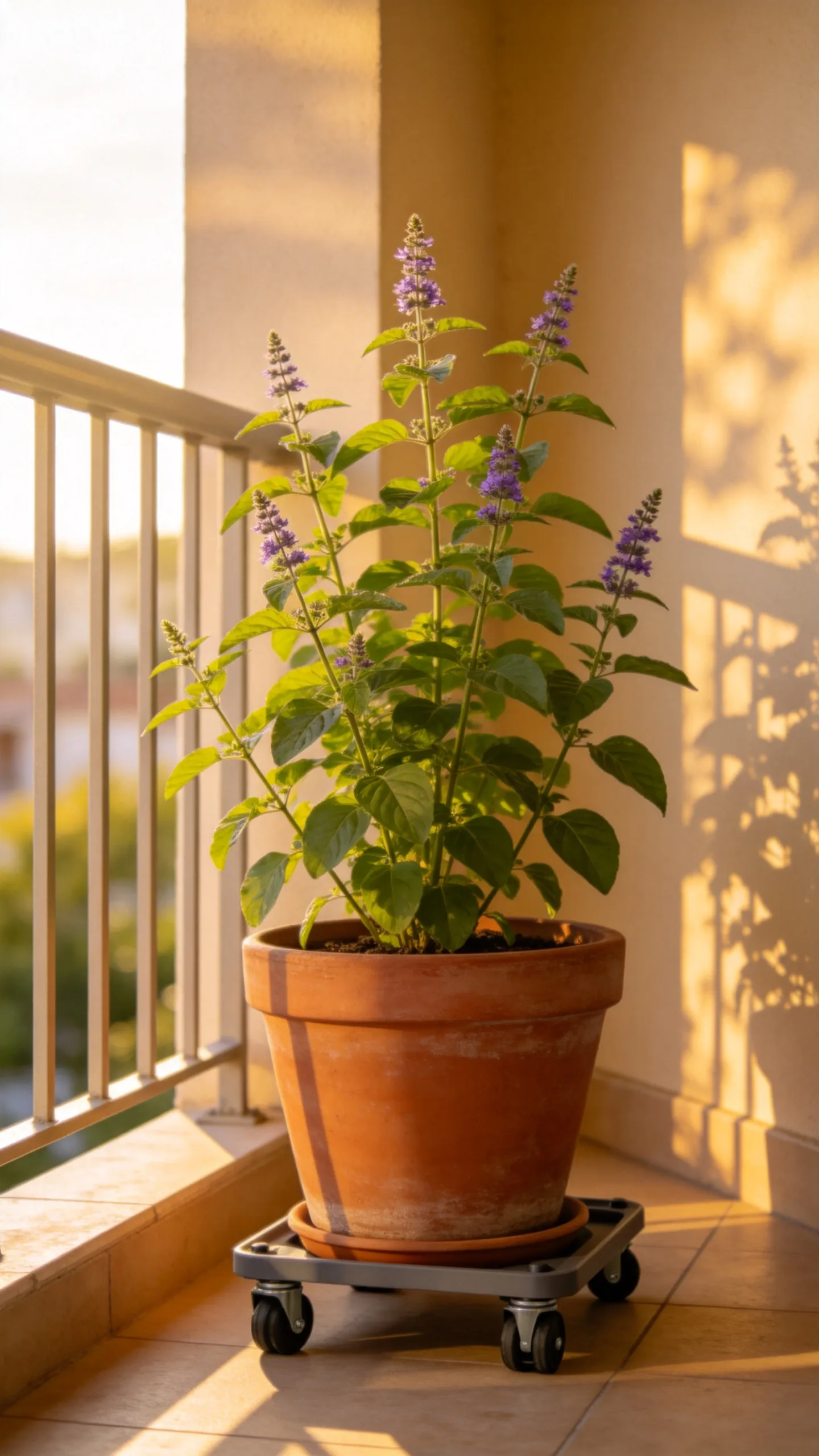
Place the tulsi container on a low plant caddy with locking casters. You can move it closer to the sunny railing during the cooler months and shift it to a more sheltered corner during intense heat, storms, or cold nights.
Choose a caddy rated for the full weight of the wet pot. Lock the wheels whenever the container is in position, and move the plant gradually if its light exposure changes significantly.
12. Corner Trellis Backdrop With a Centered Pot
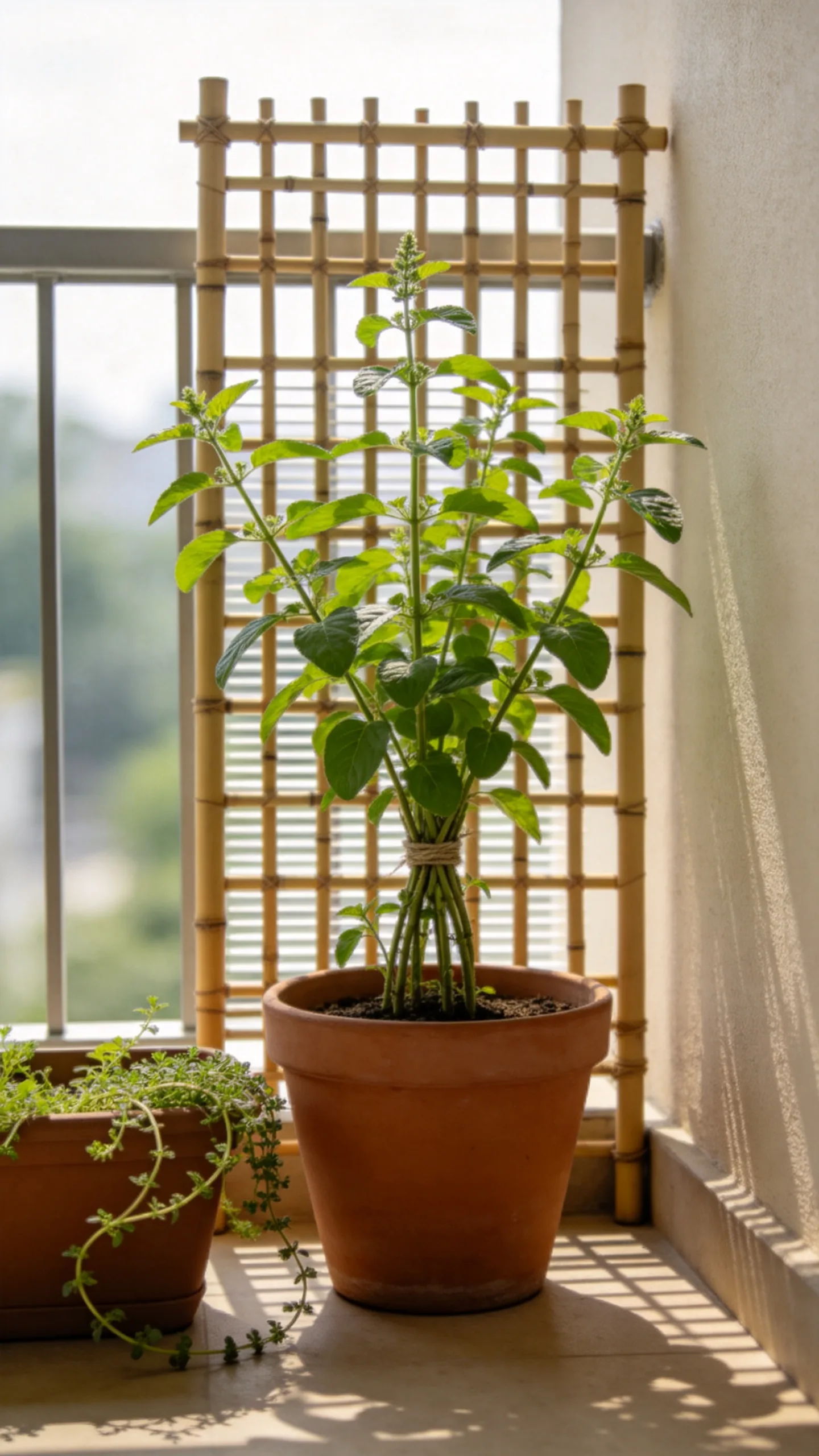
Add a narrow bamboo or metal trellis behind a tulsi pot placed in a corner. Although tulsi does not need a climbing support, the trellis can create a structured backdrop and support nearby trailing herbs or decorative vines kept in separate containers.
Do not tie tulsi stems tightly to the trellis. Keep the foliage open, prune crowded growth, and leave enough space behind the plant for air to circulate between the pot and the wall.
13. Marble-Look Pot on a Protective Drainage Tray
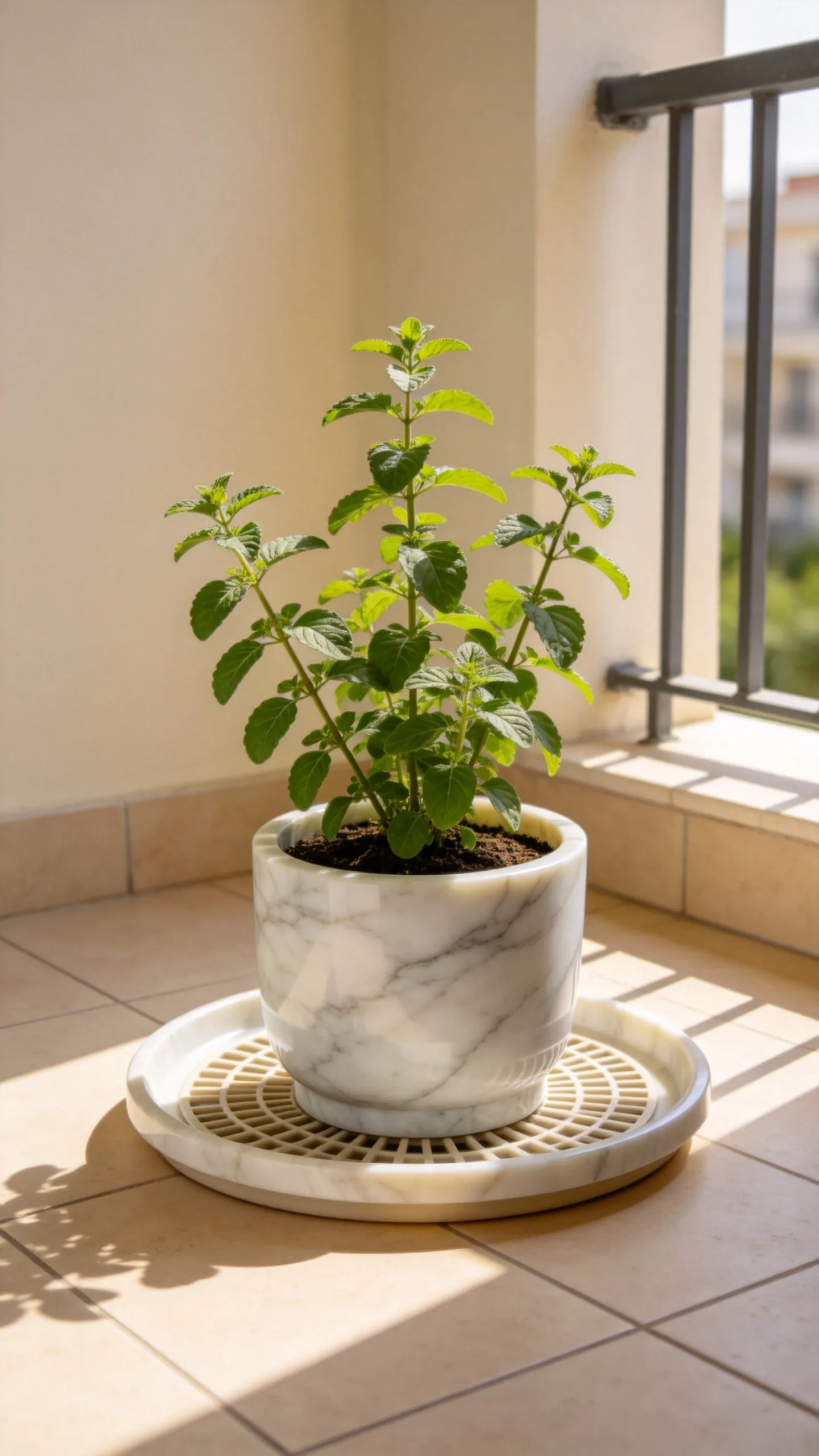
Use a decorative marble-look planter to make the tulsi container a focal point at the inside corner of the balcony. Lightweight resin or fiber versions offer the appearance of stone without the same load as a solid stone pot.
Place the planter on a large drainage tray or raised platform, and empty collected water after irrigation. A clean tray protects tile flooring while allowing the decorative pot to remain close to a railing or doorway.
14. Window-Side Corner Shelf for Easy Daily Care
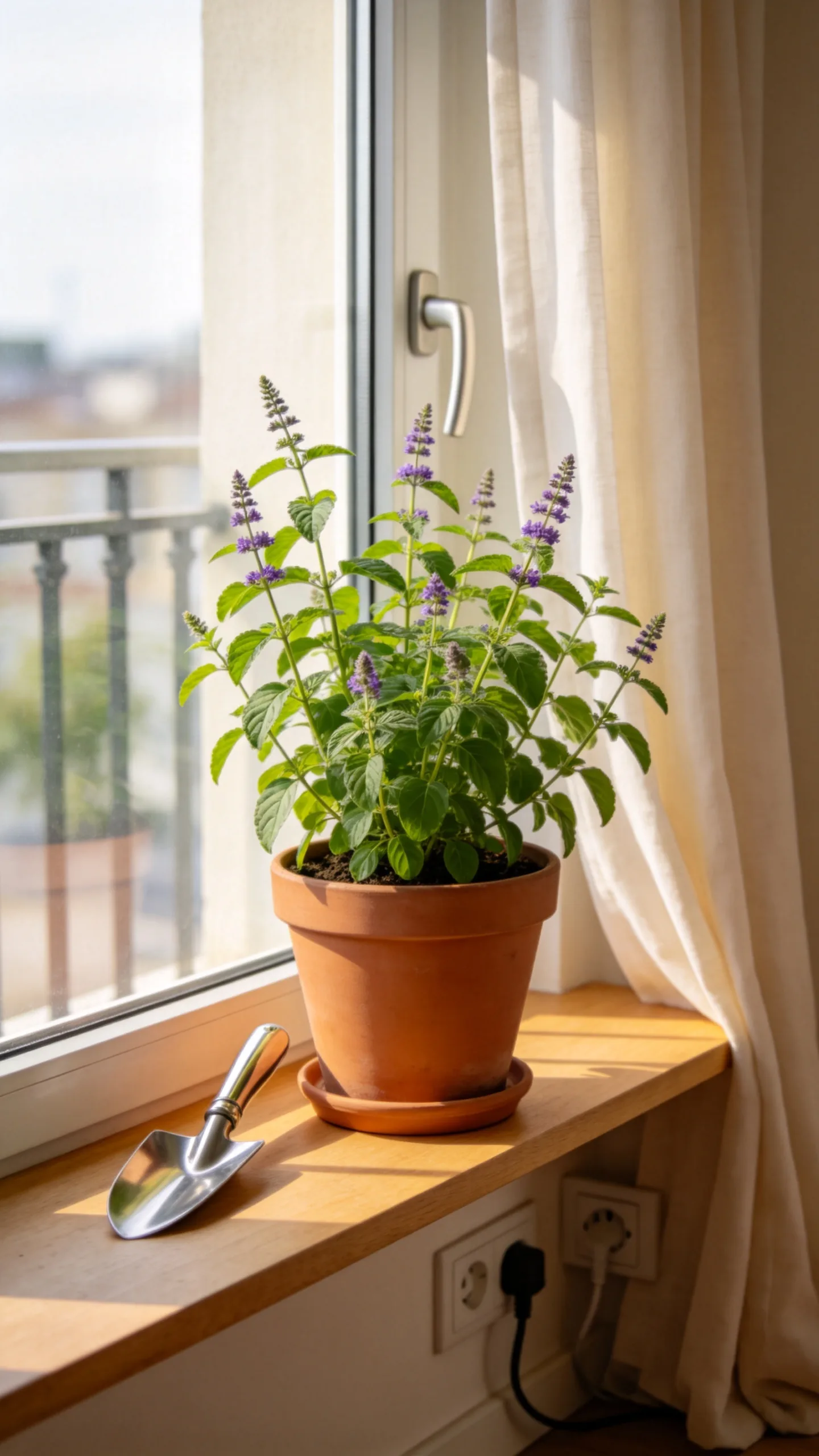
Install a narrow shelf near a balcony window or door and place the tulsi pot where it can be seen during daily routines. This location makes it easier to notice dry soil, fallen leaves, or pests before the plant declines.
Keep the shelf clear of curtains, door swings, and electrical outlets. Water slowly until excess drains out, then remove standing water so the roots are not left in a constantly wet container.
15. Recessed Railing Corner With a Gravel-Topped Pot
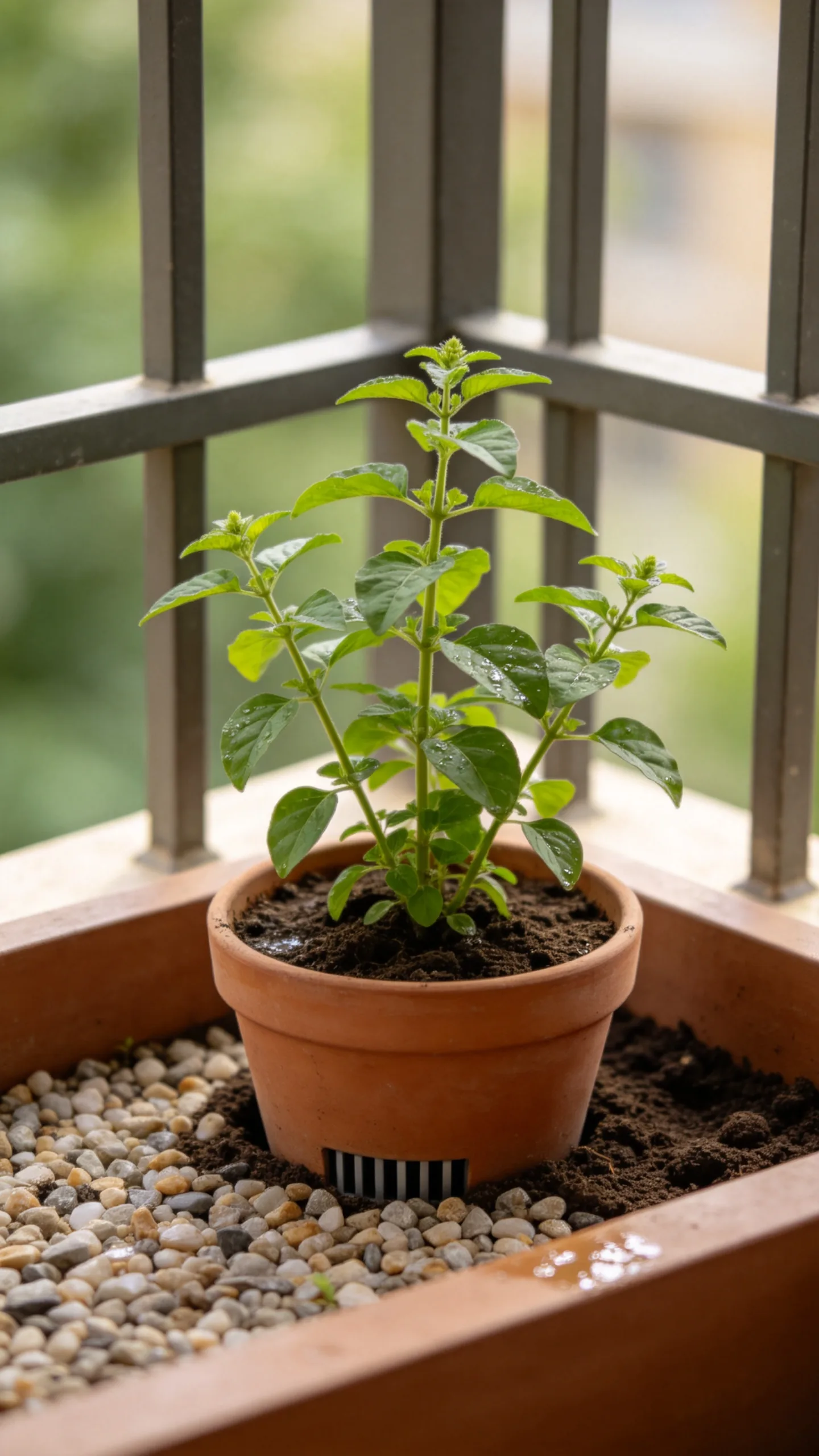
Set a tulsi pot into a protected railing corner and cover the soil surface with a thin layer of clean decorative gravel. The gravel can reduce soil splash during watering and give the container a finished appearance.
Do not use a thick, compacted layer that blocks air from reaching the soil. Choose a pot with an unobstructed drainage hole, and check the moisture below the gravel rather than watering only because the surface looks dry.
16. Narrow Corner Cart for Tulsi and Gardening Supplies
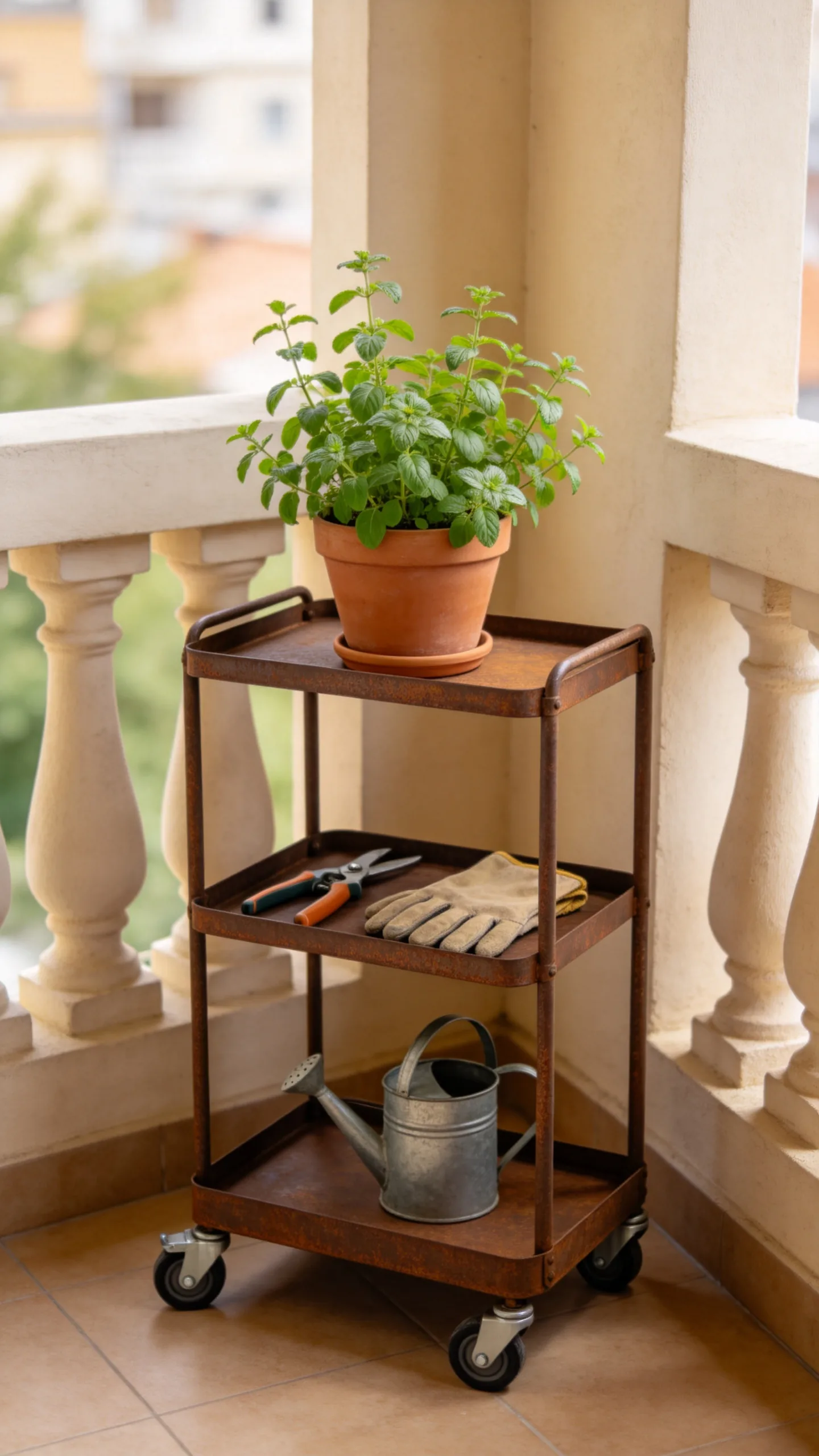
Use a slim outdoor utility cart in the corner to hold a tulsi pot on the top shelf and pruners, gloves, and a small watering can below. The cart can be pulled away from the railing when the floor needs sweeping or the plant needs inspection.
Select a rust-resistant cart with a broad base and lockable wheels. Keep the lower shelf organized and light enough that the cart does not become unstable when moved across the balcony.
17. Paired Corner Pots Framing the Balcony Entrance
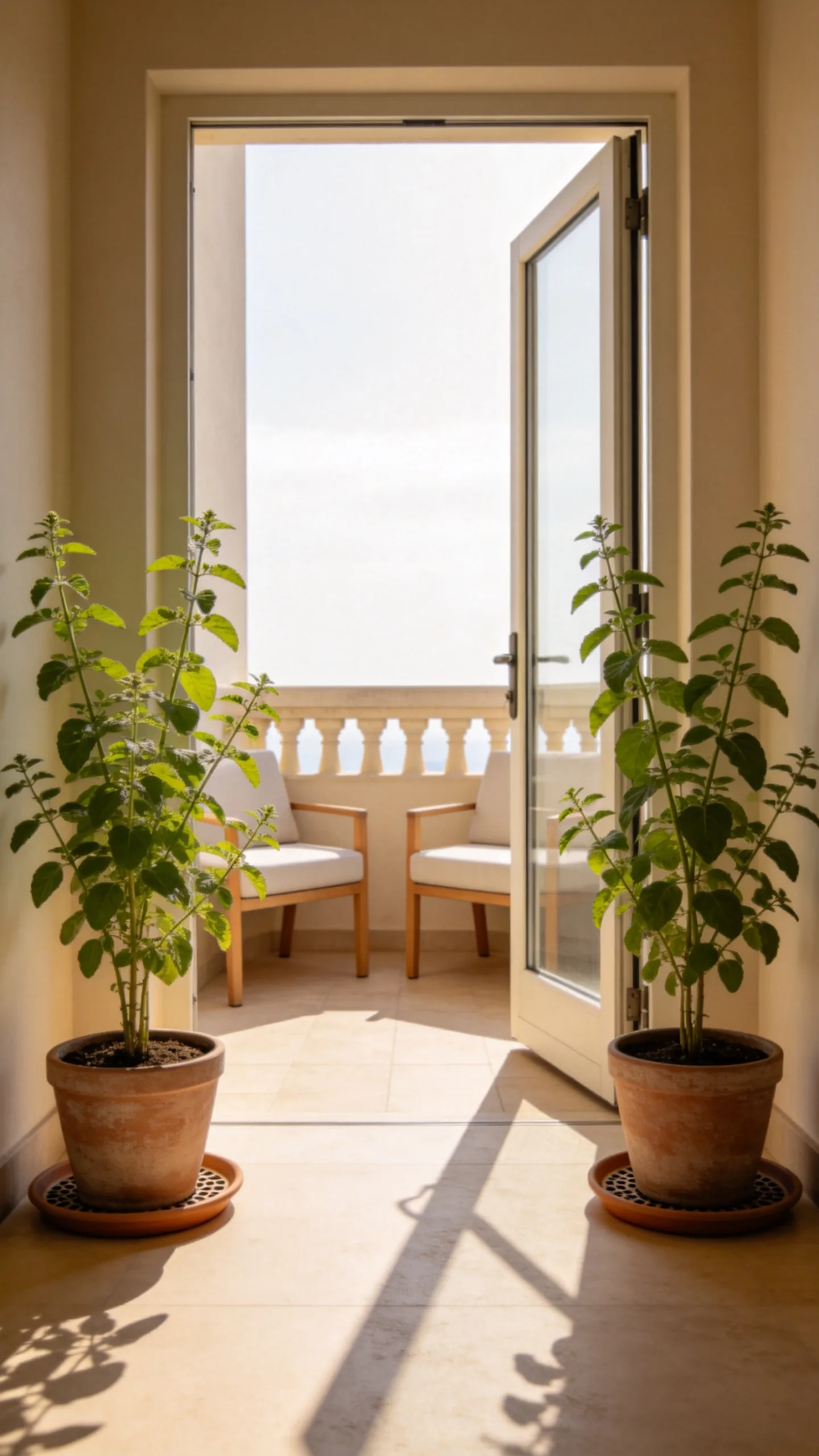
Place two matching tulsi containers on opposite sides of the balcony entrance or at the two ends of a corner seating area. The repeated shape creates a balanced arrangement while keeping the center walkway open.
Give each pot similar light and watering conditions, but monitor them separately because one side may receive more shade from a wall or railing. Use containers with drainage trays and leave enough clearance for the door to open fully.