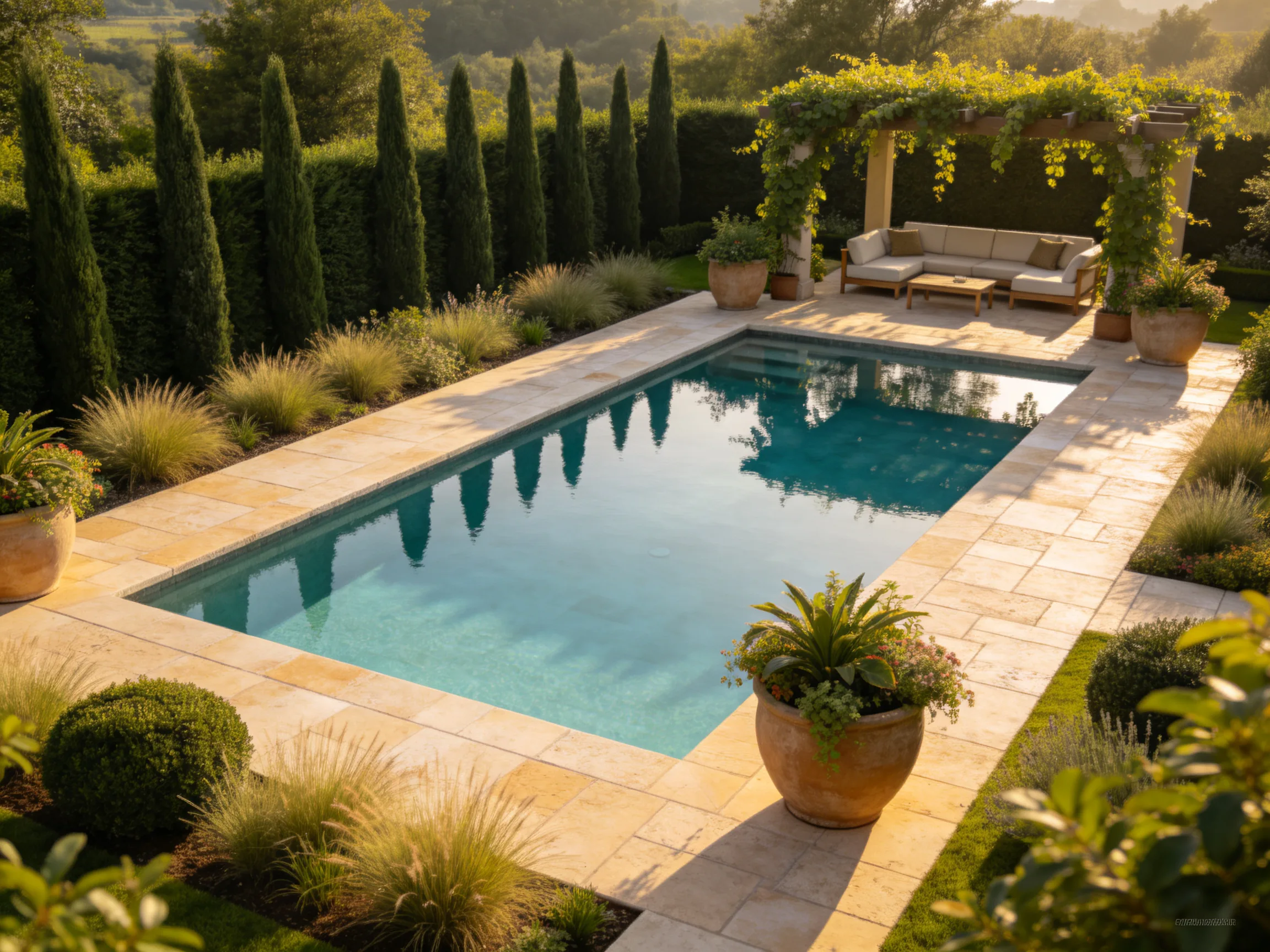
A well-planned pool garden can soften hard paving while making the swimming area more comfortable and private. Use a combination of screening plants, shade structures, containers, paths, and low-maintenance borders, choosing materials and plants that suit your climate, available sunlight, soil drainage, and pool-safety requirements.
1. Layered Evergreen Screening Border
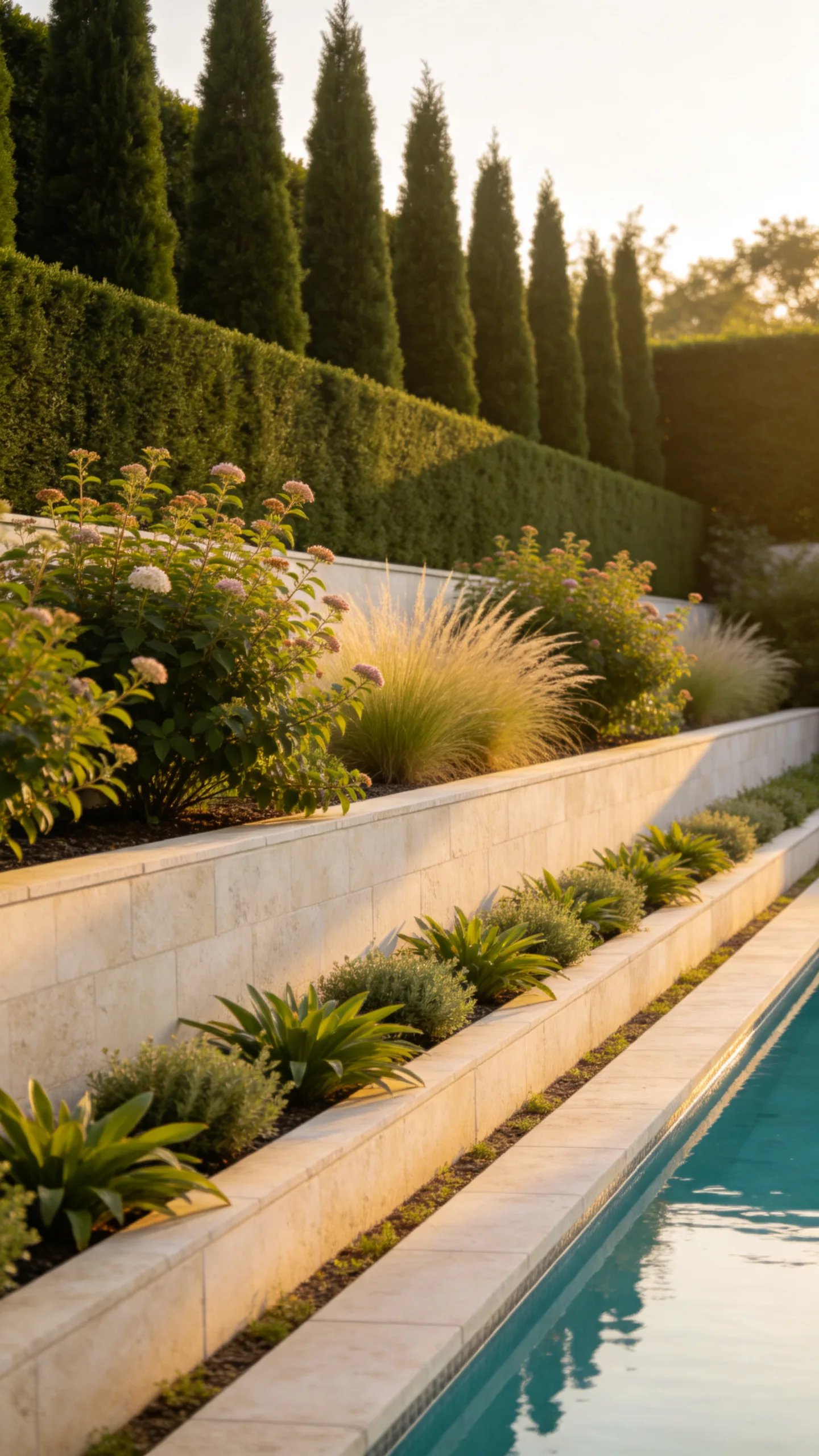
Create a privacy border with three plant heights instead of relying on one solid hedge. Place tall evergreen shrubs or narrow trees at the back, medium-height grasses or flowering shrubs in the middle, and low ornamental plants along the poolside edge. This layered arrangement blocks views while keeping the garden visually deep.
Choose plants that tolerate the light and watering conditions of the site, and keep mature growth away from the pool coping. Avoid species with invasive roots, heavy fruit drop, or excessive leaf litter near the water.
2. Narrow Columnar Trees Along the Fence
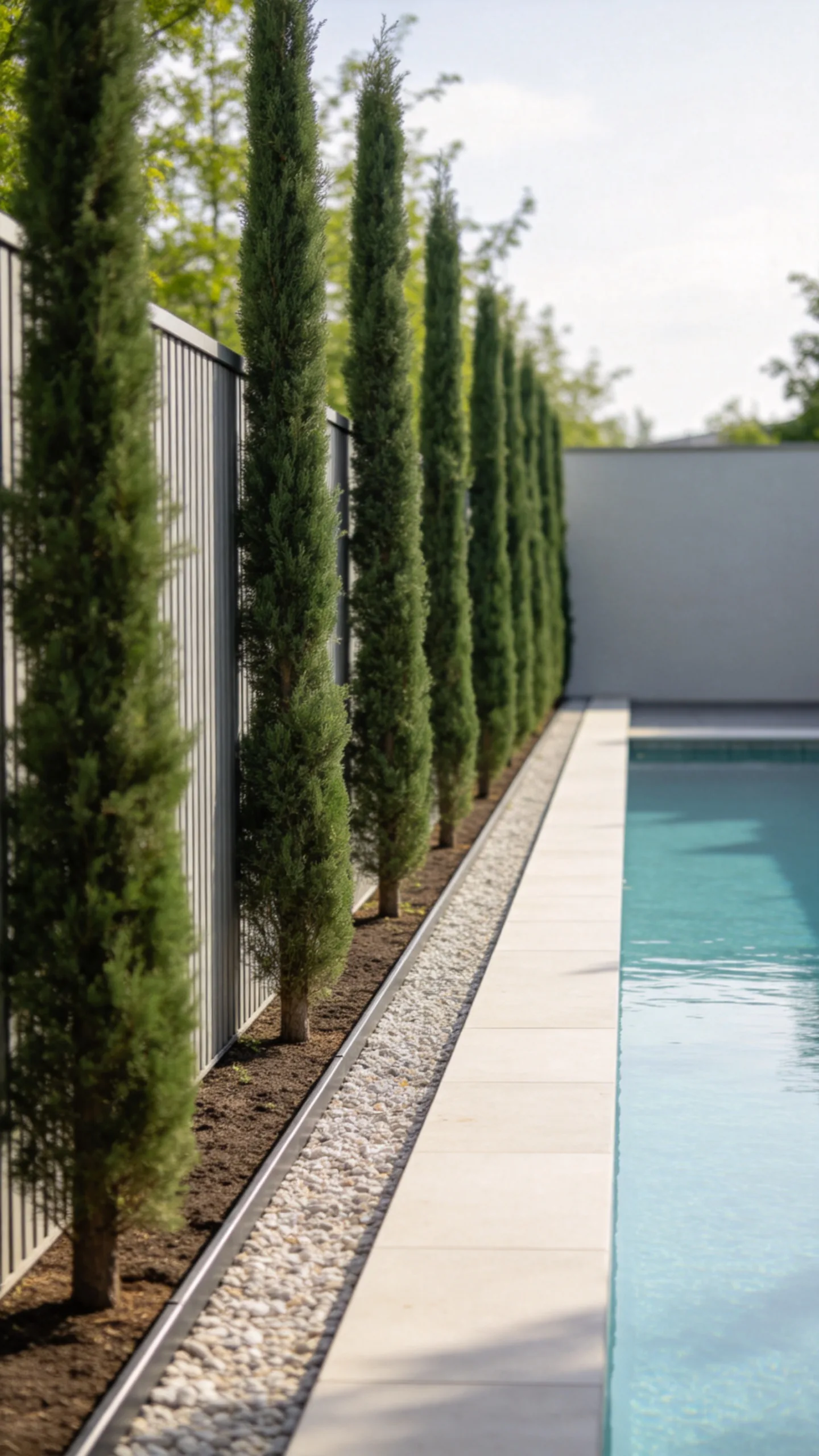
Plant columnar evergreens in a repeated row when the pool garden has limited width. Their upright growth adds privacy and height without using as much ground space as broad-canopy trees. Leave enough spacing for the mature spread and access for pruning rather than planting them tightly together.
A gravel strip, steel edging, or low groundcover can keep the base neat. Select varieties suited to local temperatures and wind exposure, and check whether their root systems are appropriate near paving, retaining walls, and pool plumbing.
3. Pergola With Climbing Vines
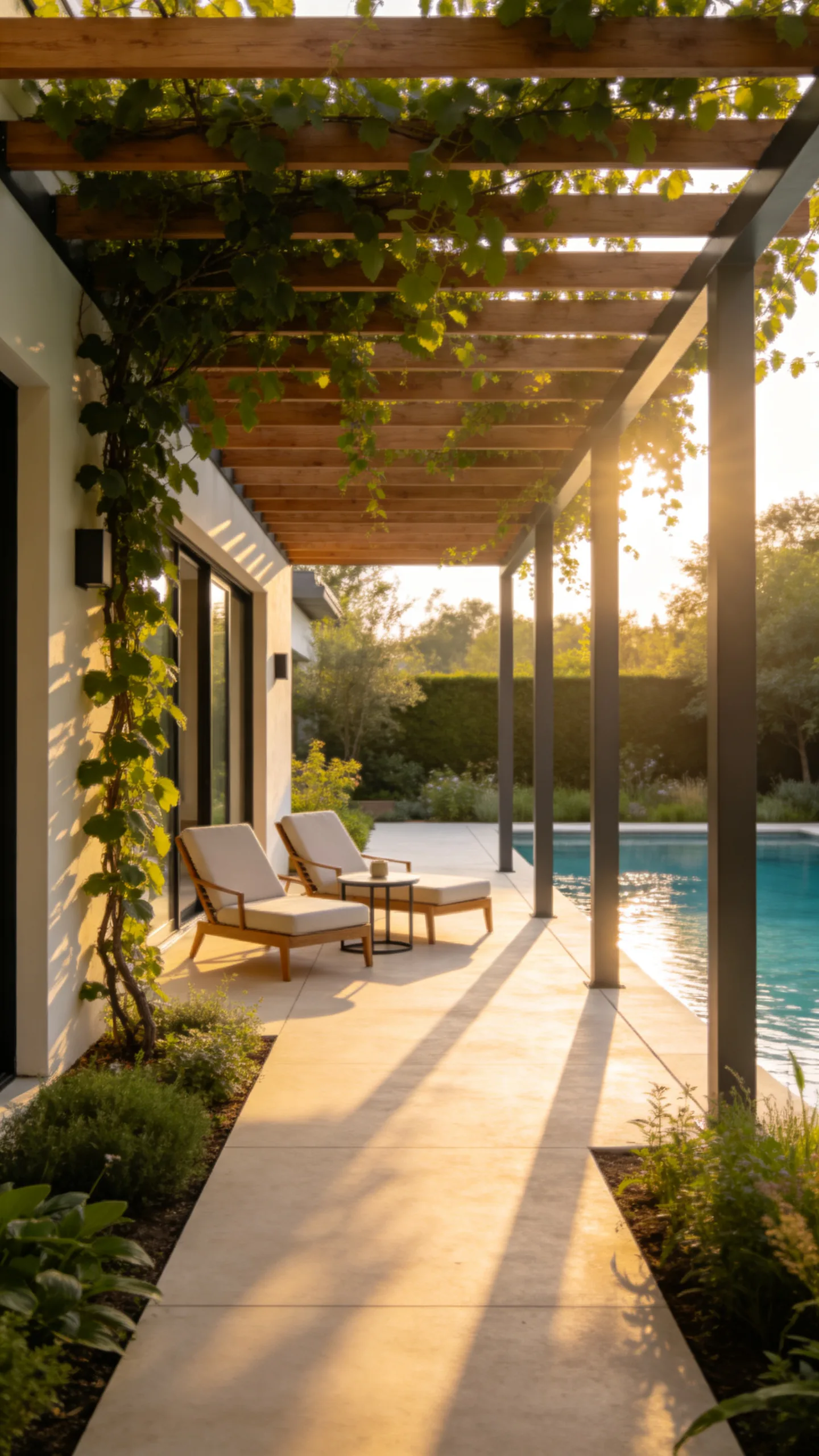
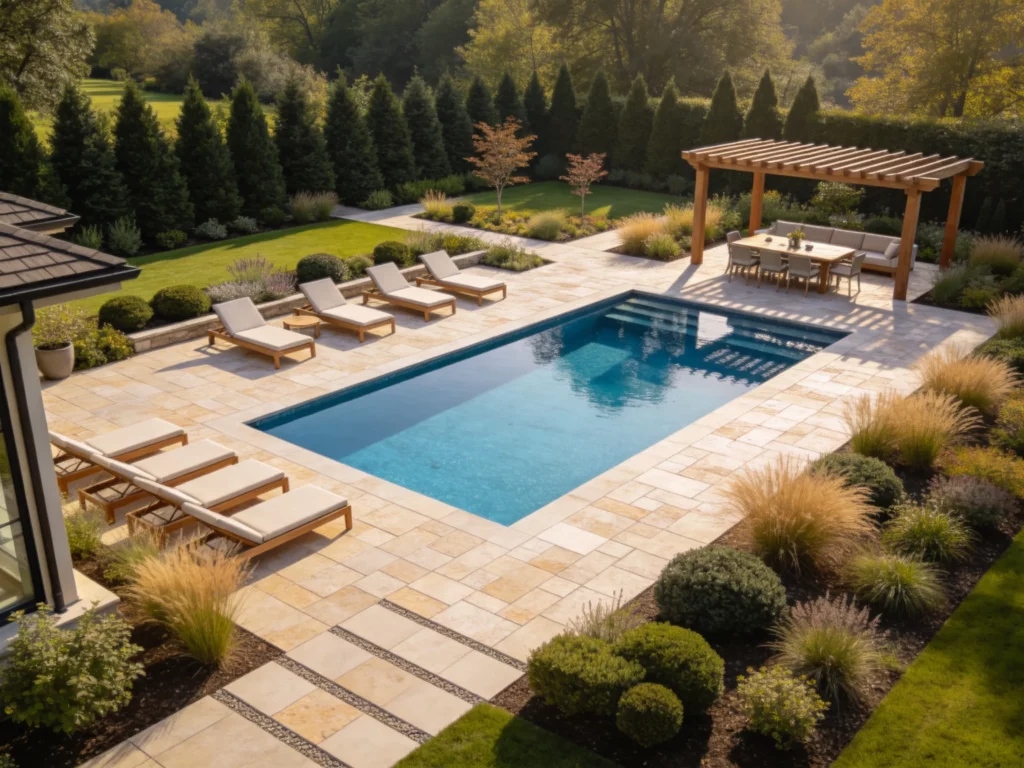
Install a pergola over a lounge area beside the pool to provide filtered shade without covering the entire water surface. Train a suitable vine over the top and along one or two sides to create a greener privacy screen. Fast-growing vines may need regular tying and pruning to prevent them from reaching gutters, fencing, or electrical fixtures.
Use a durable structure made from treated wood, powder-coated metal, or another material rated for outdoor moisture. Position the pergola where it will shade seating during the hottest part of the day while preserving a clear path between the house, pool, and exits.
4. Large Tropical-Style Containers
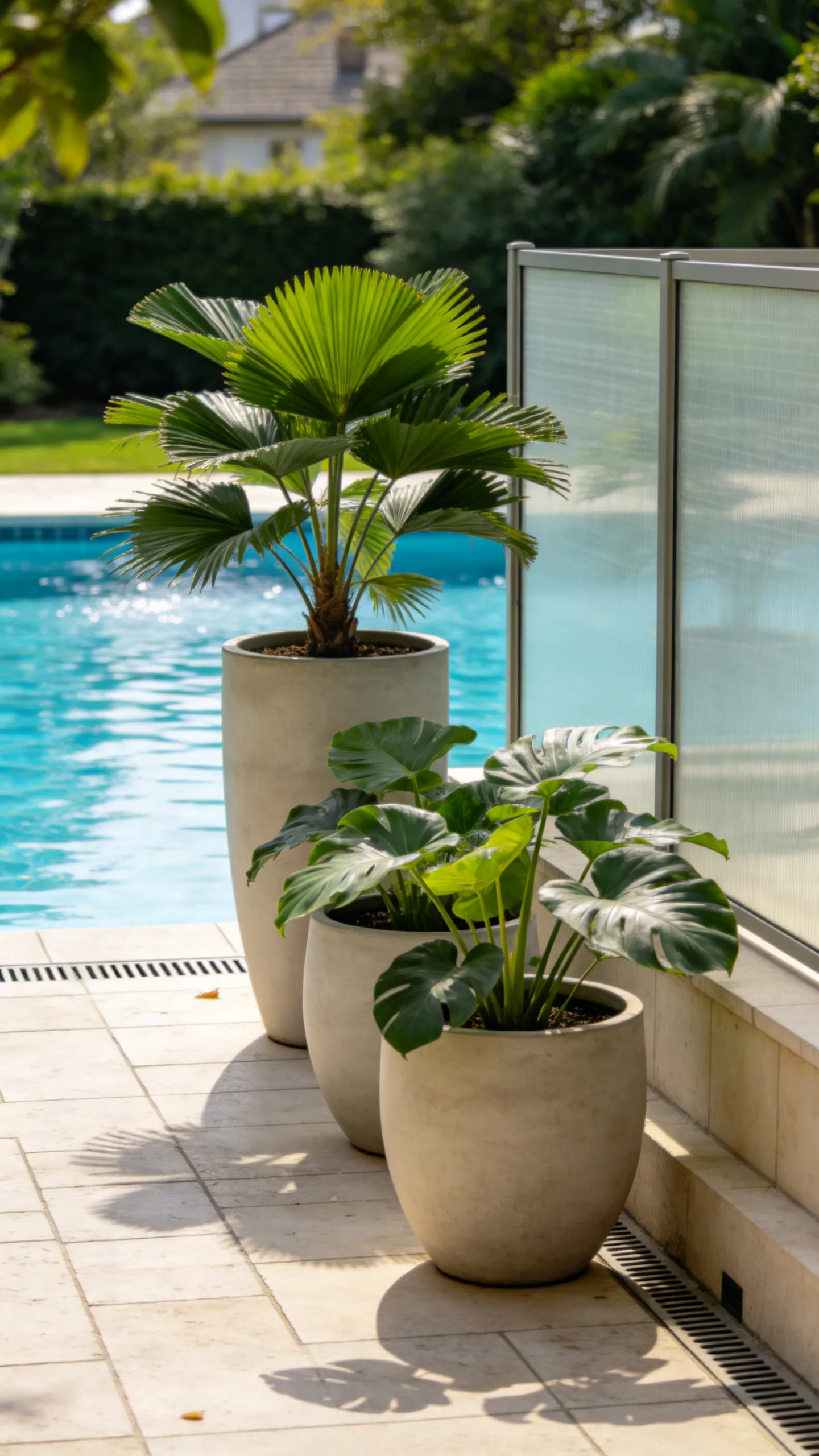
Use oversized containers to bring height and foliage to a paved pool deck where planting beds are not practical. Group one tall plant with two lower containers, placing them at corners, beside a privacy screen, or near an outdoor seating area. Large pots are more stable in wind and dry out more slowly than small containers.
Choose non-shattering containers with drainage holes and use a lightweight potting mix appropriate for the plants. Plants with broad leaves can provide a lush look, but keep fallen foliage swept away from the pool and select varieties that can tolerate reflected heat from concrete or stone.
5. Shade Trees Set Back From the Pool
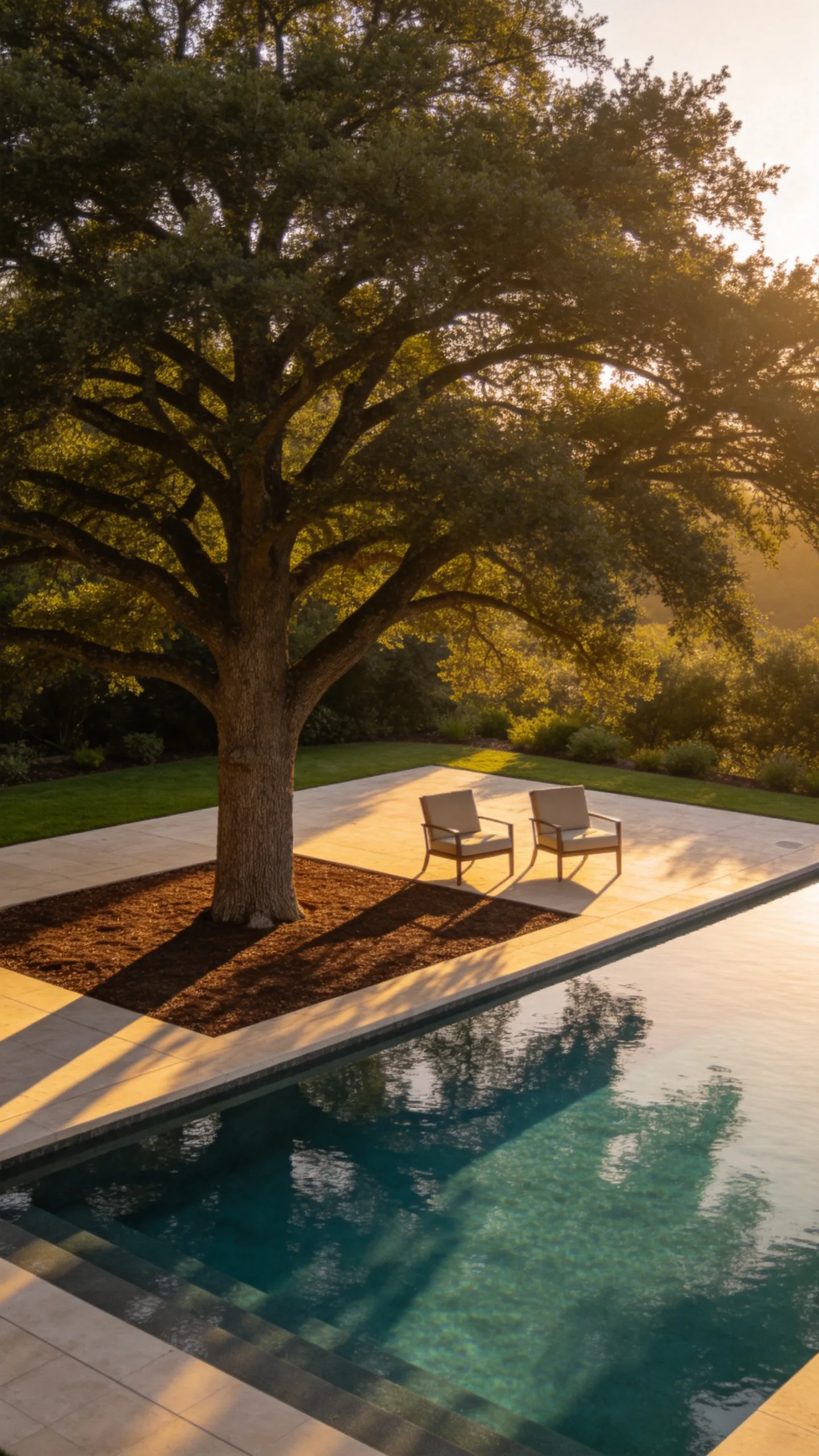
Plant a deciduous or evergreen shade tree far enough from the pool to protect the paving, filtration system, and water from aggressive roots and falling debris. A tree placed on the western or southwestern side of a seating zone can reduce late-afternoon heat, depending on the site’s sun path.
Before planting, measure the mature canopy and root spread, then check local suitability. Use a deep mulch ring rather than lawn beneath the tree, but keep mulch and soil away from the pool coping to reduce runoff and maintenance.
6. Slatted Privacy Screen With Planting
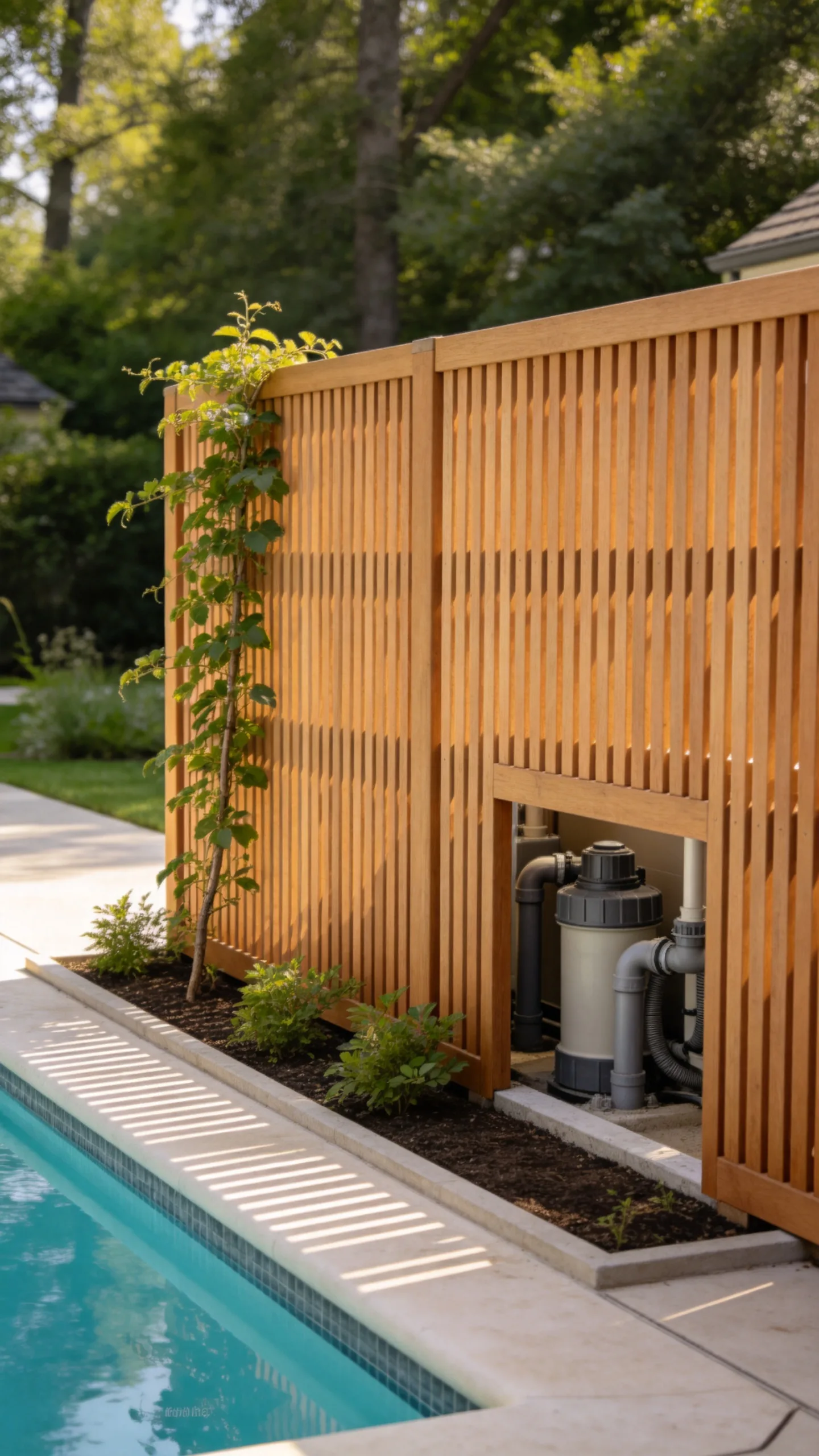
Combine a vertical slatted screen with climbing plants or a narrow planting bed for immediate privacy. The gaps between the slats allow air movement and light while breaking direct sightlines from neighboring windows or patios. A screen can also conceal pool equipment without making the garden feel enclosed.
Use weather-resistant timber, composite boards, or metal panels designed for outdoor exposure. Leave service access around pumps and filters, and anchor the structure securely where strong winds or children’s play could place pressure on it.
7. Ornamental Grasses for Soft Screening
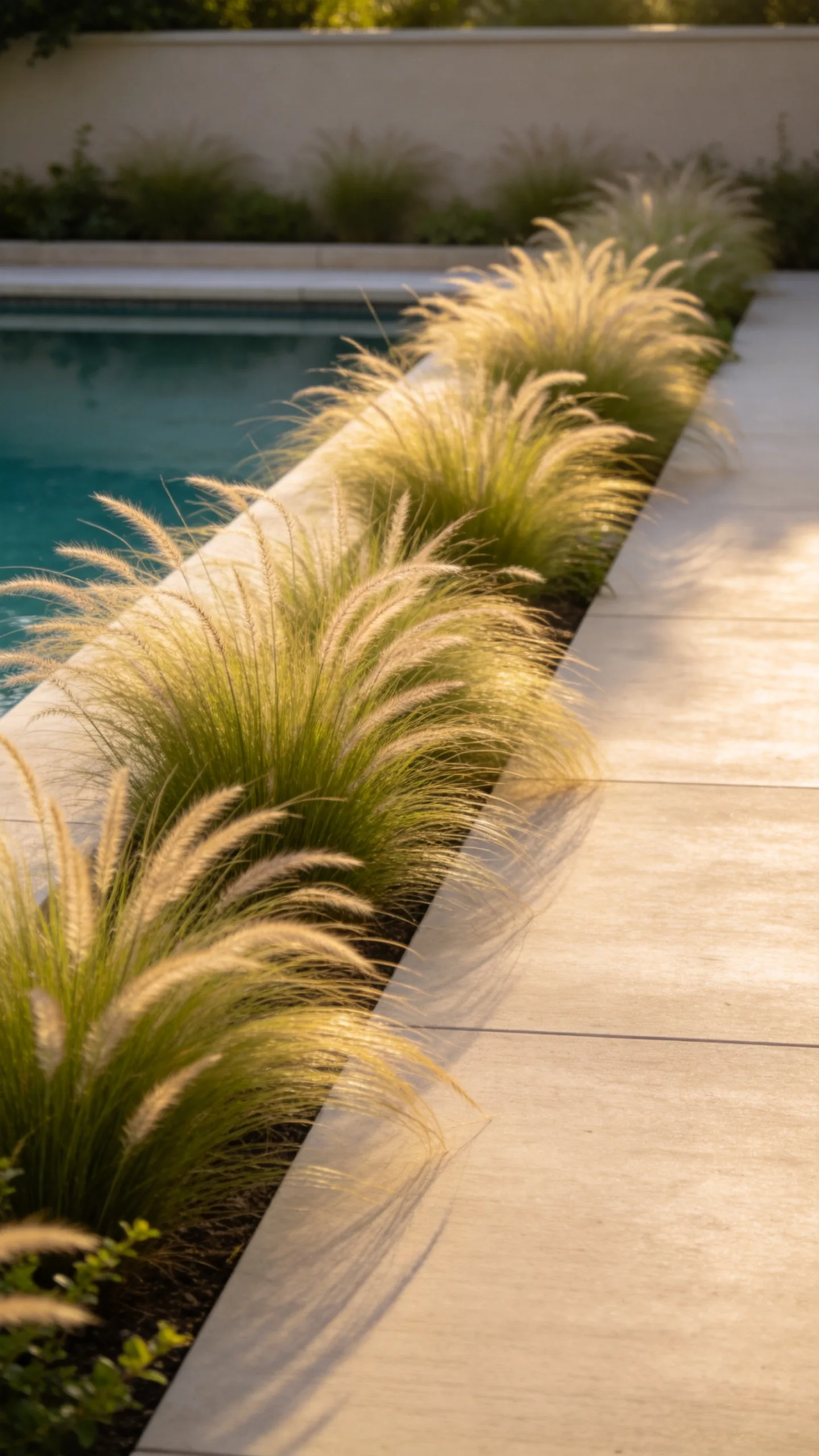
Plant clumps of ornamental grass along the outer edge of a pool border to create movement, texture, and partial privacy. Medium and tall grasses can screen low viewpoints while remaining lighter than a solid hedge. Their foliage also softens the straight lines of coping and retaining walls.
Select non-invasive species that match the local climate and soil drainage. Cut back deciduous grasses at the appropriate seasonal time, and avoid placing varieties with sharp blades directly beside walking routes or areas where swimmers enter and leave the pool.
8. Raised Bed Along the Pool Fence
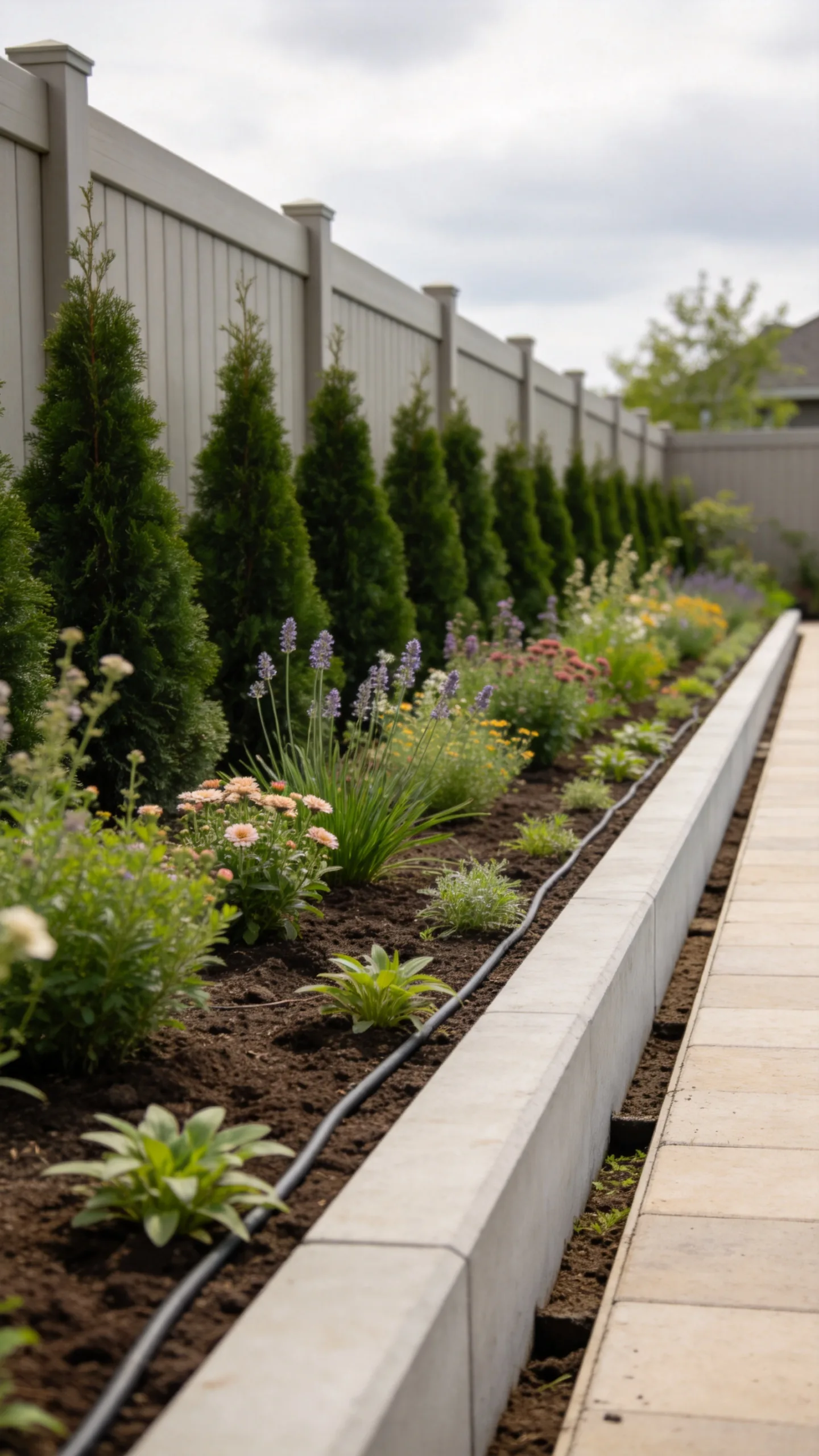
Build a raised planting bed along a boundary fence to improve drainage and give plants more root depth. A bed can combine an evergreen background plant, flowering perennials, and low edging plants without requiring a wide in-ground border. This arrangement works well where existing soil is compacted or contaminated by construction fill.
Use a sturdy retaining material rated for outdoor moisture and leave room for maintenance access. Install irrigation before filling the bed, then choose plants based on the fence’s actual light exposure rather than relying on the conditions in the rest of the yard.
9. Retractable Shade Sail Over the Lounge Area
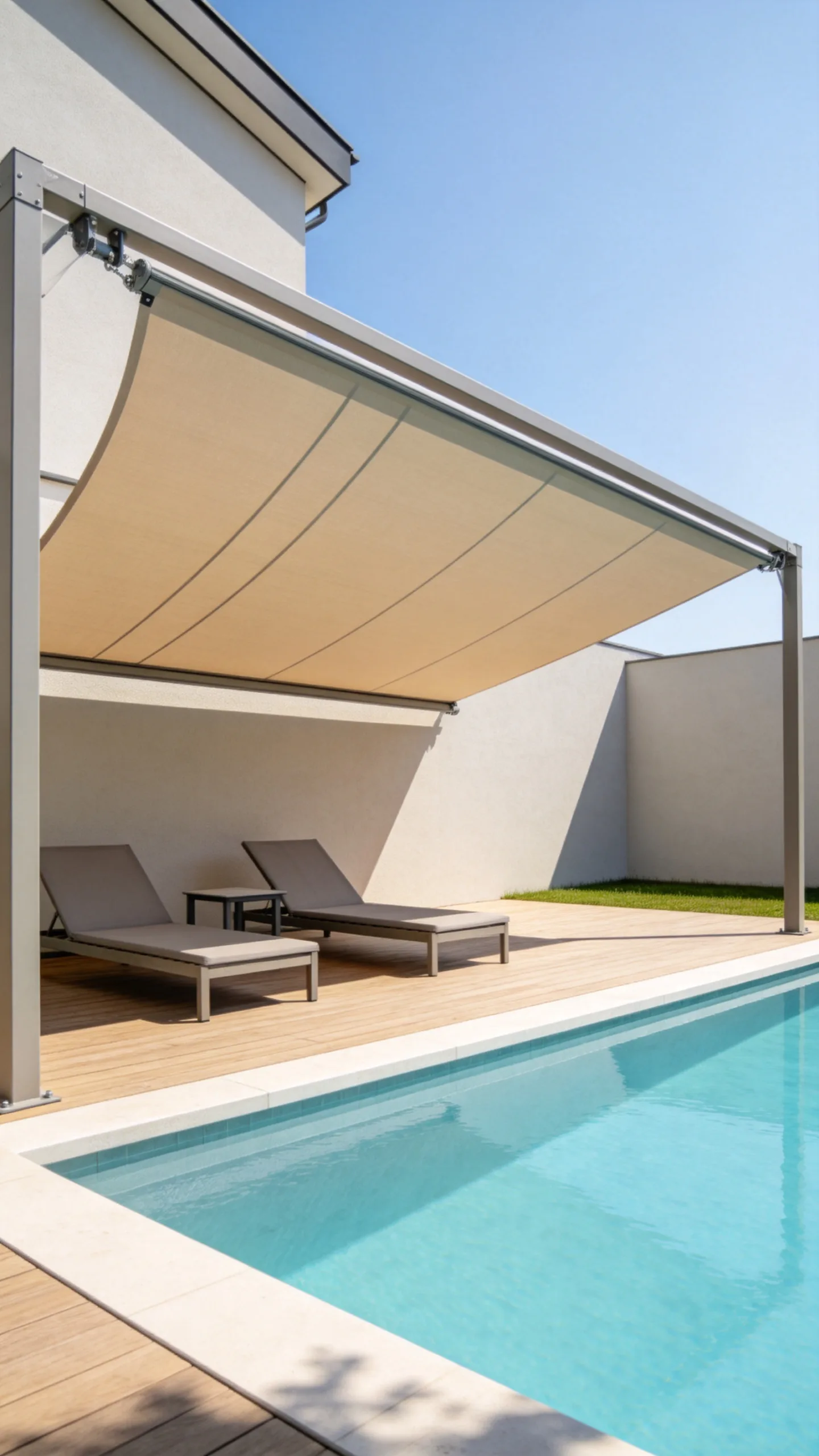
Stretch a retractable or removable shade sail over poolside chairs, a dining table, or a daybed rather than shading the entire pool. A triangular or rectangular sail can add strong visual shape while protecting a specific seating zone from midday or afternoon sun.
Mount the fixing points to properly engineered posts or suitable structural walls. Choose a fabric rated for outdoor UV exposure, allow rainwater to drain according to the manufacturer’s instructions, and remove or secure the sail before severe weather.
10. Privacy Hedge With a Curved Border
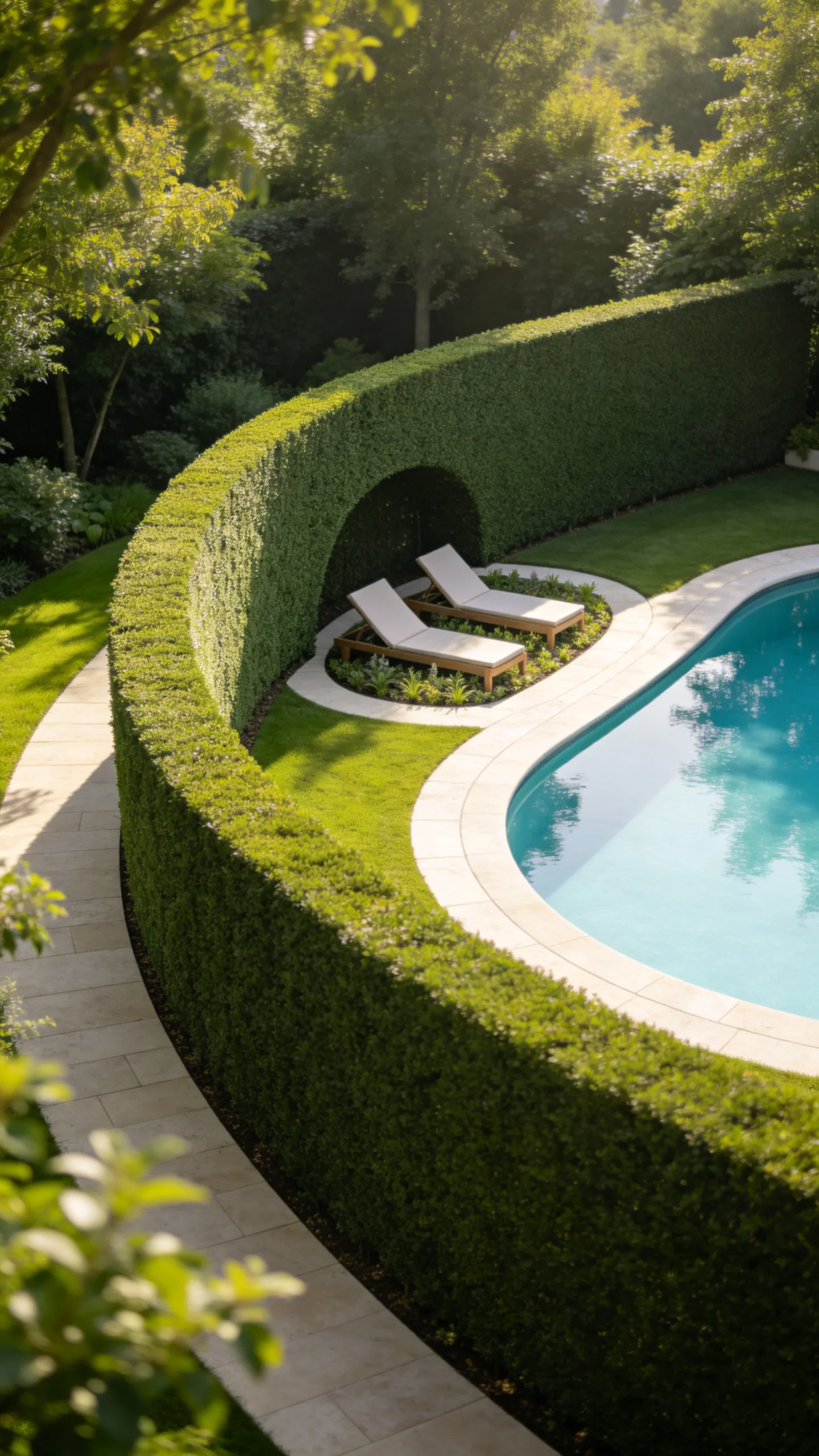
Shape a privacy hedge along a gentle curve to make the pool garden feel less rigid than a straight rectangular bed. The curve can guide movement from the house toward the pool while creating a planted pocket for loungers or a small shade tree. Repeat the curve in the lawn edge or paving for a coordinated layout.
Use hedge plants that respond well to pruning and remain dense at the desired height. Keep the hedge far enough from the pool to allow trimming, leaf collection, and access to the fence without stepping into the planting bed.
11. Breezeway Screen With Bamboo Alternatives
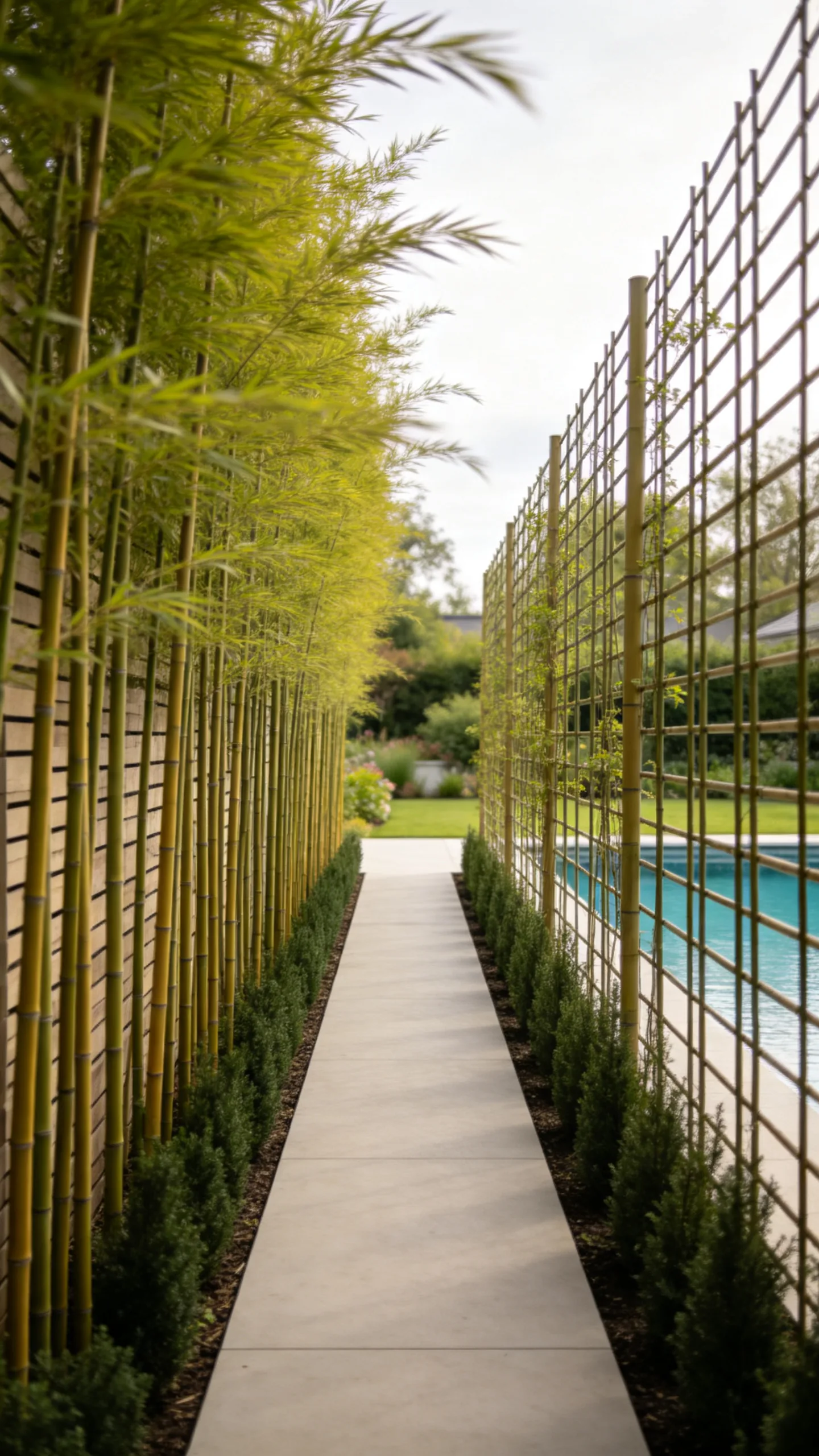
Create a tall, narrow screen for wind and privacy using clumping ornamental plants, trellis panels, or slim evergreen shrubs instead of spreading bamboo. Place the screen on the side that receives unwanted views or prevailing breezes, then leave openings where you want to preserve a garden outlook.
If bamboo is used, choose a non-running clumping type suited to the climate and contain its roots as recommended by local horticultural guidance. Inspect the screen regularly so it does not lean into fencing, block paths, or shed leaves into the pool.
12. Mediterranean Gravel Pool Border
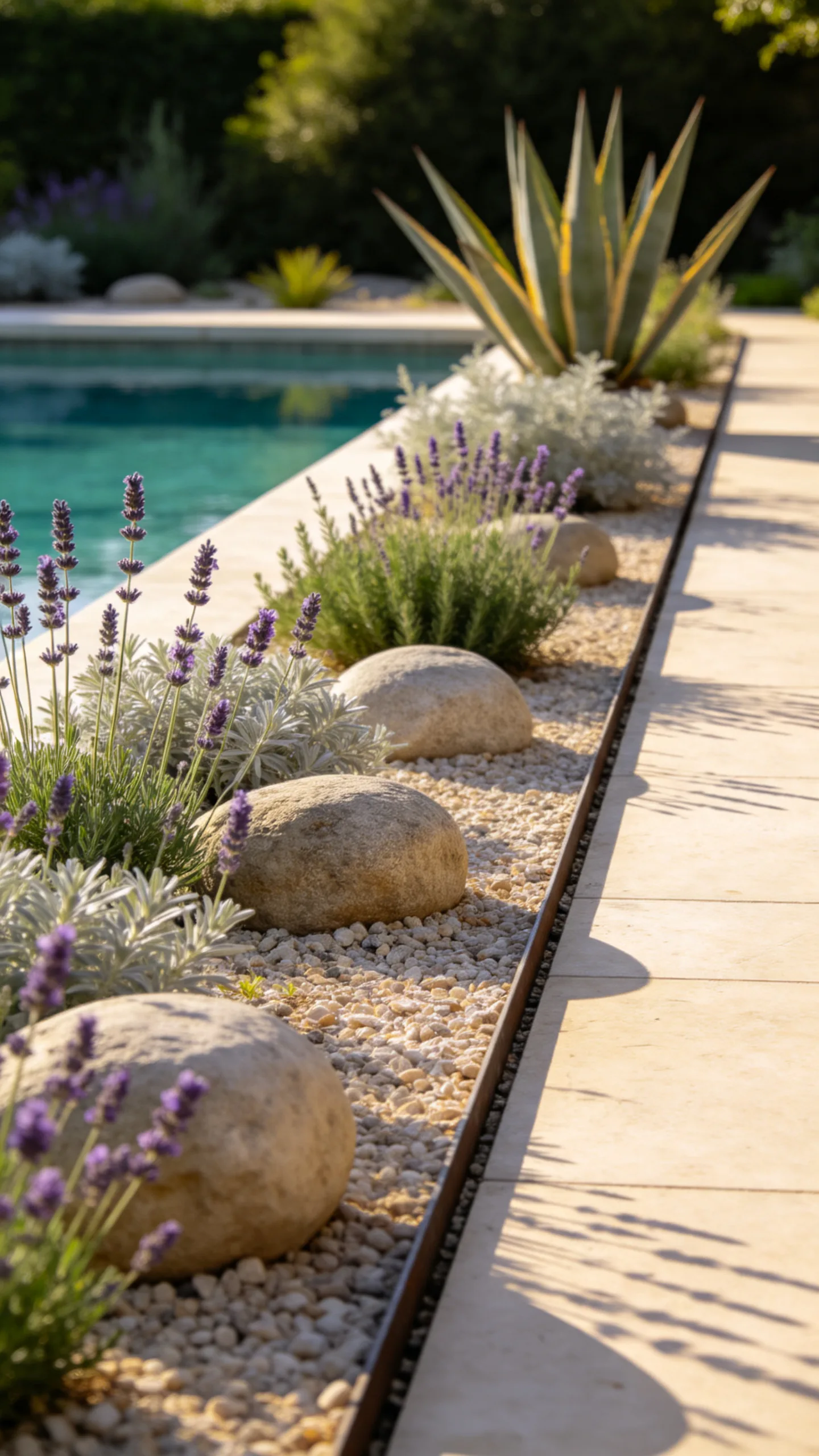
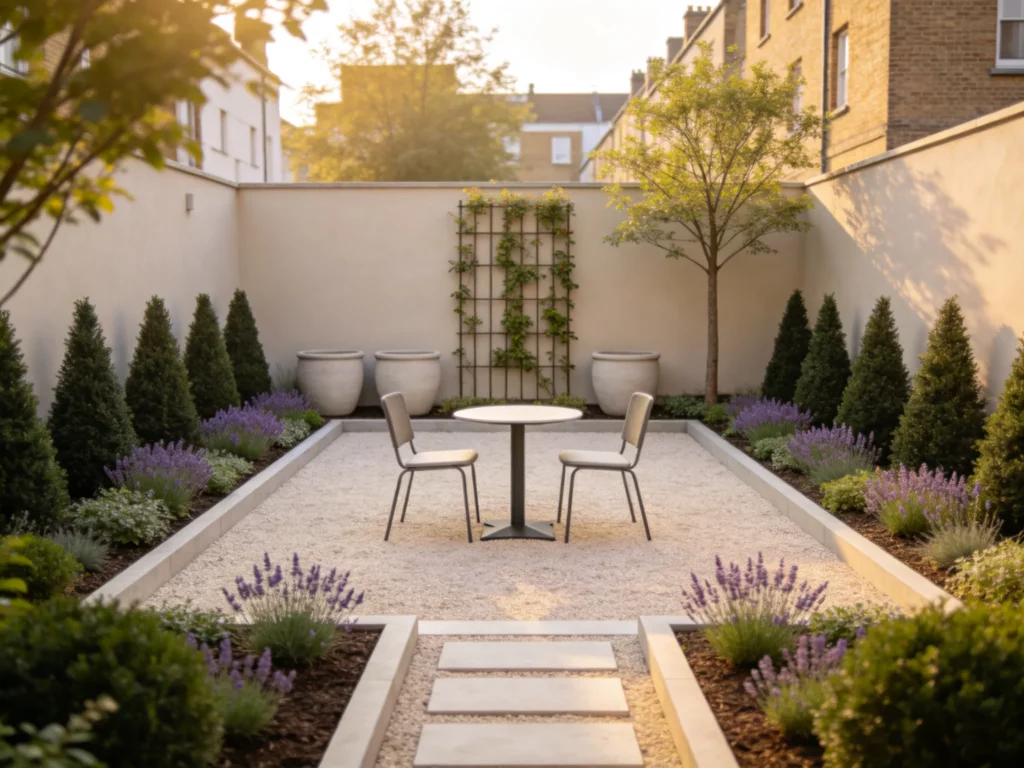
Use a dry-style border of gravel, large stones, and drought-tolerant plants to reduce lawn maintenance around the pool. Lavender, rosemary, agave, yucca, or other suitable regional plants can provide structure and fragrance, but sharp or spiny species should be placed away from barefoot traffic.
Install a defined edging between gravel and paving so stones do not migrate into the pool or become a slip hazard. Improve drainage before planting, and confirm that each selected plant can handle reflected heat, local winter temperatures, and the available irrigation.
13. Built-In Bench With Green Privacy Wall
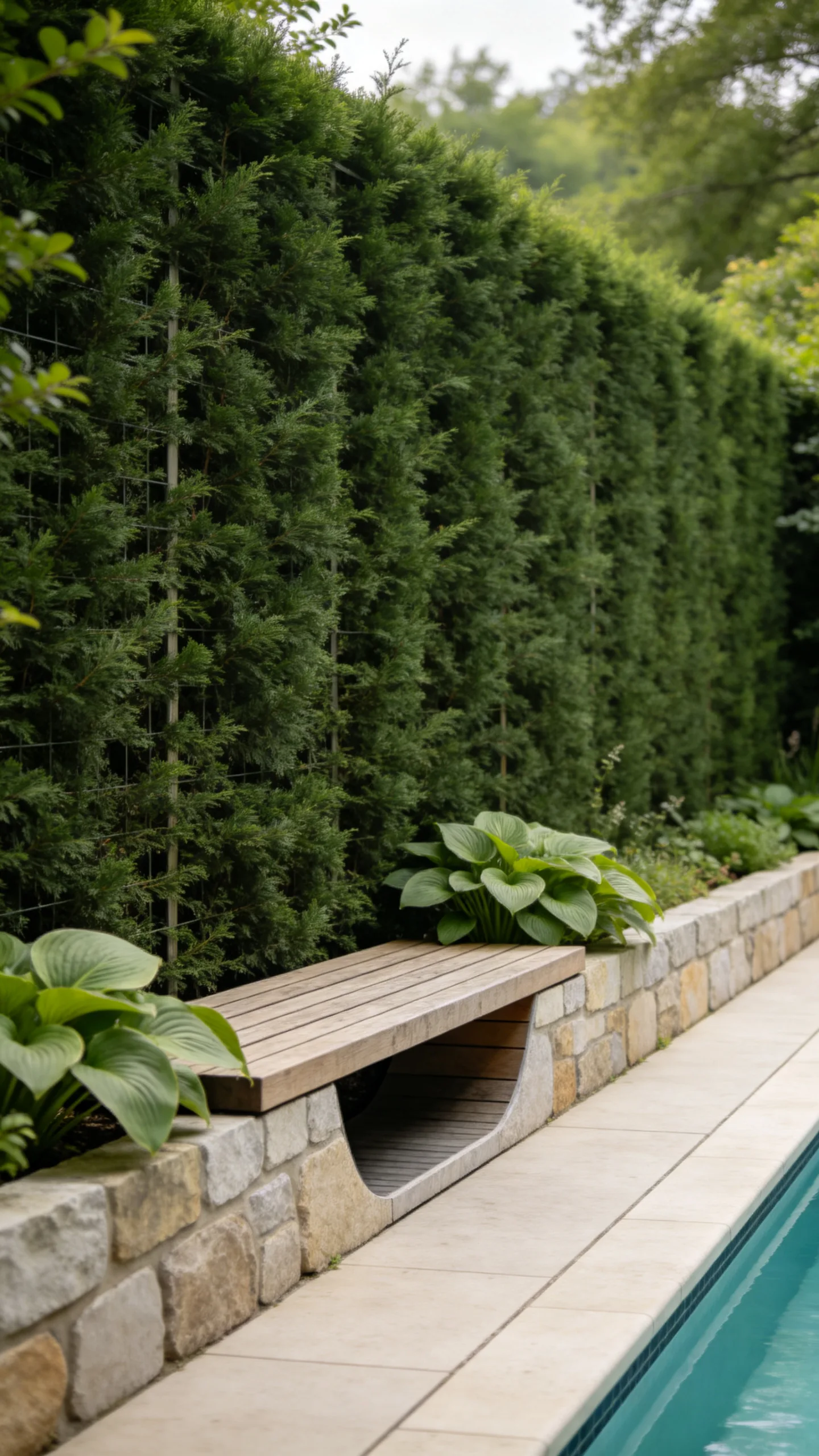
Add a built-in bench along a boundary wall, then use a trellis or tall hedge behind it to create a private resting spot. The bench provides seating without taking up the footprint of separate chairs, while the planting behind it turns an overlooked edge into a usable garden feature.
Use outdoor-rated materials and provide a slight seat slope or drainage detail so water does not collect. Keep thorny, allergenic, or insect-attracting plants away from the seating surface, especially if the bench will be used by children.
14. Multi-Level Pool Garden With Retaining Beds
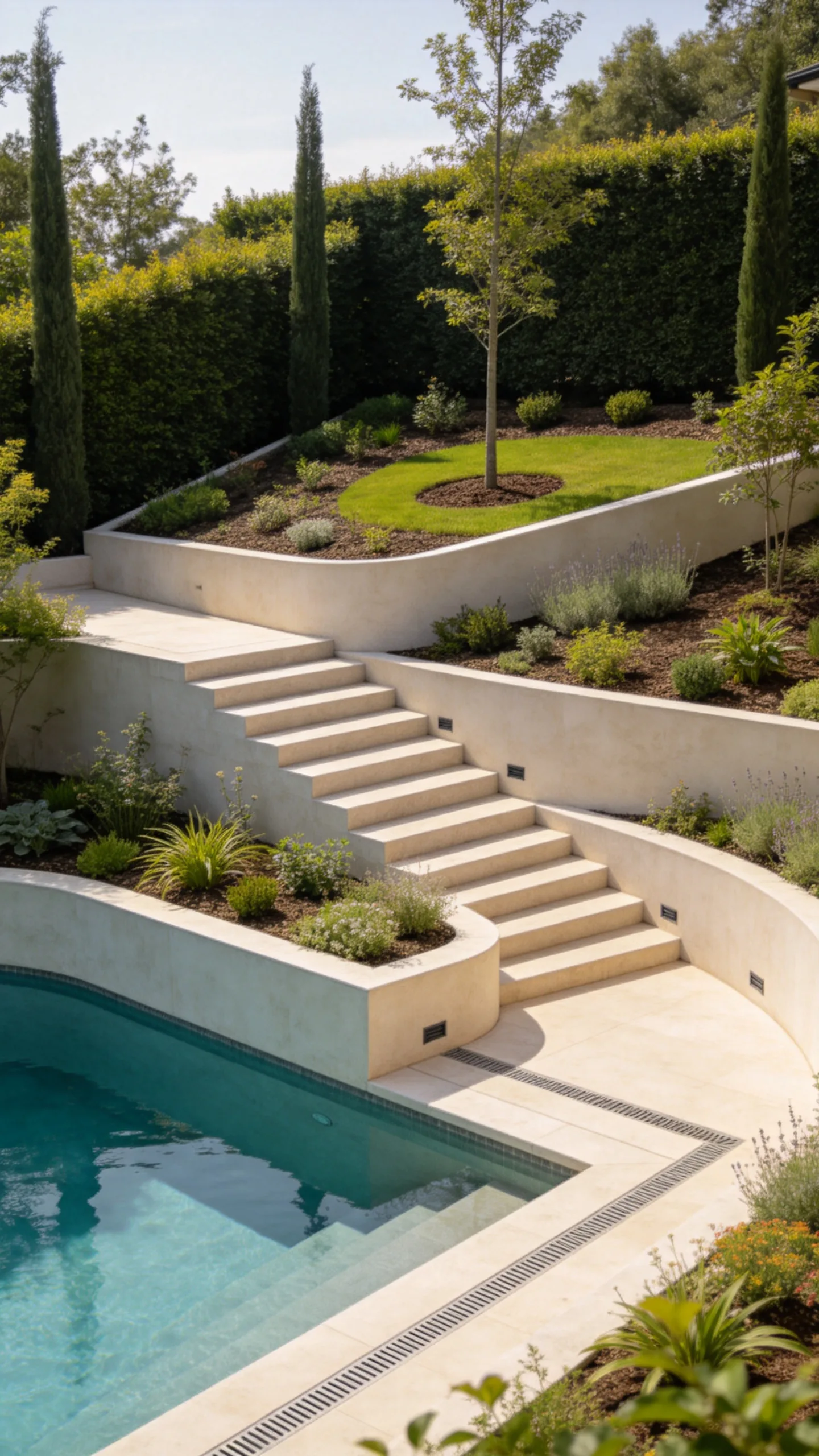
Use two or more planting levels when the yard slopes toward the pool. A lower retaining bed can frame the water, while an upper bed supports screening trees, shrubs, or a small lawn. The change in elevation creates depth and can improve privacy without requiring one extremely tall hedge.
Have retaining walls and drainage designed for the site’s soil and slope conditions. Add steps or a stable path between levels, and direct runoff away from the pool so heavy rain does not wash soil, mulch, or fertilizer onto the deck.
15. Shade Tree and Understory Patio
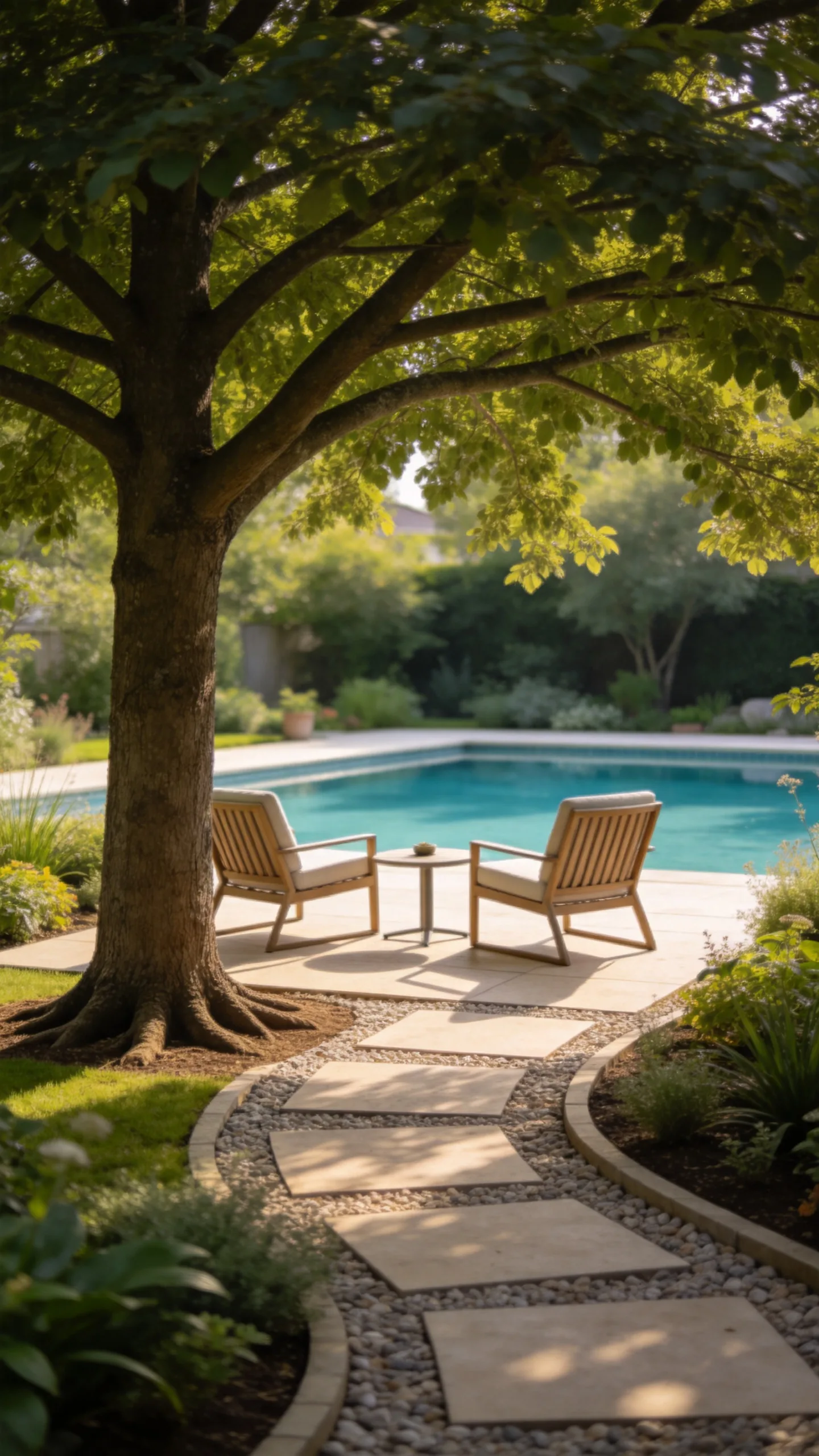
Create a shaded garden room beside the pool by pairing one appropriately sized tree with a low-maintenance understory planting. Position chairs, a small table, or a hammock beneath the canopy, then use groundcover, pavers, or mulch to define the seating area.
Choose a tree with a mature size that fits the available space and avoid species known for brittle branches or heavy messy fruit near the water. Prune to maintain clearance over paths and seating, and keep the trunk and root flare free from paving materials.
16. Vertical Herb and Flower Wall
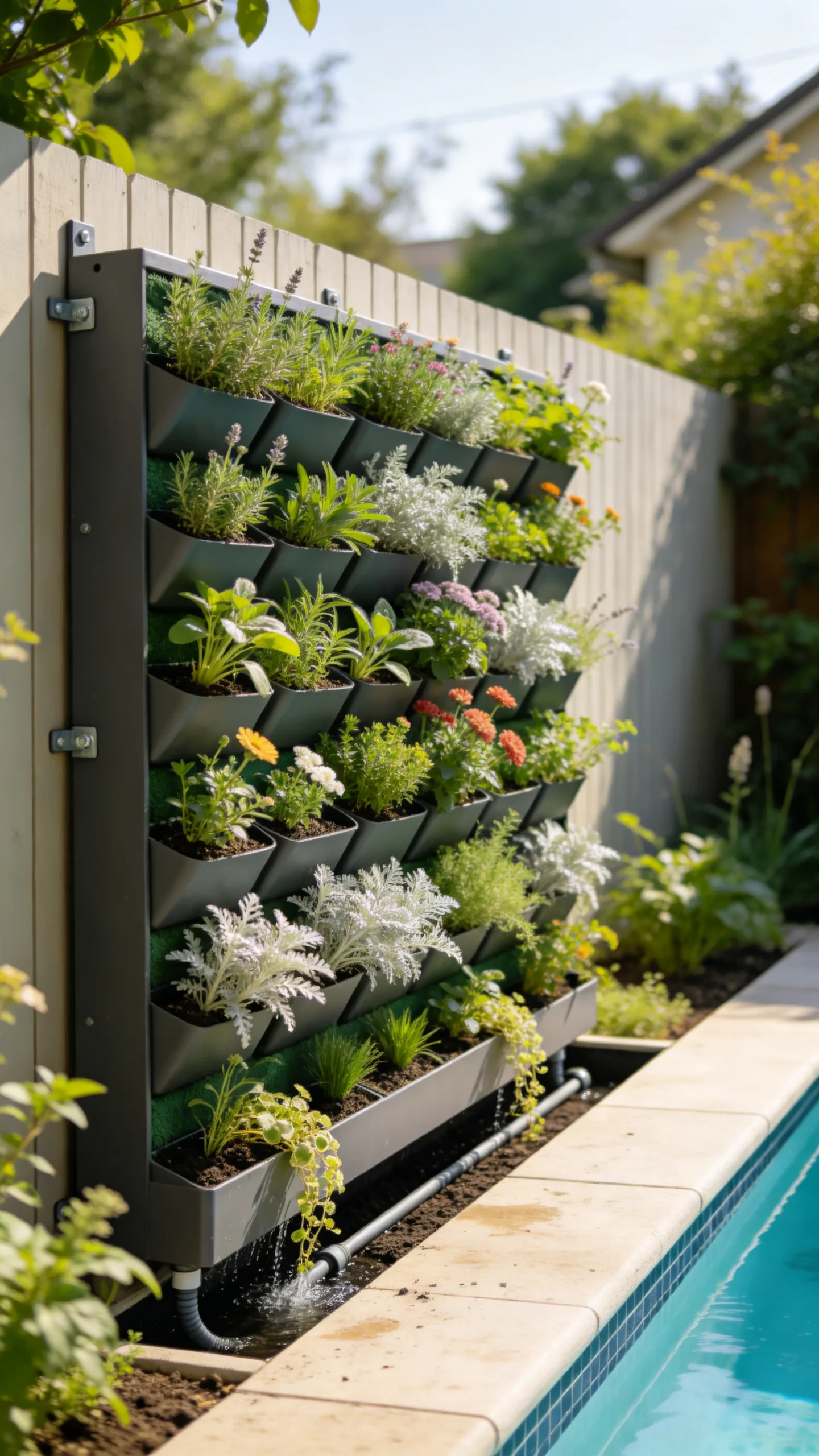
Install a vertical planter or modular living wall on a sunny fence to add greenery where the pool garden has almost no planting depth. Use drought-tolerant herbs, compact flowers, or trailing plants in individual pockets, placing plants with similar watering needs together for easier care.
Mount the system securely and protect the fence from constant moisture with proper backing and drainage. Keep fertilizers, loose soil, and dripping irrigation away from the pool, and select non-toxic plants if swimmers or pets may handle the foliage.