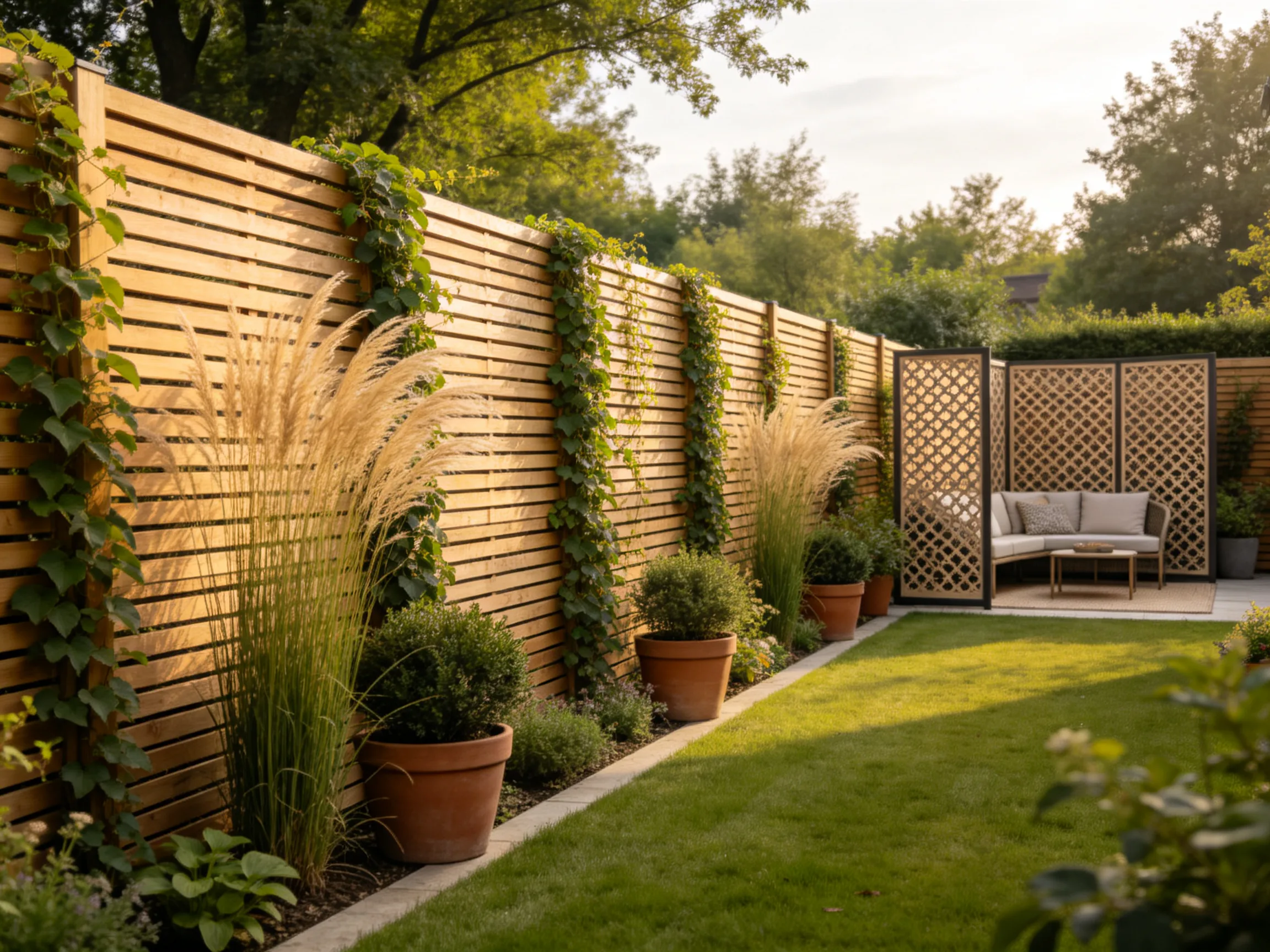
A garden fence can do more than mark a boundary. With the right mix of plants, screens, panels, and layered planting, it can soften views, create shade, reduce the feeling of exposure, and make a small yard feel more intentional. These garden fence privacy ideas include both living screens and built elements, so you can choose a solution that fits your space, light conditions, maintenance level, and style.
1. Climbing Jasmine on a Fence Trellis
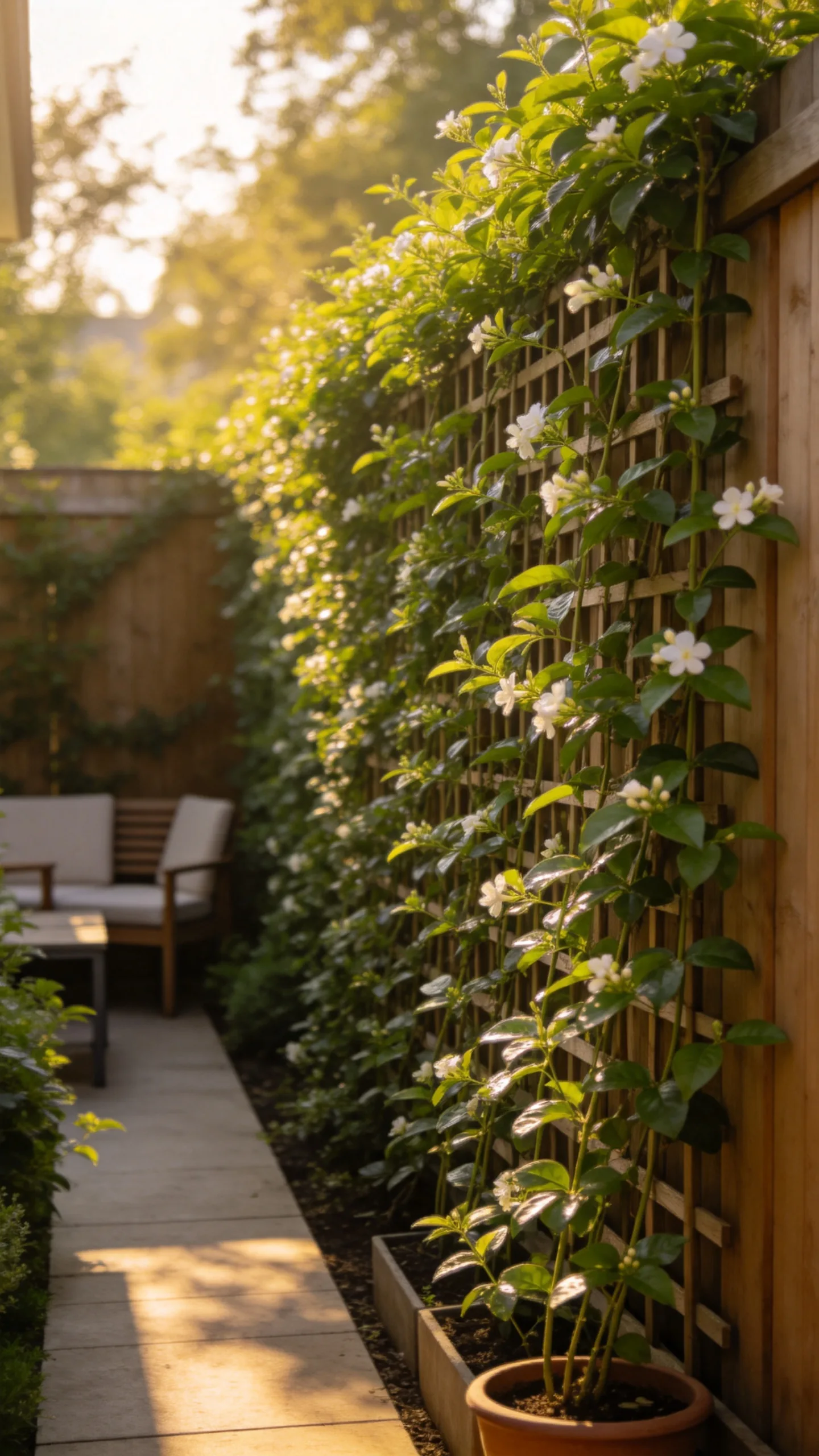
Climbing jasmine is a beautiful way to turn a plain fence into a fragrant green privacy wall. Attach a sturdy trellis panel, tension wire system, or horizontal battens to the fence so the stems have something to grip or tie onto as they grow. This works especially well along seating areas, side yards, and patios where you want screening without losing too much floor space.
Choose a jasmine variety suited to your climate and light exposure. Star jasmine is often used in warmer areas and offers glossy evergreen foliage, while winter jasmine can tolerate cooler conditions but has a looser habit. Plant it in well-draining soil, water regularly during establishment, and guide the stems across the fence to avoid dense growth in only one spot.
2. Slatted Wood Panels Above a Low Fence
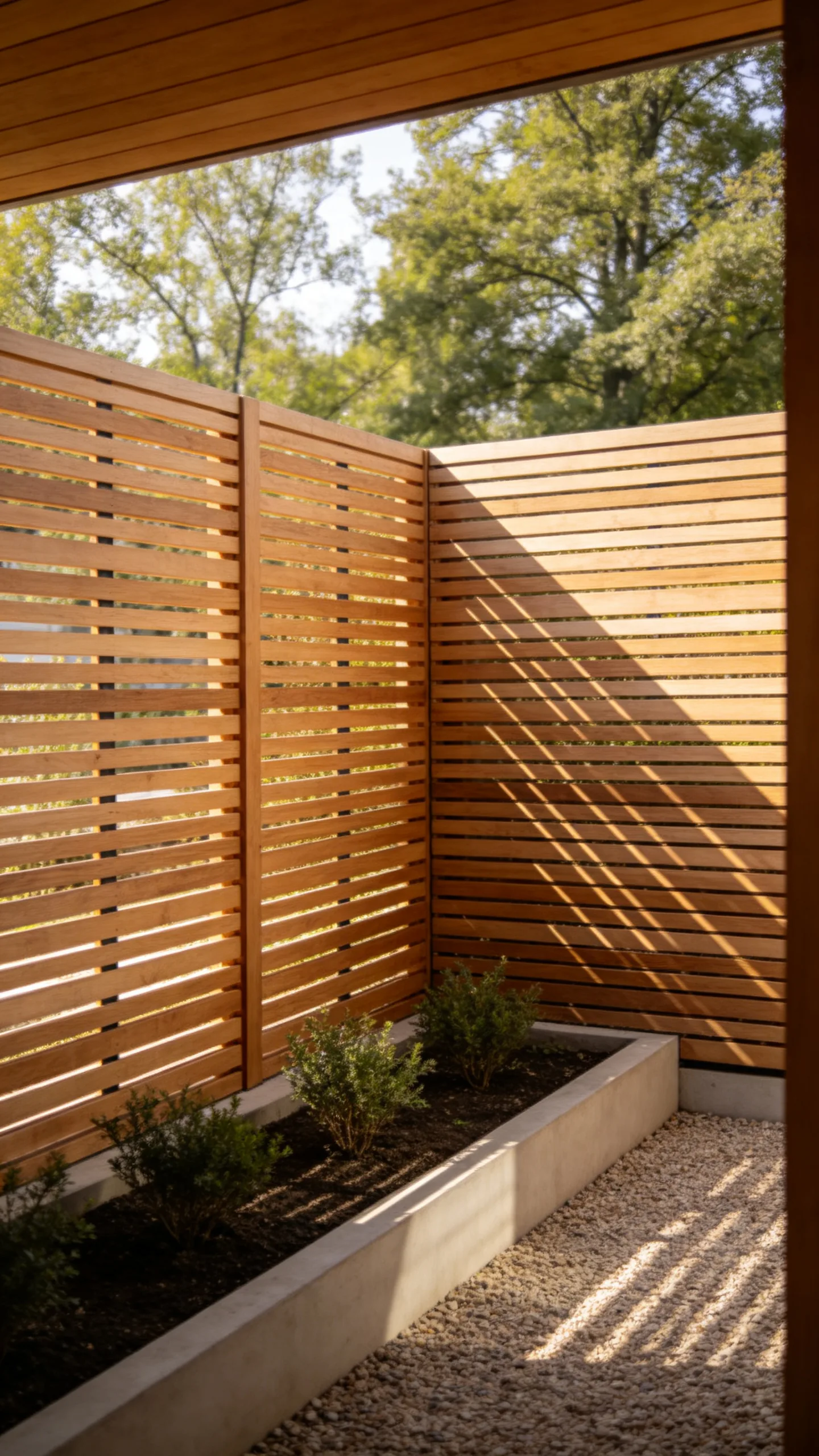
If your existing fence feels too short, adding slatted wood panels along the top can increase privacy without making the garden feel boxed in. Horizontal or vertical slats allow light and air through while interrupting sightlines from neighboring windows, paths, or patios.
Use treated timber, cedar, or another outdoor-rated wood, and keep the spacing consistent for a clean look. Narrower gaps provide more privacy, while wider gaps feel lighter and more modern. This idea works well in compact gardens because it adds height at the boundary instead of taking up planting space inside the yard.
3. Bamboo Screening Rolls for Quick Coverage
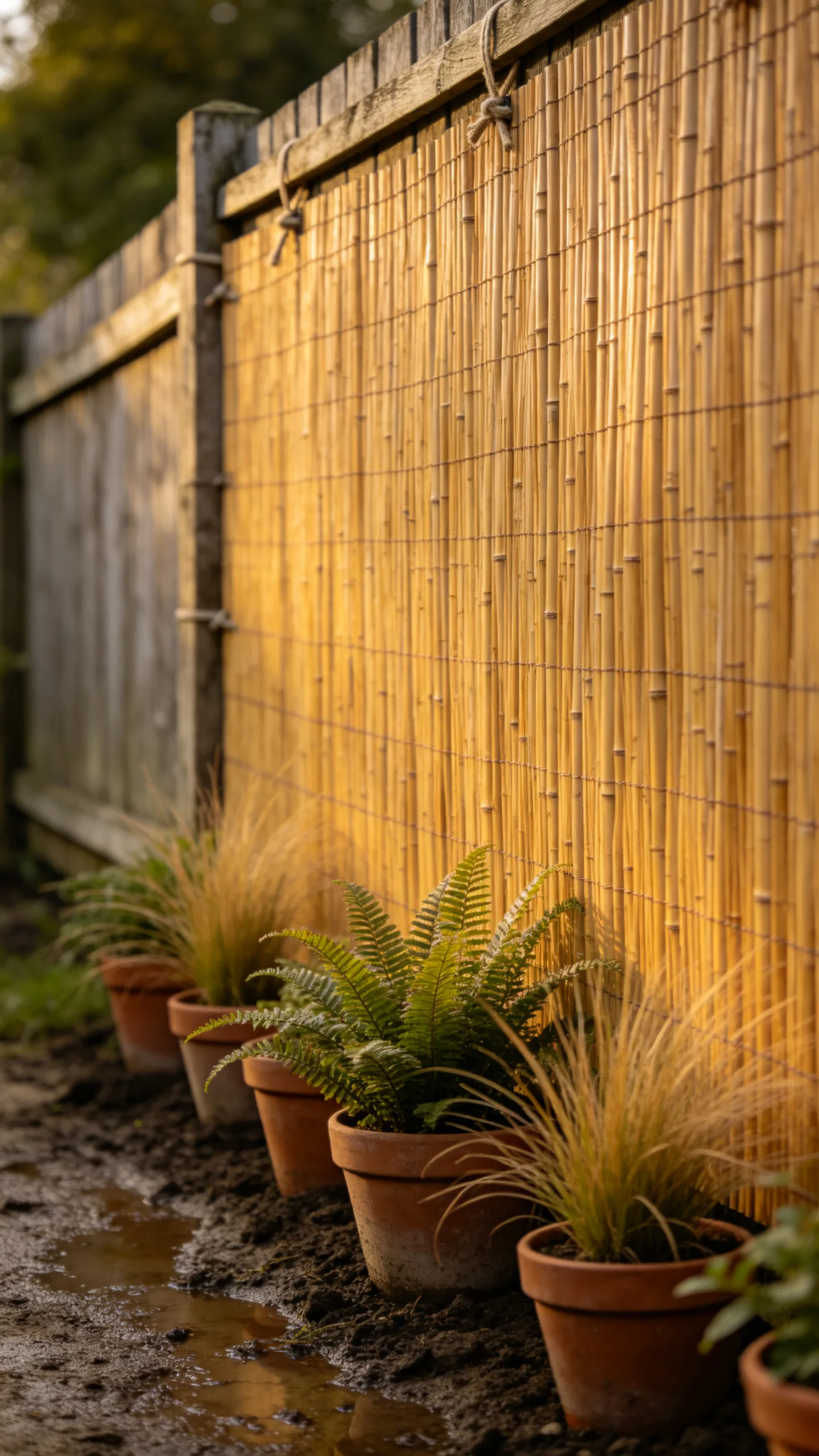
Bamboo screening rolls are a practical option when you need fast privacy over an unattractive chain-link, wire, or older timber fence. They can be tied or screwed directly to the fence, creating instant texture and a warmer backdrop for planting beds.
For a longer-lasting setup, raise the bamboo slightly above damp soil and secure it firmly at several points so it does not sag in wind. Pair it with pots of ferns, grasses, or shade-tolerant evergreens at the base to make the screen look more integrated. Bamboo rolls are especially useful for renters or budget-conscious gardeners who want a removable privacy layer.
4. Evergreen Laurel Hedge Along the Fence Line
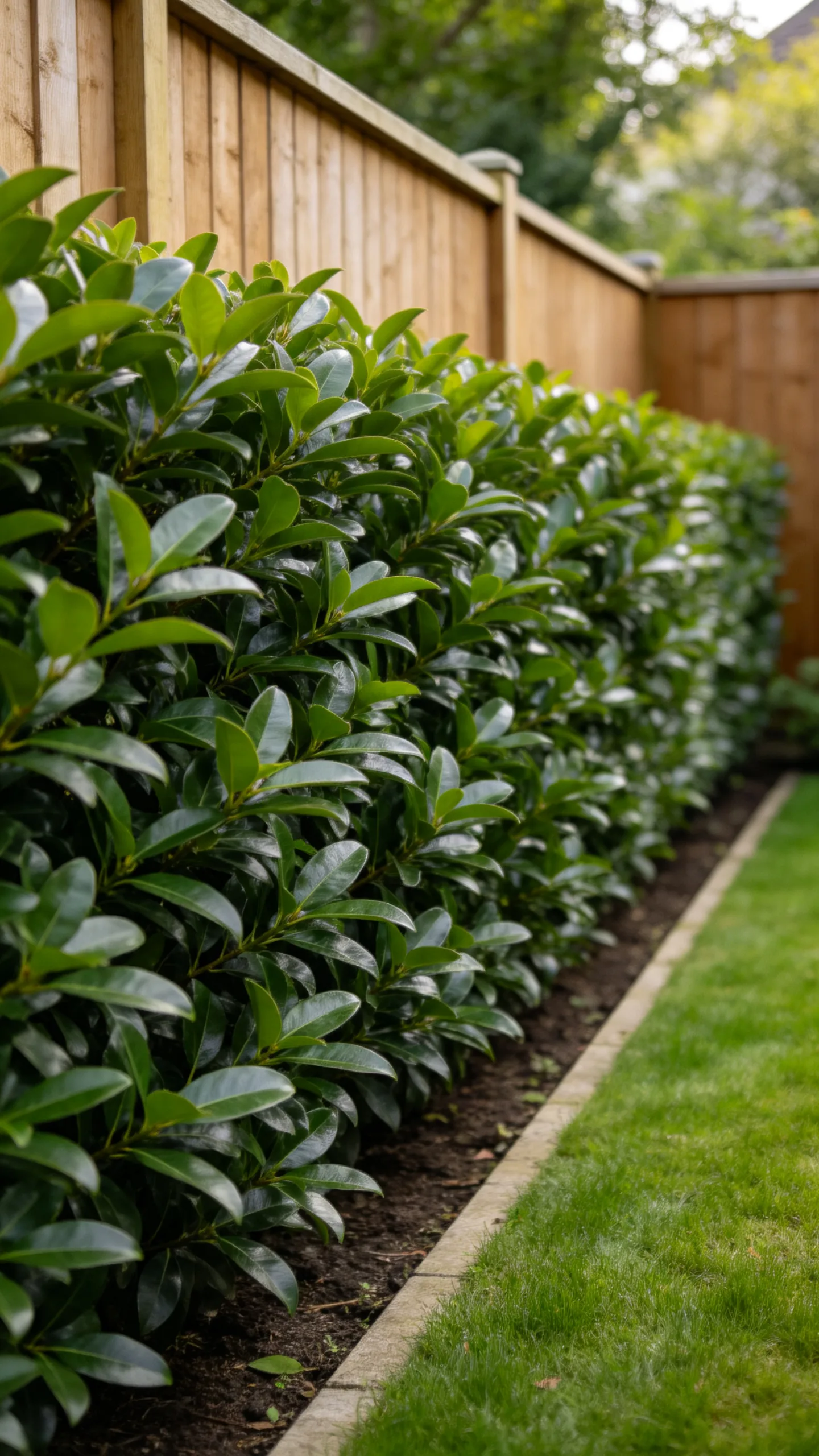
An evergreen laurel hedge can create a dense, leafy screen that softens the fence and provides year-round coverage in suitable climates. Plant young laurels in a straight or gently curved row along the boundary, leaving enough space between the hedge and fence for airflow and maintenance access.
Laurel grows best in fertile, well-drained soil and can handle regular clipping, making it useful for formal privacy borders. Keep the hedge narrower in small gardens by pruning once or twice a year rather than letting it spread too far into the lawn or patio. Before planting, check the mature size of the variety, because some laurels become large if left unmanaged.
5. Tall Ornamental Grasses in a Narrow Border
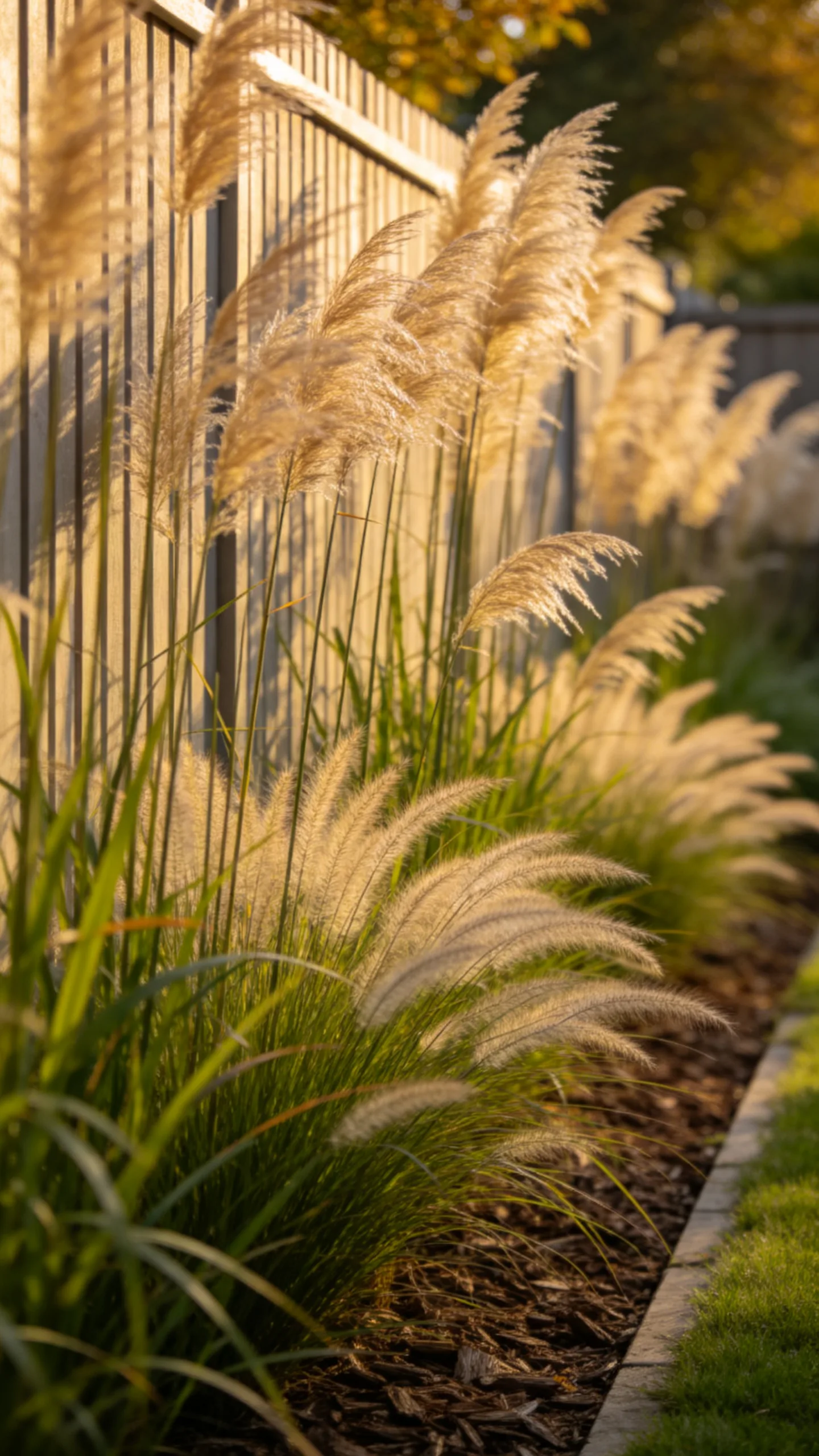
Tall ornamental grasses are ideal for adding movement and partial screening along a fence without creating a solid wall. Varieties such as Miscanthus, switchgrass, feather reed grass, or fountain grass can create soft vertical lines and filter views from late summer into autumn.
Plant grasses in a narrow border with mulch to reduce weeds and make watering easier. They suit modern, cottage, and natural-style gardens, and many need only seasonal cutting back before new growth appears. For privacy near a patio, plant them in staggered groups rather than a single thin line so the screen looks fuller from more angles.
6. Lattice Fence Panels With Climbing Roses
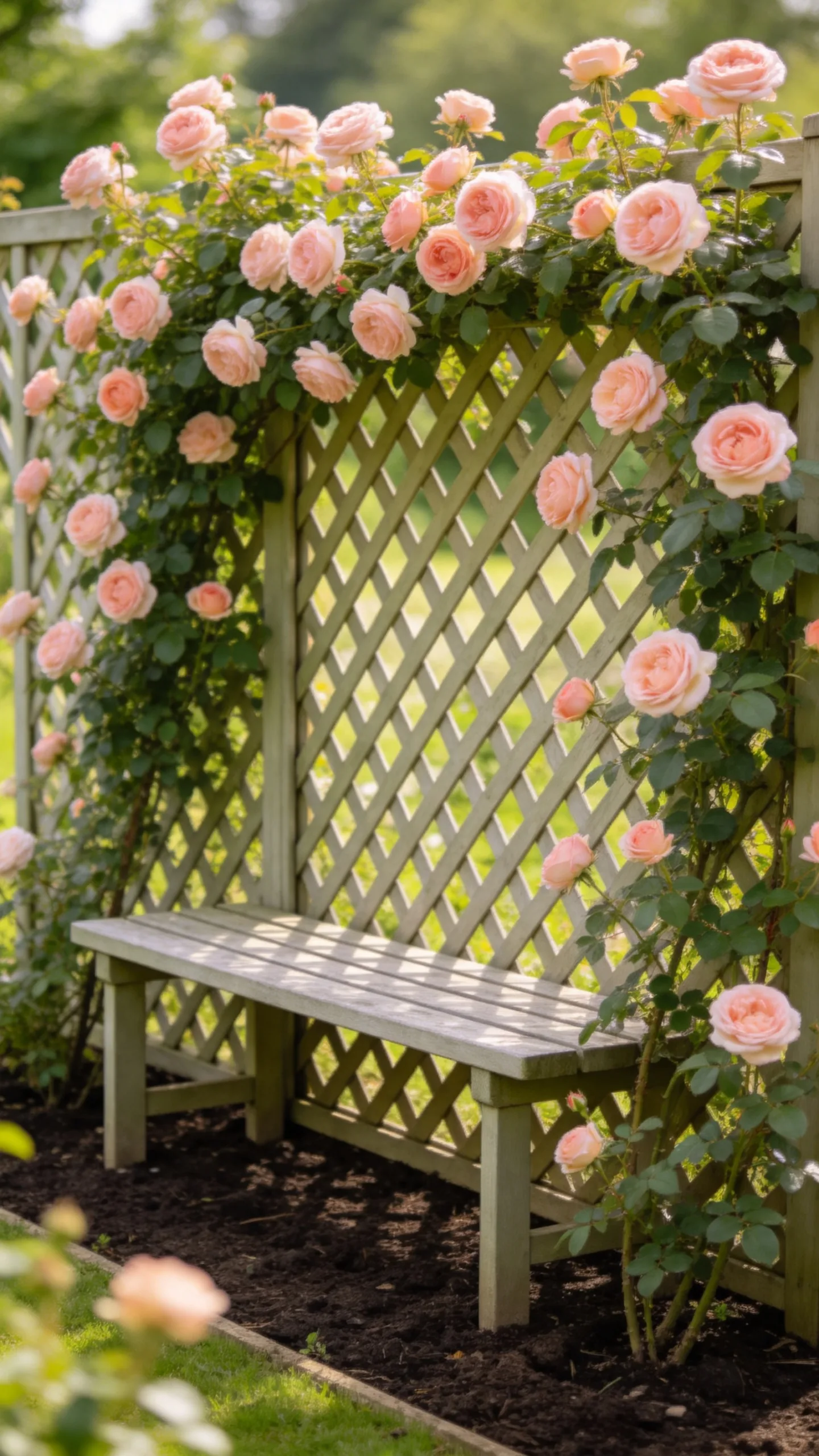
Lattice panels add privacy while still feeling open, and climbing roses can turn them into a romantic garden feature. Install lattice against a fence or as an extension above it, then train rose canes horizontally to encourage more flowering shoots along the panel.
Choose a climbing rose that suits your sun exposure, as most roses need several hours of direct light to flower well. Add compost at planting time, water deeply during dry spells, and prune according to the rose type. This idea is best for areas where you want privacy with seasonal color, such as behind a bench, beside a dining table, or near a garden gate.
7. Pleached Trees for a Formal Green Screen
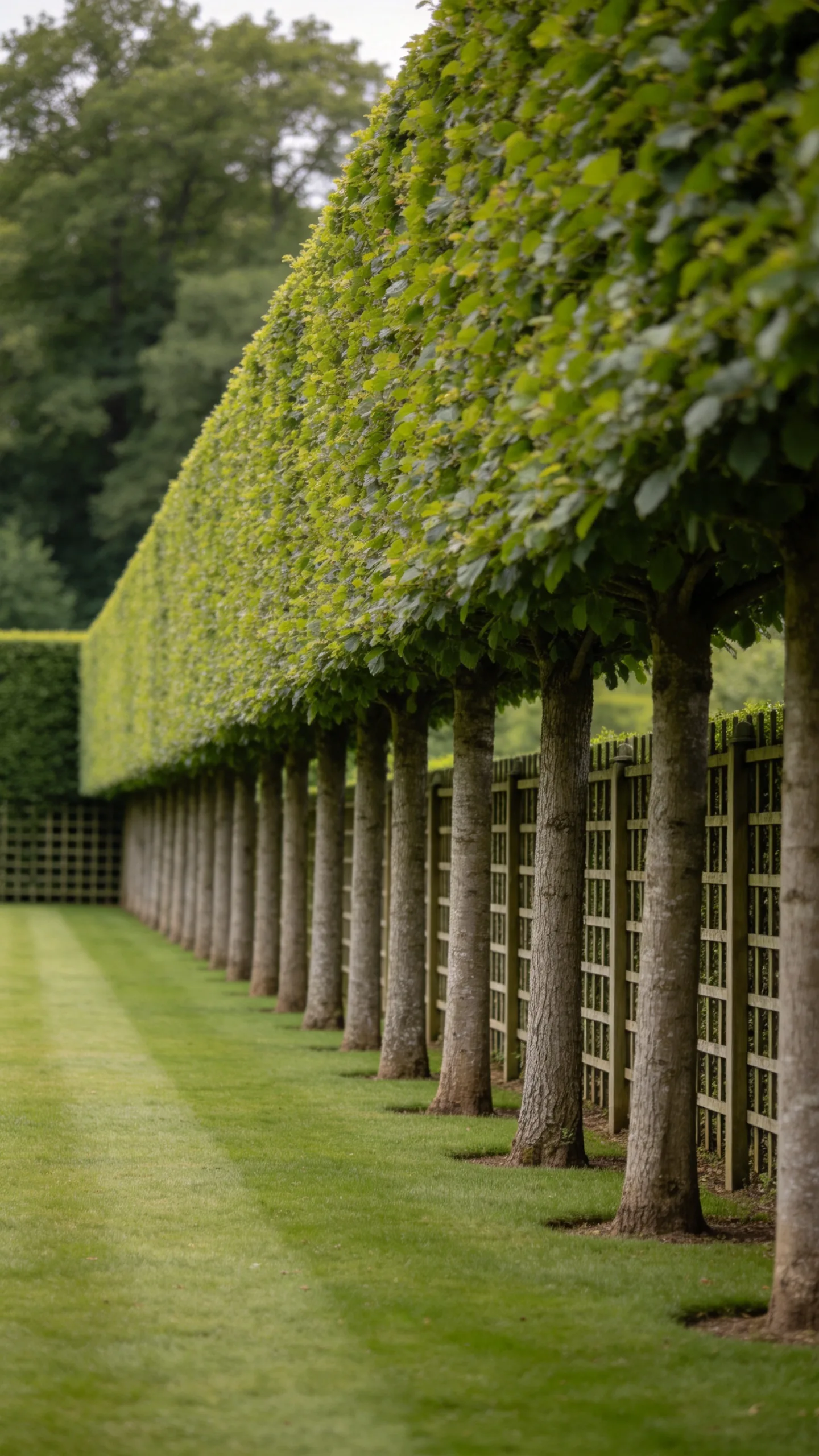
Pleached trees create a raised hedge effect by training tree branches along a framework above bare trunks. They are especially useful when you need privacy from upstairs windows but still want to keep the lower garden open and walkable.
Common options include hornbeam, lime, beech, and ornamental pear, depending on your climate and soil. Plant them in a straight row near the fence, install a strong support frame, and prune regularly to maintain the flat canopy shape. Pleached trees are more structured than a loose hedge, so they suit formal gardens, narrow courtyards, and boundary lines where neatness matters.
8. Reed Screening Behind Container Plants
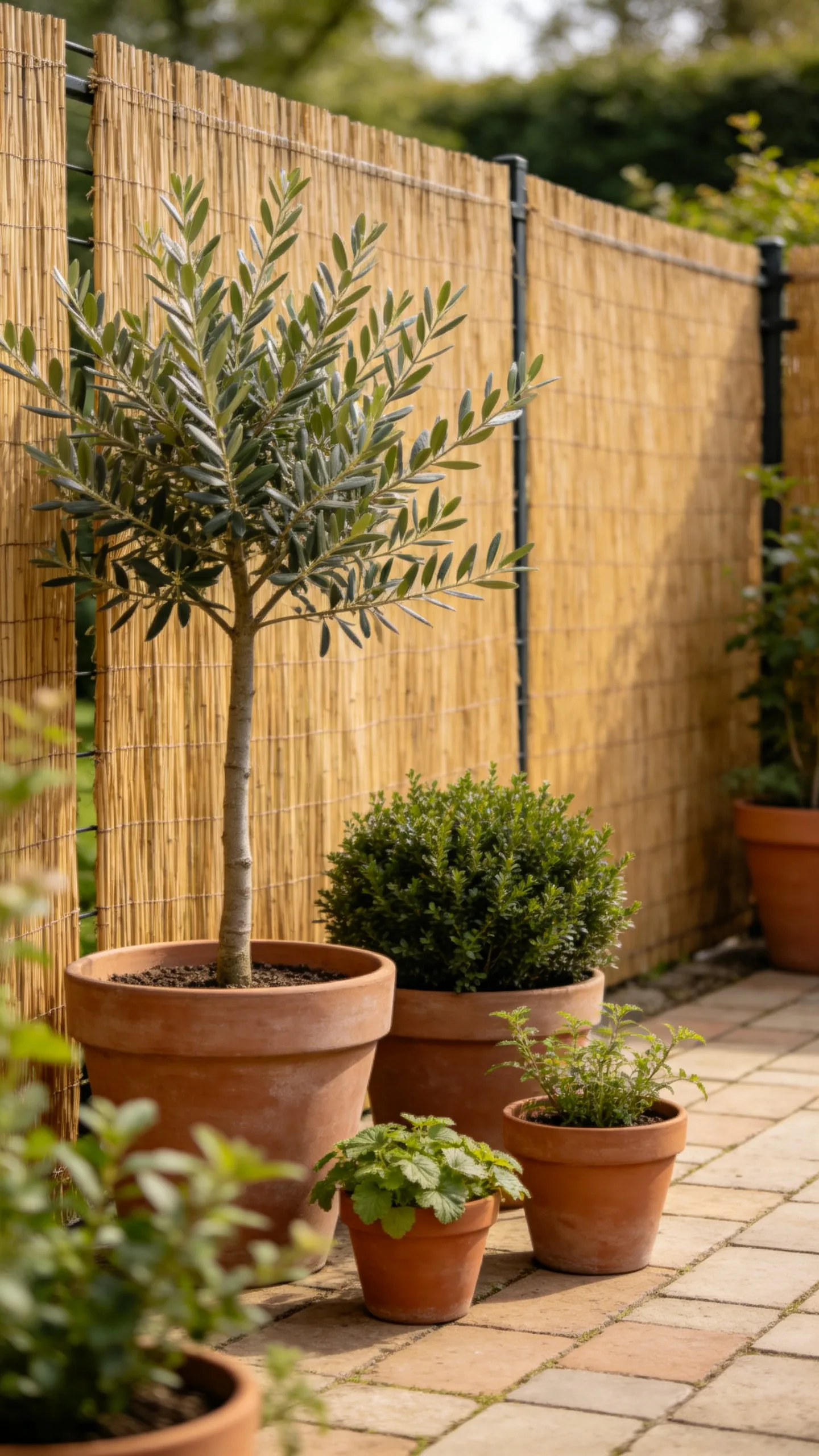
Reed screening is a simple way to cover gaps in a fence while adding a natural, relaxed texture. It is usually lighter than bamboo and can be attached to existing fencing with wire, staples, or cable ties, depending on the fence material.
To make reed screening look more styled, place container plants in front of it. Use tall pots with olive trees, bay trees, bamboo in containers, or compact shrubs for extra depth. This layered approach is useful on patios, balconies, and paved yards where there is no soil border for planting directly into the ground.
9. Mixed Shrub Border for Layered Fence Privacy
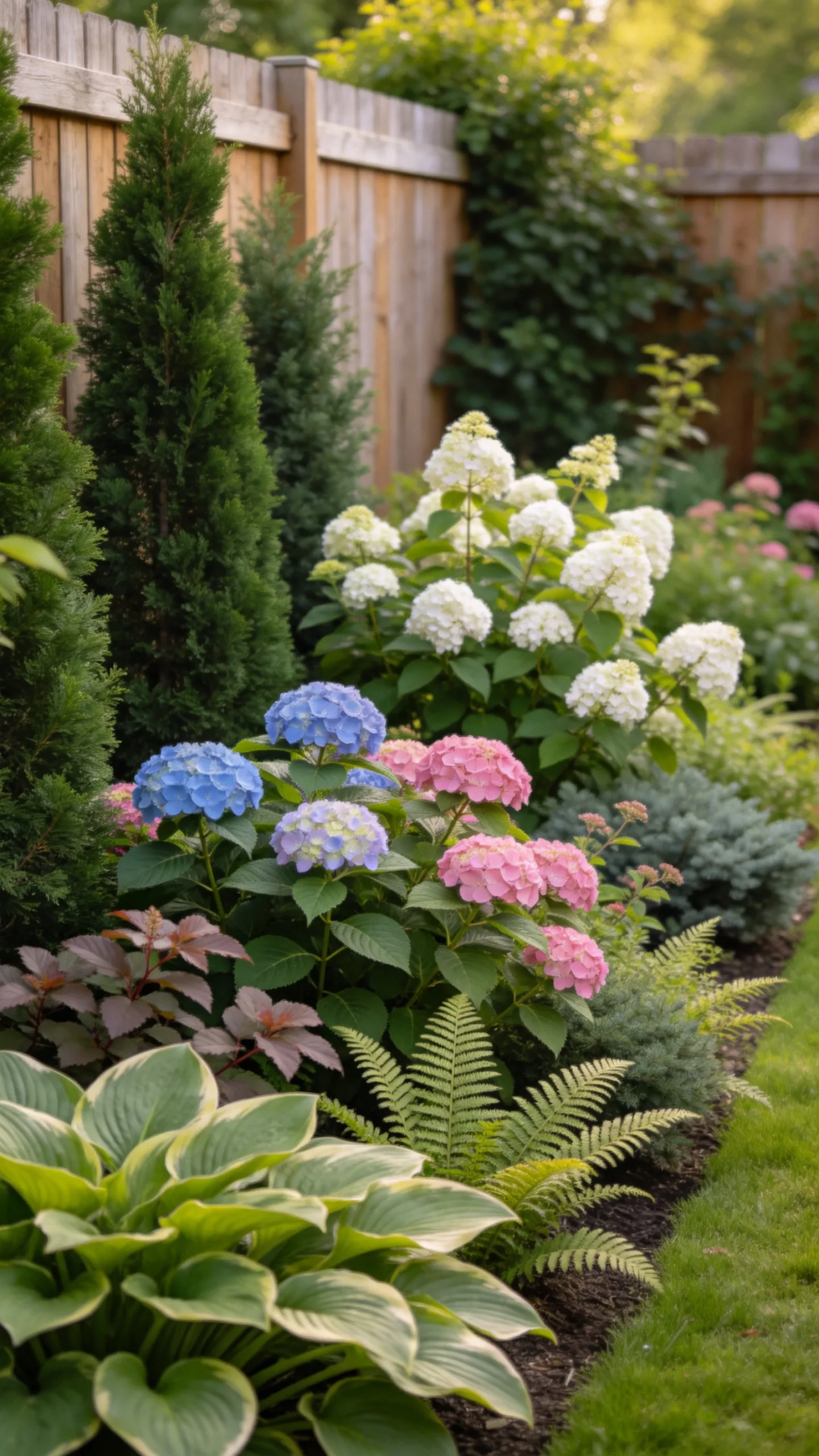
A mixed shrub border gives privacy with more seasonal interest than a single-species hedge. Combine evergreen shrubs for year-round coverage with flowering or berrying shrubs for color and texture. Good options may include viburnum, pittosporum, holly, hydrangea, dogwood, or spirea, depending on your growing conditions.
Plant taller shrubs toward the fence and lower plants toward the front of the bed. This stepped arrangement creates visual depth and prevents the border from feeling flat. Leave enough spacing for mature growth, because overcrowded shrubs can become difficult to prune and may block airflow along the fence.
10. Decorative Metal Screens With Soft Planting
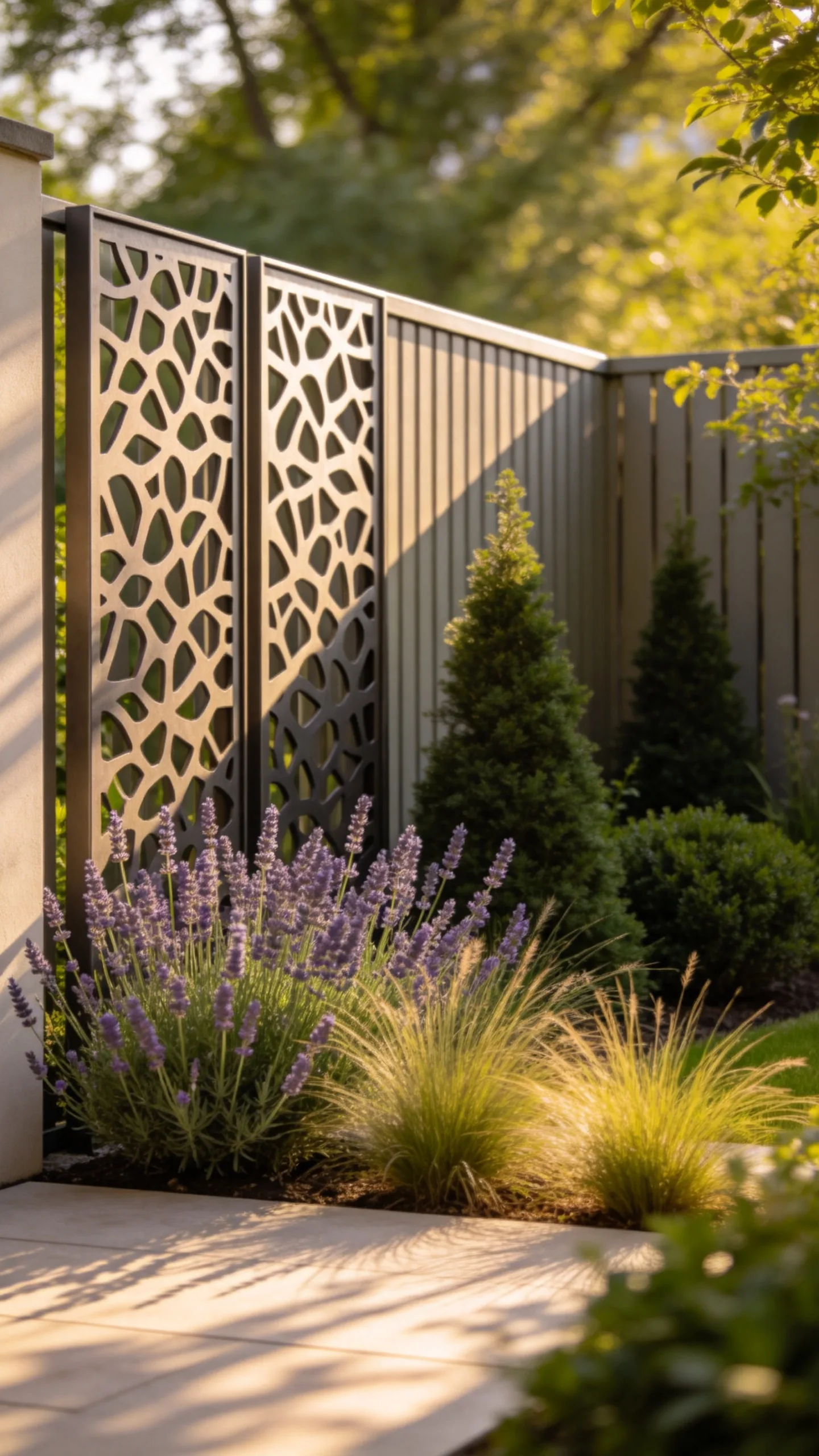
Decorative metal screens are a stylish privacy option for modern gardens, especially when you want a patterned feature rather than a solid barrier. Laser-cut panels can be mounted in front of a fence, between posts, or around a patio corner to block specific views.
Because metal can feel hard on its own, soften the base with planting. Use low grasses, lavender, salvia, euphorbia, or compact evergreens to create contrast against the screen. In sunny spaces, check whether dark metal becomes hot and avoid planting delicate foliage too close to the surface.
11. Vertical Garden Pockets on a Fence
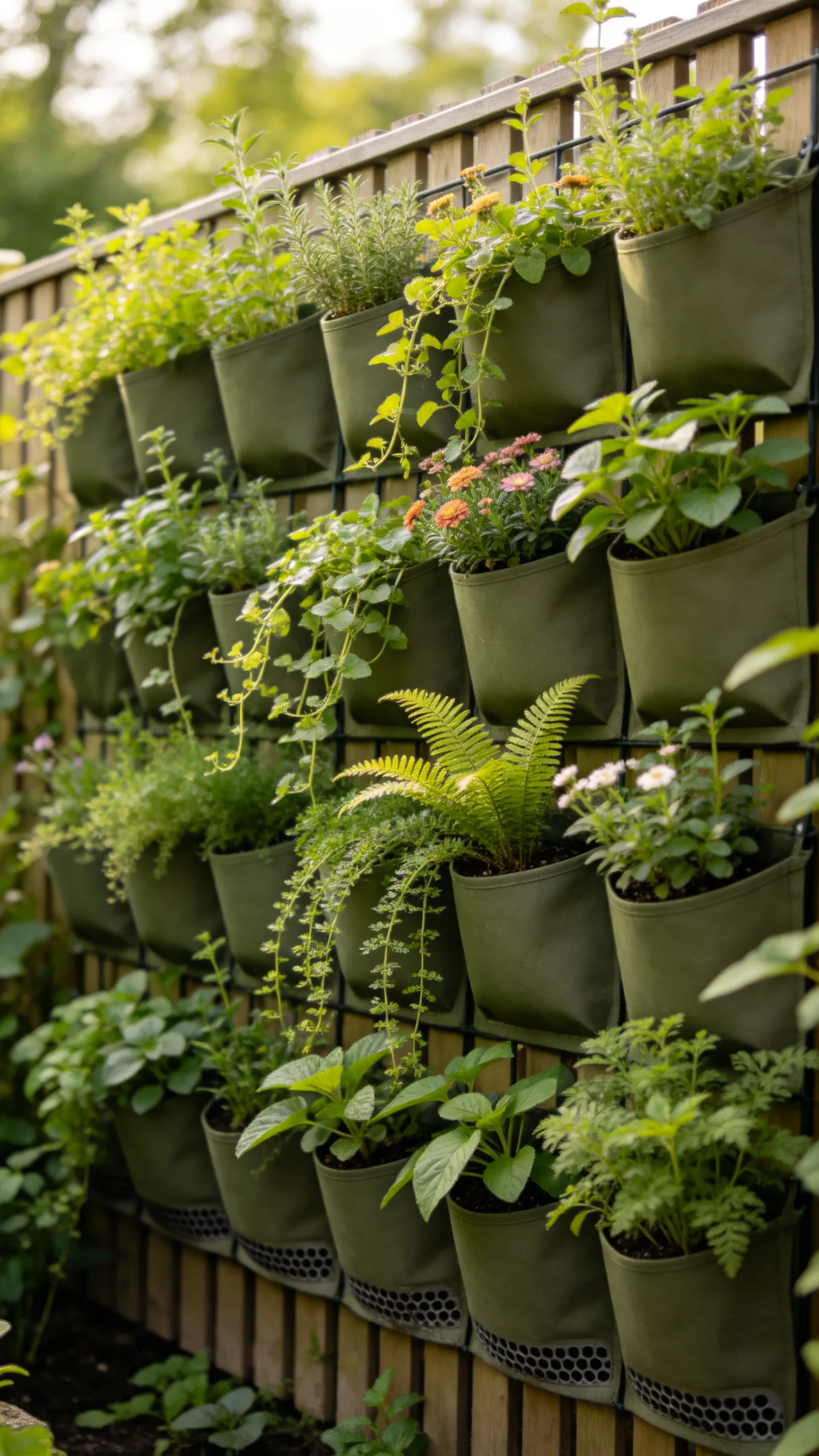
Vertical garden pockets add privacy and planting space at the same time, making them useful for small gardens, balconies, and narrow side yards. Attach a weather-resistant pocket planter system to a strong fence and fill it with herbs, trailing plants, compact flowers, or foliage plants suited to the light level.
For sunny fences, try thyme, oregano, strawberries, sedum, or trailing nasturtiums. For shadier spots, use ferns, heuchera, mint, or shade-tolerant annuals. Vertical pockets dry out faster than ground beds, so choose a system with good drainage and plan for regular watering, especially during warm weather.
12. Willow Hurdle Panels for Rustic Screening
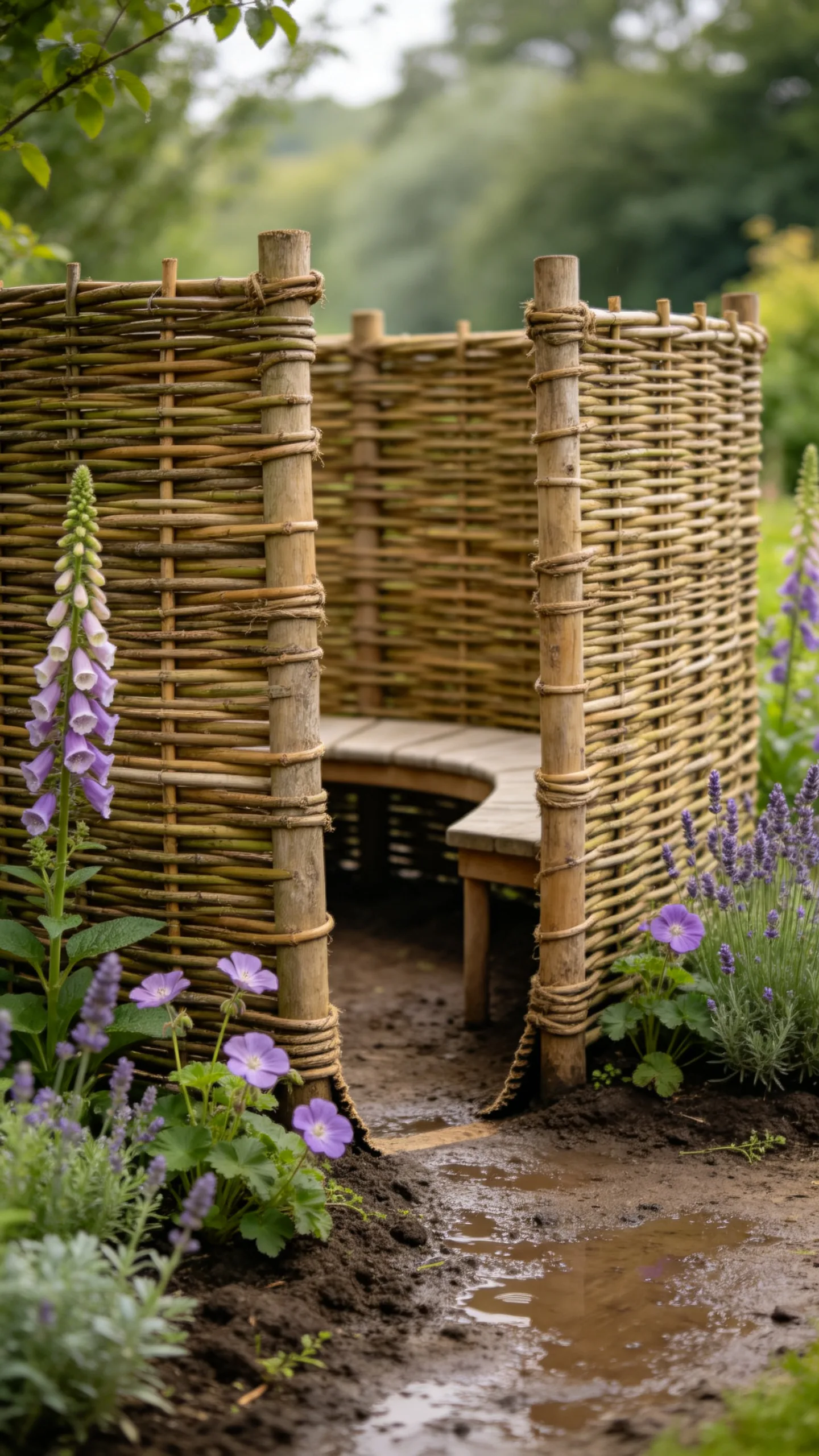
Willow hurdle panels bring a natural, cottage-style look to garden fence privacy. They can be installed as freestanding panels, attached to posts, or fixed in front of a plain fence to add texture and height. Their woven structure filters light while making the boundary feel more enclosed.
Use willow panels around vegetable gardens, seating nooks, compost areas, or informal flower borders. To extend their life, keep the bottom edge slightly above wet soil and secure them well in windy spots. Pair them with foxgloves, hardy geraniums, lavender, or herbs for a soft rustic border.
13. Potted Bamboo Screen for Patios
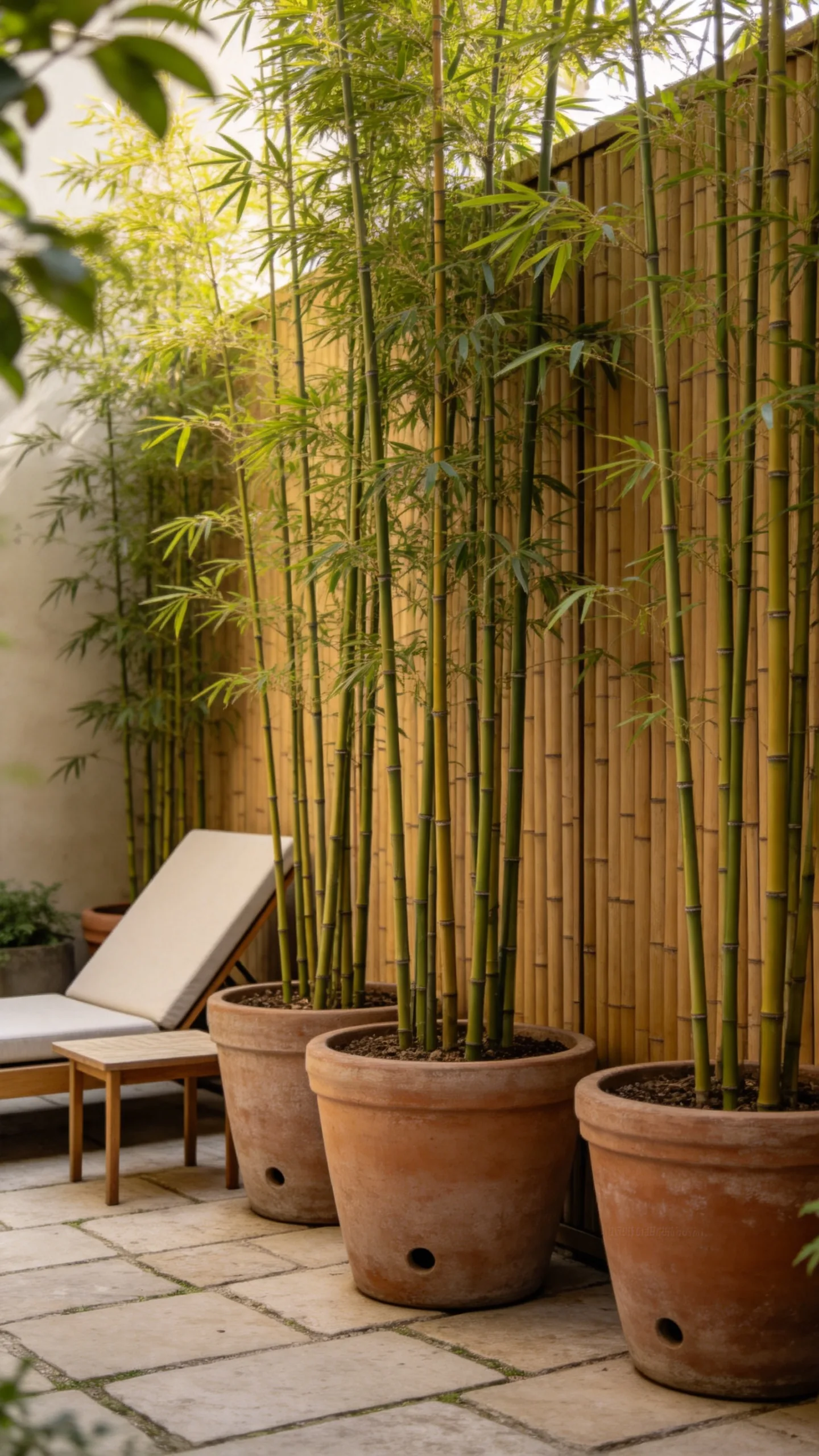
Bamboo in containers can create a tall, leafy screen without planting directly into the ground. This is helpful for patios, rental gardens, paved courtyards, and spots where you need moveable privacy near a table, hot tub, or lounge chair.
Use large, heavy containers with drainage holes to prevent the plants from drying out too quickly or blowing over. Choose clumping bamboo where suitable, and avoid invasive running types unless they are fully contained. Bamboo needs consistent watering in pots, especially in summer, and occasional feeding to keep the foliage lush.
14. Fence-Mounted Planter Boxes With Trailing Plants
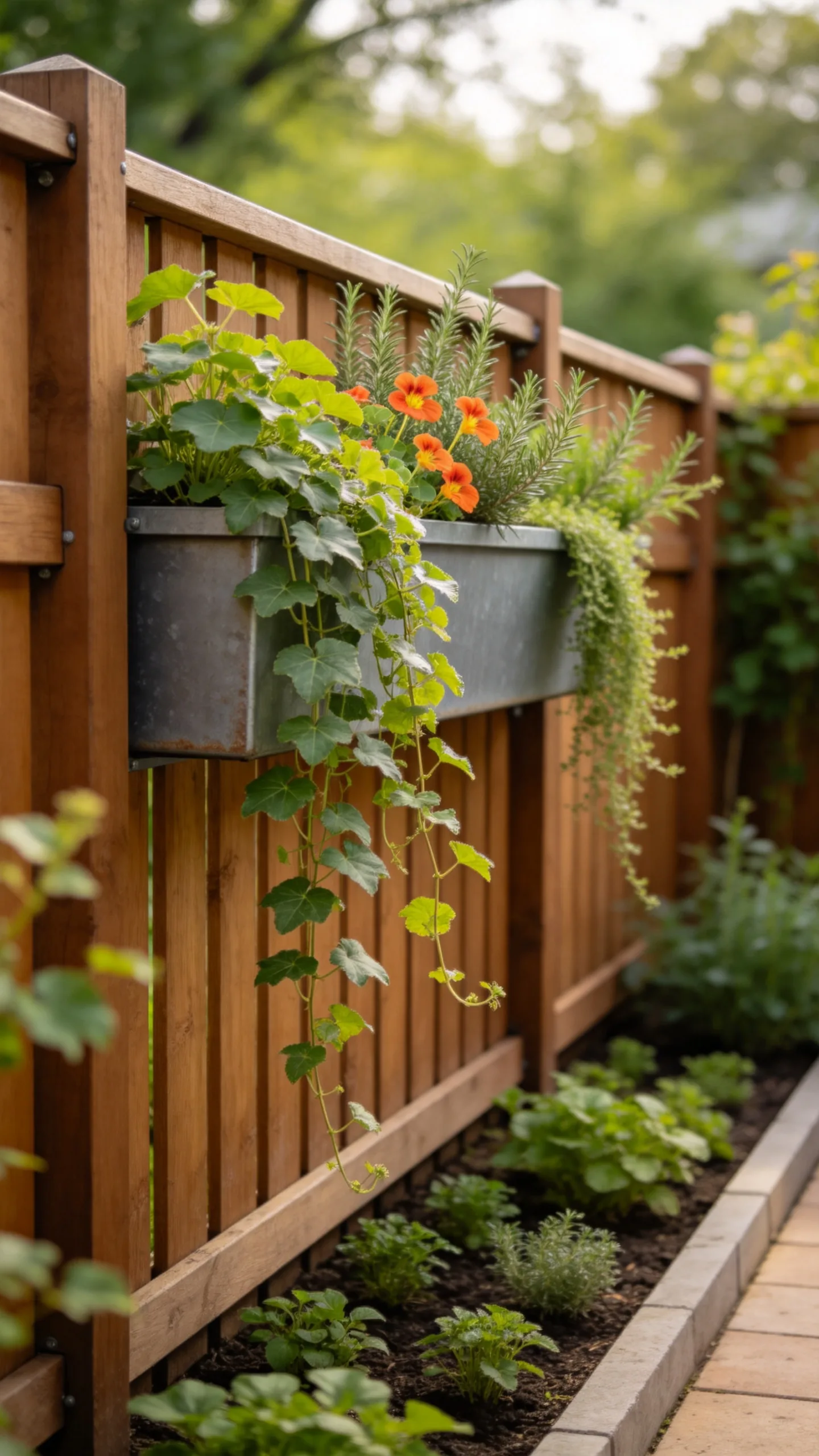
Fence-mounted planter boxes add greenery at eye level and can help break up views through open fencing. They are a smart choice for small spaces because they use vertical surface area instead of taking up ground space. Install them securely into fence posts or strong rails rather than weak panels.
Fill the boxes with trailing plants such as ivy, creeping Jenny, bacopa, nasturtiums, or trailing rosemary, depending on your climate and sun exposure. For extra privacy, combine trailing plants with upright herbs or compact grasses. Check watering often, because elevated planters dry out faster than beds at ground level.
15. Pergola Edge With Climbing Vines
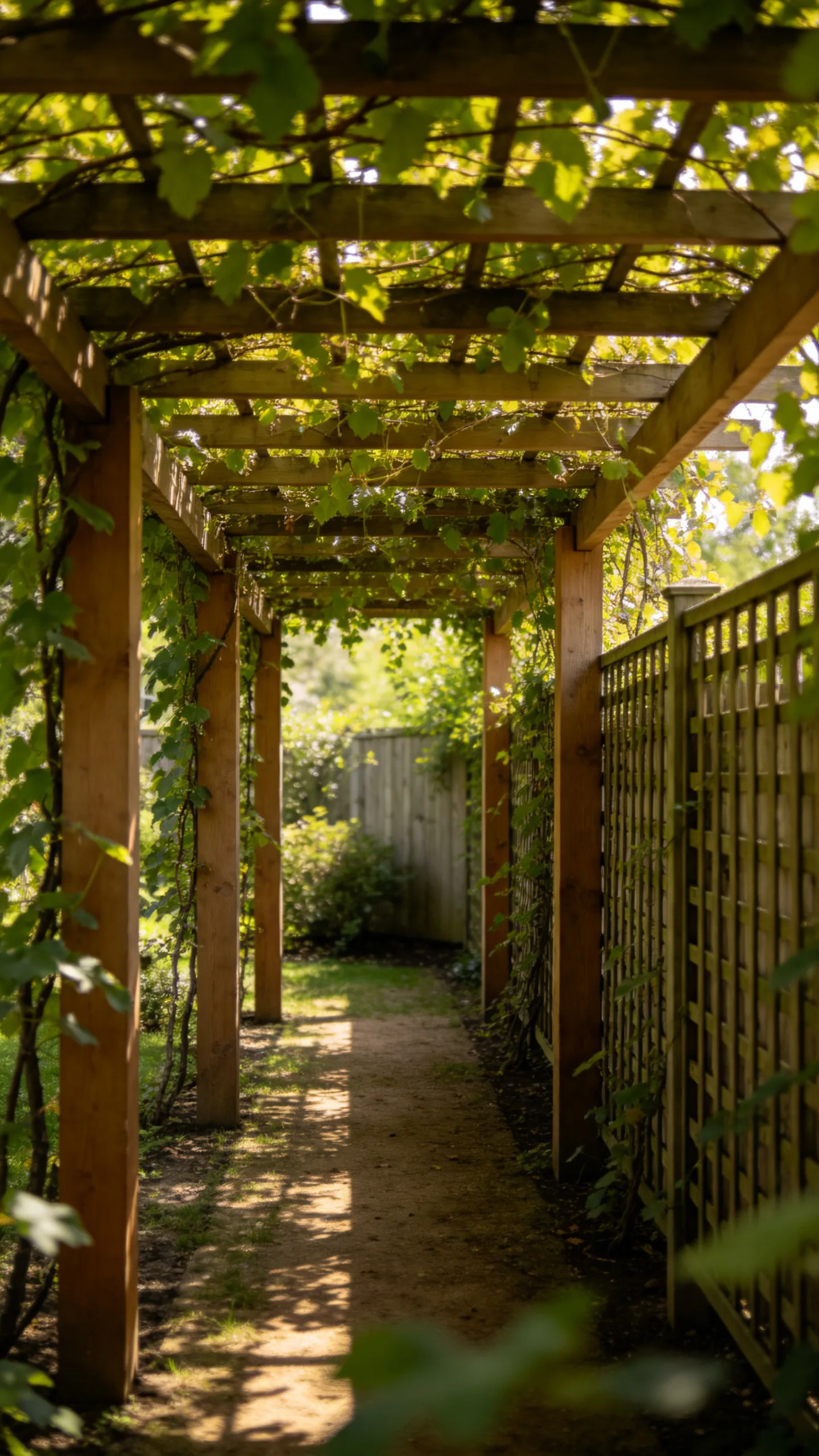
A pergola built along a fence line can add overhead privacy and make a seating area feel more secluded. Train climbing vines over the top and sides to screen views from neighboring upper floors or nearby balconies. This works especially well when the fence itself is allowed to stay at a standard height but you still need more enclosure around a dining or lounge zone.
Good vine options include grapevine, clematis, wisteria, honeysuckle, or passionflower, depending on your climate and the strength of the structure. Heavy climbers need sturdy posts and beams, while lighter vines can grow on wire or trellis panels. Prune regularly so the plants do not overwhelm gutters, roofs, or nearby trees.
16. Layered Privacy Corner With Panels, Pots, and Shrubs
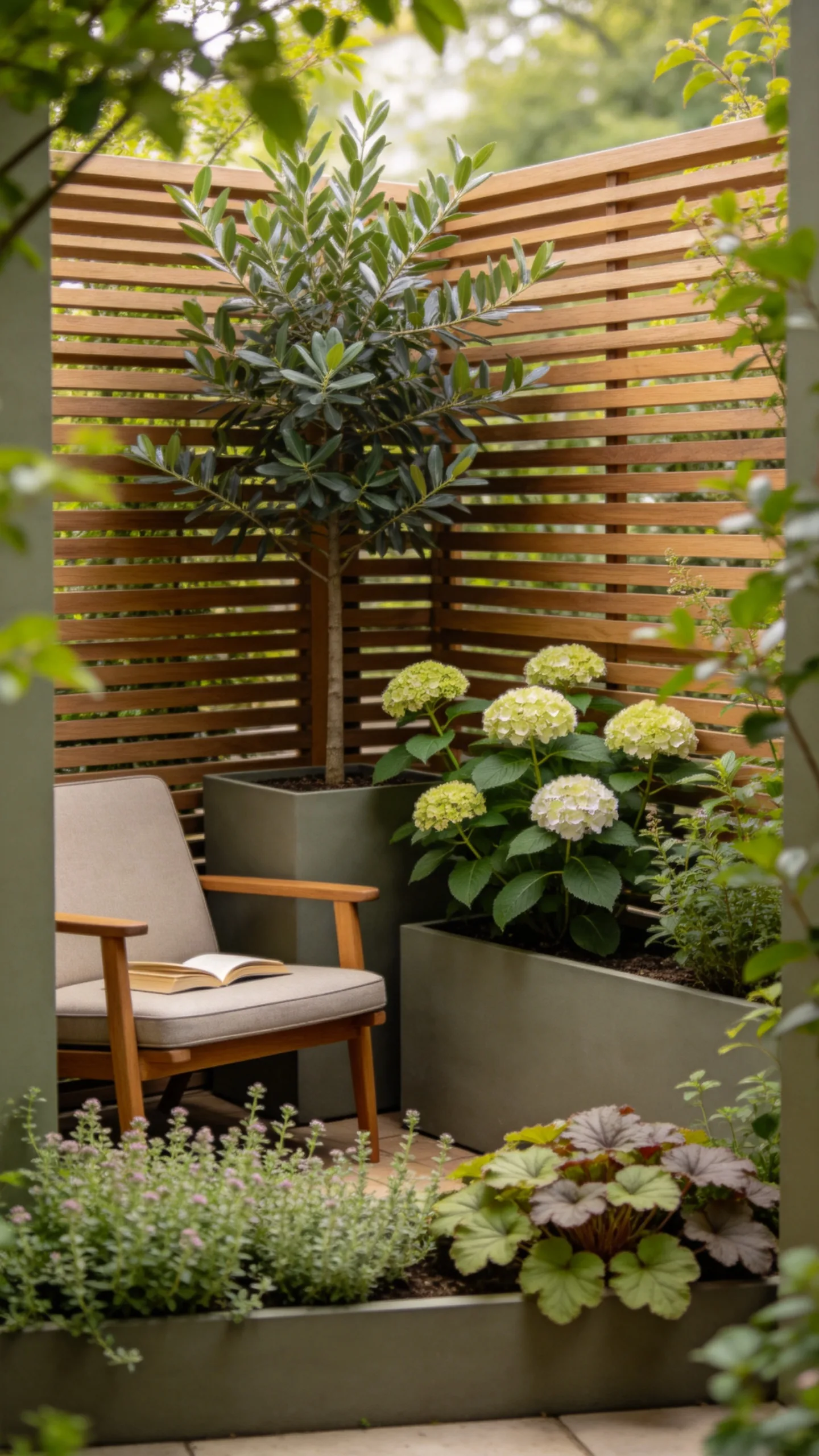
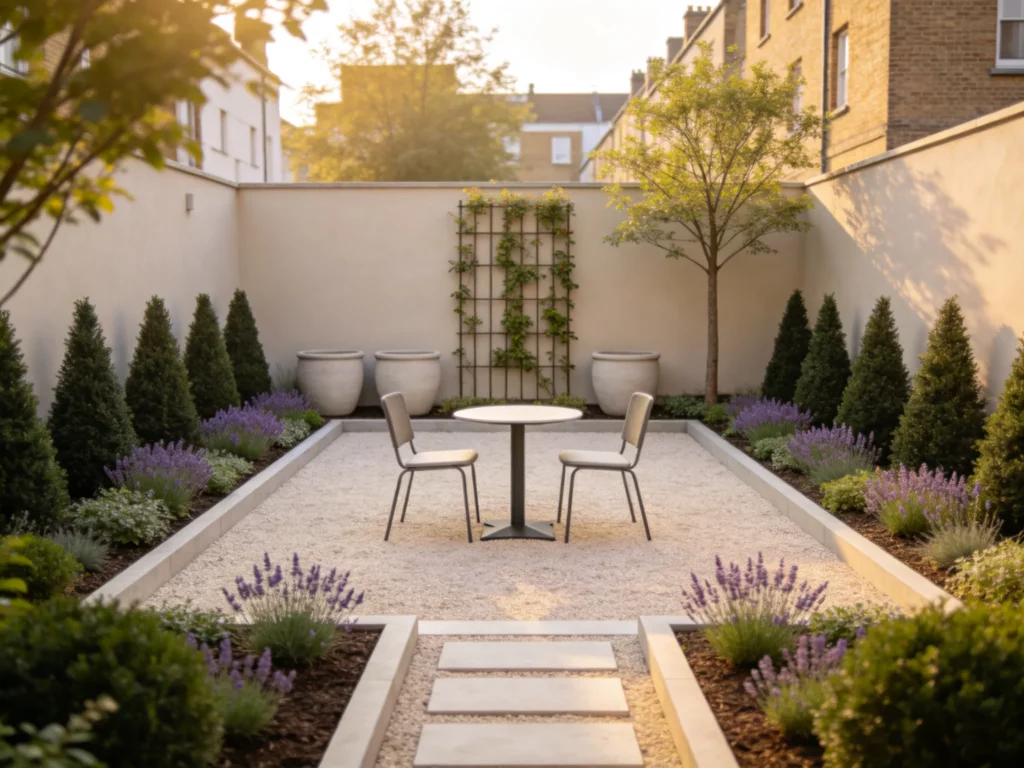
A layered privacy corner combines several screening methods in one focused area. Start with a fence or freestanding panel as the background, add one or two tall containers, and plant shrubs or grasses in front to create depth. This is useful when you only need privacy around a chair, fire pit, reading spot, or small outdoor table rather than along the whole boundary.
Use the tallest element at the back, medium-height plants in the middle, and low edging plants or ground cover at the front. For example, pair a slatted screen with potted bay trees, compact hydrangeas, and low thyme or heuchera. This approach lets you create a private garden moment without the cost or maintenance of screening the entire yard.