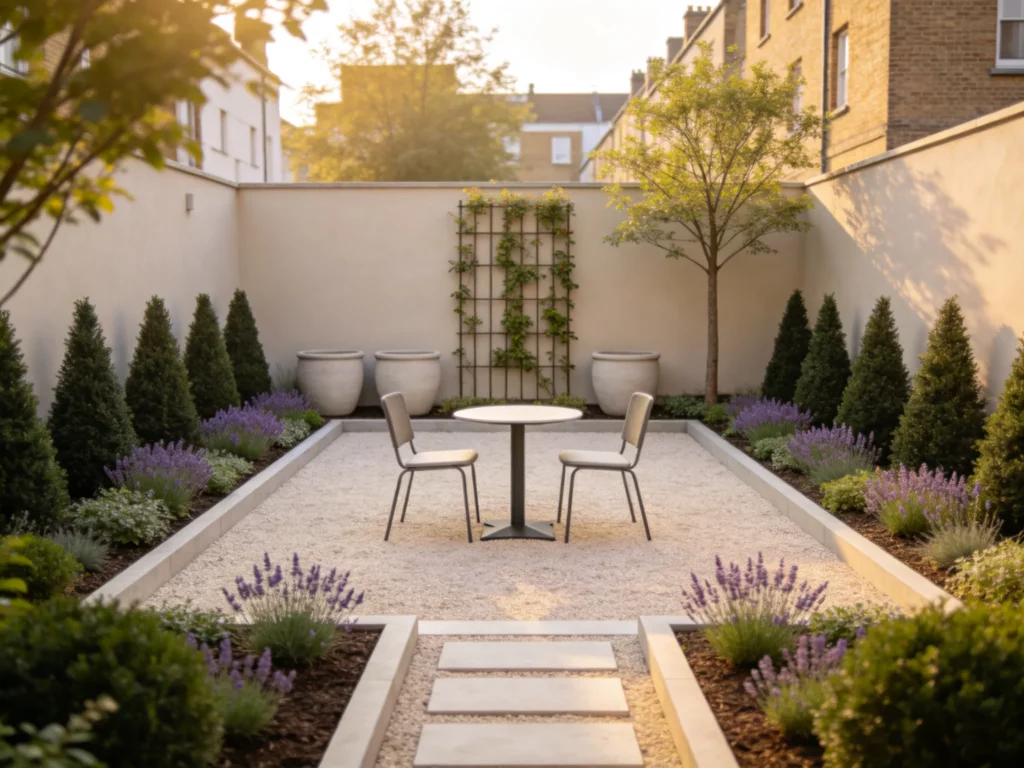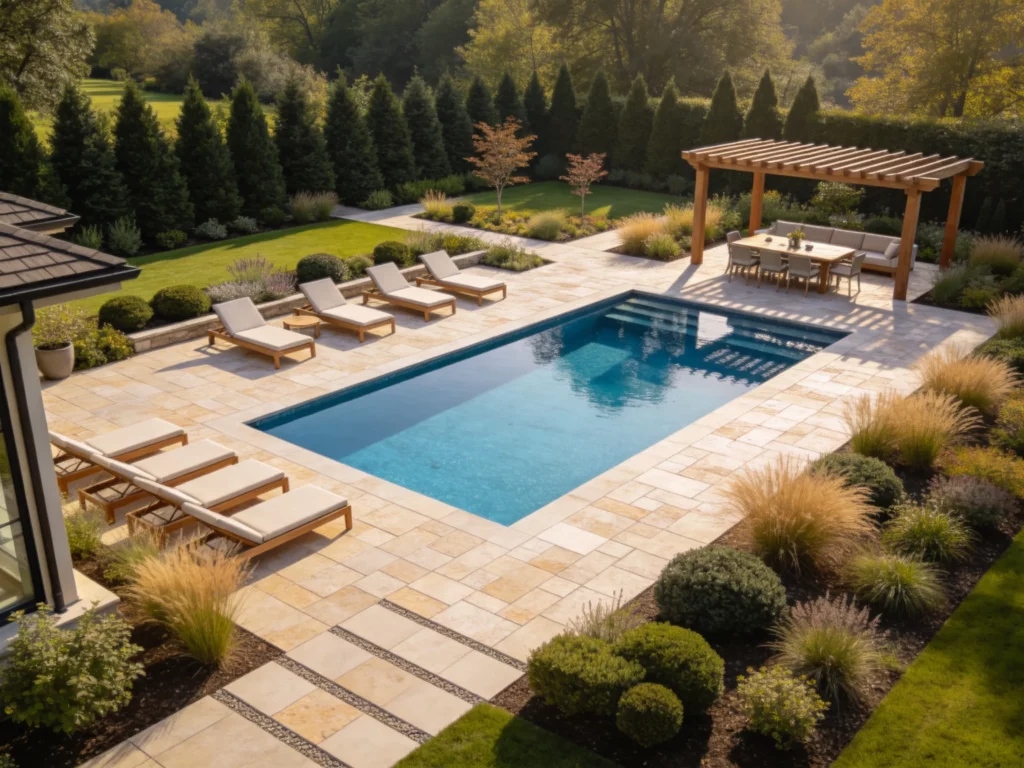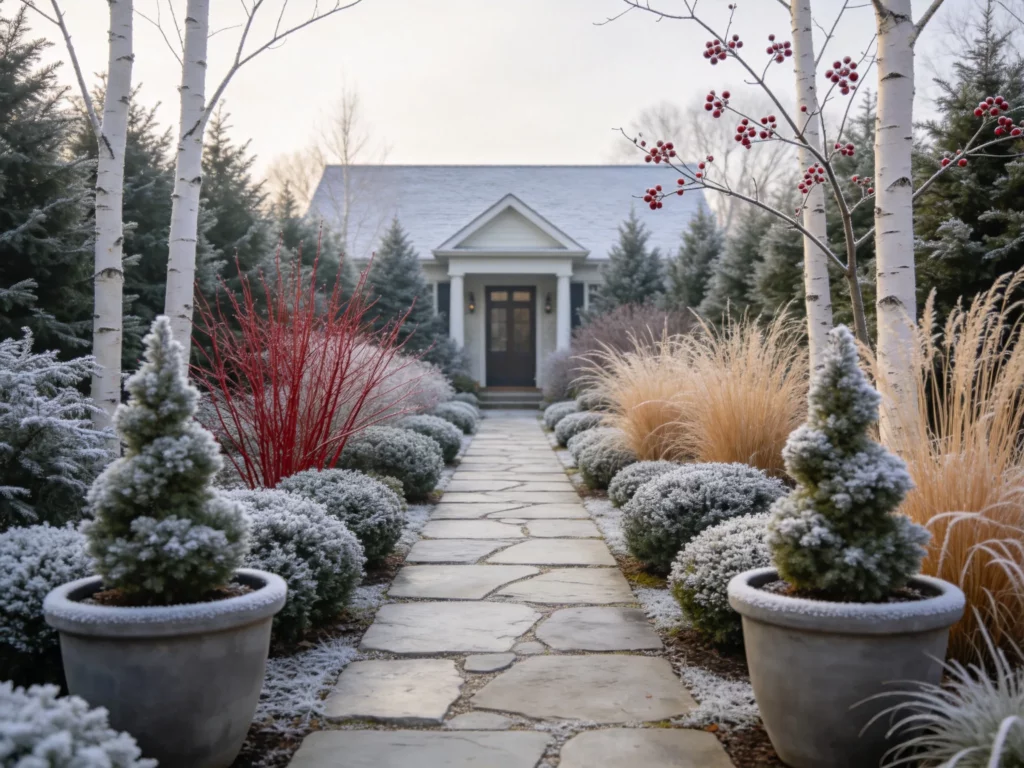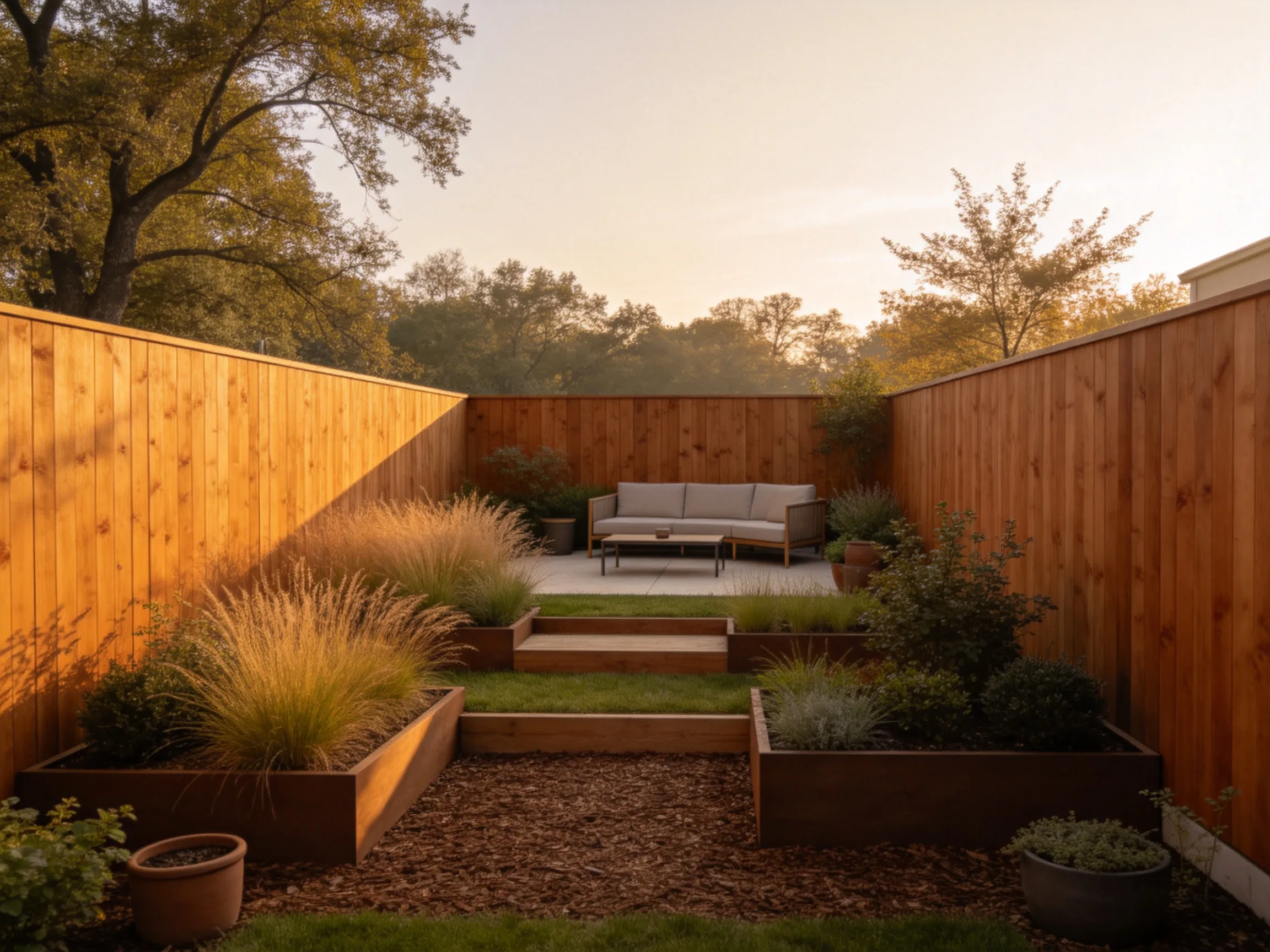
A wooden fence can do more than mark the edge of a backyard. The right design can screen neighboring views, soften hard landscaping, frame planting beds, and make an outdoor seating area feel more like a private room. These wooden fence ideas focus on privacy and warmth, with practical ways to use boards, posts, stains, planting, and layout to create a more inviting backyard.
1. Tall Vertical Board Fence With Narrow Gaps
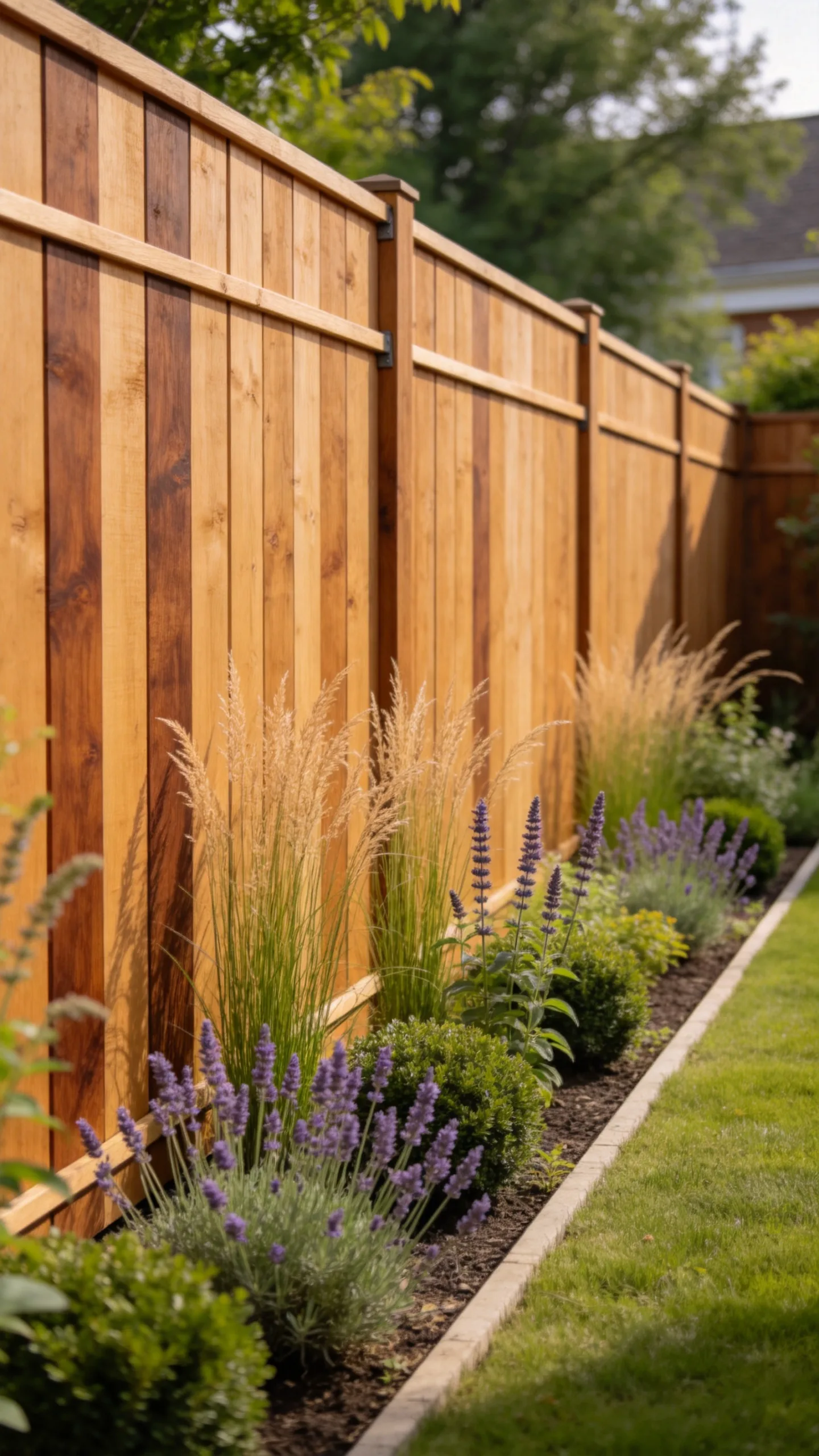
A tall vertical board fence is one of the most practical wooden fence ideas for creating privacy in a backyard. Use closely spaced cedar, redwood, pine, or pressure-treated boards mounted to horizontal rails, leaving only a very narrow gap between boards for expansion. This style works especially well along property lines where you want to block views from nearby patios, windows, or side yards.
For a warmer look, choose a medium brown stain instead of a stark paint color. A semi-transparent stain lets the grain show through while helping the fence blend with trees, mulch, raised beds, and deck boards. If your yard feels narrow, run planting beds along the base with upright grasses, lavender, salvia, or compact shrubs to soften the height without taking up much lawn space.
2. Horizontal Slat Fence For A Modern Backyard
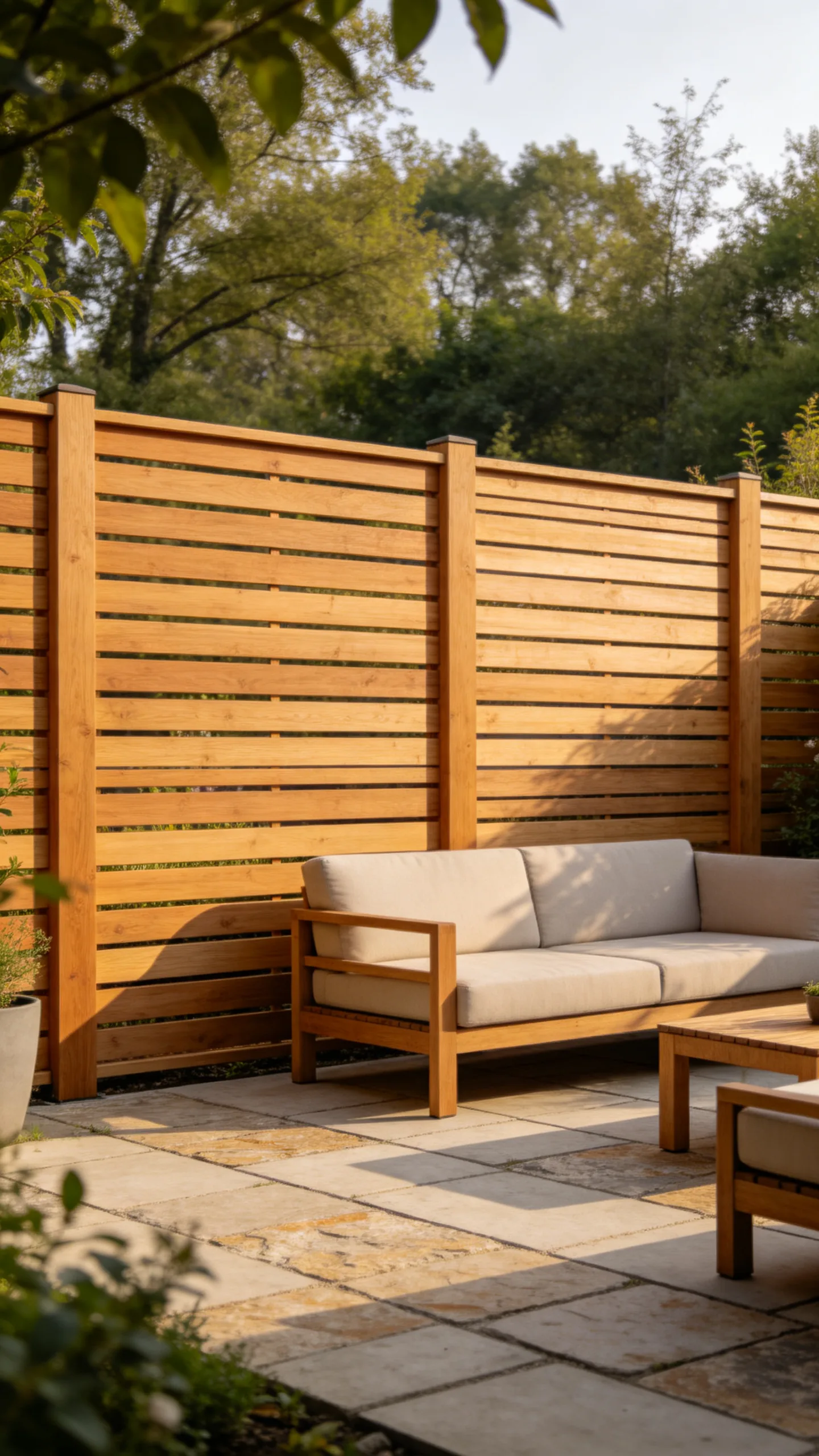
A horizontal slat fence gives a backyard a clean, modern look while still feeling natural because of the wood texture. The long lines visually stretch the yard, which can make a small space feel wider. Use evenly spaced boards with minimal gaps for more privacy, or slightly wider gaps if you want filtered light and airflow.
This design works well behind a dining patio, fire pit area, or outdoor sofa because it creates a strong backdrop. To keep it practical, use sturdy posts and choose boards that resist warping, especially if your climate has wet winters or strong sun. A warm cedar tone, walnut stain, or weathered gray finish can make the fence feel intentional rather than purely functional.
3. Board-On-Board Privacy Fence
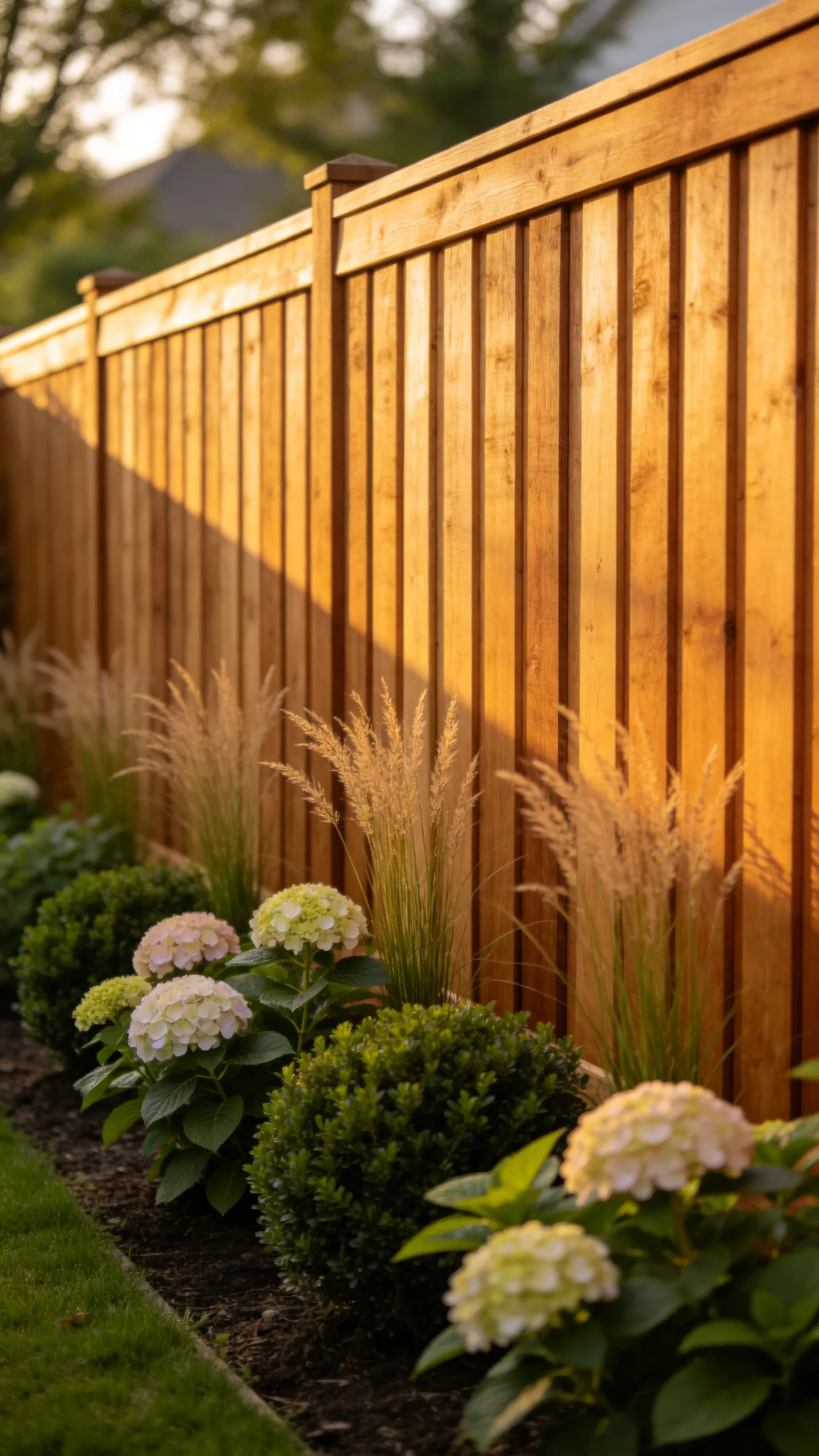
A board-on-board fence uses overlapping vertical boards to block sightlines while still allowing small amounts of airflow. Boards are installed on alternating sides of the rails, so gaps are covered from both directions. This makes it a strong option for backyards where privacy matters from multiple angles, such as between close neighbors or along a shared driveway.
The layered construction adds depth and shadow, which gives the fence a warmer, more finished appearance than a flat panel. It pairs nicely with foundation-style planting along the base, such as dwarf boxwood, hydrangeas in partial shade, or ornamental grasses in sunny spots. Because this style uses more wood than a simple fence, it is worth planning the length carefully and using it where screening is most needed.
4. Shadowbox Fence For Shared Boundaries
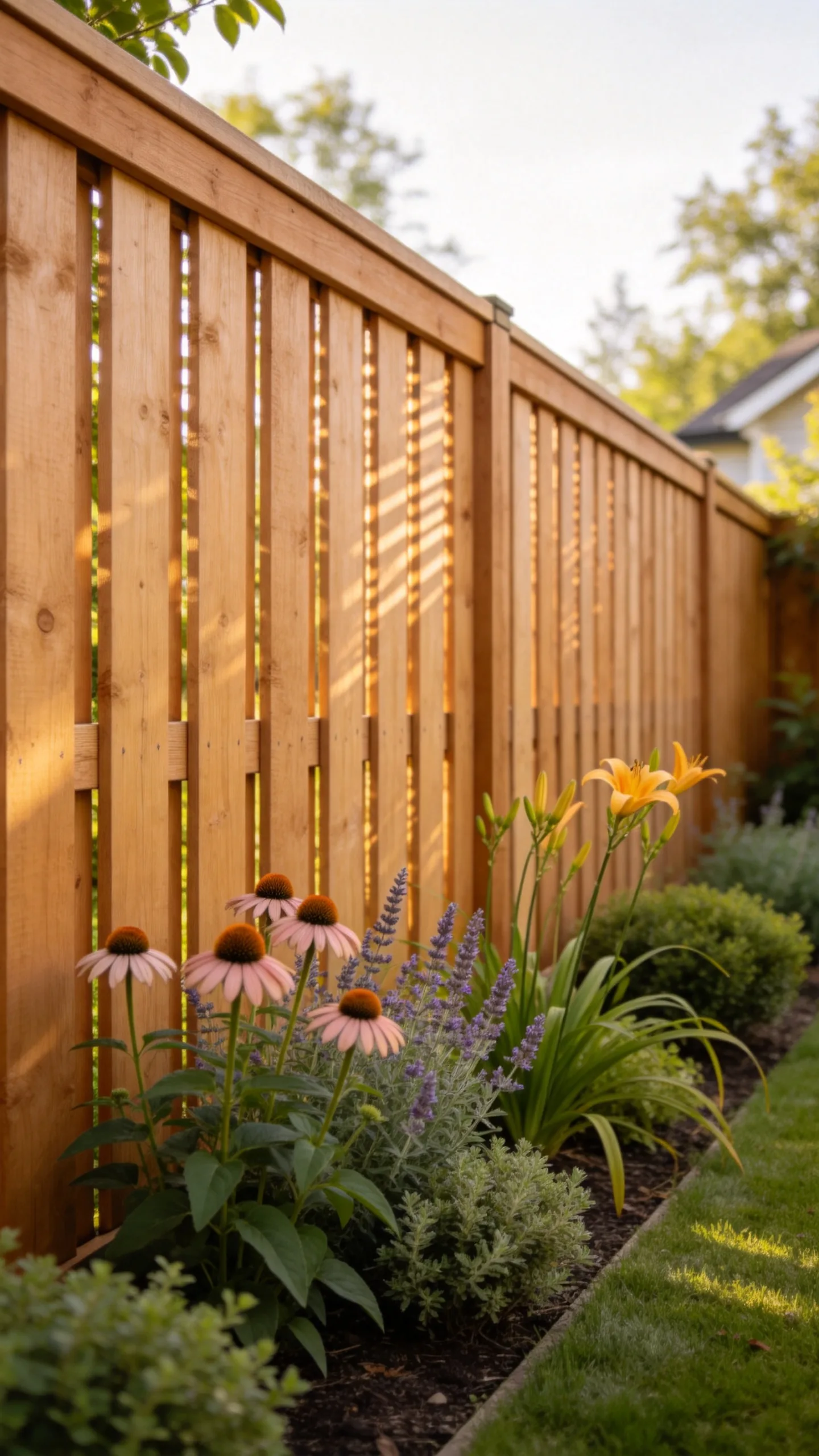
A shadowbox fence is a good choice when both sides of the fence will be visible. The alternating boards create a finished look from either yard, making it useful for shared boundaries where appearance matters. It does not block every view completely, but it softens sightlines and creates a sense of separation without making the yard feel boxed in.
This fence style is especially helpful in breezy areas because the spacing allows wind to move through. For more warmth, use natural wood tones and plant loose, informal borders along the fence line. Coneflowers, catmint, daylilies, and low shrubs can help blur the base of the fence while leaving enough access for trimming and maintenance.
5. Lattice-Top Wooden Fence
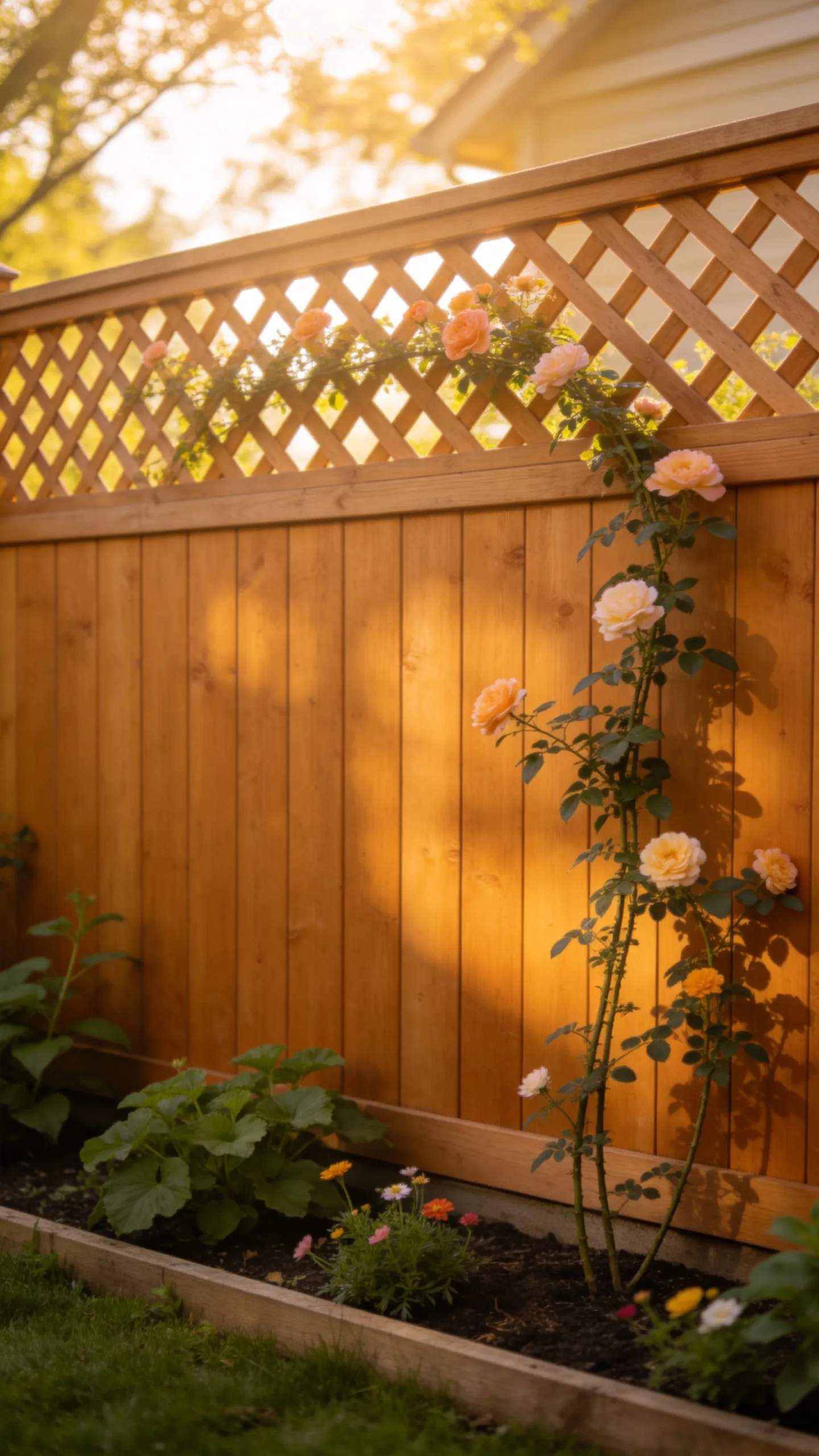
A lattice-top wooden fence combines solid privacy below with a decorative open section above. The lower boards screen seating areas, garden beds, and play spaces, while the lattice adds height without feeling heavy. This is useful when you need privacy but still want sunlight and air to reach the backyard.
The lattice section can also support lightweight climbing plants. In sunny areas, consider clematis, climbing roses, or annual vines like morning glory where appropriate for your region. In shadier areas, choose plants carefully and avoid aggressive climbers that may damage the wood or become difficult to manage. Keep vines pruned so airflow remains good and moisture does not stay trapped against the fence.
6. Cedar Fence With A Clear Protective Finish
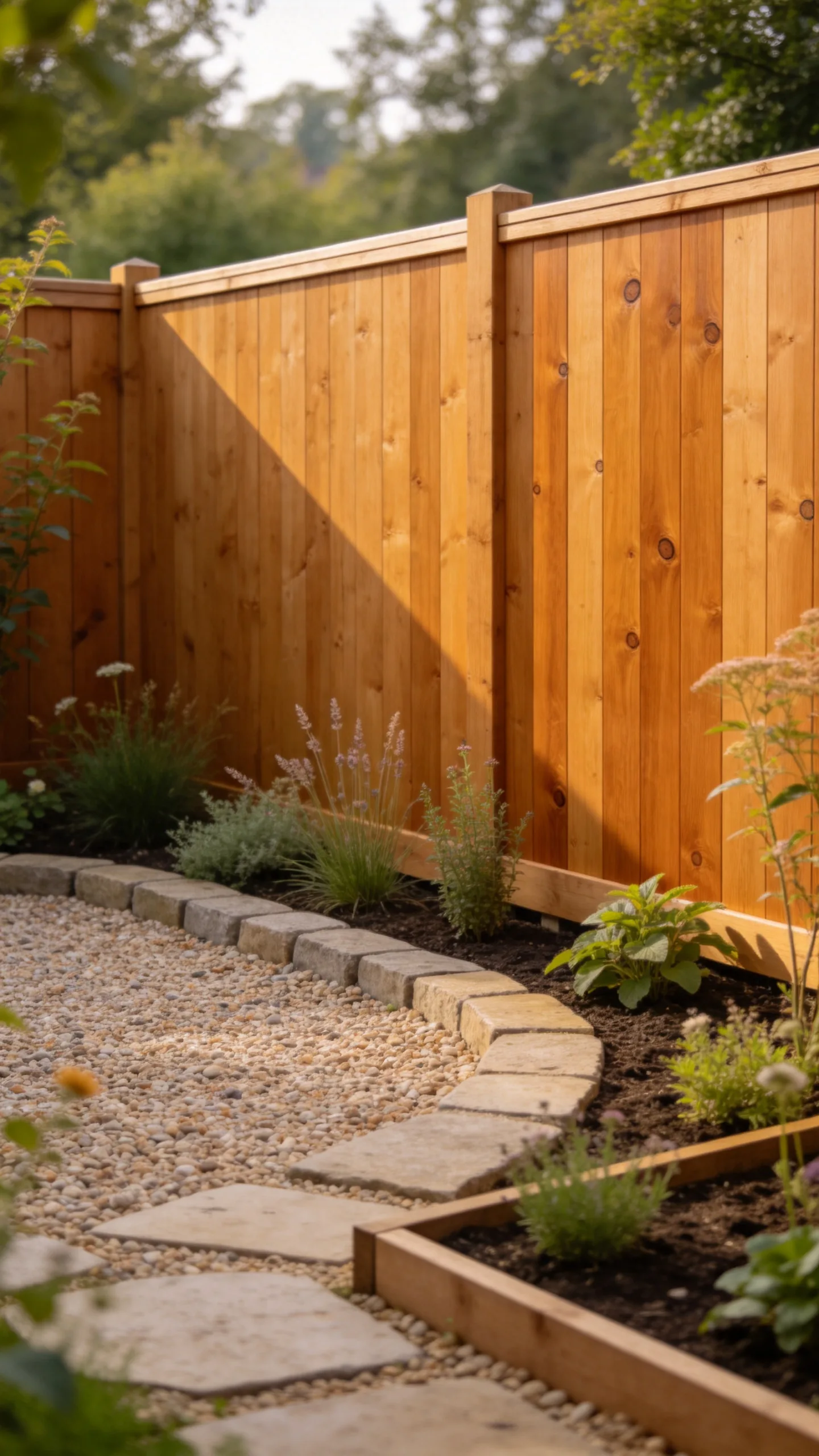
Cedar is a popular choice for backyard fencing because it has a naturally warm color and visible grain. A simple cedar fence with a clear or lightly tinted protective finish can make a yard feel cozy without adding visual clutter. This style works well in gardens that already have stone paths, gravel patios, raised beds, or naturalistic planting.
To preserve the warm look, apply a finish suited for exterior wood and refresh it as recommended for your climate. Cedar will weather over time if left untreated, often fading to silvery gray. That can be beautiful too, but if the goal is warmth, a clear or honey-toned stain will help keep the color richer for longer.
7. Wooden Fence With Integrated Planter Boxes
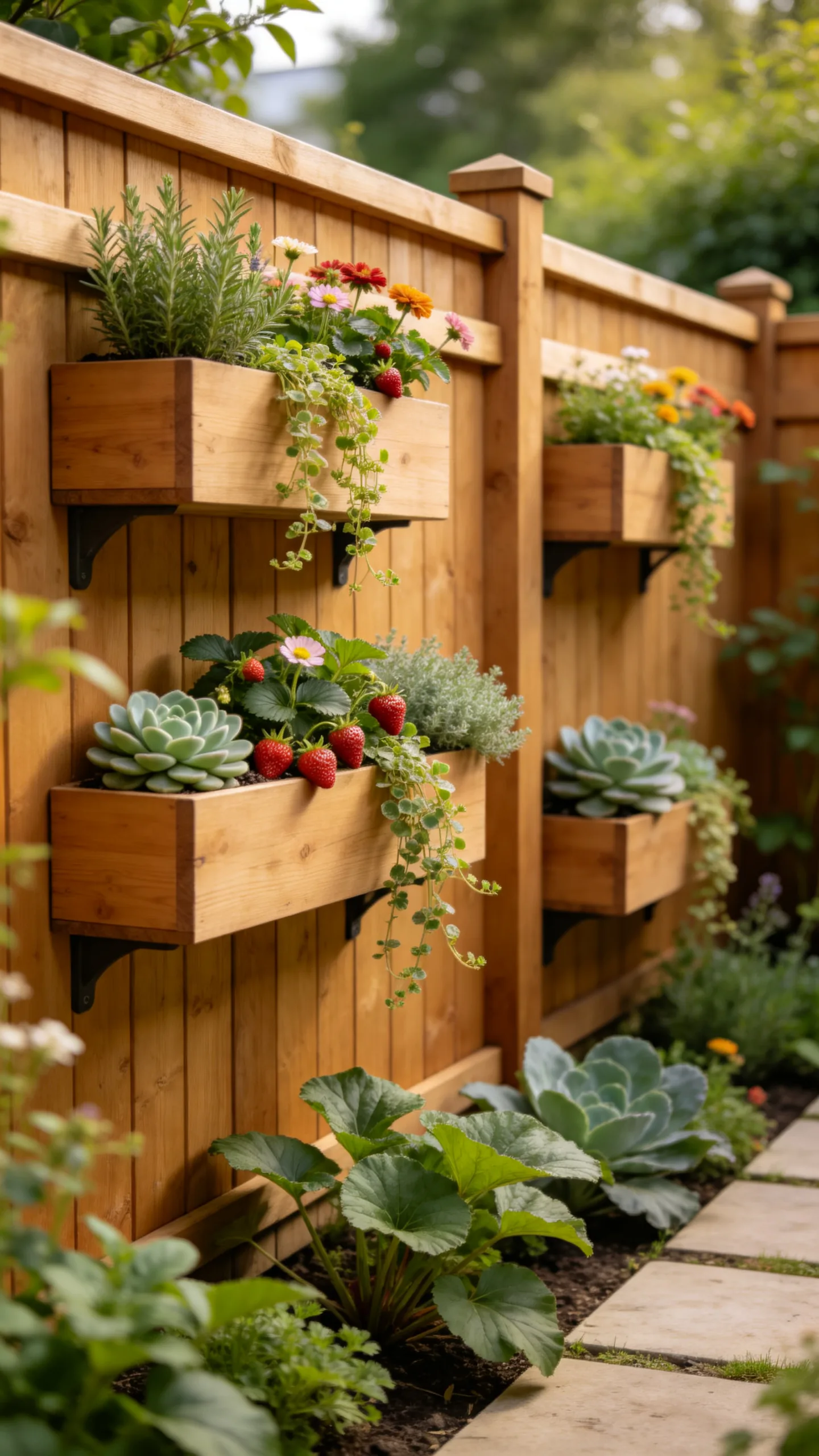
Adding planter boxes to a wooden fence turns a plain privacy screen into a vertical garden feature. Mount long wooden boxes or metal-lined planters to sturdy posts or rails, making sure the fence can support the extra weight of soil, water, and plants. This idea is especially useful for small backyards where ground space is limited.
Plant herbs, trailing annuals, strawberries, compact sedums, or small flowers depending on sun exposure. In full sun, thyme, oregano, nasturtiums, and calibrachoa can work well in containers with good drainage. In partial shade, try parsley, violas, ferns, or shade-tolerant annuals. Keep the boxes at reachable heights so watering and trimming do not become a chore.
8. Fence Panels Framed With Chunky Wood Posts
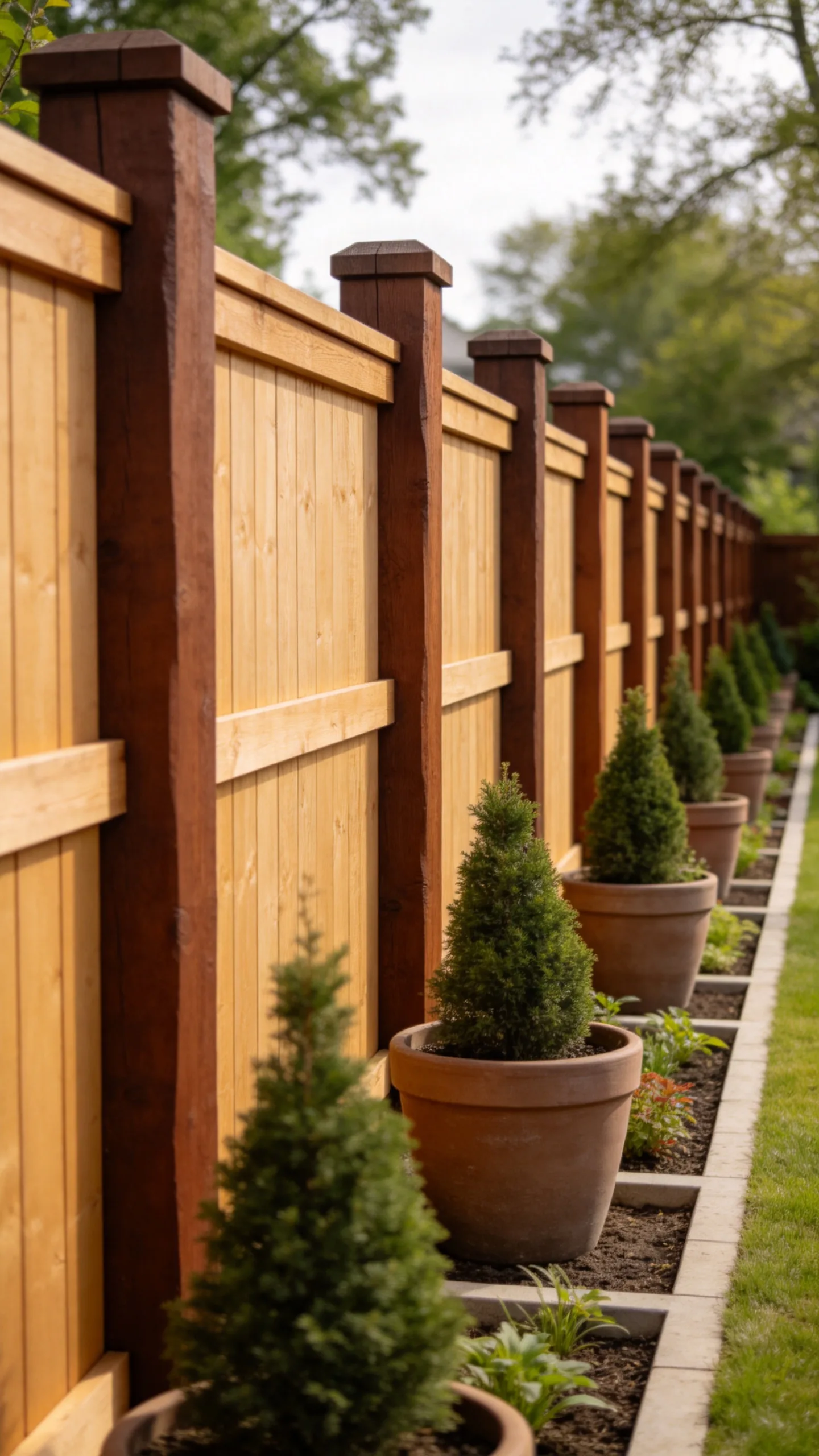
Framing fence panels with substantial wood posts creates a more architectural look. The posts act like vertical columns, giving the fence rhythm and structure. This can make a long privacy fence feel less flat, especially along a deep backyard or side boundary.
Use the posts to divide the fence into clear sections, then choose simple vertical boards, horizontal slats, or framed panels between them. A darker stain on the posts and a slightly lighter tone on the boards can add contrast while still feeling natural. At the base, repeat the spacing with shrubs, large pots, or low planting pockets to make the fence feel connected to the garden design.
9. Rustic Split-Rail Fence With Privacy Planting
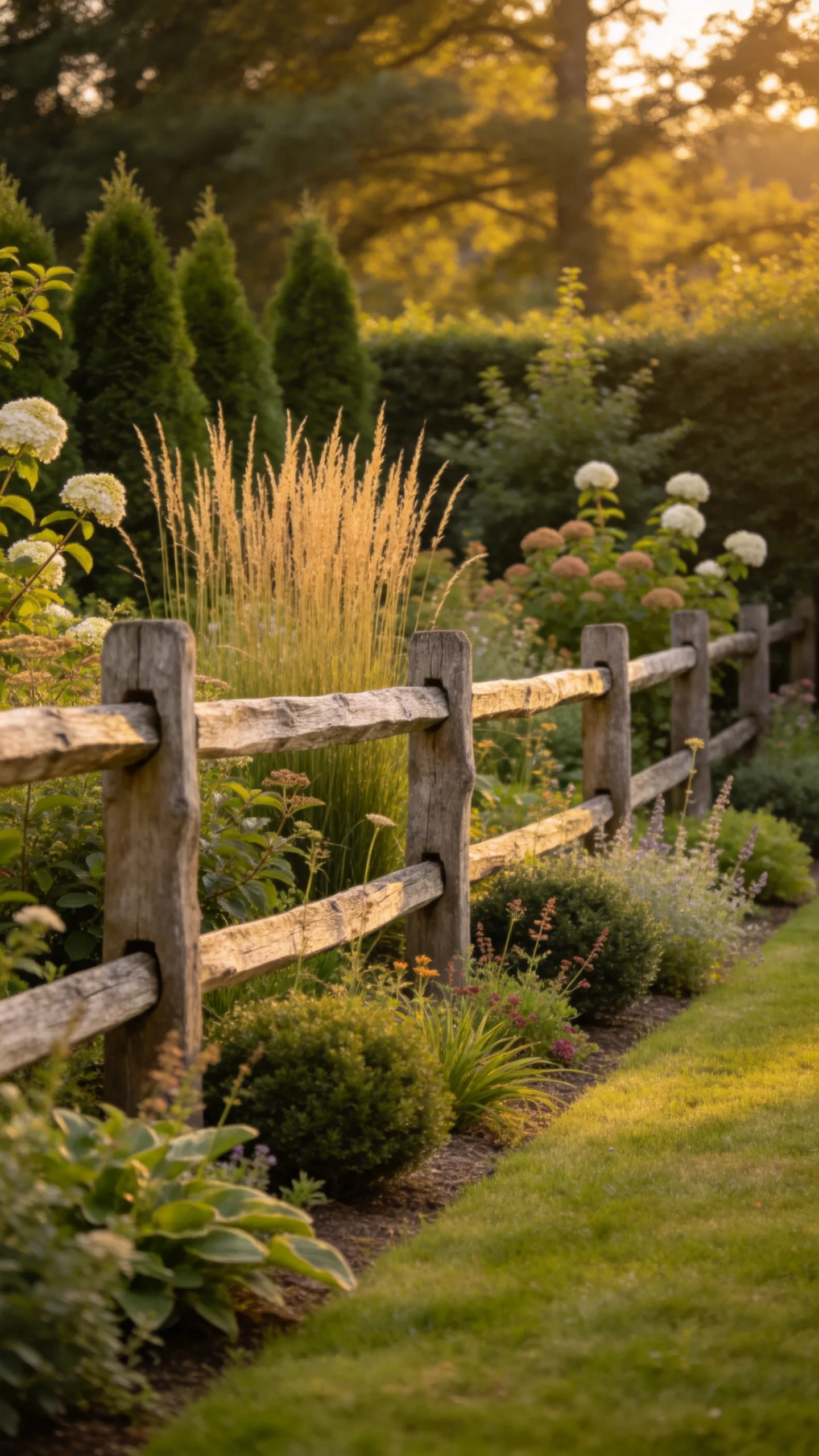
A split-rail fence is not a solid privacy fence on its own, but it can create a warm, rustic boundary when paired with layered planting. This idea works best for larger backyards, cottage gardens, or informal landscapes where you want separation without a closed-in feeling. Use the wooden rails to define the edge, then plant shrubs, ornamental grasses, or mixed perennials behind or in front of it.
For privacy, choose plants based on mature size and local growing conditions. Evergreen shrubs can provide year-round screening in many climates, while deciduous shrubs create seasonal softness. Tall grasses, serviceberry, viburnum, or native shrubs may work well where suited. Leave enough space between plants and rails for pruning, airflow, and access.
10. Slatted Wood Screen Around A Patio
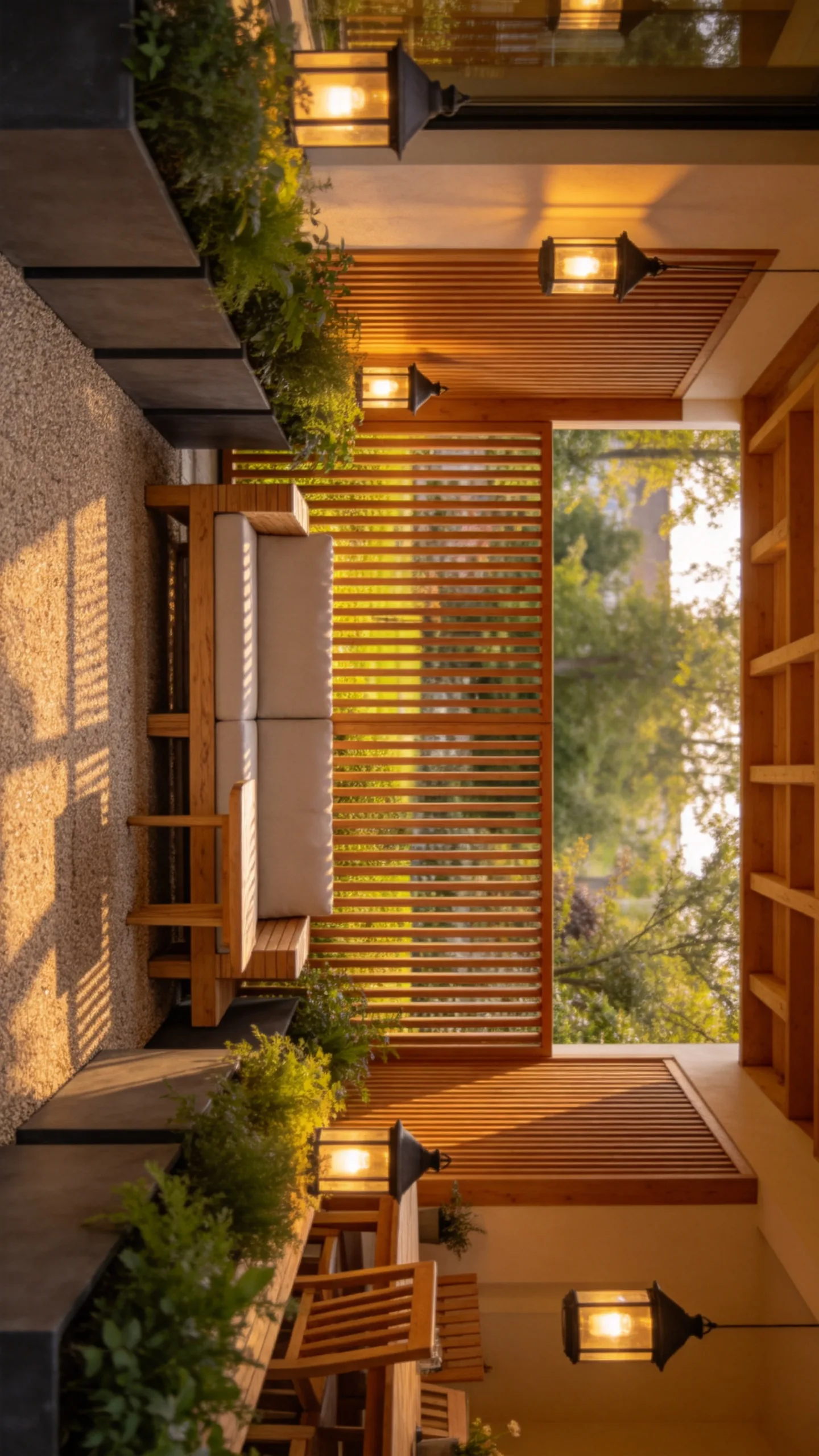
A slatted wood screen can be used as a partial fence around a patio, deck, or seating nook. Instead of enclosing the whole yard, place it only where privacy is needed most, such as behind an outdoor sofa, beside a hot tub, or along a dining area facing a neighbor’s window. This saves material and keeps the rest of the backyard feeling open.
The slats can be installed vertically or horizontally, depending on the style of the space. For a cozy patio, use warm-toned wood and pair the screen with container plants, outdoor lanterns, and a gravel or paver floor. If the patio gets strong afternoon sun, the screen can also provide light shade, especially when combined with tall planters or climbing plants.
11. Dark-Stained Wooden Fence For A Cozy Backdrop
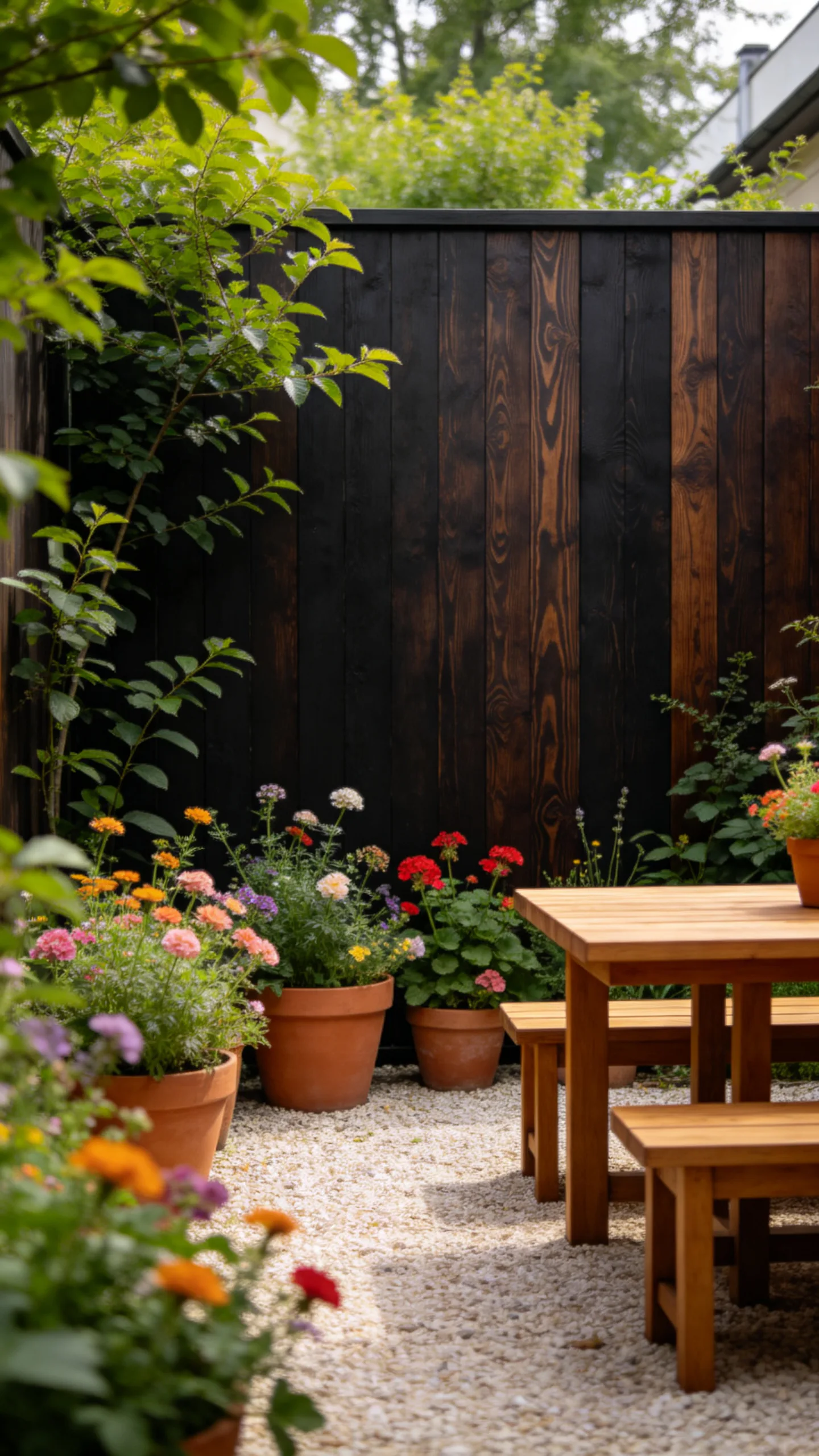
A dark-stained wooden fence can make greenery, flowers, and outdoor furniture stand out. Deep brown, charcoal, or black-brown stains create a dramatic backdrop while still showing some wood texture, depending on the product used. This is a strong choice for modern gardens, small courtyards, and backyards with lush planting.
Dark colors can absorb heat, so consider sun exposure and local climate before using them on all sides of the yard. They often work especially well on a feature fence behind a seating area or along one boundary. Pair the fence with pale gravel, terracotta pots, green foliage, and warm wood furniture to keep the space inviting rather than severe.
12. Picket Fence With Taller Privacy Sections
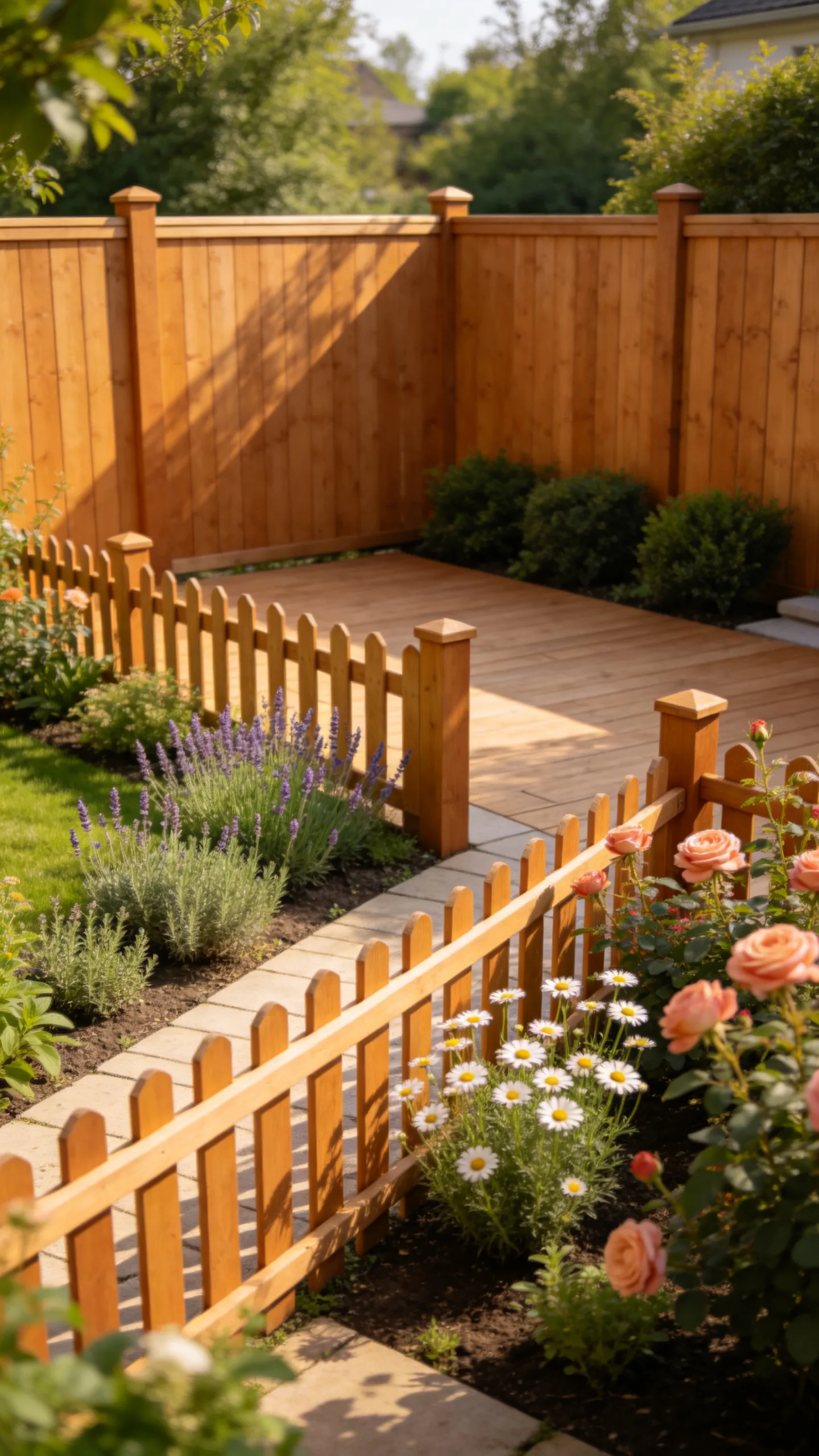
A picket fence brings charm, but it does not usually provide full privacy. One practical approach is to combine a lower picket fence in open areas with taller wooden privacy sections where screening is needed. For example, use pickets along a garden path or front-facing side yard, then transition to taller boards around a backyard patio.
This mixed-height design keeps the yard from feeling walled in while still protecting key spaces. Use the same wood tone or cap detail across both fence types to make the design feel connected. Plant cottage-style borders along the picket sections with herbs, compact roses, daisies, or salvias, and use denser shrubs near the taller panels for extra screening.
13. Wooden Fence With A Built-In Gate Arbor
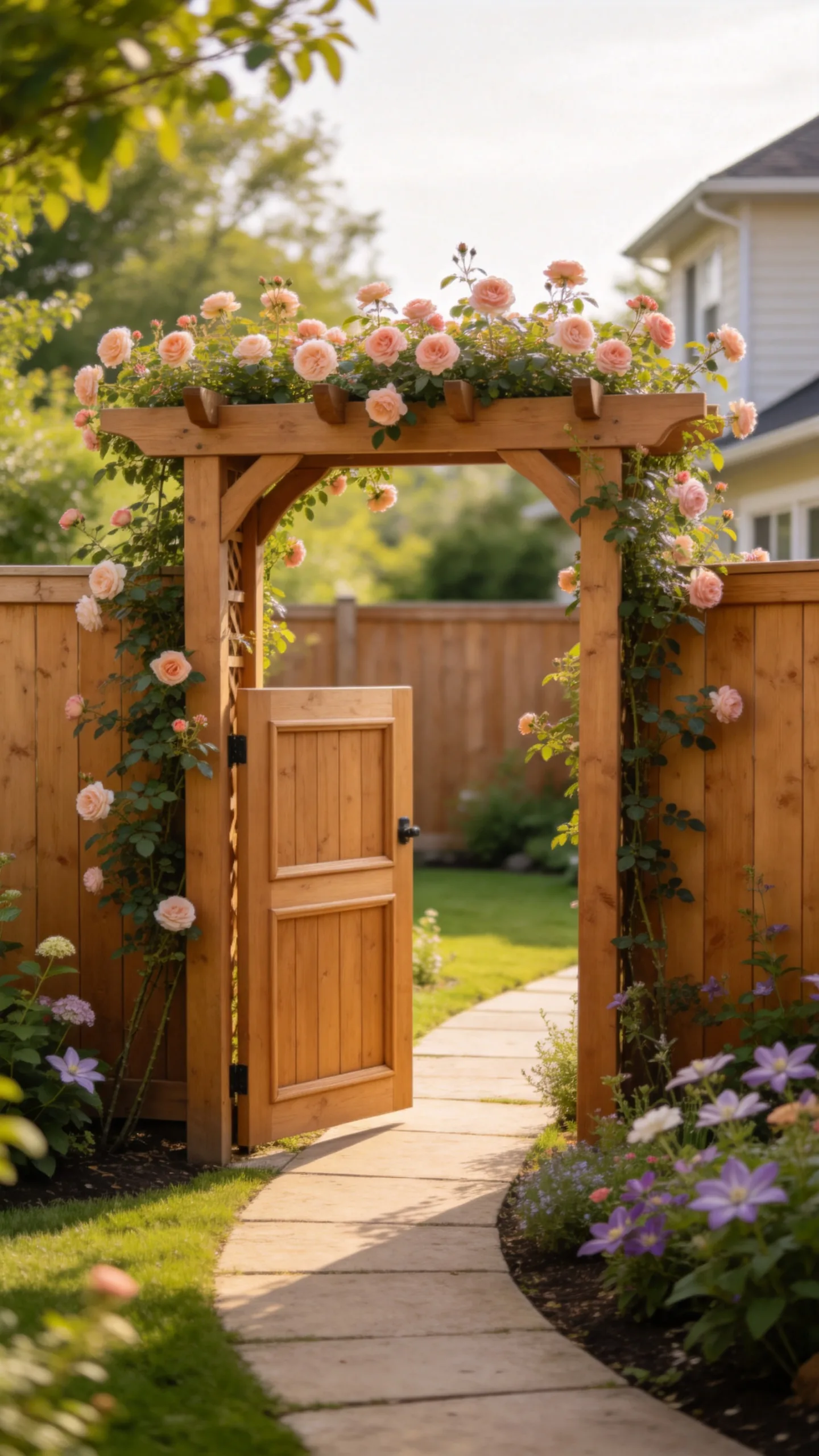
A wooden gate with an arbor turns a fence opening into a welcoming garden feature. The arbor adds height and gives the entrance a more intentional look, especially between a side yard and backyard or between a lawn and vegetable garden. It also creates a place for climbing plants if the structure is strong enough.
Choose a gate style that matches the fence boards, whether vertical planks, horizontal slats, or framed panels. If adding vines, select plants that fit the light and maintenance level. Clematis, climbing roses, jasmine in suitable climates, or annual vines can soften the structure, but keep growth pruned so the gate opens easily and the wood can dry after rain.
14. Warm Wood Fence Behind Raised Garden Beds
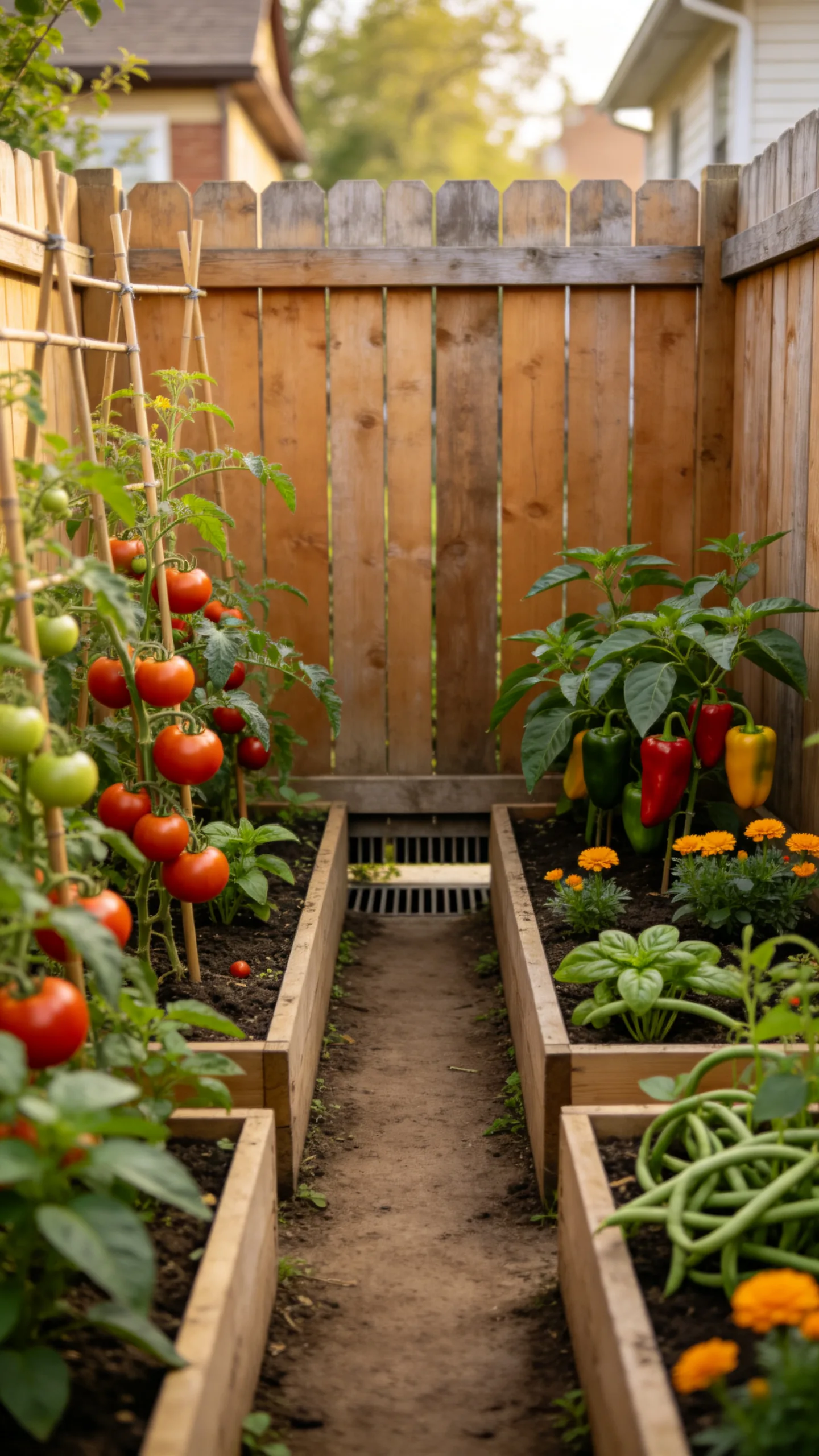
A wooden fence behind raised garden beds can make a productive garden feel organized and cozy. The fence acts as a backdrop for vegetables, herbs, and flowers while also screening views from neighboring yards. This setup is especially useful in narrow backyards where beds are placed along the perimeter to preserve a central path or small lawn.
Use rot-resistant wood or properly protected materials for the fence, and keep soil from sitting directly against the boards. Leave a small gap behind raised beds if possible for airflow and maintenance. In sunny spots, plant tomatoes on trellises, peppers, basil, calendula, or compact beans in the beds. In partial shade, focus on leafy greens, parsley, chives, and shade-tolerant herbs.
15. Mixed Wood And Trellis Fence For Layered Privacy
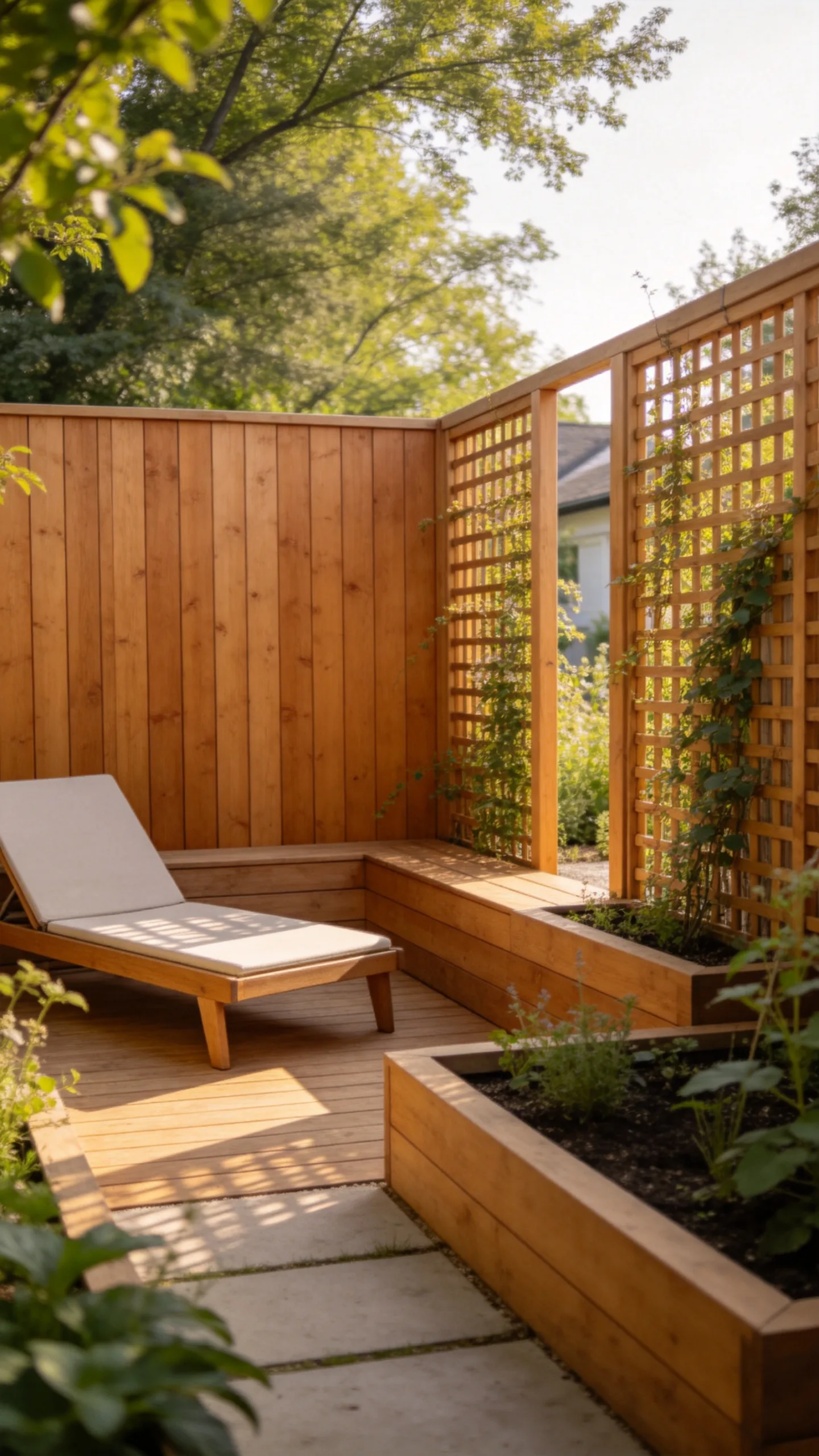
A mixed wood and trellis fence uses solid boards where privacy is most important and open trellis panels where you want light, planting, and visual depth. This is a helpful design for backyards that need screening but also feel small or shaded. Solid sections can block direct views, while trellis sections prevent the fence line from becoming too heavy.
Place trellis panels near garden beds, seating corners, or narrow side yards where climbing plants can add softness. Use the solid panels behind areas that need the most coverage, such as a lounge chair, dining table, or outdoor shower. The combination creates layers, which can make the backyard feel more secluded without enclosing every inch with solid wood.