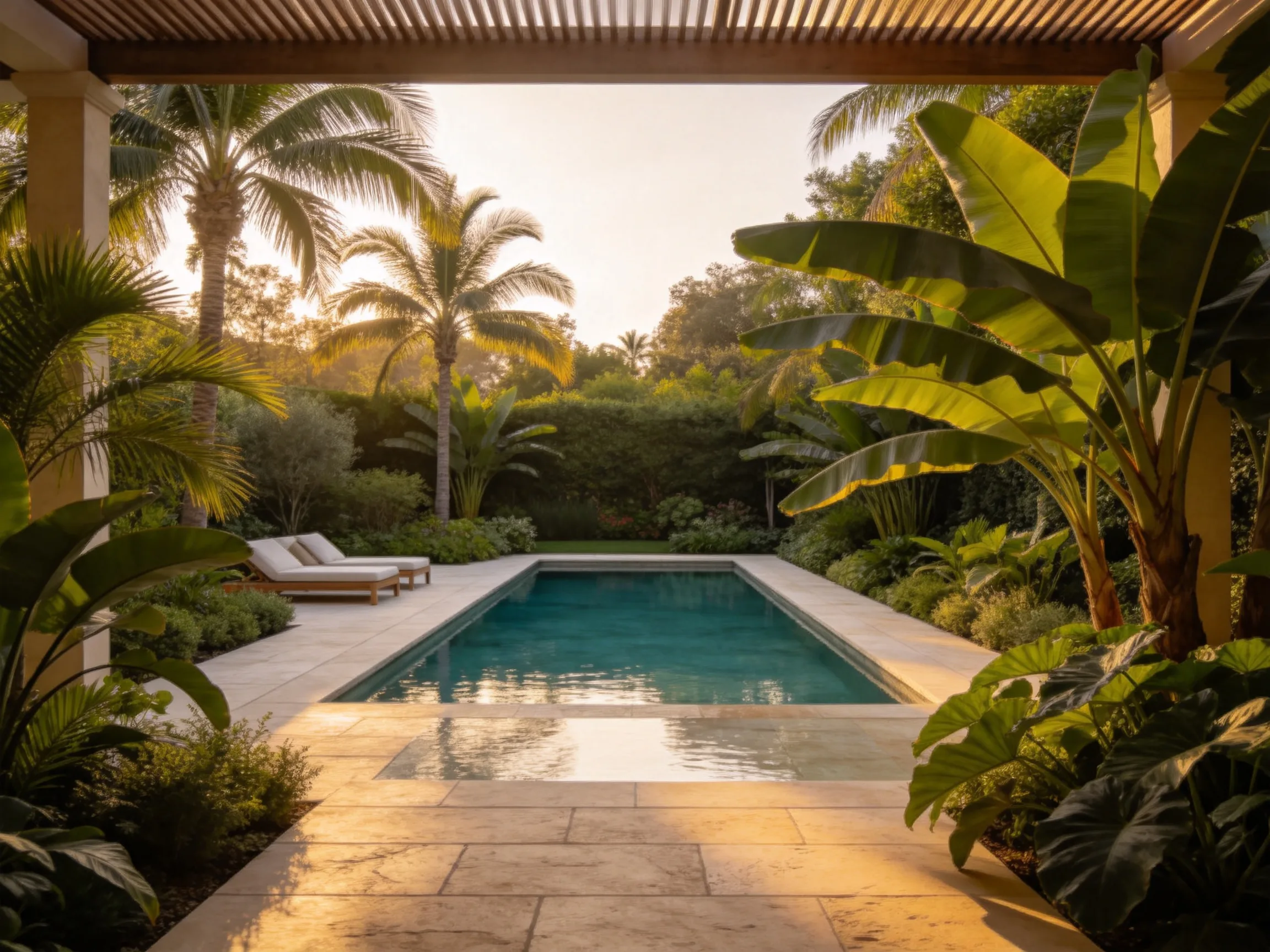
A tropical pool design can turn an ordinary backyard into a layered retreat with broad-leaf plants, warm hardscaping, filtered shade, and relaxing places to sit. Use the ideas below to match plant choices, containers, paths, privacy features, and maintenance needs to your available space, sunlight, climate, and budget.
1. Frame the Pool With Layered Tropical Planting
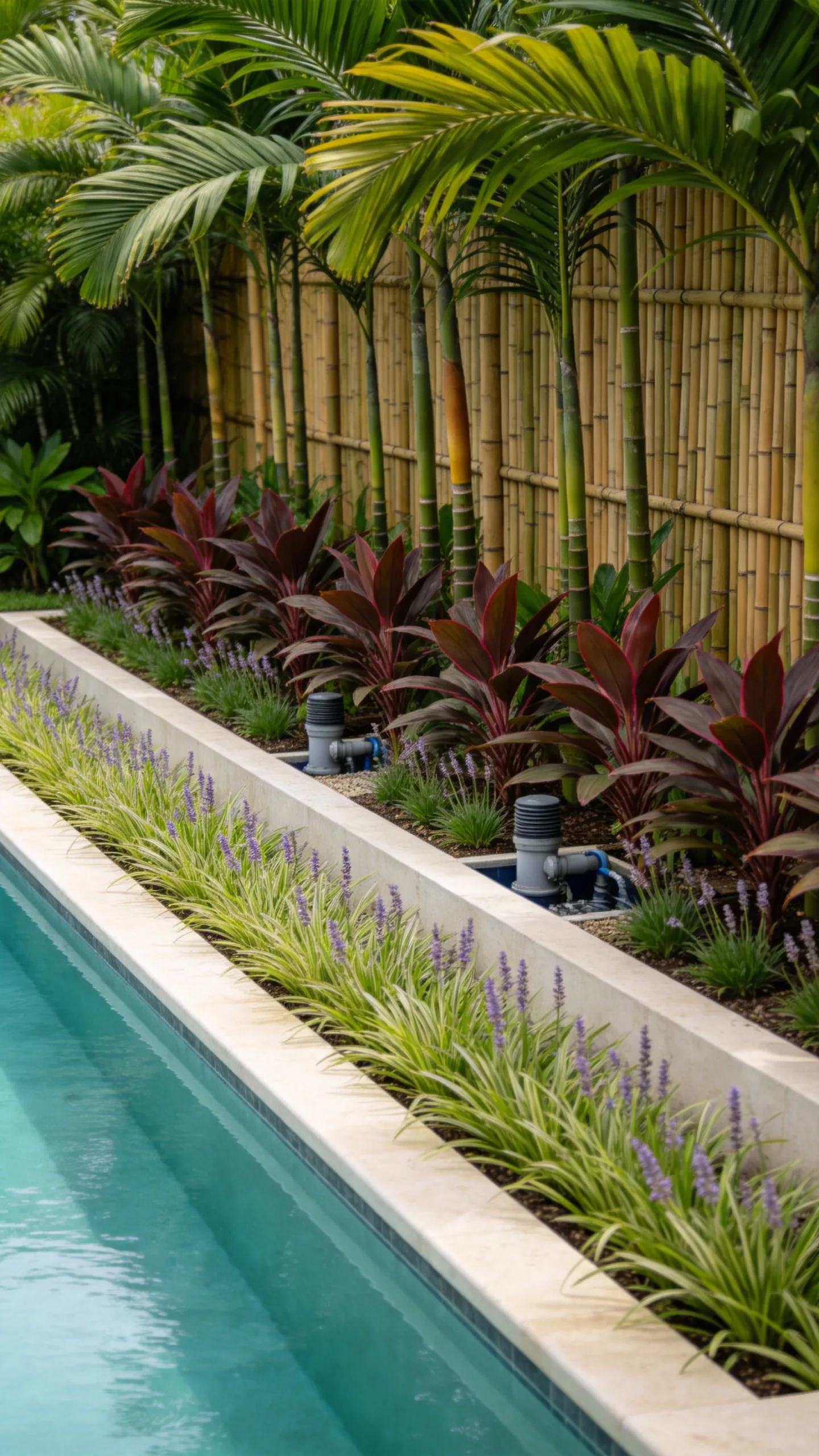
Create depth by planting low ground covers, medium shrubs, and taller accent plants around the pool perimeter. A layered arrangement might include liriope or mondo grass at the edge, bird of paradise or cordyline in the middle, and palms or banana plants toward the back.
Keep vigorous roots and falling leaves away from the coping and filtration equipment. In climates with frost, grow tender tropical plants in large pots so they can be moved indoors or into a protected area during cold weather.
2. Add a Palm-Lined Pool Path
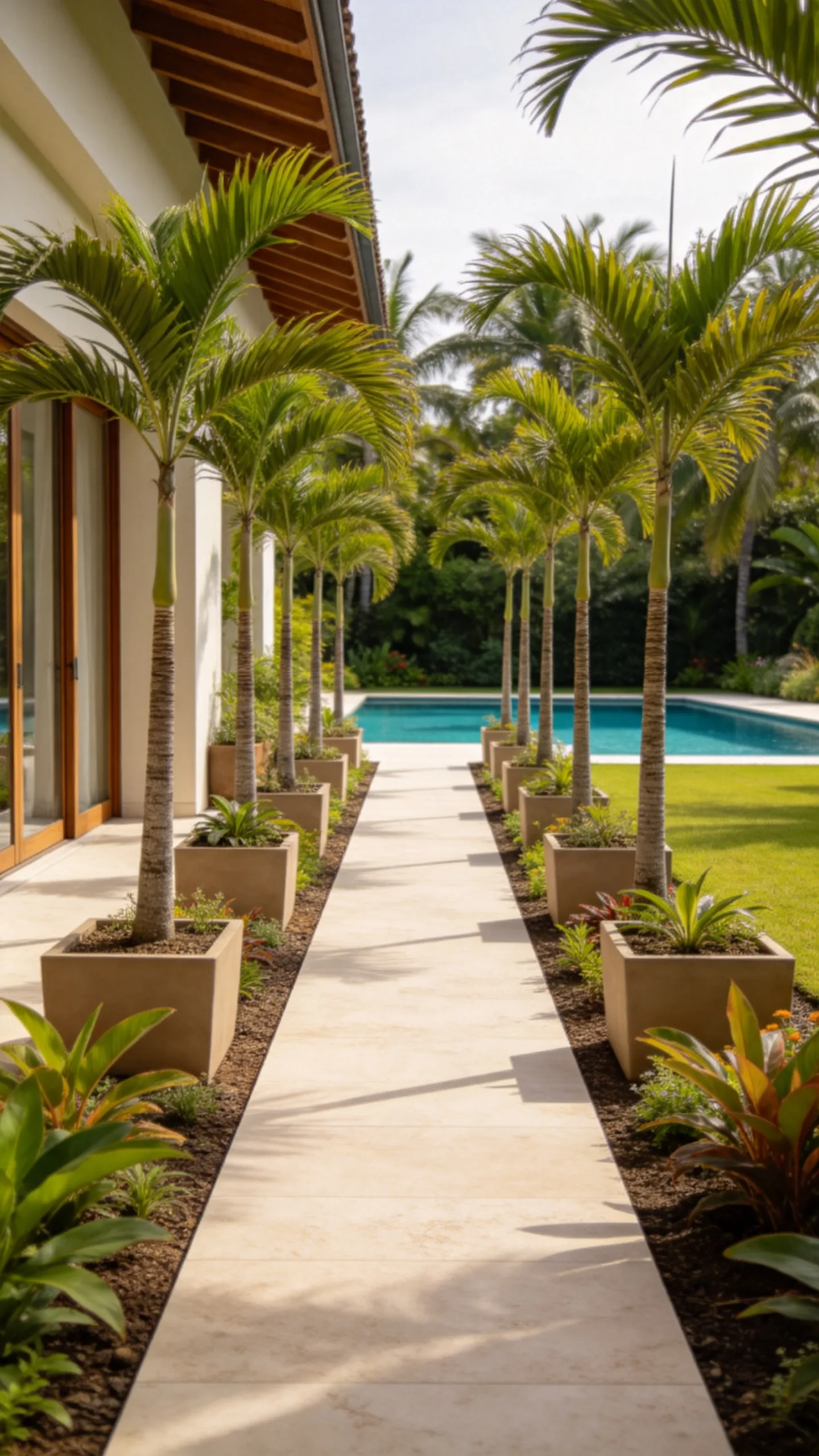
Lead from the house to the pool with a narrow path bordered by palms in evenly spaced containers or planting beds. Pygmy date palms, lady palms, or hardy windmill palms can create a resort-inspired rhythm, depending on local growing conditions.
Choose a slip-resistant surface such as textured concrete, porcelain pavers rated for outdoor use, or natural stone with a non-polished finish. Leave enough clearance for walking, furniture movement, and routine palm trimming.
3. Build Privacy With a Tropical Screen
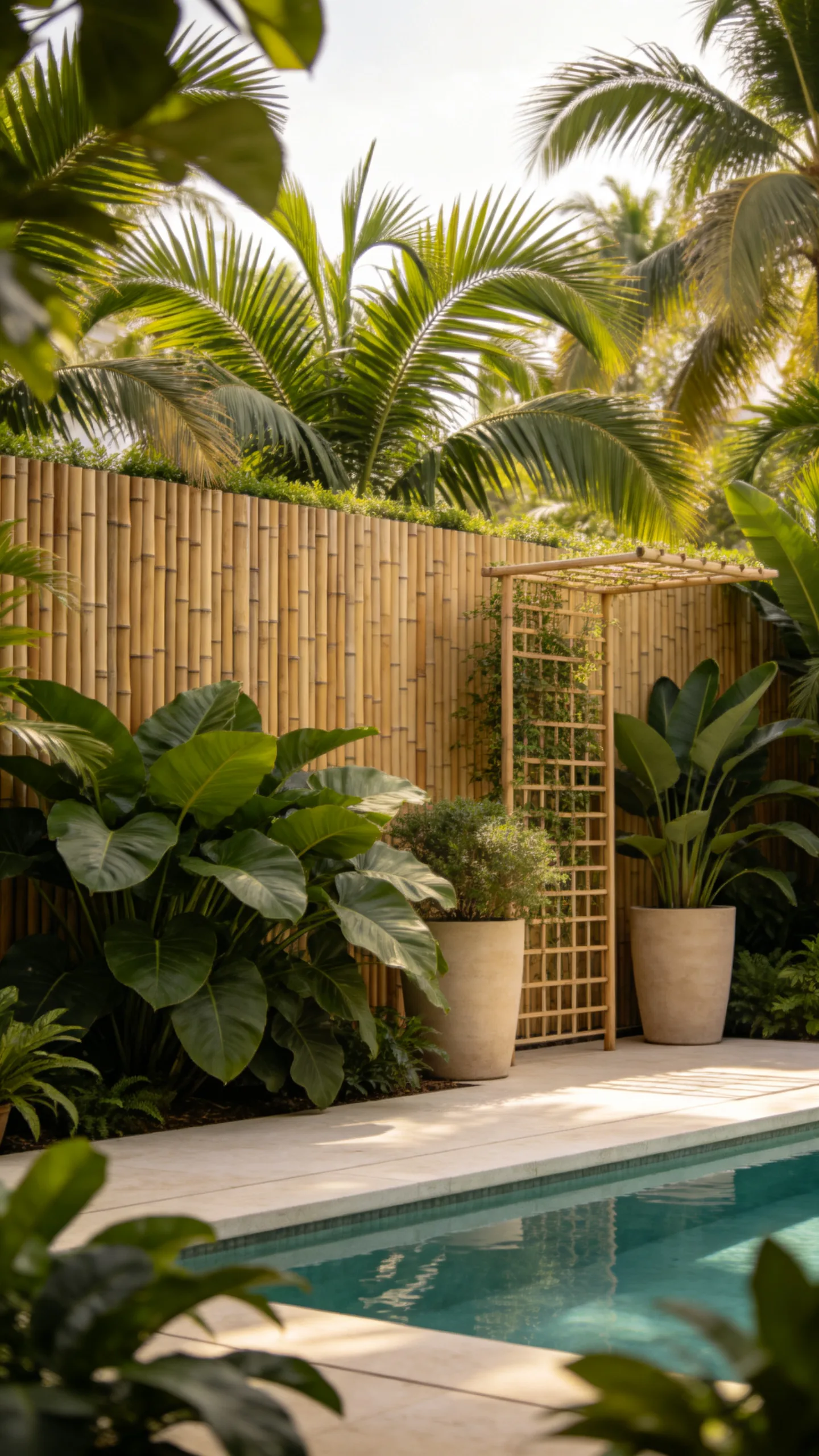
Use a layered privacy screen instead of a single solid hedge. Clumping bamboo, areca palms, clumping palms, podocarpus, or large-leaf shrubs can soften views while allowing air to circulate around the pool.
Install root barriers where bamboo or other spreading plants require containment, and check mature widths before planting near fences. For an immediate screen, combine tall planters with a trellis while slower-growing shrubs fill in.
4. Create a Banana Plant Backdrop
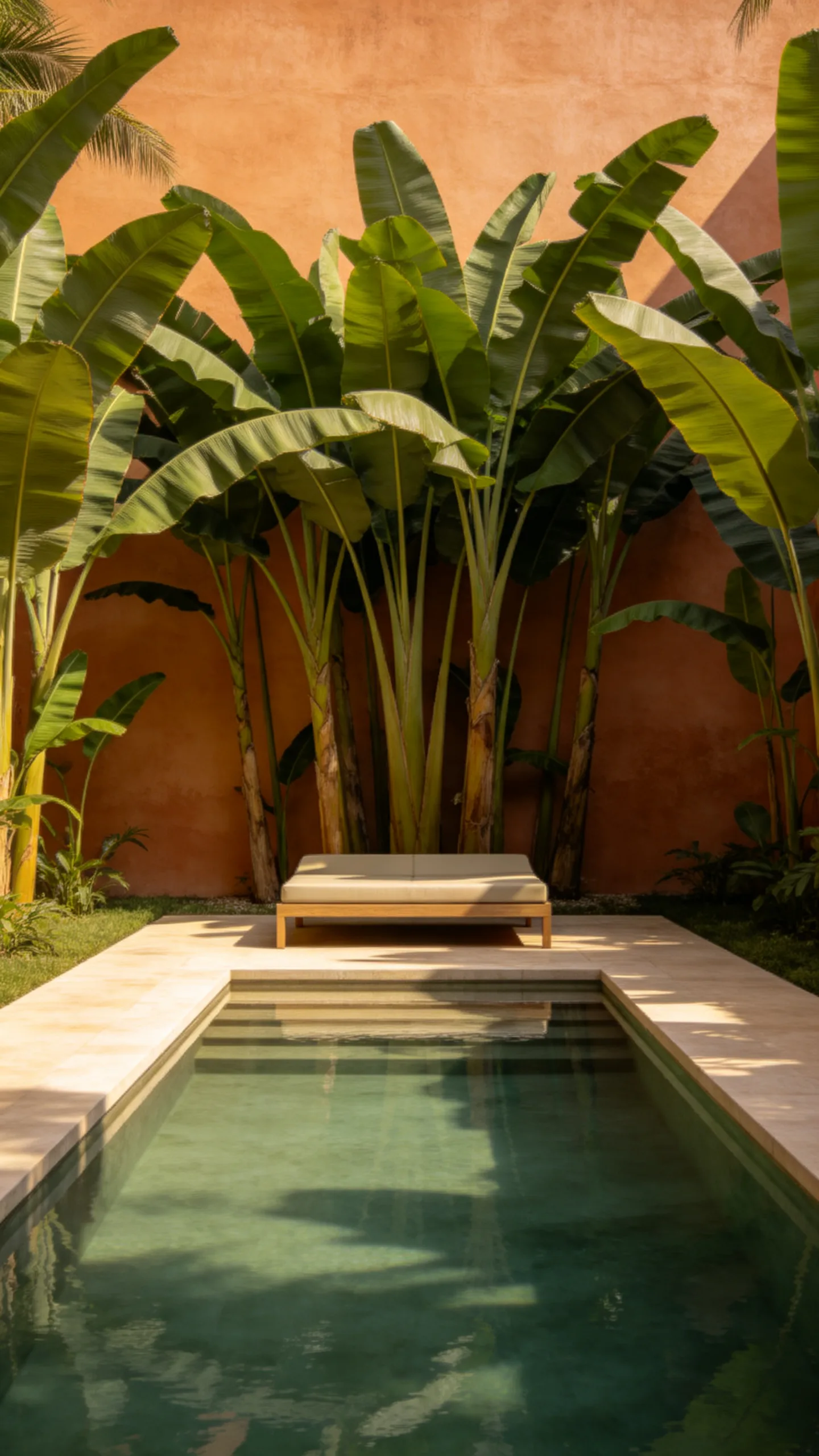
A cluster of banana plants makes a strong visual backdrop behind a lounge area or at the far end of the pool. Their large leaves provide a tropical canopy effect and help fill a blank wall or fence with vertical texture.
Plant bananas in rich, well-drained soil with regular moisture and protection from strong wind. Since leaves can tear and shed, place them away from the pool’s main circulation zone and skim fallen material regularly.
5. Use Oversized Pots Around the Pool Deck
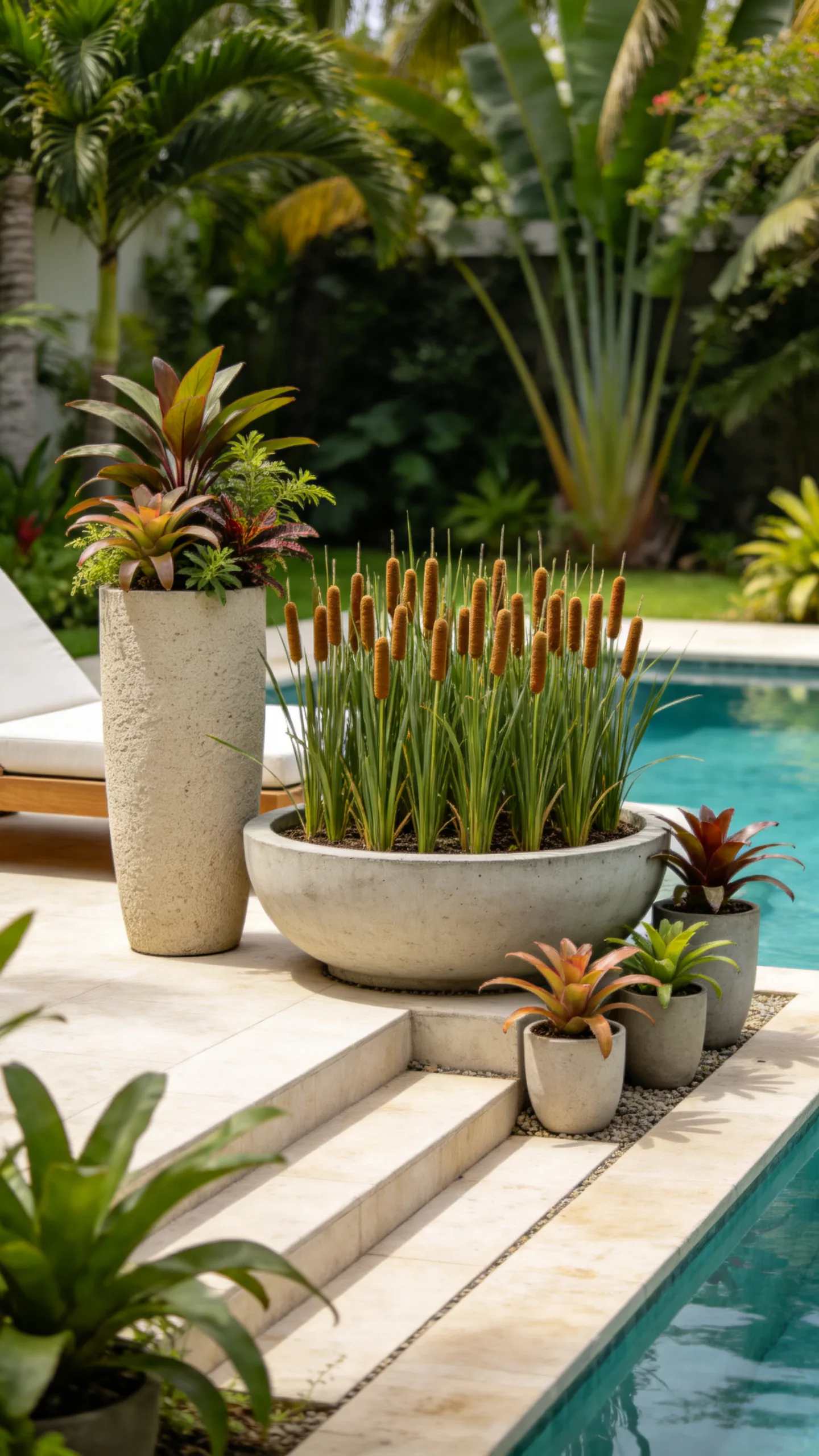
Arrange large ceramic, concrete, or lightweight fiberstone pots around seating areas rather than lining every edge of the water. Use one tall container with a bird of paradise, a broad planter of elephant ears, and smaller pots of bromeliads to create varied heights.
Select containers with drainage holes and saucers or gravel trays that prevent standing water on the deck. Keep pots stable in windy locations and leave a clear path between the pool, steps, furniture, and outdoor shower.
6. Add a Raised Tropical Planting Bed
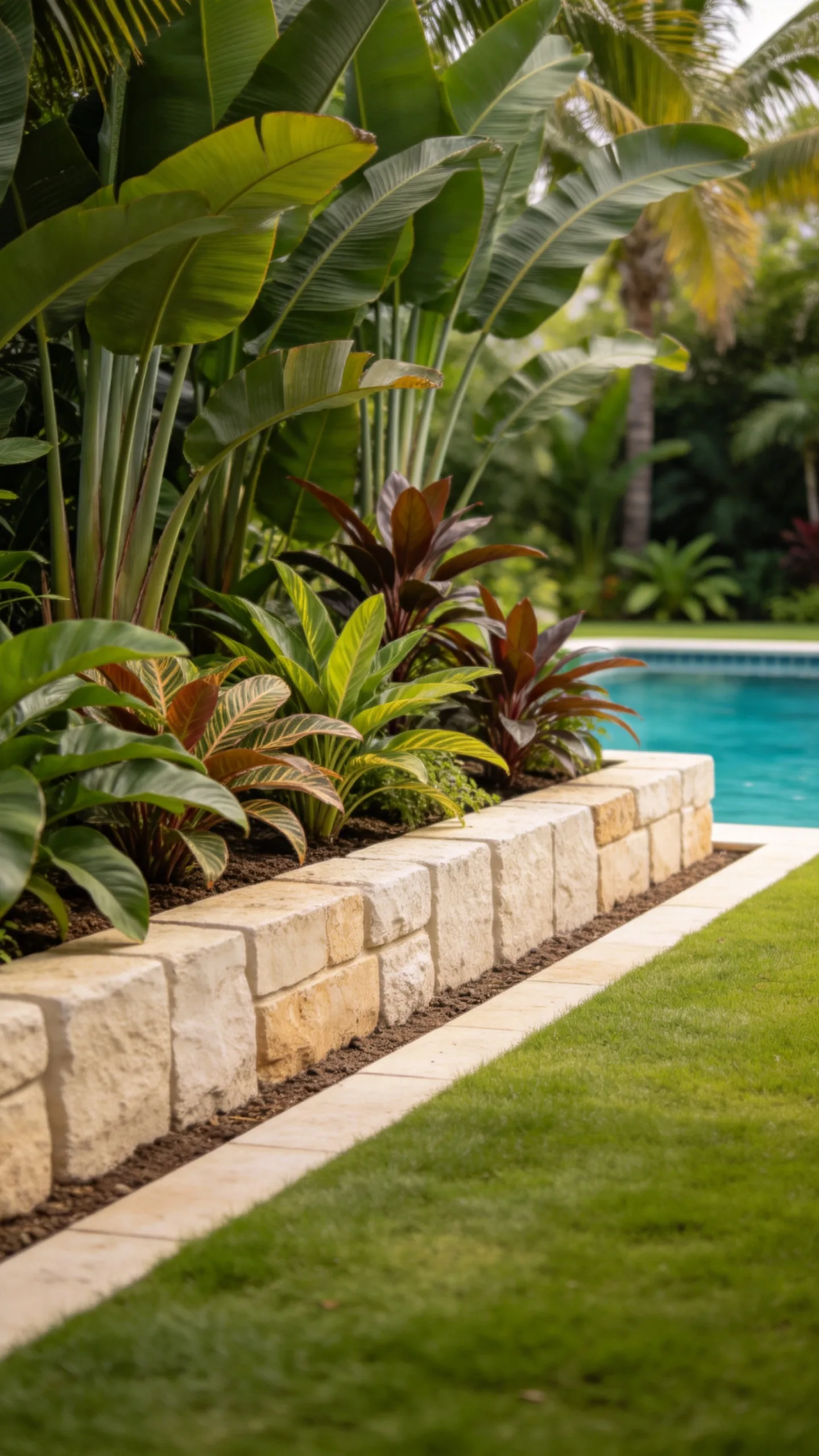
A raised bed can separate the pool from the lawn while improving drainage and making plant care easier. Build the bed with stone, rendered block, timber rated for outdoor use, or a low retaining wall that complements the pool coping.
Fill it with a well-draining soil blend suited to the selected plants, then group species with similar watering needs. Keep the wall low enough to preserve sightlines and avoid placing loose mulch where it can wash into the pool.
7. Install a Pergola With Climbing Vines
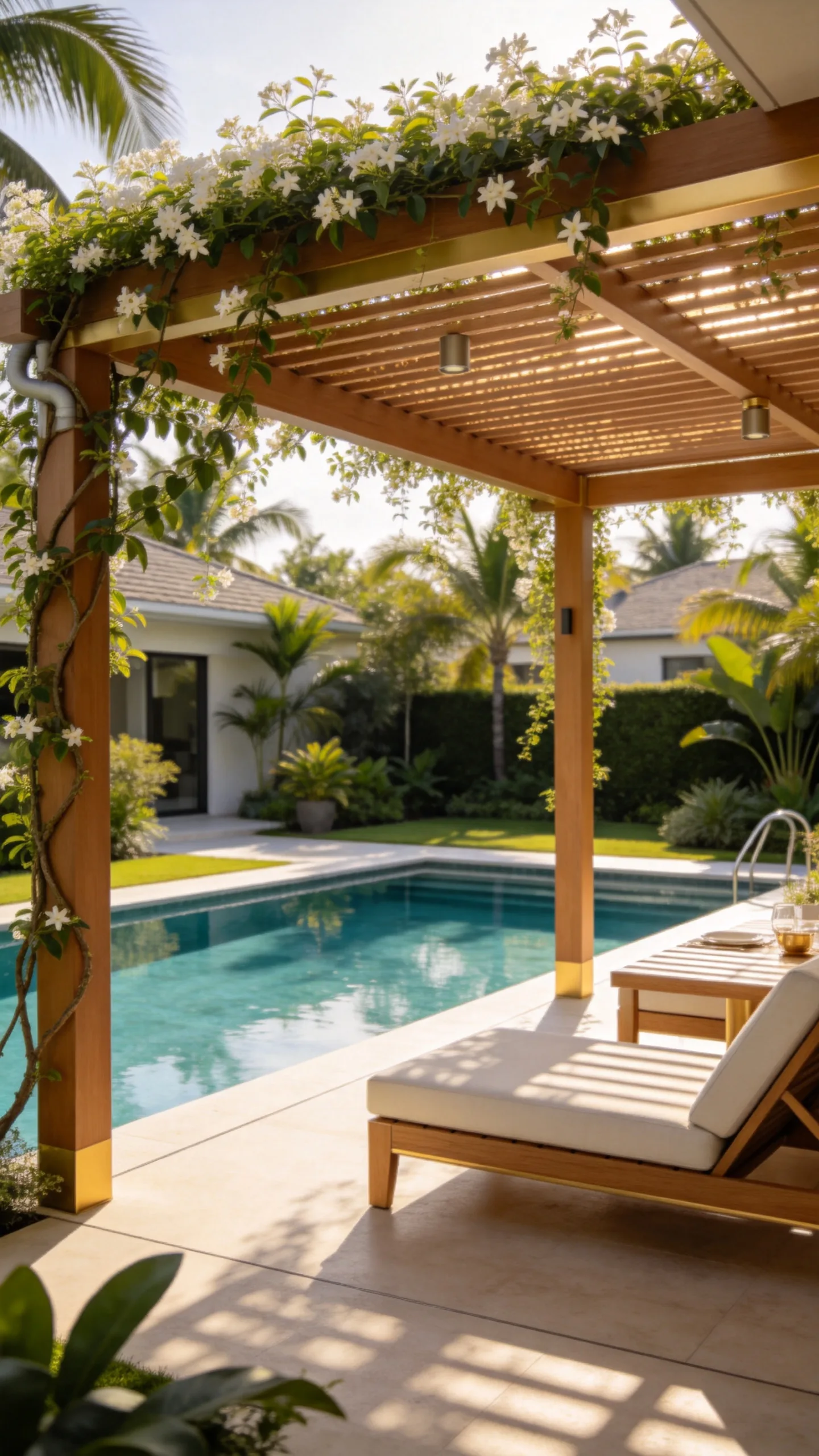
Place a pergola beside the pool for filtered shade, towels, or an outdoor dining zone. Train a suitable vine over the structure, such as star jasmine, mandevilla, passionflower, or a locally adapted flowering climber.
Confirm that the vine is safe for the local climate and will not become invasive. Use strong supports, guide new stems with soft ties, and keep dense growth away from electrical fixtures, gutters, and pool safety barriers.
8. Design a Small Plunge Pool With Dense Greenery
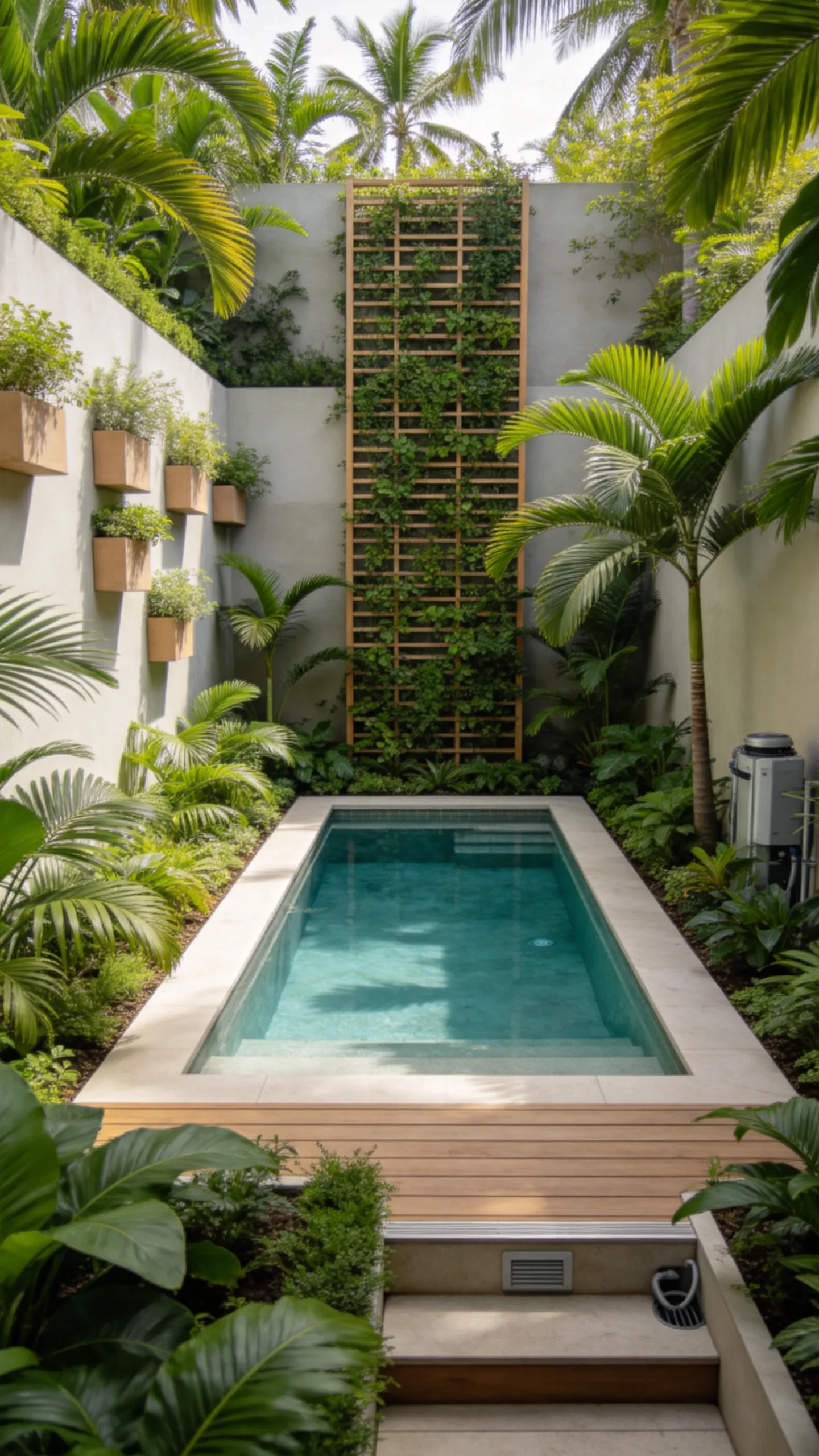
For a compact backyard, pair a small plunge pool with vertical planting rather than spreading plants across the entire yard. Use a narrow border of palms, a wall-mounted planter system, and a tall trellis to add height without taking much floor space.
Choose plants with tidy growth habits near the water and reserve larger foliage for the farthest corners. A compact layout should still include a safe deck zone, equipment access, drainage, and enough room to move around the pool.
9. Add a Natural Stone Water Feature
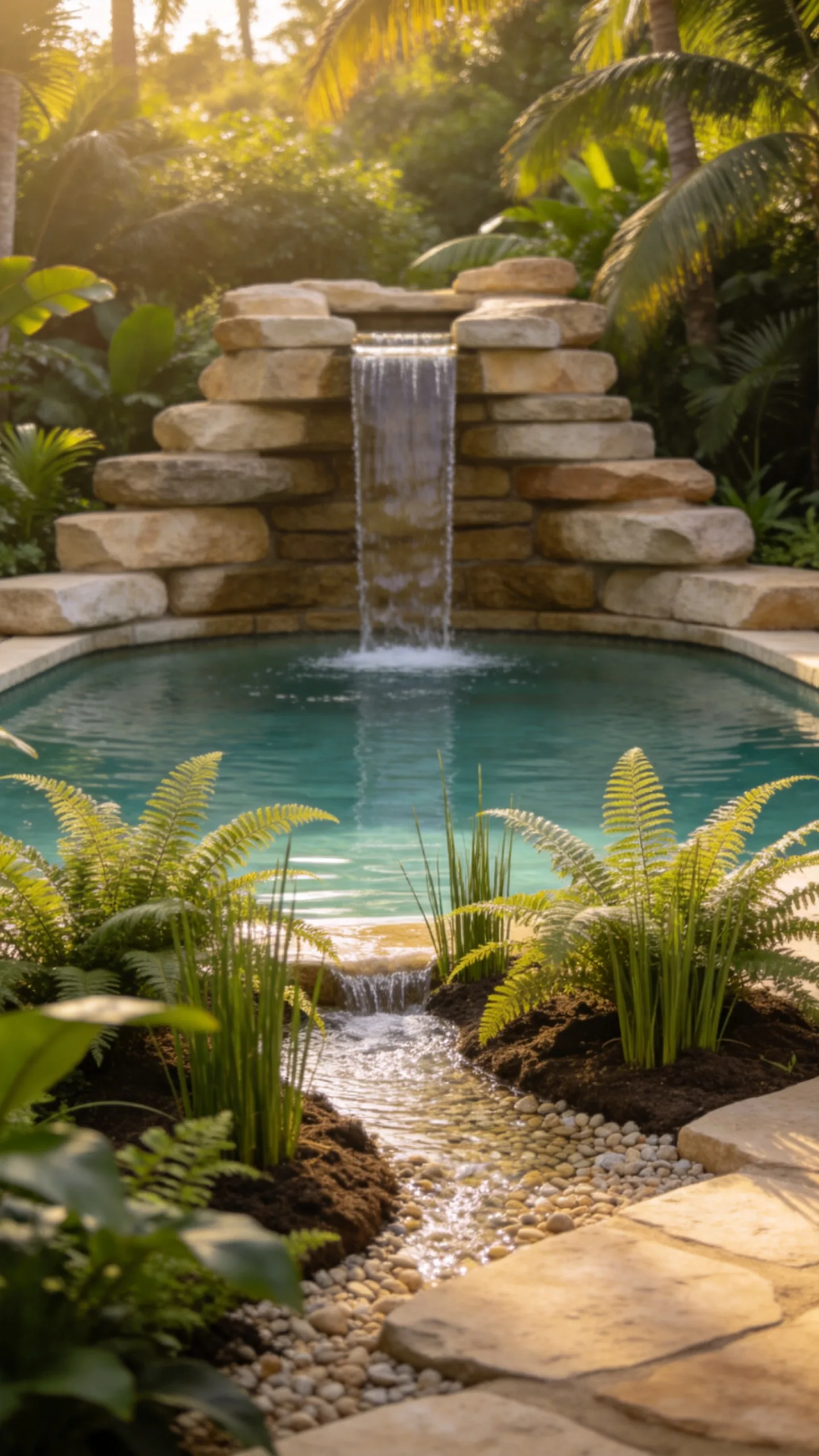
A stacked-stone spillway, small wall fountain, or narrow cascade can reinforce the tropical atmosphere with movement and sound. Set the feature at one end of the pool so it becomes a focal point without interrupting the main swimming area.
Use stone rated for wet outdoor conditions and install proper waterproofing behind masonry. Select plants that tolerate splash, such as moisture-loving ferns or sedges, while keeping soil and loose gravel separated from the pool basin.
10. Combine Warm Pavers With Dark Green Foliage
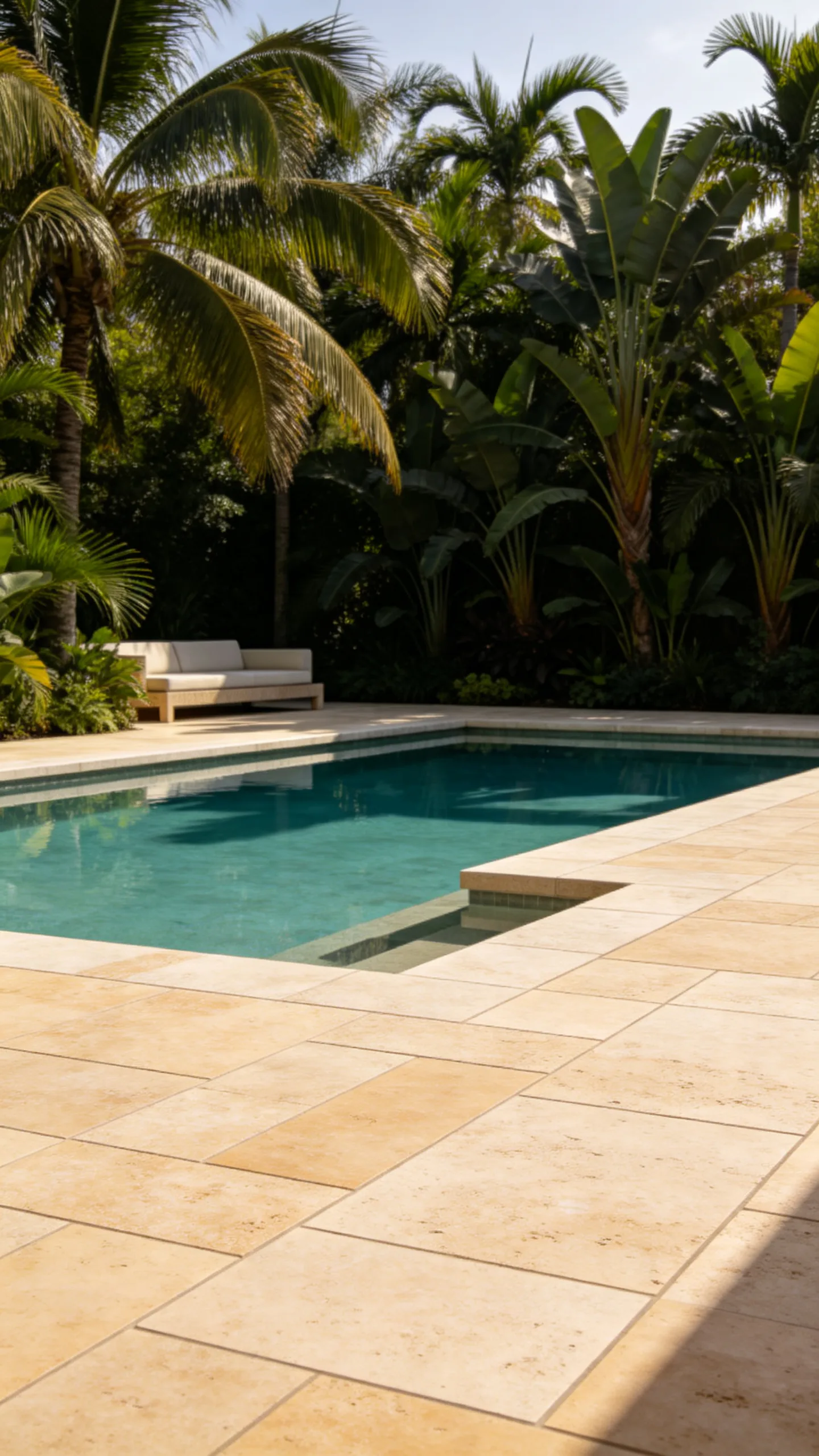
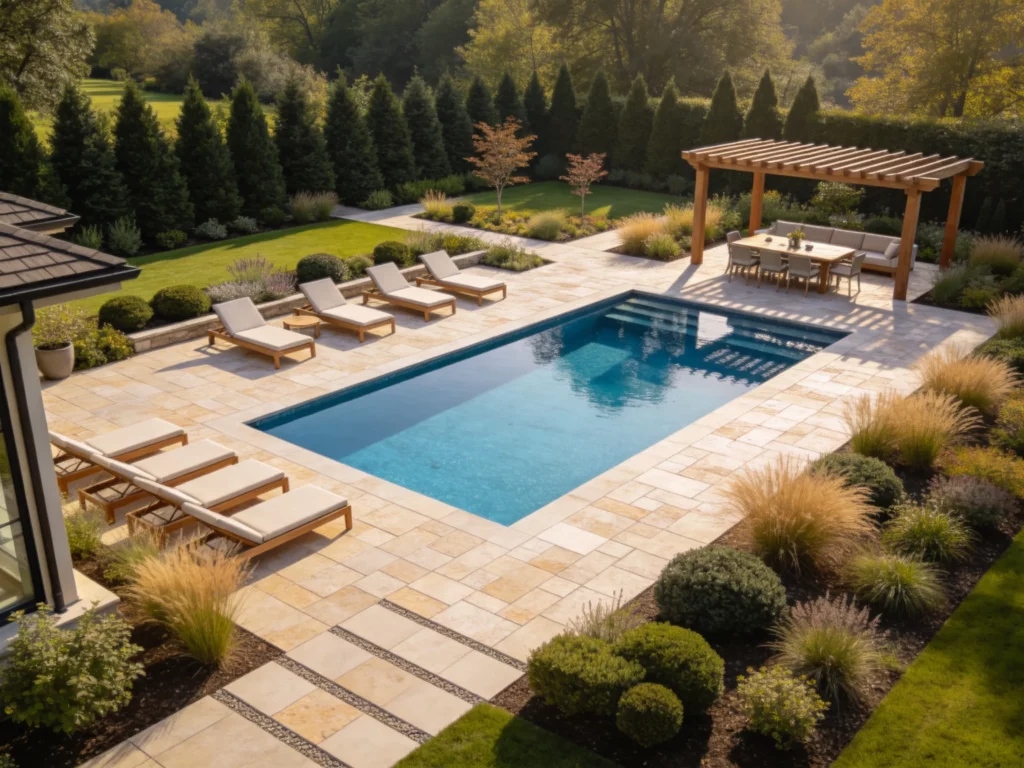
Use warm-toned travertine, sandstone-look porcelain, or textured concrete to contrast with dense green planting. A simple rectangular paving pattern can make a small pool area feel organized while foliage supplies the softer tropical character.
Before choosing a surface, check heat retention, slip resistance, stain resistance, and maintenance requirements. Pale materials may reduce heat absorption in sunny yards, while darker finishes can create a dramatic look but become hotter under direct sun.
11. Create a Poolside Lounge Under a Shade Sail
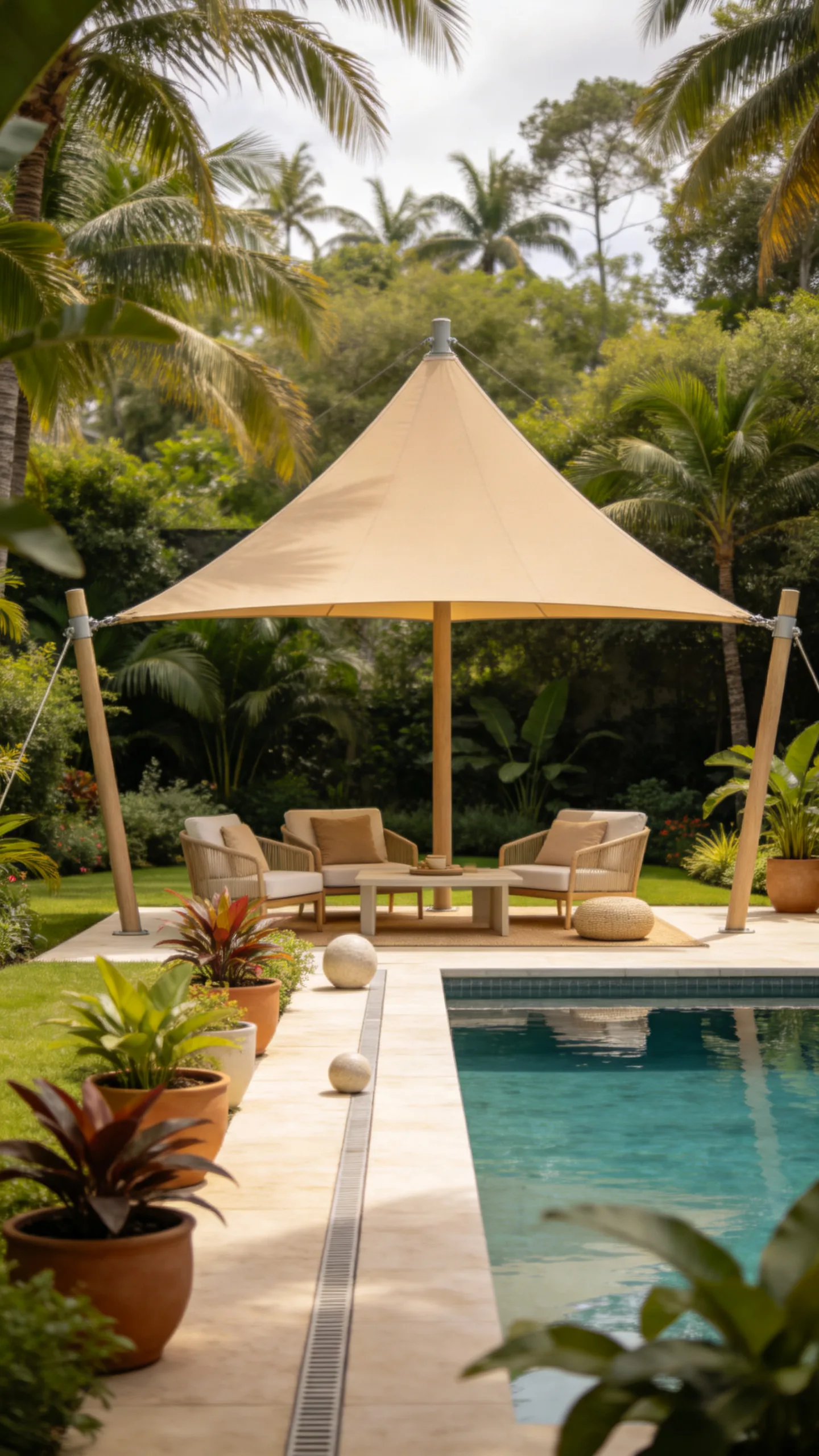
Stretch a triangular or rectangular shade sail over a lounge zone to provide flexible overhead protection without constructing a full roof. Coordinate the sail color with the pool tile, cushions, and planters for a cohesive retreat.
Anchor the sail to structurally sound posts or building points, and plan for water runoff and wind loads. Position tropical containers beneath the shaded edge, but choose shade-tolerant plants rather than placing sun-loving palms in low light.
12. Use Bromeliads for Colorful Low-Maintenance Accents
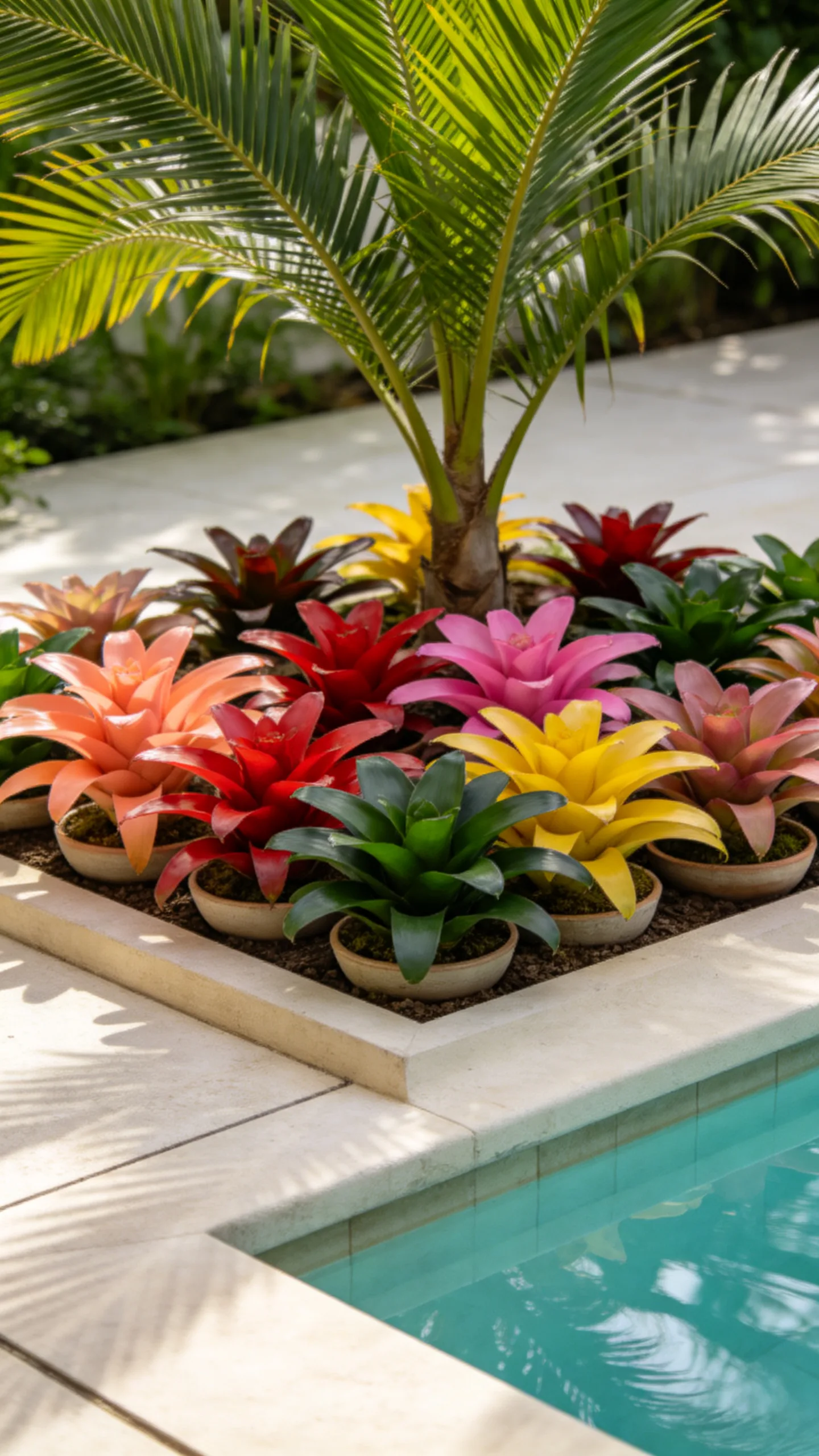
Plant bromeliads in groups beneath palms, along a raised bed, or in shallow containers around the pool deck. Their rosettes add coral, red, pink, yellow, and deep green tones without requiring a large planting footprint.
Many bromeliads prefer bright filtered light and fast drainage, although cold tolerance varies by species. Avoid letting water remain stagnant in containers, remove damaged leaves, and keep plants far enough from pool traffic to prevent broken rosettes.
13. Add a Bamboo or Timber Privacy Wall
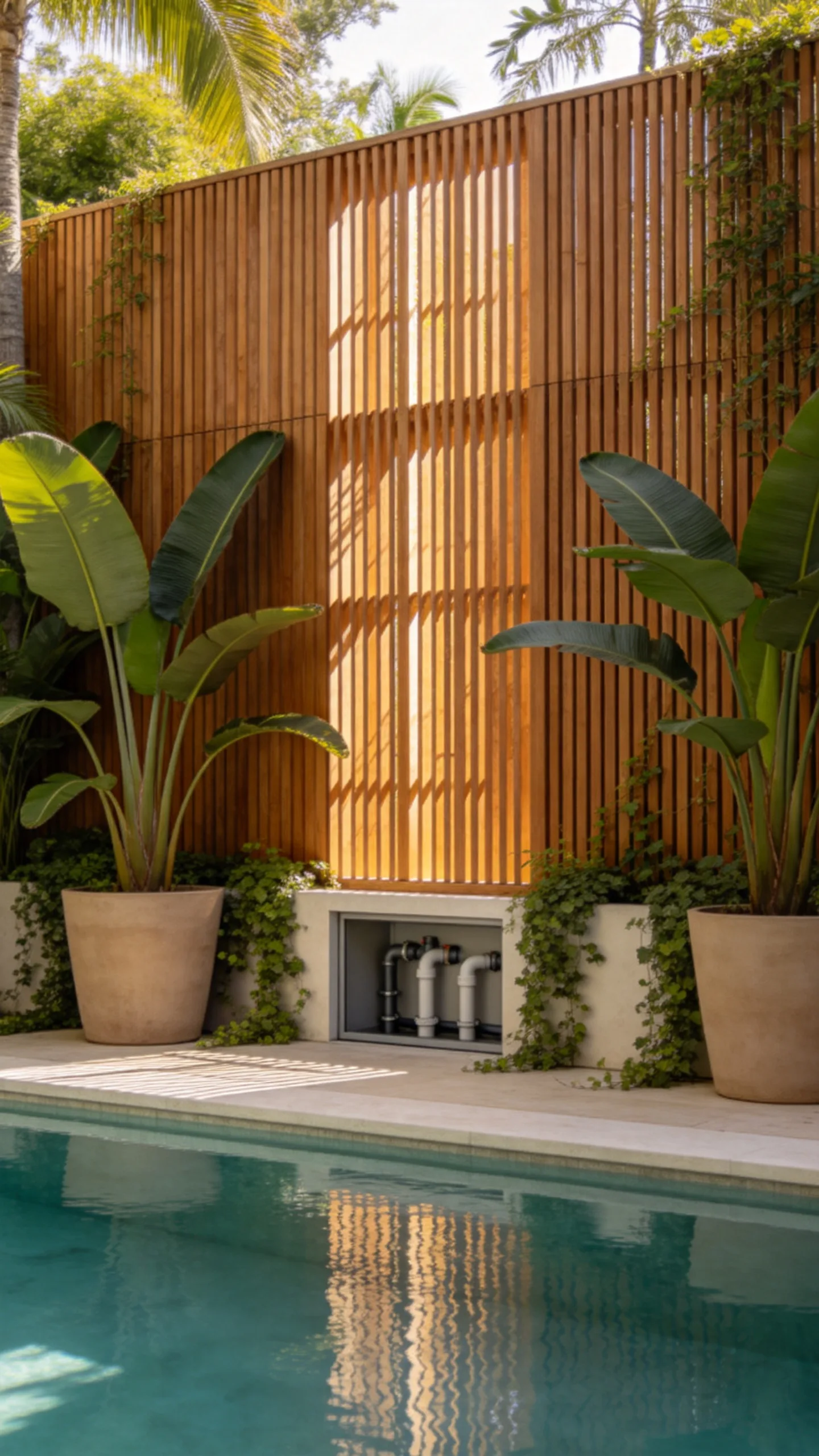
A slatted timber wall or bamboo screen can provide structure behind tropical planting while concealing pool equipment and neighboring views. Leave narrow gaps between slats to maintain airflow and allow filtered light into the garden.
Use exterior-rated finishes and corrosion-resistant hardware, especially near chlorinated or saltwater pools. Add climbers or tall planters at the base, but leave access panels for pumps, filters, valves, and electrical components.
14. Layer Lighting Along the Pool Edge
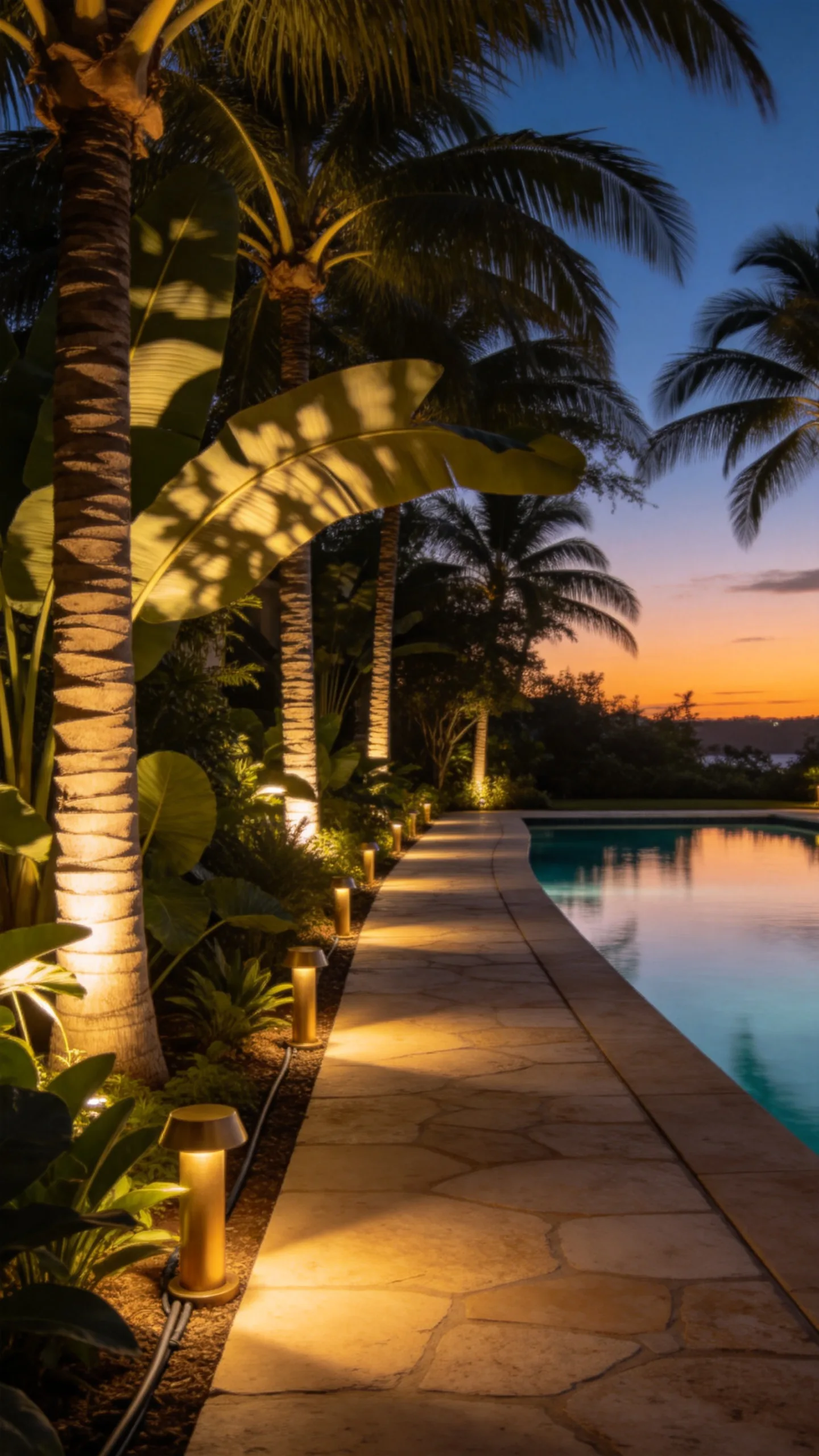
Install low-voltage path lights, uplights for palms, and soft accent lights beneath taller foliage. Lighting the trunks and undersides of broad leaves can make the garden feel layered after sunset without flooding the entire yard with glare.
Use outdoor-rated fixtures, weatherproof connections, and a qualified installer for electrical work near water. Aim lights away from swimmers and neighboring windows, and keep cables protected from gardening tools and foot traffic.
15. Finish the Retreat With a Tropical Outdoor Shower
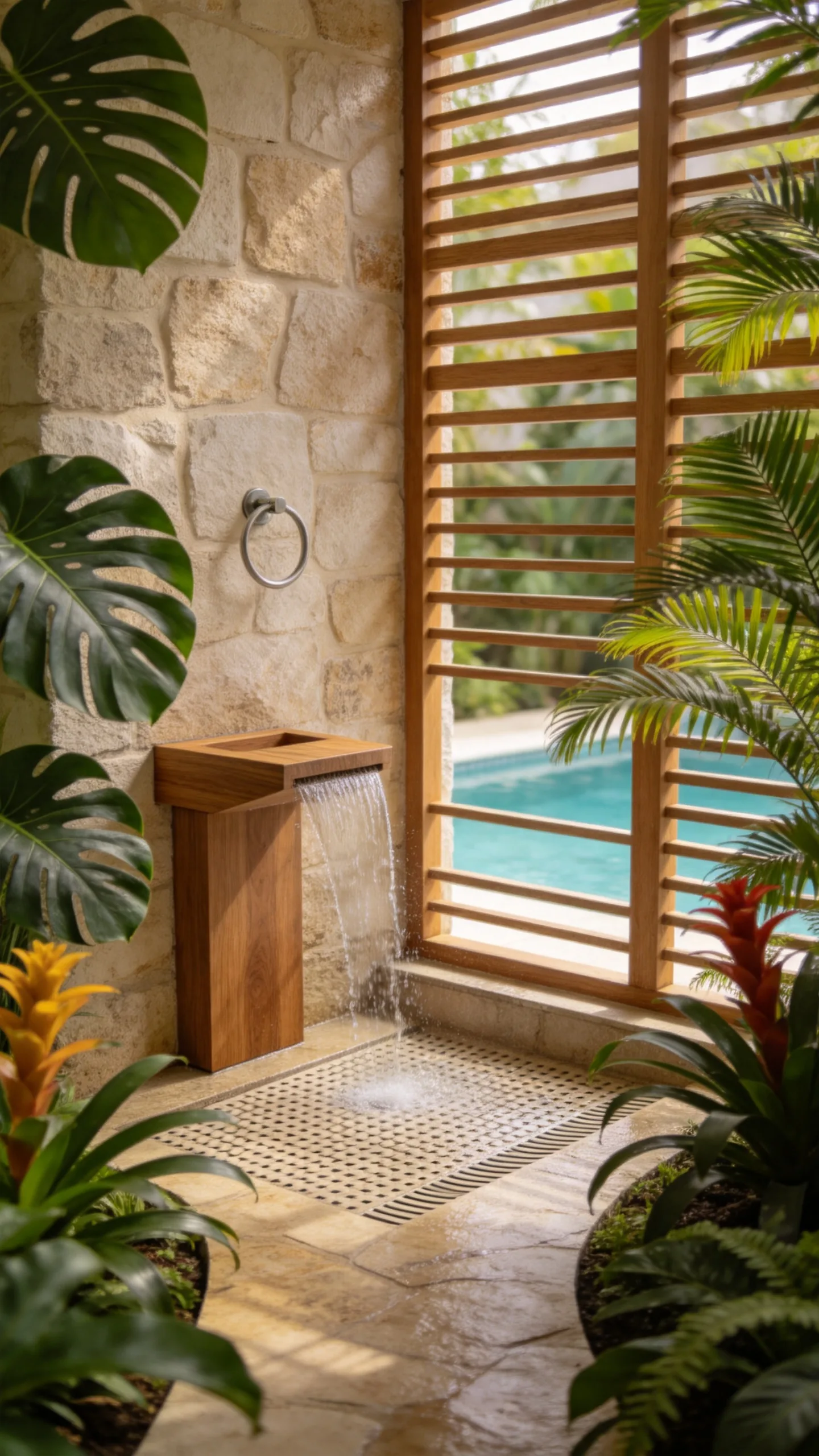
Add an outdoor shower near the pool using stone, teak-look composite, textured tile, or a privacy screen of slatted timber and plants. It gives swimmers a convenient place to rinse before entering the pool and helps keep grass, soil, and sunscreen residue off the water.
Direct drainage toward an approved outlet or planted soakaway where local regulations allow it. Choose moisture-tolerant plants for the shower enclosure, keep surfaces slip-resistant, and provide hooks or a dry storage point for towels and swimwear.