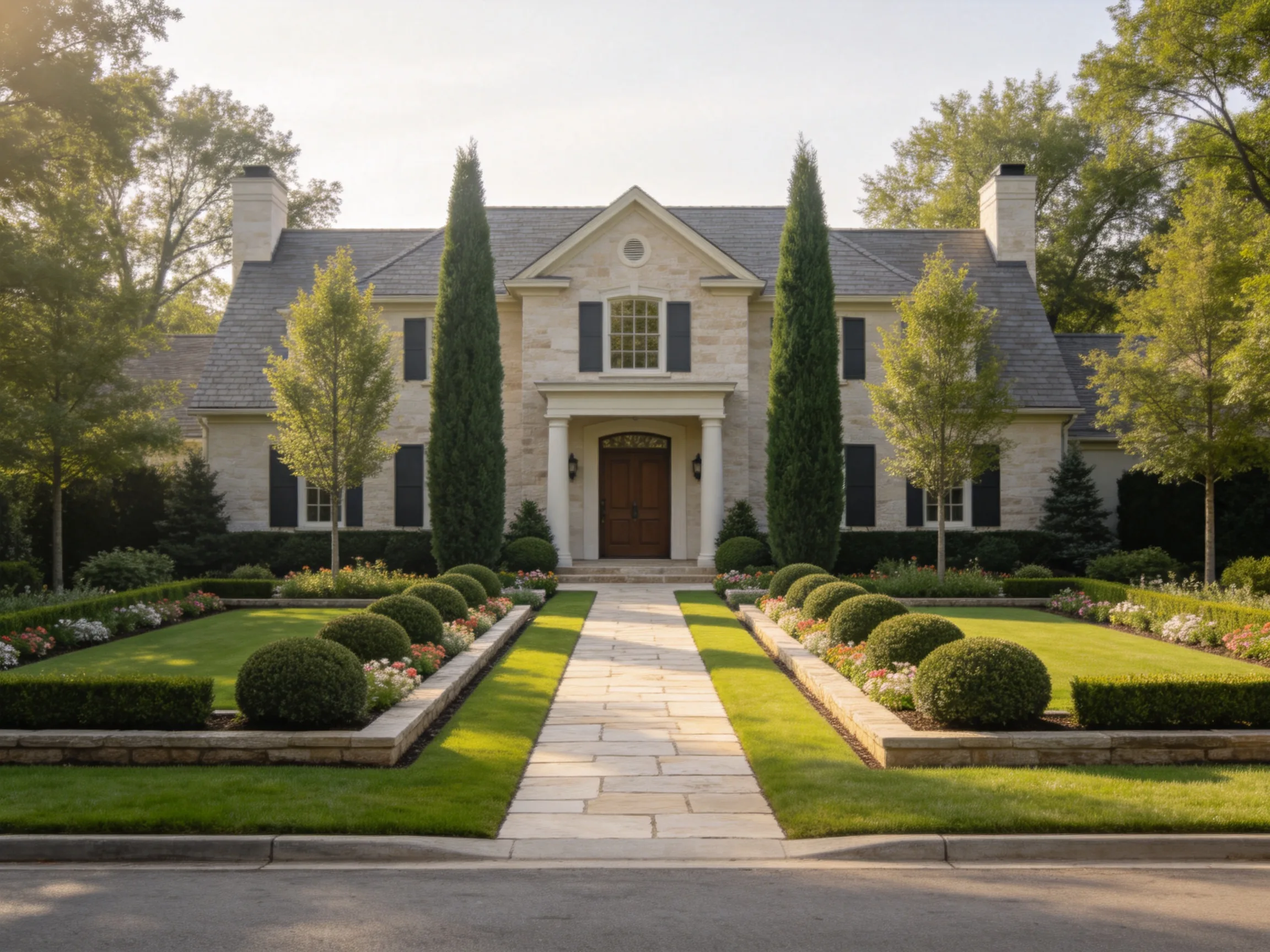
Symmetrical landscape design brings order to a formal front yard by repeating plants, hardscape features, colors, and shapes on both sides of a central axis. Use the front door, walkway, driveway, or a prominent window as the visual center, then choose plants and materials suited to your climate, soil, sunlight, and available maintenance time.
1. Boxwood Borders Mirrored Along the Walkway
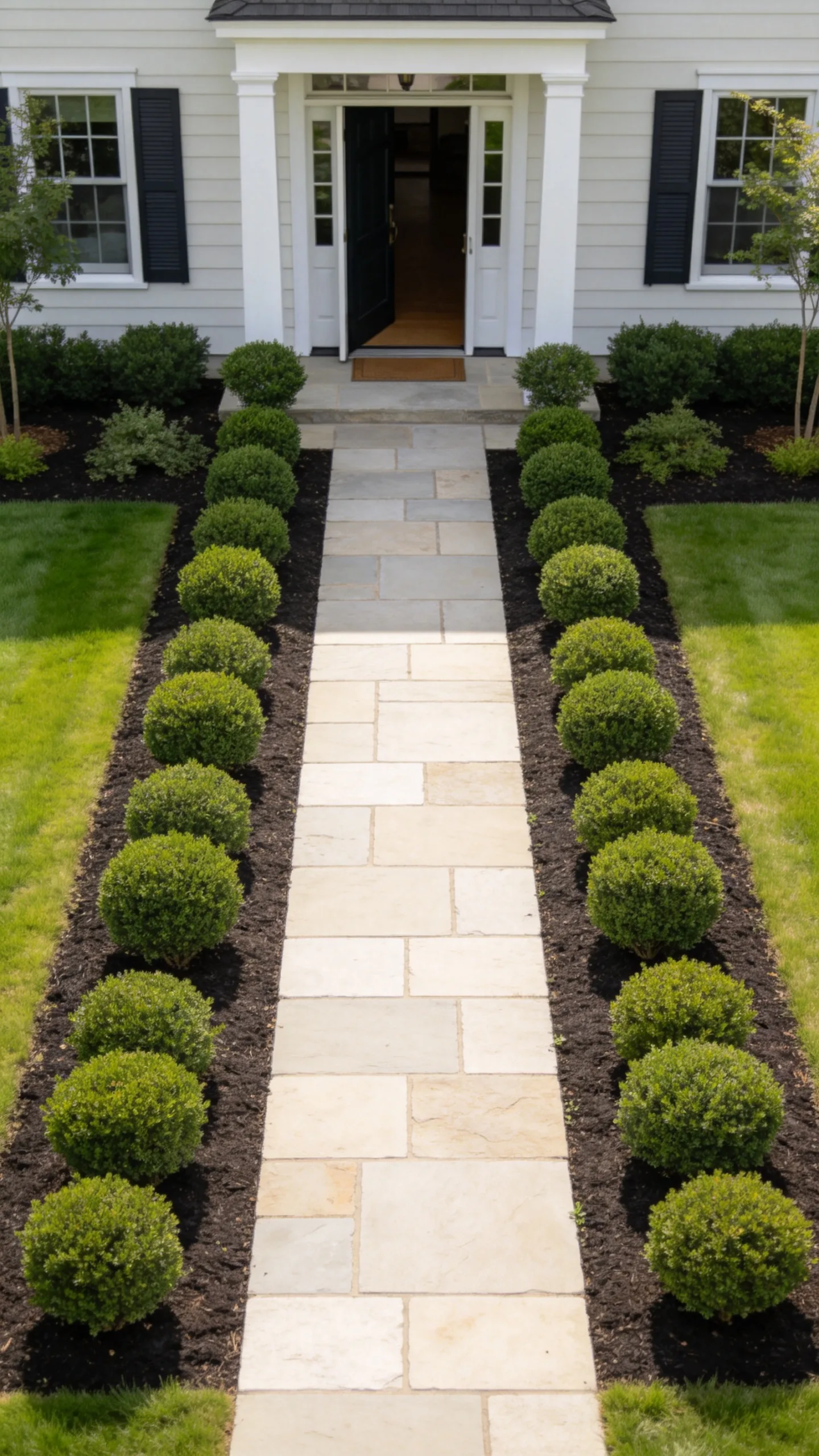
Frame a straight front path with matching rows of compact boxwood or a locally suitable evergreen substitute. Plant the same number of shrubs at equal spacing on both sides, keeping the border low enough to preserve a clear view of the entrance.
Use a narrow planting bed between the path and lawn, then add mulch or small gravel for a crisp edge. In colder or disease-prone regions, select a hardy alternative such as dwarf inkberry, Japanese holly where suitable, or another evergreen recommended by a local nursery.
2. Matching Columnar Trees at the Front Door
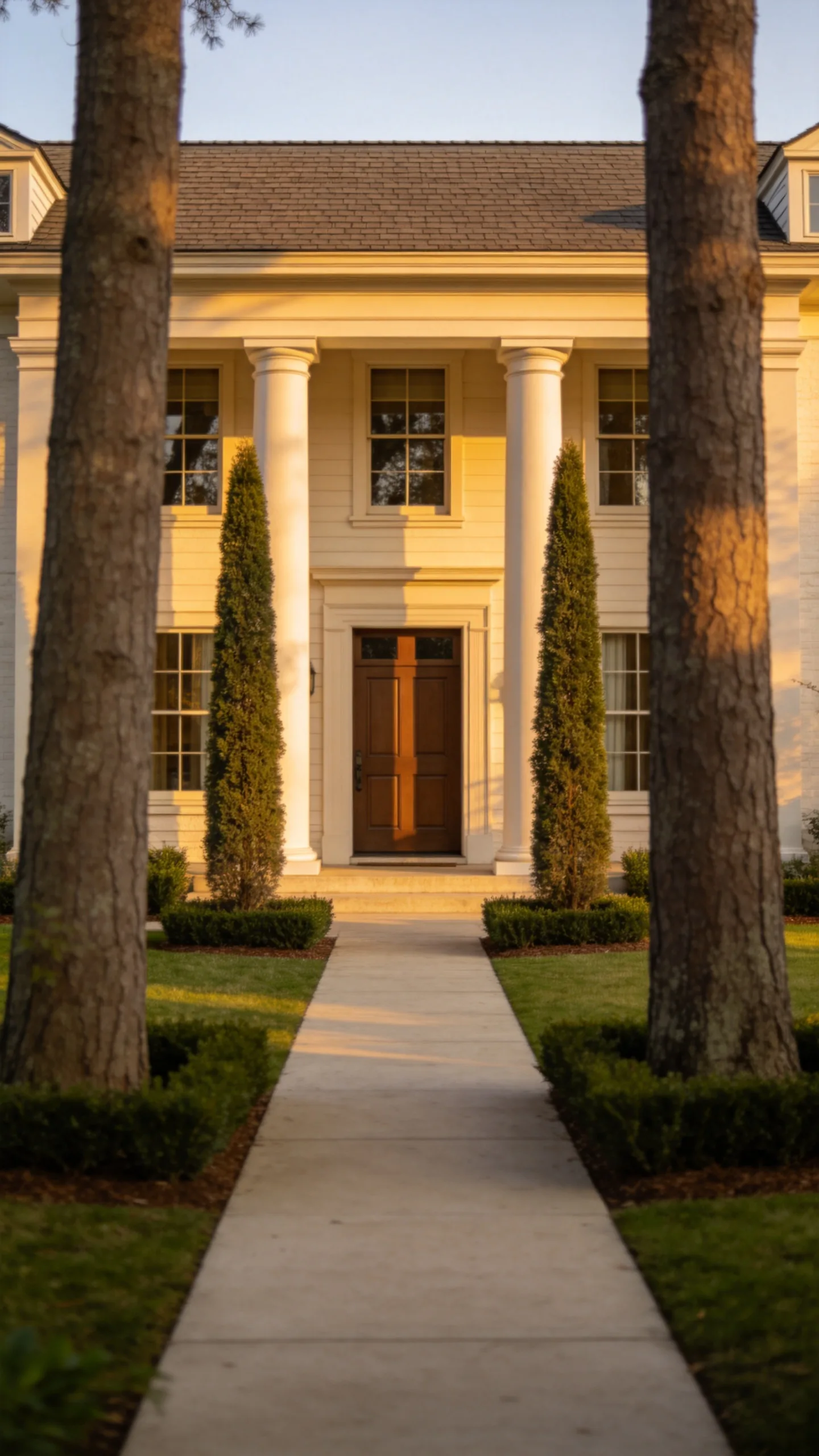
Place two narrow ornamental trees on opposite sides of the entry, aligned with the door or porch columns. Columnar hornbeam, upright serviceberry, or another locally adapted narrow tree can add height without taking over a small front yard.
Leave enough room for mature roots and branches near the foundation, walkway, and utility lines. Keep the surrounding beds simple so the paired trees establish the strongest vertical lines in the design.
3. Twin Raised Beds Around a Central Lawn
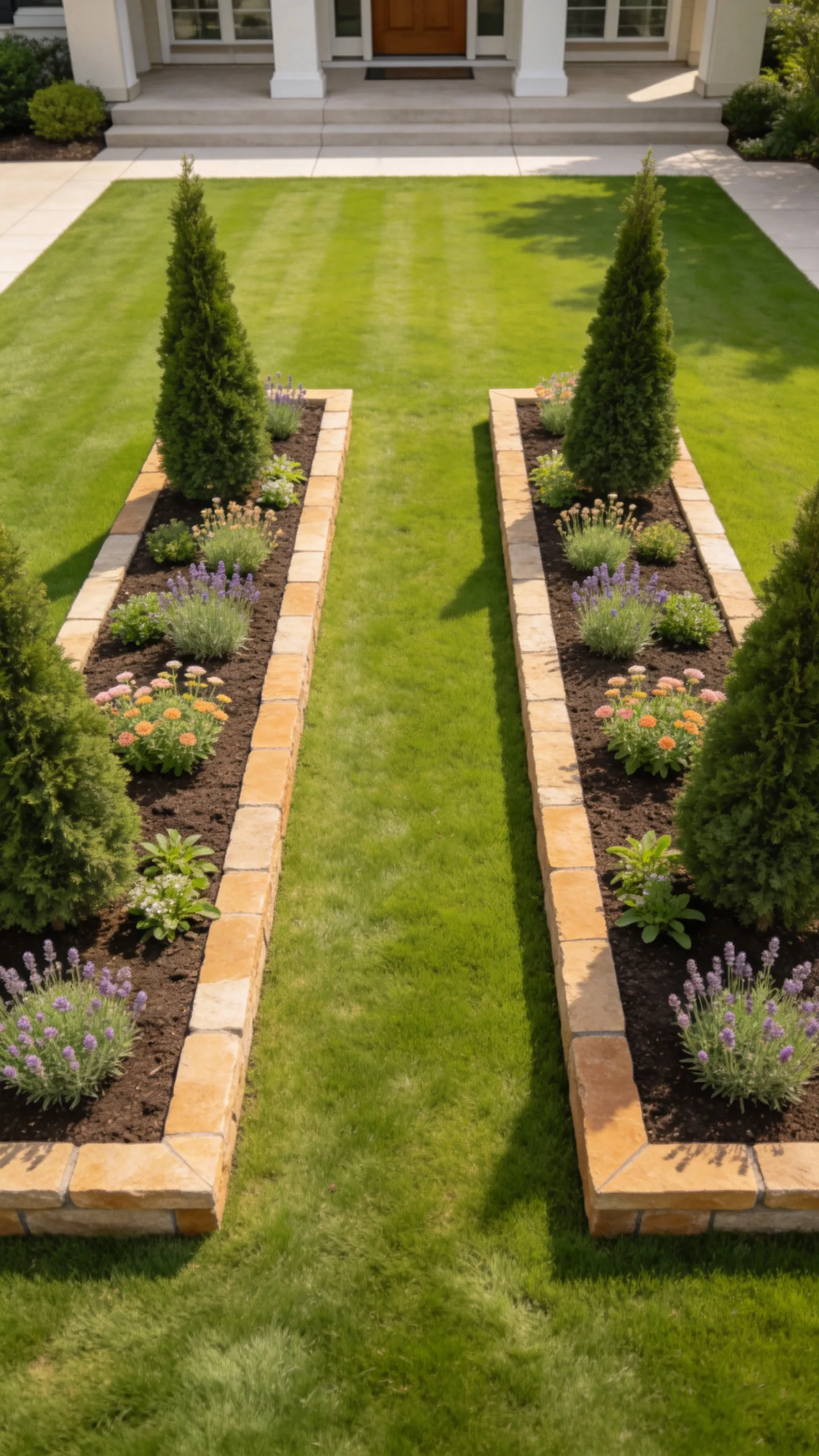
Create two matching raised planting beds on either side of a rectangular lawn panel. Use identical bed shapes, edging materials, soil depth, and plant placement to reinforce the formal layout.
Fill each bed with a repeated combination of evergreen structure, flowering perennials, and low edging plants. This arrangement works well when a front yard needs clear organization but still has enough width for two substantial planting areas.
4. A Straight Brick Walk With Repeated Edging
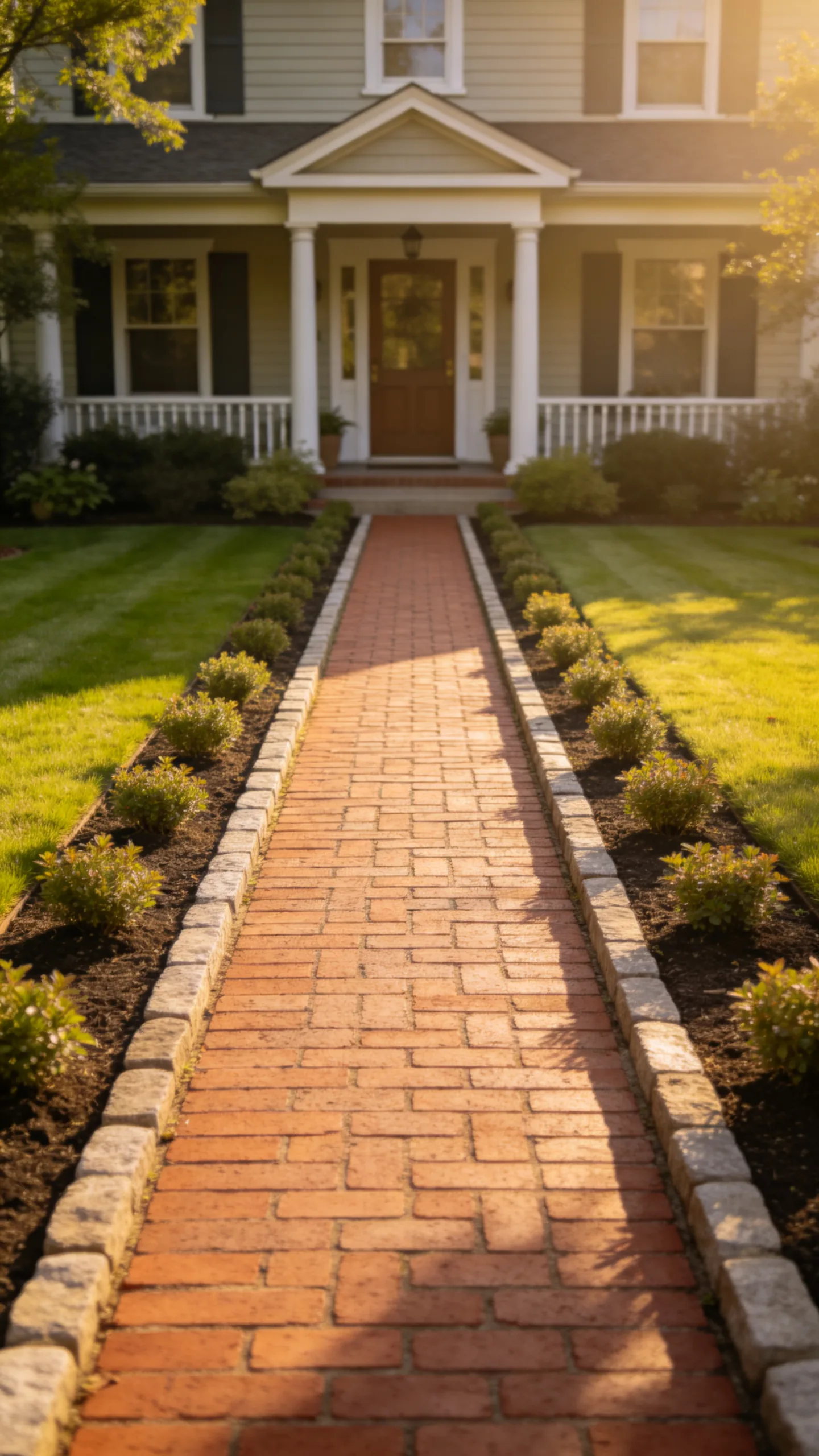
Install a centered brick, stone, or concrete walkway leading directly from the sidewalk to the front entrance. Repeat the same edging material on both sides, using straight lines rather than irregular curves.
Place matching low plants at regular intervals along the edges. If the path receives full sun, choose compact plants that tolerate heat and reflected light; for a shaded entry, use suitable shade plants instead of forcing sun-loving varieties into the bed.
5. Mirrored Foundation Plantings
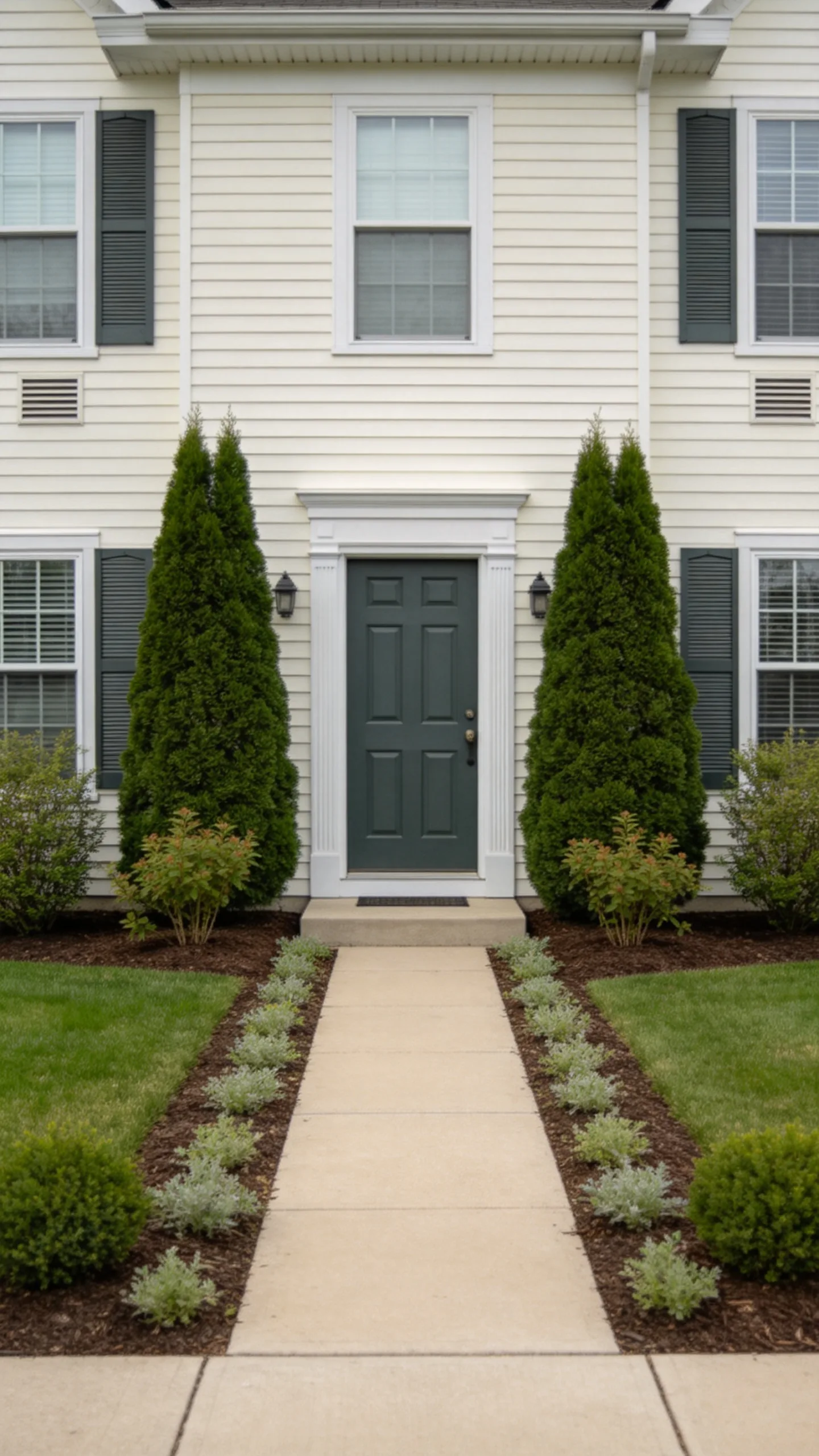
Divide the foundation planting area into matching left and right sections, using the doorway as the center point. Repeat large shrubs at the corners, medium plants near the windows, and low ground covers along the front edge.
Keep mature plant size in mind so shrubs do not block windows, vents, or exterior access. A simple planting plan with three repeated plant heights often looks more formal than a long row of unrelated species.
6. Pair of Decorative Planters on the Porch
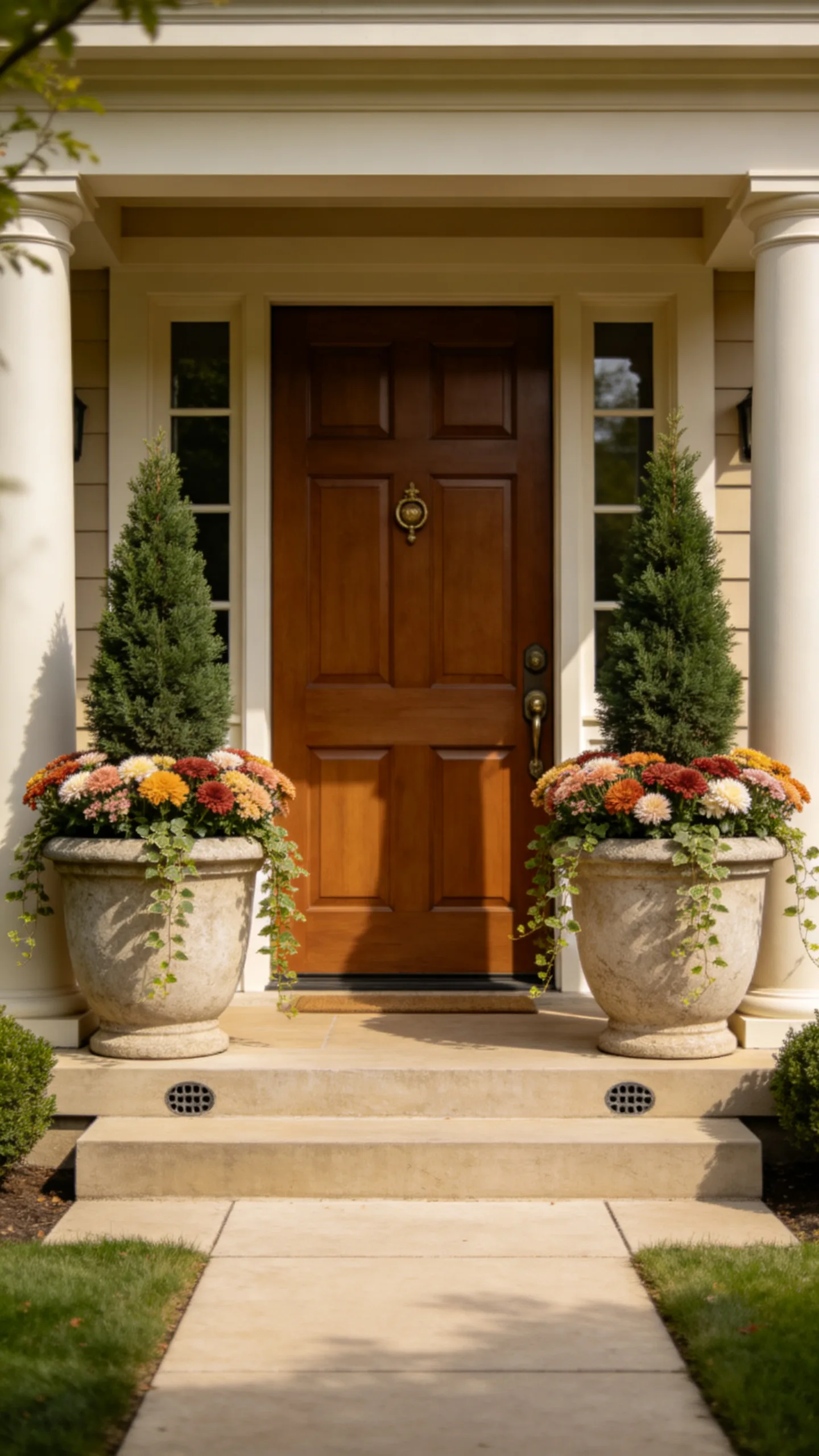
Set two matching containers on opposite sides of the front door, porch steps, or entry columns. Choose planters with the same material and proportions, then repeat one or two plants in each container.
Use evergreen foliage for year-round structure and change seasonal flowers when needed. Place containers where they will not narrow the walking route, and check that their watering needs match the amount of maintenance you can provide.
7. Central Fountain With Four Balanced Beds
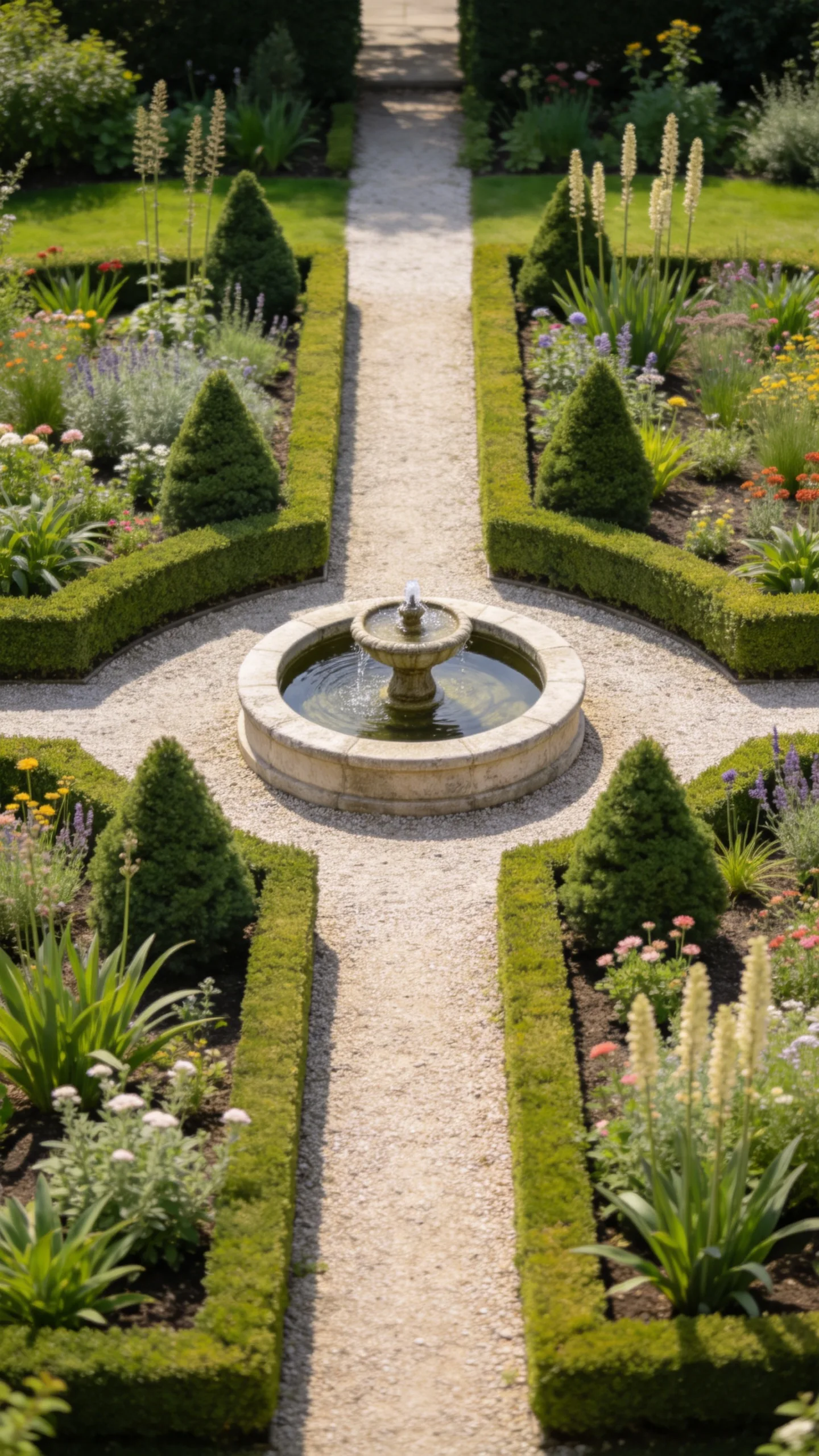
Make a small fountain, birdbath, or ornamental urn the center of a four-part garden layout. Create four matching beds around it, separated by narrow paths or lawn strips that extend toward the house and sidewalk.
Repeat the same plant palette in each bed, positioning taller plants toward the back and lower plants near the paths. Verify local water-use rules and winter protection needs before choosing a fountain or water feature.
8. Twin Flowering Trees at the Driveway Entrance
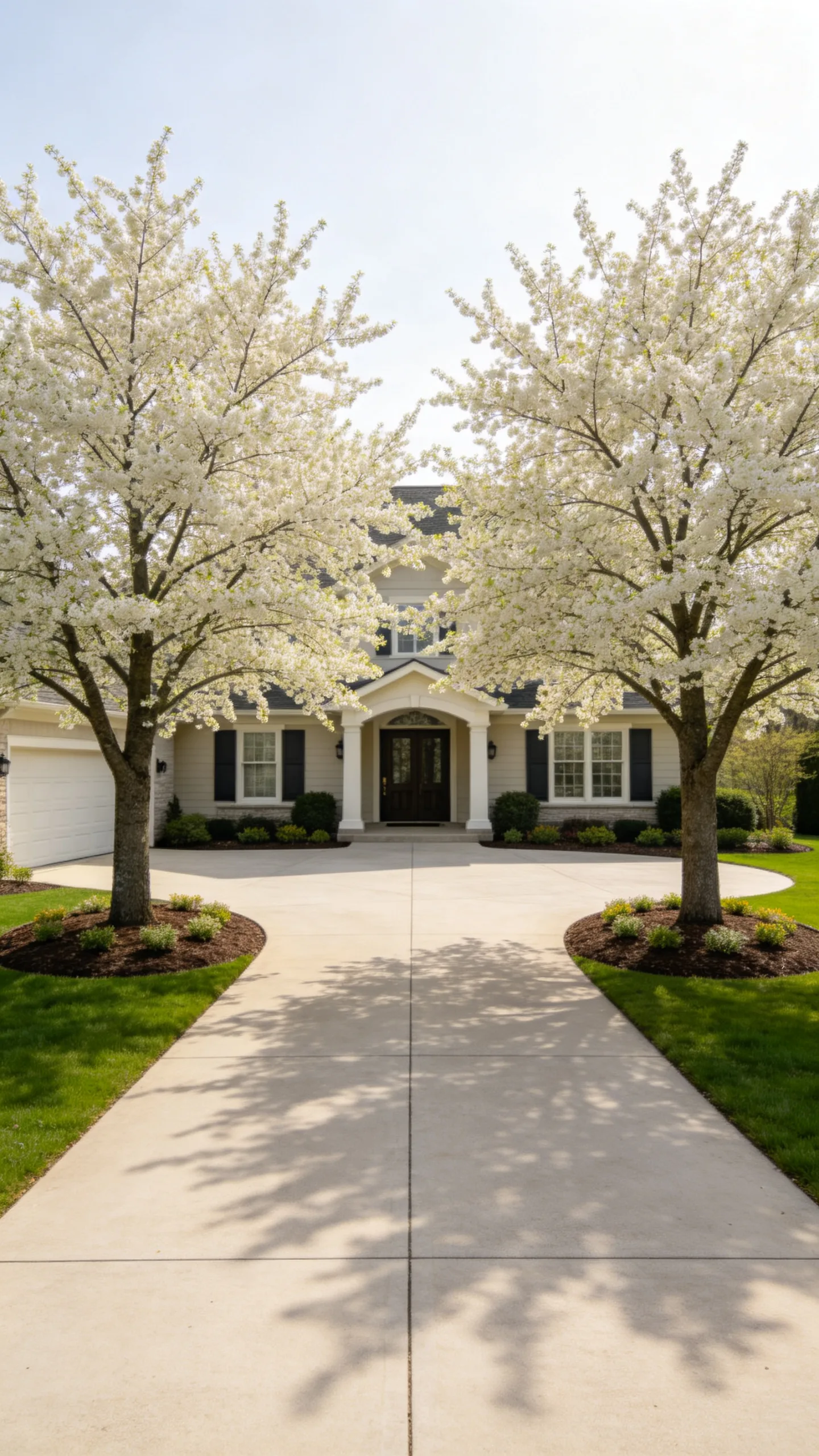
Mark the beginning of a formal driveway with two matching flowering trees, one on each side. Select a species that fits the mature width and height of the space, such as a regionally suitable crabapple, redbud, magnolia, or serviceberry.
Underplant both trees with the same low ground cover or mulch ring. Keep the planting beds outside vehicle turning areas and maintain sightlines for cars leaving the driveway.
9. Clipped Hedge Panels Between Columns
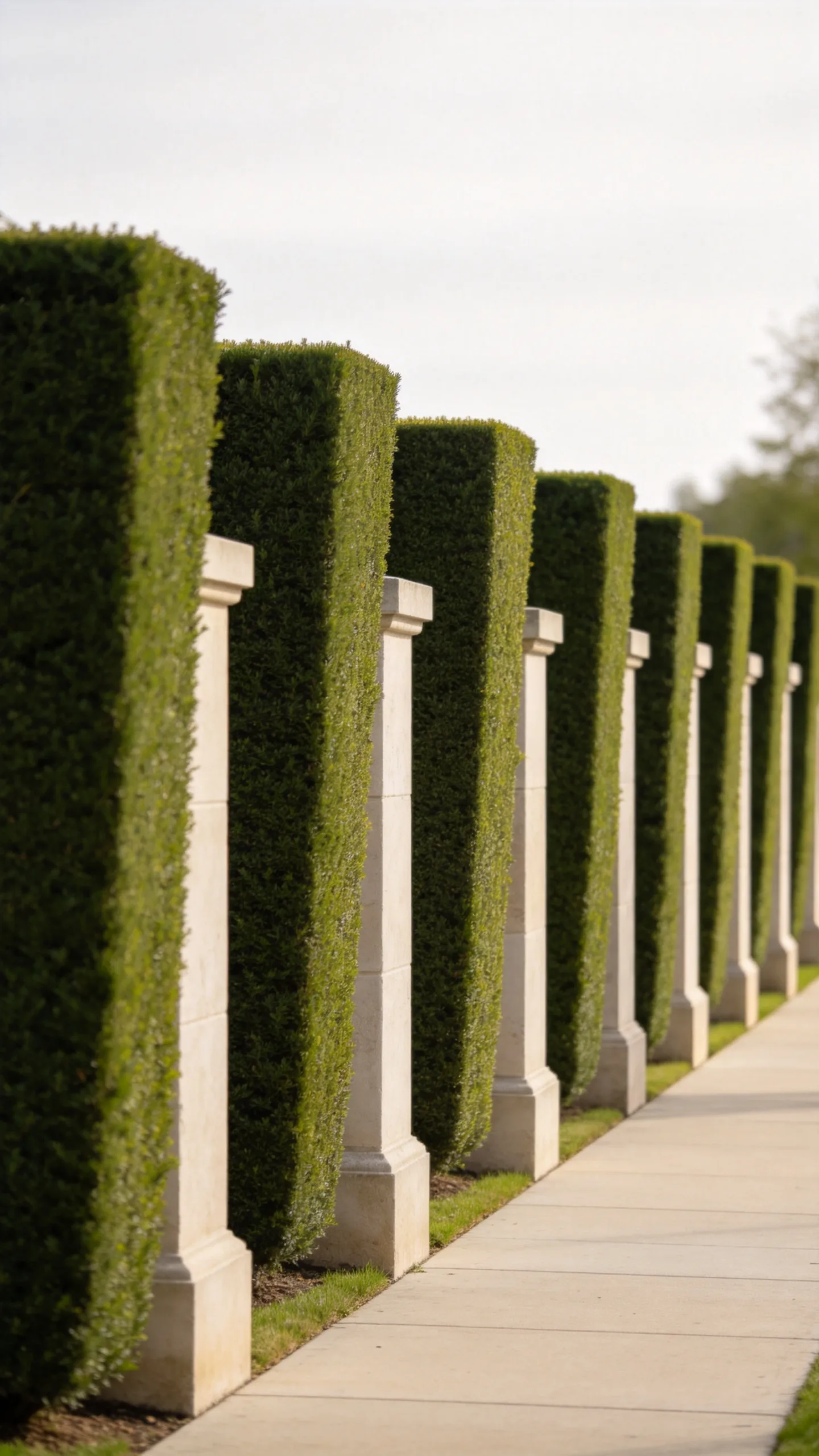
Build a structured boundary with matching hedge sections separated by masonry, wood, or metal posts. The repeated hedge-and-column pattern can define the front yard without creating one uninterrupted wall.
Choose a hedge plant that tolerates the site’s light exposure and winter conditions. Plan for regular trimming, especially near sidewalks and driveways, so the formal shape remains neat and does not obstruct pedestrians.
10. Repeated Spherical Shrubs Along the Foundation
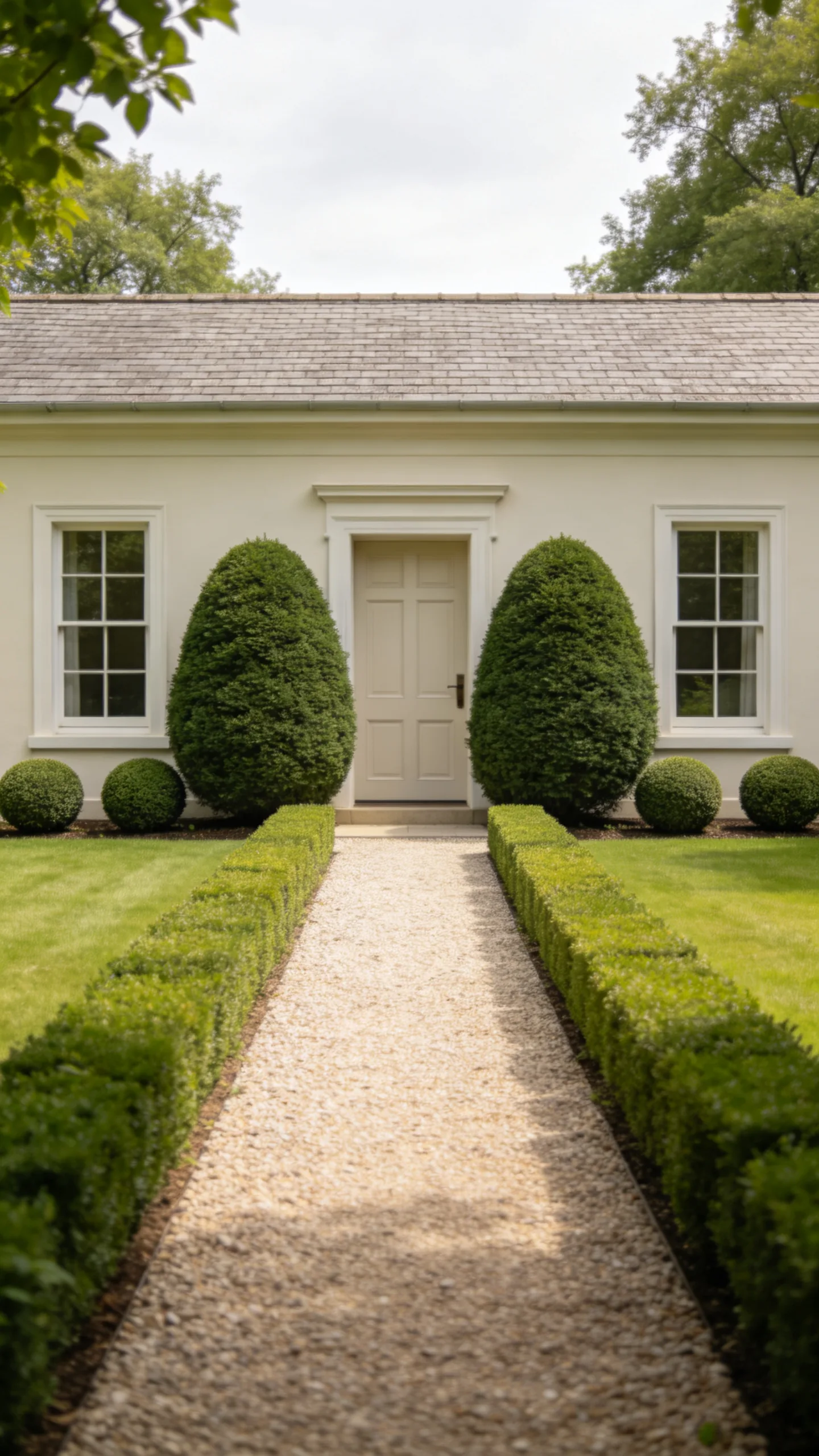
Use rounded evergreen shrubs as matching punctuation points along the front of the house. Place one pair near the entry, then repeat smaller pairs beneath windows or at the ends of the foundation bed.
Allow each shrub to reach its natural mature width instead of planting too closely and relying on constant shearing. Combine the spheres with low ground cover or gravel so the planting bed has structure in every season.
11. Formal Lawn Panels Framed by Straight Beds
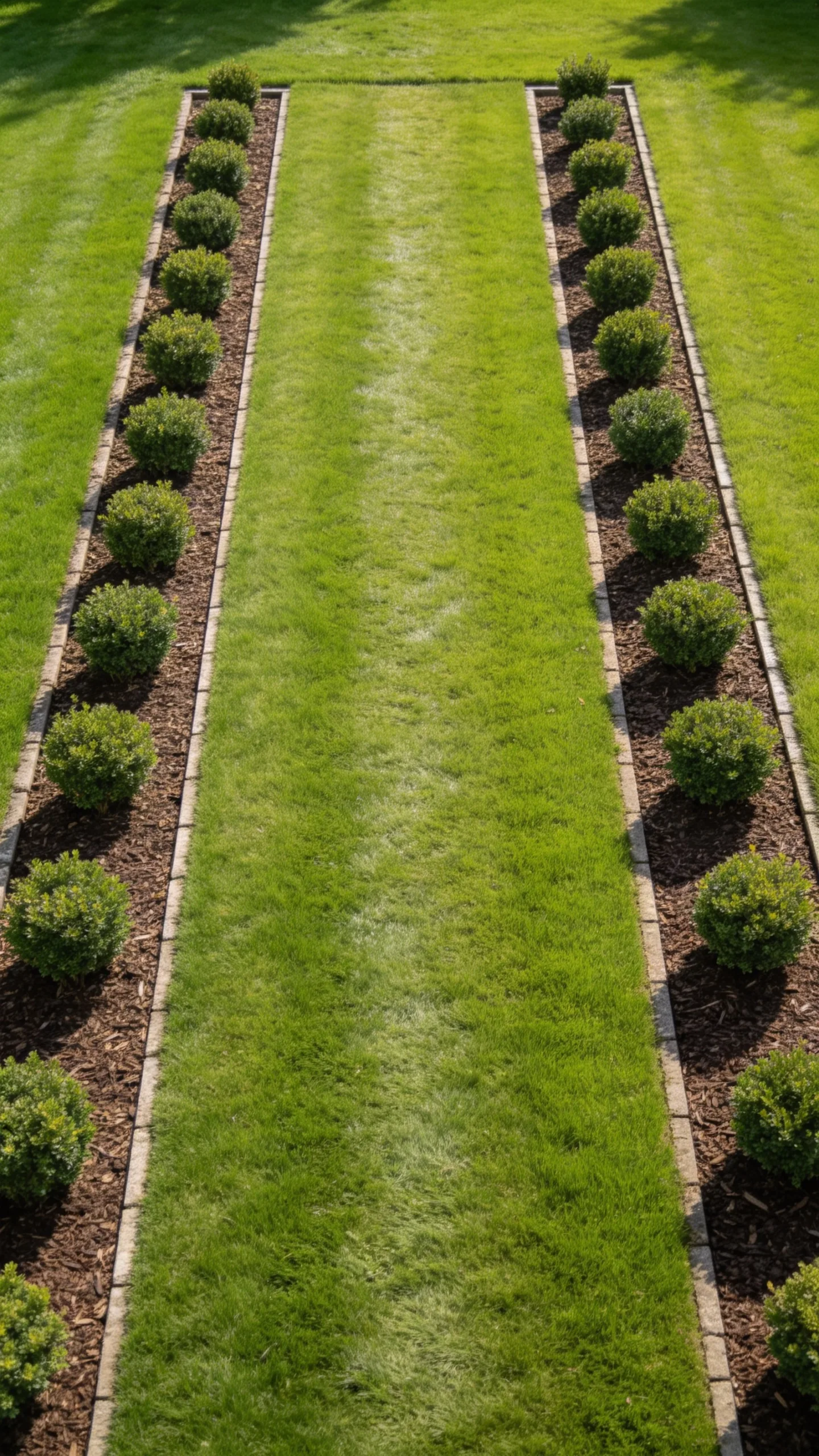
Divide the front yard into one or more simple rectangular lawn panels bordered by straight planting beds. Keep the bed widths consistent on both sides of the central walkway or driveway.
This layout makes mowing easier because the lawn edges remain clear and predictable. Use edging, a narrow mowing strip, or a clean transition between turf and mulch to prevent grass from spreading into the beds.
12. Matching Trellises With Climbing Vines
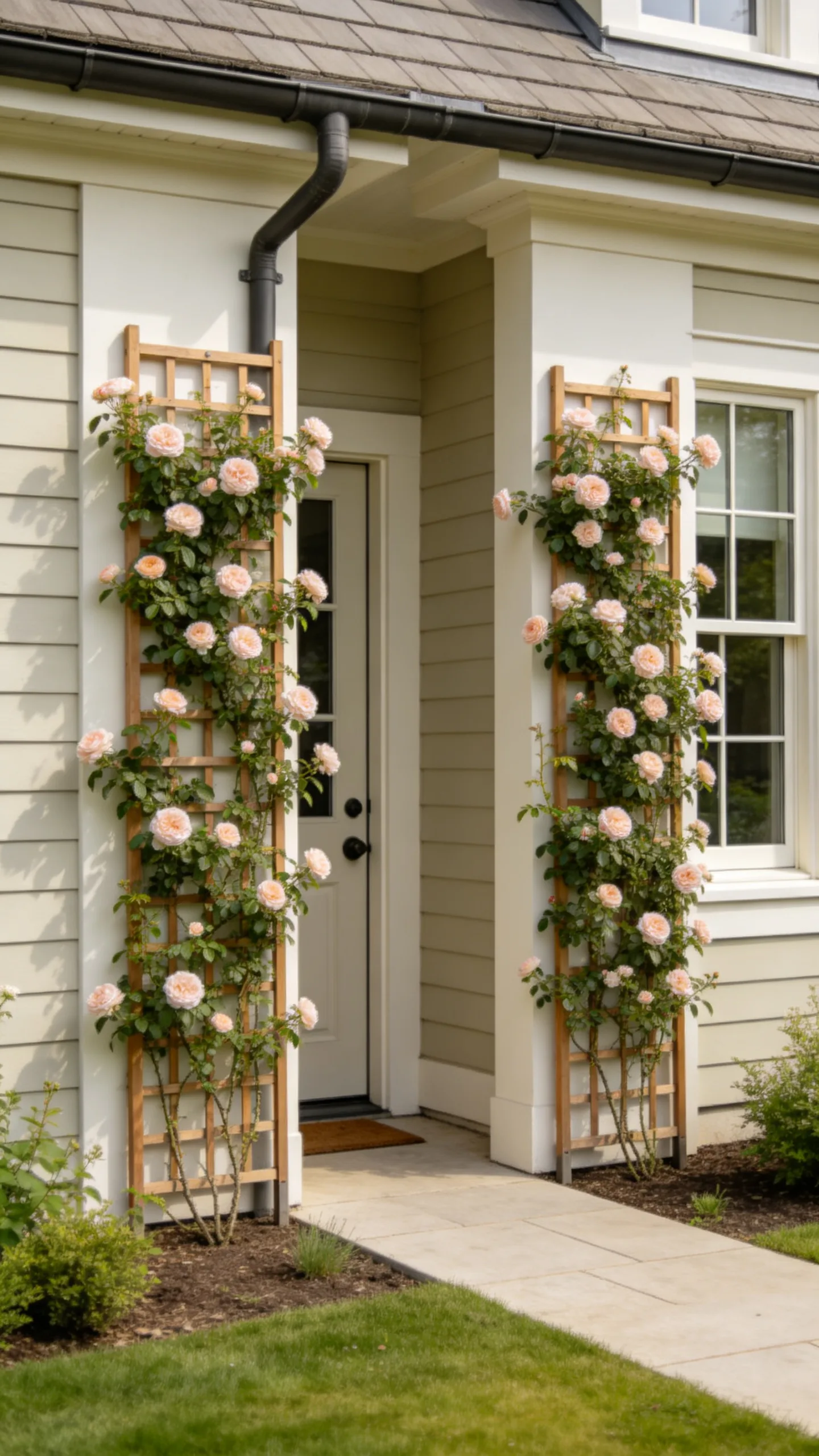
Install two identical trellises against matching porch sections, garage walls, or detached entry structures. Train the same type of vine on both supports to create repeated vertical interest without using large trees.
Choose vines according to sunlight, mature size, and attachment method. Use freestanding trellises or appropriate wall supports near siding, and prune the plants so doors, windows, gutters, and walkways remain accessible.
13. A Central Walkway With Alternating Plant Pairs
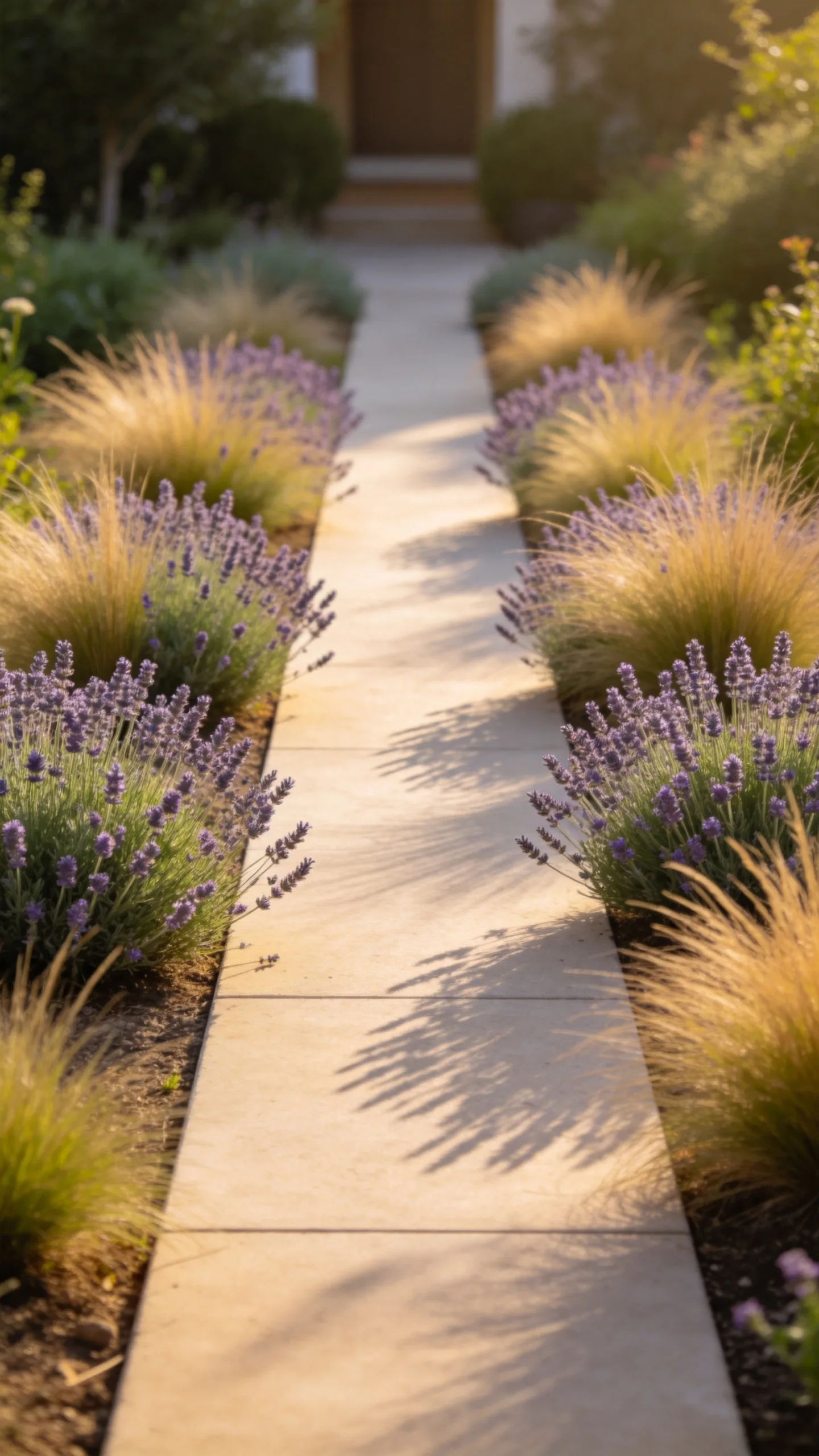
Line a straight entry path with alternating pairs of low plants. For example, place matching lavender, ornamental grass, or flowering perennial pairs at equal distances, then repeat the arrangement on the opposite side.
Keep the plants low enough to protect the path’s open sightline. Select drought-tolerant species for hot, exposed edges and moisture-tolerant plants for areas where roof runoff or irrigation keeps the soil damp.
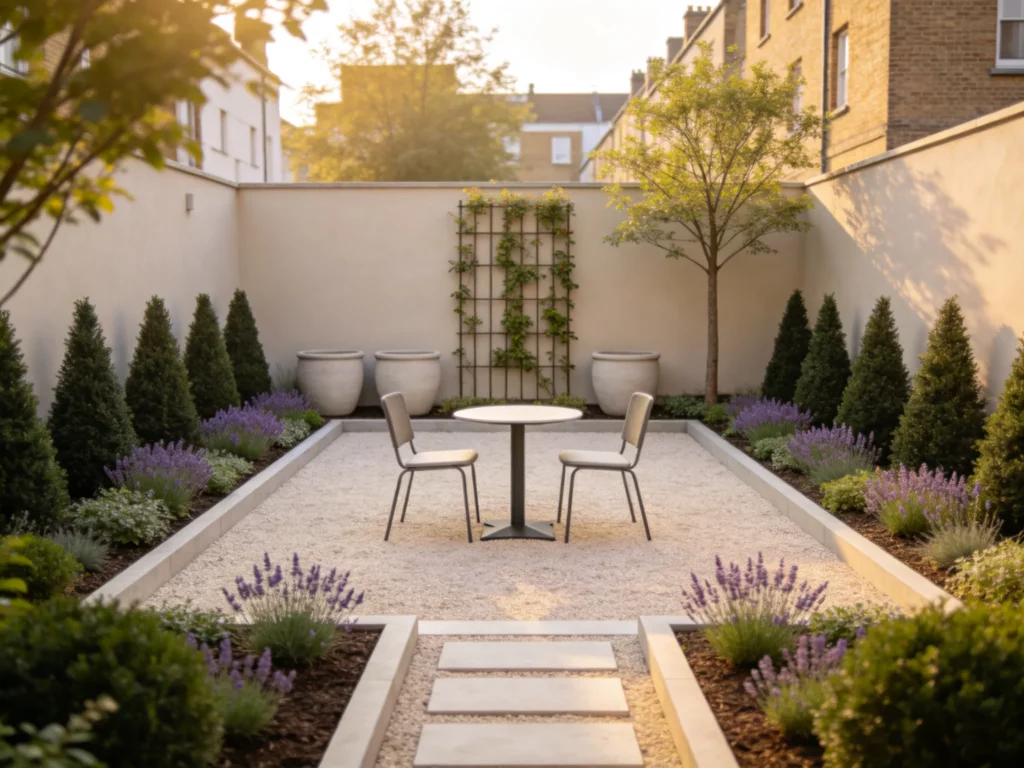
14. Matching Gravel Courtyards on Both Sides
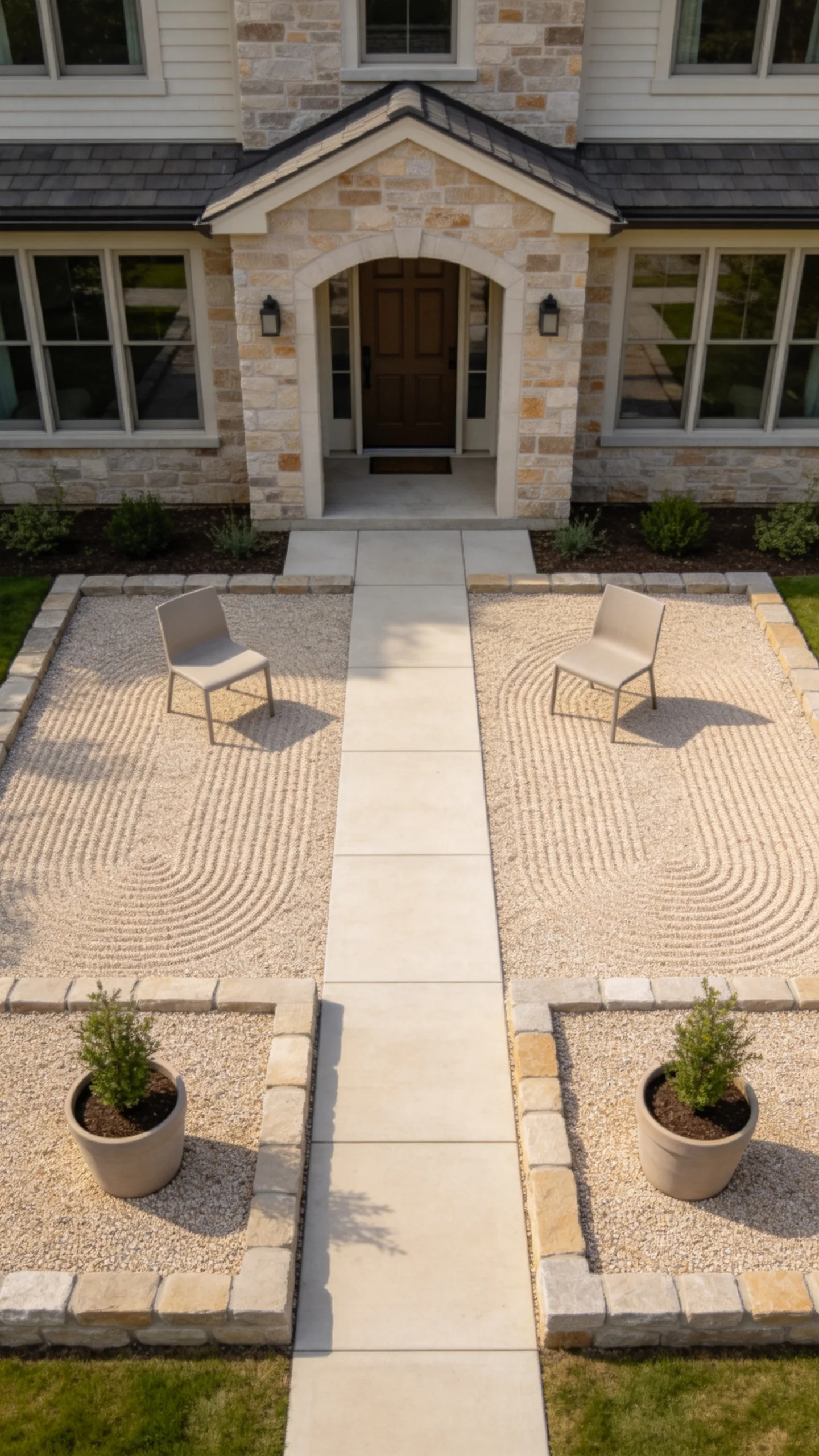
Use two compact gravel courtyards to balance a centered entrance, driveway, or lawn. Edge each courtyard with the same stone, brick, or metal border and repeat the same furniture, planters, or ornamental objects.
A gravel surface can reduce mowing in small front-yard sections, but it still needs weed control, periodic raking, and stable edging. Install a suitable base and choose stone that complements the home’s exterior rather than creating a disconnected color block.
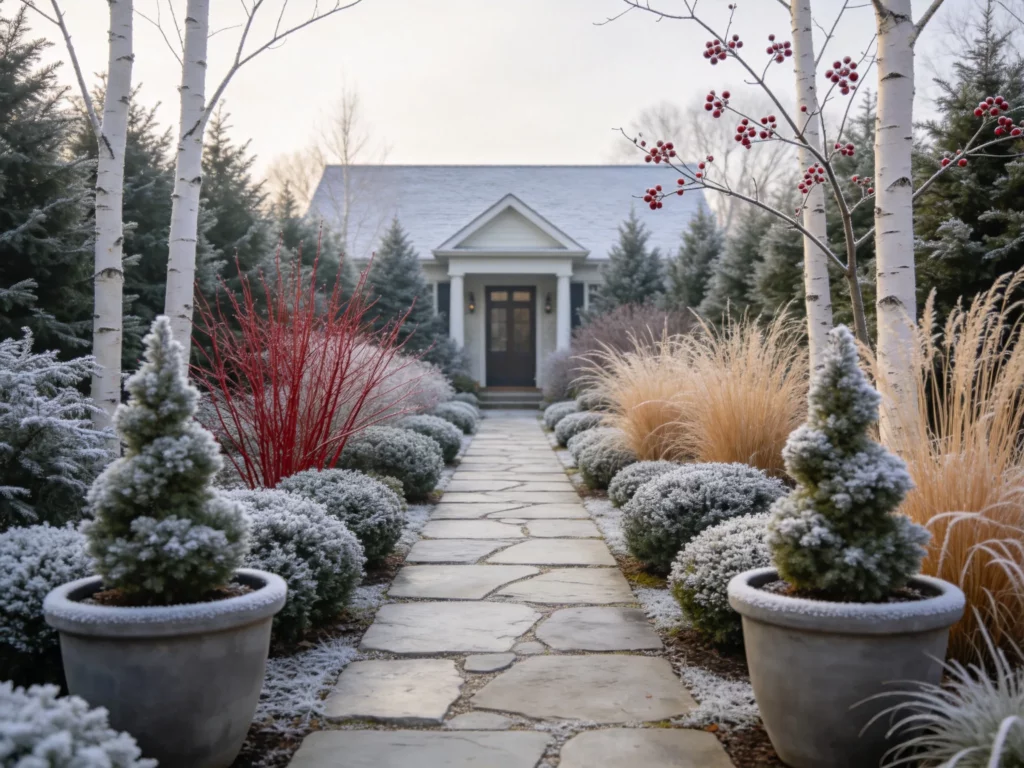
15. Layered Evergreen Beds With a Strong Centerline
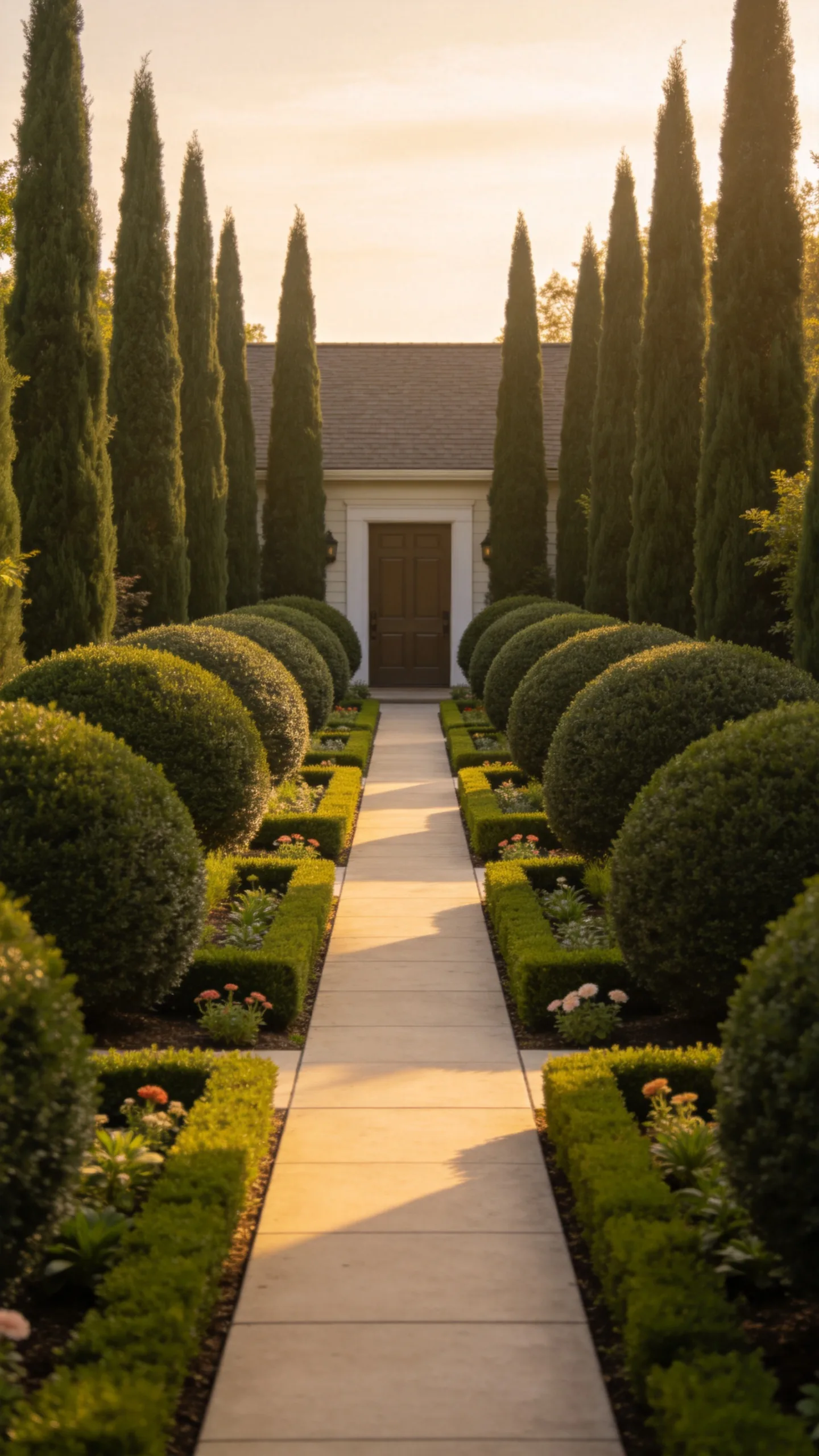
Create a complete formal composition with the tallest matching evergreens at the rear, medium shrubs in the middle, and low edging plants toward the sidewalk. Mirror the layers on both sides of a central path, porch, or front door.
Use evergreen plants suited to local winter temperatures and site conditions, then add a small amount of seasonal color for variation. Draw the layout on paper before planting so bed widths, plant counts, and spacing remain balanced as the garden matures.