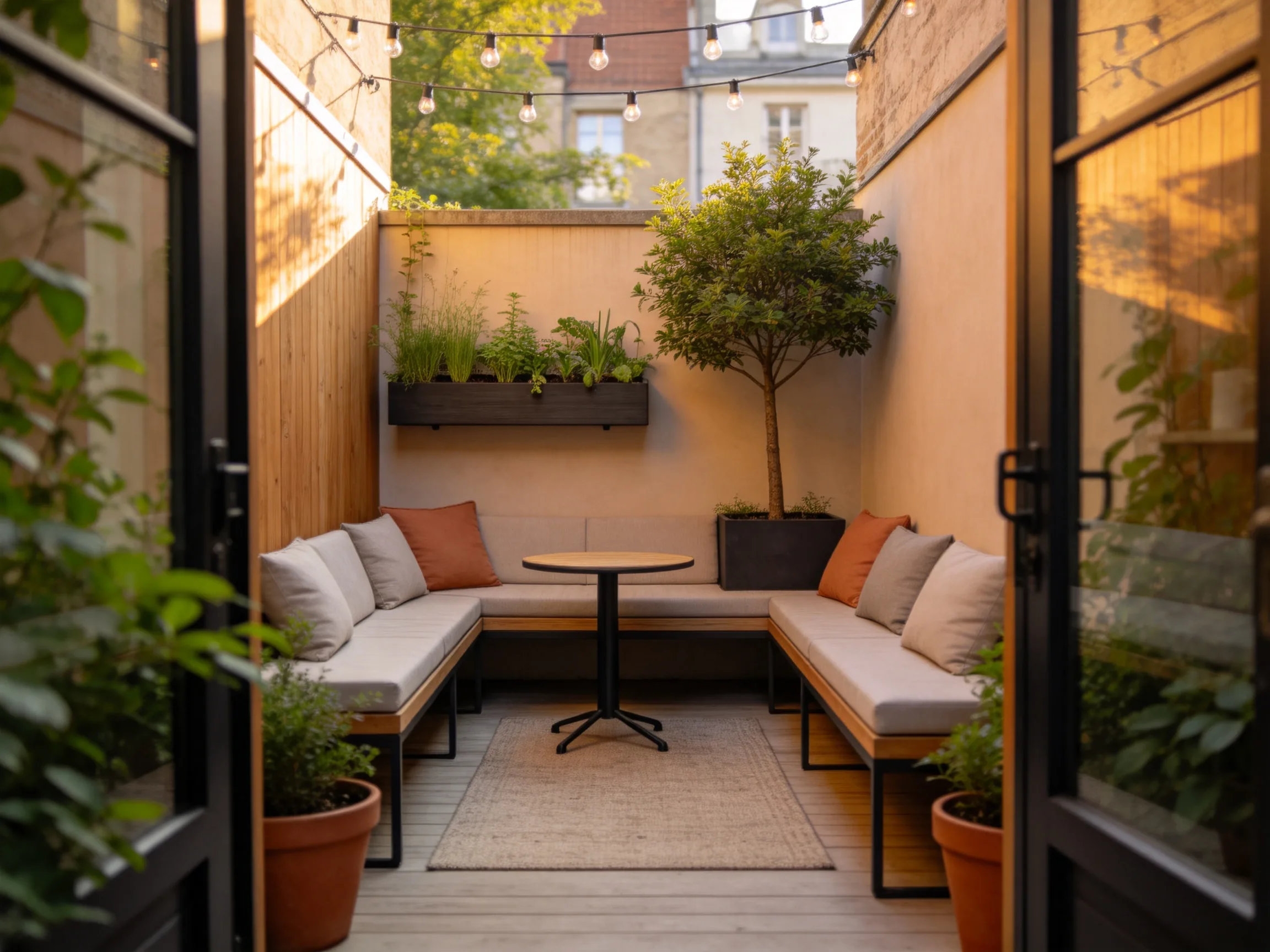
A compact patio can still support outdoor dining, container gardening, and comfortable lounging when every element earns its place. These small patio design ideas use space-saving furniture, vertical planting, layered lighting, and practical layouts to make a tiny outdoor area feel stylish and usable.
1. Build a Corner Bench With Hidden Storage
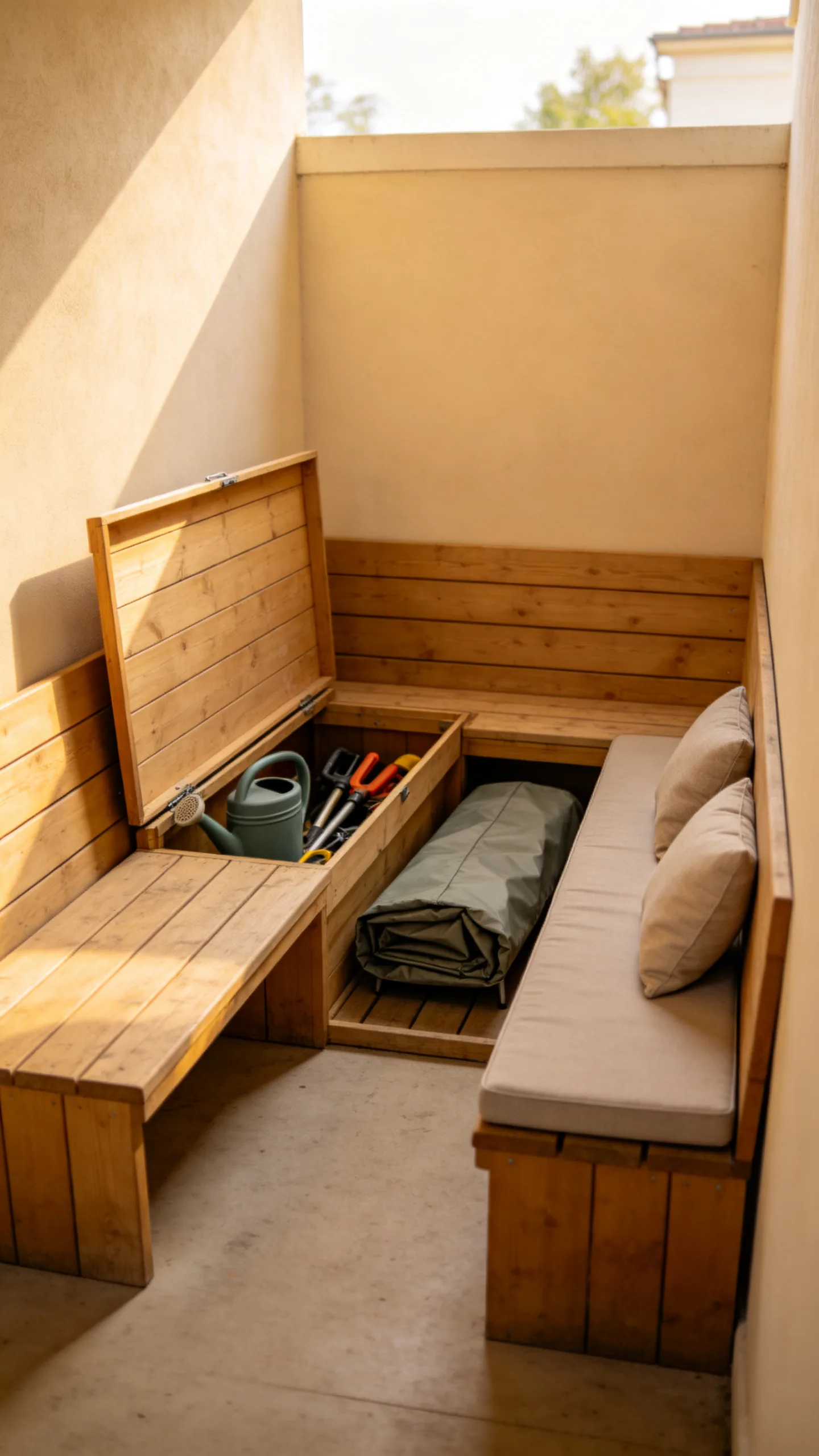
A built-in corner bench uses perimeter space that freestanding chairs often waste. Position an L-shaped seat against two walls or railings, leaving the center of the patio open for movement. A seat depth of roughly 18 to 22 inches is comfortable without taking over a narrow footprint.
Add hinged or lift-off seat panels to create storage for watering cans, hand tools, furniture covers, and outdoor cushions. Use weather-resistant wood, composite boards, or a powder-coated storage bench suited to local conditions. Finish the seating area with washable cushions and two or three small pillows rather than bulky, overstuffed upholstery.
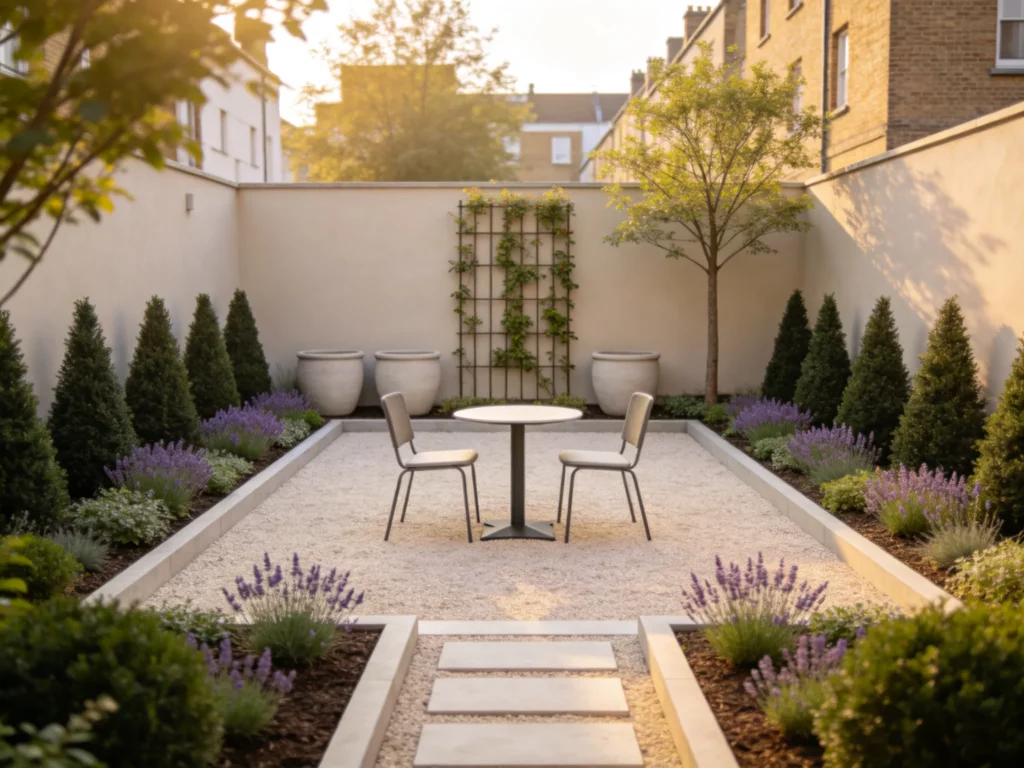
2. Choose a Folding Bistro Set
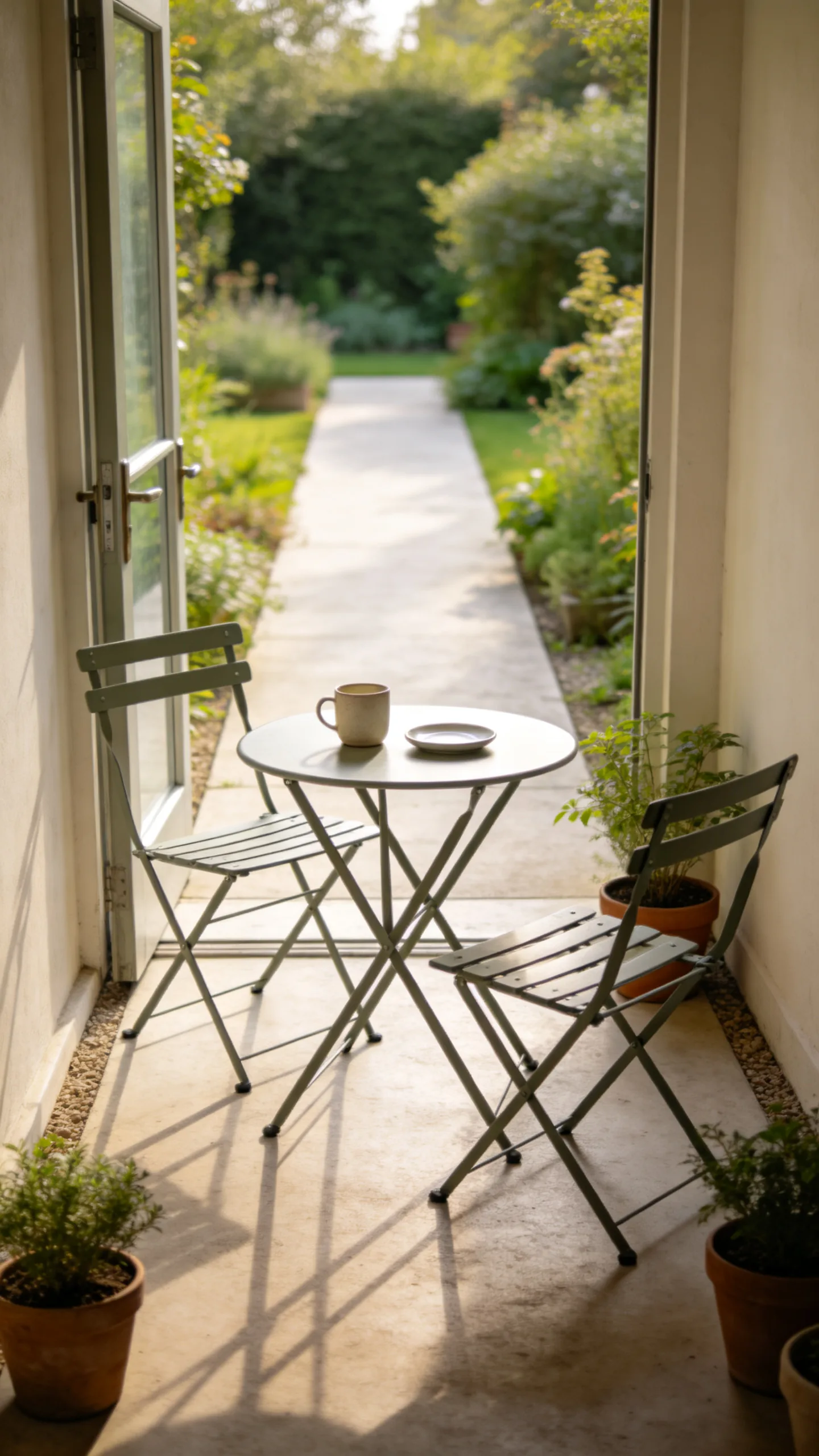
A folding bistro table and two slim chairs provide a practical place for coffee or meals without permanently filling the patio. Look for a round table between 24 and 30 inches wide, as curved edges make it easier to move through a tight space.
Fold the chairs against a wall when they are not needed, or hang lightweight versions from sturdy wall hooks. Metal sets are easy to clean, while wood options may need seasonal sealing. Placing the table near the patio edge preserves a clearer route between the door and garden.
3. Grow Herbs on a Wall-Mounted Planter
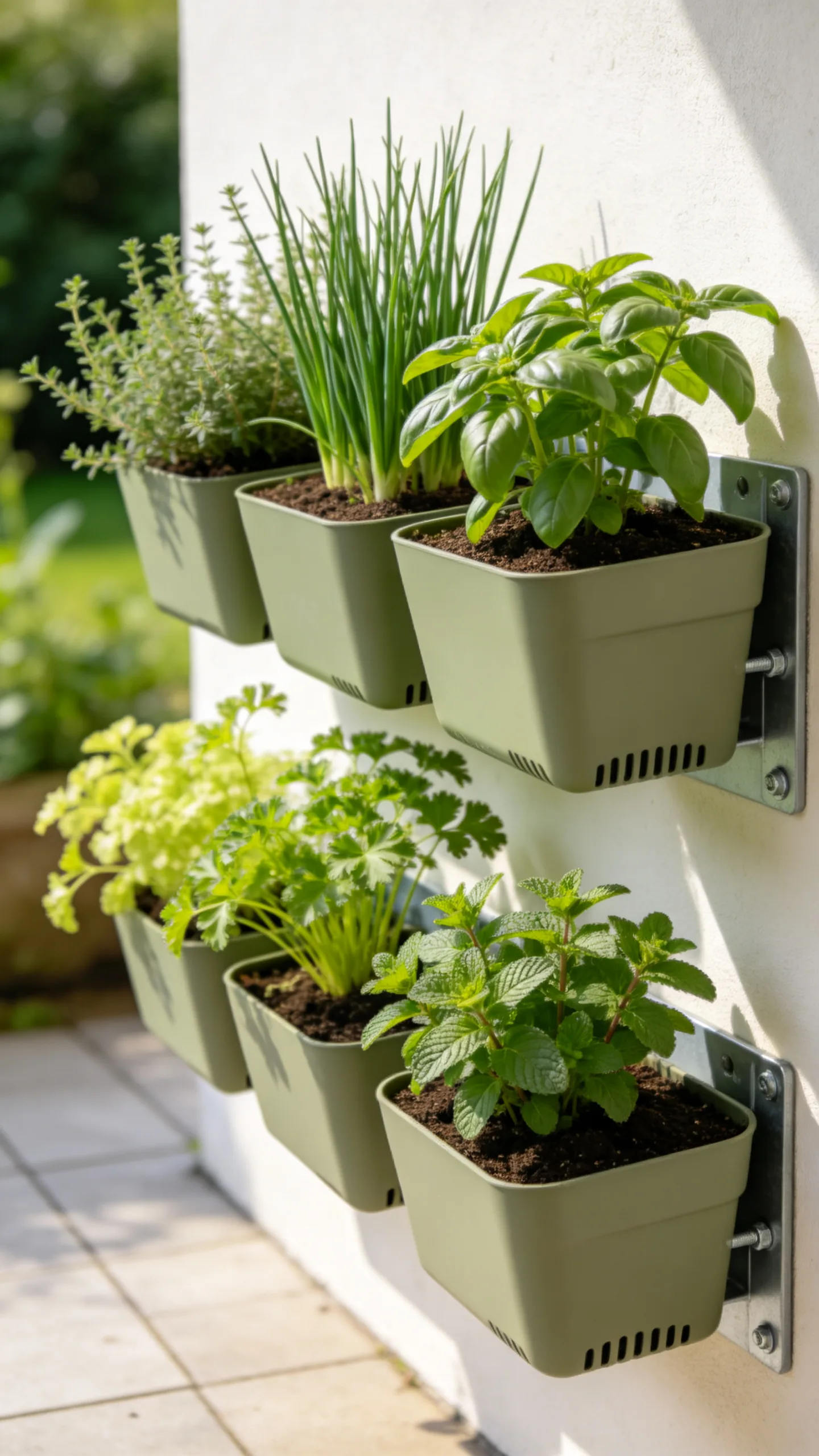
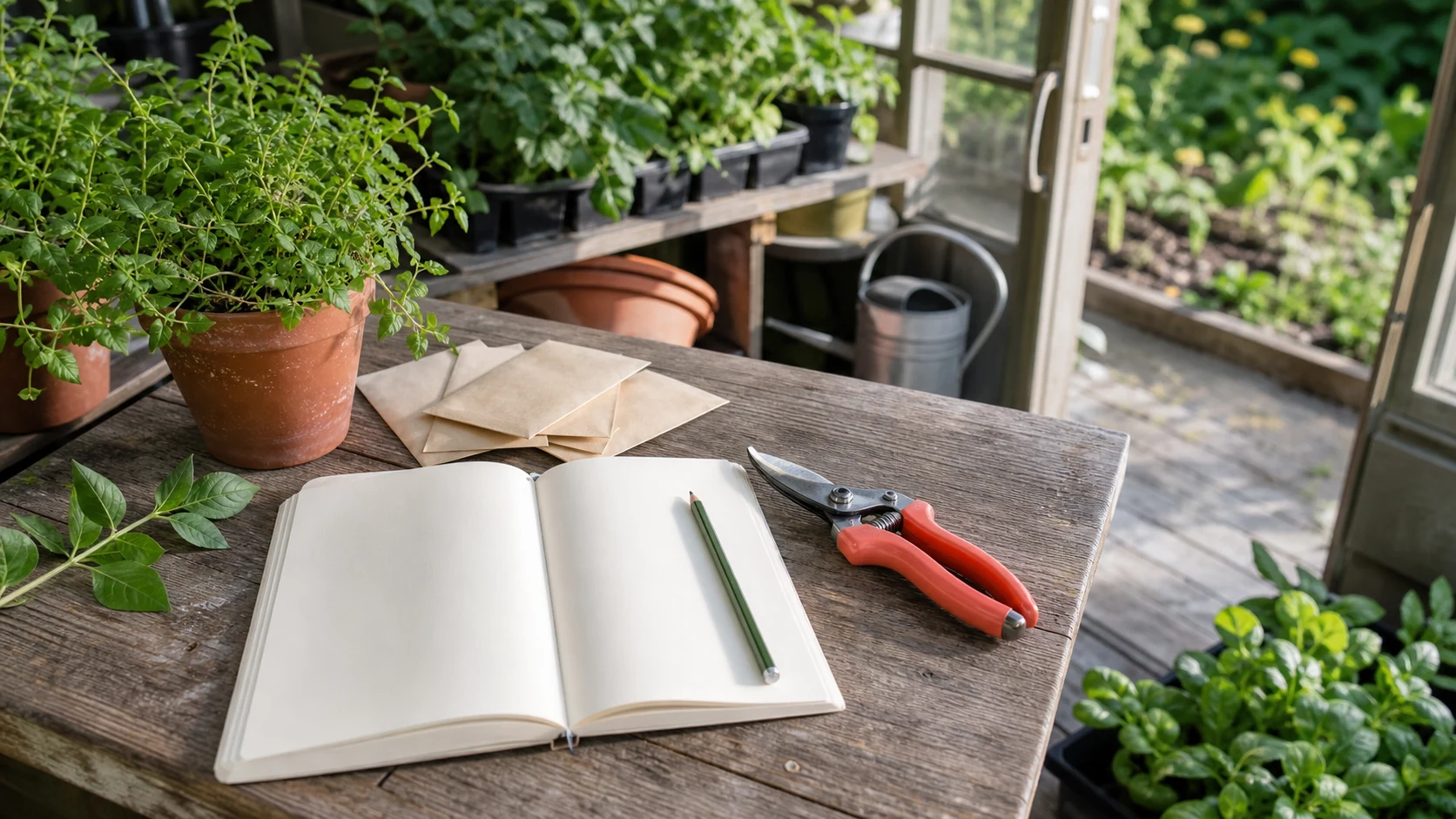
Move edible plants off the floor with wall-mounted pots, railing planters, or a vertical pocket system. Herbs such as thyme, chives, parsley, mint, and compact basil varieties are useful choices, though their light and watering needs vary. Keep mint in its own container so its roots do not crowd neighboring plants.
Mount the planter where you can reach every pocket without a ladder, and confirm that the wall or railing can carry the weight of wet potting mix. Use containers with drainage holes and a lightweight potting mix rather than garden soil. Place sun-loving herbs in the brightest positions and shade-tolerant varieties lower down.
4. Use a Slim Outdoor Console as a Serving Station
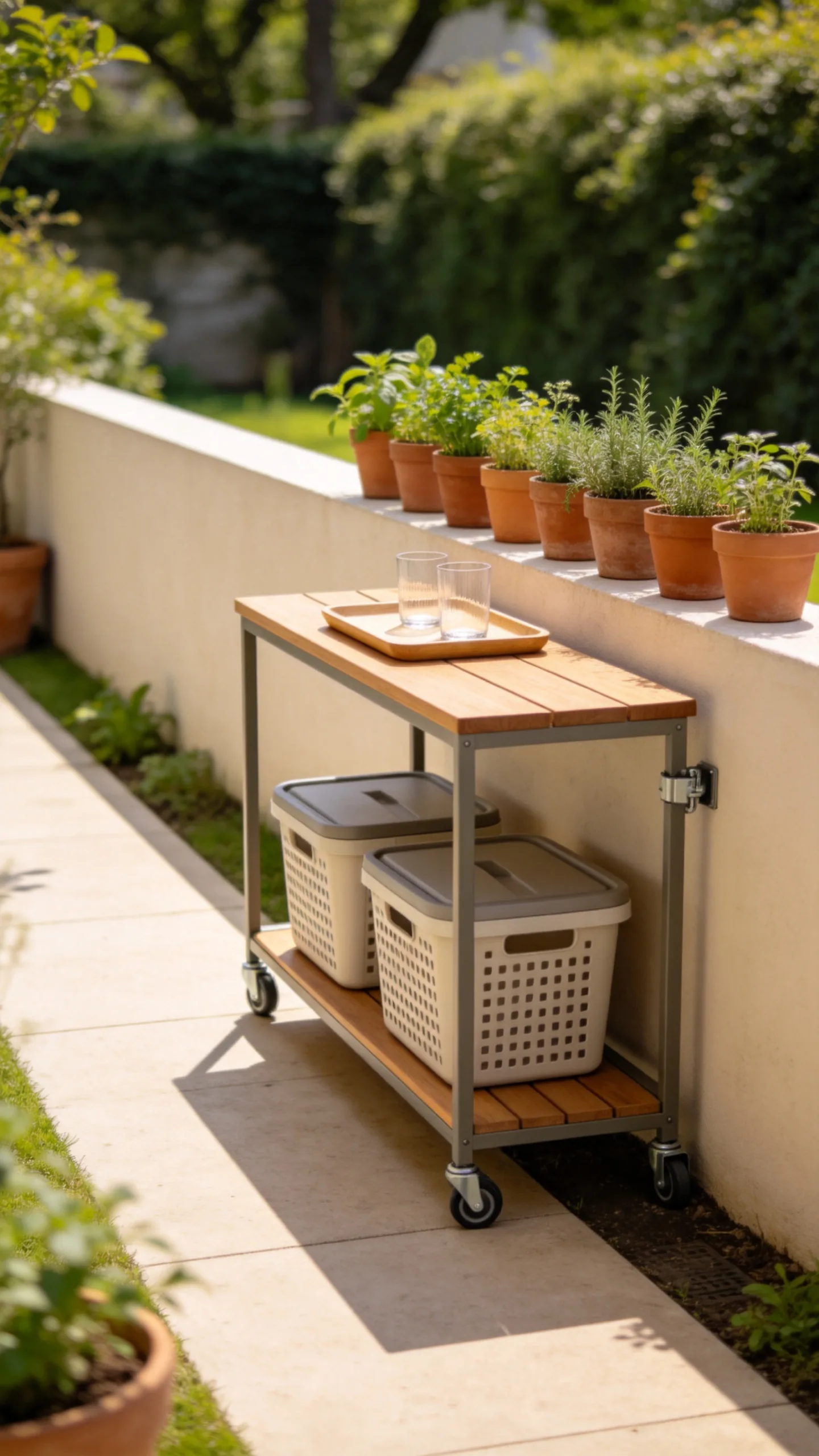
A narrow console table can act as a drink station, planting bench, or buffet without requiring the depth of a full outdoor dining table. Choose a design around 12 to 16 inches deep and place it against a wall where it will not interrupt the main walkway.
Store frequently used items on the lower shelf in lidded, weather-resistant baskets. The top can hold a tray, small tabletop grill if safely permitted and properly ventilated, or a row of potted herbs. A console on locking casters is especially useful because it can be repositioned when guests arrive.
5. Install a Fold-Down Wall Table
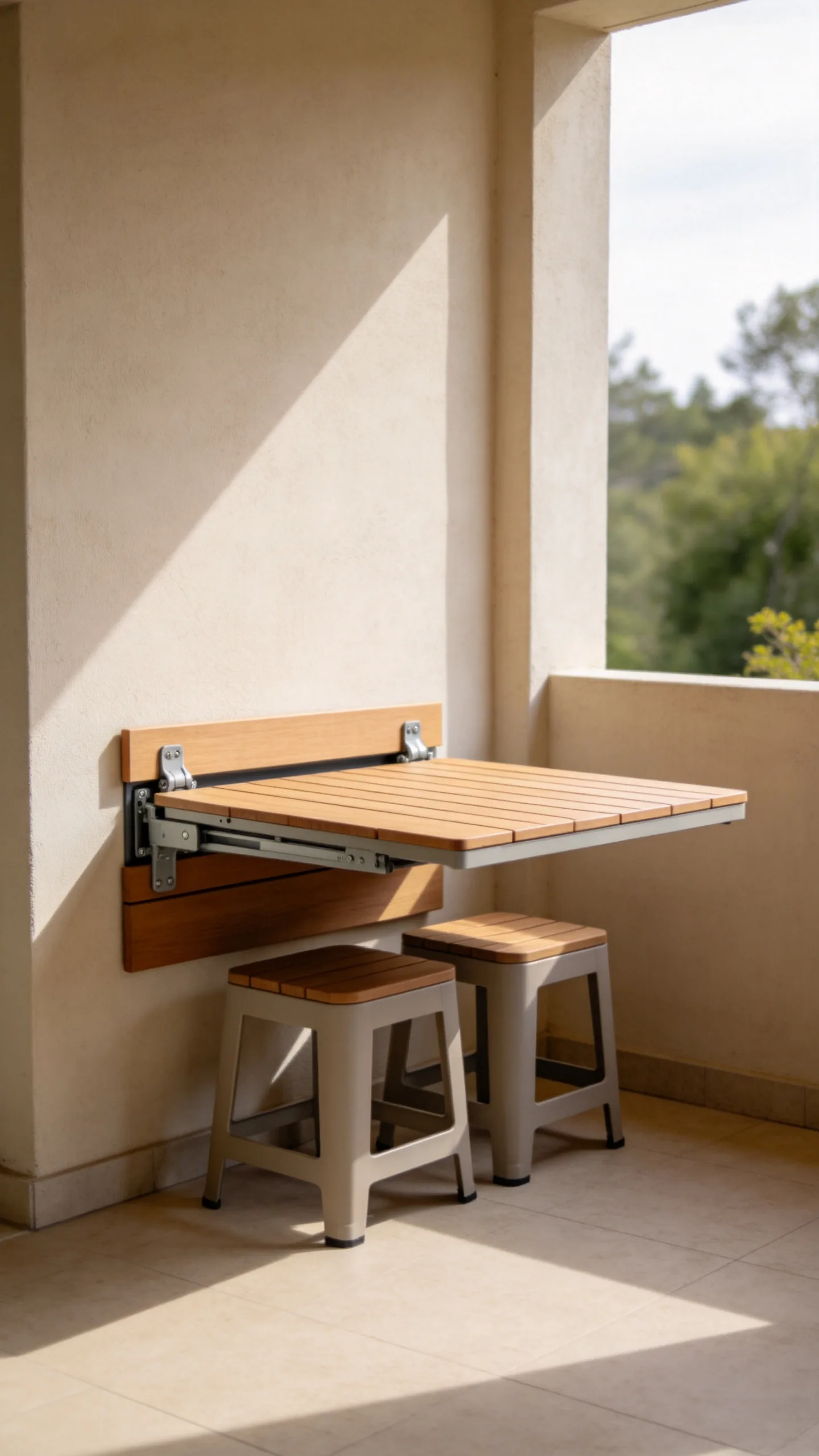
A wall-mounted drop-leaf table creates a dining or work surface only when you need it. Folded flat, it leaves valuable floor space open for walking, gardening, or pulling a lounge chair into the sun.
Attach the table to a structurally sound wall at a comfortable dining height, and select brackets rated for the intended weight. Pair it with stackable stools that can slide underneath or be stored indoors. For an exposed patio, use exterior-grade hardware and a surface that tolerates moisture and temperature changes.
6. Define the Patio With an Outdoor Rug
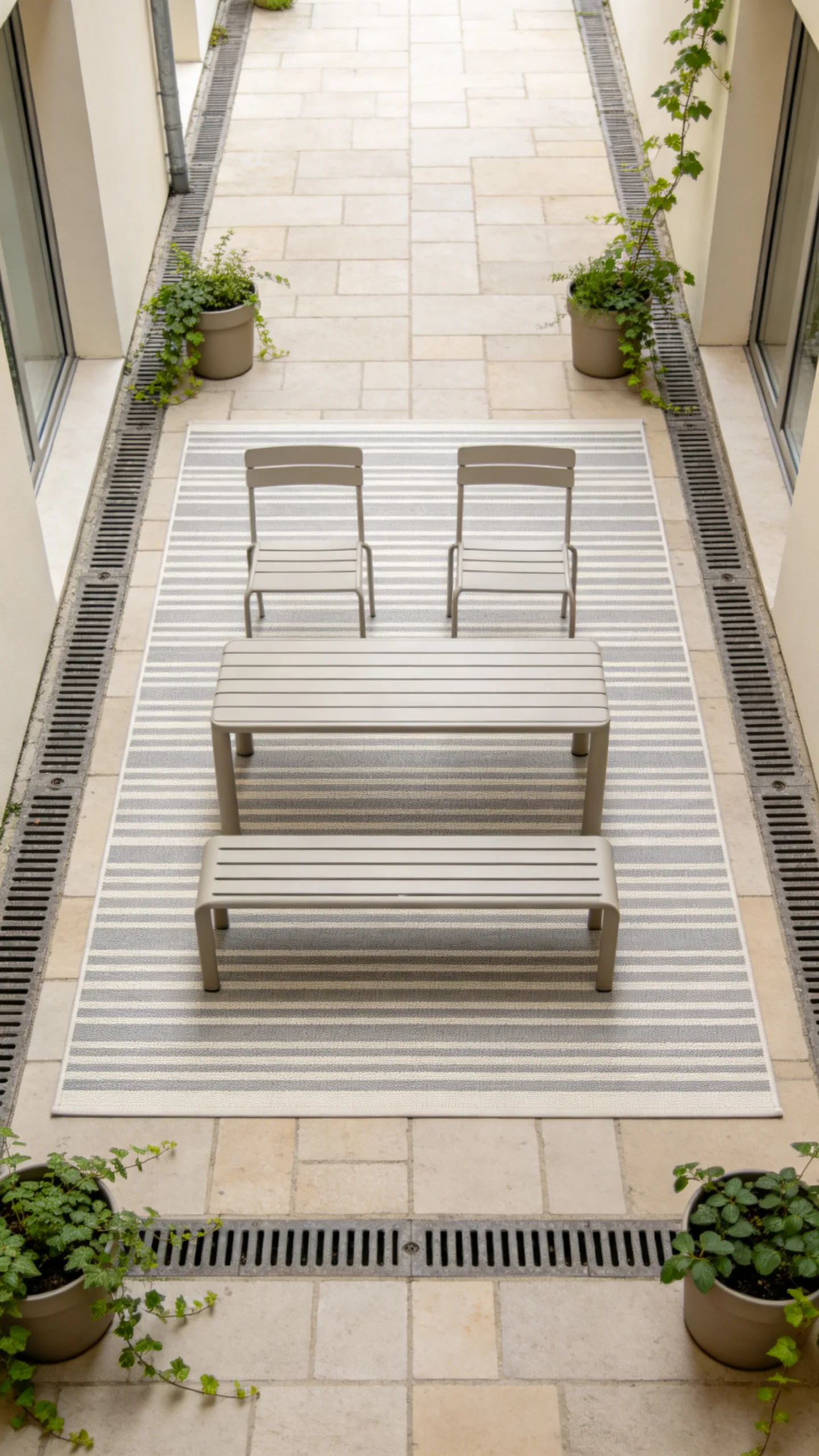
A properly sized outdoor rug can make a tiny patio feel like a complete room instead of a leftover strip of paving. Choose a rug that fits beneath at least the front legs of the seating rather than one so small that it appears to float in the center.
Simple stripes can visually widen a narrow patio, while a subtle geometric pattern adds interest without requiring more furniture. Select a quick-drying, mildew-resistant material, and make sure water can drain beneath it. Sweep the rug regularly and lift it after prolonged rain if the patio does not dry quickly.
7. Create Privacy With a Narrow Trellis
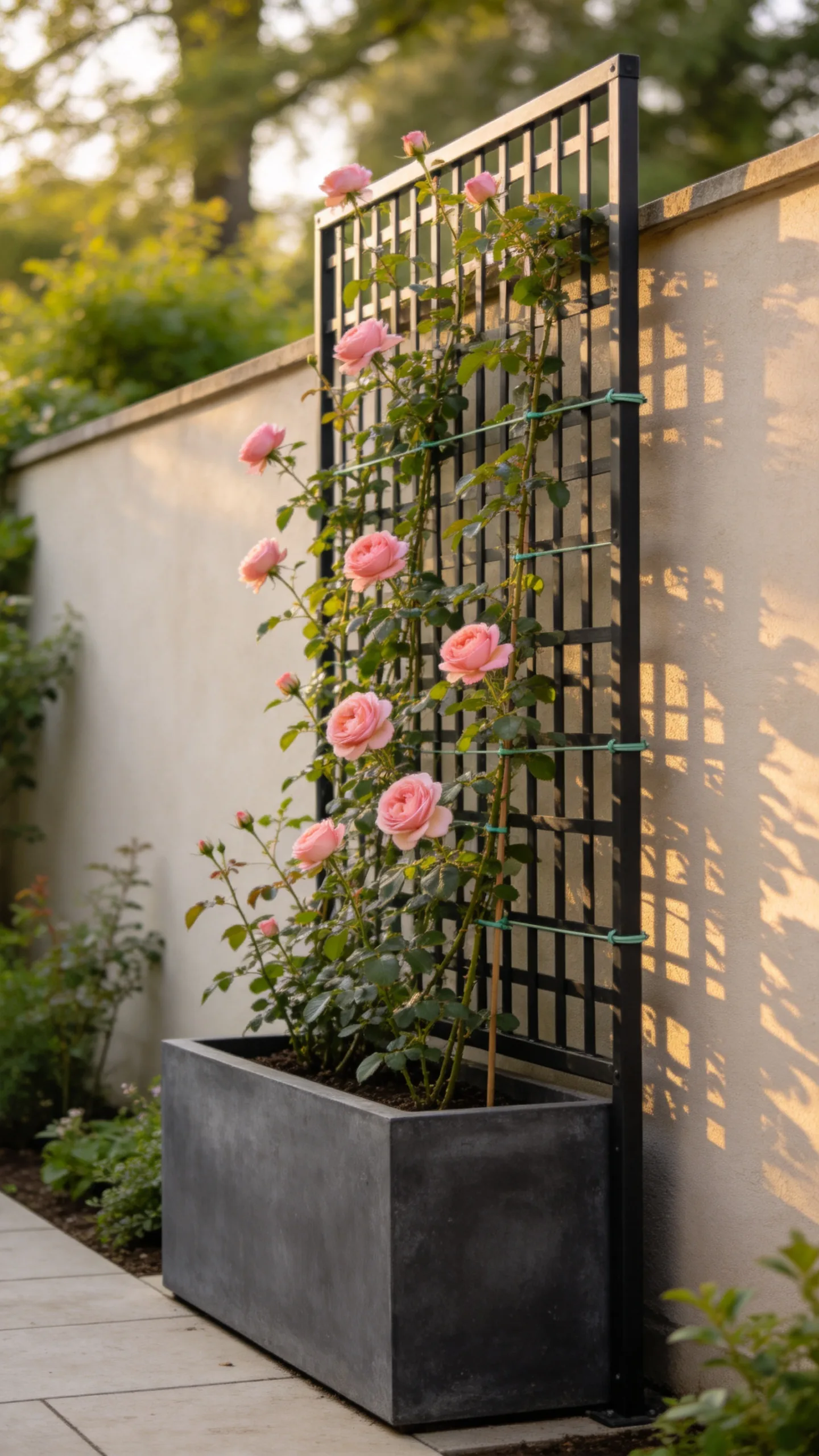
A slim trellis provides screening without consuming as much floor space as a wide hedge or row of large planters. Secure it to a wall, fence, or heavy planter, taking wind exposure and local building rules into account.
Train a climber suited to the available light and climate, such as star jasmine in suitable warm areas, clematis with cool roots and appropriate sun, or an annual vine such as black-eyed Susan vine. Leave airflow between the trellis and wall, and guide new stems with soft plant ties. If maintenance needs to stay low, use spaced wooden slats or a metal screen without a vine.
8. Arrange Planters in Vertical Layers
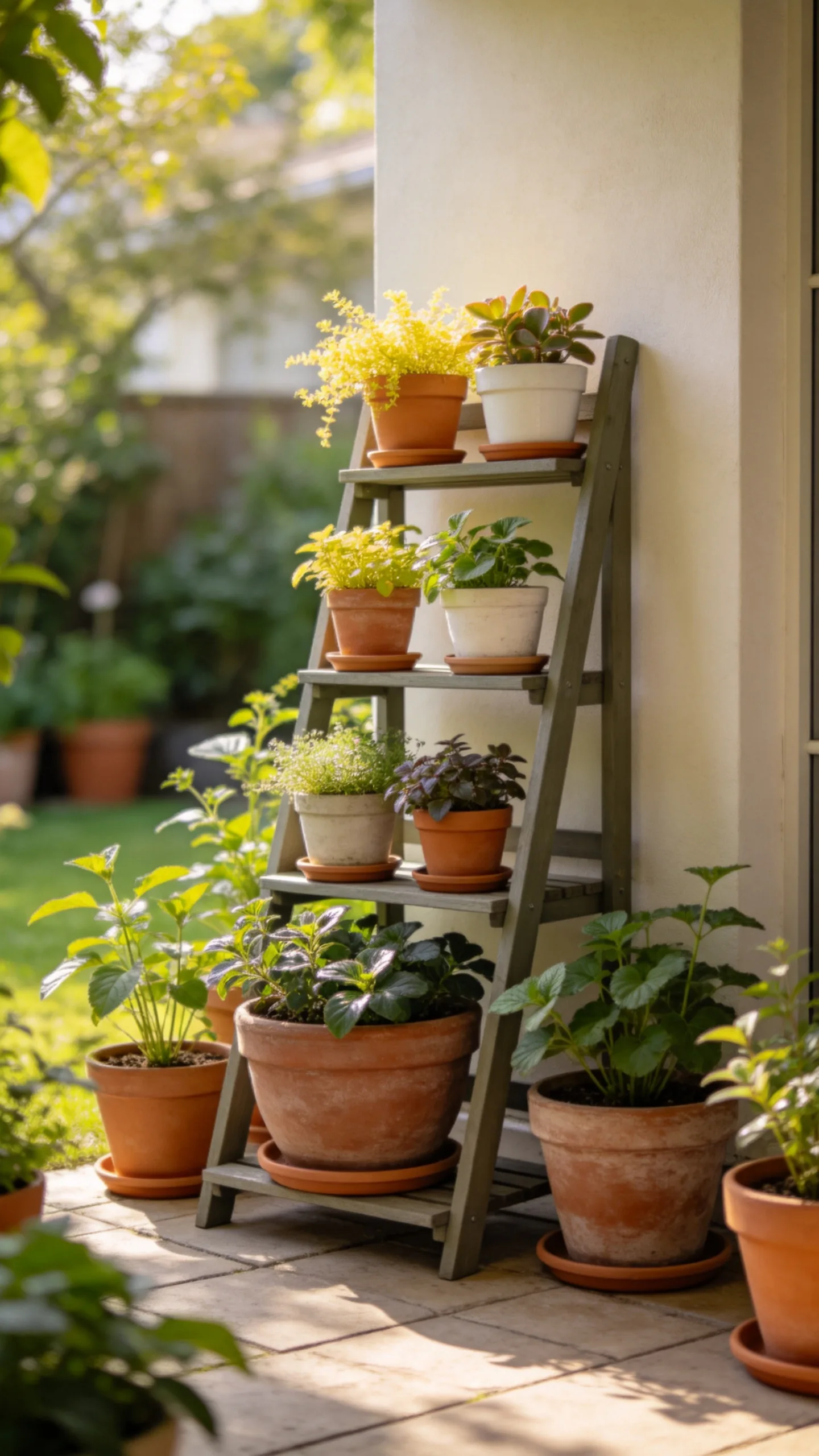
Instead of scattering pots across the floor, group them on a tiered stand, narrow ladder shelf, or sturdy plant pedestal. This arrangement creates visual depth while keeping more of the paving clear.
Put larger, heavier containers on the bottom and lighter pots on top. Match plants to the light at each level, since upper shelves may receive more sun while lower ones remain shaded. Use saucers where appropriate, but empty standing water after irrigation to protect surfaces and discourage mosquitoes.
9. Add a Compact Container Tree
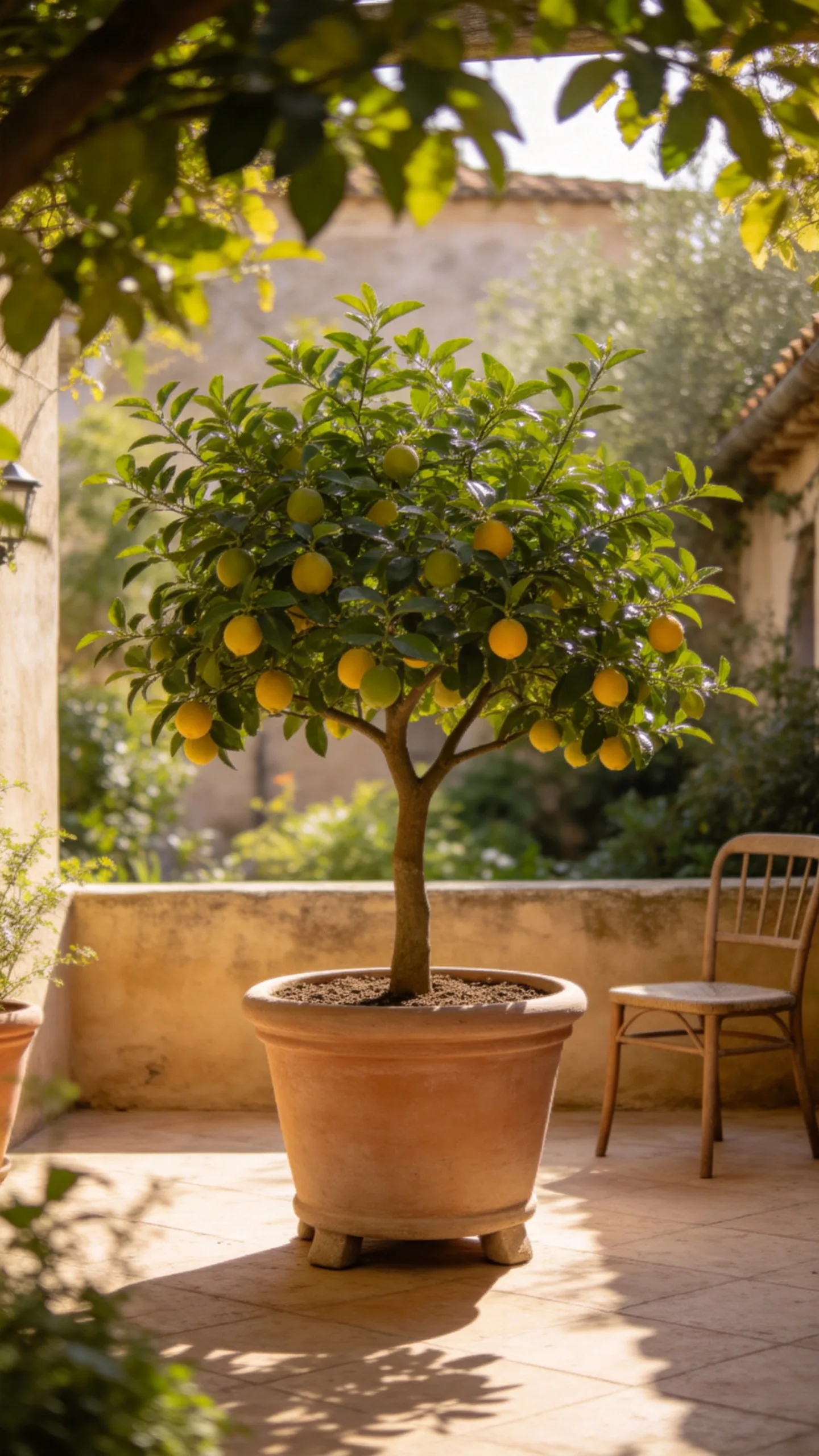
One small tree can create height, filtered shade, and a strong focal point without requiring a garden bed. Choose a naturally compact or dwarf variety that can grow in a container and tolerate the patio’s sun, wind, and winter conditions. Possible choices include dwarf citrus in frost-free or protected settings, compact Japanese maple in suitable climates, or bay laurel where hardiness allows.
Start with a substantial frost-resistant pot that has drainage holes and enough weight to remain stable. Use a potting mix appropriate for the tree rather than filling the container with dense ground soil. Check moisture frequently during hot weather, and plan for periodic root pruning, repotting, or moving the plant to a larger container.
10. Hang String Lights Overhead
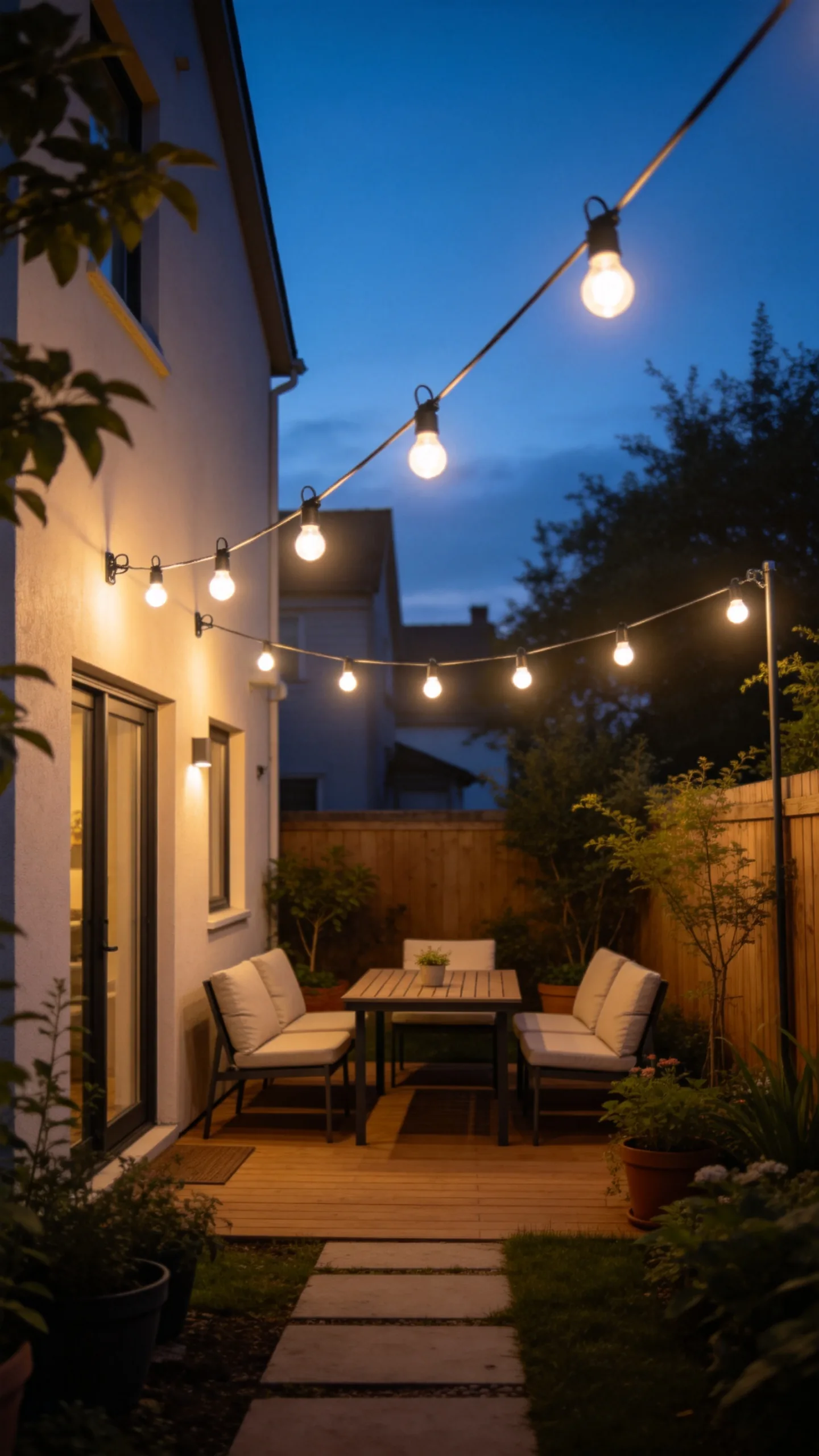
Overhead lighting draws attention upward and makes a small patio feel more dimensional after dark. Run outdoor-rated string lights along a wall, beneath a pergola, or in a simple zigzag pattern above the seating area.
Use secure hooks or guide wire rather than allowing the electrical cord to carry the lights’ weight. Keep bulbs high enough that people can walk underneath comfortably, and follow the manufacturer’s limits for connecting strands. Warm white bulbs create softer dining light, while a dimmer or timer gives you better control over brightness and energy use.
11. Replace Bulky Chairs With Stackable Seating
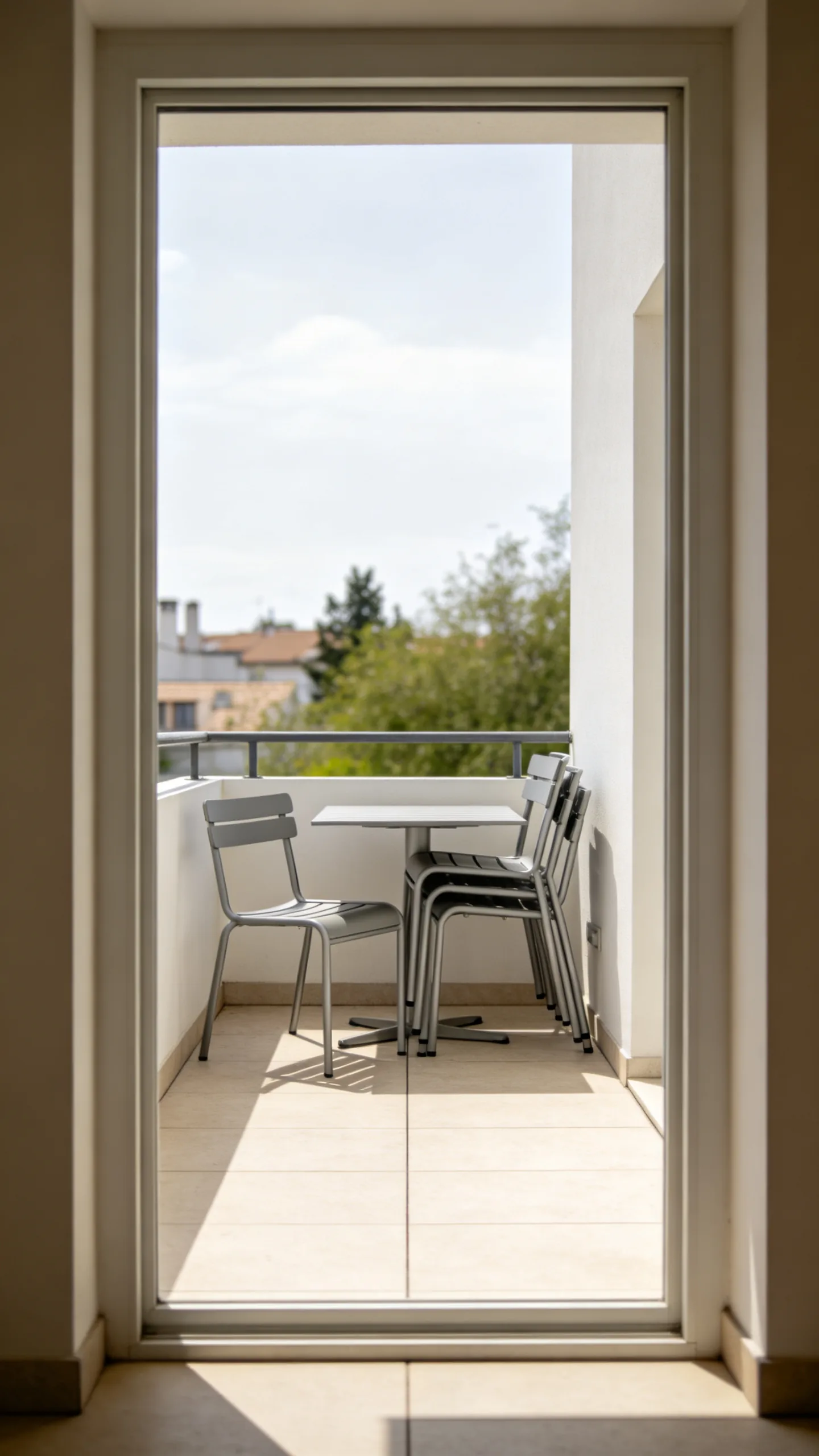
Stackable dining chairs allow a tiny patio to adapt to daily use and occasional guests. Keep one or two chairs out, then stack the extras neatly against a wall or store them indoors when they are not required.
Choose chairs with open backs and slim legs to maintain clear sightlines across the patio. Powder-coated aluminum, resin, and treated metal are generally easier to move than heavy wooden furniture. Before buying, test the seat comfort and measure the stacked height so the chairs fit in the intended storage spot.
12. Plant a Narrow Railing Garden
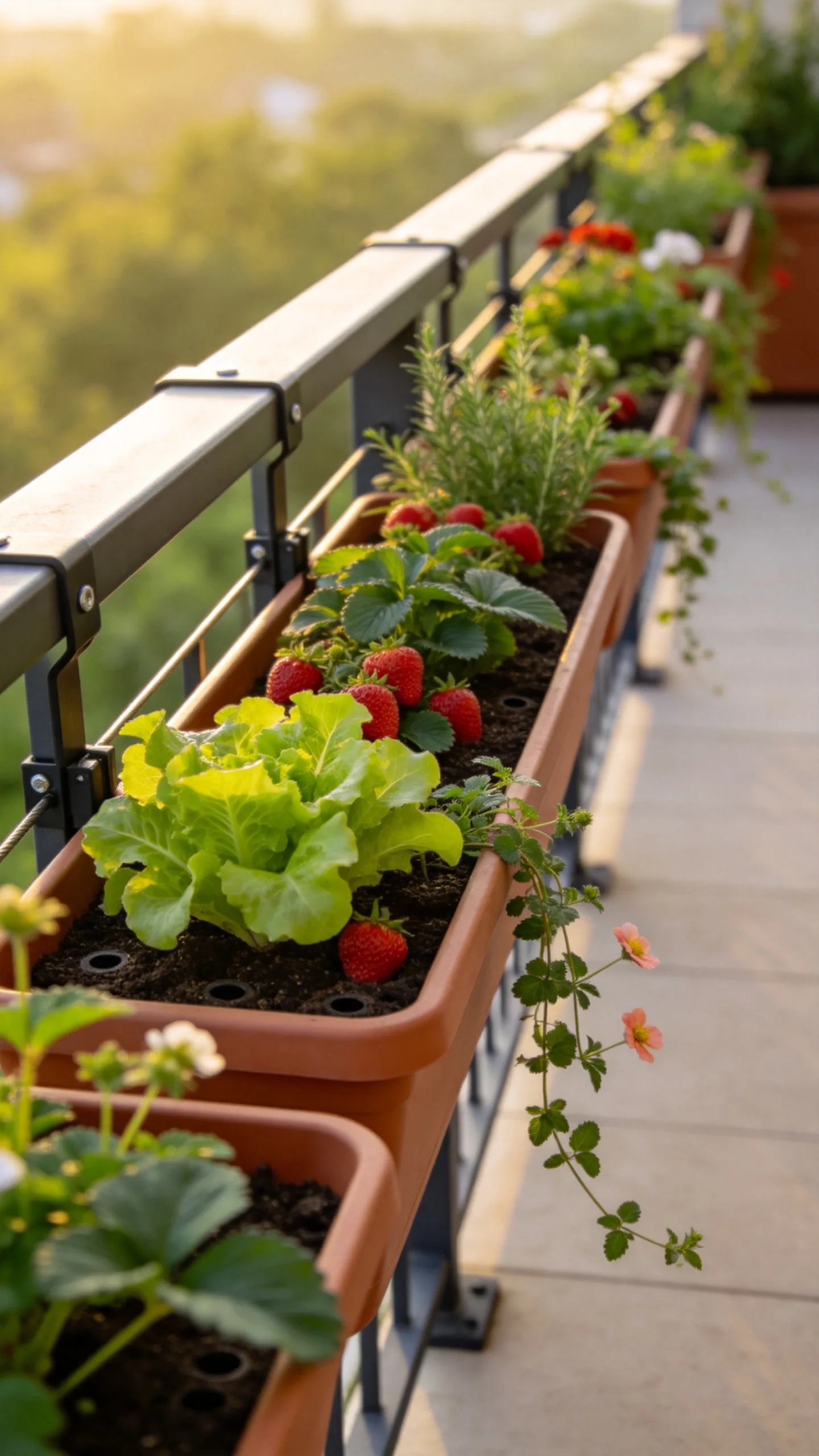
Railing planters turn an unused boundary into growing space while keeping containers away from the main walking area. They work well for trailing flowers, salad greens, strawberries, and compact herbs, depending on sunlight and seasonal temperatures.
Use brackets made for the railing’s exact width and verify any apartment, condominium, or safety restrictions before installation. Secure each planter so wind cannot dislodge it, especially on elevated balconies. Choose lightweight potting mix, provide drainage, and avoid placing containers where runoff could affect neighbors below.
13. Use a Storage Stool as a Side Table
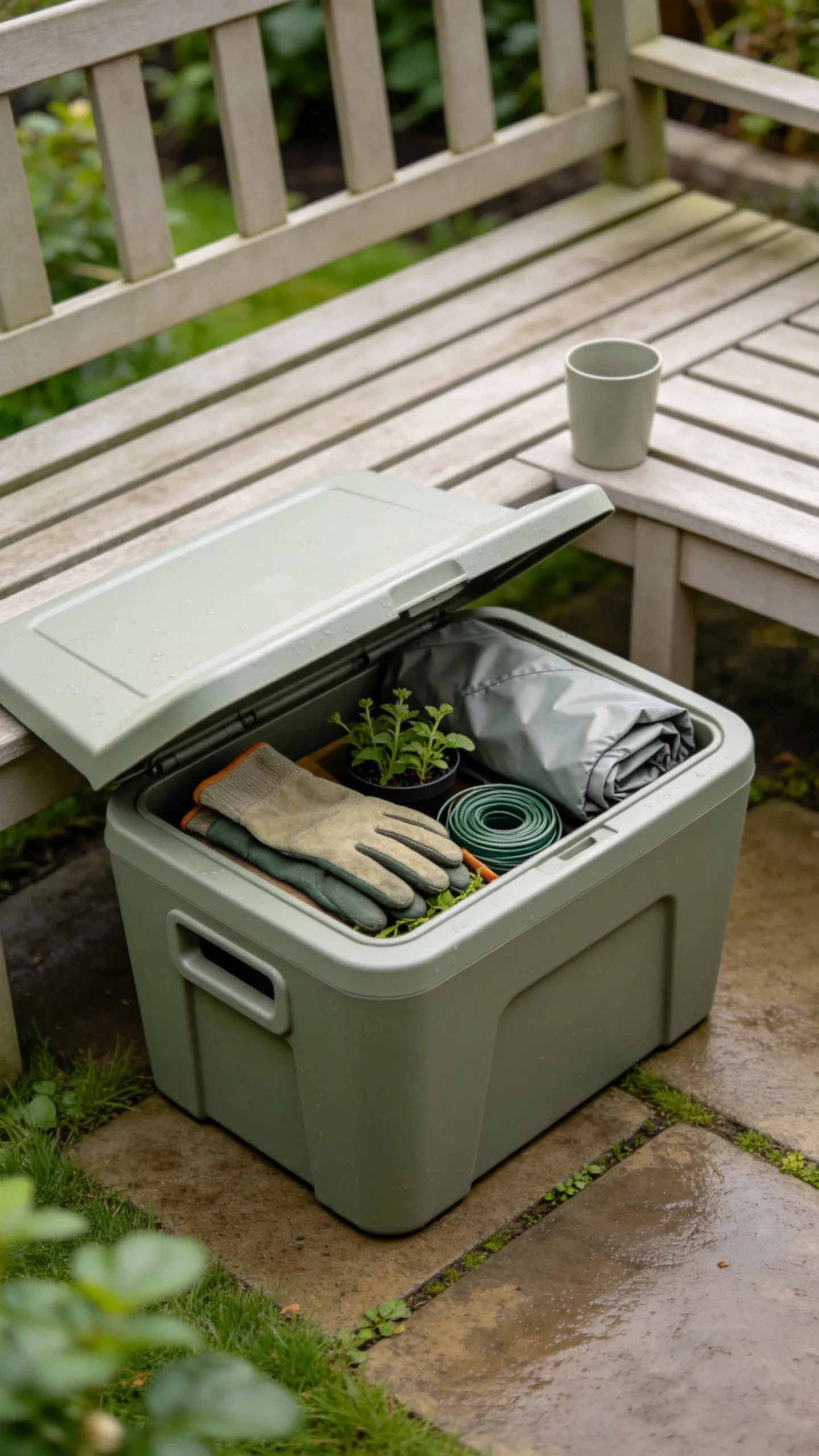
A weather-resistant storage stool can function as a side table, extra seat, and container for small patio supplies. Place it beside a bench or lounge chair to hold a drink, lantern, or book, then move it when more floor space is needed.
Look for a stable, flat-topped model with a lid that sheds rain. Use the interior for lightweight items such as gloves, plant ties, and folded furniture covers; damp cushions should be dried before storage. A stool with a handle or recessed grip is easier to reposition around a confined patio.
14. Create a Single-Color Container Scheme
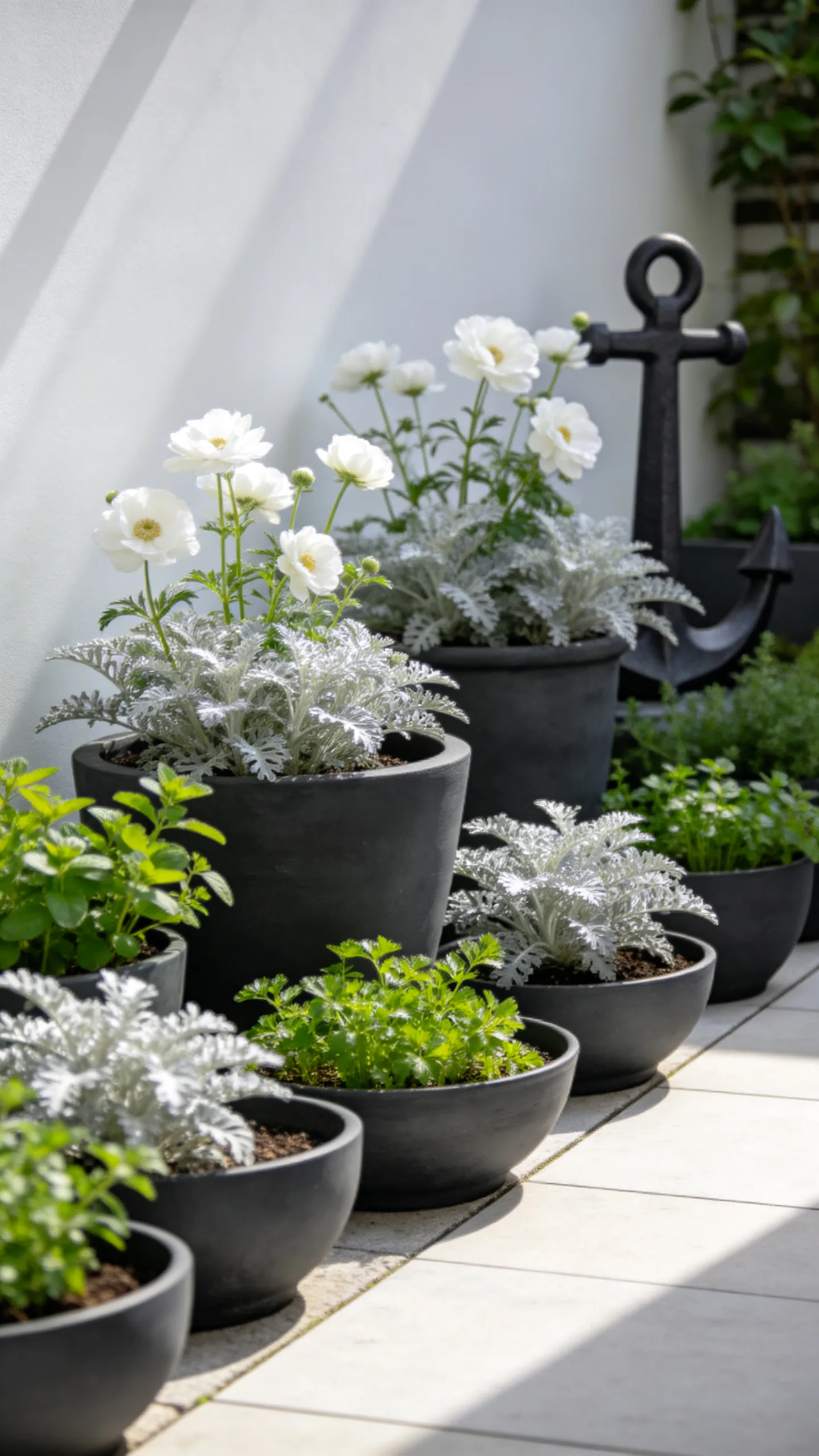
Limiting pots and flowers to a coordinated palette reduces visual clutter and helps a collection of plants look intentional. For example, combine charcoal containers with white flowers and silver foliage, or use terracotta pots with green herbs and soft purple blooms.
Vary container height and shape while repeating one or two colors throughout the arrangement. Choose plants based on actual light exposure and watering needs before focusing on color. Grouping plants with similar moisture requirements makes care easier and helps prevent one pot from staying too wet while another dries out.
15. Keep the Center Clear With a Perimeter Layout
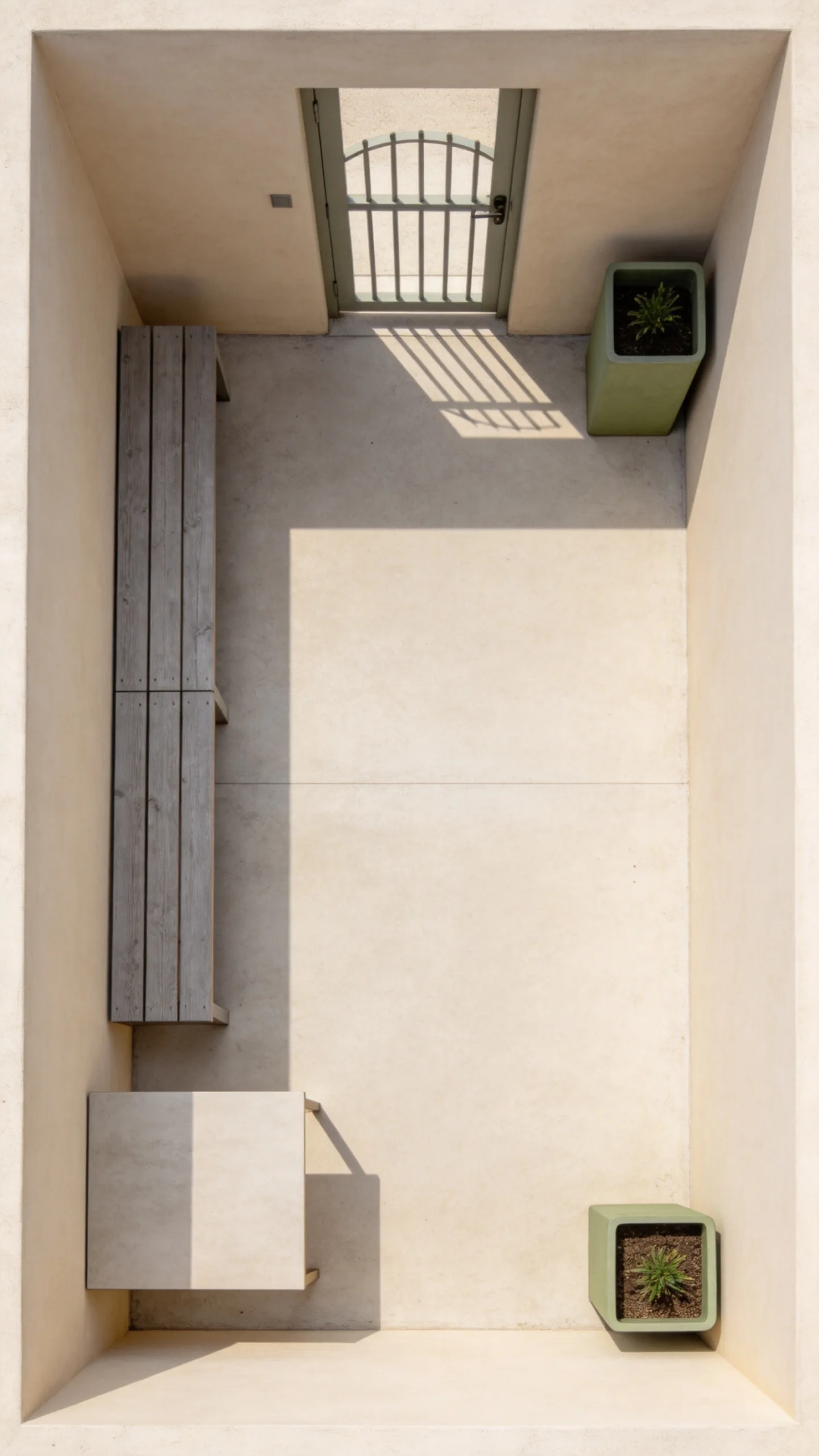
Arrange furniture and planters along the patio edges instead of filling the middle. A bench against the longest wall, a slim table near the door, and one tall planter in a far corner can create a comfortable setup while preserving an obvious walkway.
Measure the patio and mark furniture dimensions on the ground with painter’s tape before purchasing anything. Maintain a direct path to doors, gates, utility access points, and steps. This simple layout makes a small patio easier to navigate and allows the open center to serve multiple purposes, from casual seating to container care.