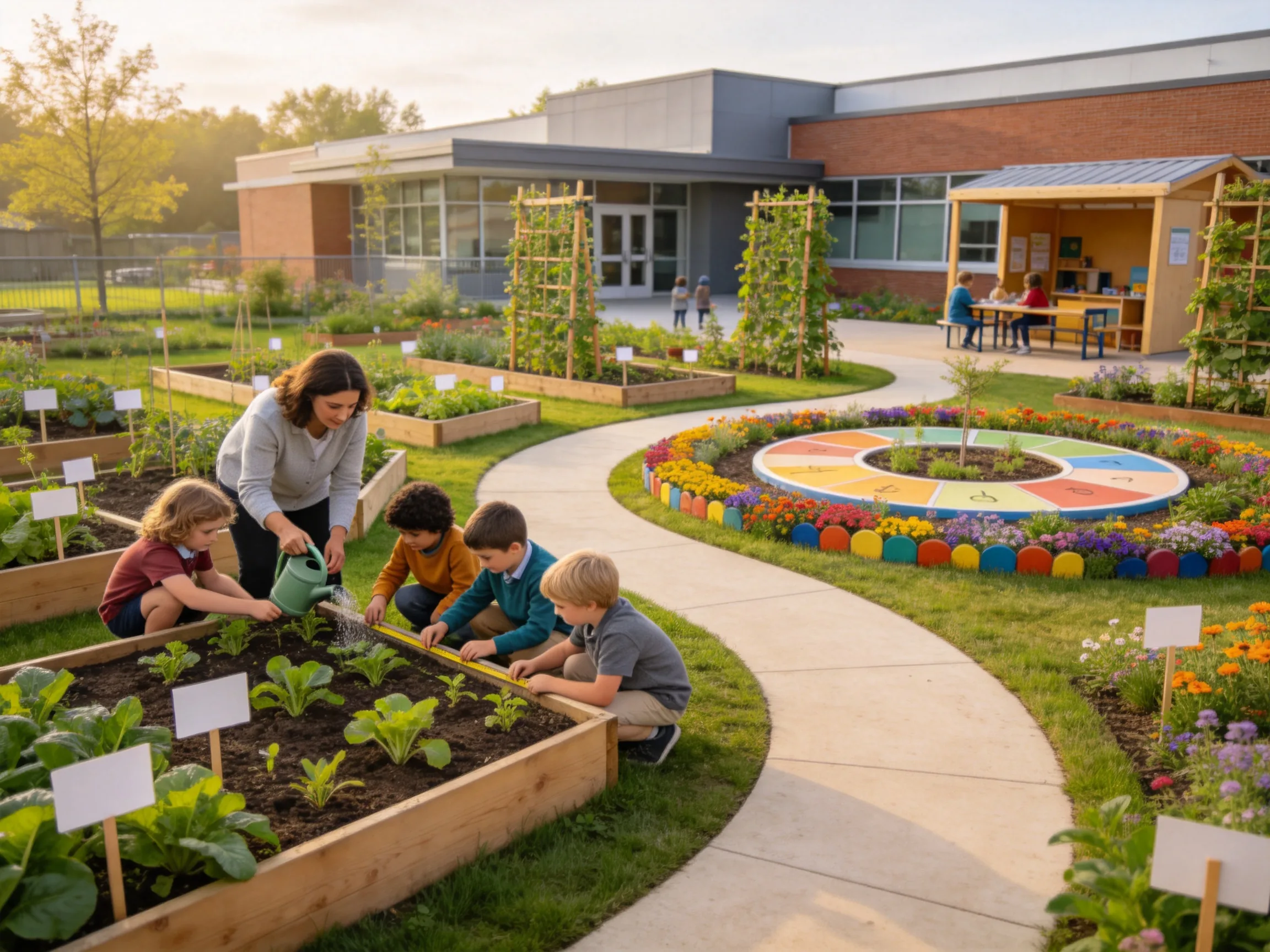
A well-planned school garden can turn science, math, nutrition, art, and environmental studies into hands-on lessons. The most practical designs use clearly defined growing areas, durable materials, accessible paths, and plants suited to the school calendar. These school garden design ideas can be adapted for a small courtyard, an open field, or a collection of containers near the classroom.
1. Curriculum-Based Raised Bed Garden
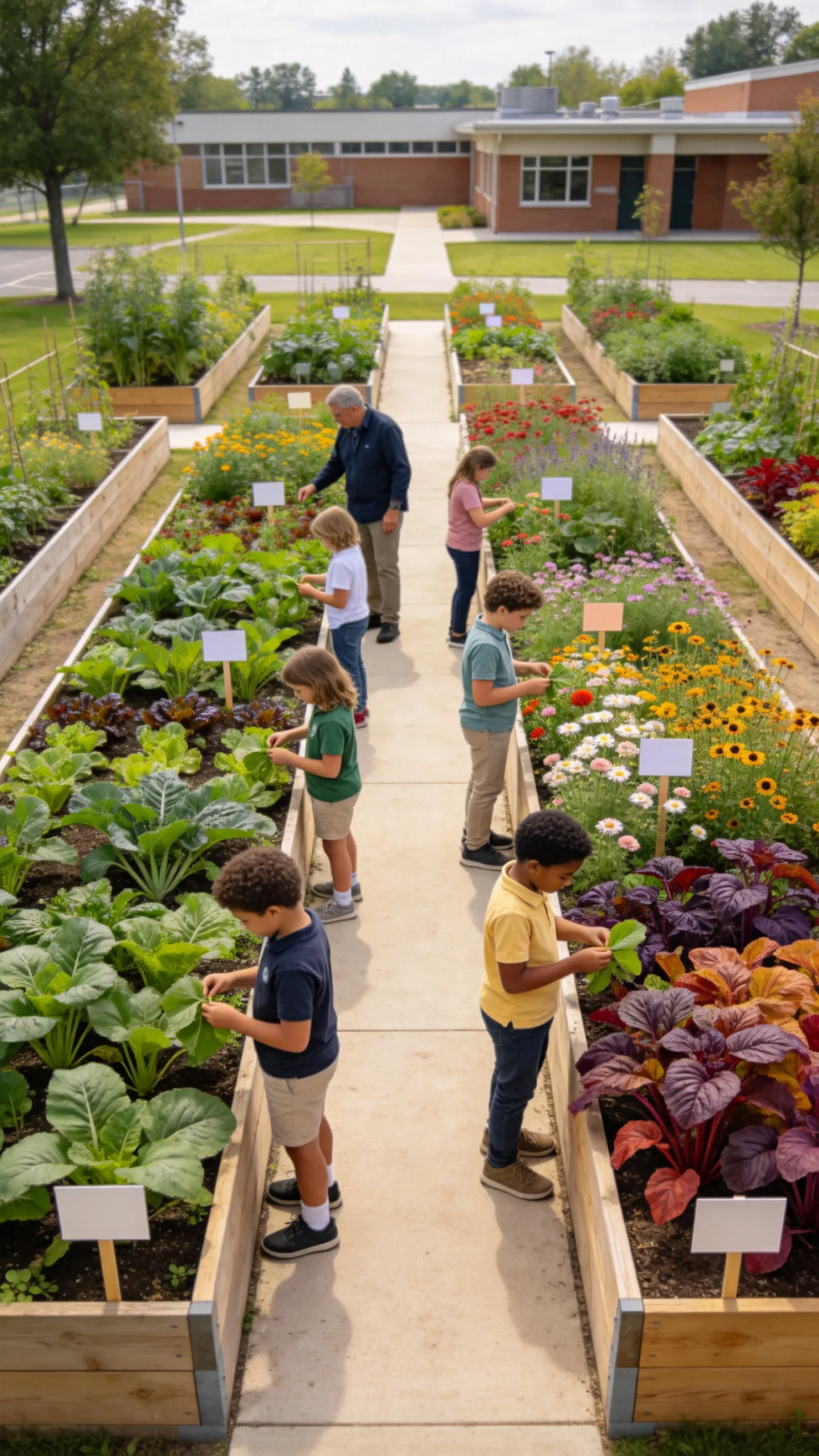
Arrange several raised beds so that each one supports a different subject or grade-level project. One bed might hold vegetables for nutrition lessons, while another contains flowers for pollinator studies and a third features plants used for natural dyes. Beds measuring about 3 to 4 feet wide allow students to reach the center without stepping on the soil.
Leave paths at least 3 feet wide between beds, or wider where wheelchair access is needed. Use untreated rot-resistant lumber, recycled composite boards, brick, or galvanized steel for the frames. Label each bed with its learning purpose, planting schedule, and participating class so teachers can coordinate maintenance throughout the year.
2. Pizza-Shaped Fraction Garden
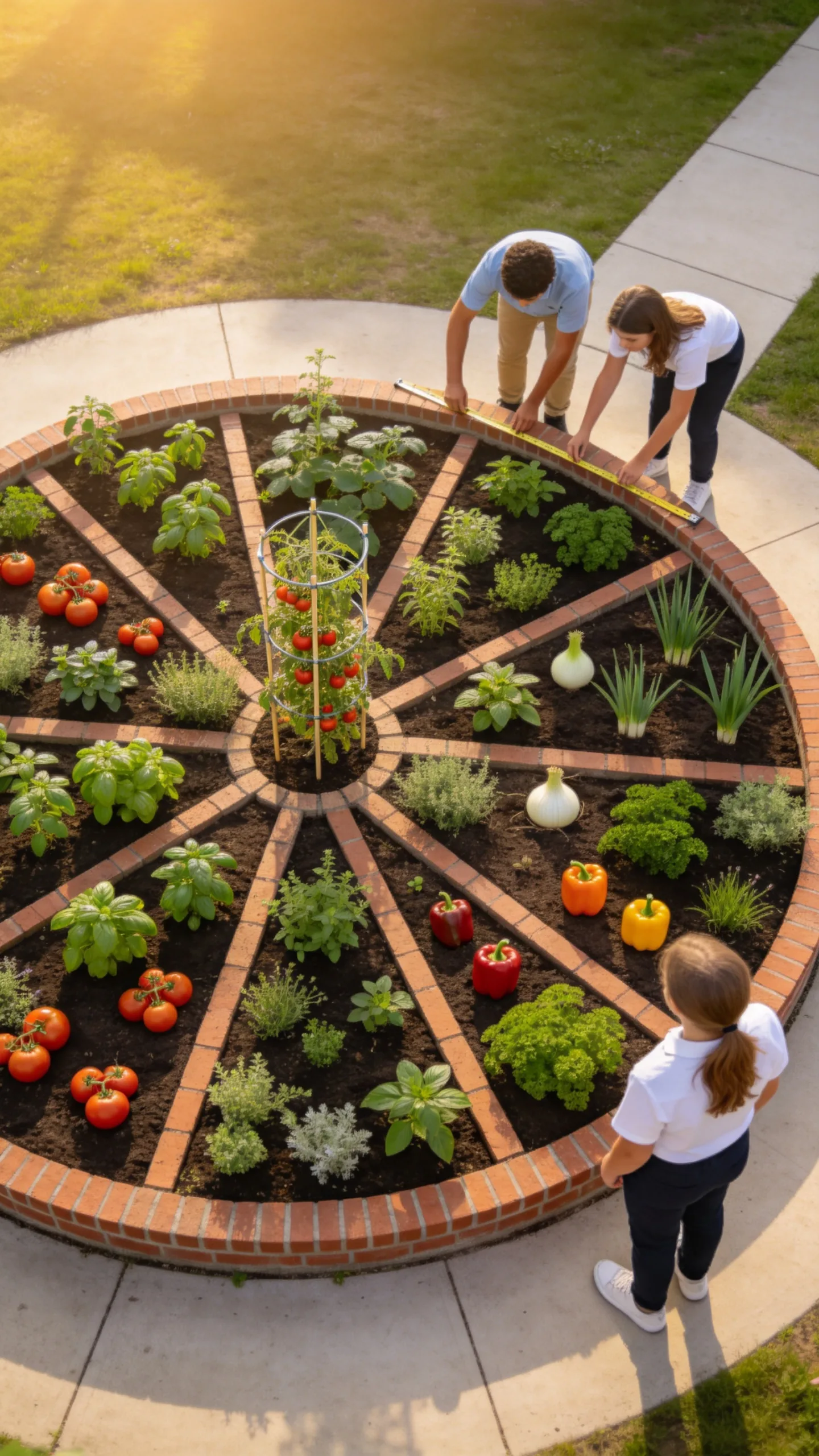
Create a circular bed divided into equal wedges to teach fractions, measurement, and food origins. Mark the sections with narrow brick, stone, or wood borders, then plant one pizza-related crop in each wedge. Possible choices include tomatoes, basil, oregano, peppers, onions, and parsley.
Choose compact or determinate tomato varieties for easier care, and add a short tomato cage or central trellis where needed. Students can calculate the area of the circle, compare plant growth in each fraction, and design recipes based on the harvest. In short growing seasons, start seedlings indoors so plants are established before the school year ends.
3. Five-Senses Exploration Garden
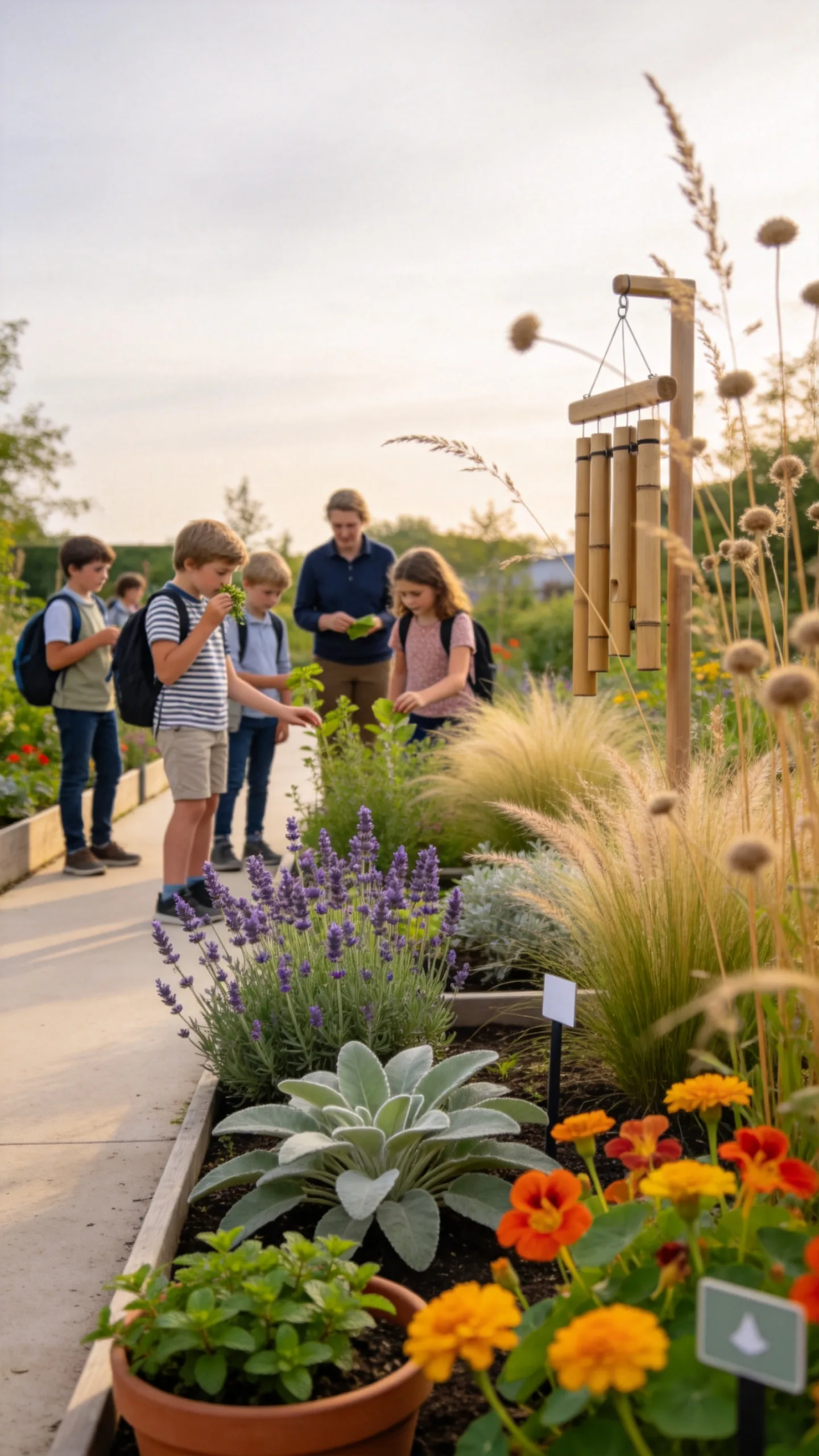
Divide a bed or container grouping into areas for sight, smell, touch, taste, and sound. Use fragrant herbs such as mint, thyme, lavender, or lemon balm for scent; soft lamb’s ear and textured ornamental grasses for touch; and colorful nasturtiums or calendula for visual study. Sound can come from grasses, bamboo chimes, or seedpods that move in the breeze.
Place vigorous spreaders such as mint in buried pots or separate containers so they do not take over the bed. Confirm that every plant is non-toxic and suitable for the school’s location before allowing tasting. Wide paths, low planting heights, and large-print or Braille labels can make the space easier for more students to explore.
4. Pollinator Observation Garden
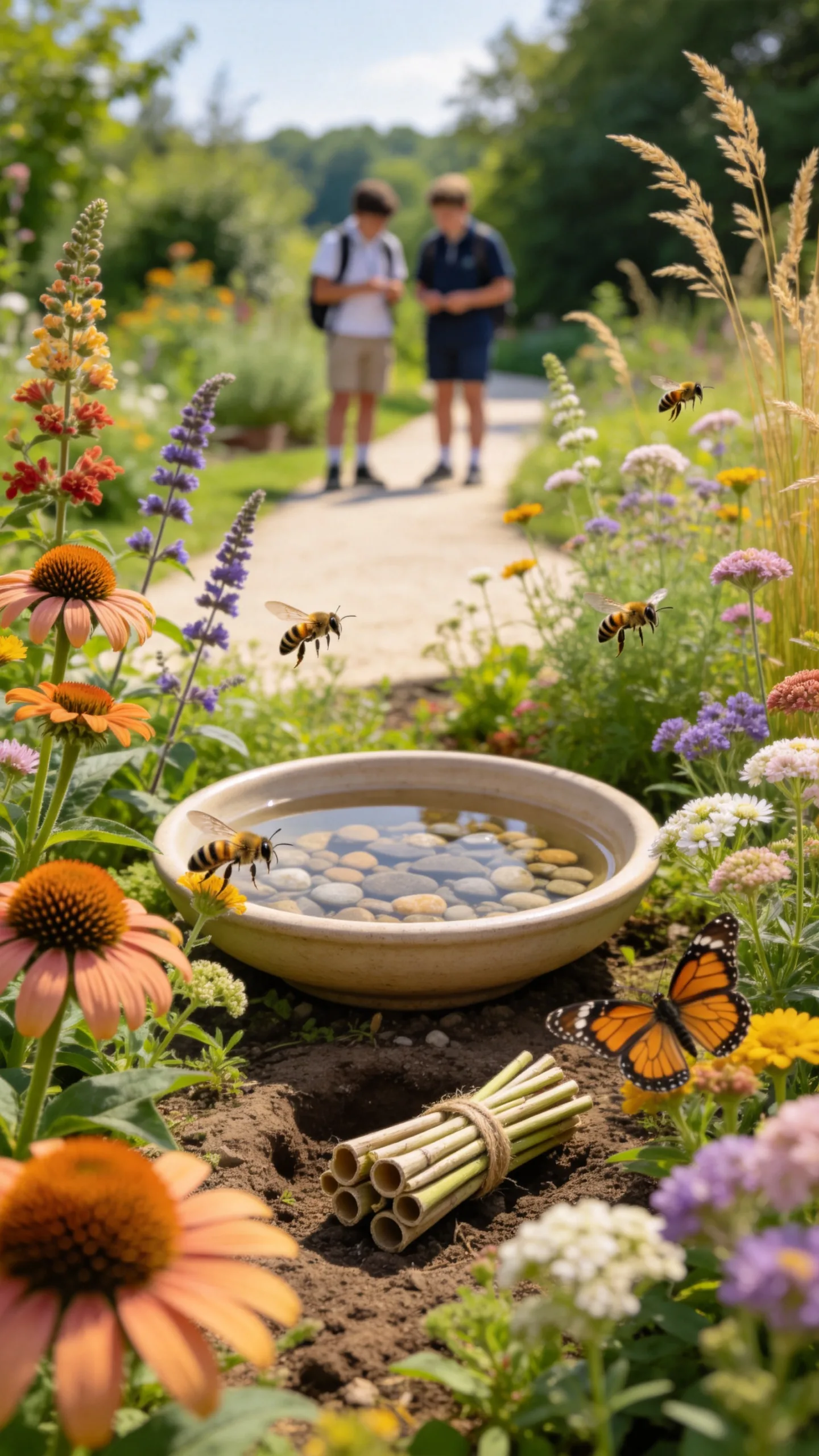
Plant nectar-rich flowers in clusters so students can observe bees, butterflies, moths, and other beneficial insects. Include plants with different bloom periods to support lessons across multiple seasons. Depending on the local climate, suitable choices may include coneflower, bee balm, goldenrod, asters, milkweed, salvia, yarrow, and native flowering grasses.
Position the garden in full sun and away from busy entrances or narrow play areas. Add a shallow water dish filled with pebbles, bare soil patches for ground-nesting bees, and a few hollow plant stems for habitat studies. Teachers can use observation sheets to record bloom dates, insect visits, weather conditions, and changes in pollinator activity.
5. Three Sisters Companion Planting Bed
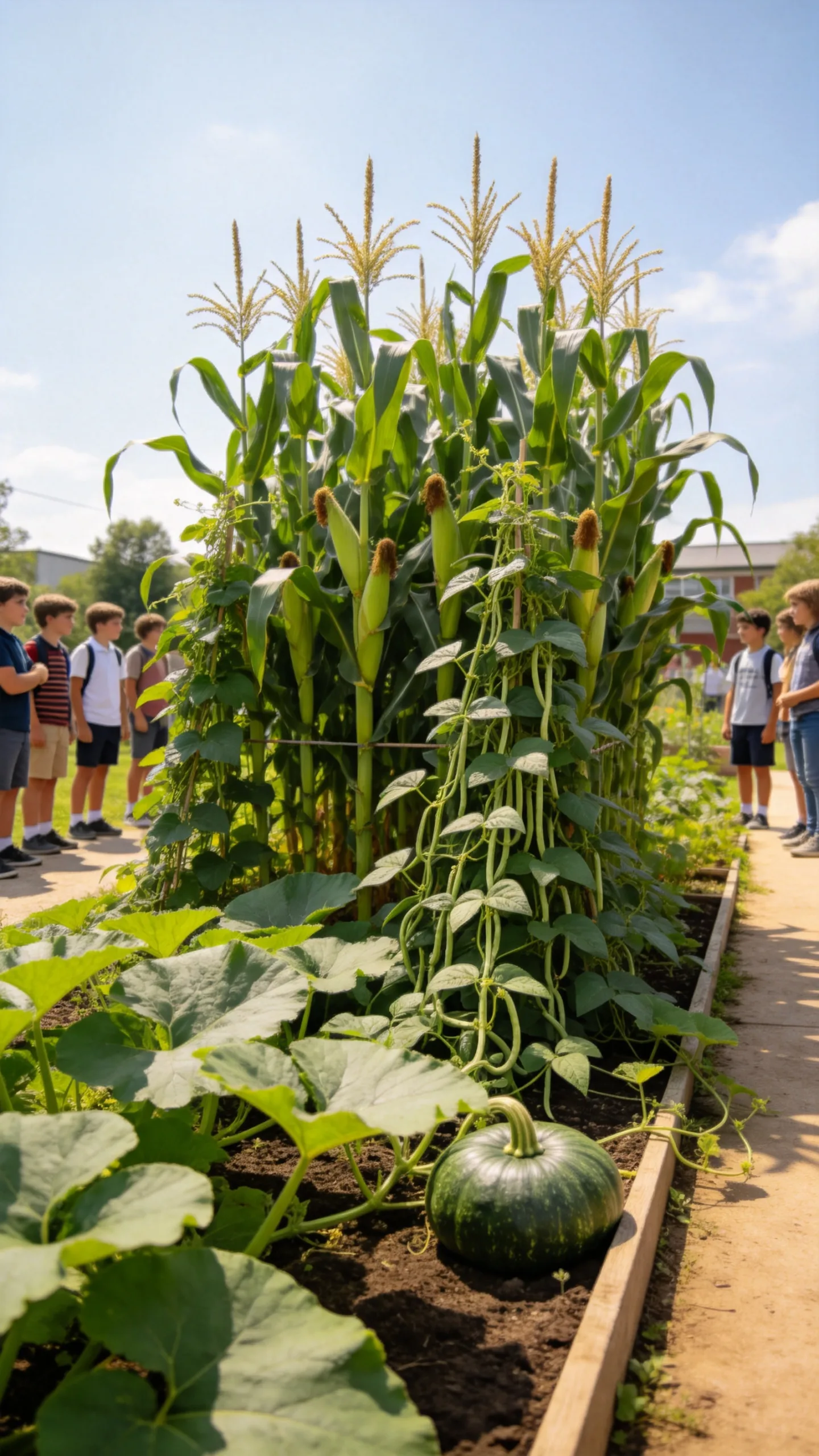
Use a sunny circular or rectangular bed to demonstrate the traditional companion planting of corn, pole beans, and squash. Corn provides vertical support, beans climb the stalks, and squash leaves cover the soil. The planting offers opportunities to discuss plant relationships, food systems, and Indigenous agricultural knowledge with appropriate cultural context.
Plant corn in a block rather than a single row to improve pollination. Once the stalks are several inches tall, sow pole beans nearby and place squash toward the outer edge, where vines have room to spread. This design needs a long, warm growing season, so schools in cooler regions may need early-maturing varieties or a different locally significant companion planting system.
6. Grid Garden for Math Lessons
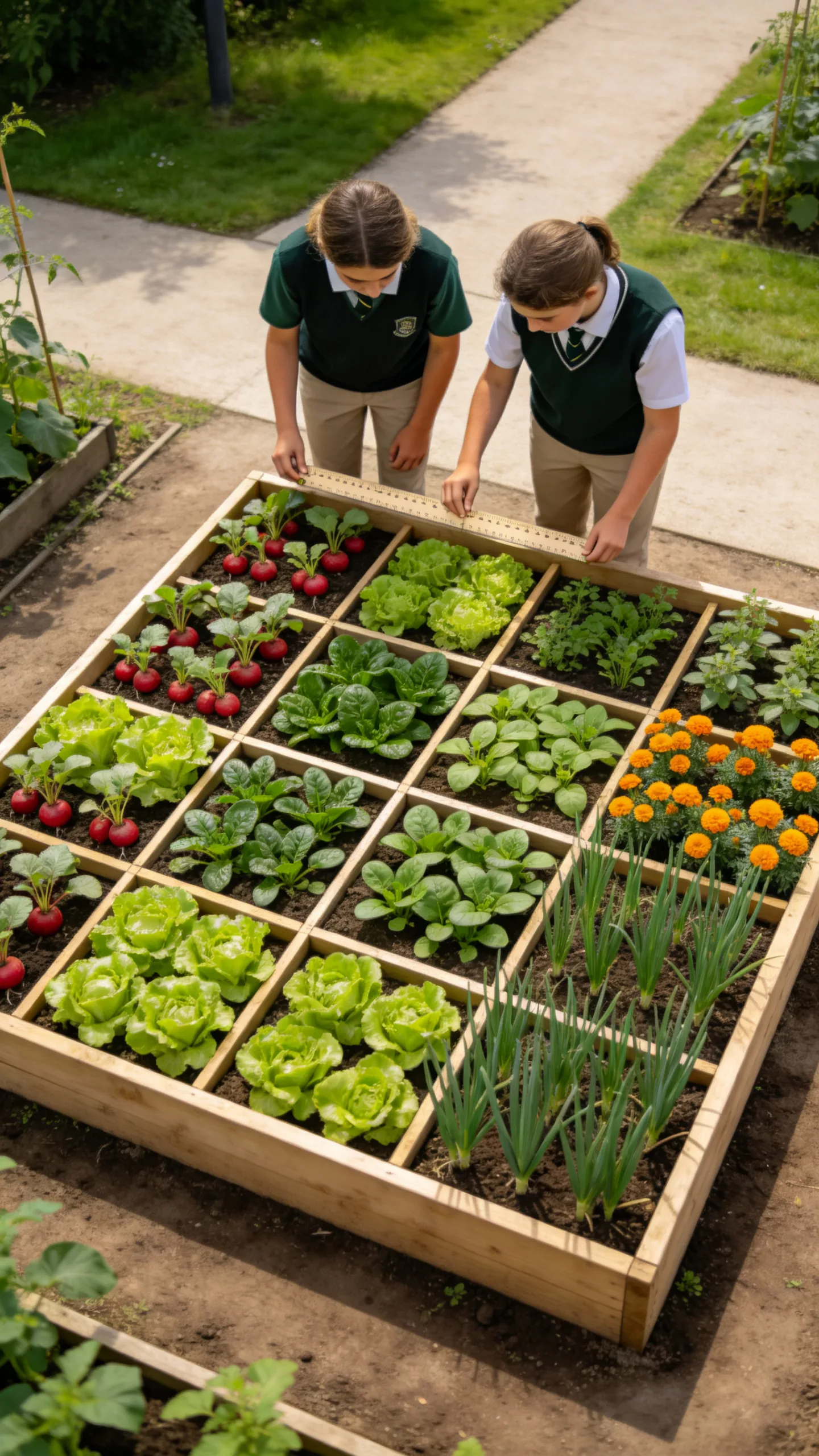
Divide a square raised bed into equal sections using thin wood strips or weather-resistant string. A 4-by-4-foot bed can become sixteen 1-foot squares, making it easy for students to practice counting, multiplication, area, perimeter, and data collection. Assign each square a crop with spacing appropriate to its mature size.
Use quick-growing plants such as radishes, lettuce, spinach, bush beans, dwarf marigolds, and green onions. Students can compare germination rates, measure plant height, graph weekly changes, and calculate harvest totals. The compact layout reduces wasted space and keeps each class experiment clearly separated.
7. Vertical Courtyard Growing Wall
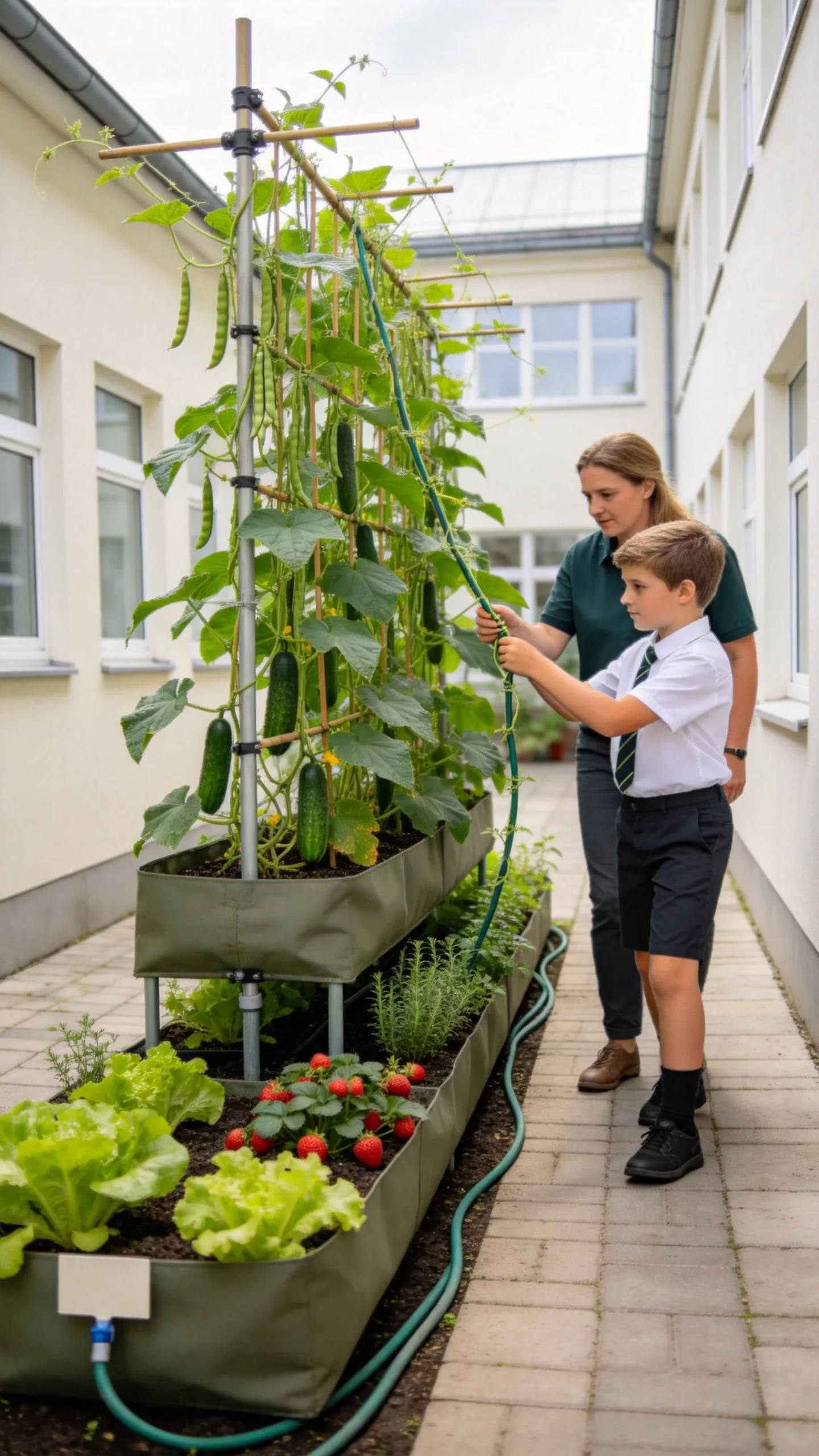
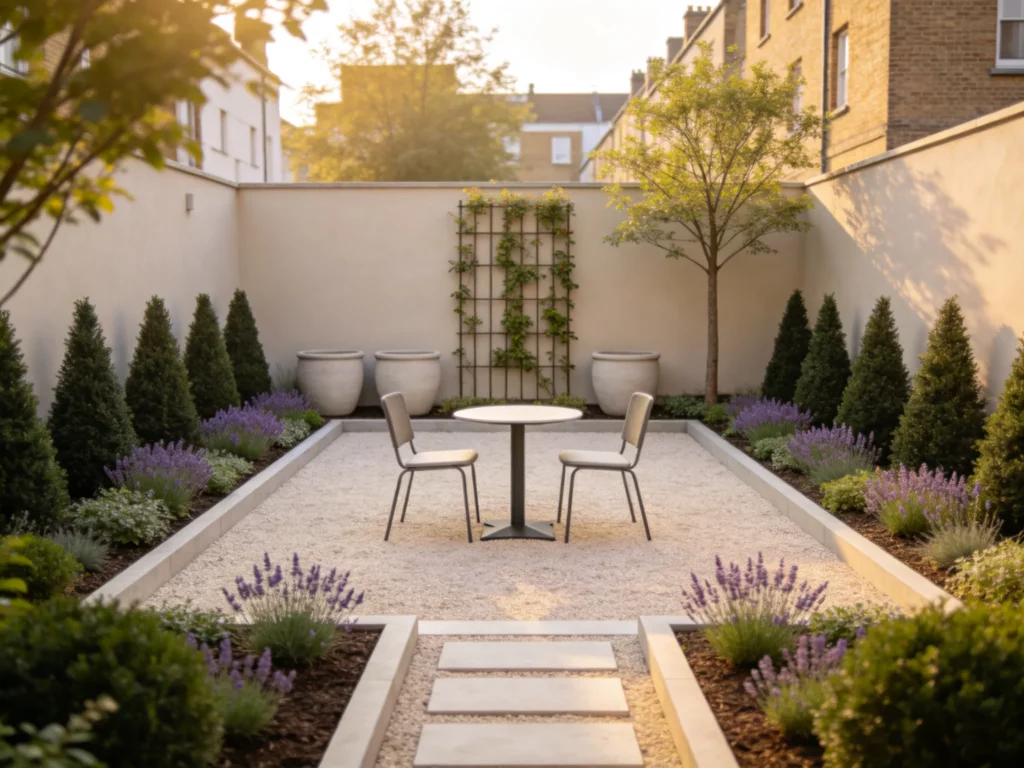
Install a freestanding trellis, wall-mounted pocket system, or tiered planter where ground space is limited. Pole beans, peas, cucumbers, small gourds, and compact flowering vines can grow upward, while shallow pockets can hold lettuce, strawberries, or herbs. Vertical planting makes a narrow courtyard or paved area useful without blocking walking routes.
Secure structures firmly and position them so they do not create trip hazards or damage building surfaces. Because vertical containers dry out quickly, use drip irrigation or assign a simple watering schedule. Students can study climbing strategies, compare sun exposure at different heights, and measure how vines attach to their supports.
8. Seasonal Salad Garden
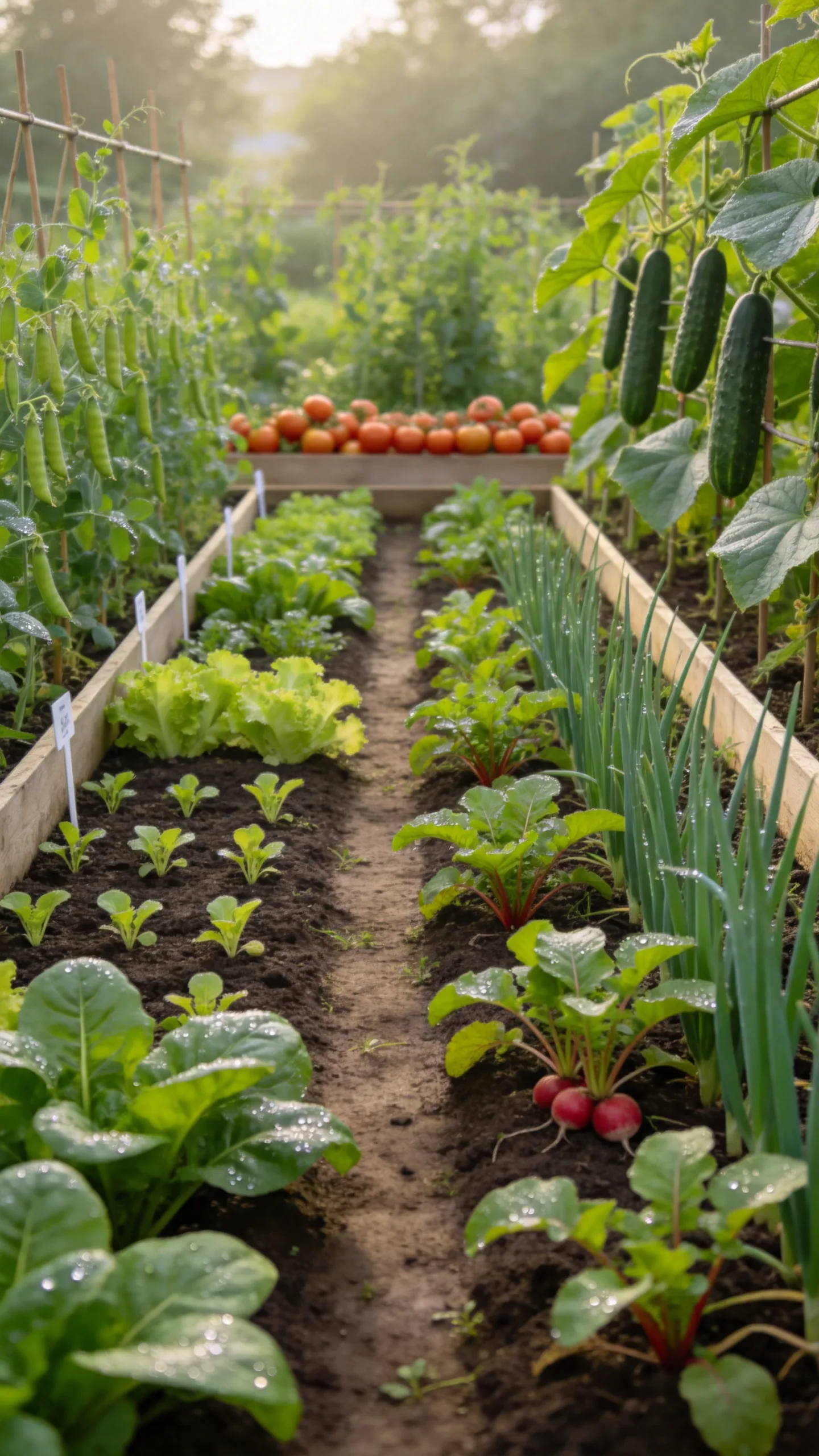
Design a bed around crops that students can grow, harvest, and taste during the active school term. In cool weather, plant leaf lettuce, spinach, arugula, radishes, peas, and green onions. In warmer periods, use cherry tomatoes, bush beans, cucumbers, peppers, or heat-tolerant greens suited to the local climate.
Arrange taller crops along the north side of the bed in the Northern Hemisphere so they cast less shade on shorter plants. Sow small amounts every two or three weeks instead of planting everything at once, creating repeated harvests for classroom tastings. Before serving produce, establish school-approved washing procedures and check food allergy policies.
9. Rain Garden Learning Basin
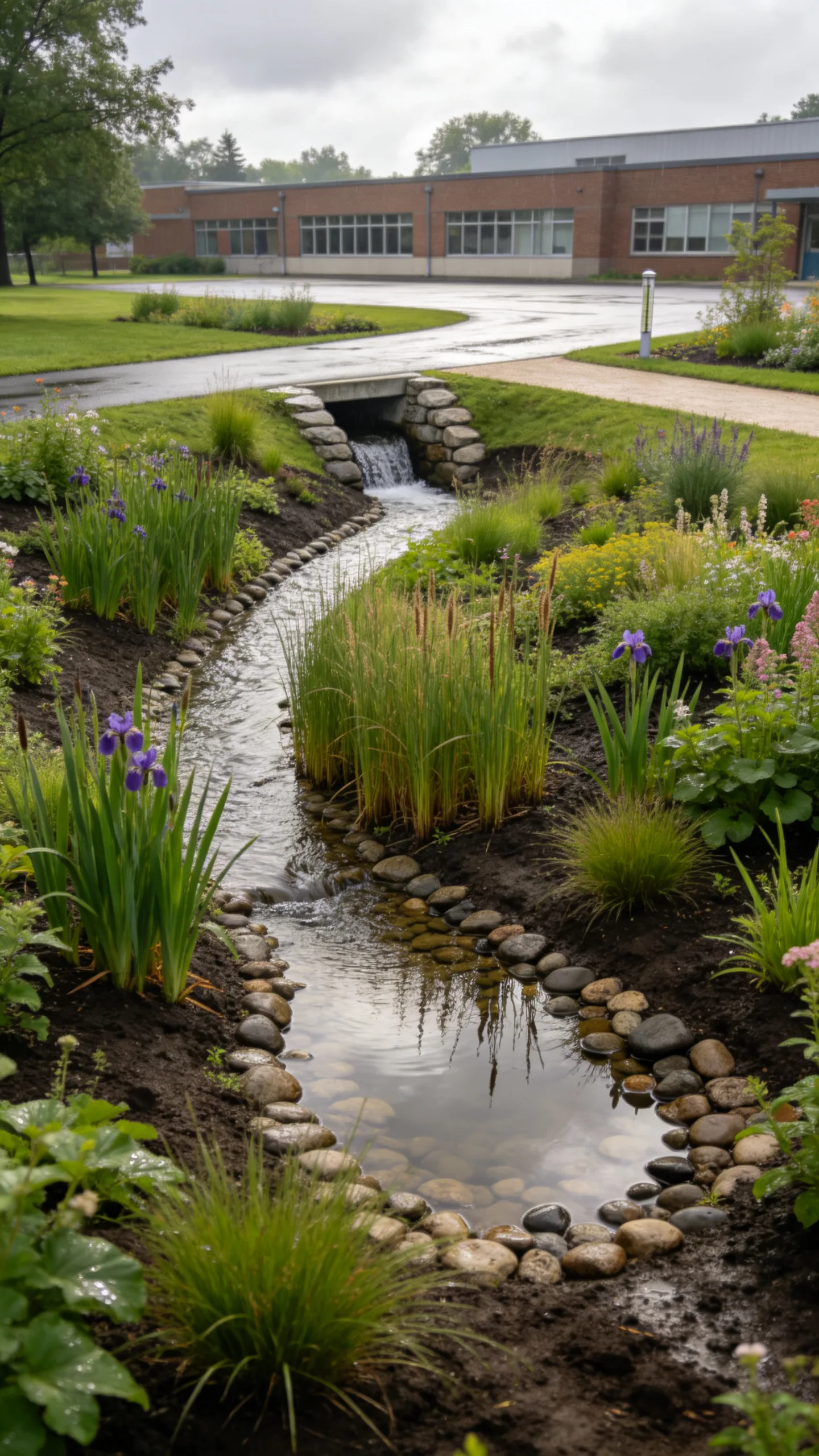
Turn a shallow low point near a downspout or paved area into a rain garden that demonstrates stormwater management. Shape a gently sloped basin that temporarily holds runoff, then fill it with plants that tolerate both wet and dry conditions. Native sedges, rushes, irises, grasses, and moisture-tolerant flowering perennials are often appropriate, depending on the region.
Keep the basin away from building foundations, septic systems, and underground utilities. Water should soak into the soil rather than remain standing for long periods, so test drainage before planting. Students can measure rainfall, observe infiltration, compare runoff from different surfaces, and document which plants handle changing moisture levels best.
10. Compost-to-Crops Demonstration Area
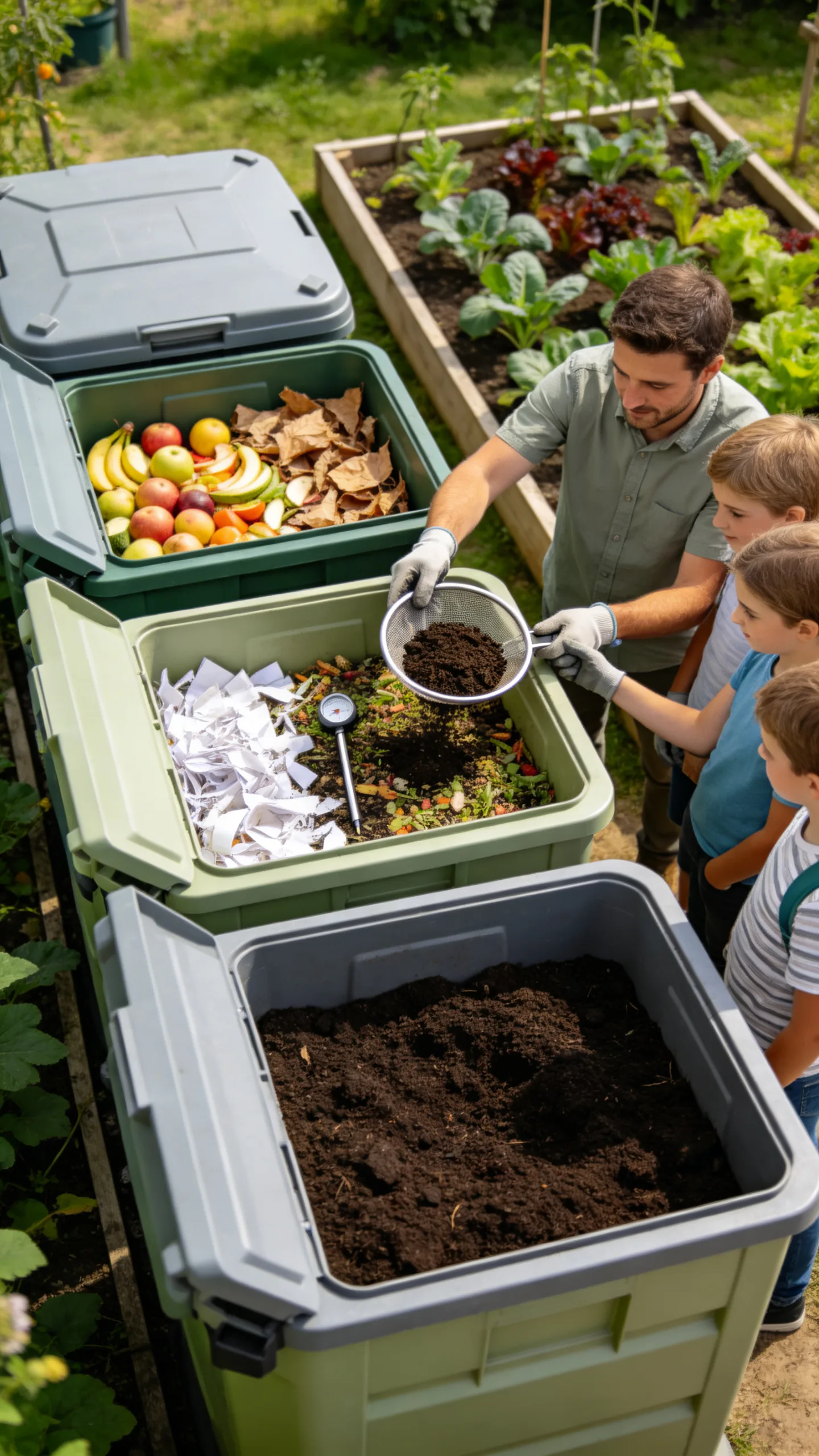
Place a compost station beside vegetable beds so students can follow the cycle from food scraps to finished soil amendment. Use two or three enclosed bins: one for adding material, one for active decomposition, and one for curing compost. A lidded tumbler may be more practical where pest control or limited space is a concern.
Post a clear sign showing acceptable materials, such as fruit and vegetable scraps, dry leaves, shredded paper, and untreated plant trimmings. Avoid meat, dairy, oily foods, pet waste, and diseased plants. Students can compare carbon-rich and nitrogen-rich ingredients, monitor temperature and moisture, and screen mature compost before adding it to beds.
11. Herb Garden With Plant-Use Labels
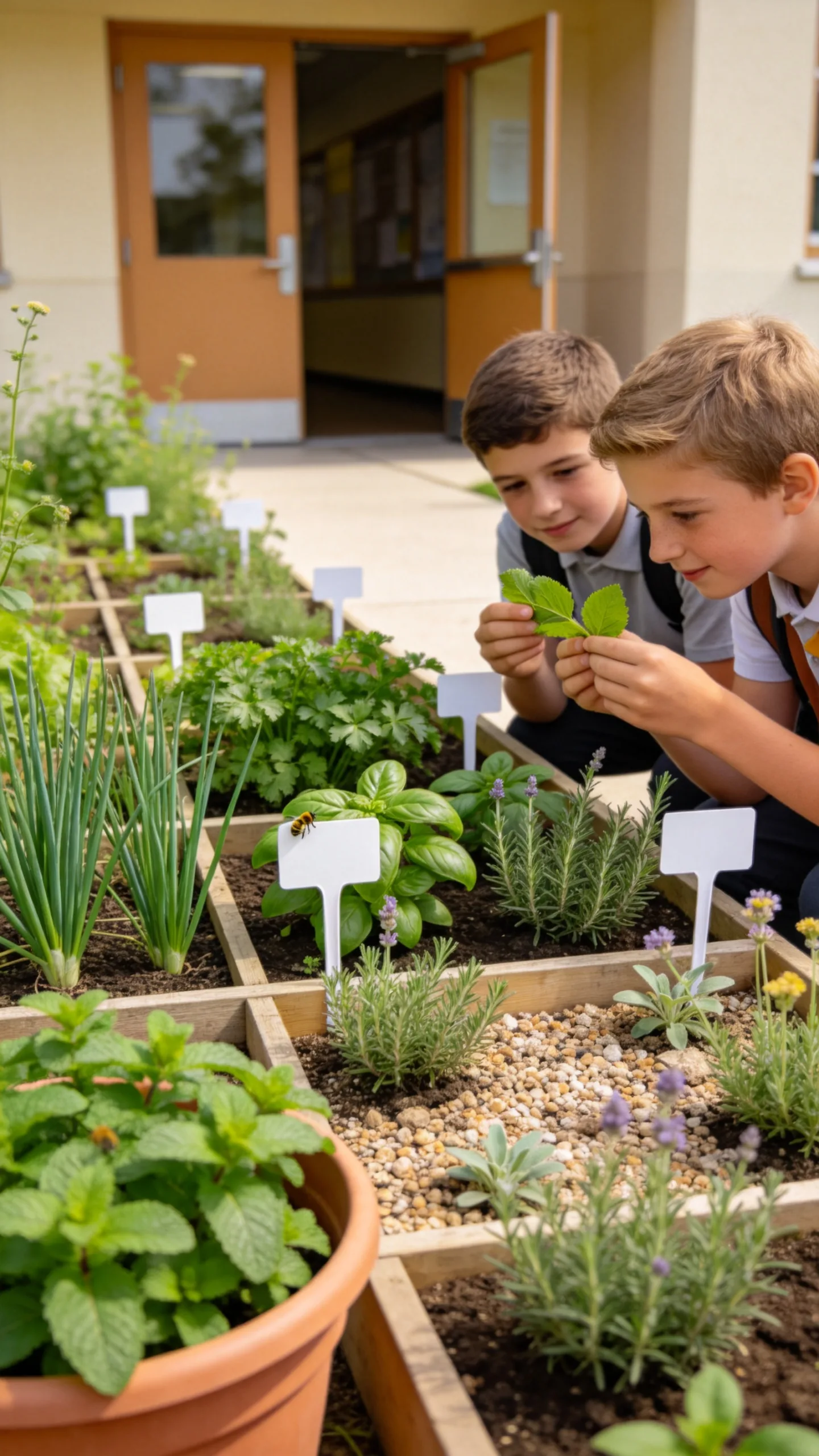
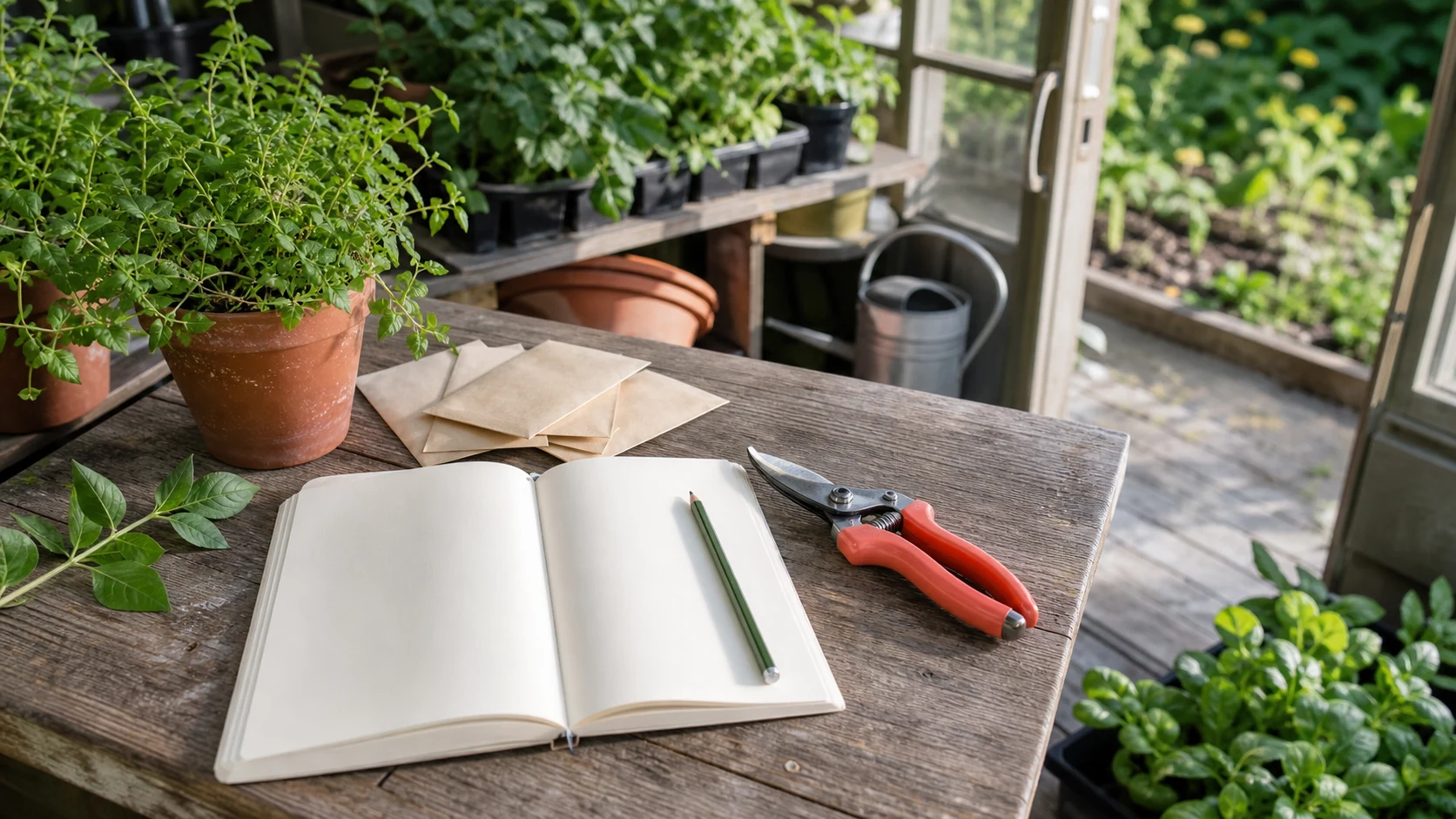
Create a compact herb garden near a classroom door or outdoor teaching area. Plant culinary herbs such as chives, parsley, thyme, sage, cilantro, and basil in separate sections or labeled pots. Include flowering herbs where suitable so students can observe pollinators and compare leaf shapes, aromas, and growth habits.
Match the planting season to each herb: cilantro and parsley generally prefer cooler conditions, while basil needs warm weather. Use containers for spreading herbs such as mint, and provide gritty, well-drained soil for Mediterranean herbs such as rosemary and thyme. Labels can include the plant’s common name, scientific name, edible part, traditional uses, and care requirements.
12. Phenology and Weather Tracking Garden
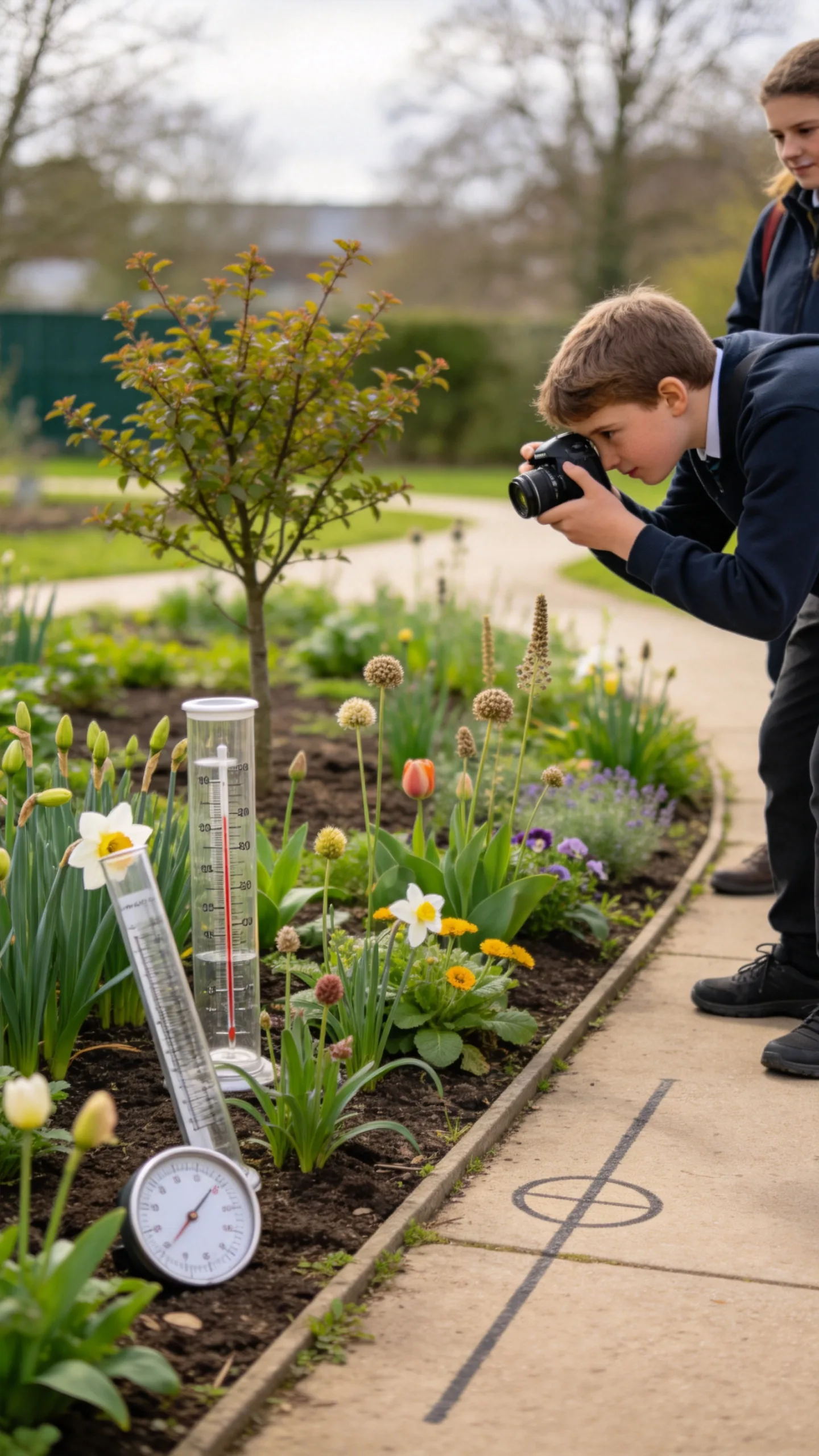
Select a small group of perennial plants, bulbs, shrubs, or native species that show clear seasonal changes. Students can record the first shoots, leaves, flower buds, open blooms, seed formation, autumn color, and dormancy. Place a simple rain gauge and thermometer nearby to connect plant development with weather patterns.
Choose long-lived plants that can remain in the same location for several years. Mark permanent observation points so students take photos from consistent angles. Comparing records from year to year helps classes investigate seasonal timing without requiring a large growing area or frequent replanting.
13. Seed-Saving and Plant Life Cycle Bed
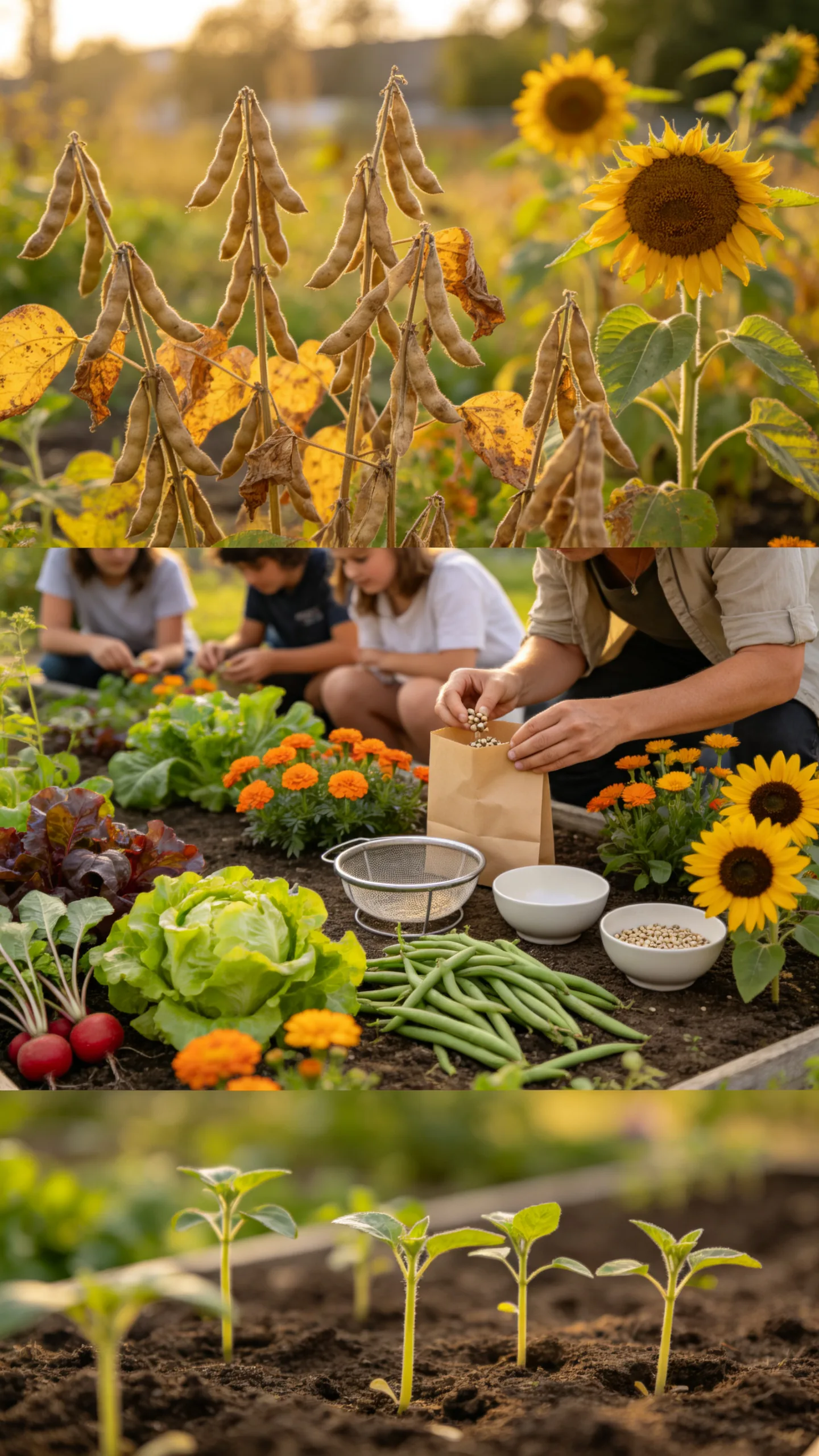
Dedicate one bed to open-pollinated plants that can be followed from seed to flower and back to seed. Easy options include beans, peas, lettuce, radishes, sunflowers, marigolds, and calendula. Let selected plants mature fully instead of harvesting all of them for food.
Separate varieties when necessary to reduce unwanted cross-pollination, and label each planting carefully. Students can collect dry seeds, remove chaff, test germination, and store seed packets in a cool, dry place. This bed works especially well when mature seed collection aligns with the school term; otherwise, summer maintenance support may be needed.
14. Outdoor Classroom With Planted Borders
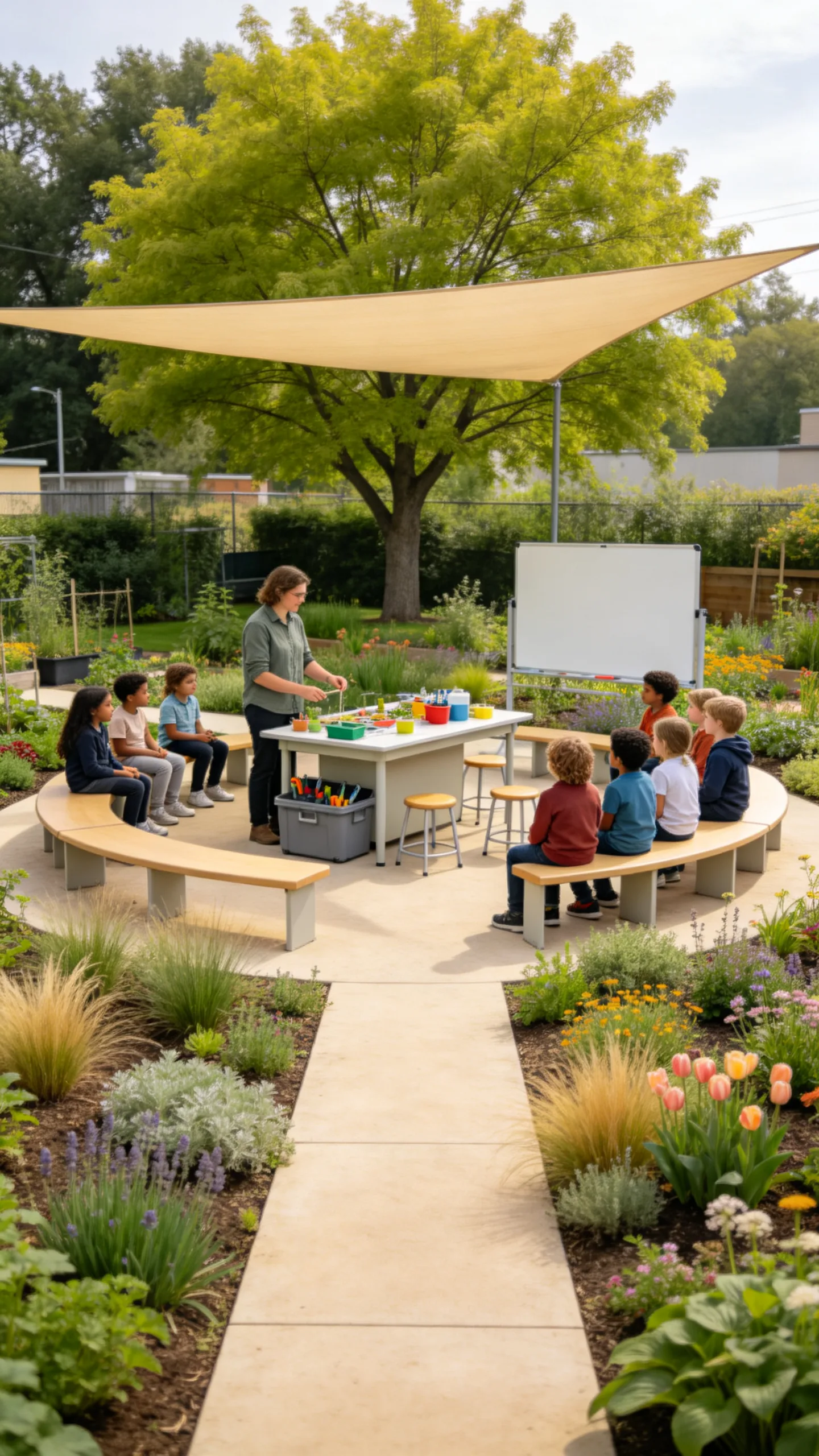
Build a simple teaching circle or semicircle using benches, logs, movable stools, or a paved gathering area. Surround the seating with low planted borders rather than tall vegetation that blocks supervision. Durable herbs, ornamental grasses, spring bulbs, and regionally appropriate perennials can define the space without reducing visibility.
Add a weatherproof whiteboard, storage box for tools, and a demonstration table with a washable surface. A deciduous shade tree or overhead sail can make lessons more comfortable, but avoid placing seating directly beneath plants that drop messy fruit or brittle branches. Keep at least one firm, level route into the classroom area for accessible entry.
15. Accessible Container and Tabletop Garden
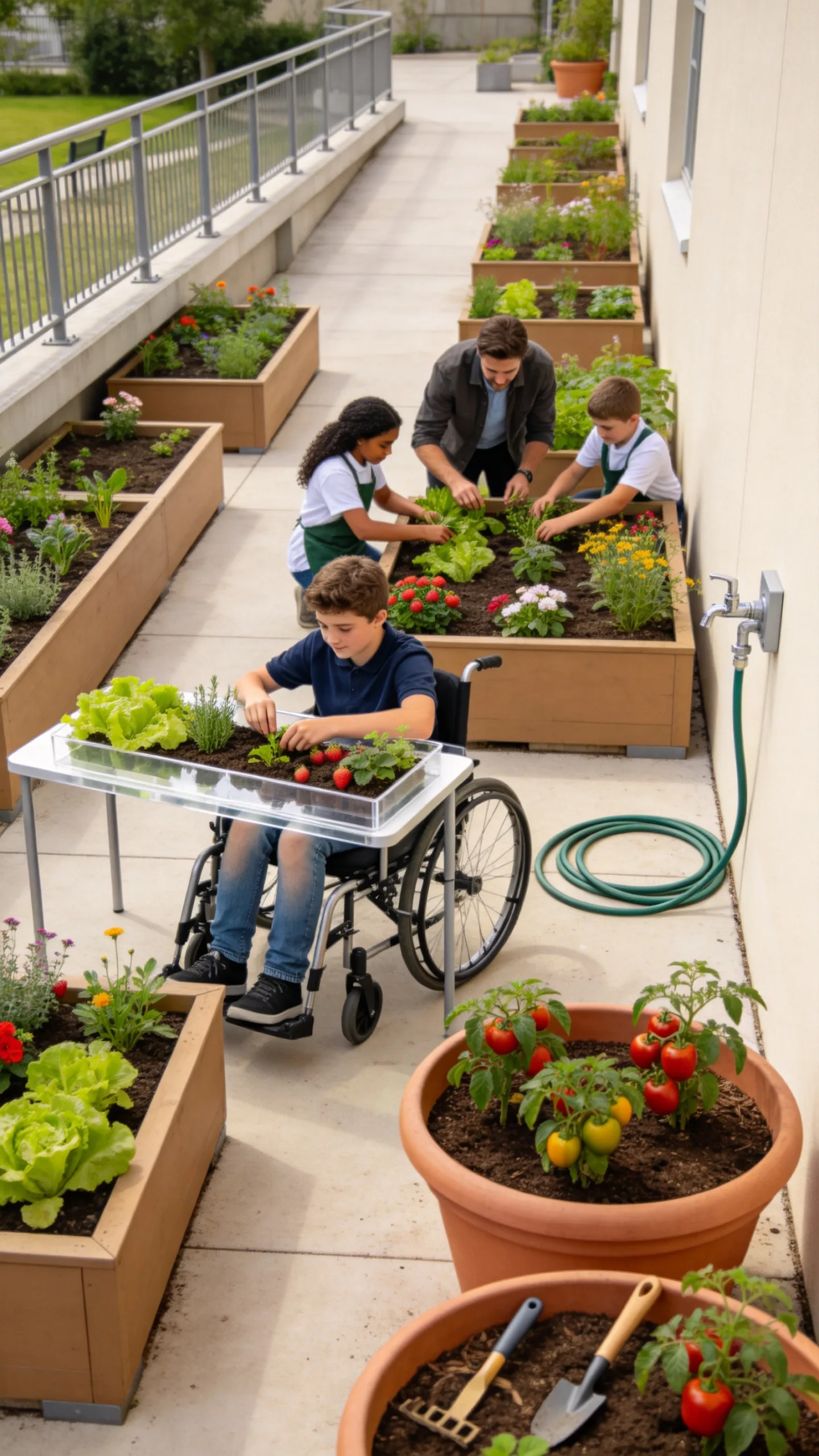
Use elevated planters, railing boxes, or containers on sturdy tables to bring plants within easy reach of students who cannot comfortably work at ground level. Choose containers with enough depth for the crop: shallow boxes suit lettuce and herbs, while tomatoes and peppers generally need larger pots with greater soil volume.
Provide clear knee space beneath tabletop beds, smooth path surfaces, and lightweight tools with easy-grip handles. Position containers near a water source and add mulch to slow moisture loss. Compact vegetables, strawberries, edible flowers, and sensory herbs make the area productive without requiring students to bend, kneel, or cross uneven ground.