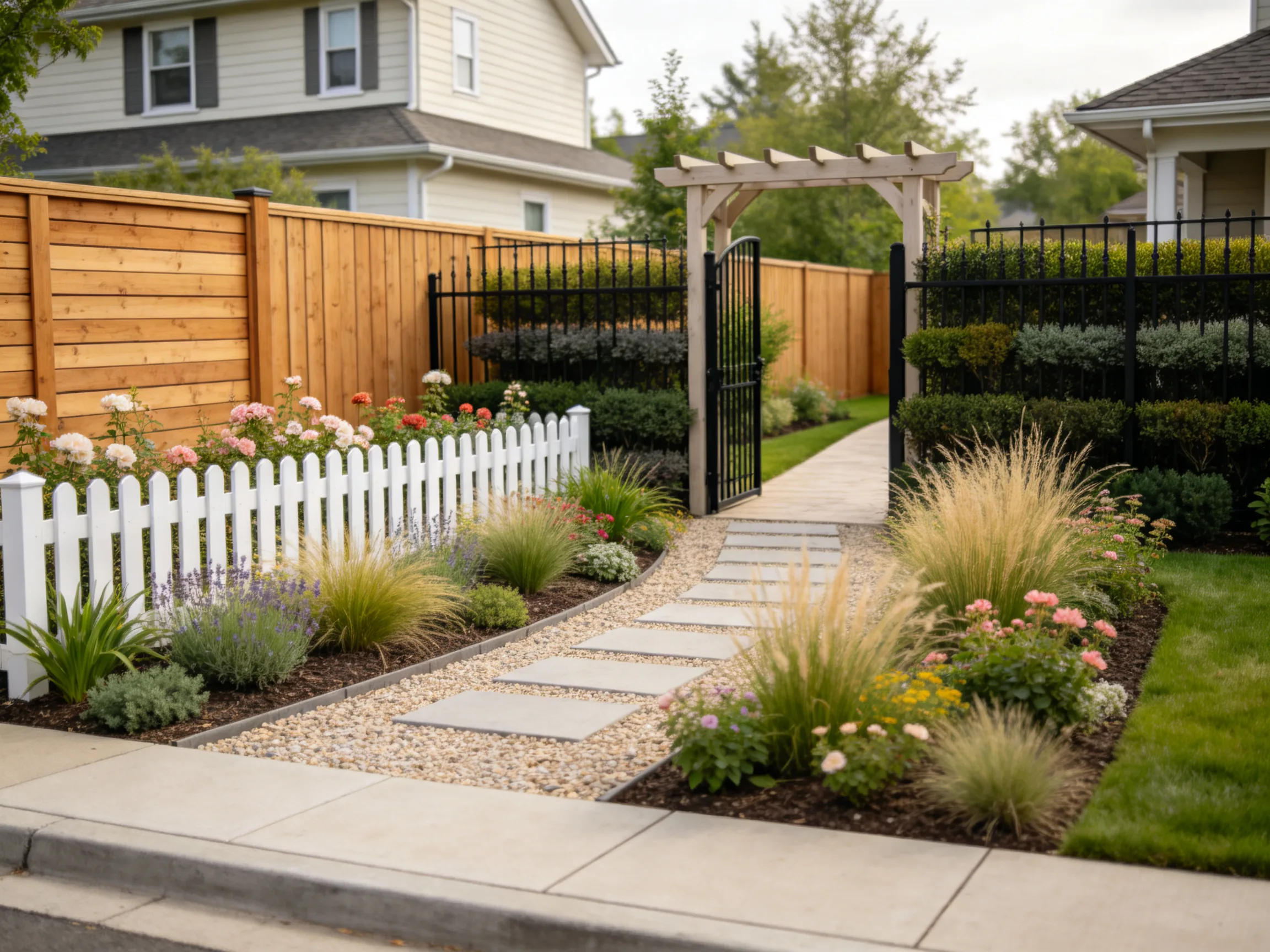
The right fence can do more than mark a property line. It can screen a patio from neighbors, frame a garden bed, soften a driveway edge, or make a front yard feel more polished from the street. These outdoor fence ideas combine privacy, style, and practical yard design so you can choose an option that fits your space, sunlight, maintenance level, and planting plans.
1. Horizontal Cedar Slat Fence
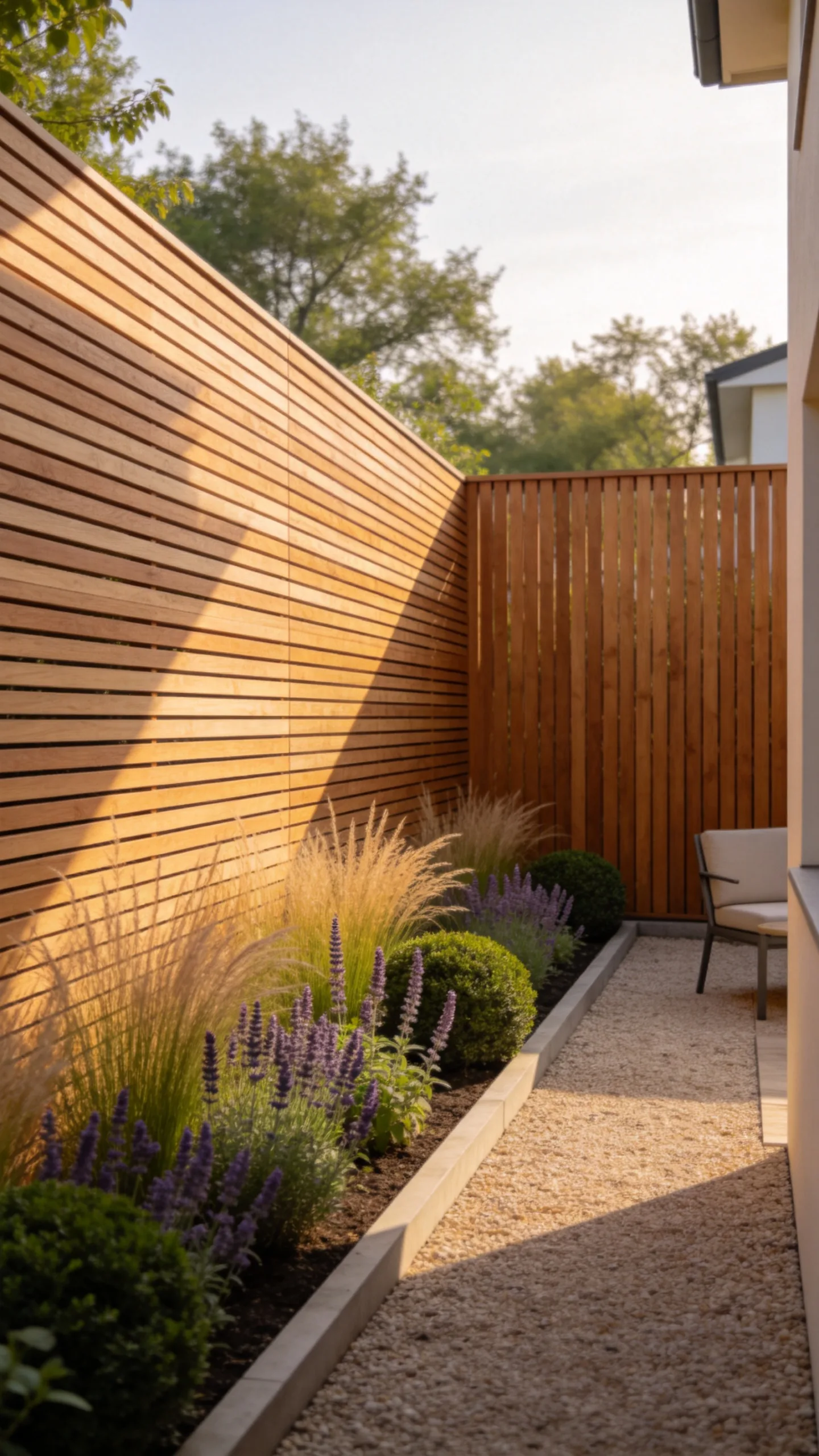
A horizontal cedar slat fence gives a yard a clean, modern look while still feeling warm and natural. The long boards visually stretch the space, which can make a narrow side yard or compact patio feel wider. For more privacy, install the slats close together; for a lighter look, leave small gaps that allow airflow and filtered light.
Cedar is often used outdoors because it handles weather well when properly sealed or stained. Pair this fence with simple planting beds at the base, such as ornamental grasses, lavender, salvia, or compact boxwood. The straight lines of the fence work especially well behind raised beds, gravel paths, and contemporary outdoor seating areas.
2. Tall Board-on-Board Privacy Fence
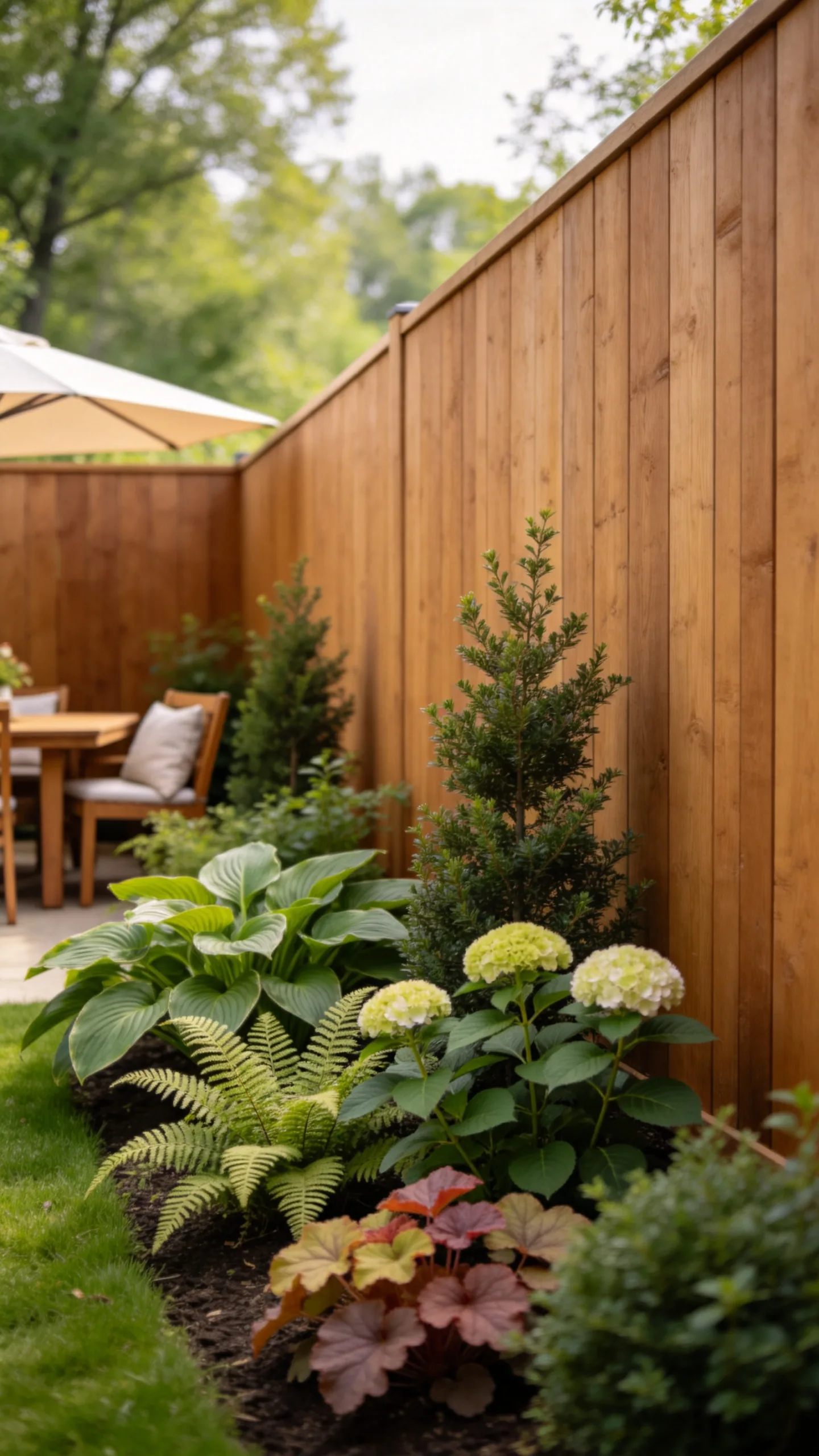
A board-on-board fence is a strong choice when privacy is the main goal. The overlapping vertical boards block sightlines more effectively than a basic picket or spaced-panel fence, making it useful around back patios, pools, hot tubs, or dining areas. The layered construction also looks finished from both sides, which is helpful for shared property lines.
To keep a tall fence from feeling heavy, add planting in front of it. Use a narrow border with shade-tolerant plants if the fence creates shadow, such as hostas, ferns, heuchera, or hellebores in suitable climates. In sunnier spots, try upright shrubs, dwarf hydrangeas, catmint, or rosemary where conditions allow.
3. Black Metal Fence with Layered Shrubs
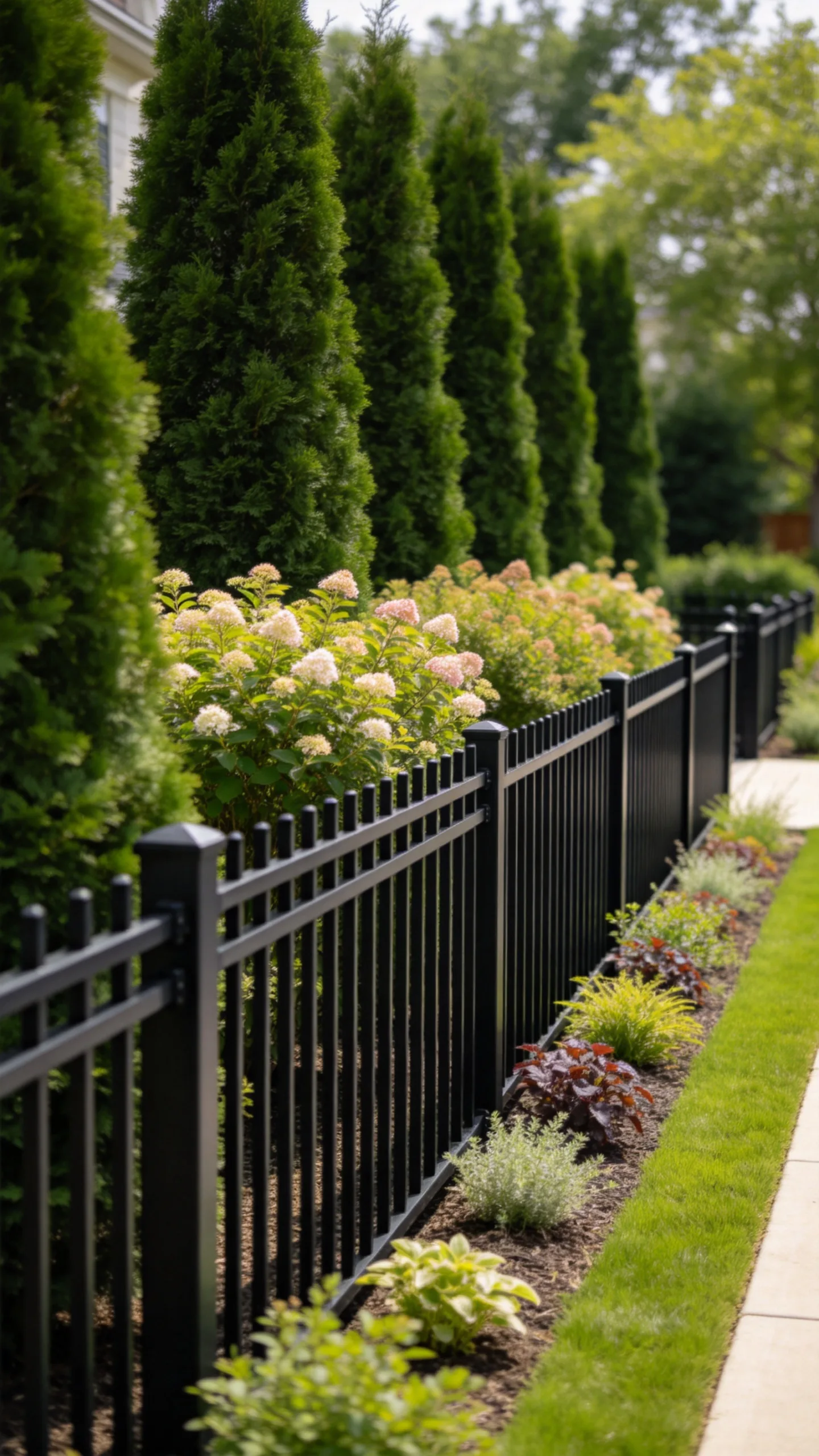
A black metal fence adds structure without closing off the yard completely. It works well for front yards where curb appeal matters and full privacy may not be needed. The dark color makes greenery stand out, giving the landscape a crisp, intentional look.
For more screening, plant layered shrubs along the inside of the fence. Use taller evergreen shrubs at the back, medium flowering shrubs in the middle, and low perennials or groundcovers along the edge. This approach keeps the fence visible while softening it with seasonal color and texture.
4. Lattice-Top Wood Fence
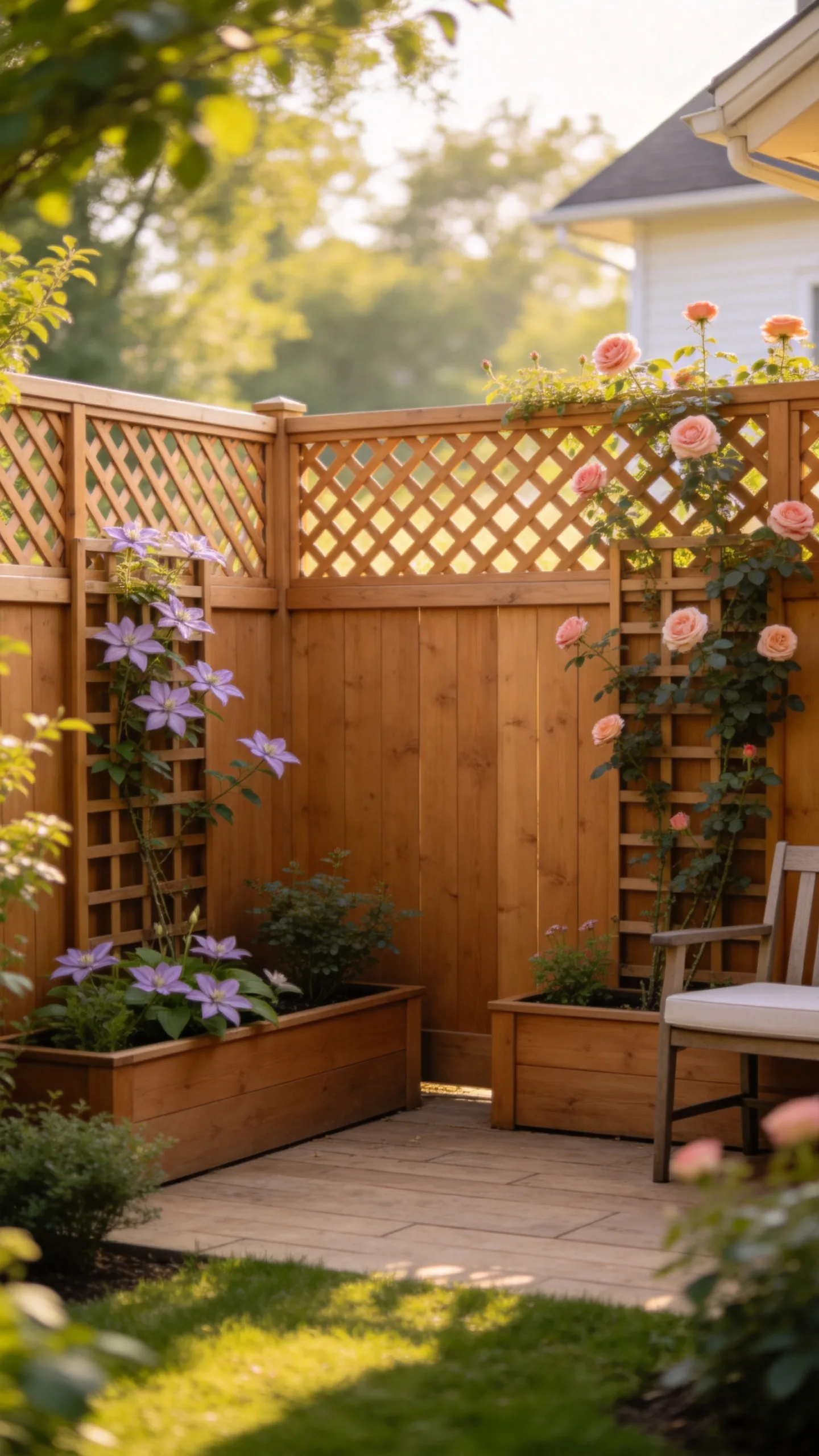
A lattice-top fence combines solid privacy on the lower portion with an open decorative panel above. This design is useful when you want to block views at eye level but still let sunlight and air pass through the top. It is especially practical along patios, decks, and small garden seating areas.
The lattice section can also support lightweight climbing plants. Consider clematis, climbing roses, jasmine, or annual vines like morning glory depending on your climate and maintenance preference. Keep vigorous vines pruned so they do not weigh down the lattice or spread beyond the intended area.
5. White Picket Fence with Cottage Garden Planting
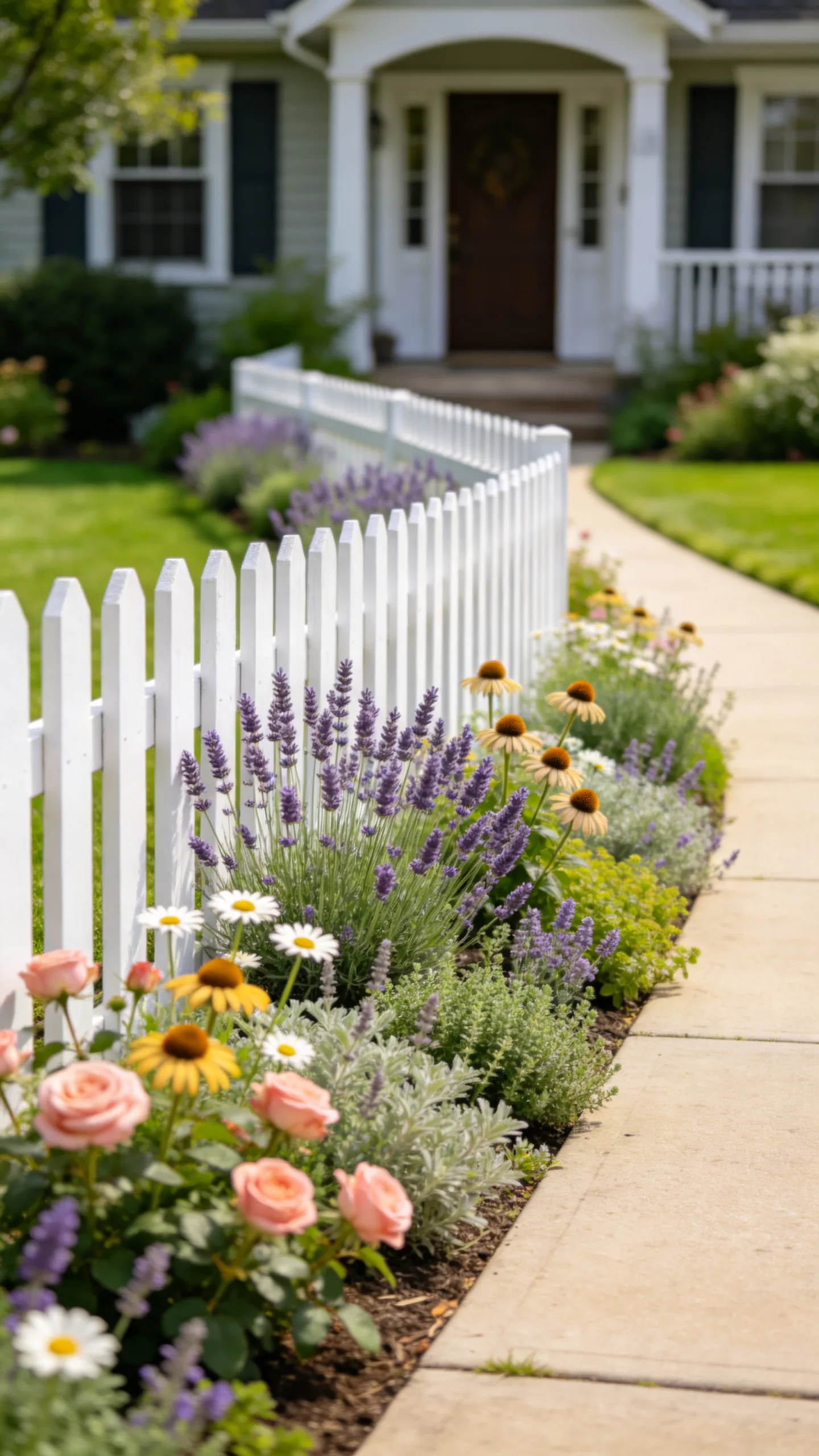
A white picket fence is a classic curb appeal choice for front yards, walkways, and small cottage-style gardens. It defines the space without making the yard feel closed in, which is useful if you want a welcoming entrance rather than a privacy barrier.
Plant flowers and herbs along the fence line to create a soft, layered border. Good options include lavender, coneflowers, daisies, nepeta, thyme, and compact roses where suitable. Keep taller plants behind shorter edging plants so the picket shape remains visible from the street.
6. Privacy Fence with Built-In Planter Boxes
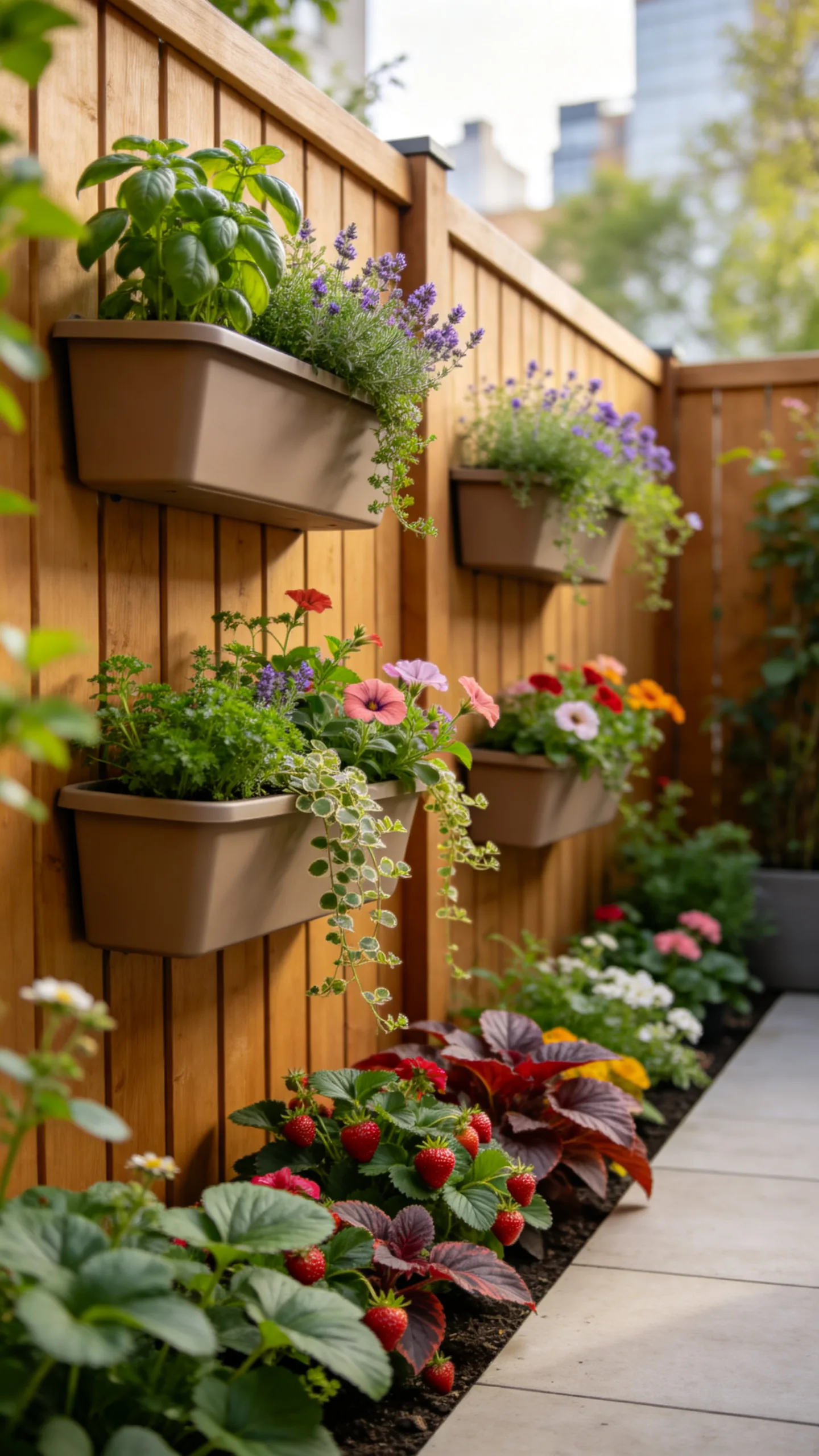
A fence with built-in planter boxes adds growing space where the yard is limited. This idea works well for patios, balconies with fence panels, and narrow urban gardens where ground beds are small or unavailable. The planters can hold herbs, trailing flowers, compact annuals, or shallow-rooted perennials.
Choose planter boxes with drainage holes and use a lightweight potting mix rather than dense garden soil. For sunny fences, plant basil, thyme, calibrachoa, trailing verbena, or strawberries. In partial shade, try parsley, mint in its own container, begonias, or coleus.
7. Mixed Wood and Wire Garden Fence
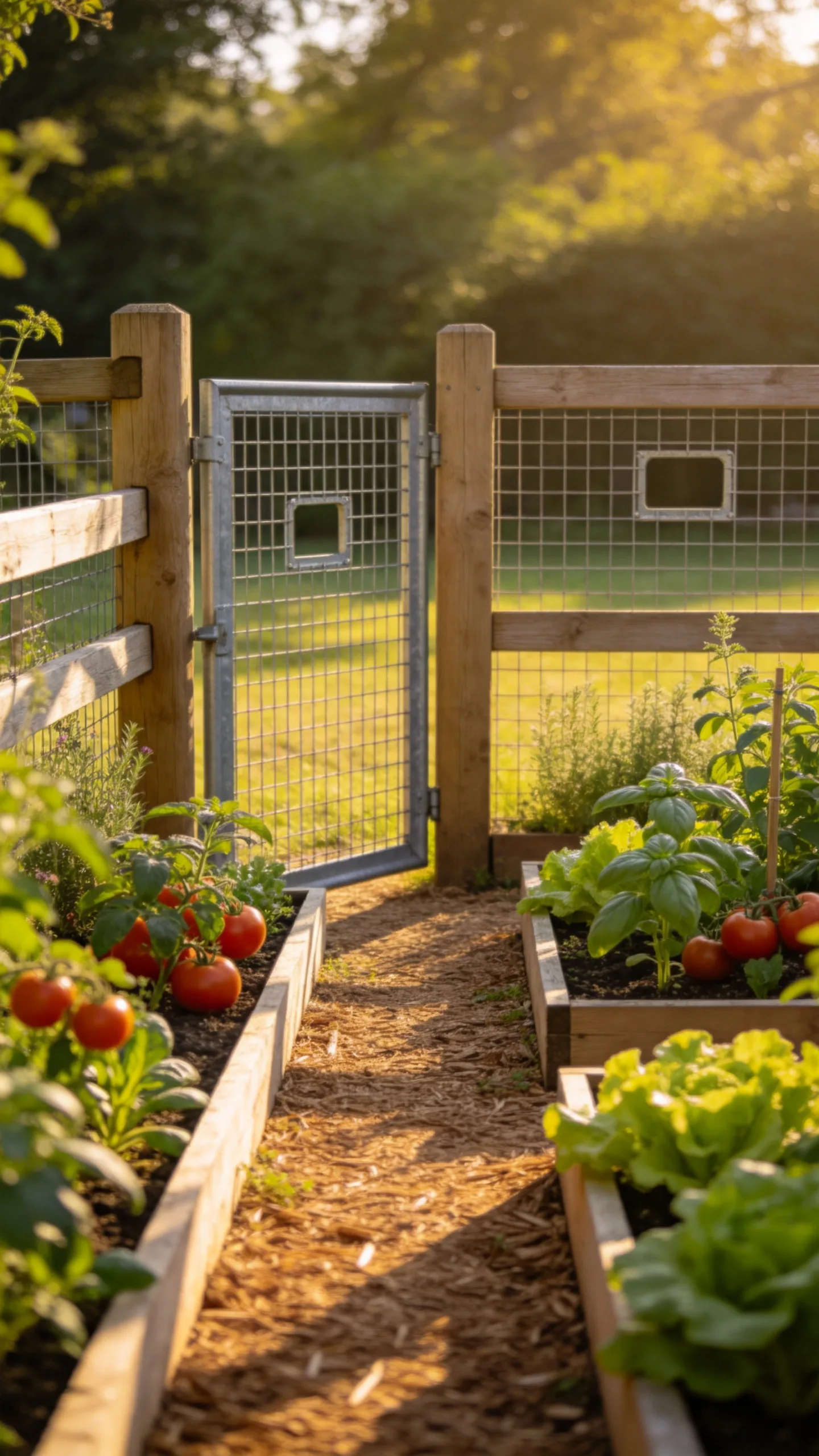
A wood-and-wire fence is practical for vegetable gardens, cottage plots, and informal backyard spaces. The wood frame gives structure, while wire mesh keeps the design open and lets light reach plants. This style is useful when you want to protect garden beds without creating a solid visual wall.
Use galvanized wire mesh or welded wire with openings sized for your needs. Smaller openings can help keep out rabbits, while taller panels may help protect young plants from pets. Add a simple gate, mulch path, and raised beds inside the fence for an organized kitchen garden layout.
8. Bamboo Screen Fence for a Small Patio
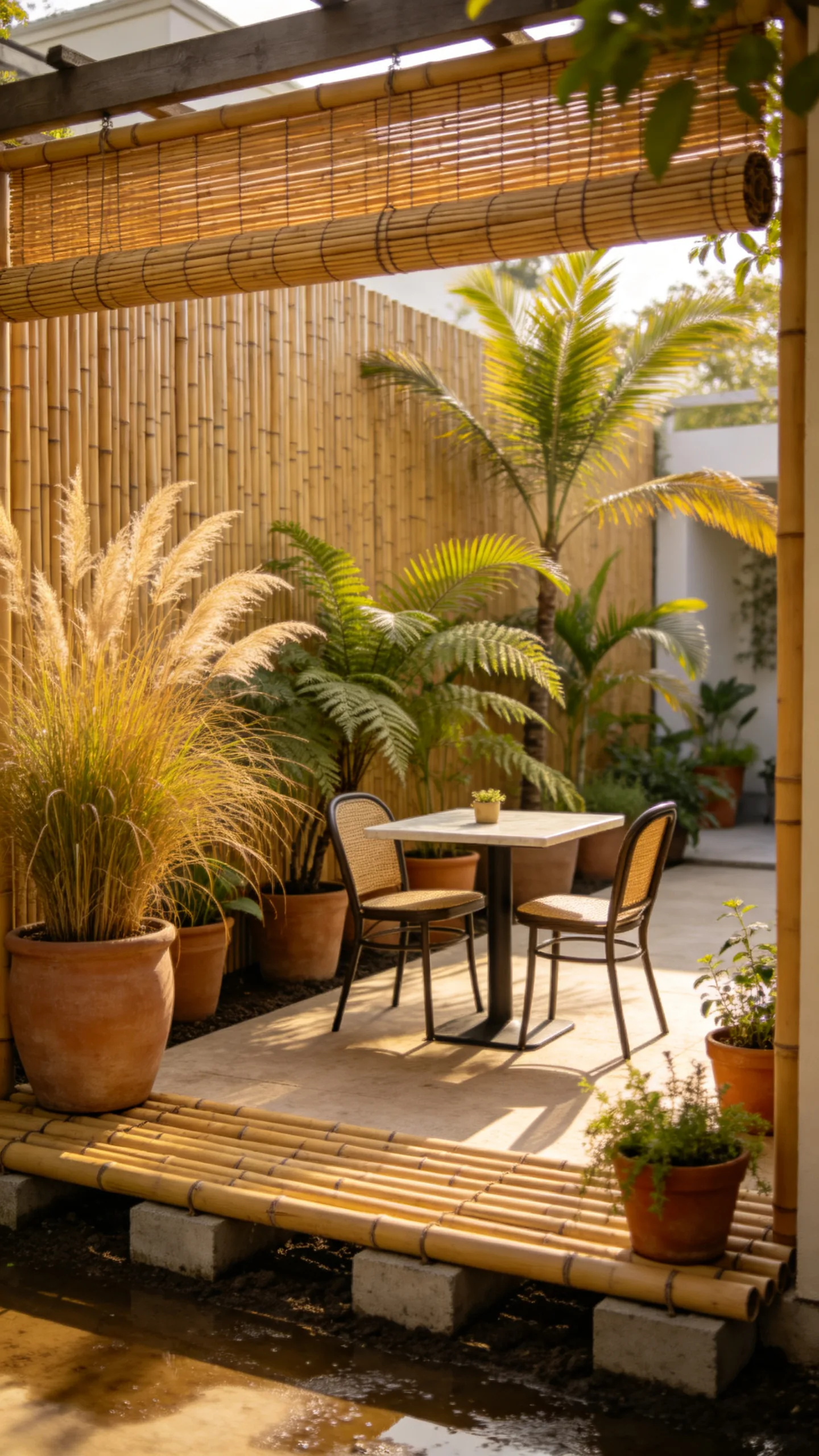
A bamboo screen fence can quickly add privacy to a small patio, rental yard, or balcony-style outdoor area. Rolled bamboo panels can be attached to an existing chain-link fence, railing, or simple frame to soften the view and create a warmer backdrop.
Because bamboo screening can weather over time, it works best when installed securely and kept off constantly wet soil where possible. Style it with large containers of ornamental grasses, dwarf palms where climate allows, ferns in shade, or potted herbs in sunny corners. This creates a layered, tropical-inspired look without requiring a large garden bed.
9. Living Fence with Evergreen Hedges
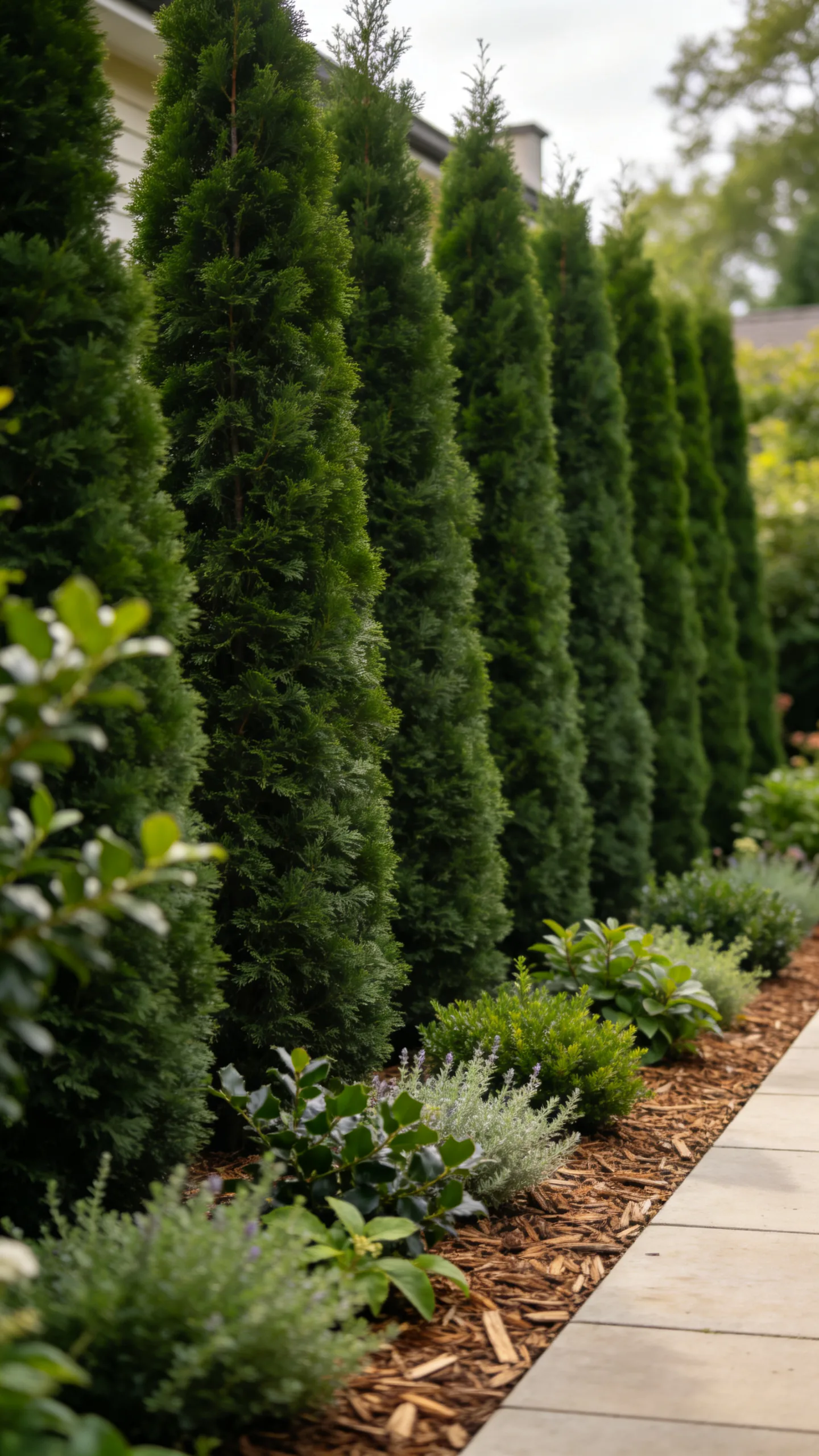
A living fence uses plants instead of solid boards to create privacy and structure. Evergreen hedges are especially useful for year-round screening along property lines, patios, or road-facing yards. The best plant choice depends on your climate, soil, and available width.
For narrow spaces, look for upright or columnar varieties rather than broad shrubs that will crowd paths. Arborvitae, yew, privet, holly, podocarpus, or clumping bamboo may work in suitable regions. Plan for mature size before planting so the hedge does not require constant hard pruning.
10. Slatted Fence with Climbing Vine Panels
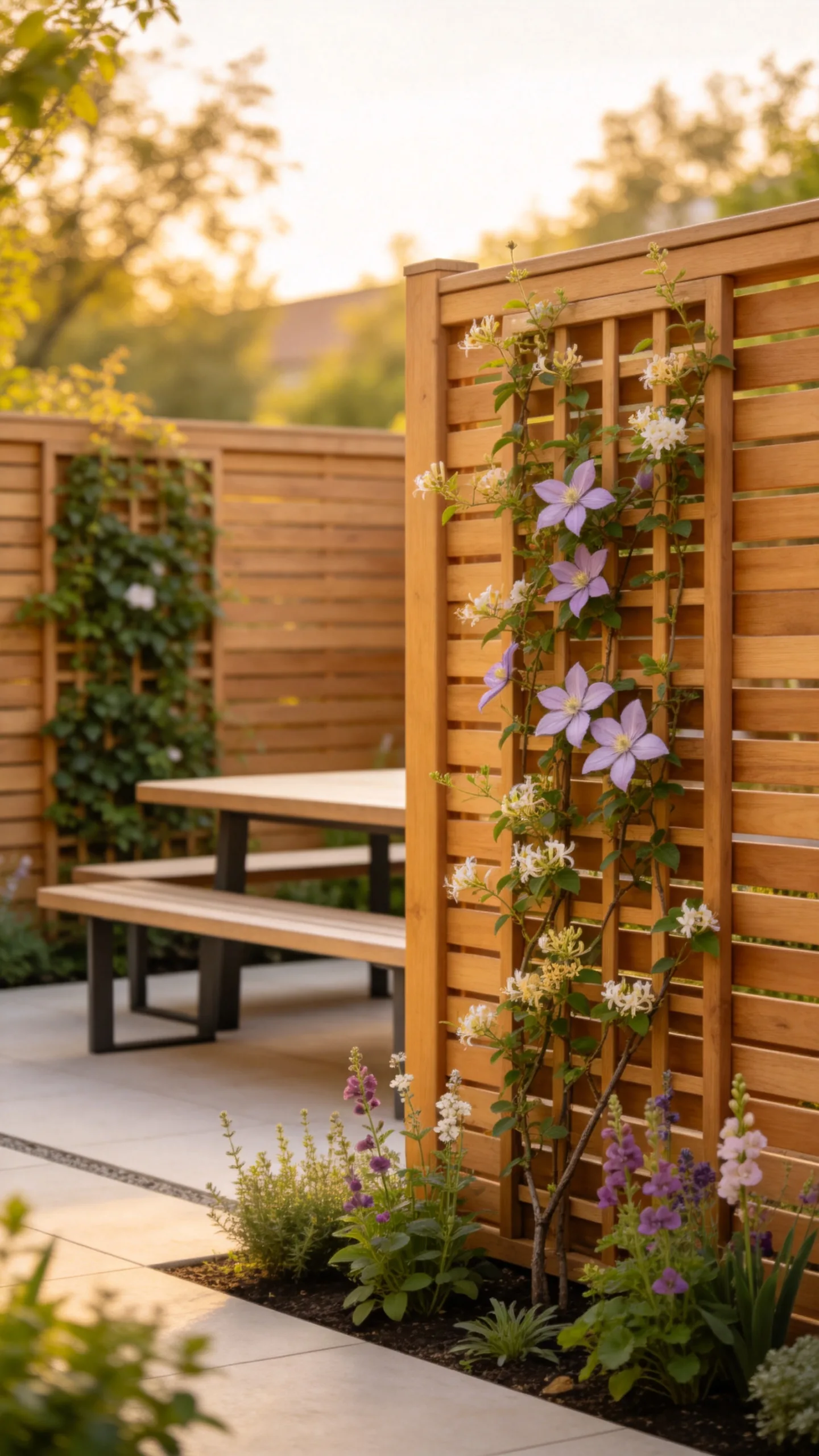
A slatted fence becomes more decorative when paired with selected climbing vine panels. Instead of letting vines cover the entire fence, install trellis sections in planned areas to create vertical garden moments. This works well behind a bench, along a dining patio, or beside a garden gate.
Choose vines based on light exposure and growth habit. Clematis, honeysuckle, star jasmine, climbing hydrangea, or annual sweet peas can be good options in the right conditions. Provide a sturdy trellis and prune regularly so the plants enhance the fence rather than overwhelming it.
11. Gabion Fence with Stone-Filled Panels
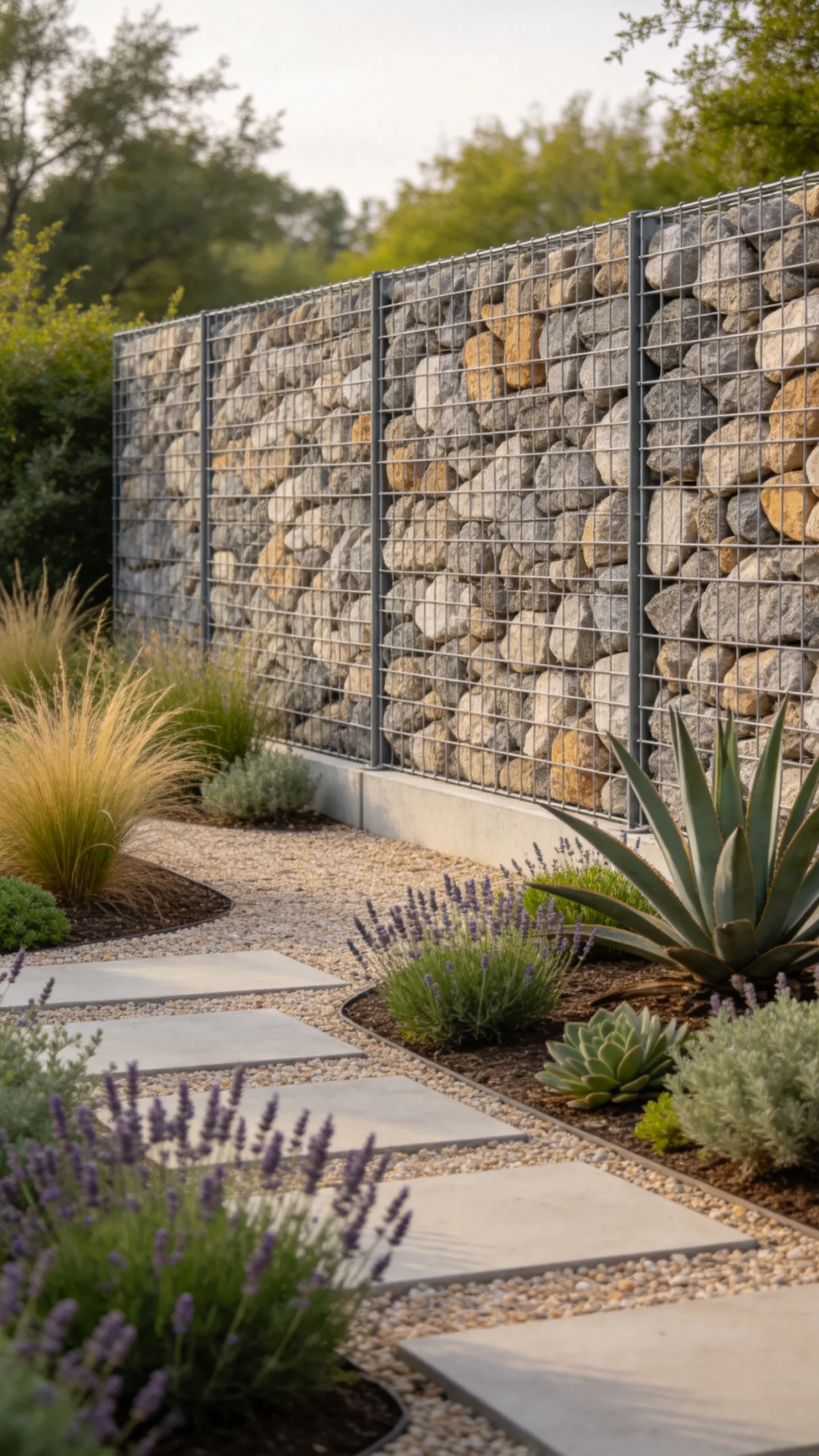
A gabion fence uses metal cages filled with stone, giving the yard a bold, architectural look. It is useful for modern landscapes, sloped areas, and spaces where you want a durable screen with strong texture. The stone also pairs well with gravel paths, concrete pavers, and drought-tolerant planting.
Because gabion structures can be heavy, they need a stable base and proper installation. Use them as full fence sections or as accent columns between wood or metal panels. Soften the hard edges with ornamental grasses, sedum, lavender, yucca, or other plants suited to your local conditions.
12. Low Front Yard Fence with Flower Border
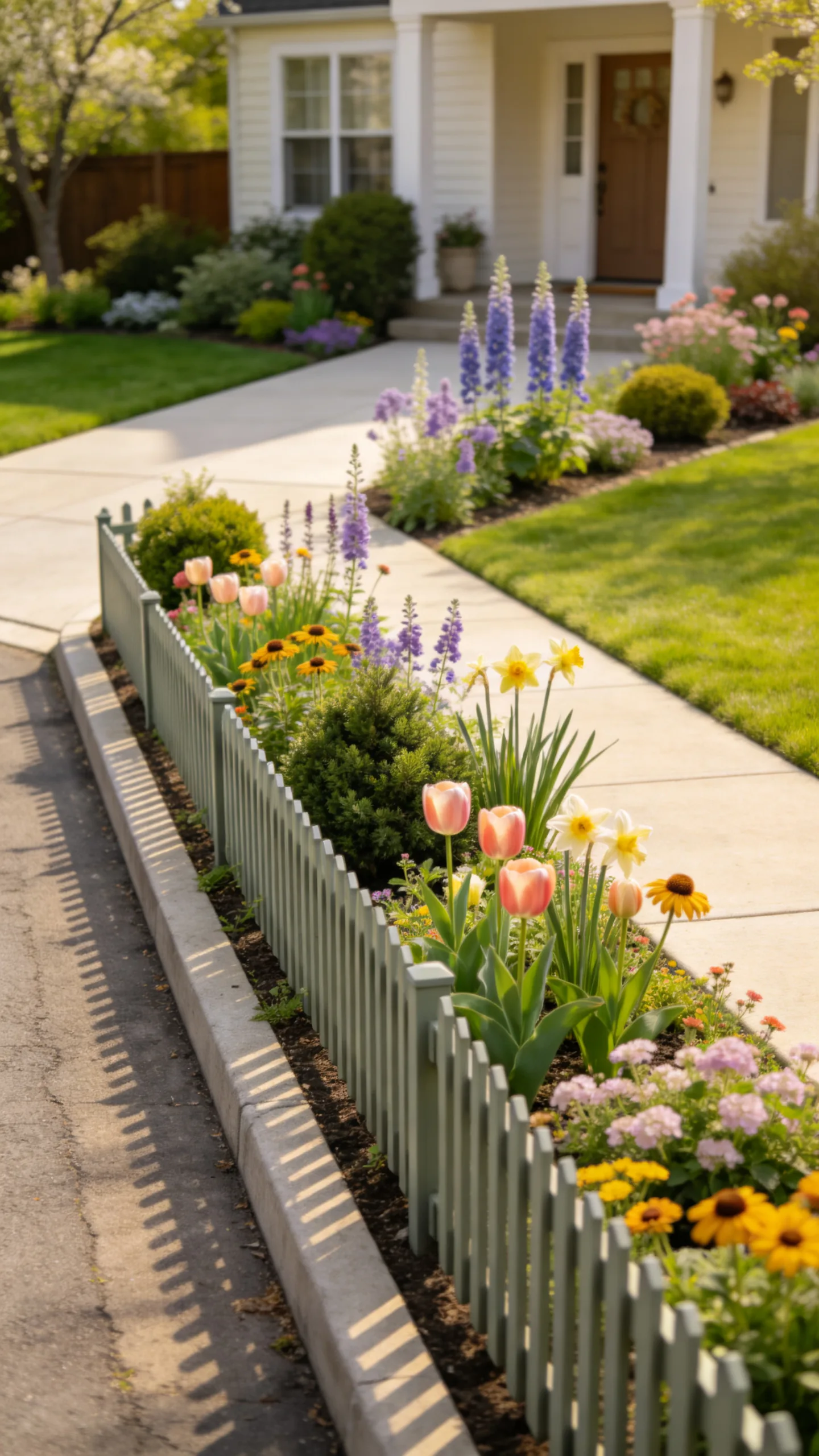
A low front yard fence improves curb appeal by defining the garden without blocking the house. This style works well along sidewalks, driveways, and small lawn edges. It can be made from wood, metal, vinyl, or painted pickets depending on the look of the home.
Plant a flower border just inside the fence to create seasonal interest. Use a mix of spring bulbs, summer perennials, and compact evergreen plants for a longer display. Keep taller flowers set back from the sidewalk so the fence line stays tidy and easy to maintain.
13. Modern Fence with Alternating Panel Widths
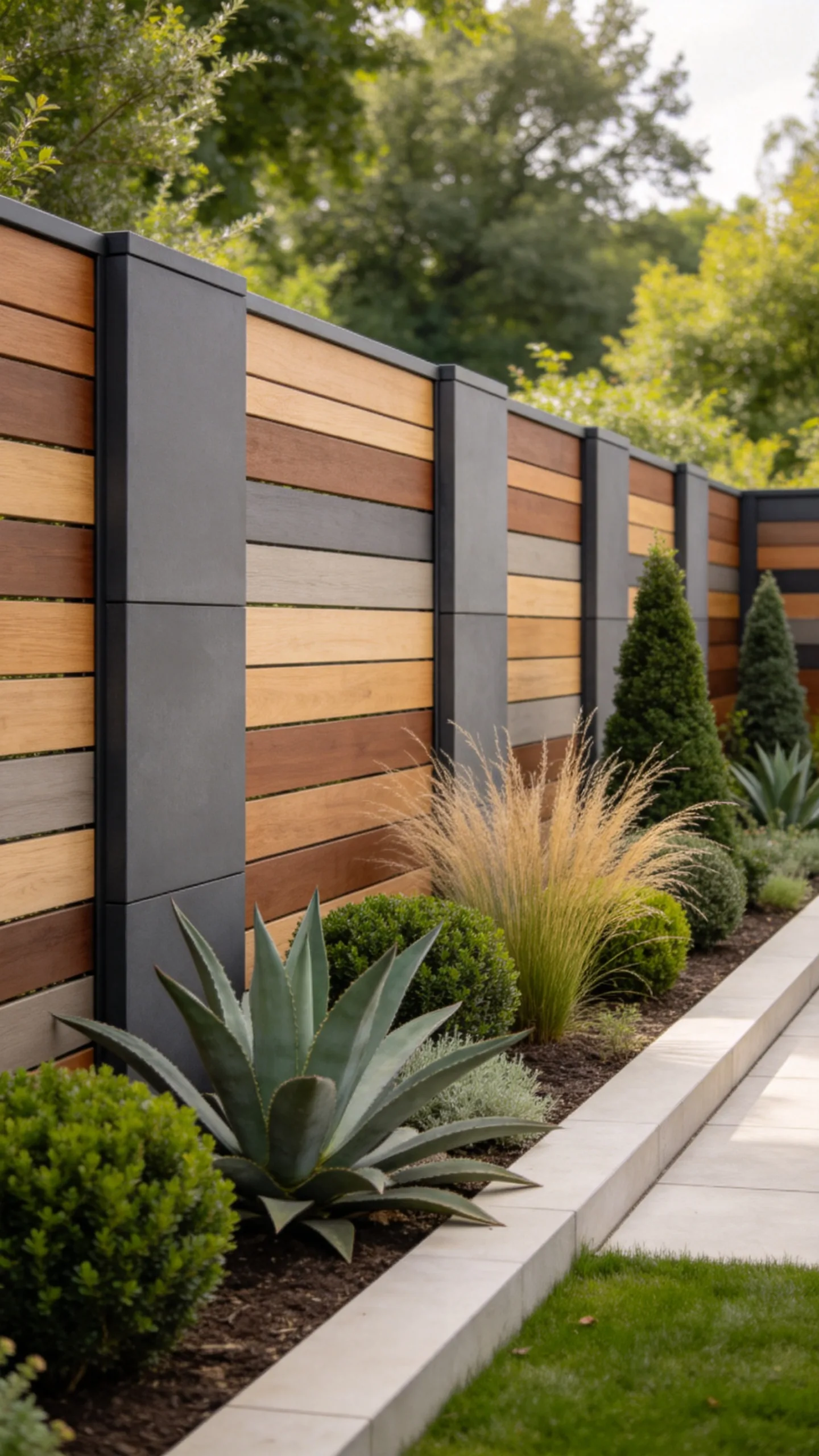
A modern fence with alternating panel widths adds visual interest while keeping the design simple. Wider and narrower boards can be arranged vertically or horizontally to create rhythm across a long boundary. This is especially helpful in plain rectangular yards where a basic fence might feel flat.
Use stain or paint to tie the fence into the rest of the outdoor design. Charcoal, warm brown, soft gray, and natural wood tones all work well with garden planting. Add structured plants such as boxwood, agave, ornamental grasses, or clipped shrubs to reinforce the clean-lined style.
14. Fence and Arbor Gate Combination
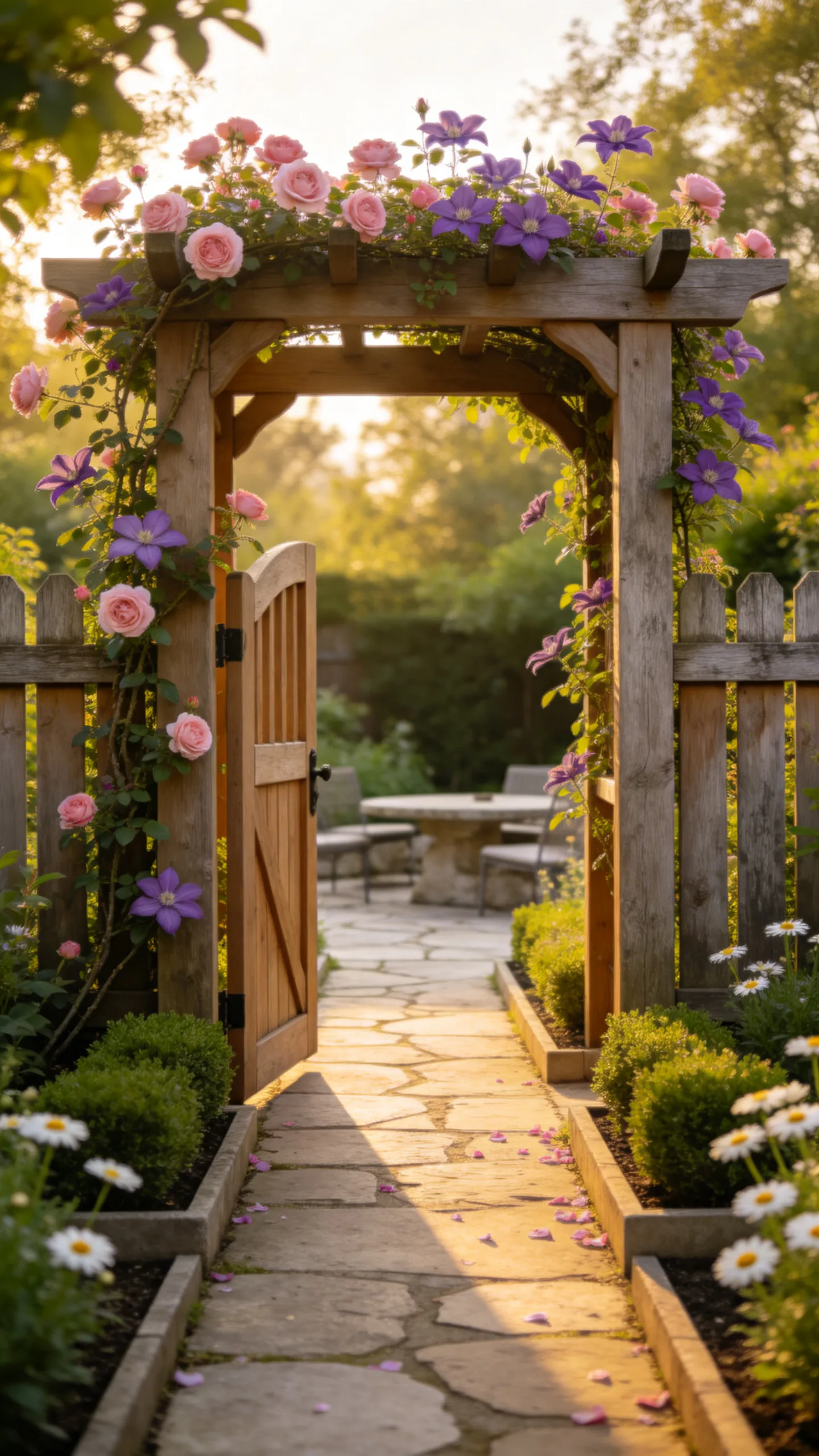
A fence with an arbor gate creates a clear garden entrance and adds height without fencing the entire yard at full privacy level. This idea works beautifully between a front yard and side garden, at the entrance to a vegetable plot, or along a path leading to a backyard seating area.
Train climbing plants over the arbor for shade and seasonal color. Climbing roses, clematis, wisteria in suitable locations, or grapevines can create a strong focal point. Make sure the arbor is sturdy enough for mature growth, and prune vines so the gate remains easy to open.
15. Painted Fence as a Garden Backdrop
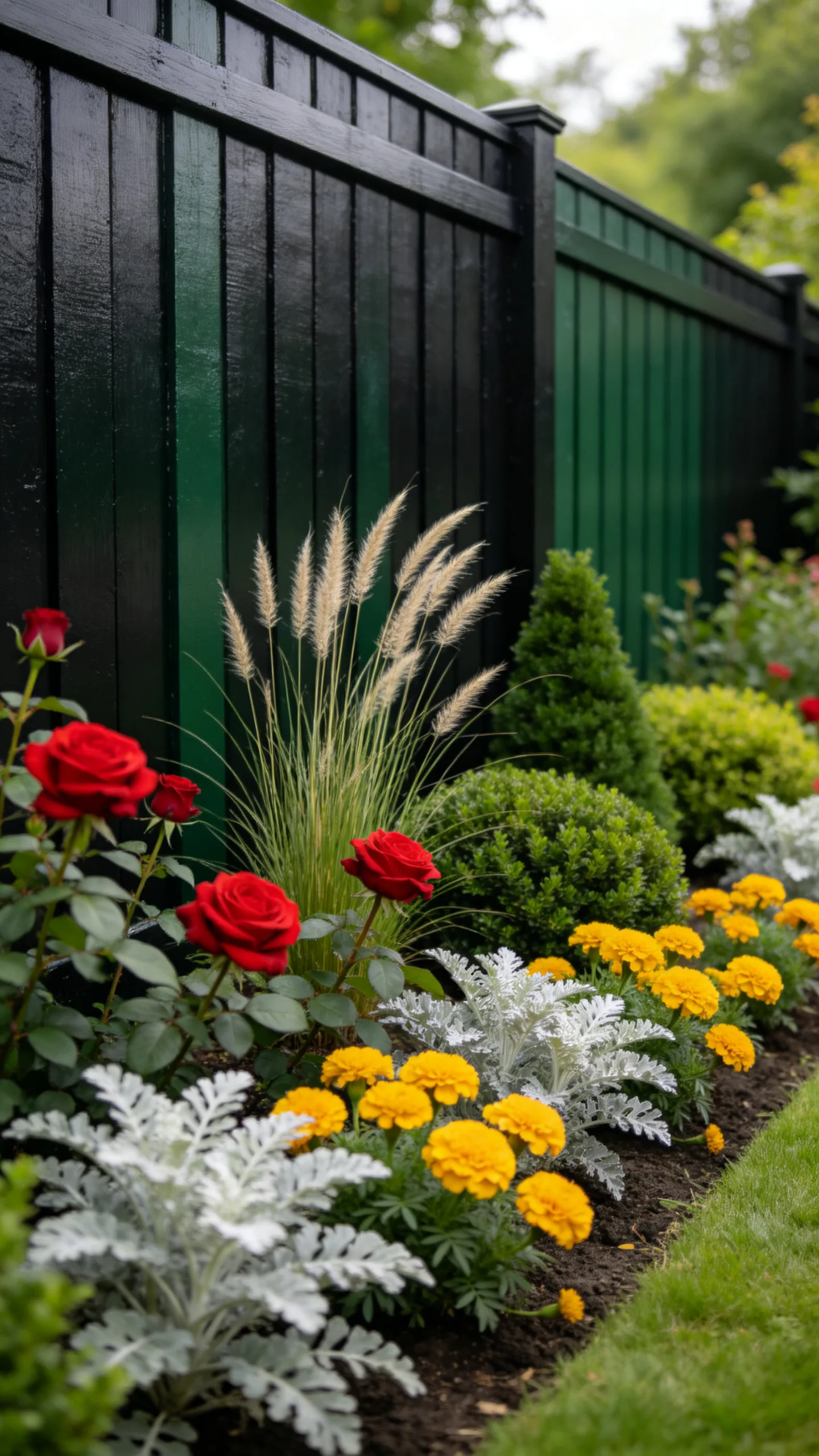
A painted fence can completely change the mood of a yard. Dark colors like charcoal, black, or deep green make plants appear brighter and can visually push the fence into the background. Softer shades like white, cream, sage, or muted blue create a lighter cottage or coastal feel.
Before painting, clean and prepare the fence surface so the finish lasts longer. Use exterior paint or stain appropriate for the material. Then design planting around the color: bright flowers pop against dark fencing, silver foliage looks elegant against pale tones, and evergreen shrubs help the fence feel connected to the landscape year-round.