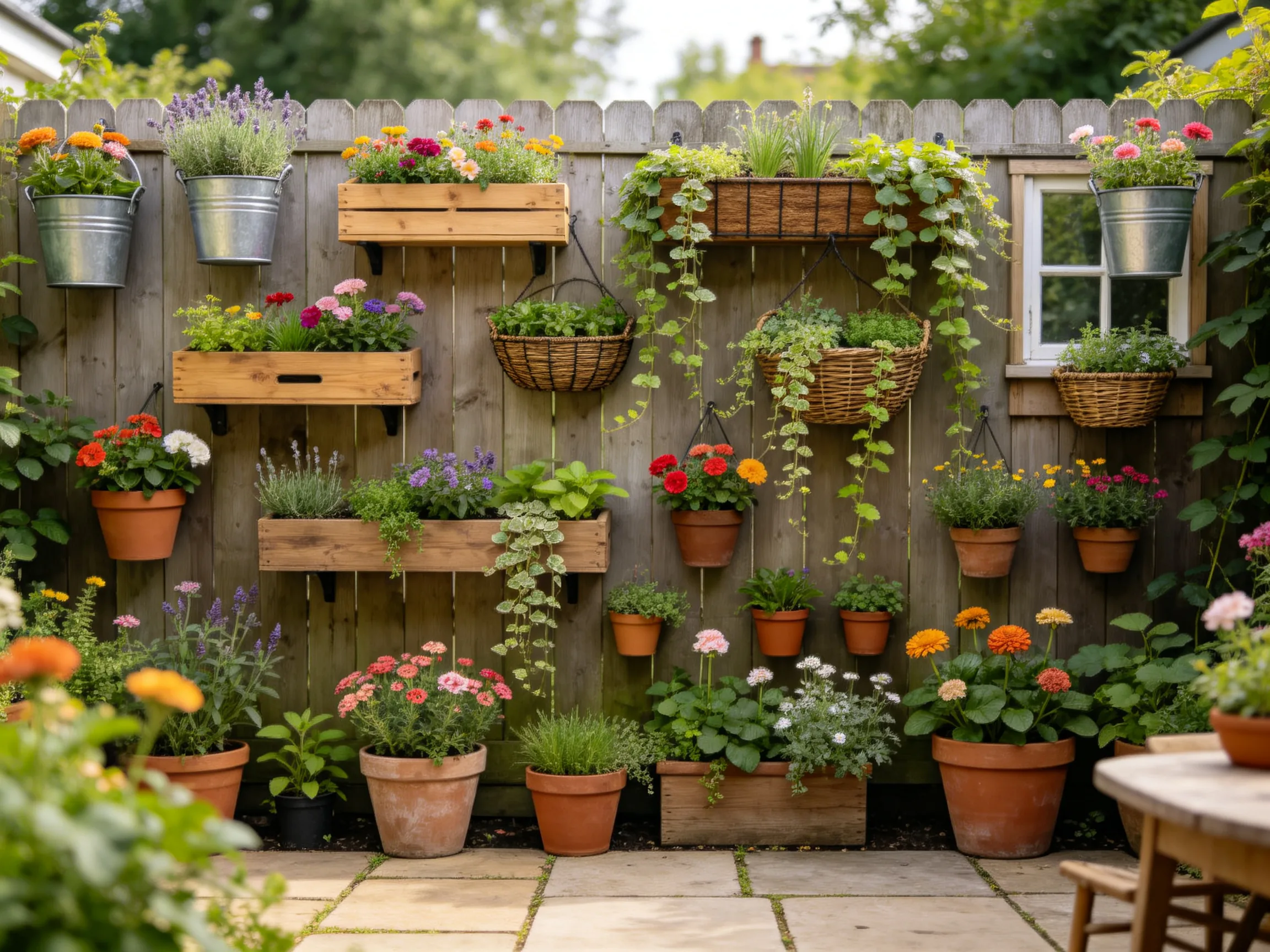
A plain fence can become one of the most useful growing surfaces in a small garden, patio, balcony, or side yard. With the right hanging fence planters ideas, you can add flowers, herbs, trailing vines, privacy plants, and seasonal color without giving up floor space. The key is choosing planters that suit your fence material, sunlight, watering routine, and the look you want to create.
1. Galvanized Metal Buckets Filled With Trailing Flowers
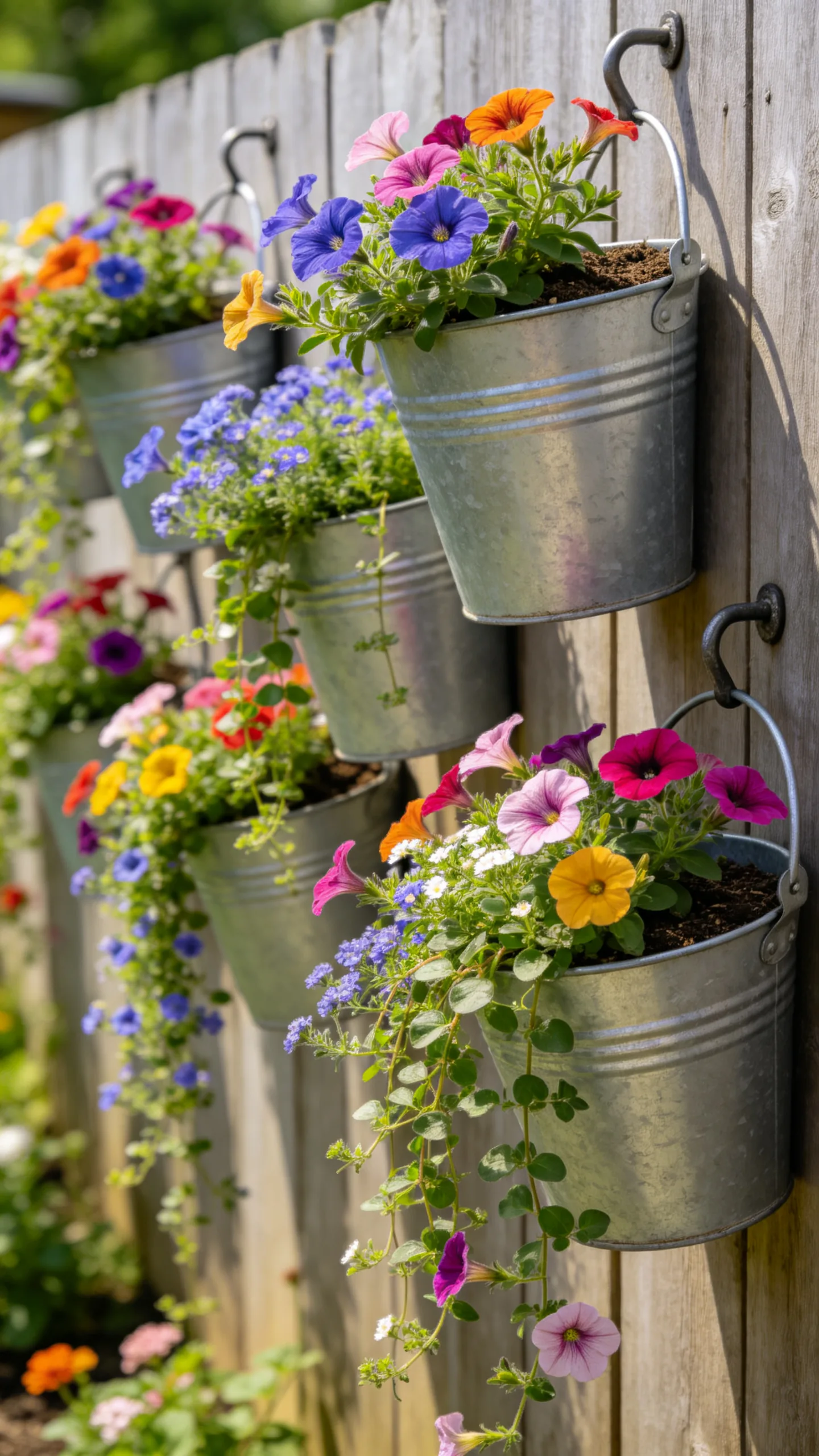
Galvanized metal buckets are sturdy, easy to hang, and perfect for turning a bare wooden fence into a cottage-style garden wall. Drill drainage holes in the bottom of each bucket, add a lightweight potting mix, and plant trailing flowers such as calibrachoa, lobelia, bacopa, or trailing petunias.
Hang the buckets at staggered heights using strong hooks or fence-safe brackets. This creates movement across the fence instead of one flat row of plants. For a sunny fence, choose heat-tolerant blooms; for partial shade, try impatiens or trailing fuchsias if they suit your climate. Keep the buckets from sitting flush against the fence so air can circulate and moisture does not stay trapped behind them.
2. Wooden Crate Planters for a Rustic Garden Wall
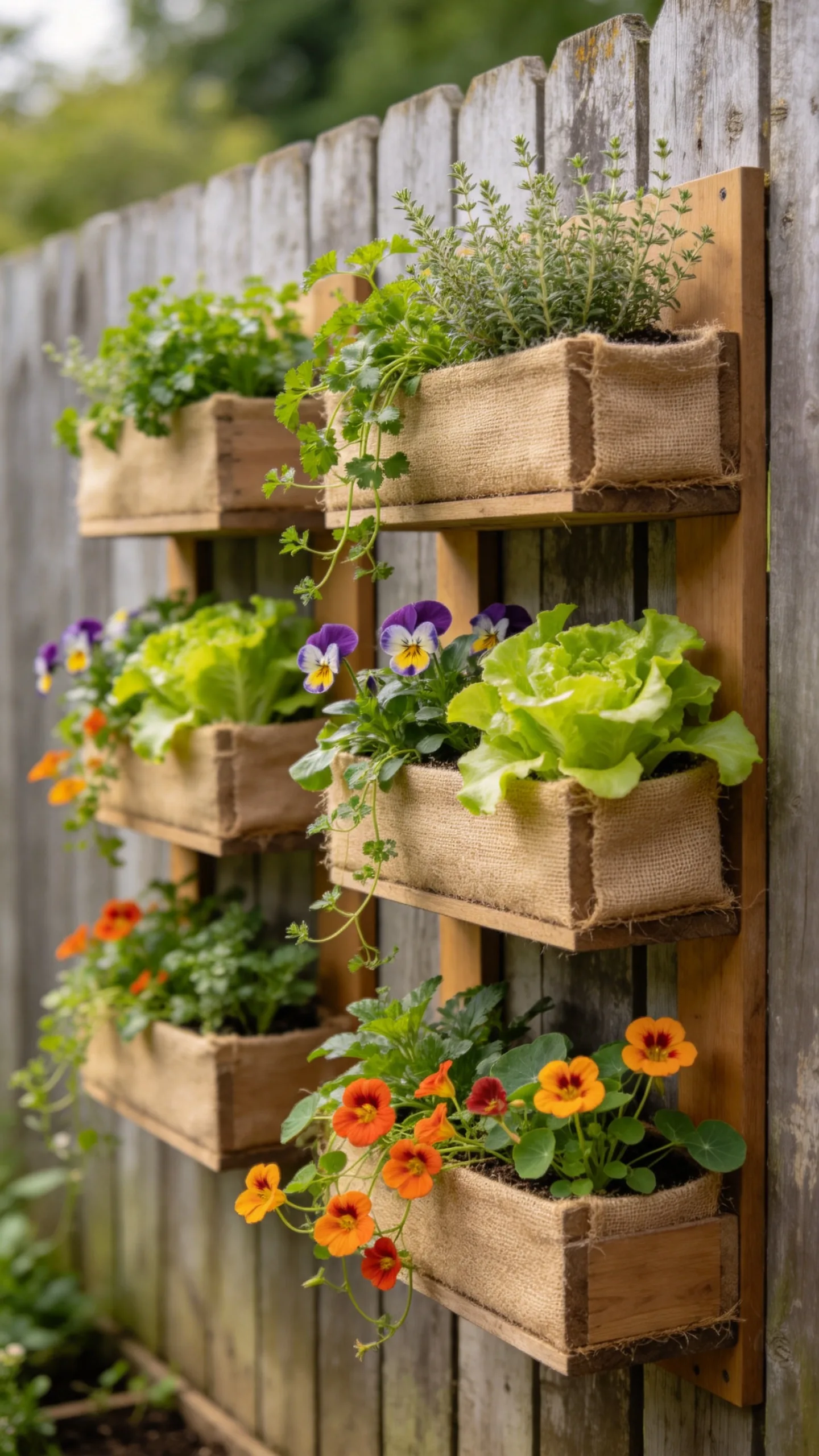
Small wooden crates can be mounted directly to a fence to create deep planting pockets for herbs, compact flowers, or leafy greens. Line each crate with landscape fabric or coconut liner to hold soil in place while still allowing drainage. Choose shallow-rooted plants such as thyme, parsley, violas, lettuce, or nasturtiums.
Crates work especially well when arranged in a grid or offset pattern. Leave enough space between them so plants can spill over the edges without crowding each other. If your fence gets strong afternoon sun, seal the outside of the crates with an outdoor-safe wood finish to help them last longer through watering and weather.
3. Hanging Herb Pots Near an Outdoor Dining Area
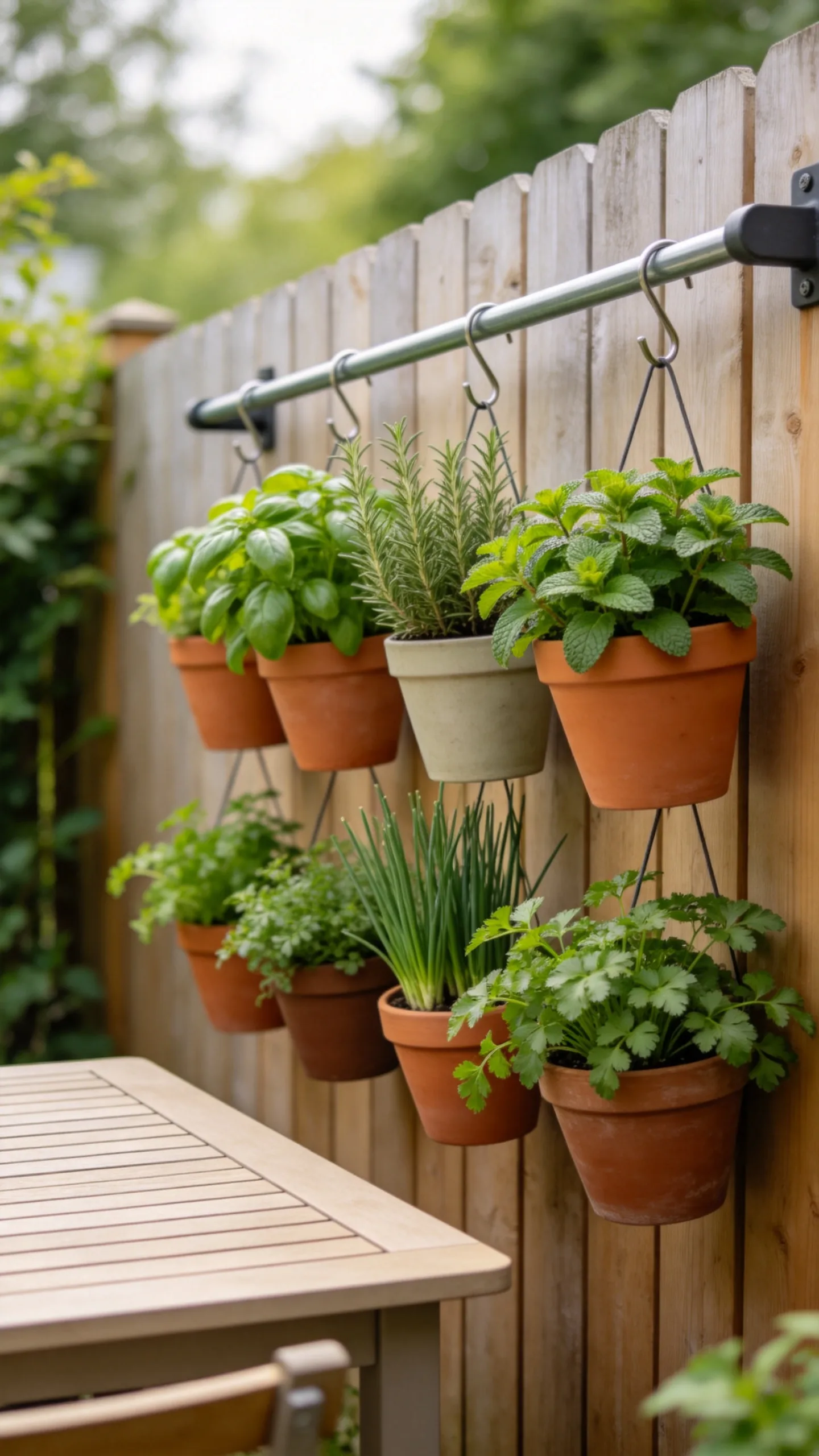
A fence beside a patio or outdoor table is a practical place for hanging herb planters. Use individual pots with hook-on rims or attach a horizontal rail to the fence and hang pots from S-hooks. Plant herbs you use often, such as basil, chives, mint, oregano, rosemary, parsley, or cilantro.
Grouping herbs on the fence saves space and keeps them within reach when cooking or grilling. Give Mediterranean herbs like rosemary and oregano a sunnier, drier spot, while parsley and cilantro often prefer gentler light in warm seasons. If planting mint, keep it in its own pot because it spreads aggressively and can overwhelm other herbs.
4. Tiered Rail Planters for a Layered Flower Display
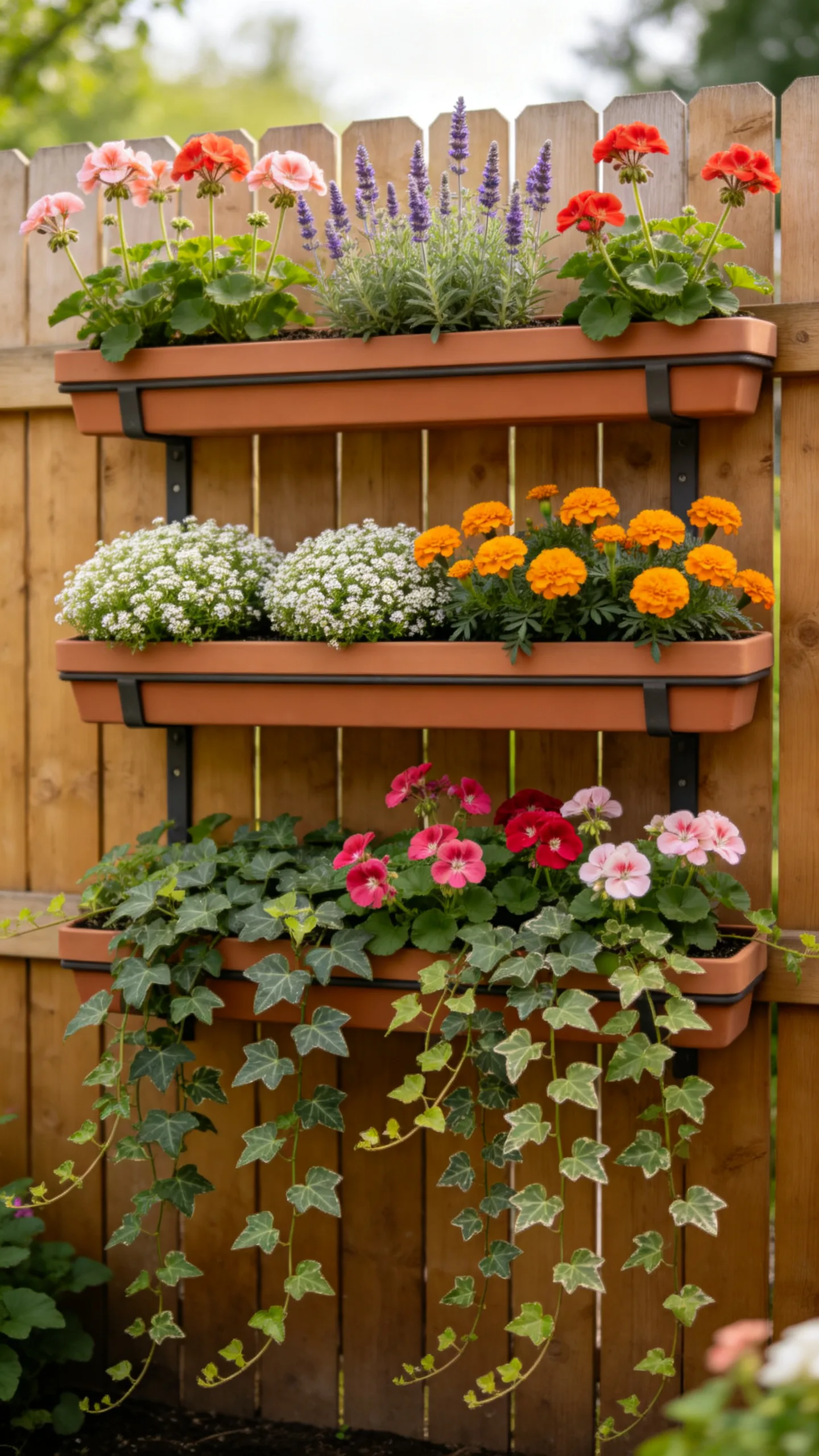
Tiered rail planters create a vertical flower display that makes a fence look fuller from top to bottom. Use two or three rows of narrow rectangular planters mounted at different heights. Fill the top row with upright plants like geraniums or dwarf salvias, the middle row with mounding flowers like alyssum or marigolds, and the lower row with trailing plants like sweet potato vine or ivy geranium.
This layered layout gives a plain fence more depth and color without needing a wide garden bed in front of it. Make sure each planter has drainage holes and is fixed securely, especially if it will hold damp soil after rain. For easier watering, keep the uppermost row low enough to reach with a hose wand or watering can.
5. Pocket Planters for a Living Fence Panel
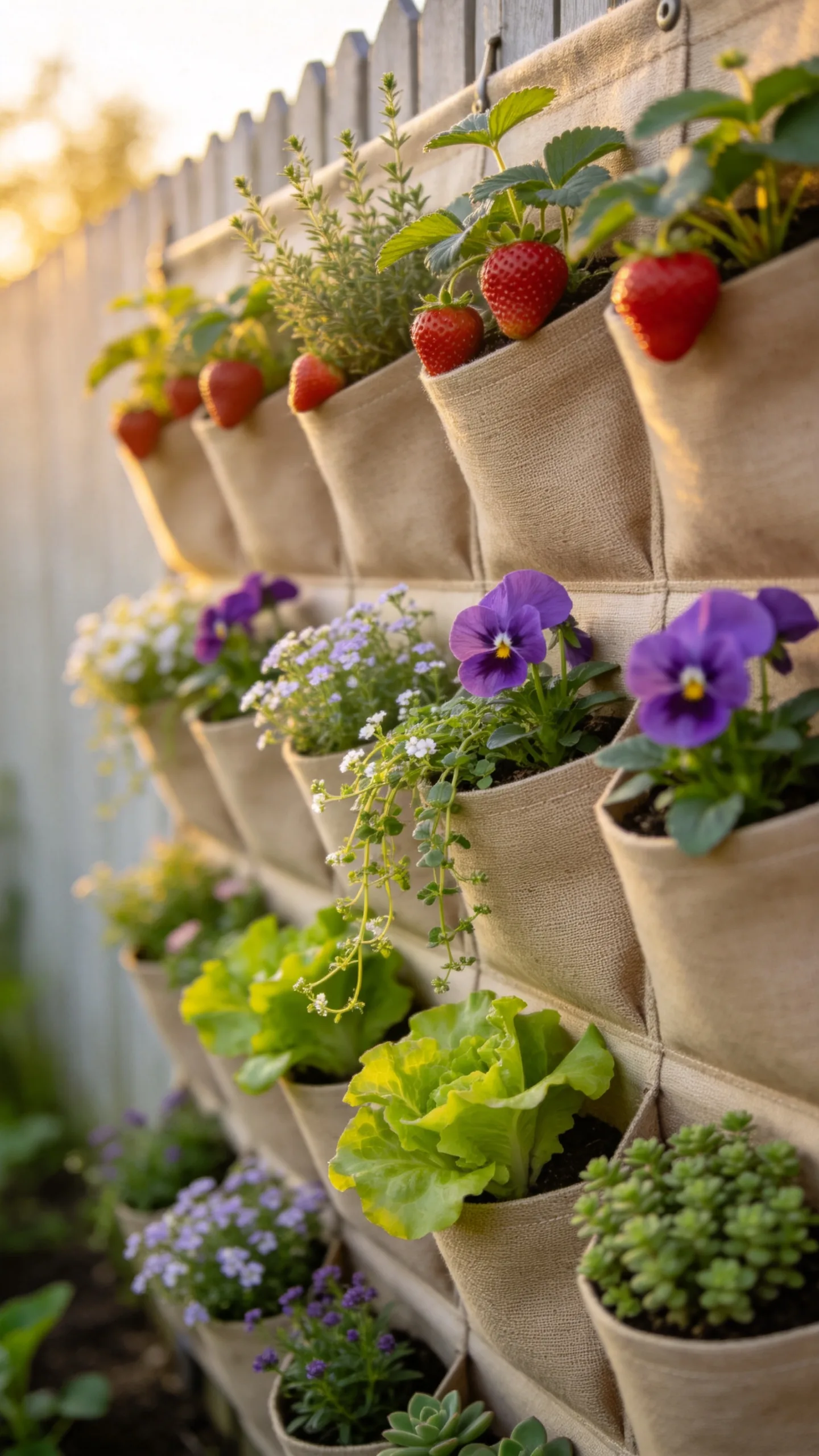
Fabric pocket planters are a simple way to cover a flat fence with a living wall effect. They are useful for lightweight plants such as herbs, strawberries, violas, sedum, lettuce, and small annual flowers. Choose a pocket system made for outdoor use, with breathable material and proper drainage.
Because pockets hold less soil than larger pots, they dry out quickly in hot weather. Place them where you can water regularly, or use them on a fence with morning sun and afternoon shade. To avoid a messy look, repeat a limited plant palette across the pockets, such as alternating strawberries with thyme or mixing purple violas with trailing alyssum.
6. Colorful Tin Can Planters for a Budget Fence Makeover
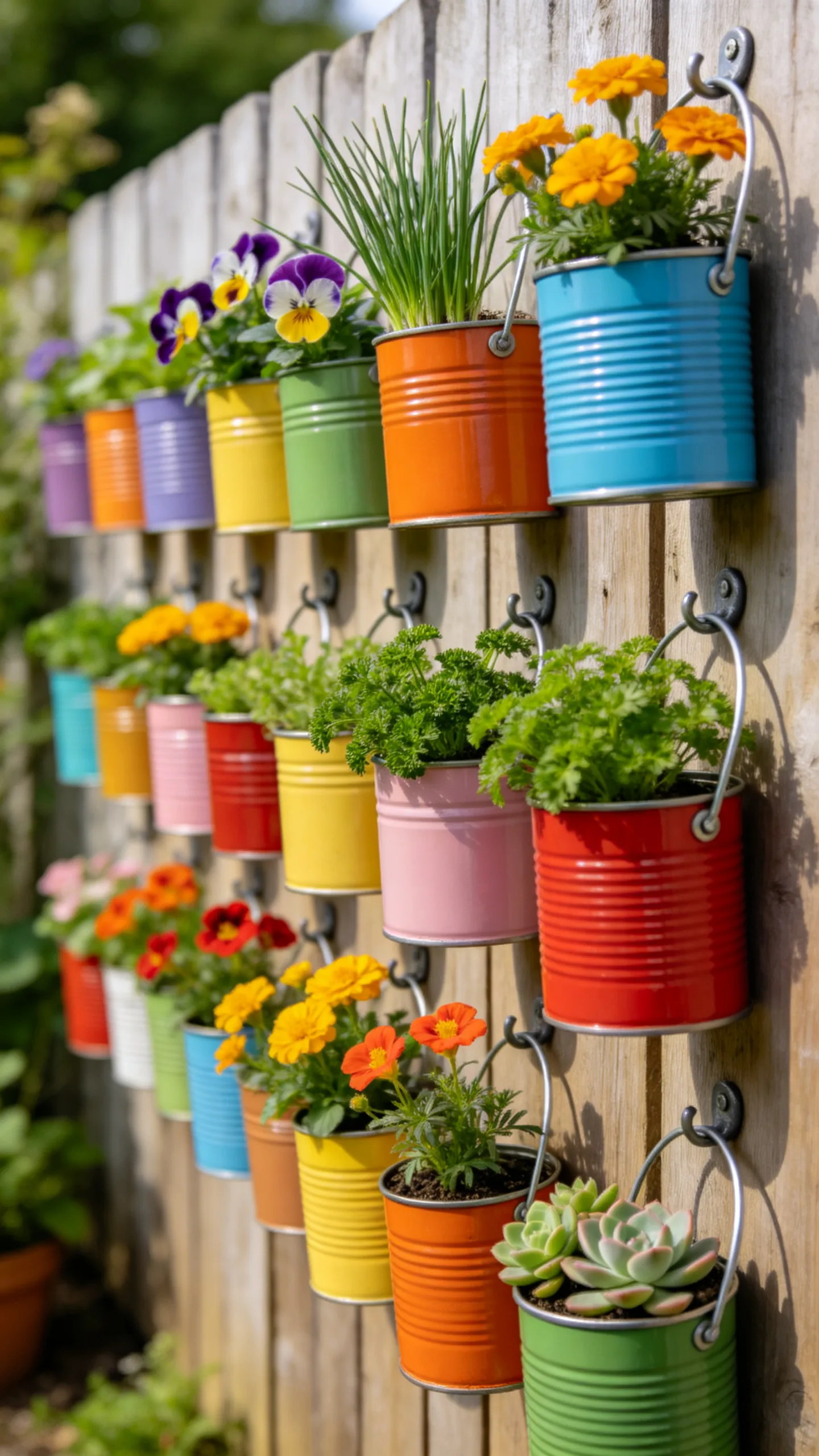
Clean tin cans can become charming small fence planters with a few drainage holes, outdoor paint, and sturdy hanging hardware. They are best for compact plants with modest root systems, such as pansies, small succulents, parsley, chives, dwarf marigolds, or nasturtiums.
Paint the cans in one color family for a polished look, or use bright mixed colors for a playful garden wall. Attach them to the fence with screws through the back of the can or hang them from hooks using wire handles. Since cans are small and can heat up in full sun, check soil moisture often and avoid using them for plants that need deep, cool roots.
7. Coconut-Lined Wall Baskets With Seasonal Annuals
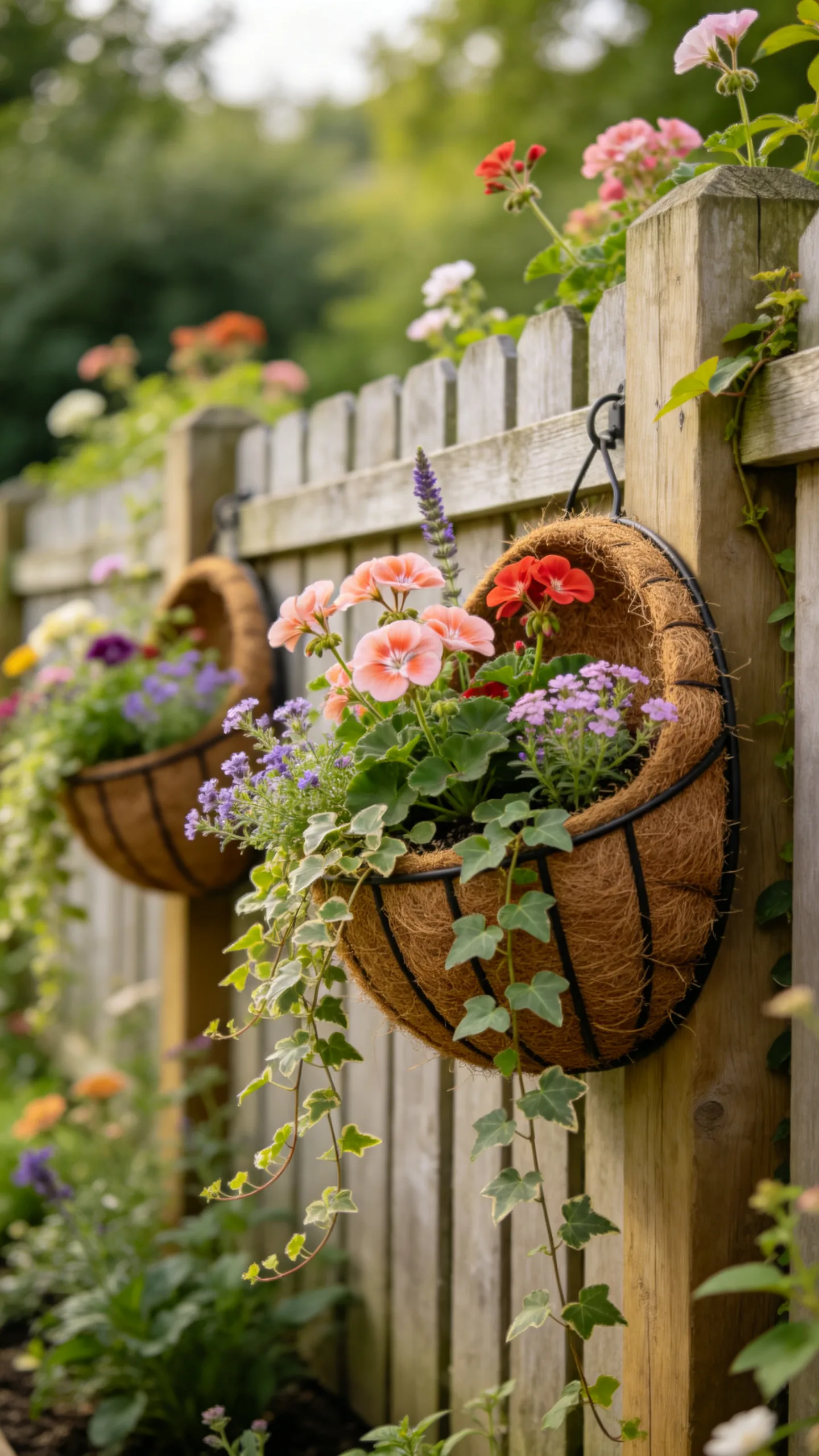
Coconut-lined wall baskets bring a classic garden look to a plain fence. Their rounded shape softens fence boards and works well with flowering annuals. Plant them with combinations such as geraniums and trailing verbena for sun, or begonias and ivy for partial shade.
Before filling the basket, add potting mix that includes moisture-retaining material, because coco liners can dry out quickly. You can also tuck a small piece of plastic with drainage holes between the liner and soil to slow water loss. Mount the baskets securely to fence posts rather than thin boards if the baskets are large or exposed to wind.
8. Recycled Gutter Planters for Lettuce and Strawberries
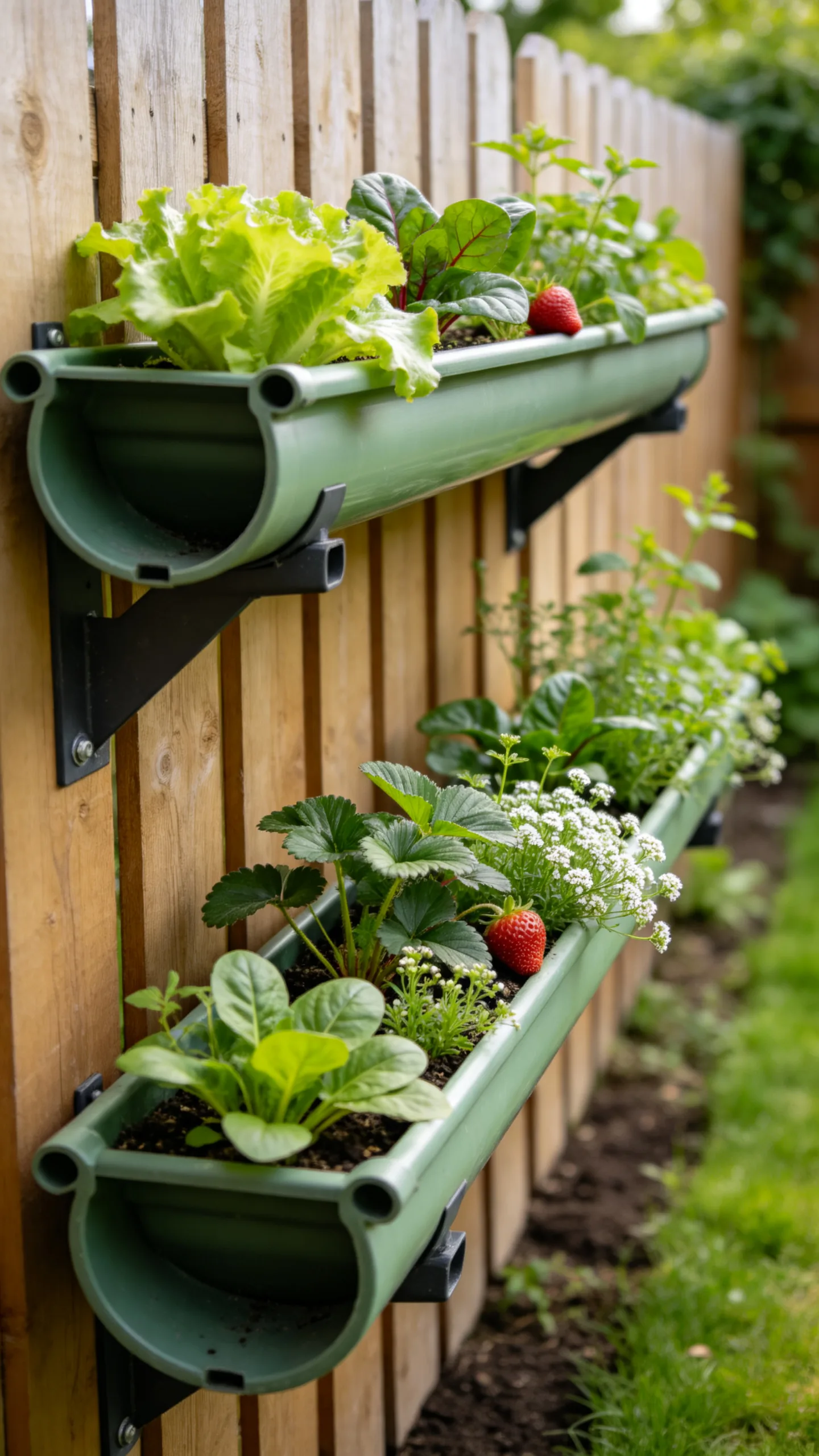
Short sections of rain gutter can be mounted horizontally on a fence to make slim planting troughs. This is a smart option for narrow yards because gutters do not project far into the space. Drill drainage holes along the bottom, cap the ends, and attach the gutters with strong brackets.
Gutter planters are best for shallow-rooted crops and flowers, including lettuce, spinach, strawberries, alyssum, and small herbs. They are not ideal for deep-rooted vegetables like tomatoes or peppers. Place them on a sunny fence for strawberries or a lightly shaded fence for leafy greens during warm weather.
9. Macrame Hanging Pots for a Soft Boho Fence Look
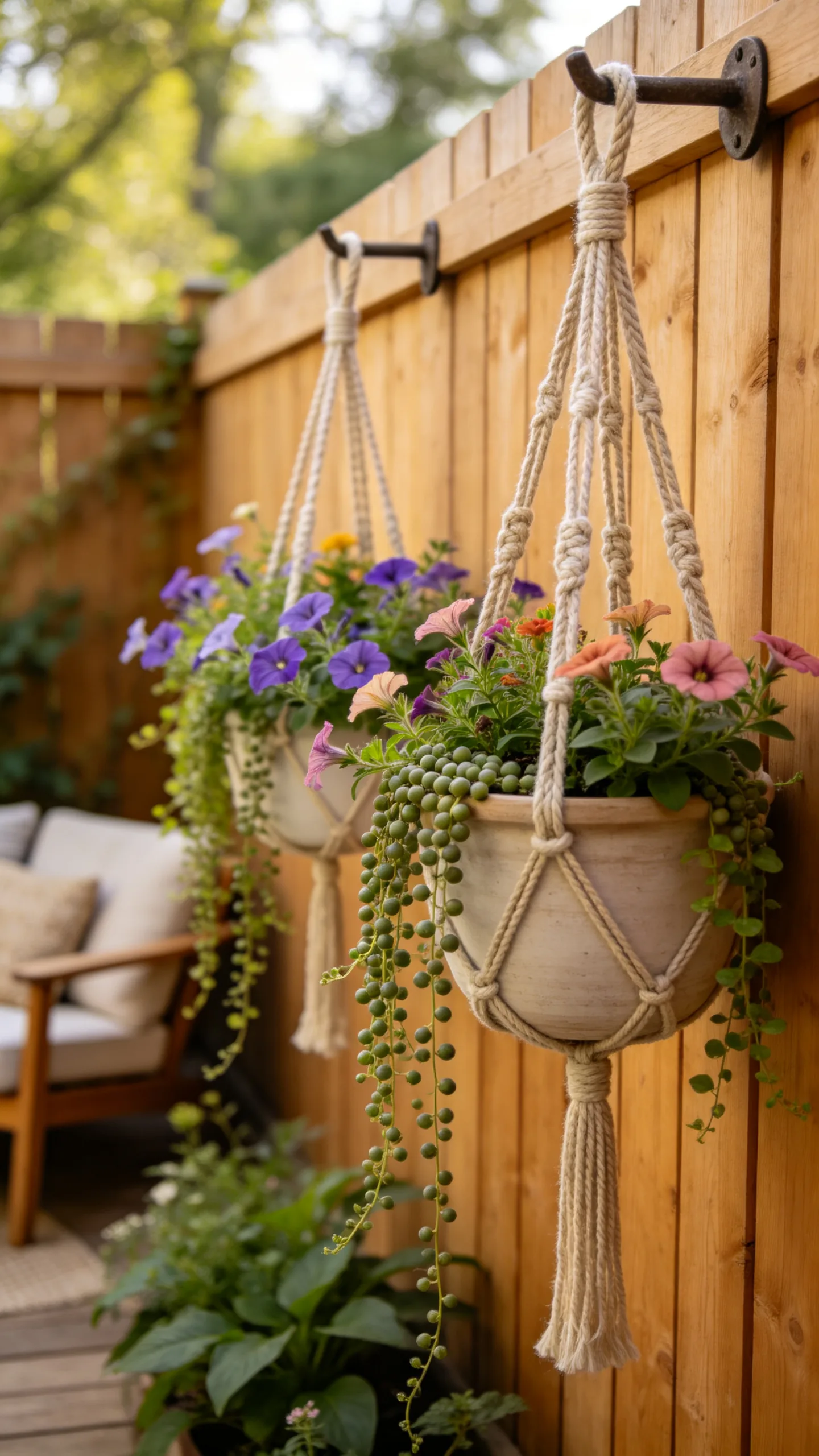
Macrame plant hangers can add texture and softness to a rigid fence, especially around a patio seating area. Hang lightweight pots from sturdy hooks attached to fence posts or a mounted rail. Use trailing plants such as pothos in warm, sheltered climates, string of pearls in dry bright conditions, or outdoor-friendly annuals like trailing lobelia and calibrachoa.
This idea works best in a protected area where wind will not swing the pots hard against the fence. Choose plastic, resin, or lightweight terracotta-look pots to reduce strain on the hangers. For a cohesive design, use matching pot colors and vary the length of the hangers so the plants create a relaxed cascading effect.
10. Vertical Pallet Planter Attached to the Fence
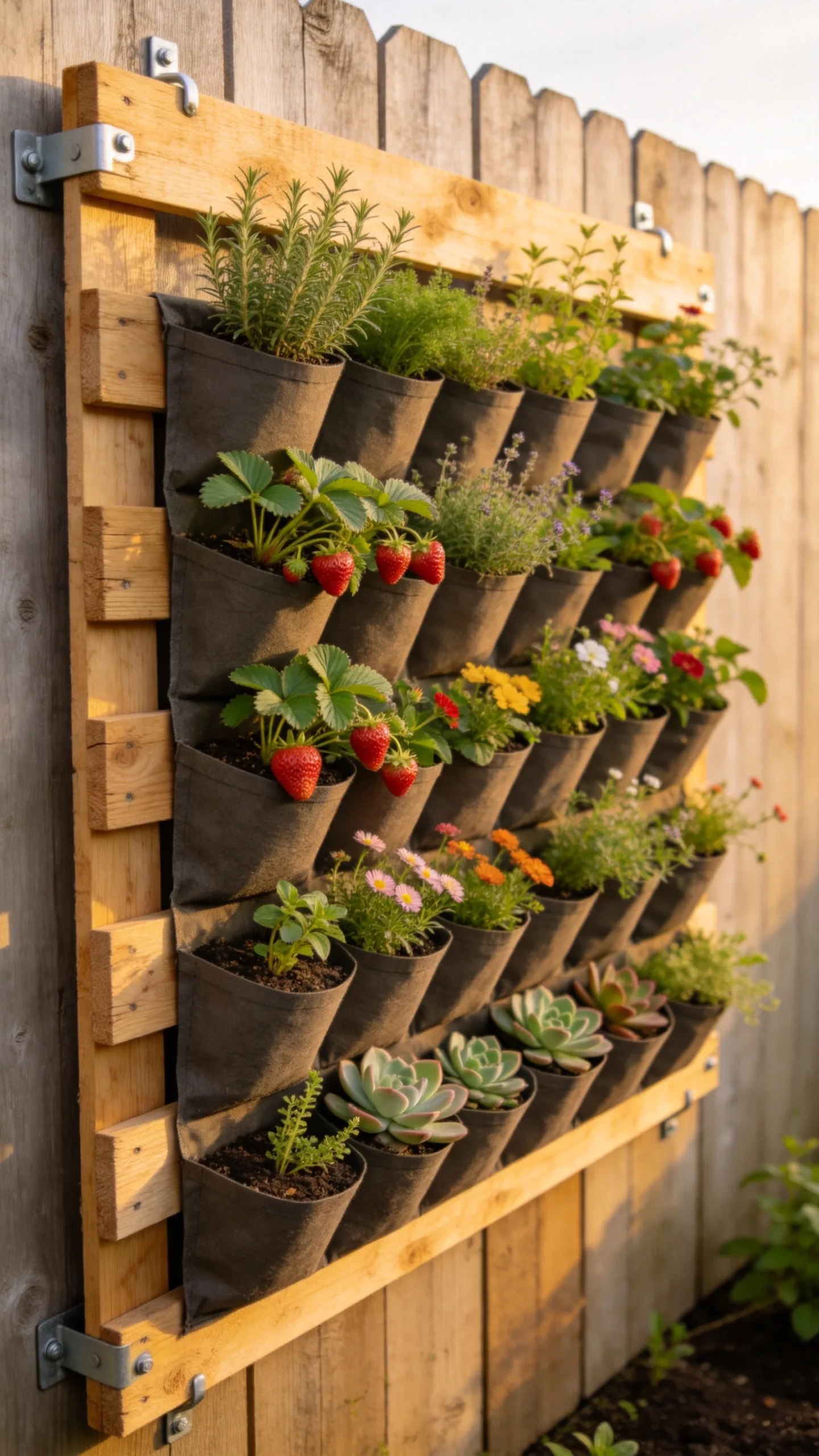
A wooden pallet can become a vertical fence planter with rows of planting pockets. Sand rough edges, secure landscape fabric to the back and bottom of each planting row, and mount the pallet firmly so it does not tip or pull away from the fence. Fill the pockets with potting mix and compact plants.
Pallet planters are useful for herbs, strawberries, small annuals, and succulents. They add a strong garden-wall look because the wood frame covers a large section of fence at once. Avoid using pallets with unknown chemical treatment; choose heat-treated pallets marked “HT” when possible, especially if growing edible plants.
11. Fence-Mounted Window Boxes With Cascading Plants
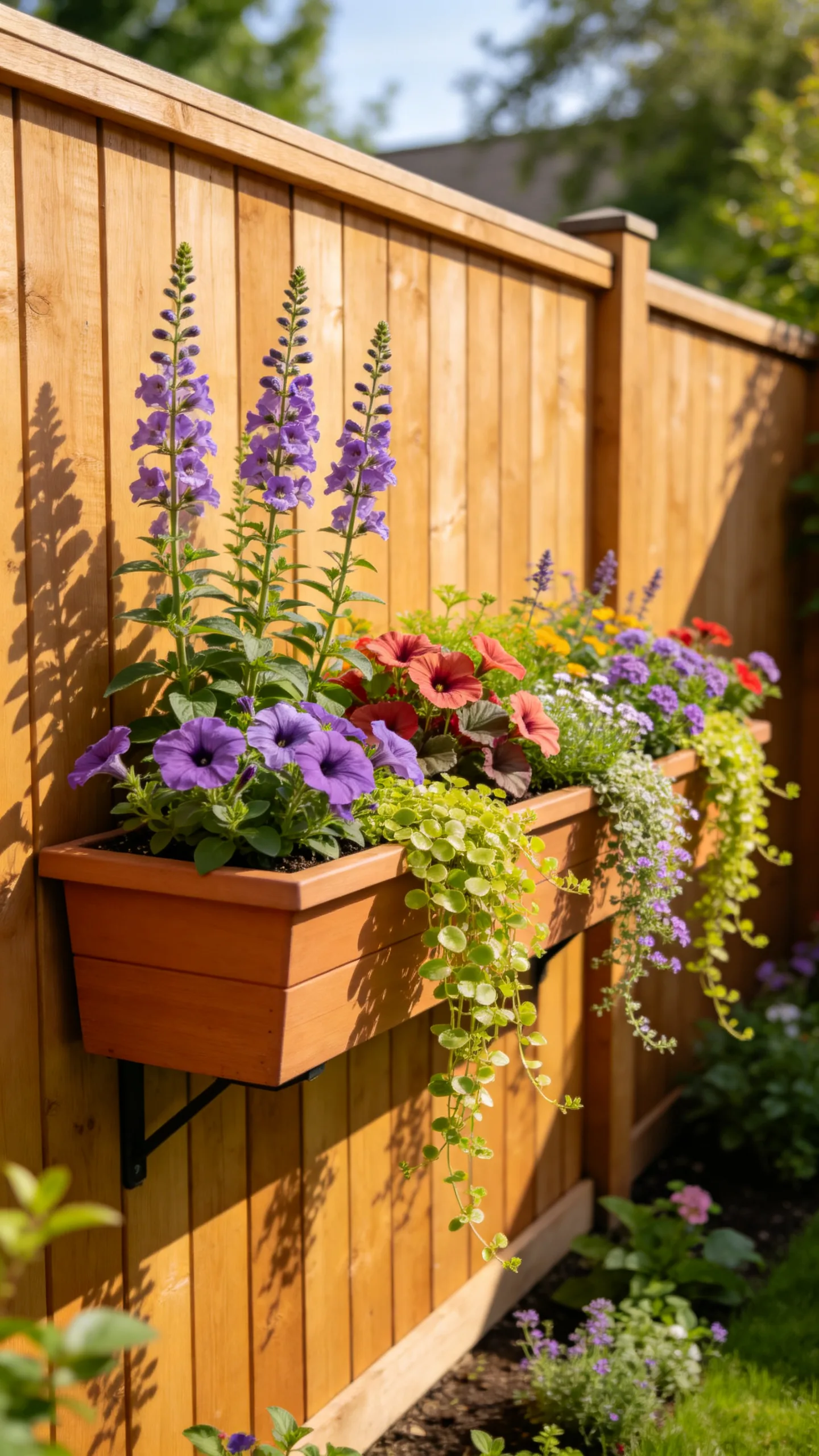
Window boxes are not just for windows. Mounted along a fence, they create long bands of color and greenery. Use brackets that can handle the weight of wet soil, and place the boxes at a comfortable watering height. A row of matching boxes instantly makes the fence feel more intentional and garden-like.
For a full, layered planting, use the “thriller, filler, spiller” method. Try an upright plant such as angelonia or salvia, a mounding filler such as petunias or begonias, and a spiller such as creeping Jenny, bacopa, or trailing verbena. Match the plant choices to the fence exposure so the boxes stay healthy through the season.
12. Hanging Terracotta Pots on a Metal Grid Panel
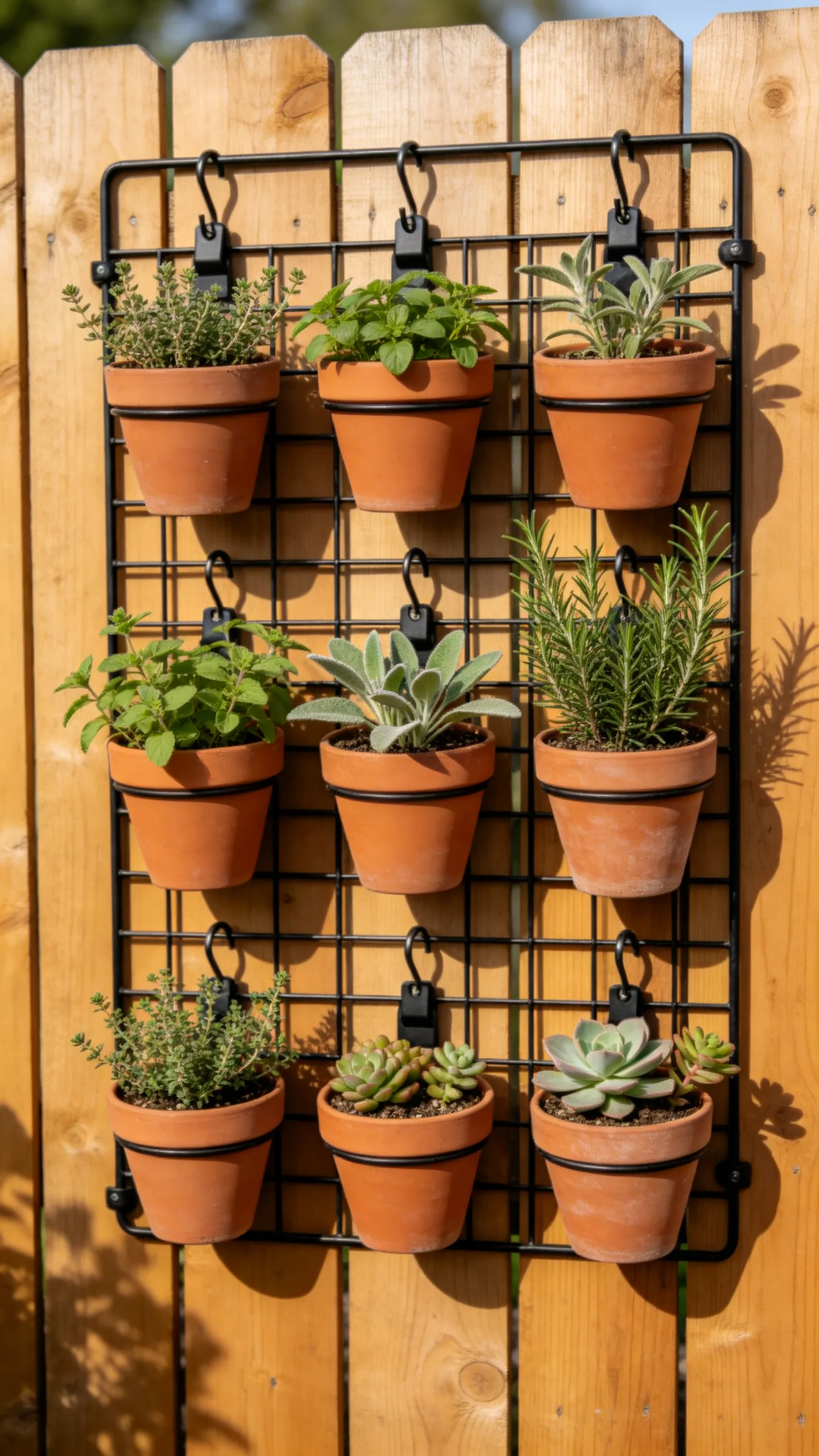
A metal grid panel mounted to a fence gives you flexible places to hang terracotta pots, small baskets, and garden tools. This works well if you do not want to drill multiple holes into the fence for every planter. Attach the grid to fence posts or strong rails, then use S-hooks or pot clips to hold each container.
Terracotta gives a warm, classic look, but it dries faster than plastic or glazed ceramic. Use it for drought-tolerant herbs such as thyme, oregano, sage, and rosemary, or for succulents in bright conditions. If your fence is in a hot, sunny spot, water more often or use glazed pots to reduce evaporation.
13. Hanging Succulent Frames for a Low-Water Accent
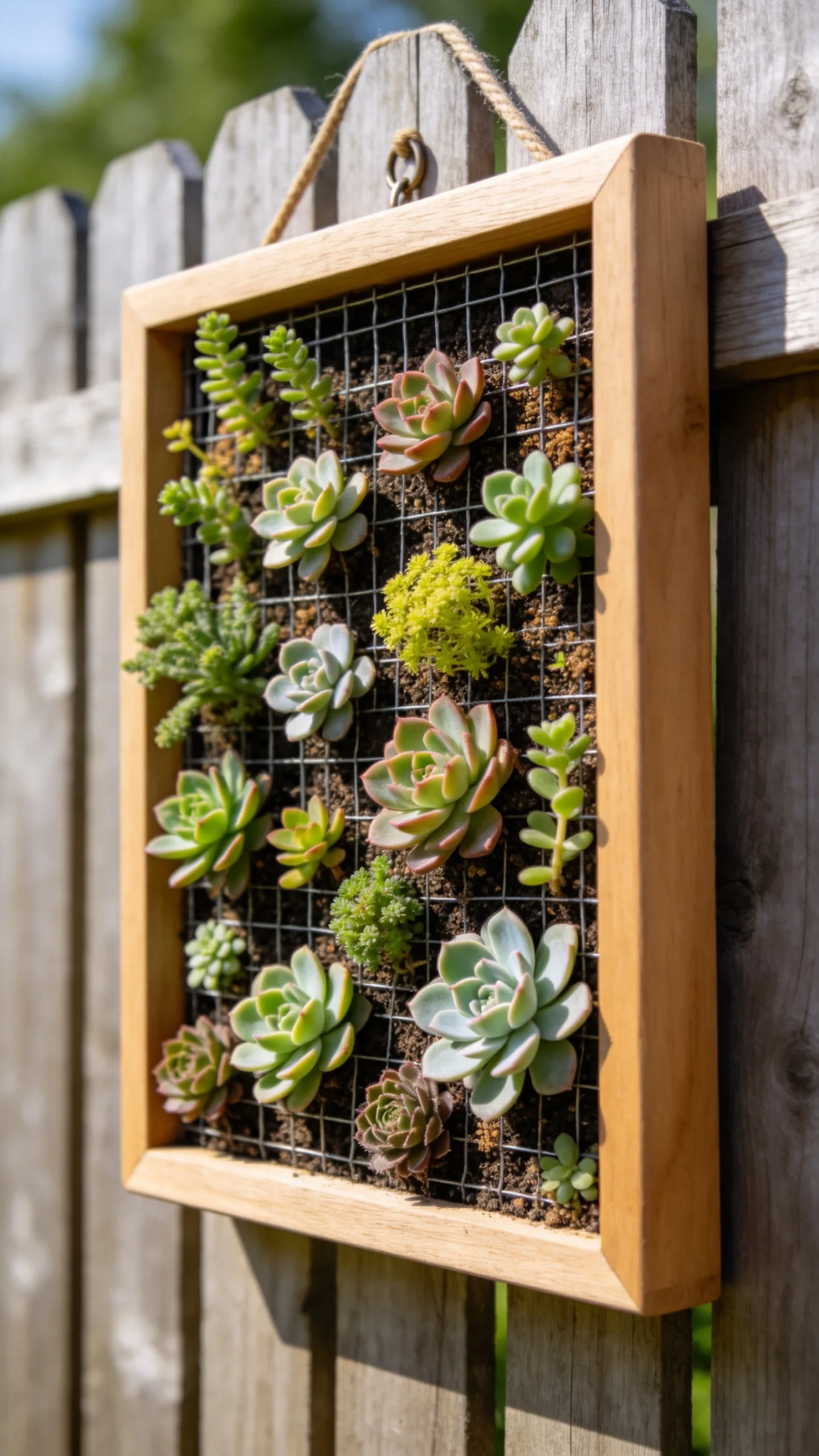
A succulent frame can turn part of a fence into a living picture. Use a shallow wooden frame with wire mesh, landscape fabric, and a fast-draining cactus or succulent mix. Plant small succulents such as sedum, echeveria, sempervivum, or crassula, depending on what grows well in your climate.
This idea is best for a bright fence with good airflow and protection from heavy, constant rain. Succulent frames need less frequent watering than many flower planters, but they still require drainage and occasional care. Hang the frame securely and keep it small enough to remove for seasonal protection if your winters are too cold for the plants.
14. Basket Planters With Ornamental Grasses for Privacy
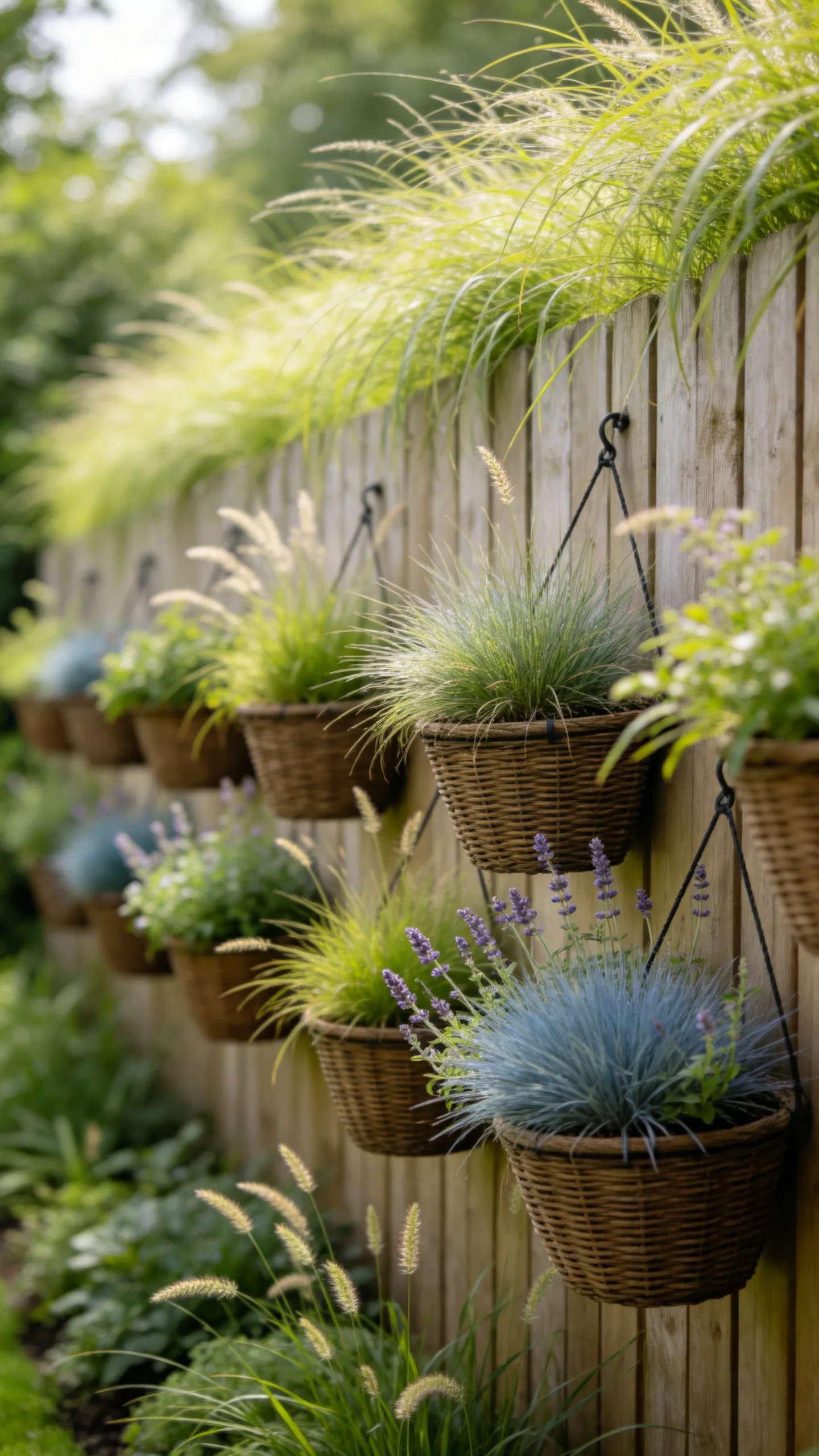
Hanging basket planters can do more than add flowers; they can also create light privacy along a fence. Choose compact ornamental grasses or grass-like plants such as carex, blue fescue, dwarf fountain grass, or liriope, depending on your growing zone and light conditions.
Hang the baskets in a repeating row at eye level or slightly below to soften the fence and screen views without building a solid wall. Grasses add movement and texture, especially in breezy areas. Use baskets with enough soil volume to support the roots, and trim back dead foliage at the right season for the plant type.
15. Mixed Fence Planter Gallery With Pots, Baskets, and Shelves
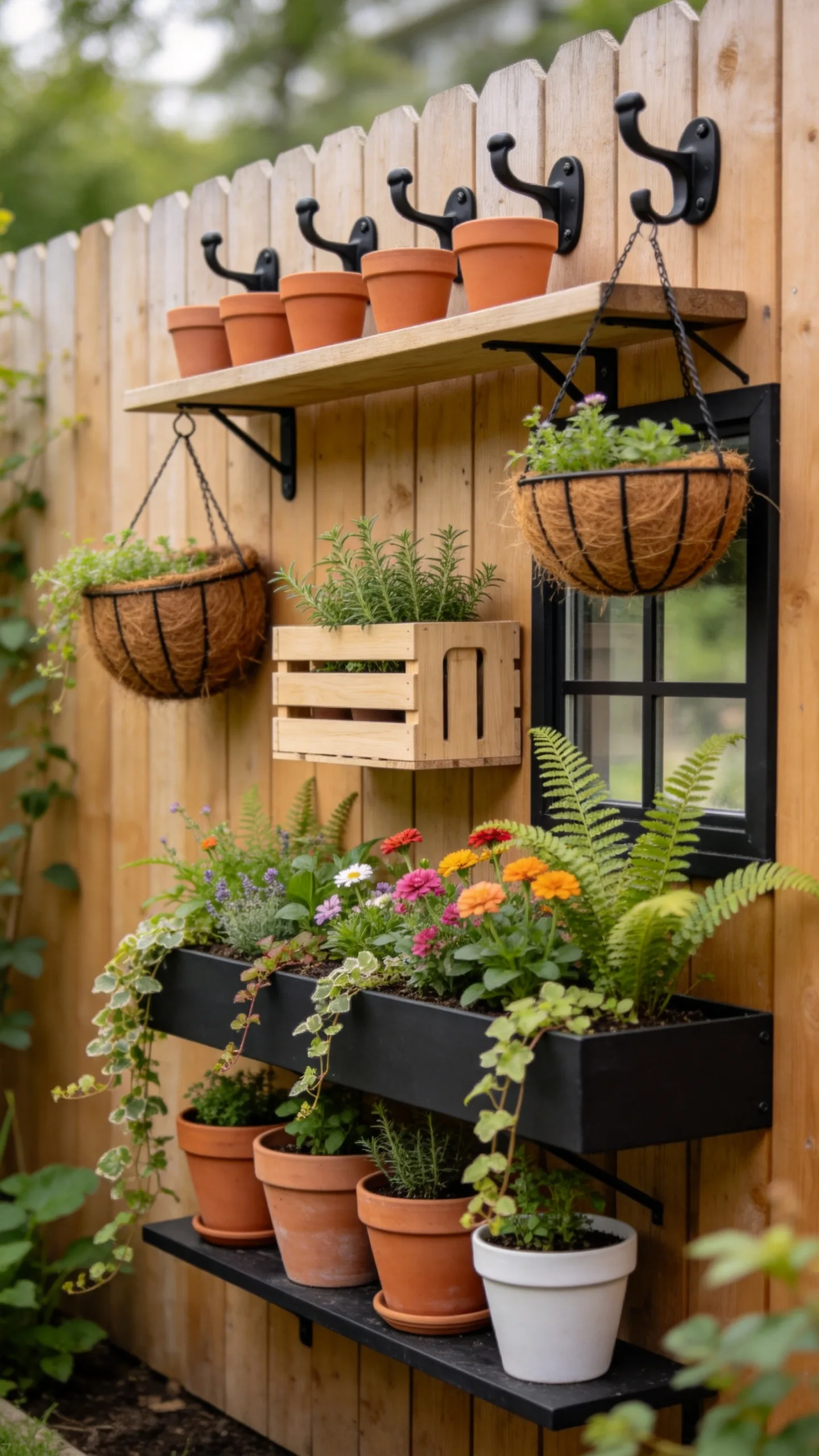
A mixed planter gallery combines several hanging fence planter ideas into one collected garden wall. Install a few narrow outdoor shelves, add hanging pots on hooks, mount one or two wall baskets, and include a small crate or window box. This approach works well when you want a colorful, layered fence instead of a single repeated planter style.
To keep the display from looking cluttered, repeat at least one element, such as black hooks, terracotta pots, white planters, or pink flowers. Place heavier containers lower on the fence and lighter pots higher up. Use the sunniest spots for blooming annuals and herbs, then reserve shadier corners for foliage plants, ferns, or shade-tolerant flowers.