A corner lot fence has to work harder than a typical backyard fence. It may need to screen traffic, define two street-facing edges, protect a side yard, and still look attractive from the curb. The best corner lot fence ideas balance privacy with visibility, using the right height, materials, planting, and layout so the yard feels enclosed without looking boxed in.
1. Horizontal Wood Fence With a Lower Street-Side Section
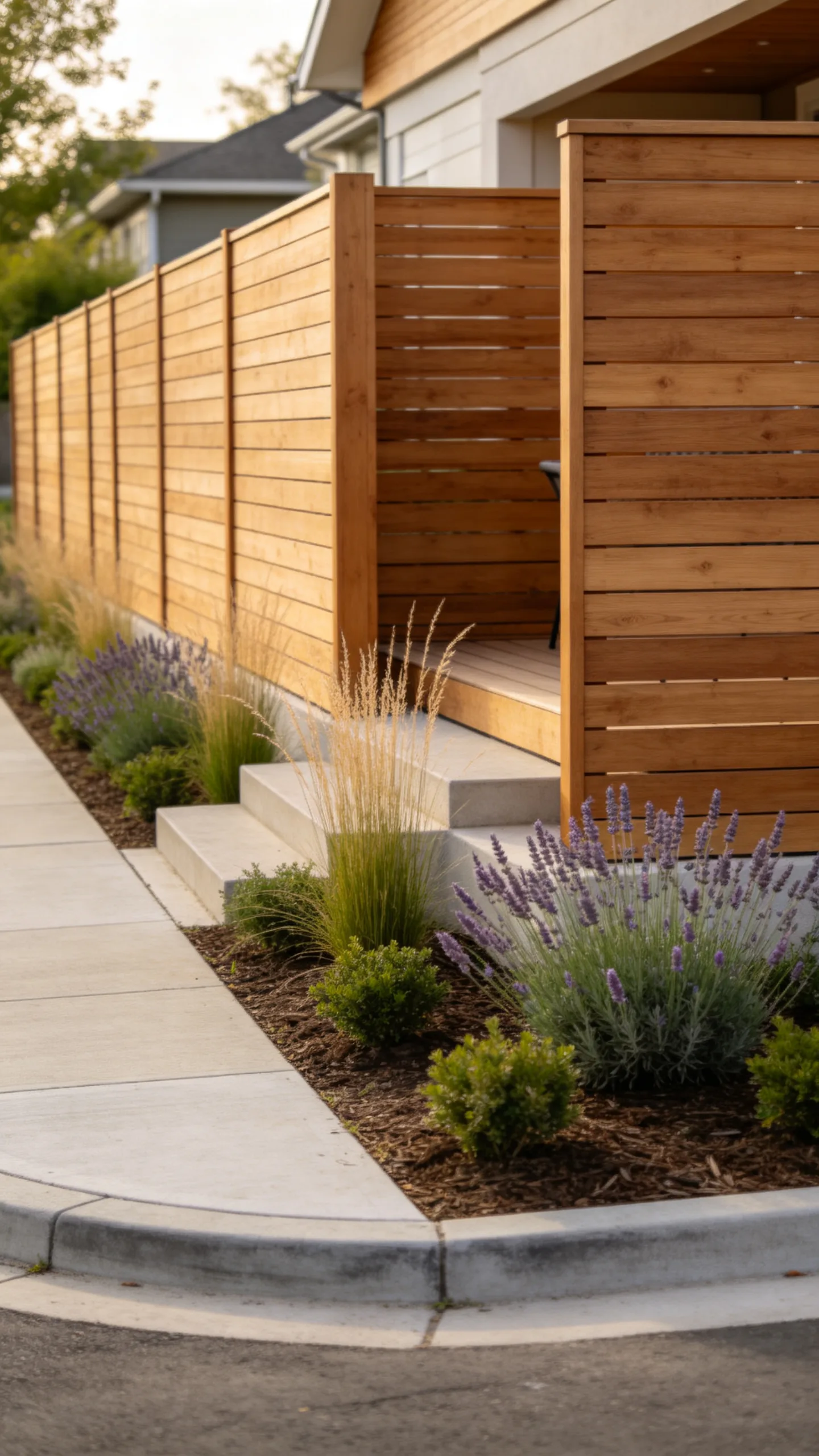
A horizontal wood fence gives a corner lot a clean, modern look while creating strong privacy along the most exposed side of the yard. Use taller boards along the backyard or side yard where you need screening from cars and pedestrians, then step the fence down near the front corner to keep the property from feeling too closed off.
This design works especially well when the boards are stained in a warm cedar, walnut, or soft gray finish. Narrow gaps between boards can allow a little airflow and light while still blocking direct views into patios, play areas, or seating zones.
For better curb appeal, pair the street-facing portion with a low planting bed. Ornamental grasses, boxwood, lavender, or dwarf shrubs can soften the long fence line and make the corner look landscaped rather than barricaded.
2. White Picket Fence With Tall Privacy Panels in the Backyard
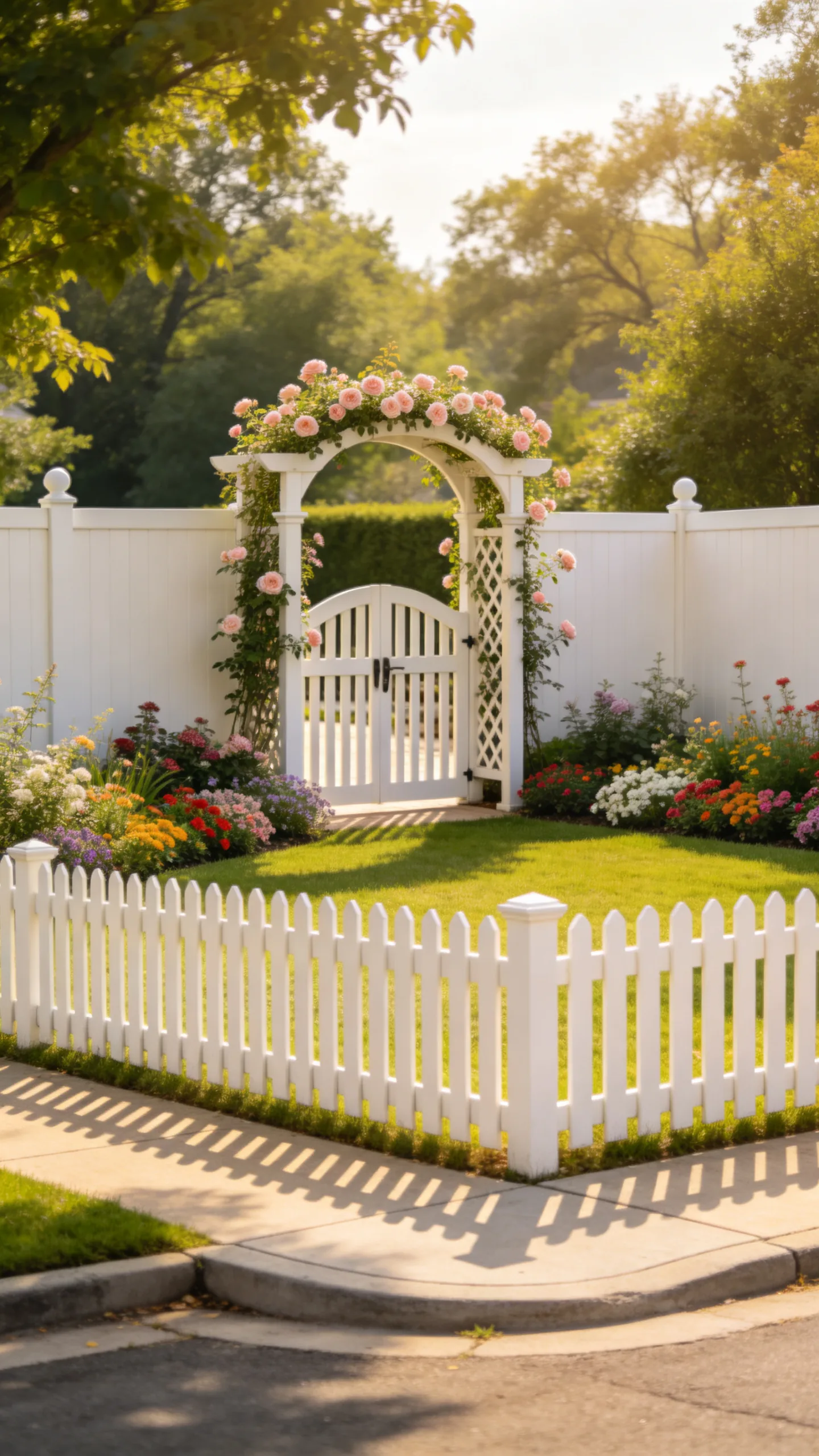
A white picket fence is a classic choice for a corner lot because it keeps the front and side street edges open and friendly. It defines the property line without blocking views, which can be helpful near intersections, sidewalks, and driveways.
To add privacy where it matters, transition to taller solid panels along the backyard or patio side. This gives you the charm of a picket fence from the street while still creating a more private outdoor living area behind the home.
Keep the transition intentional by using the same post style, cap detail, or paint color on both fence types. A gate with an arbor, climbing rose, or clematis can visually connect the low picket section to the taller privacy fence.
3. Shadowbox Fence for Privacy on Both Street Edges
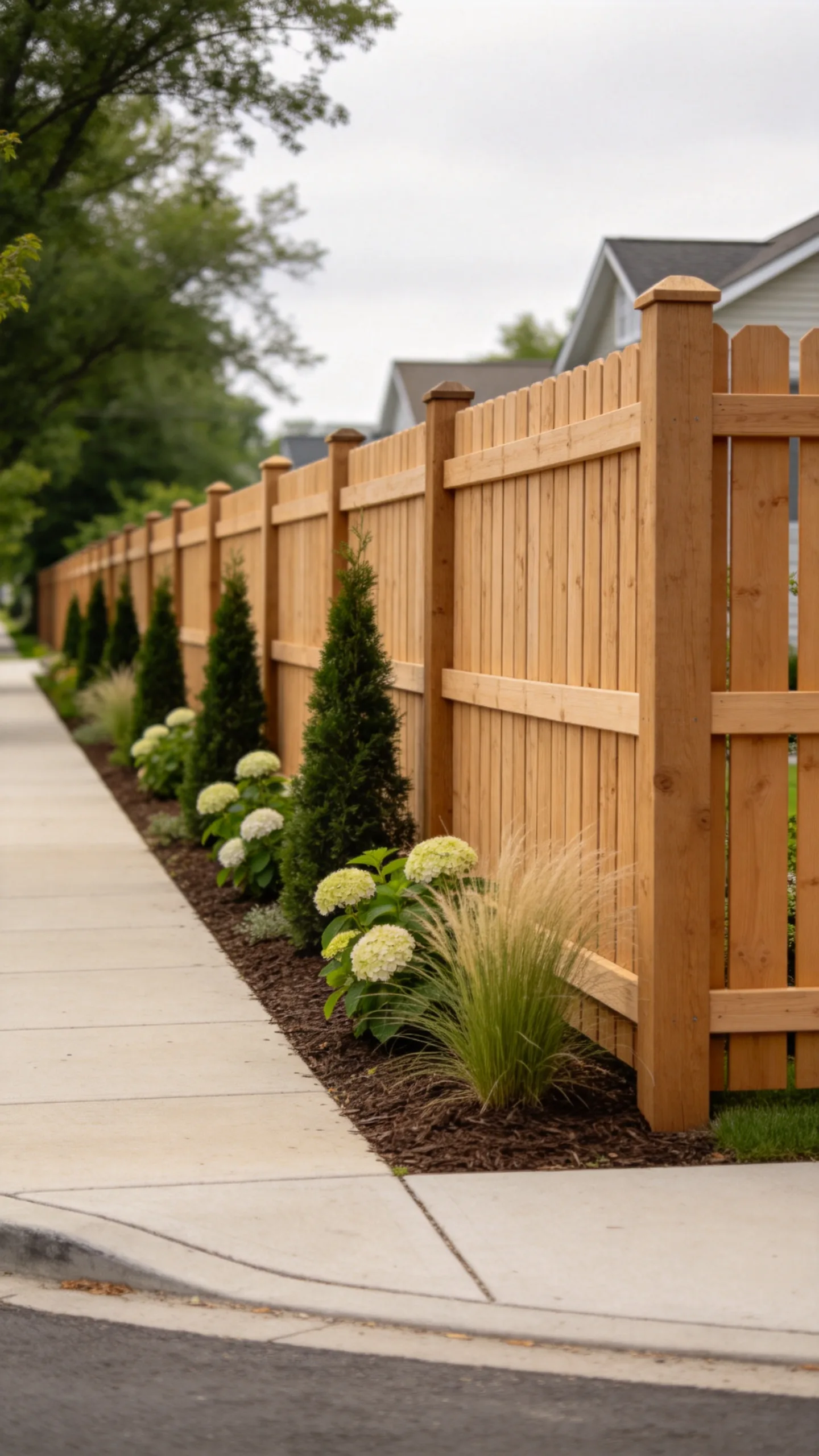
A shadowbox fence is a smart option for corner lots because it looks finished from both sides. Alternating boards on each side of the rails create a semi-private screen that blocks many direct sightlines without feeling like a flat wall.
This type of fence is useful along a side street where neighbors, walkers, or passing vehicles can see into the yard. The small gaps allow wind to move through, which can be helpful in exposed corner lots.
For a softer landscape look, plant narrow evergreens, hydrangeas, or ornamental grasses in front of the fence where space allows. The layered planting helps break up the length of the fence and adds seasonal interest from the curb.
4. Mixed Wood and Metal Fence for a Polished Corner
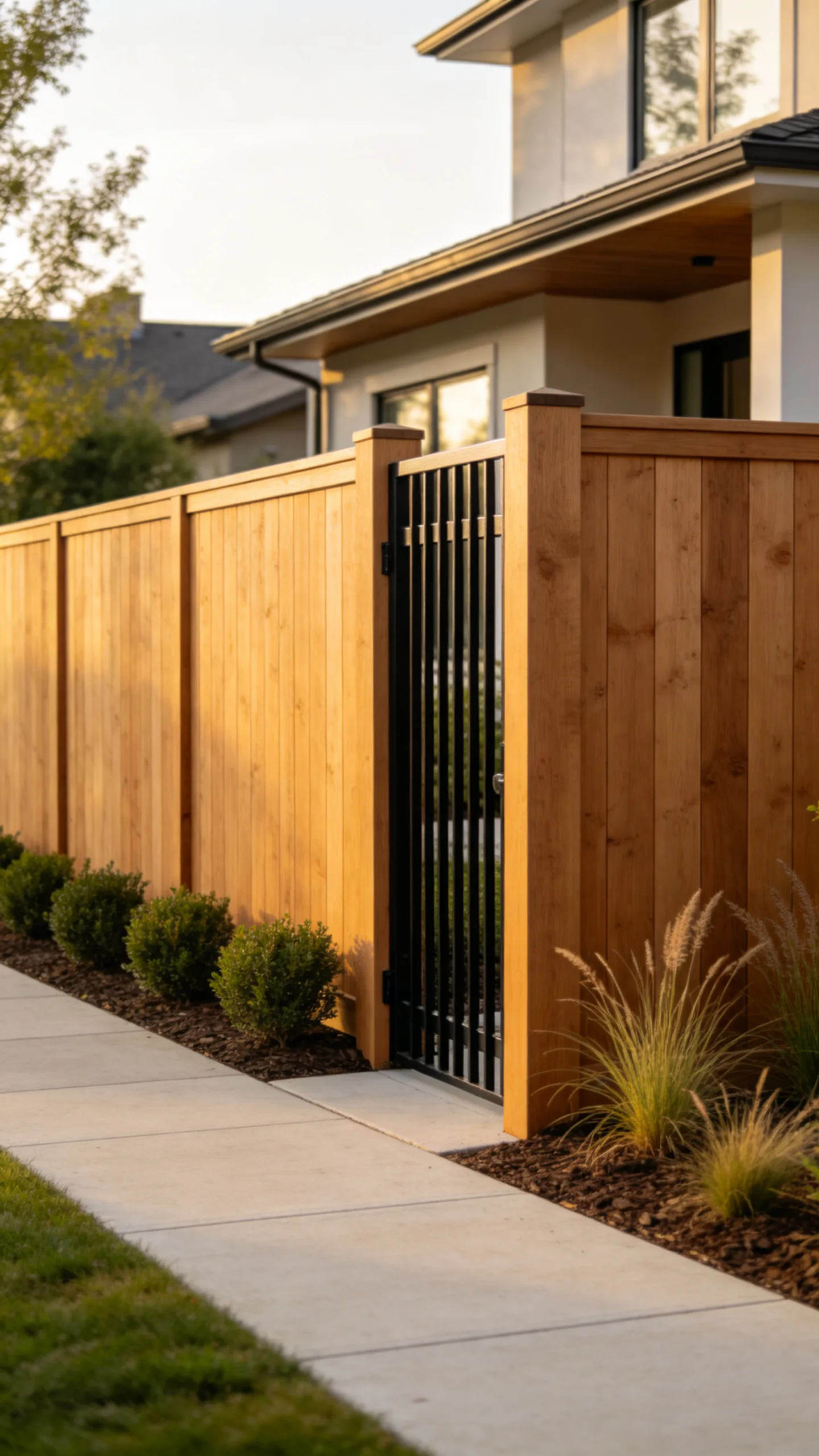
Combining wood privacy panels with metal accents can make a corner lot fence feel more custom. Use solid wood where privacy is needed, then add black metal pickets, framed panels, or decorative inserts near the front corner for a lighter appearance.
This approach is useful when one side of the lot faces heavy foot traffic while the other side needs more curb appeal. The metal sections can maintain a more open view near the front yard while the wood panels screen seating areas, garden beds, or a side patio.
Choose consistent colors to keep the design cohesive. Black metal with cedar, charcoal-stained wood, or natural redwood can create a strong street-facing frame without overwhelming the house or landscape.
5. Vinyl Privacy Fence With Decorative Lattice Top
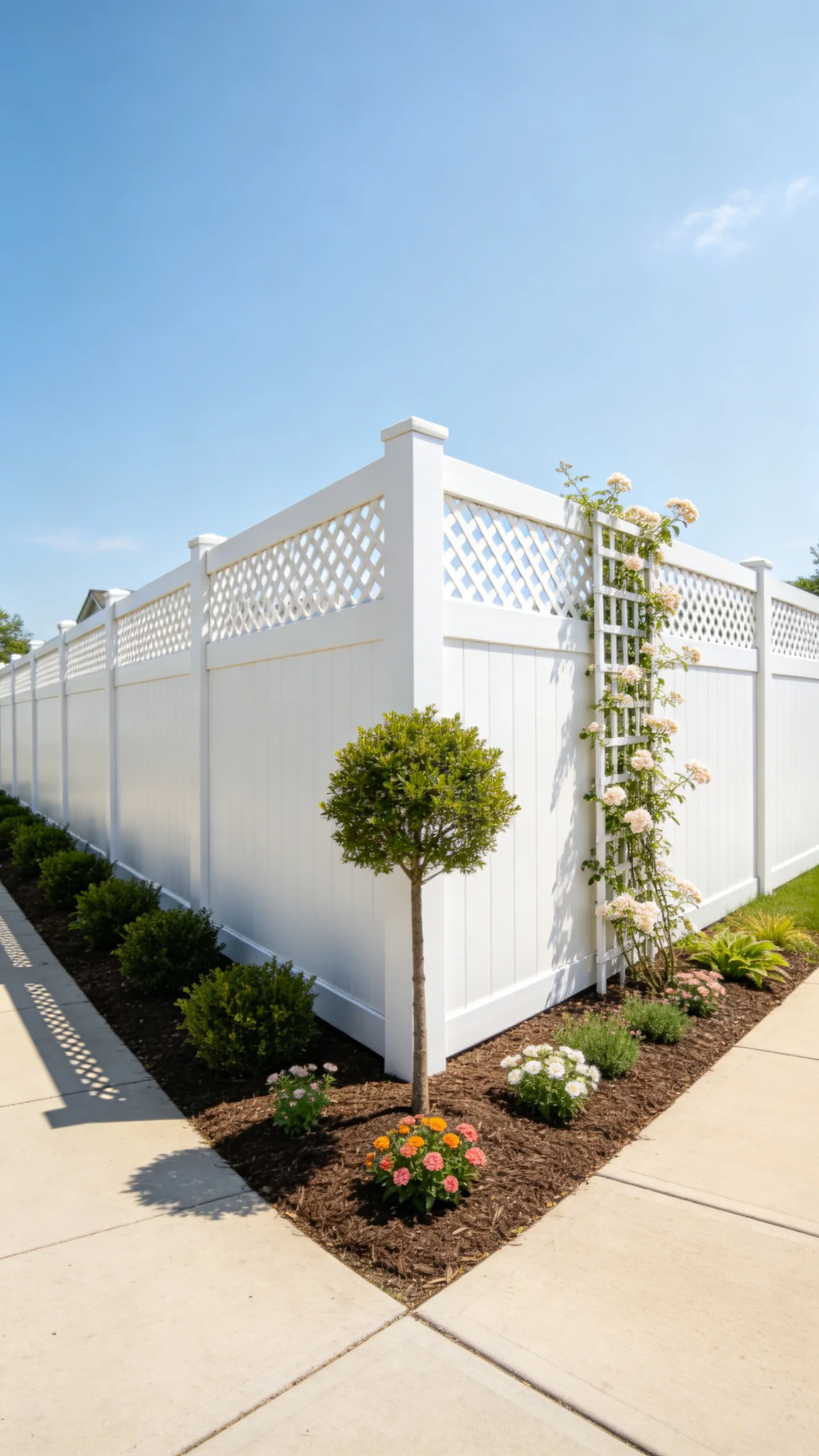
A vinyl privacy fence can be practical for a corner lot because it offers a clean look and low maintenance. Solid vinyl panels are useful along busy roads, side yards, or backyards where you want to reduce visibility into the property.
Adding a decorative lattice top makes the fence feel less heavy from the street. The lattice allows light through and can support light vines in suitable climates, such as clematis or annual flowering vines, without making the whole fence look too plain.
For curb appeal, avoid running uninterrupted white panels around the entire corner without landscaping. Add foundation shrubs, mulch beds, or small ornamental trees at the corner to soften the bright surface and give the fence a finished garden setting.
6. Board-on-Board Fence for Maximum Side Yard Screening
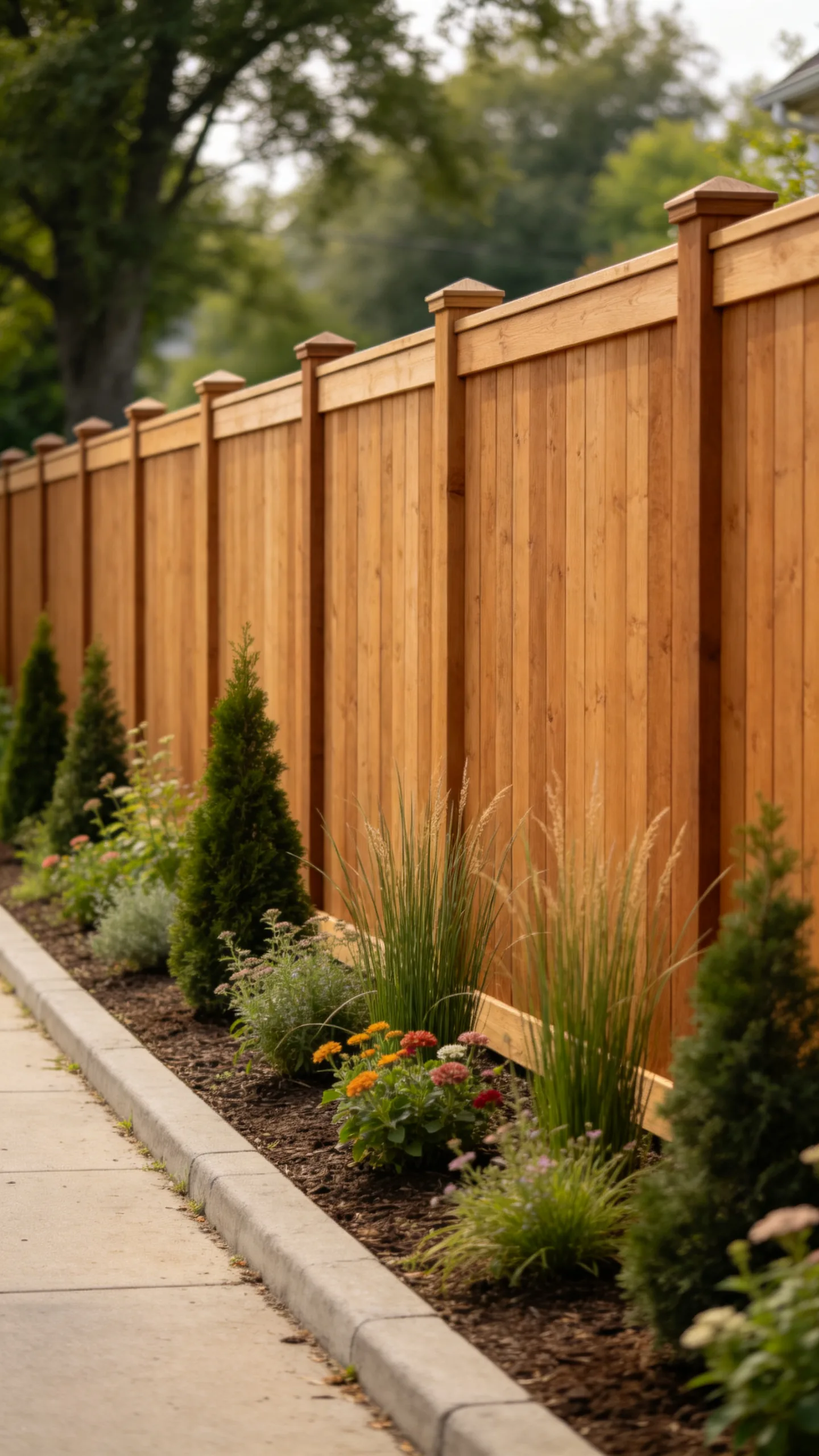
A board-on-board fence is ideal when privacy is the main priority. Overlapping vertical boards block gaps that can appear as wood shrinks, making it a strong choice for side yards exposed to sidewalks or neighboring driveways.
This style works well for corner lots with patios, pools, outdoor dining areas, or children’s play spaces placed near the side property line. Because both street-facing sides can feel long, choose a stain or paint color that complements the home’s siding and trim.
To prevent a tall fence from looking too severe, add cap rails, post caps, or a slightly varied panel rhythm. A narrow planting strip with upright shrubs, sedges, or perennial flowers can make the fence look integrated into the yard rather than simply installed along the edge.
7. Low Masonry Wall With Wood Privacy Inserts
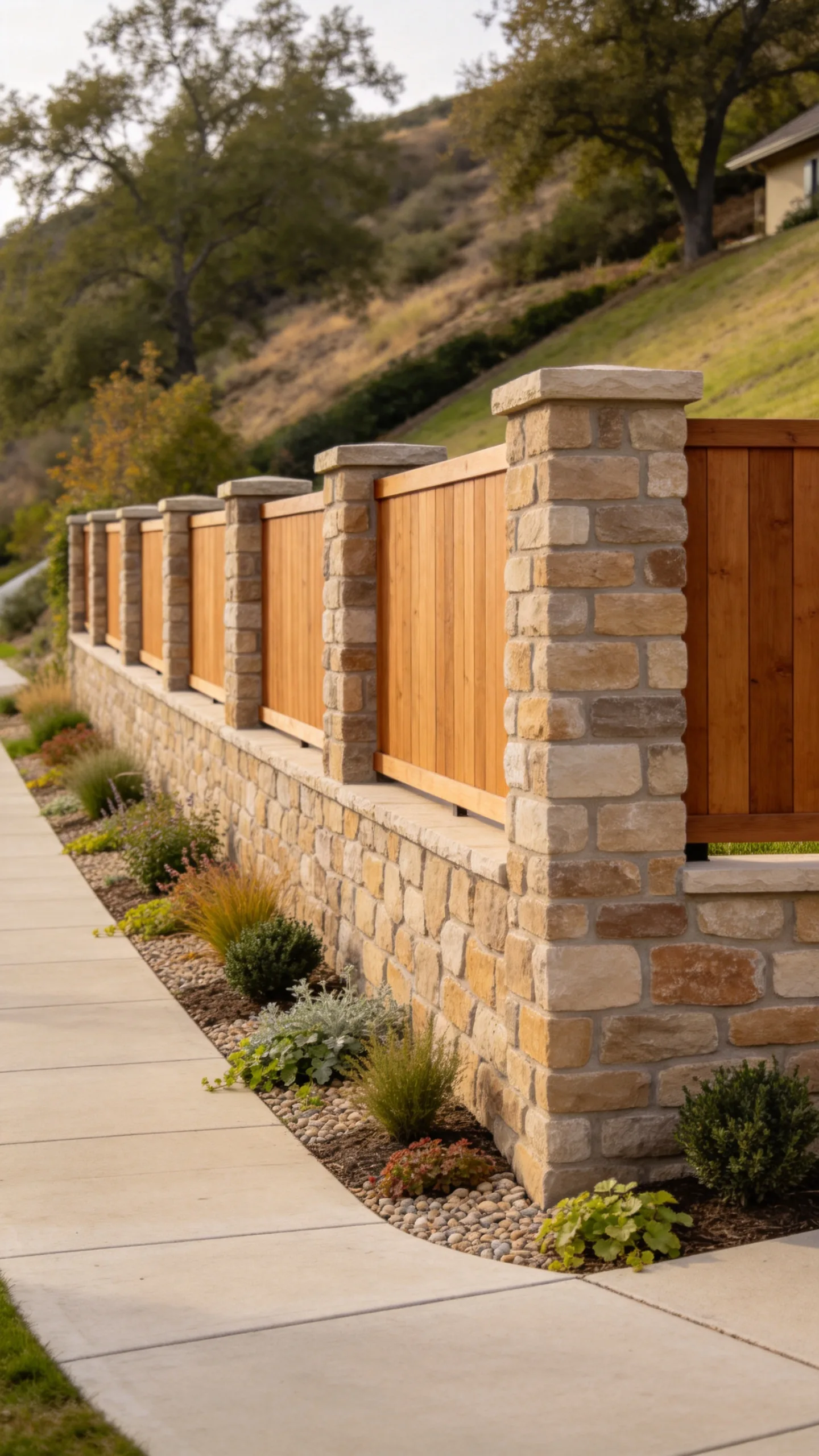
A low masonry wall with wood inserts can give a corner lot a substantial, high-end look. Stone, brick, or concrete block creates a durable base, while wood panels add warmth and privacy where needed.
This design is especially useful on corner lots with sloped ground, since the masonry base can help handle grade changes. Wood panels can be placed above the wall in sections along the side yard or backyard while keeping the front corner lower and more open.
Match the masonry to materials already used on the house, such as brick veneer, stone columns, or concrete pathways. Planting drought-tolerant perennials, compact shrubs, or trailing groundcovers at the base can soften the hardscape and add curb appeal.
8. Fence With Staggered Heights Around the Corner
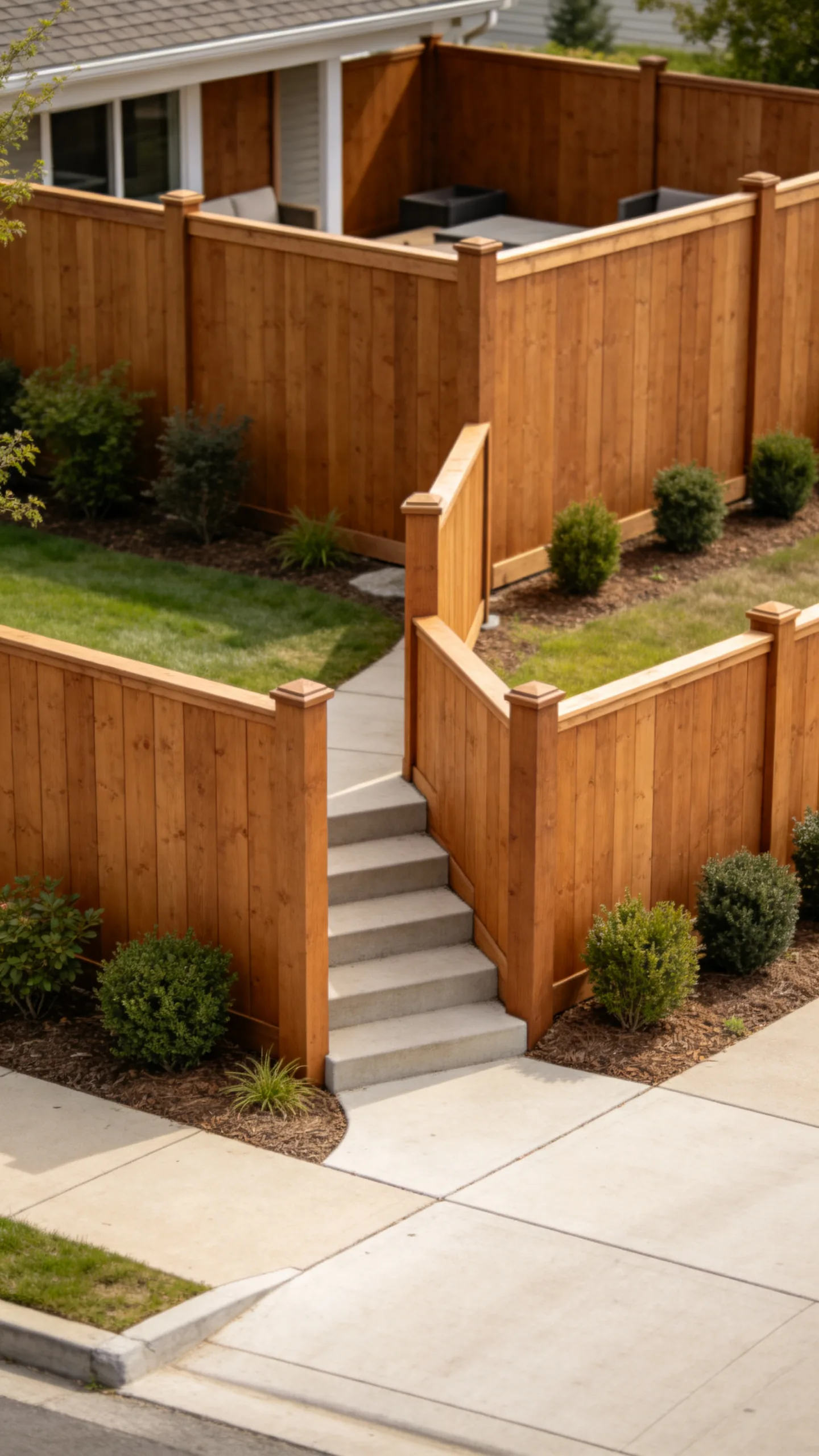
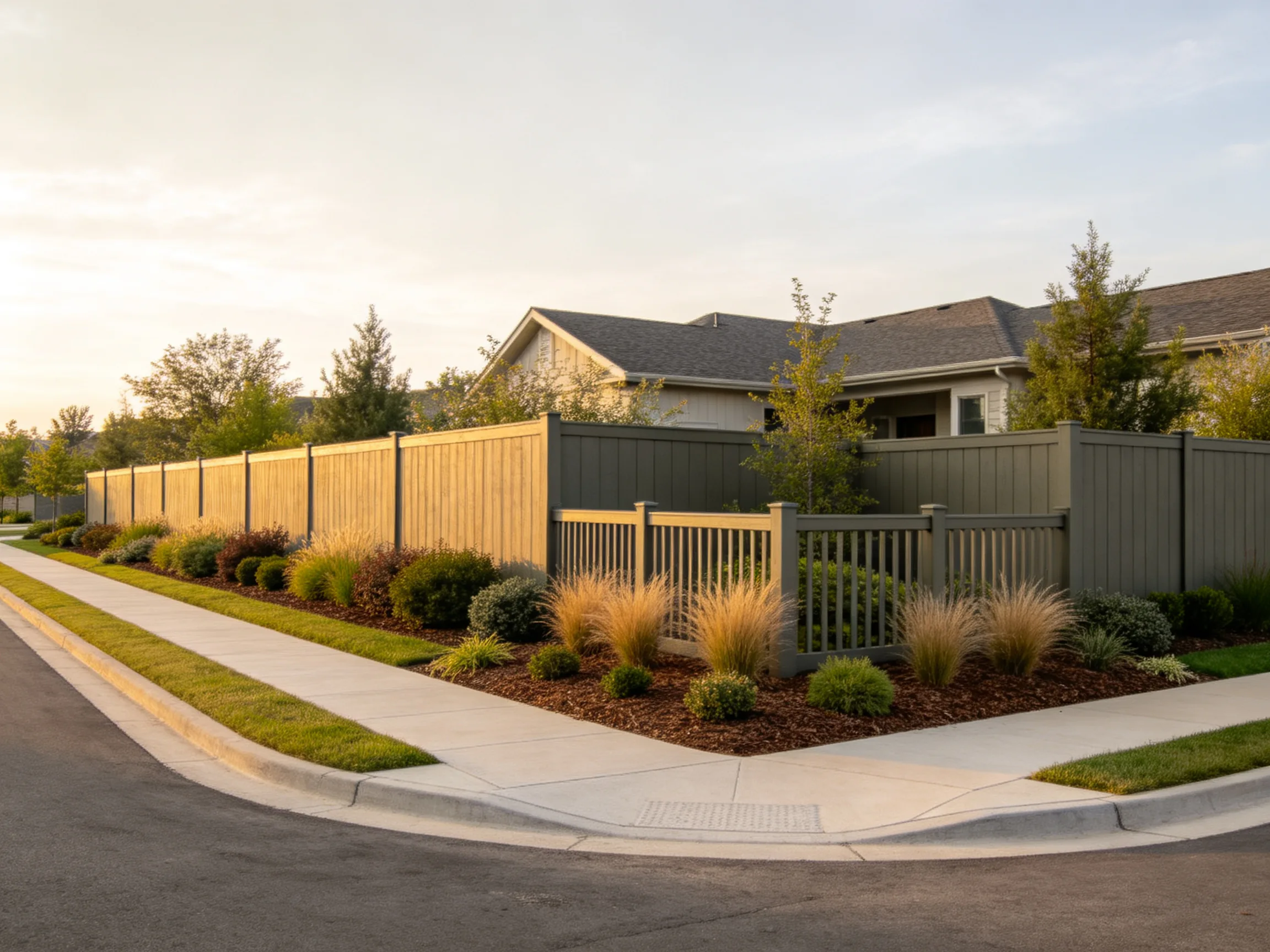
A staggered-height fence helps a corner lot feel private without turning the entire street edge into a tall wall. Use taller panels where the yard needs screening, then reduce the height as the fence approaches the front yard, driveway, or sidewalk corner.
This is especially helpful for maintaining a welcoming look and preserving sightlines where people enter the property. The stepped design can follow the natural use of the yard, with full privacy around outdoor living spaces and lower sections around ornamental planting areas.
To make the height changes look intentional, keep the same material and post spacing throughout. Add a consistent top rail or cap detail so the fence reads as one planned design rather than separate pieces.
9. Corner Fence With a Rounded Planting Bed
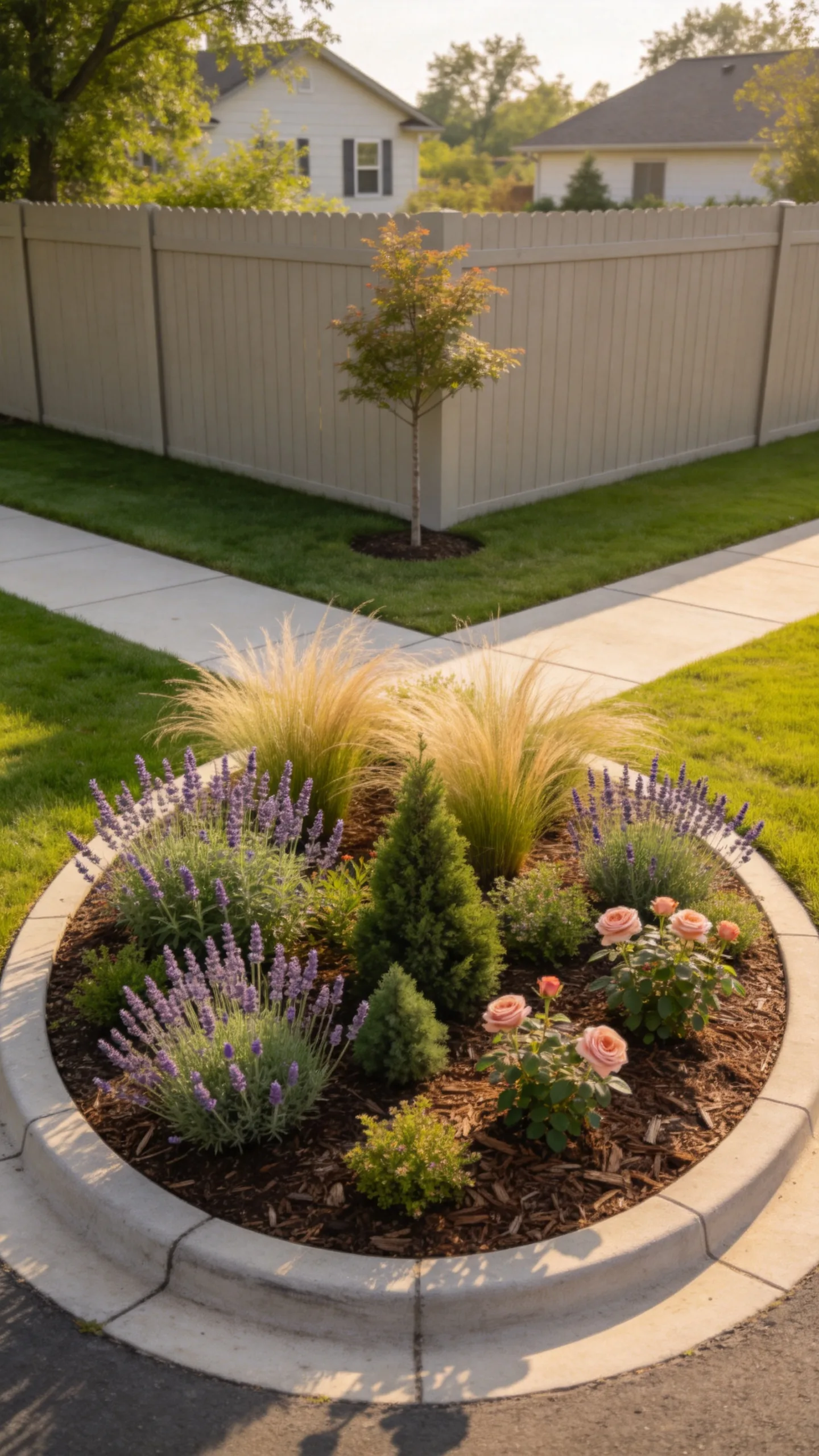
A corner lot often has a visible turning point where two fence lines meet. Instead of making this area feel harsh, create a rounded planting bed at the corner with shrubs, perennials, and a small ornamental tree.
The fence can remain simple behind the planting, such as a wood privacy fence, vinyl panel fence, or metal picket fence. The curved bed softens the angle and draws attention to the landscaping rather than the length of the fence.
Choose plants that fit the available light. For sunny corners, consider ornamental grasses, salvia, lavender, dwarf conifers, or compact roses. For part shade, use hydrangeas, hostas, ferns, boxwood, or shade-tolerant groundcovers.
10. Semi-Private Slat Fence for Airflow and Street Style
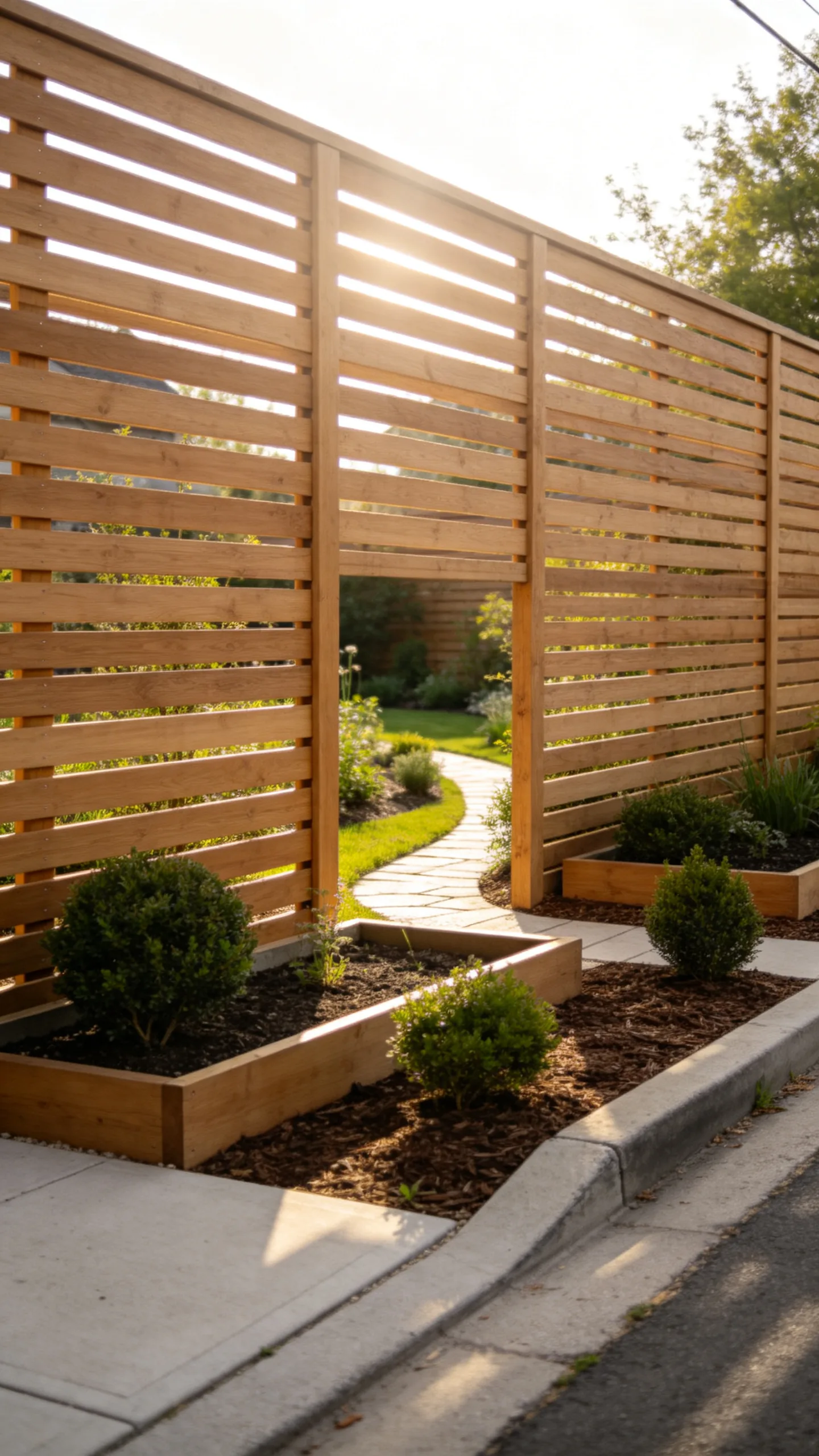
A semi-private slat fence uses evenly spaced boards to screen the yard without completely closing it off. This can be a strong choice for corner lots where a solid fence would feel too imposing from the street.
The spacing can be adjusted depending on the level of privacy needed. Narrow gaps work well near patios or side yards, while wider spacing can be used near front gardens or decorative areas. Horizontal slats feel modern, while vertical slats tend to look more traditional.
Because this fence style shows some of the yard behind it, keep the visible landscaping tidy. Use mulch, edging, compact shrubs, or raised beds along the inside so the view through the slats still feels intentional.
11. Privacy Fence With a Pergola Gate Entrance
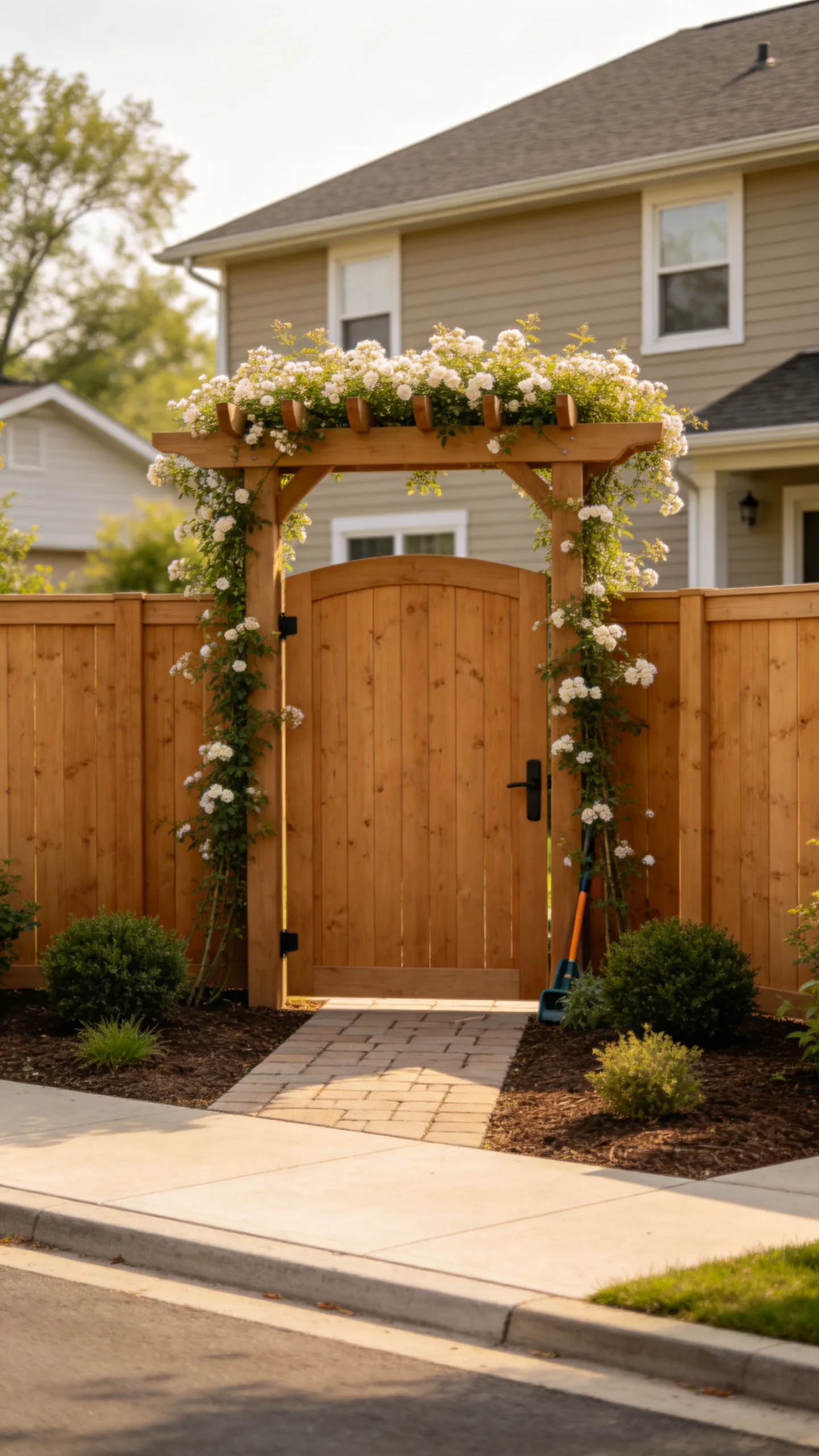
A pergola-style gate can turn a necessary corner lot fence entrance into a focal point. This is especially useful when the side gate is visible from the street or when the fence line runs along a sidewalk.
Use a solid privacy fence on either side of the gate, then add a pergola top or arbor frame above the entry. This creates height and curb appeal without extending the entire fence upward. Climbing plants such as jasmine, clematis, climbing rose, or honeysuckle can add seasonal color if they suit the local climate and sun exposure.
The gate should be wide enough for garden tools, trash bins, or a wheelbarrow if it leads to a working side yard. Add a clear path of gravel, pavers, or stepping stones so the entrance looks practical and inviting.
12. Evergreen Hedge Along a Simple Fence
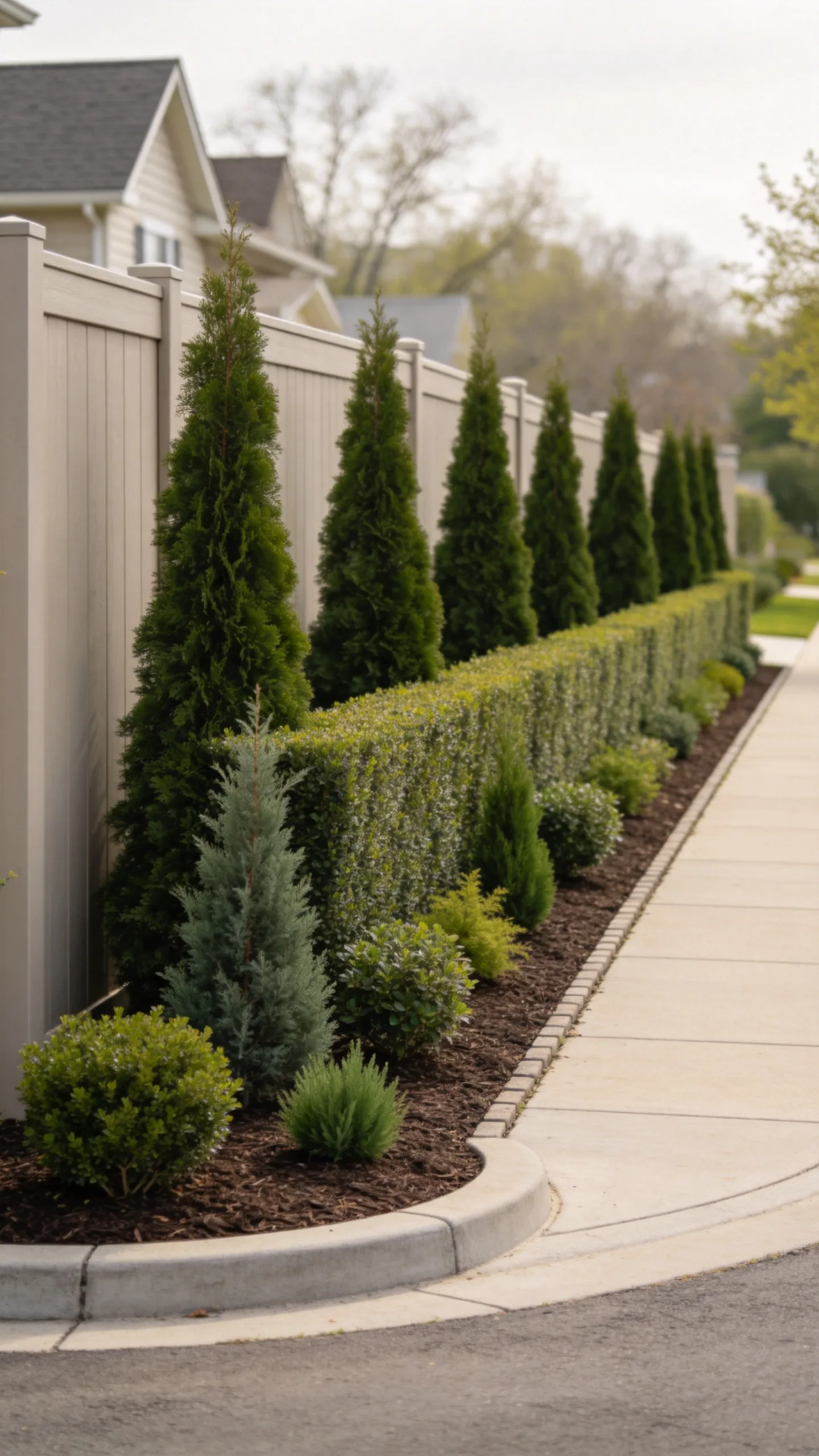
Pairing a simple fence with an evergreen hedge is a practical way to build layered privacy on a corner lot. The fence provides immediate structure, while the hedge adds softness and year-round screening as it grows.
This works well with wood, vinyl, or metal fences. Plant compact evergreens such as arborvitae, boxwood, yew, holly, or dwarf cypress varieties based on your climate, soil, and available space. For narrow side yards, choose upright or columnar varieties that will not quickly outgrow the bed.
Leave enough space between the fence and hedge for mature growth and maintenance access. A mulch strip helps retain moisture, reduce weeds, and make the planting look neat from the street.
13. Black Metal Fence With Strategic Privacy Planting
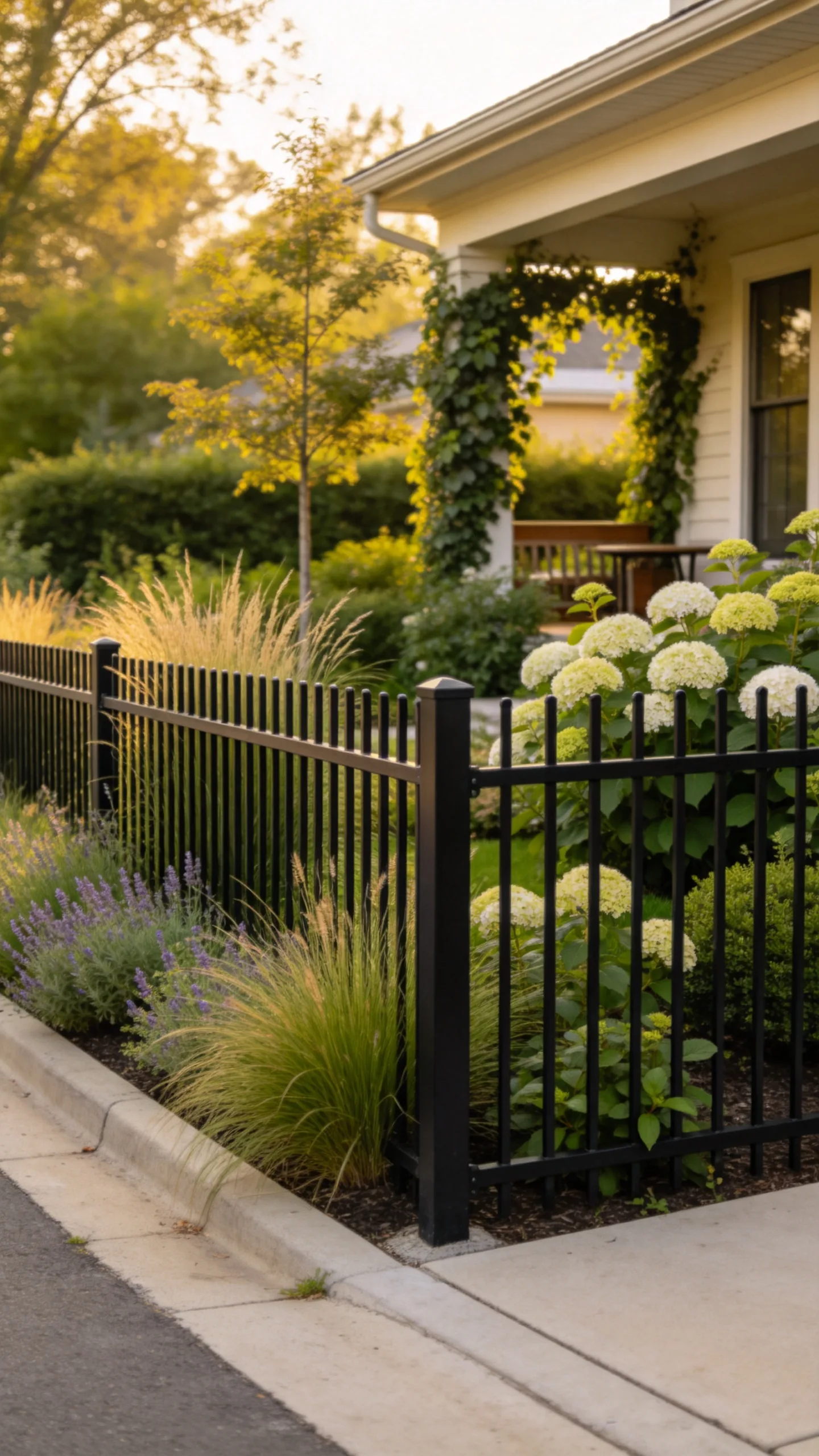
A black metal fence is attractive for corner lots because it defines the property without blocking the view of the home. It works especially well for front and side yards where curb appeal is just as important as enclosure.
To add privacy, use planting rather than solid panels. Layer shrubs, tall grasses, small trees, or climbing vines along the sections where screening is needed most. This keeps the fence open near the front corner while creating filtered privacy around porches, patios, or garden seating.
Good plant choices depend on sunlight and space, but options can include switchgrass, little bluestem, viburnum, camellia, hydrangea, or espaliered fruit trees. The black fence visually recedes behind greenery, giving the corner a refined garden look.
14. Cedar Fence With Built-In Planter Boxes
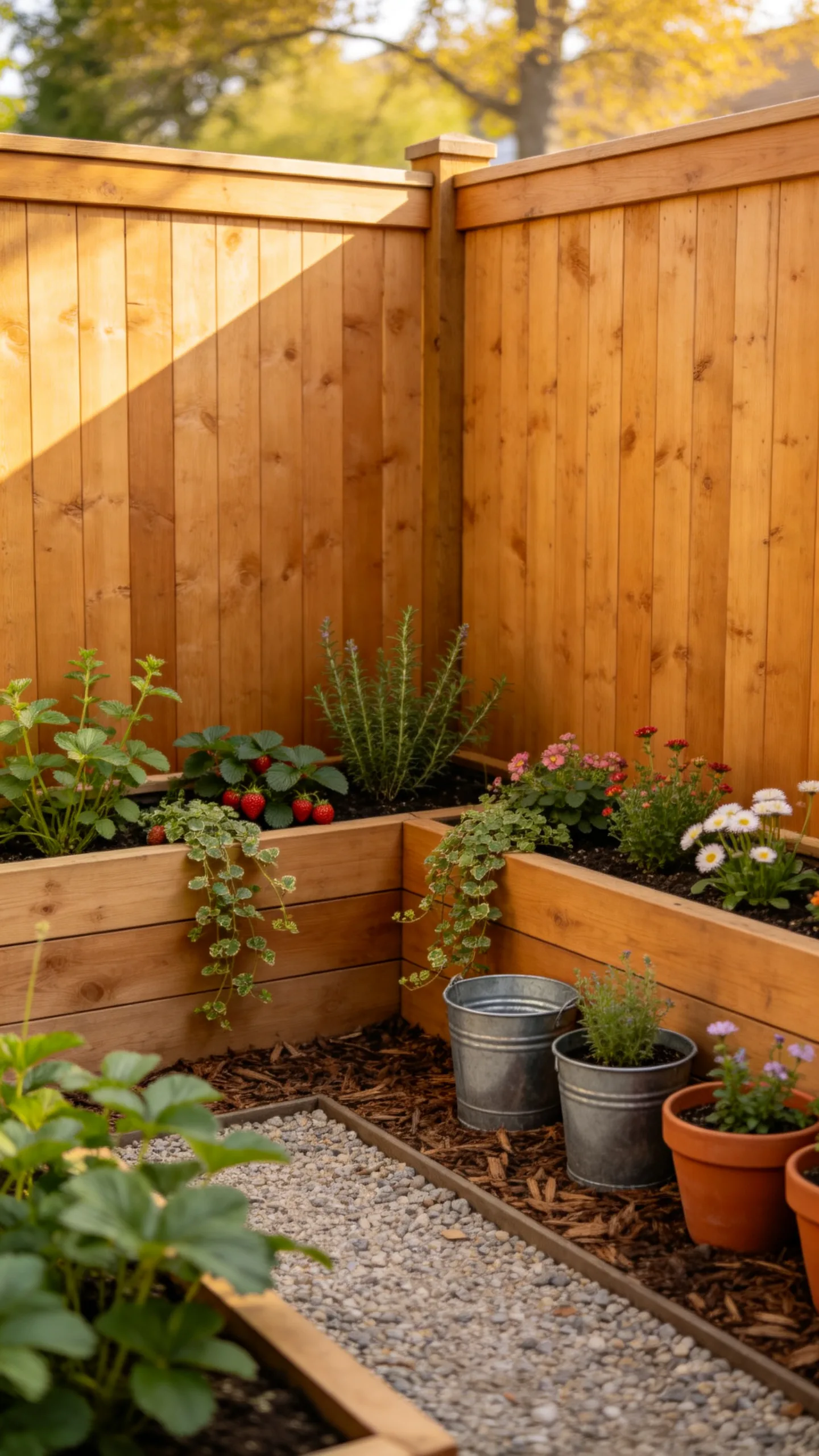
A cedar fence with built-in planter boxes adds privacy and gardening space at the same time. This is helpful on corner lots where the fence takes up a lot of visual area and the yard needs softening.
Planter boxes can be attached to the inside of the fence for herbs, trailing annuals, strawberries, or compact flowers. On the street-facing side, use ground-level planters or raised beds instead of hanging too much weight directly on the fence.
Cedar naturally pairs well with green foliage, terracotta pots, galvanized containers, and gravel paths. Keep watering needs in mind, since fence-mounted planters can dry out faster than in-ground beds during warm weather.
15. Front-Corner Fence With a Clear Sight Triangle
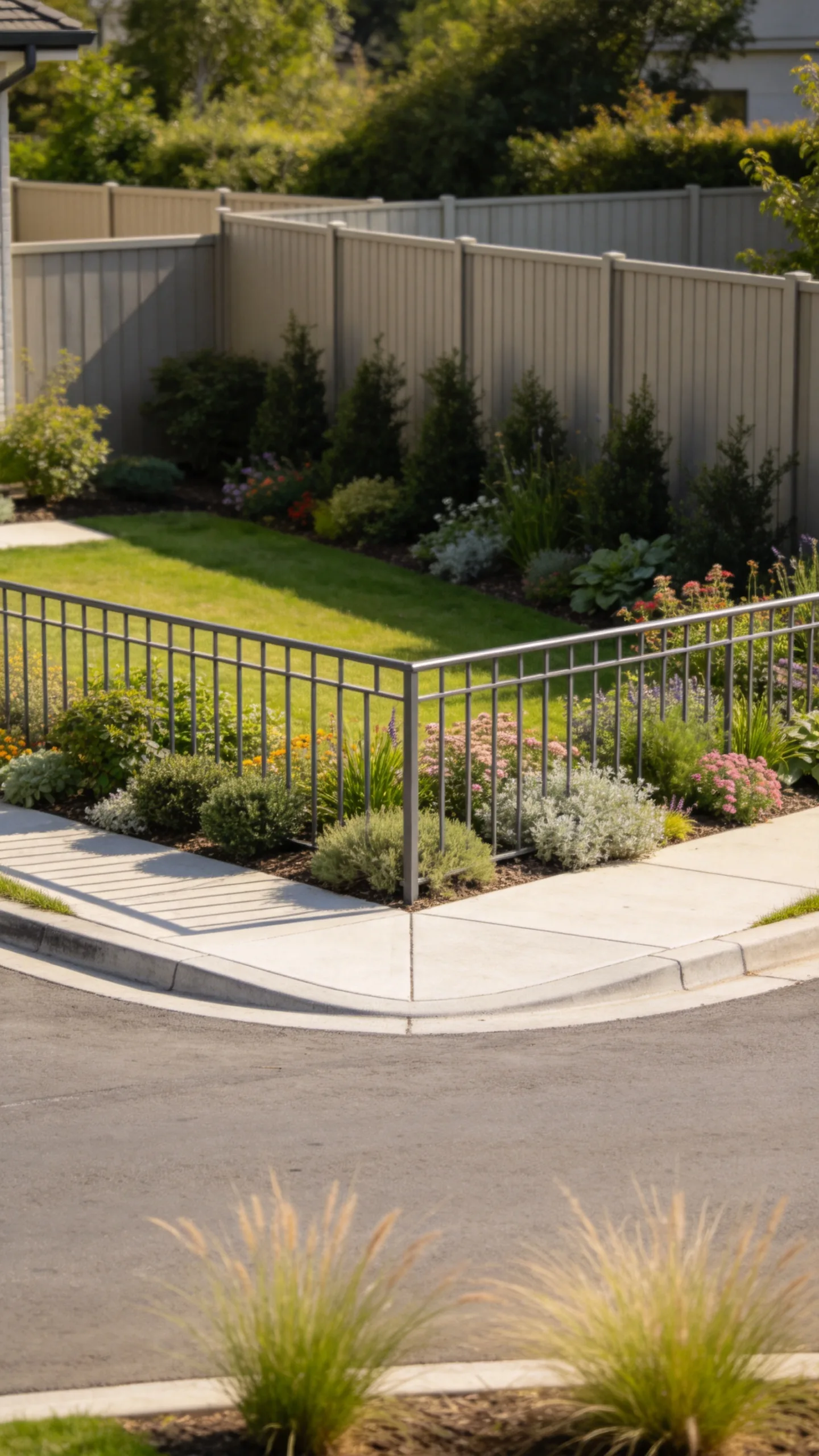
On a corner lot, the most practical fence idea may be one that protects visibility near the street intersection or driveway. A clear sight triangle means keeping the front corner lower, more open, or planted with low-growing landscaping so drivers and pedestrians can see clearly.
Use a low fence, open pickets, metal railings, or a short masonry wall at the corner, then transition to taller privacy fencing farther back along the side yard. This keeps privacy where it is useful while avoiding a closed-in look at the most visible part of the property.
For planting, choose low shrubs, groundcovers, flowering perennials, or ornamental grasses that stay short enough for visibility. This approach can improve curb appeal, make the corner feel intentional, and help the fence fit the everyday function of a street-facing yard.