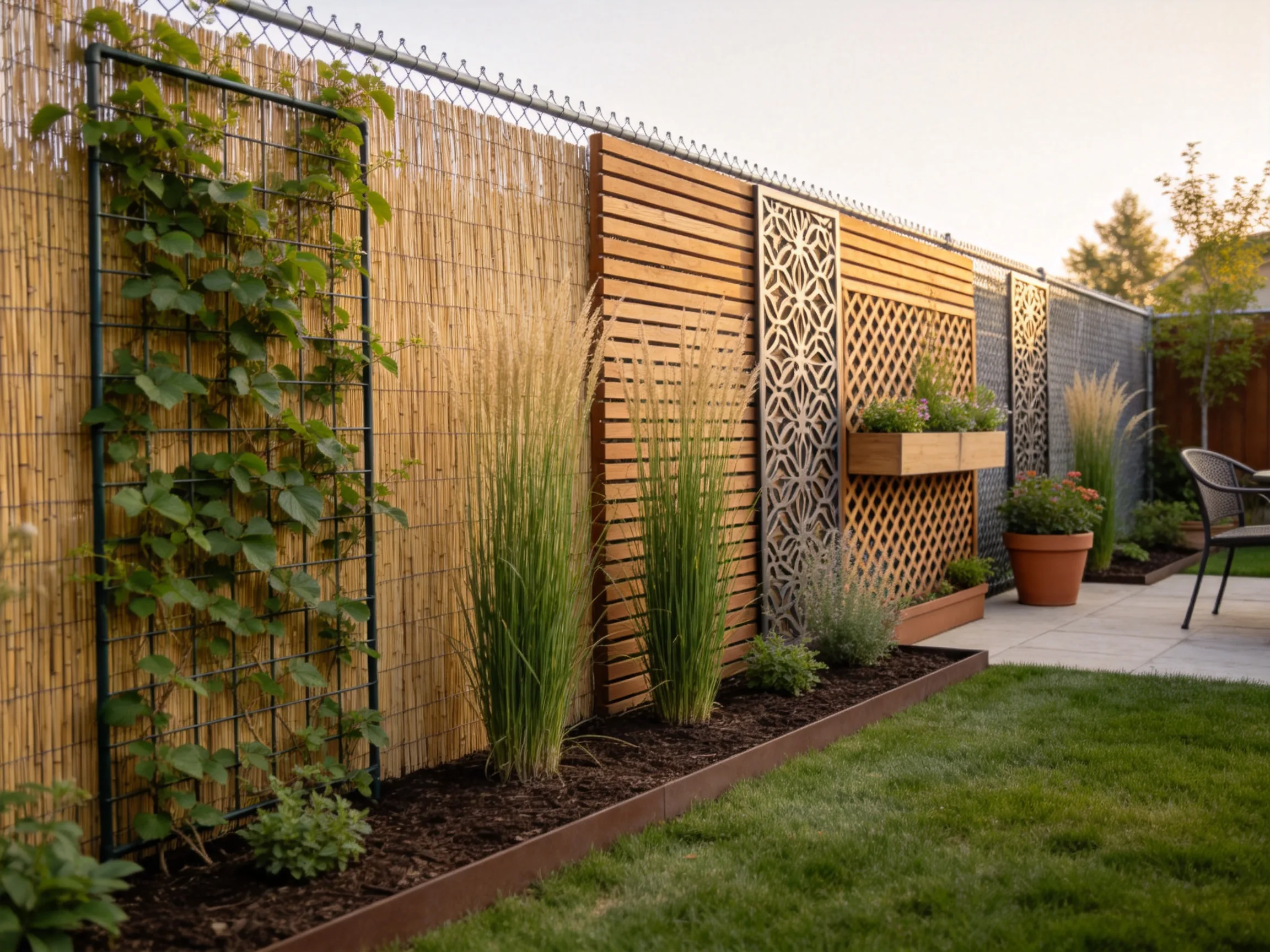
A chain link fence is practical, but it rarely gives a yard the privacy or polished look most homeowners want. The good news is that there are many chain link fence ideas cover up projects that work with the fence you already have, from fast privacy screens to plantable borders that soften the view over time. These ideas use greenery, wood, bamboo, fabric, trellises, and decorative panels so you can choose an option that fits your space, sunlight, maintenance level, and budget.
1. Climbing Jasmine on a Wire Trellis Layer
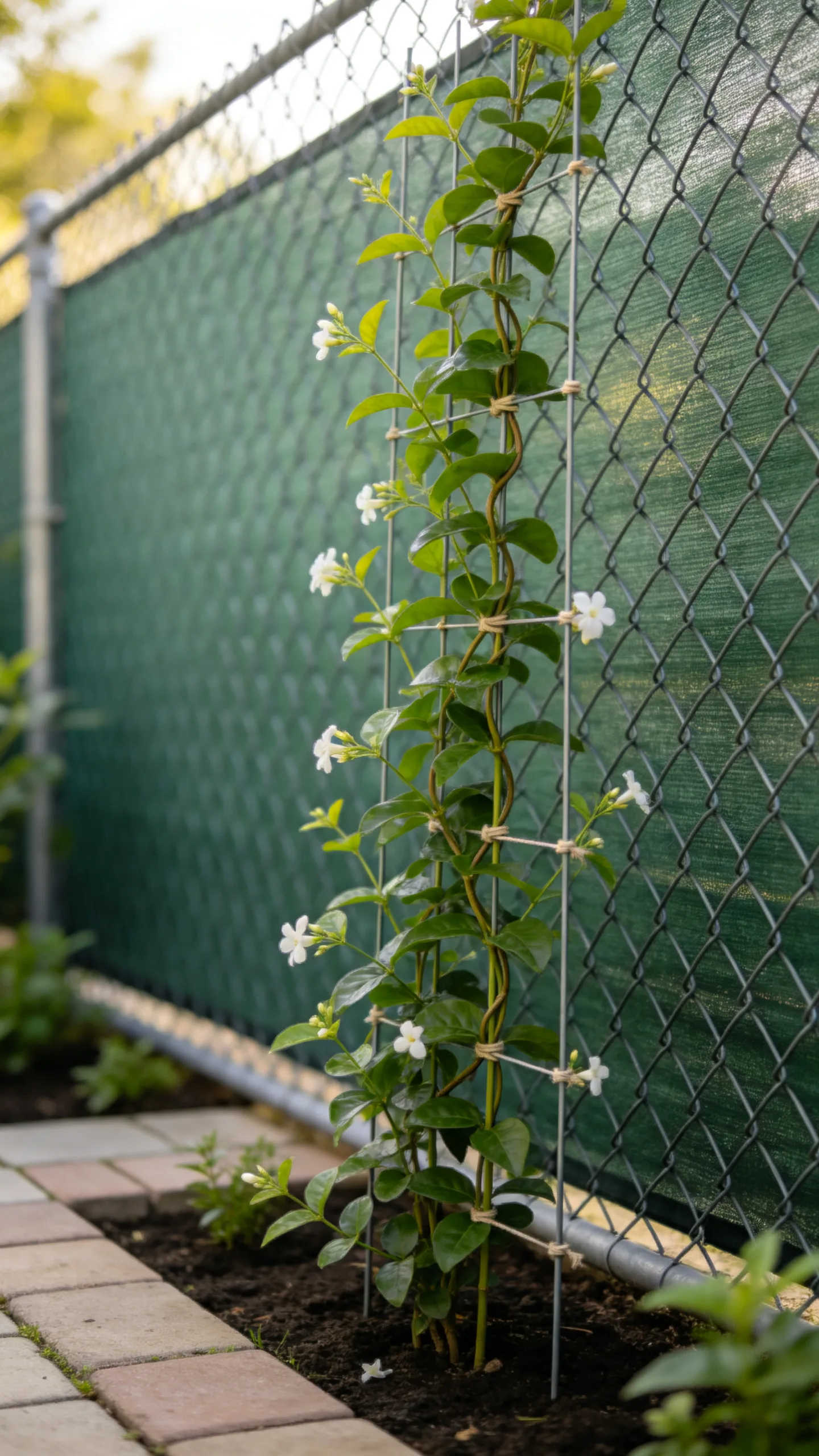
Star jasmine or other twining vines can turn a chain link fence into a softer green boundary when they are trained on added wire, netting, or a slim trellis panel. Instead of letting the plant weave directly through every part of the fence, attach horizontal garden wire or a lightweight trellis a few inches in front of the chain link. This makes pruning easier and helps prevent the vine from becoming tangled in the metal.
This idea works especially well along patios, side yards, and seating areas where fragrance and greenery matter as much as privacy. Plant jasmine in well-draining soil near the base of the fence, then guide the stems upward with soft garden ties. In colder regions, choose a climbing plant suited to your zone, such as clematis, climbing hydrangea, or honeysuckle, and check whether it needs full sun, part shade, or extra winter protection.
2. Bamboo Reed Screening Rolled Across the Fence
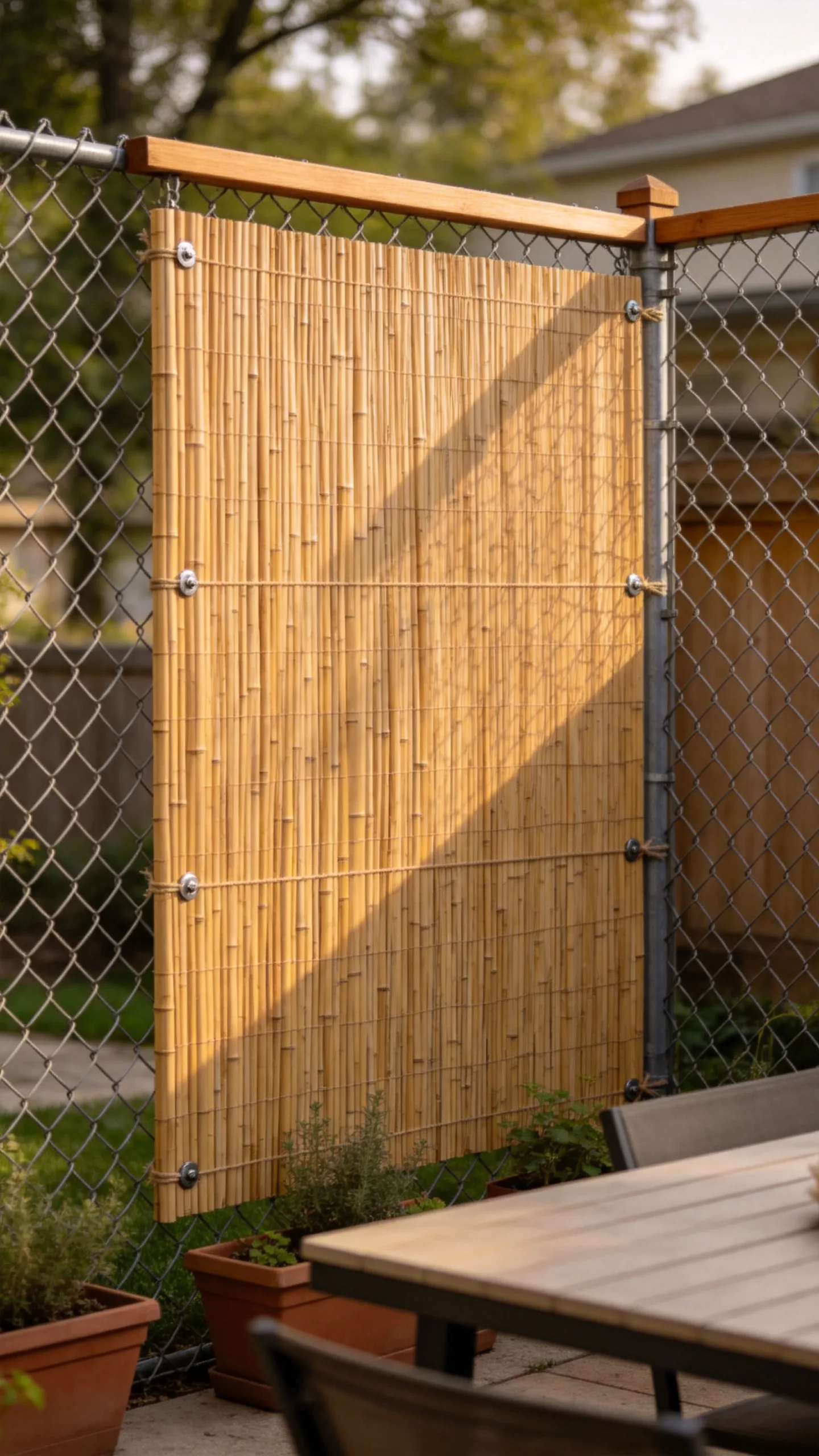
Bamboo reed screening is one of the quickest ways to cover a chain link fence because it comes in rolls that can be tied directly to the metal mesh. It gives an instant natural look, works well behind outdoor dining areas, and can make a narrow yard feel more enclosed without building a new fence.
Use UV-resistant zip ties, galvanized wire, or outdoor-rated twine to fasten the roll at the top, middle, and bottom so it does not sag in wind. For a cleaner finish, trim uneven edges and cap the top with a narrow wood rail if local rules allow. Bamboo and reed screens weather over time, so they are best for homeowners who want a simple privacy layer and do not mind replacing or refreshing sections after several seasons.
3. Evergreen Hedge Planted in Front of the Fence
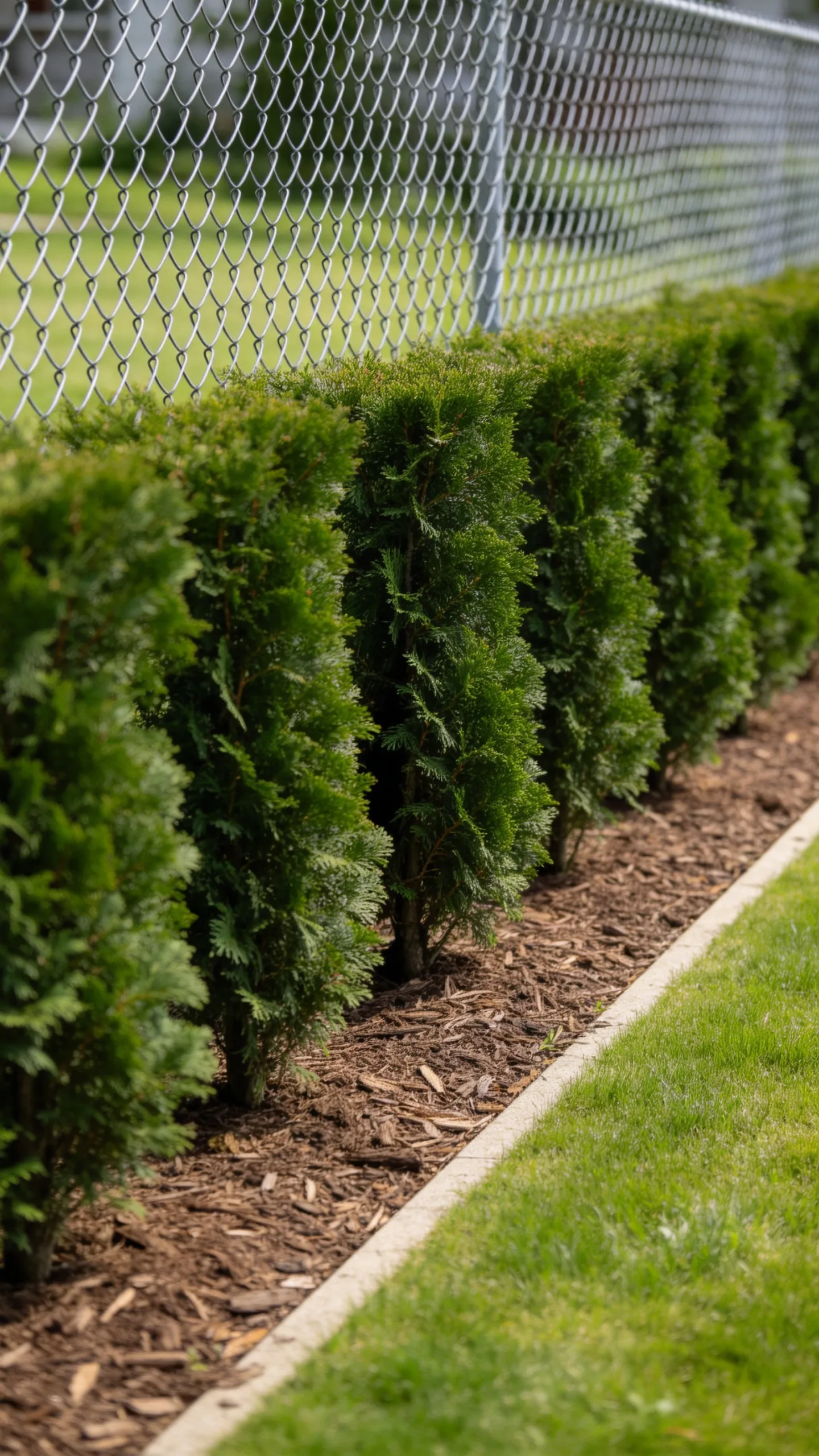
An evergreen hedge can hide chain link fencing year-round while adding structure to the garden. Compact arborvitae, boxwood, yew, privet, wax myrtle, or podocarpus may work depending on your climate, available sun, and mature size needs. The key is choosing shrubs that fit the depth of the planting bed rather than planting varieties that will quickly outgrow the space.
Leave enough room between the shrubs and the fence for airflow, pruning, and future maintenance. In a small yard, choose narrow or columnar varieties to save space. Mulch the bed, water deeply during establishment, and prune lightly to create a dense screen instead of cutting too hard all at once. This option is slower than panels or fabric, but it creates a living cover that can blend naturally with the rest of the landscape.
4. Slatted Wood Panels Mounted Over the Chain Link
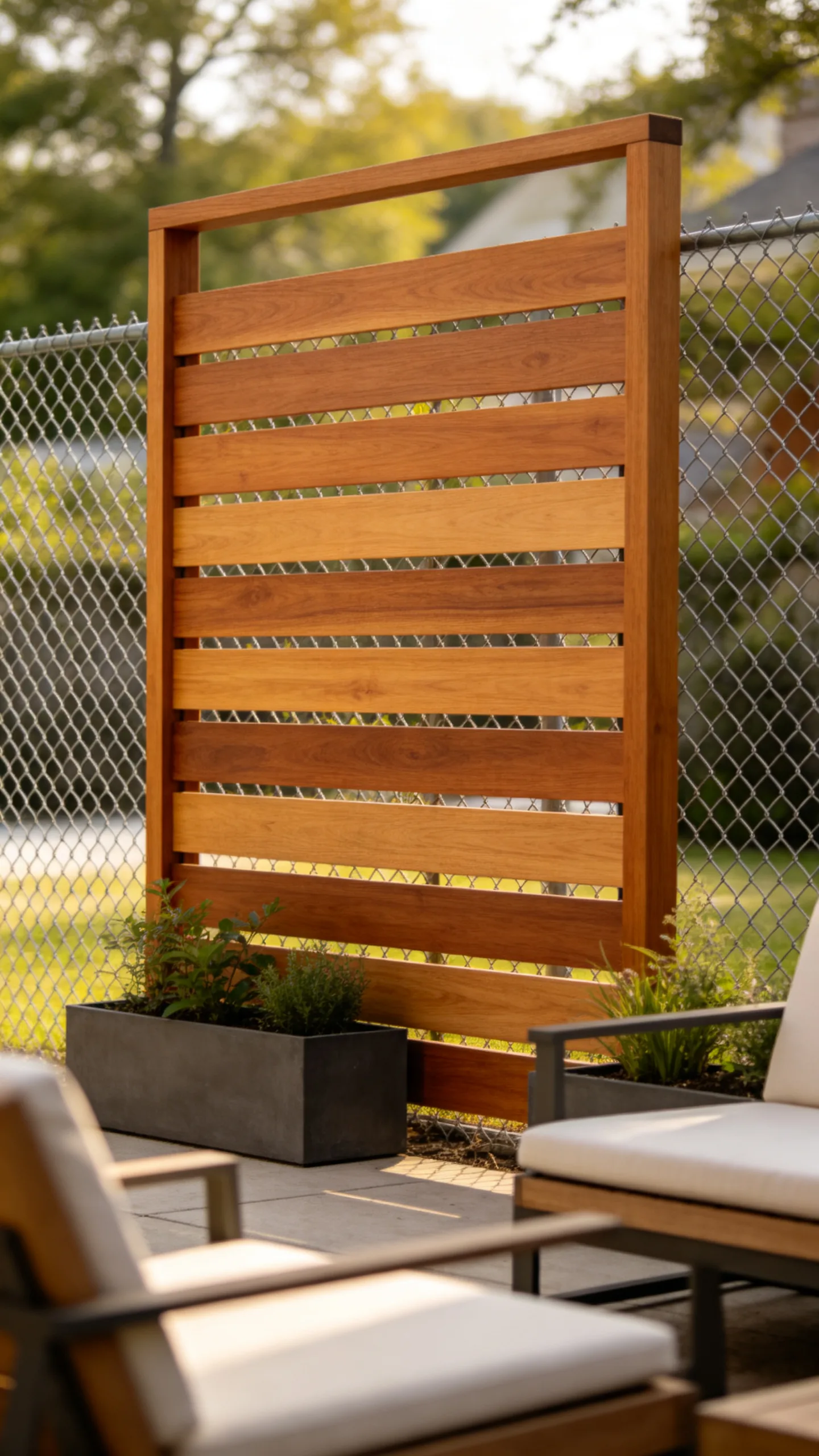
Horizontal or vertical wood slats can completely change the look of a chain link fence by giving it the feel of a modern privacy wall. Cedar, redwood, treated pine, or composite boards can be attached to a simple frame built in front of the existing fence, depending on local fence rules and the strength of the posts.
For a clean design, keep spacing consistent between boards and stain the wood in a color that matches nearby decking, raised beds, or patio furniture. Narrow gaps allow airflow while still distracting from the chain link behind it. This is a good choice for entertaining zones, hot tub corners, or small backyards where the fence is close to the house and needs to look intentional from the windows.
5. Tall Ornamental Grasses Along the Fence Line
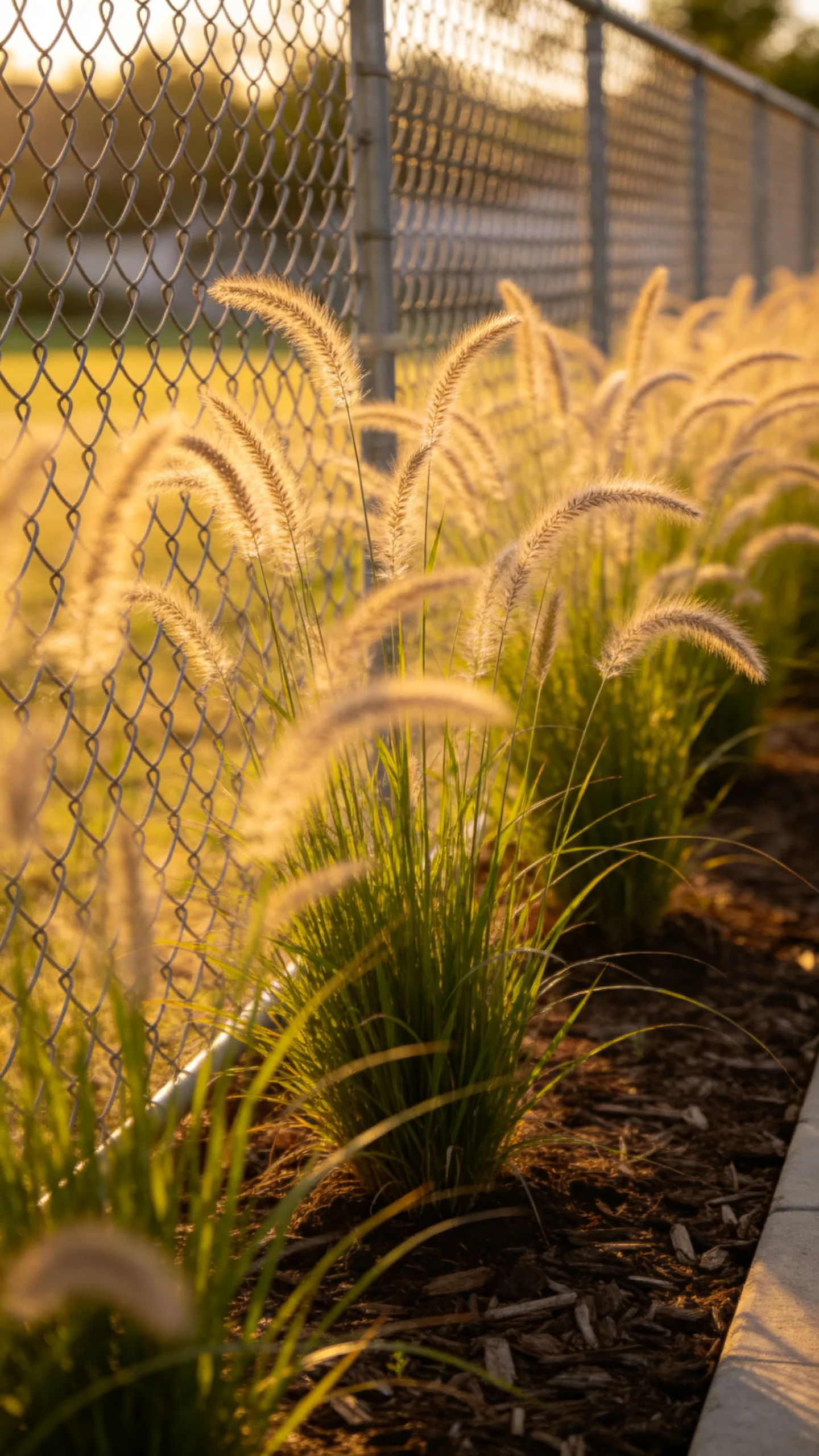
Ornamental grasses are useful for softening a chain link fence without creating a solid wall. Varieties such as switchgrass, feather reed grass, fountain grass, muhly grass, or miscanthus can add movement, height, and seasonal texture. Choose clumping types rather than aggressive spreaders if you want easier control in a narrow bed.
Plant grasses in repeated groups instead of single scattered plants for a fuller screen. A row of grasses in front of the fence can blur the metal pattern while still allowing light and air through. Many ornamental grasses need full sun and well-drained soil, and most should be cut back once a year before new growth appears. This idea works nicely for long fence runs where a full panel cover would feel too heavy.
6. Outdoor Privacy Fabric Attached With Grommets
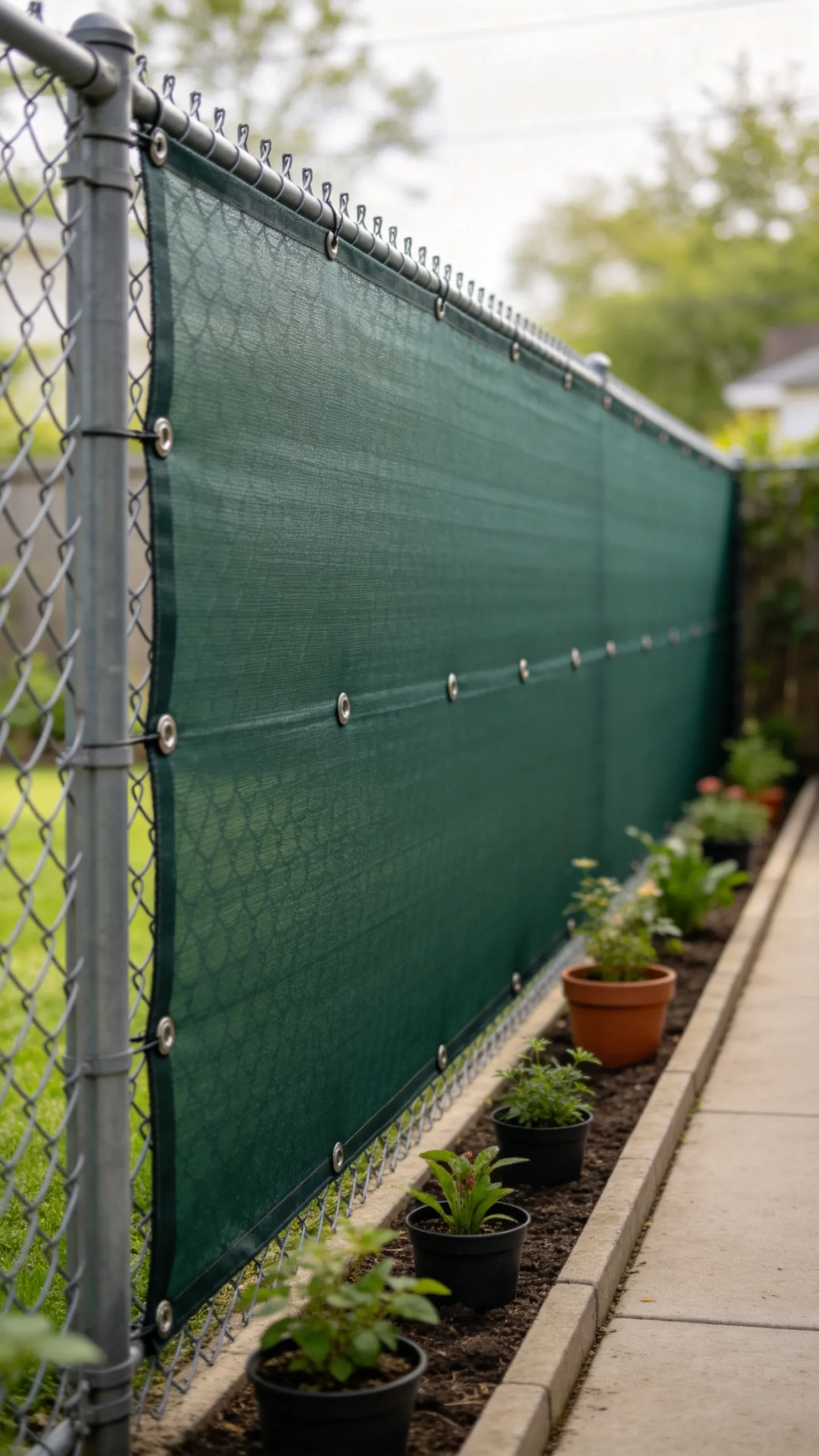
Outdoor privacy fabric is a practical chain link fence cover up when you need fast coverage for a dog run, side yard, rental yard, or temporary patio screen. Look for UV-resistant mesh fabric with reinforced edges and grommets so it can be secured evenly to the fence without tearing.
This material comes in different opacity levels, so choose a denser fabric for privacy or a more open mesh if wind exposure is a concern. Attach it with zip ties or fence ties through every few grommets, keeping tension even from top to bottom. Dark green, black, tan, or gray fabric tends to blend better into a landscape than bright colors. Pair it with container plants or a low border bed to make the screen look less utilitarian.
7. Mixed Vine Wall With Clematis and Climbing Roses
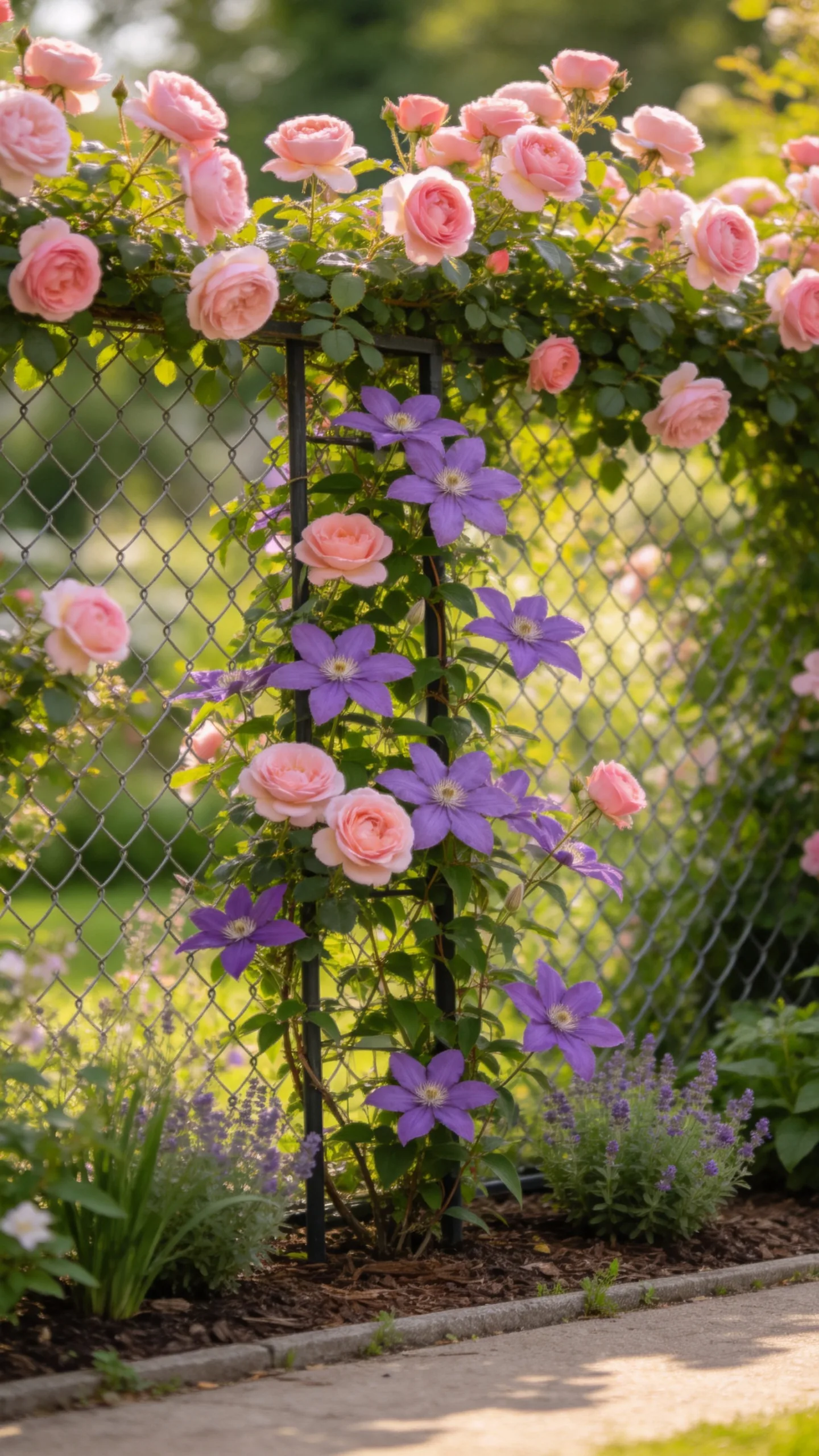
A mixed vine wall can make a chain link fence look like part of a cottage garden. Clematis and climbing roses are a classic pairing because roses provide woody structure while clematis winds through and adds extra blooms. This combination works best with sun, good airflow, and enough room at the base for healthy roots.
Install a narrow support frame, cattle panel, or trellis section in front of the chain link so the plants can be trained without becoming impossible to untangle. Plant the rose slightly away from the fence and angle the canes horizontally where possible to encourage more flowering shoots. Add clematis nearby, keeping its roots cool with mulch or low companion plants. Regular pruning and tying are needed, but the result can be a layered floral screen instead of a plain metal boundary.
8. Corrugated Metal Panels for an Industrial Garden Screen
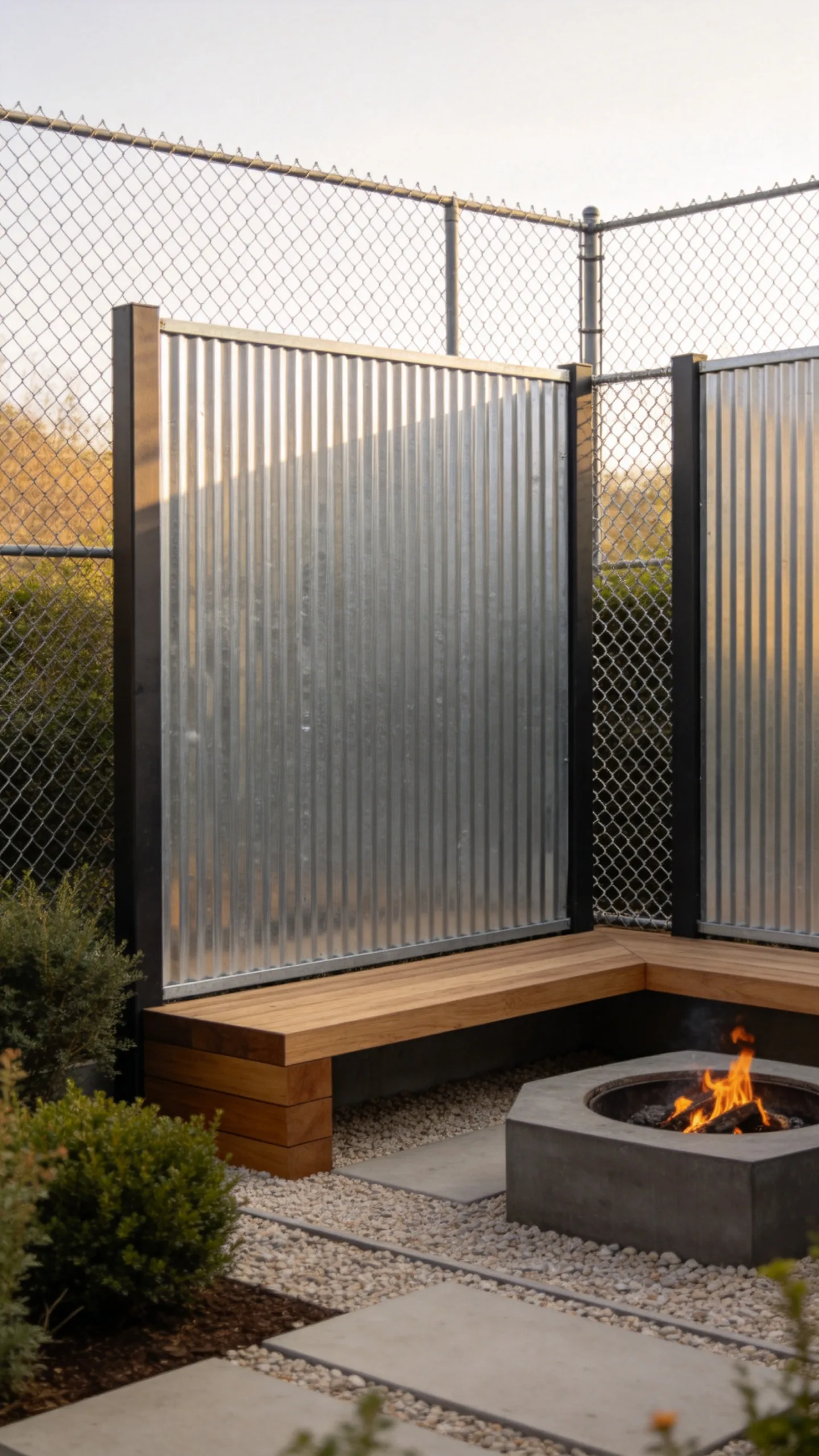
Corrugated metal panels can cover sections of chain link fencing while adding a modern, industrial look. Galvanized panels suit contemporary yards, while weathered or painted panels can work in rustic gardens. This idea is especially useful behind outdoor kitchens, fire pit seating, or utility areas where full visual coverage is more important than plant softness.
Because metal panels catch wind, they should be attached to sturdy posts or a proper frame rather than loosely tied to weak fencing. Use them in shorter sections if the fence line is long, then alternate with plants or wood to avoid a harsh wall effect. In hot climates, avoid placing heat-sensitive plants directly against reflective metal, and consider using the panels where afternoon sun will not make the seating area hotter.
9. Lattice Panels With Planter Boxes at the Base
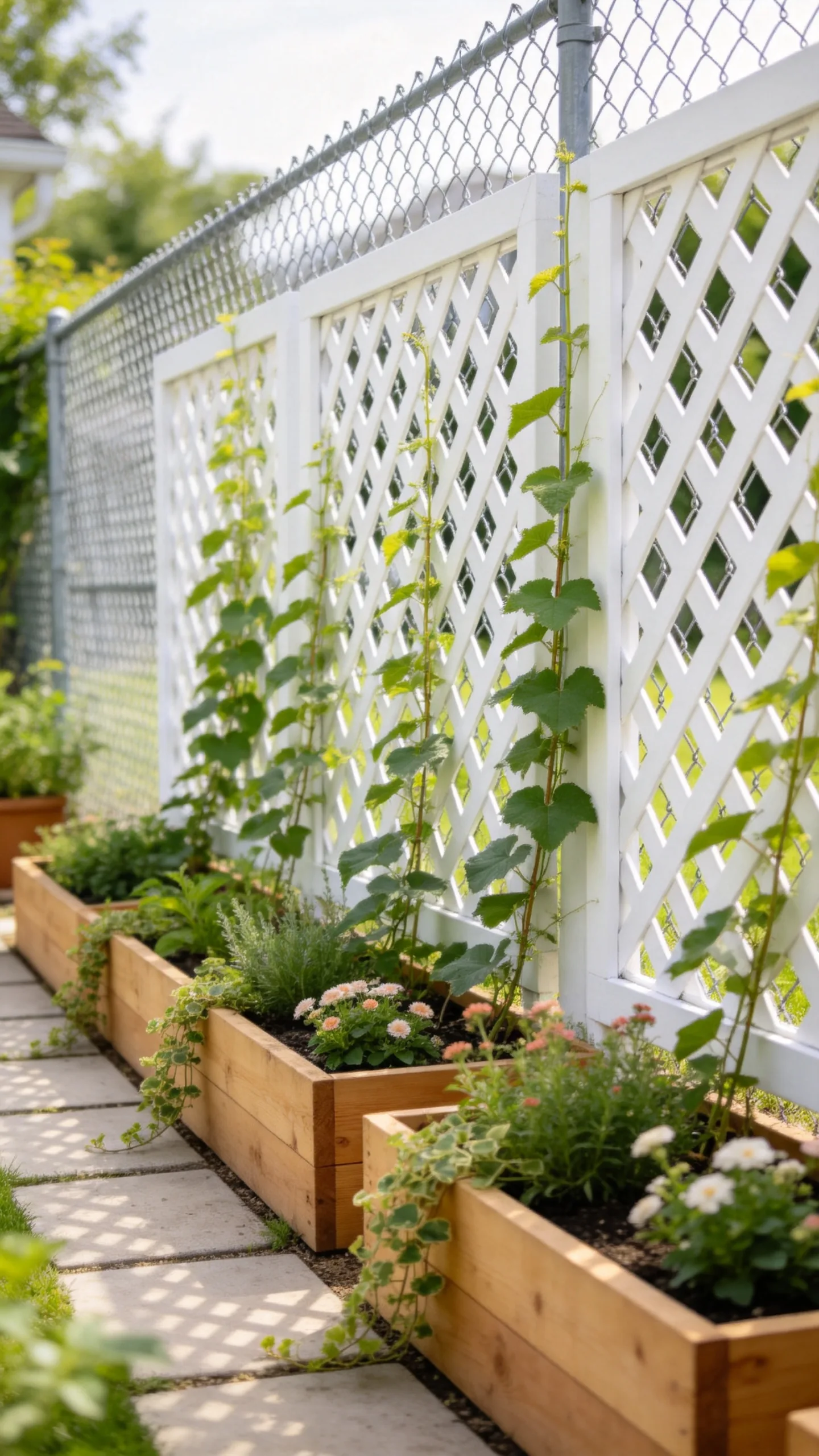
Lattice panels are lighter than solid wood fencing and can be installed in front of chain link to create a garden-friendly screen. The openings give climbing plants something to grip while still allowing air and light through. Wood, vinyl, or composite lattice can work, depending on the style of the yard and how much maintenance you want.
Place rectangular planter boxes at the base if you cannot dig into the ground or if the fence line has poor soil. Fill them with a quality potting mix and plant annual vines like black-eyed Susan vine, sweet pea, or morning glory where appropriate, or use compact perennials and trailing plants for a softer edge. This is a strong option for renters or paved side yards because it creates a cover-up without requiring a full planting bed.
10. Layered Shrub Border With Perennials in Front
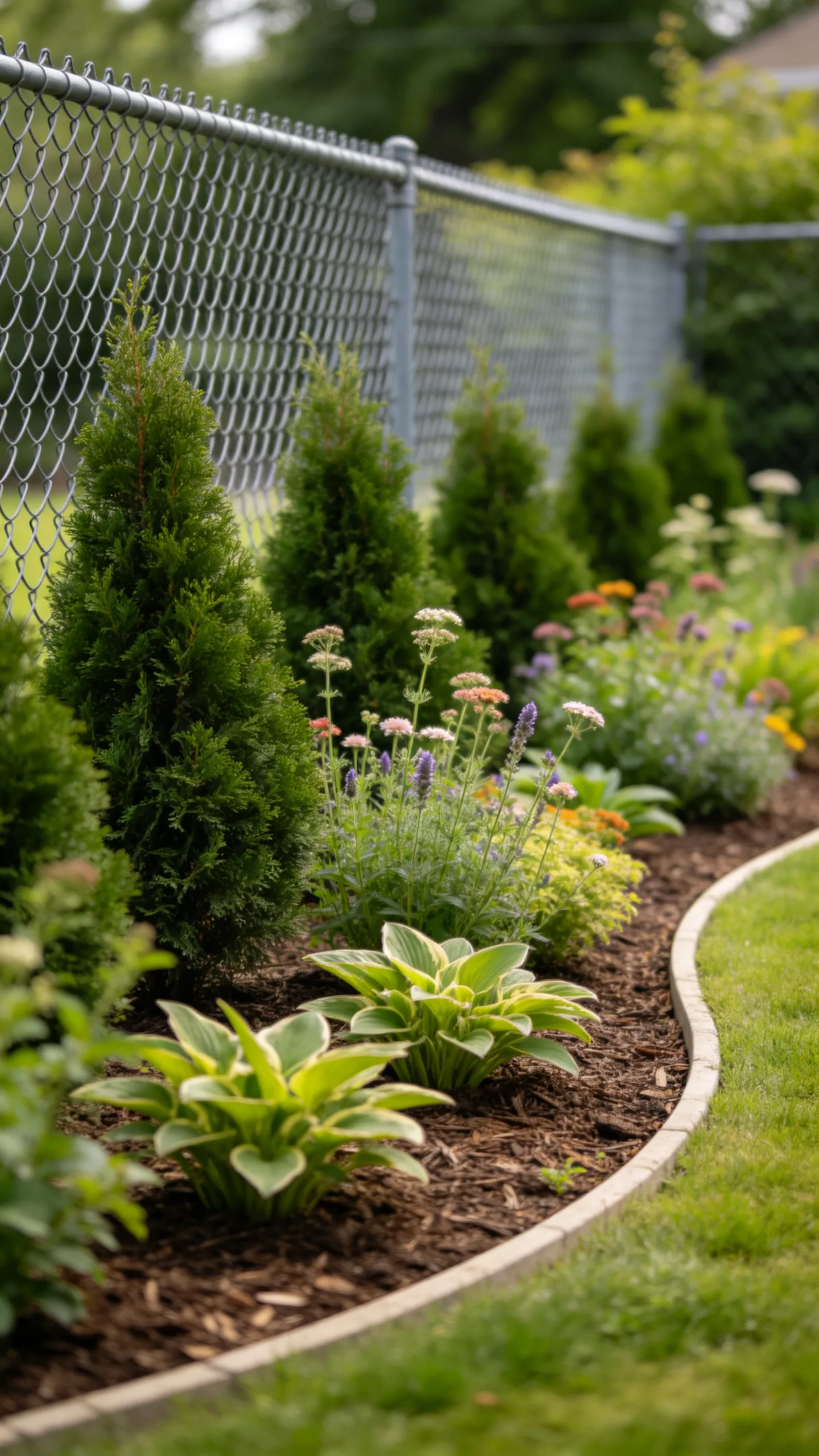
A layered border hides chain link fencing by creating depth instead of relying on one flat screen. Use taller shrubs near the fence, medium perennials in the middle, and low edging plants at the front. This arrangement pulls attention forward and makes the fence feel farther away, which is helpful in small backyards.
For example, combine compact viburnum, hydrangea, or pittosporum near the fence with salvia, coneflower, catmint, hosta, or daylilies in front, depending on sun exposure. Add mulch and a defined bed edge to make the planting look planned. Choose plants with staggered bloom times or strong foliage so the border does not look empty after one season. This approach may take time to fill in, but it creates a more natural cover than a single material.
11. Artificial Greenery Panels for Low-Maintenance Coverage
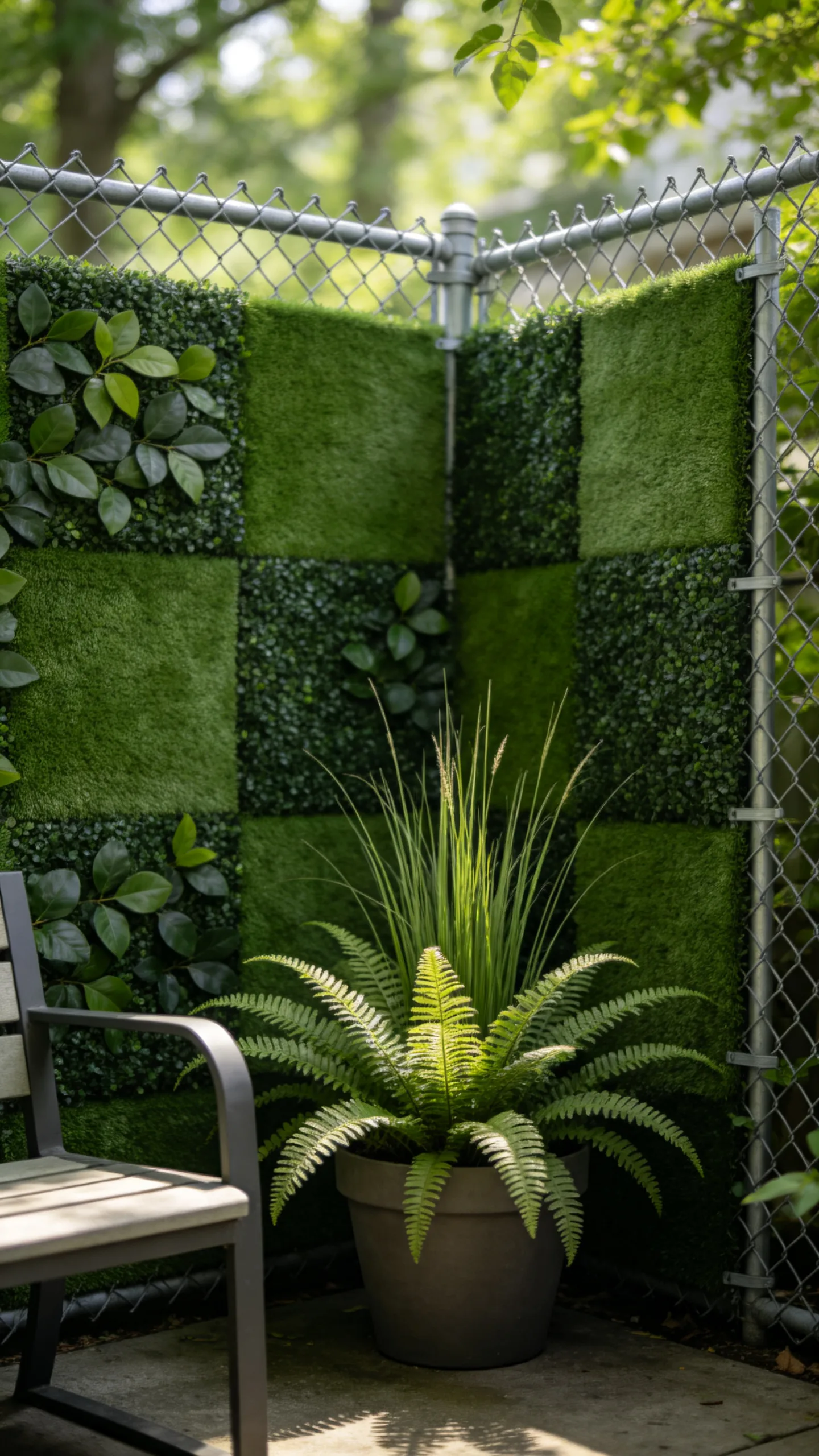
Artificial greenery panels can hide chain link quickly where live plants struggle, such as shaded side yards, narrow dog runs, or areas with poor soil. Faux boxwood, ivy, or mixed-leaf panels are usually sold in squares that can be tied directly to the fence mesh. They offer immediate coverage without watering, pruning, or waiting for plants to grow.
For a more realistic look, avoid covering a huge fence line with one flat pattern. Instead, use panels behind a seating zone, along a small balcony garden, or as a backdrop for containers. Add real potted plants in front, such as ferns, ornamental grasses, or flowering annuals, to soften the artificial texture. Choose outdoor-rated panels with UV protection so the color lasts longer in sun exposure.
12. Tall Container Garden Lined Along the Fence
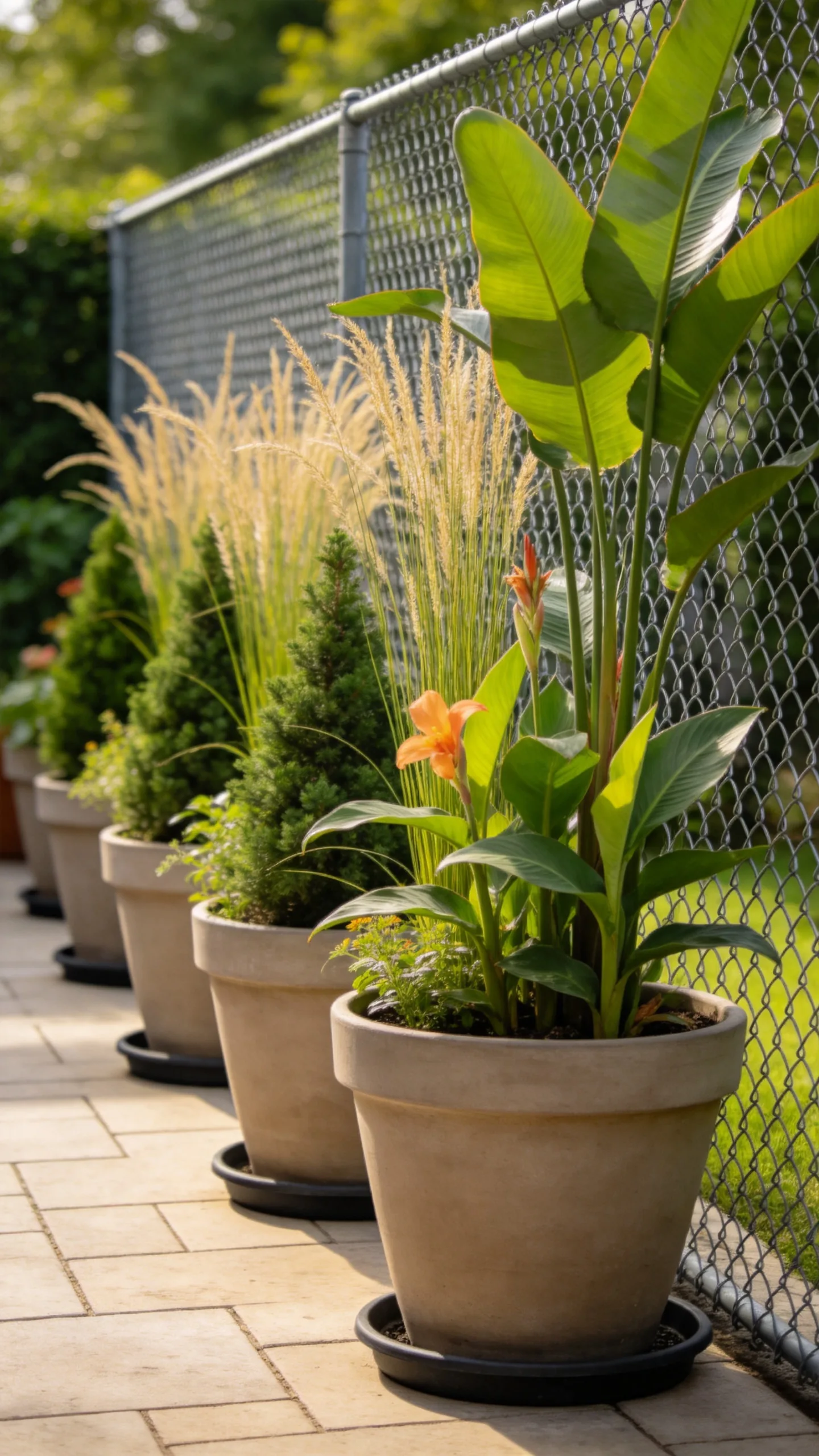
A row of tall containers can cover a chain link fence without digging, which is useful for patios, rental homes, compact yards, or paved spaces. Use large planters with drainage holes and enough soil volume to support taller plants. Fiberglass, resin, metal troughs, or cedar planter boxes can all work if they are stable and weather-resistant.
Plant upright options such as bamboo in containers, dwarf evergreens, columnar shrubs, canna lilies, elephant ears, or tall grasses depending on climate and sunlight. Place containers close enough to create visual rhythm but not so tight that airflow and watering become difficult. This idea lets you move or rearrange the screen, and it can be combined with fabric or reed screening behind the plants for extra coverage.
13. Shade Cloth Screen for Vegetable Garden Protection
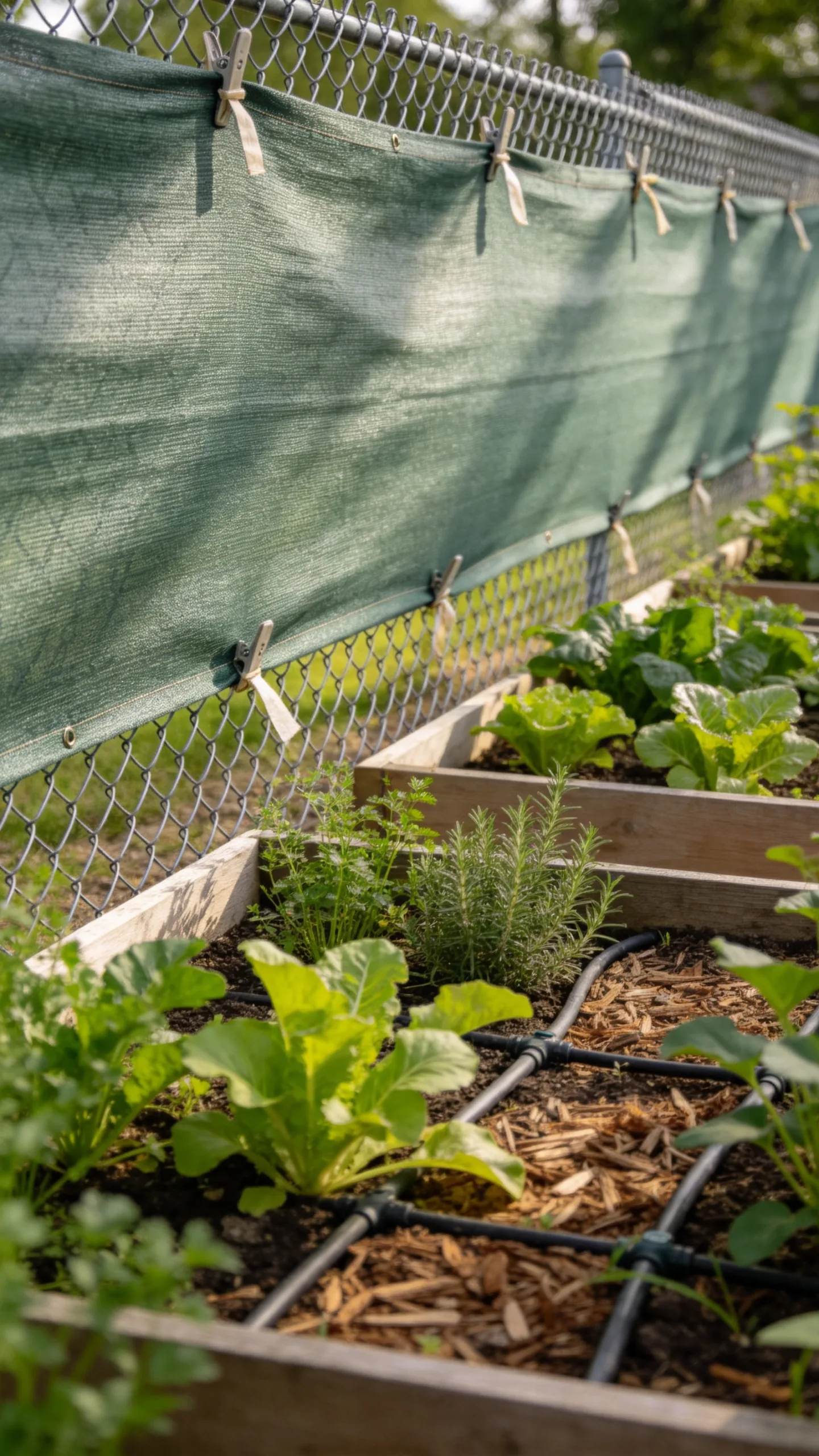
If the chain link fence borders a vegetable garden, shade cloth can serve two purposes: covering the fence and protecting crops from harsh sun. Attach shade cloth to the fence behind raised beds or along the west-facing side of the garden where afternoon heat is strongest. It can help reduce stress on leafy greens, herbs, or young transplants during hot periods, depending on your climate.
Choose the shade percentage carefully. A lighter shade cloth may suit vegetables that still need strong light, while denser cloth is better for temporary heat protection or tender seedlings. Secure it with clips or ties so it can be removed, rolled up, or adjusted seasonally. Pair it with raised beds, drip irrigation, and mulch to create a practical garden zone rather than just a decorative screen.
14. Decorative Metal or Laser-Cut Panels as Accent Sections
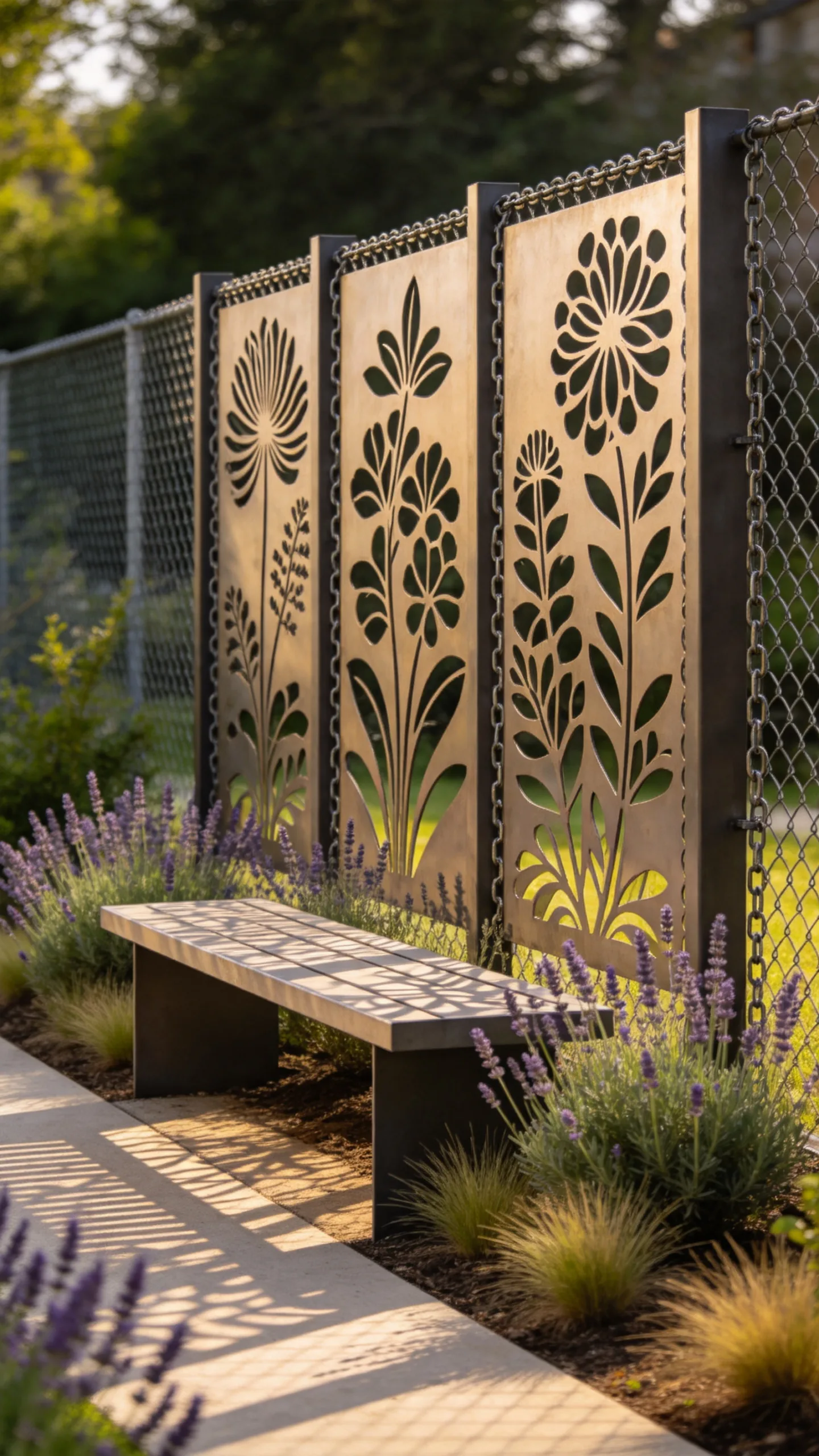
Decorative metal panels can turn a plain chain link fence into a feature wall, especially when used in selected sections instead of across the entire yard. Laser-cut botanical patterns, geometric screens, or powder-coated panels can provide privacy while allowing light to pass through. They work well behind benches, entry gates, garden paths, or focal-point planting beds.
Mount panels securely on posts or a freestanding frame in front of the fence, particularly in windy areas. For a layered look, plant soft foliage at the base, such as lavender, rosemary, dwarf grasses, or low evergreen shrubs. The contrast between the patterned panel and living plants makes the fence feel designed instead of hidden as an afterthought.
15. Espalier Fruit Trees Trained Along the Fence
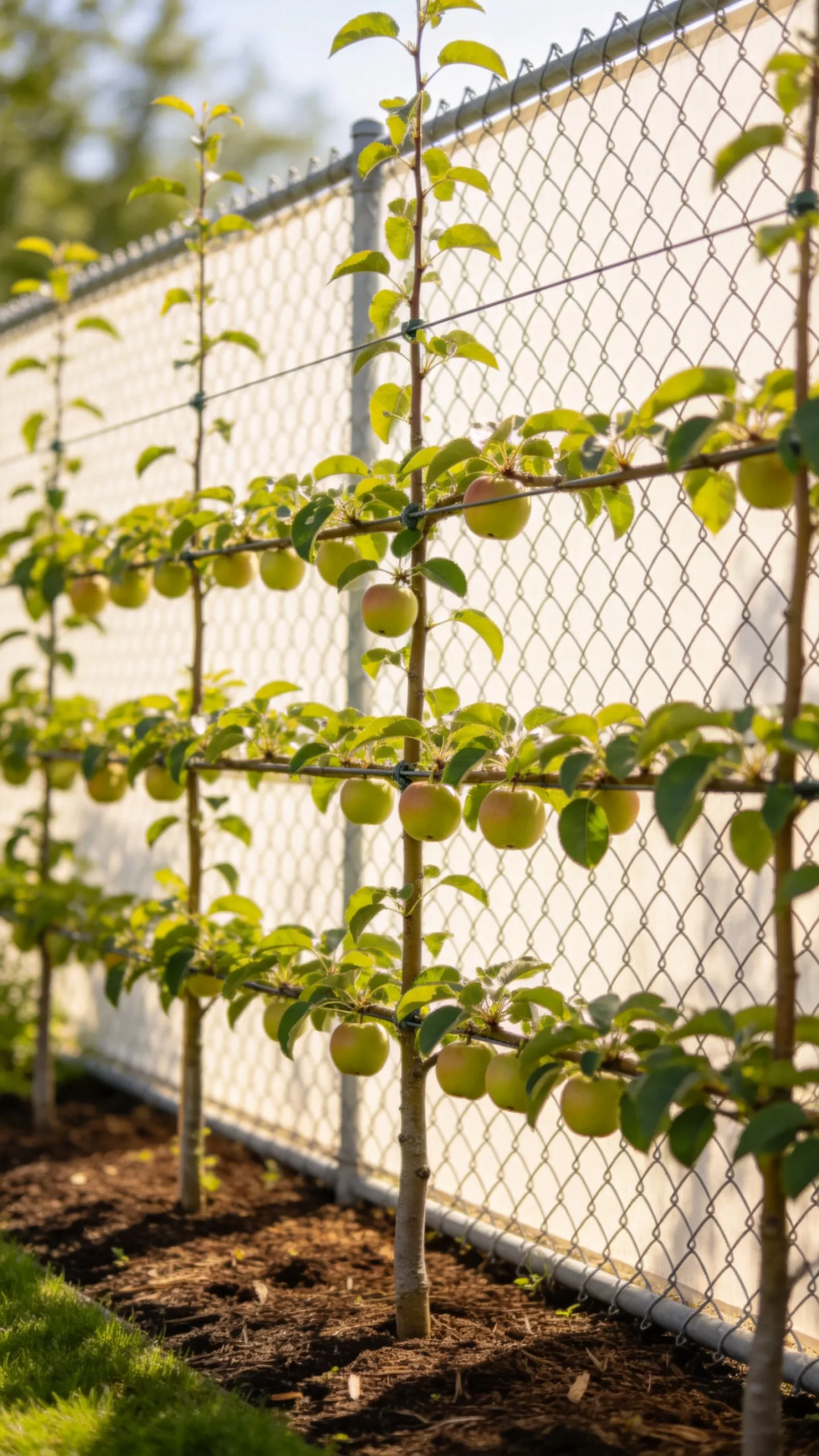
Espalier fruit trees are a space-saving way to cover a chain link fence while adding an edible garden element. Apples, pears, figs, citrus, or stone fruits may work depending on climate, chill hours, and local growing conditions. The trees are trained flat along wires or a frame, making them useful for narrow yards where a full-size tree would take up too much room.
Install horizontal support wires in front of the fence and plant young trees with enough distance for root growth and pruning access. Train branches along the wires while they are flexible, and prune regularly to maintain the flat shape. This idea requires patience and seasonal care, but it can create a beautiful living screen for sunny fence lines while keeping fruit within easy reach.